PANDA BEAR & SONIC BOOM veröffentlichen ihr erstes gemeinsames Album RESET. 9 überschwängliche Songs als Beweis für die Kraft von Gemeinschaft und Zusammenarbeit.
"Reset" ist die überschwängliche und erste gemeinsame Veröffentlichung der langjährigen Freunde und Kollaborateure Panda Bear und Sonic Boom. Inspiriert von Sonic Booms Sammlung amerikanischer Doo-Wop- und Rock'n'Roll-LPs aus den 50er und 60er Jahren, sind die Songs auf "Reset" so eingängig und fröhlich wie alles, was Panda Bear oder Sonic Boom in ihrer eigenen Karriere gemacht haben, und sind ein Beweis für die Kraft von Gemeinschaft und Zusammenarbeit. "Reset" ist die überschwängliche und erste gemeinsame Veröffentlichung der langjährigen Freunde und Kollaborateure Panda Bear und Sonic Boom. Inspiriert von Sonic Booms Sammlung amerikanischer Doo-Wop- und Rock'n'Roll-LPs aus den 50er und 60er Jahren, sind die Songs auf "Reset" so eingängig und fröhlich wie alles, was Panda Bear oder Sonic Boom in ihrer eigenen Karriere gemacht haben, und sind ein Beweis für die Kraft von Gemeinschaft und Zusammenarbeit. Der Kern von "Reset" entstand nicht lange nach dem Beginn der internationalen Lockdowns, so dass die Chance, gemeinsam an diesen Songs zu arbeiten nicht nur einen Weg aus der Isolation bot, sondern auch einen Weg, den Blues der Gegenwart zu kanalisieren und ihn in etwas anderes für die Zukunft zu transformieren. "Reset" ist ein 40-minütiges, seltsames Licht, das aus einer besonders dunklen Zeit heraus leuchtet. Das ist vielleicht das Hauptversprechen des Albums - mit den nicht seltenen Härten der Realität zu rechnen und einen Weg auf eine andere Seite zu bieten. Wenn "Reset" für Panda Bear und Sonic Boom eine vorübergehende Medizin war, so ist es jetzt für den Rest von uns eine dauerhafte Medizin, eine Erinnerung daran, dass es manchmal ausreicht, mit Freunden alte Lieblingslieder zu spielen und mitzusingen, damit sich die Welt ein bisschen besser anfühlt.
out of Stock
Last delivered 3 years ago available to reorder, subject to availability
True concept albums are actually few and far between. While it can be said that The Who’s Tommy and Quadrophenia, or Pink Floyd’s The Wall were designed from the ground up, that’s not necessarily the case for equally mythical, yet composite, albums such as Bowie’s The Rise And Fall of Ziggy Stardust…, or Lou Reed’s Berlin. In France, the genre established its pedigree in the 1970s with Serge Gainsbourg, then in the early 1980s with Léo Ferré. Cri d'amour by Mélanie Chédeville adds to this list of albums that tell a story through characters.
Cri d'amour was produced in a seaside setting, which may explain its flowing, organic character. It is all by herself that the violinist-by-training composed, wrote and arranged this collection of string-drenched songs that recall Jean-Claude Vannier’s work for Serge Gainsbourg. The latter would undoubtedly have been impressed by Mélanie’s fine-cut lyrics and melodies that are as raw as they are sophisticated, vocalized in a sprechgesang recalling his own. The deliberately retro palette, up to the bass sound so typical of 1960s English rock, betrays an artist indebted to the creator of Bonnie & Clyde and Initials B.B. through a sensual, clear tonality. Yet, polyrhythms borrowed from the late afro-beat legend Tony Allen, and the touches of guitar, piano, percussion and synthesizers distilled here and there by Éric and Mélanie, end up giving the whole affair a resolutely atemporal color.
Mélanie was sixteen with a head full of Beethoven and Brahms when she succumbed to an unexpected fascination for the world of Éric, a pianist, composer and sound engineer, who regularly delivered scores for Marc Dorcel’s X-rated films. She evokes him in L'Alpha-bêta and Le Pornographe, through whispered choruses that would suit the late Julee Cruise or Vanessa Daou to a tee, and explicit allusions to a “sword of Damocles” of “XXL” dimensions.
These are not the only texts on this album that remind us of the Franco-American author Anaïn Nin’s erotic poems, a model that Mélanie willingly takes on, adding to the list of her literary influences alongside Apollinaire and his Debauched Hospodar:
Some may find this album old-fashioned, which, far from being a flaw, is a credit to the fine musician that Mélanie is. Others will call it a charming album, which is not a bad way to describe it, provided that it is a powerfully relentless charm.
out of Stock
Last delivered 3 years ago available to reorder, subject to availability
Föllakzoid are nearly unparalleled in the hypnotic lysergic drenched neo-psychedelic experience. On their debut it is mostly a rather bulky one, determined by the downright dirty, distorted electric guitar, which is also usually accompanied by a spacey, howling and herbaceous howling one. In addition, there is fat bass and powerful drums. During the prolific post-napster musical era dominated by myspace, the Chilean musical field opened up so that many bands could broaden their creative spectrum by taking global and timeless references as an aesthetic holy grail. This experimentation had the internet and specialized forums as a search engine, which not only provided the world parameters in trends, but also allowed to find true hidden gems, bands that were adored by a few connoisseurs of the real quality left behind by the record labels. In this context, a group of university students who have known each other from school began to rehearse in the Caracol Vip underground (Santiago, Chile), in a room owned by a local heavy-metal legend, Juanzer. Equipped with tube amplifiers, Marshall and other custom made, the members of that time: Gonzalo Laguna on vocals, Juan Pablo Rodriguez on bass, Domingo García-Huidobro on guitar, Diego Lorca on drums and Francisco Zenteno on second guitar, they began to play endless jams without a strict sense of songs or directed compositional notion. The rule was to follow the noise in a journey through valleys and peaks that allowed the spontaneous appearance of textures, lyrics, phrases and some invented chords that did not resemble anything that had been heard at that time. The rehearsals were transformed into true live performances without an audience, which were only seen by a few curious, among alcohol, smoke and deafening noise, which could only end when the owner of the room (Juanzer) entered to turn off the equipment. Over time he himself stayed as an auditor, witnessing how the musicians stripped themselves in their rehearsals. Considered at that time as play or fun, the idea of forming a band with a name came with the real live performances to which they were invited, without yet having songs made, at the end of 2006. The myth of their first live performance alludes to a numerical superstition, on July 7, 2007, in a small bar in Providencia (Santiago), which also provided the band with an upward recognition for the psychedelic-punk music they were doing, with a voracious vocalist who destroyed everything on stage and a band that stood firm on the endless songs they built. The name that was invented for that occasion was the result of a nonsense about the German word feuerzeug brought to the group by their close friend Alfredo Thiermann (who would later make the cover of the first album and become keyboardist), which the members of that time took and Spanishized at will. This neologism represents the second founding myth of the band since the interest in bands like Can, Neu! and AMON DUUL II and the characteristic motorik rhythm would soon arrive, in the form of kosmische musik. By 2008 the band had already added several live performances and some songs appeared, among which were Directo al Sol and Loop (nod to the English band), which allowed a greater deployment of ambient-noise resources, almost close to the 'concrete' music. The deconstructed rock of Spacemen 3 was also present in the form of repeated sequences on the bass and drums, as the layers of shrill guitars formed the foam of the tide bursting in the darkness of space. With the ideas and general feeling of the sound that they already had, the band made the decision to record their first album with the sound engineer and Juan Pablo's brother, Ignacio 'Nes' Rodríguez, who later together with JP would form the BYM label to make the first CDs of the forthcoming debut of Föllakzoid and other bands that Nes was recording. Sheltered that winter in the studio that Nes had built in an old house in Recoleta, the band recorded the bulk of the songs on the album with a new jam that emerged in that room composed of 1 note and moments of rising intensity: Sky Input I and II appeared to complete a set of songs that came from rock but were slowly passing to a level of trance and cacophony typical of orchestrated and atonal music. With three takes per song but only one take of the jam, the album was finished with a few extra takes and overdubs, some made in the house of Nes himself, who contributed a guitar to Loop, although it does not appear in the credits, and additional takes of "Pelao" Zenteno with delay and reverse for almost all songs. The names of the songs came from the lyrics that Laguna had worked from the live versions to the studio finals, except for Loop, Sky Input and El Humo. The cover of the album, which as mentioned was made by Thiermann, represents well the spirit of those days, when creative magma looked for an outlet through the instruments without any restriction or explicit direction from any of the members of the group. The image of the tree towards the sky speaks of the roots that rise towards the immensity, the nature projected towards the stratosphere. Ideas that the neo-psychedelia of those years seemed to capture well, echoing in the Chilean bands that at that time were gathering around the BYM label. Both the creative fluency and the lack of a musical director ensured that Föllakzoid was an original band that did not impose themselves a way of doing things or sounding, collective music took shape in the most wonderful way, without characters, without a record name, without faces. Just an instant in space. 2022 GALAXY GREEN coloured vinyl
out of Stock
Last delivered 3 years ago available to reorder, subject to availability
Here comes a fat Toy Tonics remix package. COEO made 2 club versions of this track originally by Toy Tonics head honcho Kapote - featuring New York born, Berlin based Soul singer Kosmo Kint. Coeo's Garage version is a heavy booty shaker, quite different from their last release. This is very UK. You can hear that Coeo has been DJing a lot in the UK lately. Of course the other one rmx is a killer remix too .... You get what you know from a Coeo work.
The Kapote remix package also includes a version by Detroit original hero Dez Andres. A sneaky dancefloor slammer that will get a lot of attention.
out of Stock
Last delivered 2 years ago available to reorder, subject to availability
The O'Reillys and the Paddyhats sind eine einzigartige Formation, die der irischen Folk-Punk-Szene endlich etwas Neues und Erfrischendes zu sagen hat. Den sieben Multiinstrumentalisten ist es egal, ob sie ihre Shows in einer großen Halle im Herzen Moskaus, einem kleinen Underground-Lokal in Madrid oder einfach am Wasser im nahe gelegenen Bremen spielen. Sobald sie die Bühne betreten, ist die Energie und das Gefühl, das man bekommt, wenn man mit all seinen Freunden feiert, durchströmt den Körper. Eine solide Backline, treibender Folk und eine gemeinsame Leidenschaft für irische Musik sind die Zutaten, die zu zahlreichen wunden Kehlen, rauschenden Partys und Rufen nach einer Zugabe geführt haben nach einer Zugabe!
The seventh and penultimate season of the HBO fantasy drama series Game Of Thrones premiered in 2017. The series received 22 nominations for the 70th Primetime Emmy Awards and won Outstanding Drama Series and Outstanding Supporting Actor in a Drama Series for Peter Dinklage (who plays the role of Tyrion Lannister).
The music for this seventh season was composed by Ramin Djawadi, just like the previous six seasons. The albums opens with a new version of the well-known main title. Djawadi is best known for his scores for Iron Man, Pacific Rim, Prison Break and Westworld amongst many others. For his work for Game Of Thrones, he has won two consecutive Emmy Awards and a nomination for a Grammy Award.
Game Of Thrones Season 7 is available as a limited edition of 1000 individually numbered copies on smoke coloured vinyl, is housed in a gatefold sleeve and includes an insert.
• 180 GRAM AUDIOPHILE VINYL
• GATEFOLD SLEEVE
• INCLUDES INSERT
• PVC PROTECTIVE SLEEVE
• MUSIC BY RAMIN DJAWADI (WESTWORLD, PACIFIC RIM, IRONMAN)
• GOT SEASON 7 RECEIVED 22 NOMINATIONS FOR THE PRIMETIME EMMY AWARDS AND WON 2 (OUTSTANDING DRAMA SERIES AND OUTSTANDING SUPPORTING ACTOR IN A DRAMA SERIES FOR PETER DINKLAGE)
• GOT SEASON 7 RECEIVED A GRAMMY AWARD NOMINATION FOR BEST SCORE SOUNDTRACK FOR VISUAL MEDIA
• LIMITED EDITION OF 1000 INDIVIDUALLY NUMBERED COPIES ON SMOKE COLOURED VINYL
out of Stock
Last delivered 3 years ago available to reorder, subject to availability
Die Veröffentlichung von HOME.S., dem einzigen existierenden, bisher unveröffentlichten Soloalbum des Pianisten
Esbjörn Svensson, ist nichts weniger als eine Sensation. Die
Aufnahmen wurden in Svenssons schwedischem Haus
gemacht - nur wenige Wochen vor seinem tragischen Tod
am 14. Juni 2008, wonach sie fast zehn Jahre lang unentdeckt auf einer Festplatte im persönlichen Archiv seiner
Frau Eva Svensson ruhten. HOME.S. besteht aus neun
Klaviersongs, die aus einer Kombination von niedergeschriebenen Fragmenten und Svenssons einzigartigem, melodischem Improvisationsstil bestehen. Von Herzen kommend,
gefühlvoll und zutiefst persönlich. Eine "über die Grenze
geschmuƽelte Botschaft, getragen von Liebe, Raum, Zeit
und nie endender kreativer Kraft." (Eva Svensson) Es gibt in
jeder Musik Figuren, die mit ihren Werken ein Genre als
Ganzes beeinfl ussen. Im Jazz trifft dies zweifellos auf
Esbjörn Svensson zu.
Jetzt auch als Deluxe 3LP im violetten Vinyl erhältlich, dieses Format wird die orange-farbene Deluxe 3LP Edition in der Zukunft ersetzen! Das Belfaster Duo Bicep veröffentlichten ihr zweites Werk 'Isles' bereits Ende Januar 2021 und das Album chartete auf Platz 8 in den deutschen Albumcharts!
Zwei Jahre in Arbeit, erweitert „Isles“ die kunstvolle Energie des 2017 erschienenen selbstbetitelten Debütalbums von BICEP und vertieft gleichzeitig die Klänge, Erfahrungen und Emotionen, die ihr Leben und ihre Arbeit beeinflusst haben. Sie beschreiben „Isles“ als „eine Momentaufnahme“ ihrer Arbeit in dieser Zeit, wobei die Stücke so konzipiert sind, dass sie sich in ihren verschiedenen Durchläufen von der Aufnahme bis zur Live-Show und darüber hinaus entwickeln. Der weltweit beliebte Sound von Bicep entstand, als ihr eigener rasanter Aufstieg im Musikbusiness begann. Nach dem Start ihres legendären FeelMyBicep-Blogs im Jahr 2008 entwickelte sich ihre simple Website, die stets neue Italo-, House- und Disco-Juwelen aus der Musikgeschichte präsentierte, zu einem durchschlagenden Erfolg, der regelmäßig über 100.000 Besucher pro Monat verzeichnete. Nachdem der Blog ein Plattenlabel und eine Clubnacht hervorgebracht hatte, wurde das Duo mit begehrten DJ-Sets, die die musikalische Vielfalt ihres Blogs widerspiegelten, auf die internationale Bühne gehoben. Nach den Erfolgen mit Produktionen für Throne of Blood und Aus Music wurden Bicep 2017 bei Ninja Tune unter Vertrag genommen, wo sie im darauffolgenden Jahr ihr umjubeltes, selbstbetiteltes Debütalbum veröffentlichten, das einen Top-20-Einstieg in die britischen Charts erreichte und in der Groove schaffte, was in der langen Geschichte des Magazins noch kein Release bewerkstelligen konnte: sowohl die Kategorie „Album des Jahres“ als auch mit „Glue“ die Kategorie „Track des Jahres“ zu gewinnen. Titel wie „Opal“ - und der bald folgende Four Tet-Remix - sowie die eben erwähnte Lead-Single "Glue" mit dem von Joe Wilson entwickelten Video wurden 2017 zu Meilensteinen der elektronischen Musik, wobei letzteres vom DJ Mag ebenfalls zum „Track of the Year“ gekürt wurde.
Die Schweden Freternia mit ihrem 2. Album nach ihrem Comeback Album "The Gathering" von 2019, welches nach 17 Jahren Pause erschien. Melodischer Power Metal, aber mit eindeutiger Heavy Metal Prägung, nicht die kitschige Variante.Euphorische Kritiken und lobende Worte folgten der Veröffentlichung des Albums und jetzt sind die Metal-Veteranen wieder zurück, ihr neuestes Werk auf die Welt loszulassen. Back to the roots. Die kombinierte Gitarrenarbeit von Patrik Von Porat und Tomas Wäppling fügt sich perfekt in zehn Meisterwerke ein, die von Fantasie und wilder Phantasie inspiriert sind. Geschichten von Einsamkeit und Schmerz, während das durchlaufende Thema Hoffnung ist. Die einzigartige Stimme von Humppi ist kraftvoller denn je und liefert Melodielinien, die aus dem Herzen stammen. Freternia hat sich einmal mehr als eine vielseitige Band erwiesen und das handwerkliche Können der Musiker wird die Fans begeistern. Von den groovigen Basslinien von Nicklas bis zu den heftigen Drums von Oskar, ist Freternia eine frische Brise am Metallhimmel und sie sind hier, um zu bleiben.
"Hey, there's this new guy around that plays like Herbie Hancock!!". When Chilean pianist Matías Pizarro arrived in Argentina fleeing Pinochet's dictatorship, word spread like wildfire in the local jazz scene.
In the two short years that Pizarro spent in Buenos Aires, he became one third of the Viejas Raíces project alongside local jazz heroes Jorge López Ruiz and Pocho Lapouble, recorded with famed Italian trumpeter Enrico Rava and released his own solo album, Pelo de Rata ("Rat's hair").
Pizarro was no beginner though. Whilst in Chile he had already participated in several music projects and worked as a producer and arranger for the IRT label, and was connected to influential bands such as Los Jaivas and Blops. He had also studied in the Berklee School of Music where he not only met and lived with the cream of an emerging new wave of musicians, but he also had the chance to attend live performances of giants such as Miles Davis or Thelonious Monk.
In the recording of Pelo de Rata Pizarro is joined by fellow Chilean Alejandro Rivera (Sacros, Grupo Sol) on quena and charango, Swedish bassist Bo Gathu on bass, Uruguayan saxophonist Finito Bingert and an impressive percussion team featuring Pocho Lapouble, "El Zurdo" Roizner and the mighty Domingo Cura. The album draws from the US jazz fusion currents of the time (think Chick Corea and Miles Davies), adding an undeniable Latin American character, all projected through Pizarro's own musical prism which displays his acute sense of harmony and a musical intimacy that reminds of those sincere, dreamy moments in Viejas Raíces.
The 8-page booklet that accompanies the vinyl edition will give you a deeper insight into the story of Matías Pizarro, with previously unseen pictures and liner notes by Argentinean journalist Humphrey Hinzillo (La Nación , Rolling Stone Argentina).
Felix Laband’s The Soft White Hand is the masterwork of an artist who expresses himself through musical and artistic collage acting together to reinterpret his sources and to express significant elements of his own personal story.
Released by Munich-based Compost Records, the 14-track album is Laband’s first full-length offering since the critically acclaimed Deaf Safari in 2015. It is heralded by the single “Derek and Me”, and is being pressed on vinyl for distribution globally.
In The Soft White Hand Laband works with source materials that will be familiar to those who know his previous four records – Thin Shoes in June (2001), 4/4 Down the Stairs (2002), Dark Days Exit (2005) and especially Deaf Safari which reached deep into the South Africa scene and its political culture to inspire its vocal and music sampling. However, the disengagement he felt from his homeland during his latest album’s creation – an abiding sense of untethered-ness to place and space, exquisitely rendered in tracks like “Death of a Migrant” – is perceptible in Laband’s desire to illuminate instead aspects of his own life.
“For this album, my source material became almost autobiographical as opposed to African statements I’ve worked with previously,” says the artist. “I have sampled a lot from documentaries from the 80s crack epidemic in impoverished African American communities and believe my work speaks unapologetically for the lost and marginalised, for those who are the forgotten casualties of the war on drugs. In the past, I have had my issues with substance abuse, and I know first-hand about the nightmares and fears, what it feels like to be isolated and abandoned.”
Few artists have managed to air these intimate aspects of their life so luminously as Laband does in tracks like “5 Seconds Ago”, “They Call Me Shorty” and in the strange and meditative “Dreams of Loneliness”. “I’ve been building this weird, autobiographical story using other people talking. It’s kind of humorous but it is also sad and beautiful,” says Laband.
Yet, as in all of Laband’s recorded output, the delineations between emotions are never starkly drawn and The Soft White Hand is also shot through with beauty. Nature appears in recordings made in his garden in the intimate early morning hours, whether as in the calls of the Hadada Ibis and other birdsong in “Prelude” or of the vertical-tail-cocking bird in “Derek and Me”. The last is a wonderful track with Derek Gripper, the South African experimental classical guitarist of international renown, whose 2020 song “Fanta and Felix” imagines a meeting between Fanta Sacko and Laband.
Laband’s eloquence in reinterpreting classical composers such as Beethoven in “We Know Major Tom’s a Junkie” is another thrilling aspect of the new record. “I’ve been properly exploring classical music on this album,” explains Laband, “taking melodies from classical compositions and reinterpreting them”. A fresh quality comes to his work through this sonic adventuring: the tender manipulation of the mundaneness of the computer’s AI voice to reimagine and reinvent iconic lyrics and melodies in strange and unexpected configurations.
The Soft White Hand is Laband’s most cohesive body of work to date. Yet it remains, in its sheer artistic scope, impossible to describe fully. Darkness abuts the gossamer light. A song that summons the sunrise and all the hope of a new day could also be about the final dipping down of the sun that portends a troubled night ahead. Interludes are invitations to expand outwards or shift inwards. Mistakes and “weird fuckups” in the sound are cherished as convincing statements against what Laband calls the “grossness” of perfect sound in modern music.
For this world-leading electronic artist, the boundaries are unfixed. He is inspired by the German Dada artist, Hannah Höch, who memorably declared: “I wish to blur the firm boundaries which we self-certain people tend to delineate around all we can achieve.” His music consequently reflects a primal artistic impulse that is also visible in Laband’s considerable visual art output as seen recently in several solo exhibitions such as that held in the No End Gallery in Johannesburg in 2019 and in the works he produced during his 2018 Nirox Foundation Artists Residency. “My music is always about collage, as is my art,’’ he affirms. “Everything I do is collage. It is a medium I find very interesting because you are taking history and distorting it and changing its meaning and turning it upside down and back to front.” In her book Recollections of My Non-Existence, Rebecca Solnit calls collage “literally a border art”; it is “an art of what happens when two things confront each other or spill onto each other”.
With The Soft White Hand, Laband is confirming his singular ability to achieve this in both art and music, melting the divisions between the two creative disciplines until they become one. He is also affirming his belief that an album of music should be more than a collection of unrelated tracks, but should unfold a fully integrated, cohesive story as in the song cycles of the great classical composers. In doing so, he claims his position as one of the most significant artists working today.
Artist Statement – Felix Laband – August 2022
When the Khmer Rouge took their captives for processing, they identified their class enemies by looking at their hands. If they were sunburned, rough and calloused, they were those of a peasant, a proletarian to be spared. But if they were soft and white, then they were those of a city-dweller, an intellectual or bourgeois, an adversary to be liquidated.
In calling this album The Soft White Hand, I was reflecting on the Cambodian genocide and how it resonates in contemporary South Africa. The apartheid era is over, and gone with it is white political domination. Yet economic and social privilege is still held in soft white hands. But those who grasp it know just how tenuous is their hold, how it singles them out, and my music reflects their subconscious fears, the stress and guilt of clinging on to what others envy and desire.
The soft white hand of the title suggests to me a further image, one that relates to all of postcolonial Africa. In my mind’s eye, I see the soft, duplicitous handshake of the smooth representatives of the superpowers making deals and promising gifts that benefit only them, and not their African dupes.
Yet, soaring above the wailing of sirens sampled from the first day of the invasion of Ukraine, my music is also about love gained and passion lost. It is about the tender caress of a soft white hand that conducts you into a place of dreams to be enfolded by nocturnal melodies.
out of Stock
Last delivered 3 years ago available to reorder, subject to availability
Da Buze Bruvaz and Lord Beatjitzu come together for a truly hard hitting, no holds barred, HipHop grudge match with the tough as nails BoLO Yeung Barbarian Bicepz EP. The long-time collaborators, known for dropping at a prolific pace individually, found time to combine and give their prospective audiences a true gift. Expect nothing but explosive neck-snapping beats and hard-body drunken rhyming.
This is truly a companion piece for the Lord Beatjitzu produced Bruce Li in Japan LP. Here we find Da Buze Bruvaz Him LO and Clever One, deconstructing a few of those tracks while also bringing heat to some exclusive gems from the vaults of the reclusive production wizard. You may want to take a few steps back before entering drunken dragon styles presented on this one.
Bruce Li meets Da Buze Bruvaz and every track contained within qualifies as a lethal weapon! Protect your Necks, Arms, Heads and Chests! PLAY on 45 rpm!
The essential series from the ’80s has been rebuilt, remastered, and carefully portioned onto a five disc set of 7-inch singles, including all the classic vocal bits that became iconic samples, and more than a few new additions to bring things up to date.
Where would dance music be without Acapellas Anonymous? Although many records claim to have changed the game, the arrival of the Acapellas Anonymous series in the mid/late ’80s actually did just that. A hugely popular, multi-volume set of vocal tracks sourced from a wide variety of dance classics, AA was used extensively at the dawn of sampled music to provide hooks for numerous hits. “I’ve Got the Power,” “Ride On Time,” multiple Clivillés and Cole tracks, Pal Joey’s “Party Time,” ’90s Italo house and rave cuts, and untold others all found their choruses among the many acapellas collected on the series. As Ultimate Breaks & Beats was for funk and hip-hop sampling, so was AA for dance music, both for producers and as a must-have for the creative DJ. Sure, before these records came along, DJs had their own choice vocal bits that they used in sets or layered into edits. But suddenly, much like Ultimate Breaks, these carefully guarded secret sources were available easily, and in convenient form, for the first time. And the response, from DJs and a new generation of producers, was immediate.
That part of the story is widely known, and indeed, was widely experienced by anyone paying attention to music of the time. But the questions linger: who was it that found these acapellas, many of them only existing on promo singles, or as tiny fragments buried on obscure B-sides? Who edited and put them together? By now, you may have guessed that once again we owe an enormous debt to the maestro of edits and our hometown hero, Danny Krivit. And it’s to him we must tip our collective caps for this latest release, a carefully revised, fully remastered, and immaculately executed update to the series — this time on 7-inch.
All of the classics are here, rinsed but still powerful: “Let No Man Put Asunder,” “Weekend,” “Don’t Make Me Wait,” “You Don’t Know,” and dozens more. New additions make a few clever appearances as well, with Roland Clark’s “I Get Deep” (used for Fatboy Slim’s “Star 69”), and Rickie Lee Jones’s stoned rambling known as “Little Fluffy Clouds” showing up for the first time. This is no nostalgia trip — Acapellas Anonymous was recently tapped for a Cardi B megahit, and naturally you’ll find that source, Frank-Ski’s “Whores In This House,” included. All in all, an astounding 80 high-quality acapellas and vocal hooks are spread across the five 7-inch, 33RPM singles, which have each been sequenced thematically with attention paid to timings and tempos to provide maximum utility for the working DJ. And if the past is any indicator, we will likely see a new crop of tracks spring up as these find their way into the production toolkits of the world’s track-makers.
out of Stock
Last delivered 9 months ago available to reorder, subject to availability
In association with WaterTower Music, Mondo is proud to present Hans Zimmer's BAFTA Award-winning score to Denis Villeneuve's incredible sci-fi epic DUNE. Mixing more traditional electronic and orchestral elements with Cubase instruments created especially for this project and fused with female voices singing in a language developed by Zimmer himself. The result is nothing short of jaw-dropping. It's otherworldly and completely enveloping, Much like the sands on Arrakis. The music here is vast, open and spawling but at its core is an emotional depth few other composers come close to.
Essentia is not only the latin word for – you guessed that right – essential, but also the name of Krystal Klear’s return to Running Back. While trance might be a state of mind (according to DJ Dag), it’s also a tone theory with a very specific tool kit. Here you get the version that makes sense in the aural universe of a producer that got raised on a diet of hip hop, boogie and the foundation tunes in house music. Moderate in tempo, the result is still euphoric to say the least: melted brains, stimulated spinal cords and rave rampage included. Essentia balances the euphoric rush of its topical genre perfectly with the happy-sad moments after the rave. If that is not musical or emotional enough for your taste, you will find content in the Sunrise version. Excessive use of the well-beloved choir, breakbeats and - downs make it equally irresistible for sun-ups and love-ups.
Flip the coin for Winnies Karaoke. Stemming from the same source and session as Essentia. Named after the interactive entertainment bar in Chinatown NYC and made sometime in the early morning hours, its the quintessential Krystal Klear. Sawtooth boogie, if you will. It’s counterpoint is the Sundown mix. Techno prog for the tilted generation.
Sometimes, in the permanent search of happiness, the world of tomorrow needs the sound of yesterday made with the means and minds of today. Essential bliss.
out of Stock
Last delivered 82 days ago available to reorder, subject to availability
4 Cuts Placed In "A First Quarter", the companion piece to Solos, is the sonic result of a collaboration with artist Lawrence Weiner. As Landry remembers, “I was working for Keith Sonnier at Castelli Gallery and met Lawrence. He asked ‘can you make a video for me?’ So we did "To and Fro..." At some point he was working on "A First Quarter" (1973) and wanted me to do the music. I said ‘I already have the music.’ He said ‘what do you mean?’ I had recorded several pieces with Kurt Munkcasi and walked around the set playing the music on a boom box.”
The set features one solo each by Landry and contrabassist Rusty Gilder, a duo for the tenor saxophones of Landry and Richard Peck, and an ensemble piece for Landry, Peck, Gilder, trumpeter Robert Prado, and drummer David Lee, Jr. Starting the record off is “Requiem for Some,” inspired by Gil Evans’ long, placid tones. The anchor is Lee’s dry cymbal attack and fancy footwork, dancing around overlapping and recombining horns, chords held just shy of splintering. “4th Register” is a grainy delayed solo tenor piece, presaging “Kitchen Solos” from Fifteen Saxophones by several years. “Piece for So” was, according to Landry, “a chance to give Rusty a solo”. Mostly known as an ensemble bassist, Gilder bounced between Lafayette, Charlotte, and New York, leaving a slim recorded legacy. Here, he stretches out for twelve minutes and change – with keen upper register detail and meaty up-tempo walk, he could have been mentioned in the same breath as players like Dave Holland and Barre Phillips. The closing “Duo Vivace” finds Landry and Peck sparring on tenors, the latter holding a melodic line while Landry leans into explosive glossolalia, until both become birds in flight.
"Viktor Marek is at home everywhere, even at home," DJ Booty Carrell recently remarked on his old companion. Marek is the outernational musician par excellence. When he's not working as general manager of the legendary Golden Pudel Club in Hamburg, he travels the world, meets people and records music with them. With his inimitable productions between HipHop, Acid and Dub, he has long been known as the "Madlib from the Waterkant" far beyond the borders of Hamburg! As a beatmaker and producer for artists such as Jacques Palminger and the Sufi Dub Brothers (Marek together with Ashraf Sharif Khan) and a lot more, he has already released countless great tracks and albums. Finally, he is going to release his first solo album for which he has invented the character Mr.Subtitle. A translator of cultures. An overcomer of distances. A humanistic spirit of research and comic hero who encounters many artists and cultures on the album "The lucky bag of Viktor Marek". Some of them are probably not even native to this planet. On the first hit single for instance, "Mr.Subtitle Theme", we hear Kurdish vocals by Hêja Netirk and Sicilian Rap by Don Colfit. Is it a piece about Palermo? Istanbul? Los Angeles? We don't know. But that's exactly the point! Mr.Subtitle overcomes national and genre boundaries in the blink of an eye and has created a kind of mission statement for the Fun in the church label with this work! Outernational music for interplanetary people. Truly.
Shannen Moser wants to have a conversation: with their past selves, their present self, their undesignated, unfurling future selves; with the trees that adorn their old street, and the door they used to call home; with the shadows of lovers-turned-to- friends and the overwhelming cacophony of abrupt change. They’re drawing a map but the port of call is cloudy and indistinct. It’s while traveling along these nebulous contours that their latest album The Sun Still Seems To Move forms a kind of physicality, of outstretched giving hands, that offers a guide through the fog. Here, Moser examines the disorien- tating, challenging task of trying to hold onto ourselves––and everything else––all at once. But this isn’t a fatalistic journey of melancholy or apprehension. Instead, Moser celebrates the small steps and the unwavering perseverance that makes it all worthwhile.
Moser’s previous albums Oh, My Heart (2017) and I’ll Sing (2018) were praised for their careful, intimate arrangements that showcased their sharp, interpersonal narration and time- less lush vocals. On The Sun Still Seems To Move
Charly Records presents THE BEST OF THE YARDBIRDS The Yardbirds blend of blues, rock and pyschedelia paved the way for heavy rock… The definitive introduction to one of the UK's most successful and influential groups of the Sixties. This comprehensive band overview draws on the hugley important Giorgio Gomelsky recordings that defined the sound of The Yardbirds during their pivotal period 1963 through 1966. The distinctive and groundbreaking blues style of Eric Clapton features on half these tracks, whilst Jeff Beck and his pioneering brand of swaggering, ear-bending, psychedelic rock takes lead guitar duties on the rest. The compilation features the group's hits from the era, including the top 10 singles “Shapes Of Things”, “For Your Love”, “Still I'm Sad” and “Heart Full Of Soul”, as well as “Stroll On” from the soundtrack to the cult 1960’s film ‘Blow-Up’ scored by Herbie Hancock. Part of a new and lavish “Best of” series highlighting the key artists in the Charly Records catalogue.
In the spring of 2008, almost exactly two years after the last time they began recording, the band returned to Bogren's studio in Orebro to show there was still room for improvement with Twilight of the Thunder God.
Minas-cover Minas is a world music duet comprised of Orlando Haddad and Patricia King. Minas reflects a perfect musical marriage with a stage presence and chemistry that only a lifetime can produce. Drawing on the passionate styles of Brazilian and American roots music, the two create a fresh and innovative sound. With a catalog of 8 recordings released on their label Bluezul and a collection of over 100 songs, they have been building their reputation. Multi-talented as composers, vocalists, and instrumentalists, and equally comfortable in Brazilian jazz, folk, and classical genres, Minas is now bringing their world music approach to the Beatles with their latest album titled Beatles in Bossa. This re-imagination of fourteen Beatles' songs is infused with American Jazz and Brazilian styles of Bossa Nova, Samba, Choro, Partido Alto, Afoxé, Marcha Rancho, and Frevo. "Blackbird" has a nylon-strung guitar and vocal intro that sets the tone for this Brazilian-themed arrangement. Minasminas-1 transforms the melody to something new while still keeping the theme recognizable. The male and female vocals of Haddad and King blend beautifully as the band builds a relaxed Brazilian feel. John Swana plays an expressive Evi solo, adding a modern color while still being vivid. Haddad wrote this creative arrangement with a fresh approach to this classic Beatles melody. "With A Little Help From My Friends" is another Brazilian arrangement that is all Minas. The concept came from Haddad and King with the horn arrangement provided by Andrew Neu. Haddad's nylon-strung guitar keeps a Latin pattern as the horns accent the two vocalists trading phrases of the melody. Neu plays an exciting solo. The arrangement is rewarding, enabling us to hear the melodic lines, harmony, and orchestration from a different perspective.minas-2Minas' Beatles in Bossa impresses with its natural, vibrant, and heartfelt presence, allowing us to hear and appreciate the colors and textures of the exceptional music of the Beatles through a Brazilian perspective and thoughtful performances.
GREY & BLACK SWIRL VINYL
Public Memory is a blend of damaged and dubbed out percussion, unfurling synths and sparse sampling all strung together by producer Robert Toher's spectral tenor. The project's sophomore LP, Demolition follows 2017's Veil of Counsel EP and 2016's Wuthering Drum LP with cinematic fortitude. While Public Memory's prominent krautrock and triphop rhythms are represented here, Demolition explores a greater range of tempos and an expanse of alien emotions with layers of electronic drums, live drums, Korg synths and samples from nature. Themes of rebirth and reflection imbue the album's atmosphere, rich in tape delay, spring reverb, and textures that conjure a sci fi and supernatural narrative. Toher's adept use of space and tension articulates the world of Demolition as eerie, emotive, and above all, narcotic. Each track is an existential procession. "Turning out the lights on your illusion," Toher sings to close the album, accepting that change is an inescapable condition of being.
TELE MUSIC is a label of Éditions Musicales Sforzando now owned by BMG Production Music. It is entirely devoted to the music library, that is to say, music for sound illustration used in audiovisual productions. Created in 1966 by Roger Tokarz,
just before advertising was allowed on French television, Editions Sforzando specialized from the outset in sound illustration for radio and television.
This collection, soberly entitled “Volume 2”, is the sequel to “Volume 1”, produced with equal care, passion and fervour by Lord Funk & DJ L.C. In the mid-90s, Tele Music vinyl was sold at ridiculously low prices. Often disparaged by collectors and record shops, considered by some as lift music or vulgarly called “music by the meter”, the music store was only of interest to fans of instrumental music! But in the 2000's, it had a second life and saw its prices soar on Discogs, thanks to sampling and digging in Hip-Hop mainly. This advent of the library is an era that Lord Funk, curator of this compilation, experienced when he brought several music library collections to New York City (NYC) to his A1 Records stronghold in 1997.
In this 2nd volume, Lord Funk & DJ L.C. have chosen a range of music from 1969 to 1983, from psychedelic jazz to electro funk via rnb, soul and jazz-funk. Most of the titles in this collection were recorded in the magic place that was the famous CBE recording studio set up by Georges Chatelain, Janine Bisson and Bernard Estardy. Bernard, nicknamed the giant, was a sound genius and a mixing perfectionist. Georges Chatelain was an electronic engineer. Together, they brought a sound,
a colour, a trademark. Bernard Estardy was also considered as one of the greatest French sound engineers and an energetic organist for Nino Ferrer or Nancy Holloway. We warmly thank Julie Estardy for her total and unreserved involvement in these reissue and compilation projects.
The combination of all these prodigies has given TELE MUSIC a phenomenal and unique sound colour in the service of a sound repertoire that is now part of the French heritage.
Another side of Serge Gainsbourg permeates this 1963 film soundtrack about ‘a stripper lost in the nocturnal world’ of Paris, according to director Jacques Poitrenaud, who cast Nico in the lead role (after her appearance in La Dolce Vita and just prior to the single she cut with Jimmy Page for Andrew Loog Oldham). Created by Gainsbourg with arranger and longstanding collaborator Alain Goraguer, the music is fittingly the cool jazz of dingy nightclubs and seedy bordellos, with Gainsbourg on piano, and there’s the sultry title track, delivered breathlessly by Juliette Greco. Another lost gem for all serious Gainsbourg and Goraguer fans.
out of Stock
Last delivered 3 years ago available to reorder, subject to availability
Wenn ,Black Stabat Mater" das Album ist, mit dem sich das HEDVIG MOLLESTAD TRIO auf neues Terrain wagt, dann ist ,Evil In Oslo" die Zusammenfassung der früheren Jahre, obwohl es tatsächlich auch eine klare Verbindung zwischen beiden Alben gibt. Während die neun Performances hier von den ersten drei Studioalben stammen, sind die meisten längere Workouts, die HEDVIG als selbstbewusste und talentierte Gitarristin zeigen. Aufgenommen in den Osloer Clubs ,John Dee" und ,Buckley's" ist ,Evil In Oslo" ein kraftvolles Livealbum, das sich auf ein hohes Level an musikalischem Können stützt und eine perfekte Balance zwischen Freiheit und Disziplin eingeht. Diese qualitativ hochwertigen Aufnahmen fangen sowohl die pure Energie als auch die kleinsten Details auf ganz großartige Art und Weise ein. Mit Linernotes von Richard Williams. ENG Reissued! If "Black Stabat Master" can be seen as moving into new terrains, then "Evil In Oslo" can serve as a summing up of the previous years, although there is also a clear link between the albums. While the nine live performances presented here all come from their first three studio albums, most are lenghty workouts again showing Hedvig as a very confident and accomplished solo guitarist. Recorded at Oslo clubs John Dee and Buckley's, "Evil In Oslo" is simply a kick ass live album (never thought we'd ever use that expression, but there you go), with a very high level of musicianship and a perfect balance between freedom and discipline. The hi-res recordings capture both the energy level and all the details in a marvellous way! Liner notes by Richard Williams.
It’s almost four years since their last opus - two years since the most-recent run
of live shows. Now, Bitchin Bajas return from whatever kind of rare ether they
occupy when they’re at home, bearing the riches of the whole cosmos in their
hands. And strictly OG as well - on cassette only.
‘Switched On Ra’ is the outcome of a typical Bajas exercise: pouring some out
for the pioneers that came before (as they’ve done with Bitchitronics and their
participation in the annual Chicago performance of ‘In C’ over the years). It’s a
nice way to get a flow - they play a little of themselves, then some for the
pioneers, then a little more for the band. Before long, they’re playing with the
inspirations twined, as they can only come from within.
For ‘Switched On Ra’, this meant a deep delve into the song-book of one of their
soul-predecessors, Sun Ra, whose music is literally written in the Bajas DNA.
Digging into this music sounded wild on paper: the drone synth group taking on
the Arkestra harmonies and Ra’s loose grooves? The trick was to get that sense
of rhythm to translate across the spectrum from Ra to Bajas, in a way that
worked for them both.
Their rearrangements of the tunes went good - up and down the EQ band, they
were finding the round sounds and jagged edges that brought Ra’s music into
their own thing. Then at the last minute, there was another twist - why not pay
tribute to the Queen herself, and think of the arrangements with a Wendy Carlos
vibe? A little side homage? After all, ‘Switched on Bach’ was visionary, bringing
analogue synths from the outside all the way into the mainstream in the late 60s -
and this take on Ra is meant to take him to new ears everywhere.
Sun Ra of course was his own kind of original keyboard visionary, using electric
keyboards in the late 40s and 50s to fill a role in jazz that had traditionally been
played on acoustic piano only. Once he’d done so, he took his writing in
directions inspired by the electricity, places no one had thought to go before
then.
Bitchin Bajas have been content to dominate in a microtonal world, usually
without a single chord to be found anywhere. But here, they step up righteously,
their vibe triangulated as they bring Ra’s music forward with some Wendy C
style, making an unexpected space for all to thrive. There’s a real feeling of joy
as these collected signals bounce off the tape and through the speakers into
your space.
To get this unique colloid exactly right, Bitchin Bajas used nineteen different
keyboards. They abstained from deploying their arsenal of reed and woodwind
instruments: everything had to be on the keys. This meant Yamahas, Rolands,
Korgs, Casios, a MicroMoog and of course their trusty Ace Tone organ. They
even broke out the Crumar DS-2, to have some of Ra’s chosen tone in the mix.
Then Jayve Montgomery added an EWI as a solo voice on a few tunes, just to
get some air-blown signal (and a natural shout out to EWI master Marshall Allen)
in there, after all. It felt like somewhere in the universe, Ra was decreeing it.
There are only a few figures in music whose work influences and
shapes a genre as a whole. This is undoubtedly true of the Swede
Esbjörn Svensson. With his trio e.s.t., the pianist and composer
wowed audiences beyond age and genre affiliations. And his
influence on jazz as a whole reverberates to this day and already
within the second and third generation of musicians worldwide.
‘HOME.S.’ is Esbjörn Svensson’s only solo album and the sheer
existence of such a recording and its completely unexpected
discovery over a decade after its creation are nothing less than a
sensation: Since the early 1990s, Svensson focused almost his entire
creative energy and recording activities on his work with e.s.t.. Thus,
these new recordings are not only the first, but practically the only
ones that show Svensson in a setting other than that of the trio:
Intimate, concentrated and completely one with himself. The
recordings for ‘HOME.S.’ were made only a few weeks before
Esbjörn Svensson’s sudden death on June 14, 2008. Svensson
recorded the music in his Swedish home.
For almost ten years afterwards, the album rested untouched in his
wife Eva Svensson’s personal archive. Here, she tells the story
behind the discovery of the album and the music: “After Esbjörn’s
passing, I made sure all the contents of his computer were saved to
backup hard drives. And then I basically left them untouched for the
next ten years. At the point where I eventually felt ready to look into
the material, I soon realised that there was something I wanted to
look into.
“I took the hard drive and went to Gothenburg to meet with Åke
Linton, the sound engineer who had worked on all e.s.t. albums as
well as on their live shows. He was also the one who had helped me
to save the material from Esbjörn’s computer in the first place. So he
probably already knew that there was something hidden in there. But
nobody had listened to it.
“We went to his studio. And we pressed the start button. Then there
was a total silence and we couldn't speak for the entire time the music
was playing. After it finished, at first we were not able to say anything,
because we were both so touched and surprised that it was all there,
and that it was so beautiful. The tracks seemed to follow one another
like pearls on a string. After we just had sat there for a while we
agreed: This is really good. Musically, but also from a sound
perspective.”
AN EXCLUSIVE NEW LABEL DEDICATED TO JAZZ, HARD BOP, R&B AND SOUL MASTERPIECE IN STRICTLY LIMITED CLEAR VINYL EDITION.
Limited Clear Vinyl edition, 500 copies! Recorded in 1957 this is one of Charles Mingus’s lesser known sessions. Here the master was at the head of an awesome band including some of his regular sidemen. Jimmy Knepper - trombone, Shafi Hadi - alto saxophone, tenor saxophone and Dannie Richmond - drums, along with nothing but Bill Evans on piano! This is dense, lyrical and very stimulating music deeply rooted in the bop tradition
yet with an open ear to other sound territories.
Limited Clear Vinyl edition, 500 copies! Originally released on Impulse in 1962 “Soul Trombone and the Jazz Clan” was a major statement from one of the great trombone players in American jazz. Here Fuller displays an outstanding hard-bop ensemble based on a bunch of great individuals all at the top of their game. Fuller himself is part of a super strong horn section with trumpeter Freddie Hubbard and tenor saxophonist Jimmy Heath, while the groove is assured by a hard swinging rhythm section with pianist Cedar Walton, bassist Jimmie Merritt and drummer Jimmy Cobb. Fuller gives lots of space to his musicians who naturally respond and empathize with great solos.In one word: an outstanding record!
Limited Clear Vinyl edition, 300 copies! Recorded in 1961 and released on Blue Note in 1964, “It May As Well Be Spring” is often considered as an ideal companion to Quebec’s famous “Heavy Soul” . Here the saxophone player displays a relaxed set of standards, including classic songs from the American repertoire such as “Willow weep for me”, “Lover Man” and “Ol Man River”. Perfect material to express his warm, lyrical tenor sax voice while Freddie Roach on organ, Milt Hinton on bass, and Al Harewood on drums perform with their usual high sense of interaction .
AN EXCLUSIVE NEW LABEL DEDICATED TO JAZZ, HARD BOP, R&B AND SOUL MASTERPIECE IN STRICTLY LIMITED CLEAR VINYL EDITION.
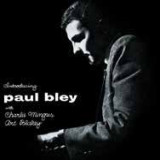
Limited Clear Vinyl edition, 500 copies! Originally released in 1953 on Charles Mingus’s own “Debut” label, this is Paul Bley’s historical debut album.
Here the young talented and technically strong pianist appears as leader of a super-trio with nothing but Mingus himself on bass and Art Blakey
on drums. This is a beautifully varied set including both renditions of classic standards such as “I can’t get Started”, and Bley’s early originals like
“Opus 1” and “Spontaneous Combustion” This is where you can hear the very beginning of a truly unique musical voice in Jazz history.
Limited Clear Vinyl edition, 300 copies! Roland Kirk was one of the most creative, extravagant figures in jazz history. A master multi instrumentalist
with no boundaries in terms of language, style and technique. Here we find him co-leading a strong studio session with organ specialist Brother
Jack Mcduff. Backed up by Joe Benjamin on bass and Art Taylor on drums, Kirk and McDuff give voice to a soulful post-bop set full of groovy riffs
and highly inventive instrumental ping pong. Recorded by Rudy Van Gelder and released in 1961 by Prestige Records, this is a fine early step in
Kirk’s varied and intense career.
Signed by the creator of Nicky Larson, the cartoon Signed Cat’s Eyes marked more than one teenager in front of his television set.
Find on this maxi 45T, the cult credits of this must-have Japanese animated series broadcast in France for the first time in 1986...
«Cat’s» with her heroines with a double life: Tam, Alex and Sylia. Three creatures metamorphosing into the air at night and signing each of their misdeeds with a card that simply says, "Cat’s Eyes!"
BLUTHARDINO, Komponist, Arrangeur und Multiinstrumentalist von MONDO SANGUE, erhebt mit DISCO VOLANTE 80 seinen Retro-Sound in völlig neue Sphären und erweitert die filmische Epik seiner Band mit Einflüssen von Soul, Funk und spacigem 80er-Jahre House. Herausgekommen ist ein vorwiegend instrumentales Producer-Debutalbum. Der groovende Retro-Cocktail eines Sound-Wizards, der hier einmal mehr ein enormes Gespür für den Sound der 70er und 80er Jahre beweist. Gesangliche Unterstützung gibt"s von Indie-Ikone FUTURE FRANZ und - erstmals auf französisch - von Bandkollegin YVY POP.
Mit dreißig Jahren aktiven, schändlichen Dienstes unter ihren Gürteln sind NECROPHOBIC unbestrittene Legenden des Death- und Black-Metal-Undergrounds. Die 1989 von Schlagzeuger Joakim Sterner gegründete Band aus Stockholm vertrat von Anfang an eine einzigartige und furchtlose Vision und bestätigte ihr Können 1993 mit dem mittlerweile legendären Debütalbum 'The Nocturnal Silence'. Indem sie den selbstbewussten Dilettantismus und die primitiven Klänge, die viele ihrer Kollegen schätzten, hinter sich ließen, schufen NECROPHOBIC eine kühne und lebendige eigene Identität und zauberten eine dicht melodische, aber unendlich verruchte Version von makabrem Extrem-Metal hervor, die seitdem von unzähligen weniger bekannten Bands nachgeahmt worden ist. The 'Third Antichrist' ist das dritte Album von NECROPHOBIC und wurde ursprünglich 1999 veröffentlicht. Die schwedischen Black-Death-Metal-Legenden bringen dieses Album nun als eine von insgesamt neun Wiederveröffentlichungen auf den Markt. Wer eine gut produzierte Mischung aus Death Metal und leichten Black Metal-Zutaten mag, sollte um dieses Album keinen großen Bogen machen. Wie schon die früheren Veröffentlichungen 'Hrimthursum', 'Death To All' und 'Satanic Blasphemies' in diesem Jahr, wurde auch 'The Third Antichrist' von Dan Swanö im Unisound Studio remastered.
Re-mastered from the original master tapes.
180 gr vinyl pressed by Optimal in Germany using the Metal Mothers from Pallas.
Facsimile reissue using the original photo by Jean-Pierre Leloir.
Double insert using an original color photo by JP Leloir.
Each record has been visually checked to prevent defects.
In its October ‘58 issue, the title carried by Jazz Hot magazine was: »Revelation at the Chat Qui Pêche. The spirit of jazz (which some thought was dying) is sparkling with life in the Donald Byrd Quintet.« And indeed, on its first appearance at the Cannes Festival in July (the Jazz Festival, not the other one), the Donald Byrd Quintet brought the house down. Its members were hardly the Who’s Who of jazz, however. People vaguely knew that the leader had replaced Kenny Dorham in the Jazz Messengers, that Doug Watkins had played bass with them, and that pianist Walter Davis Jr. had been with Charlie Parker before he was 19. As for Art Taylor, if he’d already enjoyed a career longer than that of his colleagues, it hadn’t yet brought him recognition beyond a small circle of cognoscenti. Only Bobby Jaspar – who’d shone at the Club St. Germain – was famous with the Parisian audience. At the beginning of 1956, he’d decided to try his luck in the United States; J.J. Johnson had hired him, and then Miles Davis (for a brief spell) before Donald Byrd brought him into his own group. After appearing in Cannes (in the sun) and Knokke-le-Zoute (a much smaller audience) for almost three months, the Donald Byrd Quintet settled down for the autumn in one of the capital’s top jazz spots, the Chat Qui Pêche on the Rue de la Huchette. »In that tiny room,« wrote Frank Ténot, »where the owner used to bump into the soloists by accident when she was serving her customers, the music they played was hot, and always surprising.« To crown a tour that had been extremely satisfying for everyone, a concert at the Olympia theatre was organised (there were gigs there called “Jazz Wednesdays”). Byrd and Co. took things very seriously, even though they preserved the relaxed approach that their (relatively) long association now permitted: "La Marseillaise", and "And The Angels Sing" are both present in the introduction to Parisian Thoroughfare played by the two horns. The latter then went on to imitate other horns, those of the cars on 52nd Street ... However, when it came to "Stardust", it was with all the seriousness in the world, almost in meditation in fact, that Donald Byrd improvised over the backing provided by just Walter Davis Jr. and Doug Watkins. Bobby Jaspar, of course, was marvellous. If he showed a marked obedience to Sonny Rollins, he still preserved, intact, the virtues of sobriety that prevented him falling into the trap of serving up torrents of notes in pieces taken at a rapid tempo ("At This Time", for example). During the exchanges on "Formidable", you’d be forgiven for saying that he gets the better of Donald Byrd. As for the complicity that reigned between the members of the rhythm section, it gave the formation a homogenous character that was very rare in a quintet. One can’t thank François Postif enough for taking the risk to release this concert at the time. Now, almost half a century later, one
The ECM New Series debut of Evgueni Galperin is one of the most
strikingly original and evocative albums of the year
A composer of Russian and Ukrainian heritage, currently based in France,
Galperin is working with sound, texture and dynamics in new and powerfully
expressive ways. As he explains, the sound world of Theory of Becoming
represents an "augmented reality of acoustic instruments, created from
recordings made with real and virtual instruments. The numerous
transformations the instruments undergo allow me to capture their acoustic
nature while also adding techniques and colours impossible to produce in
reality..."
Galperin's compositions address wide ranging subjects: from the resilience of
hope in the face of destruction to meditations on the journey of the soul, as well
as travels through space and through the magical forests of Max Ernst's
paintings.
Theory of Becoming was recorded and mixed 2020-21 in Paris, at Studio EPG and
Studios de la Seine and was produced by Manfred Eicher.
Evgueni Galperine: composition
Maria Vasyukova: voice
Sergei Nakariakov: trumpet
Sebastien Hurtaud: cello
There would be no Austin City Limits were it not for Willie Nelson - He
started it all in 1974, performing on the original pilot episode, and has
been a large part of ACL history ever since
He's appeared on more programs than any single artist, but this particular show
(recorded on September 6, 1990) captures him and the family band at their best.
It's all here, all the Willie classics, his signature songs and fan favorites. His trusty
guitar, Trigger,and that voice, that unique phrasing, that makes Willie Nelson one
of the world's most original singers, whether he's wailing the blues, honky tonkin,'
crooning pop standards or rockin' the house. Everybody knows the story: the boy
from Abbott, Texas who grew up playing music with his sister Bobbie, who moved
to Nashville to stake his claim, but after years of writing classic songs for other
artists ( Crazy,Night Life,Funny How Time Slips Away ), got tired of playing the
game and moved back to Texas. He chose Austin as his new home, and nothing
has been the same ever since. This performance shows Willie at the top of his
game. Back then he truly was and still is the King of Country.
- Terry Lickona (producer Austin City Limits ).