Respected Leipzig based multi-instrumentalist Panthera Krause arrives on KANN with New Age appeal! Delving into a more mysterious sound than the label is commonly known, the artist draws from the dark side of the pool, taking in Baltic choir inspirations, 80s cinema themes (Tarantino's favourite) and lyrical GDR rock for good measure. Produced in secrecy over the past 12 months, Krause gets in touch with his inner Stereolab by creating an enchanting new full length entirely on headphones. Drip fed to those close to him over the past year, he was convinced to share these audiobooks to a wider audience, now resulting to: Aside The Aeons. Adding almost only sounds from Korg M3R, Roland Aeorophon and a JX 03 synthesizer to the action - the record explores an unique musical universe and head trip for the astral plane.
Поиск:headphone head
Все
On Pedro The Lion’s new album Santa Cruz, critically acclaimed musician David Bazan returns with a new chapter in his ambitious and ongoing recording project - 5 albums devoted to places he lived in throughout his life. Santa Cruz is Bazan’s third album in the series and follows up where 2022’s Havasu and 2019’s Phoenix left off. Tracks like "Modesto" and "Little Help" foreshadow Bazan's exposure and ultimate love of classic rock n' roll records, while songs like "It'll All Work Out" showcase his unique approach to synthesizers, something he introduced with the 2005 self-titled Headphones album. The stories on Santa Cruz highlight Bazan’s teenage years and solidifies what he sees as an exposition in a traditional three-act structure. After 25 years refining and building what he calls his “garden of songs,” David Bazan has sold hundreds of thousands of albums, performed in sold-out venues and living rooms around the globe, and played high-profile live sessions with the likes of NPR’s Tiny Desk, KEXP, WNYC’s Soundcheck, WXPN’s World Cafe and many others. His music has been featured in outlets such as The New York Times, Pitchfork, Rolling Stone, SPIN, Vox, Paste, Aquarium Drunkard and others.
7" Record Bag !
The new MAGMA 45 RECORD-BAG 100 is the latest addition to MAGMA’s 45 bag range and perfectly holds up to 100 x 7-inch records. The fully padded main body features a reinforced semi-hard PVC-body, providing excellent protection and a stable fit even in the pre-selected position of the records. Additional accessories such as headphones, a needle-case and 45-adapters can be stored in the two zippered side-pockets.
fits:
100 x 7” Vinyl-Singles
45 Adapters & accessories
basics:
Heavy duty and 100% waterproof 1680D Ballistic-Nylon
Integrated PVC walls for ultimate protection and stable fit
Two side pockets fits headphones, needle-case and 45-adapters
Internal zippered mesh-compartment
Detachable shoulder-strap
specs:
Outer measures: 29 x 20 x 21 cm (incl. side pockets)
Inner measures: 19,5 x 18 x 19 cm
Weight: 0,9 kg
Color: camo-green/bordeaux-red
- A1: Barry Woolnough - Great Father Spirit In The Sky
- A2: David Holmes & Steve Jones - The Reiki Healer From County Down
- A3: The Children Of Sunshine - It's A Long Way To Heaven
- A4: Spark Sparkle - Slythtovery
- A5: Alain Maclean - Talking Judgement Day Blues
- A6: David Crosby - Orleans
- A7: Buddy Holly - Love Is Strange
- B1: After Dinner - Paradise Of Replica
- B2: Lullaby Movement - Ru-Ru (Sleep Little Baby)
- B3: Jeff Bridges & Keefus Ciancia - It's In Every One Of Us
- B4: Song Sung - I'm Not In Love
- C1: Neo Maya - I Wont Hurt You
- C2: Bp Fallon & David Holmes - Henry Mccullough
- C3: Documenta - Love As A Ghost (Produced By David Holmes)
- C4: Keith Fullerton Whitman - Stereo Music For Acoustic Guitar, Buchla Music Box 100 Hewlett Packard Model 236 Oscillator, Electric Guitar And Computer Part I
- D1: Eat Lights Become Lights - Into Forever
- D2: Geese - Andrew Parsnip
- D3: Die Hexen - Gloomy Sunday
- D4: Jon Hopkins & David Holmes Feat Stephen Rea - Elsewhere Anchises
DJ and producer David Holmes is welcomed to the Late Night Tales fraternity with an evocative collection of personal songs and music, peppered with exclusive new material and rare gems. By now, I think we all know David Holmes, right There's acid house Holmes, with bone-rattling Chicago jams and Detroit destroyers, break-digger Holmes responsible for the grittily shaking 'Let's Get Killed' and seminal Essential Mix compilation (which brought Sixto Rodriguez to people's attention, and then there's soundtrack Holmes. His most enduring and vital source of musical inspiration - cinema - plugged into David's rst solo record 'This Film's Crap, Let's Slash the Seats' and inspired 2000's 'Bow Down to the Exit Sign', created as the soundtrack to a not-yet-made movie. Ofcial soundtracks have been bountiful, including scores for Soderbergh's Out Of Sight and Ocean's trilogy, '71, Hunger and Good Vibrations. In a series of personal songs sung by himself, David's last solo album 'The Holy Pictures' explored inuences of La Düsseldorf, The Jesus and Mary Chain and early Brian Eno. His Unloved collaboration with Keefus Ciancia and Jade Vincent then took us on a musical journey full of raw 60s pop-noir, psychedelia and French Ye Ye with a contemporary twist. Somehow he's also found time to produce records by Primal Scream and Jon Spencer Blues Explosion. Unsurprisingly, for someone au fait with matters cinematic, this Late Night Tales conjures up its own mindmovies. It's not only packed with the judiciously selected nuggets for which his mixes are noted but also stuffed with original material, including collaborations with BP Fallon and Jon Hopkins and an amazing new reading of 10cc's 'I'm Not In Love' by Holmes-produced Song Sung. In fact, there's a Celtic thread running through the whole journey with Stephen Rea's reading of an extract from Seamus Heaney's AENEID BOOK VI - Elsewhere Anchises. Among the other gems included here are David Crosby's lush 'Orleans', Buddy Holly's celestial 'Love Is Strange' and the Children Of Sunshine's 'It's A Long Way To Heaven'. David Holmes loves music. It's a way of expressing the sometimes inexpressible or the inconsolable, a questing desire to nd out just what is over the next hill. It's no surprise to learn he's a keen walker. Always on the move, headphones on, lost in some reverie or piece of music, the soundtrack to his life, the stuff that feeds his imagination. I walk a lot. It's amazing for listening to music: your phone or your emails aren't going and you're just in the forest listening to music. It's so intimate. Anyway, I was listening to the KLF's Chill Out album, which still sounds amazing, but it triggered an idea with concrete sounds through travelling and movement. And one of the things I was trying to do was to use this idea not just break up the moods but also as a metaphor for moving through life and arriving in different destinations or arriving at different stages in different parts of your life. Memory, Love, Living, Family, Friendship, Healing, Death and The Afterworld are some of the themes I wanted to explore within this record. Although these strong themes and tracks are personal to me, I also wanted it to be a great listen that was unpredictable yet had a seamless ow - a journey that was personal to me yet to the listener a great compilation of music that they may or may not have heard before. I hope I've succeeded in the later.' David Holmes 2016
Barro Music Label reaches its tenth reference with a tremendous EP in which the protagonist (even of the cover) is Nöle, the label's boss. In Electro Bloody Music, the popular DJ and producer from Pamplona delivers four original tracks accompanied by a fantastic remix by Delectro. The renowned Colombian producer, active since 2006, has released on some of the best international labels and with his 80s EBM, electro and techno influences, he is the ideal person to accompany the label boss on such an important release. As for Nöle, after the success of Mendekua, his previous work released in 2022, he does what he is the best at: dark and frenetic techno with EBM flavor, like the one he played during his long residency at Stardust and does now at Lasociación.
On the A-side of Electro Blood Music we find three originals, the first two could be included in the category of Techno Body Music while the third is more purely techno. The EP starts with BuruHilketa, a dark track with a certain experimental atmosphere endowed with an incisive synth line and disturbing vocal samples that accompany us during most of the composition. Shaktale, shares some of the atmosphere of the first track, as it also includes vocal samples and a eerie synthesizer melody quite catchy. It has quite a complex rhythm and an extremely careful production that we recommend listening with headphones to appreciate in detail. Cementerio caliente is powerufl techno track, with hypnotic synths and an acid touch and tremendously forceful. With this kick drum, you could definitely demolish a house!
On the B-side we find another original track titled Noisebuilder and the remix by Delectro. Noisebuilder, with its fat and aquatic basses starts off more techno but, little by little, it also includes EBM details. The track lives up to its name and the noise builds, little by little, layer by layer while the intensity keeps growing. With a hard-hitting beat, spiced in the background by synthesizers that help to create an atmosphere, it is one of the clearest bangers of the EP. Delectro delivers a remix a little more forceful and darker, a bombshell of pure Techno Body Music that closes this magnificent EP.
Release note: El Garaje de Frank
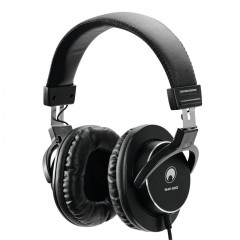
High-class monitor stereo headphones
Closed, circumaural, dynamic stereo headphones
Very good attenuation of background noise makes them especially suitable for use as monitoring headphones in a noisy environment, film and theater applications, DJ or recording applications
Very high output power
Powerful 45 mm neodymium magnet and HQ voice coil
Enhanced frequency response tuned to deliver high-output bass with extended highs
Well-padded, adjustable leatherette headband
Soft circumaural ear pads
Optimal wearer-comfort due to single OFC cable
Gold-plated 3.5 mm stereo jack with 6.3 mm adapter
Incl. velour bag for safe transportation
Frequency range: 10 - 26000 Hz
Sensitivity: 98 dB
Max. SPL: 98 dB
Rated power: 1800 mW
Cable length: approx. 3 m
Connector type: 6.3 mm jack (stereo); 3.5 mm jack (stereo)
Connections: Headphones via 6.3 mm jack (stereo)
Headphones via 3.5 mm jack (stereo)
Speakers: (1.75") approx 4.5 cm with Neodymiummagnet
Transducer type: Dynamic
Type (Headphones): Closed, earenclosing
Weight: 0.34 kg
The new Headphone-Case II can hold any common foldable and non-foldable DJ or studio headphones and now features a mesh pocket for USB flash drives.
+ FITS
Sennheiser HD-25
Sennheiser HD-8
Sennheiser HD-7
V-Moda Crossfade
Pioneer HDJ-700R
Pioneer HDJ-1500K
Pioneer HD-2000
Ortofon O2
AIAIAI TMA-2
AIAIAI Studio
Technics HP-1200 /1210
Technics RP DH 1200
Shure SRH 40 /20
Beats by Dr. Dre Mixr
Beats by Dr. Dre Studio
Nocs NS900
Reloop RHP 30
Reloop RHP 20
Reloop RP-15
Ultrasone DJ-1 Pro
etc.
+ BASICS
Lightweight Durashock molded EVA foam and polyester exterior shell
Zip-compartment for USB flash drives
Including carrying handle and adjustable + detachable shoulder strap
+ SPECS
Outer dimensions: 18 x 20 x 9 cm
Inner dimensions: 17 x 19 x 8 cm
Weight: 0,3 kg
Christina Kubisch’s Stromsänger finds this legendary sound artist at the top of her game mixing electromagnetic wave recordings with a score for six voices, creating powerful results. Stromsänger is based on a collaboration with the Norwegian vocal ensemble Trondheim Voices and on a special experience while researching and recording electromagnetic waves in the city of Trondheim.
“The general theme of the composition is the idea of sounds which travel. During a tram ride from the city up to the hills with an old tram I discovered not only stunning views of the surrounding landscape but as well a special soundscape. Wearing a custom made induction headphones, I could hear the normally hidden electromagnetic fields of the tram, which were so impressive and musical to me that I immediately decided to base my piece for Trondheim Voices on this discovery.
As a start, a series of pure vocal recordings were produced by Trondheim Voices while listening to a choice of electromagnetic tram sounds and following score instructions. This material was mixed in my Berlin studio and afterward was played back through a multi-loudspeaker setup into the room of the Elisabeth Church in Berlin and was instantaneously recorded. The emerged recording was played back and recorded again. The process of playing back the previous recording was repeated numerous times, generating numerous “re-recordings”, until the voices sounded aethereal and abstract. The last one of these recordings became the very beginning of the Stromsänger piece.
Part A is based on the electromagnetic sounds of the waiting tram and previously recorded voices. The singers come on stage and start to sing together with their recorded part which slowly fades out while the live singing takes over: a kind of choral for electrical tram waves and voices.
Part B is based on the actual tram ride with strong and intense electromagnetic sounds. The single recordings were treated electronically and were divided into six channels. Each singer has chosen one of these files and improvises with the magnetic sounds as a soloist or in duos or trios.
Part C is based on the itinerary of the tram ride to Lian, where a pilgrim's path starts. The names of the single stops, which have very beautiful and poetic names, are performed together as a kind of "sound poetry". The singers walk around on stage and/or can choose special positions for their performance. The recording of the word "Lian", the final stop, was recorded beforehand and played back and re-recorded several times in the open Norwegian landscape near the final tram stop. The voices slowly disappear and fade out.”
Christina Kubisch, 2024
How do you follow up a work described in the Independent on Sunday as “the best debut album since Marquee Moon”? That’s the question facing singer-songwriter John Canning Yates, twenty years on from the critically acclaimed ‘The First Album’ by his band Ella Guru.
‘The Quiet Portraits’ will appeal to anyone who loves the beautiful melodic soundscapes woven by Brian Wilson, Burt Bacharach, and Tom Waits, while Yates’s unique vocals evoke the emotional fragility and compelling narrative of Neil Young, Paul Buchanan, Mark Linkous and Elliott Smith.
Mastered by Jason Mitchell (PJ Harvey, Robert Forster), and featuring guest contributions from pedal steel maestro BJ Cole and friend and multi-instrumentalist Andy Frizell (Kevin Ayers, Wizards of Twiddly), those dedicated followers of Ella Guru who stayed the path will find their patience very well rewarded. ‘The Quiet Portraits’ is a remarkable achievement from an unassuming, yet hugely talented artist.
It’s a welcome relief amid the rapidly changing musical landscape to find that all that has changed in John’s world is the number of musicians around him. The beautiful storytelling, the art of finding those magical musical moments that will remain with you for years to come: all of that has survived the passing of time intact.
Happiest with headphones on, working alone in the small hours from his Liverpool home, Yates has created another masterpiece.
He explains: “In the wee small hours, with loved ones safely asleep and the busy day done, there comes a hush. Within it, you can breathe and listen. Listen for the infinite possibilities. From those possibilities emerged these portraits. I have sought to find those precious moments: of love and peace in turbulent times, of truth and hope for calmer days ahead. I hope you find them too.”
Entitled ‘The Quiet Portraits,’ the new solo album from John Canning Yates tells tales of people and places, of time, family, history, belonging, forgetting and remembering.
As a professional sound engineer by day, Colin Dunkerley aka Lapsed Pacifist, spends much of his time traveling and rarely gets to focus on producing his own music. Despite high praise from those who have become familiar with his work over the years, Colin’s previous productions have mainly consisted of shares with friends and DJs in smaller circles through his ‘Negative Neutron’ alias.
Colin envisaged a more pronounced and darker ambient style to emerge one day, but struggled to dedicate the time. ‘Hypatia’ came to life over an extended and fragmented period, with field recordings and loops of audio created on the go, later processed through his modular setup. In the autumn of 2022, Colin spent time collating and listening to these many fragments and field recordings, making notes in a book as he wandered around cold, unfamiliar places with headphones on, trying to shape disparate starting points into something thematically connected.
The title of Lapsed Pacifist’s debut album, ‘Hypatia’ is a reference to one of the many fantastical descriptions of imaginary places by Marco Polo in the book, Invisible Cities. Written as a dialogue between Mongol emperor Kublai Khan and Marco Polo, the book became the inspiration and a clear parallel for how Hypatia came to be and what it means to Colin today.
Attaching music to a place and time can become a very powerful and long-lasting memory. Across its eight tracks, Hypatia depicts fragmented glimpses of color and textures –a scrapbook of senses– traversing the optimistic first steps; the first smell of cold air; cityscapes burnt into your head; and the many emotions from exploring new places that stick with you longer than any photograph ever could.
“The experience of moving between places so frequently can be fascinating but also dislocating and often quite lonely. I have so many small stories about places I’ve been, but I often think they aren’t necessarily real reflections of anywhere, no more real than anything Invisible Cities author Calvino dreamt up”. - Lapsed Pacifist.
Hypatia is available on Transparent Copper smoke 12” + digital, mastered by Rafael Anton Irisarri and featuring artwork by Noah M / Keep Adding.
Kaito Cuts: Revert / Sequoia b/w Trek / Wait Up/ Sloan by Kaito | Galaxy Sound Co. — GSC45-042, Test Pressing | With their 42nd donut in the always-on-point 45 edit series, @galaxy_sound_company drops a new batch of lo-fi hip-hop beats instrumentals. This time out GSC is showcasing a newcomer to the head-nodding beat maker scene — @kaitoian.
Kaito, an out cold skater as well, has a couple of self-releases you can find on his Bandcamp page, which are solid & sound at home alongside his pop’s ( Todd Osborn) Ghostly International releases. This 7” EP outing spins at 33 1/3 to pack in as much as GSC can squeeze in & is straight up beatloverz heaven. What is impressive, for this old timer, is how clearly deep Kaito’s musical knowledge goes. He clearly has learned well from his father & all the good music he certainly has had at his fingertips. From Madlib to Os Mutantes to Fela Kuti to J Dilla & other artists who were not afraid to dig deep & unearth beats & melodies to tickle your fancy, Kaito’s tastes are as refined as anyone in the game. I know a number of the original source materials that comprise each track, but that I leave to you to dig out for yourself. Here I encourage you to open your eardrums & listen deep with your fav pair of headphones & let each track wash over you. From straight forward head-nodding hip-hop thumpers to beautiful Brazilian femme fatale vocals that lure you into the loop, to a Afrobeat driver that’ll break ya neck, to a mellow, soulful MPC hopper that will lovingly recall a Arlo Parks joint, to then closes out with a synth-laden spaced-out dreamy loop to end credits.
After the release of the first volume of music selected by Klinkhamer Record shop owner Michel Veenstra in 2022, the anticipation and expectation amongst the heads for a follow up compilation has been building. Now BBE Music can announce that Klinkhamer Volume 2's
collection of music from the 70's and 80's is ready to add to the series.
An eclectic selection of tracks which crosses genres and styles, Michel has once again curated a compilation album of music that will appeal to the heads, the collectors and the lovers of the groove. A melange of folk, Jazz and funk for the headphones and the dancefloor, Klinkhamer juxtaposes instrumentals with vocal tracks in English, Swedish and French over a double vinyl release and a track order that creates as much a journey as a flow.
Michel, alongside his brother Stephen, is the owner of the Klinkhamer Record shop in Groningen and a regular trader at the globally known Utrecht Record Fair since the 1990s. It is this wealth of experience, a nose for a gem and an ear for a tune that that has fed into a compilation that has music lover stamped throughout its eight tracks, all remastered from original vinyl.
Coming as a double vinyl and digital release, Klinkhamer Volume 2 is a Godfather II level of follow-up to the previous compilation in the series and really is a must for all true music collectors, vinyl junkies and lovers of tunes curated for the mind, the heart and the feet.
Although it felt like the world had stopped spinning, at times, it was during these days, months, and years of uncertainty that many of Venice’s “Stained Glass” songs were conceived. Each member of Venice was quietly and privately cataloguing their artistic interpretation of this new reality and uncertainty by recording or writing down little snippets of ideas, like guitar riffs, melodies, or lyrics…all of these came about while looking at life through a new lens.
They set up the writing circle using an electronic drum kit, small tube amps, direct acoustic guitars and bass and the sm58 stage microphones for vocals. This small and simple setup allowed the band to work on ideas at low-volume levels by using headphones or low-level playback through studio monitors without bothering the neighbors with live drums. “Lunches made by Michael’s wife, Danielle, and visits from their dog Sachi, kept us grounded and let us stay in the creative bubble without leaving that space”, says bassist, Mark Harris. Michael and drummer, Andre Kemp, who co-produced Stained Glass, would later re-record the drum tracks with real drums in a friend’s studio.
“The beauty of this approach on Stained Glass was that one person’s idea would be presented to the other 5 musicians and each guy added a different color to that idea”, says Michael. “Whether it was an unexpected drum beat, or a moving guitar line, those simple ideas turned into pieces of art, colored by the different musical and lyrical contributions. That only happens when you are working that idea out, together, and playing as one unit”.
That was the main inspiration for the album title; like a kaleidoscope, each guy's experience and taste in music was bringing a different color to the songs, but together their contributions made one piece of art, one song. Michael concludes, “if you zoom out, each song becomes its own color and all those songs or colors come together to form one big piece of art, one big piece of ‘Stained Glass’”.
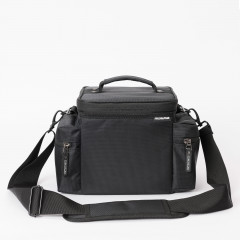
The UDG DIGI Headphone Bag is a premium headphone carrying bag made from Ballistic Nylon that is designed to protect headphone, USB drives, SD cards, Ext. hard-drive, mobile phone, cables, business cards, credit cards and accessories in one padded carry bag that includes a handgrip, detachable and adjustable shoulder strap. The UDG DIGI Headphone Bag the one bag a DJ need to carry around today’s digital media
SPECIFICATION
Specification
Weight 0,35 kg / 0.77 lbs
EAN 8718969213226
Color Black Camo/ Orange Inside
Outer Dimensions (W x H x D) cm: 22 x 22 x 9 | inch: 8.7 x 8.7 x 3.5
Inner Dimensions (W x H x D) cm: 21 x 21 x 8 | inch: 8.3 x 8.3 x 3.1
Material Water resistant Ballistic Nylon 1680D
Protection Foam padded interior
Extra's Detachable and adjustable shoulder strap. Holds USB drives, SD cards, hard drive, mobile phone, cables, business cards, credit cards and accessories
Fits Most foldable DJ Headphones.
Stolen Goods Records announce Pergola's cinematic techno 'Zed' EP, featuring a remix from indie-dance legend CURSES.
Exploring hypnotic, emotionally charged melodies and vast techno breakdowns, the title track opens up the EP with a strong sense of mystery. Suspenseful strings build in anticipation as the bassline filters in intensity, this deep space offenng is the perfect example of a tune fit for the club as well as headphone-listening.
'Freak' is a beautifully intense piece featuring soft synths marked by subtle scratches, a feel-good vocal and the catchy strum of a quitar. '"Zed' is then given the CURSES treatment, the Optimo Music, Bordello a Parigi and Correspondant artist amplifies its retro feel resulting in nine minutes of pure dark disco hedonism. Closing out the release is an ambient collaboration between Pergola and Luigi Sambuy, 'Tunnel' is an ode to the early days of IDM through to the '70s.
*"Zed' marks the third release on Lele Sacchi & Asian Fake's Stolen Goods Records and follows up their widely acclaimed 'Volume 0' compilation as well as the recent collaborative EP between Black Loops & Innocent Soul. Since its launch last summer, the label has seen the support of artists like Dixon, Sasha, DJ Seinfeld and DJ Sneak and has garnered plays on prestigious stations like NTS and BBC Radio 1. The imprint continues its strong start to the year with three new tracks from the hyper-talented Pergola: a newcomer to the scene whos aready listed on labels such as Multinotes, Sementa ano Adriatiques Siamese, the latter which saw/ him reach number one on Beatport's Electronica chart.
Lisbet Fritze and Louise Foo have shared artistic trajectories for half of their lives, having been two thirds of pop noir purveyors Giana Factory. As Glas, the duo reveals a patchwork of everyday observations rooted in significant life changes: moving countries, becoming a mother, keeping sane with and without a significant other. The music conveys a quest for balance, riding the line between doomy drama and playing it cool.
Their 10 song, self-produced debut, Kisses Like Feathers, will be released, worldwide in March 2023, through Hamburg’s hfn music. All lyrics, vocals and instruments were performed by Glas, and recorded in their studio. The album was mixed by Anders Trentemøller, with artwork by Brunswicker studio The Copenhagen-based duo have never been short on inspiration. Lisbet has lent her vocal and guitar talents to Trentemøller, in both the studio and on stage. Louise has explored immersive music with avant-pop project SØSTR, along with her sister, Sharin Foo of The Raveonettes. Lisbet’s other life involves architectural design. Louise works with sound installations in a visual arts context. The musical ideas of these two polymaths find coherence in the newly-formed Glas.
Kisses Like Feathers embody Nordic duality. Dark at times, it also presents with an open ethereality. Some songs feel tailor-made for a club’s sound system. Others lend themselves to intimate, headphone moments. While Lisbet and Louise’s harmonious vocal stack is the common thread throughout the album, the musical fabric is interlaced with acoustic, electric, and electronic instruments. Lo-fi piano and acoustic guitars share a reciprocal space with rich, synthetic orchestration. Galloping, modern rhythms and folk arrangements are often featured in the same song. These elements, and so many others, buttress the pair’s hymns.
Prolific musician and visual artist NAH (US / BE) presents ‘Totally Recalled’, a new album set for release on March 15. The record will be available on Vinyl LP via VIERNULVIER Records and digital via NAH’s own Difficult Sounds.
Across 10 tracks of relentlessly pulsing yet highly reflective works, ‘Totally Recalled’ continues NAH’s never-ending exploration of the balance between acoustic and synthetic percussion and the noisy overlapping genre intersections they pass through.
It pulls upon years of NAH’s experiences in dark clubs and grimy basements across the globe to present the listener with an audio snapshot of the genre-less alternate reality that NAH continues to traverse.
‘Totally Recalled’ is a listening experience that serves well at home, submerged in headphones, but ultimately meant to be witnessed live in all its decibel meter breaking glory.
To enhance ‘Totally Recalled’ on a visual level, NAH has developed a new live AV show of the same title with dates at CTM Festival (Berlin), Melkweg (Amsterdam), Out The Frame (Ghent), We Are Open (Antwerp) and many more.
‘Totally Recalled is set for release on March 15 on vinyl LP via VIERNULVIER Records & digital via NAH’s own Difficult Sounds
One of New Zealand’s fastest-rising electronic producers, Sanoi aka Jonas Fischer announces the release of his new album, ‘Echoes Of Home’. Rooted in melodic house and techno, the album is a journey through electronic music, one that is as at home on the dancefloor as it is on headphones. Having previously released on labels such as Bar 25, Stil Vor Talent, Beat & Path, Magician On Duty, Sounds Of Sin and Tube & Berger’s Zehn Records, Loop are proud to present Sanoi’s second full-length. The New Zealand-based, German-born producer has crafted deeply personal electronic music that pushes the boundaries of creativity, skill and production techniques, while influenced by organic deep house and electronic techno from Berlin. Created at his home in Auckland, and road tested across countless live performances across New Zealand and Australia over the past two years, ‘Echoes Of Home’ sees Sanoi’s songwriting step up to another level. Constantly developing as an artist and finding expression through music are some of the key factors that drive him, whether it be in the studio or behind the decks. His deeply danceable, meticulous though mischievous DJ sets see him move seamlessly across warm, melodic, groove-driven techno and beyond. Featuring vocals by Beacon Bloom on ‘Silver’.
repressed !
It is a smart and airy groove of atoms in space that rules this mesmerizing album, leading off with an irresistibly deconstructed downbeat monstrosity deceptively tagged as the 'Modern Hit Midget' as opposed to actually being a giant. One giant of seven, to be precise: safe in harbour are the seven giants of free Funk who proceed through a variety of way-out psychedelicacies. Which increase in flavour under headphones. The wane of Villalobos' and Loderbauer's free-floating energy of their Re:ECM work is more than offset here by the increase in rhythmic push through sensual syncopation and eruptive bass energy. The duo is the impetus in Perlon's great new swinging machine.
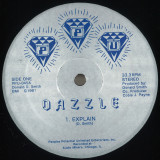
Dazzle rolled deep. Very deep. In the 1980s, it wasn't unusual for the Milwaukee-based group to show up at various Midwest night clubs in a caravan of 30-40 cars and vans. Their live following was hard won over a career that spanned 20+ years, many line up changes, and a handful of project names. Friends, family, and fans made the journey with them weekend after weekend, a testimony to both the musical prowess of the group and the tight-knit community that they emerged from.
Donald Smith, band leader, was there the whole time - joined by many of his siblings and friends - first as founder of the Ghetto Players, a early 70's nine-piece which also included siblings Michael, Ronald, and Charles. They played hard funk in the style of early Kool and the Gang, and although they sadly left no recordings, the strength of their live act managed to catch the eye of local Milwaukee R&B music entrepreneur Cobie Joe Payne. Cobie had made a couple of records locally in the early/mid 70s as a singer, including the impossibly weird and amazing rare afro-blues-funk 45 "Sweet Thing", but had never enjoyed national success. When the Ghetto Players disbanded in the early-mid 70s, Donald soon put together a new group, C on the Funk (the 'C' referring to lead vocalist and sibling Charles), under Payne's tutelage. Sister Lorrie Smith came in as the drummer, the line-up being fleshed out by brothers David and Melvin Johnson, and friend Robert Mitchell. After a few years as a strictly live attraction, they drove to Chicago and produced a single, "In the Disco" / "A Place" for Payne's small record label Sweet Thang Records in 1980. Lacking the financial backing needed to supply the local R&B disk jockey's "promotional fees" , this single sadly languished in obscurity, gathering dust inside the local tavern jukeboxes and manilla promo envelopes that comprised Payne's DIY distribution network.
C on the Funk were traveling the Mid West extensively at this point, and making some important friends on the road. Ike Wiley Jr. of the Dazz Band/Kinsman Dazz took particular interest and the band was re-christened Dazzle, partially as a tie-in with Dazz, partially to embrace the new sounds that would distinguish the 70s disco scene from what record collectors and DJs would now refer to as the "Boogie" era. There no doubt was a stigma attached to the word "Disco" as the eighties began, and as we see in this collection C On the Funk's "In the Disco" is remixed and transformed into the psychedelic synth instrumental of Dazzle's "Disco's Out", a title which embodies both the next-step approach Smith and company were pushing for, and humorously comments on the state of black dance music in the early 1980s. The Dazzle recording, done in Chicago in 1982, updated the sound and featured an expanded line up, most notably a second synth player (Charles Washington), and a percussionist/second lead vocalist (Greg McDonald). The added synth textures and deep percussive grooves give the Dazzle recordings an elegant late night vibe that resonate just as well in a good pair of headphones as they do on the dance floor. The trance inducing cough syrup-warble of "Explain" may best exemplify this here. Sadly, a pressing flaw in the 12" halted production and promotion, and the EP and the songs within were lost to the ages. The group, having done a much better line in the live music business, followed that path instead all the way to the early 90s. --bio provided by andy noble
Batov Records' Middle Eastern Grooves 45s series welcomes the latest addition to its eclectic roster - a two-track EP from Eje Eje, the psych and funk inspired project from Şatellites band leader and producer, Itamar Kluger. Featuring the tracks "That Rainy Down" and "Coral Sex," the EP showcases Eje Eje's unique blend of Middle Eastern melodies, soulful grooves, and psychedelic sounds.
On the A-side "That Rainy Down," The electro baglama player takes the lead, building and building as if, “he is pushing himself to his limit”, says Itamar, “seeking catharsis as he walks to the edge of the cliff with confidence”, whilst the a baladi rhythm plays like an immense march of drummers. On the B-side we find the funkier "Coral Sex", which according to Itamar tells a story of a drunk tramp bothering the refined and self-important occupants of an exclusive hotel lobby. Reflecting this friction, the track juxtaposes a silky and sophisticated R&B sound, with loosely, pr even drunkenly, played take on rebetiko, a traditional Greek music associated with the poorest of city dwellers, played on a long-necked Greek lute known as a bouzouki.
As each track develops, new layers are revealed, inviting the listener to delve deeper. The effect is intentional. As Itamar says, "there is this kind of music that hooks you in a different way every time you hear it, different places in the songs lighting up in different colors, like slowly revealed layers. In our (Eje Eje) case, it is just such a hazed blend. It could make a very specific atmosphere, color a very specific movie scene that is lost in time or yet to be directed, or a very specific moment with your headphones on a long bus to the desert."
Itamar Kluger is best known for his work with the Şatellites, a six-piece band whose blend of Turkish folk and psych with funk and disco won them champions and listeners across the globe, from KEXP in Seattle to BBC Radio 6 Music, and FIP in France.
Eje Eje’s first 45 promises to be at least as quirky and original, if not more so, since the project is even more unshackled from traditional concepts of a band.
Studio One was founded by Clement "Coxsone" Dodd1 in 1954, and the first recordings were cut in 1963 on Brentford Road in Kingston.1[2] Amongst its earliest records were "Easy Snappin" by Theophilus Beckford, backed by Clue J & His Blues Blasters, and "This Man is Back" by trombonist Don Drummond. Dodd had previously issued music on a series of other labels, including World Disc, and had run Sir Coxsone the Downbeat, one of the largest and most reputable sound systems in the Kingston ghettos.
In the early 1960s, the house band providing backing for the vocalists were the Skatalites[3] (1964–65), whose members (including Roland Alphonso, Don Drummond, Tommy McCook, Jackie Mittoo, Lester Sterling and Lloyd Brevett) were recruited from the Kingston jazz scene by Dodd. The Skatalites split up in 1965 after Drummond was jailed for murder, and Dodd formed new house band the Soul Brothers (1965–66), later named the Soul Vendors (1967) and Sound Dimension (1967-). From 1965 to 1968 they played 9 a.m. to 5 p.m., 5 days a week, 12 rhythms a day (about 60 rhythms a week) with Jackie Mittoo as music director, Brian Atkinson (1965–1968) on bass, Hux Brown on guitar, Harry Haughton (guitar), Joe Isaacs on drums (1966–1968), Denzel Laing on percussion, and on horns (some initially and some throughout): Roland Alphonso, Dennis 'Ska' Campbell, Bobby Ellis, Lester Sterling, among others on horns during the era of Rock Steady. Headley Bennett, Ernest Ranglin, Vin Gordon and Leroy Sibbles were included among a fluid line-up, to record tracks directed by Jackie Mittoo at Studio One from 1966-1968.
During the night hours at Studio One from 1965-1968, singers like Bob Marley, Burning Spear, The Heptones, The Ethiopians, Ken Boothe, Rita Marley, Marcia Griffiths, Judy Mowatt, Alton Ellis, Delroy Wilson, Bunny Wailer[4] and Johnny Nash, among others, would put on headphones to sing lyrics to original tracks recorded by the Soul Brothers earlier each day. These seminal recordings included "Real Rock" (by Sound Dimension), "Heavy Rock", "Jamaica Underground", "Wakie Wakie", "Lemon Tree", "Hot Shot", "I'm Still In Love With You", "Dancing Mood", and "Creation Rebel".
Jackie Mittoo, Joe Isaacs, and Brian Atkinson left Studio One in 1968, recorded drums and bass for Desmond Dekker's and Toots' biggest hits at other Kingston studios, then moved to Canada. Hux Brown stayed in Jamaica to record on the soundtrack The Harder They Come, The Harder They Fall, and toured in Nigeria with Toots and the Maytals and Fela Kuti. The Soul Brothers (a.k.a. Sound Dimension) formed the basis of reggae music in the late 1960s, being versioned and re-versioned time after time over decades by musicians like Shaggy, Sean Paul, Snoop Lion, The Clash, String Cheese Incident, UB40, Sublime, and countless other Billboard originals and remakes trying to emulate their original Rock Steady sound at Coxsone's Studio One.
The label and studio were closed when Dodd relocated to New York City in the 1980s.
Studio One was founded by Clement "Coxsone" Dodd1 in 1954, and the first recordings were cut in 1963 on Brentford Road in Kingston.1[2] Amongst its earliest records were "Easy Snappin" by Theophilus Beckford, backed by Clue J & His Blues Blasters, and "This Man is Back" by trombonist Don Drummond. Dodd had previously issued music on a series of other labels, including World Disc, and had run Sir Coxsone the Downbeat, one of the largest and most reputable sound systems in the Kingston ghettos.
In the early 1960s, the house band providing backing for the vocalists were the Skatalites[3] (1964–65), whose members (including Roland Alphonso, Don Drummond, Tommy McCook, Jackie Mittoo, Lester Sterling and Lloyd Brevett) were recruited from the Kingston jazz scene by Dodd. The Skatalites split up in 1965 after Drummond was jailed for murder, and Dodd formed new house band the Soul Brothers (1965–66), later named the Soul Vendors (1967) and Sound Dimension (1967-). From 1965 to 1968 they played 9 a.m. to 5 p.m., 5 days a week, 12 rhythms a day (about 60 rhythms a week) with Jackie Mittoo as music director, Brian Atkinson (1965–1968) on bass, Hux Brown on guitar, Harry Haughton (guitar), Joe Isaacs on drums (1966–1968), Denzel Laing on percussion, and on horns (some initially and some throughout): Roland Alphonso, Dennis 'Ska' Campbell, Bobby Ellis, Lester Sterling, among others on horns during the era of Rock Steady. Headley Bennett, Ernest Ranglin, Vin Gordon and Leroy Sibbles were included among a fluid line-up, to record tracks directed by Jackie Mittoo at Studio One from 1966-1968.
During the night hours at Studio One from 1965-1968, singers like Bob Marley, Burning Spear, The Heptones, The Ethiopians, Ken Boothe, Rita Marley, Marcia Griffiths, Judy Mowatt, Alton Ellis, Delroy Wilson, Bunny Wailer[4] and Johnny Nash, among others, would put on headphones to sing lyrics to original tracks recorded by the Soul Brothers earlier each day. These seminal recordings included "Real Rock" (by Sound Dimension), "Heavy Rock", "Jamaica Underground", "Wakie Wakie", "Lemon Tree", "Hot Shot", "I'm Still In Love With You", "Dancing Mood", and "Creation Rebel".
Jackie Mittoo, Joe Isaacs, and Brian Atkinson left Studio One in 1968, recorded drums and bass for Desmond Dekker's and Toots' biggest hits at other Kingston studios, then moved to Canada. Hux Brown stayed in Jamaica to record on the soundtrack The Harder They Come, The Harder They Fall, and toured in Nigeria with Toots and the Maytals and Fela Kuti. The Soul Brothers (a.k.a. Sound Dimension) formed the basis of reggae music in the late 1960s, being versioned and re-versioned time after time over decades by musicians like Shaggy, Sean Paul, Snoop Lion, The Clash, String Cheese Incident, UB40, Sublime, and countless other Billboard originals and remakes trying to emulate their original Rock Steady sound at Coxsone's Studio One.
The label and studio were closed when Dodd relocated to New York City in the 1980s.
A Bad Diana is a project from Diana Rogerson, someone I first became aware of aged 12 when I read about Nurse With Wound and their United Dairies label in Smash Hits magazine. I was confused, mystified and intrigued in equal measure, and a couple of years later as a result I bought my first Nurse With Wound album. This led to an interest in all things NWW related. I guess Diana could be described as the matriarch of the Nurse With Wound world but she also had her own very distinguished pre-history with Fistfuck, an early-80s extreme noise outfit. She then made two mid 80s cult classic albums as Chrystal Belle Scrodd, both far out there rollercoaster rides of audio wildness, highly recommended to anyone with wide open ears. She then moved to rural Ireland and raised a family. There was the odd collaboration and then in 2007 A Bad Diana’s “The Lights Are On But No-One’s Home” was released on CD. I feel this is her meisterwerk and it has become something of a cult favourite over the years. Now for the first time, almost two decades later it is available on vinyl on Optimo Music Archiv. Produced in association with Steven Stapleton and Colin Potter from Nurse With Wound and irr. app. (ext.)’s Matt Waldron this is some seriously beautiful and strange listening. Next level sound design means this is an incredible headphone record but it is also a deeply warm and engaging home listening gem. Beautiful, magical, ultra hypno, soulful reverberations with the deep emotion of Diana’s voice tones and bio-vibrations.
Stolen Body is delighted to be working with Bristol progressive psych and jazz legends The Brackish for their fifth album ‘Donor Zone’. Attempting to capture our live sound and intensity, Donor Zone was recorded live at gig volume without the tyranny of headphones. The album kicks off with an ADHD epic ' Willox for a new Age' , apocalyptic coda morphing into the fuzz bass drone of 'Donor Zone'. Forboding chord sequences set up ' J und J' before a gargantuan riff drops, motorik middle section developing into a highly satisfying ripping fuzz guitar finish. Last tune BUABB has the faved Tortoise/ beefheart stylings around a Kraut- inspired improv section. The single 'J und J' draws the listener in to a false sense of uneasy security with it's pensive and motorik sections before it's gargantuan riff payoff. The track shifts dynamically back to it's uneasy base, developing into an extremely satisfying and belligerent ripping fuzz guitar ending.
Repress
As we continue the five part journey to say goodbye to the Telomere Plastic series, we as always, are excited to share with you Telomere 020.2.
This second VA, features producers, Anderson, Aspetuck, Bænglund and Watch Patrol.
We begin off the record with ‘Funk Inspector’ from Bænglund. The track name here sums it up pretty well. Full on quirky funk in the airwaves. A delicious cut to keep everyone on there toes!
Next on the A2 we have Aspetuck with his ‘As the Fog Rolls In’, Starting off with a bubbly soundscape the track progresses into a hypnotic acidic journey keeping the mood deep and melancholic. Handle this one with care!
On the B1 we have Anderson who delivers another deep and beautifully crafted soundscape. This is a timeless tune that takes you on a sonic journey from start to finish. This will work wonders on the dance floor and during your introspective moments laying in bed with your headphones bumping.
Lastly, we close out the release with the one and only Watch Patrol who we have all dearly missed. We hope you enjoy this slowed down IDM breakbeat gem!
Very limited black copies as always with a few colored copies available via the Wex bandcamp, be quick!
- A1: Freedom
- A2: Popular Demand (Popeyes) (Feat. Cam’ron & Pharrell)
- A3: Kinda Like A Big Deal (Feat. Kanye West)
- A4: Showing Out (Feat. Yo Gotti)
- A5: I’m Good (Feat. Pharrell)
- A6: There Was A Murder
- B1: Door Man
- B2: Never Will It Stop (Feat. Ab Liva)
- B3: All Eyes On Me (Feat. Keri Hilson)
- B4: Counseling (Feat. Nicole Hurst)
- B5: Champion
- B6: Footsteps
- B7: Life Change
PRESSED ON FRUIT PUNCH COLORED VINYL WITH HAND NUMBERED OBILIMITED TO 2000 COPIES
The contemporary realm of hip hop music can be seen as polarized between two sides; mainstream versus underground, industry versus independent, at a base level boiled down to catchy sounds & infective hooks over higher quality lyrical content. These elements don’t need to be mutually exclusive, but these days it’s rare to find an act that can please all sides of the discussion. Clipse are one of the few groups that successfully and consistently caters to both sides of rap’s splintered psyche, simultaneously serving the scene with upbeat bangers that get the club poppin’ & subwoofers rattlin’ while crafting clever quotable compositions deserving of repeated headphone submersions. Though their preceding official albums Lord Willin’ (2002) & Hell Hath No Fury (2006) made bigger splashes commercially, 2009’s Til The Casket Drops is surely no slouch, a gem which deserves to be revisited with fresh ears – good thing Get On Down has given it the proper treatment it deserves with its first-ever vinyl pressing!
Til The Casket Drops was a departure from the duo of Malice & Pusha T’s previous works in that it was their first LP not completely produced by The Neptunes. However, the celebrated team who brought us ‘Grinding’ & ‘Mr. Me Too’ still helmed 8 of the album’s 13 tracks, thus dominating the soundscapes and aesthetic of the album anyway. With the remaining beats handled by Hitmen Sean C & LV (Jay-Z, Big Pun, Ghostface) and Aftermath’s DJ Khalil (Kendrick Lamar, Aloe Blacc, Eminem) clearly Clipse stock hadn’t lowered in the game. While boasting notable vocal features from Kanye West, Pharrell, Cam’ron, Keri Hilson, Yo Gotti & their Re-Up Gang affiliate Ab-Liva, Casket Drops leaves ample space for the core emcee duo of Pusha & Malice to shine in the spotlight, with verses revolving around each other succinctly in-synch and bonded by an exceptional creative rhythm only biological brothers could share.
Clipse have always delighted in dualities, juxtapositions and contradictions, unabashedly celebrating the capitalistic lifestyle and the grind as the kings of ‘coke-rap’, while taking hard looks at society’s mores and those of their own individual journeys. We hear Malice’s eventual transition to No Malice taking form on this album as he found religion, warning others who might follow in his path on ‘Footsteps’: “don’t let my wrongs give you the right of way/ to emulate my past escaping the law’s grasp” while refusing to be pinned down in one lane: “it weights on my conscience and I hate conscious rap”. Meanwhile Pusha T continues his lyrical ascent into the King Push persona with bars like “pompous motherfucker, look what them jewels made me/ I’m only finding comfort in knowing you can’t replace me/ What a thing to say, but what am I to do/ I’m role-playing a conscious nigga and true is true/ Cocaine aside, all of the bloggers behooved/ My critics finally have a verse of mine to jerk off to” decisively on album opener “Freedom”.
Since it dropped, the Clipse have stated that Casket… is their final album together while subsequently alluding to the possibility of an eventual reunion. Only time will tell, but until then it’s time to re-celebrate one of hip hop’s most dynamic duos by hearing Til The Casket Drops in a whole new light with its long-overdue, first time on vinyl pressing via Get On Down featuring all 13 original tracks on wax and cover art by the legendary KAWS! It’s kinda like a big deal…
Easy Listening Recordings is here, and to kick things off we've got a new three-track EP from Vancouver's Teen Daze.
We begin with the title track, Quiet City, and immediately conjure up images of late night drives through anonymous city streets. Brimming with emotion, and a gentle energy, this one could find itself at home in a warmup set, early in the night, or one of those aforementioned late night drives. No matter where you hear it, this is one of Teen Daze’s most beautiful tunes.
Life Style brings us out of the car, and onto the sidewalks of that once quiet city. Now there’s a bustling energy from crowds of people, steam rising from the sewers below. You’re navigating it all in stride, with Life Style in your headphones. This is City Music.
We start Side B with an ode to Vancouver, BC, aka The Glass City: Night Club. The soft, swung drums, the walking bassline, the dubbed out bongos; this one feels at home across the entire Lower Mainland. Maybe you’re taking a stroll along the Sea Wall, maybe you’re watching the sun set while sipping on something at Juice Bar, maybe you’re walking up to Paradise at 12 am. No matter how you might experience Vancouver, Night Club has got your soundtrack covered.
Finally, we wrap up this first disc for Easy Listening Recordings with a special vinyl-only track, called New Mood. Pulsating percussion lead this dream-like track through 4 ½ minutes of Balearic Bliss. A beautiful way to finish this first release.
Early support from:
Paula Tape, NIKS, Eug (Public Records), Pleasure Voyage, Masha Mar, Massimiliano Pagliara, Loz Goddard
These outstanding Technics slipmats featuring the skull and headphones dj design will look great on any set of turntables.
Based on iconic, Mexican Day of the Dead imagery, cleverly features a distressed vintage, tattoo style print of classic dj related equipment;
Including turntable tone arms, 7” single adapators, 12” vinyl, cross-faders, speakers, switches and headphones.
These slipmats are suitable for any set of vinyl decks.
Made from the finest but strongest felt material, DMC slipmats are the no.1
choice for djs and vinyl lovers across the World.
Dependable & hard wearing, they are also resistant to dust & other
particles, so will not scuff, scratch or damage vinyl.
Great for your home, studio, club or in competition.
It's hard to place Frieder in any kind of genre: his sound is unique and impossible to replicate, something in between 80s synth, downtempo and minimal electronica. It's easy on the ears and always keeps you guessing, teasing and cajoling the listener.
He doesn't follow any rules and stays in his bubble: each track is unpredictable. Don't believe it? Listen for yourself :)
Whether you're diving into his world on your headphones, blasting his sounds on your speakers or enjoying the entire vinyl album on your record player - savour each sound to the max.
We present Frieder's debut vinyl - incl. remix by the inimitable Beazar. Enjoy!
Stepping out of the bedroom and into the Real World, Liverpool’s Strawberry Guy headed down to Peter Gabriel’s idyllic Real World Studios with Manchester’s Northern Session Collective in tow and set about trying to soften and expose the bare bones of his two biggest streaming tracks 'F Song' and 'Mrs Magic'.
Stripped of drums & synths, the music is pared down to piano and romantic new strings arrangements, bringing the careful melodies & indrawn lyrics to the fore.
Having recorded the original tracks in his Liverpool bedroom, swapping the originals’ string samples for their real-life counterparts lends the tracks an even more ethereal quality than the self-produced originals. The trip to Real World marks a first foray into studio recording for Strawberry Guy, and a new high-fidelity direction for the project, as he begins the process of making his sophomore album.
The vinyl edition of these new songs is out November 10, and features the two new strings versions along with the originals of both tracks, meaning fans can finally get their hands on a physical version of early single “F Song.”
While the music of Strawberry Guy favours a hermetic, headphones-forward sound lying somewhere between Bryter Layter-era Nick Drake, The Clientele, Slowdive’s Pygmalion, and the psychedelic 70s output of fellow Liverpudlian Paul McCartney, it’s nonetheless become a smash on TikTok and streaming services with a fanatical young and diverse fan base.
Having toured the world with Mczo and been at the helm of his own studio Pamoja Records since he was just 18, influential Singeli producer Duke, now 25, is one of Tanzania's busiest club alchemists. On his acclaimed solo debut "Uingizaji Hewa" we were introduced to his idiosyncratic "hip-hop Singeli" sound, a slower cousin to the Dar Es Salaam-rooted hard 'n fast club template that takes as much special sauce from Busta Rhymes and Eminem as it does the 200BPM clatter of genre veterans Jay Mitta and Sisso. On September's "Sounds Of Pamoja," we were treated to a closer look into Duke's studio, and specifically at his work with the city's best young MCs like Dogo Kibo, Pirato MC and MC Kuke. "Early Instrumentals" allows us to witness the depth of Duke's evolution with a selection of unearthed genre melting Singeli mutations laid completely bare without vocals. This 11-track set features some of his most arresting hybrid dance music yet, expressing his visionary fusion of contemporary rave sounds, US rap attitude, and Tanzanian dance history. While the roots of Singeli are in taraab, a popular fusion of East African and Middle Eastern traditional dance rhythms and melodies, Duke steers the sound into a synth-led, syncopated firework display that sounds spry and futuristic. Centered arounda bumping staccato melody and urgent synth strings 'Dukelo Fl Sing' echoes the lo-swung swagger of early Dr. Dre productions, but kicks the tempo into overdrive, decorating any gaps with flickering late-nite synths. 'Beat Kali Duke' meanwhile drives carnival trance leads through hard and fast rolls of kick drums, whistles and woodblock cracks. It's not all completely high speed either: 'Duke Selecta' is almost afro-house, with slow, sexy bass and woozy vocal melodies, and 'KKKKKKKKKKKKKKK' absorbs the propulsive spirit of South African gqom. "Early Instrumentals" is the most varied picture we've been presented yet of Duke's rousing dance cocktail. IT's a physical call to action that assures listeners the genre is for movement, not headphone listening
- 1: Get Down (Extended Mix) 04:46
- 2: Second Step 04:31
- 3: Flashback 04:28
- 4: Only One 03:52
- 5: Take A Chance 04:04
- 6: No Greater Love 04:03
- 7: The Don 04:08
- 8: Holy Sound 05:50
- 9: Snap To It! (Extended Mix) 05:00
- 10: Break From It! 05:00
- 11: Pursuit 05:29
- 12: Crash N Burn 05:58
- 13: Cosmic Evolution 07:08
- 14: Written In The Stars 02:37
Back in 2018 we dropped 'SOULACOASTA', our first long-form body of work - we were blown away by the reactions and still to this day the title track is a favourite in our live show with the full band. We now present to you 'SOULACOASTA II', a colourful sonic journey over 60 minutes in length that's full of energy for vibrant club floors, but equally ready for a headphone journey or long car ride. It’s a 14 track expedition through soul, house, broken beat and beyond, with the bass and beats driving the vehicle as the synths, keyboards and samples decorate the view. This record was an opportunity to get deeper into dance music and dive into niche sounds and samples that we’ve collected from trawling through movies, archives, digging through the crates across Australia, UK and Europe, weaving new inspiration and textures into our music. This record also features some drums and percussion by Lucky Pereira, and bass guitar by Matthew Hayes.
The UDG Ultimate Waist/Sling Bag is a stylish bag made from Ballistic Nylon that is designed to hold your daily essentials such as smartphone, passport, wallet, USB drives, SD cards, in-ear headphones, business cards and keys while on the go.
Long-time house music producer, DJ and journalist Anthony Teasdale is back with a new four-track EP for London’s Pamela Records.
The lead track is ‘Tango de la Boca’, an uplifting house tune with an unforgettable piano line and a groovy disco beat. Named after the barrio of La Boca in Buenos Aires, the tango feel is supplemented with layers of percussion, electric guitar stabs and moody strings. So far, it’s been played in clubs and on the radio by DJs like Rocky, David Holmes and Richard Sen.
“I think this is the most uplifting record I’ve ever made,” says Anthony. “Hearing those piano lines come in on a club system is a massive buzz.”
Second up is ‘A Pavement in Palma’ – a chilled jazz-house track. Inspired by lazy afternoons in Majorca’s capital, its swinging beat is joined by electric piano chords, live bongos and a bassline you can’t help but move to.
On Side B, we set sail on the good ship disco for ‘Deep in the Forest Something Stared’. Opening with bucolic bird noises – referencing the title – the track adds ’80s-style bass, glockenspiel melodies and soothing strings. It ends with a haunting piano motif that’s well worth the wait.
Finally, we return to 2023 with ‘It’s 5am Somewhere’, which blends old-school Roland 909 drum beats with minor chord synth stabs and rumbling piano melodies – plus an atmospheric breakdown guaranteed to excite any dancefloor.
Anthony says: “The EP reflects the music I’m listening to at the moment – which goes from classic techno to uptempo disco-house (and lots of synth pop!). The fusion of beautiful, often brittle, melodies with percussive house beats sets these records apart. And they sound as good on a dancefloor as they do in headphones when you’re relaxing at home.”
Having been deck slaying as near their London headquarters as Germany and as far as Canada, goth techno prodigy Lesser Of is steadily approaching double digit release count. With an established residence at queer x trans focused, revolutionary event series Subverted, their efforts have been welcomed to a formidable list of industrial electronic labels and remixed by a tidy sum of high profile scene icons.
Here at Depth.Request our sonars are attuned to emanant potential, and so we conscript Lesser Of to hammer out our fourth acetate offering to date. To this, harsh noise and drone music inspirations are declared, alongside an artistic secret of the trade: lights-off sessions in live room of a recording studio vibrating with the pulse of a bass guitar ran through a freeze pedal were what begot the tracks, and they are well intent on assaulting your headphones with noise. Reeko on the remix - yes, this record fucks.
Prolonged, ominous intro? Nah. Have a face full of Crude Manifestation Of Power instead, as an insatiable, 10-minute long opener braces your ears for a week of ringing with a sonic equivalent of metallic thrashing one could expect from being a sinful, rave-lusting scoundrel. On title-diverting continuation Within My Fragility the words "strength in fragility" are truly alliterated as the pace, abrasiveness and intensity of pummelling are all ramped up fiercely, with linear open hats thrown against them from time to time for good measure. Having reached 140 BPM and concrete mean, Masked proceeds in a well anticipated ra(n)ge: infernal atmosphere, sandy hats and layered tectonic tremors achieved with increasingly undefined low end consisting of a rumble line and rolling kick morphing into abrasive haze. Winding the tempo back a notch, a halftimearranged contemplation Our Descent grows in direct, hyperborean vector: glassy drones and sharp syncopulsation first - atonal reverberations, distorted arpeggios and punchy stabs endwise. Reeko's analog reinvention of Masked convolves the drum structure by borrowing from breakbeat narratives and authorizes the dystopian ambiance to rise and fall on more gradual, panning, confined terms; adding, however, more disorder to the mix with spectrum slicing, high-range chaos.
As you would have learned to expect from Depth.Request, Within My Fragility EP is not an easy listening five-tracker. If by the end of it you find yourself feeling as if you just stepped out of a pounding warehouse at 3AM and you don't know what day it is, you wouldn't have been experiencing this mindspace alone.
Black Truffle is pleased to announce its first release from celebrated London-based Canadian composer Cassandra Miller. Though her body of mature work stretches back almost twenty years, many listeners were introduced to Miller through the success of her astonishing 2015 Duet for Cello and Orchestra, which sets an imperturbable two-note cello part against a series of increasingly dense orchestrations of an Italian folk melody; in 2019, it was selected by The Guardian as one of the ‘best classical music works of the 21st century’. Traveller Song / Thanksong, the first release of her music on vinyl, presents a pair of compositions for voice and ensemble that exemplify Miller’s gently absurd, strikingly beautiful, and utterly unique work.
Like many of Miller’s compositions, these pieces originate in existing music. Traveller Song (2016/2018) begins from a 1950s song of an anonymous Sicilian cart driver recorded by Alan Lomax and Diego Carpitella, which Miller recorded herself singing along to, going on to then record herself singing to her own layered voices. Miller’s untutored voice is an unsteady, wavering wail that has, in her words, ‘more in common with a quasi-shamanistic keening than anything Sicilian’. Heard sometimes alone, sometimes layered, her pre-recorded voice is accompanied by a chamber sextet drawn from London’s Plus-Minus Ensemble. In the first section, Miller’s exposed warble is set to a spare piano accompaniment, somehow both faintly preposterous and magisterial. Following the voice note for note, the piano part often makes use of almost mechanical sequences of parallel chords, reminiscent both of Satie’s Rosicrucian period and the abrupt harmonic movements of a chord organ. The orchestration then opens up to guitar, clarinet, and sliding strings, a delicate environment for Miller’s voice, which, especially when it begins to be layered, generates a powerful sense of intimacy. In its concluding minutes, the folk roots of the original melody return in the form of a glorious full ensemble setting dominated by accordion, clarinet, and strummed guitar. Thanksong begins from recordings of Miller singing along to the third movement of Beethoven’s late quartet in A minor (Op. 132), the ‘holy song of thanks’ the composer wrote to express his gratitude for (temporarily) recovering from illness. Recording herself singing along repeatedly to each of the individual parts of the quartet, Miller created an aural score where each member of the string quartet listens to their own part on headphones, playing by ear. Performed on this recording by Montreal's Quatuor Bozzini, with whom Miller has a decades-long relationship, they are joined by the British soprano Juliet Fraser, who sings material from the Beethoven quartet ‘as slowly and quietly as possible’. The atmosphere of the opening of Beethoven’s Dankgesang, of hushed reawakening and thoughtful reflection, is sustained throughout the fourteen minutes of Miller’s piece, building at points almost to sentimentality before the five individual parts again fall back into a gentle burble of unsynchronised melodic gestures. Like Traveller Song, here the use of the voice is a long way from the mannered performance of much contemporary music, reaching for a human and bodily presence more connected to the reality of the everyday, albeit suffused with wonder. Presented in a stylish sleeve adorned with photography by Lasse Marhaug and liner notes by Cassandra Miller, this is a key release from a major contemporary composer whose work challenges and dazzles in equal measure. .
Two Saviors is Buck Meek's second album, following 2018's self-titled LP also released on Keeled Scales and currently on its third pressing. The Big Thief lead guitarist worked with producer and engineer Andrew Sarlo on this album (who's produced all four of Big Thief albums, as well as coproducing Bon Iver's i,i ). Andrew agreed to record it only if it was made under his conditions-- that they make the album in New Orleans during the hottest part of the year, spend no more than seven days tracking live, on an 8-track tape machine, with only dynamic microphones and no headphones, and not allowing the players to hear back any of the takes until the final day. The band, featuring Adam Brisbin (guitar, vocals), Mat Davidson (bass, pedal steel, fiddle, vocals), Austin Vaughn (drums), and Buck's brother Dylan Meek (piano, organ, vocals), set up in a Victorian house one block from the Mississippi River, and worked within these limitations, encouraging every recording to be imbued with the living, intuitive, and human energy of a first take.
Pressed On Clear Vinyl! 'We are the planters of the weeds or roses in our garden. Take the plunge within yourself to find The Main Ingredient.' So reads CL Smooth's album dedication in the liners to Pete Rock & CL's underrated, soulful and deeply grooving sophomore album. For fans, it was bittersweet, as it would be their last as a duo. By 1994, Pete and CL were darlings of both fans and critics, still on a high after 1992's Mecca & The Soul Brother and the album's emotional smash single 'They Reminisce Over You (T.R.O.Y.).' Two years later, they had grown even more as men and artists. Gone was some of the righteous striving of their earlier work, replaced by mature - yet still righteous - wisdom. And a lot more love as well, bringing a larger female constituency into their fanbase. They were adults now, reveling in the plateau they had reached. The duo's '90s swan song is a powerful double album that still resonates with Golden Era hip-hop fans: 16 cuts deep and full of intelligence, fire and warmth. Beats-per-minute-wise, the album mostly clocks at a comfortable strutting pace, bolstered by Pete Rock's pioneering use of filtered basslines and a recently-hatched obsession with Rhodes piano. The new tracks filled speakers and headphones with soul, as CL continued to assert his lyrical prowess all throughout. The lead single, 'I Got A Love,' is a perfect example of the group's '94 steez: a super-catchy and respectful, but far-from-soft love track, suitable for any rap fan's romantic needs. 'Take You There' and 'Carmel City' cover similar ground. Considering CL Smooth's top-level brag rapper status, cuts like 'I Get Physical,' 'Get On The Mic' and 'Check It Out' effectively reminded competitors not to test him. Pete also gets in the game on the mic several times on the album, acquitting himself nicely (and solo) on the cloudy day soul of 'Escape,' alongside other cuts. Add more pensive lyrical forays like 'All The Places,' 'Searching,' and - perhaps the album's sleeper cut - 'It's On You' and you have one of the more complete rap full-lengths of the mid-1990s. This isn't surprising, considering the wonder twins-esque skills of Pete and CL. But it does make fans wonder what would have happened if they had stayed together longer.
n
This new album compiles several songs made in the years following Black To Comm's classic "Alphabet 1968" album. Originally released on the seminal Type label in 2009 (and to be reissued on Cellule 75 this year) "Alphabet 1968" combined the sound of vintage shellac and vinyl loops with broken electronics and field recordings, the press release mentioning disparate influences "ranging from Moondog to Basic Channel by way of Bernard Herrmann". In a beautiful one-page review in The Wire magazine (later reprinted in his book Ghosts Of My Life) Mark Fisher compared Richter's music to JF Sebastian’s miniature automata in Blade Runner ("with their bizarre mixture of the clockwork and the computerised, the antique and the ultramodern, the playful and the sinister"), ETA Hoffmann's inventor-magicians and Auguste Villiers de l'Isle-Adam's 1886 tale of Thomas Edison's (fictitious) construction of an artificial human.
Now titled "Coh Bâle" (inspired by a strange dream) these recordings were supposed to become a follow-up to said album but for reasons unknown it never materialized and the album seemed forever lost. At the time Richter started to dive deeper into several strains of (so-called) world music aka the folk music of Southeast Asia and Eastern Europe as well as liturgical and medieval music, the Kraut-Electronica of Harmonia and several certain Mediterranean experimentalists from the 1980's who started to merge their mostly electronic and field recording based compositions with traditional musics from all over the world by way of new sampling technology.
Many of the songs for the album were recorded while travelling and at various residencies around Europe: a detuned piano in a Thessaloniki basement (Richter played at a children's birthday party there), vintage synthesizers in the GRM studios in Paris, decaying acoustic instruments found in an old Black Forest mansion, childrens' voices at a workshop in Karlsruhe's ZKM Institute; then mixed on headphones in the ICE trains running between these places and his hometown Hamburg.
"Coh Bâle" is taking inspirations from old Nonesuch Explorer and Ocora LP's, Crammed Records, 80s Mediterranean Ambient (Nuno Canavarro, Roberto Musci) combined with the DIY spirit of Deux Filles and Flaming Tunes and the playfulness of Asa Chang & Junray. The songs are both mysterious and transparent, intricate and frugal, vibrant and patient. One of the album's unexpected climaxes is a gorgeous (artificial) berimbau version of the Welsh traditional "Iechyd o Gylch".
No two songs feature the same instrumentation and many acoustic sources (pianos, flutes, wood percussion, viola, tablas, autoharp) were disassembled and later coalesced into new configurations or used as virtual instruments; later combined with samples, field recordings, electronics and (on a few tracks) autotuned vocals reminding of recent works by the likes of Claire Rousay or More Eaze.
We had to wait for a worldwide pandemic for Richter to dig deep into the vaults and finally bring these recordings to light. This is the 2nd release from his archives after the "Diode, Triode" LP which presented Musique Concrète/Acousmatic recordings made at INA/GRM and ZKM. Another massive Double-CD (MM∞XX Vol. 1 & 2) was released last year featuring collaborations with 33 artists such as Andrew Pekler, Richard Youngs, Eric Chenaux, Maja Ratkje, Radwan Ghazi Moumneh of Jerusalem In my Heart, GRM boss François Bonnet (Kassel Jaeger), Felix Kubin, Timo van Luijk (In Camera, Af Ursin), Luke Fowler and many others, showing Richter's versatility and his willingness to reinvent himself for every new release.
Marc Richter is widely known under his Black To Comm moniker, having released (at least) 12 albums under this alias in the last 20 years. He is currently signed to the Thrill Jockey label. Richter composes soundtracks for film and has worked with visual artists such as Mike Kelley and Ho Tzu Nyen. He also records as Jemh Circs and Mouchoir Étanche for his own Cellule 75 label (named in tribute to the late Luc Ferrari).
Singular Texan musician Craig Clouse hurtles unstoppably towards the 20th birthday of his dancefloor-splintering electronic project Shit And Shine, releasing a landmark LP, his first full-length for The state51 Conspiracy, ‘2222 And AIRPORT’. Acid house, minimal techno, electro, funk, krautrock, hip hop, found sound, spoken word, live percussion and industrial are blown apart stupendously and then reassembled – mad-scientist style, in a way peculiar to Clouse – into 13 hypnotic and transportative tracks.
Lead single SWISS, out 24 March, is a gloriously minimalist funk jam that sounds like the exact point at which someone turns the lights off at a lowkey house party and a wild night for the ages gets under way. An almost scornfully skeletal riff, sounding like a misfiring Cyberdine Systems Model 101 summoning up a Prince circa Sign “O” The Times riff while crashing head first into the hyper-processed early work of Prefuse 73, also featuring a cheeky sample of revered Mancunian DJ Luke Una talking about “existential fucking darkness”.
This is followed on 4 April by INFINITE SHITE, arguably the epic central track to the album, is a Shit And Shine banger for the ages, its dancefloor affect, undeniable. An unforgiving, pulsating Byetone-style bass drone worthy itself of being blasted on a Funktion-One rig, is just the background for a colossal acid b-line, destroying all in its path.
Micro details bristle at the liminal level, threatening to only reveal themselves to those in a club, those listening on headphones or those experiencing a heightened sensory state.
George Apergis aka EMEX, founder of Modular Expansion, returns after 2 years with a Collection of Classics! George Apergis makes his great return with a retro - italo infused banger techno track “Retrograde”. The release continues with the two first ever tracks of George Apergis, produced back in 2005 but never officially released! “Rave On” the electroclash smash hit and “Sleeping With Headphones”, a techno theme with percussive rhythms, bass synth lines and unique vocals, representing the sound of 00s. The release closes with “Back Forward” a hard kicker track with rave synth lines, percussive rhythms that goes beyond and creates a perfect rave tool.
The ever-prolific and established artist Alan Abrahams aka Portable makes a swift and very welcome return to Circus Company with the impressive lead single "Guiding Me", giving us an early taste of his forthcoming album Augmented Dreams to be released in the fall.
Conceptually the direction of this new project refers to the use of technology to alter our dreams, inadvertently or not, as so much tech advancement becomes available and ingrained in our daily lives. The timely lead single here inspired by Abraham's South African ancestors the Khoi San people and the guidance they provide, appropriately exuding both futurist formed sonics and dream-like tenderness in content, led by his dulcet-toned vocals and delivered with the super solid production we've come to expect. Wonderful multi-purpose electronic music which will find itself right at home on late-night discerning dance floors, or indeed guiding the listener through their respective travels, solo meditations or get-downs in headphones.
Along with the excellent "Guiding Me" original mix, we are graced with a masterful remix by Hamburg's Lawrence of Smallville and Dial fame, who takes the track into an even more floor-focussed realm with his patented rolling sub-bass lines which will guarantee plenty of summertime sound system finessing, as well as the EP-exclusive B2 track "Vigor" in which Portable goes even deeper in tone with classic styled vocal cut-ups and repurposed shards of tasty sound design added to keep the dancers endlessly entranced when and wherever they may be.
Like a winding system of trails and paths cutting through a digital forest-scape, M. Sage's Paradise Crick is shaped by time. Full of wonder and charm, designed patiently and from a rich, curious mulch of synthesized and acoustic sound, the versatile American artist and magic realist's new suite of music is an imaginary destination and a pastoral fantasy that envisions the natural and fabricated worlds as one. Matthew Sage is a musician, intermedia artist, recording engineer and producer, publisher, teacher, partner, and parent. Assembling a sprawling and idiosyncratic catalog of experimental studio music between Colorado and Chicago since the early 2010s, recent highlights include The Wind of Things (Geographic North, 2021), an ensemble-recorded expression of bow-splashed nostalgia, and the four seasonal albums of Fuubutsushi, the improvisatory ambient jazz quartet he formed with friends from afar in 2020. Sage renders projects with nuanced velocity and a completist sensibility _ when it's finished, it's done _ which is what makes Paradise Crick, his debut for RVNG Intl., a compelling outlier. Sage first staked his tent in Crick's conceptual campground five years ago from his home studio in Chicago (he's since returned to Colorado, home to the mountains and prairies often personified in his work). He had just read Richard Brautigan's Trout Fishing in America, a kaleidoscopic reflection of pastoral America's shifting identity by way of magical fishing sojourns. Inspired by that feeling, of getting lost but finding oneself in through the outdoors, he amassed over seventy demos documenting a fictional soundtrack for camping. Pull up to this park, and the sign might read, "Welcome to Paradise Crick. Fire Danger Is Low." The sequence, pruned down to thirteen tracks, courses the dewy mornings, afternoon hikes, and firelit nights of a weekend expedition. While Sage is not a filmmaker, he views the method of making this album as a similar form of world-building via structure, narrative, formal elements, and editorial refinement. Contrasted with his collaborative craft, here he is a sole auteur reclined in total autonomy, able to improvise scenes and implement special effects at will. A parallel precedent for such unchecked imagination in the M. Sage canon is A Singular Continent, his 2014 album that tilted its compass to a faraway land. Where Continent built its world layering samples as composition, Paradise Crick deploys a balance of accessible song structures with experimental instrumentation and sound design. Speckled with harmonica, autoharp, chimes, penny whistle, voice, hand percussion, and other mysteries, Crick's texture is treated as a sensorial adventure; the swamps gurgle, the lakes glisten, and the valleys breathe in robust HD. The rhythms are loose and buoyant, bursting with a few `kick and snare' moments shaped by Sage's lifelong love for drumming and headphone prone electronic music. Crick bumps more than most anything he's done before; crackling static pulses and lush vibrations reveal an intrinsic groove, a hidden beat map. In the landscapes of Paradise Crick, science and magic co-exist, 5k boulders and midi frogs share the frame with real-life memories of Midwest camping trips and the desire to feel extra human in a digitized space. Sage strived for "nature in the holodeck" but couldn't help leaving fingerprints in the simulation, and it's these traces of spirit and character that give Paradise Crick its strange allure. The album's bubbling sense of play, melody, and timbre takes cues from left-field electronic lineage; synth pioneers like Tomita and Raymond Scott up through the more expressive pop tendencies of Woo, Stereolab and the Cocteau Twins, and into contemporary composers like Sam Prekop. The album's vocabulary is uncomplicated; the gestures are sweet and inviting, intended to lull the listener. As much as Sage continues to be an experimentalist by nature in his work, with Paradise Crick, he spins a narrative. Not necessarily a concept album, but rather an invitation to take off for a weekend. That's the modus operandi down here in the Crick, we stretch out. M. Sage's Paradise Crick will be released May 26, 2023 in LP, CD, and digital editions. A portion of the proceeds from this release will benefit Earthjustice, the premier nonprofit public interest environmental law organization.
Another beautiful & booming release from Piezo on his rock solid Ansia imprint, conjuring up 5 tracks of frenetic & kinetic mind/body music that are distinctly his own with a reverent nod to such genres as UKG, grime, techno, gqom & footwork.
Evolving beyond the manufactured nostalgia that populates today's current dance milieu, Piezo takes bass science into the realm of the metaphysical.
“jRj” & “Big Room Technow” emanate metric tons of somatic energy for the club crowd, the former building up momentum on a gqom-infused grime pattern, while the latter is like a tin robot whistling an odd melody inside a peak-time 4/4 banger.
“Sensory Overdraw” is an outstanding UKG curveball with a distinctive metallic bassline and intricate head swimming programming for the headphone listener.
A similar approach is applied to “Cutest Kitty Content”, which teems with bizarre ear-candies, but moves with a different and faster framework. Footwork with outsider insight.
Finally you have the digital exclusive “Zing Zang”, which slows things down but still keep the same balance between mind and body requirements.
The genre references aren't blanketing the tracks as much as they are being manifested through pure passion and love: these tunes are all encompassing bin shakers that knock and sway the lucky participants that are awakened enough to be open to the journey.
This is a rare release where you can see the forest from the trees and yet both can simultaneously be experienced and enjoyed.
blue marbled vinyl
A thundering take on the classic Hot Pants break leads to eerie synth work, developing a powerful haunting atmosphere. An intense driving bassline intertwines with the beats & hats, challenging the balance between the headphones and the dancefloor.
A deceptively simple break expertly programmed with ASC's trademark punch is layered with dreamy 808 bass and long, swirling pads & synths, creating a luscious smooth vibe to the aptly titled Cosmic Energy.
Expertly programmed yet understated break work punctuates Stargate with an unforgettable kick-cymbal-kick-cymbal sequence, laden with room-filling sub-bass, a collage of effects and "that" whale sample used so effectively it feels fresh again in 2022.
Prophecy effortlessly combines a plethora of samples and effects you'll recognise from classic atmospheric drum & bass spanning the 90's and beyond to create a true "old school brand new" vibe set to a variety pack of jungly breaks and occasional vocal hits, with a lush tonal transition towards the latter stages.
Words by Chris Hayes (Spatial / Red Mist)
- 1: Intro
- 1: 2 Become The Warm Jets
- 1: 3 Desire
- 1: 4 My Spotless Mind
- 1: 5 Don't Hurt Anyone (Interlude)
- 1: 6 Blondie
- 1: 7 The Breakfast Club (I'm Feeling Wild With You)
- 1: 8 Neon Hell
- 1: 9 Symphonia Ix
- 1: 0 The Unbearable Lightness Of Being
- 2: 1 Broke A String On That One (Interlude)
- 2: New Flesh
- 2: 3 One Minute (Interlude)
- 2: 4 Kids
- 2: 5 My Legs (Interlude)
- 2: 6 In A Year Of 13 Moons
- 2: 7 My Motorcycle
- 2: 8 A Different Age
- 2: 9 One More Song (Interlude)
- 2: 10 Altered States
Back in print for the first time since its initial release during lockdown in 2020!
The music of Current Joys has captured the imagination of millions through headphones and laptop speakers across the world. Rattigan's deeply emotive and commanding songwriting feels built for solitary walks or contemplative nights in one's bedroom, and that is why a Current Joys live performance is a whole different experience altogether. On Live At Kilby Court, the band rips through a stacked setlist of fan-favorites transforming these bedroom ballads into adrenaline-pumping anthems, creating an overwhelming feeling of togetherness.
Ground Groove, the third full-length release from the LA-based, Iranian-American producer and DJ, Maral, begins with an invocation: the sprawling, achingly heavy Feedback Jam opens the floodgates of history. Conventional (linear) spacetime collapses, crushed beneath the track’s lumbering 4/4 heartbeat and successive waves of distortion. As each wave recedes, samples trickle forward in the mix — seeking, perhaps, to fill the void. Voices and instruments rise and fall in uncanny reverse. Overlapping, implied melodies flicker into focus, then flit away. Feedback Jam is at once an initiation ritual, and a thesis statement for the record that follows.
Drawing upon a vast personal archive of Iranian folk, classical, and pop recordings (some sourced from mixtapes made by her parents in the eighties/nineties), Maral presents, on Ground Groove, a further refinement of the signature “folk club” sound she developed as a live DJ— a sound she would later codify on Mahur Club (2019) and Push (2020). By collecting, dissecting, and re/presenting sonic fragments from Iran, Maral practices a kind of dance-floor ethnomusicology. The subject of her inquiry: Iranian
culture and contexts, throughout history and in the present. But, crucially, this inquiry is instantiated within and throughout the body of the listener, whether this listener is dancing in the club, or riding the train, nodding along with headphones on.
Maral speaks of being in collaboration with her samples, treating each as a distinct bandmate, often consulting with an artist’s catalog (or even a single recording) as one would a trusted creative partner. In so-doing, Maral claims to seek to transcend the self. In this regard, her output neatly triangulates contemporary dance and heavy music with much of the traditional religious music that she samples. Broadly speaking, each of these idioms addresses a desire —shared by audience and performer alike—to transcend the self through volume, repetition, and movement.
Having, in her youth, studied the Setar under Nader Majd (the founder of Virginia’s Center for Persian Classical Music), Maral cycled through various genres (ex: punk, emo, dub) in her adolescence and early twenties, all the while expanding her knowledge of, and appreciation for, Iran’s diverse musical traditions during regular summer trips to Tehran. In college, Maral taught herself to make beats with a ripped copy of Ableton (which remains her DAW of choice), eventually transitioning to playing and hosting various club nights. Forever abiding by an autodidactic, DIY impulse to create art and foster community, Maral relocated to Los Angeles in 2013, where she quickly immersed herself in the city’s numerous overlapping music scenes.
Collaboration (beyond sampling) has proven an important component of her process, with notable spoken word contributions from the likes of Lee Scratch Perry and Penny Rimbaud, as well as a 2021 Panda Bear collab track (On Your Way), which the Animal Collective founder co-produced. Maral is equally attentive to the visual components of her records (album art, music videos, etc.), drawing upon the work of peers and friends for inspiration.
Indeed, the genesis of Ground Groove can be traced back to an audio-visual collaboration between Maral and the artist Brenna Murphy, originally commissioned for the 2021 Rewire Festival — a project that would eventually serve as the album’s foundation. Tracks eight through eleven on Ground Groove comprise Maral’s half of this installation, with tracks one through seven composed afterwards, inspired by the fruits of Maral and Murphy’s collaboration. Murphy’s visuals will be released alongside Ground Groove as a visual accompaniment. Additionally, Murphy designed the album’s art, directed the video for the lead single (the aforementioned Feedback Jam), and is featured on track six, Shy Night.
Composed largely on Ableton, Ground Groove features more frequent and more prominent live recordings from Maral (guitar, bass, and vocals) than either Push or Mahar Club. The cult favorite Roland MC-909 groovebox rears its head on Mari’s Groove. Mixed by Trayer Tryon (Hundred Waters) and mastered by Daddy Kev, the attention to sonic quality on Ground Groove constitutes another significant step in Maral’s development as a studio artist.
Ground Groove’s eleven tracks are “grooves” in the obvious sense, in that they are each driven by a persistent, propulsive rhythm, but the album’s title may just as well suggest the glacial passage of time—the scope of human history, in which individual voices, like streams, carve paths (impossibly) through earth and stone, winding their way to the vast sea of the present.
Rua Sound's new sub-label SPHERES is proud to introduce its first release from Rome-based producer Noroi. The Adrastea EP is a richly imaginative work of electronic music, showcasing Noroi's uniquely melancholic and futuristic sound.
Comprised of four tracks, the EP opens with "Stay," a powerful blending of emotive breakbeat and evocative vocals. "Untitled Jungle," a collaboration with VSC, is a genre-defying jungle track that builds to a genre-appropriate fist pumping crescendo. "Chrysalis" is on a more introspective tip, where delicate layers of reverb-drenched instrumentation and the transcendent vocal delivery of Tokyo Witch creates a restorative atmosphere. The EP concludes with "Transoceanic," an energetic piece that blends percussion and atmospherics for a sound that can't be defined.
The Adrastea EP shows off Noroi's flare for innovative sound design, offering a vision of the future of electronic music. Out on March 10th on the Rua Sound Bandcamp and in online and physical stores worldwide, it is a must-listen for fans of the deep, adventurous tracks that work in your headphones as well as on the emotional end of the club sets.
This is the first in a series of releases from the SPHERES label, which named after one of Jupiter's moons. Each one features original artwork by Josje Bijl aka Yorobi, inspired by the sketches of these moons by Galileo in 1610.
All music by Noroi
On Al Hadr, Sabrina Bellaouel taps into myriad influences: from spirituality, astrology to club culture, romance, the body and self-love. Creating a balance between places, identities and sounds is a huge part of the charm of Al Hadr. As a true Libra, she’s finding a balance between honoring her roots and carving out her future.
Following two solo EPs, also on InFiné — 2020’s We Don’t Need To Be Enemies and 2021’s Libra — the French-Algerian producer and vocalist’s unique style of electronic R&B blossoms with Al Hadr, a 13-track album featuring collaborations with dance producer Basile3, experimental club DJ and writer Crystallmess, jazz musician Monomite and pop singer Bonnie Banane, among others.
Born, raised and based in Bagneux, outside the southern périphérique of Paris, Bellaouel lives between worlds. At home, her Algerian heritage and Muslim faith have fused tight familial bonds and a keen sense of history and culture; as “Berbers”, she speaks French and Arabic. In her headphones, she finds comfort in the sparse experimentalism of Radiohead and romantic tales of Jill Scott. On the hot club dance floors of Paris, driving house beats connect her to her body.
In swirling these private and public passions together on Al Hadr — which translates from Arabic as “the present time” — Bellaouel is the most vulnerable she’s ever been on record. Classic neo-soul and silken R&B blend with club electronics. Tender harmonies are sung and rhymes are spoken in English, French and Arabic, exploring love, faith and identity. Samples of drum machines are the backbone for wisps of woodwind, strings, keys and environmental ‘found sounds’, including Bellaouel’s own live recordings.
Creating a balance between places, identities and sounds is a huge part of the charm of Al Hadr. As a true Libra, she’s finding a balance between honoring her roots and carving out her future.
Electric Light Orchestra leader Jeff Lynne did more than figuratively reach for the sky on Eldorado. Daring to be bold, and creating imaginative worlds that invite the listener to escape the mundane, the visionary composer-musician achieved a multidisciplinary fantasia and, in the process, a prog-rock landmark. Nearly 50 years later, the concept album's brilliance can be experienced like never before in cinematic, IMAX-worthy fashion.
Sourced from the original analogue master tapes, pressed on MoFi SuperVinyl vinyl at RTI, housed in a keepsake box, and limited to 10,000 numbered copies, Mobile Fidelity's UltraDisc One-Step 180g 45RPM 2LP set of Eldorado allows the long-time audiophile staple to resonate with reference-setting dynamics, tones, and colours. Conjuring the feeling of journeying to different horizons, the record's songs teem with layer upon layer of details, which can now be heard as the producers intended. This very special release both pays tribute to the record's merit and enhances the spectacular program for generations to come.
Presenting the album with breathtaking clarity yet retaining the warmth, texture, and emotion that differentiate live music from reproduced sounds, the collectible reissue features beguiling levels of in-the-moment presence, grand-scale sound-staging, and instrumental balance. Bursting with a veritable cornucopia of stimuli, MoFi's Eldorado package also benefits from superb separation and immersive atmospherics that stem from the meticulous remastering process – as well as an ultra-low noise floor, industry-leading groove definition, and dead-quiet surfaces courtesy of the MoFi SuperVinyl properties.
The premium packaging and gorgeous presentation of the UD1S Eldorado pressing befit its extremely select status. Housed in a deluxe box, it features special foil-stamped jackets and faithful-to-the-original graphics that illuminate the splendour of the recording. No expense has been spared. Aurally and visually, the reissue exists as a curatorial artefact meant to be preserved, touched, and examined. It is made for discerning listeners that prize sound quality and production, and who desire to fully immerse themselves in everything involved with the album.
An artistic breakthrough that established Electric Light Orchestra as a pioneering band (and confirmed Lynne as the leading practising Beatles disciple), the 1974 effort remains notable for its involvement of a full orchestra and choral section, the range of which are captured with exquisite results on this LP. Eldorado distinguished itself from the band's first two works not only via Lynne's sharpened songwriting but due to the hiring of an orchestra that augmented the group's three string players. Co-arranged by Lynne and conductor Louis Clark, the symphonic movements bolster the contagious fare without ever drowning it. The accents also act as transports into the varied narrative universes.
Finished as a story before Lynne put notes down on paper, Eldorado ironically owes its inspiration to Lynne's father. In response to his dad's criticisms about the band, Lynne conceived a melodic tour de force that, like The Wizard of Oz, which informs the cover art, emphasizes the power of everyday dreams and everyman heroism. It's no coincidence that the sonic journey begins with an overture punctuated by the words of a cynic who condemns "the dreamer, the un-woken fool."
Beautiful yet fun, ambitious yet consistent, Eldorado proceeds to celebrate such romantics and escapists. A Technicolour escapade marked by lush melodies, fluid crescendos, and an intoxicating blend of energetic rock and sweeping orchestral elements, the album weds rich imagery and sweeping sounds in manners that make the two inseparable. In Lynne and company's hands, reality and fantasy collide, and dissolve any dividing lines. The proof is not just in the epic production, but in the timeless (and catchy) nature of songs such as the balladic "Boy Blue," power-pop packed "Illusions in G Major," and, of course, the aptly titled hit, "Can't Get It Out of My Head."
Decades later, Eldorado doubles as an invitation to break away from monotony whether you're listening to your Mobile Fidelity reissue on a large system or an excellent pair of headphones.
MoFi SuperVinyl
Developed by NEOTECH and RTI, MoFi SuperVinyl is the most exacting-to-specification vinyl compound ever devised. Analogue lovers have never seen (or heard) anything like it. Extraordinarily expensive and extremely painstaking to produce, the special proprietary compound addresses two specific areas of improvement: noise floor reduction and enhanced groove definition. The vinyl composition features a new carbonless dye (hold the disc up to the light and see) and produces the world's quietest surfaces. This high-definition formula also allows for the creation of cleaner grooves that are indistinguishable from the original lacquer. MoFi SuperVinyl provides the closest approximation of what the label's engineers hear in the mastering lab.
More About Mobile Fidelity UltraDisc One-Step and Why It Is Superior
Mobile Fidelity Sound Lab's UltraDisc One-Step (UD1S) technique bypasses generational losses inherent to the traditional three-step plating process by removing two steps: the production of father and mother plates, which are created to yield numerous stampers from each lacquer that is cut. For UD1S plating, stampers (also called "converts") are made directly from the lacquers. Since each lacquer yields only one stamper, multiple lacquers need to be cut. Mobile Fidelity's UD1S process produces a final LP with the lowest-possible noise floor. The removal of two steps of the plating process also reveals musical details and dynamics that would otherwise be lost due to the standard multi-step process. With UD1S, every aspect of vinyl production is optimized to produce the best-sounding vinyl album available today.
After releasing their highly anticipated singles "This Is Going South" , "Dive Deep Down" , "The Problem"and "Bad" earlier this year,Stockholm based unit DULL.The Album contains everything the die-hard fans of early 00"s alt rock could ask for - the down strokes, theguitar melodies, the sing-along chorus and an intensity that only keeps on increasing throughout the relativelyshort track.Canan Rosén, guitar and vocals, on their new single:"This track deals with that feeling you get once you see someone for who they really are and realize what a loserthis person is and always has been. There"s too many people who claim to be something they"re not or claim todo something they can"t. Time to come down off your high horse and face reality!"The members of DULL are no strangers to the Swedish rock and punk community. Hailing from acts such as Dead Vibrations, Twin Pigs, Tiger Bell, Mary"s Kids and Boris and The Jeltsins DULL are certain not to be dull at all. DULL consists of: Canan Rosén - Guitar/vocals Max Lindén - Bass Louise Erdman - Guitar/vocals Elias Jonsson - Drums DULL manages to take an uneven combination of alternative combination of alternative rock, punk, and Indie and turn it into something that works. Works pretty damn well. Don"t be dull, enjoy music!
- 1: Winston Jarrett - Poor Mi Isrealites
- 2: The Flames - Scare Him
- 3: The Meditators- Give Me True Love
- 4: The Helpers - Help
- 5: Jackie Mittoo - Night Doctor
- 6: Lloyd Robinson - Run For Rescue
- 7: The Meditators - Tomorrow When Youre Gone
- 8: W Wellington - Too Many Miles
- 9: Lloyd Robinson - Double Crosser
- 10: The Helpers - Sweet Talking
- 11: Winston Jarrett - Just Cant Satisfy
- 12: The Gladiators - Jane
Studio One was founded by Clement "Coxsone" Dodd1 in 1954, and the first recordings were cut in 1963 on Brentford Road in Kingston.12 Amongst its earliest records were "Easy Snappin" by Theophilus Beckford, backed by Clue J & His Blues Blasters, and "This Man is Back" by trombonist Don Drummond. Dodd had previously issued music on a series of other labels, including World Disc, and had run Sir Coxsone the Downbeat, one of the largest and most reputable sound systems in the Kingston ghettos.
In the early 1960s, the house band providing backing for the vocalists were the Skatalites[3] (1964–65), whose members (including Roland Alphonso, Don Drummond, Tommy McCook, Jackie Mittoo, Lester Sterling and Lloyd Brevett) were recruited from the Kingston jazz scene by Dodd. The Skatalites split up in 1965 after Drummond was jailed for murder, and Dodd formed new house band the Soul Brothers (1965–66), later named the Soul Vendors (1967) and Sound Dimension (1967-). From 1965 to 1968 they played 9 a.m. to 5 p.m., 5 days a week, 12 rhythms a day (about 60 rhythms a week) with Jackie Mittoo as music director, Brian Atkinson (1965–1968) on bass, Hux Brown on guitar, Harry Haughton (guitar), Joe Isaacs on drums (1966–1968), Denzel Laing on percussion, and on horns (some initially and some throughout): Roland Alphonso, Dennis 'Ska' Campbell, Bobby Ellis, Lester Sterling, among others on horns during the era of Rock Steady. Headley Bennett, Ernest Ranglin, Vin Gordon and Leroy Sibbles were included among a fluid line-up, to record tracks directed by Jackie Mittoo at Studio One from 1966-1968.
During the night hours at Studio One from 1965-1968, singers like Bob Marley, Burning Spear, The Heptones, The Ethiopians, Ken Boothe, Rita Marley, Marcia Griffiths, Judy Mowatt, Alton Ellis, Delroy Wilson, Bunny Wailer[4] and Johnny Nash, among others, would put on headphones to sing lyrics to original tracks recorded by the Soul Brothers earlier each day. These seminal recordings included "Real Rock" (by Sound Dimension), "Heavy Rock", "Jamaica Underground", "Wakie Wakie", "Lemon Tree", "Hot Shot", "I'm Still In Love With You", "Dancing Mood", and "Creation Rebel".
Jackie Mittoo, Joe Isaacs, and Brian Atkinson left Studio One in 1968, recorded drums and bass for Desmond Dekker's and Toots' biggest hits at other Kingston studios, then moved to Canada. Hux Brown stayed in Jamaica to record on the soundtrack The Harder They Come, The Harder They Fall, and toured in Nigeria with Toots and the Maytals and Fela Kuti. The Soul Brothers (a.k.a. Sound Dimension) formed the basis of reggae music in the late 1960s, being versioned and re-versioned time after time over decades by musicians like Shaggy, Sean Paul, Snoop Lion, The Clash, String Cheese Incident, UB40, Sublime, and countless other Billboard originals and remakes trying to emulate their original Rock Steady sound at Coxsone's Studio One.
The label and studio were closed when Dodd relocated to New York City in the 1980s.
- A1: Jb Banfi - Gang (For Rock Industry) (For Rock Industry)
- A2: Michael Garrison - To The Other Side Of The Sky
- B1: Iasos - Lueena Coast
- B2: Carl Matthews - As Above, So Below
- B3: Tim Blake - Midnight
- C1: Stratis - By Water
- C2: Steven Halpern - Starborn Suite (Part 1)
- C3: Laurie Spiegel - Improvisation On A 'Concerto Generator
- D1: Mother Mallard's Portable Masterpiece Company - Ceres Motion
- E1: Michael Stearns - In The Beginning
- E2: Beverly Glenn-Copeland - Ever New
- F1: Richard Pinhas - Variations Vii Sur Le Theme Des Bene Gesserit
- F2: Tod Dockstader - Piece #1
- F3: Kevin Braheny - Ancient Stars
New edition of this Soul Jazz Records out-of-print classic album available now as a new limited-edition one-off pressing triple yellow vinyl album (plus download code), and limited-edition one-off pressing special yellow CD edition.
Soul Jazz Records’ Space, Energy and Light is a collection of music by early electronic and synthesizer pioneers (from the 1960s through the 1970s), mid-1970s proto-new age gurus and 1980s guerrilla D-I-Y cassette-era electronic artists, spanning in total over a near 30-year time frame. All of these artists used electronic advancements in music technology as a means of exploring not only space and the idea of the future, but also of looking inwards to the soul and of creating music in harmony with the natural world.
From computer software and hardware experimentalists and sound pioneers such as Laurie Spiegel and Kevin Braheny, as well as Mother Mallard’s Portable Masterpiece Company – the first synthesizer ensemble created in collaboration with Robert Moog – through to musique concrète experimentation, the album shows how technological advancements and creative artistic expression often went hand in hand.
In the mid-1970s artists Steven Halpern and Iaxos were instrumental in creating proto-new age music, experimenting in both the healing properties of sound and its relationship with the natural world. These artists also pioneered a new self-contained and underground D-I-Y approach to music, creating their own record labels, forming new distribution networks (with albums sold in meditation centres, health food stores and ashrams) far away from the commercialism of the mainstream music industry. In the early 1980s after the revolution of punk, these D-I-Y attitudes and ideas appeared once more in the growth of the distinctly anti-commercial and underground cassette-only careers of artists such as Germany’s Stratis and Carl Matthews in Britain.
Artwork includes some of the earliest photography of the Plieades star cluster dating from the 1880s.
"Listening to Space, Energy & Light in one sitting is a bit like experiencing constellations exploding within constellations inside your brain." Record Collector
"Incredible collection of spacey electronics and meditative soundscapes dating from the early 60s to the late 80s here, lovingly assembled by the Soul Jazz team. This compilation has it all if you like your music deep. Big names such as Iasos and Laurie Spiegel feature, but even if you think yourself a bit of a nerd in this field, there are some lesser known pearls to be found." Bleep
"Quite simply an amazing mix of some quite bizarre and interesting pieces of music, no way to describe it other than to buy it, put on some headphones and drift off to inner space.” Amazon
"New compilation charting almost three decades of experimental
electronic and synthesizer music from the most influential and often
unsung composers of their generation. Beginning and 1961 and
following the story until 1988, Space, Energy and Light connects
proto-new age gurus and DIY tape vigilantes who were equally
inspired by the advancements of new technology and its potential to
unlock utopian futures in both the music and the soul." Vinyl Factory
Studio One was founded by Clement "Coxsone" Dodd1 in 1954, and the first recordings were cut in 1963 on Brentford Road in Kingston.[1][2] Amongst its earliest records were "Easy Snappin" by Theophilus Beckford, backed by Clue J & His Blues Blasters, and "This Man is Back" by trombonist Don Drummond. Dodd had previously issued music on a series of other labels, including World Disc, and had run Sir Coxsone the Downbeat, one
of the largest and most reputable sound systems in the Kingston ghettos.
In the early 1960s, the house band providing backing for the vocalists were the Skatalites[3] (1964–65), whose members (including Roland Alphonso, Don Drummond, Tommy McCook, Jackie Mittoo, Lester Sterling and Lloyd Brevett) were recruited from the Kingston jazz scene by Dodd. The Skatalites split up in 1965 after Drummond was jailed for murder, and Dodd formed new house band the Soul Brothers (1965–66), later named the Soul Vendors (1967) and Sound Dimension (1967-). From 1965 to 1968 they played 9 a.m. to 5 p.m., 5 days a week, 12 rhythms a day (about 60 rhythms a week) with Jackie Mittoo as music director, Brian Atkinson (1965–1968) on bass, Hux Brown on guitar, Harry Haughton (guitar), Joe Isaacs on drums (1966–1968), Denzel Laing on percussion, and on horns (some initially and some throughout): Roland Alphonso, Dennis 'Ska' Campbell, Bobby Ellis, Lester Sterling, among others on horns during the era of Rock Steady. Headley Bennett, Ernest Ranglin, Vin Gordon and Leroy Sibbles were included among a fluid line-up, to record tracks directed by Jackie Mittoo at Studio One from 1966-1968.
During the night hours at Studio One from 1965-1968, singers like Bob Marley, Burning Spear, The Heptones, The Ethiopians, Ken Boothe, Rita Marley, Marcia Griffiths, Judy Mowatt, Alton Ellis, Delroy Wilson, Bunny Wailer[4] and Johnny Nash, among others, would put on headphones to sing lyrics to original tracks recorded by the Soul Brothers earlier each day. These seminal recordings included "Real Rock" (by Sound Dimension), "Heavy Rock", "Jamaica Underground", "Wakie Wakie", "Lemon Tree", "Hot Shot", "I'm Still In Love With You", "Dancing Mood", and "Creation Rebel".
Jackie Mittoo, Joe Isaacs, and Brian Atkinson left Studio One in 1968, recorded drums and bass for Desmond Dekker's and Toots' biggest hits at other Kingston studios, then moved to Canada. Hux Brown stayed in Jamaica to record on the soundtrack The Harder They Come, The Harder They Fall, and toured in Nigeria with Toots and the Maytals and Fela Kuti. The Soul Brothers (a.k.a. Sound Dimension) formed the basis of reggae music in the late 1960s, being versioned and re-versioned time after time over decades by musicians like Shaggy, Sean Paul, Snoop Lion, The Clash, String Cheese Incident, UB40, Sublime, and countless other Billboard originals and remakes trying to emulate their original Rock Steady sound at Coxsone's Studio One.
Paul Wise aka Placid is the driving force behind ‘We’re Going Deep’ – a thriving online community and record label that keeps you coming back for more. Born out of a lifelong affair with the many shades of electronic rhythm and an obsession for collecting records since 1988, Paul is known and respected by many in the realms of underground House and Techno. Renowned for making hips and feet move at parties, clubs and fields across the UK and beyond over the last few decades.
As a label owner, his mission couldn’t be clearer - releasing new music for heads of all persuasions. Fresh cuts aimed squarely at the dance floor, front room or even just your headphones. Rather than staying too hung up on the past, he continues to serve up the freshest in Acid, Electro, Techno, Deep House alongside sweet slices of Electronica.
Sticking to the format of 4 superlative cuts from equally talented producers, the quality remains unquestionably consistent on Volume 8 of his various artist series. Kicking off A1 in style with a family affair from Acid House aficionado Affie Yusef and his daughter Leila, ‘Dublovr’ is a Class A slice of pure late night chug that rides clockwork rhythms to a rolling bassline. As dubbed out synths ring out to lift you skywards – eerie sweeping undertones add another dimension. Tried and tested since the summer season, the added layer of a TB-303 brings everything nicely to a head. Not to be outdone, Bristol based Electro emissary Zobol delivers a pure slice of machinist joy on A2 ‘Sense The Consesus’, showing his ability to finesse and balance uplifting melodies with warm synthesis on this finest of jams.
Over on the flipside, Maltese producer Acidulant takes up the reins with the hushed tones of ‘The View of Her Shade’ on B1 – a thoughtful excursion into electro hinterland that’s a textbook lesson in making more with less. Last but not least, mysterious I Love Acid affiliate Type-303 turns out an exquisite IDM inflected serving of woozy broken Electronica on the mysterious ‘Knowhere’. Steeped in rippling melodies and aquatic
THE ANCHORESS TO RELEASE VINYL ACOUSTIC EP OF TRACKS FROM
THE CRITICALLY ACCLAIMED 'THE ART OF LOSING'
Following the raft of "Best of 2021" plaudits for 'The Art Of Losing', Welsh
songwriter & producer The Anchoress announces the vinyl EP release of acoustic
versions of tracks from her critically- acclaimed record.'The Art Of Losing -
Acoustic EP' is out on January 20th 2023 via Kscope & features a stripped back
piano version of 'Show Your Face', 'Let It Hurt (String Quartet Version)' & acoustic
versions of 'All Farewells Should Be Sudden' & 'The Art Of Losing' plus a solo
piano take on 'The Exchange' & a special French language version of 'Let It Hurt'.
Catherine Anne Davies aka The Anchoress says: "As an album that was designed
to be listened to on headphones as an intimate journey into the physical &
psychological landscape of grief, it's been fascinating to tackle these acoustic
reworkings & explore new textures & arrangements that strip back the songs to
their essential skeletons. I hope fans will find a new connection to the core of the
songs within these acoustic versions & be excited to own them on vinyl for the
first time."
The vinyl acoustic EP release coincides with news of a series of UK tour dates:
Oslo-based four-piece Legs 11 return to Beatservice Records with their third studio album, serving seven beguiling tracks on the delightfully off-kilter 'Welcome Home'.
Comprising of deviant players Sigmund Floyd, Torstein Dyrnes, Nils Tveten, and Audun Severin Eftevåg, Legs 11 have been Beatservice mainstays since making their label debut back in 2016. Fusing a disparate blend of esoteric sounds that include synth-pop, post-punk, new wave, house and more, the quartet journey from the murkiest depths into the pop-leaning stratosphere, taking in all manner of mind-altering detours along the way. Throughout their production journey, they've revelled in the unexpected, and 'Welcome Home' masterfully continues this aberrant trajectory.
Kicking things off in energetic mood, the new wave swagger of 'Flawless Logistics' dives deep into late-night rave abandon, Unhinged vocals and throbbing synth bass drive the cut through a futurist landscape of stripped rhythms and sinister tones before an atmospheric sax solo rises in to augment the searing lyrical message. Casting a critical eye on consumer-driven culture and mercenary musical forms, the vital composition is at once an unmissable social commentary and an irresistibly floor-filling groove.
Next, the glistening synths and sing-along vocals of 'Coup' saunter over bouncing bass notes and crisp machine drums. Acid licks rise in to add thrust to the club-primed groove while brooding pads and sultry spoken words meander through the sonic space. Elegantly sashaying into post-punk swirls, the hallucinatory swagger of 'Sax Consensual' bursts with theatrics. Seductive dart across the hyper-atmospheric backing track of pointed instrumentation, with glassy synths and fizzing drums joined by an evocative sax solo to vividly conjure late-night moods.
'Into The Darkness' bubbles with sinister intent, as striking bass and stripped rhythms charge through nocturnal synths, the serrated vocals purposefully projecting through the powerfully vivid subterranean mist. Maintaining the floor-focused tempo, 'This Is Your Home' sees sleazy vocals soar across an alien landscape. Distorted toms drive the groove as mysterious swirls and metallic textures fizz across the off-world horizon. Growling bass arrives alongside a searing sax lead as the endlessly-morphing rhythm undulates and evolves.
'The Crawley Within' sees darkly suggestive vocals enveloped by ominous synths and snarling acid licks, the determined rhythm steering the sparsely-woven instrumentation across alien topography as sensual whispers permeate the groove as the music undulates to an aberrant climax. Finally, completing a strikingly coherent collection, 'fuckboi' brims with attitude, with unhinged synths joined by growling rhythm guitar as the erotically-charged vocals project the steamiest of post-club invitations.
This is entirely unique work from Legs 11. Deviant, potent, and fiercely energetic, each track is propulsive enough to ignite dancefloors while embodied with more than enough profundity for headphone immersion. Utterly compelling.
- A1: A Day In The Bebop (Long)
- A3: A Hole To The Universe
- A4: What Planet Is This??
- A5: After Image
- A6: Ana’s High Class Damp 1-2
- B1: Ana’s Rouge
- B2: Two Detectives
- B3: Jet’s Investigative
- B5: Faye’s Sky Fall
- B6: Time
- B7: Teddy’s Ika Pod
- B9: Headphone
- B10: Ein
- C3: Respect For Sergio
- C7: Kimmie’s Birthday
- D1: Sad End Fad
- D2: Muddy Road
- D4: Sushi2
- D5: In The Noir
- D6: The End Of Friendship
- D8: Earthland Entrance
- D9: El Rey Bar
- D10: G Blues
• Sony Masterworks is happy to announce the vinyl release of the Netflix live-action series Cowboy Bebop which premiered in November 2021 and is available on Netflix.
• Yoko Kanno and the band SEATBELTS, the artists behind the music in the original anime series of Cowboy Bebop, have returned to bring their signature dynamic, jazzy sound to the Netflix live-action show. The resulting compositions are characters themselves - constant companions to the crew of the Bebop and brimming with just as much personality.
• Cowboy Bebop (Soundtrack from the Netflix Original Series) is a treat for Bebop fans in an additional way - it features over twenty new tracks only available on vinyl! This wide release is pressed on red marble vinyl discs in a gatefold jacket with printed inner sleeves.
• COWBOY BEBOP is an action-packed space Western about three bounty hunters, aka “cowboys,” all trying to outrun the past. As different as they are deadly, Spike Spiegel (John Cho), Jet Black (Mustafa Shakir), and Faye Valentine (Daniella Pineda) form a scrappy, snarky crew ready to hunt down the solar system’s most dangerous criminals — for the right price. But they can only kick and quip their way out of so many scuffles before their pasts finally catch up with them.
• Original anime series director Shinichirō Watanabe is a consultant on the series, and original composer Yoko Kanno returns for the live-action adaptation. The series also stars Alex Hassell and Elena Satine.
• Yoko Kanno is a Japanese composer, arranger and musician best known for her work on the soundtracks of anime films, television series, live-action films, video games, and advertisements. She has written scores for Cowboy Bebop and its live-action adaptation, Darker than Black, Macross Plus, Turn A Gundam, The Vision of Escaflowne, Ghost in the Shell: Stand Alone Complex, Wolf's Rain, Kids on the Slope, Genesis of Aquarion and Terror in Resonance, and has worked with the directors Hirokazu Kore-eda, Yoshiyuki Tomino, Shinichirō Watanabe and Shōji Kawamori. Kanno has also composed music for pop artists Maaya Sakamoto and Kyōko Koizumi. She is also a keyboardist and is the frontwoman for the SEATBELTS, who perform many of Kanno's compositions and soundtracks.
Clear Vinyl[23,49 €]
SoiSong is the stunning but short-lived partnership of Coil co-founder Peter "Sleazy" Christopherson and veteran Russian electronic experimentalist Ivan Pavlov. Though friends since 1997, the project birthed roughly a decade later in Bangkok, where Christopherson relocated following the death of his Coil collaborator John Balance in 2004. Named after the Thai word for `two' along with a notorious red-light district street nearby, the duo dialed into a cryptic language of lurching synthetics, Eastern minimalism, and interdimensional glitch, oscillating between elegance and mayhem. qXn948s collects some of their earliest recordings, and remains as transgressive and transcendent a listen now as it was upon its release a decade and a half ago. Pavlov characterizes SoiSong as less a musical group than a "utopian, semi-alien platform for collaboration, devoid of pronounced personality or centralized authority_ more like a message from elsewhere that anyone is welcome to participate in and spread." Every facet of the project was disruptive and oblique: self-released CDs packaged in elaborate origami that had to be destroyed to be accessed; a website with password protected sections, where different passwords were provided for different events, objects or releases; performance merchandise of headphones and a Walkman melted shut so the music can only be heard as long as the set of batteries last. Theirs was a muse as unprecedented as it was uncompromising, equal parts pranks and profundity. qXn948s began with samples and software composed intuitively in tandem before a large monitor, then progressively processed and scrambled into bewildering arrangements of digital frequencies, alternately spartan and claustrophobic, uneasy and uncanny. Vignettes of small melody emerge and are obliterated; gamelan-esque tones spiral above cybernetic pulse programming and funereal didgeridoo; skeletal piano meanders in the distance while flickering circuitry pummels patterns of white noise. Pavlov describes his and Christopherson's chemistry as "unspoken and sincere, and very efficient." That music this aggressively disorienting and complex congealed in a smoothly organic fashion is testament to the rare vision of its creators.
Black Vinyl[21,81 €]
Clear Vinyl
SoiSong is the stunning but short-lived partnership of Coil co-founder Peter "Sleazy" Christopherson and veteran Russian electronic experimentalist Ivan Pavlov. Though friends since 1997, the project birthed roughly a decade later in Bangkok, where Christopherson relocated following the death of his Coil collaborator John Balance in 2004. Named after the Thai word for `two' along with a notorious red-light district street nearby, the duo dialed into a cryptic language of lurching synthetics, Eastern minimalism, and interdimensional glitch, oscillating between elegance and mayhem. qXn948s collects some of their earliest recordings, and remains as transgressive and transcendent a listen now as it was upon its release a decade and a half ago. Pavlov characterizes SoiSong as less a musical group than a "utopian, semi-alien platform for collaboration, devoid of pronounced personality or centralized authority_ more like a message from elsewhere that anyone is welcome to participate in and spread." Every facet of the project was disruptive and oblique: self-released CDs packaged in elaborate origami that had to be destroyed to be accessed; a website with password protected sections, where different passwords were provided for different events, objects or releases; performance merchandise of headphones and a Walkman melted shut so the music can only be heard as long as the set of batteries last. Theirs was a muse as unprecedented as it was uncompromising, equal parts pranks and profundity. qXn948s began with samples and software composed intuitively in tandem before a large monitor, then progressively processed and scrambled into bewildering arrangements of digital frequencies, alternately spartan and claustrophobic, uneasy and uncanny. Vignettes of small melody emerge and are obliterated; gamelan-esque tones spiral above cybernetic pulse programming and funereal didgeridoo; skeletal piano meanders in the distance while flickering circuitry pummels patterns of white noise. Pavlov describes his and Christopherson's chemistry as "unspoken and sincere, and very efficient." That music this aggressively disorienting and complex congealed in a smoothly organic fashion is testament to the rare vision of its creators.
Over the last two years, the Innate and We’re Going Deep labels – run by friends Owain K and Placid respectively – have become must-check imprints for those seeking brand-new, timeless-sounding electro, deep house, acid and techno. Now the pair are joining forces on a new collaborative venture that looks to the past for inspiration: InnDeep.
Focused on unearthing and showcasing slept-on gems from across the deep spectrum, the reissue-focused label will have an emphasis on UK producers and imprints whose work in the ‘90s and 2000s has arguably been criminally overlooked.
To kick things off, they’re taking a deep dive into the back catalogue of Headspace Recordings and Emoticon co-founder Tom Churchill, a Welsh producer whose trademark take on deep house achieved cult status in the late 1990s and early 2000s.
The Personal Interpretation EP was first released on Headspace way back in 1997, and dates back to a time when Tom was the very definition of a bedroom producer. He created the EP’s three tracks while still a teenager and mixed them down using the same pair of headphones he used for DJing.
Now painstakingly remastered, the EP sounds every bit as immersive and intergalactic as it did at the tail end of the last millennium. On the EP-opening title track, Churchill builds a sturdy, chunky groove out of clicking, hissing and metallic percussive elements and a wonderfully deep, tactile bassline, over which gorgeous chords, melodic motifs and eyes-closed vocal snippets stretch out as if reclining in the afternoon sun.
Churchill opts for a deeper, Detroit-influenced sound on ‘First Principles’, with undulating electronics and a raw analogue bassline working in unison with ghostly chords and deep space melodies, while ‘Crossed Wires’ is a tispy, off-kilter epic – all breathless drum machine rhythms, pots-and-pans percussion, woozy chords and weighty sub-bass. It provides a fittingly energetic, out-there end to a long-overlooked EP that remains as fresh now as it did back in 1997.
Los Angeles Free Music Society (LAFMS) formed in the mid-1970s as a loose-knit experimental music collective and multimedia publishing vehicle. Founded by teenage Le Forte Four members Chip Chapman, Joe Potts and Rick Potts and soon joined by Tom Recchion of Doo-Dooettes, LAFMS incorporated free improvisation, modular synthesizers, tape music, sampling, musique concrète, homemade instruments, noise, mail art and avant-rock in permissive and anarchic sessions at the Raymond Building and Poo-Bah Record Shop in old Pasadena. Inspired by The Residents, LAFMS self-released records and periodicals, organized performances and connected with fellow outsiders via post in the years before punk. Their uninhibited, egalitarian ideal of music-making and DIY distribution would influence generations of underground musicians.
Live At The Brand documents the second performance of newly formed LAFMS core groups Le Forte Four and Doo-Dooettes on July 8, 1976 at the recital hall of the Brand Library in Glendale. Le Forte Four (now joined by Tom Potts) did not actually perform live, but rather created 44 pyramid-shaped headphone helmets with internal quadraphonic speakers and countless wires in order to share their latest tape assemblages with showgoers deprived of sight. The recordings delivered in this Fluxus-inspired manner feature the Buchla synthesizer at nearby CalArts, radio interpolations, group improvisations, addled outbursts and splices from source material lost to time. Doo-Dooettes – Tom Recchion, Harold Schroeder, Juan Gomez, Dennis Duck and Fredrik Nilsen – performed a series of alternately droning and chaotic duets with guitar, percussion, piano, tape loops and synthesizer, all improvised around loosely structured compositions and culminating in a spontaneous group composition at the end of the program. Originally released in 1976, the double LP would be LAFMS' third release.
This first-time vinyl reissue is limited to 500 numbered copies. Comes with inserts.
Matthew Doty didn't set out to write a solo album. His first batch of weightless and brightly lit material under the name Deserta began to take shape in 2017. Shortly after finding out he was going to be a father, Doty started working on a batch of songs inspired by the joy and the unknown of the world he was about to enter. That inspiration is the sonic and emotional backbone of debut album Black Aura My Sun.
Like a hot air balloon headed straight for the stratosphere, Deserta reveals yet another side of the songwriting Doty has spent decades refining. As experimental as it is enthralling, Black Aura My Sun applies the vapor-trailed production values and sublime dynamics of Doty's previous group projects (including post-rock band Saxon Shore and the synth-laced post-punk of Midnight Faces) to a shoegaze-y sound that splits the difference between Slowdive and Sigur Rós.
Doty began finding his own musical voice in the early '00s with the sky-piercing efforts of Saxon Shore. While it was initially a collaboration with Josh Tillman (a.k.a. Father John Misty), Doty was Saxon Shore's only consistent member over the course of five acclaimed records. His responsibility spilled over into everything from booking shows to the songs themselves. He was never completely alone in his pursuit of post-rock perfection, however, so Deserta is very much a new endeavor: a trial-by-fire that was written, recorded, and mixed in total solitude.
Deserta expands and contracts, with chords that drift like clouds, drums that drag and dissipate, and hooks that hang in the air for what feels like forever. That doesn't mean Black Aura My Sun is a subtle or soft record. It actually whips up quite a racket and is particularly heavy when piped through a pair of headphones.
Deserta is Doty's main creative outlet right now and a one-way ticket to another dimension entirely.
“It was so great to see what came back when I gave these tracks from Flicker to various comrades, friends and heroes to play with,” says Andy. “They’ve given them a new technicolour life.” “David Holmes requested the opening track as he had formed a bit of a connection with it, and what he came up with turns the song into an hallucinogenic beast, taking pride of place here as the opening track but in a whole different way to how Flicker opens. “James Chapman AKA Maps has taken ‘It Gets Easier’ to a bigger, brighter and shinier place, he’s given quite a downbeat track a euphoric and epic sheen. James is an absolute master of electronic production and he’s taken the same care and attention over this remix as he does with his own wonderful music. “I couldn’t put Richard Norris’ lovely widescreen take on ‘Something Like Love’ better than the man himself – in his own words he found the ‘hitherto undiscovered sweet spot between ‘Roscoe’ and ‘Outdoor Miner’’ and he tapped into the melancholy euphoria at the core of the song. “bdrmm’s remix of ‘Way Of The World’ is one for headphones. There are so many great moments to love, all held together by a bassline worthy of Jah Wobble (by way of Andrew Weatherall). Astonishing!” A1 The Sky Without You (David Holmes Radical Mycology Remix) A2 It Gets Easier (Maps Remix)B1 Something Like Love (Richard Norris Remix) B2 Way Of The World (bdrmm Remix) Reworkings of songs from Flicker by David Holmes, Maps, Richard Norris and bdrmm.
Cassette[20,97 €]
Self-recorded indie experimentalist from the Pacific Northwest. For fans of Grouper, The Microphones, Unwound’s Leaves Turn Inside You. Features Madeline Johnston (Midwife), Alex Kent (Sprain), Lula Asplund, a chamber ensemble and more. In 2019, Drowse’s Kyle Bates set out to produce a self-recorded new album. Marked by moving across state lines, long-distance relationships, and deaths in the family, the following years proved to be metamorphic. Now, three years later, he’s emerged with Wane Into It, continuing a distinctly Pacific Northwestern tradition of self-recording indie experimentalists (Grouper, The Microphones, Unwound’s Leaves Turn Inside You). One of the most impactful moments came during the looming passing of a family member. With death expected, the choice was made to conduct a bizarre “living-wake” gathering—with the soon-to-be1deceased in attendance. Shortly after, Bates found himself disturbed, preoccupied with the abstraction of memory. The experience led him to reassess the tool one uses to curate our selective memories: the internet. The internet, which creeped into even more aspects of life during the pandemic, serves as our self-made digital link to the past. Its uncaring presence layered over humbling thoughts of death and his own childhood memories of the Oregon Coast as he worked on Wane Into It; life’s hyperreal texture sank into the recordings as he felt his body age and wane. Big sounds were captured in bedrooms, hallways, practice spaces, forests, and on highways throughout West Coast vibraphones chime over black metal guitars, a mellotron drones under degraded samples, violins splinter against granular field recordings. In the process of documenting these aural moments Bates completed an MFA at Mills College, coloring the album with shades of avant electronic and minimalist composition (Pauline Oliveros, Terry Riley, Maryanne Amacher, Sarah Davachi etc…). To realize this scope Drowse collaborated with Madeline Johnston (Midwife), Alex Kent (Sprain), Lula Asplund, a chamber ensemble and more. Bates’s songwriting and production have never been more lucid; sounds flicker as he sings with fragile intensity. The record, Drowse’s third for The Flenser, impressionistically distills loss, distance, mystery, prescription drugs, the preservation of memory via recording, and ambient anxiety through its titular act: to Wane Into It, to disappear awaiting the next moon phase, water returning to sea before reemerging as a wave. Track Listing: 1. Untrue In Headphones 2. Mystery Pt. 2 3. (Ashes Over The Pacific Northwest) 4. Wane Into It 5. Telepresence 6. Gabapentin 7. Blue Light Glow 8. Three Faces (Cyanoacrylate) 9. Ten Year Hangover / Deconstructed Mystery
Black Vinyl LP[34,41 €]
Self-recorded indie experimentalist from the Pacific Northwest. For fans of Grouper, The Microphones, Unwound’s Leaves Turn Inside You. Features Madeline Johnston (Midwife), Alex Kent (Sprain), Lula Asplund, a chamber ensemble and more. In 2019, Drowse’s Kyle Bates set out to produce a self-recorded new album. Marked by moving across state lines, long-distance relationships, and deaths in the family, the following years proved to be metamorphic. Now, three years later, he’s emerged with Wane Into It, continuing a distinctly Pacific Northwestern tradition of self-recording indie experimentalists (Grouper, The Microphones, Unwound’s Leaves Turn Inside You). One of the most impactful moments came during the looming passing of a family member. With death expected, the choice was made to conduct a bizarre “living-wake” gathering—with the soon-to-be1deceased in attendance. Shortly after, Bates found himself disturbed, preoccupied with the abstraction of memory. The experience led him to reassess the tool one uses to curate our selective memories: the internet. The internet, which creeped into even more aspects of life during the pandemic, serves as our self-made digital link to the past. Its uncaring presence layered over humbling thoughts of death and his own childhood memories of the Oregon Coast as he worked on Wane Into It; life’s hyperreal texture sank into the recordings as he felt his body age and wane. Big sounds were captured in bedrooms, hallways, practice spaces, forests, and on highways throughout West Coast vibraphones chime over black metal guitars, a mellotron drones under degraded samples, violins splinter against granular field recordings. In the process of documenting these aural moments Bates completed an MFA at Mills College, coloring the album with shades of avant electronic and minimalist composition (Pauline Oliveros, Terry Riley, Maryanne Amacher, Sarah Davachi etc…). To realize this scope Drowse collaborated with Madeline Johnston (Midwife), Alex Kent (Sprain), Lula Asplund, a chamber ensemble and more. Bates’s songwriting and production have never been more lucid; sounds flicker as he sings with fragile intensity. The record, Drowse’s third for The Flenser, impressionistically distills loss, distance, mystery, prescription drugs, the preservation of memory via recording, and ambient anxiety through its titular act: to Wane Into It, to disappear awaiting the next moon phase, water returning to sea before reemerging as a wave. Track Listing: 1. Untrue In Headphones 2. Mystery Pt. 2 3. (Ashes Over The Pacific Northwest) 4. Wane Into It 5. Telepresence 6. Gabapentin 7. Blue Light Glow 8. Three Faces (Cyanoacrylate) 9. Ten Year Hangover / Deconstructed Mystery
Fleeting configurations of piano, wind, strings, synthetics, and field recordings, inspired by the Greek isles.
Previous albums adored by the likes of The Quietus, Exclaim, Drowned In Sound, etc.
For fans of Angelo Badalamenti & David Lynch soundtracks, Bohren & Der Club Of Gore, and Global Communication.
While on the island of Syros in the Aegean Sea for a film festival performance, Christina Vantzou experienced what she characterized as “a moment of focus”—a specific vision for the sprawl of raw recordings she’d been amassing for her fifth album. Upon relocating to the Cycladic island of Ano Koufonisi, she situated herself outside at a patio table with a laptop and headphones, taking brief breaks to swim, and began the “reductive process” of shaving and shaping the source material into uneasy but lyrical movements, alternately austere and adorned with strange inflections: glottal groaning, cavernous water, glittering eddies of modular synth, languorous silences. Mixing the pieces herself without outsourcing to an engineer compounded the intimacy and autobiographical dimension of the music; she refers to No5 as “almost like a first album.”
Drawing on sessions staged in February 2020, Vantzou’s editing instincts emphasize process and isolation, spotlighting resonance and restraint, liquidity and long tails. Fleeting configurations of piano, wind, strings, synthetics, and field recordings, these are spaces as much as compositions, surreal grottos of shifting light, suffused with a sense of invisible divinity. Although seventeen musicians appear on the record, the proceedings feel minimalist and malleable, sculpted from interstitial moments and oblique synchronicities. The definition of a composer as “one who joins things” is here both plumbed and proven; Vantzou describes No5 as “a letting go,” a place of “soft borders,” unfixed and undefinable.
repress
Levon Vincent returns with his fourth full-length studio album Silent Cities a striking departure from his previous records. This, his first release experimenting with the cassette format, Silent Cities is a kind of mixtape through more private moods and personal pitches (literally given Levon’s non-standard tunings).
While Levon has always pro
duced dance floor jams with the intention of raising people’s heart rates, Silent Cities began with 72 bpm: his average resting heart rate, and the concept of tuning the music he was making to his own body rather than increasing anything. This brought the tempos down to 72 bpm or even half of that, at 36bpm. Programming the record during the empty cityscape of Berlin lockdowns, this is the first time Levon’s created an album for the home stereo or for headphone listening whilst navigating through a city. A mixtape specialist in his youth; he was always wanted to play with the cassette format. The results are sure to delight any listener, with the ever-present ambient, krautrock, shoegaze, hip-hop and electro influences coming to the foreground on this work.
“I was expanding further along the lines of a surprise favourite from my previous LP, a song called She Likes To Wave To Passing Boats which was not a 4 on-the-floor piece to play in clubs but a more impressionistic piece of music that I wrote to expound some emotions one day” says Levon. “It was a song written using just intonation. I really love how warm the pure 4ths sound, so when working on the new LP Silent Cities I decided to use my own tunings”.
Historically, the use of just intonation has meant that such instruments could sound "in tune" in one key but at the expense of more dissonance in the other keys. None of the songs on Silent Cities use standard Western equal temperament, Levon created his own scale designs coupled with the ancient ratios found in just intonation.
Born in Houston in 1975, Levon’s life changed dramatically when his parents moved their family to New York in 1981, uprooted from what he knew, the shock, the change from Houston to New York at 6 years old, is referred to constantly in Levon’s Musical output over the years. Levon's family moved houses in and around NYC from 1981 -2010, never more than a mile or two from the WTC. He lived on the Lower East Side during his teenage years and early 20s. This time period and this locale are also a big theme recurrent in his music as he tries to convey how the "downtown" lifestyle and culture-melding affected him so much at a tender age. He cut his teeth working in record shops around lower Manhattan, and while working at the Halcyon Record shop in Brooklyn he (alongside DJ Jus-Ed) was instrumental in creating the wave that came to be known as the "NYC House Renaissance" circa 2010. During the Y2K years he studied 20th C post-minimalism at Purchase college of New York under James McElwaine (who tangentially produced Man Parrish’s Self-Titled proto-hip-hop debt LP). Levon was fortunate to study theory with avant-garde composer Dary John Mizelle and orchestration under conductor Joel Thome. He undertook masterclasses with Philip Glass and also served as intern for John Kilgore, engineer for Steve Reich, where he was present for notable mix sessions such as “Violin Phase.”
Post-minimalism clearly remains an influence not to mention the early sampler stars of 80s freestyle and synth pop. Mixing such far-reaching influences is something Levon executes tremendously well. The first track Everlasting Joy moves at a head nodding 96 BPM tempo, reflecting formative influences like Paul Hardcastle’s Rainforest or Art Of Noise’s Moments in Love. “Those types of songs were a big eye opener for me as a youth, because it was where I realised songs in popular culture didn’t have to be kept to just 3 minutes, and they didn’t require vocals either. So, Everlasting Joy is a song with that intention, one that might be radio-friendly, despite the long arrangement and without vocals. You could say it was inspired by 107.5 in NY because that was a station I listened to a lot in the 1980’s.”
The majority of demos on Silent Cities were recorded before Covid-19 hit the world - when Levon had found a studio space outside of home in his adopted city of Berlin. It was a career first - working on music outside the bedroom. This riding the train or bicycling ‘going to work’ in Berlin opened up a new mood in his music, using the time back and forth to be inspired - commuting as an NYC transplant who still feels as a tourist in Berlin, with a pair of headphones, looking out the window on the train, or stopping on bridges and parking his bike to enjoy Berlin's skyline and horizon. Then, the pandemic struck and “work” came to a halt. Levon had recorded so much material during that year in the studio out of house it seemed like an inflection point for him to lighten the burden of the possessions he was carrying.
“People close to me have watched me give away synths and hardware regularly and I have given away my record collection every few years for my whole life. As a struggling artist in my 20s who had worked in record stores that whole time, I learned that moving constantly with 12k records just wasn't the way to live. So, in light of the pandemic, I set up a shop online, and sold all my music equipment. I also created a separate shop for all my sneakers and clothes. Easy come, Easy go. This provided me with a slow drip type of income that carried me quite well through the pandemic and it allowed me to focus on my own art and music. Getting rid of all my possessions felt like a weight being lifted from my shoulders and I was able to stay the course and remain committed to the music. I needed a further 2 years to mix and arrange the LP. If it weren’t for the pandemic, I would not been able to make this type of LP, so in light of everything, I was able to turn a depressing time in to something lasting and musically very positive.”
You can hear how his approach to a cassette release retains the "Medium is the Message." ethos. Silent Cities is a spooling, warm piece about life memories and embodiment.
Ringing from hi-fi headphones and blown-out boombox speakers alike
comes the overloaded guitar genius of "Easy Listening", a record of rock
n' roll daydreams and terminal boredom, and 2nd Grade's long awaited
second LP.Like a blue slushy on a hot day, Easy Listening is a sweet
respite
Like the Blue Angels touching down on the Las Vegas Strip, Easy Listening is
impossible to ignore. And like a janitor mopping up beer on the floor of the
Hollywood Palladium in 1972, hours after the Rolling Stones have finished
Ventilator Blues and climbed onto the bus, Easy Listening knows the glory and
cost of escapism, abandon, and the soul of rock n roll. Philadelphia's 2nd Grade
(Peter Gill, Catherine Dwyer, Jon Samuels, David Settle, and Fran Lyons) is a band
both obsessed with and worthy of rock stardom, and Easy Listening proves their
status as virtuosos of the power pop renaissance.Sonically and lyrically, Easy
Listening pays tribute to a guitar lineage linking the Stones to the Flamin'
Groovies, to Redd Kross and Guided By Voices. With its spiraling hooks and
handclapped quarter note beat, lead single Strung Out On You sounds like an
alternate reality post-Radio City Big Star cut. In 2nd Grade's world, music history
is a prism, not a linear progression. Famous teens transcend time on the outro to
Teenage Overpopulation, a shouted cacophony of names including Tommy
Stinson, Lizzie McGuire, and Joan of Arc. The line between the love of an
audience and that of a romantic partner is blurred on songs like Hands Down and
Me & My Blue Angels. Across the album, hi- fi and lo- fi styles splice together;
playful references and surreal hints of impossibility build a complex, believable
world atop a foundation of simple and sticky melodies that resonate on very first
listen. Pressed on Blue Jay Color vinyl.
- A1: Rock This Mother
- A2: Talk To Me Girl
- A3: You Can Find Me
- A4: Check This Out
- A5: Jesus Going To Clean House
- A6: Hope You Understood
- A7: Is It What You Want
- A8: Love Is Everlasting
- A9: This Is Hip-Hop Art
- A10: Opposite Of Love
- A11: Do You Know What I Mean
- B1: Saving All My Love For You
- B2: Look Out Here I Come
- B3: Girl You Always Talking
- B4: Have A Great Day
- B5: Take My Hand
- B6: I Need Your Love
- B7: Your Town
- B8: Talk Around Town
- B9: Booty Head/Take A Little Walk
- B10: I Love My Mama
- B11: I Never Found Anyone Like You
Vinyl LP[23,49 €]
As the sun sets on a quaint East Nashville house, a young man bares a piece of his soul. Facing the camera, sporting a silky suit jacket/shirt/slacks/fingerless gloves ensemble that announces "singer" before he's even opened his mouth, Lee Tracy Johnson settles onto his stage, the front yard. He sways to the dirge-like drum machine pulse of a synth-soaked slow jam, extends his arms as if gaining his balance, and croons in affecting, fragile earnest, "I need your love… oh baby…"
Dogs in the yard next door begin barking. A mysterious cardboard robot figure, beamed in from galaxies unknown and affixed to a tree, is less vocal. Lee doesn't acknowledge either's presence. He's busy feeling it, arms and hands gesticulating. His voice rises in falsetto over the now-quiet dogs, over the ambient noise from the street that seeps into the handheld camcorder's microphone, over the recording of his own voice played back from a boombox off-camera. After six minutes the single, continuous shot ends. In this intimate creative universe there are no re-takes. There are many more music videos to shoot, and as Lee later puts it, "The first time you do it is actually the best. Because you can never get that again. You expressing yourself from within."
"I Need Your Love" dates from a lost heyday. From some time in the '80s or early '90s, when Lee Tracy (as he was known in performance) and his music partner/producer/manager Isaac Manning committed hours upon hours of their sonic and visual ideas to tape. Embracing drum machines and synthesizers – electronics that made their personal futurism palpable – they recorded exclusively at home, live in a room into a simple cassette deck. Soul, funk, electro and new wave informed their songs, yet Lee and Isaac eschewed the confinement of conventional categories and genres, preferring to let experimentation guide them.
"Anytime somebody put out a new record they had the same instruments or the same sound," explains Isaac. "So I basically wanted to find something that's really gonna stand out away from all of the rest of 'em." Their ethos meant that every idea they came up with was at least worth trying: echoed out half-rapped exhortations over frantic techno-style beats, gospel synth soul, modal electro-funk, oddball pop reinterpretations, emo AOR balladry, nods to Prince and the Fat Boys, or arrangements that might collapse mid-song into a mess of arcade game-ish blips before rallying to reach the finish line. All of it conjoined by consistent tape hiss, and most vitally, Lee's chameleonic voice, which managed to wildly shape shift and still evoke something sincere – whether toggling between falsetto and tenor exalting Jesus's return, or punctuating a melismatic romantic adlib with a succinct, "We all know how it feels to be alone."
"People think we went to a studio," says Isaac derisively. "We never went to no studio. We didn't have the money to go to no studio! We did this stuff at home. I shot videos in my front yard with whatever we could to get things together." Sometimes Isaac would just put on an instrumental record, be it "Planet Rock" or "Don't Cry For Me Argentina" (from Evita), press "record," and let Lee improvise over it, yielding peculiar love songs, would-be patriotic anthems, or Elvis Presley or Marilyn Monroe tributes. Technical limitations and a lack of professional polish never dissuaded them. They believed they were onto something.
"That struggle," Isaac says, "made that sound sound good to me."
In the parlance of modern music criticism Lee and Isaac's dizzying DIY efforts would inevitably be described as "outsider." But "outsider" carries the burden of untold additional layers of meaning if you're Black and from the South, creating on a budget, and trying to get someone, anyone within the country music capital of the world to take your vision seriously. "What category should we put it in?" Isaac asks rhetorically. "I don't know. All I know is feeling. I ain't gonna name it nothing. It's music. If it grabs your soul and touch your heart that's what it basically is supposed to do."
=
Born in 1963, the baby boy of nine siblings, Lee Tracy spent his earliest years living amidst the shotgun houses on Nashville's south side. "We was poor, man!" he says, recalling the outhouse his family used for a bathroom and the blocks of ice they kept in the kitchen to chill perishables. "But I actually don't think I really realized I was in poverty until I got grown and started thinking about it." Lee's mom worked at the Holiday Inn; his dad did whatever he had to do, from selling fruit from a horse drawn cart to bootlegging. "We didn't have much," Lee continues, "but my mother and my father got us the things we needed, the clothes on our back." By the end of the decade with the city's urban renewal programs razing entire neighborhoods to accommodate construction of the Interstate, the family moved to Edgehill Projects. Lee remembers music and art as a constant source of inspiration for he and his brothers and sisters – especially after seeing the Jackson 5 perform on Ed Sullivan. "As a small child I just knew that was what I wanted to do."
His older brother Don began musically mentoring him, introducing Lee to a variety of instruments and sounds. "He would never play one particular type of music, like R&B," says Lee. "I was surrounded by jazz, hard rock and roll, easy listening, gospel, reggae, country music; I mean I was a sponge absorbing all of that." Lee taught himself to play drums by beating on cardboard boxes, gaining a rep around the way for his timekeeping, and his singing voice. Emulating his favorites, Earth Wind & Fire and Cameo, he formed groups with other kids with era-evocative band names like Concept and TNT Connection, and emerged as the leader of disciplined rehearsals. "I made them practice," says Lee. "We practiced and practiced and practiced. Because I wanted that perfection." By high school the most accomplished of these bands would take top prize in a prominent local talent show. It was a big moment for Lee, and he felt ready to take things to the next level. But his band-mates had other ideas.
"I don't know what happened," he says, still miffed at the memory. "It must have blew they mind after we won and people started showing notice, because it's like everybody quit! I was like, where the hell did everybody go?" Lee had always made a point of interrogating prospective musicians about their intentions before joining his groups: were they really serious or just looking for a way to pick up girls? Now he understood even more the importance of finding a collaborator just as committed to the music as he was.
=
Isaac Manning had spent much of his life immersed in music and the arts – singing in the church choir with his family on Nashville's north side, writing, painting, dancing, and working various gigs within the entertainment industry. After serving in the armed forces, in the early '70s he ran The Teenage Place, a music and performance venue that catered to the local youth. But he was forced out of town when word of one of his recreational routines created a stir beyond the safe haven of his bohemian circles.
"I was growing marijuana," Isaac explains. "It wasn't no business, I was smoking it myself… I would put marijuana in scrambled eggs, cornbread and stuff." His weed use originated as a form of self-medication to combat severe tooth pain. But when he began sharing it with some of the other young people he hung out with, some of who just so happened to be the kids of Nashville politicians, the cops came calling. "When I got busted," he remembers, "they were talking about how they were gonna get rid of me because they didn't want me saying nothing about they children because of the politics and stuff. So I got my family, took two raggedy cars, and left Nashville and went to Vegas."
Out in the desert, Isaac happened to meet Chubby Checker of "The Twist" fame while the singer was gigging at The Flamingo. Impressed by Isaac's zeal, Checker invited him to go on the road with him as his tour manager/roadie/valet. The experience gave Isaac a window into a part of the entertainment world he'd never encountered – a glimpse of what a true pop act's audience looked like. "Chubby Checker, none of his shows were played for Black folks," he remembers. "All his gigs were done at high-class white people areas." Returning home after a few years with Chubby, Isaac was properly motivated to make it in Music City. He began writing songs and scouting around Nashville for local talent anywhere he could find it with an expressed goal: "Find someone who can deliver your songs the way you want 'em delivered and make people feel what you want them to feel."
One day while walking through Edgehill Projects Isaac heard someone playing the drums in a way that made him stop and take notice. "The music was so tight, just the drums made me feel like, oh I'm-a find this person," he recalls. "So I circled through the projects until I found who it was.
"That's how I met him – Lee Tracy. When I found him and he started singing and stuff, I said, ohhh, this is somebody different."
=
Theirs was a true complementary partnership: young Lee possessed the raw talent, the older Isaac the belief. "He's really the only one besides my brother and my family that really seen the potential in me," says Lee. "He made me see that I could do it."
Isaac long being a night owl, his house also made for a fertile collaborative environment – a space where there always seemed to be a new piece of his visual art on display: paintings, illustrations, and dolls and figures (including an enigmatic cardboard robot). Lee and Issac would hang out together and talk, listen to music, conjure ideas, and smoke the herb Isaac had resumed growing in his yard. "It got to where I could trust him, he could trust me," Isaac says of their bond. They also worked together for hours on drawings, spreading larges rolls of paper on the walls and sketching faces with abstract patterns and imagery: alien-like beings, tri-horned horse heads, inverted Janus-like characters where one visage blurred into the other.
Soon it became apparent that they didn't need other collaborators; self-sufficiency was the natural way forward. At Isaac's behest Lee, already fed up with dealing with band musicians, began playing around with a poly-sonic Yamaha keyboard at the local music store. "It had everything on it – trumpet, bass, drums, organ," remembers Lee. "And that's when I started recording my own stuff."
The technology afforded Lee the flexibility and independence he craved, setting him on a path other bedroom musicians and producers around the world were simultaneously following through the '80s into the early '90s. Saving up money from day jobs, he eventually supplemented the Yamaha Isaac had gotten him with Roland and Casio drum machines and a Moog. Lee was living in an apartment in Hillside at that point caring for his dad, who'd been partially paralyzed since early in life. In the evenings up in his second floor room, the music put him in a zone where he could tune out everything and lose himself in his ideas.
"Oh I loved it," he recalls. "I would really experiment with the instruments and use a lot of different sound effects. I was looking for something nobody else had. I wanted something totally different. And once I found the sound I was looking for, I would just smoke me a good joint and just let it go, hit the record button." More potent a creative stimulant than even Isaac's weed was the holistic flow and spontaneity of recording. Between sessions at Isaac's place and Lee's apartment, their volume of output quickly ballooned.
"We was always recording," says Lee. "That's why we have so much music. Even when I went to Isaac's and we start creating, I get home, my mind is racing, I gotta start creating, creating, creating. I remember there were times when I took a 90-minute tape from front to back and just filled it up."
"We never practiced," says Isaac. "See, that was just so odd about the whole thing. I could relate to him, and tell him about the songs I had ideas for and everything and stuff. And then he would bring it back or whatever, and we'd get together and put it down." Once the taskmaster hell bent on rehearsing, Lee had flipped a full 180. Perfection was no longer an aspiration, but the enemy of inspiration.
"I seen where practicing and practicing got me," says Lee. "A lot of musicians you get to playing and they gotta stop, they have to analyze the music. But while you analyzing you losing a lot of the greatness of what you creating. Stop analyzing what you play, just play! And it'll all take shape."
=
"I hope you understood the beginning of the record because this was invented from a dream I had today… (You tell me, I'll tell you, we'll figure it out together)" – Lee Tracy and Isaac Manning, "Hope You Understand"
Lee lets loose a maniacal cackle when he acknowledges that the material that he and Isaac recorded was by anyone's estimation pretty out there. It's the same laugh that commences "Hope You Understand" – a chaotic transmission that encapsulates the duality at the heart of their music: a stated desire to reach people and a compulsion to go as leftfield as they saw fit.
"We just did it," says Lee. "We cut the music on and cut loose. I don't sit around and write. I do it by listening, get a feeling, play the music, and the lyrics and stuff just come out of me."
The approach proved adaptable to interpreting other artists' material. While recording a cover of Whitney Houston's pop ballad "Saving All My Love For You," Lee played Whitney's version in his headphones as he laid down his own vocals – partially following the lyrics, partially using them as a departure point. The end result is barely recognizable compared with the original, Lee and Isaac having switched up the time signature and reinvented the melody along the way towards morphing a slick mainstream radio standard into something that sounds solely their own.
"I really used that song to get me started," says Lee. "Then I said, well I need something else, something is missing. Something just came over me. That's when I came up with 'Is It What You Want.'"
The song would become the centerpiece of Lee and Isaac's repertoire. Pushed along by a percolating metronomic Rhythm King style beat somewhere between a military march and a samba, "Is It What You Want" finds Lee pleading the sincerity of his commitment to a potential love interest embellished by vocal tics and hiccups subtlely reminiscent of his childhood hero MJ. Absent chord changes, only synth riffs gliding in and out like apparitions, the song achieves a lingering lo-fi power that leaves you feeling like it's still playing, somewhere, even after the fade out.
"I don't know, it's like a real spiritual song," Lee reflects. "But it's not just spiritual. To me the more I listen to it it's like about everything that you do in your everyday life, period. Is it what you want? Do you want a car or you don't want a car? Do you want Jesus or do you want the Devil? It's basically asking you the question. Can't nobody answer the question but you yourself."
In 1989 Lee won a lawsuit stemming from injuries sustained from a fight he'd gotten into. He took part of the settlement money and with Isaac pressed up "Saving All My Love For You" b/w "Is It What You Want" as a 45 single. Isaac christened the label One Chance Records. "Because that's all we wanted," he says with a laugh, "one chance."
Isaac sent the record out to radio stations and major labels, hoping for it to make enough noise to get picked up nationally. But the response he and Lee were hoping for never materialized. According to Isaac the closest the single got to getting played on the radio is when a disk jock from a local station made a highly unusual announcement on air: "The dude said on the radio, 107.5 – 'We are not gonna play 'Is It What You Want.' We cracked up! Wow, that's deep.
"It was a whole racist thing that was going on," he reflects. "So we just looked over and kept on going. That was it. That was about the way it goes… If you were Black and you were living in Nashville and stuff, that's the way you got treated." Isaac already knew as much from all the times he'd brought he and Lee's tapes (even their cache of country music tunes) over to Music Row to try to drum up interest to no avail.
"Isaac, he really worked his ass off," says Lee. "He probably been to every record place down on Music Row." Nashville's famed recording and music business corridor wasn't but a few blocks from where Lee grew up. Close enough, he remembers, for him to ride his bike along its back alleys and stumble upon the occasional random treasure, like a discarded box of harmonicas. Getting in through the front door, however, still felt a world away.
"I just don't think at the time our music fell into a category for them," he concedes. "It was before its time."
=
Lee stopped making music some time in the latter part of the '90s, around the time his mom passed away and life became increasingly tough to manage. "When my mother died I had a nervous breakdown," he says, "So I shut down for a long time. I was in such a sadness frame of mind. That's why nobody seen me. I had just disappeared off the map." He fell out of touch with Isaac, and in an indication of just how bad things had gotten for him, lost track of all the recordings they'd made together. Music became a distant memory.
Fortunately, Isaac kept the faith. In a self-published collection of his poetry – paeans to some of his favorite entertainment and public figures entitled Friends and Dick Clark – he'd written that he believed "music has a life of its own." But his prescience and presence of mind were truly manifested in the fact that he kept an archive of he and Lee's work. As perfectly imperfect as "Is It What You Want" now sounds in a post-Personal Space world, Lee and Isaac's lone official release was in fact just a taste. The bulk of the Is It What You Want album is culled from the pair's essentially unheard home recordings – complete songs, half-realized experiments, Isaac's blue monologues and pronouncements et al – compiled, mixed and programmed in the loose and impulsive creative spirit of their regular get-togethers from decades ago. The rest of us, it seems, may have finally caught up to them.
On the prospect of at long last reaching a wider audience, Isaac says simply, "I been trying for a long time, it feels good." Ever the survivor, he adds, "The only way I know how to make it to the top is to keep climbing. If one leg break on the ladder, hey, you gotta fix it and keep on going… That's where I be at. I'll kill death to make it out there."
For Lee it all feels akin to a personal resurrection: "It's like I was in a tomb and the tomb was opened and I'm back… Man, it feels so great. I feel like I'm gonna jump out of my skin." Success at this stage of his life, he realizes, probably means something different than what it did back when he was singing and dancing in Isaac's front yard. "What I really mean by 'making it,'" he explains isn't just the music being heard but, "the story being told."
Occasionally Lee will pull up "Is It What You Want" on YouTube on his phone, put on his headphones, and listen. He remembers the first time he heard his recorded voice. How surreal it was, how he thought to himself, "Is that really me?" What would he say to that younger version of himself now?
"I would probably tell myself, hang in there, don't give up. Keep striving for the goal. And everything will work out."
Despite what's printed on the record label, sometimes you do get more than one chance.
- A1: Tycho - Spectre (Bibio Remix)
- A2: Casino Versus Japan - It's Very Sunny
- A3: Lancaster - Last Sunset
- A4: Nate Mercereau - Of Course That's Happening
- A5: Craft Spells - Our Park By Night
- B1: Panama - Destroyer
- B2: Muddy Monk & Jimmy Whoo - Divine
- B3: Schneider Tm - Frogtoise
- B4: Luke Abbott - Modern Driveway
- C1: Little Dragon - Little Man (Tycho Remix)
- C2: Weval - You Made It (Part 2)
- C3: Tourist - Elixir
- C4: Octo Octa - Beam Me Up (Please Take Me Away Mix)
- D1: Tycho - Local
- D2: Ulrich Schnauss - In All The Wrong Places
- D3: Tycho - Pbs (Live Edit)
- D4: Slowdive - Sugar For The Pill (Radio Edit)
Black Vinyl[15,76 €]
It has been twenty years since the first Back To Mine release but still the series is going strong. These personal after-hours soundtracks have never sounded more relevant than now, and next up is GRAMMYr Award-nominated, San Francisco-based artist Tycho. It finds him going deeper than one of his famous Burning Man sets as he heads into otherworldly, cinematic headphone territory with tunes from Lancaster, Little Dragon, Octo Octa, Ulrich Schnauss and many more across four fantastic sides of vinyl.
Beneath the Massacre hit a sweet spot on this EP, avoiding several banalities and pitfalls that the genre is known for. There isn’t an obnoxious overuse of directionless wank and breakdowns. In fact, both are put to use as good songwriting techniques in applying some semblance of dynamic. The songs always seem to have a purpose and a realized direction. Marée Noire just feels right on just about every level. The production lends to a beefy and chaotic atmosphere where the low, thundering riffs and blasts of double-bass will certainly put subwoofers and good headphones to ample use. Beneath the Massacre provide what is in my opinion the right kind of brutality and heaviness. – HeavyBlogIsHeavy
Drift, their fifth studio album sees PIANOS BECOME THE TEETH taking
another sonic step forward to craft a musical statement that truly
transcends genres
For the recording of Drift, the band took it back to basics, starting at a familyowned cabin in the woods of Virginia, that they transformed into an analog
recording studio. The band lived together, recorded together and ate dinners
together where they would listen to the day's recordings, talk about them and pull
them apart and reworking them, creating what may be their finest album to date.
Per front man Kyle Durfey, "Something that we really took away from this
experience was just the connection we had together. We produced the record
ourselves with our longtime friend/ collaborator/ engineer Kevin Bernsten who
recorded our first two records." The recordings that the band created using
innovative recording techniques, recording 100% analog are sonically transportive
and certain to mystify and inspire generations of recording artists. All the echoes
were made with old echoplexes and tape delay, which made for a really organic
record. With Bersten's help the band was able to take some of the weirder and
more ambitious ideas they had and turned them into reality making this a
fantastic album for immersive headphone listening.
Delta Spirit has been making music for nearly 17 years and with five
albums under their belt they are set to release their follow up record to
2020's What Is There - One Is One was recorded in southern Vermont and
mixed in Texas by Matt Pence (Jason Isbell, Nikki Lane, Paul Cauthen)
The album has a distinctly anthemic quality with songs like "Villians" "One Is One"
and "What's Done is Done" inducing goosebumps upon the first listen. Other
tracks like "Lottery", "Ghost of Caddo" and "Thoughts on Seneca" are more quiet in
sound and song structure but deliver heavy lyrical messages that capture the
listeners attention. One Is One is made for the headphones and the live concert
experience.Packaging: CD Digit Wallet with an insert
In 2020 Starry Skies released their third album "Do It With Love", 36
minutes filled with great storytelling and harmonies that are all centered
around the very thing that defines our core as humans - love - But not
only in a romantic way, the songs celebrate friendship and everything we
love as human beings
"Do it with Love" is the perfect title, because you can hear the love and joy that the
band poured into creating this album in every note played and sung. Now you
might argue that the album filled with too much love to bear, to which I would
reply with "there can never be too much love". So put on your headphones, close
your eyes and let this uplifting piece of music make your day a little brighter. -
- A1: Rock This Mother
- A2: Talk To Me Girl
- A3: You Can Find Me
- A4: Check This Out
- A5: Jesus Going To Clean House
- A6: Hope You Understood
- A7: Is It What You Want
- A8: Love Is Everlasting
- A9: This Is Hip-Hop Art
- A10: Opposite Of Love
- A11: Do You Know What I Mean
- B1: Saving All My Love For You
- B2: Look Out Here I Come
- B3: Girl You Always Talking
- B4: Have A Great Day
- B5: Take My Hand
- B6: I Need Your Love
- B7: Your Town
- B8: Talk Around Town
- B9: Booty Head/Take A Little Walk
- B10: I Love My Mama
- B11: I Never Found Anyone Like You
Cassette[11,72 €]
As the sun sets on a quaint East Nashville house, a young man bares a piece of his soul. Facing the camera, sporting a silky suit jacket/shirt/slacks/fingerless gloves ensemble that announces "singer" before he's even opened his mouth, Lee Tracy Johnson settles onto his stage, the front yard. He sways to the dirge-like drum machine pulse of a synth-soaked slow jam, extends his arms as if gaining his balance, and croons in affecting, fragile earnest, "I need your love… oh baby…"
Dogs in the yard next door begin barking. A mysterious cardboard robot figure, beamed in from galaxies unknown and affixed to a tree, is less vocal. Lee doesn't acknowledge either's presence. He's busy feeling it, arms and hands gesticulating. His voice rises in falsetto over the now-quiet dogs, over the ambient noise from the street that seeps into the handheld camcorder's microphone, over the recording of his own voice played back from a boombox off-camera. After six minutes the single, continuous shot ends. In this intimate creative universe there are no re-takes. There are many more music videos to shoot, and as Lee later puts it, "The first time you do it is actually the best. Because you can never get that again. You expressing yourself from within."
"I Need Your Love" dates from a lost heyday. From some time in the '80s or early '90s, when Lee Tracy (as he was known in performance) and his music partner/producer/manager Isaac Manning committed hours upon hours of their sonic and visual ideas to tape. Embracing drum machines and synthesizers – electronics that made their personal futurism palpable – they recorded exclusively at home, live in a room into a simple cassette deck. Soul, funk, electro and new wave informed their songs, yet Lee and Isaac eschewed the confinement of conventional categories and genres, preferring to let experimentation guide them.
"Anytime somebody put out a new record they had the same instruments or the same sound," explains Isaac. "So I basically wanted to find something that's really gonna stand out away from all of the rest of 'em." Their ethos meant that every idea they came up with was at least worth trying: echoed out half-rapped exhortations over frantic techno-style beats, gospel synth soul, modal electro-funk, oddball pop reinterpretations, emo AOR balladry, nods to Prince and the Fat Boys, or arrangements that might collapse mid-song into a mess of arcade game-ish blips before rallying to reach the finish line. All of it conjoined by consistent tape hiss, and most vitally, Lee's chameleonic voice, which managed to wildly shape shift and still evoke something sincere – whether toggling between falsetto and tenor exalting Jesus's return, or punctuating a melismatic romantic adlib with a succinct, "We all know how it feels to be alone."
"People think we went to a studio," says Isaac derisively. "We never went to no studio. We didn't have the money to go to no studio! We did this stuff at home. I shot videos in my front yard with whatever we could to get things together." Sometimes Isaac would just put on an instrumental record, be it "Planet Rock" or "Don't Cry For Me Argentina" (from Evita), press "record," and let Lee improvise over it, yielding peculiar love songs, would-be patriotic anthems, or Elvis Presley or Marilyn Monroe tributes. Technical limitations and a lack of professional polish never dissuaded them. They believed they were onto something.
"That struggle," Isaac says, "made that sound sound good to me."
In the parlance of modern music criticism Lee and Isaac's dizzying DIY efforts would inevitably be described as "outsider." But "outsider" carries the burden of untold additional layers of meaning if you're Black and from the South, creating on a budget, and trying to get someone, anyone within the country music capital of the world to take your vision seriously. "What category should we put it in?" Isaac asks rhetorically. "I don't know. All I know is feeling. I ain't gonna name it nothing. It's music. If it grabs your soul and touch your heart that's what it basically is supposed to do."
=
Born in 1963, the baby boy of nine siblings, Lee Tracy spent his earliest years living amidst the shotgun houses on Nashville's south side. "We was poor, man!" he says, recalling the outhouse his family used for a bathroom and the blocks of ice they kept in the kitchen to chill perishables. "But I actually don't think I really realized I was in poverty until I got grown and started thinking about it." Lee's mom worked at the Holiday Inn; his dad did whatever he had to do, from selling fruit from a horse drawn cart to bootlegging. "We didn't have much," Lee continues, "but my mother and my father got us the things we needed, the clothes on our back." By the end of the decade with the city's urban renewal programs razing entire neighborhoods to accommodate construction of the Interstate, the family moved to Edgehill Projects. Lee remembers music and art as a constant source of inspiration for he and his brothers and sisters – especially after seeing the Jackson 5 perform on Ed Sullivan. "As a small child I just knew that was what I wanted to do."
His older brother Don began musically mentoring him, introducing Lee to a variety of instruments and sounds. "He would never play one particular type of music, like R&B," says Lee. "I was surrounded by jazz, hard rock and roll, easy listening, gospel, reggae, country music; I mean I was a sponge absorbing all of that." Lee taught himself to play drums by beating on cardboard boxes, gaining a rep around the way for his timekeeping, and his singing voice. Emulating his favorites, Earth Wind & Fire and Cameo, he formed groups with other kids with era-evocative band names like Concept and TNT Connection, and emerged as the leader of disciplined rehearsals. "I made them practice," says Lee. "We practiced and practiced and practiced. Because I wanted that perfection." By high school the most accomplished of these bands would take top prize in a prominent local talent show. It was a big moment for Lee, and he felt ready to take things to the next level. But his band-mates had other ideas.
"I don't know what happened," he says, still miffed at the memory. "It must have blew they mind after we won and people started showing notice, because it's like everybody quit! I was like, where the hell did everybody go?" Lee had always made a point of interrogating prospective musicians about their intentions before joining his groups: were they really serious or just looking for a way to pick up girls? Now he understood even more the importance of finding a collaborator just as committed to the music as he was.
=
Isaac Manning had spent much of his life immersed in music and the arts – singing in the church choir with his family on Nashville's north side, writing, painting, dancing, and working various gigs within the entertainment industry. After serving in the armed forces, in the early '70s he ran The Teenage Place, a music and performance venue that catered to the local youth. But he was forced out of town when word of one of his recreational routines created a stir beyond the safe haven of his bohemian circles.
"I was growing marijuana," Isaac explains. "It wasn't no business, I was smoking it myself… I would put marijuana in scrambled eggs, cornbread and stuff." His weed use originated as a form of self-medication to combat severe tooth pain. But when he began sharing it with some of the other young people he hung out with, some of who just so happened to be the kids of Nashville politicians, the cops came calling. "When I got busted," he remembers, "they were talking about how they were gonna get rid of me because they didn't want me saying nothing about they children because of the politics and stuff. So I got my family, took two raggedy cars, and left Nashville and went to Vegas."
Out in the desert, Isaac happened to meet Chubby Checker of "The Twist" fame while the singer was gigging at The Flamingo. Impressed by Isaac's zeal, Checker invited him to go on the road with him as his tour manager/roadie/valet. The experience gave Isaac a window into a part of the entertainment world he'd never encountered – a glimpse of what a true pop act's audience looked like. "Chubby Checker, none of his shows were played for Black folks," he remembers. "All his gigs were done at high-class white people areas." Returning home after a few years with Chubby, Isaac was properly motivated to make it in Music City. He began writing songs and scouting around Nashville for local talent anywhere he could find it with an expressed goal: "Find someone who can deliver your songs the way you want 'em delivered and make people feel what you want them to feel."
One day while walking through Edgehill Projects Isaac heard someone playing the drums in a way that made him stop and take notice. "The music was so tight, just the drums made me feel like, oh I'm-a find this person," he recalls. "So I circled through the projects until I found who it was.
"That's how I met him – Lee Tracy. When I found him and he started singing and stuff, I said, ohhh, this is somebody different."
=
Theirs was a true complementary partnership: young Lee possessed the raw talent, the older Isaac the belief. "He's really the only one besides my brother and my family that really seen the potential in me," says Lee. "He made me see that I could do it."
Isaac long being a night owl, his house also made for a fertile collaborative environment – a space where there always seemed to be a new piece of his visual art on display: paintings, illustrations, and dolls and figures (including an enigmatic cardboard robot). Lee and Issac would hang out together and talk, listen to music, conjure ideas, and smoke the herb Isaac had resumed growing in his yard. "It got to where I could trust him, he could trust me," Isaac says of their bond. They also worked together for hours on drawings, spreading larges rolls of paper on the walls and sketching faces with abstract patterns and imagery: alien-like beings, tri-horned horse heads, inverted Janus-like characters where one visage blurred into the other.
Soon it became apparent that they didn't need other collaborators; self-sufficiency was the natural way forward. At Isaac's behest Lee, already fed up with dealing with band musicians, began playing around with a poly-sonic Yamaha keyboard at the local music store. "It had everything on it – trumpet, bass, drums, organ," remembers Lee. "And that's when I started recording my own stuff."
The technology afforded Lee the flexibility and independence he craved, setting him on a path other bedroom musicians and producers around the world were simultaneously following through the '80s into the early '90s. Saving up money from day jobs, he eventually supplemented the Yamaha Isaac had gotten him with Roland and Casio drum machines and a Moog. Lee was living in an apartment in Hillside at that point caring for his dad, who'd been partially paralyzed since early in life. In the evenings up in his second floor room, the music put him in a zone where he could tune out everything and lose himself in his ideas.
"Oh I loved it," he recalls. "I would really experiment with the instruments and use a lot of different sound effects. I was looking for something nobody else had. I wanted something totally different. And once I found the sound I was looking for, I would just smoke me a good joint and just let it go, hit the record button." More potent a creative stimulant than even Isaac's weed was the holistic flow and spontaneity of recording. Between sessions at Isaac's place and Lee's apartment, their volume of output quickly ballooned.
"We was always recording," says Lee. "That's why we have so much music. Even when I went to Isaac's and we start creating, I get home, my mind is racing, I gotta start creating, creating, creating. I remember there were times when I took a 90-minute tape from front to back and just filled it up."
"We never practiced," says Isaac. "See, that was just so odd about the whole thing. I could relate to him, and tell him about the songs I had ideas for and everything and stuff. And then he would bring it back or whatever, and we'd get together and put it down." Once the taskmaster hell bent on rehearsing, Lee had flipped a full 180. Perfection was no longer an aspiration, but the enemy of inspiration.
"I seen where practicing and practicing got me," says Lee. "A lot of musicians you get to playing and they gotta stop, they have to analyze the music. But while you analyzing you losing a lot of the greatness of what you creating. Stop analyzing what you play, just play! And it'll all take shape."
=
"I hope you understood the beginning of the record because this was invented from a dream I had today… (You tell me, I'll tell you, we'll figure it out together)" – Lee Tracy and Isaac Manning, "Hope You Understand"
Lee lets loose a maniacal cackle when he acknowledges that the material that he and Isaac recorded was by anyone's estimation pretty out there. It's the same laugh that commences "Hope You Understand" – a chaotic transmission that encapsulates the duality at the heart of their music: a stated desire to reach people and a compulsion to go as leftfield as they saw fit.
"We just did it," says Lee. "We cut the music on and cut loose. I don't sit around and write. I do it by listening, get a feeling, play the music, and the lyrics and stuff just come out of me."
The approach proved adaptable to interpreting other artists' material. While recording a cover of Whitney Houston's pop ballad "Saving All My Love For You," Lee played Whitney's version in his headphones as he laid down his own vocals – partially following the lyrics, partially using them as a departure point. The end result is barely recognizable compared with the original, Lee and Isaac having switched up the time signature and reinvented the melody along the way towards morphing a slick mainstream radio standard into something that sounds solely their own.
"I really used that song to get me started," says Lee. "Then I said, well I need something else, something is missing. Something just came over me. That's when I came up with 'Is It What You Want.'"
The song would become the centerpiece of Lee and Isaac's repertoire. Pushed along by a percolating metronomic Rhythm King style beat somewhere between a military march and a samba, "Is It What You Want" finds Lee pleading the sincerity of his commitment to a potential love interest embellished by vocal tics and hiccups subtlely reminiscent of his childhood hero MJ. Absent chord changes, only synth riffs gliding in and out like apparitions, the song achieves a lingering lo-fi power that leaves you feeling like it's still playing, somewhere, even after the fade out.
"I don't know, it's like a real spiritual song," Lee reflects. "But it's not just spiritual. To me the more I listen to it it's like about everything that you do in your everyday life, period. Is it what you want? Do you want a car or you don't want a car? Do you want Jesus or do you want the Devil? It's basically asking you the question. Can't nobody answer the question but you yourself."
In 1989 Lee won a lawsuit stemming from injuries sustained from a fight he'd gotten into. He took part of the settlement money and with Isaac pressed up "Saving All My Love For You" b/w "Is It What You Want" as a 45 single. Isaac christened the label One Chance Records. "Because that's all we wanted," he says with a laugh, "one chance."
Isaac sent the record out to radio stations and major labels, hoping for it to make enough noise to get picked up nationally. But the response he and Lee were hoping for never materialized. According to Isaac the closest the single got to getting played on the radio is when a disk jock from a local station made a highly unusual announcement on air: "The dude said on the radio, 107.5 – 'We are not gonna play 'Is It What You Want.' We cracked up! Wow, that's deep.
"It was a whole racist thing that was going on," he reflects. "So we just looked over and kept on going. That was it. That was about the way it goes… If you were Black and you were living in Nashville and stuff, that's the way you got treated." Isaac already knew as much from all the times he'd brought he and Lee's tapes (even their cache of country music tunes) over to Music Row to try to drum up interest to no avail.
"Isaac, he really worked his ass off," says Lee. "He probably been to every record place down on Music Row." Nashville's famed recording and music business corridor wasn't but a few blocks from where Lee grew up. Close enough, he remembers, for him to ride his bike along its back alleys and stumble upon the occasional random treasure, like a discarded box of harmonicas. Getting in through the front door, however, still felt a world away.
"I just don't think at the time our music fell into a category for them," he concedes. "It was before its time."
=
Lee stopped making music some time in the latter part of the '90s, around the time his mom passed away and life became increasingly tough to manage. "When my mother died I had a nervous breakdown," he says, "So I shut down for a long time. I was in such a sadness frame of mind. That's why nobody seen me. I had just disappeared off the map." He fell out of touch with Isaac, and in an indication of just how bad things had gotten for him, lost track of all the recordings they'd made together. Music became a distant memory.
Fortunately, Isaac kept the faith. In a self-published collection of his poetry – paeans to some of his favorite entertainment and public figures entitled Friends and Dick Clark – he'd written that he believed "music has a life of its own." But his prescience and presence of mind were truly manifested in the fact that he kept an archive of he and Lee's work. As perfectly imperfect as "Is It What You Want" now sounds in a post-Personal Space world, Lee and Isaac's lone official release was in fact just a taste. The bulk of the Is It What You Want album is culled from the pair's essentially unheard home recordings – complete songs, half-realized experiments, Isaac's blue monologues and pronouncements et al – compiled, mixed and programmed in the loose and impulsive creative spirit of their regular get-togethers from decades ago. The rest of us, it seems, may have finally caught up to them.
On the prospect of at long last reaching a wider audience, Isaac says simply, "I been trying for a long time, it feels good." Ever the survivor, he adds, "The only way I know how to make it to the top is to keep climbing. If one leg break on the ladder, hey, you gotta fix it and keep on going… That's where I be at. I'll kill death to make it out there."
For Lee it all feels akin to a personal resurrection: "It's like I was in a tomb and the tomb was opened and I'm back… Man, it feels so great. I feel like I'm gonna jump out of my skin." Success at this stage of his life, he realizes, probably means something different than what it did back when he was singing and dancing in Isaac's front yard. "What I really mean by 'making it,'" he explains isn't just the music being heard but, "the story being told."
Occasionally Lee will pull up "Is It What You Want" on YouTube on his phone, put on his headphones, and listen. He remembers the first time he heard his recorded voice. How surreal it was, how he thought to himself, "Is that really me?" What would he say to that younger version of himself now?
"I would probably tell myself, hang in there, don't give up. Keep striving for the goal. And everything will work out."
Despite what's printed on the record label, sometimes you do get more than one chance.
- A1: Stereolab & Nurse With Wound - Simple Headphone Mind
- B1: Stereolab & Nurse With Wound - Trippin' With The Birds
- C1: Low Fi
- C2: Varoom!
- C3: Laisser-Faire
- D1: Elektro (He Held The World In His Iron Grip) (He Held The World In His Iron Grip)
- D2: Robot Riot
- D3: Spool Of Collusion
- D4: Symbolic Logic Of Now!
- D5: Forensic Itch
- D6: Ronco Symphony (Demo)
- E1: Abc
- E2: Magne-Music
- E3: Blaue Milch
- E4: Yes Sir! I Can Moogie
- E5: Plastic Mile
- F1: Refractions In The Plastic Pulse (Feebate Mix - Autechre Remix)
- F2: Unity Purity Occasional
- F3: The Nth Degrees
- F4: Xxxooo
- F5: Cybele's Reverie (Live At The Hollywood Bowl)
Deluxe Version[39,45 €]
Switched On 5/Remaster
Remastered von den Originalbändern erscheinen auf 2CD und 3LP weitere 21 Tracks, angefangen 1992 in Stereolabs Frühphase bis zum Jahr 2008, darunter Aufnahmen aus superlimitierten 7inch- und EP-Miniauflagen, rares Bonusmaterial, exklusive Compilation- und Kunstaustellungsbeiträge, Kollaborationen mit Nurse With Wound und ein Autechre-Remix. Zudem gibt es komplett unveröffentlichtes Material in Form von der 2004er Live-Version von 'Cybele's Reverie' (aus dem 'Emperor Tomato Ketchup' Klassiker (1996)), des ursprünglich für eine Skulptur von Charles Long geschriebenen 'Robot Riot', der Originalversion von 'Plastic Mile' (aus der Compilation 'Fab Four Suture' (2006)) sowie der Demoversion von 'Ronco Symphony' (aus dem 1993er Minialbum 'The Groop Played "Space Age Batchelor Pad Music').
- A1: Stereolab & Nurse With Wound - Simple Headphone Mind
- B1: Stereolab & Nurse With Wound - Trippin' With The Birds
- C1: Robot Riot
- C2: Spool Of Collusion (Remastered)
- C3: Symbolic Logic Of Now!
- C4: Forensic Itch (Remastered)
- D1: Abc
- D2: Magne-Music (Remastered)
- D3: Blaue Milch
- D4: Yes Sir! I Can Moogie
- E1: Plastic Mile (Original Version)
- E2: Refractions In The Plastic Pulse (Feebate Mix) - Autechre Remix
- E3: Unity Purity Occasional
- F1: The Nth Degrees (Remastered)
- F2: Xxxooo
- F3: Cybele’s Reverie (Live At The Hollywood Bowl)
Black Vinyl[41,81 €]
Switched On 5/LtdDeluxe
Remastered von den Originalbändern erscheinen auf 2CD und 3LP weitere 21 Tracks, angefangen 1992 in Stereolabs Frühphase bis zum Jahr 2008, darunter Aufnahmen aus superlimitierten 7inch- und EP-Miniauflagen, rares Bonusmaterial, exklusive Compilation- und Kunstaustellungsbeiträge, Kollaborationen mit Nurse With Wound und ein Autechre-Remix. Zudem gibt es komplett unveröffentlichtes Material in Form von der 2004er Live-Version von 'Cybele's Reverie' (aus dem 'Emperor Tomato Ketchup' Klassiker (1996)), des ursprünglich für eine Skulptur von Charles Long geschriebenen 'Robot Riot', der Originalversion von 'Plastic Mile' (aus der Compilation 'Fab Four Suture' (2006)) sowie der Demoversion von 'Ronco Symphony' (aus dem 1993er Minialbum 'The Groop Played "Space Age Batchelor Pad Music').
Paul Wise aka Placid is the driving force behind ‘We’re Going Deep’ – a thriving online community and record label that’s showing no signs of slowing down as we pop, dip and spin into the spring season. As a label owner, Paul’s mission couldn’t be clearer - releasing new music for heads of all persuasions. Fresh cuts aimed squarely at the dance floor, your front room or even just the headphones. Rather than staying too hung up on the past, he continues to focus on serving up the best in new Acid, Electro, Techno, Deep House alongside scintillating slices of Downtempo music.
Sticking to the trusted format of 4 superlative cuts from equally talented producers, the quality and talent on show does not disappoint on WGD 007. Starting the dance with 303 maestro and label legend Tin Man, A1 “I Said Acid” is a tantalising twist on the classic combination of a Roland TR-707 and SH-101. As a metronomic pulsating kick carves out a squarely hewn path, slow opening filtered lead and hauntingly repetitive “Acid” vocals exert maximal pressure to create a sheer moment of joy. Balanced out by the dreamy atmospherics of A2 “I’ll Meet You On The Dancefloor”. UK Deep House supremo Rai Scott exerts her perfected knowhow: blending organically tinged percussion with profound melodic touches that meander across the borderlines of your consciousness.
On B1 “Necessary Order”, the machine mastery of Sound Synthesis collides in perfect harmony as Keith Farrugia demonstrates his deft turns of the dials that are becoming more in demand. A sprinkle of stargazing soul is woven around light touch acidic tweaks and snappy drums, echoing the twinkling embers of the cosmos. Not to be outdone, Dutch born German bred producer Roger Van Lunteren takes control with the final slice on B2 “Le Dee Trois Trio Prends Trois”. A wince inducing, sawtooth heavy jam that should not be taken lightly. As the saying goes, this one’s only for headstrong.
The Idealist is one of the many projects of Joachim Nordwall who has a long history in Swedish experimental music running the quintessential iDEAL Recordings record label since 1998, as a member of the psych-drone duo Alvars Orkester, avant punk rock trio Kid Commando and ritual drone rock group The Skull Defekts and through his many solo recordings and collaborations with people such as John Duncan, Aaron Dilloway, Mika Vainio, Mats Gustafsson, Leif Elggren, Gabi Losoncy, Mark Wastell and Christine Abdelour.
As The Idealist, he has been delving into an amalgam of experimental techno, dub and industrial music since 2006. His new A Lion Is A Lion And Not A Lamb continues this perspective unabatedly, conjuring up six tracks that shimmer with an almost psychotropic intensity, sometimes including acidic touches, dwelling in a confrontational minimalist musical stance where repetition, bursts of gorgeous noise and dubbed out skeletal rhythms make for wayward yet driving grooves at home on the dance floor and a set of headphones alike. The Idealist looks for engagement within rhythm, in its almost purest
form.
Restock soon..!
London underground sound meets south German dopehouse science: Shuffling Grooves, deep chords and the little extra spice of bigbait flavour - that's the Stoney Clouds EP. On this groundbreaking 4-tracker we introduce London- based producer Chocky, supported by Big Bait stalwarts de:pot and Scherbe.
Stoney Clouds - About the Record
The Stoney Clouds Ep is unfolding a wide span of warm and soulful electronic dance music, again beautifully boxed by our in-house visual-arts-mastermind Marek Slipek!
Go Bananas Original
The opener of this wonderful EP immediately sets the record straight, with smooth as silk drum-patterns rolling around an obscure vocal sample over dirty state-of-the-art-jazzloops. With these ingredients, mastermind Chocky unfolds his unique world of shuffle-laden hyperspace-house, fizzling and wonking every floor to great extent!
Go Bananas Scherbe Remix
Dresden-resident and long-time bigbait collaborator Scherbe takes control of the remix. In his highly significant Slowhouse-style, he turns the original into a lightfoot dancefloor bomb with trademark MPC-grooves slowly pioneering the way for this huge and wet clap, that's bursting every club speaker into pieces. After the break a sparkling synth arpeggio comes in, abducting the dancer into unknown yet addictive discoid heights.
Stoney Clouds Original
Straight forward from the beginning, the title track of this EP opens dj-friendly with huge kicks and jazzy hihat patterns. In an unbelievably smooth stop-and-go manner, a deep bassline pairs itself with an almost sucked-out clap compressing everything into an amalgam of UK-history-laden deephouse funk for every smoked out latenight workout.
Stoney Clouds de:pot Remix
Last but not least we have de:pot, the crazy beat-wizard from Gera. His remix doesn't even bother to stay close to the original. Instead, inscrutable, de- quantized patterns wipe over deconstructed sample melodies twisted with his highly educated trademark sound to a completely new definition of German dopehouse science. This one is for the sophisticated headphone connoisseur who likes his b2 sides slow and dirrrty!
MASTERED FROM THE ORIGINAL ANALOGUE MASTER TAPES AND PRESSED ON MOFI SUPERVINYL
· A Bold Celebration of Romantics, Escapists, and Dreamers: Electric Light Orchestra’s Eldorado Marries
Rock and Symphonic Elements, Includes the Aptly Titled Hit “Can’t Get It Out of My Head”
· Mastered from the Original Analog Master Tapes for Audiophile Quality: Mobile Fidelity 180g Vinyl LP and
· Melodic, Beatles-Inspired Tour de Force Features Full Orchestra and Choral Section: Arrangements and Lyrics
Transport the Listener to Faraway Horizons
Electric Light Orchestra leader Jeff Lynne did more than figuratively reach for the sky on Eldorado. Daring to be bold, and creating imaginative worlds that invite the listener to escape the mundane, the visionary composer-musician achieved a multidisciplinary fantasia and, in the process, a prog-rock landmark. Nearly 50 years later, the concept album's brilliance can be experienced like never before in cinematic fashion.
Mastered from the original analogue master tapes, pressed on MoFi SuperVinyl vinyl at RTI, and housed in a tip-on jacket, Mobile Fidelity's numbered-edition 180g LP of Eldorado allows the long-time audiophile staple to resonate with previously unheard dynamics, tones, and colours. Conjuring the feeling of journeying to different horizons, the record's songs teem with layer upon layer of details, which can now be heard as the producers intended.
Presenting the album with breath-taking clarity yet retaining the warmth, texture, and emotion that differentiate live music from reproduced sounds, this collectible reissue features reference-quality levels of in-the-moment presence, grand-scale sound-staging, and instrumental balance. Bursting with a veritable cornucopia of stimuli, MoFi's Eldorado LP also benefits from superb separation and immersive atmospherics that stem from the meticulous remastering process – as well as an ultra-low noise floor, industry-leading groove definition, and dead-quiet surfaces courtesy of the MoFi SuperVinyl properties.

An artistic breakthrough that established Electric Light Orchestra as a pioneering band (and confirmed Lynne as the leading practicing Beatles disciple), the 1974 effort remains notable for its involvement of a full orchestra and choral section, the range of which are captured with exquisite results on this LP. Eldorado distinguished itself from the band's first two works not only via Lynne's sharpened songwriting but due to the hiring of an orchestra that augmented the group's three string players. Co-arranged by Lynne and conductor Louis Clark, the symphonic movements bolster the contagious fare without ever drowning it. The accents also act as transports into the varied narrative universes.
Finished as a story before Lynne put notes down on paper, Eldorado ironically owes its inspiration to Lynne's father. In response to his dad's criticisms about the band, Lynne conceived a melodic tour de force that, like The Wizard of Oz, which informs the cover art, emphasizes the power of everyday dreams and everyman heroism. It's no coincidence that the sonic journey begins with an overture punctuated by the words of a cynic who condemns "the dreamer, the unwoken fool."
Beautiful yet fun, ambitious yet consistent, Eldorado proceeds to celebrate such romantics and escapists. A Technicolor escapade marked by lush melodies, fluid crescendos, and an intoxicating blend of energetic rock and sweeping orchestral elements, the album weds rich imagery and sweeping sounds in manners that make the two inseparable. In Lynne and company's hands, reality and fantasy collide, and dissolve any dividing lines. The proof is not just in the epic production, but in the timeless (and catchy) nature of songs such as the balladic "Boy Blue," power-pop packed "Illusions in G Major," and, of course, the aptly titled hit, "Can't Get It Out of My Head."
Decades later, Eldorado doubles as the equivalent of an out of body experience, an invitation to break away from monotony whether you're listening to your Mobile Fidelity reissue on a large system or an excellent pair of headphones.
MoFi SuperVinyl
Developed by NEOTECH and RTI, MoFi SuperVinyl is the most exacting-to-specification vinyl compound ever devised. Analog lovers have never seen (or heard) anything like it. Extraordinarily expensive and extremely painstaking to produce, the special proprietary compound addresses two specific areas of improvement: noise floor reduction and enhanced groove definition. The vinyl composition features a new carbonless dye (hold the disc up to the light and see) and produces the world's quietest surfaces. This high-definition formula also allows for the creation of cleaner grooves that are indistinguishable from the original lacquer. MoFi SuperVinyl provides the closest approximation of what the label's engineers hear in the mastering lab.
The past couple of years have provided an ideal breeding ground for periods of reflection. Of rediscovery. And for the reignition of dwindling flames. Perhaps this is why the meeting of Tom Churchill and 2Sox is the perfect match at the perfect time. A collision of minds stoking a fire that has sizzled away into a 12” slab of choice cuts. Introspective and deep, yet not forgetting what a dancefloor wants.
Tom started making music in the mid-90s, inspired by the house and techno records he was buying as a teenager growing up in Cardiff. Co-founder of cult 90’s label, Headspace Recordings and sister label Emoticon; Tom and partner Raeph Powell were responsible for some faultless releases in the 00’s. More recently, Tom has been one half of The Nuclear Family; a production, label and events project launched with Laurence Hughes in 2013. Much of what Tom has put his hand to over the years has been hot in demand. Incredibly, this is his first physical, solo release under his real name since 2002. Despite the 20 year gap, Tom’s enthuse for all things deep and electronic has arguably never been stronger.
“These tracks have been heavily inspired by two things - reconnecting with my surroundings and rediscovering my record collection - both of which have been made possible by the events over the past couple of years.” Tom says.
“As well as spending more time outdoors around my home on the west coast of Scotland, I recorded a lot of DJ mixes and radio shows during the first lockdown, which meant I spent a lot of time digging through older records. This reignited some creative energy that had been lying dormant for a while.
Before 2020 I’d been sporadically using a rented studio space to make music, but in that Spring I put together a basic, compact setup so I could work at home. My influences are pretty clear with these tracks - I’ve drawn on the palette of classic deep house, 90s techno and electro throughout - but while there are some retro elements and familiar sounds, I’ve tried to put my own twist on things. Being surrounded by nature and working exclusively on headphones has made for a more intimate sound, and these tracks are the most personal I’ve ever done.”
With their duo debut, Dean Spunt and John Wiese invite you to experience
the frenzy of percussive space and discreet sound found inside ‘The Echoing
Shell’.
This is the first official collaboration between the two veteran music-makers,
though their connection goes back to 1999. As John recalls, “Dean was in a
high school arts program at CalArts. A friend and I were recording the first
Sissy Spacek demo in the design studios there, and taking a tape to my car
over and over again to check the mix. Dean was walking through the parking
lot with a Locust shirt on, we said hello, and he immediately got into a car
with two strangers to ‘listen to a tape’.”
The tape-listening ended well, apparently. Dean and John became friends
and fellow travellers in LA circles and beyond: in 2005, John did a remix for
Dean’s first band, Wives; in 2007, Dean played percussion with Sissy
Spacek’s 13-Tet Los Angeles; John toured with No Age several times and
collaborated live with them in 2010.
Under the Sissy Spacek name as well as his own, John’s recordings for his
own Helicopter label and many others kicked things off for him around the
end of the century; since then, he’s been constantly engaged in solos and
collaborations on record, performances, and installations around the world.
In addition to Dean’s ever-growing discography with No Age, he curates his
own label, Post Present Medium. In 2018, Radical Documents released
Dean’s solo debut ‘EE Head’, which explored concrète and experimental
techniques in a four-part, album length piece.
‘The Echoing Shell’ is born of Dean and John’s shared understanding, using
John’s process common to Sissy Spacek: elaborate sound-collage works
using source material originating from punk, hardcore and improvised music.
A series of impositions, tape manipulation and edits recompose the material,
cracking open the crust of the source, freeing its implied guts to steam forth
in gushes of extreme noise. On ‘The Echoing Shell’, this is as often noise as
it is extreme intimacy, seeming at times to be sourced from within Dean’s
drumkit, at other times appearing to emanate from the capsules of
microphones and the circuits of the signal path itself.
One may read these collaged sounds as abstraction, but there is a unique
language conveyed in their assembly, forming something like word-shapes
and meaning. And intention: the two side-long pieces, comprised of many
short sections, form a linear whole, creating alternately ripping and
discriminating music - and meaning - in the process.
‘The Echoing Shell’ is a fantastic conception in contemporary musique
concrète, combining incendiary post-rock power, dry humour and astonishing
depth of field. Whether projecting the sound through headphones, ear buds,
bookshelf speakers or your own personal amp stack, crank up ‘The Echoing
Shell’.
Time Released Sound is pleased to be releasing the new album "Allusionen", from German modern classical artist, Himmelsrandt. The nine tracks on this moody, wintry and melancholic beauty feature the artist Peter Honsalek either on piano and viola, and on four tracks, he additionally plays the mysterious early electronic synthesizer called the Volkstrautonium. This is a somewhat dark and introspective journey through the shortest, coldest days of the year, please pull up a chair by the fire, and put your headphones on!
As Peter says, "The album in general deals with the topic of "allusion". The piano songs reflect the period in which the viola songs were invented (between the years 2019/2020). The viola songs themselves are allusions to certain styles and epochs. To notice this and to classify correctly is the job of the listener.
There are also allusions (music for Piano and the rare Volkstrautonium), which are not intended to refer to specific styles, epochs or compositions, but only to allude to specific cold and snowy days between the years 2019/2020. The aim of the album was to capture the creation of contemporary music in its entirety and make it audible. This includes not only the result, but also the external (musical and non-musical) influences that shaped it.
Kapriole is the debut album by Zurich- and Hamburg-based artist Leo Hofmann after working in music theatre, sound art, and performance contexts. Central to the album, which refers in its title to a joyous jump, is the ambition to translate an ephemeral practice into recorded matter. Fixed but never static, Kapriole is informed by intimate and detailed listening situations and sound practices like ASMR or the acoustically sheltered world of noise cancelling headphones. And while it is apparent that Hofmann has a deeply rooted understanding of technology and its abundant possibilities, Kapriole is a tender and almost analogue feeling affair. The human voice occupies a central role in the musical configuration of the album: quirky repetitions, hushed fragments and poetic statements, circling topics like communication, mobility, and immersion occupy the album’s eight tracks. The result is a sonorous sensation, which, in its scarcity, paves the way for meticulously crafted and delicate soundscapes. Kapriole as a joyous jump which is technological as much as it is emotional.
Critically acclaimed artist, producer and NTS radio host Kit Grill is set to release his new album 'Spirit' on the 18th February 2022 via his own imprint Primary Colours.
Having received glowing praise from electronic music tastemakers including Boiler Room, Resident Advisor, Electronic Sound, The Ransom Note, Headphone Commute, Inverted Audio and more, Grill's endless enthusiasm to write and produce music has seen him amass a rich and varied catalogue taking in influences including acid house, new wave, post-punk, ambient, electronica and techno.
Kit Grill's new album Spirit is a reflective collection of songs written and produced at the same time as 2020's Fragile. "The aim was to write an album completely different to Fragile, something much slower and open. I wanted to have a real distinction between the 2 records and producing them at the same time helped create this difference in sound and pace. Where Fragile is about maintaining an energy, Spirit is about creating a sparse uncluttered world." Spirit moves between hope and grief, transforming Grills personal experiences into a stillness of shimmering beauty.
Written and produced by Kit Grill
Mastering by Ryan Schwabe
Cover photography by Kit Grill
Arriving 6 years after the release of his breakout EP, El Búho returns to Wonderwheel with a very special Deluxe Version of said Cenotes EP including 3 previously unreleased tracks: "Manana Tepotzlan (feat. Gotopo) Vocal Version," "Tecolotin (Chancha Via Circuito Remix)," and "Tecolotin (Dub Version)." The EP is also set to be pressed to vinyl for the first time with a special splatter 12" invoking the cover art.
"Cenotes" was originally released in 2015 to widespread fan acclaim, firmly planting El Búho in the upper echelons of the Latin Electronic pantheon. Recorded in Mexico City after relocating from Amsterdam, "Cenotes" marries his influence of Dub, IDM and Electronic vibes with the rhythms, traditions and melodies of Latin American & Andean folk and the organic sound of waterfalls, birdsongs and crackling leaves, resulting in a dreamy, deep, melodic journey that entrances as much through headphones as it does on the dancefloor. Having studied Latin American Studies in Glasgow, El Búho (aka Robin Perkins) spent time living, studying and working in Argentina and travelling throughout the continent. Alongside his music, El Búho is also an environmental activist, having worked for over eight years at Greenpeace, being a member of DJs For Climate Action and coordinating the non-profit project "A Guide to the Birdsong" a series of albums that raise funds and awareness for endangered bird species through electronic music.
"Cenotes (Deluxe Version)" hits all digital streaming services December 3rd, with the vinyl 12" to follow shortly after.
Breaking News! DJs Pareja and Matias Aguayo have joined to form the dance project MDM Factory!
Modern transcendental Techno music for those who know, and those who want to learn!
In a turmoil of events nightlife would change forever, and confined to their respective places - A flat in Buenos Aires and a house in the jungle Diego Irasusta, Mariano Caloso and Matias Aguayo joined forces to create new communication on distance via music.
Taking all their dance floor knowledge and dreaming of sound systems and togetherness in a better future, DJs Pareja & Aguayo put their minds, bodies and souls to work on this stunning EP that will please the forward thinking underground freaks as well as the big room techno pros.
Let’s dive into this divine mess of glorious dance floor jams from the future...
A1. Curvas Peligrosas
With the first track it becomes clear what this is all about: Wobbly metamorphous sounds from outer space jamming with stomping and bass driven techno beats of tomorrow, a new kind of rave, hypnotic and seductive, utterly strange but wonderfully catchy and contagious in a good sense, harsh shuffled hiatus and alternating kick drums, a relentless bassline and sophisticated electronic sounds in a a permanent evolution resembling and invoking altered states of consciousness.
A2. Love Boat
This new rave anthem seems like a classic you haven’t heard about. Muscle memories from dancefloor days trigger your body as you listen on your headphones, awaiting the chance to play it out soon, hopefully, as the dance floors slowly reopen. Alternating between parts of kickdrum, clap and snare awesomeness, and the mangled rave signals that slowly morph into a more concrete melody reminiscent of ancient dreams of the future, this track has it all for the club kids of today.
B1. La Vida Loca
The title track is a tech banger that will please those who dig Kenny Larkin, Claude Young, The Surgeon, Dave Clark or any other star in the nocturnal sky of Techno Techno, as well as the lovers of DJs Pareja’s classic Cómeme Clubbangers, or the more Techno side of Mr. Aguayo. Definitely has the potential to become a huge hit if enough djs that don’t rely on algorithms get their hands on it
B2. Las Llaves
The closer is hyper modern tech funk at its best. Percussive greatness as you can find it on many Cómeme releases is triggered in a different way, “sabroso” rhythms that are played in the light and purposeful way of an elegant jazz drummer, pave the way for an always evolving psychedelic lead synth sound, that will be a useful tool for the dj who knows when to keep the groove, prolonging those magic times between the risings...
Paul Wise aka Placid is the driving force behind ‘We’re Going Deep’ – a thriving online community and record label that’s showing no signs of slowing down as we start the new year. Born out of a lifelong affair with the many shades of electronic rhythm and an obsession for collecting records that first started in 1988.
As a label owner, his mission couldn’t be clearer: releasing new music for heads - old and new. Fresh cuts aimed squarely at the dance floor, your front room or even just the headphones! Rather than staying too hung up on the past, he’s very much focused on serving up the best in new Acid, Electro, Techno, Deep House along with the odd slice of Downtempo goodness.
Sticking to the trusted format of 4 different producers, all serving up high grade electronic explorations, WGD 006 launches with another stellar line up. Headed up by the foreboding sounds of Versalife with “Omikron” on A1, spacious atmospherics and half-step beat usher in a gnarled bassline that simply won’t let go. As delicately placed melodic touches light up an otherwise pitch black soundscape and open up the spaces in between, it’s a superb reminder of the Dutchman’s majestic talent. Accompanied with an outing from Belgium’s rising talent Mariska Neerman, snappy percussion and machine pulses greet you from the off on A2 “Twin”, evolving into a fully emotive and uplifting ride. Leading with layered synths, Neerman demonstrates her sparkling knowhow for drenching you in heart warming pads and strings that harmoniously sing.
Written under his Analogue-1 alias, head to B1 for the legendary sounds of James Zeiter shimmering through on “Counterpoint”. A subtle and stripped back 4/4 trip into the lighter side of acid inspired grooves that shuffles out into the unknown: tweaking all the way as the intensity build. Powerful stuff at the right moment, do not underestimate the alchemy at work here. Last but not least, newcomer Morthen Kiang leaves us on a punchy 909 driven martian inspired work out, that fully summons the vibe of our Red Planet friends. A perfect ending note packed full of machine oscillations and cosmic waves.
Spread across 4-tracks, the producer offers fanciful instrumentation and production while conveying a narrative of preservation for mother nature.
The theme of Mother Land is inspired by one of Nohan’s main interests: nature. In response to ongoing climate change and global environmental degradation, he opted to craft a project that captured the planet's beauty - with a message of sustainability.
The EP is a faithful representation of Nohan the producer - packed with his love for the piano, ipnothic synths, and suspended ambient compositions. The project opens with the title track - kickstarting the subtle, yet palpable production rooted in tangible instrumentation. “The world’s on fire… It’s calling out for you and me” are the opening lines from the vocalist, reminding listeners that earth’s fate revolves around us.
“Heavenly Sing” presents a more upstart offering, with loose shakers and scintillating keys leading. This more tropical take provides optimism in sound, serving as prose for uplifting introspection in headphones as well as the ADID dancefloor. “The Sun in December” reflects its title - somber piano leads the way through a serene, melancholy soundscape. The EP also includes an ambient take on “Mother Land,” which strips its electronic backing in the intro to draw focus to the words and theme of the project.
Noahn makes a perfect fit with this emblematic imprint.
Carl Finlow keeps on keeping on. As the world changes around him, the veteran producer continues to do what he does best - craft top-quality electro tunes which invoke the sound's Drexciyan heyday, yet carry themselves with an assurance that is all of Finlow's own.
Finlow remains a prolific producer more than a quarter of a century on from his emergence. Still averaging several records a year across a variety of aliases, recent times have seen Finlow forge particularly strong links with the Central Processing Unit label. Now, after a run of EPs for the Sheffield imprint which began with 2018's 'Projections', Finlow's Silicon Scally project offers up CPU's first drop of 2022 in the form of the 'Field Lines' LP.
Silicon Scally productions have long been marked out by how they combine piston-precise beat programming with more textured synth play. 'Field Lines' runs with this formula to deliver some of Finlow's most atmospheric material to date. At once shadowy and expansive, listening to 'Field Lines' is the aural equivalent of taking a night-time drive around some futuristic metropolis.
The beats cruise sleekly here. Many of these burbling machine-funk numbers hover at mid-tempo, the crisp clip of their drum programming given shape and depth by all sorts of percussive tones fizzing around at the fringes of the mix. Even when 'Field Lines' seems to set its sights on the club - the Bunker Records-aping 'Amino', for instance, or the dystopian whizz-bang of 'Static Fire' - the tracks here strut sturdily rather than giving in to full-on freakouts.
However, from this sturdy base, Finlow moves outwards. Working with tones which range from rapid-fire machine-gun bass to keening, dawn chorus keyboard pads, Finlow leads us through the futurescape with the expertise of a seasoned guide. Cuts like 'Submerged' and 'Yield' are brilliantly cinematic, blooming from those reliable drum pulses into miniature masterpieces of nocturnal electronics. Elsewhere on 'Field Lines' there is a mechanical majesty to 'Inhibitor' and 'Altered Domain' which invokes the brave new worlds that Kraftwerk repeatedly conjured in their heyday.
Central Processing Unit's first release of 2022 is 'Field Lines', an LP of electro-funk explorations from Carl Finlow's Silicon Scally project which will thrill regardless of whether it's experienced through headphones or out on the dancefloor.
RIYL: Drexciya, Kraftwerk, Cygnus, Annie Hall
- A1: Audiobooks - Dance Your Life Away
- A2: Saint Etienne - Heart Failed (In The Back Of A Taxi) (In The Back Of A Taxi)
- B1: Doves - Compulsion
- B2: Toy - Dead & Gone
- C1: Confidence Man - Out The Window
- C2: Lcmdf - Gandhi (Andy Weatherall Remix Ii)
- D1: Espiritu - Bonita Manana (Sabres Of Paradise Remix)
- D2: Unloved - Devils Angels
Heavenly Recordings announce the release of ‘Heavenly remixes 3&4 - Andrew Weatherall volume 1&2’, a brace of compilation albums collecting together some of the finest remixes from the label’s long-time friend, collaborator and go-to remixer. These compilations follow ‘Heavenly remixes 1 & 2’, which showcases some of the label’s other great remixes.
By the time Heavenly was born in the spring of 1990, Andrew Weatherall was already an inspirational sounding board, as well as a fellow traveller on the bright new road that stretched out ahead, thanks to the massive cultural liberation of acid house. Back then every energised meeting could be turned into a fortuitous opportunity in this burgeoning new underground economy. Bored of your job? Start playing records out! Start a club night! Get in the studio!
Start a label! Just don’t stand still. Commandments Andrew would follow for the rest of his life.
At the start of things, Andrew was a regular visitor to Capersville - the pre-Heavenly press office run by label founder Jeff Barrett (soon to become Andrew’s manager). It was there that he famously picked up a copy of Primal Scream’s unloved second album and singled out a
track that would later become ‘Loaded’, after being given an instruction to “fucking destroy” it by the band’s Andrew Innes; it was there too that the idea to remix the first Heavenly release
came about.
Andrew’s mix of that first Heavenly record is very much a product of its time. ‘The World According To Sly and Lovechild’ is a swirling bass punch topped with a hypnotic marimba line and the kind of ecstatic diva vocal that you’d hear coming out of the speakers all night at postShoom clubs like Yellow Book.
His take on the label’s next release - Saint Etienne’s ‘Only Love Can Break Your Heart (A Mix of Two Halves’) - would set the template for his next three decades of audio exploration. A drawn-out imperial dub, the track builds and builds with a moody intensity (partly down to the
melodica played by Weather Prophets legend Pete Astor) that’s far more Kingston JA at dusk than Kingston-upon-Thames at kicking out time. It’s both a dancefloor record to get lost in and
headphone psychedelia of the highest order - a perfect example of what he did better than anyone else.
Between 1990 and his untimely death in 2020, Andrew fed more Heavenly bands through the mixing desk than those of any other label. Consistently, he returned visionary music to the
office, often in person for (at least) one ceremonial playback - a ritual that would involve the volume cranked up high and Andrew rocking back on his heels, eyes closed, lost in the alchemy of it all.
Each time, he would warp and twist originals into beautiful new shapes - elasticated club records that might evoke Detroit techno one second and Throbbing Gristle the next, before wheel-spinning into something akin to The Fall produced by King Tubby.
Andrew’s studio adventures would always be guided by that early advice to destroy the source material. It’s why he was the first name that came up when remixes were discussed; the first number on the speed dial. Listening back to these remixes now - to thirty years of glorious outsider sounds - it bangs home again just how fucking good Andrew was.
- A1: Lotus Bass 04 41 Min
- A2: Somewhere Close By 04 09 Min
- B1: Oxi Rain 06 55 Min
- B2: Silent Jam 02 41 Min
- C1: Transit 06 01 Min
- C2: Lucid Savanna 04 44 Min
- C3: Interlude Ameland 02 46 Min
- D1: There Are No Finish Lines 05 54 Min
- D2: Polyphonie 1 04 06 Min
- D3: Are You Familiar? 01 58 Min
- D4: Salient Dream 02 10 Min
Iconic Live trio, DJs & Producers Aroma Pitch are back on Public Possession. After having released their Maxi EP “Oxi Rain / Water Air Water” we are very proud to deliver the follow up, their debut Album “Interlife”. Connecting the dots between multi faceted musical influences this Album is bringing together a long legacy of headphone listening to Jazz, jamming in Studios & Clubs, performing on Raves, soundtracking car rides and musically up-lifting daily lives. We have been fans for years and this incredibly diverse record is setting it into stone. Jesse, Julius & Magnus won our hearts forever.
If you haven’t already, now it’s time for you to get involved!
What is techno if not a powerful conduit for energy? The movement of a sequence, the surge of an effects rush, the respondent reaction in every individual dancer and the moving mass of the crowd as a whole. Whether the frequencies transmit directly into the brain through the intimacy of a headphone reverie, reverberate through the architecture of a space or fill the formless void of the open air, techno’s potency to initiate and stimulate energetic events is profound. This is something Pfirter understands intimately, having spent more than 15 years exploring ways of manipulating the energy on a dancefloor.
Of course, energy is not just about volume and aggression. Tonality, spatial processing and composition can have just as profound an effect as the thump of the kick drum. On his new album Altered States, Pfirter proves that point by zeroing in on the cerebral, psychedelic elements of his craft across 10 incisive tracks. The Argentine producer consciously approached his second album (following 2019’s The Empty Space) with a minimal mindset, using a very focused set of drum machines and synths to achieve a consistency across the record. Captured over a short burst of creativity, it’s the sound of an artist pushing a limited array of tools as far as possible. Despite this concise palette, it’s not an album that repeats itself, but rather an extended trip that flows from one detailed, textured immersion to the next.
The dense, febrile waves of hard-oscillating ripples in ‘A Future In Chaos’ and the sparkling, off-key chimes adorning ‘Yearn’ all speak to Pfirter’s gift for extravagant, surrealist expression within his tracks. ‘Altered States’, by way of contrast, succeeds in its absolute immediacy – a piledriving statement of bleep-driven intent. ‘Boiler’ and ‘Convergence’ land somewhere in between, coiling around kinked rhythmic incantations which still push forwards with precision while offering a different angle from which to approach the dancefloor. Cementing the idea of the whole album as a listening experience, Altered States is bookended by ‘Venus’ and ‘Dissolution’, two minimal exercises in drone-oriented mood setting.
Pfirter understands the role of his music, and his own instincts as a performing artist. It’s crafted to be captivating for DJs as much as the attentive listener. Spanning linear rhythms and broken beats, moments of calm and writhing intensity, Altered States offers a multitude of energetic possibilities in the mix or as a standalone piece of music. Ultimately, it’s a masterful return from a leading light of the contemporary techno scene.
This is MindTrip!
Hypernatural, comprises of Dan Whitford, better known as one of the pillars of Melbourne heavyweights Cut Copy, Mirko Vogel, the engineer extraordinaire who has recorded for Modular and Room40, and Mike Gamwell, also known as Knightlife, who’s racked up several releases on Cut Copy’s own Cutters Records. You could say their roots are in Melbourne, Australia, but it seems unfair to pinpoint the trio to any specific location.
That’s because their sound lies somewhere deep in misty forests, or half-remembered dreams and subconscious wells of ancestral emotion. The transformative power of these 7 tracks was no accident however. The music was pieced together during two trips - one to the remote Swedish coast and another to the Scottish highlands. The three producers used a set of guidelines that allowed each of them to compose and arrange tracks separately yet collectively, like a connected Oblique Strategy. They took inspiration from the stark beauty of their natural surroundings, which had a huge effect on the music they were making.
The resulting tracks inhabit a world of their own, full of shimmering arpeggios and drifting pads, taut drums and sound effects. The opening track Longboat cruises into view with white noise washes and galley master rhythms, conjuring Old Norse battleships and a sense of sailing the open sea, destination unknown. The single Stormfront is a depth-charged deep house burner, bristling with atmospheric energy and rolling like thunder. With its cascading synth arpeggios and weighty drops, it swells like moody clouds on the horizon and releases tension like the first rain of a summer storm.
Hypernatural particularly succeeds in its world-building, and there’s a cohesion to the tracks despite their many differences in tempo and style. Spirit Walk joins marimbas with modular pulses, as well as slide guitar and snappy shakers, to bring out some Ry Cooder swagger. Unknown Caller taps into the phone line at the speed of 5G, sending breakbeats down the wire on a cold calling mission to recruit ravers for the next after hours. But there are also tracks nodding to blissed-out comedowns and daydreams. Both Changing Tides and New Dawn slow down time to an introspective moment, a catch of the breath, the witness to a beautiful moment. Album closer Valley harks back to classic rave-era ambient, an avalanche of optimism down a majestic mountainside.
Hypernatural evokes panoramic vistas and serene countryside, and you could certainly imagine it soundtracking a hike along coastal hills, or a field at a festival. But it also resides beyond the pastoral, finding a home in airport departure lounges and autobahn service stations, until it eventually settles down inside us - even without the headphones on.
Stormfront
Hypernatural’s single Stormfront is a depth-charged house-tempo burner, bristling with atmospheric energy and rolling like thunder. With its cascading synth arpeggios, raindance incantation and weighty drops, it swells like moody clouds on the horizon, and releases tension like the first rain of a summer storm.
Having already proven that he is capable of maintaining sonic quality and distinction over the course of a full original program, Chevel (a.k.a. Dario Tronchin) now makes his LP debut for Stroboscopic Artefacts. His other S.A. contributions (including the inaugural entry in the label's singular Monad series, the "One Month Off" EP, his participation to the label's five-year retrospective series) have already hinted that a more complete exposition of his unique inner world would surface, and here it is at last.
Over the course of his young career, Chevel has gained a mastery over several compositional elements: Polaroid-like slow melodic fades, sharp ricocheting beats, and simply making one's headphones feel like a viable means of physical transportation. All of these elements come into play shortly after the needle hits the grooves of (Track A1), a euphoric introductory track marked by a spectral panning sequence and by beats chopped with a culinary expert's sense of elegance. The drum kit sounds that feature throughout are used sparely but - either because of this or in spite of this - provide maximum impact upon the listener's nervous system. The almost 'far Eastern' use of 'block' percussion on (Tracks A2 and B1) perfectly complements the synthetic sheen produced by fuzz distortion, radio static and bandpass-filtered sound bites, taking us to a terrain where a palette of decay effects provides just as much aesthetic inspiration as the presence of technological advancement.
There is more than enough humor and playfulness at work here, too, helping to once again banish the persistent stereotype of the modern techno producer as a sterile technician: the queasy melody line, sliced-and-diced whistling and gelatinous bounce of (Track D2) evoke a child's wonderment at playtime more than they do the rarefied rigour of the laboratory. The less pulsating numbers like (Track C3) and the closing (Track D3) will engage the listener as well, being like short audio films of abiogenesis (i.e. spontaneous generation of life from 'non-living' material) taking place. These tracks are not so much 'interludes' or contemplative retreats from the action as they are enhancers of it, utilizing fluttering cycles of melody to engage in a kind of conversation with the more driving tracks. As to the 'driving' tracks themselves: the places that they drive the listener to are satisfyingly beyond customary experience.
In other words, despite Chevel's keeping the sonic toolkit and overall atmosphere consistent from track to track, there is a rich variety in the emotional affectivity on display here. The net effect is like a dream state that leaves strong impressions even though one can't pinpoint exactly why they are doing so (and which leaves one wanting to dive back into the dream pool and experience something similar again.) This is a talent that unifies the diverse constellation of Stroboscopic Artefacts producers, and one that makes Chevel in particular one to continue watching, listening to, and experiencing.
Wire (USA/Germany/UK) - ''Very intriguing, can/'t wait to dive in.''
Pitchfork (USA) - "Nice use of space, though do find the atmosphere a little one-note. Percussion really pops."
RBMA - "Thanks for reaching out. Having a listen now and the album sounds really good. Happy to give it a shout on RBMA Twitter whenever is best for you."
Paramount Artists (UK) - "20/10 top effort!"
NTS Radio (UK) - ''Nice IDM music with fine textures and bass frequencies..''
Groove (Germany) - ''Very interesting delicate structures. Suggested for review in Groove.''
Exclaim! (Canada) - "I like this. I'll float it to my team and I'll let you know if anyone's interested in covering it."
Big Up Magazine (USA) - "Absolutely epic album."
Vicious Magazine (Spain) - "Great sounds, for our september issue, thx a lot!"
Little White Earbuds (USA) - ''Fantastic album from Chevel. I have unfortunately been at work today without my usual headphones but even listening on very poor quality ones, the rich sonic mastery comes through. Can't wait to get home and listen to this properly.''
Cone Magazine (UK) - "Thanks for sending this through. Looks great, and always interested about a new Stroboscopic release. I'll let you know when something goes up."
Shkema's debut EP 'Kronikos' is a double release with four originals and four remixes. The author describes it as 'world news show, where each song represents a different story'. Some of them he has experienced himself, some are hearsay from TV news programs, and some are actually imaginary. Stories are not really related - just like in the news. 'Ispanija' was created during a friend's band rehearsal. Psychedelic vocals sounded interesting in Shkema's headphones while he was watching soundless singers and the muted musicians. The true reason why this track is called 'Ispanija' is still unknown to this day. According to Shkema, 'Ola' is an allegory of Plato's cave. It's a story about prisoners, chained in the cave and the only moving thing they could see was a passing shadow - quite deep, uh? Justin Strauss and Max Pask recently have joined up to form new project Each Other. True dance floor legends delivered bass-busy remix of 'Ispanija'. It could probably be best described as 'juicy distorted badboy from New York you don't want to mess with'. Moscow's finest - Simple Symmetry - joined the pack and went back to the roots. Their remix for 'Ola' is future clubbing classic, four to the floor banger with a drop perfect for pogo.
Wasted Cathedral is the solo project of Saskatoon-based musician Christopher Laramee (Shooting Guns, The Switching Yard, and The Radiation Flowers). This new album is the latest in an impressive line of releases that have explored a variety of sounds, from ambient drone and electronic disco to experimental chaos and downtempo electronica. I'm Gonna Love You 'Til The End Of Time is made up of seven songs and is undoubtedly influenced by the starkness of the Canadian Prairie and long Saskatchewanian nights. It serves well as a soundtrack to the setting of any number of listening experiences, particularly when experienced with headphones. No matter the direction Laramee has chosen to guide Wasted Cathedral, the result has always been intriguing and captivating. I'm Gonna Love You 'Til The End Of Time is certainly no exception.
Laramee describes Wasted Cathedral as incidental music, improvised soundscapes created in passing moments, like musical snapshots. This makes perfect sense, considering the likes of Sarah Davachi, Peter Kember, Terry Riley, and Augustus Pablo inform Laramee's approach to composition, as well as tone-setting and mood. According to Laramee, this collection of songs is a continuation of his previous work, albeit in a more stripped down fashion.
Wasted Cathedral is recommended for listeners of Flying Saucer Attack, DJ Shadow, Spectrum/Sonic Boom, Spiritualized, and Portishead.
- A1: Father Bird, Mother Bird (Sunbirds)
- A2: Connaissais De Face (Tiger?)
- A4: Dearest Alfred (Myjoy)
- A4: First Class (Soul In The Horn Remix)
- B1: If There Is No Question (Soul Clap's Wild, But Not Crazy Mix)
- B2: Pelota (Cut A Rug Mix)
- C1: Time (You And I) (Put A Smile On Dj's Face Mix)
- C2: Shida (Bella's Suite)
- D1: So We Won't Forget (Mang Dynasty Version)
- D2: One To Remember (Forget Me Nots Dub)
"The art of the remix has been around for several decades, from the fervid imaginations of JA pioneers like Coxsone Dodd, Duke Reid or King Tubby to the disco enthusiasts of New York, such as Tom Moulton, who bequeathed us the modern iteration of the remix and provided a template from which most remixers still work. Moulton's first commercial remix, a reworking of BT Express' appropriately-named `Do It 'Till You're Satisfied', which stretched it from three minutes to a luxurious five, assisted the band in securing its first Billboard R&B Number One, as well as providing a pathway for remixers like Walter Gibbons, Larry Levan, Richie Rivera and Tee Sott, to completely reinvent the concept of a remix (and in some instances, deconstructing the idea of what comprised a song). It has subsequently been used as a marketing tool, a dancefloor-devastator, a gimmick (both cheap and expensive) or even as a way of reaching a different audience (think Tori Amos' `Professional Widow'). Khruangbin are no slouches when it comes to the remix themselves. They've been reworked before, in 2016, with the highly collectible EP on Boogiefuturo. But this time, they're taking it a step further with an album dedicated to the art. Entering the tight-knit world of a Khruangbin song can be a little daunting. They have created this entire universe in which the trio seem to function telepathically in the way the music is composed, arranged and played. To mess with their delicate eco-system can invoke feelings similar to that of an unwanted guest crashing a good-time party. "We write our music to be interpreted; this is another wonderful interpretation of the music," reassure Khruangbin. "There is something very vulnerable about letting others work on your music. But through the correspondence with the different artists, we gained a bigger connection to the songs themselves." The choice of remixers for this album is neither arbitrary nor accidental. They're not names picked randomly out of a hat or chosen via a throw of the dice. All have some connection to the band, sometimes personal friendships, musical connections, or simply mutual musical appreciation. Harvey Sutherland and Ginger Roots have both toured with the band, Kadhja Bonet and Ron Trent had their own mutual fan club going on, Knxwledge sampled `White Gloves' on a recent mixtape, Natasha Diggs and Soul Clap's Eli's are recent buddy-ups, Quantic is a mutual friend of Bonobo (crucial in the KB origin story), while I've known Laura for number of years; plus she is also godmother to one of Felix Dickinson's kids. Doesn't get much more intimate than that, right? Some of these remixes were specifically made so you can dance your ass off while getting down to the Khruangbin sound, while some might better be appreciated horizontally with headphones on, wearing fashionably loose clothes. The choice is yours. But all were made with love and respect for Khruangbin. "A good remix deconstructs, recontextualizes, or simply extends a good time," say the band. Amen and out." - Bill Brewster
Cinema' is a brilliant snapshot of both artists working together in unison, with Fabrice providing his trademark 'high tech funk & soul' sound alongside Wolfgang's keen, tried and tested ability to fuse clever pop inspirations and catchy vocals through the use of robotic mechanics. Perfect music which balances the headphones and dancefloors on the horizon.
Five versions are on hand with the EP, including the original version of 'Cinema,' a French version of the original, as well as a remixes from Detroit's Ectomorph, UK Electro kingpin Carl Finlow, and Dutch synthesis maestro Versalife aka Conforce.
The original version of 'Cinema' is a gorgeous slice of sonic wizardry designed for exploring the borders between underground electronic club music and pop sensibilities. Catchy vocals play alongside a multitude of synth textures, coexisting perfectly in a melodic mélange equally as pleasing to the ears as the dancing feet. Catchy and clever vibes in equal doses.
Detroit legend Ectomorph's 'Sinema Mix' strips away the main elements and twists the original into an analogue heavy, heads-down drum workout saturated with carefully calculated effect manipulations to the vocals. Equal parts trippy and relentless, the remix is a broken beat workout designed to melt minds, fully ready for a dark concrete warehouse when permissible.
Electro legend Carl Finlow (Random Factor / Silicon Scally) delivers an interpretation of the original which stays loyal to the playful pleasantries of the original version. The signature bouncy, staccato-tinted grooves from Mr. Finlow are at center stage, with the UK producer fully embracing the original vocals and musical elements. A crisp, clean and precise remix, just as expected.
Versalife (aka Conforce) brings his beloved Dutch electronic style to higher levels with his take on the original, fully utilizing (what feels like) each and every one of his favorite machines from within his studio. Aggressive, quickly moving mischief is the name of the game with his remix, complete with sharp, attention- grabbing synths stabs and punchy, powerful drum programming.
!
Jondo's Little Princess EP sees Cologne's finest producer/DJ debut Dekmantel with a 4-track set of expansive atmospheres and reconstructed club tunes, alongside double bassist Maxwell Sterling and Australian producer DJ Plead.
Each track draws elements from the bass music trajectory, but effortlessly reassembles them in song-like arrangements that work just as fine in any headphone or home listening scenario.
The A-side has Jondo and Sterling team up for two dynamic pieces called "Dunkelziffer I" and "Dunkelziffer II". Whereas A1 serves drumless, RPG-like atmospheres reminiscent of Sterling's long-time collaborator James Ferraro, A2 is a full-on club joint packed with icy synths and complex rhythms that slowly eases into comforting ambient. On the B-side's "Whowhuwho", Jondo creates a powerful piece of instrumental-grime-turned-quasi-jungle with DJ Plead. For his remix, Russian techno prodigy Moa Pillar warps the already minimalist lead synth into an even more sparse yet effective dancefloor weapon.
Just as his celebrated DJ sets, the Little Princess EP proudly exhibits all of Jondo's musical roots – but instead of sticking with one style, tempo or formula, he innately trusts the music to let it take us into unexpected territories, time and time again
- A1: Quiet Force - Listen To The Music
- A2: Barry Coates - Hovercraft
- A3: Andrew Gordon - Walking The Lonely Streets
- A4: Steve Bach - Rain Dance
- B1: Angelo Vanotti - Sketches Of Anderland
- B2: Slap & Powell - Sex Drive
- B3: Jordan De La Sierra - Nimbu-Pani The Lemon-Water Song
- B4: Jessie Allen Cooper - In My Heart
As escapism from corporate banality turned the corner in the `90s, a new generation of vibrant, software generated soundscapes emerged. Communal access to the internet propagated the new hive mind of ideas online, giving way to smoother, stress-free textures. The PC revolution opened the gateway to ray-traced playgrounds of color and light, allowing for visions of utopic proportions to manifest themselves on screensavers far and wide. Boot up your machine, load the software on this floppy diskette, and drop out of a reality bounded by the physical laws of the universe. Numero 95 is the soundtrack to the screen saver fever dream we're all trying to climb back into. Eight droplets of proto-vaporwave, synthesized in vinyl (or digital) form, fresh from Numero's archive of forgotten sounds. Are you looking for that half way point between smooth jazz and new age? Mac and PC? Quantum Leap and the X-Files? This software is for you. Housed in a replica floppy diskette, Numero 95 explores an early computer music unbound by scene or region. Eight solo pioneers vibing out at home in their headphones, traveling as far as the sound card would allow. This is music that barely escaped the hard drive and yet percolates at the edges of the algorithm 30 years later. Welcome to Numero 95.
If a tree falls in Sweden, do you hear it in Brooklyn? If I find my keys, can I leave my house? …and what is the difference between raging Lust and vengeful Wrath? On my second EP for Studio Barnhus, I make my case for a shared space for both. Sandwiched between two love notes to Vangelis are three cuts of choice deli meats procured from the finest bodegas of the land. For headphones, cars, hi-fi systems and even clubs too.
- FaltyDL
- A1: Ben Frost - Spatialized Deconstructions Of Material From The 2016 'The Centre Cannot Hold' Recording Sessions
- B1: Cao - The Burial Theme Trans-Matter Port And Objects
- C1: Frank Bretschneider - Approximate Accuracy
- D1: Herman Kolgen Retina
- E1: Lara Sakissian Thresholds
- F1: Peter Van Hoesen Adaptive Enquiry No 1
- G1: René Löwe The P!Eace
- H1: Suzanne Ciani Under The Electric Sea
Limited edition vinyl set featuring eight live installations from the ISM Hexadome, recorded in binaural sound at MASS MoCA (Museum of Contemporary Art, Massachusetts) in December 2019. Listening to the recordings on headphones recreates the detailed sense of spatialisation and movement of the ISM Hexadome's immersive 52-channel sound system that these works were exclusively composed for. The album also includes artwork prints of 10 still images excerpted from the installations created by visual artists in collaboration with the sound artist. The prints by Holly Herndon & Mathew Dryhurst and Tarik Barri are bonus visual material, as it was not possible to use the tracks for the record.
‘Concordance’ is Susan Howe’s and David Grubbs’s fifth album in the
fifteen years of their unexpected and richly satisfying collaboration. Here
they’ve pared down their materials to voice and piano, aspiring to the
hushed intensity of their live performances. What had previously resulted
from Grubbs’s recomposition of recorded materials now arrives as
unadorned duo performance.
“Howe is a poet who has spent her career reminding us that our
experiences of meaning and sound are synchronous.” - Tess Taylor, The
New York Times
‘Concordance’ is Susan Howe’s and David Grubbs’s fifth album in the
unexpected and richly satisfying collaboration that began with ‘Thiefth’
and includes ‘Souls of the Labadie Tract’, ‘Frolic Architecture’ and
‘WOODSLIPPERCOUNTERCLATTER’. Where these works feature the
fragmentation and multiplication of Howe’s recorded voice - in a style
akin to her celebrated text collages - with ‘Concordance’ they’ve pared
down their materials to voice and piano, aspiring to the hushed intensity
of their live performances. After fifteen years of working together, the
subtleties of inflection and interaction that previously resulted from
Howe’s nuanced delivery and Grubbs’s composition using recorded
materials now arrives as unadorned duo performance.
One of America's greatest living artists, Bollingen Prize-winning poet
Susan Howe’s text for ‘Concordance’ originates in a collage poem of the
same name published by Grenfell Press, which then became the title
work in her most recent book, published to acclaim by New Directions in
2020. She has continued to rework the text for this performed version,
incorporating material from her 2015 book of essays, ‘The Quarry’. Her
source material is scissored from print concordances of the poetry of
Milton, Herbert, Arnold, Browning, Dickinson and Coleridge, as well as
old field guides to birds, rocks, trees, moths and mushrooms; Howe’s
fiery commitment to placing these echoes of the past in dialogue with the
present speaks to her position as one of America’s essential artists.
David Grubbs is Professor Of Music at Brooklyn College and The
Graduate Center, CUNY. He is the author of ‘The Voice in the
Headphones’, ‘Now that the audience is assembled’ and ‘Records Ruin
the Landscape: John Cage, the Sixties, and Sound Recording’ (all
published by Duke University Press) and, with Anthony McCall,
Simultaneous Soloists (Pioneer Works Press). Grubbs has played in
Gastr del Sol, The Red Krayola and Squirrel Bait and performed with
Tony Conrad, Pauline Oliveros and Will Oldham, among many others.
LTD Colored[21,39 €]
Recorded during the thick of the Covid lockdown, Kevin, Tony, & Eric hunkered down in their studio and turned their energy inward. With all live shows and future tours canceled, Brainstory had no other outlet besides their rehearsal space which had been converted into a makeshift studio. Stepping up to the obstacles of the moment, they recorded and produced an EP of brand new music. They were already highly skilled musicians two years ago, but time in the studio with Leon Michels producing Buck and playing alongside bands like Holy Hive and Chicano Batman had a profound effect on them. Their ears have developed, their ethos and their drive has matured, their musicianship is full-blown; hence the name of the EP, Ripe. Ripe is a seven song journey into who Brainstory are as people and as a band. They are lighthearted and fun but never anything less than dead serious about their artistry. In choosing to record a mostly instrumental record, they have departed from their 2019 debut Buck and are showing more of their Jazz roots. Ripe pulls from Jazz, Hip Hop, 70s Funk, 60s Soul, and life in Southern California in the year 2021. Kev's intro to the EP is a testament to their thing, his goofy and charming "let's go baby_.less go baby" is welcoming and fun and then "Scissors" drops - serious as can be. The first vocal number we hear is "Seasons", a song about maintaining through the challenges of 2020 that would make Roy Ayers proud. "Long Day" and "Rogers" are drenched in reefer and psychedelia and promise a moment away from reality if listened to in headphones. "Bye Bye" is another stone cold ballad from the group that is destined to be a staple in sweet soul sets around the globe. Ripe is a welcome ray of sunshine as we all shake off the darkness of 2020 and will hold fans over while they finish recording their full length sophomore album due out in 2022.
LP[21,39 €]
COLORED VINYL IS TRANSPARENT WITH ORANGE & GREEN SPLATTER. Recorded during the thick of the Covid lockdown, Kevin, Tony, & Eric hunkered down in their studio and turned their energy inward. With all live shows and future tours canceled, Brainstory had no other outlet besides their rehearsal space which had been converted into a makeshift studio. Stepping up to the obstacles of the moment, they recorded and produced an EP of brand new music. They were already highly skilled musicians two years ago, but time in the studio with Leon Michels producing Buck and playing alongside bands like Holy Hive and Chicano Batman had a profound effect on them. Their ears have developed, their ethos and their drive has matured, their musicianship is full-blown; hence the name of the EP, Ripe. Ripe is a seven song journey into who Brainstory are as people and as a band. They are lighthearted and fun but never anything less than dead serious about their artistry. In choosing to record a mostly instrumental record, they have departed from their 2019 debut Buck and are showing more of their Jazz roots. Ripe pulls from Jazz, Hip Hop, 70s Funk, 60s Soul, and life in Southern California in the year 2021. Kev's intro to the EP is a testament to their thing, his goofy and charming "let's go baby_.less go baby" is welcoming and fun and then "Scissors" drops--serious as can be. The first vocal number we hear is "Seasons", a song about maintaining through the challenges of 2020 that would make Roy Ayers proud. "Long Day" and "Rogers" are drenched in reefer and psychedelia and promise a moment away from reality if listened to in headphones. "Bye Bye" is another stone cold ballad from the group that is destined to be a staple in sweet soul sets around the globe. Ripe is a welcome ray of sunshine as we all shake off the darkness of 2020 and will hold fans over while they finish recording their full length sophomore album due out in 2022.
The Chilean/French duet are known for their hypnotic music which incorporates eerie sounds generated by raw and mineral materials (metal, rocks etc) to create tracks that are in turn hyper-rhythmic and dreamy, poised between postpunk rock and electronic dance music. The band have also been very active in the field of multimedia & performance arts, and Xpujil explores that other dimension of their talent. Released on Crammed's revered MADE TO MEASURE series (which is dedicated to experimental, minimal & ambient music), Xpujil consists of a single 40-minute track, which draws the listener into an aural, immersive experience. Based on sounds recorded by Nova Materia during a trip in the Mexican jungle, in Maya territory (Xpujil is the name of an old Mayan city, now lost in the middle of the forest), the album was then produced in the band's Parisian studio, and features contribution by electronic musician/drummer Ikue Mori (of DNA fame) and cellist Gaspar Claus. The album was mixed in binaural, and is best enjoyed on headphones. Nova Materia will be performing Xpujil in appropriate settings (museums, performance arts spaces), with multichannel immersive sound systems. Nova Materia are Caroline Chaspoul and Eduardo Henriquez, formerly with Panico, the alternative rock band they had created in Chile, with which they toured around the globe and released several albums.
It’s not easy to summarize any band whose career has stretched over two decades. In the case of Growing, though, it’s all in the name: since 2001, the core duo of Kevin Doria and Joe DeNardo have been making vibrating, explorative experimental music that is in a forever state of evolution. In that time, they have amassed a hard-to-define and influential body of work, and Diptych sees the band operating at the height of their “big amp ambient” powers.
Diptych is a masterclass in slowly undulating ambient drift, and quite possibly the definitive headphone album of the year. Guitars that sound like organs pointed at the heavens are cut with subtly damaged electronic moves, the end result being a record that is at once ecstatic, transportive and gritty.
Ambient and new age music have become part of the larger indie vocabulary. Things were different over twenty years ago in the Olympia, Washington punk community where Doria and DeNardo got their start. Both veterans of aggressive music by the time the band began, Growing emerged like a rainbow at the other end of the heavy music tunnel: loud as ever, but with a sonic and aesthetic position that ran counter to punk rock norms.
Created over the past year and a half, Diptych extrapolates on Growing’s formative drone-based work, showing a unit in full control of a language that they have built and reconfigured over time. The music here continues to be an intuitive outgrowth of a friendship that started in late-90s Olympia and still bears fruit today—even as each member lives in a different city.
Liz Phair announces ‘Soberish’, her highly-anticipated new album and first collection of original
material in eleven years. Produced by Phair’s longtime collaborator Brad Wood - known for helming
Phair’s seminal albums ‘Exile In Guyville’, ‘Whip-Smart’ and ‘whitechocolatespaceegg’ - ‘Soberish’ is
released via Chrysalis Records.
Almost thirty years since her peerless debut album ‘Exile In Guyville’ was released (voted #56 in
Rolling Stone’s 2020 list of the 500 Greatest albums Of All Time), Phair returns with a new record that
will both intrigue and satisfy her long-standing fans and introduce her to a smart young audience
whose contemporary heroes have been reading from Phair’s playbook since they first picked up a
guitar.
Liz Phair has achieved the kind of status in her industry rarely bestowed on recording artists. Her
albums in the 1990s were central to the indie rock canon of the day. Her image was featured in
countless magazines, early Apple commercials and Gap ads. Her eponymous album for Capitol
Records in 2003 took Phair in a pop direction that ruffled some critics’ feathers but nonetheless went
gold, galvanizing a host of new fans, particularly among young women who fell in love with hits like
‘Why Can’t I’ and ‘Extraordinary’, tracks that were featured in several major films and TV shows,
including 13 Going On 30, Raising Helen and How To Deal. Liz has picked up two Grammy
nominations and a spot in Pitchfork’s Greatest Albums Of The 90s, with over five million record sales
to date (including three US gold albums). She sang ‘God Bless America’ at the opening game of the
Chicago White Sox World Series victory in her hometown in 2005.
‘Soberish’ is a portrait of Phair in the present tense, taking all of the facets of her melodic output over
the years and synthesizing them into a beautiful, perfect whole. She’s at the top of her game in the
recording studio, drawing upon years of experience in television composition to weave through the
songs daring and unexpected sound design. With Brad Wood’s exquisite engineering and masterful
production, the result is a wholly fresh yet satisfyingly familiar sound that challenges on the first listen
and seduces with each subsequent play through. The earworms are strong with this one.
Phair says, “I found my inspiration for ‘Soberish’ by delving into an early era of my music development,
my art school years spent listening to Art Rock and New Wave music non-stop on my Walkman. The
English Beat, The Specials, Madness, R.E.M.s Automatic for the People, Yazoo, The Psychedelic
Furs, Talking Heads, Velvet Underground, Laurie Anderson, and the Cars. The city came alive for me
as a young person, the bands in my headphones lending me the courage to explore.”
None of the arrangements on Soberish are traditional songwriting standards but the hooks are so
catchy, the imagery so compelling, that the listener is drawn effortlessly along with the music. There
are the off-kilter, unexpected guitar chords listeners will recognize as her signature style, a mainstay
from her earliest work; the instantly knowable choruses of her most pop-friendly songs of the early
2000s; the frank lyricism and storytelling that has opened doors for countless women picking up
guitars and attempting to speak about their experiences.
Phair shares insight into the meaning of her title: “‘Soberish’ can be about partying. It can be about
self-delusion. It can be a about chasing that first flush of love or, in fact, any state of mind that allows
you to escape reality for a while and exist on a happier plane. It’s not self-destructive or out of control;
it’s as simple as the cycle of dreaming and waking up. That’s why I chose to symbolize ‘Soberish’ with
a crossroads, with a street sign. It’s best described as a simple pivot of perspective. When you meet
your ‘ish’ self again after a period of sobriety, there’s a deep recognition and emotional relief that
floods you, reminding you that there is more to life, more to reality and to your own soul than you are
consciously aware of. But if you reach for too much of a good thing, or starve yourself with too little,
you’ll lose that critical balance.”
color/ltd
Columbia, South Carolina’s Chaz Bundick (aka Toro y Moi) rose to the fore of the music blogosphere in summer 2009 when he and a few peers made their hazy bedroom recordings the most talked-about sound of the season. Critics across the board took notice of the range of his compositions, and his debut album, Causers of This, showcased his ability to make elements of Brian Wilson’s pop, 80s R&B, and Stone’s Throw hip hop coalesce into a distinct sound that’s as suitable for a dancefloor as it is a pair of headphones.
When Chaz first signed to Carpark Records, the plan was to release two records in 2010 — one electronic and one with live instrumentation — and although it didn’t quite fit into the same calendar year as his debut, Underneath the Pine is that latter offering. This release sees him following the same creative urges to completely different ends. Having spent the year listening to film composers like Ennio Morricone and François de Roubaix, Bundick returned to his home in Columbia, the birthplace of many Toro tracks of yore, to bring his new ideas to fruition. The result of these sessions is an album evocative of R. Stevie Moore’s homespun ruminations, David Axelrod’s sonic scope, Steve Reich-ian piano phrasing, and the pervasive funk of his first record. Underneath the Pine announces a new phase for an artist whose talent defies classification.
Ryley Walker currently resides in New York City. But his latest LP is a Chicago record in spirit. The masterful Course In Fable, the songwriter’s fi@h solo effort,
draws from the deep well of that city’s ferCle 1990s scene, when bands like Tortoise, The Sea and Cake and Gastr del Sol were reshaping the underground,
mixing and matching indie rock, jazz, prog and beyond.
Walker spent his formaCve years in Chicago, absorbing those heady sounds and finding ways to make them his own. Even though he emerged at first in folkrock
troubadour mode, it makes sense that he’s arrived at this point; each LP has grown more intricate and assured, his influences disClling into something
original and unusual. To put it simply: Course In Fable is Walker’s best record yet, full of acCve imaginaCon and endless possibiliCes.
Last October, Ryley went straight to one of the primary architects of the Chicago sound to make the LP. John McEn:re, Course In Fable’s producer/engineer/
mixer, can rightly be called a legend for his work with Tortoise, Stereolab, The Red Krayola, Jim O’Rourke and countless others over a prolific career that now
spans more than three decades. Seeing his name in an album’s liners is preVy much a trademark of quality.
Another Windy City exile, McEnCre is based on the west coast these days, working out of the Portland, OR studio he’s dubbed Soma West. On the seven songs
here, he delivers the signature shimmering and prisCne sonics he’s become known for over the years. But McEnCre was also inCmately involved with Course
In Fable’s overall creaCve process. “I told him to take the mixes and have at it,” Walker says.
The result is a rich, immersive affair — a headphones record if ever there was one. Course In Fable’s songs are twisty, labyrinthine things, stuffed full of ideas
(Walker half-jokingly calls it his “prog record”). But no maVer how complex it gets, the album is never overwhelmingly busy. Wiry guitars melt into gorgeous
string secCons (arranged by Douglas Jenkins of the Portland Cello Project). Tricky Cme signatures abound but feel as natural as can be. Melodies o@en dri@ in
unexpected direcCons but remain downright hummable. Like Walker’s beloved Genesis, the pop element is never too far from the surface even when shit
gets weird. (And speaking of weird, Ryley says that in addiCon to Genesis, much of the album’s inspiraCon comes from “Australian extreme scooter riders on
YouTube and balding gear heads on Craigslist.” Go figure.)
To help put together these various puzzle pieces, Ryley assembled a band made up of several longCme collaborators. Bill MacKay (another Chicago mainstay)
and Walker have made two excellent instrumental duo records of interlocking guitars and warm give-and-take — a rapport very much in evidence
throughout Course In Fable. The freakishly talented drummer Ryan Jewell has performed with Walker for years now in a variety of seangs, from
straighborward song-centric sets to blown-out improv extravaganzas. Bassist Andrew ScoJ Young (Tiger Hatchery, Health&Beauty) has logged many miles on
tour with Walker; he and Jewell are frequently astonishing, a buoyant-but-always-locked-in rhythm secCon, able to navigate someCmes dizzying turnarounds
with apparent ease. Listening to the interplay between Walker and these musicians and you might be fooled into thinking they’d spent a year roadtesCng
Course In Fable’s songs. But it all came together relaCvely fast, thanks to demos, rehearsals and the kind of musical empathy that comes from years of
playing together.
Beneath the wondrous interplay, you’ll find some of Walker’s most personal – if sCll typically crypCc — lyrics, hinCng at some of the trials the songwriter has
been dealing with in recent years. Balanced with necessary doses of dark humor and oddball poetry, Course In Fable feels most of all like a life-affirming
record, fresh air in the lungs, sun on your skin. “Fuck me, I’m alive,” Ryley sings at one point, a moment of both disbelief and pure joy.
Walker has released his albums on a who’s-who of independent labels over the past decade — Tompkins Square, Dead Oceans, Thrill Jockey and Drag City
among them. This Cme around, he’s doing it DIY-style, puang Course In Fable out on his own Husky Pants imprint. You’re in good hands. This is an album that
sounds great (mastered by Greg Calbi), looks great (artwork by Jenny Nelson and design by Michael Vallera). It probably even smells great. Whether you’ve
been onboard since the beginning or are new to the Ryley Walker universe, you’re in for a treat.
On Board Music kicks off 2021 with Point C, the third in a series of Various Artist 12-inches. It continues Laura BCR’s exploration of the heady atmospheres between techno, dub and ambient, where the boundaries between the dancefloor and headphone introspection are blurred. Foreign Material’s opens Point C with a depth charge bassline and cavernous swells. It sets up the ethereal, light-footed skip of Hiver’s “Time Lapse” and Sylve’s dreamy “Cloudless Raindrops”. Alan Backdrop delivers pristine techno voodooism on the B-side, followed by the tunnelling shimmer of Hironori Takahashi’s “Exars”.
Sdban Records will reissue parts of the library serie 'A Special Radio ~ TV Record' released on the Belgian based Selection Records between 1976 and 1981 on vinyl. Sdban Records teams up with publisher Hans Kusters wo recently bought this catalog. Nonetheless, the first release will be a contemporary adaptation of the original concept by composer Reinhard Vanbergen (Das Pop, Rheinzand).
When Hans Kusters heard some music of Reinhard Vanbergen on the radio, he started dreaming of a new chapter. When asking Reinhard if he would be interested, Reinhard gladly accepted after finding out that one of the original composers from the Selection series, Rene Costy, had a very similar background, being a Belgian violinist and composer. It seemed like a perfect fit.
While respecting the concept of the past, Reinhard tried to give the record a modern touch, by simulating 10 geometric shapes, using immersive audio. With headphones on, you can detect the geometric shapes that move around your head in a little dance of their own. The mix of vintage and modern synths are an homage to the past while trying to give it something new and bring the concept into modern times. The new album, Selection 19 - Geometric Shapes opens the door to a new special radio and TV-records series, to continue in the same spirit from the past, but with an eye for the future.
Columbia, South Carolina’s Chaz Bundick (aka Toro y Moi) rose to the fore of the music blogosphere in sum- mer 2009 when he and a few peers made their hazy bedroom recordings the most talked-about sound of the season. Critics across the board took notice of the range of his compositions, and his debut album, Causers of This, showcased his ability to make elements of Brian Wilson’s pop, 80s R&B, and Stone’s Throw hip hop coalesce into a distinct sound that’s as suitable for a dancefloor as it is a pair of headphones.
When Chaz first signed to Carpark Records, the plan was to release two records in 2010 — one electronic and one with live instrumentation — and although it didn’t quite fit into the same calendar year as his debut, Underneath the Pine is that latter offering. This release sees him following the same creative urges to com- pletely different ends. Having spent the year listening to film composers like Ennio Morricone and François de Roubaix, Bundick returned to his home in Columbia, the birthplace of many Toro tracks of yore, to bring his new ideas to fruition. The result of these sessions is an album evocative of R. Stevie Moore’s homespun rumi- nations, David Axelrod’s sonic scope, Steve Reich-ian piano phrasing, and the pervasive funk of his first record. Underneath the Pine announces a new phase for an art- ist whose talent defies classification.
‘Soul Calibre’ from Sydney beatmaker Kase Avila is a collection of late night down tempo groovers, low slung boom bap beats and smoked out hazy head nod hip-hop and soul.
Kase Avila is an Australian-Fillipino DJ, producer and all round creative from Sydney, Australia. Packed full of depth, diversity and musicality, this one is for early doors or end of sets at the club, back to mine sessions, sunrises, sunsets, headphone trips, all seasons and basically any time you want to elevate your soul and feel good.
- Limited edition first pressing on Coke Bottle Clear vinyl. - Features from Ms. John Soda and BADBADNOTGOOD's Leland Whitty - Part of Jagjaguwar's Friends Of serie "For this EP I was trying to live less in nostalgia and function less off obvious references. I worked on Pout while becoming a dad, sitting a lot in my garden, and trying to kill my ego. Tracks like 'Mountain Access' make me think about driving around Hamilton, Ontario, my home as of a year ago. I hope people can still get a chance to walk around with this on headphones or daydream while listening to this project." - Ryan Hemsworth
‘Instant Opaque Evening’ is an epic offering from The Underflow, the new trio of Mats Gustafsson, David Grubbs and Rob Mazurek. It makes vast strides on the heels of their self-titled 2019 debut (Corbett vs. Dempsey/Underflow Records) with nearly 90 minutes of intensely focused live performances from January 2020 shows in France, Belgium, Italy and Poland. That tour was a revelation for all three members, experienced as they are, with this still-new group’s freedom to walk onstage each night determined to surprise one another, moving from long instrumental improvisations into and out of songs and covering a terrific amount of ground at each of these concerts.
‘Instant Opaque Evening’ conveys this broad sweep, from the full-tilt electronics of ‘Self-Portrait As Interference Pattern’ and the climax of the seventeen-minute ‘Instant Opaque Evening’ to the inspired, alternate universe chamber music of ‘Planks’ and ‘A Thin Eternity’ and the group’s spontaneous arrangements of three previously recorded songs by Grubbs, ‘Gethsemani Night’, ‘An Optimist Declines’ and ‘Cooler Side Of The Pillow’.
The short version of the long tale of intersecting paths bringing together these three musicians begins in Chicago in the 1990s, with all three active participants in numerous convergences among jazz, free improvisation, experimental rock and more. Both Gustafsson and Mazurek appear as guests on Gastr del Sol albums (‘Upgrade & Afterlife’ and ‘Camoufleur’ respectively; that’s Rob’s cornet taking ‘The Seasons Reverse’ to new heights) and shortly thereafter Grubbs and Gustafsson recorded two duo albums, including the deep minimalism of ‘Apertura’, a talismanic favourite of both musicians.
David Grubbs has played in Gastr del Sol, the Red Krayola and Squirrel Bait and performed with Tony Conrad, Susan Howe, Pauline Oliveros, Will Oldham and many others. He’s the author of the books The Voice in the Headphones, Now that the audience is assembled and Records Ruin the Landscape.
Saxophone player, improviser and composer Mats Gustafsson is known as a solo artist and for international tours and projects with, among many others, Sonic Youth, Merzbow, Jim O’Rourke, Barry Guy, Otomo Yoshihide, Yoshimi, Peter Brötzmann, Neneh Cherry, Christian Marclay, Albert Oehlen, Ken Vandermark and the working groups FIRE!, THE END, LUFT, ANGUISH and Gush, as well as collaborations with contemporary dance, theatre, art, poetry and projects with noise.
Rob Mazurek is a multidisciplinary artist with a focus on electro-acoustic composition, improvisation, performance, painting, sculpture, video, film and installation, who spent much of his creative life in Chicago and then Brazil. He currently lives and works in Marfa, Texas. He leads/co-leads many ensembles of various sizes and shapes including his flagship large ensemble Exploding Star Orchestra, Chicago Underground and São Paulo Underground. He has
collaborated with Bill Dixon, Pharoah Sanders, Roscoe Mitchell, Jeff Parker, Nicole Mitchell, Chad Taylor, Jim O’Rourke, Naná Vasconcelos and many others.
FILM Recordings will release the debut LP from Denial of Service.
The album follows up EP's Sensou (2015), and more recently Contour & Shape (2017) - but marks the producer's most expansive release on the label thus far by some margin. Clocking in at 15 tracks, the lengthy opus draws from the same palette found on previous work - drum machine driven, heavily mutated Electro and IDM sit alongside low slung Techno cuts and arpeggiated EBM references. As ever, the production is stunning - crisp and plosive, as much a record for the club as it is a tempered headphone experience; whilst the mood channels that same dank, claustrophobic energy found on previous missives.
As a body of work, the LP displays the distinctive touch of a production veteran. The transformative shifts in structure on opener A Fine, New Mother Now belie a kind of boldness found less often across the contemporary electronic music landscape; and the drum programming on IDM-leaning explorations Autoimmune & Supercell bear the hallmarks of a perfectionist with time on his hands and in full control of his art. Space and the placement of sonic components plays a huge role in the artist's work and the 3 Stigmata of Palmer Eldritch displays this canny knack for generating both textural, wide angle soundscapes whilst maintaining that wrought-iron edge to drums and percussive elements - even more fervent, noisy compositions like Dr Manahattan manage to keep hold of this remarkable balance. It's impressive stuff, a fine and well worked meeting point between artistic vision and engineering prowess.
An elongated discussion, no doubt - but worth hearing every word. Each twist and bend, however sharp, remains carefully placed and beautifully recorded. Dryer works Slither & Junkie Foxtrot towards the LP finish offer a less introspective, more hard hitting angle to the work, and by the time the listener arrives at dual closer the Daisy Chain - Adults - they're ready for its heady catharsis.
The debut album from Denial of Service is a trip, and the line between club space and home listening environment is decidedly blurred - an emotive exploration of true psychedelic Electronica, delivered direct from the source.
This is the 4th ep that continues a volume of a 5 ep project. Its own kind of album type edition so to speak. Destination celebrates the drum and bass genre with its own style reminiscent of Aphex Twin and Squarepusher. type programming. It fuse’s eclectic beats with a more common flow of bass licks that cruise throughout the track. With a more psychedelic presence this track offers a complexity of rich sounds that will encapsulate any avid lover of electronic music from the headphones to the dance floor. Bouncy and fun yet with deep exploration of ‘Abstract sounds’ bringing a serious edge, Destination is equipped for any explorer seeking any type of Destination. Then comes Arrival. Not an ordinary piece of music, with the artist expressing themselves from past musical influences, to curve their own piece of storytelling art, through audio sonic means. An inner world reflective explanation can be as follows - An epic piece revealing the adventures of seeking depth, from ones dense conscious reality, tribal like mannerisms, traveling to a higher frequency of light and wonder, breaking through to the heart centre of ones own unique truth. By doing so, welding together the whole aspects of being, Arriving at ones own true balance of self. Reuniting with the dense tribal like self yet with a complete transformative understanding of life and self in relation to life as a whole. Ones outer world of reflective explanation can be this - starting from earth, leaving the tribal terrains of earth based reality, exploring out into the cosmic wilderness, looking back from a distance, witnessing Earths magnificence and enigmatic beauty. Continuing to swim out to the depths of the galaxy to ‘Arrive” at an unexpected splendour unknown to the human consciousness ,to a cosmic giant….. giant what? This remains to be unseen! It’s left to the imaginators discretion of wonder within the experience of the audio sonic delights presented in,….. ‘Arrival’.
Following January’s acclaimed vinyl debut from Exterior and summer’s much-loved Kota Motomura EP, Edinburgh’s Hobbes Music label ends 2019 with its first album release, also a debut, from GAMING, a fresh new braindance electronica project straight outta Glasgow, from producer and musician Alan Bryden.
GAMING is a new solo outing that brings together a lifelong love of music and technology and creating left field, rhythmic electronica. It’s the sound of IDM, nineties techno and mensch maschine computer music that is as spontaneous as it is programmed.
“Scenes From A Deserted City is a collection of tracks that started as a set of riffs, loops, rhythms and grooves and unfurled around a sense of growing unease about the future of the urban environment around me.
It’s an album that started out as sound…and ended up as a way of telling stories about the age of anxiety we live in, how our world is changing, and how we find a way through that.
This is DIY electronica from Glasgow – it was made on a growing collection of digital and analogue synths and FX units, including a bunch of modular racks, each with its own idiosyncrasies and character that belies the assumption of the binary.
The studio where it was recorded – an abandoned, and often very cold, school building reclaimed by the community some twenty years ago – offered up stories of resilience, even when all seems lost. (I’m not sure what the mice contributed but they definitely climbed in and out of some synths).
This album is ultimately about my changing relationship with Glasgow, a city I’ve lived in for more than 25 years. It’s about how I feel now about the increasing sense of urban decay and how the city can be a very isolating place. It’s about how I reflect on my younger creative self trying to find a direction but mainly feeling a sense of dislocation and not fitting in. And it’s about the questions I have about how that relationship is changing, how it will be forced to move forward.
The result is a soundtrack for walking home on your own, in that headphone bubble when it’s just you focusing on that music that makes sense to you alone. It’s for early in the morning, after the night before, or going to work with the memories of that slipping and sliding inside your head. It’s about how it feels to be both elated and lonely, to be lost in the familiar, despairingly hopeful.”
ALAN BRYDEN (Glasgow, August ‘19)
Long-time collaborators, longer-time best friends, lifelong analog appreciators; the German duo Iron Curtis & Johannes Albert join cosmic forces once again for another LP mission 'Moon II', a heartfelt voyage through the sounds, movements, styles and machines that created this music in the first place.
Think late 80s New York, early 90s Sheffield and the perennial sounds of Italo and Detroit, 'Moon II' is a lunar safari that celebrates the deepest foundations of house, techno and electronic soul while resolutely refusing to get nostalgic. Written and recorded during an intense two-and-a-half month session in Berlin last autumn, there's a consistency and tangible narrative running throughout as the pair play inspiration ping-pong over the course of 10 tracks.
A little Drexcyian glacial nod here, a hazy Boards Of Canada wink there. The Other People Place, Kerrier District, Environ Records, the Hacienda, Sub Club, Heaven 17, classic electro… All these ingredients are constantly bubbling in the mix for both Curtis and Albert (as individuals and even more so as a duo) and the end result is an album that works as a proper album should. Peaks, troughs, dreamy departures and all beautiful things in between.
Taking off where their debut collaborative album 'Industrie & Zärtlichkeit' (soon to be retitled 'Moon I') left us three years ago, the opening modem sounds on the intro track 'Canggu Laundry Club' dial us into a special sense of time and space.
It's a space where anything feels possible; Visual-inspired acid lines on 'Tiger Trek', lino-spinning body pops and windmills to the street sounds electro style of 'The Ultimate Seduction', the club-focused, Traxx-style Cutie Schamuthie collaboration 'Hurting', the melancholy plucks and struts of 'Feingold', the provocative, slinky, smoky finale piece 'Nektar'… The list of intergenerational and cross-genre landmarks on this adventurous body of work go and on, each track complementing the last as they fuse to create a bigger collective picture. A picture that's charmed together through the consistent use of key classic studio machines.
They call it Introverted Electronic Body Music, we call it warm, free-spirited and ultimately timeless. Perfect for your sets, your afterhours or your headphones alike; it's time to let Iron Curtis and Johannes Albert take you to the Moon and back… Once again.
Embarking on a journey from Italy to Anatolia and from Africa to the Americas, Nelson of the East soars over imagined landscapes in his debut, motion picture- inspired album, Kybele. Plug in your headphones, drown out the world, and set
out on a mystic voyage of Earth through the lens of Kybele, the Anatolian goddess of wild nature.
With the world in flux and isolation taking its toll, musical escapism has become a much needed pastime for today’s armchair adventurers. Treating recorded sound as a vehicle of time travel, Milanese artist Nelson of the East (N.O.T.E) takes listeners on a journey through kaleidoscopic soundscapes with his debut album Kybele released on Tartelet Records.
Skillfully weaving the sounds of East and West, the nine-track LP fuses Turkish and cosmic influences with a strong electronic backbone into an otherworldly soundtrack of our time.
“The feeling that passes through the record isn’t straight. It changes, it turns, it is never predictable. Never being able to predict which landscape you arrive at next or where the music is taking you is key to enjoying the sound journey,” says Nelson. “
Named Kybele after the Anatolian goddess of nature, fertility, mountains, and wild animals, the record is a continuous saga that takes from the Berlin-based artist’s own adventurous spirit. Following his previous EP releases Night Frames and Phase Alternating Lines, Nelson explores new territories on Kybele.
The album opener, “Explorer,” is an exhilarating build up to what could be a 80s sci-fi movie, showcasing Nelson’s knack for cinematic moods. “Draw Me,” speaks to the artist’s intention of making a “snare album,” with an irregular, dominating beat untethering it from time or boundaries. “What I realize while I was writing the rhythm part is that the more you keep a beat simple the more difficult it becomes to make it interesting. So I just put down some rules to follow. For example, using swing as smoothly as possible, or using lot of syncopated sequence over the straight 2-4 groove,” says Nicolas.
Another thing Nelson achieves in this album is ambience, or the “motion picture touch” as he calls it. Tracks like the wild and obscure Culto, with its Anatolian nuances and middle eastern-sounding scales are made by layering synths to achieve an orchestral effect.
Other tracks capture the musician’s penchant for African and Brazilian grooves, like the Saudade mix of Burning Palm. On the B side, the Italo-flavored Phase Lines comes through with shimmering synth and electronic drums complete with hazy vocals delivered by DJ Rayne and Nelson himself. Yahuda dives into dark, melancholic electro with a Detroit feel not far from the sounds of the great Drexciya.
The album closes with ZETA, a track that could easily double as an obscure cinematic composition. The nine-track LP is strictly limited to 300 copies, pressed on 180g vinyl with artwork by The Emperor of Antarctica. No repress.
Inspired by Gibson's 'Neuromancer', Patrick Holland dives deep into the ambivalent future with Simstim. Also known for work as Project Pablo, Simstim uses familiar motifs with a more personalized touch. Pointillist melodies lay in a wash of noise artifacts, as pulsating rhythms fray subtly falling between sections, all delicately glued together with blissful harmonies. For the dancer and/or headphone listener alike.
Seb Wildblood readies his first new release of 2020, the ‘Hazy House’ EP. After a year that saw Wildblood releasing his landmark LP, ‘sketches of transition' – which received a glowing 8/10 review in DJ Mag and made it into Mixmag’s of Albums of 2019 round-up – his new two-tracker is set for release via his London / Los Angeles based label, all my thoughts, on April 17th. Along with his recently released edit of Rosalia’s ‘A Palé’ for charity, the EP marks the DJ/producer’s return to a more dancefloor-focused sound, having ventured further into the worlds of downtempo electronics, R&B and Balearic-imbued house on his introspective and accomplished debut album.
‘Hazy House’ is an encapsulation of what a Seb Wildblood DJ set sounds like in 2020, fusing tough house rhythms with electro’s futuristic atmosphere and an ear for emotive melodic hooks. With dreamy flourishes and subtle complexities, the EP retains much of the depth that ‘sketches’ emphasized, despite being his most club-ready work since 2018’s ‘Grab The Wheel’ EP. The resulting release is one that showcases Wildblood’s considered, painterly technique, and his capacity to create thoughtful soundscapes even when focused on mobility and energy.
‘Hazy House Vol. 1’ on the A-side is buoyant and lush, with a warm synth bed hovering on top of its bouncy beat before a soft, chiming arpeggio motif floats into the mix, tying everything together in a silky deep house bow.
‘Vol. 2’ is similarly inviting, if a little more robust. With a sharp beat, angelic choral synths, and a subtle vocoder, the track is one for the depth of the night, when the last push of energy carries you through, right into the warmth of the afterglow.
Inspired by moments experienced throughout his second world tour in 2019, which saw him playing DJ sets everywhere from Australia and Japan to the UK and across North America, the title ‘Hazy House’ is a tongue-in-cheek nod to the assumptions some may have about Wildblood’s sound. But as the EP highlights, there’s a subtle intricacy at play in the producer’s work that further establishes him as a distinct voice for both club-driven sounds, and for those more suited to headphones.
Andras’Joyful is a cornucopic vision rooted in the decay of dance music from one of Australia’s most distinct yet understated voices. Cutting a path through an overgrowth of nostalgia around 70's acid folk and 90's acid house, Joyful is an invitation to till a n old garden in a glistening new light.
A thirteen year old Andrew Wilson sits in the back of his parents’ sedan, driving down the coast from Melbourne. Headphones covering his awkwardly aged ears and connected to a jam-packed mp3 player, he experiences an intense synchronicity when the car careens over a mountain crest in the Otway Ranges right as the track in his ears peaks. A momentary vision of a “first rave rush,” in which Australia’s lauded party history dances tellingly with this dreamer’s destiny.
Not so much later but perhaps more worldly and certainly more aware, Wilson returns home from touring, now a “veteran” of the dance world, to realize a different synchronicity in his record collection. Finding Ian Van Dahl nestled next to John Fahey, William Orbit spine-to-spine with Shira Small, the harmony between folk music of the early 70's and dance music from the 90s becomes perfectly audible in unimaginable ways.
Through an afterglow from both summers of love seeped in shared sonic soil, on Joyful, Wilson cultivates melodic drama and tenderness, memorable hooks and rapturous arpeggios; sentimental strings summon both joyful aspirations and the shadows of faded dreams. Using folk songs as fodder—lyrics, samples, note progressions—each entry of Wilson’s debut album under his Andras moniker is a return to a different springtime of the mind.
Many artists working in Australia can relate to the feeling of “not quite being there,” as Wilson describes it. Always a couple years behind trend. Turning up at the party as it’s winding down. Fearing that in many ways the culture is looking backwards, confirming the narrow outlook of a parochialism that many have worked tirelessly to disprove. Using this disconnect as an invitation to dream another dream, Joyful becomes the soundtrack of early teen Andrew’s fantasy of Utopic parties past, specifically the late discovery of a bygone warehouse rave scene, as well as a return to a guileless chapter of personal history as heard through plain, sane, and simple folk melodies. Joyful is a homecoming, a testament to the evolving euphoria of a flower garden rooted in earth’s tender rot, of birds and bees flying free but not without a changing landscape in sight.
Andras’Joyful is available on LP and digital formats on January 31, 2020 via Beats In Space. On behalf of Andras, a portion of proceeds from this release will benefit the Invasive Species Council on the recommendation of Tim Low, author of the book Feral Future and Where Song Began.
A record to be enjoyed to its very last second AM Jazz is set to place this songwriter where he just might, finally, receive the recognition he deserves; from unsung hero to a truly worthy candidate for being called up to join the City of Manchester’s ranks of great musical icons. Whether you prefer to know him as Mr. Roberts or simply call him Al, it’s time to become acquainted with the real Jim Noir.
Tossing his bowler onto the hat stand and sliding on his slippers, AM Jazz sees ‘Jim’ putting his feet up whilst Alan Roberts takes the lead. A creative masterpiece for the record player and the mantlepiece, it’s a multi-layered album that features close friends including those dearly departed, and is his truest record to date, by a songwriter painting his own hypnotic Portrait of the Artist as a Young Man.
“I haven’t 'felt' like Jim Noir for a long time. I’m not sure I ever did; it was a construct of other people’s imaginations,” reveals Al. “AM Jazz is definitely the kind of music I make generally. It harks back to when I started making music years ago and didn’t worry about capturing a particular style. It will be nice to show people more of that.
It's the best album I've written; real hypnotic minimalism, the good stuff!” 15 years since he recorded the first ever 'Jim Noir' EP, AM
Jazz is the record all Noirheads won’t be surprised Al had inside him.
Letting the Beatlesesque stylings of his most recent album Finnish Line be (5 years ago no less), AM Jazz suits the Noir repertoire of his catalogue so far and is another homegrown offering which sees the Daveyhulme composer tinkering in his suburban Manchester studio once more, with the magic of his computer work sorcery, analog and tape recordings.
“For this I went back to the slightly more haphazard way I wrote my first album, Tower Of Love, wherein I’d use things in front of me, or a bit wrong like headphones for a microphone, to make the most Hi-Fi Lo-fi album ever.”
Whilst a brief disappearance of Jim’s online persona may have provoked bleak theories as to his whereabouts, Al had little time for digital distraction. Whilst writing and creating with friends, he has worked on electronic pet project, FAX with former Alfie guitarist, Ian Smith, and the vintage analogue house meets electro sound of his own solo EP Granada Personnel Recovery, as well as producing local band, Shaking Chainsor, and helping long-time musical colleague, Aidan Smith with his long-awaited 'The Planets' project; “I’ve been writing in dribs and drabs when I feel like it,” Al says. “I used to write all day everyday but it’s a lot harder now I’m (feeling) over 100 years old.” Never not sonically exploring or being inspired by the sounds around him, there was even a red-carpet moment when he appeared as a film premier guest after a couple of his songs were selected for the OST of director Jason Wingard’s film Eaten By Lions.
Performing all AM Jazz’s instrumental parts himself but also, at the right moment, bringing in present and past pals along the way, sexy lounge song, ‘Hexagons’ features 'Phil Anderson' and Mark Williamson singing and playing “legendary OTT guitar solo” respectively. Meanwhile the orchestration of ‘Peppergone’ waltzes like a beautifully romantic ode to Beethoven’s Moonlight Sonata – a tribute to dearly departed best friend 'Batfinks' who originally wrote the chords in his song 'Peppercorn.' “I hope he doesn’t think it’s shit,” Al jests. Listen closely and you may even find a few unsuspecting celebrity guest appearances as, perhaps, it could be the very first album to feature soundbites of podcasts sneaking onto the recordings. “I will have a podcast on if I’m recording; Adam Buxton, Athletico Mince, Frank Skinner or Richard Herring… I’m sure some mics will have picked them up, like in the old Tower of Love days,” he says referring to his breakout debut.
Culled from around 50 tunes AM Jazz moves like the time of the day, from dawn to night, stirring from the pop of ‘Good Mood’ and ‘Upside Down’s Beta Band groove. “As the album was playing, I imagined this smoky backstreet with all those neon signs outside clubs at about 4am,” Al says. Mellow ‘TOL Circle’ is like Percy Faith’s Theme From A Summer Place synthesized, capturing the style of TV library music or movie soundtrack obscurity that has always stirred Al’s curiosity, and the album plunges into a vast chasm of instrumental exploration with ‘Mystermoods,’ visiting Japan’s funky synth whiz duo Testpattern and Hakabashi Sakamoto. Darkening and deepening in intensity, ‘Eggshell’ is like an undiscovered gem from Angelo Badalamenti’s cutting room floor, the Panda Bear shimmer of ‘Lander’ is where blissful positivity and sadness meet, about another of his friends who left the world too young. “By the album’s close, its nearly time to let go and enter the ether,” he says of the album’s story. “Like one would do when they take their final sigh on this earth.”
Following January’s acclaimed vinyl debut from Exterior and summer’s much-loved Kota Motomura EP, Edinburgh’s Hobbes Music label ends 2019 with its first album release, also a debut, from GAMING, a fresh new braindance electronica project straight outta Glasgow.
GAMING is a new solo outing that brings together a lifelong love of music and technology and creating left field, rhythmic electronica. It’s the sound of IDM, nineties techno and mensch maschine computer music that is as spontaneous as it is programmed. It's a bit of a grower and may take time to get under your skin....
“Scenes From A Deserted City is a collection of tracks that started as a set of riffs, loops, rhythms and grooves and unfurled around a sense of growing unease about the future of the urban environment around me.
It’s an album that started out as sound…and ended up as a way of telling stories about the age of anxiety we live in, how our world is changing, and how we find a way through that.
This is DIY electronica from Glasgow – it was made on a growing collection of digital and analogue synths and FX units, including a bunch of modular racks, each with its own idiosyncrasies and character that belies the assumption of the binary.
The studio where it was recorded – an abandoned, and often very cold, school building reclaimed by the community some twenty years ago – offered up stories of resilience, even when all seems lost. (I’m not sure what the mice contributed but they definitely climbed in and out of some synths).
This album is ultimately about my changing relationship with Glasgow, a city I’ve lived in for more than 25 years. It’s about how I feel now about the increasing sense of urban decay and how the city can be a very isolating place. It’s about how I reflect on my younger creative self trying to find a direction but mainly feeling a sense of dislocation and not fitting in. And it’s about the questions I have about how that relationship is changing, how it will be forced to move forward.
The result is a soundtrack for walking home on your own, in that headphone bubble when it’s just you focusing on that music that makes sense to you alone. It’s for early in the morning, after the night before, or going to work with the memories of that slipping and sliding inside your head. It’s about how it feels to be both elated and lonely, to be lost in the familiar, despairingly hopeful.”
Shasta Cults is the musical project of Canadian electronics technician Richard Smith. For almost two decades, Smith was the official Buchla & Associates go-to repair person for studios, collectors, and musicians around the world, having worked with artists like Aphex Twin, Suzanne Ciani, Mort Subotnick and institutions like NYU, The Library of Congress and Mills College in Oakland, Ca.
Recording demonstrations of the rare equipment that found its way on to his workbench is how Smith describes the origins of Shasta Cults. Although sounds have been trickling out for decades via Soundcloud and other outlets, it wasn’t until 2017 that Smith recorded his first album using one of these rare instruments – the Buchla 700. Configurations, released this past September by Important Records, features eight tracks of heavily-modulated, wave-shaped explorations drenched in effects, and was the catalyst for his latest releases.
Recorded over the span of 3 months in the fall of 2018, this album was programmed solely on the only fully-functional Buchla Touché. Developed in the early 1980s with hardware by Don Buchla and software programmed by musician David Rosenboom, the Touché features waveforms generated internally by twenty-four digital oscillators using frequency modulation and sophisticated digital and analog signal processing for timbre and output assignment, all of this controlled via a six-octave black and white keyboard, unusual for a Buchla instrument.
This LP is a continuation on themes first heard on Configurations, with more consideration given to the generation and capturing of the pieces. This album is less dark than previous releases, showcasing the incredible fidelity of the hardware used and Smiths evolution as an audio engineer. Put on some headphones, find a comfortable chair, and let this LP transport you to the mystifying southern cascades of Siskiyou County.
Following on from the release of a spilt EP from rising stars Gramrcy and Gaunt late last year, GlassTalk Records returns in 2019 with the sophomore EP from Bristol's Henry Greenleaf, "Patent".
The unassuming producer has been making waves with his bassy 130bpm productions which seem almost custom-made for the later hours of dark club settings.
Since his debut release on Par Avion last November, Greenleaf has been focused on increasing the sonic scale and clarity of his work; something that's apparent on the whole of "Patent" but especially on the opener, "Inch". A true 'creeper' of a track, the groove and harmonic arrangement of the 3-minute build-up is somewhat
entrancing but then gives way to a head-wringing breakdown.
True to his previous output, Henry doesn't sit still stylistically on "Patent". The EP's second track, "Tare", moves away from the 4x4 structures of "Inch" and into more syncopated territory previously occupied by producers like Mickey Peace or Paleman. "Tare" is a masterclass in polyrhythms with all manner of kicks, claps and vox samples skittering over each other. This deft use of drum programming is complemented by serene and uplifting synth sections, cleansing the tonal pallet before the beat forcefully drops back in.
On the B-Side, "Caved" keeps the energy and the tempos high with supremely processed high hats and a rumbling low-end landscape. Here Henry Greenleaf's adoration of Paula Temple's music shines through more than ever. Much like her output, it's kind of hard to know which way is up in "Caved" with its ever-shifting
palette of sounds and grooves.
Closer and EP title track "Patent" is probably the vastest song Greenleaf has created during his recent mission to grow his productions in scale. It's a mammoth techno track with a pulsing low-end juxtaposed against some sporadic & icey synth pads.
This release solidifies Henry Greenleaf's already hard-to-dispute status as one of the leading lights of the 'Bristol sound'. Almost impossible to define; his work sits in that amorphous sweet spot where techno, dubstep, garage and a load of other UK influences bleed into each other to form something unique. Put your headphones on and let the grooves swallow you up.
The re-launched Secretsundaze label continues to spread it's wings with the signing of Lisbon born, London based Silvestre.The push and pull of influences from his own and adopted countries have combined to find him a unique sound that embraces rap, R&B, reggaeton as well as breaks and woozy pads from UK hardcore and house. Mixing samples, his own voice and continuing the fusion of reggaeton and breakbeat/techno from previous releases, the Silvestre Is Boss EP aims for a hazy vibe.AAAs Silvestre explains: The pad and synth choices on this EP are picked specifically to sound dreamy, a dream where you arrive at the club but the party is already finished, which sucks." Silvestre began making his name in 2015 with his first release on the Diskotopia label from Tokyo and followed that up with appearances on Creme Organization and Paraiso. He then dropped the killer 'All The Things' EP of mid-tempo party bangers on his own Padre Himalaya label which reached the top 30 of Phonica's illustrious Singles of the Year list. The Silvestre Is Boss EP is his strongest work to date with 5 tracks of quality floor and headphone directed material that perfectly balances the need for playful melody and harmony with tough grooves and synthetic ambience. Drafted in on remix duty is Secretsundaze fave D.K. (Antinote records) who takes EP heater 'Fuego', dialling down the breakbeats for a smoother trip.
Kangding Ray consistently fascinates the scene with his unique style that is bridging the dance floor and abstract electronic composition, talking equally to the mind and the body. His first record for Figure spans exactly that arc, introducing to the label something both for headphones as it is built for the big clubs.
The tracks on X13 feel as intimate as the artist‘s work on other long players but are focused clearly on impacting the physical realm. Teeming with ideas, he first lets his modular synths sway and turn loosely before switching it to a more bassy and propulsive approach on the flip. Balancing cinematic strings against stepping rhythms, the EP‘s closing track is another prime example of this producer‘s skill to craft something which holds up as an abstract piece of art as much as it does yield a lot of emotional tension.
RAFF debuts with a solid assembly of made-to-measure club tracks. Be it new life dawning or physical pain, these productions drip character, finding their roots in personal moments that mark and scar RAFF's day to day life. As a linchpin of Rotterdam's deejay culture, one can hear technoid elements of his homebase fluctuate along an axis of Detroitesque electro. Naming afrofuturism as a major source of influence, this release locks you into RAFF's world through its emotional touch and technical precision. Designed for clubs and headphones alike, his works can be distinguished via their frequential layering and spatial design. Analogue warmth, a timeless feel - these are five cuts for jocks that seek the real deal. Comes in hand printed artwork by the BAKK Harbour City Service.
Having built up his self titled label alongside his sterling work as part of Oscillat, Lazare Hoche and Will & Ink, the one and only Malin Genie delivers his debut solo album. Moving beyond the pure club focus of his singles and EPs, the Genie has seized this opportunity to present a widescreen panorama of his sound, leading in with the subliminal ambience of "You" as a springboard to explore breaks, electro, techno, and especially IDM. There are so many ideas swirling round Anthropomorphic Sympathy, it's hard to know where to begin describing it. A true headphone commute for the deep listener to burrow into.
After an intrepid new phase in the label’s history - initiated by the “Solidarity Forever” series and followed by releases from Katerina, Mujaji The Rain, Gladkazuka and also Matias Aguayo’s “Support Alien Invasion” (w/ “Crammed Discs”) - Cómeme is happy to announce a new release by a wonderful and unique artist, who chooses to walk adventurous paths beyond nowadays musical normativity, and media spectacle: JOE.
(You might already be acquainted with his releases on the ever - exciting “Hessle Audio” label) On his first EP on Cómeme, JOE invites us to “Get Centred” via fresh sounds, perfect beats, and unusual time signatures – difficult to play, and easy to dance!
A1 GET CENTRED
New rhythms inspire new dances and new ideas, and already at the very first bars you realize that this record can be both a joyfully twisted dance floor work out as also beautiful listening experience - with its shifting arpeggios and trippy crescendos. Reminiscent of minimalist milestones it crosses the artificial barriers between body, mind and soul, satisfying those in need of getting centred, in times of accelerated alienation...
A2 LINE TO EARTH
Triplets are back and here to stay! Such as in this percussive creature Joe unleashes onto the festive crowd. This very catchy jam is clever and intense drum programming at its best, with its swirling toms that seem to float in the air. We feel them activating different body parts for futuristic popping, whereas the relentless boogie rhythm that lays the foundation for this track gives us material to twist our legs in sync to the beat.
A3 RIO LEA
Joe closes this EP with “Rio Lea” - an elegantly swinging jam that smoothly and slowly builds up to a melodic meditation. Its many decorative elements seem all - necessary to make this work and are always falling rightly into place. You can imagine this a perfect fit for a long drink on a spacecraft, watching meteorites pass by, as we are sure it will also work in a bus on headphones late at night, watching the rain rolling down the windows...
- A1: Catherine Brénot – Et Tout Est Yin Et Tout Est Yang (Club Mix)
- A2: 1 Plus 1 – Coming Up For Air (Instrumental)
- A3: Fragile - We've Got Tonight, Boy
- B1: Jarmaz – Night City Life (Disco Remix)
- B2: Friend Of Mine – Just Your Pride
- B3: Mac & Monica – You’re So Good To Me
- B4: Sala & H – Feel The Love
- C1: Alexandra – Fantasia (Fantasy)
- C2: Gioia – No Secrets (Instrumental)
- C3: Janelle – Don’t Be Shy (Dub)
- D1: Alessandro Scellino – Dinner In The Jungle (Erotic Mix)
- D2: Brian Tatcher – Hot Love (Instrumental Dub Version)
- D3: Preludio – Mysterious Nights
Should you find yourself taking a Thames-side stroll in the shadow of the City of London, keep an eye out for the headphone-clad figure of Ilan Pdahtzur. While be-suited bankers and frustrated office workers scurry home to their families, Ilan can frequently be found casting admiring glances towards the blinking lights of towering skyscrapers while filling his ears with the synthesizer-driven sounds of lesser-known 1980s dance music.
Ilan, an avid but little-known record collector best known for sharing the artwork of obscure and under-appreciated early-to-mid ’80s club cuts on his popular Instagram feed, has been digging for vibrant, kaleidoscopic records since his teens. Now, thanks to Spacetalk, he’s been given a chance to offer a glimpse into his neon-lit nocturnal musical world.
The result is Night City Life, a killer collection of 1980s synthesizer songs inspired by Ilan’s admiration for the glow of London’s late night skyline. Over the course of 13 essential tunes, Ilan escorts us on a vibrant sprint through rare Italo-disco, steamy South African synth-boogie, fizzing American freestyle, oddball Austrian electrofunk and so much more.
There are naturally a fair few sought-after cuts present, but also a fine selection of under-appreciated gems that for one reason or other have been all but ignored since they were released three and a half decades ago. In fact, some selections are so obscure that barely any information exists about them online.
Check for example Preludio’s “Mysterious Nights”, an evocative fusion of slow electronic grooves, dreamy chords and twinkling piano motifs previously buried on a lesser-known album of unremarkable German synth-pop, or the dollar-bin brilliance of Fragile’s sweet synth-pop gem “We’ve Got Tonight, Boy”, a cut that Ilan says is capable of “wrapping itself like tendrils around your soul”. He’s not wrong.
At the other end of the scale you’ll find the ultra-rare Italo-disco breeziness of Friend of Mine’s incredible “Just Your Pride” and Mac & Monica’s soulful 1986 South African synth-boogie cut “You’re So Good To Me”, copies of which regularly change hands for hundreds of pounds online. Ilan originally reached out to the men behind the record last year to tell them how one of their other forgotten gems had been played on a Boiler Room session; naturally, they were thrilled.
There’s plenty to admire elsewhere on the compilation, too, from the waves of analogue synths, bubbly melodies and bobbing beats of the instrumental dub version of Brian Tatcher’s “Hot Love” – a cold-war era cut inspired by the idea of love blossoming in the midst of a nuclear meltdown – to the Bobby Orlando-esque freestyle bustle of Janelle’s “Don’t Be Shy (Dub)” and the sparkling post-boogie brilliance of Jarmaz’s “Night City Life (Disco Remix)”, a track Ilan has listened to countless times while admiring the midnight skyline of his home city.
Oblique Russian sound strategist Natalia Salmina’s latest forking path portfolio as Atariame, Voiceless, arose in the wake of a dissociative relocation to Moscow, where she found herself adrift amidst a manic metropolis, alone in a skyscraper staring out at trees: “It made me lose faith in my ability to communicate, in my ideas about life.” Days without speaking turned to weeks. Even in private she felt estranged from her voice, and soon ceased singing.
For solace she turned to her Waldorf Blofeld, mining its panoramic frequencies to craft a shivering suite of futurist-noir nocturnes and rhythmic noise vignettes, equal parts exorcism and manifestation, desperation and delirium. Track titles hint at the headspace – “Outside At 5 AM,” “Same Thought All Day,” “Stay Late” – mirroring the music’s mood of hoods up, headphones on, wandering empty urban tunnels under flickering streetlights. Enigmatically, Salmina slips in a sliver of spectral voice on the intro and exit songs (“Breathe Exercise” and “Deconstruction”), framing them as induction into and escape from the cryptic isolationist condition of the rest of the collection. Mastered by P. Nikolsky, Powerhouse Moscow. Design by Britt Brown.
Back in 2007 Names You Can Trust was launched with an EP from Greenwood Rhythm Coalition. For NYCT's landmark 50th single release, the group returns, drawing on the same long-simmering stew of African, Caribbean and American funk and dancefloor vibes that flavored that first release, but with a sound more deeply infused and farseeing than anything they've done before. The spacey, arcing cut is woven through with guitar that blurs the lines between western twang and soukous popcorn and anchored by cabinet-rattling low end. Spread over two sides of a seven-inch single or available in unedited form digitally, "Jewels" is hypnotic and quite uncategorizable, except to say that sitting still will not be an option when it spins. Adventurous DJs, headphone journeyers, underground dancers, postmodern tropicalistas, and all those whose musical tastes dwell somewhere in the magical twilight of imaginary cities, take note.
Having previously collaborated with the likes of Shafiq Husayn, Chester Watson and Foreign Beggars, electronic space funk outfit Paper Tiger return from an explorative journey to the dark edges of the cosmos with their long-awaited third album ‘Rogue Planet’.
The Leeds and London-based outfit (whose collective playing credits include Yellow Days, Werkha, Nubiyan Twist, Cinematic Orchestra & more) once again seamlessly combine elements of live recording and improvisation, their emphasis on blending organic sounds with electronic production techniques. The result is music which is interesting and technically proficient, but remains vibrant, colourful and funky -captivating both in headphones and on the dancefloor.
Just like the journey from debut long-player ‘Laptop Suntan’ to sophomore album ‘Blast Off’, and in-keeping with the band’s space travel fascination, ‘Rogue Planet’ is a cosmic leap from its predecessor. Band leader Greg Surmacz explains: ‘There is still humour and a sense of playfulness hopefully -largely provided by our MC Raphael Attar -but the overall sound is much more lush, jazzy and soulful. We wanted to make something that fits into our universe but hits a deeper emotional nerve’.
With diverse guests ranging from the legendary Steve Spacek on lead single ‘The Cycle’ to Olivia Bhattacharjee (the vocalist of Gondwana Records-signed Noya Rao) on the shuffling, leftfield beats of ‘Bioluminescent’ and Chicago-born but LA-based MC Lando Chill’s quick-fire delivery on the ironically titled ‘Slow Motion’ the album is a rich and varied listen. It’s a record drenched in futuristic soul, brimming with textured samples and intriguing progressions demonstrating the enviable musicianship on show here. G-Funk-esque melodies run throughout, joined by reverberating celestial horns and scattered drum patterns.
Next up on First Word Records, we welcome the return of Don Leisure, with an EP of beats that see his two alter-egos go head-to-head, 'Shaboo vs Halal Cool J'.
Probably best known as 50% of Darkhouse Family, along with Melange label boss Earl Jeffers, they released their acclaimed debut album 'The Offering' in 2017 and subsequent remix project last year, featuring DJ Spinna, Kaidi Tatham and more. The duo are coolly establishing themselves as Cardiff's very own Mizell Brothers, recently producing Kamaal William's latest work, featuring on Kutmah's recent Izwid compilation, and collaborating on the Chicago x London project 'Where We Come From', featuring Makaya McCraven, Joe Armon-Jones, Nubiya Garcia, Theon Cross and First Word label-mate Quiet Dawn, amongst others.
'Halal Cool J' appeared originally in early 2017 with 'An Ottoman Excursion' on our sister-label, Excursions. A series of edits born out of a decade-long love of Turkish music, and some record-digging expeditions in Istanbul, something Don Leisure did the very day after 'The Offering' release party, prompting another series of beats. Ahead of an all-new full-length Halal Cool J album, here we have two tracks to give you a taste, 'Kazakh Honey' and 'Kaymak'.
'Shaboo Strikes Back' on the flip-side, with a track of the same name, and 'Mango Season'. 'Shaboo' was the name of a beat album that came out on First Word in 2017, inspired largely by Don's Bollywood actor Uncle, Nasser 'Shaboo' Bharwani, and by memories of journey's with headphones hurling out Hip Hop, fused with the sonics of his Mum's interruptions, and her favourite Asian radio station. 'Shaboo' featured in several end-of-year album lists, with Piccadilly Records calling it "the best album of it's kind since Dilla's 'Donuts'. Unmissable."
Both prior projects got love from DJs and selectors far & wide, including Tom Ravenscroft, Lefto, Huey Morgan, Rob Da Bank, Om Unit, Simbad & Mr Thing. A truly global affair, the beat battle of 'Shaboo vs Halal Cool J' takes us on several short, sweet hikes across a variety of Eastern climes.
Join in the journey once again on 7" vinyl and digital on April 5th.
Following his highly praised album 'Word Color' from last year, Gacha Bakradze offers up this stunning EP on Fever AM. 'Monument' sees the Tbilisi based art- ist taking us on a refreshing, sublime journey over 4 pieces featuring his signature melodies, broken beats and striking sound design. Gacha pulls off a very well rounded EP here that works perfectly on headphones at home or on a sound system in the club.
This is also the first artist besides labelheads Mor Elian and Rhyw to appear on Fever AM, opening up a new phase for the label.
Apollo welcome Metalheadz veterans Om Unit AKA Jim Coles and Kid Drama / Jon Convex AKA Damon Kirkham for a 4 track EP of blissed out autonomic dnb.
The duo originally met on the DJ circuit, Coles had been a longtime fan of instra:mental, Kirkham's pioneering project with Alex Green AKA Boddika
"I had their fabriclive CD with dBridge in my car on repeat," Coles enthuses. "What those guys were up to felt like a new start for my appreciation of modern drum n bass music. It was like a new form of architecture."
Kirkham picks up the narrative; "Yeah it would have been during my Convex period, I was bouncing back and forward between London and Sydney and playing with people like Machinedrum and Mark Pritchard. I'd heard some of Jims stuff and we had a long chat and in 2013 we did a collab on Exit with my Kid drama alias.
Immediately hitting it off over a shared affinity for cold architectural aesthetics, a friendship blossomed; "Getting to hang out with Damon here and there over the years has always been insightful, we both think about stuff deeply, we come from a fairly broad appreciation of music in general, rooted in rave stuff but loving loads of types of music."
The pair continued to send tracks and ideas back and forth for subsequent years but nothing was finished, until recently when something shifted and progress began to come quickly and the four tracks of 'The Untitled Works EP' began to form. The release sees the duo explore their affinity for widescreen synth pads and hypnotic rhythms with a rich seam of jungle influences shooting through the gossamer ambiance. While well suited for headphones, in the right hands a couple of the tracks will cause dancefloor damage.
Long time unsung UK techno artist Aubrey is to release Gravitational Lensing, a first artist album since 2001 and his third in all. It lands in early 2019 on Out-ER and across 12 tracks it finds him getting more personal and instinctive than ever before with jazz, techno, broken beat and house all colouring this most coherent of musical adventures.
Aubrey s discography dates back to the early nineties, when he was a key part of the UK scene on labels like Solid Groove, Textures and Mosaic. Up there with the greats from Chicago and Detroit, he has turned out a steady stream of music that marries perfect dance floor functionality with real musical invention. Always inspired by anything deep with a good groove, everything from synth band Japan to funk king George Clinton, electro break beats to Jean Michel Jarre all inform his work.
As a DJ, he cut his teeth playing the biggest raves in the UK with names like Carl Cox and Eddie C having been swept up by the acid house records that hit English stores when he was just 15. Add in a love of jazz, ambient and US house, and you have all the eclectic influences that this criminally under-the-radar artist has drawn on for his latest album.
It is one that finds him really put his personal stamp on his sound. It s a chance to be more who you are and what you feel without pressure to conform to a particular sound, it s a chance to be free, says the artist of the album process. It was partially produced at Out-ER s studio in Nard , Lecce over the course of a year s worth of studio jam sessions, and is his finest and most cinematic work to date.
Things kick off with the ambient synth modulations of Aerglo Visible before exquisitely loose jazz drums and sci-fi pads suspend you in the cosmos on Floating to Rigel. There is an experimental feel to the off grid drums, rippling chords and drunken keys of Doctor Portia that keeps you brilliantly off balance, and the first deep techno trip is Journey To the Blue Planet , which has gorgeous ambience swirling over rolling, dubby kicks and soulful Detroit synth work. Carrying on through more lush, musical synth work and inventive drums, there are moments of heads down dance floor power and hi-tech soul, serene techno landscaping and chord-laced deep house that is superbly cerebral throughout the album.
In all, it makes for a complete and storytelling record that draws on a rich variety of genres and reworks them into something deep, multi-layered and hugely emotional that works as well in headphones, at home, as it will in the club.
Moff & Tarkin's second Lagaffe installment marks the label's 8th vinyl release. The release sports three original tracks from the Austrian-based Icelander and a remix from label boss Jonbjorn.
The record starts of with the track 'Buzz Lightyear', who flies us off out of the atmosphere filled beginning into the depths of the spacey synths, delays and feedback.
Followed is the track 'Friends Be like', which feels like a refreshing strut down the boulevard where everyone you meet knows you and you know them but instead of saying hello you are wearing headphones and just strut down the street nodding, winking and walking in beat with true swagger. A track with confidence written all over it.
The flip side features the track 'Takk!' which roughly translates as Thank You! in Icelandic. Maybe not roughly, but rather exactly. The track is dramatic and starts off rather stress inducing but takes a whole new direction when Moff n Tarkin adds in soothing piano chords and makes the track's whole mood switch.
Maybe its a fitting goodbye for the listener as you make your way through label boss Jonbjorn's remix which has a very warm and feel good atmosphere, lush drums and elements that add on layers to the already great original. A very personal remix and a good ending to a great record that we hope you can enjoy.
V & B
Samo Records is very pleased to introduce the debut EP from Russian Chandeliers, a new project by Julian Grefe (Pink Skull) and Fringe Society (formerly known as Quell). Berliners by way of Philly and Athens (Greece), respectively, the studiomates have perfectly fused the best bits of their signature styles to create a record that's equally suited for headphones and dancefloors.
"Worm In Worm Out" (A1) kicks things off with a chunky, chuggy rhythm that indeed worms its way into your brain, sprinkling vaguely psychedelic echoes throughout.
"Stay In Seattle" (A2) is a slow-burning charmer that layers bleeps and sizzles over a dark and mesmerizing bassline.
Zombies in Miami put a slightly spooky, frantic spin on "Stay In Seattle" for their mix (B1), turning the moody paranoia into a deliciously foreboding frenzy.
MR TC's take on "Worm In Worm Out" (B2) ups the psychedelia, tones down the bass, and gently hypnotizes you into the best kind of euphoric haze.
"Kosmonauten Aceed" (B3) is an immediately captivating slice of industrial-laced acid with just the perfect amount of krautrock drizzled in.
Blackfilm is an anonymous Hungarian artist who introduced himself with his self-titled debut in 2008, sold out in a few months and later reissued on both CD and vinyl format via Denovali in 2010. His debut has garnered widespread attention - "Evolving from downtempo electronic music to orchestral paroxysms and, insanely, passing from down-pitched nothingness to frozen urban landscapes, it becomes inevitable to resist." / "Dark and brooding, Blackfilm envelopes you like a thick fog creeping off a cooling swampland." (Headphone Commute) - and is still a classic.
Since then, he has relocated to London and released the collaboration master-piece - Along the Corridors' with Italy's heavy dub producer Eraldo Bernocchi in 2010. After eight years of silence Denovali now proudly presents his second solo album - Zero One Seven', in line with a re-issue of - Along the Corridors' on vinyl for the first time.
On - Zero One Seven', Blackfilm merges tracks spanning across drum and bass, dub and electronic. The sounds on the album are built from the ideas on the original Blackfilm - S/T' and - Along the Corridors' and progress to a sound built on new ground mixing modern production techniques and influences while at times referencing the Blackfilm sound we know from his previous releases.
The album maintains a consistent focus on atmospherics, beats and heavy bass ranging from darker dub and drum and bass influences to vocal tracks and complex ambient soundscapes. Production wise, the familiar Blackfilm style incorporating the use of synthetic sounds mixed with samples enables the album to create an intriguing, shifting atmosphere as the album progresses. A dystopian journey through haunting vocals, hypnotic drum patterns and complex sound design.
In line with the release of Blackfilm's new album "Zero One Seven", Denovali release the 2010 collaboration masterpiece "Along the Corridor" with Eraldo Bernocchi for the first time on vinyl.
"(...) From its heavy stone dropping bass to cinematic orchestration, beautiful piano melodies, and progressive dowtempo electronic beats, this collaboration between Eraldo Bernocchi and Blackfilm is an amazing find. Designed as a soundtrack for those lonely nights, walking through abandoned streets and skeleton buildings, Along The Corridors will keep you on the edge of your seat, with your imagination as the only projector for the cinema of your mind.
Italy's heavy dub producer Eraldo Bernocchi is not a new face to the scene. Starting out his career in the 90s, Bernocchi produced under many aliases. ... But it is the works under his real name that deserve the most attention. In 1999 he released Charged recording with Tashinori Kondo and Bill Laswell. In 2005 he appeared alongside Harold Budd in Music For 'Fragments From The Inside' on Sub Rosa. And in 2007 he recorded Manual together with Thomas Fehlmann for 21st Records. There are also numerous EPs with Bill Laswell under Apollo's Re-charged series....
Blackfilm, who continues to remain anonymous, is a Hungarian artist that was first introduced to us through his self-titled debut on the now defunct Spectraliquid Records. Since then, the album has been picked up by Denovali Records and repressed in 2010 on compact disc and vinyl. His dark atmospheric soundscapes and a bricolage of modern classical samples and instrumental hip-hop beats reminded me of my favorite works by Amon Tobin and Future Sound of London, for a brooding soundtrack enveloping your mind with heavy fog of penetrating sound. Since the release, Blackfilm has relocated to London where he has embedded himself with the heavyweights of dub and even darker journeys in the underground ..." Headphone Commute
Das Heise Experiment 2" marks the 6th album of The Exaltics. Lovely presented on double 10" vinyl with full cover artwork from non other than the mighty Godspill, who also designed the pre release of this album with an amazing looking shape picture disc. To hold things special the guys from SolarOneMusic put a full comic with the story of "Das Heise Experiment" in each record. The music ranges from dark experimental techno, electro, ambient and soundtrackish nightmares which goes perfect with the story of the comic. Also Drexciya's Gerald Donald collaborates with The Exaltics for one track , which is one of the highlights of the album. This music is nothing for the club its much more, a complete story to feel. Turn your headphones on and dive into the world of aliens, scientists and distant gallaxies. All records come with a comic book!!!
After more than a decade of deep, expansive productions on labels such as Detroit Underground and CPU, Annie Hall arrives on MUSAR for a record typically rich in texture and understated grooves.
Opening track 'Linium' immediately seduces listeners with a complex drum pattern that somehow feels spacious, subtly twisting and turning its way around Hall's analogue world. Dutch artist Mattheis maintains this understated feel but adds a soft, compelling kick in response on his suspenseful remix of 'Lavandula'. The original, moodier version of this cut the follows to open the B side, gradually erupting around a killer distorted bassline. The EP continues to hit a more urgent note with the tense machinations of 'Silene', where dense layers of stuttering, frenetic drums interweave with Hall's trademark, melancholy keys. The record concludes on a weightless, transcendent note with 'Santolina', taking each visceral element featured thus far and slowing each down, with affecting results.
Indebted to vintage electro and IDM, Hall's music is no throwback, always looking forward and moving dancefloors in the most unexpected ways.
DJ FEEDBACK
Early support from
Michael Mayer (Kompakt) : Nice vibes from Mattheis... will play for sure!
James Zabiela (Born Electric) : Linium is a nice one, thanks.
Arnaud Le Texier (Cocoon / Chronicle) : Nice music. Thx!
Marcel Dettmann (Ostgut Ton/MDR) : Thx!
Carl Craig (Planet E) : Thx!
Gonno (Beats In Space Records / Endless Flight) : I like Mattheis' :)
Thomas Hessler (Index Marcel Fengler) : Nice one! Thank you!
Slam (Soma) : Thanx
Âme (Innervisions) : Thanks
Blasha & Allatt (Meat Free / Manchester) : Amazing!
EREZ / John Byrun : A superb EP
Tom Lye (Melodic Distraction - Liverpool) : Big fan of the whole EP. Strong, building electro with different moods. Essential!
Afrodeutsche (NTS / LuckyMe / Skam) : Glitchy melodica... Right up my Strasse...
DJ Shiva / Noncompliant (Valence / Detroit Underground) : Stellar music here. Moving beyond "DJ music", this is just really fantastic to listen to in headphones. Gorgeous stuff.
Lonya (Asymmetric Recordings) : Great stuff here!
Nori (Posivision) : Cool work.
Cinnaman (Rush Hour / Naked Naked) : Lavandula and Santolina are my favorites! thanks
Dj Windows XP (E-Beamz) : Dope E.P. Will play Lavandula.
Ambivalent/LA-4A (Delft/Cocoon/Ovum) I'm a huge fan of Annie Hall and Mattheis!!! This is a FANTASTIC release!! One of my favorites of recent months just on first listen!!
Benoit C (Tsugi) : Linium for me
Ian Blevins (ESP Institute / Sulk Magic) : Linium and another bit of top work from Mattheis. Santolina is pushing my buttons too. Aphexy vibes.
Joe Europe (Ransom Note) : Very nice!
Azterisco: Very interesting record. Nice remix!
Oded Peled : What a fantastic release! Was hard to choose a favourite between Linium and the Mattheis Remix of Lavandula. Both will come in handy in my sets. ....Thanx a lot and keep em coming.
Naduve (Cocktail d'Amore / Disco Halal) : Both A1 and A2 are great!..Thanks.
Anastasia Kristensen (Nous) : I dig this a lot, it's a crazy well produced record.
Demia E.Clash (Darknet) : Such a good ep-.i love them all,quality production yess.
Pedro Martins (Karakter Records) : Nice EP overall. Linium, Silene, and Santolina are my favorites. Thank you so much!
Xinobi (Discotexas) : Great record. I'm specially enchanted by the original version o Lavandula. Congratulations.
Scan Mode (DJ Mag Spain) : Lavandula in both mixes for me
John Osborn (TANSTAAFL) : Can't pick a fav. it is all Devine. thank you.
Madloch (Sound Avenue) : Nice EP, Linium & Lavandula original are my favs, thanks.
DVS NME (Transient Force) : The standout track is Lavandula.
You May Not Have Heard The Name Jackson Almond Before, But You Will Have Likely Heard Some Of His Music. Having Released On Wotnot Back In 2013 Under The Name Real, With A Flurry Of Eps, Remixes And Bootlegs Under This Name And As Part Of Duo Boean (on Bbe, Warner, Xvi & Slowfoot Among Others), Jackson Has Been Delighting Ears For A While Now, With A Particular Knack For Balancing Hooks And Earworms With Original Ideas And Creative Production.
This Ep Began Life As A Series Of Headphone Jams Written When Jackson Was Living Outside Of The City In Self-imposed Exile, Tuning Into The Goings On In Dance Music From An External Position. It Was Then Polished Into Dancefloor Gems At The Wotnot Studio At The Total Refreshment Centre. The Music Reflects This, With The Sonic Palette Reflecting Lo-fi And Outsider House, But With A Warmth, Depth And Musicality Specific To His Own Personal Situation.
The Music Embodies The Hook Of The Title Track - Open Your Head - A Mix Of Influences And Sounds From World, Soul, Jazz, House And Techno Sources. In Oyh, A Child's Voice Floats Over Percussive Drum And Mbira Layers With African Flavours, While Soulful Guitar Stabs Widen The Palette. Ee Ye Follows A Similar Idea With Overseas Sounds Opening To Infectious House Organ Stabs. People, Places, Things In Spaces Is An Immersive Roller With Warming Wurlitzer Chords Providing An Almost Gospel-like Inflection.
The Attention To Detail Throughout The Ep Is Astonishing, The Best Example Being The Arrangement Of Our Personal Favourite Common, With The Irresistible Chord Progression Working Its Way Around Instruments, Patiently Building To Hit Its Peak Halfway Through The Track For The Ultimate Screwface Moment.
Ultimately This Rebirth Of Jackson Almond Sits Nicely With A Label Finding Their Stride Again, With Widely-praised Releases From Danvers And K15 Already This Year, Wotnot Are Staking Their Claim On People's Ears Once Again.
Early Dj Support:
Atjazz, Jimpster, Dave Harvey Futureboogie, &me, Robert Luis (tru Thoughts), Severino Panzetta (horsemeat Disco)
- A1: Off To See The Hangman, Part I
- A2: Sometimes There's Blood
- A3: Idumea
- A4: Off To See The Hangman, Part Ii
- A5: Face Down Strut
- A6: Laika's Song
- A7: Oh, Command Me Lord!
- B1: Sweep It Up
- B2: Requiem For John Fahey
- B3: Dance Of The Everlasting Faint
- B4: Bleeding Finger Blues
- B5: Sack 'Em Up, Parts I And Ii
- B6: It Was All Sackcloth And Ashes
Tompkins Square present the debut full-length by Welsh multi-instrumentalist, Gwenifer Raymond. Hailing from Cardiff and now residing in Brighton in the South of England, Raymond began playing guitar at the age of eight. Tompkins Square released her debut 7" on Record Store Day.
In Gwenifer's own words :
When I was about eight years old a pretty formative thing happened to me ... my mum bought me a cassette tape of Nirvana's Nevermind. Being so young I'd had no real interest in music prior to that, but I did have a 'My First Sony' cassette player that I used to listen to audiobooks. Anyway, I put the tape in, pressed play, and what I heard blew my little 8 year old mind. I don't know what it was about that wall of sound that so captured me, but I spent many hours hyperactively running around the house with headphones on, volume at full blast, and Nevermind on repeat. It was either for Christmas or my birthday that year, that I asked for a guitar.
I spent all my teenage years playing either guitar or drums in various punk and rock outfits around the Welsh valleys, but around that time I was also getting seriously into older stuff, Dylan, The Velvet Underground and the like. Through those cheap compilation CDs you could get then, I found that a common influence amongst these guys was pre-war delta and country blues, as well as Appalachian music. Eventually I stumbled upon Mississippi John Hurt, Skip James and Roscoe Holcomb, and they became the holy trinity of musicians I so wanted to able to play like. Eventually, I tracked down a blues man in Cardiff who could teach me and it was in studying these guys that I was introduced to John Fahey and the whole American Primitive thing.
I've always loved being in bands and the sonic chemistry it produces, but at the same time it's always a bit of a compromise that those sounds in my head have to pass through and be translated by someone else's. Sometimes it can be for the better, but sometimes not so much. American Primitive was the first time it had occurred to me that you didn't really need anything more than one solo instrument to fully express yourself, especially when those feelings and moods refuse to be articulated in words, sometimes it's a mystery to yourself what it is you're expressing. I still play in hard rock and punk bands and love to wail and hit my guitar with a complete lack of any subtlety or nuance, but in the end I think that all these things are really part of a circle, feeding back into itself. It's all just a lineup of strange mutations.
The music on this EP was conceived in China, between 1989 and 1993. The original tracks were mixed to DAT in real time, in a small neighbour-proof studio inside my apartment in Macau, a 19th floor with a view to the hurricanes. There's a small, unexpected or improbable story behind each track, some little magic fused with the local atmosphere, certainly guaranteeing their lasting authenticity 25 years later.
TAIPEI DISCO
Late 80s Guangzhou was an exotic city where the traditional past coexisted in harmony with the present and even already with the future.
I'd rather spend my weekends in Guangzhou than diving into Hong Kong consumerism - as most ex-pats in Macau did. I took a cab at the border and travelled 150 Km through chaotic roads with family and friends until reaching the hot, humid, mega South China metropolis.
We ate on street joints in the evenings, went on to a karaoke bar and ended up at Taipei Disco, the only proper club in town. All the others were inside hotels and played generic music or they were seedy, sleazy, smoky cabarets.
Taipei Disco used to be a cinema and played cantonese pop music and anglo-saxon pop/rock (that was new). The spacious dance floor was generously lighted, the atmosphere was airy and modern. Boys and girls were in the habit of dancing in pairs, one in front of the other, observing a respectful yet sensual distance. When the girl took a few steps back, the boy went along and vice versa. With legs and feet (more than the upper bodies) synchronized with the music, they never exceeded in extroversion. Cool.
I always carried a MicroComposer and a portable DAT recorder in my travels through China and weekends in Canton. Any spontaneous musical idea was imediately recorded and memorized. The MicroComposer allowed multitrack recording, which was very handy on the road. Based on the emphatic choreography of Taipei Disco's dancers, i started to compose a rhythm track while sitting at a table, with headphones, listening to Cantopop in the background. As if by magic - not a rare occasion in music - everything began fitting together. Odd as it may seem, the track ended up sounding more germanic (Kraftwerkian) than Cantonese pop.
The story ends in a circle: the cantonese DJ at Taipei Disco, whom i used to ask to play certain records, wanted to play my music at the disco when it was basically only just a rhythm track and little else. From a cupboard under his set up he took out a battered keyboard (unrecognizable brand) and invited me to play over the track with the available sounds on the keyboard. The circle was complete, with Cantonese clubbers happily dancing forwards and backwards, as if it were another Cantopop hit.
I didn't get payed but the house offered us free ice cream cups in which little Portuguese flags were sticked.
The track would be finished later, in studio, with vocoder strings ensemble and synth solos.
TAIPEI DISCO (LIVE)
The live version of 'Taipei Disco' was recorded during a live set at the China Pop venue, in Macau, 1993. China Pop was a rock club built in the ample space of an old fishing warehouse, located in the labyrinthic Inner Harbour area. It was decorated with large Mao Zedong and Cultural Revolution posters and memorabilia and had a unique atmosphere, fusing Pop Art with film noir. We began our performance at 1AM, pretty early for Macau's nightlife standards. We were lucky. An audience showed up. And in Macau there were always several friends among the audience, which tranformed a musical performance into a relaxed party.
The atmosphere was particularly surreal on that night. The front row was dominated by French Crazy Horse dancers, a sort of Oriental Moulin Rouge. The girls had finished their last performance of the evening at the Crazy Horse and were still energized from their show. During our performance, right in front of us and perfectly synched, we could hear the famous irreverent screams of can-can dancers. You always had to expect the unexpected in Macau.
RED MAMBO (IMPROMPTU)
I was familiar with the Portuguese-speaking African countries well before having lived in China. I found myself returning several times to one in particular, always attracted by its magic and very distinct, identitary culture and music: Cape Verde.
During the early years of DWART a lot of the inspiration for drum machine rhythms (Roland's TR series) came from African music, especially from new musical trends that gained full autonomy with Cape Verde's independence from Portugal, as was the case with funaná.
I had the privilege of having known and befriended some of the greatest Capeverdian composers, musicians and singers during the 70s and 80s, such as Bana, Luís Morais, Cesária Évora, Paulino Vieira, Chico Serra, Tito Paris, and historical bands such as Bulimundo (ambassadors of funaná) and Os Tubarões (great innovators of morna, coladera and funaná, with the sonic impact of an afro-beat big band).
When Luís Filipe de Barros began playing Os Tubarões for the first time on Portuguese radio, that was the turning point for African music in Portugal. The 'Tabanca' album was so widely heard and talked about that it quickly got a Portuguese release through one of the big labels of the time.
The mystic of this band from the Santiago Island would reach the East. Os Tubarões played to a packed room in Macau in 1992, and after the bombastic gig we arranged a dinner and party at my place.
We ate and drank generously and the moment came for a jam session at the small studio on the 19th floor. Because Os Tubarões didn't all fit in the studio, we recorded an impromptu with only three of the musicians: Tótó Silva (electric guitar), Mário Russo Bettencourt (bass) and Zeca Couto (piano). And there we were improvising without barriers, suddenly detached from cultural roots, labels and constraints, a truly unique moment. The track is now being released exactly as it was recorded, imbued with the real communion between the musicians. And it could only be titled 'Red Mambo'. I wish to dedicate it to the memory of Ildo Lobo and Jaime do Rosário, founders of Os Tubarões, sadly and too soon departed from the land of music.
Very LIMITED album discs available now:
This is the first album Oscar Mulero has released under his own name, after two acclaimed LPs under the moniker Trolley Route. Well known for his skills as a hard-edged, raw and floor-orientated techno dj, his productions go far beyond, digging deep into the intricate landscape of intelligent techno, floating moods, reminiscent atmospheres, harmony and detail.
Grey Fades To Green is the affirmation of his maturity as a producer, using both hardware and software in the pursuit of a highly coherent and diverse album.
The concept is split into two parts: The Grey and The Green, each one with its own character. The first part is rougher and meant for the dance floor, although pays full attention to detail and complexity. The second part is quieter, has a slower pace and is best enjoyed at home.
In The Green Oscar goes deep into the intellectual side of techno music and is heavily influenced by the post rave sound emerging from the UK in the nineties: Aphex Twin, Gescom, B12, Plaid, Autechre.. but with a contemporary approach.
This part of the album brings you melodies, harmonies, endless atmospheres, and hours of studio work. Each sound has been carefully constructed, nothing is left to chance: Every stereo panning, every change to the synth's parameters has been meticulously designed for your listening pleasure; just what you want when you listen to techno on headphones. Futuristic music made with the utmost care.
'Last Regrets' shows how melancholic harmonies can be a perfect match for abstract beats and a dub-step reminiscence. A fine piece of sci-fi techno.
'Grey Fades To Green' makes a clean break by offering us an industrial drum'n' bass piece with a techno approach that mutates as the minutes tick by. A dub-step melodic track. Futuristic breakbeat for the decades to come.
The final track of The Green, 'Silent Air', picks up the homage to the intelligent techno sound of the beginning and returns to random grooves, crunchy samples, impossible hi-hats and massive synthesizer and step sequencer routines. A perfect ending to this sound journey from the heart of the dance floor to the core of your mind.
A mature work that confirms Oscar Mulero as one of the most qualified studio animals on the techno landscape.
Producer Okzharp and vocalist-artist-dancer Manthe Ribane both hail from South Africa, where Manthe still resides, while Okzharp lives in the London where he is a DJ and producer, initially cutting his teeth in LV, who in 2007 were one of the very first acts signed to Hyperdub. Manthe has been at the forefront of South Africa's cutting edge fashion, art and dance worlds for over a decade. After leaving LV, Okzharp and Manthe started collaborating, going on to release two well-received EPs on Hyperdub, 'Dumella 113' and 'Tell Your Vision', recorded in Joburg and London respectively. The recording of 'Closer Apart' reflects the title. Okzharp says 'Most of the music came out of headphone moments in hotel rooms, planes and airports in the brief periods of time that we spent together.' Describing Manthe as a co -producer, he continues 'She selected instrumental sketches and we developed them together, sometimes just keeping the bare bones or a melody or rhythm, or trying different elements or sounds.' Even though the album was built long distance, the short periods they spent together were the ground zero for creativity. Okzharp recalls 'One particular moment in Milan last year, we had a whole free day before our flight so we visited the Salone di Mobile design show. We were so inspired by an installation there just walking around, listening to the amazing soundtrack. That evening our flight was delayed, so we sat on the floor of the airport terminal putting musical ideas down for 'Time Machine' on the laptop speakers and writing the lyrics. "Tic Toc time, we'll be fine / Airport queues, cerulean blues / Viper trails cross the skies / Lights reflect in your eyes...' ' 'Closer Apart' has a softness and openness that contrasts the tougher sound of the EPs. Manthe explains, 'The new music is a 360 turn, an expression of my 'Lady' side. I grew up listening to Jazz, Classic and Gospel, I am a very soft spoken person, and it resonates with being confident with that. It's been crazy finding balance and finding a smart way to strengthen my weaknesses, I had to trust the process.'
Prayer returns to Black Acre with the 'Vital' EP, a heavy four tracker which blurs the lines between sorrowful sounds and high voltage club energy - limited to 200 hand stamped vinyl.
'A four track EP that delves further into his defiantly outsider sound. Living somewhere near the intersection of classical, jungle and ambient' - The Ransom Note
'This atmospheric modern jungle track has a bit of Burial's sad-but-sweet emotional tinge to it' - Resident Advisor
PRAYER blurs the lines between sorrowful sounds and high-voltage club energy in VITAL; a piece of art that refuses to be boxed off by genre or stereotype.
Opener FEAR explores the producers love of film music; a dark sci-fi landscape punctuated with drums and melodic synths, a Bladerunner-esque track. Moving on, A2 'I'M STILL HERE' is an anthem, a nostalgic mix of hardcore, jungle and classical influences with a DIY, rough and ready feel.
On the other side, PRAYER shows his talent for the piano with B1 - KIND, finessing the skills that reflect his first adventures in sound. It's an emotive, stripped back number. The final track is B2 - VITAL, another drum-heavy, weighty track that sounds only like PRAYER - as ideal for the club as it is for headphones