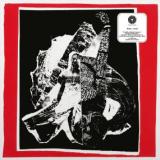
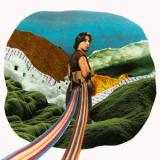
We don’t know much about Ariane Bonzini. Her age, perhaps. Her first name, certainly – but it’s confusing, as you’d expect. The rest, he keeps to himself, tucked away somewhere between Villeneuve-Saint-Georges and the Landes in the off-season.
What we do know is that at 16 he left everything behind to try his hand at rap. That six years later he left everything behind, again, without really saying why. That he taught himself sound engineering as one might learn a dead language.
And then came Magenta. In 2025, for three months, Bonzini set himself a challenge bordering on the absurd: to produce one track a day, write it, record it, mix it, master it, film himself doing it, and post it on social media. Without planning, without taking a step back, working until 3 am behind the screen. His monthly listeners went from 35 to 100,000.
For ‘Mec Normal’, something changed. Bonzini headed to the Rue Boyer studio – a space steeped in analogue charm, where some of the synths had once belonged to Christophe – and surrounded himself with a team for the first time: Crayon on production, Renaud Letang on mixing.
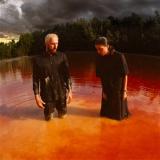
Chilly Gonzales spotted him, and from their meeting came ‘Gonzini’.
Thirteen tracks suspended between gentle melancholy and a willing detachment. Soaring synths. Recurring, obsessive ‘you’s’. A voice that whispers where others would shout.
Ariane Bonzini is unlike anything we’ve heard before. That is undoubtedly what makes her so unforgettable.
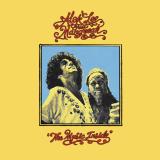
Alek Lee and vocalist Margeeah come together for a boutique 7″ pressing limited to 200 copies, featuring two tracks blending soul, reggae, disco and dub. Lee, whose catalogue includes releases on Antinote and Isle of Jura, brings his background in slower, dub oriented productions to a collaboration built around Margeeah’s vocals and live instrumentation. The sound sits somewhere between Massive Attack’s Blue Lines and Grace Jones.
Margeeah comes from the Israelite community, whose musical history includes The Soul Messengers. Her debut album, Looking for Love, was recorded in 1983 with Kingdom Sounds, originally issued as a private press LP and reissued by Frederiksberg Records in 2025. Its musicians included Abshalom Ben Shlomo, associated with Sun Ra. Her vocal style spans soul, jazz, funk and reggae, with reference points including Roberta Flack and Doug & Jean Carn.
For this release, Lee records his own live drums and percussion for the first time, alongside his signature smoky melodica lines. The production develops the reggae elements of Margeeah’s singing, combining bass driven arrangements with live rhythms, spacious guitar lines and dubby approach.
On the A side, “The Music Inside”, Margeeah effortlessly projects Lee’s lyrics about optimism and the desire for inner and outer freedom. Built around a recurring vocal refrain, the track places her voice over a rooted reggae arrangement.
The B side, “Can You Feel It?”, moves seductively towards a slower disc-dub sound. Bass and drums provide the foundation, with the percussion developing from a restrained groove into a fuller live kit arrangement. Melodica and guitar weave around Margeeah’s lead vocal and the hypnotizing title phrase.
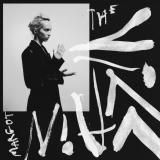
MARGOT is a violinist, composer and producer defined by a deeply emotional orchestral language shaped by classical training and a highly personal approach to string writing. She has collaborated with artists including Beyoncé, Lady Gaga and St. Vincent. Trained from the age of four in North Florida, she moved to New York at nineteen, where her musical world expanded through collaborations and exposure to new scenes, alongside the discovery of artists such as Radiohead, Sigur Rós and Björk via their string arrangements. In 2020, she met pianist and composer Juan Villacrez in Colombia, leading to the creation of the instrumental album The Apartment on Third Street (over 13 million streams) and a long-term creative collaboration.
Her new album The Villain presents a major new artistic statement: a cinematic, immersive instrumental work unfolding across ten movements, shaped by profound personal loss and recorded live in Colombia with a minimum of takes and no overproduction. The physical edition of the record is designed by NYC-based artist Bráulio Amado (known for his work with André 3000, Harry Styles, Frank Ocean and Róisín Murphy), reinforcing the album’s position as a complete visual and sonic object. MARGOT’s writing, violin playing and emotional depth resonate throughout, particularly through arrangements in which she layers her own performances, creating a sound world that is at once intimate, restless and constantly evolving.
Sucata Tapes and Annihaya proudly present Delia, the hypnotic new album by Munda (Selu Herraiz), following up on foundational explorations of ritual and territorial memory.
Recorded in September 2021 during a residency at Konvent—an old convent set within an abandoned industrial colony in Cal Rosal, deep in the lower Catalan Pyrenees—Delia is forged from the physical ghosts of a former textile factory. Within high ceilings, terracotta floors, and walls vibrating with low frequencies, Herraiz captured the remnants of another time: shards of glass, rusted iron, corrugated plastics, and the sonic echoes of a place where hundreds of women once worked the looms.
Using a dynamic microphone placed before the speaker of a battered Yamaha Electone organ with broken keys, Herraiz transformed these industrial ruins, raw materials, and acoustic traces into an immersive electroacoustic journey. Blending primitive textures, analog synthesis, and the deep resonance of territorial history, Delia stands as a profound meditation on memory, space, and alchemic listening.
A soaring new chapter unfolds from the forthcoming Elements Of Life album with the release of “Soar,” an uplifting and deeply moving collaboration featuring the incomparable Lisa Fischer. Written by Josh Milan and Louie Vega and produced by 2SoulFusion—Louie Vega and Josh Milan—the song is a powerful testament to resilience, transformation, and the limitless possibilities that emerge when spirit, soul, and music unite.
Built upon a rich tapestry of live musicianship, “Soar” embodies the signature sound that has made Elements Of Life a beloved musical movement around the world. At its core is Lisa Fischer’s breathtaking vocal performance, delivering a message of hope, elevation, and self-discovery with the emotional depth and conviction that have made her one of the most revered voices of her generation.
At the heart of “Soar” is a message of encouragement, resilience, and unconditional support. Through its uplifting lyrics and soaring melody, the song speaks to anyone navigating life's uncertainties while striving to become their fullest self. Lines such as “Clouds hang low, but the sky's still wide” acknowledge the challenges we all face, while the recurring refrain, “I just want you to soar,” serves as a powerful affirmation of faith in another person's journey. Equally moving is the song's central sentiment, “The more you do for you, the better I feel,” expressing a selfless form of love that celebrates growth, healing, and personal fulfillment. Universal in its message yet deeply personal in its spirit, “Soar” reminds us that one of the greatest gifts we can offer is the encouragement to rise, evolve, and embrace our own potential.
The production blends organic instrumentation with sophisticated arrangements, creating a timeless soundscape that feels both expansive and intimate. Multi Grammy Award-winning bassist Christian McBride anchors the composition with his masterful upright bass work, while Josh Milan's lush keyboards, piano, organ, clavinet, and atmospheric textures provide the song's harmonic foundation. Live drums from Tony Cintron and vibrant percussion from Luisito Quintero infuse the track with an irresistible pulse, while Ivan Renta's expressive soprano saxophone solo adds another layer of emotional richness, and a tasteful guitar groove by Sherrod Barnes.
The song's message is elevated further through a powerful vocal ensemble featuring background vocals from Lisa Fischer, Dawn Tallman, Ramona Dunlap, and Lea Lorien, creating moments of communion and uplift that echo the song's central theme of hope, growth, and believing in the possibilities that lie ahead. For Louie Vega and Josh Milan, “Soar” represents another defining moment in their longstanding creative partnership. Through Elements Of Life, they have continually blurred the boundaries between house music, soul, jazz, Latin rhythms, gospel, and global influences, creating music that resonates as deeply on the dance floor as it does in the heart. “Soar” continues that tradition, offering listeners a song that inspires movement, reflection, and renewal.
Recorded at Honeycomb Studios in Pennsylvania and Manhattan Center Studios in New York City, and mixed at Daddy's Workshop in New Jersey, the production benefits from the expertise of recording engineers Yas Inoue & Josh Milan, with final mastering by the Maestro of mastering Herb “Pump” Powers for PM Mastering.
As anticipation builds for the forthcoming Elements Of Life album slated for February 2027, “Soar” offers a powerful glimpse into the project's next evolution— a celebration of musical excellence, spiritual connection, and the enduring power of song to lift us higher.
Devotional and visceral, patient and euphoric, a poem, a hymnal. Shygirl calls Swallow! a reintroduction. Her 2022 debut Nymph announced an artist fluent in sonic languages: slippery club structures, toothy pop hooks, juicy production—music that invites you to come closer, pay attention, keep up. That magnetism took her from the electronic underground to the foreground of contemporary pop. She’s collaborated with producers Sega Bodega and Mura Masa, Charli xcx, Arca, SOPHIE, fka twigs, and Björk, and performed on stages across the globe. Swallow! is a new kind of rapturous indie songwriting, woven through the electronica she came from, recorded with Karma Kid and Casey MQ. It is the scripture of the cult of falling in love—radiant, clear-eyed, all-encompassing, divine transformation. “I want people to remember how big the world is even when you feel so small and singular,” she says. “Swallow! is the soundtrack to that experience. “This record is my message in a bottle. Let’s see who picks it up.”
*Originally pressed in 2021 - this is a brand new master and cut.**
In partnership with Analogue Foundation, Oshu Records is proud to present the exclusive vinyl repress of "Laroyê" in a thick cardboard tip-on gatefold jacket on 2x 180g vinyl.
Acclaimed Hungarian, Berlin-based producer, composer and pianist Àbáse (AKA Szabolcs Bognár) returns, sharing a special, 5 anniversary remaster of his breakthrough project 'Laroyê'. Releasing on Friday 1 May via Bridge The Gap & Oshu Records, this sensitive exploration of Afro-Brazilian culture originally began as an audio diary, documenting Szabolcs’ travels and collaborations in Brazil through a collection of voice memos, fragmented beats, sketches and field recordings. As his journey progressed, and his collaborations and research deepened, the music project started to take on its own life:
"Laroyê evolved through weeks and months of research and collaborations into the album that it is now. That means that all the sessions were done in different apartments, small studios, often with borrowed equipment, which all adds to the character, but makes the creation of a coherent sound a challenge. Benjamin Tierney, Erik Breuer and Analogue Foundation did an incredible job with the mixes and with this new remaster. I truly believe that we are able to hear the tracks in a new light, with even more depth and clarity."
Coming from the West African Yoruban language, Àbáse stands for "collaboration" – a key element of the music perfectly encapsulated on 'Laroyê'. Recorded in Rio de Janeiro and Salvador, Àbáse spent five months working with diverse artists, from young talents to veterans of the Brazilian scene including Letieres Leite, Luciane Dom, Dofono d'Omolu, Afrojazz and more. The album explores the rich heritage of afro-brasilian culture through samba, MPB and Candomblé, mixing these with broken beat, hip hop and afrobeat, creating a contemporary homage to the classic Brazilian sound. Szabolcs shares:
"Despite already leading and managing musical projects that are close to my hearth, I always felt that one day I would like to start a solo project, where I could take full responsibility for the artistic direction and the music would reflect a truly personal vision. In 2017, I decided to take five months to fulfil a childhood dream and travel to Brazil to expand my creative horizon and expose myself to new influences."
An album standout is the bass-heavy, afro-brazilian ‘Agangatolú, which Àbáse describes as "best exemplifying the story and concept of Laroye as a collaborative effort - a research project exploring the rich heritage of Afro Brazilian culture through my own lens." The track features singers and percussion players Jadson Xabla and Gabriel Santana - two artists based out of one of the oldest terreiros (houses of worship) in Bahia, whilst drummer Jorge Dubman is an integral part of one of the most famous afrobeat bands from Salvador IFA. The contributions of one of Szabolcsoldest collaborators - Hungarian flautist Fanni Zahar - also made the track a full-circle moment.
On a quest for cosmic grooves of unity, Àbáses music pulls from an eclectic blend of global reference points, including modal jazz, Hungarian folk, West African, Brazilian, hiphop and underground electronic music. His work has drawn widespread critical acclaim from the likes of MOJO, Songlines, Soulection and The Guardian, and been supported by key tastemakers including Gilles Peterson, Jamz Supernova and BAMBII. As a keyboard player, Szabolcs has also collaborated with the likes of Wayne Snow, Dele Sosimi, Patti Smith, Emmanuel Wilkins, Gulty Simpson and Zeitgeist Freedom Energy Exchange.
'Laroyê' (2026 Remaster) will release on Friday 1st May via Bridge The Gap & Oshu Records.
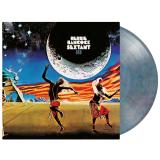
Herbie Hancock is one of the most prolific jazz pianists of the 20th century. A child prodigy, he played with the greats such as Donald Byrd and Miles Davis. He was one of the first to embrace and master the electric piano, but he always stayed true to the acoustic sound. In fact, he always bounced back and forth between his electronic and acoustic sound, touching upon almost every development in R&B, funk and jazz while retaining an original and distinctive voice.
Sextant from 1973 was recorded just before Headhunters, and can be seen in the same vein, but it’s more than just an introduction to a masterpiece. It features a kind of post-modal, free impressionism while gracing the edges of funk. Three long instrumental tracks explore how far minimalism in jazz can go.
Sextant is available as a limited edition of 2000 individually numbered copies on blue marble vinyl.
LA producer/vocalist Sweet Love Under Tyranny arrives with her self-titled EP (à La Carte Records, 11/6) — four tracks, nineteen minutes of nocturnal dance music built on coldwave and Italo pulled through new romantic melodrama. Co-produced with Matia Simovich (Inhalt) at Infinite Power Studios, mastered by Josh Bonati. The reference points span the pop confidence of Stacey Q and early Madonna, the airtight vocal architecture of Yazoo, and the coldwave romance running through the artist's own history as co-writer on Kontravoid's "Maskerade" (~200k Spotify streams since 2021's "Faceless" LP). Her voice cuts from aching falsetto to guttural growl over synth lines placed with the precision of someone thinking hard about where a chorus should sit in a mix. Post-punkcom: "a nocturne of neon-kissed bliss, a siren's serenade whispered through the haze of LA's twilight pulse." Pressed as a limited single-sided 12" in two variants (black-in-clear; clear).
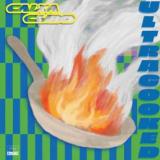
The modern day torch carriers of electric Brazilian jazz-funk. Fans of Azymuth, Marcos Resende, Antonio Adolfo and Cesar Mariano look no further !
Ultracooked infuses the Sao Paulo trio’s deep understanding of Brazilian music history with their consummate musicianship and infectious joy of playing. Their distinctly electric jazz-funk flavour rises to the top, as they pay homage to some of their musical heroes and teachers.
Where previous albums nodded to the lineage of Azymuth, Antonio Adolfo, Cesar Camargo Mariano and Marcos Resende, Ultracooked walks ! ! straight up to the greats and shakes their hands. Gilberto Gil and Caetano Veloso are here, with fresh versions of Espresso 2222 and Odara respectively. Garoto - the great choro guitarist and composer whose harmonic imagination quietly laid the ground for bossa nova - is here too, and honoured with a deconstructed reading of "Jorge do Fusa".
Recorded in the wake of the passing of both João Donato and Hermeto Pascoal, each has a song on the album named after them. Listen to Caixa Cubo and you can see why, their playfulness echoes Donato’s mischievous cheek, while their creative openness is clearly Hermeto inspired. But with both “Hermeto” and “Dontao” each featuring the sampled voice of the late masters themselves, the songs read more as conversations than eulogy. Caixa Cubo carry forward these legacies with care.
In good company, Zé Leônidas, who lit up 2023's Agora, returns to sing on "Expresso 2222", "Essa é Pra Tocar no Rádio" and "Cortejo", while guitarist Edson Woiski brings his sinewy sound to those Gil interpretations and to "Cabaré", before adding his voice to the closing chorus.
Ultracooked was produced by Caixa Cubo alongside Frederico Pacheco, who recorded and mixed the album at O&O Studios in São Paulo, with mastering by Casper Sutton at Gearbox Studios in London.
Bristol trio Jabu return with their first release for two years. Following on from their widely acclaimed third LP ‘A Soft and Gatherable Star’, this stand-alone double A-side Disco Mix 12” features four exclusive new tracks, while signposting fresh material currently being written, recorded and mixed for their forthcoming LP, due 2027.
If 2023 LP ‘Boiling Wells’ documented Jabu learning to be a live band, leaning into writing collectively in-the-moment, ‘A Soft and Gatherable Star’ took that record’s ad-hoc/mixtape blueprint, and fleshed out their transformation from an outfit rooted in hiphop and dubstep, to a guitar-based band with a unique take on dream-pop. It saw them described by The Face as “an experiential trio blending the raw edge of industrial dub with dreamy layers of ambient pop and shoegaze", and by The Wire as “like Mazzy Star remixed by The Mad Professor“.
Jabu have continued to grow in the space between releases, touring regularly for the first time, playing festivals such as Rewire and Le Guess Who?, and supporting the likes of Maria Somerville and AR Kane. Their extended live line-up now regularly incorporates those that contributed to ‘A Soft and Gatherable Star’, with new material often further developed as it gets passed back and forth between collaborators. Cellist Josh Horsley (Powders / Nightingale Floor) and multi-instrumentalist Will Yates (aka Memotone) both feature here, under the guiding hand of Birthmark’s mixing.
Titled after the rural, estuarine landscape bordering their Bristol hometown, ‘Severn Flood Plain’ sees the band pivot towards a more jagged and up-tempo, post-punk sound. It runs on a nagging drum machine pulse that feels closer to Joy Division than Sly Stone; while the echo-laced vocals and tremolo guitar phrasing hark back to the ‘50s slapback sound of Lee Hazlewood or Duane Eddy. Written and sung by Jasmine Butt, the lyrics describe a visit to a friend near the mouth of the Severn, and hint towards a darkness that can also be felt across that tidal landscape.
Dropping the pace to a languorous, sensual sprawl, ‘Where You Run To’ is plaintive and yearning, an opiated, ethereal flipside to ‘Severn Flood Plain’s more urgent, anxiety-laced opener. Alex Rendall’s vocals glide over a stripped, metronomic backdrop, eventually entwining with Memotone’s ghostly, processed clarinet.
If the band’s musical reference points appear to have shifted, their process remains indebted to dub and still very much rooted in the multicultural cross-pollination peculiar to their home city of Bristol. Both tracks are extended, with dub versions courtesy of Birthmark. The band sat in on those sessions, completing the circle that began with J’s on-stage mixing of their live sets. The strands provided by Will and Josh provide introspective counterpoint to the sound system leanings.
Jabu’s influences are threaded together as naturally here as on their long-running NTS radio show, ‘Music For Lovers’, which now occasionally guests on the Early Bird show slot. They are due to play World of Echo’s ‘Expected Music 2.0’ at London’s Walthamstow Trades Hall on 21st November with Loopsel, Insides, Giulio Erasmus, Thomas Bush, and Raime amongst others.
With the stunning Planes In Reverse, Sascha Funke, the Berlin-born producer and DJ, and long-time member of the Kompakt family, releases his first album in almost a decade, since 2017’s Lotos Land. It’s a welcome return for one of the most eloquent and elegant producers in electronic and dance music, someone who’s always been able to say more with less, and the ten tracks here, moving effortlessly between techno, house, minimalism, disco house, and home listening tunes, are all gorgeously sculpted miniatures. With guest appearances from partner Julienne Dessagne (Fantastic Twins), with whom Funke has also worked in Saschienne, there’s something homely and family about it, too; a family of sounds, a home of tone. There’s also something consummate about Planes In Reverse, as though Sascha Funke has perfected the album format. There’s no flab here, no excess – it plays out like a perfectly designed experience, ten tracks, coming in under fifty minutes, an album where every moment matters.
It’s full of variety, but everything has the unmistakable Funke thumbprint, one that was developed during the late ‘90s / early ‘00s minimal techno and microhouse moment, but which was always open to other ideas and other sounds, too. Planes In Reverse came together quickly for Funke: “Last winter, I had two or three new tracks, which gave me a core feeling: ‘Ah, this could be the direction of something like an album.’ Sometimes it can be very easy that you wrap it up and then it becomes something coherent and solid. This happened within two or three months; it was very fast and direct.” Everything fell into place – the ten tracks revealed themselves, the album sat together as a whole, and the final piece of the puzzle was returning home again to Kompakt, who have supported Sascha Funke from the very start, releasing his first single, “Campus”, back in 1999.
Planes In Reverse opens stealthily with “What You See”, where rhythms percolate and bass prowls while gaseous textures fill the sonic spectrum. It’s also the first appearance of Fantastic Twins on the album; here, she speaks a hypnotic mantra, a prelude to the title track, where Dessagne has a pure pop moment, her voice ecstatic and vibrant. Indeed, Planes In Reverse plays out like thesis and antithesis ending in synthesis, the tracks nestling next to each other even as they shuttle between sounds, genres, perspectives. There are some beautiful moments dropped throughout Planes In Reverse – the heavenly textures that make the title track feel so cloud-bound; the glassy and orbital tones that drop from the skies through the disco house inspired “Karat”; the clamour and clatter of hyper-edited voices shuffling through “Splitter”; or the field recordings of Sascha’s son football training session that drop “Zockers” into a different place and space, slowly giving way to a beautifully paced electro-pop mantra. “In Germany,when the kids play a computer game, or when they play football, we describe it as zocken. They’re the players, they’re the Zockers.“ Funke explains.
Planes In Reverse winds down with the beautiful “Kruso”, where ticklish, loving arpeggios careen around the room, and drift-work chords shimmer and shuttle between your ears. It’s a perfect comedown to an album that feels breathes in and out at an organic pace, nothing above 130 BPM, everything sitting together just so. Indeed, that’s the feeling you take away from Planes In Reverse; it sums up the spirit of Sascha Funke productions perfectly, while also existing beautifully as its own world dreamt unto itself. It’s Sascha Funke down to the very essence. Nothing unnecessary, nothing extraneous: Pure Funke.
12 Inch Lovers - Celebrating 15 Years of Vinyl Culture!
Belgian vinyl-only event concept 12 Inch Lovers celebrates its 15th anniversary with two new additions to its established sampler series. Now entering its seventh year, the series reflects the music and atmosphere of the events, combining dancefloor favourites with carefully selected discoveries.
Samplers 13 & 14 bring together sought-after classics, hard-to-find gems and selected tracks and versions making their vinyl debut. Each volume features nine full-length tracks across two 12-inch records, making both releases essential additions for DJs and collectors alike.
Sampler 13 includes Sorry I Am Late by Kollektiv Turmstrasse, Marea (We've Lost Dancing) by Fred again.. & The Blessed Madonna, and Lifetimes by Slam feat. Tyrone Palmer. Further highlights include Tocadisco's Morumbi and the Martijn ten Velden Remix of Guitarra G.
Sampler 14 features Dreams by Deep Dish feat. Stevie Nicks, All That Matters by Kölsch feat. Troels Abrahamsen, and the NiCe7 Remix of It's Yours by Jon Cutler feat. E-Man. Belgian favourites Decoy & Roy with Inner Life and The Mackenzie with Higher In The Sky add to the selection.
Rooted in 15 years of vinyl-only events, these two compilations capture the distinctive sound of 12 Inch Lovers, offering lasting appeal for long-time fans, record collectors and DJs looking to bring proven classics back to the dancefloor.
Nothing But (Future) Classix, Straight From Vinyl!
Sampler 13 opens with Kollektiv Turmstrasse - Sorry I Am Late, the club track many will recognise from Solomun's legendary Boiler Room set in Tulum. Its unmistakable bassline sets the mood straight away. Next comes Skape D'Jear - Everything In You (Dedicated Clubba Mix), a
lesser-known house gem making its first appearance on vinyl.
Side B features Karmon feat. Terry Shand - Take My Hand, a melodic house track with a strong vocal performance that remains hard to find on vinyl. Tocadisco - Morumbi then takes things up a notch. With its driving percussion, this is a record that has blasted through the speakers of countless Belgian clubs and beyond.
Side C brings Fred again.. x The Blessed Madonna - Marea (We've Lost Dancing). A track about missing the shared experience of dancing, it became closely linked to the return to the dancefloor for many. Next, we head to Berlin with Kotai - Sucker DJ (Marcin "Highfish" Kozlowski Remix), a distinctive club classic that still holds its own. Daddy's Groove & Little Nancy - It's Not Right, But It's Okay closes this side with a groovy reworking of Whitney Houston's well-known song, now available on vinyl for the first time.
Side D captures the spirit of Ibiza with G Club presents Banda Sonora - Guitarra G (Martijn ten Velden Remix). Its recognisable guitar lines and gradual build make this a track to lose yourself in. This remix makes its vinyl debut here. Closing the sampler is Slam feat. Tyrone Palmer -
Lifetimes. Palmer's distinctive voice and the Scottish duo's outstanding production make this a record that still hits home after all these years.
Nine tracks across two 12-inch records, each in its full-length version. Much-loved classics, lesser-known gems and tracks making their vinyl debut. Selected with the same love for music that has driven 12 Inch Lovers' events for 15 years.
The eye of the storm: welcome to Tornado Wallace's debut album! The accumulation of about four years of work, with tracks written in Berlin and Melbourne, 'Lonely Planet' is nothing like you may have expected from the Australian expat. No stranger to fans and followers of ESP Institute, Beats in Space and Music From Memory's sister Label Second Circle, Tornado Wallace's strain of releases so far merged functionality with a musical playfulness that led him to find himself as one of the producer's behind José Padilla's International Feel album. Here, he leaves the needs of the dance floor behind in order to create a magical mystery tour de trance into his and our inner jungle. How about some references New Age sounds meet new wave melodies, Grace Jones runs into the Dire Straits at Compass Point, while a Korg Mini Pops and a Roland CR78 make amends for Sly & Robbie's absence, Michael Mann pictures Joseph Conrad's 'Heart of Darkness', Robert Rauschenberg tries his luck at naturalism and an imagined Wally Badarou echoes through all of it. Sandwiched between the title track and the yearning beauty of the album's final point 'Healing Feeling', you get all of that as well as collaborations with and contributions of NO ZU, David Hischfelder and the voice of Sui Zhen on 'Today', who would easily make Anna Domino take her proverbial hat off. Tornado Wallace created an album that supersedes the requirements and expectations of a debut. Like a lost Island Records or a never released Made to Measure album, 'Lonely Planet' soundtracks notions and ideas that recall the nostalgic future in the past as much as it looks ahead.
Send Noods Records is a new label from South Africa's Reagan Ruler, who makes house so sensuous it should come with an 18+ age rating. 'Cosmic Desire' is his latest saucy number and it's buttery deep house with a cooing vocal that swirls through the mix like caramel in a galaxy bar. 'Fly' has a more jazzy, ougnehy melodic vibe to it but the drums remain cuddly warm and 'For A Moment' dials up the energy just a touch. The drums are more upright here, but the chords are still resolutely molten and the vocals are soulful accents in the mix. Gorgeous stuff that's got us keen to hear more from this label already.
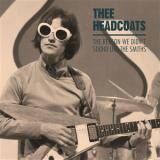
Zwei neue Songs von Thee Headcoats in einem passend an die Smiths angelehnten Cover! Die A-Seite ist aus ihrer kommenden LP "Children Of The Sect" und die B-Seite exklusiv auf dieser Veröffentlichung. Wir haben mit Billy Childish über die Single gesprochen_ Frage: "Hat dir irgendetwas an den Smiths gefallen?" Antwort: "Ja. Les Dawsons Version von ,Girlfriend in a Coma" (ich glaube, das ist der richtige Titel). Eigentlich habe ich sie gehasst, aber sie hatten ein paar ganz ordentliche Songtitel. Ihr Gitarrist kam mal auf mich zu und sprach mich an, als wir mit Modest Mouse in der Albert Hall mit unserer 100-Watt-PA spielten - er war sehr nett." Frage: "Auf dem Cover ist ein Bild von Dave Davies zu sehen. Was gefällt dir an den Kinks am besten? Hast du Ray oder Dave jemals getroffen?" Antwort: "Ich bin in den 1960er Jahren mit den Kinks aufgewachsen, zusammen mit den Stones, den Beatles, Bob Dylan und Jimi Hendrix. Als ich 1977 gefragt wurde, ob ich bei den Pop Rivets singen wolle, schlug ich vor, dass wir ,Hippy Hippy Shake", ,Wild Thing" und ,You Really Got Me" spielen sollten - Was mir an den Kinks am besten gefällt? Ich mag die R&B-Kinks? Daves Gitarrenspiel, und wir alle stehen total auf den tollen Schlagzeuger und Bassisten, und natürlich schreibt Ray gute Songs - also: Was gibt's da nicht zu lieben? Abgesehen von einer ganzen Menge. Ich habe noch nie einen echten Kink persönlich getroffen, aber wir kannten ein Mädchen, das sie im Rochester Odeon spielen sah. Sie und ihre Freunde baten Dave um ein Autogramm, und er jagte sie schreiend den Star Hill hinauf, wobei sein kleiner Stolz und seine Freude heraushingen."
The new voice of jazz is here. Following his
acclaimed debut album ‘Open Up Your Senses’,
award-winning vocalist Tyreek McDole returns with
‘CHROMA’, a bold, genre-defying record that takes
the jazz tradition somewhere unexpected.
Drawing from the rich musical canon, from Nina
Simone’s ‘Wild Is the Wind’ and Miles Davis’s ‘Blue
in Green’ to OutKast’s ‘She’s Alive’, McDole
completely inhabits each song, bringing his
extraordinary baritone, soul and contemporary
vision to a repertoire that spans generations.
Produced by GRAMMY-nominated trumpeter Theo
Croker, ‘CHROMA’ is a striking record where jazz
tradition meets the sounds of today - the sound of
a new generation of jazz.
Matu Miranda has grown up in a state of constant movement. Changing homes, cities, schools, and horizons has shaped his worldview and fueled a body of work deeply informed by themes of displacement, transformation, and belonging. With APUAMA, his second album, the Brazilian singer, songwriter, and guitarist delivers his most personal work to date:a collection of songs exploring how we each construct our own sense of home through the encounters, departures, and returns that mark our lives. Driven by sensitive songwriting and organic production, APUAMA navigates a landscape of contemporary MPB, tropical folk, popular poetry, and Brazilian acoustic influences. From one song to the next, Matu charts an intimate journey where saudade is never synonymous with stagnation; instead,it becomes a driving forcethat compels him to move forward, discover, and forge connections. From the radiant landscapes of "E Bom Voltar" to the existential inquiries of "O Que Sera de Nos"-and the poetic manifesto of the title track, "Apuama"-the album tells the story of an artist learning to turn every place he visits into a form of home. The album also features notable collaborations with two of the most distinctive voices on the new Brazilian music scene.Singer-songwriter Josyaralends her sensitivity to "Ceu Azulzin," while Chico Chico joins Matu on "Estetica da Fome," a track inspired by major Brazilian cultural and social reflections. These collaborations extend the collective spirit that runs through the entire record and highlight Matu Miranda's ongoing dialogue with his artistic generation. The sound production was helmed by Leo Marques-a producer, sound engineer, and musician recognized as a key figure in Brazil's independent music scene. Marques notably won a Latin Grammy Award for his work on the album Sim Sim Sim by the group Bala Desejo, one of the most significant Brazilian records of recent years. This approach gives APUAMA a warm, vibrant, and timeless sound, allowing the songs to breathe and highlighting the richness of the acoustic arrangements. More than just a collection of songs, APUAMA is a journal of an inner journey. It is an album that speaks of movement, memory, nature, and the passing on of things-reminding us that, beyond borders, distances, and absences, there is always a place where one can feel at home.
Nacho Marco drops Colors in Dub Vol.1—deep house soaked in warm analog dub. From the hypnotic “Midnight Blue” and its Satoshi Tomiie remix to the raw pulse of “Bumblebee Yellow” and “Electric Green,” this wax rides late-night frequencies straight from Valencia to Paris.
DJ Feedbacks :
Francois Kevorkian (Wave) : Love the Satoshi mix
Eddie Fowlkes (Detroit Wax, Rekids, Classic Music Company) : thanks
Travis Kirschbaum (Warehouse Preservation Society) : Loving this. Especially Midnight Blue!
Sascha Dive : Midnight Blue for me!!
Brothers' Vibe (Luv4Wax) : Super ep, great works!!
Radio Slave (Rekids) : Another superb ep from Phonogramme and Satoshi's mix is great.
Giles Smith : "midnight blue" is nice
Alexkid (Rawax / FUSE / NG Trax) : Totally my vibe. <3
Aleqs Notal : Yes !!
Italojohnson (Italojohnson) : Track 1 for me!
Ben Sims : Now downloading... will check asap!
Okain (Talman / Infuse / Pleasure Zone) : Electric Green is dope!
Satoshi Tomiie (Abstract Architecture) : Receiving great feedback from the dance floor!
Steffi (Dolly) : lovely release!!
Laurent Garnier : Cool tracks
DJ Bone (FURTHER) : Electric Green and Satoshi Tomiie remix work for me.
Harri (Sub Club) : lovely stuff, will play and support
Rob Pearson (Evasive Records / Sine 102.6fm) : lovely - right up my street, cheers ;-)
Felix Dickinson (Futureboogie, Rush Hour, Cynic) : Solid E.P. current fave Electric Green
Jorkes (Freeride Millenium) : lovely, thanks so much. xo
Kassian (Phonica White / Heist Recordings) : wicked
Jaye Ward (Dalston Super Store / Netil Radio) : massive quality as ever!! super deep and pulsing gear, electric green is ace! thx
Tim Sweeney (Beats In Space) : Sounds great
Chloe Caillet (Smile Records) : love this!
Stevie Cox (Sub Club) : really lush, thank you !
Raresh (ar:pi:ar) : thanks
Ame (Innervisions) : thanks
Geir Aspenes (G-Ha (Sunkissed)) : Thank u
Saoirse (Body Movements) : Super nice dubby vibes
Amotik : Very nice :)
Kai Alce (Real Soon) : Satoshi remix is hot!
Domenic Cappello (Subclub) : nice dubby house
Cee ElAssaad (ENSOULED) : Just the way I like it! dubby and groovy.
Mike Shannon (Cynosure) : Excellent work here from Valencia's finest!
Futurismo präsentiert das legendäre Debütalbum "Only Theatre Of Pain" (1982) der Gothic-Legenden Christian Death in neuen limitierten Deluxe-Formaten - remastert und erweitert um frühe Demos und rarem Material, samt Poster. "Only Theatre Of Pain" gilt als Meisterwerk und Ursprung des Deathrock - ein wegweisendes Epos von unheiliger Kraft und tiefschwarzer Emotionalität. Obwohl seine Wurzeln im Punk liegen – die Ursprünge der Christian Death-Originalbesetzung liegen in der Früh-1980er Hardcore-Explosion in Südkalifornien –, kann die Bedeutung dieses Werks für die nachfolgende Musiklandschaft nicht hoch genug eingeschätzt werden. Wie ein Adrenalinstoß ins Herz der Finsternis entspringt diese ungezügelte und geheimnisvolle Aufnahme bis heute jeder Kategorisierung. Mit dem visionären Rozz Williams (damals noch Teenager) sowie Punk-Legende Rikk Agnew (Adolescents), James McGearty und George Belanger präsentiert "Only Theatre Of Pain" eine musikalische Erkundung, geprägt von psychosexueller Lyrik und einem tiefen Glaubenskampf, aufgenommen innerhalb weniger Tage mit Produzentenlegende Thom Wilson. Klanglich und visuell seiner Zeit voraus, ist dieses Stück sakrilegischer US-Punk ein absolutes Muss für alle, die sich für Gothic begeistern, für Fans von The Misfits, Bauhaus und The Cramps.
The wonderful Scruniversal takes a sidestep into electro here with a remix of a tune by Liza Gromova, a talented musician and rising star in the pop and indie world who hails from Moscow. Lipelis reframes her 'Papa, Poputny Veter' with 80s synth shimmers, glassy melodies and minimal electronics that maintain the emotional vocal of the original and manage to marry its optimism with a bittersweet edge. The flipside instrumental is another intimate sound but with an irresistible groove that will appeal to wave and Italo fans. Two ageless cuts that are subtly hooky.
For those with an ear to the Afro-Latin scene in New York City, Doug Gomez is one of the main men. His infusion of those sounds into a deep house framework is sublime, always, and not least on this fourth instalment in his series for his Merecumbe Recordings label. 'Dis a Way of Life' is a collab with fellow heady house hero Trinidadian Deep, and is a spine-tingling affair with spiritual pads that stir your soul as rasta vocals add to the dubbed-out feels. 'Dance Activator' is more about movement, with supple drums swaying beneath jazzy synth expressions that ring out into an infinite sky. On the flip is the warm deep house bubbler 'Sonic Uprising' and a remix by Trinidadian Deep that turns up the colour and soul. Pure class.
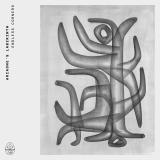
Ariadne's Labyrinth returns with Endless Corners on Adepta Editions. Classically trained yet shaped by London's illegal rave scene, her distinct sonic language is born from live improvisation. Following acclaimed releases on Detroit Underground and Touched Music, this EP seamlessly intertwines the dense, physical pulse of underground club culture with breathtakingly beautiful string arrangements. It is a visceral journey, bridging heavy dancefloor tension with vulnerable, chamber-esque introspection.
- 2026 Edition, gepresst auf apricotfarbenem Vinyl - Erweitertes Gatefold-Cover - Enthält ein 20-seitiges Booklet mit seltenen Fotos und Liner Notes von Lenny Kaye sowie Beiträgen von Nick Cave und Devendra Banhart. Karen Daltons Album ,In My Own Time" aus dem Jahr 1971 gilt als wahres Meisterwerk einer der geheimnisvollsten, rätselhaftesten und nachhaltig einflussreichsten Künstlerinnen der Musikgeschichte. Das neu erweiterte, 20-seitige LP-Booklet mit selten gezeigten Fotos, Liner Notes des Musikers und Autors Lenny Kaye sowie Beiträgen von Nick Cave und Devendra Banhart rundet das Paket ab. Die in Oklahoma aufgewachsene Karen Dalton (1937-1993) brachte eine Vielzahl von Einflüssen in ihr Werk ein. Wie Lenny Kaye in den Liner Notes schreibt, hört man den Jazz von Ella Fitzgerald und Billie Holiday, die Intensität von Nina Simone, den Appalachen-Gesang von Jean Ritchie sowie den R&B und Country, die auf ihrem Weg nach New York unweigerlich in ihre Musik einflossen. Ausgestattet mit einem Langhalsbanjo und einer 12-saitigen Gitarre hob sich Dalton durch ihren unverwechselbaren, lebensmüden Gesang von ihren Kollegen ab. In den frühen 60er Jahren wurde sie zu einer festen Größe in der Folk-Szene von Greenwich Village, wo sie traditionelles Material, Blues-Standards und die Songs ihrer Zeitgenossen interpretierte, darunter Tim Hardin, Fred Neil und Richard Tucker, den sie später heiratete. Bob Dylan war unterdessen sofort von ihrer Kunst begeistert. ,Meine Lieblingssängerin dort war Karen Dalton", erinnerte er sich in *Chronicles: Volume One* (Simon & Schuster, 2004). ,Karen hatte eine Stimme wie Billie Holiday und spielte Gitarre wie Jimmy Reed." Wer Dalton kannte, wusste, dass sie kein Interesse daran hatte, sich den Launen der Plattenindustrie zu beugen. Auf der Bühne interagierte sie kaum mit dem Publikum. Im Studio fühlte sie sich beim Aufnahmeprozess ebenso unwohl. Ihr Debütalbum von 1969, *It's So Hard to Tell Who's Going To Love You The Best*, das 2009 von Light in the Attic neu aufgelegt wurde, entstand heimlich, als Dalton dachte, sie würde nur Songs proben. Als Michael Lang, Mitveranstalter von Woodstock, Dalton ansprach, ob sie ein Folgealbum für sein neues Label ,Just Sunshine" aufnehmen wolle, war sie, gelinde gesagt, skeptisch. Das Album musste nach ihren eigenen Bedingungen und in ihrem eigenen Tempo entstehen. Daraus wurde ein sechsmonatiger Aufenthalt in den Bearsville Studios in Woodstock, New York. Produziert wurde das Album von dem Bassisten Harvey Brooks, der bereits auf ,It's So Hard to Tell Who's Going To Love You The Best" an Daltons Seite gespielt hatte. Brooks, der stolz darauf war, unkompliziert, zuverlässig und unterstützend zu sein, verstand Daltons Arbeitsweise, war aber auch bereit, sie sanft zu ermutigen und die Künstlerin dazu herauszufordern, ihre kreativen Grenzen zu erweitern. ,Ich habe versucht, ihr einen flexiblen Rahmen zu bieten", erzählte er Kaye. ,Ich habe die Entscheidungen ihr überlassen - das Tempo, das Feeling festzulegen." Sie war sehr zurückhaltend, und ich habe ihr alles vorgelegt; wenn sie mehr brauchte, habe ich ihr Optionen angeboten. Alle gingen einfühlsam auf sie ein. Sie war die Anführerin. Dalton, die selten ihre eigenen Kompositionen aufführte, wählte eine Reihe von Stücken zur Interpretation aus - von traditionellen Liedern wie ,Katie Cruel" und ,Same Old Man" bis hin zu Paul Butterfields ,In My Own Dream" und Richard Tuckers ,Are You Leaving For The Country". Außerdem erweiterte sie ihr übliches Repertoire und fügte R&B-Hits wie ,When a Man Loves a Woman" und ,How Sweet It Is" hinzu. Im Gegensatz zu ihrer vorherigen LP bot Daltons neue Aufnahme vollere, poporientiertere Arrangements, an denen eine ganze Reihe talentierter Studiomusiker mitwirkte. Auch wenn das Publikum der 70er Jahre vielleicht noch nicht bereit für Daltons Musik war, stand eine neue Generation kurz davor, ihr Werk zu entdecken. In den Jahrzehnten nach ihrem Tod nannten viele Künstler Karen Dalton als Einfluss, darunter Lucinda Williams, Joanna Newsom, Nick Cave, Angel Olsen, Devendra Banhart, Sharon Van Etten, Courtney Barnett und Adele. In dem kürzlich gefeierten Dokumentarfilm ,Karen Dalton: In My Own Time" sinniert Cave über Daltons einzigartige Anziehungskraft: ,Es wird eine Art Anspruch an den Zuhörer gestellt", erklärt er. Ob man es mag oder nicht, man muss in ihre Welt eintauchen. Und es ist eine Welt voller Verzweiflung. Peter Walker, der ebenfalls im Film zu sehen ist, führt diesen Gedanken weiter aus: ,Wenn sie in ihrer Musik ein bestimmtes Gefühl empfinden und es so rüberbringen kann, dass man dieses Gefühl auch spürt, dann ist das wirklich das Magischste, was man tun kann." Er fügt hinzu: ,Sie hatte eine tiefe, tiefgründige und liebevolle Seele - das hört man in ihrer Musik."
,The Long Ear" ist das Debütalbum von Noh Age _ Charmaine Lee (Parabolmikrofon, Feedback, Gesang), John McCowen (Kontrabassklarinette, Bb- Klarinette, Blockflöte) und Li-Chin Li (Sheng) bei Kou Records - live aufgenommen über drei Tage bei Brooklyn Recording im März 2026 live aufgenommen und von Randall Dunn (Sunn O))), Oneohtrix Point Never) produziert. Das Parabolmikrofon hat seine eigene Geschichte: ein Überwachungsinstrument aus dem Kalten Krieg , das dafür konzipiert war, aus der Ferne zu lauschen, um das zu orten und zu verstärken, was sonst unhörbar bleiben würde. Hier ist es nach innen gerichtet - nicht auf einen Feind, sondern auf den Klang selbst, der durch vier Vintage-Röhrenverstärker geleitet wird. Die Parabolantenne spürt Resonanzen auf, die durch den Raum übertragen werden, und stellt sich auf Frequenzen ein, die von Kontrabassklarinette, Sheng und Gesang erzeugt werden, bis sich eine Rückkopplung entlädt - ein vierter Interpreter mit eigener, unvorhersehbarer Wirkmacht. Das Ergebnis ist spektrale Musik in ihrer viszeralsten Form - verwurzelt in der Tradition von Gérard Grisey, Kaija Saariaho und Iancu Dumitrescu, doch herkommend von der Überwachungsstelle, dem Abhörposten, der Abhörleitung. In sechs Stücken, die auf kompositorischen Rahmenwerken aus zellulären Automaten und grafischen Partituren basieren, bewegt sich das Trio zwischen extremen Registerbereichen - CBC-Grundtöne gegen dichte Sheng-Cluster-Klänge , die kristallklaren Obertöne von Blockflöte und Mini-Sheng - während das Feedback durch all das wandert, sich verdichtet, auslöscht, wiederkehrt. Cover- und Rückseitengestaltung von Shintaro Kago - einem in Tokio ansässigen Manga-Künstler und Pionier der ,Ero-Guro"-Tradition, der international für seine Arbeit an Flying Lotus' ,You're Dead!" (Warp, 2014) bekannt ist. Aufgenommen, gemischt und produziert von Randall Dunn. Zusätzliche Synthesizer und Sounddesign von Randall Dunn. Gemastert von Ben Greenberg. Dolby-Atmos-Mischungen von Ben Greenberg. Schablonenschnitt von Paul Gold bei Salt Mastering.
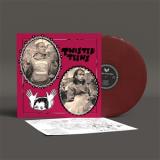
Twisted Teens - alias Caspian Halliwell und RJ Santos - gab es vor ihrem Debüt-LP aus dem Jahr 2024, das heute als The Orange Album bekannt ist, eigentlich gar nicht. Das Duo hatte unter dem Radar und abseits der Öffentlichkeit Musik von Cajun/Country bis hin zu Anarcho-Folk gemacht und dabei ein Leben als Nomaden geführt. Twisted Teens entstanden aus einem pandemiebedingten Inspirationsschub, der sie zusammenbrachte, um in passender Lo-Fi-Manier in Caspians Haus in New Orleans aufzunehmen. Ihr erstes Album wurde schnell zu einem modernen Klassiker des eingängigen, warmen Rocks, der Blues, Folk und Punk zu einer rohen und unwiderstehlichen Mischung vereint. Das Duo meldete sich 2026 stark zurück mit Blame the Clown - das sofort von Pitchfork und Paste begeistert gelobt wurde - und anschließend mit dem ebenso gefeierten Florida Water Blues, einer absurden Betrachtung ihrer Streifzüge rund um die Welt. Ihr drittes fesselndes und perfekt schräges Album aus dem Jahr 2026 ist eine Saga über Herzschmerz und verborgene Triumphe namens The Holy Cross Tigers. Die Songs sind Hymnen der Sehnsucht und unzähliger Enttäuschungen, angeheizt von allem Möglichen - von einer brutalen Trennung bis hin zu verräterischen Ex-Freunden. Trotz all dieser Leiden strahlt The Holy Cross Tigers eine gewisse Leuchtkraft aus, ein Gefühl von reflektiertem Licht, das sich gegen die Traurigkeit stemmt. Man kann sich sofort damit identifizieren - es fühlt sich an, als würden ein paar Freunde die Lasten des Lebens miteinander teilen, mit seltsamen und ekstatischen Ergebnissen, weil sie nach ihren eigenen Regeln handeln. Es ist eine übersteuerte Übertragung vom Rand des Herzschmerzes, einem Ort, an dem selbst die Glücklichen schon waren und von dem sie hoffentlich zurückgekehrt sind.
Twisted Teens - alias Caspian Halliwell und RJ Santos - gab es vor ihrem Debüt-LP aus dem Jahr 2024, das heute als The Orange Album bekannt ist, eigentlich gar nicht. Das Duo hatte unter dem Radar und abseits der Öffentlichkeit Musik von Cajun/Country bis hin zu Anarcho-Folk gemacht und dabei ein Leben als Nomaden geführt. Twisted Teens entstanden aus einem pandemiebedingten Inspirationsschub, der sie zusammenbrachte, um in passender Lo-Fi-Manier in Caspians Haus in New Orleans aufzunehmen. Ihr erstes Album wurde schnell zu einem modernen Klassiker des eingängigen, warmen Rocks, der Blues, Folk und Punk zu einer rohen und unwiderstehlichen Mischung vereint. Das Duo meldete sich 2026 stark zurück mit Blame the Clown - das sofort von Pitchfork und Paste begeistert gelobt wurde - und anschließend mit dem ebenso gefeierten Florida Water Blues, einer absurden Betrachtung ihrer Streifzüge rund um die Welt. Ihr drittes fesselndes und perfekt schräges Album aus dem Jahr 2026 ist eine Saga über Herzschmerz und verborgene Triumphe namens The Holy Cross Tigers. Die Songs sind Hymnen der Sehnsucht und unzähliger Enttäuschungen, angeheizt von allem Möglichen - von einer brutalen Trennung bis hin zu verräterischen Ex-Freunden. Trotz all dieser Leiden strahlt The Holy Cross Tigers eine gewisse Leuchtkraft aus, ein Gefühl von reflektiertem Licht, das sich gegen die Traurigkeit stemmt. Man kann sich sofort damit identifizieren - es fühlt sich an, als würden ein paar Freunde die Lasten des Lebens miteinander teilen, mit seltsamen und ekstatischen Ergebnissen, weil sie nach ihren eigenen Regeln handeln. Es ist eine übersteuerte Übertragung vom Rand des Herzschmerzes, einem Ort, an dem selbst die Glücklichen schon waren und von dem sie hoffentlich zurückgekehrt sind.
Official reissue of the massive Sourmash – Pilgrimage to Paradise, originally released on Prolekult in 1993.
This essential reissue brings together both original versions, alongside heavyweight remixes from Hardfloor and Timo Maas.
Both original versions command serious money on Discogs, here’s your chance to grab the whole package for a fraction of the price — and beat the sharks!
A quiet intensity permeates Chantal Michelle’s music, like a veiled flame. Even at its most spare and delicate, an undulating tension unsettles the ear through wavering microtonal interference and uncanny spatial juxtaposition. She takes seriously the mandate of the composer to foster new relationships between various types of sounds, bringing together disparate field recordings, instrumental stems, and the sounds of circuitry in unheard configurations. Resolution is elusive, in its place a sense of oblong cyclicality and prickly uncertainty. When the veil is pulled back, we find more depth, more complexity, and more mystery.
Unit of Heart, Michelle’s second album of 2026, presents two interrelated pieces that highlight diverging compositional modes. Here she brings in two key collaborators: Patrick Shiroishi, who contributes flutes and saxophones throughout, and poet Funto Omojola, whose words and voice bookend the title composition. Both compositions unfold gradually, but where the album’s a-side “Sudden Oceans” presents a minimal tonal palette focused entirely on the subtle grain of wind instruments, “Unit of Heart” proceeds linearly, moving through passages of synthesizer, environmental recordings, and full-cheeked wails of saxophone. Both encourage a state of focused listening as the scope of the music deepens and widens.
“Sudden Oceans” allows the listener to hover in rippling currents of air, breath overlapping breath in a shimmering patchwork. All flutes and saxophones on the piece are played by Shiroishi, which are molded by Michelle into a pattern that resembles the flow of tidal waters, surging and receding moment to moment as the tonal density increases. Expansive and recursive, it reflects both the restorative awe and eerie disquiet of encountering the sublime. The first and last sounds we hear are the gentle rush of unmediated breath as Shiroishi connects and disconnects from his flute.
Michelle’s skill at presenting the familiar as preternatural comes to the fore on “Unit of Heart, ” one of her most ambitious works. Omojola’s voice begins with a melody that could be a lullaby, but as it’s bounced around the stereo field it takes on a haunted quality. Their poem, reprinted on the LP’s inner sleeve, hints at a similar type of transformation: “I mean this is where our mouth turns saliva into spears only a throat can recognize. ” Pads of downy synthesizer billow and are subsumed by a discordant ringing. The climactic section features atonal electronics and field recordings, first of water and then the evening call of insects, processed in such a way to transform them into pulsating bursts of noise. What we think we know about the world, what is elemental, can change with even the slightest adjustment of the lens.
In alten Zeiten, wenn sich Nebel um ein Schiff legte, war der einzige Weg nach vorne, langsamer zu werden und zuzuhören. Vögel, brechende Wellen, Schiffsklokken, Gongs und Hörner wurden zur neuen Sprache der Navigation, neben Tiefensondierungen, die den Meeresboden mit einer Bleileine abtasteten und seine verborgenen Formen enthüllten. Die Technik hat diese Methoden zwar weitgehend überflüssig gemacht, aber es hat immer noch etwas Faszinierendes, wenn man das Sehen gegen Hören und Fühlen eintauscht. Dieser Wandel steht im Mittelpunkt von AEAEA dem neuen Duo aus Patrick Higgins & Nicolas Jaar und ihrem Debütalbum Mist", einem Album, das fragt: Wie findest du dich zurecht, wenn die Welt um dich herum verschwimmt? Die Anfänge des Duos reichen zurück bis zum Le Guess Who?-Festival 2019, bei dem Higgins als Künstlerkurator fungierte. Benannt nach dem nebligen, mythischen Land der Eichen- und Buchenwälder, wurden die Insel und die sie umgebenden Geschichten zu einer Inspirationsquelle für beide Musiker, die schon lange eine Mischung aus altertümlicher Harmonie und elektronischem Experimentieren bevorzugen. Das Album entsteht aus der Erforschung einer neuen gemeinsamen Sprache durch das Duo, bei der Higgins' Gitarre und Percussion live durch Jaars Echtzeit- Effektketten geleitet werden, wodurch Sampling, Dubbing und Verarbeitung zu eigenständigen Musikinstrumenten werden. Aufgenommen über drei Jahre hinweg in Berlin und in Higgins' Studio im Bundesstaat New York, verwebt Mist" die neblige, intuitive Logik von Bearbeitungsketten und Improvisation in den Kern der Komposition. Die Platte entwickelt eine Reihe melodischer Themen, die aus Higgins' Gitarre hervorgehen und sich in ein Meer aus Elektronik, Percussion und schließlich einem volleren Ensemble aus Keyboards, Orgeln, Schlagzeug und den Cello-Improvisationen der Komponistin Judith Hamann brechen. Die Klanglandschaften von Mist" sind traurig und langsam, mit Tönen, die oft von einem blaugrauen Dunst umhüllt sind. Manchmal nehmen wir Strahlen fernen Lichts wahr, die die Unschärfe durchdringen, doch meist hören wir Echos ferner Ufer, deren Rhythmen es uns vielleicht endlich ermöglichen, ohne zu sehen zu sehen.
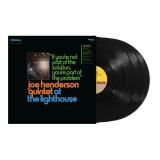
Originally recorded and released in 1970, the Joe Henderson Quintet, At The Lighthouse: If You're Not Part Of The Solution, You're Part Of The Problem sees the influential jazz fusion sax player performing at the legendary venue in Hermosa Beach, California. Joined by George Cables, Ron McClure, Woody Shaw, Tony Waters and Lenny White the original album contained 6 live cuts. This 180-gram 3-LP Deluxe Edition, adds 5 unreleased tracks along with new liner notes from author Eugene Holley Jr.
xy Mode for Joe [Alternate Take]*
[ya] If You're Not Part of the Solution, You're Part of the Problem [Alternate Take]*
[o] F1 Mode for Joe [Alternate Take]*
[p] F2 If You're Not Part of the Solution, You're Part of the Problem [Alternate Take]*
When Swingrowers released their debut in Sept 2012, electro swing was a bubbling cultural zeitgeist. This Italian band were among the earliest pioneers who helped shape the sound of the vintage-influenced genre. Their debut 12 track collection paved the way for the brilliant albums that followed and indeed for the ongoing popularity of the genre. A little rougher around the edges but with all the early promise on show, this album completes a 4 piece set for fans and collectors.
Swingrowers went on to release a further 3 studio albums, toured internationally, playing major festivals includingMontreux Jazz Festival, Glastonbury, Boomtown and Tokyo’s Blue Note Festival. Their music has to date amassedmore than 100 million streams worldwide on Spotify alonewith videos clocking up many millions more.
Pronounceditself is a revelation. It stood the test of time as one of the earliest complete and fully-realised Electro Swing albums that seamlessly blend 20’s and 30’s influences - violin, gypsy jazz guitar, saxophones and swing music - with polished contemporary production. Here, superb musicianship meets great songwriting meets a unique modern sound from Swing Hop to Drum n Bass with jazz-inflected vocals in English and Italian.
As we approach the 15 year anniversary, Pronounced is being released on wax for the first time.
This releasecompletes Swingrowers’ entire album discography on vinyl, joining existing editions of Remote, Outsidein and Hybrid.
For long-time fans, collectors and anyone who discovered electro swing through artists such as Caravan Palace and Parov Stelar, Pronounced is a chance to finally own the sound of a young band (and indeed an up-start young genre) at the very start of their career.
Seit ihrer Gründung im Jahr 2020 teilen Kino Motel ihre Zeit zwischen Melbourne und Berlin auf und haben ihren Sound verfeinert sowie einen ganz eigenen Stil entwickelt, den sie Beach Goth" nennen. Von Kritikern wird dieser als eine Kombination aus australischem Gothic, Slacker-Rock, Post-Punk und Cinematic Noir beschrieben. Das Duo, bestehend aus Ed Fraser und Rosa Mercedes, ist bereits ausgiebig in Europa und Australien aufgetreten und hat zahlreiche Singles veröffentlicht, bevor es 2024 sein gefeiertes Debütalbum Visions" herausbrachte. Kino Motel freut sich nun darauf, im Oktober 2026 sein zweites Album Symbolism" zu veröffentlichen. Symbolism" wurde in Melbourne aufgenommen und in Berlin produziert und läutet mit seinem düsteren, filmischen Flair eine neue Ära für Kino Motel ein. Das Album ist sonnendurchflutet, aber unruhig, romantisch, aber zerfranst, filmisch, aber bruchstückhaft. Während Visions" ihre Welt vorstellte, vertieft Symbolism" diese nun nicht als strenges Konzeptalbum, sondern als Sammlung von Momenten, die durch ihre Anhäufung an Kraft gewinnen. Jeder Song steht für sich allein, doch zusammen bilden sie eine Reihe von Zeichen, Fragmenten und emotionalen Codes.
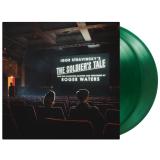
The 2018 album Igor Stravinsky’s The Soldier’s Tale is the adaptation by Roger Waters (co-founder of Pink Floyd) on the 1918 same-titled theatrical work. Waters recorded this version with members of the Bridgehampton Chamber Music Festival at Bridgehampton Presbyterian Church.
The original theatre work is one “to be read, played, and danced” by three actors (the soldier, the devil, and a narrator) and dancers, accompanied by a septet of instruments. The libretto relates the parable of a soldier who trades his fiddle to the devil in return for unlimited economic gain. The music is scored for a septet of violin, double bass, clarinet, bassoon, cornet or trumpet), trombone, and percussion. The libretto is adapted by Roger Waters from the translation by Michael Flanders and Kitty Black, based on the original text by Charles-Ferdinand Ramus.
The Soldier's Tale is available as a limited edition of 1000 individually numbered copies on green vinyl and comes in a gatefold sleeve with linen laminate finish. The vinyl package includes a 4-page booklet with lyrics and pictures.
Do not adjust your tuning! Cowper emerges disc in hand from the liminal static, exposing us all to his peculiar brand of outsider club chaos. Boldly, slowly, Goa-ing into the fray, these three tracks chew your ear off in the sonic language of acid, trance and progressive house, churning and gurning their way deep into the darkness. In the time since the first dispatch of edit excellence, Cowper’s Between Stations has firmly established itself as an essential underground outpost, adding tape releases by Tolouse Low Trax, Zato and Miles J Paralysis to a growing catalogue of genre-fluid mayhem, consistently captured by his essential Noods Radio shows. Introducing itself with a gut punching kick and gurgling prog throb, the first track here is simultaneously upbeat and downcast, a glorious gloom-core ode to narcotic indulgence.
Extra-terrestrial pads and choral synth hark back to childhood days of Perfect Dark before a trance lead interrupts all remaining neural connections. When that snare lands in the second half we’re in fully fledged techno-pagan mode, red-faced and rushing right till the end. Assuming that even xenomorphs dance sometimes, this end of the world apocalypso is absolutely their jam. Track 2 tunnels further into the planetary core, 16bit woodblocks and bells sitting atop synthetic swells and hoover-ish vamps, before a hooning bassline drops like a sledgehammer on your unsuspecting ear drums. An unexpected, but very welcome left turn into mid track breakbeat provides a moment of airy reprise before we lock back into the cavern-shaking groove until the run out abates. For the encore, Cowper didgeri-doesus with the oscillating bass and molasses-apache break of a techno-tribal, prog-frog delicacy. Complete with the type of mantra vocal usually found on pound-bin trance or superspenny Dream House rarities, and a little acid-gwamph resonance abuse Josh Wink would be proud of, this chug-athon sounds a bit like Psychic TV tuning into Psy-trance, which is a very good thing indeed. Dark, dense and musky stuff that will drive a proper dance floor wild.
Coming from deep within the city that brought us Master P’s legendary No Limit Dynasty and Lil Boosie comes an artist who uniquely encapsulates the crossing point between lowslung Hip Hop and forward thinking, emotive electronic music. 22-year-old New Orlean’s based Suicideyear AKA James Prudhomme brings his own Southern Gothic perspective to the table with new album ‘Color The Weather,’ set for release on July 6th via LuckyMe. Although not his debut album per se - 2015’s ‘Japan’ on OneOhTrix Point Never's Software label was a collection of previously released beats – ‘Color The Weather’ represents the first time Suicideyear has specifically sought to create a complete body of work, further developing different textures and sounds that were hinted on last year’s critically acclaimed ‘Hate Songs’ EP. Within these tracks lie the ghosts of Prudhomme’s past - a difficult childhood truncated in his teens by his family home burning down. When he left Baton Rouge for his new home in New Orleans he found himself further entrenched in the Southern Rap scene whilst he soaked up the avant-garde electronic music he found online. Balancing his tender instrumentation alongside some of the tightest drum programming in the game - these tracks twist and turn - new elements are built and destroyed constantly encompassing a huge emotional range. On the records’ two vocal features he expounds on this innovative and ambitious duality – Domino Records own Georgia filling the track with longing and hope whilst Prudhomme deconstructs the track around her. The Casey MQ featured ‘Said and Done’ goes further - the last third of the track slowing to a codeine induced haze paying a nod to the Chopped and Screwed sound of James youth. “Color The Weather is about the ability to build or form security after trauma/betrayal & building personal coping mechanisms to get through said traumas. Doing what it takes to control your life when powers are working against it. The total resilience of the human spirit.” James Prudhomme
Composer and multi-instrumentalist Amir ElSaffar has achieved international renown for his work combining the Maqam of Iraq and the Arab world with jazz. With Ashwaaq, he displays a new facet of his work with a composition for string quartet, santur, and vocalist Khaled AlHafez, a master of the musical tradition of Aleppo, Syria. This dialogue between AlHafez’s warm voice and interpretive style that blends rigor and grace and string quartet explores the microtonal resonances of the maqam and the possibilities of a polyphony rooted in Arab traditions.
The texts come from Turjuman Al-Ashwaaq (Translator of Desires) a collection of mystical and ecstatic love poems written by the revered 12th century Sufi mystic, Ibn Arabi, and explore the universal power of love, the inner quest, and the search for unity in the diversity of the world.
Ashwaaq is a captivating moment of celebration, where poetic and musical heritages intersect beyond cultural and disciplinary boundaries.
Almost four decades in the making, Dave Seaman’s very first artist album ‘Mirrorball Sleaze’ has finally been completed and will arrive on Selador on November 6th. Featuring a heady mix of both new and old recordings, all created, revised and / or re-purposed especially for this project, this assemblage represents the best of Dave’s sprawling oeuvre, joining the dots between the some of his most celebrated past glories right up to the present day, where he remains on the frontline of electronic club music. A culmination of a life lived and breathed in the trenches of acid house.
This limited vinyl edition will feature all 11 tracks especially segued together, split into two flowing listening pieces across sides A and B. After a long and storied vocation in music, his own artist album was the one itch Dave has long wanted to scratch. And now, at long last, it has arrived - a sultry, shimmering beauty, by turns deep and euphoric. A career milestone.
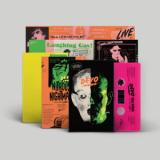
Futurismo are proud to present DEVO’s NITROUS NIGHTMARE, Halloween Live ‘75. Never before released, or heard in it’s entirety, this legendary live performance is presented here in it’s full chaotic glory on Super Limited edition Deluxe cassette format!
The live release all hardcore Devo fans have been waiting for, Nitrous Nightmare demonstrates a band harnessing their artistic greatness in the purest of forms. This mythic performance captures Devo perfecting some of their most iconic concepts in the raw. Expertly restored, this live recording makes for a thrilling experience, it also captures Devo as a lightening rod for hostility.
On Halloween 1975, Devo took the stage at the WHK Auditorium in Cleveland, in a supporting capacity for jazz legend Sun Ra, to perform for a raucous crowd dressed in the finest of Halloween cliché. Already riding high on Nitrous Oxide and booze supplied by the sponsoring radio station, this unaware horde was expecting to see a slick cover band churning out renditions of Bad Company hits, only to be subjected to an act of subversive performance art that would send the growingly aggravated crowd into eventual meltdown. Physical threats ensued, but Devo played on.