Fresh from a run of must-check EPs on Syncrophone Recordings, Black Jazz Consortium man Fred Peterkin inaugurates a new label, Base. The New York-based producer appears to be the man at the helm, since his next scheduled release also appears on the freshly minited imprint. He begins with 'There & Back (Long Player)', a languid, mid-tempo chunk of string-laden deep house classiness, before opting for a breezier, dreamier and sunnier sound on the impeccable 'Something For The Road'. Peterkin's ability to fuse looseness, heaviness and subtly soul-flecked instrumentation comes to the fore on EP highlight 'Rhythm & Movement', while 'BTA10711 (4am Mix)' tiptoes the fine line between dubby deep house and spacey, far-sighted futurism.
Network 23 Recordings proudly unveils its first full digital album release since its revival in partnership with Triple Vision Distribution. It will also release as 3 Vinyl EP's over the course of this year.
Better Than Drugs, the latest album from Crystal Distortion, delivers a high-impact sonic snapshot of both personal upheaval and the turbulent state of the world today. Framed by flashes of media soundbites old and new, the album tackles themes ranging from gentrification in Landlords Hooked On Crack (Breakbeat Version) to the right to protest in Got2StopThem, and the mass manipulation of society in The Chicken Strikes Back.
Launching with a hard-techno surge, the record moves fluidly through a spectrum of tough, mid-tempo rhythms, accented by breakbeats, electro-leaning syncopations, and bass-driven cuts like StepGPT-all while staying firmly rooted in dance-floor intent. Designed for movement and built for impact, Better Than Drugs is a versatile, high-energy release ready to ignite any setting.
Crystal Distortion is a pioneering force in the underground electronic music scene, known for fusing hard-driving techno, breakbeat energy, and improvisational live performance into a signature sound that helped define the European free-party movement. His work blends raw analog textures with relentless rhythmic experimentation, creating high-intensity sets that feel both chaotic and meticulously crafted. As a long-standing member of the Spiral Tribe collective, he has influenced generations of producers and performers, pushing the boundaries of what electronicmusic can be in both form and context.
Danish producer Kasper Bjørke returns with a new release on Tropical Animals, the “Veri/Gliss” EP a work that fully captures his signature blend of cinematic depth, refined production, and forward-thinking electronic aesthetics.
“Veri” opens the EP as a richly layered and immersive experience. Built around an evolving tapestry of textures, the track unfolds through pulsating synths, shifting sonic details, and a steady yet powerful rhythm. The result is a truly intergalactic journey, where each element seems to orbit around a constantly transforming emotional core. This is Bjørke at his most visionary-bridging club functionality with intricate sound design in a hypnotic and expansive narrative.
On remix duties, label head Ricardo Baez reinterprets “Veri” with a sharper, more direct approach. Stripping back the original’s layered atmospheres, he delivers a driving electro version that’s lean, tense, and fully focused on the dancefloor. With its tight groove and immediate impact, the remix is built for peak-time energy and club intensity.
On the flip side, “Gliss” reveals a more intimate and emotive dimension of Bjørke’s sound. A modern electronic ballad, the track blends sensual rhythms with delicate, suspended melodies. Its subtle yet captivating groove carries the listener to an unknown planet, where everything moves in sync, locked into the same pulse and flow. It’s a piece that radiates both mystery and warmth, showcasing Bjørke’s ability to craft deeply atmospheric yet rhythmically engaging compositions.
With the “Veri/Gliss” EP, Kasper Bjørke and Tropical Animals reinforce a shared artistic vision where sonic exploration meets club-ready precision, balancing introspection and dancefloor energy, cosmic textures and physical groove.
The new 12" release, "Call and Response", by the enigmatic artist MD, is a masterclass in the resurgence of retro techno, bridging the gap between the raw industrialism of early 90s Detroit and a modern, high-fidelity punch. The A-side is defined by its massive, anthemic vibes, built around a thundering TR-909 kick and a soaring, crystalline synth lead that feels both nostalgic and startlingly fresh. What truly sets this record apart, however, is its intricate counterpoint structure; rather than relying on simple loops, MD weaves multiple independent melodic lines together in a rhythmic dance of tension and release. The "call" begins as a jagged, percussive stab that is immediately answered by a "response" of lush, interlocking minor-key arpeggios, creating a sense of constant movement and architectural depth. It’s a track that demands attention on a massive sound system, proving that the classic techno blueprint can still be expanded into something grand and deeply intellectual.
Seaford's Chewy Rubs heads up his own Bandolier Records and has impressed with collaborations with Fingerman before now. Here he lands on Wax Digits with an EP designed to join familiar moments of the past with fresh club energy. 'Another' has old school stabs and 90s vocals that get heart and body going, 'Freestyle' is a body-popping rhythm with vocoder vocals offering an 80s flex and 'Mobbed' is a suspenseful tech house groove before 'Underground' cuts loose on more big breaks and percussive flair. Useful, hard to date and harder to predict tools.
Vier Jahre nach ihrem gefeierten Debüt ,International Love Affair" kehrt Tigerbalm (Rose Robinson) mit dem aufregend kaleidoskopischen Album ,Bubblegum Discos" zu Ubiquity Records zurück. Als mutige Weiterentwicklung ihres global geprägten Nu-Disco-Sounds spiegelt das Album ein neu gewonnenes Selbstbewusstsein wider sowie den Wunsch, mit handverlesenen Musikern und Sängern aus aller Welt zusammenzuarbeiten. In lebhaften Klangfarben gehalten, präsentiert ,Bubblegum Discos" Tigerbalms zwei große musikalische Leidenschaften: die brasilianische Musikkultur und Vintage-Dancefloor-Hits vom afrikanischen Kontinent, angereichert mit Anspielungen auf Italo-Disco, Proto-House und Soca. Die erste Hälfte des Albums ist stark von südamerikanischen Einflüssen geprägt. ,Nayar", entstanden in Zusammenarbeit mit Giorgio Lopez aus Neapel, macht den Anfang mit leicht vom Reggaeton inspiriertem Nu-Disco, gefolgt vom brasilianischen Disco-Rausch von ,Diga Me" und dem luftigen Samba-Disco von ,Vera En Paraty". Robinson liefert ihren allerersten Leadgesang auf dem teilweise improvisierten Neo-Boogie-Track ,Coco Makoko". Das Album wendet sich dann Afrika zu, mit herausragenden Beiträgen von Andre Espeut, der in Montreal lebenden haitianischen Sängerin Waahli auf dem hornlastigen ,Do Da Soca" und dem Afrobeats-Sänger Idd Aziz auf dem körperbetonten ,Afro-Disco". Der Abschluss ,Conga" rundet das Ganze mit schweren, afrozentrischen Disco-Rhythmen und tiefem Dub-Bass ab. Actiongeladen und makellos produziert: ,Bubblegum Discos" ist der Sound einer Künstlerin, die ihr frühes Versprechen mehr als nur einhält.
Celebrating a decade since its live debut, Detroit-based artist Rebecca Goldberg announces the first-ever vinyl release of her original score for A Trip to the Moon, the iconic 1902 silent film by Georges Méliès. Composed in 2016, Goldberg’s reimagining of the groundbreaking film—originally titled Le Voyage dans la Lune—translates early cinema fantasy into a minimalist electronic soundscape shaped by synthesis, texture, and composed foley.
Goldberg’s approach honors the wonder and theatricality of Méliès’ vision while grounding it in Detroit’s lineage of forward-thinking electronic music. The score premiered in Paris in 2016 with live performances at Silencio, the club founded by David Lynch, and at Bar à Bulles, located above the legendary Moulin Rouge. The Paris events were produced by Why So Serious Productions and marked a rare convergence of experimental electronic performance and historic cinematic space. Goldberg also presented the live score in her native Detroit, reinforcing the transatlantic bridge that has long shaped her conceptual record projects.
Now, ten years later, the score will be released for the first time on vinyl in a limited edition of 300 copies. The pressing captures the nuance of the original live compositions while offering listeners a new way to experience the interplay between silence, rhythm, and sonic illusion. As with Goldberg’s previous conceptual 12" releases, the vinyl format serves not only as a medium but as an artifact that preserves and reframes cultural memory.
Thirteen years have passed since their debut album, but now Oppenheimer MKII is ready to release their long-awaited second album "Embrace The Dark”.
Oppenheimer MKII is Andy Oppenheimer, singer, songwriter and formerly one-half of 1980s synth-pop duo Oppenheimer Analysis, one of the leading bands of the ‘minimal synth’ scene, and inspiration behind the New York-based Minimal Wave label and Mahk Rumbae, electronic musician and producer known for his work with Codex Empire, Mitra Mitra, and long-running UK industrial/experimental band Konstruktivists.
“Embrace The Dark” does exactly as its title suggests: it embraces dark, apocalyptic themes for our current turbulent times. In nine mind-blowing tracks, Mahk’s thunderous dance rhythms and addictive synth-pop melodies combine with Andy’s latest dystopian – and sometimes utopian – visions of our past, present and future.
From the atmospheric title track, greatly influenced by Andy’s lifelong obsession with space – ‘When you embrace the dark, you gaze back in time...’ to delusional tech-bro world domination in “I Went Too Far” – ‘The sky is not the limit; my wealth is infinite’ and the pounding paranoid lead track “Oh! My Mind is a Storm” – ‘When I go dark, I'm into demon mode’, the new Oppenheimer MkII album “Embrace the Dark” ventures deep into futuristic dreams and nightmares and is guaranteed to fill the dancefloor.
Cromby delivers a four-track EP built for the dancefloor, each cut hitting a different shade of club energy. On the A-side, Love on Tenderhooks kicks things off with a high-octane bassline, euphoric builds, driving organ and haunting vocal hook. It's followed by All Night, a deeper, darker roller driven by sub bass, dubby textures and a relentless groove. Flip it over and On Target takes a more trippy turn, riding a warm, bumping bassline with swirling, psychedelic vocals drifting across the mix. Closing things out is The Beat, a percussion-led groover that locks into a hypnotic rhythm and keeps the floor moving.
Dewa Alit, master of radical Balinese gamelan, returns to Black Truffle with Baur Bentur. Genetic (2020, BT063) introduced international listeners to the magical sound-world of Alit’s Gamelan Salukat, who perform on instruments tuned to a unique scale derived from modified versions of two traditional Balinese scales. The two pieces heard on Chasing the Phantom (2022, BT093) further demonstrated his radical fusion of tradition and experimentation, with passages where unorthodox techniques make the acoustic ensemble resemble glitching electronics. Baur Bentur now highlights another aspect of Alit’s work, presenting pieces composed in 2024 and 2025 where Gamelan Salukat performs alongside virtuoso pianist Sri Hanuraga. Alit’s music is grounded in deep reflection on the tradition of Balinese gamelan and its place in the contemporary world. His title, ‘Baur Bentur’, which translates as ‘mixing and smashing’, points to his embrace of the intercultural mixture of Eastern and Western elements in the search for innovation. Against the calcification of Balinese music into tourist entertainment, Alit poses his searching, experimental work, which celebrates the communal values and performance practices of traditional gamelan while pushing into startling new directions.
‘Sukat Tacara’ is a study in layered tempos, meters, and polyrhythms, a constantly shifting dialogue between piano and the instruments of Gamelan Salukat. It begins close to a traditional concerto, pairing a brisk sequence of melodic variations from the piano with a spare but propulsive accompaniment of drums and hanging metallophone tones, punctuated by low gong strikes. The piano builds in volume and density across a rapid succession of fragments, at points recalling George Antheil’s ticking wind-up machinery, though Hanuraga’s jazz background shines through in the fluidity with which he navigates the complexities of the score, where chromatic movement co-exists with bluesy phrases. An abrupt change in the piano to patterns of dense clusters introduces a new episode, during which the metallic instruments of the gamelan enter the foreground. The piece dazzles with its inventive rhythms and dynamics, building to a stunning passage featuring the signature heavy muting technique of the Gamelan Salukat metallophones in kinetic patterns that would be at home on a Príncipe release.
The title piece begins at high intensity and rarely lets up, working through bracing unison ensemble melodies and punctuation points where piano and gamelan together seem to become a single, thudding drum. For much of the piece the piano is tightly integrated into the ensemble, the harmonic extensions of the melodic line subsumed into a moving cloud of complex overtones generated by the gamelan instruments. Wildly kinetic on the rhythmic level, the piece swarms with microscopic movements of beating patterns generated by the ‘blend and crush’ of three simultaneous tuning systems: the equal temperament of the piano and the saih cenik (small scale) and saih gede (big scale) used by the gamelan instruments. Accompanied by the composer’s thoughtful liner notes and images of the musicians, Baur Bentur is a stunning next step in Alit’s radical combination of tradition and innovation.
Straight from the depths of techno, Lewis Fautzi delivers an intense EP where each track pulls you deeper into a raw, immersive soundscape.
Featuring five tracks that explore deep textures, driving rhythms, and dark atmospheres, "Ghosts Don't Text Me" reinforces his unmistakable signature style.
5 tracks. 1 identity. Pure energy from start to finish.
Take Me, I’m Yours is the first collaboration album between Alan Abrahams and Jan Jelinek. Released through the latter’s faitiche, it builds upon multi-layered vocal sketches by the former. The Paris-based artist, primarily known for his work as Portable and Bodycode, supplied Jelinek with multi-layered song sketches that the German artist subjected to a rigorous process of manipulation, excavating the ambiguities of the original material and transforming its rhythms into subtle pulses. Take Me, I’m Yours is neither a typical Abrahams record nor a classic Jelinek album—it is something third, mediating between the physicality of the voice and the abstraction of electronic sound design.
The two had crossed paths before really getting to know each other after Abrahams invited Jelinek to play at one of his Süd Electronic parties. The idea of a collaboration emerged slowly. “It started as an experiment, and over the past few years grew from a few tracks into this album,” says Abrahams. He describes recording the basic material as a “tantalizing” process, not knowing how Jelinek would transform his material, some of which was based on wordless chanting, while other tracks were working with lyrical content. However, their mutual trust allowed Jelinek to remove the harmonies, radically reduce the rhythms, and concentrate on Abrahams’ voice.
Jelinek heard something “fragile” in this voice, “moments of doubt and dark premonitions.” He points to Forever as an example. “Alan’s original song reminded me of classic vocal house, but his voice seemed to almost break,” he says. “This contradiction made the piece even bigger, because we hear a singer in the moment of an awakening.” He further accentuated such tensions through arrhythmic synth modulations and time-stretching algorithms, while also adding concrete sounds from a variety of sources. With its dedication to both transforming and amplifying the emotional qualities hidden within Abrahams’ pieces, Take Me, I’m Yours functions as a dialogue between those two singular artists.
San Francisco artist Ross Hogg has been grafting away on his grooves for many years. He has plenty of styles in his arsenal and here digs into some sun-baked reggae and lovers' rock. Up first, he reworks 'Rose Inna Di Dark', the title cut from the debut album by British soul singer Cleo Sol. Her angelic vocal rides a clean reggae rhythm with sleek melodies reflecting rays outwards. On the flip is 'Come Around & Kick It', a deep cut groove with an r&b vocal and classic reggae guitar riffs. It's a steamy combination that's designated to get plenty of backyard parties and beefy sound systems ablaze as we head into the warmer months.
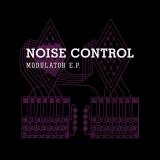
In the early 1990s, Frankfurt stood at the forefront of a rapidly evolving electronic music landscape, where the raw energy of EBM and New Beat was mutating into the earliest forms of techno. Emerging from this fertile environment, Noise Control delivered “Modulator E.P.” in 1992—an overlooked yet striking document of that transitional moment.
Following their earlier releases, “Operation S.B.” (1989, New Zone) and “My Flight” (1989, Zoth Ommog), “Modulator E.P.” marked the project's return and a clear progression towards a more stripped-down, club-oriented sound. Originally issued as the first release on the short-lived Neo Ego label, the EP captures a style in flux, moving between industrial body rhythms, early techno structures and acid-inflected sequences, reflecting the hybrid character of the German electronic underground at the time.
Limited to 300 copies on black vinyl and 200 copies on violet transparent vinyl, this reissue presents all four original tracks in full, alongside the highly sought-after Razormaid remix of “Tehniska Musika”.
New album by FLOCKS, the duo of drone specialist WERNER DURAND and percussionist ULI HOHMANN. Musical landscapes that move between traditional as well as experimental sounds with influences from Krautrock and JON HASSELL's "fourth world" aesthetics.
WERNER DURAND has made himself a name with various projects with Dhrupad singer AMELIA CHRISTIANSEN, DAVID CHRISTER HENNIX, as the co-founder of THE 13th TRIBE, ARMCHAIR TRAVELLER and TONALIENS (with ROBIN HAYWARD and HILARY JEFFERY) plus numerous solo albums, released on labels like Black Truffle, Unseen Worlds or Edition Telemark. Having studied saxophone as well as Indian / Persian flutes, the Berlin based DURAND is a highly reputated protagonist in the drone scene, famous for his self-built wind instruments like buzz-clarinets or his PVC neys & horns.
His partner in FLOCKS (and longtime personal friend) is ULI HOHMANN whose early encounters with music from Asia, India and Africa led to studies with the Ghanaian master drummer MUSTAPHA TETTEY ADDY and later Tombak and Daf with NEMAD DARMAN (Iran). HOHMANN played in a couple of projects that explored the language of classical Persian music, and started building his own stringed instruments (being an educated carpenter). In 2014 he joined DURAND and AMELIA CUNI for the album "Clearing", and 2018 DURAND and HOHMANN decided to con- tinue as a duo: FLOCKS was born.
On “Lagoon”, the duo further explores the aesthetics it has crafted on its selftitled debut (2023, on the now defunct ZEHRA imprint): DURAND and HOHMANN shape drone-y soundscapes based on their self-built wind- & stringed instruments, Persian percussion and subtle electronics, drawing ad- ditional inspiration from Krautrock (listen to the irresistible, hypnotique, ever-changing rhythmic pattern of the title track) as well as JON
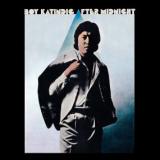
Jazz-fusion, disco-funk, Latin jazz and batucada rhythms get the Filipino treatment onAfter Midnight, the sublime second album from keyboardist Boy Katindig. Originally released in 1980, After Midnight draws heavy influence from soul and funk contemporaries in the US as well as Latin America, in particular the famed Brazilian percussionist Paulinho da Costa.
It’s a testament to his musical prowess that Katindig weaves effortlessly between styles and tempos. His reverence for Paulinho da Costa extends far, with covers of several songs from the latter’s 1979 Happy People album. This includes slow-burner ‘Déjà Vu’ written by Isaac Hayes originally for Dionne Warwick; on the Filipino instrumental version, local legends Jun Regalado and Roger Herrera (from Regalado’s ‘Pinoy Funk’ single) are reunited on drums and bass respectively.
But Katindig’s original compositions hold just as much weight and unique personality: title track ‘After Midnight’ opens with a sultry funk serenade reminiscent of The Isley Brothers, and quickly transforms into a catchy, blistering, saxophone chorus that brims with swagger. Hidden B-side gem ‘Got The Need’ is an uptempo tribute to batucada that would not be out of place in a jazzy house set, and boasts increasingly elaborate and psychedelic solos from Katindig on keys and Ben Concepcion on soprano sax.
Meanwhile, ‘Love Till the End of Time’ is a masterclass in instrumental disco funk, penned by the prolific Greg Phillanganes who at that same time was writing for many of the greats including Chaka Khan, George Benson, Stevie Wonder, The Jacksons and Cheryl Lynn.
This album is lovingly reissued by Sama Sama Records, a boutique label from DJ and collector Norsicaa, who ran the esteemed Soundway Records for 8 years and released the compilation Ayo Ke Disco in late 2024.
Long-time house architect Louie Vega dropped his comprehensive last album, ‘Expansions In The NYC’, as another homage to New York City's 50-year history with dance music. It was full of vocal collaborations and spanned disco, boogie and all forms of house.
'Touch The Sky' feat Tony Momrelle is the latest track from it to get full remix treatment, following on from 'All My Love' late last year.
First to offer his own perspective is Japan's Masaki Morii, a regular on the likes of King Street and Shelter, as well as the founder of his own M2SOUL MUSIC & NU ONE. He bridges soul, deep and Afro house, always with plenty of emotion. His first remix is a lush layering of feathery drums and skyward melodies with the original vocal bringing plenty of heart-aching soul. It's a life-giving work for a moment of pure celebration and release, and shows how musical and artful house can be in the right hands. Extended dub and instrumental remixes all bring out subtly different facets of the original without losing its uplifting essence.
Brandon Weems and Craig Handfield are Musclecars, a duo with a community-first approach to music. From high-profile magazine front covers to gigs at Panoramabar and their residency at Nowadays in New York, they have a fresh and authentic sound that pulls from soul, jazz and disco on labels like BBE, Rhythm Section and their own Coloring Lessons. Their majestic, 10-minute remix is a soulful deep house odyssey designed to nourish and enrich. The soaring vocals come from a place of love, and there is freedom to the jazzy melodies and lavish percussion that warms the heart while pianos and synths are locked in a joyous tussle. The dub shifts things back to chunkier, more bouncy drums, with slightly pared-back, more late-night melodies, while the instrumental is all about giving everything room to breathe.
Side A
Don’t It Drive You Crazy (Break Edit) — The Pointer Sisters
Originally from the 1978 LP Energy, this is prime disco-era Pointer Sisters. The OG cut is beloved for its rolling rhythm section, and this edit zones straight in on the drum passages DJs & beatmakers have quietly relied on for years. Tight, punchy & perfect for looping under blends or quick cut-ins.
Side B1
In My Body’s House (Sample Drum Break Edit) — Gene Chandler
Lifted from Gene Chandler’s 1979 album Get Down, a late-career disco-funk gem. The drums here are the story: steady kick, crisp hats & a pocket that sits comfortably across disco, boogie & hip-hop-adjacent sets. This edit isolates the break for maximum flexibility behind the decks or in the studio.
Side B2
Don’t It Drive You Crazy (Sample Drum Break Edit) — The Pointer Sisters
A second, more surgical take on the same Pointer Sisters groove, focused almost entirely on the drum break itself. Think intros, beat tools & sample-ready loops.
Bottom line
A straight-up DJ weapon from start to finish. Disco breaks, clean edits & zero overthinking.
Infonabeat Records presents ISSR A004, a release focused on techno in its most essential and timeless form.
A limited vinyl edition of 300 collector copies, designed for both the dancefloor and the shelf, where functionality meets sonic depth.
The A-side opens with Tensal – 24:05, a solid, hypnotic track built on sustained tension and groove, followed by Netika – Albor, delivering raw atmospheres and a precise pulse rooted in the mental side of techno. On the B-side, Joton – Disrupted Patterns showcases his distinctive rhythmic and experimental approach, balancing energy and abstraction, while Ixbalanke – Spectros closes the record with a dark, immersive cut full of texture and analog depth. ISSR A004 is a tribute to traditional techno , direct & uncompromising
Stanz Amor delivers a five-track EP that blends crunchy sound design, tribal influences and driving grooves into a cohesive statement of energy, movement and atmosphere. Hailing from Blackpool UK, Stanz Amor emerged in 2023 with a distinctly old-school approach, channeling groove, rhythm and intensity into a modern context, which he showcases on his Backspin Records debut EP 'Mercurial'. ??Opening with 'Kong', the EP sets the tone with an old school spirit reimagined through a contemporary lens. Loopy structures, banging percussion and textured, gritty elements create a hypnotic flow designed for peak-time moments. 'Mercurial' raises the intensity, propelled by fast-paced hi-hats and shimmering rides that injectconstant motion, while a rolling low end gives the track serious weight. A striking Latin vocal lingers throughout, leaving a lasting impression long after the track fades. On the B-side 'Count' shifts the energy into a groove led by rolling bongos, underpinned by a heavy sub and catchy, repeating vocals that lock into a tight, circular rhythm. 'Yawhoo' follows with a punchy kick, rumbling foundation and driving percussion, elevated by a cheeky vocal and a whistle straight out of the 90s rave era, adding a playful, nostalgic edge. The closing track is a remix of 'Count' by Steve Redhead, who reinterprets the original with forceful yet hypnotic percussion and finely detailed vocal work. A Belgian techno mainstay since the early 2000s, Redhead is known for his uncompromising, groove-driven sound and lasting influence within the underground. ??With this release, Stanz Amor delivers a focused and effective collection built on groove, repetition and dancefloor functionality. Released on Regal's Backspin Records, a label rooted in the underground and dedicated to honoring techno's origins while pushing its future, the project balances nostalgia with modern clarity, designed to resonate in clubs and leave a lasting impact.
Esfand ist der letzte Monat des persischen Kalenders, der mit dem Nouruz-Frühlingsfest endet. Seit 2020 ist ESFAND auch eine Band - bestehend aus dem Iraner Rouzbeh Esfand und dem Neuseeländer Patrick Stewart. Ein Duo, das traditionelle iranische Folk-Elemente mit westlichen Beats und Vocal-Features bekannter exil-iranischer Künstler*innen zu etwas völlig Neuem verschmilzt. Ihr Debütalbum "Piltan" ist ein fulminant tanzbares Statement ohne Anflüge von Ethno-Kitsch. Pure Instinktmusik. "Wir haben die Samples ausschließlich aus musikalischen Gesichtspunkten ausgewählt. Das Folk-Element in unserer Musik ist groß, aber es ist nicht unsere Aufgabe, die Reinheit dieser Kultur zu wahren. Wir werfen iranische Traditionen nicht weg, wir behalten einfach die, die am besten passen. Am Ende des Tages sind alles nur Sounds." "Piltan" ist eine akustische Reise quer durch ein riesiges Land voller kultureller Eigenheiten: von den Zar-Ritualen aus dem Persischen Golf im Süden zum Reiter-Volk der Bachtiaren im Südwesten, bis hin zu den Qaschqai im Westen und zu den Kurden im nordwestlichen Iran mit ihren Derwisch-Ritualen. Die ersten beiden Songs haben ihren Ursprung in den repetitiven Rhythmen der Zar-Rituale, bei denen der Dämon Zar Personen in Form eines Windes befällt. Der Begleiter der zu behandelnden Person wiederholt bestimmte Phrasen immer wieder, um den Patienten in Ekstase zu versetzen. Auf die von Handtrommeln befeuerten Techno-Beats in "Bibi Saghi" folgen die düster-hektischen Synthie-Grooves von "O"seda". Ob der dunkle Dub von "Shawl" oder die maschinell stampfenden "Zar Bits" und "Without Foot, Without Head" - alle acht Songs sind raffinierte Produktionen auf höchstem technischem Niveau. Auf zwei Songs ist der Sänger und Perkussionist Habib Meftah vertreten (Rouzbeh: "Ich liebe seinen Instinkt für Songs!"). Auf "Shawl" gastiert Mohsen Namjoo, der sich ähnlich viel mit Folklore befasst hat und hier Texte der bekannten iranischen Dichter Daqiqi und Farrukhi Sistani singt. Aus einer jüngeren Generation stammt die Londoner Sängerin Misagh Moradi. Ihr "Without Foot, Without Head" basiert auf Texten des weltbekannten Dichters Rumi. Sich im Moment verlieren, sich dem Rhythmus hingeben, ganz unabhängig vom eigenen Hintergrund - das geht mit der jahrhundert- und grenzüberschreitenden Musik von ESFAND. Loslassen, abschalten, ohne Kopf und Füße zu kontrollieren. Darum geht es ESFAND. Übersetzt heißt es im Text von "Without Foot Without Head": "Oh du mit der anmutigen Taille, wirbele herum! Tanze weiter!"
AS THE WORLD TURNS is the newly founded label by Rob Manga -- a platform created to channel his distinct sonic identity while cultivating a community rooted in shared energy and expression. The label emerges from a clear intention: to push a personal sound forward while opening space for others to connect, contribute, and evolve alongside it. It is both a statement and an invitation -- a place where sound becomes a meeting point. The first release marks this vision with a four-track EP, weaving together soulful textures, deep atmospheres, and club-driven impact. Each track reflects a different facet of the dancefloor, balancing introspection with movement, and depth with raw energy. With this debut, AS THE WORLD TURNS sets the tone -- not just as a label, but as a growing circle centered around sound, rhythm, and connection.
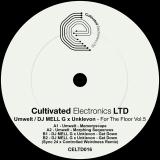
Cultivated Electronics Ltd For The Floor series began in 2022 and features split EPs available on vinyl (only) with Electro tracks aimed strictly at the dance floor, bringing together CE regulars and new artists. Volume 5 features Umwelt on the A- side and DJ MELL G x Unklevon on the flip, as well as a remix by label head, Sync 24 alongside Controlled Weirdness. New Flesh founder, Umwelt is known for his dark, industrial-leaning techno that blends dystopian atmospheres with driving rhythms. Here, the French producer delivers two hard-hitting cuts in Memoryscape & Morphing Sequence to open the EP. DJ MELL G from Juicy Gang Records brings a raw, high-energy fusion of electro, breakbeat and techno; fast paced and with bold sound design. She teams up with Unklevon who produces sleek, futuristic electro with crisp drum programming most notably for Boysnoize Records, on Get Down. While Sync 24 & Controlled Weirdness close out the EP with their tough and wonky rework.
Precisely one year after Lézire, Crush of Souls is back with his third full-length album.
The musical endeavour of Charles Rowell – active in the indie/punk global scene since 2008 with bands like Crocodiles, Flowers of Evil, Issue – is just like its creator: always cooking up something. Relentlessly.
Now, as it was perceivable by the trajectory undertaken by after his previous LP, Captive Youth leaves goth rock and dark folk aside and head swiftly towards some old school 80’s EBM & 90’s Industrial dance vibe. After all, any album exploring themes of dystopia, politics and sexuality requires a strong rhythm. So how could this new chapter not mention seminal synth-pop and body music classics such as Technique by New Order, Belief by Nitzer Ebb, Towards Thee Infinite Beat by Psychic TV and Pressure Points by Anne Clark?
Forever a displaced soul, Charles’ album number three feels like a revision of Crush Of Souls and also a reanimation of his captive youth spent moving from town to town. The energy of the wandering worker poet. Warehouse basslines, artillery fire backbeats. Romance and melancholy wrapped in barbed wire. All this and more oozes from nine new tracks that inevitably deliver that blurry sexy urban vibe that’s become the project’s trademark.
Features collabo hit single Domination with Sade Sanchez from L.A. Witch.
MUSAR is proud to introduce Koloah, the newest voice in the family. Making his label debut with You Can Get Me EP, the Kyiv-born, Berlin-based artist arrives fully formed: three original tracks that move between restless grooves and expansive, immersive sound design, accompanied by a brain-melting remix from rising French star Binary Digit.
The EP opens with "You Can Get Me" - a UK-leaning groove anchored by a snaking acid line and fragmented vocal cuts that surface and dissolve, insistent and hypnotic, one of those tracks that lands fast and stays with you. "Get Me Close" follows, shifting the A-side into electro territory: harder edges, colder mechanics, but the atmosphere holds. Koloah keeps the tension tight and the space wide.
The B-side reaches further. The braindance producer Binary Digit takes "You Can Get Me" apart and rebuilds it in his own image - known for his deeply idiosyncratic approach to rhythm and texture, he turns the original into a real summer anthem, faster and focused, the same raw material carrying a completely different emotional weight
The EP closes with "Liminal Forest", a full IDM statement: intricate rhythmic programming, layered synthesis, and a sense of place that feels earned rather than constructed. Koloah signs off somewhere between the forest and the machine.
Recorded in Koloah's Berlin studio, the tracks were built in different periods - which is exactly why they breathe the way they do. Not a forced coherence, but a natural one.
"Atmosphere is the core of all my music and what I pay the most attention to."
- Koloah
This is the beginning of something. Welcome, Koloah.
Shot Caller present 1000 Lamentos, a promising debut without artifice.
Three different cultures and paths converge here for stripped-down songs, unvarnished, where every element feels immediately exposed, the simplicity as its best. There is neither easy nostalgia to lean on—only instinct, balance, and a sensitivity that cuts through the whole listen experience without raising its voice, echoing some of the label’s most defining releases and hinting at a strong path ahead.
The structures are simple, almost primitive. Bass guitar, and rhythm move with quiet urgency, leaving space for what truly lingers: a voice that doesn’t demand attention, yet stays with you. Fragile, intimate, and deeply enveloping—as if each line could break or reveal too much.
1000 Lamentos doesn’t aim for impact—it settles slowly, and refuses to leave. A debut that will leave its mark on the scene.
Mystic Letter K presents Occulimus. Behind this alias stands Cari Lekebusch, one of Europe’s most respected and prolific techno figures, with an undeniable legacy and historic releases on labels such as Missile, Hybrid, and Planet Rhythm, among many others.
With Mystic Letter K, Lekebusch steps into a parallel, more mature and conceptual universe—one where he fully explores a mental, tribal, deeply hypnotic and highly danceable strain of electro. His sound is built on constantly shifting patterns: elements that repeat, reconfigure, and sequence themselves in multiple ways, creating a continuous sense of motion that drives the listener into states of trance and altered perception. Occulimus captures this essence with surgical precision: an unmatched groove, raw yet refined, designed for the dancefloor but equally suited for full immersion. Each side of this double vinyl acts as a powerful and versatile tool, allowing any DJ to build, sustain, and transform energy with a single record in the bag.
A direct, functional, and absorbing work that reaffirms Lekebusch’s forward-thinking vision and his unique ability to sculpt sound in motion.
Destination Unknown is an EP by Unpronounceable born from an archive of sounds collected between 2019 and 2024—sonic fragments that took shape without a predetermined direction guided only by an open idea in constant transformation. The original track conceived as a “destination unknown” composition developed its own independent identity. However precisely because of its fluid and cross-genre nature Unpronounceable chose not to place it within a traditional EP context instead opening it up to a multiplicity of perspectives by inviting five artists to reinterpret it freely without genre constraints.
The result is an EP that unfolds like an alternative map of the same sonic territory where each remix explores a distinct direction transforming Destination Unknown into a multifaceted and ever-evolving experience.
In Carl Finlow’s remix Destination Unknown takes on a strong cinematic and narrative dimension. Inspired by the title Finlow imagines a mysterious journey toward a futuristic dystopian city turning the track into a kind of electro soundtrack—dark yet ironic rich in character and capable of evoking vivid images and motion.
MANASYt pushes the track toward more physical and ritualistic territories focusing on the dark pads and the more oneiric vocal elements of the original. The result is a hypnotic pulsating tribal-industrial reinterpretation where rhythm and sonic material become central intensifying the track’s most visceral qualities.
With Gay Horror the focus shifts to an emotional and narrative dimension. The vocals are deliberately made elusive and undefined while the structure develops through a slow controlled crescendo that recalls the atmospheres of ’90s trip-hop. This version also reflects a long-standing human and artistic relationship conceived as a story that travels through time and reaches the present day.
Kevin Follet adopts a more conceptual approach overturning the perspective of the original track. Rather than working with its main elements he brings the underlying structures to the foreground transforming what usually remains hidden into the core of his reinterpretation. His remix is elegant and deep balancing sound exploration with a strong attention to songwriting.
Closing the EP is GP The Synth Roller with a radical and highly experimental reinterpretation. The track behaves like an unstable system: parameters shift without warning surfaces lose coherence sudden accelerations collide with moments of arrest. There is no resolution only a sonic condition in constant tension eventually condensing into a dark compact mass.
Taken as a whole Destination Unknown is far more than a simple remix collection: it is a collective exploration of the potential of a single composition. Unpronounceable’s original track and the reinterpretations by Carl Finlow MANASYt Gay Horror Kevin Follet and GP The Synth Roller move across electro techno industrial and experimental territories offering six different perspectives from the same starting point. An open journey with no fixed destination where every detour becomes an integral part of the path.
Following his previous appearances on Figure, French producer Arkan returns with Mad Race, a four-track EP that further sharpens his distinct vision of mental techno. Balancing hypnotic restraint with driving intensity, the release finds the artist navigating deeper into textured, immersive territory while maintaining a strong sense of propulsion throughout.
The title track Mad Race opens the record in forceful fashion, locking into a tightly wound groove as restless synth movements and looming atmospheres continuously build pressure around the rhythm section. Revival follows with a more spacious approach, letting emotive chords and swelling layers unfold gradually over a firm, rolling foundation, capturing a feeling of momentum suspended somewhere between tension and release.
On the flipside, Sawlim pushes further into trippy terrain. Dense percussion and spiralling effects interact with pulsing low-end pressure to create a heads-down club tool filled with subtle movement and detail. Closing track Interlude shifts the focus once more, exploring a more restrained and introspective mood through cavernous textures and hypnotic repetition while still holding onto the EP's underlying drive.
Digital bonus track Make You Horny rounds out the package with a rawer and more playful energy, bringing punchy drums and jagged synth work together into a functional late-night workout.
With Mad Race, Arkan continues refining his own blend of deep, atmospheric and cerebral techno, further cementing his place within the evolving sound of Figure.
Six tracks. Six undeniable hits. Science can't explain it.
Four dazzling pdqb originals: pop-infused disco house transmissions where retro dreams collide with absurdly modern groove technology and hyper-modern circuitry. Hooks everywhere. Basslines that flirt shamelessly with eternity. Rhythms that know exactly what they're doing.
And then Roman Flügel arrives at the party. With two remixes of such dubby, technoid magnificence that they bend the laws of physics wherever they're played.
The cover? Pure gold. A radiant golden surface punctured by bullet marks - courtesy of world-renowned artist Maurizio Cattelan. When the music hits this hard, the artwork should too.
And the vinyl itself is no less extravagant: it reveals a dramatic close-up of the Direct Hit - a colossal crater surrounded by smoky burn marks, gleaming like a tiny golden monument to impeccable taste.
A small but undeniable upgrade to the cultural history of planet Earth. Play loud. Repeat often. History will thank you.
P.S. Real-world violence is neither glamorous nor welcome - this record stands firmly for peace, joy, and the radical idea that the only explosions worth having happen on dancefloors.
Berlin-based label Ascension on Wax continues its deep, jazz-inflected trajectory with the forthcoming release A Quiet Storm EP from DFRA, arriving June on 12" vinyl and digital formats (Cat No: AOW005). Available to buy and pre-order from May 15, the EP showcases DFRA's refined blend of soul, jazz, and classic house sensibilities, enriched further by a remix from Detroit's Jon Dixon.
Hailing from Colombia and now based in Buenos Aires, DFRA (Diego Ruiz) brings a deeply musical approach shaped by formal studies in composition and a lifelong immersion in hip-hop, gospel, soul, and disco. His productions balance two complementary sides, lush, jazz-rooted musicality and the raw, driving energy of Detroit and Chicago house. This duality is fully realised across A Quiet Storm EP, marking another step in his evolving sonic identity.
The title track, "Quiet Storm," opens the record with a deep, rolling groove elevated by exquisite saxophone work, setting an introspective yet dancefloor-ready tone. "Strings" follows with a dreamy atmosphere, rich piano textures, and a warm jazz undercurrent that highlights DFRA's compositional finesse. On "Charlene," soulful vocals intertwine with chord progressions reminiscent of early Motor City Drum Ensemble, delivering a nostalgic yet forward-looking house cut.
Completing the package, Jon Dixon reimagines "Charlene" through a distinctly Detroit lens. Stripping the track back and rebuilding it with deeper textures and signature keys, Dixon channels the spirit of Underground Resistance while pushing into more meditative territory, bridging jazz improvisation with machine-driven rhythm.
Founded in Berlin, Ascension on Wax continues to honour the legacy of jazz within house music, pairing contemporary producers with a strong visual identity and limited vinyl releases. With A Quiet Storm EP, the label reinforces its commitment to soulful, authentic club music rooted in the traditions of the 90s US scene while looking firmly ahead.
Rosati continues mapping the sonic identity of Global Pulse with the ‘Sweetest Taboo EP’. Across this collection, he delivers four hard-boiling grooves, engineered to keep the energy on the dance floor high. GP06 explores the duality of contrasts: ‘Red Valve’ and ‘Sweetest Taboo’ focus on bright rhythmic pressure, while ‘Tranquillizer’ and ‘Ignition’ lean into darker, shimmering atmospheres. Melting tradition into the present, this record highlights the interplay of seductive sound design and a refined taste for warm grooves. The sound from Amsterdam, built for the global pulsation.
"Over the past three decades, Philipp Lauer has produced an incredible body of work, deploying a myriad of aliases, both as a solo artist and as a part of collaborative projects. From his hardware-steeped Frankfurt studio Pyramide 2, he has built this catalogue through original material and remix commissions, taking on the full spectrum of electronic music while retaining an unmistakable signature. He combines a hands-on approach to rhythm and composition with a DIY MO and a love of big hooks. The level of expertise at hand seems to facilitate a playfulness that subtly permeates all layers of his work. He's a pop melody natural who just so happens to love fiddling with synthesizers, drum machines, and effects an equal amount. All of these qualities are exemplified on "Embalmed In Martino": Lauer's four-track ode to the Belgian Martino sauce, a spicy tomato-based condiment, and arguably the essential ingredient to top off the namesake raw meat sandwich. On "Embalmed", which makes use of instrumentation that would fit right in on an early eighties Manchester cut, and "Martino", where a sturdy, electroclash flavored arp bass provides the stamina, a slew of big and small riffs easily work their way in, thirsting for our ears. On the other side, "Transactional" combines Miami basslines and similarly electro-fundamental twinkling synth work with a flanger-laced 4/4 beat, while "Don't You Know" features soaring synthwave patterns and the only vocal samples on the EP. Both sport rich arrangements as well, right down to the cowbell overdubs. Lauer's often lauded for his "summery sound". In this light ALT026 lands right on time - yet we might disagree here, as it's suited for all seasons, and all terrains, both the shiny festival grounds and the dim-lit club floors."
Following the celebrated reissue of Classics Vol. 1, Metroplex unveils Model 500 - Classics Vol. 2, a powerful new collection of essential works from Juan Atkins--pioneer of Techno and architect of some of the most forward-thinking electronic music ever recorded. Bringing together key cuts, rare mixes, and long-sought favorites from across Atkins' groundbreaking output, this compilation highlights the full spectrum of his sonic universe: deep, rolling machine funk, shimmering electro-techno hybrids, and timeless futurist grooves that helped shape generations of electronic artists. Each track has been carefully remastered to enhance its original energy while preserving the raw spirit and space that define the Model 500 sound. From expansive, atmospheric journeys to soulful vocal transmissions and Detroit-powered rhythmic science, Classics Vol. 2 presents Juan Atkins at his most inspired--an essential document of a visionary whose influence continues to echo across dancefloors worldwide. Three decades on, these tracks have lost none of their immediacy, imagination, or futuristic pull. Restored for a new era, Classics Vol. 2 celebrates the legacy of Model 500 with pristine sound and renewed force. Pure Detroit heritage. Eternal future music.
Artlab launches its brand-new record label with a special inaugural vinyl release, celebrating the 10th anniversary of the renowned cultural center and multidisciplinary music and arts club. To mark a decade of fostering cutting-edge sound and artistic community, this very first label installment gathers a stellar lineup of artists for a fresh four-track compilation. Showcasing the club’s deep roots in the underground and its forward-thinking vision, each track contributes a unique character and dancefloor mastery to this milestone collection.
Kicking things off on the A-side, the legendary Random Factor delivers a funky, electro-tinged dub of 20:20 Vision's "Calling," immediately setting an infectious, energetic tone. Following this, Barem makes a welcome return with "E.Therian," a driving, highly-kinetic number delivered in typical Barem fashion, bringing his signature rolling groove and undeniable club intuition to the forefront.
On the flip side, Solimano and Furz team up for "Melancholic Dreams," a track with a pushing, Balearic rhythm and dreamy atmospheres that add a lush, emotional layer to the record. Finally, Janeret and Miroloja join forces to close out the EP with "Digital Dreams," a masterful, hypnotic breakbeat number, creating a sophisticated and powerful closing statement for this debut anniversary edition.
Smoove puts the spotlight firmly on the larger-than-life vocals of Rufus Thomas, peeling things back to reveal hard-hitting breakbeat drums from the very first bar, anchored by a relentless, pounding bassline. Punchy brass stabs and rolling keys collide with dirty funk guitar riffs, all stretched out into an extended rework built for maximum floor impact.
A.2 Bouncy Lady 5.06
A classic jazz-funk break from 1975 gets a fresh twist as Smoove reworks the structure into a groovy, extended build-up. Vocal chants and handclaps take the lead, while the original sax solo is stripped away and replaced by a raw bass-and-guitar workout. The focus shifts squarely to the rhythm section, letting the drums ride all the way to the finish—ending with the studio engineer’s off-mic murmur on the tape: “beautiful.”
B1. – For The Love Of You 6.57
The Isley Brothers classic gets a loving reworking, with the groove locked in tight and the keyboards pushed front and centre letting the drums and bass drive home the groove. Those iconic falsetto vocals are spine-tingling, from start to finish.
B.2– I’m Trying 4.48
Lush, soulful strings and a deep-groove piano line glide over this drum-driven reinterpretation, opening up the raw, emotive vocal breakdowns of Carla Thomas and Pervis Staples. Originally scored by Isaac Hayes, this rework digs deep into the multitracks, uncovering previously unheard moments and giving them room to breathe.
Five years after their radiant debut Ufo Bar, Italian cinematic funksters Banda Maje are back with Costa Sud to take us deeper into their land of ‘Salifornia’—a Southern province of sun-drenched coastlines and decaying buildings where dreams of exotic escapism sprout and bloom.
Once again, behind the eight tracks in the album—and behind the wheel of the fiery red Alfasud on the cover—is composer and keyboardist Peppe Maiellano. He has meticulously tailored each piece to his virtuoso partners in crime: a 'family' of exuberant musicians spread between Salerno and Naples, all bound by deep-rooted ties to the region and a shared belief in the grit of independent artistry.
The Costa Sud (South Coast) imagined by Banda Maje is a shimmering ribbon of sun-baked asphalt stretched between the sea and the ancient pine forests of the Gulf of Salerno. It is a land of enchanting but wounded places, where the grace of Ancient Greek civilization sits in a restless silence alongside the scars of rampant building and neglect. “But if truth is beauty and beauty is truth,” Maiellano explains, inverting Keats’s famous line, “with the right eyes, you can find beauty and poetry even under a layer of moral and material filth."
Conceived and recorded entirely in the South, the album nevertheless looks beyond the horizon. While Neapolitan funk and golden-age Italian soundtracks remain the double helix of the band's DNA, this album welcomes new influences from across the ocean, weaving Italy, Brazil, Africa, and contemporary sounds into its unique vision of the 'global South.'
Side A is an immersion into Salifornian territory and its myths: from the carefree instrumental disco-funk of the title track, which sublimates local contradictions into enveloping cinematic atmospheres, to the mellow groove of “Baia”—a fusion of Neapolitan funk, afrobeat, and disco that pays homage to Salerno’s famous beach, squeezed between millennia-old sea rocks and mountains of shipping containers. The band’s heartfelt sense of belonging shines in their fresh soul-disco version of “Mo…” (a 1981 cult classic by Neapolitan legend Peppino di Capri) featuring Maiellano’s own vocals, while the reimagining of Tonico 70's “Jet Lag” celebrates a fraternal partnership with the Salerno-based rapper/producer, charting a musical itinerary that unites Brazil, the States, and Salifornia through evocative grooves, sharp synths, and Gianfranco Campagnoli’s exquisite trumpet.
On Side B, the sound becomes even more eclectic with the samba-funk warmth of “Samba Maje”, where Mediterranean melodies and lush vocal harmonies marry jazz-funk arrangements and disco-inflected Brazilian rhythms. The next track, “Africana”, is dedicated to a legendary dolce vita nightclub on the Amalfi Coast (and its founder Luca Milano); here, a rhythmic mantra incorporating tribal African elements blends with synths that evoke RAI television themes of the late 70s. The journey concludes under the sign of the silver screen: the disco-funk elegance of “Black Glamour Girl” (from the early-80s road-trip comedy In viaggio con papà), a tribute to the compositional genius of Piero Piccioni, and “Lovebossa”—an easy-listening homage to the "Cine Bossa" atmospheres that characterized so many Italian soundtracks of the 60s and 70s, finally carrying the listener ‘ncopp’ ‘e nuvole (above the clouds—which is basically Salifornian for "somewhere over the rainbow").
From the coastal city of Paramonga, three hours north of Lima, comes one of Peru's most electrifying and unjustly overlooked stories. Victor Ramirez and his band forged a sound that fused cumbia with guaracha, salsa and guaguanco - psychedelic guitars, wah-wah pedals and Fender amplifiers driving rhythms that conquered first northern Peru, then the capital itself. Spread across four sides, this lovingly assembled compilation draws from their two landmark albums and their 45 singles catalogue, so it is a full colour capture of Los Orientales at their peak. A complete portrait of a band that helped define modern cumbia is long overdue.
The open skies of Ochre's new album, Oversail, replace the dense canopies of his last, Understory back in 2020. This time, UK-born, Netherlands-based talent Christopher Leary trades rhythmic intricacy for something more exposed and reflective on a record that unfolds in measured steps, with each passage revealing fragile melodies set against sparse, shifting frameworks. There's a tactile quality to the sound design, hardware elements clicking and sighing like ageing machinery still in motion. Tracks feel suspended and the focus is on slow revelation across the quietly affecting 'Casadastra', airy beauty of 'Meristem' and hopeful synth sequencing of 'Canthropa.'