Recorded in St. James Norlands church in London in November 1968 and first released in the following year, this work stands as the first solo bass album in the history of Jazz and improvised music. Born in 1934 in San Francisco, Barre Phillips is one the most influential bassists of his generation. In his long career Phillips has played and recorded with almost everyone in the world of Jazz and beyond, a long list of forward thinking music icons including Don Ellis, Bobby Hutcherson, Dave Holland, Archie Shepp, Marion Brown, John Surman, Paul Bley, Evan Parker just to name a few! Originally recorded as part of a 3 hours session this solo tour-de force expresses the true essence of a genius. A multifaceted, kaleidoscopic journey through a myriad of melodic, rhythmic, fretted and bowed lines. In other words: a true master class and a seminal statement from one of the greatest figures in creative music!
"...Not just an improviser of the highest order; but a true sound sculptor capable of drawing from his instrument such a vast array of shapes and colours that his creation is almost a form of visual art for the ears." Jazzwise
quête:hi rhythm
Jon K and Elle Andrews’ MAL imprint returns with a new LP from one of the London experimental underground's best kept secrets, Rory Salter aka Malvern Brume. His music is rare, eccentric and mysterious - somewhere between Coil's bleak ritual magick and the BBC Radiophonic Workshop's most experimental, minimal fringes.
Malvern Brume operates just beneath the radar, occasionally turning up at Café OTO lineups and on a smattering of releases for Low Company, Alter, Infant Tree and Kasual Plastik - but he’s never one to shout too loudly about his work. ‘Body Traffic’ is his most interesting set to date, laying bare a process melting found sounds, field recordings and spoken word into throbbing, pulsing rhythms. It’s an evocation of a fraught mindset during the early weeks of lockdown in 2020; sequestered in his flat next to a trainline, the infrasonic - and more audible - rumbles of rolling stock and a nagging sense of dread infecting his ambiguously discomfiting recordings.
Operating in a headspace that values world-building and vivid, visual emotionality, Salter’s careful melodies are familiar - the distant, weeping melancholia of 1970s British TV hangs off the recordings like net curtains, and his atmosphere loops into experiments that weave through bare traces of industrial music, blank-faced electro pop, and hedonistic Brummie techno, all reduced to a cinder.
The mood is set on the bellyaching resonance and crawling walls of the title tune, while 'Through Beaked Fog Horns' is drowned beneath morning mists: lopsided synth drones choke and drift, percussion mutates into inebriated bubbles, and tape-f*cked environmental whirrs create an atmosphere that’s hard to decipher in one take.
‘Moss Spines Clenched’ follows cryptic stains on peeling flocking, and the icy creep of ‘Tense Branches Waver’ quivers beyond a cracked windowpane. The artist’s voice appears from beneath a cardboard box fort in the imaginary world of ‘Cornered Into Sleat’ as a distant drum beats out a marching thud and traffic squeals are sculpted into chirpy whistles, before ‘Bri Dun’ resolves the eerie tension in an OOBE-like ascent above the dado-rail and across the tracks, watching himself fade into a dissociative bliss.
"All chatter falls quiet…” Salter murmurs thru saturation and white noise. It’s a sound that’s gonna stick with us for a while.
Pianist, drummer, composer and producer Hamish Balfour presents jazz funk, soul and electronic music, bridging the gap from classic Blue Note to Warp via Sonar Kollektiv on Running Colours, his electrifying debut album for London's Shapes of Rhythm Records.
Praised by Jazzwise for hissolo flourishes and sidestepping harmonies, Hamish Balfour should be a recognisable face to jazz addicts. The go-to keys player has performed and recorded alongside American jazz drumming legend Harvey Mason, Tenderlonious, The Temptations, Odyssey, Faze Action, Yolanda Charles' Project PH, Bassically, Nim Quartet and Yam Who. Popping up not only in the credits of many sought-after albums, but also Channel 4, ITV and BBCprogrammes for his compositions on various shows.
Over the course of eleven tracks, Balfour folds in and explores his influences, with a wide yet highly cohesive and strong palette of sounds, whilst interacting with high caliber guest vocalists such as spoken word artist and broken beat icon, Lyric L(Seiji,Nathan Haines), London Elektricity and Hospital Records' star vocalist Elsa Esmeralda, award-winning and chart-storming singer-songwriter Belle Humble (Freestylers, Paloma Faith) and soul and house mainstay Andre Espeut (Afriquoi,Simbad,Faze Action).
Responsible for all piano, synths, percussion and production on the album, Balfour's musicality shines through, a reminder of how overdue this debut album as leader is. However, in addition to the incredible vocalists, he's joined by some of the UK's finest jazz musicians: James Copus (trumpet), Pete Matin (bass), Laurie Lowe and Saleem Raman (drums) and Rob Updegraff (guitar).
Elsa Esmeralda implores us 'not to be afraid' on lead single and title track Running Colours. A perfect invitation to get stuck into this many layered album. Balfour compliments Esmeralda's soothing vocals with delicate piano intro before Lowe's bruk-easque drums and lead an irresistible groove bedded in warm synths and guitar licks.
Yes or No showcases Loose Lips legend Lyric L contemplating the uncertainty of love over a swinging mid-tempo jazz funk boogie groove propelled by tight drums and Hammond chords, closing with a flying trumpet solo from Copus, weaving around Balfour's nimble keys.
Wealth, featuring singer/songwriter Belle Humble, displays incredible depth and restraint. Humble delivers the enticing vocal with ease, as it slides over the intricate webs of jazz fusion and electronics.
Mogul is arguably Running Colours' curveball. An eastern-inspired whirlwind of all manner of synths and twisting drums which constantly morph throughout. Guitars and trumpets take turns to solo on a track that feels like a series of questions that we never quite get answers to.
Balfour's ability to merge free wheeling jazz and fusion with timeless electronic production and soulful compositions is also apparent on instrumental pieces such as Reflector 28. Here, we find the musicians upbeat, uplifting, progressive and playful, showcasing the keys whilst the bass underpins the groove.
South Of The Sun is Running Colours' laid-back moment with Roy Ayers-type vibrations as bass and drums sit in the pocket (at least to begin with), whilst a Rhodes weaves its magic. Like many of the album's tracks we take a few twists and turns before returning to our main feel-good motif.
Hamish's long awaited debut is sure to exceed the expectations of those who know him already, whilst introducing a whole new audience to his wealth of talent and originality.
- A1: Second Chance Ft. Kimberly Davis (Club Mix)
- A2: Try My Love (On For Size) Ft. Teni Tinks (Club Mix)
- B1: Life Is A Dancefloor Ft. Kimberly Davis (Club Mix)
- B2: Look, Don't Touch Ft. Teni Tinks (Extended Mix)
- C1: Bring On The Rain Ft. Joss Stone
- C2: When Love Breaks Down Ft. Teni Tinks
- D1: Slippery People Ft. Ramona Renea & Fiorious
- D2: Tell Me It's Not Over Ft. Adi Oasis
- E1: Love's Been Waiting Ft. Kimberly Davis
- E2: You Ain't Love Ft. Teni Tinks (Club Mix)
- F1: Finally Ready Ft. Billy Porter (Extended Monologue Mix)
- F2: The One That Got Away Ft. Obi Franky (Extended Mix)
From an aspiring b-boy to working with luminaries Billy Porter, Joss Stone, Kimberly Davis and Teni Tinks, The Shapeshifters, Simon Marlin announces the release of his brand-new studio album “Let Loose”.
Wrapped in a defining optimistic mood and colourful palette, “Let Loose” plays with the friction between musical persona and influence, delivering a masterclass in Simon’s flourishing depth of integrity as a producer and admiration to those that exert their enduring influence upon him.
“I'm a facilitator of talent. I'm blessed that over the years I've managed to put a team of people together - as a producer, that's what I do, very much in the old school sense like a Quincy Jones or Gamble & Huff, they’re the guys I try to emulate - and make something magic out of nothing, but do it in a contemporary way. That’s what really floats my boat, and that's what this whole project is about.” Simon Marlin – The Shapeshifters
Across the latest and long-awaited studio album “Let Loose” The Shapeshifters pledge rhythmic allegiance to the golden era disco records and their spellbinding qualities; embracing the tension often found between tradition and future to craft a euphoric, certifiable body of work presented to the devoted audience he deserves. The Shapeshifters exemplify a scene in rude health one that is now switching on an ever-younger fan base, and with Marlin being the beating heart of it it’s easy to see why The Shapeshifters are more in demand in the clubs than ever.
The twelve-track album is illuminated with vocal collaborations including the recently released and debut collaboration with the Grammy, Tony and Emmy Award-winning Billy Porter.
Layers of rushing strings, flares of brass and hedonistic grooves provide refreshing dancefloor power dynamics and deliver a liberating, triumphant and inherently uplifting record.
Taking an impeccably smooth course through disco-infused house, The Shapeshifters continue the rich relationship with Glitterbox and its record label; one that has yielded instant classics that epitomise the label’s ethos for preserving disco’s mission to uplift and empower.
(GF Col. LP + DL
Formed in 1980 by guitar prodigy Leonardo Vela Rodriguez, Sonido Verde de Moyobamba created some of the hardest, craziest Cumbia to emerge from the Peruvian jungle. With distorted, surf-addled guitar facing off against lysergic organ and hyperactive tropical rhythms, Sonido Verde conjured the organic sound of the dense forests surrounding their hometown while riding their dance-party grooves to dizzying psychedelic peaks.
Compiled by Analog Africa, Sonido Verde de Moyobamba presents eight ultra-rare tracks of guitar and organ madness drawn from the band’s five albums recorded for Discos Universal between 1981 and 1987. Pressed on Sun Yellow colored vinyl, housed in a screen-printed jacket and strictly limited to 2000 copies, Sonido Verde is a definitive trip into the heart of the jungle.
Limited Edition 180g LP - Comes with a Silk-Screen printed cover and a Sun Yellow colored vinyl
Download for LP from Bandcamp also includes unlimited streaming of *Sonido Verde de Moyobamba* via the free Bandcamp app along with high-quality download in MP3, FLAC and more Analog
Lucky', the title of Nada Surf's fifth album, is at once literal and ironic. Like the songs that singer / guitarist Matthew Caws, bassist Daniel Lorca and drummer Ira Elliot crafted for their previous two albums, Let Go' (2003) and The Weight Is A Gift' (2005), Lucky is filled with images of restlessness, longing and the elusiveness of love. Yet the band counterbalances the lyrical bitter sweetness with musical buoyancy. Intimate songs become in-it-together anthems, thanks to the chiming guitars, propulsive rhythms, and the emotional candour in Caws' vocals. A song like Beautiful Beat' segues from a sparsely arranged, confessional first verse into a harmony-laden chorus and reaches multi-layered, canon-like proportions before the track fades out. If Caws is often suggesting that romance and resolution may still be an inch or two out of reach, he's also proffering immediate musical solace. Turn up the volume, hit the repeat button, and your troubles, for a blissful three minutes or so, will disappear.
The three members of Nada Surf have played together now for a dozen years. They've survived overnight major-label success and the inevitable morning-after bleariness, persevering past obstacles that would have sunk a less resilient combo, to become one of America's most truly independent and respected bands. Experience has only made their work richer, bringing gravity to the subject matter and lightness to its presentation. Keeping things honest has become a modus operandi.
repress !
Wax’o Paradiso Recordings presents its debut outing on vinyl, OK EG’s Intertidal Zone EP. The new label from the long standing Naarm (Melbourne) party is set to explore hi-fidelity, landscape-driven and cerebral music from the antipodes and beyond.
After sold out pressings on local imprints Animalia and Steeplejack, this EP explores a more contemplative side of OK EG, suitable for discerning dancefloors and meditative home listening alike.
Conceived in 2019 and completed in 2020, Intertidal Zone was recorded in collaboration with percussionist Phil Stroud. The rhythm tracks are a fusion of drum machines and hand drums, loose percussion, human voices and tuned percussion immersed in water. Joined by analog synthesisers, layered vocals, processed guitar and field recordings, the music evokes solastalgia and a reverence for nature.
The final track, Golden Hour, came from an improvisation with multi-instrumentalist Adam Halliwell on flute and jazz musician Jack Doepel on Korg bass, later transposed to modular synthesiser.
Wax’o Paradiso and OK EG acknowledge the traditional owners of the land on which this music was recorded, the Wurundjeri people of the Kulin nation, and pay their respects to elders past, present and emerging.
Yellow Vinyl
London Records releases remastered and expanded editions of Voice Of The Beehive’s classic debut 1988 album, ‘Let It Bee’ on November 25th.
Formats include a remastered gatefold vinyl edition in transparent honey yellow, and an expanded double CD edition featuring previously unreleased tracks, live versions and demos. All formats feature new liner notes by the band’s very own Tracey Belland.
In the mid 80s, armed with a only a suitcase of songs, Californian sisters Tracey Bryn and Melissa Brooke Belland escaped the American music industry in search of the vibrant British indie scene, finding recently split Madness band member Daniel ‘Woody’ Woodgate, who together with guitarist Mike Jones and bassist Martin Brett would form ‘the Beehive Boys’.
The powerful live chops of the Beehive Boys, combined with the harmonies, energy and stage presence of Tracey and Melissa, made Voice of the Beehive indie darlings and one of the hottest live acts on the London scene.
Signing with London Records, they recorded ‘Let It Bee’, its sunny exterior of sparkling indie guitars, energetic rhythms matched with lyrics and melodies that revealed both hope and an occasionally cutting cynicism.
On its release ‘Let It Bee’ was a UK Top 15 album, its singles ‘I Say Nothing’, ‘I Walk The Earth’ & ‘Don’t Call Me Baby’ all chart hits and radio favourites. Re-issued for the first time since its initial release. The expanded double CD version features ‘Cartoon City’, a band favourite recently uncovered and remastered from the London Records archives.
Terapia Records is thrilled to introduce you the very first release of its catalogue, a stunning LP by the two founders Luca and Michele (aka Complementary Minds) called Butch Haynes introduces Complementary Minds Vol. 1. The newborn label launches its ambitious, yet very much considered project, after the debut of one of the two head-honchos Luca Ferrara aka Butch Haynes on Apparel Music and Sistrum Recordings. He metaphorically introduces the first LP by the Milan born and bred duo, who share a deep love for music and a great productive connection. They deliver a brilliant eleven-track album, full of diversified sonic influences and quite representative of their bright talent. The record, which will be presented to you both on vinyl and digital, starts with a couple of masterly produced beats (Fantastic/Teacher Carey), both with an analogous mellow, warm energy, some brilliantly crafted bass-lines and a substantial harmonic presence. The album keeps rolling with the Deep feeling of Flower Diva: its soulful, skilfully arranged vocals and the dreamy synthetic chords help the pair to perpetuate this passionate, balmy vibe. Insomnia ends the first quartet of sexy tunes with some seductive improvised spacey key stabs and its delicate pensive chords while Q Orchestra (the lost tape mix) speeds up the heartbeat and leads to the closing track of the A side, Bebi: a gorgeous groovy interlude. B side kicks off in style with the slightly darker feel of Myers Boogie Man where the pitched sampled vocals, the solid rhythm section, a profound array of sonic details and a marvellous warm synth melody towards the end of the track make it a true ghetto hit! Right On, with its broken-beat and a radiant harmonic progression, Contact 911 with its tight kick-snare connection and some far-out, whimsical chord evolution and G Buster with its irresistible slightly acid driving force, pave the way for the grand finale where Maam, a proper club banger, ends this amazing LP in epic fashion. Butch Haynes introduces Complementary Minds Vol. 1. is such a cohesive, yet incredibly diversified album and their authors, Luca Ferrara and Michele Fallabrino, achieve the challenging task of telling their sonic story with a flawless work. What a way to start Terapia Records’ experience.
One of pianist Ray Pérez's rarest releases and his first on his own label Pyraphon, "They Do It" (1971) was also his final collaboration with Perucho Torcat, a talented sonero who died tragically young in NYC the following year. The record sports an impressively diverse array of rhythms and genres, including the popular Cuban, Puerto Rican and New York sounds that the young Venezuelan salsa groups excelled in at the time (guaguancó, bolero son, son montuno and Latin soul / boogaloo). Other Caribbean modes like calypso (the coast of Venezuela is very near Trinidad and Tobago), pambiche (a slow form of Dominican merengue developed for tourists), and even traditional Venezuelan merengue (a completely different rhythm from the Dominican genre of the same name) appear on the album. Full of classic dance floor burners, the album has been lovingly restored, mastered from the original tapes, fully licensed, with its original artwork intact, preserving the legacy of this great Venezuelan music for today's generation of salsa dura lovers everywhere. The LP is highly collectible and is now being reissued by Vampisoul for the first time.
Italian, French-speaking and blessed with a Belgian accent Christophe Clébard brings a coherence that prevails both for his person and for his music: a wobbly mound, which sometimes resembles a series of explosions, sometimes a pile of layers cut by a flood of words from which parts can be distinguished. Relying on the amplified intonation of a saturated microphone, a pounding rhythm box and a synthesizer, his performances absorb the hearing to spit it out in a universe where nothing has any meaning, except "we're going to die". A punchline that he chants far from the cliché darkness of the dark wave, since for him death is jubilant and colorful, with the grim reaper as the owner of the nightclub. A nightclub well anchored in his head, without a future, with the upcoming emptiness and the hazy memory of his Christian upbringing.
All tracks composed and recorded by Christophe Clébard at les ateliers claus. The album was recorded during a residency at Les Ateliers Claus during the month of April 2021, mixed by Piccolo Bruno and Christophe Clebard, mastered by Elvin Vanzeebroeck at Rare Sound Studio. Photos and Cover projects by Jonas Meier.
Kings Bell, first made available to the world on CD and digital on November 1, 2011, is now being released on a 12" vinyl courtesy of Before Zero Records. This LP joined the best of St Croix with the best of Jamaica: an amazing lineup of players spearheaded by the venerable Jamaican production maestro Andrew "Bassie" Campbell. The result of this collaboration is Kings Bell – a modern roots masterpiece. As Vaughn Benjamin's first-ever full-length collaboration with a Jamaican producer, Kings Bell was a historic release and features some of the greatest musicians the genre has ever seen including Leroy "Horsemouth" Wallace, Earl "Chinna" Smith, Squidley Cole, Mikey "Boo" Richards and Sticky Thompson.
The driving musical force behind the album, producer and bassist Andrew "Bassie" Campbell has crafted beautiful rhythms that truly compliment the deep lyrics of Vaughn Benjamin. The power and authenticity of Andrew Bassie's productions stand out from the mass of slickly-produced modern roots coming out of Jamaica today. Much of the music was recorded organically in Jamaica at Tuff Gong Studio, with additional overdubs, vocal recording and mixing completed at I Grade's studio in St. Croix. The result is a collection of songs that capture not only the essence of classic roots from the hands and minds of some of the individuals who have literally helped build the genre, but also the urgency and innovation of the present time. In more than seventy albums and in over twenty years of Midnite music nothing like this cross-fertilization of Jamaican classic roots tradition mixed with St. Croix's own deep roots tradition has ever happened, making "Kings Bell" a glowing highlight in the expansive catalogue of Vaughn Benjamin. A catalogue born from a non-stop movement in pursuit of progressing his craft and delivering his message to the world. One of Benjamin's most fruitful stops along his journey was with I Grade Records, headed by producer/engineer/multi-instrumentalist Laurent "Tippy I" Alfred, regarded by many as some of the finest work of his career.
After months of track iD pleas, Dubstep royalty Cimm (SYSTEM / SENTRY / TEMPA) makes his KAIZEN debut with this dark and dangerous 130 release.
Street Kings is certified festival artillery. Tried & Tested for those Gully, Gun-finger "lick off your headtop" moments.
The B-Side comes through with some restorative energy. Mellow grooves, floating pads, and bouncy UKG rhythms in Day 1 & It's Alright.
Early support from Loefah, Breaka, Jay Carder & Walton.
11 track album by Patrick Cowley. Perhaps one of the most revolutionary and influential people in the cannon of disco music, Cowley created his own brand of Hi-NRG dance music coined 'The San Francisco Sound.' By the mid-70ies, Patrick's synthesizer skills landed him a job composing and producing songs for disco superstar Sylvester such as 'You Make Me Feel (Mighty Real)', 'Dance Disco Heat' and 'Stars.' This helped Patrick obtain more work as a remixer and producer. Of particular note was his 18-minute long remix of Donna Summer's 'I Feel Love'. By 1981 Patrick released a string of dance 12inch singles, like 'Menergy' and 'Megatron Man', creating the soundtrack for a generation. Prior to his passing on November 12, 1982, he recorded two more Hi-NRG hits, 'Do You Wanna Funk' for Sylvester and 'Right On Target' for Paul Parker. In 1981 Patrick was contacted by John Coletti, owner of famed gay porn company Fox Studio in Los Angeles. John had heard about Patrick's music from the legendary Sylvester and proposed he write music for his films. Patrick jumped on this offer and sent reels of his college compositions from the 70s to John in LA. Coletti then used a variable speed oscillator to adjust the pitch and speed of Patrick's songs in-sync with the film scene. 'School Daze' is a collection of Cowley's instrumental songs recorded between 1973 and 1981 found in the Fox Studio vaults. Influenced by Tomita, Wendy Carlos and Giorgio Moroder, Patrick forged an electronic sound from his collection of synthesizers, modified guitars and self-constructed equipment. The listener enters a world of dark forbidden vices, introspective and reflective of Patrick's time spent in the bathhouses of San Francisco. The songs on 'School Daze' range from sparse prototechno to high octane funk to somber post-punk to musique concrete, revealing the depth of Cowley's unique talent.
Pique-nique Recordings is proud to present People’s Dream, the latest solo release from NYC-based vibraphonist and electronic producer Will Shore.
Inspired by Francis Bebey and Don Cherry’s electronic music from the 70s and 80s, People’s Dream draws heavily from modal jazz, minimalism, and dance music. It blends tightly composed percussive phrases with freely moving melodic improvisations that feel as much at home in a DIY loft space as they do on a custom-built sound system at Nowadays.
Shore says: “The vibraphone is the thing that I know best, but I’ve always found the instrument quite limited. Its pure bell-like tone can seem too pretty to evoke a wide range of feelings. I normally find ways to obscure that pure sound: I distort it, pitch it down, or layer rougher textures over it. But for People’s Dream and Lucid, instead of obscuring the sound quality, I decided to embrace it.
I used the vibraphone for not only melodic parts but also as a driving rhythmic element. I let the entrances and exits of melodies appear and disappear in a dream-like way, and added electronics and percussion as texture, to create a more cinematic atmosphere.”
On the B-side, UK producer and label-head Tom Blip (Blip Discs) flips Lucid into a driving, bass-oriented club track, fit for vibrant dancefloors this summer. On the back of successful collaborations with East African artists Swordman Kitala and Mubashira Mataali Group, Blip unleashes a trademark peak-time drum track designed to elude any dream-like state.
People’s Dream is the seventh release on NYC/Sydney label Pique-nique Recordings, which worked with Shore in 2019 on their signature event, Take Two. Shore led a nine-piece band through a reinterpretation of Albert Ayler’s Spiritual Unity for the occasion, utilizing his mentor Butch Morris’ conduction technique to rapturous effect.
An ode to Nature or the nostalgia of a fantasized city, it’s the character of Zaka, the Voodoo Loa (spirit), who gives its protection to this collection inspired by the wonderfully free world of Library Music.
This second volume shows Blundetto’s passion for nature and the mystic of the eco-systems. You’ll hear the realm of a studio placed in the center of a French forest, the chicken ballroom, the daily walks at the rhythm of seasonal transformations of oaks and chestnut trees, the summer wind in the jungle of the vegetable garden responding to vintage keyboards, folk guitars and the silky sound of Mellotron.
100% GALCHER was by all accounts a game-changer when it landed in 2013 as an hour of original music from a relatively unknown producer ushered in by the beloved mix series Blowing Up The Workshop. Galcher Lustwerk's signature sound — a smoky stream-of-consciousness baritone shadow-boxing with beats, informed by funk, rap, rhythm, and blues — felt like an epiphany, impossibly hypnotic and complete. Resident Advisor writes, "100% GALCHER laid out a louche, lysergic and resolutely black take on deep house." Pitchfork remembers the music's immediate impact: "It's the sort of gem you felt inclined to pass around” — and by year-end list time, word-of-mouth intensified. It was Resident Advisor and Juno's mix of the year, and earned a top-ten placement in FACT Magazine's albums list, as well as Philip Sherburne's personal rundown for Spin." Since then, select songs from 100% GALCHER have seen small-run pressings, while the album has lived primarily on SoundCloud and YouTube as a low-key cult legend. The gateway into Lustwerk's now well-established catalog, known for its reliability as a late-night listen and its prophetic vision for the near future of underground dance music. RA would later name it a mix of the decade, citing its influence and imagination: “Original in every sense — unknown, unheard and unbelievably good.” In late 2022, marking ten years since he first recorded the material, Lustwerk returns to Ghostly International to release 100% GALCHER as a remastered limited-edition double LP.
Lustwerk is a product of the Midwest. Growing up in Cleveland, he'd tape over his parents’ cassettes and spend hours at his family computer recording loops and designing artwork for the jewel cases of burned CDs. In high school, he turned to Ableton Live and absorbed every electronic music magazine he could find at the local Borders Books store. In excerpts from the 100% GALCHER liner notes, Lustwerk looks back: "My dad drove me to this shop on the westside Bent Crayon, where I would get anything the blogs told you to get + whatever the clerk recommended. CDs stayed in their packaging, there was always an overflow of vinyl stacked on the floor. I was too shy to listen to anything before buying."
As a college student at RISD, he played in noise bands, plugged into Providence's DIY scene via Myspace, and started DJing weeknights at bars downtown. There he connected with Young Male and DJ Richard, who would go on to found White Material Records and offer their third release to Galcher Lustwerk, an alias realized via CAPTCHA test, a perfect artifact of its internet age. By 2012, Lustwerk had drifted to New York City and settled into a graphic design job, quickly growing disenfranchised by office culture. "Some days I felt like a token, other days I felt invisible." At night, he and his friends were carving out their own space
Amsterdam based DJ and producer Mayo joins the Fides family with her Frenemies EP marking the 15th release of Fides Records.
Mayo showcases 5 cuts of finely crafted electro and EBM-influenced Techno, it's impossible not to be drawn by her distorted voice that defines each track.
Unrelenting grooves and a deeper look into her analog sound design flair, these tracks are timeless in sound and production quality.
“Tell me how you die” kicks it off as the A1 with stomping analog kick and drums, a dark jumping bassline pushing the groove with ethereal synths.
“Not your shadow” as the A2 strips it back into a 303Acidbass-based track marked by singular industrial sounds and Vocal Shots that are lost in the groove carried by a background synth sequence that follows throughout the track.
The last track of the A Side is “Frenemies” a pulsing, meditative composition featuring label owner and Tresor resident Z.I.P.P.O, who added to Mayo's energetic, analog and eventually dark sense, a more mental, deep and intense face typical of the Italian artist. The B Side starts with Miami Legend Danny Daze’s Hell Mix of “Frenemies” in which he exhibits his unique sound design techniques, combining tribal-tinged rhythm, sharp FX that pops up from the corners of the soundscape with stretched vocals in order to highlight the track's protagonist: a modulated brass bass.
Mary Lake’s Remix of “Tell Me How you Die” closes the EP with a deep kick drum driven forward with rolling and modulated closed hats that run through the track while atmospheric sounds carry the filtered Brass before dissolving into the end of the track.
Der lang vergriffene Longplayer als Vinyl-Wiederveröffentlichung im Original Cover von 1981! Ein Klassiker im DeeJay Genre - Toyan liefert hier sein bestes Album ab mit exzellentem Toasting über Riddims wie "Gunman", "Ice Cream Love", "Jacqueline", "Another One Bites The Dust". Die LP wurde im Channel One Studio mit den Roots Radics aufgenommen und bei King Tubby's von Scientist abgemischt!
Vinyl re-issue in the original LP artwork! - Classic DeeJay set from 1981 with the ranking Toyan riding a crucial selection of 'Junjo' rhythms including "Gunman", "Ice Cream Love", "Jacqueline", "Another One Bites The Dust". Housed in it's original cinematic Tony McDermott illustrated cover this crucial album showcases the Roots Radics at Channel One in full effect and was expertly mixed at King Tubby's by Scientist. Here are the ultimate DeeJay cuts to tunes by Clint Eastwood & General Saint, Michael Prophet, Johnny Osbourne, Hugh Mundell, a.o. and this recordings are the perfect addition to the much missed Scientist Dub albums series from 1980 to 1982.
Classic DeeJay set from 1981 with the ranking Toyan riding a crucial selection of 'Junjo' rhythms including "Gunman", "Ice Cream Love", "Jacqueline", "Another One Bites The Dust". Housed in it's original cinematic Tony McDermott illustrated cover this crucial album showcases the Roots Radics at Channel One in full effect and was expertly mixed at King Tubby's by Scientist.
Debut album by Dutch producer w1b0, who passed away in August, to be released in November on U-TRAX.
Wibo Lammerts' sudden death on August 15thshocked the worldwide electro community, and also left the record label, that had been working on the debut album with the artist known as w1b0 for the past two years, dumbfounded and in grief.
Wibo had jokingly always called his upcoming debut album 'his legacy', which now sadly has become a painful truth. With the support of Wibo's family, U-TRAX is now doing the only thing that doesn't feel totally wrong: proceed as planned, and release 'When Humans Ruled The Earth' on November 11.
W1b0 made quite a name for himself with heavy electro tracks that he released on labels like Bass Agenda, Hilltown Disco and Discos Antónicos. Standing at 202 meters, and combined with a cheerful character, most people remember him as the gentle giant of electro.
For this album, Wibo wanted to steer away from the dark and heavy electro he mostly made until then. The idea of having a platform to create delicate electronic music in different styles, and make it a showcase of his versatility, was very appealing to him. And that is where he and U-TRAX found each other.
The full-length album (over 75 minutes on cd and digital) comes after 'The Pilex Program EP', released in October, that featured a remix by Detroit's Ectomorph of 'Pilex Driver' and saw 'Program Yourself To Feel' remixed by a well-known Dutch producer that recently created the new 'techno alias' Human Form.
As usual with U-TRAX, the album comes in three different editions, with the 11-track double vinyl version containing the Ectomorph and Human Form remixes. The CD and digital version boast original versions only, plus four additional tracks: 'Alternate Reality Interface', 'Mixed Matter Fluctator', 'Synthetic', and 'In There'. The cassette version more or less has the same track list as the CD/digi version, but has both aforementioned remixes and a bonus track in the incredibly hypnotizing 'I Wanted You', a track that unfortunately couldn't be on the CD and vinyl versions.
Buyers of the physical releases get treated on superior quality products, another trademark of U-TRAX. The vinyl edition boasts over one hour of music, on two 180 grams, green vinyl discs, in a black & white & neon green gatefold sleeve. The eye-catching artwork is created by Utrecht artist Leffe Goldstein, known amongst others for his psychedelic beer can designs for Utrecht brewery Maximus. Wibo, being the beer lover he was, had zero doubts about having Leffe Goldstein do the cover for his album. The CD has a total playing time of 75 minutes and comes in a beautiful 6-panel digipack, while the cassette will have full-color on-body print and comes in a plastic-free Maltese cross fold-up sleeve.
Opener 'Acid Whip' is one of the oldest compositions on this album, in which a dark 303 bassline hums over layers of spacey strings. Wibo named it after the legendary Whip It party in Amsterdam's De Melkweg. 'Alternate Reality Interface' then presents bouncy rhythms toying around with all sorts of analog (bass) synthesizers, before we go really deep with the epic ambient techno track 'Wandering Souls'.
Then things get a little lighter spirited: 'Mixed Matter Fluctator' is an electro track that builds on sounds created by Matt Buggins. It has very strong Detroit influences, the city Wibo loved so much and that he made a pilgrimage to with a group of friends that called themselves 'The Techno Tourists'. The tempo goes up a notch in 'Program Yourself To Feel', that halfway opens up in wide science fiction strings that evoke memories of Star Wars, the movie series that Wibo was a great fan of, and that was the source of many of his tracks' names. The Human Form remix opens the vinyl edition of this album and is a downright belter of a track.
Next is a somewhat experimental intermezzo named 'Synthetic'. Erratic beats and pounding bassdrums get accompanied by very subtle eerie-sounding strings, before melancholic synthesizers and piano chords take over. This is an excellent prelude to the epic 'Hologram Computing', a track that is one of our favorites. It slowly and softly builds and builds, before a pounding bassdrum breaks loose and a hypnotic arpeggio takes you to higher planes.
Not ready to letting the listener relax, w1bo then serves 'Beilstein Reference', which again presents his trademark cocktail of down-to-earth electro rhythms and catchy melodies, covered in all sort of little sounds and noises, giving the song a lot of energy. What follows is 'Hit me', a track loosely based on a song by Dutch indie rock band Mr. Joe Abe. Wibo met the band's singer on a camping site while being on holidays and the two decided Wibo should do a remix of one of their songs. Nothing was left of the original except the vocals, and the result is a remarkable cheerful, poppy electro song.
'Anticipated Input' is one of the more recent tracks Wibo made for this album, combining electro, acid and, yes: epic strings. But not all is peace and quiet on this album, as 'Pilex Driver' shows. This is w1b0 going experimental in a danceable fashion: Industrial sounds make the track sound like we're passing a construction site that is playing loud electro music. On the vinyl version of this album, Ectomorph totally decomposed the original and made it into a mysterious, almost subdued, and totally brilliant electro track that sees a main role for the retro Roland CR drum machines sounds.
TFHats, Wibo's fellow member of the Transhumanism collective, added lyrics to 'Cartesian Coordinates'. His vocals add a pleasant New Wave flavor to this song, that has breaks that remarkably reminds one of Nirvana's 'Smells Like Teen Spirit'. What follows is the most personal track on this album. 'Fornan' is a song that Wibo made for his wife Nanette, and was added as the last piece of the puzzle that creating an album is. The warm Detroit techno atmosphere in this electro song couldn't be a more beautiful tribute to his love, and mother of their two young boys.
The album then takes a surprising detour through a 1980s landscape with 'In There', that features the Joy Division-esque vocals of another one of Wibo's friends, indicated only as Vincent. The super slow and gloomy track is a treat for anyone that loved the darker side of New Wave. The album has a worthy closer in the sensitive, yet playful 'Schlegel Diagram'.
h 08: Hit Me (w1b0's Slugfest Assault Dub) feat. Mr Joe Abe
Afro-Finnish band Maajo return with their third album, "Water of Life," a fluid celebration of various influences. Supported by two preceding singles, "Better Days" and "Unelmissani," the album is the group's first release with the Brooklyn, NY-based tastemaker label Wonderwheel Recordings. Maajo's signature Afro-Balearic sound meets late eighties new age and fusion, with touches of modern soul. The addition of two band members, Waina and Gilbert K, as well as featuring artists Issiaka Dembele and Ismaila Sané, has rooted the album's stories in a diverse range of backgrounds, featuring vocals in no less than six different languages.
Gilbert K's drum grooves pay tribute to the late Tony Allen's legendary heritage and the percussion experiments on a more melodic and atmospheric tip. Cold synth pads and 303 squeaks blend with warm guitars, fretless bass, and Issiaka Dembele's sublime kora harps and balafon mallets. "Water of Life" shows a band at its maturation point, reaching the cross-cultural coalescence of Finnish-African sound that's ready for the dancefloor or home-listening.
The three vocalists take centre-stage on the album: Waina hails from Zambia and sings in Nyanja, English and Finnish; a renowned musician in Zambia for over two decades who now calls Finland home, Waina wrote a song that reached the finals of the 2020 Afrimusic contest. Gilbert K primarily sings in his native Mauritian Creole while comprising part of the percussion line. He made his way to Finland by way of South Africa and China, eventually winning the Voice of Finland show. Gilbert K has played with such legends as Tony Allen, Andy Summers, Diana King, and Suzanne Vega. Ismaila Sané is from the Casamance region of Southern Senegal and sings in Wolof (a widely-spoken language in West Africa) on "Ndekete," and in Jola (a smaller language in Casamance) on "Èwàn".
Maajo is a sonic, linguistic, and cultural melting pot that has come together in Tampere, Finland, like a tropical breeze from the cold north. Their musical explorations lead from equatorial soundscapes to the woods and moods of their native Scandinavia. African influences, electronic beats and organic rhythms, ethereality and the sounds of nature all make up the patchwork sound of Maajo.
Not only is Maajo's music a way of travelling to faraway places, the songs themselves have travelled all over the globe. Maajo has evolved from a sample-based electronic music project to a full-sized band, including African vocalists and musicians. The group has put out two full-length albums and three EP's on Queen Nanny records, in addition to a release on German label Permanent Vacation. Maajo has received the remix treatment from artists such as Luke Vibert and Call Super, and has toured festivals and clubs internationally. The band has built a dedicated international following having been championed by the likes of Gilles Peterson (Worldwide FM), Tom Ravenscroft (BBC Radio 6), and Tim Sweeney (Beats In Space), while they've been featured by KEXP (Song of the Day), Resident Advisor, Ransom Note, and Pan-African Music.
"Water of Life" is out on Wonderwheel Recordings October 14th, 2022, both digitally and as an exclusive, limited-run 2xLP.
d 04: Better Days (Kumba) feat. Waina & Gilbert K
This album, recorded live after the release of Bertrand Burgalat's first album (The Sssound of Mmmusic, 2000), is a unique testimony of a passionate encounter, of explosive concerts and an exceptional musical adventure, a mixture of soulful rhythms, oniric keyboards and songs with chiseled lyrics and harmonies.
Out of stock on vinyl for decades, it will be reissued and published in December 2022, with a text by Philippe Manœuvre. 21 years after its first publication, it has not aged a bit. It includes tribute covers ("Follow Me" by Amanda Lear, "Tears Of A Clown" by Smokey Robinson), and a version of "Easy Tiger", recorded at the same time for Depeche Mode.
"This album brings back the great psychedelic concerts that Bertrand gave at the time. For me, Aux Cyclades électronique is in the running for the title of most beautiful song in the world, I haven't changed my mind."
Philippe Manoeuvre, excerpt from the innersleeve note, April 2022
"A.S Dragon is arguably the best French rock band of today. Nearly an hour of psyche-magnetic madness, the spectacular collision of a Gainsbourg theorist playing his melodies to a Jefferson Airplane from Clignancourt charged with pushing all galactic limits."
Philippe Manoeuvre, Rock & Folk, October 2001
"Bertrand Burgalat meets A.S Dragon could satisfy both French Touch fans and Rock'n'Roll purists. It sounds like the resurrection of a sixties garage rock band, somewhere between Detroit and Combs-la-ville. Burgalat for charity."
Philippe Barbot, Télérama, November 2001
"This is a fantastic remix! It sounds a bit like 70's funk. Bertrand has taken the song and reworked it from top to bottom, re-recording people on every part. It sounds like a James Bond song. It's really one of the best remixes we've ever done. "
Martin Gore (Depeche Mode) on "Easy Tiger", Magic, May 2001
"I wish this song could last my whole life..."
Virginie Despentes, on "Aux Cyclades électronique", "Vernon Subutex
Original cat# GREWCD314 - Recorded in 1981 for Time 1 Productions (Jah Screw) this is one of the 'strictly dub' albums and gets a re-mastered LP vinyl re-release! It's the follow-up to 'Dangerous Dub' and again The Roots Radics (Drums: Lincoln "Style" Scott, Bass: Erroll "Flabba" Holt, Piano: Gladstone "Gladdie" Anderson, Keyboards: Wycliff "Steely" Johnson, Rhythm Guitar: Eric "Bingy Bunny" Lamont, Percussion: Barnabus & Noel "Scully" Sims) at their very best and King Tubbys studio sound and mix. Additional mix by Soldgie and Paul "Jah Screw" Love, tracks laid at Channel One - Killer!
Original Cat# GREL314 / Das Original Album "Dangerous Dub" wurde 1981 veröffentlicht und gehört definitiv zu den "Must Have" Alben des Dub. Nun gibt es eine Fortsetzung dieses Klassikers. "More Dangerous Dub" enthält nicht weniger als 14 unveröffentlichte Tracks der Roots Radics, aufgenommen mit King Tubby in den Channel Studios.
Flox is square. Square, precise, direct.
He goes straight to the point, and doesn’t waist his time with useless considerations. “I have no time to shit around”, he says. So, his seventh album is called Square. Square represents a major turning point in the career of the pioneer of nu reggae. An extraordinary architect of studio production and multi-instrumentalist who records, mixes and produces but also, for several years, performs on stage with his musicians. After recording Square, he started touring alone, equipped with a machine he designed and built with Midi controllers to launch original samples and loops - an autarky assumed from one end of the process to the other. “You have to master all the tools to deliver what you want”, he has been saying for years...
Yet, this Square is wide open: old school rhythms or techno-like approaches, vintage dub or futuristic take offs, thick sound basses and melodies, scraped to the bone...
Well we are going back to Dayton yet again for some more of that 1980's Boogie Funk!!!
PLATYPUS IS: Jerry Johnstone (Lead and Rhythm Guitar), Lloyd “Rok” Jones (Bass Guitar and all Bass), Kerry “Bogart” Rutledge (Vocals/Guitar), Arthur “Hakim” Stokes(Vocals/Percussion), and Curtis Sanford (Drums & Percussion) all from Dayton, Ohio!
Special shout out to former PLATYPUS members Dana Meyers Vocals/Autoharp), since those days, Solar Records, Songwriter, Producer for The Whispers, Shalamar and The Spinners, Floyd “Spoon” Weatherspoon (Vocals), since those days performing with “The Motown Sounds Of TOUCH” and Larry Hines (Lead and Rhythm Guitar extraordinaire) Deceased.
PLATYPUS RELEASED 2 albums for Casablanca Records – “Platypus” (1979) and “Cherry” (1980) and recorded more wonderful unreleased music. Super Disco Edits is proud to be releasing previously Unreleased song Side A “I LIKE YOUR LOVIN” Lead vocals Kerry “Bogart” Rutledge, with Guest Vocals Keith Harrison (Of Faze O and Dazz BandFame), Side B “I NEVER KNEW LOVE (Could Feel This Way)” Lead Vocal Arthur“Hakim” Stokes, written By Dana Meyers, along with Belinda Lipscomb and Jeffrey Cooper (Of Midnight Star Fame)
LTD. RED VINY
Guitar and bass duo Gong Gong Gong charge out from Beijing's underground scene with a distinct vision and uncompromising sense of purpose. The duo taps into a wavelength uniting musical cultures, drawing on inspirations as wide-ranging as Bo Diddley, Cantonese opera, West African desert blues, drone, and electronic music.
Despite the band's decision to eschew traditional rock percussion, on their debut LP Phantom Rythm, the locomotive chug of Tom Ng's guitar combines with Joshua Frank's thumping, harmonics-laden basslines to conjure an aura of ghostly snare hits and timpani overtones. Over Frank's enigmatic melodies, Ng sings in Cantonese, piecing together abstract tales of absurdity, doubt, desire, and lust. Synchronized to the point of near-telephathy, "the Gongs" use their minimalistic tools and idiosyncratic playing style to challenge the notions of rock n' roll and strip the form down to its bare essentials: rhythm, melody, and grit.
"Favourite tunesThe tunes are like my children....there is a whole heap of them !! Iwant to tell you this though...some of them i never released properly but 'A Class Girls' through it was the first one me love that, the rhythm! I don't know how the song never hit in Jamaica but listening to it back now its like you are branding the girls A and B so (perhaps) the girls weren't happy with it.But it was a good tune,wicked tune.
Tony Chin wrote it ,but it was Tony Chin and Chinna who taught me these thingsso I have to lovethose men forever"
Ossie Thomas
Triston Palmer was born in 1962 and grew up in Waltham Park,Kingston.
Triston knew from a very early age that he was destined to become an entertainer and his first visit to an recording studio at the age of 16 was with Ossie Thomas.
Their initial release was 'A Class Girls',which was a hit in England and Triston's subsequent releases on their Black Solidarity label laid the foundation for his rapid rise to dance super stardom.
As the 80's progressed and Dancehall began its inexorable rise to ubiquity the popularity of Triston Palmer who had 9 songs in the top forty was unstoppable.
So sit back and enjoy this selection of killer tunes.....
After two years as a band, the up-and-coming folk-rock band, Gangar
finally releases their first EP! Gangar combines folk music with jazz,
metal, and rock in the most natural way
They find old traditional tunes in folk music archives and arrange them with
inspiration from bands such as Hoven Droven, AC/ DC and Meshuggah.
"Norwegian folk rock has been down and out ever since Gate was cool. Finally,
someone has done something about it! Nice, cool and fun, Gangar has
everything. If they don't make you happy, you are an angry person" – Tuva
Syvertsen
"Tre Danser" refers to the three tunes on the EP and to Gangar's signature dance,
"The Tree Dance", where you lock your legs, lift your arms, and sway like a tree
with the wind.
The three tunes show the broad musical spectrum in Gangar's repertoire, from
the heavily arranged heavy metal composition "Fjellets melodi", after Ola Loseth
(Rindal, More og Romsdal, 1897-1978), to a tune rocking like a merciless freight
train, "Reinlender fra Aseral", after Gunnar Austegard (Aseral, Vest- Agder,
1884-1973). "Gammel vals fra Rindalen" consists of a beautiful and sweet melody
in contrast to a hard and mean riff, meaning that you have to listen very carefully
to realize that it is a waltz.
Front person and fiddle player Mattias Thedens grew up in a folk music family,
having played Norwegian and American folk music since he was 9 years old.
Saxophonist Oskar Lindberget is firmly planted in jazz tradition, despite his young
age he has contributed to no less than 18 recordings. Guitarist Richard Max has a
background as a drummer and hardcore fan of prog metal, he's the cause of the
syncopated rhythms and guitar riffs with heavy distortion. Drummer Henrik
Dullum grew up with rock music, first time exposed to folk music when he moved
to the big city Oslo from Trondheim. Bassist Jonas Thrana Jensen has a basis in
popular music and rock, finding Gangar to peek his interest to explore the folk
music traditions.
"To headbang to three different traditional tunes, is something I never thought I
would do" – bassist Jonas Thrana Jensen
Mattias Thedens: fiddle, Hardanger fiddle; Oskar Lindberget: saxophone; Richard
Max: electric guitar; Henrik Dullum: drums; Jonas Thrana Jensen: electric bass
Produced by folk rock legend and fiddle player in Hoven Droven: Kjell- Erik
Eriksson
Originally released in 2014, “Instruction Booklet N. 1232” marks the first cassette release on Dauw for Tatersall under his The Humble Bee moniker. Taking advantage of the format, each side on “Instruction Booklet N. 1232” is reserved for a single piece nearing the 20-minute mark.
“Exploding View” (aka Side A) swells into existence with a very grand sounding synth-driven melody. Of course the other thing that’s present is the decaying sound of the tape loop that’s working to bring that music to life. At first, the melody grows and grows, fairly undisturbed, but eventually the sound of so-much tape warble threatens the rising nature of the piece until it sounds as though it is one loop away from total decay and simply fluttering out of existence.
But of course that’s the point. There’s a tension between that grand melody that opens these moments and that warble. It’s a lesson in opposites: the mechanics of a tape loop, guaranteed to break down, placed in contrast with those signature Tatersall melodies, which somehow seem eternal. And just as that tension seems too much to bear — the melody dies to be replaced by something altogether new. What comes next is something much quieter, driven by a sub-aquatic bassline, some rhythmic tape hiss and some gentle piano.
It’s a very dramatic and sudden break. The technical elements of that could be attributed to Tattersall’s understanding of how far a melody can be pushed before it succumbs to the abuse of being processed out of existence — perhaps the tape had been looped and processed to its breaking point. Regardless of whether it was a technical or artistic choice, that hard break serves an important narrative function. Frequently in instrumental music, musicians play with opposites (quiet-loud, clean-distorted) to create a narrative to their work since they don’t have words/lyrics as a tool. In the case of The Humble Bee’s use of tape loops, one set of opposites in tension is always driven by the fragility of the melodies and the limitations of a machine guaranteed to inevitably decay the media it is designed to support. And where one thrives, the other takes a backseat. As side A winds down, the melodies are much more sparse — appropriate for en ending, yes; but it also gives more space for those hisses and crackles to claim their moment.
Side B is filled out by “Manual with Foot Pedal” and it begins as gently as its predecessor ended. Slowly eking outing it existence – it’s as if watching Tatersall set the board, showing his players on opposite sides of the table before really setting them in motion to do their thing. By the piece’s midpoint, melody has taken centre stage as a glitchy, piano-led rhythm marches its way forward, clearly carving out its space and claiming its territory. And almost immediately following that: the decay takes over again and those tape loops seem processed to near death — the melody almost barely decipherable as it flutters under the weight of the history of being looped/played ad nauseum. And in the very final moments, the melodies are sparse again, giving the tape hiss room to play its part — it’s as if Tatersall is giving both players enough space to take their final bows.
2022 Repress
Mancunian maestro Setaoc Mass returns for his second outing on Soma with the Fortnight EP. Drenched in his typical hard hitting, meticulously produced style, Sam's latest Soma 12" has him at the top of his game with 4 top quality tracks + a special bonus track for the digital EP.
"Time" opens the EP with a particularly hypnotic sound and a definite driving pace as swelling and pulsing background atmospheres give this a quite aggressive backbone. "Bluebells" is yet another dance floor rocking track that hits the ground running right from the start. Razor sharp poly-rhythmic structures keep the track interesting while intense percussive workouts provide the power. Title track "Fortnight" delves deeper whilst still remaining true to Sam's direct and tough sound; don't let this deeper side fool you, all the hallmarks of a proper banger remain intact! "Chaos" closes out things with a more groove laden and emotive tone as shuffling percussive elements funk things up before subtle synths work their way in giving the track a more melodic feel than the previous. Digital Bonus, "Necessary Evil", is a straight up, no nonsense dance floor workout.
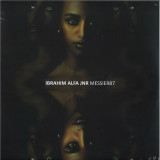
Ibrahim Alfa Jnr released techno music since the age of 17. He started to play piano when was six years old and has a master degree in sonic arts. As a Live Act and DJ he is world wide known.
His first album on Mille Plateaux is a fine example of Hypercussion, which implies a new rhythmic A-logic when beats split or shoot each other off, or when they overlap and mutate into high-pitched hums and rattlesnake breaks; accelerating, before music again blurs into the grains of noise or calm science fiction landscapes and at the same time builds gigantic sound walls. And such music, as far as its conceptualization is concerned, does not have to submit itself to technology at all, but must understand itself as a form that can be recombined with technology.
Die Musik von Surprise Chef basiert auf dem Hervorrufen von Stimmungen; ihre lebendigen Arrangements nutzen Zeit und Raum, um Klanglandschaften zu schaffen, die den Zuhörer in ihre Welt einladen. Der unverwechselbare Sound des Quintetts speist sich aus der Filmmusik der 70er Jahre, der funkigeren Seite des Jazz und den Samples, die die Grundlage des Hip-Hop bilden. Sie verschieben die Grenzen des instrumentalen Soul und Funk mit ihrem eigenen Ansatz, der durch unzählige Stunden im Studio, das Studium der Meister und - vielleicht am wichtigsten - durch die "Tyrannei der Distanz", die ihrer Musik eine einzigartige Perspektive diktiert, verfeinert wurde. Mit ihren ersten beiden Alben All News Is Good News und Daylight Savings haben sich die aus der Nähe von Melbourne, Australien, stammenden Musiker eine eingefleischte Fangemeinde erspielt und ihren Sound von ihrem Heimstudio aus in alle Ecken der Welt gebracht. Die Band ist nun bei Big Crown Records unter Vertrag und reiht sich damit in eine Reihe zeitgenössischer und klassischer Sounds ein, die die Musik von Surprise Chef seit ihrer Gründung im Jahr 2017 beeinflusst haben. Surprise Chef besteht aus Lachlan Stuckey (Gitarre), Jethro Curtin (Keyboards), Carl Lindeberg (Bass), Andrew Congues (Schlagzeug) und Hudson Whitlock - das jüngste Mitglied, das von der Percussion über das Komponieren bis zum Produzieren alles macht. Die selbsternannten "moody shades of instrumental jazz-funk" haben von allem etwas: druckvolle Drums, mitreißende Keys, eine Rhythmusgitarre, die man auf einer Studio One-Platte hören könnte, und Flötenlinien, die von einer Blue Note-Session stammen könnten. Aber wenn man einen Schritt zurücktritt und sich die Gesamtheit ihres Sounds und ihrer Herangehensweise anschaut, dann hört und sieht man eine Gruppe, die mehr ist als die Summe ihrer Teile. In vielerlei Hinsicht verkörpert Surprise Chef die Redewendung "the benefits of limits". Ihre Möglichkeiten waren insofern begrenzt, als es in Südost-Australien nicht viele Leute gab, die instrumentalen Jazz/Soul/Funk machten oder darüber sprachen, geschweige denn Platten herausbrachten. So mussten sie ihren Sound und ihre Herangehensweise in einer Art kreativer Isolation entwickeln, in der sich ein kleiner Kreis von Freunden und gleichgesinnten Musikern gegenseitig befruchtete. "Da wir in Australien so weit weg sind, bekommen wir nur flüchtige Einblicke in die Ursprünge dieser Musik", sagt Stuckey. "Aber als wir ein Label wie Big Crown hörten, wurde uns zum ersten Mal bewusst, dass man frische, neue Soulmusik machen kann, die nicht super retro oder einfach nur nostalgisch ist." Dieser Ansatz ist auf ihrem neuen Album Education & Recreation deutlich zu hören. Tracks wie "Velodrome" verbinden klobige Drums mit einer ohrwurmverdächtigen Synthie-Linie, die so klingt, als würde sie auf einer Ultimate Breaks & Beats-Compilation zu finden sein, während Nummern wie "Iconoclasts" zeigen, dass sie ein Händchen für die geschmackvolle Nutzung von Raum haben. Vom erdrückenden Intro von "Suburban Breeze" bis zum schwebenden, sanften Bop von "Spring's Theme" haben Surprise Chef ein Album zusammengestellt, das dich durch Höhen und Tiefen der Emotionen führt. Ein lebendiger, die Fantasie beflügelnder Sound! Dem weiten Spektrum dieser Instrumentalmusiksparte wird mit diesem neuen Album ein modernen Klassiker hinzugefügt.
- 1: Runner: I. Sixteenths
- 2: Runner: Ii. Eighths
- 3: Runner: Iii. Quarters
- 4: Runner: Iv. Eighths
- 5: Runner: V. Sixteenths
- 6: Music For Ensemble And Orchestra: I. Sixteenths
- 7: Music For Ensemble And Orchestra: Ii. Eighths
- 8: Music For Ensemble And Orchestra: Iii. Quarters
- 9: Music For Ensemble And Orchestra: Iv. Eighths
- 10: Music For Ensemble And Orchestra: V. Sixteenths
‘Runner is a calmly luminous orchestral piece with the pulsating, propulsive
rhythms that animate much of Mr. Reich’s music.’ – New York Times
‘Reich interweaves the two groups to create a dense textural tapestry that sounds like his most native orchestral thinking to date. A beautiful and dramatically charged masterpiece.' – San Francisco Chronicle
Nonesuch Records releases the first recordings of Steve Reich’s Runner (2016) and Music for Ensemble and Orchestra (2018), performed by the Los Angeles Philharmonic and conducted by Susanna Mälkki.
Reich says Runner is written “for a large ensemble of winds, percussion, pianos, and strings. While the tempo remains more or less constant, there are five movements, played without pause, that are based on different note durations. First, even sixteenths, then irregularly accented eighths, then a very slowed-down version of the standard bell pattern from Ghana in quarters, fourth a return to the irregularly accented eighths, and finally a return to the sixteenths but now played as pulses by the winds for as long as a breath will comfortably sustain them. The title was suggested by the rapid opening and my awareness that, like a runner, I would have to pace the piece to reach a successful conclusion.”
“Music for Ensemble and Orchestra is an extension of the Baroque concerto grosso where there is more than one soloist,” the composer continues. “Here there are twenty soloists – all regular members of the orchestra, including the first stand strings and winds, as well as two vibraphones and two pianos. The piece is in five movements, though the tempo never changes, only the note value of the constant pulse in the pianos. Thus, an arch form: sixteenths, eighths, quarters, eighths, sixteenths. Music for Ensemble and Orchestra is modeled on my Runner, which has the same five movement form.”
Nonesuch has recorded every new piece of music by Steve Reich since 1985, beginning with The Desert Music and continuing through 2018’s Pulse/Quartet, resulting in 22 albums and the two box sets Phases in 2006 and Works: 1965-1995 in 1997. Most recently, the label released his Reich/Richter, performed by Ensemble intercontemporain and conducted by George Jackson, in June 2022. The Times said, ‘What a delight to be able to focus on the music, delivered here with a clever mix of pinprick precision and reverberant haze by 14 members of Ensemble Intercontemporain. The more intently you listen, the more subtleties emerge among the shifting, criss-crossing textures and phrases, sometimes coloured with gentle melancholy but decisively upbeat by the end. Reich/Richter is an ear-tickling tonic and a happy companion to Reich’s newly published book, Conversations.’ Nonesuch will put out a collection of Reich’s complete works in 2023.
Reich released a book earlier this year, Conversations, that includes dialogues with past collaborators, fellow composers, musicians, and visual artists who have been influenced by his work, including: David Lang, Brian Eno, Richard Serra, Michael Gordon, Michael Tilson Thomas, Russell Hartenberger, Robert Hurwitz, Stephen Sondheim, Jonny Greenwood, David Harrington, Elizabeth Lim-Dutton, David Robertson, Micaela Haslam, Anne Teresa de Keersmaeker, Julia Wolfe, Nico Muhly, Beryl Korot, Colin Currie, and Brad Lubman. The Wall Street Journal called the book ‘a testament to the influence of an idea – one that triggered a cultural turning point,’ and the New York Times said, ‘The joy of the book is to hear artists from a variety of disciplines and backgrounds rhapsodizing about their relationship to Reich’s music and how it influenced their own creative processes.’
Steve Reich has been called ‘America’s greatest living composer’ (Village Voice), ‘the most original musical thinker of our time’ (New Yorker), and ‘among the great composers of the century’ (New York Times). His music has influenced composers and mainstream musicians all over the world. Music for 18 Musicians and Different Trains have earned him two Grammy Awards, and in 2009, his Double Sextet won the Pulitzer Prize. Reich’s documentary video opera works – The Cave and Three Tales, done in collaboration with video artist Beryl Korot – have been performed on four continents. His recent work Quartet, for percussionist Colin Currie, sold out two consecutive concerts at Queen Elizabeth Hall in London shortly after tens of thousands at the Glastonbury Festival heard Jonny Greenwood (of Radiohead) perform Electric Counterpoint followed by the London Sinfonietta performing his Music for 18 Musicians.
In 2012, Reich was awarded the Gold Medal in Music by the American Academy of Arts and Letters. He has additionally received the Praemium Imperiale in Tokyo, the Polar Music Prize in Stockholm, the BBVA Award in Madrid, and the Golden Lion at the Venice Biennale. He has been named Commandeur de l’Ordre des Arts et des Lettres and has been awarded honorary doctorates by the Royal College of Music in London, The Juilliard School, and the Liszt Academy in Budapest, among others. ‘There’s just a handful of living composers who can legitimately claim to have altered the direction of musical history and Steve Reich is one of them,’ states the Guardian.
Redefining what an orchestra can be, the Los Angeles Philharmonic (LA Phil) is as vibrant as Los Angeles, one of the world's most open and dynamic cities. Led by Music & Artistic Director Gustavo Dudamel, this internationally renowned orchestra harnesses the transformative power of live music to build community, foster intellectual and artistic growth, and nurture the creative spirit. This is the third recent recording by the orchestra on the label; the others were the Louis Andriessen pieces The only one and Theatre of the World. Additionally, the Los Angeles Philharmonic’s recordings of The Gospel According to the Other Mary and Must the Devil Have All the Good Tunes?, with Yuja Wang, released on Deutsche Grammophon, are included in this year’s John Adams Collected Works boxed set. Nonesuch also released an LA Phil recording of Adams‘ Naïve and Sentimental Music in 2002.
Susanna Mälkki is sought-after at the highest level by symphony orchestras and opera houses worldwide. About to embark on her final season as Chief Conductor of the Helsinki Philharmonic Orchestra, she concludes a seven-year tenure with a distinctive dynamism and imaginative flair to her programming. In addition to a full season in Finland, she will lead the Helsinki orchestra on tour to the prestigious Lucerne and Edinburgh festivals, New York’s Carnegie Hall, and Washington’s Kennedy Centre this season.
- A1: Serpico
- A2: Headless In A Beat Motel
- A3: Surreal Madrid
- A4: Doorstop Rhythmic Bloc
- A5: Burgundy Spine
- B1: Black Death Ambulance
- B2: Chill Blown
- B3: Hungarian Suicide Song
- B4: Tina This Is Matthew Stone
- C1: Psychotic Now
- C2: Pdf
- C3: Screws
- C4: Kilometrica Banca
- D1: Pull Thru Barker
- D2: Dirge
- D3: They Slept In Darkness
- D4: Eopo
- D5: Pile Tent
Deluxe reissue of their 1994 debut album.
Completely remastered under band supervision.
Pressed on burgundy vinyl and Presented in a gatefold matt laminated gatefold sleeve, with spot UV varnish .
Features the original LP plus a bonus disc with the Cherry Red E.P tracks, plus a 16-page booklet containing photos, reviews, and sleevenotes from Mick Derrick, Steve Mack & John Robb.
Combining a metronomic krautrock beat played by a monster drummer, looping guitars and a boy/girl vocal that sounded like a bickering bed-sit argument turned into song, Prolapse had all the manic intensity of a nervous breakdown set against a backdrop of inventive guitar work and a really tough rhythm section. There were hints of the Fall, krautrock, PiL and a touch of the pure golden pop of Blondie along with the sense of restless dislocation shared by many of the post-punk bands.
Prolapse arrived in the middle of the Britpop era and their tense, almost neurotic music clashed with the stadium-filling, jolly knees- up pop that dominated the indie mainstream of the time. By 1996 indie had become the mainstream in terms of record sales and sound and was strutting around at the opposite end of the cultural spectrum to the indie bands of the Eighties and their war against popular culture. Late arrivals Prolapse were the last gasp of this genuine independence.
“A rather gorgeous and engrossing collection, that borrows stealthily from a rich history of sound effect and soundtrack to build a tender poem to the night time.” - CLASH
“The plan was to make twenty 90-second tracks designed as TV themes,” says Arab Strap’s Aidan Moffat, of the initial thought behind his new instrumental album as Nyx Nótt “But it wasn't a satisfying listen, it was too gimmicky and silly.”
So instead, Moffat decided to stretch the idea out, plunge deeper, and expand the music into full tracks, “making some of them quite long and dramatic, with the odd swift turn here and there.” In fleshing these tracks out into more fully realised songs he began sourcing samples from professional TV and film music libraries. “The focus then turned to making a proper album out of these modern library sounds,” he says. “I decided to stick with the Themes From title and named the tracks after the sorts of shows they made me think of when I listened back.”
The result is a record that explores genre themes such as: ‘Thriller, ‘Porno’, ‘Caper’ and Swashbuckler’, and acts as an audio equivalent of channel hopping through a unique TV station programmed by Moffat. “I still wasn't sure about all this until I did the album cover, which brought it all together,” he says, of the artwork that places an old smashed TV unit front and centre with a woman perched on top. “It has echoes of old TV compilations but is pretty cheeky and slightly sexy in that old 70s compilation style. I wanted this one to look a bit more fun than the last one, as well as hopefully sound a bit more fun too.”
Aside from being a fun experience, it is also a stirring and immersive listen, one that allows the listener to imagine their own accompanying visual scenarios to each musical theme. The opening ‘Docudrama’ marries a gently creeping beat with strings that glide from tense to sweeping, while ‘Porno’ is all seedy smoky jazz that feels plucked right out of Travis Bickle’s late night trips to porn cinemas in Taxi Driver.
Touches of jazz pop up in other places too, on ‘Hardboiled’ this merges with subtle pulses and gargles of electronics that build to a rousing crescendo of horns and bleeps, and on ‘Caper’ there’s a vivacious full jazz band skip to the lively swinging rhythms. “There's a few more jazzy elements here,” Moffat says. “Although I'm not quite sure where that came from. Although, like everyone else, I've had plenty of time to be introspective recently, so I decided the next Nyx Nótt album should be more upbeat and encourage some occasional foot-tapping.”
However, what becomes apparent, the longer you spend in the world of Themes From, is how singular and unique the tone of each composition is. “Each track has its own individual feel,” says Moffat. “The idea was to sound like a different composer and band throughout.” It’s a stylistic leap that continues Nyx Nótt’s trajectory as one that shares no direct link to Moffat’s other projects. “I approach them in completely different ways and with a different purpose in mind,” says Moffat. “I don't think Nyx has ever heard of Arab Strap, and certainly doesn't own any of their albums.” It’s also a notable shift from the debut album under this moniker, and suitably given the theme, Moffat has created a visual comparison between these two sonic worlds. “If the first Nyx Nótt album was like looking out on dark prairies before dawn, this is more like a walk through a neon Soho after a few cocktails.”
If you've been in the club scene for many years like David Dorad, you will one day face the big, essential, serious questions that each of us will ask ourselves sooner or later:
Are marmots pack animals?
Can marmots sign language?
Do marmots plan their lives according to European or Chinese zodiac signs?
Do marmots need a special passport, after all they don't have a thumb to turn the pages?
What happens when a marmot eats Coke and Mentos at the same time?
And with all those questions whistling, hissing and muttering in his head, David grabbed piano, baton and BioBassline to crochet his new EP.
This is called "Marble" and offers 6 different approaches to solve these big questions.
As a source of ideas, he has competent partners at his side in Roman Flügel, Mira, Christopher Schwarzwälder, Canson and Sascha Cawa.
A1 -
Murmeli - original
The marmot tribe awakens. Get up to brush your teeth. Gets your toes tapping. Makes you snap your fingers. Dare to roll your hips. Later rhythmically to turn. To look elegant at the same time. Eyes closed - eyes open.
Murmeli, the regular leader, sits at the piano.
Everyone is dancing, toothpaste in the corners of their mouths and a smile that takes the toothpaste by the hand.
A normal morning in marmot houses.
B1 -
Murmeli - Mira & Christoph Schwarzwald RMX
Mira and Christoph Schwarzwalder take over from Murmeli. They vary, combine and subtract. The first marmots raise their thumbless fists in the air - showing their passports, ready to take off.
B2 -
Murmeli - Canson RMX
Canson also sits next to Murmeli. Caress the theme, tickle the groove.
Murmeli has the best ideas early on: "Boy, let's try Mentos with Cola, we'll definitely take off."
Canon is in!
C1 -
Murmelot - Original
The sun goes down in Murmelhausen too. Then Murmelot is ready. Gives his advanced Pilates class, which the whole tribe takes. The village wants to remain mobile.
Murmelot's motto is "Why not stretch while walking?"
And so shall it be. He sets the rhythm on his wooden Fairtrade 303 and our furry friends shave shaky and obscene messages down each other's backs while impatiently hopping for the drop.
D1 -
Murmelot - Roman Flügel Remix
Roman Flügel and Murmelot are old buddies. Struck while carving the 303.
Roman happily takes over the Pilates class, the dancing crowd. Enchanted until the razor's batteries are empty and only dancing remains, only dancing is important.
D2 -
Murmelot - Sascha Cawa RMX
Sascha Cawa takes his trunk by the hand, wants to motivate her again shortly before the second sunset of the day. Whispers little obscene Pilates positions in their ears. That motivates. Murmelot switched from piano to percussion.
The marmots' sweat feeds the golden orchids in the clearing for the next six months.
MILK GREY VINYL
100% GALCHER was by all accounts a game-changer when it landed in 2013 as an hour of original music from a relatively unknown producer ushered in by the beloved mix series Blowing Up The Workshop. Galcher Lustwerk's signature sound _ a smoky stream-of-consciousness baritone shadow-boxing with beats, informed by funk, rap, rhythm, and blues _ felt like an epiphany, impossibly hypnotic and complete. Resident Advisor writes, "100% GALCHER laid out a louche, lysergic and resolutely black take on deep house." Pitchfork remembers the music's immediate impact: "It's the sort of gem you felt inclined to pass around" _ and by year-end list time, word-of-mouth intensified. It was Resident Advisor and Juno's mix of the year, and earned a top-ten placement in FACT Magazine's albums list, as well as Philip Sherburne's personal rundown for Spin." Since then, select songs from 100% GALCHER have seen small-run pressings, while the album has lived primarily on SoundCloud and YouTube as a low-key cult legend. The gateway into Lustwerk's now well-established catalog, known for its reliability as a late-night listen and its prophetic vision for the near future of underground dance music. RA would later name it a mix of the decade, citing its influence and imagination: "Original in every sense _ unknown, unheard and unbelievably good." In late 2022, marking ten years since he first recorded the material, Lustwerk returns to Ghostly International to release 100% GALCHER as a remastered limited-edition double LP. Lustwerk is a product of the Midwest. Growing up in Cleveland, he'd tape over his parents' cassettes and spend hours at his family computer recording loops and designing artwork for the jewel cases of burned CDs. In high school, he turned to Ableton Live and absorbed every electronic music magazine he could find at the local Borders Books store. As a college student at RISD, he played in noise bands, plugged into Providence's DIY scene via Myspace, and started DJing weeknights at bars downtown. There he connected with Young Male and DJ Richard, who would go on to found White Material Records and offer their third release to Galcher Lustwerk, an alias realized via CAPTCHA test, a perfect artifact of its internet age. By 2012, Lustwerk had drifted to New York City and settled into a graphic design job, quickly growing disenfranchised by office culture. "Some days I felt like a token, other days I felt invisible." At night, he and his friends were carving out their own space, throwing parties in small basements, office buildings, and off-beat karaoke bars in Manhattan, influenced by series such as Mr. Sunday in Gowanus and The Bunker at Public Assembly. The lifestyle started to bleed into Lustwerk's musical vision. He remembers the night it clicked in Providence, partying and listening to tunes with Morgan Louis and Alvin Aronson. He went back to New York and pieced together his bedroom setup: a Dave Smith Tempest drum machine, a Waldorf Blofeld synthesizer, and a TEAC cassette recorder. Early snippets went straight to SoundCloud, where Lustwerk tested the crowd. Comments and messages offered instant feedback. One DM proved to be the greenlight: from Matthew Kent, an invitation to his burgeoning mix series Blowing Up The Workshop. 100% GALCHER traveled fast and far. A phenomenon he could only enjoy for a short period before discovering that nearly all the masters of the tracks got wiped by water damage to his computer. "The only copies were now on the 192kbs mp3 mix I sent Matt." Until now, after Lustwerk revived the lost tracks and handed them to Josh Bonati for remastering. "The original mix was never mastered so I hope older fans can find something new here." Hearing the enhanced set for the first time delineated by tracklist reveals this was a proper album all along. Sly synth interludes (all titled "Stem") clear the air for raspy house anthems like "Fifty" and "Parlay," the set's original breakout. Themes present across Lustwerk's catalog first materialize in this iconic run _ the link between the meditative state of Midwest driving and the solitary comedowns of nightlife. Lust- werk, the narrator, is an elusive character, a secret agent of the club, embodied by the hooks: "One minute I'm on / next minute I'm gone," he reminds us on cult-favor- ite "Put On." These narcotic, one-line refrains stick with you; look no further than the original YouTube upload of "Kaint" to know that fans can't let these phrases go. While recorded alone, 100% GALCHER was a collective moment. A decade later, Lustwerk sees the legacy as shared: "Making music can be an alienating experience, especially for DJs who travel a lot, it's all super isolating. It's easy to express lone- liness in the music itself, but when it comes down to getting things done, putting music out, you def should go on that journey w other people, friends, or maybe just a group of people online, build things with your friends then they can build to help you."
The elusive SW. returns to Avenue 66 with okALGORYTHM. His third LP for the label is a semi-opaque wandering through the shadowy byways of memory, driven by tough-yet-supple production and his unmistakable, unerringly original voice. Inspired by all night electronic radio shows of the '90s, okALGORYTHM pulses with rich imagination and a sense of purposeful meandering. Speaking in cryptic fragments, the artist hints at elusive reminiscences "back then on the autobahn, to Berlin, with friends" while also noting that some recollections are "of things that didn't happen that way."
To this end, the album drifts from the knotty synth spirals of opener "WHAtADAY" through the tense, technoid tropics of "stepCLASSixMOtor," the brightly melancholic Larry Heard-isms of "TROPyCALLhytsrIA" to the stately skronk of closer "What endingENDs." The rhythmic undergirding never lets up, suggesting a limitless night drive tinted in deep greens and refracted reds. Each of the album's ten tracks comes alive with warm, analog finesse and a palpable atmosphere, though they play out by turns urgent or unhurried, coaxing or inscrutable. Yet throughout, there's a consistently hypnotic quality which draws the listener deeper into the album's unique balancing act.
If listeners are trained to expect throwback anthems every time the '90s are referenced, here they might find a more apt touchstone in the wilder, left-of-center corners of Chicago's foundational epoch. Throughout the album, the spirit of jacking house is absorbed, metabolized and transmuted. Drawing on lineages of taut, nervy synth-and-drum machine workouts, SW. manipulates his hardware with the delicate, considered touch of a painter. Perhaps the memory that lingers longest from that bygone era is the sense of profound possibility that dawns before forms become rigidly calificed and commodified. Either way, adventurous listeners will find that okALGORYTHM blooms with a uniquely affecting grace and SW.'s inimitably obscure loveliness, infused with a somber glow and marked by shimmering, untraceable contours.
Verschwimmende Traumchroniken Ein Martin Rev Album ist stets eine unberechenbare Überraschung. So verwunderte das 2003er Werk "To Live" mit dem erstmaligen Einsatz schroffer Gitarren statt Synthesizer-Kompositionen und auch wenn Rev auf dem Folge-Album "Les Nymphes" aus dem Jahr 2008 zu seinen traumverhangenen Melodie-Miniaturen zurückkehrt, ist die Platte in ihrer Konsequenz noch einmal radikaler. War Martin Revs Oeuvre zumeist von einem durch und durch minimalistischen Ansatz geprägt, machen die Stücke auf "Les Nymphes" im Vergleich einen fast opulenten, überbordenden Eindruck. Bereits nach den ersten Sekunden des Openers "Sophie Eagle" hat man den Eindruck, eine riesige Sound-Welle aus sich überlagernden Echo-Schleifen, Rhythmus-Loops und Phasenverschiebungen, auf der Melodie-Fragmente und Revs sporadisch auftauchende Stimmenfetzen wie Schaumkronen treiben, würde einen davon schwemmen. Auch die in der kontemporären Clubmusik zu verortenden Verweise, die sich erstmals auf dem Vorgänger "To Live" andeuteten, finden hier ihre Fortsetzung. So hört man auf "Triton" und dem Titelstück "Les Nymphes Et La Mer" auch jene, ob ihrer Härte teils befremdlich anmutenden Gitarren-Samples wieder, die das vorige Album dominierten. Alle anderen Tracks auf "Les Nymphes" sind jedoch vor allem von einer unterkühlten, traumartigen Slow Rave und PostIndustiral Atmosphäre geprägt, die in ihrer dreidimensionalen Breitband-Klanglichkeit mitunter an Werke von Coil erinnern. "Die Ähnlichkeiten von "Les Nymphes" mit House und Dance waren natürlich offensichtlich, obwohl ich nicht speziell danach gesucht habe. Es war wahrscheinlich das erste Werk, das ich von Anfang bis Ende am Computer fertiggestellt habe. Viele der Tracks wurden digital aus interaktiven Programmen und nicht mit Outboard-Geräten erstellt. Die Atmosphäre und der Sound wurden durch viel Lektüre in der griechischen Mythologie inspiriert sowie dem Studium der gleichen Geschichten in verschiedenen Sprachen. Wahrscheinlich war mein mehrjähriger Aufenthalt in Montreal ein starker Einfluss, da es eine französischsprachige Umgebung ist und es in allen Buchläden eine große Auswahl an klassischer Literatur in Französisch und anderen Sprachen gibt." so Martin Rev. Speziell jene Inspiration, die sich aus kulturellen Mythologien speist und auf "Les Nymphes" zu einer, sämtliche Realitäten verschwimmenden Traumchronik wird, macht das Album so anziehend. Man fragt sich mitunter, wie ein ätherisches House oder Techno Album unter Revs Regie klingen würde. Einmal mehr beweist auch dieses Werk die Kompromisslosigkeit, mit der Martin Rev arbeitet und seiner Bereitschaft, stets Risiken einzugehen unter der konsequenten Verweigerung sich nur an einer Ästhetik allein abzuarbeiten. "Les Nymphes" ist fraglos das Album eines Künstlers, der immer auf der Suche ist.
Wie ein Schneesturm unter einer Glaskugel Im Herbst 2003 erschien bei dem amerikanischen Indie-Label File 13 Records Martin Revs mittlerweile sechstes Soloalbum. Nachdem Rev bereits 2002 zusammen mit seinem musikalischen Partner Alan Vega und ihrem gemeinsamen Projekt Suicide mit dem Album "American Supreme" neue Wege beschritten hatte, setze sich diese Neuausrichtung auch in seinen Soloarbeiten fort. Klang das 2000er Werk "Strangeworld" noch wie ein aus der Zeit herausgelöstes, abstraktes Komposite aller musikalischen Einflusswelten Martin Revs, scheinen auf dem drei Jahre später veröffentlichten Album "To Live" auch kontemporäre Einflüsse hörbar zu werden. So kommen hier erstmals Gitarren-Samples zum Einsatz. "Der Sound von "To Live" war eigentlich einer, den ich schon seit ein paar Jahren live auf der Bühne benutzte. Die Inspiration kam nicht aus den 2000er Jahren, sondern wahrscheinlich aus einer viel früheren Zeit, obwohl ich nicht genau sagen könnte, woher. Es hängt auch mit der Rhythmus-Technologie zusammen, die ich verwendet habe." erinnert sich Rev. Die Anmutung dieses Sequence-gesteuerten und für die späten 1990er Jahre so typischen Industrial-Rocks scheint - zumindest für ein Rev-Album - ungewohnt und so fielen die Kritiken beim Erscheinen der Platte 2003 zunächst sehr gemischt aus. Wie bereits Anfang der 1970er Jahre als Suicide für ihren neuartigen Sound gleichermaßen gehasst und gefeiert wurden, polarisierte Rev mit seiner Musik auch 30 Jahre später noch immer. Doch auch wenn jene Tracks auf "To Live" weniger von Synthesizer-Drones und minimalistischen Keyboardfiguren geprägt sind als die vorherigen Platten, so sind dennoch alle Stücke des Albums getrieben von jener eigentümliche Formsprache, die Martin Revs Sound so prägnant und unverkennbar macht. Verhallte, sich überlagernden RhythmusSchleifen durchzogen von Revs sporadisch einsetzendem, zärtlich wie bedrohlichem Sprechgesang wachsen zu einem heftigen Schneesturm unter einer Glaskugel an, in dem verchromtes Glitzer und goldenes Konfetti wie wild durcheinander gewirbelt werden. Besonders beeindruckend ist dies auf dem Track "Gutter Rock" gelungen, das wie ein übersteuertes, hypnotisch betörendes Stück Lounge-Exotika anmutet. Und es ist speziell dieser Sound der Gegenpole zwischen harten Drummachine- und Gitarrensalven und dem Ungreifbaren von Revs Stimme, in dem mitunter auch jene Stimmung und Verunsicherung zu Beginn des neuen Jahrtausends zu hören ist, die insbesondere in eine Stadt wie Revs Heimat New York beherrschte, die erst zwei Jahre zuvor von den Ereignissen des 11. Septembers 2001 erschüttert wurde. So ist "To Live" ein widerspruchsvolles und schwer zu verdauendes Werk, das als vor allem als Kind seiner Zeit und Transition innerhalb Martins Revs Gesamtwerk einen ganz besonderen Platz einnimmt.
100% GALCHER was by all accounts a game-changer when it landed in 2013 as an hour of original music from a relatively unknown producer ushered in by the beloved mix series Blowing Up The Workshop. Galcher Lustwerk's signature sound — a smoky stream-of-consciousness baritone shadow-boxing with beats, informed by funk, rap, rhythm, and blues — felt like an epiphany, impossibly hypnotic and complete. Resident Advisor writes, "100% GALCHER laid out a louche, lysergic and resolutely black take on deep house." Pitchfork remembers the music's immediate impact: "It's the sort of gem you felt inclined to pass around” — and by year-end list time, word-of-mouth intensified. It was Resident Advisor and Juno's mix of the year, and earned a top-ten placement in FACT Magazine's albums list, as well as Philip Sherburne's personal rundown for Spin." Since then, select songs from 100% GALCHER have seen small-run pressings, while the album has lived primarily on SoundCloud and YouTube as a low-key cult legend. The gateway into Lustwerk's now well-established catalog, known for its reliability as a late-night listen and its prophetic vision for the near future of underground dance music. RA would later name it a mix of the decade, citing its influence and imagination: “Original in every sense — unknown, unheard and unbelievably good.” In late 2022, marking ten years since he first recorded the material, Lustwerk returns to Ghostly International to release 100% GALCHER as a remastered limited-edition double LP.
Lustwerk is a product of the Midwest. Growing up in Cleveland, he'd tape over his parents’ cassettes and spend hours at his family computer recording loops and designing artwork for the jewel cases of burned CDs. In high school, he turned to Ableton Live and absorbed every electronic music magazine he could find at the local Borders Books store. In excerpts from the 100% GALCHER liner notes, Lustwerk looks back: "My dad drove me to this shop on the westside Bent Crayon, where I would get anything the blogs told you to get + whatever the clerk recommended. CDs stayed in their packaging, there was always an overflow of vinyl stacked on the floor. I was too shy to listen to anything before buying."
As a college student at RISD, he played in noise bands, plugged into Providence's DIY scene via Myspace, and started DJing weeknights at bars downtown. There he connected with Young Male and DJ Richard, who would go on to found White Material Records and offer their third release to Galcher Lustwerk, an alias realized via CAPTCHA test, a perfect artifact of its internet age. By 2012, Lustwerk had drifted to New York City and settled into a graphic design job, quickly growing disenfranchised by office culture. "Some days I felt like a token, other days I felt invisible." At night, he and his friends were carving out their own space
Five years after "Mort d'un Pourri" (Death of a Corrupt Man) Philippe Sarde finds Alain Delon for this adaptation of a violent thriller by Jean-Patrick Manchette. If "Le Choc" (The Shock) offers a rather watered down vision of the original novel, the composer chooses to give a boost. Sarde explains : “My position was this : to inject singularity into this somewhat smooth story. I get some really good soloists together for an unconventional score balanced between rock, jazz fusion and romanticism. I wanted it to be energetic with a modern drive. To me, "Le Choc" is a direct extension of the great blends in "César et Rosalie" or "Coup de Torchon (Clean Slate)". A jazz-rock rhythm section, musicians from Weather Report with the London Symphony Orchestra, and the great Wayne Shorter. I
asked him if he could play his soprano with a timbre like a bombard, an unexpected transposing of a folk instrument onto a jazz horn..." To director Robin Davis, this magnificent score will be a real lifeline : "With his music, Philippe told a story alongside mine, he brought "Le Choc" back to what it might have and should have been. And I love the invisible link with Lautner. After Stan Getz and "Mort d'un Pourri", we’re still with Delon & Sarde but this time the saxophonist is a black American, Wayne Shorter."
Pressed for the first time from a high definition transfer of the recording tapes, this new album has been mastered without any compression, respecting all the dynamics of the recording produced at Abbey Road.
Corn, originally released in 2015, features nine tracks Russell recorded in 1982 and 1983. In collaboration with Russell"s partner Tom Lee, Audika"s Steve Knutson compiled Corn from Arthur"s original, completed 1/4" tape masters. Russell himself compiled this material on three separate test pressings-labelled El Dinosaur, Indian Ocean, and Untitled, respectively- in 1985. Russell fans know something of the Corn sound from Audika"s debut release, "Calling Out of Context" (2004), which included four songs from these sessions: "The Deer In The Forest Part 1," "The Platform on the Ocean," "Calling Out Of Context," and "I Like You!" This new collection includes rhythmic alternate versions of "Lucky Cloud," "Keeping Up," "See My Brother, He"s Jumping Out (Let"s Go Swimming #2)," "This Is How We Walk on the Moon," and "Hiding Your Present From You," along with "Corn," "Corn (Continued)," "They and Their Friends," and the closing instrumental "Ocean Movie," one of the most beautiful and curious Russell tracks ever to see the light of day.
The Berlin based duo Itchy Spots combine falling words with tricky rhythms. Their music concerns the simultaneity of intensity and nonchalance, feverish high speed drumming, static sounds and tribal hypnosis. The vocal performance seems to stand alone, it is independent from whats happening rhythmically, yet it all melts together perfectly. Grooving skeletons of songs, rituals and shamanism. Itchy Spots are James Main (former singer and lyricist with Wild Daughter) and Ansgar Wilken (Ilse Lau, Feedbackorchester, Happy Zloty).
»Follower« is Abrahams’ 6th album for Room 40 and showcases his continuing interest in the ambiguous spaces between music and noise; tonality and atonality; rhythm and texture. All four tracks have piano as a key factor: in one instance, high-pitched and atonal; in another, emotive yet distant as if projected on to a screen. Follower presents the listener with a sound world of colourful juxtapositions, rich orchestration and organically open forms.
On the opening track, bass piano meanders through a wilderness of de-tuned bells and organ swells; a strange sort of festival. Low frequency sighs evenly punctuate, like a pump or a heartbeat. It’s a procession that takes it time as it wanders the terrain, brought to a close with transcendent distortion. On track 2, muscular modal piano surfs among waves of percussion and analogue synthesisers. A buffeting travel.
16 track compilation of 1980s classics.
Formed in Scotland in 1979, APB were a post-punk trio blending edgy
guitars with funk and new wave sounds
The band had many early 80s alternative radio and rock dance club hits including
‘Shoot You Down’, ‘Rainy Day’ and ‘Palace Filled With Love’.
New York-based Link Records originally issued ‘Something To Believe In’ in 1985,
and the ten- song title was perceived at the time to be APB's debut album
although it was actually a compilation drawn from the band's previous eight
independent singles. The band's 1981 debut single ‘Chain Reaction’ is now added
as a bonus track to the vinyl release, while that song and an additional five tracks
will appear on the expanded edition CD. ‘Danceability’ will appear in its original
mix on the vinyl LP, while the CD will feature the song in its extended ‘Danceability
Parts 1 & 2’ form.
"When I bought the second APB single, 'Shoot You Down'. I was blown away by
the pure energy and sparse funk groove that drove the record." said Matt Pinfield,
former host of MTV's 120 Minutes. "Over the course of the next few years, I saw
the band live about 15 times. They would always pack clubs in New York, New
Jersey, and Long Island -- anywhere they received airplay." In 2018's Beastie Boy
Book, band member Adam "Ad-Rock" Horowitz referred to ‘Shoot You Down’ as a
"punk dance-floor classic."
In 2022, APB remains an active touring band, which includes original members
Slater, Roberts and Cheyne. Over the decades, APB's sparse, rhythmic sound has
influenced everyone from the Red Hot Chili Peppers to Franz Ferdinand. A new
generation is primed to make their acquaintance.
(180 gr vinyl) Musique Pour La Danse presents another collaboration with SF-based Jonah Sharp following the first ever vinyl release of his Reagenz LP with Move D in 2021. This time, the iconic Flurescence EP by his Spacetime Continuum solo project gets the reissue treatment, after being released on the Scotsman's own Reflective Records back in 1993 with an unforgettable holographic center label.
Musique Pour La Danse presents another collaboration with SF-based Jonah Sharp following the first ever vinyl release of his Reagenz LP with Move D in 2021.
This time, the iconic Flurescence EP by his Spacetime Continuum solo project gets the reissue treatment, after being released on the Scotsman's own Reflective Records back in 1993 with an unforgettable holographic center label.
There is a good reason why this EP, actually Sharp's debut release, was so hard to find at reasonable prices and why it has appeared in countless compilations and top lists in the last 3 decades with no sign of slowing down.
Truly timeless, this masterclass in forward thinking electronic music focuses on deeply textured, masterfully arranged, and skillfully morphing tracks with a cosmic tinge that feels warm instead of cold, and rewards repeat listens.
Prepare to bend the very fabric of spacetime during the 28 minutes of heavenly chill out and celestial techno/trance contained in this 12" black hole, remastered and repackaged for the 21st century. Title track Flurescence is one of the very few that actually captures the ambience of those magical floating years and a trip to the edges of outer space that never ceases to amaze, while Transmitter is a deep dive to the bottom of an ethereal ocean of fur suspended in time, with mysterious samples from the producer's answering machine to boot. Drift is a bona fide gem of rhythmic psychedelic electronic music, breaking down and projecting early trance, IDM and electronica ideas like a prism turning revealing a colorful spectrum of colours after being hit by light. Finally, the fast-paced dancefloor weapon Drug#6 is up there with Choice's Acid Eiffel, Resistance D's Cosmic Love, and Red Planet's Cosmic Movement in the intergalactic pantheon of narcotic, acid techno cuts.
Needless to say, zero gravity listening is strongly encouraged.
Over the last two years, the Innate and We’re Going Deep labels – run by friends Owain K and Placid respectively – have become must-check imprints for those seeking brand-new, timeless-sounding electro, deep house, acid and techno. Now the pair are joining forces on a new collaborative venture that looks to the past for inspiration: InnDeep.
Focused on unearthing and showcasing slept-on gems from across the deep spectrum, the reissue-focused label will have an emphasis on UK producers and imprints whose work in the ‘90s and 2000s has arguably been criminally overlooked.
To kick things off, they’re taking a deep dive into the back catalogue of Headspace Recordings and Emoticon co-founder Tom Churchill, a Welsh producer whose trademark take on deep house achieved cult status in the late 1990s and early 2000s.
The Personal Interpretation EP was first released on Headspace way back in 1997, and dates back to a time when Tom was the very definition of a bedroom producer. He created the EP’s three tracks while still a teenager and mixed them down using the same pair of headphones he used for DJing.
Now painstakingly remastered, the EP sounds every bit as immersive and intergalactic as it did at the tail end of the last millennium. On the EP-opening title track, Churchill builds a sturdy, chunky groove out of clicking, hissing and metallic percussive elements and a wonderfully deep, tactile bassline, over which gorgeous chords, melodic motifs and eyes-closed vocal snippets stretch out as if reclining in the afternoon sun.
Churchill opts for a deeper, Detroit-influenced sound on ‘First Principles’, with undulating electronics and a raw analogue bassline working in unison with ghostly chords and deep space melodies, while ‘Crossed Wires’ is a tispy, off-kilter epic – all breathless drum machine rhythms, pots-and-pans percussion, woozy chords and weighty sub-bass. It provides a fittingly energetic, out-there end to a long-overlooked EP that remains as fresh now as it did back in 1997.
Quoth is the brainchild of Alex Egan (Utter) and Mike Smaczylo (Half Edge). Singular in focus, this newly minted (sub)label harnesses the pair’s diverse and expansive tastes in weird and hallucinatory sonics, aimed squarely at the dancefloor. We're very proud to present ‘Barney’s Maze’, a four-track EP of twisted techno, drawing influence from IDM, bass, and older strains of textural music.
‘Barney’s Maze’ is the work of Nottingham producer Coralie (aka Steven Randall). It fell on our ears strangely dislocated from time and place. Its sound world is utterly modern, technical and weird; mangled sonics slip deftly out of reach of easy categorisation. But the spirits evoked feel ancient, spectral resonances of a psychedelic continuum older than memory.
Haunting voices predominate: human, not too human, but captured and distorted by technology, cut from any source of context and voided of meaning. The sonic spaces conjured here are cavernous; great cathedral-like structures resonating with the collapsed centuries of digital time. Broken techno rhythms roll echoing in an artificial void with synthetic voices, raised to synthetic heavens. Strains of the sacred glimmer within a form that’s entirely profane, the most human of constructs.
It’s a stunning EP - moody, atmospheric and gorgeous, each track a world unto itself, but fully primed for the dance. We recommend it wholeheartedly.
Coralie tells us it’s dedicated to his dog.
Available on hand stamped vinyl, limited to 200 copies (including insert), and digital formats. Mastered by Beau Thomas at Ten Eight Seven.
Blue Vinyl
2019 saw Firescope release a seminal album, The Lonely Machine by Britain’s John Shima. The world has become a very different place since then. The pandemic, economic turmoil and global crises prevail. It is amidst such uncertainty that Shima returns with a new collection to combat the savagery of our times, enter Empty Lands.
Dauby basslines and silken strings introduce “Component”, saturated snares giving ballast as Shima’s signature style immediately comes to the fore. A throbbing kick and orbiting notes are peppered with hi-hats for “Neglected”, a sonorous stratum synergising beautifully. Shima is a student of techno. His appreciation and knowledge of the sound is central to the album as he composes within the traditions of the UK and US canon while exploring new plains. The influence of “bleep” is woven into the tapestry of pieces like “Depart” and “Mettle” with the minimalism of the 90s genre reimagined through new textures. “Sayaka” flows with a different current. Rhythms are understated, lapping against undulating keys as dawn rises. Harmony and melody are cornerstones of record, the gentle ebbs and flows of key and drum merging. Inspiration arises from home as well. The steady pulse and metallic tang of “Projection” recalling the industry of Sheffield and the pioneering electronics that sprouted from that rust red earth.
Track titles, and the album name itself, suggest periods of challenge and difficulty. “Paralysis”, “Desolate”, “Empty Lands”. Words that conjure certain feelings and responses. Shima’s music is a counterbalance to these emotions. Positive compositions of subtle shifts, complementary percussion and welcoming warmth acting as a tonic to the negativity that swirls; the ten audio works on offer acting as a balm to soothe the soul in these troubled time
Berlin-based producer Rampue has not released an album in 14 (in words: fourteen) years. Between 2008 and 2020 he toured the world and worked mainly on his live sets in the meantime. So now only a worldwide pandemic had the power to prevent the traveling musician from continuing this hustle and bustle and eventually share a new record with the public. Corona was what brought this standstill and the otherwise well- traveled individual experiences cabin-fever during lockdown. Hence, the new Rampue album "Tragweite" came into existence in February 2021, which portrays the artist's desire for experimentation.
Inspired by a modular synthesizer (Buchla), Rampue has seemingly put himself into a kind of trance, in which he lets the machines work and combines randomly created sounds with airy structures such as low drums or simple grooves. Rampue accomplished to break free by using random sounds as a new impulse and a way out of a creative crisis, which stemmed both from the enforced home isolation and from the self-perceived paralysis. The result is literally unique, as many of the sound products cannot be reconstructed and are preserved in album form for the general public.
Listening to "Tragweite" one gets the impression that the dialectical relationship between chaos and order, further supported by its production, is the defining theme of the album. After an initially perceived chaos, a delicate order, which is determined by structuring drum patterns and basslines, takes over throughout the course of the album.
Later, it frays and loses itself again in sounds and tones created mechanically However, it never seems arbitrary, but willful and skillfully staged. For instance, "Furo?" begins with apparent arrhythmia. The combination of bass and subtle percussion, however, gives this arrhythmia a shape, guiding the track which gradually becomes more and more driving without losing its original playfulness.
Although one might be inclined to think of genres such as Downtempo or Ambient at the beginning in the further course of the album results in such a diverse sound and rhythmic landscape that one willingly questions one's own perception of music while listening and finally throws every type of categorization overboard joyfully. The listening experience is too intoxicating and enlightening to stick to simple genre boundaries. The musical spectrum ranges from straight arrangements that live entirely without a drum foundation ("Fu?r Dich") to almost meditative sound collages ("Regengesicht") to the four-to-the-floor banger "Kembang" which adds a grimmer note with a certain industrial appeal to the overall rather melancholic-progressive curation. "Direct Faden" on the other hand, surprises with its simple guitar-based foundation on which the omnipresent synth snippets and pads are allowed to let off steam towards the end of the record. The track that most closely combines the progressive production style with a danceable club atmosphere is probably "Phobia". Wafting, partly breaking away synthesizer sounds rise higher and higher, while the driving mixture of bass and drums consistently march forward.
Rampue breaks with his old, musical habits as "Tragweite" creates the impression of improvisation and jam character without getting lost. Rampue takes his listeners on a journey that is stirring and moving, sometimes demanding or even a bit disturbing, yet always one thing: incredibly exciting.
The meeting of Alieu and Randomized Coffee gives light to this new project, in which the Roman duo tackles a production that skillfully links Mediterranean influence to ancestral Africa in a patchwork woven of typical African ethnic elements to those of house and electronica in a "groovy" body that enhances the classical side of the African country in a modern musical mood and rhythm.
The story tells about the day before an arranged marriage ceremony.
Masanneh is a handsome and well-known man in his village of the Mandinka Tribe, born and raised in the village of Kudang, near the river that flows through the entire country; the Gambia. Many in the village believe him to be charismatic and generous, others believe him to be a venal materialist devoted to money. Masanneh decides to consult Cherno Jallow, a wise Marabout, to figure out how to deal with his future. He therefore moves westward to the village of Bondali, in Foni, where before practicing his work as a skilled trader he talks to Landing Sawo, the district chief, from there he hears the sound of a Kora played by Jali, while across the road he sees a beautiful woman Mariama Gomez passing by.
Many Worlds Interpretation is a collection of cosmic Americana for electronics, guitar, and percussion culled from Jon Iverson’s extensive home-studio archive. 1984, Los Osos, California. In a small cinderblock cottage, hand-painted with bright psychedelic flora, Jon Iverson created vibrant new worlds. He spent long days and nights immersed in sound, perfecting home recording on his 8-track reel-to-reel, combining his love for kosmische and Berlin School electronics with an infatuation with ethnographic sounds and expansive guitar music. In a duo with fellow sonic traveler Thomas Walters, Iverson released missives from the studio on a self-titled LP released on country legend Guthrie Thomas’ Eagle Records. That release featured
three electro-acoustic compositions (“Naningo”, “River Fen”, and “Fox Tales”) as well as a gathering of guitar duo tapestries. Many Worlds Interpretation re-imagines those interplanetary works alongside several unreleased compositions that also feature synthesizer, guitar, and percussion, creating a re-visioned album which leans into Iverson’s electronic studio wizardry.
All songs have been carefully transferred from analog tape to high resolution digital, retaining their vintage studio warmth, but mixed and mastered for modern ears and audio systems. The album is pressed at 45rpm, further enhancing the audiophile experience.
Artist Statement
I worked in a Harley Davidson parts warehouse in the summer of 1976 in the San Francisco Bay Area. The goal was to save enough money to buy transportation for college and a Teac 4 track 1/4" reel to reel tape machine. By September there was a rusting monkey-vomit green car in the driveway and shiny new Teac with a Sony condenser microphone in the bedroom. At this point I had been playing guitar for a dozen years and like most children of the sixties, dreamed of joining
a band.
Went to college instead to study business.
But all was not lost. 1978-1979 was spent as Weird Al Yankovic's roommate and we recorded and created enough songs to play shows around San Luis Obispo, California, where we were attending college. Many of those recordings have yet to be heard by the public, including the first performances of My Bologna and many other parodies of pop songs of the day. We sent tapes to Dr. Demento, we auditioned for The Gong Show and were barred from playing at the local college after one memorable performance. Wild times.
I, however, was more intent on working on "serious" music, with albums from Vangelis, Tangerine Dream and Jean Michel Jarre providing inspiration. DJing at the local college radio station and then public radio outlet provided exposure to an endless stream of obscure albums (Sky Records from Germany was a particular favourite). Most of them would never make it to the air, but my buddies and I would pass them around like exotic treasure.
Fast forward a couple more years and I had picked up a Mini-Moog and eventually a Prophet V synthesizer as well as starting a collection of instruments from around the world. The Teac and synths formed the basis for a growing DIY studio that had taken over a modest-size garage (pictured on the cover) that had been converted into a two room cottage in Los Osos, California.
The Teac was eventually joined by a rented Otari 1/2" 8-track and then finally a vintage MCI JH-100 2" 16-track. The compositions on this album were recorded on these three machines between 1982 and 1989. At some point an Apple II computer with Alpha Syntauri sound card and keyboard were added and then later the first personal computer sampling hardware/software kit, the Decillionix DX-1. The DX-1 forms the rhythm track for “Fox Tales” and the Alpha Syntauri was programmed to create the pulsing synth for “Naningo”. “River Fen” was tracked with both the Alpha Syntauri and the Prophet V.
I knew this music wasn't commercial, but didn't care. It was inspiring working with the first computer-based synths and semi-pro gear. Home studios were still rare in the early 80s until the Tascam Portastudio blew the DIY door wide-open. But I was more interested in sound quality so stuck with reels of tape instead of lower fidelity cassettes.
During the time these songs were recorded, I was also collaborating with my good friend and mandolinist, Tom Walters. “River Fen”, “Naningo” and “Fox Tales”, were solo recordings that also ended up on the first Iverson & Walters album, First Collection. The other four pieces on this new LP were never fully finished or released until now.
— Jon Iverson, September 2022
Joining techno mainstays Spencer Parker, Leo Pol and label boss Mella Dee among others, BLACK GIRL / WHITE GIRL are the latest artists to come to Warehouse Music serving up an EP of mind-expanding techno rollers.
The Holland-based duo have made a name for themselves producing weighty, no-nonsense techno cuts to reputable labels Super Rhythm Trax, Balkan Vinyl, and more recently, their independent Bandcamp series Dancefloor Destroyers which remade old school classics in the image of jack: acidifying everything from Robyn to Donna Summer, these tools show off the pair’s ability to make a club (re)werk.
Now with their ‘Multiverse EP’, BLACK GIRL / WHITE GIRL take their sound to another plane where kick drums slide over spectral voices, bleeps smudge into cosmic fractals, and minimal hi-hats make way for a slinkier, deeper energy than on previous releases—all without spilling a drop of their signature raw power.
Re-release Gegründet 1970 von Dieter Moebius und Hans-Joachim Roedelius zählen Cluster zu den einflussreichsten Bands der experimentellen Elektronik- und Ambientmusik in Deutschland. "Cluster 71" war das Debütalbum des Duos und zählt laut dem Musikmagazin "The Wire" zu den "One Hundred Records That Set The World On Fire". "Cluster 71" ist ein Monster: Das Album enthält gerade mal drei (unbetitelte) Stücke und ist schwere Kost für unvorbereitete Ohren. Doch das Album war wegweisend wie kaum ein zweites elektronisches Musikwerk. Cluster waren vorher noch ein Trio und schrieben sich Kluster. Aufgrund musikalischer Differenzen trennten sich Moebius und Roedelius 1970 von Konrad Schnitzler und spielten 1971 im Hamburger Star Musikstudio ihr erstes Album ein. Clusters völlige Abkehr von gebräuchlicher Harmonik und Rhythmik bis hin zu totaler klanglicher Abstraktion, ihr selbstverständlicher Umgang mit Geräuschen, rigorose elektronische Live-Improvisationen und das Bewusstsein, nichts verlieren zu können - das alles kennzeichnet diesen innovativen Aufbruch. Der Begleittext stammt von Asmus Tietchens.
For Fans Of: Bacao Rhythm & Steel Band, Menahan Street Band, El Michels Affair, The Poets Of Rhythm. Debut LP from The Winston Brothers! Featuring members of Bacao Rhythm & Steel Band. Hot on the heels of their debut 45 released on Colemine Records, German funk powerhouse The Winston Brothers re-up with their first-ever full length LP. “DRIFT” is the name of the game, presenting eleven versatile cuts to invite listeners on an all-instrumental trip back to the future of funk. But make no mistake: Though audibly steeped in the deep funk tradition, this retrophile outfit is anything but dusty. The Winston Brothers are a modular studio project by Hamburg-based multi-instrumentalist and producer Sebastian Nagel (The Mighty Mocambos, Bacao Rhythm & Steel Band) and drummer / percussionist extraordinaire Lucas Kochbeck (The KBCS, Bacao Rhythm & Steel Band, Hamburg Spinners). Industry veterans with a penchant for analog music production, the two combine a boom bap state of mind with well-rounded funk acumen and able frequent collaborators to create dynamic arrangements that are both an audible nod to the genre’s past as well as a contemporary blend of like-minded organic styles. Lacing heavy drums with juicy breaks, headnodic grooves, scorching riffs and melodic instrumentation, “DRIFT” draws on the raw energy inherent to ‘60s / ‘70s funk and takes it from there. Catchy, repetitive motifs gain musical momentum as they evolve into vibrant and autonomous soundscapes with a distinct drive of their own, ranging from incendiary to more laid-back and almost dreamlike. Strutting an irresistible bounce to their step, The Winston Brothers are poised to light up dance floors, river cruises and backyard BBQs alike. Catch our drift? Tracks: 1. Winston Theme 2. Boiling Pot 3. Hang On 4. Drift 5. Northern Light 6. Metering 7. One Thing 8. Free Ride 9. High Life 10. Think 11. Brother's Strut
Exclusive to INDIE STORES: Hiss and Shake Records to release ‘Logically Yours’ – a limited edition, 5 x LP boxset of 50 essential recordings from seminal post-punk icon Lora Logic including 2 classic Essential Logic albums, early single releases, EPs, B-sides, rarities, vinyl exclusives + first new Essential Logic studio album in 43 years! Includes the classic Rough Trade Records releases ‘Beat Rhythm News (Waddle Ya Play?) + ‘Pedigree Charm’ + 2 retrospective compilations of early single releases, EPs, B-sides, rarities + vinyl exclusives ‘Aerosol Burns & Other Misdemeanours’ + ‘No More Fiction’ + new studio album ‘Land of Kali’ (first in 43 years) + 20 page booklet with introduction from Celeste Bell + Lora Logic Q+A. Susan Whitby, aka Lora Logic was one of the most distinctive talents from the post-punk era known for her intoxicating, rough-around-the-edges, yet exhilarating sax playing and haywire vocal style. Her offbeat, occasionally arresting lyrics tackled alienation, sexism, poverty and urban isolation, and with a complete disregard for convention, she carved her own path not only in her short-lived music career but also personal life. She was still in her teens when she answered an ad in Melody Maker “Looking for young punks,” and in 1976, with her friend Marion Elliot (aka Poly Styrene), she formed the punk band X-Ray Spex and acquired the pseudonym, Lora Logic. The duo soon achieved notoriety with the irresistible feminist protest single, ‘Oh Bondage Up Yours’ (1977) – Logic arguably stealing the show with her thrilling punk sax. “X-Ray Spex was my first band, I happened to be accepted, It happened to work, I happened to get famous overnight. I’d been playing sax in a cupboard in my room; I thought I better do something.” However, just prior to recording 'Germ Free Adolescents' (1978), X-Ray Spex's debut album, she found herself unexpectedly ousted from the band. With abundant enthusiasm and encouragement from Geoff Travis, founding director of Rough Trade Records, she went on to form Essential Logic, creating some of the most liberating and exciting music of the early post-punk era, not only as Essential Logic, but also as a solo artist. Hiss and Shake Records are pleased to present a limited edition boxset of 50 essential recordings from the irresistibly engaging Lora Logic archive, allowing for a new generation to become aware of her incredible creative output. Across 5 LPs, ‘Logically Yours’ includes in their entirety, the classic Rough Trade Records releases ‘Beat Rhythm News (Waddle Ya Play?) (1979) – Essential Logic’s sole studio album, and Lora’s solo album, ‘Pedigree Charm’ (1982) – her last studio album before turning her back on the music business, sad and disillusioned and fighting drug addiction, which saw her turn to a Hare Krishna lifestyle, alongside Poly Styrene, embracing a fresh new chapter. This totally absorbing and definitive collection also includes two retrospective compilations; ‘Essential Logic – ‘Aerosol Burns & Other Misdemeanours’, which comprises early single releases, B-sides and oddities including the gloriously chaotic ‘Aerosol Burns’, the essential punk/disco ‘Music Is A Better Noise’, and ‘Fanfare In the Garden’, showcasing Lora at her most pop. In addition, ‘Essential Logic – ‘No More Fiction’; contains 10 vinyl exclusives, including ‘Do You Believe in Christmas?’, recorded with the Krishna Kids Choir in 1985, alongside tracks recorded circa 1997, with Martin Muscatt, Dave Farren (Bad Manners) and Gary Valentine (Blondie), forming the basis of what would have been Essential Logic’s third studio album, ‘No More Fiction’. Having recently returned to the studio refreshed and rejuvenated, ‘Logically Yours’ also includes ‘The Land of Kali’ (co-produced by Youth), the first new Essential Logic studio album in 43 years, and features the forthcoming new single ‘Prayer for Peace’, a re-imagining of the X-Ray Spex track from the tragically overlooked album, ‘Conscious Consumer’ (1995) on which Lora also played sax. “Poly Styrene and I were living in a Krishna community in Worcestershire in the early 80s. We came together for the first time musically after X-Ray Spex to record the original version of this song. In 2019, I decided to record my own take as a tribute to the special times we shared. I hope Poly likes this new version too.” Further tracks penned for release from the album include the dystopian, lockdown-inspired ‘Alien Boys’ and ‘Sky Rocket’, written with daughter Malini, about the fairground of life. Despite her short-lived career in the music business, Lora still managed to perform and appear on releases with many artists including US experimental rock band Red Crayola between 1978 and 1981, and also appeared on recordings by The Stranglers, The Raincoats, Kollaa Kestää, Dennis Bovell, Swell Maps and later, Boy George. Undoubtedly an iconic figure of the UK post-punk scene, Lora Logic’s boldness, adventurousness and sense of fun can be seen as an influence on numerous female artists today including Karen O from Yeah Yeah Yeahs, Peaches and St. Vincent among others. Tracklisting: Essential Logic ‘Beat Rhythm News (Waddle Ya Play?)’ (1979). A1 ‘Quality Crayon Wax OK’ A2 ‘The Order Form’ A3 ‘Shabby Abbott’ A4 ‘World Friction’ B1 ‘Wake Up’ B2 ‘Albert’ B3 ‘Alkaline Loaf in the Area’ B4 ‘Collecting Dust’ B5 ‘Pop Corn Boy (Waddle Ya Do?)’…… Lora Logic – ‘Pedigree Charm’ (1982). A1 ‘Brute Fury’ A2 ‘Horrible Party’ A3 ‘Stop Halt’ A4 ‘Wonderful Offer’ A5 ‘Martian Man’ B1 ‘Hiss and Shake’ B2 ‘Pedigree Charm’B3 ‘Rat Allé’ B4 ‘Crystal Gazing’…..Essential Logic – ‘Aerosol Burns & Other Misdemeanours’. A1 ‘Aerosol Burns’ (1978) – Debut single A2 ‘World Friction’ (1978) – ‘Aerosol Burns’ B-side A3 ‘Eugene’ (1981) – Single A4 ‘Tame the Neighbours’ (1981) – ‘Eugene’ B-side A5 ‘Music Is A Better Noise’ (1981) – Single A6 ‘Moontown’ (1981) – ‘Music Is A Better Noise’ B-side B1 ‘Fanfare In the Garden’ (1981) – Single B2 ‘Stereo’ (1982) – ‘Wonderful Offer’ single B-side B3 ‘Rather Than Repeat’ (1981) – ‘Wonderful Offer’ single B-side B4 ‘The Captain’ (1979) – ‘Fanfare In The Garden’ B-side B5 ‘Soul’ (1983) – Previously unreleased on vinyl B6 ‘Stay High’ – Previously unreleased on vinyl….. Essential Logic – ‘No More Fiction’. A1 ‘Essential Logic’ (1991) – Vinyl exclusive A2 ‘On The Internet’ (1998) – Vinyl exclusive A3 ‘Under The Great City’ (1997) – Vinyl exclusive A4 ‘No More Fiction’ (1998) – Vinyl exclusive A5 ‘Love Eternal’ (1997) – Vinyl exclusive B1 ‘Barbie Be Happy’ (1998) – Vinyl exclusive B2 ‘Not Me’ (1998) – Vinyl exclusive B3 ‘The Beautiful and the Damned’ (1997) – Vinyl exclusive B4 ‘Marika’ (1997) – Vinyl exclusive B5 ‘Do You Believe in Christmas?’ (1985) with the Krishna Kids Choir – Vinyl exclusive……Essential Logic – ‘Land of Kali’ (2022). A1 ‘Prayer For Peace’ A2 ‘Alien Boys’ A3 ‘Mother Earth’ A4 ‘Never Know’ A5 ‘Charming Every Cupid’ B1 ‘Sky Rocket’ B2 ‘Serious’ B3 ‘Fallible Soldiers’ B4 ‘Land of Kali’ B5 ‘Beyond’
On his third album Blizz Munich-based drummer and producer Simon Popp further blurs the line between electronic and organic sounds. In carefully crafted, slow-growing tracks tuned metal percussions cut through searing synth pads, sucking the listener into a sonic vortex.
Informed by personal and spiritual themes, Popp's debut album Laya, as well as his 2021 follow-up Devi make use of rhythms as storytelling mechanisms. Contrasting light and dark, organic and synthetic sounds, his compositions engage in a dance of subtle complexities, enticing the listener into the practice of close listening.
Throughout Blizz, a panopticon of metallophones takes flight, floating freely over earth-bound counter rhythms, conjuring up call and response techniques inherent in polyrhythmic music. This technique favors experimentation over perfectionism, leaving space for happy accidents to unlock new melodic possibilities. According to Popp, "it's much more interesting to try to push the boundaries of an instrument to see what's possible."
Emerald Green Vinyl[27,69 €]
Grammy-winning global percussion collective Planet Drum reunite to make their first music in 15 years with In the Groove, out August 5th. Here is an inside look at the creation and inspiration behind In the Groove, featuring renowned global rhythm masters Mickey Hart (USA), Zakir Hussain (India), Giovanni Hidalgo (Puerto Rico) and Sikiru depoju (Nigeria) in the studio. Planet Drum's message of unity is needed now more than ever. In a world rife with conflict and division, Planet Drum leads by example with In the Groove, symbolizing the idea of bringing different cultures together to create one collective rhythm. Planet Drum's groundbreaking self-titled original release, which remains one of the most successful percussion recordings of all time, topped the Billboard Charts for 26 weeks. and won the first-ever Grammy Award for Best World Music Album, completely changing the perception of percussive world music. Their second effort, 2007's Global Drum Project earned their second Grammy Award for Best Contemporary World Music Album in 2008.
Black Vinyl[26,01 €]
Grammy-winning global percussion collective Planet Drum reunite to make their first music in 15 years with In the Groove, out August 5th. Here is an inside look at the creation and inspiration behind In the Groove, featuring renowned global rhythm masters Mickey Hart (USA), Zakir Hussain (India), Giovanni Hidalgo (Puerto Rico) and Sikiru depoju (Nigeria) in the studio. Planet Drum's message of unity is needed now more than ever. In a world rife with conflict and division, Planet Drum leads by example with In the Groove, symbolizing the idea of bringing different cultures together to create one collective rhythm. Planet Drum's groundbreaking self-titled original release, which remains one of the most successful percussion recordings of all time, topped the Billboard Charts for 26 weeks. and won the first-ever Grammy Award for Best World Music Album, completely changing the perception of percussive world music. Their second effort, 2007's Global Drum Project earned their second Grammy Award for Best Contemporary World Music Album in 2008.
Omochi, (honorific “O” before mochi) in daily parlance is a rice cake, a dense glutinous product suited to many recipes, sweet or savoury. Stick one under the grill, watch it burst open, wrap it in crisp seaweed and dip it in soya sauce - a healthy snack, and a staple around Japanese New Year. Like everything, Omochi also has its dark side - each year it kills off a small section of the aged community, the gluey bolus a hard act to swallow - the unwary can quickly choke to death.
This Omochi is in fact Tadaki Matsunaga, of early 2000s Tokyo three piece Femini Flyers. The original Feminis were Tadaki (bass), Sachie (vocals) and Koji (drums) that was it, no guitars, no synths, Tadaki's bass being the rhythm and lead, and boy could he make it sing. Their 7” single Like You See / Masterbed was an early Ethbo release was the most requested track from Japan Blues’ Boiler Room Collections video - now pulled off the internet by The Powers That Be - since it was first aired, way back in 2014. Now the single trades for a collector's premium with those in the know. Since that recording, Omochi has built, and been working in, his home studio. The first release being his Ethbo 7” Devil, in 2019.
The follow-up is a roller-coaster ride, his own take on several genres in his forage bag, marinated to his own recipe. You'll hear his expert bass in amongst the fungii, some slick R'n'B guitar styling, several dollops of glitch-tronics, some falling-down-the-stairs drum'n'bass, a slice of kraut, Omochi's louche voice, and a spot of Sachie, the lead singer of the legendary Feminis.
This modern psychedelic omnibus, flying in the face of logic (an Ethbo template) was pressed by Omochi at Toyo Kasei, the last independent Japanese pressing plant, housed it in a tip on sleeve and shipped it to the UK, grill-ready for release. Itadakimasu!
On his second release for ECM New York-based saxophonist Oded Tzur
introduces a heightened sense of urgency and a conceptually augmented
approach to his distinctive voice, weaving one underlying musical idea
through a series of elaborate and impassioned designs
The quartet's lineup is unchanged from 2020's Here Be Dragons and the group's
interplay has grown even more expressive in the meantime. Throughout Isabela
the saxophonist and his collaborators - pianist Nitai Hershkovits, Petros
Klampanis on bass and rhythm conjurer Johnathan Blake - apply their subtle
dialect in a more intense space, exploring the nuances and colors of Oded's selffashioned raga in a suite- like sequence of quiet meditations and powerful
exclamations.
The remarkable session was captured in Lugano's Auditorio Stelio Molo in
September 2021 and produced by Manfred Eicher.
Oded Tzur: tenor saxophone
Nitai Hershkovits: piano
Petros Klampanis: double bass
Johnathan Blake: drums
- A1: The Sensations– Lonley Lover Written-By – L. Dozier, B. Holland, L. Holland* 2:30
- A2: The Uniques– My Conversation Written-By – C. Campbell*, J. Riley*, K. Smith* 4:08
- A3: Glen Adams– Hey There Lonely Girl Written-By – E. Shuman*, L. Carr* 2:27
- A4: Owen Gray– Take Me Back Written-By – O. Gray* 2:38
- A5: Dawn Penn– Long Day Short Night Written-By – B. Bacharach, H. David* 3:47
- A6: Ken Parker– How Could I Written-By – K. Parker* 2:23
- B1: Slim Smith– Let Me Go Girl Written-By – K. Smith* 2:44
- B2: Winston Samuels– Don't Believe Him Written-By – L. Thomas*, L. Dixon* 2:36
- B3: Errol Dunkley– King And Queen Written-By – E. Dunkley* 3:02
- B4: Pat Kelly– The Dark End Of The Street Written-By – C. Moman*, D. Penn* 3:15
- B5: Alton Ellis– Loving Mood Written-By – Whitley* 2:26
- B6: The Sensations– Right On Time Written-By – C. Mayfield* 2:59
- C1: Glen Adams– I Can't Help It Written-By – G. Adams* 3:38
- C2: Alva Lewis*– In The Park Written-By – A. Lewis* 1:52
- C3: The Sensations– Long Time Me No See You Girl Written-By – B. Davis*, J. Parris*, J. Riley*, R. Bryan* 2:41
- C4: Cynthia Richards– Forever Written-By – C. Richards* 3:07
- C5: Ken Parker– Somebody To Love Written-By – K. Parker* 2:23
- C6: Dawn Penn– To Sir With Love Written-By – D. Black*, M. London* 2:49
- C7: Errol Dunkley– I'm Going Home Written-By – E. Dunkley* 2:37
- D1: Slim Smith– Build My World Around You Written-By – H. Fuqua, J. Bristol*, V. Bullock* 2:47
- D2: Glen Adams– Hold Down Miss Winey Written-By – G. Adams* 3:02
- D3: Owen Gray– Come Back To Me Written-By – O. Gray* 1:53
- D4: The Sensations– Born To Love You Written-By – I. J. Hunter, M. Stevenson* 3:10
- D5: Webber Sisters– What I'm Gonna Do Written-By – C. Webber*, M. Webber* 3:15
- D6: Lester Sterling With King Cannon– Man At Work Written-By – L. Sterling* 2:23
2022 Repress
Many Reggae aficionados see the concentrated phase of Rock Steady between 1967 - 1969 as the Carribean's most productive era of all time. Never before had such sweet melodies, inspiring rhythms and beautiful love lyrics come together. Numerous Soul hits by the likes of Curtis Mayfield, The Impressions, The Supremes all got the bass-driven, Jamaican style treatment. "The Bunny Lee Rock Steady Years" collects some of the most essential and rarest songs of that era - in a better sound quality than ever before! It showcases a wealth of soulful singers, ranging from top acts like Slim Smith (also lead-singer in the Techniques and Uniques) or Alton Ellis to the rather unknown Cnythia Richards or Webber Sisters. All songs were produced by Bunny Lee, one of the greatest Jamaican producers, who had one Rock Steady hit after another - finally earning him the nickname "Striker".
This compilation is a valuable slice of history for Reggae and Soul fans alike, for lovers of great voices, for those who do not confuse "cool" with cold and appreciate a good love song when it comes from the heart.
For fans of - Booker T & The MGs, James Taylor Quartet, Georgie Fame, Big Boss Man. Groovy Hammond garage rock instrumentals from Billy Childish (Thee Headcoats/CTMF etc) and featuring James Taylor (Prisoners/JTQ) We’re loving this new album by The Guy Hamper Trio! Who’s in the band sunshine? Mainly myself on guitar, Julie on bass, Wolf on drums, and of course Jamie on Hammond. A great bonus is Thee Headcoats with Bruce and Tub guest as rhythm section on a track or two. You and James Taylor go back a long way. Do you remember how you first met? The Prisoners were a young group who played with us (the Milkshakes) in the early 1980s. One day they turned up with an organ player, Jamie. Jamie used to then borrow my Selmer guitar amp to play through. You’ve revisited a few old classics on this album, and given them a true makeover. How would you describe The Guy Hamper Trio’s sound? I guess there must be a derogatory term for it but I might need some help finding it. In the very early days of The James Taylor Quartet (Wolf was their drummer back then), I was in the Natural Born Lovers (A blues group with Big Russ and Sexton Ming). We used to be the support for them. I really liked their sound and I guess The Guy Hamper Trio is not a million miles from that blues-influenced, film soundtrack vibe, man. There you made me say “man”. Next thing you know I will be saying “cool!” Let’s just say it's a wizard sound, Jamie is such a great player. Prior to this album The Guy Hamper Trio’s sole release was the ‘Polygraph Test’ 7” from 2009. Why such a big gap? It takes time for all of us to get all our solders in line. “Get on with it mush! And trifle not, your time is but short!” What inspired the album’s title track All The Poisons In the Mud? It’s actually the title of a novel I’ve been writing, and rewriting, over the past 12 years, and is taken from a quote from I Claudius by Robert Graves - a formative influence on me as a 15 year old. The sleeve art is pretty different to your other recent records, could you tell us a about that? Who designed it? I nominally designed it but the truth is that it's essentially a rip off of a Saul Bass sleeve he did for Duke Ellington. We started mining that seam back in the Milkshakes when Bruce (Brand) did the sleeve for Thee Knights of Trashe. The album closes with a storming cover of Jimi Hendrix’s “Fire”. What do you think Jimi would make of your version? I've been a fan of Jimi since my elder brother brought his records home in the '60s. Jimi was well known to “dig” others work and interpretations and would no doubt smile, narrow his smoky eyes and say “cool man!” and I would no doubt reply "wizard Jimi!" TRACKLISTING 1. All The Poisons in the Mud 2. Come Into My Life 3. Moon of the Popping Trees 4. Girl From '62 5. Full Eclipse of the Sun 6. Sally Sensation 7. 7% Solution 8. Step Out 9. Polygraph Test 10. The Kids are all Square 11. Skinwalker 12. Fire
2022 Repress
It's been three years since Swiss producer Michel Cleis conjured a storm with 'La Mezcla", a Cadenza hit cemented into house canon as it was swiftly reissued by Strictly Rhythm, bringing the sabor latino into clubs worldwide. Some more 12s and a number of high-profile remixes (going from tracey thorn to skunk anansie,for labels like rekids , bronswood or Aus) later, he's now teaming up with DJ Koze's crew for his next move: a colorful, crescendoing 12-minute tune that's ready to make a splash in your summer soundtrack. 'Mir a Nero' begins with a steady, upbeat kick underlying a simple piano arpeggio - like if Philip Glass make dance music - but then some accents of vibrant hand percussion loosen up the vibe, soon progressing into rhythmic layers that cause the energy to swell. By the 4-minute mark, a subtle, buzzing synth permeates the background, contrasting the track's overall organic feel, leading into the playful piano chords and colombian vocal hook. Simply put, this is Latin House with that anomalous Pampa Records swagger, drenched with flavor like Sangria-soaked mango. Flip that baby over and you get 'Amaranthus", named after the famed flower that represents immortality. This piece stands as a color-negative of 'Mir a Nero", an unwavering stomp with just shadows of the piano sample heard earlier. Freeze-dried rather than sun-ripened, 'Amaranthus' is a dubby, more technofied counterpart to the A-Side, crafted for deeper and darker moments on the dancefloor.
2022 Repress
After a few nice but largely unnoticed 12"s for lower-profile labels, Dürerstuben is ready to make a serious maneuver, and Pampa is pleased to provide them with the proper platform. The Sheets of Rane EP is the Berliner duo's most sophisticated statement yet, imbuing cold programmed sounds with a glowing human touch and a penchant for melody. A1 'Gscheids Planet' unfolds with a deceptive intro, click-clackety downtempo stomps and crunchy snares beneath a tender vocoder coo, just when some muted guitar plucks crescendo into a burst of robo-synths. Although three minutes have passed, only now does the song reveal its true nature, a summery tune with rich synths that billow in the wind. Then, as its title indicates, 'Haeckles Kosmos' further explores Dürerstuben's fascination with the unlimits of outer space. This star system in particular has a very tropical flair, punctuated with bouncy parallel fifths straight out of the Italo Orient. In between movements, the duo makes some brief non sequiturs into piano balladry, the kind that force a smile (and a record deal) out of DJ Koze. Finally, venturing even further into jacking territory, 'Freiherr in der Wall' hinges upon syncopated, sometimes faltering beatbox rhythms, a swaggering bassline and fluttering arpeggiation. Coupled with hand-played chords, this is a prime example of how Dürerstuben can tame the beast machine and let irregularities be strengths. If you can get down with Metro Area, Zapp, Tensnake, and yes, even Survivor, then pick this one up.
2022 Repress
From Piero Umiliani, legendary soundtrack composer for numerous Italian movies of the 60s and 70s, and the man behind Mah nà Mah nà' (Muppet Show, Benny Hill, Sesame Street), the Omnicron label ("sound library' works) and the Sound Work Shop recording studio. - For fans of experimental music, avant-garde, synth experimentations, Ennio Morricone, Riz Ortolani, Giallo movies, Mondo movies, soft erotica, and wonderfully weird stuff. - The album is fully remastered for new levels of enjoyment. We Release Whatever The Fuck We Want Records is thrilled to announce the vinyl re-release of sought-after experimental gem Il Mondo Dei Romani by soundtrack and avant-garde maestro Piero Umiliani, remastered straight from the original reels and available for the first time since 1972! Originally recorded for a TV documentary about ancient Rome and released on Omnicron (Umiliani's label), Il Mondo Dei Romani finds Piero Umiliani experimenting with electronic instruments (his oscillators") to offer a fascinating rendition of what synthesizer-based avant-garde ancient Roman music would sound like - a weird and extremely hypnotizing retro-futuristic experience where faux cithara, lyre, organ, and trumpet sounds are driven by proto-techno sequences and minimalist rhythms. This brilliant electronic oddity is the perfect companion to WRWTFWW's previous Piero Umiliani release, Tra scienza e fantascienza, and is a limited edition of 500 orange vinyl LPs (no digital).
On his follow-up to his inaugural Running out of Steam Release, No Advice, French DJ and producer Adam BFD lets imagination thrive with five mesmerizing breaksy house cuts, best heard under a star-lit sky. Duality flows seamlessly throughout the whole record, Adam harnessing the power to connect everyday experiences with a higher state of consciousness.
The EP kicks off with ‘Digital Tales’ which layers wistful secrets over mood-altering pads; it’s hypnotic undertone grounding and continuous. ‘Cirrus Dreamz' ascends even further into the clouds, it’s steady pace expertly infused with cosmic melody and shuffling rhythms. In a world driven by hyper-connectivity, Adam’s productions are a welcome reminder to stop and explore, none more so than in the immersive world of B side opener ‘1st Sight’. Dynamic percussion provides the movement, while meditative sonics produce the feeling of being swept up in a magic carpet and taken along for the ride. Adam’s depth of field widens in title track ‘Rose’, a quasi-epic composition combining all the best elements of house and breakbeat.
The record comes to a contemplative halt with ‘Siniestro’ - an ambient bubble-bath with field recordings poignantly placed across developing pads yearning for connection; showcasing another side to a producer who knows how to tug at the heartstrings.
'Gulliver', the latest Condor Gruppe album, is a nod to yet another spiritual journey in the band's ever-evolving saga. Released 23rd September via the groove-obsessed Sdban Ultra, the Antwerp-based nine-piece ensemble take you on a hypnotic trip, paying tribute to obscure Italian 70s film soundtracks, krautrock and psychedelic grooves. Fuse the melancholy of Pink Floyd, the heroism of Ennio Morricone and the world grooves of GOAT and you get an idea of what Condor Gruppe is.
Always looking to push musical boundaries, Condor Gruppe rely on the adventurous use of their instruments and their intriguing musical patter. Melancholic, exotic, surreal, the band's sound is enriched by instruments including the handpan, Jew's harp, darbouka and tanpura. Diverse sounds, rhythms and melodies build, exciting the listener whilst always remaining familiar. From the thunderous, spacious prog rock sounds of 'What Could Have Been', to the loose, laidback grooves of the mystical 'Farid' and groovy 'Rhymes On Our Mind', 'Gulliver' is a soundtrack for visits to far-flung places and a mesmerizing trip through the band's own record shelves.
Condor Gruppe released their debut album 'Latituds del Cavall' in 2014 with nine exotica fuelled songs that echo the sound of an intoxicated ride through the desert. This was followed up in 2016 with 'FROG BOG - A Tribute to Moondog' - an adaptation of the work of the legendary composer and outsider. Containing six Moondog interpertations, trumpet player Dirk Timmermans, saxophonist Matti Willems and baritone saxophonist Hanne De Backer joined the five original members of Condor Gruppe, with the results a spectacular mix between Moondog's jazzy compositions and Condor Gruppe's dreamy instrumental sound.
Second album proper 'Interplanetary Travels' (2018) - a nostalgic, melancholic soundtrack - saw the introduction of the Anoushka Shankar-trained Nicolas Mortelmans on sitar. The title hinting at Sun Ra is no coincidence. Condor Gruppe recorded 8 songs that give you the creepy feel of a horror scene, the heroism of the best film scores and the hypnotizing grooves of jungle tribes.
At this year's Ghent Film Festival, Condor Gruppe performed a live version of the score for the dark, hypnotic, surreal, erotic vampire film 'Daughters of Darkness' (1971), directed by Belgian cult director Harry Kümel. The score was originally recorded by François de Roubaix, a self-taught musician and jazz enthusiast, and he composed almost a hundred soundtracks, mostly for French films. In 1976, he won a César for best soundtrack with his work on 'Le Vieux Fusil' - awarded posthumously as de Roubaix had passed away just the year before. De Roubaix has always been a great source of inspiration for Condor Gruppe, so they were only too happy to sink their teeth into his scintillating score.
Amsterdam based Mausovic Dance Band make madcap music intent on expanding musical universes. Powered by elastic rhythms and some potent dub wizardry, the five-piece are synonymous with flipping global music traditions and creating new, sound-system stylised, synth powered, dance-floor experiments. Whilst their 2019 debut album on Soundway Records offered a frenetic mix, imbued by the Colombian champeta, Ghanaian highlife and spaced out disco, their new forthcoming album Buckaroo Bank, set for release on Swiss label Bongo Joe Records, feeds off the industrial sounds of New York City, post punk and early electronic explorers. At the very centre of the project is the dub, the Mauskovic echo chamber, guided by their universal hero Lee Scratch Perry and made possible by their studio friend Kasper Frenkel who provided the tools this new Mauscovic riddim philosophy. A proper family band (4 of them are related), and fronted by Nico Mauscovic who is also part of Zamrock touring band W.I.T.C.H., the group have released various singles since their debut album including on Berlin label Dekmantel and most recently, on experimental Swiss label Bongo Joe, their perfect home for brand new album Buckaroo Bank.
- A1: A Recipe To Cure Historical Amnesia
- A2: To Remember (Feat Kushal Gaya)
- A3: Utopia Is A Colonial Project
- A4: Back In The Day, Things Were Not Always Simpler (Feat Noni-Mouse)
- A5: The Past Is Not Only Behind Us, But Ahead Of Us
- B1: Kal Means Yesterday & Tomorrow
- B2: Remember Begum Rokheya
- B3: That Clocks Don't Tell But Make Time (Feat Kodo)
- B4: Remember Circles Are Better Than Lines
- B5: Remember To Look Out For The Signs
- B6: Kalak A Means To An Unend
Green Vinyl[21,22 €]
Sarathy Korwar returns with new album KALAK. The follow up to the politically charged, award-winning More Arriving is an Indo-futurist manifesto - in rhythmic step with the past and the present, it sets out to describe a route forward. It celebrates a rich South Asian culture of music and literature, which resonates with spirituality and community, while envisaging a better future from those building blocks. Recorded at Real World studios with meticulous production by New York electronic musician, DJ and producer Photay, who translates these communal rhythms and practices into a timeless and groundbreaking electronic record. There"s a spirituality and warmth at play in the polyrhythms, group vocals and melodic flourishes. The KALAK rhythm is the fulcrum upon which the 11-track project balances. After an intense lockdown induced period of reflection and meticulous note-making, Korwar boiled this down to the circular KALAK symbol which he then presented to his band before recording began. With the symbol projected on the walls in order to de-code and improvise around, Korwar had utter faith in the musicians he"d assembled and conviction in the concept.
The unstoppable, irresistible rhythms and melodies of Antibalas have influenced scores of artists across rock, hip hop, afrobeat and beyond.
Born in a Brooklyn warehouse in 1997, 12 piece ensemble Antibalas is credited with introducing Afrobeat to a wider global audience, influencing countless musicians and developing a live show that is the stuff of legend. Members of Antibalas served as musical directors and the house band in the Broadway hit FELA! and penned original music for the show. Members have also recently collaborated/performed with Iron and Wine, Sharon Jones & The Dap-Kings, Mark Ronson, TV on the Radio and The Roots.
On the heels of the hit musical FELA!, Antibalas ended up reuniting with former member and producer Gabriel Roth, who was at the helm for their first three albums. This self-titled album was their first on Daptone Records.
The unstoppable, irresistible rhythms and melodies of Antibalas have influenced scores of artists across rock, hip hop, afrobeat and beyond.
Born in a Brooklyn warehouse in 1997, 12 piece ensemble Antibalas is credited with introducing Afrobeat to a wider global audience, influencing countless musicians and developing a live show that is the stuff of legend. Members of Antibalas served as musical directors and the house band in the Broadway hit FELA! and penned original music for the show. Members have also recently collaborated/performed with Iron and Wine, Sharon Jones & The Dap-Kings, Mark Ronson, TV on the Radio and The Roots.
On the heels of the hit musical FELA!, Antibalas ended up reuniting with former member and producer Gabriel Roth, who was at the helm for their first three albums. This self-titled album was their first on Daptone Records.
"A new force, LEAGUE OF DISTORTION, unite to defeat the shadows cast upon the music scene with their fresh sound and style! Back in 2017, Anna Brunner celebrated remarkable international success with her symphonic metal band Exit Eden, and now, teams up with notorious guitarist Jim Müller - known from his famous heavy metal band Kissin’ Dynamite. Together, they’ve formed one of the hottest modern metal upstart bands of the year, combining their signature sounds to create a powerful soundscape. Now, having recently signed with Napalm Records, they are ready to fight the darkness yet again with their 2022 full-length, self-titled debut album, League of Distortion. Lifting the dark veil of stagnation caused by the pandemic, LEAGUE OF DISTORTION introduce a new sound that resonates with the uncertainty of this period. “Wolf or Lamb” - the addictive first stand-alone single that introduced the band as a force to be reckoned with - ushered in a completely new era by serving modern, melodic rhythms and technical prowess, igniting the fire of the full album, League Of Distortion. “Rebel By Choice” and “The Bitter End” show the band’s burning passion and dedication to the genre, while “My Revenge” convinces with a catchy hook and bashing guitar riffs. The elemental force of Anna “Ace” Brunner’s distorted, powerful voice merged with chunky riffs played by Jim “Arro” Müller, steady and strong beats delivered by Tino “Aeon” Calmbach and edgy bass by Felix “Ax” Rehmann unifies them, forming a strong blast of an album that cannot be missed! LEAGUE OF DISTORTION showcase the individual musical expertise of its members without ever becoming stagnant or pretentious - unabashedly distorting the order and launching a new age of metal. Songs like “I’m A Bitch” and “It Hurts So Good” abandon all rules, while catchy hooks like in “L.O.D.” mark anthems to claim their new reign. With songs like “Solitary Confinement” and “Sin”, the band shows their lyrical depth by turning their sadness into a powerful war cry, providing expressive pieces and hymns for the lost. LEAGUE OF DISTORTION convince with classic pieces featuring strong instrumentals, on-the-nose lyrics and energetic vocals, proving their penchant to stand out from the pack. They’ve transformed their frustration into a musical statement beyond compare. With “Do You Really Think I Fucking Care”, the band lands the final punch of the album to make the message clear: LEAGUE OF DISTORTION are here to set the scene ablaze! "
"Have you ever had this endless feeling of unconditional love for someone or music, between virtuality and reality, which seems to be eternal for your own heart... " — Nicolas Masseyeff French DJ and producer Nicolas Masseyeff shares his first album in almost a decade on Marc Romboy’s label Systematic. The release brims with lush tones, electronica-flecked rhythms and rich soundscapes, suitable for a club-based audience and home listening. Celebrated visual artist Yann Masseyeff—Nicolas’s brother—is responsible for the artwork of the release.
Raised on the French Riviera, Nicolas Masseyeff started out as a local record dealer before purchasing his own shop, Limelight, establishing it as the most respected vinyl haunt in the South of France. Pursuing music production full-time since the late noughties allowed Nicolas to follow his true path, shaping him into the multi-genre artist he is today. Having released on Herzblut Recordings, Systematic, KD Music, Mobilee and several other esteemed imprints, Nicolas has worked relentlessly to craft a sound that transcends house, electronica, downtempo and afro house. Collaborations with Kittin, Oxia and Parallelle wind throughout his back catalogue, as well as remixes for Frankyeffe, Pig&Dan, Nikola Gala, Hot Since 82 and many more besides.
Endless offers an insight into Nicolas’ spiralling world, detailing the artist’s lithe production skills and consideration when collaborating with other talents, like the interdisciplinary singer Kittin. The collection sums up where Nicolas is at now in his career—a storied producer who continues to evolve, sharing an aesthetic rich in melody while retaining a dance-driven flavour. It’s the kind of sound that comes with years of practice, patience and perseverance.
To Move is a new project by the trio of Anna Rose Carter (Moon Ate the Dark), Ed Hamilton (Dead Light) and Alex Kozobolis. Four-handed piano meets analogue manipulations to absolute wondrous effect from the London based friends.
We´re carried into a time and place not afraid to embrace a sense of optimism - even if it comes wrapped in a certain distorted shape. Transporting, blissful tones emanate free of concerns from the unifying keys; at least until the melodies are pulled and dragged from purity to become something wholly else – their own lived life; fitted with obstructions and unpredictability. The intertwining pianos linger like lovers in unison, full of drift, rhythm and life; all while analogue electronics and tape manipulations degrade and move them from their original form and closer towards earth itself.
The album came to light while Anna and Ed were temporarily residing in the English countryside between 2016 and 2019. Musical weekend visits from Alex turned into the fruitful collaboration presented here. 'To Move' is a compelling musical storyboard with a name that captures the essence of their music better than any written essay could do. This is music to resonate to, music to dance to, music to engulf your being. As for fans of the Sonic Pieces sound – if there is one – this record hits as close to home as it could do.
A slice of Norwegian cultural history in album form – a unique
interpretation of traditional Norwegian Travellers' songs.Elias Akselsen,
Ola Kvernberg and Stian Carstensen take us on a journey through
Norwegian music history
The album's title, "Horta", means "authentic" in the language of the Travellers,
Romani. Elias Akselsen (74) is a member of the oldest generation who knew and
can remember the "authentic" life of the Travellers, and is today one of the
foremost representatives of the musical heritage of the Norwegian Travellers/
Roma. He was born on the road and learned to play and sing the traditional songs
while gathered around the bonfire with his relatives. He has a deep and inborn
appreciation of these songs. Musician/producer Stian Carstensen and musician/
arranger Ola Kvernberg join him in raising these old songs to a new level. With the
addition of guest artists Anita Kleppe and Sara Wilhelmsen, three voices from
three generations of Travellers meet one another. Together they have recorded
their unique interpretations of nine Travellers' songs, some known and some
unfamiliar, with the aim of preserving and carrying on the rich, but partly hidden,
cultural heritage of the Travellers, and of making it more widely accessible.
The musical tradition of the Travellers is vivid and complex, featuring elements
from a variety of countries and cultures – from broadside ballads and folk songs
to Russian folk tunes and Balkan rhythms. In many ways this music bears
witness to the way the Travellers drew musical inspiration from their travels. In
addition to the treasure trove of songs the Travellers have kept alive, they have
also had a strong influence on Norwegian folk music. Many traditional fiddle
tunes that are well known today can be traced back to the Traveller fiddler FantKarl, and one of Norway's most famous fiddlers, Myllarguten, often learned tunes
from Travellers passing by.
This is the Norwegian equivalent of blues and soul, and has at least as much
authenticity as the American genres we know so well. But it belongs to us
Norwegians, and to the Norwegian landscape, nature and people. Today Akselsen
is the leading practitioner of the musical heritage of the Norwegian Travellers/
Roma. He was born on the road, with genuine Travellers on both sides of his
family; he was the great-grandchild of the "Traveller king" Stor-Johan on one side,
and of "sea vagabonds" in Bergen on the other. Today he is the last remaining
representative of the original song tradition, and also practises traditional
handicrafts, making knives and whisks.
The album was produced by Skøyerstaten Teater, a voluntary organisation that
works to present the cultural treasure trove of the Travellers/Roma in an artistic
form
On El Ten Eleven’s These Promises Are Being Videotaped (2008) the Los Angeles post-rock duo pays tribute to bassist Kristian Dunn’s obsession with his hometown’s underground dance scene. Eight songs of electronic glitching (“Jumping Frenchmen of Maine”), explosive drum soloing (“Fat Gym Riot”), and blistering rhythms (“K10”). Back in print on Amber Vinyl. Track Listing: Jumping Frenchmen of Maine / I Like Van Halen Because My Sister / Says They Are Cool / Fat Gym Riot / Adam and Nathan Totally Kick Ass / K10 Paranoid Android / Chino / Numb Tooth
BLACK VINYL REPRESS
NYC´s Superbloom debut LP Superbloom is Brooklyn’s latest entry into the alternative rock scene. Their debut album, “Pollen” is a 12-track love-letter to heavy alternative music that spans infectiously bouncy hard rock, instantly nostalgic acoustic songs, sing-along choruses and undeniable hooks. The album was mastered by Will Yip (Quicksand, Mannequin Pussy, Code Orange), mixed by Joe Reinhart (Remo Drive, Joyce Manor, Hop Along) and produced by Superbloom. The album’s two recent singles, “Whatever” and “Mary on a Chain” have both landed in several Spotify curated playlists including All New Rock, New Alt-Rock Mixtape, Noisy and Alternative Noise. While the album’s feedback-laced instrumentation is hard-hitting at every turn, the band’s sonic signature is embedded in the vocal performance that fills each track with complex layering, earworm melodies and lush harmonies that deliver discoveries of nuanced detail with each listen. Press Quotes: "Your next grunge revival obsession." -The Noise "...buzzing guitars that aren’t too far away from the ones that dominated DGC Records during their heyday... reminiscent of a bygone era when rock dominated the airways. Superbloom are most definitely a guitar band and they play their instruments loud and with the urgency of a ticking time bomb, it’s aggressive and in-your-face, but also catchy as hell." -The Alternative "The group's sonic approach is rooted in the fuzzy guitar atmospherics of bands like Hum and Amusement Parks on Fire. The hooks are plentiful, the arrangements lean and mean, and there's a bouncy rhythmic quality to much of their work so far." -No Echo
When they released their first single, ‘Give It To Me’, in the summer of 2021, Classless Act were immediately praised for their ability to sound both fresh and timeless. Loudwire instantly added the song to their ‘Weekly Wire’ Spotify playlist, identifying it as one of the top new releases of the summer. Other iconic outlets such as SPIN Magazine were also early to show support. It was a fitting public introduction to a band who embody what it means to be modern rock stars. The band initially formed in 2018 after connecting and bonding virtually by their love and passion of music. Now in Los Angeles, they are united on a mission to be the next great generation-defining act, drawing inspiration from classic rock acts of the ‘70s and alt-rock groups from the ‘90s. Their music echoes the hallmarks of previous generations - anthemic rhythms, shredding guitars, soaring vocals - but punches its way into the future with clever arrangements, sharp musicianship and proficient songwriting. Already making a big noise within the industry, the band have recently been in the studio with world-class producers such as Bob Rock, Michael Beinhorn and Joe Chiccarrelli, who have helped craft hits for the likes of The Red Hot Chili Peppers, Metallica, Soundgarden and The White Stripes. Their debut album coincides with the band hitting the road in North America alongside Mötley Crüe, Def Leppard and others on their 2022 Summer Stadium Tour.
Isaac Prieto is Mexico-born but Detroit based and that is presumably where he hooked up with the Motor City's assured house auteur Javonette. The pair take a trip through scuffed-up deep house brilliance here with the chattery claps and blurting bass of spaced-out opener 'One Take' before 'Brothers In Rhythm' is a more dance-y cut with pinging kicks and detuned synths stumbling about the mix to make for a brilliant sense of mechanical funk. 'High Energy' brings edgy chord stabs over busted beats and bass and 'Lost & Found' is more kinetic analogue madness with hurried techno hi-hats, spangled pads and punchy kicks all bringing an utterly fresh type of sound.
Hailing from Bristol and based in London, Ashley Thomas routinely passes the storied music heritage of both cities through his own singular, prismatic filter. As Otik he produces brilliant and complex hues, forming compositions from weightless neon-tinged trails, richly layered melodic webs and inky, subaqueous bass lines.
The prolific artist recently created his own imprint, Solar Body, to accommodate the expanse and volume of his unfettered productions; now with his !K7 Record debut, Otik deepens his sonic explorations for the label he credits as a crucial discovery portal.
“CRYSTAL CLEAR” is inspired by a personal epiphany, and it shines through with sparkling clarity. With the unmistakable signifiers of dancehall in its bassline and drum programming, Thomas turns these references outwards and upwards, finding a new expression with glistening drops of cosmic colour, gauzy pads, and soft crescendos of cymbals.
Despite coming in hard and fast with a bruising 130BPM bass rhythm “RAINBOW RHYTHM'' evokes a positively disorienting kaleidoscope for Thomas, courtesy of its sugary, euphoric synth sounds. It is a balance of hard and soft, leading heavily with drums throughout, contrasted with the track’s delicate and sweetly warped melody.
Hell Yeah is proud to present the return of Jazz N Palms with a superb new project following the success of his Ses Rodes album. 'Milano' as a 7" with radio and instrumental versions alongside an original video and expressive artwork by Parisian studio Nokko.
Jazz N Palms is a jazz-inspired project from Italian DJ and producer Riccio. He started this project after moving to Ibiza and falling under the spell of its ancestral side, its sweet and slow pace of life and the natural rhythms of the beauty in the north of the island. In summer, he served up his fantastic Ses Rodes double album which was dedicated to the original way of life that had remained almost unchanged till the early 80s party explosion.
This new track came about after Riccio heard Piera Martell's 1978 soul-jazz track 'Exotica' in a mix by Phil Mison. The idea was reimagine the song with new lyrics and set in Milan, in the early days when the town was invaded by unusual and exotic palm trees in Piazza Duomo. The song tells the story of a country teenager who is unsure about heading to a big new city after receiving an invitation. The story will retrieve familiar emotions for many of us who have faced similarly important decisions in our life, but this time married to an escapist groove.
For this release, the original 'Exotica' has been fully replayed by contemporary musicians from the multi-genre Italian ensemble 291out, with whom Riccio has worked in the past. It has new lyrics sung in Italian by fellow 291out collaborator Giovanna Lubjan after permission was given by original composer Salvo Ingrassia.
'Milano' is a luxurious soul-jazz fusion. It has exotic guitar lines and gently persuasive rhythms topped by the soaring vocal from Lubjan. A steamy sax helps the temperature rise as the track unfolds and traps you under its gorgeous spell.
This is a timeless package of blissed-out brilliance from Jazz N Palms.
Super Rhythm Trax is excited to welcome 303 enthusiast and incredible conceptual artist (check out his website) Yuri Suzuki to the label. Yuri serves up 4 acidic tracks that are perfect fit for the label, all of them giving you that little bit extra, burrowing deep into the groove whilst giving plenty of extra elements to push the listener that bit further ‘out there’.
Yuri has collaborated many times with DMX Krew and appeared on labels as diverse as Matthew Herbert’s Accidental Jnr, Jared Wilson’s 7777 and Chicago’s mighty Trax records.
MUSTA presents an elaborate six track EP project, titled 'Tamburi
Parlanti' which translates to 'Talking Drums' in English. The body of
work marks a turning point in his career to make more than electronic
music, and delves into a plethora of live music and field recordings
recorded for the EP, ranging from polyrhythmic tribal drum-patterns to
Afro-funk bass chords, congas and jazz-keyboard, played by local
musicians as well as himself.
Musta's love for music began during his 11 years spent living in the
Dominican Republic. This encounter of Latin rhythms started the musical
genre contamination that to this day distinguishes his productions. In
this EP, like the rest of his releases, the music is diverse, tribal and
hypnotic. Respectful of the past yet constantly innovative. This love of
the past and future has led him to release edits and originals on staple
labels such as Nervous Records, Samosa Records.
Music aside the EP artwork has significant meaning, the mask shown is
that of the ancient Mamuthone icon of Sardinian folklore which goes back
further than 2000 years, defined as a representation of the collective
soul of Sardinia, the ancient ritual of the Mamuthone creatures is that
of a rhythmic dance where 12 of the creatures dance together,
representing the 12 months of the year. With this theme, Musta aims to
connect the dots of this pastime tradition into the EP, reflecting it
visually as well as through the music itself.
"Tamburi Parlanti EP is a collection of songs that I've made myself
around the world, recording and collaborating with various musicians of
many different nationalities. The music reflects my musical path in
recent years which draws strong inspiration from afro-funk and latin
disco from the 70s and 80s. My intent is to create music that presents a
journey between the hottest Latin sounds, over to more African disco
rhythms.
San Diego born and raised DJ/Producer, Dillon Marinez, today releases his latest EP ‘Wormhole’, out now on Dirtybird.
Curated by Claude VonStroke, the compelling two-track project presents a dynamic soundscape showcasing the sonic duality of one of Dirtybird’s newest rising stars. The chaotic, high-energy sound of its titular track ‘Wormhole’ is instantly mesmerizing, while its companion ‘Facelift’ is a deep, rolling burner.
Regarding the EP, Dillon Marinez said, “My first Dirtybird Campout inspired both tracks. Claude’s set especially was full of some thick stabby bass which was right up my alley. This sound gave me an idea for each lead and the rest flowed naturally.”
Continuing to grow as a consistent member of the Dirtybird flock, Marinez’s latest EP, ‘Wormhole’ marks his fifth release on the esteemed label following last year’s ‘No Pressure’ EP and earlier singles like ‘Dance For Me.’
Taking inspiration from funk, hip hop, and reggae, Marinez credits his father and brother for exposing him as a kid to the multi-genre sounds that shape his music style today. A bassist since childhood, it was only natural for Dillon to be drawn to the ebbs and flows of house music. Learning Ableton in college, Marinez was able to incorporate a blend of rhythmic elements to create his unique bass lines and incredibly catchy beats known to captivate crowds.
Releasing music on Dirtybird marks a full circle moment for Dillon, as he has previously named Dirtybird’s artists Justin Martin and Shiba San as major sources of inspiration for his music.
Marinez invites fans to join him on his rhythmic journey and stream ‘Wormhole’ today.
Salsoul is the 9th studio album by trailblazing Filipino-African American singer Joe Bataan, featuring his classic single ‘Mujer Mia’.
Re-issued for the first time since 1973 on limited edition blue translucent vinyl, Salsoul was born out of Bataan’s love for salsa & soul, which developed during his youth in New York’s Spanish Harlem.
Such was the impact of Bataan’s new sound, that Salsoul served as the catalyst for the creation of a label by the same name. Formed by brothers Joseph, Kenneth & Stanley Cayre, Salsoul Records spearheaded a new generation of charismatic artists that, influenced by soul, funk & Latin dance rhythms, gave the label a signature sound.
Re-emerging in samples and remixes, the Salsoul Records catalogue is proof of the label’s enduring legacy and it’s crucial role in shaping the sound of a new wave of disco.
Hot on the heels of their debut 45 released on Colemine Records, German funk powerhouse The Winston Brothers re-up with their first-ever full length LP. "DRIFT" is the name of the game, presenting eleven versatile cuts to invite listeners on an all-instrumental trip back to the future of funk. But make no mistake: Though audibly steeped in the deep funk tradition, this retrophile outfit is anything but dusty. The Winston Brothers are a modular studio project by Hamburg-based multi-instrumentalist and producer Sebastian Nagel (The Mighty Mocambos, Bacao Rhythm & Steel Band) and drummer / percussionist extraordinaire Lucas Kochbeck (The KBCS, Bacao Rhythm & Steel Band, Hamburg Spinners). Industry veterans with a penchant for analog music production, the two combine a boom bap state of mind with well-rounded funk acumen and able frequent collaborators to create dynamic arrangements that are both an audible nod to the genre's past as well as a contemporary blend of like-minded organic styles. Lacing heavy drums with juicy breaks, headnodic grooves, scorching riffs and melodic instrumentation, "DRIFT" draws on the raw energy inherent to `60s / `70s funk and takes it from there. Catchy, repetitive motifs gain musical momentum as they evolve into vibrant and autonomous soundscapes with a distinct drive of their own, ranging from incendiary to more laid-back and almost dreamlike. Strutting an irresistible bounce to their step, The Winston Brothers are poised to light up dance floors, river cruises and backyard BBQs alike. Catch our drift?
Re-mastered from the original master tapes.
180 gr vinyl pressed by Optimal in Germany using the Metal Mothers from Pallas.
Facsimile reissue using the original photo by Jean-Pierre Leloir.
Double insert using an original color photo by JP Leloir.
Each record has been visually checked to prevent defects.
In its October ‘58 issue, the title carried by Jazz Hot magazine was: »Revelation at the Chat Qui Pêche. The spirit of jazz (which some thought was dying) is sparkling with life in the Donald Byrd Quintet.« And indeed, on its first appearance at the Cannes Festival in July (the Jazz Festival, not the other one), the Donald Byrd Quintet brought the house down. Its members were hardly the Who’s Who of jazz, however. People vaguely knew that the leader had replaced Kenny Dorham in the Jazz Messengers, that Doug Watkins had played bass with them, and that pianist Walter Davis Jr. had been with Charlie Parker before he was 19. As for Art Taylor, if he’d already enjoyed a career longer than that of his colleagues, it hadn’t yet brought him recognition beyond a small circle of cognoscenti. Only Bobby Jaspar – who’d shone at the Club St. Germain – was famous with the Parisian audience. At the beginning of 1956, he’d decided to try his luck in the United States; J.J. Johnson had hired him, and then Miles Davis (for a brief spell) before Donald Byrd brought him into his own group. After appearing in Cannes (in the sun) and Knokke-le-Zoute (a much smaller audience) for almost three months, the Donald Byrd Quintet settled down for the autumn in one of the capital’s top jazz spots, the Chat Qui Pêche on the Rue de la Huchette. »In that tiny room,« wrote Frank Ténot, »where the owner used to bump into the soloists by accident when she was serving her customers, the music they played was hot, and always surprising.« To crown a tour that had been extremely satisfying for everyone, a concert at the Olympia theatre was organised (there were gigs there called “Jazz Wednesdays”). Byrd and Co. took things very seriously, even though they preserved the relaxed approach that their (relatively) long association now permitted: "La Marseillaise", and "And The Angels Sing" are both present in the introduction to Parisian Thoroughfare played by the two horns. The latter then went on to imitate other horns, those of the cars on 52nd Street ... However, when it came to "Stardust", it was with all the seriousness in the world, almost in meditation in fact, that Donald Byrd improvised over the backing provided by just Walter Davis Jr. and Doug Watkins. Bobby Jaspar, of course, was marvellous. If he showed a marked obedience to Sonny Rollins, he still preserved, intact, the virtues of sobriety that prevented him falling into the trap of serving up torrents of notes in pieces taken at a rapid tempo ("At This Time", for example). During the exchanges on "Formidable", you’d be forgiven for saying that he gets the better of Donald Byrd. As for the complicity that reigned between the members of the rhythm section, it gave the formation a homogenous character that was very rare in a quintet. One can’t thank François Postif enough for taking the risk to release this concert at the time. Now, almost half a century later, one
“Who Do You Love The Most?” is the young trio’s third album in just over four years, and continues in the tradition of their two previous efforts; beautiful and evocative melodies, rich on harmonies, often rhythmically complex textures and a typically folk-like Scandinavian character with the occasional gospel feel. The album’s 10 songs are all Mulelid originals, except for a gripping cover of Judee Sill’s The Archetypical Man. Two of the originals are the trio’s versions of songs that first appeared on the pianist’s much lauded solo piano album (“Piano”) from last year. Kjetil André Mulelid (31) comes across as an exceptionally mature pianist and composer. The trio’s 2017 debut “Not Nearly Enough To Buy A House” received wide international acclaim, with writers most typically mentioning Keith Jarrett and Bill Evans. The praise continued for 2019’s follow-up “What You Thought Was Home”, with the Jazz Journal giving it a 5/5 rating and calling it “some of the most captivating music I´ve heard in quite some while”. All About Jazz noted the maturity of the work, feeling like coming from three well-seasoned pros. Mulelid grew up in the small village of Hurdal, and started playing the piano when he was nine, after hearing Chopin on the stereo. Later he did a bachelor degree in jazz performance at NTNU in Trondheim, blessed with top teachers such as Erling Aksdal, Vigleik Storaas and Espen Berg. He is also a member of jazz quartet Wako. Bjørn Marius Hegge (33) has been making waves on the Norwegian jazz scene lately, with his quintet’s debut album "Hegge" winning a Norwegian Grammy. He has his own trio as well, with pianist Oscar Grönberg and young drummer ace Hans Hulbækmo (Moskus). In 2019 he released "Ideas" with Axel Dörner, Rudi Mahall, Håvard Wiik and Hans Hulbækmo. Andreas Skår Winther (30) is, like the other two, a "product" of the fertile milieu at the Trondheim Conservatory of Music. His discography includes "Left Exit, Mr. K" with Michael Duch & Klaus Holm (Clean Feed) and Megalodon Collective (Gigafon). Tracklist 1. Paul 2. Endless 3. The Road 4. Remembering 5. Point Of View 6. The Archetypal Man 7. For You I’ll Do Anything 8. Imagine Your Front Door 9. Gospel 10. Morning Song
- A1: Zion Gates- Jacob Miller
- A2: Satta Massaganna- Don Carlos
- A3: Dem Say A Rasta- Johnny Clarke
- A4: Its Gonna Be Dread- Horace Andy
- A5: Decleration Of Rights- Dennis Brown
- A6: Two Faced Rasta- Cornell Campbell
- A7: Every Rasta Is A Star- Bonnie Davis
- B1: This World - Horace Andy
- B2: Man Like Me- Johnny Clarke
- B3: Satta And Praise Jah- Frankie Jones
- B4: Never Conquer Jah- Linval Thompson
- B5: Bightess Rasta Man- Cornell Campbell
- B6: Live On Jah - Wayne Jarrett
- B7: Wicked Babylon - Linval Thompson
Rastafarianism came to prominence in the late 1960's/ 1970's and had a huge influence on the musical culture in Jamaica. The sentiments of the songs reflected the struggles of life, as reggae music always did but now with an added spiritual/conscious element to the lyrics. By the mid 1970's most, if not all the top flight singers were following the doctrine and growing their har to dreadlocks.
Everything was truly 'Dread'.
At the heart of this musical explosion was again Bunny 'Striker' Lee a man who was always at the heart of the action and many times in his career ahead of the musical game. As Bunny Lee's stable of singers were at this time nearly all Rasta's and with the worldwide acceptance of Bob Marley, in especially the foreign territories, this musical style was the way forward for reggae music in the mid 1970's. The visual focal point of this new turn in reggae music would be a call to all things 'Dread'. Add to the mix Bunny Lee's close working relationship with studio wizard King Tubby, again not a Rasta himself, but someone who could sonically bring what was needed to the table and enable the whole musical chemistry to fall into place.
Heavy rhythms were created to match the heavy and serious lyrics and 'Versions Galore' as they say were coming out fast and furious.
We have compiled a set of conscious tunes that not only match the 'Dread' criteria, but also are just great tunes. The great Jacob Miller's 'Zion Gates', Cornell Campbells 'Two Faced Rasta', Horace Andy's 'It's Gonna Be Dread' alongside Linval Thompson's 'Never Conquer Jah'. Two timeless cuts from the 'The Abyssinians' get a fresh outing by two great singers, firstly Don Carlos' cut to 'Satta Massaganna' and the prince of reggae himself, Dennis Brown works 'Declaration of Rights' in fine style. Johnny Clarke's 'Man like Me' and 'Dem Say Rasta' still sound as fresh today as when they were first laid down and Wayne Jarrett's 'Live On Jah' and Frankie Jones 'Satta and Praise Jah' add to this great selection. All great 'Dread' tunes that were cut or voiced at King Tubby's giving them that extra shine.
So if you are Rasta or not this is a great set of tunes to make you move and also like all of the best things in life, make you think.........
Track 14 WICKED BABYLON - LINVAL THOMPSON
- A1: Long Time Me No See You Girl
- A2: Love & Devotion
- A3: Jumping With Mr Lee
- A4: Hold Your Jack
- A5: Bangerang
- A6: Little Boy Blue
- A7: Story Of Love
- B1: A Change Is Gonna Come
- B2: Jumping With Val
- B3: Girls Like Dirt
- B4: Tribute To King Sterling
- B5: Somebody's Baby
- B6: Sounds & Soul
- B7: My Conversation
- B8: Sir Lee's Whip
The period of 1967 – 1968 when Rocksteady was in full flow, would also be a turning point for Bunny ‘Striker’ Lee, when he became a producer in his own right. Many of the great tunes during this eventful year came out of his stable and initially saw the light of day on his own imprint label ‘Lee’s’. This album has been assembled from some of those fine tunes and tells the story of reggae in what was a stellar time for both reggae and Mr Bunny Lee.
Edward ‘Bunny’ Lee later to become known as ‘Striker’ (b.23rd August 1941) got his introduction to the music business around 1962 when his future brother in law singer Derrick Morgan introduced Bunny to producer Duke Reid, who gave him a job as record plugger for his Treasure Isle label. 1966 saw Bunny Lee move on to working for producer Ken Lack who ran his own label Caltone. Bunny’s first credit as a producer was released on the label when he produced ‘Lloyd Jackson and the Groovers’ with a tune called ‘Listen To The Music’.
As we stated earlier by 1967 Bunny Lee was leading the way and his vast stable of singers, were producing hit after hit for him. Many of those artists are featured on this compilation. The Sensations ‘Long Time Me No See You Girl’, the Uniques that featured the great Slim Smith are here on some of their greatest cuts ‘Love and Devotion’ and ‘The Beatitude’, ‘Girls Like Dirt’. ‘My Conversation’ a song that would be a big hit for the Uniques would also go on to be of the most covered songs and redone over rhythms, in the history of reggae music. The great singer Pat Kelly features on ‘Somebody’s Baby’ and ‘Little Boy Blue’ all massive hits, when originally released. Bunny’s love of Jazz and the brass sections would also shine through with some of Jamaica’s finest musicians featured here with the excellent tenor sax work of Val Bennett which gave us our album title track ‘Jumping With Mr Lee’ and ‘Jumping With Val’. The Alto sax work of Lester Sterling are featured on the timeless cut ‘Bangerang’ and ‘Tribute To Scratch’. The big sound of Trombonist ‘Vin Gordon’ features on ‘Sounds and Soul’. Not forgetting the previously mentioned King of Ska Derrick Morgan on ‘Hold Your Jack’. A song that in a few years’ time would provide the backbone for Mr Max Romeo’s cross over and controversial hit ‘Wet Dream’. So yes, a fine collection of tracks from the great producer Bunny ‘Striker’ Lee. Sit back and enjoy the reggae music of 1967-1968 with of the best sounds in town.Sit back and enjoy…..
Carl Stone continues his late career proli¬c renaissance with a new album of sculpted, tuneful MAX/MSP fantasias. Stone “plays” his source material the way Terry Riley’s In C “plays” an ensemble – with a loose, freewheeling charm connected to the ancient human impulse to make sound, melody, and rhythm from anything. Stone’s unique technique simultaneously focuses and sprays sound like a symphony of uncapped ¬re hydrants. Is this techno, avant-garde, sound art? It’s simply (or rather fantastically messily) Carl Stone.
Re-mastered from the original master tapes.
180 gr vinyl pressed by Optimal in Germany using the Metal Mothers from Pallas.
Facsimile reissue using the original photo by Jean-Pierre Leloir.
Double insert using an original color photo by JP Leloir.
Each record has been visually checked to prevent defects.
Recorded October 22, 1958, Olympia hall, Paris.
Original LP issue: Brunswick 87 903.
“They’d been living in Europe for months. They’d appeared in Cannes and at Knokke (…) yet the only thing missing was the consecration that a great concert in Paris would bring. They won that last battle with astounding brio, in front of an audience of connoisseurs. There were many there who thought modern jazz had never been so well- served in Paris.” (Jazz Magazine). Hard bop had arrived! Hallelujah! On its first French appearance, in July ‘58 at the Cannes Festival – the first and only Cannes jazz festival – the Donald Byrd Quintet had brought the house down. Yet four of its five members were relatively unknown in France… The French knew that the leader had replaced Kenny Dorham in the Jazz Messengers, that Doug Watkins was the Messengers’ bassist, and that pianist Walter Davis Jr. was still only 18 when he’d played with Charlie Parker. As for Art Taylor, even if his name meant something to fans, it was still difficult for people to have a more precise idea of his musical qualities. Only Bobby Jaspar was well-known to Paris audiences, and the tour marked the return of the prodigal son, the musician who’d decided, after setting the Club St. Germain on fire, to try his luck in the States early in 1956 – J.J. Johnson had hired him, and then Miles Davis (for a short spell) before Donald Byrd brought him into the group he was taking to Europe. This new tour would climax at the Olympia theatre during one of the “Jazz Wednesdays” that were organised there, ever since the Jazz At Carnegie Hall” tour – Zoot Sims, JJ. Johnson, Lee Konitz, Phineas Newborn – had inaugurated the series a little earlier. Byrd and his band took pains not to disappoint a Paris audience they knew to be particularly fickle, and they astutely varied the public’s pleasures throughout the evening. The complicity that united the rhythm section – Walter Davis Jr., Doug Watkins and Art Taylor – was much in evidence on Ray’s Idea; mistrusting the traps of the spectacular at all costs, Donald Byrd, producing brilliant inventions on the trumpet, took the lion’s share of the honours on a theme that was then much in fashion, Dear Old Stockholm, adapted from a Swedish traditional song; on Flute Blues, Bobby Jaspar proved he was still a specialist on that instrument, and Paul’s Pal showed that, on tenor, the playing of Sonny Rollins hadn’t gone unnoticed. It must be said that it didn’t have much effect on the discreet lyricism underlying the choruses he played during his “St. Germain” period. The Olympia spectators weren’t sparing in their applause for the five musicians. How else could they have reacted, faced with the fire the band showed during a tune like The Blues Walk? It wouldn’t take much for us to applaud, too, even if it is fifty-five years later…
Text – Alain Tercinet
- A1: Matti And Fulli-The Ravers
- A2: Throw Mw Com-Winston Shand
- A3: Some A Holla Some A Bawl-Max Romeo
- A4: Miss Laba Laba-Twinkle Brothers
- A5: This Is My Story-The Claridonians
- A6: South Of The Border-Doreen Shaffer
- A7: Give Me A Love-Slim Smith
- B1: This Old Heart Of Mine-Delroy Wilson
- B2: Lonely Lover-The Sensations
- B3: Two Faced People-Max Romeo
- B4: I’m Leaving-Derrick Morgan&Hortense Ellis
- B5: The Winner(Taking Over)-Roy Shirley
- B6: Sad Mood-Ken Parker
- B7: Girl Of My Dreams-Dave Barker
Orange Street, Kingston, Jamaica the epicentre of the Reggae world.
Where all the record shops, studios, pressing plants were based.
The new cut 45’s would be taken to the shops after a testing on various Sound Systems around the people and passed to the record shop proprietors to sell.
Bunny Lee as a former record plugger and now a leading producer knew what the people wanted and a great ear for a hit tune.
This collection carries some of the stand out tracks from this period, when music was finding a new beat as Rocksteady rolled into the late 60’s early 70’s Reggae Sound.
The Ravers ‘Mati and Fulli’ telling the story that the ‘Rent too High’ to The Twinkle Brothers ‘Miss Laba Laba’ …you see and blind you must hear and deaf…clean up your own backyard before talking about others.
All stories of daily life and love songs told over a cracking rhythm played by finest musicians on the island.
So yes ‘Some A Holla Some A Bawl’ as Max Romeo would say but it can’t be denied that all the tunes on this selection are of a fine pedigree….
So sit back and Enjoy the Ride…………..
Green Vinyl
Föllakzoid are nearly unparalleled in the hypnotic lysergic drenched neo-psychedelic experience. On their debut it is mostly a rather bulky one, determined by the downright dirty, distorted electric guitar, which is also usually accompanied by a spacey, howling and herbaceous howling one. In addition, there is fat bass and powerful drums. During the prolific post-napster musical era dominated by myspace, the Chilean musical field opened up so that many bands could broaden their creative spectrum by taking global and timeless references as an aesthetic holy grail. This experimentation had the internet and specialized forums as a search engine, which not only provided the world parameters in trends, but also allowed to find true hidden gems, bands that were adored by a few connoisseurs of the real quality left behind by the record labels. In this context, a group of university students who have known each other from school began to rehearse in the Caracol Vip underground (Santiago, Chile), in a room owned by a local heavy-metal legend, Juanzer. Equipped with tube amplifiers, Marshall and other custom made, the members of that time: Gonzalo Laguna on vocals, Juan Pablo Rodriguez on bass, Domingo García-Huidobro on guitar, Diego Lorca on drums and Francisco Zenteno on second guitar, they began to play endless jams without a strict sense of songs or directed compositional notion. The rule was to follow the noise in a journey through valleys and peaks that allowed the spontaneous appearance of textures, lyrics, phrases and some invented chords that did not resemble anything that had been heard at that time. The rehearsals were transformed into true live performances without an audience, which were only seen by a few curious, among alcohol, smoke and deafening noise, which could only end when the owner of the room (Juanzer) entered to turn off the equipment. Over time he himself stayed as an auditor, witnessing how the musicians stripped themselves in their rehearsals. Considered at that time as play or fun, the idea of forming a band with a name came with the real live performances to which they were invited, without yet having songs made, at the end of 2006. The myth of their first live performance alludes to a numerical superstition, on July 7, 2007, in a small bar in Providencia (Santiago), which also provided the band with an upward recognition for the psychedelic-punk music they were doing, with a voracious vocalist who destroyed everything on stage and a band that stood firm on the endless songs they built. The name that was invented for that occasion was the result of a nonsense about the German word feuerzeug brought to the group by their close friend Alfredo Thiermann (who would later make the cover of the first album and become keyboardist), which the members of that time took and Spanishized at will. This neologism represents the second founding myth of the band since the interest in bands like Can, Neu! and AMON DUUL II and the characteristic motorik rhythm would soon arrive, in the form of kosmische musik. By 2008 the band had already added several live performances and some songs appeared, among which were Directo al Sol and Loop (nod to the English band), which allowed a greater deployment of ambient-noise resources, almost close to the 'concrete' music. The deconstructed rock of Spacemen 3 was also present in the form of repeated sequences on the bass and drums, as the layers of shrill guitars formed the foam of the tide bursting in the darkness of space. With the ideas and general feeling of the sound that they already had, the band made the decision to record their first album with the sound engineer and Juan Pablo's brother, Ignacio 'Nes' Rodríguez, who later together with JP would form the BYM label to make the first CDs of the forthcoming debut of Föllakzoid and other bands that Nes was recording. Sheltered that winter in the studio that Nes had built in an old house in Recoleta, the band recorded the bulk of the songs on the album with a new jam that emerged in that room composed of 1 note and moments of rising intensity: Sky Input I and II appeared to complete a set of songs that came from rock but were slowly passing to a level of trance and cacophony typical of orchestrated and atonal music. With three takes per song but only one take of the jam, the album was finished with a few extra takes and overdubs, some made in the house of Nes himself, who contributed a guitar to Loop, although it does not appear in the credits, and additional takes of "Pelao" Zenteno with delay and reverse for almost all songs. The names of the songs came from the lyrics that Laguna had worked from the live versions to the studio finals, except for Loop, Sky Input and El Humo. The cover of the album, which as mentioned was made by Thiermann, represents well the spirit of those days, when creative magma looked for an outlet through the instruments without any restriction or explicit direction from any of the members of the group. The image of the tree towards the sky speaks of the roots that rise towards the immensity, the nature projected towards the stratosphere. Ideas that the neo-psychedelia of those years seemed to capture well, echoing in the Chilean bands that at that time were gathering around the BYM label. Both the creative fluency and the lack of a musical director ensured that Föllakzoid was an original band that did not impose themselves a way of doing things or sounding, collective music took shape in the most wonderful way, without characters, without a record name, without faces. Just an instant in space. 2022 GALAXY GREEN coloured vinyl
Wau Wau Collectif's second album, Mariage, is instilled with a newfound sense of purpose. Expanding upon the inspirational themes of their acclaimed 2021 debut, Yaral Sa Doom (Educate The Young), this long distance collaboration from musicians in Senegal and Sweden's Karl Jonas Winqvist is an even more stylistically expansive affair. Joyful children's songs collide with fuzzy guitar solos and thumping hip-hop beats. Shimmering synths lift off from the plunky percussion of the balafon and versatile sounds of the 22-string kora. Familiar voices from the first album return with more explicitly political lyrics, while the music feels both rhythmically dense and sonically weightless, flowing from one spellbinding moment to the next. For Mariage, band members from each country were inspired to include a wider array of instrumental flourishes unique to their cross-continental collaboration. "Yay Balma" revolves around the cycling riffs of Jango Diabaté's xalam guitar, as this song's fuzzy tones and soaring sax solos open side two with a bang. "Pitchi Goubidi" provides a stark contrast, with the kora played like a harp and Gilbert Badji's gravelly lyrics about "the bird of the night" disappearing into dubbed-out chamber pop. Winqvist's omnichord hovers back into focus on "Yonou Natangue," a free-floating jam that maintains the messages of Wau Wau Collectif's debut, promoting youth education to address the social issues facing contemporary Senegal: "Peace is the better wealth / The way to wander."
- A1: We Rock It Feat Sammy Dread
- A2: Bushmaster (Kid Kenobi Session Remix Feat Mc Shureshoc
- A3: Dunk
- A4: The Only Redeemer Feat Vido Jelashe I /Adrian Sherwood
- B1: Love To The Rhythm Feat G.rizo (Paolo Baldini Dubfil
- B2: All A Dem A Do Feat Juggla (Paolo Baldini Dubfiles R
- B3: Prelaunch Sequence
- B4: Jah Dub (Adrian Sherwood Remix)
The sound company operating under the project name "Noiseshaper" is poised to release a very special vinyl album into record shops worldwide. The band received great acclaim for their first albums, which were released on the legendary and famous Rockers Hifi label Different Drummer. They later became celebrated for their musical contribution to the US television series CSI - Miami ! The Viennese coffeetable boys Axel Hirn und Florian Fleischmann achieved cult status with their 12-inch single "The Only Redeemer", which was later released in the US by Quango (Island Records /Palm Pictures) and fast became a permanent fixture on the playlists of the best and most popular DJs in Berlin, Vienna, Tokyo, Paris, London and New York. The next dancefloor filler followed with "All A Dem A Do", sung by Juggla, which was the band"s first release to get heavy rotation on many European and US radio stations. Next up were remixes by and for heavyweights such as Sly & Robbie, Outkast, Seven Dub and Carl Douglas. Noiseshaper"s defining sound has been distilled and condensed an utterly distinctive blend of "housey downbeats with a fat reggae flavour" has brought the Noiseshapers international acclaim and popularity. The very special VINYL release is the essential of what NOISESHAPER has ever done all over the years with a special focus on HEAVY bass remixes by Adrian Sherwood & Paolo Baldini. It is another very impressive display of how a musical style has progressed. Dub as a style with all its reference points between commerce and innovation ! 8 pounding dub flavour tunes all are best for bringing the dancefloors of the dub universe to boiling point. Heavy bass for heavy dancing!
The Person is back on the dancefloor and she brought the delicious Australian version of a good old Italian recipe - ITALOZ DISCO. Mouthwatering rhythms spiced with everyday hustle, cosmic boogie and the extra dose of synthesizer! Changing the Meatballs for Oddballs to worship the Magic $ properly. Sull' alto lato (aka on the B-Side) we're changing the Oddballs for the Mothballs as the one and only Hysteric warms up the magic ragout in his unique steam-powered kitchen. Now go to work!
You still need to be convinced? Take these great lines by Patrick:
"Magic $" beams into the discotheque direct from deep space; a shimmering body of squelching bass, nebulous pads and snapping percussion which hosts Minna's bewitching vocals. The arch delivery and vintage sequences flirt with kitsch, but that playful genius particular to The Person pushes this into wonderfully wonkier territories. Basslines climb, keys collapse and the whole thing chugs and bubbles through a flawless arrangement. We thought they didn't make them like this anymore, but we were wrong. Stepping in on remix duty, renowned (Moth)baller Hysteric turns out a treatment that's worth a million bucks, boosting the bottom end with an acidic sequence, supercharging the percussion and punching in some strange sampler fun to guarantee utter club chaos.
Every superhero needs a theme song, and "The Person" sees Minna step away from the dancefloor to deliver a synthetic ballad for lucid dreamers everywhere. Jamming on top of a malfunctioning Jomox, Minna channels chimes, piano and a gentle chug into the classiest chord progression this side of Mike Francis. Closing cut "Go To Work" gives us neon lights and nighthawks as The Person indulges in a little Antipodean electro, proving once and for all that Australians Do It Better.
Dickie Landry & Lawrence Weiner's Having Been Built on Sand was conceived as a vinyl edition and released by the Rüdiger Schöttle gallery in Munich with sleeve design by Weiner. The piece consists of eight untitled tracks. Lawrence Weiner, Tina Girouard, and Britta Le Va recite text with Dickie Landry’s woodwinds, all recorded in the natural reverb of Robert Rauschenberg’s studio, a former mission and chapel in Lower Manhattan. Layering Girouard in English, Le Va in German, and Weiner in English and German blocks of related or physically proximal texts repeat, invert, and intersect with Landry’s music as a constant. The layers of text and sound have meanings that fluctuate in complexity and scope, and like much of Weiner’s work, beyond mere facts.
The first piece is a trio for Landry’s keening tenor, repeating winnowed but breathy lines that contrast with and buoy Le Va’s clear, husky phrases, building in intensity as Weiner, in English, offers statements that are caught just off mic. The third cut adds Girouard, and one can hear woven parallels in the two women’s voices, cadences, and pitches, with Weiner’s cutting inflection dancing amid them. Landry’s bass clarinet is rich in its warble, full and gentle with woody footfalls that demarcate shapes through the chorus. Vocal rhythmic cycles, wordless in nature, are the energy that courses through the fourth song, urgent and sweaty as Weiner recites statements of political position in the Middle Ages, Le Va declaiming alongside in German. On soprano saxophone for the fifth tune, Landry pierces and darts in a bright manner in a private dialogue with himself, echoing Steve Lacy as female voices nearly bury one
Broadway in Soho to perform a wholly improvised concert. This ensemble’s solos spring from collective improvisations and a tumultuous backbeat, loosely inspired by the creations of Coltrane, Coleman, Albert Ayler, and their brethren. The de facto leader was Richard “Dickie” Landry, a saxophonist and keyboardist who joined composer Philip Glass’s group in 1969. Landry had become a fixture in downtown New York’s loft and art scenes at the close of the 1960s, after he high-tailed it by car from Louisiana to the Lower East Side and auspiciously encountered Ornette Coleman at the Village Gate the night of his arrival.
For this concert, fellow Glass reedists Jon Smith and Richard Peck joined in, alongside Rusty Gilder and Robert Prado, both doubling on bass (upright and electric) and trumpet. The drum chair was occupied by New Orleans firecracker David Lee, Jr., who brought alto saxophonist Alan Braufman along for the session (Braufman was the only non-Louisiana player in the band). The ensemble stretched
out in the gallery for several hours in a configuration reflecting those that took place at Landry’s Chinatown loft, documented in photos by artists Tina Girouard and Suzanne Harris that adorn the inside of the original gatefold album jacket. Recorded live by Glass’ sound engineer Kurt Munkacsi, the album was released as a double LP on Chatham Square, the small imprint Landry and Glass co-ran, in a stark greyscale cover and simply titled Solos. The order of the players’ improvisations was laid out on the album inner labels, though unsurprisingly there’s a fair amount of blend. At the end of the day Solos is beyond category, a rousing exploration of instrumentation, rhythm, and life.
RIGHTFUL RULER returns the legendary Jamaican vocalist Earl 16 to the center stage of international roots reggae music. This four song showcase style ep demonstrates that matching an A-class veteran singer/ songwriter with the sounds of the Zion I Kings (ZIK) production team serves to revitalize the musical forces long associated with the classic reggae tradition- roots, reality, and culture!
Earl 16's career now spans five decades and is marked by hits and highlights throughout. HIs Jamaican recordings from the cornerstone studios (Studio One, Black Ark, Channel One) are still sought after gems from the golden age. But, unlike many of his peers, Earl 16 successfully adopted the changing sounds and styles of reggae in the U.K.(where he resides) and collaborated with top producers like Mad Professor and Nick Mannaseh. He has remained current into the new millennium with "Release The Pressure", a notable vocal to LeftField's breakthrough drum & bass hit.
The all star lineup of musicians on RIGHTFUL RULER is anchored by drums provided by ace producer and multi-instrumentalist Roberto Sanchez (A-Lone Productions). Keyboards by Pau "Nattykeyz" Dangla Valls and trumpet by Patrick "Aba Ariginal" Tenyue complement the rhythmic foundations set by ZIK core players David "JAH David" Goldfine (bass) and Laurent "Tippy I" Alfred (rhythm guitar, piano, organ). Sheldon Bernard's flute and Errol "Blacksteel" Nicholson's background vocals are heard on the title track and lead guitars by David Prout and Andrew "Moon" Bain appear on "Find A Way", a feature with the dynamic toasting of Mr. Williamz. All dub mixes are done by JAH David with cover art by Ato K.D. Roberts .
It’s almost four years since their last opus - two years since the most-recent run
of live shows. Now, Bitchin Bajas return from whatever kind of rare ether they
occupy when they’re at home, bearing the riches of the whole cosmos in their
hands. And strictly OG as well - on cassette only.
‘Switched On Ra’ is the outcome of a typical Bajas exercise: pouring some out
for the pioneers that came before (as they’ve done with Bitchitronics and their
participation in the annual Chicago performance of ‘In C’ over the years). It’s a
nice way to get a flow - they play a little of themselves, then some for the
pioneers, then a little more for the band. Before long, they’re playing with the
inspirations twined, as they can only come from within.
For ‘Switched On Ra’, this meant a deep delve into the song-book of one of their
soul-predecessors, Sun Ra, whose music is literally written in the Bajas DNA.
Digging into this music sounded wild on paper: the drone synth group taking on
the Arkestra harmonies and Ra’s loose grooves? The trick was to get that sense
of rhythm to translate across the spectrum from Ra to Bajas, in a way that
worked for them both.
Their rearrangements of the tunes went good - up and down the EQ band, they
were finding the round sounds and jagged edges that brought Ra’s music into
their own thing. Then at the last minute, there was another twist - why not pay
tribute to the Queen herself, and think of the arrangements with a Wendy Carlos
vibe? A little side homage? After all, ‘Switched on Bach’ was visionary, bringing
analogue synths from the outside all the way into the mainstream in the late 60s -
and this take on Ra is meant to take him to new ears everywhere.
Sun Ra of course was his own kind of original keyboard visionary, using electric
keyboards in the late 40s and 50s to fill a role in jazz that had traditionally been
played on acoustic piano only. Once he’d done so, he took his writing in
directions inspired by the electricity, places no one had thought to go before
then.
Bitchin Bajas have been content to dominate in a microtonal world, usually
without a single chord to be found anywhere. But here, they step up righteously,
their vibe triangulated as they bring Ra’s music forward with some Wendy C
style, making an unexpected space for all to thrive. There’s a real feeling of joy
as these collected signals bounce off the tape and through the speakers into
your space.
To get this unique colloid exactly right, Bitchin Bajas used nineteen different
keyboards. They abstained from deploying their arsenal of reed and woodwind
instruments: everything had to be on the keys. This meant Yamahas, Rolands,
Korgs, Casios, a MicroMoog and of course their trusty Ace Tone organ. They
even broke out the Crumar DS-2, to have some of Ra’s chosen tone in the mix.
Then Jayve Montgomery added an EWI as a solo voice on a few tunes, just to
get some air-blown signal (and a natural shout out to EWI master Marshall Allen)
in there, after all. It felt like somewhere in the universe, Ra was decreeing it.
Limited Clear Vinyl edition, 500 copies! Originally released on Impulse in 1962 “Soul Trombone and the Jazz Clan” was a major statement from one of the great trombone players in American jazz. Here Fuller displays an outstanding hard-bop ensemble based on a bunch of great individuals all at the top of their game. Fuller himself is part of a super strong horn section with trumpeter Freddie Hubbard and tenor saxophonist Jimmy Heath, while the groove is assured by a hard swinging rhythm section with pianist Cedar Walton, bassist Jimmie Merritt and drummer Jimmy Cobb. Fuller gives lots of space to his musicians who naturally respond and empathize with great solos.In one word: an outstanding record!
The Jive Aces are the UK's top jive and swing band and are renowned for their high-energy jump jive and spectacular stage show in their hallmark yellow suits. The band’s repertoire stretches from the timeless tunes of the swing era to the glitz of the Rat Pack, with a dash of rhythm & blues, swinging jazz and the roots of Rock ‘n’ Roll and Elvis.
Originally forming in London the band gained steady success year by year and are the first live band to reach the semi-finals of "Britain’s Got Talent" famously putting grumpy Simon Cowell “in a good mood”. This was followed by a performance to the late Her Majesty The Queen as part of her Diamond Jubilee celebrations. They are unquestionably the UK’s finest band in their genre.
They performed at hundreds of festivals including Glastonbury, Montreux Jazz Festival and The Hop Farm Festival to name a few. They also headlined and sold out the first ever swing dance at the Royal Albert Hall. By popular demand the band will be featuring in their own show in London’s West End at the Aldwych Theatre this December.
During the pandemic, the band performed consecutively for over 500 days with free concerts on line to cheer people up and help get through the tough times.The band has a one month US tour scheduled for 2023 and diary full of shows throughout UK and Europe. They are in constant demand.
FIRST VINYL (VOL. 1)
SIDE 1:
1. I’m Gonna Sit Right Down And Write Myself A Letter
2. On A Slow Boat To China
3. Sweet Sue, Just You
4. On The Sunny Side Of The Street
5. Jeepers Creepers
6. It’s Been A Long, Long Time
SIDE 2:
7. I Can’t Give You Anything But Love
8. It Had To Be You
9. Wrap Your Troubles in Dreams
10. Ain’t She Sweet
11. I’m Confessin’ That I Love You/ It’s Only A Paper Moon
12. Ain’t Misbehavin’
SECOND VINYL (VOL. 2)
SIDE 3:
1. Rock ’n’ Roll Movie Star
2. Feeling Happy
3. Mama, He Treats Your Daughter Mean
4. No. 13 (Fruit Boots)
5. Choo Choo Ch’Boogie
6. Giddy Up A Ding Dong
SIDE 4:
7. Bad News
8. Alright, OK, You Win
9. I Want You to Be My Baby
10. Rock ’n’ Roll Boogie
11. Ain’t Nobody Here But Us Chickens
12. Jump, Jive and Wail
Kram is a new project featuring members from Sudakistan - On the
project, Kram has moved on from Sudakistan's trademark combination of
punk, garage rock, psychedelia and latino rhythms in favour of a more
atmospheric sound that takes influence from kraut and hip hop but also
Swedish indie rock and pop without losing the energy that made
Sudakistan one of Scandinavia's most loved live bands and lead them to
EU, UK & US tours featuring appearances on festivals such as Roskilde
and SXSW
The album is out released by PNKSLM Recordings (ShitKid, Les Big Byrd, Sibille
Attar etc.)
John Scofield's first guitar-solo-recording ever gives a résumé of all the
influences and idioms he has cultivated over his career in performances
on guitar, accompanied by his own rhythmic pulse and chordal backing
using a loop machine
Besides jazz, John is known to have always also had a soft spot for the rock and
roll and country music he grew up with, revealed here in unencumbered renditions
of Buddy Holly's "Not Fade Away" and Hank Williams' "You Win Again". Between
elegant and personal readings of standards, like "It Could Happen To You", the
traditional "Danny Boy" and Keith Jarret's "Coral", Scofield presents his own
timeless compositions - some new, others known.
For the guitarist, it's all about "the way you get the sound out of the string and
what you do with it after you attack it."
John Scofield: electric guitar and looper
Press:
"Scofield is as fiery as ever, plugged in and using loops to give himself a
background groove on some of his gritty originals or putting a punkish spin on
romantic ballads." - **** The Times
"This isn't an album to listen to in a hurry; but if you were pressed for time, the last
two tracks alone would give you a sense of Scofield's extraordinary range. The
bebop- heavy Trance De Jour is antic, angular, questing. But then we close with
You Win Again, a Hank Williams cover, serene as a sunset over the prairie." - ****
The Daily Telegraph
"Here he has distilled his decades in this crazy business into a baker's dozen of
songs that may appear modest in ambition - only one track runs to more than five
minutes, several run to barely three - yet is mighty in impact...This album needed
no other title. This is John Scofield." - **** Jazzwise
"(8/10) The result offers an intimate insight to Sco's skills as both guitarist and
arranger. It's a late-night album - quiet, introspective and really quite beautiful, too,
with Sco's musical soul laid bare before us." - Guitarist
Outsider, alt, psych, power trio Jemma Freeman and The Cosmic Something are the aural equivalent of a distorted photograph capturing the hinterland found between emotions and actions. Emerging like joyous sci-fi warriors, the songs either overtly or indirectly demonstrate solidarity with anyone that’s ever identified feeling off kilter with the rest of the universe and needed an equally wonky soundtrack to back it. An introspective journey through psychedelic glam-rock nightmares, woozy flows of self discovery and beguiling lyrics delivered with subtlety and intensity. Jem, Samuel Nicholson (bass) and Jason Ribeiro (drums) are your astral guides in this strange country, illuminating a path, in reality they’re as lost as the listener. In this limbo, thoughts tumble on top of each other through twisted rhythmic guitar, bass and drum lines that interchange and play with each other in a frenzied cosmic dance. // “An onslaught of guitar...” – Popoptica // "lush guitar work and rapid fire energy.. part Kate Jackson part PJ Harvey.” - For The Rabbits // Tracklisting: 1. Big Bread 2. Easy Peeler 3. Nobody Ever 4. Huge 5. Lump 6. Maersky 7. Bugles 8. I Thought Too Much 9. Sicilian Mousse 10. Take Me
Through Twelve is an electronic-dyed combo powered by 80’s synthpop and shiny post-production by Italoconnection. Their Mini LP “Inner bridges” is full of layered basslines, pulsating rhythms, catchy vocals and retro synth warmth. Tracks such as the richly melodic “Silent Radio’ and the New Order-ish sweeps of “New Town” are irresistible invitations to stand-up and move your hips.
T12 have a tendency for emotive analogue leads, expressive pads and inimitable synth sequences, in duet with electric bass phrases.
Through12 signature sound becomes immediately recognizable in the dancefloor-ready song “This Love”, starring Italo disco icon Fred Ventura. “Silent Radio” receives an exuberant electro-remix treatment from Italoconnection and “This Love” goes hand-in-hand with Mono Han version.
Anyone who has had even half an eye on the electro scene over the past decade will already be familiar with Emile Facey aka Plant43's unique sound, mixing an uncompromising approach to off kilter rhythms and machine-led funk with an emotive and powerful use of melody. This trio of ultra fresh tracks were penned for recent live shows in The Hague and Berlin and are brimming with the energy and excitement Facey felt on his return to the live circuit. 'Remote Signals' is led by a booming kick drum heavy enough to command any audience with Facey weaving ever more complex webs of melody around it. 'Searching The Skies' builds a mysterious atmosphere based around a call and response between characterful melodic elements while 'Constantly Morphing Entity' closes the EP with a flourish of forward moving beats and an SH101 bass line designed to move any dancefloor.
In 2003, Pisco Crane assembled a six-piece band from motivated and talented like minds in the Kinshasa slums where he grew up. Pisco had been involved with a handful of local rap acts when he was younger, but after meeting legendary instrument builder Bebson De La Rue, he was inspired to follow a new path. He set about building instruments from the discarded trash that surrounded his city: bits of old computers or oil cans were fashioned into bass guitars and drums, and keyboards were bashed together using springs, metal pipes, and offcuts of tubing. If there was a core philosophy that guided Pisco at this stage in his journey, it was that everyone should have access to instruments, no matter where they come from or what their budget might be. And following in the footsteps of Bebson, Pisco locked into a Congolese tradition that touches on the eccentric genius of globally lauded artists like Konono Nº1 and Staff Benda Bilili. Over the years, Fulu Miziki's notoriety grew in the Kinshasa underground - their utopian vision of the future was infectious. Eventually, they were joined by performance artist, sculptor and fashion designer Lady Aisha, who offered the band unique colour and a soulful central focus. Influenced by Kinshasa's street performance scene, Aisha helped the band devise vivid masks and costumes that were as electric and singular as the instruments they played, and the scene was set. In 2020, as the world was plunged into lockdown, footage of Fulu Miziki went viral and their star began to grow exponentially, with a video of the band preforming the track 'Tikanga' racking up millions of views on Facebook. The band used this opportunity to work on documenting their sound, and shored up at the Nyege Nyege studios in Kampala for a year to assemble a definitive album. Recorded by HHY & The Macumbas' Jonathan Saldanha, this record captures the band's furiously innovative mixture of industrial sonics, spiritual jazz, punk, and Congolese soukous pressure. At their best, Fulu Miziki sound almost completely out of time, curving pounding rhythms around microtonal clanks, rousing chants and spiky sonics. On 'Mutangila', there's a hint of disco in the 4/4 stomp, but it's been shifted into a post-punk ritual, adorned with complex bell percussion and overlapping vocals. 'Congo' is even harder to define; electrified buzzes form a bassline, but it's the mindboggling rhythms that shuttle the track into psychedelic realms, led confidently by Lady Aisha's limber rhymes. Fulu positively slither on the sultry, industrial-influenced 'Sebe', while 'Tikanga' reminds of Congo's rumba-derived soukous traditions, materializing the sounds into the future with tight, pounding percussion and head-melting fx. The story of Fulu Miziki is sprawling and complex and constantly evolving, with various offshoots and band iterations. Two members left the band in 2016 to form KOKOKO! with French producer Débruit. Not long after they recorded this magnum opus album, several other original members left to form a similarly named outfit currently based in Europe. This other incarnation recently released an EP of electronic productions without the band founder Pisko Crane and lead vocalist Lady Aicha, on the UK based Moshi Moshi records. Pisco and Lady Aicha currently lead a different outfit in Kinshasa made up of completely new musicians. This full-length is the remaining proof of Fulu Mziki at their most vital and most complete - it won't be repeated - and can never be recreated. It's an essential portrait of one of the Democratic Republic of Congo's most innovative contemporary outfits, and some of the most surprising hybrid music you're likely to hear.
*Ltd Coloured Vinyl on Transparent Blue Vinyl* London-based musician and producer Ryan Lee West, aka Rival Consoles, creates driving, experimental electronic music that makes synthesisers sound human. His consistent desire to create a more organic, living sound, sees him forming pieces that capture a sense of songwriting behind the machines.
‘Now Is’ marks a new chapter in an ongoing quest for refinement and evolution. More playful and melodic, the album draws from much experimentation in minimalist songwriting and seamlessly blends synthesisers and acoustic instruments. “There are some pieces that are influenced quite strongly by the isolation and anxiety of these times. There are also pieces which are more optimistic and vibrant, which I think is a consistent attitude of my records, as I want art to express many aspects of life.”
From the elevating arrangements of ‘Beginnings’ and motorik beats of ‘World Turns’, to the isolation of ‘Frontiers’, influenced by the barren landscapes of Iceland, Rival Consoles’ eighth studio album subtly morphs and evolves. “The title of the record ‘Now Is’ interests me because it is the beginning of a statement, but it is incomplete. I like art that is open and suggestive of ideas even if they are inspired by very specific things. With my previous record ‘Overflow’ being very dark, heavy and almost dystopian, I wanted to escape into a different world with this music and ended up creating a record which is a lot more colourful and euphoric.”
For the sonic ‘Vision of Self’, West looked to create the kind of movement and colour a string section in an orchestra would construct, but with synthesisers. “I think there’s a lot of synergy between the two worlds. I wanted to create a hypnotic journey, where the synths and sounds weave in and out of each other, so you get lost in the music and don’t know where one sound starts or another ends.” This “journey” West refers to is symbiotic of the way he has approached music throughout a progressive career – an ongoing project that is never static and always moving forward.
A sense of euphoria is reached with the pulsating title track which bursts into colour like the appearance of the summer sun, while ‘Echoes’ is a vivid exploration of rhythm and sound for summer nights. The track starts with a dense collage of modular synths, fragmented metallic tones, broken sounding drums and a downcast melodic synth line. “This is a piece where the main melody has been in my head for a long time and was just waiting to come out. I kind of think of it as the sonic equivalent to an impressionist painting in that I wanted to explore the sensation of lots of small layers of different colours and textures that are constantly moving around each other.”
Rival Consoles is set to appear at festivals across Europe this summer, with headline shows expected to follow in the autumn.
Twisted and irreverent, The Rabbits combined ear-splitting guitar shrapnel with one of punk’s greatest-ever snot-nosed vocalists. With hints of PIL or Chrome, but beamed in from a parallel dimension and filtered through the warped lens of visionary loner Syoichi Miyazawa. First-ever vinyl release, fully remastered from the band’s original early ’80s cassette releases, and housed in a sturdy tip-on sleeve. Includes a double-sided, printed insert. Edition of 500
Singer-songwriter Syoichi Miyazawa’s tale is a confounding one.
He grew up in a small town in Yamagata Prefecture (in northern Japan), loved Dylan and The Beatles, and had very little exposure to, or interest in, underground music. And yet, shortly after 24-year-old Miyazawa arrived in Tokyo in 1978, he began performing solo shows at tiny clubs in the city, singing and playing guitar. His performances quicky devolved from brisk acoustic jaunts to lengthy, heavy dirges sung in a snot-nosed wail over a blown-out electric guitar detuned to produce a kind of sonic sludge.
At one of his earliest gigs, a mutual friend introduced him to Endo Michiro, who would soon become the legendary front man of Japanese punk icons The Stalin. It turned out Miyazawa and Endo had attended Yamagata University at the same time just a few years earlier, but hadn’t known each other at school. In Tokyo, they became fast friends, moved into the same apartment building, and for years were inseparable. Endo played guitar and drums on Miyazawa’s debut release, the “Christ Was Born in a Stable” flexi disc. But while Endo was social and outgoing, Miyazawa preferred to be alone, avoiding concerts unless he was performing.
Despite these antisocial tendencies, Miyazawa came to despise playing solo. In 1982, an eccentric high school student named Chika introduced herself at one of Miyazawa’s gigs, and Miyazawa asked if she’d play bass. She agreed and drafted two of her friends to play second guitar and drums. The Rabbits were born.
Miyazawa wrote the tunes, and had a clear vision for the group, but struggled to get the sound he wanted from the other members. His second guitarist was more of a fusion player, and Miyazawa took great pains to get him to tone down the shredding. The group quickly went through multiple line-up changes. Frustrated with the sound of their first proper recording (self-released as the “X1(x)” cassette), Miyazawa spent a full year mixing their second cassette, “Winter Songs,” on his own.
The hard work paid off — the sound of “Winter Songs” is striking, and unlike anything the band’s peers produced. There’s liberal use of delay on the vocals, giving the music a psychedelic feel, but the guitars are caustic, cutting through the mix like metal shrapnel. The rhythm section seems on the verge of teetering out of control throughout, an overdriven and pummeling current below abrasive slabs of guitar and vocals. Even at their most aggressive, though, The Rabbits had strong pop sensibilities, complete with cooing backing vocals and the occasional harmonica solo. Miyazawa delivers his borderline nonsensical lyrics with equal amounts of menace and gaiety, consistently riding that fine line as only a natural oddball can. At times, the band sounds like a distant cousin of PiL, Chrome or The Homosexuals, but beamed in from a parallel dimension and filtered through Miyazawa’s warped lens.
Although The Rabbits briskly sold all 500 copies of the "Winter Songs" tape, live audiences at the time seemed dumbfounded by the group, and would stare at them in silence. After two years together, The Rabbits called it quits in 1984.
When asked if any of the many legendary groups (Les Rallizes Desnudes, G.I.S.M., etc.) he shared stages with left an impression, Miyazawa recently revealed that he always left the venue as soon as he finished performing, so he never caught any of the other bands…
All of which is to say —
The Rabbits are one of the great punk bands of the early ’80s, but their leader had no interest in the punk scene and always thought he was making “normal” music. They rubbed shoulders with a slew of notable groups of the era, and their singer was best friends with arguably the most famous Japanese punk of all time, but Miyazawa shunned fraternization and purposefully distanced himself from his peers.
Could this be why so few underground music fans are familiar with the group, even in Japan? Why they seem to have been written out of the official history of Japanese punk? One can never know for sure, but Mesh-Key hopes to remedy this travesty by offering this compilation, the first-ever official LP by The Rabbits, to a new generation of punk and psychedelic music connoisseurs.
credits
Italian The Villains Inc. moves up a gear with its fourth release to date and already the second in less than a year!
Conscious “Time To Go Back EP” introduces the exclusive collaboration between label owner Gab.Gato (Dominance Electricity, Drivecom, SolarOne) and his partner in crime Jack Bags (La Sabbia) from Milan.
Together, they drop an untouchable dancefloor oriented five tracker based upon a terrific concept.
Coming from the year 2106 with a preventive message to save Earth from manhandled destruction, scientist Dr Boomer understands how much it’s too late to prevent the planet from Armageddon.
A side opens with insane “Man Of The Future”: a pure analogical time machine merging whispers a la Egyptian Lover to heading vocoder sequences over a sharp 808 programming.
Luminous and hypnotizing at the same, this oldschool anthem is instantly followed by enthusiastic “No Permission”.
A groovy bassline melt with acidic loops turns the song into a masterpiece enhanced by funny vocal scanding “You Have No Permission To Get Into My Head”.
Top notch! With its fierce rhythm and relentless beats, title track “Time To Go Back” coming next signs an ode to the glorious days of West Coast electro sound.
Vintage sonorities fuse into cutting-edge drums while a funky atmosphere will propel you through time and space. Ace!
The flipside goes deeper into the realm serving up what appears as the climax of the EP. Combining gloomy strings to progressive swirls and ethereal chords, well named “Darkness” delivers a scary yet prophetic message from the future that will spread guilty feelings to any listener: “There Will Be No Light, No Hope…”. You have been warned! Last cut “The Bad Place” concludes the 12” on a soulful note regarding the state of our world controlled by government and technology.
Completed by a fantastic comic style artwork, awaken and despair “Time To Go Back EP” offers an outstanding retrofuturist release from which no one will come out unscathed.
One of the best outings in The Villains Inc. so far, rush on it!
Blue Vinyl
Throughout his productive career, Carl Oesterhelt has proven to be an artist who finds it easy to move between musical genres and concepts. Much of his work has been within classical and chamber music, but he has also scored museum exhibitions and he is sometimes part of The Notwist crew as an angular figure on the Munich scene.
In Umor Rex we have been lucky enough to publish an array of Oesterhelt's universes. In Eleven Pieces for Synthesizer (Umor Rex 2019) we heard his kosmische side, where the connections with Harmonia or Klaus Schulze were amalgamated with ecclesiastical organ pieces and intense semi-automatic rhythms. A deeply melodic, fresh album. Pure syntax of the modern synthesizer. Further, in The Aporias of Futurism (Umor Rex 2021), in collaboration with Andreas Gerth (Driftmachine, Tied & Tickled Trio), Oesterhelt showed what is perhaps his darkest side —a work full of nuances within concrete music and midnight atmospheres. As deep and cerebral an album as it is surprising and catatonic.
Yet it seems that Carl Oesterhelt has another ace up his sleeve. Now he surprises us with The Dualistic Principle, a fantastic album full of weird but charming electronic melodies, rhythms that push the body to movement, sometimes syncopated and abstract, others permanent and fluid. In this work, Oesterhelt invited Johan Simons to give voice to the lyrics. The Dualistic Principle is a sort of rendition of a philosophical review or a nostalgic memory of the glamorous years. There is also underlying humor in the Post / Space-pop / Munich-disc assortment. The Dualistic Principle is the score to an imaginary film of contemporary hedonism.
All music & lyrics by Carl Oesterhelt. Voice by Johan Simons. Additional strings played by the Ensemble für synkretische Musik. Recorded in Munich & Bochum, Germany. Mastered by John Tejada in Sherman Oaks, USA. Artwork by Daniel Castrejón in Mexico City.
"Abhorrent Abomination', der Name des Debüt-Openers der Deather Autophagy, bedeutet frei übersetzt "abscheuliche Abscheulichkeit". Ein ziemlich zutreffender Begriff für ihre Musik, doch rein im positiven Sinne. Die Growls von Andy Swarthout sind stets etwas im Hintergrund verankert und sorgen somit für eine etwas surreale Atmosphäre. Die Gitarristen Justin Yaquinto und Kevin Miller hauen neben Doom-angehauchten Düster-Riffs auch ziemlich groovige, fast schon an Pantera erinnerte Rhythmen raus ('Beneath The Moss, Between The Roots'). Auf einer Spielzeit von rund 33 Minuten kommt daher wenig Langeweile auf. Im Titel-Track entscheiden sich die Herren aus dem amerikanischen Oregon für ein langsam schlürfendes Outro, welches durch seine Behäbigkeit an Brutalität gewinnt - die Kirsche auf der Torte sind die Slayer-Soli gen Ende des Songs. Die runde und kraftvolle Produktion von Billy Anderson (unter anderem Sleep, Neurosis, Eyehategod) sorgt für ein angenehm deftiges Sound-Erlebnis..." (Metal Hammer)
"Nach nur einem Demo heizen die Portland-Deather AUTOPHAGY mit ihrem Debüt "Bacteriophage" mächtig ein. Das Quartett spielt düsteren Death Metal, der extrem basslastig aus den Boxen dröhnt und tempomäßig zwischen Geholze, Uffta-Rhythmen und doomigem Geschrote hin und her pendelt. Die pechschwarzen, Lava-artigen Arrangements erinnern an Bands wie Incantation, Portal oder Immolation. Wenn´s abgeht und das Tempo etwas flotter wird, scheppert es in alter Carcass-Manier. AUTOPHAGY liefern mit "Bacteriophage" ein solides Debütalbum ab, das man als Fan genannter Bands durchaus mal anchecken sollte." (Rock Hard)
Weitere Formate
After his latest ‘Youth EP’ that experimented with spacious vocal chops and whimsical soundscapes, Nocow returns with a relentless flurry of blows on the heavily computerized ‘Magnit EP’ released on npm. Featuring gloriously broken melodies and hard-hitting rhythm, Nocow explores the darker, more formulaic side to his sound. Brooding acid-infused synths shimmer across the four tracks, morphing between moods as the EP progresses. ‘Magnit S’ kicks off the EP with scattered bass hits, driving dark techno arpeggios, and a hint of footwork-esque percussion. The intense atmosphere is a relatively new direction for Nocow, straying from his more meticulous, introverted beats prior. ‘Kali’ incorporates warbled synth with a more subdued rhythm, playing with a modular sound and distant echoes of robotic vocals. This fragmented track is more akin to his 2018 sound of the Voda/Vozduh/Zemlya trilogy as the kinetics of sound play a strongly defined role in the overall sonics. ‘Sputnik’ commences with a blistering arpeggio of bit-crushed synth and chimes. The rocket-propelled pacing creates a frantic, yet ultimately controlled piece, worthy of a place in a club 300 years from now. Yet, after the frenzy comes the calm. The closing track ‘Extasy’ grinds the EP to a kaleidoscopic halt. Vocoder passages drift across the dense soundscape as Nocow transports you to an other-world, filled with spacey percussion. This closer is a well-deserved return to solid ground, following the perpetual trio of dark, yet utterly compelling techno pieces. Once again, Nocow exhibits his multi-faceted approach to electronic music that truly sets him apart.
Four song Extended Play 7” by Thee Headcoats Sect! “Absolutely fantastic, cracking rhythm 'n' blues, best thing I've heard for years!” - Rob Symmons (The Fallen Leaves) After 23 years off Thee Headcoats (Billy, Bruce and Tub) have again teamed up with Keith Evans of Downliners Sect, to record a top notch Extended Play as Thee Headcoat Sect. 'The Backer Street Irregulars' features Keith on lead vocals, still equipped with all the power, fun and attitude that put him at the top of the tree of British R'n'B vocalists back in the heyday of rhythm and beat. The EP was recorded in honour of their dear friend Don Craine (the leader of the Sect), who passed over in February 2022. TRACKLISTING A1 – The Baker Street Irregulars A2 – Oh Leader, We Do Dig Thee B1 – One Ugly Child B2 – The Ballad of Malcolm Laphroaig (Alt Version)
12 of the heaviest early tracks by the master of rebetika music. Markos Vamvakaris sings from the hash dens of the Greek ports of the 1930s - mournful, poetic, bitter music of love and long nights. Rebetika is the sound of Greece and Asia Minor clashing amid civil war, mass population exchange, and the anarchy of the late 19th and early 20th centuries. Poetic, mournful, and bitter, rebetika music was born in the hash dens (tekes) of Mediterranean ports, its verses whispered in Greek prisons before spilling out to the greater population in the 1930s, propelled in no small part by a series of remarkable recordings by Markos Vamvakaris. Markos, as he’s known to this day, sang heady, drugged out songs of love, pain and yearning at brothels, bars and hash dens in the port of Piraeus. He arrived as a youth in 1917, working as a skinner in a tannery. By the time he picked up the bouzouki around 1924, he was fully taken by the life of the manges, the lowest rungs of the Greek social ladder. They lived by their own code and in total opposition to the rest of the population, and rebetika was their music. On these twelve early tracks, recorded in Athens between 1932 and 1936, Markos was already a master of the bouzouki. His forceful, clean playing compliments his hoarse voice and his stunning rhythmic sensibility, the result of his years as a champion zebekiko dancer. Tracks build and spiral outward, his open-note drones and melodic lines drawing calls of ecstasy and encouragement from his fellow musicians. Translations of songs like “Hash-Smoking Mortissa” and “In The Dark Last Night” provide a glimpse into the life and language of the manges - Ottoman cafe music, the calls of displaced Greeks of Smyrna, the chaos and suffering of port life, it all comes through Markos’ songs. These recordings, incredibly rare and expertly remastered, mark the height of rebetika, the brief period between the music’s emergence on the recording scene in the early 1930s and government censorship of all lyrics starting in 1936. During the Axis occupation there was no rebetika recording, and though Markos had some hits in the years after the war, he never again attained this level. These are the dizzying, entrancing, and heaviest works of one of the great artists of the 20th century. Pressed on 160gm vinyl, includes full size 8 page booklet with historical notes, rare photos, and lyric translations.
Wer hat hier schlechte Laune, fragt Max Raabe mit seinem neuen Album und singt von der Liebe, von ihrem zarten Erblühen und Verwehen, von Gefühlen und ihrer Verwirrung. Es geht um die Verquickung von Glück und Zweifel, von Euphorie und Unsicherheit, von der Freude am anderen und dem Hadern mit sich selbst.
Mit Wer hat hier schlechte Laune schließt Max Raabe an seine letzten Produktionen an und geht noch einen Schritt weiter. Er wahrt die lieb gewonnene Ästhetik der Weimarer Republik, aber stärker denn je
übersetzt er seine künstlerischen Prägungen in moderne musikalische Formen. Zum ersten Mal ruhen einige der neuen Lieder auf einem Fundament aus elektronischen Rhythmen. Alle Freundschaften aus der »Raabe-Pop«-Phase sind wieder dabei: Annette Humpe, Christoph Israel, Peter Plate, Ulf Leo Sommer, Joshua Lange und Achim Hagemann. In der popmusikalischen Landschaft der Gegenwart ist Max Raabe ziemlich einzigartig – beseelt vom Witz
vergangener Zeiten, aber auch vom Wissen über den Wandel der Welt.
Taken from the forthcoming album ‘Prom Nite’. In a world of beauty school dropouts and jukebox tearjerkers, Eva Lazarus (DJ Vadim, The Nextmen, and a guest on Yoda’s ‘Home Cooking’ album) invites you to come and feel ‘My Energy’. A superlatively soulful slow jam wrapped in stars and stripes, it’s a timeless, lilting breakup song, with Yoda shiftily putting in work on the decks out back. Authentic doo wop straight from a 50s picture show, Lazarus takes centre stage as she leaves a string of devastated would-be suitors in her wake. The new sound of DJ Yoda revisits a golden era of rhythm and blues – going all in on ‘Prom Nite’, his new album of retro Americana and superstar guests continues to expand his musical expertise, with his signature scratches and cut-ups craftily coming into view over Heartbreak Ridge. Cover Art by ENDLESS. Side A: My Energy Side B: Lesson 1956 ft Jamie Cullum & DJ Woody
DJ Different dons his Terraform alias as he begins his journey in ‘Entering The Void’ on CYBERDOME; exploring phat electro bass-lines and party-starting ghettotech energy with its crosshairs fixated firmly on the club environment.
Born and raised in the culturally rich city of Malmo, the Swedish producer has previously released on London based label Deeply Cultured, Distant Hawaii, Mood Of Era, 1Ø PILLS MATE and Traxx Underground, spanning atmospheric techno, ethereal breakbeat and chunky electro.
‘Ultrasonic’ is an ear-wriggling cut of stripped-back psychedelia. As David Holmes would say, all the best electronic music tracks are made up of only a few components. Here, typical electro synth stabs, robotic vocal sampling and sparse precision allows the track room to breathe, whilst maintaining a deep and funk-driven groove.
‘Ghettotech’ sounds how you would expect it to; pounding kicks, frantic atmospherics and lairy screw-face hype combine on a certified fire-starter, before ‘Exiting The Void’ introduces itself on a footwork vibe that evolves into a sequence of interstellar-dungeon dub-electro.
‘The Rise of the Slavs’ takes its inspiration from the diverse group of tribes who lived in Central and Eastern Europe in the 6th to 10th centuries, establishing the foundations for the Slavic nations; it’s marching rhythm beaming historical context into 21st Century dance music.
Ultramarine & Anna Domino meet again for a reworking of their collaborative track '$10 Heel'.
The song originally appeared on the Ultramarine album Signals Into Space (Les Disques du Crépuscule, 2019). $10 Rework replaces the urgent, jittery rhythm of the original with a straighter House backbone and then proceeds to disassemble the structure with a pair of freestyle, hands-on-the-desk, on-the-fly dub mixes.
Anna Domino's stream-of-consciousness lyrics tell the impressionistic tale of post-club after-hours chaos in Times Square, NYC circa 1979. Anna raps off studio equipment brand names like passing neon signs glimpsed in a blur through a taxi cab window.
Iain Ballamy wields his saxophone like a graffiti artist with a spray can; scrawling and skronking across the canvas. Ric Elsworth lurks in a side alley, unraveling a trash can monologue of wild flamming bongos.
Ultramarine is the UK duo of Ian Cooper & Paul Hammond. Formed in 1989, their albums include Every Man and Woman is a Star (Rough Trade, 1991), United Kingdoms (w/ Robert Wyatt) (Blanco Y Negro, 1993) and Signals Into Space (w/ Anna Domino) (Les Disques du Crépuscule, 2019).
Anna Domino is an American musician based in LA and NY, best known for her classic run of releases on Belgian label Les Disques du Crépuscule in the 1980s and '90s.
Iain Ballamy is a composer and saxophonist; a member of the Loose Tubes collective in the 1980s and more recently with several albums to his name on ECM.
Ric Elsworth is UK-based percussionist and vibraphone player.
AMRA, the collaborative project between Paul Purgas (Emptyset) and artist and filmmaker Imran Perretta, continue their excavations into syncretic mythologies, diasporic echoes and ancient rhythmic talas. hills/demons ruminates on spectral landscapes whilst bringing together a wider group of collaborators, forming a collection of dense percussive polyrhythms alongside sitar improvisations from British-Pakistani multi-instrumentalist Nabihah Iqbal and guest vocals from Bangladeshi singer Sohini Alam. Developed for a performance with the London based commissioning platform Artnight, the release expands on AMRA's exploration of archival traces and the struggles that marked South Asia's partition, summoning alternative histories and the echo of ancestral voices.
For some, melancholy is the joy of being sad. But for A Rocket In Dub, the reawakened project of Düsseldorf producer Stefan Schwander, also known under pseudonyms like Antonelli Electr. or Harmonious Thelonious, Viktor Hugo's famous saying always applies. Two years ago, the Düsseldorf producer and musician released a 4x 7" box set on Krachladen Dub, his first release after a break of 17 years at the time. Now, two years later, 9 new tracks follow as a longplayer on double vinyl and music cassette. Even more experimental, more playful, more hypnotic and with a trombone! Monotony is nice! The rocket is back in the club, teaching genres like house and minimal Jamaican dub deepness again.
dreamcastmoe is the recording project of singer, songwriter, producer, and DJ Davon Bryant, a lifelong resident of Washington, DC. His music moves freely between moods and modes, hypnotic, romantic, traversing electronic, R&B, funk, soul, and hip-hop... Resident Advisor dubs it "soulful, cross-genre dance music." This ability to adapt and finesse, to twist in different directions while staying true and coherent in vision, can be traced to his home city and its complex cultural history. "Most Black kids in DC don't ever get to this point," he says. "This is what I am making this music for, in the DC tradition of soul and empathy and love that is rooted in this city. My music is for real people dealing with shit every day." A versatile, modern artist and collaborator, dreamcastmoe has thrived in the underground since his first uploads to Soundcloud and Bandcamp in 2017 and subsequent releases with labels like People's Potential Unlimited, Trading Places, and In Real Life Music. Bryant's laid-back personality, emotional honesty, and infectious energy shine through his work and how he talks about it, as Crack Magazine notes in their 2021 Rising feature: "a steady combination of confidence, creativity, and calmness." He grew up playing drums in church; he's worked dead-end jobs, had ups and downs, even sold off all his gear one time, but never stopped reinvesting in himself. He is quick to praise his co-producers, rattle off influences _ the visual feel of NBA 2K, the comedic timing of Bernie Mac, the savvy legacy of Duke Ellington, for starters _ and credit resourceful DC breakouts like Ankhlejohn that showed him the roadmap. His voice, a steady instrument, seemingly connects it all, capable of slow falsetto flow, swaggering talk-rap, and outright croon. His storytelling style is choppy yet fluid, like a mixtape, which is how Bryant sees Sound Is Like Water, his debut on Ghostly's International's freeform label, Spectral Sound. The two-part project culminates as a full-length LP release in November 2022. The first side, released as Part I, opens on the blurred beats of "El Dorado," which dreamcastmoe dedicates to his journey. It's a head-nodder, an off-kilter earworm co-produced by Max D (Future Times, RVNG Intl, etc.), with Bryant harmonizing hooks with synth jabs and a pitched-down presence. "Complicated" is the slow jam, delivered smoothly from a Saturday night crossroads. dreamcastmoe is contemplative and committed... gliding and locking ad-libs into skittering rhythms courtesy of co-producer Zackary Dawson _ but also willing to let something go, "acknowledging that everything in life IS NOT easy." "RU Ready" takes off from the jump as a tribute, challenge, and promise to his partner and his city ("The times you sat with me when I needed you the most / Told me the things that I needed to see / Young black man, really trying to be what I can be / And I'm really from DC). In its potent two-plus minutes, the sonics (co-produced by ZDBT) press the message, all cymbal crashes, breakbeats, and serrated synth lines. "Cloudy Weather, Wear Boots" is a blitzing dance-punk track made in collaboration with Jordan GCZ on Bryant's first trip to Amsterdam. The album's flipside opens on "Much More," the first of two synth-and-beat ballads co-produced by ZDBT. Later on "Long Songz," he claims, "I'm not writing love songs no more," prioritizing the vibe with "all my day ones." He calls it "a cry for more normal moments. Everything doesn't have to be a fantasy love story, more time spent getting to the money, growing, and making a way." He saves two of his most propulsive cuts for the finale, co-produced by Sami, co-founder of DC dance label 1432 R. As their titles suggest, "Take A Moment" and "Make Ya Mind" operate as anthems for movement, with Bryant free-flowing commands above wildly-styled percussion. Per Bryant, the latter is both "wake & bake jam" and a "dance floor bomb." His parting line: "Action / You got to show me action / Reaction." The world of dreamcastmoe straddles virtual reality and the realness of DC, images both imagined and lived-in. Bryant has a knack for unexpected melodies but what makes his music so exciting is his capacity to defy the expectations of genre and image. A fluid ingenuity and vulnerability bottled by Sound Is Like Water, and this is just the beginning.
Moogroove is a self unit of Japanese house music producer “Kenji Eto”.
This release is originally released in 1994 on Mo Rhythm Records.
It was a top secret 90’s Japanese house record until Danilo Plessow aka Motor City Drum Ensemble selected “Dark Room” from this EP for his Fabric compilation.
First straight reissue with great artwork from Lily Fei.
All tracks are first class underground deep house.
Enjoy.
`Astro-Darien' is a 26-minute sonic fiction about the break-up of Britain, narrated by synthetic Scottish voices and framed as an eponymous video game. It is the second release on Hyperdub sub-label Flatlines; a dark green 10" in triple gatefold sleeve, with artwork by Kode9's long-time collaborators Lawrence Lek and Optigram, presented as a limited edition of 500 copies. From a Caledonian heart of darkness to a supernova Scotia? The documentary fiction spirals between the role of the catastrophic Darien Scheme in the late 17th century in the founding of the UK, when Scotland failed to colonise part of present-day Panama, and the contemporary disintegration of the Union. In a somewhat wild extrapolation of the race to become the Scotland's first vertical satellite launch station currently playing out between Sutherland Space Port and the Shetland Space Centre, independence is speculatively framed as an exercise of escapology, a jailbreak and exodus to an orbital space habitat, with all the risks and dangers that entails. The loose plot follows a game designer from the fictional `Trancestar North' company who, in attempting to lift the dark spell cast by Darien, models a counter-future by ingesting cosmism, the history of racial capitalism and the demise of Empire into T-Divine, the geopolitics simulator of the game engine. She follows the Brexit algorithm as it runs to its logical conclusion. Initially conceived as an audio essay for diffusion on François Bayle's 50-speaker Acousmonium for INA-GRM in Paris in March 2020, but subsequently postponed by the pandemic, `Astro-Darien' first surfaced as a three-screen A/V installation on the dance floor of Corsica Studios in June 2021, finally reaching the Acousmonium the following October. In July 2022, an instrumental rhythmic version entitled `Escapology' was released on Hyperdub. A live A/V set relating to the `Astro-Darien' game universe will debut at Unsound Festival in October 2022.
- 1: A Recipe To Cure Historical Amnesia
- 2: To Remember (Feat. Kushal Gaya)
- 3: Utopia Is A Colonial Project
- 4: Back In The Day, Things Were Not Always Simpler (Feat
- 5: The Past Is Not Only Behind Us, But Ahead Of Us
- 6: Kal Means Yesterday And Tomorrow
- 7: Remember Begum Rokheya
- 8: That Clocks Don't Tell But Make Time (Feat. Kodo)
- 9: Remember Circles Are Better Than Lines
- 10: Remember To Look Out For The Signs
- 11: Kalak - A Means To An Unend
Black Vinyl[20,04 €]
Sarathy Korwar returns with new album KALAK. The follow up to the politically charged, award-winning More Arriving is an Indo-futurist manifesto - in rhythmic step with the past and the present, it sets out to describe a route forward. It celebrates a rich South Asian culture of music and literature, which resonates with spirituality and community, while envisaging a better future from those building blocks. Recorded at Real World studios with meticulous production by New York electronic musician, DJ and producer Photay, who translates these communal rhythms and practices into a timeless and groundbreaking electronic record. There"s a spirituality and warmth at play in the polyrhythms, group vocals and melodic flourishes. The KALAK rhythm is the fulcrum upon which the 11-track project balances. After an intense lockdown induced period of reflection and meticulous note-making, Korwar boiled this down to the circular KALAK symbol which he then presented to his band before recording began. With the symbol projected on the walls in order to de-code and improvise around, Korwar had utter faith in the musicians he"d assembled and conviction in the concept.
‘Astro-Darien’ is a 26-minute sonic fiction about the break-up of Britain, narrated by synthetic Scottish voices and framed as an eponymous video game.
It is the second release on Hyperdub sub-label Flatlines; a dark green 10” in triple gatefold sleeve, with artwork by Kode9’s long-time collaborators Lawrence Lek and Optigram, presented as a limited edition of 500 copies. From a Caledonian heart of darkness to a supernova Scotia? The documentary fiction spirals between the role of the catastrophic Darien Scheme in the late 17th century in the founding of the UK, when Scotland failed to colonise part of present-day Panama, and the contemporary disintegration of the Union. In a somewhat wild extrapolation of the race to become the Scotland’s first vertical satellite launch station currently playing out between Sutherland Space Port and the Shetland Space Centre, independence is speculatively framed as an exercise of escapology, a jailbreak and exodus to an orbital space habitat, with all the risks and dangers that entails.The loose plot follows a game designer from the fictional ‘Trancestar North' company who, in attempting to lift the dark spell cast by Darien, models a counter-future by ingesting cosmism, the history of racial capitalism and the demise of Empire into T-Divine, the geopolitics simulator of the game engine. She follows the Brexit algorithm as it runs to its logical conclusion.Initially conceived as an audio essay for diffusion on François Bayle’s 50-speaker Acousmonium for INA-GRM in Paris in March 2020, but subsequently postponed by the pandemic, ‘Astro-Darien’ first surfaced as a three-screen A/V installation on the dance floor of Corsica Studios in June 2021, finally reaching the Acousmonium the following October. In July 2022, an instrumental rhythmic version entitled ‘Escapology’ was released on Hyperdub. A live A/V set relating to the ‘Astro-Darien’ game universe will debut at Unsound Festival in October 2022.
- A1: Ataxia - Detroit Gospel
- A2: Ataxia & Andres - Pine Island
- A3: Ataxia - Language
- B1: Ataxia & Dj Minx – Maxia
- B2: Ataxia - Spit In Your Percolator
- B3: Ataxia - 98 Degrees
- C1: Ataxia - Number Streets
- C2: Ataxia - The Formulator
- C3: Ataxia - The Pusher
- D1: Ataxia & Mister Joshooa - Feels Like
- D2: Ataxia – Wm
- D3: Ataxia - Dance The Bridge
Having torn up raves for well over a decade, the Detroit duo Rickers and Ted Krisko AKA Ataxia present their debut longplayer ‘Out Of Step’. Featuring guest spots from close peers DJ Minx, Andrés and Mr Joshooa, they twist house, techno, electro, breakbeat and rave into revitalized new shapes; embellished with a touch of soul, funk and hip hop. With backgrounds in hardcore and punk, Ataxia’s debut is suffused with that energy, attitude, and approach; this is raw, lean and unashamedly no-nonsense dance floor tackle that goes straight for the jugular. Heavily analogue, the album experiments with tape saturation, which harks back to the duo’s formative years in bands, recording demos to cassettes. These straight-up, in-the-red tracks give preference to overdriven drum machines, rather than generic polished sheen, but conversely, it’s all deceptively well-crafted too; ‘Out Of Step’ is a standout record that’s big in character, bringing to mind the renegade spirit of Underground Resistance, and the bombastic brilliance of The Prodigy and Chemical Brothers.
Defiantly optimistic despite the state of the world, a “life is good” vocal sample meets minor chords sliding over 808 hats on the exemplary house/techno pumper ‘Detroit Gospel’, before a lighter moment on the album, but no less impactful with its hefty low-end thump, is ‘Pine Island’ featuring Motor City hero Andrés. Together they cook up a Motown-inspired house cut awash with horn swells and backup singers, bouncing to wide swung funk bass, in classic 313 style. ‘Language’ turns the club on its head – busting out one of the most distinct basslines in recent times, and bristling with buzzy, undulating chords, whilst ‘Maxia’ features influential Detroit royalty DJ Minx. Inspired by her classic ‘A Walk In The Park’, with a fat distorted kick and stealthy bass groove, this is low-slung, stripped-back, heads-down coolness. The high-tech funk of ‘Spit In Your Percolator’, is laser-guided in its efficiency, with a strobe-like, increasingly intensifying energy, peppered with clever, tripped up vocal chops. With the next cut, conveyor belt noises and fast churning low-end gives way to a dubbed-out breakdown, on the deep breakbeat roller ‘98 Degrees’. Charged with a blistering, rave intensity, ‘Number Streets’, is a futuristic distorted techno workout that booms through the subs, whilst ‘The Formulator’ mixes filtered snippets, abstract synth noises and melodic bleeps with a bassline echoing Paperclip People’s ‘The Floor’. Closer to the UK definition of hardcore, combining 4/4 and breakbeat, ‘The Pusher’ evokes the spirit of late 80s orbital raves, adding a natty keys solo, and deadly bass used sparingly, for even deadlier effect. ‘Feels Like’ sees Rickers and Ted team up their studiomate and fellow TV Lounge resident and club booker, Mister Joshooa. Inspired by Photek but also almost UKG in style, this breakbeat session is stamped with MJ’s signature chopped vocals and intricate rhythmic interplay. The bubbling, wobbly loose swing of ‘WM’ is constructed around a classic chopped-up MTV cribs sample, with a filtered vocal creating a far out psychedelic effect – all of which is propelled apace by a huge bruising LFO. The LP concludes in fine style with ‘Dance The Bridge’, where bouncy beats and wigged-out keys meet bright, gently uplifting synth chords that bring a clear-skied mood; ending the record as it began, on an optimistic note.
‘Out Of Step’ marks another chapter in the ongoing relationship between Life and Death co-founder DJ Tennis and Ataxia. Their connection goes back to the earliest days of the label, where they played gigs together on some of Tennis’ initial visits to Detroit. It’s a friendship that’s blossomed organically over the last decade through their shared love of punk and hardcore, and led to the fruition of one of Ataxia’s most compelling projects to date. Labels to release Ataxia’s output include legendary Detroit techno imprints Planet E and KMS, plus the seminal American house label Nervous Records. Their catalogue also includes music for Visionquest, Leftroom, 20/20 Vision and Seth Troxler’s Play It Say It.
Strut present the first ever compilation of Balka Sound, bringing together their influential 1980s recordings, Hailing from Congo-Brazzaville and led by revered vocalist and ngonfi player, Nkibi “Lusialala” Albert, Balka Sound created their own unique musical world, re-imagining traditional Congolese Balka rhythms with electric guitars, electric bass and drums, alongside the traditional 5-string ngonfi.
Nkibi Albert had risen to fame in 1972 with his solo hit ‘Ah Lusialala’ and Balka Sound was created to bring the sound of Balka, a folk style from the Beembe people, to modern life and an international audience. With its roots in slavery and colonialism rumba was dominating the music scene in Congo while the philosophy of Balka Sound was to find its inspiration directly in local country life, to associate the modern and the traditional and to revive folk traditions that were dying. Founder member Henri Nsika Nkaya explains, “it was intended to be an update, a unification and an internationalisation of Congolese cultures.”
In 1979, during a festival organised by the Centre Culturel Français, the band won a recording deal to release their first album: Le 1er son du Balka, Lusialala et ses amis, recorded in just one take. Their success led to a second LP, Tu Kine Balka, recorded in Kinshasa in 1982. A third album in 1984, Afro Musik Creation, featured a more modern studio production sound. Their songs drew from traditional folk tales and parables, life lessons and the damage caused by rural exodus to the cities. By 1985, Balka Sound were working full-time with residencies at Chez Tantine Clara in Brazzaville, a well-known tourist venue, and the Frantel Cosmos Hotel.
In 1991, political tensions were rising in the country; civil disobedience and threats of a military coup were followed by a civil war from 1993 to 1994. The band eventually regrouped and were invited to perform in 1996 at the Palais des Congrès for the Fête National. Unfortunately, on the first day of new fighting in 1997, Balka Sound’s studio was looted and the band were forced to finally disperse.
This first compilation of the band’s music is curated and annotated by Makila Nsika Nkaya in conjunction with Balka Sound and has been fully remastered by The Carvery.
Issued by Leo Fegin's visionary record label in 1993, this refreshed and revised reissue collection of Hungarian composer Tibor Szemző's chamber pieces with spoken text – composed at 1980s for the legendary GROUP 180 – is unlike anything else of its kind.
No one has survived life. Everyone has died from it so far. Man must realize that He is responsible for His own life and fate and must insist upon this responsibility beyond all limits. And since Man has dissociated Himself from the sphere of irrationality, He has no way of getting in touch with death, or of establishing control over it. How we achieve the final result is merely of secondary importance. If the vision is clear to everyone, there is no need at all to look back. In a time of complete mental disturbance, only one chance remains to us: crystal-clear thinking. This leads us back to total mental disturbance, which everyone has died from so far. (Pavel Havliček – Miklós Erdély – Tibor Hajas)
Text and Music | Language and Speech | Sound and Music
The common basis of the three works by Tibor Szemző heard on this album is the inalienable relationship to text – as an a priori principle. Text and music: the formal attributes of significance, intentions, and levels of meaning inherent in verbal communication as it is transformed into audible code. Language and speech: the structural level of communication, where it becomes purposeful expression, acoustic statements of variable modality. Vocalization as sublimation. Sound and music: By becoming an auditory signal, communication is deprived of its sense and reduced to musical articulation and abstraction.
Skullbase Fracture: Shards of reality – senseless, disconnected fragments of recorded “living speech” – simultaneously disintegrate and merge to create meaning through the musical process, while it is degraded and stylized to represent a single layer of the ambient noise one would hear in a hospitality setting.
Optimistic Lecture: The theses – like a practical, everyday user’s manual to cognitive tendencies and aims as they apply to the entirety of existence – convey their meaning through simplified rhythmic speech, galvanized into commands. As a counterpoint to recited prayers, they comprise a uniform soundscape.
The Sex Appeal of Death: The head-on simplicity of communication creates such extremely reductive musical interrelations that they cannibalize themselves in a necessary and inevitable fashion. And, in this manner, the text as well
Ron Carter and Richard Galliano decided to risk intercontinental
collaboration for the second time after 1990, when they recorded their
acclaimed album "Panamanhattan" in Paris
Here the French accordion master, whose fingers fly over the keyboard with
acrobatic ease and can make the instrument weep in melancholy or rejoice with
joy. There the American bass wonder, whose deeply tuned strings enhance more
than 2,500 (!) recordings and are among the cornerstones of the complete artistic
works of Miles Davis, Eric Dolphy, Archie Shepp, Herbie Hancock, Aretha Franklin,
Roberta Flack and Antonio Carlos Jobim. Two who have already gained hero
status in their own worlds and can actually only lose when they transgress into
each other's terrain. "Believe me, there is nothing more real than to go on stage
with a gambler," Carter raved about the refreshed liaison with his Gallic buddy.
The two rediscovered the once lost central thread in March 2016 at Jazz Week in
Burghausen as a short intermezzo during a joint appearance with the WDR Big
Band. The provisional climax was then the recording made in Theaterstu?bchen
in Kassel on October 29. Galliano recalled: "Before we got going, I said to him:
"Can you believe it? Twenty- seven years have passed, we are still the same and
I'm still playing the same accordion. To which Ron just responded: "And we have
still same fingers!" With these 20 nimble tools, the two protagonists of the
musical joint venture interact without fear of contact. Neither remains in his
accustomed position. Like two intrepid mountaineers, they balance over a
yawning abyss, perform daring maneuvers and clear the way for each other time
and again. The longer the intimate wanderings of subtle nuances and sensitive,
dancing elegance last, the greater the familiarity seems to be. "Richard really
seizes every rhythmic and harmonic chance," the American marveled about his
French partner. And he replies gallantly: "Ron still looks so young, fresh and
elegant like three decades ago. And he is still enthusiastic, straightforward and
comes straight to the point." An often thoughtlessly used image rarely fits better
than on this very special evening: Ron Carter and Richard Galliano create a
universal musical language, whose vocabulary consists of notes. Risk- free
enjoyment
Rare & unreleased 80's bangers from Sao Tome e Principe's most iconic singer !
Bongo Joe pursues their work with friend DJ Tom B and are sharing the fourth effort in their São Tomé & Principe series : “Recordar é viver”, the first volume of an anthology dedicated to the one and only Pedro Lima, , "A voz do povo de São Tomé" (the people's voice of Sao Tomé).
“Recordar é viver: Antologia Vol. 1” features some previously unreleased tracks and gives a comprehensive look into the discography of one of the islands’ biggest stars, known for his political outspokenness as much as for his soft voice, delicate rumbas, and high-energy puxas.
With his band Os Leonenses he built a brand new genre around the strong rhythms and infectious energy of Sao-Toméan Samba Socopé ("only with the feet” in Portuguese), but with the influence of Congolese soukous, Cape Verdean Coladeira, elements from French West-Indies Cadence/Compas, and Brazilian Afoxé, it soon developed into the infectiously danceable style known as “puxa”. The band kept playing together up until Pedro’s death in 2019, performing at large events around the islands and on the continent.
But Pedro shined also on his own. Alone, he demonstrated his compositional skills and ability to balance the band’s powerful rhythm section with São Tomé & Principe’s harmonic backing vocal traditions, creating strong, dance floor ready puxas or melodic, delicate rumbas.
Pedro Lima died in 2019, leaving behind the 23 children he fathered, with thousands of mourners accompanying him to his final resting place. The public funeral, paid for by ex-president Pinto da Costa, was one of the biggest the islands have ever seen. Lima, "O cantor do povo” (“The people’s singer”), was buried with his wireless microphone, so his powerful voice would always be heard.
Laurel Premo's latest solo work presents original and traditional music
voiced on finger-style electric guitar and lap steel
Perhaps by its most honest classification "roots guitar," the sonic vocabulary of
'Golden Loam' is informed by guitar's antecedents in American traditions - fiddle
and banjo, the rhythms, melody and intonation therein, as well as that music's
relationship to movement. Glowing, droning, tugging, scraping, revolving, Premo
bears renewed electric dirt, the golden loam layered by centuries of folk.
Following 'The Iron Trios' (2019), Premo's sophomore release builds on the dark
roots world she arranged, with seeking, untethered delivery and a masterful use
of space, on a dynamic wave of warm, gritty sustain. Laurel's vocals on two
pieces "Hop High" and "I Am A Pilgrim" are traditional calls beaconing the guitar's
response, and fold in timberly like additional instrumental lines sustaining the
drone. 'Golden Loam' was self produced and recorded during the pandemic
lockdown of summer/fall 2020. The majority of the record is solo performance,
but two featured collaborators are woven in to this embodied rhythmic collection.
Percussive dancer Nic Gareiss (Michigan) appears on tracks 5 & 9, and bones
player Eric Breton (Quebec) on track 3. Laurel Premo is a Michigan-based artist
who has been writing, arranging music and touring since 2009 with vocal and
instrumental roots acts. She is internationally known from her duo Red Tail Ring.
Desumanos' fresh mixture of guitar driven melodies is as evocative as it is playful. This instrumental project is made up of a dream-team of Brazilian producers and musicians. Kassin, on bass, was member of The +2's band and co-produced Gilles Peterson's Brazilian project Sonzeira, featuring legendary artists such as Elza Soares, Naná Vasconcelos, Wilson Das Neves_ While Liminha, on guitar, is a former member of Os Mutantes. His signature sound is heavily influenced by classic instrumental surf music, but tropical rhythms are also dropped in the mix. The band is completed with Felipe and Manoel Cordeiro (on guitar), one of the lambada originators, and Stephane San Juan (drums), currently playing with David Byrne. Across the tracklist of this Desumanos debut album we can find a unique combination of musical styles that are all filtered through the sieve of instrumental surf music without losing their roots anchored in tropical sounds such as cumbia, African rhythms and, of course, popular genres from Brazil such as forró or lambada. Ten original songs in which the guitar is the undisputed protagonist and the tropical atmosphere emanates through each note.
Rare Italo disco pop project Galvanica gets a beautiful re-issue! This is what the label writes about the release; "Galvanica, a voice with unusual qualities, refined, balanced, also high-pitched, sensual, embellished by an orgasmic inspiration with fluid and spaced solo's in hypnotic rhythms that often change scenery. 'Nightlights in Japan': an extraordinary piece of pure and profound creativity where each version seems to have been built apart and where the West meets the East. A splendid interpreter for a truly stunning piece, as fresh and far-sighted as the day it was recorded in Calenzano at Studio Emme by Marzio Benelli with the Yamaha DX7 synth and Linn 9000 drum sequencer that are at the base of the piece, made and re-interpreted in the four original versions, all sung in the Eastern Asian pentatonic scale. 'Nightlights in Japan' was also written by Massimiliano Orfei, at the time collaborator in the advertising projects from label Smash One Music of Pino Toma, the producer who drew new inspiration to venture into the record market which in 1987 became every day more difficult and this song was considered out of fashion, even if each version of this song was expertly arranged by the talented Giorgio Costantini. We've clarified as to whom Galvanica's velopendulus belongs, in order to be able to rightly consider this artist as a contributive voice of disco music, despite being part of the "second wave" of the Italo-Disco scene, has strongly contributed to it as Otero, Belen Thomas, Angelby and previously with the disco-project Plustwo creating 'Melody' (which after 40 years gets a new extraordinary success with over 134 million plays on TikTok and around 18 million streaming). However, it's clear as day that the gorgeous artist behind Galvanica was Antonella Bianchi and that Giorgio Costantini was not only her producer and composer - as in 1985 for 'I Know', a sweet synth-pop ballad sung with her stage name 'Angel', but above all her ... 'guardian angel'. For many artists using a stage name is a custom. The absolute record of pseudonyms as a true equalizer of identity is held by Stendhal having used 350 throughout his career. This multifaceted artist who, until now has never used so many 'a.k.a.', in a wonderful game of musical mirrors, has represented an opportunity to challenge the market, a trait of non-acceptance of the role that the discography attributes to certain artists. So also Galvanica was an invitation to reflect, with a pinch of provocation, a behavior that Antonella Bianchi has in the DNA of her family. Ultimately, Best Record is not at all worried about the modernization that surrounds it, sure that 'Nightlights in Japan' will be one of the most coveted vinyl reissues in the second half of 2022.
Dear Friends,
Do you know that tipping point, when an average gathering at a bar turns into a dancing party? A few seconds ago, you´ve been mixed up in boring small talk, then you suddenly get distracted by unobtrusive but cheerful sounds that unwittingly make your head bob, let you turn around and at least let you unintentionally find yourself in a bunch of smiling and dancing people…. so, music can save the night- Freudenthalers “Bar Rescue EP” definitely does. It appears nonchalant and unexcited, but always with a compelling spell.
With a touch of swing, a wobbling bass line and all the jazzy elements and cheering voices “The Swingers” gives that perfect vibe to really get a party going. “Worthy” is nearly cracking that harmony with raw, almost careless cut Afro Latin jazz samples, deep chords and spherical particles embedded, but a funky bass always keeps the easy vibe. “Lingerie” opens the flip-side with a tight beat, perfectly complemented with a noisy piano lick, strings, horns and some hip hop cuts. “Overseas Phone Number” then rounds out the release by featuring a swinging rhythm, lovely string pads, pleasant saxophone parts and paying tribute to a French rap classic. Altogether, you will answer it with a smile, for sure. With this in your bag, you´ll be prepared for toughest rescues!
P.S.: Physical release comes with handcrafted, screen printed artwork by fabulous graphic artist Zatina Kessl.
The musician Roberto Enrique "Tito" Chicoma forged one of the most solid and constant career paths in Peruvian music. Self-taught, he started playing tenor saxophone in his father's orchestra, also playing the trumpet, piano or trombone when the occasion arose. In 1959, at the age of 23, Tito moved to Lima, where he soon joined ensembles such as the Koki Palacios and Armando Boza orchestras, which took him abroad for the first time on tour. A recognized musician in his own right, Tito would later decide to form his own orchestra, which was soon hired by América Televisión, starring on programs such as "El Show de Juan Silva", where he accompanied international artists that visited Lima. In 1966, Tito made his first record under his own name on the MAG label, performing two cumbias by the Colombian group Los Teen Agers. The praise the single received led to the recording of his first LP, "El ritmo de moda", where he continued to compile Colombian songs. At the end of 1967, he dedicated his new LP project to recording two fashionable rhythms at the time: cumbias y boogaloos. The Colombian cumbia became popular in Peru from 1964 onwards, when local orchestras like those of Andrés de Colbert, Mario Cavagnaro, Eulogio Molina and Lucho Macedo recorded cumbia hits, then the genre soared when groups like Los Pacharacos and Los Demonios del Mantaro mixed it with Andean music.
A true veteran of Madrid's fabled electronic scene, Roberto Gemelin takes the reins for local imprint Trauma Collective's sixth missive. Known for releases since the late '90s on labels as diverse as Minifunk, Nehoma, Warm Up, and his own imprint Brainwaves, he returns with the first vinyl release under the Groof alias in 10 years - the Staca EP.
Whether its the industrial-grade broken beats of opener "Take A Break", or the subterranean snarl of "Command" with its ominous swells underpinned by visceral kicks (perfect for those-heads-down moments) - the A side already showcases the diversity within Gemelin's sonic repertoire. Over on the flip, he continues his onslaught with the functional and hypnotic title track, and ends with the mind game of "Stay Puft", awash in searing synth textures and mechanised rhythms.
Ever since he remixed Abimaro & The Free’s ‘Mark’ back in 2014, NuNorthern Soul boss Phil Cooper has kept in touch with Daniel Stenger, the producer and self-taught multi-instrumentalist behind the Flashbaxx project. Cooper was always convinced that Sanger would be capable of crafting a very special release for the label but was willing to give him time to come up with something special.
With Take Care My Friend, a mini-album inspired by the German producer’s deeply rooted love of jazz-funk, Stenger has repaid the faith shown in him. He’s deliv-ered a collection of quality cuts marked out by audible warmth, effortless musicality and memorable, sun-soaked songs.
As he makes clear in the liner notes included with the vinyl version of the mini album, the project began with the recording of luscious, Rhodes-laden opener ‘Al-right’. After staying up all night recording the track, Stenger not only decided to continue recording with the same relatively limited set of instruments (think bass and electric guitars, drums, piano, electric piano, organ, hand percussion and a handful of synthesizers), but also stick to a hybrid sound that added a subtle Lat-in shuffle to his Balearic-minded take on jazz, funk and soul fusion.
We’re biased of course, but there’s no denying that Stenger’s creative choices have resulted in a superb set of tracks. While the restricted kit list provided focus during the music-making process, there’s still plenty of musical variety across the six tracks that make up the set.
For proof, compare and contrast the jazzy, loose-limbed headiness of ‘It Just Happens’, where simmer-ing synth-strings, twinkling melodic motifs and glis-tening guitar licks rise above smooth jazz-funk bass and a gentle broken beat rhythm, and the slow-motion soul brilliance of ‘Strangers’, where Kathryn Kempf’s evocative and poignant lead vocals rise above a sump-tuous downtempo groove and heart-aching piano lines.
This subtly varied but musically coherent vibe contin-ues across the mini album. Stenger indulges in a bit of New York daydreaming on ‘Brooklyn Love Boat’, a wonderfully musically detailed chunk of 1970s style jazz-funk heat that offers knowing nods to Roy Ayers, Herbie Hancock and the jazz-fusion stylings of Azymuth, before opting for a deeper, slower and even more seductive sound on the Hammond-sporting bliss of ‘Take Care My Friend’.
Closing cut ‘City Lights’, a gorgeous, soft-focus affair smothered in echoing Rhodes riffs and immersive chords, has the feel of an underground classic in wait-ing: a stirring, string-drenched future sing-along whose emotion-packed lyrics are delivered brilliantly by Glasgow-born singer/songwriter Chris Pookah.
Despite the song’s subject matter – the painful final breakdown of a relationship – there’s something strangely uplifting about the combination of Pookah’s pitch-perfect vocal delivery and the absorbing warmth of Stenger’s comforting and sonically detailed music. It provides a fittingly impressive finish to a mightily immersive mini album.
(reissue)
Pluto Shervington's move from his native Jamaica to Miami had a huge influence on the musician, singer, engineer and producer's sound. That is captured in this gloriously fresh take on reggae: it reflects The Magic City's bright lights and shiny metropolitan feel, technological advancements of the time and urban swagger of the people. It was recorded by the former member of the Tomorrow's Children show band at Earthman Studio in late 80's Miami and brings in lashings of funk, soul and disco to the clean digital sounds and fleshy reggae drums. His own mic work adds to a sound that calls 'urban reggae folklore' and makes for a superb listen.
Michele Manzo is an esteemed producer, musician and DJ who has collaborated with a fine list of globally recognised talents such as Omar Lye-Fook, Georgia Anne Muldrow and Declaime, and Yancey Boys, amongst many others. His new EP on Detroit don Wajeed's Dirt Tech Rack label showcases his original house style with opener 'Around Brasilia' bring that South American flair. The bird claps, shuffling samba beats and lively percussion all bring the heat. Wajeed then remixes it into a tougher, more drum lead rhythm. The flip side offers the deep but metallic percussive workout that is 'A Minha Vida' and the soul drenched grooves of 'Brilhante's Anthem.'
Beatservice Records are thrilled to present the hotly-anticipated third album from Oslo-based production maestro, Third Attempt. 'The Novel Sound' follows on from the widely acclaimed 'Beats From The Quarantine' album released in April 2021, and further compliments the young artist's deserved reputation as one of the dance underground's most exciting talents to emerge in recent years.
Third Attempt (aka Torje Fagertun Spilde) has been dazzling us with his far-reaching music since arriving in the Beatservice fold with 'Shoreline' back in 2018, and since then his ever-evolving repertoire has continued to serve up immaculate sonic surprises. The fast-rising 23-year old artist has wasted no time making his indelible mark, displaying a frenetic work rate alongside an impeccable ear for constructing compelling leftfield grooves.
'The Novel Sound' opens with the rolling deviance of 'Freak Out', where a dusty string sample makes way for vocal samples, scratches, and searing sirens permeating a bass-heavy groove, setting the tone magnificently for the music that's primed to unfold. Next, we arrive in the mid-tempo chug of 'Age Of Steam'. Evolving over a crisp, club-ready rhythm, heavy funk guitars, dancing keys and distant vocal stabs cascade over driving bass before soaring strings herald the arrival of a slick breakdown section. The icing on the cake arrives as bubbling acid joins sensational horn motifs, breaking down once again for a starry-eyed beatless passage that leaves us yearning for a reprise.
'My Girl' features amorous vocal samples hovering over an irresistible disco beat, with alluring rhythm guitars and dreamy e-piano chords setting the scene for rousing horns to blast off into blissful summer skies. Before we've found time to catch our breath, 'Nu Funk' arrives with snappy hip hop samples scratched over tight beats and a delectable bass guitar hook. The groove pauses for dubbed-out space delays to echo into the night before a singing lead guitar joins the rhythm elements to burst back into life, with flute motifs, elegant strings, and otherworldly sweeps elegantly meandering across the panorama.
Set over a groove that arrives like a cool summer breeze, 'Sunbeam Symphony' drifts over soul-soothing chords, weighted bass and slick, rolling beats. Hypnotic keys guide us into position as the drums build energy and the bass notes power us forward. Third Attempt's dextrous keyboard solo dazzles momentarily before subsiding for a dub-infused break, with spaced-out vocal chops and rising sweeps building tension before the groove resumes and the virtuoso solo once again majestically soars. Maintaining the sun-kissed meditations, 'Definite' effortlessly floats through waves of thick bass, funk guitar chops and elegantly fused samples, with seductive chords, hypnotic horns and laser-tight drums combining to create a near overpowering dream state.
The heavy trip-hop rhythms of 'Nightfall' enrapture the listener as rich chords discreetly beckon, with cascading congas, mysterious melodies and exotic refrains building before the glorious lead vocal appears like a hyper-luminous flash of light. The chords disappear into the nothingness, before the carefully selected sample of 'Working Man' drifts in to fill the empty space. Smokey drums soon arrive, joined by weighted bass, foggy chords and an enigmatic whistle lead, fusing to conjure a half-lit world lifted from the pages of an evocative film noir novel.
The enlivening tablas, glitchy effects and saucer-eyed sweeps of 'Greed' hide subliminal messages casting a knowing eye over the consumer-driven society and self-help culture that pervade our society, before we arrive at the album's charmed finale. 'Last Winter Of My Childhood' yet again manages to transport the listener into a gently hallucinatory realm, with drowsy bass notes, tripped out pads and emotive strings building to a profound and rush-inducing crescendo.
'The Novel Sound' once again sees Third Attempt dextrously merging expansive musical aesthetics that fuse trip-hop, funk, soul and disco to deliver a sound that – although endowed with vintage sensibilities – feels proudly up to date. Continuing his breathtaking development in dazzling style, the album feels destined to echo over blissed-out sunsets, back-room excursions and twilight skies for many years to come.
Akae Beka's inimitable style of rich, deep, multi-layered songwriting, uncompromising devotion to RasTafari and soulful healing melodies developed over decades performing with St. Croix based band Midnite and countless recordings. At the point of his untimely passing in 2019, he had released over 70LP's. He is without a doubt one of the most prolific reggae artists ever known.
The stellar production trinity that is Zion I Kings have been involved collectively and individually in creating some of the most highly regarded contributions to the vast Akae Beka catalogue. The timeless songs of 'Mek A Menshun' amply reward the listener who can penetrate into the mystical musical realms of Rastafari. Longtime fans of Midnite and Akae Beka will note that Vaughn Benjamin's singing on 'Mek a Menshun' reached new heights of melodic delivery and emotional intensity. Coupled with his always poetic and insightful lyrics, these 10 original songs rank among his best recordings to date. The title track 'Mek A Menshun' includes vocals by Protoje Grammy (R)-nominated artist.
Mek A Menshun features the stellar musicianship of the ZIK distinguished in typical fashion by the rock-solid drumming of Lloyd "Junior" Richards. On this album, his playing is complemented by Aston Barrett Jr. ("By Day", "Only Now") and Kirk Bennett ( "Kagm Mystory", "Mek A Menshun"). The signature stylings of the other core ZIK musicians are augmented by horns (Andrew "Drew Keys" Stoch -trombone, Donald "Jahbless" Toney -saxophone), flute- Sheldon "Attiba" Bernard, kette- Andrew "Bassie" Campbell, and the guitar of Chet Samuel. ZIK guitarist Andrew "Moon" Bain contributes a string arrangement on "Only Now". Throughout the album, Laurent "Tippy I" Alfred's spot-on organ shuffle bubbles the rhythm forward. Many of the 'Mek A Menshun' tracks were among the last recordings done by the veteran engineer Gary Woung.
Originally released digitally and on CD, this LP is now being released for the first time on as a 12" vinyl LP courtesy of Before Zero Records.
Selected Productions is a collection of tracks produced by Tom Chasteen in the late 90s and released on the Exist Dance label.
Exist Dance started in Los Angeles in 1991 and was among the first labels to emerge from the LA Rave scene of the time, although musically the label pursued its own path , sometime in tune with rhythmic warehouse madness, sometimes heading elsewhere.
These tracks emerge from later in the Exist Dance story, when Tom Chasteen was living in Prescott, AZ, performing at Phoenix and Tucson raves and clubs and steadily releasing small pressings of 12” singles and EPs.
Ghost Story is a high desert tale, emerging from the hours long Roland 303 and Space Echo based live performances Tom was doing at the time, condensed into a dramatic vinyl side and featuring guest guitar work from Clive Wright.
Champion Sound is a remix of a 1991 Exist Dance release, the original being perhaps the first “Breakbeat” track from the West Coast. This version expands the concept of remix to its limits, keeping only some vocals from the original and setting them free in a new psychedelic landscape.
The Accident Of Birth takes the breakbeat style to a darker galaxy.
The Jak has returned with 2 new Dirty bLends in extremely limited quantity.
Introducing nU cOhort to the label:
The Falcon(a silent assassin)
this new artist alias to the label has contributed to the further effort
of maintaining the sound from the early inception of chicago tracks like the days of old that still lives and breathes in us today that honors and treasures enriched essential dance music history.
DirtyBlends Edition 7 both sides IZ straight HEAT!
The Jak kicks the A-Side into madness with a Jakbeat blueprint of energetic electronics and various bass lines on this obscure creation honoring Ron Hardy, Frankie Knuckles and Farley that resonates a confrontational question repeatedly saying “Who said i can’t beat U for the title track ‘An Offbeat Formation of Control’
The Falcon Flys fiLthY iLL on the B-Side wit a whiPLash idea influenced from Chicago’s south-side of rhythm styles Paul Johnson and Chip E!!! made 2 Jak 4 Crazies that is truly Definitive Jakbeat.
- A1: Go! (Opening)
- A2: Red Drugs
- A3: Z Names
- A4: Entering The Bank (With Romance Remix By Jimmy Crash)
- A5: Clarinets
- A6: Safe Heroin (Disco 2000 Remix By Dj Keoki)
- B1: The Assembler (Words By Stephanie Rubin)
- B2: Gold
- B3: But You Must (Brothers In Rhythm Remix By Rhythm Method)
- B4: Ambient Dixie
- B5: Canaan
- B6: Flying Home (Music & Lyrics By Robin O'brien)
Black Vinyl[37,44 €]
• DELUXE HEAVYWEIGHT SLEEVE WITH SPOT-VARNISH AND ALTERNATIVE ARTWORK
• INCLUDING INSERT WITH LINER NOTES
• PVC PROTECTIVE SLEEVE
• 1994 BANK HEIST MOVIE PRODUCED BY ROGER AVARY & QUENTIN TARANTINO
• SCORE BY TOMANDANDY (THE HILLS HAVE EYES, THE STRANGERS)
• AVAILABLE ON VINYL FOR THE FIRST TIME
• LIMITED EDITION OF 2000 INDIVIDUALLY NUMBERED COPIES ON FLAMING COLOURED VINYL
Killing Zoe is a 1994 crime / bank heist film written, directed and produced by Roger Avary and co-produced by Quentin Tarantino. Killing Zoe follows the story of a safe cracker named Zed who returns to France to aid an old friend in performing a doomed bank heist. The film was labeled by acclaimed film critic Roger Ebert as “Generation X’s first bank caper movie”. After the production of Killing Zoe, Avary and Tarantino continued their collaboration and produced both the iconic award winning movie Pulp Fiction and several radio dialogues in Reservoir Dogs.
The score to Killing Zoe was produced by Tomandandy, aka Thomas Hajdu and Andy Milburn. This duo is best known for their horror scores like The Hills Have Eyes and The Strangers amongst others and many collaborations with great artists such as Lou Reed, David Byrne, U2 and Laurie Anderson.
Killing Zoe is available on vinyl for the first time as a limited edition of 2000 individually numbered copies on flaming coloured vinyl and includes an insert with liner notes.
On their debut LP “Pome”, Liai has given us a stunning work of expertly crafted rhythmic ambience, inspired by the intimacy and solitude of the midwestern countryside. Having grown up in rural Missouri, Liai channels the mixed feelings that can accompany solo contemplation in nature - expansiveness, sentimentality, vulnerability and eeriness. This deeply personal set of tracks took 3 years to make, revealed in the precision of sound design and use of space. The work feels at once familiar and organic, yet technical and futuristic, almost alien - a product of digital melodies, granular processing and frequent sampling of their own previous works.
Bio:
By way of rural Missouri to Chicago to New York, Liai melds sonic elements of each city from pastoral, expansive drones to Chicago experimentalism and the rhythmic ambient that’s arriving on both coasts of the US. With two albums forthcoming, their work marks the meeting point of experimental sound design with emotional pop-like melodies.
2022 limited edition of this Japanese no wave gem from 1982. With extended liner notes and interviews with band members about the recordings of the album, as well as unpublished photographs from 1981 by Jibiki Yuichi.
The Japanese punk rock movement known as Tokyo Rockers began in the summer of 1978. It incubated an independent music culture as well as a host of fascinating, individualistic musicians. One of the more striking units was the male-female duo Maria 023. NON played bass for them, and it was here that she first attracted attention. However, Maria 023 was short-lived, and NON would not reappear until the following year, August 1979, on stage at the legendary concert event "Drive to 80s". Her unbilled performance at the event consisted of several songs for solo bass and vocals, and her combination of intensity and a distinctly female emotionality made a striking impression. In the months that followed, NON continued to play solo and she became a pivotal presence among the female rockers on the scene at the time.
Finally she shifted from solo to group performance, and formed NON BAND. After several member changes, the line-up stabilized into a unique trio with Kinosuke Yamagishi on violin and clarinet, and Mitsuru Tamagaki on drums. It was with this line-up that the group reached a musical peak. At the same time, the Japanese punk and new wave rock scene was moving in a new direction, as a second generation of artists appeared and mushrooming independent labels began to play an increasingly important role. I myself started a label called Telegraph Records in 1981 and worked hard on record releases and building a distribution network.
Since starting the label, I had wanted to release a record by NON BAND. There were many vicissitudes before it could happen, but in February 1982 NON BAND's first album was released as a 10-inch LP on Telegraph Records, the label's fifth release. In the early Japanese indies scene, if a release sold 1000 copies it was counted as a significant success. The NON BAND album went through several repressing and sold 2000 copies. The album was a hit and the band's critical reception and popularity suddenly took off.
The shows that followed the release of the album were given a boost by the addition of two female rockers, the guitarist Kummy and keyboard player Mitsuwa. The group was reaching a real musical peak and everyone expected more great developments, but just six months after the release of the album the group would grind to a halt. Members quit the band one after another, and with no possible replacements to be found, NON herself faded away from the scene.
NON BAND's career in the early Japanese indies scene was thus short-lived. But their sole album was reissued twice on CD, and remained popular with listeners. However, the group's history was to have a second chapter.
NON ended up returning to her hometown, snowy Hirosaki in the far northern prefecture Aomori. There she raised two children and took over the running of the family business, an arts supplies store. Her thoughts turned once again towards music, and in 1999 she took up her bass again and began to sing. She invited two fabulous musicians, Keiji Haino and Tatsuya Yoshida, to Hirosaki, and performed together with them as well as solo. This marked the beginning of a new phase for her, and she played live in Tokyo and released a solo album, "ie". She got back in touch with Yamagishi and Tamagaki and reformed NON BAND. They added Emi Sasaki on accordion and began to play a handful of gigs each year, bringing a mature depth to their undiminished power and dazzling a new generation of fans. In 2012 the group released an album of recent live performances entitled " NON BAND Liven' 2009-2012". I released the album on the newly reanimated Telegraph Records.
NON still lives in the north, in Hirosaki. The city is famous for its summer Neputa festival. The first track on this album, "Duncan Dancin'" is almost a theme song for NON BAND, but its rhythm is taken from the ohayashi music that is performed in this festival, as large floats and troupes of dancers wind their way through the streets. The title refers to the legendary dancer, Isadora Duncan. The image perfectly represents NON herself: Isadora Duncan dancing to the earthy rhythms bubbling up out of the north land.
Nov 9, 2016 Jibiky Yuichi (Telegraph Factory)
In order to achieve a meticulous sound quality the reissue version is cut on 12" vinyl instead of the original 10" format. The original cover artwork has been reproduced and there are liner notes by Jibiky Yuichi with unpublished photos of NON BAND.
F.B.I…Funky Business Incorporated under the direction of Root Jackson, described as the Godfather of Britfunk with his 9-piece band. They caused a sensation on the British Funk scene in the 1970s. Regulars at Ronnie Scott s, the band also supported KOOL & THE GANG and THE TEMPTATIONS and toured with BEN E. KING.
This self-titled debut album was originally released in 1976 on Tony Visconti’s Good Earth label. Root Jackson first reissued the album (in a new sleeve) on his own Kongo Dance label in 1992, Kongo also first releasing “There’s Nothing Like This” by his nephew Omar. It was in 2001 Soul Brother Records reissued the album again (in it’s original sleeve) on both LP and CD.
F.B.I.’s rhythmic, soulful sound has drawn comparisons to the early EARTH, WIND & FIRE and has influenced generations of British R&B artists including INCOGNITO,
BRAND NEW HEAVIES and SOUL II SOUL. Due to demand, the LP is back again on Soul Brother. It contains the rare groove classic “Talkin About Love” a multi paced track that is still very in demand today and a great version of 'Love Love Love' which was made famous by Donny Hathaway.
6 face-melting gurners for the 21st Century’s, wilted and jilted generation.
Glasgow’s Lady Neptune follows her New Gorbals Gabber cassette E.P. with her debut vinyl release NOZ. Over the course of 23 bloody fisted minutes, Lady Neptune’s – aka Moema Meade - hyper destructed take on Gabber and Happy Hardcore breaks down the genre tropes before rebuilding them as a new pop music. If 2020’s New Gorbals Gabber showed an artist building their own language from fragments of different genres, 2022’s NOZ goes harder into the cyberpunk-ass future and takes no prisoners. Recorded and mixed at Glasgow’s legendary Green Door Studios and mastered by Rashad Becker, here Lady Neptune evolves into a monster.
With the classic weapons of Dutch Gabber – distorted 909 kick drums, bursts of noise and world-eating Rave-O- Matic hoovering synth riffs, Lady Neptune’s 6 tracks constantly threaten to careen off the speaker into the sweatiest, most gibbering, messy corners of the club. The two years since her debut has seen Meade destroying festival dancefloors, training for the full assault that is NOZ. Live performances have seen foam guns, tequila-pistols, neon stage dancers and a full, maxed-out orgy of fast-as-hell BPM, rave music burning up the cones. The experience reaps rewards from the outset on recorded form here. APOCOLYPS begins with monstrous vocals and the all-consuming kick, pulled back and taut for launch. The arsenal builds; warbling synths and high-pitched synth-strings before dropping into Bald Terror-sized hoovers and stuttering 4/4s. It quickly bleeds into MASTERER, with a looped, pitched up vocal intersecting with the synth riff. The aesthetics might be Happy Hardcore but the dynamic feels like a synthetic, evil Nu Metal-influenced Industrial music. Constantly evolving and twisting with its own natural drama, the drop at 2:15 is pure ecstatic release. fusing Meade’s inclination for pop hooks with the first out-and-out 180BPM (ish, who’s counting?) anthemic melter of the E.P., TELL ME has THE big catchy chorus, used sparingly and sung by Meade with angelic devilishness, coming at you in waves of XTC. It’s a repeater.
It’s then massive fists in the air for the ruthless Side B opener WIT. In the Welsh-Brazilian artist’s adopted home of Glasgow it translates directly as WHAT!? Itt makes sense. g. Sharp, weaponised, rhythmic punishment abounds before OH responds. Pitched up vocals and another mid-frequency synth hook wipes the slate clean. Like the best Gabber, the tension and release dynamic is used to full effect by Meade, with the thunderous low end kick -expertly tweaked in the mastering by Rashad Becker – slipping into the ghostly cavern. Industrialized 4/4 and noise-snares propel onwards to be utterly squashed by that bloody synth, stinging and horribly brilliant. Proving her genius for a ridiculous A-N-T-H-E-M, TIME 2 MAKE U FEEL GOOD closes the 23 minutes of ragged, drugged glory with a festival-slamming chorus built from the wreckage. It’s a song that does that thing we all know and love but can’t put our finger on. Sad, happy, tragedy, ecstasy, joy, horror...There’s big, minor chord changes (yes there’s some CHORDS on this slammer), the kick is submerged in layers of pads and Meade’s actual secret weapon: her vocal and knack for writing a chorus line. In the listener’s mind it’s over before it’s begun, a track destined for the big rewind.
NOZ is a breathless, E-number riddled eternal ecstasy.
Reissue of the oud / viola virtuoso SIMON SHAHEEN's interpretations of pieces by one of the Middle East's most important 20th Century composers, MOHAMED ABDEL WAHAB. Produced by BILL LASWELL, remastered for vinyl at D&M Berlin.
MOHAMED ABDEL WAHAB (1902-1991) was "a giant in the world of Middle Eastern entertainment" (Al Jadid Magazine) - as singer, actor and composer – and is commonly considered "the father of modern Egyptian song". After a visit to Paris, he revolutionized the film industry by introducing the genre "musical film" to the Arabic world, the movie "The White Rose" in which he starred broke all records and to this day is frequently presented in Cairo's cinemas. But in 1950, WAHAB left the film industry to focus on singing and composing – he wrote over 1800 songs (among others for Umm Kalthoum, an iconic artist in the Arabic music in her own right) that were deeply rooted in classical Arabic music but also laid the foundation for a new era of Egyptian music as WAHAB was open to Western elements such as waltz rhythms or even rock'n'roll in Abdel Halim Hafez's song "Ya Albi Ya Khali". He also composed several national anthems (Tunisia, Oman, Libya, United Arabic Emirates) and re-composed the Egyptian national anthem "Belady Belady Belady", based on the original by Sayed Darwish. WAHAB received several decorations of Arabic states, and at his death in 1991, Egypt honored its famous son with a huge military funeral at the Rabia al-Adawiya Mosque in Cairo, the six-horse carriage procession carrying his coffin was actually led by the prime and foreign ministers, followed by the ministers of defense, interior and culture!
SIMON SHAHEEN (born 1955) is the perfect choice for WAHAB's compositions. Born into a family of gifted musicians, he learned playing the oud at the age of 5 and the violin shortly thereafter. He earned degrees in Arabic literature and music performance at the Tel Aviv University, and later pursued further studies at Hebrew University of Jerusalem and after his emigration to the USA (in 1980) at the Manhattan School of Music and Columbia University. SHAHEEN lives in New York where he founded the Near Eastern Music Ensemble and Qantara, a formation that blends traditional Arabic Music with elements of Jazz and classical music, and he also has been organizing the Annual Arab Festival of Arts called Mahrajan al-Fan since 1994. The same year he received a National Heritage Fellowship from the National Endowment for the Arts at the White House. Solo albums like Saltanah (Water Lily Acoustics), Turath (CMP) or Taqasim (Lyrichord) underline his importance as one of the most significant Arab musicians, performers, and composers of his generation. His work incorporates and reflects a legacy of Arabic music, while it forges ahead to new frontiers, embracing many different styles in the process. SHAHEEN has participated in many cross-cultural musical projects with artists as diverse as Henry Threadgill, Vishwa Mohan Bhatt, or the Jewish klezmer ensemble The Klezmatics, contributed to the soundtracks for The Sheltering Sky and Malcolm X and composed the entire score for the United Nations sponsored documentary, For Everyone Everywhere, celebrating the 50th anniversary of the United Nations Human Rights Charter. SHAHEENS biggest success was the Qantara album Blue Flame (2001) which has been nominated for eleven Grammy Awards.
Besides all his activities as performer, he dedicates a good part of his time to working with schools and universities, including Julliard, Columbia, Cornell, Princeton, Brown, Harvard, Yale, University of California in San Diego, University of Michigan in Ann Arbor and many others.
The Music Of Mohamed Abdel Wahab was originally released in 1990 on Axiom, the record label curated by iconic producer and bass player Bill Laswell, and has been carefully remastered for this vinyl reissue at D&M, Berlin.
Press quotes:
"Master oud player and composer Simon Shaheen finds the perfect mix on this collection of Mohammed Abdel Wahab's pieces … seven wonderful interpretations sparkling with oud and strings interplay." Stephen Cook / AllMusic
"Shaheen's violin soars over a slicing string section and a bed of percolating percussion, while accordion, oud, finger cymbals and a chorus of singers weave in and out. Produced with sparkling clarity by Bill Laswell … this record opens a new world of harmonic and melodic possibilities to ears accustomed to Western pop." Greg Kot / Chicago Tribune
Musicians:
Simon Shaheen: Oud, Violin, Viola
Najib Shaheen: Oud
Sheikh Taha: Accordion
Anton Hajjar: Ney
Paula Bing: Flute
Ramzi Bisharat: Tabla
Hanna Mirhige: Mizhar
Michael Baklouk: Daff
Bobby Farah: Sagat
Ibrahim Salman: Quanoun
Artemis Theodos, Gabriel Palka, Nessim Dakwar, Kamil Shajrawi: Violin
Mike Richmond: Double Bass
Michael Finkel, Vladimir Greenberg: Cello
Laura Shaheen, Louise Salman, Maurice Chedid, Nermine Rawi,
Simon Shaheen, Youssef Kassab: Chorus
Einstürzende Neubauten producer Boris Wilsdorf, Karl O’Connor aka Regis and MY DISCO's Liam Andrews assemble as EROS, bottling no-wave/industrial lightning with a tight set of pulverized, widescreen torched-songs that rasp, grate and throb somewhere between This Heat, The Cure, Cabaret Voltaire, Alva Noto x Pan Sonic.
An industrial fantasy of flesh and steel, ‘A Southern Code’ is the stunning continuation of the trio’s work at Wilsdorf’s pivotal Anderesbaustelle studio on Regis’ watershed album, ‘Hidden In This Is The Light That You Miss’. Rejoined by another key muse, Anni Hogan, and Einstürzende Neubauten’s Jochen Arbeit, they effectively galvanised a new band, EROS, during long days and nights in the studio across 2020 and into 2021. The sound they make is fiercely lean, shaped by Wilsdorf’s manacled mixing and anchored in the frankly sexy as f#ck swerve of Regis vocals and his snake-hipped rhythm section.
The first songs issued from those sessions form a lustrous new high point of contemporary industrial and dance music, one porous to Kurdish dabke as much as archetypal goth, pulsing with a metallic bloodlust and spatialized by Wilsdorf’s genre-forming tekkerz in a way that seriously rewards with proper amplification. Judged on its immediate merits, it’s the sort of record that could have feasibly come out at any point between the ‘80s and now, but closer inspection reveals a discreet framework of sculpted subbass and sleekly rolling traction that betrays the modernity of minimalist D&B physics and up-to-the-second sound design that places ‘A Southern Code’ in a timeless echelon.
Registering the venomous drums and over-the-shoulder whispers of its title track, plus the incendiary middle eastern horns of ‘The Crawling Man’ - a real parallel dimension take on The Cure’s ‘The Top’ - to the post-apocalyptic lounge lizard styles of ‘In This Place’, and the unheimlich creep to ‘Nature Unborn (From Sun to Sun)’, the band’s first album plants a vital stake in the ground for industrial musick at the crest of a new decade.
"Calling out all enchanted wayfarers and those with the desire to wander off-trail, licking the back of any psychoactive toad en route. For your next expedition into the realm of psychedelic balearia, indulge in the rhythmic tappings, pleading plucking and general propulsion of King Puck by Murrin, his first solo release.
With 3 tracks for the slow connoisseur caravan, and 1 for the vital essence of arpeggiated hysteric euphoria, this is essential listening for the next time you take a lick. "
Limited edition on green vinyl.The collective's debut album 'Papara' is an inviting mouthful of afro rhythms, funk, and prog jazz, combined with the spacey soundscapes of the Brussels metropole, as they look to Fela Kuti's afrobeat style for inspiration.
On the isle of Crete, the ancient practice of dipping your bread in different sauces and dips is called "papara". True to its music-as-sauce philosophy, Brussels-based groove formation M.CHUZI invites you to dip your ear into the sonic sauces that are on offer in its versatile menu.
Released 4th November via Sdban Ultra, the collective's debut album 'Papara' is an inviting mouthful of afro rhythms, funk, and prog jazz, combined with the spacey soundscapes of the Brussels metropole, as they look to Fela Kuti's afrobeat style for inspiration.
Winner of the prestigious Sound Track contest held at Ancienne Belgique back in December 2019, the octet has gone from strength to strength, including having album track 'Tzatzìki' feature on the critically acclaimed various artist's compilation 'Lefto presents Jazz Cats volume 2', released earlier this summer. The track was arguably the highlight of the album and received radio support from leading radio DJs including Gilles Peterson of BBC Radio 6 Music and Worldwide FM fame.
It's the tasty 'Tzatzìki' that launches 'Papara', an exotica-spawned, merry bombardment of fizzing percussion and a subsequent brass freakout. Next up is the heavy acid rock of 'Mammoet' featuring rising trombonist Nabou, which soon breaks out into a groove-laden mix of Egyptian-inspired horns and Fela-style rhythms, before poetic warrior Joy Slam, adds her vocals to the dub-centric rhythms of the sweet 'Carbonade'.
Elsewhere, 'Intermetsauce' fuses skittish horns with funky drums while the spicy 'Tahini Miso' bursts into life with trance-inducing beats and mystical, Middle-Eastern seasoning. The album closes with the multi-rhythms of the burning 'Sambal', before we dive-dip into the funky 'Pickles', featuring Mixmaster Menno's (STUFF.) wildstyle scratching skills. With each track named after a band member or featured artists' favourite sauce, M.CHUZI serves you a diverse and flavourful plate of unique compositions, taking afro-groove and its descendants to a new level of eclectic dynamism.
On the isle of Crete, the ancient practice of dipping your bread in different sauces and dips is called "papara". True to its music-as-sauce philosophy, Brussels-based groove formation M.CHUZI invites you to dip your ear into the sonic sauces that are on offer in its versatile menu.
Released 4th November via Sdban Ultra, the collective's debut album 'Papara' is an inviting mouthful of afro rhythms, funk, and prog jazz, combined with the spacey soundscapes of the Brussels metropole, as they look to Fela Kuti's afrobeat style for inspiration.
Winner of the prestigious Sound TrackIB1 contest held at Ancienne Belgique back in December 2019, the octet has gone from strength to strength, including having album track 'Tzatzìki' feature on the critically acclaimed various artist's compilation 'Lefto presents Jazz Cats volume 2', released earlier this summer. The track was arguably the highlight of the album and received radio support from leading radio DJs including Gilles Peterson of BBC Radio 6 Music and Worldwide FM fame.
It's the tasty 'Tzatzìki' that launches 'Papara', an exotica-spawned, merry bombardment of fizzing percussion and a subsequent brass freakout. Next up is the heavy acid rock of 'Mammoet' featuring rising trombonist Nabou, which soon breaks out into a groove-laden mix of Egyptian-inspired horns and Fela-style rhythms, before poetic warrior Joy Slam, adds her vocals to the dub-centric rhythms of the sweet 'Carbonade'.
Elsewhere, 'Intermetsauce' fuses skittish horns with funky drums while the spicy 'Tahini Miso' bursts into life with trance-inducing beats and mystical, Middle-Eastern seasoning. The album closes with the multi-rhythms of the burning 'Sambal', before we dive-dip into the funky 'Pickles', featuring Mixmaster Menno's (STUFF.) wildstyle scratching skills. With each track named after a band member or featured artists' favourite sauce, M.CHUZI serves you a diverse and flavourful plate of unique compositions, taking afro-groove and its descendants to a new level of eclectic dynamism.
Das neue Spoon Remix-Album "Lucifer on the Moon" ist das schwerkraftlose Pendant zu "Lucifer on the Sofa". Das zehnte Album der Band aus Austin wurde von Grund auf überarbeitet und von On-U Sound-Gründer und UK-Dub-Ikone Adrian Sherwood neu interpretiert. "Lucifer on the Moon" nahm zunächst in Form von ein paar Remixen für die Singles des aktuellen Spoon-Albums Gestalt an. Frontmann Britt Daniel gab Sherwood zwei Empfehlungen: "Vermeide Dinge, die auf Band nicht möglich wären" und "Füge hinzu, was immer du möchtest, je weniger modern, desto besser." Die Zusammenarbeit sollte nicht überraschen: Die Dub-inspirierte Produktion zieht sich durch Spoons klassische Tracks, von "Finer Feelings" bis "Inside Out". Sherwood ist ein bewährter Kollaborateur, der bereits mit Lebenslauf Partnerschaften mit bedeutenden Künstlern wie The Fall, Jah Wobble und Mark Stewart enthält. Die ersten Ergebnisse gefielen beiden Parteien und Sherwood wurde beauftragt, an weiteren Songs zu arbeiten - und dann an noch ein paar mehr. "Ich fand Gefallen an der Melodie und den Gedanken, die sie in mir auslöste", erklärt der Produzent. "Es hat sich einfach weiterentwickelt und wir hatten schließlich ein ganzes Album." "Lucifer on the Moon" stellt die Rhythmusspuren des Originals auf den Kopf und baut sie oft komplett neu um. Sherwood lieferte eine umfangreiche zusätzliche Instrumentierung über die erweiterte Familie der On-U-Session-Spieler, einschließlich des Bassisten Doug Wimbish und des Schlagzeugers Keith LeBlanc (beide spielten in den frühen 80er Jahren in der Studioband von Sugarhill Records). Er grub sich tief in die Multitracks des Albums ein und förderte vergessene Details und Elemente zutage, die in den endgültigen Album-Mixen nicht enthalten waren. Das Ergebnis hebt Spoons Signature-Sound in ein fremdes Terrain, vollgepackt mit Echos und grollenden Bässen. "Es war nicht nur eine Sache, bei der man dies und jenes auseinandernimmt, auf dem Raster bleibt und ein Delay hinzufügt", erklärt Daniel. "Er fügte den Tracks so viel mehr an Instrumenten hinzu, dass sie zu komplett anderen Versionen der Songs wurden. Nicht nur Remixe, sondern ergänzende Stücke - quasi ein Spin-Off des Albums." "Lucifer on the Sofa" wurde im Februar 2022 veröffentlicht und ist Spoons bisher rockigstes Album.