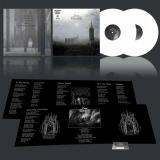
Spotlights veröffentlichen am 21. November über Ipecac Recordings ,Rarities", eine remasterte Zusammenstellung von neun frühen und seltenen Titeln aus der gesamten Diskografie der Band. ,Rarities" zeichnet die Entwicklung der Band nach, von ihrer Debütsingle bis hin zu herausragenden Titeln aus ihrer EP ,Séance" aus dem Jahr 2023. Nach ihrem Umzug von San Diego nach New York im Jahr 2013 veröffentlichte die Band 2015 ihre erste EP ,Demonstration". Darauf folgten die EP ,S San Diego nach New York zog, veröffentlichte die Band 2015 ihre erste EP ,Demonstration". Es folgten die EP ,Spiders" und ihr Debütalbum ,Tidals" im Jahr 2016 - Veröffentlichungen, die die Aufmerksamkeit von Künstlern wie Deftones, Shiner, If These Trees Could Talk auf sich zogen und schließlich zu ihrer Unterzeichnung bei Ipecac Recordings führten. Nach einem Jahrzehnt voller Veröffentlichungen reflektiert die Band nun über diese Songs, die alle zum ersten Mal auf Vinyl erscheinen.
The Modern Sound Quartet represents one of the most treasured, yet least documented, outfits in the history of Italian library music. An exceptional studio band of session musicians with a formidable groove, they released only a handful of albums under this name in the second half of the 1970s. However, their sound indelibly shaped dozens of "invisible" soundtracks, often without ever receiving an official credit on the back sleeve.
Led by pianist and composer Oscar Rocchi, and featuring Andrea Surdi (drums), Luigi Cappellotto (bass), and Ernesto Verardi (guitar), the quartet embodies the more jazz-funk, cinematic, and irresistibly groovy side of the 1970s Milan scene. They established themselves as a compelling alternative to the already established groups operating primarily out of Rome, such as I Marc 4 or I Gres.
Juggling late-night club jam sessions, tours supporting Italian pop giants like Ornella Vanoni, and creating rhythmically intense library records, the Modern Sound Quartet forged a unique sonic aesthetic: sophisticated, electric, and profoundly metropolitan.
This boxset celebrates their funkiest side—an irresistible combination of incandescent drum breaks, tight grooves, and high-intensity fusion passages—bringing together some of the most sought-after tracks from legendary LPs like Erbe Selvatiche (1977), Floreama (1977), Horoscope (1978), and I Tarocchi (1980). The selection also delves further back to the roots of their sound, including two powerhouse tracks from Pop-Paraphrenia (1973), a project where Oscar Rocchi—backed by a young, lethal Tullio De Piscopo on drums—sowed many seeds that would fully blossom in the subsequent Modern Sound Quartet output.
Created with DJs, beatmakers, and collectors of Italian library music in mind, this boxset deliberately features tracks that were never previously released on 7 inch—an ideal format for maximizing the rhythmic punch of the quartet's sound.
Available in a limited worldwide edition (500 copies), enriched by iconic 70s-style artwork conceived and designed by Eric Adrian Lee.
Waiting is the essence of travel. Patience is its own reward.
Two people. A Telecaster guitar with a few effect pedals. A drum machine. An audio interface is connected to a laptop. The ingredients are simple yet effective.
But any suggestion of four-track cassette machines and vintage bedsit productions is quickly dispelled by digital dubbiness and refined arrangements. A tail of reversed echos. The crystalline flourish of octave-pitched delays. Riddled hi-hats tickle and taunt. A bass drum asserts its space.
Winkler's guitar patterns have a fragmented, almost haphazard connotation. Searching in a shimmer of reverb. Until the beat, the framework, sets in to reveal structure. Intentionality. Reihse's programmed rhythms go just to the point of a groove, holding the moment of tension, knowingly delaying the gratification. Beats that have scratchy patina anda subtly playful edge; their crispness stands in contrast to the contemplative drift of the guitar. Is it a trance? Or a dance? Yes.
There are some apparent references here: a good portion of Les Disques du Crépuscule, some kraut-esque electronica, even a smidgen of Morricone / Spaghetti Western, blending into a kind of Musique Noir – yet these serve as a set of orientational coordinates, rather than quotations.
This is so far the most assured release by Periode, perhaps eschewing some of the naiveté that was wilfully cultivated in earlier output – there is no cheeky cover version this time. And no singing either. The nine pieces have the quality of a series, a variation on a mood, or a subset of moods. What emerges is an inviting swagger in the face of bleakness. There is a profound melancholy, but it is not the darker kind, and does not exclude humour.
First impressions may suggest that this is purely nocturnal music. Yet it equally evokes the harsh sunlight and baking summer heat. Or a rainy day. And transportation: the music suggests the motion of travel, even if that travel only happens within the mind. And waiting. Waiting while doing nothing much. Because that's all you can do. (Alexander Paulick)
We Jazz Records continues their 7" series with a new release by Oaagaada, a fresh quartet from the rural parts of Southern Finland. "Oag-ada / A Swimming Trip" appears on 30 October and presents the band's ability to create fiery and flowing jazz music with strong avantgarde leanings. Think Art Ensemble Of Chicago on their groovy mode and add a strong DIY mentality, four people in a room creating music in the now. The lows are low and the highs are high, with the trumpet firmly on the red, adding just the right amount of blurriness into the picture. Perhaps it's not "lo-fi jazz" per se, but rather music which is more concerned with other things than the cleanest of hi-fi imagery. This is "real jazz for real people".
The quartet includes Tuure Tammi (trumpet), Sami Pekkola (sax), Tero Kemppainen (bass) and Simo Laihonen (drums). Laihonen has recently appeared on We Jazz Records with Stanley J. Zappa and previously with Black Motor, and more Oaagaada can be heard on the recent "We Jazz Live Plates" album "Lonna 2019".
True to We Jazz style, the 7" single comes with old school heat-pressed labels and a plain brown paper sleeve.
out of Stock
Last delivered 5 years ago available to reorder, subject to availability
Helsinki bassist Antti Lötjönen follows up his 2020 We Jazz Records debut LP with a new 7" introducing a fresh version of key album cut "Erzeben Strasse" and throws in a wild treatment by Petter Eldh's Koma Saxo on the flipside. "Erzeben Strasse" presents Lötjönen's Quintet East lineup in fine form, swinging steadily but also adding enough sideways movement to blur the lines just a little bit. The band features a stellar Finnish cast in Lötjönen (bass), Verneri Pohjola (trumpet), Mikko Innanen (baritone sax), Jussi Kannaste (tenor sax) and Joonas Riippa (drums).
The Koma Saxo treatment of the track, dubbed here as "Erzeben Koma" is full of fire. Uplifting, a bit hectic, beat-driven and jubilant, Eldh's band of brothers double the ensemble heard on Side A, both sampling and adding new recording into the mix. The entire Koma Saxo live band is featured here: Eldh (bass/production), Otis Sandsjö (tenor sax), Jonas Kullhammar (tenor sax), Innanen (alto sax) and Christian Lillinger (drums). The modern sound of Helsinki meet Mauerpark Liquid Jazz.
out of Stock
Last delivered 5 years ago available to reorder, subject to availability
Berlin-based Swedish dynamic duo of sax man Otis Sandsjö and bassist/producer Petter Eldh return with new music on We Jazz Records. Remember the hard hitting banger "Tremendoce" from Otis Sandsjö's "Y-OTIS 2"? Well, the saga continues, and the new directions are surprising to say the least, just as we like it!!! Some proper late night / early morning out there vibes on this one, and the flip is yet another step forward, bringing in Kathrin Pechlof on harp. Things are liquid, just as you would guess, but the whole consistency of the substance has flipped and evolved. A new sound. A new idea. Another new day in Mauerpark, Berlin.
out of Stock
Last delivered 5 years ago available to reorder, subject to availability
Berlin-based Swiss vocalist Lucia Cadotsch returns with her celebrated Speak Low trio for their second album, released by We Jazz Records on 27 Nov. "Speak Low II" features Cadotsch on voice, Otis Sandsjö on tenor saxophone and Petter Eldh on double bass, and introduces guest artists Kit Downes on hammond organ and Lucy Railton on cello. "Speak Low II" picks up where their genre-bending and forward-looking debut album left off, introducing new shades into the band's sound and also diving even deeper into the songs they tackle. What makes Speak Low special is their approach to really get to the heart of each composition with seemingly minimal means, yet generating a sound which is both instantly recognisable and remarkably impactful.
"Speak Low II" comes almost five years after the band's lauded debut, and proves the depth of the band's approach right from the start. At the core of the trio's operation is an openness to their love of the music and to their surrounding scene(s). The album comes across as a unified collection of songs made truly theirs and found through listening to records and spending time with their musician friends, often on the road. The highly evolved band sound and the equality of the musicians shines through on the Speak Low sound, as the group uses their 100+ performances together as a vehicle for the development of their music.
"The first album was filled with pretty famous songs, but that was actually not at all intentional" explains Cadotsch. "Those were just my favourite songs of the previous 10 years and we started working on making them ours, musically. We were playing around with concepts for the second album, but soon realised that we just needed to find the right songs and adapt them organically, which comes through in how we interact with the songs and each other. This time around, we wanted to dig deeper and made finished arrangements of around 20 tracks, half of which we ditched in the process. The ones that made the cut have been through a lot and they just felt right for us."
In a way, the Speak Low approach could be described as archaeological. Three music lovers connecting with songs found at various sources, readily throwing away any ideas that don't seem natural to them, and hanging on tight to the ones that do.
Turns out there is a concept to "Speak Low II". It's the band itself, their shared musical development and their love of music.
"Speak Low II" will be available on We Jazz Records on vinyl (PURPLE and BLACK editions), CD and digitally. The vinyl versions come with a heavy duty tip-on sleeve and a printed inner sleeve. CD in digisleeve with no breaking plastic parts.
out of Stock
Last delivered 5 years ago available to reorder, subject to availability
Was also geschieht, wenn Paris und Havanna aufeinandertreffen? Die beiden Künstler tauchen tief in die kubanische Tradition ein und spielen zugleich mit klassischen Formen. Dabei rufen sie eine Epoche in Erinnerung, die Roberto nur allzu gut kennt – die des frühen 20. Jahrhunderts, als sich spanische klassische Musik und kubanische Rhythmen vermischten und das entstehen ließen, was später Danzón und Danzonete genannt wurde. Fonseca und Segal fügen dem eine Prise Improvisation hinzu – und damit Moderne.
Man sucht diese Musik nicht, und man hört sie auch nicht, um sie zu analysieren – sie kommt zu einem. Ihre Subtilität überrascht, weil sie in Bildern spricht. Das melodische Wechselspiel kitzelt die Wahrnehmung, zieht einen in die Außenwelt und umhüllt einen, während es zugleich im Inneren weiterlebt. Es ist eine Welt aus Echos und Erinnerungen, ein Wirbel aus Ideen und Gefühlen, die sich ständig erneuern und immer neue Bedeutungen finden.
In einer Zeit, in der künstliche Intelligenz allgegenwärtig scheint – sowohl in der Musikindustrie als auch in unserem Alltag –, erinnert uns diese Musik daran, dass das Geheimnis nicht darin liegt, zu kontrollieren, hinzuzufügen oder die Schöpfung für sich zu beanspruchen, sondern vielmehr darin, zu dekonstruieren, wegzulassen und Raum für Klarheit zu schaffen. Das Geheimnis besteht darin, den kreativen Prozess zu seinem Wesenskern zurückzuführen – Nuit Parisienne à La Havane tut genau das. Es ist ein Album, das nicht um unsere Aufmerksamkeit bittet, keine Rezensionen erwartet und keine Analyse einfordert. Es will gefühlt werden – vielleicht sogar betrachtet – wie eine Abfolge von elf Kurzfilmen, die sich vor unseren Augen entfalten. Es liegt an uns, die Bilder in unserem Geist schweben zu lassen, sie aufzunehmen und schließlich wieder verschwinden zu lassen.
Diese fünftägige Improvisationssession führt uns durch höchst unterschiedliche Genres: von kubanischen Rhythmen verschiedener Epochen über französisches Chanson, klassische Musik, afrikanische Rhythmen bis hin zu östlichen Einflüssen. Sie stellt die Frage: Was wäre, wenn auch die Musik mit den großen Herausforderungen der modernen Welt konfrontiert würde?
Italian DJ/producer Gledd delivers an EP of fiery afro edits for his first outing on Razor-N-Tape. Taking a deep dive into his crates of African Boogie, Highlife and Zouk fodder, the Saint Wax Records boss presents a driving and hypnotic 4-tracker primed for the floor with just the right amount of studio polish.
After two decades in the experimental music scenes of New York and Western Massachusetts, Wednesday Knudsen might be known equally as a sought-after improv collaborator and the vocalist and guitarist for the beloved long-running psych band Pigeons or, more recently, as a member of the New England psych-folk ensemble Stella Kola. Though her forthcoming release, Atrium, is Knudsen’s fifth solo album, it is both her first solo work to appear on vinyl and a double LP, marking her rich recording history with a stunning masterwork. Channeling the “atmosphere of presence” alongside the legions of Éliane Radigue, Hiroshi Yoshimura, and Joanna Brouk, on Atrium, Knudsen plays it all—alto saxophone, flute, guitar, synth, piano, autoharp, bass guitar, and vocals. The collected compositions are studies in the tones, timbres, and pacing particular to the woodland environment of the Taconic Mountains where she lives. Atrium’s tracks are sculptural rather than ambient, with a release into the gorgeous hold of gravity that insists we don’t escape or drift away. This is music for remembering time. This is music that reinforces the power of art as resistance. The songs on Atrium distill our attention in a language that Knudsen calls “the opening of the heart,” reminding us that subsistence and community results from our own actions and engagement with our exterior. Atrium is a refuge, vital in our current moment and imbued with resonant power for our future.
SPIRIT!, the third LP from HUNNY, is about embracing the weird-an album born from uncertainty and built on instinct. It"s a testament to breaking free, starting over, and tuning out the noise. Now the sole project of longtime frontman Jason Yarger, HUNNY has shed its past shape to become something more fully itself. SPIRIT! doesn"t reinvent the wheel so much as keep it spinning forward. Across 15 tracks, the album-co-produced by Yarger and former bassist Kevin Grimmett with drums by former drummer Joey Anderson-leans into the sounds that have always lit HUNNY"s fuse: hooky post-punk, gleaming synths, and shout-along choruses praised by Alternative Press, Kerrang!, and Rock Sound. But it also pushes further-into abstraction, playfulness, and freedom. It"s the latest turn for HUNNY, a band long celebrated for shapeshifting through genres and decades with style on fan-favorite releases like Yes. Yes. Yes. Yes. Yes. (2019) and new planet heaven (2023)-always evolving, yet unmistakably themselves. That dynamic energy carries into their high-voltage live show, sharpened on tours with Joywave, Mom Jeans, Waterparks, and State Champs.
Debut release Leather Rose by Myalansky (Wu-Syndicate). This is his first solo vinyl press since the group's 1999 Wu-Tang Records debut—a rare moment for the Wu-Tang lineage. Gritty 12-bit production on the 12-bit Isla Instruments S2400 + analog outboard gear. Inspired by Cuban Linx and Liquid Swords.
,Warmer Than Gold", das neue Album von Ben Cooks Projekt GUV, ist ein Dokument eines Lebens in der Musik, ein kritischer und feierlicher Reisebericht, ein Versuch, die homogenen und statusbesessenen Zustände der heutigen Welt durch den Einsatz von großen Beats, großen Refrains und Verzerrung zu überwinden. Es ist ein Album, das unterwegs entstanden ist und überall Sinn ergibt. Vor allem aber leitet es mit seiner erweiterten Klangpalette und der Betonung von Breakbeats eine neue Ära eines Künstlers ein, der nie aufgehört hat, sich weiterzuentwickeln. Cook, der zwischen Toronto und England aufgewachsen ist, verfügt über eine angloamerikanische Authentizität, die ihn von der wachsenden Schar von Hardcore-Kids mit Windjacken und Pilzköpfen unterscheidet. Zwei der ersten Konzerte, die er im Alter von 12 Jahren besuchte, waren Oasis und Neil Young. Nach dem Konzert, erinnert er sich, dachte er: ,Ja, ich werde für immer Musik machen." Kurz nachdem er Hardcore und Punk für sich entdeckt hatte, ging es los, zuerst mit seiner geliebten Hardcore-Band No Warning (mit der er bis heute spielt), dann als Mitglied der Punk-Experimentalisten Fucked Up, die er 2006 gründete. Er war ein Teil der Underground-Szene, die sich in den 90er Jahren in Kanada Kurz darauf entdeckte er Hardcore und Punk, und schon ging es los, zunächst mit seiner geliebten Hardcore-Band No Warning (mit der er bis heute spielt), dann als Mitglied der Punk-Experimentalisten Fucked Up von 2007 bis 2021 - und währenddessen baute er sich ein umfangreiches und beeindruckendes Repertoire an Soloarbeiten auf, zunächst als Young Governor, dann als Young Guv und jetzt einfach als GUV (,Ich bin nicht mehr so jung, Drei-Buchstaben-Bandnamen sind cool, und ich bin es leid, mit einem Rapper verwechselt zu werden", bemerkt Cook). Warmer Than Gold ist die großformatige Krönung all dieser Stränge. Die Musik des Albums behält den eingängigen Geist von Cooks früheren Alben bei, wie den gefeierten Doppelalben GUVI & II und GUV III & IV, fügt jedoch ein ausgeprägtes rhythmisches Element hinzu, das von klassischem Madchester und Britpop geprägt ist. Es verschmiert und schwebt, es fühlt sich an, als würde man um Mitternacht die Autobahn M1 entlangrasen, angetrieben von einer Dringlichkeit, die in Cooks anderen Werken nicht zu finden ist. Was jedoch von diesen früheren Power-Pop-Veröffentlichungen beibehalten wurde, ist das ausgeprägte Gespür des Künstlers für eingängige Melodien. In Kombination mit einer neuen Produktionssensibilität, die von den Beastie Boys über The Field Mice bis hin zu Primal Scream inspiriert ist, gelingt es Cook, die zentralen lyrischen Themen des Projekts musikalisch zu untermalen: die globale Verflachung der Kultur, das Vergehen der Zeit in der materiellen Welt und die Rolle des Künstlers in all dem.
out of Stock
Last delivered 8 months ago available to reorder, subject to availability
,Warmer Than Gold", das neue Album von Ben Cooks Projekt GUV, ist ein Dokument eines Lebens in der Musik, ein kritischer und feierlicher Reisebericht, ein Versuch, die homogenen und statusbesessenen Zustände der heutigen Welt durch den Einsatz von großen Beats, großen Refrains und Verzerrung zu überwinden. Es ist ein Album, das unterwegs entstanden ist und überall Sinn ergibt. Vor allem aber leitet es mit seiner erweiterten Klangpalette und der Betonung von Breakbeats eine neue Ära eines Künstlers ein, der nie aufgehört hat, sich weiterzuentwickeln. Cook, der zwischen Toronto und England aufgewachsen ist, verfügt über eine angloamerikanische Authentizität, die ihn von der wachsenden Schar von Hardcore-Kids mit Windjacken und Pilzköpfen unterscheidet. Zwei der ersten Konzerte, die er im Alter von 12 Jahren besuchte, waren Oasis und Neil Young. Nach dem Konzert, erinnert er sich, dachte er: ,Ja, ich werde für immer Musik machen." Kurz nachdem er Hardcore und Punk für sich entdeckt hatte, ging es los, zuerst mit seiner geliebten Hardcore-Band No Warning (mit der er bis heute spielt), dann als Mitglied der Punk-Experimentalisten Fucked Up, die er 2006 gründete. Er war ein Teil der Underground-Szene, die sich in den 90er Jahren in Kanada Kurz darauf entdeckte er Hardcore und Punk, und schon ging es los, zunächst mit seiner geliebten Hardcore-Band No Warning (mit der er bis heute spielt), dann als Mitglied der Punk-Experimentalisten Fucked Up von 2007 bis 2021 - und währenddessen baute er sich ein umfangreiches und beeindruckendes Repertoire an Soloarbeiten auf, zunächst als Young Governor, dann als Young Guv und jetzt einfach als GUV (,Ich bin nicht mehr so jung, Drei-Buchstaben-Bandnamen sind cool, und ich bin es leid, mit einem Rapper verwechselt zu werden", bemerkt Cook). Warmer Than Gold ist die großformatige Krönung all dieser Stränge. Die Musik des Albums behält den eingängigen Geist von Cooks früheren Alben bei, wie den gefeierten Doppelalben GUVI & II und GUV III & IV, fügt jedoch ein ausgeprägtes rhythmisches Element hinzu, das von klassischem Madchester und Britpop geprägt ist. Es verschmiert und schwebt, es fühlt sich an, als würde man um Mitternacht die Autobahn M1 entlangrasen, angetrieben von einer Dringlichkeit, die in Cooks anderen Werken nicht zu finden ist. Was jedoch von diesen früheren Power-Pop-Veröffentlichungen beibehalten wurde, ist das ausgeprägte Gespür des Künstlers für eingängige Melodien. In Kombination mit einer neuen Produktionssensibilität, die von den Beastie Boys über The Field Mice bis hin zu Primal Scream inspiriert ist, gelingt es Cook, die zentralen lyrischen Themen des Projekts musikalisch zu untermalen: die globale Verflachung der Kultur, das Vergehen der Zeit in der materiellen Welt und die Rolle des Künstlers in all dem.
out of Stock
Last delivered 8 months ago available to reorder, subject to availability
Powfu and Lofi Girl come together to soundtrack life’s softer sides on ‘the life of a lofi boy’.
Lofi Girl’s chill beats meet Powfu’s heartfelt storytelling in ‘the life of a lofi boy’. Brought together by a shared love of lofi hip hop, this seven-track EP drifts through love, loss, and life’s quiet moments. Layered with soft rainfall, birdsong, and gentle vocals, each track captures a mood, a fleeting moment suspended in time.
So brew a warm cup of coffee, press play, and let the life of a lofi boy’s story unfold.
out of Stock
Last delivered 8 months ago available to reorder, subject to availability
Soul Quest are back with a 4-track EP from Slxm Sol that’s Soul Quest to it’s core.
The label’s co-founder has built a reputation for his authentic soul fuelled deep house and the Simple Love EP reinforces that. A classic Kai Alce NDATL dub to boot!
out of Stock
Last delivered 8 months ago available to reorder, subject to availability
After 8 years, 2 albums on BureauB and different small releases RVDS comes back to his roots and releases these 3 Acid Bangers:“Too much Acid” which has 4 TB303 Basslines in one match, which can remind on some Emanuel Topp tracks, then there is the Acid Electro track “Schluckauf” (Hiccup) which expresses hiccups in sounds, the last track “Acid Busline 242” is very soulful and has recordings of the busline 242 in London.
out of Stock
Last delivered 8 months ago available to reorder, subject to availability
French producer/dubmaker Haspar with his remix of RighteousWorks ft Mowty Mahlyka (UK).
The original was produced by Dubbing Sun back in 2018 andreleased on Whodemsound.
out of Stock
Last delivered 8 months ago available to reorder, subject to availability
Du glaubst, du brauchst keine neue Sniffing Glue Platte mehr? _doch, diese Platte brauchst du!!! HORSEHEAD. Fünf Songs, fünf Hits. Abrisskante und Kälte. Mehr gibt es nicht zu sagen_ SNIFFING GLUE started in 2006 to waste you and your friends with early 80ies styled hardcorepunk. Aufgenommen am 28. & 29. Juni 2024 bei Denny / Werner-Wiese-Studios HORSEHEAD kommt als 12" EP mit Download Link, Textblatt und ist auf 300 Stück limitiert.
DJ Support: Rossi., Chris Stussy, Marco Corola, Joseph Capriati, Michael Bibi
Jansons makes his debut on HMGRWN with "Yeah Yeah Yeah", a stripped-back, groove-heavy roller with a captivating vocal hook... A peak-time track that's been a huge play for ROSSI. in recent months... The track is already gaining huge support in the run up to the release, with artists such as Chris Stussy, Marco Carola, Joseph Capriati, Michael Bibi, Franky Rizardo and many more...
out of Stock
Last delivered 78 days ago available to reorder, subject to availability
Since their formation, The Hirsch Effekt have carved out a unique niche in the German-speaking music scene. Yet, despite—or perhaps because of—their elusiveness, the band has captivated a devoted audience. Musically, The Hirsch Effekt have always embraced limitless possibilities. Acoustic, introspective moments—where bassist Ilja John Lappin brings out his cello or guitarist Nils Wittrock returns to his classical roots—sit naturally alongside massive progressive metal onslaughts. The band is equally at home on intimate club stages as they are at international festivals, evidenced by repeated appearances at Euroblast and numerous events across the UK. Recently, they toured Germany alongside scene giants like Leprous, Tesseract and traversed Europe with Caligula’s Horse. Yet between these extremes, The Hirsch Effekt continually create songs that flirt with radio accessibility—almost—because the band steadfastly resists any form of standardization. With their seventh album, Der Brauch, they continue this course uncompromisingly. While earlier works, despite their diversity, were still labeled “metal albums,” this new record explores paths first hinted at on the multilayered second album, Holon : Anamnesis—the same album that fans of VISIONS magazine voted the only German-language entry among the 20 best albums of all time. Der Brauch can be seen as a return to that pivotal point—and simultaneously as a bold step forward. Drummer Moritz Schmidt doesn’t entirely forgot blast beats, but the record demands a new heading. In the end, though, there is only one truth: it unmistakably sounds like The Hirsch Effekt.
The second single from the Skinshape x Horus dub album, “N’tero” is a soulful, dub track featuring Senegalese vocalist Modou Touré, singing in his native tongue Wolof.
Produced using fully analogue techniques and recorded in the spirit of vintage Jamaican dub, this 7" is a perfect blend of old-school authenticity and modern production finesse.
Skinshape (Will Dorey) and Ben Bell (Horus Records / Lion Vibes) bring over two decades of collaboration and deep roots to this project.
Known for their love of rare roots reggae and dub, the pair are now crafting original material with the same dedication to sound and detail that defined the golden era of Jamaican music.
On his debut album “Scattered Memories”, the composer, musician and true master on the Iranian spike fiddle kamancheh SABA ALIZADEH blends his instrumental virtuosity with spherical electronics, samples of Persian music instruments and field recordings from his hometown Tehran.
Born in Tehran in 1983 as son of the world renowned Tar and Setar virtuoso HOSSEIN ALIZADEH, SABA ALIZADEH studied the Iranian spike fiddle with SAEED FARAJPOURY and KEYHAN KALHOR plus photography and later experimental sound art with MARK TRAYLE at the California Institute of the Arts, Los Angeles. His musical activities that lead him all around the globe for performances (a.o. at Carnegie Hall) branch into 2 different areas: on the one side ALIZADEH is a highly reputated virtuoso on his traditional instrument, on the other he likes to approach music from a more experimental / technological aspect in his electronic / electro-acoustic pieces. This not being enough, he founded Noise Works in 2014, a platform and label for organizing experimental concerts and for the transfer of knowledge of music technologies among young Iranian musicians which makes him a central figure at the forefront of the current, very vivid Persian music scene that gained a lot of attention through artists like SIAVASH AMINI, PORYA HATAMI and of course SOTE who included a track by ALIZADEH on the compilation “Girih: Iranian Sound Artists” that he had curated.
In 2018, ALIZADEH self-released his debut “Scattered Memories” on CD in Iran which now, in a reworked version, sees its deserved world-wide release as LP and DL. Over the course of 10 tracks ALIZADEH melts his 2 musical worlds into 1: tradition meets modernism, eastern sounds meet western production, folklore meets contemporary electronics. An album that will appeal to an open-minded “world music” audience as well as fans of current streams like ambient or drone in its most subtle forms.
out of Stock
Last delivered 6 months ago available to reorder, subject to availability
The Duo Okvsho is one of the most promising prospects of upcoming musicians from Zurich, Switzerland. With the release of their „Traphouse Jazz EP“ via Boyoom Connective in 2018, Okvsho gained the attention of a wider audience for the first time through placements in Bandcamp Weekly, NTS Radio and many more. Their music is mostly inspired by the upcoming, young and vibrant UK Jazz Scene and their origins in beatmaking and house/electronic music.
The two brothers started out their musical careers at a very young age in Brazilian percussion groups and, due to their Hungarian roots, they are also familiar with traditional Balkan music. This background came to light on their 2020 released debut album “Kamala’s Danz“, in which they wanted to let their original musical backgrounds flow in and discover new ones at the same time. Especially through Placements of two Singles in the very popular Spotify-Playlist “State of Jazz“, Okvsho became one of the most interesting Names in the modern Jazz-Scene.
Through playing with local jazz-musicians their live-band project emerged, which celebrates improvisation, spontanity and jazz as dance music. Their Live-shows are characterized by driving rhythms and should make the listener feel like moving and immersing into a world without time and beyond their own.
out of Stock
Last delivered 8 days ago available to reorder, subject to availability
Continued Sound is proud to present The Shadow by Ojiji.
In 1979, Rupert “Ojiji” Harvey put out one of the most distinctly original albums of a generation. Combining progressive jazz-fusion arrangements with soul, funk, and reggae from his native Jamaica, Ojiji’s The Shadow is an album only he could create.
Ojiji, along with his brother Carl, were performing in nightclubs before they were old enough to legally enter. At just 15, Ojiji was tapped by reggae keyboard legend Jackie Mittoo to join his band The Cougars. Not long after, the Harvey brothers teamed up with other Cougars members to form the funk band Crack of Dawn. This union proved to be groundbreaking, not just in the soul/funk genre, but for Canadian music as a whole. In 1975, they were signed to a major label, Columbia Records, the first Black Canadian band in history to do so. Tracks like “It’s Alright” and “Keep the Faith” still echo in the halls of Canadian funk history.
Personal and industry differences caused Crack of Dawn to break up in 1977, and a young Rupert Harvey was without a band for the first time. However, the creative mind never rests. Outside of the band, Ojiji had been writing and composing his own personal songs since age 17. These songs were a fusion of the sounds and styles he’d soaked up during his time with his musical mentors mixed with new emerging musical influences he was hearing every day.
With the help of his brother Carl and some Crack of Dawn bandmates, he began recording his debut solo album The Shadow. The band's tightness heard in the intricate arrangements are a testament to their interwoven musicianship at the time. Many tracks were recorded in only one-take. Each song in The Shadow’s eclectic glory paints a picture of a young man's singular lived experience through music. Regaling us with where he’s been. Inviting us to where he’s going.
The journey through French-speaking pop archives continues with this fifth volume, packed with fuzz, gimmicks, and dissent. Far from the charts, the selected tracks display a great creative freedom, often backed by corrosive humor. Welcome to the surprising, kaleidoscopic, and colorful world of the late sixties and early seventies, Wizzz!
Born in Montauban, Robert Pico stumbled into music by chance when he met René Vaneste, then artistic director at Pathé-Marconi. René brought him to Paris to record his first 45 RPM EP in 1964. A year later, Pierre Perret introduced him to Vogue, where he recorded his second album with Claude Nougaro’s orchestra. Sylvie Vartan then introduced him to RCA, where he recorded four singles, including the astonishing "Chien Fidèle," a track backed by a hair-rising fuzz guitar. Alongside his solo career, he also composed for other artists like Alain Delon (the song was recorded but remains unreleased), Magali Noël, Bourvil, and Georges Guétary. In the Paris of the sixties, he mingled with Mireille Darc, Elsa Martinelli, Marie Laforêt, France Gall, Françoise Hardy, Petula Clark, Régine, Dani, Serge Gainsbourg, Joe Dassin, Franck Fernandel, Charles Level, and Roland Vincent. Despite his efforts and winning a Grand Prix Sacem for his final record, Robert Pico didn’t achieve the expected success in show business and decided to leave Paris and return to the Southwest, where he devoted himself to writing. He is the author of 23 books (including Delon et Compagnie, Jean-Marc Savary Editions 2025, a memoir about his youth and his many encounters). Today, he is relieved to never have become a celebrity and devotes himself to his work with passion.
In 1969, the Franco-Italian movie Erotissimo was released, directed by Gérard Pirès (who later directed Taxi in 1998, written and produced by Luc Besson). This pop comedy features Annie Girardot, Jean Yanne, Francis Blanche, Serge Gainsbourg, Nicole Croisille, Jacques Martin, and Patrick Topaloff. The soundtrack was written by Michel Polnareff and William Sheller, with lyrics by Jean-Lou Dabadie. "La Femme Faux-cils," performed by Annie Girardot. It recounts the feelings of a rich CEO's wife who seeks to develop her sex appeal under the influence of advertisement and magazines. Groovy, sparkling and light, this track, with ITS lush arrangements humorously critiques consumer society and feminine beauty standards.
“Je suis l’Etat” (1967) is the flagship track of the first EP by singer-songwriter Spauv Georges, aka Georges Larriaga, better known as Jim Larriaga (1941-2022). Born into a family of bakers, the young man was initially planning to become a hairdresser when he discovered English-speaking music through Elvis Presley and the Beatles. After this revelation, he decided he would become a songwriter and gave himself five years to succeed. He recorded his first two EP’s independently for RCA under the pseudonym Spauv Georges; meaning “that poor George”, a nickname given to him by the mother of her friend Jean-Pierre Prévotat (future drummer of the Players, Triangle, or Johnny Hallyday). Portraying a depressed and eccentric young man, Spauv Georges created corrosive and amusing songs that didn’t reach a wide audience, despite a TV appearance with Jean-Christophe Averty.
Supported by his loyal friend and fellow songwriter Jean-Max Rivière, Georges Larriaga met the future singer Carlos in the early '70s, then Sylvie Vartan’s assistant. He wrote songs for Carlos, including the popular "La vie est belle," "Y’a des indiens partout," and "La cantine", which went onto become a huge hit in 1972. He also composed for Claude François (“Anne-Marie”, 1971), Charlotte Julian (“Fleur de province”, 1972), helped launch child singer Roméo (who sold 4 million records), and later wrote the hit "Pas besoin d’éducation sexuelle" (1975) for the young Julie Bataille. In 1971, Jim recorded an album for Disc'Az: “L’univers étrange et fou de Jim Larriaga”, which featured pop gems like “La maison de mon père”.
The story of the song "Zoé" began when Pierre Dorsay, artistic director at Vogue Records, asked Swiss singer and musician Pierre Alain to write a song for a new female singer. The inspiration came when he realized that Zoé (the artist's name) was also the name of France's first atomic battery, created in 1948, which consisted of uranium oxide immersed in heavy water! The lyrics reflect a bubbling energy that must be handled with caution, while the instrumentation echoes this atomic theme, notably with the use of a theremin.
Zoé’s career lasted only as long as a single 45 RPM, but it seems Christine Fontane was the vocalist behind this pseudonym, who is known for several EPs, a good "popcorn" album in 1964, and a handful of children’s singles in the '70s. Regardless, the photograph on the cover is of a different girl entirely.
Later, Pierre Alain continued his career, writing songs for himself, Marie Laforêt, Danièle Licari, Alice Dona, Arlette Zola (3rd place in Eurovision 1982), and achieving multiple gold and platinum records in Canada. Also an inventor with several patents, president of the Romande Academy, and head of the French Alliance in Geneva, he now composes atonal music, books, and poetry. Moreover, he is also the host of "Les Mardis de Pierre Alain" at "Le P'tit Music'Hohl" in Geneva.
Filled with oriental choruses and fuzz guitar, "Fou" is from Jacques Da Sylva's only EP released by Vogue in 1967. Despite the quality of this recording, all traces of this singer disappear after this first effort.
Valentin is a baroque pop singer born in Belgium. He is the songwriter and composer of most of the tracks on his three singles released in the late 60s in Canada. A legend says that he reincarnated himself as Jacky Valentin during the 1970s for a rock'n'roll revival career in Belgium, but his older brother sadly debunked this story. Valentin's first two singles were arranged by Claude Rogen, a Parisian session pianist who had come to Canada to promote the song “Mister A Gogo”, a cover of David Bowie’s “Laughing Gnome”, adapted by singer Delphine, his wife at the time. Far from his usual network, Claude Rogen arranged music for Polydor, including the arrangements for “Je suis un vagabond” in 1969, a jerk tune with string arrangements and a furious optimism.
Jacques Malia wrote, composed, and recorded his only 45 EP for Festival in 1966. “Histoire de gitan” is an incredible beat track with bohemian scat that tells the story of a gypsy musician who came to Paris to make it in the Music-Hall, to no avail. The hero of the song and its author probably shared a similar fate, as Jacques Malia faded into anonymity after this remarkable attempt.
Bernard Jamet recorded two EPs for Barclay in the late sixties and co-wrote several songs with Christine Pilzer, Pascal Danel, and prolific songwriters Michel Delancray and Mya Simile. The track “Raison Légale” (1968), his masterpiece, immerses the listener in a courtroom right when a murderer is being judged, with jerk rhythm and free arrangements. A unique, paranoid, judicial, and psychedelic oddity.
Jean-Pierre Lebrot-Millers started his career in show business in 1967 as a singer and songwriter for the Philips label. After three singles, he wrote several songs of a new kind with his friend Pierre Halioche, in the midst of the sexual liberation movement and the democratization of drugs. With provocative lyrics, “Les filles du hasard” and “Barbara au Chapeau Rose” were released on a Philips singles in 1968. The character of Barbara was inspired by a queen of Parisian nightlife during the psychedelic years: model Charlotte Martin, who dated Eric Clapton from 1965 to 1968, then Jimmy Page from 1970 to 1983. Jean-Claude Petit’s arrangements, with a table-filled intro, soul brass, and Hendrixian guitar, emphasize the flamboyance of a hedonistic and sexy character, whose dog is named Junkie because “Junkie est un nom exquis”! The track was recorded live in three takes with a full orchestra.
Upon its release, the record was censored by Europe 1 and RTL due to its references to drug use. Jean-Pierre Lebrot was then banned from the airwaves and later dismissed by his record label. He changed his artist name to Jean-Pierre Millers, while his companion Pierre Halioche became D. Dolby for a new dreamy composition, “Chilla”, which Jean-Pierre produced himself with arrangements by Jean Musy. Once again, the song was immediately censored everywhere. After this setback, he decided to stop singing and started taking on odd jobs to support his Swedish wife and their son until the day he met Jean-Pierre Martin, then production manager at Decca, who had worked with Manu Dibango. Martin offered Jean-Pierre Lebrot-Millers, then employed at Rank Xerox, the position of artistic director at Decca. He accepted and became, a year later, promotion director (radio, press, TV). He worked on Julio Iglesias’s first album for Decca, which became a massive hit and allowed him to meet Claude Carrère. The latter asked him to write new songs and find their performers, much like a “talent scout.” It’s through him that Jean-Pierre discovered Julie Pietri and Corinne Hermès. He composed “Ma Pompadour” for Ringo, Sheila’s husband, and took the microphone again for the syncope hit “Rendez-Vous” in 1982.
That same year, Jean-Pierre Lebrot-Millers tried to release a track for which he had heavily gone into debt: “Si la vie est un cadeau”. Having recorded it in London, he presented it to numerous professionals, all of whom refused to get involved. The same thing happened with Antenne 2 and the Sacem when he proposed the song as France’s entry for Eurovision. He then met Haïm Saban, who was producing cartoon soundtracks and had just launched the Goldorak theme song. Saban, having listened to the song, declared it had the potential to become a hit. He sent Jean-Pierre and Corinne Hermès to meet the CEO of the Luxembourg radio and television network. The latter received them, asked to hear a verse and chorus a cappella in his office, and immediately hired them to represent Luxembourg at Eurovision 1983. They reworked the arrangements and recorded a new version with Haïm Saban as co-producer. The song ended up winning Eurovision 1983, a great comeback for our hero. He continued producing and hung out with the band Nacash in Belgium when a couple came to introduce their daughter for an impromptu audition in a hotel room. The girl sang “Les démons de minuit” while dancing to a radio cassette. Impressed, he had her take singing lessons for a year and composed a song for her (for which he had the melody and title, but no lyrics). This required him to go on the hunt for a lyricist, who ended up being Guy Carlier. They recorded the song, which was initially a ballad, at Bernard Estardy’s CBE studio, and gave the singer a new name: Melody. They showed the song around their industry network without success. Later, Estardy called Jean-Pierre to suggest changing the rhythm and making it pop-rock. Orlando, Dalida’s brother, liked the result and decided to co-produce the track. “Y’a pas que les grands qui rêvent » became a classic hit. The song has since been covered by Juliette Armanet (as a ballad, like the original) and Valentina.
Born into an aristocratic Breton family, Hervé Mettais-Cartier worked as a DJ at Queen Kiss, a nightclub in Poitiers, where he formed the band Les Concentrés with Michel (an actor) and Christian (a radio technician). Together, they created a repertoire of whimsical songs (“Ma bique est morte”, “J’suis un salaud”, “Fils de dégénéré”...) that they performed on stage dressed in white (in homage to “concentrated milk”). They performed at Bliboquet and Olympia in 1968 for the 10th edition of the “Relais de la chanson Française” organized by L’Humanité-Dimanche and Nous les Garçons et les Filles, sponsored by Pepsi Cola. Winners in the author-composer category, alongside Danish singer Dorte, their visibility allowed them to record a 45, and appear on television in Jean-Christophe Averty’s show. The A-side of the disc features Bruno le ravageur, a casatchok dedicated to Bruno Caquatrix, the director of Olympia, nicknamed in the song “Coq Atroce” or “croque-actrices”. The B-side is dedicated to “Fils de dégénéré”, a quirky tribute to Hervé's aristocratic roots, mixing absurdity with sophisticated vocal harmonies.
After Les Concentrés, Hervé Mettais-Cartier formed the duo La Paire et sa Bêtise with his friend Olivier Robert. They performed in Parisian cabarets and toured with Pierre Vassiliu. In the late 1970s, Hervé began a solo career. He recorded two albums for the Motors label in 1978 and 1979, which did not achieve their anticipated success due to lack of promotion. In 1980, he met Bernadette, with whom he started a family and created a “Chansons à voir” (songs to see) show that he performed until his death at the end of 2024.
Publicité comes from the final EP by the Missiles (Ducretet Thomson, 1966), a disc that also includes “La (nouvelle) guerre de cent ans”, featured on Volume 4 of our Wizzz! series. Please refer to the booklet for the story of the band.
“He’s 1.82 meters tall, 28 years old, weighs 135 kg, is black and Belgian”: this is the description of singer Hegesippe on the back of his sole single (Decca, 1967). He appears on the album cover wearing a Greek toga, like a hippie gag – we are at the end of the year 1967. In “Le crédo d’Hegesippe”, this former bodyguard of Antoine and the Charlots plays the delightful card of the thick brute converted to Flower-Power and non-violence, with arrangements by Jean-Daniel Mercier, aka Paul Mille.
“Ethéro-disco” was released on a promotional record for clients of the Maréchal company (Liège, Belgium) for the New Year 1979. Over a funky rhythm, celebrity impersonations (Brigitte Bardot, Jacques Dutronc, Fernandel…) deliver an enigmatic text about pharmaceutical products like ether, bismuth, and aspartate. The track was composed by Dan Sarravah (responsible for Joanna's “Hold-up inusité” featured on Wizzz! Volume 3) and Tony Talado, who was also a singer (one 45 in 1967), songwriter (with over a dozen credits between 1964 and 1985 in various styles from surf music to disco), author (Devenez Végétarien, Dricot Editions, 1985), ad designer, and psychologist.
Décollez-les is on the A-side of Mamlouk's only single, a pseudonym for Marsel Hurten, who is known for his work on several EPs in the late sixties, as well as composing music for Hervé Vilard’s “Capri, c’est fini”, Claude Channes' “La Haine”, Annie Philippe’s “On m’a toujours dit”, and Nancy Holloway’s “Panne de Cœur”.
This strange song, with Afrobeat horns and absurd dialogues between a chef and his kitchen staff, is the result of a collaboration between Marsel Hurten and one of his neighbors, a photographer from Pavillon-sous-Bois (93), where the musician settled after returning from the Algerian War. A music video was shot to promote the record.
Marsel Hurten was born in Tourcoing (59) into a musical family. At a young age, he joined the brass band founded by his grandfather, playing the piston before studying trumpet at the conservatory, as well as teaching himself how to play the guitar. As an orchestra musician, he toured in France, Belgium, Germany, and England. He released a series of solo 45’s between 1965 and 1968 for the DMF and Az labels before stopping recording to focus on working for other artists (Gilles Olivier, Noëlle Cordier…).
“L’amour nu” (Vogue, 1971) is the work of the short-lived Belgian band Mozaïque. The track, written by singer Jacques Albin, closely resembles another of his compositions, “Carré Blanc”, which he recorded in 1969 for Disc’AZ.
Represented by the Lumi Son micro-label based in Marignane (Côte d'Azur), Jean-Marc Garrigues released two 45 RPMs in the late sixties, defending the French jerk sound. The song “Je dis Non” is a short, joyful ode to youth, pop music, and rebellion.
Songwriter and performer Jacques Penuel released three singles. The first one, “Astronef 328” (Fontana, 1969), features a dizzying series of chords punctuated by sound effects, a sci-fi story, and arrangements by Jean-Claude Vannier.
We would like to sincerely thank Pierre Alain, Moon Blaha, Marsel Hurten, Bastien Larriaga, Jean-Pierre Lebrot-Millers, Bernadette Mettais-Cartier, Robert Pico, Olivier Robert, Claude Rogen, Micky Segura.
out of Stock
Last delivered 8 months ago available to reorder, subject to availability
In 1991, Chris Whitley made his debut with the beautiful album Living with the Law, which immediately showcased his brilliant songwriting and unique guitar playing. Blending blues, roots and folk, the debut was positively received by critics and aficionados of these more traditional genres. Growing up, Whitley listened to Southern radio, which played artists such as Muddy Waters, Howlin' Wolf, Bob Dylan and Jimi Hendrix. His career started by playing with artists like Arto Lindsay and Michael Beinhorn. Interestingly, Whitley lived in Belgium for a short time in the 1980s, where he started his career playing guitar for 2 Belgen and Nacht und Nebel. In the 1990s, he started his solo career at Kingsway Studio in New Orleans, owned by none other than Daniel Lanois. The result was an album characterized by the use of traditional instruments such as the slide guitar and banjo. All of this is accompanied by his splendidly timbred voice and honest lyrics exploring themes such as freedom, desire and human struggle. Sadly Chris Whitley passed away in 2005, but his influence on contemporary songwriters and blues artists remains strong. a_Living with the Law is available as a 35th anniversary edition of 1000 individually numbered copies on gold coloured vinyl and includes an insert.
Two years after their debut on Berlin-based Mannequin Records, Parisian duo Leroy Se Meurt returns with their second full-length album, Hier Pour Toujours. Far from any sense of nostalgia, this record offers no illusion of hope—history repeats itself, the future looks bleak, and their brand of electronic punk is the perfect soundtrack to it all.Drum machines dictate the pace while synths saturate the space, looping sequences grind relentlessly, and vocals lead this machine orchestra straight into the heart of the chaos. Drawing from their roots, Leroy Se Meurt pushes their fierce electronics further than ever—experimenting with bold slogans, spoken passages, and powerful sing-along choruses.The album opens with Pas Ma Croix, a commanding anthem built for the stage. It flows into Du Plafond à La Terre, driven by a monstrous electro beat and bassline, flirting with emotional vulnerability in its chorus before exploding into a synth solo. Alevlere Karşı once again taps into the duo’s EBM-meets-Turkish vocals signature style, hitting the mark with dancefloor precision.The title track, Hier Pour Toujours, closes side A with a more intimate, drumless moment—solemn but no less intense.That brief calm is shattered by Déviance, marking the return of guitars and an eruptive chorus brimming with raw energy. From there, the album launches into the furious Révolte Ardente, with its syncopated rhythm and vocals drenched in distortion, and continues with Pro Déclin, a stripped-down rhythmic skeleton carrying anti-growth mantras straight to the point. In a world clouded by confusion, the most direct messages often land the hardest.For a change of scenery, Fütürsüz dives into John Carpenter-esque territory—no drums, eerie night-streaked synths, and, for the first time in the band’s history, nearly clean vocals.Closing the record, Encore crawls at a BPM so slow it’s nearly in reverse. But what it lacks in speed, it makes up for in weight—a crushing incantation capable of toppling sound systems.With Hier Pour Toujours, Leroy Se Meurt isn’t offering optimism, but rather persistence. Nothing is settled yet—and perhaps, just perhaps—there’s still light at the end of the tunnel.
Ace’s small but ever-evolving “Black America Sings…” series has been quiet of late, but it springs back into action this month with the 2-LP and CD releases of “Highway Of Diamonds” – a second dip onto the catalogue of Bob Dylan, as reimagined by some of the foremost African-American artists of the 20th century.
From almost the start of his songwriting career, Dylan’s words and music have impacted on black American music, with ‘Blowin’ In The Wind’, speaking to an America that was still mostly segregated and becoming an anthem for all colours and creeds. As Dylan’s own career progressed, so did the number of covers he received, with a significant amount coming from what might be termed ‘non-traditional’ sources such as those heard here.
The 20 songs on “Highway Of Diamonds” continue the story that was told in part on the earlier “How Many Roads” compilation, with an almost entirely different selection of artists lending their voices to some of the best songwriting of the 20th century, and an almost entirely different selection of songs (with the exception of ‘Blowin’ In The Wind’ itself, which provides a common thread linking the story told across the two sets).
Big names from the worlds of soul, gospel and jazz, timeless songs and, for many, new ways of appreciating ever-durable material make “Highway Of Diamonds” as essential a purchase as its predecessor.
As ever, the great audio is complemented by a handsomely illustrated package on both CD and double vinyl, with a plethora of illustrations and in depth song-by-song-and-track-by-track annotation by Ace legend Tony Rounce.
Two years have passed since haruka nakamura released the “Light years” series, a four-part project created in collaboration with THE NORTH FACE Sphere,
tracing the cycle of the seasons. During the two years that followed, he continued to produce beat-based sketches — melodies and fragments born in daily life,
films, and other creative projects — sampling and reworking his own material as an ongoing personal practice.
These works now come together as the culmination of his collaboration with THE NORTH FACE Sphere: the twin albums “ALL DAY” and “ALL RAY,” featuring
sixteen tracks in total.
Compared to his previous works, the melodies and rhythms here resonate more vividly and memorably. Both albums gaze toward the light of the seasons,
yet each expresses a distinct tone and atmosphere.
As a prelude to these albums, eight singles will be released consecutively over eight weeks.
The artwork combines photographs taken by haruka nakamura with watercolor-inspired designs by suzuki takahisa (16 design institute).
Together, the eight singles and two albums create a cohesive visual and sonic world through ten unified jacket artworks.
Born in the small city of Aveiro, Portugal, DJ Yoke (Gabriel Casal) is a hip hop DJ and producer with over two decades of experience shaping the underground scene. In 2011, he was awarded Hip Hop Band of the Year in Portugal and crowned champion of the DMC Battle Supremacy, alongside multiple finalist appearances in the same competition.
Known for blending raw hip hop beats with broken beat and groove-driven textures, DJ Yoke has built a solid independent catalogue, including three solo albums and three beat tapes released independently.
In 2025, he unveils Yoke Fora de Órbita, a landmark release that represents a more mature and refined stage of his artistic journey. The album marks his first physical release, available on vinyl and cassette, and reflects the strong influence of his recent years based in London.
Conceived to be performed both as a live act with musicians and as a DJ set, Yoke Fora de Órbita expands Yoke’s sonic universe beyond the traditional DJ format. Live performances with musicians are scheduled for London, Lisbon, and other European cities.
No longer just a DJ, DJ Yoke continues to redefine his role as an artist — while keeping the turntable as his core instrument.
High Roller Records, weiße Doppel-Vinyl, limitiert auf 200 Stück, 425 g/m² schwerer Kartonumschlag mit 5 mm Rücken, 4-seitiges Insert, Download-Code
Mit ihrem dritten Album „Exequiae“ (lat. „Totenfeier“) setzen Lone Wanderer aus Freiburg im Breisgau ein eindrucksvolles Zeichen in Sachen Funeral Doom. Das High-Roller-Debüt der Band führt die inhaltliche Linie seines Vorgängers „The Faustian Winter“ fort - vom Ende der faustischen Kultur hin zu innerer Trauer und existenzieller Verzweiflung.
Die Stücke - darunter der fast 25-minütige Schlüsselsong ‚To Rest Eternally‘ - verbinden erhabene Langsamkeit, dichte Harmonien und erdrückende Schwere
Das Artwork stammt getreu der Tradition des Quartetts von einem Maler der deutschen Romantik: Ernst Ferdinand Oehme, dessen „Prozession im Nebel“ die Grabesstille des Albums einfängt.
Featuring special guests Bobby Rush, Shemekia Copeland, Ronnie Baker Brooks, and The Sons of Blues, the record reflects Billy's lifelong journey through the music he loves. "Every song on this album has special meaning to me," Billy says. "This is the most important work I've ever done - and the best work I've ever done as well." Over his remarkable 50-year career, he has earned numerous awards and accolades, including an Emmy award, three GRAMMYr nominations, and induction into the Blues Hall of Fame. His career reads like a "Who's Who" of the Blues world. Mentored by legends such as James Cotton, Junior Wells, Willie Dixon, and Big Walter Horton, Branch has built an enduring legacy both as a performer and a teacher. In addition to releasing 15 albums with his acclaimed band, The Sons of Blues, he has contributed harmonica to more than 300 recordings by artists including Koko Taylor, Willie Dixon, Eric Bibb, Johnny Winter, Taj Mahal, Keb' Mo', Son Seals, and Big Head Todd, among many others.
The album brings together the best songs from the 45 tracks he has been working on recently and shows why Melle is one of the most sincere voices on the Dutch music scene. 'Before I Lose It' is raw, personal and direct. The album is a search for identity and authenticity in sound and lyrics. The album shows that Melle not only seeks authenticity in his music, but also dares to share personal stories in his lyrics. From his long-term relationship to the search for identity and social awareness, he tackles topics such as inequality, discrimination and the influence of capitalism on our daily lives, without ever becoming cliched. This mix of intimate and socially conscious themes makes "Before I Lose It" both relatable and profound
Coming of age at the dawn of the bebop era, Art Farmer rejected the mechanical playing that much of bebop seemed to encourage. Instead, Farmer became known for his warm, fluid tone, and his ability to make the trumpet sing like a tender yet stately baritone voice. On Modern Art (his last small group collaboration with Bill Evans, with whom he had first recorded in 1956), Art Farmer emphasises style over technique. The group swings with both authority and subtlety on all eight tracks, making this album one of the best records of this period.
Strong one on Voyage Direct from Rotterdam's Benny Rodrigues...TIP!
The label say "Benny Rodrigues seems to delight in confounding critics. Since making his debut alongside Darko Esser with 2007's Underwater Records--released 'Paradox', the Rotterdam--based DJ has surprised and excited at every turn.
Variously delivering woozy tech--house, rave revivalism, stripped--back minimal, jackin' acid, wide--eyed deep house and, under his occasional ROD alias, shirts--off warehouse techno. Along the way, he's released music on some of Europe's most prestigious labels, including Desolat, Soma, EC Records, Be As One and Wolfskuil Records.
Here, he makes his debut for Tom Trago's Voyage Direct imprint with two undulating, hypnotic, heads--down tracks that blur the boundaries between house and techno. Rhythmically loose but impressively tough - like all of Rodrigues' best productions - both cuts are built around mesmerising late night grooves and intoxicating chords.
'Master French' kicks things off, lacing nagging shakers, subtle synth strings and fluttering chords over a robust, shuffling tech--house groove. Rodrigues works the mix like a master, bringing elements to the fore before sliding them into the background. It's a simple, heads--down, 4am groove, but it's executed brilliantly.
'Z', on the other hand, is an altogether breezier affair, with repetitive, new age-- inspired synthesizer melodies seemingly drifting over a rock solid house groove. Notable ride cymbals and warm beats proper the track forward, giving it a humid, tropical feel. This is music to move the body, mind and soul. "
Here, Flavien departs from his usual creative process to embrace collaboration—because plouf! (Léviathan) is also the story of a dive, his first collective adventure with musicians he had always dreamed of working with: Michelle Blades (guitar), Kiala Ogawa (keys), Akemi Fujimori (bass), Cédric Laban (drums), and Thibaud Merle (winds).
Reworking these songs is a way of revisiting forgotten musical landscapes, shedding new light on them with a different perspective. It’s about transforming a solitary electronic record into a collective piece by exploring new textures and instrumental approaches.
With this album, Flavien Berger uses his early tracks as raw material—as if the 2015 Léviathan were now a kind of demo from which to extract the essence and create something entirely new. The project, like the music that drives it, is rooted in the idea of reinvention.
The result is a fresh sonic exploration where Léviathan’s tracks take on new forms—some staying true to their original versions, others completely reimagined, blending past and present.
out of Stock
Last delivered 8 months ago available to reorder, subject to availability