It's spring of 2023 in the North Carolina Piedmont, and songwriter and singer M.C. Taylor - leader of the band Hiss Golden Messenger - is feeling alive. Joyful. Eternal, he might say. For the Grammy-nominated musician, whose albums have traced an internal path through adulthood, fatherhood, spirituality, and depression for well over a decade, this is something new. "The tunes on Jump for Joy were composed in free moments throughout 2022, a year during which Hiss was on the road more or less constantly," explains Taylor. "And perhaps because the post-pandemic energy out in the world felt so chaotic and uncertain, I found myself thinking a lot about the role that music has played in my life and how exactly I ended up in the rarefied position of leading a band and crew all over the globe through dingy graffiti-scrawled green rooms, venerated music halls, dust-blown roadside motels.
Sometimes playing in front of 5,000; sometimes 200. Sleeping sitting up. Laughing until my stomach hurts. Not being able to fall asleep at 3 a.m. in some anonymous bed because my mind is spinning with anxiety or depression or adrenaline, or because my ears are still ringing. Robbing Peter to pay Paul, then robbing Paul to pay Peter back. Over and over again. It's an outlaw life but one, I'm coming to realize, that makes me happy." The songs that make up Jump for Joy - the sharpest and most autobiographical that Taylor has written under the Hiss name - read as a sort of epistolary, postcards between the present-day songwriter and his alias Michael Crow, a teenaged dreamer very much like Taylor himself, who trips his way through the 14 tunes that make up the record. In this way, Jump for Joy is a meditation on a life lived with art, and the ways that our hopes and dreams and decisions bump up against_ and, with a little bit of luck, occasionally merge with real life. "Creating this character became the way that I could explore these vulnerable, tender moments that were so decisive in my life, even if I didn't know it at the time," explains Taylor.
Produced by Taylor and engineered by longtime Hiss compatriot Scott Hirsch over two weeks in the late fall of 2022 at the fabled Sonic Ranch studio in Tornillo, TX, just a short walk from the Mexican border, Jump for Joy dances with joyful, spontaneous energy that feels like a fresh chapter in the Hiss Golden Messenger oeuvre. Taylor is accompanied throughout the album by his crack live band: guitarist Chris Boerner, bassist Alex Bingham, keyboardist Sam Fribush, and drummer Nick Falk, a collection of musicians that have helped make Hiss Golden Messenger's live performances legendary affairs
Cerca:hir
As Inagaki himself said, "I did black funk" by fusing the explosiveness of jazz rock that he had cultivated up until then with the tenacity and elasticity of black music, his musicality has leapt to another dimension. Combined with the ingenious arrangements of master Hiromasa Suzuki, the groove is polished, glossy, and shining mysteriously. All the songs are worth listening to, such as the dynamism and speed of "Painted Paradise" the coexistence of funkiness and mellowness of "Breeze" and the low-centered and sharp cover of Cool & the Gang's "Funky Stuff". It is now a definitive masterpiece that is in demand all over the world.
text by Yusuke Ogawa (UNIVERSOUNDS/DEEP JAZZ REALITY)
Indie exclusive Peak Edition on Orange & Black Swirl Vinyl, in a gatefold cover + poster.
It's spring of 2023 in the North Carolina Piedmont, and songwriter and singer M.C. Taylor - leader of the band Hiss Golden Messenger - is feeling alive. Joyful. Eternal, he might say. For the Grammy-nominated musician, whose albums have traced an internal path through adulthood, fatherhood, spirituality, and depression for well over a decade, this is something new. "The tunes on Jump for Joy were composed in free moments throughout 2022, a year during which Hiss was on the road more or less constantly," explains Taylor. "And perhaps because the post-pandemic energy out in the world felt so chaotic and uncertain, I found myself thinking a lot about the role that music has played in my life and how exactly I ended up in the rarefied position of leading a band and crew all over the globe through dingy graffiti-scrawled green rooms, venerated music halls, dust-blown roadside motels.
Sometimes playing in front of 5,000; sometimes 200. Sleeping sitting up. Laughing until my stomach hurts. Not being able to fall asleep at 3 a.m. in some anonymous bed because my mind is spinning with anxiety or depression or adrenaline, or because my ears are still ringing. Robbing Peter to pay Paul, then robbing Paul to pay Peter back. Over and over again. It's an outlaw life but one, I'm coming to realize, that makes me happy." The songs that make up Jump for Joy - the sharpest and most autobiographical that Taylor has written under the Hiss name - read as a sort of epistolary, postcards between the present-day songwriter and his alias Michael Crow, a teenaged dreamer very much like Taylor himself, who trips his way through the 14 tunes that make up the record. In this way, Jump for Joy is a meditation on a life lived with art, and the ways that our hopes and dreams and decisions bump up against_ and, with a little bit of luck, occasionally merge with real life. "Creating this character became the way that I could explore these vulnerable, tender moments that were so decisive in my life, even if I didn't know it at the time," explains Taylor.
Produced by Taylor and engineered by longtime Hiss compatriot Scott Hirsch over two weeks in the late fall of 2022 at the fabled Sonic Ranch studio in Tornillo, TX, just a short walk from the Mexican border, Jump for Joy dances with joyful, spontaneous energy that feels like a fresh chapter in the Hiss Golden Messenger oeuvre. Taylor is accompanied throughout the album by his crack live band: guitarist Chris Boerner, bassist Alex Bingham, keyboardist Sam Fribush, and drummer Nick Falk, a collection of musicians that have helped make Hiss Golden Messenger's live performances legendary affairs
- Hiraeth
- Fills The Well
- Cantor Dew
- Vanishing Point
- Light In August
- Heim
- Dispossessed
- Aftenstjerne
Stripping away excess layers, Dispossessed lives up to its title. The band went into Causa Sui's Jonas Munk's studio on the last day of February 2025. In an a priori session, the first note played together since 2023's Dens - the conclusion of a trilogy and a live album all in less than a year. Has something shifted during the silence? Added aggression? Faster tempo? Darker ambiance? The feeling of losing time? Or is it simply the listener who's world has tilted? In a fast paced world, Edena Gardens shows us how to resist and tune to our own inner chord. Edena Gardens deals in subtle shifts that can only be summoned from something played for the first time. From the sludgy blasts of opener Hiraeth to the droning ambience of 10-minute ender Aftenstjerne. As always, the band travels far yet stays in the same internal realm. The band's own Jakob Skott has made minor edits to cut a record from hours of free improvisation, and every dubbed ambience has been culled directly from the material recorded that day, bringing into play the band's gestalt in a way that shows their both outer and inner workings: Dispossessed. Edena Gardens is: Jakob Skott: Drums (Causa Sui) Nicklas Sorensen: Guitar (Papir) Martin Rude: Baritone guitar & Bass (London Odense Ensemble)
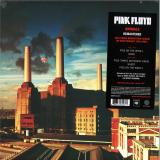
Im Januar 1977 veröffentlichten Pink Floyd ihr zehntes Studioalbum „Animals“. Das Werk eroberte Platz 1 der deutschen Charts, gilt als eines ihrer besten – und es wird nun, 45 Jahre später, als Deluxe Gatefold, CD, LP und Blu-ray wiederveröffentlicht. Zum ersten Mal überhaupt wird das Album in 5.1 Surround-Sound zu hören sein. Die einzelnen Versionen werden ab dem 16. September 2022 erhältlich sein, die Deluxe-Version folgt am 7. Oktober.
Pink Floyd – David Gilmour, Nick Mason, Roger Waters und Richard Wright – nahmen „Animals“ 1976 und Anfang 1977 in den bandeigenen Britannia Row Studios in London auf und produzierten auch selbst.
„Animals 2018 Remix“ wird als CD, LP (mit Klapphüllen-Artwork), Blu-Ray und als Deluxe-Gatefold-Format veröffentlicht. Die Deluxe-Gatefold-Version beinhaltet eine LP, CD, Audio-Blu-Ray, Audio-DVD und ein 32-seitiges Booklet. Die Audio-Blu-Ray und -DVD enthalten den Remix von 2018 in Stereo, in 5.1 Surround (beide von James Guthrie) und den ursprünglichen Stereo-Mix von 1977. Das 32-seitige Booklet gewährt mit selten gezeigten Fotos einen Blick hinter die Kulissen des Shootings für die Plattenhülle sowie Live-Bilder und Memorabilia. Das Album-Artwork wurde für diese Veröffentlichung mit einem zeitgemäßen Motiv neu interpretiert.
„Animals“ ist ein Konzeptalbum, das sich kritisch mit den sozialpolitischen Verhältnissen im Großbritannien der mittleren 1970er-Jahre auseinandersetzt und damit eine Abkehr vom Stil der früheren Arbeiten der Band markierte. Aus einer Ansammlung ursprünglich nicht miteinander zusammenhängender Songs entwickelten Pink Floyd ein Konzept, das den offenkundigen sozialen und moralischen Verfall der Gesellschaft beschreibt. Inspiriert von George Orwells „Farm der Tiere“, verbildlichen sie die menschliche Natur mit einer Analogie zum Tierreich und teilen die Menschen in drei Klassen von Tieren ein: Die Schweine stehen an der Spitze der sozialen Kette, die Schafe tun als hirnlose Herde, was man ihnen sagt, und die Hunde sind die Geschäftsbosse, die sich am Profit und ihrer Macht über andere schamlos bereichern. Seit 1977 ist viel Zeit vergangen – und dann wieder gar nicht, denn die Erzählung des Albums hat als Kommentar auf unsere gesellschaftliche und wirtschaftliche Situation nichts von ihrer Aktualität verloren.
Das berühmte Cover von „Animals“ zeigt ein aufblasbares Schwein (heute bekannt als Algie), das in luftigen Höhen zwischen zwei Schornsteinen der Battersea Power Station in London schwebt. Die Idee für das Cover kam von Roger Waters, die Umsetzung übernahm der langjährigen Kreativpartner der Band, Storm Thorgerson von Hipgnosis Studios. Für die jetzige Neuveröffentlichung wurde das Artwork von Storms Hipgnosis-Partner Aubrey „Po“ Powell für die heutige Zeit neu gestaltet. Basierend auf neuen Aufnahmen des Gebäudes während der jüngsten Umgestaltungsarbeiten (das ehemalige Kraftwerk wird für die kulturelle und gewerbliche Nutzung umgebaut, gestaltet von Frank Gehry und Norman Foster), experimentierte Po mit neuen Blickwinkeln und erschuf einige beeindruckende neue Varianten des berühmten Originals. Po dazu: „Das Original-Albumcover von 1977 ist ikonisch und steht so sehr für sich, dass ich eine Menge Respekt davor hatte, ihm ein Update zu verpassen. Doch Hipgnosis nahm die Gelegenheit zum Anlass, das Motiv neu zu fotografieren und damit eine sich verändernde Welt widerzuspiegeln. Durch den Einsatz moderner digitaler Färbetechniken konnte ich Pink Floyds düstere Botschaft des moralischen Verfalls beibehalten, und auch die Orwellsche Tier-Analogie in Form des Schweins Algie lebt in dem neuen Artwork fort.“
Pink Floyds „Animals 2018 Remix” kann ab jetzt hier vorbestellt werden.
- A1: Malavoi - Te Traigo Guajira
- A2: Los Caraibes - Donde
- A3: Tropicana - Amor En Chachacha
- A4: Ryco Jazz - Wachi Wara
- A5: Eugene Balthazar - Dap Pignan
- A6: Roger Jaffort - Oye Mi Consejo
- A7: Les Kings - Oriza
- B1: Les Supers Jaguars - Tatalibaba
- B2: Super Combo De Pointe A Pitre - Serrana
- B3: L'ensemble Abricot - Se Quedo Boogaloo
- B4: Henri Guedon - Bilonga
- B5: Les Aiglons - Pensando En Ti
- B6: Los Martiniquenos - Caterate
In Guadeloupe, many people think that jazz and ka music are like a ring and a finger. To some extent, the same could be said about so called Latin music and the music played in the French West Indies.
Both aesthetics were born in the Caribbean and bear so many connections that they can easily be considered cousins. In constant dialogue, there are lots of examples of their fruitful alliance and have been for a while. The English country dance that used to be practiced in European lounges came to be called kadrille in Martinique and contradanza in Cuba. They both featured additional percussion instruments inherited from the transatlantic deportation. Drawing from shared feelings about the same traumatized identity – later to be creolized – it would be hard not to assume that they were meant to inspire each other. The golden age of the orchestras that graced the Pigalle nights during the interwar period further proves the point. As soon as the 1930s, Havana-born Don Barreto naturally mixed danzón and biguine music in a combo based at Melody's Bar. In the following decade, Félix Valvert, a conductor who was born and raised in Basse-Terre in Guadelupe, also worked wonders in Montparnasse with La Coupole, which was an orchestra made up of eclectic musicians. Afro- Caribbean performers of various origins were often hired on rhythm and brass sections in jazz bands, which used to enliven the typical French balls of the capital. In the 1930s and onwards, Rico’s Creole Band was one of them.
Martinican violinist-clarinettist Ernest Léardée, who would become the king of biguine music as well as the main figure of French Uncle Ben's TV commercials (a dark stigma of post-colonial stereotypes), had musicians from the whole Caribbean sphere play at his Bal Blomet – and they all enchanted "ces Zazous-là" (according the words of Léardée's biguine-calypso piece). In les Antilles (French for French West Indies), music history started to speed up in the 1950s, when trade expanded and radio stations grew bigger. The Guadelupean and Martiniquais youth tuned in their old galena radio sets to South American and Caribbean music. As for the women traders, les pacotilleuses, they bought and sold goods across different islands (the "passing of items through various hands" was thought to be most pleasurable) and brought back countless sounds in their luggage. Such was the case of Madame Balthazar, who once returned from Puerto Rico with the first 45rpm and 33rpm to ever enter Martinique.
Out of this adventure was created the famous Martinican label La Maison des Merengues, a music business she opened and undertook with her husband and which proved to be a major landmark. At the end of the 1950s, in Puerto Rico, Marius Cultier competed in the Piano International Contest playing a version of Monk's Round 'Midnight. He won the first prize and this distinction foreshadowed everything that was to come. Cultier, the heretic Monk of jazz, was quickly praised for writing superb melodies, always tinged with a twist that conferred a unique sound to his music. It didn't take long for the gifted self-taught musician to get to play with Los Cubanos, making a name for himself thanks to his impressive maestria on merengues.
The rest is history. Besides, in the late 1950s, Frantz Charles-Denis, born into the upper middle class in Saint-Pierre and better known by his first name Francisco, went back home after working at La Cabane Cubaine – a club located rue Fontaine where he had caught the Latin fever. Francisco's music was therefore heavily marked by his Cuban cousins' influence, which gave the combos he led a specific style and also led to renewal. Things were swinging hard in La Savane, located in the main square in Fort-de-France. He set up the Shango club close by and tested out the biguine lélé there, a new music formula spiced up with Latin rhythms. Soon afterwards, fate had him fly to Puerto Rico and Venezuela.
As for percussionist Henri Guédon (percussions were only a part of his many talents), he was born in Fort-de-France in May 22nd 1944, the day marking the celebration of the abolition of slavery. As an old man, he could remember that in " his father's Teppaz, a lot of hectic 6/8 music was constantly playing...". In the opening lines of his Lettre à Dizzy, a small illustrated collection of writings published by Del Arco, he highlighted the huge impact that cubop had on him as a teenage boy, around 1960. He eventually turned out to be the lider maximo in La Contesta, a big band steeped in Latin jazz. He was also the one who originated the word zouk to describe music which brought the sound of the New York barrio to Paris. It was the culmination of a journey that started in Sainte-Marie: "a mythical place for bélé, the equivalent of Cuban guaguancó". In the early 1960s, the tertiary economy developed to the detriment of agriculture. Yet rural life was where roots music emerged in Martinique and in Guadeloupe.
Record companies played a major part in the process of Latin versions sweeping across the islands – before reaching everywhere else. Producer Célini, boss of the great Aux Ondes label, and Marcel Mavounzy, both the head of Émeraude records - a firm which was founded in 1953 - as well as the brother of famous saxophonist Robert Mavounzy, were big names to bear in mind. Although there were many of them - all of whom are featured on this record - Henri Debs was definitely the major figure in the recording adventure. He proved to be so influential that he even got compared to Berry Gordy. In the mid 1950s, when he acquired his first Teppaz, he worked on his first compositions: a bolero and a chachacha. Then, he became the one man who made people discover Caribbean music, from calypso to merengue. He was among the first ones to rush out to San Juan, Puerto Rico, to buy records and distribute them through a store run by one of his brothers in Fort-de-France. He had members of the Fania All Star come and perform there, which he was madly proud about. He was also the first one to pay attention to Haitian music, such as compas direct and various other rhythms which would soon flood the market. As a result, many of the combos hitting his legendary studio would end up boosted by widespread "Afro-Latin" rhythms. However, he never denied his identity: gwo ka drums were given a major role, although they were instruments which had long been banned from the "official" music spheres. The present selection bears witness to such a creative swarming. Here are fourteen tracks of untimely yet unprecedented cross-fertilization: all types of music rooted in the Creole archipelago have found their way, whatsoever, to the tracklisting. Whether originating from the city or being more rural, they all go back to what Edouard Glissant, in an interview about the place of West Indian music in the Afro-American scope, called "the trace of singing, the one which got erased by slavery." "It is so in jazz, but also in reggae, calypso, biguine, salsa... This trace also manifests through the drums, whether Guadelupean, Dominican, Jamaican or Cuban... None of them being quite the same. They all point to the idea of a trace, seeking it out and connecting to each other through it. This is the hallmark of the African diaspora: its ability to create something new, in relation to itself, out of a trace. It may be the memory of a rhythm, the crafting of a drum, a means of expression which doesn't resort to an old language but to the modalities of it." The opening track features one of the emblematic orchestras of this aesthetic identity, criscrossing many music types from the archipelago. The 1974 Ray Barretto guajira – Ray Barretto was a major New York drummer influenced by Charlie Parker and Chano Pozzo – is magnificently performed by Malavoi, a legendary Fayolais group (i.e from Fort-de-France). Additionally, the compilation ends on a piece by Los Martiniqueños de Francisco. It symbolically closes the circle as it is a genuine potomitan of Martinique culture which also functions as a tireless campaigner for Afro-Caribbean music. Practicing the danmyé rounds (a kind of capoeiria) to the rhythm of the bèlè drum, it delivers a terrific Caterete, a kind of champeta of Afro- Colombian obedience which was originally composed by Colombian Fabián Ramón Veloz Fernández for the group Wgenda Kenya. The icing on the cake is Brazilian Marku Ribas, who found refuge in Martinique in the early 1970s, bringing his singing to the last trance-inducing track. These two "versions" convey the whole tone of a selection composed of rarities and classics of the tropicalized genre, swarming with tonic accents and convoluted rhythms. It is the sort of cocktail that the West Indians never failed to spice up with their own ingredients. For instance, the Los Caraïbes cover of Dónde, a famous Cuban theme composed by producer Ernesto Duarte Brito, has a typical violin and features renowned Martinique singer Joby Valente and his piquant voice.
The track used to be – or so we think – their only existing 45rpm. The meaningful Amor en chachachá by L'Ensemble Tropicana, a band which included Haitian musicians among whom was composer and leader Michel Desgrotte, also recalls how Latin music was pervasive in the tropics in the mid-1960s. They were the ones keeping people dancing at Le Cocoteraie in Guadelupe and La Bananeraie in Martinique. Around the same time, another "foreign" band, Congolese Freddy Mars N'Kounkou's Ryco Jazz, achieved some success on both islands by covering Latin jazz classics – such as their adaptation of Wachi Wara, a "soul sauce" by Dizzy Gillespie and Chano Pozo whose interweaving of strings and percussions can have anyone hit the dancefloor. How can you resist Dap Pinian indeed, a powerful guaguancó by Eugene Balthazar, performed by the Tropicana Orchestra and published by the Martinique-founded La Maison des Merengues? It also acts as a symbol of the maelstrom at work. Going by the name Paco et L'orchestre Cachunga, Roger Jaffory used to play guaguancó too: his Fania-inspired Oye mi consejo is one example of his style. Baila!!!!! Dancing was also one of the Kings' focus points. Oriza is a Puerto Rican bomba and a "classic" originally composed by Nuevayorquino trumpeter Ernie Agosto, which reserves major space for brasses, giving it a special sheen.
Emerging from the New York barrios crucible was also La Perfecta, a Martinique group originating from Trinidad, whose name directly references the totemic Eddie Palmieri figure as well as his own band, also called La Perfecta. Here they borrow Toumbadora from Colombian producer and composer Efraín Lancheros and interpret it by emphasizing percussions, which set fire to the track even more than the wind instruments. The same goes for Martinique's Super Jaguars, who use Tatalibaba – a composition by Cuban guitarist Florencio "Picolo" Santana which was made famous by Celia Cruz & La Sonora Matencera – as a pretext for sending their cadences into a frenzy. In a more typically salsa vein, the Super Combo, a famous Guadelupean orchestra from Pointe-Noire that was formed around the Desplan family and had Roger Plonquitte and Elie Bianay on board, adapt Serana, a theme by Roberto Angleró Pepín, a Puerto Rican composer, singer and musician also known for his song Soy Boricua. Here again, their vision comes close to surpassing the original. In the 1970s, L'Ensemble Abricot provided a handful of tracks of different syles, hence reaching the pinnacle of the art of achieving variety and giving pleasure. They played boleros, biguines, compas direct, guaguancó and even a good old boogaloo - the type they wanted to keep close to their hearts for ever, "pour toujours", as they sang along together in one of their songs. Léon Bertide's Martinican ensemble excelled at the boogaloo which had been composed by Puerto Rican saxophonist Hector Santos for the legendary El Gran Combo.
Three years later, in 1972, Henri Guédon, with the help of Paul Rosine on the vibraphone, tackled the Bilongo made famous by Eddie Palmieri. Such a classic!!!!! And so were the Aiglons, the band from Guadelupe: choosing to execute Pensando en tí, a composition by Dominican Aniceto Batista, on a cooler tempo than the original, they noticeably used a wonderfully (un)tuned keyboard in place of the accordion. On the high-value collectible single – the first one released by Les Aiglons under the Duli Disc label – there is a sticker classifying the track under the generic name "Afro". Now that is what we call a symbol. Jacques Denis
LTD Clear Vinyl
Nach der limitierten EP "The Grand Designer" im Juni 2025, präsentiert Adrian Sherwood nun mit "The Collapse Of Everything" sein brandneues Werk, gleichzeitig sein erstes Soloalbum seit 13 Jahren und das vierte seiner langen Karriere. Auf diesem sorgfältig konzipierten Album lotet der Meisterproduzent und Mixologe mit seinem stets experimentierfreudigen Sound neue Grenzen aus. Obwohl die Musik auf "The Collapse Of Everything" von einem natürlichen Gespür für Dub geprägt ist, überschreitet sie fliessend Genregrenzen und vereint nahtlos verschiedenste Einflüsse, die Sherword in seinem Leben gehört und produziert hat. An den Aufnahmen beteiligt waren einige seiner langjährigen Mitstreiter wie Doug Wimbish (Living Color, The Sugar Hill Gang, Tackhead), Mark Bandola (The Lucy Show), Ivan "Celloman" Hussey, Alex White (Primal Scream, Fat White Family) und Chris Joyce (The Mothmen). Desweiteren flossen Beiträge der jüngst verstorbenen On-U-Legenden Keith LeBlanc (Sugarhill Gang, Tackhead) und Mark Stewart (Pop Group) ein.
Adrian Sherwood war in den letzten Jahren sehr beschäftigt mit Kollaborationen mit anderen Künstlern, von Remixarbeiten für Popkünstler wie Halsey, über von der Kritik gefeierten Full-Length-Dub-Rekonstruktionen für die Indierock-Titanen Spoon und Panda Bear & Sonic Boom, bis zur Produktion gefeierter Alben für die Reggae-Ikonen Lee "Scratch" Perry und Horace Andy am Ende ihrer Karriere ("Midnight Rocker" wurde vom Guardian zum weltweiten Album Nr. 1 des Jahres 2022 gekürt). Was bedeutet, dass Sherwood seit "Survival & Resistance", das fast auf den Tag genau vor 13 Jahren erschien, kein Album mehr als Solokünstler herausgebracht hat.
World Of Echo announces the reissue of two remastered albums by Japanese guitarist and songwriter Naoki Zushi, 1988’s Paradise, and 2005’s III. Two classics of Japanese psychedelia, both Paradise and III were originally released on Org Records, the imprint of Shinji Shibayama of acid-folk group Nagisa Ni Te, with whom Zushi has guested on second guitar for decades. Both intimate and expansive, rich with revelatory songwriting and blasted, sky-scouring guitar, these reissues return these albums to print for the first time since the 2000s. It’s the first time III has been officially released on vinyl, with an extra, previously unreleased track, “Under The June Moonlight.”
Recorded in Kyoto’s Townhouse Studios in mid 1987 and released in limited-to-500 vinyl pressing in 1988, Paradise emerged from a scene in Kansai, Japan that was embracing the idiosyncracies of 1970s singer-songwriters, the soaring solos of early seventies psychedelia, and the DIY impulse of 1980s post-punk. While Zushi’s musical history stretched back to the early eighties – he was a founding member of Jojo Hiroshige’s noise outfit Hijokaidan – he found his feet with groups like Hallelujahs, whose dream-pop collection Niku O Kuraite Chikai Wo Tateyo was recently reissued by Black Editions, and Idiot O’Clock.
Paradise appeared two years after that Hallelujahs album and share much the same membership – Zushi’s backing band on several of the songs includes Shibayama on drums and Ken-Ichi Takayama (aka Idiot) on electric guitar, though just as often, Zushi plays all the instruments himself. The coordinates here are wide-reaching – you can hear the volume and intensity of Neil Young & Crazy Horse (on “Hallelujah: Left Side” and “Paradise: Midday”), the slow-motion magic of Galaxie 500, the idiosyncratic spirit of The Only Ones, all mixed up with tender guitar miniatures and stumbling garage-psych-pop moves.
Seven years later, after the transitional album Phenomenal Luciferin, Zushi released III. Perhaps his masterpiece, it’s already been bootlegged on vinyl, but this reissue is the real deal. The album was recorded at Studio Nemu over seven years, and sees Zushi backed by Shibayama (bass) and Masako Takeda (drums), his erstwhile bandmates in Nagisa Ni Te. By this stage, Zushi had started to really stretch out, and many of the songs on III swoon languorously, taking their sweet time to say what they need to say. It’s rich with lovely, melancholy songs, in a similar realm to bandmates Nagisa Ni Te, of course, but you can also hear traces of everything from Syd Barrett’s The Madcap Laughs, through seventies private press loner folk, to the slow-burn meanderings of the likes of early Low or Damon & Naomi.
When interviewed by Shibayama in the mid-nineties, Zushi said of Paradise, “it was a sort of collection of songs that had meant something to me up to that point… it was my paradise. I wanted to create paradise.” That’s something Zushi achieves on both of these albums – visionary Japanese psychedelia, en route to paradise. - Jon Dale
g Under The June Moonlight vinyl only bonus track
Nach der limitierten EP "The Grand Designer" im Juni 2025, präsentiert Adrian Sherwood nun mit "The Collapse Of Everything" sein brandneues Werk, gleichzeitig sein erstes Soloalbum seit 13 Jahren und das vierte seiner langen Karriere. Auf diesem sorgfältig konzipierten Album lotet der Meisterproduzent und Mixologe mit seinem stets experimentierfreudigen Sound neue Grenzen aus. Obwohl die Musik auf "The Collapse Of Everything" von einem natürlichen Gespür für Dub geprägt ist, überschreitet sie fliessend Genregrenzen und vereint nahtlos verschiedenste Einflüsse, die Sherword in seinem Leben gehört und produziert hat. An den Aufnahmen beteiligt waren einige seiner langjährigen Mitstreiter wie Doug Wimbish (Living Color, The Sugar Hill Gang, Tackhead), Mark Bandola (The Lucy Show), Ivan "Celloman" Hussey, Alex White (Primal Scream, Fat White Family) und Chris Joyce (The Mothmen). Desweiteren flossen Beiträge der jüngst verstorbenen On-U-Legenden Keith LeBlanc (Sugarhill Gang, Tackhead) und Mark Stewart (Pop Group) ein.
Adrian Sherwood war in den letzten Jahren sehr beschäftigt mit Kollaborationen mit anderen Künstlern, von Remixarbeiten für Popkünstler wie Halsey, über von der Kritik gefeierten Full-Length-Dub-Rekonstruktionen für die Indierock-Titanen Spoon und Panda Bear & Sonic Boom, bis zur Produktion gefeierter Alben für die Reggae-Ikonen Lee "Scratch" Perry und Horace Andy am Ende ihrer Karriere ("Midnight Rocker" wurde vom Guardian zum weltweiten Album Nr. 1 des Jahres 2022 gekürt). Was bedeutet, dass Sherwood seit "Survival & Resistance", das fast auf den Tag genau vor 13 Jahren erschien, kein Album mehr als Solokünstler herausgebracht hat.
- A1: Paedo
- A2: Skins In The Pit
- A3: We're Only In It For The Money
- A4: Fuck You And Yer Politics
- A5: Cross And Flag
- A6: Hammer And Wrench
- A7: Watching A Friend Die Side 2
- B1: Don't Read The Papers
- B2: Soho Boho
- B3: Boomers And Groomers
- B4: Gun For Hire
- B5: Your Boys
- B6: Roots 'N' Boots
Du kannst sie nicht ab? Auch gut. Die SKINFLICKS machen ihr Ding so oder so.
Die Leute zerreißen sich gern das Maul, wollen andere lieber schnell abstempeln statt genauer hinzuschauen. Wie man sich auch anstellt, man wird verurteilt. Drum bleiben die SKINFLICKS sich treu, lassen sich von ihrem Pfad nicht abbringen und pfeifen auf das Geschwätz des Gesocks.
Nun sind „Luxemburgs meist Gehasste“ zurück mit ihrem fünften Album, „Condemnation, Inevitably“, auf dem sie wirklich ordentlich Gas geben! 13 Streetpunk-Granaten Marke Eigenbau, mit dem unverwechselbaren, hauseignen Sound, der euch die Ohren zum Schlackern bringen wird!
Wer Pogo mag kommt hier mit Krachern wie „Paedo“, „Skins in the Pit“, „Soho Boho“ und „Cross and Flag“ vollends auf seine Kosten. Gleichzeitig zeigen die Jungs ihre Vorliebe für eingängige Melodien, sodass selbst Hartgesottene nicht umhinkommen, bei „Hammer and Wrench“, „Your Boys“ und „Roots ’n' Boots“ inbrünstig mitzugröhlen.
Die SKINFLICKS sind natürlich auch bekannt für ihre äußerst provokanten und sarkastischen Texte. Dank der grosszügigen Prise Zynismus, die Songs wie „We're Only in it for the Money“, „F*** You and Yer Politics” sowie „Boomers and Groomers“ innewohnt, sind die Kritiker erst einmal wieder ausreichend versorgt.
Black 12" Vinyl, klassisch schwarz, 180 Gramm; extra audiophiler Tonträger von hoher Qualität - deutsche Pressung!; Stabile Kastentasche; Cover im Inside-Out Druckverfahren bedruckt, mehrfarbig bedruckte Innenhülle mit allen Songtexten, Innenhülle aus speziellem, rauem Papier; mehrfarbig bedruckte Vinyletiketten; CD mit allen Tracks des Albums; Handnummerierte Autogrammkarte von der gesamten Band signiert; limitiert auf 1.000 Exemplare.
The Bar-Kays were originally formed in Memphis, Tennessee, 1966, as a sextet backing group for Stax Records. They had a promising career in front of them as a session band & recording outfit before the backbone of the group was killed, along with Otis Redding who had hired them as his backing band for a tour, in a plane crash. Only Ben Cauley survived the crash and went on to form what could be dubbed Bar-Kays Mark II. James Alexander (Bass) was also one of the original members but was not aboard the plane because of limited seats on Redding's plane. For Alexander and Cauley and new members Michael Toles, Willie Hall, Ronnie Gordon and Harvey Henderson, the track 'Sang & Dance' was one of the first tracks from the new group, cut in late 1969. They recorded steadily for Mercury records in the 70s & 80s, the two tracks on this 7” among their best loved and sought after. “Open Your Heart” only previously a 7” B-side in Spain
Still Forms in Air is the debut album by Italian composer Francesca Marongiu under her own name. It draws inspiration from mid-1980s Japanese ambient music — Hiroshi Yoshimura, Satoshi Ashikawa, Takashi Kokubo — and, more subtly, from Italian experimental echoes rooted in both personal and cultural memory.
The album unfolds like suspended time, like architecture that quietly bears witness to the shifts that have shaped our cities and the ways we live in them. These tracks reflect an emotional and urban landscape, shaped by a gaze cast upon the mid-1980s and early ’90s — a time of subtle yet lasting changes in the form and meaning of shared space. That period marked a delicate turning point, later described as les années d’hiver: the slow onset of fragmentation beneath a surface of creative openness.
Still Forms in Air doesn’t dwell in nostalgia (though it draws from it), but reimagines that duality through a contemporary lens. Its sound blends memory and presence, layering ambient textures with a refined spatial sensitivity. It is a dialogue across decades — clear-eyed, affectionate, and quietly luminous.
Written, arranged and recorded by Francesca Marongiu in Rome and Pistoia between May 2024 and March 2025.
Francesca Marongiu: electronics, synthesizers, vocals, sound objects.
Antonio Gallucci: wind arrangements on track 1 and 4, bass and sound objects on track 3, drums on track 3 and 4.
Mixed by Francesca Marongiu and Antonio Gallucci. Mastered by Antonio Gallucci at Mercurial Mastering in Pistoia. Artist photo by Elisabetta Scarpini. Artwork by Daniel Castrejón.
- A1: The Fabelmans
- A2: Mitzi’s Dance
- A3: Friedrich Kuhlau: Sonatina In A Minor, Op. 88 No. 3: Iii. Allegro Burlesco
- A4: Midnight Call
- A5: Reverie
- A6: Mother And Son
- A7: Muzio Clementi: Sonatina In C Major, Op. 36 No. 3: I. Spiritoso
- B1: Reflections
- B2: Johann Sebastian Bach: Concerto In D Minor, Bwv 974: Ii. Adagio
- B3: New House
- B4: The Letter
- B5: The Journey Begins
Deluxe heavyweight sleeve with leather laminate finish Includes insert with liner notes by Steven Spielberg Movie directed by Steven Spielberg, loosely based on Spielberg’s adolescence and first years as a filmmaker Film stars an ensemble cast including Michelle Williams, Paul Dano, Seth Rogen, Gabriel LaBelle and Judd Hirsch Golden Globe nominated score composed by John Williams Film won the People’s Choice Award and nominated for five Golden Globe Awards Exclusive limited edition of 333 numbered copies on turquoise coloured vinyl This is a new colour variant – sales notes and tracks are as the previous version, note new cat number and barcode
While most Japanese bands in the early ’70s were chasing British rock trends, Hiroshi Segawa took a bold, singular path—crafting country rock and Southern rock, sung entirely in Japanese. His masterpiece Pierrot stands as a rare and beautiful outlier, brought to life by a dream team of legendary musicians from Japan’s New Rock scene: Hideki Ishima and Jun Kozuki (Flower Travellin’ Band), Tetsu Yamauchi (Samurai), Yuushin Harada, and Katsuo Ohno (PYG).
Now lovingly reissued with a fresh remaster by Makoto Kubota, this edition also includes the haunting single “Kimi ga Ita Shiroi Heya”, originally released the year after Pierrot. A must-have for fans of Japanese rock history, obscure country rock gems, and boundary-breaking musical vision.
- A1: Captain Haddock
- A2: Lumberjack
- A3: Transfusion
- A4: Silver Drape
- A5: Lipstick No.242
- B1: An Ecstasy
- B2: In Her Early Days
- B3: The Missing Person
- B4: Workout
- B5: My Goddess
This work was released in 1988 by guitarist Yuji Toriyama, who continues to work as an arranger, producer, and studio musician.
This is his fifth album overall. This work is a culmination of his specialty, the programmed sounds, and it explodes with solid digital sounds.
Participating musicians: Hiroshi Sato (key), Hideo Yamamoto (drums), Kenji Takamizu (bass), and others.
- Radium Girls
- Evelyn
- Tracy
- Marie
- Helena
- Anna
- Manhattan Project
- Little Boy And Fat Man
- Katherine
- Argonne National Laboratory
- Ebr-1
- Radium226
Im Schatten der nuklearen Katastrophe von Fukushima im Jahr 2011 fanden sich die japanische Musikerin Phew, die Künstlerin Erika Kobayashi und der deutsche Elektronik-Pionier Dieter Moebius (Cluster, Harmonia) zu einem außergewöhnlichen Projekt zusammen. Gemeinsam entwickelten sie das Konzeptalbum "Radium Girls 2011", das sie 2012 unter dem Projektnamen Project UNDARK veröffentlichten - 114 Jahre nach der Entdeckung des Radiums durch Marie und Pierre Curie. Das Album ist den sogenannten Radium Girls gewidmet, Fabrikarbeiterinnen in den USA der 1920er Jahre, die Ziffernblätter mit radioaktiver Leuchtfarbe bemalten und schwere gesundheitliche Schäden durch Radiumvergiftungen erlitten. Anlässlich des 80. Jahrestags der Atombombenabwürfe auf Hiroshima und Nagasaki macht das Label Bureau B "Radium Girls" wieder zugänglich - erstmals auch auf Vinyl.
- 1: Nina’s Dream
- 2: Mother Me
- 3: The New Season
- 4: A Room Of Her Own
- 5: A New Swan Queen
- 6: Lose Yourself
- 7: Cruel Mistress
- 8: Power, Seduction, Cries
- 9: The Double
- 10: Opposites Attract
- 1: Night Of Terror
- 2: Stumbled Beginnings…
- 3: It’s My Time
- 4: A Swan Is Born
- 5: Perfection
- 6: A Swan Song (For Nina)
Black Swan is a 2010 American psychological thriller film directed by Darren Aronofsky and starring Natalie Portman, Vincent Cassel, Mila Kunis and Winona Ryder. The plot revolves around a production of Tchaikovsky’s Swan Lake ballet
by a prestigious New York City company. Usually described as a psychological thriller, Black Swan can also be interpreted as a metaphor
for achieving artistic perfection, with all the psychological and physical challenges one might encounter.
The original score for the film was composed by Clint Mansell, an English musician, composer, and former lead singer of the band Pop Will Eat
Itself. Mansell was introduced to film scoring when director Darren Aronofsky hired him to score his debut film, Pi. Ever since Mansell wrote the score for many of Aronofsky’s films. Notable additional film scores include The Fountain, Moon, Smokin’ Aces, Requiem for a Dream, The Wrestler, Doom, and High-Rise.
- 1: Bellicose Rhetoric
- 2: Damyata
- 3: Screw The Naysayers
- 4: Sunblood
- 5: For All The Wrong Reasons
- 6: Tranquility Base
- 7: The Last Tree
- 8: The Hidden Hand (Theme)
- 9: Divine Propaganda
- 10: Prayer For The Night
Clear[25,17 €]
Things just get heavier and heavier in Scott ‘Wino’ Weinrich’s career and his short-lived classic band The Hidden Hand is no exception. Formed in 2002 and already disbanded in 2007 the trio featured Wino, Bruce Falkinburg on bass/songwriting/vocals and drummer Dave Hennessy.
If The Obsessed, St. Vitus, Shrinebuilder, Probot and Spirit Caravan aren’t enough to bring Wino's CV to legendary status, stop reading now.
LINER NOTES from WINO:
"When I returned from California after The Obsessed Columbia record deal fell apart, I didn't have any gear at all and after we put together (SHINE) which became Spirit Caravan, I was hustling to put a guitar rig together. I discovered ATOMIC MUSIC a super cool store in MARYLAND that encouraged trades, and had a lot of cool shit there,we had met another cat Sonny, who being the gregarious friendly cat he was befriended us (the band) and introduced me to his friend who's recording studio shared space with Atomic Music, Bruce Falkinburg and Phase recording studio. Bruce was a very interesting and hyper intelligent guy, bassist, knowledgeable in all things but specializing in recording rock music. We had decided to diversify our recording process and parted ways with one of my old friends Chris Kozlowski and PolarBearLair studios who had recorded everything Spirit Caravan had done so far.
I hired Bruce to record the version of Darkness and Longing that was our song on the Sixty Watt Shaman -Spirit Caravan split single. We liked what he did on that recording and decided to record more with Bruce at Phase and so we did ;the last SC single -" So Mortal Be/ Undone Mind" and recorded three tracks that were eventually released on "The Last Embrace." Bruce and I had firmly cemented our friendship and when shit fell apart with Spirit Caravan , we decided to form a band. Out of a very interesting list of possible band names Bruce's idea" The Hidden Hand " seemed to resonate the most and once Bruce had recruited Dave Hennessy (guitarist for OSTINATO) to play drums it was ON. Over the next couple years and a couple different drummers, The Hidden Hand would record one single, one split ep ,one compilation song and Three full length albums. Knowing Bruce, and working with everyone in The Hidden Hand realm enriched my life greatly . Bruces enthusiasm, knowledge, creativity, intellect and musical abilities remains an inspiration. Thanks Bruce, Sonny, Louis and Eric and all at ATOMIC MUSIC, Dave Hennessy,Matt and Jeremy Osinato ,Evan Tanner, J Robbins, Mcarthyism records, Andreas at Exile from Mainstream records, Greg Tubevision, 930 club ,Black Cat, Gussound, Diana W, Woody, Stinking Lizaveta, Jadd Schickler and Meteor City, Southern Lord records and extra special thanks to Gianluca and Improved Sequence for keeping this music alive!"
Wino - summer 2024
Things just get heavier and heavier in Scott ‘Wino’ Weinrich’s career and his short-lived classic band The Hidden Hand is no exception. Formed in 2002 and already disbanded in 2007 the trio featured Wino, Bruce Falkinburg on bass/songwriting/vocals and drummer Dave Hennessy.
If The Obsessed, St. Vitus, Shrinebuilder, Probot and Spirit Caravan aren’t enough to bring Wino's CV to legendary status, stop reading now.
LINER NOTES from WINO:
"When I returned from California after The Obsessed Columbia record deal fell apart, I didn't have any gear at all and after we put together (SHINE) which became Spirit Caravan, I was hustling to put a guitar rig together. I discovered ATOMIC MUSIC a super cool store in MARYLAND that encouraged trades, and had a lot of cool shit there,we had met another cat Sonny, who being the gregarious friendly cat he was befriended us (the band) and introduced me to his friend who's recording studio shared space with Atomic Music, Bruce Falkinburg and Phase recording studio. Bruce was a very interesting and hyper intelligent guy, bassist, knowledgeable in all things but specializing in recording rock music. We had decided to diversify our recording process and parted ways with one of my old friends Chris Kozlowski and PolarBearLair studios who had recorded everything Spirit Caravan had done so far.
I hired Bruce to record the version of Darkness and Longing that was our song on the Sixty Watt Shaman -Spirit Caravan split single. We liked what he did on that recording and decided to record more with Bruce at Phase and so we did ;the last SC single -" So Mortal Be/ Undone Mind" and recorded three tracks that were eventually released on "The Last Embrace." Bruce and I had firmly cemented our friendship and when shit fell apart with Spirit Caravan , we decided to form a band. Out of a very interesting list of possible band names Bruce's idea" The Hidden Hand " seemed to resonate the most and once Bruce had recruited Dave Hennessy (guitarist for OSTINATO) to play drums it was ON. Over the next couple years and a couple different drummers, The Hidden Hand would record one single, one split ep ,one compilation song and Three full length albums. Knowing Bruce, and working with everyone in The Hidden Hand realm enriched my life greatly . Bruces enthusiasm, knowledge, creativity, intellect and musical abilities remains an inspiration. Thanks Bruce, Sonny, Louis and Eric and all at ATOMIC MUSIC, Dave Hennessy,Matt and Jeremy Osinato ,Evan Tanner, J Robbins, Mcarthyism records, Andreas at Exile from Mainstream records, Greg Tubevision, 930 club ,Black Cat, Gussound, Diana W, Woody, Stinking Lizaveta, Jadd Schickler and Meteor City, Southern Lord records and extra special thanks to Gianluca and Improved Sequence for keeping this music alive!"
Wino - summer 2024
- A1: Just For You
- A2: Lightning At Sea
- A3: The Forgiving Kind
- A4: Sea Breeze
- A5: Moonlight Dream
- B1: My Sarah
- B2: Forward
- B3: Gift Of Music
- B4: Talk To Me
- B5: Listen To The River
A city pop solo album released exclusively in Australia under the name "Hiroshi" by the renowned guitarist "Hiroshi Yasukawa (ex-DEW)" who has participated in works such as Jiro Inagaki and Soul Media's "Funky Stuff", Kingo Hamada's "Midnight Cruisin'" and Hatsumi Shibata's "Live/Entertainment Special". After about 41 years, this is the first reissue with obi and made in Japan!
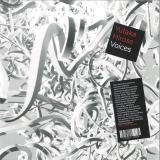
WRWTFWW Records is very excited to announce its third release from visionary Japanese ambient/experimental/environmental composer/producer Yutaka Hirose, this time with brand new album Voices, available on limited edition heavyweight-sleeved double LP as well as double CD, both with liner notes from the artist.
Voices finds Yutaka Hirose expanding his signature spatial layering into a three-dimensional videography of sound, blending field recordings, electronic manipulations, and abstract narratives. The 12-track album is a journey through a crumbling library where books whisper, history collides, and sonic textures weave new realities. Chaos, memory, and transformation – Hirose’s voices echo throughout the space, creating a fully immersive sonic experience.
The pioneering experimental and abstract electronic piece with deep hints of ambient and IDM is beautifully represented by the original artwork by Koji Shiroshita and Mifuku gracing the double LP and double digipack CD sleeves.
Voices marks Yutaka Hirose’s third full-length release on WRWTFWW Records, following his kankyõ ongaku classics Nova + 4 (an expanded version of his genre defining Soundscape 2: Nova album) and archival compilation TRACE: Sound Design Works 1986-1989, both available in vinyl, CD, and digital formats.
- A1: Itsumosobani (Midicronica×Hiro-A-Key×Shin-Ski)
- B1: Itsumo Soba Ni (Midicronica×Hiro-A-Key×Ko-Ney)
MIDICRONICA, known as the final legacy of Nujabes and the ending theme of the globally acclaimed anime "Samurai Champloo" and singer Hiro-a-key
(origami PRODUCTIONS), who is also active globally under the name Nenashi, have teamed up to release "Itsumosobani" on 7-inch vinyl.
This work is a split album of songs by Shin-Ski, the poster child of Lo-Fi Hip-Hop, and KO-ney, an official AKAI Professional player and one of Japan's leading finger
drummers, and includes two songs, the mellow and nostalgic "Itsumosobani" based on jazz, and the emotional and laid-back Itsumo Soba n".
Hiro-a-key's pale and fleeting singing voice and MIDICRONICA's unadorned words will touch your heart when you think of someone important.
SIDE B returns with the second installment of its newly established label, this time with Rill at the helm. Staying true to effect, the young German producer has honed his percussively forward style with a string of steady releases and performances over the past three years. In his EP 'Friss', Rill delivers three highly concentrated club tracks with a Beste Hira remix closing out the project, assembling a record destined for unforgiving sound systems and frenzied dance floors.
Driving and mental, Rill brews up a viscous first track 'Silky Stones' to make his intentions clear. Shooting through a bubbling lead with percussive stabs wide in the stereo field, the producer uses the element of surprise by sharpening the edge with a sharp key sequence, doubling down on tension to an already hypnotic cut. With no time to waste, the needle slides to 'Rakija', with an imposing groove and quick, dry hats. Characteristically, a dystopian melody warbles over a robust rhythm to ensure maximum movement. Two tracks in and Rill already proves to balance his tools with attitude. Taking a turn on the record flip, the B1 ups the audacity with the title track 'Friss'. Techno usually prioritising kicks is a rule that Rill sweeps aside in exchange for an intimidating bassline with an ecosystem of high frequency ambiance. A testament to balance and spatial definition, the German adopts in fitting chord stabs in the second half to up the ante in a contained manner. To conclude, celebrated Beste Hira puts her spin on the latter for a drum forward eye roller, versatile for almost any dancefloor. Reconceptualizing the rhythmic identity of 'Friss', Beste Hira is able to weather the far off atmospheres while maintaining an emphasized festivity. Combining the best of groove-focused club music with a touch of niche psychedelia, Rill and SIDE B prove that techno is very much alive no matter what side of Europe you search for it.
Words by Noah Hocker
- Rivals ’Til The End (Main Theme) Performed By Adriana Figueroa
- Path To Rivals (Login Theme) Performed By Synchron Stage Orchestra And Masahiro Aoki
- The Golden Realm Performed By Synchron Stage Orchestra And Masahiro Aoki
- Glorious Yggdrasill Performed By Synchron Stage Orchestra And Masahiro Aoki
- No One Rivals Doom Performed By Synchron Stage Orchestra And Masahiro Aoki
- Impending Dooms Performed By Synchron Stage Orchestra And Masahiro Aoki
- The Dark Gate Beckons Performed By Synchron Stage Orchestra And Masahiro Aoki
- Many Heads Of Hydra Performed By Synchron Stage Orchestra And Masahiro Aoki
- Fate Of Both Worlds Performed By Le’mon
- Shin-Shibuya Neon Performed By Synchron Stage Orchestra, Masahiro Aoki, Hiromu Motonaga, Shin Ichikawa And Kiji
- Web Of Spider-Islands Performed By Synchron Stage Orchestra, Masahiro Aoki, Hiromu Motonaga, Shin Ichikawa And Kiji
- Tokyo 2099 Showdown Performed By Synchron Stage Orchestra, Masahiro Aoki, Hiromu Motonaga, Shin Ichikawa And Kiji
- Birnin T’challa Performed By Budapest Symphony Orchestra, Masahiro Aoki, Mohau Moahloli, Fancy Galada, Monceba Gongxeka And Sky Dladla
- Pilgrimage To Djalia Performed By Budapest Symphony Orchestra, Masahiro Aoki, Mohau Moahloli, Fancy Galada, Monceba Gongxeka And Sky Dladla
- Warriors Of Wakanda Performed By Budapest Symphony Orchestra, Masahiro Aoki, Mohau Moahloli, Fancy Galada, Monceba Gongxeka And Sky Dladla
Mutant, in partnership with Hollywood Records and Marvel, is proud to present MARVEL RIVALS: GALACTIC TUNES, the soundtrack to the highly anticipated MARVEL RIVALS video game.
The soundtrack to Marvel's first Team-Based Superhero Shooter is appropriately epic in every way. It’s heavy on guitar solos, symphonic strings, choirs, and powerful percussion, with infectious melodies that make for an endlessly listenable experience, even outside of the game itself.
The album starts with Adriana Figueroa's "Rivals 'Til the End (Main Theme),” which instantly becomes one of the best anime opening themes you’ve never heard of until today. It’s an immediate earworm that leads off a compilation of fifteen incredibly kinetic tracks, including South Korean singer Le'mon's "Fate of Both Worlds," a mid-album pop funk classic in the making.
- A1: Makafushigi Adventure! / Hiroki Takahashi (Lyrics: Yuriko Mori, Music: Takeshi Ike, Arrangement: Kohei Tanaka)
- A2: Tabidachi
- A3: Makafushigi Adventure!
- A4: Sexy Gal Bulma
- A5: Dragon Ball No Nazo
- A6: Funky Kamesennin
- A7: Daikouya
- B1: Youkai Shutsugen
- B2: Yashin
- B3: Kiken Ga Ippai
- B4: Shenron Shutsugen
- B5: Pilaf To Sono Buka
- B6: Yasei No Shounen
- B7: Romantic Ageru Yo / Ushio Hashimoto (Lyrics: Tatemi Yoshida, Music: Takeshi Ike, Arrangement: Kohei Tanaka)
Pressed and printed in Japan
Japanese OBI and original booklet reproduction
Original released 1986
For Dragon Ball fans and vinyl collector’s alike
The opening theme "Makafushigi Adventure!" (sung by Hiroki Takahashi) and the ending theme "Romantic Ageru yo" (sung by Ushio Hashimoto) from the TV anime "Dragon Ball" that began airing in 1986, as well as the soundtrack by Shunsuke Kikuchi, have been reissued on LP!
Balmat 17 marks both a return and a new frontier. It is the second album on the label from Patricia Wolf, whose 2022 album See-Through is one of the most beloved in Balmat’s catalog; it also marks the first time that Wolf has turned her hand to a film soundtrack. The results are every bit as magical as fans of the Portland, Oregon, composer’s music might expect.
Hrafnamynd—Icelandic for “raven film”—is a new feature-length documentary by experimental filmmaker Edward Pack Davee. Shot on a mix of film and digital formats, and incorporating his father’s Ektachrome slides from the 1970s, the autobiographical film works on multiple levels at once: a reminiscence of his childhood in Iceland, an exploration of landscape and folklore, and a documentary study of the island nation’s ravens—including a talking raven named Krummi.
Wolf is the perfect artist to score such an unusual film. Mixing ambient music and field recording—including extensive experience documenting bird song—Wolf brings an unusually empathic perspective to her music. In the context of Hrafnamynd, her airy melodies, pensive atmospheres, and vivid textures intuitively complement the film’s grainy film stock and blown-out colors. Friends for years, the two artists further bonded when Wolf asked Pack to film music videos for her songs “Woodland Encounter” (from See-Through) and “The Culmination Of” (from I'll Look For You In Others). Pack used Wolf’s previously recorded music as placeholders as he began assembling a rough cut of the film, which made her a natural choice to help him complete his idiosyncratic vision with an all-new, bespoke score.
But Wolf’s soundtrack also indisputably stands alone as a full-length album. Largely created using the UDO Super 6 synthesizer, it features a carefully distilled palette of warm, string-like pads and darkly glistening mallets, rounded out with the very occasional introduction of nylon string guitar. Musically and stylistically, the album’s 11 tracks represent both a continuation of the ruminative sound of See-Through and also an extension into new expressive modes. Few musicians, ambient or otherwise, are as skilled at balancing melody with atmosphere, or at finding ways to eke fresh at finding ways to eke fresh, surprising sounds out of an intentionally reduced toolkit. Meditative, immersive, and emotionally generous Wolf’s Hrafnamynd soundtrack evokes a range of ambient classics from decades past while confidently marking out its own verdant patch of ground.
Artist’s Statement:
Edward and I have been friends for years, but we really started to get to know one another better after I hired him to make music videos for my songs “Woodland Encounter” and “The Culmination Of.” For those projects we got to spend a lot of time hiking in various locations around the Pacific Northwest with his camera, very nice lenses, and tripod. Keeping quiet, hidden, and vigilant we searched for wildlife, good light on the trees, meadows, lakes, rivers, and skies. Edward was already an appreciator of my music and I was already in awe of his filmmaking talents so it felt like a great fit. Although we work in different areas of art our styles compliment one another. We both tend toward slow and careful pacing, with a focus on emotion and introspective reflections on life and the landscapes around us. For this reason, Iknew that I could trust Edward to create videos for my music. We saw so many beautiful and unexpected things on our filming days, but I was moved to tears once I saw how magnificent and poetic it all was. His video work from the cinematography, to the editing, and color correction helped bring my inner vision to life.
A few months after that, Edward surprised me with an invitation to work on the soundtrack for his new film, Hrafnamynd. I enthusiastically said yes. I had always wanted to work on a film, and I knew that his filmmaking style would be inspiring to write music for. I had recently acquired an UDO Super 6 synthesizer but hadn't used it much. I decided that this would be the synth that I'd use for the film. It has the ability to sound very modern, but can also sound so warm and fuzzy, like a synth from the 1970s. It turned out to be the perfect instrument for this project as the film itself straddles time from the ’70s to today.
When Edward sent me the rough cut of the film, he used placeholder music to help give me an idea of the emotion and energy that he was hoping to achieve for each scene. For many of the scenes, Edward used music from my albums as temporary tracks. This told me that he trusted my work and style and therefore I should just trust my intuition with how to proceed. I wanted to make sure that everything that I made was a direct reflection of what was happening on screen, a mirror of its emotion and energy so people could really lock into the film psychologically. This process took my composing to unexpected places—like being led by a strange cat or a raven that seemed to have something to show me. I found that the approach made the music so much more dynamic than my usual style. I really enjoyed being influenced by the action and dialog on the screen. Thankfully, Edward was very happy with the work. I made sure to handle this project with the utmost care because this is about his life and his family, and an exploration of the experiences that made him an artist and filmmaker. While watching the film many times over, I found myself thinking about my own family and my early memories with them and how the place where I grew up has influenced who I have become. I found that his film invites the viewer to reflect on their own lives in a similar way. I hope that this music and film can guide others to contemplate on the history of their beingness and the people and places that shaped them.
Another aspect to this project is the splendor and wonder of Iceland itself. I had the opportunity to visit Iceland for the first time in 2023. I got to play a show there for the Extreme Chill Festival and met many friendly and brilliant Icelanders. I also got to collect field recordings that I used in the film. It's a fascinating place and culture that easily captures the hearts and imaginations of anyone who visits. Whether you spend your time in the city immersed in its impressive arts scene, or venture out into the wilderness to behold its wondrous landscape, it will leave a lasting impression. The soundtrack is also a love letter to Iceland itself.
- A1: Eyes Of The World
- A2: All Night Long
- A3: Love's No Friend
- A4: Danger Zone
- A5: Makin' Love
- A6: Since You Been Gone
- A7: No Time To Lose
- A8: Lost In Hollywood
- B1: Too Young To Die, Too Drunk To Live
- B2: Hiroshima Mon Amour
- B3: Jet To Jet
- B4: General Hospital
- B5: Starcarr Lane
- B6: Island In The Sun
- B7: Kree Nakoorie
- B8: Big Foot
- B9: Suffer Me
- A1: Feather Feat Cise Starr & Akin From Cyne
- A2: Ordinary Joe Feat Terry Callier
- A3: Reflection Eternal
- A4: Luv (Sic) Feat Shing 02 (Part 3)
- B1: Music Is Mine
- B2: Eclipse Feat Substantial
- B3: The Sign Feat Pase Rock
- B4: Thank You Feat Apani B
- C1: World's End Rapsody
- C2: Modal Soul Feat Uyama Hiroto
- C3: Flowers
- D1: Sea Of Cloud
- D2: Light On The Land
- D3: Horizon
- A1: Innerinnerlife - 301020
- A2: Nogfgoodnight - (Shigatsu)
- A3: Uncle Gnarly - Dreaming Of You
- A4: W Baer - We'll See
- A5: Eulalie - Empyreal
- A6: Rosary - Reconnect
- A7: Plains Apparition - Descending Pool
- B1: Hiraeth - A Voice Inside Of Me
- B2: Room208 - All The Things You Said To Me (Feat Traipse)
- B3: Blackbird - Ritual
- B4: Silbad & Satori - Veter
- B5: Lochhaven - Lifeless
- B6: Secretflowers - Drowned
- B7: Dreams47 - I Died
"to breathe again..." is the new compilation from Special Species Records, featuring a global collection of artists showcasing Ambient, House, Wave, UK Garage, and Lo-Fi. The release features artwork by Lela Amparo. All profits from this release will go to the Rainforest Foundation US.
Having crested the west coast modular-ambient wave in just a few releases - including 2018's Sharing Waves on the influential LA experimental imprint Leaving Records - Sean Hellfritsch has swapped the mossy analog synth improvisations of his prior output for refined melodic arrangements dressed in sprightly dawn-of-digital textures. Big Earth Energy plumbs the depths of Hellfritsch's multimedia mind and naturalist heart, spinning an impressionistic narrative world off of cultural touchstones like the PC game MYST, and the work of Studio Ghibli composer Joe Hisaishi. Inspired by the aforementioned, and guided by Hellfritsch's experience as an animator and filmmaker, Big Earth Energy is the soundtrack to a hypothetical video game with a pointedly ecological premise, and a twist of psychedelic charm. In Hellfritsch's imagined virtual journey, the player assumes the perspective of a treefrog sixty-five-million years ago, hopping epochs with each new level, forming a comprehensive picture of the massive changes the planet has gone through over the eons. The ultimate goal of the game is not to amass resources, defeat enemies, or gain power, but to fully witness the unfolding of one of the biggest systems of energy imaginable - or as the album's creator puts it - "to explore the incomprehensibly vast energetic expression and mystery that is Earth." Big Earth Energy is steeped in exploratory RPG intrigue, possibility, and contemplation, lovingly overlaid with Miyazaki-an sentiments and aesthetics. The through-composed, organic, meandering synthesis heard on previous Cool Maritime albums has been fully replaced by meticulous polygonal arrangements that recall the computerized sheen of late 80s work by composers like Hiroshi Yoshimura, and Yoichiro Yoshikawa - using true-to-period gear no less. Even given its referentiality, Big Earth Energy comes off as forward-facing where so much reminiscent music remains fixed to a bygone moment in pop culture. Hellfritsch has created a musical world where the endless verdancy of the biosphere finds its parallel in the golden age of early 1990s video games, and late 80s Japanese environmental music, all while pointing to a hopeful planetary and artistic future that vindicates the motives of all of these muses.
REPRESS
New Delhi-based Peter Cat Recording Co. will release their debut album, ‘Bismillah’ on June 14, 2019 via French independent label Panache Records. Debut UK live shows are soon also to be announced by the band.
Peter Cat Recording Co. could almost have a question mark on the end of its name. Not least as founder & frontman Suryakant Sawhney refuses to explain where that name really comes from or what it means (perhaps a reference to the Tokyo jazz club owned by Haruki Murakami), but also since the very existence of the band itself raises a raft of questions. When was the last time we fell for an indie rock band for the right reasons? Not because the band in question nostalgically imitate a perceived ‘golden age’ but because they innately embody the fundamentals of such music: fantasy, sincerity and the freedom to make music without rules or career aspi- rations. And when was the last time this kind of band sounded like Sinatra, Barry White, the sweetest doo-wop, humid fanfares and a psychedelic wedding band, all at once? And all of this coming from India?
In truth, the story of Peter Cat Recording Co. was written within the triangle of San Francisco, Delhi and Paris.
In the first of these cities, Sawhney (a native of Delhi) pitched up to study film-making. More distracted by the city’s peaking live scene of the early noughties, this is where he started to make music and to sketch out an idea for the band.“
The people I lived with supported my idea of writing music, they introduced me to great mu-
sic. There used to be a great garage scene in San Francisco, like The Oh Sees also Ty Seagall, Mikal Conin, all those bands. This is a world I had never seen in my entire life. A big inspiration from San Francisco was that you could record yourself. You don’t need to be in a studio and spend a lot of money to make an album. You can do it”.
At the end of the 2000s, Suryakant returned home to New Delhi, and started his band for real, more or less the same band that plays today. “I wasn’t so concerned about will we be performing, will we be the greatest band, will we be trendy. I just wanted to make something that was consequential and important for us, I think. Something which would last, something people could listen to and be like « this is life changing ». It was for the sake of beauty”.
For the first few years and in India alone, this is exactly what Peter Cat Recording Co. did, in total indifference to the rest of the world. This was until young Parisian label Panache stumbled across the band online via Vice’s THUMP subsidiary, stupefied by the band’s cosmic video for seven-minutes-and-counting track, ‘Love De- mons’. And so in spring of 2018, ‘Portrait Of A Time: 2010-2016’ was released on Panache - making the first international release from Peter Cat Recording Co., bizarrely enough, an anthology of re-mastered, hidden gems from the band’s ramshackle back catalogue, previously recorded in Suryakant’s own living room. With Peter Cat’s off-kilter charm hitherto unheard of beyond the fringes of India, the release provided a gateway op-
Whilst the title track found its way onto Tracks Of The Year lists at the Guardian & NME, it was tricky for new PCRC enthusiasts to get a firm grip on the startling push/pull between the immediate, uncanny music this release gathered, and the cultural backdrop of New Delhi at which it was so startlingly at odds.
Opportunity for a wider fanbase to fall in love with their cloud-like, drunken songs for the first time.
If discovering your favourite new band via a ‘Best Of’ feels a curious premise, then ‘Bismillah’ does more than hint towards the promise of Peter Cat Recording Co’s future. Blending gypsy jazz, psychedelic cabaret, space disco, bossa supernova, Bollywood and uneasy listening with kaleidoscopic ease, in many senses, the band’s knack hasn’t altered. Always different, paradoxical, unpredictable yet somehow familiar. The new album opens to the strains of bird chatter, the whisper of a city’s soundscape and the first few notes from an instrument which seem to be calling us to the departure lounge, a fore-shadow of the flight ‘Bismillah’ launches its listener
on. Suryakant sings with the detached, rueful elegance of Sinatra marooned on a desert island, whilst his band create small space-time capsules which navigate their way through genres and eras – including the future – and between nostalgia and eccentricity.
Peter Cat recently trailed ‘Bismillah’ with the release of ‘Floated By’, an appositely titled musing on failure & missed opportunities, punctuated by the fulsome brass section which weaves through so much of the album.
The languid, blue quality to the track is offset by the attendant music video, created with footage shot, implau- sibly enough, at Suryakant’s own marriage ceremony (needless to say, the wedding band hired for the day was of course, Peter Cat Recording Co.) Sawhney dryly notes; “Hopefully it’s not a many-a-times-in-a-lifetime event. You can’t fake that set, those people actually having a good time, being really emotional and intense.” ‘Bismillah’’s colour-drenched album cover also captures Suryakant’s father-in-law making his wedding toast on that same day - a nod back towards the cover of ‘Portrait Of A Time’, itself a black & white image taken at the wedding ceremony of Suryakant’s own father.
A stumbling but gracious collection of songs rooted in a kind of drunken soul music, the melancholy nature of some of the songs on ‘Bismillah’ renders them almost liquid, before they develop into more dance-like shapes. Suryakant’s rangy voice swoops from the falsetto glide of ‘I’m This’ to the beat-up baritone blown along by the warm breeze of ‘Soulless Friends’. The elliptical structure of album opener ‘Where The Money Flows’ also al-
lows for the use of brief bursts of autotune effect on his vocal without feeling incongruous, whilst the desultory lyrics of ‘Heera’ (a Hindi word for diamond) - sharing something with the Morricone school of grand storytelling - have an emotional weight that would impress even coming from a native English speaker. Perhaps the most gleefully unpredictable moment on ‘Bismillah’ comes with the illusory, vocal loops on the intro to ‘Memory Box’, errupting into 8 exhilarating minutes worth of unbridled, string-backed disco joy. A cat might have nine lives, but on ‘Bismillah’ and beyond, Peter Cat Recording Co. are hinting towards an un- knowable multitude of dimensions. Throw them all together, and it equates less to a listening experience and more to an out-of-body experience.
Peter Cat Recording Co. are: Suryakant Sawhney (vocals/guitar/organ), Dhruv Bhola (bass), Kartik S Pillai (organ/guitar/electronics), Rohit Gupta (horns), Karan Singh (drums)
- Daddy ,O
- Nobody's Friend
- Dead Letters
- Buried Inside
- The Man U Need
- Filthy Feeling
- Full Of Sorrows
- Nicaragua
- Anything Else
- Wait & See
- End Of The Game
"Super Killer Aptocalyptic Noise and ultra Desperate Drowning Garage Punk from Toulouse France , members of the Fatals, Blow up! Amphetamine penis etc.." Die Jungs aus Toulouse sind zurück auf der Bühne der Anti-Pop Szene und sprengen mit ihrem super killer apokalyptischen Noise und ultraver Desperate, Drowning Garagenpunk das Hirn weg. Mitglieder von The Fatals, Blow up! oder Amphetamine Penis, und so weiter... die französischen Gitarrenwand-Könige sind zurück und haben diese 11 Songs im legendären Swampland Studio aufgenommen (The Monsters, Bad Mojos, The Spits, Sloks, Oh Telephone, Nestter Donuts...) um ihr bereits viertes Album!! bei Voodoo Rhythm Records zu veröffentlichen (You Can't Save Me - 2015 Death of an Angel - 2017 Nervous Breakdown 2020). Wie üblich spielen sie mit dröhnenden Gitarrenwänden (Hawkwind, Jesus und Mary Jane) und flirten mit ihren Musikfreunden The Limiñanas (französische, verzweifelte, herzzerreißende, traurige Liebes Lieder) und ihrem ganz eigenen Garage-Punk aus Toulouse zu zelebrieren... das ist deine Chance, dieses Album zu erwerben, das nur auf Vinyl erschienen ist ... keine CD, kein Tape ... nur Vinyl!! Genre/Stil: Hard Rock/Psych-Rock/Garagerock - Klassisch schwarzes Vinyl mit Booklet & DLC
- A1: I Wish I Could Go Travelling Again, Songwriter – Jim Tomlinson, Kazuo Ishiguro
- A2: Bonita, Songwriter – Antonio Carlos Jobim, Gene Lees, Ray Gilbert
- A3: Craigie Burn, Songwriter – Jim Tomlinson, Kazuo Ishiguro
- A4: Les Voyages, Songwriter – Raymond Lévesque
- A5: American Tune, Songwriter – Paul Simon
- B6: Tango In Macao, Songwriter – Jim Tomlinson, Kazuo Ishiguro
- B7: Blackbird, Arranged By – Art Hirahara, Songwriter – Lennon-Mccartney
- B8: My Ship, Songwriter – Ira Gershwin, Kurt Weill
- B9: Imagina, Songwriter – Antonio Carlos Jobim, Chico Buarque
- B10: Landslide, Songwriter – Stevie Nicks
- The Calm
- Tides
- Collider
- Dancing At The End Of The World
- The Crush
- I've Been Waiting For You All My Life
LTD CRYSTAL CLEAR ED[26,01 €]
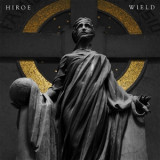
The new darlings of the American post-rock underground present a collection of well-wrought bangers on their debut full-length album. Powerfully melodic and heavy at the same time, Wield shows the Philadelphia-based quintet mastering their game of creating compelling melodies that sound larger than life. 2022 saw HIROE burst onto the scene with an explosive debut minialbum "Wrought" full of soaring anthems and sublime soundscapes. Combining the sonic expansiveness of Deftones with the dynamic heaviness of bands like ISIS and Caspian, HIROE already figured out how to make the most majestic sounding post-rock early in their career. "Our first, Wrought was a statement of creation," explains principal songwriter EricKusanagi about the intent behind their debut. "This second record is about what to do with that creation. The thought was, we've created this, now how do we wield it?" "We wanted to show a larger range of musical themes on this record," continues Eric. "You'll hear us dive into some synth work, some piano work, some really interesting effects that Mario helped us dial up." Wield packs a lot of details, which are fun to uncover over repeated plays. «Collider» is almost completely driven by high precision tapping leads, which are ingeniously mirrored by the chords on the final climax. «The Crush» sees the band's three guitarists chugging away happily over a clever 7/8 rhythm subtly exchanging thrashy, sludgy and prog-inspired stylings. Nevertheless, Wield is still an affair of instant gratification for fans of guitar driven post-rock. From the soaring leads of «Tides» to the epic finale of «I've Been Waiting For You All My Life», HIROE show they've upped their game in every department, but especially the one that tugs at your heartstrings. Wield presents the brave new future we all need in these confusing times. A new American frontier on which we can build our wildest dreams and our most daring ambitions! FOR FANS OF Caspian, Isis, pg.lost, Red Sparowes, If These Trees Could Talk, Shy Low, Ranges, Pray For Sound
BLACK VINYL[22,65 €]
The new darlings of the American post-rock underground present a collection of well-wrought bangers on their debut full-length album. Powerfully melodic and heavy at the same time, Wield shows the Philadelphia-based quintet mastering their game of creating compelling melodies that sound larger than life. 2022 saw HIROE burst onto the scene with an explosive debut minialbum "Wrought" full of soaring anthems and sublime soundscapes. Combining the sonic expansiveness of Deftones with the dynamic heaviness of bands like ISIS and Caspian, HIROE already figured out how to make the most majestic sounding post-rock early in their career. "Our first, Wrought was a statement of creation," explains principal songwriter EricKusanagi about the intent behind their debut. "This second record is about what to do with that creation. The thought was, we've created this, now how do we wield it?" "We wanted to show a larger range of musical themes on this record," continues Eric. "You'll hear us dive into some synth work, some piano work, some really interesting effects that Mario helped us dial up." Wield packs a lot of details, which are fun to uncover over repeated plays. «Collider» is almost completely driven by high precision tapping leads, which are ingeniously mirrored by the chords on the final climax. «The Crush» sees the band's three guitarists chugging away happily over a clever 7/8 rhythm subtly exchanging thrashy, sludgy and prog-inspired stylings. Nevertheless, Wield is still an affair of instant gratification for fans of guitar driven post-rock. From the soaring leads of «Tides» to the epic finale of «I've Been Waiting For You All My Life», HIROE show they've upped their game in every department, but especially the one that tugs at your heartstrings. Wield presents the brave new future we all need in these confusing times. A new American frontier on which we can build our wildest dreams and our most daring ambitions! FOR FANS OF Caspian, Isis, pg.lost, Red Sparowes, If These Trees Could Talk, Shy Low, Ranges, Pray For Sound
- A1: Spacemen's March
- A2: Space Attack "Q
- A3: Waltz 3
- A4: Ppu Dance
- A5: Fairy Wings
- A6: Improvised Song "Sweet Tea " (1981)
- A7: Long Time Ago Demo
- A8: More Deep Demo (1980S)
- A9: Small Gift
- B1: Love Me
- B2: M45
- B3: Echoes Of Unspoken Love Demo (1980S)
- B4: 大樹となかまたち Demo (1999)
- B5: プール Demo (1980S)
- B6: Improvised Song "To You" (2005)
- B7: Song Pop B Demo (1998)