Search:his afro drum

Styles
All
Solomon Ilori & His Afro-drum - Igbesi Aiye / Gbogbo Omo Ibile

The first time ever on vinyl for these 1964 Rudy Van Gelder recordings for Blue Note; and astral strides beyond the flat highlife cuts originally issued. With Donald Byrd, Hubert Laws and Elvin Jones stretching out breathtakingly amongst resplendent Nigerian drumming, and anticipating the vibes of classic Pharoah and Alice Coltrane. Around thirteen minutes each side.

out of Stock

Order now and we will order the item for you at our supplier.

10,04

Last In: 4 years ago
Teleseen - The Emotional Life Of Savages

the producer, multi-instrumentalist, DJ and record collector Gabriel Cyr AKA Teleseen releases 5th album 'The Emotional Life of Savages' via French imprint Goldmin Music.

African rhythms, Latin heat and otherworldly electronics collide like neurons, processed through a New York state of mind. The pancontinental sounds are mirrored in his own life, which has oscillated back and forth between various countries.

A jazz background combined with a love for house and techno are ingrained in the grooves. Also key is the samba, baile funk and MPB that inspired him while living in Rio de Janeiro, plus the sounds he reabsorbed on returning to NYC's club scene.

This wide range of influences spanning the global underground coalesces into a rich, vital and coherent whole. Warm and soulful, but also evoking an intoxicating, heady atmosphere, the hypnotic and ultra-rhythmic tracks subtly shift and build to fever pitch, due primarily to deft polyrhythmic drums and percussion - both played and sequenced.

"Working on this record I finally found myself able to manifest a certain sound I'd been hearing in my head for years, combining the rhythmic intensity of afro-house and afro-Brazilian music with the more cosmic sounds of Detroit and deep house", explains Cyr on his musical vision.

The gentle sundowner glow of 'Myrtle Avenue' with its textured synth waves and wandering Parrish-esque keys acts as a precursor to the potent nocturnal adventure to follow: 'Espelhos' captures a similar essence to Black Science Orchestra's classic 'Save Us (The Jam)', before the heat goes up and heads go down for the eastern-tinged, autotune-laden fire of 'Khalil'.

The album then intensifies further still on the percussion-heavy, big bottomed cosmic throb of 'Jaguar', whilst Brazilian flavour meets tech house rush on 'Fundos', before the party reaches its feverish close on the wiggling batucada- meets-tribal-house of 'Temporada De Seca'.

Born in the north eastern United States, as an adult Cyr has always been nomadic. He has sought to live and immerse himself in other cultures and absorb their sounds, but eventually always succumbs to the Big Apple's magnetic pull. Back home, a key inspirational catalyst for the album was the Brooklyn-based party Africainoir, where he's a resident DJ.

Alongside cutting his teeth producing illbient/hip hop and working as an engineer, he ran his own studio for period, before starting his own label Percepts, on which to release his dub techno style debut. He has since released on 100% Silk, Boomarm Nation and Feel Up Records, and now 'The Emotional Life Of Savages' marks Teleseen's first album for Goldmin.

pre-order now18.05.2026

expected to be published on 18.05.2026

8,82

Last In: 7 years ago
Various - We Out Here LP 2x12"

Repress of 2018’s classic compilation from Brownswood.

A primer on London’s bright-burning young jazz scene, this new compilation brings together a collection of some of its sharpest talents. A set of nine newly-recorded tracks, We Out Here captures a moment where genre markers matter less than raw, focused energy. Looking at the album’s running order, it could easily serve as a name-checking exercise for some of London’s most-tipped and hardworking bands of the past couple of years. Recorded across three long, fruitful days in a North West London studio, the crossover between each of the groups speaks to the close-knit circles which make up the scene.

Surveying the way that London’s jazz-influenced music had spread outside of its usual spaces in recent years, this album bottles up some of the vital ideas emanating from that burgeoning movement. Giving a platform to a scene where mutual cooperation and a DIY spirit are second-nature, it’s a window into the wide-eyed future of London’s musical underground.

Ubiquitous, much-lauded saxophonist Shabaka Hutchings is the project’s musical director. His own recent projects span from South Africa-connected, spiritually-minded jazz players Shabaka and the Ancestors to Sons of Kemet, who match diasporically-connected compositions with viscerally-direct live shows. His entry on the album, ‘Black Skin, Black Masks’, is typically difficult-to-define: with an off-kilter, shifting rhythmic backbone, repeated phrases – mirrored between clarinet and bass clarinet – shape the track with an alluring hue. His input ties together a deft, genre-agnostic sensibility that’s shared through all the players on the record.

Theon Cross – who’s also part of Sons of Kemet with Hutchings – starts his track, ‘Brockley’, with the solo, distinctive low rumble of his tuba. Winding and mesmeric, it sees tuba and sax lines winding together in rhythmic and melodic parallels. Ezra Collective – whose drummer and bandleader Femi Koleoso has toured with Pharaohe Monch – run a tight, Afrobeat-tipped rhythm on ‘Pure Shade’, with the final third changing gear into a melodic, momentous closing stretch.

Joe Armon-Jones, whose ludicrous chops on the piano have seen him touring with the likes of Ata Kak, showcases earworm-like, insistent motifs on ‘Go See’, balanced with a playful, improvisatory approach with room for ad-libbing and solos a-plenty. Taking a softer tact than many of the other entries, Kokoroko – whose guitarist Oscar Jerome has been making waves with his solo material – spin a lyrical, steady-paced meditation on ‘Abusey Junction’, matching chanted vocals with gently-played guitar.

Nodding to spiritual jazz influences, Maisha’s ‘Inside The Acorn’ is a wandering, explorative rumination, balancing delicate washes of piano and percussion with sharp interplay between flute and bass clarinet. In contrast, Nubya Garcia’s ‘Once’ is taut and carefully-poised, her tenor sax guiding a carefully-built energy to an explosive conclusion. And finally, Triforce’s ‘Walls’ is a performance in two parts: starting with Mansur Brown’s languorous, lyrical guitar, the second half switches up to a low-slung, g-funk-tipped groove.

pre-order now22.05.2026

expected to be published on 22.05.2026

30,04

Last In: 23 months ago
Chiminyo - NRG 5 LP
  • 01: Re:unite (Feat. Oscar Jerome, Charlie Stacey, Kaidi Akinnibi, Rudi Creswick &Amp; Magnus Mehta)
  • 02: Transference (Feat. Oscar Jerome, Charlie Stacey, Kaidi Akinnibi, Rudi Creswick &Amp; Magnus Mehta)
  • 03: Somnus (Feat. Oscar Jerome, Charlie Stacey, Kaidi Akinnibi, Rudi Creswick &Amp; Magnus Mehta)
  • 04: Technicals Inside (Feat. Oscar Jerome, Charlie Stacey, Kaidi Akinnibi, Rudi Creswick &Amp; Magnus Mehta)
  • 05: Down In My Monitor (Feat. Oscar Jerome, Charlie Stacey, Kaidi Akinnibi, Rudi Creswick &Amp; Magnus Mehta)
  • 06: Lucidity (Feat. Oscar Jerome, Charlie Stacey, Kaidi Akinnibi, Rudi Creswick &Amp; Magnus Mehta)
  • 07: Sacred (Feat. Oscar Jerome, Charlie Stacey, Kaidi Akinnibi, Rudi Creswick, Magnus Mehta &Amp; Sunshine The Afrooist)
  • 08: Breaking Point (Feat. Oscar Jerome, Charlie Stacey, Kaidi Akinnibi, Rudi Creswick &Amp; Magnus Mehta)

Artist Background:Chiminyo is a decorated drummer and producer at the center of the London scene, performing with heavyweights like Maisha and Cykada. A winner of theJazz FM Digital Awardand named ‘One to watch’ inThe Guardianin 2025, his work has been championed byGilles Peterson,BBC 1Xtra, andJazz FM. Chiminyo is a residency holder at Ronnie Scott’s, where he hosts the "Late Late Electronic" nights, and has collaborated with Mercury-nominated artists including Nubya Garcia and Shabaka Hutchings.

pre-order now31.05.2026

expected to be published on 31.05.2026

21,81
Cee Elassaad - Cee Elassaad Edits

Cee Elassaad

Cee Elassaad Edits

12inchEMSLDE001
ENSOULED
05.06.2026

The ENSOULED EDITS series begins by showcasing the work of Cee Alassad, a Moroccan producer famed for his previously digital-only reworks of historic cuts from his native country. It's these reworks Alassad offers up on his first vinyl outing for the freshly minted series. He begins with 'Tekere', a lightly house-style revision of a simply sublime workout - all bouncy, layered percussion, glistening guitars, righteous horns, heady vocals and chunky kick-drums. Over on side B, he tackles another cut from the same artist, joining the dots between 21st century Afro-house, synth-laden Afro-disco and far-sighted, tech-tinged grooves.

pre-order now05.06.2026

expected to be published on 05.06.2026

14,92
Soul Jazz Records Presents - STUDIO ONE ROOTS (2x12")
  • 1: The Cyclones With Count Ossie – Meditation
  • 2: Cornell Campbell – Natty Don't Go
  • 3: Freddie Mcgregor – Africa Here I Come
  • 4: Bunnie & Skitter – Lumumbo
  • 5: Willie Williams – Addis A Baba
  • 6: L Crosdale – Set Me Free
  • 7: Leroy Wallace – Far Beyond
  • 8: Lennie Hibbert – More Creation
  • 9: Alton Ellis – Blackish White
  • 10: Winston Jarrett – Fear Not
  • 11: Devon Russell – Drum Song
  • 12: The Gaylads – Africa
  • 13: Black Brothers – School Children
  • 14: Linton Cooper – You'll Get Your Pay
  • 15: Sound Dimension – Congo Rock
  • 16: Zoot Simms – African Challenge

Soul Jazz Records celebrate 25 years of working in partnership with Studio One with brand new editions of FIVE of their bestselling CLASSIC Studio One collections all released on limitededition one-off pressing coloured double vinyl. Also available in new limited-edition card wallet CD editions. The new edition featured albums are Studio One Funk, Studio One Dub, Studio One Ska, Studio One Roots and Studio One Classics. Studio One Roots set the standard for Soul Jazz Records’ long-standing series and features many of the classic artists from Clement 'Sir Coxsone’ Dodd’s mighty roster of reggae. This album includes Freddie McGregor, Willie Williams, Cornell Campbell, Alton Ellis, Devon Russell alongside some of the defining in-house groups of Jamaican reggae history - The Sound Dimension, Brentford All-Stars, The Skatalites, New Establishment and more. The album is filled with a mixture of seminal cuts and super-rarities from the vast vaults of 13 Brentford Road.

Stand-out tracks include Alton Ellis’s ‘Blackish White’, a surreal and powerful Afro-centric dream, Count Ossie’s Rastafarian drummers’ genre-defying interpretation of Booker T and The MGs ‘Meditation’, Willie Williams aweinspiring versioning of the Skatalites' seminal Rastafari anthem ‘Addis Ababa’ and many, many more. Original sleevenotes by Lloyd Bradley (author of When Reggae Was King), compiled by Mark Ainley (Honest Jons), high-quality Soul Jazz mastering, wicked images of Count Ossie and the Mystic Revelation of Rastafari on the cover, and a rare image of Clement Dodd and musicians inside the studio at Studio One on the full colour inner sleeves. “There isn't a weak number across these 16 tracks, from the Gaylads’ ode to ‘Africa’ and Devon Russell's version of the heavyweight ‘Drum Song’ rhythm, to stunning instrumentals such as Jackie Mittoo and the Cyclones with nyahbinghi drummer Count Ossie on ‘Meditation’, Lenny Hibbert’s sparkling vibe work over Mittoo's ‘Ghetto Organ’ and The Sound Dimension’s ‘Congo Rock.” Pitchfork “The music of this compilation is of a rare, rare beauty and is essential to anyone's reggae collection.” All Music

pre-order now05.06.2026

expected to be published on 05.06.2026

30,67
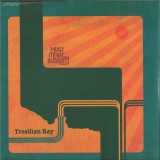
Huw Marc Bennett - Tresilian Bay

2026 Repress

Producer and bassist Huw Marc Bennett presents ‘Tresilian Bay’, a new project that draws from artists such as Tim Maia, Augustus Pablo and Idris Muhammed as much as the jazz scene and community he has found in south-east London. The languid, sultry sound fuses both modern and vintage, travelling from South London electronica, to Brazillian groove, Nigerian Afrobeat and Ghanaian Highlife along with a streak of Welsh psychedelia.

‘Tresilian Bay’ is a nod to hedonistic summer nights, whether spent on the Glamorgan coast or the hot Lewisham streets. The album is titled in honour of the bay near where Huw grew up, an area steeped in stories of ancient Welsh royalty, smugglers and pirates.

The album started out as a lost live session recorded at the Total Refreshment Centre studios, featuring Chelsea Carmichael (sax), Rosie Turton (trombone), Shirley Tetteh (guitar) and Jake Long (drums) with Huw at the helm on bass and compositions. With glorious vocal contributions from Miryam Solomon; Huw utilised his human style of production and multi instrumentality heard in his Susso project (Soundway Records, 2016) to mold these recordings into this mature and emotional debut.

The album was mixed and mastered by Albert's Favourites co-founder Adam Scrimshire with artwork by Jonny Drop.

In Stock

On Stock and ready to ship

21,43
Wizkid & Asake - REAL, Vol. 1 (7")

Wizkid & Asake

REAL, Vol. 1 (7")

7"-VinylERE1281
EMPIRE
26.06.2026

The arrival of REAL, Vol. 1 marks a seismic shift in the global music landscape, uniting two of Nigeria’s most formidable forces for a project that defines the current zenith of Afrobeats. This collaborative effort sees Wizkid, the smooth-talking pioneer of the genre’s international expansion, and Asake, the "Mr. Money" whose neo-Fuji sound redefined the street-pop aesthetic, finding a middle ground between luxury and grit. The project serves as a sonic bridge between eras, blending the minimalist, high-fashion sensibilities of Wizkid’s recent output with the high-octane, choir-backed energy that has made Asake a household name. It is less of a competition and more of a conversation between two masters of their craft, exploring themes of spiritual gratitude, the weight of superstardom, and the unyielding pulse of Lagos.

With soundscapes both cinematic and deeply rhythmic, the production moves beyond standard club formulas, opting instead for a sophisticated fusion of traditional Yoruba percussion, shimmering synths, and the heavy, resonant log drums of Amapiano. Wizkid provides the effortless, melodic swagger that acts as the project's anchor, while Asake injects a spiritual intensity through his signature layered chanting and rapid-fire flows.

Ultimately, REAL, Vol. 1 is a celebration of authenticity in an era of global crossover. By stripping away the pressure of conforming to Western pop standards, Wizkid and Asake have created a body of work that is unapologetically Nigerian yet universally resonant. It captures the spirit of a city that never sleeps and the ambition of two artists who have conquered the world without losing their souls. This is more than just a collection of hits; it is a blueprint for the future of African music, proving that when Wizkid and Asake occupy the same frequency, the result is nothing short of legendary.

pre-order now26.06.2026

expected to be published on 26.06.2026

15,92
ÀBÁSE - LAROYÊ (2026 EDITION) LP 2x12"

*Originally pressed in 2021 - this is a brand new master and cut.**

In partnership with Analogue Foundation, Oshu Records is proud to present the exclusive vinyl repress of "Laroyê" in a thick cardboard tip-on gatefold jacket on 2x 180g vinyl.

Acclaimed Hungarian, Berlin-based producer, composer and pianist Àbáse (AKA Szabolcs Bognár) returns, sharing a special, 5 anniversary remaster of his breakthrough project 'Laroyê'. Releasing on Friday 1 May via Bridge The Gap & Oshu Records, this sensitive exploration of Afro-Brazilian culture originally began as an audio diary, documenting Szabolcs’ travels and collaborations in Brazil through a collection of voice memos, fragmented beats, sketches and field recordings. As his journey progressed, and his collaborations and research deepened, the music project started to take on its own life:

"Laroyê evolved through weeks and months of research and collaborations into the album that it is now. That means that all the sessions were done in different apartments, small studios, often with borrowed equipment, which all adds to the character, but makes the creation of a coherent sound a challenge. Benjamin Tierney, Erik Breuer and Analogue Foundation did an incredible job with the mixes and with this new remaster. I truly believe that we are able to hear the tracks in a new light, with even more depth and clarity."

Coming from the West African Yoruban language, Àbáse stands for "collaboration" – a key element of the music perfectly encapsulated on 'Laroyê'. Recorded in Rio de Janeiro and Salvador, Àbáse spent five months working with diverse artists, from young talents to veterans of the Brazilian scene including Letieres Leite, Luciane Dom, Dofono d'Omolu, Afrojazz and more. The album explores the rich heritage of afro-brasilian culture through samba, MPB and Candomblé, mixing these with broken beat, hip hop and afrobeat, creating a contemporary homage to the classic Brazilian sound. Szabolcs shares:

"Despite already leading and managing musical projects that are close to my hearth, I always felt that one day I would like to start a solo project, where I could take full responsibility for the artistic direction and the music would reflect a truly personal vision. In 2017, I decided to take five months to fulfil a childhood dream and travel to Brazil to expand my creative horizon and expose myself to new influences."

An album standout is the bass-heavy, afro-brazilian ‘Agangatolú, which Àbáse describes as "best exemplifying the story and concept of Laroye as a collaborative effort - a research project exploring the rich heritage of Afro Brazilian culture through my own lens." The track features singers and percussion players Jadson Xabla and Gabriel Santana - two artists based out of one of the oldest terreiros (houses of worship) in Bahia, whilst drummer Jorge Dubman is an integral part of one of the most famous afrobeat bands from Salvador IFA. The contributions of one of Szabolcsoldest collaborators - Hungarian flautist Fanni Zahar - also made the track a full-circle moment.

On a quest for cosmic grooves of unity, Àbáses music pulls from an eclectic blend of global reference points, including modal jazz, Hungarian folk, West African, Brazilian, hiphop and underground electronic music. His work has drawn widespread critical acclaim from the likes of MOJO, Songlines, Soulection and The Guardian, and been supported by key tastemakers including Gilles Peterson, Jamz Supernova and BAMBII. As a keyboard player, Szabolcs has also collaborated with the likes of Wayne Snow, Dele Sosimi, Patti Smith, Emmanuel Wilkins, Gulty Simpson and Zeitgeist Freedom Energy Exchange.

'Laroyê' (2026 Remaster) will release on Friday 1st May via Bridge The Gap & Oshu Records.

pre-order now09.07.2026

expected to be published on 09.07.2026

33,40
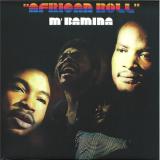
M’BAMINA - AFRICAN ROLL

Gatefold Sleeve

M’Bamina – African Roll (1975)
The story of an album born between Africa, Italy, and the nightclub culture of the 1970s
In the heart of 1970s Italy — a country undergoing profound social change and a music scene just beginning to open itself to distant sounds and cultures — an extraordinary, almost improbable story took shape. It is the story of a group of young African musicians who found their way to Europe, of a Turin nightclub that became a crossroads for communities and experimenters, and of an album which, released in small numbers and largely unnoticed at the time, is now considered a rare jewel of Afro-fusion.
The band called themselves M’Bamina — an ensemble of musicians from Congo, Cameroon, and Benin, who arrived in Italy in the early Seventies. Settling between northern Italy and the Pavia area, they began performing in small clubs and community events, bringing with them a vibrant rhythmic heritage: African polyrhythms, call-and-response vocals, funk-infused bass lines, and Caribbean or Afro-Latin colours absorbed along their musical journeys. Their raw, contagious energy on stage quickly drew attention.
Meanwhile, in Turin, another story was unfolding. There was a venue becoming almost legendary: Voom Voom, one of the city’s liveliest nightclubs, run by Ivo Lunardi. The club attracted an eclectic crowd — students, artists, foreigners, night owls — and Lunardi quickly understood that the dancefloor wasn’t just a place for music, but a melting pot for a new kind of cultural energy. Out of this vibrant atmosphere came his idea: to turn the club’s name into a small independent record label, Voom Voom Music, capable of capturing the spirit of those years and giving voice to unconventional projects.

When Lunardi heard M’Bamina, he immediately sensed that this was the sound he had been searching for: fresh, different from anything circulating in Italy at the time, and capable of blending African tradition with funk and European sensibility. He brought them into the studio.
Production was handled by Lunardi along with Christian Carbaza Michel, while the engineering was entrusted to Danilo Pennone, a young sound technician with a sharp, intuitive ear.
The recording sessions — held in Turin in 1975 — produced a remarkably warm and direct sound. The music feels almost live: grooves rooted in African tradition, but open to funk-rock structures and modern arrangements. It is a natural fusion, never forced. Tracks move between tribal rhythms, funk basslines, light electric guitars, congas and Afro-Latin percussion, with call-and-response vocals and melodies that echo both Congolese tradition and the lineage of Latin jazz. Not by chance, one of the album’s most striking tracks, Watchiwara, reinterprets a Latin standard through M’Bamina’s own rhythmic language.

The album was titled African Roll — a name that was already a statement of intention. It is African music that “rolls,” that moves, adapts, transforms within a new geographic and cultural setting. It is not strictly Afrobeat, nor Congolese rumba, nor Western funk: it is a spontaneous, hybrid blend, shaped more by lived experience than by any calculated aesthetic program.
When African Roll was released, the world around it barely noticed. Distribution was limited, and 1970s Italy had yet to develop a cultural framework for receiving such music. The national music press rarely paid attention to African or “world” productions. The album slipped into silence — though the band’s own story did not.

M’Bamina continued performing across Europe and Africa, even sharing a stage in Cameroon with none other than Manu Dibango. By the late Seventies, they moved to Paris, signed with Fiesta/Decca, and recorded a second LP, Experimental (1978). Meanwhile, the peculiar record they had made in Turin began to resurface quietly among vinyl collectors, Afro-funk enthusiasts, and DJs hunting for forgotten grooves.
That is when the album’s fate began to shift.

Over the decades, African Roll emerged as an almost unique document: a snapshot of an intercultural Italy before the word “intercultural” even existed, a fragment of migrant history, a spontaneous experiment in musical fusion born far from major industry circuits but rich in authenticity. Original copies began commanding high prices on the collector’s market, and the album became recognized as one of the hidden classics of European Afro-fusion from the 1970s.
Today, more than fifty years later, this reissue finally restores visibility and dignity to a project that deserves to be heard, studied, and celebrated. It is not simply an album: it is the testimony of a rare cultural encounter, born in an Italy unaware of how fertile such exchanges would one day become.

It is the story of a visionary producer, an extraordinary band, and a fleeting moment in which music, migration, and nightlife came together to create something genuinely new.
African Roll is — now more than ever — the sound of a bridge: between continents, between eras, between cultures. A record that, after rolling far and wide, has finally come home.

In Stock

On Stock and ready to ship

23,49
LUKE UNA pres. E SOUL CULTURA - VOL 3 LP

LUKE UNA pres. E SOUL CULTURA

VOL 3 LP

12inchMRBLP328
Mr Bongo
20.03.2026

With two deeply cherished compilations already in the bag, Luke Una steps up for the third volume in his É Soul Cultura series on Mr Bongo. A love letter to the dancefloor and its power to unite people from all corners of society amid growing division and extremist politics. Genre-spanning in nature, the 15 tracks travel between cosmic soul, boogie, proto-house, slo-mo technoid grooves, drum machine afro, astral bass-bugging futurism, jazz funk, dance, and disco. Each having the ability to move the body as much as the heart.
 
From his formative years in Sheffield to co-founding Manchester’s much-fabled Electric Chair with Justin Crawford, through to helming the iconic LGBTQ institutions of Homoelectric / Homobloc, Luke has spent 40 years immersed in dance music. His latest outlet, É Soul Cultura, has grown from a label to a globe-spanning events series with Luke holding residencies and embarking on tours across the world from Japan and Australia to America and Europe. 
 
“For me, the dancefloor was never about a one-dimensional, thudding, 130 BPM beat only. It's a much more dynamic, broader vision than that. I cut my teeth in an era where a 100 BPM record had as much impact, excitement, and energy as a 134 BPM dancefloor jazz funk or techno record”, Luke mentions. É Soul Cultura Volume 3 is the perfect embodiment of that notion: “It’s about four decades in the trenches playing dance music, the late-night afters, the shebeens, the basements, warehouse parties, the eight-hour journeys in East London, through to festival sets at Houghton and We Out Here. It’s music unconstrained by genre or tempo and more about making your body move”. 

But this isn’t simply a collection of disparate dance tracks; they carry meaning and soul. “It’s less about escapism, more about reconnection. My experience of post-covid has been the coming together of all the clans in various clubs and gatherings. A reaction to a very toxic world out there, where the aggro rhythms of division have sought to divide us, and people don't meet as often. The coming back together face-to-face in clubs has encouraged a real love in the air, there's a real togetherness and collective spirit”.
 
Opening up the compilation is a track that channels that very message, the transcendental, soul-rousing Harris & Orr ‘Spread Love’. Joining the dots from there, to the low-slung deep house closer of Fatdog ‘Remember’, you’ll find electronic drum machine Nigerian funk, sitting side by side with dancefloor Cape Verdean brilliance, a post-punk cover of Fela Kuti, rubbing shoulders with cosmic electro, and an Una-championed, 8-minute, kickless DJ Harvey remix. There’s jazz funk in various guises moving from boogie synth to astral travelling, slo-mo acidic raw techno, and a ‘79 soul stepper, alongside swirling percussive Italo disco and tribal-charged house. All infused with an innate ability to bring people together.
 
As society becomes increasingly fractured, É Soul Cultura Volume 3’s message is more than movement. It’s about dance music’s power to unify people from all walks of life and break down the barriers that divide us.

In Stock

On Stock and ready to ship

28,36
Mytron - Propeller LP

Mytron

Propeller LP

12inchMCLP014
Multi Culti
20.02.2026

After a series of successful outings alongside sidekicks Ofofo and Zongamin, studio wizard MYTRON turns in his debut solo full-length for Multi Culti World Records. With contributions on Invisible Inc, Calypso, Bongo Joe, Kalahari Oyster Cult, LYO, Codek Records and Earthly Measures, Mytron has carved out a name for himself in a carefully-curated left-field quadrant of the indie-dance galaxy. Tuning his oscillators to myriad sounds — from dub and disco to krautrock — the London-based producer perhaps most notably channels the pristine compositional style of Kraftwerk. While most apparent in the use of vocoder, there’s a consistent efficiency of arrangement that recalls the man-machine in effervescent, idealistic fashion. Mytron manages to keep it simple, funky and musical — whimsical tunes that bop along with analog grit, wilderness, and wonk. There’s a warmth and wit that shine through every synth line, an understated confidence that speaks of years spent tangled in wires and waveforms, with an inclusive sonic eclecticism that flattens hierarchies between genres, geographies, and generations. Each influence is invited to the table, treated not as pastiche but invited to dine and dance in a space where kosmische dub disco and Afro rhythms can coexist without borders. The sleeve design echoes this philosophy: video-feedback patterns hinting at our modern screens, both portals and filters — coloured, distorted intermediaries through which we perceive the world. In the trippiest sense, the record is both reflection and refraction — a sonic mirror held up to an interconnected, glitchy reality. Tailored equally for DJ use and home-listening head trip, the album is meticulous, mischievous and merry.

BanBanTonTon review:

On Mytron’s debut long-player for Multi Culti groovy 21st Century leftfield house gear collides with Daniele Baldelli and Beppe Loda’s hugely influential `80s afro / cosmic. The 9 tracks are chunky, chugging and full of funky, funny noises. Old school B-lines mixing with eccentric electronics. Spinning, spiralling sounds.

Sugar is an electro-pop, vocoder confection, cut from the same sonic cloth as cult classics like Codek’s Tam Tam. Created from tough trap drums, splashing effects and a mutant Giorgio Moroder bass arpeggio. The title track, Propellor, pits Kraftwerk-esque hardware harmonised vocals against a bongo loop and a whistling hook. Playground has simian shrieks surround tumbling tom-toms. Highway Maintenance adds kosmische synths to a dance of woodblocks and buzzing bottom end. Keep On Dubbing is an organ-led, clip clopping percussive canter.

Tracks such as Speaker Can Talk, shot through with disco lasers blasts and recalling Curt Cress’ Dschung Tek, also lift the tempo up, but the bulk of the music here is a mid-tempo, techno drum circle. Squelchy sequences gurgling in and out of programmed percussion. On Quasar, spiky acid edges in and slowly takes over.

Key references that come to mind are Baldelli’s own turn-of-the-2000s Cosmic Sound Project productions, and Wolf Müller’s scene shaking sides on Themes For Great Cites, from around a decade later.

In Stock

On Stock and ready to ship

20,59
Souldynamic - West-Side Of Afrika Vol. 2

Souldynamic swings back onto the Samosa label with the mesmerizingly rhythmic West-Side Of Afrika Vol. 2.

We kick off the A-Side with ‘Touma’ – a truly hypnotic tribal afro vapour that entices you into the fire-lit night. A heavy dub-style bass just about dominates above the rhythmic ensemble, whilst the haunting chanted vocals elevate the track to ethereal levels. Stunning. No wonder Ron Trent has been spinning this one in his sets for the past few weeks – it’s right in that spiritual zone where deep house meets ancestral ritual.

Second track on Side A is the happiness trip that is ‘M.I.L’. Rolling drums, marimbas and a killer bassline merge with the flighty guitar riffs and smiling vocals. You could be in a bar listening to the music live in the room, smoke filling the spaces and dim lights offering a glimpse of good times.

Heading over to Side B and you find the enchanting ‘DJA’ awaiting. A deep roller of a tune, Souldynamic shifts the gears whilst serving the entrees. A truly magnificent slice of West-African vibes, ‘DJA’ has it all from the gorgeous vocals to the chugging, hypnotic beat.

Track 2 on Side B is the sultry ‘N.T.F.P’. The BPMs are touched down a notch for this one but don’t let that fool you. ‘N.T.F.P’ is a musical celebration of joyous beats, slaps, claps, brass and Afro vocals. You don’t get it much more authentic than this.

West-Side Of Afrika Vol. 2 is like a shapely hand in the perfectly fitted glove that is the Samosa label. A truly stunning piece of vinyl with every track as strong as the last. A sure-fire winner.

In Stock

On Stock and ready to ship

11,72
Umberto Echo - The Afrodub Experience (LP)

On "The Afrodub Experience," Umberto Echo takes us on a ride across four continents, exploring 50 years of Afro-Caribbean music history with numerous collaborators.

The inspiration is the Afrobeat of the 1970s, which he discovered through original musicians from Fela Kuti's "Africa 70" band in the Berlin project "Afrobeat Academy" which he began to fuse with dub and reggae.
Mitwirkende
wird veröffentlicht am 17. Oktober 2025

Recorded by Umberto Echo and the musicians in Berlin, Hamburg, Munich, New York, Melbourne,
Kingston Jamaica & São Paulo between 2008 and 2024

Mixed by Umberto Echo & Silvan Strauss, November 2024 at Apollo Studio Berlin
assisted by DJ Tobi Neumann & Robin Ludyga

Produced by Umberto Echo, co-produced by Silvan Strauss

Mastered by Umberto Echo

Artwork by aDUBta

Umberto Echo published by KKBB Publishing/Edition Dubvibes


Drums: Silvan Strauss, Giuseppe Coppola
Drum Programming: Silvan Strauss, Gengis Don, Umberto Echo
Bass: Daniel Stritzke, Oghene Kologbo, Patrick Frankowski, Giorgi Kiknadze
Percussion: Samuel Wootton, Nicholas Ado-Nettey, Umberto Echo, Djakali Kone, Giuseppe Coppola
Guitars: Umberto Echo, Mandjau Fati, Ferdinand Kirner, Oghene Kologbo, Giovanni Agostini
Cora: Sebastian Cuevas, Djakali Kone
Saxes: Ben Abarbanel-Wolff, Florian Riedl, Giovanni Pecorini, I Sax
Trumpets: Benny Brown, Philip Sindy, Sebastian Kölbl
Trombone: Roman Sladek
Keys: Barney McAll, Lionel Wharton, Markus Kuczewski, Umberto Echo, Silvan Strauss, Milo Winter
Vocals: Lenna Bahule, Gengis Don, Vimbai „Vee“ Mukarati, Mark Wonder, Tydal Kamau
Backing Vocals: Runtendo Machiridza, Tariro neGitare, Erica Nevell

In Stock

On Stock and ready to ship

25,84
Deepo & Flyworth - EP1

Deepo&Flyworth

EP1

12inchBB002
Bonded Beats
10.11.2025

A1: Love Yourself - Deepo & Flyworth feat. Morris Revy
Produced, Arranged & Mixed by Deepo & Flyworth
Drum programming by Deepo & Flyworth
Lyrics by Morris Revy
Deepo and Flyworth teamed up again with powerful singer Morris Revy for this spoken word House Track

B1: Disorient Express - Deepo & P. Nicosia
Produced, Arranged & Mixed by Deepo
Drum programming by Deepo
Live percussions by Pietro Nicosia
Afro House banger track created by Italian duo Deepo and Pietro Nicosia with infectious drums, hypnotic Synth, powerful bassline and amazing live Darbouka

B2: We'll Rise Again - Deepo feat. P. Nicosia
Produced, Arranged & Mixed by Deepo
Drum programming by Deepo
Live Percussions by Pietro Nicosia
Deep House track by Deepo ready to burn any Dancefloor with his hypnotic Marimba, drive bassline, powerful synth and live perussions by Pietro Nicosia

In Stock

On Stock and ready to ship

12,19
MAURICE POTO DOUDONGO - THE LOST ALBUM

Unearthed from the Crammed Discs vaults after nearly four decades (Originally recorded in 1987), a hidden gem finally sees the light. Maurice Poto Doudongo’s The Lost Album arrives on vinyl for the first time—limited to 500 copies, with printed inner sleeve featuring release notes and photographs.

Back in the hazy margins of late-’80s Brussels, where boundary-blurring sounds were seeping through the cracks of pop music, a young autodidact named Maurice Poto Doudongo was crafting music that didn’t quite belong to any scene. Born in Kinshasa and growing up in Belgium, Maurice was a sonic nomad—raised on Franco, Miriam Makeba, and Tabu Ley Rochereau, transfixed by James Brown and Prince, and shaped by the fertile collision between African music and experimental electronics occurring all around him.

Leaving school at 16 to concentrate on music full-time, he began recording on borrowed 4-tracks, using cardboard boxes for percussion, and absorbing whatever sounds the airwaves served him: “Music has no frontier,” he says. “You take what you like. Prince, Fela, Papa Wemba—there is no contradiction. It’s all part of the sound.”

The result? A record that’s equal parts analog drum machine funk, homegrown Afro-pop futurism, and new wave R&B-informed synth poetry. Marc Hollander, founder of Crammed Discs, met Maurice through his friend and associate, musician/producer Vincent Kenis and quickly recognized the spark. The two began working in earnest, preparing tracks intended for a full-length release that, for reasons lost to time and memory, never materialized—until now.

Marc remembers: “The album was never completely finished. “Bolingo” was the only track that came out on a Crammed compilation at that time… and the rest sat on the shelf for decades until we started opening the Crammed vaults.”

Maurice recalls the session as being, “like an unstoppable current”. Listening now, the Lost Album feels both of its time and well beyond it. While tracks like “Momo” sound not a million miles away from the slinky and sophisticated Balearic pop ambience of Wally Badarou’s Echoes album, "Passport Train" shakes itself loose of any genre boundaries, veering into free-form Afro-electronica and tough electronic rhythm. Others pulse with a sweet and soulful groove that suggests dance floors dreamed of but never reached.

In decades hence, Maurice never left music, and the music never left him. Now working mainly as an arranger, he describes his job as being like that of a musical psychologist: “Someone comes to me with their sound, and before anything I have to understand their mind and heart,” he explains. That same intuitive fluency can be heard across this entire album—music that listens before it speaks, that absorbs before it asserts.

This reissue is more than a remastering. It’s a second breath. Sourced from cassette roughs and 24-track demos, carefully restored with Maurice’s blessing, and released as a complete album on vinyl for the very first time, The Lost Album isn’t lost anymore.

It just took nearly 40 years to find its way to you. - Editions de Lux

In Stock

On Stock and ready to ship

24,79
Auntie Flo - Birds of Paradise

Celebrated DJ, producer, and sonic explorer Auntie Flo (aka Brian d’Souza) — described by The Guardian as “one of global club culture’s most vital voices” — returns this autumn with ‘Birds of Paradise’: a rhythmically rich, emotionally resonant, and ecologically grounded new album, out 23 October via his A State of Flo imprint. The album will be launched with a special live show at London’s Jazz Caféon the same day.

‘Birds of Paradise’ draws on d’Souza’s global club experience while deepening his connection with the natural world. Built around classic Roland drum machines and iconic vintage synths, the record is a joyful, body-driven celebration of rhythm and movement, but one grounded in ecology and place. The album’s spiritual centre lies in Saligao, Goa, near d’Souza’s maternal homeland where his Auntie Florie (where the name is derived from) is buried. Where he found his ‘paradise’ nearby, staying in a converted fisherman’s hut and recorded dawn choruses from a riverside studio overlooking mangrove-lined waters. Environmental textures from Japan also make their way into the music, creating a sonic map rooted in lived experience.

“Birds of Paradise is about finding beauty and rhythm in a chaotic world. It’s about listening, to nature, to our bodies, to what’s real. It’s a reminder that dance music can be both joyful and grounded.” The album blends Afro-Latin polyrhythms with Western 4/4 patterns, fusing instinctive, dancefloor energy with field recordings that anchor the music in the earth. Described by d’Souza as “tropical with a few deeper edges, a balance of light and dark.”

The new record follows the acclaimed ‘In My Dreams, I’m A Bird and I’m Free’, which earned 4 stars and Global Album of the Month from The Guardian, featured in Disco Pogo’s Albums of the Year, and received support from Luke Una, Resident Advisor, Juno, Bandcamp, Mixmag, DJ Mag, Electronic Sound, The Skinny, Beatport, Ban Ban Ton Ton, and more. The album’s launch show at Omeara London sold out. Other recent projects include the ‘Outernational Dance’ EP on cult label Multi Culti, event series ‘Plants Can Dance (and Mushroom’s Sing)’ which explore plant and fungi bioelectricity as a means of live composition, and ‘Black Beacon’, a haunting cassette release and soundwalk series recorded on the abandoned military island of Orford Ness. There, d’Souza explored the eerie intersection of nature, decay, and deep time, gaining special access to restricted buildings to capture long-form soundscape compositions.

Alongside his production work, d’Souza has emerged as a leading voice at the intersection of sound and science. He curated music for Imperial College’s groundbreaking psychedelic therapy trials, developing six-phase playlists to guide participants through psilocybin-assisted sessions treating conditions such as fibromyalgia and gambling addiction. His five-hour ambient set at Watching Trees Festival, selected as Resident Advisor’s Mix of the Day, continued this exploration into the therapeutic potential of sound in altered states. He also spent six months collaborating with BBC producer Tom Raine on a documentary for BBC World Service, centred on a two-week journey through Kenya and Goa. There, he performed live, led plant music workshops, and joined a deep listening retreat rooted in field recording. “I realised my studio isn’t just four soundproofed walls filled with instruments — it’s the journey itself. It’s the people I meet, the natural world I listen to, and the connections I feel.”

This same commitment to deep listening fuels his live concept Plants Can Dance, a project that combines the biosonification of plants and fungi with modular synthesis. The next event, on 14 September at Hideout Hackney Wick, will feature performances by Stella Z and Lapalace, with d’Souza and resident Lamine playing live alongside responsive plants in collaboration with Repot Hackney Wick and the label Music To Watch Seeds Grow By. “I’ve spent years exploring how electronic music can connect us, not just to each other, but to the natural world. Whether it’s translating mushroom data into melody or capturing birdsong at dawn, it’s about finding resonance across bodies, ecosystems, and machines.”

Rooted in his Goan and Kenyan heritage and shaped by years of travel and collaboration, d’Souza’s creative mission is simple: to reconnect the electronic world with the natural one. Through A State of Flo, he continues to blur the boundaries between club culture, sound art, and ecological awareness.

In Stock

On Stock and ready to ship

19,12
FLASH ATKINS - ALLSTARS

FLASH ATKINS

ALLSTARS

12inchPAPV343
PAPER
14.10.2025

Flash Atkins has pulled together a crack team of musicians for Sanza Mibale Ya Bo Pemi.
It is a tribute to the golden age of Afro-Disco, when the sounds of 70's New York found their way to the continent and fused with local musical styles and rhythms.
Felix Ngindu sings in his native Lingala language from the DRC over a locked bass, congas, keys, percussion, rhythm guitar and a brass section from Haggis Horn's Atholl Ransome and Malcolm Strachan.
Funk, disco, soul and jazz all blend for a peak time jam.

The Flash Dub strips things back to the rhythm section for heads down, dubby action and a tracky take that still packs a dance floor punch.
The incomparable Bosq steps up for remix duties and knocks it out of the park. Layered drums and percussion give things a more Latin swing before the beats break, piano enters the fray, and it's a tropical-funk party-starter all the way. The dub does the beat thing, rocking a hard groove for the dancers.

Hands in the air? F**ck yeah!

LTD Edition in individually sprayed sleeves !

In Stock

On Stock and ready to ship

15,08
REDNILO - REDNILO

Rednilo

REDNILO

12inchIRM2534
Irma Records
17.09.2025

RedNilo is an Italian-Moroccan duo composed of Reda Zine and Danilo Mineo, two musicians based in Bologna linked by a deep passion
for world music, particularly African music. Their ongoing and tireless musical exploration has led them to collaborate for over a decade
on numerous artistic and recording projects. Their new album, eponymously titled RedNilo, features six tracks characterized by a sound
reminiscent of Gnawa, Hassani, Tuareg, and experimental rock. The psychedelic, raspy riffs of the electric guitar, the repetitive rhythms
of the percussion, and the rhythmic-melodic lines of the guembri represent and evoke their journey. The resulting sound material is the
culmination of their journey and their encounters with masters, artists, griots, artisans, and instrument makers in the Draa Valley in
southeastern Morocco, bringing together the two musicians' urban and experimental backgrounds and souls. The album's artwork was
designed by Moroccan artist Aali Wica, initiator and mentor of their spiritual and artistic journey to the southern African continent,
across the long black snake.
Réda Zine, a musician and documentary filmmaker born in 1977 in Casablanca, launched his musical career in the 1990s, contributing
to L'Boulevard, Africa's largest independent festival. Raised in the Casablanca medina, he was introduced to Gnawa music by various
Maallems. After studying at the Paris 3 Sorbonne University, he founded Café Mira, a project that has performed at several international
events.
From 2011 to 2014, Zine was artistic director for Creative Commons (Middle East and North Africa), where he won the #CC10 Korea
award in 2012 with the project "It will be Wonderful," which brought together musicians from over 12 countries. He has also been
involved in exhibitions on music and censorship, participating in events in major cities such as Paris, Buenos Aires, and Seoul. In Italy,
he continued his musical research with the Hardonik project and was part of the Afrobeat group Voodoo Sound Club, recording the
album Mamy Wata. Zine collaborates with artists such as Seun Kuti and has initiated educational activities related to Gnawa music,
contributing to initiatives such as the African Symphony Laboratory for improvisers. He is the co-founder of Fawda, a Gnawa-based
project, and is part of the Gnawa Rumi collective, which explores the music of the Moroccan diaspora in Italy. He directed the documentary "The Long Road to the Hall of Fame" about Public Enemy, which won an award at the Pan African Film Festival in 2015.
Danilo Mineo graduated as a national educator from the AMMnationalscholl music academy in Milan, with a thesis entitled "Afro-Cuban
Music and the Rhythm Section." Over the years, he has attended workshops and masterclasses with international artists and masters
of percussion and drums, including Horacio El Negro Hernandez, Airto Moreira, Trilok Gurtu, Luis Agudo, Arto Tuncboyaciyan, Dudu
Tucci, Dom Famularo, Karl Potter, Rodney Barreto, and Eno Zangoun, exploring the rhythmic language of various musical genres and
styles.
In addition to publishing several educational manuals for percussionists, music critics consider him a versatile percussionist, active in
various musical productions and recordings: Mop Mop, Fawda, Guglielmo Pagnozzi "Voodoo Sound Club," Fabrizio Puglisi "Guantanamo," Panaemiliana, The Mixtapers, and many others, with whom he has performed at numerous national and international music festivals (in Europe and Africa). As a percussionist and side man he has recorded numerous albums and collaborated with Italian and
international artists including: Giancarlo Schiaffini, Gianluca Petrella, Roy Paci, Roberto Freak Antoni, Famoudou Konate, Melaku Belay, Baba Sissoko, Kalifa Kone, Jamal Ouassini, Deda, Dj Lugi, Bioshi.

In Stock

On Stock and ready to ship

21,64
The Funk District - Across The Swamp (feat Gledd remix)

Mexico-born and based The Funk District has been adding a contemporary spin to funk, soul, disco and Afro for a decade now. His latest takes him to Saint Wax and kicks off with 'Alligator Groove', which is a leggy, strident disco pumper with neat and funky guitar riffs. 'The Reverend' has even fatter drums pumping down and guttural gospel vocals adding emotional intensity. Gledd remixes with a more light-fingered and jazzy touch and flipside cut 'Gimme Something' offers deep disco and then acid tinged house anthem 'A Little More' rounds out the package.

In Stock

On Stock and ready to ship

15,08
Tony Romera - Time To Move

DJ Support: Mau P, Jamie Jones, BLOND:ISH, Noizu, Bob Sinclar, Martin Garrix, ACRAZE, Steve Angello, Kaskade, CID, Bob Sinclar, Afrojack, Oliver Heldens, Nicky Romero, MK and more.

Toolroom’s latest vinyl offering sees 3 big releases from label favourite, Tony Romera. For what is arguably his biggest single to date and brimming with feel-good 80s flavour, Time To Move has been on repeat for Tony at every show. LFO kicks of the b-side and showcases Tony’s trademark tough drums and low-slung bass line, resulting in another dancefloor weapon. The quirky Dance Naked rounds off the EP with an unmistakable rolling, tech groove, hooky synth stabs and hooky vocals on top.

In Stock

On Stock and ready to ship

14,25
David Lee Jr. - Evolution

David Lee Jr.

Evolution

12inchSJRLP551C
Soul Jazz Records
08.08.2025

Drummer and Composer David Lee Jr.’s stunning and rare album Evolution (1974) blends the deep experimentalism of John Coltrane and Sun Ra with the pulsating second-line and parade rhythms of New Orleans to create a stunning sonic and rhythmical tour de force. In a lineage of incredible New Orleans drummers that includes James Black, Idris Muhammed, Zigaboo Modeliste of The Meters, and stretching back to Earl Palmer and Baby Dodds, David Lee Jr. stands out for his fire, experimentalism and an out-there-ness like no other. 'Evolution' is a super deep, ‘lost classic’ radical and groundbreaking deep spiritual jazz album. Originally released in New York in 1974 (400 copies only ever pressed!), ‘Evolution’ is an extraordinary one-off solo album, pressed on the artist’s own Supernal Records, a record company whose slogan ‘seeking creative progress’ and dedication ‘to peace and freedom’ clearly displayed artistic intent over any commercial or market-led forces. David Lee Jr was born in New Orleans and the deep experimental drum-compositions featured on ‘Evolution’ are as rooted in this southern city rhythmically as they are in the spiritual and metaphysical musical ideas of Afro-Futurist pioneers like Coltrane, Sun Ra and others. In the early 1970s Lee Jr. headed off to New York, playing in Roy Ayers’ Ubiquity and later immersing himself in the thriving loft deep jazz scene playing with Leon Thomas, Lonnie Liston Smith, Harold Alexander, Charles Rouse, and recording for a host of seminal deep jazz labels including Strata-East, India Navigation and Flying Dutchman. Today 'Evolution' remains one of the rarest and heaviest of all deep and spiritual jazz albums ever made. One-off super-limited edition magenta colour vinyl, newly digitally remastered, complete with new reproduction artwork, sleevenotes and download code.

In Stock

On Stock and ready to ship

28,53
DJ Romain - The New Jersey EP

There’s a reason they call it deep House. On 'The New Jersey' EP, DJ Romain doesn’t just nod to his roots, he digs into them, scooping out a warm, rhythmic core that pulses with sweat, memory, and reverence. This is not a revival or a pastiche; it’s a love letter etched in drum machines and delay, from a producer who’s lived the lineage.

A fixture of late-’90s NYC dance floors, Romain cut his teeth in the city’s thumping underbelly, learning from the likes of Todd Terry and later carving his own signature into the genre’s sidewalk. Across these four freshly cut tracks, Romain channels the same urgency that once drove dance crews, celebrities, and nightlifers alike into motion, and still does.

Lead track “Hello New York” is a no-nonsense DJ tool, a serrated slice of big room energy built around snapping snares, a jackhammer kick, and a spoken word vocal that bristles with pride and uplift. “Put more cut in your strut… pride in your stride” - it’s part mantra, part mission statement. “But It’s Alright” flips the vibe, conjuring up basement jazz sessions through dusky chords and a muted, plucked bassline that slinks like a late-night subway ride.

On “Check Your Pockets,” the energy turns inward and abstract, a woozy, psychedelic House jam that feels like dancing through a heatwave haze. He wraps the record with “Deep Inferno,” a peak-time burner full of sticky Afro-funk polyrhythms, clashing vocal chops, and steam-pressure percussion. It’s unhinged, hypnotic, and gloriously raw.

Having revisited his archive with ‘The Lost D.A.T.S.' series, Romain returns to Hard Times not as a nostalgia act but as a flamekeeper - still innovating, still sweating, still firmly on the floor. The New Jersey EP is a love letter, yes, but it’s also a reminder: House never left. It just got deeper.

In Stock

On Stock and ready to ship

15,55
Various - Gabriele Poso presents: Ritmo Italiano 'Unspoken sounds of Italian Tamburo' LP

Mr Bongo proudly presents Ritmo Italiano ‘Unspoken Sounds of Italian Tamburo’ a captivating compilation of percussive-driven, Italian gems curated by Sardinian multi-instrumentalist, percussionist and producer, Gabriele Poso. A journey into the heart of Italian musical history, it celebrates Italy’s rich rhythmic traditions, showcasing a selection of genre-traversing, Italian treasures from the ‘60s to the early ‘90s. Honouring the timeless rhythms of Italian percussion masters, alongside a brand-new exclusive composition by Gabriele, ‘Ritmo Italiano’ shines a light on the universal, primal language of the drum.

A connection sparked from an early age; percussion has always deeply resonated with Gabriele. It led to years of studying percussion traditions across Cuba, Puerto Rico, and Brazil, crafting his own songwriting skills in the process. An acclaimed producer and compiler, his releases on Yoruba Records, BBE and Soundway Records have garnered global support. Yet a growing need to rediscover the essence of his country’s cultural heritage laid the foundations for this new compilation.

In Gabriele’s own words, “Italy has always been a crossroads of civilizations, with influences from the Mediterranean, North Africa, the Middle East, and Europe converging over centuries. Ports like Naples, Genoa, and Venice played a crucial role as gateways for musical exchange, a melting pot of sounds and cultures brought by sailors, merchants and travellers. These influences blended with Italy’s own folk and religious traditions, creating Italy’s unique and emotionally resonant rhythms.”

Across the 12 absorbing tracks, there’s jazz influences, Italian library music aesthetics and experimental beats mixing with Afro-Cuban and Mediterranean rhythms. It’s a broad selection anchored by the drums. The synth-heavy, ‘80s jazz funk flavours of Gegè Munari's ‘Police Man’, sit side-by-side with the samba-infused ‘Napulitano D' 'O Brasil’ by Don Marino Barreto Jr. Tribal, earthly energy radiates from Naco’s ‘Volando Con Milton’, with Tullio De Piscopo serving up cosmic disco brilliance, and blistering jazz funk mastery coming courtesy of Agostino Marangolo. Taking the name of the compilation, a new original track by Gabriele, ‘Ritmo Italiano’, blends traditional rhythms with contemporary energy, Afro-Latin influences with Italian jazz essence. Recorded live in one take, it captures a raw, unfiltered vibe.

“Each track tells a story, connecting the past with the present, and highlighting the deep-rooted traditions that shape Italy’s rhythms. The collection also offers a glimpse into the diversity of Italian music with a variety of styles from the organic, earthy beats to the more experimental and modern takes on traditional rhythms. It’s a reflection of how these rhythms have not only shaped Italian culture but also influenced global music.”

In Stock

On Stock and ready to ship

25,17
Tezeta - Seventh Place

INDEPENDENT RECORD SHOP AND LABEL KLANG TONE RECORDS RE-ISSUE DEBUT ALBUM BY 8 PIECE INSTRUMENTAL EHTIOPIAN JAZZ/AFRO-BEAT/PROG COLLECTIVE;
TEZETA

“Absolutley gorgeous from start to finish…”
- Deb Grant, BBC 6 Music

“An instant obsession. Impeccable rhythms and hypnotic melodies—Tezeta crafts a spellbinding fusion of Addis and Avon that takes you on a journey."
- Don Leisure

“Gorgeous mood music with more than a nod to Addis. Lovely tapestries and textures”
- Matt Temple, Matsuli Music


'Formed in Bristol back in2014 Tezeta were an experimental 8 piece instrumental group effortlessly combining Ethiopian jazz, Afrobeat, prog and improvisation. The band spawned out of the much loved Bloom Collective - a collective of musicians and friends from an experimental corner of the city’s buzzing music scene.

Led by composer, pianist and bandleader Daniel Inzani (Spindle Ensemble, Cosmo Sheldrake) the band also featured tenor saxophonists Andrew Neil Hayes (Run Logan Run) and Lorenzo Prati (Count Bobo, the Evil Usses, Itchigo Evil), Harriet Riley (Spindle Ensemble, Paraorchestra) on Marimba, vibraphone and percussion, Pete Gibbs (Count Bobo) on bass, Conrad Singh (Alabaster dePlume, the Evil Usses) on electric guitar and finally two(!) drummers Matthew Jones (The Brackish, Slate Trio) and Daniel Truen (Yama Warashi, The Evil Usses, Rozi Plain, Count Bobo).

They initially got together to play music from ‘The Ethiopiques Volumes’, in particular, the work of Mulatu Astatke, hence the name Tezeta (Ethiopian for nostalgia) but quickly evolved into their own style with all original material, incorporating many other influences along the way. Their much loved, debut album 'Seventh Place' was released in Sept 2016.

“We at Klang Tone have been admirers of Daniel Inzani’s work with Spindle Ensemble and I was fortunate to catch Tezeta perform before they disbanded. I bought one of the last available copies of their home released cdr at their gig at local Stroud venue The Prince Albert. It became a firm favourite - a recording I keep playing and never got tired of. It’s such a beguiling mix of styles - always evolving and resolving in different ways to what you might expect - some thrilling ensemble playing rhythmically propelled by two drummers and a percussionist with Daniel’s evocative melodies at the centre. I was convinced this was a recording that deserved a bigger audience and felt it needed to be heard on vinyl so I started a conversation with Daniel about releasing it on Klang Tone as it perfectly encapsulated the raison d'être of the shop and label. We didn’t want this recording to languish online barely listened to - I felt it was in danger of becoming a lost classic. I hope that this vinyl release is a worthy testament to this great band and helps draw attention to the creative genius of composer Daniel Inzani and the talented ensemble of players featured on the recording.” - Sean Roe, Klang Tone Records

Tezeta had a cult following among other musicians and were known for their wild group solo wig outs, virtuoso musicianship and creative use of unusual rhythm, harmony and melody. They toured across the UK at various venues and festivals including Glastonbury, Shambala and Green Man, and subsequently released an EP named ‘Curious Bubble’ in 2020.

In 2023 Tezeta performed a sold out final show at Strange Brew, Bristol as Inzani decided to pursue solo releases, notably his critically acclaimed triple vinyl album ‘Selected Worlds’ released on Hidden Notes Records which landed in the Guardian Top 10 Contemporary Albums of the Year in 20204. The third disc ‘Play’ was a clear continuation and development of the music Inzani had developed with Tezeta and featured many of the same musicians.'

The cover image is from ‘Project Rewind’, a double exposure photography collaboration between Karen Dews and Paul Blakemore.
Graphic design by Adam Hinks.

In Stock

On Stock and ready to ship

26,85
Medlar - Islands LP 2x12"

South Londons’ indomitable Medlar delivers an ambitious new album

The long-time underground favourite has collaborated with the likes of Dele Sosimi, Rebekah Reid, Deevoenay, Finn Peters, Sam Virdie, Afla Sackey and Arnau Obiols on an album that finds him taking his production to new levels.
From roots playing illegal raves in the South West to building up a cultured catalogue that bounces between house and garage, Medlar has long been part of the underground conversation. He has dropped a previous album and many innovative remixes and edits for the likes of Billy Cobham and Shirley Lites, worked in the studio and on stage with Afro legend Dele Sosimi and most recently released an album under his own name that collected myriad different sonic sketches from the past 15 years.

Islands is an altogether different proposition that comes after establishing himself as a mix engineer and producer of other people's music. In that time, Medlar has honed his skills, learnt new tricks and grown more able to express himself in sound. The result is an album that explores a more electronic palette inspired by '80s fusion sounds whilst maintaining a loose, organic flow through his use of live instrumentation. “The idea for the LP was for a collection of music which could sit alone as club tracks, but would work equally well as part of a whole. The name Islands came from this, as there's some connecting ideas but the tracks sit independently in their own little sonic worlds. I took a lot of inspiration from early 80’s electronic music produced during early years of MIDI technology… proto house, jazz fusion, electronic disco and experimental ambient. I wanted to juxtapose some of these methods with more contemporary production and make something that's ultimately quite fun!” says Medlar of the record which could easily soundtrack a summer road trip.

Across 11 tracks, he blends old-school techniques like a fusion of live instruments, FM synthesis and MIDI triggered vocal samples with more contemporary touches such as punchy, club-friendly drums and dub inspired, speaker-wobbling low end. The result is less reliant on samples than his previous works and makes for a perfect blend of retro authenticity and future freshness.

In Stock

On Stock and ready to ship

29,37
Sly & The Revolutionaries feat. Jah Thomas - Black Ash Dub

Drum and bass reggae legends, Sly Dunbar and Robbie Shakespear, are the featured strongholds of The Revolutionaries, a conglomeration of many of reggae's finest studio musicians, brought together to create some of the best dub of the late 70's.

"Black Ash Dub" is a wonderful example of the group at its peak. Sly's drumming prowess is at its best on this lp, complete with his famous crash cymbals on the 4th beat in 4/4 time versus the 1st beat. His skills are legendary due in large part to the bass playing of Robbie. His grooves are intense, yet very supple, and perfectly augment Sly's grooves.

Each track is a tribute to a drug; the 2 major club hits are "Marijuana" and "Cocaine".

All cut at the legendary Channel One recording studio in Kingston and mixed by the genius touches of dub masters Scientist and Prince Jammy.

Originally released in 1980 on the mighty Trojan Records, "Black Ash Dub" is today widely heralded as one of the finest dub collections of the era and considered an essential addition to the collections of all serious fans of the genre.

PRODUCED BY: Jah Thomas RECORDED AT: Channel One MIXED BY: Prince Jammy, Scientist MUSICIANS BASS: Robbie, "Flabba" DRUMS: Sly Dunbar, "Santa" RHYTHM GUITAR: Bo Pee, Bingy Bunny HORNS: Bobby Ellis, Deadly Headley PIANO: Gladdy ORGAN: Ansel Collins PERCUSSION: Sticky, Skully

In Stock

On Stock and ready to ship

24,16
Rinder & Lewis - Seven Deadly Sins (LP)

Laurin Rinder & W. Michael Lewis's Seven Deadly Sins is a hugely influential, synth-powered, atmospheric space-disco masterpiece. It's arguably the best American Disco LP ever made. It's certainly one of the most important albums in the history of dance music. And, like its innovative producers, it's absolute genius.

During the mid to late seventies the production team of Laurin Rinder and W. Michael Lewis helped to define the Disco sound that was coming out of Los Angeles with studio projects such as El Coco, Saint Tropez, Le Pamplemousse (with vocals from The Jones Girls), In Search Of Orchestra and many others.

Like all of their work, Seven Deadly Sins comprises beautifully arranged and incredibly well produced deep disco that is revered by aficionados. A seven track, largely instrumental concept album covering each of the sins, it was recorded for AVI in 1977. It's a brilliantly conceived, groove-fuelled album that layers moogy keys and druggy synths over club-ready rhythms. The idea that this record is celebrating rather than condemning the sins is said to be another factor that made the record a big one in the underground clubs.

Opening sin “Lust” is an intense, swelling, seven minute blockbuster synth journey. An ethereal Loft/Garage classic, it's a sprawling, brooding slice of epic dancefloor dynamite that remains a firm favourite of discerning disco heads like Harvey. So ahead of its time, it still sounds ridiculously fresh today, drifting through a multitude of melodies over a smooth, lightly percussive mid-tempo beat. A slow-mo sexy killer.

Up next, the sprightly-manic “Sloth” is nothing like its title. A driving, swaggering instrumental incorporating the same Euro-disco elements as our Daft Parisian friends did a few decades on, it's certainly not for the faint-hearted.

A clear highlight, the cosmic, throbbing proto-techno of “Gluttony” gets things firmly back on track. Pure industrial vibes with dark synth bass punctuated by uplifting melodic sequences that brilliantly utilise guitar and horns, is this the sound of Wax! Trax being born? You won't be able to get enough of this.

Opening up the B-Side, “Pride” is a breezy slice of classic late seventies jazz/funk with deft Hammond and clavinet grooves and expansive horn sections. It's absolutely fantastic. The wicked leftfield vocal cut “Envy” provides more disco pump with squelchy acid synth flourishes, funky guitar and neck-snapping percussive breaks.

The dark proto-techno/house cut “Anger” is a fully on top tour de force of drums. With heavy African percussion throughout and a short Afrobeat section towards the end, it was sampled by Carl Craig and Laurent Garnier for their Tres Demented project and was also a massive Ron Hardy / Music Box favourite. The album is rounded out by the hard-grooving “Covetousness”, another driving jazz-funk workout par excellence with liberal use of the syndrum.

As Laurin Rinder recalled in an interview with Dream Chimney, the duo essentially lived in the studio: “we really had cots, beds and the whole thing, we were just pumpin’ them out. 7 days a week, 3 different projects at the same time. I played drums on everything but had to play a little differently. I had to ask the engineer ‘What’s the name of this group?‘”.

Evidently, their prolific output was the result of a crazy cocaine-fuelled production schedule: “The amount of coke we did, to do all this, you can’t even imagine. $300 a day. I had to have plastic inserts in my nose so I could do more.” Looking at the frankly terrifying cover, you'd have never known!

Be With is beyond delighted to present the first ever legit vinyl reissue of Seven Deadly Sins, carefully remastered by Be With's engineer Simon Francisco to ensure it sounds better than ever. Cicely Balston's expert skills have made sure nothing is lost in the cut whilst the records have been pressed to the highest possible standard at Record Industry in Holland. The unforgettable cover artwork has been reproduced here at Be With - dare you stare back at it for too long?

In Stock

On Stock and ready to ship

26,85
BlackFilter - Batuki

Blackfilter

Batuki

12inchRGV03
Ragoo Records
24.03.2025

"BlackFilter is the project of Pellegrino Mazzucchi, a percussionist, DJ, and producer residing in Modena, Italy. Pellegrino became passionate about music at an early age, thanks to the influence of his mother, a Fado singer of Indo-Mozambican descent, and his older brother, a DJ of Latin and World music who encouraged him to study Afro-Cuban percussion. Drums, or "Batuki" (as his mother called them when she was getting mad at him for the continuous rhythm that echoed through the house at all hours of the day), served as Pellegrino's first means of expression. He later expanded his sound palette through experimentation with analog synthesizers and drum machines. The fusion of these elements over time gave birth to the distinctive sound of Black Filter and "Batuki": a dialogue between Afro-Caribbean rhythms and futuristic Jazz with hints of electro and disco, offering the listener a sonic and refreshing sound experience."
"Batuki" is out on Ragoo Records.

In Stock

On Stock and ready to ship

13,40
Various - Archeo 10 Years Anniversary - Volume 1

As the tenth candle flickers atop the torta alla panna, Archeo Recordings play the Uno reverse card, breaking with tradition to give us a gift in celebration of its birthday: the first in a series of exquisite EPs on which the label's favourite contemporaries pay homage to past masters. Each re-polished gem is plucked either directly from the beatific back catalogue of the fine Florentine label or is at least Archeo-adjacent, perhaps a sign of future wonders to come. Like a musical version of Janus, who can be found at the heart of Bertoldo di Giovanni's frieze in the Medici villa, Archeo Recordings will continue to look forwards and backwards to provide sublime sounds for us all.
Pepe Maina officially joined the Archeo family in 2019 with the much-needed reissue of his 1979 masterpiece Scerizza (AR015), but his astounding music has been a constant companion to label head Manu for much longer. An inter-dimensional, multi-instrumental maverick, Maina weaves the frayed edges of prog rock, new age, organic jazz and global minimalism into a shimmering tapestry all of his own. The results are spread across fifty years and almost as many albums, largely self-released and always absolutely untarnished by commercial concerns.
Based in a small village in the hills of Brianza, just north of Milan, Maina translates the beauty of his surroundings into transformative tone poems, and the folkloric fusion of "The Infinite", originally released on his 2014 CD Tales From The Hill, is the perfect example of his practice. It opens with a recitation of Giacomo Leopardi's 1825s poem "L'Infinito" by famed Italian actor Vittorio Gassman. A leading figure in the romantic movement, Leopardi explores the idea of time and space within the natural world, and the peace that comes with an appreciation of the immensity of eternity. Manu, longtime digger and now a burgeoning producer, expands upon the original with tribal percussion, chirping electronics and a spheric bassline, folding Maina's elegant strings and gossamer pads into a new arrangement suited for a slow dance under the stars.
Unless you had a well-trained ear tuned to Italy's avant-jazz scene, chances are your first encounter with innovative flautist Roberto Aglieri came via the 2017 Archeo reissue of hisalmost untraceable LP Ragapadani (AR011). It's a true testament to Manu's digging credentials that he snatched this masterpiece out of the esoteric atmosphere and brought it attention it so richly deserved. A delicate union of digital synthesis and versatile flute - be it soft and silvery or
brilliant and clear - the 1987 album was a shapeshifting masterpiece, replaying scenes from Virgil, Verdi, Visconti and Pasolini with a neon glow. Quintessentially Italian, but uncanny and previously unimagined - Penthouse and Portico perhaps. Powered by a percolating prototechno sequence, cascading keys, hallucinogenic vocal snippets and a variety of tonal timbres from Roberto's reed, "Danza N. 1" long deserved the praise reserved for Jean-Luc Ponty's pinnacle, so many thanks to Manu for our collective introduction. The tall task of reinterpreting this particular paragon falls to Perugian polymath Daniele Tomassini AKA Feel Fly, whose peerless skills as both producer and musician have delighted DJs and dancers alike. Hot on the heels of his diverse and definitive remixes of Tony Esposito for AR027, Daniele delivers a radical rework of "Danza N. 1" perfect for both day rave sunshine and full moon party alike. Enhanced by snapping breaks and a rattling kick, the bassline gurgle emerges as a progressive powerhouse, laying the foundation for the trilling flute and circular keys to cast a psychedelic spell. As the slow-Goa revival picks up pace, this one is way ahead of the pack.
Archeo take us all the way back to the start of its story here - well almost. Though it bore the stamp AR001 (2015), this Radio Band reissue actually hit shelves months after Tony Esposito's "Je-Na' / Pagaia"; a false start perhaps but a true classic all the same. Radio Band were a group of DJs from Florence who all sailed the airways of Radio Fantasy in 1984 and whose one and only release was this super groovy slice of Italo-boogie. Following the example of Milanese DJs Band of Jocks but far surpassing their formulaic funk fizzle, Radio Band employed an intergalactic bassline, cosmic keys and that undeniably Italian style of rapping to deliver a sophisticated party-starter which even found its way to disco deity Ron Hardy. Back to the here and now, and if you've found yourself pumping an ecstatic fist to a supercharged Italian epic of late, chances are its from the mind of the mysterious Radiomarc. Operating on the ascendent Popcorn Groove imprint, this shadowy figure steers his country's lost classics into peaktime territories, finding a sweet spot between late Italo-disco, early Italo-house and contemporary cool. Pushing the tempo with a club-ready 4/4, setting the sequencer to stun and supplementing the original melodies with a series of synth riffs, the mystery producer send this one into orbit. Radio Band - Radio Rap - Radiomarc, the circle is complete.
Few have done more to develop cross-cultural musical exchange than Futuro Antico. A collaborative venture from musician, archeologist and ethnomusicologist Walter Maioli, keyboardist and tonal theoretician Riccardo Sinigaglia and multi-disciplinary artist and composer Gabin Dabiré, Futuro Antico formed in Milan in 1979, combining ancient international folkloric traditions with otherworldly electronics. The result is an arresting melange of Mediterranean, African and Asian instrumentation, mimicked by esoteric synth tones and hypnotic minimalism, which the group perfected on their acclaimed 1990 LP Dai Primitivi All'Elettronica. The meditative and transportive "Pan Tuning" belongs to their largely overlooked 2005 CD only release Intonazioni Archetipe, and has been amongst Manu's most loved tracks from the first moment he heard it. Who else is better placed to reshape this evocative opus into an immersive, transcendental dance floor journey than label favourites Mushrooms Project? The duo sows the original elements into a sprawling fifteen minute fusion of séance and science, at times propulsive with a ritualist rhythm of tuned percussion and crunching drum machine at others drifting off into ethereal ambience. Mushrooms Project continue to push the boundaries of the Afro-cosmic style, and this remix marks a new zenith.

In Stock

On Stock and ready to ship

19,96
Various - Nigeria Special Vol.3 : Electronic Innovation Meets Culture And Tradition 1978-93 (3x12")

Soundway Records presents a collection of Nigerian music chronicling a time when drum machines, synthesisers, imported pop, reggae, disco and soul collided with highlife, juju and cultural music. The late 70s saw a period of political turbulence and prompted change across the country. Following suit, musicians and producers entered a period of experimentation, adaptation, modification and innovation, using new technology to renew and refresh cultural traditions.

Nigerians formed their own unique approach to the limitless creativity these new instruments offered, to reveal a distinct sound which would dominate local airwaves for the decade to come. Nigeria Special Volume 3 celebrates the rich diversity of culture and musical styles of the nation, showcasing eighteen tracks across various genres which laid foundations for the innovation of Afrobeats artists of today. Triple Vinyl gatefold LP compiled by Miles Cleret and Jeremy Spellacey, includes a large 8 page booklet with detailed liner notes, record scans and never-seen-before photos.

In Stock

On Stock and ready to ship

26,68
Various - Afrikano Vol 3

Samosa Records dips its toes back into the Afrikano waters with Volume 3 of the Afro themed, genre-busting series and features four deadly tracks from some of Samosa’s most trusted lieutenants.

Breaking the ice as the first track of this exceptional EP is Vincent Galgo and ‘African Rebel’. Mr Galgo has clearly read the brief here – giving us a 125bpm marauder that’s a melting pot of unstoppable horns, furious rhythms and an Afro-pop style bass that is the beating heart of the track.

Track 2 is Samosa regular Frank Virgilio who introduces us to his ‘Mistress’. As a straight up jazz-infused, mid-tempo rhythmic chugger, ‘Mistress’ quickly gets down to the important business of racking up the beats and instrumentation. The generous spread of guitar riffs, assertive bass and organ stabs are expertly lifted by the layered and always rolling drums and bongos induce a trance-like state of mind, so be warned!

On the B-Side Samosa newcomer Casper Leo wears his Tribal heart on his sleeve with the enchanting and utterly captivating jangler - ‘Tom Tom’. You can never have too much Kora guitar and ‘Tom Tom’ has lashings of it, with delicious sprinkles of melodic Marimba – perfect for West African sunsets.

Closing the EP off in style is Afro beats grand master, Lego Edit and the filthy-sexy ‘El Safari’. No other producer can take the essence of the Afro beat structure and bend it to their will like Lego Edit can. Like a late night fist-fight in Club Coco Bongo, ‘El Safari’ punches its way out of the doors. A slinky, wily alley cat of a tune that digs deep with its claws and doesn’t let go and another masterpiece from Lego Edit.

Afrikano Vol.3 has done the impossible and set the bar even higher for this wonderfully diverse Samosa series. We want more. We want ‘4’. With this in your record box, you’ll come with a warning.

In Stock

On Stock and ready to ship

10,88
Various - Reflection EP

It is on dark and sweaty dance floors that we get inspired, connect and leave our differences away to live in the present. With this compilation of music pressed in two parts and written by a set of artists from very diverse horizons, it is Polychrome’s perspective on the rave that we want to share. One where sound and light are the only points of reference, opening the space for liberating experiences.

The dance floor is also a space of self-reflection. The A-side is catered by two artists from one of our favorite collectives, De Lichting. With “A Reflection”, RDS opens up and shares a beautifully crafted house gem, providing for a soft and introspective yet groovy “eyes closed” dance. Nathan Kofi takes on the A2 with his unique deep house sound, layering sweet and cinematic synth sounds over an Afro-induced drum sequencing, creating a warm sonic envelope. On the B-side, James Free mixes acid synthesis, roaring bass line, and breaks to create a progressive and subtly melodic dance floor track, one that leaves you positively triggered. With the final track of the record, Rotterdam’s Mata Disk offers a glowing light over polyrhythms and very electronic noises, offering this body of work a deserved radiating curtain close.

In Stock

On Stock and ready to ship

13,03
Calm - Before - Remixes

Calm's superb Before album is the gift that keeps on giving as Hell Yeah serves up a collection of the best remixes from it. Willie Graff, Gallo and Aura Safari all step up on a fresh 12" that lands this summer.

Before arrived on double vinyl in 2022 after a CD-only release in Japan in 2021. Since then it has become a Balearic mainstay and go-to record for lovers of lavish downtempo sounds. Now, remixes of three tracks from it all appear on this one record with Ibirican-American Willie Graff going first. He is a deep house don who has held several key residencies around the world while dropping his sublime sounds on the likes of Leng, Music For Dreams and many more. His remix of 'I Love You' is a gloriously horizontal one with blissful piano keys rippling over the bubbly drums and bass. Yearning reed melodies add an emotional romantic edge to make this a standout in any setting. Then comes Gallo, the Balearic Gabba Sound System member and resident at Berlin Balearic nightspot Buena Onda. His 'Tropical Hinterhof' remix of 'I Love You' is expertly exotic and soothing as mellifluous keys rain down over a groove as smooth as silk. It's a heart-achingly beautiful sound that will make for truly special moments on the dance floor.

Italian collective Aura Safari then offers two different remixes. They are master musicians who have served up a superb double album Islands Dreams here in late 2023 where they showcased their escapist blend of dub, jazz, Afro-cosmic, Balearica and boogie. First up, 'Feel It' (Aura Safari Desert mix) is six minutes of oriental melody over loose drums. There's a playful feel to the dancing piano keys and richness in the percussion that makes this one a sophisticated sound for both early evening warm-ups or moments of late-night reflection. 'Kunpoo' (Aura Safari Daydream mix) has a nineties feel with its gentle breaks, hypnotic string loops, and sustained chords. They break over you in gentle rays of earth and euphoria to ensure utterly blissed-out results.

These four versions all bring sophisticated dance floor energy to the timeless originals.

In Stock

On Stock and ready to ship

15,76
GUTS - Estrellas Remixes (2x12")

" In 2022, Guts brought together his musical family for his ‘Estrellas’ album. An ambitious project that brought together musicians from: Franc, Cuba and various African countries. For a journey that was as rich artistically as it was humanly. The list of superlatives was almost endless, "Formidable", "incredible", "unforgettable" and "magical" all thrown into the pot, during these magical moments in the Dakar studio. From the seventeen tracks heard on the original album, three have been entrusted to the expert and inventive hands of four producers, who have come up with new interpretations bringing Africa and the Caribbean together for a modern dancefloor.

‘Por Que Ou Ka Fe Sa’ (Poirier Remix)
From his studio in Montreal, Canadian Poirier has opted for a strong groove and relentless bass drum to keep out intruders, putting vocalists David Walters and Brenda Navarrete in a rhythmic cocoon. Accompanied in a slightly moody bassline that adds some driving muscle to the track. The hooky guitar line eventually gives way to the saxophone that emerges from the mix to parade around the front line. The original electric piano is replaced by a synth pad that loops and spins driving the track to its conclusion.

‘Por Que Ou Ka Fe Sa’ (David Walters Remix)
Before recording this track, David Walters and Brenda Navarette didn't even know each other. So in the magic of the moment that brought them together is a genuine and sincere artistic bond. It is no longer Guts but David who is at the musical helm, and before they too can savour the connection between the two artists, the dancers will have to pass through an overheated corridor where a Caribbean rhythm resonates with percussion. Digital and woodwind swirl and clash until the vocal encounter with the artists. It's a moment of respite that's as suspended as it is life-saving, because the exit is also via the famous corridor.

‘San Lazaro’ (Bosq Remix)
On Bosq’s mix, he’s opted to maintain things focused on the dancefloor, keeping the percussion persistent for the unleashed bodies of the dancers to smile. It's once again the walking bass line rises to the forefront of the groove, softening the shocks of the relentless kick drum. Roberto Valdes's timeless piano has disappeared, while guitars float and add to the atmosphere. The track is no longer awash in cigar smoke. Under Akemis's powerful vocals the low ceiling has disappeared, and the open roof is more a brass-lit spectacle. That doesn't make things any less overheated though, this one is sweaty until the end.

‘Medewui’ (Captain Planet Remix)
Captain Planet brings the dancer’s attention to the Afrobeat flavored jam that rocked the original, highlighting the Pat Kalla & Assane Mboup duet. Despite the track remaining mid tempo, laying back is no longer the order of the day as this mix really develops. The drums are more present jolting along with the organ in the first half. Once all the storytellers have taken their microphones, the rhythmic beats are doubled and the track is carried towards a frenzy of Afro-Latin dancing. Fired up by the brass and percussion, it’s this almost switch up that takes hold of the second part of the tune, with some righteous authority and relentless piano and trumpet."

In Stock

On Stock and ready to ship

21,81
HoneyLuv / Roland Clark - This Is My Life

DJ Support: Danny Howard, Pete Tong, Sarah Story, Triple J, Groove Armada, Jamie Jones, Marco Carola,Nic Fanciulli, Sam Divine, Carlo Lio, Mat.Joe, Todd Terry, Jansons, Eskuche, Moon Boots, Format:B, Low Steppa, Robosonic, Dantiez Saunderson, Charlotte Van De Peer, Dario D’Attis, Shiba San, Dennis Cruz, Pirupa, DJ Rae, Danny Tenaglia, Rene Amesz, Juliet Fox, Ashibah, Boris, Carly Wilford, Booker T, Dateless, Melvin & Klein, Paco Osuna, DJ Lora

Nothing Else Matters is proud to bring an exciting new vinyl from HoneyLuv who makes her debut on Danny Howard’s imprint, teaming up with New York DJ, producer, singer-songwriter and vocalist Roland Clark for their brand-new single, ‘This Is My Life’. Crowned Radio 1’s Future Star of 2023, HoneyLuv has taken the Dance scene by storm in recent years with support from Seth Troxler, The Martinez Brothers, Nicole Moudaber, Kevin Saunderson, Maya Jane Coles, Loco Dice, Idris Elba and more, with releases signed to Black Book, Insomniac, Tuskegee, Three Six Zero and more. On the other hand, Roland has worked and co-produced music with many of the greats, including Fatboy Slim, Mark Knight, Todd Terry and Bob Sinclair, with his vocals considered the “voice of House” and one of the rare few that can bring you an electrifying DJ set while getting on the mic and giving you a performance unlike no other. Making for the perfect pairing, ‘This Is My Life’ is set to propel both artists to even greater heights and will surely be a firm favourite at clubs and festivals worldwide this year. Kicking off the B-side is a killer rework from the legendary Carl Cox who brings his A-game with this one infusing his signature grooving basslines and high-energy, hypnotic percussive grooves. Rounding off the package, Bontan’s rework delivers organic drums and captivating Afro-House rhythms catapulting the track to new audiences and new heights.

In Stock

On Stock and ready to ship

14,50
Ray And His Court - 1973 LP

Ray And His Court

1973 LP

12inchOHR005LP
On High Records
22.04.2024

The King of Miami's Cuban music scene, the late Ray Fernandez, is featured here fronting his enormously talented family band on an album that first brought him into the spotlight.

Heavily influenced by deep funk and Latin music, their psych-tinged creations also incorporated many other kaleidoscopic sound infusions, including soul, calypso, Afro-Cuban and salsa. Fronted by Ray Fernandez, his band included his very talented wife and two sons and proved to be a highly influential group on Miami's Latin music scene in the late 70's. What also made them stand out was their versatility; this group could easily shift from Cuban funk to Reggae in a blink. Their instrumentation was also different to the 'norm', and where a lot of similar sounds were saxophone-led, this band used a bass clarinet. Instead of bongos, Ray and His Court played with the unique Osi drums from Africa.

Sampled heavily by DJs worldwide (including DJ Shadow) On High presents a must have piece of music for any serious Latin, funk, or rare groove collector. Remastered and pressed on audiophile virgin vinyl for your listening pleasure.

In Stock

On Stock and ready to ship

26,85
Various - Mr Bongo Edits Volume 2 - Luke Una

É Soul Cultura captain, originator of Manchester’s legendary Electric Chair and definitive people’s champion, Luke Una taps into a lifetime’s worth of musical discovery for the second volume in our Mr Bongo Edits series. A cosmic coming together that sees two of Luke’s secret weapons, re-edited and re-contextualised by the man himself to provide optimal dancefloor euphoria.

A stalwart of the underground for nearly 40 years, Luke has become an appointed leader of the late night disenfranchised, with an unquestionable ability to pick records that make minds tick. Not least through his two É Soul Cultura compilations released on Mr Bongo over the past two years.

A taste that traverses genres as much as it does emotions and decades, who better to give an insight into the tracks he has chosen to edit, than the man himself. “I've been an avid collector of afro-beat house, techno and underground black heart disco since before the basement soul days of Electric Chair 30 years ago. Both these bombs were very much holy grail finds, plucked from the last four decades of digging in random crates of dusty vinyl all over the world.”

First up, Thandi Zulu & The Young Five’s interpretation of Pure Energy’s early ‘80s disco power play – ‘Love Game’. With a distinctive South African synth bass and killer keys combo, Luke explains the original has this “bonkers alchemy of heavy machine soul, uptempo rawness and a majestic disco evangelism”, making it ripe for a re-edit.

On the B side, Lionel Pillay’s Jazz dancer ‘Plum’. “The original was a relentless 18-minute raw jam”, Luke states, “which despite its late ‘70s South African origin kinda reminded me of a 1986 Chicago piano House record”.

“These edits strip the tracks back and rebuild them, giving them more sonic weight with that looped up drum jacking militancy from the days of Chicago, combined with a boosted sense of transcendental, psychedelic, cosmic disco. They have always had such an explosive reaction on so many dancefloors including the heavier electronic club, so it felt only right to reshare them”.

In Stock

On Stock and ready to ship

18,07
Various - Toolroom Trax Sampler Vol. 1

Kicking off our new Toolroom Trax vinyl series which celebrates the best releases from Toolroom’s sister label is Italian super-duo Twolate with the incredible new single 'Baila'. A straight-up 4 to the floor club shaker, with powerful hard-hitting drums, deep punchy afro vocals with carnival whistles and percussion hits that will turn the dancefloor into a fiesta. Two dance heavyweights collide on our next offering; best-selling house artist CASSIMM and Chicago house royalty Gene Farris for their latest collaboration 'Party People'. With numerous #1 singles and remixes on Beatport and Traxsource, CASSIMM returns to Trax with his notorious sound of feel-good, high-energy house music, team that with Gene Farris as he effortlessly delivers another irresistible vocal hook. 'This is for my people, my party people'. James Haskell kicks things off on the b-side with 'Check It Out'. With numerous releases on D4 D4NCE, LoveJuice and of course Toolroom, James Haskell is fast gaining support from the scenes top tastemakers including Bob Sinclar, Leftwing : Kody, David Guetta, Tita Lau and Dombresky to name a few. Gracing club hotspots around the world, James Haskell is set to top the charts with his Tech House and Big Room sound. Closing out the Sampler is Toolroom Trax A&R and Music Curator Danny Rhys with his percussive tech house weapon 'Sibali'. Following on from his 2021 Traxsource number #1 single 'Damn Good', in collaboration with house vocalist legend Mr. V. With releases on respectable labels such as Farris Wheel Recordings, Flashmob, HouseU and There Was Jack, Danny Rhys boasts high, feel-good energy, bumpy basslines, rolling percussion and infectious vocals that has since gained respect from AAA talents such as Gorgon City, TCTS, Kryder and of course Mark Knight.

DJ Support from Danny Howard, Annie Mac, Mistajam, Pete Tong, Charlie Hedges, Kraak & Smaak, Maxinne, Todd Terry, Alex Preston, Full Intention, GW Harrison, DJ Rae, Rudimental, Alaia & Gallo, Illyus & Barrientos, Johan S, David Penn, Sam Divine, Riva Starr, Claptone, Nice7, Dario D’Attis, Mousse T, S-Man, Huxley, KC Lights, Friend Within, Dombresky, Gorgon City, Chris Lake, Format:B, Pirupa, TCTS, Alan Fitzpatrick, Low Steppa, Mat.Joe, Raumakustik, Eskuche

In Stock

On Stock and ready to ship

13,87
Fratelli Malibu - Tema di Susie Reloved

'Tema di Susie' is one of the main themes from the soundtrack composed by Alessandro Alessandroni for the 1976 Italian noir Sangue di sbirro, known in English as Blood and Bullets, as well as Knell, Bloody Avenger (the Susie in the original title refers to the female love interest of the film's hero, who is on a mission to seek revenge for the gangland murder of his policeman father).

At once sweet and sentimental, haunting and melancholic, 'Tema di Susie' stands out from the other tracks in the film, which are more action oriented. Like the rest of the score, however, it exemplifies the way in which, during the '70s, Italian film composers created their own version of the sound of American blaxploitation cinema, with its groovy blend of funk, jazz, and soul. It is no coincidence that the film's director, B-movie specialist Alfonso Brescia, specifically requested music in the style of Shaft, the iconic film that defined that sound in 1971.

Though seemingly simple, 'Tema di Susie' is a perfect example of Alessandroni's style – in particular his unique ability to effortlessly blend groove and melody, funk and feeling, into one musical piece. So, we invited different artists with different backgrounds, influences and approaches to bring their individual take on this elegant and now timeless tune.

Neapolitan duo Fratelli Malibu have taken Alessandroni's melodic theme and woven it into a mesmerizing tapestry of rhythmic beats, world percussion and ethereal atmospheres. Drawing inspiration from funk/Afrobeat, synth-pop and Italo-disco, they've conjured a psychedelic-tinged, afro-cosmic groove that's bound to transport you to another dimension.

As the music unfolds, you'll feel like you've stepped into a vibrant, fantasy world. The breaks, outro, and intro are woven with a psychedelic thread that leaves you yearning to return once the final note fades away. And that's not all – they've injected an irresistible pop sensibility into the track with the use of drum machines and synths. The result? A rework that not only amplifies the dreaminess of the original but also seamlessly marries the past with the future.

We love the track so much that we decided to double the fun with a vocal retouch version, courtesy of the Italian funk/soul collective Banda Maje. Their vocalists, Chiara Della Monica and Cristina Cafiero, elegantly infuse cinematic and Balearic vibes into the mix, paying a wonderful homage to Fratelli Malibu's exquisite arrangement.

In Stock

On Stock and ready to ship

19,29
Ammar 808 - Super Stambeli

Ammar 808

Super Stambeli

12inchSHK021
Shouka
02.10.2023

At times where technology inexorably infuses into humankind, Ammar808’s next adventures lays within the realms of Stambeli’s invisible creatures, an old genuine Tunisian tradition that has roots spreading out within the depths of the African continent.

Stambeli is a Tunisian musical therapeutic ritual that was implanted by afro-descendant communities. During the ceremonies, music, dance and chants are blended so as for some participants to reach the alternate state of trance while they are possessed by super natural entities. It is a syncretism between Islam and animist Yorisha religion’s voodoo beliefs, that has been disseminated during slave trade by Yoruba populations originating from current Benin’s gulf. Stambeli is a precious legacy the symbolizes the outstanding diversity and complexity of the North-African identity.

Using drum machines and analog synthesizers, he summons super natural creatures to visit our material world and taste human incarnations, form the audience’s collective experience. The album features vocals and gumbri from Bellassan Mihoub, who inherited his father’s knowledge and mastery, and currently embodies the avant-guarde of Stambeli’s revival. Two additional choristers round off the stage band, also playing the krekebs: these are pairs of large castagnet-like instruments oscillating in the limbo between binary and ternary rhythmic patterns. They breathe life and motion into this pagan communion, blessed by VJ Sia original visuals synchronized to the thundering music.

Super Stambeli is a contemporary interpretation of the Stambeli traditional repertoire, processed through a time-travel washing-machine, a parallel-dimension earthquake portal, that aims to echoes ancestral ceremonies through sub-harmonic speakers. It’s a dialogue between the wailing of the gombri, known to call for the spirits to descend into the bodies of the participants, but this time AMMAR808 directs them straight into the digital circuits of his clockwork-crafted machineries.

In Stock

On Stock and ready to ship

25,00
J Paraguai - Rumba

J Paraguai

Rumba

12inchBAR001
BAR Musica
26.09.2023

Bar Musica is a brand new label that promises to inject plenty of charm and originality into the underground house and techno world. The first release kicked up quite a storm from label owner Bartolomeo, and the second release features a trio of great originals by J Paraguai, with a remix from long time electronic talent Bruno Pronsato.

Rumba is up first and is a full fat, corrugated house track with tribal percussion, punchy drums that swing down low and Afro vocals. It is a dynamite groove with roughshod tin pot hits that are carefully treated and bring a lovably wild side to the track. Thesoundsays founder and Berlin based New Yorker Bruno Pronsato has been on the fringes of the underground for more than a decade with inventive EPs and LPs on labels like Hello repeat and Bosconi. His remix is stripped back to a forceful and rubbery techno groove. Blistered synths rip up the middle and spooky voices, trippy effects and manic loops all make it a freaky late night or after-hours tune that will send floors wild.

Ble is then another J Paraguai, and this one is again unhinged and urgent, with intense synths exploding above shuffling, tightly knotted minimal drums and sweeping pads. It's pure WTF music for brave DJs and dancers and is a truly original production.

Then last original Atles is rugged and impactful in the way in combines house and techno into new ideas. It is stripped back to little chopped loops that bury deep in your brain and have you in a trance in no time. As such, it rounds out a fine EP and keeps this exciting new label going off in great style.

In Stock

On Stock and ready to ship

9,03
BLURT - CRY / I'LL BE THERE NOW

Blurt

CRY / I'LL BE THERE NOW

7"-VinylACB7X1
All City
20.09.2023

Following on from the recent Elegiac release - a meeting of two mavericks Blurt's Ted Milton and Wire's Graham Lewis we have teamed up with Blurt for a double sided 45 featuring two new tracks "Cry" & "I'll Be There Now".

Milton is a poet, with several volumes under his belt, as well as an avant-garde puppeteer. Yet he's probably best known as vocalist/saxophonist with psycho-funk afro punk fake no-wave pogo jazz trio Blurt. Milton's group has produced an impressive string of albums, not to mention his numerous solo recordings. Brimming with the pogo punk energy the band are known for, the lead side "Cry" is a mesh of raw drums and piercing sax slowing down on the flip side to a head nodding pace with Milton's echoing refrains backed by the raw bounce of the band.

In Stock

On Stock and ready to ship

10,04
Various / Bill Brewster - Late Night Tales Presents After Dark Vespertine LP 2x12"

This July the esteemed scribe, proper DJ, and discreetly deft twiddler Bill Brewster, drops the latest instalment in his ‘After Dark’ series, for Late Night Tales.

A throbbing, louche and leisurely affair, groove is very much at the heart of this freestyle selection, a vibe which Bill de- scribes as “a basement, a red light and a sound system. Or, as the Beastie’s once rapped, slow and low, that is the tempo”.

There’s Hawaiian drum machine bossa balearica from Island Band, percussive afro post punk from Czech jazz singer Jana Koubkova, and breathy-bubbling-dubwise-slap-bass-soul from Debbe& The Code.

There’s also sultry deep house mood music from Lanowa, infectious bouncy jazz funk breaks from Canada High, and Nail’s life affirming re-edit of singer songwriter Gilbert O Sullivan’s electro pop gem ‘So What’.

Bill’s own studio skills are present and correct too, featuring an undulating bassy version of country troubadour Jeb Loy Nichols, reworked along Alex Tepper under their Hotel Motel moniker, and a chugged-up squelchy disco take on Khruang- bin, this time paired with Raj Gupta, as Mang Dynasty.

Chock full of exclusives, tracks are either completely brand new, or available digitally for the first time, whilst others are wallet-rinsing rarities if purchased elsewhere. Whichever way you slice it though, every tune is a highlight, working equally well as standalone nuggets, or within Bill’s fluidly cohesive mix.

Whether he’s taking the roof off a club with his unique selec- tion of deep and tough house music, enchanting a backroom with a genre-bending set of disco, Balearic, rock and hip hop or playing chillout music in a bay in Croatia, Bill Brewster is the man for all occasions.

In a former life, Bill was a punk rocker, a chef and also the co-editor of football magazine When Saturday Comes but has been a record nerd all of his life. He began DJing in the 1980s, but came into his own in the early 1990s, particularly during a two-year stint in New York running DMC’s office, where nights at the Sound Factory and hanging out with Danny Tenaglia gave him the musical grounding you can still hear in his music today.

Bill was also one of the founding residents at Fabric in London, a position he held for five years. There are few still playing regularly today that have his dedication, eclecticism and encyclopedic knowledge of music.

His parallel life is as a writer, and with his long-term part- ner-in-crime Frank Broughton, they have written four books together, including the acclaimed ‘Last Night A DJ Saved My Life’ (latest edition published last July), ‘How To DJ (Prop- erly)’ and ‘The Record Players’.

He has been working in the industry’s fringes for over 40 years including the running of various labels from Twisted UK and Forensic in the ’90s to Disco Sucks and Anorak in the noughties.

He is one of NTS radio’s new residents for 2023 and his ‘Low Life Loves You’ show is available on the first Tuesday of every month.

In Stock

On Stock and ready to ship

25,17
David Nesselhauf - A Guide To Afrokraut III LP

"Drums from heaven, keys from Mars, a bass made from mother earth's soil and guitars from a guy who's time-traveling from German Kraut in the last 60ies into the next 60ies and who happens to gift us today with this funky, dirty, pulsating, delicious music that's everything which music is supposed to be: ALIVE! (Note to self: Always keep a copy of this record in your suitcase!)." (Malakoff Kowalski)

"Afrokraut" is a stylistic expression of Krautrock, primarily associated with Can, and their creative use of time and space in music. "A Guide To Afrokraut III" is David Nesselhauf´s third and last contribution to the dusty shrine of this long forgotten style.

Next to "Afrokraut" (2016) and "Afrokraut II: The Lowbrow Manifesto" (2018), this album completes a humble sonic Trypticon in honour of David Nesselhauf's musical heroes. Experimentation was key in the immersive process of producing this album, which encompasses elements of Funk, Afrobeat and Krautrock as well as otherworldly Drones, early Elektronische Musik and even field recordings.

Inspired by the unfinished manuscript 'History Deletes Itself' by the late science fiction author Joseph Sabiers, Nesselhauf decided to produce a b-movie soundtrack to the original plot, ignoring the fact that there will likely never be a movie to this music.

In the original script, a virus has infected history, the resulting changes of historical facts leading to an unpredictable present and future for mankind. Every attempt to solve the problem – including time travelling – only worsens the situation. But three planets at the end of the known universe seem to be unaffected by the phenomenon, they become a sanctuary known as 'Afrokraut III'. Three brothers arrive there to start new lives. They are introduced to The Guide, their mysterious advisor...

The striking parallels to today's uncertainties, a strong feeling of hope and the idea to never stop exploring (come what may) certainly have encouraged the making of this album, which sees a belated release due to the obstacles everyone faces right now.

David Nesselhauf lives in Hamburg/Germany and appears as a bass player/songwriter in bands like Hamburg Spinners, The Drawbars, Diazpora, and Angels Of Libra.

In Stock

On Stock and ready to ship

23,49
Nathan Fake - Crystal Vision LP 2x12"

On April 7th electronic luminary Nathan Fake presents the new longplayer ‘Crystal Vision’ on his own Cambria Instruments imprint, which features collaborations with Clark and Wizard Apprentice.

This is music for music’s sake – recorded without angles, agendas and themes – so Fake was free to simply continue honing his craft and express himself non-literally. Aptly titled, there’s a clarity of execution and ambition, and a peak effectiveness to the record that just sounds right.

Continuing to set a personal bar higher and topping his own best, the mark of master craftsperson is everywhere, but that doesn’t mean it’s polished; There’s plenty of rawness evident, with spiky sonics keeping ears on high alert – full of endorphin-flooded rave energy.

Following a short, scene-setting ‘Arrival’ – a simple major chord arpeggio played on a Jupiter 6 which sounds like curtains opening at dawn, things begin apace with ‘The Grass’, which hurtles like a precision-tuned bullet train through Arctic tundra. The undulating effect of compression is emphasised by the classic techno trope where 2 rhythms jar yet interlock, creating an exquisitely disorientating strobe-like flutter. On the track’s guest, Fake comments, “I fell in love with Wizard Apprentice's ‘I Am Invisible’ and felt our musical styles were similar. Their vocals are smooth and clear and sharp at the same time. They’re like a calm within the storm.”

Inspired by Italo disco but sounding wholly alien and futuristic, ‘Vimana’’s fizzing buzzsaw arpeggiated bassline, popping snares and bright whirling melody are equally an electro trance melange, with an effervescent major chord Arp that kicks in midway.

Reminiscent of what used to be called ‘funky techno’ but with sparklier sounds, ‘Boss Core’ blinds like sunshine bouncing off ice. Using his trusty Boss DR550 drum machine, and inspired by Autechre's ‘Vose In’, the track peaks by reaching that melancholic/euphoric axis for which he is loved.

With chugging slow breakbeats not a million miles from Board Of Canada or trip hop, ‘Crystal Vision’ rolls along, with the melody opening up, revealing more hidden notes as it progresses, building into a fractal, kaleidoscopic mosaic.

An emotional outpouring with serotonin surging through the circuitry, classic breakbeats and layers of lazers, ‘Bibled’ has all the hallmarks of a classic. This is a bonafide festival-set closing, hugging-your-mates, moment – or, with its guitar solo, “a power ballad” – as Nathan calls it.

A minimalistic moment of calm midway through the album, ‘CMD’’s gently comforting dreamscape is conjured with FM stacked and detuned sine waves which are left to breathe, whilst the chunky Chicagoan house jack of ‘Hawk’ brings to mind classic Relief records, but even more detuned and wibbly, and laden with synths.

As the title suggests, ‘Amen 96’ is in Fake’s own words, “me having a go at jungle. I grew up listening to it, and I remember as a teenager it sounded like the most intense and otherworldly music ever. It still does. This track is an experiment to see how my melodic style works against amen breaks”. Closer to the braindance end of the spectrum than ‘proper’ jungle (and all the more interesting for it), Fake channels the spirit of Squarepusher but makes it his own, brimming with melodious twinkle.

A collaboration with Nathan’s close friend and genuine musical hero Clark. ‘Outsider’ finds this dream team alchemising pure gold that’s bigger than the sum of their parts. Skittering, intense, far-reaching end epic, the pair close proceedings on a grandly dramatic note. In 2020 Nathan released the album ‘Blizzards’, which was described by The Quietus as “his best work”, and “his best LP yet” yet by Resident Advisor. The equally well received ‘Blizzards Remixes’ EP which featured Afrodeutsche and Irene Dresel followed in 2021, as did a nationwide UK tour.

An in-demand remixer, Fake has added his magic to tracks by Radiohead, Clark, Perc, Jon Hopkins, GoGo Penguin, Dominik Eulberg, Christian Löffler and Damian Lazarus, working for labels including Ninja Tune, Domino, Warp, Blue Note and Kompakt.

In Stock

On Stock and ready to ship

22,65
Grupo Um - Starting Point LP

In 1975, under the oppressive air of military dictatorship in Brazil, brothers Lelo and Zé Eduardo Nazario invited bassist Zeca Assumpção to join their musical experiments in a basement under Sao Paulo’s Teodoro Sampaio Street. As teenagers, the trio had already been playing together in Hermeto Pascoal’s Grupo, alongside guitarist Toninho Horta and saxophonist Nivaldo Ornelas, and it was while working together under Hermeto’s direction that the Paulista rhythm section (as they were then known) began to realise their own potential.

With many nightclubs and venues closed in the mid-70s and government censors dictating the output of radio, TV and art galleries, many Brazilian artists fled during the years of dictatorship. But underground, Grupo Um were fusing avant garde ideals with contemporary jazz and Afro Brazilian rhythm; making phenomenally free and expressive music - in stark contrast to the sterile, conservative conditions being imposed above ground.

Just like Hermeto Pascoal’s Viajando Com O Som from the following year, Starting Point was recorded over two days at Vice-Versa Studios, by revered engineer Renato Viola. The studio was one of the best in Sao Paulo and musicians communicated with engineers through cameras and a monitor, allowing the group complete immersion in the process. They also made use of the studio’s hemispherical tiled room, which served as an acoustic reverberation chamber.

The album begins with Zé Eduardo Nazario’s thunderous drum solo on “Porão da Teodoro”, before clearing the clouds with the lone Berimbau which opens “Onze Por Oito”. Built around a hypnotic electric bass line, heady Fender Rhodes improvisations, and more rip-roaring drums, it’s a rapturous, electrifying freak-jam in 11/8.

Like some invertebrate deep-sea curiosity, the free-form “Organica” is made up of Lelo Nazario’s playfully eerie prepared piano, with Zé Eduardo’s percussion flurries darting around Assumpçao’s double bass. The equally non-conformist, percussion-only piece “Jardim Candida” features many of Zé Eduardo’s home-made instruments, including a long saw blade played with vibraphone sticks and violin bow. While working with Hermeto, Zé Eduardo famously built his own all-in-one percussion set-up known as the “Barraca de Percussão” (Percussion Tent) - the first of its kind in Brazil, which he would also use on Hermeto Pascoal’s Viajando Com O Som and throughout his career.

“Suite Orquidea Negra'' (Black Orchid Suite) was written by Lelo Nazario as the score for an imaginary movie - the story of a rare, black orchid which produced a substance meant to cure all diseases, but which had mysteriously disappeared from the laboratory… “As a screenplay it’s not very good” reflects Lelo in jest, “but the music ended up being very interesting, the way its parts are chained to one another carries a little of the mystery I imagined for the movie.”

The album closes with the triumphant “Cortejo dos Reis Negros” (Procession of Black Kings) - a groovy variation on the Maracatu rhythm, with a two-note bassline underpinning piano improvisations, exultant wordless vocals, cuicas, slide-whistles and a very special guest appearance from Zé’s dog Bolinha.

Starting Point was to mark the inception of one of Brazil’s most daring instrumental groups. Their debut now sits in the lofty echelon of otherworldly 70s Brazilian music, alongside the likes of Marcos Resende & Index’s self-titled debut, Cesar Mariano & Cia’s Sao Paulo Brasil, Azymuth’s debut and indeed Hermeto Pascoal’s Viajando Com O Som. But just like all of those titles, which were either shelved or largely ignored at the time, Grupo Um - so radically ahead of their time - struggled to find a label to release their debut album. So Lelo kept the tapes safe in his archives, which is where they sat for almost half a century. Finally, almost fifty years later, this mesmerising piece of history is here, and it was only the beginning...

Grupo Um’s Starting Point will be released by Far Out Recordings, on vinyl LP, with an insert featuring unseen photos and liner notes by the Nazario brothers, as well as a CD on 17th February 2023.

In Stock

On Stock and ready to ship

19,96
MUSTA - tamburi parlanti LP

MUSTA presents an elaborate six track EP project, titled 'Tamburi
Parlanti' which translates to 'Talking Drums' in English. The body of
work marks a turning point in his career to make more than electronic
music, and delves into a plethora of live music and field recordings
recorded for the EP, ranging from polyrhythmic tribal drum-patterns to
Afro-funk bass chords, congas and jazz-keyboard, played by local
musicians as well as himself.

Musta's love for music began during his 11 years spent living in the
Dominican Republic. This encounter of Latin rhythms started the musical
genre contamination that to this day distinguishes his productions. In
this EP, like the rest of his releases, the music is diverse, tribal and
hypnotic. Respectful of the past yet constantly innovative. This love of
the past and future has led him to release edits and originals on staple
labels such as Nervous Records, Samosa Records.

Music aside the EP artwork has significant meaning, the mask shown is
that of the ancient Mamuthone icon of Sardinian folklore which goes back
further than 2000 years, defined as a representation of the collective
soul of Sardinia, the ancient ritual of the Mamuthone creatures is that
of a rhythmic dance where 12 of the creatures dance together,
representing the 12 months of the year. With this theme, Musta aims to
connect the dots of this pastime tradition into the EP, reflecting it
visually as well as through the music itself.

"Tamburi Parlanti EP is a collection of songs that I've made myself
around the world, recording and collaborating with various musicians of
many different nationalities. The music reflects my musical path in
recent years which draws strong inspiration from afro-funk and latin
disco from the 70s and 80s. My intent is to create music that presents a
journey between the hottest Latin sounds, over to more African disco
rhythms.

In Stock

On Stock and ready to ship

15,08
Akira Ishikawa & Count Buffaloes - Uganda (Dawn of Rock) Box Edition

Mr Bongo are delighted to present an officially licensed re-issue of this underground Japanese rock rarity 'Uganda (Dawn of Rock)' by Akira Ishikawa & Count Buffaloes. This album has become highly sought-after amongst psych, prog and acid rock collectors and due to the rare nature of original copies they come at a hefty price tag.

The respected Japanese jazz drummer Akira Ishikawa was not messing around when he recorded the 'Uganda (Dawn of Rock)' album with his band the Count Buffaloes. For this offering, originally released in 1972 on Toshiba Records, Akira Ishikawa takes us on a deep tripped-out journey. 'Uganda (Dawn of Rock)' is a fusion of progressive and psych rock with African percussion workouts, dergy-wah wah blues-funk, and jazzy sensibilities; with different genres morphing and uniting as they progress.

A long way from his funk and afrobeat album 'Back To Rhythm’, re-issued on Mr Bongo in 2019, this record has a darker, deeper, abstract and experimental stoned tone with the listener being pulled into its vortex for the ride. This record doesn’t pull any punches.

For this album, Akira is joined by Hideaki Chihara on bass, guitarist Kimio Mizutani, sounding at times like an early 70s Peter Green, percussionist Larry Sunaga and composer Takeru Muraoka.

The album has become highly sought-after amongst psych, prog and acid rock collectors and due to the rare nature of original copies they come at a hefty price tag.

We are delighted to present an officially licensed re-issue of this underground Japanese rock rarity.

Available in 2 formats: Original LP in Box version & Tip-on Sleeve with OBI version.


• Highly sought-after underground Japanese rock rarity, originally released in 1972.

• Feat. Hideaki Chihara, Kimio Mizutani, Larry Sunaga and Takeru Muraoka.

• Available as the original LP in Box version & Tip-on Sleeve with OBI version.

In Stock

On Stock and ready to ship

44,50
AMÉMÉ - Drum Beat

AMÉMÉ

Drum Beat

12inchCRM275
Crosstown Rebels
15.08.2022

One Tribe label-owner AMÉMÉ makes his debut production appearance on Crosstown Rebels next month with the three-track Drum Beat. The EP includes a remix by longstanding US house veteran Joeski, marking a major career achievement for the Benin-born talent.

The Latin influence is experienced right from the word go on Loca, as Saharan-esque elements build alongside resonant hats and playful, Spanish-like vocals. Tribal percussion drifts in and out alongside, whilst whirring key solos feature subtly throughout. Drum Beat comes next, manifesting as a welcome slice of contemporary Afro-house that’s packed full of raw instrumentals and authentic lyrical samples, before Joeski’s remix brings things to an up-tempo, club-ready close.

Specialising in Afro-leaning electronic music, AMÉMÉ has marked himself as one of the continent’s breakthrough talents in recent years. Head of One Tribe, his productions have been supported by the pioneering figure of Black Coffee since 2019, whilst his appearances on Watergate Records, Blond:Ish’s Abracadabra imprint and the mighty MoBlack Records have been equally well-received, firmly establishing his presence as one of modern dance music’s rising stars.

Joeski’s trajectory can be traced back to 1991, when he burst onto the NYC house scene as a founding member of The Chocolate Factory DJ collective. Since then, the US veteran has garnered a worldwide following thanks to his Maya label, which was first incepted in 2001, as well his keen ear for production that has seen him release on Crosstown Rebels, Relief and a myriad of other heavyweight imprints in recent years.

In Stock

On Stock and ready to ship

12,56
Werkha - All Werk Is Play LP (2x12")

First Word Records is very pleased to bring you the sophomore album from Werkha, a 14-track double LP entitled 'All Werk Is Play'.

Werkha hails from Manchester and has been releasing music for a decade, collaborating and remixing artists such as Quantic, Bryony Jarman-Pinto, Marcos Valles and Andrew Ashong. Werkha and his live band have been lighting up dancefloors in recent months at venues such as Low Four Studio in Manchester and The Jazz Cafe in London, with festival appearances locked for the Summer at the likes of We Out Here and Moovin. In past years, he has toured extensively with artists like Bonobo, Chet Faker and Mr Scruff.

In 2020, Werkha released 'The Rigour' on First Word, and dropped 'Beat Tapestry' in late 2021 on a limited cassette. 'All Werk Is Play' marks Werkha's first full-length solo project since his debut album 'Colours Of A Red Brick Raft' on Tru Thoughts in 2015, and sees this multi-talented musician produce a delightfully vibrant body of werk.

This album is predominantly a set of uptempo compositions from Werkha (real name Tom Leah), fusing analogue jazz-funk vibes with modern dance music sensibilities. Nestling somewhere between broken beat and breakbeat, Werkha has been nurturing his own unique sonics for some time; incorporating live horns & wind instruments with bass, double-bass, harp and guitar, along with a selection of sweet squelchy synths and deliciously delectable drum programming.

We've had several single releases from this project so far, namely 'Eterno Retorno' (with Portuguese singer Moreiya),'In Saint-Gilles' (with Brussels DJ & producer, Le Motel), 'Move Different' (with Mancunian singer & musician Ellen Beth Abdi), 'Beauty & The Bloc' and 'Battered Mars Bar'. As well as the afore-mentioned collaborations, this album also features bars from legendary MCR MC Chunky (Swamp81 / Levelz) on 'May Day', soulful vocals from Kemani Anderson (Secret Night Gang) on 'Count Yer Pace' and some heavyweight accompaniment from the likes of bassists Nick Blacka (GoGo Penguin) and Tom Driessler (Adele, Tom Misch, Jordan Rakei) amongst others.

'All Werk Is Play' was an opportunity for Werkha to produce a full body of work in the conceptual formation of an album, as opposed to a set of singles strung together. From 'The Rigour' EP to the subsequent releases, this album completes a circle in his current creative curve, from a design perspective and sonically. Werkha has been steadily pushing his own self-production and musicality, embracing mistakes, and challenging himself both creatively and mentally. As a self-edutaining piece, the depth, nuances and examples of work as play are numerous, and whilst each track was thematically inspired by different topics, the fun element of "play" was always forefront in his mind, to ultimately create something powerful, yet positive.

In Werkha's words "this record is dedicated to mixing things up, to walking down that street for once because your feet took you that way, to deciding not to take the bus today, to moments of improv, to breaking with convenience, to challenging structure, to play."

Tracks have received recent spins & support from BBC Radio heavyweights on 1Xtra & 6 Music like Jamz Supernova, Tom Ravenscroft, Huey Morgan and Afrodeutsche, as well as love from selectors such as DJ Paulette, Scratcha DVA, Harvey Sutherland, Zakia Sewell (NTS) & Jyoty (Rinse).

In Stock

On Stock and ready to ship

16,77
Various - Tropical Disco Records, Vol. 20
 
4
also available

Vol. 1[14,24 €]

Vol. 2[14,50 €]

Vol. 4[13,66 €]

Vol. 5[14,24 €]

Vol. 7[14,50 €]

Vol. 11[13,87 €]

Vol. 19[14,50 €]

Vol. 22[14,24 €]

Vol. 24[14,50 €]

Vol. 25[13,87 €]

Vol. 27[13,87 €]

028[14,24 €]


Twenty vinyl releases is a strong landmark in any labels life most especially in these ever unpredictable days. Tropical Disco Records have reached that number with some verve. Over the last three years they have had a succession of chart-topping, sell-out releases fusing their love of the Jazzier edges of house music with contemporary disco and plenty of sure-fire club hits. So successful has the label been that they have in a short space of time that they have quickly become one of the most established labels releasing across the disco spectrum.

As you would expect Tropical Disco Records have put together a very special collection of tracks to celebrate their twentieth edition. Uniting Italian producer Paul Older with England’s Tung-Sol, Greek disco don C. Da Afro and London’s label head Sartorial the EP marks all points on the European compass. It’s an EP which shows the clear impact that Disco has had across the continent and indeed that we are all united by the power of music.

The opening move goes to Paul Older with his delightful track ‘Nothing’ and it’s the perfect feel-good moment. Wonderfully warm vocals, layers of Saxophone, guitar licks aplenty and some tight drum programming give it an energetic live feel as if Salsoul’s band are playing this in the corner of your club. ‘Nothing’ is a track which transcends pigeon holing and as such is perfect for a variety of situations from sun soaked day parties to peak-time dance-floors.

Tung-Sol’s ‘One for Frida’ is packed with layers of brass giving it a truly enigmatic feel. It’s a track which has discernible African overtones but as seen through the lens of American funk and transcribed by a disco loving auteur. Its effervescent feel is hammered home even further with the addition of Jazzy keys. ‘One For Frida’ is as multicultural a track as you will find in the Disco pantheon and as such will see this picked up by a multitude of genre hopping DJ’s.

‘Shiva’s Chant’ see’s label co-boss Sartorial adding Eastern influences to what is already a globe trotting selection of sounds on Volume 20. Its smooth keys and brass stabs give it an undeniable charm which will see it in heavy demand with sun worshiping DJ’s and for summer playlists alike. Sitars, guitars and trumpets combine here for an intoxicating mix of sounds which help this track stand out from the crowd.

Closing the EP out is perhaps Disco’s most prolific producer C. Da Afro. His sure hands deliver yet another club smash in the shape of 'Street Jam'. Powerful strings immediately establish this as a track which has no intention of letting you do anything other than dance with abandon. It’s a straight to the dance-floor combination of percussion, guitar licks and delightfully effusive vocals. Combining the best moments of 70’s disco he’s crated a sensational club jam.

With their twentieth release Tropical Disco Records continue to redefine the notions of what disco is in 2020. With releases this exciting we can’t wait for the next twenty.

In Stock

On Stock and ready to ship

14,08
The Brooks - Anyday Now LP 2x12"

Named "best kept secret of Canadian funk" by the Quebecois newspaper La Presse, The Brooks are a band of accomplished musicians, well-known in the soul/funk scene across the Atlantic. Expert instrumentalists led by Alexandre Lapointe create a dazzling combo with frontman Alan Prater— an incredibly energetic showman who has worked alongside some of the biggest names in the music industry. This passionate and experienced band fan the sacred fire every time they perform! Thanks to a solid realization, their musical message comes across beautifully. The Brooks go beyond mere interpretation and style exercises: they are a powerful groove machine and a driving force in their sector. 50 years of African American music are condensed in the band's aesthetic. In their live shows and in their records, you can hear James Brown's meticulousness, D'Angelo's delightfulness, Fela Kuti's radiance, Herbie Hancock's intergenerational openness, and J. Dilla's innovative spirit. These heroes of music didn't let rules and trends dictate their messages, and neither do The Brooks. Just like these history makers, they built their reputation with sweat and rigor, outside of conventional channels. The Brooks are incredibly hard workers united in a project where pleasure and complete artistic freedom are the only key words. After 8 years of existence, with an EP and two albums, they have already won many awards and nominations (GAMIQ, Independent Music Awards, ADISQ...) and built a solid reputation in the Quebec indie world.

Who are The Brooks? First, there's the icon, Alan Prater! This Florida-born musician can boast that he shared the stage with the Jacksons! Thanks to his many trips and experiences, he became a key member of Montreal jazz. He is the band's biggest asset: if The Brooks were a sports team, Alan Prater would be captain. Then, at the drums: Maxime Bellavance, one half of the Beat Market duo, whose "dancy and retro futurist" groove can be heard in several major and underground projects in Canada. Philippe Look aces guitar and vocals. His experience as a session musician working with famous bands for 20 years allowed him to take part in different projects: rock, downtempo, trip hop, electro… As one of the founding members of The Brooks, he also wrote many of the band's songs. Keyboardist Daniel Thouin is an integral part of the Montreal jazz scene. He is both an accomplished acoustic piano player and synthesizer player, well versed in writing as well as in improvising, in organic sounds as well as in the latest technologies. Thouin possesses a double vision, which allows him to both exalt and lead productions. Composer Sébastien Grenier wows us with his saxophone. Thanks to his theoretical knowledge and his 20 years of experience, acquired through continuous training all around the world, he is a true guiding force. French trumpetist Hichem Khalfa begun learning the instrument at 7 years old. He attended a musical conservatory before going to the Haute École de Musique and finally pursuing his studies at McGill University. He won prizes at Rimouski International Jazz Festival and received the François Marcaurelle prize at Montreal Off Festival. His successful jazz projects allowed him to work with famous musicians like Blitz the Ambassador, Nomadic Massive, Rhonda Ross and Kalmunity. Philippe Beaudin can be considered an apostle of Afro-Latin percussions, which he teaches and practices with great passion. Thanks to his participation in several projects, you can discover his talent both on stage and onscreen. The Brooks' philosophy is based on art in its rawest form, on perfectionism in musical practice. The choices they make and the directions they take are motivated mostly by instinctive feelings. This is how The Brooks recently crossed the path of Underdog Records during a trip in France. It was love at first sight for the two groups who share a passion for soul. Their chemistry allows them to be completely free in their creative process and natural as ever in their conception-creation-communication approach.

In Stock

On Stock and ready to ship

17,61
Caiphus Semenya - Streams Today… Rivers Tomorrow

Caiphus Semenya, AKA Mr Letta Mbulu, is a South African legend and Streams Today… Rivers Tomorrow, his second solo LP, is perfect. A ten out-of ten album if ever we heard one. It’s also incredibly rare, especially in good condition, so Be With is delighted to present this reissue.

Now a revered composer, musician, and arranger, Caiphus left apartheid South Africa in the 60s for self-imposed exile in Southern California together with his wife, Letta Mbulu. Settling in Los Angeles he started working with the likes of Hugh Masekela and Miriam Makeba and other exiled and semi-exiled South african artists, as well as, of course, his wife Letta.

Caiphus also found himself working with and composing for a broad range of jazz and pop artists, including Lou Rawls, Nina Simone and Cannonball Adderley. His facility with both jazz and African forms served him well. His LA stay also the beginning of an ongoing collaboration with Quincy Jones, the fruits of which can be tasted in Caiphus’s African compositions for the scores to Roots and Spielberg’s adaptation of The Color Purple.

Originally released in 1984, Streams Today… Rivers Tomorrow is not just a musical masterpiece, it is also the soundtrack to the life of many South Africans - both then and now. Fusing the US-heavy sounds of boogie, disco and funk with Afrobeat and traditional African elements, it’s truly a spectacular listen. Jabu Nkosi handles keyboards on the album, with synths by Caiphus and Craig Harris. Sipho Gumede is on bass and Condry Ziqubu is on guitars.

The Afro-Cuban grooves of “Mamase” open the record. Continuing where Listen To The Wind left off, this is another horn-heavy call-and-response ode to a positive life. Life as an invitation to party, to take part, to “get involved”. But only if you’re willing to let in the transcendent power of music. “There’s gonna be a Mardi Gras, there’s gonna be a carnival; there’s gonna be a jamboree, there’s gonna be a bacchanal”. Who can resist that? Vibrations everywhere.

It’s followed by the joy of “Aida”. Gleeful, dayglow keys and synths *just* on the right side of mid-80s sleaze are accompanied by a killer bassline, slick, skipping drums and proud horns. Infectious funk.

The tempo is taken down a few notches for the powerful “Nomalanga” and the lamentations of a heartbroken man who must leave his wife Nomalanga and their children to join the fight against apartheid. It’s an emotional song, no question, but it doesn’t bring you down. The uplifting music and optimistic vocal delivery from Caiphus and his backing singers in the second half offer hope.

Breezy drums and contemplative keys act as a backdrop for the stunning backing vocal harmonies in the intro of “Moshanyana”. This gives way to stuttering beats, a bassline to die for and Caiphus giving it his all, over guitars, marimba and synth strings. Another slo-mo winner.

Side two opens with “Dial Your Number”, an uptempo English-language boogie-funk workout, complete with mid-song cutaway to a random telephone call. Whether or not this propels the song into “key track” status, we’ll let you decide.

What’s not up for debate is the brilliance of “Matswale”. This was a hit in South Africa in the mid-80s and you can still hear why. It might just be our favourite Caiphus hit. Wow. This is some damn fine breezy, beautiful, emotional pop. The restrained playing, the guitar licks and the gentle keys are out of this world. The beats? Thundering, direct and slick. The singing? It’ll give you goosebumps. As for the sentiment? This is Caiphus singing to his in-laws about their daughter’s adultery, begging them to intervene and help him save his marriage. Not your typical pop single story-telling!

The ferocious “Ndi-Kulindile” closes the set with a nod to the coming sound of the States. The hard-edged, electro-influenced drum patterns and bouncing, elastic bassline are something of a departure from the album’s predominant sound, yet one wonderful constant, Caiphus’s exceptional delivery and his sparring with his backing vocalists, is satisfyingly present and warmly deployed.

With Simon Francis handling the mastering of this Be With edition, you know it sounds as fantastic as ever. The stunning sleeve has been restored, with its painting of a dream-like cosmic vista, as a lone figure takes in a scene that’s part distant planet, part urban sprawl. One listen and you’ll be transported.


Caiphus Semenya, AKA Mr Letta Mbulu, is a South African legend and Streams Today… Rivers Tomorrow, his second solo LP, is perfect. A ten out-of ten album if ever we heard one. It’s also incredibly rare, especially in good condition, so Be With is delighted to present this reissue.

Originally released in 1984, Streams Today… Rivers Tomorrow is not just a musical masterpiece, it is also the soundtrack to the life of many South Africans - both then and now. Fusing the US-heavy sounds of boogie, disco and funk with Afrobeat and traditional African elements, it’s truly a spectacular listen. Jabu Nkosi handles keyboards on the album, with synths by Caiphus and Craig Harris. Sipho Gumede is on bass and Condry Ziqubu is on guitars.

One listen and you’ll be transported.

In Stock

On Stock and ready to ship

20,63
Dj Rocca - Journey 2 Kizimkazy Ep

There must be something in the air just now over in Italy with a steady stream of brilliant disco and house releases emanating from the country. Of all artists doing the business recently DJ Rocca has definitely stood out as being behind more than his fair share of incredible music.

Rocca is a veteran of the scene producing since the 1990’s. Recently he has had stand out tracks working with some of the key artists of the scene including Dimitri From Paris and Daniele Baldelli. There have also been a huge number of solo projects and remixes for everyone from Blaze to Andrew Weatherall to Soul Clap. It’s a varied and expansive list which shows the depth of his production skills.

His latest release a three track EP ‘Journey to Kizimkazi’ comes courtesy of one of the stand-out labels of 2019 in Samosa Records. This one is heavy on the Afro Disco feels with Combo Rox, Ju Ju Jackie and Kuma Rox all coming from slightly different angles of the genre.

Lead track ‘Combo Rox’ is peak-time hands-in-the-air disco goodness. Huge brass hooks cruise next to a bounce of a bassline, ever so funky guitars, smooth keys and a monster vocal hook. This is a track with everything in needs to cause a serious dancefloor commotion.

On the flip ‘Ju Ju Jackie’ combines a much heavier percussive drum line with multiple percussive motifs, it’s a track which will take no prisoners. Yet more off the wall vocal hooks merge perfectly with the carnival atmosphere of the percussion and some crazy brass licks. A unique and exciting track.

Last up is Kuma Rox a deeper hypnotic groove of a track, warm tribal vocals, smooth keys, a sparse but hooky bassline and brilliant percussion give this one a real timeless class.

Another top of the class release from Samosa.

In Stock

On Stock and ready to ship

10,71
Palm Unit - Hommage À Jef Gilson LP 2x12"

Back in the day, French pianist, composer and all-round jazz superstar Jean-François Quiévreux, a.k.a. Jef Gilson, was up there alongside the likes of peers John Coltrane, Oscar Peterson, and Sun Ra. In a fitting homage to the decades worth of sublime music, and his sad passing away in 2012, French quarter Palm Unit have released a lively, honest tribute, upbeat and contemporary re-interpretative vision of his legacy.
.
Gilson has been noted for changing the face of bebop with free-jazz and afro. Along the way his big band featured the likes of Lloyd Miler, Bill Coleman, Michel Portal, and others. With his own recording studio and label Palm Records, Gilson released music from greats including Byard Lancaster, David S. Ware, François Jeanneau, and more. He also helped embed a more entho style to the world of jazz, inspired by his visits to Madagascar, which resulted in the famous Malagasy jazz albums.

Palm Unit are a wildly eclectic super-group of jazz greats includes uKanDanZ's saxophonist Lionel Martin, keyboardist Fred Escoffier from Le Sacre du Tympan, drummer Philippe 'Pipon' Garcia whose mostly known from his worth with the Erik Truffaz Quartet, and special guest Del Rabenja -- who played alongside Gilson in Malagasy -- on the Magascan valiha harp. Palm Unit plays Gilson's repertoire without any a priori, in a totally complex-free manner, reinventing it whilst preserving its original essence. The keyboards sound almost psychedelic (and often not that far from the style of Eddy Louiss on Jef Gilson's 60's albums), the sax scratches, mews and wails, whilst the drums make the whole thing swing. Even Del Rabenja was surprised to rediscover the songs still sounding so modern, decades after they were created.

In Stock

On Stock and ready to ship

18,07
King Bucknor Jr / Afrodisk Beat 79 - African Woman

A fantastic afro-beat album from a Fela Anikulapo Kuti disciple and Kalakuta Republic member. A sublime spiritual and political session recorded in 1979 at the Emi studio in Lagos (Nigeria). Arranged and self-produced, this second Kingsley Bucknor's album, hopelessly obscure and impossible to find ranks alongside the best afro-beat album in history!
.
At the age of 19, King Bucknor Jr, also known as the Black Isaiah of Africa, released his second album backed by a 16 band members called The Afrodisk' and 10 background singers .

Two long and hypnotic grooves with all the afro -beat ingredients, fluid and complex drums patterns, strong horns, female voices on chorus, strong lyrics, beautiful keys and horns solos .

Essential for all the afro collectors and music lovers.

In Stock

On Stock and ready to ship

16,77
Asake - Work Of Art LP

Asake

Work Of Art LP

12inchERE1247
EMPIRE
15.05.2026

Work of Art is not merely a sophomore album; it is a victory lap run with the precision of a master artist. Following the stratospheric global ascent of his debut, Mr. Money with the Vibe, Asake faced the kind of pressure that usually demands a pivot. Instead, he treated that intensity like clay, sculpting a project that feels at once more expansive in scale and more intimate in spirit. Released in 2023, the album serves as a definitive statement on Asake’s sonic identity, deepening his signature fusion of Amapiano, Fuji-inspired percussion, and Afrobeats while moving with a newfound sense of deliberate poise.

If his debut was a high-octane sprint to introduce his sound to the world, Work of Art is a confident stroll through his own creative museum. Anchored once again by the masterful production of Magicsticks, the album serves as the perfect architectural space for Asake’s erratic, infectious flows. The record feels richly textured—brimming with pulsating log drums, soulful samples, and the specific, ecstatic chaos of Lagos nightlife. Asake successfully bridges the gap between traditional Yoruba heritage and the deep, percussive basslines of South African Amapiano, resulting in a sound that feels simultaneously ancestral and futuristic.

The project thrives on a unique duality: it is introspective, yet undeniably club-ready. Tracks like "Amapiano," featuring Olamide, provide the anthemic energy his fans crave, while cuts like "Basquiat" showcase a lyrical swagger that frames his life as high art set to a relentless four-on-the-floor beat. By leaning into his "Mr. Money" persona with added vulnerability and a clearer focus on the craftsmanship of his vocal delivery, Asake avoids the dreaded sophomore slump entirely. He proves that he isn't just making pop songs; he is curating a moment. Ultimately, Work of Art captures the feeling of an artist standing at the peak of his powers, looking out at the landscape he has helped reshape, and confirming that, indeed, he belongs there. It is not about reinventing the wheel—it’s about proving that the wheel he built is a masterpiece.

pre-order now15.05.2026

expected to be published on 15.05.2026

21,81
Dr K. Gyasi & His Noble Kings - Sikyi Highlife LP
  • A1: Yede Aba
  • A2: Mene Menua Mienu
  • A3: Sabarima
  • A4: Ebia Nie
  • A5: Amintiminim
  • A6: Siakwaa
  • A7: Nana Agyei
  • B1: Efie Ne Fie
  • B2: Nyankonton Nko Nyaa
  • B3: Kwankwaasem Nti
  • B4: Egya Ananse Yi Wonan Baako
  • B5: Kwaadede Meyare Merewu
  • B6: Eda A Mewu

Strut proudly presents the first-ever reissue of a landmark 1974 Ghanaian highlife classic Sikyi Highlife by Dr K. Gyasi & His Noble Kings, originally released on Essiebons.

A defining recording of the era, Sikyi Highlife bridges tradition and innovation at a pivotal moment in Ghanaian music. Deeply rooted in the classic 1950s–’60s highlife sound, K. Gyasi drew inspiration from the ancient sikyi drum-dance of the Akan people of southern Ghana, shaping the album’s rhythms around its distinctive pulse.

The vocal arrangements echo the traditional Akan modal style, grounding the music firmly in Ghana’s cultural heritage. Yet Sikyi Highlife is equally forward-thinking. As electric guitars became standard in highlife during the 1960s, the 1970s ushered in further experimentation. The Noble Kings broke new ground as the first highlife guitar band to incorporate keyboards and a full horn section into their sound, expanding the genre’s sonic possibilities while retaining its rootsy spirit.

Gyasi’s approach was part of a broader indigenisation movement among Ghana’s electric highlife bands in the post-independence era. Inspired by the nation’s ‘African Personality’ ethos and reinforced by Afrocentric messages arriving from American soul and funk, artists began reclaiming traditional forms within modern arrangements. Contemporaries included Koo Nimo, who revived the older palmwine style, and drummer Nii Ashitey, whose Wulomei band pioneered a folklorised Ga highlife sound from 1973.

Like many musicians of his generation, Gyasi was a passionate supporter of Ghana’s independence movement. In 1963, he travelled as a musical ambassador alongside Ghana’s first president, Kwame Nkrumah, performing across North Africa and the USSR and carrying Ghanaian culture onto the world stage.

The Noble Kings’ mid-’70s line-up featured some of the country’s finest musicians, including guitarist Eric Agyeman (who led the band at the time), Thomas Frimpong on drums and vocals, Ernest Honny on organ, and bassist Ralph Karikari - who was renowned for his innovative technique of translating the rhythms and tonal language of the traditional talking drum onto electric bass.

Upon its original release, Sikyi Highlife became one of the biggest-selling albums of the 1970s for Essiebons, earning Gyasi the affectionate honorary title of “Dr” from his devoted fans. Today, the album remains an evergreen classic, still cherished across Ghana and beyond.

pre-order now15.05.2026

expected to be published on 15.05.2026

22,27
Stefano Breda - Electric Fling

Stefano Breda

Electric Fling

12inchTHANKYOU046
Thank You
11.05.2026out soon

Borrowing from the melody of Rah Band’s “Electric Fling”, Stefano Breda’s cover version completely re-invents the theme into what came to be a “Afro Cosmic” classic. Not your average Italo Disco sound, the downtempo chuggy beat quickly got picked up by pioneering jocks in the cosmic scene. With plenty of silence in between transients putting the spotlight on the multiple percussive elements employed by the skilful drum machine techniques of Breda along with trippy electric wind instrument sounds, resulting in an overall aesthetic of highly unforgettable mediterranean dreaminess, take a deep dive into Breda’s instrumental bliss. This release is remastered and further embellished with yet another previously unreleased mix of “Electric Fling” which was recently alchemized by the artist himself — the “Long Afro Version” which goes in the bonus beat realm with another study in his percussive generosities.

pre-order now

This item has not yet been released. You can pre-order the product now.

15,93
The Balek Band - Fragments of Reality (incl Bufiman & Shubostar remixes)

Some grooves don’t rush to the dancefloor — they crawl there, slow and heavy, like smoke wrapping around a bassline. With Fragments of Reality, The Balek Band sculpt an electronic funk that lives between shadow and light — an end-of-the-world fever dream, a Barjavel-style Ravage where chaos turns nihilistic.

No sequencer grid here — just four musicians sharing the same room, shaping air and tension together: drums locked tight with a slap bass, a guitar dripping with echo and heat, and a one-man orchestra behind his machines, weaving acid lines and synth arpeggios while mixing the band live — drenching it in delay, reverb, and saturation, like a dub producer in a Kingston studio, Lee Scratch Perry or King Tubby conjuring ghosts through smoke.

This isn’t fusion — it’s friction. A living ritual where the TB-303 hums, and machines don’t dominate but converse with the human pulse. Each track feels like a night that refuses to end — that humid in-between where trance slips into languor, and the body starts to think for itself.

The record recalls the cosmic jazz of Alain Mion or Eddy Louiss meeting the fiery energy of West African afrobeat musicians freshly arrived in a smoky Belleville basement in the mid-’80s. When The Balek Band summon ghosts, it’s only to reshape them — bending the past into something futuristic, alive, and strangely refreshing. Both disciplined and delirious, Fragments of Reality feels like a promise at dawn: dark funk for the late hours, slow acid for warm blood.

This EP isn’t nostalgic, though it remembers. It’s a transmission from a parallel past — a moment when jazz players met drum machines and decided never to stop playing. Each note sweats, each rhythm breathes. You can almost see the light cutting through the haze, faces half-awake, half-possessed.

The Balek Band aren’t recreating a moment — they’re keeping it alive.
Flesh and cables. Impulse and patience.
A band, not a loop.
A trip, not a format.

out of Stock

Order now and we will order the item for you at our supplier.

13,87

Last In: 12 days ago
BROR HAVNES - DE SOM VET

Flammer Dance Band saxophonist Bror Havnes opens a new chapter with his solo debut on Lyskestrekk Records...
Three evolving grooves that push the dancefloor into deep, spiritual territory, merging Afro-percussion, drum machines, synths and sax.
A devoted vinyl digger, DJ and Jazz improviser, Havnes channels years of global crate-digging and sound experimentation into an organic and cosmic sound that is completely his own.

stock from19.05.2026

22,65

Last In: 26 days ago
Various - Tchic Tchic: French Bossa Nova 1963-1974  Colored Edition LP 2x12"
  • A1: Les Masques - Il Faut Tenir (1969)
  • A2: Isabelle Aubret - Casa Forte (1971)
  • A3: Christianne Legrand - Hlm Et Ciné Roman (1972)
  • A4: Jean Constantin - Pas Tant D'chichi Ponpon (1972)
  • A5: Billy Nencioli & Baden Powell - Si Rien Ne Va (1969)
  • B1-: Marpessa Dawn - Le Petit Cuica (1963)
  • B2: Jean-Pierre Sabar - Vai Vai (1974)
  • B3: Sophia Loren - De Jour En Jour (1963)
  • B4: Isabelle - Jusqu’à La Tombée Du Jour (1969)
  • B5: Sylvia Fels - Corto Maltesse (1974)
  • C1: Frank Gérard - Comme Une Samba (1972)
  • C2: Ann Sorel - La Poupée Des Favellas (1971)
  • C3: Charles Level - Un Enfant Café Au Lait (1971)
  • C4: Andrea Parisy - Les Mains Qui Font Du Bien (1970)
  • C5: Audrey Arno - Quand Jean-Paul Rentrera (1969)
  • C6: Aldo Frank - T’as Vu Ce Printemps (1970)
  • D1: Christianne Legrand - Cent Mille Poissons Dans Ton Filet (1972)
  • D2: Clarinha - Lemenja (1970)
  • D3: Hit Parade Des Enfants - Aquarela (1976)
  • D4: Jean-Pierre Lang - Tendresse (1965)
  • D5: Magalie Noël - Une Énorme Samba (1970)
  • D6: Françoise Legrand - La Lune

Ever since the late 1950s bossa-nova revolution, Brazil’s influence on French music has been undeniable. Pierre Barouh, Georges Moustaki and a vast array of lesser known artists, all made the Musica Popular Brasileira (MPB) an axis of promotion at the service of a cool and metaphysical, modern and mixed Brazilian lifestyle. Some were seduced by the poetic languors of the bossa, some were looking for fun, and others just loved the American hybridization of jazz-bossa, jazz-samba.


What is bossa nova? One of its creators, Joao Gilberto said: "Its style, cadence, everything is samba. At the very start, we didn't call it bossa nova, we sang a little samba made up of a single note - Samba de uma nota so .... The discussion around the origins of bossa nova is therefore useless”. It is nevertheless useful to remember that these magnificent Brazilian songs, which the guitarist describes as samba, were shifted and balanced around improbable chords. "I like things that lean, the in-betweens that limp with grace," said Pierre Barrouh, quoting Jean Cocteau.


With emotion, arrangements for violin and supple guitar licks, bossa nova rapidly changed. A transformation that can be heard in the Tchic, tchic, French Bossa Nova 1963-1974 compilation, the result of a cultural reappropriation, which traveled through the United States and supplemented itself in France.

A musical revolution that has remained significant, bossa nova was born in Rio. From 1956 to 1961, Brazil lived through its golden years. In five years, the country had invented its modernist style. Elected president in 1956, Juscelino Kubitschek de Oliveira, an elegant man with a broad forehead, brandished a promising slogan: "Fifty years of progress in five years". He quickly got to work. Not worried about increasing debt, he launched the project for a new federal capital, Brasilia, designed by the communist architect Oscar Niemeyer. Volkswagen opened state-of-the-art factories and created the “fusquinha”, the Beetle. In Rio, the Vespa made its first appearance. The Arpoador Surf Club crew run into the “girl” from Ipanema, Helô Pinheiro - the tanned garota ("chick"), between a flower and mermaid, who at 17 walked by the Veloso bar, where the fiery author and composer, Tom Jobim and Vinicius de Moraes, were getting drunk on whiskey. From then on, bossa symbolized cool.

In 1958, Joao Gilberto recorded Chega de Saudade, which the directors of Philips denied, calling it "music for fagots". The marketing director, who believed in it, secretly pressed 3000 78-inch vinyls and distributed them at schools around Rio, creating a tidal wave.

American jazzmen then took over. In particular, trumpeter Dizzy Gillespie and guitarist Charlie Byrd. In November 1962, the Brazilian Ministry of Foreign Affairs funded a "Bossa-Nova" concert at Carnegie Hall in New York, inviting the genre’s pioneers. Unprepared, the show soon turned to disaster. But the troupe was invited to the White House by Jackie Kennedy. The first lady loved "the new beat" and in particular Maria Ninguem, a song by Carlos Lyra, later covered by Brigitte Bardot.

In Brazil, the 1964 military coup quickly ended this euphoria. The destructive atmosphere that ensued pushed many Brazilian musicians to leave, if not to exile. Thus, Tom Jobim, Sergio Mendes and Joao Gilberto arrived to the United States. In New York, Joao Gilberto met saxophonist Stan Getz. At the time, he was married to the Bahianese Astrud Weinert Gilberto, who had a German father. She had never sung before, but she knew how to speak English. Getz therefore asked her to replace her husband on The Girl From Ipanema. The Getz/Gilberto record with Tom Jobim on piano, was released in March 1964. Phil Ramone, the "pope of pop" was in charge of sound.

Bossa nova arrived in Paris through the classic “guitar-voice” channel (Pierre Barouh, Baden Powell, Moustaki…) But France loved jazz and Paris had already welcomed its American contributors. All these good people were to pass through Saint-Germain-des-Prés. The cabaret l'Escale became the Mecca of Latin American sound where one could find Pierre Barrouh and his friends, such as the Camara Trio, samba-jazz aces, whose only record was published by the Saravah label. With a band strangely called Les Masques (a band that included Nicole Croisille and Pierre Vassiliu, among others), the Camara Trio recorded an interesting Brazilian Sound, including the track Il faut tenir which is present on this tasty compilation of rarities.

Other enlightened musicians can also be found on the compilation, such as Jean-Pierre Sabar (songwriter for Hardy, Auffray, Leforestier ...) and the French pop rock organist Balthazar. In 1975, Sabar recorded Aurinkoinen Musiikkimatka on a Finnish label, which featured the crazy Vai, Vai, included on this record. We are now following the footsteps of Brazilian electronic musicians such as Sergio Mendes, Eumir Deodato or Marcos Valle who created funk and disco sounds on their keyboards and synthesizers. A style that influenced Véronique Sanson when she wrote Jusqu’à la Tombée de la nuit in 1969 for Isabelle de Funès, the niece of Louis and a great friend of Michel Berger - Sanson did end up singing this track on her 1992 Sans Regret record.


The pinnacle of exoticism and travel, Sylvia Fels’ Corto Maltese includes bongos, sea mist and ocean sounds. The title was taken from Jacky Chalard’s concept album written in 1974, Je suis vivant, mais j’ai peur (I am alive, but I am scared), based on Gilbert Deflez’s science fiction novel.


However, bossa nova extended the scope of popularity. "In the 1970s, I was a fan of Sergio Mendes, Getz / Gilberto. I fell in love with this music that I knew because I had been an orchestral singer, " explained Isabelle Aubret, who in 1971 delivered a composite record of covers by the very funky Jorge Ben, Orfeu Negro, Tom Jobim, Vinicius de Morais and Jean Ferrat. "I recorded this album for Meys Records in Paris, far from Brazil, with wonderful musicians, François Raubert, Roland Vincent, Alain Goraguer...". The latter wrote the arrangements for Casa Forte, a very percussive title borrowed from Edu Lobo, one of the initiators of the bossa who spent time in California. "Jazz and bossa came together and produced very rhythmic music. I love singing, it allows me to dream, to have fun, to feel a high on stage, and these songs brought me joy, made me swing, my singing felt like a dance.”


The world tours of French singers and their desire for the tropics, often brought them to Rio with its hills, forests, caipirinhas and tanned bodies. There are surprises though, like this Iemenja (Iemenja is the goddess of the sea in the Afro-Brazilian candomblé religion). Not unlike the composer and musician Jean-Pierre Lang, based in Sao Paulo, Claire Chevalier taught Brazil to Brazil. In 1970, the singer and painter published a 45-inch vinyl, Mon mari et mes amants (My husband and my lovers), under the improbable pseudonym of Clarinha (little Claire). She was then living in Rio, with her husband, Joël Leibovitz, who founded a band called Azimuth, and who owned a record label specialized in "sambas enredos" songs for samba school parades.


For its B side, she asked Pierre Perret to come up with lyrics for a song composed by Carlos Imperial: "Oh goddess of the sea, o goddess Iemenja, I bring a white rose to adorn your long hair ..." . "Perret came to see us, and we had fun, remembers Joël Leibovitz. We wrote Lemenja for fun, we recorded it at the Havaí studio, behind the Central do Brasil the central station. Erlon Chaves, the arranger who worked with Elis Regina, joined us" adding his share of Afro-Brazilian percussions and funky brass to the mix.

There is a common misunderstanding in Franco-Brazilian history: that bossa, admittedly hedonistic, is perceived as funny, even though the poets who wrote the texts are often philosophizing on the human condition. Its French interpreters pull it towards a carnival inspired universe, far removed from its fundamental essence. Thus, Jean Constantin covered the famous Samba da minha terra, an ode to the art of samba written by the classic Bahian composer Dorival Caymmi, renaming it with the enticing title of Pas tant de tchi tchi pompon: "On your pier there is no tchi tchi / when you arch your back, you know everything is alright ”(lyrics by Gérard Calvi). This expedited bossa aims for the absurd, but retains a certain elegance.

Indeed, Jean Constantin was not an idiot, the rather large man had a huge mustache and liked fantasy, (Les pantoufles à papa, Le pacha, inspired by cha-cha-cha-cha, salsa and jazz) but he was also the lyricist of Mon manège à moi interpreted by Edith Piaf, the composer of Mon Truc en plume by Zizi Jeanmaire and the soundtrack of François Truffaut’s 400 Blows. Le Poulpe, published in 1970, from which this bossa is extract, was arranged by Jean-Claude Vannier, an accomplice of Serge Gainsbourg’s Melody Nelson. In short: "There is enough of samba / By looking at the parasol / Because my poor cabeza / Is going to die in the sun".

Even the American actress Marpessa Down, who was at the heart of the bossa nova revolution with her role as Euridyce in Marcel Camus’ film Orfeu Negro, winner of the 1959 Cannes Palme d'or, fed the clichée with Je voudrais parler au petit cuica - "Tell me how you manage to always make people want to dance / It's true, I must admit that I cannot resist your magic" - in consequence, once can hear the cuica, a little drum inherited from the Bantu.


But bossa nova had many angles. Societal, of course, pushing actresses who were symbols of women's liberation like Brigitte Bardot, Jeanne Moreau, or Sophia Loren to engage in the exercise of accelerated bossa. In February of 1963, Sophia Loren made a record in French in Rome, Je ne t'aime plus, featuring the song De jour en jour, a bossa written by two Italians, Armando Trovajoli and Tino Fornai, which was released a little later by Barclay. Bossa accompanied the 1960s, a decade of moral liberation. Ann Sorel, who interpreted La Poupée des favellas, caused a sensation with L’amour à plusieurs, a provocative song written by Frédéric Bottom and Jean-Claude Vannier. As for the actress Andrea Parisy, she displayed her bourgeois cheekiness in Marcel Carné's Les Tricheurs before interpreting Les mains qui font du bien. And Magalie Noël, the friend of Boris Vian, who sung Johnny fais-moi mal, was hired to sing Une énorme Samba, composed by Alain Goraguer (arranger to Gainsbourg, Bobby Lapointe and Jean Ferrat) with lyrics by Frédéric Botton.

But in the end, of what wood is bossa nova made of? The answer is given by Christianne Legrand, daughter of Raymond the conductor, and sister to Michel the composer: "With me, with jà" - jà means "immediately" in Portuguese. In 1972, the singer, an expert in vocal jazz and a member of the Double Six, published Le Brésil de Christianne Legrand. Two songs included on the Tchic Tchic compilation that demonstrate how bossa, jazz, funk, rock, etc. work like a swiss army knife: the music is used to denounce broken systems, or miracles, HLM et ciné roman, Cent mille poissons dans ton filet, two songs from the O Cafona soundtrack, a successful telenovela broadcast, at the time in black and white, on TV Globo. The first was adapted in French by the fighter and friend of the Legrand tribe, Agnès Varda. The second is content with a play on words, jostling them into a summer fun.


Véronique Mortaigne

pre-order now17.04.2026

expected to be published on 17.04.2026

27,31
Marion Brown - Awofofora

First time reissue of JP / US free jazz rarity.

The 1970s were Marion Brown’s most searching decade, a period during which he sought to move beyond the free jazz of the previous era and find more personal approaches to structuring improvisation and composition. After leaving New York for Europe in 1967, Brown began reshaping his music into what he described as “a more deliberate kind of music that had more structure to it,” pacing it so that moods and modes could develop over time. Albums such as In Sommerhausen, Afternoon of a Georgia Faun, Geechee Recollections, and Sweet Earth Flying trace this evolution: rhythmic structures moved to the foreground, harmony receded, and composition became a matter of orchestrating interlocking rhythmic parts as one would polyphonic lines.

Released in 1976, Awofofora is an overlooked but crucial entry in that sequence. At the time, its use of funk and reggae beats, electric guitars, and grooves drawn from contemporary Black popular music led some to misread it as a jazz-rock detour. In retrospect, it is entirely consistent with Brown’s methodology. As he admired in the Art Ensemble of Chicago, the stimulus comes from within the community. Here Brown filters Afro-Caribbean rhythms and funk through his own sensibility, abstracting their structural qualities rather than adopting surface style.

“La Placita,” making its first recorded appearance, layers distinct rhythmic phrases in a manner reminiscent of African drum ensembles, over which Brown and trumpeter Ambrose Jackson spin extended improvisations. The standard “Flamingo” is reshaped through diasporic rhythm and lyrical soloing, while “Pepi’s Tempo” and “Mangoes” harness crisp funk and reggae grooves to generate what Brown called a “manifestation of community” through collective improvisation. Even the overdubbed solo feature “And Then They Danced” reflects his structural thinking, ingeniously re-voicing a duet composition for two alto saxophones performed by one player.

This was the only recording by a short-lived band that briefly polarized audiences during festival appearances in 1976. Yet Brown consistently sought unity across change: different sounds, same principles — rhythm as structure, melody as architecture, collective improvisation, and above all, the primacy of tone. Awofofora stands not as a departure, but as a vivid synthesis of the elements he had been refining since the late 1960s, its grooves and golden alto lines conveying a sound drawn, in his words, “from life and from the world of experience.”

pre-order now10.04.2026

expected to be published on 10.04.2026

28,15
Mitchum Yacoub - Cumbia No Get Enemy (7")

Mitchum Yacoub flips Fela Kuti's legendary "Water No Get Enemy" into a full-force cumbia frenzy featuring a scalding 4-piece horn section. As a drummer who toured with Seun Kuti and Egypt 80, Yacoub has a healthy understanding of this Afrobeat classic yet makes it entirely his own. This is followed by "Zaire", inspired by the legendary festival Zaire '74,which rides on the James Brown side of afrobeat with the low-end dialed up— sure to resonate with every bone in your dancing body.

Two more Glide In Your Stride Winners brought to you by London Underground Label Jazz Room!

out of Stock

Order now and we will order the item for you at our supplier.

14,50

Last In: 19 days ago
Maleet - Caridad (7")

Maleet

Caridad (7")

7"-VinylPTF010Y
Push The Fader
09.04.2026

BIG reissue for a BIG record!

Support from Gilles Peterson, Natasha Diggs, Osunlade, Rich Medina, Skratch Bastid, Bobbito Garcia, DJ Koco aka Shimokita, and GUTS ( Heavenly Sweetness ), amongst many others!

This is a landmark release from Maleet, the Northern NJ Producer, originally signed to Kenny "Dope" Gonzalez's ( Masters at Work ) label in the early 2000's

Now fresh off of a feature on the latest TEYMORI ( Amin Payne ) LP, Maleet creates his own blend of Afro-Cuban Orisha based music and Soulful House with vibrant live instrumentation

Synthesizers, Fender Rhodes, Percussion and Horns are the chosen ingredients here, while the thumping drums communicate directly with the Highest energies above! The results are songs that lift your spirit and move your body, simultaneously

Right on time for the season, these songs will be populating dance floors around the globe, through the Summer and beyond

Two dance floor heaters, one direct link to the HIGHEST!

out of Stock

Order now and we will order the item for you at our supplier.

19,96

Last In: 33 days ago
Lay-Far Dance Orchestra - Skybreak LP

DJ Support: Garnier, Opolopo, Worldwide FM, Marcia Carr, Bill Brewster, Timeout Moscow, Craig Smith, Delfonic, Tony Nwachukwu, Marcel Dettmann, DJ Rocca, Shuya Okino, Borrowed Identity, Titonton Duvante, Alex Attias, Rainer Truby, Sol Power All-Stars, Kyri R2, Robert Luis, Severino Panzetta, Lars Behrenroth, Kassian, Alkalino, Getdown Edits, Moodymanc, Gerd, Lea Lisa, Young Pulse, Mark de Clive-Lowe, Mark Grusane, Alex Barck….

International dance music heavyweight, producer and DJ Alexander Lay-Far returns with a powerful new chapter - Lay-Far Dance Orchestra (LFDO) - a fully-fledged live band project that reconnects him with his jazz-funk and fusion DNA while pushing dance music forward with unmistakable groove, musicianship and emotional weight. Formed in early 2024, LFDO is no nostalgia exercise. With Lay-Far at the helm as bassist, bandleader, composer, arranger and sound engineer, the orchestra has already been turning heads with explosive live performances, reinventing classic Lay-Far cuts, and now unveil their first album “Skybreak” with all new and original material written and produced by Lay-Far together with his bandmates and star guests, including Lipelis, Antoha MC and Seven Davis Jr. This work shows the departure from the predominantly electronic sound of Lay-Far's previous solo albums in favour of live instrumentation recorded to analogue tape and effortlessly bridging the gap between Jazz, Library Music, Disco-Funk, House, Broken Beat and Drum’n’Bass. “Skybreak” is dynamic, passionate, spiritual, cinematic, playful, heartfelt, life-affirming, dreamy and deeply romantic. Ultimately, there’s something profoundly romantic in recording and releasing such music in this day and age!


“Take Flight (Part 1)” is opening the album with style. It takes us on a beautifully orchestrated journey, blending the sensuality of Library Music with high-octane Jazz-Funk and raw b-boy breaks, propelled by breathtaking flute and Rhodes solos of Timur Nekrasov and Maxim Glonti. This aural symbiosis of “beauty and the beats” will become more and more prominent as the album unfolds.


It’s time for “Aquarius Love” created with the inimitable artist and vocalist Seven Davis Jr. (Secret Angels, Ninja Tune). In this composition cinematic soul and heavy jazz meet the restless energy of live drum & bass with deep and heartfelt vocals - timeless sound combined with a timeless message about love and life!


Next is “Head In The Clouds” - a theme for an imaginary rom-com, an ode to all the dreamers - sweet, light, naive and heartwarming. Space-Disco-Funk at its best!

“Where You From” is a fiery Soulful House number with heavy Afro-Latin influences recorded in collaboration with Lipelis. It’s full of Sun, joy and passion. Its irresistible rhythm is emphasised by funky octave bass, wah-wah guitar, catchy piano riffs, guitar solo by Lipelis and seemingly light conscious message delivered by Lay-Far and Maryag. Summer is here!

Now the album takes an unexpected twist in the form of “The Harp of Boom” which at first glance appears to be a classic-sounding Boom-Bap banger. Yes, It’s loud, raw, and gritty, yet it gradually evolves into something delicately-touching and deeply-soulful thanks to a memorable flute melody and lush string arrangement. Definitely recorded with tongue in cheek.


Next is “Feel The Moment” a remarkable collaboration with one of the most recognisable and distinctive Russian artists, singer, trumpeter and cultural icon Antoha MC. It’s a feel-good song, hopeful, life-affirming and bittersweet. A stylish excursion into Brit-Funk and Soviet Jazz-Fusion sound, drawing inspiration from the likes of Atmosfear, Light Of The World or Soviet Jazz bands like Allegro and Arsenal, but reimagining the influences through the modern West London broken beat lens.


The spectacular music journey continuous with “Take Flight (Part 2)” - it’s all about the deep infectious jazz-funk groove, heavy beats, rolling percussion and the glory of the soloing instruments - saxophone and flute by Timur Nekrasov, demonstrating the wide range of emotions from thoughtful and lyrical to restless and borderline vicious. One for freestyle dancing!

As the album draws to an end a vibrant musical triptych “Soul Constant” awaits, mixing together the deep and sensual mood of spiritual jazz with heavy syncopated drum’n’bass rhythms by Michail Fotchenkov, lush orchestration, expressive saxophone solos and the ending which can simply be described as “aural bliss”. It’s breath-taking!

A pleasant bonus is the exclusive version of “Where You From” by Lipelis himself, who is taking it into dub territories, further enhancing the rhythm section and enriching the song with his trademark playful synth flourishes and dreamy guitar solos for maximum effect (and appeal).

The album “Skybreak” by Lay-Far Dance Orchestra is the work of real artistry and craftsmanship with timeless sound that’s not only deeply-rooted but also forward-thinking.

out of Stock

Order now and we will order the item for you at our supplier.

21,81

Last In: 18 days ago
Various - Edits 7"

Various

Edits 7"

7"-VinylSOLO504
SOLO /500
23.03.2026

Solo 500 delivers another irresistible donut that takes the form of this 2-sided celebration of afro-latin & jazz-funk classics. GSC dusts off 2 deep catalog selections here — & part of the appeal is that neither side is a played-out sample cliché. This one is for heads who already burned through the obvious joints.

Side A digs into Manu Dibango beyond the endlessly flipped “Soul Makossa” universe. “The Panther”, from the 1973 album “Africadelic”, isn’t one of his commonly sampled tracks — & that’s exactly why it hits so hard. Low-slung Afro-funk, stalking bass & suspense-building horns that feel like a break record even if they haven’t been rinsed by every golden-era producer. Selectors who chase texture over recognition will understand the power here immediately. It’s the kind of cut hip-hop heads love not because they’ve heard it before — but because they haven’t.

Side B moves into Latin jazz-funk royalty. Ray Barretto is one of the most sampled percussionists of all time, but “Together” (from the 1969 album of the same name) sits slightly off the obvious break-beat path. Instead of a clean, isolated drum loop, you get rolling congas, warm keys & a communal groove that’s been DJ-tested far more than it’s been sampled. This is the type of Barretto cut that crate-diggers pull when they want rhythm to breathe — bridging jazz floors, disco-leaning sets & hip-hop selectors who think like musicians, not beat miners.

out of Stock

Order now and we will order the item for you at our supplier.

10,50

Last In: 54 days ago
LUKE UNA pres. E SOUL CULTURA - VOL 3 LP

LUKE UNA pres. E SOUL CULTURA

VOL 3 LP

12inchMRBLP328I
Mr Bongo
20.03.2026

With two deeply cherished compilations already in the bag, Luke Una steps up for the third volume in his É Soul Cultura series on Mr Bongo. A love letter to the dancefloor and its power to unite people from all corners of society amid growing division and extremist politics. Genre-spanning in nature, the 15 tracks travel between cosmic soul, boogie, proto-house, slo-mo technoid grooves, drum machine afro, astral bass-bugging futurism, jazz funk, dance, and disco. Each having the ability to move the body as much as the heart.
 
From his formative years in Sheffield to co-founding Manchester’s much-fabled Electric Chair with Justin Crawford, through to helming the iconic LGBTQ institutions of Homoelectric / Homobloc, Luke has spent 40 years immersed in dance music. His latest outlet, É Soul Cultura, has grown from a label to a globe-spanning events series with Luke holding residencies and embarking on tours across the world from Japan and Australia to America and Europe. 
 
“For me, the dancefloor was never about a one-dimensional, thudding, 130 BPM beat only. It's a much more dynamic, broader vision than that. I cut my teeth in an era where a 100 BPM record had as much impact, excitement, and energy as a 134 BPM dancefloor jazz funk or techno record”, Luke mentions. É Soul Cultura Volume 3 is the perfect embodiment of that notion: “It’s about four decades in the trenches playing dance music, the late-night afters, the shebeens, the basements, warehouse parties, the eight-hour journeys in East London, through to festival sets at Houghton and We Out Here. It’s music unconstrained by genre or tempo and more about making your body move”. 

But this isn’t simply a collection of disparate dance tracks; they carry meaning and soul. “It’s less about escapism, more about reconnection. My experience of post-covid has been the coming together of all the clans in various clubs and gatherings. A reaction to a very toxic world out there, where the aggro rhythms of division have sought to divide us, and people don't meet as often. The coming back together face-to-face in clubs has encouraged a real love in the air, there's a real togetherness and collective spirit”.
 
Opening up the compilation is a track that channels that very message, the transcendental, soul-rousing Harris & Orr ‘Spread Love’. Joining the dots from there, to the low-slung deep house closer of Fatdog ‘Remember’, you’ll find electronic drum machine Nigerian funk, sitting side by side with dancefloor Cape Verdean brilliance, a post-punk cover of Fela Kuti, rubbing shoulders with cosmic electro, and an Una-championed, 8-minute, kickless DJ Harvey remix. There’s jazz funk in various guises moving from boogie synth to astral travelling, slo-mo acidic raw techno, and a ‘79 soul stepper, alongside swirling percussive Italo disco and tribal-charged house. All infused with an innate ability to bring people together.
 
As society becomes increasingly fractured, É Soul Cultura Volume 3’s message is more than movement. It’s about dance music’s power to unify people from all walks of life and break down the barriers that divide us.

out of Stock

Order now and we will order the item for you at our supplier.

28,15

Last In: 57 days ago
Rejoicer feat. Sam Wilkes & Tamir Barzilay - California Space Craft (LP)

Yuvi Havkin aka Rejoicer returns with an exceptional collaborative album, California Space Craft. On this aptly titled record, he joins forces with seasoned LA bass polymath Sam Wilkes — known for his inspired studio work with Sam Gendel and his dynamic live performances alongside Louis Cole and KNOWER — and drummer Tamir Barzilay, completing the LA-connected trifecta alongside a select handful of key featured guests. The idea for California Space Craft was born out of a series of inspired live sessions in Los Angeles between 2019 and 2022, notably at Listen to Music Outside in the Daylight Under a Tree, where the trio’s natural chemistry first began to bloom. The resulting recordings encompass a wide variety of inspired sound stylings, as one would expect from any of these accomplished artists on their own; however, the sum is truly greater than the parts here, with the fluidity of their freeform improvisations over a dedicated three-day recording session feeling remarkably focused as a cohesive whole. Opening track “Traveling Light” sets the LP’s tone with equal parts Sly & Robbie-style, space echo– drenched rhythms and the cozy kosmische, guitar-led feel of early-2000s genre-fluid explorers like Tortoise. As we continue on to “Ritual in G#,” we are reminded that this is indeed a unique and timeless sonic space the trio has created, as Havkin’s crisp Rhodes chords anchor an ever-evolving psychedelic sound bed. The soaring trumpet of Avishai Cohen adorns the Afrobeat-indebted “Lion Water,” with Barzilay laying down a proper Allen-esque groove, while “Further (with you),” featuring Nitai Hershkovits on keys, offers a defining look at the titular concept of the album — with pure Cali feels coalescing effortlessly into sciNew Release Information fi narrative modes and a proper dose of Rejoicer futurism. Elsewhere, “Her Hair in the Air” shines with fresh polyrhythmic intention, illustrating the balanced bond between the three collaborators at their conversational peak, and the brisk synth strokes of “Early Porpoises,” alongside LP closer “Oceanic Friends” — again ideally named — double as a grand, in-stereo ride into the blissful Pacific sunset horizon. California Space Craft embodies the power of open, collective intention and musical kinship, offering memorable, uplifting moments and an aural glimpse of hope, warmth, and loving melodious calm in an otherwise quite chaotic time for humanity.

pre-order now

This item has not yet been released. You can pre-order the product now.

25,00
ETERNAL LOVE - RITOMENTO EP

5 track EP including 2 remixes.

Embracing a rich Italo-heavy sound infused with global music elements, 'Ritmomento' firmly positions the duo as modern-day producers carrying on the legacy of both the late '80s Italo wave and the cosmic, tribal, and Afro-influenced Italian 90's electronic scene. In addition to the EP's three original tracks, London-based South African DJ/Producer Esa and Amsterdam’s Masalo both contribute stellar remixes and re-interpretations that transport the originals to new dimensions.

The EP kicks off with 'Luna Manga', where a strong Italo synth bassline and a catchy, Mory Kante-inspired vocal hook set the tone for the journey ahead. Following this is 'Echo Danza', with mid-tempo grooving rhythms and captivating vocals that highlight the duo's unique interpretation of the diverse influences that defined the late '90s Italian electronic scene - also showcased in 'Nakarap', a track featuring infectious synth stabs that delivers a classic cosmic vibe, paying homage to the genre's rich roots.

With Esa's live band version of 'Nakarap' things are taken up a notch, introducing a lively bassline and dynamic drums that weave throughout the track. Lastly, Masalo adds his unique touch to 'Luna Manga', transforming for the peak-time dancefloor with hypnotic arpeggios and an ecstatic build-up.

out of Stock

Order now and we will order the item for you at our supplier.

19,75

Last In: 34 days ago
Amadou Balake / Ben Gomori - In Conclusion ( Ben Gomori's Edits)

2025 Repress

Sterns Edits returns after the sell-out success of its debut edition with another two catalogue reworks from Ben Gomori. This time he turns his attention to Burkina Faso's much-loved taxi-driver- turned-singer, Amadou Balake´.

Balake´ ('porcupine' in Mandinka) is Burkina Faso's proudest musical export, and in 2013 he recorded his final album before passing away: 'In Conclusion'. The record saw him revisit some of his most popular tracks from his remarkable 50-year career, backed by an eight-piece Burkinabe´ band who took the country's traditional sounds and brought them into a contemporary light.

Gomori retains the essence of the original recordings - which were mostly captured in one take - and marries them to vigorous afro-house stylings. 'Bar Konon Mousso (Musicien C'est Pas Quelqu'un)', in which Balake´ tells of a bar lady being unimpressed by his profession, gets a gentle push towards the modern dancefloor, its wonderful sax lines resplendent. 'Massa Kamba' is taken for a drive down the more traditional route, with commanding drums bolstering the original grooves and a marvelous triple harmony brass section at its core. Balake´'s freewheeling style suits the hypnotic feel of the edits to a tee.

Sterns Edits is an official collaboration between African music stalwarts Sterns Music and London's Ben Gomori.

out of Stock

Order now and we will order the item for you at our supplier.

13,03

Last In: 89 days ago
Various - Wizzz! French Psychorama Volume 5 (67-75)

The journey through French-speaking pop archives continues with this fifth volume, packed with fuzz, gimmicks, and dissent. Far from the charts, the selected tracks display a great creative freedom, often backed by corrosive humor. Welcome to the surprising, kaleidoscopic, and colorful world of the late sixties and early seventies, Wizzz!
Born in Montauban, Robert Pico stumbled into music by chance when he met René Vaneste, then artistic director at Pathé-Marconi. René brought him to Paris to record his first 45 RPM EP in 1964. A year later, Pierre Perret introduced him to Vogue, where he recorded his second album with Claude Nougaro’s orchestra. Sylvie Vartan then introduced him to RCA, where he recorded four singles, including the astonishing "Chien Fidèle," a track backed by a hair-rising fuzz guitar. Alongside his solo career, he also composed for other artists like Alain Delon (the song was recorded but remains unreleased), Magali Noël, Bourvil, and Georges Guétary. In the Paris of the sixties, he mingled with Mireille Darc, Elsa Martinelli, Marie Laforêt, France Gall, Françoise Hardy, Petula Clark, Régine, Dani, Serge Gainsbourg, Joe Dassin, Franck Fernandel, Charles Level, and Roland Vincent. Despite his efforts and winning a Grand Prix Sacem for his final record, Robert Pico didn’t achieve the expected success in show business and decided to leave Paris and return to the Southwest, where he devoted himself to writing. He is the author of 23 books (including Delon et Compagnie, Jean-Marc Savary Editions 2025, a memoir about his youth and his many encounters). Today, he is relieved to never have become a celebrity and devotes himself to his work with passion.
In 1969, the Franco-Italian movie Erotissimo was released, directed by Gérard Pirès (who later directed Taxi in 1998, written and produced by Luc Besson). This pop comedy features Annie Girardot, Jean Yanne, Francis Blanche, Serge Gainsbourg, Nicole Croisille, Jacques Martin, and Patrick Topaloff. The soundtrack was written by Michel Polnareff and William Sheller, with lyrics by Jean-Lou Dabadie. "La Femme Faux-cils," performed by Annie Girardot. It recounts the feelings of a rich CEO's wife who seeks to develop her sex appeal under the influence of advertisement and magazines. Groovy, sparkling and light, this track, with ITS lush arrangements humorously critiques consumer society and feminine beauty standards.
“Je suis l’Etat” (1967) is the flagship track of the first EP by singer-songwriter Spauv Georges, aka Georges Larriaga, better known as Jim Larriaga (1941-2022). Born into a family of bakers, the young man was initially planning to become a hairdresser when he discovered English-speaking music through Elvis Presley and the Beatles. After this revelation, he decided he would become a songwriter and gave himself five years to succeed. He recorded his first two EP’s independently for RCA under the pseudonym Spauv Georges; meaning “that poor George”, a nickname given to him by the mother of her friend Jean-Pierre Prévotat (future drummer of the Players, Triangle, or Johnny Hallyday). Portraying a depressed and eccentric young man, Spauv Georges created corrosive and amusing songs that didn’t reach a wide audience, despite a TV appearance with Jean-Christophe Averty.
Supported by his loyal friend and fellow songwriter Jean-Max Rivière, Georges Larriaga met the future singer Carlos in the early '70s, then Sylvie Vartan’s assistant. He wrote songs for Carlos, including the popular "La vie est belle," "Y’a des indiens partout," and "La cantine", which went onto become a huge hit in 1972. He also composed for Claude François (“Anne-Marie”, 1971), Charlotte Julian (“Fleur de province”, 1972), helped launch child singer Roméo (who sold 4 million records), and later wrote the hit "Pas besoin d’éducation sexuelle" (1975) for the young Julie Bataille. In 1971, Jim recorded an album for Disc'Az: “L’univers étrange et fou de Jim Larriaga”, which featured pop gems like “La maison de mon père”.
The story of the song "Zoé" began when Pierre Dorsay, artistic director at Vogue Records, asked Swiss singer and musician Pierre Alain to write a song for a new female singer. The inspiration came when he realized that Zoé (the artist's name) was also the name of France's first atomic battery, created in 1948, which consisted of uranium oxide immersed in heavy water! The lyrics reflect a bubbling energy that must be handled with caution, while the instrumentation echoes this atomic theme, notably with the use of a theremin.
Zoé’s career lasted only as long as a single 45 RPM, but it seems Christine Fontane was the vocalist behind this pseudonym, who is known for several EPs, a good "popcorn" album in 1964, and a handful of children’s singles in the '70s. Regardless, the photograph on the cover is of a different girl entirely.
Later, Pierre Alain continued his career, writing songs for himself, Marie Laforêt, Danièle Licari, Alice Dona, Arlette Zola (3rd place in Eurovision 1982), and achieving multiple gold and platinum records in Canada. Also an inventor with several patents, president of the Romande Academy, and head of the French Alliance in Geneva, he now composes atonal music, books, and poetry. Moreover, he is also the host of "Les Mardis de Pierre Alain" at "Le P'tit Music'Hohl" in Geneva.
Filled with oriental choruses and fuzz guitar, "Fou" is from Jacques Da Sylva's only EP released by Vogue in 1967. Despite the quality of this recording, all traces of this singer disappear after this first effort.
Valentin is a baroque pop singer born in Belgium. He is the songwriter and composer of most of the tracks on his three singles released in the late 60s in Canada. A legend says that he reincarnated himself as Jacky Valentin during the 1970s for a rock'n'roll revival career in Belgium, but his older brother sadly debunked this story. Valentin's first two singles were arranged by Claude Rogen, a Parisian session pianist who had come to Canada to promote the song “Mister A Gogo”, a cover of David Bowie’s “Laughing Gnome”, adapted by singer Delphine, his wife at the time. Far from his usual network, Claude Rogen arranged music for Polydor, including the arrangements for “Je suis un vagabond” in 1969, a jerk tune with string arrangements and a furious optimism.
Jacques Malia wrote, composed, and recorded his only 45 EP for Festival in 1966. “Histoire de gitan” is an incredible beat track with bohemian scat that tells the story of a gypsy musician who came to Paris to make it in the Music-Hall, to no avail. The hero of the song and its author probably shared a similar fate, as Jacques Malia faded into anonymity after this remarkable attempt.
Bernard Jamet recorded two EPs for Barclay in the late sixties and co-wrote several songs with Christine Pilzer, Pascal Danel, and prolific songwriters Michel Delancray and Mya Simile. The track “Raison Légale” (1968), his masterpiece, immerses the listener in a courtroom right when a murderer is being judged, with jerk rhythm and free arrangements. A unique, paranoid, judicial, and psychedelic oddity.
Jean-Pierre Lebrot-Millers started his career in show business in 1967 as a singer and songwriter for the Philips label. After three singles, he wrote several songs of a new kind with his friend Pierre Halioche, in the midst of the sexual liberation movement and the democratization of drugs. With provocative lyrics, “Les filles du hasard” and “Barbara au Chapeau Rose” were released on a Philips singles in 1968. The character of Barbara was inspired by a queen of Parisian nightlife during the psychedelic years: model Charlotte Martin, who dated Eric Clapton from 1965 to 1968, then Jimmy Page from 1970 to 1983. Jean-Claude Petit’s arrangements, with a table-filled intro, soul brass, and Hendrixian guitar, emphasize the flamboyance of a hedonistic and sexy character, whose dog is named Junkie because “Junkie est un nom exquis”! The track was recorded live in three takes with a full orchestra.
Upon its release, the record was censored by Europe 1 and RTL due to its references to drug use. Jean-Pierre Lebrot was then banned from the airwaves and later dismissed by his record label. He changed his artist name to Jean-Pierre Millers, while his companion Pierre Halioche became D. Dolby for a new dreamy composition, “Chilla”, which Jean-Pierre produced himself with arrangements by Jean Musy. Once again, the song was immediately censored everywhere. After this setback, he decided to stop singing and started taking on odd jobs to support his Swedish wife and their son until the day he met Jean-Pierre Martin, then production manager at Decca, who had worked with Manu Dibango. Martin offered Jean-Pierre Lebrot-Millers, then employed at Rank Xerox, the position of artistic director at Decca. He accepted and became, a year later, promotion director (radio, press, TV). He worked on Julio Iglesias’s first album for Decca, which became a massive hit and allowed him to meet Claude Carrère. The latter asked him to write new songs and find their performers, much like a “talent scout.” It’s through him that Jean-Pierre discovered Julie Pietri and Corinne Hermès. He composed “Ma Pompadour” for Ringo, Sheila’s husband, and took the microphone again for the syncope hit “Rendez-Vous” in 1982.
That same year, Jean-Pierre Lebrot-Millers tried to release a track for which he had heavily gone into debt: “Si la vie est un cadeau”. Having recorded it in London, he presented it to numerous professionals, all of whom refused to get involved. The same thing happened with Antenne 2 and the Sacem when he proposed the song as France’s entry for Eurovision. He then met Haïm Saban, who was producing cartoon soundtracks and had just launched the Goldorak theme song. Saban, having listened to the song, declared it had the potential to become a hit. He sent Jean-Pierre and Corinne Hermès to meet the CEO of the Luxembourg radio and television network. The latter received them, asked to hear a verse and chorus a cappella in his office, and immediately hired them to represent Luxembourg at Eurovision 1983. They reworked the arrangements and recorded a new version with Haïm Saban as co-producer. The song ended up winning Eurovision 1983, a great comeback for our hero. He continued producing and hung out with the band Nacash in Belgium when a couple came to introduce their daughter for an impromptu audition in a hotel room. The girl sang “Les démons de minuit” while dancing to a radio cassette. Impressed, he had her take singing lessons for a year and composed a song for her (for which he had the melody and title, but no lyrics). This required him to go on the hunt for a lyricist, who ended up being Guy Carlier. They recorded the song, which was initially a ballad, at Bernard Estardy’s CBE studio, and gave the singer a new name: Melody. They showed the song around their industry network without success. Later, Estardy called Jean-Pierre to suggest changing the rhythm and making it pop-rock. Orlando, Dalida’s brother, liked the result and decided to co-produce the track. “Y’a pas que les grands qui rêvent » became a classic hit. The song has since been covered by Juliette Armanet (as a ballad, like the original) and Valentina.

Born into an aristocratic Breton family, Hervé Mettais-Cartier worked as a DJ at Queen Kiss, a nightclub in Poitiers, where he formed the band Les Concentrés with Michel (an actor) and Christian (a radio technician). Together, they created a repertoire of whimsical songs (“Ma bique est morte”, “J’suis un salaud”, “Fils de dégénéré”...) that they performed on stage dressed in white (in homage to “concentrated milk”). They performed at Bliboquet and Olympia in 1968 for the 10th edition of the “Relais de la chanson Française” organized by L’Humanité-Dimanche and Nous les Garçons et les Filles, sponsored by Pepsi Cola. Winners in the author-composer category, alongside Danish singer Dorte, their visibility allowed them to record a 45, and appear on television in Jean-Christophe Averty’s show. The A-side of the disc features Bruno le ravageur, a casatchok dedicated to Bruno Caquatrix, the director of Olympia, nicknamed in the song “Coq Atroce” or “croque-actrices”. The B-side is dedicated to “Fils de dégénéré”, a quirky tribute to Hervé's aristocratic roots, mixing absurdity with sophisticated vocal harmonies.
After Les Concentrés, Hervé Mettais-Cartier formed the duo La Paire et sa Bêtise with his friend Olivier Robert. They performed in Parisian cabarets and toured with Pierre Vassiliu. In the late 1970s, Hervé began a solo career. He recorded two albums for the Motors label in 1978 and 1979, which did not achieve their anticipated success due to lack of promotion. In 1980, he met Bernadette, with whom he started a family and created a “Chansons à voir” (songs to see) show that he performed until his death at the end of 2024.

Publicité comes from the final EP by the Missiles (Ducretet Thomson, 1966), a disc that also includes “La (nouvelle) guerre de cent ans”, featured on Volume 4 of our Wizzz! series. Please refer to the booklet for the story of the band.

“He’s 1.82 meters tall, 28 years old, weighs 135 kg, is black and Belgian”: this is the description of singer Hegesippe on the back of his sole single (Decca, 1967). He appears on the album cover wearing a Greek toga, like a hippie gag – we are at the end of the year 1967. In “Le crédo d’Hegesippe”, this former bodyguard of Antoine and the Charlots plays the delightful card of the thick brute converted to Flower-Power and non-violence, with arrangements by Jean-Daniel Mercier, aka Paul Mille.
“Ethéro-disco” was released on a promotional record for clients of the Maréchal company (Liège, Belgium) for the New Year 1979. Over a funky rhythm, celebrity impersonations (Brigitte Bardot, Jacques Dutronc, Fernandel…) deliver an enigmatic text about pharmaceutical products like ether, bismuth, and aspartate. The track was composed by Dan Sarravah (responsible for Joanna's “Hold-up inusité” featured on Wizzz! Volume 3) and Tony Talado, who was also a singer (one 45 in 1967), songwriter (with over a dozen credits between 1964 and 1985 in various styles from surf music to disco), author (Devenez Végétarien, Dricot Editions, 1985), ad designer, and psychologist.

Décollez-les is on the A-side of Mamlouk's only single, a pseudonym for Marsel Hurten, who is known for his work on several EPs in the late sixties, as well as composing music for Hervé Vilard’s “Capri, c’est fini”, Claude Channes' “La Haine”, Annie Philippe’s “On m’a toujours dit”, and Nancy Holloway’s “Panne de Cœur”.
This strange song, with Afrobeat horns and absurd dialogues between a chef and his kitchen staff, is the result of a collaboration between Marsel Hurten and one of his neighbors, a photographer from Pavillon-sous-Bois (93), where the musician settled after returning from the Algerian War. A music video was shot to promote the record.
Marsel Hurten was born in Tourcoing (59) into a musical family. At a young age, he joined the brass band founded by his grandfather, playing the piston before studying trumpet at the conservatory, as well as teaching himself how to play the guitar. As an orchestra musician, he toured in France, Belgium, Germany, and England. He released a series of solo 45’s between 1965 and 1968 for the DMF and Az labels before stopping recording to focus on working for other artists (Gilles Olivier, Noëlle Cordier…).
“L’amour nu” (Vogue, 1971) is the work of the short-lived Belgian band Mozaïque. The track, written by singer Jacques Albin, closely resembles another of his compositions, “Carré Blanc”, which he recorded in 1969 for Disc’AZ.
Represented by the Lumi Son micro-label based in Marignane (Côte d'Azur), Jean-Marc Garrigues released two 45 RPMs in the late sixties, defending the French jerk sound. The song “Je dis Non” is a short, joyful ode to youth, pop music, and rebellion.
Songwriter and performer Jacques Penuel released three singles. The first one, “Astronef 328” (Fontana, 1969), features a dizzying series of chords punctuated by sound effects, a sci-fi story, and arrangements by Jean-Claude Vannier.

We would like to sincerely thank Pierre Alain, Moon Blaha, Marsel Hurten, Bastien Larriaga, Jean-Pierre Lebrot-Millers, Bernadette Mettais-Cartier, Robert Pico, Olivier Robert, Claude Rogen, Micky Segura.

out of Stock

Order now and we will order the item for you at our supplier.

23,11

Last In: 3 months ago
GRUPO UM - NINETEEN SEVENTY SEVEN

Grupo um celebrate 50 years with release of lost dictatorship-era album nineteen seventy seven!

First time release - vinyl comes with printed innersleeves

Brazilian avant-jazz vanguardists Grupo Um celebrate their 50th anniversary, sharing a second previously lost 1970s album from the vaults. Nineteen Seventy Seven (titled after the year it was recorded) is another rip-roaring instrumental fusion treasure from the band which spawned from within Hermeto Pascoal’s famed mid-1970s São Paulo collective.

Like their debut album Starting Point, Grupo Um’s Nineteen Seventy Seven was recorded when Brazil's military dictatorship was at its most repressive. “There were no open doors to those who dreamt to be protagonists in creative instrumental music”, remembers drummer Zé Eduardo Nazario, “even popular composers and singers had to submit their songs to censors and many records were banned and confiscated from the stores.”

Just like Hermeto Pascoal's Viajando Com O Som (1977) and Grupo Um's previous album Starting Point (1975), both of which remained unreleased until the 21st century, Zé Eduardo asserts that the 1977 album was flatly 'without any chance to be released at that time."

Recorded at Rogério Duprat’s Vice-Versa Studios in São Paulo, the group were under both time and space restraints, “we chose the small Studio B,” Lelo Nazario recalls, “which had a Tascam (TE AC) 12x8 console and a 4-channel AMPEX AG 440 machine. Therefore, we had to record without overdubs, everything straight to tape.”

Expanding from a trio to a quintet, original Grupo Um members Lelo Nazario (keys), Zé Eduardo Nazario (drums), and Zeca Assumpção (bass) were joined by saxophonist Roberto Sion and percussionist Carlinhos Gonçalves. Carlinhos, Zé and Zeca had already played together in the group Mandala, while brothers Lelo and Zé had just finished a stint backing Hermeto Pascoal during his years in São Paulo.

Lelo was deeply immersed in modular synthesizer experimentation during this period, working extensively with the ARP2600 and EMS Synthi AKS. These electroacoustic explorations formed the sonic foundation for "Mobile/Stabile," one of his first compositions to merge modular synthesis with Brazilian music, a fusion that would ripple throughout the Brazilian jazz scene. The piece premiered at the first São Paulo International Jazz Festival in 1978, performed by Grupo Um with guest trumpeter Márcio Montarroyos. In a shocking moment, festival organizers interrupted the show mid-performance, sparking fierce backlash from both audience members and journalists who denounced the incident as artistic censorship during Brazil's era of political and cultural repression. The version on Nineteen Seventy Seven is the first recording of the composition.

Nineteen Seventy Seven combines Afro-Brazilian rhythm, modular synthesis and a plethora of whistles, percussion and effects pedals. Album opener “Absurdo Mudo” - so titled for the absurd difficulty it poses to the musicians performing it - starts out in a cloud of mysterious dissonance, before the haze breaks for a glorious keyboard and saxophone interplay atop an uptempo samba groove. “Cortejo dos Reis Negros (Version 2)” (Procession of the Black Kings), based on the maracatu rhythm, inverts the traditional jazz song structure by beginning with improvisations, which are followed by the theme and a final coda. “The studio also had two Parasound electronic reverb units,” Lelo notes, “and the timbre is very audible on the soprano sax and percussion.”

Grupo Um’s daring music represents a manifesto of resistance during the dictatorship years, but it’s one which remains just as relevant today. As Lelo puts it: “For me, the aesthetic issue has always been about combining contemporary avant-garde languages with Brazilian music, independent of categories and commercial interests. The result of this fusion takes music to a new level.”

Recording credits (1977)
Recorded at Vice-Versa B Studio, São Paulo, November 9, 1977
Produced by Lelo Nazario and Zé Eduardo Nazario
Engineered by Ricardo “Franja” Carvalheira


Lelo Nazario – Wurlitzer electric piano, acoustic piano, signal generator, percussion

Zé Eduardo Nazario – drums, percussion

Zeca Assumpção – electric bass

Carlinhos Gonçalves – percussion

Roberto Sion – soprano sax, clarinet

Release credits (2025)
Produced by UTOPIA Studio, São Paulo
Project Coordination in Brazil by Irati Antonio (Utopia Studio)
Tape Restoration and Digital Mastering by Lelo Nazario at Utopia Studio, July 2025
Liner Notes by Lelo Nazario and Zé Eduardo Nazario
Photography by Jorge Las Heras, Lelo Nazario, and artists' personal archives
Photo Restoration by Lelo Nazario
Artwork and Design by Alessandro Renaldin

pre-order now30.01.2026

expected to be published on 30.01.2026

23,11
Mauricio Fleury - Revoada

Delve into the quirky and psych-tinged world of Brazilian pianist, composer and multi-instrumentalist Mauricio Fleury.

With more than a hint to Brazilian jazz greats like Azymuth, Deodato and CTI Records in their prime, Revoada is a groove based jazz-framed record, primed with other transitory musical vignettes which touches on Turkish psych and soul-jazz born out of the 70's film soundtrack genre.

Revoada is a 6 track album and storyboard of Mauricio's migration and travels through Brazil's geographical oddities , its rural and urban enclaves. Recorded in Brazil, it's the result of numerous treks through funky flea markets, soaking up old vinyls and vintage cultural artefacts combined with a new life led in Berlin since 2022.

Mauricio, as well as a founding member of Bixiga 70 (google Brazilian Afrobeat pioneers), a band he fronted for over 12 years, is also an in-demand collaborator and musician who as a pianist, guitarist and even percussionist has shared stages and studios with the likes of Brazilian greats including Gal Costa, Emicida, Lucas Santtana, João Donato and Liniker.

In 2007 he had a life-changing experience meeting Tony Allen, at the Red Bull Music Academy. After hanging out, chatting music and life, Tony insisted to Mauricio to participate with Tony in a jam with blacktronica and soulful house music pioneers Ron Trent, Theo Parrish and Steve Spacek. Mauricio sums it up, "From that moment on, I was never afraid to collaborate musically with anyone, no matter who's playing. It also brought me to researching the connection between Brazilian music and Afrobeat which is something that still means the world to me".

Another unforgettable session Mauricio undertook happened alongside João Donato and Marcos Valle, playing Donato's classic album Quem É Quem, live, a record seen as a blueprint for second generation bossa nova. Mauricio has worked with Gal Costa on two albums, Estratosférica Ao Vivo and her last studio album A Pele do Futuro. Fabio Sá and Vitor Cabral (bassist and drummer on Revoada) were playing with Gal at her last concerts, including in Berlin in 2022 before she passed.

In contemporary music, Mauricio was part of Toy Selectah and Mexican Institute of Sound's Compass project. He's worked with Colombia's Los Pirañas and has even recorded a mysterious and unreleased album with Quantic.

Revoada shows signature traces of Thelonious Monk, Ramsey Lewis' swinging soul sound, Deodato's drama, and styles from further afield, spreading into Turkish psych and Ethiopian jazz, when the time is right. Each track, led always by Mauricio playing multiple instruments with a choice selection of guests and core members on bass and drums, highlights Fleury's meticulous approach to finding the right timbre, utilising his arsenal of organs and effects pedals to set the mood, taking the listener to a specific place or memory that has shaped him.

A vinyl DJ for over 25 years and someone who is immersed in digger and collector's culture, Mauricio places a lot of emphasis on the importance of the complimentary relationship between two artforms (DJ and composer/producer) in the sense of having a broad repertoire of musical knowledge, references and perhaps predictably, being a Brazilian, understanding the connection between rhythms. This is an impressive debut album that struts itself right into the runout groove.

out of Stock

Order now and we will order the item for you at our supplier.

25,63

Last In: 3 months ago
Debit - Desaceleradas

Debit

Desaceleradas

12inchLOVE141
Modern Love
26.01.2026

A chopped-and-screwed love letter to the sounds of rebajada – half-speed cumbia, pioneered by Sonido Dueñez in the 1990s, and born from an overheated turntable motor that didn’t make the crowd stop dancing. With Debit’s treatment, rebajada becomes an ethereal, at times intense ambient tapestry that’s also a history lesson.

Spend any amount of time pacing the streets of Monterrey, the bustling city in the north of Mexico where Delia Beatriz, aka Debit, grew up, and you’ll be sure to catch traces of cumbia echoing from Bluetooth speakers, DIY soundsystems, or car stereos. An Afro-Latin dance form and »practica cultural« originating in Colombia in the early 19th century, cumbia evolved rapidly in the early 1900s, as a localised sound played on drums and flutes quickly modernised to integrate European instrumentation like the accordion. When it reached Mexico in the 1940s, the sound shifted again, fusing with mariachi styles and integrating further vallenato folk elements. Eventually, cumbia spread across the entirety of Latin America, splintering into a spectrum of different musical styles such as chicha in Peru, and cumbia villera in Argentina. And over in Monterrey, cumbia inadvertently found its own idiosyncratic groove.

From the 1950s to the 1970s, waves of immigrants from across Mexico and Latin America headed to Monterrey to find work, making a home in Colonia Independencia. Colombian cumbia records, shipped in from Mexico City, Houston, and Miami, became the soundtrack of the neighbourhood, relaying familiar stories to a rural working class adjusting to their new industrial reality. The sound struck a chord with locals, and huge street parties hosted by ramshackle soundsystems known as sonideros unified the diverse community. So when cumbia rebajada materialised serendipitously in the 1990s, it emphasised and highlighted the memory distortions at the heart of the immigrant experience. Local record collector, selector, and sonidero Gabriel Dueñez had been playing cumbia for hours one night when disaster struck: his turntable’s motor overheated and slowed down, turning the music into a warped groan, with half-speed voices echoing over wobbly accordion drones and splashy drums. But the crowd kept dancing, and Sonido Dueñez realised he’d struck gold – cumbia rebajada was born.

Over the next few years, he dubbed a popular series of mixtapes, hawking them at the flea market on the dried-up Santa Catarina riverbed beneath El Puente del Papa, the bridge that links downtown Monterrey with Independencia. These woozy archives became the stuff of legend, poetically but subconsciously shadowing DJ Screw’s series of epochal cassettes that appeared over the border in Houston. Beatriz uses Sonido Dueñez’s first two tapes as the starting point for »Desaceleradas«, entering into a dialogue with time, culture, and geography as she recalls the sonic ecosystem that surrounded her decades ago, long before she emigrated to the USA. If 2022’s acclaimed »The Long Count« was an attempt to recover concealed pre-Columbian history in the face of colonisation, »Desaceleradas« jumps forward, figuring out how memory and shared celebration can resist a more contemporary form of cultural erasure. As AI systems scrape, blend, and decontextualise culture around us, leaving vapid slop, »Desaceleradas« proposes a slower, more careful, and ultimately more human kind of engagement. It’s an archive with a pulse.

out of Stock

Order now and we will order the item for you at our supplier.

28,15

Last In: 87 days ago
Asakaira - Asakaira

A great mixture of jazz, funk, afrobeat and house on new album by Italian outfit Asakaira for Quattro Bambole. "Asakaira is the name of a place that does not exist, an "invisible city" that is the backdrop to the meeting of four musicians. Michele Vassallo (sax and efx), Giuseppe Desiderio (bass), Francesco Fasanaro (percussion) and Giuseppe Limpido (drums) who together have already gone through various experiences to immerse themselves in an imaginary space, of the border! So, they exploit this nature to transcend the limit, throwing caution to the wind with carefree abandon, but not before carefully noting the history and legacy of jazz, hip-hop and afrobeat. Asakaira' s sound is psychedelic, fluid, constantly evolving: afrobeat & jazz punk alternate with funk, electronic music of Mediterranean culture. An absolutely "stateless" sound, while maintaining its own timbre and stylistic coherence to make it recognizable. The choice of not having a harmonic instrument present in the lineup gives ample space to electronic effects and the groove, creating a sort of modern ritual. The eponymous debut album, released by Quattro Bambole Records, consists of seven tracks, in which the ability to reinterpret their native sounds with polysemic rhythms emerges in a work where layered drums and percussions intertwine with effected saxophones and psychedelic bass lines. A path that moves between songs with a more "ethereal" ancestry, such as the opening track "Night Tales", an acoustic groove that rests on the use of the handpan, an idiophone instrument that gives the song a psychedelic vibration and like "Chatting With You" where a soft and extended overlapping of multiple musical meters emerges, between neo soul, jazz and hip-hop."

pre-order now23.01.2026

expected to be published on 23.01.2026

20,59
AROOP ROY VS OPOLOPO - SHIGO DISGO

Aroop Royvs.Opolopo

SHIGO DISGO

12inchCNPY016
CANOPY
23.01.2026

"Aroop Roy Vs Opolopo - Shigo Disgo" sees the two producers going head to head on another Canopy release, serving up club focused re-interpretations of two different Afro cuts : Chicco - Shigomase, a 1990s synth house bomb from South Africa and Spirit Konekson - Disco Party, a funky piece of 1970s Nigerian disco.

First up Aroop Roy takes on Chicco's proto house beast "Shigomase", dialling up the low end throb before bringing proceedings to a synthed out, hands in the air, euphoric crescendo.

Following on he takes his scalpel & bass guitar, chopping & flipping the Moog led funk of "Disco Party" into a restless Afro-boogie workout.

On the alternate side Opolopo channels extra sleaze into Shigomase, adding dirty dancefloor gristle and a raunchy back end, taking the vibe straight to the basement.

Rounding out proceedings Opolopo transports "Disco Party" into the present day with muscular drums and crunchy synth solos complimenting the loose limbed swing of the original

out of Stock

Order now and we will order the item for you at our supplier.

16,60

Last In: 3 months ago
MULUKEN MELLESSE - MULUKEN MELLESSE WITH THE DAHLAK BAND (ETHIOPIQUES)

Swan Song

The vinyl LP at the heart of this éthiopiques 31 tracks 2 to 11 was one of the very last vinyl records ever released in Ethiopia. But above all it represents, we felt, the absolute masterpiece of the Ethiopian Groove – the Swan Song of Swinging Addis. The album leaves a clear idea for posterity of the level of sophistication and mastery that modern Ethiopian music had achieved, before being crushed under the Stalino-military heel of the Derg – as the bloody revolution that was unfolding came to be called.

Ethiopia1976.

The Revolution that broke out in February 1974 rolled on in a ruthless march. The whole of Ethiopian society was utterly stunned. The bouquets of flowers handed joyfully to the first tanks of the coup d'état were to wilt very rapidly. From September 1976 to February 1978, 18 months of Red Terror (the name given by the junta itself) spilled blood throughout the country. This fratricidal conflict took its heaviest toll among students and youth. The shift from feudalism to a cruel and primitive Stalinism left the country's citizens deeply traumatised, and snuffed out any pretence of activism, whatever the sector of society. This ice age was to last for seventeen long years.

ሙሉቀን፡መለሰ Mulukèn Mellèssè Muluqän Mälläsä

It was three tracks by Muluken that served as the opener for éthiopiques-1 more than 25 years ago. Seven more tracks appeared on éthiopiques-3 and 13, all accompanied by The Equators, which was soon to become the Dahlak Band.

The first track, Hédètch alu, also the very first piece that Muluken ever recorded, left audiences both unsettled and amazed. Reflecting the singer's extremely young age (he was just 17 at the time), this angelic voice mystified many, who thought they were in fact listening to a feminine voice. He was not yet 22 when he released his last vinyl record in 1976 with Kaifa Records (KF 39LP), one of the very last to be issued in Ethiopia, before the cassette tape became the dominant medium for music distribution – and before the new revolutionary regime put a stop to all independent musical life, via an unspeakable barrage of prohibitions and other persecutions.

Mulu qèn, literally, “A well filled day”. This tender maternal intention wasn't enough to ward off the cruelty of fate. His mother's premature death drove Muluken to leave his native Godjam, in northeast Ethiopia, to live with an uncle in Addis Ababa. Born Muluken Tamer, he took his uncle's last name – Mèllèssè.

The spelling Muluken appeared in his administrative records. Transcription of Amharic to the Latin alphabet, both in Ethiopia and for scholars, gives rise to controversies and quibbles that can never be neatly settled. French allows for a closer approximation of the original pronunciation, thanks to its battery of accent marks, confusing as they may be to anglophones.

Between rather accommodating administrative record-keepers and the various versions that pop up in interviews given by the artist, Muluken's year of birth oscillates between 1953 and 1955…

1954? One thing is certain: the artist's talent made itself known very early indeed, because he got his start in 1966-67, at the age of 13 or 14. Photos from the period attest to his extreme youth. It's a strange sort of initiation for a very young teenager to become a sensation in the heart of Addis's nightlife at the time, Woubé Bèrèha – the Wilds of Woubé. And what's more, in the club of the Queen of the Night, the Godjamé Assègèdètch Alamrèw herself, the very same that was portrayed by Sebhat Guèbrè-Egziabhér in his novel-memoir Les Nuits d’Addis Abeba2… The legendary female club owner who is remembered to this day by the capital's ageing boomers.

Muluken first tried his hand at the drums, before he grabbed the microphone. He emigrated briefly to the Zula Club, across the street from the old Addis Post Office, one of the ground-breaking bars of the burgeoning musical scene, before joining the Second Police Band in 1968, for around three years. He spent a few months with the short-lived Blue Nile Band founded by saxophonist Besrat Tammènè. As the musical scene grew increasingly successful, and pulled slowly but decisively away from its institutional ties, Muluken released his first 45rpm single in February 1972 (Amha Records AE 440). It was included in two LP Ethiopian Hit Parade compilation albums in September of the same year. All in all, Muluken released eight two-track 45s and the same number of original cassette tapes between February 1972 and 1984, the year that he departed for permanent exile in the USA. After converting to Pentecostalism in 1980, Muluken gradually abandoned all secular musical activity. In 1985, at the end of a concert in Philadelphia, he decided to quit concerts and recording for good. Mèlakè Gèbré, the historic bass player from the Walias band who was playing with him that night, recalls that everything appeared so irredeemably diabolical in Muluken's eyes, that it was to be the end of his contribution to Ethiopian Groove.

The end of the story, the beginning of a legend.

Dahlak Band, forgotten by History

Aside from his personal history and vocal talents, it must be remembered that Muluken Mèllèssè was one of the biggest names in the musical innovations that marked the end of the imperial period. These éthiopiques aim to convince those who are just discovering this hidden gem... As for Ethiopians themselves, they are to this day captivated by this singular and atypical figure in the Abyssinian pop landscape – even though he withdrew from public life some 40 years ago. Incorrigible devotees of poetic twists, of more or less hidden meanings, Ethiopians appreciate above all the care Muluken took in choosing his lyrics and the writers who penned them, such as Feqerte Haylou, Alemtsehay Wodajo and, here, Shewalul Mengistu (1944-1977). Love songs, written by women, a far cry from the conventional drivel that pleases sappy sentimentalists.

Muluken is equally acclaimed for his perfectionism when it came to music, the opposite of the overly casual approach that is all too common. He remained a faithful partner of musicians who came from a lineage that borrowed from several inventive and pioneering bands (Venus, Equators, Dahlak). Amongst them were certain artists who began their musical lives with Nersès Nalbandian at the Haile Sellassie Theatre and who come of age in around 1973 – at just the wrong time, you might say. Among them were the pillars Shimèlis Bèyènè (trumpet), Dawit Yifru (keyboards) and Tilayé Gèbrè (sax & flute). Most notably Tilayé Gèbrè, certainly one of the most important musicians, composers and arrangers of his generation, of the end of the imperial era, and of the early years of the Derg.

It was only in 1981 that a miraculous opportunity arose for Tilayé to escape the Stalinist paradise of the dictator Menguistou Haylè-Maryam. Once again it was Amha Eshèté (1946-2021) who provided a solution. The spirited and courageous producer, who had been in exile in Washington since 1975, succeeded, thanks to his incredible perseverence, in bringing the Walias Band to the USA. It was, in fact an extended Walias Band comprising ten musicians3, six of whom chose to slip away after a few concerts and the recording of an LP (The Best of Walias, WRS 100). Tilayé Gèbrè was one of these. He has been living in the USA ever since. There he joined the then-nascent Ethiopian diaspora, which lived largely unto itself, and was making only very modest headway in the American musical market. It seems unfair that Tilayé Gèbrè and the Dahlak Band were not able to benefit earlier from the public recognition that they do deserve.

A similar draining away of the top-rate talents would lead to the reorganization of the major groups of the “Derg Time”. The remaining artists spread themselves around between Ibex Band (renamed Roha Band), Ethio Star Band and a remodeled Walias Band. That spelled the end of the Dahlak Band.

With this record, produced by the essential Ali Abdella Kaifa a.k.a. Ali Tango, we can appreciate everything that the Derg not only destroyed, but also prevented from flourishing. This gem of Ethiopian-style afrobeat came out in 1976 (and, by way of a parenthesis, before the FESTAC 1977 in Lagos, which was attended by an impressive delegation of Ethiopian musicians — although Fela was already personna non grata in his own country). Despite everything that might distinguish this ethio-groove from Fela’s music – no colonial axe to grind, no question of political confrontation with the authorities, no claims to negritude or Africanism for the Ethiopian musicians, and less extrovertion! –, this LP fits beautifully into the saga of intense and electrified soul of the new “African” groove that Fela and Manu Dibango embodied so well from that point onwards.

In restoring this record to its place in the afrobeat epic, it can be seen that, if nothing else, the timeline bestows a legitimate pedigree and a historical primacy to works that had no international impact when they were originally released.

Warning! Masterpiece!

out of Stock

Order now and we will order the item for you at our supplier.

20,59

Last In: 4 months ago
ADEY OMOTADE - EERO : EESU

Adey Omotade

EERO : EESU

12inchAFS060
Afrosynth
30.11.2025

Adey Omotade, a sound artist and cultural cartographer rooted in Lagos and shaped by diasporic experiences in Paris, Johannesburg, Berlin and Ivory Coast, brings a rare sensibility to this work: walking between worlds, bringing with him the cadence of home and the dissonance of diaspora. In his hands, sound becomes ritual: a migration of soul, an assemblage of bells, melodies and chants woven from Ifa shrines, river banks and Yoruba festivals. Playing the dual role of griot and cartographer, Omotade, who works across acoustic ecology, experimental music and sound design, builds each track like a shrine: layered, intentional, alive with breath and blood, each track a libation, each break an invocation. Each track unfurls like aso-oke, the celebratory fabric of the Yoruba people: drums that speak in polyrhythms, synths bending like waves, incantations layered like memory, fading then returning, gently like the water at the banks of the Osun River.

The influence of experimental sound design is evident throughout, but ‘Ni'ran’ is no cold abstraction. It pulses with life, with the heartbeat of talking drums, the breath of ambient textures and the warmth of the voices of babalawos, priests of Ifa, invoking ire (blessings) on all. ‘Oori : Ogbe’ invokes the sacred Odu Ifá — a divination verse that speaks of beginnings, clarity and destiny. In ‘Ofo : 'Nkantation’, polyrhythms unfold like verses, each beat a coded message inviting listeners to reflect on destiny and alignment.The title track ‘Ęęro : Eeşu’ begins with the haunting voice of a priest reciting the Odu Ifá, a calling to give unto Eesu his due. Percussive patterns unfold like verses, each beat both a memory and a prayer.

pre-order now30.11.2025

expected to be published on 30.11.2025

20,38
Mal Waldron - Candy Girl LP

Mal Waldron

Candy Girl LP

12inchSTRUTLP295
STRUT
03.11.2025

An electrified meeting of minds, Candy Girl is a lost 1975 session by jazz pianist Mal Waldron, recorded in Paris with core members of the mighty Lafayette Afro Rock Band, the American funk unit who had made France their home and whose deep grooves would later be mined by generations of hip-hop producers.

By 1975, Waldron was a decade into his self-imposed exile from the United States—a transformed musician who had reassembled his sound in Europe and Japan after a devastating breakdown in the early '60s. His post-1969 output had stripped jazz down to its core elements: modal intensity, locked grooves, and hypnotic repetition. Candy Girl doesn’t interrupt this trajectory—it extends it, wrapping Waldron’s minimalist mantras around the funked-up chassis of the Lafayette rhythm section.

Originally released in microscopic quantities on the Calumet label and long shrouded in obscurity, Candy Girl was recorded spontaneously in the studio of French producer Pierre Jaubert, whose Paris HQ had become the workshop for both avant-garde jazz (Archie Shepp, Art Ensemble of Chicago, Steve Lacy) and psychedelic funk (Lafayette Afro Rock Band AKA Ice). This session finds Waldron jamming freely with bassist Lafayette Hudson, drummer Donny Donable, and keyboardist Frank Abel on clavinet, Moog and more—laying down raw, unfiltered instrumental funk with an experimental edge.

Highlights include the low-slung vamp of “Home Again”, the crisp, break-laden groove of “Red Match Box”, and the mesmeric swirl of the title track “Candy Girl” —a minor-key electric piano waltz with hints of cosmic soul. There's even a deep cut for the crate diggers: the somber yet meditative “Dedication to Brahms”, where Waldron deconstructs the Romantic composer’s third symphony into a sparse jazz reverie.

Unlike his polished sessions for Japanese labels or the avant-garde swing of his earlier Prestige work, Candy Girl feels more spontaneous, even accidental — and that’s part of its power. It’s a document of Waldron as bandleader, collaborator, and explorer, captured in the midst of a vibrant, cross-cultural scene in mid-70s Paris. Never officially issued with a cover and barely released at all, Candy Girl is a rare convergence of two underground traditions: Waldron’s Euro-exile electric jazz and the raw, sampled-future funk of the Lafayette Afro Rock Band. Now finally resurfaced, it deserves its rightful place in both stories.

out of Stock

Order now and we will order the item for you at our supplier.

22,27

Last In: 6 months ago
Satch Hoyt - Un-Muting

Satch Hoyt

Un-Muting

10inchTRAZA001
Traza
30.10.2025

"Visual artist, musician and composer Satch Hoyt will release a new 10” vinyl album, Un- Muting, on 3 October 2025 on newly minted record label traza, run by Andrea Zarza Canova and distributed by Honest Jon’s Records. This album is the first to document Hoyt’s ongoing, long-term project of un-muting historical African instruments held in Western museum collections and includes his composition: Un-Muting Beyond Misspelt Borders.
Originally commissioned by Nottingham Contemporary for the exhibition Your Ears Later Will Know to Listen, Hoyt’s composition invites listeners to engage with what he calls ‘sonic restitution’, a performative challenge to the silent confinement of instruments within Western conservation standards and ethnographic museums, awakening and celebrating the hybridity, resilience and creativity of the transnational African diaspora.
The composition began with a recording session in October 2023 at the British Museum in London, where Hoyt was granted access to a selection of African instruments held by the British Museum’s Department of Africa, Oceania and the Americas. In the presence of curators and conservation staff, he played the instruments without written scores, responding instead to their physical and sonic presence.
The recordings were then further developed in Hoyt’s studio, combined with additional performances on both African and Western instruments from his own collection."

For Hoyt, un-muting is both a creative and political act:
"To Un-Mute is to gain access into ethnographic museum collections where I play and simultaneously record the abandoned ancient African musical instruments. These restituted recorded motifs and rhythms accompany my live concerts and recordings. Un-Muting is also concerned with the chapters of patriarchal and racist supremacy which accompany the instruments’ abductions, vehemently opposing the current continuum of this supremacy, its ongoing colonial expansion and continued capital extractivism. It remains focused on the retention of spiritual belief and stalwart visions of liberation leading to eventual global emancipation and self-realisation."
- Satch Hoyt, June 2025

The 10” vinyl record includes a newly commissioned text by critic and scholar Tavia Nyong’o.
The album will be released on vinyl and digital formats on 3 October to coincide with the opening of Satch Hoyt’s solo exhibition Satch Hoyt: Afro-Sonic Mapping Chapter 4 at KARST Plymouth.

Ancient African instruments: Trumpets (Kuba), Sanzas (Chokwe, Lega, Kongo, Yao), Ilimba (Nyamwezi), Whistles (Chokwe, Luba, Pende, Bambara), Talking Drum (Yoruba), Slit Drum (Kuba, Yaka, Tetela, Songye), Bell (Tetela), Rattles (Yoruba, Luba, Bamileke, Pende) and Flutes (Kuba, Kongo, Mossi, Bambara)

Western instruments: Flute, Electric Flute, Roland Handsonic, Synthesizers, Glockenspiel, Wooden Xylophone and assorted hand percussion

Composed, arranged, produced and performed by Satch Hoyt
Engineered and co-produced by Dirk Leyers
Recordings of musical instruments held by the Department of Africa, Oceania and the Americas at the British Museum by Adam Laschinger
Studio recordings of African instruments from Satch Hoyt's collection by Dirk Leyers
Uncredited Female Chant on wax cylinder recording by Karl Edvard Laman (c. 1910), held by the Berlin Phonogramm-Archiv
Additional sound design and production by Call & Response Studios
Mixed by Hendrick Valera (Cali, Colombia)
Mastering and lacquer cut by Kassian Troyer at Dubplates & Mastering
Cover art: Satch Hoyt, Score #1, 2020
Design by Elisabeth Klement
Direction by Andrea Zarza Canova

pre-order now30.10.2025

expected to be published on 30.10.2025

24,33
Club Nowadays - Compilation Club Nowadays Vol.5-6
  • A1: Hey Bony - Malingan
  • A2: Soumaé - Konemafa
  • A3: Oogo & Akselaksel - Le Délire Bass
  • A4: Kaval - Wussup
  • A5: Dogzout - Dança Do Sol
  • B1: Oogo & Blanka - Phô Real
  • B2: R1D1 - Marsupilami
  • B3: Mira Ló - Don't Lie
  • B4: Yambow - Tracksuit & Loafers
  • B5: Laaanky - Bloom

For over 11 years, Nowadays Records has been shaping the French electronic music scene with boundless energy and total artistic freedom. Much more than a label, Nowadays is a big musical family where every release, meeting and event becomes a real celebration. With over a hundred albums and nearly a thousand titles to its credit, Nowadays Records embodies musical diversity across a variety of genres: abstract hip-hop, house, electronica and alternative pop.


It's in this festive spirit that the Club Nowadays project is born, a true embodiment of the collective's vision. Through its club compilations and evenings featuring label artists and outside guests.


Today, the label continues to chart its course with the release of Club Nowadays Vol. 6, a new opus in its series of compilations, which fully embodies its vision of club music. This sixth volume brings together emblematic figures of the label and emerging artists around the following dance tracks.


Don't Lie, the first single from the compilation, is a heartfelt track born of a broken heart, but turned towards the light. Mira Ló composed this track as an act of resilience, following a break-up in love. She transforms her pain into positive energy, hoping that everyone can recognize themselves in it and find a little sweetness to soothe their own grief.


R1D1 brings together his groovy house and garage influences to create the track Marsupilami around a hand-crafted synth, sharp drums and deep bass. Influenced by hip-hop beatmaking, he incorporates vocals from radio and interviews, transformed into rhythmic elements. The name, a nod to the famous character, comes naturally through the sampled “houba houba”. Between offbeat textures and assertive groove, the track embodies R1D1's singular, hybrid universe.


OOGO & Blanka, two pioneers of the label, offer us Phô Real, a hybrid track between soulful deep house and hip-hop groove, mixing organic and digital textures. A track to get the dancefloor moving, with a delicious nod to La Fine Équipe's culinary universe.


With Tracksuit & Loafers, Yambow creates a bridge between groovy French Touch elegance and the effervescent energy of UK house, in the tradition of producers like Salute and Oppidan. The track is conceived like an acid cocktail: funky, euphoric and dancefloor-friendly. The title is a nod to cultural contrasts - between English tracksuits and French loafers - which translate into a musical interplay between sophistication and fervor.


Finally, Laaanky, the Parisian producer, breaks codes and gives free rein to his passion for raw sound, efficiency and groove on the track Bloom. Between textured house, dub echoes and Afro-tinged post-dubstep rhythms, he explores a danceable, minimalist and percussive electronica. Less is more.

pre-order now17.10.2025

expected to be published on 17.10.2025

22,27
Fabio Nobile - Sankofa Soul

Fabio Nobile is a drummer and multi-instrumentalist who has been active on the music scene for over 25 years. Today, his musical
exploration draws from the deep roots of Afro traditions and the expressive freedom of jazz—two musical cultures that are an integral
part of his identity.
Sankofa Soul is a musical project born from the encounter between jazz, African traditions, and the search for a profound connection
between past and present. The term “Sankofa” comes from the Akan language (spoken in Ghana) and means “to go back and fetch what
is good” —an invitation to look to the past to better understand the future.
In an era where music is evolving at a rapid pace, Sankofa Soul looks to a rich and multifaceted cultural heritage, while also embracing a
modern voice—a universal call to reconnect with our European origins through the lens of African legacy.
Each track on Sankofa Soul reflects Fabio Nobile’s experiences, studies, and roots, forming a dialogue between past and present, the
sacred and the profane, individuality and community.
Sankofa Soul is a heartfelt tribute to West Africa, with a special focus on Nigeria.
Zuma Rock leads us into the rich and ever-changing soundscape of West Africa—a space where tradition meets innovation, and rhythm
tells stories older than words. Here, the legacy of Fela Kuti’s Afrobeat pulses through every beat, anchoring the music in political fire and
deep ancestral roots. At the same time, the unmistakable horn section weaves a vibrant fusion of Afro-Funk and Jazz. In Zuma Rock, we
enter a dialogue between past and present—a musical return to the source.
And then appears Kalakuta Republic, a heartfelt homage to the self-declared commune that was home to the legendary Fela Kuti—a
reminder not to forget the rebellious spirit of the Kalakuta Republic. This track gives voice to the very essence of Afro-jazz, wrapped in a
hypnotic 12/8 rhythm that echoes ancient African traditions. Its immersive pulse blends seamlessly with jazz’s boundless expressive
freedom, creating a vibrant, compelling dialogue suspended between ancestral roots and modernity.
Landed in Lagos and I Read the Stars naturally embrace the distinctive sound of Manu Dibango, while Say Your Prayer Now reminds us
how the evolution of Jamaican reggae—and its cultural and musical foundations—remains deeply linked to Mother Africa.
This is Sankofa: the soul’s journey back to the past to move forward.

out of Stock

Order now and we will order the item for you at our supplier.

18,91

Last In: 6 months ago
John Talabot - ƒin LP

John Talabot

ƒin LP

12inchPERMVAC089-1
Permanent Vacation
19.09.2025

If there is one person, who has been causing a stir on the international club circuit recently, it is Barcelona's John Talabot. Already his debut “My Old School“ (which is meant literally by the way) on Permanent Vacation in 2009 and shortly after that the single “ Sunshine”, which he put out on his own Hivern Disc imprint, made him one of the most promising musicians of the Spanish electronic scene. And those two releases also already set the mark for John Talabot’s unparalleled music: raw, loopy, heavy on the kick drum, sample based, moderate on the tempo, distorted on the drums and light years away from the clean and ever revolving house sound of today. This unique style which also blends influences from afro beat, Detroit techno, Chicago house and cosmic disco, but also northern soul or the energy of Flamenco, immediately turned some heads around. James Murphy, Âme and Aeroplane started including Talabot music in their sets like it was the most natural thing. However - and this is quite rare - he not only gained legions of fans in the house and disco community, but also amongst the leftfield pop and indie rock followers. NME and Resident Advisor both had “Breakthrough“ features on John Talabot and he can be proud of a “Best New Music“ dubbing on
Pitchfork. (Being rather elusive on showing his face in magazines or the web it also came to some funny rumors that John Talabot was the alter ego of a well-known techno producer from Detroit).
At the same time he drew the attention of like-minded artists like James Holden and Luke Abott from Border Community, Blondes or Delorean, which lead to a bunch of fertile collaborations: Luke Abbott and Blondes remixed Talabot’s “Sunshine“ single , John Talabot remixed a track by Delorean and vice versa Delorean’s Ekhi contributed vocals to the track “Journeys “ on John’s album). Another example is the Young Turks Label (home of Jamie XX, Holy Fuck, El Guincho or SBTRKT ) on which he released the “Families“ EP in 2010. It was praised beyond limits. Pitchfork for
instance hailed: “… where pop and house influences sweetly buffer up against one another to provide an unyielding sense of elation“ and even brought Talabot a comparison with artists like Four Tet or Caribou.
While staying true to his sound, John Talabot has nevertheless shown a constant evolution as a producer since his first release. He has traced a solid musical path that has turned him into one of the big references of European House and has made him also a highly in demand Remixer (for the likes of The XX, Francesco Tristano’s “Aufgang” project, Shit Robot on DFA, Thaiti 80, Joakim or Teengirl Fantasy to name just a few ).
A progression that now crystallizes in “ƒin”, his first full-length album for Permanent Vacation. A record, in which the Barcelona mastermind sets aside the danceable immediacy to expand his stylistic palette more than ever. For that purpose, Talabot melts all the elements that have constructed his distinctive sound until now and makes them emerge from a new perspective, in which the construction of complex song structures, intricate rhythms and superpositions of ever-evolving melodies and atmospheres pick up the baton of the “a kick-drum and a sampler” philosophy of his initial productions. The result brings us 11 tracks (we should call them songs really!) dominated by dark ambiances, gaseous textures and bittersweet moods that, above all, reveal a kind of vivacity that’s really hard to find in contemporary electronics. “Fin” is far from being a track collection. From the majestic opener “Depak Ine“ to it’s solemn ending with
“So Will Be Now“ , one of the two tracks that features Talabot’s soul and label mate Pional, each song traces an overall dialogue with the rest, culminating a highly emotional journey through Talabot’s always compelling and unique musical vision.

out of Stock

Order now and we will order the item for you at our supplier.

19,12

Last In: 31 days ago
MERAL POLAT - MEYDAN LP

MERAL POLAT

MEYDAN LP

12inchWERF280LP
DE W.E.R.F.
19.09.2025

In 2022, Meral Polat released her debut album "Ez Ki Me" as a singer under the name Meral Polat Trio. "Ez Ki Me" roughly translates to "Who am I?". The album was a search by the singer for her Alevi Kurdish roots. In her lyrics, Meral incorporated many poems from her late father, Adi Ihsan Polat. The album received positive reviews and was nominated for a Music Award by Songlines.

On her new album MEYDAN, Meral primarily showcases her own voice, that of a woman exercising her right to live on her own terms, free from the oppressive interference of patriarchy. The album celebrates female strength, inspired by the philosophy of "JIN, JIYAN, AZADI" (WOMAN, LIFE, FREEDOM), a phrase originating from Kurdish-led women's movements. JIN, JIYAN, AZADI symbolise resistance to oppression and the fight for women's rights.

Musically, MEYDAN takes it a step further than the debut album. Meral welcomes drummer Jens Bouttery to the band, along with many inspiring guest musicians. The track "Cenek" features a determined choir of 26 women of various ages and cultural backgrounds. In "Çiya Icaro", Meral shares a duet with Bolivian artist Ibbelise Guarda Ferraguti.

On MEYDAN, Meral and her band continue their exploration of Anatolian and Mesopotamian music, particularly the Turkish psychedelic rock revolution of the 1970s and the ancient Kurdish Dengbej traditions. The band travelled to Istanbul to record with Murat Ertel from Baba Zula and trumpet player Can Omer Uygan. In addition to Anatolian music styles, influences from Mali Blues and Nigerian Afrobeat are embraced. Another notable guest is Senegalese musician Mola Sylla, who lent his voice and improvisational talent to the track "Govend".

While the drums, keyboards or guitar, and Polat's voice still form the core of the album, each track also contains its own collage of synthesisers, vocal harmonies, percussion, organ, piano, distorted guitars, and guest musicians. All tracks were mixed by the exceptional Belgian mixing engineer Pieterjan Coppejans, who added depth to their sound. All of this results in a particularly rich and uplifting album with a message.

pre-order now19.09.2025

expected to be published on 19.09.2025

23,32
Various - Dolores: Salsa & Guaracha From 70's French West Indies

In Guadeloupe, many people think that jazz and ka music are like a ring and a finger. To some extent, the same could be said about so called Latin music and the music played in the French West Indies.

Both aesthetics were born in the Caribbean and bear so many connections that they can easily be considered cousins. In constant dialogue, there are lots of examples of their fruitful alliance and have been for a while. The English country dance that used to be practiced in European lounges came to be called kadrille in Martinique and contradanza in Cuba. They both featured additional percussion instruments inherited from the transatlantic deportation. Drawing from shared feelings about the same traumatized identity – later to be creolized – it would be hard not to assume that they were meant to inspire each other. The golden age of the orchestras that graced the Pigalle nights during the interwar period further proves the point. As soon as the 1930s, Havana-born Don Barreto naturally mixed danzón and biguine music in a combo based at Melody's Bar. In the following decade, Félix Valvert, a conductor who was born and raised in Basse-Terre in Guadelupe, also worked wonders in Montparnasse with La Coupole, which was an orchestra made up of eclectic musicians. Afro- Caribbean performers of various origins were often hired on rhythm and brass sections in jazz bands, which used to enliven the typical French balls of the capital. In the 1930s and onwards, Rico’s Creole Band was one of them.


Martinican violinist-clarinettist Ernest Léardée, who would become the king of biguine music as well as the main figure of French Uncle Ben's TV commercials (a dark stigma of post-colonial stereotypes), had musicians from the whole Caribbean sphere play at his Bal Blomet – and they all enchanted "ces Zazous-là" (according the words of Léardée's biguine-calypso piece). In les Antilles (French for French West Indies), music history started to speed up in the 1950s, when trade expanded and radio stations grew bigger. The Guadelupean and Martiniquais youth tuned in their old galena radio sets to South American and Caribbean music. As for the women traders, les pacotilleuses, they bought and sold goods across different islands (the "passing of items through various hands" was thought to be most pleasurable) and brought back countless sounds in their luggage. Such was the case of Madame Balthazar, who once returned from Puerto Rico with the first 45rpm and 33rpm to ever enter Martinique.

Out of this adventure was created the famous Martinican label La Maison des Merengues, a music business she opened and undertook with her husband and which proved to be a major landmark. At the end of the 1950s, in Puerto Rico, Marius Cultier competed in the Piano International Contest playing a version of Monk's Round 'Midnight. He won the first prize and this distinction foreshadowed everything that was to come. Cultier, the heretic Monk of jazz, was quickly praised for writing superb melodies, always tinged with a twist that conferred a unique sound to his music. It didn't take long for the gifted self-taught musician to get to play with Los Cubanos, making a name for himself thanks to his impressive maestria on merengues.

The rest is history. Besides, in the late 1950s, Frantz Charles-Denis, born into the upper middle class in Saint-Pierre and better known by his first name Francisco, went back home after working at La Cabane Cubaine – a club located rue Fontaine where he had caught the Latin fever. Francisco's music was therefore heavily marked by his Cuban cousins' influence, which gave the combos he led a specific style and also led to renewal. Things were swinging hard in La Savane, located in the main square in Fort-de-France. He set up the Shango club close by and tested out the biguine lélé there, a new music formula spiced up with Latin rhythms. Soon afterwards, fate had him fly to Puerto Rico and Venezuela.

As for percussionist Henri Guédon (percussions were only a part of his many talents), he was born in Fort-de-France in May 22nd 1944, the day marking the celebration of the abolition of slavery. As an old man, he could remember that in " his father's Teppaz, a lot of hectic 6/8 music was constantly playing...". In the opening lines of his Lettre à Dizzy, a small illustrated collection of writings published by Del Arco, he highlighted the huge impact that cubop had on him as a teenage boy, around 1960. He eventually turned out to be the lider maximo in La Contesta, a big band steeped in Latin jazz. He was also the one who originated the word zouk to describe music which brought the sound of the New York barrio to Paris. It was the culmination of a journey that started in Sainte-Marie: "a mythical place for bélé, the equivalent of Cuban guaguancó". In the early 1960s, the tertiary economy developed to the detriment of agriculture. Yet rural life was where roots music emerged in Martinique and in Guadeloupe.

Record companies played a major part in the process of Latin versions sweeping across the islands – before reaching everywhere else. Producer Célini, boss of the great Aux Ondes label, and Marcel Mavounzy, both the head of Émeraude records - a firm which was founded in 1953 - as well as the brother of famous saxophonist Robert Mavounzy, were big names to bear in mind. Although there were many of them - all of whom are featured on this record - Henri Debs was definitely the major figure in the recording adventure. He proved to be so influential that he even got compared to Berry Gordy. In the mid 1950s, when he acquired his first Teppaz, he worked on his first compositions: a bolero and a chachacha. Then, he became the one man who made people discover Caribbean music, from calypso to merengue. He was among the first ones to rush out to San Juan, Puerto Rico, to buy records and distribute them through a store run by one of his brothers in Fort-de-France. He had members of the Fania All Star come and perform there, which he was madly proud about. He was also the first one to pay attention to Haitian music, such as compas direct and various other rhythms which would soon flood the market. As a result, many of the combos hitting his legendary studio would end up boosted by widespread "Afro-Latin" rhythms. However, he never denied his identity: gwo ka drums were given a major role, although they were instruments which had long been banned from the "official" music spheres. The present selection bears witness to such a creative swarming. Here are fourteen tracks of untimely yet unprecedented cross-fertilization: all types of music rooted in the Creole archipelago have found their way, whatsoever, to the tracklisting. Whether originating from the city or being more rural, they all go back to what Edouard Glissant, in an interview about the place of West Indian music in the Afro-American scope, called "the trace of singing, the one which got erased by slavery." "It is so in jazz, but also in reggae, calypso, biguine, salsa... This trace also manifests through the drums, whether Guadelupean, Dominican, Jamaican or Cuban... None of them being quite the same. They all point to the idea of a trace, seeking it out and connecting to each other through it. This is the hallmark of the African diaspora: its ability to create something new, in relation to itself, out of a trace. It may be the memory of a rhythm, the crafting of a drum, a means of expression which doesn't resort to an old language but to the modalities of it." The opening track features one of the emblematic orchestras of this aesthetic identity, criscrossing many music types from the archipelago. The 1974 Ray Barretto guajira – Ray Barretto was a major New York drummer influenced by Charlie Parker and Chano Pozzo – is magnificently performed by Malavoi, a legendary Fayolais group (i.e from Fort-de-France). Additionally, the compilation ends on a piece by Los Martiniqueños de Francisco. It symbolically closes the circle as it is a genuine potomitan of Martinique culture which also functions as a tireless campaigner for Afro-Caribbean music. Practicing the danmyé rounds (a kind of capoeiria) to the rhythm of the bèlè drum, it delivers a terrific Caterete, a kind of champeta of Afro- Colombian obedience which was originally composed by Colombian Fabián Ramón Veloz Fernández for the group Wgenda Kenya. The icing on the cake is Brazilian Marku Ribas, who found refuge in Martinique in the early 1970s, bringing his singing to the last trance-inducing track. These two "versions" convey the whole tone of a selection composed of rarities and classics of the tropicalized genre, swarming with tonic accents and convoluted rhythms. It is the sort of cocktail that the West Indians never failed to spice up with their own ingredients. For instance, the Los Caraïbes cover of Dónde, a famous Cuban theme composed by producer Ernesto Duarte Brito, has a typical violin and features renowned Martinique singer Joby Valente and his piquant voice.


The track used to be – or so we think – their only existing 45rpm. The meaningful Amor en chachachá by L'Ensemble Tropicana, a band which included Haitian musicians among whom was composer and leader Michel Desgrotte, also recalls how Latin music was pervasive in the tropics in the mid-1960s. They were the ones keeping people dancing at Le Cocoteraie in Guadelupe and La Bananeraie in Martinique. Around the same time, another "foreign" band, Congolese Freddy Mars N'Kounkou's Ryco Jazz, achieved some success on both islands by covering Latin jazz classics – such as their adaptation of Wachi Wara, a "soul sauce" by Dizzy Gillespie and Chano Pozo whose interweaving of strings and percussions can have anyone hit the dancefloor. How can you resist Dap Pinian indeed, a powerful guaguancó by Eugene Balthazar, performed by the Tropicana Orchestra and published by the Martinique-founded La Maison des Merengues? It also acts as a symbol of the maelstrom at work. Going by the name Paco et L'orchestre Cachunga, Roger Jaffory used to play guaguancó too: his Fania-inspired Oye mi consejo is one example of his style. Baila!!!!! Dancing was also one of the Kings' focus points. Oriza is a Puerto Rican bomba and a "classic" originally composed by Nuevayorquino trumpeter Ernie Agosto, which reserves major space for brasses, giving it a special sheen.

Emerging from the New York barrios crucible was also La Perfecta, a Martinique group originating from Trinidad, whose name directly references the totemic Eddie Palmieri figure as well as his own band, also called La Perfecta. Here they borrow Toumbadora from Colombian producer and composer Efraín Lancheros and interpret it by emphasizing percussions, which set fire to the track even more than the wind instruments. The same goes for Martinique's Super Jaguars, who use Tatalibaba – a composition by Cuban guitarist Florencio "Picolo" Santana which was made famous by Celia Cruz & La Sonora Matencera – as a pretext for sending their cadences into a frenzy. In a more typically salsa vein, the Super Combo, a famous Guadelupean orchestra from Pointe-Noire that was formed around the Desplan family and had Roger Plonquitte and Elie Bianay on board, adapt Serana, a theme by Roberto Angleró Pepín, a Puerto Rican composer, singer and musician also known for his song Soy Boricua. Here again, their vision comes close to surpassing the original. In the 1970s, L'Ensemble Abricot provided a handful of tracks of different syles, hence reaching the pinnacle of the art of achieving variety and giving pleasure. They played boleros, biguines, compas direct, guaguancó and even a good old boogaloo - the type they wanted to keep close to their hearts for ever, "pour toujours", as they sang along together in one of their songs. Léon Bertide's Martinican ensemble excelled at the boogaloo which had been composed by Puerto Rican saxophonist Hector Santos for the legendary El Gran Combo.


Three years later, in 1972, Henri Guédon, with the help of Paul Rosine on the vibraphone, tackled the Bilongo made famous by Eddie Palmieri. Such a classic!!!!! And so were the Aiglons, the band from Guadelupe: choosing to execute Pensando en tí, a composition by Dominican Aniceto Batista, on a cooler tempo than the original, they noticeably used a wonderfully (un)tuned keyboard in place of the accordion. On the high-value collectible single – the first one released by Les Aiglons under the Duli Disc label – there is a sticker classifying the track under the generic name "Afro". Now that is what we call a symbol. Jacques Denis

out of Stock

Order now and we will order the item for you at our supplier.

21,43

Last In: 59 days ago
THE RADA'S OLD BOYS - MANOS

THE RADA'S OLD BOYS

MANOS

12inchLBR131
LITTLE BUTTERFLY RECORDS
02.09.2025

Ruben Rada played a pivotal role in the development of Uruguayan music. By blending Afro-Uruguayan traditions with rock, soul, jazz, and funk, he paved a new musical path that began in the 1960s and continues to evolve today. Throughout his career, he has consistently been surrounded by talented musicians who have been integral to his sound. This was especially true with Daniel "Lobito" Lagarde, bassist and founding member of the iconic band Totem in the early 1970s; Ricardo Nolé, keyboardist, arranger, and musical director of Rada's band in Argentina during the 1980s; and Nelson Cedréz, the drummer who has been by Rada's side since the 1990s. In 2016, these three musicians reunited to form Rada's Old Boys, releasing an album of jazz-infused reinterpretations of Rada's songs that earned rave reviews. Now, they return with Manos, a bold new album that reimagines Rada's works from every phase of his career, featuring deeply personal renditions and a special guest appearance from Rada himself on one track.

out of Stock

Order now and we will order the item for you at our supplier.

29,83

Last In: 8 months ago
Jose James / Ben Westbeech - Brownswood Remix Editions 007

OVERVIEW: Brownswood Remix Editions 007 sees Brownswood Recordings return to two classic moments from its back catalogue, offering a new vinyl edition of standout reworks by Moodymann and Yoruba Soul. Both remixes have become favourites among collectors and DJs alike, and this release brings them together on wax for the first time in over a decade.

The A-side features Moodymann’s remix of José James’ “Desire”, a seductive and slow-burning reinterpretation first released in 2008. With his signature raw soul and deep house textures, the Detroit visionary stretches out the track into a hypnotic, late-night groove—balancing José’s smooth vocal delivery with dusty drums and smoky atmosphere.

On the flip, Osunlade—under his Yoruba Soul alias—reimagines Ben Westbeech’s “So Good Today”, transforming it into a gently percussive, spiritually infused house cut. Drawing from Afro-Caribbean rhythms and warm keys, the remix remains one of the most enduring and beloved versions of Westbeech’s breakout track.
Though both remixes have long been available digitally or on separate releases, Brownswood Remix Editions 007 brings them together in a unified edition that highlights Brownswood’s long standing commitment to collaboration, reinterpretation, and timeless sound.

out of Stock

Order now and we will order the item for you at our supplier.

18,45

Last In: 4 months ago
James Hayford & BiggaBush - Split EP

The ‘Split EP’ is a collaborative release with James Hayford and BiggaBush, as well as labels Filtered Deluxe and Tru Thoughts Recordings.

The collaboration commenced several years back, when Glyn ‘Bigga’ Bush reached out to James (known for his Shoes Edits series), one conversation led to the next, and a remix exchange was initiated.

In 2022, James contributed a remix to BiggaBush’s ‘A Different Style’ remix collection, released on Tru Thoughts Recordings - followed by Bigga’s version of James Hayford’s ‘Flower Of Thy Womb’, released via Filtered Deluxe Recordings in the spring of 2025.

The ‘Split EP’ is presented as a vinyl-only release, including the previously unreleased ‘Come To Crunch’ by
BiggaBush.

-

James Hayford is a sample-based producer best known for his unparalleled series of Shoes edits (feat. Al Green, Miles Davis, Roy Ayer, and more), plus remixes released under his own Shoes and Plimsoll labels - as well as for the Numero Group.
James continues to release original downtempo and leftfield dance music on labels Filtered Deluxe Recordings, and Growroom Productions.

Glyn ‘Bigga’ Bush launched his career as half of Rockers Hi-Fi, and co-founded the Magic Drum Orchestra. He’s
released as BiggaBush and Lightning Head through the ever-evolving Tru Thoughts Recordings, and many more.
His influences range from afrobeat, dub and funk, to library music and soundtracks - as well as electronic, Latin, and jazz music.

pre-order now01.08.2025

expected to be published on 01.08.2025

16,77
Nubiyan Twist - NT Soundsystem LP

Nubiyan Twist present NT Soundsystem - Dubplate Inferno, a new 9 track album reimagining tracks from their critically acclaimed album ‘Find Your Flame’, transforming them into bass-heavy, dub-infused dancefloor killers. Produced by band leader Tom Excell alongside singer Aziza Jaye, the remixes channel the raw energy of the band’s live performances, blending their signature fusion of jazz, afrobeat, soul, and reggae with the gritty, immersive sound of traditional UK soundsystem culture.

The album features some extra guests on vocals, legendary MC Horseman appears on a drum & bass version of ‘Battle Isn’t Over’ whilst newcomer SkillFul Kxng from Kingston, Jamaica, breathes some Dancehall fire on ‘Woman’, adding to contributions from the original record including Seun Kuti, Mamani Keita & NEONE the Wonderer.

This project is a celebration of collective musical innovation, paying homage to the UK’s rich soundsystem heritage while pushing boundaries with their genre-defying style.

Nubiyan Twist have built up a name as one of the forerunners of the UK Jazz scene, fusing together global grooves, soul and jazz; intertwined with electronic elements, horn-led melodies and spontaneous improvisation.

The influence of soundsystem culture has been ever present in their music, from dub sessions the band used to attend in Leeds to jungle raves of East Anglia in the 2000’s. Band Leader Tom Excell has a history of DJing and producing dance music, including with reggae side-project Chief Rockas, working with reggae giants such as Super Cat, Luciano & Turbulence.

Nubiyan Twist’s lead singer Aziza Jaye was born of Jamaican heritage and has grown up around soundsystem culture, boasting an incredibly versatile vocal style and large catalog of work alongside a plethora of producers, including recent work with Mungo’s Hi-Fi.

out of Stock

Order now and we will order the item for you at our supplier.

23,49

Last In: 9 months ago
81355 - BAD DODS

81355

BAD DODS

12inchJNRLPC1495
Joyful Noise Recordings
11.07.2025
  • Fever Dream
  • Guitar
  • Heart Of Stone
  • When We Go There
  • Burnt Sky
  • One Door Closes
  • None Of This Is Real
  • Year In Review
  • Fire Over Me
  • Juno
  • Bright Side Of The Sun

Though they may not have intended to do so, Naptown's trinity, also known as 81355 (pronounced BLESS), rang out as revolutionaries with their 2021 debut record This Time I'll be of Use. When Oreo Jones, Sirius Blvck, and Sedcairn come together, genre evaporates into enthralling poeticism and sonic hypnosis. Their sophomore LP Bad Dogs, releasing July 11th on Joyful Noise Recordings, acts as an expansive continuation of 81355's signature sound: an angelic, gritty, enthralling urban hymnal for the disillusioned mind. The history of 81355 stretches far back into the history of Naptown's creative scene. Jones and Blvck struck a match as one of Indy's most influential hip-hop collectives, Ghost Gun Summer, before they brought on Sedcairn (Moose Adamson) in 2020. Before Adamson infused 81355 with his melodic soundscapes, he produced Grampall Jookabox, an underground indie meets jangle pop project. Though they may be known primarily for their musical notoriety, the members of 81355 are steadfast in their commitment to uplifting their community with collective creative expansion. Sean (Oreo Jones), alongside his partner Jane Sun Kim, produces and curates Chreece, the largest Midwestern Hip-Hop festival hosted in the heart of Naptown. Niq (Sirius Blvck) is pivotal in the empowerment and advancement of Indy Hunger Network, a local non profit that addresses food insecurity across Indianapolis. Moose (Sedcairn) is a key contributor to Joyful Noise, an Indy based independent label cutting records for artists of all genres. For the first time, the project's live band is part of the production, with Sharlene Birdsong on bass guitar, Dimitri Morris on guitar, and Pat Okerson on drums. The Bad Dogs listening experience also seeps into visual realms: a short film titled Sleep Study will be released in tandem. Sleep Study_soundtracked, written, and produced by 81355, who also star in the film alongside friends and fellow artists from the community_features afrofuturistic sci-fi undertones that explore the toxifying implications of algorithmic control, postmodern brain rot, and late-stage capitalism. As the texturally emotive punctum of its cover art (painted by Stockholm based artist Julia de Ruvo) conveys, the heart of Bad Dogs draws its perseverance from the wild reservation dogs pulsing through the rust-hued indigenous lands of New Mexico and beyond. They are untethered in their roaming, sacred in their fierce communal belonging, yet undefined by a physical place. A vital essence mirrored by 81355: boundaryless, primal creative cultivation that defies what some may attempt to categorize as hip hop or progressive rap.

pre-order now11.07.2025

expected to be published on 11.07.2025

24,79
ROBOHANDS - SHAPES LP

Robohands

SHAPES LP

12inchKU072C
King Underground
07.07.2025

How would you like to hear it? This project is the brainchild of Andy Baxter, a multi-talented musician and multi-instrumentalist from London. His recording career began in 2018 when he released his first album, Green, on Village Live.

Buoyed by this initial recognition by his peers, he quickly released a second self-produced opus the following year, entitled Dusk. But it was his third LP, Shapes, released by KingUnderground, that took him to the next level.

Conceived during the first period of confinement, Andy played almost every instrument on the album (a few musicians joined in here and there): drums first and foremost, his instrument of choice, but also bass, guitar, keyboards and even the flute, which he had just learnt at the time of the album's creation. Largely inspired by the library music of the 70s, including some of his mentors such as Piero Umilani, David Axelrod and Brian Bennett, the album is nonetheless resolutely modern. But there's no denying the cinematic atmosphere that emanates from his compositions.

From the opening track "We're From Nowhere", with its heavy, funky bass, you get the impression of being plunged into the Harlem blaxploitation of the heyday, and you can't help but see a musical nod to Roy Ayers' "We live in Brooklyn, baby". But you soon realise that far from being a nostalgic musician, Baxter also listens to his contemporaries like Khruangbin and BadBadNotGood, as can be heard on tracks like 'Leaves', 'Odysea' and 'Ikigai', with their atmospheric guitars and Fransesca Uberti's haunting backing vocals, which instantly invite you to travel and escape! But there are times when the mood gets a little tense, like on the more angst-ridden 'Villains', with its almost free jazz flights of fancy. Finally, his drumming also comes to the fore on the last track, 'Stay Free', with its Afrobeat rhythm reminiscent of a certain Tony Allen and evoking creative freedom as a common thread running through his values.

In nine tracks, Shapes takes us on a neo jazz journey that once again demonstrates the vitality of the English scene in this field for several years now! At the start of 2022, Robohands released their latest album, Violet, on the same label, confirming all the good things we thought about them! By allowing a number of musicians to join him on this new opus, Andy Baxter has shown a willingness to work with more accomplished collaborators.

out of Stock

Order now and we will order the item for you at our supplier.

23,49

Last In: 7 months ago
Various - Gabriele Poso presents: Ritmo Italiano 'Unspoken sounds of Italian Tamburo' LP

Mr Bongo proudly presents Ritmo Italiano ‘Unspoken Sounds of Italian Tamburo’ a captivating compilation of percussive-driven, Italian gems curated by Sardinian multi-instrumentalist, percussionist and producer, Gabriele Poso. A journey into the heart of Italian musical history, it celebrates Italy’s rich rhythmic traditions, showcasing a selection of genre-traversing, Italian treasures from the ‘60s to the early ‘90s. Honouring the timeless rhythms of Italian percussion masters, alongside a brand-new exclusive composition by Gabriele, ‘Ritmo Italiano’ shines a light on the universal, primal language of the drum.

A connection sparked from an early age; percussion has always deeply resonated with Gabriele. It led to years of studying percussion traditions across Cuba, Puerto Rico, and Brazil, crafting his own songwriting skills in the process. An acclaimed producer and compiler, his releases on Yoruba Records, BBE and Soundway Records have garnered global support. Yet a growing need to rediscover the essence of his country’s cultural heritage laid the foundations for this new compilation.

In Gabriele’s own words, “Italy has always been a crossroads of civilizations, with influences from the Mediterranean, North Africa, the Middle East, and Europe converging over centuries. Ports like Naples, Genoa, and Venice played a crucial role as gateways for musical exchange, a melting pot of sounds and cultures brought by sailors, merchants and travellers. These influences blended with Italy’s own folk and religious traditions, creating Italy’s unique and emotionally resonant rhythms.”

Across the 12 absorbing tracks, there’s jazz influences, Italian library music aesthetics and experimental beats mixing with Afro-Cuban and Mediterranean rhythms. It’s a broad selection anchored by the drums. The synth-heavy, ‘80s jazz funk flavours of Gegè Munari's ‘Police Man’, sit side-by-side with the samba-infused ‘Napulitano D' 'O Brasil’ by Don Marino Barreto Jr. Tribal, earthly energy radiates from Naco’s ‘Volando Con Milton’, with Tullio De Piscopo serving up cosmic disco brilliance, and blistering jazz funk mastery coming courtesy of Agostino Marangolo. Taking the name of the compilation, a new original track by Gabriele, ‘Ritmo Italiano’, blends traditional rhythms with contemporary energy, Afro-Latin influences with Italian jazz essence. Recorded live in one take, it captures a raw, unfiltered vibe.

“Each track tells a story, connecting the past with the present, and highlighting the deep-rooted traditions that shape Italy’s rhythms. The collection also offers a glimpse into the diversity of Italian music with a variety of styles from the organic, earthy beats to the more experimental and modern takes on traditional rhythms. It’s a reflection of how these rhythms have not only shaped Italian culture but also influenced global music.”

pre-order now30.06.2025

expected to be published on 30.06.2025

27,31
Afronaut feat. Just One - Ground Zero

Afronaut feat. Just One

Ground Zero

12inchMAKINEP016
Makin' Moves
20.06.2025

Makin’ Moves bring this archived studio gem to the fore as it was just too damn good to be left sitting on the drive! Rewind back to 2005 and a chance studio meeting in London between Bugz in the Attic producer Afronaught aka Orin Walters and Justin Chapman aka Kemeticjust who decided to work on some tracks. It was a time in London where there was a huge melting pot of new sounds in the broken beat era / scene and that sound was at the forefront of London’s club scene including night’s like Co-op at Plastic People in Shoreditch. However, these sounds still have stayed the test of time and very prominent still in clubland today.
Justin’s classy vocal tells a political story about our modern times in American and feeling of oppression with in the Black race.
Phil Asher (RIP) at the time loved the track and decided to do his own “Restless Soul Dub” remix version, adding his characteristic drums and stripping the vocal back while also keeping the soulfulness of Kemetic’s original.
Also featured on the package are two other mixes the excellent Blaktones Mix is must have for all the co-op broken beat heads, seeing Afronaught using those classic sounds to full effect to set the party off!

out of Stock

Order now and we will order the item for you at our supplier.

12,56

Last In: 5 months ago
BLACK MARKET BRASS & OBI ORIGINAL - BATTLE READY / WHAT YOU MAKE IT
  • Battle Ready
  • What You Make It

'BMB x OBI' marks a new venture for the long-time instrumental powerhouse Black Market Brass. Teaming up with Obi Original, the young and visionary Minneapolis talent with a mission to share the heart of African music with the world, Black Market Brass delivers both proverbial and prophetic messages for the year to come - 'You've got to be Battle Ready!'. Inspired by the raw energy and messages of Fela Kuti and indebted to Orchestre Poly-Rythmo de Cotonou for their heavy fusion of voodoo-infused Afro-beat, Black Market Brass points in both directions towards the resurgent history of West African funk and the future of where a younger generation can lead us. These tracks are bursting at the seams with energy and force the listener to wise up and march along as soon as the drums thunder and the horns blare their first notes. The A-side, 'Battle Ready,' is what it claims: a band armed and ready to take on whatever may come. Strapped to the hilt with three drummers, this infectiously rhythmic track simmers, if not boils, under Obi's demands to mount up. The energy is high, edgy, and proves that getting nine musicians in the same room to track live captures a passion that bulldozes through anything placed in its way. The B-side, 'What You Make It,' encapsulates a musical quality that Black Market Brass has refined over its many years together, with polyrhythmic ideas you don't have to understand to know it feels good. Infused with elements of ethno-funk and classic highlife, this Ebo Taylor & Pat Thomas inspired work approaches the listener with a simple message amongst a danceable cacophony of sounds - 'Life is what you make it.' Move in 4, dance in 3, or sway in 6. Whichever you choose, choose it deliberately; the music will be there to support you.

pre-order now20.06.2025

expected to be published on 20.06.2025

10,71
Various - We Out Here LP 2x12"

Repress of 2018’s classic compilation from Brownswood.

A primer on London’s bright-burning young jazz scene, this new compilation brings together a collection of some of its sharpest talents. A set of nine newly-recorded tracks, We Out Here captures a moment where genre markers matter less than raw, focused energy. Looking at the album’s running order, it could easily serve as a name-checking exercise for some of London’s most-tipped and hardworking bands of the past couple of years. Recorded across three long, fruitful days in a North West London studio, the crossover between each of the groups speaks to the close-knit circles which make up the scene.

Surveying the way that London’s jazz-influenced music had spread outside of its usual spaces in recent years, this album bottles up some of the vital ideas emanating from that burgeoning movement. Giving a platform to a scene where mutual cooperation and a DIY spirit are second-nature, it’s a window into the wide-eyed future of London’s musical underground.

Ubiquitous, much-lauded saxophonist Shabaka Hutchings is the project’s musical director. His own recent projects span from South Africa-connected, spiritually-minded jazz players Shabaka and the Ancestors to Sons of Kemet, who match diasporically-connected compositions with viscerally-direct live shows. His entry on the album, ‘Black Skin, Black Masks’, is typically difficult-to-define: with an off-kilter, shifting rhythmic backbone, repeated phrases – mirrored between clarinet and bass clarinet – shape the track with an alluring hue. His input ties together a deft, genre-agnostic sensibility that’s shared through all the players on the record.

Theon Cross – who’s also part of Sons of Kemet with Hutchings – starts his track, ‘Brockley’, with the solo, distinctive low rumble of his tuba. Winding and mesmeric, it sees tuba and sax lines winding together in rhythmic and melodic parallels. Ezra Collective – whose drummer and bandleader Femi Koleoso has toured with Pharaohe Monch – run a tight, Afrobeat-tipped rhythm on ‘Pure Shade’, with the final third changing gear into a melodic, momentous closing stretch.

Joe Armon-Jones, whose ludicrous chops on the piano have seen him touring with the likes of Ata Kak, showcases earworm-like, insistent motifs on ‘Go See’, balanced with a playful, improvisatory approach with room for ad-libbing and solos a-plenty. Taking a softer tact than many of the other entries, Kokoroko – whose guitarist Oscar Jerome has been making waves with his solo material – spin a lyrical, steady-paced meditation on ‘Abusey Junction’, matching chanted vocals with gently-played guitar.

Nodding to spiritual jazz influences, Maisha’s ‘Inside The Acorn’ is a wandering, explorative rumination, balancing delicate washes of piano and percussion with sharp interplay between flute and bass clarinet. In contrast, Nubya Garcia’s ‘Once’ is taut and carefully-poised, her tenor sax guiding a carefully-built energy to an explosive conclusion. And finally, Triforce’s ‘Walls’ is a performance in two parts: starting with Mansur Brown’s languorous, lyrical guitar, the second half switches up to a low-slung, g-funk-tipped groove.

out of Stock

Order now and we will order the item for you at our supplier.

27,10

Last In: 3 months ago
Minyo Crusaders - Tour Of Japan LP

Minyo Crusaders

Tour Of Japan LP

12inch180GLP06
180g
13.06.2025

"For Japanese people, min'yo is both the closest, and most distant, folk music" explains band-leader Katsumi Tanaka. "We may not feel it in our daily, urban lives, yet the melodies, the style of singing and the rhythm of the taiko drums are engrained in our DNA".

Initially indifferent to min'yo, a tragic event in recent Japanese history set Tanaka on his current path: "Following the Tohoku earthquake of 2011, I reflected on my life, work and identity. A fan of world music, I began searching for Japanese roots music I could identify with. Discovering mid-late 20th century acts like Hibari Misora, Chiemi Eri and the Tokyo Cuban Boys, I was captivated by their eccentric arrangements and how they mixed min'yo with latin and jazz music."

Lead singer Freddie Tsukamoto fell for min'yo after hearing a song from his hometown on a TV competition whilst in a restaurant. It was a revelation – until then he had been an aspiring jazz singer yet was uncomfortable singing in English. The restaurateur told him a min'yo teacher was his neighbour and the two connected. Tanaka and Freddie formed Minyo Crusaders in 2011 in Fussa, a city where the US military Yokota Air Base is located, in western Tokyo.

Recruiting other local musicians versed in afro and latin rhythms, they began hosting jam sessions at the Banana House, a building that was previously part of the military base and that used to house US soldiers. The band started recording their music, and their debut album "Echoes Of Japan" was released in 2017. It received huge acclaim in Japan and abroad, and was also released by British label Mais Um in 2019. Several European tours followed, as well as some US and South America gigs.

In this second opus, the Minyo Crusaders take us on a trip to Japanese folk songs fused with latin rhythms. Their unique arrangements breathe new life to classics like Kiso Bushi, Sado Okesa or Soran Bushi, among many other min'yo songs from all over Japan that were originally performed by Japanese fishermen, coal miners and sumo wrestlers hundreds of years ago. The magical groove created here proves once again that the Minyo Crusaders are one of the most dynamic representatives of the current Japanese world music scene. Yoi Yoi, Enjoy!

pre-order now13.06.2025

expected to be published on 13.06.2025

29,37
De Frank Kakra - Finding De Frank LP 3x12"
  • 01: Call Me Frank
  • 02: The World Is One
  • 03: Psychedelic Man
  • 04: Think Of The Future
  • 05: Afe Ato Yen Bio
  • 06: Yare Ye Ya
  • 07: Sometimes We Love
  • 08: We Can Take Time
  • 09: Hippy Around
  • 10: Groovy In Groove
  • 11: Come On Baby
  • 12: Funky Train
  • 13: Ayee Menko
  • 14: Get On Tonite
  • 15: Dig This Way
  • 16: Dankasa
  • 17: Rain, Rain
  • 18: Worry
  • 19: Keep On Loving
  • 20: Sons Of Jehovah
  • 21: Baby Don&Apos;T Play Me Wayo
  • 22: Mefa Medo
  • 23: Rasudilahi
  • 24: Abusua

Not much is known about De Frank Kakra - let alone his birth name or where he is today. A few liner notes scattered across his records give a glimpse of his career as a backing vocalist and percussionist on the Ghanaian highlife scene of the 1970s, notably with Vis-A-Vis, K. Frimpong's band (Cubano Fiestas). He later formed his own bands, The Professionals and The Diggit Ways, alongside Sammy Copper, recording throughout West Africa. His recordings have now been unearthed, remastered and compiled in a triple LP anthology of his musical works. Although much remains unknown, RastaPastaRecords' goal is to ascertain several discoveries made about his life during the production of this record and to continue the research. "Call Me Frank" is a funky take on 1970s highlife set to a vintage Afro - rock fusion that evokes a time when West African dance floors vibrated with raw energy and relentless groove. "Psychedelic Man" is a full dive into the De Frank Kakra sound. With its hypnotic guitar riffs, cosmic organs and head- nodding drum rhythms, this infectious anthem will plunge you into a state of nostalgic psychedelia.

pre-order now30.05.2025

expected to be published on 30.05.2025

49,16
Alune Wade - New African Orleans LP

In his sixth and latest album “New African Orleans”, released by ENJA and Yellow Bird, bass guitarist and composer Alune Wade explores the multiple junctions between his native West African rhythms, the Afrobeat and juju rhythms from Lagos and the brass band repertoire immortalized in New Orleans. “I’m exploring a world that goes from my roots to the lost branches on the other side of the Atlantic,” explains the musician from Senegal. He has whittled down around 50 compositions – both original and standards - to a dozen which Alune recorded in Paris, Dakar, Lagos and New Orleans. “The idea first came to me during the Jazz à Gorée festival I organized back in 2014,” he explains. “It had me reflect on the notion of reversing the musical trip most people take from the United States to the African continent. I wanted to set out westward and begin a musical conversation with the best artists, both in Nigeria and the US.”
To achieve this, Wade has invited top artists from both sides of the Atlantic, including the Nigerian talking drummer Olaore Muyiwa Ayandeji, the percussionist Weedie Braimah and the jazz drummer Herlin Riley from New Orleans. The musical inspirations are equally transatlantic, ranging from Dr. John to Manu Dibango and Charlie Parker. But the 45-year-old also pays homage to his father who was a brass band star in his native Senegal back in the Sixties.
BACKGROUND

We only have a partial idea of the birth and remarkable development of the music born of the transatlantic slave trade. From Malinke ballads to Cuban son, from call-and-response patterns to field hollers and hip-hop, Yoruba rhythms to Argentinian tango, from Angolan percussions to the New Orleans brass band sounds… all have roots in Africa and a shackled migration that lasted four centuries. No more so than Congo Square in the Louisiana capital. In 2024, we mark the 300th anniversary of the implementation of the Code Noir which “gave enslaved Africans Sundays off to dance”. A drop in the ocean, but one which shows the importance of culture as a lifebuoy against this barbaric trade. As the Guadeloupian writer Daniel Maximin once claimed: “Our music guided us from the scream to the song, from dragging our chains to dancing.”

pre-order now30.05.2025

expected to be published on 30.05.2025

29,37
Nadav Schneerson - Sheva LP

Drummer and Composer Nadav Schneerson, based in London has been making moves in the UK Jazz scene having already played with the likes of Charlie Stacey (Yussef Dayes), Steamdown, Dargz, Finn Rees (Allysha Joy), Don Glori and many more across the UK scene and beyond. Highly in demand as a drummer, he's been bubbling as a bandleader with his full 7 piece ensemble gracing many stages in and around London. Having met many of his musical collaborators through Tomorrows Warriors such as Sultan Stevenson, his ensemble line ups feature musicians who have played with many great artists such as Ebi Soda, Levitation Orchestra, Hak Baker, Moses Boyd and much more. Nadav's music is a unique blend of contemporary jazz with various influences from around the Middle East and all being informed by the bustling UK Jazz styles which surround him.

Nadav Schneerson's debut album, Sheva was recorded over two days at the Fish Factory Studio in London. All tracked live, the impressive 7 piece outfit shines through the dynamic range of tracks on the album. Featuring Drums, Double Bass, Grand Piano & Fender Rhodes, Trumpet & Flugelhorn, Tenor Sax, Trombone & Live FX and Oud, there are tracks that are more modal and freeform, allowing the soloists to really let loose. Whereas there are compoisitons more thoroughly arranged, with intricate parts intearweaving through each voice.

out of Stock

Order now and we will order the item for you at our supplier.

25,63

Last In: 11 months ago
Carwyn Ellis & Rio 18 - Fontana Rosa LP

Carwyn Ellis & Rio 18 release their new album "Fontana Rosa". Possibly the world's only musical group to fuse Latin music of all kinds with the Welsh language, this time Rio 18 draw inspiration from slightly different musical corners, including Chicano Soul, Nuyorican pop, and Salsoul disco plus Latin sounds filtered through the cultural spectrum of the USA.

Most significantly though, the album was among the last ever to be recorded by the acclaimed producer Liam Watson at his legendary studio and shrine to all things analogue, Toerag Studios - a huge inspiration and influence on Rio 18's Carwyn Ellis. The "Fontana Rosa" sessions saw Ellis draw together an all-star band at the fabled studio which is perhaps best known through its place in the White Stripes history.

Talking about the story and gestation of the album, Carwyn said:

"I was in Mexico City with Baldo Verdú when I heard that Toerag Studios in London was going to close. It came as a shock - Toerag and Liam Watson, its owner and resident producer had been a massive influence on me. Liam, along with Edwyn Collins, had taught me much of what I know about recording, had hired me as an instrumentalist on countless sessions and had helped me to get started when I began my own solo career. And over the years, I'd still go in to record with Liam whenever the opportunity arose. When I heard that Liam was shutting up shop, I took it upon myself to try and ensure he went out with a musical bang. I rounded up the best band I could get: the aforementioned Venezuelan percussion wiz and singer, Baldo Verdú: American drummer, multi-instrumentalist and producer Shawn Lee: the Isle of Wight's finest drum and percussion master, producer and composer Rupert Brown (whom I'd originally met at Toerag many moons ago): Elan Rhys, one of Wales's finest voices and long term collaborator with Rio 18, as well as being one third of the wonderful folk group, Plu: and Kassin - my Brazilian brother from Rio de Janeiro, bassist and producer with artists such as Jorge Ben, Caetano Veloso, Gilberto Gil and a multitude of others, including Carwyn Ellis & Rio 18.

So this was my dream team, assembled to make beautiful music one more time at Toerag (I have to add at this point that Shawn and Rupert hit it off so well at our sessions that they booked their own session shortly afterwards! Look out for the brilliant Shawn Lee's Toerag Orchestra 'Percussion Discussion' album). Toerag, if you're not familiar with the place, made its name as London's foremost analogue studio for some 30 years, recording directly to tape which in essence means musicians playing live, together in a room until they get it right. And the sound? Oh the SOUND!! And this is all Liam Watson's doing, his sonic aesthetic - a real master engineer. The studio is perhaps best known as the place where the White Stripes recorded their monster hit album 'Elephant' but for me it's where I got to record with James Hunter, Lay Low (from Iceland), Quruli (from Japan), Fabienne Delsol (from France) and made many lasting friendships, learnt a great deal about popular music, as well as making a bunch of my own best recordings with Colorama.

Over the course of five days we laid down as much music as we could. We had some visitors too: guitar slinger Little Barrie (Primal Scream, The The and Liam Gallagher among other things, but also my dear bandmate in Edwyn Collins's band): sax and flute maestro Jim Hunt (Amy Winehouse, Primal Scream, Duffy and very many others): and Diego Laverde Rojas, the Colombian Latin harp virtuoso.

This time the music had a slightly different edge - although we still maintained our Brazilian/Welsh connection on 'Deffro'r Dydd' (written with and sung by Elan Rhys), our Cumbia vibe and some Merengue ('Mariposa' and 'Te Adoro', sung by Baldo Verdú) and even a traditional Afro-Venezuelan tune ('La Quichimba', again sung by Baldo) - the main influence for me this time was Latin music as recorded in the USA, both new and old. 'No More Secrets' is a straight up slice of Salsoul disco, while 'Hei Ti' is a punky funky but of Nu Yorican pop somewhere between ESG and the Beastie Boys. But one of my main influences in the last couple of years has been the current wave of Chicano Soul coming from California, particularly via the Penrose and Big Crown labels. I was turned on to this music when I was in Japan in early 2023 - Takashi-san at Pleased To Meet Me Records in Nara played me the Altons' 'Float' and I was hooked!

And that music has a similar aesthetic to Toerag: music recorded live to tape by excellent engineers, performed by fine musicians and singers. So our songs 'Impossible', 'Heartbreaker' and 'Lovesick' are very much in this vein. And that just leaves the title track, 'Fontana Rosa'."

out of Stock

Order now and we will order the item for you at our supplier.

21,81

Last In: 11 months ago
Michael League - Elipsis LP

Michael League

Elipsis LP

12inchGUM1124EV
Ground Up Music
16.05.2025
  • 1: Obbakoso
  • 2: Caminando
  • 3: Variant
  • 4: Mi Tambor
  • 5: Suuru
  • 6: Tarpon

Elipsis is the convergence of three musical personalities deeply rooted with one foot in the tradition and one foot in the future. Pedrito Martínez (Eric Clapton, Paul Simon, Sting, Wynton Marsalis), master percussionist, Yoruba priest, and one of the iconic voices of Cuba, seamlessly weaves Afro-Cuban tradition with an innovative approach to every project he touches. Mexico City-bred Antonio Sánchez is equally admired for his work as a solo artist (with guest appearances by people like Thom Yorke, Trent Reznor, and Dave Matthews), sideman (Michael Brecker, Chris Potter, Avishai Cohen), drummer for the Pat Metheny Group for almost two decades, and Oscar-nominated film scorer (Birdman). Michael League is best known as the founder of the 5-time Grammy-winning, Texas-born instrumental music ensemble Snarky Puppy, but has spent the majority of his career producing records by artists like David Crosby, Youssou N’Dour, Susana Baca, Silvana Estrada, and Los Muñequitos de Matanzas. The result of these three musicians is future folklore- a delicate balance of each member’s roots and the insatiable desire to push the tradition into places one can only imagine.

pre-order now16.05.2025

expected to be published on 16.05.2025

26,47
Manteca - Rito Y Sabor LP

Manteca

Rito Y Sabor LP

12inchMRBLP313
Mr Bongo
10.05.2025
  • Rumbon En Casa De Cando
  • Afro Funky
  • Sabor A Mantecado
  • Abacua
  • Son Montuno
  • Cosas De Manteca
  • Gozando El Timbal

Proudly presenting our reissue of the sought-after 1978 album 'Ritmo Y Sabor' from Cuban, master bongo player, Manteca. A deep, hypnotic, sonic excursion of Afro-Cuban/mambo rhythms to get lost within. Released in 1978, there are a number of different pressings of the album coming out on labels including GRC, Desca Records and Sound Triangle Records. Stripped-back and low-fi, this is a pulsating hit of instrumental Latin-jazz dance magic.

Predominantly made up of just percussion and bass, the album comes courtesy of Carlos "Rico" Ramirez on bass, Carlos Patato on congas, timbales by Nelson Padron and Lazaro Pla aka Manteca as band leader. A Cuban legend, Manteca rose to fame playing with Ernesto Lecuona and the Cuban Boys. Although he featured on numerous recordings in his home of Cuba, only a handful exist of his as featured soloist or band leader.

A whirlwind of percussive brilliance, ‘Ritmo Y Sabor’ is brimming with energy regardless of the tempo of the track. An instantaneous ability to make you move, the grooves come alive with each new rhythm introduced. Take for instance, the track 'Afro Funky' that more than lives up to its name. A breakbeat Latin-funk workout, with a mighty fine walking bass line that provides the basis for the drummers to vibe off. Elsewhere, 'Rumbon En Casa De Cando' is fast and furious perfect for the jazz dance specialist, whilst 'Sabor A Mantecado' keeps you on your toes with its trance-like repetitive bassline and percussive interplay. 'Cosa De Manteca' is another heavy-Latin funk gem with a rough and raw feeling of relentless yet groove-driven percussion.

A must-have Afro-Cuban, rhythmic funk triumph, that shows Manteca and his band in full flight

pre-order now10.05.2025

expected to be published on 10.05.2025

28,99
The Anchors - Black Soul

Ground-breaking afro-rock and jazz with Memphis soul roots on this lost 1972 gem. Lovingly restored and reissued by Matsuli Music


'Black Soul' from 1972 is the third and last known album by The Anchors, a soul group originally formed in Johannesburg's Alexandra township in 1968. Their first two albums, 'Soul Upstairs' from 1969 and 'Everything' from 1971, were issued on Teal's City Special label alongside other prominent South African soul groups of the era like The Beaters, The Movers and The Flaming Souls.

On 'Black Soul', The Anchors undergo a notable shift, moving away from their early Memphis soul influences towards a pioneering African-driven sound. These changes laid the foundations for an emerging afro-fusion scene in the years to come from groups like Batsumi, The Drive and Harari.

'Black Soul' features a who's who of intergenerational musicians from great South African bands over the decades. In addition to Zacks Nkosi, the renowned bandleader of the Jazz Maniacs and long-time member of the African Swingsters in the 1940s and 50s, this album includes kwela star Little Kid Lex Hendricks, known for his Columbia recordings of the late 1950s; as well as Zack's son Jabu Nkosi who would go on to play with The Drive, Roots and Sakhile; and Banza Kgasoane later a member of The Beaters, Harari and then Mango Groove.

Now remastered for its first release since the original 1972 pressing, this lost gem offers a revealing glimpse into the evolution of South African music during a transformative era.

Zacks Nkosi (Sax), Patrick Jabu Nkosi (Organ and Flute), Anderson Nkosi (Lead Guitar), Given Sabela (Bass Guitar), Kid Lex Hendrix (Sax), Banza Kgasoane (Trumpet), Peter Morake (Drums), Hamilton Nzimande (Musical Director).
Original LP issued in South Africa on GRC’s CBS label (LAB 4037) in 1972.
Produced for reissue by Chris Albertyn and Matt Temple at Matsuli Music, and Siemon Allen at Flatinternational.
Original vinyl sourced from the Flatinternational Archive.
Artwork restoration and design by Siemon Allen.
Audio restoration, mastering and lacquers by Frank Merritt at The Carvery.
Manufactured at Pallas, Germany.

out of Stock

Order now and we will order the item for you at our supplier.

28,78

Last In: 12 months ago
Balaphonic - Resolution Revolutions

Danny Ward’s 30-year career has been far from predictable. While best known for the musical eclecticism of his Dubble D project, the dance floor-focused nous of his work as Moodymanc and as a member of the groundbreaking 20:20 Soundsystem, Ward’s bulging CV also includes stints drumming for artists as diverse as Fila Brazillia, Rae & Christian, and The Pharcyde, to Jazz luminaries Mat Halsall and Nat Birchall, alongside countless collaborations (Flora Purim and Nightmares on Wax to name but a couple) and numerous evenings spent adding live percussion to DJ sets at iconic Leeds club night Back To Basics.

Now the long-serving Manchester musician and producer has a new project to share via NuNorthern Soul: Balaphonic. Inspired by a mixture of lockdown-era studio experiments, online collaborations, his long-held love for Afro-Cuban and Afro-Brazilian rhythms and a desire to do things differently, Resolution Revolutions is a gorgeously sonically detailed and immersive album that takes Ward’s musical output to a whole new level.

Like many musicians, Ward used the forced lockdowns of the global COVID-19 pandemic to retreat to his basement studio and make music. Focusing on utilising all of the acoustic and electronic tools at his disposal – not least his beloved percussion instruments – Ward took the opportunity not only to draw on a wide range of musical influences and ideas, but also rhythms, grooves and time signatures. As well as composing new tracks from scratch, he also revisited older compositions with fresh eyes and ears.

The results are simply stunning. Ward sets his stall out via the exotic, slow-burn Balearic warmth of ‘Sunflowers in Dub (Deep Summer Mix)’, where echoing whistles, harmonica motifs, sitar sounds, and cascading piano motifs rise above dub-wise bass and seductive, soft-focus beats. The heady, eyes closed vibe continues on the sunrise-ready awakening of ‘Disorganics (All Strings Mix)’, a samba-soaked summer shuffle rich in sparkling acoustic guitars and infectious Latin percussion, and the fretless bass-sporting Afro-Cuban yearning of ‘Six Fingers’.

As Resolution Revolutions progresses, Ward’s deep love of club-adjacent and dancefloor-focused rhythms subtly comes to the fore. There’s ‘Udders’, a hybrid – and hypnotising – fusion of chopped-up South American percussion, marimba-style melodic motifs, looped bass and spacey electronics, and Ocean Waves Brasil collaboration ‘Oxum’, a mid-tempo Afro-Brazilian deep house number wrapped in deliciously dreamy chords and gentle acid lines.

Similarly impressive and inspired is closing cut ‘Bloco Manco’, where Ward peppers a delay-laden Latin beat and a deep, weighty, dancehall style bassline in waves of echoing hand percussion and restless timbales patterns. Stripped-back, raw and seriously sub-heavy, it provides a jaw-dropping conclusion to one of Ward’s most perfectly formed albums yet.

a A1: Sunflowers In Dub Deep Summer Mix
[b] A2: Disorganics [All Strings Mix]

out of Stock

Order now and we will order the item for you at our supplier.

16,77

Last In: 11 months ago
Arat Kilo - Danama

Arat Kilo

Danama

12inchAC197LP
Accords Croisés
21.04.2025

“Trustworthy”. is the meaning of “danama”, this Bambara word from Mali. Believing in oneself, in others, in the word given, in desirable futures. Advocating optimism, momentum towards the future, collective strength and the wise magic of cultural blending… especially during these troubled times of endless wars, of nationalist withdrawals or the abundance of naturals disasters, all encouraged by a carnivorous capitalism?

So confidence, we need tons of it. Maintained by the flame, the phlegm and the stratagem of these afro-groove scientists, without ignoring their sorrows nor the scandals of History. This is the athletic art of Arat Kilo, who remain without question the best ethio-jazz orchestra in France, on the trail of this fifth album recorded in the Spring of 2024. Confidence was also needed to change the way things worked. For all the previous albums, the band came together in the studio to play each track together, all in the same room, in the romantic idea of a warm, lively, organic gesture, in the manner of the great Ethiopian masters of the 60s and 70s.

For Danama, the music was initially collected in tandem: guitar/bass, drums/percussion, saxophone/trumpet, and the two voices. A few new instruments were added along the way : dark synthesizers, a bass clarinet, a tiny guitalélé (similar to the ukulele) and a Malian n'goni (sometimes described as ‘the griot's lute’). Then, and above all, there was the question of experimenting with real sound production, using sound design, multi-track exploration and effects applied to the textures collected over eight days at the Gong studios in Montreuil and OneTwoPassIt in Bagnolet just outside Paris.

In this way the band, all growing up influenced by the hip French Radio Nova's ‘Grand Mix’, were completely free to express their natural taste for fusion between genres. Borrowing from the frantic rhythms of Newark's jersey club, English 2-step or New Orleans brass bands, grafted onto Arat Kilo's musical base: tezeta, the famous minor pentatonic scale typical of Ethiopian jazz, melancholic to perfection. The result is layers of sound, collages of emotions, like the album cover, created by artist Clément Laurentin from multicoloured fragments of posters torn up in the street.

So Arat Kilo are back: The same band, the same collective strength, the same fight for values, their new album “Danama” carries the demand for a better world even further, with words of hope from singer Mamani Keita and the social critique of American MC and poet Mike Ladd ! The result is this luminous voyage down the Danama canal. In all, eleven songs and an instrumental, mixed by Mathieu ‘Gib’ Gibert - one of French band La Fine Équipe's beatmakers - set to drive the crowds wild and remind us how to stick together again.

pre-order now21.04.2025

expected to be published on 21.04.2025

21,56
Medlar - Islands LP 2x12"

South Londons’ indomitable Medlar delivers an ambitious new album

The long-time underground favourite has collaborated with the likes of Dele Sosimi, Rebekah Reid, Deevoenay, Finn Peters, Sam Virdie, Afla Sackey and Arnau Obiols on an album that finds him taking his production to new levels.
From roots playing illegal raves in the South West to building up a cultured catalogue that bounces between house and garage, Medlar has long been part of the underground conversation. He has dropped a previous album and many innovative remixes and edits for the likes of Billy Cobham and Shirley Lites, worked in the studio and on stage with Afro legend Dele Sosimi and most recently released an album under his own name that collected myriad different sonic sketches from the past 15 years.

Islands is an altogether different proposition that comes after establishing himself as a mix engineer and producer of other people's music. In that time, Medlar has honed his skills, learnt new tricks and grown more able to express himself in sound. The result is an album that explores a more electronic palette inspired by '80s fusion sounds whilst maintaining a loose, organic flow through his use of live instrumentation. “The idea for the LP was for a collection of music which could sit alone as club tracks, but would work equally well as part of a whole. The name Islands came from this, as there's some connecting ideas but the tracks sit independently in their own little sonic worlds. I took a lot of inspiration from early 80’s electronic music produced during early years of MIDI technology… proto house, jazz fusion, electronic disco and experimental ambient. I wanted to juxtapose some of these methods with more contemporary production and make something that's ultimately quite fun!” says Medlar of the record which could easily soundtrack a summer road trip.

Across 11 tracks, he blends old-school techniques like a fusion of live instruments, FM synthesis and MIDI triggered vocal samples with more contemporary touches such as punchy, club-friendly drums and dub inspired, speaker-wobbling low end. The result is less reliant on samples than his previous works and makes for a perfect blend of retro authenticity and future freshness.

out of Stock

Order now and we will order the item for you at our supplier.

32,73

Last In: 12 months ago
Jimi Tenor & Kabu Kabu meets DJ Sotofett - No Warranty Dubs LP 2x12"

"No Warranty Dubs" is made by a logic powerhouse combination, Jimi Tenor & Kabukabu meets DJ Sotofett, with most of what you can expect from all parts involved. You're served Afro Dub & Jazz in a bold and classic sonic execution. Through all 15 cuts the echoes are real and rhythms upfront, with proper extended Disco Dubs and versions of Afrobeat and Free Jazz contrasting body and soul. The album is tuneful and rugged, some cuts have vocals & synth swimming alone, while others glue the drummers groove to slick piano from beginning till end.

Followers of Jimi Tenor's life in music will be able to dive into his trademark song writing, signature flute breathing and indistinguishable style of saxophone playing, as well as his tender and electrifuingly psychedelic vocals known from early days of Puu/Sähkö and Warp releases. Kabukabu's heavyweight instrumental performance trancends regular studio recordings with joy and precision as a core element. Kabukabu's Ekow Alabi Savage aka Ekowmania (from last years "Dr.Afrodub" album) embeds deep rhythm knowledge throughout the entire musical landscape. Last in the chain is DJ Sotofett, producing and mixing his probably most classically crafted output to date. With silky gloves and clanking wrenches every element has been tweaked, re-mixed & dubbed excessively to justify a fully musical, psychedelic, warm and rhythmically rich experience.

"No Warranty Dubs" is as warm as the chords of "Money Palaver (Extra Warm Mix)", and as bombastic as opening track "Fujitronic (Flute Mix)". The album reaches it's most tender moments with the sweet "Musical Message (Disco Dub)" and dives straight into obscurity when guest drummer Ilmari Heikinheimo contributes to "Otto Part 4", a rare freejazz cut with TR-909 tickering from start til end. The simplicity of "Tronic Rhythms (Flute Dub)" is worthy a tear in an eye, while brittle souls can scatter to the thunderous horns and drenched rhythms of "Kabu Anthem (Cosmic Dub)".

out of Stock

Order now and we will order the item for you at our supplier.

15,34

Last In: 13 months ago
Daniele Baldelli & Marco Fratty - Oil Painting 2x12"

Leng Records’ first album of the year release comes courtesy of two contrasting legends of Italian dance music, Afro-Cosmic pioneer Danielle Baldelli and sometime FPI Project member Marco Fratty (real name Marco Frattini).

Both producers have a wealth of experience. Baldelli first to rose to fame as resident DJ at the near mythical Cosmic Club in the early 1980's, before moving into music production two decades ago. Since then, he’s collaborated with heaps of producers – most notably DJ Rocca, Marco Dionigi and Dario Piana – but “Oil Painting” marks his first collaboration with Frattini, an experienced producer whose bustling discography stretches right back to the Italian house explosion of the late 1980's and early ’90s.

The pair’s debut collaborative release is bold, bubbly, vibrant and funky, with the storied Italian veterans making extensive use of live instrumentation, vintage synthesizers and chugging, floor-friendly grooves. As you’d expect from a Baldelli-related project, the influences are obvious – think funk, dub-disco, cosmic rock, Italo-disco and nu-disco – but the resulting colourful cuts refuse to settle on one specific style.

Firmly focused on the dancefloor, “Oil Painting” is a gleeful, celebratory and excitable as anything either producer has released to date. For proof, check the surging arpeggio style synth-bass, kaleidoscopic synthesizer lines and eyes-closed rock guitar solos of “Automatic Amplitude”, the flute-laden dub disco shuffle of “Jasmine Flavour”, the organ-laden cosmic funk chug of “Oil Painting” and the lolloping disco-funk exuberance of “Steam Engine”, where crunchy guitar licks and Meters style organ stabs wrap themselves around a vintage disco bassline and head-nodding, toe-tapping drums.

The highlights don’t step there, either. Check the percussion and delay-laden Afro-Cosmic funk fusion of “Slinky Funk”, a veritably tropical excursion that repurposes the bassline and incessant cowbells from Cymande classic “Bra”, and the Clavinet-heavy stomp of “Positive Flow”, whose snaking, constantly-changing saxophone solo and flash-fried guitar riffs help create a thrillingly excitable mood.

From start to finish, “Oil Painting” is an album full to bursting with musical joy and umpteen giddy calls towards the dancefloor. From producers of Baledlli and Frattini’s experience, we’d expect nothing less.

out of Stock

Order now and we will order the item for you at our supplier.

26,01

Last In: 57 days ago
Butcher Brown - Letters From The Atlantic LP

Letters from the Atlantic displays a seamless blend of jazz, house, indie, funk, R&B, soul, bossa nova, and more. The band elevates to a new level of sophistication with their genre defying approach, while featuring numerous female guest artists: Yaya Bey, Melanie Charles, Leanor Wolf, Mia Gladstone, Victoria Victoria, along with Nicholas Payton and Neal Francis. With the new album, the band ventures closer to a indie vibe, rather than the hip-hop style displayed on Solar Music (2023). The Richmond, Virginia based collective consists of friends and bandmates Corey Fonville (drums), Andrew Randazzo (bass), Morgan Burrs (guitar), Marcus “Tennishu” Tenney (trumpet, saxophone, vocals) and Devonne “DJ Harrison” Harris (multi-instrumentalist), who make music that is as diverse as their own varied tastes and backgrounds.


Butcher Brown has a storied touring history having played many of the world biggest and most prestigious festivals including Afropunk, Pitchfork Festival, Monterey Jazz, and more have toured with the likes of Pink Siifu, Tom Misch, Galactic, Lettuce, and Kamasi Washington. In support of Letters From the Atlantic, Butcher Brown has plotted headline tour dates across North America in spring of 2025 followed by an extended European festival tour this summer.

out of Stock

Order now and we will order the item for you at our supplier.

25,63

Last In: 13 months ago
FRANCESCO SOTGIU - Passing 2x12"

Francesco Sotgiu

Passing 2x12"

2x12inchMJC129005LP
Mono Jazz
21.03.2025
  • A1: Caravan (Tizol, Ellington) 5:50
  • A2: Wishes (F. Sotgiu) 3:05
  • A3: Ballad For Aisha (Tyner) 5:11
  • A4: Stranatole (F. Sotgiu) 2:50
  • B1: Black Bats And Poles (Walrath) 4:14
  • B2: 7Th Street (F. Sotgiu) 4:48
  • B3: Wise One (Coltrane) 3:24
  • A1: Afro Blue (Santamaria) 3:37
  • A2: Duke Ellington’s Sound Of Love (Miingus) 4:48
  • A3: Take Five (Desmond) 5:00
  • A4: Lotus Blossom (Strayhorn) 1:06
  • B1: Passing (F. Sotgiu, L. Bonafede) 7:09
  • B2: Calm (F. Sotgiu) 4:35
  • B3: My Foolish Heart (Washington, Young) 6:37

Francesco Sotgiu has forged a unique and very swinging project of songs. With a quintet consisting of Luigi Bonafede on piano, Emanuele Cisi and Riccardo Luppi on woodwinds, Salvatore Maiore on bass, Francesco on drums, and with special guest Paolo Fresu on trumpet to cap off this heartfelt collection. There is also a nice diversity of groups within this larger collection. A nice trio piece called “Calm” featuring Paolo Birro sitting in with Marco Micheli and Francesco. And one called “Lotus Blossom” where Francesco shows his considerable skills and soul on violin. But the bulk of the material is straight-ahead jazz and is totally swinging and soulful, proving that jazz has no borders and is a worldwide language to which Francesco has added to that tradition with this project and all the great voices he has included here. Bravo maestro.

This is the comment of Gil Goldstein, American accordion player who won 5 Grammys and collaborated with giants such as Gil Evans, Wayne Shorter, and Michel Petrucciani.

This record was recorded in the middle of the pandemic times, and most of the work for preparing this record took place via the telephone: the selection of the songs on paper, the exchange of ideas on arrangements, staff and instruments, a sort of “phone rehearsal” of the structure of the songs, with the choice of a solo; everything else, everything that will happen in the recording sessions, is the result of a controlled improvisation, a jam session masterfully captured in the studio through the use of well-positioned ribbon microphones.

This is why “Passing,” literally “passing” or “crossing”: because the musicians have gone through listening to these songs as teenagers, and find themselves today, as a mature meeting of old friends who create an informal game made of nostalgic fun, great personality, confrontation, and deep spirituality. In the classic “Caravan” by Ellington and Tizol or “Afro Blue” by Mongo Santamaria, Coltrane toning, the Latin accent of the rhythm section supports the interpretation of the theme and the interplay in the solos between the soprano and tenor saxophones by Cisi & Luppi, and the piano by Bonafede.

A certain elegance in the execution distinguishes pieces such as Duke Ellington’s “Sound of Love,” yet another tribute by Mingus to the Duke, with a calibrated solo on the double bass of Maiore and the flute by Luppi, the immortal “Take Five” by Paul Desmond, with the highlighted soprano by Cisi, “Wishes,” “7th Street,” and the eponymous “Passing,” all pieces composed by Sotgiu, characterized by the precise medium/fast drive of the drums and a certain “cinematic” taste of the main themes.

In songs such as “Black Bats and Poles,” composed by trumpeter Jack Walrath for the Mingus Orchestra, and in “Stranatole,” an original piece in which Sotgiu writes a theme of Monk’s influence and enjoys overturning the traditional “Anatole Jazz” structure, the quintet opts for an effective hard bop language, with exciting moments of dazzling virtuosity in Bonafede’s solo. While in Coltrane’s “Wise One” and McCoy Tyner’s “Ballad for Aisha,” we enter a modal, mystical, and ceremonial jazz, of a cosmic depth, which seems to hover in the sweet volume of the great hall of the recording studio. These are truly magnificent interpretations.

A special separate mention for two classics such as “My Foolish Heart” by Victor Young, performed in trio by Sotgiu, Maiore, and the unmistakable trumpet by Paolo Fresu, and the (unfortunately very short) “Lotus Blossom” by Billy Strayhorn and Duke Ellington, which in the piano-violin duo of Birro and Sotgiu, in a minute gives a suspended momentary magic, sums up the roots of African-American jazz music, and also referencing an old-fashioned Italian musical sensitivity, typical of Nino Rota’s music for Federico Fellini’s films.

pre-order now21.03.2025

expected to be published on 21.03.2025

26,47
Breaka - Aeoui LP 2x12"

Breaka

Aeoui LP 2x12"

2x12inchBREAKA008
Breaka Recordings
11.03.2025

Sharpening his modernist, hybridised club sound with the restless energy he’s made his name on, Breaka returns with Aeoui. Nodding to the vowel-only vocal samples he scatters throughout his tracks, this much-anticipated second album reaffirms Charlie Baker’s reputation as a many-sided bass music innovator.

Since 2019, Breaka has been primarily shaping his own destiny by self-releasing most of his music, and it’s afforded him the space to evolve his sound on his own terms. In the wake of his 2022 debut LP We Move, the consistently prolific producer had been looking for a fitting window to channel his work into a second full-length. The opportunity arose when he struck on a fit of jet-lagged inspiration in late 2023 and laid down two of the new album’s key tunes, ‘squashy track’ and ‘yolo bass rewind’. Jutting out at a distinct angle from his other work, Breaka knew he’d found the anchor point around which to build out the next phase of his sonic evolution.

This productive period also aligned with a new studio space to work in, leading to the album’s striking double-dose opening of ‘Aeoui’ and ‘Are We There’. With the flavour of his new album established, Breaka was able to comb back through his reams of existing ideas and find the remaining pieces that fit the emerging puzzle. There are enduring influences which bind together the Breaka sound — footwork, techno and dancehall continue to guide the infectious floor-ready pressure of the record, but he worked free of stylistic concerns to find a vibe that remained true to his independent spirit.

It’s clear the Breaka DNA reaches beyond purist club music — his roots as a jazz drummer from an early age guide the expressive flair in his beat programming, while he took a more direct influence from a mind-blowing Sons Of Kemet gig in 2022 to make psychedelic centre-piece ‘Roundhouse’. Elsewhere ‘Cascara’ pays tribute to the Afro-Cuban rhythm of the same name, which he fused with amapiano’s lithe log drums and shakers, Brazilian percussion and edgy sound design to create a maverick soundsystem wrecker.

The collision of organic and synthetic, crisp forms and chaotic energy are captured perfectly in the cover artwork created with Jordan Core. It’s a savvy sum-up of where Breaka is at right now, continually building out with clear intentions while embracing the unpredictable energy of lived experiences and the ideas that get sparked along the way. That’s why Aeoui sounds like no one else out there but Breaka.

out of Stock

Order now and we will order the item for you at our supplier.

20,97

Last In: 11 months ago
NIJI - Oríkì LP

Niji

Oríkì LP

12inchANXLP4
Aeronxutics
28.02.2025

Oríkì is an album blending jazz, Fuji and Afrobeat in a powerful tribute to Yorùbá heritage. Featuring Mercury Prize-shortlisted Moses Boyd, Afronaut Zu (Steam Down, Rudimental) and spoken word artist Adesayo, Oríkì merges ancestral praise with contemporary expression.

Six years in the making, the album draws inspiration from NIJI’s great-grandmother, Matilda Taiwo (Mata), and serves as his personal statement on identity, history, and homecoming. The album is threaded with the evocative rhythms of the talking drum, grounding each composition in cultural authenticity. With Oríkì, NIJI invites listeners into his journey of reconnection, presenting a work both timeless and rooted—a musical expression of past, present and future converging.

pre-order now28.02.2025

expected to be published on 28.02.2025

25,17
La BOA - Tony Allen - La Boa Meets Tony Allen

Few sounds transcend time and space quite like the driving pulse of Afrobeat, and few artists, for that matter, have defined their own domains quite as profoundly as Tony Allen—the very beat of Afrobeat itself. In 2011, Allen recorded one of his inimitable rhythmic dialogues as part of the Afrobeat Makers Series for the Parisian imprint Comet Records. Charged with the same fervour for uninhibited expression that defined his trailblazing career, Tony Allen’s drumming, free from convention and charting its own course, emanates a cadenced stream of consciousness that speaks its own truth.

If Allen’s language was his beat, then on this record, La BOA—La Bogotá Orquesta Afrobeat—becomes his latest and most fitting interlocutor. What began as a tribute—a song named after Allen—now feels like the prelude to a deeper dialogue in a meeting that seems more like fate than mere happenstance.

Led by producer Daniel Michel, the ever-evolving band has spent over ten years embodying the fluid, transformative spirit of Afrobeat, imprinting it with their distinctly Colombian sensibilities. From Casa Mambo in Bogotá, Michel’s Mambo Negro Records has become a cornerstone of Colombia’s underground scene championing Afro-Colombian and independent music throughout that time.

Across this LP, Allen’s recordings lay down the canvas upon which La BOA paints its own vision of Afrobeat—raw and expansive, locking step with his drum tracks while building around the unmistakable blueprint of their Colombian rhythms: exuding Caribbean beat, rolling with Pacific groove, and, above all, shaped by the rarefied air of the Andean melting pot that is Bogotá. What ensues is an enduring conversation that crosses eras, borders, even life and death—a celebration of the passing of the baton and the boundless nature of Afrobeat as a genre that refuses to settle. Where the beat of Lagos meets the brass of Bogotá, so too La BOA meets Tony Allen.

out of Stock

Order now and we will order the item for you at our supplier.

22,40

Last In: 13 months ago
Various - Duomo Sounds Ltd. Nigerian 80's Disco Music To Move Your Soul

Humphrey Aniakor started Duomo Sounds after a trip to Milan. The idea was to produce a new sound for the emerging generation. A sleek funky but refined, Nigerian disco sound. This compilation captures all of that intention with a broad array of artistes. The music is sometimes sung in local Nigerian languages and sometimes in English but always with an African Accent. Modern grooves for an African market.

After several months spent hanging out at studios in Los Angeles and New York, observing the musicians, producers and engineers at work. He went to nightclubs to study what kind of sonic textures made the crowd move. And when he felt he had gotten the hang of it, he returned to Nigeria to set up his record label. A label that would showcase the au courant, cosmopolitan face of the Nigeria’s emerging young generation. That would encompass the boundlessness of imagination, focus, persistence and craftsmanship. That would deliver music that touched the soul.

There was hardly a shortage of available musical talent by 1980, as Duomo was preparing to launch. The seventies had seen a massive flowering of bands offering a wide array of sounds and styles. But 1980 proved to be the year that would change the topography of the music landscape and its approach to packaging talent. Artistes like Mike Umoh (erstewhile drummer with Bongos Ikwue and the Groovies), Bindiga (Ghanian afrofunk musicians), Christy Ogbah (who worked as a policewoman) bring their personal artistry to create the new sound.

And he would call it—what else?—Duomo. Duomo Sounds Limited.

This combination created high-quality Nigerian music but it also marked the end of bands as the focal point for the popular music marketing. After Okotie’s breakthrough, it became clear that the eighties would be the era of the solo artist. And this would lead to the fracture of established bands as members opted to roll the dice on solo careers.

out of Stock

Order now and we will order the item for you at our supplier.

31,89

Last In: 14 months ago
Jean-Jez - Soul Notion EP

Jean-Jez

Soul Notion EP

12inchSQR009
Soul Quest
14.02.2025

Soul Quest are proud to present the latest release from Berlin based DJ and producer Jean-Jez, who continues on with a musical journey with flourishing roots and a bright, bright future.

Jean-Jez has made waves in Berlin’s underground for a good while now, with his Kedi Bounce parties (whom he co-founded) quickly becoming a celebratory cornerstone of community and culture. His DJing style and production approach act as a core expressional loop, with Jean-Jez embracing a multitude of styles and sounds with both. Bridging the gap between house, Jazz, Hip-Hop, Afro-Latin and beyond, Jean-Jez is all about nurturing the collective joy found within music - either through his own tunes or deep in the mix at a Kat Nip party.

‘Soul Notion’ wears its heart on its sleeve, and embodies the core musical principles to which Jean-Jez holds so very dear. ‘Did you want to dance!’ kicks things off with a deep melodic embrace, before spreading outwards with brassy frills, evocative simmering drumming patterns and vocal samples which kick the inner consciousness into another gear.

‘Take me to the moon’ contains an up and front piano lead, with uptempo drums providing a twist and flair to proceedings. Some inspired vocals add further to the atmosphere, one of airiness and emotional escapism.

‘What is it tell me’ stirs into life with a wide scope through the low ends, but Jean-Jez cooks up a storm with some wondrous jazz guitar that weaves one final spell to get lost deep within.

To wrap things up, Jean-Jez enlists his own collective: Kedi Bounce to put an Acid twist on ‘Did You Want To Dance’ to close the ep in style. This mix is exclusive to the vinyl mix and won’t be released digitally.

Jean-Jez looks to celebrate and resonate through his music, and this EP is a full demonstration of his abilities to bring things together. Seamlessly blending some of his favourite styles, this record contains all the feels to be wished for, and an experience that leaves plenty of room for return visits, this EP has you covered.

out of Stock

Order now and we will order the item for you at our supplier.

16,43

Last In: 7 months ago
ANTHONY JOSEPH - ROWING UP RIVER TO GET OUR NAMES BACK LP 2x12"

Poet, novelist, musician and academic, Anthony Joseph teams up with legendary UK producer Dave Okumu for forthcoming album, ‘Rowing Up River To Get Our Names Back’

Dave Okumu, known perhaps best as frontman for The Invisible, though digging deeper into his production credits, huge names emerge such as; Grace Jones, Amy Winehouse, Jesse Ware, Rosie Lowe and Eska. On this album, the magic and alchemy of Dave’s production style showcase subtle sonics and deep layering resulting in a contemporary sound to carry Anthony’s afrofuturistic metrical meanings.

Anthony and Dave first came across each other when working with Shabaka Hutchings during Covid broadcasts, and then after Anthony performed some poems on Dave’s 2023 album ‘I Came From Love’, the seeds of collaboration were sown.

With a little more psychedelia, a little more experimentation, Dave’s eclectic vision focuses on the actual sounds on these pieces. Anthony stated that “The best producers guide you, not push you” now add to that the fact that both these humans were born on the same day, a concoction of laid back attitudes in people with strong purpose, some real magic can happen, naturally.

Early writing sessions for this record took place in 2022, around Mount Blanc in France. Anthony was away touring with long-time collaborator, Jason Yarde. Ideas were a little thin and they found themselves somewhat repeating previous work resulting in Anthony rethinking things a little, and so entered Dave Okumu.

LP opener ‘Satellite’ is a fine example of how this new partnership pans out. New musicians have been enlisted; Dan See (Drums), Aviram Barath (Synths), Nick Ramm on Fender Rhodes and Byron Wallen (Trumpet). Add to that the mighty vocal power house of Eska and we have a whole new dimension of soul and depth, to carry Anthony’s statements. “You build a wall, we go under, you build it higher, we go higher, like a satellite” .

On the album's second single, ‘Tony’ - there’s a nod to all drummers and creators of African rhythms, from the point of view of Afrobeat legend Tony Allen. Highlighting this is drummer’s drummer Richard Spaven as Dave’s choice of skin beater. He successfully reminds us that Tony was someone who understood the real power of rhythm and how it is used to unite people.

As well as the new musicians on this LP, Dave Okumu played all the guitars and used the studio as his tool. On ‘A Juba for Janet’ - a poem to Joseph’s mother, and a track so bass heavy that it feels as though it could sit in a deep dubstep set in Plastic People days, - Anthony’s voice reaches straight down your ear canals next to dark drums, huge synths and delayed saxophone stabs from Colin Webster. Slightly more introspective verses on ‘An Afrofuturist Poem’ see Dave’s beats show off the real future sound of this record, kalimba, moog bass and guitars all played by the man himself.

Mellower and deeper moments are also present, Anthony’s cryptic yet informative storytelling is at its absolute best on ‘Churches Of Sound (The Benetiz-Rojo)’ - Caribbean and Windrush history reeled off alongside a linear musical timeline of Black music in the diaspora.

A reminder that this body of work is first of 2 volumes, ‘Rowing Up River To Get Our Names Back’ is not a follow up to Anthony’s previous album, but more a development of his 2006 novel, ‘The African Origins of UFOs’ a book where experimental elements of afro-futurism, metafiction, science fiction, surrealism, mythology are rewritten in Anthony’s innovative language. Look out for Volume 2 also coming in 2025.

Anthony Joseph releases, ‘Rowing Up River To Get Our Names Back’ (Vol. 1) via Heavenly Sweetness 7th February 2025 and he will play live at Ronnie Scotts in London on 14th March 2025, with Dave Okumu as a special guest.

CREDITS:

Vocals - Anthony Joseph

Additional vocals, vocal arrangements - Eska Mtungwazi

Producer - Guitars, Bass, Moog, Synthesisers, Programming, Percussion - Dave Okumu

Drums - Dan See

Drums on ‘Tony’ - Richard Spaven

Synthesiser - Aviram Barath

Fender Rhodes, Synthesisers, Nick Ramm

Trumpet - Byron Wallen

Saxophones - Colin Webster

Trombones - James Wade Sired

out of Stock

Order now and we will order the item for you at our supplier.

22,65

Last In: 14 months ago
Tony Allen, ADRIAN YOUNGE - TONY ALLEN JID018

The genius that is Tony Allen departed this mortal world in April of 2020, but not without leaving an unmatched legacy that crossed oceans and borders, bridging cultures and forging a sound that changed music. As the drummer for Fela Kuti's revolutionary Africa 70, Allen's polyrhythmic drumming defined Afrobeat. His contributions as an artist and cultural ambassador left an indelible impact on every genre of popular music, from Techno to Jan to Rock and Hip-Hop. Tony Allen's music stands as an ongoing testament to the interconnected musical relationships and dialogues across the African diaspora, and their lasting influence on how we listen. For Jazz Is Dead producer Adrian Youngs, it is no small honor to share new music recorded with the drummer revolutionary Tony Allen.

out of Stock

Order now and we will order the item for you at our supplier.

26,26

Last In: 14 months ago
Takuya Kuroda - Fly Moon Die Soon

First Word Records is extremely proud to welcome aboard Takuya Kuroda.

A highly-respected trumpeter born in Kobe, Japan, Takuya is a forward-thinking musician that has developed a unique hybrid sound, blending soulful jazz, funk, post-bop, fusion and hip hop music.

After following the footsteps of his trombonist brother playing in big bands, he relocated to New York to study jazz & contemporary music at The New School in Union Square; a course he graduated from in the mid-noughties. It was here that Takuya met vocalist José James, with whom he worked on the 'Blackmagic' and 'No Beginning No End' projects.

Following graduation, Takuya established himself further in the NYC jazz scene, performing with the likes of Akoya Afrobeat and in recent years with DJ Premier's BADDER band (also including acclaimed bass player, Brady Watt). Premier said "The BADDER Band project was put together by my manager, and an agent I've known since the beginning of my Gang Starr career. He said, 'What if you put a band together that revolved around a trumpet player from Japan named Takuya Kuroda? He's got a hip-hop perspective and respect in the jazz field…"

Takuya Kuroda is already incredibly prolific, releasing five albums in the past decade and fortifying a solid reputation in the global jazz scene. 2011 saw the release of Takuya's independently-produced debut album, 'Edge', followed by 'Bitter and High' the following year and 'Six Aces' on P-Vine in 2013. Takuya was signed to the legendary Blue Note Records in 2014 for his album 'Rising Son', as well as appearing on their 2019 cover versions project, 'Blue Note Voyage'. He released his 5th album 'Zigzagger' on Concord in 2016, which also featured Antibalas on a reimagining of the Donald Byrd classic 'Think Twice'.

Late Summer 2020, Takuya Kuroda returns with his sixth album 'Fly Moon Die Soon'.

In his words, "this album is about the irony between the greatness of nature and the beautiful obsceneness of humanity. Melodies and grooves fly back and forth from being spiritual to being vulgar."

It took two years to make this album. In 2018, I decided I just couldn't make albums the same way I had been in the past anymore. As a birthday treat to myself, I booked a studio in Brooklyn for two days, with only myself and an engineer, Todd Carder. I brought along some tracks I'd been building at home to see if we could complete them within that time. We began replacing sounds and adding texture, sampling noises from all over the studio; me sipping coffee, hitting a 26" kick drum, speeding up snares. At the end of the two days we were like "wow, I didn't know we could make tracks this good in this way". This is how the process of the full album started. Everything was based on my beats I made at home, inviting musicians in one by one, adding or replacing parts. I was very careful when developing these tracks; just note by note, part by part. I wanted to make the music effectively from a blend of two different recording methods; one very slickly produced part and one very organic part played by live musicians. I remember mixtapes from when I was kid, and wanted to make an album that wasn't just a bunch of flashy singles, trying to catch people's attention in the first 30 seconds, or full of guest features. Instead, I'm essentially just trying to let the grooves breath."

The album consists of nine tracks of excellence. The uptempo jazz-funk of 'ABC' and 'Moody' sit alongside soulful jazz cuts like 'Fade' and 'CHANGE', also featuring Corey King on vocals. The title track is a downtempo groove lead by a heavy Moog bassline, whilst 'Do No Why' contains an infectious piano riff throughout. Aside from Takuya's original compositions, he revisits two classics from Ohio Players ('Sweet Sticky Thing' featuring Alina Engibaryan on vocals) and Herbie Hancock ('Tell Me A Bedtime Story') whilst the album closes with the epic 'TKBK'.

Takuya adds "this special cover was inspired by the Golden Moon I saw during a photoshoot in Death Valley with my homie Hiroyuki Seo".

Takuya Kuroda is a truly unique talent, and this album is a realisation of the evolution of his sound.

'Fly Moon Die Soon' is released on Worldwide Award-winning UK label First Word Records on vinyl & digital in September 2020.

out of Stock

Order now and we will order the item for you at our supplier.

18,45

Last In: 13 months ago
Items per Page:
N/ABPM
Vinyl