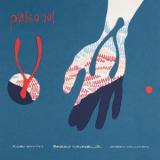
With Dispersion, Loom & Thread return to the volatile architecture of the expanded piano trio - and quietly fracture it from within.
Daniel Klein (drums), Tobias Fröhlich (double bass) and Tom Schneider (keys, sampler) remain the sole agents on stage and in the final recording. The triangle holds. And yet, the field has expanded. For their second studio album, the trio fed their improvisations with the timbral signatures of guest saxophone and vibraphone players - not just as additional voices to be featured, but also as material to be absorbed, atomized and redistributed. The result is not augmentation but thorough refraction.
Where the debut album explored the recursive labyrinth of Schneider's live sampling of his own piano, Dispersion introduces an external grain into the feedback system. Breath and metal. Reed turbulence and struck resonance. The trio sampled extended improvisations by saxophone and vibes players: Victor Fox, Asger Nissen, Volker Heuken, and L&T's own Daniel Klein; dissected their attacks, overtones and decay curves, and integrated these fragments into the trio's internal circuitry. What emerges is a play of presences without bodies - instrumental ghosts circulating through the dense weave of rhythm and keys.
At first, one might hear the familiar relational tension: Klein's polyrhythmic elasticity interlocking with Fröhlich's tensile double bass figurations, Schneider poised at the hinge between tonal field and percussive impulse. But soon, the surface splinters - again. A vibraphone shimmer appears, yet no mallets are visible. A reed multiphonic surges through the texture, bending space between bass and drums. These events are neither quotations nor overlays; they are redistributed energies, dispersed across the trio's grammar. A digital multidimensional interplay ensues.
If the first album unfolded as a two-tiered game - live phrase and sampled reflection - Dispersion adds a further axis. The sampled materials from other improvisers are stripped of their erstwhile two-way interaction and reconstituted as malleable particles. Signifier detached from origin, resonance detached from gesture. The trio navigates a constantly shifting topology in which acoustic memory and electronic manipulation are indistinguishable.
Crucially, the album never abandons the physical urgency of three musicians reacting in real time. The additional timbral layers do not thicken the texture into opacity; rather, they introduce stark points and arrows of diffraction. Density opens into prismatic clarity. Lines splinter and regroup. What seems like a quartet or quintet collapses back into three bodies negotiating an expanded field.
Dispersion is not about addition but about distribution - of agency, of timbre, of temporal perspective. It is an album in which the trio setting becomes a site of multiplicity without surrendering its immediacy. A dissolution not only of the divide between present experience and memory, but between inside and outside, self and other.
Three musicians. Countless vectors. A music that fractures in order to cohere.
CREDITS:
Tom Schneider: piano & sampler
Tobi Fröhlich: double bass
Daniel Klein: drums & percussion
sample sources:
Victor Fox: tenor saxophone
Asger Nissen: alto saxophone
Volker Heuken: vibes
Daniel Klein: vibes
Recorded by Martin Dressler at Bauer Studios, Ludwigsburg.
Mixed & mastered by Martin Ruch.
Artwork by Viet Hoa Le.
Search:his trio
- A1: Les Masques - Il Faut Tenir (1969)
- A2: Isabelle Aubret - Casa Forte (1971)
- A3: Christianne Legrand - Hlm Et Ciné Roman (1972)
- A4: Jean Constantin - Pas Tant D'chichi Ponpon (1972)
- A5: Billy Nencioli & Baden Powell - Si Rien Ne Va (1969)
- B1-: Marpessa Dawn - Le Petit Cuica (1963)
- B2: Jean-Pierre Sabar - Vai Vai (1974)
- B3: Sophia Loren - De Jour En Jour (1963)
- B4: Isabelle - Jusqu’à La Tombée Du Jour (1969)
- B5: Sylvia Fels - Corto Maltesse (1974)
- C1: Frank Gérard - Comme Une Samba (1972)
- C2: Ann Sorel - La Poupée Des Favellas (1971)
- C3: Charles Level - Un Enfant Café Au Lait (1971)
- C4: Andrea Parisy - Les Mains Qui Font Du Bien (1970)
- C5: Audrey Arno - Quand Jean-Paul Rentrera (1969)
- C6: Aldo Frank - T’as Vu Ce Printemps (1970)
- D1: Christianne Legrand - Cent Mille Poissons Dans Ton Filet (1972)
- D2: Clarinha - Lemenja (1970)
- D3: Hit Parade Des Enfants - Aquarela (1976)
- D4: Jean-Pierre Lang - Tendresse (1965)
- D5: Magalie Noël - Une Énorme Samba (1970)
- D6: Françoise Legrand - La Lune
Ever since the late 1950s bossa-nova revolution, Brazil’s influence on French music has been undeniable. Pierre Barouh, Georges Moustaki and a vast array of lesser known artists, all made the Musica Popular Brasileira (MPB) an axis of promotion at the service of a cool and metaphysical, modern and mixed Brazilian lifestyle. Some were seduced by the poetic languors of the bossa, some were looking for fun, and others just loved the American hybridization of jazz-bossa, jazz-samba.
What is bossa nova? One of its creators, Joao Gilberto said: "Its style, cadence, everything is samba. At the very start, we didn't call it bossa nova, we sang a little samba made up of a single note - Samba de uma nota so .... The discussion around the origins of bossa nova is therefore useless”. It is nevertheless useful to remember that these magnificent Brazilian songs, which the guitarist describes as samba, were shifted and balanced around improbable chords. "I like things that lean, the in-betweens that limp with grace," said Pierre Barrouh, quoting Jean Cocteau.
With emotion, arrangements for violin and supple guitar licks, bossa nova rapidly changed. A transformation that can be heard in the Tchic, tchic, French Bossa Nova 1963-1974 compilation, the result of a cultural reappropriation, which traveled through the United States and supplemented itself in France.
A musical revolution that has remained significant, bossa nova was born in Rio. From 1956 to 1961, Brazil lived through its golden years. In five years, the country had invented its modernist style. Elected president in 1956, Juscelino Kubitschek de Oliveira, an elegant man with a broad forehead, brandished a promising slogan: "Fifty years of progress in five years". He quickly got to work. Not worried about increasing debt, he launched the project for a new federal capital, Brasilia, designed by the communist architect Oscar Niemeyer. Volkswagen opened state-of-the-art factories and created the “fusquinha”, the Beetle. In Rio, the Vespa made its first appearance. The Arpoador Surf Club crew run into the “girl” from Ipanema, Helô Pinheiro - the tanned garota ("chick"), between a flower and mermaid, who at 17 walked by the Veloso bar, where the fiery author and composer, Tom Jobim and Vinicius de Moraes, were getting drunk on whiskey. From then on, bossa symbolized cool.
In 1958, Joao Gilberto recorded Chega de Saudade, which the directors of Philips denied, calling it "music for fagots". The marketing director, who believed in it, secretly pressed 3000 78-inch vinyls and distributed them at schools around Rio, creating a tidal wave.
American jazzmen then took over. In particular, trumpeter Dizzy Gillespie and guitarist Charlie Byrd. In November 1962, the Brazilian Ministry of Foreign Affairs funded a "Bossa-Nova" concert at Carnegie Hall in New York, inviting the genre’s pioneers. Unprepared, the show soon turned to disaster. But the troupe was invited to the White House by Jackie Kennedy. The first lady loved "the new beat" and in particular Maria Ninguem, a song by Carlos Lyra, later covered by Brigitte Bardot.
In Brazil, the 1964 military coup quickly ended this euphoria. The destructive atmosphere that ensued pushed many Brazilian musicians to leave, if not to exile. Thus, Tom Jobim, Sergio Mendes and Joao Gilberto arrived to the United States. In New York, Joao Gilberto met saxophonist Stan Getz. At the time, he was married to the Bahianese Astrud Weinert Gilberto, who had a German father. She had never sung before, but she knew how to speak English. Getz therefore asked her to replace her husband on The Girl From Ipanema. The Getz/Gilberto record with Tom Jobim on piano, was released in March 1964. Phil Ramone, the "pope of pop" was in charge of sound.
Bossa nova arrived in Paris through the classic “guitar-voice” channel (Pierre Barouh, Baden Powell, Moustaki…) But France loved jazz and Paris had already welcomed its American contributors. All these good people were to pass through Saint-Germain-des-Prés. The cabaret l'Escale became the Mecca of Latin American sound where one could find Pierre Barrouh and his friends, such as the Camara Trio, samba-jazz aces, whose only record was published by the Saravah label. With a band strangely called Les Masques (a band that included Nicole Croisille and Pierre Vassiliu, among others), the Camara Trio recorded an interesting Brazilian Sound, including the track Il faut tenir which is present on this tasty compilation of rarities.
Other enlightened musicians can also be found on the compilation, such as Jean-Pierre Sabar (songwriter for Hardy, Auffray, Leforestier ...) and the French pop rock organist Balthazar. In 1975, Sabar recorded Aurinkoinen Musiikkimatka on a Finnish label, which featured the crazy Vai, Vai, included on this record. We are now following the footsteps of Brazilian electronic musicians such as Sergio Mendes, Eumir Deodato or Marcos Valle who created funk and disco sounds on their keyboards and synthesizers. A style that influenced Véronique Sanson when she wrote Jusqu’à la Tombée de la nuit in 1969 for Isabelle de Funès, the niece of Louis and a great friend of Michel Berger - Sanson did end up singing this track on her 1992 Sans Regret record.
The pinnacle of exoticism and travel, Sylvia Fels’ Corto Maltese includes bongos, sea mist and ocean sounds. The title was taken from Jacky Chalard’s concept album written in 1974, Je suis vivant, mais j’ai peur (I am alive, but I am scared), based on Gilbert Deflez’s science fiction novel.
However, bossa nova extended the scope of popularity. "In the 1970s, I was a fan of Sergio Mendes, Getz / Gilberto. I fell in love with this music that I knew because I had been an orchestral singer, " explained Isabelle Aubret, who in 1971 delivered a composite record of covers by the very funky Jorge Ben, Orfeu Negro, Tom Jobim, Vinicius de Morais and Jean Ferrat. "I recorded this album for Meys Records in Paris, far from Brazil, with wonderful musicians, François Raubert, Roland Vincent, Alain Goraguer...". The latter wrote the arrangements for Casa Forte, a very percussive title borrowed from Edu Lobo, one of the initiators of the bossa who spent time in California. "Jazz and bossa came together and produced very rhythmic music. I love singing, it allows me to dream, to have fun, to feel a high on stage, and these songs brought me joy, made me swing, my singing felt like a dance.”
The world tours of French singers and their desire for the tropics, often brought them to Rio with its hills, forests, caipirinhas and tanned bodies. There are surprises though, like this Iemenja (Iemenja is the goddess of the sea in the Afro-Brazilian candomblé religion). Not unlike the composer and musician Jean-Pierre Lang, based in Sao Paulo, Claire Chevalier taught Brazil to Brazil. In 1970, the singer and painter published a 45-inch vinyl, Mon mari et mes amants (My husband and my lovers), under the improbable pseudonym of Clarinha (little Claire). She was then living in Rio, with her husband, Joël Leibovitz, who founded a band called Azimuth, and who owned a record label specialized in "sambas enredos" songs for samba school parades.
For its B side, she asked Pierre Perret to come up with lyrics for a song composed by Carlos Imperial: "Oh goddess of the sea, o goddess Iemenja, I bring a white rose to adorn your long hair ..." . "Perret came to see us, and we had fun, remembers Joël Leibovitz. We wrote Lemenja for fun, we recorded it at the Havaí studio, behind the Central do Brasil the central station. Erlon Chaves, the arranger who worked with Elis Regina, joined us" adding his share of Afro-Brazilian percussions and funky brass to the mix.
There is a common misunderstanding in Franco-Brazilian history: that bossa, admittedly hedonistic, is perceived as funny, even though the poets who wrote the texts are often philosophizing on the human condition. Its French interpreters pull it towards a carnival inspired universe, far removed from its fundamental essence. Thus, Jean Constantin covered the famous Samba da minha terra, an ode to the art of samba written by the classic Bahian composer Dorival Caymmi, renaming it with the enticing title of Pas tant de tchi tchi pompon: "On your pier there is no tchi tchi / when you arch your back, you know everything is alright ”(lyrics by Gérard Calvi). This expedited bossa aims for the absurd, but retains a certain elegance.
Indeed, Jean Constantin was not an idiot, the rather large man had a huge mustache and liked fantasy, (Les pantoufles à papa, Le pacha, inspired by cha-cha-cha-cha, salsa and jazz) but he was also the lyricist of Mon manège à moi interpreted by Edith Piaf, the composer of Mon Truc en plume by Zizi Jeanmaire and the soundtrack of François Truffaut’s 400 Blows. Le Poulpe, published in 1970, from which this bossa is extract, was arranged by Jean-Claude Vannier, an accomplice of Serge Gainsbourg’s Melody Nelson. In short: "There is enough of samba / By looking at the parasol / Because my poor cabeza / Is going to die in the sun".
Even the American actress Marpessa Down, who was at the heart of the bossa nova revolution with her role as Euridyce in Marcel Camus’ film Orfeu Negro, winner of the 1959 Cannes Palme d'or, fed the clichée with Je voudrais parler au petit cuica - "Tell me how you manage to always make people want to dance / It's true, I must admit that I cannot resist your magic" - in consequence, once can hear the cuica, a little drum inherited from the Bantu.
But bossa nova had many angles. Societal, of course, pushing actresses who were symbols of women's liberation like Brigitte Bardot, Jeanne Moreau, or Sophia Loren to engage in the exercise of accelerated bossa. In February of 1963, Sophia Loren made a record in French in Rome, Je ne t'aime plus, featuring the song De jour en jour, a bossa written by two Italians, Armando Trovajoli and Tino Fornai, which was released a little later by Barclay. Bossa accompanied the 1960s, a decade of moral liberation. Ann Sorel, who interpreted La Poupée des favellas, caused a sensation with L’amour à plusieurs, a provocative song written by Frédéric Bottom and Jean-Claude Vannier. As for the actress Andrea Parisy, she displayed her bourgeois cheekiness in Marcel Carné's Les Tricheurs before interpreting Les mains qui font du bien. And Magalie Noël, the friend of Boris Vian, who sung Johnny fais-moi mal, was hired to sing Une énorme Samba, composed by Alain Goraguer (arranger to Gainsbourg, Bobby Lapointe and Jean Ferrat) with lyrics by Frédéric Botton.
But in the end, of what wood is bossa nova made of? The answer is given by Christianne Legrand, daughter of Raymond the conductor, and sister to Michel the composer: "With me, with jà" - jà means "immediately" in Portuguese. In 1972, the singer, an expert in vocal jazz and a member of the Double Six, published Le Brésil de Christianne Legrand. Two songs included on the Tchic Tchic compilation that demonstrate how bossa, jazz, funk, rock, etc. work like a swiss army knife: the music is used to denounce broken systems, or miracles, HLM et ciné roman, Cent mille poissons dans ton filet, two songs from the O Cafona soundtrack, a successful telenovela broadcast, at the time in black and white, on TV Globo. The first was adapted in French by the fighter and friend of the Legrand tribe, Agnès Varda. The second is content with a play on words, jostling them into a summer fun.
Véronique Mortaigne
- 1: Apis Bull
- 2: Moon Of Urd
- 3: Phlegraean Fields
- 4: Blind In Abyssal Realms
- 5: Hierothesion
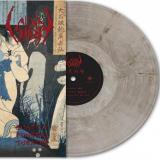
ORDH's debut, "Blind In Abyssal Realms", sets out to redefine what the term 'progressive death metal' truly means. But before ORDH, there was BARISHI. When their bass player threw in the towel to pursue other interests in life, guitarist and vocalist Graham Brooks, "looking for a fresh start", decided the time had come to finally dwell in his favorite genre: death metal. But not just any kind of death metal_ Having drafted BARISHI drummer Dylan Blake, with whom Graham has been playing since he was twelve years old, and Josh Smith from KIEFCATCHER on bass, the trio then spent a few gruelling years working on their debut, with Graham writing most of the music and ironing the songs out with Dylan and Josh. Having toured with COME TO GRIEF when BARISHI was still around, Graham and the latter's singer Jonathan Hébert had hit it off really well, so when the time came to find a vocalist, Jonathan was called upon, "right on time to jump straight into the recording and writing process, as most of the music was ready to go".
Cloud Management return to Altin Village & Mine for a unique collaboration with New York writer and creative polymath Vivien Goldman.
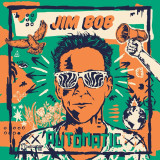
A pairing spanning generations and geography, but with a musical overlap that is quite fitting in both process and result. Cloud Management’s jammy, improvisational approach to their dubby electronics blends well with Goldman’s idiosyncratic vocal style, which has its origins in the early days of post–punk and UK dub experimentalism. Cloud Management blend many historical aspects of German electronic music into something distinctly their own, while retaining a view well beyond those borders or any particular era. This approach fits well with Goldman’s deep multidisciplinary career, not easily defined because of its eclectic abundance across disciplines, yet always orbiting around music as its foundation.
When it comes down to it, these are great tracks created in the same way they sound: loose but refined, circling and turning inwards and outwards, back onto themselves. A dub of a dub of a dub, but never falling too far from the source — the minimalism necessary to deliver a direct, steady resolve and a gripping listen.
The B–Side of the record features three remixes by artists from across the globe, all with strong connections to the front line of dancehall, dub, and electronic music experimentalism. Longtime Equiknoxx member Time Cow from Kingston (Jamaica), delivers a version of »Quick Cover Up« that represents a major overhaul of the original. This remix strips away much of the looseness of the source material and leans into a lush yet slightly darker atmosphere, created by layered synths and a masterful use of underlying percussion and melodic stabs.
Up next are Twin Cities, Minnesota–based Feel Free Hi Fi, who take on »Judge Judge.« The duo tighten things up, overlaying weighty vintage string synths and digi–flute melodies. This version feels designed for smoky, late–night dub sound system sessions, harkening back to dub’s foundations.
Last but not least is London’s Pat Orburn. Stripped way down, the remix rides an interplay between alternating minimalism and a more lo-fi but lush exuberance, somewhat reminiscent of a bossa nova–esque minimal synth sound. This version’s lo–fi pop sensibility provides a fitting contrast and completes an eclectic yet copacetic trio of remixes for the record.
2026 Repress
Lisa Decker returned with her second studio album "Soliloquise" one year after her debut album "Serendipity" in 2021 with Japanese Jazz trio Nautilus from Tokyo and a superb single remix of "Everytime" by Pat Van Dyke featuring rapper John Robinson.
For this project she worked on eight new songs. Half of the album is arranged by Nautilus and the other half is produced by SaturnVybz who is known for his works with/and projects like Slick Walk, The Ruff Cats and Jazzanova.
Getting a step forward and conceptually a bit different this release gets the "Oonops Drops" FLIP SERIES treatment which means: Side A and Side B are made by different artists or differentiate from each other like the first volume with Nautilus X Anna Sato & Toshiyuki Sasaki (OD006LP).
Songs like "Free", "Let's Wake Up" and "Summer Child" with their feel warm note of groovy, jazzy pop and the more swing-jazz tune "Rimy Whitewater" meet guitar-electronic touched songs like "Love And Hope", "On My Way" and "True Blue" or her dreamt away track "Stay With Me" with smooth bouncy beats and with an atmosphere for being the perfect soundtrack for a night ride on deserted streets.
Lisa is careful about the artwork and after working together with renowned artist Lindsey Kustusch from San Francisco on her first album she collaborates with local artist Sebastian Maria Otto who is known for his signature art style and exhibitions from Germany to Japan.
Lisa will perform live in Hanover, the 20th May at roof top of the Historical Museum together with Nautilus. Japan meets Germany. Lucky coincidence or: "Serendipity".
- 1: Jumpscare
- 2: Star87
- 3: Misery
- 4: Blk Xmas Feat Bruiser Wolf
- 5: Waterproof Mascara
- 6: Counterclockwise
- 1: Corinthians Feat Despot
- 2: Pitchforks & Halos
- 3: All These Worlds Are Yours Feat Elucid
- 4: Maquiladoras Feat Al.divino
- 5: A Doll Fulla Pins Feat Yolanda Watson
- 1: Golgotha
- 2: Cold Sweat
- 3: Blk Zmby
- 4: Make No Mistake
- 1: Born Alone
- 2: Lead Paint Test Feat Elucid & Cavalier
- 3: Dislocated Feat Elucid
- 4: House In The Woods
Vinyl[39,71 €]
GOLLIWOG is billy woods' first album in two years, preceded by 2023's Maps, his second collaboration with producer Kenny Segal. That nimble travelogue has little in common with woods' newest work, despite the fact that Segal shows up a couple times in the credits. GOLLIWOG is a haunting collection that weaves horror, humor, surrealism and Afropessimism into a cinematic tapestry, aided and abetted by a murderer's row of producers. African zombies, time traveling trap cars, malevolent ragdolls and a dying Frantz Fanon are just a few of the revelers in woods' danse macabre. GOLLIWOG features production from The Alchemist, Kenny Segal, EL-P, Conductor Williams, Preservation, Messiah Musik, Sadhugold, Ant (Atmosphere), Shabaka Hutchings, Steel Tipped Dove, DJ Haram, Willie Green, Jeff Markey, Saint Abdullah, and LA-based experimental jazz trio Human Error Club. Meanwhile, woods is joined on the mic by Backwoodz labelmates ELUCID and Cavalier, along with rappers Bruiser Wolf, Despot, Al.Divino, and singer-songwriter Yolanda Watson. GOLLIWOG is another triumph in the woods oeuvre, as layered and compelling as anything he has ever done. A black carnival pitched in a muddy field overnight, empty rides whirring and clattering in the dark.
- When Your Lover Has Gone
- A Cottage For Sale
- Who's Sorry Now
- Once In A While
- These Foolish Things
- Just For The Fun Of It Can't
- I Lover Come Back To Me
- Don't Get Around Much Anymore
- I Understand
- Just One Of Those Things
- The Song Is Ended
- I Should Care
- The Party's Over
- Angel Eyes
- Teach Me Tonight
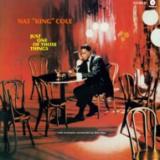
By the time Just One of Those Things was recorded, Nat "King" Cole was already considered by the general public as more of a singer and entertainer than a jazz pianist. Cole did his first sessions with the more jazz-oriented Billy May in 1951, but it wasn't until 1957 when they collaborated on this first LP - Just One of Those Things, a memorable album in which all 12 songs fit seamlessly together perfectly. It wasn't just May's arrangements that created such swinging music behind Cole's vocals though, it was also the band, which included many illustrious soloists: Harry "Sweets" Edison, Willie Smith, Pete Candoli, Jimmy Rowles and Lee Young, along with John Collins and Jack Costanzo, members of the celebrated Nat "King" Cole Trio.
The sonic worlds of Devon Rexi and John T. Gast collide in a vital meeting between two singular mavericks!
Following two lauded EPs on cult label South of North, Amsterdam-based Devon Rexi prepare to release their much-anticipated debut album, recorded by and featuring elusive 5 Gate Temple devotee, musician and producer John T. Gast, whose acclaimed catalogue continues to flourish.
Devon Rexi is a trio made up of Nicola Reverda (Nicolini), Nushin Naini and Goya van der Heyden (La Rat). They’ve quickly carved out their own sonic world, traversing krautfunk, post-punk and psyched-up no wave, all laced with a dub-heavy experimental mentality. Breathstep captures the band’s bass-heavy incantations, ripe with melodic chaos and rhythmic improvisation, while devilish cackles and processed vocals flirt over a jukebox of dubbed snippets and sliced textures.
The introduction of John T. Gast as producer and collaborator pulls the Devon Rexi sound deeper into bubbling dub territory, while his own palette is stretched and pushed into new terrain. Though Gast has firmly cemented his singular sound over the last decade, this interconnected process marks new ground for all involved. The result is a supreme convergence of esteemed musicians and a wickedly fine debut collaborative record.
Breathstep finds its home on Bristol imprint Accidental Meetings, whose ever-evolving sound and wide-ranging discography continue to grow. The album was recorded over the last year across Amsterdam, Lisbon and London.
- A1: Gloria Lynne “The Jazz In You” 2.22
- A2: Joe Harrioj Quintet “Señor Blues” 4.02
- A3: Peggy Lee “Black Coffee” 3.05
- A4: Benny Golson “Tippin’ On Thru” 6.41
- B1: Sheila Jordan “Dat Dere” 2.42
- B2: Al ‘Jazzbo’ Collins “Max” 3.04
- B3: Nina Simone “Central Park Blues” 6.49
- B4: John Wright Trio ”South Side Soul” 5.03
- C1: Diane Maxwell “Love Charms” 2.16
- C2: David Michael And Chorale “Wow” 2.36
- C3: The Jimmy Heath Orchestra “Big ‘P’” 3.54
- C4: Bobby Timmons “So Tired” 6.11
- D1: Nappy Brown “My Baby” 2.32
- D2: Sonny Clark “Midnight Mambo” 7.12
- D3: Sabu MarNez And His Jazz-Espagnole “Enchantment” 4.27
- D4: Zoot Sims And His Orchestra “Recado Bossa Nova - Pt.1” 2.36
Step into the second chapter of the The Jazz Sinners saga dedicated to cool, groovy and sinful
Jazz. The Jazz In You goes deeper with richer grooves, glamorous moods, pure analog soul.
A cinemac journey through jazz’s most seducve decades, pressed and presented with
uncompromising audiophile standards. This is jazz that moves, seduces, and stays. Every cut is pure
jazz alchemy. Rare, prisne vintage first pressings and top-er sources only. No shortcuts, no
compromises. Mastered organically for a full 360° sound spectrum, where every nuance and every
breath feels as if the players were right there in the room. The mood is cinemac, midnight cool. Jazz with a;tude inspiring shadowed alleys, smoky clubs, late-night elegance.
Music that speaks equally to jazz lovers, lounge selectors, DJs, and serious collectors.
At the heart of the journey, instantly recognizable landmarks light the way:
Gloria Lynne’s “The Jazz In You”, Benny Golson’s “Tippin’ On Thru”,
Nina Simone’s “Central Park Blues”, Diane Maxwell’s “Love Charms”,
Sabu Marnez’s “Enchantment”, and Zoot Sims’ “Recado Bossa Nova – Pt.1”.
Timeless names, meless grooves, each cut is chosen for its power to move and to suggest feeling
and emoons. Behind the selecon stand true masters of mood, with over thirty years of digging,
taste, and style shaping every decision.
On this double vinyl, the experience is treated with the respect it deserves. Pressed under expert
supervision, housed in a premium 100% Italian-made cover on luxurious 350g cardstock, with polylined inner sleeves designed for long-term preservaon. Built for collectors. Made to last
generaons and here is the promise: Triumphant. Timeless. Deeply grooving.
Soulful vocals, hard-swinging combos, cinemac big bands, Afro-Lan heat, late-night Blues. Every
track is a winner. The Jazz In You is feeling. It’s a;tude. It’s moon and emoons.
Now, sit back, close your eyes and get ready to find something captured, once again, that escapes
explanaon … The Jazz Sinners’ way!
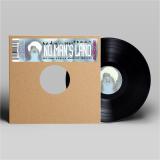
Complimenting his singular debut LP, 2025’s ‘Light Months Will Fly Over Us’, singer-songwriter and producer Addy Weitzman sees his thoughtful artrock and new wave aesthetic expanded by The Time & Space Machine for a limited three-track 12".
The long-running alias of British DJ, archivist and acid pioneer Richard Norris, this trio of remixes from The Time & Space Machine’s central processing unit finds Norris in a jubilant raving mode, his trademark psychedelia contributing to Slacker at its best and baggiest. The initial mix captures Weitzman’s songwriting in full, including his portentous vocal hook – “No man is a prophet in his own land” – a proverb first found in the gospels, blessed with the innovative Norris’s application of hypnotic groove, fat low-end and a ton of percussion.
The B-side sees Norris stripping things back in two directions: the Shango Dub draws focus on the higher vibrations found in the track’s beautifully intertwined percussive and synth elements, while the Riddim Mix reduces the frequencies further still, with a phased, slightly fried drum workout primed to spin heads as the night gets deeper and darker.
'At the beginning of the 1960s, at the Berklee College of Music, Byard Lancaster met some feisty friends: Sonny Sharrock, Dave Burrell and Ted Daniel. It is easy to see why he rapidly became involved in free jazz. Once he was settled in New York, he appeared on Sunny Murray Quintet, recorded under the leadership of the drum crazy colleague of Albert Ayler.
'In 1968, the saxophonist and flutist recorded his first album under his own name: It’s Not Up To Us. The following year he came to Paris in the wake of… Sunny Murray. He would come back to France in 1971 (again with Murray) and in 1973 (without Murray for a change). This is when he met Jef Gilson, the pianist and producer who encouraged him to record under his own name again. On Palm Records (Gilson’s label), he would release four albums: Us, Mother Africa, Exactement and Funny Funky Rib Crib.
'Us, the first of the four records was recorded on November 24th, 1973 with Sylvin Marc on electric bass (a Fender… Lancaster?) and the evergreen Steve McCall on drums.
'On the album, the trio works from the John Coltrane model; free jazz shook up by the timely contributions of the bassist, followed by a mesmerizing atmospheric music. Then, Lancaster delivers a sinuous solo path, which is a reminder of his unique tone. On the album’s companion single, the trio launches into great black music of a different genre which would lead the clairvoyant François Tusques to claim that Byard Lancaster is an “authentic representative of soul/free jazz”, to sum up this is Great Black Music!'
- 1: Toninho
- 2: Shapeshifter
- 3: Grönbete
- 4: Saga Nomri Ngen
- 5: Monkurt
- 6: Olikheter
- 7: Chime Blues
- 8: Ses Vid Horisonten
April Records proudly presents the new album from Stockholm Stockholm-based bassist and composer Jon Henriksson - a confident and flexible statement that deepens his place within contemporary Scandinavian jazz. Following the success of his 2023 debut Harmonia which placed second in Orkesterjournalen s Golden Album " readers " poll, Henriksson returns with music that foregrounds collective interplay, shifting forms, and a strong compositional voice. Born in Gothenburg and now active across Sweden and Europe, Henriksson has collaborated and toured with artists including Lars Jansson, Hakan Broström, Erik Söderlind, Klas Lindquist, Jonas Kullhammar and Christina von Bülow. Alongside leading his own ensembles, he remains a soughtsought-after bassist in a wide range of projects, balancing a deep connection to the jazz tradition with a modern, exploratory approach. Shapeshifter is built around a core quartet of tenor saxophone, piano, double bass and drums, expanded with guitar on three tracks and trombone on two. The album moves fluidly between contrasting moods, from forceful and driving to reflective and restrained, with each piece shaped by the musicians " intuition and responsiveness. The title reflects Henriksson s compositional philosophy: allowing roles, textures, and forms to evolve as the music unfolds.The ensemble brings together long long-standing musical relationships. Pianist Rasmus Sorensen and Henriksson have collaborated since their studies at Skurups Folkhögskola (Henriksson is a longstanding member of Sorensen s own trio), while drummer Jonas Bäckman forms part of a well well-established rhythm section partnership with the bassist across numerous projects including the Britta Virves Trio. Saxophonist Karl Karl-Martin Almqvist, a member of the Danish Radio Big Band, completes the quartet, with guitarist Pelle von Bülow and trombonist Rasmus Holm joining the session shortly before recording to expand the album s sonic palette where the music called for it. Originally conceived as a quartet album, Shapeshifter took its final shape in the lead lead-up to recording as additional instrumental colours were introduced organically. The piece Toninho , a tribute to Brazilian guitarist and composer Toninho Horta, features acoustic guitar and subtle wordless vocals, reflecting melodic influences that sit naturally within the album s contemporary jazz framework. Across the record, space, pacing, and interaction remain central. Rather than forcing constant motion, the music allows ideas to develop with clarity and intent, resulting in an album that highlights Henriksson s growing assurance as a composer and bandleader, while keeping the collective at its core.
- A1: Wolf's Theme
- A2: Harappā
- A3: Body And Soul
- B1: Doxie
- B2: Chattanooga Choo-Choo
- B3: I Can't Get Started
- B4: Viva Giappone
During his time with the Yosuke Yamashita Trio, Nakamura poured his entire being into every note, weaving flashes of inspiration and raw impulses into powerful blows in the early 1970s. With this work, he undergoes yet another transformation. As Nakamura himself described: “Sharing space with everyone, feeling as if we’re flying freely like birds that’s the ideal.” Here, layers of sound and moments of silence expand the sonic space, and within it, Nakamura’s saxophone runs vibrantly and unrestrained.
Highlights include the exhilarating “Wolf’s Theme”, inspired by Kazumasa Hirai’s Wolf Guy series; the nostalgic melodies and relaxed groove of “Harappa”; elegant, richly textured interpretations of standards like “Body & Soul” and “I Can’t Get Started”; and the dynamic, liberating energy of “Viva Giappone”. In every track, Nakamura’s ideal is vividly realized. Featuring contributions from Toshiyuki Daitoku, Aki Takase, and Ryojiro Furusawa.
- A1: You Got The Love - The Retrosettes Sister Band
- A2: Onward - Mark Kozelek
- A3: Third And Seneca - Sun Kil Moon
- A4: Des Pas Sur La Neige - Préludes (Book 1) - Claude Debussy
- B1: Cavatina "Figlia, Ti Scuoti" From Virginia (Act I) - Saverio Mercadante
- B2: À Ma Manière - Maria Letizia Gorga
- B3: Reality - The Retrosettes Sister Band
- B4: Can't Rely On You - Paloma Faith
- C1: Ceiling Gazing - Mark Kozelek
- C2: Dirty Hair - David Byrne
- C3: Berceuse - Igor Stravinsky
- D1: Just (After Song Of Songs) - David Lang / Trio Medieval
- D2: Simple Song #3 - David Lang / Sumi Jo (Soprano) And Viktoria Mullova (Violin Solo)
- D3: Mick's Dream - David Lang
- D4: Wood Symphony - David Lang
Youth (original Italian title La Giovinezza) is a 2015 comedy-drama film written and directed by Paolo Sorrentino, starring Michael Caine and Harvey Keitel. Set in a luxurious Swiss Alps hotel, the story follows two lifelong friends: Fred Ballinger, a retired composer who has turned his back on performance, and Mick Boyle, an aging film director determined to finish what he hopes will be his final screenplay. While navigating the quirks of hotel life and revisiting the milestones of their own pasts, the film explores themes of nostalgia, personal legacy, affection, and mortality.
The soundtrack of Youth is a blend of original score by David Lang, and a selection of other carefully chosen pieces, ranging from classical works to contemporary songs. The centerpiece, “Simple Song #3,” performed by soprano Sumi Jo, captures the film’s themes of beauty, loss, and reflection. Alongside Lang’s compositions, the music features “Can’t Rely on You” by Paloma Faith, the classical piece Debussy’s “Préludes: Des pas sur la neige”, and “Third and Seneca” by Sun Kil Moon, amongst others, creating a rich, genre-spanning soundtrack that blends contemporary, classical, and indie influences.
The soundtrack of Youth is available as a limited edition on transparent vinyl and includes a 4-page booklet with liner notes.
- A1: What About Tomorrow?
- A2: Meine Beste Freundin
- A3: Needle Drop
- A4: Carousel
- A5: Laugh And Cricket
- B1: Faces
- B2: Toxic
- B3: What Happened Next
- B4: You Made Sunday
- B5: Going Home
Lo Recordings are very proud to announce the release of a beautiful collaborative project. A seamless sonic journey that guides us through the filmic landscape of a bygone era. Chiming in the past and resonating in the present.
Meg Morley and Haiku Salut combine their talents for the reimagining of a score for the 1930's silent film People on Sunday. Inspired by their live performance and screening of the classic at the Flatpack festival. The release was five years in the making as they set out to capture the compositions in the studio, blending Morley’s expressive piano with Haiku Salut’s textured electronics. The result has given rise to an album that belies its historic source with a fresh and clean sound and a complex ever moving series of compositions.. 'The Lost Score' is a vibrant contemporary album for our time.
Haiku Salut are an instrumental trio whose music blends electronica, neo-classical and folk into richly layered, cinematic soundscapes. Known for their enigmatic performances and live scores to silent films, they create immersive experiences that merge timeless visuals with modern experimental sound.
Meg Morley is a Melbourne-born London-based pianist, composer and improviser who pursues cross-cultural and interdisciplinary collaborations, focusing on storytelling. Her classically trained precision and jazz-inflected improvisations have brought her to prominence through her compositions for classical and jazz ensembles, accompaniment for dance companies (Pina Bausch, English National Ballet) and her internationally-acclaimed original scores for silent film.
The latest release from Jazz Room is a tribute to the legendary pianist Tenorio Jr. by Cult J-Jazzers 45 Trio, and is their tribute to the Mystery Man who spearheaded Brazilian samba jazz.
Side-A features a cover of 'Nebulosa', released in 1964 and still regarded as a pinnacle of piano jazz, approached in a manner unique to 45 Trio. With delicate touch, profound performance and arrangement, they breathe new life into this classic. It get's really Funky halfway through too, watch the Jazz Dancers take the lead on this one!
Side-A '#Tenorio' was crafted as an homage to his work. Light rhythms intertwine with sophisticated chord progressions, creating a groove that fuses jazz and samba with a contemporary Dance Floor feel.
Strut Records presents a fresh look at Oblivion Express, the 1971 album that marked Brian Auger’s shift into a new musical frontier. After years spent shaping the sound of British jazz-soul with the Trinity, Auger stepped into the new decade with a leaner, electrified ensemble and a renewed sense of purpose. This record captures the moment that transformation took shape.
Oblivion Express introduced a sound that was distinctly Auger’s own. Rather than echoing the fusion emerging in the United States, Auger developed a language rooted in the UK’s jazz underground, culminating in a spaced out jazz- rock / prog-fusion album awash with larger than life drum fills and Auger’s virtuosic organ playing. Between bassist Barry Dean and drummer Robbie McIntosh the album moves effortlessly between tight, articulated phrases and broader, improvisational passages. The trio’s interplay forms the backbone of the album and sets the tone for the sound that would define the early years of the Express.
Album opener “Dragon Song” launches with a restless drive that immediately signals Auger’s new direction. Auger chose to record this version of John McLaughlin’s piece (his friend and former bandmate in 'The Niddy Griddys') after hearing McLaughlin’s album Devotion during its mix at New York’s Record Plant Studios. Auger was blown away, recalling, “Oh my god, this is amazing. I wanted to record that myself - and I did!”. Pieces like “Total Eclipse” demonstrate the Oblivion Express’ command of dynamic contrast, and title track “Oblivion Express” explores the cinematic and compositional prowess of the group through stripped back, building moments vs. explosive melodic breakdowns. Riff-heavy “The Sword” later became known through Madlib’s usage in 2014 tracks “Yeti Movie” and “Parodies”.
In retrospect, Oblivion Express stands as a jazz leaning, prog-rock masterpiece and foundational moment in Auger’s catalogue. It captures the starting point of a new sound that is more focused, more urgent, and fully committed to the possibilities of jazz-rock at the dawn of the seventies. The album remains a vivid document of a band discovering its identity and setting the stage for the further array of influential releases that would follow.
Yuvi Havkin aka Rejoicer returns with an exceptional collaborative album, California Space Craft. On this aptly titled record, he joins forces with seasoned LA bass polymath Sam Wilkes — known for his inspired studio work with Sam Gendel and his dynamic live performances alongside Louis Cole and KNOWER — and drummer Tamir Barzilay, completing the LA-connected trifecta alongside a select handful of key featured guests. The idea for California Space Craft was born out of a series of inspired live sessions in Los Angeles between 2019 and 2022, notably at Listen to Music Outside in the Daylight Under a Tree, where the trio’s natural chemistry first began to bloom. The resulting recordings encompass a wide variety of inspired sound stylings, as one would expect from any of these accomplished artists on their own; however, the sum is truly greater than the parts here, with the fluidity of their freeform improvisations over a dedicated three-day recording session feeling remarkably focused as a cohesive whole. Opening track “Traveling Light” sets the LP’s tone with equal parts Sly & Robbie-style, space echo– drenched rhythms and the cozy kosmische, guitar-led feel of early-2000s genre-fluid explorers like Tortoise. As we continue on to “Ritual in G#,” we are reminded that this is indeed a unique and timeless sonic space the trio has created, as Havkin’s crisp Rhodes chords anchor an ever-evolving psychedelic sound bed. The soaring trumpet of Avishai Cohen adorns the Afrobeat-indebted “Lion Water,” with Barzilay laying down a proper Allen-esque groove, while “Further (with you),” featuring Nitai Hershkovits on keys, offers a defining look at the titular concept of the album — with pure Cali feels coalescing effortlessly into sciNew Release Information fi narrative modes and a proper dose of Rejoicer futurism. Elsewhere, “Her Hair in the Air” shines with fresh polyrhythmic intention, illustrating the balanced bond between the three collaborators at their conversational peak, and the brisk synth strokes of “Early Porpoises,” alongside LP closer “Oceanic Friends” — again ideally named — double as a grand, in-stereo ride into the blissful Pacific sunset horizon. California Space Craft embodies the power of open, collective intention and musical kinship, offering memorable, uplifting moments and an aural glimpse of hope, warmth, and loving melodious calm in an otherwise quite chaotic time for humanity.
In the ever-evolving yet foundational landscape of instrumental groove music, F-Spot Records is proud to debut "Monkey Part 2 b/w Lully" from up-and-coming, multi-faceted keyboardist and composer Max Naseck. Raised in Dallas, Texas, but having worked throughout the Los Angeles music scene for almost a decade, Max Naseck, joined by guitarist Brandon Bae and drummer Julian Allen, brings his new trio project to life. After chasing this sound and style of playing for several years, Appropriately given the name "The Left Hand of God" by some of his musical peers, Max takes the classic soul jazz trio setting of holding down both the bass and melody elements and moves them to a unique combination of funky Moog synth (Key bass) and a Wurlitzer 200A electric piano. This 45 provides a fresh yet retro sound that is sure to leave listeners grooving and locked in.
From the first notes and tight 4-on-the-floor rhythm, "Monkey Part 2" kicks off the A-side with a unique psychedelic blend of soul, funk, and a touch of disco. With Allen's groovy touch, Naseck perfectly locks in with his left hand, followed by Bae's precision-picked electric guitar, which completes the trio's solid groove, further propelled by Naseck's right hand taking the melodic lead. Then on side B, "Lully" brings the tempo down to a more soulful, atmospheric blend that's equal parts Khruangbin & modern jazz pioneers, a la John Scofield. Recorded live together in one room, Max brings his strong compositional style to the table, showcasing how three musicians can interact in a playful, melodic, and groove-focused way.
- Adjame Street
- Marie Dance
- Yélé Kura
- Mandingo Galaxy
- Mogo-Sobé
- Farafinko
- Balafon Evolution
- Dreams Of Mikael
- Peace In The World
On his new album, the Ivorian balafon virtuoso Aly Keïta explores new horizons for his instrument in improvised music. Together with his Berlin-based trio, he conquers the peaks of balafon possibilities one by one, wandering between groovy African rhythms, spectacular polyphony and elements of jazz, and combining them into a fusion that is both futuristic and deeply in roots. In Balafon Evolution, Keïta establishes a new level of balafon artistry, creating universal, contemporary soundscapes that transcend cultural boundaries. The Aly Keïta Trio embodies the pulsating spirit of the Berlin jazz scene. Coming from different cultural backgrounds, the three musicians found a common language on stage as they explored the metropole, one of the most active, buzzing jazz hubs of Europe. Aly Keïta and the Dutch drummer Marcel van Cleef, began playing together in 2008, forming the core of the trio"s future "groove machine". As a part of the "Aly Keïta and Magic Balafon" formation, they shared a prize of the Global music contest "Creole" in 2009. Recognised as one of the most intriguing and innovative bass players among the new generation, the Italian bass player Roberto Badoglio, joined trio in 2014, becoming a true "fusion reactor" of the band.
- Shapeshifter
- Come On Over
- A Good Place
- Leeds Place
- Rule Of Three
- Milking The Stone
- Mustering
- Strawberry Moon
Taking the exploratory spirit of groups like Polar Bear and Malija (both also featuring Mark Lockheart ) the trio move together through a common language of jazz, rock, classical and free improvisation exploring dark textures and dramatic musical shifts as they revel in the unexpected. High energy jazz improvising combined with spatial and ambient sounds gives this trio its unique and bold concept. The music shifts effortlessly moment to moment, gracefully and spontaneously stitching together sound landscapes and grooves. The subtle use of electronics (particularly on the saxophone), fat rich bass lines and tantalising drum rhythms give his band a unique sound that although firmly rooted in jazz has rock, folk and classical influences too. The album's specially commissioned artwork by Tim Edgar perfectly reflects the shifting shapes of Shapeshifter
Lila Colored Vinyl[23,49 €]
Extra Stars is Gregory Uhlmann"s solo debut on International Anthem. It"s a deep and gorgeous expansion of the LA-based multi-instrumentalist producer / composer"s rhythmic ambient side, as nascently explored in his much-lauded duo with Meg Duffy, his trio work with Josh Johnson and Sam Wilkes, and in the gentler of SML (the improvising trance-jazz unit of which he is a member).
Black Vinyl[23,32 €]
Extra Stars is Gregory Uhlmann"s solo debut on International Anthem. It"s a deep and gorgeous expansion of the LA-based multi-instrumentalist producer / composer"s rhythmic ambient side, as nascently explored in his much-lauded duo with Meg Duffy, his trio work with Josh Johnson and Sam Wilkes, and in the gentler of SML (the improvising trance-jazz unit of which he is a member).
- 1: Tinkerbell
- 2: Lights On, Nobody Home
- 3: Coping
- 4: Astro Boy/Ochanomizu
- 5: Duuude
- 6: Friends Of Fire
- 7: A Chance Of A Lifetime
- 8: Turn Of Luck
Turquoise/Black Smoke Vinyl[24,33 €]
KALEIDOBOLT’s fifth album is pungent to the ears – KARAKUCHI out in March Karakuchi is one record you can judge by its cover. The first time Kaleidobolt’s faces have adorned an LP, they have been fused into a torpedoing biomechanical vehicle. Echoing The Birthday Party’s Junkyard or Motörhead’s Orgasmatron (…on acid?!), the illustration epitomises perfectly Kaleidobolt’s agenda of “hyperkinetic rock”. Their feverish, psych-prog sound is full of motion. It jerks around at different speeds, threatening to spin out of control and crash into flames at any given moment. What’s more, it isn’t taken too seriously. This is heavy and intricate music, yes. But as bassist and co-singer Marco Menestrina puts it, the Kaleidobolt attitude is “an ugly smirk more than an angry face with a fist.” On their fifth album since forming in 2014, the Helsinki-based outfit lean into their strengths as a formidable power trio. With their previous two records, 2019’s Bitter and 2022’s This One Simple Trick, they had thrown everything at their disposal into the recording with no expense spared on overdubs, effects and kitchen sinks. Produced again by Niko Lehdontie (Oranssi Pazuzu), Karakuchi comes from tightly rehearsed, live-in-the-studio takes. Kaleidobolt realise that greater sparsity can be a strength, and they’ve allowed their instruments extra space to breathe. It makes for their earthiest, purest and perhaps most authentic record to date. Karakuchi’s exuberant style emerges from the individual members’ contrasting listening habits. These span classic prog, Japanese city pop, noise rock, post-hardcore and historical podcasts. One record they can all agree is a masterpiece, the centre of the Venn diagram where all three members meet, is King Crimson’s Red. As for their new album’s title, that’s as suitable as the cover art. “Karakuchi” is the slogan of the Japanese beer brand Asahi Super Dry. Translated literally, this means “pungent to the mouth”. As drinkers of that product, Kaleidobolt acknowledge its parallels to their songs. “It’s very intense, right at the front, like at the first bite,” explains Menestrina. “And then it leaves your mouth feeling refreshed. The flavour doesn’t linger in your mouth, basically. It has a quick, hard finish. With a bit of a stretch, we thought that that could also be said of our music.” Karakuchi is Kaleidobolt at their hardest, fastest, tightest and super-driest. Pungent to the ears. -JR Moores, November 2025
- 1: Tinkerbell
- 2: Lights On, Nobody Home
- 3: Coping
- 4: Astro Boy/Ochanomizu
- 5: Duuude
- 6: Friends Of Fire
- 7: A Chance Of A Lifetime
- 8: Turn Of Luck
Black Vinyl[23,49 €]
KALEIDOBOLT’s fifth album is pungent to the ears – KARAKUCHI out in March Karakuchi is one record you can judge by its cover. The first time Kaleidobolt’s faces have adorned an LP, they have been fused into a torpedoing biomechanical vehicle. Echoing The Birthday Party’s Junkyard or Motörhead’s Orgasmatron (…on acid?!), the illustration epitomises perfectly Kaleidobolt’s agenda of “hyperkinetic rock”. Their feverish, psych-prog sound is full of motion. It jerks around at different speeds, threatening to spin out of control and crash into flames at any given moment. What’s more, it isn’t taken too seriously. This is heavy and intricate music, yes. But as bassist and co-singer Marco Menestrina puts it, the Kaleidobolt attitude is “an ugly smirk more than an angry face with a fist.” On their fifth album since forming in 2014, the Helsinki-based outfit lean into their strengths as a formidable power trio. With their previous two records, 2019’s Bitter and 2022’s This One Simple Trick, they had thrown everything at their disposal into the recording with no expense spared on overdubs, effects and kitchen sinks. Produced again by Niko Lehdontie (Oranssi Pazuzu), Karakuchi comes from tightly rehearsed, live-in-the-studio takes. Kaleidobolt realise that greater sparsity can be a strength, and they’ve allowed their instruments extra space to breathe. It makes for their earthiest, purest and perhaps most authentic record to date. Karakuchi’s exuberant style emerges from the individual members’ contrasting listening habits. These span classic prog, Japanese city pop, noise rock, post-hardcore and historical podcasts. One record they can all agree is a masterpiece, the centre of the Venn diagram where all three members meet, is King Crimson’s Red. As for their new album’s title, that’s as suitable as the cover art. “Karakuchi” is the slogan of the Japanese beer brand Asahi Super Dry. Translated literally, this means “pungent to the mouth”. As drinkers of that product, Kaleidobolt acknowledge its parallels to their songs. “It’s very intense, right at the front, like at the first bite,” explains Menestrina. “And then it leaves your mouth feeling refreshed. The flavour doesn’t linger in your mouth, basically. It has a quick, hard finish. With a bit of a stretch, we thought that that could also be said of our music.” Karakuchi is Kaleidobolt at their hardest, fastest, tightest and super-driest. Pungent to the ears. -JR Moores, November 2025
- A1: Paul Kalkbrenner - No Goodbye
- A2: Water World - Give Me Love
- B1: Panoramic - Colors
- B2: Natasha Bedingfield - Pocketful Of Sunshine (Stonebridge Club Remix)
- C1: Y-Traxx - Mystery Land (Fred Baker Vs Mr Sam's Magical Mystery Dub Mix)
- C2: Weiss - Feel My Needs
- D1: The Killers - Mr. Brightside (Jacques Lu Cont's Thin White Duke Mix)
- D2: Sia - Drink To Get Drunk (Different Gear Remix)
Since 2020, 12 Inch Lovers have been releasing new samplers every year, eagerly anticipated by collectors. These samplers have now become a staple and are easily added to vinyl collections across Europe. They offer timeless classics and rare tracks that are often hard to find elsewhere.
With Samplers 11 & 12, they surprise again with a mix of modern classics and tracks that have never been released on vinyl or are difficult to find. By adding unique and exclusive tracks, the 12 Inch Lovers samplers remain innovative and high-quality. They are a must-have for DJs, collectors, and fans of contemporary classics!
SAMPLER 11
A1) Paul Kalkbrenner - No Goodbye (2019)
Berlin techno producer Paul Kalkbrenner became world-famous with his 2008 hit Sky & Sand. Since then, he has released one record after another and performed all over the world in the biggest venues and at the most renowned festivals. No Goodbye is one of his more recent hits, released in the summer of 2019.
The track was created using an a cappella he received on a demo tape while on tour. He was immediately inspired by the vocal and built his own sound and production around it. Interestingly, Kalkbrenner rarely uses vocals, but for No Goodbye he collaborated with Australian singer Chiara Hunter, giving the track a unique and instantly recognisable character. The result is a stylish, dance-floor-friendly track with a rolling house groove that quickly became a modern classic on dance floors worldwide.
A2) Water World - Give Me Love (2000)
This trance classic by Water World appeared in 2000 on the French label Adequat Records and is the perfect tune for a sunny summer evening. Warm melodies and pulsing beats instantly create that beach feeling, as if you were dancing with your feet in the sand. The record recalls Beachball by Nalin & Kane, sharing the same dreamy, sun-drenched vibe.
Behind Water World were producers Laurent David and Frédéric De Backer-names well known to many trance fans. In the nineties De Backer was active with projects such as Global Trance Mission (Dream Mission) and Y-Traxx, the trio that released the 1997 classic Mystery Land.
Give Me Love clearly bears their combined signature: euphoric, warm and melodic, with a timeless build that perfectly balances emotion and energy. The track was released on vinyl as part of Trance E.P. Vol. 01 and remains a fixture in retro-trance sets to this day.
B1) Panoramic - Colors (1996)
Colors by Panoramic is a Belgian trance classic released in 1996 on the legendary label XTC Records, a sub-label of Bonzai Records. Panoramic was a collaboration between Belgian techno icon Marco Bailey and Mauro Mirisola. The duo, also known under playful aliases such as The Coke Man & Sniff, released an EP featuring two powerful trance tracks.
We chose Colors, a tune with pure Belgian trance DNA: driving rhythm, dreamy synths and a catchy female vocal. The combination of Bailey's production expertise and Mirisola's creative touch resulted in a timeless track that still appears in many classic playlists.
B2) Natasha Bedingfield - Pocketful Of Sunshine (StoneBridge Club Remix) (2008)
British singer-songwriter Natasha Bedingfield released the album Pocketful of Sunshine in 2008, featuring the title track as a single. The original pop version became a major hit in North America, reaching the Top 5 in the US. Swedish DJ and producer StoneBridge (Sten Hallström) reworked the song into a groovy house version, released in the summer of 2008.
StoneBridge gave the upbeat pop tune a club-ready beat and an infectious piano riff that made it shine on dance floors worldwide. It was not his first time transforming pop into house gold-he had already achieved global fame with his remix of Robin S - Show Me Love (1992), one of the greatest house anthems of all time. He also remixed Sia - The Girl You Lost to Cocaine in 2008, another club favourite.
The StoneBridge Club Remix of Pocketful of Sunshine appeared on a special remix EP in July 2008 and was played endlessly in clubs-by us too, in the venues where we performed. The result is a timeless, sun-soaked house classic thatmakes sitting still impossible.
C1) Y-Traxx - Mystery Land (Fred Baker vs Mr Sam's Magical Mystery Dub Mix) (original release 1995)
Y-Traxx was a nineties trance project by DJs Laurent David and Fred Baker. This trance classic first appeared in 1995 as a B-side but gained real attention when it featured on a Paul Oakenfold mix album. Thanks to that success it received an official re-release in 1998 on the respected French label FFRR (Full Frequency Range Recordings).
In 2003 an excellent remix by Mr. Sam & Fred Baker followed on the Nebula label. That version is highly sought after on vinyl by trance collectors, and we are proud to feature it on our new sampler.
C2) Weiss - Feel My Needs (2018)
Feel My Needs by British producer Weiss (alias Richard Dinsdale) is the tune with that unmistakable old-school piano and catchy vocal that instantly pulls you onto the dance floor. Released in May 2018on the UK label Toolroom Records, the track is pure feel-good house with a modern touch. From the very first piano riff, hands go up in the air.
Toolroom even called it a "future anthem" for the summer of 2018, and indeed Feel My Needs became a huge floor-filler. The record charted high on global dance lists and gained massive popularity at festivals and clubs that year. With its warm piano chords, tight beat and soulful vocal, this is a modern house classic that will stay in the collective club memory for a long time.
D1) The Killers - Mr. Brightside (Jacques Lu Cont's Thin White Duke Mix) (2005)
American band The Killers formed in 2001 and scored a massive hit a few years later with Mr Brightside. Taken from their debut album Hot Fuss (2004), it became their biggest and best-known track-a true rock-pop anthem.
In 2005 the song was given an electronic twist when renowned producer and remixer Jacques Lu Cont (the alias of Stuart Price) created an eight-minute dance version titled Mr Brightside (Jacques Lu Cont's Thin White Duke Mix). This remix replaced the raw rock energy with a more progressive and electronic vibe, driven by a steady beat and long build-up.
The track found a second life in club culture and quickly became a dance-floor favourite. For vinyl collectors it was an instant must-have, and to this day it stands as the perfect party closer. The Killers themselves loved it so much that they often used the remix live as an outro, followed by the original version. A remix that perfectly bridged rock and club culture-and has since become a genuine classic.
D2) Sia - Drink To Get Drunk (Different Gear Remix) (2001)
The legendary ice-cube sleeve says it all: Drink to Get Drunk was a huge club hit in the early 2000s. Released in 2001 on the UK label INCredible, a sub-label of Sony Music, it was a collaboration between British DJ duo DifferentGear (Gino Scaletti & Quinn Whalley) and singer Sia.
The producers took Sia's original song Drink to Get Drunk from her album Healing Is Difficult and gave it a complete transformation, keeping her distinctive vocal and placing it over a hypnotic progressive-house groove.
The combination of Sia's unmistakable voice and the deep, driving production hit hard: the track became hugely popular in Belgian clubs and turned into an anthem of its time. In Belgium it even reached number one in the dance chart in early 2001, and it also performed strongly in the UK and the Netherlands.
To this day it remains a nostalgic crowd-pleaser that perfectly captures the atmosphere of the early 2000s.
- Side A: “Deadbird”, “Robought”
- Side B: “Grant Urismo”, “5Yago”
Straight from Honolulu, Bombye is a newly found Hawaiian soul trio led by Nick Kurosawa, one of Hawaii’s most captivating voices. Known for his rich,
velvet tone and vintage-inspired phrasing, Nick and his band channel the essence of 1970s soul, funk, and R&B into a deeply organic soundscape that feels both nostalgic and new.
The EP features four tracks that showcase the band’s musicianship and emotional depth.
Mixing by Andrew Garma and mastering by Wax Alchemy deliver exceptional clarity and analog warmth, while Shiro Ishihara (SNEA) provides the minimalist yet evocative artwork
that perfectly complements the record’s soulful aesthetics. This limited-edition vinyl includes a bonus “Bombye” sticker exclusive to CONNECT RECORDS. Each copy is pressed with
care for collectors, DJs, and analog enthusiasts seeking authentic, heartfelt soul music with timeless groove and depth.
Jorge Ben is someone who needs no introduction. Since his first hits in the early 60s, this the greatest icons of the greatest icons of Brazilian pop music. His anthems 'Mais Que Nada' or 'Pais Tropical' are among two of the most ever listened Brazilian songs of all time. Ben's self-titled 1969 album is a true samba-soul masterpiece from one of Brazil's most creative voices. This isn't your typical late-'60s LP: Jorge Ben blends the hypnotic swing of samba with funk, psychedelia, and sun-soaked soul in a way that feels both classic and ahead of its time. Released in November 1969, this was Jorge Ben's sixth studio record, and his first back with the Philips label after a creative hiatus. He recorded it with the tight-knit, percussive groove of Trio Mocoto -- whose rhythms lock in beautifully with Ben's laid-back guitar and vocals. On top of that, the album features lush orchestral arrangements from Jose Briamonte and Rogerio Duprat, adding a soaring, psychedelic dimension to Ben's sound. Standout tracks? You've got the joyous anthem 'Pais Tropical', a perfect celebration of Brazilian life.
Then there's 'Take It Easy My Brother Charles', a socially conscious number that tells the story of a rebellious sailor -- Ben weaves in themes of race, identity, and resilience. And songs like 'Que Pena' bring in that sweet, soulful melancholy, while breezy cuts like 'Criola', 'Domingas', and 'Barbarella' highlight his playful, poetic side. This record is a rare blend of genres -- samba, soul, funk, psychedelia -- and it's got a timeless energy. Whether you're already into Brazilian music or just looking for something fresh and soulful, Jorge Ben's 1969 album is a joyous entry point. Reissue on 180g vinyl.
- 1: Eat Your Greens
- 2: Mustard Sauce
- 3: Drop Top
- 4: Parlor Change
- 5: Emeralds
- 6: Letter To Brother Ben
- 7: Francisco Smack
- 8: Jolene
- 9: Lion’s Mane
- 10: Red Dog
- 11: Queen Of My Heart
Emeralds, the sophomore long player from Parlor Greens, finds the trio serving up a beautifully curated sampler of what funky organ music can be. Three true masters of their respective crafts: Tim Carman (formerly of GA-20) on drums, Jimmy James (True Loves, formerly of Delvon Lamarr Organ Trio) on guitar, and Adam Scone (Scone Cash Players, The Sugarman 3) on organ. Seasoned and soulful pros coming together to make infectiously funky instrumental jams. Parlor Greens are truly in top form: tour tight and more confident than ever in who they are and where they’re going.
The first time these three met in Loveland at Colemine’s Portage Lounge studio was marked by a certain freshness. It was new, it was the first time they had all played together. It was exciting, it was unknown territory. The session for Emeralds weighed much heavier on all three members. All three dealing with personal tragedies in their individual lives, the session truly served as a genuine moment of joy for the group. Just three talented musicians, writing and playing music now as friends in a familiar environment. No moment is the weight of the session more obvious than with the album’s closer, “Queen Of My Heart,” a tune Jimmy wrote for his mother shortly after she passed away. So with a heavy and soulful heart, Colemine Records is beyond proud to present the sophomore effort from three maestros. Parlor Greens presents… Emeralds.
- Come Rain Or Come Shine
- Autumn Leaves
- Witchcraft
- When I Fall In Love
- Peri's Scope
- Blue In Green
- What Is This Thing Called Love?
- Spring Is Here
- Some Day My Prince Will Come
- Blue In Green
- Autumn Leaves
Limited edition classic LP, reissued on 180g vinyl, audiophile pressing
Portrait in Jazz was Bill Evans' third album as a leader, following New Jazz
Conceptions (1956) and Everybody Digs Bill Evans (1958). It was also Evans' first
studio album with his legendary trio, featuring Scott LaFaro and Paul Motian.
The repertoire here consists of standards (all of them treated in Evans' very
personal style) plus two originals, "Peri's Scope" – premiered on Portrait in Jazz,
and "Blue in Green," which was co-composed by Miles Davis. Bill first recorded the
latter composition in March 1959 with Miles for the classic album, Kind of Blue.
[f] BLUE IN GREEN [alternative take]
[k] AUTUMN LEAVES [Mono take]
Pioen is the second album by Elisabeth Klinck & Nils Vermeulen, released on blickwinkel. It was recorded in a small chapel of a monastery in the city center of Ghent. A chapel by nature is a place of contemplation and meditation, which automatically had influence on the music. Movements slow down, attention is sharpened and the overwhelming silence of the space becomes part of the music. Sound and silence are meticulously woven into each other. Even when the music grows at times dense and heavy, there is an ever-present sense of closeness and intimacy. This is reinforced by the use of the voice, which naturally appears throughout the album, not as a separate layer but as an extension of the instruments.
The pieces – this time more curated than on their previous album Pair, Paire – arose from hours-long improvisations where sound became space and space became sound. Bringing together violin, double bass and voice, Pioen unfolds as a serene and honest journey, inviting the listener into a state of contemplation.
Elisabeth Klinck is a contemporary violinist, composer and performer based in Brussels, known or her timeless, deep-listening sound worlds. Her album Picture a Frame (2023) and Chronotopia - selected by The Quietus as one of the best albums of 2025 - were released on the Swiss label Hallow Ground. A big part of her work revolves around tactility, fragility, and a very physical approaches to sound.
Nils Vermeulen is a Belgian double bass player active in all varieties of adventurous music. He has played with Paul Lytton, Martin Küchen, Seppe Gebruers, William Parker, John Dikeman, Luis Vicente, among others. He works across many scenes, from free improv to jazz to contemporary classical music, and in many distinct constellations, such as his own groups Kabas and Jukwaa, a Norwegian free jazz trio with Tollef Østvang and Heidi Kvelvane, a string duo with Elisabeth Klinck, and as the double bassplayer of Nemo ensemble. In 2023, he released his debut solo album on Aspen Edities.
- Joao Gilberto - Bim Bom
- Elizete Cardoso - Outra Vez
- Luiz Bonfa - Copacabana
- Antônio Carlos Jobim & Roberto Paiva - Eu E O Meu Amor
- Joao Donato - Tim-Dom-Dom
- Carlos Lyra - Você E Eu (You And Me)
- Baden Powell - Improviso Em Bossa Nova
- Salinas - Tenha Fé, Pois Amanha Um Lindo Dia Vai Nascer
- Stan Getz & Charlie Byrd - Desafinado
- Sérgio Mendes - Oba-La-La
- Pery Ribeiro - Garota De Ipanema
- Orlandivo - Onde Anda O Meu Amor
- Shorty Rogers & His Giants - Chega De Saudade (No More
- Sylvia Telles - Corcovado
- Grant Green - Brazil
- Maysa - Agua De Beber
- Quincy Jones & His Orchestra - Soul Bossa Nova
- Trio Mocoto - Nao Adianta
- David K (Feat. Rolando Faria) - Mas Que Nada (David K R
- Tom & Joy - Para Bailar
- Seu Jorge - Carolina
- Salome De Bahia - Outro Lugar (Edit)
- Carlinhos Brown - Brasil Brasil (Ole Ole)
- Caetano Veloso - Hino Da Bahia
- Suba (Feat. Cibelle) - Felicidade
- Marcelinho Da Lua (Feat. Seu Jorge) - Cotidiano (Buzzin
- Bebel Gilberto - August Day Song
- Negrocan - Cada Vez (Grant Nelson Vocal Mix Edit)
Mit Brazil Greatest Hits veröffentlicht Wagram eine musikalische Reise durch die farbenfrohe Welt Brasiliens - von zeitlosen Bossa-Nova-Klassikern bis zu modernen Latin-Grooves. Auf zwei sorgfältig zusammengestellten Vinyl-LPs versammeln sich legendäre Aufnahmen und internationale Club-Favorites, die den Spirit von Rio, die Leichtigkeit des Samba und den warmen Sound des Tropenlands einfangen. Die erste LP präsentiert ikonische Stimmen und Instrumentalstücke der goldenen Bossa-Nova-Ära - voller Eleganz, Rhythmus und Melodie. Auf LP 2 geht es moderner und tanzbarer weiter: brasilianische Funk-Einflüsse, Remix-Perlen und energiegeladene Tracks zeigen, wie lebendig und vielfältig die Musikszene Brasiliens bis heute ist.
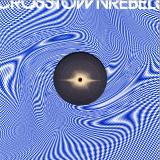
Franky Wah returns to Crosstown Rebels and reunites with Kuuda on ‘Light Years’.
Dropping on 13th February 2026, the two-tracker sees the acclaimed UK producer continue his collaborative journey alongside the impressive Brighton-based collective for both his and their second appearance on Damian Lazarus’ revered imprint.
Having made a splash with his impactful label debut last summer, Franky Wah returns to Damian Lazarus’ Crosstown Rebels imprint with ‘Light Years’, a two-track EP that explores emotion and movement with measured confidence. The release sees the Yorkshire-born producer further embed himself within the Crosstown universe, delivering a project built on patience, progression, and feeling, where every moment earns its weight.
The EP opens with the title track, a wide-screen, hypnotic solo burner that balances uplifting melodic energy with weighty, driving grooves. Built for long moments on the floor, the track unfolds, allowing atmosphere and tension to do the heavy lifting while maintaining a clear sense of momentum throughout. On the flip, Franky reunites with longtime collaborators, producer-songwriter-vocalist trio Kuuda, for their second outing alongside him on Crosstown Rebels with ‘House In My Veins’. Continuing a partnership rooted in shared musical language and emotional depth, the Brighton-based trio is central to the track, bringing drive, earworm vocals, and a distinctive identity, woven seamlessly throughout Franky’s cinematic production - grounding expansive moments with human connection.
Following heavy support from Pete Tong on his Crosstown Rebels debut, and a recent invitation to host Tong’s flagship BBC R1 show at the start of 2026, Franky continues to assert himself as an artist equally at home in club culture’s most intimate spaces and its widest-reaching platforms. Meanwhile, Kuuda continue their impressive start to 2026, hot on the heels of their recent collaboration with Hot Since 82 on Bedrock. This latest partnership delivers a focused yet expressive statement, music designed to breathe, to move, and to resonate long after the lights come up.
Directions Out Of Town is the latest and teased as (possibly) the last LP by DIY electronic abstract pop wizard Finlay Shakespeare.
Directions Out Of Town is a fierce mix of headstrong pop bangers. Fact. There is simply no one else traversing the field that Shakespeare is exploring. It can be lonely in the desert, Simon says. Lyrically, Directions Out Of Town is dealing with loss; personally, geographically, politically, culturally - a general decay of everything.
This new record is heavily inspired by structural film where the results unravel a method where metaphor is removed from the act of sound synthesis, production and mix of the tracks. Fiercely independent and brimming with integrity this is a deeply effective journey through machines of the human experience.
The track titles are telling: 'Away', 'Get', 'Direction', 'I go for a walk', etc
This is sentiment via complex synthesis wrung through patterns of pop. One also finds ways out that only turn out to be false/untrue.
"I essentially don't know where I belong any more. This record is the precursor to that."
What is ostensibly an electro pop record reveals a multitude of layers and depth as one man and his machines wrestle with the reality of this tangled matrix. If the charts had brains this would be album of the year.
Finlay Shakespeare is an electronic musician working in the UK. His fascination for synthesized sound was born out of his parents' record collection, leading him to explore the electronic music of decades past throughout his teenage years. While starting to write and record his own tracks, he also began learning analogue electronics, which led him to design and build his own equipment. To date, he has released work on Editions Mego, Superpang, and his own GOTO Records.
West Mineral returns with lushly amorphous actions by Shiner, Pontiac Streator & Ben Bondy aka Shinetiac; together fused for an immersive flux of vapoured dub, chopped and droned Billie Eilish, and fidgety algorithmic jams.
There's not a single, specific sound you can peg to the West Mineral axis at this stage in the label’s evolution - it's rather a set of shared aesthetics that freely bend into various interconnected shapes. Shinetiac's contemptuous, critic-baiting gear is the ideal example; on their last album, 2023's 'Not All Who Wander Are Lost', skittery, ketamized IDM sparkled over Spice Girls samples and the Foo Fighters' 'Everlong' was transmuted into Sneaker Pimps-style trip-hop. 'Infiltrating Roku City' might be a little less blatant with its out-and-out poptimism, but it takes a similarly dim view of conservative "big ambient" snobbishness. Just a few minutes of 'Bluemosa' should be enough to let you know what's up; the overall character of the sound is hazed, with frozen pads and garbled, dubbed-out voices smudged into a mess of effects and samples. But it sups up different nuances as it wriggles, absorbing scampering breaks, dizzy acoustic guitar strums and half-heard wordless vocals, flipping in the third act to emerge from its shell as minimalist balearic folk-pop - something like Bon Iver doing 'Electric Counterpoint'.
Brooklyn's Shiner, Philly's Pontiac Streator and Berlin-based Ben Bondy navigate the labyrinthine streaming landscape, guided by their own private experiences of mindless doom-scrolling and cruising the darkest corners of YouTube. They formulated 'Infiltrating Roku City' while they were rehearsing last year and spent the winter stitching together various recordings and jams into a layered, dry-witted commentary on our algorithmic reality. Laden with inside jokes and refried memes, it's surprisingly elegant gear; handling the most unseemly elements like sonic recyclers, earnestly repurposing pop and nostalgia to create an atmospheric echo of contemporary reality.
Screwing Chief Keef's enduring 'Citgo', 'Clublyfe (hulu)' emphasises the original's AFX-pilled euphoria with Robert Miles-style piano hits, replacing Young Ravisu's brittle 128kbps trap rhythm with a glitchy rattle that picks up dembow spikes as it rolls. 'I Hate Being Sober' vaporises the Chicago drill pioneer's 'Hate Bein' Sober', blocking out his voice with glitchy, downsampled interference and elasticated Rhodes. The trio team up with Orange Milk's goo age on the sublime 'Crisis Angel', catching a ray of Malibu's sunshine in the process, and reduce Billie Eilish's voice to a Romance-does-Celine cinder on 'Billie', stretching it to fit next to gassed Future ad-libs and swooping 808 Mafia sub womps. And although the album takes a murky diversion on 'Roku Axes Ultra’, and a cloud-stepping centrepiece ‘Purelink’ in homage to the eponymous dubbed ambient dynamos, it's back on course with 'Jiafei (NETFLIX)', taking aim at TikTok bot videos and welding screams from Florida metal band Underoath to AI-strength vocal curlicues.
- 1: Human Rights
- 2: Being
- 3: Human Impact
- 4: Filia
- 5: Human Spirit
- 6: Human Nature
- 7: Human Instinct
Denmark s forward forward-thinking trio Human Being Human return with a luminous new collaboration featuring acclaimed American saxophonist Chris Cheek. Rooted in lyricism, groove, and connection, Being captures the essence of what it means to create music as a shared act of humanity. Formed by bassist Torben Bjornskov, pianist Esben Tjalve, and drummer Frederik Bülow, Human Being Human have quickly earned a reputation as one of Europe s most distinctive piano trios. Their blend of Nordic lyricism and modern rhythmic vitality has drawn international acclaim for its compositional voice and cohesive ensemble sound. On Being , the trio expand their world through the unmistakable voice of Chris Cheek - a player known for his warm tone and intuitive lyricism, whose credits include work with Paul Motian, Brad Mehldau, and Charlie Haden. A long long-time admirer of Cheek s work and humility, Bjornskov reached out and invited him to Denmark to collaborate with the trio. In the studio, the chemistry was undeniable, as most of the album s tracks were captured in just one or two takes, preserving a sense of immediacy and spontaneity. Reflecting on what it means to be human, our capacity to make decisions and shape the world around us, as well as the damage our species has done to our planet, the quartet channels a spirit of contemplation and rediscovery through elegant, organic compositions. Tracks like Human Rights showcase the group s deft interplay and melodic clarity, while the tender ballad Being highlights Cheek s burnished tone and Tjalve s spacious harmonic sense. On Filia , a duo between bass and saxophone, the music unfolds in weightless dialogue and pure musical empathy. True to the group s name, Being reflects on what it means to live, connect, and create as humans in a complex world. The essence of music is working together, being open, being positive, and wanting to experience new things, things," says Bjornskov. That s essentially what jazz is - it s influenced by any and every culture in the world, every kind of music and race, and every person is part of it.
- A1: Rhythm-Al-Ism (Intro) (1:40)
- A2: We Still Party (5:13)
- A3: So Many Wayz (5:41)
- A4: Hand In Hand (4:18)
- B1: Down, Down, Down (4:43)
- B2: You’z A Ganxta (4:22)
- B3: I Useta Know Her (3:50)
- B4: No Doubt (4:12)
- C1: Speed (3:21)
- C2: Whateva U Do (7:47)
- C3: Thinkin’ Bout U (4:05)
- C4: El’s Interlude (4:05)
- D1: Medley For A “V” (The P***Y Medley) (6:27)
- D2: Bombudd Ii (2:59)
- D3: Get 2Getha Again (4:41)
- D4: Reprise (Medley For A “V”) (2:39)
2026 Repress
DJ Quik is a giant of West Coast hip-hop. With his fourth album Rhythm-Al-Ism he created his masterpiece, a perfect hip-hop album. As Quik explains, “the name Rhythm-Al-Ism alone tells you what I was doing. I was mixing up rhythms. I was meshing R&B with hip-hop and jazz. And a little bit of comedy”. It’s absolutely sensational and as with a lot of mid-90s albums those original vinyl copies are now rare so here’s the Be With re-issue.
A preternaturally gifted producer/rapper, DJ Quik has produced scores of LA gangsta rap classics. He’s released platinum and gold records of his own, as well as helped craft them for the likes of Tupac, Snoop Dogg, and Dr Dre. Quik has always been quirkier and more interesting than his gangsta rap peers, both musically and lyrically. An old-school funk producer at heart, he’s also incredibly nice on the mic. His raps often deal in boasts, jokes and good times but also cover his beefs, his trials and his trauma. Partying and pain, all mixed up. DJing and producing hype beat tapes from age 14, Quik’s tracks blended the languid funk and rubbery synths of Zapp and George Clinton with a gangsta aesthetic, creating a more danceable foil to Compton’s more typical nihilistic hedonism. Ultimately, his records sound custom engineered to drift out over sun-soaked barbecues.
Released in 1998 on Profile, Rhythm-Al-Ism was the closest Quik ever got to making a commercial splash. “You’z A Ganxta” and “Hand in Hand” made radio waves across the country and the less radio-friendly tracks like “Medley For A ‘V’” were bumping out of car stereos. Combining his soulful, jazzy P-Funk/G-Funk beats with his effortlessly smooth flow, Rhythm-Al-Ism was the quintessential West Coast Party. Squelchy synths, bouncy bass, monstrously knocking drums and freaky keys - this is peaking acidic party-rap, straight out the gate. Music for gliding, for skating, for time with your people and your poison. Sunshine. No cares. BBQs. Heavy smoke in the air. Dripping with wit and good humour. A real swing to the vibe.
The album opens with Quik setting out his mission statement with “Rhythm-Al-Ism (Intro)”, telling us what this is all about before the self-explanatory “We Still Party” rocks the spot. It’s definitely all about the party here, complete with Quik’s signature head-nod/body-moving beat. Next up, the undeniable laidback funk and dripping swing of groove-laden “So Many Wayz”. This positively slaps.
Then we get to the three huge singles. The R&B-tinged radio-friendly minor-hit “Hand In Hand” closes the first side only for the flip to get straight into the rolling and scratching of bleepy computer-funk banger “Down, Down, Down” (featuring a particularly nice use of Howard Johnson’s epochal “So Fine”). The effortlessly smooth, flute and guitar-laced “You’z A Ganxta” completes the trio. Next up the fast-paced, vocoder-enhanced, woulda-beena-global-hit “I Useta Know Her”. This coulda (shoulda) been a single too. Head-nod funk workout “No Doubt”, with its ace sample of Prince's “Sexy Dancer”, closes out the second side.
“Speed” races out the gate on the second disc, sampling Edwin Birdsong’s “Rapper Dapper Snapper” in a harder, better, faster, stronger way than those daft Parisian punks. Amphetamine-swift raps over soaring, string-drenched b-boy beats. A total anthem. Up next, the staggering, near 8-minute laconic, lounge-y sax-rap of “Whateva U Do” cools things down and smooths things out with its flute wrapping around a sample of Smokey Robinson’s “So In Love” and some oh-so-classy lounge-piano tinkling. And speaking of smooth, things don’t get much smoother than the blissfully melodic glider-anthem “Thinkin’ ’Bout U” riding that ace flip of SWV’s “Use Your Heart”. Exceptional.
The exquisite funky-flute-slapper “Medley for a ‘V’ (The P***Y Medley)” opens the fourth and final side, with star turns from Snoop Dogg and a typically suave Nate Dogg. It’s followed by the supremely skanked-out “Bombudd II”, a beautifully sweet reggae-fuelled ode to the herb. “Get 2Getha Again” is slick funk. Stunning.
This 2022 Be With double LP re-issue has been mastered for vinyl by Simon Francis, cut by Pete Norman and pressed at Record Industry. Unusual for the time, Rhythm-Al-Ism was originally pressed as a double and we’ve reproduced the original LA vibe picture sleeve and insert to match.
As that original front cover says, this is “over 70 minutes of commercial free music” and it’s absolutely perfect from start to finish. There are no stand-out tracks here. It’s all gold.
: Rhythm-al-ism (2LP)
- 1: Three-Four Vs. Six-Eight Four-Four Ways
- 2: Off My Back Jack
- 3: Hope So Elmo
- 4: Almost Like Me
- 5: Din-Ka Street
- 6: Pay Not Play Not
- 7: To Inscribe
The Max Roach Trio Featuring the Legendary Hasaan is an album by American jazz drummer Max Roach with pianist Hasaan Ibn Ali, recorded in 1964 and released 1965.
This is a classic of its kind, and it is fortunate that it was made, but it is a tragedy that Hasaan would not record again and that he would soon sink back into obscurity
This is the only record where you can hear pianist Hasaan.
But beyond the historic nature of the session comes the music and for that the word “legendary energetic” seems more appropriate.
This album is available as a limited edition of 750 individually numbered copies on translucent green coloured vinyl
- Clean Living
- Echo Park Donut
- Hungry Animal
- Loose White Paper
- Shake Me Awake
- Bed Time For Eddy
- Love Means Light Year
- Early Spring
- Emotional Volley
- One Heavenly Body
- One Zero
On Hungry Animal, Luke Temple continues to trace the invisible lines between the personal and the cosmic _ between what we feel, what we observe, and what we inherit simply by being alive. The album reunites Temple with Doug Stuart (bass) and Kosta Galanopoulos (drums), the core of his Cascading Moms ensemble, whose instinctive chemistry anchors the record's balance of rhythmic precision and melodic drift. Together they shape a sound that feels handmade and fluid, delivering sharp observations in soft focus. The album opens with "Clean Living," a tenderly libidinous groove, unraveling purity myths and self-discipline _ less a confession than a celebration of the futility of striving for perfection in a flawed world. From there, "Echo Park Donut" shifts into the memory of an unsettling vignette drawn from a violent incident outside Temple's Los Angeles home. The band moves with a quiet pulse beneath the story, suggesting both detachment and the surreal intimacy of fear. The title track, "Hungry Animal," grounds the album's broader questions: how well can we really know one another, or ourselves? Temple's lyrics circle around the idea that we are animals among animals, driven by instinct and affection alike. It's both playful and philosophical, one of the record's emotional centers. Temple's bandmates bring an understated mastery to these pieces. Stuart's melodic, infectious grooves converse fluidly with Galanopoulos's drumming, which breathes life into each song even as it gently propels them forward. The trio's interplay feels both weightless and deeply rooted _ commanding the listener's attention and empathy without ever forcing it. With Hungry Animal, Luke Temple and the Cascading Moms create a world where reflection becomes rhythm and consciousness gains texture _ a record of quiet revelations and deliberate grace.
- A1: Bleach
- A2: Ether
- B1: In Bloom
- B2: Opiate
- B3: Halogen
The Italian music scene is enriched by an intriguing new jazz trio: Chromogen.
Led by bassist and composer Matteo Magnaterra, the project features three members: tenor saxophone, bass, and drums. Using an unconventional lineup, they pursue a well-defined exploration of sound and timbre, creating ample space for dialogue and experimentation. They
pave the way for a new, holistic jazz style, clearly defined in their first album, "Chromogen."
The name is inspired by a parallel passion of the artist-composer: analog photography.
Chromogen is, in fact, the English name for the chemical compound capable of transforming a negative image, dyeing it with color. Those
same colors will then animate the artist's songs, developing imagery tied to his way of observing, portraying the world around him in vivid
colors.
CREDITS
Matteo Magnaterra: compositions, electric bass
Matteo Diego Scarcella: tenor saxophone
Vincenzo Messina: drums
Jacopo Trapani: recording, mixing
Francesco Brini: mastering
Swiss artist Lukas Traxel releases his powerful debut album One-Eyed Daruma on We Jazz Records, March 10. The trio features Traxel on double bass, Otis Sandsjö on sax and Moritz Baumgärtner on drums. Compact, deep, and organic to the bone, Traxel & co's sound echoes the innovations of rhythmically driven avantgarde jazz while keeping things moving at all times. There's both drive and freedom to this sound.
ONe-Eyed Daruma features eight new compositions by Traxel, who crafted the outline for the album while dealing with the loss of his father. The group came together after an open invitation from the Zurich jazz club Moods to present a new group. The trio of Traxel, Sandsjö and Baumgärtner creates a full, symphonic, and powerful body of sound despite the instrumentation without a harmony instrument. The trio functions as a collective where the boundaries between composition, melody, and accompaniment are in flux, while keeping the common goal of creating new music together in sight at all times. Traxel reports that after playing bass in various groups with guitar and/or piano, he wanted to create a counterpoint of sorts with his new group and specifically go about it with a more sparse setup. As One-Eyed Drama proves, the idea behind the trio dynamic is a strong one and the unit makes use of their extra space in creating evocative, moody, swinging creative jazz with a distinguishable fingerprint of its own.
Lukas Traxel says:
"The process of composing this music while dealing with the loss of a loved one resulted in a writer's block at first. The notes would just not flow out of my pen until I noticed a mysterious-looking figure in the right upper corner of my piano. It was a daruma, an eyeless figure that in the Japanese tradition brings luck and prosperity. According to the myth, the first eye must be drawn onto the figure while expressing a wish. The second eye can be added only if the wish comes true. My daruma is meant to stay one-eyed as my wish, strongly connected and intertwined with my now gone father, is not meant to be fulfilled. The feeling of unfulfillment and imperfection of life serves as a common thread throughout this album, right down to its title. In a similar fashion, a composition remains incomplete until it is interpreted by musicians, and given form as music. That being said, for me playing together with this trio symbolises the upside: the sense of fulfillment in music and life.
Our musical influences include the American composer and singer Caroline Shaw, Swiss pianist Colin Vallon's trio, and composer/singer-songwriter Gabriel Kahane. In addition, I have listened a lot to the trio albums of Jimmy Guiffre and Sonny Rollins. Besides that, my musical heroes like Charlie Haden, John Coltrane, and Keith Jarrett always flow into the music. Another very important influence in the music is the work of American visual artist Agnes Martin, in whose works the imperfection of a multiplicity of repetitions results in a lively big whole in the end. (See "Wild Flower")
Live, the trio takes a lot of freedom in interpreting this music, yet we have a deeper, almost pop-like attitude towards the live performance as an experience. For me it's always important to build a strong narrative with the band while on stage."
One-Eyed Daruma by Lukas Traxel is released on 10 March 2023 by We Jazz Records on LP/CD/digitally. The LP edition is shelved in an inside-out sleeve and pressed on white vinyl. The CD is housed in a cardboard digisleeve with UV lacquer finish.
- 1: Muster Point I (Feat. Simo Laihonen & Ville Rauhala)
- 2: Pleasant Avenue (Feat. Simo Laihonen)
- 3: Operator Get Me Bennington College (Feat. Simo Laihonen)
- 4: Muster Point Ii (Feat. Simo Laihonen & Ville Rauhala)
- 5: 38 E 14Th, City Of Piss, Usa (Feat. Simo Laihonen)
- 6: Muster Point Iii (Feat. Simo Laihonen & Ville Rauhala)
- 7: Putte's Bar & Pizza (Feat. Simo Laihonen)
- 8: South Okanagan (Feat. Simo Laihonen)
- 9: Muster Point Iv (Feat. Simo Laihonen & Ville Rauhala)
US sax player Stanley J. Zappa and Finnish drummer Simo Laihonen come together on the new album "Muster Point" on We Jazz Records, August 7. The two students of Milford Graves add bassist Ville Rauhala on a couple of tracks to make a bold and adventurous album captured both live and in the studio while Zappa was touring in Finland with the Black Motor musicians. This is a set full of fire and thunder, but also features some more meditative spiritual jazz. RIYL: Milford Graves, ESP-Disk', spiritual jazz
"Muster Point" consists of short trio bursts ("Muster Point I-IV"), deep duo cuts such as "Pleasant Avenue" and the inspired material linking the stylistic bookends. The music herein comes from the long standing tradition of independent improvised jazz music, and moves forward in the now, relying in the natural communication and the chemistry between the musicians. At its core, the album is a testament to the importance personal connections between like-minded creative musicians in creating something new.
Stanley J. Zappa, originally from New Jersey, now based in Oliver, BC (Canada) is a highly expressive musician whose career has so far progressed largely under the radar. Part of the lineage of a musical family (his uncle Frank should need no introduction), Zappa's story is that of a true craftsman, now coming into fruition with a like-minded collaborator, Simo Laihonen. Laihonen is best known from his long-standing trio formation Black Motor, also featuring bassist Ville Rauhala featured on the trio tracks on this recording.
Timo Lassy follows up his new album "Trio" on We Jazz Records by sharing two non-album cuts from the same sessions on a new 7" vinyl single / digi release. "Mountain Man Exit" is a stormy number featuring the trio of Lassy (tenor sax), Ville Herrala (bass) and Jaska Lukkarinen (drums) in full flight plus Tuomo Prättälä (of Ilmiliekki Quartet) on synth duties. Album track "Orlo" gets a new treatment, edited for the 7" and taking shape as a tough-as-nails mix breaking new ground here without the string section.
- A1: Same Day
- A2: Waistin
- A3: Where’d You Go
- A4: Back Before You Go
- A5: Ground Me To You
- B1: Ammaring
- B2: All The Girls
- B3: I’m Not Fine
- B4: Can’t I Take This On
- B5: Does The Kiss Fit
- B6: More Light
Best known as the frontman of the influential indie rock trio Dinosaur Jr., J Mascis has also been a solo artist, producer, and film composer. Getting his start as a founding member of the hardcore band Deep Wound, Dinosaur Jr. was founded in 1984 and the group emerged among the most highly regarded alternative rock. By introducing volume and attack in his songs Mascis shed the strict limitations of early 1980’s hardcore, becoming an influence on the burgeoning grunge movement. Mascis’ body of work continues to inspire a generation of guitar players and songwriters today.
In 1997, Dinosaur Jr. disbanded and Mascis released More Light, his first recording under the moniker J Mascis + The Fog. Members and collaborators of The Fog have included Mike Watt (Minutemen / fIREHOSE), Ron Asheton (The Stooges), Robert Pollard (Guided By Voices), Kevin Shields (My Bloody Valentine), Dave Schools (Hard Working Americans / Widespread Panic) and Kyle Spence (Harvey Milk).
- A1: Freedom
- A2: If That's How It's Gotta Be
- A3: Set Us Free
- A4: Bobbin
- A5: Free So Free
- B1: Tell The Truth
- B2: Someone Said
- B3: Everybody Lets Me Down
- B4: Say The Word
- B5: Outside
Best known as the frontman of the influential indie rock trio Dinosaur Jr., J Mascis has also been a solo artist, producer, and film composer. Getting his start as a founding member of the hardcore band Deep Wound, Dinosaur Jr. was founded in 1984 and the group emerged among the most highly regarded alternative rock. By introducing volume and attack in his songs Mascis shed the strict limitations of early 1980’s hardcore, becoming an influence on the burgeoning grunge movement. Mascis’ body of work continues to inspire a generation of guitar players and songwriters today.
In 1997, Dinosaur Jr. disbanded and Mascis released More Light, his first recording under the moniker J Mascis + The Fog. Members and collaborators of The Fog have included Mike Watt (Minutemen / fIREHOSE), Ron Asheton (The Stooges), Robert Pollard (Guided By Voices), Kevin Shields (My Bloody Valentine), Dave Schools (Hard Working Americans / Widespread Panic) and Kyle Spence (Harvey Milk).
- 1: Cheddar Man
- 2: Creon I
- 3: Torpedo Mike
- 4: Battle Sequence (I'm Atomic)
- 5: You Deserve It!
- 6: Kinema
- 7: The Creature
- 8: K Sees The Deal Go Down
- 9: Jude Law For Vogue (15)
- 10: Ultra Aura Glow Feat. Hamish Hawk
Vintage recording equipment has long been a bit of a fetish, but to sound pioneers Voka Gentle, even the most magical machines are a means to an end. The band, made up of twins Ellie and Imogen Mason, along with Imogen’s husband, William J Stokes, are a family band in the truest sense. Whilst they started as a folk trio, their new album Domestic Bliss is an album of throat-grabbing, avant-garde indie rock songs studded with eccentric choices: a synth with its keys jammed, playing a tune of its own making; field recordings – Morris dancers, motorbikes – captured on binaural headphones.
Domestic Bliss is concerned with power: the abuse of it, being on the cusp of it, and what it really means. The album is
teaming with imaginary people in picaresque scenes that reveal the band’s rich cultural storehouse. The songs draw on history, literature, everyday life and pop culture references (specifically Jude Law’s 1995 Vogue cover), with tracks like Cheddar Man reflecting on climate change and prehistory and Creon I tracing the unease of authority through the lens of Greek mythology.
Recorded in the orchestral studios of City University, the album folds intimacy into scale, from phone-recorded vocals and samples of breath to heavy, tribal electronics in grand acoustic spaces. The result is by far their most refined record yet, where the band treat the recording studio like an instrument.
- A1: Love And Maladies (Feat Joonas Leppänen, Tomi Nikku, Jarno Tikka &Amp; Nathan Francis)
- A2: Impermanence (Feat Jarno Tikka &Amp; Tomi Nikku)
- A3: La Nuit (Feat Joonas Leppänen, Tomi Nikku, Jarno Tikka &Amp; Nathan Francis)
- A4: I Saw It In A Dream (Feat Joonas Leppänen, Tomi Nikku, Jarno Tikka &Amp; Nathan Francis)
- B1: November Ghost (Feat Joonas Leppänen, Tomi Nikku, Jarno Tikka &Amp; Nathan Francis)
- B2: The Gordian Knot (Feat Joonas Leppänen, Tomi Nikku, Jarno Tikka &Amp; Nathan Francis)
- B3: Nathan&Apos;S World (Feat Nathan Francis)
- B4: Ephemeral (Feat Joonas Leppänen, Tomi Nikku, Jarno Tikka, Nathan Francis &Amp; Natalia Castrillon)
Helsinki quartet Alder Ego, led by drummer/composer Joonas Leppänen, returns with their new album "III" on 9 April on We Jazz Records. A follow up to their successful 2018 We Jazz album, "III" finds Leppänen and his bandmates extracting more depth and punch out of their tenor sax + trumpet + double bass + drums setup, which echoes the greats in the game, such as Ornette Coleman, yet adds a readily identifiable edge to it all. Leppänen's writing is evolving, becoming more and more of a signature of the band and sounding delightfully angular yet easily flowing. On "III", Alder Ego features Leppänen on drums, Jarno Tikka (of OK:KO) on tenor sax, Tomi Nikku (of Bowman Trio) on trumpet and the new addition Nathan Francis on bass.
Kicking off with a key track introducing the band's deep sound, "Love And Maladies", "III" moves through a sonic landscape which is constantly surprising yet identifiable as Alder Ego guided by Leppänen's musical vision at all times. This is true even during moments when the composer himself steps aside, namely in the Tikka–Nikku duo cut "Impermanence" and Nathan Davis's highly memorable solo outing "Nathan's World".
The album's many highlights include singles "November Ghost" and "I Saw It In a Dream", plus the stunning closing track "Ephemeral", featuring Natalia Castrillon on harp.
Alder Ego "III" is available on We Jazz Records on as orange and black vinyl editions, digitally, plus as a bundle bringing together "III" and the band's 2018 album "II".
"Brooklyn-based pianist Eva Novoa returns with The Freedom Suite: Novoa / Carter / Mela Trio, Vol. 2 — the second radiant release from her compelling trio with saxophone icon Daniel Carter and celebrated drummer Francisco Mela. This marks Novoa’s sixth album with 577 Records. The trio first came together live in 2021, followed by a series of performances, including appearances in Cambridge (Boston) and later at the Brooklyn edition of the NY Forward Festival.
"The Freedom Suite is an homage to jazz titan Duke Ellington — particularly his masterful big band suites and legendary orchestra featuring Johnny Hodges and other luminaries who helped define an era of jazz greatness. In contrast, Novoa presents her Suite in a more intimate format: the piano trio. The album comprises twelve pieces — mostly brief — with a few extended tracks such as Free to Be Free and Cyborgs.
"For this recording, Novoa also steps in as a vocalist on several tracks, including Mainstream Media, Big Grande, Global, Free to Be Free, Dream, and Cyborgs. These pieces often feature a vocal dialogue between Novoa and Mela, whose expressive, word-infused style draws from rich Cuban traditions.
'Words are powerful,' says Novoa. 'They define who we are, where we come from, and who we hope to become. Without words, there is no conversation — and without conversation, there is no real sense of time, space, or connection.'
The Freedom Suite emerged from deep philosophical and creative conversations — spoken, written, and improvised — between Novoa, Carter, and Mela. In the studio, Novoa introduced printed texts that served as thematic foundations for spontaneous, in-the-moment musical interpretation. The result is an urgent and organic interplay, where instruments speak to one another in a language as fluid as it is fearless.
"Standout track Cyborgs begins with Novoa’s percussive piano, exemplifying the trio’s dynamic, conversational energy. Creative Destruction features Novoa on electric harpsichord in a wild, electric exchange. While Free to Be Free stands out as the album’s leading single, it also captures the essence and message of the entire Suite.
"Recorded in 2021 at New York City’s legendary Sear Sound Studio, the album captures a creative explosion of sound and spirit. Novoa dazzles on piano, Fender Rhodes, electric harpsichord, Chinese gongs — even whistle — showcasing her expansive sonic palette. Together, the trio embodies the power of free improvisation and emotional storytelling.
"Originally from Barcelona, Spain, Eva Novoa has been cultivating her distinctive voice since childhood. Now a staple of the New York creative music scene, she has performed across the globe and collaborated with some of the most adventurous voices in jazz and beyond."
- 1: The Rule Of Three
- 2: Egglet
- 3: Kurt Angle
- 4: Lush Life
- 5: Nowhere
- 6: Sheriff Elvin
- 7: Ghosts
- 8: Do Not Forsake Me O My Darling
Building logically on the natural development of their two previous collections, this time the fearless threesome can be heard roaming further than ever before into the uncharted hinterlands where the deep jazz tradition of the classic tenor trio format, laden with melody and swing, ventures into the untamed regions of free improvisation. At the heart of the band is the unmistakable beat of drummer Spike Wells, who this year celebrates his 80th birthday and the 65th year of his extraordinary career at the forefront of jazz in the UK, providing the driving force behind everyone from homegrown heroes Tubby Hayes to Bobby Wellins to visitors like Stan Getz and Roland Kirk and countless others. Riding at his side to represent the current Londonbased millennial cohort is saxophonist Riley Stone- Lonergan , whose intriguing compositions and boundless creative imagination as an improvisor continue to add to his burgeoning reputation.
Representing the diversity of tastes and interests and uncompromising creative stance typical of Gen X, big- toned bassist Eddie Myer rounds up the posse. The trio initially got together through their mutual love of Sonny Rollins' touring pianoless trios of the late 50s and early 60s, but soon found themselves expanding their repertoire to explore the rich and varied territory opened up by their unique combination of individual tastes. This album is their most coherent, wide-ranging and adventurous set of recordings yet. From Ayler to Strayhorn, from be-bop to calypso, from cowboy movie to free-jazz shootout, there's a surprise at every turn, but always delivered with total sincerity and conviction and a driving desire to bring the audience with them every step of the way. 'The Rule of Three' is a bold and confident statement of intent from a real long-term project that's as invested in the music's future as it is inspired by and reverent of its past.
Barry Walker Jr. is a pedal steel player and guitarist whose roots in Americana, Country and Folk traditions influence his melding of minimalism, ambient and spiritual music. The Portland-based instrumentalist is also a member of the Rose City Band, known for his gorgeous phrasing and deft interplay with guitarist Ripley Johnson. On Paleo Sol, Walker demonstrates his singular voice as a pedal steel player and composer. Evoking the American western ranges and basins, the album embodies a longer, geologic view of time that patiently marvels at the ripples of change throughout lifetimes and ages. Walker is joined on Paleo Sol by drummer Rob Smith (Rhytion, Pigeons) and bassist and Mouth Painter bandmate Jason Willmon (Fruited Planes). Paleo Sol"s tranquil landscapes glide, built on warm finger-picked guitar figures and pedal steel swells coupled with deft percussion and bass touches by Smith and Willmon respectively. The trio plays with exceptional fluidity either completing each others phrasing or working together to build momentum. Smith notes: "The drums are not keeping time as much as evidencing its elasticity, mixing into the other instruments, changing phase states." Every gesture on the album is rich with intention, moving with grace and playing with timbre and time.
Grupo um celebrate 50 years with release of lost dictatorship-era album nineteen seventy seven!
First time release - vinyl comes with printed innersleeves
Brazilian avant-jazz vanguardists Grupo Um celebrate their 50th anniversary, sharing a second previously lost 1970s album from the vaults. Nineteen Seventy Seven (titled after the year it was recorded) is another rip-roaring instrumental fusion treasure from the band which spawned from within Hermeto Pascoal’s famed mid-1970s São Paulo collective.
Like their debut album Starting Point, Grupo Um’s Nineteen Seventy Seven was recorded when Brazil's military dictatorship was at its most repressive. “There were no open doors to those who dreamt to be protagonists in creative instrumental music”, remembers drummer Zé Eduardo Nazario, “even popular composers and singers had to submit their songs to censors and many records were banned and confiscated from the stores.”
Just like Hermeto Pascoal's Viajando Com O Som (1977) and Grupo Um's previous album Starting Point (1975), both of which remained unreleased until the 21st century, Zé Eduardo asserts that the 1977 album was flatly 'without any chance to be released at that time."
Recorded at Rogério Duprat’s Vice-Versa Studios in São Paulo, the group were under both time and space restraints, “we chose the small Studio B,” Lelo Nazario recalls, “which had a Tascam (TE AC) 12x8 console and a 4-channel AMPEX AG 440 machine. Therefore, we had to record without overdubs, everything straight to tape.”
Expanding from a trio to a quintet, original Grupo Um members Lelo Nazario (keys), Zé Eduardo Nazario (drums), and Zeca Assumpção (bass) were joined by saxophonist Roberto Sion and percussionist Carlinhos Gonçalves. Carlinhos, Zé and Zeca had already played together in the group Mandala, while brothers Lelo and Zé had just finished a stint backing Hermeto Pascoal during his years in São Paulo.
Lelo was deeply immersed in modular synthesizer experimentation during this period, working extensively with the ARP2600 and EMS Synthi AKS. These electroacoustic explorations formed the sonic foundation for "Mobile/Stabile," one of his first compositions to merge modular synthesis with Brazilian music, a fusion that would ripple throughout the Brazilian jazz scene. The piece premiered at the first São Paulo International Jazz Festival in 1978, performed by Grupo Um with guest trumpeter Márcio Montarroyos. In a shocking moment, festival organizers interrupted the show mid-performance, sparking fierce backlash from both audience members and journalists who denounced the incident as artistic censorship during Brazil's era of political and cultural repression. The version on Nineteen Seventy Seven is the first recording of the composition.
Nineteen Seventy Seven combines Afro-Brazilian rhythm, modular synthesis and a plethora of whistles, percussion and effects pedals. Album opener “Absurdo Mudo” - so titled for the absurd difficulty it poses to the musicians performing it - starts out in a cloud of mysterious dissonance, before the haze breaks for a glorious keyboard and saxophone interplay atop an uptempo samba groove. “Cortejo dos Reis Negros (Version 2)” (Procession of the Black Kings), based on the maracatu rhythm, inverts the traditional jazz song structure by beginning with improvisations, which are followed by the theme and a final coda. “The studio also had two Parasound electronic reverb units,” Lelo notes, “and the timbre is very audible on the soprano sax and percussion.”
Grupo Um’s daring music represents a manifesto of resistance during the dictatorship years, but it’s one which remains just as relevant today. As Lelo puts it: “For me, the aesthetic issue has always been about combining contemporary avant-garde languages with Brazilian music, independent of categories and commercial interests. The result of this fusion takes music to a new level.”
Recording credits (1977)
Recorded at Vice-Versa B Studio, São Paulo, November 9, 1977
Produced by Lelo Nazario and Zé Eduardo Nazario
Engineered by Ricardo “Franja” Carvalheira
Lelo Nazario – Wurlitzer electric piano, acoustic piano, signal generator, percussion
Zé Eduardo Nazario – drums, percussion
Zeca Assumpção – electric bass
Carlinhos Gonçalves – percussion
Roberto Sion – soprano sax, clarinet
Release credits (2025)
Produced by UTOPIA Studio, São Paulo
Project Coordination in Brazil by Irati Antonio (Utopia Studio)
Tape Restoration and Digital Mastering by Lelo Nazario at Utopia Studio, July 2025
Liner Notes by Lelo Nazario and Zé Eduardo Nazario
Photography by Jorge Las Heras, Lelo Nazario, and artists' personal archives
Photo Restoration by Lelo Nazario
Artwork and Design by Alessandro Renaldin
- In Monterey
- I Do
- Morning Paper
- So, Surprise
- Main Man
- Lady Of Renown
- Mighty & Concealed
- Uncle Denny
- All The Way To Georgia
- A Good Place To Fall
- To Be Continued
The rubber of ER Jurken"s pure pop fantasias meets the road on his second album, aided and inspired by a power trio of players from Chicago"s Junegrass to crank it up and out of the park. Paul Von Mertens" string and horn arrangements highlight the gritted teeth and dripping sweat that belie Ed & Co"s easy riding rock, while Jurken"s heavenly vocal choir provides balm to transcend and defy the stings of everyday misfortune.
The frankly ridiculous Burnski is back as Instinct with more face-melting garage and bassline slammers that update the classic sound with just the right amount of evolution. All of these on his latest for his self-title label are 10/10 weapons: 'Halt' is hurried, swinging and syncopated to perfection. 'Choose One' is less streamlined; instead, there are warped and squelchy lines, bursts of static and a more futuristic twist getting you going. 'Crazy' brings brilliantly chosen and well-deployed samples to the fore over a beat that harks back to percussive UK funky at its finest. The flip side offers a trio of slick bouncers, body-popping movers and brightly lit vibes. Superb.
- A1: Intro: Soushiki (01:26)
- A2: Shingontachikawa (05:27)
- A3: Doman Seman (05:33)
- B1: Imiuta (03:14)
- B2: Shikigami (06:22)
- B3: Outro: Higeki (01:31)
Marble Vinyl[27,31 €]
Japanese black metal legends Sigh formed in 1989/1990. The genre-classic debut ‘Scorn Defeat’ followed on Euronymous’ Deathlike Silence Productions in 1993 & with each subsequent release, Sigh grew to become one of the country’s greatest & most revered metal exports. With a journey through the strange & the psychedelic, incorporating a whole eclectic mix of genre styles & experimentation throughout their career, Sigh has remained a vital creative force in the avantgarde field whilst maintaining their old school roots, as witnessed with the stellar 2022 album, ‘Shiki’. 2025 also saw Sigh reimagining their ‘Hangman’s Hymn’ album for a release on Peaceville as part of the band’s 35th anniversary celebrations, in the shape of ‘I Saw The World’s End: Hangman’s Hymn MMXXV’.
Maintaining the core trio of Mirai Kawashima, Shinichi Ishikawa & Satoshi Fujinami & on the back of the epic & darkly symphonic opus ‘Infidel Art’ (1995), Sigh adopted a more boundary-defying approach to their writing, whilst still keeping the dark foundations & traits of the band’s fundamental sound. The result was ‘Ghastly Funeral Theatre’ which surfaced in 1997 & draped in Eastern & horror-based atmospherics, the band also embraced elements outside of metal with what was their most experimental offering to date; utilising instruments such as the saxophone as well as acoustic passages & notoriously drawing comparisons to the moods of bands such as The Beatles at times, featuring catchy hooks & structures in line with the rock music genre, but masterfully woven into Sigh’s unique blackened metal tapestry.
Continuing with Peaceville’s re-issues of Sigh’s classic early ( & until now, hard to find) works, this edition of ‘Ghastly Funeral Theatre’ contains a new master created by Patrick Engel at Temple of Disharmony, featuring a new transfer from the original DAT source.
The release also includes a new interview with main-man Mirai Kawashima conducted by Dayal Patterson of Cult Never Dies, delving into the history & inspirations behind ‘Ghastly Funeral Theatre’.
This edition of ‘Ghastly Funeral Theatre’ is presented on black vinyl.
- A1: Intro: Soushiki (01:26)
- A2: Shingontachikawa (05:27)
- A3: Doman Seman (05:33)
- B1: Imiuta (03:14)
- B2: Shikigami (06:22)
- B3: Outro: Higeki (01:31)
Black Vinyl[21,81 €]
Japanese black metal legends Sigh formed in 1989/1990. The genre-classic debut ‘Scorn Defeat’ followed on Euronymous’ Deathlike Silence Productions in 1993 & with each subsequent release, Sigh grew to become one of the country’s greatest & most revered metal exports. With a journey through the strange & the psychedelic, incorporating a whole eclectic mix of genre styles & experimentation throughout their career, Sigh has remained a vital creative force in the avantgarde field whilst maintaining their old school roots, as witnessed with the stellar 2022 album, ‘Shiki’. 2025 also saw Sigh reimagining their ‘Hangman’s Hymn’ album for a release on Peaceville as part of the band’s 35th anniversary celebrations, in the shape of ‘I Saw The World’s End: Hangman’s Hymn MMXXV’.
Maintaining the core trio of Mirai Kawashima, Shinichi Ishikawa & Satoshi Fujinami & on the back of the epic & darkly symphonic opus ‘Infidel Art’ (1995), Sigh adopted a more boundary-defying approach to their writing, whilst still keeping the dark foundations & traits of the band’s fundamental sound. The result was ‘Ghastly Funeral Theatre’ which surfaced in 1997 & draped in Eastern & horror-based atmospherics, the band also embraced elements outside of metal with what was their most experimental offering to date; utilising instruments such as the saxophone as well as acoustic passages & notoriously drawing comparisons to the moods of bands such as The Beatles at times, featuring catchy hooks & structures in line with the rock music genre, but masterfully woven into Sigh’s unique blackened metal tapestry.
Continuing with Peaceville’s re-issues of Sigh’s classic early ( & until now, hard to find) works, this edition of ‘Ghastly Funeral Theatre’ contains a new master created by Patrick Engel at Temple of Disharmony, featuring a new transfer from the original DAT source.
The release also includes a new interview with main-man Mirai Kawashima conducted by Dayal Patterson of Cult Never Dies, delving into the history & inspirations behind ‘Ghastly Funeral Theatre’.
This edition of ‘Ghastly Funeral Theatre’ is presented on black vinyl.
An’archives presents 'sensitive', a new album, and the first solo vinyl release, by Japanese keyboardist and synth player, Mitsuhisa Sakaguchi. A deftly assembled suite of glistening electronic tonalities, 'sensitive' is the latest in a lengthy run of excellent, idiosyncratic albums by Sakaguchi. A low-key yet productive artist, Sakaguchi has released banks of solo titles via his own Bandcamp page, and is also an in-demand improvisor for electronics: see, for example, recent collaborations with Yoshiki Ichihara ('TO(R)RI INFRANTA', 'Ftarri', 2025), Tatsuhisa Yamamoto ('non equal mad', self-released, 2020), and the - trio with Yamamoto and Uchihashi Kazuhisa ('self-titled', Modern Obscure, 2023).
'sensitive' is a startling album for many reasons, not least its rich attention to detail. Sakaguchi’s ear is sensitized to the complexity of electronic sonority, something he’s developed through decades of performance and improvisation, though he’s not limited to that language. “I mainly use multiple synthesizers and process the sounds with effects,” he clarifies, detailing his approach to his music. “I also use a lot of acoustic sounds such as field recordings and percussion; sometimes I also use sounds such as prepared piano.”
Indeed, you can hear this see-sawing balance between the electronic and acoustic written across 'sensitive' – see the activated cymbals that twist and stutter through the first half of “metatoxic”, which are soon replaced by a similar stream of burbling synth-flow. The opening “sensitive rot” folds field recordings into Sakaguchi’s electronic kit to such a degree that the differing forms dissolve into each other; on “green shrine”, the field recordings are more present, yet still poetically framed, taken as they are “from the mountains of my hometown, Yawata City, Kyoto,” Sakaguchi explains.
The tender balance achieved by Sakaguchi as he moves between practices, tonalities and temporalities helps manifest the guiding conceptual force behind 'sensitive', where Sakaguchi explores a cleansing reverie. “What I wanted to portray with this album was to create an album of sounds that shattered and reassembled my current ‘sense’ and ‘toxins’,” he nods, “along with the ‘nature’ around me. Electronic sounds, our bodies, the environment around us, and nature all blend.”
From there, Sakaguchi attempts a transformation, or transmutation – an alchemical process of exchange. “I am attempting to explore whether it might be possible for the sounds to come closer to each other,” he concludes, “or perhaps even to interchange places.” On the five pieces that comprise 'sensitive', you can hear this fusing and exchange. Inhabiting similar spaces as the music of Nuno Canavarro, Asmus Tietchens, Omit, and other like-minded visionaries, 'sensitive' traverses curious, quixotic terrain between electronic composition, electro-acoustics, and improvisation.
- A1: The Jungle
- A2: Love That Boy
- A3: House On Fire
- A4: Sacrifice
- B1: Get My Mind
- B2: Le Queens
- B3: In Your Eyes
- B4: Bold
Montreal indie rock trio Plants and Animals announce "The Jungle", their fifth studio album set to be released October 23rd via Secret City Records. Their shortest album yet and certainly their boldest, "The Jungle" is eight acts in a world full of noise. The album is auto-produced and was recorded at Mixart, their studio in Montreal. The band explains : "We started working on this a couple of years ago. Warren was afraid for a friend's health. He thought he was self-medicating too much and not taking care of himself. He couldn't let go of this image of an overworked dude swallowing too many sleeping pills and falling asleep with the stove on. So it began as the place next door, sometime before Greta Thunberg turned the expression into a rallying cry, where Earth is the house and the people are sleeping. It's terrifying, and on the whole we're not unlike this friend, are we?" "The Jungle" starts with electronic drums that sound like insects at night. A whole universe comes alive in the dark. It's beautiful, complex and unsettling. Systematic and chaotic. All instinct, no plan. Voices taunt,"yeah yeah yeah." This tangled time in which we find ourselves is reflected back in shadows. Every song is such a landscape. The first one grinds to a halt and you become a kid looking out a car window at the moon, wondering how it's still on your tail as you speed past a steady blur of trees. You watch a house go up in a yellow strobe that echoes the disco weirdness of Giorgio Moroder, Donna Summer and David Bowie. You get pummelled by a rhythm then set free by a sudden change of scenery_the wind stops, clarity returns. You're under a streetlight in Queens, soft-focus, slow motion, falling in love. You speak French now too, in case you didn't already. Bienvenue. These are personal experiences made in a volatile world, and they reflect that world right back at us, even by accident. There's one song Nic sings to his teenage son who was dealing with climate change anxiety and drifting into uncharted independence. The band carries it out slowly together into a sweet blue horizon. Warren wrote the words to another shortly after losing his father. It's about the things we inherit not necessarily being the things we want. In a broader sense, that's where a lot of people find themselves right now.
- Desire
- Loner
- Haha
- Drip Drop
- Month
- Disappear
- Flood
- Letter
- Nobody
- No Time
- Moonlight
- Apart
- Flying
"I want nothing more than to be a loner," Emily Kempf sings early on Flower of Devotion, the new album by Chicago trio Dehd. It's a startling admission coming from a songwriter who, just a year ago on Dehd's critically acclaimed Water, wrote eloquently about the joys and pains _ more than anything, the necessity _ of love, compassion, and companionship. But then, "admission" isn't really the right word here, given the stridency of Kempf's tone. "Loner" is a declaration. The record ups the ante on Dehd's sound & filters in just enough polish to bring out the shining and melancholy undertones in Jason Balla and Emily Kempf's songwriting, even as it captures them at their most strident. Balla's guitar lines at times flirt with ticklish cosmic country, while at others they reflect the dark marble sounds of Broadcast. Kempf, meanwhile, establishes herself as a singer of incredible expressive range, pinching into a high lonesome wail, letting loose a chirping "ooh!," pushing her voice below its breaking point and letting it swing down there. When she and Balla bounce descending counter-melodies off one another over McGrady's one-two thumps, or skitter off over a programmed drum pad, they sound like The B-52s shaking off heartache. What makes Flower of Devotion so impressive is how its creation seems to have strengthened its creators, both as individuals and as a unit, even as they've stared down their own limitations. It's also striking just how much fun they seem to be having in the process. "It's okay to be lighthearted in the face of despair," Kempf says. It's a theme that runs through the album, from the opening back-and-forth build of "Desire" to the click-clacking chorus of "Haha," which finds them deflating their own history. Flower of Devotion was recorded in April and August of 2019 in Chicago. It will be released on Fire Talk Records on July 17th 2020.
- 1: The Barbarian
- 2: Take A Pebble
- 3: Knife-Edge
- 4: The Three Fates A. Clotho B. Lachesis C. Atropos
- 5: Tank
- 6: Lucky Man
Supergroups existed before Emerson, Lake & Palmer formed in 1970. And, as we all know well, many came after. But few, if any, matched the English trio’s chemistry and its elevated combination of virtuosity, vision, and verve. Having influenced a multitude of followers, ELP’s prowess was obvious from the start. The band’s self-titled debut stands as a towering statement of creative imagination, execution, and discipline more than five decades after its original release.
Mastered at MoFi’s California studio, housed in a Stoughton jacket, and pressed at Fidelity Record Pressing, Mobile Fidelity’s numbered-edition 180g 33RPM LP of Emerson, Lake & Palmer presents the benchmark album in audiophile sound. Clear, dynamic, and balanced, this collectible edition honors the perfectionist approaches that both informed the playing and recording of the record.
Distinguished with black backgrounds, this reissue brings to light the epic scope, tonal depth, and mind-bending degrees of musicianship on display. Aspects — textures, nuances, effects, melodies, tempo changes — that go hand-in-hand with the trio’s compositions and interplay are rendered amid broad soundstages and delivered with pinpoint detail. Whether you’ve owned multiple copies of this touchstone or seeking out your first version, you’ll relish the presence, separation, imaging, and crispness that help make every song come across as if the group has set up shop in your listening space.
Opening the door to the seemingly infinite possibilities of progressive rock while steering clear of excess, Emerson, Lake & Palmer achieved a rare feat in that its complex, cerebral music didn’t prevent it from attaining mainstream success. The gold-certified effort launched the career of a band that would sell tens of millions of records. It also landed a Top 50 single in the form of the ballad “Lucky Man,” whose vocal harmonies, folksy strumming, multi-tracked instrumentation, and breakthrough Moog solo almost feel quaint in the face of the other fare on the album.
Comprised of genre-defying originals and hybrid arrangements of two classical pieces, the album Rolling Stone originally and rightly said is “best heard as a whole” matches outrageous ambition with the otherworldly skills of three musicians who remain among the finest to ever pick up their respective instruments. While Emerson soon drew the lion’s share of headlines for his ability on keys — clavinet, Moog, piano, Hammond organ, and pipe organ included — Greg Lake’s aptitude on guitar and bass, along with well as Carl Palmer’s monster talents behind the kit, created a three-headed hydra that devoured everything in front of it.
That extends to the radical reinterpretation of Bela Bartok’s “The Barbarian” that begins the LP, a performance that in less than four-and-a-half minutes runs the gamut from distorted to churchy to angular and blustery. More classical flourishes, keyboard wizardry, hard-rock heaviness, and gothic signatures emerge throughout “Knife-Edge,” which reimagines music by Leos Janacek and J.S. Bach — and ultimately invites you to explore a cathedral of sound teeming with separate bursts of keys and percussion.
And did someone say “drumming”? Check out Palmer’s monster salvo on “Tank,” a rhythmic showcase that marches out with knee-bent notes and mirror-reflected passages. Or dive into the mythological suite “The Three Fates.” Replete with three parts and Emerson playing the pipe organ at Royal Festival Hall, it shoots off sonic fireworks via sophisticated arpeggios, jazz improvisations, dancing counter-meters, sizzling chords, and a few explosions. Please don’t hold anyone at MoFi responsible if your system cannot handle it; this is heady stuff.
Indeed, everything on Emerson, Lake & Palmer is there for a purpose. Whether you aim to attempt to dissect all of the notes, shifts, and polyrhythmic bluster or just want to absorb this album as one living, breathing organism, this version invites you to do both as many times as you desire.
Recordings from the Åland Islands, the duo debut by synthesist Jeremiah Chiu and violist Marta Sofia Honer, is a truly unique series of pieces that marry acoustic and electronic sounds with field recordings, all captured on a trip to the titular Baltic archipelago.
By the time Åland Islands was released in 2022, Honer had already been working with Makaya McCraven and Daniel Villarreal, but this project brought her to the front as a lead artist. And Åland Islands was the label's first collaboration of any kind with Chiu, who has since released the solo outing In Electric Time and the genre-breaking debut of his co-led supergroup SML, in addition to a trio album with Honer and the late Ariel Kalma (2024's The Closest Thing to Silence).
Recordings from the Åland Islands is far more than its context within the world of IARC, however, and it’s certainly more than its context as a travel document. Here Chiu and Honer have created a new world out of an old one with work that sees them in dialogue with their own source material. Like early masterpieces by Franco Battiato or Alvin Lucier, Åland Islands repeatedly presents the listener with a palpable sense of place, only to pluck them up and drop them into an entirely new one.
“...so tranquil and beautiful...” – Jayson Greene, Pitchfork
- 1: Make Someone Happy
- 2: Backatcha
- 3: Chonky
- 4: It's On!
- 5: Straight
- 6: Talk
- 7: 6
- 8: Splash The Cash
- 9: Midnight Mood
Working with elite keys player Ross Stanley (steadily making ripples on the world stage through his work with legends like Maceo Parker, and more recently with Robben Ford), guitarist Nigel Price says: "I've never heard Ross play a bad note, and he absolutely played out of his skin on this record." Joel Barford is one of the most exciting and vibrant young drummers on the scene today. He relishes the space and freedom of the organ trio format, which is totally evident on this new recording.
Six of the nine pieces are original Price compositions, confirming his strength as a writer, especially for this tight, powerful unit. A relaxed recording session brought out the best in these three master musicians, and the result is an exciting collection of captivating music. Nigel Price is acknowledged as one of the foremost UK exponents of jazz guitar. He has played on more than 60 albums including eight as a leader, spent 10 years with acid jazz outfit The Filthy Six, was a member of James Taylor's band, JTQ, for three years (with whom he recorded five albums) and performed with the legendary David Axelrod. Price has worked tirelessly to organise his own tours, with epic tours he's organised for the Nigel Price Organ Trio becoming the stuff of legend.
The duality of "man" is a subject that has been explored in art for centuries, from writings of the Bible to Descartes, all the way up to filmmakers like Lynch, Cronenberg, & Carpenter. Who is your "true self" & what do they want? With their sixth studio album "Wish Defense" (again for longtime home Trouble In Mind Records), Chicago trio FACS take a good, long look in the mirror to face themselves. The return of original member Jonathan Van Herik - who stepped away from the group just before their debut album "Negative Houses" was released in 2018 - replacing longtime bassist Alianna Kalaba brings renewed vigor & a marked angularity from the band's more recent output. The songs still hit hard, but the approach is sideways - the roles have changed since Van Herik's original tenure & his previous time with Case & powerhouse drummer Noah Leger in Disappears; now on bass, Van Herik was originally the group's guitar player and features on the debut, while current guitarist Brian Case played bass. This role reversal has helped the band's dynamic, offering up a different musical perspective than before, now revisiting the trio's long-going collaboration with some distance and time. Case notes that the lyrics on "Wish Defense" revolve around doppelgängers or "doubles", tackling the idea of facing yourself and observing your ideas and motivations. Look no further than the album's title track; "Enter the mirror / Double walker / An intimate / Wish defense / Is it real? / You beside me / The detail / Terrifying / Abject self / Your grief / A public / Performance". Case lays out the entire album's theme in one stanza; Are your actions & emotions your true self? Or are they a performative aspect of that "other" person you put forward? Case says that ultimately the sentiment is "_don't let the bastards get you down, there's something beyond this moment, like hope - but not in the naive belief that ultimately people are good". "Wish Defense"s artwork is also a subtle reference to "Negative Houses"' art, returning to that album's black & white starkness & minimalism. The album's checkerboards everywhere are offset reflections of themselves, mirrored with the album's lyrics printed front & center on the cover. Everything is out in the open. A final note; "Wish Defense" is the last album engineered by Steve Albini. Two days were recorded at Electrical Audio in early May of 2024 before Steve's untimely passing, with renowned engineer & friend Sanford Parker stepping in to finish the session 24 hours later, tracking the last bits of vocals and overdubs. Longtime collaborator John Congleton mixed the album as Albini would have; in Electrical Audio's A room, off the tape, using Albini's notes about the session.
- 1: Milestones
- 2: Iris
- 3: Played Twice
- 4: Con Alma
- 5: Mood Indigo
- 6: Speak Like A Child
- 7: Evanessence
- 8: Forerunner
With simpatico support from double bassist Drew Gress and drummer Tom Rainey, Hersch presented fresh interpretations of tunes by his favourite jazz composers, which included Miles Davis ('Milestones'), Wayne Shorter ('Iris'), Thelonious Monk ('Played Twice'), Dizzy Gillespie ('Con Alma'), and Herbie Hancock (Speak Like A Child). The album also includes an original number, 'Evanessence,' which Hersch composed as a salute to pianist Bill Evans. The Fred Hersch Trio Plays is a remarkable collection of performances affirming that jazz is about exploration, constant reinvention, and selfless teamwork.
LIMITED 300 ONLY TRANSPARENT SKY BLUE LP. HOUSED IN FULL COLOUR SLEEVE WITH POLYLINED INNER BAG & DOWNLOAD CODE
Two fields of existence collide as Nolla (Finnish psych/space rockers) & Mike Vest (Maximalist guitar guru, Bong, Blown Out, Drunk In Hell, Artifacts & Uranium, Modoki, Tomoyuki Trio, Mienakunaru etc) merge their creative visions for the third time.
Creating a steady and surreal exploration through astral planes. Nolla improvised the ground layer in their signature minimal space-rock style and MikeV wrapped everything up in lavish layers of fuzz, phased and U-Wah layered guitars.
Blending octaval tones, around an array of electronics & vocal harmonies. Resulting in a constant trance like psychedelic drone rock.
It's time to join the extraterrestrial communion, beyond the skies, convert into the mode of light and pay homage to his mighty eminence.
Ston Elaióna is John Also Bennett’s first album for Shelter Press since his 2019 solo debut Erg Herbe. The American born, Athens, Greece, based flautist, synthesist, and composer weaves a strikingly singular electroacoustic excursion for bass flute and Yamaha DX7ii, largely recorded in the golden haze of the early morning hours - bending time at the otherworldly juncture of consciousness and place. Translating from Greek as “in the olive grove”, Ston Elaióna is permeated with the ambiences of the ancient and present world, guided into form by a playfully rigorous approach to sound.
Initially emerging during the mid 2000s as part of Columbus, Ohio’s noise scene, before relocating to NYC around 2010, Bennett’s diverse activities picked up an increasing sense of pace over the following decade - performing and recording as a solo artist (JAB), with the trio Forma and with CV &JAB, his prolific duo with his partner Christina Vantzou, as well as playing in Jon Gibson’s ensemble among many other multifaceted collaborations. However, since 2020 the flautist and electroacoustic composer has existed in a semi nomadic state: drifting between Brooklyn, Brussels, extensive tours, and Greece, where he finally came to rest in Athens last year.
Drawing upon a carefully honed attentiveness to the environments and experiences of everyday life, Ston Elaióna is a suite of nine pieces (with an additional track exclusive to physical formats), many of them composed and played live as the early morning sun touched the Parthenon, in full view from Bennett’s studio window in Athens. Bennett’s refinement and restraint, honed over his years adrift, led him to adopt a limited palette focused on his primary instrument, the bass flute, and a Yamaha DX7ii synthesizer tuned to just intonation scales. Alongside a handful of other keyboards, digital oscillators triggered by his flute, and occasional field recordings, this simple palette is reflected by the deeply emotive sense of minimalism that permeates the album’s two sides. Following two solo albums defined by outward facing temperaments - 2022’s Out there in the middle of nowhere (Poole Music), which used a lap steel guitar and generative oscillators to evoke the surreal landscapes of the South Dakota badlands, and the largely synthetic atmospheres of the 2024 anthology Music For Save Rooms 1 & 2 (Editions Basilic) - the shift in Bennett’s worldly circumstances offered an intuitive return to the calm, inward states of creative exploration that have historically defined JAB’s sound. In parallel, context provided clear sources of inspiration for many of the album’s themes, as well as sources for some of its sounds. The aura of Greece, from the ancient to the present, from its stones and olive groves to its traffic, figures heavily across Ston Elaióna’s two sides. John Also Bennett’s Ston Elaióna forms an elegantly rigorous world of electroacoustic sonority, bridging the expanse of time with the immediacies of environment and happening in the here and now: a profound sonic mediation on the countless dimensions unlocked by life in Greece.
At the beginning of the 1960s, at the Berklee College of Music, Byard Lancaster met some feisty friends: Sonny Sharrock, Dave Burrell and Ted Daniel. It is easy to see why he rapidly became involved in free jazz. Once he was settled in New York, he appeared on Sunny Murray Quintet, recorded under the leadership of the drum crazy colleague of Albert Ayler.
In 1968, the saxophonist and flutist recorded his first album under his own name: It’s Not Up To Us. The following year he came to Paris in the wake of… Sunny Murray. He would come back to France in 1971 (again with Murray) and in 1973 (without Murray for a change). This is when he met Jef Gilson, the pianist and producer who encouraged him to record under his own name again.
On Palm Records (Gilson’s label), he would release four albums: Us, Mother Africa, Exactement and Funny Funky Rib Crib. “Us”, the first of the four records was recorded on November 24th, 1973 with Sylvin Marc on electric bass (a Fender… Lancaster?) and the evergreen Steve McCall on drums.
On the album, the trio works from the John Coltrane model; free jazz shook up by the timely contributions of the bassist, followed by a mesmerizing atmospheric music. Then, Lancaster delivers a sinuous solo path, which is a reminder of his unique tone. On the album’s companion single, the trio launches into great black music of a different genre which would lead the clairvoyant François Tusques to claim that Byard Lancaster is an “authentic representative of soul/free jazz”, to sum up this is Great Black Music!
crédits
- 1: Impostor Syndrome
- 2: Revolutions
- 3: Trouble In Store
- 4: The Empire's Eye
- 5: Crossing The Line
- 6: Night Blues
- 7: Distance
- 8: Brief Encounter
- 9: Midnight Moment
- 10: Floating Downstream
- 11: Mutineers
- 12: The Next Step
What if fate had followed a different path? Alex Marker and Ben Reed were childhood friends who made music together before pursuing different careers, with Ben becoming a professional musician while Alex followed a career in stage design.
Originally a drummer, Alex set himself a challenge of writing a song for his wife for their wedding day. One song led to another and collaborating for the first time since they were very young Alex and Ben soon found they had a whole album's worth. Influenced by Alex's career in drama each track on Impostor Syndrome aims to tell a tale or paint a portrait encapsulating a moment of change or release. Ben brings a wider palette of musical styles and arrangements to augment a series of songs which draw from a wide range of musical influences including: singer/ songwriter, British prog, folk and rock. Ben Reed is a multi instrumentalist whose playing credits include bass duties on Frank Ocean's albums Endless and Blond as well as work with David Byrne, Sampha, Mustafa, Frank Dukes, Nilufer Yanya, Hayden Thorpe, FKA Twigs and many others.
He has previously released four full length albums of his own; Tall Story, Who Dreams of Hyssop, Station Masters, Loft, Bandaged and most recently You Do You. Alex Marker is a critically acclaimed theatre set and costume designer who has designed over 150 productions for a wide variety of venues including The West End, tours, regional theatres and the fringe. Further back he used to play drums in pit bands for productions and has occasionally been seen on stage too. The album features guests including: organist Ross Stanley (Steve Howe Trio), flautist R achel Hayter ( Alvorada ), bassoonist Philip Dale ( Orchestra of the Age of Enlightenment) and Matt Weeks who plays brass alongside mixing duties.
What We Do When in Silence is the trio of Nicola Ratti, Alessandra Novaga and Enrico Malatesta.
Imagine a series of small movements in an empty space. Imagine their shadows on the floor, there’s a natural light sliding in from the 3 windows on your right side. There’s no silence here. There are people outside waiting for others, waiting for the people since what we do is not visible, since we do it when in silence and there is no silence here. Synthesizer, piano, whistling, electric guitar and percussions.
Nicola Ratti is a versatile musician and sound designer who has long been active across diverse experimental fields. His sound production creates systems shaped by repetition and expansion, with a particular focus on building environments that resonate with the spaces and architectures we inhabit, and on balancing the emotional and perceptual orientations to which we are accustomed.
Alessandra Novaga is a guitarist who has been exploring, for years, the possible territories her instrument can lead her to. She has crossed through the most classical worlds, reaching into intangible abstractions without setting boundaries between the two. Sound, meanings, encounters, and narratives are the elements that guide her path.
Enrico Malatesta is a percussionist and independent researcher working within experimental contexts that intersect music, performance, and territorial investigation. His practice explores the relationship between sound, space, and movement, and the vitality of materials, with a particular focus on surfaces, listening modes, and the articulation of multiple layers of information through an ecological and sustainable approach to percussion instruments.
New week, new heat from Monsieur Van Pratt, an ever-reliable edit master who this time brings his signature style to a trio of Spanish-language cuts. He tackles two classic disco anthems that are familiar yet completely revitalised in EspaNol as 'Caliente' kicks off with stomping disco energy and catchy riffs, then 'Toca Mi Campana' is a more funky and playful number with low-slung bass. They are joined by a deeper, lesser-known gem, 'Americana ', which is reimagined into a powerful dancefloor weapon with gritty, analogue textures and a deep respect for groove that will heat up any 'floor.
- Sooner Or Later
- Pillars
- Look Ahead
- Simulacrum
- The Bell On The Hillside
- Summit
- Hope
- Branches
- Namesake
- June
Following his award-nominated and critically acclaimed 2023 album Until Then, Danish guitarist and composer Rasmus Oppenhagen Krogh now presents his fourth album as a bandleader. "The title refers to the pillars that life and existence rest on," Krogh explains. "The moments, feelings, and meetings that form us as human beings, and that follow us the rest of the way. Snapshots that become defining for how our life develops." Musically, Pillars balances clear song structures with rich, intricate harmonic foundations. Krogh draws on influences from jazz, indie, rock, film scores, electronic music, and pop, creating a genre-fluid universe in which the ensemble"s improvisational voices shape each piece. Krogh"s guitar takes the lead, acting as a melodic guide, while the production - crafted alongside longtime collaborator Rasmus Juncker (Yör, Anna Roemer, Little North) - adds depth and texture, highlighting the album"s bold and multi-faceted sonic identity. As on previous releases, Krogh is surrounded by some of Denmark"s finest musicians, all longtime collaborators whose personal voices and improvisational approach have deeply influenced his musical development. The ensemble includes Anders Christensen on electric bass (Paul Motian, Jakob Bro, The Raveonettes), Jakob Hoyer on drums (The Raveonettes, Jakob Bro, Nikolaj Norlund), Lars Greve on reeds and effects (Resonerede Rum, Girls in Airports, Peter Sommer), Simon Toldam on piano and synths (Simon Toldam Trio, Han Bennink Trio, Efterklang), and Victor Dybbroe on percussion (Girls in Airports, Teitur, Blomsten). Their interplay and openness create a living, evolving sound world, with Krogh"s guitar at its emotional center. Beyond his own projects, Krogh is a sought-after guitarist, working with artists ranging from Guldimund to Takykardia and Emil de Waal. Pillars underscores his identity as a deeply personal and forward-looking voice in contemporary instrumental music.
Straight out of the local mud of the city of Antwerp comes dancing this next Souvenirs from Imaginary Cities slab of free-flowing bits of electronic wonder : Schönen Abend by Simon B. Just in time to ease you out of this endless winter and right into springtime. Like the previous hit by Purple Uncle, this flower takes some time to bloom and fill up your head and body with it's ear wormy fragrance.
It's hazy and cinematic, makes you think of Italian electronic pioneers and their library magic, Patrick Cowley's School Daze and Haruomi Hosono in some kind of gothic manner. It's quite stripped and lush at the same time, rhythms like minimal mechanics make you fly above the river and land just outside reality. It's a nice place where soft jazz tingles right around the dark corner, and that particular mix of exotica and melancholia — the trademark of this port city's best electronic auteurs is definitely in the air. The river still shines, but she’s deeply poisoned. The old town has lost every bit of fresh air but keeps on digging for old gold. This bitter pill is served with delicacy and lightness, the wound is dressed up seductively — feet in the mud, head in the air. Stuff is sensuous, with quiet places reminding of the good side of those times when the big wheel stopped turning ever so madly. A strange quietness whistles through the leaves. Some things take time to unfold. In or out of C.
Four years in the making, this is the solo debut LP of Simon B, a longtime contributor to Antwerp's improvised music scene (Groovecats Deluxe, Wij Blij Trio ). Primarily a double bass player, he also has a deep-felt passion for offbeat electronica and the rainbowy side of American minimalism, which takes front here. The smoky voice on the last track belongs to Nina-Joy Thielemans, Nina-Joy is part of Particals, a trio working with live electronics and field recordings, releasing an lp on Ultra Eczema later this year. Furthermore, you can hear the tenor and soprano saxophone of Adia Van Heerentals on 4 tracks, deepening out Simon's naturally flowing compositions and playing around with his melodies. You may know her from Bodem and her strong presence in the Belgian jazz scene lately.
Simon's electroacoustic experiments — using a clarinet and some outboard effects — were important tools in finding the very specific colour of this record. There's this airy character, like wind blowing through old layers of bricks and over the river, anchored with a deep sense of bass, gathering ages of dust and memories in these eight elegantly wobbling tracks, forming a perfect whole that’s really coming together in one deep listening from A to Z.
The centrepiece is perhaps Come to Me, instrumental and reprise with vocals, but no fillers on this one. Every part of the mystery is needed to come to its end and back again. It's a record that works in the morning, to open up a day and in the quiet corners of the night, with it's sleazy quirkiness, smiling towards you from the right corner of the eye. A perfect compagnon for your long-form wandering habits, light reflections on a wet surface obsessions, coffee slurping in the morning and the forgotten art of beachcombing. Quite essential these days, witnessing a world going apeshit.
A legend of the Chicago house scene, befriending Ron Hardy and Frankie Knuckles in his teens before forming influential house trio Risque III, and still prolific today via releases on Marcel Dettman’s ‘Bad Manners’ imprint, K'Alexi Shelby partners with Tony Loveless for their Planet E debut, ‘Ancestral Rhythm’.
Across a rolling nine-minute odyssey of old-school but future-facing jack, ‘Ancestral Rhythm’ finds the pair tapping into their most uncompromising rhythmic instincts, melding the tough machines of their studio with organic percussion and oscillating plunges into raw, escalating electronics.
In complimentary fashion, Carl Craig expands on the existing material for a subtle, tight C2 edit of the pair’s original material. Roadtested over the summer season in Ibiza and beyond, Craig masterfully sharpens the original’s frenetic edges, while adding another chorus of chants to Shelby and Loveless’s psychedelic soup.
Recorded in concert at the University of Sheffield in March 2025, Reality Is Not A Theory is the first collaboration between Mark Fell and Pat Thomas. Major figures in British experimental music since the 1990s, Fell and Thomas have developed their rigorous practices from radically different backgrounds and perspectives: where Fell’s singular take on synthetic abstraction emerged from Sheffield’s electronic underground, Thomas is a virtuoso improvising pianist steeped in jazz and modernist art music who has simultaneously worked with sampler-based electronics for decades. As the record’s wonderfully academic subtitle explains, we are presented here with two sides of ‘algorithmic and improvised music for computer and piano’, exemplifying both players’ insatiable search for new (and sometimes uncomfortable) playing situations.
The performance begins with Fell’s electronics close to the timbres of acoustic percussion, attacks that suggest wood, metal or glass threaded along a rapid pulse while Thomas focuses on the lowest registers of the piano, deadening the strings. As Fell’s electronics start to ring out and occupy more harmonic space, Thomas turns to wide, repeated clusters, which slowly expand into patterns of chords. Like in his recent solo recordings and his trio work with Joel Grip and Anton Gerbal, Thomas’ playing combines extreme dissonance with a deep lyrical sense. Fell’s work gradually shifts its focus toward drum sounds, drawing on the microtemporal processes that have characterized his practice in recent decades. Heard together with Thomas’ probing piano, the computer sounds call up unexpected associations with the klangfarben antics of improv drummers like Paul Lovens or Tony Oxley. Throughout its second half, the music grows increasingly frenetic, as Thomas sounds out rapid, irregularly repeated figures and beautifully sour chords in the upper register, while Fell’s percussion develops into angular pan-pipe-like feedback and waves of glissandi.
With great confidence and patience, Fell and Thomas often let their individual contributions remain rhythmically distinct and unsynchronised, allowing unexpected correspondence and coincidence to guide the music’s development. Recorded in a hall named after Sheffield steel manufacturer and Master Cutler Mark Firth, the location might suggest a model for understanding how Fell and Thomas interact here: two workers in the same workshop, each immersed in their own part of the production process. Arriving in a striking sleeve designed by Mark Fell, with liner notes by Francis Plagne, Reality Is Not A Theory is an invigorating document of the meeting of two mavericks of contemporary music.
Old-time and traditional music stay exciting for their contrasts. Exacting instrumentation honed through mentorships and late-night jams at fiddler's conventions tangles with a community-sourced inventiveness that influences variants and new sounds. Joseph Decosimo is a master of this genre for this very reason, blending deep technique with an openness and curiosity that keep his music crackling with life. A "marvelous fiddler" (No Depression) and banjo player who braids "exultation and veneration" (INDY Week) into his music, on his third solo album Fiery Gizzard Decosimo gathers a close-knit ensemble of friends from his musical career to infuse his interpretations of fiddle and banjo pieces with a contagious communal joy. As an artist working with traditional music from the South and Appalachia, Decosimo chooses songs based not only on historical significance and lineage but also his own sensory approach. For Fiery Gizzard, his ear was tuned to otherworldly tones and mystery, sourcing from field recordings such as Virginia fiddler Luther Davis' hypnotic version of "Shady Grove" while amping up the music's psychedelic potential. On the middle Tennessee banjo composition "Flowery Girls," a VHS of bluesman Abner Jay inspired Decosimo to rig up a pickup inside a fretless banjo and play it thr ough a tube amp to capture some of Jay's edge and funkiness. But to round out the sound and keep it kinetic meant galvanizing a genre-eschewing crew to jam out - and not in a "spaced-out drooly" kind of way, he laughs, but as a sort of "responsive conversation." Decosimo has always been a community-minded artist. He began playing as a seventh graderin Tennessee, fostering relationships with older players at jams and in homes, a learning mode natural to his inquisitive nature and desire for musical connection. A folklorist by intuition, he later became one by profession, studying with old-time legend Clyde Davenport, teaching in East Tennessee State University's renowned bluegrass program, and receiving his PhD at the University of North Carolina with a dissertation titled "Catching the `Wild Note': Listening, Learning, and Connoisseurship in Old-Time Music." In North Carolina, Decosimo kicked about in the verdant environment of Durham and Chapel Hill's folk and indie scenes, collaborating with artists including Alice Gerrard, Hiss Golden Messenger, and Jake Xerxes Fussell. This community has influenced his own music, including his "sublime and strangely heartening" (Bandcamp Daily) 2022 release While You Were Slumbering and Beehive Cathedral, Decosimo's 2024 "Appalachian mountain music treasury" (New Commute) trio album with Luke Richardson and Cleek Schrey for Dear Life Records. Continuing on this path, Fiery Gizzard is home base for a loose outfit of mostly Tarheel-based musicians from within and beyond traditional music. Inspired by a tour with fiddler Stephanie Coleman (Nora Brown), guitarist Jay Hammond, and synth builder and multi-instrumentalist Matthew O'Connell, Decosimo assembled studiomates based on close friendships and comfort. Coleman, O'Connell, and Hammond contribute to Fiery Gizzard, along with bassist and producer Andy Stack (Helado Negro, Wye Oak), horn player Kelly Pratt (Beirut, David Byrne), Mipso and Fust's Libby Rodenbough, Joseph O'Connell (Elephant Micah), and trad/experimental artist Cleek Schrey. Decosimo's fiddle and banjo work is virtuosic, intricate and simple simultaneously, a testament to his many years of study. On some tracks, his playing or lovely, plain-hearted singing is the centerpiece, such as on his interpretations of Texan street preacher Washington Phillips' 1929 recording "I Had a Good Father and Mother" or the Eastern Kentucky fiddle barn-burner "Glory in the Meetinghouse," famously played by Luther Strong for Alan Lomax. But there's also a trusting open-door policy, like where Southern Appalachian tune "Ida Red" relaxes into Coleman's sweet, confident fiddling and Hammond's loping guitar. As a bandleader, Decosimo's confidence and enthusiasm for the music reveal the heart of traditional music and how it can come to life through community. Fiery Gizzard is Joseph Decosimo as a powerful champion of traditional music - a sponge who soaks up as much as he squeezes out, a responsive artist who makes his genre accessible, and a magnet who can bring musicians of all sorts into his orbit with his same passion.
- A1: Waiting For The Sign (Feat Lispector)
- A2: Patch 1985
- A3: Count To 10 (Feat Domotic)
- A4: Godbot
- A5: Skyway
- A6: Le Robot Gentilhomme
- B1: Ufo (Feat Lispector)
- B2: Cosmic Battle
- B3: Olympus
- B4: Shoppers On The Run
- B5: Postcard (Feat Kumisolo)
- B6: Melchiator
Emile Sornin has a robot in his life. It's not love, but it's not friendship either, and Forever Pavot is releasing an album documenting the affair on Born Bad. After a bunch of bold pop studio albums and a small stack of soundtracks, Emile needed a break. To put an end to it, he embarked with handyman extraordinaire Jonas Euvremer on the manufacture of an automaton destined to make his musician’s life easier. Melchior, who gave his name to the record, has the face of a ventriloquist's dummy, two plastic left hands, preppy clothes and a primitive logic circuit. This goodie two-shoes cousin of Bender’s is supposed to be doing the interviews and deal with socials for Emile. The plan worked admirably : Melchior is a perfect cover-boy, and his very existence has put our man back to work.
They set a path for phat electronic ventures (and by the way, mostly english-speaking). Sub- continental bass & massive drums, heavy-footed and unabashed : as much appreciated as unexpected. The half-android shares songwriting credits and vocal parts vocoded to perfection. Not a jealous lad, Melchior makes way for a guest of choice on “UFO” and “Waiting for the sign” : Lispector. Julie Margat sings and collaborated on the lyrics for these two bangers that provide a lot of context (robot angst is real). Kumisolo, our favorite Japanese « it » girl in Paris, also sent her “Postcard”, more vapour than song, unreal musical cotton candy of arrangements.
Domotic, who mixes and co-produces, gives a nice spin to “Count to 10”, a hip-hop/kraut crossover with a BEAK> flavour. The Forever Pavot, once a big-band, will be touring as a bass/ drums/keys & vocals trio, with Melchior as guest.
Record after record, Emile Sornin has become an increasingly literate musical illiterate. When needed, his music can still become a thicket of ancient and modern finds. « Le robot gentilhomme », a skillful pastiche of baroque composer Jean-Baptiste Lully, would stand a few rounds against Wendy Carlos. His love for oldies also shines through “Skyway”, a nod to the late Pierre Arvay, France’s Colonel Sanders of library music nuggets.
Forever Pavot may have gone wild, but remains indebted vis-à-vis the golden age of film music. Forebears deluxe Ennio Morricone & François de Roubaix make Hitchcock-style cameos: discreet appearances that you’ll watch out for (those syncopated cascades of syllables at the end of « UFO », and I guess we can indulge with some clavichord/ondioline Victoria sponge). His new flirt is all but a toxic relationship. « Melchior, Vol. 1 »: the robo-bromance is not over yet.
Downwards present Alexander Tucker in metamorphosis from psych folk to techgnostic bard, aided by notable guests – Justin K Broadrick, Regis, Phew, Karl D’Silva, JJOWDY, and Elvin Brandhi – in a quest for disordered convention and new thrills. One up to Tucker’s outings for Alter and The Tapeworm, and spiritual successor to his »Nonexistant« trio on Downwards, »Clear Vortex Chamber« is an enigmatic take on the brownfield edgelands where the eldritch intersects electronic heck. Decades of work spread between hardcore punk, psych rock, folk, and drone — including work with Stephen O’Malley (Ginnungap) and Neil Campbell (Astral Social Club, ESP Kinetic) — feed forward into this album’s unsteady machine rhythms and cranky junkyard atonalities, where Tucker panel-beats aspects of his previous sound with a newfound industrial thrust and cyber-punky lust that suits him dead well.
A crafty example of how to mutate without losing sight of yourself, the album’s eight parts feel like a cyborg patching itself into modernity. On opener »Udug« Tucker’s signature falsetto peals from a A Scanner Darkly-style scramble suit of stereo-strobing electronics, setting a melodramatic, neo-gothic tension that riddles the album thru the knotted, fractured industrial dancehall bullishness of »Mallets« with Yeah You’s feral gob Elvin Brandhi, via a pair of standout »Fedbck« parts with Tucker’s personal idol, Justin K Broadrick (Godflesh, Jesu, and the rest), featuring the Brum deity’s claw-handed riffs and howl on the first, and smeared with Karl D’Silva’s brass in its noctilucent second part.
Regis also proves a staunch foil for the album’s most robust, club-ready cut »Zona«, hammered out from buzzing metallic drums and monotone bass drones, and pitting his severed vox against Tucker’s own androgynous harmonies to recall aspects of The Ephemeron Loop via British Murder Boys, whilst scene legend, Can and Ryuichi Sakamoto spar Phew (aka Aunt Sally) ideally tempers the flow in a relatively soothing »Sansu«, sharing more cyber-romantic, recombinant sentiments with the channelling of Robert Wyatt gone Funk Bruxaria on »Folded«.
- Meu Pais
- Xamgo De In
- O Criolauta
- O Sorriso De Narinha
- Esperança
- Maria Domingas
- Nag
- S Quero
- O Canto Da Ema
- Aleluia, Aleluia (E Ainda Tem Mais)
- Coqueiro Verde
A samba funk essential. This debut album from Jorge Ben's iconic backing band blends Brazilian rhythms, soulful vocals, and American funk energy into one unforgettable groove. Includes the hit single 'Coqueiro Verde' along with standout tracks like 'Meu País,' 'Aleluia, Aleluia,' and 'O Canto da Ema.' A timeless gem for fans of Brazilian soul, vintage funk, or global grooves. Trio Mocotó is best known for being the powerhouse backing band behind Brazilian legend Jorge Ben during the height of his creative explosion in the early 1970s. But their contribution to music goes far beyond the supporting role-they were instrumental in shaping what would become known as samba funk, a vibrant fusion of traditional Brazilian rhythms with the groove and energy of American soul and funk music. Formed in Sao Paulo's iconic Jogral nightclub, Trio Mocotó-featuring Fritz Escovao, Joaozinho Parahyba, and Nereu Gargalo-began their musical journey as resident musicians, providing live accompaniment for a rotating cast of performers. It was here that Jorge Ben first encountered their raw talent and unmistakable chemistry, ultimately inviting them to join his band. The collaboration would go on to define an era. In 1971, Trio Mocotó stepped into the spotlight with their debut solo album, "Muita Zorra! (...Sao Coisas Que Glorificam a Sensibilidade Atual)." The record made an immediate impact, climbing the charts with the infectious single 'Coqueiro Verde' and marking the start of a prolific period in the group's career. "Muita Zorra!" is a dazzling blend of styles-mixing the baroque funk and melodic sophistication of artists like Marcos Valle with the soulful spirit of Jorge Ben. Layered with elements of American funk, the album delivers a dynamic, rhythm-driven sound that still feels fresh today. The trio's vocal harmonies are front and center, weaving through each track with warmth and richness, creating a captivating sonic tapestry that energizes every beat. This album isn't just a snapshot of a musical moment-it's a cornerstone of Brazilian soul. A must-listen for fans of global grooves, vintage funk, and timeless Brazilian music, "Muita Zorra!" is once again available and ready to take its well-deserved place in your collection. First time official reissue.
- Paris 1942
- Hex
- Headhunter
- Radar
- Damon
- Ancient Time Foretold
- Animale
- Move Out Of Wichita
- Catherine
- Life Is A Killer
- Conversation With My Girlfriend
- Voodoo Blues
- Pontius Pilate
- Lions Paw
- Boy From The North Country
- Fossil In My Pants
- What I Think I Mean
- Lisa's Whip
- Southwind
Difficult as it may be to imagine, there was a time when Sun City Girls did not exist. Prior to the Bishop brothers teaming up with drummer/shaman Charlie Gocher to form SCG's classic trio lineup, there were various ad-hoc assemblages of local Phoenix-area freaks and weirdos – groups which existed only long enough to play a single gig, open mic or house party before disbanding without a trace. Hatched from this milieu was Paris 1942, a short-lived band formed by guitarist Jesse Srogoncik that included Alan Bishop, Richard Bishop and former Velvet Underground drummer Maureen Tucker.
Paris 1942 would play only four shows in as many months, but between April and August of 1982, the band would gather several times a week in Tucker's living room, where the group feverishly wrote and rehearsed with a kind of quotidian discipline. While P42 didn't release anything during their brief tenure, a 7" EP and LP (both self-titled) surreptitiously surfaced on the Majora label in the mid to late '90s. Until now, those two titles – as well as an appearance on Placebo's Amuck comp in late '82 – would be the only documented evidence that this improbable, serendipitous and magnificent band ever existed.
While those expecting P42's music to sound like a tantalizing combination of Sun City Girls' iconoclastic hoodoo havoc and the Velvets' primal drug-chug certainly won't be disappointed, Paris 1942 more often than not transcends even these nearly impossible expectations. Srogoncik's songs, in particular, are a revelation, displaying as much in common with the exuberant raunch of The Gun Club and the chapbook punk of Peter Laughner as they do any of the more obvious touchstones.
The group's foresight to document and capture this meeting of musical minds – a meeting as unlikely as it was short-lived – provides a missing link between the Velvets and the Voidoids, between the Dead Boys and the Dead C, between ESP-Disk' and DNA. Far more than a historical curiosity, Paris 1942 provides a fresh perspective on an embryonic and sadly vanishing US underground. It is music that blinks at the past and anticipates a thousand possible futures.
– James Toth (excerpt from the liner notes)
Forming as teenagers in the late 70s, female vocal group Black Harmony was comprised of Diane Cape, Dup'e Odelade, and Denise Mansfield (sister of Ingrid Mansfield-Allman, lead vocalist on Freeez’s ‘Southern Freeez’).
Whilst their much-loved 1979 cover version debut ’Don’t Let It Go To Your Head’ (Jean Carn) was a hit on the UK reggae charts, gaining major label distribution, Black Harmony’s self-penned 'Let’s Be Lovers’ has arguably become the trio’s most coveted work amongst collectors.
Originally released in 1981 by Tony Owens’ Cyprian Records imprint and distributed from his shop, Seven Leaves Records in Kensal Rise, the single marks one of saxophonist and flautist Courtney Pine’s earliest appearances on record as a member of the backing band Inity Rockers.
A record born of insurmountable joy and simultaneous profound loss; World Maker marks a time of great change for Psychonaut, both personally and musically, as the band burn away the philosophical narrative complexities of previous offerings with a searing, panoramic clarity that implores us to savour the beauty of the now as a means of leaving a legacy for the future. The traditional, three-piece line up of Belgian, psychedelic post-metal collective Psychonaut has long belied the compositional prowess, captivating narrative depth and crushing live presence of a band now operating at the forefront of forward-thinking, contemporary heavy music. Having sent a shockwave through the post-metal and prog scenes with their three times repressed Pelagic Records debut Unfold The God Man in 2020 before following it up with the transformative metaphysical complexities of 2022's Violate Consensus Reality, Psychonaut have played prestigious Belgian open-air festivals like Alcatraz, Rock Herk and Boomtown Festival as well as boutique events such as Soulcrusher, Roadburn Redux and A Colossal Weekend whilst sharing stages across Europe with the likes of Amenra, Brutus and Pelagic labelmates The Ocean and PG.Lost. The seed of World Maker took shape just as the campaign for Violate Consensus Reality came to a close, with the news that guitarist/vocalist Stefan De Graef was to become a father. This tilting of life's axis led De Graef, like most fathers-to-be, to re-assess what was really important. As such, the music he was inspired to write felt free of the band's previous philosophical and spiritual foundations and instead took the form of life lessons for his unborn son, a legacy of love in case something were ever to happen. This hopeful euphoria shines keenly throughout World Maker as an uncharacteristically optimistic warmth; from the reverberating Rhodes organ on the titular opening track and the meandering, free-jazz inspired guitar solo that introduces `Everything Else is Just The Weather' to elements of world music, electronica and the otherworldly voice of Dutch multi-instrumentalist and old friend Anthe Huybrechts (Anthe/Helion Creek) most notably on tracks like `Origins' which also features tabla, a pair of indian hand drums, as its propulsive heartbeat. Whilst Psychonaut's giant riffs, punishing polyrhythms and guttural vocal rage are more resplendent than ever, there is a wider dynamic spectrum to World Maker that sees the band proudly exploring their more delicate, intimate extremes as well as their most aggressive and abrasive. Not long after the birth of De Graef's son came the devastating news that both his own father and Psychonaut bassist/vocalist Thomas Michiels' father had been diagnosed with advanced cancers. Living day-to-day and torn between joy and grief, the band found themselves shedding the grand scope and world-shattering agenda of Violate Consensus Reality to focus on the here and now. Lead single `Endless Currents', the first full track on the album, explodes in a barrage of staccato guitar tapping but mellows to let the powerful, newly pared back lyrics ring out as a call to embrace the flow and follow joy. The song's final few words `Lead the way. / Soar. / Everlong.' double as both a greeting and a goodbye as the trio build their formidable post-metal might to a thunderous breaking point. Similarly, the pulsing, propellant `Stargazer', named so for De Graef's son being born in stargazer position, pairs delicate guitar motifs and folk-inflected optimism with huge and sprawling breakdowns as some of the band's most genre-pushing work to date; asking difficult but important questions of what happens next. It is `And You Came With Searing Light' though that most immediately exemplifies Psychonaut's redirected ambition on World Maker, as euphoria collides with blinding fury. The first track written for the album, `_Searing Light' is easily the most complex and initially wouldn't sound out of place on Violate Consensus Reality. Originally meant to be the new album's opening track; the decision to defer its impact, not to mention its compositional and dynamic gravity, speaks of a fundamental change to the band's very core. The words "Discover the world with wide eyes" recurring throughout speak as much to those having lost a part of their world as they do to those seeing it for the first time. Amidst such turbulent times, the band found strength and support within their Post-Metal community. The album was recorded and produced by the band alongside their longtime collaborator and close friend Chiaran Verheyden (Hippotraktor) with help and advice from Psychonaut's live engineer Victor, who will no doubt make this album sound just as awesome on stage. Even the artwork for World Maker was a family affair, being designed by close friend Sam Coussens of Belgian cosmic sludge metallers Pothamus. In the face of life's soaring highs and desolate lows, World Maker is direct and brave without sacrificing any of Psychonaut's raw power, creative innovation or inimitable musical depth. Where their previous full-length offerings have charted grand introspective courses through time and space, World Maker is breathtaking in its uncompromising clarity: a father singing to his newborn son as a son bids his own father farewell. FOR FANS OF Mastodon, Russian Circles, Tool, Gojira, The Ocean, Pelican, Hypno5e, Cult Of Luna, Amenra
Simon Popp is back on Squama with his fourth album Trio.
At its heart, Trio is a work about collaboration, playfulness and unification. It is music as a means of coming together, a sonic equivalent to the Japanese philosophy of Kintsugi, in which broken ceramics are repaired with a visible golden lacquer. Rather than hiding the breaks, Kintsugi embraces them, making them part of the story, a form of delicate transformation. Popp and his collaborators Flurin Mück and Sebastian Wolfgruber take a similar approach: three distinct drummers, three different temperaments, three personal styles. Fused together into a single expressive instrument.
The album is a celebration of timbre, texture, and touch, its sound palette drawn from across continents and traditions. Human beings at all points of time, across all cultures and continents have used music to celebrate, mourn, worship and bond. Along with our voices, creating rhythm with our bodies. Clapping, stomping, hitting with sticks. A celebration of rhythm as both a shared human memory and an audible expression of close bonds.
Trio is a reflection of the beauty of imperfection and the timeless pull of rhythm as a shared human force. The cracks are not hidden. They are filled with gold.
- A1: Barbarella - Barbarella (The Irresistible Force Remix)
- A2: Spacetime Continuum - Fluresence
- A3: Nightmares On Wax - Nights Interlude
- B1: Insides - Skinned Clean
- B2: Global Communication - Incidental Harmony
- C1: Caustic Window - Cordialatron
- C2: Keiichi Suzuki - Satellite Serenade (Trans Asian Express Mix)
- D1: Tranquility Bass - Cantamilla (Bomb Pop)
- D2: Golden Girls - Kinetic (Morley’s Apollo Remix)
- D3: No-Man - Days In The Trees - Reich
2025 Repress
“In stark contrast to the stress-makingly staccato assault of your average 'ardcore rave, Telepathic Fish was a wombeldelic sound-and-light bath"
Simon Reynolds (Energy Flash: A Journey Through Rave Music And Dance Culture)
The first-ever illustrated compendium recounting the seminal underground South London ambient party that surfaced at the axis through which the likes of Ninja Tune, Warp and Rising High flowed. Telepathic Fish shared fertile waters with Megatripolis and The Big Chill, moving the early 90s London back room chill-out space into the kaleidoscopic spotlight.
Documenting the sights and sounds of South London’s seminal Telepathic Fish ambient parties. Hosted by Chantal Passamonte (aka Mira Calix - RIP), David Vallade, Mario Aguera and Kevin Foakes (aka DJ Food) - collectively named Openmind. With the help of Mixmaster Morris (The Irresistible Force) and Matt Black (Coldcut), they put on some of the earliest chill out events in London.
Rooted deep in the heart of the electronic underground they started DJing and decorating house parties or squats with mind-blowing installations and wholly idiosyncratic design, hosting the likes of Aphex Twin, Andrea Parker and Tony Morley (The Leaf Label). Within a year they were playing VIP after shows for the likes of Orbital and illegal New Year’s gatherings at the disused Roundhouse whilst guesting on Coldcut’s Solid Steel radio show on London’s KISS FM.
Whilst collaborations with legendary club nights such as Megatripolis saw them share bills with Autechre, Higher Intelligence Agency, Scanner and Global Communication, they also created their own ambient fanzine - Mindfood – to document the scene evolving around them. A 20-page history of their parties is included in the release, richly illustrated with personal photos, artwork and memorabilia from their adventures between 1992-95. The gatefold sleeve also features their Telepathic Fish logo, mirroring an original T-shirt design they sold in Ambient Soho, a record shop three of the four worked in at different times.
The selections featured here are all personal favourites that were played at the Telepathic Fish parties during the 90s. Picked and arranged by Mario, David and Kevin who combed their collections for key pieces they associate with the time and Chantal’s music tastes. Over a hundred tracks were selected, totalling nearly 11 hours of playing time, before being whittled down to the essentials by the trio, forming a snapshot of their world back in the day.
KEY POINTS:
* Features long deleted and hard to find tracks by Caustic Window (Richard D. James aka Aphex Twin), Tranquility Bass, Spacetime Continuum and Global Communication (Mark Pritchard and Tom Middleton).
• Pressed on DJ friendly double black vinyl
• Includes A 20-page history of their parties is included in the release, richly illustrated with unseen personal photos, artwork and memorabilia from the Telepathic Fish crew’s adventures between 1992-95, as well as detailed liner notes courtesy of founding members Mario Ageura and Kevin Foakes.
• Cover includes horizontal obi sticker with quote from Simon Reynolds' book Energy Flash: A Journey Through Rave Music And Dance Culture, describing the Telepathic Fish parties' place in the dance music landscape.
• Lacquer cut by Beau Thomas at Ten Eight Seven Mastering
- A1: Fantasy Night Flight
- A2: If You Cry
- A3: Frosty Scenery
- A4: A Long Journey
- B1: Saying Goodbye To You And Me
- B2: Decorating The Window Of My Heart With Red Flowers
- B3: Mood Romantica
- B4: Lover And Rain Clouds
Two of Lamp's masterpieces will be released on vinyl at the same time! Two of Lamp's masterpieces from the 2010s, "Tokyo Utopia Tsuushin" and "Yume",
will be reissued on vinyl! After becoming a viral hit on TikTok in the 2020s, Lamp now has over 2.1 million monthly listeners on Spotify.
In addition to his deep-rooted popularity in Asia (China, Taiwan, Hong Kong, Korea, Indonesia, etc.), he was selected as a support act for Mitski last year
and accompanied them on their North American tour. At the same time, his solo tour "FUTURE BEHIND ME" North America 2024, which visited 17 locations
in North America, was all sold out. This summer's solo show at LINE CUBE SHIBUYA was also sold out immediately, and Lamp's two masterpieces,
which are currently gaining worldwide acclaim, will be released on vinyl at the same time!
This is the sixth album by Lamp, a mixed-gender trio that has inherited the Japanese pop music of each era and sublimated it into new pop music by sprinkling
elements of 70's pop and Brazilian music throughout.
This album depicts the mental landscape of a man and woman passing each other in a certain place in a city.
It suddenly reminds us of the cold and warmth of winter, a nostalgic feeling that everyone has experienced at least once.
The jacket features many illustrations by Suzuki Oji, who was active in the manga magazine "Garo," which had a great influence on young artists in the 70s and
produced many geniuses in the manga world, and is known for his representative work "Motorcycle Girl."
The unique, fantastical illustrations resonate with Lamp's music to create a fantastical world.
Manchester based trio, Sonnenspot have unashamedly taken their favourite records from the Kosmische Musik landscape and fused these to inform their own spontaneous sonic constructions. Motorik drums, pulsating flutes, wah guitar and almost excessive use of space echo make this a dense and dreamy listen, with a hint of the rainy pensiveness of their home town.
Notable inspiration from Neu!, Manuel Gottsching, Sonic Youth and Yo La Tengo is all clearly audible in the various recordings on this album and minimal effort was made to shy away from this. The longest track 'Motorway' is an epic homage to the space rock art form and 'Madrugada' takes both John Martyn's 'Small Hours' and Gottsching's 'Inventions' as a starting point. Others include the tobacco lovers art-rock-ear-worm ('Liquorice Paper'), a dub laden celestial synth jam ('Slow Blinker') and the album opens with the first thing the band ever recorded, as a meaningless improvisation to tune their synths up to ('Figurescene'). Turned out it had a killer bass line and drum part.
Initial sessions were mostly just an excuse for the three long standing friends to get together musically for the first time, and after knowing each other for many full moons, it was long overdue.
They all bring some peripheral musical heritage to the table. Ian Smith was the guitarist in Alfie and the The Beep Seals and played on Badly Drawn Boy's 'The Hour of Bewilderbeast'. Pete Philipson played in Jane Weaver's band for ten years and has made his own ambient guitar albums. Dan Hope plays in the jazz folk band Mother Sky and promotes events around the city under the Rainy Heart banner.
They were joined by another long term musical friend Sam Kynaston who added heavenly flute to much of the album.
- A1: Cadux Plectere I
- A2: Lacinia Off Axis
- A3: Maris Stella Plectere Ii
- A4: Ere
- B1: Arborea Plectere Iii
- B2: Eve
- B3: Sidereus Plectere Iv
- B4: Lacinia In Axis
- C1: Veris Plectere V
- C2: Nova Pt I
- C3: Eve For String Orchestra
- C4: Nova Pt Ii
- D1: Matrix Plectere Vi
- D2: Maris Stella Plectere Vii
- D3: Lacinia Off Axis
- D4: Cycle Plectere Viii
Returning to Die Schachtel with his fourth full-length with the label, the Genoa born, Bologna based, guitarist and electroacoustic composer, Stefano Pilia, delivers “Lacinia”, a new, immersive cycle of compositions, delving deeper into the realm of metaphysical, spiritual, and divine meaning, weaving astounding arrangements of sonority from a palette of synths, strings, brass, organ, various electroacoustic instruments, and percussion. Resting at a refined intersection of the acoustic and electroacoustic, drone, and chamber music - overwhelmingly beautiful, delicate, and bold, - “Lacinia” stands as a high-water mark in Pilia’s already remarkable and forward-looking career.
Since its founding in Milan during the early years of the new millennium, Die Schachtel has occupied a singular place in the landscape of experimental music, issuing a carefully curated body of reissues and archival releases by historically significant figures and projects like Christina Kubisch, Luciano Cilio, Marino Zuccheri, Prima Materia, Claudio Rocchi, Lino Capra Vaccina, Gruppo di Improvvisazione Nuova Consonanza, Roland Kayn, and numerous others, balanced against bristling contemporary counterparts by the likes of Jim O'Rourke, Giovanni Di Domenico, Nicola Ratti, Luigi ArchettI, Valerio Tricoli, etc. Running like a spine through the label’s output is a deep dedication to the work of the Italian guitarist and electroacoustic composer Stefano Pilia. Now Die Schachtel returns with “Lacinia”, Pilia’s forth full-length with the label and their first release of 2024. Building on the ground of deeply personal engagement with metaphysical, spiritual, and divine meaning, explored within his previous LP with Die Schachtel, 2022’s “Spiralis Aurea”, “Lacinia” encounters the composer working in close calibration with various ensembles, including the Bologna based Ensemble Concordanze and Comunale di Bologna String Orchestra, weaving synths, strings, brass, organ, various electroacoustic instruments, and percussion into an astounding reconfiguration of immersive, contemporary minimalism that stands among Pilia’s most noteworthy releases to date. Issued by Die Schachtel in two special double vinyl editions and a CD edition, “Lacinia” features artwork by Bruno Stucchi/Dinamomilano, and is an absolute marvel that draws you in and doesn’t let go.
First emerging during the early 2000s, over the past two decades – via solo releases and numerous collations with artists like Oren Ambarchi, Valerio Tricoli, Alessandra Novaga, Z'EV, Andrea Belfi, David Grubbs, and numerous others - the Genoa born, Bologna based, guitarist and electroacoustic composer, Stefano Pilia has presented a singular voice within Italian experimental music, harnessing visceral energy and hands-on immediacy within delicately woven tapestries of sonority, each investigating the sculptural properties of sound and illuminating its relationship to space, memory, and the suspension of time. “Lacinia”, Pilia’s forth solo venture with Die Schachtel, encounters the composer reentering his longstanding practice of collaboration with various ensemble forms, including the Bologna based Ensemble Concordanze, for the albums central piece, “Lacinia Off Axis”, spinning stunning string confirmations by Pietro David Carami and Elena Maury on violin, Alessandro Savio on viola, and Mattia Cipolli on cello.
A new, important cycle of compositions by Pilia, “Lacinia” (meaning "lace" in Latin) builds upon the exploration of the metaphysical, spiritual, and divine dimensions through numbers, geometry, and the creation of tonal forms explored by 2022’s “Spiralis Aurea”, mirroring archetypal, immutable forms at the juncture of the abstract realm of mathematics and architectural structures in the physical world, expands the poetics and compositional ideas featured in its predecessor. Regraded by Pilia as both a series of individual compositions and a single work, “Lacinia” was conceived to “define a circular path (a sort of "rhizomatic lace") where the beginning and end touch, suggesting the concept of time not only as linear but also cyclical and ritualistic—an eternal return, a process of transformation where matter changes, its state changes, but without altering the invisible internal principle of mutation”, embarking upon a a series of “steps, degrees, and energetic quanta in a progression of archetypal whole numbers and transcendent creation.”
The resulting 16 tracks unfold as a series of complex sonic meditations. While deeply resonant with the minimalism of composers like Arvo Pärt, LaMonte Young, Pauline Oliveros, and Eliane Radigue, Pilia digs deep and moves far beyond the predictable tonal relationships and structures of that idiom, echoing the ancient liturgical and devotional music of composers like Gesualdo da Venosa, Monteverdi, and John Dowland, at a refined intersection of the acoustic and electroacoustic, drone, and chamber music.
Fascinatingly structured as a whole to include a number of motif returns, across which we encounter works like “Lacinia Off Axis” appearing in slightly different rendering, states, or evolutions three times, and compositions like “Eve” appearing twice in subtly different forms and arrangements - first for four oscillators, guitar and voice and then for string orchestra - as well “Maris Stella”, which similarly makes two appearances, first for horn trio, organ and percussion, and then for string orchestra, with “Lacinia” Pilia delves further into the world of chamber music than ever before, creating a deeply inward, mediative body of work the totality of which, guided by its rich string arrangements of arching, sorrowful tone, feels almost like a mass for some unproclaimed loss; simultaneously locked in the nuances of a moment, while managing to suspend time.
Perhaps most remarkable is Pilia's ability to create a remarkable sense of sonic cohesion while using such a varied number of ensembles and instrumentation. From the sprawling string arrangements delivered by Comunale di Bologna String Orchestra, under the direction of Paolo Mancini, and Ensemble Concordanze, and a flute trio (Cadux / Plectere) brilliantly played by Manuel Zurria, to pieces for sax, organ and percussion, violin duo and percussion, organ and percussion, Pilia manages to create a sense of singular, encompassing world that flows forward like a shifting stream.
Overwhelmingly beautiful, delicate, and bold, “Lacinia” is unquestionably a high-water mark in Stefano Pilia’s already remarkable, forward-looking career. Nothing short of a marvel of contemporary Minimalism that, through its shifting arrangements of harmonics, tonality, and texture draws flickering images of ancient forms of music into the present day, “Lacinia” is Issued by Die Schachtel in two special editions on double vinyl and a CD edition, featuring artwork by Bruno Stucchi/Dinamomilano. This is an immersive all-consuming listen that can’t be missed.
Returning with its final instalments, Die Schachtel's Decay Music series extends its explorations of inspired contemporary experimental efforts of the ambient, ethereal, and emotively abstract with Luigi Turra and Elio Martusciello’s “Liminale” and Sergio Armaroli and David Toop’s “And I Entered Into Sleep”, two astounding electroacoustic gestures of blurred space and time, plumbing complexity of meaning bound to sonority. Creatively groundbreaking and inspired, radically rethinking the terms of what ambient music can be perceived to be, they stand among the most striking efforts to appear within the series to date.
Reconfiguring the notion of bridge building on a multitude of terms, it feels fitting that the tenth and final installment of Die Schachtel’s Decay Music series, Sergio Armaroli and David Toop’s “And I Entered Into Sleep”, was co-created by an artist whose work featured in the first suite of LPs issued by Brian Eno’s Obscure Records in 1975, the groundwork toward which Decay Music’s own efforts nod. Since that auspicious debut, “New and Rediscovered Musical Instruments” — his split with Max Eastley — David Toop has been regarded as a pioneer in British experimental and improvised music: a sonic voyager who has continuously challenged the sources and materiality of sound through rigorously thoughtful performances, a vast catalog of recordings, and a steady flow of highly influential texts. Be it as a member of Alterations, his group breaking group with Peter Cusack, Terry Day, and Steve Beresford that ran between 1977 to 1986, or through is noteworthy work with artists like Rie Nakajima, Thurston Moore, Paul Burwell, Rhodri Davies, Lee Patterson, Ryuichi Sakamoto, Akio Suzuki, Elaine Mitchener, and numerous others, collaboration has always played a central role within Toop’s singular practice, but few can claim the sprawling sense of beauty and intimacy that’s achieved by “And I Entered Into Sleep”, his first recorded outing with Sergio Armaroli.
A composer, percussionist, vibraphonist, and multidisciplinary artist, Armaroli has been issuing radical and forward-thinking musical gestures for decades, working as one of Italy’s most noteworthy interpreters of composer’s like Giacinto Scelsi, John Cage, Franco Evangelisti, Giancarlo Schiaffini, and Walter Branchi, as both a solo performer and member of the highly regarded Rib Trio, as well as forging a singular practice as a composer, intertwining his efforts as a painter, concrete percussionist, fragmentary poet and sound artist, within a total art, rooted “within the language of jazz and improvisation” as an “extension of the concept of art”. Like Toop, Armaroli’s career has been populated by many collaborators, notably with Riccardo Sinigaglia, Alvin Curran, and Walter Prati, among others, setting the stage for a remarkable meeting between the pair.
Featuring Armaroli on vibraphone and prepared vibraphone and Toop on electronics, “And I Entered Into Sleep” is “a sonic journey, a Proustian suggestion à la Recherche, into the unconscious between electronic and acoustic sounds”. Using a bell that sounds at the beginning of Proust’s “À la Recherché du Temps Perdu”, which reappears more than 3,000 pages later — signaling a transition of phases, as well an auditory trigger of memory — as a departure point, as an association to the percussive vibraphone pulses that thread the album’s two sides, the pair weave a striking interior world of immersive psychological depth. Feeling almost subaquatic at times, like captured glimpses of rumbling, shadowy ecosystems lost within murky ambiences, before washing ashore in a series of pointillistic, highly detailed alien landscapes of the mind, each artist’s markedly different sound-sources, and treatment of the subsequent material elements, dance in abstract grace, incorporating subtle nods to minimalism, free jazz, and musique concrète within its seamless total form of sparse texture and tone.
Easily one of the most striking and memorable releases by either artist to appear in recent years, Sergio Armaroli and David Toop’s “And I Entered Into Sleep” traverses uncharted realms at the borders of literary reference, sound art, ambience and abstraction through delicately musical sounds, revealing new depths at every turn. Issued as the tenth and final album in Die Schachtel’s Decay Music series, highlighting inspired contemporary experimental efforts of the ambient, ethereal, and emotively abstract.
Born from a chance encounter in a Villejuif squat over a decade ago, Ciccio & 2mo have cultivated a singular musical language through spontaneous and genre-defying collaborations — notably around cult French band Cheveu.
The duo brings together two key figures from the fringes of the European underground: Olivier Demeaux (aka 2mo), a pioneer of France’s electronic avant-garde, leading projects like Heimat and Accident du Travail (Teenage Menopause, Bruit Direct), known for his explorations across lo-fi synthwave, spectral post-punk, and drone-infused textures; and Francesco Pastacaldi (Ciccio), a jazz-punk drummer and member of the explosive trio Jean-Louis and the angular groove unit Abacaxi (Carton Records), also a longtime collaborator of the maverick performer Fantazio.
Their debut album 24 96 (The Trilogy Tapes, 2021), born from a series of abrasive studio improvisations, was followed by a sold-out show at London’s Café OTO. That performance, released as Maremoto, captured the duo’s raw, physical energy in its purest form.
Since then, Ciccio & 2mo have brought their visceral live act to stages across Europe — from Sonic Protest in France to the Meakusma Festival in Belgium, where their live set was released as Live at Meakusma Festival 2024.
Now, the duo returns with Bouc & Rouages, a bold and hallucinatory second album commissioned by Hublotone. This new opus introduces three singular voices into the mix: operatic singers Léa Trommenschlager and Bianca Iannuzzi, and genre- blurring rapper Pauline Sampler (aka Frizzy P, known for her work with M. Cole). The result is a soundscape in constant tension — pulsing drum machines, organic percussion, saturated synth layers, and hypnotic, looping riffs.
Equal parts physical and disenchanted, the music of Ciccio & 2mo traces a thrilling, unstable path through noise psychedelia, industrial memory, and experimental pop.
Imagine Cosey Fanni Tutti rubbing up against pop, with Charles Hayward (This Heat) on drums — and you’re getting close.
5 Mag has long been a bastion of real house authority, a Chicago staple that now marks two decades of tastemaking with its first-ever vinyl release. The EP comes on Rima and features a trio of unmistakably talented and rightfully revered artists, starting with raw-as-you-like hip-house master Mike Dunn. His 'Don't Let Love (Git Cha Down)' is a laid-back groove topped with percussion and imbued with machine soul. Jamie 3:26 & Danou P offer the laidback vibes of 'Keep On' with its old school chords and smooth vocals. Roy Davis Jr closes with 'Atmospheric Flight', which is another roomy sound with loveably lazy pads and percussion. Timeless stuff.
In 2022, Meral Polat released her debut album "Ez Ki Me" as a singer under the name Meral Polat Trio. "Ez Ki Me" roughly translates to "Who am I?". The album was a search by the singer for her Alevi Kurdish roots. In her lyrics, Meral incorporated many poems from her late father, Adi Ihsan Polat. The album received positive reviews and was nominated for a Music Award by Songlines.
On her new album MEYDAN, Meral primarily showcases her own voice, that of a woman exercising her right to live on her own terms, free from the oppressive interference of patriarchy. The album celebrates female strength, inspired by the philosophy of "JIN, JIYAN, AZADI" (WOMAN, LIFE, FREEDOM), a phrase originating from Kurdish-led women's movements. JIN, JIYAN, AZADI symbolise resistance to oppression and the fight for women's rights.
Musically, MEYDAN takes it a step further than the debut album. Meral welcomes drummer Jens Bouttery to the band, along with many inspiring guest musicians. The track "Cenek" features a determined choir of 26 women of various ages and cultural backgrounds. In "Çiya Icaro", Meral shares a duet with Bolivian artist Ibbelise Guarda Ferraguti.
On MEYDAN, Meral and her band continue their exploration of Anatolian and Mesopotamian music, particularly the Turkish psychedelic rock revolution of the 1970s and the ancient Kurdish Dengbej traditions. The band travelled to Istanbul to record with Murat Ertel from Baba Zula and trumpet player Can Omer Uygan. In addition to Anatolian music styles, influences from Mali Blues and Nigerian Afrobeat are embraced. Another notable guest is Senegalese musician Mola Sylla, who lent his voice and improvisational talent to the track "Govend".
While the drums, keyboards or guitar, and Polat's voice still form the core of the album, each track also contains its own collage of synthesisers, vocal harmonies, percussion, organ, piano, distorted guitars, and guest musicians. All tracks were mixed by the exceptional Belgian mixing engineer Pieterjan Coppejans, who added depth to their sound. All of this results in a particularly rich and uplifting album with a message.
- A1: Zombie Radio
- A2: In My Cage
- A3: Demon Possession
- A4: Corpus Domini (Instrumental Version)
- B1: Lobotomics
- B2: Vortex
- B3: A Sakris (Instrumental Demo Version)
- B4: Mother Church Klinik (Instrumental Version)
- C1: Blind Oracle (Instrumental Version)
- C2: Tranz Anima (Instrumental Version)
- C3: The Lost Tribes
- D1: Mindgun (Instrumental Version)
- D2: Super Collider
- D3: Silent Mind
Infoline proudly presents a compilation of tracks by Deo Cadaver on double 12' inch vinyl LP! Active from 1987 to 1993, Geneva-based trio Deo Cadaver stood at the vanguard of Switzerland’s electronic body music scene. Formed at just 17 years old, the group drew early influence from the visceral intensity of acts like The Young Gods, Front 242, Laibach, and Skinny Puppy—but quickly forged a sound and performative presence entirely their own. Their live shows became infamous: loud, theatrical, and uncompromising. Covered in grey-green clay and fake blood, suspended from chains, or locked in cages wired with sensors, projections, and video monitors, Deo Cadaver unleashed chaotic storms of samples, distorted drum machines, live percussion, and seismic basslines. At the center stood a vocalist whose voice and energy pushed the limits of physical endurance. Despite their undeniable force, Deo Cadaver remained largely unknown beyond their immediate circles. “There was no support structure—barely any venues, press, or labels for what we were doing,” they reflect. “Apart from our parents and a few community associations, we were completely on our own.” The internet, still confined, offered no relief. Connections were built face-to-face, and tapes were copied by hand. Still, the band found kinship in the Swiss experimental collective MXP, alongside other likeminded outliers pushing electronics beyond the dancefloor. Their spirit was one of invention, defiance, and independence.
While Belgium reveled in its New Beat wave and the UK fell into euphoric ecstasy, Deo Cadaver raged in the shadows—loud, isolated, and ahead of their time. This compilation finally brings their work into the light: a long- overdue snapshot of an uncompromising force from the margins of EBM history
The Pusher Distribution / info@thepusher.fr
Hyperjazz Records presents the self-titled debut album from Tera Tera, an unexpected collaboration between two
visionaries of the Italian music scene. Drummer Jacopo Battaglia, founder of the cult Italian trio Zu and collaborator with
Mike Patton and The Bloody Beetroots, joins forces with guitarist Adriano Viterbini, founder of the rising sensation I Hate
My Village and collaborator with Rokia Traorè and Bombino. Born from two intense jam sessions of pure improvisation, this
album emerged through multiple phases of fragmentation, psychedelic experimentation, and sonic reconstruction. Hours
of raw material were distilled into structures, then subjected to further manipulation and synthesis, documenting the inherent
chemistry between two sound wanderers. Tera Tera's primary interest lies in exploring sound, creating new pathways
toward transcendence. Their music defies genre boundaries, pushing beyond conventional limitations into uncharted
psychedelic territories.
Jacopo Battaglia
Jacopo Battaglia has established himself as one of the most innovative and respected drummers in the Italian experimental
music scene. As a founding member of the cult band Zu, he pushes the boundaries of music since 1997. Blending elements
of noise rock, free jazz, and avant-garde into a distinctive style, he’s a pivotal figure in the “evolutionofavant - gardemusic”
internationally.
Adriano Viterbini
Over the years, Adriano Viterbini has built an international credibility like few other Italian musicians. He’s one of the most
inspired guitarists of contemporary Italian music, best known as founding member of I Hate My Village and Bud Spencer
Blues Explosion bands. An entire career voted to the research of the purest language of blues, Viterbini's impact extends
far beyond Italy, influencing a new generation of musicians with his dynamic approach to composition and performance.
- A1: Niet Gezegd
- A2: Dansen Doen We Niet
- A3: Eenmaal, Andermaal, Verkocht
- A4: Wikken En Wegen
- A5: Vleugels
- B1: Maar Niet Vandaag
- B2: Bij Jou
- B3: Ik Ging Voor Zilver
- B4: Keren Van De Wind
- B5: Ademhalen
Kimberly Claeys, known as Little Kim, has been pursuing her musical career for 20 years. She has performed with the Western Swing band Little Kim & The Alley Apple 3 in Belgium, the Netherlands, France, and Germany, and has released four albums. Since 2019, she has brought a breath of fresh air to the folk monument Kadril, with whom she released the album Jolie Flamande in 2022. Little Kim is also known as one of Guido Belcanto’s regular guest singers.
Her solo debut, Moederland (2022), was produced by Guido Belcanto, who also appears on several songs and lent her his band Het Broederschap. In addition to Belcanto, Bruno Deneckere and Lieven Tavernier wrote and interpreted songs for her, drawing from artists such as Gillian Welch, Nathalie Merchant, and Bob Dylan. The album was very well received by both the press and fans.
On 28 March 2025, her new album, Ademhalen, was released, featuring Dutch-language songs written especially for Little Kim by Bruno Deneckere, Lieven Tavernier, Lennaert Maes, and Wigbert.
Little Kim offers a mix of country, folk, roots, and Americana — you could call it Flandricana, or as record boss Felix Huybrechts describes it: “Country molded from Flemish clay.”
For the recording of Ademhalen, Kim was able to rely on her regular band and the support of Gianni Marzo (Marble Sounds, Isbells). Together, they created a new sound that can be abrasive at times and soothing at others, but always centered on the pure beauty of the song.
Her new single, Bij Jou, was featured on Radio 2's playlist for weeks.
Little Kim performs as a soloist, a trio, or with a full band.
LITTLE KIM & GROUP
With: Kimberly Claeys – vocals | Bruno Deneckere – vocals, guitar | Bart Vervaeck – pedal steel, guitar | Andries Boone – violin, mandolin, accordion | Jasper Hautekiet – double bass | Bert Huysentruyt – drums
- Keme Bourama
- Sozani
- Kasse Dya
- Kasse Moro
- Fognana Kouma
- Niagaleba
- Kaira
- Simbo
- Mande Djali
- Toumaro
Kasse Mady Diabate, a key figure in Malian music, left his mark on history with his gentle yet powerful voice, earning him the nickname "the golden voice of Mali". A respected Mandingo artist, he was known for his ability to touch souls with melodies and texts steeped in depth and tradition. As a griot, he carried the musical heritage of his people with dignity and talent. The album title song, Toumaro (A bientôt), written by his daughter Hawa Kasse Mady Diabate, is part of this heritage, celebrating love and gratitude. After Kasse Mady"s sudden death in 2018, Hawa continued the album her father had started, offering a poignant tribute to his legacy and a beautiful way to connect with him spiritually through music. Hawa herself is an iconic figure on the Malian music scene, particularly as a member of Trio Da Kali, the griot "super-group" whose album Ladilikan with the Kronos Quartet was a true masterpiece. Toumaro is a testament to the richness of the griot tradition, carried on by artists such as Hawa as well as Lassana Diabate and Madou Kouyate. Their collaboration on Toumaro with renowned musicians underlines the importance of passing on cultural and musical values, while renewing the genre through contemporary arrangements.
Back from the undead in the fresh (because we believe in upgrades & afterlifes!) is this new pressing of the first of all Gastr del Sol records, The Serpentine Similar. It is one of several distinct initiators of a definitive musical drift in the 1990s, and a drift all of its own, to boot! At the time, this album was largely heard within an underground whose boundaries were clearly defined - but if today"s sound-pool of "commercial" music is deeper and wider than it was back then, it is without a doubt due to the cracking open of certain doors of perception by Gastr del Sol, alongside their esteemed others. The year was 1992. After a bruising run of tour dates the year before, the final lineup of Bastro, a power-trio of David Grubbs, Ken (Bundy) Brown and John McEntire, retired, exhausted. Shortly thereafter, they were rebirthed, sans drums, via a new set of ideas composed in the cut-down configuration of Grubbs on guitars, keyboards and vocals and Brown on bass. Playing in duo format opened up sound and intention, leaving the need for speed (and the stock in rock) out, while letting in an expanse of brooding, droning acoustic space that highlighted the songs" serpentine shapes. This was something so radically different as to require a new calling card: henceforth, Gastr del Sol. Signing to Teen Beat, Gastr del Sol completed The Serpentine Similar in late 1992 for release the following year (the DC reissue came in "97). In the final rendering, Serpentine"s roof-rent, white-sky execution was attenuated with several percussion appearances from the prodigal John McEntire. Over the next five years, his cameo presence was a constant in Gastr del Sol"s steadily-evolving tradition of significant breaks from tradition at every turn. There would be an even more significant tradition-breaker onboard for all this; following the release of The Serpentine Similar, Jim O"Rourke joined Grubbs in Gastr as Brown exited (to focus on Tortoise, with McEntire et al). For the new Gastr duo, a world of new directions in music awaited, the future became the past, and the music of Gastr del Sol emerged from the thin air, then returned there. Now, The Serpentine Similar has been returned to vinyl from the temporal streams of contemporary music listening, a glorious rematerializing of all its spatial details on LP for the first time in 20 years.
For their inaugural release, London-based Vysyon presents Mercuri: an enchanting EP of enigmatic techno featuring work by Swiss artists Varuna & Mateo Hurtado. Having developed their brand of abyssal club music through releases on Amenthia Recordings & their own imprint A Walking Contradiction, Varuna dive into the void on 'Remote Pulsar'. Driven by a disorientating polyrhythm cloaked in opaque atmospherics, the trio's otherworldly approach to sound design is on full display. By contrast, the pounding 4/4 kick & propulsive acid bass of 'Uvez Echos' entrance the listener into a state of dancefloor reverie. Mateo Hurtado casts his own unique magic over the flip, showcasing his archetypal mystic sound established via an album on Annulled music & remixes for Space Drum Meditation. The mesmerising flute melody of 'An Invisible Fire, Working In Secret' casts a spell of hypnosis, while the flowing, amorphous pads & twisted bass of 'The Eternal Mirror' conjure visions of worlds unknown.
Cherry Red Records is double delighted to present not one, but TWO brilliant brand-new albums from Jim Bob this summer! • Following his sold-out show at London’s O2 Shepherd’s Bush Empire in April, Jim Bob (Carter USM, Jamie Wednesday) returns with two new solo records (his 13th and 14th), released on the same day – Friday 22nd August 2025.
One album is ‘AUTOMATIC’ and one album is ‘STICK’. This is NOT a double album, double albums allow filler in and there is NO filler on ‘Automatic’ or ‘Stick’. You won’t find any skippable Instrumentals or reprised versions on these beauties, just wall-to-wall, floor-toceiling bangers - 22 of them – 11 songs on each excellent record. ‘Automatic’ features the full band from the last three Jim Bob albums (‘Pop Up Jim Bob’, ‘Who Do We Hate Today’ and ‘Thanks For Reaching Out’ - also available on Cherry Red Records) and includes the opening sing-a-long ‘Victoria Knits The Wars’ which features on the first 7” single. ‘Stick’ is a punkier, dirty power-trio, guitar record and features the poppin’ punky ‘S’ side of the 7” ‘Every Day’s a Discotheque’. Both albums are also available in colour gatefold vinyl and digital formats. ‘Automatic’ and ‘Stick’ are both the greatest album Jim Bob has ever made
Cherry Red Records is double delighted to present not one, but TWO brilliant brand-new albums from Jim Bob this summer! • Following his sold-out show at London’s O2 Shepherd’s Bush Empire in April, Jim Bob (Carter USM, Jamie Wednesday) returns with two new solo records (his 13th and 14th), released on the same day – Friday 22nd August 2025. • One album is ‘AUTOMATIC’ and one album is ‘STICK’. This is NOT a double album, double albums allow filler in and there is NO filler on ‘Automatic’ or ‘Stick’. You won’t find any skippable Instrumentals or reprised versions on these beauties, just wall-to-wall, floor-toceiling bangers - 22 of them – 11 songs on each excellent record. ‘Automatic’ features the full band from the last three Jim Bob albums (‘Pop Up Jim Bob’, ‘Who Do We Hate Today’ and ‘Thanks For Reaching Out’ - also available on Cherry Red Records) and includes the opening sing-a-long ‘Victoria Knits The Wars’ which features on the first 7” single. ‘Stick’ is a punkier, dirty power-trio, guitar record and features the poppin’ punky ‘S’ side of the 7” ‘Every Day’s a Discotheque’. Both albums are also available in colour gatefold vinyl and digital formats. ‘Automatic’ and ‘Stick’ are both the greatest album Jim Bob has ever made.
2025 Repress
Ash Ra Tempel is the eponymous debut studio album by the Krautrock band Ash Ra Tempel. It features guitarist Manuel Göttsching with drummer Klaus Schulze and bassist Hartmut Enke.
Engineered by Conny Plank it was recorded in March 1971 and released in June 1971 on Ohr Records.
This 50Th Anniversary Album will be Released in Memoriam of all the Musical Contributors to this Release and on Manuel Göttsching´s MG.ART label. It´s the fourth and headlining edition in this series and was finalised, carefully overseen by Manuel Göttsching himself in the late Autumn of 2022.
Much has been written about the record and band.
Having finished a first musical chapter with their Steeple Chase Bluesband and still at very young age of only 17 and 18 years old Manuel Göttsching and Hartmut Enke met Klaus Schulze. Together they started to write and and compose what, to many, became one the holy grails of Psychedelic Rock and early Electronic Music -
the German variant which was later also named "Krautrock":
Ash Ra Tempel´s self-titled first album "Ash Ra Tempel".
"The trio of Klaus Schulze, Manuel Göttsching and Hartmut Enke decided to abandon conventional composition and song writing, in favour of free-form improvising and developing a new musical language. As such, they became notorious for jams that could exceed 30 minutes." Says Discogs. "Some of these recordings can be found on Manuel Göttsching´s "The Private Tapes" releases", which will be re-released on MG.ART as well, following this edition.
"Krautrocksampler" author Julian Cope mentioned it to be "… one of the greatest rock 'n' roll LPs ever made." (Julian Cope Presents Head Heritage | Unsung | Reviews | Ash Ra Tempel - Ash Ra Tempel". 15 March 2000.)
AllMusic called the album "both astonishingly prescient and just flat out good, a logical extension of the space-jam-freakout ethos into rarified realms."
Here we would like the Band to be heard, for what can easily be said as the first time in 50+ years, with the exception of some early Journalists for whom the young Manuel Göttsching wrote a statement of intent (the original text can be found inside this edition) as following:
"Our musical concept is based on a combination of blues rock and delicate collages of electronic sound. These two elements should remain inseparable. And in their complex unity, the different musical philosophies of each musician find a common sweet spot. Our music is a permanently impulsive experience left to develop as it will, starting from a common fixed point of departure. This is where the difficulty of the music begins: No standardized formulation of our music can and should be possible. Only the constant reaction within the band can determine the musical result. And this requires constant listening with full concentration on the part of the creators. The idea of a particular musician will be - if flexible enough - absorbed by the others, transposed to their own instrument, and reflected back into the music as an individual contribution. This reciprocity within the band is then transferred over to the audience. And this process means that their reaction is not only a contribution to the end result; it actually makes them jointly responsible for the creation of the final musical product.
…
On our album, the track "Amboss" represents the first layer. Conventional instruments communicate familiar music which is in part expanded through electronic means. In the second track of the album - "Traummaschine" - the actual basic sound approach is dissolved into an electronic Nirvana which no longer allows the concrete identification of actual instruments. Innocent, virgin listening, free from any and every association, can finally begin - and the music can be absorbed and processed free from the limitations of categorization. That is the purpose of our music: To convey freedom without any predetermined criteria or traditions.
Thank you for your attention."
(Taken from the original A-R-T Bio 1970)
Hartmut Enke, Manuel Göttsching and Klaus Schulze aka. Ash Ra Tempel travelled to Hamburg in March 1971 to record their debut, with assistance of another Icon, legendary engineer Conny Plank.
The rest is history.
2025 Repress
Ash Ra Tempel is the eponymous debut studio album by the Krautrock band Ash Ra Tempel. It features guitarist Manuel Göttsching with drummer Klaus Schulze and bassist Hartmut Enke.
Engineered by Conny Plank it was recorded in March 1971 and released in June 1971 on Ohr Records.
This 50Th Anniversary Album will be Released in Memoriam of all the Musical Contributors to this Release and on Manuel Göttsching´s MG.ART label. It´s the fourth and headlining edition in this series and was finalised, carefully overseen by Manuel Göttsching himself in the late Autumn of 2022.
Much has been written about the record and band.
Having finished a first musical chapter with their Steeple Chase Bluesband and still at very young age of only 17 and 18 years old Manuel Göttsching and Hartmut Enke met Klaus Schulze. Together they started to write and and compose what, to many, became one the holy grails of Psychedelic Rock and early Electronic Music -
the German variant which was later also named "Krautrock":
Ash Ra Tempel´s self-titled first album "Ash Ra Tempel".
"The trio of Klaus Schulze, Manuel Göttsching and Hartmut Enke decided to abandon conventional composition and song writing, in favour of free-form improvising and developing a new musical language. As such, they became notorious for jams that could exceed 30 minutes." Says Discogs. "Some of these recordings can be found on Manuel Göttsching´s "The Private Tapes" releases", which will be re-released on MG.ART as well, following this edition.
"Krautrocksampler" author Julian Cope mentioned it to be "… one of the greatest rock 'n' roll LPs ever made." (Julian Cope Presents Head Heritage | Unsung | Reviews | Ash Ra Tempel - Ash Ra Tempel". 15 March 2000.)
AllMusic called the album "both astonishingly prescient and just flat out good, a logical extension of the space-jam-freakout ethos into rarified realms."
Here we would like the Band to be heard, for what can easily be said as the first time in 50+ years, with the exception of some early Journalists for whom the young Manuel Göttsching wrote a statement of intent (the original text can be found inside this edition) as following:
"Our musical concept is based on a combination of blues rock and delicate collages of electronic sound. These two elements should remain inseparable. And in their complex unity, the different musical philosophies of each musician find a common sweet spot. Our music is a permanently impulsive experience left to develop as it will, starting from a common fixed point of departure. This is where the difficulty of the music begins: No standardized formulation of our music can and should be possible. Only the constant reaction within the band can determine the musical result. And this requires constant listening with full concentration on the part of the creators. The idea of a particular musician will be - if flexible enough - absorbed by the others, transposed to their own instrument, and reflected back into the music as an individual contribution. This reciprocity within the band is then transferred over to the audience. And this process means that their reaction is not only a contribution to the end result; it actually makes them jointly responsible for the creation of the final musical product.
…
On our album, the track "Amboss" represents the first layer. Conventional instruments communicate familiar music which is in part expanded through electronic means. In the second track of the album - "Traummaschine" - the actual basic sound approach is dissolved into an electronic Nirvana which no longer allows the concrete identification of actual instruments. Innocent, virgin listening, free from any and every association, can finally begin - and the music can be absorbed and processed free from the limitations of categorization. That is the purpose of our music: To convey freedom without any predetermined criteria or traditions.
Thank you for your attention."
(Taken from the original A-R-T Bio 1970)
Hartmut Enke, Manuel Göttsching and Klaus Schulze aka. Ash Ra Tempel travelled to Hamburg in March 1971 to record their debut, with assistance of another Icon, legendary engineer Conny Plank.
The rest is history.
- Watch The Water
- The Way Of The World
- Coombe House
- Wash What You Eat
- Like When
- Basic Everyday Life
- Hold Onto I.d
Recorded from late 1996 through early 1997, Hold Onto I.D., The Shadow Ring's fourth album, marks the apogee of the trio's experimental rock epoch - their last record clinging to their factitious bandness before they let all song and structure go awash in sonic malaise for their final run of releases on Swill Radio. The surrealist dreams of City Lights and Put the Music in Its Coffin give way to pseudo-expressionistic lyrics mired in the banality and bleakness of the everyday, set against the backdrop of the Coombe House (as pictured on the album's cover). While Hold Onto I.D. is the group's most overtly autobiographical release to date, Lambkin's lyrics obfuscate his expressionist tendencies filtering them through the codes and languages of officialdom, linking the "inner self" with documents of the state_identification cards, National Insurance numbers, and British passport numbers. Having moved out of their parents' homes and into the top floor of the famed Coombe House, Graham Lambkin and Darren Harris set out to rework material drafted over the previous year, aided by Tim Goss, still safely in residence at the "Valebrook Inn." While the familiar sounds of Harris's deadpan recitation and Lambkin's electric guitar, amateurishly strummed, dominate the album, the emotive interludes of Goss's keyboards populate the record along with of home-cooked tape experiments and dime-store concrète. Originally released on CD and supported by a US tour with friends Scott Foust and Karla Borecky's Idea Fire Company, Hold Onto I.D. is perhaps the band's best-known and most accessible album. (The Shadow Ring's sole representative on a streaming platform, it was once acknowledged by the Guardian as one of "the 101 strangest records on Spotify.") Offered here for the first time on vinyl, Hold Onto I.D. is an essential album for both completists and the uninitiated alike. Throughout their legendary, decade-long run, the Shadow Ring were an enigmatic force on the international musical sub-underground. Before their disbandment in 2002, this shambolic rock outfit, formed by a group of rowdy teenagers in southeast England, left behind a mighty run of eight LPs, a handful of 7"s, and a spate of raucous live shows and cryptic zine appearances on both sides of the Atlantic, all which have bolstered their enduring word-of-mouth mystique. Beginning in 2023 with the first-ever vinyl pressing of the self-released pre-Shadow Ring tape The Cat & Bells Club (1992), Blank Forms Editions has been conducting a systematic retrospective of the storied group. Wax-Work Echoes and Hold Onto I.D. are the latest releases in a multiyear reissue effort that includes several LPs, a comprehensive CD box set, and a nearly five-hundred-page book.
- Ida Red
- Glory In The Meetinghouse
- Flowery Girls
- I Had A Good Father And Mother
- Shady Grove
- Pretty Fair Maid
- Billy Button
- Puncheon Camps
- The Queen Of Rocky Ripple
- Boatsman
SEAWEED GREEN VINYL[22,27 €]
Old-time and traditional music stay exciting for their contrasts. Exacting instrumentation honed through mentorships and late-night jams at fiddler's conventions tangles with a community-sourced inventiveness that influences variants and new sounds. Joseph Decosimo is a master of this genre for this very reason, blending deep technique with an openness and curiosity that keep his music crackling with life. A "marvelous fiddler" (No Depression) and banjo player who braids "exultation and veneration" (INDY Week) into his music, on his third solo album Fiery Gizzard Decosimo gathers a close-knit ensemble of friends from his musical career to infuse his interpretations of fiddle and banjo pieces with a contagious communal joy. As an artist working with traditional music from the South and Appalachia, Decosimo chooses songs based not only on historical significance and lineage but also his own sensory approach. For Fiery Gizzard, his ear was tuned to otherworldly tones and mystery, sourcing from field recordings such as Virginia fiddler Luther Davis' hypnotic version of "Shady Grove" while amping up the music's psychedelic potential. On the middle Tennessee banjo composition "Flowery Girls," a VHS of bluesman Abner Jay inspired Decosimo to rig up a pickup inside a fretless banjo and play it thr ough a tube amp to capture some of Jay's edge and funkiness. But to round out the sound and keep it kinetic meant galvanizing a genre-eschewing crew to jam out - and not in a "spaced-out drooly" kind of way, he laughs, but as a sort of "responsive conversation." Decosimo has always been a community-minded artist. He began playing as a seventh graderin Tennessee, fostering relationships with older players at jams and in homes, a learning mode natural to his inquisitive nature and desire for musical connection. A folklorist by intuition, he later became one by profession, studying with old-time legend Clyde Davenport, teaching in East Tennessee State University's renowned bluegrass program, and receiving his PhD at the University of North Carolina with a dissertation titled "Catching the `Wild Note': Listening, Learning, and Connoisseurship in Old-Time Music." In North Carolina, Decosimo kicked about in the verdant environment of Durham and Chapel Hill's folk and indie scenes, collaborating with artists including Alice Gerrard, Hiss Golden Messenger, and Jake Xerxes Fussell. This community has influenced his own music, including his "sublime and strangely heartening" (Bandcamp Daily) 2022 release While You Were Slumbering and Beehive Cathedral, Decosimo's 2024 "Appalachian mountain music treasury" (New Commute) trio album with Luke Richardson and Cleek Schrey for Dear Life Records. Continuing on this path, Fiery Gizzard is home base for a loose outfit of mostly Tarheel-based musicians from within and beyond traditional music. Inspired by a tour with fiddler Stephanie Coleman (Nora Brown), guitarist Jay Hammond, and synth builder and multi-instrumentalist Matthew O'Connell, Decosimo assembled studiomates based on close friendships and comfort. Coleman, O'Connell, and Hammond contribute to Fiery Gizzard, along with bassist and producer Andy Stack (Helado Negro, Wye Oak), horn player Kelly Pratt (Beirut, David Byrne), Mipso and Fust's Libby Rodenbough, Joseph O'Connell (Elephant Micah), andtrad/experimental artist Cleek Schrey. Decosimo's fiddle and banjo work is virtuosic, intricate and simple simultaneously, a testament to his many years of study. On some tracks, his playing or lovely, plain-hearted singing is the centerpiece, such as on his interpretations of Texan street preacher Washington Phillips' 1929 recording "I Had a Good Father and Mother" or the Eastern Kentucky fiddle barn-burner "Glory in the Meetinghouse," famously played by Luther Strong for Alan Lomax. But there's also a trusting open-door policy, like where Southern Appalachian tune "Ida Red" relaxes into Coleman's sweet, confident fiddling and Hammond's loping guitar. As a bandleader, Decosimo's confidence and enthusiasm for the music reveal the heart of traditional music and how it can come to life through community. Fiery Gizzard is Joseph Decosimo as a powerful champion of traditional music - a sponge who soaks up as much as he squeezes out, a responsive artist who makes his genre accessible, and a magnet who can bring musicians of all sorts into his orbit with his same passion.
Clear Vinyl. While Jamie Saft has been a significant presence on previous RareNoise recordings by Slobber Pup, Plymouth and Metallic Taste of Blood, the renegade keyboardist and essential Downtown improviser steps into a dramatically different role on The New Standard. A collaborative trio outing featuring the dream rhythm tandem of drummer Bobby Previte and bassist Steve Swallow, both prolific composers and venerable bandleaders in their own right, it showcases Saft alternating between piano and organ and making thoughtful, melodic contributions throughout. The album is the result of a magical recording and direct mixing session in Saft's own Pottervilles Studios, masterfully setup and captured by 5 - Time Grammy winning engineer Joe Ferla, who is regarded as the fourth member of the band for this remarkably empathetic endeavour. Ferla recorded everything analog direct to two-track 1/2" tape through a Neve console. On ten original tracks, seven of which the keyboardist composed, Saft blends brilliantly with his esteemed elders on this remarkable RareNoise release.
- A1: Danza Del Ventre رقصة البطن
- A2: Signature توقيع
- A3: Poem Of The Poems قصيدة القصائد
- A4: Memory Drops رتوش الذاكرة
- A5: Memories Drops (Reprise) Ft Hvad ريمكس رتوش الذاكرة
- A6: Fearless Paradise رياض لا خوف بها
- B1: Kneel For Truth Ft Erik Truffaz اركع للحقيقة
- B2: Million Years, Papa مليون سنة، بابا
- B3: She Guy In Chicago ابنة شيكاجو
- B4: Peacock Dreams (Rêves De Paon Ft Erik Truffaz أحلام الطاووس
- B5: In This World - Live At Ctm Festival ما يدعى حب
- B6: Moon Of Ghazals Ft Nino De Elche & Erik Truffaz قمر الغزلان
PEACOCK DREAMS
After the resounding success of his project Le Cri du Caire, whose eponymous album was awarded a Victoire du Jazz in the “World Music Album” category, Abdullah Miniawy returns with ‘Peacock Dreams’, the first opus of his new trio formation released on the label PPL Songs Aghani Al-Khalq.
Accompanied by trombonists Robinson Khoury (2024 Django Reinhardt Prize from the Academy of Jazz) and Jules Boittin, Abdullah Miniawy presents an unconventional combination of three tenor instruments. The lyrical depth of the voice of the Egyptian poet, singer, and composer merges with the bold expressive capabilities of the two trombones, allowing him to explore unprecedented sound ranges that connect Western and Eastern musical traditions.
The Trio performs Abdullah Miniawy's latest musical compositions, as well as adapts former work stemming from the Egyptian revolution and his previous formation Le Cri du Caire, while highlighting collaborations by inviting trumpeter Erik Truffaz, flamenco singer Niño de Elche, and danish-indian producer Hvad on some tracks.
‘Peacock Dreams’ engages the audience in a unique musical experience that freely combines baroque and operatic influences, Sufi and Coptic themes, and musical motifs from the Arabian Peninsula, infused with the jazzy cacophony of Egyptian traffic jams, once more revealing the transcendental and communional power of Abdullah Miniawy's music.
ALBUM PITCH
A peacock dreams of being a poet. It concentrates, trying to shed its colors, turning its feathers into a gradient of flesh. On the other hand, a poet longs for the peacock’s colors—a galactic blend of earth, forest, sea, and sky, seen from a high vantage point.
A poet can close their eyes and absorb the knowledge of the finite, and absorb the knowledge of the finite, yet miss much, trapped in monotone concentration, eyebrows plucked down to 111.
The peacock, dipping in the ink drops from the poet's pen, sails through a tube into the poet's body. A fluttering storm erupts, reversing the roles: the peacock finds itself under an arrest warrant, while the poet, reducing his expression to a roaring "Wak-wak," struggles to describe the world.
Saint Paul has long since proven himself as a fine curator of dusty beats across the deeper house and disco spectrum. He is part of the Moonrise Hill Material crew and now lands on Saint Wax with his first outing of the year. 'The Chosen One' brims with joy from the shimmering chords and vocal chops while bumpy drums get you moving. 'Pour L'Amour Du G-Funk (69 La Trik)' is a funky jam with smeared pads and excitable synths then 'Bay Disco Orkestra' brings a percussive twist and retro disco vibe. The trio of flip-side cuts explored slower, more soulful deep house and jazzy grooves that overflow with musicality, while a Gledd remix brings a lovely Latin skip and shuffle to 'Don't Hold Back Da Groove'.
Since the late 1960s, jazz drummer Takeo Moriyama has been a dominant force in the free jazz scene, initially with the Yosuke Yamashita Trio, and more recently, collaborating with the KYOTO JAZZ SEXTET, earning respect from past to present. Recorded in 1980 with his quartet featuring Fumio Itabashi, this album is renowned for being the first to include the emotionally rich Japanese masterpiece "Watarase". Other highlights include the spirited "Exchange" and the beautifully poignant "Goodbye". Each track is a standout, offering a grand-scale performance where tranquility and movement organically intertwine, making it one of the top albums in the history of Japanese jazz.
- A1: Umbra
- A2: Fallowfield Loops
- A3: Forgive The Damages (Feat. Daudi Matsiko)
- B1: What We Are And What We Are Meant To Be
- B2: Background Hiss Reminds Me Of Rain
- B3: The Turn Within
- C1: Living Bricks In Dead Mortar
- C2: Naga Ghost
- C3: Luminous Giants (Feat. Rakhi Singh And Manchester Collective)
- D1: Float (Loi Krathong, 2003)
- D2: State Of Flux (Feat. Manchester Collective)
- D3: Silence Speaks
Auf »Necessary Fictions« zeigt das Trio GoGo Penguin, das seit seiner Gründung Jazz, klassische Musik und elektronische Einflüsse miteinander verbindet, was es aktuell als seine »wesentlichen, authentischen Qualitäten empfindet«. Das führt zu einem verstärkten Einsatz modularer Synthesizer in seinem Sound.
GoGo Penguin, zu denen seit der Pandemie der Schlagzeuger Jon Scott gehört, luden erstmals einige Gastmusiker für ihr neues Albumprojekt dazu: das achtköpfige Streicherensemble Manchester Collective unter der Leitung der künstlerischen Direktorin und Geigerin Rakhi Singh sowie den Singer-Songwriter Daudi Matsiko.
»Necessary Fictions« wurde so ein Album voller ambitionierter neuer Entwicklungen – von einer Band, die vollkommen im Reinen mit sich selbst ist: selbstbewusst genug, um sich auf Zusammenarbeit einzulassen, gespannt darauf, wohin die Reise als Nächstes geht, und voller Lust, dabei auch Spaß zu haben. »Mir ist sehr bewusst aufgefallen, wie oft ich im Studio beim Aufnehmen gelächelt habe“, sagt Illingworth, „und ich lächle jetzt gerade, wenn ich nur daran denke. Ich hoffe, diese Energie überträgt sich auf die Menschen.«
Für »Necessary Fictions« konnten sie ihr eigenes Studio in Manchester in einen stimmungsvollen Treffpunkt verwandeln – einen angenehmen Ort, an dem man gerne Zeit verbringt, mit Kunstwerken, Fotografien und anderen Bildern an den Wänden, die als Anregung und Inspiration dienten. Illingworth und Blacka waren dort so gut wie jeden Tag über zwölf Monate hinweg im Jahr 2024; dann kam Scott, der in London lebt, nach Manchester, um mit den beiden festen Größen von GGP zu arbeiten, sobald sie bereit für seinen rhythmischen Input waren. Der Titel des Albums stammt aus dem Buch »The Middle Passage - From Misery to Meaning in Midlife« des Psychoanalytikers James Hollis, das, wie Nick sagt, »sehr jungsche Sachen über das Schatten-Ich und verborgene Persona präsentiert. Man fängt an zu denken, ‚Moment mal, da ist ein authentisches Ich, tief drinnen irgendwo!«. »Musikalisch«, ergänzt er, »war es der gleiche Prozess, die gleiche Reise, einige der Dinge abzulegen, an die wir uns gewöhnt hatten und die uns zurückhielten.«
Der gesamte Veränderungsprozess ihrer musikalischen Entwicklung wird von einem Track auf »Necessary Fictions« zusammengefasst, der bezeichnenderweise den Titel »What We Are And What We Are Meant To Be« trägt. »Es ist wirklich einfach, wirklich melodisch«, erklärt Nick. »Es ist kein Showoff, wie ‚Hey, schaut mal, was für Skills wir haben und wie großartig wir sind!‘ Es gibt nicht einmal Improvisation darin. Bassmäßig hat es einfach einen Bass-Synthesizer wie ein Dance-Track. Ein Teil von mir denkt immer noch: ‚Was werden die Leute denken?‘ Dann gibt es einen anderen Teil, der einfach denkt: ‚Was soll‘s, die können denken, was sie wollen! Das ist das, was wir gerade machen wollen, und es fühlt sich authentisch an.‘«
Für Chris Illingworth hingegen bestand ihre Reise darin, weiter in eine Welt vorzudringen, die ihn immer schon angezogen hat, nämlich Synthesizer. »Ich bin früher oft live zu Leuten gegangen, die auftraten, wie Underworld, The Prodigy, Orbital, sogar Nine Inch Nails, und ich habe all ihr Equipment auf der Bühne gesehen, und ein Teil von mir dachte: ‚Verdammt, das sieht nach Spaß aus!‘« Illingworth und Blacka blieben jedoch weiterhin äußerst vorsichtig, was das willkürliche Einfügen von schrillen Sounds betrifft. »Wir wollten nicht, dass es wie ein Gimmick wirkt«, erklärt Chris. »Es musste einen Grund geben – und für uns war das der Wunsch, an bestimmten Stellen den Charakter der Musik zu verändern.«
GoGo Penguin hatte schon immer einen erzählerischen, filmischen Ansatz in ihrer Musik – weit entfernt von simplen Strophe-Refrain-Strukturen, inspiriert von Debussys »Préludes« bis hin zu Underworlds »Pearl’s Girl«. Auf »Necessary Fictions« nimmt diese Klang-Erzählkunst nun deutlich größere Dimensionen an – mit spürbar mehr Raffinesse.
GoGo Penguin graben nun selbstbewusst tief in sich hinein, um ihr bestes Selbst hervorzubringen und andere Talente in ihre harmonische Klangwelt einzubeziehen. Mit »Necessary Fictions« bewegen sich die Drei auf neuen Pfaden – und ja, es ist völlig in Ordnung, dabei zu lächeln.
- 1: Bellicose Rhetoric
- 2: Damyata
- 3: Screw The Naysayers
- 4: Sunblood
- 5: For All The Wrong Reasons
- 6: Tranquility Base
- 7: The Last Tree
- 8: The Hidden Hand (Theme)
- 9: Divine Propaganda
- 10: Prayer For The Night
Clear[25,17 €]
Things just get heavier and heavier in Scott ‘Wino’ Weinrich’s career and his short-lived classic band The Hidden Hand is no exception. Formed in 2002 and already disbanded in 2007 the trio featured Wino, Bruce Falkinburg on bass/songwriting/vocals and drummer Dave Hennessy.
If The Obsessed, St. Vitus, Shrinebuilder, Probot and Spirit Caravan aren’t enough to bring Wino's CV to legendary status, stop reading now.
LINER NOTES from WINO:
"When I returned from California after The Obsessed Columbia record deal fell apart, I didn't have any gear at all and after we put together (SHINE) which became Spirit Caravan, I was hustling to put a guitar rig together. I discovered ATOMIC MUSIC a super cool store in MARYLAND that encouraged trades, and had a lot of cool shit there,we had met another cat Sonny, who being the gregarious friendly cat he was befriended us (the band) and introduced me to his friend who's recording studio shared space with Atomic Music, Bruce Falkinburg and Phase recording studio. Bruce was a very interesting and hyper intelligent guy, bassist, knowledgeable in all things but specializing in recording rock music. We had decided to diversify our recording process and parted ways with one of my old friends Chris Kozlowski and PolarBearLair studios who had recorded everything Spirit Caravan had done so far.
I hired Bruce to record the version of Darkness and Longing that was our song on the Sixty Watt Shaman -Spirit Caravan split single. We liked what he did on that recording and decided to record more with Bruce at Phase and so we did ;the last SC single -" So Mortal Be/ Undone Mind" and recorded three tracks that were eventually released on "The Last Embrace." Bruce and I had firmly cemented our friendship and when shit fell apart with Spirit Caravan , we decided to form a band. Out of a very interesting list of possible band names Bruce's idea" The Hidden Hand " seemed to resonate the most and once Bruce had recruited Dave Hennessy (guitarist for OSTINATO) to play drums it was ON. Over the next couple years and a couple different drummers, The Hidden Hand would record one single, one split ep ,one compilation song and Three full length albums. Knowing Bruce, and working with everyone in The Hidden Hand realm enriched my life greatly . Bruces enthusiasm, knowledge, creativity, intellect and musical abilities remains an inspiration. Thanks Bruce, Sonny, Louis and Eric and all at ATOMIC MUSIC, Dave Hennessy,Matt and Jeremy Osinato ,Evan Tanner, J Robbins, Mcarthyism records, Andreas at Exile from Mainstream records, Greg Tubevision, 930 club ,Black Cat, Gussound, Diana W, Woody, Stinking Lizaveta, Jadd Schickler and Meteor City, Southern Lord records and extra special thanks to Gianluca and Improved Sequence for keeping this music alive!"
Wino - summer 2024
Things just get heavier and heavier in Scott ‘Wino’ Weinrich’s career and his short-lived classic band The Hidden Hand is no exception. Formed in 2002 and already disbanded in 2007 the trio featured Wino, Bruce Falkinburg on bass/songwriting/vocals and drummer Dave Hennessy.
If The Obsessed, St. Vitus, Shrinebuilder, Probot and Spirit Caravan aren’t enough to bring Wino's CV to legendary status, stop reading now.
LINER NOTES from WINO:
"When I returned from California after The Obsessed Columbia record deal fell apart, I didn't have any gear at all and after we put together (SHINE) which became Spirit Caravan, I was hustling to put a guitar rig together. I discovered ATOMIC MUSIC a super cool store in MARYLAND that encouraged trades, and had a lot of cool shit there,we had met another cat Sonny, who being the gregarious friendly cat he was befriended us (the band) and introduced me to his friend who's recording studio shared space with Atomic Music, Bruce Falkinburg and Phase recording studio. Bruce was a very interesting and hyper intelligent guy, bassist, knowledgeable in all things but specializing in recording rock music. We had decided to diversify our recording process and parted ways with one of my old friends Chris Kozlowski and PolarBearLair studios who had recorded everything Spirit Caravan had done so far.
I hired Bruce to record the version of Darkness and Longing that was our song on the Sixty Watt Shaman -Spirit Caravan split single. We liked what he did on that recording and decided to record more with Bruce at Phase and so we did ;the last SC single -" So Mortal Be/ Undone Mind" and recorded three tracks that were eventually released on "The Last Embrace." Bruce and I had firmly cemented our friendship and when shit fell apart with Spirit Caravan , we decided to form a band. Out of a very interesting list of possible band names Bruce's idea" The Hidden Hand " seemed to resonate the most and once Bruce had recruited Dave Hennessy (guitarist for OSTINATO) to play drums it was ON. Over the next couple years and a couple different drummers, The Hidden Hand would record one single, one split ep ,one compilation song and Three full length albums. Knowing Bruce, and working with everyone in The Hidden Hand realm enriched my life greatly . Bruces enthusiasm, knowledge, creativity, intellect and musical abilities remains an inspiration. Thanks Bruce, Sonny, Louis and Eric and all at ATOMIC MUSIC, Dave Hennessy,Matt and Jeremy Osinato ,Evan Tanner, J Robbins, Mcarthyism records, Andreas at Exile from Mainstream records, Greg Tubevision, 930 club ,Black Cat, Gussound, Diana W, Woody, Stinking Lizaveta, Jadd Schickler and Meteor City, Southern Lord records and extra special thanks to Gianluca and Improved Sequence for keeping this music alive!"
Wino - summer 2024
- 01: The Crossing
- 02: Half Mast
- 03: Desensitized
- 04: Draco Vibration
- 05: Black Ribbon
- 06: Magdalene
- 07: Currents
- 08: Travesty As Usual
- 09: Marginalized
- 10: Coffin Lily
- 11: Sons Of Kings
- 12: The Deprogramming Of Tom Delay
Yellow[33,57 €]
Another bonafide classic from the all time heavy lifer Scott ‘Wino’ Weinrich. Things just get heavier and heavier in Wino's career and his short-lived classic band The Hidden Hand is no exception. Formed in 2002 and already disbanded in 2007, the trio featured Wino, Bruce Falkinburg on bass/songwriting/vocals and drummer Dave Hennessy.
If The Obsessed, St. Vitus, Shrinebuilder, Probot and Spirit Caravan aren’t enough to bring his CV to legendary status, stop reading now. Originally released in 2004 on Southern Lord.
Another bonafide classic from the all time heavy lifer Scott ‘Wino’ Weinrich. Things just get heavier and heavier in Wino's career and his short-lived classic band The Hidden Hand is no exception. Formed in 2002 and already disbanded in 2007, the trio featured Wino, Bruce Falkinburg on bass/songwriting/vocals and drummer Dave Hennessy.
If The Obsessed, St. Vitus, Shrinebuilder, Probot and Spirit Caravan aren’t enough to bring his CV to legendary status, stop reading now. Originally released in 2004 on Southern Lord.
- 1: Purple Neon Dream
- 2: Someday Soon
- 3: Dark Horizons
- 4: Spiritually Bereft
- 5: The Lesson
- 6: Majestic Presence
- 7: The Resurrection Of Whiskey Foote
- 8: Lightning Hill
- 9: Broke Dog
- 10: Slow Rain
Red[29,20 €]
Another bonafide classic from the all time heavy lifer Scott ‘Wino’ Weinrich. Things just get heavier and heavier in Wino's career and his short-lived classic band The Hidden Hand is no exception. Formed in 2002 and already disbanded in 2007, the trio featured Wino, Bruce Falkinburg on bass/songwriting/vocals and drummer Dave Hennessy.
If The Obsessed, St. Vitus, Shrinebuilder, Probot and Spirit Caravan aren’t enough to bring his CV to legendary status, stop reading now.
Another bonafide classic from the all time heavy lifer Scott ‘Wino’ Weinrich. Things just get heavier and heavier in Wino's career and his short-lived classic band The Hidden Hand is no exception. Formed in 2002 and already disbanded in 2007, the trio featured Wino, Bruce Falkinburg on bass/songwriting/vocals and drummer Dave Hennessy.
If The Obsessed, St. Vitus, Shrinebuilder, Probot and Spirit Caravan aren’t enough to bring his CV to legendary status, stop reading now.
- 1: Falconstone
- 2: The Crossing
- 3: Bellicose Rhetoric
- 4: Five Points
- 5: Desensitized
- 6: Rebellion
- 7: Sunblood
- 8: Welcome To Sunshine
- 9: The Last Tree
- 10: The Hidden Hand (Theme)
- 11: Travesty As Usual
- 12: Divine Propaganda
- 13: Damyata
Blue[31,05 €]
An incredible document from The Hidden Hand playing live in their prime, 60 minutes of mayhem from Leipzig. Never released before.
Another bonafide classic from the all time heavy lifer Scott ‘Wino’ Weinrich. Things just get heavier and heavier in Wino's career and his short-lived classic band The Hidden Hand is no exception. Formed in 2002 and already disbanded in 2007, the trio featured Wino, Bruce Falkinburg on bass/songwriting/vocals and drummer Dave Hennessy.
If The Obsessed, St. Vitus, Shrinebuilder, Probot and Spirit Caravan aren’t enough to bring his CV to legendary status, stop reading now.
An incredible document from The Hidden Hand playing live in their prime, 60 minutes of mayhem from Leipzig. Never released before.
Another bonafide classic from the all time heavy lifer Scott ‘Wino’ Weinrich. Things just get heavier and heavier in Wino's career and his short-lived classic band The Hidden Hand is no exception. Formed in 2002 and already disbanded in 2007, the trio featured Wino, Bruce Falkinburg on bass/songwriting/vocals and drummer Dave Hennessy.
If The Obsessed, St. Vitus, Shrinebuilder, Probot and Spirit Caravan aren’t enough to bring his CV to legendary status, stop reading now.
- A1: The Harmony Society - Bus Stop Boogie
- A2: The Joe Tatton Trio - Bang Bang Boogalo
- A3: Ivan Von Engelberger's Asteroid - Lunartics
- A4: Earl Dawkins - Secret Universe
- A5: The Magnificent Tape Band - Heading Towards Catastrophe (Instrumental)
- B1: The Disarrays - Help Me
- B2: The Mandatory Eight - The Hardest Day
- B3: The Sorcerers - In Pursuit Of Shai Hulud
- B4: The Magnificent Tape Band - When I Saw You (Instrumental)
- B5: The Disarrays - Anaesthise Me
ATA Records is pleased to announce the release of Early Works 2: Funk, Soul & Afro Rarities From The Archive, a compilation of tracks recorded in the fledgling days of the label paired with some rediscovered treasures from more recent years. While the majority of the album is previously unreleased material several tracks have appeared on different formats.
This is a rare chance for listeners to experience the birth of the ATA's enduring concept and recording techniques from the comfort of their own home.
In 2020 label founder and musician Neil Innes decided to destroy the studio he had spent 14-years building, destroy it and rebuild it from the ground up.
Once the studio began to take shape again and Innes was finally able to take a breath he began rooting through the label's archives, pulling out reels that had been propping up tables, holding open doors and generally lurking in nooks and crannies for years.
His trip down memory uncovered a wealth of dusty musical treasures and also got him thinking about tracks from newer artists, nuggets to compliment the archive gold.
Along with the first airings of tracks by The Harmony Society, The Disarrays this 11track comp includes appearances by studio favourites: The Magnificent Tape Band, The Sorcerers, The Mandatory Eight, Ivan Von Engleberger's Asteroid and long time collaborator Chris Dawkins (recording under Earl Dawkins).Also on the comp is Joe Tatton's Bang Bang Boogaloo, previously only released on 7 inch and greatly desired by record diggers everywhere.
When unknown virtuoso guitarist Tosin Abasi released his debut solo album under the moniker ANIMALS AS LEADERS in 2009, few would have predicted the band's meteoric rise over the next two years. Although Abasi earned acclaim as the lead guitarist in the Washington, D.C.-based metalcore act Reflux, it was still a long-shot that an instrumental album of progressive metal with jazz, electronic and ambient flourishes would develop anything more than a cult following. With "Weightless," the group's sophomore effort, ANIMALS AS LEADERS is revered worldwide as a trailblazing pioneer of modern heavy music. The group's genre-defying compositions have earned extensive praise; Steve Vai called the band "the future of creative, heavy virtuoso guitar playing," and MetalSucks recently ranked Abasi #2 on their list of modern metal's top guitarists. Whereas the group's self-titled debut was a collaboration between Abasi and Periphery's Misha Mansoor, "Weightless" features the recording debut of ANIMALS AS LEADERS, the true band; Abasi (guitars), Javier Reyes (guitars) and Navene Koperweis (drums). After nearly two years of touring together, the trio wrote and recorded "Weightless" together in mid-2011, with Koperweis producing and Reyes mixing. The group debuted a new track, "Isolated Incidents," during their inaugural headlining tour that summer, which included sellout shows from coast-to-coast.
- A1: Design - Premonition
- A2: Vision - Lucifer’s Friend
- A3: Richard Bone - Alien Girl
- A4: John Howard - I Tune Into You
- A5: Ian North - We’re Not Lonely
- A6: Selwin Image - The Unknown
- B1: Harry Kakoulli - I’m On A Rocket
- B2: Rich Wilde - The Lady Wants To Be Alone
- B3: Billy London - Woman
- B4: Alan Burnham - Science Fiction
- B5: The Microbes - Computer
- B6: The Goo-Q - I’m A Computer
- C1: Gerry & The Holograms - Gerry & The Holograms
- C2: The Warlord - The Ultimate Warlord
- C3: Die Marinas - Fred From Jupiter
- C4: Dee Jay Bert & Eagle - I Am Your Master
- C5: Peta Lily & Michael Process - I Am A Time Bomb
- C6: Sole Sister - It’s Not What You Are But How
- D1: Alasdair Riddell - Do You Read Me?
- D2: Karel Fialka - Armband (The Mystery Song)
- D3: John Springate - My Life
- D4: Idncandescent Luminaire - Famous Names
- D5: Disco Volante - No Motion
- D6: Dream Unit - A Drop In The Ocean
Compiled by Philip King
“And then came the rise of synth pop : blokes with dodgy haircuts hunched over keyboard-operated
machines stuffed with wires and do-it-yourself tone oscillators making sounds like a brood of geese
passing gas in a wind tunnel. Whoopee! This is the way the ‘70s ended : not with a blood-curdling bang
bang but with a cheap, synthesized, emasculating whimper.”
NICK KENT, NME.
All The Young Droids: Junkshop Synth Pop 1978-1985 is a new compilation that charts the
underbelly of the epoch-defining sound of the synthesiser in 80s popular music. Compiled by Philip
King (previously seen compiling All The Young Droogs, Glitterbest and Boobs - The Junkshop
Glam Discotheque), the music here connects the dots between DIY synth enthusiasts grappling with
new, cheap synthesisers at the tail-end of punk and wannabe, jobbing songwriters enthral to the new
music pioneered by Gary Numan, Depeche Mode and Daniel Miller’s Mute Records. Featuring rare
tracks of auto-didactic progressive pop music, proto-techno punk, shoot-for-the-stars-land-in-the-gutter
chart flops and heralded, underground synth classics, School Daze paints a picture of beautiful failure.
Complete with extensive sleeve notes written by King and never before seen imagery, all 24 tracks
were remastered by RPM in-house engineer Simon Murphy, many from vinyl copies due to lost master
tapes. The story told on All The Young Droids is one of the dawning opportunity presented by both the
emergence to the market of cheaper analog synthesisers and the distribution networks plus indie labels
that exploded with the advent of punk music in 1976. While the music that sprouted out all over the
globe in the wake of these factors was decried as fake, plastic, a refutation of punk’s guitar-led
revolution, it’s telling that much of the music on All The Young Droids.. was created in bedrooms,
ramshackle studios and home-made set ups with often borrowed equipment. In the era of record labels
jumping to capitalise on the success of The Sex Pistols, The Clash (both on major labels, of course)
these artists struggled to stand out from a new gold-rush with next to no budget or PR team. With radio
and labels desperate for the new Yazoo, what resulted was a testament to necessity being the mother
of invention.
At the time, the synthesiser was the music of the future, a shiny new machine that could paint like an
orchestra with a single finger and a 4-track. In the hands of Manchester avant-pranksters Gerry & The
Holograms it’s a pulsing, sardonic weapon.. the only instrument on the Messthetics classic lampooning
of New Wave fashion. In Hamburg, a 16 year old Andreas Dorau used it to write and record (with his
female classmates on vocals) a global smash in Fred Vom Jupiter (later licensed to Mute Records).
The hard-to-find English version (Fred From Jupiter, natch) is included here. Many artists with alreadystoried careers caught the bug and recorded synthesiser-fuelled peons to space, computers, the future
and, of course, love-interests. Harry Kakoulli, late of Squeeze, recorded a solo album in 1979 that
included the incredible power-synth-pop smash-that-never-smashed I’m On A Rocket. Similarly, Ian
North of Neo and American Power Pop stalwarts Milk ’n’ Cookies bought a Korg MS20 and used a
tape machine to record We’re Not Lonely, an absolute lost-classic of minimal synth pop. We’re Not
Lonely also features on the Junkshop Synth Pop sampler 7” twinned with John Howard unreleased
track You Will See, released April 12th 2025.
There are plenty of compilation debuts in evidence. Sole Sister were a mysterious trio who were
featured on the Scaling Triangles compilation of female-fronted, queer-adjacent post-punk /
underground music that also featured The Petticoats. Selwin Image were from San Francisco and
featured members of the recently defunct power pop/punk group The Pushups. Their stupidly catchy
The Unknown fizzes with New Wave energy - think XTC to Sparks but remains unreleased until now.
Dream Unit’s A Drop In The Ocean is an early synth wave cut, positively teaming with Joy Division
instrumentation, previously only released on a long-forgotten and super rare, self-released EP.
Incandescent Luminaire’s Famous Names belies an archetypal struggle of a small-town trying to
make it in a cruel industry but is a thrilling New Romantic-Synth Wave cross over with a OMD
gloominess that’s a joy to hear. Feminist Minimal Wave track I Am A Time Bomb by performance artist
Peta Lilly and Michael Chance is a revelation destined for new found cult status. It was released on 7”
and lost until now.
The flipside to the subterranean, never-made-it synth pop mentioned above are the ambitious, even
fruity attempts at success that have a perennial elegance to their confidence. New Jersey-ite Billy
London (real name Ed Barth) tried to cash in on the synth boom with Woman, released by a major
label, a lurching new wave track built on the Louie Louie rhythm and a wonderfully camp Lou Reedstyle sleazy vocal before exploding in the synthesised chorus. The song bombed but with a chorus like
this, you have to wonder why? Ex-Glitter Band member John Springate’s My Life is truly epic, with
doomed chord progressions and massive sounding drums turning into at least 3 different songs in the
course of the track. Before you wonder what’s going on the song resolves with a glorious return to the
main refrain.
The dry-ice-dressed dance floor is well catered for too. Design’s Premonition and Vision’s Lucifer’s
Friend are stone-cold minimal synth bangers, well loved but given a new lease of life here. The
Warlord’s The Ultimate Warlord was released in 1978, a homespun proto Hi NRG banger that was
later re-recorded by The Immortals in Canada who had a club hit with it. One-man- band Disco
Volante’s No Motion was re-issued by Synth wave label Medical in 2012 but makes its first vinyl
compilation appearance here. Close your eyes and you can imagine what Lawrence of Felt would have
sounded like with some cheap Korgs a little earlier in his career. Gibraltar-based trio The Microbes
imagined a computer programming people to dance - how prescient - and ended up with a propulsive,
robo-funk track with splendid rubbery bass playing over a tectonic drum machine. Previously picked up
by Belgian label Stroom TV, Dee Jay Bert & Eagle’s heavily Euro-accented I Am Your Master
demands the listener to “come to paradise!” In a frankly terrifying manner.
All The Young Droids is the first compilation to peel away from the narrative that dour, Minimal Synth
and Cold Wave were the only musical children of the first rush of synth pop. Philip King and School
Daze Records describe a much more complicated world: along with the austere, Brutalist children of
Daniel Miller (who produced Alan Burnham’s Bowie-Low-influenced Science Fiction here) was a
plethora of desperate cash-ins, accidental mainstream hits, ambitious pop dramas and major label
punts that went nowhere. Crucially, the compilation blurs the line between junk and treasure. What if the
two things are interchangeable. What if it’s all science fiction?
- God's A Different Sword
- Hotel Tv
- The Actor
- Moth Song
- I'll Find A Way
- Cathode Ray
- Foreign Bird
- That's All She Wrote
- Sarah
- Mary's Playing The Harp
Folk-Musik hat die schlechte Angewohnheit, als eine todernste Angelegenheit dargestellt zu werden. Sie ist etwas, zu dem man weint, sie ist übermäßig heilig, sie ist feierlich von Kritikern und Historikern betrachtet. Aber das Folk Bitch Trio, die ehemaligen Highschool-Freundinnen Heide Peverelle (,they/them"), Jeanie Pilkington (,she/her") und Gracie Sinclair (,she/her"), haben einen gemeinsamen Sinn für Humor , der tief in ihre Musik eingebettet ist und sie zum Leuchten bringt, sicher vor den selbsternsten Fallen des Genres. Now Would Be A Good Time, ihr Debütalbum, erzählt lebendige, viszerale Geschichten und ist witzig und dunkel-ironisch in der Art von Schriftstellerinnen wie Mary Gaitskill oder Otessa Moshfegh. Ihre Musik klingt vertraut, aber die Songs sind modern, jugendlich, singen akut durch dissoziative Tagträume und ärgerliche Trennungen, sexuelle Fantasien und Medienüberflutung, all die belanglosen Ressentiments und kleinen Demütigungen, die Anfang zwanzig in den 2020ern sind. ,Cathode Ray" beginnt mit Vorsicht, seine ersten Harmonien kommen in großen, schleifenden Seufzern an. Es ist verletzlich, aber auch ein wenig bedrohlich, mit , einem weit offenen Refrain und einem geräumigen, luftigen Beat, der alles verankert. ,Moth Song", ein Song über unerwiderte Liebe und ,von so durchgedreht zu sein, dass man sich wie im Wahn fühlt und verrückte Dinge halluziniert", bildet das sparsame Herzstück des Albums, wobei Anita Clarks wogende Geigenstimme wie in einem Traum in den Fokus hinein- und wieder herausdriftet. Andere Songs sind nicht so schräg, sondern schildern brutal vertraute Momente am Ende von Beziehungen: Der spannungsgeladene, emotional flüchtige Torch-Song ,The Actor" handelt laut Peverelle davon, ,zur One-Woman-Show deines Partners zu gehen und dann Schluss zu machen". In ,Hotel TV", einer hypnotischen, nächtlichen Träumerei, geht es darum, ,einen Sextraum über zu haben, während man neben seinem Partner sitzt, und der Partner ist ein Lügner", erklärt Pilkington. Die stärkste Verbindung zwischen dem Trio, abgesehen von der Freundschaft, ist Musik. ,Wir haben alle darüber gesprochen, dass wir Musik liebten, als wir aufwuchsen, , und dass wir wussten, dass Musik ein großer Teil unseres Lebens sein sollte", sagt Pilkington. Dieses Gefühl, dass Musik eine angeborene Berufung ist, im Gegensatz zu Hobby oder Torheit, war berechtigt: Das Folk Bitch Trio tourte bereits auf durch Australien, Europa und die USA und unterstützte dabei so unterschiedliche Bands wie King Gizzard, Alex G und Julia Jacklin. Sie haben bei Jagjaguwar unterschrieben, einer Heimat für einzigartige Ikonen und Ikonoklasten (Bon Iver, Angel Olsen, Sharon Van Etten, UMO und andere), und sie haben ihre ersten eingefleischten Fans mit schillernden Harmonien und bissiger Lyrik gefunden, die über Genreerwartungen und Publikumsgrenzen hinausgehen. Das sind die Herausforderungen: Es geht darum zu lernen, wie man ein Leben ohne Liebeskummer und Verlierer-Ex lebt, wann man im zeitgenössischen Nihilismus versinkt und wann man mit seinen Freunden lacht, und warum sich das Leben so flüchtig und unwirklich anfühlen kann. In diesem Sinne fühlt sich Now Would Be A Good Time wie ein Handbuch für das moderne Leben an: eine Botschaft dreier stolzer Folk Bitches, die gemeinsam Schönheit und Weisheit finden, wo sie können.
- A1: Design - Premonition
- A2: Vision - Lucifer’s Friend
- A3: Richard Bone - Alien Girl
- A4: John Howard - I Tune Into You
- A5: Ian North - We’re Not Lonely
- A6: Selwin | Image - The Unknown
- B1: Harry Kakoulli - I’m On A Rocket
- B2: Rich Wilde - The Lady Wants To Be Alone
- B3: Billy London - Woman
- B4: Alan Burnham - Science Fiction
- B5: The Microbes - Computer
- B6: The Goo-Q - I’m A Computer
- C1: Gerry & The Holograms - Gerry & The Holograms
- C2: The Warlord - The Ultimate Warlord
- C3: Die Marinas - Fred From Jupiter
- C4: Dee Jay Bert & Eagle - I Am Your Master
- C5: Peta Lily & Michael Process - I Am A Time Bomb
- C6: Sole Sister - It’s Not What You Are But How
- D1: Alasdair Riddell - Do You Read Me?
- D2: Karel Fialka - Armband (The Mystery Song)
- D3: John Springate - My Life
- D4: Incandescent Luminaire - Famous Names
- D5: Disco Volante - No Motion
- D6: Dream Unit - A Drop In The Ocean
Compiled by Philip King
“And then came the rise of synth pop : blokes with dodgy haircuts hunched over keyboard-operated
machines stuffed with wires and do-it-yourself tone oscillators making sounds like a brood of geese
passing gas in a wind tunnel. Whoopee! This is the way the ‘70s ended : not with a blood-curdling bang
bang but with a cheap, synthesized, emasculating whimper.”
NICK KENT, NME.
All The Young Droids: Junkshop Synth Pop 1978-1985 is a new compilation that charts the
underbelly of the epoch-defining sound of the synthesiser in 80s popular music. Compiled by Philip
King (previously seen compiling All The Young Droogs, Glitterbest and Boobs - The Junkshop
Glam Discotheque), the music here connects the dots between DIY synth enthusiasts grappling with
new, cheap synthesisers at the tail-end of punk and wannabe, jobbing songwriters enthral to the new
music pioneered by Gary Numan, Depeche Mode and Daniel Miller’s Mute Records. Featuring rare
tracks of auto-didactic progressive pop music, proto-techno punk, shoot-for-the-stars-land-in-the-gutter
chart flops and heralded, underground synth classics, School Daze paints a picture of beautiful failure.
Complete with extensive sleeve notes written by King and never before seen imagery, all 24 tracks
were remastered by RPM in-house engineer Simon Murphy, many from vinyl copies due to lost master
tapes. The story told on All The Young Droids is one of the dawning opportunity presented by both the
emergence to the market of cheaper analog synthesisers and the distribution networks plus indie labels
that exploded with the advent of punk music in 1976. While the music that sprouted out all over the
globe in the wake of these factors was decried as fake, plastic, a refutation of punk’s guitar-led
revolution, it’s telling that much of the music on All The Young Droids.. was created in bedrooms,
ramshackle studios and home-made set ups with often borrowed equipment. In the era of record labels
jumping to capitalise on the success of The Sex Pistols, The Clash (both on major labels, of course)
these artists struggled to stand out from a new gold-rush with next to no budget or PR team. With radio
and labels desperate for the new Yazoo, what resulted was a testament to necessity being the mother
of invention.
At the time, the synthesiser was the music of the future, a shiny new machine that could paint like an
orchestra with a single finger and a 4-track. In the hands of Manchester avant-pranksters Gerry & The
Holograms it’s a pulsing, sardonic weapon.. the only instrument on the Messthetics classic lampooning
of New Wave fashion. In Hamburg, a 16 year old Andreas Dorau used it to write and record (with his
female classmates on vocals) a global smash in Fred Vom Jupiter (later licensed to Mute Records).
The hard-to-find English version (Fred From Jupiter, natch) is included here. Many artists with alreadystoried careers caught the bug and recorded synthesiser-fuelled peons to space, computers, the future
and, of course, love-interests. Harry Kakoulli, late of Squeeze, recorded a solo album in 1979 that
included the incredible power-synth-pop smash-that-never-smashed I’m On A Rocket. Similarly, Ian
North of Neo and American Power Pop stalwarts Milk ’n’ Cookies bought a Korg MS20 and used a
tape machine to record We’re Not Lonely, an absolute lost-classic of minimal synth pop. We’re Not
Lonely also features on the Junkshop Synth Pop sampler 7” twinned with John Howard unreleased
track You Will See, released April 12th 2025.
There are plenty of compilation debuts in evidence. Sole Sister were a mysterious trio who were
featured on the Scaling Triangles compilation of female-fronted, queer-adjacent post-punk /
underground music that also featured The Petticoats. Selwin Image were from San Francisco and
featured members of the recently defunct power pop/punk group The Pushups. Their stupidly catchy
The Unknown fizzes with New Wave energy - think XTC to Sparks but remains unreleased until now.
Dream Unit’s A Drop In The Ocean is an early synth wave cut, positively teaming with Joy Division
instrumentation, previously only released on a long-forgotten and super rare, self-released EP.
Incandescent Luminaire’s Famous Names belies an archetypal struggle of a small-town trying to
make it in a cruel industry but is a thrilling New Romantic-Synth Wave cross over with a OMD
gloominess that’s a joy to hear. Feminist Minimal Wave track I Am A Time Bomb by performance artist
Peta Lilly and Michael Chance is a revelation destined for new found cult status. It was released on 7”
and lost until now.
The flipside to the subterranean, never-made-it synth pop mentioned above are the ambitious, even
fruity attempts at success that have a perennial elegance to their confidence. New Jersey-ite Billy
London (real name Ed Barth) tried to cash in on the synth boom with Woman, released by a major
label, a lurching new wave track built on the Louie Louie rhythm and a wonderfully camp Lou Reedstyle sleazy vocal before exploding in the synthesised chorus. The song bombed but with a chorus like
this, you have to wonder why? Ex-Glitter Band member John Springate’s My Life is truly epic, with
doomed chord progressions and massive sounding drums turning into at least 3 different songs in the
course of the track. Before you wonder what’s going on the song resolves with a glorious return to the
main refrain.
The dry-ice-dressed dance floor is well catered for too. Design’s Premonition and Vision’s Lucifer’s
Friend are stone-cold minimal synth bangers, well loved but given a new lease of life here. The
Warlord’s The Ultimate Warlord was released in 1978, a homespun proto Hi NRG banger that was
later re-recorded by The Immortals in Canada who had a club hit with it. One-man- band Disco
Volante’s No Motion was re-issued by Synth wave label Medical in 2012 but makes its first vinyl
compilation appearance here. Close your eyes and you can imagine what Lawrence of Felt would have
sounded like with some cheap Korgs a little earlier in his career. Gibraltar-based trio The Microbes
imagined a computer programming people to dance - how prescient - and ended up with a propulsive,
robo-funk track with splendid rubbery bass playing over a tectonic drum machine. Previously picked up
by Belgian label Stroom TV, Dee Jay Bert & Eagle’s heavily Euro-accented I Am Your Master
demands the listener to “come to paradise!” In a frankly terrifying manner.
All The Young Droids is the first compilation to peel away from the narrative that dour, Minimal Synth
and Cold Wave were the only musical children of the first rush of synth pop. Philip King and School
Daze Records describe a much more complicated world: along with the austere, Brutalist children of
Daniel Miller (who produced Alan Burnham’s Bowie-Low-influenced Science Fiction here) was a
plethora of desperate cash-ins, accidental mainstream hits, ambitious pop dramas and major label
punts that went nowhere. Crucially, the compilation blurs the line between junk and treasure. What if the
two things are interchangeable. What if it’s all science fiction?
- The Big E
- The Queen
- What's Wrong
- The Jackhammer
- Another World
- No
- Something Sweet
- Real Fire
- Flesh Debt
- Slight Return
Editrix is a Massachusetts-rooted trio known for their wild, gnarly take on experimental rock. Blending jagged guitar riffs, unpredictable rhythms, and bursts of cartoonish eccentricity, the band creates a sound that's both chaotic and compelling. Composed of singer and guitarist Wendy Eisenberg, drummer Josh Daniel, and bassist Steve Cameron, Editrix thrives on musical risk-taking, often veering into noise-rock territory with a playful edge. On their latest release, The Big E, Editrix unleashes their fangs, resulting in a demonic wall of scuzz. But for as intense as Editrix sounds, the act is convivial and easygoing _ ingrained in deep friendships and speedy, yet jovial recording sessions. Editrix's most pummeling moments seem to be founded on a heartfelt connection, adding emotional resonance to their most feral noise. In the three years since their second LP Editrix II, Eisenberg, Daniel, and Cameron have thrived in individual states of motion _ in and away from music. New York City-based Eisenberg is an accomplished solo artist in the avant-garde realm, receiving recent acclaim for their album Viewfinder (released by American Dreams in 2024). They are also a prolific collaborator, performing in a handful of projects alongside the likes of romantic partner more eaze, Bill Orcutt, David Grubbs, and others. Cameron relocated from Massachusetts to New York City around the same time Editrix II came out, taking a slight step away from music to return to school. Daniel is the only member of Editrix left living in Massachusetts, and performs with the eclectic bands Landowner, Hot Dirt, and The Leafies. Due to Editrix being scattered, the band's new album, The Big E, found them toying with a fresh process. Editrix was quick to write off the idea of collaborating remotely, as the act relishes the warmth of happy accidents that only happen in person. The Big E sparked with Eisenberg, Daniel, and Cameron compiling a list of albums they each admire to establish a self-professed "vibe" up front. King Crimson, My Disco, and Horse Lords were a few key touchstones that shine through, their grounded grooviness balancing erraticism. Eisenberg also found themself infatuated with `70s outlaw country and Van Dyke Parks production. The Big E is titled after a comedic bit between band members, sharing its name with a prominent regional fair in Western Massachusetts, although the title-track aptly features massive E chords. When held up alongside Editrix II _ which found the act toying with Finnish death metal and harsh noise _ The Big E feels settled in its skin. Editrix recorded The Big E with legendary tech death producer Colin Marston (Krallice, Behold_, Dysrhythmia) at his soon-to-be-shuttered studio in Queens. Though these tracks sound toiled over and technical, they are very spontaneous. The majority of The Big E was captured live, with a handful of overdubs added after the fact and came to life over the course of four focused, but rewarding days. Eisenberg uses zen words like "meditative" and "evocative" to describe Editrix's methods, but the end result is crunchy, intricate, and impressively baffling. Easygoing as the band's operation may be, The Big E is a strong jump forward for Editrix inching them towards the center of the avant-rock constellation.
- Les Fleurs
- Les Châteaux Faibles
- Est-Ce Que Tu Te Rappelles
- T'aimerais Avoir
- Les Hommes
- Roches
- Piccolo
- 5: Mille Ans
- Un Petit Oiseau Dans Le Ciel
- Noir Foncé
- Les Amis
- Planète Terre
- Il Y A Du Rouge
- Il N'y A Plus Rien À Vivre Ici
- Tout Ce Que Tu Aimais
- C'est L'histoire De Quelqu'un
- L'eau Sans Citron
- Pr Dessous Ta Peau
- Quand Je Serai Morte
- Le Restaurant
Alice is a vocal harmony trio made up of three persons, joined by a cheap synth and limited virtuosity. Together, they craft a kind of future folklore that’s part funny, part apocalyptic — half-soft, half-harsh, half-sad, half-simple, half-complex, half-controlled, half-Yvonne Harder, half-Sarah André, half-Lisa Harder.
Since their last album L’Oiseau Magnifique, Alice have spent time on the road — in cars, in trains, out in the open. Accustomed to writing outdoors, they slowly stitched together a collection of new songs. After two years of performing in clubs, bars, stairwells, carpentry workshops, activist agricultural fairs and roadside shoulders, they took their Oiseau Magnifique just about everywhere. It felt like time to sew these new pieces together — a quilt of humour and soft words, something we could really use in these half-sweet, half-fascist times.
Les Châteaux Faibles is the name of one of their latest songs, and naturally, the title of their new album. It captures the group’s ethos perfectly — a search for refuge in fragility, in a weakness that’s better when shared. A collective sensitivity to bring us closer, stronger — united in our Châteaux Faibles.
- Les Fleurs
- Les Châteaux Faibles
- Est-Ce Que Tu Te Rappelles
- T'aimerais Avoir
- Les Hommes
- Roches
- Piccolo
- 5: Mille Ans
- Un Petit Oiseau Dans Le Ciel
- Noir Foncé
- Les Amis
- Planète Terre
- Il Y A Du Rouge
- Il N'y A Plus Rien À Vivre Ici
- Tout Ce Que Tu Aimais
- C'est L'histoire De Quelqu'un
- L'eau Sans Citron
- Pr Dessous Ta Peau
- Quand Je Serai Morte
- Le Restaurant
Alice is a vocal harmony trio made up of three persons, joined by a cheap synth and limited virtuosity. Together, they craft a kind of future folklore that"s part funny, part apocalyptic - half-soft, half-harsh, half-sad, half-simple, half-complex, half-controlled, half-Yvonne Harder, half-Sarah André, half-Lisa Harder.
- A1: Familiar Unfamiliarity
- A2: Navigated Dialogues As Language Ciphers
- A3: Observing The Crux
- A4: The Elimination Of Compassion Through Naivety
- A5: Prophet In View
- B1: Where Evil Grows
- B2: Several Layers Shifting Form
- B3: Tumbling Until Awakened
- B4: Thee Oath
- B5: Energy Source Transmutation (Press Shift 3 Times)
Demdike Stare & Cherrystones unveil a long-in-the-making darkside fantasy weaving atmospheric and loose-limbed cuts recorded at labs in London and Manchester, brilliantly shaking a bush of ghostly trig points ranging from the Mars rehearsal tapes to Minimal Man, Randy Greif’s cut-ups, Conrad Schnitzler’s industrial prototypes and ‘70s ECM sides – with vocal contributions from Ssabae’s mesmerising Laura Lippie.
In dazed pursuit of styles heard on Cherrystones’ DDS tape ‘Peregrinations in SHQ (Super High Quality)’, the renowned London digger properly hexes sonic leylines with his label bosses on 10 wickedly grubby and hazed sound experiments. They tumble down the rabbit hole like some sixth sense-guided call-and-response, resulting in an exquisite unfolding of psychoacoustic spaces familiar to their mutually spirited sounds.
Honestly it's some of the dirtiest and most esoteric gear we've heard from Demdike; you can sense a lifetime of incessant digging drip through every loop and crack; grotty no-wave, industrial noise, DIY psych, proto-techno and gnarled concrète, further bolstered by Cherrystones’ perpendicular, equally insatiable and fathoms-deep areas of interest. With a focus on scrappy, feral cuts and hastily recorded edits, the trio roughly re-draw wordless chants and hyper-compressed knocks over a vortex of found sounds that curdle in rhythmic heat. Never staying sill for long, the trio get drowned by watery ambience, then shredded loops, Technoid shrapnel and electric bass prangs dancing into the aether.
The crankiest spirit perfuses the whole thing, evoking states of unravel and psychic distress as they pit a near-peerless collective knowledge into the void. Laura Lippie acts as human ligature to sanity, a fleeting constant found smudged into the hip hop chops of ‘Familiar Unfamiliarity’, spectral incantations of ‘Prophet in View’, or a channelling of Ozzy in ‘Thee Oath’, among more deranged tongues on ‘Observing the Crux’.
It’s the missing link between ECM, Earth and Dilloway we didn’t know we needed - up there with some of the most satisfyingly deep and frazzled gear this century.
- A1: No Way
- B1: 54-46 Was My Number
From the sunny shores of Miami, Florida, Fat Produce is leading the charge in today's soul-jazz scene. Their latest release features two classic tracks, "No Way" and "54-46 Was My Number," which are beautifully molded into Fat Produce's unique sound led by guitarist Addison Rifkind and drummer Michael Duffy. This limited 7" single offers a preview of what’s to come from this rising trio.
The influence of Boogaloo Joe Jones is undeniable, so incorporating his 1970s classic "No Way" into their repertoire was a fitting tribute for the band. With a deeper sound and an infectious groove, Fat Produce pays homage to this musical giant, guaranteed to get everyone moving on the dance floor. On the flip side, "54-46 Was My Number" is a reimagination of a Toots & The Maytals original, transformed into the instrumental style of a soul-jazz guitar trio. Rifkind's lyrical guitar work breathes new life into Toots' original vocal melodies, embodying the essence of soul-jazz and crossing genres to keep the spirit of feel-good music alive.
Both tracks were recorded on a Tascam 388 at Studio Del Sol in Boca Raton, Florida, by Travis Acker and mixed at The F-Spot HQ in Los Angeles by D.M.C. With upright bassist Nestor Del Prado joining the duo on this album, Fat Produce's forthcoming sophomore LP is set to be released in October 2025.
Recorded live in one session at age 18, this album helped launch Tania Maria's career as an acclaimed Brazilian jazz artist, celebrated for her virtuoso combination of piano and vocals. Produced by Romeo Nunes (Meirelles e Os Copa 5, Rio 65 Trio, Elis Regina, Elza Soares), the album features the pioneering Edison Machado, who transformed samba and was instrumental in the development of Bossa Nova through his groundbreaking "samba no prato" (samba on the cymbals) technique. His work helped shape the sounds of Jobim, Getz, and Milton Nascimento. On guitar is the legendary Neco, who played on over 500 albums. Initially self-taught, he later studied under maestros Guerra Peixe and Moacir Santos. He collaborated with icons like Elis Regina and Chico Buarque, and was a member of Os Ipanemas, Os Catedráticos, and Os Gatos. His solo work includes Velvet Bossa Nova (1966), which became an acid jazz favorite. The album features compositions by Caetano Veloso and Marcos Valle,alongside early samba classics.
Blending Brazilian rhythms with elements of samba, bossanova, and jazz fusion,it captures the early development of Tania Maria's signature style. Born in São Luís, Brazil in 1948,Tania Maria began playing piano at age seven. She learned samba, jazz, and chorinho through her father's weekend jam sessions. Leading her own band by age13, she performed across the region while collecting records from influential artists. Though she earned a law degree and started a family,her passion for musicu ltimately won out—she left law to pursue music full-time.
- A1: I’m On The Wrong Side
- A2: Step In Time
- A3: Drucilla Penny
- A4: Strip Club
- A5: Dominance And Submission
- A. G.h.m
- A7: Someone Wants You Dead
- B1: Lock Yr. Room
- B2: Me And What Army
- B3: Straw Man
- B4: Acupuncture
- B5: Squirm Test
- B6: Stones Of Judgement
- B7: Owl Business
- B8: Blow The Smoke Away
"World of Pooh immensely brightened the dark corners of San Francisco, California during the years 1983-1990, with their most recognized guise being the MMF trio that existed & thrived during the years 1986-1990. This is the lineup you’ll hear documented on this exceptional collection of 45s, compilation tracks and assorted ephemera. The band has ranged from being a footnote for some (“is that the band Barbara Manning was once in?”) to a fondly-regarded memory for others (“the Land of Thirst album is a forgotten classic”) to a turnstile, door-opening band for still others — like me. They arrived in my life as they were slowly exiting theirs, and I eagerly attended a half-dozen shows of theirs circa 1989-90 around San Francisco moments after I moved there. They were instantly my favorite local band, one I was instantly duty-bound to see whenever & wherever they played. Their jagged and discombobulated take on underground pop music was exceptionally fertile, feral and fetching, and it served as a personal gateway drug that flowered my own appreciation for many different kinds of subtle musical tension.
I also spent at least five glorious years watching Jay Paget, who drummed for World of Pooh and later the Thinking Fellers Union Local 282, ply his rhythmic trade with much aplomb. He was always a steady hand behind the musical wheel of innovative bands who often threatened to careen off course. And I’ll admit to an untoward admiration of (and fascination with) World of Pooh founder, guitarist and singer Brandan Kearney from the moment I met the guy. Not only was he exceptionally friendly and welcoming to a carpetbagging interloper quickly trying to horn in on his scene (me), he was at once one of the most quick-witted, self-deprecating, highly intelligent & musically conversant people I’d ever met. Everything he and his band were doing, along with the mind-boggling DIY gunk he was pushing through his record label, Nuf Sed, and via his multiple other bands (among them: Caroliner & Archipelago Brewing Company, with several more to follow), made me extremely curious and not a tiny bit jealous about these wiser, weirder and musically more daring freaks who were making art, love & war in the relatively grittier & non-gentrified San Francisco of the day.
What I’ve learned in the 35 years since the band broke up is just how highly regarded they were (and remain) by not only those who saw them, but by a now-considerably larger group of humans who’ve subsequently heard & loved their records. I know that their place in the late 1980s was a small but special one, and I’ve seen plenty of online clamoring for more, more, more about this ephemeral and poorly-documented band. And rightly, here it is, lovingly assembled: their two hard-to-come-by 45s, a handful of comp tracks, and a quartet of phenomenal songs just coming to light for the first time, including that Half Japanese cover that dimly existed in my memory as a live song they naturally pulled off with sangfroid, from a time and space when we were all a little younger. - Jay Hinman"
3XL’s first new release in 2025 by Italian trio Cortex of Light is a synapse-tickling dose of classic FSOL-era world-building that takes in gloopy trance cooked down with sub-heavy, vaporous dub, mutant acid, breakbeat rave, Artificial Intelligence and a Mark Fell-style algorithmic brainmelt.
You'll know if you've spent any time following Piezo's output that the Milan-based producer and Ansia boss has a knack for lysergically enhancing any club template he sets his sights on. With releases on Idle Hands, Wisdom Teeth, Loefah's 81 and most recently Dekmantel, Luca Mucci has blottered up dubstep, hard drum, 2-step and minimal techno, here re-convening with fellow Milanese journeymen Aitch and primordial OOze/xàr num as Cortex of Light to blur those edges even further
'ILLUMINOTECNICA' isn't the trio's first release, but it's their most substantial and easily most developed. If 2024's 'Aeon Is A Child At Play With Colored Balls' showed off their aptitude for threading their luminous soundscapes into a horizontal soundtrack, then this album is a proper chance for Cortex of Light to show off their versatility in a different setting, matching dancefloor hallucinations with expertly sculpted sound design.
Psilocybin-tainted soundscapes scrape into breathy flute sounds and chest-thumping bass drops on the opener, haunted by a vision of electronic music that's been contrived in back rooms, squats and outdoor raves for decades at this point. Like so much of the rest of the 3XL catalog, there's a drive and coherence here that comes from classic dub techno and chill-out room fodder (think The Black Dog or Pentatonik), but always infused with something that dates it to the present era, be it a tactile sliver of Visible Cloaks-style neo-new age ambience, or a sort of mescaline-dipped take on Photek's bass-heavy, meticulously hazed 'Solaris' period downtempo gear, chopped 'n screwed into the uncanny.
- A1: Daga I
- A2: Daga Ii
- A3: This Is The Time
- A4: Play The Ace
- A5: See You In Hell
- A6: Big Brother
- B1: Zombies
- B2: Demon
- B3: Trail Of Terror
- B4: Face The Slayer
- B5: Young And Proud
- B6: Wild Thing
Probably the first experiment in mixing hardcore attitude with OI! songwriting ever made within the UK punk movement, Attak were born as a four piece in New Mills in l98l, but immediately reversed to a trio when their singer left for school commitments and released two incredible singles on the No Future label in this form, right before recruiting a new guitarist and record “Zombies”, that came out in l983 on the same label. Known for featuring Mackie from BLITZ’s sister on drums, (and sounding a lot like his band!), Attak definitely split up in late 1983. This criminally underrated classic gets reissued on vinyl with his original artwork and fully remastered. Limited to 500 copies on Color Vinyl, complete with big 60x40 cm folded poster!
- Training
- September Second
- Home
- Little Peace In C For U
- Love Letter
- Cantabile
- Colors
- So What
If there is one quality that best sums up the personality and music of Michel Petrucciani, it is generosity.
It was on stage, in the moment, in close proximity to the audience, in the warm intimacy of a club setting, that he most truthfully expressed his passion for sharing.
Many musicians, he confessed, play too selfishly. They play only for themselves and a few happy few. I play to please and to communicate. I’d like to think I’m a very happy person.
That’s why it’s essential for me to transmit and give others the generosity that is vital in art, music, and life.”
This is proven by these magnificent moments captured live in 1997 in Tokyo.
Accompanied by Anthony Jackson and Steve Gadd - two close friends with whom he shared an almost telepathic musical relationship - Michel Petrucciani delivers an intense hour of pianoforte, performing both standards and original compositions to unleash his boundless generosity and sensual lyrical expression live on stage.
Once again, one is struck by the solar clarity of his phrasing, the vigour and percussive precision of his touch (this master of tempo played ‘deep in the note’), and the breadth of his long lines where each note remains distinct and articulate. Michel infused everything he played with great emphasis and nuance - but above all, with sincerity. His heart sang immediately through the piano. This record is the most brilliant demonstration of that.
· Until now, this album had never been released on vinyl. Now available as a 180g double vinyl edition, mastered specifically for vinyl, housed in a 350g leather-textured sleeve with Struktura finish, offering an elegant texture and refined feel.
Franky Wah makes Crosstown Rebels debut with ‘Disconnect’ EP, featuring Kuuda. Out on 20th June 2025, the four-tracker sees the acclaimed UK producer make his first appearance on the revered imprint.
A producer known for balancing dancefloor energy with introspective songwriting, Franky Wah’s rise has been fuelled by a string of chart-topping singles, non-stop global club and festival appearances, and the launch of his own imprint and event brand, SHÈN. With musical influences stretching from trance and breakbeat to afro-house and techno, he now brings that rich sound palette to the Crosstown fold for the first time with a release that’s equal parts euphoric and deep as it is driving. Delivering a powerful and emotionally charged four-track release, 'Disconnect' showcases the Yorkshire-born artist’s blend of underground grit and melodic sophistication, featuring two standout collaborations with rising vocal trio Kuuda.
Opening the EP, the title track pairs swirling textures, brooding basslines and crisp percussion with commanding vocals, setting the tone for the journey ahead. The synergy continues on ‘Off The Wall’, a hazy, late-night jam elevated by Kuuda’s signature warped vox interjections. On the flip, ‘Desert Dance’ continues further into hypnotic territory with wicked bass licks and layered synth work, before closing track ‘Freak In The Sheets’ delivers another impactful, heads-down groove laced with attitude. Featured on two of the EP’s four cuts, Brighton-based trio Kuuda continue to emerge as a rapidly ascending vocal project within electronic music. Known for their genre-fluid songwriting and dynamic live presence, their collaborations with Hot Since 82, Yousef and Artche have earned them widespread support from the likes of Pete Tong, Danny Howard and RÜFÜS DU SOL. Blending emotional depth with club-ready impact, ‘Disconnect’ marks an inspired meeting point between Franky Wah’s expansive production style and the Crosstown Rebels spirit—one that looks set to soundtrack dancefloors throughout the summer and beyond.
The Advent a.k.a. Cisco Ferreira has a firm footing in quality techno DJs' bags - as well as in dance music history - and today we announce a special treat for the heads: Paraiso is releasing three never before heard tracks, rescued from a DAT lost sometime in the 90s. Titled 'Passado Distante' - you probably guessed it, it means Distant Past - we're talking about a trio of no-frills yet creative and highly energetic technoid ammunition. Classics that never were but now are given a new chance to grace our dancefloors. Opening this record, 'Driven' gifts our ears with syncopated claps and percussion while relentless rushes of hi hats and snares create a steady rhythmic core, creating a funky as hell piece that has the original spirit of techno inscribed in it. Things remain fast-paced and to the bone in the following track 'Circulate', a rolling bassline supporting snare rolls and a cheeky, minimalistic bleep reminiscent of sci-fi worlds. Dense yet concise, like techno bangers ought to. Closing this triad is the irresistibly rhythmic 'Tres Trax', a geeky but powerful closing act that shows Cisco's early wide-eyed aura, blending complex percussion and a bassline so soaked in swing it will have your hips drawing rave sigils as they naturally learn the groove. Dubby details add mystery to this incredibly imaginative Detroit-tinged wonky banger. Cisco did it again.
- A1: Jumpscare
- A2: Star87
- A3: Misery
- A4: Blk Xmas Feat Bruiser Wolf
- A5: Waterproof Mascara
- A6: Counterclockwise
- B1: Corinthians Feat Despot
- B2: Pitchforks & Halos
- B3: All These Worlds Are Yours Feat Elucid
- B4: Maquiladoras Feat Al.divino
- B5: A Doll Fulla Pins Feat Yolanda Watson
- C1: Golgotha
- C2: Cold Sweat
- C3: Blk Zmby
- C4: Make No Mistake
- D1: Born Alone
- D2: Lead Paint Test Feat Elucid & Cavalier
- D3: Dislocated Feat Elucid
- D4: House In The Woods
Cassette[15,92 €]
GOLLIWOG is billy woods' first album in two years, preceded by 2023's Maps, his second collaboration with producer Kenny Segal. That nimble travelogue has little in common with woods' newest work, despite the fact that Segal shows up a couple times in the credits. GOLLIWOG is a haunting collection that weaves horror, humor, surrealism and Afropessimism into a cinematic tapestry, aided and abetted by a murderer's row of producers. African zombies, time traveling trap cars, malevolent ragdolls and a dying Frantz Fanon are just a few of the revelers in woods' danse macabre. GOLLIWOG features production from The Alchemist, Kenny Segal, EL-P, Conductor Williams, Preservation, Messiah Musik, Sadhugold, Ant (Atmosphere), Shabaka Hutchings, Steel Tipped Dove, DJ Haram, Willie Green, Jeff Markey, Saint Abdullah, and LA-based experimental jazz trio Human Error Club. Meanwhile, woods is joined on the mic by Backwoodz labelmates ELUCID and Cavalier, along with rappers Bruiser Wolf, Despot, Al.Divino, and singer-songwriter Yolanda Watson. GOLLIWOG is another triumph in the woods oeuvre, as layered and compelling as anything he has ever done. A black carnival pitched in a muddy field overnight, empty rides whirring and clattering in the dark.
- Witches
- The Final Winter
- The Touch Of A Woman
- When The Comet Comes
Originally released on seven-inch by the tiny PRM label in 1986, ‘Witches’ was the product of a sister-brother song writing team whose music was mostly recorded in the front room of a terraced house in Nanpean, a small industrial village in Cornwall, England’s most south-westerly county. While the single was infectious and dancefloor-ready, it sold in limited quantities at the time.
Zenana’s story can be traced back to the early 1980s, when singer-songwriter Anita Tedder founded the all-female trio as a vehicle for her socially conscious and politically charged songs, with a burning desire to put strong depictions of women front and centre. To bring Zenana to life, she joined forces with her brother Mike, an early adopter of electronic music who had built a small studio in his Cornish home, and recruited two fellow bandmembers, Penny Griffiths and Ruth Elder.
This specific release is a limited reissue that the band created in 2023 and holds three more songs ; The Final Winter, The Touch Of Woman & When The Comet Comes. This issue comes with an 8 page booklet including background stories as well as historical photographs.
The debut recording by The Ancients, the intergenerational coalition of Isaiah Collier, William Hooker, & William Parker formed by parker to play concerts in conjunction with the milford graves mind body deal exhibition at the institute of contemporary art los angeles & now a working group. across x2LPs of side-length long-form improvised sets recorded at 2220 arts & archives in LA & the chapel in San Francisco, The Ancients bring the free jazz trio languages first explored by the Cecil Taylor Unit & Ornette Coleman’s -Golden Circle- band (expanded upon in later eras by Sam Rivers' Trio & Parker’s collective trios with Charles Gayle/Graves & Peter Brötzmann/Hamid Drake) into their own unique & scintillating realms of expression.
As we tumble further into the throes of history’s tides, people of hope & creativity rely on the works of our great artists to lift our spirits & focus our resolve. -ascension- was recorded less than a year after the passage of the civil rights act & four months after the assassination of Malcolm X. -journey in satchidananda- was recorded the month reagan was re-elected governor of California. M’boom made its debut recording weeks after the watergate scandal broke & a couple months after the wounded knee occupation ended. The music of the ancients builds on these great musical legacies. it resounds with the pride of survival & the joys of making & sharing music. It delivers to us hope & balm. something real in you, real in history, & real in the music is shared, right on time.
When Eremite records commenced operations during the 1990s free jazz resurgence, heavyweight freedom-seeking tenor saxophonists such as Fred Anderson, Peter Brötzmann, Charles Gayle, Kidd Jordan, & David S. Ware were at the height of their powers. Isaiah Collier’s tenor playing in the ancients is bracing testimony that the wellspring lives on. to hear the young chicago firebrand blowing freely with veteran improvisers in an entirely open-form group music is a revelatory study of his vast talent, personal voice, & the intensity of his expression —as well as a bold complement to his composition-based albums as a bandleader (including -the almighty-, a new york times' best albums of 2024 selection).
I've admired drummer William hooker since first encountering his music in a hartford ct city park, early ‘90s (on a double bill with Jerry González & Fort Apache Band). From the man himself right off the bandstand i bought his even-then rare 1st recording, the 1976 self-released x2LP opus -is eternal life- (reissued 2019 by superior viaduct). An imposing force on his instrument & an intrepid DIY cat, Hooker’s been exuberantly swinging in&out of free time for 50+ years. informed by the innovations of Sunny Murray & Tony Williams yet entirely himself, there is no other term for it than “pure hooker.” at age 78, with the ancients & everywhere else, THE HOOK is in peak form.
With a discography approaching 600 entries & 50+ years working across the musical maps, including in the history-defining bands of Don Cherry, Cecil Taylor, Bill Dixon, Peter Brötzmann, in his own wondrous ensembles from small group to orchestra to opera, a bastion of compassionate leadership & a poetic champion of his musical community, in tireless service to what he rather egolessly refers to as “the tone world”, multi-instrumentalist, improviser & composer william parker is a living hero of the grassroots & the black mystery musics, not to mention one of the great bassists in the history of jazz. To quote George Clinton, conquering the stumbling blocks comes easier when the conqueror is in tune with the infinite.
Live to 2-track concert recordings by Bryce Gonzales, Highland Dynamics. Mastered by Joe Lizzi, Queens, NY.
- Earthrise
- Morning Samba
- Walking On The Yellow Line
- Chai Or Coffee
- Above The Clouds (Feat. Henry Spencer)
- Earth Odyssey
- Beyond The Horizon
- Leah
- Meets Laika (Live At The World Heart Beat)
Elsden Music presents the vinyl version of 'Above The Clouds', by the Ilario Ferrari Trio, with two brand news tracks - a new recording of the title track featuring trumpeter Henry Spencer and a stunning live version of "Leah Meets Laika"
The release of the vinyl comes at the point of an extensive tour across the UK and Europea between now and the end of this year.
On the cusp of releasing this, his fourth studio recorded album, pianist and singer Ilario Ferrari has developed a distinctive compositional style that integrates instrumental contemporary jazz with vocal harmonies, adding hints of sounds and rhythms from both Indian and Mediterranean culture, alongside some classical nuances with additional influences from Ilario's southern Italian heritage. This approach is singular to Ilario Ferrari as an artist: a style that is perfectly complimented by his two well-known collaborators and rising jazz stars in their own right; drummer Katie Patterson and bassist Charlie Pyne.
At the heart of 'Above The Clouds' lies the notion of relationships. Between us and our planet, the musical and personal relationships between Ilario, Charlie and Katie, and, of course, with their loved ones. It is also about elevation and observation, from 'Above The Clouds' and from the grounded embrace of Mother Earth, impressions of love, loss, and home, expressed through a beguiling blend of vocal led songs and instrumentals.
This recording is more than just a simple jazz trio album, with the trio expanding and contracting as the song requires. The Ilario Ferrari Trio's innovative approach combined with their indisputable skill promises to be a breath of fresh air in the jazz world and beyond.
Ilario Ferrari: piano, piano effects & vocals
Charlie Pyne: double base & vocals
Ketie Patterson: drums & vocals
Plus: Henry Spencer: trumpet (on "Above The Clouds")
- Just Friends - Montreal, Qc (1976)
- There Will Never Be Another You - Anaheim, Ca (1976)
- Groovin' High - Anaheim, Ca (1976)
- Like Someone In Love - Anaheim, Ca (1976)
- There Is No Greater Love - Boras, Sweden (1977)
- Secret Love - Anaheim, Ca (1976)
- Stella By Starlight - Oslo, Norway (1977)
- My Romance -Boston, Ma (1976)
- I Hear A Rhapsody - Montreal, Qc (1976)
- Here's That Rainy Day (Piano Solo) - Ss Rotterdam Jazz Cruise (1977)
Available 13 June 2025 on double translucent orange vinyl, Trios captures the magic of Buddy Rich's legendary three- man jam sessions-- performances that have never been officially released until now. Recorded live during international concerts in 1976 and 1977, Trios showcases Rich alongside extraordinary talents: bassists Jon Burr and Tom Warrington, and young piano prodigy Barry Kiener. These trio interludes--recorded by Rich's alto saxophonist Alan Gauvin--feature Rich playing with brushes in an intimate setting, spotlighting his dynamic range and nuance. "These trio sets were often played to give the brass section a break," says Gauvin. "But what Buddy did with those moments was extraordinary. It was a masterclass in restraint, creativity, and musical interplay." Among the album's ten tracks are beautifully reimagined standards such as "Just Friends," "Stella by Starlight," and "My Romance." Each performance highlights Rich's desire to step back and allow the piano and bass to shine--something unheard of for a drummer of his stature. The release also serves as a tribute to Barry Kiener, the immensely gifted pianist who tragically passed away at 30. "Barry had been like a son to him," remembers Buddy's daughter Cathy Rich, who serves as an Executive Producer. "This album is a rare glimpse into Barry's brilliance and the deep musical bond he shared with my father." Trios was recorded and produced by Alan Gauvin, mastered by Tom Swift, with cover art by Michael Patterson, the award-winning visual artist and USC professor known for his work on a-ha's iconic "Take on Me" video.
- A1: Don't Take Your Guns To Town - Johnny Cash
- A2: Big Iron - Marty Robbins
- A3: (Ghost) Riders In The Sky - Eddy Arnold
- A4: The 3:10 To Yuma - Frankie Laine
- A5: Gunslinger - Katie Lee
- A6: The Streets Of Laredo - Don Gibson
- A7: The Old Chisholm Trail - Tex Johnson
- A8: Tennessee Stud - Eddy Arnold
- A9: The Pony Express (I've Got To Carry The Mail) - Jimmie Driftwood
- B1: El Paso - Marty Robbins
- B2: Jesse James - The Kingston Trio
- B3: Wanted Man - Frankie Laine
- B4: Death Valley - Glen Campbell
- B5: Lost On The Desert - Johnny Cash
- B6: When It's Springtime In Alaska (It's Forty Below) - Johnny Horton
- B7: Sam Bass - Tex Ritter
- B8: Nineteen Men - Johnny Western
- B9: The Long Black Veil - Lefty Frizzell
The Wild West cowboy occupies a symbolic and central place in
popular culture. The lone rider, out on the range… The whitehatted hero facing up to a gang of outlaws in a gunfight… The
wagon train heading out over the horizon… Celebrated in cinema
since the beginning of movies, the cowboy has also found a
regular home on record, as this vinyl LP compilation testifies.
Listen to these songs and, with just a little imagination, you can
picture the solitary cowboy on his trusty steed, watching a cattle
round-up, or making his way into a town like Tombstone… A
timeless myth, captured forever in these Songs Of The Wild
West…
- A1: Say Ahhh
- A2: Mind Melt
- A3: Buttersweet Loving
- A4: River Of Freedom
- B1: Somebody
- B2: When You Told Me You Loved Me
- B3: Stay In Bed, Forget The Rest
- B4: Call Me
- C1: Music Selector In The Soul Reflector
- C2: Sampladelic
- C3: Bring Me Your Love
- C4: Picnic In The Summertime
- D1: Apple Juice Kissing
- D2: Party Happening People
- D3: Dmt (Dance Music Trance)
- D4: What Is This Music?
When one makes mention of Deee-Lite, the 90's house-funk trio of Lady Miss Kier, and DJs Dmitry and Towa Tei, invariably their Billboard smash single “Groove Is In The Heart” will come up, and for good reason. With its Herbie Hancock-sampling bassline, some classic rhymes from Q-Tip, and guest vocals by Parliament-Funkadelic legend Bootsy Collins, the song became an indelible classic of 90s music, a massive commercial hit for Deee-lite and is widely considered one of the greatest dance songs of all time. Although a massive success for the group, “Groove Is In The Heart” led to some pigeonholing from critics and reviewers, who had specific expectations for future records. Rather than deliver more of the same free-wheeling, breezy dance music of World Clique, Deee-lite took a more politically-minded approach with their second album, spurred largely by front-woman Lady Miss Kier, who had a lengthy history of political activism prior to forming the group. 1992's Infinity Within rendered several Dance-chart hit singles, but was not as commercially or critically lauded as its forebear. Deee-lite were undaunted by their change in commercial fortune, regrouping with the addition of junglist DJ Ani, replacing the absent Towa Tei to record their third record. 1994's Dewdrops In The Garden was the result of their efforts, which struck a remarkable balance between the celebratory grooves of World Clique, and the social justice-driven Infinity Within. Lady Miss Kier had done a lot of world-traveling in the time between albums, and the material in Dewdrops was a reflection of her experiences, applying a spirit of global togetherness to their house-funk grooves. Regrettably, Dewdrops In The Garden was not a commercial success, yet it still managed to render its share of #1 Dance Chart singles; the atmospheric techno bounciness of “Bring Me Your Love”, and the spacious funk-house track “Call Me.” Though Deee-lite would disband soon after Dewdrops In The Garden's release, the record remains an unheralded favorite among dance music devotees for its coupling infectiously bright, and soulful melodies, with banging dance-floor grooves, and unshakably optimistic vibes.
- A1: New Flower! (Feat. Leon Thomas)
- A2: Feels So Good
- A3: Sage Time
- A4: I Think It’s You
- B1: Cool About It (Feat. Lido)
- B2: History (Feat. Waxahatchee)
- B3: Vacay
- B4: Familiar
- C1: Doing The Best I Can
- C2: Temptations
- C3: Be Easier On Yourself (Feat. Yebba)
- C4: Raspberry Kisses
- D1: 13Mos
- D2: Changer (Feat. Chlothegod)
- D3: Arc De Triomphe
- D4: Images (Feat. 454 & Toro Y Moi)
Purple[29,83 €]
“13 Months of Sunshine” is more than just a slogan for Aminé. Ethiopia’s marketing campaigns of the 60s and 70s used the phrase to entice Western visitors to the country, but for the Portland-born rapper raised by an Eritrean father and an Ethiopian mother, it holds deeper meaning. “13 Months of Sunshine,” a phrase adorned on posters in homes of his aunts and uncles, cousins, and family friends, became something more, a declaration of shifting perspectives and a reinvigorating jolt to one of rap’s most celebrated discographies. He's returned with a new offering, featuring artists as varied as 454, Toro y Moi, and Waxahatchee, that will go down as one of the most exiting rap releases of 2025.
Mysticisms is delighted to present the music from one of the inspirations for the whole Dubplate series, the lesser known, but admired Digi Dub label. Hailing from the late 80s / early 90s South-East London squat scene, the music of label head Lee Berwick and cohorts was unlike any other at the time. Not simply a retake on digital dub emanating from Jamaica, Digi Dub mixed the heritage of reggae with the alternative-culture of Britain to forge a unique version.
Inspired by punk and the early electronics of the likes of A Certain Ratio, Cabaret Voltaire and Throbbing Gristle, Berwick came to music production later, after first quitting a career as a computer programmer to travel through Asia, returning after several years just as electronic “computer music” was gaining a fundamental new lease in 1988. A regular at Jah Shaka gigs over the burgeoning rave scene of the time, he steadily built a studio centered around the Akai Sampler.
Based, at the time, in South-East London, it’s lack of underground “Tube” lines and challenging transport links, helped create its own social and music eco-system. Squatted houses, shops, clubs and parties all thrived around the triangle of Bermondsey, New Cross and Camberwell. After meeting Kenny Diezel and the Mutoid Waste Company, he started to formulate his “dubby electronic sound” by literally play live to thousands of wide-eyed Ravers at Mutoid Waste parties.
Recording as Launch DAT, the first tracks with Kenny formed, soon joined by Harry and Nick, the trio progressed from building a sound system to L.S. Diezel being created. Friends since their teens Harry and Nik progressed from playing in bands, jamming Sly and Robbie dubs to moving from the countryside of the Home Counties to urban Peckham and into the orbit of Mutoid Waste and the squat and party scene.
Progressing to include Atari S1000HD, Akai S3200XL, Alesis Sequencer and Roland 303, the sound expanded but the raw spirit remained. The early recordings with Berwick, in the beautiful “Lovers style” that is For The Love Of and its stripped-back instrumental “Stepper” dub accompaniment in Bad Boys, as well as an early take on take on the merging of digital dub and hip hop in Skunk Funk, all capture the essence of that London period.
However, the inclusion of the seminal Suicidal Dub, that appeared as the title to their debut album and was recorded on a bus a few years later after Mutoid had relocated to Rimini, Italy, offers a glimpse to the future. Heralded as a proto-dubstep classic it has long been sought after and its inclusion makes for the essential.
Mutate The Mystery.
I must admit to being a sucker for two-guitar bands. Ok, Hendrix pulled off a trio. But I don’t care what anybody says: The Yardbirds were a better band than anything that came out of them (Ok, maybe not Zep. But Cream?).
Maybe the reason I go back so far in my references is that, within the two-guitar band format, original new roles are difficult and rare. There’s the classic (socially problematic and often boring) “rhythm/lead” solution. There’s the JB’s or Nile Rodgers’ chicken pickin’ vs comping solution (which avoids chordal clashes by relegating one of the guitars to the role of single-note percussion instrument). There’s Ornette’s Prime Time division between Bern Nix’s rolled-off “jazz” tone and Charles Ellerbee’s trebly wah. Almost everything else is a variation on one of these.
In Ches Smith’s record Clone Row, each piece is built around a different concept for guitar interaction. The delightful and gifted weirdness of Mary Halvorson’s playing is counterpointed, contrasted, unisoned with, played off, juxtaposed (that is to say, enters every relationship possible) with Liberty Ellman’s equally amazing sound palette, chops, and imagination. This definitely ain’t your father’s guitar band.
The overall vibe of the record—despite Halvorson’s occasional noise outbursts or Ellman’s distorted guitar lines (see Mixed Fridge) is neither punk/funk, nor Zorn-ish metal—and certainly not the looser parameters of Ornette’s improvised harmolodics. Smith’s vibraphone playing, Halvorson’s guitar tone (whammy pedal squiggles aside), the brilliant electronics, and (most of all) the compositions themselves are somehow strangely West Coast cool. It’s as if I’m hearing a Jim Hall concert in which one of us did a lot of mushrooms, or (dare I write this?) some post-punk post-Dave Brubeck post-trip-hop experiment with classical form.
This recording is, most of all, about Ches as composer. He’s picked up a lot on his long, strange trip of the last few decades. The Haitian funkiness of his work with We All Break is audible—but deeply buried, encoded in the polyrhythms (check out Heart Breakthrough). His long-running side musician collaborations with John Zorn and Tim Berne are also evident but sublimated here into something new.
Not that improvising is absent. Check out the compelling collective statements in Sustained Nightmare and Ready Beat. Check out the brilliant interplay and bass soloing on Abrade With Me (a Weather Report for the age of extreme weather?) Nick Dunston is my favorite bassist of the new generation, and he plays brilliantly throughout. And Ches’ drumming here has all the groove, energy, and incredible range that have kept him in demand from Saturday night Vodou services to jazz and new music recording sessions (…the thinking man’s rock barbarian?).
The sus chords in Abrade With Me do build, for a moment, towards a fusion type of climax...but just at the moment I was gritting my teeth in anticipated defense against some horrible synth solo, the drums drop out, and we’re transported to the ambient lounge at the rave, and we suddenly understand we’re in the hands of a composer with the power to transport us just about anywhere.
So, this is a composer’s record most of all; a composer’s record performed by musicians who happen to be great improvisers. Ches Smith builds here on his reputation as a gifted new voice with an important vision, while showcasing some of the most creative musicians of our time.
- A1: Mamaoism
- A2: Berumba
- A3: Anna De Amsterdam (Interlude)
- A4: Praca Da Republica
- A5: Papaya
- B1: Brasilian Sugar
- B2: Sao Paulo Nights
- B3: Xibaba
- B4: Upa Neguinho
- C1: Casa Forte
- C2: Amazon Stroll
- C3: Berimbau
- C4: Anna De Amsterdam (Reprise)
- C5: Waiting On The Corner
- D1: Tijuca Man
- D2: Nao Tem Nada Nao
- D3: Sunset At Sujinho
- D4: Segura Esta Onda
Madlib Invazion reissues Madlib’s collaboration with legendary Brazilian drummer Ivan “Mamao” Conti, propellant for lauded jazz fusion archetypes Azymuth. 5000 pressed for worldwide. Debuts on Black Friday. First released in 2008 on CD by the US based Mochilla imprint with vinyl being issued only in Europe on the Kindered Sprits label. Both formats are out of print with vinyl unavailble since its initial run. Alternate cover artwork, photography by B+. When Madlib went to Brazil in 2002 with Mochilla to participate in the production of Brasilintime his one mission was to meet Ivan “Mamao” Conti the drummer of the legendary trio Azymuth. Madlib had made an Azymuth tribute record he wanted to play for him. On a rainy night in Rio Mamao and Madlib went in the studio. Several hours later the rhythm tracks that make up Sujinho were laid and the process began. Featuring the music of Madlib, Mamao, Edu Lobo, Chico Buarque de Hollanda, Luiz Eca, Baden Powell, Vinicius De Moraes, Marcos Valle, Joao Donato, Dom Um Romao, Airto Moreira and even George Duke… and with guest vocals by Thalma De Freitas — Jackson Conti is a unique and classic record. Filled with the angularity and edge of a Madlib production and underwritten by the polyrhythmics of Mamao — Sujinho takes Brazilian music into places it has never been, bringing oft forgotten classics like Upa Neguinho to 21st century ears.
- A1: Mamaoism
- A2: Barumba
- A3: Anna De Amsterdam Interlude
- A4: Praça Da Republica
- A5: Papaia
- B1: Brasilian Sugar
- B2: Sao Paulo Nights
- B3: Xibaba
- B4: Upa Neguinho (Feat. Thalma De Freitas)
- C1: Casa Forte
- C2: Amazon Stroll
- C3: Berimbau
- C4: Anna De Amsterdam Reprise
- C5: Waiting On The Corner
- D1: Tijuca Man
- D2: Nao Tem Nada Nao
- D3: Sunset At Sujinho
- D4: Segura Esta Onda (Feat. Mamao On Vocals)
When Madlib went to Brazil in 2002 with Mochilla to participate in the production of Brasilintime his one mission was to meet Ivan “Mamao” Conti the drummer of the legendary trio Azymuth. Madlib had made an Azymuth tribute record he wanted to play for him. On a rainy night in Rio Mamao and Madlib went in the studio. Several hours later the rhythm tracks that make up Sujinho were laid and the process began. Featuring the music of Madlib, Mamao, Edu Lobo, Chico Buarque de Hollanda, Luiz Eca, Baden Powell, Vinicius De Moraes, Marcos Valle, Joao Donato, Dom Um Romao, Airto Moreira and even George Duke… and with guest vocals by Thalma De Freitas — Jackson Conti is a unique and classic record. Filled with the angularity and edge of a Madlib production and underwritten by the polyrhythmics of Mamao — Sujinho takes Brazilian music into places it has never been, bringing oft forgotten classics like Upa Neguinho to 21st century ears.
The Understated Debut That Launched a Peerless Career: Bob Dylan Is the Clearest Connection to the Singer-Songwriter's Folk Roots
Pressed on MoFi SuperVinyl for Reference Playback: Mobile Fidelity 33RPM SuperVinyl Mono LP Features the Direct Sound Dylan Intended
1/4" / 15 IPS analogue mono master to DSD 256 to analogue console to lathe
Bob Dylan's self-titled 1962 debut is as understated of an entrance as any significant musician as ever made. Well-versed in American roots music, Dylan simultaneously pays homage to tradition and extends it by putting his own stamp on classic material that metaphorically functions as the soil of contemporary songs and styles. Free of ego, and performed with masterful conviction, Bob Dylan ranks with the initial efforts of giants like Elvis Presley and the Rolling Stones.
Nodding to Woody Guthrie and re-imagining Blind Lemon Jefferson's "See That My Grave Is Kept Clean," Dylan straddles the past and future. He authoritatively displays the ability to handle weighty topics such as death, sorrow, and lamentation with the vaudeville flair, bluesy mannerisms, and poignant command of an artist three times his then-20-year-old age.
Sourced from the original master tapes, housed in a Stoughton jacket, and pressed on MoFi SuperVinyl at Fidelity Record Pressing, Mobile Fidelity's numbered-edition 180g 33RPM mono SuperVinyl LP brings the contents of this seminal release as close as they've ever come to live-in-the-studio quality. Transparent to the source, Dylan's voice, acoustic guitar, and harmonica come across with exceptional realism — the "husk and bark" to which Robert Shelton referred in his legendary New York Times review of a Dylan appearance at Gerde's Folk City — courtesy of the format’s nearly non-existent noise floor, groove definition, and quiet surfaces.
Heard in the original mono configuration, Dylan’s vocals are in the heart of the musical action and as one with the accompaniment. This reissue paints an incredibly accurate portrait of the concrete mass of sound that features no artificial panning and offers a straight-ahead immersion into the music producer John Hammond recorded in just two days in November 1961.
Though much has been made of the commercial indifference that greeted the album upon its low-key release, focusing on sales figures and the reaction of a public not yet hip to Dylan's name miss the forest for the trees. Distinguished from the era's other folk efforts by way of the singer-songwriter’s determination, brazenness, and lived-through-this worldliness, Bob Dylan lays the groundwork for the path he'd soon trailblaze and everyone else would follow.
As Dylan scholar and pop-culture critic Greil Marcus observed in 2010: "Everybody knew Joan Baez and the Kingston Trio; if you knew Bob Dylan, you knew something other people didn't, something that soon enough everybody had to know. Within a year, an album could put an adjective in front of the singer's name as if it were already common coin."
Mono is how almost everyone first heard Dylan’s opening salvo. A career like none other starts here.
MoFi SuperVinyl:
Developed by NEOTECH and RTI, MoFi SuperVinyl is the most exacting-to-specification vinyl compound ever devised. Analog lovers have never seen (or heard) anything like it. Extraordinarily expensive and extremely painstaking to produce, the special proprietary compound addresses two specific areas of improvement: noise floor reduction and enhanced groove definition. The vinyl composition features a new carbonless dye (hold the disc up to the light and see) and produces the world's quietest surfaces. This high-definition formula also allows for the creation of cleaner grooves that are virtually indistinguishable from the original lacquer. MoFi SuperVinyl provides the closest approximation of what the label's engineers hear in the mastering lab.
It’s always a pleasure to welcome Scottish producer Milton Jackson back on Freerange and this time he joins forces with a trio of Detroit heavyweights to deliver the Fire Emoji EP. Brian Kage is a producer / DJ, founder of record label Michigander and has released on esteemed labels such as FXHE and Planet E. Here, Brian is on co-production and mastering duties and helps bring a raw yet musical quality to all four tracks. HazMat Live is a Detroit native known for his unique approach to music and live performances having graced records and live shows with the likes of Kenny Dixon Jr, Amp Fiddler, Bilal, Soul Clap and Delano Smith. Finally, Jon Dixon adds his own inimitable touch to the release with his deft keyboard work. Jon Dixon not only leads the Underground Resistance live acts Galaxy 2 Galaxy and Timeline but has also performed with everyone from Jeff Mills, Carl Craig and Mike Banks through to Goldie, Leon Ware and Dwele.
Lead track Fire Emoji is probably best described as a serious stomper. A paired back club tool which pumps hard and will keep the energy levels simmering on any dance floor worth its salt. Echoing vocals and reverb-drenched hits add a trippy edge whilst an extended break adds extra drama and tension to the arrangement.
The Sunsetters lightens the mood with a euphoric slice of chunky, deep house which acts as the foundation for HazMat Live to deliver his epic synth solo, accompanied by lush strings, deep pads and punctuating 909 snares.
Wanna C U fuses US and UK Garage sounds to form a taught, muscular club groove which will lock you in with it’s fat stabs, swinging beats and repeating sampled vocal hook.
"In 2020, Chick Corea—27-time GRAMMY® winner, National Endowment for the Arts Jazz Master, and one of the most iconic figures in jazz—hit the road with his powerhouse trio of Christian McBride and Brian Blade, and embarked on what would be his final tour. Candid Records and Chick Corea Productions proudly present the recordings from that tour as Trilogy 3, the third installment from this extraordinary group. This unforgettable double live album showcases their unparalleled chemistry and cements their legacy in contemporary jazz history.
With years of collaboration to draw from, 9-time GRAMMY®-winning bassist Christian McBride and 4-time GRAMMY®-winning drummer Brian Blade bring a profound musical connection to their work with Corea. Their longstanding partnership fuels a dynamic, ever-evolving soundscape that elevates the art of the jazz trio to new heights.
Following the critically acclaimed Trilogy (2013) and Trilogy 2 (2018) albums, which each earned two GRAMMY Awards® including Best Jazz Instrumental Album, Trilogy 3 marks yet another milestone for this celebrated ensemble. The release brings together live performances from their February-March 2020 tour, cut short by the onset of the pandemic, capturing the trio’s extraordinary interplay and artistic brilliance. The album features fresh interpretations of jazz standards and Chick Corea originals, including the first trio recording of Corea’s iconic composition ""Windows"" since its appearance on the album Now He Sings, Now He Sobs, nearly six decades ago.
Widely regarded as one of Chick’s most acclaimed ensembles, this trio has consistently pushed the boundaries of jazz with technical brilliance, playful camaraderie, and deep emotional resonance. Trilogy 3 invites listeners to join these masters on a journey through music that is both timeless and groundbreaking."
COMPUMA's new new album “horizons”now available on vinyl via his own label Something About!
The album “horizons” is a further development of COMPUMA's “horizons EP”, which was released in July 2023 as a digital-only EP on his Bandcamp. The songs are inspired by the scenery and environment of Lake Ezu, Kumamoto, where the artist's roots lie, and by his walks in various places around Japan.
Horizons 1”, in which the undulations of electronic sounds seem to represent a leisurely walk across a clear expanse of sky and lake scenery, and the vocoder voice somewhat reminds us of people's activities, and the piece changes to a more minimalistic play of rhythms and electronic sounds, as if focusing on introspection in the midst of walking. The album also includes “horizons 2,” which changes with exquisite salinity, “horizons 3,” which pays homage to early electronic music, and “horizons 4,” a more stoic minimal electro-dubwise piece that seems to be immersed in the act of walking, The last track on the album, “horizons 5,” is a non-beat ambient track with a hint of the waterfront, as if the artist is gazing at the vast sky, as if the steps of the first half of the album are expanding into a faint memory, and is accompanied by a field recording. The album includes “horizons 5”, a non-beating ambient taste that is covered by field recordings and depicts the atmosphere of a wandering waterfront, and five versions of “horizons” that remind us of the days of “walking”, sometimes immersed in the scenery and walking, sometimes lost in thought, with “horizons interlude” in between, which reminds us of the surface of a bobbing lake, and is a self-titled version of “View 2” from the previous album, “A View”. The album contains seven songs in total, including a self-remix of “View 2” and an electro version of “view 2 electro”, reminiscent of the shimmering surface of a lake.
Personally speaking, this work reminds me somewhat of Kraftwerk's “Autobahn,” which depicted the countryside of West Germany with minimal electronic sounds, and this work also seems to depict a scene of a “walk” with electronic sounds. However, what is different from “Autobahn” is that there is an element in the middle part of the album that seems to go into introspection in the midst of walking, and it is a work that shows various views (including feelings) throughout the album. From a macro perspective, this album is a new response to the recent environmental music revival and generalization of ambient music, which he has introduced as a DJ and record buyer for a long time.
The album was co-produced by hacchi, who also works with Deavid Soul, Urban Volcano Sound, and as a recording/mastering engineer, and mastered by Nakamura Soichiro of Peace Music, a studio that has produced many masterpieces, including Shintaro Sakamoto's solo work. The package artwork is by designer Seiichiro Suzuki. The package artwork is by designer Sei Suzuki. (The package artwork was designed by designer Sei Suzuki.)
******
Compuma is a Tokyo-based log-serving DJ whose extensive knowledge of obscure and left-field music across so many genres and different regions of the world established himself as one of the most respected record buyers in Japan,
a country well known as record collectors’ paradise. While he built his career in record business over decades, he has also been sharing his expertise in music as a DJ just as long. Not only the breath and the depth of where his selection derives are hard to compete, the way he blends them all together is also a state of art. Often intricately layered and collaged, Compuma is capable of sculpting something entirely new with bits and pieces of existing tracks in various forms such as ambient soundscapes to dubbed out club sets. In 2017, his unique ability caught the attention of Berlin Atonal directors and he was invited to play at the festival in Berlin.
He extends his skills into remixing which can be heard on the released from EM Records - “Compuma meets Haku” (2015) and “Bangkok Nights” (2017.) In June 2022, he released his first solo album, A View.
He is also an active member of a DJ trio called Akuma No Numa (which translates to “devil’s swamp”) in which he explores darker and more psychedelic periphery of dance music.
- Fires
- Beautification Technologies
- The Glow
- Power Down The Heart
- Plastic Glacier
- Endling
- In The Distance
- The Great Reward
An endling is the final member of a species. When an endling dies, the species is extinct. Pakistani-American composer Qasim Naqvi returns with Endling. Written as a modular synth prequel to his 2023 BBC Concert Orchestral work, God Docks at Death Harbor, Endling takes the listener on a 43-minute odyssey through an intense and beautiful landscape, set hundreds of years into the future. On the album"s centrepiece "Power Down the Heart," featuring Moor Mother, our character stumbles upon an A.I. being that is in the final moments of its life. As a kind of last rites, this ancient artificial consciousness describes the beauty, sadness and horror it has observed for hundreds of years. Qasim Naqvi is a percussionist, composer and synthesist. Along with being the drummer of lauded cult minimalist trio, Dawn of Midi, Naqvi is an accomplished solo artist and his passion for multidisciplinary work has brought him into the world of film, dance, installation art, and the stage of orchestral and chamber music. His concert music has been commissioned and performed by The London Contemporary Orchestra, The BBC Concert Orchestra, Crash Ensemble, Bang on a Can All Stars, Jennifer Koh, Stargaze, The Cello Octet of Amsterdam, The Helsinki Chamber Choir and others.
Pianist Rob Clearfield, who has been a regular sideman for drummer Makaya McCraven, both live and in the studio, emerges from the shadows with an album that reveals the strength and originality of his talent.
In trio with double bassist and teenage friend Joe Sanders (Gerald Clayton, Charles Lloyd) and drummer Fred Pasqua, or in quartet adding trumpeter Itamar Borochov, the American pianist presents a dense, spellbinding opus as carefully produced as it is sensitively arranged, reconciling the creative heritage of the Chicago scene, of which he is one of the most fertile offspring, with a sense of lyricism that goes straight to the heart.
Includes two tracks produced by Makaya.
2025 marks the triumphant return of Sitaro, the iconic track that once lit up dancefloors worldwide. Originally released in 2007 and championed by the likes of Carl Cox—earning its place on Carl Cox Ultimate (Universal Music)—Sitaro is back with a fresh 2K25 Edition on Move Recordings.
The Belgian techno duo End-Jy & Dimitri Andreas, known for their heavyweight releases on Lupp, Intec, Terminal M, Music Man, and Systematic, deliver an updated version of this melodic anthem. The remastered original brims with Sitaro's signature sound: hypnotic sitar riffs, emotive atmospheres, and a groove that’s as irresistible as ever—a true dancefloor odyssey packed with intensity and raw emotion.
And for the remix? Who better than Dimitri Andreas himself. With an illustrious career spanning decades and releases on Systematic, Music Man, Kling Klong, and Token, Andreas takes Sitaro to new heights. His remix is a masterclass in contemporary melodic techno, drawing comparisons to the work of Guy J, Sébastien Léger, and Roy Rosenfeld. Expect driving Latin-inspired percussion, lush synths, and dreamy soundscapes that seamlessly blend piano-laden breakdowns with deep, pulsating grooves.
The result is a stunning reinterpretation—eclectic yet cohesive, powerful yet delicate. Dimitri Andreas once again proves why he remains a pivotal figure in the global techno landscape.
Press play, and let the journey begin.
Early support from Lost Desert (All Day I Dream), Timo Maas (Systematic), Adriatique (Afterlife), Nick Varon (Sudbeat), Raw Main (Lost Miracle), Dclviii Ofc (Cod3qr), Alex Neri (Wildflower)…
Français
End-Jy - Sitaro (2K25 Edition) featuring Dimitri Andreas Remix
2025 marque le retour triomphal de Sitaro, le morceau emblématique qui a illuminé les pistes de danse du monde entier. Initialement sorti en 2007 et soutenu par des DJ comme Carl Cox—qui l’a même inclus dans Carl Cox Ultimate (Universal Music)—Sitaro fait son grand retour avec une toute nouvelle édition 2K25 sur Move Recordings.
Le duo techno belge End-Jy & Dimitri Andreas, connu pour leurs sorties majeures sur Lupp, Intec, Terminal M, Music Man et Systematic, propose une version actualisée de cet hymne mélodique. L’original remasterisé regorge de la sonorité signature de Sitaro : des riffs hypnotiques de sitar, des atmosphères émotionnelles, et un groove aussi irrésistible que jamais—une véritable odyssée sur la piste de danse, remplie d’intensité et d’émotion brute.
Et pour le remix ? Qui de mieux que Dimitri Andreas lui-même ? Avec une carrière illustre qui s’étend sur plusieurs décennies et des productions sur Systematic, Music Man, Kling Klong et Token, Andreas emmène Sitaro vers de nouveaux sommets. Son remix est une véritable masterclass de techno mélodique contemporaine, qui rappelle le travail de Guy J, Sébastien Léger et Roy Rosenfeld. Attendez-vous à des percussions latines entraînantes, des synthés luxuriants et des paysages sonores oniriques qui fusionnent parfaitement des breakdowns pianistiques avec des grooves profonds et pulsants.
Le résultat est une réinterprétation impressionnante—éclectique mais cohérente, puissante mais délicate. Dimitri Andreas prouve une fois de plus pourquoi il reste une figure incontournable du paysage techno mondial.
Appuyez sur play et laissez le voyage commencer.
Support de Lost Desert (All Day I Dream), Timo Maas (Systematic), Adriatique (Afterlife), Nick Varon (Sudbeat), Raw Main (Lost Miracle), Dclviii Ofc (Cod3qr), Alex Neri (Wildflower)…
WOW. Daniel O'Sullivan's transcendent new album, Eros, is one of the greatest things we've ever heard. A simply stunning song cycle of hypnotic, experimental contemporary chamber music composed for a 14-piece ensemble. Combining minimalism, complex syncopation, detailed acoustic textures, weird intervals and samurai precision, this record will elegantly blow your mind. When Daniel first sent us this, he pitched it as “Liquid Swords meets Michael Nyman”. Trust us, he wasn't wrong. A "unique hybrid orchestral music", it presents a confluence of Daniel's longstanding fixations; indeed, there's elements of Nyman, Antonio Carlos Jobim, Magma, Aaron Copland and RZA. But this is wholly O'Sullivan's. Originally commissioned for the Sonoton Music Library in Munich, Eros now receives a deluxe vinyl release courtesy of Be With Records, bringing this meticulously crafted work to a wider audience. Limited to just 500 copies for the world, these are gonna fly.
An English composer and multi-instrumentalist, Daniel O'Sullivan’s career has been marked by versatility and innovation. In addition to his work with Sonoton, he has composed extensively for the legendary KPM music library, contributing to its storied legacy of production music. As a deep virtuoso and collaborator, O'Sullivan has also played in a number of influential projects, including Ulver, Sunn O))), This Is Not This Heat, Grumbling Fur and Miracle (with Steve Moore), leaving an indelible mark on the contemporary experimental music landscape.
O’Sullivan’s first foray into classically informed chamber music, Eros is a culmination of his long-standing fixations and expansive musical influences. The album features arrangements that are as detailed as they are emotionally resonant, showcasing his unparalleled ear for intervals and mastery of counterpoint. The music brims with complex rhythmic syncopation and a sensitivity to texture and space, resulting in a soundscape that is both intoxicating and dauntingly precise.
Recorded June 2023 and February 2024, in Brussels, London and Carmarthenshire, Wales, Eros features members of Echo Collective (Neil Leiter and Margaret Hermant), Thighpaulsandra (from seminal post-industrial band Coil), and jazz pioneer Oren Marshall. Daniel's sonic weapons of choice, in his own inimitable words, were "Big Bad Drum, Pee Anne Oh, Low End Brass, Willowy Winds & Samurai Strings." You get the picture. As a cyclical suite, this is a record that really needs to be heard in its entitreity, from start to finish, to truly appreciate the genius at work here.
A jaw-dropping statement of intent, the minimalist "Golden Verses" sets the tone with its complex cue which has your neck snapping right when it feels like it needs to. Listen and you'll understand. A syncopated tangle of sharp strings, crunchy bass, drums percussion and bright piano and mallets vie for position with French horn and woodwind melody in the most compelling and unexpected ways. Quite simply, it's one of the finest album openers I've ever heard. It's followed by the atmospheric rippling minimalism of "Lyre Lyre", a gorgeous gem with shimmering chimes, bright melody, human percussion and syncopated pizzicato strings. It kinda comes on like a less-abstract Boards Of Canada, bursting with typical wonderment. The piano and string-drenched "Dolorous Stroke" effortlessly builds its warm, pastoral orchestration with flowing piano arpeggio, steadfast drums, expressive string quartet, rich low brass, woodwind and lyrical flute. Just sublime.
The insistent frenetic propulsion of "Plain Paper" is utterly beguiling, featuring a determined string motif, urgent drums and percussion, driving low brass and breathless, energetic flute. The haunting, interweaving string arpeggios that propel "Grapes Draped" presents a claustrophobic minimalism for chaos and darkness, with growling low woodwind and brass, spiky harpsichord, skittering flutes and tight drums. Up next, "Xanix Annum" is a stately minimalist waltz with expressive lyrical string quartet and delicate woodwind, anchored by drums and percussion. "Painting Rose" is a bouncy stop-start track with angular syncopated strings and a piano pulse underneath bright harpsichord and flutes. "Rotunda Garden" presents ethereal textural minimalism for landscapes and reflection with flowing string arpeggios, warm, low woodwind drones, floating choir and cymbal swells. Closing out this extraordinary side of music, the glowing, flowing minimalism of "Flowry Orb" features urgent organ, piano and woodwind arpeggios, half-time drums with shimmering cymbals, a soaring, beautiful violin solo and hypnotic vocal chant.
Side 2 opens with "Theia Mania" a determinedly off-kilter, angular track featuring low wind, brass and drum stomp in dialogue with lively string trio, woodwind and solo horn. The light, airy minimalism of "Painting Percy" is built around an interplay of rhythmic motifs for piano, low brass, bassoon, fluttering flutes, urgent strings, drums and percussion whilst "For Archetypes" is a delicate, gently syncopated chamber cue for nostalgia, nature, reflection and moments of calm, with steady piano motif, intimate woodwind and French horn, and warm, graceful strings. The urgent Ars Memoriae is a propulsive march for progress, processes and industry, underpinned by driving tuba, with determined strings, resolute drums, and vivid, expressive flute, clarinet and French horn.
The syncopated energetic minimalism of "Mirrored Seven" presents layers of melodic and cyclical piano, drums, low brass, harp, flute and strings. "Pure Ornament" follows, a slowly evolving chamber cue with flowing clarinet, string and harp arpeggio, plodding tuba and percussion, fluttering flute and graceful, lyrical solos. Stunning! Up next, "Brave Boy" moves from its tender, warm, lullaby-like intro with lyrical flute, clarinet and strings before opening into a playful backend driven by a bouncy tuba riff and syncopated piano, woodwind, string trio, and drums and percussion. Rounding out this astonishing piece, "Waxen Waned" is a warm, pastoral chamber cue with light lyrical woodwind, tender French horn and subtly pulsing string trio.
The album's title is a reference to Plato’s conception of Eros, which is more than romantic or physical desire. It is a dynamic and creative force that drives individuals to seek perfection whether in art, relationships, philosophy or the pursuit of truth. Wholly appropriate, here, we think. When asked what his influences were in making this astounding record, he answered thusly: "Non-musical: Householding, Pythagoras, Goethe, Grail romances, Hermeticism, Doctrine of Signatures (Parcelsus, Bohme, Pliny), Eric Rohmer, John Stezaker, Yasujiro Ozu. Musical: Duke Ellington (late suites), Smile-era Brian, early RZA, Wagner (Parsifal Overture), Magma, Mancini, Axelrod, YMO, Hildegard, Nyman, Penguin Cafe Orchestra, Jobim (Stone Flower), Alessandro Alessandroni, Tavener, Moondog, Orthodox Music, Secular Music." That's some pretty deep shit. Makes you want to dive in, no?
Mastering for this vinyl edition was overseen by Be With regular Simon Francis, and it was cut by the esteemed Cicely Balston at Abbey Road Studios to be pressed in the Netherlands by Record Industry. Truly, Eros is a work of extraordinary depth and sophistication. It invites listeners to immerse themselves in its intricate layers, to lose themselves in its hypnotic rhythms, and to marvel at the precision of its execution. With this release, O’Sullivan reaffirms his position as one of the most inventive and uncompromising voices in contemporary music. Do. Not. Sleep.
- Stars In My Eyes
- Travelling Man
- Sunny Days
- Me And My Mind
- Live Your Life
- Bringing Me Down
- Blue Eyes
- Complicated
- In Too Deep
- Written Songs
- Running
Twelve years on from the release of their debut album This Life, Dublin indierap trio The Original Rudeboys are back to play a sold-out show in the 3Olympia Theatre in April 2025, coupled with a limited edition run of first time vinyl pressings of debut album "This Life" One could say that indie- rap trio "The Original Rudeboys" were ahead of their time. Once sniffed upon, a strong Irish accent is prominent in most breakout Irish acts at the moment (Fontaines DC, Kneecap, Gurriers, LYRA, Curtisy). The Original Rudeboys were doing this 15 years ago, and their stand-out hit 'Stars In My Eyes' was met by thousands of fans across Europe when they supported The Script, or headlined their own arena tours. The Original Rudeboys: Reunion Show in the 3Olympia this April sold out straight away which is a testament to the staying power their music still has in Ireland.
Speaking on the incredible feat, the band said; "We never thought a show was ever going to happen for us again nevermind at somewhere as prestigious as the Olympia theatre. We have played 5 of our own headline shows there but to add 1 more to the history books over 10 years on is truly a blessing and we are very grateful to everyone who made it happen, we can't wait to do it again." With the reunion show being in such high demand that it was an instant sellout, the band also wanted to give back to the fans another way. They are releasing a limited vinyl pressing of their debut album "This Life". This album was never released on vinyl before and will contain one extra bonus track - a new release from the band, hinting at what's to come. "We started in the music industry on the backend of the physical media decline but to see it come full circle and the rise in fans buying vinyl records is very promising. The magic of having something tangible as fans ourselves is not lost on us and to be able to listen back to this album with the crackle of the needle gives it an extra bit of magic we didn't know it needed.
- Hang Em High
- Two Seven
- Bitter
- 4: Priest Hunter
- Little Paths
- Rumble Shake
- Black Asphalt
- Black Man's Gold
- Jessie Mae* (Written By Ray Wylie Hubbard)
- Sit With Satan
Das zweite Album des irischen Bluesrock-Trio jetzt auf Vinyl! 2014 stieg es auf Position 12 in die irischen Albumcharts ein und ist eine brillante Reise voller Blues-Rock Power! Als Nachfolger zu dem 2012 veröffentlichten und von Kritikern vielbeachteten Debüt "Electric Soup"baut das zweite Album der Band, "Rumble Shake" auf diesem Erfolg auf und liefert 10 Bluesrock-Songs aus dem tiefen Süden Irlands. Wahre Geschichten und sündhaft gute Musik mit Gästen wie zum Beispiel der texanischen Legende RAY WYLIE HUBBARD. Aufgenommen wurde das Album in den Westland Studios in Dublin, während das Trio die Historie des Ortes in sich einsog - denn in diesem Studio haben schon Größen wie BOB DYLAN, HORSLIPS und THIN LIZZY ihre Platten machen lassen - und abgemischt in Texas von George Reiff (TEDESCHI TRUCKS BAND, THE BAND OF HEATHENS, RAY WYLIE HUBBARD). Christy O'Hanlon (Gitarre, Vocals), Stephen McGrath (Bass) und Gev Barrett (Drums, Background-Gesang, Perkussion) schrieben bis auf "Jessie Mae" (RAY WYLIE HUBBARD) alle Songs selbst und lassen den Bluesrock weiter Unvergänglichkeit atmen, ohne ihn dabei verstaubt klingen zu lassen.
German trio Cloud Management approached Digital-Sting in late 2023 and started a conversation concerning a loose configuration of improvisations, studio experiments and rehearsal jam recordings. The timing was particularly serendipitous with Feel Free Hi Fi fresh off a West Coast USA tour with Exotic Gardens where we had spent several long drives along the California coast listening to Cloud Managements prior records on Altin Village. The second of which included collaborations with Exotic Gardens. This release " Unfinished Business" inhabits much of the musical history and influences foundational to the Digital Sting sound and ethos making the link up an obvious one. I don't want to be overly predictable in the comparison to the great body of work created by German legends like Moebius, Roedelius, Plank and others but it is there. Also present are heavy doses of dub wandering not too far from the furthest out zones created by African Head Charge or Dub Syndicate. Some creeping psychedelic unease in the way of Industrial Records also sits in the mix. Comparisons aside, Cloud Managements embrace of collaboration and jammy experimentalism create a sound that is unique and a bit rare in the contemporary dub and electronic music continuum where perceptions of genre restrictions can guide a bit too much. The two side long continuous tracks documented in this release lock in and groove as much as they wander, drift and break apart in subtle shifting ways making for special repeat listening where something new is always waiting.
- Bees Made Honey In The Lion's Skull (Live In London Nw1, 2016)
- There Is A Serpent Coming (Live In London Nw1, 2016)
- Descending Belladonna (Live In London Nw1, 2016)
- Even Hell Has Its Heroes (Live In London Nw1, 2016)
- High Command (Live In London Nw1, 2016)
Drone legends Earth, the Seattle group led by Dylan Carlson, ready their first release on Fire Records. Deluxe Ltd edition 'Dark Star' effect vinyl with matte and spot UV sleeve, DL card. Unreleased live recording taken from their show at London's KOKO in 2016. Includes live renditions of fan favourites 'The Bees Made Honey In The Lion's Skull' and 'High Command'. For fans of: Sunn O))), Sleep, Boris, OM, Spacemen 3, Witch, Hawkwind, Boris, Melvins. Seattle drone-rock titans Earth release their latest live document, WEM Dominator (Live in London NW1, 2016), an unrelenting display of the band's seismic force, recorded during their performance at London's KOKO in 2016. Sharing the bill with legendary heavyweights Neurosis, Earth delivered a set of hypnotic intensity, crushing volume, and towering, glacial beauty. For over three decades, Dylan Carlson and his ever-evolving ensemble have been crafting tectonic soundscapes that defy convention, forging a path between meditative drone and colossal doom-laden riffs. WEM Dominator is an album of mesmeric modal patterns, it's a recording that captures the trio's intricate, slowly evolving euphoria in a period when their experimentation swerved through endless possibilities. From the creeping grandeur of "The Bees Made Honey In The Lion's Skull" to the ominous crawl of "Even Hell Has Its Heroes," the album presents Earth at their most immersive and powerful. This record reasserts Earth's mastery of atmosphere and weight, where every note feels tectonic, and silence itself becomes an instrument of crushing tension. It is a hypnotic, stripped down sonic symphony embracing influences as wide ranging as the Velvet Underground, Terry Riley and La Monte Young, a visceral slow-motion reading of the original sound that inspired Sun O))) and the generation that followed. The lineup of this performance was Dylan Carson (guitar), Jodie Cox (baritone guitar) and Adrienne Davis (drums), it was recorded live at KOKO, London on November 7th 2016 and is mixed and mastered by Mell Dettmer at Studio Soli in Seattle.
- The Krontjong Devils - Toen Viel De Bril Van M'n Neus
- The Kryng - Crazy For You
- Les Robots - No Limits
- Fleur - Wie Kan Me Nog Verstellen
- Mooon - Keep Myself From Begging
- The Kryng - El Cordobes
- Frankie - Haastige Spoed
- Mooon - I Surrender
- The Heck - Let Me Sleep
- Les Robots - Les Robots Party With The Traxman
- The Heck - Confusion
- Frankie - Stroomboot
- Fleur - Mens, Erger Je Niet
- The Krontjong Devils - It's A Wrap
Welcome to this wild ride of cheese, wooden shoes, green gold and a whole lotta Dutch rock 'n roll attitude! This album is a high-octane compilation where today's garage, beat and rock'n'roll artists pay tribute to the rich history of Nederbeat and pop Each covering a classic Dutch tune with their own twist, companied with their own original. Think of it as a musical time machine with a detour through the gritty, reverbing walls of Studio Teepdek, guided under strict supervision by studio guru Arjan Spies and released by Soundflat Records / Topsy Turvy Records; home of the best contemporary Dutch artists. Buckle up, because you're about to hear the Netherlands' musical past and present collide in a glorious explosion of sound with a shot of cheap adrenaline.Enjoy the ride and to turn it up to 11.
The Krontjong Devils:The Greatest thing to come out of Holland since the Dutch Treat! Playing Surfmusic since 1991 and still going strong! Mooon: This young power trio consists of brothers Tom and Gijs and their cousin Timo. These cats take you to the Golden Age of pop music: the psychedelic boom of the 60's and 70's. The Kryng:Three jinxed no-good guys with an insatiable appetite for great popsongs. Their ace in the hole is singer/ guitarist/ cult- hero Mark ten Hoor, an extraordinary craftsman //when it comes to writing catchy and powerful songs. Fleur:She has the looks, the moves and a voice that sounds like a cool breeze on a hot summer day. The Heck:High pace, hectic, energetic and wild 60's garagepunk outfit all the way from Klazinaveen. Feel free to place them somewhere in between The Sonics and Reigning Sound. Frankie:The young and aspiring talent Frankie from the Eindhoven writes double edged songs like a head in the clouds and roots from your feet. Written like a dream but grounded in reality. Les Robots: Mechanical men from outer space, stationed in Rotterdam, presumably programmed by legendary producer Joe Meek to make astonishing instrumental music.
''Stop'' is the emblem of Italo-Disco par excellence even if in 1983 it was inserted by Carlo Favilli and Stefano Zito on the B-side of the 12''of the nascent label House of Music. However, the song, although recorded in a hurry and with evident sound defects, is the perfect example of the musical genre that was developing in Italy in those very early 80s. ''Stop 4 Remixes'' is long-awaited answer that followers have been waiting for over 4 decades and now it lives with its own light with 4 new versions that testify how the piece was a driving force for the entire Italo-Disco movement."Pushed Up'' is the remix by Woody Bianchi, who according to Claudio Casalini (who does not allow any discussion on this matter) is the best Italian disc-jockey for the technical quality of the mixes and the artistic choice of the pieces to play. It would take a book to retrace the stages of his prestigious career. So here just a bravo' to Gino (Woody Bianchi). Ditto with potatoes for Danilo Braca who works assiduously in the clubs of the Big Apple, spinning only tracks by Italian composers and arrangers. Once again this Italian DJ-producer (Danyb is his old nickname), author of two very pregnant extensive versions: ''The Remix'' and ''Re-Visited'', shows his ability as a 'remixer', known everywhere, but especially in Ibiza especially where the DJs ((DJ Harvey included) often use his ''edits' existing only on pen drive. Among those who have madly loved ''Stop'' near Florence there are certainly Luca Pardini (Dirtyelements), Guido Sonato and Edoardo Guccione (Drunkdrivers) who when they are together form the renowned they Tuscan trio of DJ-producers Dirtyelements & Drunkdrivers with very interesting and successful experiences on Pusic Records, Masterworks Music, Samosa Records and Lego Funk. The approach to sounds in their ''Acid Re-Solution Remix'' is absolutely decisive. Here too, skill and passion seasoned with a pinch of art and... why not?... madness !!!