For over 30 years Richard Adams has been quietly documenting his own particular corner of the English countryside both with Hood, the post-rock band he formed with his brother in 1991, and since 2007 with The Declining Winter. Recorded over a five year period and inspired by rustic English alternatives such as Talk Talk and Robert Wyatt, The Declining Winter’s latest work ‘Really Early, Really Late’ is a collection of beautiful songs, immersed in a richer sonic spectrum incorporating strings, horns and lush electronic textures, alongside Adams’ own unique guitar tones and characteristic dubby bass. Though it retains the homespun scratchiness of previous The Declining Winter records, ‘Really Early, Really Late’ is also their most ornate. A remotely collaborative effort, the record is scattered with decorative embellishments from violinist Sarah Kemp (Brave Timbers), cellist Peter Hollo (Tangents), and guitarist Ben Holton (epic45), among many others. Adams’ distorted whisper of a voice has never been more exposed leading to a brutally emotive and intensely personal song-suite, both raw and beautiful in equal measure. The storybook curiosity of Mark Hollis’ work is a particular influence. Like Hollis, this music is imbued with magical realism: beholden to nature, it hints at the mysteries lurking in mundane local landscapes and the more remote Yorkshire moors and valleys. A record to hold close to your heart, ‘Really Early, Really Late’ sees Adams and his collaborators emerge from the shadows with their most complete work to date. Home Assembly are proud to present the album on lush crystal clear, double vinyl, bundled with a CD housed in an oversized vinyl-style sleeve.
Cairo, late 2013. In a city in turmoil, where the curfew had just been lifted after a second coup d'état, where the walls were still covered in dreams and revolt, where even the clubs of the city-centre echoed with anti-Islamist and anti-army slogans, I was deeply touched by the voice of Abdullah Miniawy at the 100Copies music studio, a stone's throw from Tahrir Square. A singer, writer, poet, poetry-slammer and student from the El-Fayoum oasis, this spokesman for Egyptian youth was shaking up the music scene and social networks with his hypnotic voice and unique blend of electro, sufism and jazz music, both punk and psychedelic, secular and avant-garde. Three months later, Abdullah's first on-stage revelations took place at the La Voix est Libre festival in Cairo with the "Jimi Hendrix of oud", Mehdi Haddab, followed by his first meeting with composer and saxophonist Peter Corser at the D-CAF festival (Downtown Contemporary Art Festival), created in the aftermath of the revolution by leading figure in theater Ahmed El-Attar. After three years of administrative battles, while censorship was making a comeback in Egyptian artistic circles, Abdullah finally arrived in Paris where he recorded an initial version of Purple Feathers with Peter Corser, which was broadcast on Soundcloud.
In 2017, gripped from the very first seconds by these soaring vocal and instrumental performances, Erik Truffaz accepted our invitation to become involved with Peter's hypnotic loops and Abdullah's electric vocals, and was soon joined by the visceral strings of cellist Karsten Hochapfel. Five years later, Le Cri du Caire is still turning heads, and often moving audiences to tears. Both free and spiritual, sensitive and elusive, their music elevates the soul to giddy heights and flies towards what may well be one of the shortest paths from zero to infinity.
out of Stock
Last delivered 23 months ago available to reorder, subject to availability
In partnership with Ebb Software and Kepler Interactive, we’re happy to present the haunting soundtrack to Scorn on vinyl.
14 tracks mastered specially for vinyl will be pressed to heavyweight black discs, and housed in a deluxe gatefold sleeve. Artwork is by Ebb Software.
To complement the visceral, nightmarish Giger- and Beksiński-inspired art design, Scorn’s composers created an ambient soundtrack that blurs the line between sound design and music. Brian Williams, aka Lustmord, is often credited for creating the dark ambient genre, and has arranged two whole-side suites of his cues for Scorn. His pieces slowly unfurl in a broodily meditative way, emanating with emptiness and loss. AdisKutkut contributed under the alias Aethek, delivering oppressive, sci-fi-industrial tracks filled with deep synth pads, twisted harmonics, and metallic sounds triggering cavernous reverbs.
blueblue is the latest full-length from multi-instrumentalist and all-around vibe wizard, Sam Gendel. The record, out via Leaving Records, is a concise, tightly wound song suite whose 14 tracks each correspond to a pattern within sashiko, a traditional style of Japanese embroidery. This conceit remains playfully ambiguous — to what extent, if at all, is Kagome (woven bamboo) meant to evoke the pattern of the same name, for example? But there is an intuitive sense, throughout blueblue, that Gendel has, in this instance, narrowed his focus. To say that blueblue feels richly textural might be a little on-the-nose, thematically, but alas…it does. There is an intimacy, a humility, and a strength at play here that typifies the work of a master craftsman. Only an artist could make it sound so effortless.
A Los Angeleno by way of Central CA, Gendel is by now an institution. Across a dizzying slate of solo releases and collaborations, he has amassed a reputation for not only virtuosic musicianship (primarily as a saxophonist, though the songs that would become blueblue were all initially composed on guitar), but also for his mercurial and prolific output — a corpus of work, which, while obviously indebted to jazz and hip hop (and the farther flung, experimental corners of both) is, in a word, unpindownable.
The bulk of blueblue was recorded in isolation in a makeshift studio built in a cabin floating atop a tributary of Oregon’s Columbia River. Having sketched out a set of guitar melodies, Gendel recorded the album in five-or-so weeks, during which time he became well-acquainted with the river’s tidal rise and fall. This organic rhythm, which daily lifted the house to meet the horizon, later setting it down gently upon the riverbed, permeates t
MC/Lyricist Raw Poetic (aka Jason Moore) announces Space Beyond The Solar System, his new album out December 9th on 22nd Century Sound, and presents its lead single, “A Mile In My Head,” featuring legendary saxophonist Archie Shepp. Although Space Beyond The Solar System could be considered a concept album by its outcome, its inception started from a string of experiments between Moore and frequent collaborator/producer Damu the Fudgemunk. These initial sessions had no specific direction but became the catalyst for what would become a prolific wave of Raw Poetic projects; five of which have been released since 2020.
It was these initial sessions and the demos they produced that convinced Shepp—who is also Raw Poetic’s uncle—to record what would eventually become 2020’s Ocean Bridges, a collaborative album from Raw, Damu, and Shepp, praised by The FADER as “modern masterpiece at the intersection of rap and jazz.” The trio’s collaboration continues on Space Beyond The Solar System, which boasts three tracks featuring the jazz legend, including today’s “A Mile In My Head,” a sprawling and thought-provoking album stand-out.
At two hours, absorbing Space Beyond in its entirety may be overwhelming for most, especially in the present day, but Raw and Damu are very aware of this. With a total of over 40-plus years of experience between the vocalist and producer, the two of them went down memory lane taking every influence and experience in their personal histories to extract ingredients for a groundbreaking statement. Space Beyond The Solar System is their most comprehensive environment to date.
The creation of Space Beyond sparked a conversation between Raw and Damu about their creative chemistry, with Raw likening their direction to a “space beyond the solar system.” His comment was a eureka moment for the two artists, giving their wandering efforts a sense of definition that was needed. “I think we’ve been exploring music beyond our limits for a few years,” says Raw Poetic. “It’s hard to tell where we’ll land, but we are constantly pushing our way out of the norm. Hence the title, ‘Space Beyond the Solar System.’ It’s just to say, this is new territory for us. Where the sky was once the limit, now it’s just the start.”
Steve Gunn and David Moore’s Let the Moon be a Planet is a volume of improvisatory exchanges between classical guitar and piano, and a meeting place where two artists become acquainted through instrumental dialogue without a single expectation distracting them from the joy and open field possibility of collaboration.
A project enveloped by an aura of reciprocity, Let the Moon Be a Planet unfolded from an invitation to connect between two New York-based musicians who admired each other’s work but had never intersected: guitarist and songwriter Steve Gunn, whose solo, duo, and ensemble recordings represent milestones of contemporary guitar- guided material, and pianist and composer David Moore, acclaimed for his minimalist ensemble music as the leader of Bing & Ruth.
The exchange began remotely as Gunn and Moore responded to one another’s solo improvisations, embarking on a synergistic progression of deep listening and connection through musical conversation. “We were both fans of each other’s music and this was a chance to try a different process which was much more open,” says Moore. “It felt like something I needed personally as an artist, to not be so controlling over the final output, and to truly collaborate with somebody else.”
Similarly for Gunn, who was exploring new pastures and passages in classical guitar when the dialogue began, the project was an invitation for pure conversation and exchange, creating space for him to revisit foundational forms with his playing: “I was trying to break out of what I was doing, to have something that just pulled away all the elements of usual structured things.”
Let the Moon Be a Planet intertwines the trajectories of two musicians acclaimed for pushing the boundaries of their instruments, unified by a shift away from what they recall as more “detail- oriented” approaches to composition. Fueled by the magnetism of their call and response exercise, Gunn and Moore set out on a nomadic songwriting venture without an intended destination.
“We didn’t know it was going to be an album,” Gunn explains. “There was never pressure on us to complete or make something. It was interesting to start realizing that this could be an album and to take a step back... to arrive at a project after the fact.”
After the experience of Camizole, Dominique Grimaud began a new (and different) adventure in 1979 with Monique Alba. Alongside Gilbert Artman (Urban Sax), Guigou Chenevier (Etron Fou Leloublan), Jean-Pierre Grasset (Verto) and Cyril Lefebvre (Maajun), Vidéo-Aventures is composed of instrumentals capable of reconciliating Captain Beefheart, Henry Cow, Suicide and... John Barry. All with the backing of Rock In Opposition, which enabled this Musiques pour garçons et filles to become known worldwide.
“Let us enter your hearts”: is the request made by Vidéo-Aventures, and how can we refuse? Especially as Musiques pour garçons et filles, recorded by Dominique Grimaud and Monique Alba fifty years ago along with handpicked colleagues, is as fresh as ever.
1979: having improvised a huge amount (and how!) with Camizole, Grimaud tried his hand at composition and studio recording with Alba. Their first instrument was the AKS synthetiser, with which the duo recorded the instrumental tracks that were then offered to their comrades Guigou Chenevier (Etron Fou Leloublan), Gilbert Artman (Lard Free, Urban Sax), Jean-Pierre Grasset (Verto) and Cyril Lefebvre (Maajun).
At the end of the year, they all came into the studio for a week to record the eight tracks of this mini- album that Chris Cutler would issue a few months later on his label, Recommended. In France it was the beginning of the agitation around Rock In Opposition, to such a point that Musiques pour Garçons et Filles would rise to second place in the NME independent Charts. And this is hardly surprising...
For these instrumental miniatures (here with the bonus of rare archives, some of which are previously unpublished) are uncontrollable: electronics augmented by lap-steel guitar (“Tina”), cunning pop (“Zazou sur la piste”), mechanic sound (“Une vie modern”), street piano (« French Kiss »), disturbing atmospheres (“La ballade des cardiaques”) or something like a TV theme tune capable of adjusting all the colours (“Telstar”)... With such promising ingredients, why stop Vidéo-Aventures from entering?
ASSASSINS did what many bands do: they grabbed a moment out of the air and slammed it onto tape machines and hard drives with relentlessness, cunning, and an attitude.
It was in Chicago, mid 2000’s, and though there was energy in the music scene, it wasn’t coalescing into anything you could use as a heading in the musical encyclopedia. Drag City, Thrill Jockey, Bloodshot, Tortoise, Andrew Bird, 90 Day Men – amazing labels and bands, but discrete and siloed and separated by boundaries that weren’t very real.
In the midst of that complicated morass, ASSASSINS generated a collection of songs that became the album YOU WILL CHANGED US. And it did.
There was confidence built into the fabric of the project: 5 members, 2 singers, massive synced video walls and samples streaming from laptops swirling in three dimensions around the stage. They could go from subtle atmospheric moments to a gargantuan wall of sound instantly. It was hard to do- months in cold practice rooms troubleshooting sections of songs or reworking synthesizer patches put the band through a self-imposed boot camp. And it brought them together as a sort of hive-mind focused on one thing: that these songs could connect. They could cut through the noise and share a state of mind with other human beings.
And it worked. Those early shows were mind bending. It was fun, loud, drunken, and rewarding- that time together, before the record deal, before the tragic let down of being traded and gobbled up by the major label system. The years after that got more difficult, more complicated, more human.
Leading us here: the musical journey of the Assassins has ended. With the up-coming release of their second and final album THE YEAR THAT NEVER CAME, we finally get to hear, and feel, the final statements of their inspiring chemistry.
In July of 2021, founding member, songwriter and singer Joe Cassidy unexpectedly passed away. THE YEAR THAT NEVER CAME is the culmination and end point of a collaboration that started in the early 2000’s with a chance meeting and excited conversation with Aaron Miller at a gig in Chicago. Quickly joined by David Golitko on keyboards, Merritt Lear on vocals and guitar, and Alex Kemp on bass.
It was Miller who saw Joe Cassidy’s song writing in a new context. Cassidy had been known for his beautiful, post- pop inflected BUTTERFLY CHILD, a thoughtful, regal project where Joe’s emotions could soar. Miller saw a different context for that voice- not dreamy, but immediate, not just hopeful, but demanding. He took Joe’s open hand and suggested that it could be a fist, raised in the air, with a crowd of other people doing the same.
At the time of his death legendary composer and songwriter Jimmy Webb (who wrote such hits as ‘Wichita Lineman and MacArthur Park) said Joe ‘was a creative and generous producer but, more importantly, he was a creative and generous friend.’
With the release of THE YEAR THAT NEVER CAME, this band, this relentless creative force, has to finally relent. No one in the band could see a future ASSASSINS that doesn’t include Cassidy. So in one last act of will, for the love of their friend, they did the rigorous work of finishing the songs that they had started together for the second album.
Assassin’s obsession with the notion of time, from YOU WILL CHANGED US to THE YEAR THAT NEVER CAME, flows from the most natural question we all have to ask ourselves: what do I do now? Because: how we react today to life’s unpredictability - that is the tomorrow we build for ourselves.
The “Heaven” EP features producer-extraordinaire Leonard Charles at the helm, collaborating with prodigious artists from New Zealand (his home country) and the USA, to create an wildly eclectic E.P. project with the common underlying thread of basement funk knitting it together. This presentation of funk is truly a legitimate foundation for the heads that need it: built upon solid soul/jazz chord progressions and played on original musical equipment/gear from the 80’s and 90’s. The record features an exclusive remix of the song “Nine Lives” that he co-wrote with boogie/funk legend Leroy Burgess, and additionally features stellar collaborations with Guilty Simpson, Zyah Belle, Reality Jonez and A.C. Freezy. Jeremy ‘Leonard Charles’ Toy is a producer / artist / musician from Auckland New Zealand who has played on records for Mark De Clive Lowe, Recloose, Julien Dyne and Ladyhawke. He has performed music with Randy Crawford, Hugh Masakela, Kimbra, Maynard Ferguson, Ronald LaPread (the Commodores) and has collaborated with Grandmaster Caz, Guilty Simpson (The Leonard Simpson Duo), Georgia-Anne Muldrow, Dudley Perkins and Wildchild. He has released music on his own imprint, From The Crate Records and Jakarta Records, Hit + Run, Wonderful Noise, Hobo Camp and now CQQL Records.
If you were smart enough to get your grubby paws on the first Scrap Metal compilation, you probably have a pretty good idea of what you’re in for with our second installment. Featuring long-lost gems from ultra-rare 45s and private press singles—plus one previously unreleased banger—Scrap Metal 2 maintains a steady NWOBHM course. Packed with infectious outliers and supremely talented one-and-done metal warriors from the crucial British movement of the late ’70s and early ’80s (and some killer American obscurities inspired by them), this collection delivers all the fist-pumping, riff-mongering and flashy solos of heavy metal’s golden age. As always, every track has been officially licensed and every artist gets paid. As a late entry into the NWOBHM sweepstakes, JJ’s Powerhouse was formed in Merseyside, England, by guitarist Jon “J.J.” Cox with members of his previous band, Quad. Much like the opener to the original Scrap Metal comp, you can hear early Metallica coursing through this legendary ripper. Coincidentally, this ultra-rare 45 was released in ’83, the same year as Kill ’Em All. Taking their name from a 1978 sci-fi novel by Marion Zimmer Bradley, Welsh super troopers Storm Queen reveled in animal-print clothing and flying Vs. The Motörhead-meets-Priest anthem “Raising the Roof” is the flipside to their only single, which the band self-released in 1982. Led by guitarist Dave Morse, Storm Queen’s earliest lineup included bassist Bryn Merrick (RIP), who would go on to join The Damned. Roaring out of Birmingham, England, in 1975, Jameson Raid palled around with fellow Brummies Black Sabbath and named themselves after a failed 19th century attack that helped kick off South Africa’s Second Boer War. Their three-song 1979 debut featured the infectious “It’s a Crime,” which comes across like a deadly hard-glam version of Budgie. Still fronted by vocalist Terry Dark, they’re going strong as of 2022. A.R.C., a punky proto-metal group from the UK, released the boozy single “Home Made Wine” b/w “The Chase” in 1979 and—as far as we know—were never heard from again. They’re not to be confused with a gang of Tolkien enthusiasts also called A.R.C., who released two NWOBHM singles in the early ’80s and actually were heard from again. Nonetheless, the A.R.C. we have here was led by a thirsty lad named Klaus Brunnenkant, who liked to rock n’ roll all night and party every day. Both sides of Metropolis’ sole single bear the legend, “Unauthorized duplication shall result in getting your ass beat.” This San Jose metal squad released their only single in 1986 and dedicated it to Metallica bassist Cliff Burton, who had recently been killed in a bus accident. “The Raven” is the serpentine NWOBHM- and Edgar Allan Poe-influenced flipside to “Time Heals Everything,” and yeah, you can hear the guitars going out of tune on the solo, but that’s part of the charm. Of the two dozen or so metal bands that have called themselves Prowler over the years, we’re pretty sure this particular Prowler is the only one from San Diego. These dudes take a thrashier approach than most of the bands here on Scrap Metal 2: “Temporary Insanity” strikes a deft balance between early Anthrax and early Testament, with just enough hard rock swing to keep it from getting overly staccato. Self-released in ’86 as the band’s only single, the song is the flip to “I Love It.” Not much is known about Christian Steel beyond this: They put out their only single in 1983, which boasted “Need Your Love” as the flip to “I Don’t Want To.” The former, included here, sounds kinda like a dizzy, more metallic version of ’70s Jersey rockers Starz, who famously influenced the likes of Mötley Crüe, Poison and Twisted Sister. Ohio guitarist/vocalist Marty Soski’s career dates back to at least 1969 with the Inside Experience track “Be On My Way,” which we unearthed for our own Brown Acid: The Third Trip. This time, we’ve got a monster Soski cut that he recorded under the name Black Rose. Released in 1982, the absolutely smokin’ “Sidewinder” was the A-side on the band’s sole single. The main riff isn’t far off from Y&T’s major-label banger “Mean Streak,” which was released the following year. When Dark Age titled their 1987 album The Youngest Metal Band in the World, they weren’t even sort of kidding. Legend has it that “Star Trippin’,” which was released as a single a year earlier, was written by guitarist CJ Rininger when he was just 12 years old. His brother Dave, the vocalist, was two years younger. Old photos of the band—complete with pineapple haircuts—seem to bear this story out. Either way, the song is pure flash metal, conjuring Sunset Strip sleaze all the way from Ohio. By now, all you heads know Los Angeles magic men Sorcery from their storied appearance in—and soundtrack for—the death-defying Ozploitation flick Stunt Rock. What we have here in “Whales” is a previously unreleased track from the same 1978 recording sessions. It’s a little bit Zeppelin, a little bit prog, and a whole lotta thundering riffage. Why this languished in the vaults for so long is anyone’s guess. Better late than never!
If you were smart enough to get your grubby paws on the first Scrap Metal compilation, you probably have a pretty good idea of what you’re in for with our second installment. Featuring long-lost gems from ultra-rare 45s and private press singles—plus one previously unreleased banger—Scrap Metal 2 maintains a steady NWOBHM course. Packed with infectious outliers and supremely talented one-and-done metal warriors from the crucial British movement of the late ’70s and early ’80s (and some killer American obscurities inspired by them), this collection delivers all the fist-pumping, riff-mongering and flashy solos of heavy metal’s golden age. As always, every track has been officially licensed and every artist gets paid. As a late entry into the NWOBHM sweepstakes, JJ’s Powerhouse was formed in Merseyside, England, by guitarist Jon “J.J.” Cox with members of his previous band, Quad. Much like the opener to the original Scrap Metal comp, you can hear early Metallica coursing through this legendary ripper. Coincidentally, this ultra-rare 45 was released in ’83, the same year as Kill ’Em All. Taking their name from a 1978 sci-fi novel by Marion Zimmer Bradley, Welsh super troopers Storm Queen reveled in animal-print clothing and flying Vs. The Motörhead-meets-Priest anthem “Raising the Roof” is the flipside to their only single, which the band self-released in 1982. Led by guitarist Dave Morse, Storm Queen’s earliest lineup included bassist Bryn Merrick (RIP), who would go on to join The Damned. Roaring out of Birmingham, England, in 1975, Jameson Raid palled around with fellow Brummies Black Sabbath and named themselves after a failed 19th century attack that helped kick off South Africa’s Second Boer War. Their three-song 1979 debut featured the infectious “It’s a Crime,” which comes across like a deadly hard-glam version of Budgie. Still fronted by vocalist Terry Dark, they’re going strong as of 2022. A.R.C., a punky proto-metal group from the UK, released the boozy single “Home Made Wine” b/w “The Chase” in 1979 and—as far as we know—were never heard from again. They’re not to be confused with a gang of Tolkien enthusiasts also called A.R.C., who released two NWOBHM singles in the early ’80s and actually were heard from again. Nonetheless, the A.R.C. we have here was led by a thirsty lad named Klaus Brunnenkant, who liked to rock n’ roll all night and party every day. Both sides of Metropolis’ sole single bear the legend, “Unauthorized duplication shall result in getting your ass beat.” This San Jose metal squad released their only single in 1986 and dedicated it to Metallica bassist Cliff Burton, who had recently been killed in a bus accident. “The Raven” is the serpentine NWOBHM- and Edgar Allan Poe-influenced flipside to “Time Heals Everything,” and yeah, you can hear the guitars going out of tune on the solo, but that’s part of the charm. Of the two dozen or so metal bands that have called themselves Prowler over the years, we’re pretty sure this particular Prowler is the only one from San Diego. These dudes take a thrashier approach than most of the bands here on Scrap Metal 2: “Temporary Insanity” strikes a deft balance between early Anthrax and early Testament, with just enough hard rock swing to keep it from getting overly staccato. Self-released in ’86 as the band’s only single, the song is the flip to “I Love It.” Not much is known about Christian Steel beyond this: They put out their only single in 1983, which boasted “Need Your Love” as the flip to “I Don’t Want To.” The former, included here, sounds kinda like a dizzy, more metallic version of ’70s Jersey rockers Starz, who famously influenced the likes of Mötley Crüe, Poison and Twisted Sister. Ohio guitarist/vocalist Marty Soski’s career dates back to at least 1969 with the Inside Experience track “Be On My Way,” which we unearthed for our own Brown Acid: The Third Trip. This time, we’ve got a monster Soski cut that he recorded under the name Black Rose. Released in 1982, the absolutely smokin’ “Sidewinder” was the A-side on the band’s sole single. The main riff isn’t far off from Y&T’s major-label banger “Mean Streak,” which was released the following year. When Dark Age titled their 1987 album The Youngest Metal Band in the World, they weren’t even sort of kidding. Legend has it that “Star Trippin’,” which was released as a single a year earlier, was written by guitarist CJ Rininger when he was just 12 years old. His brother Dave, the vocalist, was two years younger. Old photos of the band—complete with pineapple haircuts—seem to bear this story out. Either way, the song is pure flash metal, conjuring Sunset Strip sleaze all the way from Ohio. By now, all you heads know Los Angeles magic men Sorcery from their storied appearance in—and soundtrack for—the death-defying Ozploitation flick Stunt Rock. What we have here in “Whales” is a previously unreleased track from the same 1978 recording sessions. It’s a little bit Zeppelin, a little bit prog, and a whole lotta thundering riffage. Why this languished in the vaults for so long is anyone’s guess. Better late than never!
Rootz Lions Band share the love for conscious roots reggae music & are dreadicated to taking the music forward in these times.
Bassplayer Carlos Silva is the founding member of the band. In 2016 he gathered some of the Dutch reggae scene's most experienced musicians, each of them having previously played with top local and international artists - most recently the band have performed with Army, Prince Jamo, Donovan Kingjay, Black Omolo, Iyiapo Tafari, Chezidek and more.
MLK is a singer from Sierra Leone, based in the Netherlands. He performs regularly live with bands and in 2018 released the acclaimed LP 'The World Is In Trouble' with The Breadwinners on the Bionic Dread label.
King Cooper (AKA King Kooper in the Jazz world) from Amsterdam has a long & fascinating career, playing reggae, jazz, funk & soul with the likes of Doe Maar, Sister Sledge, Coopertest & many, many more... proving himself as one the world's top saxophonists.
Hornsman Coyote from Belgrade, Serbia is one of the leading Trombonists in the modern reggae scene and works regularly with top producers & labels internationally, such as, Lee Perry, House Of Riddim, Rolling Lion, Jah Works, Earth Works, Jerry Lions to name but a few. His career started as the front-man for Belgrade Hard-Rock-reggae crossover band, Eyesburn & is a singer songwriter in his own right with a huge catalogue from over 20 years of continued performance & recording.
Plunder was recorded and mixed at Earth Works Studio, Amsterdam
out of Stock
Last delivered 20 months ago available to reorder, subject to availability
With nothing more than a Gibson Les Paul slung over his shoulder, a warm amp turned all the way up, and a hot microphone on and ready, Jared James Nichols churns out the kind of rock that rips, roars and rolls without filter or apology. The Wisconsin-born and Nashville-based singer, songwriter and guitarist delivers a one-two punch of gritty vocals straight from the gut and incendiary fret fireworks. After earning widespread acclaim from the likes of American Songwriter, Guitar, Guitar World, Relix and more, tallying millions of streams, and packing houses at countless shows, he showcases every side of himself on his 2023 self-titled third full-length offering.
Gargantuan volcanoes erupting with primal force, fountains of molten lava bursting sky high and massive boulders hurtling capriciously through the air. These potent and violently alluring images in the documentary series The Living Planet captivated Raoul Björkenheim's imagination in 1986. The search for a band name had come to an end. -”I was mesmerised. The name Krakatau sounded like a drum fill to me”. After studying at the Helsinki Conservatory for a year and the Berklee College of Music in Boston for three, Björkenheim relocated to Finland where he played in bands with Jone Takamäki, Antti Hytti and Tom Nekljudow, and later went on to work with composer and drummer Edward “Eetu” Vesala (1945-1999). His always original and highly demanding Sound & Fury workshops were a pivotal hotbed in the local improvised music scene, but after four years of Vesala's strict leadership Björkenheim felt a need to leave Sound & Fury behind and direct all of his attention towards Krakatau. The lineup on the first album “Ritual” consisted of reed virtuosos Jorma Tapio and Tapani Rinne, the bassist Sampo Lassila and two drummers, Michel Lambert and Heikki “Lefty” Lehto. “Krakatau’s debut album was very challenging to make, as I felt that it might be my one and only chance to record my own music, so I wanted it to be as intense and effective as possible”, says Björkenheim, “I was lucky enough to work with an incredibly talented cast of musicians. I can still listen to the album and feel satisfied that it really works. The first guitar solo illustrates what was to become my modus operandi: to try and play the electric guitar in unexpected ways.” Svart Records will release an expanded double LP version of Krakatau’s Ritual. Limited to 500 copies and due out on March 24th, the album contains an album’s worth of previously unheard material recorded in 1987 in Studio Helsinki and at the Finnish Broadcasting Corporation studio.
Steve Gunn and David Moore's Let the Moon be a Planet is a volume of improvisatory exchanges between classical guitar and piano, and a meeting place where two artists become acquainted through instrumental dialogue without a single expectation distracting them from the joy and open field possibility of collaboration. A project enveloped by an aura of reciprocity, Let the Moon Be a Planet unfolded from an invitation to connect between two New York-based musicians who admired each other's work but had never intersected: guitarist and songwriter Steve Gunn, whose solo, duo, and ensemble recordings represent milestones of contemporary guitar-guided material, and pianist and composer David Moore, acclaimed for his minimalist ensemble music as the leader of Bing & Ruth. The exchange began remotely as Gunn and Moore responded to one another's solo improvisations, embarking on a synergistic progression of deep listening and connection through musical conversation. "We were both fans of each other's music and this was a chance to try a different process which was much more open," says Moore. "It felt like something I needed personally as an artist, to not be so controlling over the final output, and to truly collaborate with somebody else." Similarly for Gunn, who was exploring new pastures and passages in classical guitar when the dialogue began, the project was an invitation for pure conversation and exchange, creating space for him to revisit foundational forms with his playing: "I was trying to break out of what I was doing, to have something that just pulled away all the elements of usual structured things." Let the Moon Be a Planet intertwines the trajectories of two musicians acclaimed for pushing the boundaries of their instruments, unified by a shift away from what they recall as more "detail-oriented" approaches to composition. Fueled by the magnetism of their call and response exercise, Gunn and Moore set out on a nomadic songwriting venture without an intended destination. "We didn't know it was going to be an album," Gunn explains. "There was never pressure on us to complete or make something. It was interesting to start realizing that this could be an album and to take a step back_ to arrive at a project after the fact." Calibrating their focus to connect with a spectrum of inner and external emotional realities, the duo found their way into a world where the most subtle of gestures can eternally flow. Let the Moon be a Planet is an ode to experimentation over outcome; it holds a candle light to the corners of introspection and captures the patterns that flicker within. Cast across the compositions of the album is a gritty, filmic grain _ a quality that emerged partially from recording "without the greatest microphones" or their usual studio environments. For both artists, this lo-fi sensitivity felt integral to the record and its production, and they worked closely with engineer Nick Principe to preserve its otherworldly haze in the final mixes. Across the record's eight compositions, the rippling impulses of Gunn and Moore's inner worlds converge in the spirit of two strangers wandering the same path, engaged in a daydream state of natural back and forth. Melodic tableaux arise, drift and disperse across serene open spaces, painted in earthy hues of nylon string and balmy, undulating keys _ side by side, the duo converse in tessellating motifs and gestures of lucid introspection, cultivated by a shared desire for intuitive play. "This project was such a simple idea," says Gunn. "It got down to the very core of where I am or where I was, and where I'm trying to be as a musician. Making this record became a very beneficial ritual for me, almost a meditative process." As Moore recalls, "Our only motivation for making these tracks was that it felt good to make them and there was nothing else behind it_ I don't know that I've ever made a record that came about so naturally." While Let the Moon Be a Planet was envisioned through a deeply collaborative process, it uncovered a path for Gunn and Moore to respectively return home as musicians. Imbued with the forces of interconnection and balance, the record is an exploration of creative synergy while following the currents of inner experience _ of looking outwards to arrive at one's natural self. Steve Gunn and David Moore's Let the Moon Be a Planet will be released March 31, 2023 in LP, CD, and digital editions. The album represents the first volume of Reflections, a new series of contemporary collaborations orchestrated by RVNG Intl. A portion of the proceeds from this release will benefit St. John's Bread and Life, whose mission is to respect the dignity and rights of all persons by ensuring access to healthy, nutritious food and comprehensive human services resulting in self-sufficiency and stability.
coloured vinylHyperionORBIT is back with his 3rd EP, opening the series of UTM's colored vinyls.
"Digital reality is malleable and information equals power. Our computer systems have become playgrounds for our imagined avatars. These synthetic spaces and their inhabitants have been the main inspiration for 2400Hz."
out of Stock
Last delivered 2 years ago available to reorder, subject to availability
SP-1200 beats made using postal service. Fredfades and Sraw collaborate through post, exchanging dusty beats for an experimental Hip Hop record. The process of sending floppy discs back and forth, where each producer added element over element on their own SP-1200, has been on-going for almost 10 years, slowly building a collaborative body of work.
The result is Double Density, an LP that oozes with the character of that infamous instrument which laid much of the foundation for the earliest Hip Hop artists and still manages to evoke those raw and visceral sounds of that era. Reinforcing those sounds are the voices of Planet Asia, Pink Siifu and Blue November, who deliver lyrics from US coasts to Scandanavia’s fjords.
The duos collaborative effort swims in a sea of eclectic influences where Jazz, Soul and Hip-Hop thrive in the construct of this unique instrument. The drum machine pops, crackles and hisses on a bed of big bass lines through 12 tracks that go from short instrumentals to fully arranged songs.
Taking Hip-Hop back to its origins, everything is stripped bare to its essentials and for every vocal track, there’s its antithesis in the form of an instrumental break. It’s a record that plays with the archetypes of Hip Hop and Rap as something that we’ve lost over the years that begs for revocation. Double Density sounds exotic in the world of today’s gleaming beats.
J. Alberts “config” EP for Couldn’t Care More is one more step into his very own microcosm of electronic music wizadry: There is the flickering groove of “Armor”, myriads of cut-up sonic pieces morphed into a glorious track somewhere next to Techno and House and there’s the distorted quiet beauty of slowly breathing “config4”, ambientesque but filled with tension like Huerco S does it. There are the holographic breakbeats of “config5”, with voice samples and synth stabs melted in New Yorks fiercest heat and there’s the sped-up ambient groove of ghostly “config2”. The last track “Court” sums it up, a breathless groove mutation topped by spheric keyboard sounds. J. Albert gets it all together and he does it with a quite uncanny certainty. A different level.
out of Stock
Last delivered 3 years ago available to reorder, subject to availability
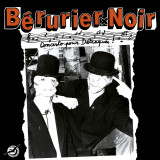
Concerto Pour Détraqués" was ranked 52nd best French rock album by Rolling Stones magazine in 2010.
Eleven tracks like so many vitriolic pictures of a sick society: rape, extreme right-wing, psychiatric confinement, security paranoia, alcoholism and all the other crap that the future seems to hold. Loran and François express more than ever their rage and their refusal of the adult world in a recital with three chords: more aggressive guitars, more incisive lyrics and voices while an armada of chorus members and a saxophone come to heckle or underline this darkness.
"Concerto Pour Détraqués" is the band's reference album, with a string of hymns to insubordination and freedom: Petit Agité, Vivre Libre ou Mourir, Les Rebelles, Porcherie, Hélène et le Sang...
The band's name alone evokes the epic of alternative rock: rebellious and committed.
Born by mistake on a February evening in 1983, Bérurier Noir soon found itself the driving force behind a vast "Youth Movement", determined to take control of its life in the face of a society that was ultra conservative at the time. Times have hardly changed.
From the first self-produced records distributed by hand to the creation of self-managed labels, from concerts in squats and wild appearances in demonstrations, on the street or in the metro to endless tours, from interviews given to fanzines and free radio stations to unclassifiable appearances in the mainstream media, Bérurier Noir has waged the most exciting war of independence in the history of French rock, with only a microphone, a guitar, a drum machine, a few red noses and patched-up theatre masks.
The last finger of honour of this turbulent and irrecoverable raia, François, Loran and their "Troupeau d'Rock" commit hara-kiri, at the peak of their glory, during three last concerts in the heart of Paris in November 1989.
Forty years after its birth, Bérurier Noir's work still resonates, whether in demonstrations or free parties, nourishing the hopes of those who wish to overthrow this world to build a truly libertarian, united and fraternal society.
The label Archives de la Zone Mondiale reminds those who missed this unprecedented adventure, 8 discographic parts of the group Bérurier Noir in the form of reissues on particularly original colour vinyls (crown finish), in a limited series and distributed throughout the year.
white marbled vinyl
Jacidorex is back with another album, 'UNFACED01'. This record sees the Belgian DJ/producer pushing the boundaries of the genre even further with his signature brand of dynamic hypnotic acid patterns.
'UNFACED01' begins with a cinematic introduction before opening into a hip-hop track, which then swiftly transitions into electro techno, industrial techno, acid trance tech
out of Stock
Last delivered 18 months ago available to reorder, subject to availability
Extra Muros is an annual itinerant artistic residency initiated in 2017. The third edition was co-organised during the winter 2021-2022 by the FLEE art collective in collaboration with the Music Department of the Museum of Ethnography, Geneva (MEG). Five artists participated in this residency including: Prins Emanuel, Nabihah Iqbal, Jaakko Eino Kalevi, Cosmic Neman, and Maria Spivak.The residency was held at the MEG in two phases. The first part of the residency and encounter represented an opportunity for the artists to explore the museum’s archives, collections, and exhibition spaces. The second phase was dedicated to the composition and production of original musical content in an ephemeral studio set up in the auditorium of the Genevan institution.
In this context, the pieces presented in this album were all conceived during this residency. Having never worked together, the five artists and musicians, each with their own distinct musical path, discovered a variety of sound resources at the Museum. These included eleven traditional instruments from the African continent, Asia and Oceania from the MEG collections, as well as synthetisers, audio effects units, amplifiers and several other vintage emblematic analog electronic devices from the collection of the Swiss Museum and Center for Electronic Music Instruments (SMEM) in Fribourg. In addition, recordings of traditional music from the five continents belonging to the museum’s International Archive of Folk Music (IAFM) were also made available to the artists.
In pairs, the residency’s participants were able to combine their respective creative worlds with the museum’s historical instruments as well as sound archives. This compilation is the result of this rich dialogue.
out of Stock
Last delivered 3 years ago available to reorder, subject to availability
Die Demo Collection "Beyond Redemption - Demos & EPs 1989-1992" fasst die historisch bedeutsamen Demos, Promos und EPs von Afflicted (früher bekannt als Afflicted Convulsion) in einem einzigen, unverzichtbaren Multi-Disc-Paket zusammen. Remastered von Patrick W. Engel (Corrosion of Conformity, Destruction) in den Temple of Disharmony Studios, wurden die Demos "Toxic Existence" (1989), "Psychedelic Grindcore" (1990), "Beyond Redemption" (1990), "Promo Tape" (1990), "Ingrained" (1990), "The Odious Reflection" (1990) und "Wanderland" (1990) in ihrem Originalzustand für die Ewigkeit konserviert und sorgfältig verbessert. Erleben Sie den Aufstieg von Afflicted von jungen Wilden zu Weltklasse-Death-Metal-Innovatoren neu. "Beyond Redemption - Demos & EPs 1989-1992" erscheint als Gatefold 180g 3LP mit LP-Booklet, Ltd. 2CD Jewelcase im Schuber und als digitales Album über Century Media Records.
Four years on from the release of Astral Projection, ASC's last LP for Horo, a re-listen reveals a body of work that still sounds prescient and current, mapping out a simmering landscape that stood proudly on it's own in the crowded world of electronica.
Hiding in Plain Sight takes the musical baton left by Astral Projection and expands the environment. The two opening tracks (No Mask, A Whisper In Your Ghost) are sumptuous palette cleansers that paint the walls with bliss. As we continue on, mesmerising waves of melancholy wash over Grey Area themed constructions, sometimes jagged (No Mask, Dying Star, Centrifuge, Galaxies), other times propulsive (Dreadnought, Surface Encounters). Pensive, frozen constructions that come off as soundtracks to movies only James has seen pepper the LP (Overscan, Dying Star, Mirrored Sequence) while the centrepiece of the LP soars unbound over stuttered, sculpted breaks (Orbiting Neptune).
ASC's great gift is his ability to create worlds of music that are densely layered and complex and yet project a sense of perfect effortlessness while they assimilate into your psyche.
Hiding In Plain Sight is not so much a journey, as a destination. A rich, full bodied alien planet intricately designed to envelop your senses.
out of Stock
Last delivered 3 years ago available to reorder, subject to availability
Up next on Pleasure Club we have some re-imaginings of Johnny Hunter’s lockdown summer jam U.K.AIM. For this we enlisted the skills of nu UK garage don ZeroFG, who turned in not one but two of his trademark low end workouts. We are also honoured to welcome one of the founding fathers of UK tech house, Mr Len Lewis, to the label who delivers a heads down late night take on the original.
The spirit of U.K.AIM lives on…
out of Stock
Last delivered 20 months ago available to reorder, subject to availability
A reissue of Nikolaus Utermöhlen’s »Karlsbad« album, originally released in 1989. Utermöhlen was a founding member of Die Tödliche Doris and this is his sole solo release. A collection of 23 witty oddball compositions for clarinet, accordion, percussion, recorder, violin, guitar, organ. It definitely has a Doris dose but even more so it shines for its totally singular mélange of tribal dada chamber folk, dilettante dissonant poetry, hard to compare with anything else. A slice of flamboyant wellness.
The recordings of this album were made for the "Georgette Meunier" film by Tania Stöcklin and Cyrille Rey-Coquais. Issued from the original master tapes and includes the 8 page booklet with engravings from the Karlsbad spa era.
Requiem for Jazz is a 12-movement suite composed and arranged by Angel Bat Dawid, inspired in part by dialogue from Edward O. Bland’s 1959 film “The Cry of Jazz.”
The original form of the music was premiered at the 2019 edition of the Hyde Park Jazz Festival in Chicago, where Angel conducted a multigenerational fifteen-piece instrumental ensemble (all Black musicians from Chicago’s creative music community) alongside a four- person choir (featuring singers from Black Monument Ensemble), dancers, and visual artists in performance.
Angel mixed and post-produced recordings from the performance – adding interludes, vocals and additional sounds, as well as transcribing a piece from “The Cry of Jazz” film. The final movement of Requiem for Jazz features Marshall Allen and Knoel Scott of the Sun Ra Arkestra. Their contributions were recorded remotely at the historic Arkestral Institute of Sun Ra in Philadelphia in late 2020.
The final Requiem for Jazz work in album form is an immersive 24-track, double LP experience. The physical package is a deluxe, heavyweight gatefold jacket with liner notes by South African writer Nombuso Mathibela, artwork by Damon Locks, and a large fold out poster designed by Jeremiah Chiu, featuring poetry written by Angel Bat Dawid in dedication to all of her collaborators on the project. Additionally, there is a limited Thy Kingdom Come purple color vinyl edition of Requiem for Jazz available for the first pressing only.
1862, 13 years after the Great Famine. An English Nightingale Nurse Lib Wright (Florence Pugh) is called to the Irish Midlands by a devout community to conduct a 15-day examination over one of their own. Anna O’Donnell (Kíla Lord Cassidy) is an 11-year-old girl who claims not to have eaten for four months, surviving miraculously on “manna from heaven”. As Anna's health rapidly deteriorates, Lib is determined to unearth the truth, challenging the faith of a community that would prefer to stay believing. Matthew Herbert is an award-winning composer. His artistic works extend from celebrated albums (Bodily Functions, One Pig) to scores for Oscar winning films (A Fantastic Woman, The Cave), including music for theatre, TV, video games, books, Broadway shows and art installations. He has performed as a DJ, as a solo artist, in venues from the Sydney Opera House to the Hollywood Bowl. He has remixed iconic artists including Quincy Jones, Serge Gainsbourg and Ennio Morricone; and collaborated regularly with acts from Björk to Dizzee Rascal.
Three-time Grammy Award nominee, songwriter, actor and model Natalie Imbruglia released Male back in 2015 as her fifth studio album. The album is a collection of famous songs by male artists, including Cat Stevens, Damien Rice, Tom Petty, Pete Townsend, and Zac Brown amongst others. The album is produced by Billy Mann, who has also worked with Pink, John Legend, Celine Dion, Martina McBride, and Sting.
The album features the single "Instant Crush", which was her first single in six years and was originally recorded by Daft Punk and Julian Casablancas (The Strokes).
Male is available as a limited edition of 1500 individually numbered copies on translucent magenta coloured vinyl and includes a 4-page booklet.
After almost two years of work, we're glad to invite you to a new journey through the fog of time and enjoy the upcoming reissue of the great Ambient/Folk record from 1984. A well-known to collectors but extremely rare record by Jon Iverson a multi-instrumentalist from Palo Alto and his college friend, mandolinist Tom Walters. They shared a love for singer/songwriter fare and gigged around campus playing covers of Neil Young, CSN, and Loggins/Messina in the late '70s.
"First Collection" was recorded during the Spring of 1984 in a small garage that had been converted to a one-room apartment in the seaside community of Los Osos, California.
With an instrumentation of 12-string guitar, piano, mandolin, analog synthesizers, and sampler, the duo has recorded nine bright, weightless, and diverse compositions where electronic experiments mix with ethnic rhythms, sweeping through inspired folk reminiscent of the work of William Ackerman, John Fahey, Master Wilburn Burchette, and Robbie Basho, to homemade pastoral space folk exuding sophisticated, pale, lunar sonic moods that somehow might remind of the work of Roedelius from the early 80s.
Equipment used for tracking included a rented 1/2" 8-track Otari MX5050 analog tape machine and assorted mics. With only a few thousand albums pressed, First Collection has become a collectable in some circles.
Now, almost forty years later, First Collection has been remixed and remastered from the original 1/2" tapes for this release.
Al Green Explores Your Mind is the eighth album by soul singer Al Green. Unlike previous Al Green albums, this album featured the U.S. #7 hit "Sha-La-La (Make Me Happy)", and contains the original version of "Take Me to the River", a song which went to #26 on the Billboard chart when covered by Talking Heads in 1978. In 2004, the song "Take Me to the River" was ranked number 117 on Rolling Stone magazine's list of the 500 greatest songs of all time. The album was his fifth consecutive album to claim #1 on the Soul Albums chart, and peaked at #15 on the Pop Albums chart.
Das Album Zappa ’80: Mudd Club/Munich kombiniert zwei historische Auftritte der Band aus dem Frühjahr/Sommer 1980. Der erste stammt von einem Auftritt in FZs Lieblings-Nachtclub in NYC - dem berühmten Mudd Club. Die Aufnahme basiert auf einem hochauflösenden Transfer des OriginalMasterbands. Die zweite Aufnahme entstand in der Olympiahalle in München und ist die erste LiveStereoaufnahme von Zappa, die direkt digitalisiert wurde. Das Mastering stammt von Bernie Grundman, 2022. Fotografien und Memoiren sind von George Alper, mit Linernotes von Arthur Barrow, Steve Vai, Vaultmeister Joe Travers.
Das Album Zappa ’80: Mudd Club/Munich kombiniert zwei historische Auftritte der Band aus dem Frühjahr/Sommer 1980. Der erste stammt von einem Auftritt in FZs Lieblings-Nachtclub in NYC - dem berühmten Mudd Club. Die Aufnahme basiert auf einem hochauflösenden Transfer des OriginalMasterbands. Die zweite Aufnahme entstand in der Olympiahalle in München und ist die erste LiveStereoaufnahme von Zappa, die direkt digitalisiert wurde. Das Mastering stammt von Bernie Grundman, 2022. Fotografien und Memoiren sind von George Alper, mit Linernotes von Arthur Barrow, Steve Vai, Vaultmeister Joe Travers.
First things first - you don't need me to tell you about the significance of Australia in the history of punk. I mean, what am I, Jon Savage? Google it yourself, FFS. Instead, let's just agree that the speedy, feral racket thrown together by the likes of The Saints, Radio Birdman and The Scientists in the mid-late '70s is AT LEAST as deliriously entertaining as anything concocted by their UK/US counterparts, sowing the seeds for seemingly endless garage-inflected noisemakers in the land down under. No one likes using words like 'tradition' or 'heritage' here - the punk rock clusterbomb is far too messy for any of that business - but also emerging from Australian rock's primordial soup is the addictive sneer of Stiff Richards. Like their predecessors, the band are a gleefully wracked mess of full throttle energy and barrelling power chords, with songs like 'Kids Out On The Grass' and 'Point of You' proving at least the equal of '(I'm) Stranded' or 'Aloha Steve And Danno'. Nine tracks in less than 30 minutes, all winners and all determined to leave you flipping over couches and smashing your TV set. And let's face it, you may as well; there's nothing good on. It all builds towards frantic closer 'Fill In The Blanks', which rattles around your speakers like the UK Subs trying to play Ed Kuepper riffs at the centre of an earthquake, before grinding to a halt as a voice says, "That's the one." Does it sound self-satisfied? Hey, it's got good reason to - this is the best no-frills garage rock party since Gino & The Goons' 'Do The Get Around', and the only appropriate response is to declare yourself betrothed to Stiff Richards because you can't imagine your life without 'em. Don't believe me? Sort out your ears and get 'State Of Mind' in 'em. Rock'n'roll as it's supposed to be played. Will Fitzpatrick.
Running Back welcomes Firas Waez and his studio character 9th House for a flock of heartfelt and intuitive house tracks. Centered around uplifting chords and joyous melodies, upbeat drums and shuffling hi-hats, it feels like being in a circle dance, watching flowers turning into fruits or caterpillars into butterflies.
Made with the tools of today, but with a burdening love for the ancient magic and positivity of this music. The results being highly contagious. Whether its any of the 9th House’s solo works like Reuben or the collaboration with Matrefakt, it’s impossible to hold still. But as no one can live off love alone, there is also an odd one out. The eponym Midas swaps vintage techniques and the love potion of its counterparts for sharp and exact peak-time magic that makes endorphins rush and cheeks blush. Whichever you finally pick of the five tracks, any of them are an amulet against bad times. A Midas’ touch indeed! Happy house painting artwork courtesy of Luciano Calderon via ruttkoswki;68.
out of Stock
Last delivered 8 months ago available to reorder, subject to availability
Fans of the Escapers know the love of Rock Steady and Reggae Music. This time they pay homage to a Johnny Taylor sung Stax classic and transform it into a Lover’s Rock thriller. A bass heavy Roots rhythm combined with Colton’s haunting lead guitar create a perfect platform. Johnny Ruiz to express his love. Hey baby “Ain’t That Lovin You”? Definitely, and for “More Reasons Than One”
More of a double A-Side release, the b-side has The Escapers calling on The Heavyweight Dub Champion himself...the mighty Scientist to reinterpret their biggest single “Stay”! Overton “Scientist” Brown gives this tune a classic style “version” with all the echo and distortion any reggae fan would want. A real privilege to work with one of the true legends of dub music!
"Juliette’s new album. This disc displays an ability to mix the anecdotal and the tragic, objects and people. Laughter and tears. Sun and shadows. In this disc everyday life is transformed, there is life in all its paradoxes, dogs, squeakers, bells, a cello, hearts beating and refusing to give up, forgotten cars, the Devil and many other things. Each song is a new act of a play, a new curtain that opens. A universe that takes shape. Faithful, this album was produced with his accomplice Renaud Letang.
Reviews: R2, London Macadam, le Petit Journal Ads: R2, London Macadam"
"Commemorating the 25th anniversary of Sir Georg Solti’s passing “The Greatest Recording Of All Time” Now sounding better than ever before on Hybrid SACD Transferred and remastered in HD sound at 24bit / 192kHz from the original two-track stereo mastertapes The first all-new transfer in over twenty-five years The first-ever stereo production of Wagner’s Ring cycle, still considered the benchmark today. “Here is the greatest achievement in gramophone history yet”, wrote Gramophone in 1965. For many, it still is!
ALL FOUR OPERAS IN THE CYCLE WILL BE RELEASED IN DELUXE HYBRID SACD EDITIONS:This iconic recording is released internationally for the first time on Hybrid SACD, delivering Solti & Culshaw’s sonic vision in the highest quality possible. The Hybrid SACD format combines the high density 24bit / 192kHz stereo mix with a standard CD layer meaning these discs will also play in any normal CD player, delivering unrivalled listening flexibility . Each edition includes lavishly illustrated booklets featuring technical information on the new HD remaster and original recording techniques, introduction to each opera by Producer John Culshaw, synopses and libretti in English & German plus many original session photographs and rare facsimiles “The greatest recording of all time”: Gramophone Magazine 1999 · BBC Music Magazine 2011 Grammy Award · Edison Award · Grand Prix Mondial du disque.
Laszlo Umbreit's album Pas de Regrets combines electronic sounds with recorded memories and various materials to create a unique listening experience. The album features complex soundscapes and techniques of layering and editing, drawing on Umbreit's experience as a sound designer for films. Pas de Regrets is an immersive and rich listening experience, with a narrative quality that places it between prospective electronics and experimental radio.
Laszlo Umbreit (*1986) is a Belgian sound designer and musician based in Brussels. Laszlo's work is anchored in sound research yet usually dialogues with the moving image, whether as present or absent. His musical practice mixes improvisation on electronic instruments, field recordings and a long meticulous editing and mixing process of sonic materials.
Brendan Perry und Lisa Gerrard haben als Dead Can Dance eine ganze Reihe herausragender Veröffentlichungen eingespielt. Doch ihr fünftes Album "Aion" von 1990 nimmt dabei noch einmal eine Sonderstellung ein. Es wurde in Perrys Studio im Süden Irlands aufgenommen. Mehr als alle anderen DCD-Einspielungen spiegelt "Aion" ein tiefes Interesse an der Musik des späten Mittelalters und der Renaissance wider. Die aus früheren Werken bekannten elektronischen Klangteppiche tauchen nur noch vereinzelt auf, die Instrumentierung ist damit überwiegend akustisch. Teilweise kommen mit Drehleier und Dudelsack sogar historische Instrumente zum Einsatz, verpackt in mittelalterliche Chorgesänge. Das Spektrum reicht von sakralen Arrangements mit gregorianischen Gesängen ("The Song Of The Sybil", "The End Of Words") über beschwingte Tanzmotive ("Radharc", "Saltarello") und Liedern wie "The Promised Womb", die von Gerards magischem, berührend-traurigem Elfengesang leben. Atmosphärisch!