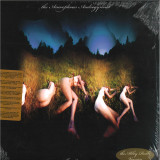
Since the release of their critically acclaimed debut album in 2013 on Names You Can Trust, La Mecánica Popular has quietly been contemplating the evolution of the group's sound, philosophy, and overall approach to making music. Band leader Efraín Rozas' experimental nature has continually pushed the boundaries of his own definition of not only Latin American music, but its broader relationship with music's global culture and history. The sound of "psychedelic salsa" that LMP helped capture in their debut was destined for further outside-the-box interpretations, and with the formation of a new quintet lineup over the last few years, LMP began to incorporate a more free, improvised and instrumental-focused performance of Rozas' increasingly radical compositions. The band subsequently took this liberated approach directly into the studio, recording Roza Cruz live, in its entirety. It was a cathartic experience, a necessary methodology for the new album's concept that embraced the intimate performance of its players and did away with standard techniques of isolation and overdubs.
The evolution of the band's sound on Roza Cruz brings forth a blend of styles rarely heard together, a touch reminiscent of electric-era Miles Davis or Eddie Palmieri at his most experimental, as the driving force of timbales and congas provide a bed for a wave of lush, analog amplification that mirrors the dueling leads of fuzz guitar and electric piano. But as far out as those instruments take the listener, the raw rhythm — the clave — always keeps it tethered to the earth and the dance, a cerebral yet visceral gift for the mind and feet.
Having pinned to perfection the sonics of the Adriatic, Croatia's Love International Festival bottles up their blissed out rhythms and sunrise sessions for the inauguration of Love International Recordings, fittingly, with a first release from UK producer Begin.
Bringing the Love International feel to wax and digital, the label will encapsulate the range of music the festival's secluded party paradise has become renowned for. All the way from the balearic tinges of this first release, to the meatier house, techno and electro selections on show at Barbarellas.
Begin aka James Holroyd has a long history with Love International. Dating back to the early 2000s, Holroyd was one of the first guest DJs at the old Garden festival on the former festival site in Petrcane. Long serving Chemical Brothers tour DJ, Back to Basics resident since the 90's and Bugged Out co founder, Begin has long paid his paid his dues to the scene. In the words of Dave Harvey: 'he's been an absolute workhorse in dance music for time'.
Love International 001's tracks seemingly fit the festivals own daily lifecycle. From the docile guitar picking of meditative EP opener 'Wood Trees' to the slow daybreak funk of 'Daypulse' where synths pierce through the track like sun rays through the Adriatic dusk, the EP is a holistic reflection of what one might hear at one of the festival's fabled sunrise sessions. 'Garden Interlude' ushers in a fresh burst of energy, with the revitalizing sounds of piano house, paired with warming neo soul vocals. 'Into The Fun' is a self fulfilling prophecy, closing the EP on a quintessentially balearic note.
Welsh producer Odeko first appeared on Mr. Mitch's forward-looking Gobstopper imprint with the A.I. influenced EP "A History With Samus" in 2016 immediately snagging a "producer to watch" tag from Fact magazine and a premiere at SPIN. In early 2017, his second EP "Digital Botanics / Construct Conduct" arrived confirming his sound and setting the stage for him to start working on this - his debut album "Rose Tinted Vision Implant" that is set in a post-Ballard, post-Gibson, post-Miéville, alternate reality. "Rose Tinted Vision Implant" sees the Bath-based producer creating a cutting edge sonic world inspired by "speculative fiction, time/reality shifting stories and dystopian shit." The entire record is structured around, and expands upon his passion for the "future," underpinning the music via a underlining narrative. "Rose Tinted Vision Implant" starts with "The User" (aka the listener/ protagonist depending on your perspective) of the 'Optic.Rose' going through the process of getting an implant is made by a mega corporation, (think "whatever Elon Musk's legacy will be 200 years from now" says Odeko "not necessarily evil or good, just a world owning superpower."). And then we follow "The User" who has unfortunately received a bad egg through stages of that devices degradation. Sonically we're there to observe. We open ("Anomaly Detection") with a precursory scan and move onto installation ("OpticRose_0_1_Installation")
through to a battery change and a recalibration. From this point, the 'presence' begins to take over the implant and the tracks verge into a more cerebral range. Odeko notes "its a bit of a satire on corporate brands pushing these great products that everyone is obsessed but that are detrimental to both the world, and how we perceive reality. Our relationship with social media and tech could go down a dangerous path if we loose sight of things. I'm going quite far here for the sake of the concept, but things like VR, AR, the want for body tech, mixed with our desire to be connected, emotionally, digitally, physically, wirelessly could lead us to a world where everyone has implants, or some kind of tech built into them." Sonically its a record that explores a post-IDM, post-Grime, post-Ambient, post-Glitch, post-Retro-House, post-Instrumental Grime, take on electronic music, like Gobstopper's Mr. Mitch himself and his label mates Orlando, Lloyd SB, Tarquin, Clu, rAHHH and Loom, Odeko is making a kind of post-genre music. Yes it's a cerebral concept under the music but as popular shows like Black Mirror have shown - critiquing our new future can be fun, unusual and highly rewarding. Welcome to the world of Odeko.
An artist as versatile as Alex Krüger is a rare find these days, not only did he release numerous EP's and albums as Tigerskin or Korsakow since the mid 90s, he's also been on the forefront of the 'Dub Techno' movement since 1999 with outings on classic labels such as 'Raum...Musik", 'Force Tracks' and '3B/ United States of Mars". Now ten years after his last album on 'Opossum Recordings' Alex is back with this well crafted genre bending full length 'Caves & Cages". From deep techno cuts through rippling ambient excursions to funky reggae infused live jams with Haushausen this work is yet another milestone in the creative bubble Alex lives in (i.e. his studio). A predominantly analogue producer, Alex recorded most sounds for 'Caves & Cages' on his modular synths and vintage gear at Organic Domain during 2017 and early 2018. Throughout the album tension ebbs and flows effortlessly via syncopated subs, analogue improvisation, subtle chord stabs and sustained swells interspersed with textured field and home recordings. The ambient opener 'Intra' sets the tone for the album. Rich with alien atmospheres, distant soundscapes, out of reach voices and licks of live instruments dug up from numerous recordings dating back as far as 30 years, even before Alex started his electronic journey. The sojourn ventures deeper from there. Subaquatic dub techno is the mood on 'King's Cave", 'Helix' and 'In Air' only surfacing ever so slightly for moments of clarity where shimmering tops and glistening synth lines shed some light on the steady grooves. The tracks 'Future History' and 'Transition State CIV' border on deep house territory.
Rundfunk records presents: 'Kill Gear', the debut album by The Eichler Brothers.
Inspired by European and American cinematic music, 'Kill Gear' honors the many great composers and compositions that characterise a bygone era in the history of cinema. The Eichler Brothers have re-imagined the late 60's and early 70's sound, creating an astonishing motion picture soundtrack that generates imagery which goes beyond an exploitation classic.
A wonderful companion piece to the totemic Fed, we proudly announce the first ever vinyl edition of Korp Sole Roller by Plush. Liam Hayes' magical fourth full-length LP was previously only available on a rare Japanese import CD. Produced and arranged in 2010 by Pat Sansone (Wilco / The Autumn Defense), it finally arrives in a limited edition of 500 copies.
The common impression of Plush is that of an underground rock myth, lent greater poignancy by the lofty vision that galvanised his music. Yet while he has long been a cult concern, clued-up celebrity fans periodically declare their profound love for Hayes' maverick genius. Indeed, after Jason Schwartzman introduced Plush to Roman Coppola, several stunning songs from Korp Sole Roller soundtracked Coppola's A Glimpse Inside The Mind Of Charles Swan III.
As ever with Plush, it's easy to imagine you are listening to a privately pressed rarity from the mid-late 1970s. Or one of the criminally neglected jewels from the discography of Jimmy Webb or Burt Bacharach. The sound on Korp Sole Roller does differ crucially from Fed, however. It is more streamlined. These 10 gorgeously seductive creations careen around ornate string and wind instrument arrangements and producer Sansone's deft work is likely the reason for this. Yet, brilliantly, it still possesses that sun-warped take on classic pop-rock, that Plush specialises in. That peculiar "down-lifting" phenomenon of performing upbeat songs in an enigmatically mournful way.
Upon completion, Korp Sole Roller barely received anything resembling a release. Press coverage was zero because none of the major magazines or blogs knew of its existence. His management at the time essentially buried the album in order to concentrate on other releases. Looking back on this decision, it really made little sense. Everyone involved in its creation of these near-perfect gems is extremely proud of it. Liam himself has described it as the favourite of his albums. Pat's delicate work is astounding. Remastered especially for this special limited edition, it is presented in a sumptuous gatefold jacket with high-end art photography throughout, including full colour inner sleeves. Finally, here's your chance to own a slice of kaleidoscopic pop history.
The now legendary ' Abbey Road' version of 'the Isness' was the originally conceived version before last minute wholesale changes resulted in new tracks , different mixes and/or edits appearing in a wholly different order for the commercial release of 'the Isness ' in 2002 . The 'Abbey Rd 'version had been initially promo'd to ecstatic reviews, receiving an unprecedented 6/5 stars from Mixmag 'it's like a beam of white light from heaven'.
This is the first time the Abbey Road version has been officially and commercially available .The band themselves ' the Amorphous Androgynous ' ( a psychedelic supergroup conceptualized and produced by the Future Sound Of London ) are said to have always regretted the last minute changes to the album ,the creation of which took five years from 1996-2001 post production of the FSOL album ' DEAD CITIES' and marks an important chapter in the production duos history and 5 year disappearance where rumours of madness and disbandment were rife among fans of the band only for them to finally appear with this radical new vision and what is now considered something of a psychedelic masterpiece which along with subsequent albums ' Alice In Ultraland ' ( on Harvest Records ) and their 'A Monstrous Psychedelic Bubble ( Exploding In Your Mind )' Dj series ( which chronicle and redefine the history of psychedelia from the 60s to the present ) did much to activate a third wave of global psychedelic sonic revolution .
The Isness is a vast samplerdelic sonic galaxy where a huge range of instruments ( from sitars and numerous eastern instruments to flutes, banjos and conventional rock n roll instrumentation) and countless musicians are employed ,collaged and twisted using the studio as instrument ( much in the tradition and lineage of the Beatles and other 60s exponents) to form a startling new vision of cosmic space music and to redefine the possibilities of what ' the song ' could be in the new millennia with its by turn : cosmic , wildly surreal , absurdist lyrics on epic songs such as ' the Galaxial Pharmaceutical ' ' the Mello Hippo Disco Show ' ' Divinity ' and many others !
Sanskrit scriptures mention the term vimana as flying vehicles or temples. Consequently, the sound of this ancient UFO has been captured into the grooves of this vinyl record. The soundscapes of Rukma Vimana dig deep into the dirty history of raw and hypnotic industrial techno. Nobody said that spiritual journeys are a clean endeavour. A1 marches forward into the dark lands of dirty drums and urges you to follow it, as it's your duty to dance hard in this life. Flip the vinyl and the needle will tickle your subconsciousness. Excavating deep tantalizing melodies and dusty basslines, one should not get lost in the palace of this unknown god. Closing with a meditative sketch, B2 leaves us puzzled about the vortex of energy we've just been through.
The 12' you're about to read a few lines about is a laconic introduction to the music of an elusive new musician on Antinote. Biographical details about him would probably not help comprehend his music and might even seem slightly contradictory with the music itself, as Reigi / Haipa has been produced in Reims - at least, it would have been much more accommodating if the capital of Champagne was located somewhere in-between Sheffield and London...
.
Indeed, at first listen, Slowglide's music seems deeply rooted in a very British history of dance music. Reigi, on the A-side, unfolds a cavernous syncopated kick on which relies a compressed, flangered, smart but somehow handcrafted sound with an extra Kraftwerkian treatment (the obsessive robotic arigato gozaimasu' and the pocket calculator' bleeping melodic line), enlightened by discreet synth waves appearing in the middle of the track.
Haipa, the atmospheric B-side, is an even stronger throwback to a time when Intelligent Dance Music was ruling over electronic music, the likes of Aphex Twin and his fellow Warp-affiliates were about to be crowned kings and Ghost In The Shell was establishing itself as one of the most culturally significant pictures of the late past century.
Slowglide's music is not backward-looking, though. There's something that relevantly resonates with today's diffracted musical landscape, as the French producer gathers and updates bits and pieces from a thirty-andsomething yearlong history of electronic dance music. The result is probably Bass Music', something that one might have been tempted to describe as the future of Dance Music' a few decades ago - to quote these prophetic words written many times. It's probably not, but these two songs are certainly fresh and futuristic.
DJ Katapila's Aroo EP is the latest addition to the iconoclastic producer's catalog of fast-paced, pan-West African-influenced dance music. From a young age, Ishmael Abbey was a beloved local DJ in Accra, Ghana's competitive and rapidly-evolving music galaxy. DJ Katapila's debut release with Awesome Tapes From Africa, 2016's reissue of Trotro, ignited international acclaim for the Ghanaian DJ and producer: The New York Times, Pitchfork, Resident Advisor and FACT heaped praise on his work. Katapila launched a touring career beyond his grueling schedule of all-night parties around Ghana's southern coast and neighboring countries, heading to Europe and the UK, where he performed at festivals and clubs the pasty two years. Katapila brought Ghana's street party culture to audiences overseas, a wave of joy and happy dancers were left in his wake. The song Aroo' uses his earlier song Cocoawra' as a jumping off point and expands upon its endearing quick-rhythmed interplay of vocal hiccups and percussive clinks. Katapila thinks of Aroo' as a simple math equation: Francophone rhythms plus techno equals so hot and danceable.' While traveling this past summer in Europe, he continued to work on the minimalist electronic music steeped in his hometown rhythms that has made him a growing and singular voice in West African music. Having never travelled outside his region before, the contemporary sounds of London impacted his sonic palette, triggering new song African Techno.' He explains, In Europe and the UK they like these techno songs and house music. They have songs that sound like African music, and we have songs that sound like house music and techno music.' Ghana Baby DJ' references his ongoing development of Ga dance music style gbe ohe. It also conjures his daughter's voice and inimitable vibe and blends it with the characteristic clave rhythm of this. The EP's final cut is a track released with a an eye-catching music video this summer called "Monkey." Following radio play in Ghana and demand from fans online, this track makes its debut on vinyl. Awesome Tapes From Africa is proud to present new music from this unmistakably original artist with an honesty and unpretentiousness that feels good at this current point in history.
more talking all that jazz, more high aiming music by fumio itabashi: mule musiq is ready to release another record by the legendary japanese jazz pianist, born in ashikaga, tochigi in the year 1949.
this time his first solo record ever: the heavy jazzing 'nature', which has never been reissued on vinyl since its birth in 1979. it has been recorded at nippon columbia 1st studio, tokyo from march 13 to 15 in the year of its release.
it features itabashi making feverish love with the piano and sharing the studio with the great bass players hideaki mochizuki and koichi yamazaki, drummers kenichi kameyama and ryojiro furusawa, soprano saxophonist yoshio otomo and vibraphone wizard hiroshi hatsuyama.
they all joined him to perform his very own songs, composed by itabashi himself and produced by ryonosuke honmura, who also produced japanese jazz heroes like saxophonist keizo inoue during his career.
but enough background information. what counts is sound. it is fresh, propulsive, twitchy and melodi-ous from the first to the last tone. sometimes the instrumentalists play a classic solo in an overall deep modal jazz atmosphere that seems to be made for cats that love the good old stars and inventors - from john coltrane to mile davis, from thelonious monk to art blakey.
'nature' also shows how deep itabashi studied the history of the genre, while keeping his very own vision of jazz alive. the man that made his professional debut as a member of the sadao watanabe quintet in 1971 and that also was a member of the elvin jones jazz machine world tour from 1985 to 1987, plays the piano in all tempos: nervous high-flying quick, deeply blue blues style slow.
besides the traditional jazz flavours, you get a feeling of mind-expanding spiritual jazz, that grand mas-ters like pharaoh sanders or gary bartz turned into a sacred music genre. a master-class record in ravishing big city jazz music, adventurous, sometimes meditative, sometimes faster than the speed of light, always grooving with a bright, pure-toned sensibility and deeply soulful melodic imaginations.
it extends the jazz history with a fine balance between tradition and innovation. and it stays infectious all the time while sounding surprisingly fresh due to a lot of thrilling musical spontaneity that touches profoundly even though all notes have been written down by fumio itabashi before he and his combat-ants entered the studio.
and maybe that's the mystery of these timeless five at times epic recordings: all notes been written on paper but each musician had the freedom to dance with them in his very own unique way. so, turn the volume loud and get ready to be steamrolled by fumio itabashi's 'nature', an inebriant album that is talking all that jazz deeply!
Now presented in a shrink-wrapped 6 panel fold out card wallet on CD, on heavyweight double vinyl in a gatefold sleeve. Digitally re-mastered by John Rivers at Woodbine Studios, November 2017 August 1988, Spacemen 3 embark on one of the strangest events in the band's already strange history. Billed as "An Evening of Contemporary Sitar Music" (although consciously omitting the sitar), the group would play in the foyer of Watermans Arts Centre in Brentford, Middlesex to a largely unsuspecting and unsympathetic audience waiting to take their seats for Wim Wenders' film 'Wings of Desire'. Spacemen 3's proceeding set, forty-five minutes of repetitive drone-like guitar riffs, could be seen as the "Sweet Sister Ray" of '80s Britain. Their signature sound is at once recognizable and disorienting - pointing as much to the hypnotic minimalism of La Monte Young as to a future shoegaze constituency. On this double LP reissue, Dreamweapon is augmented by studio sessions and rehearsal tapes from 1987 that would lead up to the recording of Spacemen 3's classic 'Playing With Fire' album. 'Spacemen Jam,' featuring Sonic Boom and Jason Pierce on dual guitar, is a side-long mediation on delicate textures and psychedelic effects.
A multi-platform production that explores the overlap between the digital and the organic through field recordings of Inuit throat singing may sound, on surface level, to be something that is a rather niche. However, Zoe Mc Pherson's exploration of this world on String Figures is a deeply rhythmic, immersive and forward-thinking piece of electronic- leaning music that remains just as danceable as it does experimental.
The album is fundamentally one of duality, exploring the traditional and the contemporary, organic and electronic, audio and visual, history and the future. Rooted in this duality is also a core theme around string being one of the most ancient and playful art forms and the seemingly infinite possibilities it offers in terms of shapes, structures and figures lines up with this as a trans-global art project. One that over time will involve video art, choreography, 3D motion design, macro film, instrumental and electronic sound. Although for now is being presented through an AV performance, films and a record with Mc Pherson collaborating with director Alessandra Leone.!
Over the seven tracks (which are laid out as chapters) the record explores glitchy electronics, dub-tinged grooves, polyrhythms, and a huge array of instruments that takes in quiet blasts of atonal sax alongside wonky synths. This of course cross-pollinates with the throat singing and experimental field recordings to create an utterly inimitable sonic sphere. For Mc Pherson it's about mixing worlds, histories and timeframes and she uses a 1991 quote from Laurie Spiegel to hit home how she has elaborated upon this original thought of history and future overlapping. 'Folk music is considered anonymous common property in a culture and that's what a lot of computer music and other kinds of music data may end up becoming.' However, there's also a purer reason for the exploration of these worlds and colliding them together. 'Basically I thought that electronic music that is only digital is a bit boring and as I'm connected to jazz music for many reasons, I wanted it to sound organic: real instrumentation, field recordings.'
Khalab has arrived OntheCorner with 'Zaire'.
'Zaire' is the beginning of a new narrative for the artist. In this first chapter Khalab creates urgent compositions with layers of sound from the past, present and future. 'Zaire' is underpinned by an intensely pounding heart of other-worldly percussion. The collaged loops frenetically jab in syncopation breaking off when the inherent swing casts its discrete groove to summon the dance. Unrelenting waves of synthlines, basslines and rhythm find harmony amongst the melodic chants and distortion.
Already making Gilles Peterson's 'All Winners' list on BBC 6 Music'Zaire' is a breathtaking nucleus for airwaves, dancefloors and, any digital devices masquerading as abeatbox. The tracks 'Aeh' and 'Night in the Jungle' are the vessel from which the heat of 'Zaire' steams. DJ Khalab has departed and with 'Zaire' Khalab has arrived On the Corner.
The two remixes on this EP offer magnified oppositions to the friction that Khalab seamlessly stiches into his tapestries of sound. The bass frequencies that Medlarbounces across his electro dirge, taking day into night, contrasts with the harmony and light of Will LV's journeying remix that drives through the troposphere.
'Zaire' is a prelude of the forthcoming 'Black Noise 2084' and the freeing of a narrative shackled in chains for centuries. Phrases of historic recordings collaged with future electronics and the analogue depth and artistic voices of the present makes this a ground breaking work of future music. The archive recordings bare a stark reminder of the need to face the barbaric recesses of modern human history. The many voices of Khalab's 'Black Noise 2084' are coming to be heard.
With its seventh release, NEW YORK TRAX welcomes the revival of John Selway's 'Semblance Factor' alias. Selway became an indispensable element of the history of the New York sound by virtue of building an extensive catalog of high quality releases spanning almost three decades and multiple genres of electronic music. From his first electronic band Chaotic Sound Matrix, to his major contributions to the early productions of Deep Dish; from his first success in the techno world as part of the seminal New York duo Disintegrator to the most successful of his collaborations, Smith & Selway, and his deep and minimal techno label CSM; from the intelligent electro-funk of Synapse and Serotonin Records, the electro and synth-pop of Memory Boy to the wild improvisational eclecticism of the Rancho Relaxo Allstars, Selway has created one of the richest bodies of work in the world of electronic music.
'Defiance EP' is a venture into hard-hitting electro, acid, and raw industrial-leaning and experimental sound. Below the intense threshold of sound, there is a message for today's complacent society...
Following the recent reissues of Jose Mauro's Obnoxius, Piri's Voces Querem Mate and Victor Assis Brasil's Toca Antonio Carlos Jobim, Far Out Recordings presents a second album from Victor Assis Brasil from the treasure trove of the Quartin Records catalogue, Esperanto. Over the course of the 1960s, Roberto Quartin released more than 20 albums in Brazil on his label Forma, by artists including the likes of Eumir Deodato, Quarteto Em Cy, Baden Powell and Vinicius De Moraës. Selling the rights of Forma to Polygram in 1969, Quartin struck out for pastures new at the dawn of the 1970s with the launch of his self-titled label. Significant works and high-water marks for Brazilian music overall followed in that decade's first year. These singular gems in Brazilian music, difficult to categorise yet compellingly beautiful, have for too long gone unheard.Gifted his first saxophone by his aunt at the age of fourteen, only four years later the inherently gifted and determined young musician Victor Assis Brasil recorded his debut album, with a second to follow only a year later. The prodigious young carioca was subsequently granted a place to study at Berklee College of Music, where he played alongside the likes of Dizzy Gillespie, Clark Terry, Chick Corea and Ron Carter. It was also during this period he recorded Esperanto and Toca Antonio Carlos Jobim with Roberto Quartin, upon returning to Brazil in the summer of 1970.Recorded in the same sessions as the Toca Antonio Carlos Jobim album, Esperanto consists of five deep jazz cuts: original compositions except for a heavy-swinging latin-jazz cover of Jimmy Heath's 'Ginger Bread Boy', alongside more moments of wild frenetic jazz, like 'Quarenta Graus A Sombra', amongst more melancholic, but no less captivating compositions like 'Marilia' and 'Ao Amigo Quartin'. Esperanto's influences span both American continents, finding a meeting point for Latin jazz and North American post-bop, with Roberto Quartin's perfectionist approach to sound elevating the already incandescent music to divine new heights. The band consists of some mercurial greats of Brazilian music: Dom Salvador (bass), Edison Machado (drums), Helio Delmiro (guitar) and Edson Lobo (Bass).Victor Assis Brasil passed away aged just thirty-five, due to a rare circulatory disease, but by this point his status was already cemented as one of the most talented musicians in Brazil's history.
Jammin' Unit is not only my brother but one of the most prolific producer of electronic music since the early days of techno. He is one half of legendary electronic super group Air Liquide and made his way into history books with tracks like 'If The Was No Gravity' and 'Revelation' lately featured on Nina Kraviz - Fabric 91 mix.
'Remore Car Babe' was originally released on clear 10' via Temple Records NYC in 1997 and is now remastered by the man himself for our 2018 ears. Re-issued on 12' black vinyl for more gain and better audio quality.
In his own words he describes the 4 track e.p. as: 'The sound was created for headphone listening during remote car racing. Enhancing the feel of speed and aggressiveness was the goal'.
To me it feels like a manga comic strip eched on vinyl. No headphone necessary to go on this speed racing trip of extacy and pounding bliss.
A re-issue I am especially proud of to hear on dance-floors around the globe.
'Don't eat before going to sleep but Do eat before going out!'
The Tel Aviv based music label 'Raw Tapes Records' has been getting a lot of attention in the last few years, broasdcasted around the world (Gilles Peterson/BBC, The Gaslamp Killer, Toshio Matsuraa/Tokyo Moon FM, Dom Servini/Wah Wah 45 London, Peanut Butter Wolf/Stones Throw LA, Radio Nova/France, Wicked Jazz Sounds/Amsterdam, KCRW/LA, Andrew Jervis/Bandcamp).
With more than 70 albums released out of around 20 local artists within an 10-years work, this is no doubt the most productive independant music label in the history of Israel, and surely Tel Aviv's leading Beats/Hip Hop label and collective.
Puzzles vol.3 is the third volume in the Puzzles Compilations Series from Raw Tapes, featuring 13 of the current artists on the label, including Buttering Trio, Sol Monk & Nitai Hershkovits. The release features cooperations with MNDSGN, vocalist Jenny Penkin, Uzi Ramirez and more.
Curated by KerenDun, this album ranges from Beats & Hip Hop to Jazz and Electronics.
The album marks the 10-years-Anniversary for Raw Tapes.
The second album by Istanbul's clarinet virtuoso Cüneyt Sepetçi is an intense trip into modern Turkish wedding and party music. The foundations go deep into Turkey and the surrounding regions' history, which each generation innovates and develops. These days, no wedding or circumcision party is complete without the sound of the micro-tonal keyboard. A new addition, these Turkish keyboardists can play between notes, and supply banging club rhythms in wide variety of time signatures.Sepetçi uses the bedrock of Volkan Sever's synth insanity as a jumping off point for some truly crazy solos. His fluttering sheets of notes tie knots around the pulsating, fried synthesizer. For this recording session, Sepetçi brought in two drummers, Fatih Özden (tapan) and Samet Sertol (darabouka), to play along with the Turkish drum machine. A dense nest of rhythmic complexity is the result. And to further connect to this music's rich past, the ancient double reed zurna of Ahmet Özden and Yasar Uçar's European violin weave ancient melodies and incredible solos throughout.
These musicians are some of the best in Istanbul, and all of these songs are first takes, recorded live with very little planning. Sepetçi essentially leads the band through these complex arrangements as they play them.In Istanbul, one may see Sepetçi playing for change on Istiklal Caddesi, the famous Turkish walking street at the center of the city. Or one may see him on one of the TV stations, playing Anatolian songs in his inimitable style. He's even begun touring outside of Turkey—at Denmark's Roskilde Festival, and at concerts in Italy, Beirut, and Israel. I want to go to America. He says. Do they have mosques there
After his well acclaimed soundtrack lp on Hivern Discs,Brussels based producer Lawrence Le Doux is returning to homebase Vlek for his next offering. And what a project it has become: Le Doux, heads first, dived deep into the Belgian national history of electronic music, and came up with a sampler covering the various fields the Belgians have explored over the last 30 years.
From digi dub over simple drum computer house to oneman industrial cassettes: 'Host' has it all."
Lawrence Le Doux opened for Matias Aguayo in one of Brussels' major venues: Ancienne Belgique earlier this year.
Lawrence Le Doux' latest album was released on Hivern Discs (Music For Documentaries' - 3,8/5 on RA)
VLEK designer Dimitri Runkkarri's take on the analog type press / glass printing process: With Lawrence Le Doux, from the beginning (with "Terrestre", 2014) we used different materials to print out the sleeves. We used cork, overlapping letters, plastic cross for wall carving.
This time, I had some glass left at the workshop. We wanted to try. We broke it on the press then printed it with all the texture, scratch, accidents caused by the pressure of the press..."
Avant Garde, Repetitive, Minimal, Stoner Rock, Religious.
A french trio called France, using drums, bass and amplified hurdy-gurdy. They perform only live, in the middle of the audience - turned in to face each other - full on smoke machines and strobes. And they play only one 'song' for the duration of their hour-long set. And it's the most transfixing live experience of intense physical and mental focus. The distorted hurdy gurdy plugs France's sound into the country's history of folk music and popular festivities, of communal trance and immersive pleasure. The rhythmic basis is pretty much the same throughout the whole live. One doesn't need to actually be tripping balls for the auditory illusions to start coming thick and fast. Those who've stayed for the whole duration of their performances know they've shared something. However disparate the phantom forms each might have discerned in the midst of the howls and groans. Gigs like this you leave feeling you're not quite the same person who went in, even though you'd be hard-pressed to pinpoint precisely what has changed. One certainty remains at least, that there is still a France we can believe in. David McKenna (The Quietus). The Release: Initially released as a 50 copies CD-r in 2009, swiss Mental Groove has teamed with french Standard-Infi to reissue this classic live performance onto glorious vinyl edition. The 45 minutes are radically sliced onto the two sides. The recording is raw and the mastering is fat. The first two pressings made in 2014 and 2015 were distributed confidentially and during the numerous live performances of the band. They are long time sold out and sought after.
Comet presents the reissue of Black Voices (1999), featuring remastered versions and Ariya (Psyche Juju Mix)' as bonus track, which was not part of the original release.
Tony Allen completely rewrote the books on what was possible within the AfroBeat genre with his stunning 1999 album, Black Voices. When one considers exactly "what" is going on throughout Black Voices, it is quite mind boggling, as it is almost impossible to associate a minimalist, electronic feel with the massive walls of sound which Allen was known to create.
Yet these walls of sound are still very present, yet they gain an entirely new feel due to the presence of the producer, Doctor L. He takes the mesmerizing rhythms that Allen creates and he spins them into a stunningly modern sound. While Doctor L's production work throughout Black Voices is truly fantastic, it is clear that the genius behind the album lies within the mind of Tony Allen. With the absolutely mesmerizing, funky grooves that Allen creates, it comes a little surprise that the vocal collaborations are handled by members of one of the funkiest bands in history: Parliament-Funkadelic.
For almost two decades, Black Voices has remained a stunning example of the fantastic results that can occur when seemingly unrelated genres clash.
For its latest release, Weirdest Dream has landed on Dopeness Galore for a supernova of atmospheric sounds called White Worms.
.
Weirdest Dream is the moniker and playground of Stockholm-based galactic explorers Daniel Fagerström & Luciano Leiva. With a history of releases on 'RVNG' and 'Permanent Vacation', the duo plays around in a constellation of all analog and early digital synthesizers such as the TR-909, Waldorf Microwave, Yamaha DX7,
Roland Juno-60 and Akai MPCs.
An ambient cloud of sonic surrealism, White Worms is a curious exploration of the celestial sphere through echoes of Patrick Cowley, Sensations Fix and Tangerine Dream.'
This time Y-Bayani has support from the great voice of Baby Naa. Baby Naa was just hanging out at the studio in Accra/Ghana when the recordings of Rehwe Mie Enyim took place. The crew was waiting desperately for a singer to back up Y-Bayani. After an hour of waiting the producer, knowing that she sings at church every Sunday, asked Baby Naa to do the missing part. Then something occurred that nobody was expecting and finally everybody was happy that the original singer hadn't made it.
Rehwe Mie Enyim is a unique example of how roots-reggae can sound today. Maybe it will be the very last recorded real roots-reggae song in human history
On Mi Sumolo the Band of Enlightment, Reason and Love gives us a light and cheerful instrumental every DJ must have for his late night wedding set or any other high-class party.
The mighty one-man-band with the most notoriously misspelled airport pick-up signs in music history returns to his beloved hometown imprint Musique Risquée with a scorching three-track can of shake-ass. Guillaume & The Coutu Dumonts is never one to shy away from fresh contrasts in his works, and we have no exceptions here - all manner of dark-to-light, flacid-to-hard, and identifiable-to-WTF moments, sounds, and vibes abound. Lead-off piece 'Histories Vraies' brilliantly soundtracks the inevitable future moment when a season-premiere costumed viewing party for Game Of Thrones unknowingly gets their punch spiked with moon rocks and teleported right to the middle of Panoramabar at peak time. A2 jam 'Far Is The Field' counterattacks with the next level fusion of Sun Ra Arkestra-esque transmissions wrapped around a Humpty Dance-on-steroids Bassline, twisting and shifting away from the hands on the clock with beautiful ease - 'I am Music..' indeed. Finally, B-side long-burner 'Whatever's Inside' rocks a sultry belly dancer's theme song at an FM and modular synth Bazaar on Uranus, with G & the CD's patented sharp percussion fills ensuring that the resulting melted faces and hearts will still be set in motion by the all-important collective flexing of the Gluteus maximus.
Native New Yorker Son Of Sound aka Henry Maldonado returns to Delusions of Grandeur with another fine EP including two floor-friendly originals plus a stripped back remix from Aroop Roy. For those too young to have been buying records in the early 90's Henry was a key figure, involved in seminal releases on Strictly Rhythm as House 2 House, Maxi Records as Deja Vu and MAW Records as Rhythm Section. To say this guy has history is something of an understatement having made an important contribution to the first wave of deep house with productions dating right back to '91. More recently he has created magic for Jus Ed's Underground Quality, Classic, Razor n Tape and Local Talk as well as establishing his own District30 imprint.
We kick off with NY Iz All I Know, a warm, soulful yet pumping slice of what can only be described as proper house music! Looped up vocal chops bounce around a classic disco groove until things breakdown into a new chord progression and saw wave bassline which add an interesting twist to the arrangement. Skin Tight drops next introducing a funk break underneath the solid four on the floor kick. One of Henry's trademark chord progressions emerges and the elements build up around to form another masterclass in sample-heavy house perfection.
Aroop Roy steps up for the remix following a run of fine edits and originals on the likes of Freestyle, Basic Fingers and House Of Disco. NY Iz All I Know gets stripped back and pumped up, taking the key elements and adding his own disco inspired groove and Moogy synth business for a floor- pleasing gem that we're sure will help find him new fans from across the house and disco spectrum.
The Doors had one of the most extraordinary debut years in music history in 1967, releasing a string of hit singles and two platinum albums, beginning in January with the band's self-titled debut, followed by Strange Days in September. The latter peaked at #3 on the Billboard album chart and featured classics like Love Me Two Times,' When The Music's Over,' and the title track Strange Days.'
STRANGE DAYS (50TH ANNIVERSARY DELUXE EDITION) was produced by the album's original engineer Bruce Botnick. It includes the original stereo mix of the album on CD for the first time in a decade, with sound that's been remastered for the first time in 30 years. The second disc features the album's original mono mix, which has been remastered for this set and is making its CD debut. Accompanying the set are liner notes by music journalist David Fricke, as well as a selection of rare and previously unseen photographs.
Having a larger budget for Strange Days allowed the band to spend more time experimenting in the studio. They used an eight-track recorder for the first time, which resulted in some memorable overdubs like Krieger's double-tracked guitar on When The Music's Over.' Surprisingly, the trippy keyboard sound heard on the album's title track is actually one of the earliest appearances of a Moog synthesizer in a rock song.
Strange Days mixed new songs written on the road with some written before the band's 1967 debut. In fact, the band performed Strange Days' during its 1966 residency at the London Fog in L.A., while My Eyes Have Seen You' dates back to 1965. Another early track is Moonlight Drive,' which was one of the very first songs that the band practiced together, and where the band heard Krieger's haunting bottleneck guitar playing for the first time. It's also the song Morrison sang to Manzarek at Venice Beach in 1965 when the two former UCLA film students reconnected and decided to start the Doors.
Mint Condition - A reissue label focussed on excavating the outer fringes of classic House and Techno. Unreleased mixes, classics and overlooked gems mined from the last 20+ of contemporary dance music are the order of the day. From Chicago, Detroit and New York to London and beyond, Mint Condition have got their expert digging hats on to bring you exclusive heat and those rarer than rare jams that have been on your wants list for years! Dig in....
Hot on the heels of his 'Relief Sevensixty' EP we are pleased to announce the latest instalment of Jaime Read cuts from the vaults. The 'Target This MF' EP is another collection of golden-era jams from Read's envious archive. Steeped in history, these infamous tracks are now seeing the light of day again. You only have to have a quick online search to read the fascinating story of the journey of this music and then maybe this EP title will make sense! Kicking off with the serious Detroit leanings of 'P.E.G.' you get a real taste of what's in store, frantic claps and detuned synth swells combine to create a pacey and essential slice of futurist Techno. A2 'Sux' is another epic piece of space electronics, tough drum machine programming and swirling sounds give the track an epic feel, mildly disorientating in the best possible way it's hard to believe this music originates from the South coast of the UK! B1 'Rein (Pt.1)' is mining a deeper, House infused sound. A sublime groove that tips it's hat to the masters with a serious bassline that just won't stop. Funky machine music of the highest order. The EP finishes with the absolute killer 'Peeano', a jam that flips Jazz on it's head in zero gravity, incessant piano lines drive us deep into the speaker stacks and it feels great. The whole EP is a total trip. Essential music from an unheralded UK legend.
The 'Target This MF' EP has been legitimately released with the full involvement of Jaime Read for 2017 and remastered by London's Curve Pusher from the original sources especially for Mint Condition. 100% legit, licensed and released. Dug, remastered, repackaged and brought to you by the caring folks at Mint Condition!
On this new EP, DJJ's trademark jagged take on filtered French house is still present, but with Chicago bump, techno and more random elements thrown in for good measure.I Keep Trying To Convince Myself is the tougher, more rugged and even funkier cousin to DJJ's hotly-hyped 2016 summer anthem just a lil. Chi house meets soca in this carnivalesque new classic, which hits the perfect spot between sweetness and dirt.Yn Y Ty is fast, jerky funk and almost a new genre in itself. Both melancholy and pumping, think DJ Rush meets the Tetris theme in an oddball, groovy-as-hell work of genius.The cut-up, loopy loops and tough, tribal beats on Apilli are deranged in a good way and - as with the rest of the EP - demonstrate a quirkiness and subtle humour akin to Basement Jaxx's early golden period.A big sample drives the jacking, sweaty, glitz of Upsqwar's warped take on handbag, which channels the spirit of Modjo and features a ponderous, almost chiptune melody drifting subtly over the top.The EP closes with the Greek flavoured stomper Glas, which wouldn't sound out of place on Richie Hawtin's 1999 mix album Decks, EFX & 909. This new EP is first release since jus a lil for Crazylegs, which gained high praise from NPR, Resident Advisor, Indie Shuffle, Mixmag, Dummy, Hyponik and FACT - who commissioned a video and coined the tongue-in-cheek genre name 'outsider Ibiza'. Comparisons have been made to Thomas Bangalter, Alan Braxe, Todd Edwards and David Morales - albeit a skewed reinterpretation. Like the punks' assimilation of rock and roll, DJJ's fresh and irreverent take on highlights from dance music history make for some of the most exciting sounds since Daft Punk's first forays.Although distorted and with lowered bit-rates, to call theses tracks 'low fi' is to do them a disservice, as DJJ's manipulation of frequencies, distortion and samples is deceptively simple yet not easily matched. There's a mastery of sonics and leftfield sensibility at play, akin to fellow EQ tweakers Heiroglyphic Being, Aphex Twin and Adrian Sherwood.DJJ is a member of the Bristol-based label/collective Crazylegs, alongside artists including Gage, Sudanim, Finn (all of whom remixed just a lil). He's also one half of ISLAND, whose grime-flavoured Nokia EP was release in 2015 - also on Crazylegs.
HQ Gatefold, 3x12 140g Vinyl, black innersleeve, download code
EXTRAWELT are back! Although in fairness, they were never gone. On the contrary, since their first release on James Holden's Border Community Label dropped in 2005, Arne Schaffhausen and Wayan Raabe have been responsible for a plethora of classics including "Schöne Neue Extrawelt" and "In Aufruhr", their two seminal albums on Cocoon Recordings. The duo are one of the most booked live acts worldwide, commanding a huge fan base. Their performances are the stuff of legend, making them the absolute highlight at every club and festival they play. So it's with great pride and respect, that we can announce the release of Extrawelt's third album for Cocoon Recordings. "Fear Of An Extra Planet" completes the Cocoon trilogy and the excitement growing among their fans represents a new high in the history of EXTRAWELT!
Musically, of course, there's enormous pressure on EXTRAWELT to deliver, but this is dismissed with a playful disregard and they are clearly focused on the job in hand. The album title "Fear Of An Extra Planet" sounds cinematic, like some art-house science fiction film, without giving too much away.
However, from the first seconds of the opening track "Superposition", the album title makes 100% sense and sets the scene for the rest of the trip. We are immersed in wide open spaces and invited to explore dark and dusky worlds that transport us back to their Border Community years. Timeless and elegant, "Superposition" perfectly captures the epic, dream like quality that made James Holden's label so influential.
New Release Information Second up, "Gott ist Schrott" takes a much more minimalist approach with its retro 80s drum programming, monster bass lurking in the breaks and playful Rhodes/synth riffs that span the divide between early German techno and deep Detroit electro with a distinctive film soundtrack aesthetic. "Oddification" continues this theme, adding extra spice reminiscent of the techno-synth vibe of Detroit with a punchy, almost Prodigy-style breakbeat complete with shredded vocal samples that gives us a taste of what's in store. "Gentle Venom" then takes the breakbeat motif to the next stage. The main focus here is the classy sprinter of a bassline, peppered with a flurry of intricate and subtle effects and modulations, that immediately trigger an intense, movie-like 'in pursuit' feeling.
With - Das Grosse Flimmern" we cautiously approach the album's high point. It's still in keeping with the soundtrack aesthetics, but faster and with more urgency. Almost hypnotically, Extrawelt invade us with an energy and impetus that always radiates from their music. Next in line is "Silly Idol" and here Arne Schaffhausen and Wayan Raabe opt again for a more minimal tack, focusing even more intensely on the dance floor to reveal a pulsing, twisted heart to the album.
"Punch The Dragon" is the hidden gem of the collection, utilising and melting together the most bombastic and playful elements. This one is totally off the hook, a sensory overload in an acoustic widescreen format! Then we have the title track "Fear Of An Extra Planet" which perfectly sums up the album concept. It opens up like a film score, with minimal passages following dark sequences that morph into dreamy melodies, all grounded by cool, constantly alternating analogue drum patterns. If you're not listening closely, you might get the impression that three or four different titles are mixed together; such is the effortless flow of the album.
As we near our destination, "The Friendly Coroner" really does honour its name. The morbid charm of the title is captured by a fluid bassline and melodic arrangements that border on the absurd, until the funky drum beat finally drops. In our mind's eye we see a cheerful medical doctor removing his bloody gloves, hanging his smock in the closet and vibing out in his neon drenched workspace. And there we sit, glued to our cinema seat, submerged in the different textures EXTRAWELT have conjured up on "Fear Of An Extra Planet". Over the course of the last title, the strings usher in the final acknowledgments as the credits roll. The dramatic end of "2084" leaves us transfixed in front of a black screen in a large, dark room safe in the knowledge that we've just witnessed a science fiction epic.
out of Stock
Last delivered 2 years ago available to reorder, subject to availability
Osaka, not being Japan's capital city, has a history of producing some unique underground movements and artists. Without the attention or the funds Tokyo artists may have access to, Osakan artists over the years have had to make their own way with raw innovation.Iku Sakan, an electronic musician and DJ from Osaka, has spent most of the last decade living in Berlin. Prior to that, he was active in the underground club scene of Kyoto & Osaka. A previous unit was Sakan & Senju (with Muneomi Senju of The Boredoms). Together, they produced a 15 copy handmade edition of their music on CDr. Iku personally handed a copy to Karlheinz Stockhausen, when he was visiting Tokyo for his last festival appearance in Japan.Sakan began playing steel drum at the Görlizer park in Berlin, Tori Kudo of Maher Shalal Hash Baz then invited him to accompany the band. Immersing himself in the international DIY / noise / improv scene back in Berlin, he became active as an improviser, DJ and promoter, and has since worked with Sun Araw, Anders Lauge Meldgaard, Pekka Airaksinen, Günter Schickert, and Damo Suzuki.Playing and improvising, touring and DJing, has led to his sound, a kind of metaphysical music, with circular rhythms and an emotive, melodic feel. He combines analogue and digital devices (Omnichord, Roland MC303, and a DIY electronic doll synth. made by his friend Stephane Shibatsuji-Perrin in Tokyo), and pre-recorded materials, mixing and merging all four signals into one mixer (no MIDI sync.), through an effect pedal. When recording, he usually lets these devices run until something clicks. Then he records and starts to improvise, like he's playing an imaginary instrument, entering a timeless region where track length loses its meaning.2017 has seen some of Sakan's Berlin recordings released, initially on two tapes: 'Human Wave Music', for Natural Sciences, and 'Cepheidian' for Planet Almanac. The two track long player 'Prism in Us All' on Japan Blues' imprint is his first LP. His on/off-world sound, part kalimba, part gamelan, part E2-E4 - and at the same time, none of them. A hypnotic, musical mantra, centring the spirit, and resonating with the harmonics of the spheres.Prism In Us All' is the second release on Japan Blues' eponymous imprint, after featuring the album on his NTS show in January.300 copies only, in silk-screened sleeve.
Alternatively titled: 'Homoswavesailors', Jack Cccoy's 1984 film about the birth of windsurfing details, through the gaze of the sport as a pre-historic ancient ritual, the exploits of a few of the sports originators. Backing up the clear 80's blue visuals of waves white washed wind blasted FX, is a variety of original pop and synth music made by the films' composer, Chris Eggleton. There are no song titles, rather each track is spiced-up with wind and wave sound fx, which were originally meant to act as sound accents for wave sail action in the film. The pop songs are beach-spiked hits, sounding like New Zealand's flying nun rock, or blasted out prince chorus funk, but with added film sound fx, the essence of the silver screen begins to creep into the medium of audio disc! The synth music on Tradewinds sounds as if Tangerine Dream made inspirational beach movie tracks during the height of their 'Firestarter' period. The mix is arranged by Pacific City, so that the summer doesn't crash and burn. For the first time in history, Pacific City Sound Visions presents: the original motion picture soundtrack to 'Tradewinds' on vinyl LP. Break down..... shake down..... ya busted......
The Scene: The Welsh mountains, remote and harsh, a special place. A good place to produce a special album. The characters: Volker Bertelmann in his friend Adam Fuests' studio, equipped with only a piano and a laptop. The Project: To record a album of piano music. Title: Hauschka.
Piano music is highly personal music, which is the reason why piano solo albums occupy a particular place of importance in a musician's work - not that Volker Bertelmann wants to hype his first foray to that extent, hence the pseudonym. Nevertheless Hauschka is personal music, simply because it has accompanied him for so long, because it has always been there in some shape or form, because it has always been important. The title points to the fact that it is dealing with something of import, not just a few finger exercises or background ivory-tinkling.
Substantial' is a snapshot of a life spent with the black and white keys, and is simultaneously both moment and history, thought and feeling, yet without turning into a unduly meaningful concept album. Rather, Substantial' is based upon the least conceptual of all concepts: Improvisation. Each track is based upon an opening sequence, the theme of which is extended, modulated and varied with, as far as form or length is concerned, no specific objective in mind. What has come out is music of a differing, well, substance: Eleven atmospheric pieces in which a variety of different techniques overlap and rhythmical images with narrative depth unfold, in which further instruments, such as double bass or vibraphone make a fleeting appearance, at once lending a hint of pop, but at no time detracting from the piano as central instrument, in which experimental and electronic music is accessed without compromising the directness and ease of the improvisational approach.
The confluence of Bertelmann's multiple musical personality can be apprehended here: Whilst the pop-oriented musician plays the melody, the electronic producer gently experiments with sounds, leaving the pianist quite literally to manipulate the piano, - plucking the strings with a plectrum, dampening them or bowing them lengthways to achieve a variety of percussive effects. Following the recording, the tracks were adapted, supplemented and finalized. Using multi-tracking, up to four piano tracks were superimposed, electronic sounds from the laptop added, as well Stefan Schneider's bass (Mapstation, To Rococo Rot, Music A.M.) on three tracks.
Mercury Prize-nominated Portico Quartet has always been an impossible band to pin down. Sending out echoes of jazz, electronica, ambient music and minimalism, the group created their own singular, cinematic sound over the course of three studio albums, from their 2007 breakthrough 'Knee-Deep in the North Sea', and 2010 John Leckie produced 'Isla', to the self titled record 'Portico Quartet' in 2012. Now rebooted as Portico Quartet after a brief spell as the three-piece Portico, the group are set to release their fourth studio album Art In The Age Of Automation this August on Manchester's forward thinking indy jazz and electronica label Gondwana Records. It's an eagerly anticipated return, with the band teasing both a return to their mesmeric signature sound and fresh new sonic departures in their new music. So much so that their four-night run at Archspace E8 (June 22-25) sold out in less than an hour as fans from around the world scrambled for tickets to hear the return of Portico Quartet. Support from Gilles Peterson, Jamie Cullum and similar minded DJs around the world. Airplay from TSF France. Features in Jazzism, Jazzthing, Jazzwise and beyond. Reviews in the Guardian, Mojo, Uncut and more. Full servcing to the Gondwana Records international DJ and radio mailing list.
A humorous look at some of the more infamous characters in history precedes a charming keyboard led instrumental. Most likely Lloyd 'Gitsey' Willis and Family man sharing the musical honours.
Dave Barker on the flipside with a 'modernist' view on 'Smooth and Sorts'. Comes in a hand stamped bag.
Musically and emotionally, Superpitcher's third full-length studio album, The Golden Ravedays is a one sound autobiography that exhibits the skill, feeling and style that the artist has honed over a period of twenty years, musically, and forty-plus-years, emotionally.
And full-length it is:
The Golden Ravedays is an epic album of 24 tracks that was released in January 2017 and is stretching over 12 respective chapter albums during a one-year period.
The sixth piece of The Golden Ravedays puzzle will be released on Hippie Dance in June 2017.
Number 6 of the series introduces two further tracks of the sound adventure that Superpitcher is taking us on this year.
Side A features Protest Song. If music is a way of transporting us to other places, Protest Song takes us to a desolate, scary and loveless environment, a burnt-down, burnt-out place where the flesh of its former inhabitants is smouldering, void of goodwill and kindness in a cloud of toxic and greedy smoke. It's all Kafka and Orwell and Suffering - the most twisted and eerie track so far in The Golden Ravedays saga. What is undeniably clear is an acute sense of regret and loss - a warning that it could have been avoided, had we only listened to our hearts and protested.
In the same vein on Side B we hear powerful Resistance. Produced after the Paris attacks of 2015 Superpitcher outdid himself with this strong message of Resistance. Where Protest Song paints a picture of under-worldly doom, Resistance's techno beat and insistent refrain sweeps us to the surface of the muck of hatred and intolerance we've politically been dumped in. A voice that seems like a trapped animal is calling out to us. What is it trying to say Is it crying out for help Is that animal all of us Resistance represents hope and encouragement and could be the perfect marching track to any demonstration against negative forces. Much needed in this age of bigotry where it seems like time has leaped backwards to a darker side of history. As for the dancefloor - Resistance is irresistible!
First Word Records are very proud to present a heavyweight EP in collaboration with seminal groove collective, CoOp: 'Selectors Assemble'.
It's been almost two decades since a bunch of music makers, bored of the genre constraints of their time, began toying with time signature and syncopation to birth what is now known as broken beat. Summer 2017, the 'Selectors Assemble' EP is in our laps and we have a fitting reminder and long-overdue renaissance of one of London's most valuable musical movements.
IG Culture and Alex Phountzi were integral to this movement, the focal point being the CoOp club night, which ran predominantly on the famed floors of Plastic People, up until 2007. CoOp remerged late in 2015 as a Boiler Room session, in which the originators linked effortlessly with new school players such as K15 and Alex Nut. The following day, a session was inspired between an assortment of artists, and the seeds were planted for the 'Selectors Assemble'.
Here we have the first offering. The steady-paced roller of 'Gangz' (IG & Seiji), the dutty wine-ready getdown of Henry Wu's 'Substance', the heads-down low-end theory of '2nd Intention', the dominant soundclash call-out of the 'Spartan Riddim', riding out with the garage-flecked jam 'Can't Hold It', also featuring Sonar's Ghost (Domu). Five tracks deeply rooted in groove and as beautifully diverse as Bruk ever was.
Pressed up lovingly onto 140g vinyl, this release is accompanied with a fully-printed insert, featuring an extensive piece on the history of Bruk, written by Andwot (Touching Bass), classic photography by Sarah Ginn, and full-colour artwork by Mitchy Bwoy, a legendary artist to the original scene in his own right. This is an essential artefact for followers of the sound, new and old.
First Word prides itself on its ethos of musical diversity, and we're ecstatic to welcome aboard the CoOp foundation to the stable. A crew of British dance music pioneers, sound-system legends, and now-school heavyweights, this is but a taste of what's to come. Lead by the don IG Culture, the family spirit has quickly formed, the selectors have assembled.
The stage has been set for bruk's second wind. Be ready.
A A1 | Henry Wu - Substance (IG Culture & Alex Phountzi Remix)
Prime are delighted to announce the long-awaited OFFICIAL 12 inch re-release of probably the most revered Paradise Garage anthem of all time - M.F.S.B. feat The Three Degrees and the now legendary "Love Is The Message". Originally released in 1973, "Love Is The Message" has sustained dance-floors across the world ever since and here we present the full original 11.28 mix from Tom Moulton which is always a £25-30 record if you've ever been lucky enough to find a mint one and copies of the rarer U.S. 12" with the long mix are like gold! Worry no more as the quality on this 180 gram 12" is from the best master and 100% sanctioned by Sony Music. On the flip we are proud to re-release "T.S.O.P. (The Sound Of Philadelphia)" aka the official Soul Train theme, using Tom Moulton's full original 5.42 mix.
Another piece of significant dance-floor history.
As double-siders go, it really doesn't get any better than this. There is already high-demand from lots of DJs needing to replace their battered copies so accept no substitute. This is the real deal.
out of Stock
Last delivered 5 months ago available to reorder, subject to availability
Roots In Heaven is a Berlin-based act that could very easily capitalize on his past accomplishments within the world of intrepid electronic music. As a label owner, resident DJ at cutting-edge clubs, and accomplished solo artist behind a number of conceptually unique full-length albums, the conceiver of this project won't likely need any introduction to the intrepid fans of electronic music. As an extension of this artist's already solid commitment to deep sound, Roots in Heaven represents a new voyage without the help of biographical cues to his listeners: hidden behind an evocative mesh mask lined with obsidian feathers, Roots in Heaven ignores the need to provide 'social proof' or self-justification. He communicates purely through the language of concentrated sensory impression, for which reason he has titled his debut, 'Petites Madeleines,' after one of the most memorable descriptive sequences in literary history (the famous meditation on the madeleine from Proust's À la recherche du temps perdu). As a prelude to the first full-length, Roots In Heaven has issued an untitled EP as a resounding 'shot across the bow'. However, this record is no half-conceived experiment to see what works and what doesn't, nor does it even feel like an 'EP' (in the traditional meaning of being a précis whose full report is available elsewhere). Attentive listening to its contents can cause a kind of time dilation, and a mysterious feeling of entering a world where familiar dualities (nature vs. technology, action vs. contemplation) are replaced by a feeling of total immanence. The A-side, 'Sang des Betes", accomplishes this with cascading, viscous layers of electronic tones that narrow and widen, rise and fall like the breath of some ancient entity. Periodically, bright flashes of tone arc across the horizon of the sound space, emphatically present but also elusive.
Critical Music reaches its 100th release in its 15th year, celebrating with the landmark album Fifteen Years Of Underground Sonics. Spanning the broad spectrum of drum & bass that the Critical sound represents, the exceptional 15 album is as bold as it is beautiful and looks to serve the test of time in the D&B history books.