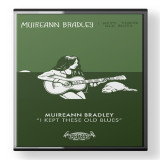
Muireann Bradley is a young blues, ragtime, roots and folk guitarist and singer based in Ballybofey in County Donegal Ireland. “This is my first album. Most of these tunes were originally recorded by the great blues men and women who were making records from the 1920s and 1930s right up in some cases to the early 1970s. I have also found inspiration for the renditions recorded here in the playing of some of the musicians who began recording this music in the 1960s and later, and who in some cases learned at the feet of the greats. Many of these guitarists played pivotal roles in the 1960s blues revival and subsequent “rediscovery” of many of the greats of country blues. I grew up steeped in these old blues in the hills overlooking the valley of the River Finn just outside the town of Ballybofey in County Donegal. My father would play this music constantly at home and wherever we went in the car and talk about it endlessly whether anyone was listening or not, telling stories about the lives of these musicians as if they were legend, mythology or the evening news. My father could of course play all this stuff on guitar, I remember watching him when I was very young and thinking “I want to be able to do that”. When I was nine he agreed to teach me and bought me my first little travel guitar. I worked hard to learn how to play but as time wore on I seemed to have less and less time to practice as I became more and more invested in the combat sports I was regularly training and competing in. Then in March 2020 the first Covid lockdowns happened and all contact sports were shut down. I was lost for a while but soon found my way back to the guitar. I was now listening, playing and practicing with a new intensity and focus. In a very serious moment, I wrote out a list of tunes I was going to learn. The first tune on that list was Blind Blake’s “Police Dog Blues”. I’m not sure now how long it took to get that arrangement together but when it was ready we videoed me performing it and posted it on YouTube. It ended up getting a lot of attention, I remember my parents being quite shocked and soon after that Josh Rosenthal got in touch… and here we are! Each individual track on this album was recorded live in the studio and represents one entire take with me singing and backing myself up on guitar simultaneously. Most are either first or second takes. Nothing has been added or taken away, no overdubs or modern recording tricks of any kind have been used at all so at least in some respects this album has been recorded in the same way as those classics of the 1920s and 1930s
A real soul gem from 1970 on the James Brown affiliated Deluxe label, the first and only album by this mysterious singer: Marie Queenie Lyons.
It is perhaps apropos that Queenie Marie Lyons’s best known song is titled ‘See And Don’t See.’ For all the acclaim that song has accrued, and all the times it has been compiled, reissued and, yes, bootlegged — for all the times it has been seen — Queenie herself has somehow remained unseen. How did a singer from Ashtabula, Ohio record one of the great female-led soul albums and then simply fall off the map, never to record or perform again? Queenie was a natural performer and a gifted singer. At the age of fifteen, she was doing three shows a week at a local venue. In early 1962, Queenie moved to Queens and was soon playing gigs across the city — an early engagement was with Gene Krupa at the famous Metropole Café in Times Square — as well as touring with established acts like Fats Domino and Ray Charles. The following year, Queenie made her debut recording, for a subsidiary of RCA called Groove, credited to an entirely fictitious “Shelley Shoop and the Shakers.” It remained Queenie’s only presence on wax until early 1968, when a Nashville-based label called Sims gave her her first accurately attributed single, “A Minute Of His Goodtime / Good Soul Lovin’.” Although the 45 is now a highly collectible part of the Northern Soul and Lowrider Oldies pantheons, it made no impact at the time, as Sims was focused on more typical Nashville sounds. A few months later Queenie was back in New York City, performing R&B and pop covers with her band when a man passed her his business card at a performance. The card read James Brown Enterprises. James Brown “was my idol,” she says, and someone whose business acumen and stage presence she strove to emulate. Although Queenie ended up on tour with James Brown for only a month or so, when the group reached Cincinnati in mid-’68 she entered the King Records studio there to record what would become the
album you hold in your hands. The songs were a combination of covers, some of which she’d been doing in her live shows, like ‘Fever’ and ‘Try Me,’ and originals written by producer Henry Glover and pianist Don Pullen, who was the bandleader on the session. The album opener, ‘See And Don’t See,’ was also recorded by the veteran R&B singer Maxine Brown, but Queenie’s version blows hers away. “Soul Fever” is a supremely funky and soulful affair, with Queenie’s powerful and captivating voice magnetically attractive, with an urgency that is impossible to ignore. ‘Your Thing Ain’t No Good Without My Thing,’ ‘Your Key Don’t Fit It Anymore,’ and ‘I Don’t Want Nobody To Have It But You’ are as funky and soulful as the best of Tina Turner and Aretha — a statement not to be made lightly!
The album was critically acclaimed — the October 10, 1970, issue of Billboard listed it as their sole “four star” pick in the Soul category — but perhaps due to the tumult at Starday-King, whose stewardship had turned over several times in only a few years, it never seemed to be able to break through to a larger audience.
David Tattersall, the Wave Pictures guitarist and frontman releases a solo album of interpretations of John Fahey tunes, recorded live in the studio. "I have been a fan of John Fahey's music since I was very young; it has always been with me and I can't remember a time when I wasn't affected by it. It is weird music, and very good. Of course, Fahey is an important cult figure in the history of music: as the first man to find a language for steel string guitar that can stand proudly alongside the established tradition of nylon string classical guitar; as one of many men who rediscovered obscure old blues musicians and recorded them for a new generation in the 1960s; as one uniquely able to reconcile 20th century avant-garde music with folk tradition; as an early indie-label DIY pioneer. For me personally, Fahey went beyond technique, and to some extent beyond historical or intellectual justifications for his work. He explored his emotions through his instrument of choice, and in so doing made the case for the guitar as the ultimate conduit for emotional expression. While there are many imitators who try to play ''like Fahey'', I avoided using his fingerpicking style or sense of rhythm, and tried instead to use his music to explore my own emotions, my own dreams and memories. I was more interested in the lyrical and expressive aspects of Fahey's music than in the techniques of it. I tried to find myself within his compositions and without composing anything I feel that I have managed to make a David Tattersall record that says as much about me as any of the many albums that I have written. John Fahey's beautiful discography shows that the guitar can carry as much mystery and soul as the human voice, and simply put, I wanted in on a little of this action. This is my second all-instrumental solo acoustic album, and where this differs from my first attempt, Little Martha, is that here I improvised freely. I used Fahey's originals only as guides. I'm not sure what I was looking for, perhaps something beyond explanation, but I tried to be as free as possible, and I am delighted by the spontaneous results. Hopefully, they will make the listener feel happy and dreamy, just like the effect that Fahey's many albums have on me. One of the most important things that Fahey ever said was his advice to guitarists to try to feel the emotions that each chord they play on a guitar brings forth. He is telling guitarists to not only play the guitar, but to let the guitar play them. I did my best to follow this advice. I hope you enjoy listening to the album, that it brings you some dreamy moments, and that it sends you back to happily explore the originals. I had a great time recording it. Naturally, I can't put the experience adequately into words but that's the whole point. I think Fahey was a genius of the kind that creates a whole genre single-handedly. There could be thousands, millions, of reinterpretations of his compositions. In fact, there probably already are. And long may this continue. All tracks were recorded live with no tampering."
Dirt Femme is the fifth studio album by Swedish singer Tove Lo. It was her first to be independently released by her own label, Pretty Swede Records, on 14 October 2022. The first two singles, "How Long" and "No One Dies from Love", had been released earlier that year
“Sono Stato Un Agente CIA” (1978), also known as “Covert Action”, is a twilight film directed by Romolo Guerrieri and set in Greece, starring David Janssen, in the role of a former Central Intelligence Agency agent who became a writer of incendiary books on prostitution and drug trafficking, flanked by Maurizio Merli, a colleague in possession of some compromising tapes, sentimentally linked to the romance novel character played by the seductive Corinne Cléry. The two are involved in a murky game: the stars and stripes secret services intend to eliminate those who could spread the dangerous content of the military plan designed to stem the advance of communism, to be implemented through the assassination of government officials.
It's not among the most famous crime stories. It's not even a real action movie. “Sono Stato Un Agente CIA” benefits, however, from the admirable compositional talent of Stelvio Cipriani. His soundtrack, released for the first time in full vinyl version, reveals an npredictable versatility. His 'classic' style expressed in the course of the scores for previous 'poliziotteschi' is enriched here with disco suggestions and Hellenic exoticisms. The writing on the staff of the Roman composer is effective and empathetic in commenting on every fold of the dark and violent story. A simple and catchy theme, even danceable. The atmospheric situations with guitars and synthesizers. Some funk echoes, tension peaks, melancholy notes. The constants of success.
Van Halen did more than announce to the world the earthshaking arrival of a revolutionary guitarist. Performed by an enterprising California quartet that took its name from two of its principal members, the 1978 debut ripped headlines away from punk, injected fresh energy into a then-moribund rock 'n' roll scene, reimagined how heavy music and throwback pop could coexist, and invited everyone to experience the top-down pleasures of a beach-front Saturday night every day of the week no matter where they lived. Painstakingly restored by Mobile Fidelity Sound Lab, and the first of a multi-album series in an exciting partnership between the famous reissue label and Van Halen, Van Halen delivers feel-good thrills and hormonally charged desires like never before.
Limited to 12,000 numbered copies, pressed on dead-quiet MoFi SuperVinyl at RTI, and mastered from the original analogue master tapes, Mobile Fidelity's ultra-hi-fi UltraDisc One-Step 180g 45RPM 2LP collector's edition pays tribute to the record's merit and allows fans to experience Van Halen's original blend of raw power, Hollywood flair, and vaudeville fun for generations to come. Playing with reference-setting sonics that elevate a 10-times-platinum landmark whose importance cannot be quantitatively measured, this definitive version provides a clear, clean, transparent, balanced, and turn-the-volume-up-to-11 view of an album that birthed entirely new styles. Since MoFi's unique SuperVinyl compound allows you to crank the decibels to your wildest desires without risking noise-floor interference, prepare to not only hear but feel Van Halen in your chest, no fifth-row concert seat necessary.
The premium packaging and gorgeous presentation of the UD1S Van Halen pressing befit its extremely select status. Housed in a deluxe box, it features special foil-stamped jackets and faithful-to-the-original graphics that illuminate the splendor of the recording. No expense has been spared. Aurally and visually, this UD1S reissue exists as a curatorial artefact meant to be preserved, touched, and examined. It is made for discerning listeners that prize sound quality and production, and who desire to fully immerse themselves in the art – and everything involved with the album, from the iconic cover art to the meticulous finishes and, yes, of course, Eddie Van Halen's pioneering fretwork and his brother Alex's double-bass percussion.
Indeed, could a piece of music that transformed how countless guitarists approached their instrument be more fittingly named than "Eruption"? Likely not, and in just 102 seconds, Eddie Van Halen rewrote, reimagined, and reconfigured a vocabulary last significantly updated a decade earlier by fellow six-string wizard Jimi Hendrix. Akin to the Washington State legend, Eddie Van Halen developed his own techniques and tones all the while making his seismic accomplishments seem effortless. Devoid of the pretence, ego, and showiness that infected many of his imitators, the Dutch native sticks to a straightforward approach that underlines the authority, prowess, and visionary scope of his playing and then-unheard-of finger-tapping skills. Throughout Van Halen, he establishes himself as an instant idol – a savant whose otherworldly combination of breadth, poise, feel, speed, force, and melody seems beamed in from another galaxy.
As does nearly every song on the record, whose cohesiveness and dynamic put into perspective the advanced chemistry and one-for-all spirit the youthful band had out of the gates. Having paid its dues for years in bars and clubs – going as far as recording a 24-track demo for Kiss bassist Gene Simmons at Village Recorders only to be spurned by management companies that felt its music wouldn't go anywhere – Van Halen finally got a deserved break when Warner Bros. executives signed the group in 1977. The subsequent recording sessions further testify on behalf of the band's synergy and alignment. Completed in just a few weeks with producer Ted Templeman, Van Halen was primarily cut live in the studio with minimal overdubs and edits. The explosiveness, energy, and electricity remain definitive, and as heard on this UD1S set, put the group on a private stage – humming amplifiers, Frankenstrat guitar, bright spotlights, sweaty headbands, and then some.
Van Halen yielded just one hit in the form of a Top 40 single (a breathless cover of the Kinks' "You Really Got Me") but practically every song on the revered LP has become a staple. Named the 202nd Greatest Album of All Time by Rolling Stone and considered by countless experts as one of the best debuts in history, the record displays what can happen with four distinct talents gel and strive for the same purposes. In Van Halen's case, the latter almost always involved partying, freedom, sex, and, in the immortal words of singer David Lee Roth, living "life like there's no tomorrow." The celebration manifests from the opening notes of the strutting "Runnin' with the Devil" – announced with the blare of droning car horns, Michael Anthony's robust bass line, and Alex Van Halen's thumping drumming – and continues through the conclusion of the white-hot "On Fire," goosed by Eddie Van Halen's race-track-ready lines, Roth's flamboyant deliveries, and the rhythm section's cat-like pounce.
Picking out individual highlights on Van Halen is akin to trying to count all the stars in a clear nighttime desert sky: There are far too many to identify, once you see one you notice another dozen you didn't spot before, and the cluster is best enjoyed as a whole. What's evident over repeat listens is the sheer diversity, a fact that's often overlooked: The high harmonies and background funk of "Jamie's Cryin'"; the insistent cane-and-a-tophat shuffle and doo-wop shoo-bop vocal break on "I'm the One"; the throwback acoustic blues that spreads into fast-paced, single-entendre wildfire on the Roth-led standout interpretation of John Brim's "Ice Cream Man." Like the man says, on Van Halen, all the flavours are guaranteed to satisfy.
More About Mobile Fidelity UltraDisc One-Step and Why It Is Superior
Instead of utilizing the industry-standard three-step lacquer process, Mobile Fidelity Sound Lab's new UltraDisc One-Step (UD1S) uses only one step, bypassing two processes of generational loss. While three-step processing is designed for optimum yield and efficiency, UD1S is created for the ultimate in sound quality. Just as Mobile Fidelity pioneered the UHQR (Ultra High-Quality Record) with JVC in the 1980s, UD1S again represents another state-of-the-art advance in the record-manufacturing process. MFSL engineers begin with the original master recordings, painstakingly transfer them to DSD 256, and meticulously cut a set of lacquers. These lacquers are used to create a very fragile, pristine UD1S stamper called a "convert." Delicate "converts" are then formed into the actual record stampers, producing a final product that literally and figuratively brings you closer to the music. By skipping the additional steps of pulling another positive and an additional negative, as done in the three-step process used in standard pressings, UD1S produces a final LP with the lowest noise floor possible today. The removal of the additional two steps of generational loss in the plating process reveals tremendous amounts of extra musical detail and dynamics, which are otherwise lost due to the standard copying process. Every conceivable aspect of vinyl production is optimized to produce the most perfect record album available today.
MoFi SuperVinyl
Developed by NEOTECH and RTI, MoFi SuperVinyl is the most exacting-to-specification vinyl compound ever devised. Analogue lovers have never seen (or heard) anything like it. Extraordinarily expensive and extremely painstaking to produce, the special proprietary compound addresses two specific areas of improvement: noise floor reduction and enhanced groove definition. The vinyl composition features a new carbonless dye (hold the disc up to the light and see) and produces the world's quietest surfaces. This high-definition formula also allows for the creation of cleaner grooves that are indistinguishable from the original lacquer. MoFi SuperVinyl provides the closest approximation of what the label's engineers hear in the mastering lab.
It would be difficult to find a band that is more self-aware than longtime touring band Lucero. Since forming in Memphis in the late 90's, Lucero’s base musical hallmarks have remained similar to the band’s initial sound established with their first record The Attic Tapes. In the history of their expansive discography, Lucero has evolved and embraced everything from southern rock to Stax-inspired Memphis soul, whilst simultaneously maintaining their distinctive sonic foundations. Years later, dedicated fans of the group still flock to hear the band's punchy driving rhythms, punk-rooted guitar licks, and Iyrics that evoke the whiskey drenched sentimentality of Americana singer-songwriters. For their twelfth record, Should've Learned by Now, Lucero drew on a lot of work from their past. Literally. By adapting songs and guitar parts that had been left over from the group’s previous two albums, Lucero was able to construct one of its most comprehensive works to date. “I had a particular sound | was looking for on each record and there was no room for any goofy tock & roll or cute witticisms or even simply upbeat songs.” Said primary lyricist and frontman, Ben Nichols. “But now finally, it was time to revisit all of that stuff and get it out in the world, That's how we got to the appropriately for-us titled album Should've Learned by Now. The album is basically about how we know we are fuckups and I guess we are ok with that.” Produced by Grammy Award-winning engineer, Matt Ross-Spang, the album is a punchy, rock and roll record that utilizes the more mature production stylings the group developed over time, and combines it with the first-person introspectiveness that the band is known and loved for. From its original Ben Nichols-designed cover art to its credits, the album is a reflection of a band that knows itself, Should've Learned by Now bridges the gap musically between “old Lucero” and “new Lucero” in a manner which affixes the band’s position as the perfect intersection of punk initiative with hard-earned artistry. It's an album that recognizes the past in its sound and content, but leaves the door wide open to the future and for the lessons still in store
Soul To Burn features highly inventive and memorable avant-rock songs by trio of celebrated musicians, Reciprocate. The germ of the notion that would flower into Soul To Burn came when Reciprocate’s vocalist/guitarist Stef Kett reflected on the idea of funk rock. It ought, he thought to himself, be the best of genres but so often in practice it ends up being the poorest. True enough. Kett decided to approach the problem from a fresh angle, multiple fresh angles, grinding angles, creating an “alt-soul” in which the soul gets to stretch and burn, applied with the power of a rock’n’roll trio but dynamism and agility, rather than cumbersome bulkiness. Reciprocate is a super-group made up of highly celebrated musicians from the UK DIY music scene – their singular, searing-hot power conjured by Stef Kett (Shield Your Eyes) in tandem with drummer Henri Grimes (Shield Your Eyes, Big Lad) and Marion Andrau (The Wharves, Underground Railroad) on bass. The result is the excellent Soul To Burn, which proceeds at a cadence all of its own, halting and blasting, ducking and weaving, zooming away from its distant cousins: Taste era Rory Gallagher or Mr Zoot Horn Rollo of Captain Beefheart’s Magic Band. That’s particularly evident on “Self Regarding Floor Sweepings”, with echoes of “When Big Joan Sets Up” from Beefheart’s Trout Mask Replica, especially with Kett’s added harmonica as the trio hit the winding dirt track, slaloming and swerving. Here is an album of full throttle soul, an avant-rock made up of ear worms so intoxicating they borrow from deep in the mind down deeper into the heart – it’s the cool, weighty groove of Tony Joe White leathering it at full throttle, fuelled by virtuosic back beats that remind of somewhere between the rolling rock of Mitch Mitchell and the fractured noisebeat of Lightning Bolt’s Brian Chippendale: immediate, innovative, virtuosic, exhilarating. Key to the impact of Soul To Burn is Grimes’ drumming, a force unto itself, which sometimes feels like it’s engaged in a creative and playful tussle with Kett’s virtuosic vibrato guitar. Take “Rhodia”, which sounds initially like a radical reworking, an anagram of Free’s “All Right Now”, on which Grimes doesn’t so much hit the groove as hammer it into the ground. Reciprocate tend to be averse to mere repetition, too full as they are of ideas, possibilities. But they know how to hit a riff, as on “Pissed Hymn”. Kett’s vocals are unconventionally impassioned - no vibrato or performative hollering. Rather they climb, up and and again up from the pit of the soul. There’s a sense throughout that this music is hard wrought, squeezed through small apertures, produced against the odds, born to trouble as the sparks fly upwards. There are quieter moments, however, such as the exquisitely beautiful “Ressypressocate”, which affirm the ultimately tender place from where this album proceeds, notes plucked like black flowers, twisted and cherished. Reciprocate demonstrate an astonishing virtuosity, nuance and musical sensitivity manifested through their deep mutual understanding and synergetic interactions. There are moments of sync and camaraderie that remind of the very late Beatles, those rare moments during the Let It Be Era when they loosened up, reassumed their old understanding. But then Kett’s lets fly with a long, looming note and suddenly we’re somewhere else again. With Soul To Burn, Reciprocate set out their stall of intoxicating, super catchy good-time, big heart music – a human album delivering a human message of love and love lost. By the album’s end, you’ll feel pushed and pulled through the mill, wiped out, blissfully exhausted, strangely serene
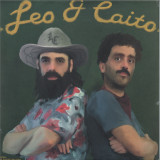
System 108 resident Lipelis teams up with Carrot Green from Rio de Janeiro to create a dreamy, summer vibed EP simply dedicated to them both: Leo & Caito, with naming and artwork playfully inspired by Sertanejo genre standards.The duo emerged in early 2020 on the streets of Rio and started to jam same night in the studio of Carlos, who is affiliated with all cool gangs of the Brazilian dance scene. Just like on Lipelis's critically acclaimed Function As A Meaning EP (a System 108 instant classic by now!), things took off by themselves: intuitive sampling of chords taken from Brazilian gospel found some unexpected modular synth tweaking. For good!"Rolando Nascer do Sol" is THE track, that the duo is particularly proud of. In the words of Lipelis, who has once spinned it at Gop Tun carnival party, in a b2b set w/ Millos Kaiser - 'it produced an unforgettable euphoric effect".Having witnessed how all the tracks work on the dancefloors not only in Brazil, we are uber-excited to finally release this 4-track EP!
out of Stock
Last delivered 20 months ago available to reorder, subject to availability
The entity known as ALTERNATIVE TENTACLES, would like to express its excitement to be working with the Seattle, WA based BAND Sandrider, and enjoyed the previous relationship of Damm and Weisnewski in their former entity known as AKIMBO. ALTERNATIVE TENTACLES is very much a fan of previous work from the BAND on Satanik Royalty Records and highly recommend new listeners investigate the discography further. The upcoming 2-song single by BAND, hereafter referred to as AVIARY/BALEEN has a limited-edition initial pressing on blue and white splatter vinyl pressing of 300 copies, and successive runs will not be as colorful. Immediate orders are encouraged. This cheeky duality of Sandrider is also captured perfectly in the subject matter of the EP’s two tracks: The explosive first track, “Aviary,” portrays the modern hellscape of social media as sinister, soulless mama bird, willfully vomiting disinformation into the eager mouths of enthusiastically consenting participants. “PLEASE MOTHER, FEED THEM YOUR BILE. DOUSE THE BABES WITH YOUR WHOLESOME RETCH,” vocalist/guitarist Jon Weisnewski wails over massive, frenetic riffs, rounded out by bassist Jesse Roberts’ warm low end and drummer Nat Damm’s ultra-hard, punch-like beats. The song concludes in a frenzy of danceable beats, with Weisnewski doing his best Painkiller-era Halford screams as he commands you to flood the whole damn thing – drown those who wish to destroy us. As pissed off as the song is, you’ll feel triumphant by the end anyway. Side B’s “Baleen” on the other hand (while ironically the angrier-sounding song of the two), is about a lighter thought that keeps Weisnewski up at night: Do you ever think about how fucking weird whales are? They’re enormous floating creatures that can't handle gravity, and they hang out in the deepest oceans. Yet they can’t breathe underwater, so they have to stay near the top and come up for air all the time. Seems inconvenient. And you’d think that the biggest mammal that ever lived would be a brutal carnivore, right? But no. They eat the tiniest creatures, through a bunch of hair in their mouths. What the fuck? Anyway, ponder on that while you bang your head along with Sandrider’s signature primal, hypnotizingly heavy riffs.
The history of Black, Brown & Beige began on June 23, 1943, when Duke Ellington premiered this extended work at Carnegie Hall. It wasn't Ellington's first attempt to create an extended work, which was longer than a typical jazz song and more related to the classical forms than to popular music.
While the soundtrack he made for the short 1929 movie Black & Tan Fantasy included works from a number of previously recorded songs, it was presented in a kind of suite form, with the themes from these songs coming and going and presenting a dialogue with the images on screen. His 1931 Creole Rhapsody' was a composition that went beyond the usual three-and -a-half-minute duration of a standard 78 r.p.m disc, and thus had to be divided onto two sides. A few years later, in 1935, his Reminiscing in Tempo' would occupy four sides and had to be divided onto two discs.
However, those were never his best selling records, and the reception of his 1943 suite Black, Brown & Beige was cold at best. This is due to the fact that apart from being an ambitious extended composition, it was thematically related to racial issues regarding the history of Afro-American people. Most critics could not accept the idea of Ellington composing long musical works
and preferred to confine him to simple jazz songs (even though Ellington's songs were never simple).
The A side of this 45, a brand new track from Aaron Frazer, is about how pressure makes diamonds. The last couple years have been really challenging, especially for those navigating relationships amidst the chaos. This song celebrates the connections of love that are strong enough to weather any storm, and the certainty that comes from making it through together. The B side features a track from Aaron's first solo LP, Introducing. Lyrically, Frazer sounds lovesick; the imagery he paints of demons "so close behind" and the repetition of these lyrics emphasize his longing. The song starts with piercing guitar, dark bass, and chime piano and Frazer himself drums throughout the song. The orchestration is swell while the strings and voices blend well with the transcendent feel of the music.
out of Stock
Last delivered 2 years ago available to reorder, subject to availability
Mates now for many moons - Mr.G and Duncan Forbes met at the time of Duncan’s Animated project; forging a friendship through weekly record shopping trips; a love of Soho; and regular banter over Duck and Rice. But it was their chance meeting at Glastonbury a few years back which finally sparked them to work together; since leading to a string of remixes for both Phoenix G and 49North, and culminating in their first, combined studio creation, ‘Curry Nite’, in late 2022.
Fast forward to Spring 2023, and what we have here is their first, collaborative full-length on vinyl - artist album, ‘All Under One Moon’. Conceived and created in Duncan’s studio on a long, full moon weekend with cosmic forces at play; the pair - both chomping-at-the-bit with excitement and no real plan or outcome in mind - set about creating, with a pure love of making music and the freedom to go wherever it might take them as their only guide. As G sums up for us…
“Two friends of old with a shared love of music ,having fun making music together in D’s studio. It was a long time coming but in truth caught us both off guard… the sum of both parts being sooo much more (y). The beauty of being free, making music. What a great moment”
So, on paper, we have - two mates, excited to play away in the studio with their favourite toys until they have to come up for air. But on record, what we actually have is - two close friends, united by a deep love of House, Techno and everything between / beyond - relishing a rare opportunity to jam, and with freedom…. it’s only when you consider quite how almanack-like our two music-obsessed pals are anyway, as individuals; that it begins to dawn on you, just how mind-meltingly rich and stylistically explosive - an album, that’s the sum-of-their-parts - is inevitably going to be.”
out of Stock
Last delivered 2 years ago available to reorder, subject to availability
On 22nd October, the Nottingham-raised and highly-praised musician/DJ/producer Matt Cutler, AKA Lone, presents his 8th album – and first in 5 years – ‘Always Inside Your Head’. It marks two major changes, with both a new label and new approach – featuring vocalists for the first time.
This deeply textural and ethereal artwork is situated high above the clouds, amidst the heavens, occupying a stratospheric state where swathes of synthesized vapour and azure rays sound like a literal breath of fresh air.
A varied selection of music influenced the record, but two main influences were Cocteau Twins and My Bloody Valentine. “I wanted to approach a range of different styles, but attack them from their angle in a way, so for example on 'Inlove2' I tried to imagine what a Balearic / acid house tune might sound like if it were produced by Kevin Shields”, comments Lone.
Another key example of Cutler’s strange but successful combination of elements is the halcyon bliss of ‘Echo Paths’, where his trademark fat drums and love for hip hop meet double-time pan pipes, dub effects and dream pop, mixed into a wonderfully lysergic concoction.
This rarefied auditory stratus was previously evident in tracks like ‘Alpha Wheel 4 (Ambient Mix)’ from ‘DJ Kicks’, ‘Under Cherry Blossoms (Minds Eye Reprise)’ from ‘Ambivert Tools, Vol. 2’, ‘Pulsar’ (from ‘Ambivert 4’), and ‘How Can You Tell’ (from ‘Abraxas’), but is now more fully-fledged, broader in scope and even more celestial.
In addition to the above, the LP exists somewhere between trip hop on Mo' Wax, 90s Warp, intelligent drum & bass and ambient house. There are heavier forays too, like ‘Mouth Of God’, where darker clouds emerge, but are pierced like acid lightning with fierce, tearing tech-step bass.
Although still firmly rooted in club culture – here Lone shows a definite leaning towards a song-based sound, with several tracks edging towards the same crossover space as the nineties hits which also inspired him – particularly William Orbit’s production on Madonna's 'Frozen', and Olive's 'You're Not Alone'. This is especially evident on the bright, spacious brilliance of 'Hidden By Horizons', where vocals and synths swirl around one another, with crisp breakbeats and reggae rolls pushing purposefully through the ether.
Despite initially seeming almost entirely sunny of disposition, upon deeper immersion there’s lot more beneath the album’s surface, both in its deep pools of immiscible layered elements, and also thematically. When recording Cutler kept in mind a loose narrative based on birth, death, and our existence in-between.
He then extended this idea to reach what may happen after death, which is reflected in the sequencing: By penultimate track ‘Undaunted’ the life reflected in this longplayer has come to an end, which is then followed by 'Coming In To Being And Passing Away' – an afterlife epilogue, which evokes a transition from this world to the next.
out of Stock
Last delivered 5 months ago available to reorder, subject to availability
Señor Sapo is a character created based on the Mesoamerican deity Quetzalcoatl:
while capturing Sr. Sapo atop The Pyramid of the Sun at Teotihuacan
in The Valley of Mexico; dawn…
Augie Robles (the photographer) spotted an elementary school class of around 25 children with two teachers suddenly appear scaling the momentous stair case behind our subject!
They shouted;
“Sr. Sapo! Sr. Sapo!”
the name has stuck! they wanted to have their pictures taken with Sr. Sapo? however; they did not want to touch him as they thought his skin might be “viscoso” or “slimy”?
“Q’uq’umatz” (as it is known amongst the K’iche’ Maya) goes back to the Olmec culture and represents the duality of flight to reach the skies; whereas the reptilian (in most cases a snake) represents the ability to mingle amongst other creatures of the Earth;
Among the Aztecs he was related to the gods of wind; of the dawn; of merchants and arts; crafts; knowledge and the planet Venus: as well as their patron god of the priesthood…
THE FUTURE S0UND 0f YESTERDAY is as well a construct of the imagination; a fictitious “orchestra” with many imaginary characters; KENT CHESTERFiElD; LEE NAilZ; PHATTITUDE; EPiPHANY TALEUR; ThE ClARKETTES (they actually exist in the “real” world)…
The titles:
“0de to A Tree”;
is the culmination of a night out in Berlin; “…met a young man in a bar close to the “atelier”; he said he wanted to play something on a piano; we go to the place and he plays this melody over a rhythm though not in rhythm?
…basically edited none of it; then used a series of tone generators and filters to change the sound into all the soundscapes you hear in the final piece; the title was simply a tribute to the trees…” Eric D. Clark
“is it good for Ya’?”;
is a slow pumping House song with a message in the form of a question; “is it good for you?” as in “I could do it; however; should I? you know; look in a mirror and ask the question”…
the Music came about as an experiment at NADEL EiNS Studio in Berlin; Heavy bass at around 116bpm plus Erix’s cheeky vocal stylings weaving in & out of frame (as well key) deliver a unique aural experience!
the final track:
“Elsewhere playback”
is literally the playback of a track Eric did under the guise of KENT CHESTERFIELD for a party series he did in Sacramento CA with AJ Sachs…
it’s really just a tool; the good thing is you can drop -8 (or -16 assuming your tables are tuned) to bring it to a tempo one could easily rap over OR push it up to +8 and have a dry Tech number? Either way it BANGS! Dub Plates & Mastering did a swell job!!
overall a must for any Dance Music aficionado’s collection out on October 10th on SHADDOCK RECORDS !
out of Stock
Last delivered 2 years ago available to reorder, subject to availability
Sigrid’s second album ‘How To Let Go’ is being released by Island Records on 6th May 2022. The Norwegian pop star will release the follow-up to 2019’s ‘Sucker Punch’ which was a worldwide smash. How To Let Go’ features 12 tracks including the previously released songs ‘Burning Bridges’, ‘Mirror’ and ‘It Gets Dark’, the latter of which came out as a single in March. The album was written at a time when Sigrid was reflecting on her life both in and outside of Norway.Sigrid is due to embark on a UK and Ireland headline tour in November. She’ll also make appearances at Glastonbury, TRMSMT, Standon Calling and other festivals over the summer.
Seven Steps to Heaven arrived at a crucial junction in Miles Davis' career. Recorded at two separate locations in spring 1963, it served as Davis' first release in more than a year – a layoff that was then unprecedented for the jazz visionary who had issued at least one LP a year since debuting in the early '50s. Equally notable, Seven Steps to Heaven marks the point at which the core of Davis' Second Great Quintet started to assemble. The twice Grammy-nominated effort is also Davis' final studio record to blend standards with originals. And it happens to be one of the expressive, well-played albums in the jazz canon.
Sourced from the original master tapes, pressed at RTI, and housed in a Stoughton gatefold jacket, Mobile Fidelity's 180g SuperVinyl LP of Seven Steps to Heaven adds yet another step (or more) towards the bliss suggested by the album title. Playing with standout clarity, detail, tone, and balance, this audiophile reissue pulls back the curtain on the instrumentalists. Afforded the tremendous advantages of SuperVinyl – including a nearly inaudible noise floor, dead-quiet surfaces, and superb groove definition – this numbered-edition version presents Davis and Co. amid a wide, deep soundstage whose dimensions and solidity help bring the record's historical importance and musical merit into focus. Warm, organic, and present, the SuperVinyl LP of Seven Steps to Heaven is what great-sounding hi-fi is all about.
And there's nary a passage on this 1963 landmark that isn't great. That Davis manages to make it feel so cohesive and seamless is a testament to the inspired performances and engaging compositions. Davis didn't draw it up the way it unfolded. No matter. He held trump cards that stayed up his sleeve for the next three decades: A drive to be nothing less than superb, a refusal to settle for mediocrity, and standards to which nearly no other composer or player could match. "The toughest critic I got, and the only one I worry about, is myself," Davis wrote in the liner notes. "The music has to get past me."
Davis' demanding approach partly explains why he switched up his band between the first and second sessions – and underscores how fast his mind was racing with new ideas. Seven Steps to Heaven acts as the stable bridge between the transitional period that followed the dissolution of his First Great Quintet and formation of the Second; without it, Davis perhaps doesn't invite then-23-year-old Herbie Hancock and a still-teenage Tony Williams into the fold. The trumpeter not only got his men – he preserved in amber for the only time (well, magnetic tape anyway) the chemistry and vibe he achieved with pianist Victor Feldman, drummer Frank Butler, tenor saxophonist George Coleman, and bassist Ron Carter.
That line-up gels for half of the six songs on Seven Steps to Heaven. Captured in Los Angeles April '63, the quintet stretches out on a luxurious reading of the late '20s New Orleans staple "Basin Street Blues"; lays on the romance for a candlelit stroll through the '40s standard "I Fall in Love Too Easily"; and explores the rounded contours and melodic crevices of the early blues "Baby Won't You Please Come Home." The performances are refined, elegant, emotional; the band lets the feelings linger and gives the listener time to absorb the colours and textures.
A month later, Davis returned to New York City with Coleman and Carter, and partnered them with Hancock and Williams. Tellingly, the quintet tried its collective hand at the title track and "Joshua" – Feldman-penned songs already recorded in Los Angeles – as well as the yearning "So Near, So Far." Those are the tunes that comprise the other piece of Seven Steps to Heaven, with the revised quintet's liquid pulse, articulate dynamics, and timing shifts a harbinger of things to come.
It's also worth mentioning that the interpretations of the bounding "Seven Steps to Heaven" – a showcase for Davis' trumpet – and interlocking "Joshua" netted considerable radio airplay and attracted the attention of other contemporaries who covered the songs. Keeping Carter and Williams as the rhythmic engine, and Hancock as the anchor between solo flights and structural motifs, Davis would soon soon welcome Wayne Shorter into the family and transform jazz. Again. The aptly – and, in hindsight, perhaps prophetically titled Seven Steps to Heaven – is how he got there.
King of Memphis is the debut studio album from Young Dolph. The self-proclaimed “King of Memphis” and Paper Route EMPIRE founder defined the independent hustle and set the industry and streets ablaze throughout his career. The album features the massive single, “Get Paid,” and standout hits such as “Fuck It,” & “Royalty.” Free of any features, King of Memphis puts the full spotlight on Dolph and features production from heavyweight producers such as Mike Will Made It, TM88, Zaytoven, Nard & B, and Drumma Boy, among others. While his life was ultimately cut short, the influence and impact of Dolph’s legacy will live on forever. Long Live Dolph.
out of Stock
Last delivered 2 years ago available to reorder, subject to availability
Sourced from the Original Master Tapes and Presented in Audiophile Sound for the First Time: Mobile Fidelity’s Numbered-Edition 180g SuperVinyl LP Plays with Riveting Detail
Three decades before he released The Philosophy of Modern Song — an insightful book devoted to 66 tunes that both impacted his career and the music world at large — Bob Dylan issued Good As I Been to You. The under-heralded 1992 album, Dylan’s first solo acoustic album in nearly 30 years and first all-covers effort in nearly 20 years, can be seen as a prophetic prelude to what has become the Nobel Laureate’s celebrated late-career arc. It’s also an absorbing continuation of the custom Dylan has embraced since he first picked up a guitar.
Sourced from the original master tapes, pressed at RTI, and housed in a Stoughton jacket, Mobile Fidelity's numbered-edition 180g SuperVinyl LP of Good As I Been to You reveals the immediacy, detail, and stripped-down nature of recording sessions that took place in Dylan’s garage studio in California. Simple, raw, and unplugged, the record presents Dylan in peak form — and showcases a diversity of vocal phrasing, soulful chording, harmonica accents, and close-up ambience that on this reissue emerge like never before. As the first-ever audiophile edition of this almost-lost classic, this LP also benefits from SuperVinyl’s extraordinary properties: a nearly inaudible noise floor, superb groove definition, and dead-quiet surfaces among them.
Recorded and mixed by Micajah Ryan, and supervised by Debbie Gold, Good As I Been to You took shape at Dylan’s home shortly after the singer-songwriter completed sessions in Chicago with a full band. Unaccompanied, he again gravitated to existing works — in this case, traditional folk music — and, with Gold serving as a trusted advisor, performed the songs in multiple keys and tempos until he arrived at what he desired. That careful, determined albeit loose, organic approach emanates from this reissue, on which each note, movement, and space come across more directly, fully, and immediately than on the original formats. It helps draw a through-line to Another Side of Bob Dylan (1964) as well as the similarly themed follow-up, World Gone Wrong (1993) and immersive old-world storytelling of Tempest (2012) and Rough and Rowdy Ways (2020).
Well before Dylan made those renowned 21st century LPs, however, he needed to find a way out of a funk that — save for his 1989 collaboration with Daniel Lanois, Oh Mercy — followed him for years. As author Clinton Heylin reported Dylan admitting in 1997: “My influences have not changed — and any time they have done, the music goes off to a wrong place. That’s why I recorded two LPs of old songs, so I could personally get back to the music that’s true for me.”
Truth: Few, if any, concepts better encapsulate Good As I Been to You. It resonates with the same originality, honesty, resolve, and age- and time-defying relevance as the seminal Anthology of American Folk Music that fired Dylan’s imagination as a kid in small-town Minnesota and, later, per Greil Marcus’ That Old Weird America book, informed Dylan and the Band’s Basement Tapes sessions. This record also contains the type of music Dylan was playing during his acoustic sets at his period Never Ending Tour shows; within a year of the record’s release, Dylan would play half the album’s songs live.
As for those songs: Rife with strange mystery, common circumstance, and epic adventure, the stories appeal to our base instincts. Their themes — jealousy, temptation, sacrifice, love, revenge, identity, opportunity — operate on a fundamentally human level immune to trends, generations, or eras. They’re ancient and modern, serious and comical, open and disguised, simple and multi-layered. They talk of vengeance and justice (“Frankie & Albert”; “Jim Jones”), romance and tenderness (“Tomorrow Night,” “Froggie Went a Courtin’”), the troubled and trouble-free (“Hard Times,” “Sittin’ on Top of the World”). They lend voice to lovers scorned and freed (“Blackjack Davey”), the used and users (“Diamond Joe”), the powerful and powerless (“Arthur McBride,” “Canadee-I-O”), the followed and followers (“Little Maggie”). And akin to much of Dylan’s finest output, things are not always what they appear to be.
Spanning country, folk, sea shanty, bluegrass, and blues motifs, Good As I Been to You re-confirms Dylan’s position as an elite interpreter and sculptor — not of just structure but emotion. Dylan delivers the tunes as if he’s known them forever. He plays with a subtle sense of mischievousness and retains a largely upbeat demeanour; his eyes seemingly twinkle as he sings and picks. His guitar serves as the guidepost for shuffles, boogies, ballads, and mess-arounds while his innate feel for each specific arrangement and melody helps inform pacing, tone, attack.
Like a great author, he understands the importance of adhering to concision, luring an audience, holding their attention, and maximizing the impact of details, actions, and unexpected turns. Though already coarse and ragged, his voice feels ideal for the subject matter and his phrasing — from the clever ways he stretches syllables to underline meanings on the surprise twists of “Canadee-I-O” to the sheer delight he gets from singing “rowdy-dow-dow” on the protest song “Arthur McBride” — outstanding.
* From Karma Recordings comes their fourteenth EP. I can hardly believe it myself as I type this but yes, Karma Recordings is up to 014. On remix duties this time around is the very talented Dope Ammo. Fusing the jungle and drum n bass styles together seemlessly we feel we have another classic in the making with this release. Taking the pianos of DJ KOS’ original Horizons Lost and overlaying some haunting vocals and then slamming into the dnb, this track is not to be missed. Then rolling right on to the second remix on the A side we just had to release on to vinyl the brilliant Sync Dynamix remix. With a style all of his own Sync Dynamix has really done the track justice with rolling breakbeats and a heavy bassline. I was originally going to title this the light and dark EP and then completely forgot while doing the artwork. However, that’s where we went with the double A side. Psycho Boy by DJ Ande is a grimy menacing track sampling the laughter of Tyler Durden from Fight Club and just gets more and more troubled all the way through. Sinister, scary and chopped, the perfect track for Halloween. Then we have been delighted to bring back the hardware talents of Dertie Bassett, always a bit dark but absolutely superb. All four tracks will take you on a journey from light to dark.
out of Stock
Last delivered 2 years ago available to reorder, subject to availability
Felipe Gordon is a Colombian producer based in Bogota. He’s one of the most famous faces of latin american underground house music. He built a track record of pure house productions from the mid-2010s up until now, being Laurent Garnier-supported and releasing records with the most notorious house labels around the globe (Royal Oak, Razor-N-Tape, Toy Tonics, Local Talk, Shall Not Fade, etc.) His unique sonic touch, intertwining elements of raw analogue sounds from his synth collection and a strong hip-hop sampling background are allowing him to explore and revisit his influences to craft a solid musical signature.
out of Stock
Last delivered 19 months ago available to reorder, subject to availability
Tired Girls is the third full-length studio album by Bay Area singer-songwriter and multi-instrumentalist Anna Hillburg. Co-produced and recorded with Jason Quever of the Papercuts, the pair created an album for lovers of finely crafted and supremely catchy chamber pop. As always, Hillburg’s voice takes center stage, but for Tired Girls she made a conscious choice to dig deeper into her trumpet skills and make more elaborate horn arrangements than her previous records. Lyrically, Hillburg dives into what it is to be a contemporary woman, and how one perseveres, finds inspiration, creates, loves, and lives. Recorded throughout 2022 at Quever’s studio, the two built dreamy soundscapes with long-time collaborators Logan Kroeber on drums (The Dodos), Josh Miller on bass (Chime School, Extra Classic), and Yea Ming Chen on keys. The entire record has a real “Ladies, trust your gut” feeling, unsurprisingly, as Hillburg says she tends to write songs about “the reality of womanhood and feminism but ya know, why not make that a little ‘dancey’?” As a collection, Tired Girls marks her arrival as an artist who has hit their stride. Each track shows her talent and progression as a songwriter and performer. As a multi-instrumentalist and classically trained trumpet player, Hillburg is a sought-after session and live musician in the vibrant Bay Area music scene, performing regularly with Shannon And The Clams, The Dodos, The Moore Brothers, The Once And Future Band, Will Sprott, Dream Date, Greg Ashley, Shannon Shaw and her All-Star Buddy Band, and more. After writing and recording with her first band, SF power-pop darlings Dream Date, Hillburg set off on her own to record and release her first album, the self-titled 2013 release, Anna Hillburg. Described as “a romantic mix of lounge-inspired rock and avant-folk melodies,” here were the foundations of Hillburg’s signature songwriting style, with elements of baroque pop, catchy hooks, trumpet lines, and whimsical humor that garnered the attention of critics and fans alike. Her second studio album, Really Real, came out in 2018, recorded with Greg Ashley (Gris Gris) and Alicia Vanden Heuvel (The Aislers Set), this pop gem gained even more praise, with writers saying “Hillburg’s writing brings heartfelt lyrics to elegant pop.”
For the better part of the last 15 years, the duo of Max Dameron (guit/vox) and Sam Ford (drums/vox) have been too weird and too wild for this lame-ass planet. After enjoying vagabond stints living in Portland, Los Angeles, and Brooklyn, they now call Detroit home. Here they rebuild, out of the scraps and wreckage of the 21st century, something which casts aside any rules or adherence to banal tropes. Specializing in the unexpected, Max and Sam have wrought an individual sound that’s as much post-Melvins sludge punk as it is futurist prog metal. Their forthcoming self-titled debut, recorded in 2022 at High-Bias in Detroit, puts on display the fruits of their metamorphosis. From the soaring triumphal fuzz of “Uncanny Valley” or the sweep and thrust of “House of Butterflies” their craft is precise, they’re just making up their own shapes to sculpt. Times change and artists mature: now under the name PSYCHIC TRASH, Ford and Dameron come to Riding Easy Records as veterans turning a fresh page, reinvigorated at the prospect of forging a new path and the beneficiaries of about a decade and a half’s slog through the underground. Psychic Trash’s self-titled debut is unmistakably uncompromising, a little theatrical, intermittently manic, and deceptively broad in style for just how much punk rests beneath.
Deluxe-Box mit dem OST der farbenfrohen Gaming-Überraschung des Jahres 2023, HI-FI RUSH, die Rhythmusspiel und Charakter-Actionspielmechanik verbindet. Das Musikteam (The Glass Pyramids, Shuichi Kobori, REO, Masatoshi Yanagi, Game-Director John Johanas, u.a.) hat einen mitreißend energiegeladenen Rock mit gewaltigen Riffs und treibenden Trommeln geschaffen, der die Spannung und Aufregung des gesamten Erlebnisses aufrecht und die Spieler stets am Puls der Zeit hält. Der 4LP-Schuber wurde vom erstklassigen Tango Gameworks-Kunstteam entworfen und enthält 4 schwarze 180g Vinyle mit 42 speziell remasterten Tracks, darunter die alternativen Bosskampf-Tunes für den Streamer-Modus.
Southern Exposure is proud to present the debut solo EP from Mike Midnight. Angel Hours was originally self-released digitally but has been lovingly pressed on heavyweight vinyl for the first time with design from Jeffrey Annert.
Angel Hours current rise felt like it was imminent from the first listen, with contributions from Noa (Voice Actor/Stroom) and 3NDLES5 (Low Life). Mike’s production across the release feels akin to 90’s artists like I:Cube, Thievery Corporation or certain Weatherall moments. The heavenly references are well deserved with multiple moments on the release feeling truly divine, whilst others take a low-lit and alluring feel. Mike Midnight feels singular in the Australian music landscape, like a mix between the best parts of Paul Mac, Single Gun Theory and Ian Eccles-Smith.
Angel Hours continues the lineage of Australian music breaking through to international recognition with the release becoming a mainstay on NTS Radio, breakfast show host Flo Dill dubbing it “music that when listened to at night makes you feel unstoppable.” Remastered by Corey Kikos (Sleep D/Butter Sessions), the balance of each track of downtempo bliss feels like you’re not only unstoppable but weightless.
Big thank you to Theodore, Mitch, Jeff, Mon, Noa, my friends, family and all the collaborators for their continued patience and support.
out of Stock
Last delivered 4 months ago available to reorder, subject to availability
Here's the first vinyl record release by Alien Rave. We still can't explain the strange circumstances surrounding this record, which came to our attention in a mysterious and unexpected way. A coded message through Ableton Live led us to a strange place where we found the recordings. The instructions were very clear - all we had to was follow them You'll find the results on this interstellar '94 electro-break track. Alien Rave sets out to get inside your head, introducing evocative and epic mental moments that give way to energetic tunnels built on a solid rhythmic foundation carefully designed to withstand elegant ultrasonic bass frequencies. For electro-break fans, this record could be seen as a journey which originated in the German-inspired Florida scene before eventually finding its way back to Spain. It's funny how Florida, home to some of the most robotic and extraterrestrial electro-break music, is also one of the hot spots of the global UFO phenomenon. Coincidence? Maybe, but we're looking forward to the next contact: we know it's coming.
out of Stock
Last delivered 3 months ago available to reorder, subject to availability
With help from Jerry Seinfeld himself, one of the classics from the mixtape era, Wale’s More About Nothing sees its first official release on CD & Vinyl. Originally released in 2008, the album is nothing short of a masterpiece in his celebrated catalog, and features appearances from then-budding artists Wiz Khalifa & Fat Trel, among others. True fans of the musician will undoubtedly know how crucial this project is to the culture; a Jerry Seinfeld collaboration with Wale finally available for all.
With help from Jerry Seinfeld himself, one of the classics from the mixtape era, Wale’s More About Nothing sees its first official release on CD & Vinyl. Originally released in 2008, the album is nothing short of a masterpiece in his celebrated catalog, and features appearances from then-budding artists Wiz Khalifa & Fat Trel, among others. True fans of the musician will undoubtedly know how crucial this project is to the culture; a Jerry Seinfeld collaboration with Wale finally available for all.
Calibro 35 unleash the new OST for the second season of TV series BLANCA, to be released on limited edition LP on December 1st 2023.
Italian cinematic cult outfit CALIBRO 35 announces the release of the ORIGINAL SOUNDTRACK of the second season of BLANCA, the TV series produced by Lux Vide in collaboration with Rai Fiction, broadcast in prime time on Rai 1 starting from Thursday, October 5th 2023 and directed byJan Maria Michelini and Michele Soavi. The soundtrack will be released worldwide on limited edition, crystal clear LP next December 1st via Milan based label Record Kicks.
The new thrilling episodes of Blanca Season 2 follows the success of the first season, that was aired worldwide on Netflix, M6 France and Telecinco Spain. Accompanying the journey is once again the original music of CALIBRO 35 the Italian "cult" cinematic combo active for over 15 years and with a fan base that includes superstars such as Dr.Dre, Jay-z and Damon Albarn. Made up of 20 tracks in total, the OST was entirely composed by CALIBRO 35 that created the sound universe of BLANCA: an impressive and choral work, which has engaged all the components of the band for a long time, giving the them the opportunity to develop a very vast soundscape.
"It's the first time that we deal with the creation of a 'season 2' and we discovered that the creative process can be very different" Calibro 35 says. "In the first season, we had to build from scratch a sound and musical world consistent with the idea that Jan had (Michielini, director and showrunner of the series); this time, however, we had to develop that already existing world further, in order to describe the new stories and new different characters of the second season. There had to be undiscovered musical territories, that forced us to step out of our comfort zone." The result is that on the 20 tracks of the ost, the heavy dose of Calibro's signature funk grooves of tracks such as "Badanti, "Carignano", "Cambio di Stagione" or "Sampierdarena" is mixed with more moody and soulful tunes, world music, opera and atmospheres à la John Carpenter. Amongst the album's highlights worth definitely a mention the Opening and End titles that feature the voices of Arya, MEI and Tahnee Rodriguez. Essential contribution to the recordings were made by Francesca Biliotti - mezzo soprano of the Monteverdi Choir, Valeria Sturba - exceptional multi-instrumentalist of the avant-garde music group OoopopoiooO, Rahma Hafsi and Elisa Zoot.
Described by Rolling Stone as "the most fascinating, retro-maniac and genuine thing that has happened to Italy in the past few years", Milan-based Calibro 35 enjoy a worldwide reputation as one of the coolest bands around. Active since 2007, during their long career they were sampled by Dr. Dre on Compton ("One Shot One Kill" feat. Snoop Dogg), Jay Z ("Picasso Baby"), The Child of Lov & Damon Albarn ("One Day") and Demigodz ("The Summer Of Sam"). They played major venues and festivals all over Europe and as unique musicians they collaborated with, amongst others, PJ Harvey, Mike Patton, John Parish, Stewart Copeland and Rokia Traoré. The BLANCA OST is the latest of many activities concerning cinema for CALIBRO 35: the band has been completely immersed in the world of soundtracks since the very beginning and they have recently worked on other productions as well, both as Calibro and individually. Last June, the band released their 8th studio album, NOUVELLES AVENTURES, recorded in Naples at Auditorium Novecento. With the new LP the group has made full use of their knowledge and resources, refined and enriched over the years, back to making "Calibro's music": a unique mix of funk, progressive rock, alternative jazz and wide-spectrum cinematic music the public has known them for in fifteen years of career.
out of Stock
Last delivered 2 years ago available to reorder, subject to availability
A blistering advancement of the knife-sharp hooks and urgently efficient post-punk structures that they’ve spent over a decade refining since their formation in 2011, the band’s fourth album – and second on Specialist Subject - emerges from a period of flux for the band’s chief songwriting partnership of Emma Wigham (drums/vocals) and Mark Jasper (guitar/vocals). First came a move north to Yorkshire from their native London. “We had decorated a tiny, rented house in Mytholmroyd” Jasper explains. “We setup a practice room in the top of a mill nearby and tried to write music, which we did amid stress about money, and a fear of having made the wrong decision. We had left our jobs, friends and a nice but absolutely tiny flat in London behind, and moved to a small village in West Yorkshire.” Although they found the location to be beautiful, the transition from city life to rural turned out to be an odd fit – too much so, it turned out. From this relatively short stay in West Yorkshire, however, came a more permanent change as the couple welcomed their first child Ivy into the family. Although, they’re hesitant to put too much of Streams and Waterways influence on the shoulders of their young daughter – she arrived a year and a half into the album’s conception – there’s no denying that its themes of loss, birth, and being part of this eternal, momentary life were brought into sharp focus following their new arrival. “Streams and Waterways is about the struggle of looking at the clock, realising it’s actually going pretty damn fast and knowing that really you have no control over anything” Jasper confirms. Perhaps that explains the way that opener The Valley doesn’t even introduce itself before careering into a full-throttled, three-minute scuzzy rager that would approach the descriptor anthemic had it not been kicked and scuffed along the way; it’s maybe why the wiry, ferocious Choice You Make feels like a charge into a storm despite the uncertainty of what you might find. It’s perhaps why even when Witching Waves allow themselves respite on the pared down Open A Hole, there’s a churning anxiety that lies below the acoustic guitar and harmonising vocals: in many ways musically and thematically Witching Waves are relinquishing the control that’s always been a fixture of their music – with all the thrilling and nervous fallout that comes from that. Although the pair have since returned south (having relocated to Exeter), Streams and Waterways also serves as a document of their foray northwards. The surviving artefact from Jasper’s never-to-be-finished studio that he’d began to build in Yorkshire – following the ending of his London-based Sound Savers studio – the record is also the first to feature current bassist Will Fitzpatrick, who joined initially live on their support tour with Australian punks Camp Cope. Fitzpatrick – a key component of Liverpool’s DIY scene for two decades – quickly became a key part of the writing process. Recording sessions were done during periods of lockdown that allowed congregation, Jasper recalling a still unborn Ivy kicking hard during an early mix playback of It’s A Shame’s layered noise rock assault. “The song was about my past, a much harder time. But my future was egging me on” he says. It’s a neat summation of Streams and Waterways and its representation of the discomfort of life amidst the compulsion to ride on its journey regardless. It’s a record that finds Witching Waves looking into the future more than ever before, but still bristles with the rush of being in the moment – because ultimately, despite what may have happened or may yet come, the band’s strongest trait remains being able to keep you feeling in the present.
Vestigios, Aeondelit’s second full length record after recently releasing an EP of shifting club music influenced by postmodern philosopher Leotard on Tel Aviv’s Sadan records, tells a lucid, captivating story of heritage, transformation, vulnerability and healing. It will be released via Berlin-based art platform and record label Unguarded as a digital and tape release with an artwork created by Petra Hermanova, and will be accompanied by limited textile pieces by Diane Esnault. Aeondelit’s music is strongly influenced by the rocky surrounding of his hometown Manizales and fuses electronic sensibilities, ambient streams and avant-percussive rhythms that build his sound identity. Aeondelit's evocative music has previously been released via the Insurgentes imprint, Vienna-based Ashida Park and was recently featured on the 'Unguarded 2 – Entangled' compilation. Cortés describes the meaning of Vestigios as such: “The memories of past generations: the lives that burn within me, are the pillars of who I am. They constitute longings and traps, sin and strength, the temple that breaks down and rebuilds. The different dimensions of consciousness converge in the mind, which constantly tells us who we are, synthesizing and projecting our contradictions. The pain that comes with getting in touch with our vulnerabilities opens the doors to healing through confrontation. This lays the foundation for a more honest relationship with our past, present and future. 'Vestigios' is the bridge between the temporal and the eternal, the crystallized remnant of pain caused by transformation and recognition of the convulsive underworld of our psyche.” Aeondelit, birth name Sergio Cortés, is a Colombian music producer who explores themes related to technology and human condition in sound. He focuses on the creative use of sample manipulation techniques and digital sound synthesis to deepen the idea of a dialogue between computer and human, and how both influence each other. Deep in Colombia's Andes, surrounded by big mountains and the sacred Nevado del Ruiz, Aeondelit has been forging his own sound identity, exploring the intersection points between sparkly experimental club music and melodic ambient electronic. His first release Editing Destiny on the Colombian label Insurgentes was well received by the public and DJs, named one of the best albums of 2020 on Mixmag. His last release on Sadan Records, Anima Minima, was reviewed and premiered on platforms like DJ Mag, THE BRVTALIST and Orb Mag. He is also the co-founder of the independent record label Nvrclose, where his debut album as Æon Series: Dualidad, was released. About Unguarded: Unguarded is a Berlin based experimental electronic music label and art platform. In 2020 long-term collaborators Tim Roth aka Sin Maldita aka 1k Flowers and Phillipp Hülsenbeck founded Unguarded to foster forward thinking artists with a focus on exploring cross-disciplinary collaboration and embarking on sonic adventures. Unguarded was founded in a time of turmoil and uncertainty for artists and music, trying to keep personal connections alive through shared personal and collective experiences between doom and destruction and glistening hope. Amongst their own contributions, Hülsenbeck and Roth gather a collection of genre-defying works by longtime collaborators as well as artists they bonded with in recent years. Their releases constantly escape from definition but through entangling their unique artistic marks, this diversity remains absorbing and compelling throughout their sprawling sonic miasmas. Combining earth-shattering club cuts, equally elegant and bouncy, Unguarded contributes to and connects the experimental music scene in and outside of Berlin. We invite the curious to a deep, tense but rewarding experience.
out of Stock
Last delivered 2 years ago available to reorder, subject to availability
Ross Mc Millan Aka Carlos Nilmmns Started His Career Over 10 Years Ago With Skylax Records. From His 1st Ep "Red" It Is a Statement. a Subtle Mix of House, Techno All Embellished With Striking Cinematographic Landscapes. There Followed a Multitude of Releases on Skylax (Blue Ep) but Also Ornaments, 4lux or Even Circus Company. He Has Just Recently Released 2 Fabulous Remixes for the Soul of the Makossa Man Project (Warehouse Classic 5 & 6). and It Is Logically in View of the Incredible Level He Has Reached in the Development of His Remixes That We Offered Him to Make a New Ep. There Is in This New 12 Inch His Very Personal Touch to the Deep and Sensual but Also Latin House Influences That Surely Would Not Have Denied the Maw but Also the Great David Mancuso (The Loft) Who if He Were Still Alive, We Think Would Have Loved This Ep (Rip). Indeed, Ross Also Manages to Integrate Into His Songs Cinematic Landscapes Worthy of Lalo Schifrin of the 1970s While Maintaining a Club Aspect. Latin Tapes Is One of the Most Beautiful House Bangers We've Heard in a Long Time, a Real Ode to Party and Life. No Love Lost Is Eyeing Moodymann, Mcde and the Brilliant and Forgotten Trus'me. Hootenanny Looks Nothing More or Less Than Isaac Hayes From His Blaxploitation Period. Everything Else Is on the Same Level: City of Love, Sunset Over Antoni De Portmany (Balearic Nights) & Life in the Loire. the Real Question Would Be to Know How He Manages to Obtain This Sound So Classy, the Impression That He Is Accompanied Throughout the Ep by the Philadelphia International Rhythm Section (Gamble & Huff) an Orchestra of Seasoned Musicians. Probably One of the Finest House Records (Or Even Just Music) to Be Released This Year by a Talent as Singular as It Is Elusive. This 12 Inch Is a Masterpiece of Elegance and Refinement....
out of Stock
Last delivered 15 months ago available to reorder, subject to availability
The birth point of ecstasy in British music is usually credited to acid house and the second summer of love: a cemented vision of kids sweating and vibrating in clubs, fields and warehouses in 1988, united by universal empathy and mind-popping sounds. However, in 1981, a couple of young men from Leeds went to New York, discovered the drug in its infancy, fused its’ gritty synth pop to acid house’s squelchy 303 groove and recorded an album: Soft Cell’s Non-Stop Erotic Cabaret. The rest, as they say, is history.
Shortly before that Soft Cell’s debut single Memorabilia was born. Originally recorded a decade before the explosion of acid house and rooted in predominantly black NYC, Chicago and Detroit gay clubs, Memorabilia is a seminal early prelude to rave culture. Merging a
strutting disco bass line with a futuristic proto acid-techno beat, Marc Almond has past described Memorabilia as “the first acid house techno record ever”.
Dave Ball remembers: “Memorabilia got to about number 99 in the charts, but the clubs picked up on it. In NME or Sounds they had a chart for the Danceteria in New York, and we were in it. Our label Phonogram saw this and thought: ‘why is this weird little duo from Leeds that no one’s heard of suddenly getting played in one of the hippest clubs in New York?’ So I think they thought: ‘we’ll give them another chance’.”
Berlin’s very own upcomers Wally Funk round off the remix package, upping the original tempo slightly, while combining elements the of original production with the later Non-Stop Ecstatic Dancing version to create a new hybrid, best played extremely loud!
out of Stock
Last delivered 2 years ago available to reorder, subject to availability
If you made music the way you cook, what would it sound like? For this tape compilation, we invited artists to consider the connection between food and sound, music and cooking. We envisioned an assorted mixtape—an auditory cookbook, of sorts—of songs, poems, field recordings, and aural experiments, inspired by recipes, food preparation processes, dishes, and the experience of eating. We asked: How does attention to sound—the sputtering of the oil, the popping of the kernels, the hum of a rolling boil, the repetitive thump of a mixer—help you to be a better cook? Consider how these rhythmic, arhythmic, polyrhythmic, and droning sounds might inspire your recording. What would an audio recipe sound like? Can you set a rhyming recipe to music? How is a recipe like a musical score? Where do you find space for improvisation between the notes and instructions? What is “jazz baking”? Could the multivocality of a community cookbook be translated by a choir? What food or dish or process is deserving of an ode? What do you like to listen to when you’re in the kitchen? Write a benediction song that can be sung by a group before a meal. After over a year in which dining together en masse was not possible, what is it about the experience of collective eating that you want to express gratitude for? What is your food hymn? Together the compiled tracks–or ingredients, if you will–deepened and expanded our original vision, mixing, cooking, and baking together in a hearty, warm, and inventive aural menu for the most nourishing of communal meals.
Occasionally ideas present themselves in ways that no one can expect. This recording from Australia’s Eugene Carchesio and the UK’s Adam Betts is one such unexpected presentation.
A couple of years ago, Eugene passed me a collection of recordings that he explained were in the orbit of his now legendary Circle Music series. The recordings, in Eugene’s particular manner, maintained an intensely rhythmic quality rooted in a deep and unwavering sense of minimalism. Eugene has a way of making a tiny cosmos from just the barest of materials. He wondered though, about mixing it up and adding something unexpected to the pieces, and asked about some drums being added.
At almost exactly the same moment, I had been reminded of the amazing work of Adam Betts, who I have been fortunate to be in the orbit of for more than a decade now. We’d first met at Bad Bonne, sharing a bill, and then crossed paths most recently in Tbilisi where he was performing with Squarepusher.
The reason Adam was on my radar though was entirely unrelated to music and it was down to the fact that he had just participated in a welsh toss competition and done quite brilliantly. Somehow, watching Adam lug those weights made me think he’d be the perfect candidate to work with Eugene on this project. To my delight, he agreed.
What results here is a melding of two incredible musical spirits, each of whom have an unerring sense of restrained energy and rhythmic ferocity. It is a parallel reading of how minimal motion can create giant affective waves of energy. It’s also a record of careful listening and generous exploration.
It’s not everyday music can emerge from such curious orbits of thought, but when it does it is a cause for celebration. With that in heart I am so pleased to share this incredible edition with you.
Doctor Who – Revenge Of The Cybermen was the season 12 finale first broadcast on April 19th, 1975. As with so much television music of the 1960s, ‘70s and ‘80s, the original master tapes of Carey Blyton’s score for Revenge of the Cybermen were not retained. The only surviving copy is a set of four 7”, 7.5ips “composer’s copy” domestic 1/4-inch tape. It is from those digital transfers that this release is taken. Sadly, and to Carey’s obvious and understandable disappointment, the completed music did not meet with the complete approval of the production team, and much of it was not used. Peter Howell of the BBC Radiophonic Workshop added some electronic embellishments and arranged some additional cues for parts two and three but some of that was also left on the proverbial cutting room floor.
For this release, Carey’s original score is presented (and heard here for the first time) as written. This is followed by the additional, alternative, and “enhanced” cues, all of which were also on Carey Blyton’s tapes.
“This is undoubtedly one of the most distinctive, mysterious, misunderstood, and even controversial scores in Doctor Who history, and it delights me to finally bring it, complete, to your ears!” Mark Ayres - compiler and producer
Somebody somewhere once said that music doesn't mean anything; it is meaningful.
The Czecho-slovakian instrumental trio, Inheritance, invite you to rediscover their sonic journey with the reissue of their previous EPs, "Frames" (2014) and "Saturate" (2016), now elegantly entwined into a single captivating package released for the first time on vinyl, on Weltschmerzen. Comprising of the trio Jakub Volovár (guitar), Alex Strapková (piano), and Peter Kušnírik (drums), Inheritance was active in the mid 2010s in Brno, later unfortunately disbanding due to own personal pursuits.
Frames // Saturate embodies the melancholic and melodic tension characteristic of contemporary post-rock, complemented by the whimsy of piano-led instrumentals with a tint of indie-playfulness and a very slight yet powerful grain of sludge heaviness that can be traced back to Volovár's and Kušnirik's earlier post-metal project, Dawn to Come.
"Frames // Saturate" is first and foremost a compact sonic voyage. Volovár's evocative yet precise guitar work builds complex yet airy scaffolding, while Strapková's piano melodies create a tapestry of moods around it. Both EPs showcase Strapková's piano prowess, transforming each composition into a living organism. Kušnírik's drumming then acts as the steady pulse, guiding you through. These songs encapsulate the kind of mutualism and appreciation for (musical) interdependence that you can only develop throughout the years of practice and playing live.
You can hear how much fun it was for the band to play these songs, and that sense of joy translates directly into your own listening experience. It's the kind of music that makes you pick up an air guitar, (piano, or drums) - and sometimes everything all at once. It is music serious and poetic, yet fun and moving and complex at the same time.
"Richard Edwards is in the pocket. He’s been there for several albums now: 2017’s Lemon Cotton Candy Sunset, 2020’s The Soft Ache & the Moon, and 2022’s Ghost Electricity/Vampire Draw. Just as the Margot records defined his twenties, this “Beach Bum” era, as he calls it, may well define his thirties. That era is expanded in Two Sad Little Islands Drift Together, Two Lonely Little Monkeys Find A Tree: Rare and Unreleased 2015-2023.
Beginning with Lemon Cotton Candy Sunset, Richard has been steering his ongoing body of work toward capturing a feeling of being at sea. Life can find us at sea in any number of ways–in a marriage or partnership, or in longing for one; in parenting, and its ceaseless wonders and worries; in bodies and minds that confound understanding (whether just our own, or also that of professionals); in our rotting world, which we’ve fucked up beyond all repair.
“What does that sound like, though?” you may ask. Like Mike Bloom’s cascading fingerpicking in “Lil Dead Eye-d (b.),” or the tranquilizing combination of Dave Palmer’s piano and Perla Batalla’s multi-tracked vocals on “Love (b.)” Like the L.A. based Section Quartet on “True Love Waits,” or the triumphantly stoned Velvet Ocean jam-session that is “Jane Greer With A Gun.” Like Richard’s use of melody and imagery on “Pink Lightning (b.)” and lead single “Benzedrine,” where he is masterfully accompanied by Erin Rae (on the former) and Maria Taylor (on the latter).
Unlike Richard’s past archival releases which have often featured home demo recordings, everything on Two Sad Little Islands has been produced in-studio. With this 3-LP vinyl set, Richard presents just over two hours of material that once again makes his case as one of the “most underrated songwriters of our time” (LA Review of Books)."
Started around a decade ago, "Overcloseness" has been a long time coming. It is Colorist's debut album on paper, but already has a magnum opus feel to it. The beginnings of Colorist lay in the Cologne music community. Being small, it was always influenced by the art and the film scene. (In fact, the label Magazine originates from the same crossing point.) The large cast of guest appearances underlines how much Antonio de Luca and Caroline Kox are in the center of that Cologne community. On "Overcloseness" intimate pieces for one or two instruments alternate with dense choir anthems ("Embody") and tracks built from ultra intense fabrics that conjure up the mediative hardness of Tool ("Blood Markers"). Driven by the otherworldly voice of Koxi and a larger than life bass line by Antonio, the album culminates in the unforgettable "Touch Me". Oscillating between a bad migraine and cathartic hypnosis, Colorist have created a genre defying universe of an album.
„This will not revive your soul, B.“
out of Stock
Last delivered 2 years ago available to reorder, subject to availability
Cloudy Black Vinyl repress. Fireworks is an American rock band from Detroit, Michigan. After releasing 3 albums and 3 EP's between 2006 and 2014 they went on indefinite hiatus. Later tweets announced a new record, Higher Lonely Power, to be released in 2020. The album was delayed, however, due to the ongoing COVID-19 pandemic. It eventually was released on January 1, 2023.