
Cerca:howe

- 1: Summertime In London
- 2: I've Been Watching You / You've Been Watching Me
- 3: Jim
- 4: Like A Face That's Been Starved Of A Kiss
- 5: It's A Brand New Morning
- 6: Me & My Old Guitar
- 7: A Town Called Home
- 8: Bob & Veronica's Big Move
- 9: It Isn't Easy Being An Angel
- 10: If I Make It Back To Mary's House
- 11: Together Through The Rain
11
They drift with phantom ease from spare, intimate, literate alt-country to a nuanced, weighted music bearing the marks of rock'n'roll history..." Classic Rock 8/10 // ”...slow burning, emotional intensity" Mojo **** // ”Alluring and seductive." Uncut **** // Morton Valence’s eighth, and eponymously titled album, comes to you, courtesy of Cow Pie Recordings, featuring 11 new songs, produced by the legendary BJ Cole. Robert ‘Hacker’ Jessett and Anne Gilpin, who form the nucleus of Morton Valence, effortlessly take the country music genre, which is generally considered a uniquely American musical form, and create something uniquely English, without ever compromising their authenticity. The atmosphere that BJ Cole brings to the album is palpable, in both production values, and his unmistakable pedal steel guitar performances, on songs such as the plaintive ‘Together Through the Rain’, where an estranged Anne and Hacker reunite under the shelter of an umbrella, walking through the rain and trading verses along the way. Or the more upbeat country rock of ‘I’ve Been Watching You/You’ve Been Watching Me’, which is almost as if Richard and Linda Thompson had touched down in some Nashville backbar before heading for the bright lights. And of course, the scintillatingly down-beat opener, and instant urban-country classic; ‘Summertime in London’, where Hacker reflects on his home city from afar, through simultaneously tear-stained and rose-tinted glasses. What gives the album its country hallmark, are the narratives in the songs. However, they forego the typical Americana for an altogether more kitchen-sink aesthetic. We see the return of MV alter egos Bob and Veronica in ‘Bob and Veronica’s Big Move’, as they make their way from the big city to what could only be the arcadian blue-collar tranquillity of Hastings, or Skegness perhaps? There’s the bewildered small-town homecoming of a wannabe prodigal son in ‘A Town Called Home’. And a conversation with ‘Jim’, a seemingly old-school kind of bloke, with a penchant for midday drinking and late-night city shenanigans. As well as BJ Cole’s steel guitar, there are other collaborations too. ‘Like a Face that’s Been Starved of a Kiss’, co-written with Band of Holy Joy front man, and lyrical visionary Johny Brown. Flamenco guitar genius, Amir John Haddad, sits in on the urban-cowboy ballad, ‘Me & My Old Guitar’, the skewed violin of Dylan Bates brings something of the vaudeville to songs such as ‘It Isn’t Easy Being an Angel’, Guy Jackson adds his sublime keyboards throughout, and the whole thing is held together by unsung rhythm section heroes Jamie Shaw on drums and Josh De Mita on bass. As with all Morton Valence albums, along with the shade, there is always some light, in particular the escapist cosmic romp of ‘It’s a Brand-New Morning’, or the wryly observant, ‘It Isn’t Easy Being an Angel’, where the protagonist discovers that he’s living in some weird kind of purgatory where even the late Johnny Thunders has quit smoking. This is an ambitious album, formed through a unique symbiosis of musical characters, which is ready to redefine UK country music, put ‘urban country’ centre-stage, and should be heard by everyone

12
Close your eyes and merge into Benedikt Frey’s 'Fastlane'. Imagine sitting in the driver’s seat of a an automobile, one with exceptional horsepower and torque, as you stare out the windshield at the red light, warping in fata-morgana a mile down the road. It’s a straight-away, a black top with two lanes, and against your better judgment you decide to floor the gas. No hesitation in your muscle, your ankle or the ball of your foot, which you now realize is some kind of universal pivot, the first point of contact fusing your body with the will of machine. In this moment you’re in awe that you, a human, an animal, grew from pond scum into something so advanced as to engineer this thing, a mechanical beast capable of overwhelming power and exhilaration. But you also feel a seductive dread, an outside force diverting you from caution toward a dangling carrot of curiosity, asking yourself, ‘How far can I take this thing?’ The dread, now a constant, is numbed, equalized by an adverse intoxicating gratification. You feel both sensations in real time, however, rather than take responsibility for yourself, friends, family and innocent bystanders, you cement your foot to the floor and lean your head back. Noise around you fades to mute. Smell the benzene-scented air, feel the wind on your face, the menacing vibration of the vessel you control beneath you and every grain of asphalt under its tires. This mile has now lasted an eternity and you’ve left your body for some objective view, as if watching climax of a film. Past the point of no return, you embrace abandon and lean into fate. The film becomes slow motion, a crawling pace so mesmerizing you convince yourself of an option to eject yourself from this madness, but as you finally let go of your last morsel of fear, you run the red light head-on into the nucleus of a fantastic glistening sculpture of torn metal, glass, oil, broken dreams and heartache. 'Fastlane' may be just drum machines and synthesizers if you’re timid, but listen harder and know the catastrophic reality of existence, a wreckage so gruesome we dare not rubberneck, but afterall it is our nature to stare.

7
Edna Wright's idiosyncratic "Oops!" is one of the most sublime vocal refrains in soul music history. Anchoring its host album's leadoff cut, it sets the tone for a uniquely satisfying modern soul LP. Indeed, whilst many of its ilk come laden with filler, Wright's one solo record is an exercise in elegant restraint, a concise killer.
Originally released in 1977 on RCA, this rare and sought-after album followed the 1973 disbanding of Edna's much-loved Honey Cone. Produced by her husband, legendary producer/songwriter Greg Perry, the album was somewhat of a risk, a deep soul album released during the period when disco was altering the landscape of popular music. And perhaps inevitably, despite the stellar production and spine-tingling vocals throughout, the album glided gracefully under the radar, spawning only one single and seeing no chart action.
That single - the magnificent title-track - soon became a notorious rare groove stepper in its own right. However, in the years since, it has become a crate diggers classic. Its fame was elevated among hip-hop heads when Prince Paul memorably looped the shimmering intro when crafting the melodic hook for De La Soul's late-summer-stunner "Pass The Plugs", a wistfully melancholic back-porch nostalgia trip. And, more recently, Leon Vynehall liberally lifted the same intro for his sepia-tinged "Midnight On Rainbow Road" to augment the excellent Rush Hour compilation Musik For Autobahns 2.
Yet this album is so much more than its most famous song. An assuredly lean masterpiece from start-to-finish, the album features a further six dynamite tracks of warm, smooth soul. As such, it's an impossible task to choose certain tracks to highlight alongside the mighty title track. Throughout, Edna's strikingly mature vocals are wonderful, proudly stepping out with a sophisticated groove reminiscent of Jean Carn or Gloria Scott, whilst Greg Perry's gorgeous string-drenched backdrops add a rich depth. So much so, many of the other tracks have been sampled by producers with impeccable taste, from 9th Wonder to The Alchemist for songs featuring Nas and Talib Kweli.
Following her glowing role in the acclaimed documentary 20 Feet From Stardom, we pray this long overdue reissue will allow further light to shine on Edna. Officially licensed and beautifully remastered for vinyl by celebrated engineer Simon Francis, it has been pressed on audiophile 180g vinyl for the first time and features the original iconic artwork. Each copy includes a printed inner sleeve with a sumptuous black & white photo, full lyrics and heartfelt notes from Edna herself.

Black Truffle is pleased to welcome free jazz legend Joe McPhee back to the fold with Oblique Strategies, a wild trio recorded in Antwerp in 2018 in the company of Mette Rasmussen’s fire-breathing alto saxophone and Dennis Tyfus’s post-Fluxus antics on tape, voice, and percussion. Rasmussen and Tyfus have previously recorded together as Bazuinschal, and some similar strategies are on display here: mysterious metallic scrapes, extended tones in which voice and sax become indistinguishable, comic explosions of varispeed tape. With McPhee on board, however, proceedings are more sumptuous, with the two horns moving fluidly from expeditions into the extremes of their instruments’ registers to pointillistic note-splatter and Ayler-esque folk melodies; we even get to bask in some of the slow-motion free blues that McPhee has now been playing for half a century. McPhee is heard primarily on tenor, Rasmussen mainly on alto, but with Rasmussen doubling on sundry objects, and the whole trio contributing vocals, certainty about who is doing what becomes nigh impossible.
The recording and production add to this hazy unclarity. Where much contemporary improvised music aims at dryly clinical hi-fi, the lively reverberant space of Oblique Strategies calls to mind the less-than-pristine sonics of classic free jazz artefacts like John Tchicai’s Afrodisiaca or McPhee’s own Underground Railroad. A further dimension of oblique unpredictability is added by subtle changes in the sense of space: at times merely a reverb tail glimpsed between phrases, at other points the whole mix seems to be momentarily swallowed up in slap-back, blurring the lines between acoustic instruments and the decayed fidelity of Tyfus’ tape playback. Spread across four pieces ranging from four to nineteen minutes in length, Oblique Strategies moves with anarchic swagger from explosions of clattering cymbals and bellowing horns to near-silent episodes of mysterious rumble and clunk. ‘Death or Dinner?’ opens the record with a lovely duet of climbing melodic patterns shared between the two saxophones, played with a buzzing oboe-like tone. A long, wavering note sung by Tyfus cues the first of countless changes of direction, eventually leading to a crescendo of watery splutters and duelling saxes. At points Tyfus’ keening resemble the signature moves of his friend and collaborator, Ghédelia Tazartès; at others, his tape-sped huffs and puffs possess a rawness reminiscent of Henri Chopin or Gil Wolman. The dialogue between wailing saxophones and vocal cries, punctuated by percussive thuds and crashes, can at times feel less like a musical performance and more like the calls of some mysterious forest creatures, possessing a primordial energy that might remind some listeners of the outdoor antics of Brötzmann and Bennink’s Schwarzwaldfahrt.
Oblique Strategies can also be delicate at times, as on the beautiful third piece, ‘Destilled Edible’, dominated by a slow, microtonal melody played with a breathy tone resembling a shakuhachi. The closing side-long ‘Light My Fire’ ranges across classic improv call and response, skittering trumpet blurts, inept cymbal clatter, mock-operatic vocals, and crude tape manoeuvres. Momentarily pausing at the ten-minute mark for an interlude of ghostly room sound and crackling texture, its closing moments unfurl a glorious dual saxophone finale, the almost epic tone subtly undermined by Tyfus quietly tapping out swing rhythms. Arriving in a striking sleeve adorned with Tyfus’ drawings, Oblique Strategies is an invigoratingly free-spirited blast of improvisation.
Downloads

- A1: Doctor Who Opening Title Theme
- A2: Death And Taxes
- A3: Mahogany
- A4: One Thousand Metres
- A5: Six Suns
- A6: The Others
- A7: Subway 13
- A8: Subway 13 (Continued)
- A9: A Heart As Big As Your Mouth
- A10: A Little Hop
- A11: Jelly Babies
- A12: Something In The Air
- A13: K9, Bite!
- A14: Humbug
- A15: The P45 Return Route
- B1: The P45 Return Route (Reprise)
- B2: Morton's Fork
- B3: I’ve Heard That One, Too
- B4: The Rebellion Begins
- B5: Static Loop
- B6: The Steaming
- B7: The Steaming Continued
- B8: Gentlemen, Good Luck
- B9: Nobody Works Today
- B10: The Gatherer Excised
- B11: Doctor Who Closing Title Theme (53" Version)
26
disponibile anche
Green Vinyl[26,47 €]
The Sun Makers (written by Robert Holmes) aired in November and December of 1977 with Tom Baker as the Doctor and is set on a tax-crippled planet Pluto. Along with trusty assistant Leela and faithful K9, he exposes the corrupt Company, defeating the Collector and freeing the population from financial misery.
Composer Dudley Simpson (1922-2017) wrote prolifically for the BBC, producing hundreds of soundtracks for Doctor Who, The Tomorrow People, Blake’s Seven and many others. The Sun Makers was scored for just six musicians and recorded, for the main part, live in the studio. However, such is the musicianship of the players, several of whom where multi-instrumentalists, the resulting sound is much bigger. The sleeve includes full notes by Mark Ayres.

- A1: Doctor Who Opening Title Theme
- A2: Death And Taxes
- A3: Mahogany
- A4: One Thousand Metres
- A5: Six Suns
- A6: The Others
- A7: Subway 13
- A8: Subway 13 (Continued)
- A9: A Heart As Big As Your Mouth
- A10: A Little Hop
- A11: Jelly Babies
- A12: Something In The Air
- A13: K9, Bite!
- A14: Humbug
- A15: The P45 Return Route
- B1: The P45 Return Route (Reprise)
- B2: Morton's Fork
- B3: I’ve Heard That One, Too
- B4: The Rebellion Begins
- B5: Static Loop
- B6: The Steaming
- B7: The Steaming Continued
- B8: Gentlemen, Good Luck
- B9: Nobody Works Today
- B10: The Gatherer Excised
- B11: Doctor Who Closing Title Theme (53" Version)
26
disponibile anche
Orange Vinyl[26,47 €]
The Sun Makers (written by Robert Holmes) aired in November and December of 1977 with Tom Baker as the Doctor and is set on a tax-crippled planet Pluto. Along with trusty assistant Leela and faithful K9, he exposes the corrupt Company, defeating the Collector and freeing the population from financial misery.
Composer Dudley Simpson (1922-2017) wrote prolifically for the BBC, producing hundreds of soundtracks for Doctor Who, The Tomorrow People, Blake’s Seven and many others. The Sun Makers was scored for just six musicians and recorded, for the main part, live in the studio. However, such is the musicianship of the players, several of whom where multi-instrumentalists, the resulting sound is much bigger. The sleeve includes full notes by Mark Ayres.

Big Crown Records is proud to present the debut full length offering from Les Imprimés, Rêverie. The stirring and ethereal sounds of Les Imprimés have been making fans of anyone who hears them since their first 7" single hit the speakers. Morten Martens is the man behind the band. Born, raised, and working in Kristiansand, Norway, he keeps a low prole while making his heart felt, highly infectious, and unique music. This album is a long time coming for Martens and it is sure to make him a name to be reckoned with. The first thing you notice listening to Les Imprimés is the high level of musician-ship. Martens plays nearly every instrument on the recordings and handles the production and arranging. He has been making records for decades, winning a Spellemann Award (aka, the Norwegian Grammy) in 2006 for producing a HipHop album as well as getting nominations across three other genres. While awards and accolades speak to the level of his talent, this new album really shows who he is an artist on his own terms. Moving away from being a hired gun on the touring scene naturally led him to start doing more studio work. Slowly collecting gear and getting more experi-ence behind the boards he built his own studio on the island of Odderoya and was making a living playing with and recording other people's music. As the story goes, after those sessions would end he would work on his own project into the wee hours of the night. From these late night sessions, Les Imprimés was born and Rêverie began to take shape. However, "it wasn't until COVID, when things locked down, that I was really able to nd the time to focus on Les Imprimés" Morten says about creating and leading his own solo project. "It was a scary time. But I knew I had to do something with it." He took the sum of his inuences, combined them with his own vibe and got busy writing the music, playing the instruments, and singing the songs. "It's soul music, but I don't exactly have the soul voice," Morten explains humbly. "But I do it my own way, in a way that's mine. "It is his sound, his fingerprint, his sensibility, that makes his music hard to put in a box. The album showcases both Martens' range and his ability to make a cohesive album. The lead single "Falling Away" starts with a raw drum break and turns into a lushly arranged tune that paints the picture of love when it slips away. On "Still Here" he professes his resilience through life's twists and turns over a thundering track that puts a new spin on the B side ballad genre. Songs like "You" and "Our Love" mix tones from 60s and 70s Soul with arrangement nods to Doo Wop records while Martens' lyrics and delivery leave you singing the melodies long after they finish. "Love & Flowers" finds Martens in a moment of clarity with a song that ts the niche sub genre of happy break up tunes, the four on the floor track will move the dancefloor or while the message will resonate with anyone who put too much effort into the wrong situation in their lives. However, it is songs like "Muse" and "Chess" that really encapsulate the uniqueness of Les Imprimés as they push the boundaries of genre, one a profession of love for music and the other a cover of an electronic record respectively. Martens' lyrics, emotion, and delivery truly make the whole thing come together and stand out from any of his peers. There's an infectiousness and a pop sensibility in the writing that is done with the utmost class and taste giving Les Imprimés the rare quality of immediate attraction that only deepens the more you listen.

Big Crown Records is proud to present the debut full length offering from Les Imprimés, Rêverie. The stirring and ethereal sounds of Les Imprimés have been making fans of anyone who hears them since their first 7” single hit the speakers. Morten Martens is the man behind the band. Born, raised, and working in Kristiansand, Norway, he keeps a low profile while making his heartfelt, highly infectious, and unique music. This album is a long time coming for Martens and it is sure to make him a name to be reckoned with.
The first thing you notice listening to Les Imprimés is the high level of musicianship. Martens plays nearly every instrument on the recordings and handles the production and arranging. He has been making records for decades, winning a Spellemann Award (aka, the Norwegian Grammy) in 2006 for producing a Hip Hop album as well as getting nominations across three other genres. While awards and accolades speak to the level of his talent, this new album really shows who he is as an artist on his own terms.
Moving away from being a hired gun on the touring scene naturally led him to start doing more studio work. Slowly collecting gear and getting more experience behind the boards he built his own studio on the island of Odderøya and was making a living playing with and recording other people's music. As the story goes, after those sessions would end he would work on his own project into the wee hours of the night. From these late night sessions, Les Imprimés was born and Rêverie began to take shape.
However, "it wasn't until COVID, when things locked down, that I was really able to find the time to focus on Les Imprimés" Morten says about creating and leading his own solo project. "It was a scary time. But I knew I had to do something with it." He took the sum of his influences, combined them with his own vibe and got busy writing the music, playing the instruments, and singing the songs. "It's soul music, but I don't exactly have the soul voice," Morten explains humbly. "But I do it my own way, in a way that's mine."
It is his sound, his fingerprint, his sensibility, that makes his music hard to categorize. He has crafted an album of songs with different energies that all fit together to make one gorgeous record. The lead single “Falling Away” starts with a raw drum break and turns into a lushly arranged tune that paints the picture of love when it slips away. On “Still Here” he professes his resilience through life’s twists and turns over a thundering track that puts a new spin on the B side ballad genre. Songs like “You” and “Our Love” mix tones from 60s and 70s Soul with arrangement nods to Doo Wop records while Martens’ lyrics and delivery leave you singing the melodies long after they finish. “Love & Flowers” finds Martens in a moment of clarity with a song that fits the niche sub genre of happy break up tunes, the four on the floor track will move the dancefloor while the message will resonate with anyone who put too much effort into the wrong situation in their lives. However, it is songs like “Muse” and “Chess” that really encapsulate the uniqueness of Les Imprimés as they push the boundaries of genre, one a profession of love for music and the other a cover of an electronic record respectively. Martens’ lyrics, emotion, and delivery truly make the whole thing come together and stand out from any of his peers. There’s an infectiousness and a pop sensibility in the writing that is done with the utmost class and taste giving Les Imprimés the rare quality of immediate attraction that only deepens the more you listen.

- A1: Don't Stop
- A2: Message From The Other Side
- A3: 3 A.m. At Moëf Gaga
- A4: When The Rain Is Falling ('85 Interlude)
- A5: Talk Too Much (Instrumental)
- B1: Jump In The Water (24-Track Mix)
- B2: Armer Teufel Am Morgen Nach Dem Maskenball
- B3: Close To You ('86 Interlude)
- B4: September Garden (Instrumental)
- B5: Message From The Other Side (Alternative Instrumental Mix)
10
"Don't Stop" is the third album retrospectively released by Ghia. As the subtitle "Early Works & Artefacts 1984-1987" implies, it features some of their earliest compositions as well as tracks that were recorded during the same period as their "Curaçao Blue" LP.
The album is a fusion of diverse music styles. Listeners will delight in a range of genres, including electro, funk, soul, jazz-funk, synth pop, and even rap/hip-hop, all woven together as a cohesive work that remains mostly instrumental. As a whole, "Don't Stop" represents Ghia's funkiest and most experimental release to date. Notably, the LP features a rap version of Hermann Hesse's controversial German poem "Armer Teufel am Morgen nach dem Maskenball" ("Poor Devil the Morning After the Costume Ball") from 1926, accompanied by a drum machine rhythm and funky guitar. This poem depicts a person who drank too much the night before, telling the story and describing his hangover. The title track "Don't Stop" and the thrilling minimal electro-funk tune "3 A.M. at Moëf Gaga" both evoke old-school electro influences. The latter references the Spanish discotheque Moëf Gaga, located on the Balearic coast, which the dynamic duo of Lutz Boberg and Frank Simon frequented during their 1980s holidays. While the exact music played at 3 A.M. is unknown, listening to Ghia's track will undoubtedly capture the mood of the place.
One of the key tracks of the album is "Message From The Other Side", which could easily be noted as one of the nicest European synth-funk instrumental pieces ever. The track is based on a sick synth bass line, sparkled with DX7 chord hits, funky guitar, and a delightful "marimba" solo in the last third. The solo was actually played on Boberg's keyboard, using a special sound cartridge. This particular track had to be edited and technically revised by Marian Tone and DJ Scientist as the existing demo version of the song could not be used as is. With its stunning groove, this track will surely be a DJ's favorite.
Listening to the complete album, there is more of Boberg's keyboard wizardry: could you believe that the trumpet solo on "Jump In The Water" as well as the short but stunning slap bass solo on "Talk Too Much" were both played by on the DX7? However, this new release, unlike the jazzy "Curaçao Blue", is not about solos or virtuous playing - it clearly shows the duo's direction towards more electronic composition and clear song structures. The versions of "September Garden", "When The Rain is Falling" as well as "Talk Too Much" are actually instrumental mixdowns of vocal songs. And again, we get a blissful take of "Close To You", here a version from 1986. This soulful jazz-funk ballad could already be heard on "Curaçao Blue" while the final vocal version with singer Lisa Ohm can be found on the recently released "This Is" LP. This shows that the Ghia composers, Boberg and Simon, were perfectionists - tracks were reworked again and again, making them better and better.
The album was mastered and restored with great care, and we are pleased to provide you with a perfect example of mid 1980s home-recording pleasures, tinged with a youthful spirit and providing a sound that cannot be recaptured anymore nowadays. Alongside "This Is" and "Curacao Blue" it should be another perfect addition to any 80s groove collection as well as a great pick for DJs that love and play disco, leftfield electro and funk. The LP is limited to 500 copies.

Over the past eight years Teenage Wrist have continually evolved their sound, a process that"s peaking with their third full-length, STILL LOVE. Reaching new heights in both scope and execution, the album sees the duo-Marshall Gallagher (vocalist, guitarist, bassist) and Anthony Salazar (drums, vocalist, percussion)-producing the album themselves to handcraft their most expansive collection of songs to date from the ground up. ? e result is a self-realized collection of songs that saw the band borrowing vintage gear, bringing in friends in the form of members from 311 vocalist/turntablist Doug "SA" Martinez and Softcult and incorporating tasteful pop sensibilities to craft a collection of songs that rede? nes the band"s sound while staying true to their guitar-driven roots. From the atmospheric, fuzzed out opener "Sunshine" (which Gallagher says is "the coolest ri? he"s ever written") to the midtempo rocker "Dark Sky"" (the latter of which features the aforementioned cameo from 311 vocalist/turntablist Doug "SA" Martinez), the album will undoubtedly please fans who favor distorted guitars and crunchy chords. However, that"s only one aspect of the album and Teenage Wrist aren"t ashamed to admit that there"s a strong pop sensibility on the album that shows how much they"ve grown as songwriters since 2021"s Earth is a Black Hole. From the brain-invading ballad "Something Good" to the downbeat electronic vibe of "Diorama," the album is teeming with unexpected moments that are reminiscent of Radiohead"s ? air for experimentation. ? e powerful bond between these two collaborators lies at the core of Teenage Wrist"s music and, more than any other factor, that"s evident on every moment of STILL LOVE. "? ere was a certain feeling that music gave me as a kid and this is honestly the ? rst time on any record I feel like we kind of came close to achieving that," Gallagher says of the end result. "We just shot from the gut on this record and tried not to overanalyze things... and I think the record speaks for itself."

9
No. is the tenth Soft Riot album by Glasgow-based Canadian synth auteur Jack Duckworth (also known as JJD). With origins from the mid-nineties in the vibrant art-punk/hardcore dominating the West Coast American/ Canadian underground at the time, he has clocked in over twenty five years of musical output in various bands and projects.
No. is the logical follow-up to When Push Comes To Shove, released in November 2019 on the Glasgow UK-based label Possession Records, which saw some critical acclaim in the increasingly diverse synthwave scene — a crystallization of the artist’s signature “SynthLord” sound.
With No. things have been shaken up and pushed into new directions. Many different factors came into play, including the conditions of the pandemic lockdowns and an urge for listening to music favourites from beyond his own scene informed developments on this new record. One key feature of these tracks is that under these conditions they were developed as individual pieces — a contrasting approach from previous albums where tracks were written with an album in mind. An evaluation of all of these individual tracks in the summer of 2022 unveiled a common pattern going through these new compositions.
One can still hear any number of echoes of the spirits of original synth artists in his sound, such as Images in Vogue, The Box, Section 25, Thomas Dolby, Skinny Puppy, Chrome, Cabaret Voltaire, Fad Gadget, Japan and Bill Nelson. However, some of Jack’s halcyon punk influences surface as well, taking inspiration from legendary punk/hardcore labels such as Dischord and Gravity, as listening habits over pandemic steered back towards more guitar-based styles. The introduction of expanded production techniques, experiments with vocal styles and tones, and stylistic shifts mark a progression of Soft Riot’s sound. The result is a snarkier, urgent and more playful, with a focus on pure synthpop, new wave, art-punk, proto-EBM as well as grittier synth-punk and post-punk tones.
The variation, energy and tone of this collection of tracks illustrates Soft Riot’s ability to transcend the hallmarks of today’s music environment, which increasingly is fragmenting into smaller and smaller micro-genres. Dry wit and dark humour take the lyrics and the tone of this album on a fun ride through music scenes, dark alleys and inside jokes.

10
During the recording of this album, band leader Duane Allman was tragically killed in a motorcycle accident. Still reeling from their loss, the band nonetheless managed to complete this classic album with Dickey Betts on guitar. In tribute to Duane, however, they chose to bring the album to a close with a 34-minute jam taken from the Fillmore East sessions, which showcased what an amazing guitar player and force to be reckoned with Duane really was. Includes 3 bonus tracks and a replica of the original insert." The 4th Allman Brothers album, originally released in 1972. 180 gram virgin vinyl, deluxe gatefold sleeve.

10
Letta Mbulu was lucky when she emigrated from South Africa, where blacks were troubled and ridiculed by the Apartheid system. She was lucky to rescue a recording deal with A&M records, and even the label's founder, Herb Albert, produced the record, Johnny Mandel did the orchestrations, and Quincy Jones wrote the liner notes. However, it wasn't only luck - Letta Mbulu's talents as a singer are such that they couldn't be overheard. Her husband, Caiphus Semenya, also from South Africa and a musician, helped her throughout. There's Music in the Air from 1976 features songs varying in tempos and moods and languages, and there's a mellow aura of purity and peace, almost innocence, that captures the listener.

- A1: On Tape
- A2: Time To Time
- A3: Heroes & Villains
- A4: Just Another Minute
- A5: Teenage High
- A6: 123 Red Light
- A7: When The Night Falls
- B1: Dying For It
- B2: I Know Someone Who Knows Someone Who Knows Alan Mcgee Quite Well
- B3: Sex Head
- B4: Foxy Boy
- B5: Dare True Kiss Promise
- B6: Do It Again (A Little Bit Slower) (A Little Bit Slower)
- B7: Indiepop Aint Noise Pollution
14
‘Mellifluous’... is a word you won’t hear much when conversation turns to early Pooh Sticks records. But ‘noise pollution’, sure: that comes up. I’ve even used it myself. So look away now if you must: ‘Straight Up: Noise Pollution C88-90’ is a selection of some of the most loved/despised/ignored tracks released by The Pooh Sticks on however many records it was before it all went wilfully ‘American’ sometime around dotted-lining for BMG mega-corp in 1991.
The record has highlights and lowlights. You and me, we’d probably agree on most of them. We chose a reasonable cross-section, I think (although there could’ve been more tambourine), including:
- “On Tape” - zeitgeist-nailin’ strum and strangle.
- “I Know Someone Who Knows Someone Who Knows Alan McGee Quite Well” - long title
- “Teenage High” - breathy sweetness sneaked onto the depraved Sympathy For The Record Industry label.
- “Dying For It” - the Vaselines cover which beat Nirvana by a full two years (though theirs sold better).
... and more! It’s like Christmas (no, blocking up the chimney won’t help: we’ve cut spare keys). And all of this in a nice gatefold sleeve, and on Steve McQueen’s- eyes blue vinyl. And there’s even a repro poster for the March ’89 Pastels/Pooh Sticks/Vaselines gig up London way (“I swear I was there”, people say).
On behalf of the group, I hope you enjoy it. No, really. It was all a long time ago but I remember we had fun. Maybe you were even there having fun with us.

Icelandic composer Högni"s score for the much-acclaimed Netflix"s series Katla will see its full release on July 28. The series takes place in Iceland, after the subglacial volcano Katla has been erupting constantly for a whole year, Gríma is still looking for her missing sister who disappeared the day the eruption started. As her hope of ever finding her body is fading, the residents of the surrounding area start to have visits from unexpected guests. There might be something hidden under the glacier no one could ever have foreseen. Speaking about the score, Högni says: "when I was asked by Baltasar Kormákur - the director and show creator - I started writing so when the filming was finished, I had already written a number of pieces for the show. As relatively in-experienced in the field I imagined that my work was finished and the rest was a matter of post-production and music editing. However it immediately became clear that my ambitions and the nature of the project called for second, third and fourth wind in order to fulfil the auditory architecture that needed to be built". Realising it was a monumental task, Högni kept a strict schedule every day, starting by writing and arranging in the morning, recording and mixing in the afternoon and presenting to the producer each evening. The score was recorded in Högni"s own studio, where him and his collaborators consisting of Tóti Gudnason, Inga Magnes, Petter Ekman, _órunn Osk and Sigurgeir found themselves working in a completely different way than they"ve done before, due to the nature of the project - "we worked the music out of my studio in Reykjavik, where a healthy number of musicians rotated through at the pace of an average ice cream parlour on a long summers evening in Reykjavik. The urgency of delivering cues and material left one in the state of instinctual execution at all hours without hesitation".

Icelandic composer Högni"s score for the much-acclaimed Netflix"s series Katla will see its full release on July 28. The series takes place in Iceland, after the subglacial volcano Katla has been erupting constantly for a whole year, Gríma is still looking for her missing sister who disappeared the day the eruption started. As her hope of ever finding her body is fading, the residents of the surrounding area start to have visits from unexpected guests. There might be something hidden under the glacier no one could ever have foreseen. Speaking about the score, Högni says: "when I was asked by Baltasar Kormákur - the director and show creator - I started writing so when the filming was finished, I had already written a number of pieces for the show. As relatively in-experienced in the field I imagined that my work was finished and the rest was a matter of post-production and music editing. However it immediately became clear that my ambitions and the nature of the project called for second, third and fourth wind in order to fulfil the auditory architecture that needed to be built". Realising it was a monumental task, Högni kept a strict schedule every day, starting by writing and arranging in the morning, recording and mixing in the afternoon and presenting to the producer each evening. The score was recorded in Högni"s own studio, where him and his collaborators consisting of Tóti Gudnason, Inga Magnes, Petter Ekman, _órunn Osk and Sigurgeir found themselves working in a completely different way than they"ve done before, due to the nature of the project - "we worked the music out of my studio in Reykjavik, where a healthy number of musicians rotated through at the pace of an average ice cream parlour on a long summers evening in Reykjavik. The urgency of delivering cues and material left one in the state of instinctual execution at all hours without hesitation".

Having performed across Europe, South America, Australia and Russia, Attanasio is well-versed as a DJ whilst as a producer he is been releasing music for nearly a decade. However the last few years have been particularly pivotal for the Italian whether releasing on labels like Monnom Black or his Letters From Jerusalem imprint, which has acted as a platform for much of his sought after tracks, including remixes by And, Ancient Methods and Headless Horseman. He now adds Involve Records to his discography, following appearances from artists like Alignment, JKS, Fabrizio Rat, and Z.I.P.P.O.

To call Current Affairs a Glasgow band may initially seem misdirection. Though Joan Sweeney (ex-Rose McDowall’s Band, Aggi Doom, The Royal We) is a lifer, Sebastian Ymai (Comidillo Tapes, Pissy, Anxiety) came from Chile via York, recently relocating to Berlin in 2021, and new member Gemma Fleet (The Wharves, Order of the Toad, Dancer) alongside Andrew Milk (Shopping, Pink Pound) were persuaded to leave London for the ‘second city’ after touring through with previous bands. However, Glasgow is the heart and hub of the band’s music, musical life and the place where Off the Tongue was solidified and produced. Their current line up formed in 2020, but the four have been circling each other for years, touring and playing with their previous bands within the close UK network of DIY music. Stalwarts of their respective scenes they finally began working together through the creation of the Spitehouse collective – a project designed to promote Queer and female-fronted music through events mainly held at Transmission Gallery and Glasgow Autonomous Space, putting on many local and international acts (Sneaks, Sacred Paws, Still House Plants and Comfort amongst others). When an opening for a new bassist arrived, Gemma was the obvious compliment, the slogan of Spitehouse being the language of Current Affairs – “Everyone’s welcome, but don’t get it twisted.” Following on from 2019’s singles collection, Object & Subject, the wait for their debut full-length may belie the urgency of its sound. Songs that were written in pieces over a long time and distance, but fully formed in the instant of the recording room across just a few days by producer Ross McGowan at Chime Studio. Current Affairs’ song-writing process has always been collaborative. Songs are developed responsively, with each of the band’s members sending/bringing elements or hooks to each other, but practices being the place where the songs flesh out, structure and are fully realised. These new songs feel a little brighter than their previous offerings, yet still hold true to their propulsive and caterwauling sound. Still embryonic in the most exciting way that that can be. Current Affairs’ music straddles new-wave pop and gothic post-punk in the way that you should expect a Glasgow-Berlin band to do so: with grit and panache. Written from within the world of crumbling services, broken bonds and wounded spirits, Off the Tongue rolls off an ecstatic rage, filled with hope for you, them and everyone else. It’s a rallying cry away from hopelessness, forgiving your fears and laying them to waste. Their album holds a place for you to be angry and to be focussed. In lieu of having anything else, we’ve always got each other, and an uncertain future is open game for us too

Mike Cooper wrote his final songwriter record, a suite of gloaming glam-rock anthems performed with a spiritual jazz trio, while living on the Costa Tropical of Granada, Spain, an era when he was considering retiring from music altogether. A chance encounter and a last-ditch record deal convinced him to make one last album, which he recorded in 1974 at Pathway Studios in London, with “The Greatest Rock and Roll Band in the World,” featuring the inventive South African jazz rhythm section of Louis Moholo and Harry Miller with UK saxophonist Mike Osborne. This first-ever reissue includes a bonus CD of Milan Live Acoustic 2018, a previously unreleased solo set that represents Cooper’s return, after forty-four years pursuing free improvisation and electronics, to a new, deconstructed approach to singing, steel guitar, and songcraft. The deluxe LP+CD edition also features a six-panel insert with additional artwork and an essay by the artist about both records. The deluxe 2xCD gatefold edition features an eight-panel version of the same insert. In the wake of his magisterial triptych of early 1970s avant-folk-rock records Trout Steel (1970), Places I Know (1971), and The Machine Gun Co. (1972) the British songwriter, guitarist, and fledgling improviser Mike Cooper retreated to the Costa Tropical of Granada, Spain. With no prospects for touring or recording again, his fiery band the Machine Gun Co. had disintegrated. Cooper sets the scene in his liner notes of the first-ever reissue of his unjustly forgotten next album Life and Death in Paradise (1974): No one came running with offers of fame and riches, and we fell apart, and I left the country and headed for the beach, disillusioned and a bit disorientated musically. I went to Almuñécar in Andalusia, a place I had been going since 1969, because a painter friend from Reading, Rowland Fade who made the collage in the gatefold of my earlier album Trout Steel had moved there in 1968. It was in this synthetic coastal “paradise,” unmoored and adrift, considering retiring from music altogether, that he began tentatively writing new songs. A chance encounter with producer Tony Hall, who offered Cooper a last-ditch record deal on Hall’s nascent Fresh Air label, convinced him to make one last album with the stipulation that he could assemble what he called “The Greatest Rock and Roll Band in the World.” I told Tony that I would do it if I could hire some of my South African jazz musician friends that I had used on my Pye/Dawn albums and some friends from Reading that I still knew and admired. I called up Harry Miller, Louis Moholo, and Mike Osborne, who were in fact a trio at the time … and several local Reading heroes, including the singer-songwriter Terry Clarke. The result, recorded live with minimal overdubbing at Pathway Studios in London, was Life and Death in Paradise, an utterly singular suite of gloaming glam-rock anthems performed with a spiritual jazz trio comprising the inventive South African jazz rhythm section of Moholo and Miller with UK saxophonist Osborne. Unlike anything else in Cooper’s extensive catalog. Fresh Air fizzled, and Life and Death became Cooper’s final record as a songwriter, having pushed the form as far as he could. Drifting north from Spain back to the UK, he fell into the scene of the London Musicians Collective (LMC) including Paul Burwell, David Toop, and saxophonist Lol Coxhill, Cooper’s bandmate in the Recedents and fully embraced free improvisation. He was still, however, interested in singing and lyrics, so, influenced by Tom Phillips, William Burroughs, and Brion Gysin, he began experimenting with text collage and cut-up techniques, arriving at his own hybrid compositional strategy for improvisatory songs. The previously unreleased solo set Milan Live Acoustic 2018 represents Cooper’s return, after more than four decades pursuing free improvisation and electronics, to a new, deconstructed approach to singing, lap steel guitar, and songcraft. Presented here together with Life and Death in Paradise, the two records provide fascinating bookends to Mike Cooper’s long, mercurial, and pioneering practice as a songmaker.

Heels & Souls Recordings step back to 1988 for their sixth reissue, relicensing and remastering Flair's anthemic soul number 'Chasin' The Rain.' For the uninitiated, strap yourself in for six blissful minutes of heavy bass licks, soaring vocals, and infectious synth lines.
Consisting of Janet Rose (aka UK Soul queen JB Rose), Joe Matz, Peter Bielig, and Peter Shindler, Flair was a predominantly German affair, with Rose being the only UK band member and Bieling living in London during the late '80s. This is a curious detail considering 'Chasin' The Rain' is often lauded today as a UK Soul classic - partially due to its release on the prolific UK label Champion. However, it's squeaky-clean production values, and the fact it was mixed and mastered at the famous Jankowski studio in Stuttgart by three Germans, reveals a somewhat different story.
The track has that UK street soul heavy low-end, but with a synth-pop flavour sprinkled in the mix - swinging synth lines and gated snares aplenty. Yet from chatting to Peter Bielig, who's been instrumental in getting this record reissued, the sounds sweeping across the Atlantic from the likes of Jam and Lewis, who blended R&B, funk, soul and pop, were clearly a big influence too.
Those were heady days for four young twenty-something musicians, with Peter recalling cherished memories these tracks bring back, telling of his and JB's PA sessions at London's Gulliver's nightclub. However, while 'Chasin' The Rain' had all the hallmarks of a chart-breaking hit, Champion prioritised other projects and the record never broke. Sadly the group disbanded after only two releases, and this musical gem was consigned to the crates of those in the know. Soon after, Peter Bielig went to Jamaica to work at Tough Gong Studios, working on albums for Rita Marley Music. He now lives in Brazil, producing local artists in his studio in Salvador.
Unfortunately, the master tapes were nowhere to be found, so we had the maestro, Sean P, rip and restore a mint copy of the record, with award-winning mastering engineer Cicely Balston working her studio magic for that added punch.

8
Borrowed Tongue is the debut solo album by Korean singer-songwriter Minhwi Lee. It’s a mysterious, strangely compelling thing, an album of rare poetry, and remarkably self-assured. Originally released in November 2016, the album made waves, winning best folk album of 2016 at the 14th Korean Music Awards. Its eight songs, written and predominantly arranged by Lee, don’t reveal their secrets easily, or at first blush; rather, they take their time slowly to unfurl in her listeners’ worlds. There are hints of other music here, from time to time: the intimacy of Stina Nordenstam, perhaps; the gauzy haze of Hope Sandoval, on the blissed-out pop of “Broken Mirror”; there are touches of acid-folk, and ECM jazz, and a slyly filmic approach to songwriting and arrangement that makes every song fit perfectly into the album’s arc.
Lee arrived at her solo music through a complex, circuitous route. After studying musicology in Seoul, she learned her trade, film scoring, in New York and Paris. She also studied classical music, blowing off steam in a wild punk duo, Mukimukimanmansu, who released one album, 2012, on Korean indie label Beatball. Subsequently, Lee has been refining her music, focusing both on her solo songs, and on writing for television series and films; she’s written scores for films by such directors as Sangmoon Lee, Jeongwon Kam, and Wanmin Lee. She also plays in the jazz outfit Cubed, and recently joined doom metal group Gawthrop on bass.
Since its release in 2016, Borrowed Tongue has slowly bewitched listeners with its idiosyncratic arrangements and evocative songwriting. It’s an album that hints at plenty, but refuses to make grand statements, something Lee seems intent to pursue: in correspondence, she’s very clear that she wants these songs to enact a kind of transmutation, to be adopted into the listeners’ lives and exist within their own imaginings. She does, however, offer a few hints to what propels these mercurial songs, explaining, “this album is about a person who again opens their mouth, which was once shut. The album deals with what it means to speak: things that are known but not said, things that should be said but are not, things that cannot be said but nonetheless are.”
This may well explain the curious mood of Borrowed Tongue, the multiple ‘voices’ that inhabit the album; Lee’s singing voice is pliable and mutable, approaching each song as its own diorama and ensuring the song is sung with just the right tone. The arrangements Lee conjures for her songs are all in service to narrative and melody; they appear to her alongside the composition, which is surely why everything here fits together so beautifully. From there, Lee approaches her songs carefully, in deference to their ‘need to be sung’ a certain way. There isn’t a moment wasted: everything on Borrowed Tongue is as it needs to be, whether a melancholy folk song taking to the air, or a psychedelic reverie dreamed into being. It’s a beautiful, poised and confident debut.

An incredible 45 of Latin disco – recorded in Peru during the late 70s by funk pioneers Black Sugar, and right up there with the best from New York and LA of that era! It’s taken over four decades 'Baila' to become a winner spin at international events in the soul and disco scenes, a sought-after collector's item and, above all, the dancefloor hit that should have always been. First time reissue. Black Sugar is a Peruvian band, considered a pioneer group in Latin America in mixing funk influences with rock and Latin rhythms. In 1976, following their gig at Coliseo Amauta in Lima, opening the night for the legendary Spanish band Barrabás, they started to show a growing interest in disco music, resulting in some line up changes with members leaving the project due to their lack of interest in the new sound and new ones joining in. Word is that Sono Radio, home to a bunch of local Tamla MoTown releases for the Peruvian market, thought that Black Sugar's prestige, and their credibility in the new orientation towards disco sound, would benefit from seeing their new single pressed with the labels of the famous record company from Detroit. And so it was. Under certain lights and shadows, ‘Baila’ was finally released in Peru only in 1978, sporting the same look as the releases of the likes of Marvin Gaye, Diana Ross, Commodores or Thelma Houston. A clever marketing ploy that however failed in boosting the sales of the single…Only a few original copies have survived to this day, of either the first and the second edition from 1979 released on the US label Libra, and reached the collectors market. It’s now, over four decades later, when the interest on this recording has gone stronger and ‘Baila’ is getting regular spins at international soul/disco scene events, having become a very sought-after collectors item and, on top of that, the dance floor anthem that should have always been. The stunning piano arrangements of the intro, the outstanding brass sections —faithfully copied from the disco recordings coming from the States—, a very catchy chorus… ‘Baila’ has all the necessary ingredients to become an addictive invitation to join the dance floor. On the B side, a cover version of Barry White’s hit ‘Sha La La (Means I Love You)’ —as appeared on the original issue of this record— shows what the interest of the band was at the time. First time reissue. TRACKLIST Side A Baila Side B Sha La La (Means I Love You)

5
As human beings, we often feel the need to control every aspect of our lives. We want to plan, strategize, and manipulate our way to success. However, sometimes our attempts to force a certain outcome can actually hinder our progress. In fact, it’s often when we let go of control and allow things to unfold naturally that we see the most clarity and progress.
This is especially true in the creative process, such as making music. When we try to force a certain sound or melody, we can become stuck in our own expectations and limitations. But when we approach the process with openness and a willingness to let the music guide us, we can tap into a greater sense of flow and creativity.
So, remember: the less you force, the faster things become clear. Trust the process, let go of expectations, and allow the music to lead the way. In doing so, you may just discover a new level of clarity and inspiration in your work.

Founded in 1971, Matumbi was among the earliest and best British reggae bands. They did, however, also record under different guises, including 4th Street Orchestra. In their acclaimed Rough Guide to Reggae, Steve Barrow and Peter Dalton rate this album (and its counterpart Ah Who She? Go Deh!) as 'the best showcases for Matumbi's talents'. This release marks the first LP reissue of this genuine UK roots monument since 1976.
Original member Dennis “Blackbeard” Bovell (of LKJ and Dub Band fame) knew the local sound system scene like the back of his hand, and most tracks on Leggo! Ah-Fi-We-Dis were initially cut as exclusive 'specials' for his own Jah Sufferer sound system and for fellow soundmen. Hardly anyone hearing these tunes at reggae parties would have guessed they didn't originate in Kingston but were recorded in London. And neither did many who bought the records when they were released a few years later. That's hardly surprising, as the material Bovell & Co churned out could easily compete with the toughest output of their Jamaican counterparts. The solid interpretation of Junior Delgado's "Tichion" and a scorching, melodica-led version of Ras Michael's "None-Ah-Jah-Children" are the most familiar tunes here. And a militant update of Max Steiner's "Theme From A Summer Place" displays good fun as well as guts. But the band's outstanding originals will give many '70s Jamaican classics a good run for their money.

In line with his recent body of work, Uwe Zahn bundled minimal compositions telling narratives situating in the melodic realm of ambient music. On first sight, it seems common that one can enter or construct such stories through the melodies these compositions offer. However, melodies never stand on their own – maybe only theoretically – but in fact truly reveal their magic through the sonical context they’re embedded in. To Zahn, a crucial part of his practice is all about this latter notion. Finding the sweet – and sometimes hidden – spots in sound-design that allow him to express the narratives he wants to share. ‘Seismograf’ could be seen as an ode to this exploration and devoted to the practice of listening - to hear sounds that are otherwise inaudible.
“i am like a seismometer for sound structures that are hidden deep under the surface. an ear on the ground, on the earth. the other ear listens to the sky, the birds, the clouds, the wind.” Arovane
Arovane is the moniker of German based composer and sound-designer Uwe Zahn who’s working in the field of minimal electronica and experimental music. In the late 1990’s his work reached a wider audience through releases on pivotal IDM labels DIN and City Centre Offices. In recent years, he released music on 12k and Puremagnetik and collaborated with Taylor Deupree, Porya Hatami and Synkro among others.

8
Keni Burke's seminal Changes yielded the eternal club classic "Risin' To The Top". You need this record for this iconic steppers anthem alone. However, it's crucial to acknowledge that the whole of Changes, first released in 1982 on RCA but now a tricky one to find, is something truly special. It's a masterpiece of sophisticated 80s groove, containing first class funky soul that sounds as fresh as ever. This is multi-tempo soul music conceived in heaven.
Ace bass player, songwriter, arranger and producer, Keni Burke was discovered by Curtis Mayfield and a childhood member of the Five Stairsteps. Emanating from that magical 81-83 era and pristinely recorded at Philadelphia's legendary Sigma Sound Studios, his third solo album Changes really perfected Keni's groove. It incorporated tight, snappy rhythm arrangements which, despite the era, featured *real drums* courtesy of Steve Ferrone (from Average White Band) to compliment Keni's meaty bass lines. With Dean "Sir" Gant on synths and keyboards and Ed Walsh handling the Vocoder-OBX and Prophet 5, wonderful lines from Earth, Wind & Fire's legendary horn section and hooky rhythm and lead guitar riffs courtesy of Ed "Tree" Walsh, Keni was truly spoiled for excellence. With Doc Gibbs on percussion and Vince Montana on vibes elevating the sensational writing and arrangements, Keni couldn't really go wrong.
“Risin’ To The Top” is undoubtedly the defining crown and lasting legacy of this album. Wth its instantly captivating bassline, slowly creepin' groove and uplifting lyrics, it was a favourite among both the 80s soul steppers and hip-hop crowd and remains canonical to this day. Written by Burke, Allan Felder, and former Chic member Norma Jean Wright, it incredibly failed to garner much American radio play or really trouble the soul charts. Whilst it was an instant classic in the U.K., in the States it took the hip-hop generation and later R&B and hip-hop samples of the tune to finally make it popular, many years later. Of note, Big Daddy Kane sampled it for "Smooth Operator", LL Cool J for "Around The Way Girl", Pete Rock & CL Smooth for "Take You There" and O.C. with "Born 2 Live".
But the highlights are not restricted to this one behemoth. For example, the track which precedes "Risin'" on Side B is another steppers favourite. "One Minute More" is a perfect mid-tempo ballad and the epitome of deep modern soul. A truly timeless work of genius. We, for one, struggle to think of a better song segue than the moment you're still reeling from the intense beauty of "One Minute More" and "Risin'" elegantly stirs into action. Frisson in excelsis. The propulsive, bass-heavy opener "Shakin" is an indisputable cracker and its followed by the timeless mid-tempo class of "Hang Tight". Just gorgeous. Next up, "Can't Get Enough" is another emotional, horn heavy chugger. The side closes with the sparse, tender, floating sl-o-o-w jam "Who Do You Love"; a truly divine ballad. The B-side beings with the title-track, "Changes", a squelchy, melodic boogie banger with fantastic keys, incredible vocals, ace shuffling percussion and spacey synths. It's followed by the ultimate one-two in "One Minute More" and "Risin'" before this sensational set closes with the glorious easy glide "All Night".
An absolutely essential record for fans of deeply soulful modern-funk, Changes was mastered for vinyl by Simon Francis and cut by Cicely Balston for Alchemy at AIR Studios. The artwork was restored at Be With HQ over many painstaking months so, hopefully, this fresh new edition ensures this long-lusted after album is no longer so awkward to find.

6
Crackazat & Heist present: “Senses”. A stunning mini album that sees the artist deliver a heartwarming perspective on contemporary electronic music
On “Senses”, we see the pure talent of Crackazat come to life like never before. We’ve all danced to “Alfa” or his most recent hit on Heist “Demucha” and have heard his venture into the more poppy side of things with his 2022 album ‘Evergreen’ on Freerange. “Senses” however, is on another level. Crackazat takes you on a sonic journey exploring his musical personality with live keys, vocals, bass and production all coming from his studio in Uppsala, Sweden. The
jazzy horns that are featured throughout are recorded by Adeev and Ezra Potash, better known as the Potash twins. The duo took a sidestep from their recordings with John Legend, Robert Glasper and even Diplo to dive into this project with Crackazat and help him deliver arguably his best work to date.
The 6-track album starts off with the low-slung groove of ‘I need to know’. The whole atmosphere is warm, dreamy and seems to be written to lift your spirits, no matter where you are in life. Plucked strings, arpeggios and long horn notes give this song its energy, which is subtly supported by lo-fi drums and sparse bass licks.
“Do you think about me”, keeps the energy tight with a lovely drum groove and a sparse bass section. From the first note of the track, you get the feeling like the energy could change any moment. Halfway through this is exactly what happens, when uplifting keys and a buzzing lead take control of the track. The string arrangement is subtle enough to never overshadow the other instrumentation, but simply adds a beautiful layer to a track that’s already filled with
emotion. It’s all smiles when the energy of this track is set loose!
If “Do you think about me” is Crackazat in pop mode, “Freddie’s Groove” is Crackazat in full-on jazz mode. The nod to Freddie Hubbard is clear, and Crackazat cleverly takes ideas from both the jazz legend and his legendary French sampler, Pepe Bradock for this track. The horns are deep and moody, the groove is jazz-house at its best and Crackazat’s soft vocals have the perfect amount of fragility to fit the groove. The changeover into a stabby synth section
halfway through the track is a subtle reminder from the skilled producer that – even with all these musical elements – he can direct you to the front of the dancefloor with the twist of a note.
“Phantom” sees Crackazat move into a shuffling Latin-dance vibe. Here, the song reaches its full potential through the horn section, so it’s only fitting that this is the feature track for the Potash Twins. The Latin rhythms are lush, the key progression is on point and the energy on this track just keeps on going with layers and layers of horns, powerful vocal chops, and subtle but effective percussion changeovers.
“Endless life” is a track that feels like it’s building up momentum with every repetition. Whether it’s the broken beat groove, the offbeat keys or the sparse horn hits, chord hits or leads, there’s a certain energy in this track that takes a hold of you and simply doesn’t let go.
The outro “When we last met” is built around vibey drunk keys and a downtempo hip-hop groove. There’s a hint of old school D’angelo in this track and you can clearly hear the artist feels at ease with the path he’s taking the listener on. It’s a perfect ending to a record that showcases the beautiful world that Crackazat has crafted through his compositions and one thing is for sure: This is an album we will all keep coming back to for a long time to come.
Yours Sincerely,
Maarten & Lars

In the debut EP 'We Are The Ones/Fire/Forever', Chicago DJ legend Rahaan collaborates with an incredibly talented group of musicians, including Marcus J. Austin on lead vocals, Nancy Clayton on backing vocals, Carnell C. Newbill (also known as Spike Rebel) on keyboards and backing vocals, Todd Swope on guitar, and Lou Terry on bass. Together, they create a 3-track EP that perfectly showcases Rahaan's production skills and the musical talents of the entire group. Rahaan's experience and expertise as a DJ and producer are evident in each track, with grooves that are sure to keep the dancefloor moving. The title track, 'We Are The Ones', is a story of adventure and return, with a twist. Created by Rahaan and The Ones while under the influence, the track was lost for years as it was unnamed on his computer. However, Rahaan's determination to find it paid off, and with the help of Ohio Players' Kenny Anderson on the horns, he built upon the elusive skeleton track. With Marcus J. Austin on lead vocals and Nancy Clayton on backing vocals, 'We Are The Ones' delivers a soulful, 4-to-the-floor anthem that showcases the vocal talents of the group. And in 'Fire', Todd Swope's guitar skills shine through, creating an epic production that draws spiritual inspiration from traditional AfroBeat rhythms. It's worth noting that The Ones features some truly talented musicians, including Carnell C. Newbill (Spike Rebel) on keyboards and backing vocals. Spike Rebel is a well-known producer and musician in his own right. With his soulful vocals taking center stage, Carnell Newbill leads the charge on "Forever," he also superbly delivers on bass, keys, percussion, and guitar. Expertly mixed by Rahaan, this track is sure to become a dance floor anthem. In summary, 'The Ones' EP is an impressive collaboration between some of the most talented musicians in the Chicago underground House and Disco scene. With Rahaan at the helm, this project is sure to be a hit with anyone who loves to dance. Mastered with Love by the Grammy nominated The Carvery Studios, this is one for any worthwhile DJ’s record bag.

ME LOST ME led by Newcastle-based artist Jayne Dent announces a new album RPG via Upset The Rhythm on 7th July, and is touring across the UK including support dates with Pigs x7. RPG (recorded in Blank Studios with Sam Grant of Pigs x7) is ME LOST ME’s fourth outing as a collective, having transitioned from an ambitious solo project in 2017, Jayne now regularly collaborating with acclaimed North-East jazz musicians Faye MacCalman and John Pope.
ME LOST ME delights in experimenting with songwriting and storytelling, creating a beguiling mix of soaring vocals and atmospheric electronics that playfully weave together disparate genres, drawing influence from folk, art pop, noise, ambient and improvised music. Hauntological in part, RPG is concerned with tales and with time - are we running out of it? Does insomnia cause a time loop? Do the pressures of masculinity prevent progress? Jayne Dent asks these questions and more on RPG, her homage to worldbuilding and the story as an artform, calling back to those oral traditions around a campfire, as well as modern day video games - bringing folk music into the present day as she does so.
ME LOST ME presents sound reaching in opposite directions, straddling time towards the archaic and timeless traditions of folktales, and towards the possible and potential futures of pastoral Britain and the world at large. Part speculation, part reminiscence, what results on the new album RPG is music that sounds ultimately displaced and yet omnipresent, adjacent to a hapless Vonnegut hero whose life is scattered throughout time and history, but full of wonder and curiosity rather than fear.
On track “The Oldest Trees Hold The Earth”, we see time stretched out between the branches of impossibly old beings in the woods. This track was co-written in Aarhus, Denmark with fellow Newcastle folk musician (with Danish heritage) Ditte Elly. The pair wordlessly passed a sheet of paper between each other to write the lyrics, inspired by Højbjerg and Mosegård, the woods they were sitting in. “How long should I wait/Before the moss grows?/On my skin, on my outstretched arms,” the lyrics are sung in a round, the close harmonies delicate and detailed.
A central thesis of this album is the joy of creation, something which is paid homage to in the album’s final track, “Science And Art” (Not because we need it to last/just because we needed to make it - so we invented the words/this language). It is also reflected in the definition that Jayne gives for “folk” itself. She comments, “To me, folk is quite an expansive idea. I think of it as creative work that's often made ad-hoc, with things that are at hand and more often than not it's born of a DIY ethos. It is songs and stories of the people, as in the traditional sense, but also creative coding, game design etc. Whatever outlet someone has for their creative expression could be described as folk. It's the things we make because humans need to make things, and the stories we tell about ourselves and the world around us.”
Crucially, on latest album RPG, Dent expands her songwriting and looks towards the unreal locations of worldbuilding in video games for inspiration. She comments, “I think the main similarity is the importance of a song's setting/environment to inform its narrative and textures, I'm often most inspired when out walking in the natural landscape, in cities and travelling to places I've never been before - the environment I'm in really impacts the work I make. While writing this album, however, I found myself inspired by imaginary landscapes, those in video games, paintings, etc. I was writing stories into these unreal locations instead. Even the songs inspired by real places, like The Oldest Trees Hold the Earth, have a very surreal quality to them in the songs, like they're being warped and turned into something not of this world. I think that's the main difference for me in terms of the thematic content and inspiration behind this album - I've been getting more and more interested in balancing surreal and fantastical environmental elements with ordinary and everyday settings.”
RPG upends the concept of the eternal return - we may be in the midst of inevitable repetition, but we tell stories whilst awaiting the passage of time.
"Being familiar with, and a fan of Jayne's earlier work, it was great to get the opportunity to work with her on the production of her new record. I had in mind a sense of what the record might be, but what came of the sessions, led by the vision Jayne had for the record, totally exceeded my expectations. As far as albums go, it has a breadth of writing and a sonic depth that made it a truly brilliant record. Having Jayne join us on a leg of the Pigs x7 tour in April is going to be ace. The creative nature, the sincerity and bold strokes of ME LOST ME put it in that space outside of any genre pigeonholes, and between our two sets I imagine the audience is going to have a proper sonic bath..."
Sam Grant, Pigs Pigs Pigs Pigs Pigs Pigs Pigs, 2023
“The music of Me Lost Me is beguiling, idiosyncratic and cinematic - or should that be video-game-omatic? This suite of songscapes often hits the sweet spot between ancient and modern with its masterful blend of stark folk, neon electronic burbling and unusual arrangements. Jayne's singing is refreshingly straightforward and nuanced - it's exquisite! - and perfectly punctures the nebulae of synths and brass which billow around the old wooden frames of the songs. Whilst listening I had images in my mind of what Northumberland might look like through the eyes of Simon Stalenhag - foggy moors, a robot looking across the sea to Lindisfarne, twinkling lights on metal towers.... that sort of thing. It's a really great album.”
Richard Dawson, 2023

- A1: An Ocean Of Doom
- A2: Getting Settled
- A3: Crimson Leaves
- A4: Reconquest
- A5: The Dark Moorland
- A6: Election Day
- A7: Danger From Within
- A8: Hunger March
- B1: Eerie Horizon
- B2: Strong Walls
- B3: Sharp Frozen Teeth
- B4: Incoming Menace
- B5: Derelict Sand Castles
- C1: The Throne Room
- C2: Lurking Shadows
- C3: We Are Done For
- C4: Caustic Steam
- C5: The New Empire
- D1: Dark Experiments
- D2: The Goddess Of Destiny
- D3: They Are Billions!
- D4: Make It Out Alive
Feel the ground shake beneath your feet as swarms of infected march towards your colony! The soundtrack for They Are Billions was composed by Nicolas de Ferran, a prolific composer who already has about fifteen soundtracks to his credits and experience as a Music Editor on OSTs like A Plague Tale: Innoncence, Vampyr, and more.
Due the game's humble beginnings, the music was originally produced on a low budget, using only samples and virtuals instruments.
However, following the overwhelming success of the Early Access, the music was re-orchestrated and completely re-recorded with the National Slovak Symphony Orchestra in Bratislava. A 60-piece orchestra recorded the music for the game for an entire day in the concert hall of Slovak Radio, with sound engineer Peter Fuchs (known for Fable, Total War, Call of Duty and more).
With its cinematic epicness, stressful ambiences and inspiring melodies, this album is a must-have awaited by the whole community! "They Are Billions has been an incredible experience in my career and I'm very happy to be able to keep the music of this game alive with Microids Records" Nicolas de Ferran

Our label is thrilled to share yet another mind-blowing electro/proto-techno track by Art Programming (Art P), following the release of "Genscher Pull N Push". This track was originally the final piece on their self-titled album, released on cassette in 1983 under the P.A.P. label from Bremen.
To this day, the track remains almost completely unknown within collector's circles. However, let's take a moment to imagine what might have happened had the recording been released as a vinyl 12" back in 1983. Could it have been a game changer? We will never know for sure. Nevertheless, one thing is certain: with its punchy Roland 808 rhythms, and catchy synth lines and vocoder, it undoubtedly qualifies as a classic German electro track, and one of the earliest techno/proto-techno recordings.
At almost 8 minutes in length, this track includes one of the most exhilarating breaks in electro music of that era, showcasing extensive drum editing and effects. It strongly resembles the sound that Detroit would become famous for in the years to come, but make no mistake - this record was produced straight out of Bremen, a relatively small city in Northern Germany.
For the flip side of the single, we enlisted Alexander Arpeggio, the owner of Mond Musik und Eine Welt label, to edit the track while preserving its original spirit. As a member of the acid techno project Aufgang B and the synth-pop minimal duo OTTO, he not only has a deep understanding for this kind of music but also possesses the ability to give the song a different feel with greater dancefloor appeal. He has slightly reduced the tempo of the track and emphasized the instrumental and break parts, resulting in an exciting remix that is DJ-friendly and has everything you could ask for.
The 12" release comes with the original Art Programming logo in a vintage style, packaged in a generic black sleeve with hype sticker. It is limited to only 200 copies. This is a serious gem that you won't want to miss out on, so act fast!

8
Originally reissued as part of the Promise Kept: The Complete Artist House Recordings boxed set, now available separately LP contains the original 5 tracks – CD/Digital include an additional 3 bonus tracks Remastered by Grammy® winner Michael Graves, with vinyl cut by Jeff Powell Producer John Snyder had always wanted to record Pepper and booked him into a week at the Village Vanguard in New York. At the time, Pepper was under contract to Contemporary Records and label head, Les Koenig, decided he would record the gigs, quashing any notion Snyder had of doing the same. However, Art promised Snyder that he’d record an album for Snyder’s label, Artists House, at some point down the road. Together they wound up making four. Here again on vinyl, CD & Digital are the original albums drawn from these sessions, lovingly recreated in their original form, remastered by Grammy® winner Michael Graves and recut by Jeff Powell. So In Love (originally issued in 1980) features Pepper’s takes on classics from Thelonious Monk, Cole Porter, and Hoagy Carmichael, plus a pair of originals including “Blues For Blanche.” The CD and Digital add three bonus performances from the sessions. The AllMusic review by Scott Yanow noted: "Pepper is in excellent form throughout the album, giving these songs heart-wrenching interpretations". “John and Art both kept their promises. John brought Art into the wider world; he put him on the road. Just as he said he would, he brought him to New York and to the Village Vanguard, got his picture in the papers, got him on the radio. From Art, John got his dearest wish. He made these recordings.” —Laurie Pepper
[f] 6. Yesterdays (Take 2) [Bonus Track]
[g] 7. Landscape [Bonus Track]
[h] 8. Straight, No Chaser (Take 4) [Bonus Track]

- A1: Schaue Dir
- A2: Insbesondere, Wenn
- A3: Deines Standortes
- B1: Besonderen Blick Werfe Bitte
- B2: Dürfen Vermeiden
- B3: Jetzt Einwände Kommen
- B4: Immer Wieder Situationen Geben, Bei
- C1: Haben Doch Keine Sorge
- C2: Werden Wir Auch Noch Ausführlich
- C3: Oder Mit Dem Rücken Zur
- C4: Oft Außerhalb
- D1: Durch Den Unscharfen Vordergrund
- D2: Immer An Derselben Stelle Gestanden
- D3: (Genau Genommen Die Erddrehung)
- D4: Orientieren
15
"Bastian Epple makes an eagerly anticipated return to marionette under his elusive MinaeMinae guise that imagines rich sonic architectures for the journeying spirit to voyage to. Räumlichkeit is Epple’s debut album and third release to date following Gestrüpp from 2020, venturing further into melodic electronic nostalgia and percussive beat oriented soundscapes.
Growing up in a small village in southern Germany, Bastian Epple was never interested in kitschy folk sounds, rather he took solace in the time he would spend meditating to repetitive and hypnotic patterns. His guitar strumming and what sounded to his mother like a young Philip Glass on a cheap Casio keyboard encouraged little Epple to tread on this self-taught path of developing his own musical language. This led him to start experimenting with a tape recorder and layering sounds with non-musical samples to eventually working with a DAW.
Bastian went on to study Media Art at the Center for Art and Media (ZKM) in Karlsruhe and graduated with a diploma in film and documentary media - where he now works as a freelance filmmaker and lecturer at Stuttgart Media University. However, this never stopped him from creating and playing with wide-eyed sounds, eventually amassing a vast collection of tunes and finally emerging from this anonymity.
Utilizing modular synth, self made tape echos, synthetic sounds, recordings of ethnic percussion and guitar, MinaeMinae understands musical material similar to documentary footage which he would splice, repitch, and rearrange intuitively into captivating worlds."

18
Third in a trilogy of LPs of Library Music miniatures from composer and multi-instrumentalist Daniel O’Sullivan (Æthenor, Ulver, This is Not This Heat, etc) following 2020’s Electric Māyā and 2021’s Fourth Density. For heads, the term “Library Music” in 2021 might evoke dodgy Italian gray market LPs and crate diggers hunting for “funky breaks” - but London’s venerable KPM Music is working with groundbreakers like Daniel to open up new avenues for composers to experiment. The 15 tracks on “The Physic Garden” are fully-formed and orchestrated compositions, which would be highlights on anyone’s LP, never mind as incidental music. Of the music, Dan says: “The Physic Garden is an album of diverse instrumentals inspired by a swathe of verdant vistas from manicured gardens and follies to urban common land, overgrown and forgotten. Convalescent memories in the shape of psychedelic auditory botanics.”
Key tracks include the droning acoustic folk of the title song; the Canterbury-esque rolling horn and woodwind melody of “Return the Heart” (with expert drum kit from Frank Byng); The prog-ish odd meter interlude “Buttercup Tea”; The quiet ambience and delicate melody of “Dusty Feather:”; and the Eno-like drift of “Vapourer Larvae.”
“Library music. Akasha. Here you accept that music behaves like a thing to accentuate another thing, seemingly unrelated. A beautiful, shining blankness. Not passive. An opportunity to wade. A brief encounter with an open-ended destiny. As in, you never know who or what it will be partnered with. With library music the emphasis tends to be on functionality and less on sonic self-portraiture. So it compels you to be concise, like what is the function of this work? The distance is liberating. It’s less “What Am I? and more “What Is This?”. It compels you to be brief, each little cell is a world of its own in an assemblage of miniatures all vibrating in their collective identity. Then there is the occult nature of library music which is fetishized by many for its ability to induce time travel, often to send us back to some televisual memory. However, despite its broad-brush strokes, the library can be so profoundly alien, especially when experienced independently of the televisual realm; an unruly chimera of genre mutations, compositional curiosities and the deepest wallpaper you ever laid ears on. Perhaps the observances of library music can help unshackle us from our artistic insecurities and delusions, where one is drawn to the shape of music as a whole instrument unto itself; as a vehicle carrying our intention and consisting of everything we have to give at that moment; so things that are seemingly unrelated are ultimately connected.” – Daniel O’Sullivan

10
With absolute electricity at every turn as well as the rough 'n' ready charisma of frontwoman Stacey Savage, Savage Master strutted and surged with a power and poise redolent of early '80s US metal. Uniquely, the hooded Louisville quintet put a concertedly occult spin on everything, making them stand out amongst all those trying to reignite a 'Metal Massacre'. Swift and succinct were the eight songs
across the half- hour 'Mask of the Devil'; for however much "star power" was already here early on, Savage Master knew that heavy metal ultimately lived or died on the strength of songs - and they were just beginning to realize their massive potential.

Fantastic masterpiece, considered one of the best Italo-Disco songs ever. A mega-classic produced by Stefano Zito and Carlo Favilli (the latter passed away too soon) characterized by a heartbreaking melody and lush strings that exemplify the mood and rhythm of the Italo-Disco style with the use of some sounds of pre-bleepy keyboard and siren that technically make it one of the very first rave songs ever, inspiring the style of many artists that came later, like Duft Punk. However, many of them don't even come close with their imaginative computers to that bassline and string sounds that melted the souls of many of us back in that distant April 1983, even if it seems that part of the melodic line has been copied not very subtly by Casco from that of El Deux's Computer-Madchen released in 1982 in Switzerland, where Salvatore Cusato was working as a club-DJ. On the flip another excellent remix version by Danilo Braca of the song revisited a few years later. The confirmation of the wisdom and foresight of its producers, aware that the BPM would soon be lowered by a lot. In the more than 8 minutes of "Cyberlover" the constant melancholy background together with the drum/bass/synth lines are preserved intact, giving us a complete reissued product.

8
Nothing compares to Lewis Taylor and nobody crafts a "B-Side" quite like him. Indeed, his long deleted B-Sides are the stuff of legend. So, gathered together for the first time on one slice of wax, we present The Damn Rest: an album's worth of B-Sides from the era of the 1996 Lewis Taylor ("Damn") album. More off-the-wall and abstract than the album proper, these rare, underheard tracks burst with Lewis's uncompromising genius. A lot more experimental, the music is still drop dead beautiful. The Damn Rest is the essential bridge between Lewis Taylor and Lewis II.
Lewis Taylor's self-titled masterpiece from 1996 was to be originally called Damn. You can see the word right there on the from cover. However, concerns over distribution in the US scuppered this desired title. When thinking about what to call this collection of essential B-Sides from the era of that first album, we thought The Damn Rest would be appropriate. But these tracks aren't simply throwaways or outtakes, as Lewis himself states: "each little group were recorded specifically for the release of each 'single'." These B-Sides were simply the next thing to happen after self-titled, and before Lewis II. In other words, you need this!
The collection opens with "Asleep When You Come", the A2 on the original "Lucky" 12". It's a slow-mo string-drenched soul offering, cast in cinematic soft-focus with a vocal performance from the heavens set against wonky, shuffling drums and delicate instrumental flourishes. Beautiful. Also from the "Lucky" single, "You Got Me Thinking" may actually be Lewis' funkiest moment and is definitely one of our favourites, a great, gently psychedelic funky club track, that's for sure. Next, the gorgeous, meandering "I Dream The Better Dream" is just sheer, metronomic bliss, with shades of Stevie Wonder. Just ask D’Angelo, who included the track on his Feverish Phantasmagoria show for Sonos. Not only a celebrity-fan-favourite, it's Lewis's, too: "My favourite has always been this track. In my fantasy it’s what early Soft Machine would’ve sounded like if Marvin Gaye was their lead singer."
As we move to the B-sides from the "Whoever" single, the first to feature is "Pie In The Electric Sky / If I Lay Down". It's a brilliantly sprawling classic. A head-nod funk workout in two parts; part psychedelic heavy soul jam, part breezy Marvin-esque near-instrumental of the deeply lush variety. It needs to be heard to be believed. Astonishing! Flip over for "Waves", a shimmering, dramatic, sweeping string-led fan favourite. The climax of the song is just too stunning for words. It's followed by the deep wyrd-soul of "Trip So Heavy" the final, dizzying track from the "Whoever" single and another celestial funk delight featuring strings, organ, twisted bass and heavy drums. From the "Bittersweet" 12", "A Little Bit Tasty" is a building, schizophrenic soul-jazz epic that starts out with Lewis performing a call and (distant) response with himself over a gentle mid-90s drum loop before snatches of heavy, crunching metal guitars blast apart the otherwise neat song structure. Ultimately, it's unarguable that The Damn Rest is worth it for the inclusion of the jaw-dropping "Lewis III" alone. A dazzlingly lush and stunningly sophisticated prog/soul hybrid that owes as much to "Pet Sounds" as "What's Going On" with arrangements that grow and unfold in layers. Just sparkling.
A compilation like this feels like one of those promo-only rarities they used to give out to a select few back in the good old days, so when it came to the artwork it only made sense to follow what Cally Callomon (head of Island’s art department) had done for the singles and promos back in the 90s. He even did us some fresh scribbles of “The Damn Rest” to match his handwriting that’s all over the first album and its singles. We hope you like it as much as the music contained within. Simon Francis’s vinyl mastering ensures these classic recordings sound as great as they deserve to. The record has been cut by Cicely Balston at Air Studios and pressed at Record Industry. We've lost Prince. We still have Lewis.

- A1: Lost (1 32)
- A2: Listen Here (4 18)
- A3: Hide Your Heart Away (4 52)
- B1: Send Me An Angel (4 48)
- B2: Leader Of The Band (4 29)
- B3: Yeah (4 46)
- C1: Please Help Me If You Can (4 20)
- C2: Let’s Hope Nobody Finds Us (4 42)
- C3: New Morning (5 45)
- D1: Say I Love You (4 43)
- D2: See My Way (4 01)
- D3: One More Mystery (4 49)
12
Lewis Taylor's legendary magnum opus: The Lost Album. "Now you're talking. That's my favourite LT album. Unlike all of the others, there isn't anything about it that embarrasses me." Straight from the genius's mouth. What can we say about this? Well, it's the most requested record ever at Be With Towers. The Lost Album was the intended follow-up to his first album but Island rejected it for fear of "confusing" the marketplace and its conception of Lewis as a soul artist. Their loss. It's a breezy sunset masterpiece.
The genesis of this incredible record needs unpicking a bit. Lewis stopped promoting the first album after a year and went home to record a completely different record that was the most un-R&B album you could probably ever hear: "I pushed in such an extreme direction the other way with what eventually became The Lost Album. It was a knee-jerk reaction to a perceived ‘trapped in R&B’ feeling I was going through at the time. Some people around me were in favour of it and others weren’t. In the end I think I lost confidence in it and did Lewis II instead." We did at least get Lewis II, which is a remarkable album, and he kept Island happy...for a bit. Not long after, Lewis was dropped. And what was to become The Lost Album could've been...er...lost. Forever.
Thankfully, however, Lewis and longtime partner Sabina Smyth revisited those scrapped demo tracks in 2003. They decided to re-arrange, re-record and then self-release them. So it was that the brand new version of The Lost Album finally dropped in late 2004. It's sheer perfection, and we don't say that lightly. The Lost Album was a fully 50/50 collaboration between Lewis and Smyth. As well as production, Sabina did a lot more writing on it, from the melody to "Listen Here" to the chord sequence for "Let's Hope Nobody Finds Us." Thankfully, Sabina is credited this time around.
No, it's not straight up "soul music" in the vein of his previous work. Yet, in its perfectly formed suite of one dozen songs, The Lost Album is dripping in soul. It's so warm, so effervescent and so alive with possibilities. It features deep, fresh imprints on well-loved, accessible sounds. It's a proper 70s style double album. Just one listen and the musical influences on The Lost Album are fairly self-explanatory, as Lewis recently told us, but it's always nice to hear that, in case we were in any doubt, he was definitely channeling Love, Yes, Brian Wilson, CSN, Laura Nyro and, of course, Todd Rundgren. The influences don't end there: "I’m particularly fond of my bass playing on that album, there’s a lot of Chris Squire going on which is cool."
Deep orchestral opener "Lost" is a sublime, harp-laced, string drenched gem, a cinematic, melancholic Axelrod-esque mini-epic that simply beguiles. Written by Smyth, it evokes Donny Hathaway's celestial "I Love The Lord, He Heard My Cry" from Extensions Of A Man. The only problem is the brief 90 seconds running time. It segues into the classic Brian Wilson-meets-power-pop-rock splendour of "Listen Here" which, with its outstanding extended harp-licked beatless intro, sounds like the younger cousin to Boston's "More Than A Feeling". We then drift into the ringing guitars of classic 70s rock anthem "Hide Your Heart Away". It's Lewis's personal favourite, "especially the multi-tracked guitar solo – I was listening to Boston at the time, which was fun." A-ha!
A new version of the heart-stopping, shoulda-been-a-massive-pop-hit "Send Me An Angel" opens Side B before the arrival of, in Lewis's completely correct words, "the clear standout, "Leader of the Band"; the perfect distillation of everything that album was trying to achieve." Soaring, piano-led Rundgren-esque power pop that makes the hairs on the back of your next stand on end. Truly, otherworldly. This is pure pop for now (and then) people. The simple jangly brilliance meets experimental prog-rock of "Yeah" sounds like simultaneously like prime CSNY and late 90s Radiohead (if they'd had a slightly more accessible bent and could write better tunes).
Oh, you wish The Beach Boys had continued writing amazing songs beyond Holland? Well, allow us to point you in the direction of the downlifting stunner "Please Help Me If You Can" and the warm textures and brilliant atmospherics of goosebump-inducer "Let’s Hope Nobody Finds Us". Words can't really describe the sheer beauty of these songs. So we'll stop trying. Just listen. Listen, listen, listen. Closing out this remarkable side of music, the accidentally Balearic "New Morning" should be blasting out at every sunrise set in Ibiza, this summer and forevermore.
The final side opens with the vaguely Beatlesey "Say I Love You". It's just classic, soaring pop-rock songwriting and should strictly be canonical. It's that good. The sassy, Stonesy swagger of "See My Way" injects enough rock'n'roll attitude to compensate for the rest of record's peace-loving, AOR sun-dappled vibe whilst album closer, "One More Mystery", emerging out of the rubble of the previous track, comes on initially like a Baroque-Pop George Harrison before piling crunching drums and screeching guitar solos atop the dreamy harmonies til close.
When asked what it means to have these records available on vinyl for the first time, Lewis is in no doubt: "It’s great and it’s really nice to be able to offer fans a different listening experience. There’s a whole other dimension with vinyl that taps into that whole nostalgia thing, well for me anyway. Something about the physical aspect of pulling it out of the sleeve and putting it on, it does tend to make you feel like you’re more engaged."
Lewis was adamant that he wanted all new artwork for The Lost Album vinyl sleeve and his brief was just the sort of classic tropical-beach-at-sunset you’d want to see on the front of a record that sounds like this. On the finished sleeve, the beach at sunset is just where we start out, before heading up through the painterly clouds and heading out into the stars. And yes, the lettering is a definite subtle nod to all those in-between-period Beach Boys bootlegs we all love. Simon Francis's sensitive mastering combines with Cicely Balston's precise cut for Alchemy at AIR Studios so the album sounds appropriately outstanding. The immaculate Record Industry double LP pressing will ensure this previously lost masterpiece stays forever found.

7
After performing at the same Boiler Room a cool decade ago and connecting through a love of the same genre-blurring sonics that have defined their respective careers to date, King Kashmere and Letherette were always destined to make music together.
It was only a matter of time.
And space.
As an artist who champions a dozen or so sounds, rooted in gripping pop culture aesthetics, genre-smashing production and impeccable versemanship, King Kashmere’s quest to perfect the unperfectable has seen him carve out a unique (and ever-shifting) point on the rap map.
Letherette are a duo; two school friends from Wolverhampton, with a rich release history spanning Ninja Tune and beyond, however, their current form fluxes and shifts with each creative endeavour (depending on where either they find themselves at any given fork in the road).
King Kashmere x Letherette’s collaborative EP represents something of a distillation process; avenues of thought and feeling presented as ‘TR3B’; a 7-track EP that feels more like a tapestry than a record, weighted in the experiments of the aforementioned decade, expertly presented for 2022 and beyond.

9
A wild and funky collection of Afro grooves that was ahead of its time in 1977 and has become a collector’s item in recent years, especially due to the growing international interest in Colombian picó sound system culture. Fruko and his studio bands Wganda Kenya and Kammpala Grupo treat us to a diverse set of African and Caribbean styles, laced with crazy synths, psychedelic guitar and infectious pan-African polyrhythms. By the time Discos Fuentes released the album “Wganda Kenya Kammpala Grupo” in 1977, Wganda Kenya’s discography was expanding with many 45 singles and appearances in various artists collections. The group’s 1975 debut record “África 5.000” was a full length LP in the U.S. and a various artists compilation in Colombia, which was followed by the self-titled long player the following year. However, Kammpala Grupo, which shared the album’s title and was credited to three songs on the record, had never appeared before, yet was basically the same studio group as Wganda Kenya. Most likely the creation of this short-lived studio band was just a ploy by the label to make it seem like there were more groups playing the type of exotic afro tracks favored by the picotero DJs of Colombia’s Caribbean coast (especially in Barranquilla and Cartagena). 1974 Discos Fuentes’ management had sent musician, band leader and producer Julio Ernesto “Fruko” Estrada to the coast on an A&R mission to discover what people were dancing to in the verbenas (communal open air neighborhood parties) run by the owners of picó sound systems (decorated mobile DJ rigs). Always game for an adventure, Fruko was tasked with bringing some popular examples of these esoteric, hard-to-find African, French and Dutch Antillean records back to Medellín to serve as inspiration (or to outright copy) so that the label could enter into the growing regional market and spread its popularity to the interior of Colombia and other Latin American countries via its own studio creation, Wganda Kenya. Fuentes was always returning to exploit the rich African-rooted culture of the coast as it had with the cumbia and other regional genres before, so in a way it was not surprising that they were attuned to this particular niche phenomenon from a marginalized sector of the population. The most popular genres with the champeta dancers in the 70’s and 80’s were styles like Congolese rumba, highlife, afrobeat, juju, mbaqanga and soukous as well as the music of Haiti, Guadeloupe, Martinique, Curaçao and Dominica, all of which were fiercely guarded by the DJs who had managed to acquire them often through extreme means of travel, barter and intense digging. The record kicks off with the joyful ‘El Gallo Africano’ which features exquisite interplay between Sepúlveda’s highlife style guitar and an authentic-sounding African style saxophone, perhaps played by Carlos Piña. In reality it was ‘Go Call Police Chief’ by prolific Nigerian highlife guitarist Chief Oliver Sunday Akanite, aka Oliver De Coque. Next up is Kammpala Grupo’s ‘La Yuca Rayá’ (‘Grated Yuca’), written by Isaac Villanueva in a style he termed son haitiano which sounds much more like Zimbabwe Shona mbira music. Wganda Kenya’s ‘Caimito’ (star apple, a type of tropical fruit), on the other hand, is actually a cover of a relatively well-known Haitian merengue song. Kammpala Grupo then takes us from the French Antilles to the multi-cultural discotheques of Paris, where a cover version of Black Soul’s Afro-boogie anthem ‘Black Soul Music’ is retooled and renamed ‘King Kong’, perhaps in a nod to the 1976 remake of the monster flick of the same name. Side two introduces us to the infectious merengue rebita of Angola via ‘La riphyta’ with “Paparí”, aka Mariano Sepúlveda, doing the vocals and faithfully replicating the Angolan guitar style. ‘La Trompeta Loca’ (‘The Crazy Trumpet’), probably the nuttiest track on the album, is an ingenious cover of ‘Ye Gbawa Oo Baba (Tribute To Nigeria)’ by Joe Mensah of Ghana. As with all their covers of African tunes, this rendition tightens up the original with some pop sheen, more consistent drumming and higher production values, remaking it into a powerful slow-burning dance floor filler. This is followed by one of the most powerfully original songs to come out of the entire Wganda Kenya project, Mike Char’s reggae anthem ‘El Nativo’ with Joe Arroyo on vocals. The record ends on a more authentically Caribbean sounding note with the instrumental ‘El testamento’, a cheerful islands banger with bright brass, syncopated calypso beats and chunky cuatro guitar (or ukulele). The original was in the mento genre and titled ‘Sweet meat’, written and recorded by Jamaican trumpeter Bobby Ellis. First time reissue. 180g vinyl.

8
Two of the Bronx’s most skillful emcees have paired up for one of the most promising collaborative albums of 2023. Appropriately titled, Gunz X Bars, the boogie down’s own Cory Gunz and David Bars have joined forces with Respect the Vision (RTV) under the watch of DITC Studios, the label and recording studio akin to one of hip-hop’s most revered crews, comprised of Lord Finesse, Diamond D, Big L, O.C. Fat Joe, Buckwild, Showbiz and A.G. And as you’d expect, the result is top tier lyricism over a soundscape that epitomizes the essence of New York hip-hop. For the past two plus decades, Cory Gunz has made his bones by proving his lyrical prowess time and time again. Son of rapper Peter Gunz (of the famed duo, Lord Tariq and Peter Gunz), it didn’t take long for his talents to be recognized by Lil Wayne, where he appears on his single, “6 Foot 7 Foot” off Tha Carter IV. Gunz also starred in his own befittingly-titled reality show, Son of a Gun (MTV) which documented his journey to fulfill his career in music. David Bars’ trajectory also started at a young age, where he made his name at high school talent shows and industry showcases throughout the city. Releasing his debut project Barcode in 2019, the quick-witted spitter found himself rapping alongside the legendary Fat Joe who appears on the single, “A Star is Born.” However the co-signs weren’t limited by Joey Crack, as the inimitable DJ Premier lent his boom-bap magic to the album cuts, “Beat the Odds” and “Just Like That.” Throughout the project’s eight tracks, Gunz and Bars prove themselves to be both lyrically and sonically compatible. Gunz’ staccato-type flow melds seamlessly with Bars’ smooth delivery. To boot, the production value throughout plays to the strengths of both emcees, with beats provided by So Special, Track Pros, Kofi Cooks and more. It’s no surprise that two of the BX’s most raw and uncut talents would eventually unite, and what better way to join forces than under the auspice of DITC Studios.

8
Japanese folk-rock legend Morio Agata stunned fans with this way-outta-left-field dispatch - a synthesizer-laden, new-wave/post-punk classic. Originally released by Osaka’s Vanity Records in 1980 and back on vinyl for the first time in nearly 40 years, this fully authorized reissue has been remastered from the original analog tapes. In tip-on sleeve, with double-sided insert.
50 years ago, Hokkaido-born singer-songwriter Morio Agata released his debut single, Sekishoku Ereji (Red Elegy), an emotive, shuffling piano ballad that (shockingly) sold half a million copies in Japan. While he would never have another Top-40 hit, Agata would spend the next half century issuing a series of idiosyncratic, experimental pop albums. Today, he’s a beloved cult figure, still actively touring and recording in his seventies.
In his first decade as a recording artist, Agata released a stream of classics right out of the gate — Otome No Roman (1972) melded American-styled folk rock with traditional Japanese melodies, Zipangu Boy (1976) was a sprawling, Haruomi Hosono-produced psychedelic opus, and Kimi No Koto Suki Nan Da (1977) saw Agata tackle slick, lightly funky AOR. While this sort of stylistic schizophrenia might sink your average artist, Agata’s singular voice and magnetic charisma elevates everything he touches, and subsumes it all into Morio Agata World — a joyous, playful and frequently unhinged world.
Arguably the biggest left-turn of Agata’s early career, however, came in 1979, when legendary experimental label Vanity Records’ Yuzuru Agi paired Agata with major players from his label’s roster and the Osaka punk scene for an impromptu recording session. An impressive list of musicians took part (SAB, Yukio Fujimoto (Normal Brain), Masahiro Kitada (INU), Taiqui (Ultra Bide), Jun Shinoda (SS), Chie Mukai (Che-Shizu), and others) and even though they all came from different wings of the underground music scene, together they built an arresting, minimalistic bedrock of synthesized and acoustic sounds for Agata to work his magic over. The recording sesssions were tense and it took a while for the collective to find their footing. But the hard work paid off — Norimono Zukan is a masterpiece of ramshackle new wave and droning dirges, topped off with Agata’s unmistakeable croon, at times delicate, other times twisted. It’s a relatively short album, but a deep one, and Mesh-Key is honored to introduce it to a new generation of music fans.

Miles Away Records are proud to introduce our latest single to land on the label: the cosmic soul gem "Super Star" by Ruth Waters and the State of Mind Show Band.
A Texas native, Ruth "Silky" Waters was best known for her two disco-infused album's "Never Gonna Be The Same" and "Out In The Open"- produced by the late, great John Davis (John Davis Orchestra). It was however some of Ruth's early material that caught our interest when we started the label as far back as 2018. "Super Star", released on the tiny independent KMBA Recordings label in the late 1970s, draws from the wells of modern soul and gospel with a touch of cosmic synthy goodness. An proper ear turner, it was like nothing we'd heard before. Flip it and "Super Star Pt.2" goes deeper into the cosmic essence of the track with extended guitar and synth solos making this a crackin' little 45.
The track has been lovingly remastered by Phil Kinrade at the legendary AIR Studios and the lacquer was cut deep by Jukka at Timmion Records. It's now presented in our custom teal green labels and house bag.

- A1: Air Like Breath Feat. Yeo Limone
- A2: Gastown
- A3: You Got It
- A4: Sing To It Feat. Nah Eto
- B1: Albany Road
- B2: Steal Cap Beanie
- B3: Hyroglifics & Deft - Two For Two
- B4: Air Max Flow Feat. Black Josh
- C1: Belief Feat. Feux
- C2: Burnt Tongues
- C3: Juggin
- C4: Hotwire Feat. Lyza Jane
- D1: I'll Wait, I Guess
- D2: Late Ones
- D3: Telfar
- D4: Lacklustre
16
"Good things come to those who wait", says Matt Harris aka Hyroglifics about the theme of his debut album, 'I'll Wait, I Guess', a personal journey to hope and healing reflected through 16 tracks of ever-evolving music and the stories that lie within them. "I believe that good things happen with time, however, I also wanted this album to depict the realities of waiting for something and how seemingly hopeless it may seem at times".
After committing to music full time after getting picked up by RBMA for 2016's Montreal academy, Hyroglifics has released key tracks and EPs on Critical Music, 20/20 LDN, Hooversound, and System. Written and recorded in Bristol before sessions in London and Los Angeles, where he now lives, 'I'll Wait, I Guess' is his most diverse body of work so far. Though led by the detailed drum and bass he's best known for, the album also includes tracks leaning towards grime, half-time, hip hop, techno and ambient music.
"I really wanted to create something that shows my range as a producer and artist", Hyroglifics explains. "My taste is always evolving, so it's hard to pin down a specific 'sound', as I really enjoy exploring the process of trying to create hybrids of genres."

Robin Saville - one half of the influential duo ISAN - returns to Morr Music with »Lore«, his fourth solo album to date. After 2020’s »Build A Diorama«, the British musician takes his love for field recordings, whirring pads, hovering bells and subtle electronics further, adding extra depth to both his sonic palette and his storytelling, focussing on biological diversity and its implications for human life.
For many years now, ›look and listen‹ has been Robin Saville's motto on his regular environmental explorations. The avid ambler does not just enjoy being out and about in nature; it is an important inspiration for his creative work as well. Sounds, smells, colours and even soil properties add to the experience. Equipped with a microphone and a recording device, Saville documents his strolls, using these recordings as a base for his compositions. »The field recordings on the album were made very locally this time, for obvious reasons,« he says. Welcome to the sonic landscape of the UK's East Anglia.
»Judith Avenue«, the opening track, is a great example of how Saville evolved his perspective on the sounds of nature: »It is a residential street, fading into a scrubby, wild landscape. There, I made a recording of nightingales at dusk. Such romantic birds! The males fly here from Africa a couple of weeks ahead of the females. They find a good territory, and at dusk, when all the other birds are going quiet, they start to sing to tempt the females down from their migratory flight paths. This has happened for thousands of years. However, the patch of ground where I made the recordings is earmarked for development and I don't suppose it'll happen there again. The recordings therefore become part of the history of that place, the lore.«
Recording the sounds of nature and enriching them with electronic sorcery, Saville is not only a documenting preservationist; he also translates these recordings into meaningful musical miniatures. Building on the soundscapes that marked his previous LP »Build A Diorama«, »Lore« is dominated by both open-hearted melancholy and more upbeat rhythms. But even when the music sounds quirky and loose, there is always deeper meaning. The album is characterised by an ever present melancholy about the threatening loss of living spaces, and a celebration of their beauty. This simultaneity turns the tracks into existential meditations about our human habitat. Saville enriches our lives musically by addressing the very issues we often ignore. At the same time, he becomes an agent of hope and change. Moving between light and dark, »Lore« is a musical allegory of where we stand today.
»The album is a document of places and times and while it is certainly a celebration of those things, it is also a record of things we are losing. That's how interaction with nature feels to me nowadays: something precious and amazing, but with an underlying sadness about the destructive relationship that humanity seems inevitably to have with the world around it.«
Let's not lose any more things.

4
Did you know that if we go back 10 generations, we could count for each of us some 2,046 ancestors, going back 20 generations there would be 2.097.150 ancestors and going back 40 generations each of us would have more than a trillion ancestors, which is more than all the people who have ever lived on earth?
This complicated paradox, known as the Pedigree Collapse, however, leads to the simple conclusion that we all share at least one ancestor with each other.
Inspired by this reflection, "How many ancestors do we have?" is the latest EP by Woxow, sound mixologist and mastermind of Little Beat More, translating the concept into a profound journey in search of the roots of music, to find that ancestral vibration that has resonated in every human being since the dawn of time.
Jazz atmospheres, refined hip hop beats, world music overtones, dub rhythms and reggae reminiscences, all enriched by the dense and meaningful voices of London's Reggae RoastMC Natty Campbell, the eclectic and electric Raashan Ahmad and the legendary rapper and
performance poet Azeem, bringing to light the infinite connections that unite all humanity.
The album is further enriched by the precious remixes of underground legend Koralle, electronic shaman Deela, dub master Paolo Baldini Dubfiles, and gifted hip-hop head Luke Beats, who hybridise Woxow's ancestral vision with their skillful artistry, giving a new dimension to the tracks.
The artwork by visual artist and filmmaker Simone Brillarelli captures the essence of the album in a vibrant bloom of colourful flowers sharing the same soil, and ultimately the same planet, reiterating the message of shared family and unity that is celebrated in the music.
The EP is available both as a gatefold with two 7-inch vinyls and as a single 12-inch vinyl, as well as digital. Join the family now.

4
Did you know that if we go back 10 generations, we could count for each of us some 2,046 ancestors, going back 20 generations there would be 2.097.150 ancestors and going back 40 generations each of us would have more than a trillion ancestors, which is more than all the people who have ever lived on earth?
This complicated paradox, known as the Pedigree Collapse, however, leads to the simple conclusion that we all share at least one ancestor with each other.
Inspired by this reflection, "How many ancestors do we have?" is the latest EP by Woxow, sound mixologist and mastermind of Little Beat More, translating the concept into a profound journey in search of the roots of music, to find that ancestral vibration that has resonated in every human being since the dawn of time.
Jazz atmospheres, refined hip hop beats, world music overtones, dub rhythms and reggae reminiscences, all enriched by the dense and meaningful voices of London's Reggae RoastMC Natty Campbell, the eclectic and electric Raashan Ahmad and the legendary rapper and
performance poet Azeem, bringing to light the infinite connections that unite all humanity.
The album is further enriched by the precious remixes of underground legend Koralle, electronic shaman Deela, dub master Paolo Baldini Dubfiles, and gifted hip-hop head Luke Beats, who hybridise Woxow's ancestral vision with their skillful artistry, giving a new dimension to the tracks.
The artwork by visual artist and filmmaker Simone Brillarelli captures the essence of the album in a vibrant bloom of colourful flowers sharing the same soil, and ultimately the same planet, reiterating the message of shared family and unity that is celebrated in the music.
The EP is available both as a gatefold with two 7-inch vinyls and as a single 12-inch vinyl, as well as digital. Join the family now.

- A1: Solid As A Rock Feat Natty Campbell
- A2: Blueprint Feat Raashan Ahmad
- A3: Enough Is Enough Feat Azeem
- B1: Blueprint Feat Raashan Ahmad (Koralle Remix)
- B2: Enough Is Enough Feat Azeem (Deela Remix)
- B3: Solid As A Rock Feat Natty Campbell (Paolo Baldini Dubfiles Remix)
- B4: Enough Is Enough Feat Azeem (Luke Beats Remix)
7
Did you know that if we go back 10 generations, we could count for each of us some 2,046 ancestors, going back 20 generations there would be 2.097.150 ancestors and going back 40 generations each of us would have more than a trillion ancestors, which is more than all the people who have ever lived on earth?
This complicated paradox, known as the Pedigree Collapse, however, leads to the simple conclusion that we all share at least one ancestor with each other.
Inspired by this reflection, "How many ancestors do we have?" is the latest EP by Woxow, sound mixologist and mastermind of Little Beat More, translating the concept into a profound journey in search of the roots of music, to find that ancestral vibration that has resonated in every human being since the dawn of time.
Jazz atmospheres, refined hip hop beats, world music overtones, dub rhythms and reggae reminiscences, all enriched by the dense and meaningful voices of London's Reggae RoastMC Natty Campbell, the eclectic and electric Raashan Ahmad and the legendary rapper and
performance poet Azeem, bringing to light the infinite connections that unite all humanity.
The album is further enriched by the precious remixes of underground legend Koralle, electronic shaman Deela, dub master Paolo Baldini Dubfiles, and gifted hip-hop head Luke Beats, who hybridise Woxow's ancestral vision with their skillful artistry, giving a new dimension to the tracks.
The artwork by visual artist and filmmaker Simone Brillarelli captures the essence of the album in a vibrant bloom of colourful flowers sharing the same soil, and ultimately the same planet, reiterating the message of shared family and unity that is celebrated in the music.
The EP is available both as a gatefold with two 7-inch vinyls and as a single 12-inch vinyl, as well as digital. Join the family now.

9
Bruce Falkian is a world famous contemporary artist who exhibits at the world's most prestigious art galleries and fairs. Bruce Falkian moonlights as an agent of espionage against the Terrorism Industrial Complex. Wait... what?
To understand Bruce Falkian we first must understand the link between image and war. In the late 1800s the precursor to the video camera was invented. It was directly inspired by guns, specifically, Samuel Colt's Revolver. It borrowed not only its barrel mechanics, swapping bullets for exposures, but its terminology too. Load, point, scope, aim, shoot, flash. The camera and the gun, united by cordite, would go on to prove the most efficacious tools in shaping the modern world.
The 20th century was a laboratory when it comes to killing and image making, glorified through Hollywood and the Western genre. Propaganda would prove highly effective in creating and sustaining support for militaries fighting for ideological global control. Devised first in the aptly title 'Propaganda' (1928) by Edward Bernays, a nephew of Sigmund Freud, Advertising and Public Relations became the leading media industries, learning how to control the population through images, usually just to buy random crap they didn't need, but other times to overthrow democratically elected politicians in foreign countries. Eventually Western Liberal Democracy assumed domination, built of course on the enslavement of all peoples and nations who didn't fall in line with its specific ideas of living. The Red Scare inspired countless anti-leftist, anti-communist works of art throughout the Cold War, notably and most bizarre, funding the abstract expressionist movement as a non-ideological alternative to socialist realism art. When the Soviet Union fell, Western Liberal Democracy was able to promulgate its unhindered views around the world through its various media empires and actor states. Is it a coincidence that a third of the almost $85 billion dollar global camera equipment market is represented by the greatest propaganda beast the world has ever seen, the USA?
Guns are dangerous because of the obvious. Images are dangerous because we are bad at perceiving what is real (as any jump scare, deepfake, newsreel will attest to.) Videos aren't technically real, they are only a collection of rapidly changing static images which give the illusion of movement. It's easy for us to collectively decide that a video is real, because that's the way our brains perceive reality. People who lead the world of media understand this, which is how they are able to control us, make us invade foreign countries, vote for specific politicians, feel ugly or fat etc. However, ubiquitous as they are, it seems that the image is in crisis. It seems that we've run out of them. Or perhaps our understanding of an image is changing, with the aid of near instantaneous text-to-image AI technology. So what does this mean for guns? What does this mean for war? How will images be used as an aid to war in the 21st century? It remains to be seen, but Bruce Falkian will be a useful agent.

A tale of two Indians recorded in Cologne, Stockholm & Berlin.
Anurag Choudhary & Pawas Gupta are Non Solo.
Friends from more than two decades, these gentlemen decided to bring together their knowledge of music at Anurag's apartment in Stockholm back in 2008. Anurag’s life journey took him to Stockholm,
Sweden and Pawas’ culminated in Berlin, Germany; both cities a cultural and a musical powerhouse in their own right. Anurag, a professionally trained Flautist (bamboo Flute or “Bansuri”) in the traditional Hindustani Classical Music and Pawas, someone who has been exploring the realms of electronic music since 1997 as a DJ and releasing records under different monikers since 2007 decided to bring in their forces on a gloomy Stockholm afternoon.
You may ask, why Non Solo? Well, for obvious reasons!
In traditional Indian classical music you are trained as a soloist, mastering a single instrument and each instrumentalist has a deep understanding of the common syntax and rules of engagement that produce some brilliant duets. Both Anurag and Pawas have been pursuing their solo music careers and mastering their craft. However, ‘Non solo’ brought these two (soloists) together to collaborate on something that has not been done before in this way so two soloists coming together and forming NON SOLO.
It all started over a “Fika” which translates to “ a concept, a state of mind, an attitude and an important part of Swedish culture. Many Swedes consider that it is almost essential to make time for fika every day.
It means making time for friends and colleagues to share a cup of coffee (or tea) and a little something to eat” in Anurag’s favourite Cafe, not to forget his exquisite palette for Coffee. After a short brainstorming on how to create something new and fresh without it being too cliched and with the help of impeccably roasted coffee beans that were freshly brewed, the men decided to jam it out to see where this goes.
The first attempt resulted in the second track on the record “Svar” which means “note or tone” which was a one take track. Motivated and excited, they both decided to continue working on this project.
A few months later Anurag visited Pawas' previous Studio in Cologne to record, where Sarang, Tandav and Bhoop were born. Even though the creation had happened, they felt it wasn't the right time to put
it out there just yet. However, time flew by and after almost 14 years of waiting, the men came back to what they had created and decided it was now the time to release it.
The title track “Sarang” is inspired by raga Brindavani Sarang, where Anurag infuses the romantic and mystical flavour of this raga with his flute and Pawas brings his deep repertoire of electronic grooves and
atmospheric sounds to create an intelligent track that touches the listeners.
Svara is inspired by raga Hansadhwani (translated ‘svan song’ or ‘sound of swan’) is an endearing melange of Indian classical and house music.
Tandav is a high energy track based on a variation of Sarang raga. With Pawas’ in-depth knowledge of both Indian classical percussion and electronic music….. This track combines multiple rhythmic layers
manifesting in one exhilarating track that is filled with polyrhythmic cadence and interludes.
Bhoop is melancholy and nostalgia infused into one melodious offering inspired by raga Boopali laid over a bed of organic drums and bass.
The Feel:
Svara is falling in love, the feeling you get when you are walking after that first wonderful date, smile on your face and so much anticipation and joy in the heart for all that excitement that is about to come.
Sarang is being in love, when you start to experience all those emotions you didn’t know even existed inside your heart. It is a complete journey.
Bhoop has a tinge of melancholy, longing and missing each other , while Taandav is coming back together after a long time away from each other. Re-discovering each other and re-experiencing all those
emotions at an even deeper level and celebrating the togetherness, be it in friendship or relationship.
Non solo is first in its kind to bring the melodious/musical depth inspired by the raga traditions to the exhilarating rhythmic world of deep house and electronica.
Available now in your favourite digital store and on limited edition Vinyl with an exquisite typographic artwork by Shantanu Suman in collaboration with Masala Movement's Manoj Kurian!

10
Lost soul phenomenon Lewis Taylor's Numb finally arrives on double vinyl! One of UK soul’s most fascinating artists, most enigmatic figures and most under-appreciated talents, Andrew Lewis Taylor is a prodigious multi-instrumentalist and eclectic polymath. He enjoys a fiercely loyal following which, over the years, has included celebrity champions like Bowie, Elton and D'Angelo. Numb is Taylor's sixth album, initially released on his own label Slow Reality (an anagram of his name) and licensed to Be With for this long-awaited physical edition. It captures Taylor's wholly unique, intoxicating take on lush, late-night psychedelic soul music.
Lewis wrote and recorded these 10 brand new tracks after a 17 year break from making music, although the album came together over a two-year period. The years away have done nothing to dull Taylor's unique musical vision. He still astounds. The lyrical themes, however, have shifted. Understandably, more than a decade and a half of soul searching and unflinching self-examination cannot fail to influence this most honest of songwriters, and boy does it show. Numb marks a return to the darker, more mysterious side of his output: "Brian Wilson-channels-Smokey Robinson atmospheres", as Mojo put it recently.
After playing a rapturously received gig at the Bowery Ballroom in NYC in 2006, Lewis unceremoniously walked away from music and disappeared completely. An interview in 2016 shed light on some of the reasons for Taylor’s withdrawal from the business, but there was no hint of a return anytime soon. Then in June 2021, news emerged out of the blue that he was readying new music alongside Sabina Smyth with whom he had worked first time around.
On Numb, Lewis deftly balances stark, soul-bearing lyrics with moody mid-tempo pop-soul sheen. He deals candidly with depression, mental turmoil, even thoughts of suicide - clearly more personal than Taylor's earlier songs. The music is rich, warm and layered, with infectious melodies and hooks that stick with you. A true grower of an LP, it really does reward repeated listens. As Jim Irvin in Mojo reflected, "despite the depths these plumb, it's a curiously uplifting experience, unfurling like a concept album about life's challenges with an optimistic beauty at its heart."
Triumphant dubwise horns ring out yet, almost instantly, “Final Hour” takes on a dark, downbeat vibe. With lyrics that confront (and, seemingly, confound) death head-on, Lewis ensures the groove is still there, the beats still swing and your head still nods, strings glissade. Woven around delicate yet insistent piano and subtle strings over a killer bassline, the title track “Numb” is a good example of the lyrical themes throughout the album. As Taylor reflects, "So removed I feel no pain / And for all I know I could be having the time of my life" with a coda that feels very much in conversation with Brian Wilson's finest harmonies. "Feels So Good" is sophisticated 90s-sounding soul of the highest order. The music and vocals feel simultaneously optimistic and despondent. Downlifting. A neat trick, and one Lewis has been so adept at over the years. "Apathy" is a mini-epic, a symphonic-soul gem which builds and glides and, eventually, soars. “Worried Mind" is another slow-builder, creeping out the gate in a sketchy, discordant fashion before climbing to half-crescendo but never quite breaking free of its disorientating restraint.
The brighter "Please" presents a more hopeful mood, with the refrain "I still believe" ringing out as Lewis harmonises with himself. "Brave Heart" quietly struts from step one, as Lewis's falsetto swaggers over a downtempo backdrop with ace echoey drums, beautiful strings and serene electric guitar. Closing out Side C, "Is It Cool" answers its own (non-) question with a spellbinding five and a half minutes of swoonsome deep soul that oscillates between a restrained, barely-there backdrop and a lushly full musical accompaniment of acoustic and electric guitar and organ over bass and slick drums. The penultimate track "Nearer" is a magical, soul-stirring ballad in which Lewis sings of reaching a sweet salvation and achieving a peace of mind. If the hairs on the back of your neck aren't standing up by the midway point, you might need to check your pulse. Album closer and true tear-jerker "Being Broken" places Lewis's gorgeous voice high in the mix and the wordless falsetto and melodies invite you to ponder what Pet Sounds might sound like if it were refashioned as a dubby 21st Century electronic soul album. Astonishing.
Simon Francis’s vinyl mastering spreads out the ten tracks over a double LP so, as ever, nothing is compromised. And as usual, the records have been cut by Cicely Balston at Air Studios and pressed at Record Industry. Turn it up and let the Lewis Taylor sound envelop you.

- A1: (Oo) (L(Oo)Ping Version)
- A2: Ghosts (L(Oo)Ping Version)
- A3: Room With A View (L(Oo)Ping Version)
- A4: Tikkoun (L(Oo)Ping Version)
- A5: Vood(Oo) (L(Oo)Ping Version)
- B1: Les Olympiades - Opening (L(Oo)Ping Version)
- B2: Les Olympiades - Emilie Dance (L(Oo)Ping Version)
- B3: Bora Vocal (L(Oo)Ping Version)
- B4: Motion (L(Oo)Ping Version)
9
L(oo)ping is a story that began with great trepidation and an initial polite refusal and may have never have been told. Even for Rone, who's used to making bold moves, the orchestra had always seemed a step too far.
'Motion' laid the groundwork for L(oo)ping, a journey in which Romain Allender (who worked The Grand Budapest Hotel by Wes Anderson and The Shape of Water by Guillermo del Toro amongst others) acted as a creative translator for Rone. Leafing through Rone's repertoire he selected the tracks that would better lend themselves for symphonic reinterpretations.
The eleven pieces chosen each mark a different stage in Rone's trajectory, from one of his first-ever productions, 'Bora', born in a studio flat in Paris in 2008 when he was still a student, all the way to the soundtrack composed for the 2022 short-film, 'Ghosts', written by Spike Jonze, directed and performed by (LA)HORDE. L(oo)ping isn't just an orchestral re-telling of Rone's work, however. New life has been breathed into the music through Allender's arrangements as well as Rone's own interaction with the Orchestre National de Lyon and conductor Dirk Brossé.
There's a rich dramaturgy to the music, but not once does the acoustic trample on the electronic nor vice-versa. Rather, L(oo)ping manages to achieve an elegant and playful tight-rope balance between both voices that keeps listeners hooked on suspense and surprise.
The next chapter of the Natural Information Society is here. Since Time Is Gravity, credited to Natural Information Society Community Ensemble with Ari Brown, presents a newly expanded manifestation of acclaimed composer & multi-instrumentalist Joshua Abrams nearly 15 year, 7 albums &-counting flagship ensemble. Joining the core NIS of Abrams (guimbri & bass), Lisa Alvarado (harmonium) Mikel Patrick Avery (drums) & Jason Stein (bass clarinet) are Hamid Drake (percussion), Josh Berman & Ben Lamar Gay (cornets), Nick Mazzarella & Mai Sugimoto (alto saxophones & flute), Kara Bershad (harp) & Chicago living legend of the tenor saxophone Ari Brown. Recorded live to tape at Electrical Audio & The Graham Foundation, cover painting Vibratory Cartography: Nepantla, by Lisa Alvarado. 2xLP on Eremite USA, 2xLP & CD on Aguirre/Eremite Europe. Out 14-04.
Since first developing Natural Information Society in 2010, Joshua Abrams has been gradually expanding the group’s conceptual underpinnings, its musical references & the sheer number of the group’s members. Its music is, in a sense, an expansive form of minimalism, based in repeated & overlaid rhythmic patterns, ostinatos & modality. Its roots, its scale & its meaning become clearer in time. If time is gravity, it also allows us to carry more. Having begun as fundamentally a rhythm section with Abrams’ guimbri at its core, the version here can stretch to a tentet, including six horns.
Abrams has been expanding his minimalism gradually, but he has long understood a key to minimalism’s potential: the breadth of its roots in the late 1950s & early 1960s, ranging from the dissatisfaction of young European-stream composers with the limitations of serialism to the simultaneous dissatisfaction of jazz musicians with the dense harmonic vocabulary of bop & hard bop. The former began exploring rhythmic complexity & narrow tonal palates in place of harmonic abstraction (Steve Reich’s Drumming, Philip Glass’ Music with Changing Parts; perhaps above all Terry Riley’s In C & his late ‘60s all-night organ & loop concerts); the later reduced dense chord changes to scales (signally with Miles Davis' Kind of Blue, but rapidly expanding with John Coltrane’s vast project). In the 1950s the LP record opened the world with documentation of Asian & African musics, key influences on both minimalists & jazz musicians. If John Coltrane’s soprano saxophone suggested the keening shehnai of Bismillah Khan, the instrument was rapidly taken up by two key minimalists, LaMonte Young & Riley, similarly appreciative of its flexible intonation, the same thing that kept it out of big bands.
If the guimbri, the North African hide-covered lute that Abrams plays with NIS, involves a rich tradition of hypnotic healing music associated with the Gnawa people, Abrams’ music also touches on other musics as well — other depths, memories & healings, different drones, rhythms & modes. As the group expands on Since Time Is Gravity, he has made certain jazz traditions in the same stream more explicit as well. If there is a mystical & elastic quality involved in the experience of time, both in direction & duration, you will catch it here. The parts for the choir of winds expand on the roles of Abrams’ guimbri, Mikel Patrick Avery & Hamid Drake’s percussion & Lisa Alvarado’s harmonium: at times, the winds are almost looping in the tentet version, each hitting a repeating note in turn, at once drone & distinct inflection on temporal sequence. The brilliance of the work resides in Abrams’ compositions, the NIS’ intuitive execution & in Ari Brown’s singular embodiment of the great tenor saxophone tradition, including the oracular genius of Eddie “Lockjaw” Davis, & Yusef Lateef. The three pieces by the expanded NIS featuring Brown —the opening “Moontide Chorus” & “Is” & the ultimate “Gravity”— have an immediate impact, & togther might be considered a kind of concerto for tenor saxophone. Here Brown presses almost indistinguishably from composed melody to improvised speech, getting so close to language that he might have a text. Everything here is a sign. Note the tap of the Rhythm Ace that links “Moontide Chorus” to “Is”, the attentive heart always present, even when signed by a machine. There’s a link here to the methodologies & meanings of dub music & the linear & vertical collage of beats, textures & tongues: treated with reverence, a sample of a beat-box can be as soulful, as hypnotic, as a mbira or a tamboura. If those pieces with Brown are heard as a suspended concerto, the three embrace & enfold the other works, like the sepals of a flower. That placement will also touch on the mysteries of our perception of time.
Particularly in “Is”, but elsewhere as well, a phenomenon of transcendence arises in which time appears to be tripartite, at once moving backwards & forwards & standing still. This is an act of technical brilliance certainly, but also an illumination of music’s ability to represent temporal consciousness through polymetrics. This particular listener has only heard it before in a few places, including the horn shouts & bowed basses of Coltrane’s Africa, in moments of Charles Mingus’ The Black Saint & the Sinner Lady, in certain pieces where tapes were literally running backwards, & earlier still in Dizzy Gillespie’s Cubana Be, Cubana Bop, in which the composer George Russell & conguero Chano Pozo found a music that spoke at once in the voices of Stravinsky’s Rite of Spring & the vestigial rites, rhythms & songs of the Yoruba language & Santeria religion of inland Cuba.
In Joshua Abrams’ compositions & the realization of them by the NIS, in the time of one’s close listening & memory thereof, distinctions between the “natural” & the “social”, the “quotidian” & the “transcendent” are erased, suspended or perhaps irrelevant. Consider two of the ensemble pieces, one named for nature, the other social science. In “Murmuration” the repeated wind figures of flute & alto saxophone combine with the interlocking patterns of harp, guimbri & frame drum (tar) to create a perfect moving stillness, not an imitation but a witness to the miracle of the starlings’ astonishing collective art, a surfeit of beauty that might be the ultimate defense tactic.
“Stigmergy” takes its name & concept from the Occupy movement’s Heather Marsh, who proposes a social system based on a cooperative rather than competitive models, one in which ideas are freely contributed & developed as ideas rather than an individual’s property. In its form, Abrams’ “Stigmergy” is the closes thing to traditional jazz, a series of accompanied solos by each of the wind players. However, the composed accompaniment is a radically collectivist notion: a repeated rhythmic figure, call it ostinato or riff, in which the different winds each play only a note or two of the figure, a concept both more collectivist & individualistic in its conception than any typical unison figure. It suggests another of the underlying recognitions that propel the Natural Information Society, the group as social organism, the teleology of hypnotic anarchy, all parts in place, functioning systematically, evolving & expressing itself, its nature & society, as a transformative organism.
George Lewis has described music as “a space for reflection on the human condition”. This suggests that, rather than a “distraction”, at least some music might serve as a distraction from distraction. It’s a focus, a clarity, a awareness, an external invitation to interiority, as if music itself is a model for form & contemplation, an organism contemplating for us or as us. If that is a possibility, & I am sure I have heard such musics, than this music is among them. How many of our rhythms, melodies & harmonies (cultural, historical, biological, psychic) might such music carry, translate & transform in the particulate ecstasy of our own murmuration? (Stuart Broomer, April 2022)

- A1: German Army - A Thirsty Garden
- A2: German Army - Klamath River
- A3: German Army - Last Habitat
- A4: German Army - The Distant Unseen Impact
- A5: German Army - Urban Extent
- B1: Group - 000703_1472
- B2: Group - 220412_1401
- B3: Group - 211020_1176
- B4: Group - 210122_1308
- B5: Group - 210323_1397
- B6: Group - 220503_1432
- B7: Group - 220415_1405
- B8: Group - 211020_1181
13
Faith Discipline presents on the same release two of the proposals that best define its identity as a recording project. Two artists, or two bands, or a band and an artist, who coincide in some of their qualities and who also perfectly represent the sound line that the label has pursued since it was launched in 2015. German Army and Group have a lot in common, but their personalities are also unique, as are the objectives that influence their work.
German Army and Group coincide in several ways, both operate from anonymity and their approach to music production is also very similar. The style and sound of German Army and Group is mainly based on extreme and lo-fi treatments, and their music can be categorised as tribal, industrial, ethnic or experimental. However, German Army adds to their style a series of moral principles, as the project is based on a vindictive nature with continuous messages and appeals to the population and the rulers, the health of our planet is in extreme danger and with it the life and dignity of the underprivileged.

- A1: Carlos Picklin - La Charanga Del Espacio
- A2: Tito Chicoma - Cumbia A Go Go
- A3: Choche Merida - El Rock De Los Chinos
- A4: Benny Del Solar, Melochita, Ita Branda - Rumba Espanola
- A5: Lucho Macedo - Rock & Roll Mambo
- A6: Nallye Fernandez - Batijugando
- A7: Nelson Ferreyra - Twist En Guaracha
- B1: Los Kintos - Kintos Boogaloo
- B2: Patty Pastel - Computador Electronico
- B3: Luciano Luciani - A Bailar Bump
- B4: Willy Marambio - Trompeta A Go Go
- B5: Los Vikingos - Go Go En Patines
- B6: Edgar Zamudio - Dia De Pago
- B7: Lucha Macedo - El Maestro Del Rock & Roll
14
Exotica, ye-yé cumbia, guaracha infused twist, rock’n roll mambo, Spanish rumba, boogaloo beat, tropical garage and other unexpected bastard genres are featured in this festive compilation of bizarre hits taken from the glorious catalog of records released during the 60s and 70s on the Peruvian label Discos MAG. Some clearly unite genres, others are projects with creative names, but all are bold musical initiatives that got and will always get people onto the dance floor. “Sabroso Go Go” brings together fourteen musical mixes created in the recording studios of Manuel Antonio Guerrero (MAG), in which music directors combine rhythm with alchemy in a quest to find the philosopher's stone of the dance. Exotica, ye-yé cumbia, guaracha infused twist, rock’n roll mambo, Spanish rumba, boogaloo beat, tropical garage and other unexpected bastard genres are featured in this festive compilation. Although this compilation begins in 1957, experiments like this (some more memorable than others) were not new in Peru. The songs on this album were however much more successful hybrids. Some clearly unite genres, others are projects with creative names, but all are bold musical initiatives that got and will always get people onto the dance floor. At the end of the fifties, rock music shook the foundations of Peru, and orchestras rushed to cover hit songs and explore the possibilities of mixing them with tropical music. Lucho Macedo's orchestra took up the mantle and reinterpreted a well-known guaracha by Celia Cruz ('Rock and Roll') in mambo style, renaming it 'Rock and roll Mambo'. 'Maestro de Rock and Roll', a hit by the Cuban Conjunto Casino, received similar treatment. Another mix in this vein is the rock tune 'El Rock de los Chinos' by the Mexican Manolo Muñoz (author of 'Speedy González') recorded by the Chilean Choche Mérida for MAG in 1961. The following year, Chubby Checker’s 'The Twist' hit the scene and was immediately fused with guaracha by maestro Nelson Ferreyra. A legendary MAG musician, Carlos Pickling, composed 'La Charanga del Espacio' in 1963. The space sounds are produced by Pickling and his inseparable Hammond. He himself is the one who leads the orchestra that accompanies Benny Del Solar, Lita Branda and Pablo "Melcochita" Villanueva in the tropicalized version of Spanish Rumba, when the beats of the Iberian rumba were still exotic in South America. Around that time, the Chilean Willy Marambio was already living in Lima. In the track included on this album, the go-go style showcases his virtuosity on the trumpet. Another outstanding trumpet player, Roberto "Tito" Chicoma from Chiclayo, played as a session musician with MAG from 1959. A few years later, he became one of the most popular Colombian cumbia players, a talent he demonstrates in the song on this compilation, which blends the fun of go-go with yé-yé beats. 'Batijugando' was a hit from Mexico and was played in all the rhythms played across the Hispanic world since 1967. Inspired by the "Batman" series, it was performed at MAG by the Betico Salas orchestra, with vocals by the Panamanian lady crooner Nallye Fernández. 'Computador Electrónico' is another surprise on this album, performed by Panamanian vocalist Patty Pastel, it is the only known version in Spanish of 'Der Computer Nr. 3', originally sung in German by France Gall. Two other songs feature Edgar Zamudio. The versatility of Zamudio y Los Vikingos (originally a Chilean group) is demonstrated in the guitar-heavy song composed specifically for the late sixties skate fashion ('Go Go en Patines') and in his idiosyncratic protest song ('Día de Pago') performed in beat style. In the mid-seventies, Los Kintos, led by guitarist Francisco Acosta, developed different harmonic ideas in an instrumental track that veers from boogaloo to salsa, the fashionable rhythm of the day. Finally, in 1976, when the bumping hips dance craze swept the continent, Manuel Guerrero was quick to jump onto the bandwagon, composing a Bump song, together with his son Carlos. The Italian musician based in Lima, Luciano Luciani performed the song 'A Bailar Bump' backed by his band of local musicians Los Mulatos.

Nothing, nowhere. #is the musical endeavor of Vermont songwriter, singer and guitarist Joe Mulherin. For Mulherin, nothing, nowhere. #is about a connection. It's one he finds with fans around the world, who gather to see him play on tour and to listen to his songs online. It's that connection that urges the singer to place his fears aside and step onstage each night to share his art. He sees the potential to help, to make a change, however small it may be and that is why he brings his music out of the Vermont wildness.

10
Band: VORNA Album: Sateet palata saavat Release Date: September 27th Clichés almost always have a true core. That artists from the (European) Far North tend to melancholy is one thing that has already been confirmed many times. VORNA is no different. The band from Tampere has been in existence since 2008, and still is today in its original line-up. The six-piece group is well-rehearsed and has continuously developed its sound over the years. With pride and self-confidence the musicians grasp their playing as "Finnish melancholic metal". This means songs with a dark mood and an emotional state-of-mind, which cause reactions from the developing atmosphere. The melancholy comes to bear on different levels, but without ever slipping into pessimistic gloom. VORNA's access to the heavy spectrum is broad and open-minded. The six musicians are guided by their emotions and transform them into dark tuned music. Starting from a base between Folk and Black Metal, the Finns have enriched their playing since 2008. The symphonic extension of the third album underlines the atmospheric and melodic composition of the songs. "Sateet palata saavat" means something like "Return to Rains". In other words: something is brewing before the sky opens its floodgates and the power of nature discharges. This picture fits very well to what VORNA musically have to offer. "Sateet palata saavat" develops to be tense and intense. VORNA's vocals, left in Finnish, don't compromise the access to VORNA's "Finnish melancholic metal". The underlying emotions can be empathized and create an interaction with the listener right from the beginning. The organic songwriting of VORNA underlines the down-to-earth approach, the Finns are following. Partially, however, "Sateet palata saavat" sounds uncanny and creepy.

- A1: The Scene Is Now - Words
- A2: Howe Gelb - Wolf Pup
- A3: Mark Mulcahy - Elephantine
- A4: Sigmatropic Featuring Edith Frost - Haiku 4 (Alt)
- A5: Mark Eitzel - Bought A Book
- A6: The Real Tuesday Weld Featuring Sephine Lo - Dreaming Of You
- B1: For The Working Class - In Defense Of Abstractions
- B2: Nina Nastasia - I Will Never Marry
- B3: David Grubbs- Aging Young Lovers
- B4: Brokeback With Chicago Underground Duo- Chomsk, Live!
- B5: Blanche -Never Again (Demo)
- B6: Songs: Ohia - Untitled
- C1: The American Analog Set - Everything Ends In Spring (Edit)
- D1: Low - Walk Into The Sea (Acoustic Version)
14
Various Artists - A Giant Has Nowhere To Go: Tongue Master Records Presents Selections From Comes With A Smile (2000-2006) LP + 7' + 4 page booklet insert describing the legacy of the magazine, 500 only pressed. A vinyl only release. "A Giant Has Nowhere To Go: Tongue Master Records Presents Selections From Comes With A Smile (2000-2006)" is a celebratory vinyl-only release drawn from the magazine's sixteen cover-mounted compilation CDs. Across some 300 tracks, the magazine presented previously unheard tracks from its eclectic array of interviewees drawn from the worlds of the Singer Songwriter, Americana, Post-Rock, Electronica, and all things Indie. Comes With A Smile's designer/editor Matt Dornan's association with Tongue Master Records began with the first TM 7" and has continued to the present day. In some ways the association has come full circle with this curated release. The selections on this album represent the place where the worlds of Tongue Master and CWAS converge. Most remain exclusive to the magazine, and all appear on vinyl for the first time. Side one features artists who appear in the Tongue Master discography - from established masters Mark Eitzel, Mark Mulcahy and Howe Gelb to the equally idiosyncratic stylings of New York's The Scene Is Now, Athens' Sigmatropic (featuring Edith Frost) and London's cinematic The Real Tuesday Weld. The latter revisits a CWAS favourite, featuring a newly recorded vocal by Sephine Llo, exclusive to this release. Other contributions include intimate demos from Eitzel and Gelb (better known in embellished form by American Music Club and Giant Sand respectively), to standalone gems like Mulcahy's "Elephantine" (which gives this collection its title) and the bruised avant-garde blues of The Scene Is Now's "The Word". The tracks on side two and the accompanying 7" are a diverse selection drawn from the 16 CDs CWAS issued between 2000 and 2006 that reflect and complement the oeuvre of Tongue Master Records. Here you will find the dense literature-infused art-folk of Lullaby For The Working Class, the sparse acoustic balladry of Nina Nastasia and the curious Matmos-enhanced stylings of veteran polymath and fellow New Yorker David Grubbs. In their wake comes an epic jazz-tinged duel between Douglas McCombs's Brokeback and sometime labelmates Chicago Underground Duo, and the raw gothic Americana of Blanche. The LP concludes with a haunting lo-fi lament by the sorely missed Jason Molina in his Songs: Ohia guise. The 7" presents two further gems: a concise edit of the lengthy title track from a 2005 12" tour EP from CWAS regulars The American Analog Set, and an acoustic rendition of a track from the album 'The Great Destroyer' by shapeshifting veterans Low from the same year. Together the 14 tracks hint at the breadth of the CWAS archive, a treasure trove from a not-too-distant musical past. With full lyrics, a special four page insert tracing the history of the magazine, and an Alex Wharton Abbey Road cut, this quality release is a testament to the legacy of CWAS. 'Probably the best independent music magazine in the world '- ESQUIRE // Tracks: SIDE ONE: 1 The Scene Is Now - 'Words' (3:10) 2 Howe Gelb - 'Wolf Pup' (4:42) 3 Mark Mulcahy - 'Elephantine' (4:12) 4 Sigmatropic featuring Edith Frost - 'Haiku 4 (Alt)' (2:31) 5 Mark Eitzel - 'Bought A Book' (3:36) 6 The Real Tuesday Weld featuring Sephine Lo - 'Dreaming of You' (3:47). SIDE TWO: 7 Lullaby For The Working Class - 'In Defense Of Abstractions' (3:18) 8 Nina Nastasia - 'I Will Never Marry' (3:29) 9 David Grubbs- 'Aging Young Lovers' (2:53) 10 Brokeback With Chicago Underground Duo- 'Chomsk, Live!' (7:08) 11 Blanche -'Never Again (Demo)' (3:26) 12 Songs: Ohia - 'Untitled' (3:01). 7" SIDE 3: The American Analog Set - 'Everything Ends In Spring (Edit)' (4:41). SIDE 4: Low - 'Walk Into The Sea (acoustic version)' (3:07) For indie stores only!
8
**BACK IN PRINT ON SINGLE LP**After three albums filled for the most part with quick song bursts and the occasional longer track, the eight-song long Bullhead found the Melvins stretching out a bit more at points, this time allowing the heavily stoned tempos plenty of time to really sprawl all over the place. There are fewer sudden shifts between fast and slow moments as well, and a lot more pure lava-flow beat-over-head feedback sludge and noise. It's not all ten mph deliberation, though - "Zodiac" shows the trio at full speed and blasting aside anything that might be so foolish as to get in its way, not to mention one unhinged Osbourne vocal lead. If grunge was achieving breakthrough status in Seattle, it was being perfected in its rawest sense on this album. Opening cut "Boris" does all this in excelsis - the band's longest recorded song at this point, nearly ten minutes long, it practically drips from the bongwater of eight million potheads, with Osbourne invoking his own brand of demons over the deep crawl of the music. Osbourne here really has got the dramatic, theatrical Ozzy Osbourne attitude down, with the occasional double-tracked vocals adding to the off-kilter intensity of the performances. Crover again shows his worth on the drums - he plays things slow most of the time but, crucially, never once sloppily - while Black keeps the bass going, however relatively unheard under Osbourne's guitar attack. "It's Shoved" is the not-so-secret highlight of Bullhead, Crover's brisker drum work and Black's sharp bass playing heralding a wild lead-guitar melody and a great ensemble performance. However, efforts like "Anaconda," with its slowly uncoiling power, and the intense "If I Had an Exorcism," which gets all the more wired and wound up as it goes (Black's bass here is some of her best), are no slouches. (All Music)

12
Limited to 1000 copies on Sea Blue vinyl! There's freedom to be found in consistency. Until recently, Juan Wauters may not have agreed with this statement. As a touring musician and multinational citizen, transience had always come naturally to him. Circumstance, however, recently prompted him to reconsider the benefits of staying in one place. His most introspective work to date, Wauters' sixth solo album Wandering Rebel finds the artist taking stock of how he's changed, how the world sees him, and what he wants out of life. Written mostly during an extended break from touring, the songs on Wandering Rebel are candid reflections on subjects like career ("Wandering Rebel"), romantic commitment ("Amor Amor"), mental health ("Nube Negra") and the personal toll of touring ("Let Loose"). On "Modus Operandi," he voices his frustration with New York's fairweather residents, who fled the city at the onset of the COVID-19 lockdown. Vocal contributions from fellow New Yorker Greta Kline (Frankie Cosmos) add to the chorus of playful disapproval. On the singalong-worthy "Millionaire," he turns his eye to the west coast: "It's hard to get around Los Angeles / If you don't have a car / I'm staying in a privileged part of town / It's suspicious for me to be walking." The clarity with which Wauters approaches these subjects lyrically is reflected in the music as well. His trademark eclecticism is still present (fans of Real Life Situations' spirited hip-hop should look to track 6, "Bolero"), but it's more refined this time, anchored in his signature Latin-influenced indie folk. Wandering Rebel is peppered with delicate additions that add depth throughout: rain sounds and hand drums on "Nube Negra," a strings section on "Modus Operandi," a gentle vibraphone on "Amor, Amor." Some of these are classic Wauters touches, but others are owed to outside influences, like production from Brooklyn-based Carlos Hernandez (Ava Luna, Carlos Truly) and Brazilian indie artist Sessa, as well as vocal contributions from Kline, Luz Elena Mendoza (Y La Bamba), Zoe Gotusso, and Super Willy K. Throughout Wandering Rebel, Wauters attempts to reconcile the stability he's come to enjoy with the nomadic restlessness that's characterized his life thus far. In the end, though, it's the interplay of both of these elements that makes the album so strong.

First time on vinyl for 2008’s ‘In a Bad Mood’ from the acclaimed songwriter.
Plus a previously unreleased album of demos, ‘In a Raw Mood’.
A limited edition red and milky vinyl in gatefold sleeve released on RSD2023.
This much-admired album led to Geraint Watkins' performance on the BBC TV Later with Jools Holland programme, and numerous radio sessions. The Welshman from Balham has regularly been heard
enhancing artists such as Van Morrison, Paul McCartney, Nick Lowe, Status Quo, Dave Edmunds, Roger Daltrey and many others of that ilk.
However in later years his own songwriting abilities have come to the fore; acknowledged by Bob Dylan playing two tracks on his radio show and Geraint’s songs being covered by Don McLean, NRBQ, Pokey Lafarge amongst many others. His most recent album ‘Rush of Blood’ was produced by Basement Jaxx' Simon Ratcliffe.
12
While the hook line for this new local trio would have to be that bassist/leader Brenda Sauter used to be a member of the later-'80s incarnation of the famous Feelies (and it's notable offshoot, The Trypes), even if you didn't worship at the altar of that group (and especially if you did!), Wild Carnation is a revelation. While
the persistent, pumping beat and hard-played jangle guitars of most of the tracks here emanate from her previous band and from their forerunners, the Velvets (especially), Television,and the Byrds - Sauter's beguiling voice is perfect for the ultra-appealing pop hooks the group writes as well as the thoughtful lyrics she composes.
Way back in the 1990s, a young Delmore stumbled into now defunct NYC nightclub Wetlands (during the sadly also now defunct, NYU Independent Music Festival), just as WILD CARNATION were about to begin their set.
Having lived in NYC / Brooklyn / Hoboken the previous decade, where countless mesmerizing gigs by THE FEELIES, YUNG WU, TRYPES, and SPEED THE PLOUGH had been experienced, it was the chance to see Brenda Sauter fronting her new group that drew Delmore in. A few songs into their set, it was apparent, however, that this trio was more than a Feelies offshoot project, despite melodic similarities, and Brenda's cool vocals / presence.
WILD CARNATION played raw, loud and fast (and occasionally out of control), with Richard Barnes distorted, jangly guitar lines perfectly colliding with Brenda's propelling bass notes, while Chris O'Donovan
kept it together, while pounding the living hell out of his drums. It was a garagey, indie rock mess, more reminiscent of Hib-Tone / Chronic Town era REM, and emergent New Zealand bands like The Bats and The Clean, than The Feelies.
Delmore was smitten, and determined to sign them, despite the fact that the Delmore label did not yet exist.
In 1993, Wild Carnation's debut 7", "Dodger Blue" b/w "The Lights Are On (But No One's Home)", taken from raw home demos recorded the previous year, became the second Delmore release. A full length album was then commissioned, and an evolving Wild Carnation holed up at Mix-O-Lydian recording studios with engineer Don Sternecker (The Feelies, Speed The Plough, Wake Ooloo) to record their debut full length, Tricycle, released in 1994.
On Tricycle, the pastoral quality of their most beautiful ballads was captured perfectly, while retaining enough of the rawness of the live experience. Waves of critical acclaim followed, from now defunct publications (CMJ Jackpot! Raygun, Trouser Press) followed, including this one by Jack Rabid of The Big Takeover, written for All Music Guide:
"While the hook line for this new local trio would have to be that bassist/leader Brenda Sauter used to be a member of the later-'80s incarnation of the famous Feelies (and it's notable offshoot, The Trypes), even if you didn't worship at the altar of that group (and especially if you did!), Wild Carnation is a revelation. While the persistent, pumping beat and hard-played jangle guitars of most of the tracks here emanate from her previous band and from their forerunners, the Velvets (especially), Television,and the Byrds - Sauter's beguiling voice is perfect for the ultra-appealing pop hooks the group writes as well as the thoughtful lyrics she composes.
Trading the occasional Feelies drone for sugar-sweet melodies (yes!) and utilizing the pretty ring of the guitars to maximum effect, songs such as Wings are the perfect pop confectionery, too honeyed and
delightful to miss capturing your bending heart and too consistently insistent and edgy to be wimpy, kind of like Reckoning-era R.E.M. It's all so well captured with pristine production, with balls to match the heart, too!
And though the 12 tracks are largely cut from a similar mode, all seem special just the same on their own.
A truly shining, first-rate effort, along with Lotion's and Nyack's early EPs and the last Flower LP, the best release to come out of a New York group this decade, and exceptionally crafted at that! Do not miss."

- 01: Teo Olter - How Am I Doing? Where Am I Going?
- 02: Wiktoria Jakubowska - Sold
- 03: Miłosz Pękala - Game #3
- 04: Wojtek Warmijak - Realness
- 05: Macio Moretti - I Run On Sugar And Internet
- 06: Tymoteusz Papior - Truffles Attack
- 07: Wojtek Sobura - Fudge
- 08: Zbigniew Robert &Quot;Inferno&Quot; Promiński - Opus I
8
disponibile anche
Coloured Vinyl Vinyl[34,87 €]
Vinyl is available in two versions - classic black or various color limited "Indie Shop Edition".
Both versions have 180g record and printed inner sleeve.
The idea for "PORTRETY" was simple - to invite esteemed drummers to record a song that will be signed with their name. There was no musical framework - they could invite guests or record everything themselves - no need to necessarily use drums. This is how the first PORTRAITS in 2019 were created, and now we present their next installment.
" 'Part two' seems to suggest a series, so just as with the bad joke from four years ago, I'll lead with the short, age old adage: "10 musicians and a drummer". Admittedly, it is rudimentary and unfunny, however, it is significant: It's easy to forget an instrumentalist's other specialities, but here, the drummers don't let themselves to be forgotten.
This series - the brainchild of Marcin "Groh" Grośkiewicz - is composed of up-close portraits. A task which not only shifts accents, but also changes the lives of those normally considered the unsung heroes of the background. One of the tracks from "Portraits" was picked for an advertising campaign for a well known smartphone producer, others topped industry charts and inspired new bands where drums were in the spotlight.
Part two brings us eight drummers who are among the most multifaceted musicians on the Polish music scene. What are they doing here? Teo Olter tells a complex story, asking in the very title, where he is going? Wiktoria Jakubowska, known for backing big stars, shines through with her own composition. Miłosz Pękala - an interpreter of avant-garde composers and an academic lecturer - thoroughly entertains. Famous from Immortal Onion, Wojtek Warmijak energetically explores high tempos, while Wojtek Sobura - those slower, patiently sculpting a club beat with sonoristic* abstraction. Macio Moretti surprises, as expected, stylistically moving towards his hero: Zappa. Tymoteusz Papior impresses, effortlessly juggling accents and chopping time signatures. And Inferno, despite being associated with the group Behemoth, shows he can do it… drum-less. Some invite other musicians, but they always remain - as their studies or professional experience taught them to be - the musician with the widest set (be it drums or skills) on the team.
So, how does the second part of the series compliment the first? It further completes the gallery of collector's cards with Polish Percussion's superheroes and heroines. Each a different personality and an individual set of features. But does it satisfy? Strikingly.
Enough, I won't drum it into you."

Vinyl is available in two versions - classic black or various color limited "Indie Shop Edition".
Both versions have 180g record and printed inner sleeve.
The idea for "PORTRETY" was simple - to invite esteemed drummers to record a song that will be signed with their name. There was no musical framework - they could invite guests or record everything themselves - no need to necessarily use drums. This is how the first PORTRAITS in 2019 were created, and now we present their next installment.
" 'Part two' seems to suggest a series, so just as with the bad joke from four years ago, I'll lead with the short, age old adage: "10 musicians and a drummer". Admittedly, it is rudimentary and unfunny, however, it is significant: It's easy to forget an instrumentalist's other specialities, but here, the drummers don't let themselves to be forgotten.
This series - the brainchild of Marcin "Groh" Grośkiewicz - is composed of up-close portraits. A task which not only shifts accents, but also changes the lives of those normally considered the unsung heroes of the background. One of the tracks from "Portraits" was picked for an advertising campaign for a well known smartphone producer, others topped industry charts and inspired new bands where drums were in the spotlight.
Part two brings us eight drummers who are among the most multifaceted musicians on the Polish music scene. What are they doing here? Teo Olter tells a complex story, asking in the very title, where he is going? Wiktoria Jakubowska, known for backing big stars, shines through with her own composition. Miłosz Pękala - an interpreter of avant-garde composers and an academic lecturer - thoroughly entertains. Famous from Immortal Onion, Wojtek Warmijak energetically explores high tempos, while Wojtek Sobura - those slower, patiently sculpting a club beat with sonoristic* abstraction. Macio Moretti surprises, as expected, stylistically moving towards his hero: Zappa. Tymoteusz Papior impresses, effortlessly juggling accents and chopping time signatures. And Inferno, despite being associated with the group Behemoth, shows he can do it… drum-less. Some invite other musicians, but they always remain - as their studies or professional experience taught them to be - the musician with the widest set (be it drums or skills) on the team.
So, how does the second part of the series compliment the first? It further completes the gallery of collector's cards with Polish Percussion's superheroes and heroines. Each a different personality and an individual set of features. But does it satisfy? Strikingly.
Enough, I won't drum it into you."

6
'Malombo music is an indigenous kind of music. If you listen to it, you can feel that it can heal you, if you’ve got something wrong. It’s healing music.'
Lucky Ranku
"Lucas ‘Lucky’ Madumetja Ranku (1941-2016) was one of the greatest African guitarists of his generation. He first made his name with the Malombo Jazz Makers – the successor group to the legendary Malombo Jazzmen, formed in Mamelodi township by guitarist Philip Tabane, drummer Julian Bahula and flautist Abbey Cindi. When Tabane left the Jazzmen in 1965, Bahula and Cindi called on Lucky to replace him, and the Malombo Jazz Makers were born. Building on the popularity and success of the original Malombo Jazzmen, the Malombo Jazz Makers become immensely popular, touring widely, winning numerous jazz competitions, and recording two successful albums for the Gallo label.
The deep and hypnotic Down Lucky’s Way was their third album. Recorded in 1969, it was the first Malombo Jazz Makers album to feature additional instruments, and the first to feature Abbey Cindi on soprano saxophone as well as flute. But more than anything else, Down Lucky’s Way is a transfixing showcase for Lucky Ranku’s sui generis guitar virtuosity. Quite different from their previous recordings, the album shifted the Jazz Makers’ sound toward hypnotic, extended compositions, layered by organ bass and guitar overdubs. Of all the Malombo Jazz Makers recordings, Down Lucky’s Way is the deepest of mood, and the richest of vision.
However, through one of the erasures that are ubiquitous in South African musical history under apartheid, it seems that the record may not ever have been properly issued. Original copies are outrageously rare – only a few are known among collectors. When we asked Lucky about the album, he was unaware it had ever been released, and had never seen a copy. Perhaps it was pulled; perhaps it was pulped; perhaps Gallo simply took their eye off the ball. Nobody knows, but it is not impossible that the apartheid authorities were involved, for by 1969, the Malombo Jazz Makers were well known to them.
Julian Bahula’s introduction of malopo drums to the music of the original Malombo Jazzmen was a moment of crucial political and cultural radicalism for South African jazz. Traditionally used by BaPedi people for healing, the malopo drums of Malombo music re-centered jazz
around indigenous sounds and culture, and over the next decade, the Malombo Jazz Makers became deeply involved in political opposition to apartheid. Their recovery of indigenous sounds made them the musical standard bearer for the Black Consciousness movement, and they toured South Africa clandestinely with the writer and anti-apartheid activist Steve Biko. They also broke apartheid laws by playing with the white rock group Freedom’s Children, sometimes appearing on stage in masks or made up with UV paint to avoid detection by the authorities; they appeared regularly at the rule-bending Free People’s Concerts organized by David Marks, where Marks’ clever exploitation of a loophole – mixed audiences were prohibited from attending ticketed concerts where anyone was being paid, but the law said nothing about private functions played by artists for free – meant people could come together in defiance of apartheid laws. The notorious Special Branch would raid their concerts; Lucky remembered police storming an auditorium, throwing smoke bombs.
Eventually the political situation became too dangerous, and the band were being actively sought by the police. Though Abbey Cindi remained in South Africa, both Julian Bahula and Lucky Ranku went into political exile in the UK, where Bahula founded the group Jabula with Lucky and former members of Cymande, Steve Scipio and Michael ‘Bami’ Rose. With Jabula, Julian and Lucky worked tirelessly for the anti-apartheid movement, raising funds and awareness all over Europe and in the US. They played with Dudu Pukwana’s Spear in the joint formation Jabula-Spear, and worked together in Bahula’s Jazz Afrika formation, and Bahula organized the first Concert for Mandela in 1984 (it was Jabula that supplied the chorus for The Special A.K.A.’s hit single ‘Nelson Mandela’). Lucky also played and recorded with Chris McGregor’s South African Exiles Thunderbolt group. After the fall of apartheid, they both remained living and working in the UK. In 2012 the South African government awarded Julian Bahula the Gold Order of Ikhamanga for his cultural work during the struggle against apartheid.
Until his death in 2016, Lucky continued to play with countless groups and musicians. putting together the band Township Express with Pinise Saul, and leading his own African Jazz Allstars. The influence of his playing on the international perception of South African township music was immense, and he was held in the highest regard by his peers – ‘Lucky was a guitarist who could bring any house down’, said Michael ‘Bami’ Rose.
But despite his continuous presence on the UK live circuit over four decades, Lucky Ranku never recorded an album as leader. And so as well as restoring an important lost piece of South African musical heritage, Down Lucky’s Way is a precious opportunity to hear one of Africa’s foremost guitarists stretching out, in focus and in his element."
First issue since 1969 of the Malombo Jazz Maker’s unknown third album.
Liner notes featuring interviews with Julian Bahula and Lucky Ranku.
Fully licensed from Julian Bahula.

10
First time reissue of mega rare 1972 psych-folk album from Venezuela.
180g LP.
One of the most obscure records ever released in Venezuela that was originally distributed in tiny quantities as a promo-only album.
A magic blend of protest songwriting, with a strong environmentalist statement, and folky pop with psych ingredients —such as the use of sitar sounds— recorded by the collective of artists “Una Luz”, and “El Zigui” who was once described as the local Bob Dylan.
The late ‘60s was a short period of time, long enough to turn the world upside down.
Music, paying attention to the ancient Greeks who said that changes in society are also reflected in it, also undergoes violent transformations in its structure. The turbulent joy of rock and roll and twist gives way to the meditative sounds of the waves of the sea contained in surf to finally welcome music of soft and delicate harmonies with songs full of references in their lyrics to the state of society and their relationships with the environment.
On the other hand, in Venezuela, although the expansive wave of May 68 had not reached it, a certain degree of dissatisfaction began to be perceived, especially through the music of a singer-songwriter from the countryside of Venezuela known as Ali Primera, El Cantor del Pueblo. Thanks to a scholarship from the German government, he studied for a few years in that country, and it was there that he recorded his first album, with songs whose lyrics reflect the essence of authors such as Bob Dylan and Atahualpa Yupanqui. And Ali Primera becomes one of the greatest influences of our artist: El Zigui.
Guillermo Sánchez Corao —known as El Zigui for some strange reason— was born in the Venezuelan city of Maracay, capital of the State of Aragua, on January 13, 1948. From a very young age he began to study guitar playing and, already in his teens, we can find him as part of the duo El Zigui & Franklin together with Franklin Laudelino Mejías, another young man with a great musical pedigree.
It is during his bohemian phase as a troubadour, in the surroundings of the Ateneo de Caracas, when his music caught the attention of producer Mario Tepedino, the most important youth music producer at the time. Mario takes him to his TV show “2001 Juvenil”. With the incorporation of other musicians such as Rubén "Micho" Correa —who would later become a great arranger and record producer— he created the group El Zigui y Una Luz, which would later be joined by musicians such as Carlos "Nene" Quintero and Alfredo Padilla, members of the amazing Grupo Pan. Later on, another outstanding singer would also join Una Luz: Guillermo Carrasco.
With this formation they made it into a recording studio in 1972 where they managed to record, in just 30 hours, a long-playing album of which only 60 copies were pressed and has therefore gained cult status among collectors. As expected, the strong content of the lyrics was not supported by the media, making the promotion of the album impossible to accomplish. However, it was with the help of Mario Tepedino that they made it to television, with appearances on “2001 Juvenil” and “Antesala Lunar”, a show that was especially produced for the broadcast of the arrival of man on the Moon.
That was probably one of the main reasons for El Zigui to move to Canada and then France until 1978 when he returns to Venezuela. He would then join bands like Xabañón, Fogón and De Vuelta al Futuro, a 12-member super group. The former members of Una Luz had become well known musicians in the country, especially Guillermo Carrasco who was one of the greatest ballad artists in the ‘80s and targeted by the biggest record companies at the time. El Zigui died in a traffic accident on June 22, 1999. If he had lived through these crazy times... where would he have gone?

12
Finally back on vinyl, this time a limited pressing of 500 copies on 180g white vinyl, 'More Wealth Than Money' by Normil Hawaiians quickly sold-out upon its initial release in 2017.
'More Wealth Than Money' proved a vastly ambitious debut album, sprawling across four sides of vinyl in a way that still feels truly expansive, brave, cinematic even. From the plaintive pastoralism of 'British Warm' to the transcendental vistas of 'Other Ways Of Knowing', the album constantly surprises with its ringing trails of guitar, motorik pulse and synth rambles. From the striving incursion of 'Sally IV' to the softly spoken disbelief of 'Yellow Rain' the album is nothing short of a waking dream. Guy Smith's vocal floats through the album in a haunting manner, at times heartfelt at others overcome. He's on a quest to his own celestial city and we can stay for the whole journey if we only listen.
Described by the press upon its release in 1982 as an "absolutely mesmerising double album travelling through progressive rock, via industrial folk to freaky art-punk whilst sounding delightfully coherent" and "a huge slab of mindblowing dark psychedelia" the album was critically acknowledged for its peculiarly British kosmische. However, for an album so indebted to the fertile soil from which it sprang, it's curious that 'More Wealth Than Money' never came out officially in the UK. The band's label Illuminated were temporarily blacklisted by their distributor because of unpaid debts and so the album was only available from the band at concerts within the UK. The bulk of the record's sales went to mainland Europe on export.
Upset The Rhythm are now very proud to finally give 'More Wealth Than Money' the release it's always deserved. On December 1st, 35 years since the album first appeared, Upset The Rhythm will be reissuing the newly re-mastered 'More Wealth Than Money' album, alongside a further full-length collection of demos and unreleased tracks from the album's overlooked corners. Both the 2xCD and DLP versions also come with a booklet contextualizing the release, full of anecdotes and photos from all band members.
Track listing:

11
"Das neue Album der amerikanischen Thrash Metal Legenden!"
Die amerikanischen Metal-Veteranen Metal Church werden ihr 13. Studioalbum Congregation of Annihilation am 26. Mai 2023 über Reaper Entertainment veröffentlichen.
Das Album wurde von Gründungsgitarrist Kurdt Vanderhoof produziert und markiert die erste Veröffentlichung seit dem tragischen Tod des legendären Frontmanns Mike Howe, der im Juli 2021 verstarb.
Es ist auch das erste Album mit dem neuen Sänger Marc Lopes
(Ross the Boss / Let Us Prey), der im Sommer 2022 an Bord kam.
Congregation of Annihilation ist eine Rückkehr zu den musikalischen Wurzeln der Band, die an die Stimmung des selbstbetitelten ersten Albums und von The Dark anknüpfen.

11
"Das neue Album der amerikanischen Thrash Metal Legenden!"
Die amerikanischen Metal-Veteranen Metal Church werden ihr 13. Studioalbum Congregation of Annihilation am 26. Mai 2023 über Reaper Entertainment veröffentlichen.
Das Album wurde von Gründungsgitarrist Kurdt Vanderhoof produziert und markiert die erste Veröffentlichung seit dem tragischen Tod des legendären Frontmanns Mike Howe, der im Juli 2021 verstarb.
Es ist auch das erste Album mit dem neuen Sänger Marc Lopes
(Ross the Boss / Let Us Prey), der im Sommer 2022 an Bord kam.
Congregation of Annihilation ist eine Rückkehr zu den musikalischen Wurzeln der Band, die an die Stimmung des selbstbetitelten ersten Albums und von The Dark anknüpfen.

11
"Das neue Album der amerikanischen Thrash Metal Legenden!"
Die amerikanischen Metal-Veteranen Metal Church werden ihr 13. Studioalbum Congregation of Annihilation am 26. Mai 2023 über Reaper Entertainment veröffentlichen.
Das Album wurde von Gründungsgitarrist Kurdt Vanderhoof produziert und markiert die erste Veröffentlichung seit dem tragischen Tod des legendären Frontmanns Mike Howe, der im Juli 2021 verstarb.
Es ist auch das erste Album mit dem neuen Sänger Marc Lopes
(Ross the Boss / Let Us Prey), der im Sommer 2022 an Bord kam.
Congregation of Annihilation ist eine Rückkehr zu den musikalischen Wurzeln der Band, die an die Stimmung des selbstbetitelten ersten Albums und von The Dark anknüpfen.

‘Before the Odysee, there was the Iliad; a tale of the golden age of heroes and warriors.'
The idea behind the new Iliads series is to return to the sound of the golden age of Jungle/Drum & Bass, and more specifically the original ‘heroes’ of the Odysee label.
This first in the series pays homage to the style of music heard in the Oblivion releases that Source Direct delivered through Bassment Phil’s Street Beats imprint between 1995 & 1996.
Forbidden Affections is a classic Deep Amen track, made with tracks like Sands Of Time and Secret Liaison very much in mind. Right from the onset where the pads are given plenty of time and space to draw you in, it is completely faithful to that mid-90’s SD style. All the trademark break switches and deep 909 sub lines are present, and the palette of sounds are all drawn from those same sources that first inspired the SD sound (as such it is Atmospheric Jungle with a strong Techno persuasion). The finishing touches come from the achingly gorgeous female vocal ad-libs that were also such a trademark of the early, more atmospheric SD tracks.
Hidden Rooms is perhaps even more authentically SD, especially with its focus on arrangement, and the way it uses the selection of samples that are once more drawn from those same Deep Techno sources. The interaction between the rolling curls and cuts of the Apache at the start, and the crisp injection of the Think breaks at the drop comes straight out of the early SD portfolio. The bass drops down super deep underneath the drum work, punctuated by exposed electro hits and well-chosen samples. It is the haunting keys nearly 4 minutes in however that give this track the authentic SD twist more than anything, calling tracks like Fabric Of Space and Made Up Sound very much to mind.
Drifting Through is the final track of the E.P. with its beautifully sharp rolling Hotpants/Worm combination. This track leaves plenty of space; dubbed out to just breaks and bass for much of the duration, with the occasional injection of an obscure electronic sample, or the sweet vocal ad- libs to hold the tune together. Further down the track there is a touch of the Jazz influence as the Rhodes chords add an extra level of harmonic warmth.
Look out for Volume II where we will be returning to the distinctive flavours of the original Mirage releases on Odysee!

Foghornia is the sequel to Tapani Rinne's previous album Radioton, which was received well by both critics and fans last year. It will be the second album to be released on the Signature Dark label, first digitally and later on vinyl.
The musical basis of the new album remains the same as earlier, consisting mainly of bass clarinet and electronic soundscapes. However, this time Tapani Rinne dives deeper into melancholic waves all the way to the depths of dark ambient.
The current state of the world has influenced the music of Rinne as well, while some of the songs are based merely on personal experiences and memories. The track Kirjurinluoto for example could be heard as the soundtrack of Tapani’s childhood hometown Pori, known both from its industrial nature as well as the home turf of internationally acknowledged Pori Jazz Festival. Tapani says ”The song is dedicated most of all to the festival and its two founders, Tapani Kontula and Jyrki Kangas, who both deceased during the last years. Without their influence i would had never made this particular album neither.” Another track, Confirmation, was originally composed for the confirmation ceremony of Tapani’s nephew. As often within art that makes strong impression, private things mold into public and vice versa. "Music is not a separate island of its own but a part of everyday life", Rinne describes.

Jamie Jones and Lee Foss welcome Brazilian newcomer Cassi to Hot Creations as he unveils his two-track EP, ‘Request’.
A new name quickly catching a lot of attention within the tech house world, Brazilian DJ/producer Cassiano Salbego, aka Cassi, only released his debut record via Amine Edge & DANCE’s CUFF Records in August of last year. However, the months since have seen the exciting South American drop a sprinkling of follow-ups and downloads to begin to showcase his sound and style, with a growing list of supporters added by the day. Next up, he gets set for his biggest release to date, making his debut appearance on James Jones and Lee Foss’ internationally renowned label Hot Creations with two new originals across ‘Request’.
Opening with rolling drums, slinking bass groove and hooky warped vocals, arpeggiated lead synths soon take hold of ‘Request’ as the track builds into a cascading surge of energy, while ‘Nervousinha’ is a stripped back yet impactful cut that sees further vox snippers paired with trippy and resonant melodies.

- A1: Johnny P's Caddy (Feat. J. Cole)
- A2: Back 2X (Feat. Stove God Cooks)
- A3: Super Plug
- B1: Weekends In The Perry’s (Feat. Boldly James)
- B2: 10 More Commandments (Feat. Diddy)
- B3: Tyson Vs. Ali (Feat. Conway The Machine)
- C1: Uncle Bun (Feat. 38 Spesh)
- C2: Thowy’s Revenge
- C3: Billy Joe
- D1: Guerrero (Feat. Westside Gunn)
- D2: Bust A Brick Nick
- D3: Mr. Chow Hall
12
Benny The Butcher blazed a trail as an elite voice in rap’s underground to become a top artist in all of music. The prolific Buffalo, New Yorker has established two legendary (and concurrent) album series, broken bread with industry leaders, and twice reached the Billboard Top 40 albums chart as an independent. Now Benny sets the table for a definitive 2022. Soon, he will unveil his highly-anticipated Tana Talk 4. By 2004, Benny combined these experiences to launch the Tana Talk series while on house arrest. As TT3 promised, Benny delivered two volumes of The Plugs I Met, in 2019 and 2021, on his Black Soprano Family imprint. In between, Benny inked with Roc Nation management and made songs with Drake, Lil Wayne, Black Thought, and Freddie Gibbs. He also partnered with Grammy-winning producer Hit-Boy to flaunt his range on 2020’s acclaimed Burden Of Proof. If the third installment of Tana Talk made Benny a formidable presence in Rap, Volume 4 propels him to stardom. Debut single “Johnny P’s Caddy” partners The Butcher with J. Cole over The Alchemist production. Al’ and Daringer handle the album’s music, just as they seamlessly did on TT3. Conway, Westside Gunn, 38 Spesh and more guest on TT4, as does Stove God Cooks. Benny’s skills and authenticity have cemented his place in the game. However, in a career defined by will and perseverance, The Butcher’s blade keeps getting sharper.

disponibile anche
2LP+2CD+Blu-ray Artbook[93,24 €]
"Dies ist ein sehr wichtiges Album für die Band", sagt Steve Howe, Yes' dienstältestes Mitglied, Meistergitarrist und Produzent von "Mirror to the Sky", dem 23. Studioalbum der Band. "Wir haben die Kontinuität des Ansatzes beibehalten, den wir auf ´The Quest´ etabliert haben, aber wir haben uns nicht wiederholt. Das war die Hauptsache. Wie Yes in den siebziger Jahren von einem Album zum anderen, wachsen wir und bewegen uns vorwärts. In späteren Jahren haben Yes oft losgelegt, aber dann nicht das nächste Ding gemacht. Dieses Album zeigt, dass wir wachsen und wieder etwas aufbauen." Für Yes ist dieses "nächste Ding" eine Sammlung von energiegeladenen, komplexen, üppigen und vielschichtigen neuen Studiosongs für ein Album, das das viel gepriesene Vermächtnis der Band erweitert und gleichzeitig den Weg in eine aufregende Zukunft weist.

disponibile anche
2x12"[32,73 €]
"Dies ist ein sehr wichtiges Album für die Band", sagt Steve Howe, Yes' dienstältestes Mitglied, Meistergitarrist und Produzent von "Mirror to the Sky", dem 23. Studioalbum der Band. "Wir haben die Kontinuität des Ansatzes beibehalten, den wir auf ´The Quest´ etabliert haben, aber wir haben uns nicht wiederholt. Das war die Hauptsache. Wie Yes in den siebziger Jahren von einem Album zum anderen, wachsen wir und bewegen uns vorwärts. In späteren Jahren haben Yes oft losgelegt, aber dann nicht das nächste Ding gemacht. Dieses Album zeigt, dass wir wachsen und wieder etwas aufbauen." Für Yes ist dieses "nächste Ding" eine Sammlung von energiegeladenen, komplexen, üppigen und vielschichtigen neuen Studiosongs für ein Album, das das viel gepriesene Vermächtnis der Band erweitert und gleichzeitig den Weg in eine aufregende Zukunft weist.

12
ASIA ist eine englische Rockband, die 1981 in London gegründet wurde und 2021 ihr 40-jähriges Bestehen feierte. Als Band schafften ASIA, was nur wenige aus der Prog Rock-Ära geschafft haben: stromlinienförmige Pop-Hooks in sehr anspruchsvollen Songs zu
kombinieren. Diese 2LP-Veröffentlichung des klassischen Reunion-Albums PHOENIX von 2008 enthält alle vier ursprünglichen Sänger/Bassist John Wetton von King Crimson, Gitarrist Steve Howe von Yes, Keyboarder Geoff Downes von Yes und Schlagzeuger Carl Palmer von Emerson, Lake & Palmer.

buen clima is the solo project of producer, composer and DJ Felipe Castro (Santiago, 1993). Under that alias, he makes a sometimes clean, sometimes dirty mix of techno, house and electro, among other styles, with a soft spot for high BPMs, big, glossy pad sounds and interlocking rhythms. With a background in classical music and free improvisation, his productions and live performances often bring into them unexpected moments of noise, unusual influences and, above all, humour.
« This EP is comprised of five tracks written between 2020 and 2022, and it's got quite a bit of contrast among them, as well as some common threads. Some are gritty and noisy, some are a bit more amiable. However, they all show signs of recurring obsessions with certain rhythms, certain synth sounds, and share a sense of fun and humour. Each is an exploration of different production and synthesis techniques.
Big Butibit Chess Master Pro v.3.5 is on the lighter side, with some big warm pads and jazzy drum sound. It's kind of a sunny ghettotech cut, if that makes any sense. The synth part has a spontaneous feel, it was recorded pretty much in one take.
>:) Is a heavier club track, made to go a little evil, a little mischievous. It's full of squelchy sounds and has a drum part that sounds like a never ending Street Fighter combo, or a bunch of beer bottles being opened one after the other.
Forma/Contenido is also on the darker side, with a droning, oppressive mass of sound that accumulates and evolves all throughout the track. It's very much inspired by the piece "I am sitting in a room" by Alvin Lucier, and is, in fact, a sort of live version of the same premise, a long feedback loop of the voice and the beat recorded and played in the studio.
Arturito is how we call R2D2 in Latin America (or at least in Chile), and it's also my father's name. We both love the original Star Wars and this is a little tribute to that. I had a lot of fun making this track, using only Ableton's Operator synth to make 90% of the sounds. It's a bouncy, evolving electro cut with a lot of quirky bleeps and bloops.
Pequeña midi is definitely the heart of the EP, a slower track made for my cat, who's sitting in my lap as I'm writing this. The rhythms and the sounds are a musical representation of how I imagine her life is like, and of her little games, running around the house. In terms of style I feel like this is what it would sound like if Yellow Magic Orchestra did a slowed down footwork track (play it at 160 BPM if you don't believe me!). »

Jammy Fader Breaks by JFB. JFB needs no introduction, an absolute MONSTER on the turntables and 3 times DMC World Champion, he has nothing left to prove on the battle scene or club circuit.
However, Woodwurk are very proud to bring you a first from this legend in the game, JFB’s first ever battle break record - JAMMY FADER BREAKS!
Side A contains a huge library of JFB’s personal scratch sample collection including original and hilarious vocals from beatbox innovator Beardyman.
There are 9 skip-proof vocal phrases perfect for scratch jams, practice and battle sets plus a large selection skip-proof beats and drum phrases ideal for beat-juggle and drumming practice. The side ends with a never ending locked groove electro beat for scratch sessions.
Side B contains another 2 huge sections of scratch samples from the JFB volts plus a selection of beats and sounds from some of JFB’s World conquering routines, allowing you to try them out for yourself or create something new. This side again finishes with an electro beat lock groove to jam over.
Buy 2 copies for twice the fun, this record is a must for beat jugglers and scratchers alike! Much like the man himself, Jammy Fader Breaks is a beast with something for everyone!
Artwork comes courtesy of Woodwurk Records head honcho DJ Woody, bringing to life some of the suggestions made by JFB fans as to what the letters of his name really stand for.
• Produced by 3x World DMC Champion turntablist JFB.
• Skip-proof scratch phrases, drumming phrases, 133.33bpm juggle beats, full sentences, instrumentals, routines and lock grooves.
• Features hundreds of unique battle samples from JFB’s own collection, including vocals by Beardyman.
• Perfect for battle routines, freestyle scratching and juggle practice.
• Artwork by DJ Woody
• Black vinyl

Fresh off the release of his own ‘Repertoire’ EP and label showcases in Berlin and Brooklyn, label boss Beartrax now prepares the twelfth Melodize vinyl, this time handing a debut to Manuel Ortúzar aka Aural Trace, who delivers the neon-drenched ’Midnight Thoughts’ EP.
As one half of Random Atlas, the young producer can be found exploring the boundaries of New Wave and Post Punk. Flying solo as Aural Trace however, the Chilean embarks on more synthesized Italo dreams.
The EP kicks off with ‘Soft Lips.’ A non-stop, full-speed drive through the radiant passages of outer space loaded with fast synth arpeggios, epic strings and aggressive linn beats, the track is underpinned by a mean bass line and a glossy layer of refinement that will keep those lips super supple.
“Midnight Thoughts” is characterised by lush retro pads, raw 707 drums, and longing gentle melodies that form to create a romantic midnight Italo delirium, whilst “Resolution” is a romantic ode to an unforgettable time where introspective dx feelings meet tense, detuned synth pads, agitated large gated drums, and a huge, rounded bass.
Completing the package with a wonderfully compelling rework of ’Soft Lips’ is Melodize favorite Chinaski, who ramps up the tempo whilst staying true to the blazing vibe of the original.

4
Total Annihilation Beach is the latest collection from Caveman LSD, one of the handful of monikers of Special Guest DJ / uon / sometimes just shy. Their releases under this name have always had the character of sonic transmissions – crushed sine-waves hurtling out of a wormhole, remote pirate radio bandwidths, whale-song picked up on radar, and so on. Here, the signal seems to come from a place whose remoteness is not defined by distance, but adjacency: these are alternate reality bops.
What does it sound like? Kind of solarpunk, but dirty; not at all an artifact from a hopeless culture. Percussion at the forefront; warm timbres and tones – never have I heard this producer play with tabla and tambourine loops as they do in “Lost Hours,” the opening track of the EP. The buildup holds tension and dynamics tight, with a vocoder-smoothed moan – sampled from the caveman’s own voice, on the low – alternating between two notes; when the beat decompresses for the first time two and a half minutes in, one hears the amorphous and cavernous pads we know so well from shy. “Bottle Service Angels” picks up with another acoustic drum loop, and a clap entering 18 seconds in swings the rest of the track into your hips – there’s even an alternate percussion interlude
sandwiched in the middle. The drums are turned over by a distorted and delayed wave, almost like a cop siren, which finds an answer in the track’s final seconds: we hear them blaring, but distantly (the demo version of this track, from spring 2020, was called “ACAB Beat”).
The B side begins with a textured, heaving slab of ambience: “The Sun Will Sink Into the Ocean.” It is perhaps the sun one sees setting over “Total Annihilation Beach” – a phrase that came to shy while tripping on LSD in San Francisco, which felt to them like a post-apocalyptic haven for the rich. Seems on point. There is a machinic repetition to the track, but also sweeping curtains of sound that move like mist. But what comes at nightfall? Not cops, not raiders nor bottle service angels – nothing, actually. Just a void into which one lobs praise. “H6 Remix” adapts a Mesopotamian hymn to the divine wife of a moon deity, dated to 1400 BCE; the strings of the sampled oud playing it out are rich and trail beautifully with reverb. Caveman LSD’s gesture of remixing such a song reads sincere – the reality we inhabit is likely just as brutal as the one to which these transmissions belong; however, in both, honor exists. Love follows.

14
Yazmin Lacey didn't set out to be a singer. Born and raised in Manor Park, East London, she relocated to Nottingham whilst working for a children's charity and initially only considered making music as a way of having fun with friends. However, a chance encounter lead to her earning a place on Future Bubblers - Gilles Peterson's development programme devoted to discovering and nurturing fresh UK talent – and enthused by the experience, Lacey recorded some songs in her living room, then in 2017 self-released her debut EP, 'Black Moon'. The more polished 'When The Sun Dips 90 Degrees' EP followed in 2018, and then 'Morning Matters' EP in 2020 – the EP's title track has clocked up over 14 million plays on Spotify and also saw Yazmin make her COLORS debut performing 'On Your Own'.

Farron enters faster territories on this record, telling the story of the hunt after the mysterious jade antique that is hidden in the infamous 'House Of Traps'.
After entering the house, one already feels the oppressive atmosphere. The ubiquitous feeling of not being welcome here is obvious when the golden walls invert and you come to face countless swordsmen ready to attack. The vigorous atmosphere of 'Penny At The Chain' boosts up your confidence for what is about to come.
But what if the intruder is skilled in kung-fu? The mob retreats automatically and bars of iron come down to confine you. 'Wilshire 1015' and its driving bassline, warm pads and whirling breaks will calm you down a bit. But what's next?
In the twinkling of an eye, a field of razor-sharp nails come through the floor that you are standing on, and the escape route up the stairway becomes perilous as the stairs suddenly form into an array of sharp blades. 'Hiatus Phase' keeps you focused and light-footed, so you can manage the jump up to the next floor.
However the next stirring event quickly follows. The moment you feel safe, a giant golden net unexpectedly launches from every direction and traps you in the middle of the room, hung over the floor. As if this wasn't enough, the mob is rushing back again - armed with bows and arrows. But the varied atmosphere of 'All In CST', its floating pads and filtered breaks energize you, and so you are able to make a getaway from the most lethal attack.
After dodging the giant blades suddenly swinging in from each side, you are finally there. The golden cage and its arcane content. The warmth of 'Conback' and its sparkling pads slowly fill the room as you open up the cage. Another trap, or a bright future? Find out...

An unmissable pairing of Texan-born soul queens! Ruby Wilson was Memphis based for most of her life whilst Emily spent her formative years in Houston before relocating to Stockton, CA, to raise her family. Both were signed to Malaco Records in Jackson, MS, where these two timeless example of Southern Soul were recorded nearly 30 years apart and now appear on 7” vinyl for the first time.
Ruby Wilson first came to our attention in the mid-70s with two singles on T.K. subsidiary Glades, with Number One In Your Heart and the funkier Sky High both still sounding good today. She signed to Malaco during their most fruitful period, and her self-titled album in 1981, from which this classy below-midpaced selection comes, despite being a typically polished affair never reached the highs with the label that Jewel Bass, Fern Kinney, and of course Dorothy Moore had set over the previous few years. It remained her only outing with them, but she went on to make a further three albums in the late 80s with the Hot Cotton Jazz Band, one with the Climax Jazz Band, and finally back on her own A Song For You (2000 Cadre Ent.) and Show You A Good Time (2005 Unkut Music). She became an accomplished actress and was also known as the Queen Of Beale Street for her many club performances in Memphis. Sadly, Ruby died in 2016, but hopefully this release on Jai Alai will help us remember what a talent she really was.
Not only is Emily David an extraordinary talent, she is a remarkable woman too. Her only album Queen Emily was a direct result of her finishing as a semi-finalist of America’s Got Talent in 2008 at the tender age of 40. She was no stranger to talent shows having won a Sammy Davis Jr award in 1999, but back then, as a single-mother decided to put her singing career on hold to bring up her two daughters. One day her troubled sister arrived to stay but left without taking her two boys with her, so Emily felt she had to bring up her nephews as well. Her dreams of a musical career had evaporated but years later her daughters encouraged her to try once again.
It was almost a year after America’s Got Talent that Malaco boss Tommy Couch Jr. called out of the blue and offered her a contract without meeting her. As Queen Emily, a digital 4-track EP was released in the US, but her eponymous CD album, bizarrely released by Malaco in the UK before the US, is one of the best examples of 21st century Southern Soul, steeped with the label’s trademark live instrumentation by the Muscle Shoals Horns Rhythm Section and contains a number of polished standards such as Use Me, Angel In Your Arms, I Betcha Didn’t Know That and Going Crazy. However, it is the George Jackson-penned ballad Throw Away Me that really stands out and deservedly received critical acclaim in the UK at the time. It now gets a very welcome vinyl debut on Jai Alai and makes for a fabulous pairing.

8
Essential UK experimental composer Richard Skelton returns to Phantom Limb for new album selenodesy, interweaving his newfound love of electronics and synthesis with mastery of gritty organic texture.
Skelton’s music has always been rooted in landscape, in the loam and grit of the earth: from his 2009 Pennine Moors-inspired modern classic Landings to his more recent Moraine Sequence of geological excavations, his work has been bound inexorably with the stark and untended wilderness of northern landscapes. With this new album, however, Skelton shifts his gaze skyward — in part the result of a move in 2017 to the countryside near the Kielder Observatory, and to a so-called ‘dark sky’ region of the UK. In this remote landscape, light pollution is minimal, allowing the austere majesty of the night sky to be seen with greater clarity.
The resulting album, selenodesy, reveals a new, reverberant spaciousness to Skelton’s use of electronics. It marries the twin worlds of his previous Phantom Limb release - 2020’s These Charms May Be Sung Over A Wound, and its abandoned-factory threnody - with the landscape-revering arcana of his earlier work, which saw him bury instruments in the soil to return months later to recover and record with them, newly imbued with the land they occupied. selenodesy was prefigured by a period of insomnia and the relief found
in stargazing, during which Skelton tried to transcribe his hypnagogic visions: “much of this music came to me in the early hours, in that nowhere state between dreaming and waking. I’d look out the window and the night sky would be swirling with stars. Mars or Venus would be hovering in the corner of the room. I’d lie there and watch the Aurora Borealis dance across the ceiling.”
In selenodesy, we find the lingering, distorted sine waves of album opener “Albedo” that thrum and fizz with an icy, foreboding moonlight, rays of subtle movement that illuminate and darken alternately. Next follows lead single “The Plot of Lunar Phases”, whose passive shrieks echo about a cold, yawning space, reaching an ecstatic crescendo of hissing sonics and swirling celestial drone. Its dynamic range acts like the light of a lunar passage, from utmost darkness to radiant luminosity. Elsewhere, the pulsing, precessional bass of “Faint Ray Systems” gradually opens to reveal mournful, elegiac synthesis that reaches high into the night sky with an unearthly beauty. It is as if, during those long months of lockdown in the Scottish countryside, Skelton tapped into a series of sidereal electromagnetic transmissions, and transposed them into musical form.

7
Never one to pull inventive punches, Left Coast electronic music producer Dave Aju reassembled this notorious cast of characters for a remarkably fitting album package made during one of the most strange times our world has ever faced in the throes of the COVID-19 pandemic. While things were essentially shutdown, reopened, cycle-repeat worldwide, and every other species in mother nature's kingdom temporarily rejoiced while humans remained still in their caves, Aju and The Invisible Art Trio, his formidable if not-seen-in-a-minute musical team behind such underground anthems as "Be Like the Sun", went to work in the final days of the glorious G-Son studios in Atwater Village LA to record this LP.
Indeed, the same four/five walls and vocal booth that saw the Beastie's iconic Check Your Head and Hello Nasty come to life, became the birthplace of Glossolalia, Aju's fifth studio album and appropriately impressive seven-song set. As always, myriad musical styles and influences are strung together and boldly combined here, to the degree that drawing comparisons or attempting genre references feels futile. There are, however, clear visceral expressions of political provocation, hope and anger, fear and joy laid over twisted yet dedicated grooves in a lockdown era where Aju's imaginary collective dance floor feels in the temporary absence thereof and bizarro sixth-world unification strategy of recording every song's lyrics in complete non-languages aka total gibberish, feels right at home. Even the vocal guests join in the literal chant here, granting us diverse spell-casting and sensual nonsensical lyrical lines over tech-funk mother lodes, before closing the otherworldly proceedings with a powerful grand finale tribute to the US of A's proud boys-in-blue in the wake of George Floyd's very public assassination.
Equal parts timely anti-establishment and uplifting call-to-action, Glossolalia serves as a decidedly coarse yet crucial reminder of the possibilities in collaborative and devoted noise-making, booty-shaking, and alternative world-building during greater global disarray - beyond stylistic, nationalistic, and linguistic dividing lines. An overtly universal and unifying message liberating us from any fixed cultural identities and thus differences, to instead just focus on how the music delivers and we physically respond, together, as the foundation. Perhaps also an inspired response to the talking heads in every corner of the world's media, spewing useless and politically-tainted mouth data at us amidst these turbulent times.

5
Remix EP 1 (incl. Remixes by Acid Pauli, Coldcut, DMX Krew, Shahrokh Dini, Frivolous)
After the release of Felix Laband’s highly acclaimed 5th album “The Soft White Hand” in November 2022, it’s about time to give it some extra class remix treatment. So here comes a massive package with remixes by living legends Coldcut, Acid Pauli, DMX Krew, Frivolous and Shahrokh Dini.
Felix Laband’s The Soft White Hand is the masterwork of an artist who expresses himself through musical and artistic collage acting together to reinterpret his sources and to express significant elements of his own personal story.
Released by Munich-based Compost Records, the 14-track album is Laband’s first full-length offering since the critically acclaimed Deaf Safari in 2015. It is heralded by the single “Derek and Me”, and is being pressed on vinyl for distribution globally.
In The Soft White Hand Laband works with source materials that will be familiar to those who know his previous four records – Thin Shoes in June (2001), 4/4 Down the Stairs (2002), Dark Days Exit (2005) and especially Deaf Safari which reached deep into the South Africa scene and its political culture to inspire its vocal and music sampling. However, the disengagement he felt from his homeland during his latest album’s creation – an abiding sense of untethered-ness to place and space, exquisitely rendered in tracks like “Death of a Migrant” – is perceptible in Laband’s desire to illuminate instead aspects of his own life.

12
Entirely remastered from the original analogue tapes and featuring brand new artwork designed by Luke Insect, this Four Flies reissue finally brings back to life one of the most surprising albums from the strange phenomenon that was the Italian library music of the Seventies.
Gianni Safred's Electronic Designs was released in 1977 on the Milanese label Jump, in their "Music Scene" series, simply as a collection of musical pieces intended for use in television programmes. However, hidden behind a nondescript cover were twelve electronic music tracks revealing a recognizable style of composition; twelve little gems masterly combining experimentation, catchiness and practical functionality thanks to a unified and unique style. Each through a specific mood, these tracks give expression to Safred's distinctive sound, where irresistible mechanical grooves are over-layered with melodic lines perfectly played on a Polymoog or ARP Odyssey.
A native of Trieste, Safred started out with little swing bands soon after WW2, before eventually playing with great soloists like Django Rheinhardt. Ultimately, it is his background as a jazz pianist that makes Electronic Designs so special. As with other Italian jazzmen who got into synthesizers (above all, Piero Umiliani), Safred's blend of complex harmonies and (quasi-) bebop virtuoso flourishes, with its obsessive repetitions and refined tone colours, gives a retro-futuristic quality to this library album, whose electronic music islight-years ahead ofthe 'pop' electronic music of the time and, in many ways, anticipates the best stylistic features of early-Nineties dance music.
Safred best expresses his experimental verve – and does a great job in creating the 'electronic designs' of the title – in "Mystification", "City Problems", "Trapdoor", "Planetarium" and "Poe's Clock", all of which unfold through hypnotic beats and sinusoid or square wave explosions. In other tracks, however, the compositional style is less unconventional, with relaxed yet not banal atmospheres ("Spheres", "Elastic Points", "Sacred Interlude"), as well as flashes of irresistible groove inspired by Herbie Hancock's more pop-oriented work ("Automation Age", "Jazz Motion Study", "Bottom Up"). The album's masterpiece is arguably "Hasty Chant", a detective-funk ride with an unforgettable theme, which manages to pull all of the album's various strands into a cohesive whole – as a side note, the allusive and apt description of the song on the back cover reads: "Things are happening".

19
White Vinyl
Gost Zvuk prepare for a busy 2023 with an enthralling double LP's worth of futurist sound design from Flaty. In the game for more than a decade now, the producer, mastering engineer and all-round visionary artist has delivered an impressive range of music across both his own ANWO imprint as well as for West Mineral ltd., 12th Isle, Firecracker and more.
Always content to subvert expectations and blur stylistic lines, on Intuitive Word there is a clear fascination with a spectral, whittled-down-to-its-core type of avant-pop/RNB hybrid. Digital strings, dubbed beyond recognition semantic snatches, re-imagined new age style synthesis and even flourishes of MMORPG computer game soundtracks all combine into something that feels uniquely Flaty. In a sense, Intuitive Word marries ambient sound collage and hyperreal, narrative-style vocal processing. However, glimmers of shoegaze and old 'ethereal' bands (think Harold Budd & Cocteau Twins) crop up on tracks like 'Tree' and 'Nepal Lit', a testament to Flaty's skill for world-building and atmospherics.
Across the 19 cuts there is a recurring theme of choral style, computer generated elegies. A kind of 'cristal trance', in their words. 'Mint' combines these with overtly RNB style vocal samples, whereas darker, more broken beat soundscapes can be heard on the Madteo collab 'Observer'. With plenty of sombre and cinematic style ventures such as 'NEWS' breaking up the album and eschewing this focus on vocals, we find one of the most consistent producers in the current Russian scene delivering what may well be his most accomplished collection yet.

- A1: Erstes Kapitel (Verschliffen)
- A2: Zweites Kapitel (Ruckartig)
- A3: Drittes Kapitel (Ungesagt, Dann Vergessen)
- A4: Viertes Kapitel (Bewusstseinsfrei)
- B1: Fünftes Kapitel (Kreuzweis)
- B2: Sechstes Kapitel (Herausgewunden)
- B3: Siebentes Kapitel (Verflochten)
- B4: Letztes Kapitel (Halb Vermutet, Halb Gesehen)
8
11th album by the one-of-a-kind collective: psychedelia and free form jazz (not jazz) trigger a sophisticated excursion into weird textures with drastic turns. Dislocated dense music full of secret connections!
Kammerflimmer Kollektief – "Schemen"
Before reason prevails, invoked by those who want everything to remain as it is, Kammerflimmer Kollektief disrupts the established supply chains of sound. It seeks more interesting ways to assemble them. Trusting in this, because of the fact that every sound that still comes out of a guitar, a bass, a harmonium, drums and electronic devices has already been taken into the common mangle of meaning anyway. Enough of all that. Here, nothing is explained. Here we speak in schemes. Polished and jerky.
The images that Kammerflimmer Kollektief conjures up therefore happen not in the focus of consciousness, but rather in its outer realms. In those to which one does not give one's full attention at the moment, but which are nevertheless perceived. For example, when a leaf falls from the ground back up to the tree in the corner of your eye, and for an instant you think this is possible, before you realize it was a small bird flying into the tree; it is in just such irritating moments between perception and realization that the art of the Kollektief also unfolds. On "Schemen", familiar fragments float gently around their core – a Fender Rhodes tone, a bass figure, a guitar motif, a masterful drum shuffle, a moment of icy stasis borrowed from the harmonium playing of Christa 'Nico' Päffgen. Triggering brief associations, they slowly rush off in other directions through free jazz-informed editing work, whereupon such zones can also arise in which perception has a few tricks ready and earlier experience suddenly breaks into the now in a completely different way. Half suspected, half seen.
Half-music like Can from Cologne – also masters of improvised editing – sometimes produced a few decades ago in their in-between moments. The first minutes of "Future Days" for example, which fade in gently, sketch a barely graspable figure emerging from all directions of the room. Kammerflimmer Kollektief also engages in similarly open moments of development. Loosely, it eludes the first formative impressions, keeping itself ready for moments that do not follow any logic of appointment. This looseness in handling makes Kammerflimmer Kollektief so fluidly audible, even when dissonant peaks and free playing arise. What Karlheinz Stockhausen is to Can's understanding of composition, the recordings of The Cocoon are to Kammerflimmer Kollektief. The Cocoon, a meeting of garage psychedelics from the Hannover area with free jazzers from the Galaxie Dream Band, whose album "While The Recording Engineer Sleeps", recorded in 1985 in unguarded moments, operates in a very similar way with decentralized perceptual ambivalences and only appeared more or less secretly four years later on Wilhelm Reich Schallspeicher. Other traces of "Schemen" lead to the debut album of Quicksilver Messenger Service. The guitars of Gary Duncan and John Cipollina, which refer to themselves in an unforced manner, are instructions to let go. They don't want to be traced in every note as a solo, but they give their music a sense that the essential takes place off center, in the mutual and intuitive gift of loving attentions. Consciousness-free.
Loving turns like the little guitar phrase that, like a kind of leitmotif, is repeatedly ghosting more or less unchanged through all of the Kammerflimmer Kollektief albums. A Coricidin induced, very catchy slide idea filtered out of ancient Æther, which – who knows – maybe even centuries ago found its way from somewhere to America – the old, the eerie – and from there wafted on through the ages to southern Germany, to a smoky studio in the Upper Rhine lowlands. A memory of which even the memory no longer knows what it once reminded. Unsaid, then forgotten.
In Kammerflimmer Kollektief you will also find a friend of slowly building, unhurried music, which probably would have been appreciated by the old Franz Mesmer, who 200 years ago, after tranquilizing treatments, sometimes used to play for his patients ambient melodies on the enormous glass harmonica. However, in order not to surrender completely to the flow of one's own life energy, as Mesmer had in mind with his therapies, Kammerflimmer Kollektief occasionally adds hectic tensions, gently embraced by the droning of a sine wave generator, as if a trance could briefly refesh. This old analog sine wave generator is new in the Kammerflimmer assortment of sounds. So, the art of the Kollektief likes to dock occasionally in modern times, yet with the past in mind. Mental states begin to flicker between imagination and certainty, between culture-bound art expression and coincidences: A cawing and scraping can always just be a cawing and scraping with Kammerflimmer Kollektief, the way Andy Warhol's mushroom eater just eats a mushroom.
Heike Aumüller's cover works, which illustrate all the Kammerflimmer Kollektief albums, additionally act as amplifiers of unexplained refractions. Her style consists of eye-corner art that remains so, even when looked at directly. Her shots remain disquieting because they do not jolt themselves into a reassuring order, even in retrospect. Rather than evading the fear that arises when looking at them by trying to impose some irrational rhyme or reason, that fear must simply be endured. This strategy of endurance is equally applicable to the music. The trick is to let parts be parts without compulsively seeking delusional patterns that lull us into a false sense of security and in doing so, possibly delude ourselves. In this context, freedom means not having to anxiously attach a fantasized superior meaning to everything. "Schemen" has an conspiracy disintegrating effect.
b A2 Zweites Kapitel (ruckartig) [feat. Heike Aumüller]

- A1: Ana Frango Elétrico – Saudade
- A2: Pedro Fonte – Clichê
- A3: Bala Desejo - Lua Comanche
- A4: Ava Rocha - Boca Do Céu
- A5: Exército De Bebês - Avós Da Experiência
- A6: Thiago Nassif - Soar Estranho (Feat. Arto Lindsay, Vinicius Cantuária & Gabriela Riley)
- B1: Negro Leo – Mulato
- B2: Mari Romano – Amélie
- B3: Rosabege - Sigo Num Site / Mármore
- B4: Dora Morelenbaum - Vento De Beirada
- B5: Cadu Tenório & Juçara Marçal - Candombe - La Cacundê Iauê
- B6: Jonas Sa – Gigol?
- C1: Troá – Bandeide
- C2: Marcelo Callado - Simbora (Feat. Silvia Machete)
- C3: Ovo Ou Bicho – Moços
- C4: Lê Almeida - Apreço Antigo
- C5: Vovô Bebê - Briga De Família (Feat. Ana Frango)
- D1: Joana Queiroz - Dois Litorais
- D2: Raquel Dimantas - Flecha Azul
- D3: António Neves & Thiaguinho Silva - Das Neves
- D4: Letrux - Dorme Com Essa
- D5: Os Ritmistas - Sambolero
22
The popularity of Brazilian music from the 60s, 70s and 80s has experienced quite the renaissance; artists such as Gal Costa, Gilberto Gil, Arthur Verocai, Joyce et al, have become household names to an international audience passionate about global sounds. However, even for die-hard fans and collectors of Brazilian music of the past, discovering contemporary Brazilian artists is not always easy, nor accessible. But, if you know where to look, you will see that there is a resurgence well underway that can be epitomised by an exciting new wave of Brazilian artists beginning to break through and gather momentum overseas. It’s with thanks to Sound and Colours, a website devoted to promoting Latin American music and culture, that we can help shine a light on one particular collective, bursting with creativity and camaraderie.
‘Hidden Waters: Strange and Sublime Sounds of Rio de Janeiro’ is compiled by Joe Osborne (founder of specialist Brazilian music platform Brazilian Wax) and Russ Slater (editor at large of Sounds and Colours). Focusing solely on the 'Rio Scene', rather than taking on the mammoth task of tackling Brazil as a whole, this collection presents 20-plus ground-breaking artists selected from Rio’s resurgent music scene. By presenting a snapshot into the pulse of the city and the vibrant musicians that live in it, ‘Hidden Waters’ collates tracks from a wide spectrum of musical genres from the avant-garde edge to bossa nova, samba, Candomblé, lo-fi rock, jazz and funk.
‘Hidden Waters’ showcases musicians such as iconic Rio mainstays Negro Leo & Ava Rocha, Brazilian jazz upstart Antônio Neves, critically lauded Avant-pop trailblazer Thiago Nassif, breakthrough artists Ana Frango Elétrico and Letrux, lo-fi psych rocker Lê Almeida, plus the Latin Grammy-winning Bala Desejo who are set to explode onto the world stage. The music featured on ‘Hidden Waters’ is unequivocally Brazilian, swelling with samba, bossa nova, funk, and jazz. But it’s within the album's blend; from sunny psychedelia to dusky synth-pop via experimental electronics, that marks the compilation as the sound of modern, multicultural Rio.
This comprehensive compilation comes with album artwork designed by Rio music’s leading album artwork designer, Caio Paiva. It features essays by professor and music critic Bernardo Oliveira and music journalist Leonardo Lichote, plus extensive notes on each track by the artists themselves.

Emotional Rescue can be relied on to dig up obscure, left of centre dance gems and serve them up to newer, wider audiences. Adu's reggae-pop cut 'Burkina Faso' is a great example, re-purposed for the dancefloor without any of its original flavour lost in the overhaul. A
South Saharan/West African emigre to Brixton, Rauf Adu would go on to fairly sizeable European fame with the Eddy Grant-esque 'Human To Human'. This, however, is his 1982 debut for Copasetic Records, another reggae-pop inspired, ludicrously catchy effort with scorched electric guitar and a Compass Point-style drum/bassline providing rhythmic rocksteadiness. As well as the buffed up original, there's a dub mix, which gives his beautiful guitar plenty of room to breathe, and an appearance from the Isle of Jura Sound System boss Kevin Griffiths , whose remix completes the trio of mixes.

Abstraxion once again delivers another twist to his exotic musical tale with "Trance Body Music". A four track collection of 90’s-infused club rockets. Hi-NRG sounds that traverse the trance-techno-rave intersection.
Lead single ‘Whole’ is a distorted and relentless number that hammers along with skewed vocal chops and lashings of bounce. ‘Gold’ however, is a more pushy heads-down affair. It's ramped BPM and vocals muster dewy-eyed Bonzaimemories, whilst harnessing the free spirit of the resurging eurodance movement.
Next out of the rave cannon comes ‘Force’, with its fierce tempo, jittering synth stabs and playful melody working together to create a tidy dancefloor moment. The show is brought to a close with the bubbling title track Trance Body Music. A perfect, almost soothing, finale to a wonderfully energetic adventure.

11
The duo WILDES from the south of Germany, consisting of Jana Pantha and Jenny Tulipa, presents a musical mix of electro-synth-pop, post-punk and dark disco influences. After the release of their first EP “RAWWR” in 2021, their debut album entitled “KLISCHEE” will be released on 3 February 2023. Released via the Kommando 84 label, the album features 11 songs and a musical re-interpretation of German-language Neue Deutsche Welle sounds. The songs combine spoken word passages in which the singers combine a certain irony with word-playful rhymes. In addition to world-political, social issues, the songs revolve around the complexity of the new romance in love - between cosmos and stereo. The strong and experimentally avant-garde lyrics accompany the danceable pulse of the drum computer, melodic synth waves and the shimmering solos of the lead guitar.
The album “Klischee” begins with an electro-pop track that combines consistent grooves with atmo- spheric sound arrangements and a lead guitar that accompanies our journey to the moon. With the chorus’ high-pitched words, „Konsum - leg mich auf den Moon“ (“Consumption - put me on the Moon”), WILDES dryly yet humorously allude to a society that couldn’t fly “higher”.
The following cheeky song Leger in Schwarz combines impeccable post punk with influences from the NNDW scene. A short love story led by the electronic beat of the synthesizer makes the hearts of the night beat faster. With casual reduction, a guitar riff leads through the song. The guitar solo finally rounds off the plea about the longing for a good flirt.
Italo disco shimmers and pulsates on the driving song Capri. With lyrics like “Pack the boats - Vai a bordo”, Capri is a homage to the tried and tested Italo feeling with a cappucino on the terrazza, or indeed on the yacht with a view of the rocky walls of the island. An electric charge of sequencers and synth tracks acts here as a lightness of being in contrast to the porosity of the rock.
An electrifying electric guitar solo kicks off the fourth track with a mysterious invitation to Steig ein translated, get in. Hypnotised by the lights of the road, dazzled in the side mirror, a clearly repeating rhythm leads into the chorus and through the coming verses. English spoken-word lyrics add to the stoicism of the German language. The song’s great power ends with the line Lost in the dark, holding open the finale of the “Night Drive” encounter.
Digital and stereo on all channels, the distinctly tight and robust rhythm sounds in the song Apparat. A clear and simple synth melody is heard as a contrast and the electric bass gives the balance of the machine at points. Hiddenly, WILDES points here to the superior power that can control human action beyond all limits. A piece as a laudation to all the science fiction novels that play with the switching of the individual parts.
Side One of the vinyl is finalised by a song called La Grande Bellezza that motivates to dance and sing along. The punky pop craft lives through the recurring beat of the rhythm guitar. Here the focus is on the woman in all her facets. The great beauty, una donna, who can do everything as well as wanting everything and nothing...a strong woman who, however, also staggers and wants to jump off the cliff. Clearly and distinctly, the musical accompaniment of the drum machine and the accompanying synth melody reflect hidden parallel worlds and the ambiguity of character - of life? We get a desire for more and turn the round record.
The B side starts with a powerful guitar riff, complemented by a catchy and strong bassline that runs through the song. In this work, WILDES provocatively describes the West’s lust for the much-cov- eted Schwarzes Gold black gold. The song is reminiscent of the works of the band D.A.F. and thus ties in with the electronic punk sound spate.
The driving guitar riff joins in with the reduced synth bass sequence - the electro-pop song with the title Hitze (Heat) came onto the digital music market as the first single from the LP in the summer of 2022. Pulsatingly, the drum computer lets the beats vibrate to the rhythm of heated air. The duo po- etically describes heat with supercooled voices, a clarity in the sky that makes everything flow, that makes the breath dry. The work ends with a melodic synth solo.
Ich lad dich ein, I invite you - we have all said or heard this sentence before. A chance meeting of two people later leads to the altar in love. A far-reaching question that more or less arises in many love relationships at some point “Do you dare?” positions itself in lyrical contrast to the simple ques- tion in the refrain “Do you need sugar?”. WILDES plays with laconic poetry and, full of irony, makes the listeners think about living together. Krautrock contours are skilfully used in this piece. Reduced to the essentials, the chorus immediately sticks in the ear. A cheerful mix of steel drums and infec- tious solo.
Toccami - touch me! We sit on padded leather chairs - “you’re a rocket! Peng Puff Peng” - this song by the band WILDES joins experimental art-punk-pop, electronically with flowing synth waves we take off immediately. Melodically sung, lyrical layers of lyrics dance loosely light and gracefully in the ears of the viewer. The rhythmic beat visualises the feeling of floating in a spaceship. It’s love in the universe - “I love you, my darling” sounds tipsy in the beat-heavy disco refrain.
Hypnotically, WILDES launches into the final song of the entire LP. The title Zone takes us on a journey through time. Inspired by the film Stalker, we find ourselves in a science fiction setting that couldn’t be more present in today’s European events. The musicality of the electric guitar riffs ac- companied by simple new wave drums drives the listener into unknown realms.
Repetition and electronic synth sounds play a compositional role alongside rocking guitar riffs like their forerunners in the NDW scene. Lyrically, each song varies between pop-romantic and politically critical passages. Listeners start pondering about hedonistic life and its consequences. Sometimes it feels like listening to a Tarantino soundtrack in German, other times it feels like listening to an 80s track by a James Bond. Science fiction fantasies and reality add up in dadaistic theatricality to spir- ited synthpunk of the New German Wave from the South. Discoid beats and driving drums in digital are included.

DAFNE VICENTE-SANDOVAL - MINOS CIRCUIT (2021)
Minos Circuit is the resonance of a double exploration, that of an instrument, the bassoon - an instrument dear to Dafne Vicente-Sandoval - and that of a listening, of a gaze, almost. The first exploration deconstructs the instrument, tearing it apart, reducing it to an archipelago of sound bodies stimulated by an electro-acoustic device that generates feedback and infiltrates each part of the bassoon, in order to carry out a methodical, systematic examination. The second exploration is the inner one of attention and listening, the one that measures, at each moment, the necessity or not of an intervention in the very act of the musical work, of this subtle balance that is established between composition and observation, between action and contemplation.
(fr) Minos Circuit est la mise en résonance d’une exploration double, celle d’un instrument, le basson — instrument cher à Dafne Vicente-Sandoval — et celle d’une écoute, d’un regard, presque. La première exploration déconstruit l’instrument, le met en pièce, le réduisant en un archipel de corps sonores stimulés par un dispositif électroacoustique générateurs de larsens qui vont s’infiltrer dans chacune des parties du basson, pour en faire l’examen méthodique, systématique. La seconde exploration, c’est celle, intérieure, de l’attention et de l’écoute, celle qui mesure, à chaque instant, la nécessité ou non d’une intervention dans l’agir même de l’œuvre, de cette bascule subtile qui s’établit entre composition et observation, entre action et contemplation.
LARS PETTER HAGEN - TRANSFIGURATION 4 (2018)
Both a “meditation on musical ruins” and “a study of the material of Richard Strauss’s Metamorphoses”, Transfiguration 4 works on the musical fragment as an expressive and poetic possibility that can be deployed below or beyond simple musical syntax, a syntax that is still too often equated with music itself. What Lars Petter Hagen highlights in this remarkable work is that the power of music lies at its fringes, that is, at the edge of its own disappearance. Transfiguration 4 floats in a particularly moving way in these troubled lands, where nothing is ever resolved, and where everything, however, is suspended, like a stream of blurred memories that memory would summon to form an intuition. A musical intuition.
(fr) A la fois « méditation sur les ruines musicales » et « étude du matériau de Metamorfosen de Richard Strauss », Transfiguration 4 travaille le fragment musical comme possibilité expressive, poétique, pouvant se déployer en-deçà ou au-delà de la simple syntaxe musicale, syntaxe encore trop souvent assimilée à la musique même. Ce que met en lumière Lars Petter Hagen dans cette œuvre remarquable, c’est que la puissance de la musique se situe à ses franges, c’est-à-dire aux lisières de sa propre disparition. Transfiguration 4 flotte de manière particulièrement émouvante dans ces contrées troubles, où rien jamais ne se résout, et où tout, pourtant, se suspend, comme un flux de souvenirs flous que la mémoire convoquerait pour former une intuition. Une intuition musicale.

7
An intergenerational meeting of minds, Galaxy is the first collaborative EP from Meanjin, Brisbane musicians Sam Poggioli aka Sampology and Charlie Hill. Equal parts brain dance and body music, Galaxy’s seven tracks represent a vivid intermingling of 70s jazz-funk, fusion, machine-funk, Latin house and broken beat, accented by flourishes of minimalist composition. Considered as a whole, it evokes the possibility and potential of a space-age future where technology and nature exist in simpatico.
One of the most in-demand young jazz drummers in the Meanjin (Brisbane) music scene, Charlie started producing electronic music on his laptop three years ago. It was a vibe shift that hit him after several months spent immersing himself in Europe’s jazz and electronica scenes on the eve of the global coronavirus pandemic. After returning home, he approached Sam about recording some music together.
Sam, a well-travelled Australian DJ, producer and Worldwide FM radio host, was cautious about starting a new side project. However, when he heard his demos, he realised Charlie was blending rhythmic fundamentals he’d learned while completing a music degree with a beautifully wide-eyed approach to jazz-tinged electronica.
With Charlie on drums and Sam on MPC, they set about recording the songs on Galaxy, along the way discovering Sam’s mother taught Charlie visual art as a child. They also learned that Charlie’s mother plays with Sam’s father in the Queensland Symphony Orchestra, synchronicities which made their collaboration feel like it was meant to be.
As part of the Galaxy sessions, Sam and Charlie collaborated with fellow Australian vocalists Tiana Khasi and Merinda Dias-Jayasinha. On ‘Constant Call’, Tiana threads neo-soul/modern soul melodies through a backdrop that sounds like Burial on a future jazz tip. ‘Merinda’, on the other hand, sees Merinda laying a repeated Steve Riech-style vocal refrain over a man/machine instrumental accented by stargazed synths.
At the same time as they were creating Galaxy, Charlie was also busy recording his debut solo EP Yore, both of which are due for release in August 2023, respectively, through Middle Name Records.
From 1985, the beginning of their collaboration in Amsterdam, Peter Bosch and Simone Simons have been involved in performances, concerts and theatre productions. Since 1990, however, they have focused in particular on the development of autonomous music machines.
All these machines are dynamic: Sound and movement are constantly evolving. »Krachtgever« is their best-known piece for its Golden Nica, received at Prix Ars Electronica, Linz, 1998. The other projects on the LP are »Cantan un Huevo«, commissioned by the Ives Ensemble in 2000 and awarded in 2002 at the 29th edition of the International Competition of Electroacoustic Music and Sonic Art, Bourges, France, and one of their first installations, »Was der Wind zum Klingen bringt«, from 1989/90, shown in the Stedelijk Museum, Amsterdam, 1990, as part of the exhibition »Energieën«, and in 1991 at the Multimediale 2, Z.K.M., Karlsruhe. The LP demonstrates that sound produced by the Bosch & Simons music machines can also be listened to as autonomous »music«.

The one arm keyboard luminary is well known in the entertainment circle of Western Jamaica. Born on the 2nd of March 1954, the accomplished singer and musician hails from Hayes, Clarendon. In 1969 he went to live in Kingston until 1973. Ancel's first effort in a recording studio was inside the popular Randy's in downtown Kingston. He did a single called 'Riding On' on the Musical Barber label out of Mandeville.
In 1977 he joined a group called Solid Foundation and stayed with them for two years. After that he moved to Montego Bay to sing with Stamma and the Sounds of Mobay, with who he appeared on Reggae Sunsplash festival in 1980.
Johnny made the move for the United States in 1982, and formed his first own band 'Uprisers' in Pittsburgh city.
One of the things he likes to talk about is how he once reunited the famed Clarendonians with Peter Austin and Ernest Wilson. Both pioneer icons were at irreconcilable odds with each other for quite some time. When he came back to Jamaica in 1985, he invited Ernest Wilson to do back-up vocals for him. For the same studio session, he also invited Peter Austin for the same back-up duties, and that was how the reunion came about. Inside famous Aquarius studio, there was Burning Spear's personal Band called Burning. The songs recorded there were 'Moving Out' and 'True Love' with top musicians : Tony Green on the saxophone, Bobby Ellis on the trumpet, Dwight Pinkney on the guitar, Calvin on percussion, Nelson Miller on the drums and Maurice Gordon on bass. This was not the first time Ancel was working with Peter Austin. When the split came in the ranks of the Clarendonians, Ancel was asked to fill the breach. He thus teamed up with Peter Austin and their first single together was entitled 'Out Of Sight'. They later entered the annual Jamaica Festival Song competition in 1975. Their entry was entitled 'Paradise On Earth' which Ancel said was quite popular. However, it was not popular enough to prevent the late Roman Stewart from copping the award with 'Hooray Festival'.
After the release of 'Moving Out', Johnny moved to Miami and continued his career as a solo artist, singing with different local bands. He did a number of singles, notably were 'Faith, Patience and Love' and 'Stand Back' for a producer called Jolly in Miami. In 1988 Powell formed his second band Benja, a band which gained increasing popularity in the time in South Florida. They have performed on several festivals, played in most major clubs and were a big success in Andros Island in the Bahamas for an audience who not necessarily consider Reggae their prime choice of music.
The saddest part of his life was when he lost his left hand to what doctors termed as a cancerous situation in 1977. This did not, however, stop him from learning how to play keyboards. Initially he was taught by the late Bobby Vaugh in Montego Bay and also got further teaching from jamaican saxophinist Reuben Alexander.
Now approaching 70 years old, Ancel is still very active in his music. In previous years he performed at the Marcus Garvey Celebration and is currently working with the “Synergy Band” at Royalton Hotel in Negril under the stage name “Ancel P.” Let the one arm keyboard luminary life and music live eternally !
Produced by Ancel "Johnny" Powell & Patricia Wallace
Engineer: Melvin Williams
Recorded at Aquarius Studio (Kingston, JA) in 1985
Bass: Maurice Gordon
Drums: Nelson Miller
Guitar: Dwight Pinkney
Saxophone: Tony Green
Trumpet: Bobby Ellis
Percussion: Calvin
Keyboards: Winston Wright
Backing vocals: Ernest Wilson & Peter Austin from the Clarendonians

8
I was lucky enough to release Godflesh 'Love is a dog from Hell' on my old label Pathological many moons ago. I was equally lucky to drop JK Flesh 'In Your Pit' on my new label PRESSURE three years ago, and then follow that up with the G36 vs JK Flesh sound clash 'Disintegration Dubs' last year. Justin has consistently handed me pure audio gold, and actually gifted me some of my favourite releases from him full stop, in an incredible career of riches which he has tirelessly. produced since Napalm Death til today. So again, I’m now totally psyched to drop 'Sewer Bait' on my label PRESSURE. The sixth album from JK Flesh, this album is a Slo-mo, Slo-fi, Sewer tech journey into utter gutter level filth. Overdriven, corroded, corrupted and absolutely blasted, it contains so many essential elements of clubland low life, but yet manages to remain beautifully original whilst pushing all levels deep into the red until it hurts in the best possible way. Anyone hooked on Andy Stott's dirtiest works, Porter Ricks deepest explorations or Techno Animal's speaker punishing grooves will find addictive nourishment within these relentlessly distorted heavyweight grooves.... Not so much hard as completely f-ckin brutal, the master stroke from Justin Broadrick however, is takin his raw materials and feeding them militantly into the dub chamber. This is like a wholesale destruction of Techno, 4/4 for people too wasted and strung out to give a f-ck about dancefloors, yet compelling enough and magnetic enough to completely insist upon fully body hypnotism in an undersized room with an oversized rig. The album's title track sounds like Drum & Bass don Digital or the peak of the Metalheadz label dragged down into hell for the ultimate bad rave trip, whilst 'Crawler' could be Killing Joke, jammin with Regis and his aggro allies from Birmingham Techno's underappreciated discography, deep in a warehouse warzone. You don’t have to dig techno to dig this dirt, you just have to enjoy having your head taken off and your body physically punished. If Jeff Mills output had been chopped, screwed and then painfully, slowly crushed, it may resemble the monolithic, psychedelic, crawl of 'Sewer Bait'.” – Kevin Martin

Light in the Attic Records is proud to present the next installment of the Nancy Sinatra Archival Series with the first ever reissue of the classic 1972 album Nancy & Lee Again. Recorded during a 1972 reunion between Nancy and the enigmatic Hazlewood, the album contains some of the pair's most enduring and ambitious duets including the epic "Arkansas Coal (Suite)," the sensual "Paris Summer" and the incredibly powerful Dolly Parton-penned "Down From Dover." Equal parts daring, psychedelic, cinematic, and sweet, Nancy & Lee Again reveals with each track a timeless, natural chemistry between two artists who would remain influential for generations to come. Nancy & Lee Again is available in a variety of formats, including vinyl and CD. The vinyl LP is presented in an expanded gatefold jacket and is accompanied by a 20-page booklet, featuring an array of photos from the legendary singer, actress, and activist's personal collection, as well as in-depth Q&A with Nancy Sinatra, conducted by the reissue's GRAMMYr-nominated co-producer, Hunter Lea (also available in the CD package). All formats have been beautifully designed by Darryl Norsen of D. Norsen Design, and include two bonus tracks, "Machine Gun Kelly" (first time on vinyl) and the previously unreleased "Think I'm Coming Down." Nancy, the eldest daughter of Frank Sinatra, had been working with the Oklahoma-born songwriter since 1965, when she topped the pop charts with "These Boots Are Made For Walkin'." Over the next five years, the two artists forged a prolific relationship in the studio, with Hazlewood writing and producing many of Nancy's solo hits. Soon, the duo found success with a series of duets, including "Sand," "Summer Wine," and "Some Velvet Morning" - all of which appeared on their highly-influential 1968 debut. Not long after the critical acclaim and chart success of Nancy & Lee died down, however, Hazlewood unexpectedly relocated to Sweden, leaving his musical partner in the proverbial dust. America, meanwhile, was in the midst of a cultural shift, as the Vietnam War waged on. By the turn of the decade, the musical landscape had changed significantly. "Trivial music and not profound music became unimportant," recalls Nancy, speaking to Hunter Lea. "It was a tough time." And yet, despite the circumstances, the stars somehow aligned for the duo to record some of their most magnificent music together. Returning to Los Angeles for the project, Hazlewood - who reprised his role as producer - chose to take a new direction with the duo's sophomore album. Nancy recalls, "It was more dramatic; it was more fun to do, more challenging to do_. It was more grandiose." Nancy & Lee Again remains a creative high point in the careers of Sinatra and Hazlewood and, upon its release, garnered rave reviews from Billboard, Record World, and Cash Box, among others. Yet, Nancy & Lee Again never received the spotlight it so utterly deserved. "We didn't have label support at all in those days," recalls Nancy. "Without the strength of a label, records die. We were old. We were old-fashioned. We were just not what was happening. It's a very ageist kind of business." Nevertheless, she adds, "I think it's a very good album. I think it's timeless." Now, after years of being a sought-after rarity, this gem in the Sinatra-Hazlewood canon can finally get its due.

12
Joel Vandroogenbroeck was an arranger, conductor, producer and, above all, a unique multi-instrumentalist in the world of music. The Belgian artist was also famous for being the only permanent member of the group Brainticket and the main promoter of its creativity, often renewed with the contribution of exotic instruments. At the dawn of the Seventies, this versatile musician began a parallel life as a composer of singular music libraries tailored to comment documentary images. “L'Immagine Del Suono” was one of them, originally released by Italy's Flirt Records and now repressed on vinyl
by Musica Per Immagini for the first time. This album circulated, however, unnoticed in a limited number of copies among insiders, only rediscovered later by fans, thus raising Joel Vandroogenbroeck as a real pioneer of ambient and new age music.
It is appropriate to consider the twelve short-lived pieces of L'Immagine Del Suono” as a sort of continuous and visionary experiment, with the addition of electronic gasps, a strong dose of inevitable psychedelia, fragments of synthesized jazz, all coming from experiences both internal and external, hallucinatory and hedonistic. All of this combined creates a mysterious and abstract hybrid. Sonic raw material is sculpted with artisanal care, at times twisted and cryptic, characterized by a transversal irony, to the point that the interference of rock elements in the course of the set divert the listener's attention and momentarily interrupt the flow of consciousness. “L'Immagine Del Suono” is a concentrated example of the avant-garde, free from categorisation of any kind, developed in a non-commercial key and, equally, is drawn from a direct line via what was previously expressed within the folds of the then contemporary works of Brainticket.

- A1: Foolin’ Around
- A2: Under The Influence Of Love
- A3: Excuse Me (I Think I’ve Got A Heartache)
- A4: Above And Beyond
- A5: Think It Over
- A6: Tired Of Livin’
- A7: Pick Me Up On Your Way Down
- A8: The One You Slip Around With
- B1: Under Your Spell Again
- B2: Second Fiddle
- B3: Heartaches By The Number
- B4: Bad Bad Dream
- B5: I’ll Take A Chance On Loving You
- B6: Heartaches For A Dime
- B7: Keys In The Mailbox
- B8: Nobody’s Fool But Yours
16
After co-writing a top five song for Kitty Wells, Mommy For A Day, Buck ended
1959 with a hit of his own, Under Your Spell Again. The next six years brought
many more; Foolin' Around, Under The Influence Of Love and Heartaches By
The Number. However, Owens’ popularity had peaked by the late 1960s. So,
in 1969 he embraced the small screen and became co-host of Country Music
TV programme, Hee-Haw. The arrival on the scene of Country-Rock pioneers
the Flying Burrito Brothers in the late 1960s gave Buck Owens another share
of reflected glory. They loved the raw Hillbilly feel of his music, developed to
compete with the string-laden ‘Countrypolitan’ sound so popular in the early
1960s in the hands of Eddy Arnold, Jim Reeves and Patsy Cline.

9
Marcos Díaz has been part of Buenos Aires underground for many years, being in projects like Bosques and making solo music under the pseudonym Entidad Animada (animated entity). Under this project, Marcos has explored sounds that involve a mix of feedback/distortion through synthesizers, guitars and drum machines that hint at the influence of Stereolab, Spacemen 3, and mid-nineties shoegaze. However, there are also ambient soundscapes with a slight rubbed of the ritualistic psychedelia of the Popol Vuh. The display of colours in his music comes together in the midst of a playful, relaxed and optimistic environment that is simultaneously melancholic. Because of the nature of those pieces, but also because in Entidad Animada there is also space for collage sounds that blend randomly with textures of a primitive analog sound, which inevitably causes a paradox between what is alive and what is inert. And it is because Entidad Animada is precisely that, a spectrum or a vision, a ghost. And these sounds are proof of his existence.
Pruebas de existencia (proofs of existence) is a collection of recordings that Marcos has made in recent years and that we have selected for this album, his first work on Umor Rex. A couple of these pieces were only released digitally, while the others have been on ltd cassette editions through Fuego Amigo Discos in Argentina. Pruebas de existencia is an Umor Rex compilation and remastered edition.
Guitar, sampler, synthesizer, organ, bass, drums & electronic beats, vocals, recording and mixing by Entidad Animada in Buenos Aires. Mastered by Rafael Anton Irisarri at Black Knoll Studio, NY. Cover photography Natch Tablescape (1979) by Langdon Clay. Layout by Daniel Castrejón, Mexico City.

Light in the Attic Records is proud to present the next installment of the Nancy Sinatra Archival Series with the first ever reissue of the classic 1972 album Nancy & Lee Again. Recorded during a 1972 reunion between Nancy and the enigmatic Hazlewood, the album contains some of the pair's most enduring and ambitious duets including the epic "Arkansas Coal (Suite)," the sensual "Paris Summer" and the incredibly powerful Dolly Parton-penned "Down From Dover." Equal parts daring, psychedelic, cinematic, and sweet, Nancy & Lee Again reveals with each track a timeless, natural chemistry between two artists who would remain influential for generations to come. Nancy & Lee Again is available in a variety of formats, including vinyl and CD. The vinyl LP is presented in an expanded gatefold jacket and is accompanied by a 20-page booklet, featuring an array of photos from the legendary singer, actress, and activist's personal collection, as well as in-depth Q&A with Nancy Sinatra, conducted by the reissue's GRAMMYr-nominated co-producer, Hunter Lea (also available in the CD package). All formats have been beautifully designed by Darryl Norsen of D. Norsen Design, and include two bonus tracks, "Machine Gun Kelly" (first time on vinyl) and the previously unreleased "Think I'm Coming Down." Nancy, the eldest daughter of Frank Sinatra, had been working with the Oklahoma-born songwriter since 1965, when she topped the pop charts with "These Boots Are Made For Walkin'." Over the next five years, the two artists forged a prolific relationship in the studio, with Hazlewood writing and producing many of Nancy's solo hits. Soon, the duo found success with a series of duets, including "Sand," "Summer Wine," and "Some Velvet Morning" - all of which appeared on their highly-influential 1968 debut. Not long after the critical acclaim and chart success of Nancy & Lee died down, however, Hazlewood unexpectedly relocated to Sweden, leaving his musical partner in the proverbial dust. America, meanwhile, was in the midst of a cultural shift, as the Vietnam War waged on. By the turn of the decade, the musical landscape had changed significantly. "Trivial music and not profound music became unimportant," recalls Nancy, speaking to Hunter Lea. "It was a tough time." And yet, despite the circumstances, the stars somehow aligned for the duo to record some of their most magnificent music together. Returning to Los Angeles for the project, Hazlewood - who reprised his role as producer - chose to take a new direction with the duo's sophomore album. Nancy recalls, "It was more dramatic; it was more fun to do, more challenging to do_. It was more grandiose." Nancy & Lee Again remains a creative high point in the careers of Sinatra and Hazlewood and, upon its release, garnered rave reviews from Billboard, Record World, and Cash Box, among others. Yet, Nancy & Lee Again never received the spotlight it so utterly deserved. "We didn't have label support at all in those days," recalls Nancy. "Without the strength of a label, records die. We were old. We were old-fashioned. We were just not what was happening. It's a very ageist kind of business." Nevertheless, she adds, "I think it's a very good album. I think it's timeless." Now, after years of being a sought-after rarity, this gem in the Sinatra-Hazlewood canon can finally get its due.

8
Brazilian experimental multi-instrumentalist Carla Boregas follows plates for Bokeh Versions and Hive Mind with a ghostly set of deep listening electronics that plays like a symphony for an imagined woodwind orchestra.
Carla Boregas is best known from her tenure in São Paulo's genre-bending experimental post-punk scene, playing in long-running outfit Rakta as well as other related offshoots. Her solo material has been knottier to unpick, here developing ideas from a collection of unfinished fragments and notebook scribbles exploring the possibility of finding a wind instrument that could be played collectively by several musicians. Coinciding with the pandemic, however, she soon realised the inherent risks involved with sharing breath and so the concept took a different direction, with added resonance.
Boregas developed a synthetic alternative, layering vocals and environmental recordings to suggest wind instrumentation without attempting to mimic it. The sounds here are airy, but rarely diegetic - on the title track, Boregas uses analog arpeggios and plucked, sustained tones to approximate the kosmische world of Ash Ra Tempel or more recently Emeralds, as if trapped in a wind tunnel, moved forward by an unseen force.
There's a whisper of the ancient past that harmonises with Wojciech Rusin's speculative medieval gasps, and Bloedneus & de Snuitkever's severely underheard ‘Milli Mille’, an examination of the ancient Greek aulos. On ’Grafia Do Invisível' the sound is completely different again, but the concept remains, using precise analog drones and minuscule timbral shifts to imitate the character of a wind instrument and simultaneously harmonise with the deep listening meditations of Éliane Radigue and Kali Malone.
A voice enters the frame on 'Sopro’, chopped into deviated gulps and syllables, creating a language that's unfamiliar and percussive. The use of breath is subtle, and vocalisations criss-cross between synths and faint whistles, forming an expression that's different from its predecessors but intrinsically interlinked. This is where ‘Pena Ao Mar’ excels, by viewing breath and its application in electronic music from multiple angles simultaneously. Fans of Lucy Duncombe, Lucrecia Dalt, or Sarah Davachi - don't miss this one.

10
A Rothko-esque color field set to music, The Window Is The Dream ventures even deeper into Horn's inner space than her stark, acclaimed debut Optimism, which earned her an 'artist to watch' tag from The Guardian upon its release last year. For her second record, Horn travelled to upstate New York to record with a few musical touchstones in mind: the electro-primitivism of the Silver Apples, austere rhythm kings This Heat and The Raincoats' time-bending Odyshape , however the resulting 10 songs are an entry into a world which is very much her own.

Public Image Ltd. (PiL) will release Hawaii on 7” limited edition vinyl on 31st March. The release follows an incredibly brave and well received performance on The Late Late Show Eurovision Special on Friday 3rd February, in which John Lydon’s heartfelt emotions were visibly on show.
The track is the most personal piece of songwriting and accompanying artwork that Lydon has ever shared. The song is a love letter to John's wife of nearly 5 decades, Nora, who is living with Alzheimer’s. A pensive, personal yet universal love song that will resonate with many, the song sees John reflecting on their lifetime well spent and in particular one of their happiest moments together in Hawaii. The powerfully emotional ballad is as close as John will ever come to bearing his soul. “It is dedicated to everyone going through tough times on the journey of life, with the person they care for the most,” John says. “It’s also a message of hope that ultimately love conquers all.” Celebrating their 40-year anniversary in 2018, Public Image Ltd. haven’t been going quite as long as John and Nora, however, the band is widely regarded as one of the most innovative and influential bands of all time.
PiL’s music and vision has earned them 5 UK Top 20 singles and 5 UK Top 20 albums. With a shifting line-up and unique sound - fusing rock, dance, folk, pop and dub – Lydon guided the band from their debut album First Issue in 1978 through to 1992’s That What Is Not, before a 17 year hiatus. Lydon reactivated PiL in 2009, touring extensively worldwide and releasing two critically acclaimed albums This is PiL in 2012 followed by their 10th studio album What The World Needs Now… in 2015, which peaked at number 29 in the official UK album charts and picked up fantastic acclaim from both press and public. (The album also peaked at number 3 in the official UK indie charts and number 4 in the official UK vinyl charts). What The World Needs Now… was self-funded by PiL and released on their own label ‘PiL Official’ via Cargo UK Distribution. John Lydon, Lu Edmonds, Scott Firth and Bruce Smith continue as PiL. They are the longest stable line-up in the band's history and continue to challenge and thrive. PiL will be releasing their new album ‘End Of World’ this year. Details to be announced soon…
“Uncharacteristically soul-bearing” - Pitchfork
“a swooning, poignant ballad awash with memories of happier times… He’s remarkably tender as he croons: “Don’t fly too soon / No need to cry, in pain / You are loved.” It’s the vulnerability that is most striking. Lydon’s love for his wife shines through like sunrays breaking through clouds, casting everything in a golden light: “I remember you,” he reassures her. He’s backed by harmonising chants of “aloha”, the Hawaiin term that is both a greeting and a farewell. It’s a message from the heart, overflowing with spirit and compassion. What better word for what Lydon is trying to convey here?” - The Independent
“a beautiful and rueful ballad written by 66-year-old Lydon to his wife Nora, who suffers from Alzheimer’s. It’s a peach of a track: both pensive and personal, it reflects on one of their happiest times together in Hawaii. “Remember me/ I remember you… You are loved,” not-so-Rotten sings over a lush soundscape of gently twanging guitars vaguely reminiscent of Fleetwood Mac’s Albatross.” - Telegraph

12
All of us carry a piece of where we’re from with us, but these parcels of fallow land often in a uniquely mysterious way become the prey that nourishes our aspirations. Agnès Gayraud a refined thinker by day that transforms into la Féline at night left Tarbes many years ago in search of greener pastures. After making a name for herself with Adieu l’Enfance (2014), Triomphe (2017), and Vie Future (2019), the author and musician has evolved once again. Her latest release Tarbes reinvents the circle of life and challenges our preconceived notions. She welcomes us to her hometown with sweet and clear melodies over the backdrop of an electronic hum, reminiscent of Mark Twain classic Tom Sawyer. Tarbes is no more than a listen away. Physically prevented from returning to her hometown by the viral threat we all know all too well, Agnès found her way back with a small Electone home organ. The constraints of off-peak hours that called for some DIY savvy, slowly but surely, roused her spirit. With a drum machine, a bass and a guitar, she succeeded in making the young girl inside her smile again. With 13 songs and just as many adventures Tarbes is a concept album that tells the story of a young woman’s formative years, as spent in her hometown. The returning hymn doesn’t only imprint nostalgia, it paints the full emotional portrait of a town. Because for Agnès, Tarbes is not just her theater, but her whole world, showing how fiercely protective she is of her hometown in the song Solazur. Under a magnifying glass of emotion, and with the sentimental testimony that is La Panthère des Pyrénées, the artiste shows us the skeletons in our own closets. Tarbes, more than a brief stopover in a rail journey to the coast, broaches issues that touch on abandonment, desertification, aging and redevelopment that many French towns and cities face today. Alexandre Guirkinger’s photographs serve as album art that illustrates this strangely unique singularity. While fine-tuning this collection of stories, in an oh-so-intimate album where solitude rips away the mask of confidence, Agnès found solace in uniting with other spirits. For 3 songs Tarbes, Jeanne d’Albret and Fum, inspired by an Occitan poem of Louisa Paulin (1888-1944), she invited the young voices of Conservatoire Henri Duparc a building she knows intimately, despite never feeling allowed to enter as a child to breathe the energy of their adolescence into this record. She also collaborated with Lyon’s own François Virot to imbue his delicate rhythms into her work, as well as Belgian guitarist Mocke Depret. Lastly, La Féline entrusted the last production stages to her eternal partner in music, Xavier Thiry, with Stéphane “Alf” Briat on the mixing board. The final piece has a complex tranquility, surrounded by non-verbality, with Jeanne d’Albret, Louisa Paulin and the Pyrénées safeguarding Agnes’ secrets. With the calm reassurance of her metamorphoses, La Féline delivers a slice of silence to her town, serving as both her cradle and theater. Tarbes’ Théâtre des Nouveautés is where Agnès Gayraud, La Féline, has decided to present Tarbes to its residents on October 14, 2022. While “nouveautés” evokes newness, this theater is reminiscent of a future which is already outdated, where modernity is only vague and fictional, carrying reminders of French haute-kitsch accordionist Yvette Horner, whose parents were the caretakers of what was then called the Cani Eldorado a bastion of virtue through the 30s, with its lineup of Catholic films. However, by the 60s, it would have become a temple of pornographic cinema. Tarbes, “Les Nouveautés”, end card. In the mid 90s, then 16 years old, Agnès discovered the volatile dust and the ghosts of the past that were hidden in this apostate theater. This phantom bequeathed song the teenager with the gift of her undeniable talent at her first appearance on stage a high school performance of a guitar-laden ballad sung in Spanish, a language her Andalusian mother has infused her with. On October 14, 2022, Agnès returns to the stage, bass in hand and joined by François Virot (drums), Mocke Depret (guitar), Léa Moreau (keyboard) and the Conservatoire de Tarbes singers to perform the album in its entirety

8
Australian vocalist-guitarist Daevid Allen was a part of the highly experimental Canterbury scene, alongside the likes of drummers Robert Wyatt and Pip Pyle, before he relocated to Paris in the late ‘60s, formed Gong and made music that had a rare blend of on the fly creativity and off the wall humour. However, Banana Moon was a solo effort by Allen that saw him reunite with the aforementioned British kindred spirits as well as bassist Archie Legget and vocalist Maggie Bell, among others. The nine songs on the record run from interludes of just under a minute to epic suites that exceed ten, making it clear that Allen, as his work with Gong suggested, gave full vent to his imagination whether he was writing songs with a quasi-Beatles pop appeal or engaging in unrestrained sonic flights of fancy. With lyrical curveballs being thrown on every track, none more so than ‘Fred The Fish And The Chip On His Shoulder’, the music has a wry charm to match the performance skills of the band. This re-mastered version of Banana Moon brings Allen’s uncommon musical vision back in to view and serves as a reminder of the feverish and fearless energy that spurred on an artist whose work has lost none of its seductive shock value.

12
Sintering or frittage is the process of compacting and forming a solid mass of material by heat or pressure without melting it to the point of liquefaction. The material produced by sintering is called sinter. The word sinter comes from the Middle High German sinter, a cognate of English cinder.
Born in the mid-60s, German musician and sound designer Uwe Zahn came on the scene of electronic music with his debut full-length album for DIN, titled “Atol Scrap.” In the very same year of 2000, the influential City Centre Offices label has signed Arovane for his majestic “Tides,” which has withstood the test of time for over two decades now. Back then, electronic music was split between the dance floors and the bedroom listening, with the latter carrying the now-famous acronym for Intelligent Dance Music. And Zahn’s compositions were indeed just that – more than a gimmicky, knob-twisting, stuttering randomization of experimental rhythms and tone, Arovane’s music evoked real emotion which has assembled his followers from around the globe. But his arrival on the scene was more than a predictable trajectory. Zahn’s sound began to take shape in the late 80s when the cut-up hip-hop beats were layered with synthesizer pads and looped samples. This experimentation progressed into what the 90s coined as breakbeat and glitch.
As the 2000s rolled over, and the monumental imprints, such as Skam and Warp, honed their staple repertoire defining the future of electronic music, City Centre Offices had a staple of their own. Often referenced alongside Boards of Canada and Autechre, Arovane’s sound quickly gained a discerning audience, tuning into his melancholic melodies, advanced textures, and complex polyrhythms. The pinnacle of his production was released in 2004, when suddenly, on “Lilies,” Zahn signed off with the final track, which he has titled “Good Bye Forever.” And then there was silence. For nearly nine years, the scene and yours truly mourned the loss of Arovane, assuming that he’s given up. That is until, in 2013, Zahn came out with a brand new album, “Ve Palor,” on the surviving post-IDM imprint, n5MD.
While on hiatus, Uwe spent his time researching, reconnecting, and reflecting on all he’s built. The sound experiments went on, and so did the music scene, morphing, dissolving, re-shaping itself into a new form for new followers. During that time, Zahn spent some time with sound design, creating patches for Access Virus TI, as well as sample packs for various sound developers. After “Ve Palor,” Zahn began collaborating with various musicians from around the world, exploring, directing, and fusing their distinguished sound with his own. On his subsequent releases, he shared credits with ambient artists Porya Hatami, Hior Chronik, Darren McClure, and even yours truly. During our collaboration, Zahn often described the process of building a new vocabulary for our very own defined language, with which my piano spoke through sound.
With nearly two dozen studio releases under his belt, numerous EPs and singles, and just as many appearances on various compilations, Zahn continues to split his time between his fascination with sound design, sonic programming, and musical composition, which sees the light via his ongoing projects, releases, and contributions towards audio plug-ins, software synths, and sound sets for advanced hardware. It’s effortless to slot Zahn’s sound between the genres, scenes, and names, but very difficult to peel apart, define, and then express the essence using words. However, what is simple and essential for the ones who understand, is recognizing, admiring, and subsequently falling in love with all that is encompassing of Arovane. (by Mike Lazarev)

9
Felte Records presents `Glimpse Of Heaven' - a stunning new album by the Hawaii-born, LA-based musician, singer, producer and professional mastering engineer Jess Labrador, AKA Chasms. Labrador's deeply personal work as Chasms has always felt like an unveiling. Following 2019's `The Mirage,' which was a dark, dubby meditation on grief and loss, this new album is both familiar and different. The third full-length under the Chasms name, `Glimpse of Heaven' trades in washes of reverb for starker moments of closeness and intimacy. An exploration of the personal inventory and reckoning necessary to move forward in life, the LP considers not only how we relate to the world, but more importantly how we relate to ourselves. While always distinct, you could previously detect post-punk, shoegaze, and dub sensibilities in the music. Dreamy drift tethered by skittered beats, airy vocals, and melancholic melodies are here like previous efforts too. However, at the same time, Labrador steps into new territory with an expanse of vaporous synths and samples, adding to the project's ethereal electronic pop and dubwise pulse. Lush guitars glisten throughout the album, but this time only in sparse, disciplined embellishments. `Glimpse of Heaven' is a fully realised version of Chasms beyond its influences; to say that this is a seamless evocation of such disparate sounds as Massive Attack, Basic Chanel, Sade, Seefeel and Dif Juz is to say it is wholly unique. While she continues to unfurl her thoughts, there is a shift from opening up to the listener toward allowing the listener to witness her opening to herself. Where the last Chasms record was about various kinds of collapse, `Glimpse of Heaven' is about trying to develop as a whole person. It seems to ultimately be asking whether what we want and what we need align in ways that will get us where we want to be. Can we let go of the comfort of bad habits and steer ourselves toward a less easily obtained but maybe more enduring happiness? `Glimpse of Heaven' is a Chasms record, but really it's a Jess Labrador record. This is the first release operating on her own, and it feels like that's the only way this could have been made. It finds itself in the rare company of those few records that exist within themselves; it's a complete environment. You don't need to know anything to tune in and enjoy the world that she's created. It's a record that feels indebted to itself. It offers premonitions but not directions. It gives us honesty, but doesn't claim to know exactly where that will lead.

- A1: Arkansas Coal (Suite)
- A2: Big Red Balloon
- A3: Friendship Train
- A4: Paris Summer
- A5: Congratulations
- A6: Down From Dover
- B1: Did You Ever?
- B2: Tippy Toes
- B3: Back On The Road
- B4: Got It Together
- B5: Machine Gun Kelly (Bonus Track, First Time On Vinyl)
- B6: Think I'm Coming Down (Bonus Track, Previously Unreleased)
12
Big Red Balloon Swirl Edition! Light in the Attic Records is proud to present the next installment of the Nancy Sinatra Archival Series with the first ever reissue of the classic 1972 album Nancy & Lee Again. Recorded during a 1972 reunion between Nancy and the enigmatic Hazlewood, the album contains some of the pair's most enduring and ambitious duets including the epic "Arkansas Coal (Suite)," the sensual "Paris Summer" and the incredibly powerful Dolly Parton-penned "Down From Dover." Equal parts daring, psychedelic, cinematic, and sweet, Nancy & Lee Again reveals with each track a timeless, natural chemistry between two artists who would remain influential for generations to come. Nancy & Lee Again is available in a variety of formats, including vinyl and CD. The vinyl LP is presented in an expanded gatefold jacket and is accompanied by a 20-page booklet, featuring an array of photos from the legendary singer, actress, and activist's personal collection, as well as in-depth Q&A with Nancy Sinatra, conducted by the reissue's GRAMMYr-nominated co-producer, Hunter Lea (also available in the CD package). All formats have been beautifully designed by Darryl Norsen of D. Norsen Design, and include two bonus tracks, "Machine Gun Kelly" (first time on vinyl) and the previously unreleased "Think I'm Coming Down." Nancy, the eldest daughter of Frank Sinatra, had been working with the Oklahoma-born songwriter since 1965, when she topped the pop charts with "These Boots Are Made For Walkin'." Over the next five years, the two artists forged a prolific relationship in the studio, with Hazlewood writing and producing many of Nancy's solo hits. Soon, the duo found success with a series of duets, including "Sand," "Summer Wine," and "Some Velvet Morning" - all of which appeared on their highly-influential 1968 debut. Not long after the critical acclaim and chart success of Nancy & Lee died down, however, Hazlewood unexpectedly relocated to Sweden, leaving his musical partner in the proverbial dust. America, meanwhile, was in the midst of a cultural shift, as the Vietnam War waged on. By the turn of the decade, the musical landscape had changed significantly. "Trivial music and not profound music became unimportant," recalls Nancy, speaking to Hunter Lea. "It was a tough time." And yet, despite the circumstances, the stars somehow aligned for the duo to record some of their most magnificent music together. Returning to Los Angeles for the project, Hazlewood - who reprised his role as producer - chose to take a new direction with the duo's sophomore album. Nancy recalls, "It was more dramatic; it was more fun to do, more challenging to do_. It was more grandiose." Nancy & Lee Again remains a creative high point in the careers of Sinatra and Hazlewood and, upon its release, garnered rave reviews from Billboard, Record World, and Cash Box, among others. Yet, Nancy & Lee Again never received the spotlight it so utterly deserved. "We didn't have label support at all in those days," recalls Nancy. "Without the strength of a label, records die. We were old. We were old-fashioned. We were just not what was happening. It's a very ageist kind of business." Nevertheless, she adds, "I think it's a very good album. I think it's timeless." Now, after years of being a sought-after rarity, this gem in the Sinatra-Hazlewood canon can finally get its due.

The incongruous, yet glorious, creative partnership between Nancy Sinatra and Lee Hazlewood was well underway when the two singular artists reunited to record 1972’s Nancy & Lee Again, a follow-up to their bestselling duet debut, Nancy & Lee. Nancy, the eldest daughter of Frank Sinatra, had been working with the Oklahoma-born songwriter since 1965, when she topped the pop charts with “These Boots Are Made For Walkin’.” Over the next five years, the two artists forged a prolific relationship in the studio, with Hazlewood writing and producing many of Nancy’s solo hits. Soon, the duo found success with a series of duets, including “Sand,” “Summer Wine,” and “Some Velvet Morning” – all of which appeared on their highly-influential 1968 debut.
Not long after the critical acclaim and chart success of Nancy & Lee died down, however, Hazlewood unexpectedly relocated to Sweden, leaving his musical partner in the proverbial dust. America, meanwhile, was in the midst of a cultural shift, as the Vietnam War waged on. By the turn of the decade, the musical landscape had changed significantly. “Trivial music and not profound music became unimportant,” recalls Nancy, speaking to Hunter Lea. “It was a tough time.” And yet, despite the circumstances, the stars somehow aligned for the duo to record some of their most magnificent music together.
Returning to Los Angeles for the project, Hazlewood – who reprised his role as producer – chose to take a new direction with the duo’s sophomore album. Nancy recalls, “It was more dramatic; it was more fun to do, more challenging to do…. It was more grandiose.” For the lush, orchestral arrangements, they collaborated with Larry Muhoberac (an original member of Elvis Presley’s TCB band, whose early ‘70s credits also included Barbra Streisand, Neil Diamond, and Lalo Schifrin) and Clark Gassman, who had worked on Hazlewood’s 1970 LP, Cowboy in Sweden. Backing vocals from brothers John and Tom Bahler, who remain two of the most recorded singers in history, added additional texture to several songs.
The big sound that Nancy describes above is exemplified in the album’s cinematic opener, “Arkansas Coal (Suite).” Clocking in at nearly six minutes long, the dynamic overture tells the tale of an ill-fated coal miner (sung by Hazlewood), while Nancy adjusts her vocals to sing as both the miner’s daughter and his wife. Hazlewood’s knack for vivid, nuanced storytelling shines throughout Nancy & Lee Again, particularly in “Paris Summer,” which details the conflict that a married woman faces, as she engages in a passionate affair. Another highlight is the country-inspired hit, “Did You Ever,” which was released as the album’s lead single. After it landed at No.2 on the U.K. pop charts, the song served as an alternate title track in several countries, including LP pressings in the U.K., Germany, and Canada.
One of the most emotionally-charged moments on Nancy & Lee Again is a cover of Dolly Parton’s “Down From Dover.” The heartbreaking tune tells the tale of a pregnant teenager, who has been abandoned by her lover and her family and ultimately gives birth to a stillborn baby. While Parton’s 1970 version was sung from the teenager’s point of view, Hazlewood and Sinatra transformed the country song into a duet. Hazlewood, who offers the man’s side of the story, sings in a notably deeper octave than his signature baritone.
Another poignant selection is “Congratulations,” which describes a soldier coming home from Vietnam. “His face has grown old and his eyes have grown cold/And they tell you of where he has been/Congratulations, you sure made a man out of him,” Hazlewood sings, pointedly. Nancy, who performs as the vet’s wife, argues that the song had a deeper meaning for her duet partner. “Lee started out a hawk, he was an army guy, so he was all for the war in the beginning. We didn’t talk about it, but at some point, he changed radically. ‘Congratulations’ was almost like an apology from him. I don’t want to put words in his mouth, but it was as though he was saying ‘I’m really sorry.’”
The song “Friendship Train” could also be interpreted as an apology of sorts – this time to Nancy. “You’ve been hurt and I’ve been hurt/Now we’re living pain,” the tune opens. When Hazlewood moved to Sweden without telling his longtime musical partner, Sinatra was understandably upset. “I felt pretty betrayed. I mean, who does that? Who just up and disappears like that? I’ll never understand it,” she reveals. But the uplifting duet – a slice of ‘70s pop perfection – offers reaffirming words of love between friends. “Lee felt things very deeply and tended to express his feelings in song instead of in real life,” explains Nancy.
The 10-track album closes with the stripped-down “Got It Together.” Backed by an acoustic guitar, the song is equal parts playful and candid, as the duo has an impromptu, spoken-word conversation about their lives. “I wish that we’d quit getting so old,” laments Nancy, who later shares her wish to have children (she would do so in the next few years). Hazlewood, meanwhile, attempts to remedy his past wrongdoings – this time asking his partner, “Can I go back to Sweden?” With that, Nancy gives her blessing.
This definitive reissue of Nancy & Lee Again also includes two bonus tracks. Both are stylistic departures for the duo – but fit right in with the psychedelic pop of the era. The first one, “Think I’m Coming Down,” is a harmony-filled reflection on a toxic relationship. “I think that was one of [Lee’s] drug things. I don’t mean that he used drugs; I mean that he was trying to be part of that culture. Trying to be hip,” explains Nancy, who delivers an emotive vocal performance on the solo track. Also included is “Machine Gun Kelly,” penned by a staple of the 70s singer-songwriter movement, Danny Kortchmar (James Taylor, Carole King, Linda Ronstadt). Recorded several months after the release of the album, the song found Nancy reuniting with Billy Strange, who arranged many of her solo albums, as well as Nancy & Lee. Sinatra and Hazlewood first performed “Machine Gun Kelly” during their residency at Las Vegas’ Riviera Hotel in February 1972 (later released as a concert documentary on Swedish television). While the recording has long remained a career favorite of Nancy’s, it would be decades before it was officially released.
Nancy & Lee Again remains a creative high point in the careers of Sinatra and Hazlewood and, upon its release, garnered rave reviews from Billboard, Record World, and Cash Box, among others. Yet, Nancy & Lee Again never received the spotlight it so utterly deserved. “We didn’t have label support at all in those days,” recalls Nancy. “Without the strength of a label, records die. We were old. We were old-fashioned. We were just not what was happening. It’s a very ageist kind of business.” Nevertheless, she adds, “I think it’s a very good album. I think it’s timeless.” Now, after years of being a sought-after rarity, this gem in the Sinatra-Hazlewood canon can finally get its due.
Five decades later, Nancy’s legacy only continues to grow, as new generations discover her impressive catalog (which boasts nearly 20 studio albums – her duets with Hazlewood among them – and dozens of charting singles, including the theme song to the 1967 James Bond film, You Only Live Twice). In 2020, Sinatra was recognized by her peers when “These Boots Are Made For Walkin’” was inducted into the GRAMMY® Hall of Fame. That same year, Sinatra partnered with Light in the Attic for Nancy Sinatra: Start Walkin’ 1965-1976, a definitive survey of her most prolific period. LITA has also reissued Sinatra’s classic debut, Boots, and her iconic, 1968 album with Lee Hazlewood, Nancy & Lee. The label looks forward to celebrating Nancy over the coming years with a variety of special releases, exclusive merchandise, and more.

The incongruous, yet glorious, creative partnership between Nancy Sinatra and Lee Hazlewood was well underway when the two singular artists reunited to record 1972’s Nancy & Lee Again, a follow-up to their bestselling duet debut, Nancy & Lee. Nancy, the eldest daughter of Frank Sinatra, had been working with the Oklahoma-born songwriter since 1965, when she topped the pop charts with “These Boots Are Made For Walkin’.” Over the next five years, the two artists forged a prolific relationship in the studio, with Hazlewood writing and producing many of Nancy’s solo hits. Soon, the duo found success with a series of duets, including “Sand,” “Summer Wine,” and “Some Velvet Morning” – all of which appeared on their highly-influential 1968 debut.
Not long after the critical acclaim and chart success of Nancy & Lee died down, however, Hazlewood unexpectedly relocated to Sweden, leaving his musical partner in the proverbial dust. America, meanwhile, was in the midst of a cultural shift, as the Vietnam War waged on. By the turn of the decade, the musical landscape had changed significantly. “Trivial music and not profound music became unimportant,” recalls Nancy, speaking to Hunter Lea. “It was a tough time.” And yet, despite the circumstances, the stars somehow aligned for the duo to record some of their most magnificent music together.
Returning to Los Angeles for the project, Hazlewood – who reprised his role as producer – chose to take a new direction with the duo’s sophomore album. Nancy recalls, “It was more dramatic; it was more fun to do, more challenging to do…. It was more grandiose.” For the lush, orchestral arrangements, they collaborated with Larry Muhoberac (an original member of Elvis Presley’s TCB band, whose early ‘70s credits also included Barbra Streisand, Neil Diamond, and Lalo Schifrin) and Clark Gassman, who had worked on Hazlewood’s 1970 LP, Cowboy in Sweden. Backing vocals from brothers John and Tom Bahler, who remain two of the most recorded singers in history, added additional texture to several songs.
The big sound that Nancy describes above is exemplified in the album’s cinematic opener, “Arkansas Coal (Suite).” Clocking in at nearly six minutes long, the dynamic overture tells the tale of an ill-fated coal miner (sung by Hazlewood), while Nancy adjusts her vocals to sing as both the miner’s daughter and his wife. Hazlewood’s knack for vivid, nuanced storytelling shines throughout Nancy & Lee Again, particularly in “Paris Summer,” which details the conflict that a married woman faces, as she engages in a passionate affair. Another highlight is the country-inspired hit, “Did You Ever,” which was released as the album’s lead single. After it landed at No.2 on the U.K. pop charts, the song served as an alternate title track in several countries, including LP pressings in the U.K., Germany, and Canada.
One of the most emotionally-charged moments on Nancy & Lee Again is a cover of Dolly Parton’s “Down From Dover.” The heartbreaking tune tells the tale of a pregnant teenager, who has been abandoned by her lover and her family and ultimately gives birth to a stillborn baby. While Parton’s 1970 version was sung from the teenager’s point of view, Hazlewood and Sinatra transformed the country song into a duet. Hazlewood, who offers the man’s side of the story, sings in a notably deeper octave than his signature baritone.
Another poignant selection is “Congratulations,” which describes a soldier coming home from Vietnam. “His face has grown old and his eyes have grown cold/And they tell you of where he has been/Congratulations, you sure made a man out of him,” Hazlewood sings, pointedly. Nancy, who performs as the vet’s wife, argues that the song had a deeper meaning for her duet partner. “Lee started out a hawk, he was an army guy, so he was all for the war in the beginning. We didn’t talk about it, but at some point, he changed radically. ‘Congratulations’ was almost like an apology from him. I don’t want to put words in his mouth, but it was as though he was saying ‘I’m really sorry.’”
The song “Friendship Train” could also be interpreted as an apology of sorts – this time to Nancy. “You’ve been hurt and I’ve been hurt/Now we’re living pain,” the tune opens. When Hazlewood moved to Sweden without telling his longtime musical partner, Sinatra was understandably upset. “I felt pretty betrayed. I mean, who does that? Who just up and disappears like that? I’ll never understand it,” she reveals. But the uplifting duet – a slice of ‘70s pop perfection – offers reaffirming words of love between friends. “Lee felt things very deeply and tended to express his feelings in song instead of in real life,” explains Nancy.
The 10-track album closes with the stripped-down “Got It Together.” Backed by an acoustic guitar, the song is equal parts playful and candid, as the duo has an impromptu, spoken-word conversation about their lives. “I wish that we’d quit getting so old,” laments Nancy, who later shares her wish to have children (she would do so in the next few years). Hazlewood, meanwhile, attempts to remedy his past wrongdoings – this time asking his partner, “Can I go back to Sweden?” With that, Nancy gives her blessing.
This definitive reissue of Nancy & Lee Again also includes two bonus tracks. Both are stylistic departures for the duo – but fit right in with the psychedelic pop of the era. The first one, “Think I’m Coming Down,” is a harmony-filled reflection on a toxic relationship. “I think that was one of Lee’s drug things. I don’t mean that he used drugs; I mean that he was trying to be part of that culture. Trying to be hip,” explains Nancy, who delivers an emotive vocal performance on the solo track. Also included is “Machine Gun Kelly,” penned by a staple of the 70s singer-songwriter movement, Danny Kortchmar (James Taylor, Carole King, Linda Ronstadt). Recorded several months after the release of the album, the song found Nancy reuniting with Billy Strange, who arranged many of her solo albums, as well as Nancy & Lee. Sinatra and Hazlewood first performed “Machine Gun Kelly” during their residency at Las Vegas’ Riviera Hotel in February 1972 (later released as a concert documentary on Swedish television). While the recording has long remained a career favorite of Nancy’s, it would be decades before it was officially released.
Nancy & Lee Again remains a creative high point in the careers of Sinatra and Hazlewood and, upon its release, garnered rave reviews from Billboard, Record World, and Cash Box, among others. Yet, Nancy & Lee Again never received the spotlight it so utterly deserved. “We didn’t have label support at all in those days,” recalls Nancy. “Without the strength of a label, records die. We were old. We were old-fashioned. We were just not what was happening. It’s a very ageist kind of business.” Nevertheless, she adds, “I think it’s a very good album. I think it’s timeless.” Now, after years of being a sought-after rarity, this gem in the Sinatra-Hazlewood canon can finally get its due.
Five decades later, Nancy’s legacy only continues to grow, as new generations discover her impressive catalog (which boasts nearly 20 studio albums – her duets with Hazlewood among them – and dozens of charting singles, including the theme song to the 1967 James Bond film, You Only Live Twice). In 2020, Sinatra was recognized by her peers when “These Boots Are Made For Walkin’” was inducted into the GRAMMY® Hall of Fame. That same year, Sinatra partnered with Light in the Attic for Nancy Sinatra: Start Walkin’ 1965-1976, a definitive survey of her most prolific period. LITA has also reissued Sinatra’s classic debut, Boots, and her iconic, 1968 album with Lee Hazlewood, Nancy & Lee. The label looks forward to celebrating Nancy over the coming years with a variety of special releases, exclusive merchandise, and more.

12
Third Pressing of Gilroy Mere's Adlestrop on blue vinyl with a blue cover.
Adlestrop is inspired by the remains of the rural railway stations, that were closed in the wake of the 1963 Beeching Report.
“This record started with Edward Thomas’s poem Adlestrop and a chance visit to the village that it takes its title from. I wanted to see the station, but found it was no longer there, all that remains is the old platform sign Adlestrop, now part of a local bus shelter. However as I walked around the village I was struck that; “all the birds of Oxfordshire and Gloucestershire” were still singing away - like ghosts from Thomas’ verse.
Visiting Adlestrop spurred me to get hold of a copy of the Beeching Report which, in Appendix 2, lists all the services and stations recommended for closure in the 1960s. The names read like an epic British poem, from halts to branch-line stops and stations and singular terminals for public schools, mines, ferries and even an asylum. There’s Ravenscar where a resort was planned but got no further in its construction than the station, and a hotel - the grid marked out for the roads never laid. Bethesda, a short branch line from Bangor up towards Snowdonia, was used for slate and passengers and is now just a quiet green valley, Christ’s Hospital on the old Cranleigh Line, opened with seven platforms to cope with the daily flood of pupils attending the famous school nearby which never came as it was a boarding school. Many of the stations have vanished, with just fields and car parks left in their place, some are repurposed as houses, or shops, or abandoned as artefacts of a lone-gone industrial past.
Armed with a digital recorder, and with a copy of Beechings Report as my guidebook I made notes and recordings on my travels around the country, and used them as the starting point for a set of pieces that try to capture the fading layers of history, in the areas where the stations had once stood making sure each track retains something of the real place within them. Back in my studio I reacted, improvised, and crafted musical responses to each station, trying to capture the ghosts and former lives of the stations and their imprint on the present.”
Gilroy Mere is Oliver Cherer who trading as Dollboy, Rhododendron, and Australian Testing Labs as well as his own name has meandered his way through the backwaters of left of centre English folk, ambient and electronic music, issuing numerous albums of original music to much critical acclaim via highly regarded boutique labels such as Static Caravan, Second Language, Deep Distance, Polytechnic Youth, and Awkward Formats.

- A1: Same Old Blues (Don Nix)
- A2: Dust My Broom (Elmore James)
- A3: Worried Life Blues (Big Mayo)
- A4: Five Long Years (Eddie Boyd)
- A5: Key To The Highway (Bill Broonzy-Charles Segar)
- B1: Going Down (Don Nix)
- B2: Living On The Highway (Leon Russell-Don Nix)
- B3: Walking By Myself (Lane)
- B4: Tore Down (Sonny Thompson)
- B5: Palace Of The King (Leon Russell-Don Nix-Duck Dunn)
10
The first of for the tone for his work for the company: Leon Russell Freddie King ’s Shelter label set ’s three albums
superb electric blues with a prominent rock/ soul influence. The massive Texan and the longhaired Oklahoman got it right the first time
around with the aptly titled Getting Ready LP. Recorded at the legendary Chess studios in Chicago, it might well rank as Freddie King’s most creatively satisfying work.
An array of styles is assembled here, ranging from deep Texas Blues to touches of country church Gospel and hard sockin’ funk. Also, Freddie delved deep into blues history to give his spin on some classic pieces of the genre. Elmore James’ “Dust My Broom” is done acoustically, with just Freddie and his Spanish guitar. The production on Jimmy Rogers’ “Walking by Myself” is equally low-fi, adding Russell’s honky-tonk piano ramblings and a tambourine.
Willie Dixon’s “Worried Life Blues”, however, features King at his most powerfully expressive on this electric blues. The fast-paced stomper includes lightnin’-fast solos from King and he can be heard duelling with the studio guitarist Don Preston, as well.
On behalf of re:discovery records, it is with great excitement that we announce the 1st of a 3EP set highlighting the music on 1990's Norwegian electronic act Neural Network. In 1993-1995 they released 2 full albums or Origo Sound that featured label mates Biosphere. In 1993 they opened up for Prodigy and shared the bill with other seminal acts like AFX, Autechre, Orbital and H.I.A among other heavyweights. However, their 2 full albums 'Brain-State-In-A-Box' & 'Modernité' did not get picked up by any other label or distributer and their popularity stayed regional. In fact a 3rd album was never released (Until part 3 comes from this series!) and sadly they went their separate ways to form other electronic acts in 1997. We hope to shine a bright light on their early music. Side A features the wonderful aquatic adventure in 'Aqueous' followed by a shift into the sci-fi realm with the mysterious 'Mechanical Heart'. Two great examples that show off the group's deep post rave sound for the future. A real melding of styles. All 3 EP's have inserts where the band shares their memories of the early days.
All these tracks in the series are placed on vinyl for the first time with fantastic artwork by UK's Grid Pattern. Dare to Dream! Its not only our credo at re:discovery records but it's also our goal in hearing music that was made for the stars.

14
Created between Palm Springs, California and Hilo, Hawai'i, V is the first double album from the Hawaiian-New Zealand singer-songwriter, multi-instrumentalist and producer Ruban Nielson's Unknown Mortal Orchestra band. Designed to play as one continuous movement and road-tested on dry California freeways, V is the definitive Unknown Mortal Orchestra car record. It's also the fifth full-length album Ruban has released in twelve years. Across fourteen sunbleached songs - written solo or with his brother Kody - Ruban draws from the rich traditions of West Coast AOR, yacht rock, weirdo pop and Hawaiian Hapa-haole music. Over a laidback blend of singalong anthems and cinematic instrumentals, he evokes blue skies, afternoons spent lounging by hotel swimming pools and the alluring darkness that lurks below perfect, pristine surfaces. It's a duality expressed in the dilapidated sunset blues and the saltcorroded soul Ruban explores through tracks like `Layla' and `Nadja. ' During the pandemic's early days, Ruban reunited with Kody at a cousin's wedding in Hawai'i. With assistance from their father, Chris Nielson (saxophone/flute) and longstanding Unknown Mortal Orchestra member Jake Portrait, they brought everything Ruban had been thinking about together. The result was V, due for release on March 3, 2023, through Jagjaguwar. When they talked about records that moved them in that spine-shivering manner, Ruban started thinking about the 70s AM radio rock and 80s pop songs that had lurked on the edge of his subconscious mind for most of his life. He wanted to write his version of records like that, leading to the two glorious uptempo singles Unknown Mortal Orchestra released in 2021, `Weekend Run' and `That Life'. However, the golden good times never last forever. Not long after, health issues began to plague his extended family.Putting his recordings aside, he helped his mother and his uncle move home from New Zealand and Portland to Hawai'i, and began dividing his time between Hawai'i and Palm Springs. During this period he reconnected with his relatives, reassessed his past, and started to look at things with fresh eyes. Hawai'i brought back memories of the darker side of his parents' lifestyle as entertainers. On those trips, he heard those classic AM radio rock records everywhere. They were inextricably intertwined with the palm trees, swimming pools, and glamorized hedonism he'd internalized from his childhood. There's a type of music in Hawai'i called Hapa-haole (Half white). You can hear it expressed in signature Unknown Mortal Orchestra style through the humid guitar-led atmosphere of V's penultimate song, `I Killed Captain Cook'. Although the songs are presented in a traditional Hawaiian manner, they're mostly sung in English. Having been influenced by Hawaiian music since Unknown Mortal Orchestra's first album, Ruban saw a space for himself within the tradition. When he reflected on his success, he realised he had the responsibility and platform to represent Hapa-haole music on the global stage.

14
Yellow Vinyl
Created between Palm Springs, California and Hilo, Hawai'i, V is the first double album from the Hawaiian-New Zealand singer-songwriter, multi-instrumentalist and producer Ruban Nielson's Unknown Mortal Orchestra band. Designed to play as one continuous movement and road-tested on dry California freeways, V is the definitive Unknown Mortal Orchestra car record. It's also the fifth full-length album Ruban has released in twelve years. Across fourteen sunbleached songs - written solo or with his brother Kody - Ruban draws from the rich traditions of West Coast AOR, yacht rock, weirdo pop and Hawaiian Hapa-haole music. Over a laidback blend of singalong anthems and cinematic instrumentals, he evokes blue skies, afternoons spent lounging by hotel swimming pools and the alluring darkness that lurks below perfect, pristine surfaces. It's a duality expressed in the dilapidated sunset blues and the saltcorroded soul Ruban explores through tracks like `Layla' and `Nadja. ' During the pandemic's early days, Ruban reunited with Kody at a cousin's wedding in Hawai'i. With assistance from their father, Chris Nielson (saxophone/flute) and longstanding Unknown Mortal Orchestra member Jake Portrait, they brought everything Ruban had been thinking about together. The result was V, due for release on March 3, 2023, through Jagjaguwar. When they talked about records that moved them in that spine-shivering manner, Ruban started thinking about the 70s AM radio rock and 80s pop songs that had lurked on the edge of his subconscious mind for most of his life. He wanted to write his version of records like that, leading to the two glorious uptempo singles Unknown Mortal Orchestra released in 2021, `Weekend Run' and `That Life'. However, the golden good times never last forever. Not long after, health issues began to plague his extended family.Putting his recordings aside, he helped his mother and his uncle move home from New Zealand and Portland to Hawai'i, and began dividing his time between Hawai'i and Palm Springs. During this period he reconnected with his relatives, reassessed his past, and started to look at things with fresh eyes. Hawai'i brought back memories of the darker side of his parents' lifestyle as entertainers. On those trips, he heard those classic AM radio rock records everywhere. They were inextricably intertwined with the palm trees, swimming pools, and glamorized hedonism he'd internalized from his childhood. There's a type of music in Hawai'i called Hapa-haole (Half white). You can hear it expressed in signature Unknown Mortal Orchestra style through the humid guitar-led atmosphere of V's penultimate song, `I Killed Captain Cook'. Although the songs are presented in a traditional Hawaiian manner, they're mostly sung in English. Having been influenced by Hawaiian music since Unknown Mortal Orchestra's first album, Ruban saw a space for himself within the tradition. When he reflected on his success, he realised he had the responsibility and platform to represent Hapa-haole music on the global stage.

14
Created between Palm Springs, California and Hilo, Hawai'i, V is the first double album from the Hawaiian-New Zealand singer-songwriter, multi-instrumentalist and producer Ruban Nielson's Unknown Mortal Orchestra band. Designed to play as one continuous movement and road-tested on dry California freeways, V is the definitive Unknown Mortal Orchestra car record. It's also the fifth full-length album Ruban has released in twelve years. Across fourteen sunbleached songs - written solo or with his brother Kody - Ruban draws from the rich traditions of West Coast AOR, yacht rock, weirdo pop and Hawaiian Hapa-haole music. Over a laidback blend of singalong anthems and cinematic instrumentals, he evokes blue skies, afternoons spent lounging by hotel swimming pools and the alluring darkness that lurks below perfect, pristine surfaces. It's a duality expressed in the dilapidated sunset blues and the saltcorroded soul Ruban explores through tracks like `Layla' and `Nadja. ' During the pandemic's early days, Ruban reunited with Kody at a cousin's wedding in Hawai'i. With assistance from their father, Chris Nielson (saxophone/flute) and longstanding Unknown Mortal Orchestra member Jake Portrait, they brought everything Ruban had been thinking about together. The result was V, due for release on March 3, 2023, through Jagjaguwar. When they talked about records that moved them in that spine-shivering manner, Ruban started thinking about the 70s AM radio rock and 80s pop songs that had lurked on the edge of his subconscious mind for most of his life. He wanted to write his version of records like that, leading to the two glorious uptempo singles Unknown Mortal Orchestra released in 2021, `Weekend Run' and `That Life'. However, the golden good times never last forever. Not long after, health issues began to plague his extended family.Putting his recordings aside, he helped his mother and his uncle move home from New Zealand and Portland to Hawai'i, and began dividing his time between Hawai'i and Palm Springs. During this period he reconnected with his relatives, reassessed his past, and started to look at things with fresh eyes. Hawai'i brought back memories of the darker side of his parents' lifestyle as entertainers. On those trips, he heard those classic AM radio rock records everywhere. They were inextricably intertwined with the palm trees, swimming pools, and glamorized hedonism he'd internalized from his childhood. There's a type of music in Hawai'i called Hapa-haole (Half white). You can hear it expressed in signature Unknown Mortal Orchestra style through the humid guitar-led atmosphere of V's penultimate song, `I Killed Captain Cook'. Although the songs are presented in a traditional Hawaiian manner, they're mostly sung in English. Having been influenced by Hawaiian music since Unknown Mortal Orchestra's first album, Ruban saw a space for himself within the tradition. When he reflected on his success, he realised he had the responsibility and platform to represent Hapa-haole music on the global stage.

The Well & The Gentle, two of the major works of Pauline Oliveros, are presented here in a first time reissue on double vinyl in a gatefold sleeve with extensive liner notes.
If Oliveros had followed a more conventional path she may have, all social obstacles aside, been considered among the major composers of her time. However, Oliveros approached composition in a more egalitarian manner. She wrote music for musicians to interact with or, in the composers words, she wished to create "an inclusive and interdependent and unfolding world of relationships."
Oliveros' propensity towards inclusion is part of what makes this work so remarkably distinctive. The Well & The Gentle is carefully crafted, allowing performers to participate in the creation of the work. Players are asked to collaborate, focus, react and make imaginative choices. Only then can the performers "pass through stages of awakening to the possibilities inherent in making music, working together, leading to the essence of what can shape musical impulses and individual freedom simultaneously."
Unlike most major composers of the era, Oliveros' work focuses on collaboration and improvisation. For Oliveros, the processes involved in making music are as fundamental as the music itself. Oliveros creates, as Arthur Sabatini put it so eloquently in the liner notes, "A world in which sound and the practices entailed in making music merge; become, at once, source and atmosphere, energy and essence, presence and dynamic."
Pauline Oliveros was an electronic music pioneer, accordionist, composer and educator who resided in Kingston, New York. Her instrument was tuned in Just Intonation and she often included it in her meditative improvisational music. Her music is not meditative in the sense that it is intended for listening to while meditating, rather each piece is a form of meditation, such as her aptly titled Sonic Meditations.
A central figure in post-war electronic art music, Oliveros is one of the original members of the San Francisco Tape Music Center (along with Morton Subotnick, Ramon Sender, Terry Riley, Steve Reich and Anthony Martin), which was the resource on the U.S. West coast for electronic music during the 1960s. The Center later moved to Mills College, where she was its first director, and is now called the Center for Contemporary Music. Oliveros often improvised with the Expanded Instrument System, an electronic signal processing system she designed, in her performances and recordings.

11
There’s something almost magical about a great
collaboration. When two artists are able to
synchronize on an infinitesimal level, where each
note and breath and strum aligns to create a
perfect whole. The Colorist Orchestra know how to
do this - in fact, they’ve made it their speciality. Since 2013, the Belgian duo (comprised of multiinstrumentalists and long-time friends Aarich Jespers and Kobe Proesmans) have made a
career out of reimagining the discographies of a wide array of artists, using their background in
pop, electronic, and world music to transform the songs. Recently, they have reconnected with acclaimed
Icelandic singer-songwriter Emilíana Torrini, with whom they first collaborated in 2018, on the album, ‘The Colorist Orchestra & Emilíana Torrini’. This time, however, the project exceeded even
their own expectations. In 2023, The Colorist Orchestra and Emilíana
release ‘Racing The Storm’, a joint record tha takes both artists to towering new heights. An album of all original material, it melds The Colorist Orchestra’s classical chamber pop roots with the
power and fragility of Emilíana’s understated
songwriting. LP pressed on 140g white vinyl in 350gsm spined
sleeve on silver foil board with 200gsm reverse
board inner sleeve

- A1: Study #1
- A2: Carlisle, 15Th May, 2020
- A3: Music Box Music 1
- A4: Music Box Music 2
- A5: Music Box Music 3
- A6: Music Box Music 4
- A7: Vint
- A8: Two Canons: 1
- A9: Two Canons: 2
- A10: Galileo 1
- A11: Galileo 2
- A12: 27 Crosses
- A13: Mandala
- A14: Plotzlich Im Nebel
- A15: Odd, Even
- A16: Molten Fair View
- A17: Betterment Key
- A18: Fenced On
- A19: The Eclipse Before
- A20: 30 Strips
- A21: Ruhezeiten
21
Blickwinkel welcomes Joseph Kudirka to its label with the release of his new album »Music Box Music«. As the title suggests, the album is entirely made with music boxes and is based on compositions which were sent to him by friends. Over the course of the several lockdowns, Kudirka carefully translated these compositions (read: punched holes) into suitable sheets for the instrument. Given the sole use of these music boxes, it’s not a surprise that the overall sound of the album has a fragile and tactile touch. However, the nature of the compositions add a modern substantial layer resulting in a surprising and refreshing take on this instrument.

An elusive Soul/Funk masterpiece from mid-70s Lakeland, Florida. The Riley siblings; Carrie, Horace & James laid the foundation for the two songs they would bring to Auburndale's custom recording studio, Central Sound to be released on the Nashville/Florida label, 'Music City'. Jerome McNeil, William Freeman, Bruce Bolden & Sam Graham would complete the outfit and be collectively known as 'Carrie Riley & The Soul Fascinations'
It's been 15 years since Now Again & Jazzman showcased the Deep Funk rarity 'Super Cool' on their Florida Funk compilation, however it's James Riley's group harmony B-side, 'Living In A Lonesome House With You' that has remained at large, unknown, collectively showcasing the talent encapsulated by The Fascinations.
'During the early 70’s The Riley family members who formed the Fascinations (originally the Soul Fascinations), James, Horace and Carrie along with a few friends, were destined to develop and perform musically as music flowed through our veins. Our father was a musician who played piano and sang the blues. As children we gathered around an old upright piano after dinner to hear our father play and sang. By the time I was 14 and my brothers, James and Horace were 16 and 17, we had all learned to plan an instrument. My focus was on vocals with many role models to learn from in the music industry such as; Dianna Ross, Chaka Khan, Gladys Knight and Mable Staple. My brothers loved the Commodores, Kool and the Gang, Rick James and Earth Wind and Fire. The Isleys’s were a favorite of ours also. James was the driver of our success in recording as he made sure we practiced for hours on end. Sometimes we would practice popular songs until 2 in the morning. James began to write songs and develop melodies that he would share with Horace and I. We would make suggestions for revisions such as arrangements and melodies. Before long we traveled to Miami where we recorded, Super Cool which was our title song, 'Living in A Lonesome House' and a few other tracks. 'Super Cool' is a song that is personal to me. It is a song about relationships and trust, while the Lonesome house song was about love affairs and breakups. So much great music came out of the 70’s. I am grateful that our music contributed to the industry during a time when great music was about love and relationships.
Lovingly
Carrie'

A planned reissue for many years, the untimely passing of Steve Coe shortly after the label's rerelease of The Ganges Orchestra's The Dream put everything on hold. However, time moves and so now seems a fitting time to revisit this "world dance" classic with fonder hearts. Long cherished, it is a reminder of Steve's enduring studio mastery. After the initial success of his work with Sheila Chandra in Monsoon, Steve expanded his musical scope, working on an Indipop compilation as clubs looked to Eastern flavours to add a new dimension for the dancefloor. Teaming up with tabla disciple turned teacher, Jhalib (Millar), as well as long time collaborator Martin Smith, it's hard to imagine Mysteries was first heard in 1982. Hailed as an all time classic, it's enduring appeal can be seen in how it became a staple for the likes of Danielle Baldelli at the infamous Cosmic club and beyond to become an original Evissa "balearic" secret play for Weatherall & co in those fateful summers of love and beyond. Remastered especially for this release, the orchestral Eastern melody and mid-tempo chugging rhythms and vocals marry in perfection with a dub bassline of Wobble inspired depth. This alone would be enough, however, the original is at last backed with the 1988 remix. Aimed at the then burgening New Beat scene, a subtle straightening kick is added, but it's the unmistakable vocals of Sheila Chandra that finally brings this release together in melodic harmony. Peace be with you Steve. I AM x

- A1: Omni Trio - Soul Promenade (Nookie Remix)
- A2: Prisoners Of Technology - Trick Of Technology
- B1: Dope Skillz - 6 Million Ways
- B2: Amazon Ii - King Of The Beats
- C1: Wax Doctor - Heat
- C2: Roni Size / Reprazent - Watching Windows (Dj Die Gnarly Instrumental Mix)
- D1: Jonny L - Wish U Had Something
- D2: Optical - Bounce
8
In 2021 Velocity Press published Who Say Reload: The Stories Behind the Classic Drum & Bass Records of the 90s, an oral history of the records that defined jungle/drum & bass straight from the original sources. The deluxe coffee table book has since sold thousands of copies and prompted many to comment that it should have an accompanying soundtrack.
Now author Paul Terzulli has compiled a Who Say Reload album. However, where the book focused solely on classics and anthems, the compilation takes a different route and offers up a selection of top-quality tunes from some of the scene’s most respected artists and labels.
Like the book, the album covers the genre’s nineties golden era, and the many styles of D&B are represented. Pioneering producers and crowd-pleasing favourites sit alongside a few sought-after obscurities by the unsung heroes of the scene. Most importantly, there are some absolute bangers!
The 16 tracks are spread over two volumes of 2 x 12"s, and there is also a 13-track digital version, taking you on a journey through music forged from raw breakbeats and basslines that soundtracked a culture of all-night raves, specialist record shops and pirate radio stations.
Jungle/drum & bass is approaching its 30th anniversary. Its sonic and cultural legacy is still being felt today. There’s still plenty of old music that might be “new” to some, and these tunes still pack as much of a punch as they did back in the day. That unique energy generated by a combination of breakbeats, bass and creativity never gets old.
Produced in conjunction with Above Board distribution. All tracks mastered from original sources and fully licensed. Mastering by Beau Thomas @ Ten Eight Seven Mastering. Liner notes from Who Say Reload author Paul Terzulli. Photography by Eddie Otchere. Artwork and design by Protean Productions.

7
China's leading post rock band Wang Wen are releasing their 12th album on March 10th, the follow-up to much acclaimed 2021's "100.000 Whys" "Wang Wen's new album Painful Clown & Ninja Tiger is named after the traditional Chinese method of chronology year name (DEDF & DEDD).The two years just passed by. The sexagenarian cycle of the Chinese calendar is like the FE- against-FD polyrhythm in music. Two separate paths that travel six times through the Heavenly Stems and five times through the Earthly Branches and then reunite. However, this is just a superficial interpretation. The reality is the dark side has been approaching and countless miserable accidents occurred in front of us. All the savage and dictatorship come back, repeating itself over and over again in a dead loop in the history, which becomes less distant and fuzzy nowadays. They are not just "years","people" or "places" that we read in books. They jump out suddenly in front of us, turning into vivid and bare details that we are confronted with every day. To put it simply: this album was composed and recorded in those two years, and it records the life experience of the band in those two years, hence the name. For fans of RADIOHEAD, MONO, 1099, RADARE, CONDOR GRUPPE, GODSPEED YOU! BLACK EMPEROR, CASPIAN, IF THESE TREES COULD TALK Limited (130 copies ww) Single Colour (Transparent Orange) Edition!

10
Brigid O'Neill's new album The Truth & Other Stories, recorded at Skinny Elephant Studios in Nashville with Neilson Hubbard in the producer's chair, cannot help but be influenced by the times which informed it, 'very few people escaped being affected by the pandemic, writers included.
Somehow the experiences of it seeped through onto our work and I feel The Truth and Other Stories is no exception in that regard.'
That said, this is not specifically an album about Covid or the pandemic, 'I was fascinated by the concept of 'truth' and intrigued by the concept of everyone having a different version of their truth....a personal viewpoint, their own narrative, their own story. The title plays a bit with shades of meaning - a 'counter positioning' if you like. The 'other stories' may challenge the truth, but 'the truth'
retains that sense of the absolute. In the songs I hope to present the realities of different characters through short stories. As I moved through the pandemic however, different stories came to light and sometimes the focus would shift.
Ultimately though, I have been living with these stories and these characters for some time now.'
Neilson Hubbard as producer was an obvious choice for O'Neill. A growing relationship with Nashville had seen her writing, playing and developing relationships with the many truly great musicians available across Music City.
"Being in Nashville with a producer like Neilson who has such an intuitive feel for that music, and with access to musicians who simply live and breathe it, seemed like a good idea. I'd met Neilson a few times through our mutual friend and musician Ben Glover, and it was quickly clear we would get along and had a similar attitude to the music production process. When choosing a music
producer, listening to their catalogue of works is crucial, but so too I think is that 'gut feeling' and knowledge that you can connect. When I sent Neilson my music, I knew he 'got it' and I knew I was in safe hands." Recent years have seen Brigid O'Neill gaining a deserved reputation as one of Ireland's finest songwriters. Reviews of her critically acclaimed latest releases
have reaffirmed that the gifted artist is one of the most versatile, unique and fearless storytellers on the island. Her genre-spanning music appeals to multiple generations, effortlessly weaving elements of folk, country and jazz into relatable tales of happiness, heartbreak and the human condition.

- A1: You Keep Me Hangin’ On
- A2: You’re Gone (But Always In My Heart)
- A3: Love Is Here And Now You’re Gone
- A4: Mother You, Smother You
- A5: I Guess I’ll Always Love You
- A6: I’ll Turn To Stone
- B1: It,S The Same Old Song
- B2: Going Down For The Third
- B3: Love Is In Our Hearts
- B4: Remove This Doubt
- B5: There’s No Stopping Us No
- B6: Love Is Like A Heat Wave
12
T he tenth studio album by was released by Motown in 1967. It includes the #1 hit singles The Supremes "You Keep Me Hangin' On" and "Love Is Here and Now You're Gone". All of the songs were
written and produced by Motown's main songwriting team of Holland–Dozier– Holland.
Most of the album was recorded during the spring and summer of 1966. However, several songs date back to the summer of 1964. The album also includes covers of H-D-H penned songs for Motown
artists The Isley Brothers ("I Guess I'll Always Love You"), The Four Tops ("It's the Same Old Song", "I'll Turn to Stone"), and Martha and the Vandellas ("Heat Wave"). This was the group's final album fully
overseen by the songwriting team

8
Gondwana Records announces 'Goodbyes' the debut album from Estonian pianist and composer, Hanakiv, a deeply beautiful, meditative piano album featuring special guest Alabaster dePlume
"This is an album about healing. It is about saying your goodbyes to everything that doesn't serve you anymore. Each of these songs has a little goodbye in it. So, these are very beautiful and necessary goodbyes".
Hanakiv is a young composer and musician from Estonia (now based in London) who creates meditative piano-based ambient music with elements from classical and electronic music. 'Goodbyes' is her debut recording and draws on influences as diverse as Tim Hecker, Björk "Vespertine", Kara-Lis Coverdale, Arvo Pärt, Erkki-Sven Tüür and Aphex Twin as well as her own cultural heritage. Music has an important part in Estonian culture, especially choir music and its traditions, but Hanakiv also draws on her love of nature – the beautiful Estonian seaside and forests - and on her time in Iceland. However, it was moving to London that gave her the freedom to make her own music: "London gave me the freedom and courage to really be who I am (as a person and musically)" and her heritage and her new home both offer inspiration to Goodbyes, as Hanakiv moves between these two opposite places, a bustling metropolis and a small country full of nature, drawing inspiration from both as she sculpts her own voice.
Hanakiv had an unconventional music education – she started studying music at a school for handbells when she was nine and was part of a handbell ensemble for eight years. Starting on piano at the same time she went on to study composition at high school, and later at the Estonian Academy of Music. Eventually switching to electroacoustic composition, she studied in Reykjavik, and did internships in Malmö, and again Reykjavik before moving to London. She grew up in a musical family and her grandmother was a piano teacher and choir conductor.
"I would always ask her to take me to her choir rehearsals. I remember sitting under the grand piano, listening to the choir and just being mesmerised by the sounds. She also teaches in a local music school in the south of Estonia with about ten pianos, and I'd spend a lot of time there as well. I believe this was the starting point for me to get to where I am now. The last two pieces on the album (Home II and Home I) are composed in this same music school, so it feels like a full circle.
An early influence was Regina Spektor "the first artist who made me really want to play piano" alongside dream pop and Sigur Rós' as well as Estonian contemporary composers such as Erkki-Sven Tüür and Arvo Pärt. Later her studies took her to Reykjavík: "There is this amazing record shop called 12 Tónar in Reykjavik where you can drink espressos and listen to all their vinyls. I spent quite a lot of time there. There is something about Icelandic music that really excited me (the mixture of contemporary electronic sounds with melancholy, emotionality). This is when I started getting more into electronic music, and experimenting outside of classical music". Following a year long break from studying and inspired by making an electroacoustic soundtrack for a friend's abstract video, she was inspired to complete a masters in electroacoustic composition, diving fully into the worlds of sound recording and mixing and focusing on surround sound and how to position and move sounds in space, eventually doing an internship with composer Kent Olofson in Malmö, who works with multi-speaker systems for theatre productions. "I learnt a lot from him and he introduced me to some of my favourite plugins I've used a lot on this album as well."
Hanakiv moved to London just as the pandemic hit and found herself trapped, in a big new city, without any network or family and so just concentrated on making music. "I stayed in my room with my basic equipment - keyboard, Korg minilogue, SM 58 and Rode nt1-a microphones, laptop and speakers. I was reading about mixing, and trying out different things and listening to a lot of music to get the sense of the mixes and production and finishing a commission piece for 5.1 multi speaker system at that time so I set up four speakers for quadrophonic surround sound in my room!". She also found her way back to piano - my instrument – and started practicing again, playing the pieces she used to play, but also just improvising, and this was the beginning of what would become her debut album, 'Goodbyes'.
"I started appreciating everything about music again (even melody!), and everything just came together naturally, and I arrived to a point where I finally found my voice, and I had something that I wanted to say and share. I composed "Meditation I" first and started with "Goodbye", and all the other pieces are derived from that. Without "Meditation I" there wouldn't be this album. If you listen closely, "Meditation I" starts where "Goodbye" ends; "Meditation II" is born from "Meditation I".
But it was meeting Fi Roberts, a sound engineer based at the legendary Strongrom Studios in Shoreditch, London in December 2020 that really brought the album into focus. The pair bonded over an interest in prepared piano and a similar approach to production ideas (a balance of not overdoing it, and letting the songs speak for themselves, but being open to explore) and Fi became a friend but also a confidant and eventually co-producer
"Fi has a big impact on this record but I don't know how to really explain that properly. Of course, this album is sonically stunning thanks to her amazing mixes and recording skills, but she also believed in this music so much and it created something very special - that's difficult to measure with words. She just works with heart, and I really appreciate that"
This then is 'Goodbyes', the first offering from a major new voice, who offers us a meditative work full of space and tranquillity but also life and friendship and meaning. And we are very proud to welcome her to the Gondwana family.

- 01: D Ski's Intro
- 02: Ninteen Seventy Something
- 03: Son Of Yvonne
- 04: Da'pro
- 05: Store Frontin
- 06: Me And My Gang
- 07: Crush Hour Feat. Pav Bundy
- 08: Think I Am Feat. Big Daddy Kane &
- 09: Fresh Fest Reggie B
- 10: Hoe-Tel Leftovers
- 11: Slow Down
- 12: Home Sweet Home Feat. Pav Bundy
- 13: Dedication
- 14: I Did It
- 15: In Da Spot Feat. Milani The Artis
- 16: Outtakes
16
Repress! Following the success of two collaborative releases (EMC "The Show" / 2008 and Ace & Edo G "Arts & Entertainment" / 2009), Masta Ace joins forces with the metal faced MF Doom for Son of Yvonne, a highly personal concept album that celebrates the life and legacy of Ace's recently departed Mother. Like his 2004 landmark Disposable Arts, Son of Yvonne is meticulously constructed with stories, settings, and characters that resonate with flesh and bone humanity. Interstitial vignettes provide a thematic backbone to the experience, and each track complements and completes the previous to form a narrative whole: a sometimes visceral, sometimes nostalgic slice of Ace's young life in Brownsville, Brooklyn. Entirely underscored by MF Doom's iconic Special Herbs instrumentals, Son of Yvonne features the Juice Crew general Big Daddy Kane, new comers Pav Bundy (The Bundies), Reggie B and even MF Doom on the mic. It's Masta Ace's no frills flow, however, that looms largest above the dusty samples and digger loops that define Doom's production. Ace's photo-realistic rhymes about stick-up kids, spraycan artists and wack emcees add extra gravity to his already celebrated reputation as "truly an underappreciated rap veteran and underground luminary" (Allmusic Guide). Like Eminem recalls in his 2008 autobiography The Way I Am, "Masta Ace had amazing storytelling skills. His thoughts were so vivid."

disponibile anche
BLACK & WHITE VINYL[26,26 €]
If credibility were currency, FAKE NAMES" wealth would be off the charts. Composed of Brian Baker (Minor Threat, Bad Religion, Dag Nasty), Michael Hampton (S.O.A., Embrace), Dennis Lyxzén (Refused, INVSN, The International Noise Conspiracy), Johnny Temple (Girls Against Boys, Soulside) and the newest member Brendan Canty (Fugazi, Rites of Spring), the band is a veritable post-hardcore dream team. However instead of rehashing the past, Expendables is a reinvention that sees the band dialing back the distortion and leaning into the melodies. The result pairs their unparalleled pedigree with a pop sensibility that"s slightly unexpected and wholly satisfying. "For our last record 2019"s FAKE NAMESthe general influences were 70"s U.K. punk and power-pop; but it wound up with a little classic rock vibe as well, like the Vibrators meets Aerosmith. We never saw that coming!" , Baker explains. For Expendables the band enlisted producer Adam "Atom" Greenspan (IDLES, Yeah Yeah Yeahs). Baker explains, "The pop influences are a little more out front on this one and the production really helps it shine. It sounds more direct, more urgent." Expendables is the latest exchange in a musical conversation that spans four decades. Baker aptly refers to the lineup of FAKE NAMES as a "mutual admiration society" and says that once the five members got in the same room together, it felt as if they had already been in the band together for years.

disponibile anche
Black Vinyl[21,81 €]
LIMITED BLACK & WHITE COLOURED VINYL EDIT
If credibility were currency, FAKE NAMES" wealth would be off the charts. Composed of Brian Baker (Minor Threat, Bad Religion, Dag Nasty), Michael Hampton (S.O.A., Embrace), Dennis Lyxzén (Refused, INVSN, The International Noise Conspiracy), Johnny Temple (Girls Against Boys, Soulside) and the newest member Brendan Canty (Fugazi, Rites of Spring), the band is a veritable post-hardcore dream team. However instead of rehashing the past, Expendables is a reinvention that sees the band dialing back the distortion and leaning into the melodies. The result pairs their unparalleled pedigree with a pop sensibility that"s slightly unexpected and wholly satisfying. "For our last record 2019"s FAKE NAMESthe general influences were 70"s U.K. punk and power-pop; but it wound up with a little classic rock vibe as well, like the Vibrators meets Aerosmith. We never saw that coming!" , Baker explains. For Expendables the band enlisted producer Adam "Atom" Greenspan (IDLES, Yeah Yeah Yeahs). Baker explains, "The pop influences are a little more out front on this one and the production really helps it shine. It sounds more direct, more urgent." Expendables is the latest exchange in a musical conversation that spans four decades. Baker aptly refers to the lineup of FAKE NAMES as a "mutual admiration society" and says that once the five members got in the same room together, it felt as if they had already been in the band together for years.

Electronic music legend and head of Editions Mego, Peter Rehberg, teams up with zeitkratzer mastermind Reinhold Friedl. 3 side-long pieces melting electronic / contemporary avantgarde. Uncompromising.
When Peter "Pita" Rehberg and Reinhold Friedl first met each other, they did not like each other "at all," as Friedl emphasises with a hearty laugh. The two would however eventually bond over the years thanks to a mutual respect for each other's music. In the summer of 2021, they entered the studio together for the first time. Their joint album for Berlin's Karlrecords is a faithful document—no editing, no overdubs—of their improvisations during two recording sessions shortly before Rehberg's sudden and untimely passing on July 22nd of that year. The three pieces see Rehberg working with electronics and Friedl with his inside piano, proving that they had indeed managed to find a common ground—up to a point where it at times becomes hard to tell who plays what on this record.
Friedl ran into Rehberg in Zbigniew Karkowski's tiny Tokyo apartment in 1999 while organising the first edition of the Off-ICMC that was set to take place in the following year. "I came uninvited and slept a night at Zbigeniew's before Peter arrived and I had to move out," remembers Friedl, who ended up inviting the Mego founder to perform at the Off-ICMC even though he found it hard to relate to his music. "We had very different backgrounds: he came from industrial and I had roots in classical music and improv, a high-brow prick!" After having met several times at different concerts without ever really speaking to each other in the following years, a concert in Vienna in the late 2010s marked a turning point in their relationship (or lack thereof). Playing their sets back to back and loving every second of what the other was doing, the two finally clicked on musical level. "We met for dinner on each of the three following nights!," remembers Friedl.
The two would go on to become good friends, meeting regularly to discuss music and everything else while both were living in Vienna just a few minutes away from each other. Rehberg put out Friedl's collaboration with Eryck Abecassis, "Animal Électrique" on his Editions Mego label in 2020 and eventually they entered the studio twice for sessions that were completely improvised with no prior preparation. "Caciara," "Chiasso," and "Clamore"—named retrospectively after three Italian words for "noise"—capture the spontaneity of two artists who had always been outliers in their respective fields finding a common ground in sprawling dynamics and sonic intensity as well as enabling each other to expand their individual sound palettes. "Peter gave me cover," explains Friedl. "I had the feeling that I was able to do things I otherwise wouldn't play."

11
Scottish composer and multi-instrumentalist Bill Wells and virtuoso tuba player Danielle Price once more team up for Karaoke Kalk under the name The Sensory Illusions. The two further explore the affinities between their idiosyncratic musical approaches across a variety of styles and genres while also expanding their sound palette. After its predecessor saw Wells working strictly with his electric guitar, on the »Sensory Illusions II« the piano enters the mix on two of the eleven pieces. Much like his brass-heavy collaboration album »Osaka Bridge« with Japanese collective Maher Shalal Hash Baz—made available again on vinyl by the German label Karaoke Kalk in February 2023—this album injects melancholic atmospheres with a sense of playfulness. Picking up on elements from jazz, pop, blues, and classic songwriting while acknowledging their debt to techniques from the worlds of avant-garde and improv music, The Sensory Illusions weave together disparate elements into a colourful, imaginative suite of songs.
Starting with the folky chords of opener »Four Chord Dream,« the track titles spell out Wells’ characteristic use of ideas that literally come to him in his sleep (the project was even named after a record he found while browsing a store in a dream). The National Jazz Trio Of Scotland leader then fleshes them out together with Price, who again serves as a one-woman rhythm section, as she does throughout most of the album. When Wells enters 1960s spy movie territory with a swirling rendition of John Barry’s »Theme from Vendetta« and picks up on those dynamics with a rolling riff in the next song, her versatile playing provides the backdrop for that. Once Wells sits down at the piano for the tender »Flotsam Bodes,« however, their roles are being reversed and Price—a seasoned and multifaceted musician who was one of only six applicants chosen to attend Chilly Gonzales' Gonzervatory in 2019 and who is currently working with acclaimed London-based trumpet player and composer Laura Jurd—takes the lead. »I’m the Urban Spaceman« makes it even more apparent how seamlessly these two experienced players leave each other space to showcase their respective talent and expand on their individual ideas: Marked by Wells’ soloing and exploring different sonic possibilities of the guitar, it also sees Price showcasing her reduced yet agile solos before they both return to the idea at the heart of the song.
It is precisely those ideas that guide the duo’s way through the individual pieces, but their sometimes widely different approaches yield very distinct results. While working with the piano once more on »Mr. Sophie« results in a fuller and more anthemic sound, they opt for a more restrained, melancholic one the album closer »Desk Aunt«. It is precisely these kinds of variations in mood and tone that underscore how these two musicians are perfectly attuned to each other. As the second duo record in their six years of working together, »The Sensory Illusions II« proves once more how much musical ground they are able to cover with their instruments and open minds alone.

19
Repress!
“This album has been built, robbed, destroyed, rebuilt, held up, postponed, cancelled, shelved, bootlegged, analyzed, exploited, slept on, supported, patiently awaited, and appreciated, long before you got your hands on this slim neat little package.
This collection of thoughts, songs and relationships has literally been on the verge of completion since 1997. It was intended to finally be released in 1999. Most of the songs were written between 1995 and 1998. However, from the first to last verse, it reaches as far back as 1988 and stretches forward up to 2001. Throughout this tedious, relatively arduous process, the people involved in this project have successfully delivered the intended message that was conceived, forged, and galvanized through its delivery. The understanding is the best part. Enjoy!”
Originally intended for release in 1999, The Best Part was shelved multiple times due to label politics, until it was finally released in 2001, as J-Live points out in his prologue above. Now it’s getting the much deserved re-issue treatment.
With an All-Star production team featuring Pete Rock, Prince Paul, DJ Premier, DJ Spinna, 88 Keys & Grap Luva, along with J’s crafted and precise lyricism, this is one not to miss!

10
Nirvana's third LP is a masterpiece of late UK sixties popsike turning into symphonic pop, but not having received proper promotion despite being equally good as, if not better than their previous releases, it also marked the end of the collaborations between Patrick Campbel-Lyons and Alex Spyropoulos back in 1969.
Nirvana presented it to Island boss Chris Blackwell under the title of Black Flower. Blackwell, however, decided to turn it down for release, but gave the masters to Campbell-Lyons and Spyropoulos so they could find a new label to release the album. That was to happen in the USA through Metromedia Records in 1969. At that time, the label's owner went through a scandal due to the payola days, which left Nirvana's third offering without any promotion - as a result of that, very few copies were pressed. There was also a UK release on PYE and it was even released by Metromedia in Japan. However, for years it remained as "the lost" Nirvana release, with the added fact that none of the released editions launched the album under its original title of Black Flower but under the rather cryptic Dedicated To Markos II (read why in the liner notes!).
Musically, this is Nirvana at their best. The tune that should have been the title track, Black Flower, is an incredible piece of symphonic psychedelia and probably the best produced Nirvana track ever. Campbell-Lyons and Spyropoulos were backed for the occasion by Spooky Tooth, who played on many tracks of the album, and big orchestral arrangements mesmerize the listener in one of the duo's darkest offerings. This song aside, the rest of the album was deemed as sounding too much like a French soundtrack by Island, which may do at some points –without that being a bad thing,– but there is a lot more to it, since Nirvana have not lost that popsike edge that characterised their sound in their two previous outings.
This is also a record that was widely acclaimed in the hip hop scene. And samplers of it have been used by several artists, most notably DJ Shadow used Love Suite in his 1996 debut album Endtroducing.
The Wah Wah edition has been remastered from the original tapes by Roger Prades @ Prades Mastering and comes with a bonus 7" EP and a four page colour insert with liner notes by Malcom Dome, plus a sheet with the lyrics of the songs. First ever official vinyl reissue since 1970 in a limited edition of 500 copies only!

6
Six huge tracks from Activa's classic album "This World" get remastered and recut on to two slabs of heavy weight vinyl in all their full length glory.
The long-standing fans amongst you may recall some very limited vinyl samplers back in the day.
However, of the six tracks featured here, two have never made it to vinyl before, making this limited edition 180g double album with full colour sleeve, a gem for both collectors and fans.

Paul Kelly, who died in South Carolina in 2012, only ever had one genuine 'hit', ”Stealing In The Name Of The Lord” in 1970, despite a recording career that lasted the best part of three decades. He also had the misfortune in later years to be confused with an Australian singer of the same name.
He was, however, a singer and writer of unusual and undeniable talent, and in the first half of the seventies -a time when his songs were in considerable demand- cut two of the greatest of all soul LPs down in Nashville, “Don't Burn Me” and “Hooked, Hogtied & Collared” with long-time mentor and producer Buddy Killen, on which the two self-penned tracks on this single initially appeared.
It is the first time either of them have been featured on a 45. “Tremble” is a lovely relaxed dance side, bathed in shimmering strings, while “Come With Me” flows effortlessly underneath Paul's sublime aching singing. Enjoy!

9
A matter of pace, an analog memory…
Feel safe: like newborn, take your first careful steps on a clean slate while Maayan is your supervisor. Naïve and happy, you leave carbonbon footprints on your way into the positives. Then a faster pace: some tribal folk music from a tiny world, where people dance around an LED fire, commands a gallop to the one and ollam. Latinfection guaranteed.
Your nonplus motion interferes with environmental geometry. A memory from an analog past flashes like a daydream. Upward and rising, your smile workout succeeds while scintillating waves say “hello!”. Having grown up to a motorik being, the determined goal however never appears. The journey into a perfect storm is the reward. Maayan sends you some motivating words.
Then have a break and jump on the light train of thoughts to enjoy blurred reflections: on the water and in your mind. Sing your body beautiful and free. Words come in bubbles, a heart-throb away from a light tower. Feel like stumbling into new adventures on a pathless terrain.
Slowly and cautious, the novemberme, which is the one that approaches dawn, celebrates tristesse with a funny accent. Kick the blues with a beat. Somewhere lost but regenerated, find sisyphos’ generator of vitality. A nascent religious mood at the Autobahn service station fades into the fog.
Finally, the circle of pace is almost closed. After laughter of amazement, Maayan leaves you with a soothing mantra of confidence: an everyday ritual fun you should indulge yourself in. It comes in waves.

Hailu Mergia & Dahlak Band's Wede Harer Guzo is the third release on Awesome Tapes From Africa for Ethiopian keyboard and accordion maestro. In the years since Shemonmuanaye, Mergia has revamped his touring career, playing festivals and clubs worldwide, including a recent tour supporting Beirut. By 1978, Addis Ababa's nightlife was facing challenges. The ruling Derg regime imposed curfews, banning citizens from the streets after midnight until 6:00 am. But that didn't stop some people from dancing and partying through the night. Bands would play from evening until daybreak and people would stay at the clubs until curfew was lifted in the morning. One key denizen of Addis' musical golden age, Hailu Mergia, was preparing a follow-up to his seminal Tche Belew LP with the famed Walias Band. It was the band's only full-length record and it had been a success. But his Hilton house band colleagues were a bit tied up recording cassettes with different vocalists. Still Mergia, amidst recording and gigs with the Walias, was also eager to make another recording of his instrumental-focused arrangements. So he went to the nearby Ghion Hotel, another upmarket outpost with a popular nightclub. Dahlak Band was the house band at Ghion at the time. Together they made this tape Wede Harer Guzo right there in the club during the band's afternoon rehearsal meetings, with sessions lasting three days. Dahlak Band catered to a slightly more youthful, local audience, while Mergia's main gig with the Walias at Addis' swankiest hotel had a mixed audience that included wealthy Ethiopians, foreign diplomats and older folks from abroad. Therefore, their sets featured lighter fare during dinnertime and a less rollicking selection of jazz and r&b. Meanwhile, Dahlak was known more for the mainly soul and Amharic jams they served up for hours two nights a week to a younger crowd. Mergia released Wede Harer Guzo ("Journey to Harer," a city in eastern Ethiopia) with Sheba Music Shop, which was located in the Piazza district but has long since shut down. His cassette copy is the only known source we could find. Jessica Thompson at Coast Mastering managed to restore the recording to clean up layers of hiss, flutter and distorted frequencies, made worse by years of storage. Although there are some remaining sonic artifacts of the era's recording and cassette duplicating quality, this reissue captures the band's inimitable vibe. Recalling the audience's positive reaction to Wede Harer Guzo's novel arrangements, he says it sold well and found many fans. However, as no trace of the tape can be found online, there's no indication as to why the cassette appears largely forgotten until now

- A1: Time Again
- A2: Wildest Dreams
- A3: One Step Closer
- B1: Roundabout
- B2: Without You
- C1: Cutting It Fine
- C2: Intersection Blues
- C3: Fanfare For The Common Man
- D1: The Smile Has Left Your Eyes
- D2: Don't Cry
- D3: In The Court Of The Crimson King
- D4: Here Comes The Feeling
- E1: Video Killed The Radio Star
- E2: The Heat Goes On
- E3: Only Time Will Tell
- F1: Sole Survivor
- F2: Ride Easy
- F3: Heat Of The Moment
18
Die englische Rockband ASIA, die 1981 in London
gegründet wurde, verkaufte mehrfach Platin und gilt
weltweit als Superstars. "Heat Of The Moment", eine
riesige Soft-Rock-Hymne mit anhaltendem, weltweitem
Radioerfolg, ist ihr bestes und bekanntestes Stück, das in
über einem Dutzend Ländern die Top 40 erreichte. Diese
mitreißende Live-Show mit 18 Titeln von der Welttournee
zum 25-jährigen Jubiläum von Asia im Jahr 2007 zeigt die
neu formierte Originalbesetzung mit Sänger/Bassist John
Wetton von King Crimson, Gitarrist Steve Howe und
Keyboarder Geoff Downes von Yes und Schlagzeuger
Carl Palmer von Emerson, Lake & Palmer. Das Album
wurde am 8. März 2007 in der "Shinjuku Kosei Nenkin
Hall" in Tokio, Japan, aufgenommen und erscheint
erstmals auf Vinyl.
Das Booklet dieser neuen 3LP-Veröffentlichung enthält
seltene Fotos und Anmerkungen des bekannten
Asia-Autors Dave Gallant mit Originalzitaten der
Bandmitglieder. Das Cover-Artwork stammt von dem
legendären Designer Roger Dean, der alle Original-Cover
der Asia-Alben entworfen hat. "Fantasia" ist eine
beeindruckende Erinnerung an das majestätische
Vermächtnis dieser unglaublichen Band und an den
künstlerischen Werdegang der vier Originalmitglieder von
Asia. Dieses wegweisende Konzert ist ein unverzichtbares
Set

10
Das Debüt-Solo-Album von Billy Howerdel (A Perfect
Circle) nun auch auf Vinyl erhältlich.
Der in New Jersey geborene und in Los Angeles
lebende Sänger, Multiinstrumentalist, Produzent und
Komponist Billy Howerdel (A Perfect Circle) hat sich in
aller Stille als Musik-Autor mit einem ausgeprägten
emotionalen Verständnis, klanglicher Schärfe und einem
Händchen für große Hooks durchgesetzt. Nachdem er
Pink Floyd live erlebt hatte, widmete er sein Leben der
Musik und arbeitete als gefragter Tournee-und
Studiotechniker für Bands wie David Bowie, Guns N'
Roses und Nine Inch Nails

Within any creative expression about love there's a shared experience, a sentiment hard to articulate but understood through emotion. One of the defining examples of a song that holds such sincerity is 'My Heart Is Broken' by 'The Four Dudes'.
Charles 'Pooky' Russell, the lead singer of 'The Four Dudes' shares his story of a broken heart; his ambition to pursue a life immersed in music is what led Charles to leave his hometown of San Antonio for Houston and in doing so, leaving his lady. Charles' music career began whilst studying at Sam Houston High during the mid-60s. During choir is where he met Reginald Whitaker & Lawrence Alexander, and the trio would go on to establish their first vocal harmony group, 'The Three Dudes'. The Dudes, inspired by groups such as The Cadillacs & The Platters, would gain a strong local following that led to their first single 'Sad Little Boy' & 'I'm Beggin' You' produced & released in 1967 on E.J. Henke's 'Satin' label.
By 1969, 'The Three Dudes' had become 'The Four Dudes' with the addition of Kenneth Ball. The Dudes had made the decision to pursue a full time career with their music and the opportunities available Houston propelled the move. Within the first year 'The Four Dudes' had found themselves a manager, James Davis, whom pieced the vocal group with Houston's own 'The Heavy Accents Band'. The group were gaining notoriety around town, performing several times a week, which led Davis to bring the outfit into the studio to release a single on his independent label, 'Sivad-J'. It was when Davis heard 'My Heart Is Broken' for the first time that they decided this would be the single, and within the same year would be recorded at SugarHill Studios & released as a 7" single.
The sincerity of the song is what serenaded Houston across the airwaves in 69', a staple for George 'Boogaloo' Frazier on his show for KYOK 1590 AM amongst many others. The single became a local hit however, due to the lack of distribution and small pressing, the single barely made it out the city limits. 'The Four Dudes' continued to perform in Houston for 3/4 more years before heading to Philadelphia and forming a group called 'Image'.
For the first time since its 1969 release, 'The Four Dudes' single is once again available through Symphonical Records as a limited 7" pressing. Licensed directly through the Davis family with the approval of Charles Russell.

7
"Hello It’s Me" sings Signe Marie Rustad in her crystal clear, inimitable voice. And with that, she’s back, three years after the release of her successful third album, When Words Flew Freely. The above lyric is taken from a song bearing the same name, the first single off Rustad’s fourth album, Particles of Faith. Known for her poetic lyrics and vivid songwriting, and backed by a tight knit band that’s been with her for years, Rustad’s new album offers a natural transition from the already classic When Words Flew Freely (WWFF). However, Particles of Faith also brings something completely new and fresh. WWFF presented a broader, organic and piano-driven Laurel Canyon-sound, and less of the americana sound present on Rustad’s first two releases. Particles of Faith is harder to place in any genre, other than in the broader singer-songwriter tradition, helmed by pioneers such as Joni Mitchell and Carole King. But Rustad also points to a host of other inspirations. Alternative pop/rock from the 80’s and 90’s have always been a big influence on Rustad, and on Particles of Faith, this is more evident than ever. R.E.M., Fiona Apple, Crowded House and Tori Amos were important components both in the artist’s record collection and on her TV screen via MTV. Seeing as this era was also the golden age of the saxophone, it was only natural to include a three-minute-long sax solo, courtesy of acclaimed Norwegian jazz musician Harald Lassen – a solo that “made me cry” says Rustad. The album is produced by Rustad along with indie pop hero Kenneth Ishak. “This is the music coursing through my veins,” says Rustad about the album. Rustad has been critically acclaimed ever since her 2012 debut, but with WWFF, things really took off. Rave reviews, inclusion on several year-end lists, live performance on Norway’s biggest talk show and a booking to Norway’s biggest festival followed the release. The album was awarded a Spellemann award (Norwegian Grammy) for lyricist of the year. After widespread touring since the fall of 2019, Rustad’s performance on Øyafestivalen’s main stage in August 2022, marked the wrap up of the WWFF project, while it simultaneously introduced the next chapter, announcing the new album with the performance of two new songs. The songs on the album are snapshots from a life, and “particles of faith” refers to keeping the faith in yourself, love, the people around you and the world in general throughout everything that you endure in life. It can be a kind of strength that you may think comes from the outside, but is actually found inside of us.

10
In the two years since their last full length outing, Let There Be Nothing, JUDICATOR have returned from collective and personal turmoil brought on by both the Covid-19 pandemic and foundational lineup changes. The US power metal group are now primed and proud to release their triumphant sixth studio album, The Majesty of Decay, via Prosthetic Records. Refreshed and revitalized, JUDICATOR are eager to let this beastly album out of the gate and into your stereos. Whilst the album’s story remains somewhat shrouded in mystery, JUDICATOR utilizes compelling plot devices as a means to encourage fans to piece together the album’s meta-contextual threads. What we do know, however, is that The Majesty of Decay explores the subjects of love, family, and the transformation of suffering into something meaningful. JUDICATOR invites you to step into this world and contemplate how the story might relate to you. The album is a carefully constructed puzzle of mirrors and metaphor that cries out for Judicator fans everywhere to solve it. What began as a humble homage to their favorite band quickly grew into something that hads fans begging for more, and JUDICATOR is happy to oblige. The band has produced a catalog of music that spans multiple sub-genres and breaks conceptual boundaries. With this latest offering, The Majesty of Decay, JUDICATOR have delivered yet another thought provoking album that fits nicely into their discography.

7
"Hello It’s Me" sings Signe Marie Rustad in her crystal clear, inimitable voice. And with that, she’s back, three years after the release of her successful third album, When Words Flew Freely. The above lyric is taken from a song bearing the same name, the first single off Rustad’s fourth album, Particles of Faith.
Known for her poetic lyrics and vivid songwriting, and backed by a tight knit band that’s been with her for years, Rustad’s new album offers a natural transition from the already classic When Words Flew Freely (WWFF). However, Particles of Faith also brings something completely new and fresh.
WWFF presented a broader, organic and piano-driven Laurel Canyon-sound, and less of the americana sound present on Rustad’s first two releases. Particles of Faith is harder to place in any genre, other than in the broader singer-songwriter tradition, helmed by pioneers such as Joni Mitchell and Carole King. But Rustad also points to a host of other inspirations.
Alternative pop/rock from the 80’s and 90’s have always been a big influence on Rustad, and on Particles of Faith, this is more evident than ever. R.E.M., Fiona Apple, Crowded House and Tori Amos were important components both in the artist’s record collection and on her TV screen via MTV. Seeing as this era was also the golden age of the saxophone, it was only natural to include a three-minute-long sax solo, courtesy of acclaimed Norwegian jazz musician Harald Lassen – a solo that “made me cry” says Rustad. The album is produced by Rustad along with indie pop hero Kenneth Ishak. “This is the music coursing through my veins,” says Rustad about the album.
Rustad has been critically acclaimed ever since her 2012 debut, but with WWFF, things really took off. Rave reviews, inclusion on several year-end lists, live performance on Norway’s biggest talk show and a booking to Norway’s biggest festival followed the release. The album was awarded a Spellemann award (Norwegian Grammy) for lyricist of the year. After widespread touring since the fall of 2019, Rustad’s performance on Øyafestivalen’s main stage in August 2022, marked the wrap up of the WWFF project, while it simultaneously introduced the next chapter, announcing the new album with the performance of two new songs.
The songs on the album are snapshots from a life, and “particles of faith” refers to keeping the faith in yourself, love, the people around you and the world in general throughout everything that you endure in life. It can be a kind of strength that you may think comes from the outside, but is actually found inside of us.

8
Little is known of GROUP, and their origins. However it has been heard on the grapevine, that it is a top secret collaborative project between Uk Hip Hop legends Jehst & Lee Scott - The EP also features legendary Detroit rap hero Quelle Chris. . This is their second EP as the illusive GROUP, 'GROUP 1' is now a highly sought after collectible, Not to be slept on!

11
It seems fitting that a trilogy of albums celebrating nature should conclude some eight years after its second chapter. Manchester-via-Todmorden based instrumental trio Plank’s first two LPs – 2012’s kosmiche-inspired Animalism and 2014’s more expansive and structurally disruptive follow-up Hivemind – enjoyed relatively quick gestation periods. However, Plank are firm believers in letting nature run its course, and so it is that their third LP Future of the Sea arrives early in 2023. “I always knew I wanted to make three albums inspired by nature” says Plank main-man David Rowe (synths / guitar). “Future of the Sea is another exploration into odd time signatures and traditional rock instruments alongside synths and electronics.”
“Future of the Sea is a celebration of the power and majesty of our oceans and how humankind has been destroying them through industrial scale fishing and global warming” says Rowe. “Rachel Carson put it more eloquently in her book The Sea Around Us: ‘It is a curious situation that the sea, from which life first arose should now be threatened by the activities of one form of that life. But the sea, though changed in a sinister way, will continue to exist; the threat is rather to life itself.’” A post apocalyptic underwater city scape adorns the cover in an illustration by Jake Blanchard, whose work you'll also see on Richard Dawson's latest album 'The Ruby Cord'.
The synthetic nature of Plank’s sprawling rock odysseys feel at their most pronounced on Future of the Sea which leans to the band’s love of Pink Floyd era Meddle, Camel, film score composers like John Carpenter and Vangelis, 70s experimentalists Harmonia, 1980s King Crimson and 90s post-rock adjacent group Tortoise. In polyrhythmic dexterity if not heaviness, Plank also take some influence from Meshuggah, and it’s in their movement between the 16 minute final album track’s sections that it feels most prominent. They swerve from crunching stoner rock jams to more ambient spatial explorations, crescendoing progressive peaks, 80s synth pop and finally a crushing riff-laden finale.

Idlewild South is the second studio album by American southern rock band the Allman Brothers Band. Produced by Tom Dowd, the album was released on September 23, 1970 in the United States by Atco Records and Capricorn Records. Following the release of their 1969 debut, the Allman Brothers Band toured the United States extensively to promote the album, which had little commercial success. Their performances, however, did create positive word of mouth exposure that extended to more famous musicians, such as Eric Clapton, who invited group leader Duane Allman to contribute to his 1970 album Layla and Other Assorted Love Songs.

“Baile en el Infierno” & “Villa Incepciòn” are the new singles from Bogota-based cumbia band Conjunto Media Luna. Directed by accordionist and producer Ivan Medellin, Conjunto Media Luna makes a sound shift towards fresher and more street sounds influenced by the Sonideros from Monterrey, and the Chicano movement of the Low Rider Kumbias from California. However, Conjunto Media Luna still sticks to their roots by homaging the original format of the traditional Cumbia Sabanera from the Montes de Maria region of Colombia and including accordion licks that remind of Andres Landero’s style.
Edition of 500 copies, coming in a plastic sleeve including artwork printed cardboard.
Pressed on high quality Black vinyl wax (40 gr.).
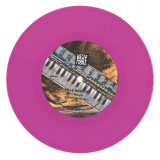
Magenta Vinyl
“Baile en el Infierno” & “Villa Incepciòn” are the new singles from Bogota-based cumbia band Conjunto Media Luna. Directed by accordionist and producer Ivan Medellin, Conjunto Media Luna makes a sound shift towards fresher and more street sounds influenced by the Sonideros from Monterrey, and the Chicano movement of the Low Rider Kumbias from California. However, Conjunto Media Luna still sticks to their roots by homaging the original format of the traditional Cumbia Sabanera from the Montes de Maria region of Colombia and including accordion licks that remind of Andres Landero’s style.
Edition of 500 copies, coming in a plastic sleeve including artwork printed cardboard.
Pressed on high quality Black vinyl wax (40 gr.).
The original soundtrack for “Il Casanova di Federico Fellini” (1976) sees Nino Rota putting into music Federico Fellini’s opus on the legendary Venetian icon and “tombeur des femmes” Giacomo Casanova.
Winner of an Oscar for Best Costumes in 1977, the film is one of Fellini's finest, a grotesque and hyperbolic take on the life of Casanova that is matched by Rota’s compositions.
“Il Casanova di Federico Fellini” possibly is one of Rota’s most eerie and enigmatic scores, as if the Maestro had finally poured into a soundtrack all of his love for esotericism.
The music wraps you up like the Venetian mist. The compositions are constantly on the edge of classical music with playful nuances and the use of instruments like viola and cello. Vocals become a cornerstone, echoing the tradition of 18th century Italian opera. However, Rota also leaves room for more experimental and estranging vibes that make the soundtrack a one-of-a-kind voyage into the creativity of the Maestro.

- A1: The Pitts
- A2: Lad Life
- A3: 92
- A4: Rave Slave
- A5: Rbb
- B1: Lust Forevermore
- B2: Glamour
- B3: Gabbertron
- B4: Warrior
- B5: Crash
2023 repress of Low Life's second album from 2019 on coloured vinyl, in a single LP sleeve with insert. Colour effect is a seafoam green smear with a transparent base. Arriving with an aura of anticipation, 'Downer Edn' (read: Edition) feels like a collective document of the band's timeline since their unforgettable debut `Dogging'. Recorded over two years and mixed in 2018 by Mikey Young (Total Control / Eddy Current Suppression Ring), `Downer Edn' sees the core trio of Mitch Tolman, Cristian O'Sullivan and Greg Alfaro expand their ranks to a five piece. Dizzy Daldal and Yuta Matsumura of Oily Boys & Orion were brought in to reinforce the thick wall of guitars, freeing Tolman up as a dedicated front man for live duties. The hours of studio work have resulted in the band sounding more confident and fully realised, reaching and finding a sound that was perhaps unattainable 5 years prior. However, lurking behind the bigger vision and polished production, `Downer Edn remains a dark blast of an album. Expansive and cohesive, yet shimmering and rough; something they can be proud to call a definitive statement. As far as Australian punk is concerned, Downer Edition not only shatters the boundaries applied by that descriptor, it does so with the lushest attack conceivable. The visceral pounding of melodies throughout the album transforms their inspirations; desperation, neuroses, trauma, survival, hooliganism, violence, hope, rejuvenation, and their hometown of Sydney's full architectural and social scope - from a realm of intangibility to the very, very tangible. Unified on `RBB,' ruminating on `92', chasing the escape on `Rave Slave,' and unwillingly defiant on `Warrior,' Downer Edition reaches past the wild ride of Dogging - this truly is the album that Low Life have been threatening to make for nearly a decade. Released in conjunction with Goner Records in the USA and Cool Death in Australia.

THE CULT DEBUT ALBUM OF INDUSTRIAL BLACK METAL FROM THE
NORWEGIAN PIONEERS, PRESENTED ON VINYL FORMAT WITH
ORIGINAL COVER ART
One of the pioneering industrial black metal forces to emerge in the early 90's,
Mysticum brought to the world a completely unique brand of extreme &
psychedelic discordant black metal with insane drum machine patterns & synths.
They were originally signed to Euronymous' Deathlike Silence Productions label;
such was his belief in the band (Mysticum even featured Hellhammer from
Mayhem in their line-up for a brief period). However, this venture proved to be cut
short following his death, forcing Mysticum to look elsewhere for the release of
their eventual debut album, 'In The Streams Of Inferno', finally surfacing in 1996.
A perfect concoction of cold, primitive black metal & forward-thinking ideas from
an act unafraid to push boundaries, the hell of 'In The Streams Of Inferno' has had
a lasting & profound impact on many since 1996. For this release, the album has
had some extensive remastering work courtesy of Tom Kvålsvoll at Strype
Studios in Oslo to give a better representation of the sound the band initially
intended & includes 2 bonus songs in the form of 'Eriaminell' & 'Black Magic
Mushrooms'.
This vinyl edition of 'In the Streams Of Inferno' includes the original's cover art,
plus printed inner sleeve.
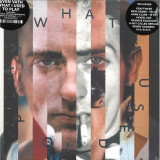
- A1: Logic System - Unit
- A2: Kraftwerk - Computerwelt (2009 Remastered
- B1: Whodini - Magic's Wand
- B2: Rocker's Revenger - Walking On Sunshine (Feat Donnie Calvin
- C1: Klein & Mbo - Dirty Talk (European Connection
- D1: Liaisons Dangereuses - Los Niños Del Parque
- D2: Yello - Bostich
- E1: The The - Giant
- F1: The Residents - Kaw-Liga
- G1: Clan Of Xymox - Stranger
- G2: A Split - Second - Flesh
- H1: Severed Heads - Dead Eyes Opened
- H2: The Weathermen - Poison!
- I1: New Order - Blue Monday
- J1: Anne Clark - Our Darkness
- J2: 16 Bit - Where Are You?
- K1: Phuture - We Are Phuture
- K2: Model 500 - No Ufo's (Vocal
- L1: Frankie Knuckles Feat Jamie Principle - Your Love
- L2: Quest - Mind Games (Street Mix
- M1: Jasper Van't Hof - Pili Pili
- N1: Guem Et Zaka Percussion - Le Serpent
- N2: Hugh Masekela - Don't Go Lose It Baby
- O1: Sly & Robbie - Make 'Em Move
- Q1: The Ecstasy Club - Jesus Loves The Acid
- R1: Foremost Poets - Reason To Be Dismal?
- S1: Lhasa - The Attic
- S2: A Guy Called Gerald - Voodoo Ray
- T1: M/A/R/R/S - Pump Up The Volume - Usa 12" Mix
- T2: Bobby Konders - Nervous Acid
- U1: Meat Beat Manifesto - Helter Skelter
- V1: Raze - Break 4 Love
- W1: Sueño Latino With Manuel Goettsching Performing E2-E4 - Sueño Latino (Paradise Version
- X1: Off - Electrica Salsa
- O2: Brian Eno - David Byrne - Help Me Somebody
- P1: Primal Scream - Loaded (Andy Weatherall Mix
36
For this uniquely personal retrospective spread over twelve vinyl discs, Sven Väth takes us back to the early days of his DJ career. On What I Used To Play we meet great pioneers of electronic music, gifted percussionists, obscure wave bands, and innovative producers of a bygone 'new electronic' era. Rough beats and irresistible grooves from the identification stage of house, techno, and acid remind us not just how far electronic music has evolved over the past four decades, but how great it was to dance to EBM, techno, and house for the very first time.
If there is one protagonist of the electronic music scene who has remained curious, innovative and at the very cutting edge of music for over four decades, it's Sven Väth. His multi-layered artist albums and Sound of the Season mix compilations have been defining the genre for over two decades, and even today, he is constantly on the lookout for the next top tune to add to the highlights of his next set. At least, that's the case when he's not producing them himself as an artist or remixer. "Actually, it's always been part of my DNA to think ahead," and nothing had been further from his mind than looking back at his past, but when in spring of 2020 the international DJ circuit had to be scaled down to virtually zero, the 'restless traveler' suddenly had time. Time to stop and reflect on "how it actually was back then, at the very beginning of my career..."
"It was a great trip and with every track, beautiful memories came flooding back".
In the London apartment, he had just moved into, Sven has set up a "little music room", where he cocooned himself for several days, "to look way back for the first time and review my musical journey through the eighties, so to speak."
The interim result was six thematically oriented playlists with a grand total of 120 tracks from 'early 80s' to 'Balearic late 80s', together with excursions into afrobeat, European new wave, and EBM sounds and a few epochal techno/house tracks from the USA in between. From these 'Best of Sven Väth's favorites', the project What I Used To Play crystallized. Sven remembers how the Cocoon team reacted to his proposal: "They found the idea of making a compilation out of it MEGA from the beginning and everyone said 'Sven, go for it', but then, of course, the work really started, namely, to clear the rights and to get clean sounding masters of the up to 40-year-old tracks. There was also disappointment, of course. We couldn't clear certain titles because the rights holders in the USA had fallen out with each other or simply disappeared from the scene. In short, it wasn't easy, but now I can safely say we got the most important tracks."
Finally, after two years of research, curation, design, and administrative fine-tuning, the "little retrospective" from 1981 to 1990 is available. The exquisitely packaged, and three-kilo heavy box set is not only physically impressive, WIUTP is also the definitive record of Sven Väth's musical development. On each of the twenty-four sides of vinyl, you can trace track by track, what influenced him during which phase, and how he took off as a DJ from his parents' Queen's Pub straight into the spotlight at Dorian Gray. There and at Vogue (later OMEN), Sven became the style-defining player in the DJ booth that he still is today.
1981 - 1990: Future Sounds of Now
In the early eighties, the crowd in clubs like Vogue and Dorian Gray danced to what nowadays we call 'dance classics' - mainly disco, funk, soul, and chart pop. It was up to a new generation of DJs, including Sven Väth, the youngest protagonist in the Rhine-Main area at the time, to create their own club-ready music mix. Good new tracks and potential floor-fillers were rarities that had to be sought out and found, in order to prove oneself worthy.
Without MP3s, internet streaming, or other digital download possibilities, music didn't just gravitate to the DJ, instead, it had to be tracked down. In well-stocked record stores in Frankfurt and Wiesbaden or even in Amsterdam, London, or New York, Sven and friends sourced the material for countless magical nights. On WIUTP we can follow Sven's very personal journey through this wild, innovative era in which synth-pop, funk, hip-hop, and disco were successively replaced as 'club music' by house, techno, acid, and breakbeat. By the end of the decade, it was clear to see that these once exotic 'fringe' phenomena would soon become 'mass' phenomena.
Early 80s
Dirty Talk by the Italian-American duo Klein & M.B.O. represents the most innovative phase of the Italo-disco genre in the early eighties like no other track. Mario Boncaldo (I) and Tony Carrasco relied entirely on the original synthetic drum and percussion sounds of the Roland TR-808, coupled with the raunchy vocals of Rossana Casale and guitar accents of Davide Piatto. Of course, other tracks from this period were also influential in style, most notably Unit by Logic System, which worked as the perfect soundtrack to the laser lighting system at the legendary Dorian Gray club. With stomping beats and robotic rap interludes, Bostich by Yello also belongs on Sven's eternal playlist - after all, it caught the attention of Afrikaa Bambaataa, who invited the Swiss duo to perform at the Roxy in New York in 1983.
EBM Wave - Mid 80s
From today's point of view, the almost ten-minute-long, downtempo track Giant by Matt Johnson's band project The The, would probably not be considered an obvious club classic. However, a closer (re)listen reveals the rhythmic intricacies of the percussion overdubs by JG Thirlwell (aka Foetus) on Johnson's composition, and it becomes clear why this exceptional piece of music is one of Sven's absolute favorites. Other classics from this phase include Kaw-Liga by the mysterious The Residents, the hypnotic-synthetic Our Darkness by Anne Clark (and David Harrow), and last but not least, the somber, monotonous anthem Where Are You? by 16Bit, one of Sven Väth's projects together with Michael Münzing, Luca Anzilotti from 1986.
US House - Late 80s
You certainly can't talk about Chicago house without mentioning Frankie Knuckles. The resident DJ at the Warehouse not only gave the name to an entire genre, but also produced epochal floor fillers on the Trax label like the timeless Your Love, sung (and moaned) by Jamie Principle. Acid house protagonists Phuture also hail from Chicago, and on We Are Phuture (also released on Trax) we hear the chirping acid sounds of the legendary Roland TB-303 in full effect. Another featured classic is No UFO's by Detroit's Model 500 aka Juan Atkins, who is rightly considered the 'Godfather of Techno' even if the genre-defining track from 1985 still breathes with the spirit of hip-hop and electro from the first breakdance era.
Afrobeat
Le Serpent, by Algerian-born Abdelmadjid Guemguem, is a track that sounds completely different from everything else on WIUTP. Made in 1978, it's a monumental, rousing groove created without bass or synths, just with five congas! Even though Guem sadly passed away in 2021, his immortal, acoustic beats are understood all over the world and will continue to enrich many thousands of DJ sets for years to come. Another classic that not only Sven appreciates beyond measure is Hugh Masekela's Don't Go Lose it, Baby. In addition to being one of the most important jazz pioneers, the trumpeter and freedom fighter from Johannesburg was very experimental, integrating electronic sounds into his music in later years, in a similar vein to Miles Davis and Herbie Hancock. Dutch jazz pianist Jasper van't Hof's afrobeat project Pili Pili has also aged well. The trance-like, almost sixteen-minute-long track of the same name, manages to fill a whole side on the seventh of twelve vinyl discs in the WIUTP box.
UK-US-Euro - Late 80s
Time for a change of scene, in the truest sense of the word, and from a musical perspective, this section is like landing on another planet. First up is Andrew Weatherall's classic remix of Primal Scream's Loaded, featuring the iconic Peter Fonda sample (lifted from the 1966 biker film Wild Angels) that came to personify the mood triggered by the British Second Summer of Love in the late eighties: "We wanna be free to do what we wanna do, and we wanna get loaded...". This period also saw the emergence of M/A/R/R/S whose only single, 1987's Pump Up The Volume, became a club classic with support from DJ legend CJ Mackintosh. In this most eclectic of sections, we also encounter New York house and reggae producer Bobby Konders and his seminal Nervous Acid.
Balearic - Late 80s
Those who know him, know that Sven had already lost his heart to the 'magic island' of Ibiza as a teenager, so with that in mind, the WIUTP project couldn't end without a Balearic chapter. Inspired by Manuel Göttsching's E2-E4, the immortal, eponymously titled Sueño Latino belongs in there without question. Equally popular on the island was, and still is Break 4 Love by Raze, which thinking about it, would also fit perfectly into the house chapter. Last, but not least, there's an overdue reunion with Sven Väth himself, in his role as frontman of the successful Frankfurt trio OFF. Together with Michael Münzing and Luca Anzilotti (later of Snap!) this 'Organization For Fun' created the off-the-wall club hit Electric Salsa in 1986 which incidentally turned into an international chart smash, putting Sven in the enviable position of having to decide between pop stardom and a DJ career. Well, we all know how that decision turned out and the rest, as they say, is history. A not insignificant part of his story is What I Used To Play. Enjoy!

13
Rubinho E Mauro Assumpção's 'Perfeitamente, Justamente Quando Cheguei' has to be up there as one of the finest Brazilian-psych-folk-MPB records we know. Unfortunately, it's very hard to find in the wild; even on digging trips to Brazil, an original copy rarely shows up, and when it does, it comes with a hefty price tag.
This highly sought-after rarity was released on the Brazilian label Tapecar Records in 1972 and is the one and only album by the sensational pairing of Rubinho and Mauro Assumpção. Effortlessly blending folk, MPB, funky-psych, rock, and relaxed, swaggering samba, this record ought to be heralded as a true Brazilian classic. However, maybe due to its scarcity and the previous reissue predominantly being only available to the Brazilian market, it has not had a chance to fully shine and find the wider audience it deserves. Through our reissue we hope to put things right. Fans of records by Milton Nascimento and Lô Borges are sure to enjoy the same magic and allure in 'Perfeitamente, Justamente Quando Cheguei'.
In addition to being the album’s songwriters, Mauro Assumpção took on the role of producer and Rubinho was co-producer as well as playing piano, organ, acoustic guitar and performing vocals. The record features the drummer Gegê who worked with Milton Nascimento, Edu Lobo, Nana Caymmi, Dom Um Romão and more. It also features guitarist Rick Ferreira, who played with Erasmo Carlos, Gal Costa and other greats. Rounding off the players on the album are Darcy Da Cruz and Formiga who have graced many a fine recording on horns.
'Perfeitamente, Justamente Quando Cheguei' is a truly stunning work that washes over you with beauty. Delve in and savour.

As one of the three co-founders of Washington D.C. production and DJ trio Black Rave Culture, James Bangura is no stranger to situating electronic music within its most purposeful and potent contexts. With this new duo of tracks, however, Bangura taps into a deep, personal internality, metabolising visceral experiences and personal transitions into unexplored phases of his musical life.
The bass-forward “Harrar” is a complex organism which operates on two planes: a sweat-drenched 150pm symphony of synth pulses, fidgety percussion, shimmies and distorted vocals, that falls into lockstep with a
meditative, dubby bass tone that calmly swells and recedes. Emerging out of Bangura’s high intensity hardware jam sessions with friends and collaborators, both the depth and energetic fizz of “Harrar”’ are signified by its name, borrowed from Harrar Coffee & Roastery--a beloved Ethiopian coffee house and community meeting place in Washington D.C. that radiates warmth and familiarity.
“Witness Dub” occupies less of the senses, exploring a state of liminality through a contemplative deep house signature. Having emerged from an extended period of active duty in the military, Bangura had to navigate civilian life for the first time, causing him to process multiple culture shocks that stretched across culture, language, communication and identity. “Witness Dub” finds Bangura at this crossroad, juxtaposing the steady propulsion of kicks and drums with pensive minor key chords, as he begins to explore the other side of the self, letting the energy guide the music.

5
An EP whose purpose denounces our society’s thirst for technological progress, essentially fed with analogical instruments and sounds evoking the beginnings of techno in the late 80s and early 90s. However, if the timeless sounds of the EP evoke the past, the music of Cuften alchemizes a contemporary, inventive sound and an anti-commercial approach. A nostalgic music that deconstructs the rave heritage towards futuristic sounds, with the help of his old analogical synthesizers. A rather raw and rave first approach where the groove is however omnipresent, making Cuften's music a resolutely accessible and federative whole with its combination of D.I.Y aesthetics and vocals, mixed with an ingenious and inventive technique on the machines.
The EP opens with Animal Suicide, a melancholic and analogical melody, dark and luminous, progressively settling towards a rave rhythmic with a powerful kick. A vaporous and vintage electro with a futuristic look with its vocoded voice and its cinematographic touches.
No More Sunday Regrets is more experimental and brutal at first before giving way to a synthetic and psychedelic melody with singular rhythms and organic synths.
Unibios captivates with its luminous melody before a bewitching acid line which snakes gradually settles, accompanied by a heavy bassline.
Heart Particles calls out with a sharp contrast, with its soft voice and melody, as if the shuffle mode had landed us on an ambient record. The tempo increases progressively with an acid line and a slow and powerful rhythms, between the psychedelia of The Orb and Warp’s reveries of the 90's.
Final track is a remix by Dutch pioneer Legowelt, master of synthesizers and underground electro who has always been a great source of inspiration for Cuften.
