*A MODERN JAZZ REINTERPRETATION OF THE MUSIC FROM THE LEGEND OF ZELDA*
WRWTFWW Records is happy to announce the release of Casimir Liberski ReTRio's The Z Suites, a full-length jazz album reinterpreting the music from iconic Nintendo video game series The Legend of Zelda. The epic Z-Jazz journey is available in the following formats: limited edition 180g half speed mastered vinyl double LP housed in a heavyweight sleeve with obi, digipack CD with cavalier, and digital.
Casimir Liberski reimagines the golden era of video game soundtracks with jazz versions of Zelda favorites The Legend of Zelda (1986), A Link to the Past (1991), Link's Awakening (1993), and Oscarina of Time (1998) - plus a few Easter eggs! Dancing between nostalgia and avant-garde, the Brussels-born pianist and composer crafts a sonic world of pixelated folklore where melody and improvisation coexist in harmony.
Music critic Arthur Meurant perfectly explains:
For many video games are a journey of the mind. Since its inception - dating back to the early seventies - this avant-garde artistic medium has nourished the imaginations of a digital age. Casimir, like many others, has been fed a steady diet of pixels from an early age. From simple squares to cultural cornerstones they have become the trail on which playful travelers of the mind retrace the steppes of history. A shared universe, familiar yet endless, of pocket-sized mythology. Its name? Hyrule. Its goal? To amaze. In these few tracks - selected with care - the Casimir Liberski ReTRio invites you, finally, to visit a space which does not exist yet holds us all. A land where all feel welcome. Where all are happy. But also... to rediscover under another timbre the classical compositions of Master Composer K?ji Kond?. A man who, unbeknownst to him, composed our dreams as well as music. That single noble pursuit, where an artist gives soul without losing his own, is yet again a statement of humanity in its purest of forms: art as that which brings us together and makes us whole in a world eroded by modernity. Pick up your key. Gather your maps. Open the door. Adventure calls.
French ambient composer Franck Zaragoza continues the evolution of his Ocoeur project, moving beyond intricate sound design and beat-driven constructions into expansive, cinematic, beatless terrain.
On his eleventh album, Greener Grass, Clearer Water, Zaragoza deepens the eco-ambient themes introduced on 2024’s Breath, shap-ing a work that feels both intimate and quietly monumental. From its opening moments, a sense of stillness takes hold.
The album unfolds like a series of vignettes, glimpses of an unspoiled world rendered with clarity and restraint. These are not nostalgic visions but speculative ones, reflecting what the natural world might yet become should humanity alter its course.Rather than delivering overt statements, Zaragoza allows the message to resonate through atmosphere and tone.
The result is a subtle but persistent undercurrent, an awareness of fragility and of beauty at risk. In this way, Greener Grass, Clearer Water becomes less a warning than a quiet invocation, drawing attention to what stands to be lost. It is an arresting and finely balanced work, positioning Ocoeur at the intersection of ambient, neoclassical, and cinematic drone with renewed focus and purpose.
The free folk/jazz sound of modern Los Angeles. Featuring a heavy bunch of musicians and vocalists including Moor Mother.
"Fearlessly Accessing the Divine Spirit From Here on Out" is the vinyl debut from pianist, composer, and producer Diego Gaeta. He has previously released projects as Club Diego and with the trio Human Error Club (whose members Mekala Session and Jesse Justice helped produce this record). He has quickly become a fixture in a number of Los Angeles musical environments, working with Lionmilk, The Pan Afrikan Peoples Arkestra, Carlos Niño, Black Nile among others. This album is a synthesis of these many LA environments, and carries chamber, jazz, ambient, and folk influences, ultimately giving it an uncategorizable feel similar to works by Arthur Verocai or David Axelrod.
Gaeta recorded the initial ideas for the album by himself after experiencing a burst of creativity during the lockdown of 2020, in the aftermath of a season of protests in Los Angeles, on a piano at his home in El Sereno. "I was constantly not in tune with myself, always awaiting outrage and tragedy in a very unstable world. However, hitting the streets in support of various ongoing pandemic community actions felt necessary and it marked a point in time that ushered in large societal changes. The weight of that era made me feel allergic to making art at the time. All of these ideas came after that period, expressing my reflections subconsciously. I remember that the ideas came in a short amount of time, and then they developed."
Once he had created the tracks as Ableton sessions, he realized the gravity and context of how he was processing his ideas so he, as he puts it, "felt like taking them outside the hands of midi and into the hands of friends." Gaeta was able to assemble his dream band, which ended up being a 9-piece ensemble, or a nonet. "I felt that at some point I was channeling the geometrical balance of that nonet...it's almost as if I had a sextet and then the three of the sextet that's not the rhythm section were doubled. It's a really dense sextet, that's how I see it."
The recording process began the following summer in June 2021 as the musicians were all adjusting to the newfound dynamic of getting tested for COVID, waiting a few days, and then meeting up to record. "We were eating Indian food, some of us were smoking, it was a nice memory, but I felt a little stressed, because I was the bandleader, and I felt the emotional weight of my music."
The title track and single, featuring vocals by Jimetta Rose, begins with a speech by Gaeta delivered when playing with Black Nile in 2019 at the Levitt Amphitheatre in MacArthur park. Gaeta provides the following account: "Even though it was in 2019, socio-political tensions and issues were at the forefront for me at that time. I wrote a speech that was intended to be critical of the US but it ended up becoming a collage inspired by different women that had messages of freedom that spoke to me the most. I quoted Nina Simone and Georgia Anne Muldrow, it wasn't something that I read but something that she said "kicking it with consciousness and style" that phrase stuck with me, so I used it in that speech. Although critical, the speech had a positive feeling to it, and it was hopeful. I gave that speech while fireworks were going off."
Moor Mother & Zeroh are found on their respective tracks, Memory Screen & Eccolo - both delivering a distinct, commanding vocal performance. Low Leaf colors the track Soft Spot with harp, a beautiful ballad nestled in the center of the album. Other players include Gregory Uhlmann on guitar, Jon Kaye on violin, Devin Daniels on alto saxophone, Caleb Buchanan on bass, Dante Luna on vibraphone, Patrick Behnke on viola, Bryan Baker on tenor saxophone/flute, and Mekala Session on drums.
"I’d like for us tonight to embody a freedom oriented life. Freedom isn’t just a dream, it’s a place we must all arrive at together, as one by one the people of the Earth help each other to be Free of power, hate, and insecurities. Let’s kick it with consciousness and style. Can y’all dig that? YEAH. I can too. So now we’d like to present to you a spiritual transmission I like to call: 'Fearlessly Accessing the Divine Spirit of Freedom From Here On Out.' YEAH" - Diego Gaeta
Bruno Berle is a singer, songwriter, producer, multi-instrumentalist and figurehead of a contemporary Brazilian music movement. With a quiet mastery of songwriting and an astonishing voice, his music has won hearts around the world. Since the release of his debut album No Reino Dos Afetos (2022), Berle has performed across the UK, Europe, Japan, South Korea, and China, only leaving his home country for the first time in 2023. Shaped by these journeys, Berle’s third studio album, Sem Fronteiras (Without Borders), reflects a utopian vision of a unified world.
Recorded across London, São Paulo, Minas Gerais, Germany, and Maceió, the album–co-produced alongside his longstanding musical partner Batata Boy–is the most expansive canvas Berle has worked on to date. Shot through with the imagery that has always animated his songwriting: open skies, morning light, vivid colours and the magic of human connection, Berle’s carefully crafted poetics and warm, delicate instrumentation drive this vivid body of work.
“I came from nothing”–Berle doesn’t take his rise to global prominence for granted.
Born to a working class family from Brazil’s northeastern Alagoas state, one of Brazil’s most economically deprived, Bruno moved frequently in his youth to follow any job opportunities his parents could find, before eventually settling in the coastal capital of Maceió. “I used to travel to Caruaru, Santa Cruz, Recife, Garanhuns, Arapiraca, which I loved and feel it made me ready to be in this rhythm i’, but at the same time I think not having friends from childhood and being in constant change made me a little numb to the constant upheaval”. On Sem Fronteiras, there is a similar duality at play. The album celebrates the collective joy and human connection that live touring brings, but it also sits with the darker realities of crossing borders. While music moves more freely around the world than ever before, our bodies are not granted the same privilege.
Though he’s never lacked self-belief, Berle recognises that talent alone doesn’t guarantee opportunity. “Before my second album No Reino Dos Afetos 2 everything I had ever recorded was made with the help and kindness of people who believed in my ability”. Determined to pay that kindness forward and help others from the sharp end of Brazil’s desperately unequal society, Berle produced and featured on the recent self-titled albums by his northeast Brazilian compatriots, Nyron Higor and Phylipe Nunes Araújo (both 2025), helping propel both onto the international stage. In turn, following the successes of Nyron & Phylipe’s albums alongside his own, Bruno finds himself at the forefront of a thriving community of artists now based in São Paulo, but primarily originating from northeastern states like Alagoas and Pernambuco.
Much like the famed Clube Da Esquina movement that spawned in 1970’s Minas Gerais, they operate with a free-exchange of ideas, writing songs with and for each other, performing on each other’s albums and on the live circuit together. Lead single ‘Manha’ flows from this ethos. It was written by Berle’s friend and fellow Alagoan João Menezes (writer of ‘Ate Meu Violao’ and ‘Te Amar Eterno’ from Bruno’s previous albums) and Marvin Viera, and originally recorded on their 2018 album Areia e Mar.
Sem Fronteiras opens with ‘Você Já Sabe Que Eu Te Amo’, just six beats of one nylon guitar chord ring out before changing key, paving the way for the gentle strike of fender rhodes and the arresting call & response duet between Berle and Higor. On ‘Amor Inteiro’, the album reaches a celebratory burst of catharsis, with the punch-packing drums of Pedro Lacerda and Nina Maia’s joyous backing vocals encapsulating the live energy that Berle and his band bring to the stage.
With the abundant talents of this musical community at its heart, Sem Fronteiras releases 10th July 2026 via Far Out Recordings, supported by a summer tour across Europe. Bruno Berle will perform in a four-piece band alongside Nyron Higor, Phylipe Nunes, and Batata Boy, culminating in an appearance at Roskilde festival, Berle’s biggest live show to date. He’ll continue to carry a hopeful vision of a world where artists and musicians can move as freely as their music flows.
Tracklist:
A1 “Você Já Sabe Que Eu Te Amo”
(Nyron Higor / Bruno Berle)
Nyron Higor – drums, bass, acoustic guitar, electric piano, synthesizers, vocals
Bruno Berle – piano, vocals
Batata Boy – piano
Jorik Bergman – score preparation and conducting
Klara Gronet – violin
Ségolène de Beaufond – violin
Cristina Ardelean Montelongo – viola
Ilektra Stevi – cello
A2 “Não Posso Viver Sem Você”
(Batata Boy / Bruno Berle)
Batata Boy – electric piano, organ, synthesizer
Bruno Berle – drums, bass, synthesizer, vocals
Jorik Bergman – score preparation and conducting
Klara Gronet – violin
Ségolène de Beaufond – violin
Cristina Ardelean Montelongo – viola
Ilektra Stevi – cello
A3 “A Noite de Estrelas”
(Nyron Higor / Bruno Berle)
Nyron Higor – synthesizers
Bruno Berle – bass, drums, vocals
A4 “Outra Noite”
(Bruno Berle)
Nyron Higor – drums
Bruno Berle – acoustic guitar, bass
Felipe Berle – congas
Lucca Francisco – guitar, vocals
B1 “Amor Inteiro”
(Bruno Berle)
Pedro Lacerda – drums, choir
Nyron Higor – bass, choir
Batata Boy – guitars, organ, electric piano, choir
Nina Maia – choir
Bruno Berle – guitars, acoustic guitar, congas, vocals
B2 “Ideias Mágicas”
(Batata Boy / Bruno Berle)
Heloisa Alvino – trombone
Batata Boy – synthesizers, beats, electric piano, organ, bass
Bruno Berle – synthesizer, vocals
B3 “Vim Dizer”
(Batata Boy / Bruno Berle)
Batata Boy – electric piano, organ, synthesizer
Thomas Stankiewicz – synthesizer
Nyron Higor – synthesizer
Bruno Berle – acoustic guitar, bass, vocals
B4 “Tô Assim”
(Bruno Berle)
Bruno Berle – acoustic guitars
Batata Boy – synthesizer
Nyron Higor – bass, synthesizer
B5 “Manhã”
(João Menezes / Marvin Silva)
Bruno Berle – acoustic guitar, vocals, congas, shaker
Batata Boy – piano, shaker, electric piano, vibraphone, synthesizers
Nyron Higor – drums, bass
B6 “Sem Fronteiras”
(Bruno Berle)
Filipe Mariz – guitar
Bruno Berle – acoustic guitar, vocals, bass
Jennifer Souza – vocals, acoustic guitar
Rudson França – drums
Credits:
Produced by Bruno Berle and Batata Boy
Mixed and mastered by Bruno Berle, Batata Boy and Felipe Berle
Audio engineering:
Nyron Higor (track 1 – production; track 4 with Felipe Berle)
Joe Osborne (tracks 7 and 9)
Victor Gelling (strings on tracks 1 and 2)
Filipe Mariz (track 10)
Photography: Claudio Virgínio
Design: Minchai
Recorded in:
Maceió, Alagoas, Brazil
Tamandaré, Pernambuco, Brazil
Belo Horizonte, Minas Gerais, Brazil
São Paulo, São Paulo, Brazil
London, England
Cologne, Germany
The Bug and Ghost Dubs relentlessly probe and atomize original material culled from Kevin Richard Martin's critically acclaimed 'Sub Zero' album. ("Monolithic and unforgiving, even by the Bug’s standards, representing his most suffocating take on ambient dub yet." Pitchfork)
Remixed to punish sound systems and freeze up the dance, both Fiedler and Martin trade fresh, contrasting blows, after their recent IMPLOSION face off album on PRESSURE last year. (Dub/Reggae album of the year, 2025, in 'The Wire')
The resulting 4 remixes are every bit as hypnotic and persuasive as you would hope for from productions fresh out the soundlabs of Michael Fiedler aka GHOST DUBS and Kevin Richard Martin under his dancefloor destroying Bug alias. Both producers intensify the desolate mood of the originals but introduce demolition inducing beats which provide the literally irresistible momentum. Echoes of the originals are respected and heard throughout, but the extra gear shifts pay off brilliantly.
Guaranteed to push serious air, and test the most powerful of sub woofers, these 4 remixes vary from heavy to superheavyweight. i.e. GHOST DUBS outputs a deliriously stoned headnod with his zonal refix of 'When I'm Gone', which miraculously sounds both subtley mysterious, but monolithically huge, whilst The Bug prowls ice cold, on the noirish, narcotic, instrumental hip hop of 'Too Human', which sounds like prime Mobb Deep mixed by Rhythm & Sound' at 16 bpm.
Essential remixes of an already very special album, the original atmosphere is not only captured expertly, it is categorically amplified. LARGE.
On Board Music returns with its next remixes package. Following the "Point C Remixes" in 2024, the Rotterdam based label now revisits four tracks taken from its charity compilations "The Meaning of Time" and "The Meaning of Time II" - all reimagined by fellow On Board artists. Born during the global health crisis of 2020, "The Meaning of Time" series explored the shifts, fractures, and altered perceptions of time experienced during that period. This new remix edition not only reshapes selected pieces through the vision of close label affiliates and takes them closer to the dancefloor, but also sees all tracks freshly remastered by Neel. The four tracks were given a new life in two different ways - by remastering and reinterpretation. Luigi Tozzi treats Polygonia's aquatic ambient piece "Magnetic Force" and pushes the track deeper into dark and hypnotic late night territories. Vera Logdanidi's emotionally charged arpeggiated electronic work "Water bubble Floating In Space" receives a peak-time reinterpretation by Non Series head Psyk. Swedish artist Dorisburg reworks Human Space Machine's "Danz7" into a dreamier and more percussive journey. Closing the release in true deep On Board fashion is label head Laura BCR, who reinterprets Bas Dobbelaer's "T2310" in an earthy and textured manner, while keeping its ambient techno & dubby spirit vividly alive. Photography by Marius Renard.
12” LP Sampler with Hype Sticker (350 Copies Worldwide) - DJ Milo AKA DJ Nature (Milo Johnson) has been producing his fourth-coming LP “The Human Stain” (LU013 Love Universal Music) over the past five years. This 12” LP Sampler (LU008 Love Universal Music) gives a glimpse of DJ Nature’s artistry.
Returning to Samurai Music following last year's Between Veils, Sciama opens up a new portal of exacting sonic exploration with Wave Interaction. Moving through dense drone shrouds, steely sound design and tense, taut rhythms, Michael Watters lays out a manifesto for waveform resonance within the half-time D&B tempo range. Wave Interaction is the precursor to a forthcoming album that will lay out a purposeful study of the interaction between machine-made sound waves and human perception, inspired by the teachings of early electronic music pioneer Daphne Oram. As an opening statement, 'Cele' maximises on a patient, spacious arrangement that allows the carefully sculpted layers of waveforms to resonate with minimal distractions. Far from minimal, it's a dense and evocative sound world Watters builds up. 'Excitation' brings more detailed percussive sequencing into the mix, teasing pin-prick snatches of breakbeats and designer ripples that dart around the psychoactive tonal elements in the mix. 'Intermodulaton I' opens the second half of Wave Interaction on a crisp, stepping beat more than ready for the club. As ever, functionality is only one part of the picture as further uncanny sheets of ambiguously tuned synth work unfurl across the austere framework. 'Shifting Formants' has a knottier, tunnelling quality that joins the dots with techno hypnotism, made all the more immersive by the harmonic overtones radiating off the vibrant lead lines that give the track its distinctive character. Guided by a clear intention and a finely honed studio practice, the return of Sciama hails an impactful addition to his considerable catalogue and tees up further compelling exploration on the impending long player.
Christian Prommer – producer, drummer, DJ and multi?instrumentalist best known for his work with Trüby Trio, Fauna Flash, Drumlesson, Voom:Voom (with Peter Kruder), Prommer & Barck (with Alex Barck), and as the producer of DJ Hell’s Teufelswerk – presents his new album Rhythmic Nocturne, spanning spiritual deep house, jazz, balearic trip?hop and hypnotic rhythm explorations. A must for fans of St. Germain, Floating Points and refined grooves at all speeds.
This album distills ten years of Berlin into a twilight drift between order and abandon. Daytime studio sketches are pulled apart at night, reshaped by shifting perspectives that swing between jazz harmony, textural experimentation, and the heavy gravity of techno basslines and analog drums. Intimately close-mic’d piano, drums, percussion, cello, and strings are constantly recontextualized—dropped into new rooms, resonances, and imagined spaces—so their meaning keeps mutating. Room noise, human breath, and accidental sounds are folded into the pulse, turning spill and imperfection into rhythm. Even a piano lid thudding shut on “Dark Matter” is claimed as part of the beat, underscoring an album that embraces freedom, spontaneity, and the beautiful lack of accountability that defines this city at night.
Featuring rare- and first-on-vinyl tracks from beloved producers such as 2000 And One, Stasis, and CiM. Remastered by DMX Krew and with an accompanying online essay by Oli Warwick.
Across eight carefully selected slices of starry-eyed machine soul, Cold Blow presents an exquisite tour through backroom techno and downtempo electro. With a focus on thematic flow and an immersive listening experience, the London-based label explores works from leading lights of the 1990s and previously unreleased cuts that celebrate the human heart that can be discovered in synthetic sound practices. The development of techno in the 1990s saw the music evolve in different directions across the world. From the expressive blueprint laid out by the Detroit pioneers, a wide range of tempos and energies emerged. Techno's evocative synthesis and intricate drum machine programming was especially potent for deeper explorations away from the dancefloor. Documents Of A Different Reality casts back to when technology was steering quantum leaps in communication and creativity and the future was shot through with naive optimism. It was also a time when the media and industry hadn't caught up with the music to box it into distinct categories. As such, there's a sense of creative freedom that informs the older tracks on the album, from 2000 And One and Sandy Huner's sparkling example of early Dutch techno to London-based LA Synthesis' detailed take on braindance and the majestic night sky vision of cult legend Stasis. There's also space for rare, late 90s machine funk from Icelandic outlier Thor alongside Connective Zone's charmingly fractured bleep dream and a more contemporary offering from Barcelona-based duo Permutation. Meanwhile Mind Control and CiM both capture the spirit of stylistic fusion with twitchier rhythms that take influence from hardcore and jungle as much as techno. With an atmospheric through-line of melancholic pads and harmonious leads, this small but perfectly formed collection naturally follows on from previous, equally thought-out compilations on Cold Blow, and adds a distinct perspective on the history and continuing legacy of pioneering early ambient techno.
Inweys is the new project from Scottish musicians Conal Blake (Feedback Moves, Domestic Exile, Infant Tree) and Murray Collier (Dip Friso, Grim Lusk, Real Landscape). Their debut self-titled 12’ was recorded in the summer of 2024 at La Chunky Studios in Glasgow.
They asked Fielding Hope of Counterflows Festival to write a short summary of the record:
“Inweys debut release arrives as four pieces of broken body music. Lurking, barely human fragments brought into the present. Using a short drum-machine improvisation as core material, the pieces are formed from a processes of mining and re-mining for small details, with each fragment zoomed in on and turned into new pieces. There’s a transformation taking place, but one that doesn’t obscure the materiality of the recording tapes as sticky, corrosive matter. On skewed and stretched fabric they enact their palimpsestic play, sketching and altering the grid with itchy technologies. What their edits and improvisations don’t say they let space say the rest, with vacuum aerated frames for bass to diffuse and beats to wriggle. More King Tubby than Cage, more Mantronix than Reich: minimalism with molten tips.
Both Conal and Murray’s past work has embraced malleable and iterative technologies; music whose feeliness figures itself out in space in a messy precomposed/improvised dialectic. This is the sort of thing most “new music” experimentalists (or anyone who spends most of their time obsessively manipulating tapes in expensive studios) often can’t achieve; a liveness, birthed from learning in situated play. Like the lore of Phuture’s Acid Trax, a poverty of material is at the heart of this, rendering the work with an abortive conviction: a corpse waking to consciousness becomes amphibious. Instead of the composer we have a relation, two people navigating the awkward spooling between the two reels of tape. Inweys is scots for “inwards”, and in their working process this is what they do. But the result is circular motion. Until the tape runs out, all in ways move out.”
Arpy Brown & Kapote Announce Collaborative Album Memento Ludi via Toy Tonics
A sun-drenched fusion of yacht rock, house and modern indie dance energy – out June 26, 2026
BERLIN, GERMANY — Toy Tonics is proud to announce Memento Ludi, the first collaborative album by label founder Kapote and multi-instrumentalist producer Arpy Brown, arriving June 26, 2026.
The album is a funk-driven journey that bridges the warmth of 1970s analog recordings with the pulse of contemporary dance music. Blending neo-soul grooves, yacht rock harmonies and modern house rhythms, Memento Ludi captures the spirit of classic musicianship within a forward-looking club context.
But Memento Ludi is more than a typical house record. The album moves fluidly between dancefloor tracks and fully developed songs. Every instrument was performed live by the artists themselves: guitars, bass, keyboards and percussion recorded in the studio by Arpy and Kapote. After jamming and recording the basis of every song in a live procedure they carefully resample the parts to create the organic, human touch that defines the Toy Tonics sound.
The title Memento Ludi — Latin for “remember to play” — reflects the album’s philosophy: bringing joy, spontaneity and musicality back into dance music at a time when many club tracks feel increasingly mechanical and formulaic.
The collaboration arrives during a particularly busy moment for both artists. While spending countless hours in the studio, Kapote and Arpy Brown have also maintained intensive international touring schedules with the Toy Tonics crew, road-testing many of the tracks as “secret weapons” in their DJ sets from Melbourne to Los Angeles via their homebase Berlin.
“We wanted to make a record that felt like a lost studio session from 1978 — resampled and synthesised in 2026,” says Kapote.
Chlar returns to his Primal Instinct label with 'Modern Survival'
Following the widely praised Funk Assault (Chlar & Alarico) 'Minimum One Post A Week' EP, which kicked off the Primal Instinct label last summer and won the support of the likes of Rodhad, Tasha, and Luke Slater, as well as routine plays from Sarah Story on BBC Radio 1, Chlar now returns to his imprint with solo venture 'Modern Survival'. While the first Primal Instinct release saw references to artist urges and behaviours on social media, this next instalment explores a modern recontextualisation of humanity's hierarchy of needs in yet another high-concept EP.
First up, 'Internet Soulmate' boasts a crunchy bassline as its drum work chugs along the track playfully. The groove twists and turns before the hypnotic and tribal 'Supermarket Hunting' continues with sounds of nature, loopy rhythm and syncopated bleeps.
On the B-side's 'Body Control Officer', human-made grooves intertwine with machine-like thrum, synths whirring and zapping, while 'Competitive Influencing' takes off with rolling percussion, subtle whistles and distorted vocal one-shots. Closing out another stellar offering from the Primal Instinct frontman, Chlar brings the dark 'Scout My Algorithm', a brooding slow-burner offset by smooth arpeggio snippets and warped slices of digital noise.
"In an era where technology entwines our everyday existence, where the virtual realm shapes our interactions, and where the pursuit of influence takes centre stage comes an EP that delves deep into the modern tapestry of human existence. 'Modern Survival' is not merely a collection of songs and visual clips, but a poignant reflection on the intricate dance between our primal instincts and the brave new world we navigate today. The EP invites listeners on a journey of self-discovery and reflection, prompting them to ponder the fundamental essence of our existence in an environment of fast-paced technological evolution." - Chlar
oom 318 Productions and Laced Records are stepping into the fog to bring Akira Yamaoka’s score for the 2026 motion picture, Return to Silent Hill, to vinyl.
This 2LP features 29 specially remastered tracks carefully curated by series composer and executive producer, Akira Yamaoka, to capture the key themes of love, loss, guilt and obsession from Return to Silent Hill and the SILENT HILL 2 video game on which the film is based.
Yamaoka’s musical signature has been an integral part of the series since the first note of the original video game. His work for Return to Silent Hill marks his third time writing music for a motion picture set in the SILENT HILL universe, but this time he returns as the sole composer.
The score for the motion picture was guided by three guiding principles he’s developed while working on SILENT HILL scores – to “not decide music through emotions,” an aspiration to “blur the boundary between music and environmental sound, between reality and the inner world,” and finally, to “not reject beauty.”
“The horror of SILENT HILL is not merely unpleasant or violent. There is always something fragile, human, and irretrievably beautiful mixed within it. Refusing to deny that has remained unchanged since the beginning,” Yamaoka explains.
Working closely with director Christophe Gans, Yamaoka built the score piece by piece to extract the underlying sensibility of the world of SILENT HILL 2 and reconstruct it into music that can stand on its own as a film score. Series veterans will recognize iconic cues from the video games that have been reimagined in tracks such as “Chasing Laura” and “Brookhaven Hospital”.
“The goal was never to replay the game’s music as it was,” Yamaoka explains. “Instead, the challenge was to reinterpret it—to alter its meaning, its distance, and its placement—so it could breathe within the film’s sense of time, imagery, and the inner lives of the characters. It was not a quotation, but a reimagining.”
Whether you consider yourself a master of survival horror or this is your first time stepping into the fog of SILENT HILL, the Return to Silent Hill Original Motion Picture Soundtrack is a melting pot of distorted sounds and jagged textures unified by a single sensation: unstable, murky, and yet somehow beautiful.
Grammy-nominated Malian singer, songwriter and guitarist Fatoumata Diawara returns in 2026 with MASSA, her most personal work to date. Introspective and powerful, the album explores motherhood, faith, memory, and resilience, transforming intimate reflection into universal storytelling. Through these songs, Fatoumata invites listeners, of all backgrounds, to embrace gratitude and accept that destiny is an inevitable part of the human journey. The album also carries a moving tribute to her late father, whose love continues to guide her beyond his passing. Musically, MASSA sees Fatoumata Diawara expand her sonic universe, blending her Malian musical heritage with pop textures, under the artistic direction of pop icon -M-, creating a sound that is both rooted and forward-looking. With MASSA, she reaffirms her place as one of the most vital voices in African music, transforming personal truth into universal resonance.
What's the point of the howl of string to speaker, the hammering of stick-on skin? Is it transcendence, elevating the human spirit by catharsis in sound? Or is it summoning chaos, a purgatory in which to bask in all that’s unclean, the better to feel alive?
Why not both? Because that’s what’s on offer on Diet Of Worms, the second Rocket release by The Shits, Leeds via Newcastle’s titans of disgust and deliverance. This is a feast for the senses in the worst way possible - primal rock boiled down to its essence and flung full in your face. Using repetition, tortured vocal invective and heads-down intensity as blunt instruments, these eight tracks are an unprecedented torrent of acidic salvation. Whilst lurking somewhere on the decadence-destruction axis between the nihilism of prime Stooges and the bloody blackout of Braimbombs, Diet Of Worms is possessed of a legitimately uncompromising hostility that both elevates and debases it to co-ordinates unknown.
There are revelations here in the riffage and the rancour, even if they are the kind that occur in the bleary miasma of the lock-in, or witnessing the streetlight blur of the subsequent stagger home. Even more single-minded and remorseless than the band’s Rocket debut ‘You’re A Mess’, this is a record that demands full immersion. Whether it’s ‘Then You’re Dead’ hammering on a pulverising garage-stinking riff until it begs for mercy, or ‘Change My Ways’, whose Creedence-In-Hell swagger and lurch is that of abjection transmuted into joy, this is psychedelia forcibly removed from its comfort zone of pastiche, and thrust into a bad-trip realm of the vivid and nightmarish.
But rarely has the process of making beauty and horror indivisible seemed like so much fun. If Werner Herzog was right, and the only harmony in the universe is that of overwhelming and collective murder, then The Shits are the true music of the spheres.
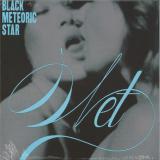
Wet is the fifth full length album by Black Meteoric Star and the 10th release. Black Meteoric Star is a project Rayna started in 2006 when she was living in Berlin that brought together her life long love of dance music culture with spiritual themes, drag, and her formative experiences of S/M culture Black Meteoric Star has always had an avenger quality in Rayna's life and creative work, and this iteration plays that role in response to the current political landscape. Wet celebrates the long standing shared history of electronic music and queer leather/SM culture and imagines a future where these two cultural expressions are re-connected.
Electronic music and leather/SM are both ways that queer people have historically built community, created and shared knowledge, and kept each other safe. The current administration demonizes and villainizes queer people on the basis of a false moral framework of respectability, and its a trick. No amount of acting "respectable" will humanize queer people in the eyes of this administration and get us the rights we deserve. Revitalizing the connection between electronic music and queer leather/SM is a way to affirm the cultural power of both during a time when it has never been clearer that we keep each other safe. Rayna, a transgender woman with a deep commitment to all of these cultural forms, has a strong message to deliver with this album. She has been a DJ and producer of electronic music for over thirty years and has been producing community cultural events for as long. She has also been involved in kink and bdsm for decades and is a well-known and respected DJ in the New York leatherdyke scene. Rayna made international headlines in 2017 when she came out as transgender while touring with LCD Soundsystem. In 2018 she left the Grammy winning band to pursue projects that were more connected with her queer experience, including founding Voluminous Arts a cultural organization that supports trans artists. Black Meteoric Star is a continuation of a thread in Rayna's work that runs through her Paper Eyes project and her role in Black Leotard Front. This thread has a comic book or x rated graphic novel component based around her experiences of being a sad lonely lesbian trans girl who got bullied a lot and found escape and the possibility of being avenged through X men comics and Dungeons and Dragons books.
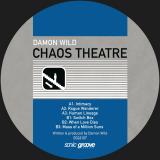
Techno architect Damon Wild returns to Sonic Groove with a masterclass in deep-space hypnotism. The Synewave founder bridges classic 90s grit with sharp, modern production across six tracks of driving, futuristic acid and mental, dubbed-out atmospheres. From broken beats to haunting vocal snippets, this is deep, spontaneous music from a true pioneer of the hypnotic sound.
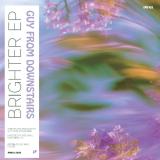
Guy From Downstairs brings a deeply human touch to the machinery with the Brighter EP.
It opens with "No Fun," where a dry, stripped-back rhythm plays hard to get, anchored by an emotive, raw vocal that cuts straight through the tension—it is a smirk with actual soul behind it. Just as that mood settles, the title track cracks the window open, letting in an unpretentious, genuine warmth that completely changes the temperature of the room. "Beat Street" picks up the pace, locking into a tough, street-level stride, before the EP bows out with "Untitled," a hazy piece of 7 AM introspection.
This is a record that doesn't just play; it breathes with you.
Chami and DHAEUR step up for the first release on DIG Curated, the sub label of Dust in Grooves (DIG), a pioneering force in the world of vinyl techno, born in Berlin. This passion project, launched by Olivia Mendez and Chami, spotlights emerging artists who embody the essence of the imprint's signature style--sophisticated, timeless, and groovy. With each release, a new talent is endorsed by a seasoned digger from the scene, aiming to push forward undiscovered sounds and empower the community.
After years of refining his palette as a dedicated DJ and acoustics master, the Italian-born, Berlin-based DHAEUR
has developed his distinct creative vision rooted in sound quality and stylistic research. At the time of crossing
paths with Chami, DHAEUR had already produced a handful of immersive tracks, exploring unknown territories
while keeping things minimalistic, giving DJs the freedom to construct their preferred sonic environments. Four of these tracks are pressed on DIG Curated 001, marking the beginning of a chapter for the sub-label that brings forth the future sound of techno.
The opening track of the release SUBJECT ZERO is a cinematic, mental, elegant journey, playing with the
perception of built up anticipation. This boundless, loopy soundscape is designed to induce inner quests on the
dancefloor and is a grand point of departure to unknown adventures ahead. This interlude of primordial grooves sets the scene for a voyage through a not-so-distant world where dystopian visions and technology merge with hypnotic synths. Evoking human emotions and desires is the hot and groovy track MIN(E)D, with vocals that could be from a female replicant building her own sonic web3 through the soundsystem of a steamy dancefloor.
On the B side, things quickly gain power and intensity, with STEPS racing through pounding beats, enigmatic
pads, and unpredictable claps, only tamed by DHAEUR's impeccable acoustic design. The EP closes with the cryptic, mechanical sounds of HEX 1904d1, deconstructing old patterns and programming a new form of evolved consciousness--inspired by precision and a reverence for organic movements.
On his debut Feelin’, Ivory marries hi-tech sound design with the emotional pull of house for a collection of tracks shaped by a multitude of club music and R&B.
“Feelin’” is a dancefloor slammer, a healthy balance of tension and release that comes with an invite to conquer the floor. Followed by “I Need You Now”; a hulking warehouse cut built from barrelling, muscular kicks and a diced up diva house-esque vocal.
“Try” pulls the crowd back into room one for a huge, anthemic floor-filler underpinned by jagged synths. Ivory describes “Don’t Lose Control” as “one of the more emotional moments of the Record”; a track centered around dreamy pads, smooth house synth stabs and a disembodied post-human voice that sounds eerily poetic.
Who, or, what, exactly is a Matured Sinner? In this case it's the result of a meeting of both minds and bodies between Swedish producer Johan Blende, freshly relocated to Athens, and fellow Eskimo artist and native Athenian NTEIBINT. Between the decidedly weak minds of succumbing to night time activities and day time regret an idea was born to create the best Greco-Norse creation since ABBA stole a bouzouki and used it shamefully for the best part of Mamma Mia (OST ?).
"I took one of my half-baked beats to George (aka NTEIBINT) to see what he could add to it and voilà - Mist 9000 was born!" explained Johan. Now complete with pulsating analogue arpeggios, a throbbing bass line and increasinglydistressed synths all writhing together in composed ecstasy that dance floors are made for, the track that emerged from George's studio left them hungry for more.
Returning to the studio, it isn't long before the song that would give this new project its name emerged. Created with the help of a friend Olga on backing vocals and an unnamed, equally sinning, young lad, Matured Sinner paired hypnotic disco beats, sinuous synths, squawking sine waves and almost queasily blissful sighs with a cautionary tale of drugs, flying saucer cults and a spiral deeper and deeper into sin and moral ruin.
Was it enough? It was. But then the third one came around, mainly by sheer want to continue, lingering like the third child of a marriage running out of ideas. Shall we keep going? "Of course we shall, this is our gift to the world!" Like a modern day cult, Bright Bum was conceived in a non-sexual context from leftover sounds after a nightof confusing creations and not necessarily tender compliments in an equal manner, chugging synths squelching their way over a mesmerising guitar loop as bright stabs cut through the humid funk of the track's insistent rhythm which, like all good nights out, increasingly fray at the edges as it rolls towards oblivion. Nobody requested it but like the nature of humanity itself, it must keep going.
‘Future Quiet’ signals a striking new chapter for one of electronic music’s most enduring and visionary artists. Across fourteen tracks that encompass modern piano minimalism, immersive ambient soundscapes and a smattering of vocal collaborations, the album finds Moby reflecting on the tension between hyper-connected modern life and the deep human need for stillness.
Curated by Brian d'Souza (aka Auntie Flo), Plants Can Dance is a forthcoming new compilation bringing together a global community of artists, exploring the creative possibilities of biosonification - transforming signals from plants, ecosystems and the natural world into sound. Out June 26th, the project marks the culmination of several years of d'Souza’s work across music, ecology and technology.
The album arrives at a time when more artists are turning toward nature as both subject and collaborator, such as Brian Eno’s Earth Percent, which formally recognises “Nature” as an artist. Plants Can Dance sits within a wider cultural shift, which is redefining the relationship between sound and the living world.
The project builds on several years of work by d'Souza, whose Plants Can Dance events have taken place across the UK, Europe, India and Africa, appearing in institutions including the V&A, Tate and the Design Museum. What began as a series of intimate gatherings has since evolved into a global platform, reflecting a growing appetite for work that reconnects music with the natural world.
The compilation features contributions from leading practitioners including Modern Biology (Tarun Nayar) in collaboration with saxophonist Zekarias Musele Thompson, OMMA (Olga Maximovam founder of Playtronica), Jason Singh, Dr Helen Anahita Wilson, Justin Wiggan in collaboration with celebrated Norwegian jazz musician Arve Henriksen, Lamine Touré, Bit Marten and Balam, alongside new work from d'Souza himself. Using a range of tools - from commercially available devices to bespoke modular systems - artists translate electrical activity, environmental data and organic processes into musical material.
The processes behind each piece differ - from interpreting plant biodata to translating wind patterns into compositional structures - and the results are as varied as they are compelling. The record spans ambient, jazz, electronica and modern classical, yet all pieces are unified by a shared intent: to reimagine music as a space of collaboration between human and more-than-human worlds.
At the core of Plants Can Dance is a question about how we define music, and how we choose to listen. Traditional musical forms, with their fixed tempos and predictable structures, give way here to something more fluid and less easily controlled. The listener is invited to surrender expectation and engage with sound as an evolving environment rather than a linear narrative. In this context, the compositions function as what d'Souza describes as “acoustic ecologies” - sonic systems shaped by biological, environmental and elemental forces unfolding in real time.
Accompanying the release is a printed zine offering reflections from each artist, and deeper insight into the ideas and debates surrounding this practice. Rather than presenting definitive answers, Plants Can Dance positions itself as an artistic exploration grounded in curiosity, experimentation and critical thought.
Ultimately, Plants Can Dance is less concerned with proving whether plants “make music” than with changing how we listen. By inviting audiences to engage with sound shaped by non-humans, it opens up new ways of perceiving the environments we inhabit - not as passive backdrops, but as active, dynamic participants in a shared ecological network. In doing so, it offers a quietly radical proposition: that by listening differently, we might begin to relate to the natural world differently too.
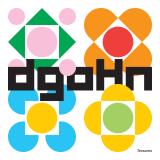
dgoHn (pronounced “John") is the moniker of John Cunnane, who hails from somewhere between London and Essex. ‘Tessares,’ his fourth album but his first for Planet Mu, is playful, unconventional drum & bass that contrasts sparse effects and melodic elements with complex drumfunk and breakcore. He often uses unusual time signatures and head-spinning polyrhythms inspired by jazz and math rock, sometimes within the same track. Somehow he makes it sound effortless, and occasionally pretty as well, keeping a fine balance that never feels punishing; exploratory without getting lost.
He's built a name for himself over the last two decades performing live at festivals and events around the world, while collaborating with fellow artists such as Macc, Nic TVG, Jodey Kendrick and Badun as well as solo releases.
The album opens with ‘Waiting For’ which combines complex breaks with melodic fills, spacey effects and dubbed out vocals that feel like snatches of lost conversations - a combination he uses throughout the album giving it an eerie touch of humanity. Lead single ‘I Couldn't Remember So I Made Something Up’ is in 15/8 time. It feels like a conventional melodic drum & bass track, but the time signature disrupts the listeners’ expectations, while the detuned melody eases its sense of dislocation. ’Whistling On A Tuesday’ opens with a light echoey piano countdown into bass stabs which introduce heavy whirling amen breakbeats that switch between 180 and 120 bpm. ’Holly Can Swim But She Doesn’t Really Like It’ is the most rhythmically challenging track here. It feels hard to hang on to as its knotty breaks play out over bell chimes, like something Autechre might make if jungle was in their DNA. The album ends on the dubbed-out drumfunk of ‘7 Years Or More,’ with an arrangement that builds a filmic, dusty atmosphere of chimes and electric guitar, layering in vocals, vinyl crackle and echoing synth giving way to tough drums, before all that is taken away so that just a voice remains.
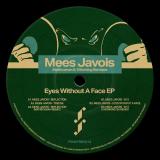
Frenzy steps back into the warehouse fog for FRNZYREC012, marking the arrival of Mees Javois with the Eyes Without A Face EP. This six-track collection functions as a raw blueprint of the early hours, where the steady pulse of hardware meets a stripped-back, mechanical soul.
Already turning heads in the underground circuit, Mees brings a fresh yet timeless approach that feels equally suited to intimate basements and peak-time dance floors. His debut on Frenzy introduces an artist with a clear vision and a deep understanding of club music's darker edges.
FRNZYREC012 is a singular vision of the dancefloor, a deliberate sequence of sound that balances cold precision with a visceral human touch.
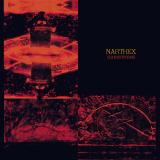
Narthex means railed-off western portico or ante-nave in earty Christian churches for women, penitents and catechumens.
Narthex is also a trio featuring (at the beginning) Daniel Denis (Universe Zero, Art Zoyd), Alain Neffe (Pseudocode, Human Flesh, Bene Gesserit) and Nicolas de Villemarqué (Nuwage Music). They had a very different musical background, mostly electric-electronic rock, and decided to work in the field of acoustic music recorded live (two microphones + portable DAT) in churches of their area. After several recording sessions, Nicolas de Villemarqué decides to leave the group. ln order to complete the trio, Daniel Denis and Alain Neffe ask the participation of some of their friends. Anna Homler, Michel Berckmans and Daniel Malempré have accepted the challenge and succeed to fit into their musical universe.
The instruments Church organ, harmonium, sitar, saxophone, oboe, bassoon, zither, valiha, senzas, tarang, voice, percussions, metal clarinet, classical guitar, mew's harp, ongolok, violin, dulcimer, mouth organ, etc.
The music Often dark, sometimes repetitive or experimental, sometimes rhythmical and exotic, always based on emotion inducted by the sound. One could define it as dark age music (as opposite to new age music), a sort of minimal come back to the roots and purity of acoustic sound without the cultural background linked to the 'academic' use of some instruments (for example African senzas are transformed and tuned to sound like Indonesian instruments, sitar or harmonium are used as rhythmical instruments, vahilla is played with a bow).
The places Churches located in an area of 20 kms in the region where Daniel Denis and Alain Neffe live for years and where they feel at home (and feel the vibrations. Every church, place emotionally loaded, has its own specific resonance and sound structure. Every church gave to the musicians a particular inspiration and fill the sound of the instruments with a natural reverberation/echo. The place but also the moment is important. They had the privilege to be allowed to record in the Ecaussines church at night lightened only by candles. lt was one of their most productive recording sessions.
Growing up just across the water from Italy, Clint Spiteri and Madeleine Baldacchino absorbed the shimmer of Italo disco long before Deadisko took shape. Their analogue pop celebrates the past while embracing the future. “1987” melts an addictive piano house groove with clean rhythms, a sleek and smooth sound with just a hint of romance. Cat-like, “La Costa” stretches before finding its funk-filled footing. Synth stabs are ruffled, teasing rhythm patterns opening avenues for melodies to bend, curve and race. The flip is introduced with the pop opulence of “This World.” Blue undercurrents are bolstered by Sean Kamati’s emboldening vocals, his smouldering voice accompanied by daring keyboard play. Brassy tones are veiled in smoke for “Ssunrise Drive.” Mechanical reverb is offered a human touch, organic warmth breaking through to an incandescent shine. Echoes of Italy that pulsate with the rhythm of Malta.
Welcome to THE VAULT for 1985. A collection that digs deeper into the year’s musical landscape – uncovering singles that may not have always reached the highest chart positions but remain essential to the rich and diverse pop story of 1985. Some were overshadowed at the time, some were highlights from albums that had already sold huge amounts, some found greater success internationally – but all deserve their place in this continued celebration of 80s pop.
45 tracks across 3-LPs – pressed in gorgeous green vinyl – NOW Yearbook – The Vault: 1985.
LP1 opens with a trio of tracks from huge-selling albums:- Bruce Springsteen’s ‘My Hometown’, the sixth single in the UK from ‘Born in the U.S.A’ - one of the best-selling albums of the decade, followed by Bryan Ferry with the stunning ‘Windswept’ from ‘Boys And Girls’ and Sting’s ‘Love Is The Seventh Wave’, taken from his solo debut ‘The Dream Of The Blue Turtles’. Next up, Go West with a U.S single release ‘Eye To Eye’, Scritti Politti with ‘Perfect Way’ – their biggest hit in America, and ABC with ‘Be Near Me’. The first side closes with two established bands; Heaven 17 and Orchestral Manoeuvres In The Dark… Flip the LP over for Adam Ant with ‘Vive Le Rock’, Midge Ure, Blancmange and the second collaboration between Philip Oakey & Giorgio Moroder with ‘Good-Bye Bad Times’. The Style Council’s ‘Welcome To Milton Keynes’ leads to LP1’s closer’s from Simply Red and Fine Young Cannibals who followed their debut ‘Johnny Come Home’ with ‘Blue’.
LP2 opens with Cocteau Twins and the dream-pop atmospherics of ‘Aikea-Guinea’, ahead of The Jesus And Mary Chain with ‘Just Like Honey’, and The Dream Academy with ‘The Love Parade’.
Brilliant with their cover of James Brown’s ‘It’s A Man’s Man’s Man’s World’ and jazz-influenced pop from Matt Bianco are up next ahead of the sublime ‘Castles In The Air’ from The Colourfield and Elvis Costello & The Attractions, who released the 1979 track ‘Green Shirt’ to promote their ‘Best Of’ collection … and the side closes with The Clash’s ‘This Is England’ which would become their last originally released hit…whilst on the other side…celebrate the dancefloor, with a vibrant mix of Hi-NRG, soul, electro and club-influenced pop:- Opening with Sheryl Lee Ralph’s ‘In The Evening’ and Barbara Pennington’s equally superb ‘On A Crowded Street’, the hi-energy continues with Miquel Brown and Hazell Dean ahead of a US hit from Laura Branigan (‘Spanish Eddie’) and Divine’s cover of ‘Twistin’ The Night Away’. LP2 finishes with a massive U.S. dancefloor smash for Eddie Murphy with ‘Party All The Time’.
The final LP kicks off with a bunch of singles that achieved bigger hit status in the US than here and opens with Billy Joel’s ‘You’re Only Human (Second Wind)’, a track written exclusively for his ‘Greatest Hits – Volume I & II’ compilation, ahead of pop-rock from John Mellencamp plus an anthemic smash from Bon Jovi. Pat Benatar’s ‘Invincible’ features ahead of The Power Station’s third US Top 40 hit…whilst back in the UK Chris Rea enjoyed his biggest chart hit to date with ‘Stainsby Girls’ and the side is completed by Marillion with ‘Heart Of Lothian’ the third hit from their huge ‘Misplaced Childhood’ album… Flip to the final side for the stellar vocals on ‘Act Of War’, the huge collaboration between Elton John & Millie Jackson ahead of dancefloor smash ‘New Attitude’ from Patti Labelle and ‘Show Some Respect’ a U.S. single from Tina Turner. Sophisticated pop-R&B from Michael McDonald and Daryl Hall & John Oates come ahead of the collection’s closers- and two outstanding vocal performances: Chaka Khan’s ‘Through The Fire’ and the U.S. breakthrough hit from Whitney Houston with ‘You Give Good Love’ – signalling the arrival of one of the decade’s brightest new stars.
NOW Yearbook – The Vault: 1985 – A deeper dive into an unforgettable year in pop.
Irish label Il Corpo returns for its third outing with a hard to pigeon hole 10” from 710 Exit. 2 tracks that sit on the electro end of things but with a generous nod to the sound of Detroit, early UK breakbeat, soul and the deeper realms of electronic music. Close To The Sun feels like more than just a cosmic position. A solid 808 foundation and loose percussion sit beneath a bed of synth lines and soaring pads that are guaranteed to stir the soul. The signal for nostalgia is strong but there are plenty more twists and turns to keep the listener engaged. Warped guitar and soul samples make Strat an infectious workout brimming with experimentation and originality. Effected chords take on an almost vocal quality which talks over the casual, understated funk on offer here. Ever changing tones draw you in and make it hard to distinguish between guitar, synth or human. A unique E.P. which will find its way into the sets of varying selectors at this summer’s gatherings.
DOGMA marks a new beginning for Coloray. As the name suggests, the project explores the endless search for meaning in a world that does not always offer one. Across 11 tracks, the artist reflects on queer romance, grief, youthful hope, and melancholic joy. Emotional, chaotic, and imperfect, DOGMA mirrors both the artist and the messy reality of a life unfolding. Rather than forcing rigid structures, the album embraces looseness and human presence. Live recordings and improvised songwriting take center stage- every lyric was written in the moment, and the tracks remain intentionally raw to preserve their imperfections.
In this way, the album is both personal and political. It calls for belief in keeping humanity alive and for dismantling the societal dogmas that push artists away from the core of their creative identity. DOGMA is an honest journey of self-authorship, unfolding through the sounds of new wave, disco-punk, electro, and ambient music.
AUMATRA VOL. III — FANZINE TR with Inigo Kennedy, SCHRZØ, Carmelo Ponente, NX1 and Bartig Move The third volume of AUMATRA brings together five essential artists from the contemporary electronic scene in a new release from Fanzine TR. credits releases June 19, 2026 Artwork by Burgalego Masters by Human Mastering Studio
American DJ Homicide aka Craig Anthony Bullock is best known as the former DJ for Sugar Ray but also does a fine line in club-ready hip-hop jams and remixes. 'Likwit Swordz' kicks off his latest on the small but well-formed CA label out of the USA. It's got nimble drums that have a clipped bounce and vamping chords, vocal grit that echoes Cypress Hill and an infectious roll. On the flip, 'Day Coastin'' is more deep and smooth - the bars as silky as BIG and the drums rolling with crisp boom-bap style. Both have been made on an MPC and that sampler's famous textures elevate the final jams no end.
Mit "Deep Hate" präsentiert Marc Dwyer (Buzz Kull) aus Sydney sein bisher intensivstes und zugleich raffiniertestes Werk. Die vier neuen Tracks bilden eine mitreißende Suite aus Industrial-Pop-Hymnen an der Schnittstelle zwischen Darkwave, Minimal Synth und Industrial Dance Music – unerbittlich und treibend, durchdrungen von einer Atmosphäre der Distanz und Sehnsucht. Jeder Song verkörpert den Puls der modernen Nacht, für die Außenseiter, für das Herz, das in der Leere noch schlägt. Eine moderne Fortsetzung der Tradition von Depeche Mode (Black Celebration) und den energiegeladenen Rhythmen von Front 242, neu interpretiert durch eine moderne Linse. Dwyer tourt mit Cold Cave, Boy Harsher und Molchat Doma. "Deep Hate" ist sein erster Release seit 2022 als 4-Track-Vinyl und CD mit zusätzlichen Remixen von PIG, Kontravoid, Cold Cave und Spike Hellis.
German psychedelic indie five-piece Marcoca returns with Mediocre Mirage, a vibrant nine-track album blending surf-rock, indie, psychedelia and jazz-infused textures. Following their previous album Soliloquy and a European tour in 2025, the band dives deeper into their colorful, guitar-led universe. From upbeat grooves to more introspective moments, Mediocre Mirage is a playful and immersive journey through nostalgia, escapism and human connection.
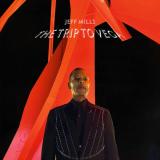
The Trip To Vega is about deep outer space odyssey that occurs in the process of traveling from Earth through the Cosmos to another "favorable" star system 25.3 light-years away.
The time is year 2097, Sept 23rd.
To this day, Earthlings have managed to dodge some of nature's more dangerous extremities, massive volcanic eruptions, Earthquakes, solar burst that knocked out the Planet's entire electrical grid for 3 years, numerous plagues of disease, food and fresh water shortages, domestic and International Wars and many other life-changing operas, but for this event, what remains is a realization that has no remedy. The cause: Earth's physicality has changed. It is no longer favorable for living things.
It is the constant shifting of the planet's internal tectonic plates which has unfortunately produced an unexpected and impassable dilemma.
Because of the collisions, deep within the planet's core, the planet is now producing an extraordinary amount of sound that includes a specific harmonic frequency that erodes the natural senses of all life on Earth.
It is intensifying. It is intolerable and it is unlivable.
Yet, some humans prefer to stay, to "ride it out" like the Titanic captain going down with his ship. Some, in total disbelief as some have concluded it is the second coming of Jesus Christ. But for most, the decision is clear. Tolive another day, leaving is the only rational choice.
At an increasing rate, scientific research data shows that humans and most animals, excluding the Jellyfish will eventually lose the usage of hearing and are to greatly suffer from an array of other neurological and psychological effects. The sense of touch and taste, sleep depreciation, severe nerve damage, constant hallucinations. Everyone will lose many of their cognitive abilities within an estimated 12 months from now.
On this day and every 7 days afterwards until all registered passengers have departed, the first of a fleet of large number of massive size spacecraft carrying approximately 1 million humans per vessel will permanently leave Earth to begin the long and adventurous trek across outer space to a new home: Vega.
This is not a precautionary tale as there is nothing to learn. Instead, a decision has been made and a Trip To Vega is the consequence.
Komatssu, Lefrenk, Vema Diodes y Celine Arnauld comparten este various artists de cuatro cortes para el tercer disco de Undancel.
La tercera referencia del sello discográfico de Undancel se caracteriza por una fase de transición entre varios sonidos. Representado un punto «ni aquí ni allí» donde la identidad o el estado anterior se disuelve antes de alcanzar uno nuevo, cuyo nombre LIMINAL.
Cuatro cortes en vinilo de 12″ de varios artistas más una canciones extra en formato digital con código de descargas en su interior.
A1_KOMATSSU_DESTRUCTOR DE MUNDOS: En activo desde 2005, Komatssu es el proyecto más personal de Héctor Sandoval (Tensal y 50% del reconocido proyecto Techno Exium). Un proyecto cimentado sobre la fusión natural entre la IDM más melódica, el Electro, el Breakcore y el avant-techno espectral que concibe el sonido como catalizador de emociones, dando lugar a un imaginario sonoro sumamente personal.
A2_LEFRENK_INDECENT: Lefrenk es un productor y DJ coruñés con más de 20 años de experiencia y más de 100 lanzamientos.
También es profesor en Fanzine School.
En el ámbito editorial, destaca como cofundador del sello Deep Different junto a Ikke Alra y fundador de Knerfel, su sello centrado en el techno.
Su trabajo se distingue por la fusión de texturas sonoras orgánicas e innovación digital, lo que refleja una constante evolución personal y creativa. Siempre innovando, Lefrenk ha expandido su influencia a través de colaboraciones dinámicas y actuaciones en directo junto a figuras de renombre de la industria.
B1_VEMA DIODES_MINDNIMALIST: Productor con raíces en el Baix Llobregat, cuya identidad se define por la experimentación técnica. Su trabajo es una exploración constante de la síntesis, donde las máquinas dictan el mensaje.
Desde sus primeras producciones en 2002, ha refinado un sonido que transita del electrobass crudo a estructuras más complejas y horizontales, fusionando la calidez analógica con la precisión digital.
Fundador del sello ÚTIL Records, Gente Seria Viste Chándal y Dialecto Periférico, plataforma desde la que reivindica el sonido de máquinas icónicas como la TR-808, tratadas con distorsiones y texturas de corte industrial.
Entiende el electro no como un género rígido, sino como un proceso de «electrificar» la señal. Su música es un equilibrio entre ritmos sintéticos y pinceladas de IDM, buscando siempre una narrativa sonora avanzada.
B2_CELINE ARNAULD_GLITCHED DANCE SYSTEM: Celine Arnauld es el nombre artístico de Pablo Miranda Caballero, artista y productor de música electrónica especializado en géneros como el IDM y el glitch con texturas ambientales. Recientemente, ha creado los alias DJ Don’t Sleep, donde da rienda suelta a la vertiente más rave del jungle y el breakbeat, y Paul Basscoigne, donde explora el electro, el acid, el IDM y el braindance.
Ha publicado su música en varios sellos, como EVEL, Clean Error, Dynamic Form, Mahorka, Hypnotica Colectiva, EC Underground, Dead Trax, Not 4 Human Consumption, New York Haunted, Point Source Electronics Arts, Moatun 7, Polygon Network, Colorsquad Records, Opal Tapes y Zabra Records.
Maman Küsters return to Oráculo Records with “Oniromancia Completa”, a third vinyl release carved from tension and precision. The duo—Gaël Loison and Cyril Pansal— refine their language into something sharper, harder to define: a rigid hybrid of EBM and electro where structure becomes intensity. Furious step-sequenced arpeggios cut through dense low-end pressure, while knife-edged drums lock the body into a mechanical trance. On “Dos Mundos”, Pedro Peñas (UPR) enters the system with vocals that fracture the surface, adding a human pulse to an otherwise relentless machine. Built for dark rooms and uncompromising floors, Oniromancia Completa is not just played —it is deployed. There is no ornament here—only function, force, and control. A decisive strike for both electro and EBM purists.