The recording debut of Elia y Elizabeth (or Elisabeth, as it appears originally credited in the first edition of this single) took place in Spain in 1971 with Juan Carlos Calderón, one of the most prestigious producers and arrangers in the country.
These first versions of "Fue Una Lágrima" and "Cae la Lluvia" appear full of rich and intrincated orchestral arrangements, a very different approach to both songs from the tropical feel that producer Jimmy Salcedo added when they were later re-recorded for Codiscos in his native Colombia. The duo would record there a handful of songs between 1972 and 1973 (compiled in our past release "La Onda de Elia y Elizabeth" VAMPI 160), mixing soft-pop with a touch of tropical-pastoral funk, singer-songwriter sweetened by the subtle perfume of Caribbean music and psychedelia, which remain among us as part of the most wonderful pop legacy of all time.
These early versions of two of the most celebrated songs by Elia y Elizabeth are reissued here for the first time, with remastered sound and housed in a picture sleeve with the original artwork.
out of Stock
Last delivered 5 years ago available to reorder, subject to availability
St Leonard’s premier manipulator of drones, loops and echoes delivers his most buzzed out, kosmische and beat driven work to date in a deluxe white vinyl album release for Castles in Space.
Here, Kieran explains the genesis and production of his masterwork:
“Eternal Return was unusual for me in that I actually set out to make an album, rather than find myself with a set of tunes that evolved into a project.
The “Eternal Return” is a concept I have been inspired by before. However it clicked with me in a more profound way recently. Far from seeing the prospect of living life over, unknowingly, on an endless loop as depressing, I suddenly felt amazing comfort in the theory. The Stoic emperor Marcus Aurelius said, “Waste no more time arguing about what a good man should be. Be one.” Far from being trapped in the loop I am elated to feel that it's simply about living the best life you can. One that you wouldn't fear having to live again.
To place the album in context against this newly realised perception, I think of the Side One as the battle to get to that realisation and enlightenment and Side Two represents the acceptance and the decision on how to proceed. The turning point is from thinking about the things I love most and what I would want to experience over and over again. I hope it is an uplifting listening experience. As it happens, the album originally had a darker ending. I think I actually learned a bit about my point of view during the process. There are drums, which wouldn’t often feature in my music (there are in fact more drums on this LP than in my combined output over the last 8 years) and the pieces are noticeably shorter, more focussed and concise than my usual longer form work.
Musically this album is probably the least clearly influenced by anything I regularly listened to. The main outcome was wanting to challenge myself and to add whatever the pieces needed and go with that. I think I was also probably pushed on by the wealth of amazing music being made by my peers across Bandcamp and social media. 2020 was an incredible year in this particular sphere of electronic music. The album was made as I started to transition from a semi-modular to a modular synth set up. I think that this was a key driving force, since a lot of the time I didn’t know exactly what I was doing. It is nice to be surprised by what you’re creating.
Finally, whilst this is in no way a “lockdown album”, the period of time in which much of it was recorded definitely had a bearing on how it sounds. For one thing I spent a lot more time around my studio space when working from home. In keeping with the album's theme, the lockdown also helped consolidate my feelings on what is important in life and what isn’t. One piece was in fact sketched out as a first draft while I sat on mute during a Zoom meeting.
‘‘I am not as other detectives!’
Presently in triple gatefold vinyl for the very first time, Dirk Gently – The Long Dark Tea-Time of the Soul sees Harry Enfield return as the singular detective in this full-cast BBC radio dramatisation of the novel by Douglas Adams. First broadcast on Radio 4 in 2008, these fantastically entertaining comedy sci-fi dramas are adapted and directed by Dirk Maggs, acclaimed for his dramatisations of The Hitchhiker’s Guide to the Galaxy, Good Omens, Neverwhere and many others.
When Dirk Gently’s long-suffering secretary, Janice, resigns to work in an airport, it’s the beginning of a very strange adventure for both of them. The detective takes to reading palms whilst dressed as an old gypsy woman, but meanwhile the ancient Norse God Odin has fallen into the hands of an unscrupulous advertising executive (and her husband). Bring on Odin’s son, Thor, a godlike curse that turns Janice into a vending machine, and countless other interconnected things…
Starring Harry Enfield as Dirk Gently and Olivia Colman as Janice, with Billy Boyd as Richard MacDuff, Laurel Lefkow as Kate Schechter, Stephen Moore as Odin, John Fortune as Dr Standish, Philip Jackson as the Vagrant, Jan Ravens as Cynthia Draycott and Peter Davison as Simon Draycott, with a guest cast including Rupert Degas, Morwenna Banks, Sally Grace, Jon Glover, Michael Fenton Stevens and Susan Sheridan, and music by Philip Pope. Adapted by Dirk Maggs and John Langdon from the novel of the same name by Douglas Adams. Directed by Dirk Maggs.
Three 140g coloured vinyl discs – in Holistic Red, Yellow and Blue - are presented in an illustratedc triple gatefold sleeve, with an exclusive sleeve note by Dirk Maggs.
Recorded in 2011 in a dusty, beloved barn, ‘Even Your Drums Will Die’ is a time machine, a real one, to a moment packed thick with Richard Swift’s singular, crackling liveliness. Where Swift’s studio recordings are marked by texture, tone and mood, ‘Even Your Drums Will Die’ puts a spotlight on Swift’s voice, his lyrics and his songwriting.
Running through all of Swift’s tunes is a certain agitation - a fidgetiness, a restlessness. It’s clearer than ever now, over two years after Swift’s passing, that he used his music to let a little pressure out of his tire. ‘A Song for Milton Feher’ nods to all this, its namesake coming from the professional dancer and director who taught his students to release their “habits of tension.” The song feels like a skeleton key to Swift’s oeuvre, a clear look into the wild wheels spinning inside his big old artist noggin.
On the flipside is ‘Lady Luck’. The classic. The revived ghost of a lost 45 that never existed, or maybe always did, but that only Richard Swift could make real.
If you know these songs, you will find them set alight here. If you don’t, ‘Even Your Drums Will Die’ is an incomparable snapshot of both art and artist. It is a genie, a real one, let loose from the lamp with Richard Swift’s explosive energy, imagination and mischief.
Recorded Live at Pickathon, 2011.
Swift was a celebrated recording artist, collaborator (The Black Keys, The Shins, the Arcs) and producer (Nathaniel Rateliff, Kevin Morby, Guster, Pretenders).
Residing at the base of Mount Yōtei on Japan’s geologically wondrous island Hokkaido - with it’s volcanoes, hot springs and national park - Masaki “mfp” Konagi is no stranger to natural beauty. Having resided in L.A. and Melbourne in the past, mfp (or mindfullpeace) settled in this natural haven as the place to set down some roots and create.
Having begun his musical journey over a decade ago, including an appearance on Gilles Peterson’s “Brownswood Electr*c 2”, we are proud to announce his debut full length album “Natural Law”.
Drawing on long time collaborators and friends from his travels, mfp has pulled on his foundation in hip-hop and pushed its boundaries to breaking point, embodying the true ethos of the genre as an ever expandable principle.
Featuring Melbourne stalwarts Simon Mavin (Hiatus Kaiyote) and ALIEN (Piette Aillion) plus Sydney’s Natalie Slade (Eglo), funk maestro sauce81 and hip-hop hero Stan Smith, mfp’s productions ebb and flow, building and releasing pressure, exploring discord and harmony through electronic polyrhythms and diverse explorations in slaps, swirls, lopes and kicks.
Masaki has also opened the very first organic food store in the area - Pyram Organics & Plants - embodying his, (and our) ethos in food and music as a way to bring ecological awareness to reconnect with nature and our planet for sustainable living.
Nach Crazy Rhythms Of Mata Hari, Shake Your Bones, dem Cool Cat Club und Born To Hula! Folgt nun der 5. Teil der DJ-Set Serie auf Stag-O-Lee. Wie auch bei den Vorgängern handelt es sich hier um einen auf 80 Minuten eingedampftes DJ-Set von einem verdienten Recken der Zunft - Keb Darge. Gaz Mayall folgt direkt mit Volume 6. Linernotes: Rockabilly didn't cross my world until the early nineteen eighties at a Dirtbox weekender in Bournemouth, until then I was a pure northern soul boy. I didn't really get stuck into collecting the stuff until a decade later, but when I did what a wonderful world of tunes opened up to me, and I went wild on it. I was very lucky to be doing a record stall in Camden market at the time just across from Boz Boorer and Neil Scott's stall. They along with other serious collectors Dave Vickers, Barney Koumis, Cosmic Keith, Jim Fox, Dave Crozier, and many others taught me all I needed to know. I only ever made one great rockabilly discovery which none of them knew, "Little Bit Lonesome" by Charles Ross, but I was happy enough buying all their recommendations as they were all new and exciting for me. I have done several rockabilly comps before, but sadly the Philippines typhoon in 2013 destroyed my village and forced me to sell the bulk of my collection. Here are some of my favourites that I never got round to putting out before that happened. Two of the aforementioned collectors are no longer with us. I therefore dedicate this comp to Dave Vickers and Cosmic Keith who both had a huge influence on my life and my musical taste.
FULL OF HELL make their Relapse debut with their most explosive album to date, Weeping Choir. Dynamic, pissed, and wholly urgent, the highly-anticipated Weeping Choir is a definitive statement of intent by one of the underground’s most dynamic and virulent entities. FULL OF HELL have once again culled the extreme elements from hardcore, metal, and power electronics to redefine darkness and sheer brutality. Distorted guitars and ominous, disparate electronics grind and gnash against rapid-fire drumming as FULL OF HELL take themes of religion, loss, hatred, and set them ablaze. Recorded by the critically acclaimed Kurt Ballou at GodCity Studio, Weeping Choir sees FULL OF HELL fully unleashed. Abrasive, confrontational, none equal!
out of Stock
Last delivered 5 years ago available to reorder, subject to availability
To anyone who has heard the music of Kikagaku Moyo, it should come as no surprise that the band’s origins lie in hours upon hours of late-night jamming, illuminated by nothing more than the geometric patterns playing behind the band’s eyelids, resulting in a natural, free-floating sound, as of-the-earth as it is intergalactic. It may be surprising that the band sharpened their improvisational skills by busking on the streets of their native Tokyo. It may be surprising that the band’s overall sound may owe as much or more to the Incredible String Band as it does to Acid Mother’s Temple.
But what’s perhaps most surprising about Forest of Lost Children, the band’s face-melting, recorded-ritual sophomore album, is how utterly centered and mature the band sounds, especially given their relatively short lifespan as a band. Boundless though they may be, Kikagaku Moyo here sound anything but lost, their child-like wonder manifested in a confident, courageous exploration of sound. Labels – psychedelic, folk, prog-rock, psychedelic-folk-mixed-with-prog-rock – do little to accurately reflect the spectrum of influences on display, let alone the more impactful realization of completeness in Kikagaku Moyo’s songs.
Easily one of the most shimmering crown-jewels in the rapidly expanding BBiB catalog, look for Kikagaku Moyo and Forest of Lost Children to be found taking shape in the expanded minds of listeners everywhere. - Ryan Muldoon
Wretched Cuts is the new solo EP by gender-nonconforming techno artist, Projekt Gestalten. The release comes via the New York’s Mild Fantasy imprint run by DJ Elle Dee and features three original themes focusing on introspective techno plus a remix by veteran, The Lady Machine.
The project reflects an array of themes using as the starting point the story of Estamira and the Brazilian documentary of the same name, telling her life story. Estamira was an incredibly enlightened older woman who scattered one of the largest landfills of Rio de Janeiro for food. Not because she had to, but because she loved that place as she loved “her own children” and enjoyed making a living out of other people’s disposable goods. Simultaneously, while dealing with schizophrenia and abuse, she believed she was a superior spiritual being whose magical powers could control time, space, and other elements of nature.
The tracks are inspired by some of her most memorable quotes and moments that made an impact on Projekt Gestalten. “Wise People In Reverse” goes into a darker approach and samples Estamira’s voice talking in a mysterious unknown language with an unrevealed force, using only a broken piece of a telephone that she had just found it in the trash. “Morte Macaca” takes a rhythmic approach towards dub techno, and “Holographic Principle” gets trippier and hallucinogenic with Projekt Gestalten’s signature acid lines. The Lady Machine’s “Wise People In Reverse” remix takes the original theme to a driving, peak hour approach and transforms it into an effective DJ tool.
“There are no more innocent people on Earth, only wise people in reverse”.
out of Stock
Last delivered 5 years ago available to reorder, subject to availability
Today Margot share new single Walk With Me via Full Time Hobby. The Peckham band ended 2019 supporting Swimming Tapes on their U.K. as well as releasing their debut EP earlier this year. New single Walk With Me is a song about empathy, depression and the power of talking. All channelled by frontman Alex Hannaway's pastel vocal hues and searingly honest delivery. Walk With Me works as a conversation between someone experiencing a depressive episode and another trying to understand. "It’s about listening, friendship, understanding, I’ve had experiences where friends, family members have been patient, they’ve been persistent and caring, and it’s this that has really helped me in my life" explains Hannaway. In addition to the official video, the band have also shared a 'Karaoke Video' for the single. "We've been using home karaoke sessions to blow off steam during the lockdown period. Often feeling confined, bored, angry, frustrated; the elation and release of belting out familiar songs in our living room felt cathartic. So it felt perfect for the video, capturing not only the isolation of lockdown but also the communal, spirited moments too" explain Margot. Margot comprises of five friends who moved from the suburbs of south London to Peckham after finishing University. In two separate bands at the time, drunken nights out discussing the merits of a merger evolved into the first few rehearsals. It went well - Margot formed in 2018 and released a steady stream of singles across the year. The band employ a DIY ethic, self-producing their recordings in their home studio. After ending 2019 supporting Swimming Tapes on their UK tour, the band released their debut EP in February 2020 and are set to support Dana Gavanski on her upcoming tour in March 2021. Margot's nuanced blend of dream-pop, neo-psychedelia and jangle-guitar create a propulsive, cruising feel reminiscent of Real Estate or War on Drugs. Expect to hear more from them in 2020.
In his essay ‘The Meaning of My Avant-Garde Hillbilly and Blues Music’, Henry Flynt talks about how his music should be analysed as an intellectual tribute to the music of the autochtone, setting aside plain folk references, but adopting academic insights to mold the music one makes as a folk creature. Much of Flynt’s discourse applies to the music of Glen Steenkiste’s Hellvete. Over the past twenty years he has been thoroughly investigating both the ethnic musical language of various regions as well as the contemporary pioneers that preceded him as a drone musician, internalizing concepts such as e.g. deep listening or just intonation. Casting off any redundant ideas or sounds, and stripping down the focus to develop singular concepts, his working method lead to pieces such as ‘Droomharmonium’, in which he shapes the endless variations on a theme, emphasizing detail and nuance rather than multitude. The Indian harmonium here serves as the main device to worship ancient ghosts and masters, and to preserve a continuum in a tradition that touches both folk and avant-garde culture. The materialisations are sustained tone compositions which become a means of appreciation of the people and cultures that paved the way for forms of mutual escapism. This might well be the core of what Hellvete’s music is about. As much as it is a form of self-entertainment – like folk music in the old days – it also invites the listener to a shared experience of sonic reverie, it is a casual gift to the community.
This is certainly true for the pieces presented on this album. They were first presented in a smoke filled and darkened art space in Ghent, Steenkiste surrounded by only a couple of candles and just enough stage light to see him erratically moving to the rhythm of the piece, occasionally twiddling the knobs of a Doepfer synth that processed the prerecorded harmonium tracks. Unlike most of his other performances this piece embraced the audience in a trance that was similar to that of an old-school rave club. Flynt writes: ‘The music should be intellectually fascinating because the listener can perceive and participate in its rhythmic and melodic intricacies, audacity of organization, etc. At the same time, the music should be kinesthetic, that is, it should encourage dancing.’ ‘Voor Harmonium’ does exactly that; it builds on the artistic ideas that have long been established in Hellvete’s oeuvre, but the ecstatic nature of these pieces merges the usual spiritual transcendence with one of determined physical bliss. It encourages both mind and body to step into the sound, to be enraptured, to celebrate.
out of Stock
Last delivered 5 years ago available to reorder, subject to availability
Co-founder and label custodian Zanias makes her debut on Fleisch with a journey through climate catastrophe. Composed in Berlin and mixed in Queensland with the smell of bushfire smoke in the air, she addresses the primary anxiety of our time with four tracks designed to draw the body into movement and the mind into action. Body music elements are wrought with mournful melodies and studded with samples recorded from the fast-disappearing natural world, while her voice guides the way through the darkness.
out of Stock
Last delivered 5 years ago available to reorder, subject to availability
OOOOOHHHHH yeah!!! Nearly 2 years without new and fresh stuff on S3A Records???? We had to come back to the kitchen right ??!! So, let’s do it!!! Here we have a new cook in the family : OUVRIJSTER!! He is a great artist from Amsterdam, with a brilliant taste!! Mix a little bit of Moodyman with a large dose of Alfabet (Tom Trago + Awanto 3), add a little Max Graef spiced hihats, and you have the recipe for this “Staying Sane EP” !A 6 tracks EP from samplebased house to hiphop.
out of Stock
Last delivered 4 years ago available to reorder, subject to availability
Nahawa Doumbia's new album Kanawa concisely captures this current moment in Malian history. The singer, whose storied career spans more than four decades, reflects on the immigration crisis from the Malian perspective in the title of her new album Kanawa. Across eight songs recorded in Bamako with a band including traditional and modern instruments, Doumbia merges her early work that relied on a spare expression of her trademark didadi rhythm with the bombastic range of contemporary Malian pop. The beautifully complex musical accompaniment that results is courtesy of the large ensemble she pulled together with producer and arranger (and day one collaborator) N'gou Bagayoko. The band features two highly expressive Malian string instruments, the ngoni and the slightly smaller kamalé ngoni, as well as a variety of percussion, drum programming, karignan (a metal scraper) and acoustic and electric guitars. Doumbia's daughter, a celebrated singer with her own group and busy concert schedule, Doussou Bagayoko sings on "Adjorobena," a song about patience, tolerance and living in peace. Doumbia weaves together a roadmap of her psyche when it comes to the good and bad life has to offer. She talks about marriage and women leaving home to join another through the metaphor of a tree in the garden; she includes gunshot samples in the song "Foliwilen" to honor the bravery of hunters, soldiers and other courageous people; she uses a bird in "Djougoh" to talk about lazy people; and, in "Ndiagneko" she advises people to ignore critics, just do you. Mali has gone through an intense period of regional strife and terrorist incidents over the last ten years and Doumbia roots the album in tragic local concerns with deep global implications. "The meaning of Kanawa is so simple. We see our children trying to cross the ocean all the time. I said that many of our children die in the ocean and some of them die while crossing the Sahara. But I ask them why do they leave their country? They said that they leave because of the family situation or problems like poverty and unemployment. I ask them to stay and work in their country. I call on the UN and African leaders so that we can coordinate our efforts to find a solution, to create jobs for them so that young people stop leaving. That's why I chose it as the title of my album so that everybody can learn from it and also so that there is a reduction in the number of people emigrating. So that some will hear the message and stay home and grow the land. Leaving is not the only solution. My message is to help the youth find jobs."
out of Stock
Last delivered 5 years ago available to reorder, subject to availability
Lucrecia Dalt is a Colombian recording artist, songwriter, and producer. After studying civil engineering in Colombia, Dalt worked at a geo-technical company for two years and has since lived in Barcelona and Berlin, where she currently resides. She has released six solo albums and has collaborated with musicians Aaron Dilloway, Jan Jelinek, and Gudrun Gut, to name a few. No era sólida is Dalt's seventh solo record, and her second on RVNG Intl., following the release of 2018's Anticlines. No era sólida is an introspective venture into visceral sonic terrain, as Dalt sets out to capture the moment when one becomes pure sound. The album observes a transition in Dalt herself through the emergence of an alternate ego / state of self named Lia. Each song identifies a different state experienced by Lia, opening with Disuelta (`dissolved') and transforming through pieces such as Seca (`to be dry'), Ser boca (`to be mouth'), Espesa (`thick'). Lia's poetic reflections on the panspermia echo her origins, having come from some other ether. As a lifeform seeded through sound, the very essence of Lia is embodied in the exploratory instincts of her creator Lucrecia Dalt, an artist whose innate sonar system traces the far reaches of musical experimentation.
out of Stock
Last delivered 5 years ago available to reorder, subject to availability
To step out from trival sounds.
Jo IND strikes here again !
A side brinsg a quiet sweet tune, strings is the thema... With a veryu nice Josh Winks acid style for the start, meeting the cello effect... Sweet musical crazyness... with tonality variations and harmony richness... Acid as a musical instrument.
take your time and enter the universe of these 2 superb tunes : we splitted the listening of B side in two so you can hear this superb intro... Defenitly feeling the space in full with a 1m30 intro... before kicking in a mystical way...
The label visual of B side is an fatastic vision of someone falling ? flying ? in front of a soundwall ???
totally in the state of mind of this crazey tune...
out of Stock
Last delivered 5 years ago available to reorder, subject to availability
LUKE VIBERT's first WAGON CHRIST release in nearly a decade released on PEOPLE OF RHYTHM RECORDS on yellow colored double vinyl and CD. Cover art by illustrator CELYN BRAZIER (who has illustrated previous WAGON CHRIST releases on NINJA TUNE and ASTRALWERKS). LUKE VIBERT has been key in pioneering and developing the “trip-hop” or “downtempo” genre of electronic music over his long, storied career. Creating, sampling and using various instrumental hip hop and funk riffs, found electronic sounds, rare breakbeats, outlandish spoken word samples, and carefully mined sound bites, along with LUKE’s signature sample pack of sounds. All mixed up and bound together with those thick WAGON CHRIST grooves.
out of Stock
Last delivered 5 years ago available to reorder, subject to availability
Marie Knight's legendary 45 from 1964 that made her a name in the Northern Soul scene. Massive spin in Wigan Casino allnighters, officially reissued here for the first time with 'Say It Again' on the flip, as originally released.
DESCRIPTION
Singer and pianist, Marie Knight made her name as a gospel superstar recording for Decca in duet with the legendary Sister Rosetta Tharpe. Her first solo record for Decca arrived in the mid '50s, just a couple of years before her signing to Mercury. She later toured with rhythm and blues acts like the Drifters, Clyde McPhatter and Brook Benton. Three singles followed on Diamond in 1963/64 before she was signed to Musicor Records later in 64.
Her definitive non-religious song 'That's No Way To Treat A Girl', crafted in this period, failed to become a hit at the time but was the recording that would make her name with the Northern Soul fans in the UK many years later, standing as one of the most celebrated spins at the Wigan Casino allnighters.
The slow-paced ballad on the flip-side, 'Say It Again', is a beautiful deep soul song that echoes the gospel singing Knight had mastered over the years. After her deal with Musicor ended, she was unable to land another secular recording contract. "That's No Way To Treat a Girl' is officially reissued here with 'Say It Again' on the flip for the first time, as originally released.
Lande Hekt’s voice in music is one that’s socially aware yet often
introspective, drawing awareness to serious issues but at the same time baring her soul. Much of Hekt’s compositions act as a personal diary of what’s going on in her life at any given time.
This is evident in her discography with Muncie Girls, the band which she formed in her hometown of Exeter as a teenager and have released two critically acclaimed albums to date.
This knack of combining her own experiences and feelings whilst highlighting larger socio-economic issues has carried through to her more contemplative solo material, which began life in an EP ‘Gigantic Disappointment’, self-released
in 2019.
The Tipping Scale is a gorgeously sung cycle of songs that mix deeply personal lyrics with universal themes; Kinlaw is a smart, conceptual writer, one not afraid to explore deep emotions like loss, regret, and confusion, alongside strength, identity, and change. She explains that The Tipping Scale is an ideal metaphor for the record, the idea of an ever-present slipping in and out of change, and an acceptance of this kind of change. On it, she unravels intimate memories and tries to learn from them. As you listen to her songs and decode her words, you realize she's not just building songs, she's also creating a home_where painful thoughts of the past can exist within the present_as well as an entirely new, unflinching universe. This universe she created is not metaphorical_it's, in fact, very real. Kinlaw, who often works with gesture and movement as a writing tool, found The Tipping Scale unifying her multidisciplinary practice. She found it by building a real world. As she wrote, with the goal of finding human entry points for storytelling that felt authentic and honest to her practice, she often saw the music relating to motion. "I would start with a gesture and let it build into something until a memory attached itself to it," She explains. "The memory would become a story and the story would reveal itself as something important that needed to be expressed in this album." This works, too, for the lyrical process, where harder and less smooth gestures would represent consonants, and smooth, flowing movements would become vowels. She found the same thing happening with melodic lines and key changes. This is a record that jolts between the corporeal and the psychological, drawn from a flailing body, anchored by inconvenient truths. RIYL: Choir Boy, Jenny Hval, Kate Bush, Boy Harsher, Caroline Polachek, Black marble, Julia Holter, Grouper
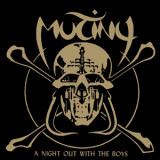
- Rare P-Funk album from 1983 - Funkadelic/Parliament All-Star Line-Up - First ever vinyl reissue - Comes with a repro of the original insert - 180g Black Vinyl Edition - Limited to 500 copies, comes with obi strip // Jerome "Bigfoot" Brailey is an American drummer who started performing in the early 1970s with several R&B groups from the likes of The Unifics, The Chambers Brothers and The Five Stairsteps where he developed his unique style and finesse on drums. Later in 1975 he joined George Clinton's P-Funk collective and has appeared on many of Parliament & Funkadelic's most popular recordings (some of which he also co-wrote). Brailey played on classic albums like `Mothership Connection' and `One Nation Under A Groove'. Samples from that body of work (and his drum arrangements) have since then appeared on hundreds of hip hop and contemporary R&B songs by renowned artists such as Kendrick Lamar and Childish Gambino. Jerome Brailey is a member of the Rock and Roll Hall of Fame (inducted in 1997) and part of their `50 greatest drummers in the Hall' list (stating that his drum style kept Parliament-Funkadelic rooted in the old-school `James Brown-style funk')_next to this achievement, he was proclaimed by Rolling Stone as one of the `100 Greatest Drummers of All Time' for his steady kick drum, shifty hi-hat action and intricately unpredictable snare patterns. Brailey earned numerous Gold and Platinum records with the P-Funk Organization and has worked as a session drummer for many talented artists such as Herbie Hancock, Buddy Miles, Snoop Dogg and Pharoah Sanders. George Clinton's funk empire was not without its disagreements and Jerome Brailey's `Mutiny' project was a direct result of just such a disagreement (as well as one of the more notable offshoots of the P-Funk axis). Mutiny performed in a style not far removed from the classic P-Funk style and with a lot of emphasis on the dual lead guitar work, but what makes them unique compared to their contemporaries is that at times their recordings also emit a darker, more sinister feeling. Besides Brailey on drums (and on most of the lead vocals) Mutiny featured a funk-alumni line-up and released three amazing and collectible albums: `Mutiny On The Mammaship' (CBS, 1979), `Funk Plus The One' (Columbia, 1980) and `A Night Out With the Boys' (J. Romeo, 1983)_these were followed by two comeback albums: `Aftershock' (Rykodisc 1995) and `Funk Road' (Catbone, 2013). The `Mutiny' album we are proudly presenting you today (A Night Out With The Boys) is an underrated gem made by musicians who defined the funk scene of the '70s and '80s! Featuring an all-star line-up that includes Rodney Curtis (Fred Wesley, Maceo Parker), Michael Hampton (Funkadelic-Parliament, Deee-Lite), Kenni Hairston (Cameo) and Maceo Bond of Osiris/Afrika Bambaataa fame! `A Night Out With The Boys' has it all: Jerome's trademark drumbeats, funky bass grooves, driving riffs accented by stinging synth parts, slow spacey (and prominently featured) guitars, top-notch lead vocals and chants that recall Sly Stone's "Loose Booty". The whole album is a hot dance jam with crisp percussion_an extremely infectious, locked-in-the-pocket bass-heavy monster-funk-bomb that any serious self-respecting funk fanatic must have in his/her collection!
“Instead of landscape sketches I wanted to go into more personal areas of my reality,” says Jim Ghedi of his third album In The Furrows Of Common Place. “To hold up certain aspects of society that were laying bare in front of me.”
Whilst Ghedi’s previous idiosyncratic take on folk has often been instrumental, exploring the natural world and his relationship to it through his music as seen on 2018's A Hymn For Ancient Land. His new album In The Furrow Of Common Place is a deeper plunge inside himself to offer up more of his voice to accompany his profoundly unique and moving compositions. “There were things I was seeing around me and being affected by in my daily life,” he says. “Socially and politically I saw defiance but also hopelessness. I wanted to be honest with the frustration and turmoil I was experiencing.”
The decision to include more of Ghedi’s vocals was a conscious one and driven by a need to say something. However, this isn’t a brash raging political polemic. As is now customary with Ghedi’s work, it is rich in nuance, history, poetry and allegory. Musically, the album is equally locked into this ongoing sense of evolution. Ghedi’s intricate yet deft guitar playing still twists and flows its way through the core, weaving in and out of gliding double bass, sweeping violin, gentle percussion and vocals that shift from tender solos to overlapping harmonies.
As with much of Ghedi’s work, there’s a rich connection between the past and the current. Musically, he continues to sit in a singular position of sounding distinctly contemporary yet also with a touch of traditional flair. This expands itself into the lyrical terrain here too. “I've been exploring contemporary issues and in that process discovering sources that correlate with similar issues in the past,” he says. “Which proves that these issues throughout history - environmental destruction, working class poverty etc - are ongoing.”
For all the socio-political and historical backdrop to the record it is not one that feels overwhelmed by it. Much like Ghedi’s work when it was largely instrumental - and some of it still is here - it flows and unfurls thoughtfully, with space still being utilised masterfully, creating room to pause and reflect. It’s another inimitable record from an artist that truly sounds like nobody else right now.
Rachel Baiman’s ‘Thanksgiving’ EP is a collection of music to inspire an introspective holiday spirit. The songs center around themes of Indigenous Rights, home and homelessness, and love in hard times.
Baiman called upon her superb live touring band (Cy Winstanley, Shelby Means) in addition to special collaborators including flatpicking guitar master Molly Tuttle, who features prominently on a spirited John Hartford cover, “Madison Tennessee” to bring these
thoughtful songs to life. ‘Thanksgiving’ allows Baiman space to stretch out stylistically and marks an intriguing followup to her celebrated full-length debut ‘Shame’.
Baiman moves with ease from bluegrass, to folk, to old-time and country sensibilities over the course of these four tracks. Her adept lyricism is again on full display, as she sheds new light on the complex, bittersweet feelings of both hardship and hope that often intertwine around the holiday season.
On Palberta5000, Ani Ivry-Block, Lily Konigsberg, and Nina Ryser max out traditional pop forms_blowing the genre out into lush, kinetic extensions_to create their own hardcore style of popular music. Together these 16 adventurous, hyper-melodic tracks represent the band's most accessible album by far_one that is bursting at the seams with vocal hooks and exuberant playing. Palberta5000 was recorded with Matt Lambozza (PALM, Shimmer), whose Peekskill, New York, studio is located in the original home and family lamp-store of Paul Reuben (Pee Wee Herman). Lambozza's recording and mix capture the band's rollicking instrumentation and vocal precision with greater clarity than anyone has before. Tracks like the emotionally chaotic "Before I Got Here," which charges hard before turning on a dime into a hypnotic krout-surf outro, convey the panicked feeling of falling in love, while Palberta's ear for pop music makes itself apprent on heart-melting harmonies like those fround on "Corner Store." Adding variation to Palberta5000's well thought-out song cycle are lavish downtempo jams ilke the slow waltz that is "The Way That You Do," and the enchanting "Red Antz." Taken together, these songs create a full album experience, and one that is sure to excite the band's devoted following while welcoming new fans along for the ride.
On Palberta5000, Ani Ivry-Block, Lily Konigsberg, and Nina Ryser max out traditional pop forms_blowing the genre out into lush, kinetic extensions_to create their own hardcore style of popular music. Together these 16 adventurous, hyper-melodic tracks represent the band's most accessible album by far_one that is bursting at the seams with vocal hooks and exuberant playing. Palberta5000 was recorded with Matt Lambozza (PALM, Shimmer), whose Peekskill, New York, studio is located in the original home and family lamp-store of Paul Reuben (Pee Wee Herman). Lambozza's recording and mix capture the band's rollicking instrumentation and vocal precision with greater clarity than anyone has before. Tracks like the emotionally chaotic "Before I Got Here," which charges hard before turning on a dime into a hypnotic krout-surf outro, convey the panicked feeling of falling in love, while Palberta's ear for pop music makes itself apprent on heart-melting harmonies like those fround on "Corner Store." Adding variation to Palberta5000's well thought-out song cycle are lavish downtempo jams ilke the slow waltz that is "The Way That You Do," and the enchanting "Red Antz." Taken together, these songs create a full album experience, and one that is sure to excite the band's devoted following while welcoming new fans along for the ride.
Under the impression of the racially motivated murders on 19 February 2020 in Hanau, her hometown, the visual artist and musician Michaela Meise recorded the piece "Cemalim" by the Turk Erkin Koray in German translation. The production of the song was supported by the Städtische Galerie Nordhorn and the NS-Dokumentationszentrum München, both of which have included the work in their exhibition programmes this year.
Erkin Koray is a representative of the psychedelic Anadolu-Rock and published "Cemalim" as an arrangement in 1973. The original composer, Rafik Başaran, came from the Cappadocian town of Ürgüp, which is also mentioned in the song. "Cemalim" means, translated into German, "My darling Cemal", and is a lament for the dead. Meise wrote the German text based on the translation by Fatih Alasalvaroglu, who also comes from Hanau.
Besides the mourning of nine young people, solidarity with the relatives and friends of the murder victims is urgently needed. They have organised themselves in the "Initiative 19 February Hanau" - on their website you can find information about what support they would like to receive.
Most of the concert programme of the last two years included anti-fascist songs and was a reaction to the increasing right-wing populism. Folk songs, hits and chansons of the 1960s, published in July 2018 on the album "Ich bin Griechin" (Martin Hossbach), dealt with the experience of the Second World War, told of the longing to leave home or the experiences of a seasonal worker. The songs were composed by the anti-fascist Mikis Theodorakis, the musician Barbara, who survived the Shoah with her family in the underground, and George Moustaki and Alexandra, who crossed both national borders.
Unter dem Eindruck der rassistisch motivierten Morde am 19. Februar 2020 in Hanau, ihrer Heimatstadt, hat die bildende Künstlerin und Musikerin Michaela Meise das Stück »Cemalim« des Türken Erkin Koray in deutscher Übersetzung eingespielt. Die Produktion des Liedes wurde von der Städtischen Galerie Nordhorn und dem NS-Dokumentationszentrum München unterstützt, die beide das Werk in ihre diesjährigen Ausstellungsprogramme aufgenommen haben.
Erkin Koray ist ein Vertreter des psychedelischen Anadolu-Rock und veröffentlichte »Cemalim« im Jahr 1973 als Bearbeitung. Der ursprüngliche Komponist, Rafik Başaran, stammte aus der kappadokischen Stadt Ürgüp, von der auch im Lied die Rede ist. »Cemalim« bedeutet, ins Deutsche übersetzt, »Mein Liebling Cemal«, und ist eine Totenklage. Meise schrieb den deutschen Text auf Grundlage der Übersetzung von Fatih Alasalvaroglu, der ebenfalls aus Hanau kommt.
Neben der Trauer um neun junge Menschen ist Solidarität mit den Angehörigen und Freunden der Mordopfer dringend notwendig. Sie haben sich in der »Initiative 19. Februar Hanau« organisiert – auf ihrer Website finden sich Informationen, welche Unterstützung sie sich wünschen.
Meises Konzertprogramm der letzten zwei Jahre umfasste anti-faschistische Lieder und reagierte somit auf den zunehmenden Rechtspopulismus. Volkslieder, Schlager und Chansons der 1960er Jahre, erschienen im Juli 2018 auf dem Album »Ich bin Griechin« (Martin Hossbach), verarbeiteten die Erfahrung des Zweiten Weltkrieges, erzählten von der Sehnsucht, die Heimat zu verlassen oder den Erfahrungen eines Saisonarbeiters. Die Lieder stammten vom Antifaschisten Mikis Theodorakis, der Musikerin Barbara, welche die Shoah mit ihrer Familie im Untergrund überlebte, sowie von George Moustaki und Alexandra, die beide nationale Grenzen überschritten.
Downloads
out of Stock
Last delivered 5 years ago available to reorder, subject to availability
his is the first vinyl re-issue of Marc Almond’s 4th solo album, “The Stars We Are”, since the album’s original release in September 1988. This re-issue is a limited edition double vinyl that couples the original album with a second record that compiles together all the Bsides of the associated singles as well as two first-timeon-vinyl extended versions of album tracks ‘The Stars We Are’ (Full Length Version) and ‘These My Dreams Are Yours’ (Through The Night Mix). The final extra track included is Marc's solo version of ‘Something’s Gotten Hold Of My Heart’, which after the album’s original release, was re-recorded with the 1967 hit song’s original singer Gene Pitney, creating a duet that became a UK #1 single for four weeks in early 1989.
“The Stars We Are” was the first of two albums recorded for Parlophone and was Marc Almond’s return to a highly infectious and chartable pop. The first single ‘Tears Run Rings’ confirmed the revitalised, unabashed pop that characterised the record and reached #26 on the UK Singles Chart. The album was recorded with an assembled band ‘La Magia’ which comprised of former Willing Sinners members Annie Hogan, Billie McGee and Steve Humphries as a core unit. The album is a shimmering arc of musical textures, compulsive melodrama and euphoric uplift. As well as further
singles ‘Bitter-Sweet’ (UK#40) and ‘Only The Moment’ (UK#45), the album contains an homage to goth sensibilities in ‘Your Kisses Burn’ a duet with Nico (her last ever studio recording) as well as an extravagant mini-operetta, ‘Kept Boy’, a duet with cult chanteuse
Agnes Bernelle.
Contains sleeve notes from celebrated cult poet and biographer, Jeremy Reed.
This limited edition vinyl release is a double disc pressing on 180g
heavyweight, translucent ORANGE vinyl. The beautiful record sleeve is a gatefold design to fit both LPs.
This vinyl is a limited release to 1000 pressings; each vinyl is hand numbered.
Kate Rusby’s album, Hand Me Down, started life a few years ago whilst she was rehearsing for the Jo Whiley Show on BBC Radio 2. Jo asks her live music guests to perform songs of their own plus any cover version of their choice, Kate’s choice at that time was Oasis’ “Don’t Go Away”; on her second visit to the show she chose by ‘Friday I’m in Love’ by The Cure.
“As a folk singer, it’s what I do, re-interpret existing songs, but usually the songs are much, much older. After playing a version of Oasis’ ‘Don’t Go Away’ on the BBC Radio 2 Jo Whiley show, about 5 years ago, it dawned on me that not just the very old songs are handed down through the generations, but also favourite songs of any age, of any generation.
Songs are precious for many different reasons. With ‘Don’t Go Away’ proving so popular on the last album and hearing the reaction when we performed it on tour, I decided, “Right, that’s it! I am doing a whole album of covers.”
It was always the plan to make this album this year, lock-down just made it more intimate. We have laughed and we have cried, we have danced and we have sung. All of that is here, engrained in every track.”
Abbey Lincoln, often remembered for her seminal work with Max Roach, was a powerful performer and indeed one of the greatest Jazz voices of all time. "Straight Ahead" stands as one her best albums. Lincoln is matched here by a ultra-stellar line up including Jazz masters such as Booker Little — trumpet, Julian Priester — trombone Eric Dolphy — alto saxophone, bass clarinet, flute, Walter Benton and Coleman Hawkins — tenor saxophone, Mal Waldron — piano, Art Davis — bass, Max Roach — drums, Roger Sanders and Robert Whitley — congas. "Straight Ahead" is the perfect combination between Lincoln 's strong "Afro-Blue" tone singing, conscious lyrics and angular modern Jazz arrangements. Recorded in New York in a one-off studio session held on February 22, 1961 and released by Candid Records in the same year, the album includes highlights such as Oscar Brown jr's "When Malindy Sings", Thelonious Monk's "Blue Monk", Billie Holiday and Mal Waldron's "Left Alone" and "African Lady" a Randy Weston composition based on lyrics by the great writer Langston Hughes.
A folk/bluegrass troubadour from Vermont who delves into shape-note traditions and Appalachian ballads and makes it all beguilingly his own. His guitar lines have the fancy fingerwork of a crack banjo player and his banjo lines have the tugging suspensions of a jazzer.’ – Guardian
‘Amidon is a rare Americana artist whose … signature banjo-strewn style … and disparate mix of influences play into a sound that is at once archaically rootsy and savvily refined.’ – Wall Street Journal
Sam Amidon considers his new self-titled album the fullest realization to date of his artistic vision. It comprises his radical reworkings of nine mostly traditional folk songs, performed with his band of longtime friends and collaborators. Amidon produced the record, applying the sonic universe of his 2017 The Following Mountain to these beloved tunes, many of which he first learned as a child. ‘Pretty Polly,’ for example, was one of the first traditional tunes he learned to play, and ‘Time Has Made A Change’ is a song that his parents – singers who were on the 1977 Nonesuch recording Rivers of Delight with the Word of Mouth Chorus – sang around the house when he was young. Amidon will perform two concerts at Kings Place in London on October 3. A limited number of tickets will be available in the venue, as well as tickets to stream the event from home. Further details are available here.
Amidon and his frequent band of multi-instrumentalist Shahzad Ismaily and drummer Chris Vatalaro were joined in the studio by Belgian guitarist Bert Cools (who played on his last EP), as well as Amidon’s wife, Beth Orton, who adds vocals on three songs. Acoustic bassist Ruth Goller and saxophonist and labelmate Sam Gendel also play on the album, which was mixed by Leo Abrahams. Sam Amidon was mostly recorded live in the studio. Amidon arranged the songs, which are traditional tunes, with the exception of Taj Mahal’s ‘Light Rain Blues’, Harkins Frye’s ‘Time Has Made A Change’, and ‘Hallelujah’, which is an 1835 William Walker shape-note tune using earlier words by Charles Wesley, found in the Sacred Harp collection of early American folk-hymns.
Sam Amidon is Amidon’s fifth recording on Nonesuch and follows the 2019 EP Fatal Flower Garden (A Tribute to Harry Smith). Additional recordings include his 2017 album The Following Mountain and Kronos Quartet’s Folk Songs the same year, on which he was a featured singer along with Rhiannon Giddens, Natalie Merchant, and Olivia Chaney; Lily-O in 2014; and his label debut, Bright Sunny South, in 2013.
• Doctor Who Edge of Time is an immersive VR video game and Demon Records are proud to release the soundtrack to this adventure.
• On Vinyl for the first time, this is an original composition by Richard Wilkinson, specially created for this VR experience.
• Double LP, pressed on 140g colour vinyl (Red and Purple LP) and presented in a gatefold. Side D has an etching of the ‘Seal of Rassilon’
• Story line: Mysterious enemy threatens to tear apart the universe and only you can stop them! Armed with the Sonic Screwdriver, players will solve mind-bending puzzles, grapple with iconic monsters and encounter new horizons in a quest to find the Doctor and defeat a powerful force that threatens to destroy the fabric of reality.
Kiwi Jr. is a phenomenal "rock" and/or "punk" and/or "indie-rock" (whichever you like more) band from Canada, made up of Jeremy Gaudet (mic, guitar), Brohan Moore (drums), Mike Walker (bass), and Brian Murphy (guitar). Cooler Returns is their second album, and their first for Sub Pop. Despite being a snapshot of the pandemic-infused beginnings of this decade, Cooler Returns is truly a whole lot of fun. RIYL indie-pop from down under, things that are smart/exuberant/catchy all at once. Buildings burning in every direction; macabre unknowns in your friendly neighbor's basement; undecided voters sharpening their pencils: under pressure we could call Kiwi Jr.'s Cooler Returns "timely." But what year is it, again? On Cooler Returns, Kiwi Jr. cycle through the recent zigs & looming zags of the new decade, squinting anew at New Year's parties forgotten and under-investigated small town diner fires, piecing together low-stakes conspiracy theories on what's coming down the pike in 2021. Put together like a thousand-piece puzzle, assembled in flow state through the first dull stretch of quarantine, sanitized singer shuffling to sanitized studio by streetcar, masked like it's the kind of work where getting recognized means getting killed, Cooler Returns materializes as a sprawling survey from the first few bites of the terrible twenties, an investigative exposé of recent history buried under the headlines & ancient kings buried under parking lots. Not so long since their debut Football Money in archaeological time, unending gray eons later in the dog years of quaran-time, spiritually antipodean Canadians Kiwi Jr return to disseminate this year's annual report to the shareholders, burying the incriminating numbers in the endless appendices of a longform narrative record, a 3,000 word tract for stakeholders to pore over. These stories - memories of Augusts past, unrepressed & transcribed fast - go down easier thanks to meaningful changes enacted in 2019's KiwiCares Pledge: delivering on a promise to transition from Crunchy to Smooth by 2021, the caveman chug of Football Money has been steamed & pressed with the purifying air of a saloon piano - operated with bow-tie untied - and a spring green side-salad of tentatively up-tempo organ taps & freshly fluted harmonica. A chronically detuned spin of the dial through swivel-chair distractions & WFH daydreams, an immersive ctrl-tab deluge cycling through popular listicle distractions like the unentombing of Richard III, or the deja vu destruction of the Glasgow School of Art, Kiwi Jr. sing this song to an indoor audience, crisscrossing canceled, every other prestige distraction source wrung dry, only songwriting remaining to deliver engrossing tales to the populace, just how I imagine it worked in the old days. Fixing loose ingredients into a sturdy whip, Kiwi Jr. beam in live from the 9-5, striding into 2021 with a mastered brainwave that comes equally from the back room of the record store as the penalty box. And how do we, left holding this box of deliberate entanglements, sign off to those as yet uninitiated, undecided, uncertain, unseen, absent return coordinates - Best Wishes, Warm Regards, Good Luck? Cooler Returns, Cooler Returns, C o o l e r R e t u r n s ! Cooler Returns was produced by Kiwi Jr., mixed and engineered by Graham Walsh (METZ, Bully) in Toronto, and mastered by Phillip Shaw Bova at Bova Labs in Ottawa, Ontario.
Kiwi Jr. is a phenomenal "rock" and/or "punk" and/or "indie-rock" (whichever you like more) band from Canada, made up of Jeremy Gaudet (mic, guitar), Brohan Moore (drums), Mike Walker (bass), and Brian Murphy (guitar). Cooler Returns is their second album, and their first for Sub Pop. Despite being a snapshot of the pandemic-infused beginnings of this decade, Cooler Returns is truly a whole lot of fun. RIYL indie-pop from down under, things that are smart/exuberant/catchy all at once. Buildings burning in every direction; macabre unknowns in your friendly neighbor's basement; undecided voters sharpening their pencils: under pressure we could call Kiwi Jr.'s Cooler Returns "timely." But what year is it, again? On Cooler Returns, Kiwi Jr. cycle through the recent zigs & looming zags of the new decade, squinting anew at New Year's parties forgotten and under-investigated small town diner fires, piecing together low-stakes conspiracy theories on what's coming down the pike in 2021. Put together like a thousand-piece puzzle, assembled in flow state through the first dull stretch of quarantine, sanitized singer shuffling to sanitized studio by streetcar, masked like it's the kind of work where getting recognized means getting killed, Cooler Returns materializes as a sprawling survey from the first few bites of the terrible twenties, an investigative exposé of recent history buried under the headlines & ancient kings buried under parking lots. Not so long since their debut Football Money in archaeological time, unending gray eons later in the dog years of quaran-time, spiritually antipodean Canadians Kiwi Jr return to disseminate this year's annual report to the shareholders, burying the incriminating numbers in the endless appendices of a longform narrative record, a 3,000 word tract for stakeholders to pore over. These stories - memories of Augusts past, unrepressed & transcribed fast - go down easier thanks to meaningful changes enacted in 2019's KiwiCares Pledge: delivering on a promise to transition from Crunchy to Smooth by 2021, the caveman chug of Football Money has been steamed & pressed with the purifying air of a saloon piano - operated with bow-tie untied - and a spring green side-salad of tentatively up-tempo organ taps & freshly fluted harmonica. A chronically detuned spin of the dial through swivel-chair distractions & WFH daydreams, an immersive ctrl-tab deluge cycling through popular listicle distractions like the unentombing of Richard III, or the deja vu destruction of the Glasgow School of Art, Kiwi Jr. sing this song to an indoor audience, crisscrossing canceled, every other prestige distraction source wrung dry, only songwriting remaining to deliver engrossing tales to the populace, just how I imagine it worked in the old days. Fixing loose ingredients into a sturdy whip, Kiwi Jr. beam in live from the 9-5, striding into 2021 with a mastered brainwave that comes equally from the back room of the record store as the penalty box. And how do we, left holding this box of deliberate entanglements, sign off to those as yet uninitiated, undecided, uncertain, unseen, absent return coordinates - Best Wishes, Warm Regards, Good Luck? Cooler Returns, Cooler Returns, C o o l e r R e t u r n s ! Cooler Returns was produced by Kiwi Jr., mixed and engineered by Graham Walsh (METZ, Bully) in Toronto, and mastered by Phillip Shaw Bova at Bova Labs in Ottawa, Ontario.
This reissue of ‘Stan Getz Meets Oscar Peterson’ includes one bonus track from the same session produced by Norman Granz in 1957. With Getz on tenor saxophone and Peterson on piano are guitarist Herb Ellis and bassist Ray Brown.
The specially prepared liner notes are by Penguin Guide to Jazz’s writer Brian Morton and by France’s prestigious Jazz Magazine. “Even though summit meetings don’t always end up with the expected results, this one, on the contrary, marks the blend of one of the most beautiful saxophone sounds in history with the most dazzling bouquets of notes ever imagined on a piano keyboard.” Jazz Magazine
Four albums in, the convenient and generalized catchphrase for Here Lies Man’s erudite sound — if Black Sabbath played Afrobeat — might seem a little played out. But Ritual Divination is perhaps the best rendering of the idea so far. Particularly on the Sabbath side of the equation: The guitars are heavier and more blues based than before, but the ancient rhythmic formula of the clave remains a constant.
“Musically it’s an opening up more to traditional rock elements,” says vocalist/guitarist/ cofounder Marcos Garcia, who also plays guitar in Antibalas. “It’s always been our intention to explore. And, as we travelled deeper into this musical landscape, new features revealed themselves.”
The L.A. based band comprised of Antibalas members have toured relentlessly following their breakout 2017 self-titled debut. Their second album, You Will Know Nothing and an EP, Animal Noises, both followed in 2018. Third album No Ground To Walk Upon emerged in August 2019. All of them were crafted by Garcia and cofounder/drummer Geoff Mann (former Antibalas drummer and son of jazz musician Herbie Mann) in their L.A. studio between tours. Ritual Divination is their first album recorded as the full 4-piece band, including bassist JP Maramba and keyboardist Doug Organ.
Ritual Divination continues with an ongoing concept of HLM playing the soundtrack to an imaginary movie, with each song being a scene. “It’s an inward psychedelic journey, the album is the trip,” Garcia says. “The intention and purpose of the music is to create a sonic ritual to lift the veil of inner space and divine the true nature of reality.”
Likewise, musically and sonically, the album is self-reflexive. “On this album the feel changes within a song,” Garcia says. “Whereas before each song was meant to induce a trancelike state, now more of the songs have their own arc built in.” Similarly, the guitar sounds themselves herein eschew the fuzz pedals of previous recordings, going for the directness of pure amp overdrive and distortion using an interconnected rig of 4 amplifiers. And, here, the well-versed live band is able to record as a unit, giving it much more of a live and dynamic feel.
Rough Trade named the band’s self-titled debut in their prestigious Top 10 Albums of 2017. BBC 6 & Classic Rock Magazine deemed it among the year’s best, as well as countless other press outlets singing its praises. Each subsequent album furthered the band’s reputation for genre-smashing rhythmic experimentation, topping many year-end lists as well as earning features from countless metal and indie rock outlets, plus cover stories in weekly papers.
“We’re very conscious of how the rhythms service the riffs,” Garcia explains. “Tony Iommi’s (Black Sabbath) innovation was to make the riff the organizing principle of a song. We are taking that same approach but employing a different organizing principle: For Iommi it was the blues, for us it comes directly from Africa.”
Ritual Divination will be available on LP, CD and download on January 22nd, 2021 via RidingEasy Records.
Four albums in, the convenient and generalized catchphrase for Here Lies Man’s erudite sound — if Black Sabbath played Afrobeat — might seem a little played out. But Ritual Divination is perhaps the best rendering of the idea so far. Particularly on the Sabbath side of the equation: The guitars are heavier and more blues based than before, but the ancient rhythmic formula of the clave remains a constant.
“Musically it’s an opening up more to traditional rock elements,” says vocalist/guitarist/ cofounder Marcos Garcia, who also plays guitar in Antibalas. “It’s always been our intention to explore. And, as we travelled deeper into this musical landscape, new features revealed themselves.”
The L.A. based band comprised of Antibalas members have toured relentlessly following their breakout 2017 self-titled debut. Their second album, You Will Know Nothing and an EP, Animal Noises, both followed in 2018. Third album No Ground To Walk Upon emerged in August 2019. All of them were crafted by Garcia and cofounder/drummer Geoff Mann (former Antibalas drummer and son of jazz musician Herbie Mann) in their L.A. studio between tours. Ritual Divination is their first album recorded as the full 4-piece band, including bassist JP Maramba and keyboardist Doug Organ.
Ritual Divination continues with an ongoing concept of HLM playing the soundtrack to an imaginary movie, with each song being a scene. “It’s an inward psychedelic journey, the album is the trip,” Garcia says. “The intention and purpose of the music is to create a sonic ritual to lift the veil of inner space and divine the true nature of reality.”
Likewise, musically and sonically, the album is self-reflexive. “On this album the feel changes within a song,” Garcia says. “Whereas before each song was meant to induce a trancelike state, now more of the songs have their own arc built in.” Similarly, the guitar sounds themselves herein eschew the fuzz pedals of previous recordings, going for the directness of pure amp overdrive and distortion using an interconnected rig of 4 amplifiers. And, here, the well-versed live band is able to record as a unit, giving it much more of a live and dynamic feel.
Rough Trade named the band’s self-titled debut in their prestigious Top 10 Albums of 2017. BBC 6 & Classic Rock Magazine deemed it among the year’s best, as well as countless other press outlets singing its praises. Each subsequent album furthered the band’s reputation for genre-smashing rhythmic experimentation, topping many year-end lists as well as earning features from countless metal and indie rock outlets, plus cover stories in weekly papers.
“We’re very conscious of how the rhythms service the riffs,” Garcia explains. “Tony Iommi’s (Black Sabbath) innovation was to make the riff the organizing principle of a song. We are taking that same approach but employing a different organizing principle: For Iommi it was the blues, for us it comes directly from Africa.”
Ritual Divination will be available on LP, CD and download on January 22nd, 2021 via RidingEasy Records.
James Yorkston and The Second Hand Orchestra release ‘The Wide, Wide River’. The album came to be after the blossoming of a long-term friendship between James Yorkston and Karl-Jonas Winqvist, the Swedish music producer, leader and conductor of The Second Hand Orchestra.
That communal feeling is apparent across the entire album. Recorded and mixed in Sweden over the course of three days, with a selection of musicians Winqvist had brought together, including Peter Morén (Peter, Bjorn & John), Cecilia Österholm (one of Sweden’s best-known nyckelharpa players), Emma Nordenstam (piano & cello) and Ulrika Gyllenberg (violin).
The studio approach with The Second Hand Orchestra was entirely improvised around Yorkston’s songs and the only song they heard in advance was ‘Ella Mary Leather’; Yorkston didn’t want to direct anyone too much but instead allowed for a welcoming, instinctive, free-spirited and joyful atmosphere.
‘The Wide, Wide River’ is a soothing, warm and sublime listen whilst also highlighting Yorkston’s skills for songwriting, collaboration and as a musical conductor. The record takes in past loves, advancing age and friends now gone, whilst also containing some of the most sanguine songs Yorkston has ever made.
M.S.W. brings together key components from his work in solo projects HELL and CLOUD to come to terms with topics of intense personal struggle.
Here in his first album under his given name, we hear the familiar melodic atmosphere of Cloud coupled with intense, somber doom of Hell for a new sonic experience that is familiar but altogether its own entity of great despair.
For years Supercrush confined themselves to the limitations of the
two-song 7’ single format, demonstrating a mastery of hyper efficient
song-craft, while leaving their audience wondering if a more expansive work would ever emerge.
SODO Pop answers that question, delivering on the promise of those 7’ singles and then some with 36 minutes of guitar pop alchemy. With a full-length album, the band is for the first time afforded the space to stretch out, allowing for explorations into more ambitious song structures, varied compositions, and additional instrumentation.
But those who enjoyed the of the brevity of the band’s early material needn’t worry, there are still plenty of compact two and a half to three minute gems here in the tradition of the group’s tried and true superpop formula.
This reissue of ‘Louis Armstrong Meets Oscar Peterson’ includes 4 bonus tracks, also recorded in 1957 and produced by Norman Granz and the LP has 2 bonus tracks.
With Armstrong on both vocals and trumpet and Peterson on piano are guitarist Herb Ellis, bassist Ray Brown and drummer Louie Bellson. The-20 page booklet contains complete information with specially prepared liner notes by Penguin Guide to Jazz’s writer Brian Morton and by France’s prestigious Jazz
Magazine.