Die vollständigen Aufnahmen aus der ,Crank!"-Ära des wegweisenden texanischen Nicht-Emo-Quartetts Mineral sind nun erhältlich. Auf drei LPs versammelt finden sich Nachdrucke von ,The Power of Failing" aus dem Jahr 1996, dem Abschiedswerk und zweiten Album ,EndSerenading" sowie ,_And What Remains" - einer neuen Sammlung von Singles und Demos. Nina Corcorans ausführliche Begleittexte entwirren die komplizierte Geschichte des zurückhaltenden ,mittleren Bruders" der zweiten Welle, illustriert durch Dutzende von historischen Fotografien, Flyern und Songtexten in grellen Farben. Überzeugen Sie sich selbst.
Die vollständigen Aufnahmen aus der ,Crank!"-Ära des wegweisenden texanischen Nicht-Emo-Quartetts Mineral sind nun erhältlich. Auf drei LPs versammelt finden sich Nachdrucke von ,The Power of Failing" aus dem Jahr 1996, dem Abschiedswerk und zweiten Album ,EndSerenading" sowie ,_And What Remains" - einer neuen Sammlung von Singles und Demos. Nina Corcorans ausführliche Begleittexte entwirren die komplizierte Geschichte des zurückhaltenden ,mittleren Bruders" der zweiten Welle, illustriert durch Dutzende von historischen Fotografien, Flyern und Songtexten in grellen Farben. Überzeugen Sie sich selbst.
Astro’, the new double LP by Donato Dozzy, is in many ways a culmination and intersection of life-long interests, and Tresor Records is delighted to announce that it will launch into the cosmos on November 20, 2026.
Donato Dozzy is beloved for his way of blending synthesised sounds into seamless, deep, hypnotic works, whether as a DJ or in the studio. So it might come as a surprise that at the root and source of Dozzy’s musical inspiration, we find Japanese children’s cartoons and toys.
In the late 70s into the 80s, Italian youngsters, including Dozzy, were captivated by a wave of Japanese cartoons featuring Jumbo Machinders, awe-inspiring robots on adventures beyond our solar system. Every episode came dubbed into Italian, and had its own specially written Italian theme song, each pressed onto a 7inch single. This was the launchpad for two lifelong obsessions: vinyl records and vinyl figurines, and still kept in his home today in immaculate, carefully tended collections.
In 2025, Dozzy took a sample from the first of the Japanese themes he ever owned, Astro Robot Contatto Ypsylon. Marking the first time he had directly sampled a song for his own work, later to become the track ‘Astro’, this created an impulse to begin a series of new music, sparked by the robots in his collection.
Dozzy’s meticulous respect for his collections is reflected in the precision of these tracks. Elements within each track are harmoniously organised together while ever retaining a sense of space that reflects the cosmic subject matter. Explorative tracks like ‘Raydeen’, and ‘Himika (M Song)’ exemplify this with powerful yet gentle arpeggios, while ‘Pegasu’ brings forth visions of robots assembling for a deep-space mission launch.
Much like the human characters in the cartoons who piloted the Jumbo Machinder robots, on ‘Astro’, Donato takes control of mighty machines such as the EMS Synthi AKS to create sonic journeys for us all to embark on. ‘Jumbo Crack’, written on the AKS, is a soaring beatless piece built of rising bass tones and white noise that combine to conjure taking off from earth or a long journey through space. The whole collection is rounded out with ‘Ryoma (Lò Song)’, a gigantic trance anthem that could easily be the closing credits of your favourite childhood cartoon.
With ‘Astro’, Donato Dozzy pulls together threads in his life: the warp of music and synthesisers intertwining with the weft of childhood memories. A tribute to that freedom to dream, and to the sounds that, from the turntable of his childhood, led him toward alien and technological musical territories.
When we go searching for a Black avant-garde, we have to be prepared to look in unexpected places. The route to a Black avant-garde involves walking down – what some might consider – peculiar highways. Where they see strangeness, a road leading them nowhere, we see nothing but beauty. The paths Darren Cunningham went down, the highways he took to make Actress, are a chapter in the story of the Black avant-garde. Cunningham the footballer. Cunningham the Wulfrunian. Cunningham the ex-footballer. Cunningham the DJ. Cunningham the Londoner. Cunningham the producer. Cunningham the painter. Cunningham the writer. Cunningham the composer. This is where the Black avant-garde in Britain is made. This is where you have to go to find it.
Across an expansive discography of more than ten LPs, Actress has created his own arcane language of hermetic references and inter-dimensional electronic composition.
Radical Frame arrives 18 years since debut album Hazyville, and it feels like an apotheosis. The image realised. We get the full gamut of Actress signatures. Short bursts of broken down music. Tiny sketches of zoomed-in sound. Refracted dance floor heat. And we get more.
Perhaps Radical Frame is a container for everything that Cunningham has built so far. A frame he is handing over to the next in line. The next artist to make their own way in the Black British avant-garde.
Wenn wir nach einer schwarzen Avantgarde suchen, müssen wir bereit sein, an unerwarteten Orten zu suchen. Der Weg zu einer schwarzen Avantgarde führt - wie manche finden mögen - über ungewöhnliche Pfade: wo sie Fremdheit sehen, einem Weg, der nirgendwohin führt, sehen wir nichts als Schönheit. Die Wege, die Darren Cunningham beschritt, die Highways, die er befuhr, um Actress zu erschaffen, sind ein Kapitel in der Geschichte der schwarzen Avantgarde. Cunningham, der Fußballer. Cunningham, der Wulfrunianer (Anm.: Einwohner von Wolverhampton). Cunningham, der Ex-Fußballer. Cunningham, der DJ. Cunningham, der Londoner. Cunningham, der Produzent. Cunningham, der Maler. Cunningham, der Schriftsteller. Cunningham, der Komponist. Hier entsteht die schwarze Avantgarde in Großbritannien. Hier muss man hingehen, um sie zu finden.
In einer umfangreichen Diskografie von mehr als zehn Alben hat Actress seine eigene, geheimnisvolle Sprache aus hermetischen Referenzen und interdimensionalen elektronischen Kompositionen geschaffen.
„Radical Frame” erscheint 18 Jahre nach seinem Debütalbum, „Hazyville”, und fühlt sich wie eine Apotheose an: das Bild ist vollendet. Wir bekommen die ganze Bandbreite von Actress' Markenzeichen zu hören: Kurze Ausbrüche reduzierter Musik, winzige Skizzen von vergrößertem Klang.
Vielleicht ist „Radical Frame“ ein Gefäß für all das, was Cunningham bisher geschaffen hat. Ein Rahmen, den er an den Nächsten weitergibt. An die nächsten Künstler:innen, die seinen eigenen Weg in der britischen Avantgarde der Schwarz.
Like a pelican spotting its moment, Dimitri Andreas returns with a collection shaped by patience, precision and instinct.
Pelican marks a new chapter for a respected figure in underground electronic music. While recent years saw Andreas immersed in theatre productions, immersive audio experiences and multidisciplinary artistic projects, his fascination with rhythm, space, tension and emotion never left. It simply found different forms.
On Pelican, those worlds converge.
Across five original productions, Andreas distills the elements that have long defined his sound: hypnotic grooves, organic percussion, tribal influences, rich atmospheres and a deep sense of movement. The title track glides on suspense and anticipation, while Omenica and Mahu explore the groove driven territory that has become synonymous with his name. Cambolisa delivers a powerful melodic payoff, and Ember closes the journey with vintage synth warmth and restless energy.
The release is completed by three outstanding remixes from artists whose influence on contemporary electronic music is undeniable. Deetron reshapes Pelican into a deep and sophisticated techno excursion, Extrawelt transforms it into a cinematic and evolving voyage, while Petar Dundov expands Cambolisa into an emotional and atmospheric journey of his own.
Following a series of acclaimed MOVE Recordings releases supported by DJs including Sven Väth, Timo Maas, Jamie Jones and Fedele, Pelican arrives as a body of work shaped by years of exploration beyond the confines of club culture.
Rather than revisiting the past, Andreas brings those experiences back to the dance floor: music with patience, depth and perspective. Pelican is the sound of an artist returning not to where he started, but with everything he discovered along the way.
Already Supported by Laurent Garnier, Alexi Delano, Âme, Ilario Alicante, Just Her, Adriatique, Karotte, Danny Howells, Drumcomplex, Paco Osuna, Steve Parry, Marco Bailey, Alex Neri, Pole Folder, Amand, Calao, Neon, Gay Barone, ….
Over 10 years ago, Leon Michels released his first full length record, Sounding Out The City. It was Michels' first full length record under the moniker El Michels Affair. At the time, the budding retro soul scene consisted of mostly organ quartets a la The Meters and of course, Sharon Jones & The Dap Kings were in the early days of their ascent to world domination. Leon Michels, who was 18 when recording Sounding Out The City began, had just released Thunder Chicken, the first record by his high school band The Mighty Imperials. At the time of SOTC, Michels was just discovering early rocksteady, afrobeat, and 60's garage rock, which inevitably crept its way into the songwriting. He purchased a Tascam 388, an 80's 1/4" reel to reel 8 track intended for home recordings, and began recording music in a 10x10 box with no windows that also doubled as his childhood bedroom. Along with fellow Mighty Imperials Nick Movshon, Homer Steinweiss, and Sean Solomon, and Michael Leonhart, Thomas Brenneck, and some of the musicians from The Dap Kings, Michels recorded the LP over a two year period. Upon it's release, it received some rave reviews and the small deep funk community ate it up, but due to the lack luster promotion and distribution the rest of the world was slow to catch on to the instrumental gems featured on SOTC, which Michels appropriately labelled as "cinematic soul". However, in 2005 it found it's way into the hands of the people who were organizing a series of concerts for Scion that paired bands with MC's. El Michels Affair was contacted about playing one show with Raekwon The Chef of Wu Tang Clan fame. The show was such a success it led to a tour, and then to another set of concerts that featured multiple members of the Wu-Tang Clan. This eventually led to the release of El Michels Affair's second record, "Enter the 37th Chamber" which introduced them to a much larger audience and has been their most successful release to date. Michels has since gone on to produce and co-produce numerous records for powerhouse soul artists like Lee Fields. He shares songwriting credits with Adele, Jay-Z, Ghostface Killah, Aloe Blacc, and has played on records by Ray LaMontagne, Lana Del Rey, The Black Keys and Dr. John.
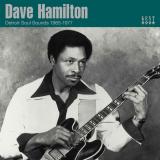
The latest in our series of Limited Edition 7x7" Soul Box Sets celebrates the work of Dave Hamilton.
Dave's musical career in Detroit stretched from the 40s into the 80s. He was involved in all black music styles during that period - blues, jazz, and gospel as well as soul music.
A talented songwriter, he wrote or contributed to ten of the fourteen compositions here and produced them all in his studios.
Though his released output was modest, considering the amount of recording he did, the gems in his tape vaults have been surprising and entertaining black music lovers since they were accessed by Ace in 1990.
That purchase came about due to Richard “Gilly” Gilbert’s detective work in discovering that a big covered-up Northern Soul spin at Wigan Casino was actually Dave’s production on “Little Ann” Bridgeforth. The ensuing years have seen soul tracks in all genres, issued on Kent and BGP and we are still discovering great tracks 36 years on. Witness ‘You Got Me Where You Want Me’ by Chico & Buddy, a fabulous funky number from around 1970 that would have been a soul fan’s favourite whenever it was issued; this is its first public appearance.
Funk crosses over to all dance scenes these days and even jazzier tracks like Dave’s own ‘Soul Suite’, a close relation of his coveted ‘Pisces Piece’ will pick up plays now it is on vinyl. Northern Soul lovers have been demanding J T Rhythm’s ‘I Love The Way You Walk’ on a seven, as have Motown connoisseurs with Rita DuShay’s original of ‘All I Need (Steal Away Tonight)’ as covered by Barbara McNair on her 1966 Motown LP.
Original copies exist of the Ravins ‘Your Love Is What I Want’ but unless you have several grand to spare on this fast and furious dancer, our audio-enhanced release is a great substitute; especially with the Kent 45 deleted.
OC Tolbert delivers a tough and menacing Clarence Reid song ‘Along Came A Woman’ which has huge dancefloor potential, like Dave’s own bluesy vocal on his similarly gritty, R&B composition ‘Take Care Of Your Own Business’.
Dave’s accomplishments into the 70s and 80s are admired by modern soul lovers and his ‘Ride The Disco Train’ by the Moderations, hit a perfect groove for progressive clubs of the genre. Both the Felecia Johnson and New Experience tracks thrive on the laid-back atmosphere Dave was able to conjure up in his home studios and the talented singers present his thoughtful songs with panache.
With enhanced audio for both of Little Ann’s uptempo and ballad classics ‘What Should I Do’ / ‘Deep Shadows’ this box set is irresistible as well as being a tribute to the unsung heroes of Detroit Soul music.
Flowgeist emerges from a shared inquiry into sound and aesthetics. Genre remains peripheral; meaning stays tethered to sensation. The self-titled debut, released on Evighet Records (EVIGHET007), follows that logic across a full record, moving from matter to memory and giving passing states somewhere to stay. Trip Hop, Drum and Bass, post-punk, breakbeat, EBM, Techno and modular electronics all surface within it, summoned only where a feeling demands them, with acoustic instruments retaining their grain inside the electronic frame. The A side keeps its instruments close and its focus intimate, opening on "Molecules," where Zainab J Lascandri's voice and Arthur Boudet's guitar set the album's tone before it moves through cycles that won't break: a life stuck in place, a trust already gone bu14t still being tended, an attraction whose charm thins out under repetition. That inward attention eventually turns outward, closing the side on a colder note about how influence gets performed and mistaken for substance. The B side works through broken rhythm and cinematic scale. It examines political language for the seams in its polish, follows a relationship reduced to proximity without real contact, and rises to the record's most forceful club passage before settling into "Crystal Muse," where Massimo Capobianco's guitar moves alongside an extended modular passage, luminous and unhurried. The album closes by turning its attention to composition itself, treating the act of writing music as a way of holding onto experience before it disappears. Across both sides, the record travels from immediate, bodily feeling toward something more contemplative, carrying the same emotional attention from private entanglement into wider systems and finally into the quiet work of making the record itself.
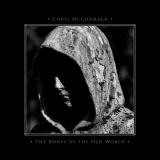
Last locked in techno mode around 2005, Chris McCormack left the scene at peak power. He was one of the few producers actively pushing the dancefloor sound into the future while so much of the music became frozen in the past.
With a decade-long golden run mostly through his Embryo and Materials labels, a string of classic, era-defining remixes, his peerless UK Gold releases, and a small but timeless collection of electro and electronica donning the What Kind of Sound? name, Chris' contribution has been a cut above. Somewhere in the middle of all that came "Erase Techno", a strong contender for the best hard techno track ever written.
While that release was the one and only on his Blacklisted label, Blacklisted Mastering was soon born - a premium mastering service Chris has now run for over 20 years, counting the likes of Gary Numan and Max Cooper among its regular clients.
Venturing further away from club music and into the world of library music production, it seemed as though a fresh Chris McCormack release would never again materialise, but he has now, out of the blue, hatched a new full-length album. It is, as you'd expect, a key addition to his rich discography.
A range of moods underpins The Bones of the Old World, which plays out like a cinematic experience: existential pondering, grief and darkness gradually giving way to playfulness, gratitude and a reassuring hope for what is ahead. Majestic, evolving melodies, lush atmospheres, eerie soundscapes and turbo-powered drums form the foundation across 13 tracks. Gripping sound textures and detailed, twitching rhythms run through a blend of ambient, spoken word, electro, loaded broken beats and fierce-intensity techno. A bit like old times? Maybe just a bit like he'd never left.
Lock in to this hour-long odyssey from a crucial voice in electronic music. We're honoured and excited to welcome Chris back for his debut on Earwiggle, as well as the first artist album on the label.
Truths and secrets often reveal themselves at night, under the freedom of shadowy darkness, away from prying eyes. In creating Given to the Night, sisters Valentine and Clementine Nixon have crafted a world that drifts through the in-between: between dream and reality, between day and night and the undefined, and ultimately a world that embraces the discomfort of being untethered. A process that follows simplicity and intuition rather than pre-determined narratives. “We recorded songs as they appeared, which sometimes felt like catching light. Before we realised it we had a record”, the duo explain.
While making the record Valentine and Clementine gently pushed away from the world- deleted social media, retreated into the trees of their native New Zealand - and only invited a couple of people in during the recording process. From that space, the album came together in an eerily easeful way.
There is a dream-like drift and sonic timelessness to the the record, as reflected in its nocturnal title, which can be read in two ways:
“Being taken by, or being inclined towards nighttime, preferring its blurry cloak of shadows to the harsh light of day; or giving oneself up to night, in sacrifice, letting go of fear and melting into the darkness.”
Written during a time of personal transition there was “a sense of finding the light in the shadow” they add. Guitar lines float, synth lines entwine, tapes hiss and vocals stream creating a kaleidoscopic montage of transient memories and emotions. A spectrum of feelings arise - isolation and joy, insomnia and manic highs, confusion and fleeting clarity, grief and healings. In the record, these feelings all merge and fade into one another in a nonlinear manner, as life tends to do; creating something deeply human that simultaneously gestures towards the transcendental.
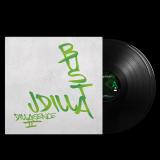
In the history of hip-hop, certain collisions alter the orbit of the culture entirely. When Busta Rhymes first stepped into the otherworldly, swing-heavy universe of J Dilla, it was an alignment of two unstoppable titans—the most chaotic, kinetic vocalist in rap history meeting the quiet deity of raw soul and sub-bass perfection. Their original pairing set a gold standard for what happens when top-tier lyrical warfare meets sacred production. Now, the vault opens to unveil DILLAGENCE II: a resurrection of that mythic frequency, bridging the raw grit of the streets with a legendary, earth-shattering grandeur.
Authorized directly from the Yancey estate, DILLAGENCE II pairs Busta’s razor-sharp, rapid-fire flows with Dilla’s nastiest, most sought-after unreleased beats. Built upon rare MPC canvases unearthed from Dilla’s legendary vault, the album captures both masters in a state of absolute, unchained ascension. Every track hits like a heavyweight knockout—blending off-grid snares, filthy basslines, and soaring soul chops with Busta’s apocalyptic precision. He treats every lost Detroit tape like a battleground, unleashing a larger-than-life energy that turns unreleased boom-bap into a stadium-sized manifesto.
Forget the cheap nostalgia cash-ins and posthumous butcher jobs. DILLAGENCE II hits with the weight of two master craftsmen operating at the absolute peak of their powers. By locking Detroit’s deepest low-end grooves directly into New York’s loudest, most relentless vocal engine, this record doesn't just honor Dilla's legacy—it kicks the door off its hinges and demands you listen.
Liz Harris has worked with film closely since she began making and performing music live - both her own work, and that of various filmmakers - including a near decade long collaboration with Paul Clipson, and multiple live collaborations with Dicky Bahto and Takashi Makino.
On Music For Two Films About Water she presents two recent scores for short films by the artists Tanja Engelberts and Takashi Makino. Each film, as the album title suggests, is an exploration of water, though beyond that, each work and soundtrack varies - blending literal, improvisatory and impressionistic translations of the theme. Her accompaniment layers mercurial threads of mellotron, tape loops, Wurlitzer and field recordings.
Untitled (from We Exhale)
This piece was originally composed for the film We Exhale. In the film, artist Tanja Engelberts takes the perspective of the river itself, tracing how centuries of damming, channelling, and industrial pollution have reduced the Rhône from a living landscape to a hydraulic object—its breath slowly distorting as chemical processes break down what remains. Her work asks what a poisoned river sounds like when it exhales, confronting us with damage that operates beyond human timescales, already embedded in the river’s body. In her artistic practice, Engelberts investigates how landscapes that are no longer visible can be documented. Rather than excavating the past, she collects and rearranges what she finds on the surface—as a creative exposition of the present. Engelberts’ work places attention on the ‘here’ and ‘now’, allowing traces of the past to be recognized while possible futures can be imagined.
Untitled (from Constellation)
This soundtrack scores the film iteration of a project by Takashi Makino titled Constellation, a collection of works exploring how new meanings emerge through the arrangement of existing images, memories, and fragments. In the film, images, appearing and disappearing within mercurial water textures, are clearly present before the viewer, yet maintain their abstractness and imaginative nature until the very end—projected onto the screen and delivered to the viewer as material for forming new images. Fantasy and reality merge in oceanic, lucid dream. Inspired by the way ancient people connected scattered stars to create narratives, his work invites viewers to discover their own relationships between images and construct new meanings from what already exists. In his artistic practice, Makino captures video of ready-made objects including natural phenomena, humans, and cities, with various formats. In the editing process, he layers and configures them into the fields of mesmerizing, shimmering textures that distinguish his imaginative films.
DJ Linus came up with the basic idea for You Are House Music while DJing. He provided the vocals himself and refined them through numerous tests during his DJ residency at Munich's Pacha club. The track is a tribute to the party people and became the secret anthem of Pacha during its six-month production period. The vocals seem to work...
A.O.D.S. - DJ Linus' self-created genre: Adults Oriented Disco Soul. He organizes parties and plays vinyl records from 1975-1985, covering everything from AOR to soul and disco.
Senium refers to DJ Linus's newfound love for the chillwave/retrowave genre, for which he has acquired a small new record collection.
DJ Linus spent a whole year working on the EP, including relentless testing and sound adjustments. DJ Linus: “I am very happy with the result—thank you!”
By the way: DJ Linus released his first records on Compose, Compost's 90s house label.
About DJ Linus
DJ Linus is one of the very first House DJs in Munich and in Germany. He started way back end of the 80s, early 90s.
Linus is said to be a great influence to many a famous Tech House DJ today.
His solo album “Fantasmagorique“ was the first german House Music long player of its kind.
Linus was owner of two record shops and the famous “exun records“ label.
Nowadays he is resident at the incredible Pacha Munich – since 18 years now – and is running his current label “Sujet Musique” with great success since 2013.
Linus is also resident at the legendary “Palais Club” and the asian, high class restaurant “Izakaya“.
He works as a mastering engineer and as a lecturer for DJing and Producing @ Musicversity. DJ Linus won twice the Munich Night Life Award for best DJ “House/ Techno“ in 2013 and 2019.
DJ Quotes:
“Loving the sound of You Are...! Just the kind of percussive, bassline-led house I love to play out!” – Jimpster
“Very nice!” - Fred Everything
“Tune(s)! Big up Linus.” - Bill Brewster
“Nice funky stuff.” – youANDme
“YOU are house music ! :-):-)” - Acid Pauli
“Enjoying the original You Are House Music track. ” - Josh Wink
“Beautiful!” – Reznik
“Mega EP” – Sandrino
“Really like all the tracks on this EP, Linus has been always special about his production work. Will play the tracks out for sure” - Kiko Navarro
“What a beauty!“ - Phuncadelica
Links:
Atom Trance Force 20 is a special one for fans of 90s hard trance. EDM’s DJ Manga (Made In Hong Kong, Judgement Day, etc.) discovered two previously unreleased tracks, originally recorded in 1995 and 1996, and generously offered us the opportunity to release them on vinyl. Naturally, we accepted and are proud to present: DJ Manga – Motion (Original DAT Recordings 1995–1996) A1 and title track “Motion” (1995) is everything you’d hope for from an unreleased 90s trancer. It’s got the pianos, it’s got the melody that sticks in the back of your mind for days after hearing it, and it’s got the raw bassline and drums that drive in that special way they did back in the day. A2 features label head Micropulse on remix duties. Keeping the core elements of Marc’s original composition intact, the remix seeks to add some modern magic to the vintage charm and sprinkle some Atom energy onto the release. The flip side gives us “The Key” (1996), which occupies the entirety of side B and stretches out across 10 more minutes of 90s magic. It’s difficult to write track descriptions without sounding like AI, but the intro is long, the lead is sizzly, and the resonant bassline fits perfectly to round off this EP — the type of release that doesn’t come around often. The tools Marc used to produce the original 90s tracks included a Roland JD-800, Korg Poly-800, Roland TR-505, and some kind of Akai S-series sampler, all sequenced with an Atari 1040ST. For those interested, the 2026 remix uses a Novation Supernova II, Access Virus TI, Korg Wavestation AD, Waldorf Blofeld, E-MU E4XT Ultra, 208HP of Eurorack, and two Lexicon PCM70s.
Well where do you go from the killer release of sde 78 Kinky Foxx "Is It Still Good To You" which sold out quicker than we could have imagined. I guess you should expect that with a group that has a cult status like Kinky Foxx.
Trawling through the guys demo sessions of the late 1970's and early1980's we always had a soft spot for "Lovely Night" but felt the audio and vocals were not quite on point for an official release. But not letting any obstacles get in our soulful way we took the demo and made it ten times better. New vocals were added by Vincent Lilly jr and with the watchful production skills of legendary Curtis Styles we are so pleased with the outcome. Its a modern day dancer but keeping in line with the 1980's boogie funk from the Kinky Foxx crew!!. Flip the 45 over and you get "Call You Up" again which has been touched up like a classic car with a respray. Keeping all the elements of 1980's synth boogie soul and taking it into 2026.
Helene Rikhard had remained a hidden gem in the Norwegian electronic music underground for years, before she fully emerged on the international scene with these two critically acclaimed albums. Her sound is an ingenious mix of psychedelic disco, 80’s wave music, techno, krautrock, ambient and it truly operates in a world of its own. Drawing inspiration from the cosmic disco of Daniele Baldelli, the jazzy depths of Detroit techno and the esoteric dreamscapes of Laraaji, it’s astral music for astral people! Psychedelic to the core, but also warm, adventurous and highly original.
Her debut album Unpredictable Express is a dark, brooding masterpiece combining elements of cosmic disco, electro and techno Everlasting High serves as a beautiful, atmospheric counterpoint to its moody and mysterious predecessor, Feeling like a blissed out, hazy summer day, echoing childhood memories from Helenes youth, in the beautiful southern part of Norway. Everlasting High also sees Helene’s vocals coming more to the front. Mad Girl and Lions Eye are both beautiful, dubbed out synth pop with traces of 80’s synth, shoegaze, and reveals a fine-tuned pop sensibility, with a vocal style that’s sits somewhere between Kate Bush, Enya and Fever Ray.
Both as a producer and DJ, Helene’s style is easily recognized for her bold, genre-blending approach to electronic music. Mixing elements of ambient, techno, and experimental sounds, creating immersive, intricate and psychedelic tracks. Her DJ sets work the same way, blending Italo, High Energy and synth nuggets, effortlessly with strange, modern club sounds.
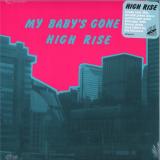
Insane rare Boogie, Soul, Disco, and Floaty goodness all on one LP, High Rise (Harry Malone and Tony Poe) recorded these belters around 1985 in Chicago, Illinois. Harry's previous Band The Elusions only released two Chicago 7" which are also incredibly rare, also included on this expanded LP. Solid all the way through, like all Athens of the North releases.
Few producers embody the soulful heart of House Music quite like Move D. Being a mentor of the label since day one, All That Jelly brings together two defining and desirable cuts from David Moufang’s recent history to one record.
'To The Disco ’77' 2013 original version for the A-side and the 2017 live rework finds its way to the B-side, both freshly remastered by the amazing and sought after Andreas Kauffelt. 'To The Disco ’77', opens with a clean, electro-styled beat that has a restrained power and a controlled tension that gradually blooms as the keys start to lift the mood into something lighter. When the iconic 'to the disco' vocal sample cuts through, it’s like a wink
from the past, threading disco’s golden exuberance through the disciplined swing of classic house. The track is a seamless blend of Funk, Disco, House and Electro with each element raw yet playful, woven into a groove that never stops urging you forward. It’s a masterclass in balance: sleek but deeply human, nostalgic but alive in the moment. It's like listening to the history of dance music in one special track.
'To The Disco ’77 (Move D Live Rework)' stretches the idea out into something even more fluid. The groove loosens, the funk rises to the surface and the extended runtime gives space for guitar and bass lines to share center stage, riffing around each other with organic warmth. The 'to the disco' mantra remains, grounding the track in its celebratory intent. It’s the kind of tune that closes a night perfectly and makes you not want to leave the dancefloor. Reissued together, these versions show Move D’s masterful ability to bridge eras and genres, reminding listeners that the dancefloor is as much about emotion as it is about motion.
"As sharp as I sing, it still soothes you, doesn't it? Like a lick of ice cream?" sings Thao Nguyen on her Kill Rock Stars debut, We Brave Bee Stings and All. Whether it's intentional or not, the line describes her sound perfectly. Nguyen's rich, breathy voice -- and the way she croons, yelps, and drawls with it -- recalls Cat Power, Fiona Apple, and Sinéad O'Connor. However, these comparisons suggest that Thao is a searing, intense artist when nothing could be further from the truth: her country-tinged indie folk-pop is playfully observant, mischievous with just a hint of vulnerability. By playing against type and putting a voice that seems tailor-made for brooding into songs that are sunny and sweet, Nguyen carves out her own intriguing territory among indie folk songstresses.
On We Brave Bee Stings and All's first two songs. "Beat (Health, Life and Fire)" builds brass, ukulele, and piano to an urgent but joyous peak, while "Bag of Hammers" is as rambling as it is catchy. The interplay between Nguyen and her band, the Get Down Stay Down, is more intuitive than ever, and the album's fuller sound (courtesy of producer Tucker Martine) complements her more fully formed songs.
In fact, most of the album is so cheery that it's a good thing Nguyen's voice isn't delicate, or her music might be sickly sweet instead of fresh and engaging. Fortunately, "Feet Asleep"'s Dixieland moxie and "Geography"'s jazzy flourishes help keep the album from sounding too predictable. Even if this isn't Thao's first album, We Brave Bee Stings and All is a fine introduction to her music.
Disco Collected celebrates the dance music which originally developed from R&B, soul, and funk from the late 60s and 70s and turned into a mighty subculture in discotheques, with Studio 54, Manhattan, New York as one of the most famous and extravagant discos all over the world. Disco used a steady four to the floor beat, string sections, horns which created a perfect setting for DJs who mixed their special 12 inches to an eager dance crowd.
Movies like Saturday Night Fever and Thank God It’s Friday contributed to disco’s mainstream popularity. Compiled on Disco Collected are some of the best, well-known and great disco hits by Rose Royce, Chic, Kool & The Gang, The Trammps, Thelma Houston, KC & The Sunshine Band and 16 more guaranteed floor fillers.
The 2LP Disco Collected is available as a limited edition on disco ball silver vinyl and includes an insert.
SHORT INFOS
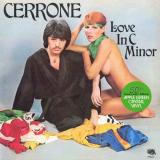
Because Music celebrates the 50th Anniversary of Cerrone's debut album "Love In C Minor (Cerrone I)" .
A record which is one of the mots important of its time. It brought French Disco to the World and established Cerrone as the French King of Disco.
- Pressed in exclusive 2026 Apple Green Crystal Clear vinyl
- Original 1976 artwork - Digitally remastered from original tapes.
BIOG
Cerrone I
Love in C Minor (1976)
The story behind Cerrone's first album could be summarised in the libertarian atmosphere and the creative energy of the 70s, inherited from the 60s revolutions, spiritual, aesthetic or sexual. Looking back now, this record is one of the most important of its time. It helped creating the sound of an era and brought French disco to the world. It is also, and this is fundamental to understand its success, the result of a man's vision: Marc Cerrone, a free spirit inhabited by music, who ended up with a major work of art. With this album, Cerrone accumulated the main elements that make a record timeless, even bigger than its creator: the pure originality, the madness of a vision without compromise, a sense of the market and a great dose of luck too. To some extent, this is the perfect record to start a career, even though Cerrone's one already existed in an implicit way. He actually began in a rather popular band, Kongas, signed by Barclay. Between 1972 and 1974, the band was famous and made it abroad, particularly in Japan, where people loved its sound. Despite this success, probably fed up with the music and not ready to follow the orders of a label that wanted the band to sound more pop, Cerrone disbanded Kongas. He had the sound of his instrument in mind and mostly its central element: the bass drum. The idea of this first solo album came to him after a detour via selling records. Wishing to forget about the studios, he took the head of a small chain of stores, selling records imported from the States. That's when he discovered a daring new sound coming from New York: disco music. This energy inspired him to record again. He then remembered the crazy reaction of the audience when, during the Kongas' concerts, he used to hit his bass drum hard. Cerrone felt like going back into the studio but to make something different. He decided to record a sixteen minutes long track, driven by its beat, that would fit on its own on one side of a LP (during these vinyl days, musicians used to think in terms of sides…), with girls' voices simulating sex. This concept of musical and physical orgasm was recorded at Trident Studios in London (where pop stars used to record at the time… ) with Don Ray, of Kongas, man in the shadows and brilliant arranger who'd follow Cerrone during his whole career. Obviously, like always in pop music (it happened to the Beatles), record companies started by turning this weird track down, convinced that radios would never play sixteen minutes of beats and moaning. Cerrone, a born fighter, decided to trust his instinct (a mix of ego and business sense) and chose to believe that if the radios wouldn't play the track, people would dance to it in the clubs. He released the record himself, with a sexy cover a bit provocative where he wore a black bathrobe, a young short-haired girl leaning on him. Being played here and there, thanks to Cerrone's own network, the record started to work a bit in France. But luckily, things really happened in the States. Due to a mistake, a box of "Love In C Minor" albums were sent to the States via Cerrone's record shop instead of some unsold American LPs. Once in New York, the box was opened and the record with its intriguing cover was instantly loved and passed through the hands of radio and club DJs. All of a sudden, and unknown to its creator, the track that was turned down by every French label, became a hit on the New York disco scene. Casablanca, the US disco label, released a cover recorded by an ad hoc band because nobody knew Cerrone of how to find him. Once he discovered what was happening in the States, Cerrone flew to New York. He realised he had a hit, one of the biggest then, that opened the doors to every record company and especially Atlantic. He was welcome by Ahmet Ertegun, one of the main visionaries of the American music who, among other artists, signed Aretha Franklin and John Coltrane. It's believed that Ertegun understood that the French young musician, like some Atlantic artists, was about to define the sound of his time and that his work would live long after its birth date. "Love In C Minor" was the first step, adamant and successful.
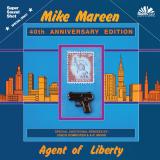
1986 was a very good year for Mike Mareen. It was the moment when something changed in his music. After years of searching for the right sound, Mike decided to change his production team and it turned out to be exactly the right decision. The first major result was “Love Spy”, with Lutz Rahn playing a crucial role in shaping its sound. The record simply exploded. Even without the kind of massive promotion normally associated with an international hit, “Love Spy” became one of the defining records of that peculiar German intersection between synth-pop, electro, Hi-NRG and Italo Disco. But Mike and Lutz were only getting started. Soon afterwards they wrote and recorded “Agent Of Liberty”. And once again, everything worked. The single travelled far beyond Germany, appearing in places as distant as Mexico, Australia, Sweden, Denmark, Norway, Venezuela and South Africa. It was another demonstration of how sophisticated Euro Disco could be when it was treated as serious electronic music rather than disposable dance-pop. The sound was simply dope. Sharp digital synthesizers, metallic FM textures, punchy electronic drums, dramatic arrangement changes and the kind of bright, futuristic timbres that made the Yamaha DX7 era so instantly recognizable. But the biggest change… was Mike himself. This was no longer the romantic lover of “Dancing In The Dark”. On “Agent Of Liberty” he sounds tougher, sharper and more confrontational. His half-spoken, half-rapped delivery cuts through the production with almost streetwise confidence, while huge uplifting backing vocals and highly melodic synth lines keep pulling the track back towards the dancefloor. And beneath the attitude there was something much more interesting going on. “Agent Of Liberty” announced a new chapter in Mike Mareen’s music, a direction that would later be developed much further on the “Let’s Start Now” album. Mike wanted to belong to the intelligent side of the electronic scene. And, just as importantly, he wanted to help shape where that scene was going next. “Agent Of Liberty” is probably one of the clearest examples of that ambition. It has all the ingredients of a huge club record, but there is tension in it, drama, attitude and a sense that something bigger is happening behind the beat. Four decades later, it still sounds completely distinctive. Not merely like a record made in 1986, but like a record that captures what was exciting about 1986 in the first place.
For its 40th anniversary, Vintage Pleasure Boutique brings “Agent Of Liberty” back to vinyl in newly remastered form. The release will be available on classic black vinyl and in a striking bright orange edition. And because this is not meant to be just another archival reissue, we have added two brand-new interpretations. Disco Computer takes the track into more adventurous territory. His remix is the more unconventional of the two, approaching the original from a slightly more modern and experimental angle while keeping its unmistakable melodic identity. A.P. Mono takes almost the opposite approach. Rather than trying to reinvent “Agent Of Liberty”, his version works more like a contemporary DJ edit. The original character remains intact, but the structure has been reshaped for the modern dancefloor, with stronger build-ups, clearer mixing points, carefully controlled changes in dynamics and moments designed to let the tension rise before the track hits again. The idea was simply to give DJs two new ways of playing it.
Forty years after its first release, “Agent Of Liberty” remains one of the most characteristic records not only of Mike Mareen’s career, but of the entire German electronic dance scene of the 1980s. Powerful, melodic, intelligent and wonderfully excessive. The Agent is back.
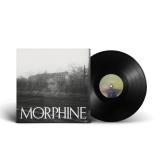
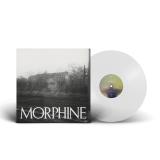
At the height of grunge, Morphine sounded like nobody else. The Boston trio built their own strange, seductive musical language (coined "low rock" by frontman Mark Sandman), built around Sandman's two-string slide bass and unmistakable voice, Dana Colley’s baritone & tenor saxophone, and stripped-back drums (Jerome Deupree, Billy Conway). Morphine became one of the defining cult bands of the ’90s, but their story came to an abrupt end in 1999, when Sandman suffered a fatal heart attack on stage during a concert in Italy.
More than 25 years later, Cocoon offers an extraordinary final chapter. Its eight songs were recorded during Morphine’s late-’90s sessions before Sandman ultimately shelved the material on the path toward what would become their final album. Rediscovered in the band’s archives decades later, Sandman’s life partner and Morphine estate manager Sabine Hrechdakian and producer Paul Q. Kolderie (Radiohead, Pixies) transferred the original tapes and carefully assembled this unified collection of Morphine songs. Dana Colley returned to add new saxophone parts, and Kolderie then brought new mixes to the table. Rather than a collection of demos or outtakes, Cocoon is a fully realized Morphine album revealing a band still pushing forward that somehow waited nearly three decades to find its way into the world
Album Background
The background on the album is that the majority of the songs existed in demo form on a CD release called "Sandbox" a semi-legit release of Mark Sandman music on 2004. These versions are the completed tracks that include contributions from Morphine saxphonist
Dana Colley and produced and mastered by Morphine's long time producer Paul Kolderie.
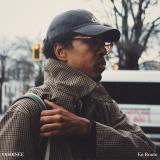
On En Route, Oddisee captures the tension of motion—between where you’re from and where you’re headed, between ambition and grounding, between survival and purpose. Released at a moment when his voice was sharpening into something unmistakably his own, En Route feels like a checkpoint record: reflective, hungry, and deeply human.
Built on warm, head-nodding production and Oddisee’s signature blend of jazz-inflected beats and conversational clarity, the album balances internal dialogue with outward observation. He raps not as a distant narrator but as someone in the thick of it—touring, questioning, recalibrating—turning everyday moments into quiet revelations. Themes of independence, self-definition, and forward momentum run through the record without ever tipping into cliché; this is movement with intention, not escape.
What makes En Route endure is its honesty. There’s no forced grandeur here, just earned confidence and craft. Oddisee treats growth as a process rather than a destination, letting listeners ride alongside him as the miles stack up. The result is an album that feels lived-in and timeless—music for long drives, late nights, and anyone figuring out who they are while still on the way.
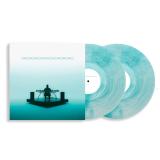
Landing on the 4th of September via his own imprint Knee Deep In Sound, ‘Obsessions’ is less a traditional dance record and more a reckoning — with where Daley Padley finds himself now, as an artist and as a person. Written across a period of constant movement, touring and introspection, the album holds the push and pull between intensity and stillness that has come to define his world.
This is an artist who started making music in Barnsley — long nights, small rooms, total commitment to sound. Those early marathon sets weren’t a stepping stone to something else. They were the foundation of everything that followed: global tours, chart success, the creation of Knee Deep In Sound, a career built entirely on instinct rather than expectation. Hot Since 82 has never followed a fixed path. He’s carved out a space that sits somewhere between underground credibility and global reach — and it’s that same restless, uncompromising approach that shaped this album.
“Some days feel heavier, some thoughts harder to hold. But music still reaches the places words can’t. It’s therapy and a reset button.”
That sense of release runs through the entire record. While rooted in house music, Obsessions doesn’t sit in one place for long — not to prove a point, but because that’s simply how Padley hears music. It moves between deep house, breakbeat, melodic electronica and full club focus as naturally as a conversation shifts tone. Moments of euphoria give way to reflection and tensions dissolves into release.
The album opens with ‘All That Matters’ — a track that feels immediately both expansive and intimate and sets the emotional register for everything that follows. From there it unfolds like a journey rather than a sequence.
Lead single ‘Shaded’, landing on the 12th June taps directly into classic house lineage while feeling unmistakably current — a bridge between where this music began and where it’s heading. Elsewhere, ‘Life’s Too Short’ and ‘Eternity’ introduce warmth and movement, weaving piano, breakbeat and subtle Afro influences into the album’s wider palette.
As the record progresses, the light changes. ‘Wow’ leans into darker, late-night territory — tension, restraint, a hypnotic centre. The collaborations with Kuuda on ‘State Of Mind’ and ‘Time’ bring the album back into full club focus: driving, physical, built for scale.
"La Duquesa", the most tender and most refined piece of the album Amygdala, perfectly casual and serious, deep and euphoric, all at the same time, is dedicated to the Spanish Duquesa de Alba, who, as holder of 46 titles of nobility, is even more highly decorated than Queen Elisabeth. Koze is fascinated by this lady: With her peculiarly creepy appearance she seems like a relic from the past era of the Spanish nobility. She is the most pictured woman in Spain and a pop phenomenon. When, in 2011, she married a man 24 years younger than herself, the entire country badmouthed her. Sometimes Koze would love to be that younger
man, who the Spaniards dismiss as a legacy hunter! Encore the needle is cookin'. Dj Koze did it again. His homage to Audrey Horne. "Burn with me" - a fucked up, deep and schizophrenic brainfoodbouncer with legato bass and hi hats way out of time. The beat burst like shagging, the dirty off hi-hat lashes remorseless in the twatherd - everyone just wants to get laid straight away.
Cold, Bold & Together (CBT) CBT was founded in Bellingham, Washington in 1971 by percussionist Tony Gable and musicians Solomon Harris, Keith Hooks and twin brothers TC & Jamar Jenkins. It soon became evident that Bellingham was not a particularly welcoming environment for R&B music, so they moved to Seattle to try their luck and plumb the rich supply of venues, which they successfully did until disbanding in 1978. They spent their early Seattle years playing a combination of covers and originals in clubs, later becoming the "go to" opening act for various nationally known artists, such as Ohio Players, Kool and the Gang and Earth, Wind & Fire. While they were paying their club circuit and opening act dues, they squeezed in recording sessions whenever they could and released their own material, which was well-received and got strong regional airplay. However, because of the feudal nature of the music business at the time, they just couldn't break out, and like a lot of Northwest bands with great potential, they inevitably broke up and went their separate ways. Upon disbanding, they left behind a collection of original recordings at Seattle's legendary Kaye-Smith studios.
Unfortunately for CBT, the studio passed through several owners and at some unknown point in time, one of them did the unforgivable and destroyed the storied studio inventory of two-inch tapes and quarter-inch masters. Unknown to the band, a copy of their masters was smuggled out by their producer who added them to his legacy collection of cloned quarter-inch masters. After several years and many moves, he became concerned about the tendency for magnetic tape to deteriorate over time.
He sent the tapes to a Seattle lab to be restored and digitized, with the hope that perhaps, some day, they might be made available for the listening pleasure of R&B fans. The hoped-for day has finally arrived. Russell Paine and Super Disco Edits has pressed two of the Kaye-Smith CBT tracks: "Go For It", a jazz-influenced instrumental, featuring Kenny G, and "Unity", sung by the group en masse with Tony Gable singing lead. The musicians on these tracks are: Tony Gable, leader, vocals and percussion Harry Alexander, drums Kenny Gorelick (now world-renowned "Kenny G"), sax, flute and horn arrangements Chris Ishi, trumpet Michael Young, Trombone Jamar Jenkins guitar, vocals TC Jenkins bass, vocals 1 Philip Woo, keyboards Footnotes: CBT gave legendary saxophonist Kenny G his start in the music business. Kenny was still in high school when he was recruited to play sax and write horn arrangements. Kenny co-wrote, arranged and played sax and flute on the instrumental "Go For It." He rips a smoking tenor sax solo in the middle, which showcases his already masterful technique and solidifies his R&B bona fides. He went on to have a spectacular career recording for Clive Davis and Arista Records. Before his untimely passing in 2016, Tony Gable went on to found contemporary Jazz group, "Tony Gable and 206" (206 being Seattle's then only area code). With songwriting, performance and production help from Kenny G.
Cécille Summer 2026 Compilation
Summer and Cécille have always gone hand in hand.
For 2026, we’re back with another carefully selected collection of records that perfectly capture where house music feels today. Eleven tracks from artists we’ve admired for years, longtime friends of the label, exciting
newcomers, and fresh faces joining the Cécille family for the very first time.
Piem opens the journey with his long-awaited Cécille debut. A respected name in the scene for many years, his unmistakable groove has been on our radar for a long time, and we’re proud to finally welcome him to the label with Give Me The Rhythm.
Leon returns to where it all began. Since his very first Cécille release back in 2009, he’s been an important part of the label’s story. Let Bass Kick is classic Leon—timeless, understated and effortlessly effective.
UK duo Late Replies continue their incredible rise with Moment 4 U. Their fresh take on house music has been impossible to ignore, and we’re thrilled to have them on this year’s compilation.
Dutch mainstay Jesse Maas delivers Voices In My Head, another classy slice of groove from one of the most consistent names in the Netherlands’ house scene.
Buenos Aires’ Manu Desrets impressed us so much that one track simply wasn’t enough. His two contributions, Get GG and Voy No Kako, showcase two different shades of his sound and perfectly reflect why he’s become
one of the most exciting producers coming out of Argentina.
Andrew Azara has become a true part of the Cécille family over the years. This time he teams up with Traumer, who makes his label debut with a beautifully understated deep house record. Need You is one of those tracks
that quietly sticks with you.
We’re also excited to welcome Jay de Lys to the family. Together with Simon Kidzoo and Monölitio, the trio delivers Into The Light—a warm, feel-good house record that instantly became one of our favourites. Three
artists from Argentina, the Netherlands and Barcelona coming together exactly the way house music should.
After turning heads on last year’s Costa compilation, Brazil’s Classmatic returns alongside fellow Florianópolis producer Marian. Brazilian Madness is exactly what you’d expect: infectious groove, irresistible swing and that
unmistakable Brazilian sense of rhythm.
One of the hottest young names coming out of the Netherlands right now, Stefan Meser delivers Don’t Hesitate—one of those records that gets stuck in your head after the very first listen.
Closing the compilation is someone who’s been part of the Cécille story since the very beginning. Christian Burkhardt has been a longtime friend of the label and one of Frankfurt’s finest. Specialo lived in our vault for almost two years while we waited for the right moment to release it. This felt like the perfect place for it, and the perfect way to close another Cécille summer.
Eleven tunes. Eleven different stories. One soundtrack for Summer 2026. Welcome to the next chapter of Cécille.
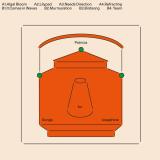
Since his 2013 debut album, Body Issues, Max Ravitz—better known to you and me as Patricia—has been zeroing in on the kernel of an idea. Across seven albums for labels like Opal Tapes, Spectral Sound/Ghostly International, and Acid Test, he’s applied his hand to a lean, focused vision of electronic music, paring away excess to lavish attention on carefully sculpted acid lines, stealthy drum programming, and warmly emotive melodies. For all their restraint, though, his tracks could never be called merely rote or efficient; even at their simplest, they’re steeped in atmosphere and shot through with layers of mystery. Now, on his first record for Balmat, he strips things down even further, revealing the ambient essence of his music.
Across eight tracks, he pours everything he has into the most minimalist music of his career. Many tracks
seem to have been made with just one synthesizer patch and some carefully applied effects—a honing of
his materials that brings the nuances of his music to the fore as never before. Elastic pitches warp and drift; fleeting harmonies bring out new dimensions in his synths’ timbres. “Murmuration” sounds almost like
Baroque music in its lithe, undulating counterpoints. “Birdsong” takes a classic choral pad and stretches it
horizon-wide. And songs like the closing “Yearn” allow the expressive dimension of his music to fill the
frame as never before.
The title Songs for Josephine pays tribute to Max’s wife. For years, she’s told Max she’d like to hear him
make an album without drums; he assembled these songs over time, always with her in mind. “Even with
my beat-driven music, I’ve gotten a lot of comments in the past about the ambient textures tucked into
those tracks, so I feel like people have been drawn to that aspect of my music for a while,” Max says. “It’s
been an interesting change of pace making a record with that side of my sound as the focal point.”
For listeners familiar with Max’s music, the effect may be uncanny: This is Patricia through and through, but heard in a whole new way.
—
Balmat is a label with a cloudy outline. Jointly shepherded by Albert Salinas and Philip Sherburne, two
friends living in Cardedeu, Catalonia, and on the Balearic island of Menorca, Balmat grew out of Lapsus Radio, a weekly show born almost ten years ago. Balmat’s mission is simple: to foster new ideas, expand upon personal obsessions, and put enveloping sounds out into the world. “Balmat” means “empty” or “void” in Catalan. But quite apart from any negative connotations, we prefer to think of it in terms of possibility: a space waiting to be filled.
In this post Sounds world, the boundaries of Post Punk have not only broadened but splintered. And over the course of (now) four releases, Index For Working Musik have seen to using the sprawling boundaries to great effect, flexing a polyglot of styles to convey the language of the moment. On Which Direction Goes The Beam, the murky, distant ambience that was 2023's Indexé has been fleshed out, incorporating everything from the Brian Aldiss laced, ground lightning shudder of Dome, to the chamber-like arrangements of This Kind Of Punishment. There's even a candle flickering in the window for Think Fellers Union Local 282 that warmed these ears. And if you're a fan of the great Dutch band, Trespassers W (who isn't?), the collective consciousness IFWM enunciates on here is a similar testament of a band growing more sure footed in the pursuit of not only knowing all the ways in, but carving a few of their own on the way out. And it's discerning releases like Which Direction Goes The Beam that keep us in the hunt. Long may they forge. - Tom Lax. RIYL: Brian Jonestown Massacre, Velvet Underground, TOY, John Cale, Wire, Dome
Edgar debuts on Dark Entries with Pavor, an 11 track LP of sleazy disco, warped synthpop, and gothic cumbia. Veteran musician Luis Gutierrez has spent the past two decades touring in bands, running Lalalandia Studio, and building his practice in Oakland and Guadalajara. But now, for his first solo outing, he has become Edgar, a pop star who knows no limits! “Edgar feels mightier than anyone but is always reduced to his vices” says Gutierrez, and Pavor delivers vices in spades. From the opening salvos of “Otra Agua,” it’s clear we’re in for a wild ride: seasick synths slide along slamming disco beats, menacingly chanted vocals sit amid a flurry of careening horror movie samples. The mischief does not abate as we’re guided through a demented funhouse of genre detournements.
Edgar puts his indelible fingerprints over every inch of this vinyl, from uptempo numbers like the spooky chip-tune frenzy of “Nunca Mas” to the twisted cumbia of “Panteon.” We’re even treated to a fairly faithful (and majestic) Spanish-language cover of Amanda Lear’s “Follow Me,” here titled “Sigueme.” EBM, space disco, and horror movie soundtracks all find their way into the mix on Pavor, but the diverse palette comes together perfectly, like a Yello album for the 21st century. Pavor comes housed in a sleeve designed by Eloise Shir-Juen Leigh and features a photograph by Izaak Schlossman. Also included is an insert with lyrics and notes. On Pavor, Edgar brings us a healthy dose of pure excess, reminding us that dread can be a hell of a lot of fun.
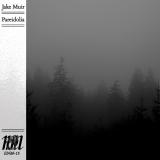
Named after the tendency to impose familiar likenesses, such as faces, on random - usually inanimate - objects, Pareidolia is Jake Muir's way of interpreting the consonances between so-called “ambient” music and extreme heavy metal. Extracting the headiest, most atmospheric sections from hundreds of death metal and black metal tracks, Muir plays the role of both DJ and electroacoustic composer, concocting a lysergic elixir of fractal distortions and prolonged, decelerated riffs that slowly evaporates into iridescent vapor. If there's any trace of the original sources left, Muir makes sure that residue is subtly bewildering, like clouds in the sky that form imposing, larger than life images, or trampled bracken that falls into the shape of “trve kvlt” insignia.
The idea for the album materialized when Muir was working on 2022's Talisman, his collaborative album with multi-instrumentalist Evan Caminiti. Processing guitar for the first time, Muir began to unpack his long relationship with rock music and its Escher-like maze of sub-genres, from the tech metal he obsessed over as a teenager to Loop and Main's drone-y, textured variants. Scraping the internet for unconventional contemporary metal albums, he stumbled across music that seemed to hover between different realms, merging its frenetic, noisy sections with psychedelic interludes that harmonize with classic industrial and avant-garde music, material like :zoviet*france:, Nocturnal Emissions and Z'EV.
Iconic Argentinian DJ/producer Flug drops full EP on Mutual Rytm Raw with ‘Dew At Night’. Flug, aka Sebastian Lopez, has long been part of the fabric of underground techno with a signature sound that is deep, driving and atmospheric, ensuring that the Argentinian has crafted his own story across the globe. Following his track ‘In Control’ on Mutual Rytm’s ‘Federation Of Rytm IV’ compilation, he follows the likes of KiNK & Raredub and Deetron to make his appearance on sub-imprint, Mutual Rytm Raw, with his ‘Dew At Night’ EP featuring a rare rebuilt version of an unreleased sketch dating all the way back to 2009. ‘Dew At Night’ was unearthed while searching for another track among sessions from over a decade ago. After hearing it again, it sparked a new creative age to rebuild it from scratch, and while experimenting with synthesisers, the main arpeggio appeared. "At first it was hypnotic but harmonically repetitive; the groove and phrasing felt incredibly catchy, so I decided to push the harmony further and change some chords until I found the exact point where emotion and tension could coexist naturally.” Around that bright arp are darker, more raw percussive textures and drums that make for a great contrast and melancholic atmosphere that marries emotion with physical structure. "In my mind, the track was always conceived as a closing track - that moment when the darkness is still there, but the first light of the day starts to appear and the whole atmosphere changes.” After hearing the original, label founder SHDW suggested the Argentinian should remix and reinterpret the record to complete the full EP, and so he steps out of his comfort zone across the remaining tracks, exploring different versions of his musical universe and showcasing all sides of his sound. First up is the ‘Dub Version’, which represents his contemporary sound - the melodic and emotional essence of the original track remains but is translated into a more hypnotic and club-oriented language. The ‘Instrumental Version’ is a brings more progressive-leaning sounds with piano, sax and live percussion textures that, says the artist, allowed him to "rediscover myself as a producer by using tools and influences gathered throughout my long journey in electronic music”. Closing the package, the digital-only ‘Raw Version’ strips away the melody and gets much more primal, introducing a tunnelling groove for when the dancefloor gets dark and moody.
“One foot out the door, another in the otherworld…”
So begins Hannah Lew’s debut, self-titled solo record, soaked in imperious, wide-eyed pop songwriting and a girl-group/post punk aesthetic that belies the artist’s history in the U.S. underground. A towering, hook-laden album, it’s infused with an optimism and surrealism that conversely deals with the times we find ourselves in.
Recorded at home in Richmond, CA and in The Best House studio with Maryam Qudus in Oakland CA, with the assistance of a crack team of West Coast musicians, this album sees Hannah Lew stepping out from behind the legacy of her two groups Grass Widow and Cold Beat. While musically bearing similarities with her previous work, “Hannah Lew” is a bold leap into direct pop territory, making ample use of a vocal style that teases out the inherent melancholy in her melodies. Mastered by Sarah Register, each song is a perfectly honed nugget that frequently pulls the heart in two directions at once.
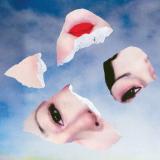
Themes of change, breaking up, shattering old ways of being are shot through the record. For the front cover, a photograph of the artist’s face was printed, ripped up and re-assembled, resembling the creative process embarked upon by Lew for her first “solo” material. The album feels instinctual, almost dream-like in its assemblage of sweeping synths and pulsating, propulsive drum machine beat patterns with Lew’s vocal performances sensitive and caressing over the top. Increasingly relying on the subconscious and dreams to guide her creative process, Hannah Lew frequently abandons literal interpretations or linear narratives, the songs seeming to exist in a swooning, effortless flow-state while remaining emotionally hard hitting.
On an album where every song could be a single, there are kaleidoscopic shades and varying emotional tones in abundance. First single Another Twilight is carried along a pumping, Italo-disco-style 4/4 beat and mono-synth bass line, the low end pulling at the heart and body. Lew’s vocal melody teases the track before swan-diving into a gorgeous chorus as she sings “it’s all over baby and I don’t mind… in decline, I take my time…” The album is suffused with moments like this. On slow builder Damaged Melody, an arpeggiated synth elongates the verse before a cascading synth showers down melodic glitter. The stunning Replica uses dual swirling synth patterns before a driving, synthpop chorus for the ages carries Hannah Lew’s vocal into the stereo field, sailing in on a high register singed with the embers of a break up.
In a departure from previous groups, her solo songs are guided by dreams and free association inspired by Dada and the Surrealist movement and sculpted afterwards. As such, the songs reveal themselves on repeated listens, revealing traces of heartbreak inspired by both personal and global elements - Hannah Lew regards the album “a wartime album.” On Move In Silence, Lew intones “there’s a war outside, just out of view,” revealing the dichotomy at play throughout. With the songs evolving naturally and in a flow state, the pressures and sadnesses of the modern age bleed through, mixed in with Lew’s inherent love, sensitivity and fractured-but-intact optimism. On the swooning, sublime Sunday layers of Numanoid synths open up for the commanding vocal performance pontificating on grief, love, pain as she “feels the ache on Sunday…” As the chorus builds and Lew’s call-and-response vocal adds to the emotional tension, it almost feels like too much to take.
Elsewhere, there are echoes of Hannah Lew’s previous work. On Time Wasted a bass guitar comes in with a heavy, punk attack before the synths and vocal harmonies reminiscent of later Cold Beat elevate everything. The glassy, sweetly resigned closer The Clock sounds like so classic it could be cover, a sweetened Jesus & Mary Chain tune perhaps, before it erupts into volcanic chorus that could only come from Hannah Lew in 2026.
Professor Roth's debut EP, self-released on his newly formed label Maestro, is music that feels half remembered. Familiar enough to settle into, strange enough to keep shifting beneath your feet, it lives in that sweet spot where groove and abstraction lean into one another. Dusty textures, hazy melodies and understated rhythms never demand attention, yet quietly refuse to let go. Every track feels like another realm of the same dream: warm, weightless and just slightly out of focus.
‘Daydreaming’ is an inviting first step into the haze, opening the door without ever fully revealing what's on the other side. Gentle movement carries drifting melodies that seem to appear and disappear with every listen. An ethereal vocal breakdown creates the feeling of being quietly carried away from its hypnotic groove before pulling you back under its spell. Patient and understated, ‘The Way It Is’ lets the groove do the talking while subtle details gradually come into focus. Dubby percussive chaos is softened by warm, lifelike pads, encouraging your body to move while your mind wanders elsewhere.
As the name suggests, ‘Swells’ arrives in waves. Layers fold over one another, building and dissolving without urgency. There's a beautiful tension between motion and stillness, leaving the track suspended somewhere between the dancefloor and a reverie. ‘Shades’ is a fitting close that blurs the edges even further. Soft, hypnotic and quietly psychedelic, it feels less like an ending and more like waking up slowly. Content to linger in that in-between a little longer, glitchy samples drift through swirling soundscapes, keeping the dancefloor gently spun until the very end.
There was nothing in contemporary music like Chris Isaak’s Heart Shaped World when it hit shelves in June 1989. More than three decades later, the singer-songwriter’s third album still sounds unique — and claims a backstory nearly as fascinating as the retro-leaning material and standout performances that propelled it to sales of more than 2.5 million copies. Home to the Top 10 smash “Wicked Game,” the set remains a masterful mood piece that invites you to pour a late-night drink, sit in a dimmed room, and relish Isaak’s elegant albeit raw ruminations on love, relationships, and questionable decisions.
Sourced from the original master tapes, pressed at Fidelity Record Pressing, strictly limited to 3,000 numbered copies, and featuring the bonus track “Diddley Daddy,” Mobile Fidelity's UltraDisc One-Step 180g 45RPM 2LP box set of Heart Shaped World unearths the staggering inner details, saturated tones, and brilliant atmospherics of the crisp production. It brings you up close and personal with Isaak’s spectacular singing — impeccably controlled, tense, brooding, steamy, smoldering, haunted — situated amidst stripped-down backdrops that allow every note to fully bloom and decay.
While Isaak’s ever-steady baritone remains the anchor, the contributions of his trusty backing band, the aptly named Silvertone, come across with just as much cool, command, and realism. The indispensable playing of guitarist James Calvin Wilsey particularly emerges with superb clarity and dimensionality. The character of his 1965 Fender Stratocaster, shivering twang of his spring-coiled fills, and his signature use of reverb, delay, and vibrato seamlessly match Isaak's patient deliveries and the band’s unhurried rhythms. Experienced on UD1S with ultra-black backgrounds and a nearly invisible noise floor, Heart Shaped World is in every regard a demonstration disc.
The premium packaging of this UD1S pressing befits its elevated status. Housed in a deluxe slipcase, it features foil-stamped jackets and faithful-to-the-original graphics. Aurally and visually, this reissue is for discerning listeners who desire to immerse themselves in everything involved with the album, not the least of which is the cover art depicting a lost-in-thought Isaak staring ahead and sitting in what appears to be an efficiency apartment. The image epitomizes the record’s lonesome temperaments and pensive themes.
Of course, if not for director David Lynch hand-picking two cuts from Heart Shaped World for his 1990 film Wild at Heart, the record would’ve probably suffered the same fate as Isaak’s prior efforts and gone unnoticed by the mainstream. Despite receiving raves from outlets such as NME, Chicago Tribune, and Rolling Stone upon its original release, the album stalled in the lower quadrants of the Billboard charts and, after a few weeks, dropped off.
Cue the ear of Lee Chesnut. Then the music director for a large Atlanta radio station, Chesnut heard the instrumental version of “Wicked Game” on Lynch’s soundtrack and started airing the album rendition at all hours of the day. Aided by a sensual video featuring Isaak and supermodel Helena Christensen, the song found its way into the public consciousness by early ‘91 and helped make Isaak a most unlikely mainstream star in an era where his techniques had little to nothing in common with popular tastes.
Despite its vintage vibes and shared DNA with legends such as Roy Orbison, Chet Baker, and Glen Campbell, Heart Shaped World transcends nostalgia, rockabilly, and throwback tropes. For all the melodrama and sadness at hand, Isaak’s gorgeously transparent singing dives deep underneath emotional surfaces. He mines subtleties that indicate his feelings go beyond heartbreak and anguish, and occasionally suggest frustration, menace, and anger. You can hear it in his quivering falsetto, and the slow and methodical ways he allows delicate whispers to break into shadowy phrasing that crosses over to the darker sides of romance and desire.
That approach bolsters the title track, which suggests calm yet moves on ominous currents — its simmering pace and snare-drum snappiness foreshadowing Isaak raising the volume and urgency during the coda. The southwestern-tinged “Wrong to Love You” plays with similar concepts of hesitation, unease, and discord, Isaak careful never to fully erupt and give anything away. His poised deliveries offer a master class in the art of insinuation and hurt on “Nothing’s Changed,” sent up with a wordless backing chorus and crackling guitar lines straight out of a Memphis blues joint.
Heart Shaped World further boosts its merit via its abundant stylistic variations, from the upbeat country-and-western trot of “I’m Not Waiting” and Spanish acoustic shimmer of the jazz-based ballad “Blue Spanish Sky” to the swinging horn-accompanied grooves of “Don’t Make Me Love You” and desert smokiness of the understated “Kings of the Highway.” On the latter, Isaak comes across as resigned and absolute. His singing and pain worm their way into your soul, and echo akin to the way the music prepares to strike when you least expect.
“Trouble going 'round,” Isaak croons right as the album begins. “Trouble going down.” Damn straight.
Carly Simon’s quietly intense sophomore album comes across like an assertive notice nailed to a telephone pole for all to see. Bold, personal, and autobiographical, Anticipation announces the arrival of an artist who won’t back down. While Simon stands her ground on her eponymous debut, she elevates her passion and persona to heightened levels throughout this gold-certified record, dealing in private matters related to love, relationships, and desire. At times, Simon is nothing short of primal. She reflects on the difficulties of retaining your own identity while also giving yourself to a partner. Simon’s connection to her folk roots would never be stronger.
Sourced from the original master tapes, strictly limited to 3,000 numbered copies, pressed at Fidelity Record Pressing in California, and housed in a Stoughton gatefold jacket, Mobile Fidelity’s 180g 45RPM 2LP set of Anticipation lays bare the rich tapestries afforded by the spare blend of soft guitars, mellow orchestration, and dreamy melodies. Audiophiles and record collectors, take note: This is the first time Anticipation has been available on 45RPM. The wider grooves and dead-quiet surfaces prove extremely rewarding.
The rhythmic framework anchored by session pro Andy Newmark’s drumming sounds dynamic and balanced, with songs benefiting from a focused midrange and taut low-end. Simon’s attachment to and investment in each lyric is made evident by way of the intimate, hushed atmospherics and expansive responsiveness. And just as Simon’s vocals feel more transparent and direct, so, too, do the supporting choral arrangements.
Released before the singer-songwriter movement reached full bloom, Anticipation remains remarkable for the high-quality songwriting and Simon’s gutsy stance. The album cover — depicting the vocalist holding the gates at Queen Mary’s Garden in Regent’s Park and seemingly defying anyone to take her on — serves as a metaphor for the content within.
Known for having relationships with high-profile partners, Simon was heavily involved with Cat Stevens leading up to the recording of Anticipation. She draws from her experiences to craft tunes that resonate because of their honesty, realism, and strength. Few of those moments are better known than the Top 20 title track, which Simon composed in just 15 minutes as she waited for Stevens to pick her up for a date. Imbued with the nervousness, tension, and excitement that accompany the moments when a romance could go either way, the Grammy-nominated song presages the feminist-minded vulnerability and burning longing that informs a majority of the record.
On the soulful “Legend in Your Own Time,” also inspired by Stevens, Simon harnesses yearning as a conduit to feel-good paradise. Deemed by Rolling Stone an “absolute clincher, an awesome description of the psychic ravages of gone-nuts, know-nothing love,” her cover of Kris Kristofferson’s “I’ve Got to Have You” moans with no-holds-barred desire and breathtaking sensuality.
For all the wanting Simon pursues on Anticipation, her way of staying in control — vocally and personally — make the record a courageous statement of contemporary femininity. For further evidence, look to the bossa nova of “Summer’s Coming Around Again,” somber “Share the End,” soothing “Three Days,” and sincere “Julie Through the Glass,” a tribute to her young niece.
Simon would achieve international fame with her next album, No Secrets. Yet as this definitive reissue shows, Anticipation suggests the rest of the world was just a little late catching up to her.
In 2023, Kraków-based composer Martyna Basta and Los Angeles-based sound artist claire rousay were invited to Poland by Unsound for a short residency, where they spent a few days trading ideas and concepts, and brainstorming their first collaboration. Initially motivated to create lengthy, expansive pieces together, they also ended up experimenting with shorter vignettes, and ‘hotel room’ expresses these two extremes, featuring three long-form tracks and three brief, euphoric songs. “It wasn’t something we specifically planned,” explains Basta. “It just unfolded that way.” The most important stage of the process, however, was the period that followed the residency, when rousay and Basta began working on their sketches in isolation, trading drafts and sculpting the sounds independently before rousay handled the final mixdown. In the comfort of their own bedrooms, they were better able to reflect their individual creative routines, organically reaching a junction where their music felt truly unified. Even while they were in Poland, the duo joked that it might have been easier if they’d been holed up in separate rooms emailing each other.
Both artists have had an energetic few years: after steadily building a reputation for her diaristic and candid concrète experiments, rousay signed to Thrill Jockey in 2023, releasing the acclaimed ‘sentiment’, ‘a little death’ and the more eaze collaboration ‘no floor’; Basta, meanwhile, followed up 2023’s hallucinatory ‘Slowly Forgetting, Barely Remembering’ and her debut for Belgium’s Stroom imprint, ‘Diaries Beneath Fragile Glass’ with a studio album on !K7’s 7K sublabel: ‘Winged in Collapse’. The title of their collaboration reflects rousay and Basta’s hectic touring schedules in the wake of these releases, the constant feeling of displacement and the emotions that emerge when the environment is in flux. “I know we aren’t the only musicians traveling and creating work at the same time,” says rousay, “but being able to speak about that experience and all the things that come with it was comforting.” And the music itself, assembled from hypnagogic field recordings, spectral voices, electronics and filtered instrumental improvisations, sounds bewitchingly unmoored, not tied to a specific location but hovering around the uncanny space in-between.
Scratchy ASMR sounds introduce us to the opening track ‘zoom’, initially obscuring the duo’s elegiac harmonies. They are careful to let the various elements evolve at their own pace, with the fictile guitar drones melting into the foreground while Basta’s dissociated whispers and rousay’s illusory synths pick out the subtlest subliminal shades. It all builds to the piece’s dramatic third act, when layered chords ring out like organ blasts, enveloping the negative space. The shorter, more anxiety-provoking ‘denim’ is remarkably divergent, a dismantled folk memory pieced together from skeletal piano notes, vaporous choral echoes, haunting string plucks and pulsating feedback. Where the music aligns is in the mood itself, capturing a feeling that’s neither completely abstract nor fully referential. Not ambient exactly, ‘hotel room’ is a suite of soundscapes that gesture towards structure while repeatedly folding in on themselves.
On ‘Lost and Found’, wordless Autotuned ad-libs spiral around delicate guitar plucks and washing waves, coalescing into a faded Polaroid of opiated Americana, and on ‘Where Are You Now’, operatic squeals and corroded orchestral scrapes are juxtaposed with nauseous low-end tones. Evaporating until only industrial whirrs and music box chimes remain, the latter encapsulates the entire album’s chilling liminality, smudging saturated voices with casual electro-acoustic interjections before it erupts abruptly, transforming into a dense, pitch-skewed hymn. ‘hotel room’ plays like a surreal travelogue, teasing listeners with airy familiarities as it humidifies dry, awkward spaces. More a labyrinth of catacombs than a single, fixed chamber, it’s Escher-like – cryptic and seductive – and decked out with personal asides and intimate details that reward the most patient, curious listeners.
But rest assured - it's still the same excellent band from Ruda ?l?ska, only this time instead of a forest full of ghosts or a land of fairy tale creatures like a Fruwajacy Przestepca the duo of producers takes us on an interstellar journey!
The artists' third album, just titled KOSMOBOTANIKA, is an over forty-minute work skillfully composed from a multitude of various samples, and genre-wise presenting the sounds of deep house, trip-hop, breakbeat, ambient and even jazz. This is electronic music with a very cinematic, visual and imaginative character, something at which ETNOBOTANIKA has undoubtedly achieved mastery confirmed by their first two very well-received albums. This cinematic style (electronic concept album?) is reminiscent of the classic albums of the genre's progenitors from the UK like The Orb (first releases) or The KLF (the iconic "Chillout" album), but also the French Motorbass.
The Silesian duo does it their own way, of course, with a local twist. Thus, in the cosmic journey our guides will be in-sampled familiar voices from Polish television, cinema, radio and dusty vinyls (yes - samples from Mr. Kleks in Space had to be on the album, of course :) ).
There is no shortage of atmosphere-building instrumental fragments here, but also quite song-like tracks with catchy melodies and vocals. Fans of the band will certainly be satisfied.
What is there to say - ETNOBOTANIKA has created another classic, which simply must be on the shelf :) Trust them and let yourself be taken on a cosmic journey - satisfaction guaranteed!