San Francisco style driving techno tinged with dark dubs and disco from two of the town’s most explosive producers.
Brick & Zero Idea represent the same city, blazing their own paths in San Francisco’s heady techno scene. Both manage their own labels / parties, Brick with Perfect Dark and Vitamin1000 a la Zero Idea respectively, but are no strangers in the studio together.
First up, two full-bodied techno timebombs from the duo: a mega sub’n’dubchord special alert on A1’s “West End” paired with a more refined, smoother, slippier companion on the A2 “No Room For Error”. Combined-strengths banger collabs for different moments and moods of a night.
Sticking with the theme, we see contrasting solo tracks on the flip side as well. Brick’s “Sigil” spotlights the producer’s laser focus for darker, hypnotic, full force synths in impeccable arrangement, while “Xhale” ends this release on an upliftingly funky bassline disco tip showcasing Zero Idea’s ease at blending techno sensibilities with French House techniques.
Поиск:idea 6
Все
Like a phoenix from the ashes, or Ukrainian culture after centuries of demolition, the Kyiv based label Noneside Records is experiencing its revival and rebirth. After all, «Nothing will stop an idea whose time has come» - these words of chief Stepan Bandera make it clear to everyone: if you really burn with sincere emotion for your dream - no difficulties will stop you on the way to its realization.
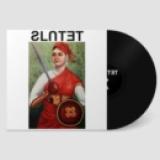
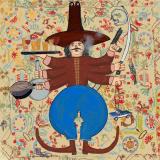
Five unique tracks from Slava Los, Yevhenii Loi, Lostlojic, Luschn and aqua. - is a tech house with elements of trance with soul and passion from musicians who write music despite the war. Visualization of the whole action on the record is the picture «The hug» by the Lviv artist Oles Derega.
Slava Los makes his debut on vinyl with the beautiful track «Snus» - old school trance in the best traditions. The author now defends the borders in the ranks of the Armed Forces of Ukraine, so he decided to fulfill his old dream about the vinyl. Yevgeny Loi is also currently in the military, but this did not prevent him from making a new version of «Bounce» - a trance for a slow, erotic dance mood. Lostlojic, who is also the art director of the project, recalls the important message of «Send Me F16» in the uncompromising track of the same name, or rather in its VIP version created especially for the release.
Known to vinyl collectors for releases on Deeptrax and Infinite Pleasure. Luschn, a Kyiv legend and mega productive musician, known to tech house maniacs for his releases on Vector.Kyiv and Noneside, invites you to have fun and crazy dances with friends to his rehearsed «Ostinato Transdanz». Newbie aqua. has a unique recognizable style, where the rhythm is constantly changing in each track, nostalgic for the favorite place of childhood - near the Hydroelectric Station in Zaporizhzhia, crazy beats and steppe motifs in the track «H.E.S.».
- 1: Think Twice
- 2: It’s An Action
- 3: This Thing Called Progress
- 4: In My Headache
- 5: Underage
- 6: Self Abuse
- 7: Cult Band
- 8: Last One
- 9: Pure Hate
- 10: Castration
- 11: Reggae (I Hate)
- 12: Give It Up
- 13: Think Fast
Formed in Portland, OR in 1980, Poison Idea debut record features 13 songs in 13 minutes. Poison Idea were one of the first hardcore bands to inspire artists across multiple genre lines. Poison Idea’s 1983 Debut Release!!! Iconic Original Artwork! New Liner Notes by Jerry A. Features Sticker, Lyric Sheet, Credit Sheet, and Liner Notes.
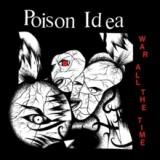
POISON IDEA’s momentum hasn’t slowed down one bit; this is still their brand of loud, potent powerthrash. Slightly more metal than in the past but the accent here is on the force and fury. Scorching. Each song on War All the Time flows into the other in a natural sequence for maximum impact and the whole thing blows over before you know it, but everything stays in your head, banging against the walls of your frontal bone. All this makes a good album, but what turns War All the Time into an amazing album are the lyrics and their delivery. Jerry A took the negative side of the world around him and expressed it in detail, rendered with words that can be read in a universal manner, expressing everything trivial and worthy of our puke in a language better suited to talk about the beauty of life. And those words remain as true to this day as the band’s riffs are brutal.
2024 Repress
Berliner Robert Dietz lands on the Rotterdam label Nous'klaer Audio with the summery five-tracker RIP To My Idea Of You.
A record infused with beautiful melodies and bright energy boosting drums - for the club, home and everything in between. The vinyl comes with a special poster designed by Hendrik Schneider.
- A1: The War
- A2: The Council Of The Kings
- A3: Vertigo Of Love
- B1: The River’s Queen
- B2: The Margarina Hotel
- B3: All Aboard
- B4: In The Claws Of Cremazilla
- C1: The Cursed Ballerina
- C2: With A Little Help From Ess-95
- C3: Guess Who’s Back
- D1: The Team And The Beast
- D2: The Fight
- D3: We Are Victorious
- D4: Tell The Bells To Ring
If the genesis of The Big Idea was written both in the corridors of their high school and the surroundings of La Rochelle, the first chapter truly takes place in a big house in outskirts of Paris, where the six boys settled once they got their baccalaureate in 2015. Throughout these five years, The Big Idea hosted every European band playing in Paris with no landing place. The house of Champigny-sur-Marne, almost invisible in the monstrous metropolis, became a central location of the capital’s underground scene.
That creative cyclone within which the band is placed quickly shows results and the band hit it hard with their debut LP “La Passion du crime 3” (2017). This quadruple album, written as the movie score of a police investigation story, affirms something fundamental: The Big Idea is determined not to do things like everybody else. The influences of the great psychedelic rock’n’roll tribes naturally appear, the band release several record, start touring all around Europe allowing them to develop a furious alchemy on stage. But then covid brought everything to a halt. However, the band returned to La Rochelle and plotted a new, mad project.
The Big Idea becomes the first band to record an album on a sailing boat while crossing the Atlantic. Once again, the idea is fabulous, and “The Fabulous Expedition of Le Grand Vésigue” represents both the thirst of adventure of the sextet from La Rochelle, and their yearning for calm, psychedelic horizons. After the release of the documentary film and the big tour that followed this extraordinary adventure, the band decides to reaffirm the most essential part of its identity and announces for February 2024 the releasing of a new record more electric and radical, in the image of their live performance with more and more intensity. “Tales of Crematie” is a story built on a fantasy medieval backdrop, but could have however taken place in our modern era. If the elegant, psychedelics parts have not disappeared, the record’s tone is clearly more rock than what the band has ever created before, and as The Big Idea always likes to go overboard, the album will be released as a double LP in which you’ll hear trumpets as well as pianos, violins, tropical influences, post-punk, and above all, loads, loads of fuzz. Just like a toy chest whose key would’ve been thrown away on purpose, hidden arrangement treasures abound inside of “Tales of Crematie” , along with a violent revolt against the modern archetypes of “too normal music.”
JON GOMM'S 'THE FAINTEST IDEA' WILL BE REISSUED ON VINYL FOR
THE FIRST TIME SINCE 2020.Jon Gomm, the UK based acoustic guitar
virtuoso, finds new emotional depths in immense melodic pop
landscapes, with his 'The Faintest Idea'
As one of the pioneers of the modern fingerstyle sound, Jon Gomm has a rare gift
for turning one instrument into what feels like an entire orchestra. The singersongwriter's 2003 home- recorded debut, 'Hypertension', was nothing short of a
musical revelation. Things changed for Jon when landmark single 'Passionflower'
racked up millions of views on YouTube & other media platforms in 2012 – with
British legend Stephen Fry describing him on mainstream television as someone
"playing the guitar in a way I'd never seen it played before" & "an all-round genius".
The Faintest Idea's title is based on the notion that all of us, to some extent, are
just 'The Faintest Idea', "It's an enigmatic title," says Gomm. "There's a fine line
between a metaphor & a pun, so I guess it dances on that" & explores the
contrasts between the warmth of Gomm's acoustic articulation with more icy
affairs, thanks to the synth parts & production work from Australian musician
Andy Sorenson, together they have created a contemporary masterpiece.
The Faintest Idea's immersive & emotional 11 tracks see a musician coming to
terms with the talents that got him recognised & choosing to evolve into the
unexpected. This album just boils down to the magic of one man with his guitar &
voice. And what a powerful magic it is.
The album is complemented by the delicate hand drawn pen & ink cover art
created by Lee Zimmerman. 'The Faintest Idea' is issued via Kscope on Black LP.
It’s been more than a year since our last release on Suction Records, and we’re excited to be back with the introduction of a new artist to the label’s roster. In fact, this split 12” serves as an introduction to both Useless Idea, and Seven Nights Alone, two aliases from the same Italian artist and producer, Cesare Bignotti. The split also serves as a taster for two forthcoming Suction Records full-length LPs, coming soon from both aliases.
Useless Idea, with previous under-the-radar cassette album releases on WéMè Records (2018’s “Acid Hologram”) and EVES Music (2020’s “Xa Peh”), has been quietly recording his own brand of inventive, playful, and melodic IDM/braindance for more than 20 years. We’ve been slowly compiling Useless Idea’s debut vinyl full-length for several years now, and the resulting “Glitch In The Colors” will be released later this year on 2LP vinyl, covering the span of his 20+ years of recording. From “Glitch…” we’ve included standout cut “Mello Tron” alongside two tracks that are exclusive to this split 12”.
Seven Nights Alone is a more recent alias, and outside of 1 track released on a compilation, this marks the new alias’ debut release. There is an undeniable Boards Of Canada influence here, but this is a unique and sophisticated take on BOC’s woozy and melancholy electronica. Both “Soft Where” (a menacing, futuristic instrumental hip hop killer) and “Walkman” (like a BoC “Campfire Headphase” outtake but on an optimistic tip) are taken from Seven Nights Alone’s debut 2LP vinyl full-length “Another Place”, to be released on Suction Records in 2023, alongside a 3rd track that’s exclusive to this split 12”.
Vinyl is limited to 200 copies, and comes with a Bandcamp download card.
Current Worldwide events show how some of us are full of hate.Cruelty, Anger, Violence and Greed control the minds of those seeking fulfilment from external sources. Hoping to feed their longings with possessions and power... and to me, this is THE IDEA OF THE DEVIL!" - Bukez Finezt 2020
This leganday EP was originally entitled “No New Ideas” and was released as a very limited CD back in 2012. It is one of a very few Kniteforce catalogued releases that never saw vinyl. Each track on the EP has been rebuilt, and remade, with slight changes made to the tracks in either tempo or style, and is only available in limited numbers. Plus it has one new idea, for those that look for it….
Fresh off of a pair of well-received EPs on his recently-launched Manhigh imprint, Berlin's highly respected techno auteur Henning Baer makes his first appearance on Nonplus with 4 excellently crafted, saturated machine techno tracks on The Idea of Instinct. Following on feelings suggested in the title, the EP opens with a pair of more contemplative pieces: the title track's spare arrangement puts mechanical rhythmic drive behind its exploration of dusky electronic atmospheres, while the feeling of 'DNA' is both brighter and slightly pacier, its hypnosis deriving from the pads and synthesizer sequences that circle the drums. 'CCC II' takes a darker approach to a similar idea, this time with the suggestion of polyrhythms in the distant and heavily-treated percussive elements circling in the background behind uneasy ambience. It builds to the closer 'Spiritual Quest', where overlaid rhythms in 3 and 4 are not easily reducible and create the tension at the track's centre driving it to its conclusion.
Produced by Jenn Wasner of Wye Oak. LP is on coloured coke bottle green vinyl + inclues download code and 12x12' lyric sheet/ liner note insert.
Madeline will be on tour throughout the UK and Europe this Autumn.
'Building from understated beauty to dense guitar theatrics. It reminds me of Chicago circa '93 as remembered in a dream — a little bit of Liz Phair 'Exile In Guyville' - rendered in soft-focus with the graceful confidence of a young master. ' STEREOGUM
In January of 2018, five months after the release of her debut album Night Night at the First Landing, Madeline Kenney traveled from Oakland, California to the woods outside of Durham, North Carolina to record her sophomore album with a new collaborator, Wye Oak's Jenn Wasner.
The choice was a conscious decision to explore new methodology in writing, recording, production and even genre. Perfect Shapes sees Kenney leaping headfirst into fresh and adventurous territory, largely eschewing conventional rock structures in favor of theme and melody. Its ten songs are full of surprises big and small - from vibrant synth lines to taut bass figures and subtly modulated vocals - that instead of feeling fussed over, reveal Kenney's penchant for elegant and abstract composition.
Kenney's 2017 debut, Night Night at the First Landing, was a guitar-centric rock album, produced by friend and collaborator Chaz Bear of Toro Y Moi, Perfect Shapes leans on the foundational pieces of Night Night - fuzzed-out guitar tones, coy wordplay and Kenney's notably strong voice - but with an unconventional approach that allows them to bloom, reincarnated. Perfect Shapes marks Wasner's first foray into producing another artist's work and is permeated by the pair's collaborative spirit. Both Wasner and Kenney play multiple instruments on the record, and engineered the session alongside Kenney's touring percussionist, Camille Lewis.
An eagerness to explore and experiment is apparent from start to finish, as Kenney and Wasner weave endless sonic curve balls into the arrangements. From the delightfully warped percussion on opening track 'Overhead' to the burbling synths on the R&B-tinted 'The Flavor of the Fruit Tree' and the left-field trumpet solo in 'Your Art,' these rich and inventive ideas echo Yo La Tengo's everything-but-the-kitchen-sink mentality, as well as the surging soundscapes of Tame Impala and Wye Oak at their most impressionistic. Lead single "Cut Me Off" is a surprise of its own - the most pop-forward song Kenney has written yet. 'Bad Idea,' finds her balancing fragility as foil; later, 'I Went Home' manages to evoke both frustration and affection in a single breath.
The complex and open-ended questions that lay at the core of Perfect Shapes mark Kenney's arrival into a hard-hitting reflective space: How do you love another when it hurts to do so What is the physical limit to which one can carry the emotions of others How does a modern female artist reckon with the expectations demanded of her femininity Yet for all the notes of doubt and fear that Kenney raises, she delivers each song with confidence and poise, grounded by the pointedly laid and surging soundscape.
Kenney has always had a penchant for curiosity and experimentation. Raised in the Pacific Northwest, she began studying classical piano and dance in kindergarten, and grew to believe her future lay in modern dance choreography. Not one to be tied to a singular pursuit, however, Kenney took a hard left in college, studying Interpersonal Neurobiology and supporting herself with a career in baking. Music remained a constant however, and after moving to the Bay Area in 2013, Kenney quickly found footing in the supportive arts community in Oakland. There, she met and began collaborating with Chaz Bear (Toro Y Moi), which led to the production of her Signals EP and later her debut album, Night Night at the First Landing. Both releases were received with great critical acclaim, and saw Kenney exploring the sounds within her self-proclaimed twang-haze genre, defined by cathartic fuzz breakdowns and lyrical sensitivity.
The new Saint Petersburg based label is focused on underground sounding of house and minimal. This is the first release of the label and the debut of a new artist Matpri from Saint Petersburg. Four original house tracks with a shuffling drum beats and solid basslines will add a dose of positive energy to your mix.
Three raw, tough, cutting originals from a Brooklyn borough brother only known as Trey. All tracky and dynamic, blunt and deliberate, and most definitely made for clubs that exist on the fringes, in the seedier, stranger corners of the world. To be played during the small hours of the night. Comes packaged in a special graph paper-print inner sleeve.
Our 7th production is about to come! (official release date on 12th of January) Once again in a different kind of music : this time Hip-Hop! Produced by Luke Vibert (Ninja Tune, Warp, Planet µ, Mo Wax, Rephlex...), with all rhymes by BluRum13 (One-Self, Bullfrog) and recorded by Kid Koala & DJ Grandtheft... in 2004! The album was at the time kept aside by Ninja Tune (only digital release) because of similarities with One-Self project (led by Dj Vadim).
13 years later, we are offering this UK Hip-Hop jewel secretly hidden on vinyl!
New tracklisting especially made for vinyl, which comes with exclusive track on bonus colored 7".
Some more good news : this reissue made the two friends work together again for a new collaboration coming out on 2018!
Indulge in a delicious audiophile preview with this Appetizer 12" from the upcoming 2024 compilation by Swiss DJ Princess P. This musical amuse-bouche offers a taste of her eclectic sound, in anticipation of her full, richly curated collection.
Swiss DJ Princess P, known for her eclectic sound, has been a dynamic presence in the electronic scene since the 90s. From her early days exploring house music to working at Plattfon Records, she's honed a genre-defying style. Her sets, a blend of savory house with indie and techno, are renowned at clubs and festivals alike, showcasing her deep musical knowledge and innovative spirit.
Half Speed Cutting and mastering by Sidney Meyer @ EBS Berlin Studios (formerly Deutsche Grammophon).
Liner notes by Kirk Degiorgio
Even in these most turbulent of times, dub musician and fatigued onlooker Elijah Minnelli remains an inexplicable stalwart on the lower rungs of the Breadminster County Council.
His latest record ‘Clams As A Main Meal’ continues his astute siphoning of council funds, this time with help from the Breadminster Board of Abstinence. As a further mark of respect, the original head of the Board, Dr. K'houldoux, graces the cover art in his infamous ‘Looming Moon of Desire’ guise.*
As fine a backdrop as any for Minneli’s off-brand dub experiments, and ‘Clams...’ is the truest representation of his varied wheelhouse yet...
We find vocal appearances from dub goliath Dennis Bovell and Welsh-language singer Carwyn Ellis. A pair of tracks which build on 2024’s acclaimed ‘Perpetual Musket’, a collection of folk songs reworked alongside reggae vocalists, released by FatCat Records. It garnered glowing reviews, with nods from The Guardian and The Quietus concluding with prominent appearances on their respective yearly round-up lists.
Elsewhere, the album finds Minnelli in a more experimental mode, all wheezing contraptions and cockeyed bass, creaking with the weight of creation, a satisfying tactility laid seam-side up.
As well as ‘Perpetual Musket’, the new album follows years of sold out 7" singles, handmade and self-released. Online, the tracks have amassed global streams numbering in the millions. His tracks have found play across an eclectic range of radio mixes and dance floors, most notably the likes of Andrew Weatherall, Batu, Optimo and Zakia Sewell (BBC6Music).
It is perhaps worth mentioning that this everbuilding interest in his work is at great odds with the growing suspicions amongst his fellow townsfolk, who see his Breadminster County Council Music Initiative as nothing more than an empty cash-grab.
Further Reading on the Breadminster Board of Abstinence
In the late 70s, Breadminster was awash with the last vestiges of the hippy era. Though the flared silhouette of the lower leg remained, the utopian ideals that had once flowed merrily around the youth's shaded ankles had begun to wane. LSD and free love had led to a sharp spike in population and a generation of children raised by air-headed psychonauts unprepared for the bleary-eyed strictures of parenthood.
Aware of the crisis, the County Council entrusted Dr. Paulinque K'houldoux to spearhead a pushback, and it was his pro-abstinence movement - a mixture of education initiatives and radical renutrition campaigns - that came to impact Breadminster's census deep into the new millennium.
Being a pseudo-archipelago Breadminster has fundamentally limited resources, however deep-seated ties to distant coastal villages meant that oysters were a regular part of the local diet. K'houldoux pinpointed this as a factor in the town's overpopulation, and believed that simply replacing these with clams (a “lesser mollusk”) would help lower the erotic urges of the people. It was his “anti-aphrodesia” movement that first championed the idea of “Clams As A Main Meal,” and the slogan “Consider Abstinence” carried the message yet further.
The Breadminster Board of Abstinence soon became involved in all cultural happenings in the area, with K'houldoux MCing at prominent festivals and performances, sometimes dressed as the “Looming Moon of Desire” - an idea of his relating to the tide, seafood, menstrual cycles, and his privately held celestial predilections.
It was in 1981 that it was revealed Dr. K'houldoux had never fully qualified as a doctor and was seeking exile in Breadminster due to a series of botched bracelet heists in which he had previously been involved. K'houldoux was subsequently extradited to Basingstoke, where he served 3 of a 12-year sentence, owing to the lunar-oriented prisoner health campaigns he helped implement.
It has been a strange twist of bureaucratic fate that the Breadminster Board of Abstinence has never stopped receiving public funding, despite its lack of clear utility. And while its roots are tied to a rose-tinted past, the Board continues to sponsor cultural events and projects to this day.
An extract from: Eugeniq Schooner's article in Sydney Parishioner: “Clams, Breadminster and Countercultural Abstinence Trends” (2008)
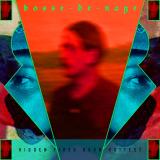
There's a tendency in metal to mistake aggression for honesty, volume for depth. To confuse the performance of darkness with its actual weight. Hidden Fires Burn Hottest, the new album from San Francisco-based post-black metal band Bosse-de-Nage, sidesteps this entirely. It’s the group’s most fully realized work yet, precisely because it refuses to be pinned down.
Bosse-de-Nage have been working with The Flenser for over fifteen years. They were one of the first bands the label ever partnered with and have the longest active relationship in the label's history. But unlike most bands who build momentum through constant touring and visibility, Bosse-de-Nage has largely existed apart from the music world's usual machinery. They've evolved on their own terms, in relative isolation, allowing the work to develop without outside pressure or influence. What began rooted in black metal anonymity has mutated into something that actively defies categorization. The aggression is still there, but it's no longer the point. Hidden Fires Burn Hottest finds the band treating emotions like physical objects, feelings with spatial properties. “No Such Place"" describes a space that can't exist but does anyway, somewhere between thought and location. ""Immortality Project"" examines infinite possibility not as promise but as problem, endless options collapsing under their own weight. These songs don't use metaphor to describe emotion. They make emotion into something you could theoretically touch.
Tracked by Jack Shirley (Deafheaven, Oathbreaker) at Atomic Garden East and mixed and mastered by Richard Chowenhill of Agriculture, Hidden Fires Burn Hottest was years in development, with some tracks beginning in 2018.
The long writing process offered time that most records don't get. Time to live with ideas, revise endlessly, to let structures settle. For the first time, lyricist Bryan Manning wrote everything in advance, creating a surplus to pull from rather than working under deadline pressure. The difference shows.
Coming off Further Still, an album built on constraint and economy, Bosse-de-Nage sought the opposite: sprawl, strangeness, fewer rules. Space for ideas to develop without rushing them. Dynamics that move through quiet as much as noise. Presence earned through atmosphere instead of volume. The record even includes ""Mementos,"" which might be considered the first love song the band has ever written.
Nothing here coheres into a theme. These are pieces pulled from low moments and private feelings made public through sound. The band has never been interested in positivity, in music that resolves cleanly or offers comfort. But bleakness doesn't mean humorlessness. There's something darkly funny running through much of it, even when it shouldn't be.
Hidden Fires Burn Hottest doesn't explain itself. It just insists: what you feel is as real as what you can see."
- A1: Abay
- A2: Tew Ante Sew
- B1: Mengedegna
- B2: Kahn
- C1: Sew Argen
- C2: Nafekeñ
- D1: Abet Wubet
- D2: Guramayle
- D3: Gud Fella
- D4: Guramayle (Slight Return)
180g Heavy double vinyl LP with liner notes by Tyran Grillo. Limited Japanese Obi for the first pressing. Original artwork by Russell Mills and photography by Jean-Baptiste Mondino.
The third Time Capsule is a body of dub reinterpretations by celebrated producer Bill Laswell of Ethiopian singer Gigi. Curated by Tokyo record collector, music researcher and seasoned reissue supervisor Ken Hidaka, it is the first time Illuminated Audio is pressed to vinyl after its CD release in 2003.
Ejigayehu Shibabaw was born in 1974 in Chagni, northwestern Ethiopia and by pursuing a career as a singer, went against her father’s strict, traditional gender roles. As Gigi, she embraced the same musical freedom she had strived for in her personal life, incorporating the Ethiopian church, funk, hip-hop, West and South African music into her work. She first settled in Nairobi, then Addis Ababa, where she quickly established herself as one of the city’s leading singers. A move to San Francisco in 1998 led to a long and fruitful creative partnership with bassist and producer Bill Laswell.
Around the same time, Chris Blackwell had stepped away from Island Records to start the art house film company and label Palm Pictures. He took an interest in Gigi and together with Laswell, pulled together an all-star cast of musicians for her self-titled US debut album, including Herbie Hancock, Pharoah Sanders and Wayne Shorter. It won international critical acclaim, not just for its musicianship but for making Gigi a “defining voice for the Ethiopian expatriate community”, as journalist Tyran Grillo praises in his Time Capsule liner notes. From the nation-defining 1896 victory over Italian invaders to the quiet revolutionaries who wear simple shemma garments, Grillo believes the themes in Gigi make it “a shower of sunlight on her homeland for those ignorant of its struggles.”
After its success, Blackwell encouraged them to go back into the studio to rethink the album and Illuminated Audio was born. “Anyone can make a voice sound worldly”, Grillo remarks, “but rare are those who can make one sound inner-worldly.” Gigi was clear with Laswell to give her vocals a minor role “because it’s already been done.” Instead her Amharic verse is fleeting, exhaling through the textures like ghostly fragments; soaring yet muted. Yet the album is still titled under her name, an assertion by Laswell of her central role in the album’s creation. Not only was it a fully endorsed project by Gigi, but she would be present throughout its development, giving feedback on half-finished ideas as Laswell played them back in the studio. “It works perfectly”, she reflected after the album’s release. “We wanted to capture the whole spirit of each track, and Bill’s remixes create a different music language that really puts you in a pleasant place”.
This new vocabulary takes its lead from a technical approach that Laswell had been perfecting during a furtive creative period at the turn of the millennium. Much like his ambient interpretations of Miles Davis (Panthalassa, 1998), Bob Marley (Dreams of Freedom, 1997), and Carlos Santana (Divine Light, 2001), Laswell approached Illuminated Audio by returning to the original multitrack masters. Gigi wasn’t just reworked, but recomposed into an expansive lattice of instruments, submerged in a watery ambience of dub and trance undercurrents.
Sonically, this new language that Gigi refers to, is manifested by the original album’s more understated parts being pushed to the fore. Explaining his contrasting methods, Laswell saw Gigi as being “put together in a way that fits”. Contrastingly, in Illuminated Audio, “a lot of things that I featured in the remix weren’t as audible in the original.” Instrumentation laying near-dormant, deep in the mix, are brought to the fore: the acid rock guitar and Wayne Shorter’s saxophone on ‘Tew Ante Sew’, Graham Haynes’ flugelhorn on ‘Nafekeñ’, Laswell’s bass on ‘Kahn’, the melodica in Mengedegna or the floating synths and talking drums in ‘Gud Fella’.
Brought to his attention by mentor DJ Nori, Hidaka describes Illuminated Audio as a “masterful sonic exploration into ethereal ambience and dub” and made sure this reissue also contained a full remaster to give its “deep musicality” much better dynamics and density in the overall sound. Hidaka admits that Laswell's music “is sometimes so out-there, it is often misunderstood” and, indeed, to dub album non-believers this might seem like a prolific producer imposing himself on another artist’s work; eternally developing rearrangements that never quite get to its destination. But that’s missing its true power and triumph. This is more than the reissue of a remix, but “a wholly unique musical entity”, as Hidaka describes. Illuminated Audio refers to the illuminated manuscripts that comprise the major part of Ethiopian art and its new compositions stand in proud solitude as a rare body of reworks that both informs and enhances their originals.
Accomplished trumpeter, composer, bandleader and educator, Kamal Abdul-Alim has been actively involved in creative music for decades. He has toured Africa, Europe, the Caribbean and the United States. He has recorded with all kinds of bands, large and small, and performed in festivals all over the world. “He takes the postbop of the 50s and free-form jazz of the 60s and turns it into an even balance of fine textures. Alim, who is highly underrated, has one of the most beautiful tones and concepts of jazz. A master of improvisation, he knows the art of weaving different ideas, whether they stem from Manhattan’s lower East Side or Europe” (Hugh Wyatt, New York Daily News). “Dance” was recorded in 1983 but first released on vinyl in 1987. Rhythm section includes drummer Idris Muhammad. Original pressings are extremely rare and expensive. “Brotherhood” is a much sought after track on the jazz dance scene. There is a high demand for this title again on vinyl and pressings are limited to 1000 copies, all individually hand numbered.
- A1: Legacy
- A2: First Step
- A3: Auditory Hallucination
- A4: Between Worlds
- A5: Healing
- B1: God Of War
- B2: Next Dimension
- B3: Through The Roof
- B4: Foggy Times
- C1: Thought Bubble
- C2: Dark Corners
- C3: Purgatory
- C4: Eyes Of A Ghost
- C5: Lump Sums
- D1: Overnight
- D2: Feeling Strange
- D3: The Climb
- D4: Problematic
- D5: Blind Faith
High Focus Records are proud to present the latest collaboration from Verb T & Illinformed. ‘Stranded in Foggy Times’ both continues and completes the trilogy that began back in 2015, with ‘The Man with the Foggy Eyes’, before broadening the horizons with last year’s release ‘The Land of the Foggy Skies’. This final chapter returns to the same conceptual landscape as its predecessors, but also sees Verb T & Illinformed returning to a more classic approach to album making. In spite of its concept, the Foggy Trilogy is something of a personal outpouring for Verb T, with the original aim being to vicariously discuss the trials and tribulations that play a part in his life, including his struggles with chronic illness and the feeling of alienation from leaving his hometown, while also reflecting on the state of the world as a whole. Their approach to making the album meant taking it back to the most natural form, where the idea for the track would be outlined, Illinformed would make the beat, Verb T would write to it and then they would tweak and adjust accordingly. The result is 19 of the most finely crafted tracks to emerge from the UK shores this year. As with the previous albums, ‘Stranded in Foggy Times’ finds Illinformed moving away from the more rugged sound that has shrouded the British scene over the last few months, thanks to his collaborations with the likes of Datkid and Wish Master, instead providing Verb T with an arguably more mellow backdrop. From the string and piano driven introduction on ‘Legacy’, to the blissful head-nod vibes of the closing track, ‘Blind Faith’, the union between beats and rhymes sits at the perfect level. The album also boasts one of the most impressive guestlists of the year, one that is very much a product of both players’ worlds. Thanks to Illinformed’s Bristol connection, there are features from the likes of Res One, Datkid, Leaf Dog, Smellington Piff and Chillman, as well as some locally sourced cuts from DJ Rogue. While on Verb T’s side of the fence, we have features from Rye Shabby and Moreone, along with a collaboration that reignites the same creative spark he found in his early days, as King Kashmere steps into the booth on Feeling Strange. All in all, ‘Stranded in Foggy Times’ does exactly what it sets out to do, by drawing the trilogy to a close while also providing insights into Verb T’s personal world and the world at large. The fact that it also happens to be one of the strongest rap albums of the year is the icing on the cake
Deluxe Edition[75,00 €]
For more than two decades alto saxophonist Marshall Allen has carried
on the legacy and sound of the Sun Ra Arkestra - He turned 98 in 2022
and as evidenced by Living Sky, his influence and leadership remain
undiminished
On the group's first recording since the pandemic and their Grammy nomination,
bandleader Marshall Allen and company give us something we can hold onto, an
instrumental album rich in spirituality to guide us through the unknown yet again.
The album includes the first studio recording of Sun Ra's elaboration of Frederic
Chopin's "Prelude in A Major", first instrumental recording of Ra's "Somebody
Else's Idea". Features Allen's "Day of the Living Sky", a meditative work that is a
belated response to Sun Ra's composition "Night of the Living Sky" which is also
featured in the album.
Cover art by Damon Locks. Mixed & mastered by two time Grammy winner Dave
Darlington.
Standard Edition[57,10 €]
For more than two decades alto saxophonist Marshall Allen has carried
on the legacy and sound of the Sun Ra Arkestra - He turned 98 in 2022
and as evidenced by Living Sky, his influence and leadership remain
undiminished
On the group's first recording since the pandemic and their Grammy nomination,
bandleader Marshall Allen and company give us something we can hold onto, an
instrumental album rich in spirituality to guide us through the unknown yet again.
The album includes the first studio recording of Sun Ra's elaboration of Frederic
Chopin's "Prelude in A Major", first instrumental recording of Ra's "Somebody
Else's Idea". Features Allen's "Day of the Living Sky", a meditative work that is a
belated response to Sun Ra's composition "Night of the Living Sky" which is also
featured in the album.
Cover art by Damon Locks. Mixed & mastered by two time Grammy winner Dave
Darlington.
New pressing on black vinyl (500 units). Following the recently released and highly praised Trees 50th Anniversary box set on Earth Recordings, Trees reissue their debut album ‘The Garden of Jane Delawney’as a standalone release. It’s now over fifty years since Trees’ formation, a band who helped define ‘Acid Folk’, creating a sub-category in the lexicon of record dealers and music critics alike. “When we are talking about psych folk or acid folk, we are really talking about music like this by Trees” Stuart Maconie, BBC6 Music. Trees first album, ‘The Garden of Jane Delawney’ (1970) snuggles nicely into contemporary nu-folkies’ idea of the genre, and shares some of the pastoral-whimsy that characterised The Incredible String Band or Donovan, offset by some stunning interpretations of traditional material and Bias’ own songs. The record includes readings of ‘Lady Margaret’, ‘Glasgerion’, the old standard ‘She Moved Thro’ The Fair’, and the extended fade of the group’s own ‘Road’, presage the explosive instrumental duelling that would come to characterise the follow up album, ‘On The Shore’. // “The music’s arcane power remains intact” Mojo. // “A fantastic band” Record Collector. // “Spectacular” Uncut. // “Sublime” Shindig. // Timeless” Prog. // “It’s these two original albums that stand as pinnacles of form” The Wire. // Track listing: A1. Nothing Special A2. The Great Silkie A3. The Garden of Jane Delawney A4. Lady Margaret B1. Glasgerion B2. She Moved Thro' The Fair B3. Road B4. Epitaph B5. Snail's Lament
Don’t rolls into its 25th year of releasing records with this insane 5 track 12” “Swagger Portraits” from one of the most interesting Techno producers out there. L/F/D/M
This is his second outing on the label and as always the message is raucous and confrontational Techno and Acid that penetrates right to the core of what Don’t is all about
To put it simply, he’s an ‘ideas man’ and his tracks are always different, always exciting and always a nice contrast/middle finger up, to the sanitised sample pack culture that seems to be rife in Techno at the moment.
Also included is an edit of ‘We Know’ by label boss Jerome Hill.
Plastico makes a striking entrance with a release that commands attention.
Jojo Hofmockel acts as the bridge between the electro sounds of the mid-1990s and the early minimal wave of the 2000s. The result is a strong, highly personal release, showcasing clear artistic vision and fresh, distinctive creative ideas. The tracks, composed between 2004 and 2006, carry a sound unmistakably rooted in the early years of the century.
Two jewels in the crown of the soulful electronic music scene in NYC unite for a spellbinding EP on Rhythm Section International. ”Full Circle” is a brand new body of work from Musclecars & Toribio.
To call this 12” simply epic would almost be doing it a disservice. The breadth of musicality and execution of ideas contained across 3 compositions is nothing short of miraculous. I use the word composition intentionally: these are not merely tracks - these are 3 movements making up a concerto - with a dub thrown in for good measure!
The record kicks off with a soulful house behemoth, “ That’s My Story” featuring NJ legend Roland Clark on vocals giving sweet sweet testimony. In many ways, this track feels like a coming together of the trios influences. The lyrics contextualise it, giving it this intimate, confessional feel. The latin drums shuffling amidst the 909 kick drive it forward and the organ swimming freely amongst it all takes us to church. It’s a timeless track - paying homage to the various New York traditions laid down by Louis Vega, Timmy Regisford, Joaquin Claussell , Ron Trent et al - all heroes and collaborators of the composers who - with this effort - have surely now earned their place in the pantheon of American Soul Music.
‘
Be Honest’ maintains the confessional tone with the lyrics but takes things right back down in terms of tempo. Is it a love song, an ultimatum or a cry for help? Whichever way you interpret it, this track is Toribio’s time to shine as a lead vocalist and he hits all the notes, leaving not a dry eye in the house. This is a delicate tour de force, delivered with such raw emotion and vulnerability it allows the instrumentation takes a back seat - just a gentle groove, swelling strings and some unresolved chords are all that’s required to transform us to the main character of this story. We’re left hanging, and it’s oh so relatable.
Agua De Florida serves as an uplifting, fast paced finale to the concerto and this one’s all about the trumpet - masterfully performed by Melbourne born, London based virtuoso Audrey Powne. If Herb Alpert was making house music - I imagine this is what it would sound like. Throbbing bass and noodling synths join the melee and crank the joy up to 11. If the EP is a story arc over 3 tracks, then we’re definitely not left hanging with this one. All is resolved, things are moving onwards and upwards and the circle is complete.
- A1: The Bird
- A2: Heart Don't Stand A Chance
- A3: The Waters (Feat. Bj The Chicago Kid)
- A4: The Season / Carry Me
- B1: Put Me Thru
- B2: Am I Wrong (Feat. Schoolboy Q)
- B3: Without You (Feat. Rapsody)
- B4: Parking Lot
- C1: Lite Weight (Feat. The Free Nationals United Fellowship Choir)
- C2: Room In Here (Feat. The Game & Sonyae Elise)
- C3: Water Fall (Interlude)
- C4: Your Prime
- D1: Come Down
- D2: Silicon Valley
- D3: Celebrate
- D4: The Dreamer (Feat. Talib Kweli & Timan Family Choir)
Ten years ago, Anderson .Paak didn't just release an album; he staged a full-scale takeover of the soul and hip-hop landscape. Released on January 15, 2016, Malibu served as the definitive arrival of an artist who had spent years grinding in the underground before a star-making turn on Dr. Dre’s Compton. While his previous work hinted at his potential, Malibu was the moment the world met the "Cheeky Andy" persona in full—a virtuosic drummer, a raspy-voiced crooner, and a sharp-witted rapper all rolled into one. The album is a sprawling, sun-drenched journey through the Southern California coast, blending 1970s funk, church-reared gospel, and gritty boom-bap into something that feels both nostalgic and entirely futuristic. With a heavyweight production lineup including 9th Wonder, Madlib, Kaytranada, and Hi-Tek, the record maintains a warm, analog texture that was a breath of fresh air in an increasingly digital era. It’s an album that breathes, full of intentional imperfections and the kind of "in-the-pocket" groove that can only come from a seasoned live performer. Beyond the infectious, dance-floor-ready energy of tracks like "Am I Wrong" and "Come Down," the album is a deeply autobiographical masterwork. .Paak uses the 65-minute runtime to unpack his life story with startling clarity, touching on his mother’s gambling addiction, his father’s incarceration, and his own brushes with homelessness with a sense of resilience that never feels heavy-handed. He weaves these heavy themes through a lens of triumph, grounded by vintage surfing documentary samples that give the project its cinematic, coastal atmosphere. It’s a celebratory record born out of struggle, anchored by his impeccable technicality on the drums and a guest list—featuring ScHoolboy Q, Rapsody, and The Game—that feels hand-picked to complement his specific brand of West Coast swagger. A decade later, Malibu stands as a modern classic and the blueprint for the soulful revivalism that would eventually lead .Paak to global superstardom and Grammy-winning heights. It remains a testament to the idea that the most profound music often comes from the most personal places, proving ten years on that the best way to move forward is to stay rooted in the groove.
- A1: The Bird
- A2: Heart Don't Stand A Chance
- A3: The Waters (Feat. Bj The Chicago Kid)
- A4: The Season / Carry Me
- B1: Put Me Thru
- B2: Am I Wrong (Feat. Schoolboy Q)
- B3: Without You (Feat. Rapsody)
- B4: Parking Lot
- C1: Lite Weight (Feat. The Free Nationals United Fellowship Choir)
- C2: Room In Here (Feat. The Game & Sonyae Elise)
- C3: Water Fall (Interlude)
- C4: Your Prime
- D1: Come Down
- D2: Silicon Valley
- D3: Celebrate
- D4: The Dreamer (Feat. Talib Kweli & Timan Family Choir)
Ten years ago, Anderson .Paak didn't just release an album; he staged a full-scale takeover of the soul and hip-hop landscape. Released on January 15, 2016, Malibu served as the definitive arrival of an artist who had spent years grinding in the underground before a star-making turn on Dr. Dre’s Compton. While his previous work hinted at his potential, Malibu was the moment the world met the "Cheeky Andy" persona in full—a virtuosic drummer, a raspy-voiced crooner, and a sharp-witted rapper all rolled into one. The album is a sprawling, sun-drenched journey through the Southern California coast, blending 1970s funk, church-reared gospel, and gritty boom-bap into something that feels both nostalgic and entirely futuristic. With a heavyweight production lineup including 9th Wonder, Madlib, Kaytranada, and Hi-Tek, the record maintains a warm, analog texture that was a breath of fresh air in an increasingly digital era. It’s an album that breathes, full of intentional imperfections and the kind of "in-the-pocket" groove that can only come from a seasoned live performer. Beyond the infectious, dance-floor-ready energy of tracks like "Am I Wrong" and "Come Down," the album is a deeply autobiographical masterwork. .Paak uses the 65-minute runtime to unpack his life story with startling clarity, touching on his mother’s gambling addiction, his father’s incarceration, and his own brushes with homelessness with a sense of resilience that never feels heavy-handed. He weaves these heavy themes through a lens of triumph, grounded by vintage surfing documentary samples that give the project its cinematic, coastal atmosphere. It’s a celebratory record born out of struggle, anchored by his impeccable technicality on the drums and a guest list—featuring ScHoolboy Q, Rapsody, and The Game—that feels hand-picked to complement his specific brand of West Coast swagger. A decade later, Malibu stands as a modern classic and the blueprint for the soulful revivalism that would eventually lead .Paak to global superstardom and Grammy-winning heights. It remains a testament to the idea that the most profound music often comes from the most personal places, proving ten years on that the best way to move forward is to stay rooted in the groove.
- A1: The Bird
- A2: Heart Don't Stand A Chance
- A3: The Waters (Feat. Bj The Chicago Kid)
- A4: The Season / Carry Me
- B1: Put Me Thru
- B2: Am I Wrong (Feat. Schoolboy Q)
- B3: Without You (Feat. Rapsody)
- B4: Parking Lot
- C1: Lite Weight (Feat. The Free Nationals United Fellowship Choir)
- C2: Room In Here (Feat. The Game & Sonyae Elise)
- C3: Water Fall (Interlude)
- C4: Your Prime
- D1: Come Down
- D2: Silicon Valley
- D3: Celebrate
- D4: The Dreamer (Feat. Talib Kweli & Timan Family Choir)
Ten years ago, Anderson .Paak didn't just release an album; he staged a full-scale takeover of the soul and hip-hop landscape. Released on January 15, 2016, Malibu served as the definitive arrival of an artist who had spent years grinding in the underground before a star-making turn on Dr. Dre’s Compton. While his previous work hinted at his potential, Malibu was the moment the world met the "Cheeky Andy" persona in full—a virtuosic drummer, a raspy-voiced crooner, and a sharp-witted rapper all rolled into one. The album is a sprawling, sun-drenched journey through the Southern California coast, blending 1970s funk, church-reared gospel, and gritty boom-bap into something that feels both nostalgic and entirely futuristic. With a heavyweight production lineup including 9th Wonder, Madlib, Kaytranada, and Hi-Tek, the record maintains a warm, analog texture that was a breath of fresh air in an increasingly digital era. It’s an album that breathes, full of intentional imperfections and the kind of "in-the-pocket" groove that can only come from a seasoned live performer. Beyond the infectious, dance-floor-ready energy of tracks like "Am I Wrong" and "Come Down," the album is a deeply autobiographical masterwork. .Paak uses the 65-minute runtime to unpack his life story with startling clarity, touching on his mother’s gambling addiction, his father’s incarceration, and his own brushes with homelessness with a sense of resilience that never feels heavy-handed. He weaves these heavy themes through a lens of triumph, grounded by vintage surfing documentary samples that give the project its cinematic, coastal atmosphere. It’s a celebratory record born out of struggle, anchored by his impeccable technicality on the drums and a guest list—featuring ScHoolboy Q, Rapsody, and The Game—that feels hand-picked to complement his specific brand of West Coast swagger. A decade later, Malibu stands as a modern classic and the blueprint for the soulful revivalism that would eventually lead .Paak to global superstardom and Grammy-winning heights. It remains a testament to the idea that the most profound music often comes from the most personal places, proving ten years on that the best way to move forward is to stay rooted in the groove.
- 1: Dungeon Vision
- 2: Demon Cam
- 3: Flashlight
- 4: Body Of Water
- 5: Watchtower
- 6: Orbit Of A Witch
- 7: Symmetry Dripper
- 8: Curses
- 9: Silver Eye
- 10: Living Hell
- 11: Harvester
- 12: Ritual
Coloured Vinyl[28,53 €]
Ushering in a new era, Berlin based, New Zealand heavy psych duo Earth Tongue lower the castle gates on their third album Dungeon Vision, a trove of fuzz-drenched anthems produced by garage rock luminary Ty Segall in Los Angeles. Guitarist Gussie Larkin and drummer Ezra Simons spent the Berlin winter of 2025 refining the album’s twelve tracks in their self-described “windowless cave” rehearsal space, crafting a record that channels both isolation and the duo’s live intensity. With the songs finally taking shape and a studio deadline looming, they flew to Los Angeles to turn their hard-won ideas into the real thing. Once there, the band and Ty captured lightning in a bottle, recording and mixing Dungeon Vision in just ten days at Altamira Sound. Tracked live to tape, Dungeon Vision pulses with human energy, fuzz guitars, bone-battering drums, and hauntingly tuneful vocals. Ty Segall’s influence is all over the record with Ty choosing the best takes based on feel rather than technical perfection. The “king of fuzzy guitar tones” pushed the duo to find new sonic textures while championing their raw chemistry. “Ty’s been a big driving force,” says Ezra. “We supported him in New Zealand back in 2023, and he’s backed us ever since even bringing us on tour through Europe and the UK in 2024.” Since their emergence in 2016, Earth Tongue’s world-building, visuals, and relentless touring have earned them global attention and a cult-like following. Their 2024 album Great Haunting, also released on In The Red Records, received a Taite Music Prize nomination and saw them win Best Group at the 2025 Aotearoa Music Awards. They’ve toured extensively, sharing stages with the likes of Queens of the Stone Age, IDLES, Acid King, Brant Bjork and Kikagaku Moyo. With Dungeon Vision, Earth Tongue deliver their most immersive work yet, a richly human, fuzz-soaked journey that bottles the magic of their live show and cements their reputation as one of the most exciting psych rock acts on the planet.
Petter Eldh's explosive ensemble Koma Saxo continues their adventures with a new album "Koma West", out on We Jazz Records, 18 March 2022. The album sees Koma Saxo expand on their previous sound with the addition of vocalist Sofia Jernberg and a strong cast of featured artists, including cellist Lucy Railton, violinist Maria Reich, pianist Kit Downes and accordionist Kiki Eldh (Petter's mom!). The hard-hitting key quintet remains, including Eldh on bass and assorted instruments, Christian Lillinger on drums, plus saxophonists Otis Sandsjö (of Y-OTIS), Jonas Kullhammar and Mikko Innanen bringing the SAXO to the KOMA operation.
At 14 tracks, "Koma West" is a full menu of monumental compositional ideas that could spawn entire albums. True to his chop & go production style, Eldh relies on continuous movement while presenting another all killer no filler program taking Koma Saxo on a sonic outing not quite like anything that had previously appeared under the band's name. That being said, there's very much the Petter Eldh touch here, one which might be hard to pinpoint and verbalise, but nevertheless a recognisable style of composing, producing and arranging.
Thematically, the album is rooted in the West Coast of Sweden, where Eldh grew up – he's from a tiny town called Lysekil. There's a thread of Swedish folk song tradition that has been part of the Koma Saxo DNA from the get-go and you can hear that here as well, especially on cuts such as "Närhet", beautifully sung by Sofia Jernberg.
Petter Eldh says:
"In a way, it's a concept album and a celebration of the Swedish West Coast. The first single is called 'Koma Kaprifol', and kaprifol is the landscape flower of Bohuslän on the West coast, where I grew up. I'm not too wild about attaching strong narratives to my music but there's no way around it this time. The oysters, a common snack around the coast, are a strong conceptual presence here. Anyway, they seem to pop up here and there quite often already thus far in the Koma Saxo narrative, even though it's not always so obvious. Koma Vocals! Koma Strings! I love the presence of Sofia Jernberg here and I love writing string arrangements, too, although I never thought I would do it for Koma, but of course, Koma should have some strings, why not?. Koma Saxo should and can become anything."
Isella doesn’t flinch from the horror stitched into the fabric of the feminine experience. Citing writers like Plath Margaret Atwood, and Mona Awad as germinal influences on her lyricism, Isella plunges into the underbelly of expectations of good-girlhood, of valiant womanhood. In her songs she splays out the stakes of it all, plumbing the viscera, unearthing the blood, guts, dirt, and decay lurking beneath. By the time she hit fifteen, Isella’s taste had expanded and grown darker and more mature. Artists like Nine Inch Nails and Tom Waits became a conduit for the kind of raw intensity she’d always been drawn to, and gave her permission to push herself to new depths of expression. This is evidenced on her latest EP; That freedom that Reznor et al. endowed to the songwriter are evidenced on her latest EP; Something is a shell . Isella’s vocals swing from coolly detached to emotional detonation, often in the span of the same song. She brings listeners into a world colored by feminist hyper-realism, challenging listeners to re-define ideas of femininity, and safety; to see that things are not okay.
Bright morning. To noon and into afternoon. To dusk and the inky night.
A major new exhibition of Mammo’s music spread across a triple disc, twelve track album. Call it a compendium or summary, a network of sparking neurons and painted landscapes in techno.
It folds in all the aspects of his other identities (self-)released over the last few years into an ultimate package ~ Heaven Smile, A∞x, CoA-A, E35, Puddlerunner; really any other project Fabiano has assumed an identity under. It all finds its way into the code and format of Lateral in some way or another.
Here the ground is given for the listener to hear just how much range and individual language there is in the music he’s been making. Fully immersive, inventive and detailed while also elegant and light of touch. It’s quite a package from one of the most talented techno producers right now, gesturing towards different genres and novel ideas in beautiful and intuitive fashion.
Break the pack down for your preferred disc of the day if you like. It’s designed with that modularity in mind. Disc one sparkles with vitality and a buoyancy. The middle disc has more drive and harder bites that you may want to amplify and split out to slot in a DJ bag. Sides five and six move into deeper, dreamier and more emotional techno in twilight. Each one is a little distinct and has its own orbit.
But give it your full attention on the turntable platter too. A listen from beginning to end. There’s lovely dynamics and interplays in the narrative, and its a remarkable new body of work to let your time dilate to.
Mastered and cut by Rashad Becker.
Art by Mammo.Works.
Guests is the home recording project of Jessica Higgins and Matthew Walkerdine. Vaguely named as such to avoid any problems with the poster if they pull out of a gig (which has only happened once, about a year and half before any songs were actually written to be fair) but also to capture a sense of reverse hospitality. That is, arriving at your door with a bottle of good wine (can’t turn up empty handed) or a fist full of savoury or sweet snacks (time of day dependant); oversharing at the afters (and then passing out on your couch); reading to your toddler while you make their lunch or put everything back where it was meant to go (only to get torn apart again). So, something about what happens when private worlds meet each other, making or having been made a space for. But at times, it’s a different kind of intimacy, a temporal or material one, like the feeling of crisp fresh sheets, and abundant and soft, body-part appropriate towels in a hotel in a city you’ve been to before and love to go back to.
Their debut record, “I wish I was special”, was variously described as “a collage of concrète experiments and outerzone pop gestures, music that sounds as if it’s been written from the depths of a dream”; “music for people who love music but also hate it too”; “something like chasing ghosts or befriending a wild animal”; “pulling apart nervous sensations with haphazard ease and requisite humour”; and “a melody of refusal, of being all-in (…) finding the exact right WRONG sound to express the discontent”. Common Domestic Bird continues in this vein, layering synthesiser, keyboards and samples over rudimentary drum rhythms and field recordings, which are in turn sung or spoken with to create nine new songs.
Written and recorded between autumn 2024 and summer 2025 in Reading, Berkshire, the music has matured since its last outing, in a way, leaning less into collage and more toward structured composition and melodic depth, yet retains a healthy dose of indeterminacy and off-kilter rhythms for the forever-amateur. The songs on Common Domestic Bird hint at some “about”-ness through a series of discrete vignettes which sound a bit like architecture or end of year lists, gossip or over-thinking subjectivity, like disappearances and impressions, the support structure of the spine, letters and signs offs, things you could really do without and where they should go, hoping you’ll see something that isn’t there, pretences and performance. At times they feel kind of funny, others kind of sad or a bit angry and annoyed, a bit like you really.
- A1: The Bird
- A2: Heart Don't Stand A Chance
- A3: The Waters (Feat. Bj The Chicago Kid)
- A4: The Season / Carry Me
- B1: Put Me Thru
- B2: Am I Wrong (Feat. Schoolboy Q)
- B3: Without You (Feat. Rapsody)
- B4: Parking Lot
- C1: Lite Weight (Feat. The Free Nationals United Fellowship Choir)
- C2: Room In Here (Feat. The Game & Sonyae Elise)
- C3: Water Fall (Interlude)
- C4: Your Prime
- D1: Come Down
- D2: Silicon Valley
- D3: Celebrate
- D4: The Dreamer (Feat. Talib Kweli & Timan Family Choir)
Ten years ago, Anderson .Paak didn't just release an album; he staged a full-scale takeover of the soul and hip-hop landscape. Released on January 15, 2016, Malibu served as the definitive arrival of an artist who had spent years grinding in the underground before a star-making turn on Dr. Dre’s Compton. While his previous work hinted at his potential, Malibu was the moment the world met the "Cheeky Andy" persona in full—a virtuosic drummer, a raspy-voiced crooner, and a sharp-witted rapper all rolled into one. The album is a sprawling, sun-drenched journey through the Southern California coast, blending 1970s funk, church-reared gospel, and gritty boom-bap into something that feels both nostalgic and entirely futuristic. With a heavyweight production lineup including 9th Wonder, Madlib, Kaytranada, and Hi-Tek, the record maintains a warm, analog texture that was a breath of fresh air in an increasingly digital era. It’s an album that breathes, full of intentional imperfections and the kind of "in-the-pocket" groove that can only come from a seasoned live performer. Beyond the infectious, dance-floor-ready energy of tracks like "Am I Wrong" and "Come Down," the album is a deeply autobiographical masterwork. .Paak uses the 65-minute runtime to unpack his life story with startling clarity, touching on his mother’s gambling addiction, his father’s incarceration, and his own brushes with homelessness with a sense of resilience that never feels heavy-handed. He weaves these heavy themes through a lens of triumph, grounded by vintage surfing documentary samples that give the project its cinematic, coastal atmosphere. It’s a celebratory record born out of struggle, anchored by his impeccable technicality on the drums and a guest list—featuring ScHoolboy Q, Rapsody, and The Game—that feels hand-picked to complement his specific brand of West Coast swagger. A decade later, Malibu stands as a modern classic and the blueprint for the soulful revivalism that would eventually lead .Paak to global superstardom and Grammy-winning heights. It remains a testament to the idea that the most profound music often comes from the most personal places, proving ten years on that the best way to move forward is to stay rooted in the groove.
- 1: Numbers 3:7-8
- 2: Out In The Garden
- 3: Star V
- 4: The Chicken Is Naked And Afraid
- 5: Above The Neck
- 6: Evergreen Soldier
Clear Smoke coloured vinyl[27,94 €]
Isella doesn’t flinch from the horror stitched into the fabric of the feminine experience. Citing writers like Plath Margaret Atwood, and Mona Awad as germinal influences on her lyricism, Isella plunges into the underbelly of expectations of good-girlhood, of valiant womanhood. In her songs she splays out the stakes of it all, plumbing the viscera, unearthing the blood, guts, dirt, and decay lurking beneath. By the time she hit fifteen, Isella’s taste had expanded and grown darker and more mature. Artists like Nine Inch Nails and Tom Waits became a conduit for the kind of raw intensity she’d always been drawn to, and gave her permission to push herself to new depths of expression. This is evidenced on her latest EP; That freedom that Reznor et al. endowed to the songwriter are evidenced on her latest EP; Something is a shell . Isella’s vocals swing from coolly detached to emotional detonation, often in the span of the same song. She brings listeners into a world colored by feminist hyper-realism, challenging listeners to re-define ideas of femininity, and safety; to see that things are not okay.
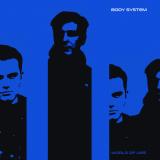
The origins of Body System date back around 35 years. Dissatisfied with previous experiences, the project was conceived as a meeting point between Sheffield and Detroit techno and German and Belgian body music. At the time, it never fully developed and remained largely an idea, with only a few sketches recorded on DAT. More than three decades later, that original concept has been revived. Following an invitation to contribute the track In Your Mind to the soundtrack of Electronic Body Movie, directed by Pietro Anton, the project was reopened and reworked, taking shape in the present while remaining rooted in its initial vision. These five tracks reflect an awareness of both past and contemporary electronic music, filtered through an undiminished experimental approach and a conscious refusal to adhere to stylistic conventions or predefined genres. Presented in ONE-OFF truly limited edition of 300 copies lacquered pressed on 180 gr. high quality solid BLACK vinyl. All tracks have been specially remastered and mastered for vinyl by Daniel Hallhuber at Young and Cold Studios (Germany).
Francisco Foo gives us a beautifully pensive 4-track chillage EP as his vinyl debut. Europe After The Rain perfectly captures the ideas of healing, regeneration, and rebuilding.
Last year, following the special vinyl 45 release of Samba De Flora - the Romero Bros from Argentina presented a full LP of Latin and Brazilian club flavours to be exclusively distributed worldwide on vinyl by Echo Chamber Recordings.
It received brilliant feedback from a wide range of DJs across the planet and the full version of Samba De Flora was licensed to Acid Jazz Records for their legendary Totally Wired Compilation LP - so it was a natural idea for a couple of those people to be involved in this next release on a vinyl 45 - with the two tracks that gained the biggest feedback
Side A - “Cravo E Canela” with the Romero’s great take on the classic Brazilian anthem from Milton Nascimento originally on their LP from last year which gained a lot of airplay at the time. This 45 release this has been given an extra special remix / update from the legendary Chris Bangs. He adds more bass bounce to the ounce and a funky shuffle to make it even more club friendly
Side B - “Gabriel” - their Latinized version of Roy Davis Jr’s 90s club smash. LA based DJ Greg Belson was such a fan after he got the LP, that he immediately made an exclusive edit to put on a 45 dubplate - to pack on his 2025 UK Tour - dropping it to devastating effect in place like Glastonbury and club dates across the country. So it was a natural choice to include this version on the flip of the 45 - under his Preacher monicker to align with his other releases on the sister label - Echo Edits
The fifth release on Objekt’s Kapsela imprint is (re)weave, an EP of crystalline club tracks from Detroit-born, London-based producer Tristan Arp.
(re)weave was written during a prolonged period of flux for the artist. “When I started making this record, my life and the world felt like a maze,” he recounts. As he routed and re-routed through past and future homes – Mexico to New York to Detroit to Mexico and finally to London – his output bore the marks of this repeated uprooting. “I was thinking about making music that reflected these twists and turns, and the knotty pathways through them. I was also re-reading Borges around this time, which must have influenced my interest in labyrinths.”
Accordingly, the EP is a mycelial puzzle, a tangle of spidery, undulating ostinatos and earthy percussion, stitched through with syncopated kicks. Employing the sounds of multitudinous critters and kin – whales, insects, thunder, water, forests – the arrangements sum to a sentient mesh of organic matter, the compositions living and breathing like earthly beings. Kaleidoscopic tendrils explore in every direction but are always underpinned by a driving, percussive backbone. It’s not easily classifiable: it’s bass-driven, but to simply call it “bass music” would sell it short.
In keeping with the winding geographical paths traced over the EP’s creation, (re)weave saw Tristan Arp revisiting and reinterpreting unfinished sessions and incorporating them into newer ideas. Rhythms and sounds have been transplanted and self-recycled from previous projects and woven into the fabric of the record. In this way, (re)weave also describes a looping back over time, a recalibration of the self from past to present through interlocking rhythms, channeling and communing with versions of oneself from times gone by.
The closing track, Wish Server, slows the EP to walking pace and hints at tentatively emerging from the deepest jungle into a delicate, innocent light. Tristan Arp imagines it as a dialog with a baby-self. “Some of my earliest memories are of sitting at my mother’s loom,” he offers. “The sequence of these tracks traces these feelings and follows the thread back to the primordial soup… through mazes… to a feeling of levitation.”
“III” is an intimate, cinematic and dream-like body of work — written, produced and mixed by Morita Vargas, and recorded in Buenos Aires between 2014 and 2025. The album was mastered by Rafael Anton Irisarri at Black Knoll Studio (NY), adding depth and clarity to its carefully built sonic landscape.
The visual world of the record is an essential part of the release. The cover artwork was crafted by Juliana Guglielmi, Ariadna Aylen Barrios, and Noelia Garreffa, whose combined vision creates a unified visual narrative that reflects the album’s emotional depth and atmospheric essence. The LP layout and full manufacturing realization were carefully executed by Ilja Tulit, translating the complex design ideas into their final tangible form of a vinyl release.
“III” marks a special release for Hidden Harmony Recordings. Morita Vargas was among the first artists released when the label began in 2020–2021, and her work played an important role in shaping the spirit and direction of Hidden Harmony.
- 1: Glass House
- 2: White Walls
- 3: Last Nail
- 4: Said & Done
- 5: Waves
- 6: How Did I Lose My Mind?
- 7: A State Of Mind
- 8: Home
- 9: Remains
- 10: Sirens
With American idealism and societal unity in flames, the ethereal ambiance of Denver's ABRAMS has been permeated by vibrating, hair-trigger fury. On new album Loon, wistful melodies warp into dissonance and aggression, and crystalline beauty is inhabited by bitterness and rage. 2024's soaring and driving Blue City was a record full of arresting, nostalgic textures that Metal Hammer Magazine called "an upswell of positivity in the face of frustration that's sure to shake you from your existential slumber." But this is no longer the world of that album. The grinding hopelessness and chaos of these times have infused ABRAMS with the shattering intensity of Converge. Urgent and abrasive, Loon is acerbic, fed up, and riddled with pulverizing fury. Wistful melodies warp into dissonance and aggression. Crystalline beauty is inhabited by bitterness and rage. The band's instinctive hooks aren't gone, and hopeful moments do shine intermittently through. But it's clear that ABRAMS, like a lot of us, are pissed off. Desperate and seething, Loon is an irresistible, frenzied purge from a band refusing to give in. For fans of Torche, Converge, Cave-In, Failure, Quicksand and Hum. Coloured LP (white vinyl) & digipaked CD
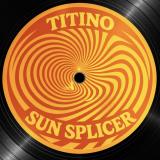
Italy via Atlanta, say hello to Titino and “Sun Splicer”, the latest release on The Comfort. Three separate ideas connect this EP across 4 tracks. It toys with the expectations of its listener — core features morph as tracks progress, stable kick patterns turn to breaks and in reverse, simple stabs progress to melodic junctions. Acid permeates this record, not as a clear motif but a tinged essence. And it’s sincere, both to the setting of these pieces and where they’ll be listened to and what it honors.
“Shblasted” — a back-and-forth groove machine filled with dub sirens and stepped up acid. Clubby introduction meant for sacred dance floors.
“Ouachita” on the A2 is controlled chaos, snares fly around, synth lines seem to want to escape their own confines and it just bursts onto the listener. Then the keys come in, the groove stabilizes, pads become bigger and new life is given.
The B-side is playful. “Sun Splicer” is perhaps most aptly categorized by a now notorious idea of ‘electro house’, and the pure aggressive euphoria this track carries just might be that, but as we all know the Italians do it differently — it’s a heady dark excursion. “Existenz” is all-smiles no matter how menacing its first contact, a hook of a track that reimagines the weirder side of Italian trance — think Interactive Test at its most wonderful. The dusty snares feel like a balancing tool instead of an homage.
- Vent D'aether
- Réville V
- Levast Ill
- Le Vast Iv
- Le Vast Xiii
- Montfarville V
»Vents d’aether« is the first collaborative album by sound artist Jérôme Bouve and composer-performer Delphine Dora. The six pieces are based on live improvisations on organ and harmonium. They were recorded in different churches on the Cotentin peninsula in France’s Normandy region and later enriched with additional field recordings by SA~RA. This adds an extra layer to compositions which were created both in and out of the moment and which quite literally resonate with the histories of the instruments and the buildings that were so integral to their emergence. »Vents d’aether« is to be understood as a dialogue between sound and space that takes place across time and place.
Bouve carried the idea of working with the organs and harmoniums that can be found in the churches and chapels in the Val de Saire in the Northeast of Cotentin around with him for years. When he got to know Dora, he found the perfect musical partner with whom to finally make a record »about the wind, the wood, the stones of the Val de Saire.« In September 2024, the duo embarked on a short but fruitful journey during which they stopped by at several different churches. They recorded hours-long improvised sessions dedicated to »capturing the moment, letting space and time shape gestures and sound, seizing fleeting epiphanies in their greatest simplicity,« as Dora notes in the album’s linernotes.
She took the lead behind the instruments, however Bouve assisted her on drawbars for the last two pieces on »Vents d’aether,« thus adding an even more unusual touch to the recordings. They formed the basis for an album that Dora calls »the testimony of a sensory quest, a collection of memories suspended in time.« Indeed, starting with the epic 20-minute-long titular piece up until the ringing of church bells near the end of the closing piece »Montfarville V,« this overwhelming yet intimate record blurs the boundaries between different times and spaces altogether.
- 01: Taste This Sound
- 02: Make Me Dance
- 03: Go Let Your Freedom Grow
- 04: Fight!
- 05: Tic Toc
- 06: No More
- 07: Once Again
- 08: Feel It
- 09: Aria
- 10: Falling Down
Until We Are Free is the debut album from fabric, a collective of musicians from diverse backgrounds united by a shared goal: to fuse irresistible rhythms and grooves with a direct, socially conscious message that draws vital attention to the contradictions of modern life. The project's name itself evokes the idea of a living, dynamic ensemble—a creative intertwining of different threads, from musical genres to founding musicians and guest collaborators, all actively woven into the social fabric.
The record blends funk, soul, and Afrobeat with a sharp, contemporary urban attitude, resulting in a sound that functions simultaneously as sonic resistance and an invitation to the dancefloor.
It finds its place in a lineage that runs from Fela Kuti and ESG to The Comet Is Coming, Sault and Jungle.
At its core is the conviction that music and civic engagement can coexist seamlessly without being didactic. While the lyrics—entirely in English—tackle themes of rights, equality, and freedom, the groove remains the heartbeat: constant, pulsing, and relentless.
Mixed by Tom Campbell (whose credits include Sault, Little Simz, Adele, Michael Kiwanuka, and Jungle) and featuring art direction by Raissa Pardini, Until We Are Free is a soundtrack for complex times. It is an invitation to refuse neutrality and isolation, and to imagine—together—new possibilities for movement, resistance, and the future.
fabric's singles "Taste This Sound" and "Fight!" have been featured in FIP's Spotify Playlists "FIP Radio (en live)" and KEXP's "New This Week" and "KEXP Rotation".
Following Parnell March’s Back Bar Grooves EP in February and November’s release of the Dust Tears (lead song from Sarah/Shaun’s debut) remixes, Edinburgh’s Hobbes Music label returns with a second EP of dream pop from husband-and-wife duo Sarah/Shaun (pronounced simply Sarah Shaun), alias Sarah and Shaun McLachlan (pronounced McLochlun), who wooed hearts and wowed critics with debut EP ‘It’s True What They Say?’ last year.
‘It’s True What They Say?’ attracted fans across the board: Artist Of The Week in The Scotsman, rapturous reviews from The Skinny and Tokyo's Ban Ban Ton Ton blog, BBC 6Music airplay courtesy of Nemone (Mary Anne Hobbs' Morning Show), more radio play from Radio Scotland's Roddy Hart & Vic Galloway, plus Simone Butler (Primal Scream) and Jim Sclavunos (Bad Seeds) via their respective Soho Radio shows, not forgetting ringing endorsements from the likes of David Holmes, Youth, Kevin Bales (Spiritualized), Brent Rademaker (Beachwood Sparks) and Julian Corrie (Franz Ferdinand).
They played gigs supporting Glasgow's huge Glasvegas, at festivals (Kendall Calling, Dunbar Music, Hidden Door), plus a slew of venues across the Scottish capital, ending the year with a trio of shows supporting Glaswegian 80s pop legends The Bluebells at Aberdeen’s Tunnels, Dunfermline’s PJ Molloys and Edinburgh’s Liquid Rooms, while The List magazine tipped them among their Ones To Watch For 2025, with journalist Fiona Shepherd suggesting they were “blending the starry-eyed pop of Sonny & Cher with the electronic experimentation of Chris & Cosey.”
Very much the companion piece to the debut EP but arriving a full twelve months later, Someone’s Ghost is emblematic of the duo’s desire not to rush things or release anything half-baked.
“I’ve always wanted to create the perfect pop record and I do really feel that we’ve achieved that with this one,” says Shaun. And he’s clearly not the only person who thinks so.
REVIEWS, FEEDBACK ETC:
"I LOVE that! Dreamy dreamy pop." ROY MOLLOY (Marvellous Crane/Alex Cameron) on BLAST RADIO, Sydney
“the Scottish music scene’s cream of the cool... buzzy drum beats, high, distant chimes, and heavenly electronics…. very ethereal.” THE SKINNY
"Listening to Sarah/Shaun is like eavesdropping on a noir dreampop, long-distance phone call between them both, across two separate sonic locations. On this stunning 4-song EP, Sarah’s voice, effortlessly mesmerising, draws you into these big beautiful and haunting passages of perfect dream-pop. All beautifully produced in a multi-layered-scape of low-fi analogue textures, epic cinematic crescendos, intense electro-pulse grooves and warped psycho-pop guitar riffs. Within the songs lurk a sense of unresolved emotions, longing and pathos. There are shades of classic Lee Hazelwood & Nancy Sinatra but also Post-Punk Electronica and Beach House. But what a unique sound they’ve created of their own. I love it" DAVID MCCLUSKEY (The Bluebells)
"Absolutely beautiful" SEAN JOHNSTON (A Love From Outer Space)
"Lovely stuff here! Total quality." MARTYN 'MASH' HENDERSON
"Ooooh. Everything the last record promised is here. Well done" GEORGE T aka George Demure (Accident Machine)
"Vince clark Era Depeche Mode in places" KEVIN BALES (Spiritualized)
"Sounds cool. Well done" PETE KEMBER (Sonic Boom, Spacemen 3)
"Glorious, it (Debbie Harry) grabs hold of you and doesn't let go." IAIN DAWSON aka RAVECHILD (Everyone Wants To Play The Hits Podcast)
SOMEONE’S GHOST
Born out of an incredibly anxious, stressful time, the songwriting process for these recordings has been something of a personal tonic for Shaun…
“There was a period when I was having nightmares,” he reveals. “Apparently I was saying there was someone in the room, I was talking to that person and Sarah was seeing all this while I was still asleep.
So, I was thinking that this was my ghost. I started writing songs because I was going through something and I was dealing with something and writing songs was a comfort. My ghost was a comfort, whether it was real or not. The idea of it was a comfort.”
“I firmly believe that everyone has someone who watches over them but all of the songs are essentially about being there for someone,” he says. “Everybody needs someone but also everyone needs to stay real and keep what you have, keep it close, never let it go. If you don’t have it, continue to tell people you’re there for them. It’s about loving and hoping people will be good to you in return.”
While Shaun took the songwriting lead on Filter Of Love and EP closer The Sound Which Stresses The Sound Of My Ears, Debbie Harry was originally instrumentally conceived by producer Jaguar Eyes, alias Ali Chisholm, later lyrically completed by Shaun, and the EP’s lead track, Anhedonia, and one of its stand-outs (much like Starbed on the debut) was conceived by Sarah, as a result of experiencing a bit of a spiritual epiphany of her own.
“When I first heard the word Anhedonia, I didn't know what it meant but when I found out I thought about it quite a bit. How sad it would be to have no enjoyment in anything,” she explains. “This song is really about my own personal beliefs. When I have been down, that's one of the things that helps me the most. It talks about trying to make amends but realising, for some things, you can't. But I think with any kind of faith comes hope… which is always a good thing.”
A record about hope, truth, honesty, a belief in something bigger than oneself… and all set to a soundtrack that wouldn’t feel out of place in a David Lynch or Eighties feature film. What more could anyone ask for, really?
There’s equally a desire to offer something universal and positive to anyone who tunes in. The labels for the 12” edition reveal the dual mantras “Who just wants to survive?” and “It’s about time to live a little”, with both messages also engraved in each record’s run-out grooves. T-shirts accompanying debut EP It’s True What They Say? bore the slogan “Kill Them With Kindness” - leading caps intentional. Shaun carries the acronym KTWK everywhere he plays, as a reminder: it’s stitched into his guitar strap. And this particular wee pebble has already caused a few ripples: people have been approaching him at gigs to acknowledge their appreciation and respect for it.
"We feel we have made an honest, open, colourful, body of work,” say the duo. “We hope to go out and play the songs with the guys (our band) and then potentially make more records. We are taking things as they come. Everything has been organic so far, after all. We are looking forward to whatever this brings."
- A - Ricardo Eddy Martínez Y Expreso Rítmico - La 132
- B - Juan Pablo Torres Y Algo Nuevo - Rompe Cocorioco
- C - Farah María - Ámame Y No Pienses Mas
- D - Grupo Ismaelillo - Amanecer - Dj Koco Edit
- E - Fa-5 - Muévete Con Las Fuerzas Del Corazón - Dj Koco Edit
- F - Grupo Los Yoyi - Paco La Calle
- G - Juan Pablo Torres Y Algo Nuevo - Y Viva La Felicidad
- H - Orquesta Riverside - En Casa Del Trompo No Bailes
- I - Grupo Fa-5 - Ya Tengo Un Amor Verdadero
- J - Rembert Egües - Tema Para Un Amanecer
Two years since DJ KOCO aka SHIMOKITA curated his sold-out Mr Bongo Brazil 45 boxset, he is back with another Record Store Day special, this time turning his attention to Cuba. Following a meteoric rise to the top, the Japanese DJ / turntablist extraordinaire has won the world over with his unquestionable humility, refreshing positivity, and flawless skills. The DJ’s DJ, it’s as much about taste as it is technicality for one of the world’s best showmen.
When the idea arose for a Cuban Classics 45 Boxset to mark RSD 2026, DJ KOCO was top of the list. With a deep-seated passion for Cuban music, its melting pot of cultures, its focus on rhythm, and its undeniable groove, DJ KOCO presents a selection of his favourite Cuban cuts, as well as two exclusive edits for the boxset.
It kicks off with the Latin funk sounds of Ricardo Eddy Martínez y Expreso Rítmico’s ‘La 132’ from 1978, before rolling into one of two spellbinding Juan Pablo Torres y Algo Nuevo cuts found on the boxset. Elsewhere, you’ll hear Farah María’s slow disco ‘Ámame Y No pienses Mas’, an unusual American-leaning production for Cuba at the time, given the state of US-Cuban political relations in that period. Other highlights include Orquesta Riverside’s ‘En Casa Del Trompo No Bailes’, taken from a rare collectable 7”, channelling a low-slung Latin bounce which explodes into an Afro-Cuban dancer as the track progresses.
In signature style, DJ KOCO has also served up two exclusive edits for the boxset. These include a reworking of the Cuban children's band Grupo Ismaelillo’s quirky ‘Amanecer’, giving it a more DJ-friendly structure. You’ll also find DJ KOCO’s take on FA-5’s much-loved funky dancer ‘Muévete Con Las Fuerzas Del Corazón’ with its heavy b-boy/girl break from 1976.
Testament to Cuba’s vast and vibrant musical landscape, DJ KOCO has cherry-picked some of the finest recordings to emanate from the country, spanning a wide range of styles and rhythms. Yet what ties all the tracks on this boxset together, is a hip hop sensibility and thirst for a breaks-heavy, danceable energy which radiates through DJ KOCO’s masterful DJ sets.
From Detroit’s techno resistance to Berlin’s elastic minimalism, Lusaka’s ancestral futurism to Chicago’s house communion, When There Is No Sun is a recording project, uniting visionary electronic music producers to reimagine the universe of Sun Ra. One of the most radical musical pioneers of the 20th century, Sun Ra used jazz, electronics, poetry, and performance to expand the possibilities of sound, identity, and imagination. Commissioned by Omni Sound and curated by Ricardo Villalobos, the series brings together Underground Resistance, Chez Damier & Ben Vedren, Calibre, A Guy Called Gerald, She Spells Doom, Barış K, and Ricardo Villalobos himself. Drawing from Omni Sound’s recordings of Living Sky by the Sun Ra Arkestra and My Words Are Music of Sun Ra’s poetry, the producers pull fragments of sound and text into their own creative orbits, passing through the portal that Sun Ra opened into a realm where the impossible is possible. Saul Williams, Tunde Adebimpe, Mahogany L. Browne, Abiodun Oyewole, Anthony Joseph and Tara Middleton are the featured voices that turn rhyme into rhythm and revelation into resistance Rooted in deep reverence for Sun Ra’s legacy, yet reaching forward as a living, generative force, When There Is No Sun is not a tribute but a continuum, balancing the pulse of electronic music with the spirit of experimentation, embodying Sun Ra’s promise that ‘there are other worlds’ if you are willing to see them.
There’s no direct English translation for the word “hiraeth”. In the Welsh language, it describes a form of longing for an intangible something, somewhere or someone that no longer exists. Sofie Birch and Antonina Nowacka draw on the concept to guide their second collaborative album, a suite of vulnerable, open-hearted improvisations and reflections that attempt to grasp an image of the past that’s chimeric, dissolving almost as soon as it materializes. The duo’s process follows the same distant beacon; unlike Languoria, their critically acclaimed debut, Hiraeth is, at heart, an acoustic record, informed by in-person improvisations with voices and string instruments that gesture to an era before computers, AI and DAWs. It’s just as lush, but Hiraeth is warmer and more muted than its predecessor.
Nowacka and Birch conceived the album in the wake of a slew of collaborative live concerts, spurred on by serendipitous improvisations and an interest in paring down their setup. Unsound arranged a retreat in Sokołowsko, an idyllic village nestled in the verdant hills of Southern Poland, close to the Czech border. Sokołowsko surrounds a large ruined sanatorium that’s rumored to have inspired Thomas Mann’s 1924 novel The Magic Mountain, and has long been a magnet for artists. The two took the opportunity to rethink their approach completely, arriving with just a guitar, a zither and a portable Nagra reel-to-reel machine. Recording directly to tape, they sketched out ideas with just their voices and instruments, reflecting their surroundings without being distracted or mediated by modern technology.
“We wanted to get away from screens as much as possible,” says Birch, “to bring to the world something vulnerable and honest. Without advance preparation, every day we went out into the open air, finding places to sit, during sunset or the midday sun. We discovered new tunings on our instruments, picked up a melody, and started the machine, playing over
and over till we got a take.” In the autumn, they met again in a Copenhagen studio, sparingly and carefully layering old synths and organs to add more depth without muddying the mix.
Both Nowacka and Birch sing throughout, their voices threading the acoustic instruments and tangling with each other, almost becoming one. But it’s the environment of Sokołowsko, “the birds and the light, even the wind playing against the harps,” that’s woven into the music’s lining. Affected by time spent meditating and in nature, as well as the fact that Birch was pregnant whilst recording, the album feels alive and remarkably present. Even the sound quality of the tape machine gives Hiraeth a tactile, organic quality, as Nowacka puts it, “like being in a warm bath.”
They still have the raw recordings from Sokołowsko on old reels, physical souvenirs of their time spent making music in a “habitat for intuitive songs, a little ecosystem, alive and spirited.” The outmoded gear and remote setting helped the duo disengage from the modern world for a few moments and imagine an existence that’s been lost to time and nominal progress. With digital technology receding into the background, Nowacka and Birch had space to make “intuitive connections with frequencies and people,” as Birch explains. Hiraeth is a testament not to nostalgia, but to the power of kinship.
- A1: Piano Terra (Intro) – 01:02
- A2: Ricordati Di Me – 01:29
- A3: Sono In Un Van – 03:11
- A4: Onda Feat. Lauryyn – 03:07
- A5: Attesa (Skit) – 01:19
- A6: 10 Days Feat. Sup Nasa – 02:47
- A7: Avevo Un Sogno – 03:18
- B1: Ideal – 02:15
- B2: No Answer (Skit) – 00:58
- B3: La Noche En Que Te Fuiste – 03:29
- B4: Della Morte E Della Grazia – 02:28
- B5: Ikyk – 04:10
- B6: Calma – 02:22
- B7: Ultimo Piano (Outro) – 00:53
"PRONTO" is the debut album by ARYA, an Italian-Venezuelan artist who grew up in Milan. ARYA arrives with this first full-length album after the EPs
Peace of Mind (2021) and Punto Zero (2023), collaborations (Mahmood, Venerus, Ghemon, Dardust, Calibro35, and many others), and an intense live
activity, which have made her one of the most interesting voices on the Italian neo-soul/R&B scene.
Born from a personal journey of therapy and awareness, "PRONTO" takes shape as a concept album, transforming the emotional investigation into a
coherent and layered musical narrative. The title captures the meaning of the project: "Pronto" is a word that crosses all the languages present on the
album—Italian, English, and Spanish—taking on different meanings ("subito," "presto"), and is also the first word uttered in the intro. A term that introduces the listener to a space of availability, anticipation, and presence.
The entire album was produced by Claudio La Rocca (Sup Nasa), a key figure in building the project's sonic identity. Giuseppe Seccia, Matteo D'Ignazi,
Martina Tedesco, Tiziano Codoro, Stefano De Vivo, and Giulia Gentile also contributed to the album, recording the instrumental parts and contributing
to the arrangements and production of some tracks.
With "PRONTO," ARYA takes the listener on a journey through different levels of her emotional history, until the elevator starts moving again and leaves room for a new possibility of balance.
ARYA (AryaDelgado) is an Italian-Venezuelan artist born in Milan in 1994. Daughter of salsa singer Orlando Watussi, she grew up surrounded by music
and quickly developed a sensibility that blends Latin roots, nu-soul, and contemporary R&B, with a strong focus on the emotional and narrative dimensions of her writing. In 2021, she released her debut EP, Peace of Mind, followed in 2023 by Punto Zero. These releases attracted press attention
and led to collaborations with artists such as Mahmood, Venerus, Ghemon, Dardust, and Calibro35. Over the years, she has consolidated an increasingly recognizable presence, alternating songwriting, solo production, and an intense live schedule in Italy and abroad. In 2024, she accompanied Mahmood on tour and released the single, "Si Potesse Tornare." In 2025, La Noche En Que Te Fuiste and Onda were released, songs that marked the
beginning of a new artistic chapter and anticipated the release of “PRONTO,” her debut album, released in February 2026. An intimate and layered
work, which focuses on vulnerability as a language and confirms ARYA as one of the most personal and aware voices of the new Italian soul scene.
This first-time reissue of Quinteplus’ 1971 album revives a key moment in Argentine jazz, featuring crisp trumpet and tenor sax, electric piano-driven funk and modal grooves, and a tight, spacious rhythm section. It showcases prominent figures like Jorge Anders and “Pocho” Lapouble.
==================================
Quinteplus was born in Buenos Aires at the end of the 1960s, emerging directly from the ideas and experiments of the legendary Agrupación Nuevo Jazz. Founded in the early ’60s, this collective brought together some of the most forward thinking figures in Argentine jazz functioned as a creative lab where musicians questioned where jazz could go next. Among the key ideas discussed was the fusion of jazz with Argentine folk styles such as zamba, chacarera, malambo, cueca, and candombe, as well as a deeper look into African rhythms as a bridge between musical worlds.
Two members of that collective, keyboardist Santiago Giacobbe and bassist Jorge “Negro” González, carried those ideas forward when they formed Quinteplus in 1969. The group came together naturally: all the musicians already knew each other and had played in different projects around the Buenos Aires scene. They shared a strong admiration for Julian “Cannonball” Adderley’s quintet, along with a clear goal—to develop a modern jazz language grounded in local Argentine rhythms.
From the start, Quinteplus stood out for its openness and adventurous spirit. Rhythm was central, and so was experimentation. The band belonged to a generation of Argentine jazz musicians eager to explore electric instruments and new textures, anticipating what would soon be known as jazz-rock. This was happening in Buenos Aires at the very same time Miles Davis was opening new doors with “In a Silent Way” and “Bitches Brew”. Giacobbe introduced one of the first Fender electric pianos in Argentina, while González pioneered the amplification of the upright bass and even developed a hybrid electric, boxless version of the instrument. Trumpeter Gustavo Bergalli, meanwhile, maintained close ties with the emerging Argentine rock scene, collaborating with Luis Alberto Spinetta and appearing on Almendra’s first album.
In 1971, Quinteplus recorded its first and only studio album for EMI. The original lineup featured Jorge Anders on tenor saxophone, Bergalli on trumpet, Giacobbe on keyboards, González on upright and electric bass, and Norberto “Pocho” Lapouble on drums and percussion—who also illustrated the album’s iconic sleeve. The record is a refined showcase of the band’s musical vision: original compositions, fluent jazz language, folk-derived rhythms, funky electric textures, tight ensemble playing, and standout brass solos. Though critically praised, the album received little label support and sold modestly, eventually becoming a sought-after collector’s item.
Quinteplus disbanded in 1973, their music was perhaps too bold and unconventional for its time.
Entering the abandoned warehouse full of haze and blinded by the strobe lights, you feel the rush when the bass kicks in. You have no idea if the year is 1996 or 2026, but it doesn't matter as long as you are alive.
Indeed, another batch of forgotten and previously unreleased radioactive acid techno has surfaced on the anonymous, vinyl-only Kilotoni imprint — possibly their strongest release so far.
A1 The peak of acid techno is perhaps found in its most stripped-down form. As the bass line throbs your breath out, you try to chase the kick drum in a game of hide-and-seek until complete exhaustion. It's something you play after the copies of Betty Ford and Sync In start to melt during a nuclear reactor accident.
A2 A ravey or hard-techno-oriented approach is applied to the acid techno formula here. The squelching, pulse-width-modulated synth makes for an eerie yet irresistible call to the dance floor. The snare rolls might just be your guilty pleasure.
B1 The flip side opens with funkier techno that the Voyager probes could bump to in outer space a million years from now. A wild acid line is accompanied by playful chords and beats. Detroit influences meet Nordic melancholy.
B2 The kick drum keeps pounding its way through while a lonely TB-303 is traveling in its own space and time. Influenced perhaps by the Midwest acid techno style, this could be a mid-90s DAT-tape lost inside the transatlantic postal system on its way to the Analog Records USA headquarters.
Loud Ambient 2 picks up directly from where Loud Ambient left off. After picking the drum machines back up, we returned to the colourfield ideas that shaped the first record. Rothko remained a key reference, along- side a strong recommendation to spend time with the work of Josef Albers. We did exactly that, and it paid off.
Alongside the music, we created 50 new pieces of artwork for Loud Ambient 2. These became tools rather than decorations. Working this way felt open and rewarding, and brought a real sense of play back into the process. We already understood what a Loud Ambient track could be, so slipping back into that headspace felt natural. The tracks came together quickly, full of energy, movement and that familiar noodle quality.
The creative side landed easily this time. There is some- thing about working with colourfields that frees you up and pushes you further into abstraction. It removes hesitation and keeps the focus on instinct and response.
With the drum machines and synths loaded, we kept our heads down and made the kind of music we want to hear on a dance floor. Loud Ambient 2 is the result.
Joe Fujinoki centered the compositions of his latest album Glass Torso round the idea of the fragility of the human body. Fujinoki described the narrative thread of the album as that of “holding the shape of a human body as if it might shatter like glass”. The precariousness of the body, the essence of the body as defined by Fujinoki as the torso, and the object relations between the boundaries of dialectical exercises pack themselves into his creative process.
Fujinoki recorded Glass Torso exclusively with analog synthesizers, stumbling in and out of structural loops to find space for accidental discoveries. The ten pieces of recorded material feel somewhere on the edge of typified form, feeling like a vascular system pumping in and out its undulating liquidities. Maybe this is the hollowed space held together by Fujinoki’s notion of the torso where you hear a microscopic world, dubby and generative. Fujinoki is adept at organizing this realm of subtle sound sources, giving proper considerations of shared tonal space. Seemingly, this handling of the precarity of sonic material elucidates Fujinoki’s mature attention to detail.
Ambient music genre tropes often affirm the listeners vessel for escape and dissociation. It provides an intoxicating allure by respite from an overwhelming exterior reality far outside the listeners controls. Here this space becomes apolitical, or its protest vocabulary softer and subtle. Fujinoki does not aim to tackle hyperobject topics on how to course correct the world, but he does something increasingly rarer to come across. On Glass Torso an alternative space is created not as shelter, but as a meditation on negotiation and compromise. This twenty eight minutes of audio lays down a foundation for imagination, for imagining how to negotiate the fragility of the self. Zoomed out, the implications of his negotiative sonics can be a playground for broader reflections on distributive care and attention.
Fujinoki says he feels “alert” to his physicality and placement in the world amidst vast digital cultures creating impositions on him and his surroundings. On Glass Torso he creates a concretized space on a vinyl record, where the virtual and the tangible antagonize one another that create the spectacle of the listening experience. This spectacle is a soft one, a considered one, and an utmost enjoyable one. Fujinoki juggles opposing forces brilliantly, and formulates an exquisite palette of soft passing music so he can also help the listener with the exquisite burden of their own Glass Torso.”
- Nick Klein, January 2026
- A1: Moonlight Feat. Elena Moroder
- A2: Side To Side
- A3: Darkness
- B1: Here For The Summer
- B2: Miraflores
- B3: It's Time For A Change
- C1: Fantasy Feat. Kučka
- C2: Believe In Yourself
- C3: Mesmerized Feat. Jessica Care Moore
- D1: Tryna Find A Way Feat. Leanne Louise
- D2: Keepin' Me High Feat. Tropics
- D3: Wide Awake Feat. Tom Did It
- E1: Linger (Interlude)
- E2: Distant Within
- E3: If You Doubt Me
- F1: Destination (Interlude)
- F2: What Makes You Feel
- F3: Set Sail On Another Ship
- F4: It Feels Natural
After years of shaping dancefloors worldwide and carefully curating the sonic and visual identity of Up The Stuss, Dutch favourite Chris Stussy presents his most expansive and personal statement to date with his debut album, ‘Lost, Found & Forgotten...’. Landing on 3rd April, the album unfolds across three interconnected chapters - ‘Lost’, ‘Found’, and ‘Forgotten’ - each revealing a different side of his creative world across 19 tracks while remaining tethered to a singular wider vision.
At its core, ‘Lost, Found & Forgotten...’ is an exploration of creative freedom. Visually and conceptually guided by the image of a kite, the album reflects movement, perspective, and balance. Floating freely yet always anchored, the kite mirrors Chris’s approach to music: unrestricted in emotion and imagination, but grounded in groove, craftsmanship, and intention. It’s a symbol that naturally extends the Up The Stuss identity; pointing skyward, embracing openness, and encouraging curiosity.
“This album has been a long time in the making, and I’m excited to finally share it with you. The process behind it - exchanging ideas with other artists and creating music outside of my comfort zone - has been an incredible experience. It gave me a true sense of freedom, allowing me to not think about boundaries or expectations. I’ve never been more proud of a project than this one. It’s deeply personal, and it represents my sound as a whole. I hope you listen with an open mind and find something in it that resonates with you.” - Chris Stussy.
The ‘Lost’ chapter opens the album by giving new life to music once left behind. These are tracks written across different moments in Chris’s journey, ideas that never quite found a home until now. Rather than relics of the past, they emerge re-discovered, refined, and fully realised. ‘
Found’ represents inspiration in motion. Sparked by collaboration, digging, and shared creative exchange, this chapter captures the moment when ideas connect, and colour floods the sky.
The album closes with ‘Forgotten’ - a nod to the deeper cuts, the B-sides, and the moments that reward patience. This chapter is for the heads and diggers; tracks that may not demand immediate attention but reveal their value over time.
An album Maximum Rock 'N' Roll deemed not punk enough to review, Unwound's 1994 sophomore effort was a lethal depth charge aimed at major label grunge and independent hardcore alike. From the off-kilter, vertiginous rhythm of "Entirely Different Matters" to the neck-snapping velocity of "What Was Wound" to the relentless pounding at the end of "All Souls Day," New Plastic Ideas is the Sonic Youth-loving older sister to Fake Train's postpunk- obsessed little brother.
With Neolithic Neon, Appleblim creates a kaleidoscopic reflection of the spirituality inherent within electronic music — the ineffable frequencies and communal traditions that spring from exploratory synthesis, deep-rooted rhythms and myriad other sonic codes.
Throughout his third album for Sneaker Social Club, Laurie Osborne continues to express a fascination with the ancient resonance held within modern rave as he guides his own studio practice towards more purposefully analogue processes. It's reflective of his desire to let go and trust his instincts within the more chaotic realm of voltages and signals, not to mention turning to a wider spread of instrumentation and opening up to noisier avenues. This direction defines the character of Neolithic Neon, which bristles with the living imperfections of the gear in the context of incisive and wide-ranging cuts touching on jungle, dubstep, techno, electro, acid and experimental electronic music of all stripes.
Across Osborne's solo output from 2018's Life In A Laser to 2021 tape Infinite Hieroglyphics, a strong melodic sensibility spills out of the richly layered production. It's equally audible in his Wrecked Lightship collaboration with Adam Winchester, and it charges Neolithic Neon with its star-gazing, contemplative streak. From the knotty plucks and licks weaving through opener 'Moorland' to the vaporous synths darting across the top of hardcore conductor 'Thunderstorm', a dreamlike evocation takes the sound off terra firma, musing on cosmic events and our connection to the enormity of the universe.
Eternally in thrall to the maverick vocabulary of pioneering beat scientists and fuelled by the inspiration of great thinkers dwelling on our purpose and place, Neolithic Neon unfurls big ideas without heavy-handed messaging. Instead, it trusts in the universal and time-honoured language of experimentation and rhythm to present its ideas, true to Appleblim's legacy to date while opening a new chapter in his ongoing sonic quest.
In Sheep’s Clothing announces the long-awaited vinyl pressing of Marc Leclair’s beloved 2005 album Musique pour 3 femmes enceintes. The album will also be available on streaming for the first time via Community Music Group.
For years after Marc Leclair released Musique pour 3 femmes enceintes, he heard from listeners who had lived with the record in an unusually intimate way. Many described how the music became part of the emotional landscape of the months leading to birth. “I never expected that,” Leclair says. “Many women told me they listened to the record throughout their pregnancies. They said it made a real difference, that it helped them. It became more than just a record.”
First issued on CD in the early 2000s, Musique pour 3 femmes enceintes (Music for Three Pregnant Women) now returns in a new edition from In Sheep’s Clothing Hi-Fi, appearing on vinyl for the first time as a double LP. The record is being pressed in Detroit at Archer Record Pressing, the historic plant behind deep-groove classics by Juan Atkins, Kevin Saunderson, Underground Resistance, UR’s Jeff Mills, and J Dilla.
Listeners who know the Montreal-based Leclair through his better-known work as Akufen might be surprised by the tone here. During the same years he was shaping the intricate micro-sampling tracks that made Akufen a cult figure on labels including Perlon, Force Inc. and Trapez, Leclair was quietly developing this far more personal project. The meticulous craftsmanship remained the same, though the focus shifted from the hyper-detailed cut-up rhythms of his dance records toward something slower and more atmospheric. “I always compare my work to a jeweler,” Leclair says. “It’s really very precise. I’m a bit of a detail freak. I can spend hours or days on just one phrase in one song. Everything has to be perfectly put together.”
The project began almost accidentally. A few members of Leclair’s circle became pregnant nearly simultaneously, including one who had long believed she couldn’t conceive. The first track he recorded for the project wasn’t meant to advance a larger concept, he says. “It was meant to highlight the fact that three of my closest friends became pregnant at exactly the same time.”
Leclair was already a father with a three-year-old daughter, so the emotional terrain of early parenthood was familiar. Gradually the idea expanded. “I began thinking, why not make a whole album that celebrates this and also follows the entire pregnancy, the nine months,” he says. The music developed piece by piece, including a track originally commissioned by the Berlin experimental duo Rechenzentrum that would later become the album’s opening movement.
Nearly seven years passed between the first composition and the finished album, and the music mirrors the strange arithmetic of pregnancy itself. What begins as a single idea multiplies outward, sounds layering and branching until the album feels less like a sequence of compositions than a living process unfolding in time. “I work very slowly,” Leclair says. “Everything has to be something I’m completely behind. I never want to rush anything. I want things to come naturally.” Across its 72 minutes, the album blossoms with the patience of a long meditation on time, growth and emergence.
When Musique pour 3 femmes enceintes first appeared via Mutek, it circulated quietly but steadily. Critics who discovered it later recognized its unusual scope. In a 2006 Pitchfork review, Mark Richardson gave the record an 8.1, calling “150e Jour” “an unfailingly gorgeous and tightly sequenced quilt of guitar and piano samples reminiscent of Tangerine Dream,” and describing “85e Jour” as infused with “viscous pop ambient drift, the gauzy synth pads ebbing and flowing with rhythm.” Boomkat described the album as “a majestic opus from a producer that's always promised so much — here delving into a panoramic construction of almost visibly radiant music that works so beautifully through each and every second of its 72 minute lifespan.”
The new In Sheep’s Clothing Hi-Fi edition finally presents the record in the format Leclair long imagined. “I always thought that record deserved a vinyl edition,” he says. Spread across two LPs, the music now has room to unfold at its natural pace. More than twenty years after it first appeared, Musique pour 3 femmes enceintes remains what it was from the start: a carefully shaped meditation on transformation and the quiet miracle of life beginning.
Wondrous ethereal folk songs by a reclusive pen pal of Maxine Funke, first introduced to A Colourful Storm by Funke while sharing music and ideas during her Australian tour. Ghost faced pansies. A moth coloured cat. Cauliflowers, cabbages undying. I hear the spine of the dictionary crack. Is what they call a creature who only wakes at dusk. And turning backs. My afternoon has turned pitch black. For a trace. For a shape. I wipe the steam from the window like the bloom on a grape. Ghost faced pansies. A moth coloured cat. Light of stars long since died.
KIZZY is the breakthrough EP from rising East London artist Bel Cobain, one of the most distinctive new voices emerging from the UK alternative R&B and soul landscape. Written across 18 months of late-night ideas, scattered sessions, and quiet breakthroughs, the project captures an artist in motion. Following a string of singles that introduced her raw lyricism, KIZZY marks a confident step forward with intimate, sharp, and melodically rich songs that sit in the space between endings and new beginnings.
Across these six tracks, Bel moves with striking emotional honesty through a rich palette that encompasses rock’s bite, jazz’s looseness, R&B warmth, hip hop rhythm, folk intimacy, and fractured breaks. She blends conversational storytelling with her distinct smoky vocals, reflecting on change, learning to let go, and finding light in the aftermath. The EP invites the listener to listen closely to the cracks, the softness, and the pulse of the beauty that still rises when a chapter turns.
Bel Cobain is fast becoming known for her ability to connect deeply with audiences, pairing classic songwriting instincts with a contemporary sonic edge. Early support has come from tastemaker radio and press, with momentum building across streaming platforms as listeners discover her unique perspective on vulnerability and self-awareness. Released as Brownswood Recordings celebrates its 20th year, KIZZY continues the label’s tradition of championing the most singular artists.
Marking a significant milestone in her career, this release is Bel Cobain's first-ever record. It is presented as a Collector's Edition Limited Edition 1xLP gatefold vinyl, pressed on Terracotta colored wax. With short-form video campaigns, targeted digital marketing, radio support, and a growing live presence, this release positions Bel Cobain as one of the UK’s most compelling new artists for 2026.
Fresh Hold Releases presents Helen Ripley-Marshall's mysterious Australian ambient electronic album "Green Chaos", reissued for the first time on vinyl LP. Originally released in 1988 on Sydney based private press label Freefall, "Green Chaos" marks the sole release from Ripley-Marshall.
In the late 80's Ripley-Marshall lived a Bohemian lifestyle in inner city Sydney; "surrounded by musicians, actors and artists, there was an amazing creative experimental vibe going on". While playing in new wave/art rock band "D Face" she began Green Chaos as a personal project to counteract the creative friction sometimes experienced within a group dynamic, heavily inspired by Arnold Frolows' "Ambience" radio show on Australia's Triple J and particularly the music of Tangerine Dream, Harold Budd and Brian Eno.
Initially a solitary endeavour, once she decided to record in a studio Green Chaos morphed into a somewhat collaborative, improvisational project with other musicians invited into the studio to improvise and add their own interpretations and ideas, additional layers and dimensions, resulting in a work that combines a clear influence from the electronic repetition of the Berlin school with a meandering, futuristic lyricism. Although influenced by the long form sonic journeys of artists like Tangerine Dream, Ripley-Marshall's background in art rock and new wave brings a more concise approach, each song a self-contained universe that says only what is necessary in the arrangement.
After completing a sound engineering course Ripley-Marshall recorded the album at Sydney's Exeter House Studio over several months alongside studio engineer Andrew Knight, met through a fellow member of D Face. Knight ran Freefall, a private press recording label releasing folk and bluegrass music, which had Green Chaos as its sole ambient release. Ripley-Marshall self distributed the album to local inner city record stores and dropped a copy to Triple J, where it became a regular staple of Arnold Frolows' show.
These days Ripley-Marshall has moved away from music and is predominantly focused on visual art. "Green Chaos" stands as the only released product of her musical years, both a personal window into the vibrant experimental art scene of late 1980s Sydney and a deep, timeless anomaly of Australian electronic music.
12"[10,71 €]
2026 Repress
Juan Atkins and Moritz von Oswald - the two indispensable protagonists of the Electric Garden - plug back into the wilderness.
Transport' - the new full length effort of the Borderland collaborative project - brings together a new set of studio-refined sequences aimed at colonizing some of the dark energy that pulsates through those areas that are thoroughly electrified, even if not 'on the grid'.
The Detroit-Berlin axis triangulates to a third point which, like the atomic particle that lives in two places at once, flickers between a form of techno-charged ambience and a futuristic club-jazz which cannot be broken down into constitutive parts. Borderland remains caught in a state of enraptured stillness, invisibly moving between every imagined future for electronic sound making.
The result: a font from which springs serene and exhilarating musical ideas that vibrate with refined energy for sixty seconds in every minute.
XKatedral Anthology I is the first in a series of archival releases dedicated to presenting music by XKatedral affiliated composers working within the realm of slowly evolving harmonic and timbral music. This double-vinyl set contains an array of pieces dating from 2010 - 2020. Four of the works included here were originally released on cassette tape early on in the label's history, while the two remaining pieces are presented by the label for the first time.
"The works Ir Himinn, Grooenn by Kristoffer Svensson, Disquiet (Heart) by Marta Forsberg and Lamé by Isak Edberg were first released on the compilation XKatedral Volume II in 2016. Svenssons piece from 2014 combines justly tuned gamelan percussion and prepared piano intricately interwoven in a way that obscures the boundaries between the two instrument groups. Forsberg and Edbergs pieces both use a monolithic form to explore the timbral and harmonic spaces provided by the Düben Baroque organ situated in Tyska Kyrkan in the oldest part of Stockholm. While similar in terms of instrumentation the two works differ formally - Edbergs Lamé composed in 2010 uses the registers of the organ to articulate a seamless spectral transformation while Forsbergs Disquiet (Heart) from 2014 deals in blocks of sound with a varying degree of opacity, saturation and intensity.
Glory for two electric guitars by Caterina Barbieri and Kali Malone was composed and recorded in Tempo Reale in Florence, Italy, and was originally released on the cassette compilation XKatedral Volume III in 2016. This music takes the form of an ever-evolving hypnotic pattern shared by the two instruments articulated through an additive and subtractive canon. Dissolving Ceremony, composed in 2012 by Edberg/Erlandsson/Lisinski, was first presented publicly on the self-released record Stratum. The music contained in that release was formed from a collection of gamelan percussion instruments augmented by two sets of live-electronic instruments tuned to the harmonic framework formed by the partials of the metal percussion. Originally positioned in the center of the record running order between two long monolithic process-based pieces, Dissolving Ceremony now stands on its own as a memory of a time and methodology from the not so distant past.
The newest piece in this set is Shipwrecks by Daniel M Karlsson. While this work is a recent one Karlsson should be considered one of the forerunners of the musical expression contained within this record set. Active within new music for two decades his strongly articulated musical ideas and constantly evolving craftsmanship has resulted in an enormous body of work, and has served as an inspiration for many of his fellow composers. This piece is a celebration of transposition and its immense capacity for timbral transformation using a vast array of instruments performed, recorded and electronically treated by the composer to form a liquid uncanny topography where a deeply personal harmonic language constantly shifts, slides and shivers."
- Blow Mix
- Fluxstrata
- Phract Lament
- Hark Mix
- First Reflex
- Mu
- Drift Lens
- Tangent Bile
- Allegria
- Dull Echo
- Crabwalk
Late Bush presents “Hoarses” on the label Vlek Records, an original repertoire in which he blends electronic music - power ambient, IDM, avant-pop - and early music, which share the same affective intensity, a taste for ornamentation and a form of sonic excess.
At the heart of this material, AI-cloned voices, both human and spectral, extend the idea that any baroque interpretation is a reconstruction of the unknown. They contrast with organic strings recorded with Echo Collective, in a temporal and radical hybridization, creating a fluid and unstable material, between memory and simulation.
One of the conceptual starting points is essential: we have no sonic trace of baroque music as it was played. Only scores remain, and sometimes contradictory indications, a sensitive archaeology, even an imaginary projection.
Everything that is played today is therefore, in fact, a reconstruction, an interpretation of a vanished material. According to this logic and to pursue this reflection, the cloned voices, transformed by AI, are not a rupture but propose a natural continuation of this chain of reinvention, of this relationship to the invisible, to the indefinite. They do not aim to replace a human voice, but rather to embody the fact that any baroque restitution is already a fiction.
The project does not seek to imitate the real, but to play with the thresholds of the plausible, of the spectral. The music then becomes a fluid material, manipulable, alterable, and the performers, musicians or machines, are its vehicles.
The strings, carried by the sensitive and expressive interpretation of Echo Collective, breathe into the project a vibrant authenticity. Their presence brings an organic and tactile dimension that contrasts with the fluid and intangible aspect of the voices and the electronics.
No matter where you are in the world, distance fades when like-minded people connect.
Clima Futuros understands climate as a condition rather than a setting. An environment where trajectories take shape, move forward and, sometimes by chance, intersect. Each track follows its own path until those paths briefly align — not as a destination, but as a shared moment in time.
At the center of the record, DJ F outlines a common atmosphere shaped by movement, reinterpretation and intent. The EP unfolds through original cuts and reworked versions, where ideas circulate, transform and return with renewed meaning.
One of the tracks features saxophone lines by Nala Rami, adding a melodic presence that sits naturally within the climate, while remixes by Less J and Jarren expand the EP from different angles.
Rather than a fixed narrative, Clima Futuros presents a shared space — shaped by aligned paths, recycled forms and the quiet convergence of futures moving in the same direction.
Hatchback is the alias of Samuel Milton Grawe. Sam creates music that sings of the Cosmos, full of deep resonant tones, glistening arpeggios, lush pads and harmonic motifs. ‘Phaser For The Ocean, Chorus For The Moon’ is his magnum opus, a sprawling masterwork that encompasses ambient, new age and environmental music to wondrous effect. Soaked in Californian consciousness, the album is a balm like no other for these troubled times.
When I first was getting into the creative side of music making in my teens, I was heavily influenced by concept albums like ‘Quadrophenia’ and ‘The Lamb Lies Down on Broadway’, as well as epic pieces that took up an entire side of a record: Pink Floyd’s ‘Echoes’, Yes’ ‘Close To The Edge’, Klaus Schulze’s ‘Nowhere Now Here’, Miles Davis' ‘Shhh/Peaceful’ and ‘He Loved Him Madly’. In the extreme, these ideas coalesced in double albums where each side of each record is occupied by a single title - Yes’ ‘Tales From Topographic Oceans’, and Tangerine Dream’s ‘Zeit’ being primary examples. When I returned to making music after moving back to Northern California in 2020, the first piece I recorded landed around the 20-minute mark, and the idea of creating three other long pieces to realize a full album felt like a natural - if indulgent - goal. From there, each new piece followed sequentially. Four songs. My fourth album. - Sam Grawe
‘Phaser For The Ocean Chorus For The Moon’ is a pure expression, informed by a lifetime of deep listening unbound by algorithms or AI.
These are songs for the sunrise and the sunset - and every colour in between.
[a] 01. And The Walls Became The World All Around [18:53]
[b] 02. Phaser For The Ocean, Chorus For The Moon [21:48]
[c] 03. Other Desert Cities [20:19]
[d] 04. Friendship Fountain [18.33]
With our 12th anniversary approaching, we invited Dutch artist Human Space Machine, who delivered Perception Field, a five track EP built around the idea that perception is never fixed.
Across a wide tempo range, the record explores how the same material can shift depending on focus and context. Foreground and background exchange roles. Subtle textures and negative space shape the impact as much as the main rhythmic elements. Perception Field approaches club music as something fluid and responsive, where meaning forms through the act of listening itself. It’s an impressive showcase from an artist that shows once again he’s capable of merging layers of his excellent sound design with deeper feelings.
- 1: Glass Bottom Boat
- 2: Paper Screen
- 3: Awhile
- 4: Fog On Mirror Glass
- 5: Old Universe
- 6: Makeshift Room
- 7: Your Dreaming Eyes
- 8: Valley Floor
- 9: Usual Phantom
- 10: Bamboo
Fog On Mirror Glass introduces a new aesthetic amongst Donald Beaman albums. After four albums of varied full-band arrangements, this album emerged as an idea to present solo performances in conversation with full-band work. The bulk of the songs were recorded in the same place they were written: Beaman’s living room. Long time bandmate and producer Kirt Lind set up a makeshift studio at Beaman’s house to record the guitar parts in the same room where they were written, using the same guitars on which they were first played.
Unfurling with a measured pace, the resulting album combines elegiac lyrics with elemental arrangements played with an almost jazz-like reverential expressiveness, calling to mind the works of Cass McCombs, Will Oldham, and Jake Xerxes Fussell. Album opener “Glass Bottom Boat” sets the tone for the album with just Beaman and his guitar – written during the final months of a decade-long stay in New York City, the song was finished upon his arrival back in California. Meanwhile the title track, long a staple in live sets, lands near the middle of the album to recalibrate the mood, featuring the ghostly guitar work of longtime collaborator Ken Lovgren. “Old Universe” lifts things up a bit, propelled by the brushwork of drummer Michael Nalin and the jaunty bass playing of Kirt Lind. Finally, the album ends much the way it began, with Beaman and his guitar on album closer “Bamboo”.
“The dictionary definition of less is more.” - ---- Mojo
“His ability to carve universal empathy from mundane domesticity is remarkable.” - ---- RNR Magazine
“...a collection of evocative scenes and vivid emotions sung to sparse musical arrangements in Beaman’s distinctive sonorous tones” - Americana UK
“...pure and simmering, like a tattoo dedicated to a long lost friend, slightly fading from years in the sun, a memory that will always bring a tear in those quiet reflective moments.” - Psychedelic Baby Magazine
- 1: Pass Between Houses
- 2: Theatre For Change
- 3: Real Home
- 4: Treat Me A Stranger
- 5: Utopia Of Bog
- 6: Void Attentive
- 7: My Love, Let's Take The Stage Tonight
- 8: The Kiss
- 9: He Had Always Led
Cathartic avant-rock, literate DIY folk & experimental composition exploring displacement, love, climate change, belonging & the places we call home - RIYL Jim O’Rourke, Richard Youngs, This Heat, Richard Dawson, Flying Nun. ‘Real Home’ is the new album by the Manchester-born, London-based artist Kiran Leonard. His sixth album proper (not including innumerable tour-only CD-Rs and short-run cassettes), since his precocious debut in 2013, ‘Real Home’ finds Leonard invigorated by inspiration and experience, making passionate, literate, and mercurial music that explores displacement, love, memory, climate change, connections to home and more. Encompassing songs recorded after moving to South London, ‘Real Home’ reflects on ideas of belonging and domesticity through folkloric, stream-of-consciousness songwriting. Across nine tracks, Leonard traces lived impressions of the household and the city, expressing sentiments of dislocation, alienation and stasis, but contentment too. Infusing the avant-rock effervescence, terraced dynamics and visionary lyricism of his music with what he defines as a greater sense of openness, Leonard is as versatile, fervent and imaginative as ever on ‘Real Home’, yet his music is somehow more intimate, affecting, and acutely expressive. Shaped by dual considerations of simplicity and formalism, ‘Real Home’ is by turns beautiful, allusive, and ruminative, an album on which Leonard considers what his songs have resembled in the past and what they mean now. In recent years, Leonard has crafted eloquent chamber music inspired by the likes of James Joyce and Clarice Lispector (‘Derevaun Seraun’), responded to contemporary politics and communication breakdown in the digital age (‘Western Culture’), and compiled solo works and ensemble recordings for a longform ode to Jonas Mekas and to one of Leonard’s enduring themes; home (‘Trespass On Foot’). On ‘Real Home’, Leonard reiterates this abiding thematic focus yet ascends to new, different heights, in music of cathartic delicacy and dissonance where all the myriad dimensions of his work to date seem to crystallize. There are sinuous songs about struggle and defying the pace of city life through drift and diversion (‘Pass Between Houses’), stirring songs of intense feeling and crescendo, described as a form of speculative detective fiction (‘Theatre for Change’). There are touching solo piano ballads (the title track), symbolic contentions with carbon capture and climate change (‘Utopia of Bog’), modes of experimental minimalism (‘Void Attentive’), and other profuse feats of compositional range, embroidered with wild tendrils of narrative and lyrical depth. A record to pore over, and get lost in. Exemplifying the vast aesthetic scope of Leonard’s music, lead single ‘My Love, Let’s Take The Stage Tonight’ is inspired by country lodestar Hank Williams, Russian poetry and a late period love poem by William Carlos Williams. Yet for Leonard, the song signals a sense of accessible materiality, and is the product of a more linear approach to writing songs: “My imitation of the great Hank Williams, in spirit if not in substance…This is one of the best efforts on Real Home at a song-as-object. Looking at it now I realise I was trying to write a song that made itself known as a song to the listener, and I wonder whether that’s crucial if you want a song to transcend its context. And that this is either accomplished through a total openness – by being inviting, by laying the tricks of the song out plain to see, as Williams and his many ghostwriters did so well – or by adopting a knowing aloofness, positioning oneself against the listener but letting it be known that that’s what it’s doing. In this song I try both, but mostly the former: as in, I wanted to write a song where every line follows on from the next.” Imbuing the endlessly elaborate and inventive qualities of his music with a newfound streak of candid, clear-cut melodicism, Leonard has reached a special place in his artistry, on a record that feels familial, and expresses closeness. Assembled with affiliates including Lauren Auder, Otto Willberg, Jasper Llewellyn (caroline), Tom Hardwick-Allan (Shovel Dance Collective), Magda McLean (caroline, The Umlauts), Alex Mckenzie (caroline, Shovel Dance Collective), Isabelle Thorn (Dear Laika) & more, the recording process had a significant influence on the subject matter of ‘Real Home’, in sessions defined by close-knit camaraderie and artistic eccentricity: “The theme of the home obviously recurs throughout the record; the album was mostly recorded in domestic spaces with friends, and the name of the album is Real Home. I like the qualifier ‘real’, like you’re getting past the cloak of the word and towards the thing-itself…also nearly all the percussion in this record was recorded on items from my dad’s shed (jam jars, sandpaper, blocks of wood, etc). Real home record!” ‘Real Home’, like anything by Kiran Leonard, is a record of dazzling multiplicity. Yet it’s a companionable prospect with a central premise; a collection of songs where listeners old and new can find a home. An album led by a scene; of Leonard standing at the threshold, ready to welcome you inside. “Exceptional songs that linger” - The Guardian // “An autodidact of amazing talent & energy” – Pitchfork // “A ridiculous amount of talent…confrontational, celebratory, provocative or perverse – he manages all of these emotions & more” - The Quietus /
- 1: Ups Brown
- 2: Fish Sticks
- 3: Charlie
- 4: Cobwebs
- 5: Fenceline
- 6: Fleet Week
- 7: Aquinas
- 8: Mumblecore Melody
- 9: Pitch Boats
- 10: Hardcore Of Beauty
Mildred have announced their debut album Fenceline (out 24 April via Memorials of Distinction / Dog Day Records), they have also shared the Nick Roberts directed video for lead single ‘Fish Sticks’. Speaking of ‘Fish Sticks’ and the album, Mildred say: “Fish Sticks is a song of scenes from two worlds. Conversations with your boss. Acute workplace mediocrity. Riding home and eating fish sticks with your friends. For UK audiences, a fish stick is a fish finger, ideally Alaskan-caught cod. The song comes packaged in Fenceline, an album about conversations with old friends, little cousins, ceaseless piles of dust in your crumbling duplex, loves and theologians and their books. Fencelines mark two places but belong to neither. Neither nor, either or.”
Ahead of Fenceline, at the end of last year Mildred released their debut twin EPs mild and red, an insatiable collection of songs birthed before Mildred even knew they were a band. Arriving purposefully on the scene in that gentle, approachable Mildred way, the EPs picked up support from The Guardian, The Line of Best Fit, Uncut (‘We’re New Here’), The New Cue, Clash, DIY and more. Mildred is a band from Oakland, CA of four equal parts. They don’t have a lead singer, no one person writes the songs. The songs that make up Fenceline come together as a group with their genesis sprouting from any one of their members - Henry Easton Koehler (vocals, guitar), Jack Schrott (vocals, guitar), Matt Palmquist (vocals, bass, woodwinds) or Will Fortna (drums, production) - each time.
The songs are often wrestled from the lead writer by the other three, a lyric might have been mumbled absentmindedly for a few days before one of the other three grabs at it. Summed up neatly by Clash “imagine if Pavement went Americana and you’d be close”, Mildred make music that is pure and poetic, gently addictive and never overwrought. The lyrics for their songs are written largely alone and often draw from their own individual lives and experiences but there’s a shared something there. “It makes sense when common threads emerge” they say, “because we do things together a lot as friends: cook, laze about on a weekend, listen to an album, go walkabout, read, go see movies etc.
Strikingly literal or intriguingly oblique, Mildred have a remarkable way with lyrics that lodge themselves in your head softly but with such determination that they begin to feel like shimmering memories from your own life. Fenceline is a collection of songs that you want to hold close and delve into, and yet play to everyone you know.
Luke Lund is a self-taught producer and sound artist from Finland. Over the past eighteen years, his work has absorbed influences ranging from the darkest fringes of club culture and the most caustic strains of industrial noise, to the subtlety of musique concrète and the rawness of rock.
It all started when he discovered that abstract sound design could stand as music in its own right, a revelation that ignited his enduring commitment to noise, sound art, dub techniques, and experimentation.
“Peel the Scab” emerges from this premise as a visceral and frenetic immersion into his “lo tech” facet, a term the artist himself employs to define the album’s style.
Allergic to programming, these are pure dub-blooded sessions pushed straight to tape, twisted until they yield under their own weight. It is a work constructed upon dense, disjointed rhythms: brutalist grime infused with a suffocating mutation of dub.
Reframed is Vitess’ third album, released on his own label Retro Futura, and marks a new turning point in his artistic journey. Unlike his previous albums — the first fully exploring the Retro aesthetic, the second embodying the Futura — Reframed brings these two worlds together within a single, coherent yet eclectic body of work. The album opens with sounds inspired by 90s progressive music and gradually moves toward more futuristic textures. This album format gives Vitess complete freedom: the freedom to build a full, living musical experience, introducing for the first time a strong instrumental dimension — most notably through the use of live drums — and allowing each track to interact with others, transform, or mirror one another, while maintaining a clear narrative thread that guides the listener throughout.
The title Reframed directly reflects this approach. The album is built around tracks conceived as Recto / Verso, offering a form of double listening experience. On the one hand, electronic, club-oriented and progressive versions, designed for energy and dancefloor movement; on the other hand, more introspective, pop and instrumental counterparts, created for listening and storytelling. Starting from the same musical foundation — a vocal sample, a percussion element, or a melody — Vitess develops two distinct interpretations of the same track, generating contrasting yet deeply connected sonic worlds. This method, central to his creative process, highlights his ability to explore a single detail in depth and let a micro-element lead him toward radically different sonic dimensions, while ensuring coherence and a strong identity across the album.
For Reframed, Vitess also collaborates for the first time with other artists: Stupid Flash, ATOEM, and Lucile, selected for their ability to enrich his universe and push it toward new aesthetics. These collaborations recreate a sense of collective energy reminiscent of his early days playing in bands, while remaining true to the essence of the Vitess project: a primarily solitary approach rooted in exploration, experimentation, and embracing the unexpected paths each idea can take.
The Dubplate series comes to the label’s spiritual home of Hackney, the stomping ground of the Douglas “Dougie” Waldrop and his Conscious Sounds label with the spin off Dub meets Funk project. The music of the Dub Specialists is presented with extended re-edits by label owners Piers Harrison and Stuart “Chuggy” Leath, alongside rising selector star Millie McKee and studio master extraordinaire Matt Bruce (Vanity Project).
Formed in 1989, Conscious Sounds and the Conscious Music studio have been mainstays on the UK Digital Roots scene to this day, working with the likes Bush Chemists, Johan Dan, Kenny Knots and Pablo Gad. The Dub Specialists was a project created by Dougie to put aside studio sessions and explore a new interest in samplers, working with friend Chris Petter (Love Grocer) and his interest in Jazz and Funk.
Using the Atari 1040 running Cubase, with a Soundcraft mixer, drum loops and Reggae basslines were played over Funk samples and layered with Petter’s chords to create a series of short tracks for DJ play. Releasing 3 albums between 1995 and 1999 on the sub label Crispy Music, they have more recently been gaining cult status.
The tracks chosen all come from the first and increasingly sought after LP, Dub To Dub Break To Break and have been extended, stretched, looped and dubbed by the label family to form a club friendly EP. From the dance floor jams of Dub De Funk and Funkin’ Dub to the deeper Movin Ya (with additional flute by Millie) and Murderous Style, this is a unique fusion of Funk and Digidub that fits perfectly the ideals of the Dubplate Series.
Break The Mystery.
Shokolokobangoshay was a collaboration between three members of Pogo Ltd. The three of us felt we were crazier than the other members of Pogo Ltd. and decided to work together on the Kosmik 3 album. Robo was worked in the graphics department of NTA Benin. He was an amazing artist, a crazy guy, he was extremely creative, he invented a musical notation language that only he understood. He was amazing, he took me to his place in Asaba and showed me his compositions, he must have had over 500 songs.
Emman Osagie was my floor manager when I was a producer at NTA (Nigerian Television Authority) Benin. We were all on the same wavelength. He was a member of Severe 7, and heavily involved in the Bini music scene working with Ehi Duncan and others. we really enjoyed making Shokolobangoshay, it’s a river of influences, a bit of this, a bit of that, but it is really our thing. The musical ideas we were playing with at the time.
Emmanuel Ogosi. 3rd March 2026.
This record is why I went into reissuing records with Odion. The feeling to sharing records that went under the radar when they were initially released, with a greater audience. Shokolokobangoshay is uniquely Nigerian in a very personal way, it makes references to the societal and political ills that plague us in Africa. It’s title, Shokolokobangoshay, references a play song, kids in Lagos and western Nigerian sing when they play in the streets. Most Nigerians can relate. The music references afro beat, country music, reggae without falling firmly on any side. This is one for the ages. Amazing production, I personally love this record for the free spirit, creativity and excellent song selection. We had to licence it, we just had to. Limited repress only 500 copies.
It is also excellently produced. Big up to all involved, from the Vinyl Rip (James Law, Fidgit Studio, South Africa), to the master production by DJ Simbad (Cape Town, SA) and the cover restoration by Angelo Mitchell (SA). I am so happy to be doing it with the boys in the motherland. Peace and appreciation to all. Special dedication to Mother Tongue for creating a great pressing. Please file under Afro.
Blessings,
Temitope Kogbe, Odion Livingstone
Hiriketiya is a small, enclosed bay on Sri Lanka's southern coast, where jungle leans toward the water and the days unfold without urgency.
Passing through in early 2025 on the way to Europe, Alex Albrecht spent a week here at MOND's artist residency, allowing the rhythms of the place to quietly shape the work that followed.
During the residency, Albrecht recorded and exchanged ideas with Sri Lankan musicians Dhyan Basho on sitar, Dinelka Liyanage on electronics, Uvindu Perera on double bass and Pasindu Herath on saxophone.
Their performances appear throughout the album, sampled and re-contextualised, influencing its melodic language, pacing and emotional tone.
Much of the music was shaped directly by its surroundings. Field recordings were gathered across Hiriketiya, and instruments were played wherever it felt necessary. This included rocks beside the ocean where waves set irregular rhythms, tall grasslands where wind and insects blend into the recordings, and open decks overlooking the sea. 'Round Table' captures this approach most clearly. Recorded while sitting together overlooking the ocean, a large steel table in front of the group gradually became part of the composition, used instinctively as an unplanned percussive element.
Not everything could be captured. Some of the most meaningful moments occurred before recording was possible. Those sounds exist only in memory, and the album is shaped in part by an attempt to hold onto their feelings.
Rather than documenting the residency in a linear way, the album gathers fragments, recordings, electronic sketches and field sounds, assembling them into a continuous listening experience shaped by place and recollection. MOND owners Jess and Renato foster an environment that supports artists without directing them, creating space for focus, trust and connection.
The result is a record shaped by Hiriketiya's enclosed bay, dense vegetation, heat and night air. Music formed through listening, restraint, missed recordings and the sensation of being temporarily held by a place.
Six tracks. Six undeniable hits. Science can't explain it.
Four dazzling pdqb originals: pop-infused disco house transmissions where retro dreams collide with absurdly modern groove technology and hyper-modern circuitry. Hooks everywhere. Basslines that flirt shamelessly with eternity. Rhythms that know exactly what they're doing.
And then Roman Flügel arrives at the party. With two remixes of such dubby, technoid magnificence that they bend the laws of physics wherever they're played.
The cover? Pure gold. A radiant golden surface punctured by bullet marks - courtesy of world-renowned artist Maurizio Cattelan. When the music hits this hard, the artwork should too.
And the vinyl itself is no less extravagant: it reveals a dramatic close-up of the Direct Hit - a colossal crater surrounded by smoky burn marks, gleaming like a tiny golden monument to impeccable taste.
A small but undeniable upgrade to the cultural history of planet Earth. Play loud. Repeat often. History will thank you.
P.S. Real-world violence is neither glamorous nor welcome - this record stands firmly for peace, joy, and the radical idea that the only explosions worth having happen on dancefloors.
Call it soulful dream pop, proto-trip hop or downtempo jazz - "Tender Rain" is the follow-up LP to the successful "This Is" album and continues to deliver Ghia's unmistakable sonic magic. On this release, the band shares a selection of previously unreleased vocal songs alongside instrumental pieces, all carried by their trademark chilled and almost meditative atmosphere. Most of the recordings date from the early 1990s, while early demo versions of "New Love" and "Teardrops in Your Eyes" may reach back as far as the late 1980s.
The album opens with the title track "Tender Rain," where smooth vocal jazz harmonies merge effortlessly with soulful pop elements. The track originally appeared only on CD in 1993 on the small Mikado label run by renowned German guitarist Ulli Bögershausen. The band recalls that the piece was first pre-recorded using MIDI equipment and a Tascam 16-track recorder before being completed in the studio with drums by legendary drummer Mickie Stickdorn (Carsten Bohn's Bandstand, Cyklus, Elephant, Lake), percussion by Corinna Ludzuweit, and the final touch-Lisa Ohm's remarkable vocals.
At the time, Mikado was also looking for instrumental material for radio and synchronization use. They selected the track "Tropfstein" for a sampler CD and requested more pieces. In response, "und recken ihre schlanken Glieder" (roughly translated as "and stretching their slender limbs") was composed especially for the project, as Frank Simon remembers. Both tracks appeared on the now rare Mikado sampler CD under the alias z. Zt., short for "zur Zeit" ("at present" or "these days").
Several further pieces in a similar vein were created during this period, including the previously unissued "Auf unserm grünen Sofa," "Reise bei Nacht," and "Was ich Dir noch sagen wollte." These tracks are beautifully crafted downtempo pieces featuring smooth, jazzy piano lines combined with touches of ambient and New Age aesthetics. "Auf unserm grünen Sofa" stands out in particular and will likely resonate with all downtempo enthusiasts. Lutz Boberg recalls that many of these recordings were captured during a single afternoon in the studio, fueled by spontaneous ideas and creative momentum.
On tracks such as "Teardrops in Your Eyes," "New Love," and the haunting Dark Spirits Mix of Ghia's song "What's Your Voodoo?", singer Lisa Ohm delivers soulful pop performances with her clear and captivating voice. "Change Your Sex," the third track previously featured on the Mikado sampler, leans more toward late-1980s funk and was aimed at radio and DJs at the time. Its subject matter was relatively daring for the period, telling the story of someone contemplating a change of sex "to get rid of the troubles."
Together with "This Is" and "Curacao Blue", "Tender Rain" forms another essential chapter in the rediscovery of the band's work. More than thirty years after their creation, these recordings still sound strikingly fresh, reflecting a unique style that in many ways anticipated the rise of trip-hop in the early to mid-1990s.
Macclesfield 3-piece Cassia make their extremely welcome return with the announcement of their most ambitious release yet in new studio album everyone, outside - out April 11th.
The album marks a bold new chapter, and recently served up a tropical-tinged first offering in ‘heat’ - with today serving a superb Round Two with the stomping, insatiable, hook-laden new single ‘friends’.
everyone, outside takes Cassia’s sound to new heights. Written fresh off the back of two years of relentless touring, the band channelled every ounce of their renowned live energy into the album, returning to a studio they built themselves in Macclesfield, after creating their previous album in Berlin. The journey provided an added twist, recording the majority of tracks live on TikTok, giving fans a unique, inclusive experience to be part of the process.
The album’s title is a metaphor for embracing your truest self and reflection of a band who are at their happiest outside. It’s a message that speaks to the idea of reconnecting with nature and Britain’s finest summers. As frontman Rob explains, “That title, ‘everyone, outside’ started as a song about how weird it is that we stay inside all the time when being out in nature always makes us feel better. Over time, it came to mean more than that - like a metaphor for being your truest, most natural self, unburdened, like when no one’s watching.”
Drawing influences from a host of genres and cultures, everyone, outside reveals Cassia’s venn diagram of global sounds and intimate storytelling. A trip to Mexico during the writing process injected the record with a new energy, while their time spent in their new space back home gave the band a freedom to try new instruments, new sounds, acquire new tools to hone their production skills - and to simply have fun and explore. “The time we spent in Berlin taught us so much, but coming back home to Macclesfield allowed us to really focus on making something that felt like it came from us. No distractions, just pure creativity,” says drummer Jacob Leff.
Cassia’s rise has been impressive. From their early days busking the streets of Cornwall to playing major festivals, touring the world and receiving critical acclaim from BBC Radio 1, Radio X, The Independent, Rolling Stone UK, Clash & many more, the band has carved out a unique niche. Their sound, influenced by the African music Rob’s father introduced him to, combined with the indie heritage of nearby Manchester, combines the positivity of bands like Foals and Vampire Weekend, with the jazz-tinged afrobeats of Fela Kuti and Ebo Taylor.
After signing to Distiller Records in 2018, the band gave up their full-time jobs and ventured to Bath to record their debut album, Replica. Tracks such as ‘Right There’, ‘Drifting’ & ‘100 Times Over’ have amassed millions of streams, seeing the band sell out multiple headline Tours both in the UK and Europe. Playing to a homecoming capacity crowd at Manchester’s O2 Ritz, as well as sold out headline shows at London’s KOKO & The Garage, the band have accrued a huge, loyal following and their live shows earned them a nomination for Best Live Act at the AIM Awards alongside Idles and DMA’s, as well as making them the winners of Reeperbahn’s Anchor Award in 2022.
Cassia will tour the UK in May 2025, playing songs from the new album and some of their biggest tracks - headlining Leeds, Bristol, a newly added night in Southampton, a special Manchester homecoming, Glasgow, Birmingham, & a huge show at London’s HERE @ Outernet - dates below & Tickets Here. The band will also take things Stateside this year for their first ever run of headline shows in the US & Mexico.
Namastrange and Pletnev debut on Earth Dog with the transatlantic tek of Desire Machine. Four supple rollers featuring a remix from label co-founder Jek.
Based separately in San Francisco and Barcelona, Namastrange and Pletnev collaborate sans studio to instead combine ideas virtually from afar. It’s a remarkable union in this respect; a fully-formed sound where heritage, influence and realities all collide to form an inimitable club-ready racket with Namastrange’s vocals sprinkled in to the mix. Sonically, this finds solace with Jek and djfix’s burgeoning tek stable of Earth Dog.
Desire Machine zones in from the parallel; its pulsating bassline grounding the evolving rhythm amidst Namastrange’s hypnotic mantra. Jek’s refix tramlines the shuffling groove to a psy-chotic break, with added dub delirium and prog attitude. Ego Collapse on the flip finds minimal solitude, gliding a dastard squelch with a sass’d up step. Splitting then gets it together for curtain call, a subversive pump with flirtatious persuasion that rides a phat tek bounce towards the finale.
- 1: Spinning
- 2: Heaven
- 3: Backseat
- 4: Tear
- 5: Lamp
- 6: Heart Breaks
- 7: Visual
- 8: In The Sky
- 9: Dreams For Somebody Else
- 10: Thinking Of You
Preston duo White Flowers announce new album, Dreams For Somebody Else - due for release 1st May 2026 via The state51 Conspiracy.
White Flowers, the long-running collaboration between Joey Cobb and Katie Drew, exists within what they call “the realm” – a shared creative space, wherein time, rather than being a restrictive force, is fluid and boundless, and music exists as an endless conversation with their past and present selves. Adopting what the band describe as a “sketchbook” approach to writing, White Flowers is the product of a decade’s worth of recordings - snippets nestled away on hard drives, only to truly make sense years later.
On Dreams For Somebody Else, the band expand upon the dark-hued dream pop of their debut, channeling the catharsis of dance music via repetitive structures and “sad, euphoric sounds”. Working alongside LCD Soundsystem and Hot Chip’s Al Doyle on production, the album maps out a mosaic of soaring choruses that swirl around imposing arrays of synths, guitars, and percussion.
Through this new lens, the band explore themes of isolation, dissociation and identity - drawing inspiration from Annie Ernaux’s The Years. “Whilst recording the songs for ‘Dreams For Somebody Else’, we really connected with the concept of Annie Ernaux’s book, ‘The Years’ - a ‘collective autobiography’ pieced together from mismatched fragments from her past, conjuring the effect that she’s merely an observer of her own life. This concept merges into the White Flowers world, where time, rather than being restrictive, is fluid and boundless, with our music existing as an endless conversation with versions of ourselves at different stages of our lives.”
“The album has that same feeling of disassociating from your own life, because you’re just blending into everyone else”, the band explains. “There’s a sadness there, because it’s as if you’re looking back on things that happened to you, and they feel like they don’t belong to you anymore”. It’s the dull ache of nostalgia intertwined with a sense of wonder at what could lie ahead - the hopeful optimism and endless loss that defines the human experience. “It’s this idea of identity not being a fixed thing, but something that’s always changing. It’s a fluid thing, similar to time. Things aren’t really fixed, but rather in a constant state of change. It’s important to remember that we’re all going through that.”
Wasteland is a record that is unafraid to plunge into the darkness of the modern world and embrace the weirder, edgier and more unnerving moments that come from doing so. It is an album that captures all the enormity of life from the micro to the macro, zooming in on the personal as well reflecting on broader societal issues.
“Wasteland is about the idea of a place once known or familiar that is now broken down and unrecognisable,” says Ghedi. “It’s about exploring the process of watching someone’s surroundings and environment collapse.” And within that you have a lot going on. “It also explores death, personal loss, grief, mental health and how the natural world provides solace and meaning for that loss and how these worlds blur into one another.”
Ghedi has always been an artist that in many ways perfectly encompasses folk music in its purest form but he is also someone that frequently pushes the boundaries of that label and no more so is that apparent than on this record. As like previous albums, such as 2018’s A Hymn for Ancient Land and 2021’s In the Furrows of Common Place, Ghedi uses traditional folk songs as a means to explore contemporary issues via modern and experimentally-leaning music. “With the traditional material on this album I wanted to find songs with content that resonated with me,” says Ghedi. “But also that were based roughly around the north of England.” This is a central underlying theme to the album for Ghedi. The feelings of loss, erosion, and degradation are often most pronounced in working class communities and this was something he wanted to weave in. “It was important to voice and choose material that represented or expressed issues that correlated with things going on around me.”
However, as remarkable as some of the traditional material is, some of the most arresting work on the album is Ghedi’s entirely original compositions. Lead single ‘Wasteland’ is a stunning piece of work that while rooted in an environment being corrupted and broken – “there’s violence on these hills” Ghedi sorrowfully sings, before claiming this is no longer somewhere that can be called home – it is also a stirringly beautiful composition that soars and glides as it opens up, as sweeping strings swoop and in and out of Ghedi’s twangy electric guitar.
The decision to incorporate more fuller sounds, such as electric guitar and huge drums, results in a notable shift and evolution in tone for Ghedi. “The lyrical content needed something more band-driven and loud to deliver them,” he explains. “Incorporating the electric guitar in my songwriting was also a big part of opening the sound up, using drop tunings pushed me to use my voice in a wider range, which forced me to use falsetto a lot which I haven’t previously done before. That then opened the sound up and gave me creative ideas for bigger arrangements and to sonically really push things.”
What Ghedi has done in creating his masterpiece is construct a remarkable space where deeply intimate and personal feelings coexist with reflections on environment, place and society, while also interweaving historical context via traditional songs. Wasteland is as much of a world to explore and exist in as much as it is an album, with Ghedi carving out his distinctly unique sonic language and voice to explore that singular environment.
Wasteland is a record that is unafraid to plunge into the darkness of the modern world and embrace the weirder, edgier and more unnerving moments that come from doing so. It is an album that captures all the enormity of life from the micro to the macro, zooming in on the personal as well reflecting on broader societal issues.
“Wasteland is about the idea of a place once known or familiar that is now broken down and unrecognisable,” says Ghedi. “It’s about exploring the process of watching someone’s surroundings and environment collapse.” And within that you have a lot going on. “It also explores death, personal loss, grief, mental health and how the natural world provides solace and meaning for that loss and how these worlds blur into one another.”
Ghedi has always been an artist that in many ways perfectly encompasses folk music in its purest form but he is also someone that frequently pushes the boundaries of that label and no more so is that apparent than on this record. As like previous albums, such as 2018’s A Hymn for Ancient Land and 2021’s In the Furrows of Common Place, Ghedi uses traditional folk songs as a means to explore contemporary issues via modern and experimentally-leaning music. “With the traditional material on this album I wanted to find songs with content that resonated with me,” says Ghedi. “But also that were based roughly around the north of England.” This is a central underlying theme to the album for Ghedi. The feelings of loss, erosion, and degradation are often most pronounced in working class communities and this was something he wanted to weave in. “It was important to voice and choose material that represented or expressed issues that correlated with things going on around me.”
However, as remarkable as some of the traditional material is, some of the most arresting work on the album is Ghedi’s entirely original compositions. Lead single ‘Wasteland’ is a stunning piece of work that while rooted in an environment being corrupted and broken – “there’s violence on these hills” Ghedi sorrowfully sings, before claiming this is no longer somewhere that can be called home – it is also a stirringly beautiful composition that soars and glides as it opens up, as sweeping strings swoop and in and out of Ghedi’s twangy electric guitar.
The decision to incorporate more fuller sounds, such as electric guitar and huge drums, results in a notable shift and evolution in tone for Ghedi. “The lyrical content needed something more band-driven and loud to deliver them,” he explains. “Incorporating the electric guitar in my songwriting was also a big part of opening the sound up, using drop tunings pushed me to use my voice in a wider range, which forced me to use falsetto a lot which I haven’t previously done before. That then opened the sound up and gave me creative ideas for bigger arrangements and to sonically really push things.”
What Ghedi has done in creating his masterpiece is construct a remarkable space where deeply intimate and personal feelings coexist with reflections on environment, place and society, while also interweaving historical context via traditional songs. Wasteland is as much of a world to explore and exist in as much as it is an album, with Ghedi carving out his distinctly unique sonic language and voice to explore that singular environment.
- 1: Urn Burial
- 2: The Redness In The West
- 3: The Third Migration
- 4: They Came Like Swallows
- 5: The Living Theater
- 6: The Oceans Are Crying
- 7: Insight
Black Vinyl[30,67 €]
They Came Like Swallows is the first album-length collaboration between Thurston Moore and Kramer (now officially Bonner Kramer), two giants of alternative/ experimental music. The accomplishments and influence of these two artists in the world of independent music cannot be overstated and the result of their artistic union is a startlingly cohesive statement that burns through landscapes of primitive outsider rock, avant-garde composition, progressive ambient and further locales boldly and beautifully unnamable. “Kramer and I reconnected in Miami, Florida, a few years back, many many years after each of us had departed NYC on separate life adventures. It was only a matter of time before Kramer and I started making plans to record together and with his irrepressible due diligence he quickly set up a mobile recording contraption in the pad I was decamped in, the Florida sunshine flowing through the palm leaves, lithe lizards skittering across the windowsills, and we just went for it.
Kramer had the idea to cover a Joy Division tune, a left turn from the improvisations we had been tracking, though wholly in keeping with both our sensibilities of light and dark unifying in transcendent songwriting, both of us devotees of 'the song' as well as 'the freedom.’ What transpired is They Came Like Swallows, a session we immediately felt should exist as a prayer to the war-torn souls of the families of Palestine continually decimated by the brutality of genocide. We agreed beyond words to offer our music as a sonic activism and as a beneficent energy. This album is our duo exchange for human dignity, it is our soul music for any semblance of a peaceful planet.” ~ Thurston Moore “For the first time in our nearly 45 years of friendship, we had identical time windows open to make a record together,” recounts Kramer. After all this time not a moment is wasted as the duo immediately taps into the heightened core of improvisational tension across these seven offerings. Volcanic opener “Urn Burial” notches a similar historic union (John Cale and Terry Riley) to meet the circumstances of the moment, with swirling mists of organ and pounding toms over guitar that thickens the atmosphere with jagged, grimy dissonance.
Solemn strings open the second track, “The Redness In The West,” with Kramer’s cello and viola in dueling bow beneath the high tension drive and sustain of Thurston’s electric guitar, tapping out a Morse code of tension that mounts endlessly into a fog of inevitable war by the end. Moore and Kramer’s sense of experimentalism is in free and full grandeur throughout They Came Like Swallows, though the duo keep a strong and constant sideways eye on melody, composition and architecture, to the ends that any strict lines between song and improvisation are blurred beyond qualification.
As if to punctuate this point, Swallows closes with a nightwork cover of Joy Division’s “Insight,” a doleful coda that breathes out with a solemn inner grace under Thurston’s instantly stylistically recognizable guitar melodies as they weave into he and Kramer’s unison voices. As the lone vocal piece and only traditional ‘song’ form on the album, “Insight” is unique to this set and as a closing statement draws connective lines back to the kind of dynamic, electrified melodicism that wove deep, melancholy patterns into the untamed fire of Sonic Youth’s Sister and Daydream Nation. In the album’s final moments, the two voices repeat the lyric “I’m not afraid anymore” as mantra, underscoring the heavy, unsettled themes and methods that preceded it. Kramer describes the creative process of They Came Like Swallows: “I had composed and recorded a few pieces at my home studio over the course of a couple weeks. Thurston was spending the winter in South Florida, so I flew down and spent a few days recording his guitar parts in his home there. Watching him spontaneously compose his parts was pretty astonishing, to say the least. Once we'd finished working on those pieces, we began improvising and following wherever the music pointed us, and another few pieces were born. We got straight to it, without anything driving us other than the joy of finally working together.
My personal goal was to remain present and catch as many surprises as I could from Thurston's guitar work, and there were plenty during those few days. We had a fucking blast.” Thurston’s contributions here will be readily familiar to any acolytes of his other works, the through-line between his inspired playing, cradled in Kramer’s meticulous, solid arrangements. “If I had to make this record again, I'd do it all exactly the same way,” Kramer says. “It’s like jazz, you don't think about it. You just do it. It was miraculous, and you don't fuck with a miracle.”
They Came Like Swallows is the first album-length collaboration between Thurston Moore and Kramer (now officially Bonner Kramer), two giants of alternative/ experimental music. The accomplishments and influence of these two artists in the world of independent music cannot be overstated and the result of their artistic union is a startlingly cohesive statement that burns through landscapes of primitive outsider rock, avant-garde composition, progressive ambient and further locales boldly and beautifully unnamable. “Kramer and I reconnected in Miami, Florida, a few years back, many many years after each of us had departed NYC on separate life adventures. It was only a matter of time before Kramer and I started making plans to record together and with his irrepressible due diligence he quickly set up a mobile recording contraption in the pad I was decamped in, the Florida sunshine flowing through the palm leaves, lithe lizards skittering across the windowsills, and we just went for it.
Kramer had the idea to cover a Joy Division tune, a left turn from the improvisations we had been tracking, though wholly in keeping with both our sensibilities of light and dark unifying in transcendent songwriting, both of us devotees of 'the song' as well as 'the freedom.’ What transpired is They Came Like Swallows, a session we immediately felt should exist as a prayer to the war-torn souls of the families of Palestine continually decimated by the brutality of genocide. We agreed beyond words to offer our music as a sonic activism and as a beneficent energy. This album is our duo exchange for human dignity, it is our soul music for any semblance of a peaceful planet.” ~ Thurston Moore “For the first time in our nearly 45 years of friendship, we had identical time windows open to make a record together,” recounts Kramer. After all this time not a moment is wasted as the duo immediately taps into the heightened core of improvisational tension across these seven offerings. Volcanic opener “Urn Burial” notches a similar historic union (John Cale and Terry Riley) to meet the circumstances of the moment, with swirling mists of organ and pounding toms over guitar that thickens the atmosphere with jagged, grimy dissonance.
Solemn strings open the second track, “The Redness In The West,” with Kramer’s cello and viola in dueling bow beneath the high tension drive and sustain of Thurston’s electric guitar, tapping out a Morse code of tension that mounts endlessly into a fog of inevitable war by the end. Moore and Kramer’s sense of experimentalism is in free and full grandeur throughout They Came Like Swallows, though the duo keep a strong and constant sideways eye on melody, composition and architecture, to the ends that any strict lines between song and improvisation are blurred beyond qualification.
As if to punctuate this point, Swallows closes with a nightwork cover of Joy Division’s “Insight,” a doleful coda that breathes out with a solemn inner grace under Thurston’s instantly stylistically recognizable guitar melodies as they weave into he and Kramer’s unison voices. As the lone vocal piece and only traditional ‘song’ form on the album, “Insight” is unique to this set and as a closing statement draws connective lines back to the kind of dynamic, electrified melodicism that wove deep, melancholy patterns into the untamed fire of Sonic Youth’s Sister and Daydream Nation. In the album’s final moments, the two voices repeat the lyric “I’m not afraid anymore” as mantra, underscoring the heavy, unsettled themes and methods that preceded it. Kramer describes the creative process of They Came Like Swallows: “I had composed and recorded a few pieces at my home studio over the course of a couple weeks. Thurston was spending the winter in South Florida, so I flew down and spent a few days recording his guitar parts in his home there. Watching him spontaneously compose his parts was pretty astonishing, to say the least. Once we'd finished working on those pieces, we began improvising and following wherever the music pointed us, and another few pieces were born. We got straight to it, without anything driving us other than the joy of finally working together.
My personal goal was to remain present and catch as many surprises as I could from Thurston's guitar work, and there were plenty during those few days. We had a fucking blast.” Thurston’s contributions here will be readily familiar to any acolytes of his other works, the through-line between his inspired playing, cradled in Kramer’s meticulous, solid arrangements. “If I had to make this record again, I'd do it all exactly the same way,” Kramer says. “It’s like jazz, you don't think about it. You just do it. It was miraculous, and you don't fuck with a miracle.”
Fresh as morning dew, “Sundays” marks Module One’s debut EP on Luck of Access. Throughout this beautiful release, the Berlin-based artist continues exploring the deeper shades of electronic music, our favorite, as he has done for the past decade. The EP is complemented by an ambient rework from Leafar Legov’s new alias “rfl”, making it the perfect closing piece, and the ideal soundtrack for a reflective Sunday at home.
- Sea Ceremony (With Karen Vogt)
- Coral And Bones (With Laryssa Kim)
- Heartsea (With Vargkvint)
- Naiade (With Mt Fog)
- Moon And Mirrors (With Elska)
- Daughter Of The Abyss (With Singer Mali)
- Serpentine (With Nightbird)
- Their Voices Rise Above The Waves (With Yellow Belly)
- For All The Sea-Girls (With Nadine Khouri)
- Ondine (With Astrid Williamson)
- Coda (With Camilla Battaglia)
Oceanine, Jolanda Moletta’s third album and her first for Beacon Sound, is a powerful and ethereal statement of artistic community. Expanding on her previous work, each track represents a collaboration with a different female vocalist, with the foundational elements being generated entirely by her own voice. By turns haunting, enchanting, and inspiring, you won’t want to come up for air once you’ve been pulled under. Representing a
musical practice that is distinctly feminist, this is an album with a longer view in mind, to an age when the altars were to goddesses and women were centered as powerful beings representing the earth’s cycles of regeneration and renewal. Oceanine then, in all its beauty, can be viewed as an album of survival. It is deeply transportive, accessing something that lies within all of us. As the late, great Lithuanian folklorist and archaeologist Marija Gimbutas noted, “We must refocus our collective memory. The necessity for this has never been greater as we discover that the path of 'progress' is extinguishing the very conditions for life on earth.”
Jolanda Moletta is a multimedia artist and one-woman electronic choir. She creates wordless compositions through extended vocal techniques, integrating wearable-controlled live processing, alongside symbolic visuals. Moletta considers her performances to be a collective ritual and creates her Sonic & Visual Spells following the cycles of nature and the moon. Jolanda's 2022 critically acclaimed album Nine Spells was released on the Ambientologist label, followed by Night Caves on Whitelabrecs in 2025. Moletta’s artistic practice is a radical and spiritual journey through sound art, ritual, and the symbolic archaeology of the feminine.
Oceanine is inspired by sirens, water nymphs, and the timeless call of the sea. At its core lies Jolanda’s deep, lifelong connection to the Mediterranean Sea and to the ancient and modern myths and folklore that have emerged from its waters. Growing up by the Mar Ligure, Jolanda was surrounded by stories carried by salt, wind, and waves: legends of sirens, echoes of ancient voices, and the sea as both origin and oracle. This intimate relationship with the Mediterranean is not merely a backdrop, but a living source that shapes Oceanine’s emotional, symbolic, and sonic world.
Each track features a different female vocalist, creating a rich tapestry of voices, styles, and perspectives. This artistic choice not only broadens the album’s sonic palette, but also deepens its narrative core: celebrating the power, beauty, and mystique of feminine energy through myth, history, and sound.
The entire album is built exclusively from the human voice, processed and layered, yet always remaining voice, and nothing else. For each piece, Jolanda invited every vocalist involved to contribute a raw stem: a short, unedited melodic fragment of just a few seconds, inspired by the album’s themes. These intimate vocal seeds became the foundation of each track: the guest artists’ voices appear as brief, melodic stems, while the entire surrounding “orchestral” fabric is created solely from Jolanda’s own layered and processed voice. In this way, Jolanda’s voice becomes the Ocean itself, embracing, absorbing, and carrying the sirens’ calls within a vast, immersive soundscape. Every song is a unique expression of the feminine experience, revealing its depth, complexity, and emotional range, echoing the call of the sea and the many faces of the siren archetype.
The figure of the siren has transformed across centuries. In myths of Ancient Greece and Rome, sirens were hybrid beings, part woman, part bird, whose irresistible songs lured sailors to their doom. During the Middle Ages, the image shifted toward the half-woman, half-fish figure, often associated with temptation and danger. Historically, the voice of women has often been feared. Sirens were considered harbingers of misfortune not simply because they seduced or destroyed, but because they were powerful liminal beings.
In Ancient Greek, sirens functioned as psychopomps: figures who existed between worlds and guided souls, especially between life and death. Their songs were believed to carry forbidden knowledge, including prophetic insight and the ability to reveal truths about fate and the future. The danger of the sirens lay in what they revealed: knowledge that humans were not meant, or ready, to hear.
Oceanine confronts this legacy head-on. The voices heard throughout the album are not merely beautiful: they are dark and luminous, wild and enchanting, magical, soothing, dreamy, and at times fractured or distorted. They whisper, lament, beckon, and enchant. Like sirens, they skim the surface of the water and sink into its depths, hovering on the edge between tenderness and danger, vulnerability and power. They rise toward the sky, dissolve into mist, and return as echoes charged with raw, elemental emotion: voices that seduce, warn, mourn, and remember. They refuse to be reduced to decoration.
Alongside the album’s release in May, Oceanine will also unfold as a visual and performative work through a short art film. The film includes a live session recorded inside a sea cave facing the Mar Ligure, the very coastline where Jolanda spent her childhood, dreaming of sirens and listening to the sea as if it were speaking directly to her. This site-specific performance reconnects the music to its place of origin, allowing the voice to resonate within stone, water, and air, and transforming the cave into both a sanctuary and a threshold between myth and reality.
What if the sirens’ songs were considered dangerous because they carried another truth, an ancient truth long forgotten?
Oceanine embraces the idea that we are still deeply woven into myth. Though we may see ourselves as rational and modern beings, our world is saturated with ancient symbols and archetypes, often distorted, simplified, or stripped of their original meaning. And if those symbols are allowed to shift, if the mirror once held by the siren becomes an invitation to look beyond appearances and into what has been obscured, then we may finally uncover a deeper truth and reclaim the voice that was always ours.
Oceanine is not just an album. It is a reclamation, a spell, and a call from the depths.
- A1: Matter Of Time
- A2: Origins
- A3: Bad Boy Sound
- B1: The Genie (Ft. Cleveland Watkiss)
- B2: Solitary
- B3: Blue Codes
Album Sampler[22,27 €]
HLZ delivers his debut album for Metalheadz with 'All My Life', a project shaped by patience, experience and a deep rooted connection to the label's sound. The album began with the title track, first played during Goldie's residency at XOYO before eventually making its way to the label, and it was from that moment that the idea of a full-length record started to take shape. Around the same time HLZ moved back to Italy, embracing a slower pace of life that gave him the space and focus to bring the project together. Rather than following a fixed concept, 'All My Life' grew naturally in the studio. HLZ approached the process with what he calls a sense of humble confidence, trusting his instincts while staying grounded in the culture that shaped him. The aim was simple: to make music that could last beyond the short cycles that often define modern releases. Across the album, HLZ moves between soulful depth with a classic Metalheadz twang, into moments that push beyond his usual territory. From the title track's unmistakable Headz spirit to more exploratory pieces like 'Roadblock' and the introspective 'Solitary', 'All My Life' captures an artist fully settled in his voice. More than anything, the album reflects HLZ's deep connection to the music and the sound that has influenced him from the very beginning.
- A1: Rigor Mortis
- A2: Drinking Sand
- A3: Neurobeat
- A4: Close Combat
- A5: Cybernetics And Pavlovian Warfare
- B1: Check It Out
- B2: Ballistic Statues
- B3: Burn Out
- B4: Bodycheck
- C1: On Command
- C2: Flesh
- C3: Colonial Discharge
- C4: Taste (The Suburban Whiplash)
- D1: Drinking Sand (Remix)
- D2: Rigor Mortis (Extended)
- D3: Flesh (Remix)
- D4: On Command (Live 89)
- D5: Burn Out (Between The Sheets)
Clear Blue Vinyl[33,82 €]
Belgian electronic body-music pioneers A Split-Second deliver an expanded reissue of their influential 1987 debut Ballistic Statues, a landmark of the New Beat and EBM movement. Blending dark electronics, cold-wave tension and precision-driven sequencing, the album helped define a pivotal moment in the late-80s European underground.
This new edition brings together all tracks from the original album and enhances them with essential recordings from the same era, including the band’s complete 1986 debut EP (A Split-Second), the cult Smell of Buddha, and additional period material.
Pressed in a limited run of 300 copies on black vinyl, the release comes in a gatefold sleeve and includes a reproduction of the original lyrics insert along an exclusive poster and one postcard.
Ballistic Statues remains a defining statement—raw, innovative and far ahead of its time. This reissue brings together the core foundations of A Split-Second in one essential collection making it ideal for both long-time followers and new listeners discovering the band.
- A1: Rigor Mortis
- A2: Drinking Sand
- A3: Neurobeat
- A4: Close Combat
- A5: Cybernetics And Pavlovian Warfare
- B1: Check It Out
- B2: Ballistic Statues
- B3: Burn Out
- B4: Bodycheck
- C1: On Command
- C2: Flesh
- C3: Colonial Discharge
- C4: Taste (The Suburban Whiplash)
- D1: Drinking Sand (Remix)
- D2: Rigor Mortis (Extended)
- D3: Flesh (Remix)
- D4: On Command (Live 89)
- D5: Burn Out (Between The Sheets)
Black Vinyl[28,53 €]
Belgian electronic body-music pioneers A Split-Second deliver an expanded reissue of their influential 1987 debut Ballistic Statues, a landmark of the New Beat and EBM movement. Blending dark electronics, cold-wave tension and precision-driven sequencing, the album helped define a pivotal moment in the late-80s European underground.
This new edition brings together all tracks from the original album and enhances them with essential recordings from the same era, including the band’s complete 1986 debut EP (A Split-Second), the cult Smell of Buddha, and additional period material.
Pressed in a limited run of 500 copies (200 on clear blue and 300 on black vinyl) housed on a gatefold sleeve with a reproduction of the original lyrics insert, an exclusive poster and one postcard.
Ballistic Statues remains a defining statement—raw, innovative and far ahead of its time. This reissue brings together the core foundations of A Split-Second in one essential collection making it ideal for both long-time followers and new listeners discovering the band.
Signaling their long-anticipated debut on ICONYC, the label welcomes acclaimed Italian duo Glowal with their Future Faces EP. Uncompromising in its intent, this two-track capsule extends the duo’s emotional vocabulary, threading new ideas through their unmistakable sonic lens for a release that underscores the expressive precision at the heart of their craft.
Casting their gaze forward on “Future Faces”, Fabio Giannelli and Alessandro Gasperini open proceedings with a fractured rhythmic chassis driven by a throbbing low-end pulse that warps with each passing beat. Heavy percussive strikes carve their path into the night before a disarming female vocal emerges from the shadows, injecting a sense of yearning and fragile wonder into the piece. A sudden brake—like tires skidding across rain-slick asphalt—ushers in laser-etched synth lines that cry out with an anthemic resolve, while iridescent sequences bubble to the surface, sealing a striking first statement on the label.
Turning the corner, Glowal unveil the esoteric “Desert Soul,” a slow-burning reverie that expands on the EP’s emotional terrain. Patiently unfolding over fragmented rhythms and a meandering bassline, neon traces guide us toward a robotic vocal presence that introduces a subtle human-machine tension. Stripped to a minimal core yet rich in sentiment, “Desert Soul” resonates with quiet introspection—an understated meditation on self-discovery that lingers well beyond its final echo.
- 1: Can't Get Enough (Scorpions)
- 2: Nausea (X)
- 3: Cities On Flame With Rock And Roll (Blue Öyster Cult)
- 4: Rotten To The Core (Rudimentary Peni)
- 5: Mother Mary (Ufo)
- 6: Tragedy (Bee Gees)
- 7: Bloodstains (Agent Orange)
- 8: Beat My Head Against The Wall (Black Flag)
- 9: St. Vitus Dance (Black Sabbath)
- 10: Foreign Policy (Fear)
- 11: Rocket Ride (Kiss) (Bonus Track)
NEON GREEN VINYL[24,58 €]
There comes a point in every bands life when originality stops being a virtue and honesty takes the wheel. On their 11th long-playing record: Forgeries (72-84)-(16)- return to the impulse that first dragged them into loud rooms and bad ideas: the urge to steal what we love and make it semi-unrecognizable through devotion. We have partnered with Heavy Psych Sounds Records to release a collection of covers that function less as homage and more as a possession to be given away. The artworkrendered by the ever-amazing Maraldcompletes the ritualiconicunsettlingand unafraid. Weve always believed that a great cover is not mimicry but revelation. Its finding a song that's already lived inside you since youth and letting it crawl outbruised and changed. From the early 90s onward-(16)- have treated covers as translations rather than as replicasacts of tribute and emulationfiltered through distortionfatigueand lived experience. These are songs that taught us how to standhow to falland how to keep going. In our collective headthis album exists because these songs demanded it. Because they screamed copy meand we listened. In the endForgeries (72-84) stands as both a thank you note and a thefta reminder that all music worth a damn is borrowedbrokenand passed on between friends. The selections on Forgeries 72-84 span eras and attitudesunified not by genre but by necessity. Each track is a document of obsessionof influence absorbed and re-expressed without permission.
- 1: Can't Get Enough (Scorpions)
- 2: Nausea (X)
- 3: Cities On Flame With Rock And Roll (Blue Öyster Cult)
- 4: Rotten To The Core (Rudimentary Peni)
- 5: Mother Mary (Ufo)
- 6: Tragedy (Bee Gees)
- 7: Bloodstains (Agent Orange)
- 8: Beat My Head Against The Wall (Black Flag)
- 9: St. Vitus Dance (Black Sabbath)
- 10: Foreign Policy (Fear)
- 11: Rocket Ride (Kiss) (Bonus Track)
Black Vinyl[21,81 €]
There comes a point in every bands life when originality stops being a virtue and honesty takes the wheel. On their 11th long-playing record: Forgeries (72-84)-(16)- return to the impulse that first dragged them into loud rooms and bad ideas: the urge to steal what we love and make it semi-unrecognizable through devotion. We have partnered with Heavy Psych Sounds Records to release a collection of covers that function less as homage and more as a possession to be given away. The artworkrendered by the ever-amazing Maraldcompletes the ritualiconicunsettlingand unafraid. Weve always believed that a great cover is not mimicry but revelation. Its finding a song that's already lived inside you since youth and letting it crawl outbruised and changed. From the early 90s onward-(16)- have treated covers as translations rather than as replicasacts of tribute and emulationfiltered through distortionfatigueand lived experience. These are songs that taught us how to standhow to falland how to keep going. In our collective headthis album exists because these songs demanded it. Because they screamed copy meand we listened. In the endForgeries (72-84) stands as both a thank you note and a thefta reminder that all music worth a damn is borrowedbrokenand passed on between friends. The selections on Forgeries 72-84 span eras and attitudesunified not by genre but by necessity. Each track is a document of obsessionof influence absorbed and re-expressed without permission.
ANORAX lives up to its #eatsleepcollect mantra with this limited edition one side only plays special 7”.
Making a cover version of Mezzoforte’s Icelandic jazz funk classic GARDEN PARTY is not a task for the feint hearted.
Phil Hooton and fellow producer Mark Gambe pull it off with aplomb.
The duo are enjoying success with their single GARDEN OF EDEN by Phil Hooton Featuring Pete Simpson. That involved a new song being written and sung over their instrumental remake of GARDEN PARTY.
The original idea was to only release the new vocal creation but the instrumental version - featuring virtuoso playing by some of the UK’s top session musicans - was simply too good to be left on the shelf.
Only 200 copies of this one sided 7” have been manufactured.
- A1: Le Petit Bonhomme Orange
- B1: Le Gros Hit
For the second time, the Geneva-based duo Cyril Cyril hands the microphone to the Syndicat du Futur. Behind this small group campaigning for a better future are Jeannot and Marilou, Zoé, Marlowe and Lenaïs — the respective children of Cyril (Yeterian) and Cyril (Bondi). Two years after La Météo / Le Monde Embêtant, the crew is back. The voices have grown and changed, but the sharp perspective remains, and the adult world had better watch out.
On Le Petit Bonhomme Orange, a certain D. Trump takes a hit. Seen from a child’s point of view, the war leader and his gesticulations look less like a figure of authority than a ridiculous scarecrow ruling through fear. And when power turns grotesque, it stops being intimidating.
With Le Gros Hit, it’s time for the absurd. A song that builds itself in plain sight, stacking lines with no apparent logic and embracing its own laziness. A reminder that you can make a track with three ideas and a chorus, and sometimes that’s all it takes.
A new 12” on Studio Barnhus from Sexy Lazer and Kaktus Einarsson, carrying dis4nguished Icelandic bloodlines into decidedly humid club territory. Across two tracks, the pair favor reduc4on over spectacle: taut beats, disciplined arrangements, and a strong sense of space, with the kind of detail that makes simple ideas hit with pure geyser force. While one side draws on 4ghtly coiled rhythms and freaky nocturnal tension, the flip sees the formula in its straightest, driest and most relentless form. Both sides moving with the calm confidence of a track that knows its DJ is expertly handling their task.
"Lost in the spinning sound" is the 12th studio album by The Dining Rooms (Stefano Ghittoni and Cesare Malfatti) who, over the years, have delved into an original style that balances cinematic atmospheres with funk, dub and ambient music. Here they have invited just one vocal guest, Chiara Castello from I'm Not a Blonde, for a collaboration that delivers a slow, nocturnal, orchestral, very minimalist album, oscillating between folk and blues, with deeply meaningful lyrics that explore the intricate nature of interpersonal relationships. The album cover, an illustration by Sara Vivan, conveys the idea of metamorphosis and invites us to dive into the sounds that surround and protect us. This is also the main message of the album: losing ourselves in order to protect ourselves a little. Drifting along and finding new, safer and more peaceful shores.
Named after the tendency to impose familiar likenesses, such as faces, on random - usually inanimate - objects, Pareidolia is Jake Muir's way of interpreting the consonances between so-called “ambient” music and extreme heavy metal. Extracting the headiest, most atmospheric sections from hundreds of death metal and black metal tracks, Muir plays the role of both DJ and electroacoustic composer, concocting a lysergic elixir of fractal distortions and prolonged, decelerated riffs that slowly evaporates into iridescent vapor. If there's any trace of the original sources left, Muir makes sure that residue is subtly bewildering, like clouds in the sky that form imposing, larger than life images, or trampled bracken that falls into the shape of “trve kvlt” insignia.
The idea for the album materialized when Muir was working on 2022's Talisman, his collaborative album with multi-instrumentalist Evan Caminiti. Processing guitar for the first time, Muir began to unpack his long relationship with rock music and its Escher-like maze of sub-genres, from the tech metal he obsessed over as a teenager to Loop and Main's drone-y, textured variants. Scraping the internet for unconventional contemporary metal albums, he stumbled across music that seemed to hover between different realms, merging its frenetic, noisy sections with psychedelic interludes that harmonize with classic industrial and avant-garde music, material like :zoviet*france:, Nocturnal Emissions and Z'EV.
- 01: U Can't Come Home (Feat. Ts Graye)
- 02: Quakin’
- 03: The Right (With Confidence Man)
- 04: If This Is It (Feat. Dan Whitlam)
- 05: Turning The Page
- 06: Of Joy (Feat. Ary)
- 07: The Wave (Feat. Just Lil)
- 08: In The Morning (Feat. Moyka)
- 09: Everything U
- 10: Something That I've Never Known (With Sg Lewis)
- 11: Our Mother’s Walk
- 12: If This Is It (Lake Erie Mix)
Green Vinyl[25,63 €]
With his highly accomplished third album If This Is It, DJ Seinfeld (Armand Jakobsson) evolves further into the artist he always set out to be, refining his emotional, club-leaning sound across nostalgic house, UKG, and 2000s-tinged trance.
The 12-track LP — featuring SG Lewis, Confidence Man, TS Graye, Dan Whitlam, ARY, “Norwegian pop witch” Moyka, and Barry Can’t Swim affiliate just lil — explores letting go in a world that can often feel overwhelming.
“A million ideas turned into a few, a few turned into no ideas at all, and no ideas eventually turned into one,” says Jakobsson of the album, which he began the week his acclaimed 2021 record Mirrors was released. “Through writing it, I’ve tried to turn long-held anxieties into acceptance, and I hope listeners can take their own meaning from it.”
- 01: U Can't Come Home (Feat. Ts Graye)
- 02: Quakin’
- 03: The Right (With Confidence Man)
- 04: If This Is It (Feat. Dan Whitlam)
- 05: Turning The Page
- 06: Of Joy (Feat. Ary)
- 07: The Wave (Feat. Just Lil)
- 08: In The Morning (Feat. Moyka)
- 09: Everything U
- 10: Something That I've Never Known (With Sg Lewis)
- 11: Our Mother’s Walk
- 12: If This Is It (Lake Erie Mix)
Clear Vinyl[25,63 €]
With his highly accomplished third album If This Is It, DJ Seinfeld (Armand Jakobsson) evolves further into the artist he always set out to be, refining his emotional, club-leaning sound across nostalgic house, UKG, and 2000s-tinged trance.
The 12-track LP — featuring SG Lewis, Confidence Man, TS Graye, Dan Whitlam, ARY, “Norwegian pop witch” Moyka, and Barry Can’t Swim affiliate just lil — explores letting go in a world that can often feel overwhelming.
“A million ideas turned into a few, a few turned into no ideas at all, and no ideas eventually turned into one,” says Jakobsson of the album, which he began the week his acclaimed 2021 record Mirrors was released. “Through writing it, I’ve tried to turn long-held anxieties into acceptance, and I hope listeners can take their own meaning from it.”
WRWTFWW Records is very happy to announce the release of Renga, the new collaborative album from Gak Sato and Tadahiko Yokogawa - available on limited edition LP (300 copies worldwide !) housed in a heavyweight sleeve with inside out print of a beautiful artwork by Aoi Huber Kono.
Renga (??, linked poem) is a genre of Japanese collaborative poetry in which alternating stanzas, or ku (?), of 5-7-5 and 7-7 morae (sound units or syllables per line) are linked in succession by multiple poets.
Inspired by the traditional Japanese poetic form of linked verses, Renga unfolds as a fluid 10-track journey spanning ambient, jazz, breakbeats, electronica, environmental music, techno, cinematic, library music, and musique concrète. Much like its literary namesake, the album is built on intuition and shared momentum, each piece emerging from what came before while opening new paths forward. Beats appear, disappear, then reassemble, while textures shift between organic warmth and electronic abstraction. The result is music that resists fixed categorization, existing somewhere between known subgenres and free-form exploration.
The album's visual counterpart, created by Aoi Huber Kono, mirrors the sensibility of the music. It's elegant, modern, and quietly expressive, extending the idea of linked forms from sound into image.
Points of interest
- For fans of ambient, experimental electronic music, jazz-inflected compositions, breakbeats, techno, cinematic soundtracks, library music, musique concrète, genre-blurring sonic exploration, linked verses, and dark blue.
- A unique collaboration between Gak Sato and Tadahiko Yokogawa, inspired by the Japanese poetic form of linked verses.
- Presented on limited edition LP housed in a heavyweight sleeve, edition of 300 copies.
- Artwork by acclaimed visual artist Aoi Huber Kono, extending the album's concept of interconnection across disciplines.
Transmitting from deep in the Finnish underground, Nazar sends out a signal of mysterious, synthetic auras and shadowy, skittering sequences. From smoky outsider techno to rainy-day electro abstraction, the label’s emphasis is on expression and intrigue as each release reaches across the energetic spectrum of moody machine music.
The first release on Nazar presents a cast of protagonists from the Helsinki scene who share precisely the kind of nocturnal tendencies the label is seeking out. Seasoned duo General Electrix open up the A side with ‘Redshifter’, a silken web of 606-powered electro and warmly haunted synth work that nods to the early years of Autechre. Making an early step out into the public domain, Asyx follows up swiftly with the exquisitely detailed machine funk of ‘kVelorum ‘, where a vivid tapestry of noise, squelch and bleep techno gets smartly woven between airy pad tones and a rock-solid rhythm section.
On the B side, Helsinki mainstay Kaiunta brings a dramatic flourish to mid tempo creeper ‘Phantasm’, matching a densely packed rumble of live drums with sweeps of nervy atmospherics and a murky inversion of the classic gated trance lead. 53X rounds out the Nazar mission towards broad BPMs and fresh ideas with a crunchy swerve towards sample-heavy downtempo laced with a generous dose of psychedelics and angular noise.
NAZAR001 is the kind of record that yields surprises and slots into unexpected moments depending on when and where the needle drops, providing versatile moments for adventurous selectors and continuing the fine tradition of outsider electro and techno from Finland.
DJ Support: Kerri Chandler, Louie Vega, Dam Swindle, Jovonn, Brian Tappert, Grant Nelson, Mark Farina, DJ Mes, Cinthie, Floorplan, Kevin Yost, Fouk, Julius Papp, T. Markakis and more..
Raffaele Ciavolino is an Italian DJ, producer, and professional engineer who has carved out a significant niche in the global house music scene. His work is characterized by a sophisticated blend of Jazzy, Funky, and Deep House, often incorporating the high-energy "Jackin" house style that has earned him consistent recognition on major genre labels. “Come In To The Jazz”, the title of his new Album, gives you an idea of what to expect - jazzy melodies and sophisticated house beats. He does so with a modern viewpoint but also plenty of reverence for the glory days of jazzy house. Trumpets and guitars feature here and embellish the drums with quality, meaningful layers of melody and mood. As he merges the past and present, this richly textured work shines with improvisation and timeless deep house warmth.
She studied classical music on viola from the age of 3 through into college where she was on a path to be a performer in a large ensemble, but eventually left after feeling frustrated and limited in a world that did not provide much of an outlet for individual creativity. But the doors of perception really opened when she moved to British Columbia and was exposed to the raw beauty of the wilderness there.
She began recording at home using a basic audio setup along with a cello, viola, violin and double bass, and spent time making field recordings of natural sounds in BC. Her next idea was to actually move into nature to record, curious as to “how it would sound if I recorded outside entirely, with the natural reverb and sounds of the environment in the recording from the very beginning. The rustling of the leaves or a raven’s beating wings were as integral to the music as whatever I played.”
Fables is a mix of pieces that were recorded in the fall of 2024, in a small, remote cabin and outside, primarily using stringed instruments. The result is a series of stunning vignettes, meditations patiently unfurling like gentle waves, slowly advancing and retreating.4, in a small, remote cabin and outside, primarily using stringed instruments. The result is a series of stunning vignettes, meditations patiently unfurling like gentle waves, slowly advancing and retreating.
- A1: Pattern Index
- A2: Becoming
- B1: The Shape Of Memory
- B2: Splintered Air Between Us
- C1: Obsessive Compulsive Order
- C2: Bass Mosaic
- D1: This Is A Bridge (With Sorcery)
- E1: Four Tones Reflected
- F1: Ebb And Flow
- F2: Chrysalis
Feeling Is Structure explores the relationship between physical form and human emotion.
Across 10 spatial audio-visual works, Cooper examines how structure in sound, architecture, biology and art, shapes the way we feel.
The album is built on the idea that our inner emotional lives are profoundly connected from our lived environment. Developed from a commission to create a live show for London’s Royal Albert Hall, expanding on this idea, Max explains:
“I’m fascinated by architects who can imbue brutalist buildings with humanity, or artists who can paint a block of colour representing their soul.” says Cooper. “We have this remarkable capacity to spill ourselves into the world through form. When I began working on a show for the Royal Albert Hall, that connection between large-scale physical structures and feeling took over, and this album emerged from that process.”
Musically, Feeling Is Structure leans into Cooper’s more intricate and deliberate compositional side. Rather than improvisation, the record focuses on carefully designed systems and processes that build evolving sonic architectures. Precise at the micro level, but deeply emotive in impact.
VA – Memories. Untold is a delicate and emotionally rich compilation from TAMIZDAT, capturing the subtle beauty of deep and tech house with a gentle, melancholic twist. Thoughtfully curated for sunset sessions and introspective moments, this four-track vinyl release drifts between ambient textures, melodic phrasing, and dubby undertones—crafted for open-air environments and graceful transitions.
A1. Joshua Pendergrass – The Leopard (Frederick Ansgar Remix) opens the record with an ambient-infused deep house piece—warm, slow-moving, and deeply involving. It invites the listener into a calm, curious, and emotionally attentive state.
A2. Dubsud – Memories (BarBQ Remix) follows with a more upbeat, melodic character. Playful yet refined, it offers a bright continuation of the journey, carrying momentum without losing its emotional depth.
On the flip, B1. Heward, Kirill Matveev – Your Gentle Breath emerges like a breeze—floaty, nuanced, and ideal for that golden-hour moment. It’s an elegant piece full of space, subtlety, and feeling.
B2. Nj Helder – Gazi closes the release with dubby warmth and light breakbeat elements, a soothing yet rhythmically engaging finale—like the last light fading over a distant horizon.
Featuring label mastermind Kirill Matveev, MixCult regulars Heward, Joshua Pendergrass, BarBQ, and Dubsud, the record is further elevated by South African talent Nj Helder, whose presence brings a soulful character to its closing chapter.
Memories. Untold is evocative, chilled, and designed for those who seek emotional connection through sound—a graceful companion for deep listening and open skies.
TAMIZDAT is a division of MixCult Records
- A1: Intuition, Nimbus (5:34)
- A2: Alignment, Orbits (7:46)
- B1: Impatience, Magma (11:15)
- B2: Persistence, Buds (8:27)
Caterina Barbieri & Bendik Giske's At Source resounds music as wellspring, that which is essential and unknowable, and yet utterly primary. It finds two acclaimed composer-musicians building a world together in self-contained collaboration between analogue synthesis and an extended approach to the saxophone that conjures its own universe of sound. It is at once intimate and cosmic, drawing on the challenges and possibilities of their artistic exchange, tearing down technique to access all the expansive possibilities of their sonic meeting point.
At Source is a document of the world of sound to be conjured when two artists strive for something together, discovering the expansions and limitations of performance by bodies and machines. It is not an exercise in assimilation, but in productive exchange and creative confrontation. It does not draw on outside energies or influences, but grapples with what there is to find in their respective playing. "It also reflects how natural the collaboration was," says Barbieri, "a meeting at the source which was spontaneous, graceful and natural".
Barbieri and Giske first met and were enthralled by one another's performances at Kunsthaus Glarus in 2019, a meeting that spurred conversations on the power of transitions as a compositional force. Giske later contributed a rework of Fantas for Fantas Variations (Editions Mego, 2021), an ambitious undertaking to rescore Barbieri’s work for his saxophone and voice, a challenge Giske had started undertaking two years prior as an ongoing practice of transcription. “The request came as a proof of aligned ideas”, says Giske.
Their new collaborative project then started during an artistic residency in Milan’s ICA in 2021, by invitation of swiss artist and curator Jan Vorisek, as the world was emerging from lockdown. This meeting, and the preceding closure of sites for cultural exchange, made their work together 'feel like springtime' says Barbieri. Giske, who was on the brink of releasing his sophomore album, Cracks, then joined Barbieri's light-years tour, which functioned as an inaugural incarnation of her newborn label and platform through a series of multi-artist curated shows with appearances of Lyra Pramuk, Nkisi, MFO, among other artists.
Through the tour, they continued to develop material live, and this release, laid down in the studio, is true to that ever-evolving process of creation, where live feedback stays essential to the vitality of this collaborative effort. The tracks are each named with two evocative words that contain the two poles of their sound. Theirs is both abstract and cosmic, in the synth as machine undermined by Barbieri's naturalistic playing, and in Giske's continuous exploration of the symbiosis between his instrument, voice, and body. These binaries, of body and machine, posed various challenges, notably in how the stepped patterns Barbieri uses were near-impossible to translate for Giske's body to perform, and other times where mathematical resolutions were needed to sync their playing. Explains Giske: "It forced me to go to the core of what I am and what I have to offer”. Barbieri says that it "explores the liminality between the machine and the human, and the vulnerability in this process".
At Source is testament to two divergent practices finding a whole cosmos in which to convene; music is crystalised and made utterly enveloping through the focused and critical work of two musicians working at their peak. The versions here are, temptingly, "just one of many versions" of this abundant source material Giske explains. Like the best collaborations, At Source is more than the sum of its parts – bringing more to the feast than the simple combination of two musicians, promising versions upon versions of the exquisite material captured here.
- A1: Intro
- A2: La Danse De L’esprit (Feat. Lalin St.juste)
- A3: Share Your Love (Feat. Nina Miranda)
- B1: Got To Find The Way (Feat. Siya Makuzeni)
- B2: Astral Vision Of Light
- B3: Africa Tribale
- C1: Galaxy Bloom
- C2: Praise To The Sunshine
- C3: Song Of Liberation (Feat. Siya Makuzeni)
- D1: The Shango Cult
- D2: Shaman’s Prophecy
- D3: Macumba De Oxala Ii (Feat. Toco)
Nicola Conte and Nico Lahs’ Tema Due project finally comes to full realization in a double LP entitled “Universo Astratto”,adding a wealth of new musical shades and ideas to the two EPs released on Schema Records in 2025. The albumrepresents not only the natural evolution of their artistic dialogue, but also a statement of intent in terms of sound.Fans of the most sophisticated and refined club music, elevated by the fusion of exquisite electronica with spiritual jazz (it isno coincidence that the opening track evokes the baseline of “A Love Supreme”), African-American rhythms and tribalpercussion, will be thrilled by this complex and multi-layered album, which unveils new hidden details upon each listen.A meticulous selection of exceptional musicians contributes in a distinctive and significant way to broadening the scope ofthe project: Giovanni Guidi, Pietro Lussu, and Dario Bassolino on keyboards, Gabriel Prado and Abdissa Assefa onpercussion, Magnus Lindgren on wind instruments and Hammond organ, and Pasquale Calò on saxophone. On vocals wehave Lalin St. Juste, Siya Makuzeni, Nina Miranda - for what is probably the best track on the album, “Share Your Love”- and Toco - for a new and previously unreleased version of the track “Macumba de Oxalà” featured on the first EP.In “Universo Astratto”, Tema Due’s vision is finally fulfilled: a world of ancestral grooves, cosmic jazz, and electronic musicconceived for clubs as a type of “active experience” in which one is transcended by music. This record is an invitation—tomove, to feel, to elevate—and a manifesto for those who see the dance floor not just as a location, but as a shared experience of awareness and rhythm
- Being Left By Today Feat. Norman Blake
- Feather And A Bird Feat. Norman Blake
- Disinformation Feat. Norman Blake
- El, El, El Feat. Norman Blake
- Secret Of Dead Youth Feat. Norman Blake
- Queen Christina The Second Feat. Norman Blake
- Keep Rest In Thunder (My Dying Day) Feat. Norman Blake
- Is Anybody There? / What Am I Afraid Of? Feat. Norman Blake
- Somethin’ Funny Goin’ On Feat. Norman Blake
- Twenty & Twenty Two / Mealy Tell I Am Feat. Norman Blake
- Warehouse Feat. Norman Blake
- Right / Wrong Feat. Norman Blake
- Beautiful Dream Feat. Aby Vulliamy
- Shirley Brassy / Bushed Feat. Aby Vulliamy
- Leave Me Alone Feat. Aby Vulliamy
- Tie Your Hands Feat. Aby Vulliamy
- Who I’m Married To Feat. Aby Vulliamy
- First Time Feat. Aby Vulliamy
- California Girl Feat. Aby Vulliamy
- High Alone Feat. Aby Vulliamy
- Money Dream Feat. Aby Vulliamy
- Mackenzie’s Return Feat. Aby Vulliamy
- I Found It Feat. Aby Vulliamy
- Altogether Hollow World Feat. Aby Vulliamy
On Dreams ’24 / ’25, Scottish composer Bill Wells turns his nocturnal imagination into a sequence of delicate musical miniatures. The album brings together 24 short pieces, most of them under two minutes, unfolding in just under half an hour like a quietly drifting dream diary.
The album is split into two parts. On the Dreams 2024 side, Norman Blake lends his voice to Wells’ dream-born melodies. Blake, best known as a founding member of Teenage Fanclub, recorded the songs with Wells in a single afternoon at his home, capturing their fragile immediacy in direct and unadorned performances.
For Dreams 2025, Aby Vulliamy — one of Yorkshire’s best kept musical secrets — takes over vocal duties. In mid 2025, Wells sent her a batch of demos; Vulliamy recorded them at home and sent them back to him. The result is a second chapter that feels more introspective, intimate and gently surreal.
The songs themselves are born directly from dreams. Wells wakes from the dream, records it on his mobile and later shapes it into a brief, lyrical composition. One piece, Mackenzie’s Return, was inspired by a dream in which Elvis Costello marched through the streets of a suburban town complaining that he had run out of song ideas, a detail that perfectly captures the album’s blend of humour, strangeness and quiet melancholy.
Dreams ’24 / ’25 is not a collection of fully formed pop songs, but rather a series of fleeting emotional snapshots: soft voices, simple motifs, and melodies that appear and vanish before they can fully settle. It is an album that rewards close listening, inviting the listener into a private, half-lit space somewhere between memory and imagination.
The album is accompanied by a striking cover artwork by Annabel Wright.
- 1: Snake
- 2: Moses Kill
- 3: Golden Arm
- 4: Lunch
- 5: Special Power
- 6: The Void / Madison
- 7: White Shirt
- 8: Radiator
- 9: Icepick
- 10: <
Intimacy is manifested in every moment of Radiator, the debut album from Philadelphia's Sadurn. This feeling of closeness, of being able to lend your every sense to one's confessions of internal conflict, is due in large part to the circumstances under which this album was created. Much of the world fell apart in 2020, but Sadurn tucked themselves away in a Pocono's cabin, creating and recording what would become their first full-length. Within the confines of their close quarters, passing animals as the only auditory witness to a makeshift recording studio created by moving furniture, Sadurn created an album that will break your heart and then slowly piece it back together.Sadurn started as the solo project of Genevieve ??DeGroot. Picking up guitar in 2015, DeGroot started writing songs, eventually playing DIY shows throughout the city of Philadelphia. With time, the direction, sound, and members of Sadurn changed. The beginning of 2020 was meant to serve as their debut as a four member band (Jon Cox on guitar/tenor guitar, Tabita Ahnert on bass, and Amelia Swan on drums), but the world had other plans and the group adapted.Taking influence from artists like Gillian Welch, Alex G, and Jason Molina, Sadurn's emotive indie rock explores the struggles and eventual beauty of grappling with multiple emotional realities, particularly when it comes to relationships. That conflict, the idea of being forced to choose, even when terrified, is present on singles like "Radiator" and "Golden Arm." The latter is an unhurried ballad that shows its truest colors with time, eventually blossoming with unexpected admissions of desire and uncertainty. Indecision, heartbreak, and attempting to live out your days against the actual backdrop of a gradually worsening hellscape is a shared commonality among us all, but on Radiator Sadurn breaks down walls that others so often put up. It's a fleeting, impactful glimpse at one's whole heart, and its sweeping, special nature is evident from the moment the album opens.
Be The Mountain (2026) is the latest release from Detroit-based musician STS. The record explores a serene and introspective world shaped by organically morphed textures and slowly evolving soundscapes.
While largely drumless, the album maintains a subtle rhythmic backbone - not through traditional percussion, but through modulated pads, shifting synths, and carefully sculpted ambience. The music moves and breathes without overt propulsion, finding tension and momentum through tone, density, and motion rather than beats.
Much of the record was written during a period of sustained physical and mental strain. A time when daily effort fought against perceived limits. Instead of responding with heavier or more aggressive material, the music became a quiet counterweight to the intensity. These tracks function as an escape from chaos. They are built from patience, repetition, and a gradual transformation.
The title reflects a central idea behind the record: confronting something that initially feels insurmountable, only to realize that the enduring force is the one within us all.
Be The Mountain is about endurance, not as struggle, but as presence.
Cassette[14,50 €]
Aspen is very proud to introduce ‘Non Sonett’ by the Christian Wallumrød Ensemble. This ensemble is a pioneering Norwegian chamber group whose work on ECM and Hubro has redefined the boundaries between jazz, contemporary composition and folk music.Across seven albums, the ensemble has developed a highly distinctive l anguage built on restraint, timbral nuance and collective interplay, placing it among the most influential European ensembles of the 21st century.
Bringing together some of the finest musicians in Norway, the ensemble draws on a rare collective sensitivity, where each player contributes to a deeply integrated and texturally rich sound world.
With Non Sonett, the Christian Wallumrød Ensemble opens a new chapter that grows directly out of recent years of work in more solitary and cross-disciplinary contexts. In this period, Wallumrød has developed material for solo performance as well as for dance, allowing ideas to take shape in more fluid and exploratory formats. Some of this material now finds its way into the ensemble, where it is met by the possibilities offered by instrumentation, collective playing, and the distinct voices of the musicians. At the same time, older pieces—originating in entirely different settings— re-emerge here in new forms, reshaped by the ensemble context.
A defining aspect of Non Sonett is the way many of the pieces function less as fully determined compositions and more as open frameworks: starting points, suggestions, or “springboards” for music. These structures invite response rather than prescribe outcome, relying on the ensemble’s inherent sensitivity and capacity to realize and transform the material in performance. The result is music that feels both precise and fluid, shaped in equal measure by composition and by the interpretative presence of the players.
Central to this album is a continued deepening of Wallumrød’s long-standing interest in ambiguity and in dissolving boundaries between different musical elements and expressive worlds. By placing contrasting materials and associations side by side—sometimes subtly, sometimes more overtly—the music opens up spaces where meanings remain fluid and interconnected. On Non Sonett, this approach is taken a step further, allowing these juxtapositions to play an even more active role in shaping the music’s character and flow.
This approach connects closely with the ensemble’s broader artistic trajectory. Over time, the Christian Wallumrød Ensemble has developed a language that is immediately recognizable—marked by reduction, clarity and a deep attention to sonic detail. While each release has its own character, the underlying aesthetic remains consistent: a focus on the inner life of sound itself. Rather than foregrounding gesture or virtuosity, the music draws the listener toward the smallest elements, where meaning emerges gradually through texture, spacing and timbre.
The listening experience becomes one of concentration and proximity, where each sound carries weight, and the accumulation of detail forms a larger whole. References may be sensed—to early polyphonic music, Norwegian folk traditions, or more recent experimental practices—but these are absorbed into a singular musical language that resists categorization.
As with the ensemble’s recent work, Non Sonett also continues the integration of electronics as a fundamental part of the sound world. Each musician engages with electronic elements alongside their acoustic instruments, creating a layered and dynamic sonic environment. At times, this leads into extended, exploratory passages reminiscent of analogue musique concrète; at others, electronics operate almost imperceptibly, subtly altering and extending the acoustic textures in real time.
vinyl[21,81 €]
Aspen is very proud to introduce ‘Non Sonett’ by the Christian Wallumrød Ensemble. This ensemble is a pioneering Norwegian chamber group whose work on ECM and Hubro has redefined the boundaries between jazz, contemporary composition and folk music.Across seven albums, the ensemble has developed a highly distinctive l anguage built on restraint, timbral nuance and collective interplay, placing it among the most influential European ensembles of the 21st century.
Bringing together some of the finest musicians in Norway, the ensemble draws on a rare collective sensitivity, where each player contributes to a deeply integrated and texturally rich sound world.
With Non Sonett, the Christian Wallumrød Ensemble opens a new chapter that grows directly out of recent years of work in more solitary and cross-disciplinary contexts. In this period, Wallumrød has developed material for solo performance as well as for dance, allowing ideas to take shape in more fluid and exploratory formats. Some of this material now finds its way into the ensemble, where it is met by the possibilities offered by instrumentation, collective playing, and the distinct voices of the musicians. At the same time, older pieces—originating in entirely different settings— re-emerge here in new forms, reshaped by the ensemble context.
A defining aspect of Non Sonett is the way many of the pieces function less as fully determined compositions and more as open frameworks: starting points, suggestions, or “springboards” for music. These structures invite response rather than prescribe outcome, relying on the ensemble’s inherent sensitivity and capacity to realize and transform the material in performance. The result is music that feels both precise and fluid, shaped in equal measure by composition and by the interpretative presence of the players.
Central to this album is a continued deepening of Wallumrød’s long-standing interest in ambiguity and in dissolving boundaries between different musical elements and expressive worlds. By placing contrasting materials and associations side by side—sometimes subtly, sometimes more overtly—the music opens up spaces where meanings remain fluid and interconnected. On Non Sonett, this approach is taken a step further, allowing these juxtapositions to play an even more active role in shaping the music’s character and flow.
This approach connects closely with the ensemble’s broader artistic trajectory. Over time, the Christian Wallumrød Ensemble has developed a language that is immediately recognizable—marked by reduction, clarity and a deep attention to sonic detail. While each release has its own character, the underlying aesthetic remains consistent: a focus on the inner life of sound itself. Rather than foregrounding gesture or virtuosity, the music draws the listener toward the smallest elements, where meaning emerges gradually through texture, spacing and timbre.
The listening experience becomes one of concentration and proximity, where each sound carries weight, and the accumulation of detail forms a larger whole. References may be sensed—to early polyphonic music, Norwegian folk traditions, or more recent experimental practices—but these are absorbed into a singular musical language that resists categorization.
As with the ensemble’s recent work, Non Sonett also continues the integration of electronics as a fundamental part of the sound world. Each musician engages with electronic elements alongside their acoustic instruments, creating a layered and dynamic sonic environment. At times, this leads into extended, exploratory passages reminiscent of analogue musique concrète; at others, electronics operate almost imperceptibly, subtly altering and extending the acoustic textures in real time.
Guti returns to Crosstown Rebels with improvisational new EP, ‘You Know Ya Miss Me’.An exploration of instinct, groove, and the new Latin sound, the Argentinian live maestro returns to Damian Lazarus’ imprint on 13th March 2026.
A new wave of Latin-infused groove arrives on Crosstown Rebels, and South American favourite Guti is at the helm. Returning to Damian Lazarus’ imprint with a release that captures his music in its most immediate and expressive form, his four-track ‘You Know Ya Miss Me’ EP marks his first material on the label since 2020, reigniting a relationship that stretches back over 15 years. For the Argentinian artist, the studio has always been a living room, a jam space, a place where ideas can breathe, collide, and evolve naturally. Throughout his career, Guti has blended groove-driven house and Latin percussion into a signature sonic language in which spontaneity guides the process. The result here is a new release that feels as alive as it does intentional, designed for ears, hearts, and dancefloors alike.
Title track ‘You Know Ya Miss Me’ opens with warm rhythmic layers and subtle instrumental interplay, a space where melody and movement coexist freely. ‘What You Give’ follows, pulsing with the organic energy of jam-session dynamics, each percussive gesture and melodic line alive with intention. On the flip, ‘The Truth’ unfurls a rich tapestry of percussion, soulful vocals, and improvisational motifs, while ‘La Nueva Onda Latina’ closes the EP as a vivid statement; an embodiment of the “new Latin sound” at the heart of Guti’s ethos, where instruments, electronics, and collaborative energy meet on equal footing. At its core, ‘You Know Ya Miss Me’ is a showcase of a musical mind at work: deliberate yet free, precise yet flowing, rooted in tradition but open to the unexpected. It’s a reflection of Guti’s belief that dance music can be both kinetic and expressive, that improvisation and groove can coexist, and that the most resonant sounds are born when musicians let go in the moment. This EP invites listeners into that space, to move with the rhythms, and to experience a sound unmistakably Guti; organic, vibrant, and alive.
&Co. debut on A Quiet Village. The US-based trio drop the third release on Quiet Village’s eponymous imprint March 20th. &Co. Is a project from multi-hyphenate and Bianca Chandon founder, Alex Olson, pianist, composer and producer Alberto Bof (known for his work on ®Oscar ®Bafta ®Golden Globe and ®Grammy award winning ’A Star is Born’) and DJ/fashion luminary, Paul Takahashi. The trio’s second release, ‘Staycation’ follows 2015’s ‘Best of Friends’, and sees these rare talents create a two-tracker that explores a uniquely evocative, cinematic and dubby Balearic aesthetic. ‘Staycation began as a follow-up to the first EP, Best Friends.
As a result, ‘Staycation’ came together in fragments. The first track was built over a handful of short studio sessions, each only about an hour long, driven by brainstorming and reworking ideas. With Alex away, Alberto and I continued refining the piece in Los Angeles, sharing updates for Alex’s approval until it was completed. The track remained unmastered and was quietly circulated to a small circle as a promotional piece. The second track, “Lean Like a Cello,” was initially conceptualized together. However, with Alex now based in New York and less available, we completed the arrangement in Los Angeles, sending versions back and forth for Alex’s input and feedback. Nearly a decade later, the idea resurfaced, and the recordings were finally mastered and released. A friend, Justin Van Der Volgen, handled the mastering. What began as a plan to give the tracks away as a promo evolved when Justin encouraged the group to shop the release. With help from Eric Duncan of Rub N Tug, the music reached Matt (Edwards, aka Radio Slave/ 1/2 of Quiet Village).
Ten years after the first sessions, Staycation arrives as a document of distance, collaboration, and time. A project shaped as much by separation as by shared intention.’ (Paul Takahashi, Feb 2026)
A piece of art from a powerhouse creative team operating at the intersection of skate culture, music, design and fashion, ‘Staycation’ by &Co. Arrives on The Quiet Village 12” and digital/streaming on March 20th.
As Nathan Fake rises from the nocturnal subterranea and rave catharsis of his previous records, on Evaporator, he resurfaces into the domain of daylight, bringing a tangible sense of air rushing against your face, of big skies, and endless landscapes. The idea of pop accessibility that trickled into 2023’s Crystal Vision is refracted here through the prism of sweeping ambient, deep electronica, and trance uplift. Evaporator is Fake’s idea of “airy daytime music”, with each track a different barometer reading across the album’s varying atmospheres, which range from vibrant sunbursts, bracing rainscapes, and fine mists of clement melodics. “It’s not overtly confrontational electronic club music,” states Fake. “It’s quite pleasant, it’s accessible. As I was progressing through making the tracklist, I called it a daytime album. It doesn’t feel like an afterparty album.” For the past decade Fake has been gingerly introducing collaborations with heroes and friends alike into his lone, idiosyncratic working process. Border Community alumni Dextro AKA Ewan Mackenzie transmutes his ferocious drumming for Pigs Pigs Pigs Pigs Pigs Pigs Pigs into the blurred choral thump of ‘Baltasound’. ‘Orbiting Meadows’, meanwhile, is his second collaboration with Clark, an eerily idyllic duet where microtonal 18EDO piano clangs slowly twirl around wailing pads. Evaporator marks the junction point of old technology and ever fresh creativity for Nathan. The trusty “dinosaur” age software, particularly Cubase VST5, that has powered two decades of music is rarely updated. “I used to sort of feel a bit ashamed of using such old software, and then I kind of had an epiphany – that’s just how I work”, comments Fake. “That’s just how I play. I’m very fond of these old tools, and I get the most joy out of them, but now I’ve incorporated new technology too.” When an artist accumulates so much synergy with their instrument, music making becomes instinctual. By Fake’s account, much of Evaporator just fell into place. The album title arrived randomly in his head (“it felt completely perfect. Airy.”), ideas looped and developed until things locked into place and just felt right. ‘The Ice House’ is a fleeting glimpse of the sonic world he taps into in this creative state, its glassy FM synths built around a counterpoint between rough-hewn crystalline arpeggios and sparse yet gravitas-bearing bass. “That riff I just wrote out on the keyboard, I just played it forever and ever and ever. The original track ended up being really short. Here you go, and it’s gone!” These unplanned channellings of sound call forth records from Fake’s past while he looks ahead, perhaps getting at the very essence of his musicianship. The opener ‘Aiwa’ (“the breeziest,” he muses) reminds of the introspection that characterised Providence, excited by the fire and grit of Steam Days’ textural experiments, its chunky slams and clatters surging into a flood of harmonic buzzing as they reach out for old wisdom. ‘Hypercube’ stampedes in a similar chronological confluence, infusing an incessant synth line reminiscent of the golden age of rave with the crackling, ecstatic energy of modern festival anthems. Like the vaporisation of liquid to particles, everything that Evaporator presents has a mutant desire to be amorphous. Sounds rarely settle; the irradiated garage beat of ‘Bialystok’ is pitched downwards to driving, rebounding effect, while ‘You’ll Find a Way’ warps static into shivering energy, cinematic synth strings building anticipation into a gradual gush of chords. This translates into a more expansive stereo field than Fake has explored before. ‘Slow Yamaha’ saves the wildest, most kinetic transformations for last with a cornucopia of crispy melodies and fried drums; a sibilance of cymbals on the left, a susurrus of shakers on the right, and kaleidoscopic lasers pulsing and fizzing all around. Evaporation culminating in pure excited atoms. In a world where music has increasingly become background content, making albums remains lifeblood for Fake: “It makes me realise how long; twenty years is ages! It’s weird to see how much the world has changed. Release day back then you did fuck all, now you spend all day on socials. When I grew up the people who made the electronic music I was into were quite mysterious, and the artwork was very abstract. There was a massive distance between you and that music, and that was a key part of it, really. Now it helps to be an extrovert, and I'm just not, but the album marks the first time my face has graced the cover art. I’ve never wanted to do this before, I'm very shy, and generally I don’t like being seen,” he professes. “But, twenty years in, I supposed I could try something new. I'm very lucky that I'm somehow surviving in this world, where the media world favours extroverts and interesting looking people. It’s not my world but somehow I’m still in it.” Evaporator continues to prove Nathan’s necessary presence, with some of his most engaging, varied, and magical music yet.
Small Great Things / Small Great Beats returns with a shiny yellow vinyl by Quadrakey - the Summer Vibes EP.
With SGB003, Small Great Things delivers a warm and groove-driven vinyl release from Quadrakey, featuring four carefully crafted cuts designed for both late-night dancefloors and sun-soaked daytime sessions.
The EP opens with A1 Good For You, bringing uplifting, feel-good house energy driven by a steady groove, playful details, and a warm bassline that instantly sets a positive tone on the floor. A2 Feel Alone follows on a deeper and more emotional tip, exploring hypnotic rhythms and moody atmospheres, perfectly suited for intimate club moments and late-night transitions.
Flipping to the B-side, B1 Dancing With You delivers a smooth and infectious flow built around rolling rhythms and subtle melodic touches, balancing elegance with dancefloor functionality. Closing the record, B2 Summer Vibes lives up to its name with sunny chords, relaxed grooves, and an effortless open-air feel, ideal for daytime sessions and sunset sets.
From hypnotic grooves to feel-good summer moods, SGB003 showcases a refined and confident production style, staying true to the Small Great Things philosophy: quality music, pressed on vinyl, made for DJs who value depth, groove, and longevity over short-lived trends.
A solid addition to any record bag, SGB003 captures the essence of modern house music with a classic touch, simple, honest, and effective.
Rob Clouth returns to Mesh with Cicada, a follow-up to his EP earlier this year and a continuation of his ever-curious approach to the outer limits of electronic music.
An artist who has spent much of his career committed to a dialogue between scientific phenomena and music built for big soundsystems, Bichillo signalled a segue into a more free-running idea of creativity - one that didn’t pander to unrealistic expectations and, essentially, brought the fun back to Rob’s production process. A theme also explored in a link-up with long-time collaborator and label boss Max Cooper on their recent joint EP 8 Billion Realities, out now on Mesh.
Cicada, he continues to expand on this universe, prioritising experimentation over concept, and arriving at some of the funnest music he’s ever made.
Like a field of insects, ‘Cicada’ opens with cross-rhythmic layers of animated glitches, soon joined by huge bass swells that gradually build into a maximal tranced out build-up and a swarm of vocal chops. ‘Core’ builds a quietly dramatic symphony of machinist built sound - a soothing polyphony of computers singing. Leaning into an off-kilter 2-step, ‘Gummy Clusters’ swirls into a hazy blur of distorted voices and acoustic rhythms. Closing things off, ‘Grefuser’ puts pedal to the metal with a high BPM storm of pointillist drums and melancholic leads.
Cicada is music that twitches and mutates, but most importantly, breathes fun into the circuitry.
‘Cicada’ lands Friday 20th March via Mesh.
- 01: Arp Amp Chasm
- 02: Drift Vector
- 03: Modloop 138 Fragment
- 04: Foldsp4
- 05: Osc Hop (Slow Collapse)
- 06: Tweak 3 Driftmass
- 07: Blurform Dust
- 08: Wogglebug Remembered
- 09: Trippy135 Phase 0
- 10: Nachtgrain
- 11: Chronoroute Fank
- 12: Freeqwarp 2025 Redux
- 13 30: 3 Template Refract
- 14: Dln - Soft Ruin
- 15: Cr78 Mesh
- 16: Volca Signal 06
- 17: Ctrssalms (Cold Render)
- 18: Oceans Past And Present
- 19: Jt33Unstable Core
- 20: Modern Birds (Origin Edit)
Contemplating the role of the album format in an attention-deficient society, Speedy J presents Walkman -- a constantly shifting, 90-minute soundtrack to a journey of your choice. Jochem Paap's first solo album in over 20 years is a freewheeling, 20-track testament to his decades-deep studio skill and sonic versatility, running from skewed rhythmic rabbit holes to exploratory tonal abandon. For Paap, the traditional idea of the album had become obscured by listening habits and the non-stop information barrage of our digital lives. Having moved on from his breakthrough years releasing LPs and touring off the back of them, he was more inspired to develop his many-sided STOOR project and feed into a bigger artistic body of work than the temporary shelf-life of a single release. As is natural for any artist, his perspective shifted over time and he found himself drawn back to the idea of an album, realising he connected best with longer releases while he was on a walk, out for a run or generally in transit one way or another. With an endearing call back to the humble Walkman, he selected an hour and a half of material created during studio sessions at the beginning of 2025, perfectly sized to fit on two 45-minute sides of a cassette tape. As has long been the case for his studio practice, there were no fixed intentions when sitting down in the STOOR lab to start making noise -- just a wealth of experience and an expansive set of tools to start exploring with. From hours of jams Paap pulled together standout moments and moulded them into a mixtape-like narrative ranging from two-minute beat nuggets to full-tilt techno workouts and immersive ambient drops. Every sound is intentional, but the overall delivery is instinctive and curious, showing multiple new dimensions to Paap's sound and offering unpredictability at every turn. 'Arp Amp Chasm' opens the album up in a thick blanket of humming, harmonic waves with an electric emotional charge, while 'Ctrssalms17 (Cold Render)' journeys through evocative blooms of melancholic, gritty pads and rugged, half-submerged tech funk. 'Modern Birds (Origin Edit)' reaches skywards with grand sweeps of dynamic, brilliantly rendered synthesis. From the dexterous drum science of 'Drift Vector' to 'Osc Hop (Slow Collapse)'s lurching, beatless swamp of synths, on Walkman even the briefest snapshots leave an impression that lasts beyond the quick-scan cycle of the modern music experience. With his return to the album format, Paap's message is clear --put your headphones on, get outside and lose yourself in the sound of an artist constantly committed to moving forwards.
Mysticisms’ Dubplate series reaches number 10 with the first in a series of specials, taking the genre blurring music of Persian and presenting updated remixes and versions by up-and-coming producers, as well as friends and family of the label.
Started as a sporadic offshoot of Mysticisms’ main releases, with the idea to highlight the wonderful sounds of dub influenced dance music, Dubplate has now become an integral part of the mission.
To start, South London’s Picasso joins the label, showcasing his declared abstract grooves and an EP of Dub and Tech House movers. While his productions aim for the dance floor, they are often characterized by complex rhythms and unconventional structures, prioritizing atmosphere and texture over traditional melodies.
Drawing inspiration from ambient, jazz, experimental influences and the heavy hand of dub, Sam “Andrews” McKay has crafted an EP of immersive “soundscapes”. Joining the legendary Persian (Peter Reilly) as co-selector, his retakes are all warped grooves, wide bass and dubby atmospherics.
Opening with Space Within Art, the street soul meets reggae rhythms are jettisoned, and a Dub House swing drives the track. The love, homage and vibration for Sound System culture remains, enchanting trippy reggae sampledelic vocals weaving in the brain.
Dunya 2 sees a shift, minds expanding. A jazz influenced breakbeat, harp, strings, building to a psychedelic swirl, driven by a dub bass in a clash, morph and glow.
The deep Digi Dub of D Dub Twist grows, warping the ‘JA riddim meets English hedonism’ in true Soundclash style. Touches of drone underlay, highlighting Sam’s experimental leaning, utilising Persian’s love of Eastern mystical samples to marry perfectly for a deep dub excursion.
The self-prescribed “odd-fellow” completes his versions, exploring his love of depth and abstract sound in closer, Jacob’s Dub. The warm roots vibrations in original form develop into a scatter gun House bumper. Dubwise, Lovers, Stepper, all merge around shuffling, trippy beats and skippy hats, Picasso’s groove is laid bare, driving the EP to finale.
Abstract the Mystery.
Gatefold Sleeve
M’Bamina – African Roll (1975)
The story of an album born between Africa, Italy, and the nightclub culture of the 1970s
In the heart of 1970s Italy — a country undergoing profound social change and a music scene just beginning to open itself to distant sounds and cultures — an extraordinary, almost improbable story took shape. It is the story of a group of young African musicians who found their way to Europe, of a Turin nightclub that became a crossroads for communities and experimenters, and of an album which, released in small numbers and largely unnoticed at the time, is now considered a rare jewel of Afro-fusion.
The band called themselves M’Bamina — an ensemble of musicians from Congo, Cameroon, and Benin, who arrived in Italy in the early Seventies. Settling between northern Italy and the Pavia area, they began performing in small clubs and community events, bringing with them a vibrant rhythmic heritage: African polyrhythms, call-and-response vocals, funk-infused bass lines, and Caribbean or Afro-Latin colours absorbed along their musical journeys. Their raw, contagious energy on stage quickly drew attention.
Meanwhile, in Turin, another story was unfolding. There was a venue becoming almost legendary: Voom Voom, one of the city’s liveliest nightclubs, run by Ivo Lunardi. The club attracted an eclectic crowd — students, artists, foreigners, night owls — and Lunardi quickly understood that the dancefloor wasn’t just a place for music, but a melting pot for a new kind of cultural energy. Out of this vibrant atmosphere came his idea: to turn the club’s name into a small independent record label, Voom Voom Music, capable of capturing the spirit of those years and giving voice to unconventional projects.
When Lunardi heard M’Bamina, he immediately sensed that this was the sound he had been searching for: fresh, different from anything circulating in Italy at the time, and capable of blending African tradition with funk and European sensibility. He brought them into the studio.
Production was handled by Lunardi along with Christian Carbaza Michel, while the engineering was entrusted to Danilo Pennone, a young sound technician with a sharp, intuitive ear.
The recording sessions — held in Turin in 1975 — produced a remarkably warm and direct sound. The music feels almost live: grooves rooted in African tradition, but open to funk-rock structures and modern arrangements. It is a natural fusion, never forced. Tracks move between tribal rhythms, funk basslines, light electric guitars, congas and Afro-Latin percussion, with call-and-response vocals and melodies that echo both Congolese tradition and the lineage of Latin jazz. Not by chance, one of the album’s most striking tracks, Watchiwara, reinterprets a Latin standard through M’Bamina’s own rhythmic language.
The album was titled African Roll — a name that was already a statement of intention. It is African music that “rolls,” that moves, adapts, transforms within a new geographic and cultural setting. It is not strictly Afrobeat, nor Congolese rumba, nor Western funk: it is a spontaneous, hybrid blend, shaped more by lived experience than by any calculated aesthetic program.
When African Roll was released, the world around it barely noticed. Distribution was limited, and 1970s Italy had yet to develop a cultural framework for receiving such music. The national music press rarely paid attention to African or “world” productions. The album slipped into silence — though the band’s own story did not.
M’Bamina continued performing across Europe and Africa, even sharing a stage in Cameroon with none other than Manu Dibango. By the late Seventies, they moved to Paris, signed with Fiesta/Decca, and recorded a second LP, Experimental (1978). Meanwhile, the peculiar record they had made in Turin began to resurface quietly among vinyl collectors, Afro-funk enthusiasts, and DJs hunting for forgotten grooves.
That is when the album’s fate began to shift.
Over the decades, African Roll emerged as an almost unique document: a snapshot of an intercultural Italy before the word “intercultural” even existed, a fragment of migrant history, a spontaneous experiment in musical fusion born far from major industry circuits but rich in authenticity. Original copies began commanding high prices on the collector’s market, and the album became recognized as one of the hidden classics of European Afro-fusion from the 1970s.
Today, more than fifty years later, this reissue finally restores visibility and dignity to a project that deserves to be heard, studied, and celebrated. It is not simply an album: it is the testimony of a rare cultural encounter, born in an Italy unaware of how fertile such exchanges would one day become.
It is the story of a visionary producer, an extraordinary band, and a fleeting moment in which music, migration, and nightlife came together to create something genuinely new.
African Roll is — now more than ever — the sound of a bridge: between continents, between eras, between cultures. A record that, after rolling far and wide, has finally come home.
Vertigo is proud to announce their debut physical release Necessity from Perth/Boorloo electronic duo Ezines, available March 20th. Necessity is a sleazy, pressure-driven club record, built on a balance of short, immediate ideas and long-term structural development. Across four original tracks and a remix — Dissolve, Necessity, Pacer, Ekspres, and Necessity (Liquid Earth Heaven ’N’ Hell Dub) — Ezines balance instant impact with slow-burn momentum, allowing tracks to hit fast before stretching into longer, more patient forms. The EP thrives on tension, repetition, and release, shaped equally by instinct, live performance, and hands-on studio refinement.
uper Deception dives into the uncanny beauty within the everyday, drawing inspiration from M.C. Escher’s idea of “super deception”: the art of creating the impossible without illusion. Nelson of the East translates that concept into sound: deep, tactile basslines and intricate percussion twist familiar rhythms into hypnotic new forms. Textures and samples are lifted from their origins and reimagined, creating tracks that feel both ancient and futuristic, physical and dreamlike. The result is an electronic landscape where sound folds in on itself: a timeless, shape-shifting exploration of rhythm, resonance and perception.
Nelson of the East is a Berlin-based sound artist, producer and educator. He operates at the intersection of experimental composition and club culture, shaping his craft both as a music teacher and behind the scenes as an experienced ghost producer.
Artwork & Layout by Alicia Carrera
- A1: Manha De Liberdade Feat. Jorge Bezerra
- A2: Float Feat. Octavio N. Santos
- A3: Be My Shelter Feat. Dominique Fils-Aimé
- A4: Conquest
- B1: Language
- B2: Line In The Sand Feat. Ernesto & The Basement Gospel
- B3: Water To Fire Feat. Clyde Beats
- B4: Good Night
The creative bond between Atjazz and Fred Everything is a story decades in the making. It began in 1998 at The Bomb in Nottingham during a DiY label night—a label through which they both released music. That first encounter sparked a lasting friendship and a steady exchange of ideas that would continue for many years. While they collaborated regularly and remixed each other’s work, it wasn’t until the summer of 2022 that they committed to making a full-length album.
The project took shape during an 8-day stay at Martin’s (Atjazz) home in the Midlands of England, where they set themselves the challenge of writing one track per day. Their shared musical language allowed ideas to move quickly, with some tracks forming in under an hour. Over the next three years, the material was carefully developed alongside their respective album projects: Atjazz’s Starbase 17, Fred Everything’s JUNO Nominated Love, Care, Kindness & Hope, and All Is Well’s A Break In Time.
A final session in Montreal in 2024, coinciding with Fred’s 50th birthday, brought the album into focus. From there, the duo invited a select group of world-class collaborators, including Jorge Bezerra (The Joe Zawinul Syndicate / St Germain), Octavio N. Santos (SiR, Lupe Fiasco), Clyde Beats, Ernesto & The Basement Gospel, and Dominique Fils-Aimé.
The result is a personal, well-constructed record that draws on the spirit of 90s deep house while applying three decades of experience to a deeply rooted, forward-thinking sound. It is a sonic testament that honours their mutual love of synthesizers, beat making, and sound design.
It is a project that took 8 days to start, 3 years to finish, and 30 years to perfect.
There’s a special kind of feeling when everything falls into place - when the drums bounce easy, the bassline rolls steady, and a bright guitar line cuts through the warmth of tape. That feeling became the heart of the FULLNESS, from Marcus I meets aDUBta. The sound of FULLNESS is built on simple, living elements: real drums, deep bass, a warm sound, and melodies that leave space to breathe. It moves between Early Reggae, Rocksteady, and Roots - sometimes straight and solid, sometimes stretching out into Dub and Echo. With its voice, from singer and lyricist Marcus I, FULLNESS carries the message about gratitude, love, freedom, and the small moments of everyday life. While Marcus’s singing style nods to the great singers, he stays grounded in his own experience, which perfectly complements aDUBta’s production, giving him space to shine. This LP is a complete, warm, balanced, and uplifting experience from start to finish.
FULLNESS grew from a steady musical exchange between Marcus I and aDUBta - two people on different sides of the Alps (Marcus I in France and aDUBta in Germany), finding a shared rhythm. What began in early 2022 with a few Riddims sent back and forth soon turned into a regular flow of songs. Every week brought new ideas, new words, and new melodies. When they finally met in person at aDUBta’s Attic Roots Studio in Bavaria, Germany, it all fell naturally into place. Most of the instruments were played by aDUBta, and the whole LP was mixed live on his Tascam 388, keeping that raw, handmade feel. With several friends helping bring even more color into the music, aDUBta brought in Viti Sanchez to lend his expressive saxophone and horn lines, Michael Salvermoser with his warm trombone tones, and members of the Black Oak Roots Allstars - King HuHa and Jannis Klenke on bass and guitars, along with Morry 'Da Baron' (Dub Inc.) on bass. FULLNESS means the fullness of music, of life, of friendship, of gratitude. It’s what happens when music becomes more than a project - when it turns into a shared space where things just flow.
Visionary producer Ibrahim Alfa Jr, who's been traversing the rave's farthest fringes since the late '90s, returns with his most focused and concise set to date, an anthology of undulating, bass-heavy experiments that surveys techno and its distorted history, printing fractured pulses and cybernetic synths over vanishing snapshots of jazz, funk, trip-hop, broken beat, dub and ambient music. It's a body of work that coalesced during a difficult time for Alfa.
After returning to Brighton and sobriety in 2022, he was diagnosed with a pulmonary embolism, subsequently suffering two debilitating heart attacks. With his immune system compromised, isolation was the only option, so for months on end Alfa devoted each waking hour to his art, recording samples, building digital synths and effects and meticulously sequencing some of his waviest, most experimental material to date. Over this period he finished over 500 tracks, writing impulsively and constantly challenging himself. "There was nothing to hold me back," he explains. "I just had music, I didn't know if I would see the next day."
Now recovered from his ordeal, Alfa looks back at this prolific period with optimism and fondness. It was a chance for him to reconnect with his art holistically, writing purely for himself without any outside influence. Because, at this stage in his life, Alfa has already been through a series of artistic evolutions. When he was still just a teenager, he penned a slew of grinding, jacking techno 12"s (under a variety of mysterious monikers) in the late '90s before re-emerging a decade ago with the acclaimed 'Hidden By The Leaves', an album made up of deeply personal archival tracks that were thought to have been lost. A few years later, Alfa returned wholeheartedly with a series of records for Mille Plateaux that redrew the boundaries of his "Black political music without words." And on 'Infinite Black Inside', those different strands are muddled with Alfa's profound life experiences and he expresses himself free of any self-imposed boundaries, writing quickly on a hybrid analog-digital setup to document as many ideas as possible.
There's a palpable sense of liberation that drives the album's opening track, 'Subutrax', lubricating polyrhythms that isolate the connective tissue between footwork and Detroit techno as they slip between looped electric piano vamps and vaporous synths. On 'Naked Lunchbreak' meanwhile, the beat generation's excesses are illustrated by mesmeric fast-paced acoustic drums that Alfa balances out with brassy drones and euphoric keys. He captures rubbery hits from a Ghanaian djembe on 'Drum Slinger', re-sequencing them into seismic waves that rumble underneath live woodwind blasts. And on 'Capture', decelerated breaks and garbled voices tumble into humid pads, suspending the album somewhere between the chill-out room and the night sky. It's a record of new beginnings and fresh narratives that collapses the hardcore continuum, revealing a sonic signature that's Alfa's alone.
In the rapidly shifting tectonic plates of the global Afrobeats scene, few arrivals have been as seismic as that of Ahmed Ololade—better known to the world as Asake. With his breakout project Mr. Money With The Vibe, the artist didn’t merely debut; he effectively recalibrated the tempo of the Nigerian pop soundscape. The EP functions as a masterclass in synthesis, pulling from the ornate, percussive history of Fuji music and grafting it onto the driving, bass-heavy architectures of contemporary Amapiano. It is a calculated, deeply rhythmic hybridization that manages to feel both nostalgic and jarringly modern.
From a critical vantage point, Mr. Money With The Vibe is defined by its brevity and density. Asake treats each track as a focused vignette, utilizing a vocal delivery that oscillates between a melodic, almost liturgical chant and the staccato urgency of a Lagos street orator. The production—characterized by sharp, frenetic percussion and deceptively simple melodic loops—creates a high-intensity atmosphere that mirrors the relentless pace of urban life. He avoids the pitfall of bloated experimentation; instead, he doubles down on a "street-pop" ethos, prioritizing accessibility without sacrificing the complex rhythmic interplay that gives the genre its distinctive texture.
Ultimately, Mr. Money With The Vibe stands as a pivotal document of the current era, capturing the transition of Afrobeats from a regional powerhouse to a dominant global force. By blending the aspirational "hustle culture" narrative with an increasingly sophisticated sonic palette, Asake established a blueprint that has since influenced a new wave of artists. The project is a testament to the idea that authenticity, when paired with relentless precision, remains the most effective currency in contemporary music.
- A1: Outro
- A2: Les Monstres
- A3: La Fenêtre
- A4: Être Une Fille
- A5: Sidequest Feat. Asfar Shamsi
- B1: Avec Ça
- B2: Bonhomme De Neige
- B3: Vivant
- B4: Les Rois
- C1: Cowgirl Feat. Tuerie
- C2: Eh Le Reuf
- C3: Kodak Blue
- C4: Vol De Nuit Feat. Jazzy Bazz
- D1: L'école Primaire Feat. Chilly Gonzales
New album by french rapper Sheldon, including featurings with Chilly Gonzales, Jazzy Bazz, Tuerie, Asfar Shamsi...
Monsters are never where we expect them to be. They take shape in silences, in vague fears, in the baggage we carry without always understanding it. Sometimes, we also encounter them along the course of a life. On this new album, Sheldon chooses to dance with them, to tame them with wit, grace, and a sense of peace.
Following a powerful return with Grünt 75, an iconic format to which the 75e Session collective brought particularly ambitious visual staging, Sheldon unveils a fourth album that unfolds across fourteen tracks like a chiaroscuro landscape, revealing the full depth of his emotional and musical range. Through intimate narratives, the record explores identity (Être une fille), family and fatherhood (La Fenêtre and Les Monstres, the title track), as well as friendship (Eh le reuf). These are themes that run through all of us, approached here with writing that is vivid, demanding, and deeply sensitive.
Driven by a strong narrative arc, the album features songs like Être une fille, which challenges and questions us. On it, Sheldon reflects on his relationship to gender, his doubts and discomfort with the codes of masculinity, and the idea that he has sometimes imagined himself elsewhere. Tracks like La Fenêtre and Avec ça illuminate the album like moments of communion, sincere, warm, and unifying, carried by a childlike lightness that makes tomorrow disappear.
True to his open minded and ever curious artistic approach, Sheldon draws from a wide range of musical genres while keeping rap as the album’s guiding thread, giving each song its own singular identity and contributing to the balance of the whole. To shape the project, Sheldon surrounded himself with a new generation of musicians and beatmakers whose influences span rap, indie rock, pop, and experimental music. Among them are Johnny Ola, who has notably composed for Zamdane, Jazzy Bazz, and Edge, Rodolphe Babignan, Carbonne’s flamenco guitarist, and Jeune Oji, an artist signed to Friends of Friends Music. Together, they bring melodic and acoustic richness, as well as a collective generosity that deepens the album’s intimacy.
This new album also opens the door to new collaborations.
On L’école primaire, Chilly Gonzales joins Sheldon for an unconventional piano and vocals piece, driven by cinematic, deeply intimate storytelling. Using his primary school as a point of reference, Sheldon retraces his path from childhood to adulthood, somewhere between nostalgia and serenity.
On Cowgirl, Tuerie joins Sheldon for a soft, melodic ballad with an 80s tint, capturing the weightlessness of a sunlit summer.
On Sidequest, Sheldon reunites with Asfar Shamsi, who had already appeared on his Grünt. Over a delicate cloud trap production, the two artists open up about everyday pain, finding in introspection a way to put things into perspective.
Finally, Vol de nuit brings Jazzy Bazz and Sheldon together for an intimate exchange over an ethereal, mysterious production, as both artists look back on their journeys with calm and clarity.
Conceived alongside Sheldon’s closest circle, the project celebrates family, friendship, and love as its founding pillars. Sheldon chooses to step away from the images, allowing his story to be embodied instead through the faces and gestures of those around him. This approach runs through all of the project’s visuals. Rejecting the excess of spectacular image making, he chose instead to hand a camera to his loved ones so they could offer their own vision of a song from the album. By opening a small window onto his intimacy, and that of the people closest to him, Sheldon finds a way to say a great deal with very little, turning deeply personal trajectories into something universal.
Like the music videos, the album cover is rooted in a deliberately simple approach, where the fantasy of childhood disrupts reality. Designed by Tenzin, the graphic designer behind Sheldon’s recent projects, Ptite Sœur, and also work for Jul, it is based on an archival photograph taken during a traditional carnival in Tenzin’s native village. With no staging involved, the image captures children in costume mid parade, caught in a spontaneous burst of movement, embodying the free innocence of childhood.
Les Monstres marks a new chapter in Sheldon’s journey. Like a rainbow after the storm, this fourth album reveals new colours in the artist’s discography, as he delivers a record that is both demanding and accessible, intimate and open, one in which music becomes a love letter to friendship and to love itself. Set for release on April 24, 2026, the album will be followed by a tour culminating at La Cigale in Paris on December 3, 2026.
- A1: L'histoire D'un Mec Qui Coule
- A2: Force Et Honneur
- A3: Ginger Wine
- A4: Gunshot
- A5: Je Suis Un Salaud
- A6: Thon À La Catalane
- A7: Zbeule
- B1: La Nébuleuse Des Aigles
- B2: Drapeau Blanc
- B3: Soldat
- B4: Là Où Les Vents Nous Mènent
- B5: Nabil
- B6: La Naissance Du Mal
- B7: Sélection Naturelle
Sélection naturelle is the fourth studio album by the French rapper Nessbeal, released on CD in the fall of 2011. A self-professed fan of National Geographic, he named the record "Natural Selection" after developing a fascination for the evolutionary idea that only the strongest survive.
This ferocious attitude to life is present throughout the whole record, with Nessbeal presenting us with 14 serious tunes about persisting in the urban jungle such as "Je Suis Un Salaud", "Force Et Honneur", and "Là Où Les Vents Nous Mènent".
Sélection naturelle is available as a 15th anniversary edition of 1000 individually numbered copies on silver vinyl, and includes a 12-page booklet.
- A1: Silver Line
- A2: Tango Del Fuego
- A3: Pink Dragon
- A4: Purple Moon
- B1: Black Marlin
- B2: Red Cat
- B3: Crush & Crumble
- B4: The Voodoo Engine
- B5: Sophie & The Hacker
- C1: Voodoo Sonic
- C2: Brass Devil
- C3: Come Back Home
- C4: Piano Boy
- D1: Don't You Forget (Feat Lilja Bloom & Anduze)
- D2: Fade To Red (Feat Esches)
- D3: Number One Mc
- D4: Go Wake Up (Feat Lilja Bloom)
- D5: The Fall (Feat Lilja Bloom)
The Voodoo Universe is now complete! The masterpiece combining the Trilogy 1-3 will be released on November 27th and is a magnificent work show of the multifaceted genius.
Concerts by successful musicians often have an air of church-mass: Fans pay homage to their idols, hailing them, giving the impression of following them blindly. Parov Stelar, a globally successful musician from Austria, is one such artist. Is this art of seduction a kind of Voodoo, Black Magic even? Who can tell? It makes no difference whatsoever, as to his fans Parov Stelar easily passes as a High-Priest of grooves that perfectly understands how to put them in ecstasy.
In Voodoo, Bondieu, a higher being communicates to the masses through priests called Loas. Parov Stelar manages to do so with his music. Voodoo Sonic was born and delivered with the idea to replace the conventional album with several EPs, allowing greater musical freedom and the possibility to explore the many sonic landscapes of Voodoo Sonic.
Now the Voodoo Sonic Universe is complete and celebrated with all three parts combined into one ultimate and highly demanded package. It's a Parov Stelar work show which makes it possible to enjoy his diverse sound world in all of its facets.
The Artwork for Voodoo Sonic was designed and painted by Parov Stelar himself. From the art studio to the recording studio, on to the dance floor in the form of art and beats. Parov Stelar is an all in one king of art.
The icing on the cake is the Voodoo Sonic documentary, which can be seen on all Parov Stelar channels available. (coming September 2020).
If you want to see Parov Stelar live, you will get the chance in summer 2021 at festivals in many countries following by a headliner tour across Europe towards the end of the year.
Aspetuck has been steadily carving out a name for himself through releases on Never Late and Oslated, garnering a respected following for his DJ mixes and festival performances. Aspetuck’s latest record, Immersion, was sequenced and curated from dozens of ideas spanning a transformative few years in Griff’s life. The album is less a snapshot in time and more of a memory bank - flashes of fatherhood, loss, modular rabbit holes, late-night studio sessions, and long walks by the Hudson River with his daughter.
The emotional undertow of the album is immediate. Opener Hit Me With Your Pet Shark is one of the earliest compositions in the collection, created just months after the loss of Griff’s brother and during the sleepless swirl of new parenthood. Built around a single sound from Spectrasonics Omnisphere, found while rediscovering his brother’s studio gear, the track sets the tone: restrained yet searching, personal without becoming precious.
From there, The Printing Press captures the raw energy of a live jam in Griff’s upstate New York basement, running through a 1980s Tascam mixer like a lo-fi assembly line of synths, pads, and drum machines. REI, named after a spontaneous family mission to find a pink water bottle, encapsulates his knack for imprinting daily minutiae into sound. And title track Immersion- once known simply as Tuesday 303 Jam- emerges from a dinner break and a blender, distilling modular sketches and distorted drums into a powerful, slow-motion march.
Under, Under The Tree hits hardest. Built around a grainy iPhone voice memo of Griff’s daughter singing by the Hudson. And closing the album is Bobik, a collaborative studio session with Moon Patrol channeling the playful chaos of a close friendship and modular exploration. Named after a joke about their golden retriever and filled with alien textures from Griff’s beloved EMU XL7 gifted years ago by his late brother, it’s a fitting send-off to an album that straddles celebration and mourning with grace.
The artwork comes courtesy of Peter Skwiot Smith, whose textured analog/digital aesthetic resonated immediately with Griff’s original vision. Peter’s treatment draws on Griff’s personal photography and leans into motion, blur, and the layered nature of memory, echoing the album's sonic tone without overexplaining it.
Mastered by Sven Weisemann, Immersion is available on blue smoke colored 12”
On Lila, his debut LP, Moroccan artist Karim presents a series of undulating electronic rhythms laser-etched into tessellated form: drumless techno from the pre-Sahara, built for communal psychic expansion.
Drumless, yes, but not percussionless. There are shakers, castanets, stabs, plonks, thuds. There are insistent basslines propelling forward, pulsing with energy, rippling in time. There are tones interlocking, rolling, fluttering, pattering. Dancing within, around, between each other. Considered in terms of sheer geometry, Lila is a techno record, unmistakably. But it sounds quite unlike any other techno record you've heard lately.
To write the album, Karim borrowed from the music of the Gnawa, a religious-spiritual musical tradition descended from West African peoples brought to Morocco as slaves hundreds of years ago. Now integrated deeply into Moroccan culture, the centerpiece of Gnawa music is the lila—or "night," in Arabic—an all-night-long ritual of rhythm designed to induce participants and musicians alike into a healing trance state. Which, if you're a dedicated raver, may sound familiar, yes?
Crafted entirely with modular synthesizers, Lila conjures a range of textures and moods. The show opens with "Bakh," a blissful exercise in beatlessness, clear and crystalline. On "Philipoussis," "Kiyex," and "Sonic," arpeggiated synths approximate Gnawa chants while interlaid percussion keeps time in multiple meters. "La" and "Kille" pulse in half-time, ideal for creative mixing. "Joul à lèvre" bristles with electricity, the sound of a charged lightning rod. "Pamil," woozy and lurching, feels like being shipwrecked on a forgotten island. Last and absolutely certainly not least, on the final track, "Miloir," Karim faces West and unleashes the album's only kick drum for a ten-minute psychedelic techno masterpiece. The mind warps; the body moves.
Lila is released on Tikita, Karim's own record label, founded in 2014. Tikita's discography, spare but tightly curated, features artists from across the globe pushing outwards into techno's deepest reaches. Karim's album pushes even farther. Listen for yourself.
Y-3, the pioneering sports-fashion collaboration between adidas and Yohji Yamamoto, has for three decades dwelled calmly within the ''tensions of existence''. In conceiving the brand's long-awaited return to runway format at Paris Fashion Week, these codes laid the groundwork leading up to the Spring/Summer 2025 season. Whilst the focus for runway is traditionally placed on garments, models, styling, environment, and the pageantry in between, it was crucial that music play an integral role in the conversation. Three seasons later, sound has informed creative direction from the very earliest phases of ideation. Commissioning all-original compositions has become a natural part of this ideology. The return to runway has invited the opportunity to define a new sonic palette for the brand, and beyond that, to usher in a new era of sound for Y-3 that echoes across music & culture. Following this ethos, and with a mandate to support obscure talent, Montreal duo Solitary Dancer have emerged as the first collaborators in shaping the intimate brand architecture of noise & feeling. With a body of work now spanning over a trilogy of seasons, the genre-defying Y-3000 imprint provides an outlet to disseminate & recontexualize the original compositions beyond the traditional runway. The label embodies Y-3's enduring commitment to explore innovation within opposing cultural forces. The works, originally released on Y-3000 as a series of white labels, are now being featured as a 6x 12'' vinyl compilation. Designed by Trevor Jackson and limited to just 99 examples, the recordings will also be made available both digitally and on streaming services for the very first time.
So… what are we actually supposed to tell you about HCL? Honestly, it’s a pretty nice story. A collaboration the way it’s meant to be.
HCL stands for Horkheimer, Consti aka Zeitstill, and Delenz — not hydrochloric acid, but liquid music. One shared idea of sound, without a fully mastered plan. Most of the tracks were born during long studio sessions — long nights, extended jams, ideas taking shape naturally. No big concept, just working it out together and seeing where things go (or not).
After the first two HCL tracks found their way onto various samplers — including the 25 Years of Live at Robert Johnson compilation and Freeride Millennium’s own Queer Base Vol. 2 — it felt like the right moment to take the next step and release the first pattern. Not as a conclusion, but more as a checkpoint. This is far from the end. There are more patterns, more sessions, more ideas already waiting to be published.
Describing the genre is, as always, not that easy. It drifts somewhere between techno and all the other things orbiting around it. Purely electronic music, rooted in the club, but not obsessed with functionality. In a way, it reminds us of the early 2000s — deep, slightly twisted, hypnotic, driving but never aggressive. Music that takes its time, creates space, and pulls you in rather than pushing you forward.
For moments that are meant to last — tracks you don’t want to hear mixed out. For getting lost on the dancefloor, for forgetting the noise and madness outside for a while, for drifting into yourself and letting time fly. Honest club music, built for immersion.
Enjoy the music. Enjoy yourself. Love.
Yours, HCL
Ribe & Roll Dann serve up potent techno on Mutual Rytm with 'Virtus Occulta'.
Built around concepts of unacknowledged work and enduring merit, the release marks their first EP on SHDW's widely
respected label.
Based in Toledo and Madrid, Ribe & Roll Dann are exciting residents at Laster Madrid and Lanna Club, two of Spain's leading venues. Emerging as driving forces in their national techno scene, they have also made an impact on the global landscape, making wider moves through collaborative releases on Klockworks, and individual outings on a number of other influential labels. Having previously featured in the label's Federation of Rytm IV compilation, the pair make their full EP label on SHDW's Mutual Rytm imprint to open March with a deep dive into their expansive sound.
Opener 'Sub Terra' is a pure club tool that is direct, physical and rooted in the underground with a seriously heavy low end. 'Extra Lumen' is more restrained but still built on a steady, forceful rhythm with controlled energy that prefers to operate in the shadows. 'Ars Non Placens' stays true to the idea that music is not made to please, but to exist on its own terms with hunched drums and dubby undercurrents. Next, 'Meritum Negatum' fizzes with static electrical charge and minimal drum funk and is a direct reflection on overlooked skill and unacknowledged work, before closer 'Virtus Persistens' delivers a continuity and a steady pulse rather than an explosive ending, keeping you locked throughout.
In addition, three digital bonus cuts come alongside the vinyl package. 'Labor Inauditus' speaks to hours of technique, production and booth experience that remain invisible. Next come the taught, rubbery rhythms and unrelenting atmosphere of 'Silentium Testium', while 'Sine Aplausu' - which means without applause - brings a ghostly late night vibe that you will never want to end.
The breakout underground star of the past year, the deservedly hyped Thought Leadership returns with another X ideas: the deck this time chooses the suit of Cups. This new collection is closer to the Post-Punk tonality of Pentacles, than the breezy Balearic Jazz of Swords. Gone are the brushed drum samples and airy synths and in their place are BIG guitars, 808 thumps and a decidedly more prominent use of bass as a melodic device.
As the suit of Cups reflects the emotional heart of the Tarot, presented within are a further X pieces, this time displaying the full range and fervour of Thought Leadership.
You know the drill by now. Originally out on cassette only, we present the first ever vinyl issue. It's a hideously limited pressing of 300 for the world, so don't sleep on this.
Side A explores the emotional levels of consciousness; angst, joy, love, sorrow, relief, regret – they are all represented across the first seven tracks, and often within the same piece. XXI kicks us off with a huge tumbling D minor passage, layers and layers of guitar front and centre, whilst the drums pound away in the distance. Release is provided with a gorgeous G Dorian section, where we hear the bass take flight with a high melodic line.
We’re still in familiar Durutti Column meets Dif Juz territory here, but things switch up with XXII. This piece showcases a darker, more angular palette of guitars; think Alan Rankine (The Associates), or Deb Demure (Drab Majesty) in the unexpected harmonic shifts, knotty arpeggiated patterns and heavy, goth-adjacent modulation. A real love letter to 45+ years of darkly inclined guitar heritage.
XXIII enters the fray with tight, thumping 808s and Marr-esque guitar figures; and again, the bass providing heavy melodic counterpoint to the guitars. Enter chiming, lyrical lead phrasing, reminiscent of the eternal opening to "Everybody Wants To Rule The World". Another accidental perfect pop moment from the Thought Leader. Whilst on the topic of Tears For Fears, XXIV comes swinging out of the gate with some serious Sophisti-chug; we’re reminded of "Shout" in the A section, before being beautifully juxtaposed in the B section with more Vini-eqsue patterns, reminiscent of his timeless classic, Another Setting.
XXV gives us welcome pause to take stock midway through the A side. No drums this time, but instead a heartbreaking conversation between two guitars; think Kevin McCormick and David Horridge’s masterful Light Patterns, or perhaps even the early solo-Bill Connors mid-70s cuts for ECM. The moment of quiet reflection passes, and is quickly shattered by the thudding march of XXVI – this piece comes across like The Associates playing "Wicked Game"; heavy, moody, and utterly compelling. XXVII ends our journey across Side A with more Marr-inspired playing; one for the heads and already featured on mixes, this one is real testament to the vision of Thought Leadership.
Side B again takes us on a trip through three long-form semi-improvised pieces. XXVIII is like those classic Jonny Nash, early Melody As Truth releases, slowly unfurling, additional details introduced deliberately piece by piece, this idea builds across 7+ minutes culminating in some utterly joyous ebow fireworks at the end – well Balearic.
XXIX again, like XXV before it, dispatches the drums with a focus purely on melody and mood. The piece feels like a lost Save Room Theme from the Resident Evil series, pure golden age Capcom Sound Team vibes. Unadulterated aural nostalgia for hours spent with a PS1 in haze of hash.
XXX completes this majestic voyage with another Modal exercise; this time the Thought Leader has opted for the Lydian Mode. Beautifully dreamy, undeniably Soundtrack-y, and arguably the most concise distillation so far of everything this project stands for; drum machines, guitars, pedals, one-take improvised solos – XXX has the lot, and is surely destined for greatness.
So, another X epic statements for guitar, homespun with the humblest of means, for all the dreamers out there. The first ever vinyl release of IV Of Cups has been carefully remastered by Be With's engineer Simon Francis to ensure it sounds better than ever after its initial tape release. Cicely Balston's expert skills have made sure nothing is lost in the cut at Abbey Road Studios whilst the records have been pressed to the highest possible standard at Record Industry, in Holland. The original tape cover artwork, so crucial to Thought Leadership's striking visual aesthetic, has been rejigged for vinyl issue here at Be With.
The last 2 LPs flew. You have been warned.
Peach Discs continues into 2026 with a deeply jacking record from the king of the live house jam Demuja. If you've seen him on the 'gram you'll know just how incredibly prolific he is – the tracks that make up this EP were whittled down, tweaked and finessed from close to 100 demos, and we're thrilled with what we've put together, together. In his own words, the EP is "a little love letter to the dancefloor that lives within the idea of a long, sweaty night out. All the tracks were made at very different stages – some produced a while ago, others more recently – and I hope that’s part of what makes the EP interesting as well."
The "title.txt" EP embodies a pure distillation of Demuja's sound– rooted in classic house techniques with a dubbed-out sensibility and, the record's five tracks all stem from live-jams bashed out with focused intention in his Austrian studio on a plethora of drum machines, synths and effects units.
Things kick off with probably the wiggliest of the lot, as "Stop Asking Me" worms a long-range bassline around snappy, stripped-back drums before leaning towards techno (can you hear a snare on the 2 and the 4 cos i can't) on "Oldhead," as its dusty samples drag it back towards house, with a sprinkling of dubstep flavour tucked away in the breakdown. The A-side wraps up in a dubbed-out mode with "Say No More's" deep, modulating textures wrapping themselves around skippy, insistent percussion.
Those dub sounds carry over onto the B-side's "Tool 6," as classically filtered chords peek through the mix (though that bassline is definitely talking tech-house), and Pulse brings it home with strutting drums, disembodied vox and arcing synthlines.
We've also thrown in two bonus tracks you won't find on the 12" but will be available to those that pick up a copy of the record through the Peach Discs Bandcamp. Tasked with picking one fave each, Gramrcy went for "Almost Cherry," a barreling ride across an insistent Reese bassline reminiscent of Samuel L Sessions' best bombs, while Shanti chose the wiggling, diva-wailing "Art of Failing."
New 12” from WEorUS Records, catalog number WU009, is titled "First Dip" by Wetsuit. The record is written and produced by Vincent Lemieux and Ohm Hourani, two acclaimed figures known for their contributions to forward-thinking electronic music. This fresh EP features three tracks: “It’s OK” on one side, with “Believe it” and “Papapi Papapa” on the other, promising a genre-blurring journey ideal for discerning selectors. Jazz infusion and eclectic electronic production is the best way to identify this masterpiece.
Mastering is handled by Cristobal Urbina, ensuring high-fidelity audio.
The eleventh release from label Early Morning, run by Guy J, presents a three-track EP totaling 22 minutes and 23 seconds, reinforcing his position as one of the most disciplined and forward-thinking figures on the global scene. Despite intercontinental recognition, Guy J continues to approach his work with restraint and focus, treating sound not as a finished achievement but as an ongoing exploration. His imagination remains a constant source of carefully developed ideas that resonate through a restrained yet expressive intensity.
The opening track, Piece of Cake, sets the tone with confident momentum, unfolding through a precisely balanced structure where hypnotic rhythm meets expansive spatial design. Selector expands the palette with a fierce bassline drive, textured atmospheres, random squeaks, and euphoric build-up, building on the opening piece and taking the vibe into psychedelic territory.
The release concludes with Against the Wall, a composed and decisive finale. Strong rhythmic foundations, paired with suggestive female narrative vocal samples, bring the record to a resolved and coherent close.
- 1: Mice Protection
- 2: Worst Friend
- 3: Echo Of Desire
- 4: Forgive Yourself
- 5: Big Thumb
- 6: Cover You
- 7: I Like You A Lot
- 8: (I Like To Play With) Mutts
- 9: Dipsh*T
- 10: Good Take Blood
- 11: Found A
- 12: Some Things Never End
Falls Sie Lowertown - die faszinierende Band bestehend aus Olivia Osby und Avsha Weinberg - noch nicht kennen, ist jetzt der ideale Zeitpunkt dafür dies zu ändern. Es hat einige Jahre gedauert, bis das in New York ansässige Duo wieder zu Atem gekommen ist: Nachdem die Band aufgrund von Streitigkeiten mit ihrem Label, kreativen Frustrationen und einer ungesunden Bindung an ihre künstlerische Partnerschaft jahrelang am Rande des Zusammenbruchs stand, war es Zeit für einen Neuanfang. Ihr neues Album ,Ugly Duckling Union" beginnt mit einem gelassenen Ausatmen von Osby, einem symbolischen Moment, der die Bühne für ihre bisher nachdenklichste, ungehemmteste, eingängigste und exzentrischste Sammlung von Songs bereitet. ,Ugly Duckling Union" ist ein Konzeptalbum, das auf den eigenen Erfahrungen der Band basiert, durch ihre Musik eine Gemeinschaft zu schaffen. Der Protagonist Dale und seine Gefährten schließen sich zusammen, um LBH zu besiegen, ein tyrannisches Medienunternehmen, das in seinem Streben nach Kontrolle auf Spaltung und Isolation setzt. Das Album enthält ein Handbuch mit Überlieferungen und illustrierten Comics von Doctor Nowhere (Silias Orion). Darüber hinaus können Fans mit Plüschpuppen und einer spielbaren Minecraft-Welt, die von ,Ugly Duckling Union" inspiriert ist, noch tiefer in die Materie eintauchen. Inspiriert von der konzeptionellen Kreativität von Bands wie Gorillaz und der Betonung des gemeinschaftlichen Konzerterlebnisses von Fugazi, verbindet Lowertown Online- und Offline-Fandoms zu einem umfassenden Erlebnis.,Ugly Duckling Union" wurde vollständig von Osby und Weinberg geschrieben, aufgenommen, produziert und gemischt. Obwohl Lowertown die alleinigen Hüter ihrer Kunst sind, ist der Titel ihres neuen Albums eine Hommage an die bedeutungsvolle Gemeinschaft, die sie aufgebaut haben.
Time To Get On Board A New Black Universal Express.
With each new recording Anthony Joseph presents an imaginative, personal vision of contemporary black culture, and The Ark is yet another compelling album by the award-winning Trinidadian poet and musician. This second part of a sequence of two albums launched with last year’s Rowing Up River To Get Our Names Back, finds Joseph giving full vent to his desire to explore many thought-provoking themes. However, there is a specific thread running through the glorious offering of sounds.
”I was especially interested in the idea of using Afrofuturism as a means of using the future in order to correct the wrongs of the past,” explains Joseph. “And so a lot of lyrics reimage or imagine an alternate black history. At the same time there are elements of autobiography.” The aforesaid cultural phenomenon, a view of the black experience through the prism of science fiction and ancient Egypt and Africa, as mapped out by visionaries from music and literature such as Sun Ra, Parliament-Funkadelic and Octavia E. Butler, has previously inspired Joseph. His 2006 novel The African Origins Of UFOs was a multi-hued work, and the new music shows how Joseph
has, much like all significant artists, gone on to broaden his conceptual palette, creating beguiling new stories and images set to startling rhythms and tones. Tracks such as ‘James’, with its taut, crisp bass and dubbed-up brass, and ‘Transposition Of Space (Glissant)’, a potent evocation of the influential Martiniquan theorist set in a haze of jazz guitar and ambient synthesizers, are marvels of text-sound painting.
As for ‘Baron Samedi’, shaped by a languid, almost wounded guitar line and slow rise of horns that frame Joseph’s journey to the ‘mountain of fire, almost touching the sky’ it is an epic blend of commanding vocal delivery and dramatic sonic tapestry.
Joseph led the Spasm band in the early 2000s and recorded well-received albums such as Bird Head Son and Time, in which songs were largely based on spirituals or chants enhanced by improvisation. But his musical curiosity has naturally led to collaborations, and the new work is produced by Dave Okumu, the prodigiously talented guitarist-vocalist-composer known as the leader of Mercury Music Prize-nominated The Invisible, and who was also a member of the seminal band Jade Fox.
Having first performed together at a show curated by influential saxophonist-flautist Shabaka Hutchings at the storied Total Refreshment Centre In London during lockdown, Joseph and Okumu struck up a rapport that further developed when the former guested on he latter’s album. With the connection made Joseph knew Okumu was the ideal producer for this latest project, which has a freewheeling, almost black psychedelic thing. After sifting through demos and loops the guitarist made on pro-tools the poet started to live with the music. Many months later words began to take shape. Joseph then went into the studio with Okumu’s band and set about creating a magnum opus. Boasting a stellar cast such as vocalist Eska Mtungwazi, trumpeter Byron Wallen and keyboardist Nick Ramm, The Ark is a highly intricate musical mosaic framed by simmering funk grooves, wily jazz improvisation and haunting dub effects. Through the use of many genres the music has simply become its own genre.
The Ark can be perceived as a vessel or means of transport to new worlds, along the lines of Sun Ra’s Ark or Funkadelic’s Mothership, and the material it contains is a unique blend of who Anthony Joseph is and how he sees the world and society in these stimulating, challenging times. “It balances the personal with the universal in a much more vulnerable, accessible way than on previous albums,” Joseph explains.
“It has become less about a personal experience and more about a collective, communal experience in which the artist is conduit, messenger, urban griot.”
Details marks SCHiLLiNG's return after years of research, above all on himself. It brings together the practices that have become essential to him: composition, sampling, sonic patchworks, and a palette that mirrors the full spectrum of his musical identity, from Rock'n'Roll to Trip-Hop and Ambient. Details is rich in small edits, hidden layers, fragile textures, and fragments that reveal themselves slowly. Yet the word carries a deeper meaning: what truly matters is often the smallest element, what doesn't appear clearly at first glance or on first listen, yet quietly holds the core of everything. The detail as the very pulse of one's inner world. Across 14 tracks, the album unfolds as a diverse journey, carefully shaped yet open enough to allow unexpected elements and subtle imperfections to remain part of its flow. The structure is not binding, you can begin from any track and embark on your own path through it. Each piece contributes to a wider arc without overpowering the others. The album includes collaborations with several artists who lent their talent to the project; their names appear in the credits of the physical release. In many ways, they embody the very idea behind the title: individual presences, each bringing their own nuance, forming a whole together. After all, fragments, in their union, shape the larger totality. Details doesn't ask to be consumed in a specific way, fast or slow, close or distant. It simply is what it is
Amsterdam-based producer and one half of Cybersex, Stef de Haan, releases his first EP on wax with Ataraxi. Ataraxia is a concept from ancient Greek philosophy describing a state of inner calm, a freedom from anxiety and sorrow, guided by a life of reason.
With this release, Stef de Haan reflects on this idea and ventures into territories beyond his usual sound, moving from a garage stepper to minimal techno, alongside two remixes - all approached with a fresh, modern take on music production.
SEVEN7009LTD is on coloured vinyl and includes a 90cm x 60cm pull out poster of an original Stef de Haan painting. Strictly Limited to 200 copies.
Since first forming in 2016, London's High Vis have steadily polished their palette of progressive hardcore with shades of post-punk, Brit pop, neo-psychedelia, and even Madchester groove, mapping a middle ground between hooks and fury, melodies and mosh pits. Singer Graham Sayle describes their third album 'Guided Tour' as an axis of competing forces: "It's trying to be a hopeful record, while also being incensed." Rounded out by drummer Edward 'Ski' Harper, guitarists Martin MacNamara and Rob Hammaren, and bassist Jack Muncaster, the band's deep roots in the UK and Irish DIY hardcore scenes have kept them grounded but growing, inspired equally by restlessness and righteous anger. As Sayle puts it, "Everyone's scratching, everyone's working all the time, and their idea of relaxing is just getting fucked and avoiding reality. This album is an escape from that."From its opening seconds of a cab door slamming, a car revving away, and a baggy rhythm swinging to life, 'Guided Tour' sounds like a band reaching for new heights, bristling with energy. Recorded across a few weeks at Holy Mountain Studios in London with producer Jonah Falco and engineer Stanley Gravett, the results feel dynamic and dialed-in, like anthems burned into sense memory through sweat and repetition. Harper cuts to the chase: "We had a clear idea going in, every moment got used. Maybe when we're 60 we can sit around and get a drum sound right, but for now it's about getting things done."The album's 11 songs span the spectrum of contemporary guitar music, sharpened by experience, camaraderie, and societal frustrations. From swaggering street punk ("Drop Me Out," "Mob DLA") to jangling indie sneer ("Worth The Wait," "Deserve It") to heavy alt ("Feeling Bless," "Fill The Gap") to shoegazey spoken word ("Untethered"), the group's chemistry transmutes any style to their unique intensity. Sayle champions this evolving fusion: "For years coming from hardcore, we had pretty clear boundaries - other scenes were separate worlds. Now things are getting more blended, drawing from different places."Nowhere is this sentiment flexed more boldly than on "Mind's A Lie," a dance- punk anthem inspired by Harper's love of house, garage, and pirate radio. Stabs of sampled female vocals (by celebrated South London singer and DJ Ell Murphy) build into a razor wire rhythm of low-slung bass, tense drums, and sparkling guitar before Sayle's staunch voice starts barking harsh truths ("Face to face with all I've known / I can't call these thoughts my own"). After a sudden breakdown, the track regroups and takes off, cruising into the horizon in a haze of chiming guitars and Murphy's ascendant voice, from the streets to somewhere beyond.
Key long-term collaborators and Coil's "secret third member" Danny Hyde located the original Hellraiser studio session tapes, and the bonus material recovered from them is presented here as an "expanded ritual" edition.
For fans of pain & pleasure, Throbbing Gristle, lost horror soundtracks & haunted electronics.
Back in 1987, Clive Barker's supernatural body-horror classic Hellraiser hit cinemas worldwide and introduced audiences to the demonic Cenobites. Barker was a devoted COIL fan (Peter Christopherson and John Balance), and he famously said they were the only band he'd ever heard on record whose music he'd had to take off because, in his words, "theymade his bowels churn.". He initially invited them to compose the film's music, and the group began recording cues. But the producers at New World Pictures ultimately rejected the material in favor of a more traditional approach, bringing in Christopher Young, whose final score remains excellent, if less experimental. What remains from Coil is an unfinished soundtrack with surviving fragments and rough ideas, abruptly left behind mid-process, a glimpse into an alternate Hellraiser movie, one we can only fantasize into existence.
Nearly 40 years later, key long-term collaborators and Coil's "secret third member" Danny Hyde located the original Hellraiser studio session tapes, and the bonus material recovered from them is presented here as an "expanded ritual" edition, reassembled into a standalone, possibly definitive and strangely beautiful nightmare suite. Play it in the dark and experience the consequences of raising hell...
MUSIQUE POUR LA DANSE presents The Unreleased Themes From Hellraiser expanded ritual by Coil
Back in 1987, Clive Barker's supernatural body-horror classic Hellraiser hitted cinemas worldwide and introduced audiences to the demonic Cenobites. Barker was a devoted COIL fan (Peter Christopherson and John Balance), and he famously said they were the only band he'd ever heard on record whose music he'd had to take off because, in his words, "theymade his bowels churn.". He initially invited them to compose the film's music, and the group began recording cues. But the producers at New World Pictures ultimately rejected the material in favor of a more traditional approach, bringing in Christopher Young, whose final score remains excellent, if less experimental. What remains from Coil is an unfinished soundtrack with surviving fragments and rough ideas, abruptly left behind mid-process, a glimpse into an alternate Hellraiser movie, one we can only fantasize into existence.
Nearly 40 years later, key long-term collaborators and Coil's "secret third member" Danny Hyde located the original Hellraiser studio session tapes, and the bonus material recovered from them is presented here as an "expanded ritual" edition, reassembled into a standalone, possibly defnitive and strangely beautiful nightmare suite. Play it in the dark and experience the consequences of raising hell...
Notes by Danny Hyde
Original artwork by Trevor Brown
For fans of pain & pleasure, Throbbing Gristle, lost horror soundtracks & haunted electronics.
With Motions, Black Flower presents a unique EP, a compact collection of musical organisms that simply insisted on coming into the world. During the creation of their latest LP Kinetic, an abundance of ideas emerged, far more than could fit on the album. Among these half-formed sketches were a few striking pieces with such a strong character that they refused to be left behind, and some even grew into band favourites.
Diagonal Walk, for instance, has long opened the Kinetic live set while on tour in Europe, despite not appearing on the record itself. The band loved playing it so much that they decided to bring it to its full potential: mixing it, mastering it, and ultimately giving it a physical release. The result is a track where energy swells and breaks in waves, offering groove, colour and deft counterpoint.
That momentum also elevated Out of One, Many, a meditation on polyrhythm and shimmering harmony, as well as Trip to the Store. Both pieces were further developed and now complete this new collection of tracks. The time between full studio albums has proved creatively rich for Black Flower. Motions stands as a vibrant statement of kinetic energy, and the band is thrilled to finally share it with the world.
Take Me, I’m Yours is the first collaboration album between Alan Abrahams and Jan Jelinek. Released through the latter’s faitiche, it builds upon multi-layered vocal sketches by the former. The Paris-based artist, primarily known for his work as Portable and Bodycode, supplied Jelinek with multi-layered song sketches that the German artist subjected to a rigorous process of manipulation, excavating the ambiguities of the original material and transforming its rhythms into subtle pulses. Take Me, I’m Yours is neither a typical Abrahams record nor a classic Jelinek album—it is something third, mediating between the physicality of the voice and the abstraction of electronic sound design.
The two had crossed paths before really getting to know each other after Abrahams invited Jelinek to play at one of his Süd Electronic parties. The idea of a collaboration emerged slowly. “It started as an experiment, and over the past few years grew from a few tracks into this album,” says Abrahams. He describes recording the basic material as a “tantalizing” process, not knowing how Jelinek would transform his material, some of which was based on wordless chanting, while other tracks were working with lyrical content. However, their mutual trust allowed Jelinek to remove the harmonies, radically reduce the rhythms, and concentrate on Abrahams’ voice.
Jelinek heard something “fragile” in this voice, “moments of doubt and dark premonitions.” He points to Forever as an example. “Alan’s original song reminded me of classic vocal house, but his voice seemed to almost break,” he says. “This contradiction made the piece even bigger, because we hear a singer in the moment of an awakening.” He further accentuated such tensions through arrhythmic synth modulations and time-stretching algorithms, while also adding concrete sounds from a variety of sources. With its dedication to both transforming and amplifying the emotional qualities hidden within Abrahams’ pieces, Take Me, I’m Yours functions as a dialogue between those two singular artists.
Brånd is one weird/post black metal act from the Upper Austrian town of Linz.
Started off in 2015 as a solo act by Vritra (also in Kringa and Weathered Crest) with the need for a form of expression free from perfection or boundaries, over the past ten years the ever-evolving project ventured into various soundscapes, from crude black metal to lo-fi ambient and from ferocious post-punk to psych downer rock, all while splitting releases with extreme underground torchbearers like Absolute Key, Calvary and Rosa Nebel.
Joined by musicians to evolve old and new ideas, Brånd debut full-length album grew from 4-track demos gathered over the last decade to become an album of richly arranged songs from all over the fields of interest, breaking from their lo-fi tradition to new horizons.
To describe thoroughly “Tåg & Nåcht” is possibly the hardest task to do, given all the influences that are skilfully intertwined and perfectly balanced. In this witches’ brew the most schooled listeners will hear some angular post-punk à la Gang Of Four sustaining pagan declamations in the vein of Fenriz folk metal excursus Isengard. Straight forward dark anarcho punk assaults are mitigated by almost new age juxtapositions. Traces of 70’s German krautrock like La Düsseldorf are melted into a heavy metal cast, while wind instrument raids that are equally James Chance and Death In June seem to drop when least expected.
The sound is crunchy and surprisingly warm, contrary to what one might expect of a band emerging from a black metal background. But right now, Brånd is so much more than this: they can master a wide range of sounds that span from 70’s space rock, passing through 80’s post-punk and UK82, reaching 90’s black metal and 2000’s blackgaze, all in one incredibly coherent album. If this sounds too good to be true, suit yourself and press Play.
Split released with Tour De Garde in US/CA.
Sometimes the title of an album tells you everything you need to know. Laurence Pike’s Possible Utopias for Jazz Quintet is like that: The music within represents a search for freedom, potentiality—liberatory strategies that transcend the ego and the solitary, atomized figure.
But in this case, the album title is also a red herring, because there is no jazz quintet here—just Pike, his drums, and his machines, not so much an ersatz ensemble as a purely notional one, a thought experiment equipped with drumsticks, circuitry, and the desire to go beyond hardwired limits.
And the results, strictly speaking, aren’t really jazz, though they incorporate the vocabulary of jazz, along with that of ambient, electronica, and post-rock. They are some other thing, cognizant of genre but never beholden to it. Again, we’re talking about a search for freedom here.
The Sydney-based musician has a long history of coloring outside the lines, not just in his solo recordings—including four albums for the Leaf label between 2018 and 2024—but also in the trio Pivot (later PVT); Szun Waves (alongside saxophonist Jack Wyllie and Border Community’s Luke Abbott); Triosk, which recorded an album with Jan Jelinek in 2003; and even post-punk titans Liars, whom he joined in late 2018.
Of his first album for Balmat, Pike says, “My loose concept was: What does music sound like when the expectations of late capitalism are removed from it? How might a jazz musician from an idealised culture of the future, or even another world, utilise musical language when the conventions of style and marketing are no longer a factor in music making?”
That inquiry, he says, connects to his “guiding principle: that the purpose of music is to access something bigger than the individual, and reveal a sense of possibility and freedom in the world to the listener. To create an understanding that the future can be something other than what we imagined or expect, even unconsciously.”
Heady ideas, but plug into his stream-of-metaconsciousness flow and you may start to intuit what motivates him. There is a deeply lyrical expression in these pieces—in the ruminative piano of opener “Guardians of Memory,” for example—but also a sense of exploded perspective, of ideas approached from more angles than any one mind could dream up. Of a collectivized consciousness, of mycelial networks branching across tone and rhythm and timbre, of ideas articulated in distributed fashion, nodal points dancing across drum heads.
Pike’s imaginary quintet is hardly without precedent; it’s a continuation of concepts floated across Jan Jelinek’s Loop-Finding-Jazz-Records, Burnt Friedman’s many guises, and much of the recombinant improv of the International Anthem roster, not to mention the far corners of ECM’s catalog in the late 1970s and 1980s, which Pike says have been integral to his development since he was a teenager. Possible Utopias for Jazz Quintet is a point in a continuum, a voice in a conversation, a question with no obvious answer: How can the search for otherness in music manifest something true about ourselves?
MUSIQUE POUR LA DANSE presents The Unreleased Themes From Hellraiser expanded ritual by Coil
Back in 1987, Clive Barker's supernatural body-horror classic Hellraiser hitted cinemas worldwide and introduced audiences to the demonic Cenobites. Barker was a devoted COIL fan (Peter Christopherson and John Balance), and he famously said they were the only band he'd ever heard on record whose music he'd had to take off because, in his words, "theymade his bowels churn.". He initially invited them to compose the film's music, and the group began recording cues. But the producers at New World Pictures ultimately rejected the material in favor of a more traditional approach, bringing in Christopher Young, whose final score remains excellent, if less experimental. What remains from Coil is an unfinished soundtrack with surviving fragments and rough ideas, abruptly left behind mid-process, a glimpse into an alternate Hellraiser movie, one we can only fantasize into existence.
Nearly 40 years later, key long-term collaborators and Coil's "secret third member" Danny Hyde located the original Hellraiser studio session tapes, and the bonus material recovered from them is presented here as an "expanded ritual" edition, reassembled into a standalone, possibly defnitive and strangely beautiful nightmare suite. Play it in the dark and experience the consequences of raising hell...
Notes by Danny Hyde
Original artwork by Trevor Brown
For fans of pain & pleasure, Throbbing Gristle, lost horror soundtracks & haunted electronics.
Maybe it was inevitable that Vilhelm Bromander and Fredrik Rasten would find each other. A symbiotic musical alliance of suggestive combinatory magic that stretches back to the interstitial two day space that separates their dates of birth and manifests here as the movement between ‘perfect’ or ‘just’ intonation and the ragged, psychoactive energy of the slippages from and towards that togetherness that render otherwise simple patterns or generally understood repetitions as wildly other and alive.
Astral Twins shares ‘twin’ works by each composer. The patiently unfolding real time retuning of Fredrik Rasten’s guitars on the a-side’s Sojourns and Vilhelm Bromander’s quickened steps and spry looping melodies on the flip’s Partially Dancing.
Both artists have history of going deep into the aesthetic and acoustic impact of intonation (how you think about what is ‘in tune’). Where their first LP (...for some reason that escapes us, 2019, Differ Records) shared a gorgeous set of sustained tone colour fields, this time they lean more explicitly into the folk music traditions of Scandinavia and further afield, whilst echoing the zoned minimalist atmosphere of Arthur Russell’s classic Instrumentals.
Recorded up close and in real time at Fylkingen’s soon-to-be-abandoned temporary location in Stockholm’s southern suburb of Bredäng, Astral Twins sings with the possibility that one plus one can equal more than two.
Fredrik Rasten:
Sojourns explores the live retuning of guitar and double bass in a sequence of just intonation harmonies. A guitar ostinato runs throughout the piece where the retuning becomes an integral part of the composition. The slow pace reveals every detail in the transition from one harmonic arpeggio to another — how interfering waves emerge and disappear as the tonal interactions settle in electric clarity. The double bass shadows the guitar's process and comments with occasional pizzicato tones and register jumps, at times providing a low foundation for the sound and sometimes soaring together with the guitar. This is music that is deeply listening; experimental and at the same time humbly inviting many kinds of being with sound.
Vilhelm Bromander:
As the title suggests, this song has a partially dancing character. The title also has a double meaning with reference to the partials and harmonics that dance together. The basic idea was to write music in just intonation that instead of being drone-based is reminiscent of a lightly dancing folk music, where the joyous feeling of just being in the music — “musicking" — is allowed to lead the way.
The double bass plays repeated overtone double stops in an open harmonic progression with subtle modulations that is inspired in equal parts by Steve Lacy's persistent repetition of phrases as east-asian khaen music. The guitars and mandolin have a freer role, with plucked retuned strings that enhance the bass's modulations and provide forward movement. The music invites to both melodic and spectral listening, suddenly halting so that other focal points can reveal themselves. For example, a chord sequence suddenly transitions to a more spectral part where Fredrik is playing a bowed guitar with a chain, several plucking guitars, voices, and pitch pipes. I wanted to make something ‘orchestral’ with just two people and no overdubs: a dance of overtones and open resonant strings, where we seamlessly take turns standing in the foreground.
Desinteresse releases their second album Onschuld through Fabrika Records on September 9, 2025.
Desinteresse is a Dutch Coldwave act consisting of Bart Vranken (bass), Joppe de Swart (drums), and Sem van den Munckhof (vocals/synth/guitar). Formed in late 2022 as a duo, Bart and Sem released their debut album Voor Altijd in April 2023 and the EP Ik Wil Dood Als Ik Het Vergeet in November 2023, both on cassette through their own label DECADENCE. With the addition of Joppe in early 2024, they released their first work as trio in August 2024, the 7” single Grijze Dromen.
Desinteresse produces their music using original vintage equipment as a deliberate form of artistic expression and identity. Their live performances are a melancholic, but mesmerizing affair, where music and vocals amplify the weight of their message, emphasizing the non-existential and abandoned emotions that define their sound. An absolute delicacy for fans of Fad Gadget, The Normal, Joy Division and early work from The Cure.
The titles and lyrics are in their native Dutch. Onschuld (also the title of the opening track) translates to ‘innocence’. With other titles such as Niets Te Zeggen (nothing to say), Brekend Glas (breaking glass) and Grizje Dromen (grey dreams), this pensive album could be a good-bye to innocence, but it’s certainly the ideal companion for ruminations on gloom.


![Useless Idea / Seven Nights Alone - [split]](https://www.deejay.de/images/l/1/2/993912.jpg)