Tony Iommi ist ein englischer Musiker. Er war Mitbegründer der bahnbrechenden Heavy-Metal-Band Black Sabbath und war über fünf Jahrzehnte lang Gitarrist, Bandleader, Hauptkomponist und einziges ununterbrochenes Bandmitglied der Band. Er gilt als einer der Wegbereiter und Pioniere der Heavy-Metal-Musik und hat zahlreiche Subgenres des Metal inspiriert. Er gilt weithin als einer der größten Rockgitarristen aller Zeiten. Iommi hat eine Reihe von Preisen gewonnen. Dazu gehören Q Awards, Kerrang! Awards sowie
drei Grammy Awards, die er als Mitglied von Black Sabbath gewonnen hat.
Glenn Hughes ist ein englischer Musiker, der vor allem als Bassist und Sänger in der Hardrock-Band Trapeze und in den Mk. III- und IV-Besetzungen von Deep Purple bekannt ist. Außerdem war er Mitte der
1980er Jahre kurzzeitig Frontmann von Black Sabbath. Neben seiner Tätigkeit als aktiver Sessionmusiker verfolgt Hughes auch eine bemerkenswerte Solokarriere. Derzeit ist er Frontmann der Supergruppe Black Country Communion und war von 2013 bis 2015 Frontmann von California Breed und von 2019 bis 2023 Frontmann von The Dead Daisies. 2016 wurde Hughes als Mitglied von Deep Purple in die Rock and Roll Hall of Fame aufgenommen.
Dies ist eine Neuauflage des Albums DEP Sessions von 1996 – ein gemeinsames Studioalbum des legendären Black Sabbath-Gitarristen Tony Iommi und des ehemaligen Sabbath-Frontmanns Glenn Hughes.
Buscar:iii
Four years after their Discrepant debut - 'OOOO' -, Lisbon-based travellers Jibóia return to the fold with another offering of globetrotting psychedelia with 'Salar'. With the core trio of Óscar Silva, Ricardo Martins and Mestre André augmented by a stellar parade of collaborators on various roles, 'Salar' further expands on the transglobal visions by now pretty trademarked by the band. Intersped among shorter vignettes for drums, saxophone and bass, each of the more fully fleshed tracks casts a guest to elevate Jibóia's music to uncharted realms - both in a mystical and geographical sense.
Opener 'Selar' summons the cello of songstress Joana Guerra for a skewed dialogue with Silva's guitar, propelled by Martins' drums and percussion and André's electronic textures into 4 minutes and 20 seconds that feel epic - if there was any psychedelic numerological symbolism needed. On 'Solar', Silva's non-western plucking rides on for Yaw Tembe's trumpet to veer in a multitude in directions, while the mysterious 'Sitar' conjures the voice of moroccan musician Ayoub El Ayadi for a contemplative nighttime prayer. Elsewhere, guitarist Rui Carvalho aka Filho da Mãe injects dissonant guitar lines unto 'Sarar's pummelling dance and Pedro Augusto's electronics hover below the shapeshifting dynamics of 'Sonar', among mesmerising keyboard lines. 'Salir' featuring Daiyen Jone enchanted flute brings the album to a close at its most reflective, all crepuscular synth lines and reverbed handclaps.
Clear Vinyl. For the first time ever released on vinyl, this brilliant 2012 LP features an all-star cast of musicians and actors lead by Tim Robbins, Dr. John, Bill Frisell, Ralph Steadman, Annie Ross, John Joyce III and Will Forte. Hunter S. Thompson's classic Gonzo reportage on the 1970 Kentucky Derby is summoned brilliantly to life through spoken word and musical composition. Conceived by executive producer Michael Minzer for his Paris Records label, the project was produced by Hal Willner, who brought Bill Frisell in as composer/arranger/conductor. Bill then asesmbled a stellar group of musicians including Curtis Fowlkes (trombone), Ron Miles (trumpet), Eyvind Kang (viola), Doug Weiselman (woodwinds), Jenny Scheinman (violin), Hank Roberts (cello) and Kenny Wolleson (drums, percussion). Ralph Steadman does double duty portraying himself in the narration and contributing original artwork for the project. In 2021, Kramer re-Mastered the original audio for this historic re-release on limited-edition 'Horse-Shit Brown' vinyl for his Shimmy-Disc label.
Blending a mix of street intellect into pop music, Naughty by Nature delivered raw-edge but accessible East Coast rap and created some of the biggest and most contagious hits of the 90s. Naughty By Nature's brand new greatest hits compilation The Naughtiest, which has not been produced physically in over 20 years, contains the groups best known songs including "O.P.P" which hit #1 on the Billboard Rap Charts & #6 on the Hot 100, "Uptown Anthem" "Pin the Tail on the Donkey" from their self-titled album, along with "Feel Me Flow" & "Craziest" from Poverty's Paradise. And of course, select tracks from 19 Naughty III including "Hip Hop Hooray" which hit #1 in several countries and has become a defining anthem for hip hop music.
Uni Cover[11,72 €]
Born and raised in Sicily but now based in Berlin, SLV is known for his innovative approach to techno and its various shades. He has released on revered labels like Soma and received support from key industry players who respect his ability to blend old-school vibes with modern production techniques. Away from the club, he also produces music for film soundtracks, adding a sense of cinematic edge to his techno cuts and is a master of both analog and digital technologies - a true audio engineer who crafts unique, compelling sounds. Having previously featured on the labels Federation of Rytm III compilation, he returns to SHDWs Mutual Rytm imprint with his Night Echoes EP to open up October.
Graustufen opens with punch drum programming and scintillating percussion that dances atop the groove as booming bass brings serious weight down low. The superb Grand Cayman is another potent techno weapon, this time with icy synth atmospheres and eerie moods pervading the tightly programmed drums and bass to deliver an unstoppable force. Voids brings urgent funk with its hunched-over, closely stacked kicks and suspensory pads, which never let up and keep you locked in the moment, while Elastik Pho echoes a classic Detroit sound with its soul-drenched beats and serene, uplifting, beautiful hi-tek style. Last but not least, That Night shows SLVs extraordinary range as it brings some soulful vocal loops and optimistic chords over thunderous drums, which are sure to power dance floors through to euphoria. The EP includes two digital bonus cuts: Basic Uno, which is a raw, percussive and heads-down banger, and Persistence Of Memory, which is stripped-back, glitchy and dubby techno for strobe-lit warehouses.
- A1: Orphée (Arr For Piano Duet), Act I I. Le Café
- A2: Orphée (Arr For Piano Duet), Act I Ii. La Route
- A3: Orphée (Arr For Piano Duet), Act I Iii. La Chambre D'orphée
- A4: Orphée (Arr For Piano Duet), Act Ii Iv. Chez Orphée
- A5: Orphée (Arr For Piano Duet), Act Ii V. Le Voyage Aux Enfers
- A6: Orphée (Arr For Piano Duet), Act Ii Vi. Orphée Et La Princesse
- B1: Orphée (Arr For Piano Duet), Act Ii Vii. Interlude Musical - Le Retour Chez Orphée
- B2: Orphée (Arr For Piano Duet), Act Ii Viii. Le Studio D'orphée
- B3: Orphée (Arr For Piano Duet), Act Ii Ix. Le Retour D'orphée
- B4: Orphée (Arr For Piano Duet), Act Ii X. La Chambre D'orphée
- C1: La Belle Et La Bête (Arr For Piano Duet) I. Ouverture
- C2: La Belle Et La Bête (Arr For Piano Duet) Ii. Les Soeurs
- C3: La Belle Et La Bête (Arr For Piano Duet) Iii. Le Dîner
- C4: La Belle Et La Bête (Arr For Piano Duet) Iv. Promenade Dans Le Jardin
- C5: La Belle Et La Bête (Arr For Piano Duet) V. La Saisie Des Meubles
- D1: La Belle Et La Bête (Arr For Piano Duet) Vi. La Confiance De La Bête
- D2: La Belle Et La Bête (Arr For Piano Duet) Vii. Le Miroir
- D3: La Belle Et La Bête (Arr For Piano Duet) Viii. Le Pavillon
- D4: La Belle Et La Bête (Arr For Piano Duet) Ix. La Métamorphose
- E1: Les Enfants Terribles (Arr For Piano Duet) I. Overture
- E2: Les Enfants Terribles (Arr For Piano Duet) Ii. Paul Is Dying
- E3: Les Enfants Terribles (Arr For Piano Duet) Iii. The Somnambulist
- E4: Les Enfants Terribles (Arr For Piano Duet) Iv. She Slapped Me
- E5: Les Enfants Terribles (Arr For Piano Duet) V. They Lived Their Dream
- F1: Les Enfants Terribles (Arr For Piano Duet) Vi. Terrible Interlude
- F2: Les Enfants Terribles (Arr For Piano Duet) Vii. Cocoon Of Shawls
- F3: Les Enfants Terribles (Arr For Piano Duet) Viii. Lost
- F4: Les Enfants Terribles (Arr For Piano Duet) Ix. Are You In Love, Agathe?
- F5: Les Enfants Terribles (Arr For Piano Duet) X. She Took The Path
- F6: Les Enfants Terribles (Arr For Piano Duet) Xi. Paul’s End
Katia und Marielle Labèque, das berühmte Klavier-Schwestern-Duo mit mehr als fünfzigjähriger Karriere,
veröffentlichen ihr neues Album, das der Musik von Philip Glass gewidmet ist als umfangreiche 3-LP Box.
Mit Begleittexten von Philip Glass und Fotos von der Aufführung in der Pariser Philharmonie.
Sein zwischen 1993 und 1996 komponiertes Triptychon, das auf den Filmen von Jean Cocteau basiert, wird
hier vervollständigt. Nach ihrer viel beachteten Aufnahme von ”Les Enfants Terribles”, die hier enthalten
ist, präsentieren die Pianistinnen nun zusätzlich auch die beiden verbleibenden Werke der Cocteau-Trilogie:
”Orphée” und ”La Belle et la Bête”, arrangiert von Glass’ Musikdirektor Michael Riesman.
Nach seiner Porträttrilogie (Einstein, Gandhi und Echnaton) wandte sich Philip Glass für seine Opern
den Werken von Jean Cocteau zu. So greift er den Mythos von ”Orphée” (Orpheus) und ”La Belle et la
Bête” (Die Schöne und das Biest) wieder auf. Er schließt seine Trilogie mit ”Les Enfants Terribles” (Die
schrecklichen Kinder) ab, einem ebenso tragischen wie erschreckend leichten Roman, in dem zwei Kinder
in den vier Wänden ihres Zimmers eine imaginäre und grenzenlose Freiheit erlangen. Dies sind Themen,
die Glass’ hypnotische, unendliche Musik unter den Fingern von Katia und Marielle Labèque aufs Schönste
beschwört.
Underwater Sounds To Lure The Fishes is the second release from Free Tala, a project by Finnish sound artist Juho Toivonen. This LP features deep-sea droning sounds designed to attract fish. It’s perfect for all fishermen and women out there, as well as anyone who wants to dive into the deep blue, feel the weighty oceanic ambiance, and catch a glimpse into the mental landscape of these aquatic creatures. It also works very well in freshwater lakes, especially when enjoyed on the dock of your favourite summer cabin.
Most of the writing of Naima Bock's second album, Below A Massive Dark Land, was a solitary affair. It may not sound like it - it's made up of strong, purposeful arrangements with a huge host of musicians, filled with cradling space and warm light. This will also come as a surprise to anyone who has seen Naima perform in the time since the release of her 2022 debut Giant Palm, which was undoubtedly a communal experience. But there's power in the solitary, too. Giant Palm was arranged with collaborator Joel Burton, but going this one alone in search of something that was truly hers, Naima found she was capable of more. "After me and Joel stopped working together", she remembers, "it was an impossibility to even fathom doing arrangements myself but then I started learning violin and it was possible". Finding that she could go it alone was incredibly powerful for Naima: "I think I needed it, to be able to feel proud of something". Beyond the writing process, however, the record is not a stark, stripped back affair. Below_ still has the majesty that made Giant Palm so remarkable. Having tugged the first record down from the skies and spreading it across the earth, Naima finds a newfound vocal power and confidence born from hundreds of hours on stage, and the music sounds fuller, more tangible, and no less enveloping. This can be heard on the album's lead singles: "Kaley" feels fresh and surprising in its rug-pull choppiness but is distinctly Naima in its swinging, jubilant choruses. The accompanying "Further Away" takes a different tack, drawing you in with its simplicity. Finally, the hazy, luxurious beauty of "Feed My Release" draws on the sepia-toned traditions of The Roches, John Prine and Loudon Wainwright III and imbues them with the kind of stark confessional songwriting of Mount Eerie. These are ambitious, rich arrangements that reach deeper and darker lyrically than Giant Palm. Below a Massive Dark Land was predominantly produced by Jack Osborne (Bingo Fury) and Joe Jones, and recorded at The Crypt in north London, with additional production and arrangement by Oliver Hamilton (caroline, Shovel Dance Collective) and Naima herself. Six of the tracks on Below_ were mixed by Jason Agel, with the remainder done by Osborne and Jones. The album was mastered by Kevin Tuffy.
The inspiration for "Album l" and "Album Il" began with a performance by Japanese musician Eiko Ishibashi at Cologne"s Week-End Fest in 2019. For this appearance the renowned experimental musician and composer of the Oscar-winning film "Drive My Car" was joined on drums by Tatsuhisa Yamamoto and Joe Talia; both integral members of the top-level improvisational/ experimental scene in Tokyo. While in town for the festival, Ishibashi met up with the members of the Cologne-Berlin based group Von Spar who featured Ishibashi on their then new album "Under Pressure"
- Milan Knízák - (Maybe) Sonata (1971)
- Henning Christiansen - Mond-Glass-Fiber-Rohr (1986)
- Milan Knízák - Novelties (From The Cycle Processes Mainly For The Space Of Mind) (1978)
- La Monte Young - Piano Piece For David Tudor #2 (1960)
- Philip Corner - Cello Walking - I. Walk The Walk (2017)
- Philip Corner - Cello Walking - Præludium: Cello Slow Drag (2017)
- Bengt Af Klintberg - Triad No. 2 (2021)
- George Maciunas - Solo For Violin (For Sylvano Bussotti) (1962)
- Milan Knízák - Negations (From Cycle Processes Mainly For The Space Of Mind) (1978)
- Takako Saito - Untitled (2018)
- Toshi Ichiyanagi - In Memoriam Of John Cage (1992-93)
- George Maciunas - Solo For Sick Man (1962)
- Milan Knízák - Destroyed Händel & Chopin (1981)
- Philip Corner - Good Jew, After A Listen To Julius Eastman's Evil Nigger Version Iii
- Philip Corner - Man In Field (Sound As "Hero") (2020)
- John Cage - Mozart Mix (Edit) (1991)
- Geoffrey Hendricks - Sky Music V. Ii (1985)
- Nam June Paik - Video Flag (1985)
- Sara Miyamoto - Peck And Plunk (2022)
- Ken Friedman - Rational Music (1987)
- Yoko Ono - Voice Piece For Soprano (Scream Against The Sky) (1961)
- Yoko Ono - Voice Piece For Soprano (Scream Against The Wall) (1961)
- Yoko Ono - Voice Piece For Soprano (Scream Against The Wind) (1961)
- Josef Anton Riedl - Tabchiernchau (Für Sprechen) (1998)
- Giancarlo Cardini - Foglie D'autunno Lentamente Trascolorano (1983)
- Ay-O - Ha He Fu Hi Ho (1976)
- Milan Knízák - Tramp Sonate (2021)
- George Brecht - Water (1963)
- Philip Corner - Good Jew, After A Listen To Julius Eastman's Evil Nigger Version I (2021)
- Jen Friedman - Zen For Record (1966)
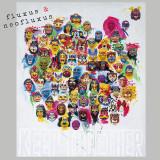
In April 2023, there was released the first part of the Fluxus edition called Stolen Symphony. The year has come and gone and there is the second part of the Fluxus edition called Keep Together. At the centre of both parts of this edition was a broken piano, acquired by the Opening Performance Orchestra for the purpose of making live and studio recordings. During this time other new works for this broken piano were written by diverse Fluxus and non-Fluxus composers. In the spring of 2022, the Opening Performance Orchestra and broken piano participated in an event hosted by Mieko Shiomi. This was a new version of her early work Spatial Poem, documentation of which was presented at the 2022 Aichi Triennale in Tokyo. At present, broken piano lies in the open air in Prague and is subject to gradual decay.
These both parts of this edition contain 73 new and old pieces, live and studio recordings, finished pieces and scores to be performed, solos and pieces for ensemble, using classical and special instruments from 33 Fluxus artists, which have been played by 10 soloists and 4 ensembles. There are new essays and articles from 15 writers on the theme Fluxus, original photos and other documentation in the booklets.
Inside Automatic Popular Music there are two people sitting in a room, their backs to each other. One plays a piano with no particular attention to detail and tuning of the instrument, and another, sitting behind him, claps his hands on his own legs. They do not see each other, they never look at each other, they can only listen to each other, look around. The room is large enough, it is daytime, there are four windows through which enough light enters to illuminate the objects and furniture with objects on them. October, the temperature is great and outside the window there are many people and all these people are dancing to the music of another record.
Automatic Popular Music was recorded and mixed by Nicola Ratti between July and December 2023. The tracks consist almost entirely of sounds generated by automatisms programmed on modular synthesisers. These are combined with tape loops on which fragments of both acoustic and digital pianos are engraved, generating tracks that are structured on repetitiveness in both their rhythmic and harmonic components. The adjective 'popular' is in this case the result of the other adjective 'automatic' since the machine has been entrusted with the task of generating the melodic patterns and harmonic structures of the tracks on the disc.
Automatic Popular Music is the first release by LL, a curatorial and editorial platform based in Milano and formed by artists and curators.
Composed, recorded and mixed by Nicola Ratti between July and December 2023. Mastered by Giuseppe Ielasi. Cover photo by Cédrick Eymenier.
Italian-Austrian sound poet & vocalist NicoNote (Music From Memory, Mille Plateaux,Rizosfera, Rough Trade) presents new album ‘REGOLA’ A suite in nine movements inspired by the mythic medieval composer Hildegard von Bingen (1098-1179) (RIYL Björk, Anohni, Meredith Monk, Elizabeth Fraser, Lena Platonos, Anna Caragnano & Donato Dozzy) An ambitious, conceptual work of hypnotic, immersive electronics & transcendent, experimental vocals, exploring the enduring influence of the polymathic German saint & philosopher.
Nine visionary and ritualistic soundscapes harnessing the voice as an instrument of transcendent expressive power; a visceral, timeless exploration of human nature. ‘REGOLA’ (Italian for ‘RULE’) is a record that calls for a contemplative form of deep listening, a time-dilating experience in which the polyphonic voices of NicoNote ascend, opening up a portal into an archaic, eternal past, where lost sounds coalesce with future revelations.
- Chapter I: War In Heaven
- Chapter Ii: The Ballet Of Blood And
- Angels’ Tears
- Chapter Iii: Once Invincible
- Chapter Iv: Drink Our Blood
- Chapter V: When Darkness Comes
- Chapter Vi: Preys
- Chapter Vii: A Man On A Mission
- Chapter Viii: Go East
- Chapter Ix: The Broken Past
- Chapter X: Dice And Dancers
- Chapter Xi: Lostchapter Xi: Lost
Italienischer Prog-Power-Metal vom Feinsten!
Vision Divine sind wieder da und liefern eine Handvoll glorreichen und sanften Progressive Power Metal. Eine epische Saga, die sich über zwei
monumentale Alben erstreckt, mit "Blood And Angels' Tears" als erstem Teil: angesiedelt in einer fernen Epoche vor den bekannten Zivilisationen,
dreht sich die Erzählung um drei Engel, die wegen ihrer Unentschlossenheit während des katastrophalen Krieges zwischen Luzifer und Erzengel
Michael aus dem Himmel verbannt wurden. Jedes Album ist ein Kapitel in einer großen, filmischen Geschichte: Themen wie Erlösung, Einheit und
Widerstandskraft durchdringen die melodischen Orchestrationen und den eindringlichen Gesang. Erlebt die cineastische Majestät von "Blood And
Angels' Tears", wo jede Note und jeder Text verschmilzt, um einen zeitlosen Kampf und eine heldenhafte Reise durch die Gefilde des alten Mythos
und der fantastischen Fantasie zu beschwören!
WRWTFWW Records is happy to further its collaboration with Japanese electronic/ambient group Interior by releasing their never-heard-before soundtrack for environmental artist NILS-UDO’s 1987 Laserdisc Sculpture of Time (Apocalypse). The intriguing sound design/kankyo ongaku/new age album is available as a limited edition LP housed in a heavyweight 350gsm sleeve and comes with a obi strip. It is also available in digital format.
In 1987, Intermission published a Japan-only Laserdisc showcasing one hour of works created by renowned German environmental artist NILS-UDO. To accompany the visuals, they commissioned electronic music group Interior, fresh off their Haroumi Hosono-produced self-titled debut (also available on WRWTFWW Records) and their Windham Hill Records-released sophomore album Design. For the first time ever, the soundtrack is now available in full HD glory, demonstrating Daisuke Hinata, Eiki Nonaka, Mitsuru Sawamura, and Tsukasa Betto’s precise, subtle, and spellbinding approach to ambient sound design.
Calming nature sounds, ritualistic synths, meditative atmospheres, and eruptive forays into darker territories mesh superbly in a 4-part soundscape that flirts with oeuvres such Midori Takada’s Through The Looking Glass and Hiroshi Yoshimura’s Green, making Sculpture of Time one of one of the best kept secrets of kankyo ongaku – a must have for mystery hunters and levitating music lovers.
Sculpture of Time (Apocalypse) follows WRWTWW’s reissue of Interior’s debut album and precedes the upcoming release of Tarzanland, band member Daisuke Hinata’s pitch perfect solo from 1989.
Andreas Vollenweider erklomm den Loreley-Felsen. Nicht um hier die schöne Aussicht auf den Rhein zu genießen und sich von Lore Lay, der Zauberin, auf Grund ihrer Schönheit den Verstand rauben zu lassen, was dann - der Sage nach - unweigerlich zu seinem Tod geführt hätte. Eher hatte er vorgehabt, mit seinen "Friends" (Walter Keiser - drums, percussions und Pedro Haldemann - percussions) am Abend des 29. August 1982 auf der Bühne des wunderschönen Freilichttheaters ein atemberaubendes Konzert zu geben. 1982 - die außergewöhnliche Karriere des jungen Andreas Vollenweiders, damals 28 Jahre alt - nahm gerade so richtig Fahrt auf. Ein Jahr zuvor hatte er sein Album "Behind The Gardens - Behind The Wall - Under The Tree" veröffentlicht. Ein Mega-Erfolg, weltweit. Mit seinem unverkennbaren, eigenen Stil, seiner sehr farbigen, dynamischen Musik, auch geprägt durch die Vielfalt an exotischen Klangfarben, begeisterte Vollenweider in kurzer Zeit ein Millionenpublikum. So gelingt es ihm auch mit seinen Mitstreitern, diese Magie an dem Abend auf dem Loreleyfelsen zu entfachen und das Publikum in seinen musikalischen Bann zu ziehen. Die sagenumwobene Lore Lay konnte sich zurücklehnen, ihre Zauberkünste waren nicht gefragt. Das erledigte der Zeremonienmeister Vollenweider persönlich, zusammen mit seinen beiden "Gehilfen": Sie verzauberten (musikalisch) das Publikum. Kleines Novum am Rande: Dieser Rockpalast wurde aus welchen Gründen auch immer nie gesendet. Umso mehr erfreulich, dass es ihn jetzt in toller Aualität gibt. Einzigartiges live-Konzert des damaligen 28jährigen Andreas Vollenweider, aufgenommen vom WDR beim Loreley Open Air Festival am 29.08.1982.
Through X Scroll Era, Gabo Barranco, aka AAAA, conducts a rigorous overhaul of the aesthetics and statements of low-profile IDM, trance, and progressive-acid music typical of the early 2000’s. In addition to this inherent and undeniable veneration for the era, the pieces on this album — which originated from recordings and experimental exercises with gear and accidentally became an album — serve also as a kind of retrospective inspection of Mexico City's suburbs (Lomas de Sotelo), with landscapes full of indiscriminate concrete, highways of two and three levels, factories, and parking lots that have supplanted nature with their own detached beauty. It is a sound memory, a specific melancholy that praises skate squads of the area, friends from the past, parties, and substances. It reviews the decline of rave culture but also its resilience and capacity for transformation. What AAAA offers us with X Scroll Era is an almost multigenerational soundtrack, a memory that feels collective and recollects euphoria, ecstasy, and nostalgia.
After several LPs and EPs (Acid Test, Omnidisc, Janushoved) and several years active in the dance and contemplative electronic music circuit (MUTEK, BERGHAIN, iii Points, RBMA), X Scroll Era is the first album by Gabo Barranco, aka AAAA, published on the Mexican label Umor Rex.
Civilistjävel! returns with »Brödföda«, the successor to 2022’s »Järnnätter« and his fourth release for FELT. The record features collaborations with Laila Sakini, Mayssa Jallad, Thommy Wahlström, ELDON, and Withdrawn.
Tomas Bodén is a revered figure of the aural murk, known primarily for his work as Civilistjävel. It’s an alias that has spawned a catalogue of self-released peculiarities, featuring music that scorns traditional form, instead opting for unfussed symphonies of ice-hued minimalism; soft murmurs that emanate from his studio in the High Coast of Sweden.
On »Brödföda«, his latest album for Fergus Jones’s FELT imprint, subtle new developments in mood prevail. Across its 75 minutes, Civilistjävel! unveils a breadth of emotions that on previous releases seemed distant. He also invites collaborators on record for the first time: Beirut-based singer Mayssa Jallad mournfully croons on »IV«, »VIII« hosts Coldlight’s ELDON & Withdrawn for an abstracted session of dub-hop murk, Laila Sakini offers a hallucinogenic monologue amidst melodica, sticks & bells playing on »IX« and Thommy Wahlström floats scant acid dub stylings on »VI«. These additions and developments bring a forlorn intimacy to the music, and suggest an ambition that few artists of his ilk strive for.
FELT’s (un)reliable cast of audio ghouls routinely summon the odd, with Civilistjävel! often its primary culprit; »Brödföda« gently modifies this path to pursue some of his and the label’s most quaintly beautiful music yet.
Released on December 10, 1992, the song reached number one on the US Billboard Hot R&B/ Hip- Hop Songs chart and reached number eight on the Billboard Hot 100. Their second highest charting song behind "O.P.P.", the hit crushed any "one-hit wonder" labels and saw the group show appreciation to the genre that gave them their livelihoods.The b-side, "Written On Your Kitten," is the third and final single from the same album, 19 Naughty III.
Belarusian post-punk / synth pop group Molchat Doma have always exuded the kind of brutalist aesthetic of the architecture that adorns their album art. It's cold, gray, imposing, industrial and yet there are human hearts beating within those foundations. In the wake of their breakthrough success in 2020, the trio endured a polarity of experiences, from the nadir of an uprooted life and forced relocation away from their native Minsk to the apex of headlining massive shows across the world. It was in this headspace that the band settled into their new home of Los Angeles to finish writing their fourth album Belaya Polosa, a testament to change in difficult times, a love letter to the digital pulse of the `90s, and a technicolor reinvention of the band's somber dancefloor anthems. From the opening synth swell and drum machine throb of "Ty Zhe Ne Znaesh' Kto Ya," to the goth / post-punk austerity of "Son", to the swirling electronic textures mixed with reverb-drenched guitar flourishes, expansive space, and yearning vocals of title track "Belaya Polosa" - that suggests Depeche Mode at their most reflective or The Cure at their most downtrodden - to the sultry and seductive "Chernye Cvety"_ a track reminiscent of Duran Duran's early `90s output in its fusion of dreamy guitars and authoritative mechanized beats _ and the interwoven layers of instrumentation, soaring chorus, and melodic sophistication of "Ya Tak Ustal", it's clear that Molchat Doma are operating on another level. Molchat Doma gained following with earlier albums that sound like third-generation bootlegs of banned recordings from the Eastern Bloc made after a few key entries in the Factory Records catalog were smuggled in from the West. Belaya Polosa propels them into a new direction while retaining their cold minimalist delivery they're known for. The basement grime and dirty tape-head sound of their previous work are now making space for digital luster and shimmering production values. And while Molchat Doma's broadened aural spectrum adds a synesthetic power to Belaya Polosa, the mood remains rooted in stark and unflinching self-reflection. Molchat Doma retain the duality of being both cold and feverish in their delivery while pushing their music into expanded territories through an armory of new textures. The trio continue to harness the sound of harrowing beauty thriving under harsh realities.