
pre-order now02.04.2025
expected to be published on 02.04.2025
37,40 €
expected to be published on 02.04.2025

Order now and we will order the item for you at our supplier.

Groovin Recordings move forward with the unreleased series focusing on rising Italian producers. It is now the moment for Peter LC, one of the most interesting young artists in the new italo-house scene.
Born with a distinctive passion for Disco and House music, Peter loves to experiment with all the shapes of house from Italo, Deep Tech, and Classic House genres, continually evolving his unique sound.
This new EP called "Il Letto. La Porta. La Musica." starts with a journey into early 90’s Italian Riviera, also featuring a remix by legendary Italian producer Don Carlos. On the flip we find "Losing my Feelings", which meets Deep house at its finest, echoing the timeless grooves of Chicago and Detroit, and "Love Calling", a classic piano house anthem, driven by soulful female vocals and pure 90’s vibes.
Order now and we will order the item for you at our supplier.

das neue Album von Jovanotti
expected to be published on 31.01.2025

Originally only released in Italy in 1994, Bocelli’s debut album is released on vinyl for the first time and features 13 songs that would go one to become classics within Bocelli’s repertoire including the title track, ‘Il MareCalmo Della Sera’, ‘Ave Maria’, and ‘La Fleur Que Tu M’avais Jetee’.
expected to be published on 29.11.2024

NEWLY REMASTERED SOUNDTRACKS FROM MORRICONE’S INCREDIBLE BACK CATALOGUE! DEDICATED TO CULT SOUNDTRACKS COLLECTORS.
expected to be published on 29.11.2024

Before we pack away the poppers for another year, let Red Laser take you for one last spin on the waltzers.
Tried and tested at our recent road block parties in Manchester, these edits shine a light on four primo-grade Italo face melters. Fervently excavated by Bosco over countless visits to Bel Paese and streamlined for the hydrofoil, with some extra added calories for the club.
Opener 'Destiny' tweaks and shudders under analogue arpeggios, dazzling Strat chops and cosmic bass interplay before dropping into a simply glorious female vocal that, thankfully, gets plenty of airtime before Bosco calls close. A track so close to perfection we had to make it longer.
'Flavio', up next - and half sung in Italian so we only know a bit of what she's on about - is another supreme slice of Italo disco from the upper echelons that Bosco snaffled between glugs of Barolo and a face full of worm cheese. Sure to instigate group hugs, 4AM declarations of love, tears of happiness and huge pelvic thrusts dependant on environment and inebriation.
The tingles continue on side B with another supernova burning bright across the stars. 'Newsin' introduces itself with a joyous marriage of marimba and synth before yet another vocal proves Italians really do, do it better when it comes to writing some of the catchiest hooks and choruses in the universe.
'Lace', featuring the record's only male vocal appearance, has a romantic, proto-goth-new-wave vibe; like if Robert Smith and Richard Butler had a chem-sex love child after a wild night in Baia Degli Angeli.
Not sure who the woman in lace is, but we'd defo like to see her down The White Hotel one night...
Order now and we will order the item for you at our supplier.

It )Îl!es( had to handle
an endless care for some instants
Three I I I forms an archipelago
This record is made
Of synthesis
modulated,
By encounters
In the last 7 years
Composed by Augustin Soulard,
Life (Vie) Cries (Cri) Insanely linked (À lier)
Bag
(Corne)
&
Pipe
(Muse)
Lise Barkas
expected to be published on 01.11.2024

Red Laser gets on a kinky tip, where poppers are currency and salacious activities mandatory as label chief Il Bosco grabs us by the nethers and heads for 'The Darkroom EP'.
Inspired by amyl-soaked tales of Euro basement sex club debauchery, and steadily edging its way to a never-ending climax, the EP is a highly charged exercise in x-rated synth-jizz and erotic Manctalo that'll have you quickly believing you're surrounded by massive pulsating dicks on a cocktail of GHB and Mkat.
Maintaining a persistent throb throughout, the EP has us reaching blindly through clouds of pink saturated club smoke, unsure of what our sweat-soaked hands will grasp on to.
Two remixes alongside three originals. Fabrizio Mammarella has the blood rushing to our head quicker than a whiff of Rush Black Label* on his mix of 'Notio Botherdini'. Adding extra acid for a trippier sexperience and urging willing participants to "close your eyes" as he achieves maximum thrust.
Meanwhile local Stretford poppers enthusiast** Bob Swans also has a fumble in the shadows, remixing 'Dark Room' with late late late on in the session in mind - a time of carnal lucidity and primal urges that'd make even Michael Barrymore's peculiar desires look vanilla. It's a sparse and special redux, fluffing us with that latexy bassline and never-ended sfx trails until we're quite literally cumming in your ears.
Apologies, that probably was a bit graphic.
*Poppers brand highly endorsed by Red Laser contributor Count Van Delicious
**Red Laser only hypothesizes to said producer’s poppers usage.
Order now and we will order the item for you at our supplier.
"Discover Thomas Dutronc's new album. 4 years after ""Frenchy"", Thomas Dutronc is back with new songs tinged with guitar, catchy rhythms, joie de vivre and nostalgia. Included is the new self-titled single ""Il n'est jamais trop tard"". Reviews in London Macadam, R2 and L’Echo
Ads London Macadam R2 and L’Echo"
expected to be published on 20.09.2024

Special exclusive 7" from Il Sogno Del Marinaio, the avant-rock trio formed by legendary bassist Mike Watt (Minutemen, Firehose, Stooges), cult Italian experimentalist Stefano Pilia (Massimo Volume, In Zaire, Afterhours, Rokia Traore) and drummer Paolo Mongardi (Zeus, Fuzz Orchestra, Fulkanelli). Directly from fratello Mike Watt's words: "the "wing and a prayer" seven inch on _improved sequence_ was a product of the covid19 sitch around xmas of 2020. it was put together remotely, w/me here in san pedro, california, usa while from Italy stefano pilia (in bologna) and paolo mongardi (in imola) brought what they had from italy ... yes, the internet can be used for more than spreading hate and lies - it can also be used to collaborate in the spirit of artistic expression! cazzo, imagine that? il sogno del marinaio had finished work w/their "terzo" album and I thought a good way to rally the band would be to focus on a smaller release that reflected the current sitch we were in - see, the basic tracks of "terzo" were recorded in eleven months earlier here in my pedro town at _casa hanzo_ (stefano pilia and paolo mongardi traveling here by plane) so we had no idea what was ahead of us concerning the challenges of that fucking virus sitch. now the "terzo" album was not finished w/those basic tracks getting recorded, we had spiel (vocals) to add plus other stuff and of course it had to be mixed (tim in wales did a great job w/this - much respect to him!) so those experiences of those early covid19 times got "superimposed" on the music that was created right before it was on us, very trippy. that was a big reason I brought the three tunes of this "wing and a prayer" seven inch to stefano pilia and paolo mongardi - all they had was my bass but I believed they could "take the ball and run w/it" cuz that's how powerful I believe music to be: it can be able to overcome 'pert-near any hell trying to stomp it down. stefano pilia chose "wing and a prayer" to mix, paolo mongardi chose "tantrum" and I got what was left: "hail mary pass" - oh, I got my buddies stephen perkins to help w/percussion and petra haden to help w/singing, violin and mandolin. so one reality reality is w/these three tunes is that no one is actually playing w/each other in real time on this little record! it's all done by trading files via the internet...the starting for all three tunes being was my bass - ain't that a trip? shows how bass can be that springboard or launch pad I've always known it could be when not aiding and abetting a tune after the fact – both these "roles" for bass have been very interesting to me, going back to my early days as a minutemen and writing tunes for d boon and George hurley and by also bringing bass to their stuff
expected to be published on 02.08.2024

Riccardi Schola is back with Double A-sider 7“ Single. Both songs are like a private press Italo Disco single from the 80s with a new influence in a rough production. The first song „Mistake Disco“ is with the Italian singer Giada Pesce who also works with Riccardi on his debut „On my mind“ on Bordello A Parigi. The second song „M’hai preo il cuore“ is a lovely ballad sung by the Italian singer Giulia aka GGG (her DJ name) with Riccardi on back vocals.
Both songs spread the pure love to the early Italo Disco. Enjoy and listen and dance!
Order now and we will order the item for you at our supplier.

Terzo is the third album by Il Sogno Del Marinaio, the avant-rock trio formed by legendary bassist Mike Watt (Minutemen, Firehose, Stooges), cult Italian experimentalist Stefano Pilia (Massimo Volume, In Zaire, Afterhours, Rokia Traore) and drummer Paolo Mongardi (Zeus, Fuzz Orchestra, Fulkanelli). This new batch of recordings is an incredible document of a band that’s creating their own path, ascending to new heights while bending the traditional
rock format.
Recorded at Casa Hanzo in San Pedro (US) and completed at Blindsun in Bologna (IT) the album features collaborations with Ramon Moro on trumpet and Petra Haden on vocals. Mixed beautifully by thighpaulsandra (Coil, UUUU, Spiritualized) and mastered by Giovanni
Versari with artwork by Michelangelo Setola. Terzo is the sound of a band that’s completely confident in their chops, their past suggesting that new possibilities have now been found and that the only territory that needs exploring is free-spirited, magical, restless and uncompromising. “Il Sogno Del Marinaio’s strength is in its effortless balance between Watt’s formidable past and his still potent future.” - Pitchfork.
expected to be published on 03.05.2024

Sechs Jahre sind seit dem letzten Longplayer "Du bist so symmetrisch" (2018) des Schweizer Duos Klaus Johann Grobe vergangen und man hört, dass sie einen weiten Weg zurückgelegt haben. "io tu il loro", ihr viertes Album für das in Chicago ansässige Label Trouble In Mind Records, wurde innerhalb von zwei Wochen in einer Hütte ganz am Ende eines abgelegenen Schweizer Tals geschrieben, wo - ziemlich genau an der gleichen Stelle - Klaus Johann Grobe im Jahr 2014 ihr komplettes Debütalbum "Im Sinne der Zeit" erdachten. Was damit begann, einfach mal wieder Musik zu machen, wurde schnell zu einer ernsthaften Arbeit an einem neuen Album. Alles, was es brauchte, war eine echte Pause: Dani und Sevi arbeiteten nicht an irgendwelchen Grobe-bezogenen Sachen, bis sie sich 2022 in den Bergen trafen. Einmal beschlossen, wurde das Ganze recht schnell fertiggestellt und Ende 2022 noch einmal in David Langhards Dala Studio aufgenommen. "io tu il loro" ist eine Platte, die nicht durch endloses Herumspielen an hunderten von Ideen und Sounds zustande kam. Es ist ein Album mit einer verschwommenen Vision und weichen Grenzen. Irgendwie spürt man, dass die beiden nachsichtig auf ihre Arbeit zurückblicken und dann zu dem übergehen, was sich richtig anfühlt. Hier sind wir also mit neun Tracks voller umarmender Wärme, so melancholisch einladend, dass man nicht weiß, ob man lächeln oder weinen soll. Manche mögen es zeitlos nennen, manche mögen es Dad-Rock nennen... nun, es ist sicherlich keine Disco für die Massen, es ist mehr wie "Wenn ich mich nach vier Bieren nicht zum Tanzen bringen kann, kann ich genauso gut nach Hause gehen." Also, keine Disco? Keine synkopischen Synthies? Kein Deutsch? Kein Reverb? Wo ist Grobe? Nimm dir die Zeit und du wirst merken, dass Klaus Johann Grobe nicht weg sind, sie haben nur eine Biegung genommen_
Order now and we will order the item for you at our supplier.

Il Quadro di Troisi presents La Commedia
Everything changes, all things evolve: four years after their eponymous debut, Il Quadro di Troisi return with a new album and a new line-up.
The perfect circle traced by Eva Geist (aka Andrea Noce) and Donato Dozzy (aka Donato Scaramuzzi) becomes a triangle with the permanent addition of Pietro Micioni, who collaborated in the previous recordings and had been part of ll Quadro’s live set.
Nothing stays the same, and the world is a lot different from what it was in 2020. The global crisis generated by the constant escalation of conflict and by the pandemic was mirrored by a time of individual crisis and personal, often irreversible transformation that underscored the entire period of the album’s composition.
The influence of these turbulent times is felt in the writing: La Commedia is about turning a crisis into an opportunity and using change as a catalyst for rebirth. Much like the characters in classic Italian comedies, who are masters in using irony to face life’s hardships, Il Quadro di Troisi explores the vast and unpredictable terrain between the lighter and darker sides of the human experience, matching the magical with the mundane.
La Commedia is about the many facets of life: each song is named after an archetype (e.g. the truth, the night, the Earth, the prophet), as though our existence were a tarot deck and its reading an exercise in collective consciousness.
La Commedia marks the band’s embrace of a more traditional song form, shaped by a very personal and distinctive musical style. The distinguishing elements of Il Quadro di Troisi’s music – classic Italian songwriting with an electronic spin – meld into a unique mix that is both seductive and eerie, elegant and earthy, contemporary and timeless. La Commedia celebrates the band’s cultural roots while constantly moving into new territory, balancing nostalgia with a forward-thinking approach.
La Commedia is a rare gem that confirms Il Quadro di Troisi’s relevance in the international music scene, as demonstrated by the number of top-level artists featured on the album: from Suzanne Ciani, a legend and a pioneer of independent music with a career spanning five decades, to Aimee Portioli, aka Grand River, a Dutch-Italian musician, composer and sound designer based in Berlin, along with Francesca Colombo’s eclectic violin (the de facto “fourth angle” of Il Quadro di Troisi’s frame), Fiona Brice’s strings, cultural agitator and icon of the Roman underground scene Stefano Di Trapani (aka Demented Burrocacao and a member of Trapcoustic and System Hardware Abnormal, among other projects), Maestro Daniele Di Gregorio, an excellent musician and a longtime collaboration of songwriting legend Paolo Conte, and Tommaso Cappellato, whose professional description goes well beyond “drummer” and who has been working with artists like Rabih Beaini and Maurice Louca.
The cover of the album, as well as those of the singles, was designed by Francesco Messina, another icon of Italian music. Messina is a longtime Franco Battiato collaborator and co-author, a cult musician (his Prati Bagnati del Monte Analogo, made in collaboration with Roul Lovisoni, is considered a seminal record by the alternative Italian music scene), as well as a photographer, visual artist and the author of legendary record covers.
Order now and we will order the item for you at our supplier.

Coloured Vinyl[26,85 €]
Auf dem Album "Ad astra" werden die virtuosen Stimmen der drei Ausnahmesänger des weltweit erfolgreichen Trios IL VOLO in elf, eigens für sie geschriebenen Songs inszeniert.Begleitet werden die jungen Tenöre Piero Barone, Ignazio Boschetto und Gianluca Ginoble von orchestralen Klängen und geschmackvollen Arrangements für eine große Band; so bringen sie diese einmalig emotionalen Titel zum Erstrahlen. Klanglich zwischen Pop-Balladen und zeitlosen Arien verortet, haben sie ein Album gestaltet, das Musikfans über alle Genre-Grenzen hinweg zu berühren vermag. Die erste Single des Albums ist "Capolavoro"; diesen Song hatte das Trio bereits beim in Italien legendären Sanremo-Gesangs-Wettbewerb 2024 uraufgeführt. IL VOLO hatten den Wettbewerb 2015 gewonnen, was ihnen in ihrem Heimatland den absoluten Superstar-Status einbrachte.Auch international konnte das Trio unglaubliche Erfolg feiern. IL VOLO sind bereits mit Barbra Streisand, Plácido Domingo, Andrea Bocelli oder Eros Ramazzotti aufgetreten und haben mit dem legendären italienischen Komponisten Ennio Morricone gearbeitet.
expected to be published on 29.03.2024

Black Vinyl[26,85 €]
Auf dem Album "Ad astra" werden die virtuosen Stimmen der drei Ausnahmesänger des weltweit erfolgreichen Trios IL VOLO in elf, eigens für sie geschriebenen Songs inszeniert.Begleitet werden die jungen Tenöre Piero Barone, Ignazio Boschetto und Gianluca Ginoble von orchestralen Klängen und geschmackvollen Arrangements für eine große Band; so bringen sie diese einmalig emotionalen Titel zum Erstrahlen. Klanglich zwischen Pop-Balladen und zeitlosen Arien verortet, haben sie ein Album gestaltet, das Musikfans über alle Genre-Grenzen hinweg zu berühren vermag. Die erste Single des Albums ist "Capolavoro"; diesen Song hatte das Trio bereits beim in Italien legendären Sanremo-Gesangs-Wettbewerb 2024 uraufgeführt. IL VOLO hatten den Wettbewerb 2015 gewonnen, was ihnen in ihrem Heimatland den absoluten Superstar-Status einbrachte.Auch international konnte das Trio unglaubliche Erfolg feiern. IL VOLO sind bereits mit Barbra Streisand, Plácido Domingo, Andrea Bocelli oder Eros Ramazzotti aufgetreten und haben mit dem legendären italienischen Komponisten Ennio Morricone gearbeitet.
expected to be published on 29.03.2024

Color Vinyl
Das Jahr 2024 steht für Il Civetto im Zeichen eines neuen Albums mit neuer Single und einer Tour: »Liebe auf Eis«. Im April und Mai 2024 begeben sich Il Civetto dann auf ihre bislang größte Tour. Schon immer ging es in der flirrenden Pop-Internationale von Il Civetto um Fernweh, Sehnsucht und das Gefühl, unterwegs zu sein. Die Musik dieser Band imaginiert gleichzeitig den Vibe einer lauen Sommernacht und den Kater danach. Mit ihrem letzten Album »Späti del Sol« hatten sie diesen Möglichkeitsraum bis in die letzten Winkel ausgelotet, mit »Liebe auf Eis« geht die Berliner Band noch einen Schritt weiter. So kann man den Titel als Symbolbild für alles verstehen, um das es bei dieser Band geht. Euphorie und Melancholie sind bei Il Civetto kein Gegensatzpaar, wo Licht ist, ist auch Schatten. Gesellschaftlich, privat, auf allen Ebenen - darin liegt der besondere Zauber dieser Gruppe von Freunden. Es geht in ihrer Musik darum, Widersprüche auszuhalten, Gräben zu überbrücken, die gesellschaftliche Kälte in polarisierten Zeiten mit Liebe zu überwinden - »Liebe auf Eis«. Überhaupt sind Il Civetto auf dem neuen Album persönlicher geworden, noch näher an ihren Themen. »Es wird einen Song über meine Jugend geben, einen anderen für meinen Vater und auch die Liebeslieder sind noch von eigenen Erfahrungen geprägt«, sagt Keiditsch. Aufgenommen haben sie »Liebe auf Eis« erneut mit dem Produzenten Ralf Christian Mayer (u.a. Clueso, Cro, Zimmer90, F4), der die Vision dieser Band schon immer am besten verstanden hat. Produkt-Nachhaltigkeit: FSC zertifiziertes Material, Umweltfreundliche Farbe & Lacke, Nutzung erneuerbarer Energien bei Herstellung.
expected to be published on 15.03.2024

As the fable goes: pre-discogs, intrepid disc jocks would often take trips to Italy (many tricking their spouse into believe it was a ‘holiday’!) to source records from the seemingly endless supply of top tier Italo, disco and cosmic record shops across the country. According to legend, the classified sections of local yellow pages and information booklets which would contain the addresses of the record shops and dealers in the area would often be ripped out unscrupulously, thwarting – or at least making it more difficult for – the next vinyl tourist to source out the rare gems amongst the rich seams – a wild west vinyl gold rush if you will.
Such stories are a rarity these days, with youtube making some of the most underground tracks common knowledge, and discogs almost making any record obtainable – at a price of course. Upgrading his digging methodology, Bosco has developed a secret New Technique to side-step the machine and in doing so obtained a clutch of amyl-soaked fluffers that are so rare, that upon writing they aren’t even listed online! Seriously, he must be communicating with some interdimensional, upper echelon Italo overlords; taking us on a primo-thrust tour through the most unexposed recesses of the Italo disco galaxy.
Don’t be hoodwinked by their sheer obscurity however; we wouldn’t give a toss if they couldn’t tear the arse off the dancefloor. But they’re all fuckin rhodium grade tackle peeps! Eight neon-drenched late night roman candles of Italo disco decadence that’ll defo have you jizzing rainbow skittles over the dancefloor as you search desperately through the fog for another huff of poppers off Darren.
Total Discogs market value: as yet undetermined
Pharoah Brunson’s Pyramid Points: 9999999999999
Order now and we will order the item for you at our supplier.

20. Jubiläumsalbum der weltweit bekannten klassischen Crossover-Gruppe Il Divo mit neuem Material, darunter ein neuer Originalsong. Erstes Album
mit dem neuen Mitglied Steven LaBrie,nach dem Tod von Gründungsmitglied Carlos Marin im Jahr 2020. Il Divo hebt 2024 mit ihrem 10. Album "XX"
ab. Wieder einmal machen sie einen kreativen Sprung nach vorne und erweitern gleichzeitig ihren Stil und ihre Vision. "Das Album hat wirklich einen
eigenen Sound", so Sébastien weiter. "Es ist aufregend zu hören, wohin wir gehen. Es ist Il Divo, aber es ist das nächste Kapitel"."Es hat etwas
Magisches, dass wir 2022 auf Tournee waren, enge Freunde wurden und zusammen Musik machen", führt Steven weiter aus. "Es ist unglaublich."Für
Il Divo beginnt jetzt eine neue Zeitrechnung."Für mich ist Musik mehr als nur Unterhaltung", sagt David. "Sie trennt den Menschen vom Rest des
Tierreichs. Die menschliche Stimme ist zu Dingen fähig, die jeder im Publikum schwingungsmäßig zuordnen kann. Wir haben alle schon Traurigkeit
und Glück erlebt. Il Divo übersetzt extreme Emotionen in eine moderne Erfahrung von Menschlichkeit. Das ist keine Hintergrund Musik. Wir spiegeln
in unseren Schwingungen wider, wie Sie sich vielleicht fühlen, und ermöglichen eine Katharsis. Wir möchten, dass dies so lange wie möglich andauert.
Solange wir den Atem haben und in der Lage sind, das zu tuntun können, was wir tun, ist das alles, was wir wollen. Wir wollen Fenster der
Transformation für jeden schaffen, der bereit ist zuzuhören.""Alles, was wir tun, ist für das Publikum", erklärt Sebastien. "Carlos wird immer in
unseren Herzen sein. "Nachdem wir einen Bruder verloren und in 20 Jahren so viel erlebt haben, sind Il Divo und unsere Musik kein bisschen müde",
sagt Urs weiter. Das ist für mich das Wichtigste: Il Divo ist nach 20 Jahren immer noch da, und Il Divo ist da um zu bleiben."
expected to be published on 09.02.2024

our Flies' 45s series continues to pay tribute to the golden age of Italian film music, this time with the first 7-inch release ever of two super-groovy themes from Gianni Marchetti's soundrack to Milano: il clan dei calabresi (known in English as The Last Desperate Hours), a 1974 poliziottesco film directed by Giorgio Stegani.
"M2", on side A, is a re-versioning of a timeless classic – Quincy Jones' "Ironside" theme – where the punch of funk comes to the fore and is fused with the acid sound of early 70s Italian prog rock. This combination of jazz-funk and prog rock is found also in "M3", on side B, which weaves a tapestry of powerful horns and gently weeping guitarover a driving, funk-blues bass line.
A must-have for lovers of rare grooves and poliziottesco films! But don't wait around, it's a limited edition!
Order now and we will order the item for you at our supplier.

“Una pistola per Ringo” and “Il ritorno di Ringo” are two movies from 1965 that belong to the ‘spaghetti western’ genre,
re-issued on vinyl and remastered from the original tapes!
expected to be published on 15.12.2023

Oceanvs Orientalis teams up with Italian artist Tooker and joins the Crosstown Rebels roster with ‘II Lupo’, including a remix from Acid Pauli.
Hailing from Istanbul, Safak Oz Kutle, also known as Oceanvs Orientalis, is a true maestro at crafting hypnotic, evolving sounds while blending a diverse mix of Turkish, Kurdish, Arabic and Armenian influences. Unfolding after a busy year of performances at venues across the globe, including a notable appearance at Crosstown Rebels’ Rebel Rave at Club Space Miami, he now combines his signature downtempo sound with the talents of Italian native Tooker, a partnership two years in the making. With their joint creation teased across their sets, both artists now unveil their first collaboration on the label with the soul-stirring, ‘II Lupo’ including a remix from Damian Lazarus’ longstanding friend Acid Pauli.
‘II Lupo’ weaves a haunting atmosphere through ethereal synth-lines, echoing wolf howls and low rumbling drum hits, transporting you to a realm of intrigue and allure. Infusing his unique touch, Acid Pauli adds an extra layer of sonic flare to the release by layering cosmic stabs and shimmering chimes, enriching the melodic experience.
Order now and we will order the item for you at our supplier.

Following up on their highly acclaimed debut release from 2020, raster presents Il Quadro di Troisi’s “Remixes” album, an eclectic collection of reinterpretations of eight of the duo’s tracks. By inviting fellow label artists as well as friends and long-term collaborators to contribute to this, “Remixes” shows a broad spectrum of diversity, ranging from colorful, loop-based renditions by Toulouse Low Trax and Tropicantesimo, to (Italo) disco-inspired versions by Daniele Baldelli & Marco Dionigi and Chloé, to more rhythmical and functional tracks by AtomTM, Dasha Rush and Front de Cadeaux. The album also includes a dub-infused reinterpretation of “Il giudizio” by the artists themselves. “Remixes” will be out on raster on August 18, 2023 as 2xLP and digitally. The record’s artwork was contributed by Spanish graphic designer Alicia Carrera.
Order now and we will order the item for you at our supplier.

In the late 1960s, Antonio Infantino linked his name to the Beat world and to italian performance and gestural music circles (Bussotti, Chiari, Curran). A poet and singer, a tireless devotee of the musical traditions of Southern Italy, he focuses his research mainly on the mysterious phenomenon of Tarantismo, a cultural syndrome of hysterical type found in the Mediterranean air and made famous by the studies of Ernesto De Martino. With his group, Infantino twists and reinvents the traditional repertoire of Basilicata, creating an entirely new and original songbook. The music reflects the states of Trance induced by the bite of the spider tarantula, with obsessive and hypnotic rhythms characteristic of the incandescent blood of the peasant world. A deep and universal human sound, it also takes its cues from Dylan's folk revolution and the frenetic drums of North Africa.
expected to be published on 20.10.2023

Melanie De Biasio veröffentlicht ihr viertes Album 'Il Viaggio' (italienisch für 'Die Reise') und begibt sich auf die titelgebende Reise zu ihren familiären Wurzeln in Italien. Zum einen aufgenommen in ihrer belgischen Heimat und zum anderen in Italien, beschreibt 'Il Viaggio' die Suche nach musikalischer Erneuerung. Melanie De Biasios sanfte Stimme, wunderschöne Melodien und atmosphärische Klangteppiche laden dazu ein, sich voller Gelassenheit mit ihr auf diese sinnliche Reise zu begeben.
expected to be published on 06.10.2023
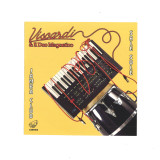
Viscardi & Il Duo Magnetico is the new collaborative project between italo-swiss DJ, producer and singer Pascal Viscardi,
Yavor Lilov and Alain Sandri, respectively drummer and percussionist of the swiss cult band L’Éclair.
The three musicians joined forces in Geneva and worked in the studio for the past two years with Viscardi as the main
vocalist, Lilov producing the tracks and playing drums, bass and keys, and Sandri on guitar, percussion, and backing vocals.
The result is a unique and contemporary version of italian pop, peppered with new-wave, boogie, disco and world music
references.
On Sale Sole Pascal's mellifluous lyrics float on a midtempo boogie groove, projecting visions of sun drenched cities and
summer sunsets. On the flip side Jamba Club is a reggae infused slow burner, reminiscent of night encounters and forgotten
love stories.
Sale Sole / Jamba Club marks the project’s debut release and serves as a sneak peek into the upcoming full-length album,
set to release on Cosmic Romance in fall 2023.
Order now and we will order the item for you at our supplier.

In the digital age, words are no longer just symbols of communication, but a powerful tool that gives rise to meaningful interconnections between different universes.
Words have the power to transcend time and space, connecting two souls destined to meet.
Il Significato delle Parole (the meaning of words) is Adiel's new effort on her DanzaTribale, a crossover of two minds, generated together with musician Flavio Accorinti: techno sounds like the restless soul that pervades our days, deconstructed atmospheres like shattered generational dreams. The fusion of two cosmic currents, two ways of thinking and creating, characterized by an immanent power, pushing us to imagine new urban primitivism. Two creative processes, transcending individual boundaries to connect into a single overarching vision, to explore new forms of art and storytelling.
The EP, mixed by Donato Dozzy and mastered at Rome's Enisslab Studio by Giuseppe Tillieci, starts with Nulla Resta, a defragmented, dreamlike, ascending climax markedly cyberpunk: dense with references to 90s Progressive Dream, Nulla Resta, with its dulcet melodies, transports us to an artificial reality, a spiritual reality albeit dominated by technology. A reality suspended between fantasy and materialism.
Suspended, like the second track (Sospesa): dark trip-hop's echoes adorned by the voice of Jordie Devlin Mcmorrow. "Shadows on the walls orchestrate our downfall." Dystopian futures intertwine with mysteriously dreamy pasts in a fatal spiral of redemption.
But words remain the catalysing element of this EP.
Parole(words) represents a communicative rare faction that embraces tribes near and far. Black drums echo in the distance in an intimate ballad, in an epic ride, in an ethereal metaphysical journey to the dissolution of the boundary between time and space, between memory and perception.
Notturna, on the other hand, is the epilogue we all deserve; a solemn twilight, a lysergic, dragging escape from the objectivity of the real world.
The images of life do not simply exist in a vacuum. They are defined by the energy that surrounds them, and it is the explanation behind each of these words that we must find if weare to truly understand them. Thanks to the meaning of words, sooner or later, we will be all united again.
Order now and we will order the item for you at our supplier.

expected to be published on 05.05.2023

Gui La Testa[41,13 €]
For a few dollars more[41,13 €]
L'assoluto naturale[41,13 €]
Gamma[41,13 €]
Cosi' come sei[41,13 €]
Green Vinyl[33,57 €]
"Il mio nome è Nessuno" (My name is Nobody) is an a typical western,
difficult to classify as it's placed halfway between the founders of the
genre of the '60s and the comedies of the following decade
Sponsored and partly directed by Sergio Leone, it came out in 1973 and received great success, thanks to the presence of the actors Terence Hill and Henry Fonda, in perfect balance between a light- hearted comedy and the more serious 'spaghetti western' genre.
The music is written by the genius of Ennio Morricone, who writes and
orchestrates a varied soundtrack, which lends itself to the various scenes. There is everything: tense soundscapes, epic symphonic rides - directly referring to the "Dollar Trilogy", frivolous and light- hearted moments, all mixed with esoteric sounds.
Given the popularity of the film, its soundtrack has been released several times, but 35 years have passed since the previous vinyl release. A must buy for fans of the Maestro Morricone but also for all film lovers!
Limited edition on crystal clear vinyl
expected to be published on 10.03.2023
The original soundtrack for “Il Casanova di Federico Fellini” (1976) sees Nino Rota putting into music Federico Fellini’s opus on the legendary Venetian icon and “tombeur des femmes” Giacomo Casanova.
Winner of an Oscar for Best Costumes in 1977, the film is one of Fellini's finest, a grotesque and hyperbolic take on the life of Casanova that is matched by Rota’s compositions.
“Il Casanova di Federico Fellini” possibly is one of Rota’s most eerie and enigmatic scores, as if the Maestro had finally poured into a soundtrack all of his love for esotericism.
The music wraps you up like the Venetian mist. The compositions are constantly on the edge of classical music with playful nuances and the use of instruments like viola and cello. Vocals become a cornerstone, echoing the tradition of 18th century Italian opera. However, Rota also leaves room for more experimental and estranging vibes that make the soundtrack a one-of-a-kind voyage into the creativity of the Maestro.
expected to be published on 10.02.2023

With this release the label celebrates the return to the ranks of the founder Worg. A triumphant homecoming comparable to that of Jason, the main character of the Argonautica, who travelled in search of the Golden Fleece (Il Vello d'Oro) aboard the ship Argo. After many vicissitudes, the hero returned to Iolco, his homeland, to reclaim the throne usurped by his half-brother Pelias.
This new chapter in the Lykos saga focuses on the deeds of Jason and the Argonauts, but also on a key figure who was indispensable to the success of this quest, Medea. Thanks to her and her magical skills, the fellowship of heroes succeeded in grabbing the Golden Fleece. Through careful sound design, hinted melodic cells and complex rhythms, Il Piano di Medea by Worg, sums up details and facts related to this extraordinary legend. Starting from the prophecies of the Oracles, to the tragic and bloody ending of the epic poem, which took place with the death of King Pelias by his own daughters, hypnotized and manipulated by Medea's magic.
The narrative begins with the track Oracolo, characterized by a syncopated groove, nebulous atmospheres and the presence of a dark anthropomorphic synth, which alludes to the solemn, grave and authoritative voice of an entity. A prophetic spirit that warns the listener of the dangers that lurk for those who dare to enter this new sonic adventure. In order to foretell the future and to spread their word, the gods took possession of the bodies of priests who had fallen into ecstasy, using them as intermediaries. In his reinterpretation of Oracolo Neel, the grand Maestro of techno, in a similar way uses musical elements such as a harsh and acid bass line or a tight rhythm to lead the listener into a psychic state of suspension and mystical elevation.
In the music piece Il Vello d'Oro, Worg draws attention to the rare preciousness of this magical relic, rumored to have the power to heal all wounds and for this reason longed by Jason. To evoke the purity of the golden mantle, the artist uses shimmering percussion, radiant textures and the omnipresence of an FM synth bass, full of brilliant harmonics. All enhanced by sound details scattered throughout the arrangement.
Eryx, the record's final track, has a fluid and sinuous flow, with sound elements that recall water, a natural element, protagonist of the Argonauts' journey to the remote Colchis. A melody echoes in the distance, disappears and resurfaces to then collide, like waves on the rocks, with the complex and jagged rhythms that mark the gradual evolution of the
track.
Order now and we will order the item for you at our supplier.
Italian, French-speaking and blessed with a Belgian accent Christophe Clébard brings a coherence that prevails both for his person and for his music: a wobbly mound, which sometimes resembles a series of explosions, sometimes a pile of layers cut by a flood of words from which parts can be distinguished. Relying on the amplified intonation of a saturated microphone, a pounding rhythm box and a synthesizer, his performances absorb the hearing to spit it out in a universe where nothing has any meaning, except "we're going to die". A punchline that he chants far from the cliché darkness of the dark wave, since for him death is jubilant and colorful, with the grim reaper as the owner of the nightclub. A nightclub well anchored in his head, without a future, with the upcoming emptiness and the hazy memory of his Christian upbringing.
All tracks composed and recorded by Christophe Clébard at les ateliers claus. The album was recorded during a residency at Les Ateliers Claus during the month of April 2021, mixed by Piccolo Bruno and Christophe Clebard, mastered by Elvin Vanzeebroeck at Rare Sound Studio. Photos and Cover projects by Jonas Meier.
expected to be published on 09.12.2022

2022 Repress
From Piero Umiliani, legendary soundtrack composer for numerous Italian movies of the 60s and 70s, and the man behind Mah nà Mah nà' (Muppet Show, Benny Hill, Sesame Street), the Omnicron label ("sound library' works) and the Sound Work Shop recording studio. - For fans of experimental music, avant-garde, synth experimentations, Ennio Morricone, Riz Ortolani, Giallo movies, Mondo movies, soft erotica, and wonderfully weird stuff. - The album is fully remastered for new levels of enjoyment. We Release Whatever The Fuck We Want Records is thrilled to announce the vinyl re-release of sought-after experimental gem Il Mondo Dei Romani by soundtrack and avant-garde maestro Piero Umiliani, remastered straight from the original reels and available for the first time since 1972! Originally recorded for a TV documentary about ancient Rome and released on Omnicron (Umiliani's label), Il Mondo Dei Romani finds Piero Umiliani experimenting with electronic instruments (his oscillators") to offer a fascinating rendition of what synthesizer-based avant-garde ancient Roman music would sound like - a weird and extremely hypnotizing retro-futuristic experience where faux cithara, lyre, organ, and trumpet sounds are driven by proto-techno sequences and minimalist rhythms. This brilliant electronic oddity is the perfect companion to WRWTFWW's previous Piero Umiliani release, Tra scienza e fantascienza, and is a limited edition of 500 orange vinyl LPs (no digital).
Order now and we will order the item for you at our supplier.

Barbara, die Frau ohne Gedächtnis, irrt durch die malerischen Straßen Hamburgs. Eine zwielichtige Hypnosesitzung und ein nichts ahnender Liebhaber bringen ans Licht, was sich hinter ihrer unschuldigen Schönheit verbirgt. Die Erlösung scheint in greifbarer Nähe, doch der Drang, weiteres Unheil anzurichten, ist unwiderstehlich... Erst der Tag entblößt das wahre Grauen: GIALLO COME IL GIORNO, das fünfte Genre-Album von MONDO SANGUE setzt dort an, wo die vielbeachtete Giallo-LP ROSSO COME LA NOTTE (2021) endete. MONDO SANGUE und ihre Leidenschaft für die Musik und das Kino der italienischen 1960/70er ziehen Kreise. Auf GIALLO COME IL GIORNO sind die Genreliebhaber und Italien(Be)kenner Bela B, Eric Pfeil, Dirk von Lowtzow und Rocko Schamoni auf schwarzem Gold vereint. Die Vinyl 10"-EPs, von Adrian Keindorf illustriert, sind inkl. farbigem Beileger, Texte und Downloadcode auf 444 Stück limitiert und handnummeriert. Über MONDO SANGUE Das Stuttgarter Duo MONDO SANGUE (Christian Bluthardt & Yvy Pop), gegründet 2015, produziert Cinematic Pop in Anlehnung an das italienische Genrekino der 1960/70er. Nach einem Ausflug in den Dschungel (L"ISOLA DEI DANNATI - Die Insel der Verdammten; Soundtrack zu einem fiktiven Kannibalenfilm, 2016), einem Ritt durch den Spaghettiwestern (NO PLACE FOR A MAN - Il Villaggio delle Donne, 2018) und einer Reise ins All mit dem Science?Fiction-Abenteuer VEGA-5 (Avventure nel Cosmo, 2020) feiern MONDO SANGUE das legendärste Italo-Genre, den Giallo, gleich zweifach: mit ROSSO COME LA NOTTE (2021) und GIALLO COME IL GIORNO (2022).
expected to be published on 14.10.2022

2022 Repress
1x12" Maxi (ILG003X)
2x12" LP (ILG003)
For it's third release Infoline showcases never heard compositions
of Marco Repetto (former Grauzone). La Luna Sotto Il Ponte is a 2x12' compilation and a never used alias of Marco Repetto. The compilation features tracks written between 1983-1989.
Some years after his break up with Grauzone (1981), Marco went on
a darker and more industrial path, which was a common route for experimental composers at that time. Expect a solid mixture of unreleased Industrial/EBM cuts. The bonus EP replaces La Luna Sotto Il Pontes grim and dark compositions for a much more utopian mind-set and movement in it's heyday. It's 1988/1989 - Acid House is everywhere.
Order now and we will order the item for you at our supplier.

expected to be published on 28.09.2022

Évariste is one of the rare specimens of artist-cum-scientists. Among his kind stand others like Pierre Schaeffer, a Polytechnique graduate (an engineer but also the father of musique concrète) and the eccentric Boby Lapointe (graduate of the École centrale and inventor of the Bibi-binaire system, patented in 1968). Évariste's songwriting, joyful and full of energy (albeit extremely critical), shrouds an original tragedy: born in 1943 among résistants, Joël Sternheimer (aka Évariste) grew up without a father, lost to Auschwitz. Although he makes little reference to Jewish culture in his music, his origins leave their mark: in 1974, he sings a Hebrew song on television. In 1966, the young Joël sports Princeton's colourful paraphernalia - that's because he's freshly returning from the US, where he was sent to pursue his research on "particle mass and the interpretation of observed regularities, such as the effects of a wave" (will understand who may). When he gets there the country's in the midst of the Vietnam War. With McNamara keen to find an alternative to the nuclear weapon and calling upon the country's biggest brains to undertake the task, there's a "fund shift" within the university - a diplomatic way to give notice to whoever may not be disposed to follow the government's scheme. Joël, who's under the supervision of a rebellious physician, is dismissed. He regardless keeps following the prestigious seminaries of the Institute for Advanced Study, chaired by Oppenheimer, inventor of the atomic bomb. Likely inspired by the hippie movement and music, Joël buys a guitar and starts playing in Washington Square - after all, Bob Dylan himself started there. He blithely skips Oppenheimer and receives a warm (though surprised) welcome from a crowd thoroughly unfamiliar with French. When the ageing physicist questions him about his decreasing attendance, Joël explains how drawn he is to music, and how he thinks it could help him in self-financing his research. Évariste recalls seeing the sickened man, his face torn by remorse, lighten up to his words and say: "What's keeping you - go for it! If I was still young that's exactly what I'd do." The student takes these words as a testimony from his professor - and it's enough to convince him . And so he takes the leap during the Christmas vacations he spends in Paris. A journalist friend he often sees around the Sorbonne introduces him to the artistic director of Disques AZ. The latter passes the tapes on to the label's boss, Lucien Morisse, also program manager on Europe N°1. Morisse is blown away - and signs him onto the label right away. Michel Colombier, arranger for Serge Gainsbourg and co-author of "Psyché Rock", with Pierre Henry, contributes some of his original ideas to the 7 inch "E=mc2": Évariste's preoccupation with the percussion sound on the track "Le calcul intégral" is that it goes "poom poom" and not "tock tock" - Colombier is aware of the issue and records Évariste's guitar like a percussion in an isolated booth. The organist Eddy Louis, who is to participate, in 1969, to the success of Claude Nougaro's "Paris mai", also appears on the record. It's 1966 and the Antoine phenomenon (signed on Vogue) storms through France. The two singers share similarities: Antoine is an engineer of the École centrale, gifted with a great originality in his song-writing. A godsend for the two labels who turn this resemblance into a commercial strategy, setting them out as rivals. To this day though, Évariste still denies what was little more than slushy tabloïd gossip. Success comes around swiftly and in 1967 Évariste launches into a second 7 inch, "Wo I nee", again arranged by Michel Colombier. Quantum mechanics fans finally get their anthem with "La Chasse Au Boson Intermédiaire" (or the "Intermediary Boson Pursuit"). To sum up what's a boson, say he's a close pal of the meson, photon and other gluons. A few months later, it's May 68 and everything's turned upside down. Évariste writes a series of songs inspired by the events, which he immediately submits to Lucien Morisse. When the man behind "Salut les copains", once married to Dalida, hears the song "La révolution" - a father and son dialogue - he can't take any more: AZ simply cannot release this. But there and then Lucien Morisse makes a gesture which will remain engraved in French music's history: sorry to be unable to officially stand by the singer, he encourages him to self-produce the record, but with his tacit support. He calls the pressing factory and asks they apply the same rate for Évariste as they would for AZ. The singer and his musicians use the same studio as for the previous record, all of them playing for free awaiting a return on investment. Évariste keeps singing at the Sorbonne with "Jussieu's gang" and "the young Renaud" he nicknames "le p'tit gavroche" (or "street urchin"). Renaud volunteers to type the lyrics of the song "La révolution" so that the chorus can be sung and recorded. A boy in the group is related to Wolinski and introduces them. The two get along so well that Wolinski ends up drawing the cover for the record "La révolution", for free. The self-released 7 inch "La révolution / La faute à Nanterre" is sold under the table and door-to-door for half the price of a standard record, on and around the boulevard Saint-Michel; and it runs out fast. In the end, there will be 6 releases of the record, and 25000 copies sold. When the theatre director Claude Confortès decides to adapt Wolinski's drawing series titled "Je ne veux pas mourir idiot" ("I don't want to die a fool"), he asks Évariste to write the original soundtrack. His friend, now cartoonist for Hara-Kiri Hebdo, often promotes him in accordance with a principle dear to him by virtue of which he gives a special place to his friends. Dominique Grange (writer of the song "Nous sommes les nouveaux partisans") soon joins the team. After 150 performances, Évariste leaves his place to Dominique Maurin (brother of Patrick Dewaere). Évariste composes the songs for Claude Confortès' next play, "Je ne pense qu'à ça" ("That's all I think about"), co-wrote with Wolinski in 1969. The comedians of the play record the songs on a 7 inch, with a cover signed, again, by Wolinski. In 1971, French television produces the documentary "Évariste et les 7 dimensions", but doesn't air it. Indeed, the scientific sub-comity of the programming comity (sic) censors the show. The given justification is that "Évariste dangerously mixed science with science-fiction, numerology and other non-scientific disciplines". The underlying motive might have been a will to censor the singer-mathematician's political discourse. In the documentary and among other things, Évariste discusses hierarchy, alienation and revolution. Half a century later the documentary remains invisible, though some excerpts resurfaced in 1992 in the cult show "L'oeil du cyclone", on Canal +. Though flourishing, Évariste's career is nearing its end. 1970 is the beginning of a decade in the course of which he is to make a decisive discovery in the musical and scientific domains. Following this breakthrough, he moves away from self-produced music and gaucho magazines to focus on science. He keeps Oppenheimer's encouraging words in mind, now freely pursuing his research thanks to the sales of his records. Joël realises that when decoding protein sequences, one finds musical sequences recognisable to humans. He names them "proteodies". If, when listening to a proteody, one responds by being so sensitive as to finding it beautiful, then it reveals a deficiency of the related protein - and this peculiar music may be the cure. We could trace back the music history in light of proteins lacking in a given artist, or within a public's majority. You always thought these hysterical groupies who'd throw their underwear with passion and faint in the pit had miraculously appeared because they had never heard anything as wonderful as the Beatles? Make no mistake! For Évariste, it all boils down to an intro's protein content. Indeed, the beginning of their first hit "Love Me Do" corresponds to dopamine, the neurotransmitter linked to compulsive buying. An intro like this could only unleash the fervour of groupies, victims of fashion and biology. Évariste's success is such that the income from his sales gives him the autonomy to which he had aspired when confiding to Oppenheimer. It made it possible for him to pursue his research without any institutional constraints. He now devotes himself to his proteodies, sat in the offices of the European University for Research, just around the corner from the Sorbonne he knew so well. Évariste is no more. Joël regained control of this strange and comical beast.
expected to be published on 15.07.2022

The latest offering from French shape-shifter Maxime Primault (High Wolf, Black Zone Myth Chant, etc.) is both a distillation and deepening of psychedelic soundsystem strategies honed across a decade plus of production and performance, in crisscrossing trenches of vibrational exploration. The four cuts comprising IN D EV IL were born of bass and syrup, designed as anthems for baser desires: “I just wanted to make bangers really.” Alien squelches and insectoid chatter pulse above thick swells of low end, intercut with sirens, screwed voices, and seasick wobble, alternately pummeling and prismatic. Masterfully disorienting, flickering with FX, drops, and narcotic murmuring, at the threshold of dissociative and dubstep.
Recent years spent performing in clubs influenced Primault’s listening habits, both in taste and production methods, skewing towards a starker contrast of highs and lows. IN D EV IL encapsulates this evolution, hallucinatory but urgent, like DJ tools for an underworld afterhours: tight, tripped, and lightless. The EP’s tracks vary in energy and density but share Primault’s premise of “tunes that sound fat and heavy.” Club music as dimensional gateway, booming and liminal, rippling with tremors, texture, and undertow. Whether deployed in public or private, these designs manifest vividly altered states, testament to their creator’s omnivorous vision of rhythm and sound.
Order now and we will order the item for you at our supplier.

Die Berliner Band il Civetto ist am vorläufigen Ende einer kreativen Reise bei sich selbst angekommen, indem sie sich neu erfunden hat: Auf ihrem dritten Album »Späti del Sol« gelingt der Band mit sehnsuchtsvollen Melodien und mitreißender Gute-Laune-Musik eine neue Pop-Internationale. Fühl- und Erlebbarkeit ist auf »Späti del Sol« der Schlüssel. Die wehmütige Ballade »Barbazan« führt direkt in die Spätsommertage der französischen Pyrenäen, das elegant flirrende »Couscous mit Auberginen« lässt ohne Umwege die Aromen im Kopf explodieren, die durch ein Wechselbad der Gefühle swingende »Viel zu viel« zieht einen aus dem täglichen Hamsterrad direkt auf den Dancefloor. Der Titelsong »Späti del Sol« vertont Fernweh, Sehnsucht und das Gefühl, unterwegs zu sein ebenso wie die positive Energie einer lauen Sommernacht bei Rotwein mit gutem Essen und noch besseren Gesprächen. Kein Zufall: Der Mikrokosmos Späti hat in der Geschichte dieser Band eine zentrale Bedeutung: »Als wir früher in der U-Bahn gespielt haben, war vorher immer Treffpunkt am Späti«, sagt Sänger Leon Keiditsch, »und auch jetzt haben wir uns während der Pandemie mit Vorliebe am Späti versammelt.« Mit dieser von Liebe und Wärme erfüllten Musik haben sich il Civetto nun gewissermaßen einen eigenen Späti gebaut: Es ist ein utopischer Ort, an dem alle willkommen sind und wo der spielerisch-poetische Umgang mit Sprache und Musik den Gästen für einen Moment die Schwere nimmt - und sie sie leicht und beschwingt gen Himmel steigen lässt. Wie Friedenstauben. Da il Civetto ihre gesellschaftlichen und politischen Anliegen ebenso wichtig sind, wie die Musik selbst, sind die neuen Songs auf Deutsch getextet. Durchaus ein künstlerisches Wagnis, das aber voll und ganz aufgegangen ist. il Civetto haben für »Späti del Sol« eine derart hochpoetische, tänzelnde und sehnsuchtsvolle Pop-Sprache entworfen, dass man sich diese Lieder gar nicht mehr anders vorstellen kann. il Civetto sind auf »Späti del Sol« durchgehend »En Route«, also unterwegs, so der Titel eines weiteren, besonders gelungenen Songs, der die Bewegung mit hymnischer Kraft in sich aufgesogen hat, in der die Musiker sich zu großen Teilen der Produktion dieses Albums befanden.Es ist noch nicht so lange her, als nicht Protektionismus und Abschottung, sondern Ideen von einer gerechteren und besseren Welt die Diskurse beherrschten. il Civetto erinnern uns wieder daran - mit unwiderstehlichen Hits, zu denen man auf die Straße rennen, im Regen tanzen, wildfremde Menschen umarmen und im »Späti del Sol« Bier trinken will. Am Sehnsuchtsort »Späti del Sol« werden Visionen von einer gerechteren Welt im Geiste des Pop wahr, deshalb ist diese Musik so gut. Die Reise von il Civetto ist längst noch nicht zu Ende!"Späti del Sol" ist in Zusammenarbeit mit den Produzenten Ralf Christian Mayer (Cro, Clueso, Mark Forster) und Tim Tautorat (AnnenMayKantereit, Faber, Provinz) entstanden und ist ab 20.05.22 als CD & limitierte Vinyl & digital als Stream und im Download erhältlich und ab sofort vorbestellbar. Im Sommer ist die Berliner Band deutschlandweit auf der Späti del Sol Tour & Festivals live erlebbar.
expected to be published on 20.05.2022