The title, nature morte, is the French term for still life paintings whose literal translation is "dead nature." BIG|BRAVE color the songs of nature morte with unease, creating an air of beauty in decay, chords suspended in contemplative stillness. Robin Wattie"s experiences structuring lyrics and song forms on The Body & BIG|BRAVE"s Leaving None But Small Birds informed her work on nature morte, creating stories that, like many folk tales, are at once specific and universal. Wattie"s voice manages to be commanding and vulnerable with impressive range and intimacy. Even her gasps carve their way through the tidal crash of Mathieu Ball"s distortion wail and the pummel of Tasy Hudson"s drums. The momentum of nature morte conjures the image of a beast collapsing beneath its own weight before resiliently staggering upright to thunder onward. BIG|BRAVE convey heft from silence as deftly as they do from swaths of feedback and distortion to cathartic ends. "Distortion is key," notes Ball The three members recorded primarily live over the course of a week at Machines with Magnets with Seth Manchester, pushing the potential of their instruments beyond expectations. For each song, the trio"s songwriting and attention to detail deliver its simple but devastating emotional power. Across the album"s six pieces BIG|BRAVE create a tension between immediacy and patience, invoking the essence of disquiet, while conveying anguish through inventive arrangements and nuanced performances. nature morte captures BIG|BRAVE at their heaviest and their mournful fury is at its zenith, an album where each moment is so immense and consuming that it possesses its own gravitational pull.
Electric Light Orchestra leader Jeff Lynne did more than figuratively reach for the sky on Eldorado. Daring to be bold, and creating imaginative worlds that invite the listener to escape the mundane, the visionary composer-musician achieved a multidisciplinary fantasia and, in the process, a prog-rock landmark. Nearly 50 years later, the concept album's brilliance can be experienced like never before in cinematic, IMAX-worthy fashion.
Sourced from the original analogue master tapes, pressed on MoFi SuperVinyl vinyl at RTI, housed in a keepsake box, and limited to 10,000 numbered copies, Mobile Fidelity's UltraDisc One-Step 180g 45RPM 2LP set of Eldorado allows the long-time audiophile staple to resonate with reference-setting dynamics, tones, and colours. Conjuring the feeling of journeying to different horizons, the record's songs teem with layer upon layer of details, which can now be heard as the producers intended. This very special release both pays tribute to the record's merit and enhances the spectacular program for generations to come.
Presenting the album with breathtaking clarity yet retaining the warmth, texture, and emotion that differentiate live music from reproduced sounds, the collectible reissue features beguiling levels of in-the-moment presence, grand-scale sound-staging, and instrumental balance. Bursting with a veritable cornucopia of stimuli, MoFi's Eldorado package also benefits from superb separation and immersive atmospherics that stem from the meticulous remastering process – as well as an ultra-low noise floor, industry-leading groove definition, and dead-quiet surfaces courtesy of the MoFi SuperVinyl properties.
The premium packaging and gorgeous presentation of the UD1S Eldorado pressing befit its extremely select status. Housed in a deluxe box, it features special foil-stamped jackets and faithful-to-the-original graphics that illuminate the splendour of the recording. No expense has been spared. Aurally and visually, the reissue exists as a curatorial artefact meant to be preserved, touched, and examined. It is made for discerning listeners that prize sound quality and production, and who desire to fully immerse themselves in everything involved with the album.
An artistic breakthrough that established Electric Light Orchestra as a pioneering band (and confirmed Lynne as the leading practising Beatles disciple), the 1974 effort remains notable for its involvement of a full orchestra and choral section, the range of which are captured with exquisite results on this LP. Eldorado distinguished itself from the band's first two works not only via Lynne's sharpened songwriting but due to the hiring of an orchestra that augmented the group's three string players. Co-arranged by Lynne and conductor Louis Clark, the symphonic movements bolster the contagious fare without ever drowning it. The accents also act as transports into the varied narrative universes.
Finished as a story before Lynne put notes down on paper, Eldorado ironically owes its inspiration to Lynne's father. In response to his dad's criticisms about the band, Lynne conceived a melodic tour de force that, like The Wizard of Oz, which informs the cover art, emphasizes the power of everyday dreams and everyman heroism. It's no coincidence that the sonic journey begins with an overture punctuated by the words of a cynic who condemns "the dreamer, the un-woken fool."
Beautiful yet fun, ambitious yet consistent, Eldorado proceeds to celebrate such romantics and escapists. A Technicolour escapade marked by lush melodies, fluid crescendos, and an intoxicating blend of energetic rock and sweeping orchestral elements, the album weds rich imagery and sweeping sounds in manners that make the two inseparable. In Lynne and company's hands, reality and fantasy collide, and dissolve any dividing lines. The proof is not just in the epic production, but in the timeless (and catchy) nature of songs such as the balladic "Boy Blue," power-pop packed "Illusions in G Major," and, of course, the aptly titled hit, "Can't Get It Out of My Head."
Decades later, Eldorado doubles as an invitation to break away from monotony whether you're listening to your Mobile Fidelity reissue on a large system or an excellent pair of headphones.
MoFi SuperVinyl
Developed by NEOTECH and RTI, MoFi SuperVinyl is the most exacting-to-specification vinyl compound ever devised. Analogue lovers have never seen (or heard) anything like it. Extraordinarily expensive and extremely painstaking to produce, the special proprietary compound addresses two specific areas of improvement: noise floor reduction and enhanced groove definition. The vinyl composition features a new carbonless dye (hold the disc up to the light and see) and produces the world's quietest surfaces. This high-definition formula also allows for the creation of cleaner grooves that are indistinguishable from the original lacquer. MoFi SuperVinyl provides the closest approximation of what the label's engineers hear in the mastering lab.
More About Mobile Fidelity UltraDisc One-Step and Why It Is Superior
Mobile Fidelity Sound Lab's UltraDisc One-Step (UD1S) technique bypasses generational losses inherent to the traditional three-step plating process by removing two steps: the production of father and mother plates, which are created to yield numerous stampers from each lacquer that is cut. For UD1S plating, stampers (also called "converts") are made directly from the lacquers. Since each lacquer yields only one stamper, multiple lacquers need to be cut. Mobile Fidelity's UD1S process produces a final LP with the lowest-possible noise floor. The removal of two steps of the plating process also reveals musical details and dynamics that would otherwise be lost due to the standard multi-step process. With UD1S, every aspect of vinyl production is optimized to produce the best-sounding vinyl album available today.
Local Action is proud to present Cyclorama, the long-awaited debut album by Ariel Zetina.
A resident DJ at Chicago’s iconic Smartbar, a long-standing Discwoman family member and a key part of the city’s dance music and LGBTQ+ communities, Ariel has established herself as one of the most exciting electronic artists operating today - through releases such as 2020’s acclaimed MUAs at the End of the World and 2017’s Organism, and her meticulous approach to DJ mixes - as recently evidenced on Sestina, her 2020 contribution to Mixtape Club.
Written across 2021 and honed this Spring, Cyclorama is Ariel’s most impressive and all-encompassing work yet, showcasing her as a producer, vocalist and also curator, pulling together an ensemble cast of her peers in Chicago (Cae Monāe, Mia Arevalo, DANNN) and some of the most exciting names in contemporary club music (Violet, Bored Lord).
Conceptually, Cyclorama draws heavily from Ariel’s background as a theater writer and producer. Popularized in 19th century German theater, a cyclorama (or cyc) is a large curtain, placed on the back wall of the stage. This creates an illusion of extra depth in the background, and often is used to represent the sky. In Ariel’s words, “I imagine all the tracks on this as the lights and action projected onto the cyclorama. The whole album is like the cyc, a representation of the sky. Or an imagined sky. An imagined dancefloor. An imagined theatrical production.”
As well as drawing conceptually from Ariel’s background in theater, the album draws on a personal level from Ariel’s journey as a trans woman of color - most directly on Cyclorama’s three vocal tracks, ‘Gemstone’, ‘Slab of Meat’ and lead single ‘Have You Ever’.
On ‘Have You Ever’, Ariel collaborates with Cae Monāe, a dear friend and fellow trans woman of color. “‘Have you ever been with a girl like me before?’ and all the lyrics refers to the fear and anxiety that cis men who are attracted to trans women feel, and also any woman that doesn’t fit the mold of a stereotypical woman”, Ariel explains. “Cae and I - and many trans women - have been in so many situations where society tells cis men they cannot be with trans women and this explores that and gives power to all trans women in this situation. The techno reflects that, as well as the “Spell my name” section at the end, showing the true power of trans women.”
On ‘Slab of Meat’, Ariel delivers a hypnotic solo vocal performance that builds in intensity with each line (“I am treated like a slab of meat both emotionally and sexually sometimes, especially one left in the freezer on the back burner. Why did you bring this meat home from the market? For what? You’re wasting meat!”), while ‘Gemstone’, a collaboration with Mia Arevalo, continues the empowering themes of ‘Have You Ever’ in a different context:
“‘Gemstone’ is a call for trans women to take time with your transition because it will all happen eventually. As two girls who have started our transition almost a decade ago, I think we have both seen that we have always needed to take our time to take our time. Reminders not to rush or compare yourself to other girls. I love the metaphor of gemstone months representing different periods of transition. I’ve been so many different women in recent years, and I'm excited to continue my journey.”
It’s immediately followed by album closer ‘Tropical Depression’, the title of which is a reference to Ariel growing up with tropical depressions, storms and hurricanes affecting her hometown of Jacksonville, Florida as well as her family in Belize City:
“This track for me is about living day to day and continuing while dealing with my really intense clinical depression. The sample comes from “Why can’t you let me go?” but is supposed to be transformative and not necessarily legible. How we hold on to our trauma and depression like a protective shell. This is an attempt to deal with it in a different way.”
The Cyclorama album cover, directed by Dylan Bragassa, stars Ariel alongside Monāe and Arevalo in an imagined theater production. In Ariel’s words, “a theoretical performance starring only trans women of color - I wanted an ensemble shot to represent the ensemble nature of this album! Love how Dylan combines so many ideas to create a very unique image that asks so many questions.”
out of Stock
Last delivered 3 years ago available to reorder, subject to availability
In the midst of a wave of hybridizing ambient, drone, folklore and experimental electroacoustic music, Roxane Métayer has gained a cult following with only a couple of releases to date. Following her debut album (Éclipse Des Ocelles) for Morc with a split EP and a limited cassette for Wabi-Sabi, Roxane now turns to Marionette with her intimate narrative based multi-instrumental recordings, a match made in the heavens if you ask us. With her violin, woodwind, voice and various effect pedals, Métayer takes the listener on a newfound journey into the ancient, medieval, and primordial.
Perlée de sève is Métayer’s second full length, a sophomore to the critically acclaimed Éclipse Des Ocelles, where Métayer continues to sonically realize the map of the fictional habitats that inhabit her mind. Coming from a background of studying narration and different animation mediums, it’s no surprise that her recordings evoke vivid imagery and carry a trace of the environment they were conceived in. The instruments morph as extensions of her body and ultimately become new organs, a means of communicating these bio-memetic stories and creating a dialogue between herself and her surroundings. Meandering melodies intertwine with accompanying drones, mantra-like fragments and a handfeel percussion lend themselves as living and breathing elements in Roxane’s beguiling and spellbinding anecdotes.
Roxane is an observer of the world, her projects conceived from elements that inform her reality, such as the organic imagery and sounds of nature, then transforming that into a strangely familiar parallel universe that would not exist otherwise. Whether it's active research or taking her instruments to the forest, Métayer opens up her imagination by taking this mental journey to discover locations, creatures, and time periods then channeling that into her own fairy tales. The album and track titles act as a portal into those worlds, like chapters in a book where the protagonists are animalia, plantae, and fungi. As Métayer wrote in an interview: “Stories are a privileged way to create an awareness of a specific subject.”
Within any creative expression about love there's a shared experience, a sentiment hard to articulate but understood through emotion. One of the defining examples of a song that holds such sincerity is 'My Heart Is Broken' by 'The Four Dudes'.
Charles 'Pooky' Russell, the lead singer of 'The Four Dudes' shares his story of a broken heart; his ambition to pursue a life immersed in music is what led Charles to leave his hometown of San Antonio for Houston and in doing so, leaving his lady. Charles' music career began whilst studying at Sam Houston High during the mid-60s. During choir is where he met Reginald Whitaker & Lawrence Alexander, and the trio would go on to establish their first vocal harmony group, 'The Three Dudes'. The Dudes, inspired by groups such as The Cadillacs & The Platters, would gain a strong local following that led to their first single 'Sad Little Boy' & 'I'm Beggin' You' produced & released in 1967 on E.J. Henke's 'Satin' label.
By 1969, 'The Three Dudes' had become 'The Four Dudes' with the addition of Kenneth Ball. The Dudes had made the decision to pursue a full time career with their music and the opportunities available Houston propelled the move. Within the first year 'The Four Dudes' had found themselves a manager, James Davis, whom pieced the vocal group with Houston's own 'The Heavy Accents Band'. The group were gaining notoriety around town, performing several times a week, which led Davis to bring the outfit into the studio to release a single on his independent label, 'Sivad-J'. It was when Davis heard 'My Heart Is Broken' for the first time that they decided this would be the single, and within the same year would be recorded at SugarHill Studios & released as a 7" single.
The sincerity of the song is what serenaded Houston across the airwaves in 69', a staple for George 'Boogaloo' Frazier on his show for KYOK 1590 AM amongst many others. The single became a local hit however, due to the lack of distribution and small pressing, the single barely made it out the city limits. 'The Four Dudes' continued to perform in Houston for 3/4 more years before heading to Philadelphia and forming a group called 'Image'.
For the first time since its 1969 release, 'The Four Dudes' single is once again available through Symphonical Records as a limited 7" pressing. Licensed directly through the Davis family with the approval of Charles Russell.
DOUBLE BLACK LP : 2 x 140 G Black Vinyl , Sleeve & 2 x Heavy Weight Printed Inner with UV Gloss Finish
Legendary electronic music duo Orbital return Early 2023 with new album “Optical Delusion”, the Hartnoll brothers first studio album since 2018’s Monster’s Exist. Recorded in Orbital’s Brighton studio, “Optical Delusion” includes contributions from Sleaford Mods, Penelope Isles, Anna B Savage, The Little Pest, Dina Ipavic, Coppe, and perhaps most surprisingly, The Medieval Baebes.
Earlier this year, Orbital celebrated their storied history with “30 Something” which, unlike other Best Of’s, contains reworks, remakes, remixes and re-imaginings of landmark Orbital tracks including “Chime”, “Belfast”, “Halcyon”, “Satan”, and “The Box”
SHORT BIOG:
“A human being experiences himself, his thoughts and feelings as something separate from the rest of humanity – a kind of optical delusion of his consciousness. This delusion is a kind of prison for us, restricting us to our personal desires and to affection for a few persons nearest to us. Our task must be to free ourselves from this prison…”
You many have seen this quote attributed to Albert Einstein on social media, the archetypal Smartest Guy Ever apparently having an out-of-character religious epiphany. It certainly leapt out at Paul Hartnoll of Orbital who spotted it in Michael Pollan’s 2018 book How to Change Your Mind: What the New Science of Psychedelics Teaches Us About Consciousness, Dying, Addiction, Depression and Transcendence.
“As soon as I saw ‘optical delusion’ I thought Oh hey, that’s the album title,” says Paul. “It just seemed to say so much about how people construct their own realities, how we see patterns that aren’t there, how we see what we want to see.
“But it’s actually a misquote. He never quite said that. In the German original what he’s really saying is that human experience is as relative as physics. Wouldn’t it be good if we could accept that, and find a kind of universal theory of everything for the human race? Then you look at everything from history to art to your Twitter feed and you think yeah, that’s what we’re all trying to do all of the time…”
Hence ‘Optical Delusion’, the tenth original Orbital album and the latest in a burst of renewed post-pandemic creativity for two brothers who’ve stayed at the top of their game longer than anyone from the post-1988 Class of Acid House.
Now with ‘Optical Delusion’ the Hartnolls dig deeper into the unquiet psyche of our increasingly surreal and disordered world. Sketched out partly during lockdown but fully recorded in the uncertain After Times, the album summons up conflicting emotions and sometimes beguiling images from years when the science fiction doomsdays that the Hartnolls watched on TV as kids finally came true. There are mesmeric tracks with names like ‘The New Abnormal’ and ‘Requiem For The Pre-Apocalypse’ and ‘Day One’. But there are also straight-up bangers and ethereal cosmic dreams, abstract sound wars and deeply human songs of separation and loss.
And it all starts with a bang. Lead single ‘Dirty Rat’, an outright Fall-meets-Front-242 class rant with vocals by Sleaford Mods mob orator Jason Williamson, harks right back to the Hartnolls’ days of politicised anarcho-squatpunk. It began as a remix swap (Orbital did the Sleafords’ ‘I Don’t Rate You’) and morphed into a comic, brutal, bass-driven harangue not so much against our rulers but at the petty, mean-spirited, frightened, Mail-reading voters who put them there: the people who are “blaming everyone in hospital/blaming everyone at the bottom of the English Channel/blaming everyone who doesn’t look like a fried animal.”
Also key to the album is opening track ‘Ringa Ringa (The Old Pandemic Folk Song)’ which returns to an Orbital truism, that time always becomes a loop. This chugging, cyclical Orbital groove gives way to an unnerving past-meets-present timeslip fit for ‘Sapphire And Steel’ as goth maenads The Mediaeval Baebes materialise to sing ‘Ring O’Roses’ – the innocent nursery rhyme whose roots are in the Black Death.
“I’ve always liked folk music and mediaeval sounds,” says Paul, himself an occasional Morris dancer. “I had the basis of that track and I wanted to spin it off somehow.” Trawling his archives he stumbled on The Mediaeval Baebes’ version of ‘Ring O’Roses’ “and my hackles just went up. I was like, my God, this is the original pandemic folk song.”
?his being Orbital, there are collaborations galore on the album, the roles once played by Alison Goldfrapp, Lady Leshurr or David Gray now filled by new talents. London singer-songwriter Anna B Savage contributes a compellingly fragile, Anohni-like vocal to ‘Home’, in which nature reclaims the scorched and vacant mega-cities. ‘Day One’ is a pulsing techno track featuring the singer Dina Ipavic. Paul got in touch with her after working on a score for a sculpture show of giant robotic installations by his friend Giles Walker during the pandemic. First Paul cut up his own score and Ipavic’s vocals on the track The Crane, which appears on the deluxe version of the album. Then he thought, Why not work with her for real? The result is school of ‘Belfast’, a bassy dreamscape with vocalised clouds billowing above.
The pensive ‘Are You ?live?’ adds to the Orbital product range of existential questions (‘Are We Here?’, ‘Where Is It Going?’) in collaboration Bella Union signings Penelope Isles, AKA brother and sister act Lily and Jack Wolter. “They’re our studio mates, they work upstairs!” says Paul happily. “And they’ve both got amazing voices.”
But Orbital are Orbital and never far from the dancefloor. “Eventually the more abrasive bits came back into the fold…” ‘You Are The Frequency’, first of two tracks to feature mysterious vocalist The Little Pest, surrounds the listener with warped voices ordering you to the dancefloor (Phil: “we wanted the idea that the music is kind of absorbing you”). And the second, the sinister ‘What A Surprise’, traps you in a paranoid electronic hall of mirrors.
In another nod to Orbital’s resurgent past the cover artwork once again comes from fine art painter John Greenwood, creator of fantastical grotesques for the covers of ‘Snivilisation’, ‘In Sides’ and Orbital’s most recent album, 2018’s ‘Monsters Exist’. Orbital had just had a slick Mark Farrow cover for ‘30 Something’ – this is a return to the overripe and bulbous techno-organic constructions that somehow express Orbital’s own uncontrollably fertile sound.
There are gaps in the future that Orbital are desperate to fill too; there will be tours and festivals and rooms and fields full of people. Those long paralysed months when we had little to look forward to but a Zoom DJ set made Paul and Phil appreciate the things that make life worth living.
out of Stock
Last delivered 3 years ago available to reorder, subject to availability
2 x Solid White LP, 5mm spine Sleeve UV Gloss Finish, 2x Heavy Weight Printed Inner Sleeve UV Gloss finish, marketing sticker.
Legendary electronic music duo Orbital return Early 2023 with new album “Optical Delusion”, the Hartnoll brothers first studio album since 2018’s Monster’s Exist. Recorded in Orbital’s Brighton studio, “Optical Delusion” includes contributions from Sleaford Mods, Penelope Isles, Anna B Savage, The Little Pest, Dina Ipavic, Coppe, and perhaps most surprisingly, The Medieval Baebes.
Earlier this year, Orbital celebrated their storied history with “30 Something” which, unlike other Best Of’s, contains reworks, remakes, remixes and re-imaginings of landmark Orbital tracks including “Chime”, “Belfast”, “Halcyon”, “Satan”, and “The Box”
SHORT BIOG:
“A human being experiences himself, his thoughts and feelings as something separate from the rest of humanity – a kind of optical delusion of his consciousness. This delusion is a kind of prison for us, restricting us to our personal desires and to affection for a few persons nearest to us. Our task must be to free ourselves from this prison…”
You many have seen this quote attributed to Albert Einstein on social media, the archetypal Smartest Guy Ever apparently having an out-of-character religious epiphany. It certainly leapt out at Paul Hartnoll of Orbital who spotted it in Michael Pollan’s 2018 book How to Change Your Mind: What the New Science of Psychedelics Teaches Us About Consciousness, Dying, Addiction, Depression and Transcendence.
“As soon as I saw ‘optical delusion’ I thought Oh hey, that’s the album title,” says Paul. “It just seemed to say so much about how people construct their own realities, how we see patterns that aren’t there, how we see what we want to see.
“But it’s actually a misquote. He never quite said that. In the German original what he’s really saying is that human experience is as relative as physics. Wouldn’t it be good if we could accept that, and find a kind of universal theory of everything for the human race? Then you look at everything from history to art to your Twitter feed and you think yeah, that’s what we’re all trying to do all of the time…”
Hence ‘Optical Delusion’, the tenth original Orbital album and the latest in a burst of renewed post-pandemic creativity for two brothers who’ve stayed at the top of their game longer than anyone from the post-1988 Class of Acid House.
Now with ‘Optical Delusion’ the Hartnolls dig deeper into the unquiet psyche of our increasingly surreal and disordered world. Sketched out partly during lockdown but fully recorded in the uncertain After Times, the album summons up conflicting emotions and sometimes beguiling images from years when the science fiction doomsdays that the Hartnolls watched on TV as kids finally came true. There are mesmeric tracks with names like ‘The New Abnormal’ and ‘Requiem For The Pre-Apocalypse’ and ‘Day One’. But there are also straight-up bangers and ethereal cosmic dreams, abstract sound wars and deeply human songs of separation and loss.
And it all starts with a bang. Lead single ‘Dirty Rat’, an outright Fall-meets-Front-242 class rant with vocals by Sleaford Mods mob orator Jason Williamson, harks right back to the Hartnolls’ days of politicised anarcho-squatpunk. It began as a remix swap (Orbital did the Sleafords’ ‘I Don’t Rate You’) and morphed into a comic, brutal, bass-driven harangue not so much against our rulers but at the petty, mean-spirited, frightened, Mail-reading voters who put them there: the people who are “blaming everyone in hospital/blaming everyone at the bottom of the English Channel/blaming everyone who doesn’t look like a fried animal.”
Also key to the album is opening track ‘Ringa Ringa (The Old Pandemic Folk Song)’ which returns to an Orbital truism, that time always becomes a loop. This chugging, cyclical Orbital groove gives way to an unnerving past-meets-present timeslip fit for ‘Sapphire And Steel’ as goth maenads The Mediaeval Baebes materialise to sing ‘Ring O’Roses’ – the innocent nursery rhyme whose roots are in the Black Death.
“I’ve always liked folk music and mediaeval sounds,” says Paul, himself an occasional Morris dancer. “I had the basis of that track and I wanted to spin it off somehow.” Trawling his archives he stumbled on The Mediaeval Baebes’ version of ‘Ring O’Roses’ “and my hackles just went up. I was like, my God, this is the original pandemic folk song.”
?his being Orbital, there are collaborations galore on the album, the roles once played by Alison Goldfrapp, Lady Leshurr or David Gray now filled by new talents. London singer-songwriter Anna B Savage contributes a compellingly fragile, Anohni-like vocal to ‘Home’, in which nature reclaims the scorched and vacant mega-cities. ‘Day One’ is a pulsing techno track featuring the singer Dina Ipavic. Paul got in touch with her after working on a score for a sculpture show of giant robotic installations by his friend Giles Walker during the pandemic. First Paul cut up his own score and Ipavic’s vocals on the track The Crane, which appears on the deluxe version of the album. Then he thought, Why not work with her for real? The result is school of ‘Belfast’, a bassy dreamscape with vocalised clouds billowing above.
The pensive ‘Are You ?live?’ adds to the Orbital product range of existential questions (‘Are We Here?’, ‘Where Is It Going?’) in collaboration Bella Union signings Penelope Isles, AKA brother and sister act Lily and Jack Wolter. “They’re our studio mates, they work upstairs!” says Paul happily. “And they’ve both got amazing voices.”
But Orbital are Orbital and never far from the dancefloor. “Eventually the more abrasive bits came back into the fold…” ‘You Are The Frequency’, first of two tracks to feature mysterious vocalist The Little Pest, surrounds the listener with warped voices ordering you to the dancefloor (Phil: “we wanted the idea that the music is kind of absorbing you”). And the second, the sinister ‘What A Surprise’, traps you in a paranoid electronic hall of mirrors.
In another nod to Orbital’s resurgent past the cover artwork once again comes from fine art painter John Greenwood, creator of fantastical grotesques for the covers of ‘Snivilisation’, ‘In Sides’ and Orbital’s most recent album, 2018’s ‘Monsters Exist’. Orbital had just had a slick Mark Farrow cover for ‘30 Something’ – this is a return to the overripe and bulbous techno-organic constructions that somehow express Orbital’s own uncontrollably fertile sound.
There are gaps in the future that Orbital are desperate to fill too; there will be tours and festivals and rooms and fields full of people. Those long paralysed months when we had little to look forward to but a Zoom DJ set made Paul and Phil appreciate the things that make life worth living.
out of Stock
Last delivered 3 years ago available to reorder, subject to availability
“A unique and refreshing release.” — Earmilk
“Stellar… an exciting and surprising release” — Popmatters
Cut Copy’s January Tape, an ambient project originally released in 2016 as a limited-edition run of 400 cassette tapes, comes to vinyl for the first time on January 2023 via Cutters Records and Diggers Factory.
Dan Whitford of Cut Copy said the project took shape after the band took a break from recording the follow-up to 2013’s Free Your Mind. “Having worked for much of the previous 12 months on a new Cut Copy album, we decided in January it was time to give ourselves a well earned break, “Whitford stated. “But instead of retreating to the wilderness or decompressing on a beach somewhere, we spent ten days in the studio making a collection of ambient instrumental works. We wanted to share outtakes from these sessions in all their unedited glory with you, and put them out as an extremely limited edition cassette, available mainly through our webstores.” Now with this limited vinyl release, more fans will be able to grab a hold of a physical copy of the music (the OG cassette’s are now a long-gone and highly coveted collector’s item).
Composed and recorded by Whitford and Cut Copy’s guitarist Tim Hoey, January Tape was accompanied by a short video, January Trip, by Glen Goetze and Brendan MacLeod. The video takes from several parts of the tape, evoking the lush, cinematic and occasionally disparate moods in the music via split screen themed imagery, both man-made and elemental in origin. More meditation than music video, more hypnosis than hype, January Trip works as a harmonious visual companion to the soundscapes in the tape.
Freestyle drops another 12" rarity from the annals of UK funk & boogie history - this time giving the sounds of VeiraKrew's "Sexy Lady" from 1985 a fresh new cut.
--------
Elvis Veira was born on the Carribean island of Nevis and moved to England alongside his pianist and music teacher mother at the age of 2, quickly becoming profficient on piano, guitar & bass by the time he was in his early teens. His love for playing music and singing in choirs propelled him on this musical journey, and his late teens to 20s saw him supporting top acts such Heatwave, Wham, Second Image, Katrina and the Waves, Mezzo Forte, Chris Rea, Shakatak and many others.
In 1983 he started working under the alias VeiraKrew, and a couple of years later in 1985 laid down this 12" at Bedford's Thatch Cottage Studio on a shoe-string budget. Backed up with the title-track's killer instrumental version and the b-side "Welcome to a Dream" it was self-released by Elvis on a x1000 run (since becoming quite the collectors item, with clean copies changing hands for up to £150 a piece).
Following the release of Sexy Lady, Elvis continued playing and working as a session musician and vocalist, going on to release a further 12" in 1988 signing to Stevie V's Beatbox International label for the house-inflected track "Good Stuff". Fast forwarding to present day, Elvis has had some time away from music but is now back actively playing and producing, alongside working with the OMG (Outreach Music Group) - helping to provide support and music therapy within the NHS.
out of Stock
Last delivered 3 years ago available to reorder, subject to availability
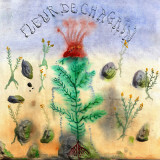
Pauline Marx, formerly of the fantastic duo La Fureur de Vouivre, seems like a being from another time and place; namely, an escaped marauder lurking in the forests of a Bruegel painting and integrating the surreal flora and fauna of a Boschian creation into the scenery and lore of deep Brittany. Her invented mythology is loaded with murky rituals and contorted mantras, backed by the surprising sounds and textures of terrains so earthly and so unreal.
The Devil at the Crossroads
Where do you think you come from? Where do you think you're going? Lasciate ogni speranza, voi ch’entrate: you, with the noodle to the four winds, who pass the threshold of this disc, you better leave all hope there, and glide in the poisonous footstep of the devil your guide.
Where do you think you come from? The mountain is no longer just the mountain; after your passage, it will no longer even be a mountain. Like the whole landscape, it will have been eaten, sauced by invisible leeches. Your nostalgia for the ground and your thirst to find the source will have only discovered a forest of vain words and foul water. Where do you think you're going? At the crossroads, the world is consumed in the previous future. Only the devil will know how to make you overcome the disgust of traditions, and only the love for the devil will give you enough vim to reach your goal: a village, perhaps, but which belongs to no one, a haven to your excessiveness .
The dark tradition to which this game of ternary trampling belongs, like the rhythm of a heart in tune with the inverted world, has no country and no assigned time. Rather a topology of Eve awakened after a thousand-year sleep, an idiosyncratic and possessed reading of our common humus, made up of stories composted in the limbo of the past, of songs captured in extremis vitae and rebus in the privatized antechambers of death.
What does she tell us about? Of our automobile and in love roamings, of the porosity of the membranes that separate beings and things, of the constant inversion of signs. The seventeen stages of this short journey, where intertwine the throbbing of objects, blown horns and rubbed horsehair, form the map of a country never to be found, ours, where only the voice of an old child and the disgusting devil's poisonous charm can guide us.
Vimana takes flight with Aprieta: a collection of polyrhythmic dance tracks produced by Phran. The EP is the physical manifestation of a movement started in 2015 with gatherings in Barcelona and Berlin and was composed in collaboration with friends and artists residing around Barcelona’s Poblenou district.
The tracks on side A contain restrained grooves with deep dembow jams. ‘Aprieta’, ‘Mazatech’ and ‘Sons’ feature collaborations from oma totem (Hivern Discs), Tunik (My Own Jupiter) and
Ribes.
Side B starts off with a remix of the title track ‘Aprieta’ by Dengue Dengue Dengue, before providing the mystical club cuts ‘Faylan’ and ‘Syntorama’, featuring ELO (aka DJ Leeon) and Ribes.
Mixed by Ribes & Phran. The Vimana label image was crafted by Planet Luke (Klasse Wrecks, Graffiti Tapes). Vimana is distributed by One Eye Witness.
out of Stock
Last delivered 2 years ago available to reorder, subject to availability
After a year and a half writing and recording rock music, I needed to clear my head. I listened to and made music where things generally happen gradually rather than suddenly. I would set up patches on a Monomachine or Analog Four and listen to them, hearing one sound morph into others, making changes to a patch only after having listened for quite a while, gradually adding elements, and finally manipulating the sounds on the fly. All tracks were recorded live to CD burner, with no overdubs, and executed on one or two machines.
While I was almost exclusively listening to artists such as Chris Watson, Peter Rehberg, Bernard Parmegiani, CM Von Hausswolff, Jana Winderen, Oren Ambarchi, Hazard, Bruce Gilbert, Klara Lewis, Ryoji Ikeda, and so on, I was also inspired by my mental image of John Lennon's tape and mellotron experiments he made at home during his time in the Beatles, as well as events like the first minute of Bowie's Station To Station, ...And The Gods Made Love by Jimi Hendrix, the synths in the song Mass Production by Iggy Pop, and the general idea of Eno's initial concept of Ambient music.
Music being a solitary sculpture in sonic space was the main motivating thought. I was looking at pictures of sculptures and trying to make music that simultaneously conveyed both movement and stillness. I refrained from sudden musical changes, especially avoiding sequences of notes and rhythms. In fact, this music was made from sequences which never exceed a single note, many of these pieces being made on a single pattern. The movement which a good sculptor conveys when the shape of his medium meets the eyes of the viewer who walks around the piece, or the sun changes its position, are the kinds of movement which it was the role of the synth patches to communicate.
I've been listening to music like this since I was 13 or so, but I felt that making it was out of my reach because of the amount of restraint I imagined it required. Once I found myself making this music, it did not feel like a matter of restraint at all. I wanted to build a certain type of building, and hear certain types of movement, and I knew when it was complete. There was no place for sequences of notes and rhythms in my plans.
I also cannot overstate the role that being in my band played. I had previously spent 12 years programming and engineering my own music, and then spent a year and a half making music where my role was basically to write songs and play guitar. When the band's recording phase was completed, I needed to go back to my adopted language. I had done enough with chords, rhythms, notes, defined sections, sharp transitions, etc.. What I needed was to create music from the ground up with nothing but sound, and have that music reflect "being" rather than "doing". It was a therapeutic way of re-balancing myself, before and during my band's mixing process.
This music seeks to just exist, and is not attempting to manipulate or grab the listener in any way. I believe it works well if one listens loud and focuses on it, but also works well at soft volumes and in the background. It can compete with silence on silence's own terms, and it can also happily wipe silence out.
There are two versions of this album. The CD version is pronounced "two" and called : I I . This is the longer version. The vinyl version is pronounced "one", and called . I : This version is shorter, but contains one vinyl-only track. The reason the vinyl is shorter is that some of the tracks have sounds that can not be pressed on vinyl.
John Frusciante
out of Stock
Last delivered 3 years ago available to reorder, subject to availability
Enter The Decagon assembles friends of the label - near and far - for further excursions into the abyss of industrial, folk, jazz and ambient music.
From Copenhagen hails Kristi Brud (Bride of Christ) extending us with a shimmering violin contemplation initially made for the short art film piece "The Abduction of Europa", absorbing a modal ambiance of harmonics rooted in central European renaissance. Recorded in Svalöv in rural Skåne comes a hillbilly folk jazz piece constructed by Joel and Ivar on equal parts violin, flute, upright bass and percussion, recorded somewhere in the misty era of of 2012-2015. Then, an interlude follows, reconstructed from the very early live sets of the label's own Inre Kretsen Grupp, laden with tuned metallic percussions and synthesized bow sounds. Following up, the idiosyncratic local talent Fai Ling offers a piece of Basinski/Hassel-esque horn repetitions in full deterioration. Concluding the A-side of the compilation is the band that never was - the only released material of Prins Emanuel and Golden Ivy's Börringe Kloster project - encapsulating their minimal maximal approach of low quality sound samples turned in to a wall of sound of rhythm of sorts.
The B-side picks up on different musings in the form of ambient cadence and carefully sculpted soundscapes signed Phillipp Otterbach, who gives us an unraveling journey into kalimba-hampered harmonies carried through a bed of industrial, synthesized sounds. Moonilena follows up with an eerie yet beautiful minimal composition of radio disturbances and repetitive, ear catching melodies.
Breaking the barrier of stillness, local producer and Catholic chant music fiend Digge Shim performs a rhytmical, tongue-in-cheek number that pulls widely from both the hymnal traditions of medieval Europe as well as the zonked out ambient trance sounds you'd meet in a mid nineties Goa chill-out room.
Near the tip of the decagon, we find the Cypriot producer, singer and lyricist Spivak presenting us with a feeling of the-familiar-but-never-heard in the form of an ambient pop breakbeat number with carefully crafted choirs oscillating on top - hauntingly beautiful and equally danceable.
Ending in the best of styles, well-mannered umarel and purveyor of drum-smitten metallic sounds shows us what Moisture is really about - the mental image of finding your true self dancing in purgatory in a never-released Kenneth Anger film set, encumbered with red lights and occult paraphernalia.
out of Stock
Last delivered 3 years ago available to reorder, subject to availability
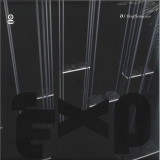
Dropping in January 2023 is the reissue of DJ Shu�lemaster's album EXP, which Tresor Records first released in 2001. This expanded reissue comes as a 3xLP with new artwork by Japanese designer Sk8thing and combines the original CD release tracks with three tracks from the Angel Gate 12" from the same year, including a remix by Surgeon of Experience. Also present is a previously unreleased version of Innervisions, which replaces the assonant synths of the original with a looped vocal sample upfront. Climb and Guiding Light will feature as digital-only tracks.
Tatsuya Kanamori remains a critical component of the Tokyo techno underground scene, initially coming to the fore through the Subvoice label before releases with Tresor, Theory Recordings, and Japanese record labels such as Disq and Reel Musiq. At the moment of the original release, DJ Shu�lemaster considered the record to draw in disparate and latent ideas into a fully encompassing mesh - "I would like to show my thoughts and everything that I am through the album. If it doesn't reflect my ideas and the reasons that I live for, there is no meaning for me to create an album. Therefore, EXP doesn't contain just one theme or concept."
EXP represents an uncompromising and psychedelic slant on techno, with a purist's focus on the dancefloor. It bridges many avenues within the techno genre, from the minimalist, dubby terrains of tracks like P.F.L.P. and Opaqueness, to more fierce percussive works that share a kinship with the sonic movements in Berlin, Detroit and
the UK. Beyond the technical, pared-down techno found in tracks such as EXP and Onto The Body, the album leaps into unpredictable territories frequently. Angel Exit carries mystical UK steppers moods as if it were a long-lost dubplate of The Rootsman. Kanamori delves deep into looping digital grunge in Flowers of Cantarella and Dawn
Purple, these synthetic worlds enveloping and deforming at will. Bold and as fresh as ever, EXP is an unearthed jewel from Tresor's past for new ears.
out of Stock
Last delivered 8 months ago available to reorder, subject to availability
If naming is a form of claiming, of being claimed, how is one tethered to both the physical landscape that surrounds us, as well as our own internal emotional landscape_at times calm, at times turbulent, and ever changing? H.C. McEntire's new album Every Acre grapples with those themes_themes that encompass grief, loss, and links to land and loved ones. And naming_claiming land, claiming self, being claimed by ancestry and heritage_permeates the hauntingly beautiful landscape that is this poignant collection of songs. The songs straddle the line between music and poetry. In "New View," McEntire cites poets "Day, Ada, and Laux, Berry, and Olds"_fixtures in the world of writing, whose works are beacons of light over bleak horizons. The beginning of the song is backed by soft guitar plucks that fall on the downbeat and spangle like stars, and, throughout, guitar, bass, and drums swell together gently, mimicking ebbing and flowing tides under the moon. McEntire's voice (at once tender and fierce) intones the truth of both giving and taking, releasing and claiming: "Bend me, break me, split me right in two. Mend me, make me_I'll take more of you." Permeated by heartbeat-like drums, "Shadows" develops quiet ruminations on surrender and loss_reminiscing, moving on. This ponderous, dreamlike song asks the question of how "to make room." How does one make room, for self and for renewal and surrender, when it is so difficult to leave what you know behind? Playing with slivers of descending chromatics, along with the occasional downward-stepping bass, here McEntire yearns for home, and for nesting. Perhaps one of the more grief-stricken songs, "Rows of Clover" is a lamentation, one that touches on the loss of a "steadfast hound." The lone piano in the beginning of the song is rhythmically hymn-like. The stark verse arrangement gradually leads to a chorus that reads like a moody exhale, swollen with lush guitar strums and a Bill Withers-esque understated soul groove. But what stands out the most is an image of being "down on your knees, clawing at the garden"_the only explicit mention of a person in the song. "It ain't the easy kind of healing," sings McEntire, seemingly from further and further away as her voice echoes; and healing ta;kes time, time takes time_truths that linger painfully. "Dovetail" is a song that tells of various women. The song moves back and forth between solo piano and the addition of bass and drums under vocals. McEntire's gentle, trembling vibrato_harmonized in thirds in a celebratory manner_calls to mind a rejoicing psalm and shines through these images, leaving the listener cuttingly fraught with emotions_such as wonder, sadness, nostalgia_that can only arise with these juxtapositions. Gracious (and graceful) with its lilting melodies and lush harmonies, Every Acre ex - plores the acres of our physical and emotional homes. These songs are reaching for the kind of home that we all seek: one where we can rest and lay down (or tuck away) our burdens of loss. And maybe, moving through every acre of a world that often tries to tear our sense of identity and heritage down, McEntire sheds light on what it is to be human in this life_both stingy and gracious, both hurtful and kind.
If naming is a form of claiming, of being claimed, how is one tethered to both the physical landscape that surrounds us, as well as our own internal emotional landscape_at times calm, at times turbulent, and ever changing? H.C. McEntire's new album Every Acre grapples with those themes_themes that encompass grief, loss, and links to land and loved ones. And naming_claiming land, claiming self, being claimed by ancestry and heritage_permeates the hauntingly beautiful landscape that is this poignant collection of songs. The songs straddle the line between music and poetry. In "New View," McEntire cites poets "Day, Ada, and Laux, Berry, and Olds"_fixtures in the world of writing, whose works are beacons of light over bleak horizons. The beginning of the song is backed by soft guitar plucks that fall on the downbeat and spangle like stars, and, throughout, guitar, bass, and drums swell together gently, mimicking ebbing and flowing tides under the moon. McEntire's voice (at once tender and fierce) intones the truth of both giving and taking, releasing and claiming: "Bend me, break me, split me right in two. Mend me, make me_I'll take more of you." Permeated by heartbeat-like drums, "Shadows" develops quiet ruminations on surrender and loss_reminiscing, moving on. This ponderous, dreamlike song asks the question of how "to make room." How does one make room, for self and for renewal and surrender, when it is so difficult to leave what you know behind? Playing with slivers of descending chromatics, along with the occasional downward-stepping bass, here McEntire yearns for home, and for nesting. Perhaps one of the more grief-stricken songs, "Rows of Clover" is a lamentation, one that touches on the loss of a "steadfast hound." The lone piano in the beginning of the song is rhythmically hymn-like. The stark verse arrangement gradually leads to a chorus that reads like a moody exhale, swollen with lush guitar strums and a Bill Withers-esque understated soul groove. But what stands out the most is an image of being "down on your knees, clawing at the garden"_the only explicit mention of a person in the song. "It ain't the easy kind of healing," sings McEntire, seemingly from further and further away as her voice echoes; and healing ta;kes time, time takes time_truths that linger painfully. "Dovetail" is a song that tells of various women. The song moves back and forth between solo piano and the addition of bass and drums under vocals. McEntire's gentle, trembling vibrato_harmonized in thirds in a celebratory manner_calls to mind a rejoicing psalm and shines through these images, leaving the listener cuttingly fraught with emotions_such as wonder, sadness, nostalgia_that can only arise with these juxtapositions. Gracious (and graceful) with its lilting melodies and lush harmonies, Every Acre ex - plores the acres of our physical and emotional homes. These songs are reaching for the kind of home that we all seek: one where we can rest and lay down (or tuck away) our burdens of loss. And maybe, moving through every acre of a world that often tries to tear our sense of identity and heritage down, McEntire sheds light on what it is to be human in this life_both stingy and gracious, both hurtful and kind.
Eva Louise Goodman’s Nighttime project locates itself on a musical tree planted on the British Isles, perched atop the branch of folk leaning into sixties rock. Her upstate New York environs don’t stray far from that image. With tempered percussion, floating mellotron, and singing that evokes Bleecker & MacDougal on a fervent Saturday afternoon, her new album Keeper Is The Heart reaches deep into the essence of musicians such as Vashti Bunyan, Sibylle Baier and Pentangle, breaking down the decades into a sound thoroughly and bizarrely modern.
Through her years performing with Mutual Benefit, Goodman fell in love with life on the road and the collaborative energy of a band. In this third Nighttime album, she channels these experiences into her own music. The creative journey from writing to recording to mixing drove her deeper into a sense of self while expanding her sound. In the process, she put aside lo-fi origins and challenged herself to achieve the same intimacy with a bigger production.
Like most paths of self-discovery, the journey started with displacement. In October 2019, Goodman set out to record the album on her own, while cat-sitting at a friend’s empty Brooklyn apartment. Rather than recording, she was drawn to the overgrown garden, where she spent her days listening to music and reading old journals. Charlie Megira, The Incredible String Band and Roy Montgomery invoked the spirit of the album, as she realized that a new, more collaborative approach would be necessary to bring the songs to life.
In March 2021, after a pandemic year immersed in sound experimentation and writing, she entered the upstate New York studio of recording engineer Rick Spataro (Florist). Together, Spataro and Goodman dove into creating the album, recording one song a day, letting the spark and excitement of spontaneity be their guide. “I've always been fascinated with ‘automatic’ arts,” Goodman says, “where things are created intuitively and without premeditation, from the subconscious.” In this light, they worked with abandon–pushing through the heaviness of songs written years earlier with the same energy as songs which were not yet fully developed. Taking chances, improvising, they sought to strip away pretense, and elude perfectionism at all cost.
Among their experiments, the duo manipulated tape speeds–slowing or speeding up different instrument tracks, imbuing passages with altered perspectives. Improvisation was the key in track five, ‘The Way,’ a song about “the magical act of carving out a path through life, amidst all possibility.” After a long day of recording, the song was feeling heavy and uninspired. As night fell, Spataro picked up the Stratocaster and, in one take, laid down a rolling, roiling guitar line that defined the track.
This spirit of surrender weaves through the album. “Break free from time, and sink in the pool of the mind,” begins ‘Garden of Delight’, an energetic highlight, propelled by 60’s-era organ and Jefferson Airplane-esque vocals. The song was accidentally deleted after the first day of recording. By luck or fate, the one surviving file captured the song’s loose and free-wheeling essence. Inspired, Goodman encouraged her circle of collaborators to work similarly: “I gave everyone trust and total freedom to contribute as they felt called to, encouraging an intuitive approach of simply improvising, playing through the song a few times and then sending over the results.” Synth, cello, violin, saxophone and flute all appear, but often in unconventional ways.
Keeper Is the Heart reflects Goodman’s process towards greater creative freedom. The first words she sings: “Lift the veil of all of this hate/To see the fear at its base.” Her last lines: “We’ll follow the fates across the great expanse of time/To the source of the light within our mind.” In between is a work of art awash in personal awakenings that revel in the freedom of intuition, the lifting of veils, and the beauty of transformation. As Goodman states, “What is it you find when you look inward to see beyond, past your fears, to your heart's true desires?”
What on earth has happened to gothic rock? This was the thought burning in Joakim Knutsson’s mind, and he felt that something needed to be done to save the much-loved genre from going down the drain. He embarked on this mission with the aim to create something special but also something faithful to the original ideals of the 80’s gothic genre. “I wanted a band that would be an occult mix of The Lords Of The New Church, Adam and the Ants, John Carpenter and Billy Idol”, says Knutsson, “The end result turned out heavier, bloodier and darker than that, but that was probably our destiny anyway.” With a little help from prominent members of the Swedish metal and punk community the idea recently took a solid form. Today the band together sums more than 250 years of knowledge in music and pop culture - knowledge they shamelessly put to use in their own creation. Here they are: die Oberherren. The Gothic rock band the world has been waiting for since the golden age of the 80s. Kept strictly under wraps until now, die Oberherren feature members of the rock and metal royalty in Sweden, with past or current membership in bands such as The Coffinshakers, Ghost, The Mobile Mob Freakshow, Gehennah and many more. The band snatched their ominous-sounding moniker from the intellectual group that operated at the turn of the 20th century, by whom their lyrics are also heavily influenced. “Anarchistic, occult and apocalyptic imagery with prophets of war, armageddon, decadence and love – these themes and ideas are even more actual today than the original ‘overlords’ could ever dream of over a hundred years ago”, comments Knutsson. The debut album Die By My Hand, set for release on January 27th 2023 on Svart Records, is a collection of eight songs that are adorned with infectious hooks and laced with vintage darkness. The apocalyptic celebration will commence this Friday, Sept 7th, with the release of the first single off the album titled The Horned One Stabs.
What on earth has happened to gothic rock? This was the thought burning in Joakim Knutsson’s mind, and he felt that something needed to be done to save the much-loved genre from going down the drain. He embarked on this mission with the aim to create something special but also something faithful to the original ideals of the 80’s gothic genre. “I wanted a band that would be an occult mix of The Lords Of The New Church, Adam and the Ants, John Carpenter and Billy Idol”, says Knutsson, “The end result turned out heavier, bloodier and darker than that, but that was probably our destiny anyway.” With a little help from prominent members of the Swedish metal and punk community the idea recently took a solid form. Today the band together sums more than 250 years of knowledge in music and pop culture - knowledge they shamelessly put to use in their own creation. Here they are: die Oberherren. The Gothic rock band the world has been waiting for since the golden age of the 80s. Kept strictly under wraps until now, die Oberherren feature members of the rock and metal royalty in Sweden, with past or current membership in bands such as The Coffinshakers, Ghost, The Mobile Mob Freakshow, Gehennah and many more. The band snatched their ominous-sounding moniker from the intellectual group that operated at the turn of the 20th century, by whom their lyrics are also heavily influenced. “Anarchistic, occult and apocalyptic imagery with prophets of war, armageddon, decadence and love – these themes and ideas are even more actual today than the original ‘overlords’ could ever dream of over a hundred years ago”, comments Knutsson. The debut album Die By My Hand, set for release on January 27th 2023 on Svart Records, is a collection of eight songs that are adorned with infectious hooks and laced with vintage darkness. The apocalyptic celebration will commence this Friday, Sept 7th, with the release of the first single off the album titled The Horned One Stabs.
If naming is a form of claiming, of being claimed, how is one tethered to both the physical landscape that surrounds us, as well as our own internal emotional landscape at times calm, at times turbulent, and ever changing? H.C. McEntire’s new album Every Acre grapples with those themes that encompass grief, loss, and links to land and loved ones. And naming claiming land, claiming self, being claimed by ancestry and heritage permeates the hauntingly beautiful landscape that is this poignant collection of songs. The songs straddle the line between music and poetry. In “New View,” McEntire cites poets “Day, Ada, and Laux, Berry, and Olds” fixtures in the world of writing, whose works are beacons of light over bleak horizons. The beginning of the song is backed by soft guitar plucks that fall on the downbeat and spangle like stars, and, throughout, guitar, bass, and drums swell together gently, mimicking ebbing and flowing tides under the moon. McEntire’s voice (at once tender and fierce) intones the truth of both giving and taking, releasing and claiming: “Bend me, break me, split me right in two. Mend me, make me I’ll take more of you.” Permeated by heartbeat-like drums, “Shadows” develops quiet ruminations on surrender and loss reminiscing, moving on. This ponderous, dreamlike song asks the question of how “to make room.” How does one make room, for self and for renewal and surrender, when it is so difficult to leave what you know behind? Playing with slivers of descending chromatics, along with the occasional downward-stepping bass, here McEntire yearns for home, and for nesting. Perhaps one of the more grief-stricken songs, “Rows of Clover” is a lamentation, one that touches on the loss of a “steadfast hound.” The lone piano in the beginning of the song is rhythmically hymn-like. The stark verse arrangement gradually leads to a chorus that reads like a moody exhale, swollen with lush guitar strums and a Bill Withers–esque understated soul groove. But what stands out the most is an image of being “down on your knees, clawing at the garden” the only explicit mention of a person in the song. “It ain’t the easy kind of healing,” sings McEntire, seemingly from further and further away as her voice echoes; and healing takes time, time takes time truths that linger painfully. “Dovetail” is a song that tells of various women. The song moves back and forth between solo piano and the addition of bass and drums under vocals. McEntire’s gentle, trembling vibrato harmonized in thirds in a celebratory manner calls to mind a rejoicing psalm and shines through these images, leaving the listener cuttingly fraught with emotions such as wonder, sadness, nostalgia that can only arise with these juxtapositions. Gracious (and graceful) with its lilting melodies and lush harmonies, Every Acre explores the acres of our physical and emotional homes. These songs are reaching for the kind of home that we all seek: one where we can rest and lay down (or tuck away) our burdens of loss. And maybe, moving through every acre of a world that often tries to tear our sense of identity and heritage down, McEntire sheds light on what it is to be human in this life both stingy and gracious, both hurtful and kind.
Honoring the craft and the ones that came before him through undeniably infectious beats that brace the weight of his choice samples and original layers. Getting his chops up through his younger days, Shane spent his time developing instrumental obstacle courses for local emcees to dance around including Gift Of Gab (Blackalicious), Spills (NY) Kinetic Source (Ozomatli) and Cashus King (LA.) By the age of 21 Shane threw himself into the ring of the Stones Throw beat making contest. To only the surprise of himself, Shane walked away twice as a weekly winner of the battles. After a small hiatus due to the birth of his daughter Clementine, Shane jumped back on the pads and began crafting the instrumentals for what would become Apostolos. With the instrumentals in flux Shane reached out via Instagram to an upcoming emcee out of the Duck Down Camp, a prodigy of the late, great Sean Price, Rim. After chatting back and forth for a small time, making sure Rim knew Shane was in this project for the right reasons, Rim jumped on board and even helped land other up and coming NY emcees like Eddie Kaine & Spills. From there everything snowballed. One feature led to another and soon enough the album was taking shape with features from not only Rim and Eddie Kaine, but hip-hop heroes such as Masta Ace, Planet Asia, A.G. of D.I.T.C. and Geechi Suede. With a few more instrumentals and spaces to fill Shane reached out to long-time bay area engineer/producer Deegan Mack Adams to help with the mixing and mastering and overall release of the project. Apostolos gets its namesake and back cover imagery from Shane Sounds' great great Grandfather, Apostolos Christakis who immigrated to the United States from Greece at the turn of the 20th century. The documents you see on the back cover are Apostolos’s army registration documents only a week after coming to the United States. We pay our respects to the ones who came before us and allowed us to be here to create this project. Salute!
For nearly 60 years, John Cale has been reimagining how his music is made, sounds, and even works. MERCY, Cale’s first full album in a decade, moves through true dark-night-of-the-soul electronic torment toward vulnerable love songs and hopeful considerations for the future with the help of some of music’s most curious young minds. Cale has always searched for new ways to explore old ideas of alienation, hurt, and joy; MERCY is the latest transfixing find of this unsatisfied mind.
John Cale announces MERCY, his first new album of original songs in a decade, out January 20th via Double Six / Domino. For nearly 60 years, or at least since he was a young Welshman who moved to New York and formed The Velvet Underground, Cale has been reinventing his music with dazzling and inspiring regularity. There was the bewitching chamber folk of Paris 1919 followed instantly by the gnarled rock of Fear, the provocative and spare song cycle Music for a New Society followed more than 30 years later by mighty and unabashed electronic updates. Once again, here is Cale, reimagining how his music is made, sounds, and even works. His engrossing 12-track MERCY moves through true dark-night-of-the-soul electronics toward vulnerable love songs and hopeful considerations for the future.
On MERCY, Cale enlists some of music’s most curious young minds: Animal Collective, Sylvan Esso, Laurel Halo, Tei Shi, Actress. They’re only some of the astounding cast here, brilliant musicians who climb inside Cale’s consummate vision of the world and help him redecorate there. Cale turned 80 in March, and he’s watched as many peers have passed away, particularly during the last decade. MERCY is the continuation of a long career’s work with wonder. Cale has always searched for new ways to explore old ideas of alienation, hurt, and joy; MERCY is the latest transfixing find of this unsatisfied mind.
The writings and recordings that shaped MERCY piled up for years, as Cale watched society totter at the brink of dystopia. Trump and Brexit, Covid and climate change, civil rights and right-wing extremism—Cale let the bad news of the day filter into his lines, whether that meant contemplating the sovereignty and legal status of sea ice melting near the poles or the unhinged arming of Americans. Lessons from a life (still being) richly lived floated to the fore, too, nodded to on the previously released “NIGHT CRAWLING.” If we’re always regretting our past, aren’t we conscripting ourselves to permanent disappointment?
During “STORY OF BLOOD,” after the piano prelude gives way to a frame-rattling beat and synthesizers that feel like sunshine splashed across a snowfield, the voices of Cale and Weyes Blood’s Natalie Mering slide past one another, two phantoms trying to find a partner amid the modern din. “Swing your soul,” they both sing in aspiration. In the final verse, Cale remembers this existence is not just about himself. “I’m going back to get them, my friends in the morning. Bring them with me into the light.” The accompanying video by Emmy-winning director Jethro Waters is a mix of disturbing and serene featuring both Cale and Weyes Blood. Its deep tones and religious images emphasize the track’s dark, spiritual mood.
Cale elaborates: “I’d been listening to Weyes Blood’s latest record and remembered Natalie’s puritanical vocals. I thought if I could get her to come and sing with me on the ‘Swing your soul’ section, and a few other harmonies, it would be beautiful. What I got from her was something else! Once I understood the versatility in her voice, it was as if I’d written the song with her in mind all along. Her range and fearless approach to tonality was an unexpected surprise. There’s even a little passage in there where she’s a dead-ringer for Nico.”
CHRISTIAN DEATH was formed by Rozz Williams in Los Angeles, California in 1979. Williams was eventually joined by guitarist/songwriter Rikk Agnew of ADOLESCENTS, James McGearty on bass and George Belanger on drums. This CHRISTIAN DEATH line-up was responsible for recording the band's iconic 1982 debut, ONLY THEATRE OF PAIN, widely regarded as the #1 American goth album of all-time. This exclusive double-LP version of OTOP commemorates its 40th anniversary- the first disc is the digitally remastered, original version of the album while the second disc is comprised of "Dogs" from HELL COMES TO YOUR HOUSE, four pre-Frontier demos, two studio demos made for a second Frontier Records' LP that never happened and two alternate studio mixes from OTOP. The gatefold LP jacket is printed in its original its black and metallic gold, includes a Colver collage poster and a hardcover copy of the photo book, ONLY THEATRE OF PAIN and all come in a hard slipcase. The oversized 12" x 12" book features rare and never-before-seen photos of CHRISTIAN DEATH as well as new interviews with photographer Edward C. Colver, the surviving band members, Frontier's Lisa Fancher and others. Colver befriended the band and followed them around in late 1981 and early 1982 at more than a dozen concerts as well as photo shoots in Rozz Williams' family home (used on the back cover and insert of ONLY THEATRE OF PAIN) and a session of now famous images at a Pomona CA cemetery. Info: Just as the theatrically-minded LA punk scene was beginning to give rise to such morbidly themed outfits as 45 Grave and the Flesh Eaters, an androgynous teenaged street performer named Rozz Williams (né Roger Painter) founded CHRISTIAN DEATH, one of the most prolific, enduring, and beloved gothic acts of all time. Williams' otherworldly groan can make "Only Theatre of Pain" difficult going for those that aren't the gothic faithful, but the loud/not-too-fast music (courtesy of ex-ADOLESCENTS guitarist Rikk Agnew and the walking-dead rhythm section of bassist James McGearty and drummer George Belanger) is appropriately doom 'n' gloomy, with inventive arrangements and clear sound - thanks to Frontier Records' go-to punk production legend, Thom Wilson- capturing the mood in full B-movie fidelity. The lyrics sacriligiously address horror topics and religion: they're overwrought (the backwards masking of 'Mysterium Iniquitatis' being one clever exception) but easy to overlook in the wash of inspired rock noise. The original lineup's recorded debut is a gem. Artists inspired by CHRISTIAN DEATH include Danzig, Craddle of Filth, Paradise Lost, Korn, Type O Negative, Nine Inch Nails, Marilyn Manson and Jane's Addiction. Press: "A depraved masterpiece, this was punk rock made poetic, subversive, and gracefully savage."- AV Club "The Gothic album to out-gothic all others" - Melody Maker "Only Theatre of Pain's influence should not be underestimated" - Record Collector Limited availability!
One of These Nights occupies an important, unique place in the Eagles' discography given it represents the final album the group made before releasing the bajillion-selling Their Greatest Hits (1971-1975) compilation. The timing is telling. A coming-out party for Glenn Frey and Don Henley's songwriting skills, the studio record – the band's fourth, and its first to hit #1 on the charts – signifies the group's ascent to superstar status. Home to three massive singles (the title track, "Lyin' Eyes," and "Take It to the Limit") and nominated for four Grammy Awards, the quadruple-platinum 1975 effort solidified the Eagles' Southern California-reared sound and made the band a household name.
Mastered from the original analog tapes, pressed on MoFi SuperVinyl, and limited to 10,000 copies, Mobile Fidelity's UltraDisc One-Step 180g 45RPM 2LP vinyl box set takes One of These Nights to the limit. And then some. Playing with reference sonics and a practically indiscernible noise floor thanks to MoFi SuperVinyl's special formula, it provides a rich, dynamic, transparent, and three-dimensional view into a release that moved country-rock ahead by leaps and bounds – and paved the way for the Eagles' ascendancy to global superstardom. The opportunity to zero in on the particulars of the Eagles' golden harmonies, distinct vocal timbres, and cohesive interplay has never been better.
Visually, the premium packaging and presentation of the UD1S One of These Nights pressing befit its esteemed status. Housed in a deluxe box, it features beautiful foil-stamped jackets and faithful-to-the-original graphics that illuminate the splendour of the recording. From every angle, this UD1S reissue exists as a curatorial artefact meant to be preserved, touched, and examined. It is made for discerning listeners that prize sound quality and production, and who desire to fully immerse themselves in the art – and everything involved with the album, from the renowned cover art to the meticulous finishes. As much as any Eagles LP, the connection between the imagery and the music and the band on One of These Nights runs deep. No wonder it led to a Grammy Nomination for Best Album Package.
Devised by West Texas artist Boyd Elder, the striking skull-and-feathers themed piece gracing the front of One of These Nights represents where the Eagles have been and where they were headed. Album art director Gary Burden explained: "The cow skull is pure cowboy, folk, the decorations are American Indian-inspired, and the future is represented by the more polished reflective glass beaded surfaces covering the skull." Moreover, Elder had met the group years earlier when Henley and company performed at one of his gallery openings in California. MoFi's UD1S box set allows Elder's vision (and Burden's debossed treatment of the image) to pop and appear as if it was a stand-alone object.
Of course, what's inside the sleeves, and in the grooves, proves equally compelling. Though One of These Nights marks the final appearance of band co-founder Bernie Leadon on an Eagles LP and contains three of his tunes, the record's tremendous success owes to Frey and Henley's timeless contributions. Taking the next step in their maturation and evolution, the pair crafted several songs while living together as roommates in a rented house in which they converted a music room into a recording studio.
The duo's bond and chemistry pulse throughout the record – particularly in the tight arrangements, tasteful instrumental flourishes, and seamless blending of the folk, country, and rock elements. The musical combinations and partnership not only produced the Eagles' first million-selling single (the slow-dancing "Take It to the Limit," co-written with bassist-vocalist Randy Meisner) and the Frey-led cheating classic "Lyin' Eyes," but the famed title track, which nods to the era's nascent disco scene as well as Kenneth Gamble and Leon Huff's Philly soul platters.
Frey named "One of These Nights" as his favorite Eagles composition of all-time; Meisner's high harmonies alone send the track into a galaxy of its own. Speaking of the latter, Leadon's instrumental "Journey of the Sorcerer" ventures into another universe and was soon used by Douglas Adams as the theme to his "The Hitch-hiker's Guide to the Galaxy" radio series. Inspiration and creative experimentation also dragged the Eagles into the blues. Another Frey-Henley gem, the self-probing "After the Thrill Is Gone" serves as a response song to B.B. King's signature track and more evidence the band was turning the lens inward for lyrical narratives. Like everything on One of These Nights, the song confirms the Eagles were breathing rare musical air.
More About Mobile Fidelity UltraDisc One-Step and Why It Is Superior
Instead of utilizing the industry-standard three-step lacquer process, Mobile Fidelity Sound Lab's new UltraDisc One-Step (UD1S) uses only one step, bypassing two processes of generational loss. While three-step processing is designed for optimum yield and efficiency, UD1S is created for the ultimate in sound quality. Just as Mobile Fidelity pioneered the UHQR (Ultra High-Quality Record) with JVC in the 1980s, UD1S again represents another state-of-the-art advance in the record-manufacturing process. MFSL engineers begin with the original master recordings, painstakingly transfer them to DSD 256, and meticulously cut a set of lacquers. These lacquers are used to create a very fragile, pristine UD1S stamper called a "convert." Delicate "converts" are then formed into the actual record stampers, producing a final product that literally and figuratively brings you closer to the music. By skipping the additional steps of pulling another positive and an additional negative, as done in the three-step process used in standard pressings, UD1S produces a final LP with the lowest noise floor possible today. The removal of the additional two steps of generational loss in the plating process reveals tremendous amounts of extra musical detail and dynamics, which are otherwise lost due to the standard copying process. Every conceivable aspect of vinyl production is optimized to produce the most perfect record album available today.
MoFi SuperVinyl
Developed by NEOTECH and RTI, MoFi SuperVinyl is the most exacting-to-specification vinyl compound ever devised. Analogue lovers have never seen (or heard) anything like it. Extraordinarily expensive and extremely painstaking to produce, the special proprietary compound addresses two specific areas of improvement: noise floor reduction and enhanced groove definition. The vinyl composition features a new carbonless dye (hold the disc up to the light and see) and produces the world's quietest surfaces. This high-definition formula also allows for the creation of cleaner grooves that are indistinguishable from the original lacquer. MoFi SuperVinyl provides the closest approximation of what the label's engineers hear in the mastering lab.
The story of Del cuarto rojo (From The Red Room) began in March 2020, when the Peruvian composer and percussionist Manongo Mujica received a call notifying him that the visual artist Rafael Hastings, his friend of almost half a century, had passed away. Since then, and in the midst of the pandemic, Manongo Mujica began a personal journey searching for sounds, which has resulted in a new set of pieces that evoke the memory of a friendship. Del cuarto rojo (From The Red Room), subtitled Homenaje sonoro escuchando la pintura de Rafael Hastings (Sound Tribute Listening To Rafael Hastings' Paintings), is Manongo Mujica's new album, and it has also motivated the preparation of a new show by the dancer and choreographer Yvonne von Mollendorff, wife of Hastings. The history of this friendship dates back to 1974, when a young Manongo returned to Lima, after ten years living in London, while young Rafael Hastings and Yvonne von Mollendorff settled in Peru after a long period in Europe. Since then, the collaborations between these artists have been continuous, always marked by an experimental impetus. The attitude of listening to images and painting sounds was more than a metaphor and became a code that identified them and a way of working, where the crossing of disciplines set the tone, both in video works and in unusual visual / conceptual scores, works of dance and experimental music, in the context of a creative effervescence that renewed the arts and music in Lima in the 70s. Del cuarto rojo is an album that integrates many of the musical resources developed by Mujica. It is an amalgam that well sums up his own language: from the creation of environments with extended techniques and objects, to experiments in jazz fusion; from the use of field recordings and sound montages to compositions with string arrangements: everything around the hypnotic pulse of percussion and drums, which oscillate between moments of subtlety and explosive improvisation. The album features the participation of outstanding musicians such as Pauchi Sasaki (violin), José Quezada (cello), Terje Evensen (electronic effects), Jean Pierre Magnet (Saxophone), Cristobal, Daniel and Gabriel Mujica (sons of Manongo Mujica, on percussion, string and wind arrangements). It is published in vinyl LP and includes a full color 12-page booklet with a sample of Rafael Hastings' visual art, which also illustrates the album cover.
Although Los Hermanos Ballumbrosio are one of the most emblematic groups of Afro-Peruvian music, no single recording has been able to portray the essence of the group... Until now. "Homenaje a El Carmen" ("Homage to El Carmen"), their debut album for Buh Records, sets the record straight: it captures the true spirit of the musical tradition of El Carmen, a city located a few miles to the south of Lima that is home to the largest black community in Peru. Songs based on percussion and zapateo bring back the memories and experiences of a culture that has produced one of the greatest treasures of Peruvian music. "Homage to El Carmen", the third volume of the series "Perspectives on Afro-Peruvian Music", signals the return of the group to the recording studio, and also to the sources of rhythms such as festejo and panalivio, which they interpret with cajón, quijada (jawbone), congas, bongo and batá. The result is a distillation and a testimony of the memories and experiences that portray the cultural universe of El Carmen. We have access to a selection of traditional songs that are heard during the festivities, such as "Guanchivalito", which is played during the Yunza Negra, a ceremony in which a willow tree is cut to bring benefits to the community. "Panalivio " and "Serrana Vieja" are two traditional Christmas carols that are played in the "Hatajo de Negritos" and which reflect the syncretic character of the Afro-Peruvian culture. These songs speak of the difficulties of rural life, but they also serve as a vehicle to demonstrate the Ballumbrosio brother's mastery in the art of zapateo, a dance that is accompanied by violin and bells. The classic "La Esquina de El Carmen" is perhaps the song that best expresses the erotic character of festejo, also known as baile de cintura (waist dance). "Homage to El Carmen" is the highly anticipated return of the Ballumbrosio brothers to the recording studio. They have become indisputable references of Afro-Peruvian music and have displayed their sound and dances around the world. It was time for an album that portrays the essence of the group: a collective spirit, where the tutelary image of Amador Ballumbrosio always shines, and which traces a history from Africa to El Carmen. This album is published in vinyl format in a limited edition of 300 copies. Include 8 full-page booklet with liner notes in Spanish and English. Produced by Manongo Mujica and Daniel Mujica. Cover by Yerko Zlatar.
• Sony Masterworks is happy to announce the vinyl release of the Netflix live-action series Cowboy Bebop which premiered in November 2021 and is available on Netflix.
• Yoko Kanno and the band SEATBELTS, the artists behind the music in the original anime series of Cowboy Bebop, have returned to bring their signature dynamic, jazzy sound to the Netflix live-action show. The resulting compositions are characters themselves - constant companions to the crew of the Bebop and brimming with just as much personality.
• Cowboy Bebop (Soundtrack from the Netflix Original Series) is a treat for Bebop fans in an additional way - it features over twenty new tracks only available on vinyl! This wide release is pressed on red marble vinyl discs in a gatefold jacket with printed inner sleeves.
• COWBOY BEBOP is an action-packed space Western about three bounty hunters, aka “cowboys,” all trying to outrun the past. As different as they are deadly, Spike Spiegel (John Cho), Jet Black (Mustafa Shakir), and Faye Valentine (Daniella Pineda) form a scrappy, snarky crew ready to hunt down the solar system’s most dangerous criminals — for the right price. But they can only kick and quip their way out of so many scuffles before their pasts finally catch up with them.
• Original anime series director Shinichirō Watanabe is a consultant on the series, and original composer Yoko Kanno returns for the live-action adaptation. The series also stars Alex Hassell and Elena Satine.
• Yoko Kanno is a Japanese composer, arranger and musician best known for her work on the soundtracks of anime films, television series, live-action films, video games, and advertisements. She has written scores for Cowboy Bebop and its live-action adaptation, Darker than Black, Macross Plus, Turn A Gundam, The Vision of Escaflowne, Ghost in the Shell: Stand Alone Complex, Wolf's Rain, Kids on the Slope, Genesis of Aquarion and Terror in Resonance, and has worked with the directors Hirokazu Kore-eda, Yoshiyuki Tomino, Shinichirō Watanabe and Shōji Kawamori. Kanno has also composed music for pop artists Maaya Sakamoto and Kyōko Koizumi. She is also a keyboardist and is the frontwoman for the SEATBELTS, who perform many of Kanno's compositions and soundtracks.
In 2009, following the death of Jhonn Balance four years earlier, This Immortal Coil's "The Dark Age Of Love" appeared as a tribute to the superb work of the British band Coil over two decades.Formed by musicians from all walks of life, the album was praised by critics but also, and most importantly, by Peter Christopherson himself! 13 years have passed and this passion for the band has never wavered. Following the death of Peter Christopherson in 2010 on the one hand, and meetings with musicians such as David Chalmin or Massimo Pupillo from Zü who in turn wanted to pay tribute to this gigantic band, on the other hand, Stéphane Grégoire's desire to make a new opus took shape in 2017 with a first recording of the title "Where Are You". Just like the first one, more than 5 years will be necessary to realize this new album so that it is at the height of Coil's genius. The Ici d'Ailleurs team is very proud to unveil This Immortal Coil's second album 'The World Ended A Long Time Ago'.That will be available on December 09, 2022 in several formats that will be revealed very soon. The artists this time are Coil lovers but without the album being a "lovers" cover, that would be the opposite of Coil's image. Many, many thanks to Shannon Wright, David Chalmin, Matt Elliott, Christine Ott, Aho Ssan, Gaspar Claus, Aidan Baker, Ulver (Kristoffer Rygg, Ole Alexander Halstensgard, Stian Westerhus), Massimo Pupillo, Mattia Cipolli, Elisa Bognetti, Stefano Michelotti, Francesco Bolognini, Marton Csokas, Ivan Chiossone and Eric Aldéa who make this project a reality.
In 2009, following the death of Jhonn Balance four years earlier, This Immortal Coil's "The Dark Age Of Love" appeared as a tribute to the superb work of the British band Coil over two decades.Formed by musicians from all walks of life, the album was praised by critics but also, and most importantly, by Peter Christopherson himself! 13 years have passed and this passion for the band has never wavered. Following the death of Peter Christopherson in 2010 on the one hand, and meetings with musicians such as David Chalmin or Massimo Pupillo from Zü who in turn wanted to pay tribute to this gigantic band, on the other hand, Stéphane Grégoire's desire to make a new opus took shape in 2017 with a first recording of the title "Where Are You". Just like the first one, more than 5 years will be necessary to realize this new album so that it is at the height of Coil's genius. The Ici d'Ailleurs team is very proud to unveil This Immortal Coil's second album 'The World Ended A Long Time Ago'.That will be available on December 09, 2022 in several formats that will be revealed very soon. The artists this time are Coil lovers but without the album being a "lovers" cover, that would be the opposite of Coil's image. Many, many thanks to Shannon Wright, David Chalmin, Matt Elliott, Christine Ott, Aho Ssan, Gaspar Claus, Aidan Baker, Ulver (Kristoffer Rygg, Ole Alexander Halstensgard, Stian Westerhus), Massimo Pupillo, Mattia Cipolli, Elisa Bognetti, Stefano Michelotti, Francesco Bolognini, Marton Csokas, Ivan Chiossone and Eric Aldéa who make this project a reality.
Summer at Land's End is not an interlude or tangent for The Reds, Pinks & Purples but rather a perfect fourth movement following the albums Anxiety Art, You Might Be Happy Someday, and Uncommon Weather. As with these self-recorded records (the primary work of songwriter Glenn Donaldson), the songs on Summer at Land's End were crafted slowly and then drawn together to make a unified statement. But here, and more than before, Summer at Land's End combines Donaldson's rueful pop sensibility with a parallel musical universe, one composed of pictures, dreams, and feelings without words. Even if the underlying theme of this collection is one of conflict or unhappiness, the vision of the music presents an escape to a new world, always fading in and out of sight. For listeners who may not be familiar with Donaldson's corner of San Francisco--the Richmond district--or the current wave of hazy, melodic DIY pop groups performing in the city, Summer at Land's End pulls in images and scenes that feel like a collision of the mundane and the sublime of this present landscape. With this record, The Reds, Pinks & Purples give less focus to the vanities of a subculture and more to the challenge of connecting with someone, to the ordinary goals of being human and finding harmony with others. This deliberate saturation in drama and ambiance, along with some of Donaldson's best songwriting to date, is what gives Summer at Land's End its special class in the project's discography. Of the album's cinematic mood, Donaldson refers to films like Summer of '42 and the influence of the classic 4AD catalogue of the 1990s. This style informs much of Donaldson's prior and current ventures of course (The Ivytree, Vacant Gardens, and a dozen projects in between) but now The Reds, Pinks & Purples have taken the mantle, embracing this instinct for instrumental or dreamier modes of pop songwriting. It's a pleasure to experience Summer at Land's End, as this record finds a thrilling balance between songs and sounds, instruments and voices, and the ironic twin poles of art and life.
Summer at Land's End is not an interlude or tangent for The Reds, Pinks & Purples but rather a perfect fourth movement following the albums Anxiety Art, You Might Be Happy Someday, and Uncommon Weather. As with these self-recorded records (the primary work of songwriter Glenn Donaldson), the songs on Summer at Land's End were crafted slowly and then drawn together to make a unified statement. But here, and more than before, Summer at Land's End combines Donaldson's rueful pop sensibility with a parallel musical universe, one composed of pictures, dreams, and feelings without words. Even if the underlying theme of this collection is one of conflict or unhappiness, the vision of the music presents an escape to a new world, always fading in and out of sight. For listeners who may not be familiar with Donaldson's corner of San Francisco--the Richmond district--or the current wave of hazy, melodic DIY pop groups performing in the city, Summer at Land's End pulls in images and scenes that feel like a collision of the mundane and the sublime of this present landscape. With this record, The Reds, Pinks & Purples give less focus to the vanities of a subculture and more to the challenge of connecting with someone, to the ordinary goals of being human and finding harmony with others. This deliberate saturation in drama and ambiance, along with some of Donaldson's best songwriting to date, is what gives Summer at Land's End its special class in the project's discography. Of the album's cinematic mood, Donaldson refers to films like Summer of '42 and the influence of the classic 4AD catalogue of the 1990s. This style informs much of Donaldson's prior and current ventures of course (The Ivytree, Vacant Gardens, and a dozen projects in between) but now The Reds, Pinks & Purples have taken the mantle, embracing this instinct for instrumental or dreamier modes of pop songwriting. It's a pleasure to experience Summer at Land's End, as this record finds a thrilling balance between songs and sounds, instruments and voices, and the ironic twin poles of art and life.
Johannes Schebler's musical output is all about establishing a dreamlike territory where sonic settlements can spread at ease. While Grykë Pyje (Johannes Schebler's duo with Jani Hirvonen) presents musical landscapes as open and clear spaces, Baldruin's miniature pieces tend to narrow them down, zooming into domestic sceneries that shift like malleable rooms inside a magic building. These are the quarters where the inhabitants of Schebler's musical world are configured.
Rendered in a tender manner, the tunes in Kleine Freuden (in English: small joys) unfold like a collection of fairy tales and bedtime stories. Fables and lullabies performed in whispering tones seem to carry us through a child's dream where images blend into each other. Compact, yet gauzy and free flowing melodies gather up revealing an ensemble of households where fanciful entities play care freely, leading us along their musical maze. The music is placid, childlike and playful. It wanders around in unwavering estrangement, organizing an unprecedented and intimate space as seen from a bird's eye view.
In the landscape of a bedroom where the night lamp is the sun, we take part in a lively journey, as wonder is warrant and keeper of a warm and pristine environment. Perspective shifts as we rise from bed sheet folds that turn into fragile mountain ranges. We crawl behind furniture and take shelter in secret hideouts while dust falls upon us like a blizzard. Transfiguring notions of scale and time, we are left wondering how long have we been here, wondering if music is the only true measurement of time.
out of Stock
Last delivered 7 months ago available to reorder, subject to availability
Föllakzoid are nearly unparalleled in the hypnotic lysergic drenched neo-psychedelic experience. On their debut it is mostly a rather bulky one, determined by the downright dirty, distorted electric guitar, which is also usually accompanied by a spacey, howling and herbaceous howling one. In addition, there is fat bass and powerful drums. During the prolific post-napster musical era dominated by myspace, the Chilean musical field opened up so that many bands could broaden their creative spectrum by taking global and timeless references as an aesthetic holy grail. This experimentation had the internet and specialized forums as a search engine, which not only provided the world parameters in trends, but also allowed to find true hidden gems, bands that were adored by a few connoisseurs of the real quality left behind by the record labels. In this context, a group of university students who have known each other from school began to rehearse in the Caracol Vip underground (Santiago, Chile), in a room owned by a local heavy-metal legend, Juanzer. Equipped with tube amplifiers, Marshall and other custom made, the members of that time: Gonzalo Laguna on vocals, Juan Pablo Rodriguez on bass, Domingo García-Huidobro on guitar, Diego Lorca on drums and Francisco Zenteno on second guitar, they began to play endless jams without a strict sense of songs or directed compositional notion. The rule was to follow the noise in a journey through valleys and peaks that allowed the spontaneous appearance of textures, lyrics, phrases and some invented chords that did not resemble anything that had been heard at that time. The rehearsals were transformed into true live performances without an audience, which were only seen by a few curious, among alcohol, smoke and deafening noise, which could only end when the owner of the room (Juanzer) entered to turn off the equipment. Over time he himself stayed as an auditor, witnessing how the musicians stripped themselves in their rehearsals. Considered at that time as play or fun, the idea of forming a band with a name came with the real live performances to which they were invited, without yet having songs made, at the end of 2006. The myth of their first live performance alludes to a numerical superstition, on July 7, 2007, in a small bar in Providencia (Santiago), which also provided the band with an upward recognition for the psychedelic-punk music they were doing, with a voracious vocalist who destroyed everything on stage and a band that stood firm on the endless songs they built. The name that was invented for that occasion was the result of a nonsense about the German word feuerzeug brought to the group by their close friend Alfredo Thiermann (who would later make the cover of the first album and become keyboardist), which the members of that time took and Spanishized at will. This neologism represents the second founding myth of the band since the interest in bands like Can, Neu! and AMON DUUL II and the characteristic motorik rhythm would soon arrive, in the form of kosmische musik. By 2008 the band had already added several live performances and some songs appeared, among which were Directo al Sol and Loop (nod to the English band), which allowed a greater deployment of ambient-noise resources, almost close to the 'concrete' music. The deconstructed rock of Spacemen 3 was also present in the form of repeated sequences on the bass and drums, as the layers of shrill guitars formed the foam of the tide bursting in the darkness of space. With the ideas and general feeling of the sound that they already had, the band made the decision to record their first album with the sound engineer and Juan Pablo's brother, Ignacio 'Nes' Rodríguez, who later together with JP would form the BYM label to make the first CDs of the forthcoming debut of Föllakzoid and other bands that Nes was recording. Sheltered that winter in the studio that Nes had built in an old house in Recoleta, the band recorded the bulk of the songs on the album with a new jam that emerged in that room composed of 1 note and moments of rising intensity: Sky Input I and II appeared to complete a set of songs that came from rock but were slowly passing to a level of trance and cacophony typical of orchestrated and atonal music. With three takes per song but only one take of the jam, the album was finished with a few extra takes and overdubs, some made in the house of Nes himself, who contributed a guitar to Loop, although it does not appear in the credits, and additional takes of "Pelao" Zenteno with delay and reverse for almost all songs. The names of the songs came from the lyrics that Laguna had worked from the live versions to the studio finals, except for Loop, Sky Input and El Humo. The cover of the album, which as mentioned was made by Thiermann, represents well the spirit of those days, when creative magma looked for an outlet through the instruments without any restriction or explicit direction from any of the members of the group. The image of the tree towards the sky speaks of the roots that rise towards the immensity, the nature projected towards the stratosphere. Ideas that the neo-psychedelia of those years seemed to capture well, echoing in the Chilean bands that at that time were gathering around the BYM label. Both the creative fluency and the lack of a musical director ensured that Föllakzoid was an original band that did not impose themselves a way of doing things or sounding, collective music took shape in the most wonderful way, without characters, without a record name, without faces. Just an instant in space. 2022 GALAXY GREEN coloured vinyl
out of Stock
Last delivered 3 years ago available to reorder, subject to availability
Felix Laband’s The Soft White Hand is the masterwork of an artist who expresses himself through musical and artistic collage acting together to reinterpret his sources and to express significant elements of his own personal story.
Released by Munich-based Compost Records, the 14-track album is Laband’s first full-length offering since the critically acclaimed Deaf Safari in 2015. It is heralded by the single “Derek and Me”, and is being pressed on vinyl for distribution globally.
In The Soft White Hand Laband works with source materials that will be familiar to those who know his previous four records – Thin Shoes in June (2001), 4/4 Down the Stairs (2002), Dark Days Exit (2005) and especially Deaf Safari which reached deep into the South Africa scene and its political culture to inspire its vocal and music sampling. However, the disengagement he felt from his homeland during his latest album’s creation – an abiding sense of untethered-ness to place and space, exquisitely rendered in tracks like “Death of a Migrant” – is perceptible in Laband’s desire to illuminate instead aspects of his own life.
“For this album, my source material became almost autobiographical as opposed to African statements I’ve worked with previously,” says the artist. “I have sampled a lot from documentaries from the 80s crack epidemic in impoverished African American communities and believe my work speaks unapologetically for the lost and marginalised, for those who are the forgotten casualties of the war on drugs. In the past, I have had my issues with substance abuse, and I know first-hand about the nightmares and fears, what it feels like to be isolated and abandoned.”
Few artists have managed to air these intimate aspects of their life so luminously as Laband does in tracks like “5 Seconds Ago”, “They Call Me Shorty” and in the strange and meditative “Dreams of Loneliness”. “I’ve been building this weird, autobiographical story using other people talking. It’s kind of humorous but it is also sad and beautiful,” says Laband.
Yet, as in all of Laband’s recorded output, the delineations between emotions are never starkly drawn and The Soft White Hand is also shot through with beauty. Nature appears in recordings made in his garden in the intimate early morning hours, whether as in the calls of the Hadada Ibis and other birdsong in “Prelude” or of the vertical-tail-cocking bird in “Derek and Me”. The last is a wonderful track with Derek Gripper, the South African experimental classical guitarist of international renown, whose 2020 song “Fanta and Felix” imagines a meeting between Fanta Sacko and Laband.
Laband’s eloquence in reinterpreting classical composers such as Beethoven in “We Know Major Tom’s a Junkie” is another thrilling aspect of the new record. “I’ve been properly exploring classical music on this album,” explains Laband, “taking melodies from classical compositions and reinterpreting them”. A fresh quality comes to his work through this sonic adventuring: the tender manipulation of the mundaneness of the computer’s AI voice to reimagine and reinvent iconic lyrics and melodies in strange and unexpected configurations.
The Soft White Hand is Laband’s most cohesive body of work to date. Yet it remains, in its sheer artistic scope, impossible to describe fully. Darkness abuts the gossamer light. A song that summons the sunrise and all the hope of a new day could also be about the final dipping down of the sun that portends a troubled night ahead. Interludes are invitations to expand outwards or shift inwards. Mistakes and “weird fuckups” in the sound are cherished as convincing statements against what Laband calls the “grossness” of perfect sound in modern music.
For this world-leading electronic artist, the boundaries are unfixed. He is inspired by the German Dada artist, Hannah Höch, who memorably declared: “I wish to blur the firm boundaries which we self-certain people tend to delineate around all we can achieve.” His music consequently reflects a primal artistic impulse that is also visible in Laband’s considerable visual art output as seen recently in several solo exhibitions such as that held in the No End Gallery in Johannesburg in 2019 and in the works he produced during his 2018 Nirox Foundation Artists Residency. “My music is always about collage, as is my art,’’ he affirms. “Everything I do is collage. It is a medium I find very interesting because you are taking history and distorting it and changing its meaning and turning it upside down and back to front.” In her book Recollections of My Non-Existence, Rebecca Solnit calls collage “literally a border art”; it is “an art of what happens when two things confront each other or spill onto each other”.
With The Soft White Hand, Laband is confirming his singular ability to achieve this in both art and music, melting the divisions between the two creative disciplines until they become one. He is also affirming his belief that an album of music should be more than a collection of unrelated tracks, but should unfold a fully integrated, cohesive story as in the song cycles of the great classical composers. In doing so, he claims his position as one of the most significant artists working today.
Artist Statement – Felix Laband – August 2022
When the Khmer Rouge took their captives for processing, they identified their class enemies by looking at their hands. If they were sunburned, rough and calloused, they were those of a peasant, a proletarian to be spared. But if they were soft and white, then they were those of a city-dweller, an intellectual or bourgeois, an adversary to be liquidated.
In calling this album The Soft White Hand, I was reflecting on the Cambodian genocide and how it resonates in contemporary South Africa. The apartheid era is over, and gone with it is white political domination. Yet economic and social privilege is still held in soft white hands. But those who grasp it know just how tenuous is their hold, how it singles them out, and my music reflects their subconscious fears, the stress and guilt of clinging on to what others envy and desire.
The soft white hand of the title suggests to me a further image, one that relates to all of postcolonial Africa. In my mind’s eye, I see the soft, duplicitous handshake of the smooth representatives of the superpowers making deals and promising gifts that benefit only them, and not their African dupes.
Yet, soaring above the wailing of sirens sampled from the first day of the invasion of Ukraine, my music is also about love gained and passion lost. It is about the tender caress of a soft white hand that conducts you into a place of dreams to be enfolded by nocturnal melodies.
out of Stock
Last delivered 3 years ago available to reorder, subject to availability
"The box set contains all eleven studio albums, researched extensively from all the very best available master tapes. I worked with renowned mastering engineer Miles Showell at Abbey Road studios to have the albums remastered at half speed which achieves the best quality possible" Alan Parsons Originally released in 2014 on CD, The Alan Parsons Project – The Complete Albums Collection is now being made available in a beautifully packaged deluxe vinyl 11LP box set and is limited to 1,500 copies worldwide. It includes the 11 original studio albums including The Sicilian Defence album that they originally recorded in 1979 and was previously unreleased until 2014 when it was included within The Complete Album Collection 11CD box set. - All albums half speed remastered at Abbey Road and cut from hi-res files transferred from the best available master tapes where analogue was originally used and from the original digital master tapes for all albums from 1983 onwards with everything approved by Alan Parsons. - Pressed on heavyweight 180gm vinyl, and beautifully replicated sleeves including original text and imagery. - Beautifully packaged in a ‘cigarette type’ hardback outer box with the outer design containing the words that Eric Woolfson felt best described The Alan Parsons Project. - Includes 60 page 12” x 12” hardback book containing full lyrics, brand new sleeve notes and essay from Miles Showell, Abbey Road Studios on the half speed remastering process. - Also includes giant A1 size poster The Alan Parsons Project was a progressive rock music entity comprised of engineer/ producer Alan Parsons and songwriter, musician and manager Eric Woolfson. They released 10 concept albums which focused on subject matter such as science fiction, supernatural, literary and sociological themes between 1976 – 1987 and have sold in excess of 55 million albums world-wide. Their focus was on very high-quality studio sound production and they recorded most of their work at Abbey Road Studios in London. They used a variety of different lead vocalists and musicians on every album but did employ some relatively consistent session players such as guitarist Ian Bairnson, arranger Andrew Powell, bassist and vocalist David Paton, drummer Stuart Elliott, and vocalists Lenny Zakatek and Chris Rainbow – choosing who they felt was the best for each song rather than being constrained to moulding the material for one specific artist.
Ingredient is the elegant collaboration of Toronto poets, composers, producers and dear friends Ian Daniel Kehoe and Luka Kuplowsky. Their self-titled release is an enigmatic electronic avant-pop record attuned to the micro and macro perspectives of the natural world. Ingredient is an album whose lyrics are more poem than lyric, and whose songs exist in a merger of house music, philosophically-minded lyricism and contemporary R&B. One might recall electronic and art-pop luminaries such as Yukihiro Takahashi, The Blue Nile, and Arthur Russell, or connect it to contemporaries like Nite Jewel, Westerman and Blood Orange. A distinct world of dance, of questions, of secrecy and ultimate softness.
Eight years of friendship forges strange telepathy.
In the summer of 2020, Ian Daniel Kehoe was entrenched in a new feeling of heaviness; psychosomatic symptoms had started to proliferate; stress made new pores across the body, bending sensitivity into pain. His days were met with confusion, detachment, sleeplessness and pain without causation. Disfigured, he felt that what had been central and centering was blown out to the periphery of things. In a moment of self-preservation he reached out to his dear friend Luka Kuplowsky to make an album together. For Kehoe, it was an instinctual grasp for the anchoring truthfulness of deep friendship and the potential for a dedicated creative collaboration. Kuplowsky’s presence was light, supportful and curious, eager to explore musically the sounds they were mutually drawn to: house music, ambient pop, dub. The duality between Kuplowsky and Kehoe – between the Aflight and the Unmoored – is a portrait of a friendship whose exchanges came easy and produced an outpouring of song. Creation and therapy crisscross. In email correspondence that catalogs their process of collaboration, affection abounds: “feels bare without the Luka Licks”, or “Love you so much”, or “Kinda just overwhelmed with deadliness coming in at all angles.” When their voices first come in together on “Wolf,” that harmony arrives in a dramatic avant-pop sound that is bold and wondrous.
Kuplowsky and Kehoe both arrive at Ingredient as established artists whose works are committed to language’s propensity to provoke and mystify. Kuplowsky’s 2020 album Stardust is an idiosyncratic and otherworldly blend of pop and jazz romanticism grounded by Cohen-esque vocals and a stirring philosophical curiosity. Kehoe’s entrance into the new decade has hatched four records of pop experimentation, most recently 2022’s Yes Very So, a euphoric and bold album of poetic synth-pop and meditative ambient instrumentals. Kuplowsky and Kehoe’s union as Ingredient is a beautiful and unusual chemistry that integrates their distinct approaches while bringing forth a newness: a sound that alternates between cinematic technicolor and dubbed out fogginess; a lyricism that exchanges their lucid and clear poetics for a playful and obtuse verse. The album intuitively taps into the opposing emotional states of Kuplowsky and Kehoe during the conception of the record, contrasting the buoyancy of trumpeting keyboards (“Resurface”), angelic synthesized voices (“Come”), and rolling bass (“Photo”) with the record’s underlying darkness of whirring buzzsaw textures (“Transmission”), whooping sirens (“Wolf”) and murky ambience (“Illumination”). Lyrically, this duality arises in the record’s flux between openness (“Variation”, “Raindrop”) and existential dread (“Wolf”). “Illumination” most clearly crystalizes this opposition, reconciling the verses’ neurotic yearning for enlightenment with the chorus’ liberating doctrine of negation: “no more devotion… no more delusion”. Amidst the gradations of light and dark, Kuplowsky and Kehoe trade indelible, lush melodies as though their voices are made of a substance that melts easily one into the other. The harmony of poetry, sound, and texture cuts through your brain fog like a wet diamond.
Ingredient’s self-titled record was assembled by Kuplowsky and Kehoe over the course of six months in a home studio they frequented daily. Amidst synthesizers and drum machines they composed, re-composed, and workshopped a wide array of music, ultimately focusing on a set of eight songs that lived in a shared musical and philosophical world. Recording days often ended in basketball games at a local court or a rooftop commune over a pot of tulsi tea and a crossword puzzle. Kuplowsky brought in the Blue Cliff Record – the classic anthology of Chan Buddhism – whose inscrutable and sublime insights remained constant throughout the recording process as an activator of reorientation and reflection. While Kehoe was frequently rendered physically immobile by bouts of anxiety, a patience and mutual caring governed the pace of their creation; rest, stretching and meditation became equally important as the act of arrangement. Invited into their intimate circle of composition was Thom Gill, whose heavenly voice uplifts “Variation” and “Raindrop,” and Karen Ng, whose alto sax simmers and dances around the funky strut of “Raindrop.”
The lyrics on Ingredient reflect the persistence of change, the infinite variability of nature where randomness and divergence are no accidents. In Daoism, duality, in the form of Yin and Yang, is not contradictory as it is in Western idealist philosophy, but rather composes the eternal and lived paradox of our changeless-changing universe: changeless because all is change, and changing because the dynamism of the Dao makes each moment transformational. Kuplowsky and Kehoe refract this way of seeing the world, as in Variation: “Variation in the natural world / there it is.” Ingredient is an experience of the manifold ways of saying there it is of the transformational world, and there it is, unfolding. Elsewhere, change and ephemerality is addressed through the record’s preoccupation with non-human perspectives, reorienting the listener to the wolf, the mouse, the emerald frog, the centipede, the bird, the fly in the lamp. The album cover visualizes this fascination with the striking image of a reddish-orange frog atop a defamiliarized landscape of dark green leaves. Mirroring the exploratory process of the record’s collaboration, the frog also signals the amphibian’s natural inclination to leap into boundless potential. Kuplowsky and Kehoe’s lyrics manifest philosopher and ecologist Timothy Morton’s concept of “the mesh,” drawing attention to the “vast, entangled web” of interconnectedness that connects all life forms and interweaving the songwriters’ shared wonder into the Animal’s unknowability. As Luka narrates in the breakdown of the dance-floor ready “Photo,” “the closer we observe things, the further they retreat into abstraction.” In Ingredient’s ecosystem, perception is a reversible fractal where the world’s minutest details mirror the shape of the cosmos.
According to the Dao, the path to healing starts by reorienting perception away from the self and toward the self’s subsumption in Totality. For Kehoe, collaborating with Kuplowsky became the reorientation necessary for the self-preservation he was seeking, opening up a shared creative practice to navigate and soften the complexity of his psychological shattering. The album begins with Kuplowsky intoning “colossal faith” which bounces around the stereo field in a cloud of echo, and it is the enormity of “faith” that centers both Kuplowsky and Kehoe’s collaboration and their inquisitiveness in the vast mysteries of our very being. Truth in Ingredient is not an essential nugget, but a bending of the light – it is the equivocal entanglement of how we are in nature as nature, but with a plea or prayer under our breath that marks our felt distance from what we are a part of: “carry me towards the mountains of my birth / returning to the nest / the silence of the earth.”
Charbel Haber is Lebanese musician, performer, visual artist and composer from Beirut. His work has seen him collaborate with artists from a wide range of disciplines - film, video art, visual art, theatre, dance - both in Lebanon and abroad.
As a solo artist and as a member of post-punk band Scrambled Eggs, he has composed music for directors Khalil Joreige and Joana Hadjithomas, Ghassan Salhab, Mohamad Malas, video artists Lamia Joreige and Akram Zaatari, Maqamat dance company and playwrights Rabih Mroueh and Lina Saneh, to name but a few. His prolific and collaborative career includes free improv group Johnny Kafta Anti-Vegetarian Orchestra, psychedelic Arabic music ensembles Malayeen and Orchestra Omar, cold wave band The Bunny Tylers and minimal ambient duo Good Luck In Death. He is the founder of Those Kids Must Choke and co-founder of Johnny Kafta's Kids Menu - two experimental record labels - and he has recorded and collaborated with notable artists from the fields of free rock and improv such as Oiseaux-Tempête, Radwan Moumneh, Tarek Atoui, Jean Francois Pauvros, The Ex, Michael Zerang, Mats Gustafson, Eddie Prevost, Xavier Charles and Tony Buck.
And once again, here I am telling you to go look for the truth and its beauty in the words of dead poets, in the little tales of ravaged cities, in aborted dreams, in the melancholy of the ruins of tomorrow, in meaningless plastic totems, in the enigmatic end of restless fools.
I'll be here long after you all disappear.
These are the first and last sentences from Charbel Haber's latest offering, A Common Misunderstanding of the Speed of Light: a multi-media musing on the chronic and the chronological, the subversive nature of time. This combination of a record and book observes the slow passing of life and the illusion of retrogradation in his every day. Simply by documenting - via image, text and tune - Haber assigns value to everything that is cast in amber by this project. There's an acceptance and appreciation of the destitution he witnesses, it is an homage given in overlapping forms.
ACMOTSOL has two parts. The book, hardcover in an embossed orange, features photographs and texts taken from Haber's personal digital diary spanning from 2020 to the start of 2022. Broken into six chapters - named for the six tracks on the record - the entries are an artist's log of sorts during a peculiar period of global hyper stagnation and navigating the aftermath of the Beirut explosions. The 96 pages highlight Haber's interest in decay, negative space and the temporality of the human condition. Instead of presenting the images and texts as they were originally paired online, they're reordered and recontextualized in the book. New connections are formed, as tenuous and fleeting as the content they surround. The images interrupt the texts in many instances, forcing pauses and inviting distraction.
At the center of the book is a sudden burst of orange pages, with stylized pluckings of the text framing a QR-code that grants access to the record. With the brilliant orange covers and matching innards, pregnant with the music at the core, it's almost as if these central pages act as a way to turn the book inside out. There, the book's purpose is altered, fixated on a mirror image of itself. It forms a self-completing arc for the project, a loop.
ACMOTSO's second half is that mirrored album. Six tracks totalling just under 52 minutes. The music could be a continuation of his solo albums Of Palm Trees and Decompositions (2016) and It Ended Up Being a Good Day Mr. Allende (2012), an exploration into the expansiveness of seemingly simple loops of a lilting guitar. Careful electronic effects add dimensions or reground the listener. There's a swelling of sound, the illusion of the push of space before it retracts back into itself or fades into the distance. Much like the images and texts the music complements, the songs challenge the purity of cycles. Endings are beginnings, beginnings are endings or is everything just the middle? Haber is quietly and elegantly grappling with the troublesome act of place-making. In music, in words and in visual storytelling.
ACMOTSOL is a work that can be calming or disorienting, depending on what is requested of it. Similar to the way loops and cycles can signify both meditation and mania. The tendrils of Haber's past - his home of Beirut, fictional and real characters encountered, authors read, films watched, composers listened, walks taken - knit themselves together for a presentation of our immediate present. An evidence of a happening. A considered project of time.
All photographs, texts and music by Charbel Haber. Album mixed by Radwan Ghazi Moumneh. Design by Maziyar Pahlevan. Printed by Albe De Coker in Belgium.
This dual-part project will be released on XX XXX 2022 on 'Other People.'
While frontman Tom Greenhouse’s off-kilter observations and bizarro anecdotes remain front and centre, this time round the band up their game with a more vigorous sound that keeps pace with Greenhouse’s wholly distinctive lyrical style. Greenhouse continues to revel in telling increasingly surreal short stories, rejoicing in the power of the deadpan one-liner and bedecking his songs with far-flung cultural references. But now the band employ a variety of techniques with improved pro- duction, from the impulsively bashed keyboards and jubilantly repetitive guitar stabs that have be- come their trademark, to flirtations with–heaven forbid!–melody, chord progressions and arrangements which elevate their tried-and-tested blueprint into a more exciting and cohesive whole.
Opener Musicians is the perfect embodiment of this conscious development. Here, Greenhouse re- counts a sarcastic tale of half-truths that see him galavanting around town trying to put a band to- gether. Sonically, it begins with a caustic callback to the group’s first EP Crap Cardboard Pet and its über-minimalist aesthetic. But by the end of the song a joyous festival of afrobeat-inspired in- struments including samba whistles, bongos and saxophones are added to the mix as the front- man, ironically, fails in his mission to recruit more players.
With Get Unjaded, the band have somehow conjured something close to pop, without abandoning the repetition and wit that’s relished by their early fans. I Lost My Head also adopts a jangle-pop sheen with a luscious synth melody, as the frontman ditches the spoken-word for a surly croon (his first known attempt at actual singing!) that provides a welcome breather from the onslaught of dense recantations that are the band’s bread-and-butter.
While the lyrics here are still often humorous and political, Greenhouse has also notably expanded his interests on this album to include a new host of topics. The influence of extraterrestrials, for ex- ample, infiltrates the subject matter frequently. On The UFOs, the mysterious protagonist Blinkus Booth’s isolationist lifestyle is apparently interrupted by the spectres of otherworldly visitors, while closer The Neoprene Ravine feels like an extract from a deep space rock opera. Here, jaunty and angular instruments pile-on as we are fed images of an interstellar Spinal Tap, the titular fictional band “The Neoprene Ravine” who are “the alien equivalent of the Velvet Underground” and include an alien Lou Reed yelping “too busy sucking on my little green ding dong!”.
Meanwhile, Hard Rock Potato is propelled by a vortex of keys and synths, a real noise-pop gem comprised of real guitar chords (!) and rock-orientated riffs. Here the stream-of-consciousness lyrics take shots at the sinister financial industry, and include one of the many top-tier one-liners on the album: “It’s not gambling if you’re wearing a tie (even if you’ve got no trousers on)”.
On Sod’s Toastie, The Cool Greenhouse have pushed their distinctive flavour of post-punk to the point of perfection – their incongruous riffs, alchemical instrumental chemistry, and irreverent spo- ken-word vocals are a delight throughout. Sod’s Toastie is hilarious at times, and at others just hilariously good – a not-so-difficult second album.
dreamcastmoe is the recording project of singer, songwriter, producer, and DJ Davon Bryant, a lifelong resident of Washington, DC. His music moves freely between moods and modes, hypnotic, romantic, traversing electronic, R&B, funk, soul, and hip-hop... Resident Advisor dubs it "soulful, cross-genre dance music." This ability to adapt and finesse, to twist in different directions while staying true and coherent in vision, can be traced to his home city and its complex cultural history. "Most Black kids in DC don't ever get to this point," he says. "This is what I am making this music for, in the DC tradition of soul and empathy and love that is rooted in this city. My music is for real people dealing with shit every day." A versatile, modern artist and collaborator, dreamcastmoe has thrived in the underground since his first uploads to Soundcloud and Bandcamp in 2017 and subsequent releases with labels like People's Potential Unlimited, Trading Places, and In Real Life Music. Bryant's laid-back personality, emotional honesty, and infectious energy shine through his work and how he talks about it, as Crack Magazine notes in their 2021 Rising feature: "a steady combination of confidence, creativity, and calmness." He grew up playing drums in church; he's worked dead-end jobs, had ups and downs, even sold off all his gear one time, but never stopped reinvesting in himself. He is quick to praise his co-producers, rattle off influences _ the visual feel of NBA 2K, the comedic timing of Bernie Mac, the savvy legacy of Duke Ellington, for starters _ and credit resourceful DC breakouts like Ankhlejohn that showed him the roadmap. His voice, a steady instrument, seemingly connects it all, capable of slow falsetto flow, swaggering talk-rap, and outright croon. His storytelling style is choppy yet fluid, like a mixtape, which is how Bryant sees Sound Is Like Water, his debut on Ghostly's International's freeform label, Spectral Sound. The two-part project culminates as a full-length LP release in November 2022. The first side, released as Part I, opens on the blurred beats of "El Dorado," which dreamcastmoe dedicates to his journey. It's a head-nodder, an off-kilter earworm co-produced by Max D (Future Times, RVNG Intl, etc.), with Bryant harmonizing hooks with synth jabs and a pitched-down presence. "Complicated" is the slow jam, delivered smoothly from a Saturday night crossroads. dreamcastmoe is contemplative and committed... gliding and locking ad-libs into skittering rhythms courtesy of co-producer Zackary Dawson _ but also willing to let something go, "acknowledging that everything in life IS NOT easy." "RU Ready" takes off from the jump as a tribute, challenge, and promise to his partner and his city ("The times you sat with me when I needed you the most / Told me the things that I needed to see / Young black man, really trying to be what I can be / And I'm really from DC). In its potent two-plus minutes, the sonics (co-produced by ZDBT) press the message, all cymbal crashes, breakbeats, and serrated synth lines. "Cloudy Weather, Wear Boots" is a blitzing dance-punk track made in collaboration with Jordan GCZ on Bryant's first trip to Amsterdam. The album's flipside opens on "Much More," the first of two synth-and-beat ballads co-produced by ZDBT. Later on "Long Songz," he claims, "I'm not writing love songs no more," prioritizing the vibe with "all my day ones." He calls it "a cry for more normal moments. Everything doesn't have to be a fantasy love story, more time spent getting to the money, growing, and making a way." He saves two of his most propulsive cuts for the finale, co-produced by Sami, co-founder of DC dance label 1432 R. As their titles suggest, "Take A Moment" and "Make Ya Mind" operate as anthems for movement, with Bryant free-flowing commands above wildly-styled percussion. Per Bryant, the latter is both "wake & bake jam" and a "dance floor bomb." His parting line: "Action / You got to show me action / Reaction." The world of dreamcastmoe straddles virtual reality and the realness of DC, images both imagined and lived-in. Bryant has a knack for unexpected melodies but what makes his music so exciting is his capacity to defy the expectations of genre and image. A fluid ingenuity and vulnerability bottled by Sound Is Like Water, and this is just the beginning.
out of Stock
Last delivered 3 years ago available to reorder, subject to availability
While frontman Tom Greenhouse’s off-kilter observations and bizarro anecdotes remain front and centre, this time round the band up their game with a more vigorous sound that keeps pace with Greenhouse’s wholly distinctive lyrical style. Greenhouse continues to revel in telling increasingly surreal short stories, rejoicing in the power of the deadpan one-liner and bedecking his songs with far-flung cultural references. But now the band employ a variety of techniques with improved pro- duction, from the impulsively bashed keyboards and jubilantly repetitive guitar stabs that have be- come their trademark, to flirtations with–heaven forbid!–melody, chord progressions and arrangements which elevate their tried-and-tested blueprint into a more exciting and cohesive whole.
Opener Musicians is the perfect embodiment of this conscious development. Here, Greenhouse re- counts a sarcastic tale of half-truths that see him galavanting around town trying to put a band to- gether. Sonically, it begins with a caustic callback to the group’s first EP Crap Cardboard Pet and its über-minimalist aesthetic. But by the end of the song a joyous festival of afrobeat-inspired in- struments including samba whistles, bongos and saxophones are added to the mix as the front- man, ironically, fails in his mission to recruit more players.
With Get Unjaded, the band have somehow conjured something close to pop, without abandoning the repetition and wit that’s relished by their early fans. I Lost My Head also adopts a jangle-pop sheen with a luscious synth melody, as the frontman ditches the spoken-word for a surly croon (his first known attempt at actual singing!) that provides a welcome breather from the onslaught of dense recantations that are the band’s bread-and-butter.
While the lyrics here are still often humorous and political, Greenhouse has also notably expanded his interests on this album to include a new host of topics. The influence of extraterrestrials, for ex- ample, infiltrates the subject matter frequently. On The UFOs, the mysterious protagonist Blinkus Booth’s isolationist lifestyle is apparently interrupted by the spectres of otherworldly visitors, while closer The Neoprene Ravine feels like an extract from a deep space rock opera. Here, jaunty and angular instruments pile-on as we are fed images of an interstellar Spinal Tap, the titular fictional band “The Neoprene Ravine” who are “the alien equivalent of the Velvet Underground” and include an alien Lou Reed yelping “too busy sucking on my little green ding dong!”.
Meanwhile, Hard Rock Potato is propelled by a vortex of keys and synths, a real noise-pop gem comprised of real guitar chords (!) and rock-orientated riffs. Here the stream-of-consciousness lyrics take shots at the sinister financial industry, and include one of the many top-tier one-liners on the album: “It’s not gambling if you’re wearing a tie (even if you’ve got no trousers on)”.
On Sod’s Toastie, The Cool Greenhouse have pushed their distinctive flavour of post-punk to the point of perfection – their incongruous riffs, alchemical instrumental chemistry, and irreverent spo- ken-word vocals are a delight throughout. Sod’s Toastie is hilarious at times, and at others just hilariously good – a not-so-difficult second album.