Supported by the world-renowned Aarhus Jazz Orchestra, multi-award winning quartet Kalaha present Tutku, an energetic fusion of jazz, Turkish psychedelic rock and 80's inspired synth-pop. Their most ambitious and adventurous record yet album pairs the self branded "Danish band with world roots" with a big band committed to embracing innovative contemporary jazz and guest star vocalist Hilal Kaya. Formed after an improvised set at 2013's STRØM Festival in Copenhagen, the four members that make up Kalaha share a collective passion for collaboration and an open-minded approach to music making. Each being active members of different corners of the Danish music scene, the result of their combined musical personalities is refreshingly modern cross between thoughtful songwriting and high level jazz-minded musicianship. While their 2021 release 'Mystafa' saw them collaborate with a number of vocalists, 'Tutku' sees the entrancing vocals of Danish/Turkish artist Hilal Kaya as the focal point of the record. Grounded by the driving sounds of Anatolian rock, the nine track work weaves between folk, spiritual jazz, and even disco, serving up a wealth of danceable grooves and rich harmony. Produced by Kalaha themselves, the production style shifts between the close, modern sound of a pop outfit and the expansive, reverberated sound of a 20 piece ensemble. Soaring over the top of AJO's intricate ensemble arrangements are an expansive network of electronic sounds, carefully designed and played by two of Denmark's leading synthesists, Jens "Rumpistol" B. Christiansen and Mikael "Spejderrobot" Elkjær. With careers including international recognition from UK trendsetter Gilles Peterson, their immersive sound-world of melodic synth solos and explosive dub-tinged sound effects transform Tutku into a large ensemble record unlike any other. Completed by legendary drummer Emil de Waal and in-demand guitarist Niclas Knudsen, Kalaha's striking and colourful visual identity shares the Middle Eastern influence of their music and enhances the psychedelic nature of their songs, invoking otherworldly imagery in the listeners' minds and rounding Tutku off as a cohesive, well thought out recorded statement. Line up>> Niclas Knudsen – Guitars, Emil de Waal - Drums amd percussion, Jens "Rumpistol" Christiansen - Synths & vocals, Mikael "Spejderrobot" Elkjær - Synths and Laptop, Hilal Kaya - Lead vocals, Plus: Aarhus Jazz Orchestra
quête:imagery
There is a moment on Sides, the new album from Richmond, Virginia-based duo Lean Year, in which a hospital room floor is filled with white chrysanthemums. This imagery, based on an opiate-induced hallucination experienced by vocalist Emilie Rex's mother as she recovered from surgery, is a perfect encapsulation of the band's second album: dreamlike and beautiful, yet burdened with cold, stark reality. Sides is a harrowing journey through realms of grief and memory, a meditation woven into a tapestry of synth pads, woodwinds, and Rex's instantly recognizable voice. The duo of Rex and Rick Alverson - who also works as a film director (The Mountain, Entertainment, The Comedy) - originally set out to write an album about conflict, but during the writing and recording process, they were confronted with a number of personal tragedies. Alverson lost both of his parents in rapid succession, Rex's mother received a cancer diagnosis, and the couple's beloved family dog, Orca, died. These events transformed the album into an exploration of loss - an attempt at processing the painful, complex, and private emotions that bubble to the surface when confronted with death. "We thought we'd do a concept album called Sides where we could reflect on all of the division in the world, and some in our own families, but then COVID transformed everything / everyone, and we suffered our own specific losses. The record became about loss and grief," Rex explains. "In this way, the title Sides was still appropriate: our individual grief and collective grief, the margins of before and after, the act and feeling of during and enduring. It felt like straddling a threshold between two opposing sides - the moment before conflict and the moment after it passes, life and death, the act of living and the memory of the act. Grief feels like a contention between what you knew and what you now know, and often both feel real and unreal at once." Sides - produced by Alverson alongside Erik Hall (In Tall Buildings) and featuring contributions from Elliot Bergman (Nomo, Wild Belle) and Joseph Shabason (Destroyer, The War on Drugs) - as a distinctly cinematic quality, perhaps due in part to Alverson's other career. Moments of jazz, slowcore, and dirgelike R&B find their way into the sorrowful, ambient suite, lulling the listener into a state of calm while the lyrics speak of ghosts, childhood, and mortality. Despite the gravity of the subject matter, Sides succeeds in mastering a balancing act between pathos and pop. Each song is indelible and haunting, with melodies that have the kind of broad appeal reminiscent of Karen Dalton, Aldous Harding, and FKA twigs.
Sanna Mun debuts on her imprint, Katabasis, with a three techno cut EP (vinyl & digital).
Sanna Mun is an interdisciplinary artist based in Berlin. Her approach to production is inspired by her work as an archaeologist, using digital modeling and field recordings of ancient sites to extract their psychoacoustics. Sanna's multifaceted sound ranges from ambient to mental and classic techno. Her sense for organically evolving motifs drives her live sets, which resolve to induce a state of meditation. Sanna's music has already received support from O Phase, Developer, and other mainstay techno names.
Katabasis started out as an experimental techno event at Sameheads in Neukolln, Berlin in collaboration with local musicians and visual artists. The vision behind the project is to springboard underrepresented artists reinventing minimal, hypnotic and early techno. Its name and imagery derive from Western esotericism, rooted in Sanna's experience as an archaeologist specializing in occult sciences. The label's first release features tracks exploring Pythagoras' musica universalis, planetary frequencies informed by her studies with Luz Peuscovich.
A legendary indie audio artist blurring his lifelong attachments, from spontaneous composition (in the late 70's with John Zorn) to experimental rock (with Bongwater and other bands in the 80's) alongside his recent inquiries into the intricacies of ambient-folk songcraft (with his most recent solo LP, "And The Wind Blew It All Away"), Kramer continues to explore the possibilities of shaping naturally occuring aural landscapes into intoxicatingly affecting music. Sound and language - not just melody and ambient textures - has been his raw material for decades. He nowjuggles them more deftly than ever on his newest ambient opus. In the ten compositions that comprise this new LP, mournful at times yet mysteriouslylife-affirming and generous in their scope, Kramer sees films where there arenone, and composes his accompanying ambient soundtracks in a state of interrupted grace. Words, text, complete screenplays, character arcs, shooting scripts and storyboards swirl through his head as he puts his imagery to sound, and the results evoke a world in which moths, drawn to the bright flickering lightsof Cinema and the low humming lights of Dreams, in Kramer's own words, "...might never die". The LP's nature reveals an interior dialogue between musician and choice. Each piece represents Kramer's encounter with the blank canvas of silence that greets him as a composer. Embracing sounds as objects and instruments of Truth, the end result of his process is as much about what is absent and what has been removed or edited away than what is left in its wake as artifacts of emotion. These pieces are the Spring frost of lost imaginings, vanitas to broken connections, visions nearly unrecordable by the human eye. Kramer envisions a music that functions to stoptime, as an event that always plays in the present and never needs a past to give it a reference point. It is music that communicates in the most intimate way possible, as intricately and as deeply as the way it blossoms and shifts and evades categorizationwhen exposed to thin air. Drawn toward the light of a multitude of influences, we hear echoes of the feverishly frozen dreams of composers Morton Feldman, Terry Riley, Brian Eno and Arvo Part, melting alongside the surreal cinemas of David Lynch and The Brothers Quay, all parts converging to evoke a time and place that does not exist outside of the mind's eye of the listener. These ten works are fluid adventures in fathomless landscapes, emotions distilled and offered as a paintless painting without a physical home. Each individual composition is an offering to a future memory, a chalice to be filled with the listener's own reactions to them. As a whole, the ten pieces form an image of ten circling planets in an expanding galaxy that colors itself anew with each subsequent listen. Movement, grace, and Peace.
Two years ago, Fräulein were newcomers to the Bristol alternative scene, initially making their mark by performing at a weekly open mic night at the local pub. When the pandemic forced us all to slow down, Joni Samuels and Karsten van der Tol used this as an opportunity to hone their craft and develop their unique, raucous sound. Moving to London in 2021, the duo began again, quickly joining forces with tastemaking label Practice Music (Squid, Deep Tan). In 2021, the duo threw down the gauntlet by releasing their first three singles: ‘Pretty People’, ‘Belly’ and ‘By The Water’. With these tracks Fräulein solidified their signature sound; cathartic 90’s flavoured alt rock influenced by the likes of The Breeders, PJ Harvey and Big Thief that also incorporates cavernous grooves, intricate melodies and sharply observational lyrics punctuated by a unique brand of direct yet surrealist imagery. These initial efforts won widespread support from the likes of Spotify (Hot New Bands, Fresh Finds), CLASH, DIY Magazine, KEXP and BBC Radio 1 (Daniel P. Carter). The band built on this new momentum by starting to establish themselves as a ferocious live act. Highlights of a busy concert year included playing at their first post-covid festival Sound City, a sold out debut headline show at iconic Brixton venue The Windmill, plus performances alongside the likes of Goat Girl, Talk Show and Dream Nails. 2022 seems set to be another exciting year, with the band both returning to the studio and heading out on a further string of shows - including a tour in March supporting The Mysterines across the UK and Ireland. For a newly minted band their output has quickly taken on a confident flare, with a sonic bombardment that defies the usual boundaries of the two piece trope both on record and in concert.
Her debut LP, Banshee, was released on Wax Poetics. Has collaborated with MF Doom, Czarface, Ghostface Killah, Dennis Coffey, and more. Kendra Morris’s Nine Lives, to be released on Karma Chief Records (a division of Colemine Records) in early 2022, marks not only the culmination of the decade since the release of her first LP Banshee, but also a turning point in Kendra’s life. Nine Lives heralds the beginning of a new chapter; label, and an evolution to the next level of adulthood. This collection of her original songs encapsulates moments from what could be nine lifetimes. Kendra, while very much a New Yorker and veteran of almost 2 decades on the NYC scene, hails from Florida and aesthetically embodies the broader sense of American culture, bringing to her contemporary sound influences found in music and cinema dating back to the mid 20th century. Her music conjures imagery evocative of road trips to weird and wonderful places. Concurrently a visual artist, filmmaker and animator, Kendra harnesses the feline nine lives metaphor repeatedly. In the context of the chapters of her musical trajectory alone, we see at least 9 lives. From discovering multi-tracking on a karaoke machine as a child, to playing in bands in Florida, moving to NYC and creating music alone on an 8 track, releasing her first 2 LPs on Wax Poetics, releasing her 2016 EP Babble and collaborating with DJ Premier, 9th Wonder, MF Doom, Czarface, Ghostface Killah, Dennis Coffey, and David Sitek, to name a few. The life of this multi-disciplinarian artist contains units of time and story lines through which we can all relate to universal themes of love, loss and overcoming one's fears. Kendra, never ceasing to heed her spiritual calling to continue creating music and art, no matter what, has no plans of slowing down but a belief in only evolving, eager to begin experiencing her next nine lives.
Black vinyl[22,65 €]
2LP[36,56 €]
Turquoise and Black splatter vinyl[27,69 €]
Gold LP[25,63 €]
Black Vinyl[26,85 €]
Forest Green Vinyl[39,08 €]
Red / Blue Splatter Vinyl[29,37 €]
Black Vinyl[29,37 €]
Vinyl[35,92 €]
Clear Vinyl[28,53 €]
Clear Vinyl[30,21 €]
LP[30,21 €]
LP2[38,87 €]
Black Vinyl[29,37 €]
Creme White Vinyl[31,89 €]
Clear Green Vinyl[31,89 €]
Lavender Marble[30,63 €]
Yellow w/ red & black splatter[30,63 €]
Black VInyl[30,21 €]
Black Vinyl[33,19 €]
Tidewater Tri Color Vinyl[34,87 €]
High Focus Records are excited to share a new full length offering from prolific Brighton based producer Mr Slipz, this time with a fresh label signing, Australian rapper Nelson Dialect. A landmark release and signing for High Focus with Nelson being the first international signing on the label. UK listeners might have first heard Nelson collaborating with Verbz & Mr Slipz on the song ‘Hope’ from their acclaimed LP ‘Radio Waves’ released on High Focus in 2020. Nelson has a cult following in his own right in Australia, and previously released music on the legendary U.S label Fat Beats to great acclaim. Now teaming up with one of the most exciting and respected UK producers, Nelson & Mr Slipz deliver ‘Ever Since’. A statement piece by two artists with well over a decade spent on their craft which sounds as urgent and refreshing as if it were their first time releasing music. The album’s title is a reference to the endless quest for a timeless sound, reflecting the creative partnerships which spark from a seemingly forever existing thread of music. The two artists crossed paths whilst Nelson was on tour in Brighton, and a chance introduction to Slipz made this album a reality. As fate would have it, due to a cancellation of plans and changing of schedules during Nelson’s tour, the pair ended up in the studio for 8 days straight together which is when the bulk of the album was created. They each saw this as a cosmic alignment and thus played into the albums astrological artwork themes and overarching concept. Striving to capture the lightning in a bottle moment, what resulted musically on this album was an inspired surge of energy and intense creative output that is felt across the entire LP. Equal parts personal and lyrically dextrous, Nelson explores a multitude of concepts over the hard hitting drums and jazzy samples producer Mr Slipz is renowned for through his previous work with artists including Verbz, Kofi Stone, Vitamin G & Datkid among many more. The album features a slew of impressive guest verses including label mates Vitamin G & Verbz on the emphatic ‘Oxford Scholars’. Two legends Jehst & Confucius MC combine on ‘Smooth Ride’. Bronx pioneer & D.I.T.C legend A.G delivers a show stopping verse on ‘Trembling the Marrow’. There are hypnotic singing performances by Indira May on ‘First Date’ & ‘Open Book’ as well as Hiatus Kaiyote back up vocalist Jace XL on the soul stirring anthem “Figure Out What’s Right”. U.S rappers SickInTheHead & Cazeaux O.S.L.O round out the impressive guest list on the album with their inspired verses. Listeners caught their first glimpse of the duo with their debut single ‘Only Just Begun’. A whirlwind 3 verse tune showcasing the relentless wordplay and imagery Nelson is regarded for over a moody, hard hitting Slipz production. With a buzz already around what Nelson Dialect & Mr Slipz are brewing, the duo have just released their second single ‘Oxford Scholars’ featuring label mates Vitamin G & Verbz
Experimental and improvisational psychedelic rock, for fans of White Heaven, Les Rallizes Denudes, Headroom, Düngen, Heron Oblivion, Comets On Fire, The Renderers, Bardo Pond. Mountain Movers arguably are the perfect band for all the true "heads" out there. The New Haven quartet have been at it for 15 years, and the "newest" lineup (now at it for well over a decade; vocalist/guitarist Dan Greene, bassist Rick Omonte, guitarist Kryssi Battalene and drummer Ross Menze) have firmly grasped what it takes to fry brains; achingly beautiful melodies buoyed by a life raft of white-hot guitar scree and mind-melting feedback. "World What World" is the band's eighth album and third for Trouble In Mind Records. "World What World" is the newest chapter of the group's continued explorations and efforts to refine their sound. The lyrics of "World What World"s songs all imply a protagonist on a quest; the title itself is an implied query with no question mark; is it a question, or a statement?. The one-two punch of opener "I Wanna See The Sun" and "Final Sunset" lay out what's in store; Crazy Horse-inspired sandpaper melodies sit comfortably next to improvised, PSF-influenced six-string ragers. The group performs together effortlessly and telepathically, subverting the loud/quiet/loud dynamic that has saturated independent music since the late-Eighties. The loud parts and quiet parts are like waves; indistinguishable from each other, creating a fluid dynamism and intensity that swallows the listener up in its current, sweeping it toward oblivion. Hyperbole, you say? Watch out for midway through "Then The Moon" when the tune's lilting waltz pivots into a casually blistering solo by Battalene before fading into the melancholic "Haunted Eyes" - beckoning you with a mournful sidelong glance. Side Two opens with "Staggering With A Lantern", an elegant, lumbering instrumental improvisation again showcasing the synergistic shredding of the group's guitarists. The sticky lyrical hooks and sideways jangle of "Way Back To The World" and "The Last City"s midnight-hour, mellow singe come next, before concluding "World What World"s journey with "Flock of Swans". The song is the perfect closer and culmination of the album's mission statement. The subjects that populate Greene's songs and visual imagery augment his elegiac lyrics, awash in magical realism and fantastic symbolism; knights, fighters, dragons, masks. Poetic missives are launched from the heart straight into the neural pathways, guided by the rhythm section's otherworldly chemistry and Battalene's masterful control over her instrument. Mountain Movers have been at it too long to care about acclaim. They do it because the music calls out to them, and they let it carry them away.
MASTERED FROM THE ORIGINAL ANALOGUE MASTER TAPES AND PRESSED ON MOFI SUPERVINYL
· A Bold Celebration of Romantics, Escapists, and Dreamers: Electric Light Orchestra’s Eldorado Marries
Rock and Symphonic Elements, Includes the Aptly Titled Hit “Can’t Get It Out of My Head”
· Mastered from the Original Analog Master Tapes for Audiophile Quality: Mobile Fidelity 180g Vinyl LP and
· Melodic, Beatles-Inspired Tour de Force Features Full Orchestra and Choral Section: Arrangements and Lyrics
Transport the Listener to Faraway Horizons
Electric Light Orchestra leader Jeff Lynne did more than figuratively reach for the sky on Eldorado. Daring to be bold, and creating imaginative worlds that invite the listener to escape the mundane, the visionary composer-musician achieved a multidisciplinary fantasia and, in the process, a prog-rock landmark. Nearly 50 years later, the concept album's brilliance can be experienced like never before in cinematic fashion.
Mastered from the original analogue master tapes, pressed on MoFi SuperVinyl vinyl at RTI, and housed in a tip-on jacket, Mobile Fidelity's numbered-edition 180g LP of Eldorado allows the long-time audiophile staple to resonate with previously unheard dynamics, tones, and colours. Conjuring the feeling of journeying to different horizons, the record's songs teem with layer upon layer of details, which can now be heard as the producers intended.
Presenting the album with breath-taking clarity yet retaining the warmth, texture, and emotion that differentiate live music from reproduced sounds, this collectible reissue features reference-quality levels of in-the-moment presence, grand-scale sound-staging, and instrumental balance. Bursting with a veritable cornucopia of stimuli, MoFi's Eldorado LP also benefits from superb separation and immersive atmospherics that stem from the meticulous remastering process – as well as an ultra-low noise floor, industry-leading groove definition, and dead-quiet surfaces courtesy of the MoFi SuperVinyl properties.
An artistic breakthrough that established Electric Light Orchestra as a pioneering band (and confirmed Lynne as the leading practicing Beatles disciple), the 1974 effort remains notable for its involvement of a full orchestra and choral section, the range of which are captured with exquisite results on this LP. Eldorado distinguished itself from the band's first two works not only via Lynne's sharpened songwriting but due to the hiring of an orchestra that augmented the group's three string players. Co-arranged by Lynne and conductor Louis Clark, the symphonic movements bolster the contagious fare without ever drowning it. The accents also act as transports into the varied narrative universes.
Finished as a story before Lynne put notes down on paper, Eldorado ironically owes its inspiration to Lynne's father. In response to his dad's criticisms about the band, Lynne conceived a melodic tour de force that, like The Wizard of Oz, which informs the cover art, emphasizes the power of everyday dreams and everyman heroism. It's no coincidence that the sonic journey begins with an overture punctuated by the words of a cynic who condemns "the dreamer, the unwoken fool."
Beautiful yet fun, ambitious yet consistent, Eldorado proceeds to celebrate such romantics and escapists. A Technicolor escapade marked by lush melodies, fluid crescendos, and an intoxicating blend of energetic rock and sweeping orchestral elements, the album weds rich imagery and sweeping sounds in manners that make the two inseparable. In Lynne and company's hands, reality and fantasy collide, and dissolve any dividing lines. The proof is not just in the epic production, but in the timeless (and catchy) nature of songs such as the balladic "Boy Blue," power-pop packed "Illusions in G Major," and, of course, the aptly titled hit, "Can't Get It Out of My Head."
Decades later, Eldorado doubles as the equivalent of an out of body experience, an invitation to break away from monotony whether you're listening to your Mobile Fidelity reissue on a large system or an excellent pair of headphones.
MoFi SuperVinyl
Developed by NEOTECH and RTI, MoFi SuperVinyl is the most exacting-to-specification vinyl compound ever devised. Analog lovers have never seen (or heard) anything like it. Extraordinarily expensive and extremely painstaking to produce, the special proprietary compound addresses two specific areas of improvement: noise floor reduction and enhanced groove definition. The vinyl composition features a new carbonless dye (hold the disc up to the light and see) and produces the world's quietest surfaces. This high-definition formula also allows for the creation of cleaner grooves that are indistinguishable from the original lacquer. MoFi SuperVinyl provides the closest approximation of what the label's engineers hear in the mastering lab.
Black Vinyl[24,33 €]
SAOR in Scottish Gaelic means free, without obligations, unconstrained. All of these characteristics intrinsic to the music of SAOR, the musical entity spearheaded by sole member Andy Marshall. Presenting his fifth album and first release on Season of Mist, 'Origins' comes across as a more raging, black metal-infused effort, copiously evocative in its imagery and even melancholic in places, but decisively strong and abrasive at the same time.
For fans of: SOJOURNER, WINTERFYLLETH, DRUDKH, UADA
Marbled Grey Vinyl[24,33 €]
SAOR in Scottish Gaelic means free, without obligations, unconstrained. All of these characteristics intrinsic to the music of SAOR, the musical entity spearheaded by sole member Andy Marshall. Presenting his fifth album and first release on Season of Mist, 'Origins' comes across as a more raging, black metal-infused effort, copiously evocative in its imagery and even melancholic in places, but decisively strong and abrasive at the same time.
For fans of: SOJOURNER, WINTERFYLLETH, DRUDKH, UADA
• Revised reissue of the acclaimed first-ever book-length investigation into French Touch.
• Back in print for the first time since 2004.
• Updated version features previously unpublished interviews with Daft Punk, Laurent Garnier, Cerrone, Jean Jacques Perrey, Motorbass, Chris Le Friant (aka Bob Sinclar), Air, Etienne de Crecy, La Funk Mob, Cassius, The Micronauts, Stardust, Benjamin Diamond, Modjo, DJ GilbR, i-Cube, DJ Cam and many more...
During the second half of the 1990s, Paris experienced a dance music revolution thanks to groundbreaking artists like Daft Punk, Air, Super Discount, Motorbass, Cassius, Dimitri from Paris, Bob Sinclar and many, many more. It was a scene that became known as French Touch and was heralded throughout the world as the epitome of dance music cool, forever placing Paris on the dance culture map.
Journalist and author Martin James was there right from the start, documenting the scene from its inspirations to its earliest moments and onto its global breakthrough. In the process, he inadvertently provided the French Touch moniker that became adopted throughout the world.
Drawing on a dazzling array of exclusive interviews with the biggest names in French electronic music history, French Connections explores France’s significant contribution to dance music culture that paved the way for the French Touch explosion.
“Endlessly informative and thoroughly enjoyable, James manages to bring even the most boring artists (Air) to vibrant life with his energetic prose and rich imagery.” Bob Stanley, Mojo
“(James) has a rare, imagistic talent for evoking the unearthly sounds of modern dance music.” The Guardian
“Viva Monsieur James! Essential reading for all fans of Gallic grooves.” DJ Mag
“If ever a book was overdue then it’s this one, which charts the influence of French electronica on the world outside the hexagon over the past decade or so… tres bien.” Select
For the second output of e s p e r p e n t o, Francesco Baudazzi evokes his enigmatic and esoteric side project Violet Poison after being part of the first Various Artists release as Red Lodge. ESPER002. includes 5 original tracks plus a stomper Remix by the Liber Null founder Unhuman.
Each track recalls the pleasure and disorientation resulted in perceiving the ruthlessness of the sea and its stillness right after. Retro-futuristic and cinematic elements, wistful melodies and mutant beats emerge from the marine environment tied to Violet Poison homeland. It is not without reason that the Ep title is inspired by “The Rime of the Ancient Mariner” by Samuel Taylor Coleridge (1798), a tale about a sea voyage with no return because of the uncontrollable power of nature and the misfortunes caused by the killing of an Albatros. The poem’s atmosphere too is connected with the eerie depictions and the deforming imagery of e s p e r p e n t o.
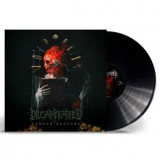
Across eight studio albums, DECAPITATED grew from the adolescent dream of teenagers from a small Central European town to one of the leaders of the metal genre. Each successive album further expands the band’s sound with genre-bending authenticity and integrity. As Metal Injection rightfully observed, “any self-respecting death metalhead knows the name well.”
DECAPITATED’s music is a weapon forged by four young men from a historic medieval-fortified town in Poland, which catapulted them to the top of a worldwide subculture. Like a rose in the devil’s garden, the DECAPITATED story builds triumph from tragedy. The gleeful grotesquery of extreme metal imagery and rifftastic bludgeoning beckons listeners to uncover broader truths.Upon the release of 2017’s Anticult, Metal Hammer declared DECAPITATED “a serious successor to the likes of Pantera and Lamb Of God – a band who can draw new legions into the metal world as its new champions.” Their diverse follow-up, 2022’s Cancer Culture, delivers on that promise.
Instantly recognizable devastation and deceptively sinister hooks abound. Freshly minted DECAPITATED anthems like “Last Supper,” “Hello Death,” “Just Cigarette,” “No Cure,” “Iconoclast,” and “Cancer Culture” shimmer with sonically sharp production and unrelenting bombast. There’s also a newly increased emphasis on melody, even venturing into darkly romantic territory. Wacław "Vogg" Kiełtyka (guitar), Rafał "Rasta" Piotrowski (vocals), Paweł Pasek (bass), and James Stewart (drums) are at the top of their game, delivering the goods at peak performance. Jinjer vocalist Tatiana Shmayluk and Machine Head frontman Robb Flynn make guest appearances.
Set on the descending plains of a mountain range amid a dense forest, Krosno boasts a 14th-century Gothic church, a Subcarpathian museum, and stunning artisan glassware. In this Polish town, teenage music student Wacław "Vogg" Kiełtyka discovered records from bands like Morbid Angel, Cannibal Corpse, Metallica, and Machine Head. The guitarist and his younger brother, drummer Witold “Vitek” Kiełtyka, cofounded DECAPITATED in 1996, inspired by a wide range of technical death, blackened thrash, and local heroes, like KAT and the world-renowned Vader. Death and black metal reigned supreme in the Polish scene of the 1990s, where Behemoth originated as well. In fact, a Vader song called “Decapitated Saints” inspired the band’s moniker.
The organic musical chemistry between the Kiełtykas was akin to the brotherly connectivity and vibe driving Pantera, Gojira, and the classic era of Sepultura. In 2006, Kerrang! praised the first three DECAPITATED albums - Winds of Creation (2000), Nihility (2002), and The Negation (2004) – as “superbly conceived and executed eruptions of technical brilliance and razor-sharp songwriting that turned these youthful Poles into one of the genre’s most widely respected bands.” That year’s Organic Hallucinosis further perfected Vogg’s penchant for blending extremity with catchy hooks.
The rule-breaking ferocity and invention of the first four albums reinvigorated death metal, as DECAPITATED inspired a new generation of bands who followed suit. Sadly, this era came to a shocking end in late 2007. While touring Russia, the band’s bus collided with a large truck near the border with Belarus. Both Vitak and then-singer Adrian “Covan” Kowanek sustained severe head injuries. Tragically, Vitak passed away in a Russian hospital a few days later. He was just 23.Vogg summoned the courage to continue, in honor of his brother and what they created, and returned with a new incarnation of DECAPITATED and the fiercely adventurous comeback album, Carnival is Forever (2011) featuring new vocalist Rafał "Rasta" Piotrowski. Blood Mantra (2014) introduced bassist, Paweł Pasek. Blabbermouth declared it “perhaps the most poised and gutsy” DECAPITATED album, adding “its courageous bends make it a turbulent but pleasurable ride.”
Cancer Culture sounds brilliant, modern, and tasty. “There is no place for any fake, plastic, bullshit drum machine or anything like that,” Vogg insists. “It’s all organic, pure, and clear, showing the true face of the band. Vogg and company entrusted the Cancer Culture mix to David Castillo at Sweden’s Fascination Street Studios / Studio Gröndahl (Sepultura, Carcass, Opeth, Katatonia), and legendary American producer Ted Jensen (Metallica, Slipknot, Pantera, Machine Head, Korn).
The devoted supporters who traveled to see DECAPITATED on international tours with the likes of Lamb Of God, Meshuggah, Soulfly, Fear Factory, and Suffocation over the years will recognize the ever-present pummeling backbone. Longtime fans and newcomers alike will connect to the variety of atmospheric depth throughout Cancer Culture’s ten boundlessly energetic and creative tracks.
“If you told me 25 years ago, in my neighborhood in the South of Poland, that I would be in Machine Head, sharing riffs with Robb Flynn,” Vogg marvels. “It’s simply incredible. It means that everything is possible in your life. That gives me the faith to believe that I can achieve even more in my career. The dreams we have when we are kids, things we can barely imagine, can happen.” Flynn contributes a hauntingly beautiful vocal to the Cancer Culture track “Iconoclast.” “Clean vocal singing is a really new thing in DECAPITATED,” Vogg notes. “It’s really unique and amazing.”
Driven by Vogg’s passion and integrity, the dual emphasis on creative invention and technical prowess maintains DECAPITATED’s stature as genre-leaders in 2022 and beyond. The band’s supporters continually demonstrate confidence and absolute certainty DECAPITATED will deliver.
Across eight studio albums, DECAPITATED grew from the adolescent dream of teenagers from a small Central European town to one of the leaders of the metal genre. Each successive album further expands the band’s sound with genre-bending authenticity and integrity. As Metal Injection rightfully observed, “any self-respecting death metalhead knows the name well.”
DECAPITATED’s music is a weapon forged by four young men from a historic medieval-fortified town in Poland, which catapulted them to the top of a worldwide subculture. Like a rose in the devil’s garden, the DECAPITATED story builds triumph from tragedy. The gleeful grotesquery of extreme metal imagery and rifftastic bludgeoning beckons listeners to uncover broader truths.Upon the release of 2017’s Anticult, Metal Hammer declared DECAPITATED “a serious successor to the likes of Pantera and Lamb Of God – a band who can draw new legions into the metal world as its new champions.” Their diverse follow-up, 2022’s Cancer Culture, delivers on that promise.
Instantly recognizable devastation and deceptively sinister hooks abound. Freshly minted DECAPITATED anthems like “Last Supper,” “Hello Death,” “Just Cigarette,” “No Cure,” “Iconoclast,” and “Cancer Culture” shimmer with sonically sharp production and unrelenting bombast. There’s also a newly increased emphasis on melody, even venturing into darkly romantic territory. Wacław "Vogg" Kiełtyka (guitar), Rafał "Rasta" Piotrowski (vocals), Paweł Pasek (bass), and James Stewart (drums) are at the top of their game, delivering the goods at peak performance. Jinjer vocalist Tatiana Shmayluk and Machine Head frontman Robb Flynn make guest appearances.
Set on the descending plains of a mountain range amid a dense forest, Krosno boasts a 14th-century Gothic church, a Subcarpathian museum, and stunning artisan glassware. In this Polish town, teenage music student Wacław "Vogg" Kiełtyka discovered records from bands like Morbid Angel, Cannibal Corpse, Metallica, and Machine Head. The guitarist and his younger brother, drummer Witold “Vitek” Kiełtyka, cofounded DECAPITATED in 1996, inspired by a wide range of technical death, blackened thrash, and local heroes, like KAT and the world-renowned Vader. Death and black metal reigned supreme in the Polish scene of the 1990s, where Behemoth originated as well. In fact, a Vader song called “Decapitated Saints” inspired the band’s moniker.
The organic musical chemistry between the Kiełtykas was akin to the brotherly connectivity and vibe driving Pantera, Gojira, and the classic era of Sepultura. In 2006, Kerrang! praised the first three DECAPITATED albums - Winds of Creation (2000), Nihility (2002), and The Negation (2004) – as “superbly conceived and executed eruptions of technical brilliance and razor-sharp songwriting that turned these youthful Poles into one of the genre’s most widely respected bands.” That year’s Organic Hallucinosis further perfected Vogg’s penchant for blending extremity with catchy hooks.
The rule-breaking ferocity and invention of the first four albums reinvigorated death metal, as DECAPITATED inspired a new generation of bands who followed suit. Sadly, this era came to a shocking end in late 2007. While touring Russia, the band’s bus collided with a large truck near the border with Belarus. Both Vitak and then-singer Adrian “Covan” Kowanek sustained severe head injuries. Tragically, Vitak passed away in a Russian hospital a few days later. He was just 23.Vogg summoned the courage to continue, in honor of his brother and what they created, and returned with a new incarnation of DECAPITATED and the fiercely adventurous comeback album, Carnival is Forever (2011) featuring new vocalist Rafał "Rasta" Piotrowski. Blood Mantra (2014) introduced bassist, Paweł Pasek. Blabbermouth declared it “perhaps the most poised and gutsy” DECAPITATED album, adding “its courageous bends make it a turbulent but pleasurable ride.”
Cancer Culture sounds brilliant, modern, and tasty. “There is no place for any fake, plastic, bullshit drum machine or anything like that,” Vogg insists. “It’s all organic, pure, and clear, showing the true face of the band. Vogg and company entrusted the Cancer Culture mix to David Castillo at Sweden’s Fascination Street Studios / Studio Gröndahl (Sepultura, Carcass, Opeth, Katatonia), and legendary American producer Ted Jensen (Metallica, Slipknot, Pantera, Machine Head, Korn).
The devoted supporters who traveled to see DECAPITATED on international tours with the likes of Lamb Of God, Meshuggah, Soulfly, Fear Factory, and Suffocation over the years will recognize the ever-present pummeling backbone. Longtime fans and newcomers alike will connect to the variety of atmospheric depth throughout Cancer Culture’s ten boundlessly energetic and creative tracks.
“If you told me 25 years ago, in my neighborhood in the South of Poland, that I would be in Machine Head, sharing riffs with Robb Flynn,” Vogg marvels. “It’s simply incredible. It means that everything is possible in your life. That gives me the faith to believe that I can achieve even more in my career. The dreams we have when we are kids, things we can barely imagine, can happen.” Flynn contributes a hauntingly beautiful vocal to the Cancer Culture track “Iconoclast.” “Clean vocal singing is a really new thing in DECAPITATED,” Vogg notes. “It’s really unique and amazing.”
Driven by Vogg’s passion and integrity, the dual emphasis on creative invention and technical prowess maintains DECAPITATED’s stature as genre-leaders in 2022 and beyond. The band’s supporters continually demonstrate confidence and absolute certainty DECAPITATED will deliver.
Part of The Optic Sevens 4.0 Reissue Series.
Limited to 1000 copies worldwide. Please check your allocation with your sales rep.
Pressed on Red Vinyl.
Includes postcard and poster. Non-Returnable.
The Monochrome Set were something of the unsung heroes of the post-punk world; they fitted into absolutely no category whatsoever and their puckish take on spaghetti western soundtracks meets lounge jazz via the twisted lyrical imagery of vocalist Bid was as singular as it was unique.
Comprising a couple of ex-Ants in Andy Warren and Lester Square, with singer / guitarist Bid and drummer JD Haney, their filmic, playful material found favour with many, including John Peel although they failed to match this with commercial success.
The Jet Set Junta was originally released on Cherry Red in 1983 with its urgent, ringing guitars surrounding Bid’s lyrics telling of dodgy arms dealings and armoured limos as Lester Square’s Ennio Morriconetwang bends and reverbs as a counterpoint.
RIYL: Beach House, Cocteau Twins, Cigarettes After Sex, Slowdive. Isolated from any kind of music scene and enveloped by the cold Brutalism of Preston, White Flowers are a young, enigmatic band developing their own eccentricities away from the influence of big cities. New EP ‘Are You’ is a sonic and aesthetic collage drawing deeply from their environmental and social surroundings. The songs on the EP may at first seem delicate and beautiful, but closer listening reveals dark undertones and dry humour fuelled by the frustration of feeling trapped with no way out. Driven by this sense of claustrophobia, the duo have sought to create a form of escapism outside of their physical and geographical limitations. Recorded late 2021 between Preston and Bristol, ‘Are You’ weaves together a mixture of intuitive home recordings and refined studio production aided by producer Ali Chant (PJ Harvey, Portishead, Perfume Genius). The four songs on the EP are an intentional collection of contrasts and paradoxes - beauty and repulsion, calmness and mania, anxiety and stasis - all combined to form a balanced whole. Whilst influenced in part by the writings of the late Mark Fisher and his idea that we are haunted by futures that failed to happen, that what might have been may yet be the dream that saves us, White Flowers have also found inspiration in the Brutalist architecture that adorns their hometown - futuristic yet dated buildings that serve as an appropriate visual metaphor for Fisher’s theories. Bleakly imposing yet comfortingly familiar, the monochromatic starkness of these structures has fed into the imagery for the record, as well as the sounds found within. Not intending to wallow in cynicism, however, White Flowers’ art ultimately aims to provide a way out of these dystopian fever dreams and spiralling thoughts into a forward facing place.
Re-pressed: standard wallet, seafoam green vinyl, printed inner-sleeve
Residing now in Brighton, Bess grew up in the English countryside in a creative
family of songwriters and artists. Whilst her crystalline vocals draw favourable
comparisons to the likes of Marika Hackman and Julia Jacklin, her lyrics evoke
an imagery that often spins from the pastoral to the abstract. Handpicked by Lucy
Rose for signing to her own label Real Kind Records, tracks from the album are
already on high rotation at BBC 6 music.
Selected quotes:
'It's a stunner' - Chris Hawkins, 6Music
'Brilliant… does sound great' - Huw Stephens, 6Music
'One lovely thing this is… she has such a deft touch' - Steve Lamacq, 6Music
"Spectacular… One of the most unassuming yet remarkable young artists in the
UK, she has made a record so intimate that by the closing song she seems like an
old friend" - The Independent
"Brighton's Bess Atwell is a rare talent, a singer-songwriter whose languorous
voice sits midway between Lana del Rey's hazy delivery and Emmy the Great at
her most broken-hearted. ...she's that rare thing in the post-Ed Sheeran age, a
singer-songwriter worth keeping an eye on." - The Arts Desk
"What a cool, assured and lovely thing the second album from the Brighton
singer-songwrier is. What marks her out is her ear for a phrase and music that
can pierce the heart." - Metro
"Her vocals resemble Lana Del Rey with a greater twist of passion, marking her as
one of the most exciting young talents in English indie folk." - Clash
Re-pressed: standard wallet, seafoam green vinyl, printed inner-sleeve
Residing now in Brighton, Bess grew up in the English countryside in a creative
family of songwriters and artists. Whilst her crystalline vocals draw favourable
comparisons to the likes of Marika Hackman and Julia Jacklin, her lyrics evoke
an imagery that often spins from the pastoral to the abstract. Handpicked by Lucy
Rose for signing to her own label Real Kind Records, tracks from the album are
already on high rotation at BBC 6 music.
Selected quotes:
'It's a stunner' - Chris Hawkins, 6Music
'Brilliant… does sound great' - Huw Stephens, 6Music
'One lovely thing this is… she has such a deft touch' - Steve Lamacq, 6Music
"Spectacular… One of the most unassuming yet remarkable young artists in the
UK, she has made a record so intimate that by the closing song she seems like an
old friend" - The Independent
"Brighton's Bess Atwell is a rare talent, a singer-songwriter whose languorous
voice sits midway between Lana del Rey's hazy delivery and Emmy the Great at
her most broken-hearted. ...she's that rare thing in the post-Ed Sheeran age, a
singer-songwriter worth keeping an eye on." - The Arts Desk
"What a cool, assured and lovely thing the second album from the Brighton
singer-songwrier is. What marks her out is her ear for a phrase and music that
can pierce the heart." - Metro
"Her vocals resemble Lana Del Rey with a greater twist of passion, marking her as
one of the most exciting young talents in English indie folk." - Clash
The word that jumps to mind when hearing Deanna Petcoff's music for the first time is “yearning”. A whirlwind of emotions, her debut record To Hell With You, I Love You is a reckoning with the loss of a relationship, documenting the aggressive highs and deeply emotional lows that come from falling out of love.
Recorded in Toronto over the course of a year spent in-and-out of lockdowns, she was able to look more closely at the nuances and minutiae of relationships and examine the ways in which they can either grow or falter. She writes about her frustrating experiences as a24-year old woman finding her voice and identity while navigating a never changing world, exploring the ins and outs of love and heartbreak with a grace and quick wit that belies her year. Her rich, textured voice juxtaposes her soft imagery and her vulnerable and starkly honest lyrics welcome us into a world where even a fleeting moment of emotion can become its own monument.
Based in Toronto, ON, Petcoff shaped her own unique brand of beautiful and confessional indie rock through years of devotion to music, sharing stage with the likes of Molly Burch, Tokyo Police Club, The Nude Party and many more. She excels with heart-on-her-sleeve-emotive lyricism that showcases her strength as a songwriter and a vocalist, and on To Hell With You, I Love You, she wanted to present “the whirlwind of emotions you have when you’re grieving a relationship, which can feel like the death of a part of you or what you thought your life was going to look like.” It’s an album that ebbs and flows with a confidence and an assuredness as she tackles the highs and lows of falling in and out of love, and everything in between.
- A1: Deux Ans Plus Tôt (02:24)
- A2: Trilogie I (Tâm) (04:04)
- A3: Trilogie Ii (Belles Larmes) (01:33)
- A4: Trilogie Iii (Phoenix Rouge) (02:24)
- A5: Les Rivières Vont À La Mère (04:32)
- A6: Pour Marthe (04:08)
- B1: Mon Âme Vers La Tienne (02:19)
- B2: Sur L’embarcadère / Ðêm Tàn Be^´n Ngu?? (04:14)
- B3: Maman (02:31)
- B4: Le Rêve Noir (02:11)
- B5: Je Revive (01:57)
- B6: Regarde Maintenant (03:43)
- B7: La Floraison Du Bambou (02:52)
We finally made it: BEWITH100LP! And what better way for a re-issue label to celebrate such a landmark catalogue number than to give it to a record of new music. We couldn’t resist when the artist is Official Be With Family Member Kenny Dickenson and when the music is his lovely, lovely score to French-Vietnamese artist Mai Hua's 2020 documentary film “Les Rivières”. If you enjoy the more minimal, intimate piano of the likes of Nils Frahm or John Carroll Kirby’s solo work, you’re certain to fall for this beautiful album.
Taking six years to make, Mai’s film explores what happened when she brought her dying grandmother to France, pulling together four generations of women from the same family. Kenny’s score accompanies all the pretty things, sad things, dirty, beautiful, happy, broken and reborn moments of these women’s experiences.
The whole score is built around delicate, sparkling piano motifs. At times they’re joined by cello and complemented with ambient chords and other flourishes. It’s a very particular palette that Kenny and Mai established early on, as Kenny explains: “We had agreed on a particular sonic aesthetic early on in the process - to use specific and relatively minimal instrumentation, reflecting the intimacy of the picture. So piano and cello were quite prominent in instructing a sense of space and immediacy. Until I had to get the junkyard percussion out… ”
When it comes to describing the end results, Kenny’s happy to wear his influences on his sleeve:
“When the director and I sat down for the creative meetings early in the process, we watched ‘Wolf Children’, a Japanese animation film by Mamoru Hosoda. The amazing soundtrack by Masakatsu Takagi was a launching point for me and thereafter I leaned into more modern classical composers - Reich, Sakamoto, Glass as well as Jon Hassell’s Fourth World output. Richard Reed Parry’s ‘Music for Heart and Breath’ was a good early touchstone for me and Mark Hollis’ sparse, considered and deliberate approach was a constant presence. Also labels like Ghostly, ASIP and the ubiquitous Erased Tapes should probably get a nod here too…”
We’d even suggest there’s the occasional Yann Tiersen moment in there too.
Out of sheer necessity the collaboration between Kenny and Mai continued beyond this initial creative direction. With Kenny speaking neither French nor Vietnamese, Mai acted as translator, a process that naturally lead to discussing the film beyond just what was being said in the footage. Mai herself explains just how successful this relationship felt to her: “Music plays a very important role in all my work, particularly in Les Rivières. I cried every time Kenny sent me a new composition. I felt understood in a way that words cannot describe. It was absolutely magical and I am so happy if this music can make your soul vibrate too.”
Kenny composed much of the music in London, at the same time that Mai was shooting and editing. As the film took shape and the music also evolved, another challenge presented itself when Kenny relocated to Los Angeles part way through, resulting in Arnulf Lindners beautiful cello taking on new shapes- multi sampled, played and manipulated by Kenny into new compositions.
What Kenny has put together for the film score release is definitely a “soundtrack LP”, with the music arranged to work as a proper album in its own right that should be listened to from start to finish. Indeed the album also includes a new piece “Pour Marthe” that Kenny composed in memory of Mai’s grandmother who died after the film was finished.
Kenny’s personal highlight is also ours: “When I listen back to the album as a whole now, I never want part II of the Trilogy (Belles Larmes) to end. I have fond memories of recording it and I love how the dynamic of the piece gradually evolves from falling on the ‘1 and the 3’ to the ‘1 and the 2’. It’s so short and sweet, I keep wanting it to last for longer. But it’s kind of perfect as it is.”
Pretty much our sentiment for the album as a whole.
Running a record label means we often get asked advice about pressing a record. In this case the music was too good not to offer to release it ourselves. To Kenny, having the Les Rivières score on vinyl also feels like the final part of the project.
“It’s a beautiful thing to have it on vinyl. It’s quite an intimate soundtrack so there’s something really perfect about being able to listen to it on that format. When I was a kid, my Uncle Pat who used to work at Woolworths would visit and bring random records from their record department over to us. I can remember listening to “Theme From Exodus” by Ernest Gold. I had no idea what it was about but the imagery it conjured up when listening to that record was just mind blowing to me at that age. Soundtracks can have their own life on vinyl I think, and removed from their original context is this unique format for reinvention. So I’m excited that people who haven’t (and have for that matter) seen the film can have that experience.”
This might not be a re-issue, but the Les Rivières film score album has still been given the full Be With treatment. The vinyl has been mastered by Simon Francis (under Kenny’s ever-watchful eye/ear, of course), cut by Pete Norman and pressed at Record Industry. The sleeve follows the film’s poster and other promotional material, including Lucile Gomez’s almost magical illustration.
We’re under no illusions that many people reading this will have seen “Les Rivières”, but that doesn’t really matter when it comes to listening to the score. Just on its own, Kenny’s music still captures the robustness and the delicacy of lives lived.
- A1: Oh Lord, What Do You Know?
- A2: Driving Through The Night
- A3: The First Dead Body I Ever Saw
- A4: No Peace Of Mind To Rest
- A5: Talking To Your Tombstone
- B1: Don't Go Throwing Roses In My Grave
- B2: Hurry Me Down To Hades
- B3: Anthem For The One I Love
- B4: At A Greyhound Station, Desperate
- B5: Guest In Your House
Don’t Go Throwing Roses In My Grave is the first solo record by beloved frontman of The Menzingers, Gregor Barnett Devoted Menzingers fans will love its electrified Americana riffs, yearning
melodies, driving beats and indelible lyrical imagery. The Philadelphia based singer/ songwriter is telling his stories with a folkier style then he does in The Menzingers, but his stories are just as moving and compelling.
Her debut LP, Banshee, was released on Wax Poetics. Has collaborated with MF Doom, Czarface, Ghostface Killah, Dennis Coffey, and more. Kendra Morris’s Nine Lives, to be released on Karma Chief Records (a division of Colemine Records) in early 2022, marks not only the culmination of the decade since the release of her first LP Banshee, but also a turning point in Kendra’s life. Nine Lives heralds the beginning of a new chapter; label, and an evolution to the next level of adulthood. This collection of her original songs encapsulates moments from what could be nine lifetimes. Kendra, while very much a New Yorker and veteran of almost 2 decades on the NYC scene, hails from Florida and aesthetically embodies the broader sense of American culture, bringing to her contemporary sound influences found in music and cinema dating back to the mid 20th century. Her music conjures imagery evocative of road trips to weird and wonderful places. Concurrently a visual artist, filmmaker and animator, Kendra harnesses the feline nine lives metaphor repeatedly. In the context of the chapters of her musical trajectory alone, we see at least 9 lives. From discovering multi-tracking on a karaoke machine as a child, to playing in bands in Florida, moving to NYC and creating music alone on an 8 track, releasing her first 2 LPs on Wax Poetics, releasing her 2016 EP Babble and collaborating with DJ Premier, 9th Wonder, MF Doom, Czarface, Ghostface Killah, Dennis Coffey, and David Sitek, to name a few. The life of this multi-disciplinarian artist contains units of time and story lines through which we can all relate to universal themes of love, loss and overcoming one's fears. Kendra, never ceasing to heed her spiritual calling to continue creating music and art, no matter what, has no plans of slowing down but a belief in only evolving, eager to begin experiencing her next nine lives.
Noon Garden is an exotic psych-pop odyssey from one of the founding members of Flamingods. Drawing on worldly sounds from the likes of Francis Bebey and Dur Dur Band to Shintaro Sakamoto, tearing up the sonic rule book and conjuring up a distant land where you find yourself cutting loose to grooves that meander their way through a wide spectrum of African disco, funk, exotica and psychedelia. Noon Garden has received support from the likes of Clash and The Line Of Best Fit and recent single Decca Divine was playlisted on Amazing Radio. The track also picked up love at DSP playlists including Spotify’s ‘Fresh Finds: Indie’ and Apple’s ‘New in Alternative’. British born with Nigerian & Jamaican heritage, Prest spent his childhood living in Bahrain surrounded by people, like himself, who were all living on an island away from their homeland. Seeing the world from a young age and the experience of 10 years of globe-trotting touring with Flamingods are imprinted on his new project and have been a huge influence on shaping Noon Garden’s tropical adventurism. As a talented multi-instrumentalist Charles has written, self-produced and played all the parts on the single himself. Noon Garden says of the album: "This debut was an experiment to get to know myself better. Taken from the name of an area not too far from my family home in Norwood south London, the literal words ‘Beulah Spa’ conjured up imagery of being a place to contemplate in warmth and complete tranquility. Writing music is a therapeutic process for me and it’s taken about eight years on and off to finish this album by myself, to try understand what it was exactly that I wanted to say lyrically and explore sonically. The album’s lyrics have shape-shifted so much with time but they take a curious look at the human experience; in my case growing up and soaking up a lot of cultures from an early age in the Middle East, the UK and briefly in Singapore. It’s a reflection on what’s past and what’s yet to come, my connection with others over the years and how that inevitably shapes your outlook on what’s around you. All of this told through the lens of psychedelia which has always given me a sense of possibility. Beulah Spa is the first marker of where I’ve gotten to so far in my life, channeling it all into a musical odyssey that lays the foundation for a lot more to come.”
Eve Adams offers solace within life's shadows. Un-numbing senses with anthems of surrender and tender-hearted tales that tingle with Californian folk-noir, her album Metal Bird takes flight with the turbulence and romance of Hollywood’s golden age, and meditates on the mysteries of love, death, insecurity and loneliness.
Like a match struck in a cobwebbed attic, Adams voice is a fiery detective, unafraid to explore the unseen; the liminal spaces between mourning and rapture, between the coldness of a corpse and the heat of cremation. Imagery of flight and the denial of gravity floats slyly through the ten songs on Metal Bird by the California-born musician and hints at the experience of being caught in purgatory, like a passenger on a plane ride from Hell to Heaven.
Combining airy folk with haunting soundscapes the album takes listeners on an auditory voyage from sonorous lullabies, to dreamy ambience, skeletal jazz, 1930s torch songs and 1940s film noir. Metal Bird has a distinct, genuine tone, with orchestral arrangements, ambient hallucinations and high fidelity vocals that are unafraid to be heard loud and clear.
For those who are hopelessly enamoured with a by-gone time, there is solace in these songs and sounds. Flickering back and forth between dread and hope, the unrelenting march towards a spiritual transformation and the realization that each of us are driven by our own dreams and as much as we want to hold it in our hands, often it is intangible. The sublime remains elusive, existing somewhere in the heart, and it sounds like Eve Adams knows this best.
With the new SERWED III on Flaty's promising ANWO RECORDS, Flaty and OL set out to explore and celebrate the altered visions of today's mundane futurism with a kind of keen aesthetic intuition that could only be enabled by the vast volume of their listening, production, and teaching experience.
Following the first two SERWED albums on Asyncro and West Mineral Ltd., the current fruits of the flourishing long-time collaboration between OL and Flaty comprise an oddly coherent kaleidoscopic set of free-wheeling journeys across varied pseudo-desolate soundscapes full of anomalies and sometimes thrills. Beyond the now seamless blending of the artists' individual styles, a whole bunch of other boundaries get blurred on the record, whether it be between the human and computer data processing algorithms, originality and referentiality, anxiety and euphoria, signal and noise.
SERWED III postmodern world is the one where the orbital space is just another littered parking lot, neural networks are appreciated mostly as a source of absurd imagery, and delivery drones are used as designer drug mules. The sonic collection is fittingly complemented by the visuals based on Regula Bochsler's The Rendering Eye, an art project capturing the "erroneous" yet "picturesque" renderings found in the 3D world of Apple Maps.
- A1: Oscar Wilde (Came Here To Make Fun Of You) (Came Here To Make Fun Of You)
- A2: Perfume & Decay
- A3: The Stars Are God's Bullet Holes
- A4: Di Kreutser Sonata
- A5: I Refuse To Believe (You Could Love Me) (You Could Love Me)
- B1: Ones & Zeros
- B2: Time & A Rifle
- B3: Ordinary World
- B4: 1(1)1
- B5: Yer Little Black Book
John Murry’s third album is starlit and wondrous, like being wrapped in the softest black velvet. It’s an album of startling imagery and insinuating melodies, of cold moonlight and searing heat. It’s a record that penetrates to the very heart of you, searing with its burning honesty, its unsparing intimacy and its twisted beauty.
‘The Stars Are God’s Bullet Holes’ is not an album for an ordinary world, because it’s not an ordinary album. It’s an album to dive deep into and submerge yourself in, and to emerge from aware that this world is a remarkable place, and that John Murry is a remarkable artist.
These recordings, made in 2001 in the weeks before September 11, constitute a unique historical document. They are spoken-word adaptations of scenes taken from Destroy All Monsters, the first book by acclaimed writer and 'pop culture alchemist' Ken Hollings. A multistranded postmodern epic, Destroy All Monsters offers a radical retelling of Desert Storm, America's military operation targeting Iraq, using imagery derived from MTV videos, CNN news reports, Japanese kaiju movies and anime, Hong Kong action flicks and tales of alien abduction. The book's entire narrative nervously unfolds in an unstable of world of terror monsters, wrecked cities and dangerously tall buildings: where an event like 9/11 is inevitable. The book was officially launched on September 13, but distribution in the United States was delayed when ports on the Eastern Seaboard were closed to shipping post 9/11, leaving copies of the book stranded in the Atlantic. 'Published the very week of the "attacks on America",' Toby Litt wrote at the time, 'Destroy All Monsters is genuinely, spookily prescient…as a progress report on Planet Earth, it seems to have timeslipped onto the front pages.' Lydia Lunch praised it as 'a hallucinogenic spiral into future nightmare', while The Scotsman called it 'mind bending reading.'
In the summer of 2001, Ken Hollings was approached by sound designer and electronic music composer Simon James, who wanted to create an audio adaptation of scenes from the novel to share with subscribers to a spoken word channel launched by totallyradio. The idea was to record Ken reading his own words and then embed them in a soundscape that evoked the fragmented complexity of the original text. Ken concentrated on a small handful of threads from the overall narrative, while Simon directed and engineered the final recording. This resulted in the two sequences of words, sounds and electronic tonalities contained on this audiocassette: an unsettling portrait of people about to be overtaken by events.
In October 2001, having just got married in London, Ken and Rachel Hollings went to New York for their honeymoon, just as they had originally planned. They spent an unforgettable week in a city struggling to recover from the seismic changes that had just taken place while a sudden wave of anthrax attacks on government and media offices filled the news cycles. Rachel took a photograph of Ken at Ground Zero, where crowds of onlookers continued to gather, and the air still smelled of burning.
Ken Hollings is a writer and broadcaster whose main concern is the relationship between culture and technology. He has written and presented numerous critically acclaimed features for BBC Radio 3, BBC Radio 4 and Resonance 104.4 FM His other books include Welcome to Mars, The Bright Labyrinth, The Space Oracle and Inferno all available from Strange Attractor/MIT Press. His latest book, Purgatory, is due from Strange Attractor in Spring 2022.
Simon James is a producer, musician and sound designer based in Brighton, UK, whose work combines electronic sources with field recording techniques and sound treatments, using sound to transport the listener to fantastical audio worlds. Simon's latest release, Electro Smog, collects electromagnetic field recordings from Shenzhen's electronic markets, recorded while he was in China at the invitation of Musicity and The British Council.
The Destroy All Monsters audio adaptations marked the first occasion Ken and Simon worked together – subsequently they collaborated on the 12-part series Welcome to Mars for Resonance 104.4 FM and Connecting, an audio portrait of the original 'phone phreaks', for BBC Radio 3. In 2021 they teamed up again to make Fast Forward, a six-part documentary series for Kasperksy Lab.
This the debut is being repressed for the first time in a few years. Red Fang is the formation of long time friends and collaborators Bryan Giles (Last of the Juanitas, Party Time), Aaron Beam (Dark Forces, Lachrymator), David Sullivan (Party Time, facedowninshit, Shiny Beast) and John Sherman (Party Time, Bad Wizard, Trumans Water, All Night). Unleashed on New Year's Eve of 2006 in Portland, Oregon, Red Fang stormed out of the gates, introducing a sweaty, seething basement to a new kind of unforgettable fist-pumping, beer-chugging rock music. Since that night, the band has continued with the same intensity, energy, and intimacy to quickly become a touring juggernaut, playing shows all over the US with bands like The Melvins, Big Business, and The Sword, to name just a few. Residing somewhere between Black Flag and Black Sabbath, Red Fang recall a time when rock was more urgent and horrifying. Synthesizing a variety of heavy music influences into their own distinct musical identity, the band easily shifts from barn-burning punk to mid-tempo, hyper-distorted bass destruction all while maintaining a cohesive sound. Red Fang create gigantic rock songs that are easy to listen to (not easy listening, mind you) and qualify the simultaneous usage of both the thinking and the banging head, which are usually mutually exclusive. Their instrumentation is fluid and effortless, and the vocals are delivered melodically and forcefully, with enough rasp and effect saturation to fit nicely within the music. Paired with elemental imagery, the lyrics are immense and satisfying without any pretense.
Old Children is the latest multi-headed beast alliance of hip-hop minds HPBLK (HYPERBOLIC), Booda French and King Kashmere who takes the helm handling the production duties of the project.
On Push Start; HPBLK and Booda trade bars carved from out of this world imagery, left field references and forward-thinking quantum streams of thought over King Kashmere’s hypnotic futuristic lo-tech cosmic slop. A slick 6 track affair (also featuring Ramson Badbonez and DJ Jazz-T) this short but sweet project is a glimpse of what the magical trio have to offer.
Interiors, the title of this new release from Ultramarine, may have a topical resonance for many listeners who have found themselves in involuntary confinement during the past year, but the five tracks on this EP were actually recorded in 2011, and they represent a significant opening out of the duo's evolving musical perspective.
Ian Cooper and Paul Hammond, who had become friends while growing up together in the Essex countryside, formed Ultramarine in 1989. Throughout the 90s their distinctive music, an enticing blending of acoustic with electronic instruments, secured a loyal following and won critical acclaim. Then, throughout the whole of the next decade, Ultramarine lay dormant. Interiors documents their reawakening, with Cooper and Hammond exploring approaches to music-making made possible by recently developed software, designed specifically with live performance in mind.
Four of the five tracks to be heard here were issued digitally last year. But as Paul Hammond has pointed out, "with Ultramarine the whole point is to create an artefact, so the form and the look of the finished product is central." That's an outlook shared passionately by Simon Lewin's label Blackford Hill, and the music now available on this vinyl record is appropriately enhanced with cover art by printmaker Katherine Jones. Her imagery matches the music neatly in its nuanced interplay of solidity and shadow, line and colour, geometric form and organic growth.
Ultramarine returned refreshed in October 2011, bursting back into public awareness with "Find A Way," issued as a 7" single on their own label, Real Soon. Clive Bell, writing in The Wire, extolled its engaging mix of electronic beats with cool vocals and tropical percussion. More generally Bell embraced Ultramarine's thoughtful hybrid electronica as "music you could enjoy at home without feeling your intelligence was being scorned, or that if you were not physically in a club, you were wasting your time."
On Interiors, the roots of that slinky single are laid bare on the purely instrumental track "Find A Way Back." Its two distinct parts stretch out the beats and flaunt those tropical flourishes, shuffling and flexing, vibrant and heady, languid and sultry. This is techno filtered through the fabric of magic realism, an exotically spiced concoction, chilled and ready to be savoured at home.
With the diagrammatic clarity of its punchy thrust and spooling loops "Even When" distils the essence of Cooper and Hammond's way of working with their musical material: layering and shaping, nurturing textures, plaiting rhythms and juggling accents. The cumulative impact is almost sculptural in its physical immediacy and looming presence. In contrast, on "By Return" the duo skew the outcome, projecting a selection of limber figures into dub's auditory hall of mirrors. They are clearly revelling in the reverb, relishing the recoil and decay.
Interiors ultimately opens out onto "Decoy Point (Version)." With its ozone saturated ambience, this closing track evokes marshland and mudflat soundscapes, seabird mews, maritime signals and tidal wash. Cooper and Hammond feel deep attachment to the Essex landscape and, in particular, to the local history and physical features of the Blackwater estuary. Blackford Hill provides an accommodating home for Ultramarine's ongoing project Blackwaterside, which has featured to date a 7" vinyl record plus 28-page booklet, and a photo film with soundtrack. Now, delving into the Ultramarine archive, this welcome incarnation of Interiors offers a fascinating glimpse of the duo finding their bearings, at a vital stage along the way.
New solo record from Philip Frobos of Omni (Sub Pop, Trouble in Mind), this record is released in conjunction with a novel by Philip of the same name.
Philip Frobos' ‘Vague Enough to Satisfy’ will be released on 180g black vinyl - Only 500 Pressed Worldwide October 1st 2021. The novel will be published by Hex Enduction Books in Seattle on the same day.
‘Vague Enough to Satisfy’, is Philip Frobos’ debut solo album, it is also the original soundtrack to his debut novel of the same title. This lounge-inspired punk album acts as the musical bedrock for the story of a young man who revels in the day to day details (both romantic and mundane) of his experiences in Leipzig and Atlanta. The tone of the record reflects the tides of the protagonist’s confidence and self-doubt throughout the novel.
‘Vague Enough to Satisfy’ rushes straight to the point with it's bossa nova beat and seductive lo-fi musings. ‘Vague Theme’ opens the album with a groove reminiscent of ‘Whammy’ era B-52s while the vocals tell the story of a young romantic confused of his place within a relationship and the city around him.
‘Vacant Street’ proceeds with a hooky bassline, the revolving, cryptic sort that Frobos is known for as a member of Atlanta post-punks Omni. ‘No Packages Today’ is similarly sprightly and circuitous, sounding like the Au Pairs refining an obsession with Bowie’s ‘Lodger’. “I’m afraid that you need more than I can offer” opines Frobos bedecked by shuffling beats and burgeoning waves of saxophone. ‘Never Noticed’ and ‘Through with Buzz’ introduce notes of tension and intrigue to the frisson of the story, “you’re stuck in the same day” confesses Frobos in the former.
Instrumental tracks help to prolong an uneasy feeling of ambiguity too, with compositions like ‘Pool Disturbance’ and ‘Inflatable Flamingo’ taking their musical cue from Henry Mancini. Curious flourishes, a metronomic headiness and shuddering xylophones bring to life the intensely vivid imagery and cynical humor that suffuse the novel.
‘Pathetic’ collides the casual, magnetism of Serge Gainsbourg with tight Cars-style vocals and choruses. Meanwhile ‘Singer Not The Song’ and ‘Saturn Return’ showcase a more sedate approach, languid and arch. ‘Vague Enough to Satisfy’ is a trip, plunging you into a curious world populated by the unexpected.
Fine Place is a new duo comprising Frankie Rose (Vivian Girls, Crystal Stilts, Dum Dum Girls) and Matthew Hord (Running, Pop. 1280, Brandy). Based in Brooklyn, NYC together they’ve crafted a crystalline full length of nocturnal, electronic pop music that charts a way out the post-global, cyberpunk dystopian environment it was crafted in. Their debut album This New Heaven drenches minimalist song structures in post-industrial washes of sixstring delay and gothic post-punk synths. Presiding over it is the most evocative, emotive vocal performance Frankie
Rose has committed to tape to date.
Following Hord’s relocation from Chicago, the pair wanted to explore new avenues apart from their respective bands or solo projects. “The sound we were going for was an attempt to capture the dystopian feel of New York during a period of desertion by the wealthy. It was produced in a time-frame saturated in both uncertainty and serenity, and the soundscapes we created felt fitting and almost organic as a response to our surroundings. The title also reflects this in an arguably literal, maybe even satirical way.” Sonically, Fine Place references the pioneering mid-to-late 80s pioneers of icy melodrama The Cure and Cocteau Twins, while reflecting both the individuals’; music trajectories thus far. Modular synthesis triggers rhythm boxes and fluttery arps chirp around clanging 808-patterning as Rose’s reverb-laden vocal layering envelops the remaining headroom. The result is massive; a towering, shadowy music that embraces darkness while offering Rose’s bright vocal as chinks of light in the cracks; the production filling the head space of the beholder with preternatural imagery and emotional resonances that are real but not quite defined.
The title song propels forth out of the fog, scintillating with delayed guitar before the reverb-immersed vocal injects the human drama. The chorus constantly teases a big release but holds back creating a taut, dynamic tension. Cover Blind’s slow march makes full use of Rose’s layered vocal sinking and emerging from Hord’s bank of synths. Stand out It’s Your House is pure honey pouring from the speaker on a bank of of arps and near-hymnal vocal layering, a syrupy light offering in the mist. It’s an emotive highlight that only increases as the album progresses; Impressions Of Me is the Lynchian ballad that glides onward into the sunset. The album finishes on a choice re-interpretation of the 1989 track The Party Is Over by Belgian group Adult Fantasies, one of the great over-looked ballads of the era given an almost ecclesiastical makeover by Matthew Hord and Frankie Rose in 2021.
Says Hord: “This record was an incredibly challenging endeavor to make, as I had just come home from a European tour with another music project and wanted to invest into and focus on this collaboration with Frankie. I essentially reimagined how to approach writing basic sequences with the synthesizers I had been rehearsing and performing with for months prior to make something more accessible and pop- like for Frankie to build upon. Frankie is an unsung hero when it comes to mixing, and she was constantly mixing down and processing elements of the tracks to create different atmospheres as we forged forward with every song.”
This New Heaven is an ecstasy of sorts, a half-dream in the border between sleep and daylight.
Color Vinyl
'This is the story of a man, marked by an image from his
childhood.' Thus begins, with deceptive simplicity, Chris
Marker's La Jetée (1962). The film, by far Marker's bestknown
work, synthesizes many of the elusive filmmaker's
central preoccupations - time and memory, power and resistance,
the ephemerality and resilience of love - yet it also
undermines the very idea of film. Composed almost entirely
of still photographs, La Jetée quite literally pieces together
the tale of an unnamed, forsaken protagonist, drafted into a
series of time travel experiments in post-apocalyptic Paris.
While Marker creates some of the most hauntingly beautiful
imagery in cinema, what animates La Jetée's frozen
pictures is its sparse and unsettling soundscape. Whispers,
breaths and heartbeats offer an unnerving reminder of
bodily rhythms that, inside the film and out, will inevitably
cease. Fragments of symphonic music at once capture a
love affair and underscore the tragedy awaiting it. The poetic
momentum of the narrator's voice, our only guide: 'On
the tenth day, images begin to ooze, like confessions.'
Superior Viaduct is honored to present the first-time release
of the soundtrack from La Jetée. This vinyl album
features both French and English voiceover narrations,
along with organic textures and Trevor Duncan's impressionistic
score. More than half a century has passed since
La Jetée's theatrical release - now is the time to travel back
to the 'sudden roar' of this masterpiece in a completely
different light.
- 1: Innere Sicherheit | Internal Security
- 2: In Stillen Teichen Lauern Krokodile | In Still Waters Crocodiles Lurk
- 3: Im Kreise Drehen Intro | Turning In Circles Intro
- 4: Im Kreise Drehen | Turning In Circles
- 5: Im Schiffbruch Nicht Schwimmen Können | Foundering, And You Can’t Swim
- 6: Beweis Zu Nichts | Proof Of Nothing
- 7: Tropenkoller | Tropical Frenzy
- 8: Wer Leidet Der Schneidet | He, Who Suffers, Cuts
- 9: Verzettelungen
20 YEARS OF MUSIC FOR MARCEL ODENBACH
Richard Ojijo’s music for the films of german video artist Marcel Odenbach not only underscores and accentuates the imagery and motion, but also serves to propel the narrative too. The compositions are auditory distillations of the visual and create a synergy between music and image that draws the observer ever deeper.
With Odenbach’s and Ojijo’s collaboration now entering its 3rd decade, Ojijo was recently inspired to revisit and remix some of the themes contained within the extensive body of work.
— Matt Karmil, Aug 2021
Die Musik von Richard Ojijo für die Videoarbeiten des Künstlers Marcel Odenbach sind eindrucksvolle Beispiele dafür, wie Klänge Filmbilder nicht nur untermalen oder deren Wirkung atmosphärisch verdichten können, sondern neben dem Visuellen ein gleichberechtigtes Eigenleben entwickeln, das auf das Gesamterlebnis des Films zurückwirkt: plötzlich auftauchende innere Bilder oder Assoziationen, die das Gesehene mit noch größerer Komplexität und Mehrdeutigkeit versorgen.
Wenn sich etwa in „Innerer Sicherheit“ oder „In stillen Teichen lauern Krokodile“ sphärische Flächen und Soundeffekte ausbreiten, erinnert dies zuweilen an elektronische Stimmungen der späten 90er Jahre, obwohl die Thematiken der Filme in gänzlich andere Richtungen weisen. Dabei wird nie der Spannungsbogen der filmischen Dramaturgie vernachlässigt. Vielmehr kommt es zum Wechselspiel von dienender und freier Funktion, in dem die Musik nicht nur ihre schöne, sondern – den Themen der Filme angemessene – beunruhigende Wirkung ausbreiten kann. So tauchen wie aus dem Nichts Stimmen auf oder Geräusche, etwa von Stiefeln in „Beweis zu nichts“, die parallele Narrationen auf die Audiospur legen, um die zum Teil bedrohliche Wirkung der Bilder zu verstärken und womöglich Bereiche des Unterbewussten zu berühren.
Die Zusammenarbeit von Ojijo und Odenbach dauert mittlerweile über 20 Jahre an. Ojijo hat nun seine Arbeiten für die Filme Odenbachs neu zusammengestellt und neu gemischt. Die Platte erscheint im Herbst 2021 aus Anlass der großen Odenbach-Retrospektive im Düsseldorfer K21-Museum. Dort werden auch sieben Videoarbeiten zu sehen sein, von denen fünf in Zusammenarbeit mit Richard Ojijo entstanden sind.
— Michael Kerkmann, Aug 2021
- Running From Death
- Censor
- First Subway
- Deranged Meeting
- Why Aren’t You Banning These Films?
- Don’t Go In The Church
- Mum’s Neck Dream
- List Of His Films
- Watching Asunder
- Driving To Parents
- Enid Drives Home
- Dream Of Nina
- Night Visit
- What’s Going To Happen To
- Alice?
- You Sick B
- What We’re Doing Here Is
- Pointless
- I’ll Be Doing Your Makeup
- Blood Splattering
- The Cabin
- Beastman’s Lair
- Frederick’s Demise
- You Have Her Eyes
Emilie Levienaise-Farrouch’s dark, throbbing score to
Prano Bailey-Bond’s horror debut ‘Censor’ is out now on
vinyl, after previously being released on digital platforms.
The vinyl is pressed on clear vinyl with black smoke effect
and comes housed in a deluxe spined sleeve with double
sided printed insert featuring beautiful imagery from the
film.
Emilie Levienaise-Farrouch manages to inhabit a space
between Ennio Morricone, Goblin and John Carpenter in
her stunning score to ‘Censor’.
“I wanted the original score to focus on two different
elements of the film’s storytelling which slowly intertwine
as the movie progresses,” Emilie told Booklyn Vegan.
“One sound palette represents the trauma of our lead
character Enid, with a use of manipulated vocals and
synthesisers, slow moving, almost suspended, and at
times disorientating cues, with short melodic motives, little
lullabies Enid might softly sing to herself to sooth her
anxiety and guilt of having lost her sister. The other palette
is much more anchored in the time period (1980s) and
genre the film explores.” She calls that second sound
palette a “love letter to classic Carpenter and Goblin
soundtracks, using vintage synths, rare Japanese
instruments and choirs to bring us deep into the fun,
surreal, and meta elements of the film.”
‘Censor’ received critical acclaim upon its release,
including a 5-star review in The Guardian, and is available
to watch now.
DEVIKORPS is the collaborative project of HUREN x SARIN... Deviant emanations spewing from the same MORBID MIND - macabre sampling, abrasive drum programming and hallucinatory soundscapes to exorcise the darkest and most depraved periods of Berlin PSYCH WARD lockdown/meltdown.
DEVIKORPS sound & imagery is deviant industrial and experimental Audio/Video perversion. DEVIKORPS gestation can be traced as far back as 2012 in live audio/video violations at the Museum of Contemporary
Canadian Art for the "Videodrome" event series by Jubal Brown.
DEVIKORPS deubt entitled "Injektion Site" is comprised of a six track 12".
Restlessly awakening from the depths of a feverish slumber, doomed heavy metal masters KHEMMIS return to reveal their fourth full length studio album, DECEIVER, arriving via Nuclear Blast Records in November 2021. Six tracks of desolate, soul-awakening heaviness encapsulate a project that has been nearly three years in the making. With a title that reflects the internal struggles that many of us battle in our daily lives, DECEIVER is a ferociously honest and appetizingly raw piece of musical artistry.
The first single LIVING PYRE signifies far more than just the beginning of another musical endeavour for the band; it is a substantial benchmark for emotional struggle and growth. “When it comes to my own mental health, when I’m in a bad place, I can’t access the part of me that creates art. After reaching that understanding of myself, the bulk of this song came out in one sitting. I was feeling stable. I was feeling hopeful–even though so much outside in the world was not exactly inspiring. All of us needed a reason to feel a glimmer of hope,” recounts Hutcherson. With a big, quintessentially KHEMMIS chorus embellished by a swampy sorrow, this song incorporates familiar elements of the band’s sound with a touch of Swedish death metal in its latter half. “The reason that this was the song that came first lyrically was because I was juggling all the things that were happening with the inside and outside world intersecting. All the lyrics for me feel very ‘of the time.’ So much was happening in this world, and they were just my efforts to contend with it,” explains Pendergast. “Like Ben, this was a breakthrough moment for me. Once I got the song out, it allowed me to write other songs for the album. It’s less about the fire metaphor implied by the title than about the fact that in order to escape fire you have to find water. You find the deepest, darkest cavern…you just want to stay there forever. It slowly fills up and you eventually drown.”
HOUSE OF CADMUS was another deeply collaborative writing effort between all three members of KHEMMIS. “I thought the opening riff had this cool almost-swing to it...but evil,” recalls drummer Zach Coleman. “I was drawn to the atmosphere of that first riff, and it felt like it needed to be a song that was dark the whole way through. Ben and I discussed getting some New Orleans-style sounds somewhere on the album, and I think this is where we were able to sneak some in to tie together other aspects of the song.”
“I knew that I wanted the lead guitar line in the second half of the song to tie two very different parts together,” explains Hutcherson, “but the idea was all really abstract until we were in a room together. It wasn't until we jammed out that big funeral/death doom bridge and the slow, sad coda that we found out what we wanted that lead line to be: memorable and emotive. It was a very honest musical moment together.” The writing and recording processes of HOUSE OF CADMUS were so emotionally driven that even producer Dave Otero of Flatline Audio (Cephalic Carnage, Cattle Decapitation, Act Of Defiance) encountered his own deeply personal and intense connection with the song. “With the lyric turn at the end, I was inspired by Dave’s imagery,” says Pendergast. “This idea of a person leaving some important part of themselves behind as they float away and leave the thing they love on the shore. The sound of this song is like a lighthouse beam cutting through the fog in a dark night on the ocean.”
While the lyrical themes of DECEIVER;sorrow, pain, longing for hope, will no doubt be familiar to longtime fans, these six songs display a broader collection of musical influences than on any other KHEMMIS record to date. “It being our 4th album, especially after the transition between the last two albums, it felt really freeing. We felt that we could really do anything on this record,” explains Coleman. “There’s a lot here that we’ve never done before,” adds Pendergast. “In some areas it gets darkly psychedelic. I think we found a cool way to mutate things using transitions that feel really natural. There is a subtle symmetry between the first and last songs which is one of the things that makes listening to the full album a satisfying holistic experience. It builds from almost nothing, becomes very dark, and then you slowly crawl out of that lowest circle of hell.” KHEMMIS’s DECEIVER is a beautiful, musically ambitious journey from beginning to end drenched in impassioned melody and complex, unrestrained variations of sonic savagery adorned with chilling, intensely tragic cover art by frequent collaborator Sam Turner.
Restlessly awakening from the depths of a feverish slumber, doomed heavy metal masters KHEMMIS return to reveal their fourth full length studio album, DECEIVER, arriving via Nuclear Blast Records in November 2021. Six tracks of desolate, soul-awakening heaviness encapsulate a project that has been nearly three years in the making. With a title that reflects the internal struggles that many of us battle in our daily lives, DECEIVER is a ferociously honest and appetizingly raw piece of musical artistry.
The first single LIVING PYRE signifies far more than just the beginning of another musical endeavour for the band; it is a substantial benchmark for emotional struggle and growth. “When it comes to my own mental health, when I’m in a bad place, I can’t access the part of me that creates art. After reaching that understanding of myself, the bulk of this song came out in one sitting. I was feeling stable. I was feeling hopeful–even though so much outside in the world was not exactly inspiring. All of us needed a reason to feel a glimmer of hope,” recounts Hutcherson. With a big, quintessentially KHEMMIS chorus embellished by a swampy sorrow, this song incorporates familiar elements of the band’s sound with a touch of Swedish death metal in its latter half. “The reason that this was the song that came first lyrically was because I was juggling all the things that were happening with the inside and outside world intersecting. All the lyrics for me feel very ‘of the time.’ So much was happening in this world, and they were just my efforts to contend with it,” explains Pendergast. “Like Ben, this was a breakthrough moment for me. Once I got the song out, it allowed me to write other songs for the album. It’s less about the fire metaphor implied by the title than about the fact that in order to escape fire you have to find water. You find the deepest, darkest cavern…you just want to stay there forever. It slowly fills up and you eventually drown.”
HOUSE OF CADMUS was another deeply collaborative writing effort between all three members of KHEMMIS. “I thought the opening riff had this cool almost-swing to it...but evil,” recalls drummer Zach Coleman. “I was drawn to the atmosphere of that first riff, and it felt like it needed to be a song that was dark the whole way through. Ben and I discussed getting some New Orleans-style sounds somewhere on the album, and I think this is where we were able to sneak some in to tie together other aspects of the song.”
“I knew that I wanted the lead guitar line in the second half of the song to tie two very different parts together,” explains Hutcherson, “but the idea was all really abstract until we were in a room together. It wasn't until we jammed out that big funeral/death doom bridge and the slow, sad coda that we found out what we wanted that lead line to be: memorable and emotive. It was a very honest musical moment together.” The writing and recording processes of HOUSE OF CADMUS were so emotionally driven that even producer Dave Otero of Flatline Audio (Cephalic Carnage, Cattle Decapitation, Act Of Defiance) encountered his own deeply personal and intense connection with the song. “With the lyric turn at the end, I was inspired by Dave’s imagery,” says Pendergast. “This idea of a person leaving some important part of themselves behind as they float away and leave the thing they love on the shore. The sound of this song is like a lighthouse beam cutting through the fog in a dark night on the ocean.”
While the lyrical themes of DECEIVER;sorrow, pain, longing for hope, will no doubt be familiar to longtime fans, these six songs display a broader collection of musical influences than on any other KHEMMIS record to date. “It being our 4th album, especially after the transition between the last two albums, it felt really freeing. We felt that we could really do anything on this record,” explains Coleman. “There’s a lot here that we’ve never done before,” adds Pendergast. “In some areas it gets darkly psychedelic. I think we found a cool way to mutate things using transitions that feel really natural. There is a subtle symmetry between the first and last songs which is one of the things that makes listening to the full album a satisfying holistic experience. It builds from almost nothing, becomes very dark, and then you slowly crawl out of that lowest circle of hell.” KHEMMIS’s DECEIVER is a beautiful, musically ambitious journey from beginning to end drenched in impassioned melody and complex, unrestrained variations of sonic savagery adorned with chilling, intensely tragic cover art by frequent collaborator Sam Turner.
Green Vinyl
Have you ever wondered what would happen if the Spice Girls smoked crack and joined forces with the Power Rangers on acid? Meet BĘÃTFÓØT. These punk-infused electronic poltergeists and big-beat acid trio are Udi Naor, drummer and founding member of electronic duo Red Axes, Adi Bronicki (who also fronts Israeli garage-punk-folk band Deaf Chonky) and ace of all trades guitarist Nimrod Goldfarb.
The band have been launching warped stoner-acid-pop out of Tel Aviv with maniacal intent and are producing post-punk rave bangers that will scorch every dance floor with a huge lethal smile. BĘÃTFÓØT
are a DIY supergroup who describe themselves as sitting somewhere between Aqua, Beastie Boys and The Prodigy.
Their music endeavours feel akin to being hurtled through a kaleidoscopic waterslide, overflowing with the spirit of 90’s youth culture. The radioactive trio are DJ’s, musicians, songwriters and producers with a diverse range of individual projects and talents, their combined sonics map your journey across the hazy astral spectrum of hip-hop, big beat and rave music. Morph these radioactive pieces with the no New Release Informationnonsense attitude of punk-rock and the venomous spitting flow of golden-era rap and you might just come close to fabricating the freakish sound of BĘÃTFÓØT.
The band’s self-titled debut is set for release on 17th September on Manfredi Romano aka DJ Tennis’ Life and Death. Founded in 2010, the imprint curates soulful dance music with a post-rock aesthetic.
This refreshingly original and experimental LP from BĘÃTFÓØT marks a new direction for Life and Death this year and beyond.
“BĘÃTFÓØT” takes unsuspecting listeners on a wild ride of unprecedented musical madness (firmly without seatbelts). Fizzy synthesiser programming stimulates you effervescently through the album like the welcomed sting of sour sweets, surprising accompaniments appear in the form of manipulated vocal lines and quirky samples, all jovially mixed together in a gummy melting pot of wild conceptualisation and starry eyed rhythms.
Thirteen tracks of unprecedented dancefloor mutations send us triumphantly into the candy-covered kingdom of BĘÃTFÓØT with open arms and infinite imagery of fanciful gutter-glam escapades. This project fulfills the role of a musical bulldozer, flattening all previous conceptions of what it means to belong to a genre and leaving behind a hot mess trail of anarchic musical fragments in its wake. The undying spirit of the nineties.
With fans that include legendary Irish born singer, songwriter and producer Roisin Murphy, BĘÃTFÓØT are a breath of fresh air set to be igniting dancefloors this summer.
LP pressed exclusively for National Album Day 2021 on gold vinyl in
single-pocket jacket with custom dust sleeve and digital download
coupon.
Through ‘Titanic Rising’, Weyes Blood, aka Natalie Mering, has
designed her own universe to soulfully navigate life’s mysteries.
Manoeuvring through a space time continuum, she plays the role of
melodic, sometimes melancholic, anthropologist.
Tellingly, Mering classifies ‘Titanic Rising’ - written and recorded during
the first half of 2018, after three albums and years of touring - as The
Kinks meeting WWII or Bob Seger meets Enya. The latter captures the
album’s wilful expansiveness (“You can tell there’s not a guy pulling the
strings in Enya’s studio,” she notes, admiringly). The former relays her
imperative to connect with listeners. “The clarity of Bob Seger is
unmistakable. I’m a big fan of conversational songwriting,” she adds. “I
just try to do that in a way that uses abstract imagery as well.”
The Weyes Blood frontwoman grew up singing in gospel and madrigal
choirs. (Listen closely to ‘Titanic Rising’ and you’ll also hear the jazz of
Hoagy Carmichael mingle with the artful mysticism of Alejandro
Jodorowsky and the monomyth of scholar Joseph Campbell.)
‘Something To Believe’, a confessional that makes judicious use of the
slide guitar, touches on that cosmological upbringing. “Belief is
something all humans need. Shared myths are part of our psychology
and survival,” she says. “Now we have a weird mishmash of capitalism
and movies and science. There have been moments where I felt very
existential and lost.”
As a kid, she filled that void with ‘Titanic’. (Yes, the movie.) “It was
engineered for little girls and had its own mythology,” she explains.
Mering also noticed that the blockbuster romance actually offered a story
about loss born of man’s hubris. “It’s so symbolic that The Titanic would
crash into an iceberg, and now that iceberg is melting, sinking
civilization.” Today, this hubris also extends to the relentless adoption of
technology, at the expense of both happiness and attention spans.
But Weyes Blood isn’t one to stew. Her observations play out in an
ethereal saunter: far more meditative than cynical. To Mering, listening
and thinking are concurrent experiences. “There are complicated
influences mixed in with more relatable nostalgic melodies,” she says.
“In my mind my music feels so big, a true production. I’m not a huge,
popular artist, but I feel like one when I’m in the studio. But it’s never
taking away from the music. I’m just making a bigger space for myself.”
Dark Star Safari is a musical entity comprised of Jan Bang, Erik Honoré, Eivind Aarset, Samuel Rohrer and John Derek Bishop. Their second fulllength offering Walk Through Lightly is the first to feature all five musicians together in the studio from the outset, making for a more organic refinement upon their already established methodology: gradually sculpting distinct songs out of collective improvisations, or using the raw material from initial recordings as the basis for more carefully articulated compositions. The final mix is one that invites few stylistic comparisons to other musical peers, and in fact few comparisons to existing genres. Though this second offering from the project is frosted over with a Scandinavian sense of spatiality and
melancholy, it’s best listened to without considering any origin points, geographic or otherwise: from the opening moments of “Walk Through Lightly,” listeners will feel as if teleported directly into the middle of an enigmatic film-in-progress.
The album opener immediately and successfully sets the table for what is to follow. The electronic and acoustic instrumentation is pensive, but not passive, with restrained scrapes and stridulations in the background combining with backwards-looped passages and perlescent or granulated sound effects to better emphasize the carefully arranged latticework of guitar, percussion, strings, and bass. In some places, such as on “Father’s Day” and “Measured Response,” the silences or breaths between passages are pronounced enough to be an instrument in their own right (and an elegant confirmation of the fact that silence is also a conveyor of information). This nuanced production, which wisely opts for intimacy instead of relying on overdone "instant atmosphere generators" like lengthy reverb, provides just enough tension to contrast with the sense of elevation provided by Bang’s vocal contributions: smoky, evanescent, and impressionistic recitations offering not snapshots of specific events, but rather complete emotional environments for the listener to hover through and explore.
Within these environments, the lyrical imagery focuses upon coming to grips with sudden transformations on both micro and macro levels (the opening “this was a perfect place / till we lost our way” from “Patria” or the foreboding “Poems that explore / Their silence / Crush their violence / Now their time ends” from “Measured Response.”) It focuses as well upon coming to thresholds or crossings, be they physical crossroads or internal states of mind, or both (see especially the striking turns of phrase from “Murmuration.”) With such things in mind, it’s only natural that there would be consideration of dreaming as well, and indeed four different titles on the LP make different reference to a dream or dream state, seemingly valuing dreams as part of the continuum of consciousness rather than something totally cut off from waking experience.
Given the sense of foreboding, anticipation, and even unease that these kinds of subjects often bring with them, the spare and un-hurried music is all the more intriguing, especially when the eponymous finale arrives and the percolating sound bed seems to hint at a coming resolution, but then leaves the listener with more questions than answers. By competently fusing a mature, economical approach to sincerely romantic lyrical themes, Walk Through Lightly is a rare accomplishment.
In the fleeting moments between the state of being awake and reaching the doors of dreamworld lies a borderland whence comes the mood music of ancient stories told – the celestial unison of three creative souls known as AURI.
Originally born in 2011 from the special connection of Johanna Kurkela, Tuomas Holopainen and Troy Donockley, AURI was first introduced to the world as late as 2018. Now complemented by the dynamic percussive talents of Kai Hahto, the threesome carves fantastical worlds entirely their own.
Comprised by Tuomas’ keys and infinite imagination, Troy’s arsenal of flutes, other folk instruments and magical touch, and Kurkela’s youthful and tender voice full of childlike wonder – fragile and gossamer, yet powerful and moving beyond words – the flow of AURI’s celestial, uplifting mood music captures from the first notes and does not let go.
To its key members AURI is a creative outlet unconfined by the preconceptions caused by their other bands and their respective audiences. Leaning to Celtic folk and cinematic pop yet not shackled by any specific genre, AURI isn’t the kind of music that can be described by words alone. No, an equal effort of the enchanted three, AURI runs a lane of completely their own. Unburdened by anyone’s expectations but their own. This is the sort of music that taps directly into emotions.
Embrace the atmospheric auditory imagery of fantastical valleys of other fairytale dimensions and soon gone fireside bards. Dwell for just a moment in treasuries of dreamlands and ponderings that see mundane things turning into otherworldly miracles.Feel welcomed to embark on endless adventures on long roads untrodden and ships never sailed.
As if frozen in time, you’ll be captivated by heart-burstingly elating fare-thee-wells for those dearly departed.
Hear the soft words that empower those feeling inadequate and reassurance to others fearing death.AURI’s are the keys to a dimension of awe no one else sees. Only theirs to offer are the mystical, soundscapes and ethereal vocals.
Theirs to hold are the magical powers that can melt the steeliest of hearts and make grown men cry. AURI invites the listener along for journeys no other band can provide.
Come, my love – now it‘s calm enough to go.
Thyrfing emerged from the ever-growing underground scene in Sweden
back in 1995.
After seven full-length albums and numerous live performances all over the
world, the band have gained a strong following over the years and an exquisite
standing within the metal scene.
They are considered one of the top bands within the so-called Viking/pagan
metal genre - but on the other hand, Thyrfing are so much more with their truly
outstanding and self-contained musical offering.
The name of the band is taken from the sword “Tyrfing” in Norse mythology - a
cursed blade that appears in several tales and myths. Ever since the start, the
mythology has played a huge part in the scenery and imagery of the band’s
music and lyrics, something which is still intact today.
‘Vanagandr’ (an alternate name for the wolf creature known by the more familiar Fenrir) is a celebration of the tales and stories of Scandinavia - the track
‘Undergangens lankar’ is a conceptual piece focusing on Vanagandr/Fenrir and
a track that carries the spirit and hallmarks that make Thyrfing so unique.
‘Dop dem i eld’ is both the opening song on the album and the first video, one
of two produced for the band by Patric Ullaeus (Dimmu Borgir, Europe, Arch
Enemy). A powerful, heavy, and aggressive track packed with groove and melody. Elsewhere ‘Tr ldomsord’ is regarded as possibly the band’s most intense
song to date, whereas ‘Jordaf rd’ closes the album in epic fashion - a mournful
and moody longing for the end to come. The perfect way to end the album!
Co-recorded and co-produced by Jakob Herrmann (In Flames, Machine Head,
Evergrey) in Top Floor Studios, Gothenburg, with the renowned Jacob Hansen
(Volbeat, U.D.O., Katatonia) looking after the mix and mastering, all of which
ensures at ‘Vanagandr’ sounds massive!
The art concept was executed perfectly by Niklas Sundin of Cabin Fever Media
(ex-Dark Tranquillity) who reconnects with the band once again (he also did
the “Vansinnesvisor” album back in 2002.)
‘Vanagandr’ is the first release via the band’s new record label, Despotz Records. Who recently also signed over the rights to the band’s first four albums
Thyrfing (1998), Valdr Galga (1999), Urkraft (2000), Vansinnesvisor (2002) and
have announced exclusive physical re-issues are in the making.
“... a successful voyage into an oaken woods where death metal, traditional
thrash, and Scandinavian folk commingle harmoniously” // John Serba, Allmusic
“This album gives you an epic feel, and that’s the big strength of Thyrfing,
their music can do something like that to you.” // folk-metal.nl
Thyrfing emerged from the ever-growing underground scene in Sweden
back in 1995.
After seven full-length albums and numerous live performances all over the
world, the band have gained a strong following over the years and an exquisite
standing within the metal scene.
They are considered one of the top bands within the so-called Viking/pagan
metal genre - but on the other hand, Thyrfing are so much more with their truly
outstanding and self-contained musical offering.
The name of the band is taken from the sword “Tyrfing” in Norse mythology - a
cursed blade that appears in several tales and myths. Ever since the start, the
mythology has played a huge part in the scenery and imagery of the band’s
music and lyrics, something which is still intact today.
‘Vanagandr’ (an alternate name for the wolf creature known by the more familiar Fenrir) is a celebration of the tales and stories of Scandinavia - the track
‘Undergangens lankar’ is a conceptual piece focusing on Vanagandr/Fenrir and
a track that carries the spirit and hallmarks that make Thyrfing so unique.
‘Dop dem i eld’ is both the opening song on the album and the first video, one
of two produced for the band by Patric Ullaeus (Dimmu Borgir, Europe, Arch
Enemy). A powerful, heavy, and aggressive track packed with groove and melody. Elsewhere ‘Tr ldomsord’ is regarded as possibly the band’s most intense
song to date, whereas ‘Jordaf rd’ closes the album in epic fashion - a mournful
and moody longing for the end to come. The perfect way to end the album!
Co-recorded and co-produced by Jakob Herrmann (In Flames, Machine Head,
Evergrey) in Top Floor Studios, Gothenburg, with the renowned Jacob Hansen
(Volbeat, U.D.O., Katatonia) looking after the mix and mastering, all of which
ensures at ‘Vanagandr’ sounds massive!
The art concept was executed perfectly by Niklas Sundin of Cabin Fever Media
(ex-Dark Tranquillity) who reconnects with the band once again (he also did
the “Vansinnesvisor” album back in 2002.)
‘Vanagandr’ is the first release via the band’s new record label, Despotz Records. Who recently also signed over the rights to the band’s first four albums
Thyrfing (1998), Valdr Galga (1999), Urkraft (2000), Vansinnesvisor (2002) and
have announced exclusive physical re-issues are in the making.
“... a successful voyage into an oaken woods where death metal, traditional
thrash, and Scandinavian folk commingle harmoniously” // John Serba, Allmusic
“This album gives you an epic feel, and that’s the big strength of Thyrfing,
their music can do something like that to you.” // folk-metal.nl
For Indie Stores Only. Pressed on Sea Green vinyl, packaged in a deluxe tip-on jacket, and limited to 2,000 copies worldwide. The debut album by Joan Shelley pressed on vinyl for the first time. Originally released in 2012 and long-elusive to fans, Ginko is the starting point for Shelley, now revered for her songwriting, “dazzling poetic imagery” (The Guardian) and “radiant sense of calm” (NPR Music). Standout tracks “By The Ohio” and “Siren” show what is to come, while “Sure As Night” was her first collaboration with guitarist Nathan Salsburg
REISSUE - from original press release: For three decades the reclusive Revolutionary Army of The Infant Jesus (RAIJ) have confounded musical classification and studiously declined every invitation to explain their unique form of musical and artistic experimentation. Initially the Liverpool outfit built their reputation on their extraordinary immersive multi-media performances combining multiple layers of visual imagery, elements of ritual, enigmatic samples, field recordings and mesmeric live music. Their cult status was further reinforced with the release of the now much sought-after two studio albums The Gift of Tears (1987) and Mirror (1990) and two EP collections, Liturgie Pour La Fin Du Temps (1992) and Paradis (1995). After an 18-year hiatus the appearance of a new RAIJ album, and the apparent relaxation of their strict vow of silence, are generating predictable excitement and expectancy. Beauty Will Save the World does not disappoint. RAIJ's intoxicating mix of ethereal beauty, dazzling soundscapes and oblique mystery reach new levels of intensity and subtlety. The album title - a quote from Russian novelist Fyodor Dostoevsky - is one of the many literary, cinematic and spiritual references underpinning RAIJ's unexpected comeback. Founder members Paul Boyce, Jon Egan and Les Hampson, joined by a fresh wave of collaborators, have crafted an album of unique beauty and originality. Prolonged silence seems to have deepened rather than dimmed their creative impulse. As ever it is the breadth of musical genres, cultural references, borrowings and retrieved sounds that define the RAIJ aesthetic, but there is also a more consistently meditative and melodic strain that underpins the album's integrity and purpose. In a rare insight into the RAIJ's creative method, Jon Egan explains: "Although our work takes elements and inspiration from many disparate sources we have never viewed it as deconstruction. We are looking for the thread that connects every manifestation of beauty, however fragile, transitory and seemingly accidental. " In addition to the album release on Occultation, RAIJ's second coming also includes a live performance at this year's Greenbelt Festival and the re-release on vinyl of The Gift of Tears by California-based label Feral Sounds. "There is renewed interest and appreciation of our music and that's great", said Leslie Hampson. "We have never tried to cultivate obscurity or anonymity, we simply wanted to avoid having to explain and justify a creative process that isn't necessarily premeditated. Isn't it enough to listen to and experience it?"
The new single ‘Gold’ opens with the gritty, fervent soul of AJ Dean-Revington’s vocals, before the band’s patented harmonies surge to the fore, while thunderous drums and a euphoric hook escalate the song’s drama. It offers a timely reminder that challenging experiences will in time fade in favour of a better future. Gold stemmed from the idea of something being more beautiful having been broken. We had chatted about the Japanese art form Kinsugi or Kinstsukuroi and how things are mended with lacquer mixed with gold, and this was the perfect imagery for what we were writing about. Our scars are a visual representation of our struggles and our stories of loss are stories of survival. At the start of 2020 when we were in Woodstock finishing the album with Simone and David, we could not have imagined how the year would pan out. Gold feels even more connected and poignant now, after a year of so much loss and everyone just trying to survive.
- 1: Tachycardia
- 2: Barbary Coast (Later)
- 3: Gossamer Thin
- 4: Counting Sheep
- 5: Mamah Borthwick (A Sketch)
- 6: The Rain Follows The Plow
- 7: A Little Uncanny
- 8: Next Of Kin
- 9: You All Loved Him Once
- 10: Till St. Dymphna Kicks Us Out
- 11: Overdue *
- 12: Too Late To Fixate *
- 13: Afterthought **
- 14: Empty Hotel By The Sea *
- 15: Napalm *
‘Ruminations feels like a direct line into the spirit of Right Now. Oberst reckons with having the fabric of his life ripped apart by a disease of the flesh he couldn’t control or understand. Perhaps that sounds familiar? He paints a startling picture of how surreal life becomes when backlit by illness… these songs are heartrendingly beautiful, filled with the beauty of day-drunkenness and Proustian flights into memory and waking up in the afternoon and realizing that, however imperfect the day is, it’s a day.’
– GQ (2020)
Conor Oberst’s critically acclaimed 2016 solo album, Ruminations, will be released in a double-LP expanded edition – featuring five bonus tracks, four previously unreleased, as well as an etching on side D – on Record Store Day, June 12; it will be made available widely in all formats on July 23. The five bonus tracks were recorded during the Ruminations sessions; while full band versions of them were released on the 2017 companion album Salutations, these solo acoustic recordings are now included for the first time on Ruminations.
Ruminations was recorded in the winter of 2016, when Oberst found himself hibernating in his hometown of Omaha after living in New York City for more than a decade. He emerged with the unexpectedly raw, unadorned album, which NPR called one of his ‘most personal records… a collection of brave, dark songs… unmistakably moving and contain[ing] some of Oberst's best lyrics and imagery.’ The Sunday Times further said it was his ‘rawest album yet. Political and very, very personal’, calling Oberst ‘one of the best songwriters around’, and including the album in its list of best of the year.
“I wasn't expecting to write a record,” said Oberst in 2016. “I honestly wasn’t expecting to do much of anything. Winter in Omaha can have a paralyzing effect on a person but in this case it worked in my favour. I was just staying up late every night playing piano and watching the snow pile up outside the window. Next thing I knew I had burned through all the firewood in the garage and had more than enough songs for a record. I recorded them quick to get them down but then it just felt right to leave them alone.”
In the Nebraska studio he built with his Bright Eyes bandmate and longtime friend Mike Mogis, Oberst recorded all the songs in the span of forty-eight hours. The results are almost sketch-like in their sparseness, and they ultimately became the songs that comprise Ruminations. These tracks do not have the multi-layered instrumentation of the most recent Bright Eyes and solo albums: This is Oberst alone with his guitar, piano, and harmonica; the songs connect with some of the rough magic and anxious poetry that first brought him to the attention of the world.
Dead Nature, the solo project of former Spring King singer and prolific producer (The Big Moon, Calva Louise, Circa Waves, Dream Nails, Genghar, Police Car Collective) Tarek Musa, is announcing the release of debut album Watch Me Break Apart, and sharing the video for new single “Hurricane”. It follows the boisterous, sky-high indie-pop dramatics of recent single “Red Clouds”, which drew support from BBC Radio 1, BBC 6 Music, Clash, DIY, Dork, The Line of Best Fit, NME, The Independent, and The i Paper.
Producer and songwriter Tarek Musa has for a long time placed himself at the centre of other artists’ worlds, helping to hone sounds and build scenes through his production work for artists such as The Big Moon, Genghar, and Dream Nails, Calva Louise, Police Car Collective - as well as providing remixes for the likes of Circa Waves. As BBC Radio 1's Jack Saunders noted recently on-air, "we owe a lot to him out here... he's putting the passion from Spring King into the future of the alternative music that we love." With Dead Nature, Musa allows himself to step back from his role as architect for others and set about pursuing his own creative impulses.
Throughout Watch Me Break Apart, internal anxieties are made external, and re-purposed into a carnival of multi-coloured, fuzzed-up indie-pop. The strain of social media and a whirlwind news-cycle compound on the album’s cartwheeling title track, pairing thoughts of sleepless nights with isolated imagery (“A car waits at the lights, no one’s in the driver’s seat / In the ocean stands a tree”). "50 Foot Wall" and the paradoxically light-hearted "Hurricane" were both written against the backdrop of a growing climate crisis, and "Ladlands" zeroes in on social and political struggle, the rate at which change is happening, and the reality-warping nature of the echo-chamber.
Guro Gikling from All We Are sings backing vocals across the whole album, except for Hurricane which Jess Allanic from Calva Louise appears on.
Dead Nature, the solo project of former Spring King singer and prolific producer (The Big Moon, Calva Louise, Circa Waves, Dream Nails, Genghar, Police Car Collective) Tarek Musa, is announcing the release of debut album Watch Me Break Apart, and sharing the video for new single “Hurricane”. It follows the boisterous, sky-high indie-pop dramatics of recent single “Red Clouds”, which drew support from BBC Radio 1, BBC 6 Music, Clash, DIY, Dork, The Line of Best Fit, NME, The Independent, and The i Paper.
Producer and songwriter Tarek Musa has for a long time placed himself at the centre of other artists’ worlds, helping to hone sounds and build scenes through his production work for artists such as The Big Moon, Genghar, and Dream Nails, Calva Louise, Police Car Collective - as well as providing remixes for the likes of Circa Waves. As BBC Radio 1's Jack Saunders noted recently on-air, "we owe a lot to him out here... he's putting the passion from Spring King into the future of the alternative music that we love." With Dead Nature, Musa allows himself to step back from his role as architect for others and set about pursuing his own creative impulses.
Throughout Watch Me Break Apart, internal anxieties are made external, and re-purposed into a carnival of multi-coloured, fuzzed-up indie-pop. The strain of social media and a whirlwind news-cycle compound on the album’s cartwheeling title track, pairing thoughts of sleepless nights with isolated imagery (“A car waits at the lights, no one’s in the driver’s seat / In the ocean stands a tree”). "50 Foot Wall" and the paradoxically light-hearted "Hurricane" were both written against the backdrop of a growing climate crisis, and "Ladlands" zeroes in on social and political struggle, the rate at which change is happening, and the reality-warping nature of the echo-chamber.
Guro Gikling from All We Are sings backing vocals across the whole album, except for Hurricane which Jess Allanic from Calva Louise appears on.
John R. Miller is a true hyphenate artist: singer-songwriter-picker.
Every song on his thrilling debut solo album, ‘Depreciated’, is lush with
intricate wordplay and haunting imagery, as well as being backed by a band
that is on fire.
One of his biggest long-time fans is roots music favourite Tyler Childers, who
says he’s “a well-travelled wordsmith mapping out the world he’s seen, three
chords at a time.” Miller is somehow able to transport us to a shadowy honkytonk and get existential all in the same line with his tightly written compositions. Miller’s own guitar-playing is on fine display here along with vocals that
evoke the white-waters of the Potomac River rumbling below the high ridges
of his native Shenandoah Valley.
‘Depreciated’ is a collection of eleven gems that take us to John R. Miller’s
home place even while exploring the way we can’t go home again, no matter
how much we might ache for it. On the album, Miller says he was eager to combine elements of country, blues, and rock to make his own sound. He wanted
‘Depreciated’ to conjure references to recently lost heroes like Prine, Walker,
and Shaver without sounding derivative.
Miller has certainly achieved his own sound here with an album that is almost
novelistic in its journey not only to the complicated relationship Miller has with
the Shenandoah Valley but also into the mind of someone going through transitions. “I wrote most of these songs after finding myself single and without a
band for the first time in a long while,” Miller says. “I stumbled to Nashville and
started to figure things out, so a lot of these have the feel of closing a chapter.”
With “The Giggle Gallery” musical performance duo Brik Tu-Tok takes you on a surreal trip to an obscure giggle theatre of the 21 century. It’s an delicous muddle full of sophistated and sparkling weird pop songs, all baptized in absurdity. The soul of the album lies in its poetic lyrics and cryptic storytelling. Brik Tu-Tok's imagery is a combination of pleasantly derailed thoughts and offbeat fantasy. They mix joy with panic and evil with laughter. “The Giggle Gallery” is an theatrical album with sharp edges. Fresh yet nostalgic. Catchy eclectic!
Brik Tu-Tok is the musical library of theatre makers Maxim Storms and Linde Carrijn. Together they mould the theatrical with the musical into a new absurd universe, where eccentric characters sing out their souls. Brik Tu-Tok is poetic, brutal and humorous. “The giggle gallery” released on vinyl on Rotkat Records.
John Murry’s third album is starlit and wondrous, like being wrapped in the softest black velvet. It’s an album of startling imagery and insinuating melodies, of cold moonlight and searing heat. It’s a record that penetrates to the very heart of you, searing with its burning honesty, its unsparing intimacy and its twisted beauty.
‘The Stars Are God’s Bullet Holes’ is not an album for an ordinary world, because it’s not an ordinary album. It’s an album to dive deep into and submerge yourself in, and to emerge from aware that this world is a remarkable place, and that John Murry is a remarkable artist.
John Murry’s third album is starlit and wondrous, like being wrapped in the softest black velvet. It’s an album of startling imagery and insinuating melodies, of cold moonlight and searing heat. It’s a record that penetrates to the very heart of you, searing with its burning honesty, its unsparing intimacy and its twisted beauty.
‘The Stars Are God’s Bullet Holes’ is not an album for an ordinary world, because it’s not an ordinary album. It’s an album to dive deep into and submerge yourself in, and to emerge from aware that this world is a remarkable place, and that John Murry is a remarkable artist.
London-based musician Harriet Zoe Pittard aka Zoee has been described as an artist who writes 'personal pop for people who don't fit in' (Huck Magazine). Previously, Zoee has released singles through Ryan Hemworth's 'Secret Songs' imprint and Vegyn's label Plz Make It Ruins, as well as guesting as a vocalist on tracks with Hot Chip's Joe Goddard and with hyper-pop collective PC Music.Over the past two years Zoee has taken some time to nurture her voice and her sound. Her debut album 'Flaw Flower' is due on June 25th. 'Flaw Flower' is an honest and vulnerable glimpse into Zoee's interior world, a world she creates through marrying her real-life phone notes with imagery taken from modern works of literature such as "The Flowering Corpse" by Djuna Barnes, Sylvia Plath's "A Winter Ship" and Maggie Nelson's "Bluets". Through these 11 new songs, Zoee delves deep into her own emotional life, combining aspects of the everyday with the surreal in order to uncover the beauty found in being flawed. The record nods to the avant pop of the 80s, an era that Zoee has always been drawn to thanks to the expressive and trailblazing music of women including Anne Clark, Joan Armatrading, Cyndi Lauper, Rose McDowall and Anna Domino. The album is characterised by a mix of hi-fi and lo-fi instrumentation. 'The Loft' features a free jazz solo from acclaimed experimental saxophonist Ben Vince alongside stock GarageBand synths. 'Host' combines home demo backing vocals with an elaborate baby grand piano solo. Zoee sources foley sounds from YouTube and pulls from her own domestic field recordings, such as a microwave buzzing in 'Microwave' and a shower running in 'Evening Primrose', often using these sounds as the starting point for the songs. Maintaining intimate bedroom elements whilst developing a more expansive band sound, felt integral to the project, since that's where Zoee's writing process often starts, sat on her bed with her laptop and midi keyboard. Writing for the album began in October 2018 when Zoee started working closely again with friend and long-term musical collaborator Rowan Martin. As the material for the record began to take shape the writing and recording process also evolved with the addition of bassist Kyrone Oak and keys player Laura Norman, as well as contributions from Ben Vince and London pop artist Saint Torrente. "I feel like the songs on this album took me deeper into myself, the sad song that I thought was about a boy is still about that but it's also about loss, about self-determination, about not losing hope, about memory, about domesticity, about detachment, about my dad, about my mum, about change, about feeling incredibly alone, about growing up."
What future? What futures? When fear substitutes truth / Misinformation obscures reality / And speculation prevails on experience / Brutality seems necessary / And empathy appears naïve.
One. Simple. Direct. Question. Quale Futuro? What Future? Obliterated by a tumultuous year with lingering anxiety, uncertainty and a city ready to break any strand of hope, Qlowski, resorted to what they know best, turning frustration into dreams, stockpiling possibilities, fabricating desire and simply, living. This is Quale Futuro? their debut LP for Maple Death Records
London based twee-punks Qlowski entered the studio in late January 2020, basically before everything. Crammed in a small studio room in Tottenham Hale with producer Lindsay A. Corstorphine (Sauna Youth, Cold Pumas, Middex) they created a striking, full blown manifesto, where their early post-punk nuances are heightened by an extremely poetic and compelling vision that encapsulates words, imagery and noise. Propulsive rhythms, a modern spin on kiwi-pop and a weird combination of dark punk, noise rock and flower pop are still the foundation of their sound but it’s the combination of bandleaders Mickey and Cecilia’s voices that creates an eerie effortless sense of familiarity. It’s no wonder they’ve known each other since they were young kids. ‘A Woman’ shines bright with Cecilia’s intimate and prismatic approach that unites Poly Styrene’s fierce delivery with the ethereal vocal melodramas produced by Joe Meek in the 60s. Mikey’s howl is confrontational and direct, moving from the motto-induced style of Italian new wave art-punks CCCP on ‘Lentil Soup’ to a deep commanding calm steadiness on ‘Lotta Continua’ and frenetic frenzy on ‘To Be True’. The stabilizing presence of Danny and Christian’s rhythm section has freed the band to develop and expand furious kraut-punk assaults like on deep cut ‘The Wanderer’. Les Miserable from London punks Italia 90 lends his snarl on the sci-fi 50s tinged romantic closer ‘In A Cab To Work’.
What future? What futures? When fear substitutes truth / Misinformation obscures reality / And speculation prevails on experience / Brutality seems necessary / And empathy appears naïve.
One. Simple. Direct. Question. Quale Futuro? What Future? Obliterated by a tumultuous year with lingering anxiety, uncertainty and a city ready to break any strand of hope, Qlowski, resorted to what they know best, turning frustration into dreams, stockpiling possibilities, fabricating desire and simply, living. This is Quale Futuro? their debut LP for Maple Death Records
London based twee-punks Qlowski entered the studio in late January 2020, basically before everything. Crammed in a small studio room in Tottenham Hale with producer Lindsay A. Corstorphine (Sauna Youth, Cold Pumas, Middex) they created a striking, full blown manifesto, where their early post-punk nuances are heightened by an extremely poetic and compelling vision that encapsulates words, imagery and noise. Propulsive rhythms, a modern spin on kiwi-pop and a weird combination of dark punk, noise rock and flower pop are still the foundation of their sound but it’s the combination of bandleaders Mickey and Cecilia’s voices that creates an eerie effortless sense of familiarity. It’s no wonder they’ve known each other since they were young kids. ‘A Woman’ shines bright with Cecilia’s intimate and prismatic approach that unites Poly Styrene’s fierce delivery with the ethereal vocal melodramas produced by Joe Meek in the 60s. Mikey’s howl is confrontational and direct, moving from the motto-induced style of Italian new wave art-punks CCCP on ‘Lentil Soup’ to a deep commanding calm steadiness on ‘Lotta Continua’ and frenetic frenzy on ‘To Be True’. The stabilizing presence of Danny and Christian’s rhythm section has freed the band to develop and expand furious kraut-punk assaults like on deep cut ‘The Wanderer’. Les Miserable from London punks Italia 90 lends his snarl on the sci-fi 50s tinged romantic closer ‘In A Cab To Work’.
Liz Phair announces ‘Soberish’, her highly-anticipated new album and first collection of original
material in eleven years. Produced by Phair’s longtime collaborator Brad Wood - known for helming
Phair’s seminal albums ‘Exile In Guyville’, ‘Whip-Smart’ and ‘whitechocolatespaceegg’ - ‘Soberish’ is
released via Chrysalis Records.
Almost thirty years since her peerless debut album ‘Exile In Guyville’ was released (voted #56 in
Rolling Stone’s 2020 list of the 500 Greatest albums Of All Time), Phair returns with a new record that
will both intrigue and satisfy her long-standing fans and introduce her to a smart young audience
whose contemporary heroes have been reading from Phair’s playbook since they first picked up a
guitar.
Liz Phair has achieved the kind of status in her industry rarely bestowed on recording artists. Her
albums in the 1990s were central to the indie rock canon of the day. Her image was featured in
countless magazines, early Apple commercials and Gap ads. Her eponymous album for Capitol
Records in 2003 took Phair in a pop direction that ruffled some critics’ feathers but nonetheless went
gold, galvanizing a host of new fans, particularly among young women who fell in love with hits like
‘Why Can’t I’ and ‘Extraordinary’, tracks that were featured in several major films and TV shows,
including 13 Going On 30, Raising Helen and How To Deal. Liz has picked up two Grammy
nominations and a spot in Pitchfork’s Greatest Albums Of The 90s, with over five million record sales
to date (including three US gold albums). She sang ‘God Bless America’ at the opening game of the
Chicago White Sox World Series victory in her hometown in 2005.
‘Soberish’ is a portrait of Phair in the present tense, taking all of the facets of her melodic output over
the years and synthesizing them into a beautiful, perfect whole. She’s at the top of her game in the
recording studio, drawing upon years of experience in television composition to weave through the
songs daring and unexpected sound design. With Brad Wood’s exquisite engineering and masterful
production, the result is a wholly fresh yet satisfyingly familiar sound that challenges on the first listen
and seduces with each subsequent play through. The earworms are strong with this one.
Phair says, “I found my inspiration for ‘Soberish’ by delving into an early era of my music development,
my art school years spent listening to Art Rock and New Wave music non-stop on my Walkman. The
English Beat, The Specials, Madness, R.E.M.s Automatic for the People, Yazoo, The Psychedelic
Furs, Talking Heads, Velvet Underground, Laurie Anderson, and the Cars. The city came alive for me
as a young person, the bands in my headphones lending me the courage to explore.”
None of the arrangements on Soberish are traditional songwriting standards but the hooks are so
catchy, the imagery so compelling, that the listener is drawn effortlessly along with the music. There
are the off-kilter, unexpected guitar chords listeners will recognize as her signature style, a mainstay
from her earliest work; the instantly knowable choruses of her most pop-friendly songs of the early
2000s; the frank lyricism and storytelling that has opened doors for countless women picking up
guitars and attempting to speak about their experiences.
Phair shares insight into the meaning of her title: “‘Soberish’ can be about partying. It can be about
self-delusion. It can be a about chasing that first flush of love or, in fact, any state of mind that allows
you to escape reality for a while and exist on a happier plane. It’s not self-destructive or out of control;
it’s as simple as the cycle of dreaming and waking up. That’s why I chose to symbolize ‘Soberish’ with
a crossroads, with a street sign. It’s best described as a simple pivot of perspective. When you meet
your ‘ish’ self again after a period of sobriety, there’s a deep recognition and emotional relief that
floods you, reminding you that there is more to life, more to reality and to your own soul than you are
consciously aware of. But if you reach for too much of a good thing, or starve yourself with too little,
you’ll lose that critical balance.”
Red Smoke Vinyl[26,85 €]
John Carpenter, the Legendary Director and Composer behind Halloween, Escape From New York, They Live, Assault on Precinct 13 and many more announces his debut solo album ‘Lost Themes’ out February 3rd on Sacred Bones Records. In anticipation of his debut release, Carpenter shares a new track “Vortex,” a custom-designed video for “Vortex” set to clips from different Carpenter films and the full album artwork and track list.
John Carpenter has been responsible for much of the horror genre’s most striking soundtrack work in the fifteen movies he’s both directed and scored. The themes that drive them can be stripped to a few coldly repeating notes, take on the electrifying thunder of a rock concert, or submerge themselves into exotic, unholy miasmas. It’s work that instantly floods his fans’ musical memory with imagery of a menacing shape stalking a babysitter, a relentless wall of ghost-filled fog, lightning-fisted kung fufighters, or a mirror holding the gateway to hell. Lost Themes asks Carpenter’s acolytes to visualize their own nightmares.
“Lost Themes was all about having fun,” Carpenter says. “It can be both great and bad to score over images, which is what I’m used to. Here there were no pressures. No actors asking me what they’re supposed to do. No crew waiting. No cutting room to go to. No
release pending. It’s just fun. And I couldn’t have a better set-up at my house, where I depended on (collaborators) Cody (Carpenter, of the band Ludrium) and Daniel (Davies, who scored I, Frankenstein) to bring me ideas as we began improvising. The plan was to make my music more complete and fuller, because we had unlimited tracks. I wasn’t dealing with just analogue anymore. It’s a brand new world. And there was nothing in any of our heads when we started other than to make it moody.”
LIMITED 180GM OPAQUE ORANGE VINYL.
BUFFET LUNCH are a Scottish group who make it their mission to craft satisfyingly imperfect pop songs filled with imagery and humour.The group’s elementary parts are Perry O’Bray (Vocals/Keys/Guitar), Neil Robinson (Bass), John Muir (Lead Guitar) & Luke Moran (Drums), united by a shared love of music on the ABBA-to-Beefheart axis.
These four ricochet between Glasgow and Edinburgh, creating music that bristles with DIY spirit and upbeat wonkiness. Their tracks are vigorous excursions, meandering into clattersome terrain as often as hiking up into the breezy, melodious foothills.The desire to lead the listener along a curious tale helps tie things together, showcasing a lyrical playfulness that pins down their puzzle of sound.
Having been an active band for a few years, playing regularly north of the border with like-minds such as Irma Vep, Robert Sotelo and Kaputt, Buffet Lunch spent early 2020 working on the follow-up to their two EPs on Permanent Slump.The fruits from such labour bore out as the band’s debut album ‘ThePower of Rocks’, out may 7th on UpsetTheRhythm.
‘ThePower of Rocks’ was recorded in a Crofters cottage/studio on the banks of Upper Loch Fyne in Argyll, over four nights and five days at the beginning of March 2020, before Covid-19 made itself such an ongoing concern. Back then four people could occupy the same space and make music, lunch and dinner together. Days fell into a pattern of long sessions and long meals.The album came together as a luminous mix of Buffet Lunch’s live chestnuts, some sparky recent songs and some new material entirely written and recorded in situ. All tracks were recorded by Neil Robinson acting as the in-house engineer.
As the seriousness of the virus and talk of national lockdowns developed - there was a feeling of anticipation more than fear in the air, but being holed up in cottage in a wild corner of Scotland surrounded by snowy mountains still took on an apocalyptic feel, albeit an apocalypse where the band were safe and overdubbing vocals. After leaving the cottage, reality (as it must) set in and finishing the album became a more remote task.
Over the following months, an extended period of listening awarded the recordings a deeper realisation, as they bounced between band members computers. Perry also started writing on his Casio keyboard and collaborated on a couple of songs (‘Ten Times’ & ‘Ashley’s New Haircut’) with Jayne Dent (of electronic music project Me Lost Me), drawing on her ethereal singing voice as a counterpoint to his own more ‘spoken’ vocals on the album. These gauzy, dreamlike tracks were then sent to other members of Buffet Lunch to add their respective parts, creating evocative new dimensions to close each half ofthealbum with.
The Power of Rocks’ rattles along like a short-story collection, exploring a variety of narratives. When it comes to the music itself, Perry describes their approach as “see what happens” but admits to a preference for simple synth melodies, plenty of percussion, and prickly guitar-parts. ‘Red Apple’ opens the album with a dizzy swagger, guitars and keyboard notes swirling in forays whilst its lyric tackles notions of social bravado. ‘Orange Peel’ follows equally serpentine with its blattering tune and jagged, yet jolly melodic twists.The themes across the album are wide-ranging and personal, from irritation with out of touch politicians (‘Pebbledash’), to love letters to seaside living (‘Bladderwrack’), to even the frailty and confusion of old age (‘Said Bernie’, ‘It Helps to Know’). Title track ‘ThePower of Rocks’ is an ode to the power of nature sunk within a rolling wave of cheery jangle. “Do you believe in the power of rocks when the sun is too hot on your face?” sings Perry as the song zigzags with consequence. ‘He Wore Two Hats’ sports similarly bop-worthy riffs and addictive nods as it deals with its story of savvy man who’d bitten off more than he could chew.
Buffet Lunch’s debut album accomplishes a lot in its brief 38 minutes. It stuns and startles, intrigues and entwines, drawing the listener further into its characterful world. When asked about any intent posed with this debut record Perry confides that “we hope people can hear the joy the band had making the album and the curiosity and frustration that went into the writing. There was no process or design, but there is detail, and deliberateness in our wish to explore and create.” It’s this attentive focus alongside a keen sense of humour that really sets Buffet Lunch apart, with ideas darting wilfully to and from the poignant truths at hand.
Straight Outta Caledonia is the first commercially available “Greatest Hits” of the outsider songwriter Jackie Leven, an artist
who has largely remained in obscurity in his native Scotland despite being one of the greatest wordsmiths – and singers – it ever
produced. A well-travelled musician who began making psychedelic, progressive music in the late 60s before emerging as an
epic storyteller full of pathos, humour and humanity in the 90s, Leven lived and wrote like many of the fragile, gregarious
characters of his songs; large, full of life and empathy. Leven passed away in 2011 after recording 30+ albums under different
guises or with his briefly successful New Wave band Doll by Doll. Straight Outta Caledonia is a compilation collated by Night
School Records on its Archival label School Daze that seeks to introduce Leven’s music to new generations.
In an age of isolation, alienation and loss of visceral experience, Jackie Leven’s music can be massive and welcoming. It feels
connected to some universal humanity and vibrates with vitality. His songs are often full of tragedy and comedy simultaneously,
cutting straight to the heart, often plugging directly into the nervous system of the listener. His lyrics are rich, dense with imagery
that can veer from apocalyptic to the comically banal in a sentence, with a songwriting panache that can be heavy handed to
almost bursting point before skewering the song with a clownish, warm punchline. His productions ranged from Bob Dylan’s
Rolling Thunder Revue style rock band orchestrations with strings and organ as on the epic Ancient Misty Morning or they could
be pared down to the purest form of folk song as on Poortoun: Leven on stage alone with an acoustic guitar, albeit played with a
mastery of the instrument that he often only hinted at. Musically his sound can bend traditional structures or stay completely
confined within them yet still forever push towards an ecstatic release, as on the cinematic Snow In Central Park.
The most exciting, jaw-droppingly effective tool at Leven’s disposal was his voice. A multi-octave instrument that, though
damaged during a savage assault in Fife, he used with flair; he had both a brazen disregard for the rules and a deep humility, all
of which is evidenced with every phrasing. A baritone that could flit up through the register – always touched by his gentle
Kirkcaldy accent – it’s the prime delivery method for his songs. Leven’s voice enabled him to inhabit the characters in his songs to
an uncanny degree, a skill that in turn enables the listener to empathise with them and, subsequently, the singer. It’s most evident
in stand out song The Sexual Loneliness Of Jesus Christ, a breathtaking re-telling of the life of its protagonist, not as a pure,
sinless messiah but as a sexually frustrated, solitary man condemned to an existential loneliness no one else will ever feel. In
many ways the track is the archetypal Jackie Leven song. Produced by Pere Ubu’s David Thomas, what strikes the ear first –
after the samples of unemployed workers in Glasgow following the closing of the Clyde shipyards – is the audacious, rhythmic
tremolo effect Leven employs through the verses before the production opens up to allow Leven’s vocal to lift into a soar, a
freeing glide powered both by the force of the singer’s chutzpah and the inherent, doomed destiny of the protagonist. With any
other singer such subject matter could come across as gauche or worse, pretentiously sonorous, but Jackie Leven’s genius was
such that he could be this cinematic and brazen while touching something elemental and true in the beholder. It’s a skill evident in
every song on Straight Outta Caledonia, the trademark of a songwriter who revelled and excelled in intensity with a lightness of
touch.
In his lifetime, Jackie Leven toured, wrote and recorded at a ferocious rate. He recorded under aliases to avoid record contract
restrictions, played house shows in Europe after or instead of official concerts, events which were often spoken word story telling
masterclasses as well as performances of his often bewilderingly dense songbook. His music has traditionally been catalogued
as “folk” music and has been largely banished to a small, dedicated group of international fans and apostles both private and well
known, like author Ian Rankin or Glenn Matlock. Since his passing in 2011 however, there has been a growing recognition
amongst a newer generation, with artists like James Yorkston or Molly Nilsson publicly stating the influence of the unsung
troubadour on their own craft. Jackie Leven’s fairytales for hard men are often forensic deconstructions of masculinity, sad and
ecstatic, light and shadow, always endlessly rich, a resource as bountiful as Leven himself’s human spirit undoubtedly was.
The most famous musical themes from Tim Burton’s movies. Most of them are composed by Tim Burton’s favourite composer (Danny Elfman), and some by Howard Shore and Stephen Sondheim.
The songs are drawn from the cult film that launched Johnny Depp’s career: “Edward Scissorhands”, to his latest masterpiece: “Alice’s Adventures in Wonderland”.
The collaboration between Tim Burton and Danny Elfman is one of the most successful of Hollywood. This duo has allowed to convey this distinctive imagery created by the former Walt Disney cartoonist, who has become, today, the undisputed master of fantasy and strangeness.
Danny Elfman (also known for the famous Simpsons’ generic/film credits) remains the composer who, better than anyone, has been able to transcribe the universe both dark and fairy of his favourite director. His music draws its inspiration from Edgar Allan Poe’s novel, German expressionism and from the Hammer’s cult movies.
This vinyl offers an hour of music to immerse yourself into Tim Burton’s phantasmagoric universe: from the hypnotic and quirky theme of Willy Wonka (Charlie and the Chocolate Factory) to the disturbing atmosphere of Gotham City (Batman). This album pays tribute to both Tim Burton’s cinematographic work and Danny Elfman’s musical genius.
- Buried Dreams
- Carnal Forge
- 03: No Love Lost
- Heartwork
- Embodiment
- This Mortal Coil
- Arbeit Macht Fleisch
- Blind Bleeding The Blind
- Doctrinal Expletives
- Death Certificate
- This Is Your Life
- Rot N Roll
- Buried Dreams (Demo)
- Carnal Forge (Demo)
- No Love Lost (Demo)
- Heartwork
- (Demo)
- Deliverance (Demo)
- This Mortal Coil (Demo)
- Arbeit Macht Fleisch (Demo)
- 10: Blind Bleeding The Blind (Demo)
- Doctrinal Expletives (Demo)
- Death Certificate (Demo)
Premium Edition[47,02 €]
Liverpool’s legendary Death Metal pioneers Carcass (who still tour
extensively to this day) are often credited with shaping the entire
death metal genre.
Pushing boundaries with their shocking imagery whilst evolving and innovating with each new album. Heartwork is widely renowned as the best Carcass album with its melodic intricacies.
These albums have been specially recreated using ‘FDR’ - full dynamic range mastering - pressed from the original master tapes, allowing the music’s nuance to shine through and giving these classic albums a more ferocious and dynamic sound, enabling the listener to immerse themselves in the full audio heaviness
Following recent super-deluxe editions and multi-format releases of classic Who albums – ‘My Generation’, ‘Tommy’ and ‘Quadrophenia’, and the success of ‘Live at Fillmore’, we follow with The Who Sell Out – this set shaping up to be the most superlative of all…!!
Released in December 1967 – the album reflected a remarkable year in popular culture. As well as being forever immortalised as the moment when the counterculture and the ‘Love Generation’ went global, 1967 produced tremendous musical upheavals as “pop” metamorphosed to “rock”.
Originally planned by Pete Townshend and the band’s managers, as a loose concept album including jingles and commercials linking the songs styled as a Radio London broadcast – born out of necessity as the band’s managers wanted a new album and there weren’t enough songs.
The original plan was to sell advertising space on the album – Jaguar cars, Coca-Cola etc. The jingles pay tribute to the pirate radio stations and expose the myths of ‘pop-culture’ and mock consumer society – way ahead of their time…
The homage to pop-art is evident in both the advertising jingles and the iconic sleeve design – created by David King (art director at the Sunday Times) and Roger Law (who invented Spitting Image) producing four giant images for each band member – Odorono deodorant, Medac spot cream, Charles Atlas and Heinz baked beans (Roger apparently caught pneumonia from sitting in the cold beans for too long).
Photography by renowned portrait photographer David Montgomery (rare out-takes included)
The album is a bold depiction of the period in which it was made – the tail-end of the ‘swinging-60s’ meets pop-art mixed with psychedelia and straight-ahead pop craft. It’s glorious blend of classic powerful Who instrumentation, melodic harmonies, satirical lyrical imagery crystallised for what was only the group’s third album – the ambition and scope is unrivalled by the Who, or any others from that period.
Within the bold concept, were a batch of fabulous and diverse songs – I Can See for Miles (a Top Ten hit) is a Who classic, Rael, a Townshend ‘mini-opera’ with musical motifs that reappeared in Tommy and the psychedelic blast of Armenia City in the Sky and Relax are among the very best material of the 1960s.
One of the most extraordinary albums of any era – it’s The Who’s last ‘pop’ album. Two years later came Tommy – a double concept album about a deaf, dumb and blind kid…
“We were hoping to get free Jaguars. We got fifty tins of free Baked Beans”
Pete Townshend
- 1: Jfet
- 2: Dor
- 3: Xem W/ Gazelle Twin
- 4: Oct W/ Simon Fisher Turner
- 5: Uvu
- 6: Iln W/ Nik Void
- 7: Abii W/ Astrud Steehouder
- 8: Veq
Coloured[19,54 €]
MICROCORPS is the new project by artist and musician Alex Tucker (Grumbling Fur, Alexander Tucker, Imbogodom) exploring electronics, cello and voice. The debut release XMIT, an eight-track album featuring collaborations with Gazelle Twin, Nik Void, Simon Fisher Turner and Astrud Steehouder, is out on 16 April 2021. Tucker's ever-evolving soundworld continues to unfold with this collection of harsh realms centred around processed electronic systems, strings and vocal manipulations. On the new album, MICROCORPS employs altered voices, sound synthesis and atomised beat constructions. In a move away from previous projects XMIT investigates erasing the self, removing obvious traits of the hand and voice, and allowing a focus on the humanoid rather than the human. Instead of recognisable lyrics and coherent imagery, MICROCORPS evolved synthesised voices to generate alternate characters. He expands, "I was investigating how language brings our world into being and how manipulating the actual grain of the voice could open up momentary shifts in perception." Each track is born from a balance between composition and improvisation within set parameters. At each stage audio is heavily processed and then reconfigured. Setting up systems that are non-repeatable, where decisions can be premeditated and intuitive but never the same with each performance, using hardware and instruments outside of the computer to make live stereo takes that have limited room for editing and mixing. "I'd been looking into combining dream music with machine rhythms, but there are so many great examples out there of both music forms, so I started to cut up the drones and really filter the drum patterns to create a hybrid space." The album artwork features manipulated ink drawings by Tucker that originally featured in his recent comic ENTITY REUNION 2. XMIT refers to a time in which information both physical and nonphysical transfers at an alarming rate beyond human comprehension into an age which is at once banal and terrifyingly alien.
Master craftsman James Welburn’s new LP, Sleeper in the Void, marks the 50th Miasmah release.The six years after his monumental debut have bred six tracks Welburn brings to fruition with the help of past co-conspirators from the Norwegian underground scene - Tomas Järmyr (Motorpsycho, Zu, Barchan), Hilde Marie Holsen (Hubro Records), and vocal artist Juliana Venter (W/V, Phil Winter).
On Sleeper in the Void, Welburn expands the domain of his sound, unveiling surprises until the very end of the album’s 36 minute playtime. While the character of the record is unmistakably his own, the tracks veer into many different territories, including a banging foray to the dancefloor.
The LP begins slowly with Raze, where Järmyr’s ritualistic cymbals introduce layers of Welburn’s signature sculpted bass drones and noise, building into a heart-wrenching epic of a track. This is perhaps the closest we ever get to Hold - Welburn’s previous LP. Falling from Time immediately surprises with it’s subdued mechanical techno beat, stark and cold as a glacier. Welburn’s texture-work is the star of the show, creating curious nooks and crannies of drone adorned with eerie melodies straight out of oblivion. This sense of wonder shines through to the album’s title track as well, where Welburn and Järmyr build another patient, echoing, and deeply cinematic piece, the drum patterns slowly shifting around a metallic hum that evokes the vision of church bells, ringing out under tonnes of seawater.
Sleeper in the Void feels like a story in two parts, rising lethargically, but with gargantuan power. The second begins with the momentous In and out of Blue, where Juliana Venter’s disembodied, spectral dirge takes center stage among the furious drums and bassy riffs, reaching a full crescendo with seconds to go. Parallel marks a release - Hilde Marie Holsen’s nostalgic soundscapes, pristine as glass, meeting the distant thunder of Welburn’s strings on the horizon. And finally, Fast Moon ends the record in a most surprising way - a tribal industrialized banger, complete with vile distorted beats and every other spice in demand on a blackened dancefloor.
Welburn’s Sleeper in the Void is a generous shapeshifter. Every inch of its soundwave breathes emotion and imagery - an invitation to take a dive and linger.
Limited editon LP format with extra heavy textured jackets and metallic silver ink. LP includes 12" square insert with lyrics and images of the artist, and download. The raw inspiration for Vague Tidings came from a 2006 DIY tour of the 49th state. It was a trip that went off the beaten path-sometimes a bit too far for comfort. Now, over a decade later, listeners find Joe O'Connell aka Elephant Micah stationed at a creaky spinet piano, singing about the Alaskan sky. Throughout, his lyrics take a new angle on a pet theme: human encounters with the natural world. Vague Tidings places these encounters in the American West and, at times, in its sci-fi corollary, outer space. Its imagery draws from the allure of Alaska, the idea of Western prosperity, and the human relationship to wilderness more broadly. Often, O'Connell sings about the goal of capturing and commodifying nature. In poetic sketches of resource extraction industries and dark sky tourism, frontier lust runs amok. Pipelines catch fire and stars disappear, all to the tune of a stark, uncanny Americana. Vague Tidings is a sustained, hallucinatory rendering of this theme. In style, its eight songs follow a switchback path between foggy incantations and mountain anthems. Made with a small cohort of acoustic instrumentalists, the record is rough hewn, but easy on the ears. To put Vague Tidings down on tape, O'Connell assembled some of his favorite musicians in Raleigh-Durham, North Carolina area, where he's lived since 2015: Libby Rodenbough (Mipso) bows and plucks a detuned fiddle, Matt Douglas (Mountain Goats) breathes life into various woodwinds, and Matt O'Connell (Lean Year) sets the pace on a two-piece drum set. Their loose, imaginative playing pushes Vague Tidings beyond the singer-songwriter genre into something richer in texture. Ultimately, this is foreboding but spacious music, with plenty of room for reconsidering life on earth. R.I.Y.L. Jason Molina, Bonnie Prince Billy, Bill Callahan, Damien Jurado.
Hainbach erected three huge sculptures (or ‘totems’) from obsolete, once high-end research equipment, taken from nuclear research labs, particle accelerators and grandfather’s sheds. These forgotten relics of scientific progression and milestones of human evolution were repurposed by the artist and given a new lease of life in a completely unforeseen capacity; as musical instruments dubbed the ‘Landfill Totems’. The juxtaposition of religious, totemic imagery and electronic landfill is, in part, meant to act as a commentary on the environmental cost of progress; what was once the pinnacle of technology quickly becomes unviable and destined for the scrapheap except for the intervention of Hainbach, upcycling and redesigning them as pillars and shrines to the idea that progress doesn’t always have to cause destruction.
- A1: Missing Highs
- A2: Caveat Emptor
- A3: Ultra Blue (Feat Newborn Jr)
- A4: An Obstruction In The Clear Plastic
- A5: What Else Do You Want? (Feat Baltra)
- A6: Utica
- A7: Salvaged Copper (Feat Terrence Dixon)
- B1: Basic Needs (Feat Nick Murphy)
- B2: Asmr/Exhaustion
- B3: Cement Object, Vacuum Sealed
- B4: Pain Tolerance
- B5: Muscle/Maintain/Feen (Feat Danny Scales)
- B6: Faith For The Weak
- B7: Life Out Of Balance (Feat Santpoort, Shigeto & Krzysztof Wodiczko)
Since his 2012 debut as Heathered Pearls, Jakub Alexander has constructed art — music, objects, installations, performances — as a way of re-imagining fragments of his past and mapping ideas for his future. The Polish-born, Michigan-raised, New York-based artist and producer sees imagery and narrative framework as fluid components to his craft. Alexander’s first album, Loyal, mimicked the hypnotic motions of ocean waves at night, offering melodic, loop-based ambient music as a tribute to the tasteful influence of his mother and aunt. The second Heathered Pearls album, Body Complex, found inspiration from comfort, imperfection, and visions of interior architecture, transforming Loyal’s soft textures into driving 4/4 figures, glacial tone drifts, and starry synth plateaus. His 2017 EP, Detroit, MI 1997 - 2001, reflected on a formative era through ephem- eral dance music. The third Heathered Pearls full-length,
Cast, returns to moodier loop formats joined by the distinctly new presence of the spo- ken word. The move mirrors the multitudes of its namesake: collaborators comprise a cast, healing in the bind of a cast, complex emotions and the shadows they cast. Alexander started work on Cast when living in Berlin and in Queens.
“I hit a wall listening to these tracks when they were instrumental.” This is where he diverged from previous modes, deciding to integrate speech. With a healthy distaste for aspects of performance art, he invited strictly non-scripted recordings, a series of anti-performances. This new format adds a surprising human element to music that has previously operated as sea-shapes or infrastructure. These flashes of language, Alexander’s close friends speaking about things, narratively and cerebrally, casually and profoundly, turn the distinctive Heathered Pearls sound into some- thing surprisingly gritty, tangible, and in certain sweeps, cinematic. It is as if the world outside of these compositions bleeds into the music, casting their verbal being from just off the surface, like the album’s cover artwork where the light hits the plexi object but misses the wall.
Alexander sees his covers as naturally unfinished workstations; the gauzed and patinaed copper on Cast continues in this philosophy. This is all to say Cast deals with absence as much a presence. Among the guest storytellers is Alexander’s friend and tourmate Nick Murphy (formerly Chet Faker), who unwinds a series of tender observations on “Basic Needs.” The swirling synthesizer immerses a series of empathies; feeling like an egg yolk, a window’s view, his love for the color yellow, and wanting yellow to love him back.
Adult Books is the brainchild of Los Angeles-based writer and multi-instrumentalist Nick Winfrey. With the help of childhood friends Sina Salessi (drums) and Alex Galindo (guitar/synth), Winfrey crafts lyric-driven dark pop gems that recall the hook-heavy guitar work of Johnny Marr, the just-below-the-collar angst of Mission of Burma, and the doomsday bellow of early Echo and the Bunnymen.
After a well-received string of bedroom demos and cassettes, Adult Books released their first full-length album, Running from the Blows , in 2016, trading in their previous home-recorded sounds for a cleaned-up act that allowed Winfrey’s pop savvy and understated lyrical wit to shine through. Two years of heavy touring followed, after which Winfrey found himself both burned out and uninspired by the business of music.
Following a much-needed hiatus, Adult Books is finally ready to share their sophomore LP, Grecian Urn . Recorded with Jonny Bell (Crystal Antlers) and mastered by Dave Cooley (Animal Collective, J Dilla) , Grecian Urn was crafted over the course of nearly two years; however, the seeds of the album were sown more than a decade earlier. When sitting down to write Grecian Urn , Winfrey revisited old demos, forgotten voice memos and unfinished fragments of songs to create something wholly new.
The end result is a self-assured and intensely personal album that places Winfrey’s evocative images and economic storytelling approach front and center. A loose concept album of sorts, Grecian Urn draws on classical Mediterranean imagery and mythos as a means of exploring Winfrey’s past traumas and struggles with chronic anxiety.
- A1: Milyo Kolarov - Analogue Beam
- A2: Jah Limonardi Und Die Kleine Grafin Dubski - Totti Und Pippo
- A3: Volkers Musikspiele - Der Kleine Roboter
- B1: Kiu Tu Ets El Meu Amic - Un Dia Especial
- B2: Palla Templouf - Ping En Keun
- B3: Der Plan - Track 6
- B4: Jan Turkenburg - Zurack In Die Atmosphnr
- C1: Zahn - In Hyperspace
- C2: Oslo Karamell - Ich Bin Zornig
- C3: Pm Production - Kvirrevitt
- D1: Thomas Natschinksi - Pele-Mele
- D2: Nikolay Stenski - Robotertanz
- D3: Tale Of The Old Turtle
* repress on sandstone colour vinyl
For 'Music For Dreams’ collector’s series, we aim to bring you something a little different, something a little out there. After eclectic contributions from Jan Schulte, Moonboots and most recently Basso, we’ve lent the slot to Belgian sonic globetrotter DJ soFa. As always, he’s been granted supreme curatorial sovereignty, and trust us, he held us to our word on that one. For elsewhere Jr I, soFa takes us on a trip to the alluring and magical reality of childhood - and a trip, it is.
This double LP features both new and old compositions from a wide range of countries, all centered around the youngest citizens of planet earth. The compilation has been 2.5 years in the making, with soFa collecting obscure pieces from all over the world and inspiring young collaborators to produce new tracks mostly by means of analogue synthesizers and vintage drum machines. The result is a thematically and sonically homogenous collage of cosmic children’s music.
'soFa' starts us off with Milo Kolarov’s exercise in sonic imagery ‘Analogue Beam’, a story about animal characters, presented to us as distinct motifs of bleeps and blitzes. Next up is the surreal jigsaw puzzle dub ‘Totti und Pippo’ by Jah Limonardi and 'Die Kleine Gräfin Dubski'.
Here, we come bouncing on giant, iridescent mushrooms, lulled deeper and deeper down the rabbit hole by incantations of a child’s voice. Throughout, the record is full of these synaesthetic properties, immersing the listener in creative ways, nudging you down hidden experiential pathways.
All of the tracks, more precisely ... they were pleasantly engaging, often blooming with charming grooves and provided with a whimsical melody.
The maiden solo album from Jam Baxter on the Blah Records imprint. Entirely produced by Sumgii. Following on from the 2019 collaboration album between Jam Baxter and Lee Scott; 'Happy Hour at the Super Fun Time Party Dome Megamix 3000', Baxter returns to Blah, this time with a fully-fledged solo offering to truly cement him as a member of the Blah Records family. Legendary producer Sumgii does not disappoint with his trademark experimental, electronic urban soundscapes which complement Baxter's vivid poetic imagery perfectly. Written and performed by Jam Baxter & friends. Produced and composed by Sumgii.
- Extreme Aggression
- Terrible Certainty (Remix)
- Endless Pain
- People Of The Lie
- Flag Of Hate
- Choir Of The Damned
- Pleasure To Kill
- Betrayer
- Toxic Trace
- After The Attack
- Awakening Of The Gods
- Terror Zone
- Renewal (Remix)
- Tormentor (End Of The World Demo)
- Behind The Mirror
- Some Pain Will Last
- Europe After The Rain (Remix)
- Under The Guillotine
Formed in Essen, Germany in 1984, Kreator are arguably the most influential and successful European thrash metal band ever, like many of their European speed metal brethren, Kreator fused Metallica's thrash innovations with Venom's proto-black metal imagery. Often credited with helping pioneer death metal and black metal by containing several elements of what was to become those genres. The band has achieved worldwide sales of over two million units for combined sales of all their albums, making them one of the best-selling German thrash metal bands of all time. The band’s style has changed several times over the years, from a Venom-inspired speed metal sound, later moving in to thrash metal, and including a period of transitioning from thrash to industrial metal and gothic metal throughout the 1990s. In the early 2000s, Kreator returned to their classic thrash sound, which has continued to the present. Their last studio album ‘Gods Of Violence’ charted top twenty in ten countries, including a number one slot in their home country of Germany.
- A1: Phantoms Of Dreamland (Lh Mix)
- A2: Men In Green (Neue Grafik Rework)
- A3: End Of An Era (Felicia Atkinson Fennel And Moon Mix)
- B1: Our Man In (D.k. Remix)
- B2: Rainwater Fjit (Jimmy Edgar Remix)
- B3: Phil 5 (Lucrecia Dalt Remix)
- B4: Ball Of Fire (Object Blue Version)
- C1: Maid Of The Mist (Nick Höppner Remix)
- C2: Spookie Boogie (Luca Durán Remix)
- D1: El Teb (Mehmet Aslan Remix)
- D2: Are You Psychic (Parco Palaz Remix Pt I)
- D3: Are You Psychic (Parco Palaz Remix Pt Ii)
- D4: Maid Of The Mist (Oso Leone Rework)
Born in Croydon, UK in 1960 and working in Switzerland for decades, Michal Turtle has led a storied career as a composer, arranger, technician and producer, consistently aligned with some
of the most exciting bands and projects within the realms of pop and experimental music. A figure as masterful in the realm of expansive ambient recordings as advertising jingles, it’s only in recent
years that Michal’s solo productions have gained acclaim and a cult following that continues to grow ever wider.
Turtle made a long-awaited return earlier in 2020 with the extended ‘On a Canvas Lived a Baby’, a one-sided twelve of new material released on Planisphere Editorial. Now, the Basel based label
invites a diverse and international cross-section of electronic musicians to reinterpret the artist’s back-catalogue, each delivering a thoughtful remix driven by the same sense of curiosity,
exploration and genre-blurring that Turtle himself helped pioneer. Each track on the remixes collection was originally recorded between 1980 and 1985, in between Turtle’s regular tours with established bands. Opening the collection, Laurel Halo adopts her LH alias for a textural and tripping revisit to ‘Phantoms of Dreamland’, transporting the haunting original to a hyper-detailed alternate dimension. Zoning back in, Neue Grafik finds typically eclectic form with ‘Men in Green’, turning the dials and blending ideas as if tuning between the emerging musical scenes that defined Turtle’s early-eighties life in Camden, London. In stark contrast, avant-garde polymath Felicia
Atkinson designs a ‘Fennel and Moon’ version, weaving between earthy field recordings and an aching piano line, conjuring an almost ritualistic atmosphere, far from the city. Radical musical turns continue to define the collection as son of Detroit, Jimmy Edgar takes
‘Rainwater Fijit’ down a dark, damp tunnel, expanding on the pitter patter of Turtle’s more outlandish studio experiments, blending vocal experiments with fresh funk. Colombian experimentalist Lucrecia Dalt pulls further bizarre shapes from a patchwork of samples, a heaving,
gasping industrial shuffle, before French producer D.K. returns a stronger rhythm, both building on Turtle’s lovingly naive tributes to the legacy of sample culture and his trusty ARP2600.
Ostgut Ton mainstay and Panorama Bar resident Nick Höppner proceeds to sensitively rewire ‘Maid Of The Mist’ into a blossoming, introspective celebration of melody and ambience, an
almost weightless experience that lends itself well as a breather before Luca Duran’s analogue, acid-tinged take on Spookie Boogie takes Turtle’s esoteric touches back into the direction of the
funk and italo records at the heart of his initial inspiration.
The Remixes final chapter continues to expand in distinct and wide-reaching sonic directions. London’s Object Blue seems to slow time itself across her sublime interpretation of ‘Ball Of Fire’.
Initially Turtle’s tribute to Howard Hawks 1941 film classic and the legacy of old Hollywood, worlds further collide into rolling, weightless bliss.
Fellow Swiss citizen Mehmet Aslan stirs an enchanting, percussive mystery that unfolds with great
pleasure on El Teb, while Parco Palaz conjures not one but two radically different remixes of ‘Are
You Psychic?’, demonstrating both their imaginative nous, as well as the depth of Turtle’s legacy.
Finally, an irresistible vocal contribution from Oso Leone adds even further colour and joy to ‘Maid
of The Mist’, sending off this ambitious collection on a transformative, dream-pop high.
With further details set to be revealed, there is an ongoing development focused around the
accompanying art and visuals. The Peruvian born and now Amsterdam based graphic designer
Jonathan Castro leads the art direction, along with visual artist Chris Harnan. Both artists look to
explore the intersection between sound, imagery and its reorientation, exhibited through the
musical contributors and visual translation.
“I am happy and honoured to have been the spark for this remarkable compilation.
The magnificent work done by this collection of very special people speaks for itself, so listen and
be transported. It has been half a lifetime since my original tracks were written, and I am gratified
to know that they are somehow still relevant enough to be reworked and reinvented.”
DJ GIRL’s latest EP on Planet Euphorique “Slsk Trax” shows us how it’s done with four head-turning techno-transanthems, bass bins bursting at the seams with fast & furious innovative aural onslaught. The Chicago based producer offering no zoom, main room, (more than) four to the floor visceral punishment of the highest pleasures.
Immediate assault in the form of A1; “And the Crowd Howls” unstoppable rapid, rhythmic voltage racing through your veins, pulsating like the most dramatic, dark dancefloors should. Sliced with electro injections interrupting the hypnotizing drumwork, snapping you in and out of altered states, invoking vivid imagery of flickering smoke and sweat. Following the intoxicating opener, “The Runaround'' beams up to otherworldly tech-territory, a deliciously syncopated bass line rumbling below disciplined running snares, DJ GIRL eradicating expectations, her addictive percussive spontaneity and mutation of conventional structure nothing short of exhilarating.
A 7 minute “Tunnel Vision” initiation on the B side starts with swirled panned percussion, a gritty foundation paving the way for scorched screeches and additional demented drums demanding your undivided attention. Rising and dropping, a fluidity and expertise in tension with subtlety amongst the filth. Closing up shop and slamming the door is the B2 “Untitled”, a fierce electro encore. Minimalistic instrumentation turns into an encompassing sphere of sonic evolution through processing and modulation. Metallic delays flair and decay over squelched tones and boot stomping kicks and claps.
PE014 comes dripping in saturation, DJ GIRL’s Detroit roots are infused into the indisputable groove seeping through the record, elevated by her subliminal, sapphic style, a personal touch that unleashes the freakiest of dancers.
Tape / Cassette
"Like water drops, gently hovering, slowly bursting one by one, reassembling themselves simultaneously." An imagery that shaped this shining debut album "klondike" by hanisii - a mysteriously operating artist who has been flying under the radar for half a decade now yet scattering some highly unique re-interpretations via Soundcloud.
After a no-contact-no-contract-deal with Rico Puestel about remixing and editing his music back in 2016 and 2017 (working out both stunningly and skillfully), it took three years until this album at hand emerged out of the blue. Adapted to the circumstances, Rico Puestel constructed a way of presenting this specialty item appropriately on his large-scale project "Time In The Special Practice Of Relativity": A "slight bit" beyond the usual, showcasing the entire album on a limited cassette tape together with an exclusive SD card, carrying its digital audio version + bonus material.
As one might cynically state that God created music, the devil the ones writing about it, it feels right to keep it short and simple about the album itself here: Setting the scene itself with an intro and outro of genuine beauty (letting even an old broadcasting signal sound like those multifarious water drops of elegancy), everything in between profoundly passes through the depths of electronic onomatopoeia in nine diverse yet coherent and organic shapes, melting the groovy energy of House music with a pervasive serenity and clearness of Techno aesthetics.
While "klondike" allows itself to only raise the singular claim of wanting to get listened to, the scent of a future classic might be floating around the ether...
- A1: In Your Rosary 1
- A2: In Your Rosary 2
- B1: You Cannot See Me From Where I Look At Myself 1
- B2: You Cannot See Me From Where I Look At Myself 2
- B3: You Cannot See Me From Where I Look At Myself 3
- B4: You Cannot See Me From Where I Look At Myself 4
- C1: Horses The Color Of Rust 1
- C2: Horses The Color Of Rust 2
- C3: Horses The Color Of Rust 3
- D1: Horses The Color Of Rust 4
- D2: Kept In The Night By The Light Of The Moon
NOTON signs Italian-born, Bern-based sound-artist and producer Saele Valese.
In ‘IVIC’, his debut LP, Saele Valese, distills hauntological noise, droning tonal experiments and minimalist rhythms into a series of electro-acoustic-wave ventures written over five years in Berlin, Saas-Fee and Thun.
Drawing influences from the psychoacoustic properties of the live album format, IVIC’s 11 tracks were mixed and recorded live on DAT cassettes and through DAW experimentation, without the possibility to revise the final recordings. Valese adopted this approach to conceptually propose reconciliations between the irreversibility of the
past, and acceptance of its residuals in the present. The track titles themselves follow this pathos, citing the works of the American photographer Francesca Woodman and the poet Sylvia Plath. The inclusion of passages incorporating live sonics and throes of industrialismnso,ton.info contributes to the images of gravity, intimacy and spatiality that the music presented here invokes.
In keeping with this imagery, the music possesses a dilated, shuffling rhythmic base, much like the firm traversal of a tanker against a storm of jangling components, and still moments of gloomy sonics
alternating with more ravenous upheavals of power electronics.
If the track divisions do not pass by unheeded, they are consistently assembled to sonically accompaign the emotional charges and momentum of an imaginary cinematic experience; the beats caves in
for instants of relief, only to recoil in a cognated tempo but rearranged structurally. In another gesture of cogitated stride, the portentous waves of the record progressively rage into a turmoil in its third quarter during 'Horse The Color Of Rust'. The album reaches its closure fluctuating through microtonal oscillations to slowly eclipse into silence.
´In Your Rosary ì and Yì ou Cannot See Me From Where I Look At Myself ì were previously released on vinyl via Saele Valese’s own imprint, JSMË.
The track ‘You Cannot See Me From Where I Look At Myself’ 4 - is dedicated to the memory of Marco Bacher.
Artwork designed by Carsten Nicolai. Mastering by Matt Colton (Metropolis Studios, London).
On their Night Dreamer debut, Sarathy Korwar and his allstar “UPAJ Collective” gain brand new ground in their mission to rebalance spiritual jazz with authentic Indian classical music. “UPAJ” means “to improvise” inHindi, and recording direct-to-disc at Artone Studios with almost no preconceived directions, they truly capture the “spirit of spontaneous improvisation”, as Sarathy puts it, like never before.
Sarathy Korwar 2020
"Recording in one take, direct-to-disc is a unique scenario to be in. I feel very blessed to be presented this opportunity. I decided very early on that in order to make the best use of this scenario, the music had to be completely improvised and spontaneous. That is the only true way to record within the limitations of one take. No regrets, no mistakes, no fear and no judgement. These were the ideals. In a way, this was about creating a utopian vision of a world I would like to live in. A microcosm of the ideals that I would like to live by, in the recording studio. The vision of going into the studio with this in mind, was more important than the resulting music we created. Process over product.
Before the session we did some collective breathing exercises that I have learnt from my mother (who is a pranayama practitioner/teacher) and Wim Hof. I believe this helps centre the focus of the group and balances the mind, making it most receptive to new sounds and inspiration.
The song So said Said is a tribute to Edward Said. Intimate Enemy, a tip of the hat to the book of the same name by Ashis Nandy (Intimate Enemy: Loss and recovery of self under colonialism). A cover of Flight IC408 by State Of Bengal is on Side B, as I am a massive fan of the band. Elephant Hangover is the imagery that the tune conjures for me personally on listening to it. A beautiful remix by the brilliant Osunlade of So said Said is on side D.
Thank you to the gifted musicians - Al, Tamar, Achuthan and Giuliano for trusting and letting go. I am lucky to spend time with you."
Hungarian “minimalist” instrumentalist/composer Tibor Szemző is considered a genius by many, although his accomplishments as an artist are sometimes overshadowed by the likes of superstars, Steve Reich and Philip Glass. Snapshot From The Island was originally released by Leo Records in 1987 and now 33 years later the album gets the proper reissue on his own label.
Snapshot From The Island is a wonderful excursion into ambient-electronic-acoustic dreamscapes which could also be considered an offshoot of what many call the “minimalist movement” The title track, “Snapshot From The Island” is a 24-minute tone poem featuring Szemző performing on computer drums and flutes of various pitch. Here, Szemző provides a soft rhythmic undercurrent to balance the somewhat ethereal and delightfully hypnotic motif as he also electronically emulates bird and animal sounds which magnifies the mood or imagery of a far away “Island” paradise.
Szemző is a true artist, a painter with a fertile imagination, as he invites the listener into his introspective world of thoughts and dreams. Szemző’s lush, yet subtle flute work evokes a surreal landscape on ”Water-Wonder”. On this piece, Szemző pursues circular passages while also intelligently utilizing a dash of echo to enhance the aura of a magical or mystical place, which for all intents and purposes seems timeless or otherworldly. “Let’s Go Out And Dance” is a dream-laden piece, featuring Szemző’s “cosmic” flute performances atop a soft pulse and László Hortobágyi’s synthesizer backwashes which conveys a sense of fulfillment or perhaps a scenario of – peaceful celebration. Again, Szemző offers up more visions of paradisen, which could very well have been a subtitle to this beautiful recording. The overall organic nature of Tibor Szemző’s music makes it all seem so real or something that our imaginations can easily grasp. There are no hidden clues or underlying mysteries behind all of this as Szemző’s artistry speaks for itself. A museum piece for the ears.
Tibor Szemző - flutes, voice, drum computer, sound installation
László Hortobágyi - synth. on "Let's go out and dance”
Mixed by László Hortobágyi and Tibor Szemző
Remastered by István Szelényi 2020
Ike Yard remain a legendary band of early '80s New York City – at once immensely influential, yet obscured by a far-too-brief initial phase. Their debut EP, the dark and absorbing Night After Night, sounds almost like a different group, so rapidly would Ike Yard evolve towards the calmly menacing electro throb of their self-titled LP.
Originally released on Factory in 1982, the album put Ike Yard's indelible mark on the synth-driven experimental rock scene then emerging all over the planet. While historical analogues would be Cabaret Voltaire's Red Mecca or Front 242's Geography, opening track "M. Kurtz" makes starkly clear that Ike Yard is a far heavier proposition.
With a thick porridge of bass, ringing guitar and strangled/stunted layers of voice, these six pieces are densely packed and perversely danceable. "Loss" sounds like a minimal techno track that could have been made last week, while "Kino" combines Soviet-era imagery with sparse soundscapes à la African Head Charge's Environmental Studies.
Ike Yard somehow pull off the toughest trick in modern music: making repetition hypnotically compelling through subtle variation. The effect of Ike Yard's first LP can be heard in many genres – from industrial dance labels like Wax Trax to electro-punk bands and innumerable European groups (Lucrate Milk, Red Lorry Yellow Lorry, etc.).
The fact that the cover artwork does not include any photos of the band, but rather features the original catalogue number (FACT A SECOND) only further illustrates the release's importance and Ike Yard's timeless mystique.
Composed, produced, and arranged by Eartheater alone, Phoenix: Flames Are Dew Upon My Skin draws a path back to the primordial lava lake from which she first emerged, as it also testifies to the reincarnating resurrections the project has undergone over its first full decade of existence. While the album renews her focus on guitar performance and legible structure, Eartheater balances the unabashed prettiness of acoustic harmonic songs with the dissonant gestural embroidery of oblique instrumentals. Having fallen back in love with the idioms that first captivated her, she worked to crack open the techniques that had fossilized inside of her, while still seeking to apply the electro-alchemical knowledge she picked up along her journey. The result of a laborious revival in fire, Phoenix recontextualizes Eartheater’s combinatorial approach to production within her most confident abstractions, adjacent to some of her most direct songs to date.
Eartheater composed and workshopped most of Phoenix over a ten-week artist residency (FUGA) in Zaragoza, Spain, housed in a sprawling, cubic glass facility that looked out over wildflower-flecked mountains. Following an intensive period of recording and touring, the residency provided her with an unprecedented period of solitude in the small Spanish town. Her newfound sense of isolation ultimately became liberating, leading her to sidestep the crutches and steady grids inherent to electronic music, and to conceive pieces rooted in her guitar and her desire to perform with other players live.
Eartheater’s voice glows brighter than ever at the center of Phoenix’s arrangements — her familiar operatic highs are grounded by newly expanded velvety lows, leaping lucidly up and down octaves. Her intricate guitar work flits across baroque fingerpicked passages and latches into cyclical figures that meet her voice in lush harmonic progressions. From her own guitar parts, to the orchestral string arrangements she wrote for the Spanish conservatory group Ensemble de Camara, to the harp and violin lines performed by her close friends and collaborators Marilu Donovan and Adam Markiewicz of LEYA, Eartheater’s applications of acoustic instruments bring an extraordinary emotional emphasis to her compositions. Phoenix prepares for a future where electronic sound — or even electricity itself — isn’t guaranteed, but where her music could still come to life with a group of hands dexterously winding across instruments against the light of the fire. Eartheater drew inspiration for Phoenix from geological imagery, whose turbulence and potential for genesis mirror the trajectory of her own life and relationships. The album’s instrumental pieces directly reference these moments of upheaval, colliding audio of volcano and lightning storms with resplendent string and vocal arrangements. “Volcano” looks out over the album from its peak at the center, its tectonic plates colliding in towering melodies and layers of vocal harmonies, as piano accents crest and cascade down the mountainside. When Eartheater sings, “I’m still building mountains underground,” she is trying to reconcile the pinnacles of her ambition with the comforts of a simple existence buried beneath the surface. “Diamond in the Bedrock” finds her admiring the gemstone forming under intense pressure inside her, but rejecting the romantic promise that the diamond signifies, choosing instead to escape a relationship that has come to stifle her.
With the album’s subtitle, Flames Are Dew Upon My Skin, Eartheater imagines being tempered to a state of perfect equilibrium, suspended between melting and freezing, where fire could streak across her body and appear as a crystalline blush. This image captures the tension at the heart of the Eartheater project, as she decides how best to distill her passion and render it cool to the touch; to find beauty in simple pleasure, while keeping one eye fixed on the peaks that loom in the horizon. The album is mixed by Kiri Stensby and mastered by Heba Kadry, featuring photography by Daniel Sannwald.
East London record shop World of Echo debuts on the other side of the counter with a reissue of Two Wishes, the solitary 12" by Anglo-German collective, Mutabor!. Seemingly lost to time, Mutabor! were first brought to World of Echo's attention when drummer/singer, Gary Asquith, played at the shop's first birthday celebrations while promoting one of his other bands, Rema Rema. And so the story goes...
Mutabor! emerged wraith-like from the monochromatic grit of Berlin's art punk underground late in 1981 when Asquith left London to set up temporary residence in the city following a chance meeting with Malaria's Bettina Koster backstage at a Birthday Party gig at the Lyceum earlier that year. Beguiled by the possibilities of collaboration, musical and otherwise, he was soon to make his own contributions to what was an already fecund scene. Partnering with Koster, and Gudrun Gut and Manon Duursma also of Malaria!, Mutabor! were publicly birthed via an impromptu performance at punk rock polestar the Risiko. Asquith found himself playing percussion in what would be a first, while the rest of the band ossified in front of him in typically idealistic post-punk democracy. Little documentation of the performance survives beyond that which exists in the memories of those playing - that itself shaky enough - though there was clearly sufficient encouragement for them to commit to a recording session.
Later that winter, the four booked time at Music Lab, the studio operated by Harris Johns, for what would ultimately be their only studio visit. Two songs were laid to tape, and soon after a photoshoot was to take place at Koster's flat, resulting in a handful of images that, along with the music, comprise the sum total evidence of the band's existence. 1001 Nights and Treats both found their way to Peter Kent, a co-founder of 4AD who had recently left the label with the ambition of starting his own imprint. Entitled Two Wishes, the two track 12" was to be the first and only release on Loaded. It seems that Mutabor! were to represent a series of firsts and lasts, a trend that continues now as they open the World of Echo imprint.
It's fitting to think of Mutabor! in these prescient terms given how they sounded. Berlin at that time shared a spiritual axis with New York, the conceptual & aesthetic discordance of no wave and a nascent off-beat dance culture underpinning much of the respective creative activity. There are shared signifiers, but even in that context, Two Wishes sounds oddly out of step, moving to its own unusual rhythm. 1001 Nights stutters along on a tribal beat that seems to run independent of skronking sax, spidery guitar lines and deadpan vocal incantations, the ghosts of two songs meeting in some kind of incompatible voodoo union. On the reverse, Treats slows down and dims the lights further, as Asquith sardonically recites desirous threats as an increasingly malevolent sax and guitar grinds behind him. No surprise the darkness within the music given the parent bands and the backdrop of a crepuscular early 80s Berlin, though there remains a complex compositional element to these songs that suggests a broader spectrum of emotion - desire, romance, and ultimately, infinite possibility.
Recut and mastered, Two Wishes is now presented with the original front cover artwork alongside additional imagery, including a 16 page booklet, all culled from Asquith's own archive. A brief bolt of energy at a crucial juncture in music history, Mutabor!'s story is emblematic of the mutli-verse of post-punk and the creativity its ideology necessitated.
Timeless periods of industrial rhythm: Diarmaid O Meara and Kucera collaborate to release ‘Shadowmen’ vinyl on Gobsmacked Records
Nightclubs around Europe are shut. Even in Berlin, the clubbing capital of the world, nightlife has been reduced to a simmer. “But that doesn’t mean we can’t have a good time and connect via timeless periods of electrifying and industrial rhythms”, said Irish producer and DJ Diarmaid O Meara. Together with long-time Gobsmacked techno stalwart Kucera, the two have dropped their latest vinyl ‘Shadowmen’.
The collaboration has derived from long sessions in the Gobsmacked cavern studios in Berlin. The result: A 12” that is laid out in the style of the perfect rave – with a breakbeat electronica entry that promotes procrastination, freakish, and intensely introverted thoughts created through pulsating rhythms and ghostly frequencies, industrial rave sounds for those moments of release.
Partying is a huge part of Berlin’s identity
By listening to the vinyl featuring a dark rhythm, it becomes obvious that the duo has been heavily influenced by underground techno nights in Berlin, and also regularly sharing the stage together at international events. With the pandemic-mandated closure of clubs stretching through the summer, however, playing gigs and festivals is no longer an option. Hence, illegal parties have sprung up to fill the gap and infuriated some public health officials and politicians, also in Berlin.
“Partying is still a huge part of the city’s identity”, continued Diarmaid O Meara who has been living in Berlin for over a decade and also organising parties all over the city. “Raves are a much-needed way to blow off steam after a period of isolation but we have to consider a more proactive approach, for instance district authorities making public spaces available to party organisers under conditions that ensure hygiene measures are maintained.”
Although there has been no shortage of digital music events either since the pandemic began, clubbing is more than just watching a DJ set. “Rather it’s about the unique space that’s created by artists and the crowd that are pulled together by music”, said Kucera who has been destroying dance floors across Europe with his live sets since 2004. “In times when people are still feeling more isolated than ever, our latest vinyl with the accompanying music video aims to bring a sense of connectedness and community during the lockdown.” The video imagery has been recorded live using Kuceras machine pattern triggering whilst performing the tracks live.
Unwavering dedication to the culture of counter-culture
The name ‘Shadowmen’ reflects the work both artists have contributed constantly and consistently to the scene over the past two decades with unwavering dedication to the culture of counter-culture. The artwork, in classic Gobsmacked style, comes with a tip of the cap to the global elite who have been successfully driving humanity off a cliff. “We’ve thrown a little apparent illuminati symbol in there for those who’ve been confined too long at home and on YouTube for the past 6 months”, said Diarmaid O Meara.
Both artists are working on a multitude of new tracks and events for the post-Covid era. Of particular interest is Kuceras live visual show for Gobsmacked, with visuals triggered from his machine live-set patterns. This is something he has been wanting to experiment with for a long time now and it started to take shape in the form of visual hallucinations of industrial areas and trains he had been filming while traveling across Europe before the world stopped functioning properly due to Covid-19. Diarmaid O Meara has quite a few tricks up his sleeve, including a new politically inspired alias, where both artists will take centre stage in some wacky antics.
FAR are excited to bring Chris Coco and DJ Rocca to the label for this release. Both artists need no introduction to Balearic /House and Disco aficionados, the pair have both notched up stunning solo musical releases.
Meeting at La Casella festival in Italy in the summer of 2019, the duo decided to team up in the studio resulting in the ''Discoteca'' EP, a shimmering slice of Balearic, Disco House containing all the right ingredients and forward motion required for maximum sunshine or nightime connection.
On A1 Discoteca (The Heavy Fun Dub Mix), they manage to create a heady cocktail of synth riffs, ARhodes and Guitars all underpinned by a solid bass line, nodding to the Jazz funk of Atmosphere with the edge of Dinosaur L recording in Italy circa 1982. AAntonio prosper turns up on vocals, whispering, and chanting, evoking imagery of a night out in the mid-summer heat somewhere in southern Europe.
The Danish label/imprint arbitrary announces the release of Framework 3 (arbitrary11) by Mads Emil Nielsen. Framework 3 is the latest instalment in Nielsen’s sequence of graphic scores and recordings. The series includes the Danish composer’s own subjective translations of visual materials and sound pieces accompanied by visual notations.
On this release he collaborates with Katja Gretzinger and Nicola Ratti. Published as a limited edition art print folder, Framework 3 consists of risographed scores and recordings on 10” vinyl and CD – with recordings by Nielsen, along with graphic scores by Gretzinger and contributions by Ratti.
Raised in a family of architects Nielsen has for several years been occupied with the question of “how do you intuitively sonify an image?” along with the complementary processes of translating sounds and music into illustrations and scores. In early 2019, he produced various drawings and sound pieces which formed the starting point for the three tracks on this 10” vinyl EP. The audio is derived from synthesizer recordings and basic electronic sound sources (sine waves, feedback, noise) and percussive loops combined with recordings made in the studios at EMS (Elektronmusikstudion, Stockholm).
The audio material was translated by graphic designer Katja Gretzinger into a series of visual notations made while listening to the music. Gretzinger developed various symbols, forms and structures, such as points, bars, 3D balls, irregular patterns / “swarms” and regular patterns (vertical hatchings). These were combined with found image materials and cut-outs from old prints and layered with large geometric forms, which define the individual character of each of the three parts. The resulting 18-page graphic score is included in the release in the form of risograph printed sheets.
Nielsen then invited musician Nicola Ratti, who is also trained as an architect, to create sonic re-interpretations of the graphic score. Ratti reinterpreted the imagery as a selection of sound elements positioned in a three-dimensional area; which he visualized as the space between the composer / artist, Ratti himself and the loudspeakers. These recordings are included on the CD.
1, 2, 3 written & produced by Mads Emil Nielsen, Copenhagen / Berlin, 2019 / 2020 (reworked and combined with a live recording from Standards, Milan, September 2019). Recording by + thanks to URSSS. CD: 1, 2, 3 written & produced by Nicola Ratti, Milan, 2020.
Scores by Katja Gretzinger. Artwork/design (packaging, discs, text) by Mads Emil Nielsen.
Washed Out is Atlanta-based producer/songwriter/multi-instrumentalist Ernest Greene. Over three enchanting, critically-lauded albums and an EP, his music has proved both transportive and visual, each release inviting listeners into immersive, self-contained universes. With Purple Noon, his fourth album, and his return to Sub Pop, he delivers the most accessible Washed Out creation to date. Life of Leisure, Washed Out's 2009 debut EP, set the bar for the Chillwave era, shimmering in a warm haze of off-the-cuff Polaroids and pre-IG filters. Within and Without, his 2011 full-length debut on Sub Pop, morphed into nocturnal, icy synth-pop and embraced provocative imagery. 2013's Paracosm was Greene's take on psychedelia, with a full live band and kaleidoscopic light show, and saw him playing to the largest audiences of his career. The sample-heavy Mister Mellow (2017, Stone's Throw) delivered a 360 audio/visual experience, with cut-n-paste and hand-drawn animation to match the hip-hop influences throughout the album. With each release, Greene has approached his evolving project with meticulous detail and a steadfast vision. For Purple Noon, Greene again wrote, recorded, and produced the entirety of the album, with mixing handled by frequent collaborator Ben H. Allen (Paracosm, Within and Without). Production of the album followed a brief stint of writing for other artists (most notably Sudan Archives) which enabled Greene to explore genres like R&B and modern pop. These brighter, more robust sounds made their way into the songs of Purple Noon and mark a new chapter for Greene as a producer and songwriter. The vocals are front and center, tempos are slower, beats bolder, and there's a more comprehensive depth of dynamics. One can hear the luxuriousness of Sade, the sonic bombast of Phil Collins, and the lush atmosphere of the great Balearic beat classics. Mediterranean coastlines inspired Purple Noon, and Greene pays tribute to the region's distinct island culture - all rugged elegance and old-world charm - and uses it as a backdrop to tell stories of passion, love, and loss (Purple Noon's title comes from the 1960 film directed by Rene Clement and based on the novel The Talented Mister Ripley by Patricia Highsmith). Much like romantic Hollywood epics, the melodrama throughout is strong: a serendipitous first meeting in "Too Late"; a passionate love affair in "Paralyzed"; disintegration of a relationship in "Time to Walk Away"; a reunion with a lost love in "Game of Chance." Purple Noon adds a layer of emotional intensity to the escapism of Washed Out's oeuvre, taking the music to dazzling new heights.
WRWTFWW Records is very happy to announce the official reissue of Motohiko Hamase’s astounding ambient house album Technodrome (1993). The album is sourced from original masters and available on vinyl for the first time ever as well as on CD. It comes with liner notes from the artist. This marks the fourth release from the ESPLANADE SERIES which focuses on the works of Yoshio Ojima, Motohiko Hamase and Satsuki Shibano. Inspired by John Cage, Jon Hassel, Brian Eno, and the emergence of house and techno music, Technodrome is jazz bassist turned electronic experimentalist Motohiko Hamase’s foray into what he calls ambient house or, as he explains, “using the gritty sensation inherent to the core of house music” to create an ambient record “aiming to express inverted images, optical illusions, and the sense of déjà vu that modern people can get in the city". Technodrome is constructed around innovative minimalism, a robotic funk orchestrated by bass lines and percussions, and monochrome moods. It’s the most intriguing project in Hamase’s discography, a ghostly ride set in 90s urban landscape, where repetition sets the groove and brings things to life, echoing Hamase’s deeper subtext for his compositions: “and attempt to recreate (as metaphor) the time in our mother’s womb". The album was initially released in 1993 by Newsic, the cult label started by Tokyo’s Wacoal Art Center (also known as Spiral), home, notably, of Yoshio Ojima who co-produced the album. It is now reissued in conjunction with Motohiko Hamase’s #Notes of Forestry and Anecdote albums.
Originally released in 1979, Iceland is Richard Pinhas' third solo album and his first following the breakup of Heldon. While moving away from the maximalism of his old band, paring down Heldon's hybrid of otherworldly sci-fi imagery and pummeling psych-prog riffs, the journey through Iceland is decidedly more inward.
Consisting of longer, brooding synth-based pieces as well as short proto-industrial études and interstitial sketches, Iceland features Pinhas' delay-ridden electric guitar, pulsating machine rhythms and analog synthesizer washes - all vivid in texture and timbre, notwithstanding an undeniably chilling ambience.
This first-time vinyl reissue includes "Wintermusic," an immersive 25-minute bonus track recorded in 1983 and appearing here on vinyl for the first time. Pinhas' excursions channel the season's stillness and sublimity, its majesty and its threat. Without a doubt, one his finest moments.
Recommended for fans of Cluster, Mica Levi and Fripp & Eno.
For our second 12" vinyl release we invited electronic jazz duo Error Subcutáneo to tell their story on our imprint. Hailing from Santo Domingo, Dominican Republic they have blessed us with an outpouring of rhythm and creativity for their eponymous debut album.
An experiment on syncretising Afro-Dominican rhythms with field recordings, jazz tempos, and modular electronic aesthetics, their personality is deeply embedded across the LP through ear-crawling textures, synesthetic imagery, and floor-moving sound. Cacophonous as they are graceful, their rhythmic dexterities come into play with every groove they get their hands on, deconstructing polyrhythms on the fly while still managing to dive on the beat with ease. Space, time, the need to shatter previously conceived notions; these motifs seem to be burrowed along the way for the listener to recall within their own memory.
These two twenty year-olds will surely get you following their careers up-close after listening to this inspiring collection of works, we sure know we will.
Limited to 300 copies only.
Emerging this January with a duo of debut EPs, Black (Vegan Tinder Lord) and White (Hexxex) , Ϟᑢrəən ϟHAᗌ/W blends pummelling techno, industrial grit and experimental noise for a mood-spanning sound inspired by everything from Google Street View to visiting the dentist.
The Black EP gleans from the heavier end of the club music spectrum, plunging into a hardcore well of nosebleed kicks and synapse-frying synths that bang with raw dancefloor energy. The White EP pauses for reflection, transforming Screen Shadow's spiky reveries into tightly-woven technicolour dreamscapes.
Track highlights include the humour-spiced, pitch-shifted "Vegan Tinder Lord"—immortalised by its disembodied, Amnesia Scanner-esque voice—and the percussive, hardstyle-tinged assault course of "Scanna Hex".
On it's white counterpart ,"Hexxex" builds on a Drexciyan beat, while "Corridor" explores the sort of glitchy experimentalism that gets under your skin."Vaxuum" and "Time Orphans" mine deep ambient soundscapes, with the former constructed from a grainy loop and the latter built from rich orchestral tones.
Artwork and music go hand in hand, with logo designer Number III (Paul Nicholson, Aphex Twin logo designer ) cooking up the striking black and white imagery.
Emerging this January with a duo of debut EPs, Black (Vegan Tinder Lord) and White (Hexxex) , Ϟᑢrəən ϟHAᗌ/W blends pummelling techno, industrial grit and experimental noise for a mood-spanning sound inspired by everything from Google Street View to visiting the dentist.
The Black EP gleans from the heavier end of the club music spectrum, plunging into a hardcore well of nosebleed kicks and synapse-frying synths that bang with raw dancefloor energy. The White EP pauses for reflection, transforming Screen Shadow's spiky reveries into tightly-woven technicolour dreamscapes.
Track highlights include the humour-spiced, pitch-shifted "Vegan Tinder Lord"— immortalised by its disembodied, Amnesia Scanner-esque voice — and the percussive, hardstyle-tinged assault course of "Scanna Hex". Inspired by the unpleasant act of a dentist drilling a tooth cavity, "Bodies" burrows deep into your brain, while the glitchy experimentalism of "Corridor" gets under your skin.
Across the two EPs, vocals are processed and reshaped into other sounds using the sculpture-primed Nord modulars. These '90s instruments have since been discontinued, but remain a staple in the Screen Shadow studio and the upcoming live setup.
Artwork and music go hand in hand, with logo designer Number III (Paul Nicholson, Aphex Twin logo designer ) cooking up the striking black and white imagery.
Kaitlyn Aurelia Smith is an American composer, performer and producer, originally from Orcas Island and currently based in Los Angeles. After several self-released albums, Smith was signed to independent record label Western Vinyl in 2015, who released her first official album, Euclid, in January 2015. Her latest album, T ides: Music for the Meditation and Yoga , was released in January 2019.
Smith grew up and was home-educated on Orcas Island, Northwestern Washington. She left the island to study composition and sound engineering at Berklee College of Music in Boston, before returning to the island after her graduation.
It was after returning home that Smith discovered synthesizers, when a neighbor introduced her to the Buchla 100 Synthesizer. Having originally intended to use her voice as her primary instrument, and then moving to classical guitar and piano, Smith switched to the use of synthesizer after being leant and experimenting with the Buchla 100 for a year.
Smith formed indie-folk band Ever Isles whilst still at Berklee but left the project after discovering the Buchla 100, explaining, “I got so distracted and enamored with the process of making sounds with the Buchla’s potential that I abandoned the next Ever Isles album”.
When developing her composition skills, Smith used visual aid as inspiration for her music. She has said that she is always composing to a visual in her head, explaining, “Sometimes I let the sound create the image for me and then I build off that. Or vice versa: I come up with imagery that is inspiring to me, or I see something that is inspiring, and then create sounds that I feel match it”.
Recorded in 2013, Tides is a glimpse into the early phase of what has become Kaitlyn Aurelia Smith’s signature approach to electronic music. Composed and played on a Buchla Music Easel––the modular synthesizer that gives Smith’s music its organic feel––this collection of instrumentals is at once uplifting, transportive and meditational.
We are proud to present the first release of Believe! International Records – the re-issue of Kirk Reed "California", "Shawn Lee Mix".
American songwriter and artist Kirk Reed first published the west coast gem "California" in 1979. It was the b-side of the Meca Records 7" release "Lazy Mind". The song is a folky groover that pays tribute to The Golden State through its imagery of sunshine and wide open roads. The original record is in high demand among collectors.
The flip side features an exclusive mix of the track by Shawn Lee (Shawn Lee's Ping Pong Orchestra/Young Gun Silver Fox).
Shawn has performed a full studio re-work of "California" with added instrumentation, vocals and production. The result is a luscious adaptation of the original song that truly captures its casual west coast vibe. creditKirk Reed: California.
Written by Kirk Reed. Producer: Carl Edmondson.
Originally released on Meca Records 1979. Shawn Lee Mix: Mix & additional production by Shawn Lee. Shawn Lee: background vocals, guitar solo, Jen SX1000 synth, Crumar MultiMan-S, bass drum, toms, congas, wood blocks, shaker, tambourine. Recorded by Pierre Duplan.
Mixed by: Pierre Duplan & Shawn Lee at The Shop London.
A DECLARATION IS NOT A REENACTMENT. A Pastime For Semi-Gods is an evidence to a new mythology, is the genesis of a collisions. Of waves to a statement on the static, extending in perpetual change. With this album, Ekman is describing the chaos of erotic imagery that is unbroken. On the border of mythology and science fiction.
A Pastime For Semi-Gods is Ekman's fourth release on Bedouin Records and his album debut on the label.
Stating their influences range from Prince, The Weeknd, Janet Jackson to Frank Ocean, Secret Rendezvous call their sound 'Indie R&B' and their latest track - 'Back In The Day' is a sentimental slow jam that showcases flashes of these elements set against bedroom and lofi styles.
Lyrically Morsch reminisces over the 90's, conjuring up imagery of baggy clothes, listening to Tupac on the basketball court, and going cruising with a bottle of Bacardi at night.
Her silky delivery and sing-along chorus is perfectly suited for the 808-led backdrop from Lauw.
The music of Chel White is celebrated in Automaton, a collection of mostly unreleased recordings from 1985 to 1991, by this innovative animator, film maker and visual artist.
Having studied music theory in grade school, White taught himself drumming and played in a new wave band until, in 1981, together with Dan Gediman, they formed the minimal wave duo Process Blue (Alternative Funk, 1985 / Dark Entries, 2018). Here their experimentation went way beyond playing drums.
His interest in industrial music, fostered in the late '70s and early '80s while working in factories as a way to put himself through college, informed his use of electronic instruments, tape manipulation, noise and unconventional percussion.
By 1985, as a now solo artist buoyed by newly affordable audio sampling technology, White tapped into his earlier teenage fascination with the art and films of both the Surrealist and Dada movements - in particular their disparate and fragmented imagery and sound - as a means to create striking new sonic palettes.
Science & Industry - a track largely influenced by Balinese monkey chanting and the consumer excess of American in the 1980's - is a clear example of "music collage". Photocopy Cha Cha, made for the short animation film Choreography for Copy Machine (Berlin International Film Festival, 1992 / Sundance Film Festival, 2001) moved his music into the realm of early multi-media.
Experimenting further, tracks like Liquid Shadows and Pensive provide minimalist moments, before the drone-like Dream #630 and Forest Song point to a future that included music video works (David Lynch/Thom Yorke).
Mythology for the posthuman age. From "The New Kind" to "Posthuman Wonderland", Simon Grab's album "Posthuman Species" is a sonic journey through an astonishing land of fragile feedbacks, pulsating drones and opulent outbursts of noise.
Recorded on a no-input-mixing setup consisting of low frequency oscillators, filters, analogue effects and a mixer patched with itself, the album sneaks up on dub and leftfield electronica from the side. Over time, the self-oscillating setup falls in and out of tune with itself, emphasising its transient nature. The album is a work of science fiction, telling the story of a time when "The New Kind" shapes its own wonderland.
Swiss sound artist and musician Simon Grab explores new grounds by negating assumed borders. In his recent work, he focuses on reduction, and the peculiarity of self-referential systems.
The album "Posthuman Species" follows his recent EP "Extinction" on -OUS. His "Diamonds EP" in collaboration with Togolese rapper Yao Bobby and Asian Dub Foundation's Dhangsha releases on Bristol's LavaLava Records in September 2019. Simon Grab's recent works includes "Hirnmusik 1 & 2", in which he dives deep into musical imagery by transferring his sonic ideas directly from his brain to vinyl.
The vinyl LP comes with a printed inner sleeve designed by Hammer and a download card that includes the digital only tracks "Transformation" and "Posthuman Wonderland".
lack Truffle present In Real Life, the latest in a flurry of releases from Berlin-based guitarist and composer Julia Reidy. Having drawn acclaim for solo performances on 12-string acoustic guitar that bridge microtonality, ‘American primitive’ stylings and classic minimalism, Reidy’s recent releases have utilised an increasingly broad sonic palette, fleshing out guitar-based composition with electronics, field recordings, and – most strikingly – heavily auto-tuned vocals. On In Real Life, Reidy pushes one step further, crafting an epic LP-length suite that moves from abstracted song to lush electronics and explorations in contemporary musique concrète. Beginning with a passage of eerie electronics and creaking percussive interjections, Reidy’s heavily auto-tuned voice quickly takes centre stage. Surrounded by explosions of electric guitar and synthesised arpeggios, the auto-tuned voice delivers a melancholic ode, bringing together poetic images to reflect on the instability of experience and mutability of identity in a contemporary world saturated by digital technology. This concern with the unsettled relationship between the physical and digital is reflected musically by the constantly shifts in emphasis between Reidy’s physically demanding guitar-picking and the various forms of synthesis deployed. Similarly, the dynamic imagery of cutting, shattering, and ‘racing streams’ present in Reidy’s lyrics also serves to characterise the structure of In Real Life, which ceaselessly shifts between distinct episodes. The song-based opening, long sequences of frenetic 12-string guitar shadowed and eventually overtaken by synth tones, passages of delicate chiming harmonics, electro-acoustic cut-ups – each flows seamlessly into the next, often recurring throughout the record’s duration, which lingers over interstitial moments between these episodes.
Mixed and mastered by Joe Talia at Good Mixture, Tokyo. Vinyl cut at 45rpm for maximum fidelity by Rashad Becker at D&M, Berlin. Artwork by Suze Whaites. LP desgn by Lasse Marhaug.
R&S present the eponymous, debut, full length album transmission from Lost Souls Of Saturn.
Epic in scope, time and space, this multidimensional mind trip is for fans of Mark Leckey's 'Fiorucci Made Me Hardcore', David Morales' Red Zone dubs, Don Cherry's 'Organic Music Society', The Orb's 'Ultraworld' and KLF's 'Space' and much more besides.
This ambient house masterpiece combines flavours gathered from across the galaxy, stewing them up into a delicious primordial soup. Old sci-fi soundtracks, acid, free jazz, avant garde, musique concrete, world music and more all whirl around an underground-dance-music axis.
Primarily LSOS are Seth Troxler and Phil Moffa, plus further opaque participants congregating to combine music, imagery, and storytelling into an inextricably linked whole, all wrapped-up in a philosophy of their own making.
First run of limited black and white vinyl versions of this huge cold war themed classic. Includes Devil's Dancers amongst other tracks. Huge!!
Minimal Wave proudly presents a newly remastered deluxe double album of archival material by pioneering 80s minimal electronic duo Oppenheimer Analysis. Oppenheimer Analysis formed in London, England in 1982 by Andy Oppenheimer and Martin Lloyd. Their first meeting though was at the 1979 World Science Fiction Convention in Brighton. They quickly became good friends, sharing an interest in the work of David Bowie, electronic music and early synthesizer bands such as the Human League and Soft Cell. They also shared a love of old science fiction movies, 1950s graphics and comic book imagery and a fascination with post-World War II propaganda, the politics and aesthetics of the Cold War, and the social impact of the atomic bomb. Over the next few years Andy and Martin frequented the growing club scene, including Studio 21 on Oxford Street, and became involved in the developing Futurist and New Romantic style sub-cultures. During this period Martin recorded as Analysis, both alone and with David Rome of Drinking Electricity. They released their first single, 'Surface Tension/Connections' on David's Survival label in 1981. In 1982, Oppenheimer Analysis began writing and recording together at Feedback Studio in Battersea, and performed several times at The Bell, Islington, the 1983 World David Bowie Convention in Hammersmith, the Starzone Birthday Party at Camden Palace, the 1984 European Science Fiction Convention in Brighton and other live venues. Their first demo tape and twelve song 'New Mexico' cassette were sold at gigs and by mail-order, and were reviewed in Melody Maker, Sounds and Soundmaker.
For the years to follow, Oppenheimer Analysis became recognized among electro-music aficionados as a pioneering duo who influenced countless other bands during the club and home-recording era of the early 1980s and beyond. Their cassettes became massively collectible. In 2005 they re-formed with the release of a self-titled four song 12' EP of selections from the New Mexico cassette, including 'Cold War' and 'The Devil's Dancers'. This marked the first release on Minimal Wave. Now in 2015, we're happy to present the entire New Mexico collection, newly remastered and cut to vinyl for the first time ever, to celebrate our 10 year anniversary. This first edition of 1000 copies is pressed on deluxe 'nuclear' style black and white 160 gram vinyl, housed in a glossy gatefold silver and black printed sleeve, featuring all the song lyrics on the inside of the sleeve. Release date: May 16th, 2015. This quintessential reissue has been produced in loving memory of Martin Lloyd.
Razen celebrate their 10 yr anniversary with “Ayîk Adhîsta Adhîsta Ayîk”, an album that takes a paragraph from CG Jung’s Memories, Dreams, Reflections as a reference point to set off a journey that goes from light to dark, from day to night, from life to death, and back.
As much a reflection of primal imagery and rituals of knowledge as a way of coming to terms with anxieties about the chaos of the night, the album concerns itself with the question: who - or what - are we in the moments before (re-)birth, before waking up, in the state inbetween darkness and light?
On “Ayîk Adhîsta Adhîsta Ayîk”, the wind instruments and organ stabs of band leaders Kim Delcour and Brecht Ameel are expanded with Pieter Lenaerts’ five string double bass and sarangi, Jean-Philippe Poncin’s bass clarinet and chalumeau, and Paul Garriau’s hurdy gurdy.
The album sees the group explore new straight-to-the-gut emotional territory, while simultaneously showcasing Razen’s intuitive, continuous investigation of the acoustic properties and resonant possibilities of churches and chapels in the countryside around Brussels; after “Remote Hologram” (2014) and “ The Xvoto Reels” (2017), this time the St Agatha Church (St.-Agatha-Berchem) functions as the conduit for Razen’s acoustic sound jolts.
With the past ten years entirely devoted to the search for archetypical timbres and connotations by improvising on Early Music instruments, it’s no wonder that the world of Razen would one day collide with the world of CG Jung and take his writing as an inspiration.
A sonic hex tour de force from this unique ensemble, “Ayîk Adhîsta Adhîsta Ayîk” is a present-day, nocturnal emitter of the Coleridge quote that opens Jung’s Memories:
‘He looked at his own soul with a Telescope. What seemed all irregular he saw and shewed to be beautiful Constellations and he added to the Consciousness hidden worlds within worlds’.
Techno workhorse Dustmite demonstrates once again why he’s appreciated for his uniquely deep and diverse production styles. “Warpath”, the 6th release on Supervoid Records, is a palette of contrasting elements that are sure to strike a notable chord in listeners’ minds.
The titular track opens with determination. Heavy kicks drive a syncopated rhythm as momentous explosions decompress into oily murk. The polyrhythmic synth stabs of “Weaving” evoke imagery of complex machinery calibrated in near- perfect synchronicity. The hard offbeat shuffle of “Flares” conjures a primal response with scattered dissociative flashes. A foreboding mood descends over the listener in “Caustics.” Increasing tension and a pensive ambience.
Enzo Elia – one who knows how to conceive Italo driven audible passion with the machines that surround him. His releases on cult labels Compost, Free Range and Black Pearls Records have long spoken to us here at KOMPAKT.
We welcome this summer heater which is “Gilli 88 EP”. A tribute to the 80s phenomenon…THE PANINARO. Without any ideological basis or connection to a particular lifestyle THE PANINARO was based around fashion imagery and luxurious clothing. Enzo found this translatable to today’s social network dynamics and is prime for the retrofuturistic dancefloors of today that are inspired by the golden days of Italo-Disco.
“Low Red” is a Italo-Pop gem conceived with Quique Aldebaran and Quique on vocals that takes inspiration from the legends that were – the mighty Suicide. An instrumental version dives deeper into the groove for DJ play persuasion. “Aj Squinza” takes a classic 80’s disco approach with sound-scaping synths that endlessly jam with an everchanging rhythm. “Volpinata” succumbs to a classic EBM groove that finds its way out of focus due to fat synth melodies that engorge this elevating track.
Performing throughout the 1980s as Art Carnage to the gloomy hipsters of Portland, Attilio Panissidi III decided he needed a vacation. The result of his creative escape became Art Takes A Holiday, an album of fabricated FM synthscapes and MIDI environments that embrace elements of smooth jazz, new age, and pop.
Attilio had been playing in bands since he was thirteen, and had opened live shows for countless acts, from The Shangri-Las to Bruce Hornsby. The experience of producing, performing, as well as years spent writing for local music magazine The Downtowner, earned Attilio a gig to score a commercial film for a home security systems company. The opportunity allowed him to explore softer elements in his writing, and he created a suite of songs much deeper than the commission warranted. These instrumentals caught the attention of Marlon McClain (Gap Band, Shock), who invited Attilio to produce and release the music on his fledgling Nu-Vision label. Thus Art Takes A Holiday found its commercial release on cassette and CD in 1989. Although originally intended as soundtrack music, the album retains its own momentum, narrative and evocative imagery that betrays Attilio's years of crafting songs. Attilio found a perfect ambience on this mythic retreat, somewhere between William Aura's summer cottage on Half Moon Bay and DJ Alfredo's Balearic island getaway.
- A1: Bees Around The Lime Tree
- A2: Memory Gore
- A3: Confession Bay
- A4: It`s A Low
- A5: Decompression
- A6: Carcass
- B1: The Golden Bough
- B2: Palm Hex Arndale Chins
- B3: Babes Of The Plague
- B4: Four Bibles
LIME W/ SMOKE Vinyl[20,97 €]
Coming out of London and the South West of England, Hey Colossus are one of Europe's great live bands. Since 2003 the 6-piece has been driving around the continent with their “pirate ship” backline of broken amps and triple-guitar drang, elevating audiences in every type of venue imaginable; a doctor’s waiting room in Salford, an industrial unit in Liege and a vast field next to a river in Portugal. Wherever they may roam.
Four Bibles is their twelfth studio album and the first to be released by London label ALTER, whose sole proprietor (the electronic producer Helm) encountered the group at their first gig in 2003. Recorded by Ben Turner at Space Wolf Studios in Somerset, it's their most direct album yet and follows a well-documented trajectory of evolution that began (in the truest sense) with 2011’s RRR for Riot Season and continued across three albums for Rocket Recordings. Lead vocalist Paul Sykes sounds more in focus than before, dialling down the effects and using reverb / delay to carry his lyrics rather than smother. The band has also fine-tuned to leave some room for extra depth. Piano, electronics and violin (by Daniel O'Sullivan of This is not This Heat / Grumbling Fur) all find a way in amongst a familiar mesh of interlacing guitars, wrapped round a taut rhythm section. Like every other Hey Colossus record before, the line-up has altered and the sounds reflect this.
From the weight of “Memory Gore”, to the subtlety and swag of “It's a Low”, via the sonic extremes of “Palm Hex/Arndale Chins” this is exactly as the band are live; raging & rail-roading but somehow in control. Grooves for those who want to dance or for those who want to hug a wall and nod...bleak dystopian imagery submerged in relentless rhythms and low-end rattle. The songs breath life and soul - Hey Colossus have never sounded fresher or more on point.
After a break of some 10 years producer and DJ Mat Carter felt the time was right to wake his imprint from hyper sleep.
It was started as and will continue to be an outlet for both Mat’s own material and that of other like-minded beings and as the name Varial suggests the label is not limited, instead it reflects Mat’s tastes and touches on many styles.
Varial launches with the remaster and re-release of the much sought after cult classic, Zark Time E.P. Written and produced by Mat himself, this E.P. pulls on influences of fractured imagery, fuzzyelectronics and dense soundscapes to form five tracks of warm, funk-fuelled jams that 17 years on still refuses to neatly conform with any one genre. As Mat himself says, “I can’t help my influences.”
During his time away from the music scene Mat’s focus was on raising a family and honing a physical craft but the pull of music never went away.
Following the release of their short film 'The Awakening' and its accompanying single, Lost Souls Of Saturn share the first remix in 9 years by revered musician James Holden. Over thirteen minutes of crisp, stratospheric elegance, Holden’s rework is both slightly mad and simultaneously blissful – like a trance-state reached through frenzied, spiritual ritual.
“I believe in serendipity: if the universe presents you with something that seems right, you should go with it”, says Holden. “When this record hit my desk was one of those moments. Recently I'd been thinking a lot about rave utopias, the pan-global fantasy painted by the early days of Future Sound Of London etc, and listening to LSOS's Jodorowskian ceremonials I felt like they'd caught the same winds. And so, although I thought I'd finished doing remixes for this lifetime, here it is; some kind of dream of a memory of a rave, the spookiness of the original slightly eclipsed by my warm feelings about Seth's good energy!”
The original version of ‘The Awakening’ begins as a serene ambient spacecast, before an ancient alien rite of tribal frenzy starts to emerge through the phosphorescent stardust – sonically somewhere between Demdike Stare and classic Orb, by way of Don Cherry.
Primarily LSOS are Seth Troxler and Phil Moffa, plus further opaque participants congregating to combine music, imagery and storytelling into an inextricably linked whole, all wrapped-up in a philosophy of their own making.
Attempting something creatively that’s above-and-beyond, LSOS explore new ways to open doors of perception and challenge the reality vs. simulation paradigm, whilst capturing the spirit of Philip K. Dick, Sun Ra and the KLF within their music, live experiences and films.
These spiritual, psychoactive aural vibrations resonate for a long distance, all the way back to something deeper and more enchanting than the prosaicism of modern life:
“We have been sent synchronistic signs from a metaphysical plane. We are the glitch-seekers, exposing the Holes In The Holoverse. We are Lost Souls Of Saturn.”
Initially a duo formed in Berlin, FITH have since multiplied and expanded to become a revolving collective of musicians and poets spread out across a Paris/Manchester/Berlin axis. The project, currently comprised of members Dice Miller, Enir Da, Rachel Margetts, ChrIs Lmx, & Arnaud Mathé gesture towards notions of the literary salon, expanded cinema happenings, and the ancient traditions of Greek oratory and religious sermons. Driven by the spell of the spoken word, minimal percussive refrains, oneiric textures & deep melodic synths, FITH channel cinematic imagery, enigmatic narratives & spiritual frenzy.
Their self-titled debut 12' album was released via their collectively run imprint Wanda Portal in November 2016, a 'quietly alluring debut of post punk tempered avant-pop songs' (Boomkat) that laid out the project's foreboding mystique and intoxicating dream sequences with a lurking, devastating sense of purpose and (mis)direction. Other outings have included myriad solo collections of poetry, a two-track release of lurid dissonance and elegiac elevation (Signs / Cornerstone, December 2016) and an extraordinary reinterpretation of the soundtrack for cult film & iconic document of modern alienation Wanda (1971, dir. By Barbara Loden)
With Swamp, their sequel to this activity and their first appearance on Outer Reaches, FITH become a refined force, on a record where all their compelling pluralities and attributes are honed and augmented; everything dilated to delirium. The atmosphere here is one of veiled dread and psychic disturbance, a haunting and macabre psychedelia strewn with echo and dub FX, fragmentary fever dream poetics, elemental drum patterns and volatile synthetic interference. Although the collective conserve the raw crux of their earlier material their execution is, in this special instance, heightened by an intent to broaden and prolong their unique strain of intensity.
Emphatically sinister openers like Forest and Pound present sidereal sequences before building to barrelling, corrosively processed percussion, paroxysmal free jazz and a baleful, concrète-inflected score of electronics, while Swamp introduces phasing currents and a vocal evocative of a chorale from some forgotten giallo film. Elsewhere l'au delà (the beyond) presents a stunning, sombre passage to another state entirely, like some desolate new inflection on Coil's Going Up, before Bialystok shifts into a finale of transportive and meditative evaporation. Together these tracks make for an incredibly immersive and congruous conception; an utterly complete and mesmerising document.
In Swamp's various dimensions perhaps there's comparisons to be drawn with the ritualistic krautrock of Conny Plank and Holger Czukay's Les Vampyrettes, with the hallucinatory, tribal rhythm cycles of Shackleton & Anika's Behind The Glass collaboration, with the primeval drone of Jeremie Sauvage, Mathieu Tilly and Yann Gourdon's France project, with the echoic, disquieting chamber intimacies of Tuxedomoon's Pink Narcissus material and with Lucrecia Dalt's eerie free verse abstractions. But really, we've not heard anything like this before.
Discussing their own inspirations and touchstones the collective cites Franz Kafka, Dario Argento, Lucrecia Martel's La Ciénaga (The Swamp - the film the record is named after) and Yiddish ghost theatre as figures, works and artforms that were prominently drawn upon during the making of Swamp. Yet whilst their imprints could be traced by some, they resemble more of a covert presence within a nuanced whole rather than obvious aspects which moor this record to any familiar setting.
Instead, the acutely unsettling yet poignant spoken word of Miller and the mercurial nocturnes and visitations produced by Margetts, Lmx, Mathé and Da make for a record of strange, novel and striking energies. In revealing the remarkable location and period in which Swamp was recorded Margetts and Miller give a vivid indication as to how these energies are so potently invoked:
'The record was mostly recorded in a caretaker's wing of a 17th century castle in Normandy. It was early March 2018, and our first encounter with the Spring. We had no idea how everything would unfold. There was a lot of tension. Some of us felt compelled to get out the attic room where we had set up our makeshift recording studio and just walk and walk down the vast flat meadows and explore the relics of the wartime barracks, others wanted to keep recording. The outside was serene and inviting, and even though we had been cooped up indoors recording for long stretches of time, we could see from the corner of our eyes, the branches of the trees quivering; an impersonal energy blew through us and then things just happened.'
The man, the myth, the legend that is Aldo Vanucci is back with a small black disc of wax for the ages. Yes, it's the very same individual who supplies samples to Fatboy Slim, who was voted Plymouths 14th best DJ and who has undertaken marathon 36 hour DJ sets for charity. Exactly. Yes it's that Aldo Vanucci...
With a vast back catalogue of releases already to his name on respected indie labels including Tru Thoughts, Catskills, Good Groove and his own Good Living Records he has established himself as one of the producers you can trust when it comes to quality.
And this release ahead of his forthcoming album on Jalapeno Records is no exception. The soulful strutter - 'Ponderosa' could have been extracted from a Tarantino movie taking a Morricone-esque score sample and flipping it into a modern slice of driving pop. The powerful top line from Dena Deadly adds some colourful imagery to enhancing the already cinematic sounds.
Flipside 'Knew You Were Coming' fuses an 80's disco boogie groove with a memorable top line that really shows off Mr. Vanucci's DJ credentials. It's a club bomb with enough power to detonate any dancefloor.
R&S Records present the first key transmission from the Lost Souls Of Saturn's multidisciplinary conceptual project. The title track of the LSOS debut EP is revealed immediately, with the full 'Holes In The Holoverse' EP to follow on the 1st March.
Primarily LSOS are Seth Troxler and Phil Moffa, with opaque additional participants congregating to combine music, imagery, storytelling and communion into an inextricably linked whole, all wrapped-up in a philosophy of their own making.
Check the launch visual for 'Holes In The Holoverse' here:
The EP follows their performance debut as part of the 'GaiaMotherTree' installation with artist Ernesto Neto at Zurich Main Train Station, and a second show at Houghton Festival. Following these site-specific ambient renditions, the full LSOS live experience will be unveiled at the Village Undergound in London on the 18th April 2019, with further live performances to follow (including Field Day) and to be announced.
The classic-R&S-style groover 'Holes In The Holoverse' propels ever starwards, whilst the acid techno of 'World of the Wars' evokes a probe motoring through the cosmos. Further solar system surfing comes from world-renowned, Turner prize winning artist and photographer Wolfgang Tillmans. For his first ever remix, Tillmans tweaks the frequencies, adds extra percussion and his own 'va va voom' vocals.
Attempting something creatively that's above-and-beyond, LSOS explore new ways to open doors of perception and challenge the presumed reality, whilst capturing the spirit of Alejandro Jodorowsky, HG Wells, Sun Ra and the KLF within their music, live experiences and forthcoming films.
These spiritual, psychoactive aural vibrations resonate for a long distance, all the way back to something deeper and more enchanting than the prosaicism of modern life:
'We're searching for signs from another dimension and channelling a higher consciousness. We want to explore the concepts of reality vs simulation/hologram, ancient knowledge and ritualistic experiences. We're inspired by art, film, literature, astrology, mysticism, cults, rituals, paganism, synchronicity, conspiracy, altered reality, virtual states, spiritualism, chaos, cosmology and science. Both sci-fi and real science especially interest us - from Philip K. Dick books, to NASA articles, to the hexagonal storm at Saturn's North Pole.'
Lost Souls Of Saturn are preparing their debut album for release in June 2019.
RAWAX presents Metropolitan Soul Museum to the Family!
"MSM's latest Bleu EP is a collection of 4 original tracks coming from the duo's deeper and harder musical imagery The EP showcases a futuristic mix of rough drum machine grooves, relentless 303 lines and hypnotic synths. The result is the perfect fit for Rawax's vinyl series. "
Metropolitan Soul Museum (or MSM for short) is a London based live duo releasing sonically melodic electronic music on labels like Rawax, Normals Welcome, Toy Tonics, Trunkfunk, Dionysian Mysteries.
Our Favourite Bothy Botherers Mac-talla Nan Creag (comprised Of Hoch Ma Toch, Other Lands And Lord Of The Isles) Return To Firecracker Recordings, Channeling Ancient Rites, The Mysteries Of The Scottish Landscape And Its Elements Through Technologies Both Old And New For Your Listening Pleasure.
This Time Round The Archaeological Work Of Forestry Commission Scotland At Dun Deardail In Glen Nevis, And The Links Between That Site And The Ancient Celtic Myth 'the Sorrow Of Derdriu' Provided Fertile Ground For New Exploration And Response. Accompanying The Music Once Again Will Be A Lush Booklet Containing Some Of The Stunning Imagery That Results From The Work Fcs Have Done There, All Packaged And Silk-screened With The Usual Finesse We've Come To Expect From Firecracker Recordings And Their Chief Visionary House Of Traps, In Conjunction With 12th Isle's Al White.
Captured In Part In A High Vaulted Medieval Church, Then In Home Studios, Bouncing Ideas Back And Forth Over The Internet, Mtnc Have Once Again Drawn On Field Recordings, Traditional Instrumentation, Analogue Electronics And The Simple Power Of The Human Voice To Create A Shimmering And Expansive Song Cycle.
Whereas The First Album Was Borne Out Of An Intense Period Of Field Trips And Whisky Fuelled Jam Sessions In Brochs And Had A Loose Approach Overall, The Second Is Perhaps More Focussed In Its Themes Relating To The Ancient Tale - Love, War, Beauty And Tragedy All Intertwined - And They Arguably Go Deeper This Time, Conjuring Up Something Of The Fourth World Feel, By Way Of The Firth Of Forth.
With Additional Contributions From Professor John Kenny - Whose Primal Zummoesque Playing On A Range Of Horns Including A Giant Conch Shell And A Replica Of The Ancient Deskford Carynx Underpins Several Tracks On The Album - And Eva Sutherland (daughter Of Other Lands) Who Provides A Reading From The Myth At The Very Beginning, This Is An Album That Not Only Carries The Heaviness Of History But Also Looks To The Light Of The Future.'
Invoking imagery of condensed, interstellar warfare - Dayzero takes command of the controls for Sentry Records' eighth release. Based in Japan, the acclaimed producer follows up on his substantial outings for Wheel & Deal and Hatched Music among others - having continuously refined his highly effective compound of Dubstep with vocal support from the scene's vital tastemakers. Now joining the Sentry roster with two monumental armaments, the newest signee shows us how it's done. Enrichening the sound system music scene with a no-nonsense production style as well as his innovative, experimental approach - all killer, no filler.
Taking off to another dimension in 'Sunday on Spaceship', listeners are met with feigned lo-fi soundscapes, carved out of analogue noise and detuned echoes. A state of overt tension dissolves into Dayzero firing up the heavy weaponry with stripped down sub bass tremors and meticulously crafted off-kilter groove. Amongst granular, apocalyptic percussion reverberating voices of days past flicker. Diverse drum instrumentation and supple distortion keep it lively, a no-questions-asked onslaught and guaranteed way to light up any dance.
Flipping over to the B-Side, we're placed on the receiving end of another ton of musical napalm. Finding ourselves being churned through bare concrete, laced with psychedelics. 'Down By Law' oozes of sonic variance, as industrial plucks shine through the cracks - furthering the aberration alongside narcotic staccato arpeggios. Subtle use of eerie harmonies and surging feedback wails is firmly kept in check by brute-force kicks and snares - ceremonious pressure underneath. Venting high-pressure 808's amidst supremely crafted breaks, leaving us yearning for more. A pair of mean-spirited sound-bwoy murder tracks on a twelve-inch platter - enough said!
Jonny Rock is somewhat of a sorcerer, an omnipresent eye that gathers secret ingredients from far and wide—old school House oddities, hypnotic melodies of the Orient, the furthest reaches of Disco, the easy pace of Turkish psychedelic funk—fusing it all into his own shrouded code, a string of immaterial messages, both subliminal and lucid, that highlight his eccentric sense of storytelling and nuance. He imbues a sense of familiarity in his music, implying history that might not be studied but still feels learned, a quality inherent to productions born from a vast catalog of influence (and the inseparable sample material). Jonny conjures euphoric acid flashbacks, herds of crowds through Istanbul alleys, the misty morning residue from raves of yore, orchestral winds blown across the Aegean riviera, and he manages to concentrate their essence into singular details such as a snare drum. Both sides of his eternally-awaited ESP debut lean toward his dark arts—'Tye Die Techno' drives a relentless hard-edged drum kit that could throw an otherwise self-respecting Goth into a heated breakdance battle, while the title track and theme, 'Ode To A Happening On Earth,' plays with the imagery of ritual, fantasy and role-playing—but throughout this malevolent stew, there is a sustained hint of the artist's playful nature. No matter how murky the trip becomes, Jonny is always there, a light at the end of the tunnel, with a big hug to reassure that everyone will be OK. He is one clever bastard—if you know, you know.
On her deeply moving debut album At Weddings, Sarah Beth Tomberlin writes with the clarity and wisdom of an artist well beyond her years. Immeasurable space circulates within the album's ten songs, which set Tomberlin's searching voice against lush backdrops of piano and guitar. Like Julien Baker and Sufjan Stevens, she has a knack for transforming the personal into parable. Like Grouper, she has a feel for the transcendent within the ordinary.
Born in Jacksonville, Florida, and now based in Louisville, Kentucky, Tomberlin wrote most of At Weddings while living with her family in southern Illinois during her late teens and early twenties. At 16, she finished her homeschooling curriculum and went to college at a private Christian school she describes, only half-jokingly, as a "cult." By 17, she had dropped out of school, returned home, and begun to face a period of difficult transition in her life. The daughter of a Baptist pastor, Tomberlin found herself questioning not only her faith, but her identity, her purpose, and her place in the world.
"I was working, going to school, and experiencing heavy isolation," Tomberlin says of the time when she first began writing the songs on At Weddings. "It felt monotonous, like endless nothingness. It was a means to get through to the next step of life." In songwriting, Tomberlin found relief and lucidity she had trouble articulating otherwise. When she was 19, she wrote "Tornado" on her parents' piano, and began to develop confidence in her music. A year later, she had written enough songs to fill an album.
Throughout At Weddings, Tomberlin's lyrics yearn for stability and belonging, a near-universal desire among young people learning to define themselves on their own terms for the first time. "I am a tornado with big green eyes and a heartbeat," she sings on "Tornado," her voice stretching to the top of her range. Rich, idiosyncratic imagery — a fly killed with a self-help book, brown paper bags slashed violently open, clouds that weep over a lost love — sidle up to profound realizations about learning to be alive in this world. "To be a woman is to be in pain," Tomberlin notes on "I'm Not Scared." On "A Video Game," she muses, "I wish I was a hero with something beautiful to say."
Tomberlin cites the hymns she grew up singing in church as her greatest musical influence, and while At Weddings in many ways documents the unlearning of her childhood faith, it's easy to hear the reverential quality of sacred music in her songs. "A lot of hymns talk about really crazy stuff — being saved from the depths and the mire, judgment. When you actually realize what you're singing, it becomes really overwhelming," Tomberlin says. "I grew up singing in church. I was still helping to lead worship when I started coming to terms with the realization that I didn't know if I believed. I felt nauseous and shaky reading these words I was singing and feeling their intensity. If I did believe this, how could I sing these words without being scared out of my mind That's what's influenced how I write."
At Weddings is laden with reverence for music itself, for the power it has to heal others and help people navigate their lives. It is a record about learning to love oneself and others without reservation, from a place of deep sincerity — a lifelong challenge whose tribulations Tomberlin articulates beautifully. "My number one goal with my music is for honesty and transparency that helps other people find ways to exist," she says. With At Weddings, this remarkable young songwriter offers up comfort and wonder in equal measure.
a1 | Any Other Way
a2 | Untitled 1
a3 | Tornado
a4 | You Are Here
a5 | A Video Game
b1 | I'm Not Scared
b2 | Seventeen
b3 | Self Help
b4 | Untitled 2
b5 | February
On Respective Edges Of America — Oregon And Maine — Keith Kenniff Records Quiet Music At Night. 'when Things Are Calmer,' He Says. 'my Mind Is Less Distracted When I Know That Everything Is Dark Outside.' For Over A Decade, Such Has Been The Mode — Nocturnal, Unrushed, Using The Same Mini-cassette Recorder, "a Lovely Little Imperfect Way To Treat Sounds" — For One Of The Country's Most Understated Composers. Kenniff Has Housed Dozens Of Ambient Releases Under The Name Helios Since 2004, Alongside Post-classical Output As Goldmund, Shoegaze Pop With His Wife Hollie As Mint Julep, And Commissions For lm And Television. It Is A Reliably Transportive Body Of Work That's Earned Kenniff A Cult Following, And A Genuine Modesty That's Kept Him On The Fringes, Right Where He Prefers, In The Dark.
Kenniff Mostly Lets His Music Breathe Free Of Explanation, Open To Interpretation. As Listeners, We Follow Subtle Suggestions — The ery Sky On The Cover Of 2012's Moiety, The Countryside Daydream Of 2015's Yume — Extracting Meanings From Imagery And Inscriptions. Veriditas, The Sixth Helios Full-length, Shares Its Name With Twelfth-century Philosopher Hildegard Von Bingen's Notion Of "the Greening Power Of The Divine," The Term Derived From The Union Of Two Latin Words: Green And Truth. Bingen Saw The Abundance Of The Earth As Vitality To Be Cultivated, Interconnected With The Body And Spirit. Take The Concept In Concert With Veriditas' Vistas Of Sound, Gazing Beyond The Tree-lined Wonder On Its Artwork, And We Undoubtedly Recognize The Album's Rooting. Kenniff Elaborates, "while I'm Not A Very Spiritual Person As It Relates To A Religious Belief, I Do Feel An Overwhelming Connection Between The Aesthetics I nd Pleasing In My Experience Of Nature And My Experience Of Writing Music."
Released on Leeds Jazz & Soul labelATA Records, the debut LP fromThe Lewis Express takes the rich legacy of the soul-jazz outfits of the 1960s as the initial blueprint of their sound. Taking inspiration from the likes of Ramsey Lewis, Young-Holt, Eddie Cano, Ray Bryant and Cannonball Adderley, they present a collection of tracks that range from introspective spy film themes to burning Brazilian jazz.
Primarily based in Leeds, The Lewis Express is comprised of many of the musicians that have graced previous ATA releases: George Cooper, Piano (Abstract Orchestra) Neil Innes, Bass (The Sorcerers, The Magnificent Tape Band, Tony Burkill), Sam Hobbs, Drums (Dread Supreme, Tony Burkill, Matthew Bourne) and Pete Williams, Percussion (The Sorcerers, The Magnificent Tape Band, Tony Burkill). Recorded over an intense two-day session by the band of the same name, "The Lewis Express" is a nod to the classic soul jazz recordings of The Young Holt Trio / Young-Holt Unlimited and Ramsey Lewis, from who this group take their name. But, delivered with a distinctly European feel. As with many of the classic Ramsey Lewis cuts, this album was recorded live, capturing the rich inter-relationship between the players.
Kicking off the album isLove Can't Turn A Man, a slow burner that introduces the piano of George Cooper as he works over a rock solid backbeat.Cancao De Momentois an up-tempo Brazilian Workout in the style of Milton Banana with rhythmic piano punctuated by percussion.Brother Move Onis probably the most recognizable as being in the soul jazz vein, with nods to such classics as Ramsey Lewis'The 'In' CrowdandSoulful Strutby Young Holt Unlimited, particularly the latter. Moving intoHawkshaw Philly(their nod to session music legend and leader of The Mohawks, Alan Hawkshaw) the band create what sounds like a rare library cut.Theme From The Watcheris a nod to the cinematic soul-jazz of the 60s, conjuring up the sort of imagery that coincides with the black and white spy thrillers, espionage and intrigue.Last Man In The Chain Ganghas a very strong Ramsey Lewis feel and offers some of the most powerful piano playing of the whole album. The final track,Straight Seven Strut, is the only vocal track of the album. The staccato swing and French vocals lend it some of the qualities of 60s yé-yé music but with a far jazzier backbone, spiced with percussive handclaps.
Etch Presents the second release on his new imprint Altered Roads. Again looking down different avenues in terms of sonic diversity, tempo and functionality with disregard for preconception. Opening with the spacious and weightless drum choppage of 'Lost Orbit VIP' looking back to BBC Radiophonic era synth work and all the cosmological imagery that conjures up. The second track 'Phenomena' is a different beast altogether, stripped back to the bare minimum of a claustrophobic sub bass, off-kilter Loefah-meets-J Dilla beat and the monotonous groan of an unknown entity, built off the back of an admiration for psychological survival horror video games such as Silent Hill and Forbidden Siren. The first track of side b 'Beggars Belief' is a distant cousin of Etch's 2015 release on Wisdom Teeth 'Toxin', with grimey basslines clashing with swung beats, broken glass and gushes of warm synth chords. The final track 'Paging Dr.Octagon' Etch directly inputs his admiration for Kool Keith's alien surgeon. Chopping up old school breaks in the hardest way possible over looped synths and samples from the Mo Wax classic.
Unnatural, uneasy, unexpected. 'The Great Filter' keeps you on your toes constantly, it makes your fingers tingle with anticipation and the hairs on your arms stand up from the tension. It is eerily calm and controlled, while it takes you to faraway places in the twilight, that don't actually exist. Subdued, bright yellow light with no sun in sight. Wide plains with an inherent structure that can only be illogical. Unorganic sounds, alien voices, excited synths and sobering organs. Reality is so mundane. The way we are now expecting it from Krink, he does what is unexpected and stretches conventions somewhere around techno and deep house. The music is driven by imagery rather than song structure. The EP puts cutting rhythms over comfort and sound over beauty. Like a focused dream, it is concrete and abstract. Let's get found in the universe. Vital Sales Points: DJ promo, German print & online, UK/international online
Shunter, the new album by the Berlin-based duo Driftmachine, is their most ambitious work to date. Although instantly recognizable, featuring their trademark Kosmische and Avant-garde sounds, it also presents a new journey into abstract and hallucinatory worlds. Filled with eerie textures, their electronic visions are darker and more vaporous than ever.
Driftmachine's fourth album (also the fourth one for Umor Rex) offers a new perspective on their ample sound spectrum and systemic narratives. Shunter overlaps and mutates their post-industrial-dub motives. It was conceived and produced in search of a very different kind of imagery, with sections of noise and field recordings intersecting with analogue sounds, a mixture of contrasted fragments, where the usual creative process of modular-synthesis leads Gerth and Zimmer to the discovery of a dark, hazy and diffused experience. There is a protean quality to the rhythmic elements, with tempos constantly contracting and expanding, a departure from the mono-beat-rhythms of "Nocturnes" and "Colliding Contours". The first half of Shunter is made of four pieces named "Shift", although individually separated, they are conceptually linked and can be understood as a sort of score. Imagine a late stage of the industrial revolution, with the interaction between heavy machinery and human beings. The second half of the album is not completely separated, but it has three other substantial melodic moments. Somewhere between the hauntological and the realms of archive-music, a huge range of subterranean beats and distinct patterns dotting the landscape of early electronic and post dub music.
All songs written & produced by Driftmachine (Andreas Gerth & Florian Zimmer), Berlin.
Mastered by Rafael Anton Irisarri. Design by Daniel Castrejón.
Smoove & Turrell return with the first new single from their forthcoming album 'Mount Pleasant' - a storming double-A side with disco cut - 'You're Gone' and the gorgeous and ironic 'A Deckham Love Song'.
From the moment John Turrell heard label mate Izo FitzRoy's debut album "Skyline" he knew they had to work together and started adapting a song he was working on "You're Gone" with her in mind.
The result is an absolute ear worm of uplifting chic style instrumentation combined with haunting lyrics - disco dynamite delivered with feeling as John & Izo's vocals perfectly encapsulate the balance of frustration, pride and vulnerability present in a lovers argument.
The flipside is the undeniably pretty 'A Deckham Love Song' - a smooth slice of sublime songwriting with a Richard Hawley-esque tongue-in-cheek look back at a childhood spent in Deckham. The beautiful and sentimental imagery conjured up in the lyrics and tasteful musical arrangement inspired by Gene Wilder's Willy Wonka, ironically offsets the subject matter of a childhood growing up on an estate in the North East of England.
Audio-visual artists Soundwalk Collective were granted exclusive access to the personal archive of the groundbreaking filmmaker and present their ambitious New Album and Remix EP: What We Leave Behind released on 18th & 25th May 2018.
The NYC and Berlin based group were invited to aurally explore the archive of the seminal French director Jean-Luc Godard and release their interpretations in an innovative new album What We Leave Behind. Drawing on Godard's personal collection of shot film, reel- to-reels and historical ephemera, the recordings reveal the moments before and after the camera rolls, from stage directions and on-set asides to rehearsals, false stars and outtakes.
'There are boxes filled with sounds, words, chaos, and also silence. For Godard sound is a musical composition and when I began listening to the tapes and heard his voice between takes, it was like little bits of life...each sound has its own value. It has always been part of our working practice to venture into untapped sonic territories, discover the poetics behind them, and explore how we (as humans) relate to it, it is part of a larger discourse.' - Stephan Crasneancki, Soundwalk Collective
Revealing much insight to the director's process and personality, the 6-track album will be followed by a remix EP, featuring unique reworks from Ricardo Villalobos, Jan Jelinek and Petre Inspirescu.
What We Leave Behind, and the subsequent remix EP, arrive 50 years to the day that the the Cannes Film Festival, 1968, was closed after Jean-Luc Godard, Francois Truffaut and Claude Lelouche, publicly announced their closing of the festival in solidarity with workers and students protesting across the country.
The LP features a conversation between Stephan Crasneanscki, of Soundwalk Collective, and Franc¸ois Musy, Jean-Luc Godard's sound engineer, printed on a translucent paper insert. The LP and Remix EP both contain imagery taken by Stephan Crasneanscki of the archives, which he has also filmed to create a series of mesmeric short music videos of original and remix tracks.
An international genre-bending group of artist-musicians with studios in New York City and Berlin, the three members of Soundwalk Collective (Stephan Crasneanscki, Simone Merli, and Kamran Sadeghi) formed in Manhattan to produce concept albums, sound installations, and live performances, and have worked with a diverse range of collaborators, from Nan Goldin and Patti Smith to Berghain and Zaha Hadid.
- A1: Epilogue (Past Lives)
- A2: Scavengers Of The Wastelands
- A3: Sunny Days
- A4: Return To Reality
- A5: Finding Fuel
- A6: The Raid
- A7: Death Of Joseph
- A8: Vengeance Is Planned
- A9: Back-Tracking The Selvaggio Clan
- B1: Stake-Out
- B2: Stranded At Night
- B3: Hunted Down
- B4: Audience With The Matriarch
- B5: Turn Of Events
- B6: Wounded And Lost
- B7: Burning Sun
- B8: End Credits
Black & Orange Mixed Vinyl
Rundfunk records presents: 'Kill Gear', the debut album by The Eichler Brothers.
Inspired by European and American cinematic music, 'Kill Gear' honors the many great composers and compositions that characterise a bygone era in the history of cinema. The Eichler Brothers have re-imagined the late 60's and early 70's sound, creating an astonishing motion picture soundtrack that generates imagery which goes beyond an exploitation classic.
- Black and Purple vinyl versions.-LP includes download.
-Son of Blue Note legend Bruce Lundvall.
-12 years since his last record to feature vocals.
Dais Records is proud to unveil the new dark pop masterpiece from artist and composer Tor Lundvall. His first vocal album since 2009's Sleeping and Hiding, and following the release of two instrumental albums and three CD box sets since that time, Tor returns with an album of beautifully intricate sadness and reflection: A Dark Place.Born in 1968 in Wyckoff, NJ, Tor Lundvall is a painter and ambient composer.
The son of Blue Note Records legend Bruce Lundvall, Tor was exposed to artwork, music, and creativity from a young age, and began his professional painting and music output in the late 80s. Widely known for his dark imagery and thoughtful, provocative soundscapes, Tor Lundvall's artwork is all-encompassing. His music, when paired with his paintings, creates a world within which one could easily disappear. An intensely private individual, Tor Lundvall eschews the gallery circuit and live performances for his private studio in Eastern Long Island, NY, preferring to show his artwork privately and focus on studio production and writing without the pressures of the audience and all it encompasses.
Dais Records is honored to provide another glimpse into his world through his recordings. We hope you find it as special and as unforgettable as we do. Artist Statement:It's been twelve years since I recorded my last vocal album, "Sleeping and Hiding" (released in 2009, but recorded in 2005). After completing those sessions, I felt that I had said just about everything I wanted to say lyrically. I wasn't sure if another vocal album would ever materialize, but slowly and surely, new lyrics came with new songs to accompany them. Finding the words to describe this album is almost as difficult as the past couple of years. There is a lot of pain, fear and sadness wrapped into these eight songs. More so than usual, I think. The loss of my father in 2015 and coping with his absence certainly hangs heavily here. I recorded this album at night while I stared out from my bedroom window into the shadows of the garden and the neighbor's house next door. The reflections of the flower lights encircling my bedroom window looked like distant, golden constellations through the glass while I worked. A nice memory. A few of the melodies were inspired by, or constructed around some of my earliest riffs and abandoned sketches, one dating all the way back to 1985. The lyrics to the final track, "The Next World", came to me while swimming alone in the bay one clear October afternoon about five years ago. I originally envisioned a lighter, more optimistic song to accompany my first draft of lyrics, but the piece evolved into a song about final reflections, lost dreams and the terrible sadness of the passing of time.
Dekmantel regular Matrixxman returns with the third, and final instalment in the Sector series, Part III: Polyphony. In this triptych, the producer from San Fransisco sets out to highlight the key components behind the sounds and style of techno, exploring the range within the confines of a particular limitation. Following Parts I and II, which looked at Rhythm, and Acid, Charles McCloud Duff charters the realm of Polyphony with four, meticulously produced techno tracks, expanding his repertoire of cult, dancefloor music.Polyphony refers to the simultaneous combining of many notes in a musical sequence. In electronic music, this specifically refers to the role of the synthesiser - such as the Minimoog, ARP Odyssey, which can produce different pitches simultaneously. Polyphony has been an integral characteristic of the genre's sound for over a quarter of a century, and can be heard in many key records, living a the sonic forefront of these four tracks. 'Sector Series: III Polyphony' provides an exercise in melody and polyphony. Throughout the EP, swaggering rhythms are inter-washed with a sea of multi-melodious, reverberated notation. 'Initiation' resonates with the grandiosity, and harsh claustrophobia of early Underground Resistance. 'Access Granted', drives hard with pulsing effects, with a dystopic, rhythmic cacophony of euphony. 'Desert Planet' plays around with a differing tempo, imagining a more fantastical vision of music, echoing back to earlier Plastikman productions, using a vast sonic spectrum to conjure up a colour palette of alien imagery. 'Horizon' rounds things off; a track that builds on minimalism with a progressive composition, allowing the polyphonics to drive the track, harnessing the adept production qualities that Matrixxman has come to be recognised for.
The following release on Sublunar Records is a debut EP from a young emerging talent: The Berlin based producer Nh.
"Nihil" is a selection of four heterogeneous tracks in terms of intensity and mood, each one being singular for different reasons but yet coherent by the round-around-the-edges production style, they have been executed in as well as their creator s personal imagery and unorthodox approach to the techno genre.
Warmth and empathy first appear as the driving forces behind Noro , until they vanish and let place to insanity and darkness, present and growing throughout Lothar . On the flip side the eponymous track shows a rave-like up-tempo beat being outweighed by the melancholy of its melodic elements. Finally, in Crimson , a quiet and unstoppable force push us out of the abyss until we reach the initial point again.
If Psychic Health's self-titled debut album took the lessons the LA duo learned in the teeming clubs of Berlin and Melbourne, their latest LP, Exclusion, look inward, a document of the duo tunneling down the studio wormhole. As such, Exclusion is a remarkably dynamic effort, adeptly jumping between evocative ambience ("Jamaica 88," "Ryso") and equally expansive dance floor fair.
Examples of the latter, such as the album's obvious centerpiece and titular track, Exclusion, document Gabriel Mounsey and Devon Steffens's harnessing modular beast technology for peak techno utility, finding a clear thoroughfare between the soaring strings of Derrick May's classic Transmat releases and Ostgut Ton's current EBM-inflected precision.
As you'd expect from Mounsey's background in film composition, Exclusion whirls with imagery. It's a Los Angeles album, but focuses on raw beauty of the city at night—the lights in the distance, and the desolate downtown streets where kickdrums often waft from disused warehouses. While their debut album opened notable doors for the group, landing distribution from Hard Wax and featuring in the Netflix series Sense8, Exclusion is an altogether masterful turn for Psychic Health, their complete studio immersion easing the listener into deeply hypnotic states.
Looky Looky is the new project from Jeffrey Sfire and Ian Clark, both residing in Detroit, Michigan. The pair met in the late 90s when Ian was performing as one half of Le Car with Adam Miller of ADULT. Ian also recorded under the moniker Perspects, and released on Clone, Ersatz Audio and Interdimensional Transmissions. Jeffrey has released a series of singles and remix EPs with Samuel Long as Sfire on CockTail d'Amore Music and Ultramajic.
.
The duo released their 8-track debut album 'Part Flamingo' in 2016. All 8 tracks represent one body of work but are presented as 2 distinct concept EP's: 'Part Flamingo' and 'Nurse Coven'. They're loose, fun pastiches of 80's movie soundtracks with accompanying imagery. For the 'Flamingo Boots' EP we chose 4 songs from the album which the pair extended for maxi 12' throbbing dance mixes. Looky Looky describe the project as equal parts light and dark, a contemporary recasting of Italo, Hi-NRG and electro. The songs infuse bright '80s sonic textures with a seedy, sweaty thump. The Motor City duo is about a year into the project, but is already known for their hardware-heavy live set after playing the Honcho Summer Campout last year and the 2017 edition of Gays Hate Techno in northern California.
2024 Repress
"Apodiktische Gewissheit" ("apodeictic certainty") is the title of an audio-visual cooperative project from Berlin-based artist Gerhard Mantz and Wolfgang Voigt. The project is premised on a digital video piece from Gerhard Mantz. Steadily flowing geometric forms and themes move evenly around a fixed center towards the viewer. A hypnotic undertow-like effect of seductive beauty emerges - impossible to elude, whether you want to or not. Wolfgang Voigt seizes on the digital aesthetic and the mechanical flow of the images, giving them a musical equivalent. The result is a successful amalgamation of imagery and music that generates maximum intensity with minimum motion. An Impression of concurrency between loop-ish continuity and a constant forward thrust, always the same and always different, beginninglessness and endlessness is created.
The vinyl release at hand is a part of the audio-visual art installation "Apodiktische Gewissheit", developed in cooperation with Cologne-based gallery Hammelehle and Ahrens at Cologne's Gertrudenkirche and starting on Friday, November 4th 2016.
Richy Ahmed launches his new imprint, Four Thirty Two, with a self-produced two-track single, 'Put Me In A Trance', featuring the vocal talents of Gloria Adereti and a collaboration with up and coming producer, Janson.
The new label is a back to basics, analogue vision, directed by Richy, which will include original material, unearthed and undiscovered artist appearances, and remixes from the Richy and Janson alias Love Hurtz, as well as featuring a variety of vocalists from surrounding circles. Each release will have a clear focus on the sound of vinyl and clean-cut imagery presented with each record.
Richy explains; "The first release is from myself, my good friend Janson and Gloria Adereti, all original and new material. I am super happy with the EP and both tracks are sounding really strong, so cant wait for you to hear it. Check the original artwork also done by Will Worrell and myself, each release will have unique and bespoke artwork that we've created and photographed in professional studios. I'm super proud to kick start the label with this release."
Since his debut EP 'The Drums' on Hot Creations in 2013, Richy has continued to pave the way for genre spanning and aspiring artists. Aside from his recording and production ventures, Richy has been at the forefront of UK house music and its surrounding avenues for some years, taking a lead role in programming DC10'S Paradise parties, and a variety of club projects. Richy has forthcoming remixes for the likes of FFRR and Snatch, and has recently had solo singles out on Strictly Rhythm and Rinse Records, as well as a prestigious remix for New Order.
As an extension to the label releases, Four Thirty Two will tour the UK as an operating label party brand, with early shows selling out in record time and forthcoming label nights around the UK and Europe scheduled, all side stepping Richy's usual realms of clubland for smaller and more intimate venues.
Vinyl release date 28th October
- They Follow Me (Live)
- Close To The Glass (Live)
- Kong (Live)
- Into Another Tune (Live)
- Pick Up The Phone (Live)
- One With The Freaks (Live)
- This Room (Live)
- One Dark Love Poem (Live)
- Trashing Days (Live)
- Gloomy Planets (Live)
- Run Run Run (Live)
- Gravity (Live)
- Neon Golden (Live)
- Pilot (Live)
- Consequence (Live)
- Gone Gone Gone (Live)
Remember how badly we wanted to join them and be part of those sea-faring adventures: Jack London’s The Sea-Wolf, classic TV shows based on his novel The Road, on Radu Toduran’s novels... back then, a couple decades ago, the titles of these shows alone were enough to trigger some strong gusts in our hearts, salty squalls perfect for imaginary downwind journeys we dreamed of with billowing sails. We wanted to cruise alongside albatrosses, seagulls, and fellow sailors. Floating high above a three-masted vessel, we watched our own adventures unfold far below, an imagined movie scene complete with a whole crew that worked the rigging, and all the rest. Cutting waves. Amidst the storm and stress of sounds hitting our eardrums far out in the ocean. Combined with the sounds of rotors, of tropics crossed, of marimbas and cabin wood pounded, of strange music spotted in the distance. And even though it was merely for an hour or two that we were rescued by that seal-hunting ship “Ghost,” as Jack London had it, plus, even worse, often found ourselves surrounded by villains: it was a great escape, for we’d successfully set sails – to new and exciting places.
Both around their own Weilheim shores and elsewhere, brothers Markus and Micha Acher have launched various musical vessels, bands and free-floating constellations over the past three decades – and yet: amid all these other speedboats and unlikely sonic barges, The Notwist has always remained the mother ship. This new album documents the latest live incarnation of this very band, which also features Andi Haberl, Max Punktezahl, Karl Ivar Refseth, and Cico Beck. Recorded on December 16, 2015 on the second of three consecutive, sold-out nights at UT Connewitz in Leipzig, Germany, "Superheroes, Ghost-Villains & Stuff" indeed feels like a first-hand live experience caught on triple vinyl. That’s why it’s the definitive album of The Notwist’s career.
Although there is one song that points to the early, “louder years” of The Notwist – “One Dark Love Poem” off the album Nook –, the rest of the night’s set sees the band perform all the major hits off Neon Golden, The Devil, You + Me, and Close To The Glass. However, these are different, organically enhanced versions, new interpretations and combinations that feel much more alive; thanks to Olaf Opal’s incredible mix, they sometimes even outshine the original studio recordings. Listening to "Superheroes, Ghost-Villains & Stuff" feels like watching these songs evolve and change, moving from one frame to the next, much like a baroque triptych.
What starts out like ‘wimmelbook’ imagery, the music soon folds and unfolds like a Moebius strip: Sans bottom or top, sans inside or outside, the inside becomes the outside and vice versa. It’s all about sonic interconnection, about music as entanglement, music as reconciliation. The rather majestic, cinematic (indie) pop and experimental, kraut- infused jazz, the spirit of the enlightenment and baroque playfulness, the traces of modernism and minimal music, dub leanings, hip-hop lessons, and even hints of house music: here is where they all come together, reconciled in a sound that’s both melancholy and romantic. And ultimately, the spirit of these songs is set free – and the band has released itself, is free at last.
As for the album title, it’s lifted from the song “Kong,” and encapsulates Markus Acher’s motto. Throughout the track, the water theme first appears as a dangerous threat: a force that’s strong enough to wash away an entire house; and yet the fluid state keeps transforming and eventually releases that sense of threat into something rather hopeful, a new musical beginning, a melodic departure that ultimately leads to euphoria and a renewed spirit of adventure. These are the strong gusts mentioned above, it’s the spirit of discovery, the urge to set sail together. The crew’s back at it, working the instruments, the rigging, with sails a- billow, launching the next voyage of discovery, assuming the East in the West and vice versa. And thus the adventure saga continues.
Pico Be (Das Weiße Pferd)
You can call them a »supergroup«, but Moderat understands that it's the »group« aspect that makes them interesting.
Gernot Bronsert, Sebastian Szary (aka Modeselektor) and Sascha Ring (aka Apparat) have been working together as a trio almost as long as their two separate projects have existed. We've seen their collaboration grow from »laptop boy-band,« (as Ring playfully puts it) in 2003—with computers synched using software Ring himself had written, because at the time, »there was just no live performance software around.«
Ring confesses that Moderat wasn't »really meant to be a recording act ,« with Bronsert agreeing that, »it was really just about fun.« This maybe explains the six-year break that followed Moderat's first EP before they finally returned in 2009 with their selftitled debut album. Intent on creating something that contrasted with their own projects, the group started the cycle which blossoms on their second album, aptly titled II, culminating now in the trilogy's completion, III. Whereas I was the combination of two separate entities, II brought the members closer together, and in III, the final chapter in the trilogy, Moderat sounds like one band.
Both Szary and Ring will tell you that Moderat moved progressively from making tracks towards a more traditional writing approach of making songs - a process more fully realized on III. That's partly why the vocals have become more prominent. Mostly, you hear Ring singing (there are no guests this time), as he so often does as Apparat, but listen closely to »Ghostmother« to hear Bronsert and Szary backing him up. Stepping out of their comfort zone is the kind of thing that helped create their interplay between pop and electronics; doing it right won them the Resident Advisor Best Live Act honor as early as 2009, and they continue to gain popularity while remaining independent and underground.
Szary describes the idea behind Moderat as, »imagin(ing) yourself sitting in the cinema and watching a movie with an incredible soundtrack.« This is true with Moderat in general, but III in particular pairs an emotional pull with sensual imagery, creating dynamic sound and depth with lyrics such as »the calming scent of lavender fills the air,« or »burning bridges light my way.« You'd have
to ask them whether they're intending to manipulate the listener in the same way that John Williams or Hans Zimmer might with traditional orchestras.
One of the best parts of Moderat is their use of electronics to achieve orchestral diversity. They update the songwriting tradition with an intriguing palette, borne of careful attention and skill, informed by their »experiences with sounds of nearly 25 years of suband club culture.«
Let's not forget that these three were brought together by Berlin's now legendary rave scene. With this as their common foundation as individuals, III signifies Moderat's maturation in modern pop — an achievement shared under their collective belt.
Bronsert explains that, »the new album isn't based on jams. We went into the studio and knew exactly what we needed to do.« This is reflected in the sophisticated themes explored in the music. Take »Ghostmother,« which ponders inner peace, acceptance, fear of the unknown and how facing that fear often reveals something not so scary. Or »Running,« which is about being part of a mass that constantly needs to move to function, but doesn't have the power to decide the direction of motion. Or how about the wisdom of »Reminder,« which recognizes the world for its flaws and our role we've each played in that, but choosing to act differently and light the way to something better.
Given that, it's a bit of an understatement when Bronsert says, »I'd say our music has definitely matured.« Successful in their own endeavors, now they've mastered the »group«. It doesn't mean the end of Moderat, but it does mean they'll have to find something else to excel in.
The Summer of Sangaile is a rare film that takes you by surprise with the honesty of its performances, the poetry of its narrative, and the crispness of its cinematography, which captures the beauty of the girls and the unique Lithuanian scenery equally well. Writer/director Alante Kavaite uses transfixing imagery and exquisite casting to bring to life her distinctly layered story of young love and big dreams. The end result is a rapturous film experience. The Summer of Sangaile won the 'World Cinema Dramatic' Directing Award at Sundance Film Festival - the worlds most important independent film festival and is featured globally in theaters over this summer /autumn. The Directing Award: World Cinema Dramatic was presented by Taika Waititi to: Alanté Kavaïtéfor The Summer of Sangaile / Lithuania, France, The Netherlands (Director and screenwriter: Alanté Kavaïté) - Seventeen-year-old Sangaile is fascinated by stunt planes. She meets a girl her age at the summer aeronautical show, near her parents' lakeside villa. Sangaile allows Auste to discover her most intimate secret and, in the process, finds in her teenage love, the only person that truly encourages her to fly.
Visibility Is A Trap is the new EP by Dalhous, comprised of four originals together with a masterfully understated Regis remix of 'He Was Human And Belonged With Humans'. The EP heralds the arrival of the Edinburgh-based project's sophomore album, Will To Be Well, due out on Blackest Ever Black in early Summer 2014. Dalhous first announced its existence in 2012 with the Mitchell Heisman 10', and last year released its debut full-length: An Ambassador For Laing. Both Visibility Is A Trap and the upcoming Will To Be Well LP reflect writer-producer Marc Dall's continued interest in the language and imagery of self-help, R.D. Laing and the anti-psychiatry movement. Though recorded after Will To Be Well, the tracks on Visibility Is A Trap at first appear to have more in common with the blue ethereal drift of Ambassador. While 'Information Is Forever' and 'A Change Of Attitude' are firmly in the ambient mode, 'Active Discovering' fizzes with arpeggiated energy, and a battery of percussion disrupts the calm surface of 'Sight Of Hirta'. Something is up. All is not as it seems. The Regis remix of Ambassador highlight 'He Was A Human And Belonged With Humans' finds Karl O'Connor in unusually pensive mood. In fact this near-beatless, dubwise version is unlike anything he has put his name to before. Discarding the rhythmic skeleton of Dalhous's original, he gives their weeping saxophone more space to roam and resonate, adding off-beat, sleep-deprived keys, murmured vocal fragments and swells of sub-bass pressure. It could be construed as a love letter to his former home in West Berlin; certainly it evokes and effortlessly updates the drugsick grandeur of later Neubauten or Low side 2.
LP is available on 180 GRM black vinyl The KVB release their new immersive and hypnotic album 'Minus One' on November 18th via A Recordings. The album follows hot on the heels of outstanding stand alone single 'Run Away' released on Ample Play Records last month. The KVB is the audio/visual project of London youngsters Nicholas Wood & Kat Day, who combine reverb heavy wall of sound guitars, minimal haunting strings and grinding bass synths, messed up motorik drum machine beats and delay drenched vocals with a backdrop of imagery to accompany the symphony, that's nothing short of life affirming. 'Minus One' is in fact The KVB's third album, their second full length LP 'Immaterial Visions' which came with an accompanying remix EP, featuring mixes from underground techno pioneers Regis and Silent Servant was only released in February this year. The KVB is a group with a sense of urgency about it, to do what they need to do, with full commitment and without delay. It's a tangible attitude that runs throughout 'Minus One'. Indeed this year they have undertaken more extensive touring, including shows in Russia & the Ukraine and November 2013 will see them playing the last ever ATP before supporting The Brian Jonestown Massacre across Australia in December.Dates For The UK 23 Nov 2013 Electrowerkz w/ Dead Skeletons, London UK & 29 Nov 2013 ATP Festival, Camber Sands UK
Black White Marbled Vinyl
Following a hiatus of nearly two years, the latest Furanum offering signals the return of solo work from label owner Dominik Muller and coincides with a pivotal tenth release on the label. The Embodiment of Brute Propulsion most notably features for the first time on vinyl robust reconstructions of two the artist's most seminal compositions. Both previously released on UK's Locked Records, 'Eintrachthutte' (2007) and 'Silesian Boy' (2009) have served as stepping stones for the artist's evolving musical vision and represent a raw reflection of the influential period spent immersed in his industrial homeland of Upper Silesia. Audibly modernized and now endowed with a substantially augmented lower end, the two capably maintain the feel and imagery of the originals; the former the impressions of a visit to an iconic location bearing the same name, and the latter a personal exploration of identity in the context of youth.
Also given the wax treatment for the first time is 'Blank,' a previously unreleased piece that has been a mainstay of Dominik's live performances in various forms since 2011. Defined by a recurring and ineluctable pattern, both intrusive yet irresistible, its orphic narrative is subtly driven forward by a series of menacing drones weave their way around a dense and forceful rhythmical panorama. Lastly, the repertoire is complemented by a vinyl-exclusive personal capture of an industrial press shop in operation. Seemingly bare, inanimate, and inexorably bound to its predeterminate cycle of motion, the mechanized landscape stands as a symbolic archetype of the aesthetic ambitions of the label.
Mastered at Berlin's D&M by CGB, Fu010 will be available on 12" as well as in digital format at all fine music retailers.
Words: PSD
God is an Astronaut's seventh full-length album, Origins, is their first as a five-piece and cements their place as one of the world's most intense, musically- and visually-inventive post rock bands. Renowned for their searing live shows in which the music is married with provocative projected imagery, GIAA consider each of their albums to be a sonic 'photograph or snapshot of who we are in that moment of time' and Origins is perhaps their most saturated, striking snapshot to date.
*Origins is notable also in GIAA's return to Rocket Girl records, who licensed the band's breakthrough album, All is Violent, All is Bright in 2005. In the eight years since then, GIAA have continued to release albums and an EP on their own Revive Records (A Moment of Stillness EP, 2006, Far From Refuge, 2007, God is an Astronaut, 2008 and Age of the Fifth Sun, 2010), amassing a vast following on social media sites (150,000 fans on Facebook, half a million listeners on ) and touring extensively, establishing themselves as Ireland's most intense, incandescent live act.
*Comprising a dozen tracks, Origins fluctuates from controlled ferment ('Calistoga') to plaintive, piano-led reverie ('Autumn Song') to rhapsodic, unapologetically melodic fever ('Signal Rays') while never losing its focus.
Experimenting with 'a multitude of stompboxes', the newly bolstered line-up gives the songs an added richness, apparent on Origins perhaps most obviously on the first single, 'Spiral Code' which has already received numerous radio plays on specialist radio.