„Blue Note Re:imagined II“ ist die Fortsetzung des erfolgreichen 2020er-Albums. Wieder rücken angesagte, junge Briten mit modernen Sounds und kreativen Ideen berühmten Blue-Note-Tracks auf den Leib.
Nr. 3 der insgesamt vier vorab erscheinenden 7“-Singles beinhaltet zwei Neuinterpretationen von DonaldByrd-Tracks vom britischen Afro-Jazz-Collective Nubiyan Twist und vom Londoner Hiphop/Funk-Produzenten
Swindle.
Поиск:imagined ii
Все
- 1
- A1: Dave & Omar - Starlight
- A2: Jayenne - Love Walked In The Room (Feat Gina Carey)
- B1: Foreal People - Raise A Blaze (Feat Xan Blacq)
- B2: Mistura - Want Me Back (Feat Jemini)
- C1: Dave Lee - Taste My Love (Feat Billy Valentine)
- C2: Mistura - If You Ever Need Somebody (Feat Tiffany T'zelle)
- C3: The Sunburst Band - Face The Love (Feat Angela Johnson)
- D1: Raw Essence - Do It Again (Feat Lifford)
- D2: Dave Lee - Power Of The Mind (Feat Billy Valentine - Power Trip Mix)
- D3: The Sunburst Band - Let's Do It In Style
- E1: Harold Melvin & The Bluenotes - Don't Leave Me This Way (Dave Lee Philly World Mix)
- F1: Kokomo - Use Your Imagination (Dave Lee Re-Imagined Mix)
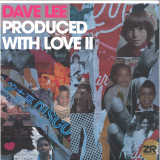
The follow up to his 2017 album, Produced With Love II is a collection of brand new songs from one of the UK's most longstanding, respected and fiercely independent artists. In a flash-in-the-pan industry like music, Dave Lee's career is notable for both its longevity and consistency. As a record producer and remixer, DJ and curator, he's now clocked up well over 30 years and, if such things existed, would be nailed on for a carriage clock for long service to add to the numerous hits and landmarks he's enjoyed over a storied career. His latest album, Produced With Love II, continues the work he started with 2017's superb collection. Incorporating aspects of house, soul and disco and crafted with the attention to detail you'd expect from someone of Lee's heritage and calibre, Produced With Love II comprises 12 brand new songs and will arrive in June 2022. The writing process has always remained the same and Dave has always preferred to work face-to-face with artists whenever possible - albeit with a few enforced remote sessions due to the pandemic.
Debut album by Cindy is aptly called I'm Cindy. Produced by Kai Hugo a.k.a. Palmbomen II. Who exactly is Cindy? If producer Kai Hugo used oblique strategies it would be this question that's been central to his past four years of musical output. First appearing on his 2015 LP Palmbomen II as the titular subject of the track Cindy Savalas, her life has become intertwined with the producer's. "Following that release, I made a music video for Cindy Savalas, where Cindy came to life through the portrayal by Blue LoLan,' Hugo explains. 'I really felt a connection with this character and went deeper into developing who she was and the world she lived in. The result was the creation of the LP Memories Of Cindy, where my goal was to reveal more about Carmel Vista, the town Cindy lived in. Afterwards, I imagined Cindy having her own 'lost' album, as if she had once released a record that was kind of forgotten.' I'm Cindy is altogether different though. It sits at an uncommonly explored intersection between Italo disco and shoegaze - Cocteau Twins and Slowdive are mentioned as influences and you can hear that in the blurred textures and hazy synths of the 13 tracks here. But Hugo also revels in a chance to use his self-created character as a conduit to explore his love of both mainstream pop and its more skewed forms. In many ways the record is as much LoL?n's. It was she who gave the character her voice - initially across 27 tracks recorded with the producer - but her own connection to Cindy runs deeper than that. 'It makes me really nostalgic thinking about everything Cindy went through, she and I have similar feelings' says the vocalist. 'Cindy is a mix of me and Kai so when I listen to the album I feel like I'm half entering Kai's head and half in mine, with a whole bunch of deep emotions, purity and loneliness that just makes me want to dance and cuddle with all my cats in a disco forest somewhere outside of Carmel Vista.'
Debut album by Cindy is aptly called I'm Cindy. Produced by Kai Hugo a.k.a. Palmbomen II. Vinyl comes with a 20-page handmade booklet, an individually signed and kissed handkerchief of Cindy (some of them even have her teardrops on them) and a huge fold-out poster! Who exactly is Cindy? If producer Kai Hugo used oblique strategies it would be this question that's been central to his past four years of musical output. First appearing on his 2015 LP Palmbomen II as the titular subject of the track Cindy Savalas, her life has become intertwined with the producer's. "Following that release, I made a music video for Cindy Savalas, where Cindy came to life through the portrayal by Blue LoLan,' Hugo explains. 'I really felt a connection with this character and went deeper into developing who she was and the world she lived in. The result was the creation of the LP Memories Of Cindy, where my goal was to reveal more about Carmel Vista, the town Cindy lived in. Afterwards, I imagined Cindy having her own 'lost' album, as if she had once released a record that was kind of forgotten.' I'm Cindy is altogether different though. It sits at an uncommonly explored intersection between Italo disco and shoegaze - Cocteau Twins and Slowdive are mentioned as influences and you can hear that in the blurred textures and hazy synths of the 13 tracks here. But Hugo also revels in a chance to use his self-created character as a conduit to explore his love of both mainstream pop and its more skewed forms. In many ways the record is as much LoL?n's. It was she who gave the character her voice - initially across 27 tracks recorded with the producer - but her own connection to Cindy runs deeper than that. 'It makes me really nostalgic thinking about everything Cindy went through, she and I have similar feelings' says the vocalist. 'Cindy is a mix of me and Kai so when I listen to the album I feel like I'm half entering Kai's head and half in mine, with a whole bunch of deep emotions, purity and loneliness that just makes me want to dance and cuddle with all my cats in a disco forest somewhere outside of Carmel Vista.'
On Biotope, Valentino Mora ventures even further from the dancefloor, delving into a rich, psychoacoustic realm shaped by modular and spectral synthesis. Built primarily around the Rossum Panharmonium, a module that analyzes and re-synthesizes audio into evolving harmonic clusters in real time, the album conjures an imagined ecosystem, where sound behaves with the logic and fluidity of organic life. Eschewing traditional field recordings, Mora instead sculpts textures and gestures that feel deeply natural yet are entirely synthetic. Inspired by elements such as soil composition, air, humidity, light, temperature, and the chemical properties of both land and aquatic environments and the living creatures that inhabit them, the soundscapes emerge as a kind of sonic biology. The result is a collection of slow-moving, tension-laden compositions that blur the boundaries between physical sensation and abstract design. Biotope unfolds like a closed ecosystem: modular synthesis treated as a breathing entity, shaped by resonance, friction, and organic motion. It embodies a kind of mystical biology, where textures mimic living forms, and frequencies pulse with intent. This is music to be felt as much as heard, Biotope invites you to listen with your skin, not just your ears.
Four Seasons in Kyoto’ marks the final chapter of The Kyoto Connection’s Ambient Japanese trilogy, following Postcards (2018) and The Flower, The Bird and The Mountain(2022). Like its predecessors, this album pays homage to the pioneering ambient and environmental music movements of 1980s and 1990s Japan.
The album unfolds as the imagined soundtrack to life in a quiet rural village, where nature and tradition shape the rhythm of everyday existence. Across 14 evocative compositions, The Kyoto Connection captures the essence of Japan’s ever-changing seasons, weaving together delicate melodies and immersive soundscapes. With contributions from friends and fans in Japan, Four Seasons in Kyoto is both a tribute and a transportive listening experience from producer Facundo Arena, the composer and producer behind The Kyoto Connection.
With Four Seasons in Kyoto, Facundo Arena continues his deep exploration of Japanese ambient and environmental music, blending his long-standing admiration for Kyoto’s cultural heritage with a sound that feels both nostalgic and timeless. While Postcards was an instinctive homage and The Flower, The Bird and The Mountain drew from real Kyoto field recordings, this final chapter in the trilogy leans further into the imagined, an intimate portrait of an unseen yet deeply felt Japan.
Recorded using a mix of vintage synths, delicate acoustic instrumentation, and subtle electronic textures, Four Seasons in Kyoto refines The Kyoto Connection’s signature approach. Organic soundscapes and drifting melodies mirror the slow change of seasons, evoking the impermanence central to Japanese aesthetics. The result is a record that seamlessly bridges the natural and the synthetic, memory and imagination, a fitting conclusion to a journey that began with an algorithmic discovery and blossomed into a rich sonic world of its own.
- A1: We Are The Espionnage Sound System - Dj Mehdi & Feadz
- A2: Ulysse - Dj Mehdi & The Cambridge Circus
- A3: On S'habitue - Dj Mehdi & Rocé
- A4: Pop Song I - Dj Mehdi & Dany Dan
- A5: Naja - Dj Mehdi & Zdar
- A6: T'inquiète - Dj Mehdi & Karlito
- B1: Camille Groult Starr (Boombass Remix) - Dj Mehdi , 113 & Boombass
- B2: Si Tu Savais (Dj Mehdi Remix) - Dj Mehdi & Manu Key
- B3: Pop Song Ii - Dj Mehdi & Dany Dan
- B4: Spanish Harlem - Dj Mehdi & The Cambridge Circus
- B5: Despee '98 - Dj Mehdi & Rohff
KEY POINTS
• Collector Crystal Clear LP deluxe packaged – the very First reissue of the cult 11 track EP – Street Album from year 2000 by DJ Mehdi collecting his Espionnage adventures
• “DJ MEHDI : Made in France” : an Arte 6 episode exclusive serie about DJ Mehdi from September 12th ! DJ Mehdi was the one building bridges between french hip hop and electro, and becoming a key composer,producer and DJ. He was a game changer in himself, helping both french rap & electro scenes to rise in the late 90’s & early 200’s . 13 years after DJ Mehdi’s sudden death, his long-time friend and Director Thibaut de Longeville imagined & directed the serie, with archives materials & exclusive interviews and words from big names from Rap & Electro about their collaborations & relationships with DJ Mehdi.
SHORT BIOG
“Rather than a compilation, this record is a summary of what Espionnage has done in the past two years, from the rap 12”s, the instrumental 12”s to the remixes I was given the opportunity to do. The members of The Espionnage Sound System, Yvan from Double Pact included (even if he only appears here on the interlude betweeen “Camille Groult Starr (rmx)” and “Si Tu Savais (rmx)”), have been essential to the label’s development as a whole. The Chronowax Distribution staff has been equally vital to a structure primarily dedicated to independent vinyl production. By the way, I have to thank Ulysse Genet who, on top of lending his name to a track title, suggested the name “Espionnage” instead of “Le Cirque Disques” (which was my initial idea) and drew the first logo. Many thanks to my team : Olivier Rosset, Charlotte Dutoit, Thibaut de Longeville, Alexander Wise, the 360 Creative & Marketing teams, as well as X2N, Tom Kan, DJ Gilb’R, Roulé, Crydamoure, Benoît Blue Boy and his daughters Ludella and Amadine ; who have all contributed on one level or another to what this record is. Of course I can’t forget my family: the Essadis, Faveris, Gassamas, Majira (and their many relations) as well as my other family, the 113 Clan and the whole African Mafia and most particularly my group, Idéal J, for the respect and freedom with which they’ve let me express the somewhat unusual ideas I had about all of this”.
Peace, DJ Mehdi, NYC, March 29th 2000.
Recorded during a residency in Tenerife powered by Keroxen Festival and Discrepant back in 2020 - amidst the pandemic, no less -, the duo of Carlos Godinho and Mestre André return after their 'Mãe D'Água' debut on Sucata Tapes and an entry on Keroxen's Aquapelago Series through a split with tropical druids Lagoss. Mostly captured in performance through a quadraphonic system placed inside a huge disused fuel tank, with a few tracks recorded out in the open throughout the island, 'Lava Love' evokes the tectonic shifts and motions inherent in their title in 13 tracks.
Based around Godinho's percussive arsenal, from found objects to instruments from all sorts of cartographies, and André's electronic processing, each of these expositions is a point in a map that is created between the island's concrete and fictional existence, discarding any superficial overdubs and crescendos, to focus on the balming and transporting properties of sound itself. From stripped down vignettes like 'Bajamar I' & 'II', 'Chacho' or 'Tangana I' to hypnotic tapestries that confuse the real and imagined like 'Haha No!' or 'La Gomera', Banha da Cobra conjure a collective dream of the island.
All tracks performed and recorded by Banha da Cobra in a quadraphonic system inside an enormous fuel tank (Espacio Cultural El Tanque, Santa Cruz de Tenerife),except Bajamar I and II (recorded outdoors at cantonera de Bajamar, with Lagoss), Taganana I and II (recorded outdoors at Playa de Almáciga) and El Guachinche de Los Realejos (recorded outdoors at Playa de Castro, with Lagoss).
- A1: Prequel - Nothing Better
- A2: Silentjay X Jace Xl - Just Waking Up
- B1: Dan Kye - Change
- B2: Mallard - Surface
- B3: Duke Hugh - Zoe
- C1: Ruf Dug Presents The Committee - Down 2 It (Feat Watson)
- C2: Vels Trio - The Wad
- D1: Paula Tape - Astroturismo
- D2: Nicola Cruz - Surface Tension
- D3: Special Feelings - Down Goose
- E1: Retiree - Pumice Stone (Boulderhead Remix)
- E2: Local Artist - Feelings (Joey G Ii X Klein Zage Mapped Remix)
- E3: Jerome Thomas - Secret (Saul Remix)
- F1: Mmyykk - Science (Session Victim Remix)
- F2: The Colours That Rise - Deep Space (Private Joy Funk Joint)
- F3: Cato - 1 Man (Tone Remix)
- G1: Hiatt Db - Every Daybreak (Fyi Chris Remix)
- G2: Klein Zage - Prince (Gallegos Park Street Tube Mix)
- H1: 30/70 - Misrepresented (30/70 Jungle Flip)
- H2: Wallace - Whirl (Ruf Dug Remix)
- I1: Retromigration & Monty Dj - Tornado
- I2: Bamao Yende & Low Jack - Collina 4Am
- I3: Roni - Angel
- J1: Gayance, Magi Merlin & Funkywhat - Collect$$$Save
- K1: Douniah & Dhanya - A Fever Dream
- K2: Nitai Hershkovits & Rejoicer - Oye Igal
- L1: Frank Liin - 60 Chemical (Dub)
- L2: Cousin Kula - Pixie Prog
- J2: Pinty & Tomos - Want U Too (Feat Ell Murphy)
- J3: Dj Pitch & Mle - Hit From The Right
Rhythm Section International, the impossible-to-define label founded in South East London by Bradley Zero in 2014 has reached the ripe old age of 10 years.Spanning 6 discs and 30 tracks, the compilation begins by taking us on a walk down memory lane and presenting one track from each year of the labels output
Rhythm Section International, the impossible-to-define label founded in South East London by Bradley Zero in 2014 has reached the ripe old age of 10 years. Funny thing is, it feels like it could have been almost double that. It’s hard to imagine the Landscape of the London music scene without this foundational force whose influence is felt more than ever.
With this special anniversary release, the label takes stock at this milestone to present a compilation in 3 parts: PAST, RE-IMAGINED AND FUTURE: honouring the labels tradition of always paying homage to what has come before while setting sights firmly forwards.
With 100-odd releases in their extended back catalogue covering every imaginable style and boasting influence in every inhabited continent on earth, it’s been quite a decade for the independent label, which began on a shoestring budget with funds made via the now legendary Rhythm Section pool hall parties in Peckham.
From humble beginnings to an era defining output - few would have predicted the slow and steady rise of the imprint and the impact it has had on generations of Dj’s, musicians and listeners - at home and abroad.
Spanning 6 discs and 30 tracks, the compilation begins by taking us on a walk down memory lane and presenting one track from each year of the labels output - highlighting some forgotten classics from the archives over the first 2 discs. For discs 3 & 4, the label invited it’s stable of artists to pick a track from the back catalogue to re-imagine in their own style. This process resulted in some incredibly playful contributions from the likes of Ruf Dug, Session Victim and Private Joy - whose playful reinterpretations add new depth to old material.
Finally, the last 2 discs are entirely new material for 2024, carrying the torch of the previous SHOUTS compilations - whose sole aim is to shine light on new music from emerging artists
More than two years after the release of 'Impressões de Outra Ilha', Discrepant's head honcho returns home under his birth name with the appropriately titled 'Exotic Immensity'. Conjured from the seeds of an exhibition of dioramas at Le Bon Accueil in Rennes, this double LP feels quietly epic in scope, a sprawling travelogue through imagined scenarios and what if possibilities. Discarding the more rough around the edges collages of previous works under a myriad of aliases - Discogs it, if you will -, Cardoso's approach here is more meticulously composed, with seamless transitions within his own personal soundworld giving way to this hallucinated landscape of field recordings, subtle electronic tweaks, cascading patterns, queasy ambiences and kösmiche-like synth harmonies.
Perfectly embodied in Evan Crankshaw's cut up poem, filled with occult and sci-fi references such as Agrippa's Book of the Occult, William Blake's Book of Urizen, Dr. Moreau or 50's pop-science books, the music on 'Exotic Immensity' transverses time and cartography in a deeply personal matter, from the cricket-like textures and reverse loops of 'Réplica(s)' until the closing moments with the touching chord progression and mangled voices of 'Pó Nuno'. In-between, the foghorn meets bass clarinet melody of 'Ossos' recalls the unassuming but essential harmonic patterns of Laurence Crane, surrounded by an almost percussive sheet of field recordings that drift into the gliding synth tones of 'Desumanização (I & II)' until tape orchestral swells carry us into the aether. 'Aquário Novo Mundo' brims in an undisplaced cartography, from electronic marimba stabs to synth choirs, the call of the loom to labyrinthine keyboard harmonies and underwater radiance. Are we still here? Somewhere? The muffled looped rhythmic sequence of 'Imagem/Miragem', cut by the glow of cascading synths doesn't offer a reply. Nor does it need to.
'Exotic Immensity' exists on the perpetual outside. Blessed be Cardoso for showing us a way in.
LP, 2024 Repress - half speed mastering
"The 50 best IDM albums of all time"
Pitchfork
"A liquidy headbox of aural shapes, whose forms hardly change yet seem to encompass infinite viscosity within them, like rainbow pools of oil on water"
Wire
"Before IDM became a nation of Aphex and Autechre cosplayers, the genre was less defined by aesthetics than by a shared ideology. Here was a loosely connected axis of post-rave kids, united by little more than a shared willingness to subvert the tools of their techno idols and create sounds that hadn't previously been imagined. No record of the era better embodies this find-a-machine-and-freak-it ethos than Islets in Pink Polypropylene, the otherworldly debut by British producer Anthony Manning."
Pitchfork
"It’s refreshing to hear an all-electronic album that sounds so organic yet so totally alien."
Fact
"One of the UK’s first post-rave ambient records proper; sharing much more in common with Autechre’s Amber or AFX’s Selected Ambient Works Vol. II - which were both released in that same year - than anything else before or around it."
Boomkat
For fans of avant everything innovative and experimental music.
About The Album>>>>
The whole album was composed and realized on the Roland R8 drum machine. It followed the same process as the Elastic Variations pieces, with the major addition of many, many hours of editing.
Each piece was composed as a series of patterns, of varying lengths ( 5,6,7 bars long ). The stock R8 sounds were embellished with one of several ROM sound library cards ( mostly the Dance card, number 10 ).
These patterns were created by tapping out a rhythm, then, in real time, using the Pitch slider as the pattern looped, to create improvised melodies for each of the pattern's voices.
The rough version of each piece was built by stitching the patterns together as a song, listening to each addition over and over, to make sure the melodies flowed into each other in a vaguely coherent manner.
Once this initial rough structure was in place I set about fine tuning every single note.
The R8 doesn't allow you to assign a pitch to a note in the conventional sense. It's not possible to assign a pitch of Middle C to the first note of the first bar. Instead, it assigns a numerical value to a note's pitch, between -4800 and +4800 ( I think those numbers are correct - that little screen is seared into my memory ).
If you restrict all notes within a piece to a multiple of, say, 400, you therefore create the possibility of a sort of scale. For multiples of 400, you have a total number of 24 permissable notes. However, most of the percussive sounds, when pitch shifted, only sounded 'good' over a reduced range.
The first editing step was to go through the entire piece, and change every note's pitch to its nearest multiple of 400.
The second step was to draw out the entire piece on graph paper, the Y axis being pitch, X being time. This drawing gave me a visual sense of a melody's flow. It was easy to see too many notes clustering around too tight a pitch range for instance, or a single note straying way down into the lower register while all others at that point in the melody were in the upper.
Once these first 'clearing-up' edits were complete I could set about re-writing elements that didn't sound right melodically. Often this meant stripping out whole chunks of superfluous notes, to reveal a cleaner melody line, then shifting its shape slightly. If the flow of the line of dots on the graph 'looked' balanced and sweetly sinuous, then often it sounded so.
This entire process took many weeks per piece. Weeks of doing almost nothing else. Listening. Re-drawing. Re-writing. Listening. Round and round and round. When I could hear the whole thing in my head, from beginning to end, and nothing seemed to jar ( too excessively ), I knew it was done, time to move on.
I imagine it's very similar to the process of stop animation. Your days are filled with painfully tiny incremental changes that seem to be getting nowhere. Then, slowly, a shape, narrative, starts to appear. Then, all of a sudden, somehow, it's done.
When all the pieces were complete the R8 was taken into Irdial's studio where some simple effects were added, each voice recorded individually for clarity onto 8-track tape and mastered onto an ex-BBC half-inch tape deck.
Then I slept. And vowed never to do it again.
*****
And the title ?
Soon after finishing the pieces I happened to read a magazine article about Christo's "Surrounded Islands" installation with the music playing in the background.
There was something about a particular cluster of words within a random sentence that seemed pleasing and somehow appropriate.
"Islets in Pink Polypropylene" seemed to make as much sense as anything else.
2024 Repress
If ever an album could transport you to the hazy sunshine and imagined halcyon paradise of Southern California in the mid-1980s, could capture the early evening warmth of hanging at an inclusive boogie jam as it approaches “magic hour” in Santa Ana or Anaheim, then it’s Vaughan Mason and Butch Dayo’s Feel My Love. A brilliantly produced deep slung, low rider funk classic originally released on Salsoul in 1983. It’s a masterpiece of “funk love music”.
Yes, this is indeed a perfectly formed five track “mini LP” of unparalleled heat, but there’s one song here that, above the rest, represents Orange County boogie-funk. A straight killer beloved by all that have had the pleasure of moving to it. A track that can fill up a dance floor within seconds of its starting. That song is the eternal title track, “Feel My Love”.
This is a work of art that made people fall in love with the funk. It transcends the limitations of genre. “Feel My Love”’s deceptive simplicity makes it perfect to drop during a house set, a classic funk party or at a west coast rap jam. It’s sexy, deeply emotional, melancholic, hopeful, passionate and just radiates so, so much raw energy. This is music.
The rest of the record is hardly filler though. Opener “Oh, Love” is a dizzying, emotional slow jam. With heaven-sent vocals riding gorgeous, sweeping keys that alternate between sweet twinkling lines and funk-fuelled stabbing. It’s sensational. A rollerskating jam named “Rollalong Songs” is an ultra-swish piece of dance floor dynamite. Its slick drums, staccato piano and neck snapping claps underscore Dayo’s buoyant vocals. It’s essentially “Bounce, Rock, Skate, Roll Part II”.
The flip begins with “Party On The Corner”. Smoother than silk vocals, day-glo synths, a bubbling bassline and guitar licks that surely received the Prince seal of approval. It’s another example of how Vaughan Mason and Butch Dayo flirt with perfection so routinely. The most majestic closer, the kaleidoscopic, cow-bell-assisted synth-funk heater “You Can Do It” is a proto-rap groover that truly smokes.
This prized LP is a stone cold jam and finding original copies on vinyl at affordable prices has been tough for years. Mastered brilliantly by Simon Francis, cut by Pete Norman and with lovingly reproduced artwork, this fresh Be With reissue ensures this legendary LP now sounds, looks and feels as sensational as it should.
Oscar Jerome & Oscar #Worldpeace and Franc Moody reimagine two Blue Note classics; Grant Green’s ‘Green With Envy’ and Donald Byrd's ‘Cristo Redentor’ for Blue Note Re:imagined II; a new 16-track compilation featuring fresh takes on music from the illustrious Blue Note vaults recorded by a heavyweight line-up of the UK jazz, soul and R&B scene’s most hotly-tipped rising stars. Arriving off the back of the widespread international success of the first volume, which topped jazz charts around the globe, Blue Note Re:imagined II once again infuses the spirit of the new UK jazz generation into the legendary label’s iconic catalogue, balancing the genre’s tradition with its future and reflecting the melting pot of talent and diversity within the current scene
- Find My Way Featuring – Beck
- The Kiss Of Venus
- Pretty Boys Featuring – Khruangbin
- Women And Wives Remix – St. Vincent
- Deep Down Remix – Blood Orange
- Seize The Day Featuring – Phoebe Bridgers
- Slidin' Remix – Eob
- Long Tailed Winter Bird Remix – Damon Albarn
- Lavatory Lil
- When Winter Comes Remix – Anderson .Paak
- Deep Deep Feeling Remix – 3D Rdn
- Long Tailed Winter Bird Remix – Idris Elba
We have a very limited amount of these available now for stores. 4LP boxset - white vinyl - edition of 300 - includes: The Dream Derealised LP, Lightnesses I & II LPs, Near Future Residence LP. It’s nearing a decade since William Doyle released his Mercury Music Prize nominated debut album, Total Strife Forever, as East India Youth in 2014. A year later, he had toured the world and was releasing his second album, Culture of Volume, but it would be another four years before Doyle returned with his third full album, and the first official release under his own name. The dizzyingly ambitious Your Wilderness Revisited arrived in 2019 and was followed last year by the artpop masterpiece, Great Spans of Muddy Time. In the years between leaving the old project behind and re-emerging under his own name, Doyle self-released a string of ambient-leaning albums, The Dream Derealised, Lightnesses Vol I & II and Near Future Residence, which are now to receive a first vinyl pressing via Tough Love as both a highly limited four LP box set, titled ‘Slowly Arranged: 2016-19’, and as separate albums. The Dream Derealised is a collection of nine abstract, lo-fi pieces that were recorded during the summer of 2016, when focusing on creating them helped guide Doyle through a “difficult period of anxiety, panic and a regular dissociative feeling called derealisation.” At the time, doing something creative in a quick and immediate fashion felt vital to Doyle, carrying him to a new place: “I’m releasing them now as a cathartic measure, and as a message for others who may be going through difficult times themselves. What I told myself at the time, what I can tell you now: You are not in danger. You are not going insane. You are not alone.” Lightnesses Vol. I & II sees Doyle create what we might understand as true ambient music – that is, music intended for the background that wasn’t composed as such, but allowed to blossom out of the setting of some rules and parameters, played by sounds he created and then resampled. The deceptively simple, droning pieces are unlike anything Doyle has made before or since. “During their creation I’d often take photographs of the light coming in through the windows of the two houses I lived in during their creation. I’d post these on social media and they became quite popular parts of my output. This music was intended to accompany those visuals. The first volume’s photo is a double exposure of the sun shining in on my notebook and my hand, whereas the photo for the second volume was taken in Joshua Tree Park, California as I saw our tail lights illuminate one of the trees.” Near Future Residence is music for an imagined place based on real ideas; the soundtrack for an ecologically sustainable housing development somewhere in a not-too-distant future Britain. The eleven instrumental pieces here come from a place of optimism, imagining a future that is based on cooperation, community and ecological urbanism. It's music intended to sit in this imagined environment rather than impose upon it, similar in principle to the function of Kankyō Ongaku (Japanese environmental music). The ideas contained on Near Future Residence laid the groundwork for - and can be seen as a companion piece to - the album Your Wilderness Revisited, released to critical acclaim in 2019. Doyle explains how the pieces “were composed in entirely generative ways using samples of instruments, synthesisers and field recordings I've collected and developed throughout 2018. In generative composition, rules are set and parameters are chosen and then put into motion, the results constantly changing and surprising.”
Dark-folk songwriter Chantal Acda and beyond drums-percussion musician extraordinaire. Eric Thielemans propose a new score for Koyaanisqatsi, re-actualising the incredibly beautiful, raw, rhythmic and touching images of this 80’s cinematographic masterpiece. Slow deep electric waves, lonely synths in sonic desert landscapes, rhythmic pulses, transporting drums and bells, and deeply longing sounds and voices make up the audible fundamentals of this imagined, neo shamanic, ritualistic music to accompany the Earth as it keeps on supporting our post human frenetics even today. This release contains a selection of the musical material scored for a live performance together with the screening of the movie. The live performance premiered on Film Festival Gent and Vooruit in the fall of 2022. Tracklisting LP SIDE A 1 Koyaanisqatsi Part I / 23'36 SIDE B 2 Koyaanisqatsi Part II / 13'00 3 Koyaanisqatsi Part III / 10'48
2022 repress.
Monopolis.
It is in this fictional capital of the West, imagined by Michel Berger for Starmania, that the Pirouettes have decided to settle down to write their second long format: an album that wants to be more narrative, giving pride of place to storytelling, whether in the form of a love story, a true/false diary, or even... an oriental tale.
A perspective, a decentring and a will to open up which is also felt in terms of composition, since the duo has this time collaborated with several musician friends (Dodi El Sherbini, Lewis OfMan, Krampf, or Vaati). A way of renewing themselves of course, but above all of surpassing themselves, and of keeping ahead of the competition.
- A1: Opening Credits
- A2: The Chase
- A3: Saved/Captured
- A4: The Bracelet
- A5: Council Of Draags (Part 1)
- A6: Terr & Tiwa
- A7: The Knowledge (Part 1)
- B1: The Fight
- B2: The Knowledge (Part 2)
- B3: The Initiation
- B4: Escape
- B5: The Big Tree
- B6: The Ritual
- B7: The Duel
- C1: Theft/Zarek
- C2: The Bird
- C3: The Free Oms
- C4: The Purge
- C5: The Journey To Ygam
- C6: Council Of Draags (Part 2)
- D1: The City Of Free Oms
- D2: Robot Attack
- D3: The Fantastic Planet
- D4: The Final Battle
- D5: Terr
- D6: End Credits
Black LP[29,79 €]
New pressing on double coloured vinyl, (Disc one White & Disc two Pink), Gatefold sleeve, DL card. René Laloux’s celebrated 1973 sci-fi animation ‘La Planète Sauvage (Fantastic Planet)’, is overhauled with a re-imagined soundtrack by electronic modernists Stealing Sheep and legendary sound innovators The Radiophonic Workshop. This exclusive release is part of Fire Records’ re-imagined score series. “No institution has had a greater impact on the development of electronic music than the BBC Radiophonic Workshop.” The Vinyl Factory. It’s a real pre-Avatar conundrum that Stealing Sheep, with the help of Bob Earland, Dick Mills and Roger Limb from the Radiophonic Workshop, unravel. Creating an ethereal excursion that’s narrated by Roger Limb; like a futuristic Martin Denny, or Dr Who gone ambient techno, with a hint of Forbidden Planet 50 years on. It’s an analogue swirl set in an off-world paradise; a field recording from the future. This is a creative, generation-spanning, union brought together to score this unique cult film. A must for fans of psyche electronica and Stealing Sheep’s formidable ‘Big Wows’ album. “Stealing Sheep devour a broad range of styles, incorporating everything from the dark dance-pop of Grace Jones to the experimentations of Radiophonic Workshop pioneer Delia Derbyshire and John Carpenter soundtracks.” The Guardian // ‘La Planète Sauvage’ is a thing of ambient beauty punctuated with electronic earworms that switches from intensely ominous to otherworldly dream like moments. Track listing: Side A A1 Opening Credits A2 The Chase A3 Saved/Captured A4 The Bracelet A5 Council of Draags pt.I A6 Terr & Tiwa A7 The Knowledge pt.I Side B B1 The Fight B2 The Knowledge pt. II B3 The Initiation B4 Escape B5 The Big Tree B6 The Ritual B7 The Duel Side C C1 Theft/Zarek C2 The Bird C3 The Free Oms C4 The Purge C5 The Journey to Ygam C6 Council of Draags pt.II Side D D1 The City of Free Oms D2 Robot Attack D3 The Fantastic Planet D4 The Final Battle D5 Terr D6 End Credits
Blue Note Re:imagined returns this year with a new 16-track compilation featuring fresh takes on music from the illustrious Blue Note vaults recorded by a heavyweight line-up of the UK jazz, soul and R&B scene’s most hotly-tipped rising stars. This 7” single features two covers from the upcoming album, from Ego Ella May and Theon Cross. Arriving off the back of the widespread international success of the first volume, which topped jazz charts around the globe, Blue Note Re:imagined II once again infuses the spirit of the new UK jazz generation into the legendary label’s iconic catalogue, balancing the genre’s tradition with its future and reflecting the melting pot of talent and diversity within the current scene.
Khruangbin and Leon Bridges announce their latest collaborative EP, ‘Texas Moon’, out on Dead Oceans.
An extension of the two’s chart-topping four-song ‘Texas Sun’ journey, ‘Texas Moon’ is an introspective stroll through the dark. “Without joy, there can be no real perspective on sorrow,” say Khruangbin. “Without sunlight, all this rain keeps things from growing. How can you have the sun without the moon?”
Crediting their mutual home state for inspiration, ‘Texas Moon’ pensively examines Texas’ musical perception, while paying homage to the marriage of country and R&B that’s become synonymous with the lone star state. Propelled by rolling guitar licks, conga and bongo, lead single ‘B-Side’ meditates on meeting in a dream and frolics across the nearing contemplative night-time state with its longing joy.
Elsewhere on ‘Texas Moon’, the artists channel a newly intimate musical scope that’s illustrated most dramatically when the spacy sensuality of the minimalistic ‘Chocolate Hills’ leads into the stark spirituality addressed on ‘Father Father’, a reminder of both acts’ gospel roots. Over a simple rolling guitar figure, Bridges pleads with the heavens - “Look at the mess that I made / Just a man with unclean hands” - only to be reminded of God’s eternal love.
For Khruangbin, one song in particular was indicative of the trust that Bridges put in them. “The song ‘Doris’ is about his grandmother making the transition from this world to the next realm,” says Khruangbin’s Donald Ray ‘DJ’ Johnson Jr. “It’s a very somber, very deep record. And when someone places that kind of work into your
hands, the last thing you want to do is junk it up, overproduce it, or do too much. We treated it with the respect it deserved, and treated Doris with the respect she deserves.”
“It’s like a short story...,” says the band’s Laura Lee of the music. “And it leaves room to continue having these stories together. It’s not Khruangbin, it’s not Leon, it’s this world we created together.”
Upon its release, ‘Texas Sun’ soared to the No. 1 slot on Billboard’s Emerging Artists Chart along with landing the No.1 on spot on Americana/Folk Albums, among many others. Significantly, both parties’ musical directions were deeply affected by their time working together on ‘Texas Sun’.
Khruangbin’s most recent studio album, ‘Mordechai’, moved their own vocals to the forefront, a change they readily admit was a direct result of working with Bridges.
Their sound was also tapped for remix / reinterpretation of a Paul McCartney song for the ‘McCartney III Imagined’ project. Meanwhile, in addition to his genre-defying Grammy-nominated album ‘Gold-Digger’s Sound’, Bridges has put out several other challenging, shared collaborative tracks, including work with John Mayer, Lucky Daye and, most recently, Jazmine Sullivan. Each of the artists appeared recently on Austin City Limits and will tour throughout the new year.
Khruangbin and Leon Bridges announce their latest collaborative EP, ‘Texas Moon’, out on Dead Oceans.
An extension of the two’s chart-topping four-song ‘Texas Sun’ journey, ‘Texas Moon’ is an introspective stroll through the dark. “Without joy, there can be no real perspective on sorrow,” say Khruangbin. “Without sunlight, all this rain keeps things from growing. How can you have the sun without the moon?”
Crediting their mutual home state for inspiration, ‘Texas Moon’ pensively examines Texas’ musical perception, while paying homage to the marriage of country and R&B that’s become synonymous with the lone star state. Propelled by rolling guitar licks, conga and bongo, lead single ‘B-Side’ meditates on meeting in a dream and frolics across the nearing contemplative night-time state with its longing joy.
Elsewhere on ‘Texas Moon’, the artists channel a newly intimate musical scope that’s illustrated most dramatically when the spacy sensuality of the minimalistic ‘Chocolate Hills’ leads into the stark spirituality addressed on ‘Father Father’, a reminder of both acts’ gospel roots. Over a simple rolling guitar figure, Bridges pleads with the heavens - “Look at the mess that I made / Just a man with unclean hands” - only to be reminded of God’s eternal love.
For Khruangbin, one song in particular was indicative of the trust that Bridges put in them. “The song ‘Doris’ is about his grandmother making the transition from this world to the next realm,” says Khruangbin’s Donald Ray ‘DJ’ Johnson Jr. “It’s a very somber, very deep record. And when someone places that kind of work into your
hands, the last thing you want to do is junk it up, overproduce it, or do too much. We treated it with the respect it deserved, and treated Doris with the respect she deserves.”
“It’s like a short story...,” says the band’s Laura Lee of the music. “And it leaves room to continue having these stories together. It’s not Khruangbin, it’s not Leon, it’s this world we created together.”
Upon its release, ‘Texas Sun’ soared to the No. 1 slot on Billboard’s Emerging Artists Chart along with landing the No.1 on spot on Americana/Folk Albums, among many others. Significantly, both parties’ musical directions were deeply affected by their time working together on ‘Texas Sun’.
Khruangbin’s most recent studio album, ‘Mordechai’, moved their own vocals to the forefront, a change they readily admit was a direct result of working with Bridges.
Their sound was also tapped for remix / reinterpretation of a Paul McCartney song for the ‘McCartney III Imagined’ project. Meanwhile, in addition to his genre-defying Grammy-nominated album ‘Gold-Digger’s Sound’, Bridges has put out several other challenging, shared collaborative tracks, including work with John Mayer, Lucky Daye and, most recently, Jazmine Sullivan. Each of the artists appeared recently on Austin City Limits and will tour throughout the new year.
The $mokebreak EP follows Pink Siifu & Fly Anakin's critically acclaimed 2020 debut album FlySiifu's and further explores the musical community they've assembled around their imagined FlySiifu's record store.
Now FlySiifu welcome their friends Fousheé, Chuck Strangers, ZelooperZ, MAVI, YUNGMORPHEUS, Koncept Jack$on, Big Kahuna OG, 3wayslim and Peso Gordon into the store and onto the mic, with beats provided by Black Noi$e, Ahwlee, Budgie, Ohbliv, Graymatter, ewonee, and iiye.
Don't miss the video for their posse cut 'Tha Divide', featuring ZelooperZ, MAVI, and Koncept Jack$on, shot by Elijah Maura on a cold night in NYC.
"a wild taste of what the two artists can create just by reaching into their inner circles" – SPIN
In the afterglow of her acclaimed 2020 album Silver Ladders, Los Angeles-based harpist Mary Lattimore returns with a culminating counterpart release, Collected Pieces: 2015- 2020. The limited-edition LP features new and previously unreleased material, Bandcamp-only singles, and other obscurities alongside standouts from her 2017 tape Collected Pieces. Beyond the vinyl compendium, an expanded tracklist on the cassette/digital version brings more of Lattimore's archives together for the first time. Lattimore has described the process of arranging these releases as akin to "opening a box filled with memories," and here that box continues to populate, accessible for both the artist and fans. Evocative material separated by years, framed as a portrait of an instrumental storyteller who rarely pauses, recording and often sharing music as soon as it strikes her. Seemingly in constant forward motion for the last five years since her Ghostly debut, Lattimore glances back for a breath, inviting new chances to live in these fleeting moments and emotions; all the beauty, sorrow, sunshine, and darkness housed within. Opening the cassette version is "Mary, You Were Wrong," which mirrors an author's bout with a broken heart. "It's about how you have to keep on going even if you make some mistakes," she says. The bittersweet refrain cycles throughout, a little brighter every time, slowly, like the way time tends to heal. Unreleased track "Sleeping Deer" came together during Lattimore's artist residency on a cattle ranch in Wyoming. She remembers, "a small deer whose mother I think had been run over by a car would hang out in the yard. I called him Lollipop and would leave vegetable scraps out." Lollipop returned daily to eat, rest, and wait for more. The music this vision inspired is patient and droning, with light plucks giving way to deeper, vibrating tones, permeating with a sense of anticipation. Next is a newer single, "We Wave From Our Boats," which she improvised after walking her neighborhood during the early days of lockdown in 2020, and shared on her Bandcamp. "I would just wave at neighbors I didn't know in a gesture of solidarity and it reminded me of how you're compelled to wave at people on the other boat when you're on a boat yourself, or on a bridge or something. The pull to wave feels very innate and natural." The heart of the track is a somber loop, over top which Lattimore's synth notes ruminate, each a gentle shimmer of optimism in the most anxious and absurd of days. Also recorded in 2020, "What The Living Do" is inspired by Marie Howe's poem of the same name, which reflects on loss through an appreciation for the mundane messiness of being human. The echoed, slow-marching track has a distant feel to it, as if the listener is outside of it, watching life play out as a film. "Princess Nicotine (1909)" scores actual footage, a dream sequence Lattimore imagined for J. Stuart Blackton's surreal silent film Princess Nicotine; or, the Smoke Fairy. She adopted the same approach for "Polly of the Circus," explaining it was the name of one of the old silent films discovered in permafrost in the Yukon featured in the documentary Dawson City: Frozen Time, "the only copy that survived and it kind of warped in the aging process." A trove of pieces are collected here, most recorded in the moment, just Lattimore and her Lyon and Healy Concert Grand Harp, contact mics, and pedals. Like her most affecting work, these songs showcase Lattimore's gifts as an observer, able to shape her craft around emotional frequencies and scenes. Her power as a musician is rooted in how she sees the world: in vivid detail, profoundly empathic, with deep gratitude for nature and nuance.
Nantais by adoption, the Australian Will Guthrie is a discreet star of the international scene of free, experimental and improvised music; over the past fteen years, he has developed an open and personal approach to drums and percussion, skillfully blurring the lines between his brilliant jazz upbringing, his passion for traditional musics, and his inexhaustible interest in experimental and noise creation, with a pronounced taste for a physical and raw approach to sound. With thousands of performances and some fty albums to his credit, the Australian regularly dispenses his vibratory art solo or alongside the best of improvisation; From Oren Ambarchi to Roscoe Mitchell via Jérôme Noetinger, Anthony Pateras, David Maranha, Ava Mendoza, Jean-Luc Guionnet, Keith Rowe or even Mark Fell. In recent months Guthrie has performed with Tunisian singer Ghassen Chiba, toured as part of “All Around”, a performance with Danish dancer choreographer Mette Ingvarsten and founded the Ensemble Nist-Nah, a gamelan orchestra, in the company of eight other percussionists, out of which Black Truf e published an album, with a second on the way. He also found the time to put in shape a second volume of “People Pleaser”, a discographic act between an autographical assessment, the parenthesis and the musical UFO. A singular exercise in Guthrie's discography, “People Pleaser”, a series initiated in 2017, sees the Australian partially put down his drumsticks and wear a producer cap for a result offering a resolutely singular perspective of / on his work with a very personal dimension. On the rst volume, with a cover signed Stephen O'Malley sets the tone by diverting the chamaré Warhol infulenced visual of the album “Unit Structures” by Cecil Taylor. The portrait of the free jazz pianist has been replaced by passport photos of Guthrie. The result is a diversion into a fairly “Pop” aesthetic whose musical content works in a fairly similar way. Four years later, the cover art's undertones are slightly darker and Guthrie hasn't aged a bit on his new passport photo. The twelve tracks of this second “People Pleaser” combine and arrange eld recordings, heady loops, twists, musical quotes stuck on bedside records, recorded moments captured during travels, ghosty voices from low- lands, a police interview tape and imagined exotic sounds ... Guthrie could walk us for hours on his hard drive like looking at a photo album but he chose to build pieces based on this very personal sound material, much like a mixtape, with special care given to how sounds articulate, overlap and collide. He thus invites his heroes and his friends to join him in skilfully chiseled and nely edited imaginary jams. The rst to take pleasure in this “People Pleaser” is undoubtedly its author as some of his nds are enjoyably playful; we are there embarked in an addictive sound patchwork at high speed where a Balinese Squarepusher is propelled via a defective cathode ray tube in a temple where the happy marriage of the saxophone and the gong is celebrated before this too short respite is interrupted by a sustained hip hop rhythm. The multiplicity and variety of sources give the whole a very pop format and the way in which Guthrie combines sounds, textures, rhythms and vocal elements quickly takes on a narrative dimension and poses this exercise between hip hop and a very personal plunderphonic, evoking as much J Dilla or RZA as the irreverent inventiveness of People Like Us or Wobbly. Will Guthrie has never been in as good company as on a solo album, he also lists on the cover the list of friends, heroes, members of his family and countries who inspired him and to whom he pays homage / collage on this new disc; An aesthetic exercise apart in his discography, both in nitely personal and self-centered and resolutely turned towards what animates him, the aptly named “People Pleaser” reveals the music DNA of the Australian and can be listened to on repeat.
** 12” LP edition of 300 copies with cover artwork and booklet featuring illustrations by Ettore Tripodi ** In September 2019 Alessandro Bosetti was invited by fellow composer and curator Riccardo La Foresta to create a new work for a newly created ensemble as part of a residency program hosted by Centro Musica in Modena, Italy. The very first encounter took place on Skype – kind of a prediction of the forthcoming physically distanced pandemic times. The first, straight-to-the-point question Bosetti posed to each musician was to tell him the history of their life. The materials collected in the interviews subsequently underwent a process of anonymization, selection and cut-up in order to create the imaginary autobiography of Didone, a genderless character on whom Bosetti composed a combinatory poem in 84 aphorisms, six of which have been translated into music. The ensemble consists of extremely different musical profiles: the contemporary soprano Giulia Zaniboni, minimalist banjo and acoustic guitar player Glauco Salvo, and four musicians with a jazz background such as guitarist Luca Perciballi, drummers Andrea Grillini and Simone Sferruzza, and saxophonist Dan Kinzelman (also part of Hobby Horse trio and long-time collaborator of Enrico Rava). Some of the stylistic features of Bosetti’s project Trophies (along with Kenta Nagai and Tony Buck) can be detected here and there. Persistent repetitions, mesmerizing sonic masses and extended, oblique melodic lines are here led by the clear and precise voice of soprano Giulia Zaniboni.
The voice is at the heart of this work: the textual fragments of the autobiographies are filtered through Zaniboni’s contemporary vocality, while informing the instrumental writing as well. Themes and textures unveil traces of words or sentences; fragments of biographies are embedded in the intricate instrumental dialogue between the two drummers. A final layer was added by Ettore Tripodi, a unique and out-of-time visual artist who imagined Didone in a series of illustrations accompanying the poem. "Didone" is a work about the reconfiguration and recombination of identities, where every specific sense of belonging melts into an indistinct swarming of possibilities.
Alessandro Bosetti is a Marseille-based composer and sound artist with a particular interest in the musicality of language and in the voice, conceived as an autonomous object and an instrument of expression. His works enact a dialogue between language, voice and sound within complex tonal and formal constructions, often crossed by oblique irony. He builds surprising devices, often linked to the radio medium and to a tireless reflection on the relationships between music and language, questioning aesthetic categories and listening postures.
His work has been shown in reference venues such as the GRM / Présences Electronique festival in Paris, Roulette and The Stone in New York, Café OTO in London, the Liquid Architecture Festival in Melbourne and Sydney, the Serralves Museum in Porto and the San Francisco Electronic Music Festival. His music is released by labels such as Errant Bodies Press, Holidays Records, Rossbin, Sedimental, Unsounds, Monotype, Weird Ear Records.
- A1: Not Drowning, Waving - Frogs
- A2: Mark Pollard - Quinque Ii
- A3: Blair Greenberg - Beach
- A4: John Heussenstamm - Sawan
- A5: Beyond The Fringe - Guitar Fantasia
- B1: Meera , Atkinson - White
- B2: Free Radicals - My Lips Are Moving
- B3: John Elder - Again
- B4: Helen Ripley-Marshall - Under The Sun
- B5: Blair Greenberg - Rainforest
- B6: Sam Mallet - Westgate Bridge At Dawn
- C1: Gary Havrillay - Temple
- C2: Ros Bandt - Starzones
- C3: John Elder - Wayayisma Petra
- D1: Sam Mallet - Stream Daimons' Speak
- D2: Blair Greenberg - Gleaming
- D3: Robert Bleeker - Glowing Trombones
- D4: Tom Kazas - Blankets Of Ice
- D5: Errol H. Tout - As Darkness Falls
Midday Moon is a survey of ambient and experimental music that emerged from Australia and New Zealand between 1980 and 1995. These recordings are sourced from a rich variety of micro-labels, private pressings, theatre soundtracks and artists' personal archives. Curated by Melbourne based DJ and archivalist, Sanpo Disco (a.k.a Rowan Mason), the collection delves deep into the world of outsider music that emerged in Australia and New Zealand in the latter half of the twentieth century, as synthesisers and early workstations began to enter the consumer marketplace. The record is an odyssey in itself, a journey that takes listeners into the unsung world of Australian new age composers. There are stories abound within this volume, from the mysterious disappearance of Helen-Ripley Marshall after the release of her 1988 album 'Green Chaos', to the journey of American-born, Perth based blues/rock guitarist John Heussenstamm, who unexpectedly turned his finger to 'ambient' music in the late 80's; and again from Melbourne based Ros Bandt, who made a series of recordings exploring the resonance of a hollow concrete cylinder 5 stories beneath busy Collins Street in Melbourne's CBD. Compiled by Sanpo Disco / Mastered by Mikey Young . '(Ambient music is) a surrounding influence that induces calm and a space to think... it can accommodate many levels of listening attention without enforcing one in particular.' - Brian Eno / 'A richer and more diverse ambient genre began to form. Music that crafts a unique cultural geography of landscapes and atmospheres: real and imagined, natural and man-made. Some artists turned their attention to the singular acoustic ecologies of overlooked spaces around the country. Others fostered interests in non-Western music cultures and instruments. The common thread is their use of new technologies to conjure interior and exterior regions, through acoustic and synthesised sounds.' - Sanpo Disco
On Video Age's forthcoming album Pop Therapy, out June 22nd via Inflated Records, longtime friends and songwriting partners Ross Farbe and Ray Micarelli conjure up a thrilling assortment of experimental pop songs. Using a palette of vintage synthesizers and the propulsion of a Sequential Circuits Drumtraks drum machine, the New Orleans-based group's buoyant synth-pop echoes from some imagined vision of the past, leaning on an invented nostalgia to soundtrack an ideal future that never arrived. Video Age brings that future fully to life on Pop Therapy. Emerging from New Orleans' DIY scene and label collectives, Farbe and Micarelli were intrigued by each other's songwriting among several curiously satisfying guitar pop bands. As a producer and prolific engineer, Farbe has helmed some of the most exciting releases from genre-pushing New Orleans artists, whose singular visions are made possible with his gifted ear and love of tape recording. Micarelli's talent for crafting simple, tangible melodies complements Farbe's studio world-building, letting ideas drift until they emerge into impressive arrangements. The pair's seemingly effortless gift for crafting earworm hooks was glimpsed on their 2016 debut Living Alone, a gorgeous collection of guitar-driven melancholy. On Pop Therapy, they're joined by Duncan Troast, Nick Corson and Jordan Odom, taking inspiration from the limitless possibility on sonic canvases of the late 1970s and early 1980s (Yellow Magic Orchestra, McCartney II, Donald Fagen's The Nightfly). Where Living Alone catalogued the solitude of reflecting on what was and could have been, the sentimental love songs on Pop Therapy gaze longingly at the likeliness of a brighter tomorrow.
- A1: Princess Of Dawn
- A2: Winter Sun
- A3: Triad
- A4: Tom Bombadills Dance
- A5: Pearls
- A6: Arabia
- A7: Cray-Fish
- A8: Deep Sea
- A9: Starlight
- B1: Phoenix
- B2: Hoodle-Doodle
- B3: Gotic Velvet
- B4: Green Cherub
- B5: Desert-Rock
- B6: Synthi-Effect
- B7: Flea-Dance
- B8: Flea-Dance Ii
- B9: Laser
- B10: Up And Down
- B11: Desert-Rock Ii
- B12: Kolibri
- B13: Elefantentempel
- B14: Reed
- B15: Singing Bell
- B16: Evening
- B17: Together
New Lp-edition of a private press library recordings of the early '70s.
Together with Florian Fricke and Peter Michael Hamel, Deuter is certainly the main responsible of a fruitful encounter between European sensibility and Eastern aesthetics in the German music of the 1970s. Soundtrack was originally produced by Kuckuck in 1973 not for an official and public release, but as a library' to be used for films, TV and radio. As a library it respects the canonical and typological structure of the genre with 26 short sonic fragments, sequences imagined and conceived like fulminating illuminations. There's still a solid electronic vocation that, however, has put aside the most disruptive effluvia of D (1971) of pure kraut' ancestry. In fact, the album is more like an ideal passing bridge between some ritual instances of the previous Aum (1972) and the following successful phase of Deuter during the period when he stays in the Bhagwan Shree Rajneesh's ashram in Poona realizing, in parallel to a renewed inner life, masterpieces like Celebration, Haleakala, Ecstasy and Silence is the Answer. Musically speaking, Soundtrack presents itself as a heterogeneous work with nocturnal, cinematic, galactic and atmospheric-environmental implications. Electronics remains the predominant factor but can vary from mantra drones of more ceremonial and meditative space-relax' tones of some tracks (Triad, Deep Sea, Gothic Velvet or Evening) to the most amused formulations of pulsating analog synths that in the hands of Deuter become toy-equipement' to modulate and explore (Desert Rock, Synth Effect, Flea Dance or Laser). There is no lack of acoustic moments more ethnically inspired with Arabian and Indian (Reed, Arabia) or devotionally solar themes (Tom Bombaddils Dance), so evoking an air of diffuse peace then completely conquered in the beloved India.
Joanne Forman's Cave Vaults of the Moon created in 1987 for an exhibit of sculptures in Taos, New Mexico is a mesmerizing score for voice, Ensoniq Mirage, Juno 106, flute, guitar and effects. The playful extra-terrestrial recording wafted through the exhibit every day for its duration and then lay dormant for nearly 30 years. Unearthed now, Cave Vaults of the Moon sounds prescient and timeless, as if Pep Llopis and Iasos scored a Wicker Man remake set on Mars. Restored, remastered and cut using DMM.
.
We humans, the nascent beings that we are, still haven't quite figured out the full potential of music. Dancing, meditating, emoting, protesting, these are all pretty basic. But what if we communicated more complex ideas with music What if we codified all of our activities with music This idea came to composer Joanne Forman
when commissioned in 1987 to create the soundscape for an environmental exhibition of sculpture called Artifacts from an Alien Civilization in Taos, New Mexico. The sculptures, elaborate ruins that had been found on the moon, begged the question: who created them and for what purpose
Joanne Forman imagined that Earth's moon was a vacation spot for advanced beings from another galaxy. In her mind, the sculptures in the exhibit were the remnants of a deserted playground. Cave Vaults of the Moon became a collection of sonic texts describing the recreational activities that went on there, earth-viewing, collecting information, building and playing.
- 1