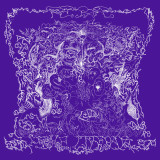
The learning process is just as much an act of healing as betterment. The enabling of solutions through sheer willpower and openness to discovery, or a noble mission, never completed. In that spirit, the latest album by Berlin-based Slovak duo Päfgens – comprising Jana Drábeková Kočišová and Filip Drábek – represents a pensive development for the project.
Drifting from their lo-fi shoegaze beginnings, Päfgens drone-infused soundscapes have become increasingly immersive and expressive “framed improvisations,” where spontaneous passages are captured, then revisited with fresh layers upon layers over the course of months, breathing and evolving naturally, mirroring the unpredictability of nature. Songforms have all but melted away, with ethereal guitars and bass nestling up against field-recorded sounds, synth beds, percussion, and singing bowl tones.
The framed improvisation on ‘Aspect of What’ explores love and loss, relishing both the joy and melancholy of paying tribute to Filip’s late ethnologist grandmother, Božena Filová (1926-2020). Her voice opens track 2, ‘Particles’, speaking of the humble desire to “help the people in the rural environment”, and the goal of “uplifting people to better living through education”. The album’s emotionally charged approach to improvisation is suitably uplifting and seemingly made without ego, the couple melting away into the flitting wall of rustling drones and heavenly fuzz. Even at their most serrated (the groaning guitar amp squall underpinning ‘Journey’) or when surrounded by chiming bells, clocks and bowls (‘Around the Clock’), Päfgens is ready to listen, rest, learn, and improve, extracting and nurturing hidden abstract emotion in every piece, plundering something universal and teachable from very personal depths.
Buscar:imp
"Even God Has A Sense Of Humor" is the long-awaited follow up album to Maxo's critically acclaimed 2019 release Lil Big Man. Across the 14-tracks, Even God Has A Sense Of Humor pays tribute to the mercurial nature of life and includes features from Liv.e, keiyaA, LastNameDavid, and Melanie Charles along with the previously released singles "Free!," produced by Dev Morrison and "48," produced by Madlib and featuring Pink Siifu. The FADER recently sat down with Maxo to discuss the album, which they described as having "a defiant glow, like a bronze statue still standing after an intense tornado."
Born Maxamillian Allen, Even God Has A Sense Of Humor finds Maxo earnest, full-hearted, and lyrically agile. His delivery punches as he poetically unpacks the trials and blessings that have marked the last three years since Lil Big Man, his stirring and meditative debut album. “Life is always gonna be life-ing,” Maxo says, speaking to the spiritual lessons that inspired this new project and an album process that has revealed to him the many ways in which he’s divinely protected.
The album’s striking cover features three casted sculptures of Maxo by legendary NYC-based artist artist John Ahearn, photographed by the rapper’s friend Steven Traylor. The image both preceded the music and set the tone for the record’s overall aura. Experiencing the casting process—which required long periods of stillness for form, and breathwork to avoid claustrophobia—became a metaphor about ego death for Maxo. “I had to go to a space where I was just not there,” he says. As the molding was poured over his body and the voices of those in the room became distant, Maxo’s inner world came into focus. “By the time it hardened, it seemed like the sculpture had risen to be 20 feet above where it was first— almost like it grew tall,” he explains. EGHASOH, in its aural ebbs and flows, honest questioning, profound revelations, and elegant verse, is Maxo standing spiritually tall following a period of challenges with family and friends.
Maxo’s writing process has always been rooted in imagery, observation, and capturing moments. Growing up in Southern California, Maxo spent a lot of time combing through old family photo albums, some of whose contents have become the artwork for prior releases. But his fascination with visual memento is less about nostalgia or remembering, and more about exploring concepts of growth, healing, and cycles. His artistry is intentional and deeply sensitive: “If I’m not feeling it, I’m not gonna record.” While his past records openly grappled with emotional turbulence, anger and depression, EGHASOH is Maxo’s acceptance stage: “I can't really judge nothing. I can't sit up and be mad at shit because everything is, everything is kind of coexisting,” he says.
Musically, EGHASOH is an impressive evolution from Maxo’s earlier, unornamented lo-fi projects. With an emphasis on jazzy instrumentalism and soothing, intricate vocals from both the artist and featured chanteueses Liv.e, Melanie Charles, and keiyaA, EGHASOH is a welcome and beautifully complex sonic effort. Its contributors include a range of musicians: Pink Siifu, LastNameDavid, Madlib, GrayMatter, Karriem Riggins, Beat Butcha, Lance Skiiiwalker, and more. The album was executive produced by Mount Kimbie’s Dom Maker.
“Nobody talks about the fact that we’re changing as we get older... Everybody just acts like you supposed to know,” Maxo says on album standout, “Face of Stone”. It's moody bassline meets a cinematic accordion melody that paradoxically both broods and uplifts—a fitting production choice that mirrors the song’s story. “I’m seeing how this world is chipping you and withering your bones,” Maxo says. “I’m talking about myself, talking about my bro. But it’s never nothing you gonna do that’s a one stop shop in this life. You gotta keep staying diligent and consistent.” For Maxo, Even God Has a Sense of Humor is nothing more than another moment on the timeline of his offerings of self-expression as an artist—one whose sole intention is to, in his words, develop as a human being and heal.
Indies only 150 available. Lotus is led by the rhythmic prowess of percussionist Olaf Olsen (Fra Det Onde, Needlepoint). Olaf joins forces with electric bassist Chris Holm (Orions Belte, Sondre Lerches band) as well as Norwegian-based Danish alto saxophonist Signe Emmeluth. Finalising the line-up is electric guitarist Karl Bjorå, known for his unique sonic creations - such as making his guitar oscillate like a synthesizer! Pulling momentum from the individual members’ diverse backgrounds in psychedelic rock, pop, jazz and improvisational music, Lotus creates a sound that transcends genre boundaries."Synthbuljong," their debut album, brilliantly captures the band's vibrant energy. Recorded partially during one of their electrifying concerts in Bergen, Lotus intentionally incorporated the live experience seamlessly into the album. From the raw Coltrane-meets-Sonic Youth energy of the opening track to the serene and contemplative atmosphere of "Ballade", the album takes the listener on a trip. The collaborative synergy of the musicians blend seamlessly in the seventeen-minute opus, “Synthgitar," pushing the boundaries of sonic exploration. The group taps into a Scandinavian history of high-powered, multi-cultural free jazz, but goes off on their own contemporary tangent. This is the kind of music that demands surrender from the listener - just lean back and let the lush, organic sound of Lotus wash over you. Includes liner notes by Audun Vinger. File next to: Don Cherry, Sonny Sharrock, Chris Corsano, Chicago Underground Duo.
THE SINISTER DEBUT ALBUM OF PURE NORWEGIAN BLACK METAL
FEELING,FEATURING MEMBERS OF AURA NOIR, OBLITERATION &
CONDOR."Underground metal the way it should sound returns to
Kolbotn!" - Fenriz (Darkthrone)From the depths of Norway looms a new
rising beast of hate & misanthropy in the form of Avmakt
Featuring the duo of Kristian Valbo & Christoffer Brathen - known for their work
with such acts as Aura Noir, Obliteration & Condor - their debut album, 'The
Satanic Inversion of....', is a grim & revelatory offering. Primitive in a way that
captures the early magic of Kolbotn's metal kings, Darkthrone, as well as the stark
chaos of early-era Bathory along with their very own distinguishable stamp on the
genre, 'The Satanic Inversion of....' is a masterclass of real Black Metal feeling,
wrapped up in a hypnotic frenzy of ice-cold riffing.
Though both members had played in bands covering different genres since their
early teenage years, Black Metal had always been one of the most important as a
vehicle for an honesty & fierceness that resonated deeply within the duo, without
the need for extravagant clothing or pretentious concepts. And so Avmakt itself
was born as the vessel for channelling this stripped-down raw feeling.
Formed in 2020 & with their one & only demo release gaining traction in the
underground, the Norwegians quickly came to the attention of Darkthrone's Fenriz
& Peaceville Records & Avmakt was swiftly included on Peaceville's Black Metal
Compilation, 'Dark Side Of The Sacred Star' which launched at the end of 2022.
Avmakt itself means "powerlessness", the sense of being overwhelmed & not
able to have any influence - without choice, voice, or hope. And so, it is from far
down in this psychological abyss that Avmakt's ideas & expressions manifest
with the completion of their debut studio release; 6 sprawling epic tracks
recorded with the assistance of Arild Torp, also of Obliteration & encapsulating
such themes as emptiness, desolation & alienation in a powerful display of
sinister, uninhibited Black Metal.
On 'Leaving Me', the debut album by British singer and songwriter Denver
Cuss, she has crafted a wonderfully nostalgic album in the style of '60s
soul and rhythm and blues
Denver first gained recognition as an accompanist and background singer for PM
Warson, who produced this album. She and her co-writer Kit Warren began writing
this album in early 2022, recording it gradually over the next 18 months. They
utilised several studios across London to capture the best of each element: The
Cube in Stoke Newington for the drum sound, Hackney Road Studios for lead
vocals, and Sam Beer's studio in Acton for Hammond, Wurlitzer, and background
vocals. This album was a labour of love, involving over 12 musicians with
incredible talent.
Inspired by the doo-wop and Chicago soul pioneers The Impressions, the vocal
styles of Sarah Vaughan and Aretha Franklin, and the echoing, modern R&B
sounds of Thee Sacred Souls and The Altons, Denver's debut album has a clear
thematic thread. It effortlessly navigates the world of '60s- style background
vocals and R&B horn arrangements, carefully curated by Denver. With her
background in jazz and her arrangement style firmly rooted in the world of soul
and R&B, you can clearly hear her influences, supported by some of London's
finest musicians.
There is something simultaneously both brand-new and retro about 'All News Is Good News’ - the debut album from Melbourne's instrumental soul group Surprise Chef. It sounds like something dreamt up by lo-fi cousins of David Axelrod and Janko Nilovic, with dramatic Library-music-eqsue cinematic arrangements echoing both light and dark, delving into moments of dissonance and positivity.
There is a meticulous education of 1970’s soul on display that touches on the legacies of the great composer / producers, yet at the same time this is a truly contemporary record that could have only been made now. The first limited pressing of 'All News Is Good News’ was released on the band's own 'College Of Knowledge' imprint in November 2019. It slipped rapidly into the collective consciousness of underground music lovers around the world, with all copies selling out within a week and becoming a firm favourite at Mr Bongo HQ in the process.
We felt Surprise Chef had made something very special, a future-classic, and that needed to be heard well beyond those lucky enough to have bagged those limited first copies. Formed at the end of 2017, Surprise Chef have grown within the fertile, creative, and supportive Melbourne music scene. Whilst the band is comprised of four core members, the album features friends and family as guest instrumentalists on flute, saxophone, vibraphone, congas, and assorted percussion; all adeptly recorded by engineer Henry Jenkins from the band Karate Boogaloo. The warm-raw-authenticity of the album was captured in the recordings live to tape over a handful of sessions in the band’s home studio in Melbourne’s inner-northern suburb of Coburg. As band member Lachlan Stuckey explains “All of the music we record is tracked live to tape, simply because so many of the records we love most were made that way".
The results are a captivating journey of instrumental cinematic-soul that will connect with the hardened Axelrod, Truth & Soul, El Michels Affair, and Daptone's fans, as well as the open-minded first-time listener. We are very excited to share this first slice of Surprise Chef’s world, with plenty more magic from these guys coming around the corner very soon.
Also available on Red Vinyl - Limited Edition of 200 Copies.
Urbanatribù was an extremely interesting project based in Alessandria, deep North-Italian province. Formed by bassist Flavio Gemma and cyber wizard Massimiliano Bocchio, the outfit had a distinctive way to interpretate electronic and dance music.
Gemma founded some key Italian 80's wave groups like Viridanse and C.O.D.E.X. with some late digressions in the punk scene with Peggio Punx. Bocchio had its debut on the seminal imprint Minus Habens Records in 1994 under the moniker Klange, reflecting the unique and radical sound of the label.
Inspired by John Carpenter movies, rough basslines and british ghost stories, Urbanatribù records camed out against any order.
2024 Repress
140g schwarzes Vinyl, mit Spot UV-Sleeve, 2LP 45rpm. Das beste Post-Rock-Album aller Zeiten" - Fact Mag // ,Ihr Einfluss ist allgegenwärtig` - The Quietus // ,Mysteriös, eindringlich und atemberaubend visionär` - Allmusic // Bark Psychosis waren eine der innovativsten Bands ihrer Zeit und der Legende nach wurde der Begriff ,Post-Rock` erstmals von Musikkritiker Simon Reynolds verwendet. Nach mehreren Singles und EPs erschienen die avantgardistischen, auf Drones und Samples basierenden Klanglandschaften des 21-minütigen Titeltracks ,Scum" nur zwei Jahre vor ihrem bahnbrechenden Debüt ,Hex" (1994). Ihr Sound entstand aus ihren Improvisationen in einem provisorischen Studio in der St John's Church in Stratford. Die Fertigstellung von ,Hex" dauerte ein Jahr und brachte die Band an den Rand des Zusammenbruchs, so dass sie sich zum Zeitpunkt der Veröffentlichung bereits aufgelöst hatte. Indem sie ihre Songs zerlegten und im Studio neu zusammensetzten, entstanden charakteristische Ambient-Soundscapes und ein atmosphärischer, experimenteller Sound. Letztes Jahr hat das Fact Magazine das Album verdientermaßen auf den ersten Platz der ,30 Best Post-Rock Albums Of All Time" gesetzt. Neu gemastert im Jahr 2017 von den originalen analogen Bändern in den Metropolis Studios von Graham Sutton und Stuart Hawkes.
Auf seinem neuen Album Sun Glories erkundet der in Oakland lebende Musiker, Komponist und Produzent Chuck Johnson Themen wie Zeit, Erinnerung und Illusion durch seine einzigartige Mischung aus Pedal Steel, Synthesizern, Gitarren, Orgeln, Streichern und Schlagzeug. Der Eröffnungstrack "Teleos" erforscht die linearen und zyklischen Qualitäten der Zeit durch episodische Abschnitte und Motive, die die bittersüße Erleichterung und Nostalgie heraufbeschwören, die mit der Ankunft des ersten warmen und sonnigen Tages nach einem langen, dunklen und regnerischen Winter die Sinne überfluten. Das gitarrenbasierte "Sylvanshine" fängt einen Moment zwischen Improvisation und aufkeimender Komposition ein, mit einem strahlenden Gastbeitrag des elektroakustischen Saxophonisten Cole Pulice. Bei "Ground Wave" greift Johnson auf die Kompositionstechnik zurück, ein kleines Streicherensemble in Wolken aus Pedal Steel zu verweben, ähnlich wie bei "Red Branch Bell" von seiner 2021 erschienenen LP The Cinder Grove. "Wenn das Pedal-Steel-Solo bei etwa 3:30 einsetzt, wollte ich, dass es sich anfühlt, als würde der Boden unter den Füßen des Zuhörers plötzlich verschwinden." Um seine Vision zu verwirklichen, arbeitete Johnson mit der Cellistin Clarice Jensen und der Geigerin Emily Packard zusammen, die beide mehrere Stimmen übereinander legten, um ein virtuelles Kammerensemble zu schaffen. Das Album schließt mit "Broken Spectre", einer Anspielung auf einen Begriff, der eine geisterhafte optische Täuschung beschreibt, die dadurch entsteht, dass sich das Sonnenlicht über einen nebel- oder wolkenverhangenen Berg beugt. Wieder einmal bauen sich Johnsons herrliche Pedal Steel-Melodien zu einem hypnotischen Strudel auf, der mit Ryan Jewells hymnischem Schlagzeugspiel ein episches Gefühl der Erhabenheit entwickelt. Wenn sich der Nebel lichtet und die Sonne durchbricht, hinterlässt dieser letzte Track ein Gefühl von Hoffnung und Entschlossenheit.
Crystal clear vinyl, limited to 200 copies. HEBI KATANA's 3rd full album, known as "Tokyo Samurai Doom"! The classic doom riff and mellow and dark melody reminiscent of THE OBSESSED and TROUBLE have become a hot topic mainly overseas. Both works have been released on CD/LP/cassette by domestic and international labels. Their dark yet melodious doom sound attracted attention, especially among doom/stoner enthusiasts around the world. This work, which is the third album, maintains the classic doom/hard rock sound that has been created up to now, but it also has a strong jam feeling honed through expeditions including overseas tours, and the band ensemble is truly impressive. It is a work of art. Coupled with member changes, the content gives a sense of significant growth and progress. In addition, the songs created through collaboration with seasoned live acts have a more vivid finish. Through songwriting that involves everyone's participation, each band's colors and characters are strongly reflected, and it can be said that the band is exploring a unique sound based on the doom/stoner sound. "Hallelujah Anyway" is a straightforward attack with a classic heavy riff and mellow chorus, "Depressed Blues" is a combination of a mid-tempo heavy riff and dark vocals In the second half, "Darkest Priest" develops into a more doomy shuffle boogie, and "Lost" drifts from a dark arpeggio-driven melody to a heavy and sinking development, and the songs included are rich and fulfilling. The yellowtail is something to behold. The rapid advance of "Tokyo Samurai Doom" begins now!
The yellow transparent vinyl reissue of Damian Wilson's 2016 album 'Built
for Fighting', featuring the BBC playlisted single 'Thrill Me'
Built for Fighting contains 11 original songs and a cover of Depeche Mode's
Somebody'. The album is mixed and mastered in Sweden by the Fascination
Street duo Jens Bogren and Tony Lindgren.
- A1: Force Of Nature - Just Forget
- A2: Force Of Nature - Nightshift
- A3: Force Of Nature - Track 3
- A4: Force Of Nature - The Stroll
- A5: Force Of Nature - Death Wish
- A6: Force Of Nature - Set It Off
- A7: Force Of Nature - The Million Way Of Drum
- B1: Fat Jon - Bracelet
- B2: Fat Jon - In Position
- B3: Fat Jon - Night Out
- B4: Fat Jon - Not Quite Seleah
- B5: Fat Jon - Labyrinth Statistic
- B6: Fat Jon - Here & There
- C1: Nujabes - A Space In Air In Space In Air
- C2: Nujabes - Sanctuary Ship
- C3: Nujabes - Haiku (Interlude)
- C4: Nujabes - Tsurugi No Mai
- C5: Nujabes - Dead Season
- C6: Nujabes - Decade (Interlude)
- D1: Fat Jon - World Without Words
- D2: Fat Jon - Kodama (Interlude)
- D3: Fat Jon - Silver Morning
- D4: Minmi - Who's Theme
Bedouin return with ‘Make Me Feel’, their first new materialsince their critically-acclaimed ‘Temple Of Dreams’ LP. The mesmerising single, featuring Iveta, arrives via their Human By Default imprint in the heart of Summer!
Miami-based duo Bedouin, aka Rami Abousabe and Tamer Malki, are masters of deep, organic, enchanting house music that draws on their own rich cultural heritage. Last year's debut album project ‘Temple Of Dreams’ proved that, with a great step up in craft that took them to an all-new level. Synonymous with their renowned SAGA party, which will again offer richly immersive soundscapes at Pacha Ibiza all summer long with a tasteful mix of guests from across the electronic spectrum, the Human By Default bosses and versatile, forward-thinking duo dazzle once again with their first material of 2024, ‘Make Me Feel’.
The spellbinding ‘Make Me Feel’ imbues an immediate mark with its pairing of dramatic minor chords and wavy, organic drums. As the groove unfolds, wooden percussion and the gorgeously soulful vocals of Iveta layer in further emotion next to hypnotic daubs of colour. It's a stylish mix of proper songwriting and musicality that will become a sure-fire staple of their SAGA party this summer and beyond.
2024 Reissue
Fracture & Neptune reissue two classics from the Astrophonica catalog on a new 12”. Clissold and The Limit shine a spotlight on the early days of their musical journey in the mid 2000s.
While there are other tracks that could and may get reissued, the pivotal nature of these two and the ongoing demand for represses made them the perfect place to start. Reissuing them not only honours their impact on our careers and Astrophonica's evolution but provides the opportunity to have them remastered on vinyl by Beau Thomas at Ten Eight Seven and on digital by Bob Macciochi at Subvert Central Mastering for a modern take in 2024.
Pt. 3 of the 'Dub me crazy' series by Mad Professor. This one features the much played killer, Bengali Skank .. TIP!
Originally released in 1983 on the same Ariwa imprint. True D.I.Y. business from this UK dub pioneer.
Pt. 5 of the 'Dub me crazy' series by Mad Professor.
Reggae meets twisted electronics for wild dub trips!
Originally released in 1985 on the same Ariwa imprint.
True D.I.Y. business from this UK dub pioneer.
On ALPHA WAVES, AUX88 ventures into uncharted sonic territories by subtly incorporating 432 Hz alpha wave tones. This forward-thinking approach to sound exploration is a testament to their creativity and commitment to pushing the boundaries of electronic dance music.
It is believed that 432 Hz is the healing frequency of the universe and has the power to improve our bodies' natural healing abilities. Similarly, alpha brain waves are associated with restful, meditative states and are believed to reduce depression, combat anxiety, and increase creativity. By blending these healing frequencies with their classic techno-bass fusion, AUX88 offers listeners a unique auditory experience that is both soothing and energizing, especially powerful during their all-sensory-consuming live performances, where fans can fully immerse themselves in the music and experience its transformative effects.
The weather might never be hot in the UK but the 7th release from Regulate Recordings is an absolute scorcher! Coming hot on the heels of the “The Rhythm / Make Em Bounce” going to the top of the Juno charts and doing serious dance floor damage the North West imprint have gone even bigger for the next release with a daisy age inspired transatlantic cross over.
Manchester producer Atomphunk has teamed up with Seattle Duo Mugs and Pockets with turntablist extraordinaire DJ Deviant on the cuts. The results are without doubt the jams of the summer, which is handy because the A side is called “Summer Jam”. With a popping funk bass line and rhymes dancing over the top that immediately evoke the spirit of the Native Tongues, but added into the mix is that Grand Central / Fat City groove and the West Coast USA bounce of Jurassic 5 and their collaborators, (Chali2Na is a big supporter of Mugs & Pockets). In a packed field “Summer Jam” might just be Regulate’s biggest release yet.
Things don’t let up on the flip “Back For More” sees Atomphunk go for the hotter stickier side of the season, with a more laid back synth driven groove evoking Roy Ayers and Quincy Jones, but with crisp beats and Mugs and Pockets bringing it once more. Don’t sleep on this one.
Neil Feather has spent decades creating a musical world of his own through dozens of one-of-a-kind instruments he invented and built himself. His work as an instrument inventor, improviser, musical iconoclast, and stalwart of the idiosyncratic Baltimore experimental scene culminated in the late 2010s when filmmaker Skizz Cyzyk shot hours of footage of Feather taking stock of his workshop and his collaborations with musicians from Baltimore and beyond as he prepared to relocate permanently to New Zealand. That period produced Sound Mechanic, Skizz’s 2022 feature-length documentary about Feather’s work and music. It also produced an album-length collection of recordings of Feather’s music from the film that captures the spectrum of his unique sonic vision. Uninterested in the traditional rules and roles of music from his early years, Feather began constructing noisemakers out of what was around him—pieces of metal, spare parts from bikes and other gadgets, discarded traditional instruments, various electronics, ball bearings, and so on. By the time he moved to Baltimore in 1985, his work had become more codified into a practice of instruments and families of instruments, such as the Nondo, the Vibrawheel, and the Former Guitars. At the same time, he became a mainstay of the burgeoning experimental / improvised music scene that erupted from the Red Room and the internationally renowned High Zero Festival.
Few names shine as brightly in the cosmology of dubwise bass music as that of V.I.V.E.K. From releasing absolutely ground-breaking tracks for the better part of 20 years primarily on his own System and VIVEK imprints, to curating and hosting his legendary System nights, to bringing so much rising talent to light, it’s honestly difficult to imagine the last two decades of UK and global sound system music without him.
For ZamZam 96 V.I.V.E.K went straight to the bedrock of sound system music and delivered a power-stepper of galactic proportions.
“Illusions Dub” opens with starkly heavy valve bass and a punishing kick, leaving little doubt where this journey is headed . Richly adorned with neck-snapping percussion, industrial snares, post-punk atmospherics and a gorgeous melodic figure, the tune employs classic 90s digi-dub principles while feeling like a message from a gloriously human -or post-human- future.
“Illusions (Raw Dub)” runs rugged through the desk in fine style, with barely restrained feedback, phasers, and deep space echo and reverb ripping open shimmering holes in space-time for a truly cosmic Part 2.
Sandy Bull war ein amerikanischer Folk-Musiker, der mit einer Reihe von Alben auf dem Vanguard-Label in den 1960er und 70er Jahren bekannt wurde. "Still Valentine's Day 1969" stammt aus zwei Live-Shows, die 1969 im The Matrix in San Francisco aufgenommen wurden, wo Bull schimmernde E-Gitarre und Oud spielt, begleitet von Tape-Loops. Zuvor auf CD erhältlich, aber inzwischen in allen Formaten vergriffen - dies ist die allererste Vinyl-Pressung und enthält die Original-Liner Notes von Byron Coley.
Mas O Menos was set up by South African born, Manchester based, DJ and Producer Levi Love. Levi has played numerous dancefloors across the globe for the past 13 years developing a fine palate for Deep House and electronica.
A chance meeting with one half of >ONE, MAKO MCR resulted in Levi signing the DUO and their APPLEBUSH offering. To Levi, Applebush reignites the memories of Johannesburg townships when he was a teenager, which at the time was infused with
Kwaito music. Slow BPM, synth heavy and trippy at times, APPLEBUSH takes it to another level of impressive technical acumen and blessed creative prowess.
>ONE is comprised of MAKO MCR and METRODOME. METRODOME is a known producer for World renowned RED LASER DISCO imprint alongside Manchester's LEVELZ & Wet Play collectives, working with artists like Amp Fiddler & Zed Bias, with a bevy of heavy hitters to his name. MAKO MCR is no newcomer to the scene as he boasts releases from numerous labels such as Hot'n'Heavy, Gradient Audio, Abaga records and
Echodub. The Applebush EP marks the start of their creative endeavors together with an already varied back catalogue of electronic music from across the spectrum to come.
There are ghosts all across AVANTI, the debut album from Malice K. At points it's howling and unhinged, a grungy layer atop a lush foundation of melodic capital-s Songwriting, but in other moments it dissolves into a gentle, wistful haunting. Malice K's songs are blunt, uncomplicated and unflinching as he probes the interiority of memories, of mistakes - saturated with an innate intensity that sucks you into his gnarled and visceral world, so barbed it could draw blood. Malice K is helmed by visual artist and songwriter Alex Konschuh, New York-based but born and raised in Olympia, Washington. Following a stint living in Los Angeles, where he became a member of the artist collective Death Proof Inc., a trip to New York resulted in him simply never leaving the city. A period of chaos ensued, Malice K exhausted and unmoored and ultimately, unwell. The record is unpredictable across its 11 songs. The album opens with a jarring scream on "Halloween," Malice K's breathless vocals buried beneath a grungy, roving Nineties riff. The track emanates a manic energy, enveloping. It's a fitting entrypoint for the record, and for the vividness of Malice K. The snarling and obsessive "You're My Girl" has a swaggering paranoia: "I got so high I thought my hand touching my hand was your hand." But AVANTI exists in quieter moments too; "Radio," with its fluttering morose cello, moves at an almost glacial pace comparatively. The aching wistfulness of "The Old House" is an album stand-out, anchored in an acoustic guitar, an uneasy lullaby that never quite settles into itself: "I think to myself I got the things that I wanted, but I can't help think there's something else that I forgot to do." A recent press interview called Malice K a shapeshifter, but he's not amorphous in that way. He's decisive and intense, more concerned with carving his own path, and building his own world. Every part of Malice K is distinctly himself: from his sweaty high-octane shows to the high-flash high-contrast photos; from his gnarled and unsettling illustrations to the studio recordings that vacillate between grief and tenderness, there's an exceptional ferocity across everything Malice K touches. AVANTI feels lived in, like peering into an abandoned house through a window smeared with grimy fingerprints, relics of a life well-lived scattered inside - despite being a debut, there's the sense that Malice K arrived fully-realized, imperfections and all.
- Satellite
- Dayton, Ohio-19 Something And 5
- Is She Ever?
- My Thoughts Are A Gas (Fucked Up Version)
- Knock ?Em Flyin?
- The Top Chick?S Silver Chord
- Key Losers
- Ha Ha Man
- Wingtip Repair
- At The Farms
- Unbaited Vicar Of Scorched Earth
- Optional Bases Opposed
- Look, It?S Baseball!
- Maxwell Jump
- The Stir-Crazy Pornographer
- 158: Years Of Beautiful Sex
- Universal Nurse Finger
- Sadness Is To End
- Reptilian Beauty Secrets
Color Vinyl[27,52 €]
Originally released in 1996 as a limited fan-club pressing for Rockathon, Guided By Voices’ Tonics And Twisted Chasers has always existed as an anomaly in Robert Pollard’s vast discography. In many ways, the album serves as the tail of a creative comet that in just two years included the “classic line-up” trilogy of Bee Thousand, Alien Lanes, Under the Bushes, Under the Stars and countless singles that crammed endless hooks in their grooves. In the intervening space, Tonics And Twisted Chasers has taken on a mythic status. It’s arguably Pollard’s strangest, gnarliest, most enlightened record and also the fans first chance to see the stitches that bind his galaxy of songs. It’s like peering at the caliber inside a watch, responsible for making the whole enterprise tick. This nineteen-song collaboration with guitarist Tobin Sprout could be interpreted as spontaneous sketches, late-night improvisations, ideas that blossomed later in the timeline (“Knock ’Em Flyin’” and “Key Losers”), but as with anything in Pollard’s orbit, its intention is clear when heard as a cohesive whole. The Pollard tenet that “less is more” is on full display here. The songs rarely creep past ninety seconds and coalesce much like Pollard’s collage-styled visual art. Arena anthems in miniature (“158 Years Of Beautiful Sex”) bash up against eerie piano laments (“Universal Nurse Finger”) without any time to breathe, acoustic lullabies that sound like a Midwestern summer’s twilight (“Look It’s Baseball”) segue into monochromatic post-rock (“Maxwell Jump”). The euphoric joy and obtuse melancholy in Pollard’s voice is so palpable on the album’s standout, “Dayton, Ohio 19 Something & 5” (which has since become a live staple), that it’s impossible to find a more autobiographical yarn in his catalog. The album’s closest analog is 1993’s Vampire On Titus, as it contains that album’s prickly, dark and shimmering obfuscation that only reveals its beauty after repeated listens. Tonics And Twisted Chasers maintains the lore because the melodies are so strong. Using a primitive drum machine, Radio Shack effects, minimal instrumentation and the DIY spirit that guided them in the first place, Pollard and Sprout constructed a masterpiece of pop that could only come from a basement in north Dayton, Ohio. Anyone in that hallowed era who happened upon it, kept it as a secret.
- Satellite
- Dayton, Ohio-19 Something And 5
- Is She Ever?
- My Thoughts Are A Gas (Fucked Up Version)
- Knock ?Em Flyin?
- The Top Chick?S Silver Chord
- Key Losers
- Ha Ha Man
- Wingtip Repair
- At The Farms
- Unbaited Vicar Of Scorched Earth
- Optional Bases Opposed
- Look, It?S Baseball!
- Maxwell Jump
- The Stir-Crazy Pornographer
- 158: Years Of Beautiful Sex
- Universal Nurse Finger
- Sadness Is To End
- Reptilian Beauty Secrets
Black Vinyl[27,69 €]
Originally released in 1996 as a limited fan-club pressing for Rockathon, Guided By Voices’ Tonics And Twisted Chasers has always existed as an anomaly in Robert Pollard’s vast discography. In many ways, the album serves as the tail of a creative comet that in just two years included the “classic line-up” trilogy of Bee Thousand, Alien Lanes, Under the Bushes, Under the Stars and countless singles that crammed endless hooks in their grooves. In the intervening space, Tonics And Twisted Chasers has taken on a mythic status. It’s arguably Pollard’s strangest, gnarliest, most enlightened record and also the fans first chance to see the stitches that bind his galaxy of songs. It’s like peering at the caliber inside a watch, responsible for making the whole enterprise tick. This nineteen-song collaboration with guitarist Tobin Sprout could be interpreted as spontaneous sketches, late-night improvisations, ideas that blossomed later in the timeline (“Knock ’Em Flyin’” and “Key Losers”), but as with anything in Pollard’s orbit, its intention is clear when heard as a cohesive whole. The Pollard tenet that “less is more” is on full display here. The songs rarely creep past ninety seconds and coalesce much like Pollard’s collage-styled visual art. Arena anthems in miniature (“158 Years Of Beautiful Sex”) bash up against eerie piano laments (“Universal Nurse Finger”) without any time to breathe, acoustic lullabies that sound like a Midwestern summer’s twilight (“Look It’s Baseball”) segue into monochromatic post-rock (“Maxwell Jump”). The euphoric joy and obtuse melancholy in Pollard’s voice is so palpable on the album’s standout, “Dayton, Ohio 19 Something & 5” (which has since become a live staple), that it’s impossible to find a more autobiographical yarn in his catalog. The album’s closest analog is 1993’s Vampire On Titus, as it contains that album’s prickly, dark and shimmering obfuscation that only reveals its beauty after repeated listens. Tonics And Twisted Chasers maintains the lore because the melodies are so strong. Using a primitive drum machine, Radio Shack effects, minimal instrumentation and the DIY spirit that guided them in the first place, Pollard and Sprout constructed a masterpiece of pop that could only come from a basement in north Dayton, Ohio. Anyone in that hallowed era who happened upon it, kept it as a secret.
Leif Maine and Jackson Mathod are thrilled to announce the August release of their album, "Volte-Face", with a single of the same name. This collaboration marks a bold new chapter in contemporary jazz, blending traditional and modern elements with great artistry and a willingness to explore many genres on one project.
"Volte-Face"is a sonic journey that showcases Maine's innovative compositions and Mathod's masterful trumpet performances. The album features a rich tapestry of sounds, from soulful melodies to intricate improvisations, capturing the essence of their dynamic synergy. Each track is meticulously crafted, promising an immersive listening experience for audiophiles and jazz enthusiasts alike.
Volte Face, the single, features rapper and Washington DC transplant (born and raised in NY), J Scienide. J has been around the great in underground Hip Hop. He shared a manager with the late and great MF DOOM, released and recorded with D-Styles from the World Famous Beat Junkies/ Invisibl Skratch Piklz, worked with super producer Daringer (Griselda Records/Action Bronson). He is regularly supported by FunkMaster Flex, Peter Rosenberg, Dj Premier, Dj House Shoes, Statik Selektah and many more.
The Circus is a place of lights and colors, but also of shadows, even darkness. Admittedly, it delights children and makes adults laugh. But you only need one rainy autumn evening near a circus tent and the smell of fodder to think of the sadness of the clowns, the endless training of the animals and the freaks who are hidden in some caravan... cinema, the essence of the circus – movement, light, danger and burlesque – will have been admirably rendered in Notes on the circus by Jonas Mekas (1966), one of the inventors of the filmed diary. With Cirque, Michèle Bokanowski does similar work, entirely dedicated to spinning, in the musical field.
She distinguished herself in particular in the composition of musique concrète, among others Tabou and Trois chambres d'inquiétudes, after having studied with Pierre Schaeffer and Éliane Radigue. The latter, great lady of drone and minimalism, fell under the spell of Cirque and wrote the booklet for the piece as a poem.
The piece, divided into five movements, is based on the handling and editing of recordings captured within one or more circuses (this is not specified and is of no importance) between 1988 and 1993. The initial allegro reveals the gallop of a horse joined gradually by other images. The idea of the circular space of the circus tent is immediatly and magnificently rendered and will be constantly recalled by an insistent use of the loop technique. Children's laughter, applause and drum rolls are thus sheared, repeated before being brutally interrupted. Accordion interludes and the distortion of sounds create a dreamlike atmosphere. This beautiful nightmare reminds us, to quote Éliane Radigue, the "Magic of childhood still living in the heart of man even beyond its abrupt end."
Words by Alexandre Galand, from the book “Field Recording – L’usage sonore du monde en 100 albums” (ed. Le mot et le reste, 2012)
Major member of the french musique concrète scene, Michèle Bokanowski was born on August 9, 1943 in Cannes, FR, to a musician mother and a writer father. She now lives and works in Paris.
Music lover since adolescence, it was relatively late, at the age of 22, that Michèle Bokanowski decided to study composition. Reading In Search of a Concrete Music by Pierre Schaeffer was decisive. After classical training on harmony, she met Michel Puig, a student of René Leibowitz, who taught her writing and analysis based on the Treatise of Schönberg. In September 1970 she began a two-year internship in the ORTF Research Department under the direction of Pierre Schaeffer. She takes part in the same time in a research group on sound synthesis, studies musical computing at the Faculty of Vincennes and electronic music with Éliane Radigue.
Her main works are intended for concert: Pour un pianiste, Trois chambres d’inquiétude, Tabou, Phone Variations, Cirque, L’étoile Absinthe, Chant d’Ombre, Enfance, Rhapsodia, Cadence, Elsewhere. She has also composed for theater (with Catherine Dasté), dance (with choreographers Hideyuki Yano, Marceline Lartigue, Bernardo Montet) and cinema: music for the short films of Patrick Bokanowski and his two feature films L'Ange ( 1982) and A Solar Dream (2016).
Following a ten-part series of unannounced artist records and a spectacular high-concept album on Mask Records, label head ZentaSkai returns to the imprint for his next solo vinyl-only release, ‘Bob’.
The A1 sees the Berlin-based ZentaSkai combine a dusty, taped white noise feel with subtle, swirling dub chords as its high-end propels the track forward. It’s a stunning and evocative piece before the A2 continues with minimal drums and electric acid bleeps, a smooth organ lead completing its gorgeous soundscape.
On the B-side of the ‘Bob’ EP, ZentaSkai joins forces with long-time collaborator Sebastian Klenk. It follows their
‘Apeiron’ track on ZentaSkai’s 2023 ‘Architecture Of The Mind’ LP, among other joint work, and sees them deliver a near-twelve-minute track that is a true masterpiece. The track takes listeners through found-sound texture samples, intricate drum patterns, crunchy breakbeats, and more beautiful dub melodics.
‘Bob’ is another fantastic listening experience on Mask Records, already supported by Satoshi Tomiie, Raresh and Laurent Garnier.
With their new album 'Rhapsody, the extraordinary vocalists fedayo Gatling, Dennis Bailey, and George Marage are able to fully explore the entire range of music that influenced them. The follow-up to their acclaimed 2021 release 'Look Up!', the record is a dive into a lesser-known but hugely important era in the evolution of gospel music.
Starting in the mid-1960s, local gospel groups and singers began incorporating elements of popular soul and funk styles and in 2006, Chicago-based reissue label Numero Group released Good God! A Gospel Funk Hymnal. HGT's longtime friend and mentor Eli.
"Paperboy Reed" approached the group with the idea of digging through the Numero catalog and recording some of the gospel funk material, reinterpreted in their own way from the high-energy, old-school soul of "God's Been Good to Me" to the hip-hop-inflected "Get Involved."
The Harlem Gospel Travelers story began when Gatling and Marage met while studying under Reed's tutelage. The group put out their debut LP, 'He's On Time', to rave reviews in 2019, earning them high profile fans like Elton John and landing them festival slots everywhere from Pilgrimage to Telluride Jazz. Originally a quartet, they brought in Bailey and reconfigured as a trio prior to recording Look Up!, their first album of all original material.
At a moment when the world is reconsidering the concepts of genre and category and who's allowed to participate in which traditions, HGT are squarely on the cultural pulse.
"We always found it difficult to stay in this one lane of what people think gospel is supposed to be," says Gatling. "This record allowed us to hear people that were innovators in their own time, pushing how gospel music sounded, and now we've created this project that is message-wise gospel, but the feeling and the sound can be whatever you want it to be."
Die aus Hawthorne, Kalifornien, stammenden Thee Heart Tones setzen mit ihrer Musik sowohl eine Tradition fort als auch neue Grenzen. Leadsängerin Jazmine Alvarado ist gerade mal 19 Jahre alt und das älteste Mitglied der Gruppe, Jorge Rodriguez, ist 21, aber wenn man sich ihre Platte anhört, wird deutlich, dass sie weit über ihr Alter hinaus talentiert sind. Thee Heart Tones, das sind Jazmine (Gesang), Ricky Cerezo (Tasten und Orgel), Jorge (Schlagzeug), Jeffrey Romero (Bass), Peter Chagolla (Leadgitarre) und Walter Morales (Rhythmusgitarre). "Eines Tages bekam ich eine Mail von Ricky Cerezo mit der Frage, ob ich einen Song für seine neue (damals noch namenlose) Band schreiben wolle", erzählt Jazmine. "Ich kannte seinen Schlagzeuger und die anderen Jungs aus der Mittelschule, sie waren also bekannte Gesichter. Sie schickten mir ein mp3 eines Instrumentalstücks, das sie geschrieben hatten, und sagten mir, sie wollten einen Text, also schrieb ich einen und schickte ihn ihnen." Dieser Song wurde schließlich "Don't Take Me as a Fool", eine schwermütige Moll-Ballade, in der Jazmines schwülstiger, perfekter Gesang erklingt, und die nun für ihr Debütalbum bestimmt ist. Ricky ging nach Hause und spielte seinem Vater "Don't Take Me As a Fool" vor, das er als Sprachnotiz auf seinem Telefon aufgenommen hatte. "Ich war zögerlich. Dad kannte diese Musik besser als jeder andere, er ist damit aufgewachsen. Aber er hat sich mein Telefon geschnappt und es an sein Ohr gehalten. Seine Zustimmung bedeutete mir sehr viel. Aber er hatte die gleiche Reaktion wie Jorge und ich, als wir Jazmine zum ersten Mal singen hörten. 'Das wird ein Hit', sagte er mir. Ihr habt hier etwas ganz Besonderes". Es war dieselbe Aufnahme, die Leon Michels und Danny Akalepse von Big Crown Records aufhorchen ließ, die beide sofort das Potenzial der Gruppe erkannten. Nachdem sie bei dem Label unterschrieben hatten, flog Leon nach Los Angeles, um mit Tommy Brenneck in Tommys Diamond West Studio ihr Debütalbum aufzunehmen. In fünf Tagen haben sie 14 Songs aufgenommen, die den Charme des Teenager-Souls einfangen und ihn mit ihren bewährten Produktionsfähigkeiten mischen - das Ergebnis ist ein modernes klassisches Soul-Album. Der Album-Opener und Titeltrack "Forever & Ever" ist ein ansteckender Two-Stepper, der sofort die Stimmung hebt, während schwere B-Seiten-Balladen wie "Should I Call You Tonight", "Cry My Tears Away" und "It's Time" den Klassikern des Genres den Rang ablaufen. Mit "Need Something More" ziehen sie das Tempo an und füllen die Tanzfläche, während Jazmine mit einem Track im Northern-Soul-Stil ganz sachlich die Dinge auf den Punkt bringt. Sie covern den Klassiker "Sabor A Mi" aus der Feder von Alvaro Carrillo mit großem Effekt, werden ihm gerecht und stellen ihre Version auf eine Stufe mit den besten von ihnen. Ein weiterer Höhepunkt ist ihre Version des The Vanguards-Klassikers "Somebody Please", den sie auf eine ganz andere Ebene heben. Die stampfenden Drums von "No Longer Mine" stehen im Kontrast zu Jazmines honigsüßem Gesang und enden mit der düsteren Energie eines Hip-Hop-Samples aus den mittleren 90ern. Forever & Ever ist sowohl ein Beweis für die unverwechselbare musikalische Chemie als auch für das Talent der beiden. Ihre Intentionen als Band sind ein Beweis für ihren kollektiven Charakter. Die Entscheidung, "Sabor A Mi" zu covern, "erlaubt es uns, unser Publikum wissen zu lassen, dass wir zu unseren Wurzeln zurückkehren", sagt Jazmine. "Wenn man in L.A. aufwächst, wird man von der Stadt, den Kunstwerken und der Musik beeinflusst", sagt Ricky. "Dad besaß kein Lowrider-Auto, aber andere Mitglieder unserer Familie schon. Impalas. El Caminos. Wir waren von der Kultur beeinflusst, insbesondere von der Chicano-Kultur. Und Oldies und Soulmusik spielten eine große Rolle." Der Stil. Die Kultur. Die Anspielung auf die Vergangenheit. "Das ist es, was wir anstreben. Wir wollen junge Chicanos mit ihrem Erbe verbinden. Und wir wollen die Menschen vereinen_ alt und jung."
"Vanatühi" by Kiwanoid is a technopagan concept album. Track titles refer to the word "nothing" in various languages.
The sonic landscape is crafted using deprecated tools: a first-generation 4-bit laptop, the DOS operating system, and a tracker program. Inspired by glitch aesthetics, the sound palette includes clicks, error noises, and low-bitrate techno sounds. Initially, the structures of the pieces may appear complex and chaotic. This electronic thicket might seem abstract, cold, and inaccessible, yet upon closer examination, it reveals a plethora of diverse species, coming across as somewhat nostalgic and warm, evoking surreal associations. From beneath towering sequoias peek pixelated ferns, LED eyes are blinking from below the undergrowth, and against the backdrop of a crackling campfire and cave paintings, a lively stomping of microchips unfolds.
Sudden contrasts, sharp cutting edges, a tachycardic bass drum engine, and irregular polyrhythms make themselves physically felt. Elsewhere, haunting lo-fi textures, hidden ambient drones, mysterious hums, and obscurely garbled samples offer introspective breathers. The dynamic range of the music is favourably extensive, and the raw imperfections of the sound are unmasked by reverb effects or other generic tools. Interwoven throughout are outsider rhythm loops, which could find a home at an alien rave party or a hobgoblin honky-tonk. Various human voice samples build a bridge to the listener, allowing them to embody a cyborg-like experience.
While each twist and turn remains unpredictable, these diverse approaches align in complementary patterns and stochastic regularities, making the whole surprisingly coherent, despite its chaos. The album doesn't bore the audience with intentionally irritating compositions or pseudocomplexity - it demands attention, but doesn't try to outrun its listeners.
With their new album 'Rhapsody, the extraordinary vocalists fedayo Gatling, Dennis Bailey, and George Marage are able to fully explore the entire range of music that influenced them. The follow-up to their acclaimed 2021 release 'Look Up!', the record is a dive into a lesser-known but hugely important era in the evolution of gospel music.
Starting in the mid-1960s, local gospel groups and singers began incorporating elements of popular soul and funk styles and in 2006, Chicago-based reissue label Numero Group released Good God! A Gospel Funk Hymnal. HGT's longtime friend and mentor Eli.
"Paperboy Reed" approached the group with the idea of digging through the Numero catalog and recording some of the gospel funk material, reinterpreted in their own way from the high-energy, old-school soul of "God's Been Good to Me" to the hip-hop-inflected "Get Involved."
The Harlem Gospel Travelers story began when Gatling and Marage met while studying under Reed's tutelage. The group put out their debut LP, 'He's On Time', to rave reviews in 2019, earning them high profile fans like Elton John and landing them festival slots everywhere from Pilgrimage to Telluride Jazz. Originally a quartet, they brought in Bailey and reconfigured as a trio prior to recording Look Up!, their first album of all original material.
At a moment when the world is reconsidering the concepts of genre and category and who's allowed to participate in which traditions, HGT are squarely on the cultural pulse.
"We always found it difficult to stay in this one lane of what people think gospel is supposed to be," says Gatling. "This record allowed us to hear people that were innovators in their own time, pushing how gospel music sounded, and now we've created this project that is message-wise gospel, but the feeling and the sound can be whatever you want it to be."
Søren Skov Orbit's debut album, "Adrift," is at once subtle and profound. The saxophonist and his collaborators have created something quite special and consistently deep. This record may not easily be classifiable, but the most interesting music creeps between the lines
Danish tenor and soprano saxophonist Søren Skov (Debre Damo Dining Orchestra) and keyboardist Peder Vind co-founded the trippy quintet Søren Skov Orbit in 2016 to explore “more jazzy ideas,” as the saxophonist puts it. Joined by a rhythm section steeped in contemporary improvisation and psychedelia, bassist Casper Nyvang Rask, drummer Rune Lohse and percussionist Ayi Solomon of the legendary 80's Ghanaian roots/highlife band Classique Vibes, the Orbit belts out a richly focused helping of broadly African-inspired modern jazz with a hazy sheen.
On the opening “Notifications of Nothingness,” Skov digs in his heels, a steely but languid unspooling of burnished tenor lines atop condensed, quavering piano and the thick footfalls of bass and percussion. As a tenor player, Skov has done his homework and has a kinship with Albert Ayler, Archie Shepp, J.R. Monterose, and the Dutchman Hans Dulfer, but he clearly has got his own robust phraseology and expressiveness. He also cites multi-reedists John Gilmore, Yusef Lateef, and Bilal Abdurahman as, “some of the players I’ve been listening to the most for the last 10-15 years.”
A healthy dose of reverb is present throughout the album, echoing Alton Abraham’s studio wizardry with the Sun Ra Arkestra or the trance-inducing and compressed fidelity of certain Ethio-jazz and Mystic Revelations of Rastafari sessions. Skov notes that, “everything is recorded live at the same time in the same room. I wanted to do it that way in order to catch the dynamics and authenticity of the music.” There is, in fact, a complex teeter- totter between crisp and hazy execution, achieved by a delicately balanced mix that keeps the group’s sound simultaneously advancing and receding. Vind’s phrasing is terse and introspective, a vibrating echo that nudges and reflects on Skov’s brusque tenor in a dance of sonic displacement.
“Orbiting” pits a chunky backbeat and the teetering, taut hand-rhythms of Solomon against an infectious, almost microtonal piano riff, while Skov’s arpeggios are clean and florid as he patiently rises up from under a carpet of funky loops. Following the freer “Reflections of Rif,” “Naration” lilts with a wink at “Footprints” and tugs between up-tempo polyrhythmic drive, clanging keyboard accents, and the innately steadfast keenness of the bandleader. The coupling of Solomon and Lohse is a big part of the group’s detailed energy; as the leader puts it, “Ayi knows everything about regional differences in drum patterns. He is always listening and super responsive, and his and Rune’s dynamics are amazing.” The music both presents a “vibe” and keeps the door open for engaging well under the surface as repeated listens will be extremely rewarding.
First-ever release of the long-lost original full length versions of tracks from Sheena’s 1985 hit collaboration with super producer Nile Rodgers. Remastered from the original master tapes and pressed on orange coloured vinyl with brand new artwork including full lyrics and rare photos.
Features the previously unreleased uncut versions of singles ‘Jimmy Mack’ and ‘Magic Of Love’, original alternate ‘Break Mix’ of ‘Do It For Love’ and 7 minute+ take on the rock-funk
workout ‘Don’t Turn Your Back’
This orange vinyl ‘Uncut Nile Rodgers Sessions’ edition of 1985’s dance-R&B orientated ‘Do You’ features eight previously unreleased full-length versions of tracks from the hit album.
‘Do You’ finds Sheena Easton hooking up with Nile Rodgers at his imperial 1980s superproducer peak - following mega hit productions for the likes of David Bowie, Madonna and Duran Duran. Easton fully embraces her new upbeat, pop-funk direction on tracks like the Top 30 US dance hits ‘Do It For Love’ and classic Motown cover ‘Jimmy Mack’, as well as sensual groove ballads like ‘Magic Of Love’ and ‘When The Lightning Strikes Again’.
Kompakt is proud to announce, finally, a reissue of the first, self-titled GAS album. Originally released on electronica imprint Mille Plateaux back in 1996, it’s been unavailable in its original form ever since – the version of GAS included in 2008’s Nah Und Fern box featured several different tracks. Here, however, GAS is restored in all its glory, the debut full-length from Wolfgang Voigt’s most enigmatic, quixotic project.
There had, of course, been signs of what was to come. Back in 1995, Voigt essayed the first GAS release, a slender, yet remarkable four-track EP, Modern. Its centre label featured a reduced symbol – an overhead or lamp light, switched on, its glow radiating outwards in four bold black lines – a perfect representation of the tight, stylised ambient electronic pop contained on that 12”. A few curious compilation tracks were floating around, too, for Mille Plateaux’s Modulation & Transformation and Electric Ladyland series. If you were attentive enough, you could tell something was up.
But nothing quite prepared us for the languorous, effervescing loops and regular-like-clockwork beats that Voigt folded together on GAS. Its six long tracks, all untitled, neither begin nor end but hazily fade into earshot, vibrate majestically in your cochlea for fifteen-or-so minutes – some a bit shorter, some longer – and then meander away, reading the mise-en-scène for the next example of Voigt’s drift and dream logic to unfold. The material is referential in the most distant way, and you can sense only the most evanescent of ghostly presences, haunting these six compositions.
GAS feels, also, like a more pliable hint at what’s to come, as the GAS concept really solidified on its successor, 1997’s Zauberberg, and reach its apotheosis on Königsforst and Pop. Those three albums share a very similar palette – blurred, hazy samples, often of classical music, stacked and cross-thatched across a muted 4/4 thud. GAS, then, is an outlier of sorts: it’s more expansive in its remit, lighter in its mood, perhaps more fleet of foot. This, of course, is part of its charm.
In clearing space for Voigt, by preparing the terrain, GAS sits both at the edge of the forest, and at the verge of an expansive, wide-eyed future; one where GAS would become truly eternal.
Text by Jonathan Dale
Kompakt ist stolz, endlich eine Neuauflage des ersten, selbstbetitelten GAS-Albums ankündigen zu können. Ursprünglich im Jahr 1996 auf dem Electronica-Label Mille Plateaux veröffentlicht, ist es seitdem nicht mehr in seiner ursprünglichen Form erhältlich – die gleichnamige Version von GAS, die 2008 in der Nah Und Fern Box enthalten war, enthielt verschiedene andere Titel. Nun liegt das 3er Album in seinem naturbelassenen Originalzustand wieder vor.
Bereits 1995 zeichnete sich mit der Maxi GAS - Modern auf Profan, sowie einigen Kompilation-Beiträgen auf Modulation & Transformation und Electric Ladyland auf Mille Plateaux dieser frühe, weltentrückte, rätselhafte GAS Sound ab, der sich erst in den sechs scheinbar endlosen, majestätisch-sprudelnden Tracks des Albums voll entfaltete. Die Musik ist von ätherischer Leichtigkeit, in der wie aus einer anderen Sphäre abstrakte Referenzen aus weiter Ferne nur andeutungsweise herüberzuwehen scheinen.
Dieser frühe, eher sphärisch-leichte, gleich einer sonnendurchfluteten (Wald-)Lichtung anmutende GAS Sound, stellt gewissermaßen den Ausgangspunkt der audiovisuellen „Welt“-Reise in den düster-romantischen Acid-Wald dar, in den sich GAS ab 1997 mit den Alben Zauberberg, Königsforst, Oktember und ab 2000 mit Pop an anderer Stelle wieder hinaus und in seine ganz eigene Ewigkeit begeben hat.
Mere months after releasing their critically acclaimed debut LP “Judgement Day”, five piece Rock & Roll group The Judges return with a “seven inch” - a format often utilised and deployed in the lead up prior to album releases, but not in this case - which features two tracks that Judges fans may recognise from their recent concert performances. “Guns”, a droning groove-meditation on international arms trafficking, imperialism, war, and the utter uselessness/usefulness (?) of using Rock & Roll as a weapon against the establishment that arguably created and fostered its growth. And “(The People Want A) Show”, an uptempo neo proto-punk number thematically concerned with the inherent desire of the undiscerning masses to endlessly consume entertainment media of all kinds, including the aforementioned format of Rock &Roll. Both tracks were composed, performed, recorded, and mixed by The Judges, and now exist in both physical and digital formats for you to consume and enjoy at will
After two very intimate solos albums, pianist and singer Gregory Privat returns with PHOENIX, a luminous album celebrating the cycle of life and the constant rebirth from the ashes. A metaphor for the firebird, it's a continuation of the album SOLEY released in 2020. With double bassist Chris Jennings and drummer Tilo Bertholo, this unique trio blends spiritual jazz with urban pop, Creole songs, and electronic music.
Born in Martinique in December 1984, Gre\u0301gory Privat is the son of pianist Jose\u0301 Privat, known for his participation in the internationally recognized Caribbean group, Malavoi. Attracted by the piano at an incredibly young age, he took private lessons from the age of six and devoted himself for 10 years to a classical apprenticeship before turning to improvisation techniques and jazz.
Performers on this recording:
Gregory Privat - piano; Chris Jennings- double bass; Tilo Bertholo - drums
Dark Entries again shines a spotlight on bathhouse disco don Patrick Cowley with a newly remastered release of Kickin’ In. Although Cowley tragically passed from AIDS-related illness in 1982, he left an extensive archive of unreleased tapes, many of which Dark Entries has had the honor of releasing. While working as a lighting technician at The City, SF’s disco cabaret, Cowley saw rising star Frank Loverde perform. Cowley asked Loverde to contribute vocals to some material in progress, and Frank, Linda Imperial, and Peggy Gibbons joined Cowley in the studio. The resulting songs included “Kickin’ In,” a 9-minute cybernetic disco stormer that taps into the essence of Cowley’s hi-NRG sound: equal parts spaced out and zoned in on the dancefloor. In May 1978 Cowley joined Loverde on stage at The City to perform “Kickin’ In” as they opened for disco diva Sylvester.
“Kickin’ In” was initially released in 2015 via Honey Soundsystem who found the tapes in the basement of Megatone Records owner John Hedges. This newly remastered version was made possible due to the discovery of the original multi-track recordings of "Kickin’ In," allowing for a fresh mixdown by Jim Hopkins as well as the creation of a new instrumental version. Also included are two impeccably sleazy Cowley jams recorded in 1980, “Thief of Love” and “Make It Come Loose.” Cowley narrates excerpts from his erotic journals on these raunchy slow-burners, capturing the vibe of SF’s leather bars and backrooms. “Thief of Love” features frequent Cowley collaborator Paul Parker on background vocals. This reissue of Kickin’ In includes features an illustration by Gwenaël Rattke that originally appeared Cowley’s erotic journal, Mechanical Fantasy Box, as well as a postcard with lyrics. “Patrick parted the veil and entered a dark world of forbidden vices, wondrous musical panoramas and bold, strident, hopeful possibilities. Patrick brought the future to us and laid it at our feet.” – David Diebold, Tribal Rites
Double LP set capturing some of Causa Sui's heaviest, most psychedelic tunes recorded live at Loppen - a legendary Copenhagen venue, located in the famous - and infamous - Freetown Christiania commune. This is the sound of Causa Sui at their home turf, stretching out and exploring eight epic fan-favourites from their entire catalogue in front of a small crowd of 400 people in a packed sold-out venue. The show was recorded the first week that Covid restrictions were lifted on venues in Denmark, which called for an especially buzzing night, even for a band that has exclusively played no more than a handful of shows each year since their 2005 debut. Each Causa Sui show is unique. Here we're offered a different perspective of the band's music - it's looser, more free-flowing, and some tracks are warped into something far from their original versions, bouncing off the wooden beams on the low ceiling of Loppen with renewed energy. At one point you can hear the band calling to take a breather and let some air inside the sauna-like temperature of the show, which just weeks before seemed impossible. Loppen 2021 offers a complete set from start to finish, so since chances that you'll catch the band live in person are slim, this is the next best thing. Mixed and mastered by Jonas Munk. Edition of 1000 copies on coloured ecomix vinyl.
A familiar favorite, Deft, steps up with his second EP on Hooversound, featuring a VIP remix of one of his original songs taken from his 2020 ‘Burna’ EP.
Defts ‘Burna’ EP back in 2020 set the tone perfectly for Hooversound, it being the second release on the imprint following Hyroglific and Sinistarr’s almighty ‘BS6’. Deft’s hybrid artistic style of production sat perfectly within the launch of Hooversound as he went on to rise steadily within the underground electronic scene. Fast forward four years, Deft returns to Hooversound with an equally impressive follow up, entitled ‘Two Years’.
Yip Wong aka Deft has been producing music for nearly a decade. Within that time he has crafted a signature style using elements of dance, cinematic sound design, hip hop, jungle, footwork and 140. This enigmatic style of production has led him to release on 20/20 LDN, Exit, 1985 Music, Critical Music and more. His release schedule alongside his ever evolving sound has gained the attention of not only London and UK listeners, but fans worldwide.
Defts new ‘Two Years’ EP on Hooversound once again sees the talented producer drawing elements from 140, footwork and jungle, all laced with his ability to create immersive atmospheres and intricate percussion. It’s been teased across SHERELLE and NAINAs DJ sets for months, with it finally dropping to the masses this summer on Hooversound.
- A1: The Coin-Op Guillotine
- A2: Holy Smoke (2005)
- A3: A Psychic Wound
- A4: I Spit; Or, A Bite Mark In The Shape Of The Sunflower State
- B1: Long Throes
- B2: Feast Of Tongues
- B3: The Order Of The Seasons
- C1: Ii Music For Aerial Toll House
- C2: To Hell In A Handjob
- C3: Clown Blood/Orpheus’ Bobbing Head
- C4: Kms
- D1: Iii Surfing A Contrail
- D2: Moonstruck
- D3: 0898 Heartache
- D4: Adult Acne Stigmata
Cassette[12,82 €]
The UK’s first and only emo band Los Campesinos! return with their highly-anticipated seventh album, All Hell. It is perhaps their most ambitious and assured album yet, whilst simultaneously recalling everything we’ve come to love about LC! over their faultless discography. Recorded between October 2023 and February 2024, it is the first album to be wholly self-produced by band member Tom Bromley (having co-produced previous albums Sick Scenes and NO BLUES). The album is also self-released on the band’s own Heart Swells record label.
In the band’s words All Hell is an album about…
Drinking for fun and drinking for misery // adult acne // adult friendship // football // death and dying // love and sex // late-stage capitalism // Orpheus // day dreaming // night terrors // the heart as an organ and as a burden // suburban boredom // Tears of the Kingdom // the punks on the playlist // increments of time // climate apocalypse // the moon the moon the moon ///
Los Campesinos! have become one of the most important and influential cult acts in the UK since they formed in the mid-2000s. Starting out in the Cardiff indie scene and soundtracking Budweiser adverts, the seven-piece’s musical evolution since then has been slow, steady and remarkable. From the frenzied chaos of debut album Hold On Now, Youngster… (2008) through 2010 breakthrough Romance is Boring and the self-mythologising of latter day highlights NO BLUES (2013) and Sick Scenes (2017), their discography is an interconnected web of niche references, big swings and unflinching honesty.
Making self-professed sleeper hits for weeping dipshits, they’re as influenced by The Beautiful South as they are US emo, with emotional intensity and connection always at the core. Their lyrics are a treasure trove of football references, tales of romantic woe and painfully frank exorcisms, which have been tattooed across hundreds of fans’ bodies and served as comfort and insight during that break-up you had (there’s a reason the band’s tagline is “your ex-girlfriend’s favourite band”).
Now with the release of All Hell, Los Camp! approach their third decade as a band more brilliant, more potent and more vital than ever.
After the first casual meeting at Lessinia Psych Fest 2014 (Maxigross festival in the Lessini Mountains) Miles managed to come back in Italy during spring 2015 to work with the band. In march 2015 they went together in the studio house of the band in the small mountain village of Vaggimal (Verona) to improvise and record one month straight, interrupting the sessions only for a few shows between Verona and Roma. They put few microphones around a big room in the house to catch the general sound in a Daniel Lanois’s style, and they played in the dark of the night without any light to forget the individual sound of each member, focusing only on the main sound of the Music. Miles brought from LA some recordings he made with drummer Joe Westerlund (Megafaun, Califone…) and, starting from that material, they begin to play on that. After these magical musical encounter they became close friends, sharing an house in Verona (Casa Tega), many albums, shows and life experiences, forgetting about these Vaggimal Sessions, that bring inside of itself the magic and the purity of any first meeting. These naked recordings are the only witness of this session.
Black vinyl[17,02 €]
Valuable reissue of slow Italo classic! Roberto Onofri, since he was a teenager, has developed his own culture independently. Whatever he liked to do, he immediately embodied it, instantly identifying with what he was passionate about. However, one certainly cannot expect the sixteen-year-old and self-taught disc jockey to be ready as a composer for his first time in a recording studio. He became an author, arranger and performer shortly after, but for his first experience on vinyl he had to resort to a cover, as many did to get noticed and have the limelight on him. There was no mistake in choosing 'Living with Passion'' by the Canadian band Moral Support, but only how to write the title of the piece on the album cover!!! At the time, not all Italian printers knew English well, which is why Italo Disco soon became sadly famous for the huge blunders that were written. It was love at first sight for Roberto, who played the song written and produced by Richard Cranford and Sandro Durante every night in the disco. There were some imperfections due to inexperience, but the electronics, more and more imperious and overwhelming, won over everything, effectively decreeing the beginning of a new musical style. The Italian one. Dave Mathmos did well to have the same passion as Onofri and his DJ Program Band, developing an excellent version that gave new life to the piece from 40 years ago, reprinted by Best Record in two different and limited editions, in black vinyl and in green vinyl with black shades. Both editions come out with the artwork and credits in relief and with the image of the very young DJ Onofri immortalized next to a drum kit with the microphone in his hand, ready as always to make people jump and have fun.
Green color vinyl[18,70 €]
Valuable reissue of slow Italo classic! Roberto Onofri, since he was a teenager, has developed his own culture independently. Whatever he liked to do, he immediately embodied it, instantly identifying with what he was passionate about. However, one certainly cannot expect the sixteen-year-old and self-taught disc jockey to be ready as a composer for his first time in a recording studio. He became an author, arranger and performer shortly after, but for his first experience on vinyl he had to resort to a cover, as many did to get noticed and have the limelight on him. There was no mistake in choosing 'Living with Passion'' by the Canadian band Moral Support, but only how to write the title of the piece on the album cover!!! At the time, not all Italian printers knew English well, which is why Italo Disco soon became sadly famous for the huge blunders that were written. It was love at first sight for Roberto, who played the song written and produced by Richard Cranford and Sandro Durante every night in the disco. There were some imperfections due to inexperience, but the electronics, more and more imperious and overwhelming, won over everything, effectively decreeing the beginning of a new musical style. The Italian one. Dave Mathmos did well to have the same passion as Onofri and his DJ Program Band, developing an excellent version that gave new life to the piece from 40 years ago, reprinted by Best Record in two different and limited editions, in black vinyl and in green vinyl with black shades. Both editions come out with the artwork and credits in relief and with the image of the very young DJ Onofri immortalized next to a drum kit with the microphone in his hand, ready as always to make people jump and have fun.
EN: Possibilities offered by the modular construction of the individual boxes are so varied that they can be combined vertically or horizontally. Supplied connection strips stabilise the shelf construction and create the impression of a homogeneous unit.
In addition, the box is ideal for storing the "Disco-Antistat Generation I & II", and also the dry rack can be perfectly accommodated in the Archifix box.
DE: Durch die Systembauweise können die einzelnen Boxen variabel nebeneinander- und/oder übereinandergestellt werden.
Die mitgelieferten Verbindungsleisten geben dem Regalaufbau besonderen Halt und vermitteln den Eindruck eines geschlossenen Ganzen.
Außerdem ist die Box ideal zur Aufbewahrung der "Disco-Antistat Generation I & II" geeignet, sowie auch der Trockenständer perfekt abschließend in der Box verstaut werden kann.
Gefertigt wird die Archifix-Box aus ABS-Kunststoff, welcher sich unter anderem durch Schlag- und Kratzfestigkeit auszeichnet, Temperaturschwankungen standhält und antistatisch wirkt.
Maße: B = 180 / H = 348 / T = 327 mm
Made in Germany!
On 'Be Am' (now available only vinyl), Norwegian pianist, composer and
producer Bugge Wesseltoft has allowed his creative impulses to wander
where they may - no pre-set rules to govern the composition and
production, no obligations to (not) use electronics, not even a will to be
totally alone: this is pure playing and composition, where the music
speaks freely by whatever means it will
In the 25 years since Wesseltoft founded Jazzland Recordings, he has engaged in
numerous group projects and collaborations such as New Conception of Jazz,
duos with the likes of Sidsel Endresen, Henning Kraggerud and Henrik Schwarz,
one- off projects such as Trialogue, Bugge and Friends, and OKWorld! And of
course, the super- trio Rymden. However, it is in his solo material that we can
glimpse the true soul behind the effervescent and mercurial mind of one of the
most influential and important Norwegian musicians of an entire generation.
Many of the pieces here have the feeling of being wordless songs - indeed, no
words are needed when the notes convey all that is needed on tracks like "Tide"
or "State". The arrival of Håkon Kornstad on the track pairing of "Emergence" and
"Roads" shifts the mood from one of peace within solitude to peace within
company, the latter track being an understated dialogue, a musical soundtrack for
watching the world hustling and bustling, or sleeping its way towards a new day.
Tracks such as "Messenger", "Green" and "Be Am" throw more angular shapes,
musical shadow-play where unexpected progressions shift to moments of gospel
uplift before taking unanticipated shifts towards unexpected harmony. With "Life",
kalimba accompanied by birdsong loops, carrying us into a piece that takes
tentative but exact steps between positions, like tai chi in musical form.
"Sunbeams through leaves softly rustling" closes the album with that beautiful
Satie-like melodic simplicity that Bugge has made his own.
- A1: Overture 1 26
- A2: Oscar Winning Tears 3 34
- A3: Hard Out Here 3 36
- A4: The Thrill Is Gone (Requiem) 1 54
- A5: The Thrill Is Gone 4 34
- B1: Five Star Hotels 4 40
- B2: Mary Jane Vs Graeme Blevins 3 24
- B3: Mary Jane 2 51
- B4: Environmental Anxiety 3 57
- B5: Body Dysmorphia 3 47
- C1: Ice Cream Man 3 29
- C2: Dani's Interlude 2 36
- C3: Flip A Switch 4 57
- C4: Worth It (Prelude) 2 00
- C5: Worth It 4 04
- D1: Black Mascara 4 17
- D2: Buss It Down 5 31
- D3: Escapism
RAYE has been on a real journey prior to her stratospheric rise to the top and notching the first #1 UK hit of 2023. Nominated for 7 x Brit Awards (the most by any artist in one year) her long-awaited independent debut album, My 21st Century Blues, made an immediate impact hitting the #2 spot on the UK albums chart. As a welcome result of her self-fulfilling new work, RAYE unknowingly created the song that has become synonymous with 2023 – the chart topping, viral global smash “Escapism” featuring 070 Shake – that earned her first Top 10 slots at US Pop and Rhythm radio and and is the biggest selling single by a Female British artist in the UK in 2023. From the radio to the club, it put RAYE on the map in a whole new way earning the Best Contemporary Song Award at the 2023 Ivors, AIM Best Independent Track and Best Social Trending Song at the Global Awards, as well as contributing to her winning a BRIT Billions Award in recognition of 1 Billion career UK streams (globally, 4.5 Billion cumulative). RAYE also received the Live Nation Best Female Award at the O2 Silver Clefs and was nominated for the Best International Act at the BET Awards. Fresh off sold-out tours with Lewis Capaldi, Kali Uchis, and SZA, she embarked on a mammoth journey of her own. Two headline tours spanning the UK, Europe, and North America saw her energy ignite sold-out crowds every night. Glastonbury's Pyramid Stage felt her command, and the Royal Albert Hall, draped in the magic of her orchestra and choir, witnessed a BBC special for the ages. This year, My 21st Century Symphony arrives at the o2 Arena, then it's on to Coachella. After playing and owning the pop game, RAYE bet on herself and won.
Tracklisting
1. Overture. - RAYE, The Heritage Orchestra 2. Oscar Winning Tears. - RAYE, The Heritage Orchestra 3. Hard Out Here. - RAYE, The Heritage Orchestra 4. The Thrill Is Gone Requiem. - RAYE, The Heritage Orchestra 5. The Thrill Is Gone. - RAYE, The Heritage Orchestra 6. Five Star Hotels. - RAYE, Heritage Orchestra 7. Mary Jane vs Graeme Blevins. - RAYE, The Heritage Orchestra 8. Mary Jane - RAYE, The Heritage Orchestra 9. Environmental Anxiety. - RAYE, The Heritage Orchestra 10. Body Dysmorphia - RAYE, The Heritage Orchestra 11. Ice Cream Man. - RAYE, The Heritage Orchestra 12. Dani's Interlude. - RAYE, The Heritage Orchestra 13. Flip A Switch. - RAYE, The Heritage Orchestra 14. Worth It Prelude. - RAYE, The Heritage Orchestra 15. Worth It. - RAYE, The Heritage Orchestra 16. Black Mascara. - RAYE, The Heritage Orchestra 17. Buss It Down. - RAYE, The Heritage Orchestra 18. Escapism. - RAYE, The Heritage Orchestra
Congratulations to RAYE on her phenomenal night at the Brit Awards.. with a record breaking six wins in one night, including ..
Best British Album
Best Artist
Best Breakthrough Artist
Best Songwriter
Best R&B Act
The Moon and the Melodies is a singular record within the Cocteau Twins" catalogue - unusually ethereal, even by their standards, and largely instrumental, guided by the free-form improvisations of Harold Budd, an ambient pioneer who had drifted into their orbit as if by divine intervention. Building on the atmospheric bliss of Victorialand, released earlier the same year, it signalled a possible future for the trio, yet it was a path they"d never take again. Now, almost forty years after it was fi rst released, it"s being reissued on vinyl for the first time - remastered, from the original tapes, by Robin Guthrie himself. Over the ensuing years, The Moon and the Melodies has attracted a passionate fan base. Its most atmospheric tracks routinely turn up in ambient DJ sets. "Sea, Swallow Me" is one of the Cocteau Twins" most streamed songs on Spotify, having found a new life on TikTok, where it serves as the soundtrack to innumerable expressions of hard-to-express melancholy. For such a low-key aff air, the album casts a long shadow - but Raymonde believes the record"s uniqueness stems directly from its humble, unpremeditated origins. "It captured a moment in time between friends that are enjoying making music together. Really, that"s the essence of it."
"Artist, multi-instrumentalist and astral traveller E Ruscha V releases a hypnotic suite of flow-state synth improvisations for Fourth Sounds.
Building on Ruscha’s 2022 collection Thinking A View, also accompanying an exhibition at Cedric Bardawil, Seeing Frequencies is as intuitive and it is experimental, as Ruscha follows melodic and rhythmic modulations like desire paths across 13 spacious recordings.
Drawn in part from the CocoQuantus synth, built by a man Ruscha describes as 'too weird for Buchla', Seeing Frequencies rides high on tremolo waves and organic vibrations, rooted in ambient, Balearic and Kosmische music traditions, while simultaneously engaging in a dialogue with the synaesthetic qualities of Ruscha’ painting practice.
Allowing the music to flow through him, Ruscha describes the optimum moment of creation as one he imagines for the listener too. 'I really love when music forces you to forget,' he explains. 'There's this beautiful moment where everything coalesces, and you just don’t think about anything.'
To immerse yourself in Seeing Frequencies is to understand exactly what he means."
Edition of 300 marbled vinyl with risograph insert, liner notes by Anton Spice.
"Following the resonating success of their initial collaboration, the TLF Trio—comprising Danish cellist Cæcilie Trier (CTM), pianist Jakob Littauer, and guitarist Mads Kristian Frøslev—reunites on Latency with electronic music legend Moritz von Oswald for the follow-up to their debut album, 'Sweet Harmony.'
TLF Trio, along with Moritz von Oswald, once again delves into the realm of chamber music, this time with two new songs further exploring the intricate acoustic dynamics of their instruments with electronics. As the second instalment in this musical journey, 'New Songs & Variations' builds upon the minimalistic, sculptural, and narrative qualities of its predecessor, weaving a tapestry of expressive and plural voices.
Moritz von Oswald, a central figure in the electronic music scene since the early '90s, brings his wealth of experience to the project, reinterpreting two of TLF Trio's previous works. From his early days as a classical percussionist to groundbreaking collaborations in the techno sphere, von Oswald's influence has left an indelible mark. His role in co-founding Basic Channel/Rhythm & Sound and contributions to the Berlin-Detroit-Chicago axis have defined various strains of modern music.
'New Songs & Variations' not only captures the rich history and influence of Moritz von Oswald but also showcases his ongoing exploration into classical, experimental, and improvisational contexts. From recomposing Ravel and Mussorgsky’s music for Deutsche Grammophon to acclaimed collaborations with jazz trumpeter Nils Petter Molvær, composer Laurel Halo, or Afrobeat pioneer Tony Allen, von Oswald's versatility continues to evolve.
TLF Trio and Moritz von Oswald invite listeners to embark on a sonic journey that bridges the past and the present, mirroring the transformative essence of Louise Lawler's distorted image, which graces its cover—a testament to the delicate fluidity and shape-shifting nature of the music contained within.
Compossed by Moritz von Oswald, Cæcilie Trier, Claus Haxholm (beat on Chrome), Jakob Littauer and Mads Kristian Frøslev.
Mastered by Kassian Troyer at Dubplates & Mastering.
Artwork by Louise Lawler. Formica (adjusted to fit, distorted for the times, slippery slope 2), 2011/2012/2015/2017. Courtesy the artist and Sprüth Magers. As adjusted for Latency.
- Hollow Inside
- Light The Beacon
- Not Like I Was Doing Anything
- Note On The Table
- You Know It's True
- What Time Is It There?
- I Can't Sleep Thinking You Hate Me
- Smitten
- Portland, Oregon
- Let Me Brush The Hair From Your Face
- Stay
- Shoot The Moon
- Barney & Me
- Firefly
- La International Airport
- Crying
- If Things Had Been Different
- I Take It That We're Through
Repress
Songs ’94-’98 is a smart selection of material from The Cat’s Miaow, an Australian indie-pop group that gifted their decade with some of its finest songs. Released on World Of Echo, the album draws from the group’s string of excellent seven-inch singles, a small clutch of compilation contributions, and features one previously unreleased song, “I Take It That We’re Through”, recorded in 1998. Part of the burgeoning international pop underground of the nineties, The Cat’s Miaow’s legend has only built over subsequent decades, as more people discover this most quixotic and curious of groups: a recent appearance on A Colourful Storm’s compilation of Australian indie-pop, I Won’t Have To Think About You, is testament to their enduring influence. In part emulating the selection of tracks on the 1997 CD-only compilation, Songs For Girls To Sing, Songs ’94-’98 is also the group’s first ever full-length 12” vinyl collection. The Cat’s Miaow started out in 1992 as a home-recording duo, Bart Cummings (guitar, bass, vocals) and Andrew Withycombe (bass, guitar) taking time out from duties with Girl Of The World and The Ampersands (respectively), knocking out songs on Withycombe’s four-track. Soon joined by Kerrie Bolton (vocals) and Cam Smith (drums), the quartet spent the next five years quietly, slowly working away in the suburbs of Melbourne, recording gem after gem of independent pop. Like many of their Australian precursors or peers – The Particles, Even As We Speak, The Cannanes – The Cat’s Miaow were more successful overseas, a sadly typical phenomenon within the Australian musical landscape. The Cat’s Miaow were always worldly and stylish, anyway, each seven-inch single a refined artifact, each song a peaceable jewel. You could hear some relationships with other music – someone (if not everyone) in The Cat’s Miaow was a Galaxie 500 fan; there’s a minimalism to the playing and melodies that recalls Young Marble Giants, Marine Girls, Beat Happening – but the spirit in these songs is endearingly individualised, the result of a hermetic vision, an ideal of what a simple, unadorned pop song could be. They had a winning way with simplicity, songs like “Autumn”, “Crying” and “I Can’t Sleep Thinking You Hate Me” passing by in the blink of a moistened eye, and when they stretched out, as on “Firefly”, you can hear hints of the drifting ambience they’d perfect in their other band, Hydroplane. It’s not much of a surprise that The Cat’s Miaow found a receptive audience, and no small amount of support, from the networked communities of indie-pop labels and fanatics that developed in the nineties – they released records on imprints like Drive-In, Darla, Bus Stop and Quiddity, shared a flexi-disc with Stereolab, and appeared on countless compilations over the years. But they also understood the importance of the local: their first few cassettes reached the world’s mail routes via Wayne Davidson’s legendary Melbourne tape label, Toytown; they turned up on a split single with Davidson’s group, Stinky Fire Engine; they appeared on a tribute cassette for one of Australia’s finest, The Sugargliders, and indeed that’s Josh Meadows of said group playing wah guitar on “Stay”. The Cat’s Miaow also rarely played live – one launch gig, for the Munch video compilation, and a few parties – which is a great way to maintain mystique. Cosmopolitan yet homely, dedicated to their craft, The Cat’s Miaow always felt a little like a group moving in slow motion, using that pace and focus fully to embrace the art of the perfectly stated pop song – every element in place, no flash and no fuss, no excess, just the core of the thing. Few managed to tease such fierce poetry from such understated, elegant means. From Australia or anywhere.
Simple Reality cements the short lived legacy of Coventry DIY group Skeet.
Emerging from a scene of first-generation punks and 2 Tone kids, Skeet was instigated by Gary and Nigel Meffen in 1981, fusing tightrope instrumentals with a Roland CR-8000 under the glow of projected visuals. After a cassette of their debut performance found its way to Kay Booth who worked at Inferno Records, the unsuspecting frontwoman took the liberty of adding her own vocals. Instantly embraced as a permanent member, Booth’s shy delivery and open-diary expressions of social alienation and romantic rejection hovered over the brothers’ scratchy guitar and agitated bass.
Playing as few as 10 shows, their unnerving minimalism was recorded in a suburban home studio, borrowing a reel-to-reel from Toby Lyons (The Colourfield) and a mixer from Jerry Dammers (The Specials). Record labels gestured interest until one day they were no more - no arguments, no official split, just a silent parting of the ways and three people taking journeys in different directions. Unheard and unloved in the vaults for nearly four decades, 'Brief Call' finally resurfaced via the Coventry Music Museum compendium Alternative Sounds Volume 1, followed by a micro pressing of the full suite on Chris Long’s Almost Unknown imprint in 2023.
Simple Reality now offers a definitive snapshot of these must-hear neurotic post-punks. Mastered by Skeet fanatic Mikey Young, newly discovered instrumental multitracks are restored alongside a live recording of their final stand. Performed atop of a trailer in a pub beer garden, the release-worthy desk tape adds three new tracks and a more energised swing at ‘Left On the Shelf’s apathetic techno-pop.
RIYL: Fire Engines, 23 Skidoo, A Certain Ratio, Young Marble Giants, pel mel
Modern Obscure Music presents "Sakuraza," a live album featuring Eiko Ishibashi (flute and electronics), Jim O'Rourke (electronics), Kei Matsumaru (alto saxophone), Tatsuhisa Yamamoto (drums), and Giovanni Di Domenico (piano). Recorded at the Sakuraza jazz club in Kofu, Japan, this dynamic and sophisticated performance blends jazz, electronic music, and pop elements.
Giovanni Di Domenico, a frequent visitor to Japan, organized this June 2023 concert with long-time collaborators Ishibashi, O'Rourke, and Yamamoto, and invited saxophonist Matsumaru. The warm, intimate setting of Sakuraza provided the perfect backdrop for their unedited, improvisational session.
"Sakuraza" captures the deep musical connection and spontaneity of these artists, offering an immersive auditory experience. Recorded on June 14, 2023
Horse Jumper of Love thrive on patient and pummeling songs. Since 2013, the Boston trio of singer-guitarist Dimitri Giannopoulos, bassist John Margaris, and drummer James Doran have slowly stretched the fringes of indie rock across five full-length LPs. Their music unwinds with gutting emotional intensity thanks to Giannopoulos' impressionistic lyrics and how the arrangements violently lurch from delicate to bludgeoning. Disaster Trick, the band's new album out August 16 via Run For Cover, is their most direct and uncompromising LP yet. Its 11 songs tackle self-destructiveness and healing with jolting lucidity. Where the band's last LP 2023's Heartbreak Rules excelled with quiet, bare-bones songwriting, Disaster Trick cranks up the volume and boasts some of the most expansive arrangements of the band's catalog. Recorded at Asheville, North Carolina's Drop of Sun Studios with producer Alex Farrar, the recordings soar with searing guitars and a thunderous rhythm section. "I tried the quiet thing on the last album and I realized there's definitely two parts of me: I like really heavy music, and I like really gentle music," says Giannopoulos. "The two albums I was listening to the most, while we were in the studio were the Leonard Cohen's Songs From a Room and Hum's Downward is Heavenward." Disaster Trick is a dark record but it's never dour. There's a glimmer of hope and humor throughout these 11 songs, written with the grace that only time and growing up can bring. As he sings on "Death Spiral," "I know it sounds dramatic / But I must describe / The way that it felt." There's catharsis when it's needed most. "This album is a reflection on destructive behavior from a lens of more clarity," says Giannopoulos. "A lot of the songs came out of this point where things in my life were going well but I couldn't accept it. I was being a brat. Disaster Trick is me cleaning up my act a bit and reflecting on it."
Following a string of releases on a who’s who of top labels such as Planet Euphorique, Salt Mines, Haws and Craigie Knowes, prog-trance pioneer Lisene drops a full-length LP on his On Rotation imprint. With 8 hyper-detailed tracks ranging from club-focused techno, progressive and electro to slo-mo downtempo, Lisene brings his A-game to an album sure to cement his place as one of the most exciting producers and DJs in the UK’s underground music scene.
Created over several years with a perfectionist’s attention to detail, “Science Friction” flits between moods and sonic environments with ease while retaining the cohesion of Lisene’s inimitable production style. Despite being an album, this is still very much a record for the DJs, featuring heads-down club tracks and bass-heavy electro crafted with precision and a cinematic sense of scale. For the home listeners, expansive slo-mo soundscapes and cerebral synth odysseys float high above the clouds, with widescreen details revealing themselves ever further with each re-play.
“This album has been 15 years in the making and represents a culmination of everything I’ve worked towards in defining my own sound and style without letting myself be pigeonholed. I’m immensely proud of each track - it really reflects where I was at musically while making this, while giving a glimpse into my future sound. This is a record that deserves to be played on the finest sound systems and hi-fis, and I couldn’t be more happy with how it’s turned out. Dive in and enjoy!”
Combining influences from across the spectrum of dance music with a cinematic sense of psychedelia and his own inimitable production skills, “Science Friction” is sure to see a lot of airtime across the festivals, after-parties and living rooms of the world this summer and beyond.
On Rotation is a Leeds based label, event & mix series run by Chris I’Anson, Lisene & Adam Pits. Artwork illustrated and designed by Patch D Keyes.
This album was a self imposed ambitious project for us. Something to kick in the creative flow. The last few years, having been a challenging time in general, felt like a good time for a pivot. The last two albums were so guitar and keyboard centric, I wanted a weird and fun set of parameters for us to work with. I demo’d everything at home on cassette 4 track (harkening back to simpler times) using drum loops, and just had at it 'til I had a pile of “songs”. Tom and I chose one sound each using synths and created a range of 3 octaves of that sample, then loaded them into Roland SPD-SX samplers and learned the transcribed songs using drum sticks. The idea was to change the way we wrote and to have 4 people along the front of the stage essentially playing percussion. So no guitar, no keys. As we were recording I kept thinking how the sounds, when paired up, sounded a bit like brass. So, we added a saxophone horn section to round out the horniness of the sound with a bit of reedy bell tones. Thanks to Cansfis Foote & Brad Caulkins on tenor and Baritone saxophones :) Sort of a Dexy’s Midnight Runners meets Von LMO meets The Flesh Eaters meets the Screamers kinda punk junk. Poppy and hooky, heavy at times.. Sort of vacuous and maybe a bit sci-fi in sound. Boneheaded in riff and heady in lyrics. Recorded at Stu-Stu-Studio by me on 8 track 1/4” tape . So pretty hot and raw. Lots to write about today. A lot of these lyrics were taken from things people said in passing about taking on life right now that stuck with me. Things that made me reflect. Things that made me laugh. Things that made me WTF. Some folks are kind, genuine & give you love and energy. Some are greedy manipulative ghouls who hang off your veins. You must be strong, composed and take care of yourself. Be self aware and check your mind for cracks. Learn to relax and be well. There are moments of beauty and redemption. Its not all bad news and there’s always hope. People continue to surprise me one way or another. Anyhow, Hope you enjoy and good luck out there. — John Dwyer
Diese leicht verrückten Italiener kannten keine Berührungsängste! Für Fans von gut gespieltem, originellem Thrash Metal ist „Neurodeliri“ von 1988
ein Muss. 1988 schien der richtige Zeitpunkt für die Welt gekommen zu sein, Bulldozer endlich so zu sehen, wie sie es verdienten, nämlich nicht mehr
als Venom-Tribute-Band, sondern als eine wirklich eigenwillige Band mit einer ganz eigenen Musikrichtung. Im Lichte dieser Überlegungen markierte
„IX“ definitiv eine 180-Grad-Wende von der Vergangenheit, mehr als in musikalischer Hinsicht. Es war endlich der Moment für die Mailänder Crew,
auf ihrer Popularitätswelle zu reiten, vielleicht erwarteten die Bandmitglieder, dass es das beste Jahr für die bisherige Karriere der Band werden
würde. Doch dann, im April, beging der Mitbegründer und ehemalige Bassist Dario Carria Selbstmord und machte alles kompliziert. AC Wild und vor
allem Andy Panigada waren wie die Fans fassungslos und zutiefst erschüttert. Dennoch gelang es ihnen, alle Emotionen dieser Tragödie in das
Songwriting für den Nachfolger ihres Durchbruchsalbums „IX“ zu kanalisieren, das übrigens ihr letztes Album nach ihrer Auflösung im Guten im Jahr
1990 sein sollte.
Dom Salvador, released in 1969, is a landmark album by Brazilian pianist and composer Dom Salvador. This instrumental jazz record showcases Salvador's mastery of blending Brazilian rhythms with American jazz influences. The album features a mix of samba, bossa nova, and hard bop, highlighting Salvador's innovative approach and technical prowess. Known for tracks like ""Samba do Malandrinho"" and ""Tio Macrô,"" the album stands out for its vibrant, sophisticated arrangements and improvisational flair. ""Dom Salvador"" is celebrated for its contribution to the evolution of Brazilian jazz and remains a significant work in Salvador's extensive discography. Dom Salvador is available as a limited edition of 500 copies on translucent magenta coloured vinyl.
The new Bishop 88 imprint hits gold from the off here as they offer up an edit of 'Last Night Changed It All' by Esther Williams, a track famously sampled by numerous artists like Boogie Down Productions and Public Enemy. It is a drum-heavy version of a funky tune with conversational melodies and blissful soul vocals next to swooning strings. On the flip is an edit of 'I'm Gonna Love You Just A Little More, Baby' - originally by Kellee Patterson - which itself is a rendition of Barry White's original. These are classy and sophisticated soul sounds for serious heads.
This new collaboration started by Dutch/Swiss baritone saxophonist Jeroen Visser and Ethiopian dancer and cultural ambassador Melaku Belay features nine musicians and dancers. Their album "GOJO" pays tribute to the golden age of the Ethio-jazz in many refreshing ways. Where the old recordings were played with western instruments, this release leans on traditional instruments like the Ethiopian lyre the kirar (Robel Solomon/Sentayehu Tadesse), a one-string violin the masinqo (Habtamu Yeshambel), and the kebero as percussion (Mesay Abebay). The additional saxes (Jeroen Visser/Steve Buchanan) go well with the soulful and funky arrangements. Changes in rhythm, some experimental improvisations and wild outbursts, and the mesmerizing voice of Nardos Tesfaw are completing the overall hypnotic mood.
VERVE ACOUSTIC SOUNDS SERIE: Stereo, komplett analog von Ryan K. Smith bei Sterling Sound von den Originalbändern gemastert, QPR-Pressung (180 g), stabiles Tip-On-Gatefold (Stoughton Printing),
wattierte Innenhülle.
In den 1960er Jahren ließen sich viele Jazzkünstler auf die eine oder andere Art und Weise von den bahnbrechenden Aufnahmen inspirieren, die John Coltrane damals für Impulse! Records einspielte. Selbst der große Sonny Rollins konnte sich diesem Einfluss nicht ganz entziehen. Bestes Beispiel dafür ist das 1966 entstandene Album “East Broadway Run Down”, auf dem der Saxofonist - kongenial unterstützt vom Rhythmus-Tandem des legendären Coltrane-Quartetts und Trompeter Freddie Hubbard - einen abenteuerlichen Ausflug in freiere Klanggefilde unternimmt. Das Album gilt als wahres Juwel in Rollins’ Œuvre der 1960er Jahre
The second part in Shan’s warehouse series delivers more of the same – but that’s definitely a great thing, if the dish has a great taste. Like it’s successful predecessor, the tracks don’t re-invent the wheel, but cater to all the nameless spaces and places that made raving in defiant and derelict places fun. There is house that sounds like techno (Elevate) and vice versa. Seasoned with break beats (89 Swing or the Future Sound of London-esque Euphony) or breaks for love (Uplift My Spirit) and even dub sirens, it is almost impossible not to find something to suit the customer’s environment. The main focus of attention might be the jack of all trades called Phantazia. Wouldn’t have sounded out of place at the entertainment series of the same name, it melts proto hardcore harmonics with Soul II Soul type of strings and immediate call for „the action“. And as we all know, that always speaks louder than words.
Katya Shirskova - David Maranha - Le Héron / A Reuniåo
Stellagedelivers a compelling split LP fromKatya ShirshkovaandDavid Maranha, "Le Héron / A Reuniåo," set for release in July 2024. Created and produced in residence at La Box contemporary art gallery at ENSA - École national supérieure d'arts de Bourges in 2023, this album is a profound exploration of the two artists' respective voices, showcasing their distinctive approaches.
Katya Shirshkovaopens the LP with side-long "Le Héron." This piece is an unadulterated exploration of voice, devoid of any field recordings or added effects. Embracing minimalism, the work revolves solely around vocal loops and re-recordings, creating choral structures that evoke folk traditions while delving into experimental realms. The ASMR-like techniques employed serve not merely as an auditory gimmick but as an intricate tool to illustrate the delicate flight of birds, mirroring the ethereal quality of the entire composition.
"Le Heron" aptly draws inspiration from its avian namesake, weaving birds into its fabric through the concept of vertical polyphony. The piece is underpinned by a profound understanding of this polyphonic approach, demanding meticulous precision in its looping technique. Each fragile construction is crafted in a single, unbroken take, showcasing an impeccable blend of simplicity and complexity.
David Maranhatakes over on the flip side with "A Reuniåo," delivering seven suites of powerful, minimalist drone compositions. Maranha's mastery of sustained tones and evolving harmonics creates a mesmerizing, meditative experience that is both intense and transformative.A dynamic interplay of harmonics creates a dense, immersive auditory environment, a study in sustained tones and subtle variation, leaving a lasting impression.
Mixed and mastered by Giuseppe Ielasi
Hear the brutal anguish and aural suffering! LG Records has gathered out-of-print and unreleased recordings by two of San Diego’s more infamous and obscure punk bands from the very early 1990’s onto one blistering split LP. Often remembered merely as side-projects of Heroin and End of the Line, Sloog (aka Slug) and Brain Tourniquet were standalone outfits that were beloved locally but barely made any impact outside of the local San Diego scene. Sloog were heavy, tortuous, and disturbing. Fronted by mysterious and odiferous local character “Justinman”, Sloog sounded like they could have been the lovechild of Savage Republic and United Mutation. Brain Tourniquet were a younger thrash band who were noticeably inspired by contemporaries like Born Against and Crossed Out. Primitive and sublime, members went on to bigger things, but this was the not-so-humble beginning. The first release for each band was the 1991 Slug/Brain Tourniquet split cassette, released as Gravity Records #0. Copies of this tape were sold at local shows and during Brain Tourniquet’s west coast tour with Heroin. Sloog would record multiple demos in 1990 and 1991, and in the end they recorded what became their only vinyl release, 1992’s Pigs 7”. The material on this LP was pulled together from all of these recordings. Punish yourself with the Slug / Brain Tourniquet / Sloog vinyl LP out now on LG Records. Caution: this record may emit visible stink-lines into the air of your household. Open a window while enjoying the soothing sounds of Slow Death, circa 1991. 180-gram black vinyl only, 500 pressed, 28 pt tip-on jackets with printed inner sleeve.
Ontology II is a rather impressive 20th full-length from The Corrupting Sea, a well-regarded ambient project helmed by Jason T. Lamoreaux and one that takes the form of a profound exploration of personal experiences and emotions using sound to delve into philosophical themes of being and existence. The album's four carefully crafted tracks transform abstract metaphysical inquiries into tangible auditory experiences that make for a meditative journey. It is quiet and patient yet captivating in its artistry and is exactly the sort of immersive ambient that makes a lasting impression.
Kannon is an album which was composed in the aftershadow of SUNN O)))’s most recent successes in immersive collaboration (the group worked with Scott Walker on Soused, Ulver on Terrestrials in 2013 and 2014) and also from the broad and influential wake of their epitimous Monolith’s & Dimensions . Kannon emerged both independently as a conceptual entity and with roots in the legacies of those projects, yet was fully realised years later, in 2015. The album is 36 minutes in length and consists of three pieces of a triadic whole : Kannon 1, 2 and 3.
The album celebrates many SUNN O))) traditions ; Kannon was recorded and mixed with SUNN O)))’s close colleague and coproducer Randall Dunn in Seattle, in Studio Litho, Aleph and Avast! ; and the LP includes performances by long term allies and collaborators Attila Csihar, Oren Ambarchi, Rex Ritter, Steve Moore and others. And at the core the composition centers around the dynamic and intense guitar and bass interplay of SUNN O)))’s founders : Stephen O’Malley & Greg Anderson.
It’s possibly the most figurative album SUNN O))) has created, which is unusual as they usually dwell in layers of abstraction and subjectivity. On the other hand the album is the most outright “metal” in years, drawing personal associations and memories of cherished albums like Panzerfaust and Twilight of the Gods again to the forefront of consciousness. At the third time it is very close to the cyclical character of mantra which the band has evolved into as a living creature, the enormity of intense sensate detail and manifestation of the live in concert face of SUNN O))), the organism that has flourished, metamorphosed and transcended tremendously over the past ten years.
The literal representation of Kannon is as an aspect of Buddha : specifically “goddess of mercy” or “Perceiving the Sounds (or Cries) of the World”. She is also sometimes commonly known as the Guanyin Bodhisattva (Chinese: 觀音菩薩) amongst a plurality of other forms. There is a rich lineage behind this idea tracing back through many asian belief systems, with as many names and cultural personifications of the idea .
SUNN O))) commissioned critical theorist Aliza Shvartz to write a text / liner notes around these ideas and topics. She also explores the relations and perceptions to their approach to these ideas via the metonym of music and SUNN O)))’s place/approach within the framework of music and metal overall.
SUNN O))) also commissioned Swiss designer/artist Angela LaFont Bollinger to create the cover artwork, an abstracted sculpture of vision of Kannon, and the French photographer Estelle Hanania to capture portraits of the core trio (Csihar, Anderson, O’Malley) in the impressive and obscurant Emanuel Vingeland mausoleum in Oslo.
The LP is packaged in immaculate tip on gatefold sleeve by our long time comrades Stoughton Printing, and pressed at Cascade in Portland, Oregon. CD, download and coloured vinyl versions are also available
Dubwize at the broken tek frontier :)
poland Import
For fans of Blink 182, Green Day and Power Punk! PUMP5 is a touring rock band hailing from southern California that has kept its wheels turning for the last 10 years. PUMP5 is comprised of respected talent such as Alex Kane (Shark Island, Enuff Z’nuff, Starz, etc….) on guitar, Andre Bonter on drums, Andrew Cates on the bass and Steven Todd Barnett on guitar and vocals. PUMP5, has been touring the lower 48 and Canada, and have no plans of slowing down. PUMP5 has found its place in American rock, and represents the brand with a high energy, in-your face live show. Full Service was independently released in 2017 and boasted stand out tracks “Flight Song”, “Painted Flowers”, and “Pills”. Now it is getting its worldwide release through Deko Entertainment. Critics and fans are taking notice, “The entire group shines with exceptional musicianship, brilliant ideas, impressive creativity, and talent. All these qualities shape their catchy, familiar, but entirely unique sound that will satisfy even the pickiest fans of the genre.”
Recorded by renowned producer Andy Bell at the remote Red Kite Studios in Wales, Silver Horizon features 11 hook-driven indie folk songs set in a captivating, dream-like sound world, infused with Sam’s love for the ethereal textures of slowcore and dream pop bands such as Low and Cocteau Twins. Guitarist Stuart McCallum (The Breath) weaves epic reverb-drenched soundscapes around many songs, which are simultaneously otherworldly and deeply personal. “I’m still dealing with themes of love, loss, and change that have been a part of my earlier work, but at the moment, sketching events in an impressionistic way instead of documenting them in detail gives the songs more room to breathe.” This seamless blend of the intimate and ethereal makes Silver Horizon the most remarkable album of Carter’s career.
GT Replacement stylus for tough handling - extremely sturdy for scratching DJs
GT was developed by Ortofon in close co-operation with SWS Audio GmbH. The cartridge was named "Great and Tough" and was based on the construction of the well-known Ortofon Series 500 design - mend for standard half inch mounting - in a black housing with white printing.
The vital parts in the GT are based on a very robust and reliable parts used in Scratch. Further, during development of GT, efforts were also concentrated on supplying a very high output of 8 mV and improvement of frequency response to give higher resolution and sound image.
Tracking avility is decisive for the DJs especially when scratching and back-cuing. In this situation raise of tracking force could be an immediate, but in many cases not very effective solution. The reason is that the antiskating adjustment, if not at a very moderate level, will double the skating effect when back-cuing.
As a rule, never use more than half of normal antiskating related to the tracking force! To make GT even more resistant against violent handling, such as drop or touch of fingers, we have made a rubber suspension of the cantilever even more rigid against axial pull.
GT Stylus Technical data
Output voltage at 1000Hz, 5cm/sec. - 8 mV
Channel balance at 1kHz - 1,5 dB
Channel separation at 1kHz - 25 dB
Channel separation at 15 kHz - 18 dB
Frequency response - 20-18.000 Hz +/- 2 dB
Tracking ability at 315 Hz at recommended tracking force - 80 μm
Compliance, dynamic lateral - 6 μm/m N
Stylus type - Spherical
Stylus tip radius - R 18 μm
Tracking force range - 3.0-5.0 g (30-50 mN)
Tracking force recommended - 4.0 g (40 mN)
Tracking angle - 20°
Internal impedance, DC resistance - 1000 Ohm
Internal inductance - 580 mH
Recommended load resistance - 47 kOhm
Recommended load capacitance - 200-400 pF
Ominous drums, obscure cellos, fuzzy and distorted guitars, psychedelic piano sequences: legendary Italian composer Alessandro Alessandroni creates a sombre and gritty war atmosphere on this classic library album "Storie Di Guerra". Originally released on the Octopus Records imprint by Flipper Music in 1972, this obscure and spooky library has been long out of print — 50 years past its release we are happy to bring this back on vinyl in collaboration with Flipper Music as a limited edition of 500 copies!
- A1: Ora Di Punta (Ruscigan)
- A2: Sin Palabras (Ruscigan)
- A3: Sole Rosso (Ruscigan)
- A4: Il Giorno Dopo (Ruscigan)
- A5: Festa Al Quartiere (Ruscigan)
- A6: Ansiedad (Ruscigan)
- A7: Chemin De Fer (Selmoco)
- B1: Itinerario B. (Ruscigan)
- B2: Semplice E Bella (Ruscigan)
- B3: Fuoco Freddo (Ruscigan)
- B4: Parentesi (Ruscigan)
- B5: Corner (Ruscigan)
- B6: Verso Sud-Ovest (Ruscigan)
- B7: Spag E Spig (Selmoco)
Francesco Anselmo, also known as Lee Selmoco, Dorsey Dodd, Alex Brown, Arsenio Bracco or Tommy Ruff, is an Italian keyboardist that covered the role of of artistic director for Vedette Records, historical Italian imprint founded by director and violinist Armando Sciascia, and also recorded for its notorious Phase 6 Super Stereo, its sub-label focused on instrumental records and production music.
"Mosaico (Le Tastiere Di Lee Selmoco)" is an incredible display of his creative and composing skills, featuring 14 tracks of what could be classified as "happy music", with killer electric organ and rhythms alternating with fuzzy guitars and spacey / psychedelic hints thrown in for good measures, written alongside Guido Baggiani, alias Ruscigan. We are very happy to start a series of reissues from the Vedette Records catalog with the first ever reissue of this title after 50 years from its original release, and since the original pressing did not feature the correct track listing, it is reissued here for the first time in its correct version!
ALL-IN-ONE SET
The turntable tone arm and cartridge should always be correctly aligned and regularly maintained allowing you to enjoy the great sound of your vinyl collection to the max.
The Reloop Turntable Cartridge Mount & Gauge Set includes everything you need to perfectly align, care for and clean both your turntable and cartridge.
CARTRIDGE ALIGNMENT PROTRACTOR
The practical SME alignment tool with mirroring for aligning the cartridge allows you to precisely measure the distance between the cartridge tip and the tone arm pivot point so you can optimise the angle of the headshell system. The result is much improved track precision, significantly less wear, and crystal clear sound.
THOROUGH NEEDLE CARE
Thanks to the high-quality stylus cleaning fluid, both stubborn dirt and the finest vinyl residues can be removed without leaving any trace.
LEVEL YOUR TURNTABLE ACCURATELY
Another very useful tool, the spirit level, which allows you to finely align turntables and headshell systems so that they are in the perfect position.
DETERMINE THE STYLUS TRACKING FORCE
The stylus tracking force gauge and the five included balancing weights also make it possible to determine the optimum contact force of the pick-up systems.
COMPREHENSIVE ACCESSORIES
As you would expect, a metal screwdriver for mounting headshell systems and tweezers for delicate adjustments are also included.
PREMIUM GIFT PACKAGING
The set comes in a high-quality storage box to keep everything organised and safe.
goat (JP) are renowned for two albums released in 2013 and 2015 that took Kraftwerk’s man-machine concept back to its roots with swingeing, inch-tight drums, bass and guitar patterns that needed to be heard to be believed. For their long-in-the-making new album ‘Joy In Fear’, band leader Koshiro Hino (YPY, KAKUHAN) describes the process as “90 percent pain” - and we can well believe it - few other records we can think of transmute DAW-composed rhythmic precision into such an expressive instrumental performance. It really is a feat of determination, skill and execution that seems to defy human dexterity.
Make no mistake - an academic exercise it ain’t - in the most visceral sense, goat (JP) make BODY music, for dancing, flailing, for losing yourself in completely. As usual, Hino plays guitar, backed by bassist Atsumi Tagami, while Akihiko Ando joins on saxophone, while Takafumi Okada and Rai Tateishi step in to handle percussion, with the latter moonlighting on flute. Every sound is sculpted into a fragment of cadence: guitar and bass prangs alternately echo and dance between the drums, and Ando's sax is mutated into a respiratory slobber of guttural smacks and phantom breaths.
In some respects, it's tempting to label it jazz, but the kind of jazz that Miles Davis spearheaded on the game-changing 'On The Corner', the blueprint for so much post-punk, electronic music and avant rock. goat (JP) take that raw alloy and sharpen it like a blade, mangling the template with the knotty metrics of Autechre or Ryoji Ikeda. The accuracy is galvanic; it's almost impossible to comprehend each player keeping a mental note of the mathematical time signatures, and yet they floss them out with trills and icy stutters that seem to evaporate around the thick, taiko-like thuds.
They practically get our teeth gnashing with the bruxist rictus chatter of ‘III I IIII III’ , before ‘Cold Heat’ introduces subtly harmonised, new aspects to their sound with slivers of Hassellian flute and ringing overtones of their percussion, while the winding sensuality of ‘Warped’ slips down very nicely. Their links to OG no-wavers like Glenn Branca & Wharton Tiers’ Theoretical Girls - is manifest in the 8 mins of chipping stop/start pulse and parry to ‘Modal Flower’, while a total left turn into Mark Fell-meets-Ligeti-esque messed up metronomics in ‘GMF’ ties it off with a properly beguiling flourish.
Since its founding back in 2014, Blume has carved a unique place in cultural landscape, issuing free-standing works, spanning the historical and contemporary, that represent singular gestures of creativity within the field of experimental sound. Joining their broad efforts in building networks of context and understanding that already includes the works by Werner Durand, Sarah Hennies, Bruce Nauman, John Butcher, Jocy de Oliveira, Mary Jane Leach, Valentina Magaletti, Alvin Curran, Julius Eastman, Alvin Lucier, and shortly after returning with the first ever vinyl release to attend to James Tenney’s legendary “Postal Pieces”, the label is now offering a brand new, ambitious work by the American composer Ben Vida, entitled “Vocal Trio”, conceived, performed, and recorded in Bremen, Germany, during the Spring of 2022. A truly stunning work of compositional conceptualism, combining the ideas of systems based synthesis with real-time vocal collaboration - issued in a highly limited vinyl edition of 200 copies mastered by Stephan Mathieu, featuring specially commissioned liner notes by Bradford Bailey and a leporello insert offering the piece visual score - it’s a landmark in contemporary experimental practice and arguably the most forward-thinking and exciting piece by one of the most exciting American artists working today.
Ben Vida first emerged during the mid 1990s within a loose constellation of experimental musicians, centred around a performance series of improvised workshops at the Myopic Bookstore in Chicago, alongside Jim O'Rourke, Kevin Drumm, Chad Taylor, and the other future members of Town and Country - Jim Dorling, Joshua Abrams, and Liz Payne - the band within which he would gain widespread recognition over the following years. Like many other members of that scene, Vida remains a restless product of a fleeting context - Chicago during the 1990s and early 2000s - continuously undermining concrete notions of idiom and signifier within a practice that witnessed him rendering bristling abstractions within Pillow, glacial melodies with Town and Country, the art-rock mayhem of Bird Show Band, and the angular, driving indie rock of Joan of Arc, before becoming immersed in a practice of systems based synthesis, beginning in the 2010s, that guided much of his first decade of output as a solo performer and composer.
As early as 2013, he began to incorporate acoustic sound sources - specifically the human voice - into his work. It was this shift, evolving and refining itself over the last decade, that underscores radically the leap in his practice represented by “Vocal Trio”, a work that encounters Vida composing for the human voice with the ideas that allow for synthesis - transferring the underlying concepts and structures of both subtractive and additive synthesis to the acoustic realm - without using a synthesiser.
During the Spring of 2022 Vida was in Bremen, Germany, collaborating on a dance piece with the choreographer Fay Driscoll, when the production fell into delays. Finding himself with time on his hands, a space at his disposal, and the company of two dancers - Amy Gernux and Lotte Rudhart - who were also singers, the idea for the piece - to utilising the larynx as audio paths (multi-harmonic or harmonically pure) while conceptualising each person’s mouth as a filter to sculpt the timbre and resonance of a given tone - began to take shape in his mind. Considering how typographical scores might be developed into a non-linguistic social framework, Vida drafted a single page of text - what became the score for “Vocal Trio” - accompanied by a set of harmonic suggestion and loose parameters, seeking a core meaning from each word's phonic make-up by each of the three singers (Vida, Gernux and Rudhart) singing as slowly as possible.
At the core of the pulsing vocal drones - intoxicating, harmonically rich long-tones - that make up the duration abstraction of “Vocal Trio”, is Vida’s regard for music as a social space. It is an experiment that seeks liberation through the act of collective music making, by challenging the terms through which the act of composing is perceived and then relinquishing control. The piece’s rehearsals were simply the three performers hanging out, allowing their knowing each other and natural dynamics to contribute to its form as the score, before recording during a single afternoon at the end of a number of days sharing company and space.
Creatively visionary and groundbreaking on numerous terms, as well as being intoxicatingly beautiful and remarkably listenable, Ben Vida’s “Vocal Trio” represents a striking step forward for one of the most ambitious and outstanding sonic artists working in the United States today. Issued by Blume in a highly limited vinyl edition of 200 copies mastered by Stephan Mathieu, featuring specially commissioned liner notes by Bradford Bailey and a leporello insert offering the piece visual score, this is hands down one of the most important contemporary records we’re likely to encounter in 2024.
As one of the most enigmatic figures of the 1970's Italian soundtrack and library music network Emma De Angelis and her short recording career provides thirsty fans of speedball psychedelic rock and drum heavy instrumental funk with a tight discography rivalling many of the long-standing bastions of the otherwise male-orientated business. * Strictly limited to 1000 copies.*
.
Born in Rocca di Papa, near Rome, into a flourishing musical environment Emma was the younger sister of future award-winning composers Guido And Maurizio De Angelis, a duo, who under names like Oliver Onions and Dream Bags, would write chart-topping lyrical theme tunes for a wide range of Italian crime, Giallo and Spaghetti Western films featured alongside full scores by Ennio Morricone and the Magnetic System composers (Bixio Frizzi Tempera).
With encouragement from her brothers, Emma, who would also write music under the pseudonym of Juniper, would record a tight clutch of solo-penned material and seldom credited studio contributions to Guido And Maurizio's film commissions, such as the score for Giuliano Carnimeo's Simone e Matteo: Un gioco da ragazzi (aka Convoy Buddies). While simultaneously pursuing a career as an illustrator and set designer the De Angelis family contacts would lead Emma to the offices of Romano Di Bari, whose up-and-coming Flirt label was finding success providing custom built mood music for use in TV and film. Alongside important composers like Alessandro Alessandroni, Gerardo Iacoucci and A. R. Luciani, the young Emma Di Angelis would record a small number of tracks for a compilation called Underground Mood (credited in the small print to E De Angelis - not to be confused with Italian singer Edoardo De Angelis). It is from this rare LP that the record you are now holding is compiled. Within the Flirt family of labels Emma De Angelis would also share schedules with other important female composers such as Daniela Casa and Giulia Kema' De Mutiis - both of whom have appeared on dedicated Finders Keepers releases.
The tracks on this record provide us with a rare glimpse into Emma De Angelis' short musical career before she became a full-time visual artist. With an unknown personnel or studio date it is easy to speculate a potential family jam in Piero Umiliani's Sound Workshop studio in 1972. One only has to take a listen to Guido And Maurizio's instrumental theme Gangster Story from Enzo G. Castellari's 1973 thriller High Crime (which later appeared on Tarantino's Death Proof soundtrack) or the trippy title theme to Paolo Poeti's kinky 1976 drama Inhibition to spot the family resemblance
Elemental version[34,41 €]
Released in 1971 on Impulse and recorded with two different ensembles, Thembi marked a departure from the slowly developing, side-long, mantra-like grooves Sanders had been pursuing for much of his solo career. Instead, it offers an intriguingly wide range of relatively concise ideas resulting in something of an anomaly in Sanders' prime period. This Verve By Request title is pressed on 180-gram vinyl at Third Man in Detroit.
Following floor shaking four trackers on Bliss Point and his own Professional Music imprint, SPF 50 continues his roll on Amsterdam’s Dzungla label with the Terrarium Trek EP.
Terrarium Trek finds SPF 50 exploring the vanishing space between electronic and organic, returning to us with four sonic ecosystems encased in no-frills club melters. Each track thumps with life, conjuring the beauty, mystery and terror of the natural world, stomping and wriggling out of the sound system and immersing the dancefloor.
Composed using modular synthesis, sampling, and a process that eschews the rational for something deeper, with Terrarium Trek SPF 50 has once again gripped the unknown and pulled it into us, turning the club up, inside and out.
ddwy the duo from London is back on Public Possession. Naomi and Ronan aka Nangi and Inner Totality continue to impress with their blend of organic, rhythmic dance music. Mystic vocals intertwine with layers of cosmic melodies. This record is a must for Balearic D.J.s, but will likely also be played out in sleazy dark basements or Pubs in the British countryside. You’ll place it, people will embrace it. That’s a guarantee!
Black Truffle is thrilled to announce a reissue of Chico Mello and Helinho Brandão’s self-titled release from 1984, the first return to vinyl of this classic of Brazilian experimental music with its original cover art and complete track listing. An under-recognised figure whose work inhabits a singular terrain where radical new music techniques and music theatre meet musica popular brasileira, Mello has lived and worked in Berlin since the late 1980s. A student of Dieter Schnebel, Mello played in the 90s iteration of Arnold Dreyblatt’s Orchestra of Excited Strings alongside compatriot Silvia Ocougne, with whom he produced a radical and hilarious deconstruction of MPB classics on Musica Brasileira De(s)composta (an early and rather atypical release on Edition Wandelweiser).
On this release, his only recording predating his move to Europe, Mello works with the alto saxophonist Helinho Brandão, who appears to be otherwise unknown outside Brazil. The record’s six tracks range from solo saxophone improvisation to densely layered ensemble works bridging minimalism, acoustic sound art and a plaintive melodic sensibility that calls up Edu Lobo or Milton Nascimento. Beginning with a dramatic, dissonant wind and string surge from which emerge ominously pounding piano chords, opener ‘Água’ slowly builds in intensity, a halo of clustered vocal harmonies gradually closing in on Brandão’s squealing sax until the piece opens up to reveal a gorgeous passage of melodic singing. The piano accompaniment reduces to tolling bass notes as the voice begins a repeated incantation, suggesting a ritualistic atmosphere reminiscent of parts of Xenakis’ setting of Oresteia. Dissonant, sawing tremolos on the strings climb to a crescendo before disappearing into the sounds of water being poured and splashed into metal vessels, presented not as a field recording but as a percussive element performed by the ensemble. A child’s voice then appears, singing to piano accompaniment the same melody heard earlier in the piece. After a brief solo alto improvisation from Brandão, working with the guttural pops and fleeting melodic gestures of Braxton or Roscoe Mitchell, the remainder of the first side is dedicated to the leisurely unfolding of ‘Baiando’ over the course of twelve minutes. A trio for Brandão on soprano saxophone, Mello on a very period-appropriate phased nylon string guitar and Edu Dequech on bongos, the performance eases its way hypnotically through subtle variations on a set of rhythmic and melodic patterns, almost derailed at points by Brandão’s wild forays into extended technique but held together by Mello’s droning guitar notes.
The second side opens with another multi-part epic for a larger ensemble, ‘Matraca’, which makes use of strings, electric guitars and a wide range of South American percussion instruments. Rasping violin harmonics hover as drum hits, repeated guitar notes and triangle accompany a slowly descending bass glissando. A sudden change in direction introduces a thrumming, incessantly repeated bowed bass tone, beginning a series of episodes of minimalist phasing and pattern variation, the combinations of electric guitars and orchestral instruments giving the ensemble an ad hoc charm like the early Penguin Café Orchestra but with more percussive drive. Eventually the piece is overrun by a cacophony of the titular matracas (a kind of ratchet/cog rattle). Following a lyrical trio improvisation by Mello, Brandão and Gerson Kornin on bass, the final ‘Danca’ focuses entirely on Mello’s layered acoustic guitars and vocals, using this restricted palette to build up a haunting piece of almost orchestral density, reminiscent of the 70s work of Egberto Gismonti in how it thickens a folkish ambience with harmonic sophistication.
Arriving in a starkly beautiful gatefold sleeve and sounding better than ever in its new remaster, one might call the stunning music contained on Chico Mello/Helinho Brandão ahead of its time. But what (other than some of Mello’s own work) produced in the years since its initial release has really touched the organic fusion of minimalism, free improvisation, radical instrumental technique and popular song achieved here? Forty years after its first release, Chico Mello/Helinho Brandão remains music of the future.
- A1: Impact
- A2: No Reward
- A3: Mence (Feat. Conway The Machine)
- A4: Living Proof (Feat. Benny The Butcher)
- B1: Value Of A Check
- B2: Power Steering (Feat. Jadakiss)
- B3: Fell In Love
- B4: Socialize
- C1: Murda One
- C2: Don't Switch (Feat. Tony Yayo)
- C3: Dead Roses
- D1: Trapped
- D2: Traffic (Feat. Vado, Dave East)
- D3: On My Way
Following last year's ground-breaking return with "The Course of The Inevitable", Lloyd Banks is back with more hunger on this 2nd instalment! Featuring guest appearances by Jadakiss, Dave East, Vado, Conway The Machine, Benny The Butcher and Tony Yayo.
In this musical journey, Banks weaves together a compelling storyline, sharing pieces of his own pain and struggles, inviting listeners to connect with his authenticity. With Method Man's signature lyrical prowess, Cormega's poetic finesse, and the raw energy of 38 Spesh, the album boasts a stellar lineup of features that enhance its impact.
Banks' sharp lyricism and introspective storytelling shine throughout the album, exploring themes of resilience, triumph over adversity, and the complexities of life. Each track serves as a piece of his soul, revealing layers of vulnerability and strength. With the collaborative efforts of his fellow artists, "The Course of the Inevitable 3: Pieces of My Pain" delivers an immersive and powerful listening experience, solidifying Lloyd Banks' position as a master in the rap game and the one and only Punch Line King.
DJ S Replacement stylus
DJ S is a solid-built cartridge in a blue nylon material. It has a fine spherical stylus and a special developed and extremely balanced cantilever that provides outstanding rigidity.
Not only does the cartridge have a most sufficient tracking ability, it is also nearly unbreakable and provides the DJs with the most needed stringency. Furthermore, it equals very low record wear, an advantage for busy DJ. The DJ series has been known to many as the "jack of all trades," with improved tracking, alongside of accurate sound reproduction. Featuring a low wear stylus design, the DJ provides excellent groove handling, even with less weight applied.
The DJ series of cartridges are great for any style of music, and has been a favored choice of DJs around the world!
DJ S Stylus Technical data
Output voltage at 1000Hz, 5cm/sec. - 6 mV
Channel balance at 1kHz - 2 dB
Channel separation at 1kHz - 23 dB
Channel separation at 15 kHz - 15 dB
Frequency response - 20-18.000 Hz 3dB/-2dB
Tracking ability at 315 Hz at recommended tracking force - 80 μm
Compliance, dynamic lateral - 9 μm/m N
Stylus type - Spherical
Stylus tip radius - R 18 μm
Tracking force range - 2.0-4.0 g (20-40 mN)
Tracking force recommended - 3.0 g (30 mN)
Tracking angle - 20°
Internal impedance, DC resistance - 750 Ohm
Internal inductance - 450 mH
Recommended load resistance - 47 kOhm
Recommended load capacitance - 200-600 pF
Concorde cartridge weight - 18.5 g
- A1: Spoken Introductions By Duke Ellington And Gerry Mulligan
- A2: Hackensack
- A3: Round Midnight
- B1: Now's The Time
- B2: Introduction By Willis Connover
- B3: Ah-Leu-Cha
- C1: Straight, No Chaser
- C2: Fran-Dance
- D1: Two Bass Hit
- D2: Bye Bye Blackbird
- D3: The Theme
- E1: Gingerbread Boy
- E2: All Blues
- F1: Stella By Starlight
- F2: R.j
- F3: Seven Steps To Heaven
- F4: The Theme / Closing Announcement
- F5: Element / Closing Announcement
- G1: Spoken Introduction By Del Shields
- G2: Gingerbread Boy
- G3: Footprints
- H1: Round Midnight
- H2: So What
- H3: The Theme / Closing Announcement
- I1: Miles Runs The Voodoo Down
- I2: Sanctuary
- I3: It's About That Time / The Theme
- J1: Band Warming Up / Voice Over Introduction
- J2: Turnaroundphrase
- J3: Tune In 5
- K1: Ife
- K2: Untitled Original
- K1: Tune In 5
- K2: Mtume
- M1: Directions
- M2: What I Say
- N1: Sanctuary
- N2: It's About That Time
- O1: Bitches Brew
- P1: Funky Tonk
- P2: Sanctuary
Miles Davis' 20-year association as an artist at impresario George Wein's renowned Newport Jazz Festival is a thriving tradition that is celebrated with the release of Miles Davis At Newport 1955-1975: The Bootleg Series Vol. 4.
The 8-LP box set, comprised of live performances by Miles' stellar band lineups in 1955, 1958, 1966, 1967, 1969, 1971, 1973, and 1975, in Newport, Rhode Island, New York City, Berlin, and Switzerland.
The 4th entry in the critically-acclaimed Miles Davis Bootleg Series, contains hours of previously unreleased material. From Miles' debut performance at NJF in 1955 (a hastily arranged jam session featuring Thelonious Monk and Gerry Mulligan, that immediately led to the trumpeter's Columbia signing), to his final public performance of the '70s in 1975, the box set traces the ascendance of Miles' music as the Jazz superstar he has become known to be.
The full-length concert performances alone of Miles' famed ""Kind Of Blue"" Sextet (with Cannonball Adderley, John Coltrane, Bill Evans, Paul Chambers, and Jimmy Cobb), and second great quintet in '66 and '67 (with Wayne Shorter, Herbie Hancock, Ron Carter, and Tony Williams) represent templates that reverberate in jazz and popular music to this day.
2024 Reissue
EQ is a legend in the game of hardcore and rave. The former in-house engineer for Formation Records and DJ SS and the head honcho at F-Project Records, this guy has been involved in so much of the scene’s history. But around 1994 he stopped producing under the name EQ and moved onto other things. That is until now. He is back once again and reinvigorated by the popularity of the rave repress culture and has started to write new material… but in the style of the early 90’s, using lots of old skool hardware to produce his music to keep that authentic UK sound.
His first EP for nearly 30 years takes us right back to the raves of the Midlands, the music of an era. Creative sample usage, rolling breaks, kick drums… melodies and rave stabs! This EP has something for all. Not only that, he has completed his follow up EP already which is due out in 2023 and is as equally impressive.
Back again, the renegade master!
As deep and wonky as it gets, Buffalo bass wizard isded is back with some potent dubstep saucery in the form of Swang EP - the latest release on Truth’s Deep, Dark & Dangerous imprint.
One slurp of the producer’s potion will see you hypnotized and intoxicated in equal measure as the four cuts of the most matured and delectable bass seep through your veins.
Tribal feels, sub-shattering lows and crisp percussion all coalesce to create the perfect conditions to take the step into the unknown crevices of your own mind.
Ready to get swang? We didn’t think so.
In den letzten 15 Jahren hat sich Ryan Gustafson von THE DEAD TONGUES zu einer der markantesten Stimmen des modernen Folk entwickelt. So eigenwillig und gespenstisch seine Songs manchmal auch sind, Gustafson hat seine Visionen und Verse immer mit der Art von Hooks verknüpft, die man wie Talismane aufbewahrt und im Notfall hervorholt. "Dust", "Unsung Passage", "Desert": Die Alben von THE DEAD TONGUES gehören nach wie vor zu den fesselndsten und kuriosesten Werken in diesem Bereich in diesem Jahrhundert. Das magnetische "Body of Light" und das diskursive und wunderbar elliptische "I Am a Cloud", besteht aus 16 kompletten Stücken, die sich auf verschiedene, miteinander verwobene Alben verteilen. Auf den Alben sind Auftritte von Jenn Wasner (Wye Oak, Bon Iver), Mat Davidson (Twain), Matt Douglas (The Mountain Goats), Joe Westerlund (Califone, Megafaun), Jeff Ratner (Bing and Ruth) und anderen zu hören. Gustafson wollte die Zeit im Studio nutzen, um nicht nur Songs aufzunehmen, sondern auch etwas Neues zu schaffen, mit neuen Improvisationen. Die beiden Alben, die digital als eigenständige Veröffentlichungen erschienen sind, vereinen sich im physischen Format zu einem wunderschönen, luxuriösen Doppelalbum. Das 2LP-Paket enthält ein sorgfältig geprägtes Cover und wunderschöne, individuell gestaltete Innenhüllen für jedes Album.
Eine neue Kraft erwacht. Sie dehnt die Grenzen des Bewusstseins aus. Sie verschlingt alles, was sich ihr in den Weg stellt. Sie läutet die "Reaperdawn" ein. IN APHELION könnte der ultimative Extrem-Metal-Adrenalinstoß sein. Es ist die euphorische Black-Metal-Idee des Gitarristen und Sängers Sebastian Ramstedt (bekannt als Gitarrist und Songschreiber von Necrophobic). Dunkler, seltsamer, epischer und progressiver als von den Bewunderern seiner Arbeit erwartet, ist dieses neue Ventil für dunklen, künstlerischen Ausdruck entstanden, der fest mit der Bösartigkeit des nordeuropäischen Black Metals verbunden ist, aber gleichzeitig eine tiefe Verbundenheit mit dem klassischen, traditionellen Heavy Metal und der schwarzen Magie der psychedelischen Wiederholung aufweist. Basierend auf einer Kernbesetzung, bestehend aus Ramstedt (Gitarre/Gesang), Schlagzeuger Marco Prij (auch Cryptosis), Rhythmusgitarrist Johan Bergebäck (Necrophobic) und Bassist Tobias Cristiansson (Necrophobic, ex-Grave...), haben IN APHELION den kompromisslosen DIY-Weg eingeschlagen, um ihren aktuellen Status als neue Century Media Band zu erreichen. Die Atmosphäre von "Reaperdawn" ist ein wirbelnder Strudel aus obsidianem Funkeln und schillerndem Ruß. IN APHELIONs meisterhafte Mischung aus obskurer Blasphemie und grandiosem Old-School-Gestöber hat eine neue Potenz-Ebene erreicht, da Songs wie der imposante Opener "The Fields In Nadir" und das hymnische "When All Stellar Light Is Lost" den Black-Metal-Ethos weiter unterwandern; mit übermenschlichen Blasts und schädelrasselnden Thrash-Passagen, die einige wahrhaft euphorische und inspirierende Wogen der melodischen Bosheit untermauern.
Completing Kranky's chronologically reverse reissue program of the earlier loscil albums on vinyl, the 2001 debut album is issued on the format for the first time with the addition of three bonus tracks from the same sessions that produced the original release.
‘’Triple Point was my first full length album under the loscil name, and it was my first with kranky - a relationship now 25 years old. This reissue is as much about celebrating that relationship as it is about the music. I am extremely grateful for this journey. Arguably, none of it would have happened without this release.’’
“Pay no mind to the label and pay no mind to the producer's locale (Vancouver isn't Cologne or Detroit); Triple Point is one of the finest—and most varied—ambient techno releases of 2001.”— AllMusic
"Finding itself nestled halfway between the endlessly spacious mechanoid constructions of Berlin's Basic Channel and the drifting expanses of Labradford, Scott Morgan's work as Loscil never ceases to impress with its deft use of technology and percussion.”—Boomkat
Are you a mannequin in the eyes of your beloved? Does your partner compare your relationship to a factory that emits plumes of smoke? Are you in love with a seductive and destructive Credit Default Swap? Someone who sucks you in with skyrocketing short term erotic returns - only to ghost you until you crash so hard that you end up broke(n) in your own bed? Do you pay $300 an hour out of pocket to a psychiatrist who promises to help you strike a deal with a difcult parent - one that will produce more stable long term returns on your psychic investments? If so, then you, my friend, may be drowning in the sea of Love in the Time of Capital. It's where everyone would love to drown. It's a new album from John Davis of The Folk Implosion that fnds him backed with confdence by Eli Moore and Andrew Dorsett of the indie pop band Lake. It was recorded by Nich Wilbur at the Unknown, a cavernous recording studio in Anacortes, WA that has been a favorite destination for indie rockers around the nation. Ben Brodin recorded Megan Siebe playing strings on two tracks at his Hidden Branch studio in Omaha, and the album was mixed by Scott Solter in Durham NC. Arrangements are based on the classic power pop trio of drums, bass and electric guitar. Those elements are tastefully embellished with organs and pianos that call to mind records by classic rock bands like Tom Petty's Heartbreakers. That is, if the Heartbreakers were fltered through the Northwestern International Pop Underground tradition, and cast a critical eye on how commodity culture shapes the way we think of ourselves and our intimate relationships. The album also features four ballads, three drum and electric guitar free, for all you late night introspective heads.
On 9 August, 2024, Merge Records reissues David Kilgour's A Feather in the Engine, remastered and pressed on vinyl for the very first time. Originally released in 2002, A Feather in the Engine followed two full-band efforts_1997's David Kilgour & the Heavy Eights and The Clean's 2001 album Getaway_and is thus almost startling in its intimacy. Recorded at home and mostly alone (The Verlaines' Graeme Downes provides lush string arrangements), Kilgour once called A Feather in the Engine "the most solo LP I've made." Interpolating his genius for guitar pop through acoustic guitars and gorgeous instrumentals, its melodies unfold gently, suggesting that the 13 songs here, written over the course of four years, were searching Kilgour as much as he was searching them. The dichotomy between A Feather in the Engine's pop songs and instrumentals fascinates the ear, drawing the listener closer and closer to Kilgour's virtuosic guitar playing when his lyrics aren't imparting his breezy charm. The depth of style he achieves_the psych pop of "Today Is Gonna Be Mine," the Velvet Underground-esque churn of "All the Rest," the chamber folk of "The Perfect Watch"_is daunting; listening to it now, every song feels capable of generating a dozen playlists, or like the spawning point of a new microgenre. Perhaps anomalous upon release, it's A Feather in the Engine's instrumentals that feel weightiest in this regard now. "Sept. 98" and "Backwards Forwards," respectively the opening and closing tracks of the album, are elegant, pastoral epics that call out into the yawning expanse, presaging the simmering ambient country of William Tyler and SUSS, while "Instra 2" pushes out the boundaries of Eastern-influenced psychedelia. Lovingly remastered (and in some cases remixed) from the original tapes by Tom Bell at Port Chalmers Recording Services, the vinyl reissue of A Feather in the Engine is a crucial opportunity to rediscover one of David Kilgour's best records, a handcrafted gem that perfects guitar pop's past while pointing to its future, idiosyncratic in its making and tantalizing in its potential. There is good reason for David Kilgour to be your favorite musician's favorite musician. A Feather in the Engine is good reason for him to become yours.
Dark Horse Records is proud to release a very limited pressing of Nina Simone’s debut studio album Little Girl Blue, celebrating the album’s 65th anniversary. Originally released in February 1959, Dark Horse’s limited pink vinyl reissue includes a 12x12 insert with an introduction written by Dhani Harrison. Little Girl Blue includes some of Simone’s best-known tracks, including "My Baby Just Cares for Me" and “I Loves You, Porgy,” and even at this early stage in her career, listeners can hear the profound impact she would have on the musical landscape in the ensuing decades.
Fera’s trajectory sticks out like a sore thumb, you need to invest time, carefully divided between body & mind, to truly take a deep dive into his audacious output. After the acclaimed ‘Stupidamutaforma’ and ‘Corpo Senza Carne’, Fera is back with ‘Psiche Liberata’, an oblique, imperfect and broken record, in other words, exactly the type of magical voyage you want to be on. The mind, finally liberated.
Fera is Andrea De Franco, electronic composer from Southern Italy now residing in Bologna, also known for his work as visual artist/designer and member of the Undicesimacasa collective. His musical cosmos is profound and imaginative, intergalactic atmospheres that condense fragmented IDM, scintillating textures, distorted synthscapes, crunchy technoid rhythms and swirling abstractions that weave gently, sometimes moody and stark, more often celestial and awe-inspiring.
Mixed in Berlin by Steve Scanu ‘Psiche Liberata’ encapsulates Fera’s dense and intricate thought process in contrast with his simple and direct approach to writing and recording that finds its more natural output in his rapturous live sets where a mono signal runs through a few analog pedals transforming instantly into menacing alien grooves and fluid ecstasis.
Like ‘Psiche Liberata’s artwork, hand-drawn by Fera, every detailed miniature leads to a single cell of sound, tracks collide against each other in a psychotic kaleidoscope where every safe space is confronted with subsequent noise, alterations or interruptions. The black terror of ‘Celestial Anacusma’ is followed by the space-jazz banquet of ‘Milk Tears In The Hug Chamber’ doped up cyber Sun Ra extravaganza featuring Laura Agnusdei and Luigi Monteanni (Artetetra) on saxophones and flutes; ‘Silenzio Solare’ sprinkles Mille Plateaux era minimalism all over hallucinations, while ‘Diluvia’ crosses industrial acid with perpetual motion; title track ‘Psiche Liberata’ murmurs mechanically, a downtempo drifter for the wide-eyed 7AM comedown: ‘Simulacrima’ melts Boards Of Canada’s mellow pastoralism with dystopian meta-level dreamland and ‘Riposa’ showcases an overwhelming melancholy executed with elegance in a slo-mo world where the ineffable transcends notions of ambient and becomes a warm embrace.
Created on a Monotribe, MS20 & Volca Sample/fm, ‘Psiche Liberata’s velvet heaviness was achieved by re-amping many of the instruments through a Leslie Rotary Speaker and a reel-to-reel Telefunken. Fera’s sonic tapestry is in constant flux, underlying themes of love longing and affection run through the record but in a turbulent, volcanic, unleashed fashion, almost on the brink of utter noise or complete silence, reminding us that this is an artist like no other amidst the ever changing electronic scene. These are transmissions from the gutter, where the inevitable meets the unattainable and collapses.
"Fera’s tarnished materials are destined for ruin; “Stupida,” full of longing and regret, sounds like an elegy for a fallen world." Pitchfork
"A cut of dark magic that fits like a glove to overcast days, wild winds and lashing rains. Insistent, the treacle-thick bassline oozes out, soaking the space between the melancholic synth lines." Inverted Audio
"The songs on Stupidamutaforma feel hypnotizing...it establishes De Franco as a composer who uses space and time to create a set of rich, immersive works." Bandcamp 'Album Of The Day'
- Jam
- China Cat Sunflower
- Mud Love Buddy Jam A.k.a. Mind Left Body Jam
- I Know You Rider
- Beer Barrel Polka
- Truckin
- Other One Jam
- Spanish Jam
- Wharf Rat
- Sugar Magnolia
- Eyes Of The World
- Sugar Magnolia
- Scarlet Begonias
- Big River
- To Lay Me Down
- Me And My Uncle
- Row Jimmy
- Weather Report Suite: Prelude/ Pt. 1/Pt. 2-Let It Grow
- Jam
- Jam (Cont.)
- U.s. Blues
- Promised Land
- Goin Down The Road Feeling Bad
- Sunshine Daydream
- Ship Of Fools
When we were offered the most welcome opportunity of choosing another “virgin” (as in never released on vinyl before) volume from the Dick’s Picks catalog, we did our Dead diligence, combing through the many chat rooms online to see which one the fans really wanted to see come out on LP. It will come as no surprise that opinions were varied and vehement…but a consensus emerged that Dick’s Picks Vol. 12—Providence Civic Center 6/26/74 & Boston Garden 6/28/74 was the one. Which is interesting, because that Pick is a little different, combining the second sets of two different nights instead of offering a single show. But it’s the exception that proves the rule—the playing is so extraordinary, and the repertoire so unusual, that one can understand why Dick Latvala played more curator than archivist here. Side A picks up the second set from Providence three songs in, featuring a short jam that leads into what many have labeled the most extraordinary live version of “China Cat Sunflower” ever recorded, complete with a sublime transition (“Mud Love Buddy Jam” a.k.a. “Mind Left Body Jam”) into “I Know You Rider.” The revelatory moments continue throughout the Providence set, highlighted by a dazzling, 15-minute “Spanish Jam.” But the second set of the Boston show—which appears here complete, after a superb encore performance of “Eyes of the World” from Providence—is the one that has passed into legend among Dead fans (a performance of Phil Lesh and Ned Lagin’s electronic music piece “Seastones” provides an appropriately adventurous interlude). The set boasts one of the most renowned live jams of the band’s career, a flawless, 14-minute “Weather Report Suite: Prelude/Pt. 1/Pt. 2-Let It Grow” leading into a 27-minute “Jam” that is simply one of the most far- ranging, telepathic improvisations ever played by, well, anybody. That this set also includes a separation of the “Sunshine Daydream” section from “Sugar Magnolia” for only the second time ever is just gravy. This is, of course, a “Wall of Sound” concert, so we’re working with something of a special audio source to begin with. So, we enlisted Jeffrey Norman to master the release for vinyl from the original tapes (pictured on the enclosed insert), and enlisted Clint Holley and Dave Polster over at Well Made Music to cut the lacquers. Gotta Groove Records, our manufacturer of choice, has pressed the 6 LPs on to 180-gram black vinyl housed inside a two-piece hardshell box, and we have a little stencil surprise for ya on Side L. Limited edition of 3000 hand- numbered copies!
At the muddy miracle that was Woodstock, the most miraculous performance just might have been Jefferson Airplane’s. The band had been one of the first to sign on for the festival, their imprimatur prompting many other acts to hop on board, and their stature had landed them a coveted headlining slot closing Saturday night’s schedule. But, as the torrential downpours and the unexpected crush of half a million people kept on delaying their set, the chances of putting on anything approaching a quality performance seemed to diminish.
According to Paul Kantner, “We were supposed to go on at 10:30 at night and we’d been up and down about four or five times on acid that night, getting ready to go on, and then everything was delayed for whatever reasons. So, we didn’t get on until like 7:00 the next morning and everybody was pretty much burned out.” Kantner’s protestations to the contrary, the Airplane (with guest pianist Nicky Hopkins in tow) played a scorching two-hour set that defied the elements and the circumstances. Grace Slick led the charge as the band plunged into a frenetic version of Fred Neil’s “The Other Side of This Life”: “Alright, friends, you have seen the heavy groups. Now you will see morning maniac music. Believe me, yeah. It’s a new dawn!” What followed was an adventuresome (and surprisingly tight) set that not only featured the band’s big hits like “White Rabbit” and “Somebody to Love” but also premiered songs from the Volunteers album that was still three months away from being released, including a 21-minute version of “Wooden Ships!” Indeed, about the only members of the crew who weren’t up to snuff were the ones filming the concert documentary, which explains why the Airplane is not one of the acts that commonly come to mind when thinking about Woodstock; they didn’t appear in the film due to subpar footage, and only one of their songs (“Volunteers”) was included the chart-topping 3-LP Woodstock release.
Now, Real Gone Music is proud to present Jefferson Airplane’s complete Woodstock performance. The 3-LP set comes inside a gorgeous, double-gatefold jacket sporting photos of the band at Woodstock, most of them taken by the legendary Henry Diltz; liner notes by folk-rock guru Richie Unterberger complete the package. Pressed in iridescent, “clouds breaking” blue for its 55th anniversary, this release makes a convincing claim that Jefferson Airplane’s Woodstock performance ranks right up there with those of Jimi, Sly, and Santana as a festival highlight. Limited to 1000 copies!
ohn Fahey’s Takoma label is best known for pushing the envelope when it comes to acoustic guitar playing, but in 1967 it released a record that has become one of the true cult classics of the ‘60s free jazz movement. Charles Martin Simon was an aspiring writer whose artist wife died in 1965. When he tried to pick up the torch and become an artist using her art supplies, he was, in his words, “reduced to nothing,” and thus created an alter ego or “psyche fragmentation,” Charlie Nothing. Under that moniker he became most famous for creating “dingulators,” working guitar sculptures made from parts of American cars; in 1967, though, he recorded The Psychedelic Saxophone of Charlie Nothing/In Eternity with Brother Frederic, an album consisting of two separate saxophone improvisations accompanied only with gong, tabla, and ukelele. Its cover adorned by Nothing’s own hand-drawn art, this record has since become not only something of a “secret handshake” among free jazz fans, but also a classic of outsider art, fitting right next to your Moondog records if not in sound than in spirit. For its first ever reissue in any format, we’ve gone back to the original tapes to present an all-analog release of The Psychedelic Saxophone of Charlie Nothing/In Eternity with Brother Frederic on black vinyl with the original art intact, offering an unfiltered experience of this man’s cracked genius. A memorable look ‘n’ listen to say the least.
Celebrating their 10th anniversary, Slowly Rolling Camera's sixth studio release, 'Silver Shadow,' is inspired by the dynamic interplay of film montages—infused with soul-stirring rhythms, magnetic melodies, and a lush spectrum of emotional tones.
Since bursting onto the scene in 2013, Cardiff's Slowly Rolling Camera has crafted a distinctive niche in the European jazz tapestry, effortlessly weaving together soul-stirring rhythms, magnetic melodies, and a rich palette of emotional hues. Known for alchemical compounds of jazz finesse, cinematic gravitas, and electronic flair, Slowly Rolling Camera fashions sound, perpetually pushing the boundaries of musical creativity.
"This album reflects our fascination with the cinematic approach, not just in sound, but in how we construct our music". SRC’s latest album, 'Silver Shadow,' delves even deeper into that cinematic realm. Inspired by the visual and musical interplay infilm montages, 'Silver Shadow' centers around a fictional protagonist, encapsulated both in the album’s narrative arc and its striking artwork. The tracks, concise and emotionally consistent, mark a departure from earlier long-form composition, aiming instead for more immediate impact.The core trio of Dave Stapleton (keys), Deri Roberts (sound design & production), and Elliot Bennett (drums) drive the band's collective ethos, further ornamented by a vibrant ensemble of collaborators including Jasper Høiby on bass, Josh Arcoleo onsax, Stuart McCallum on guitar, and Verneri Pohjola on trumpet. The band’s genre-defying approach and profound emotional depth has earned comparison with iconic groups The Cinematic Orchestra and GoGo Penguin and captured the hearts ofmany thousands of fans worldwide.
One of the prominent growing voices in Timmion Record's roster, singer Emilia Sisco blesses your turntable with another deep soul ballad. Joining hands with Cold Diamond & Mink, Emilia pours a generous helping of deep soul magic into "Let Me In", gliding over the southerntinged beat with melodic grace. It's almost impossible to remain ambivalent to Emilia's talent when the spine-tingling chorus with its clever twists rolls in. The bittersweet love song's timeless feel pours over the listener like the flooding Mississippi, anthemic but understated. Flipping the single, we get to revisit Emilia's previous single "Love Can Carry Me" but this time in instrumental mode, titled as "Way Past Midnight". It's not just a vocal strip down, but this time Cold Diamond & Mink has equipped the track with a jazzy Grant Green styled lead guitar. Tasty. You would have to be a cold-blooded robot not to feel something from this soulful double sider. Forget the dance floors and bedrooms for a minute, these songs are the best fertilizer for your personal mind garden.
Für ihr 26. Album tauschen King Gizzard & The Lizard Wizard die Widescreen-Konzepte ihrer letzten Alben gegen die Intimität von sechs guten Freunden ein, die gemeinsam an ihrem bisher geselligsten Set arbeiten, das sie auf Wachs festgehalten haben. Für ”Flight b741” wollte King Gizzard laut Bandleader Stu Mackenzie ”etwas Ursprüngliches, Instinktives, mehr ’aus dem Bauch heraus’ machen - nur Leute in einem Raum, die tun, was sich richtig anfühlt. Wir wollten etwas machen, das Spaß macht.”
”Flight b741” zapft den amerikanischen Country-Rock der 70er Jahre an, mit dem sie alle aufgewachsen sind, sowie die Wurzeln des Garagenrocks, aus denen ihre mächtige Diskografie stammt. In den 10
zerklüfteten, glorreichen Songs, die King Gizzard mit ihren inspirierten Improvisationen, unnachahmlichen Grooves und einem einzigartigen Pass-the-Mic-Ansatz für den Gesang, bei dem jedes Bandmitglied seine Stimme erhebt und singt, die groben Skelette der Songs herausarbeiten. ”Wir haben eine Menge Spaß, aber wir singen auch oft über ziemlich heftigen Scheiß”, fügt Mackenzie hinzu, ”und treffen wahrscheinlich auf einige tiefere, universellere Themen als sonst. Es ist keine Science-Fiction-Platte, es geht um das Leben
und so. Aber die Platte ist wie ein wirklich lustiges Wochenende mit deinen Kumpels, weißt du? So richtig Spaß.”
Seit Pharoah Sanders 1964 sein erstes Soloalbum eingespielt hatte, waren sich langsam entwickelnde,
lange, mantra-artige Improvisationen eines seiner Markenzeichen. Insofern fiel das Album “Thembi” 1971
in der Diskographie des Saxofonisten und Flötisten aus dem Rahmen. Denn hier präsentierte er mit einem
hochkarätig besetzten Ensemble in sechs Songs eine verblüffend breite Palette prägnanter Ideen.
80s alt country punk outfit, Lone Justice, with Maria McKee, Ryan Hedgecock, Marvin Etzioni and Don Heffington are in full flight with the release of a brand new 7". Taken from their forthcoming album, Viva Lone Justice, 'Teenage Kicks' is a rambunctious slice of punk angst that sounds like it was recorded in one take. It's a timeless anthem with a joyous riff that explodes into a hail of feedback. A favour returned as Maria McKee, the songwriter of Feargal Sharkey's only solo hit 'A Good Heart', Lone Justice cover The Undertones' Peel-approved favourite with the artwork of the single being a nod to the original. "As much as we loved Merle Haggard, George Jones, and many other authentic hard core Country artists, we were also deeply impacted by Punk; from the Velvet Underground (we were playing "Sweet Jane" live as early as 1983) to the MC5 ("Sister Ann" is on the album "Viva Lone Justice")." Backed with 'Nothing Can Stop My Loving You' that's cut with a wild, squeezebox-powered interpretation of the George Jones and Roger Miller country stomp. "Speaking of George Jones, here's one written by George Jones and Roger Miller. Two of our favorites! We played this song at nearly every show starting in 1983. This ragged and right live recording captures the fire from a sold out show at The Palace in Los Angeles and features Jo-El Sonnier on lead accordion documenting the only time Sonnier played with LJ. "Nothing Can Stop My Loving You" is the only live track on Viva Lone Justice." // "A roots rock band that took Los Angeles by storm in the 80s and developed a smaller but deeply enthusiastic following outside the Golden State
Recorded on a hot night in a one-room gospel music studio in Accra, comes Gbɛfalɔi -- a remarkable record exploring the edges of contemporary African music. It's at once traditional and Avant Garde,
extremely local and thoroughly cosmopolitan. Anchored in folkloric instruments and free improvisation, the music is more like the Art Ensemble of Chicago than the court drummers of the Ashanti king.
HYPERVIOLENCE is the evolution of Australia-based Windwaker's unique songwriting, tapping into a darker and heavier tone than previous release Love Language It serves as a fresh chapter in Windwaker's journey, capturing the individual and authentic nature of Love Language, while improving on its focus, maturity and cohesion. As Windwaker always has, HYPERVIOLENCE draws from an eclectic
range of influences including rock, metal and hip-hop, with nods to EDM, Dubstep, Punk, and even Country/Folk.
Specially prepared liner notes by renowned music writer Brian Morton.
After an impasse in which she mostly recorded with tightly arranged groups (for Commodore) and big bands with strings (for Decca), Billie Holiday signed her last long-term contract with Norman Granz who tried to repeat the small group magic of her early days.
Solitudewas among Billie's first studio sessions for Granz and features the singer backed by Charlie Shavers, Flip Phillips, the Oscar Peterson Trio, and Alvin Stoller or J. C. Heard.
Lebanon oud master Rabih Abou-Khalil's stunning 1996 album 'Arabian
Waltz' is appearing here on vinyl for the first time."Arabian Waltz is the
pinnacle of Rabih Abou-Khalil's achievement as a composer and arranger
It is a sublime fusion of jazz, Middle Eastern traditional music, and Western
classical. In addition to Abou-Khalil on oud (the Arabic lute), Michel Godard on the
tuba and the serpent (the tuba's antique kinsman), and Nabil Khaiat on frame
drums, the album also features the Balanescu String Quartet instead of the usual
trumpet or sax. The presence of the Balanescu might seem to pose a dilemma
for the composer: traditional Middle Eastern music uses no harmony but a string
quartet is all about harmony. Abou- Khalil achieves a compromise by generally
writing the string parts in unison (or in octaves), in effect using the quartet as a
single voice, but also letting the quartet split up to play parts in unison with the
other instruments or to provide ornamentation. Without surrendering jazziness at
all, the presence of the strings makes possible a wondrous atmosphere, almost
as if one is listening to the soundtrack of a classy movie set in Beirut or
Damascus during the '40s. This feeling is greatest on "Dreams of a Dying City"
with its brooding tuba and cello motifs and grave, repeated rhythms. "The Pain
After" starts with an impressive tuba solo that turns into a long interlude for tuba
and string quartet; sad, slow music that sounds like one of Beethoven 's late
quartets. Then Abou- Khalil finally enters on oud, bringing a sustained note of
wistfulness. Fortunately, beside the darker numbers lie the propulsive drama of
"Arabian Waltz" and the bobbing and weaving quirkiness of "Ornette Never
Sleeps." Abou- Khalil is known for experimenting with the possibilities his guest
musicians bring to his style. In this case, the guests have inspired the host to
reach a new height and maybe even a new style. This recording suits every fan of
world music, jazz, classical, or just good music." - Kurt Keefner
2024 Repress
Vinyl Only
Originally released on Southampton label Adrenalin Records run by Stu J. Stu J was a big shaker in the south coast rave industry in the early 90’s and played at all the top clubs in the area including Sterns, Kevins House and Madisons. It was Madisons though that he had the biggest impact, leaving a long-lasting legacy to this day. It was at this venue that Stu J caned this 12” which would later become an anthem at raves up and down the country in 1991 and 1992.
KZ1 was from Eastleigh, just outside of Southampton and this was his only release, though he did remix 3rd Rail on Delirious Recordings the following year (repressed in 2019 Vinyl fanatiks – VFS008). At the same time, he was a writer for Blaze, Wax and Hit The Decks magazines as well as a reviewer of rave releases at Mixmag. On top of that, he was Fantazia’s official photographer during this era. But he then disappeared from the industry, leaving this handstamped white label release as his only legacy, until now.
Repressed on 180g heavyweight vinyl. Take a trip back to 1991 and the high energy that was the UK rave scene.
Delights imprint returns after a long break with a special new treat from the label's head confectioner - Markey Funk!
On his first solo 7'' in four years, Markey blends cinematic funk, baroque psych and ghostly electronica to craft two cuts of quintessential Delights sound: sinister floor-killer "Barrier" and the haunting chase theme "Chronoscope" on the flip.
One of the prominent growing voices in Timmion Record's roster, singer Emilia Sisco blesses your turntable with another deep soul ballad. Joining hands with Cold Diamond & Mink, Emilia pours a generous helping of deep soul magic into "Let Me In", gliding over the southerntinged beat with melodic grace. It's almost impossible to remain ambivalent to Emilia's talent when the spine-tingling chorus with its clever twists rolls in. The bittersweet love song's timeless feel pours over the listener like the flooding Mississippi, anthemic but understated. Flipping the single, we get to revisit Emilia's previous single "Love Can Carry Me" but this time in instrumental mode, titled as "Way Past Midnight". It's not just a vocal strip down, but this time Cold Diamond & Mink has equipped the track with a jazzy Grant Green styled lead guitar. Tasty. You would have to be a cold-blooded robot not to feel something from this soulful double sider. Forget the dance floors and bedrooms for a minute, these songs are the best fertilizer for your personal mind garden.
-Daniel Zelonky (aka Low Res) has been producing records since 1978. Notable credits span from The Misfits to his own iconic club track "Amuck".
-His 2022 orchestral funk celebration of "Marvin Gaye's Trouble Man" has earned critical acclaim. This record, featuring many outstanding musicians, breaks the mold of history-conscious record making, eschewing the slavish copying of past styles which has become so common, and exemplifying the label’s stated mission of “Reimagining a futuristic past” where “weird vistas of fresh possibilities unfold before us...”
Suite Crude Revue is a rotating cast of outstanding performers committed to an unshackled aesthetic. Produced, composed, and arranged by Daniel Zelonky, this single presents songs for imagined films.
“Cowpoke Detox” might be termed “spaghetti jazz”. It’s a strange hybrid of spaghetti western style baritone guitar lines supporting jazz noir harmonies, creating a surreal backdrop for the tale of an unrepentant murderer, who feels regret only in terms of the consequences he’s facing.
“Blue Ramen #1” is a lover’s lament, set to what might be termed a “Hollywood samba”: One imagines Los Angeles session players emulating samba for a commercial film, not an authentic Brazilian band. The lush aural environment culminates in a dreamy closing vamp with the impassioned vocal set amid a swirl of improvised trumpet, violin, and piano. This haunting, yet ironic song may well have found its way into the popular consciousness ... if the movie had actually existed!
Marking sixty years of Bossa Nova, and twenty years since Marcos Valle’s first release for Far Out Recordings, what better time to bring back this era-defining classic from the Brazilian master composer?
Throughout his astounding six-decade career, infiltrating pop, bossa nova, samba, delicate psychedelia, jazz and funk, Marcos Valle has consistently shown a dogged determination to transcend the traditions and structures of bossa nova, whilst never veering away from the movement’s inherent, fundamental spirit. To some extent, his epithet ‘the original Rio beach boy’ is a handy one: it reflects the origin and character of his often sun-soaked sound, but expounding his importance in the lineage of Brazilian music, he is more discerningly known as ‘the renaissance man of Brazilian pop’. He is indeed one the very greatest and most important composers, arrangers, writers and performers in Brazil.
Up until Nova Bossa Nova, Marcos Valle hadn’t released an album for well over a decade. After 1983, he resented the way the music industry had changed with commercialisation and new demands curtailing his creative freedom. This was until 1994 when Marcos met Far Out boss Joe Davis and they recorded a track for Far Out’s first Friends From Rio album. This new collaborative partnership resulted in a new solo album, which commenced recording in 1996.
Nova Bossa Nova brought Marcos bouncing back into the 90s, slotting nicely in place alongside the acid jazz movement as well as a voracious new demand for Brazilian music on dancefloors from London to Tokyo. It was witnessing the London club scene’s growing appetite for Brazilian music, as well as a lack of new sounds coming out of Brazil at the time, that a young Joe Davis put in a proposal to record a new album with one of his musical idols. Joe wanted to facilitate an album which would combine the latest technologies and production techniques, with live to analogue tape recording: a Marcos Valle album tailor-made for London’s clubs. Always open to modern influences and possibilities, Marcos agreed to the project, and Joe and his production partner Roc Hunter flew to Rio in ‘96. The record wasn’t released until ’98, as the original ½ inch tapes were stolen from Far Out’s London studio, meaning parts of the album had to be re-recorded.
Nova Bossa Nova was unveiled at the peak of the of the Brazilian movement, the record would also prove to be something of a revolution, inspiring a new generation of artists like Bebel Gilberto, Sabrina Malheiros, Da Lata and Bossacucanova, who continued to fuse Brazilian influences with modern electronic sounds.
Marking its first decade of activity, Blume returns with the first ever vinyl reissue of the seminal “New Music for Electronic and Recorded Media”, from 1977, the third and final instalment in a suite of releases that includes James Tenney’s “Postal Pieces” and Ben Vida’s “Vocal Trio”. Unquestionably among the most important collections of experimental music to emerge during the 20th Century, “New Music for Electronic and Recorded Media” is the original feminist presentation in its context, releasing the work of Johanna M. Beyer, Annea Lockwood, Pauline Oliveros, Laurie Spiegel, Megan Roberts, Ruth Anderson, and Laurie Anderson under its collective banner. Includes newly commissioned liner notes by Jennifer Lucy Allen and Bradford Bailey.
Since its founding back in 2014, Blume has carved a unique place in cultural landscape, issuing free standing works, spanning the historical and contemporary, that represent singular gestures of creativity within the field of experimental sound. Joining their broad efforts in building networks of context and understanding that already includes the efforts of efforts of Werner Durand, Sarah Hennies, Bruce Nauman, John Butcher, Jocy de Oliveira, Mary Jane Leach, Valentina Magaletti, Alvin Curran, Julius Eastman, Alvin Lucier, and others, Blume delivers their third release in their first suite of releases for 2024, the fist ever vinyl reissue of the seminal “New Music for Electronic and Recorded Media” compilation, originally issued by Thomas Buckner's 1750 Arch Records in 1977. Out of print for decades on vinyl and arguably the most important feminist statement in the history of experimental music, illuminating the work of Johanna M. Beyer, Annea Lockwood, Pauline Oliveros, Laurie Spiegel, Megan Robert, Ruth Anderson, and Laurie Anderson - in a number of cases representing their recording debuts - during a crucial moment in the history of experimental music. Blume’s brand new edition - complete with newly commissioned liner notes by Jennifer Lucy Allen and Bradford Bailey, as well as reproducing Charles Amirkhanian’s original accompanying text - radically shifts perceptions of the past and present day with its truly revolutionary sounds.
Issued by Thomas Buckner's 1750 Arch Records in 1977, and out of print nearly the entire time since, “New Music for Electronic and Recorded Media” can be understood within two simple frameworks. On one hand, it is an astounding document of the landscape of experimental music toward the end of the 1970s. On the other, it is a historically significant feminist statement, being the first collection of experimental music entirely dedicated to female composers, a number of whom were grossly under-celebrated at the time, but have since gone on to be regarded as among the most important composers of their generation.
The eight pieces gathered by “New Music for Electronic and Recorded Media” - Johanna M. Beyer’s “Music of the Spheres”, Annea Lockwood’s “World Rhythms”, Pauline Oliveros’ “Bye Bye Butterfly”, Laurie Spiegel’s “Appalachian Grove I”, Megan Roberts’ “I Could Sit Here All Day”, Ruth Anderson’s “Points”, and Laurie Anderson’s “New York Social Life” and “Time To Go (For Diego)” - might be regarded as the first cohesive vision of alternate proximity or expression of experimental music to what has always been a frustratingly male dominated environment, and to the tropes, temperaments, and sensibilities that have been historically perceived to define it. It is an expanded vision of truth. While the presence of feminine sensibilities and temperaments in experimental music, however they may present themselves, were anything but new in 1977, “New Music for Electronic and Recorded Media” was the first opportunity, beyond the temporal limitations of live performance, to view them collectively, rather than as individualised expressions within a larger body of similar gestures (as was the case of Oliveros’ inclusion in Odyssey’s 1967 “New Sounds In Electronic Music” and “Extended Voices” compilations) where they might be confused for something else; to regard and celebrate a radical notion of feminine sonority for its unique characteristics and through its interrelations.
While its historical significance and groundbreaking nature can not be debated in its totality, nearly half a century on “New Music for Electronic and Recorded Media” remains compelling in both its musicality and the palpable sense of its lasting influence. Every composition across the album’s two sides is not only engrossing and deeply compelling - feeling as fresh and relevant as the day it was laid to tape - but clearly tangible in their lasting influence. Viewed in context, the album’s eight works feel like breath of fresh air when compared to much of what came before, and laid the groundwork for much of what was to come, introducing a new, often more holistic temperament and more sensitive and inclusive sensibility into the landscape of experimental music.
Particularly in the case of Annea Lockwood, Pauline Oliveros, Laurie Spiegel, Ruth Anderson, and Laurie Anderson, it's hard to throw ourselves back in time and imagine a moment when these composers rested in a fairly marginalised corner of the creative landscape. Blume’s brand new edition of “New Music for Electronic and Recorded Media” - complete with newly commissioned liner notes by Jennifer Lucy Allen and Bradford Bailey, as well as reproducing Charles Amirkhanian’s original accompanying text - brings us back to this confounding moment and points us toward a crucial moment of change set forth by these incredible composers and their sounds. Absolutely seminal and not to be missed.
The music of Brigitte Calls Me Baby is equal parts elegant time warp and up-close exploration of our modern-day neuroses. The Chicago-based five-piece emerged in early 2023 and soon scored a breakout hit with “Impressively Average”—a sublimely shimmering anthem, setting the band on a swift rise that’s recently included embarking on a headline tour with sold-out dates across the US. Having opened for The Strokes, Last Dinner Party and Muse, the band has been featured in the Sunday Times “Breaking Act” and NME’s Radar Spotlight series. Now, with their debut LP The Future Is Our Way Out, Brigitte Calls Me Baby share a body of work that ingeniously spans genres and eras, merging the lavish romanticism of mid-century pop with the frenetic energy and spiky intensity of early-millennium indie-rock. Centered on lead singer Wes Leavins’ hypnotically crooning vocal work, the result is a rare convergence of sophistication and style and unabashed sincerity.
2024 Repress
Finders Keepers invite you to witness the incredible first ever Buchla synthesiser concerts/demonstrations providing a distinctive feminine alternative to The Silver Apples Of The Moon if they had ever been presented in phonographic form. This is history in the remaking.
This spring Finders Keepers Records are proud to release an archival project that not only redefines musical history but boasts genuine claim to the overused buzzwords such as pioneering, maverick, experimental, groundbreaking and esoteric, while questioning social politics and the evolution of music technology as we've come to understand it. To describe this records as a game-changer is an understatement. This record represents a musical revolution, a scientific benchmark and a trophy in the cabinet of counter culture creativity. This record is a triumphant yardstick in the synthesiser space race and the untold story of the first woman on the proverbial moon. While pondering the early accolades of this record it's daunting to learn that this record was in fact not a record at all... It was a manifesto and a gateway to a new world, that somehow never quite opened. If the unfamiliar, modernistic, melodic, pulses, tones and harmonics found on this 1975 live presentation/grant application/educational demonstration had been placed in a phonographic context alongside the promoted work of Morton Subotnick, Walter Carlos or Tomita then the name Suzanne Ciani and her influence would have already radically changed the shape, sound and gender of our record collections. Hopefully there is still chance.
In short, Suzanne was a self-imposed twenty-year-old employee of the Buchla modular synthesiser company, San Francisco's neck and neck contender to New York's Moog. Buchla was run by a community of festival freaks and academic acid eaters whose roots in new age lifestyles and the reinvention of art and music replaced the business acumen enjoyed by its likeminded East Coasters. In the eyes of the consumer the creative refusal to adopt rudimentary facets like a piano keyboard controller rendered the Buchla synthesiser the more obscure stubborn sister of the synth marathon, steering these incredible units away from the mainstream into the homes and studios of free music aficionados, art house composers and die-hard revolutionaries. Championed and semi-showcased by composer Morton Subotnick on his albums The Bull and Silver Apples Of The Moon, Buchla's versatility began to open the minds of a new generation, but the high-end design features and no-compromise modus operandi was often confused with incompatibility and, in the pulsating shadow of Moog's marketing, the revolution would not be televised nor patronised. Suzanne Ciani, as one of the very few female composers on the frontline (and also providing the back line) did not lose faith.
These concerts' are the epitome of rare music technology historic documents, performed by a real musician whose skills and academic education in classical composition already outweighed her male synthesiser contemporaries of twice her age. At the very start of her fragile career these recordings are nothing short of sacrificial ode to her mentor and machine, sonic pickets of the revolution and love letters to an absolutely genuine vision of and 'alternative' musical future. In denouncing her own precocious polymathmatic past in a bid to persuade the world to sing from a new hymn sheet, Suzanne Ciani created a bi-product of never before heard music that would render the pigeon holes ambient' and futuristic' utterly inadequate. Providing nothing short of an entirely different feminine take on the experimental records' of Morton Subotnick and proving to a small, judgmental audience and jury the true versatility of one of the most radical and idiosyncratic musical instruments of the 20th century. These recordings have not been heard since then.
The importance of these genuinely lost pieces of electronic musics puzzle almost eclipses the glaring detail of Suzanne's gender as a distinct minority in an almost exclusively male dominated, faceless, coldly scientific landscape. Those familiar with Suzanne's work, a vast vault of previously unpublished non-records', will already know how the creative politics in her art of being' simultaneously reshaped the worlds of synth design, advertising and film composition before anyone had even dropped a stylus in her groove. Needless to say this record, finally commanding the archival format of choice, courtesy of the Ciani and Finders Keepers longstanding unison, was not the last first' with which this hugely important composer would gift society, and the future of a wide range of exciting evolving creative disciplines.
You have found a holy grail of electronic music and a female musical pioneer who was too proactive to take the trophies. With the light of Buchla and Ciani's initial flame Finders Keepers continues to take a torch through the vaults of this lesser-celebrated music legacy shining a beam on these non-records' that evaded the limelight for almost half a century. You can't write history when you are too busy making it. With fresh ink in the bottomless well, let's start at the beginning. Again. You, are invited!
2024 Repress
Dauw welcomes Berlin based musician Midori Hirano to the label with her new album Soniscope. Award winning composer Robot Koch provided a rework of the track Patterns under his recently announced new ambient project Foam and Sand.
With releases on acclaimed labels such as Longform Editions, Sonic Pieces and Alien Transistor, Midori Hirano is no stranger within the field of electro-acoustic piano music. While she is more known for her studio-work, it is often forgotten that she also has a long tradition of writing for films and theatre productions. This forms an important part in her work and a constant inspiration for her autonomous work. Soniscope is no exception in that regard. While working on the film Mizuko (Kira Dane, Katelyn Rebelo, 2019), a still of many little Jizo statutes got her attention and came to be the first steps of her new album.
“I was fascinated by the combination of the image and sound which well emphasized the stillness with a slight of emotion.” (Midori Hirano)
With the Jizo statutes on her mind, Midori Hirano wanted to make an album and started envisioning several personal narratives. Soniscope can be considered as the soundtrack of her own personal stories related to these statues of which Mizuko Jizo was the starting point. With Soniscope, Hirano continues in the same vein as her previous albums in which piano and electronic arrangements hold a central place. However, on this record she specifically explored new possibilities in terms of techniques and instruments.
Midori Hirano is a Japanese musician, composer and producer, born in Kyoto and living in Berlin since 2008. She started learning the piano as a child, and this triggered what was to later see her study classical piano at university. Therefore her productions are based on the use of acoustic instruments such as the piano, strings or guitars, but yet experimental and an eclectic mixture of modern digital sounds with subtle electronic processing and field recordings.
Her first two albums were released on noble records, and her second, “klo:yuri”(2008), saw her further develop of her sound, garnering critical acclaim from various media including TIME magazine , BBC radio and FACT Magazine. Over the following years Midori has performed in venues and festivals as diverse as Club Transmediale, Heroines of Sound Festival, Erased Tapes Sound Gallery, L.E.V. Festival, Boiler Room Berlin, and Wonderfruit Festival.
The nine solo albums and numerous single track releases to date include the works of her other moniker MimiCof, in which she explores the realm of experimental music and detailed rhythmic patterns, combined with an idea of drawing melodic shapes and harmonies. Her recent works have been released by labels such as Sonic Pieces, Daisart, Alien Transistor, raster-media, 7k! Music and Longform Editions.
Besides producing her own works, she composes music for films, video installations and dance performances. The films that have commissioned works by Midori have been screened at Berlin International Film Festival, SXSW Film Festival, International Documentary Film Festival Amsterdam and among others.
Heaven Born and Ever Bright is the third studio album by British rock band Cardiacs. It was produced by Tim Smith, engineered by David Murder and mixed by both Available on CD Digifile and Single Sleeve Violet coloured vinyl (pressed from the 1991 master) Cardiacs are an English rock band formed in Kingston upon Thames by Tim Smith (guitar and lead vocals) and his brother Jim (bass, backing vocals) in 1977 under the name Cardiac Arrest. One of Britain's leading cult rock bands, Cardiacs' sound folded in genres including art rock, progressive rock, art punk, post-punk, jazz, psychedelia and heavy metal (as well as elements of circus, baroque pop, medieval music, nursery rhymes and sea shanties), all of which was topped by Smith's anarchic vocals and impressionistic lyrics. Their bizarre sound and image made them unpopular with the press, but they amassed a devoted following Tim Smith was the primary lyricist, noted for his complex and innovative compositional style. He and his brother were the only constant members in the band's regularly changing lineup. The band created their own indie label, the Alphabet Business Concern, in 1984 and found mainstream exposure with the single "Is This the Life?" from their debut album A Little Man and a House and the Whole World Window (1988). Their second album, On Land and in the Sea (1989), was followed by Heaven Born and Ever Bright (1992), which displayed a harder edged, metal-leaning sound retained in the subsequent albums Sing to God (1996) and Guns (1999). Tim Smith was hospitalised with dystonia resulting from a cardiac arrest in 2008, which brought increased and belated critical recognition to Cardiacs, with several music outlets calling Sing to God a masterpiece. His death in 2020 saw a raft of tributes on social media
Das in Chicago ansässige Quintett Brigitte Calls Me Baby kündigt sein Debütalbum 'The Future Is Our Way Out' an, das über ATO Records erscheinen soll!
'The Future Is Our Way Out' wurde teilweise im RCA Studio A in Nashville mit dem 9-fachen Grammy-Preisträger Dave Cobb (Jason Isbell, Sturgill Simpson, Chris Stapleton) aufgenommen.
Mit ihren poetischen Meditationen über Sehnsucht, Angst und die Komplexität der Vergänglichkeit ist das Album eine kraftvolle Weiterentwicklung der Debüt-EP 'This House Is Made Of Corners' von Brigitte Calls Me Baby, welche von vielen Seiten gelobt und mit dem Nervenkitzel einer vergangenen Ära beschrieben wurde. Post-Punk Elemente wechseln sich mit tanzbaren Rhythmen und Gitarrenriffs ab, die vor allem zusammen mit der Stimme von Sänger Leavins immer wieder an The Smiths erinnert.
Bei der Wahl des Titels für das Debütalbum landete die Band bei einem Satz, den Leavins als Teenager impulsiv auf ein weißes T-Shirt gekritzelt hatte, und den er im Laufe der Jahre immer wieder aufgriff und schließlich in einen üppigen und filmischen Popsong verwandelte.
Mit 'The Future Is Our Way Out' legen Brigitte Calls Me Baby nun ein Werk vor, das auf geniale Weise Genres und Epochen überspannt und die üppige Romantik des Pop aus der Mitte des Jahrhunderts mit der frenetischen Energie und stacheligen Intensität des Indie-Rocks der frühen Jahrtausendwende verbindet. Im Mittelpunkt steht Leavins' hypnotisch croonender Gesang. Das Ergebnis ist eine seltene Konvergenz von Raffinesse, Stil und unverhohlener Aufrichtigkeit.
For nearly three decades, WHY? have thrived in subverting expectations. Across seven unpredictable and adventurous studio albums, the band led by Cincinnati songwriter Yoni Wolf has stretched the fringes of psychedelic pop, hip-hop, and electronic music. No matter the genre experiments and thematic departures, their discography is remarkably consistent, anchored by Wolf's disarming lyrical transparency. His writing is provocative, self-lacerating, and always considered, coming from a place of blunt emotional openness. The Well I Fell Into, the eighth full-length from WHY?, is Wolf at his most cohesive and poignant. An autopsy of heartbreak, the album charts the ups and downs of a devastating breakup while trading bitterness for healing. Self-released on Waterlines, Wolf's new label that follows in the footsteps of Anticon, the trailblazing artist-run collective he co-founded, its 14 tracks stand as the band's prettiest and most immediate work yet.
- Father And Son
- Come Sunday, Bass
- The Inflated Tear, V1
- Fire Waltz
- Desert Fairy Princess
- Fables Of Faubus
- Aquarius
- Warm Canto
- The Inflated Tear, V2
- Come Sunday, Soprano
- Assunta
- Father And Son
- Spirits Rejoice, Var 1
- Ogún Bárá
- Angela’s Angel
- Naima
- The Prayer
- Rahsaan Is Beautiful
- A Walk With Thee
- Humility In The Light Of The Creator
- Love
- Life
- Love (Alternate Take)
- Life Revisited
Gold Vinyl[25,17 €]
Tomin is a self-taught multi-instrumentalist, bioinformatician, and poet from Brooklyn, New York. His primary instruments are the flute, trumpet and alto clarinet, and he participates in the creative music scene as a performer, improvisor, composer and fan. Outside of music, he works in computational genetics, with a focus on oncology. Flores para Caramina y Verene compiles recordings that he self-released across 2020 and 2021.
- Father And Son
- Come Sunday, Bass
- The Inflated Tear, V1
- Fire Waltz
- Desert Fairy Princess
- Fables Of Faubus
- Aquarius
- Warm Canto
- The Inflated Tear, V2
- Come Sunday, Soprano
- Assunta
- Father And Son
- Spirits Rejoice, Var 1
- Ogún Bárá
- Angela’s Angel
- Naima
- The Prayer
- Rahsaan Is Beautiful
- A Walk With Thee
- Humility In The Light Of The Creator
- Love
- Life
- Love (Alternate Take)
- Life Revisited
Black Vinyl[22,27 €]
Tomin is a self-taught multi-instrumentalist, bioinformatician, and poet from Brooklyn, New York. His primary instruments are the flute, trumpet and alto clarinet, and he participates in the creative music scene as a performer, improvisor, composer and fan. Outside of music, he works in computational genetics, with a focus on oncology. Flores para Caramina y Verene compiles recordings that he self-released across 2020 and 2021.
Singer Zeshan B’s music has always been about building community. His ethos includes building ties with musicians who share his love for timeless R&B and can inform this sound with classical orchestrations and jazz improvisation. His songs detail struggles in American cities today, which he connects to a global consciousness—singing his original lyrics in English and the Urdu language of his grandparents. All of these elements blend for his stunning new album, O Say Can You See?.
To this day, jazz pianists are influenced by Bill Evans by his use of impressionist harmony, interpretation of traditional jazz repertoire, and his trademark rhythmically independent, “singing” melodic lines. Evans gained his first spotlight when joining Miles Davis’ sextet during the time Kind of Blue was recorded. After leaving the sextet, Evans began his career as bandleader, which he finished in his last trio with Marc Johnson on bass and Joe LaBarbera on drums. This trio recorded The Brilliant in 1980 live at the Keystone Jazzclub, San Francisco, just before Evans’ passing. The Brilliant is available on black vinyl.
It’s hard to overstate the importance of Fanny’s 1970 self-titled debut album. For the first time, a group of women (sisters June and Jean Millington, Alice De Buhr and Nickey Barclay) wrote and sang their own songs, played their own instruments and, perhaps most importantly, rocked just as hard as any male band out there. And, as the first all-female band signed to a major label (Reprise) and with superstar producer Richard Perry at the board, these four women became perhaps L.A.’s biggest “buzz band,” landing repeated bookings at the Whisky-a-Go-Go with a who’s who of rock’s glitterati in attendance. Fanny became the reference point for generations of female rockers to come after them, from Joan Jett to Girlschool to Courtney Love and beyond. They were truly the Godmothers of Chick Rock. The self-titled debut by Fanny is available as a limited edition of 750 individually numbered copies on silver coloured vinyl, housed in a gatefold sleeve.
Releasing as a vinyl 45, Bad Night is the lead offering from The Cromagnon Band's new album Mode. This is the band's second LP and the first of theirs to be released on BBE Music. Mode itself is an album of cinematic and psychedelic dark Funk tinged and tinted with Nordic psych/jazz, classical, boom-bap Hip-Hop breaks and riff heavy rock. Bad Night is backed with Quadrant, a stand alone track that won't be on the album, thus making the vinyl single release a unique addition to the music lover's record collection. That said, these are are two tracks which give both a genuine flavour of the forthcoming album as well as the band's own musical influences and heritage as instrumentalists and producers. The Cromagnon Band's recording technique of taking breaks, riffs and melodies from favourite tracks and then improvising from there with completely live jam sessions in the studio allows them to record in their distinct and trademark 'reverse engineering' style. The trio of Drummer Tom Watt, Bassist Lenny Walker and multi-instrumentalist Bert Page work by making music as a team, playing for hours and united by a love of Hip-Hop breaks and psychedelic Jazz/Rock/Funk and classical music. They choose to record only instrumentals which allows space for Bert to weave intricate soundscape with Fender Rhodes, Moog, Sax and Clarinet over the beats and breaks they have written from their improvised jams. Bad Night b/w Quadrant are the lead releases from The Cromagnon Band's new album Mode. They will be released as a 7" vinyl and digitally.
Waking Season is the third full-length album from Beverly, MA post-rock quintet Caspian. The 10-song set was co-produced by Matt Bayles, former keyboard player from Minus the Bear and producer for such seminal albums as Isis’ Oceanic, Botch’s We Are Romans and Mastodon’s Blood Mountain. Waking Season is the follow-up to Caspian’s 2009 album Tertia. 2LP pressing from Triple Crown Records. Guitarist/keyboardist Philip Jamieson on working with Bayles, “We wanted to shake things up and work in a different type of environment, the kind of environment where it wasn’t just us calling the shots all the time. Working with someone who had the credibility to challenge the way we heard the songs outside of our own bubbles was extremely important to us for this record. Matt has a way of pulling the pieces together to make them sound crystal clear, sharp and balanced without removing any raw energy from a track. Working with him was a humbling and enlightening experience and we feel like it really benefited the album.”
Released via Sony CMG - This is a reissue of HiM's album, "Deep Shadow & Brilliant Highlights". HIM's third album, remains a standout in their discography. Opening with 'Salt In Our Wounds,' the album showcases a perfect blend of slow build-ups and heavier choruses, featuring a cool solo. 'Heartache Every Moment,' a single, grows on you with its poignant lyrics. 'Lose You Tonight' offers a unique intro with a bass line and intriguing background sounds, while 'In Joy And Sorrow' captivates with soothing guitar riffs and beautiful vocals. 'Pretending' stands out with memorable lyrics and an impressive solo. Although 'Close To The Flame' and 'Beautiful' are slower tracks, they add depth to the album. 'Don't Close Your Heart' and 'Love You Like I Do' close the album on a high note that create a lasting impact on the listeners. Single Black LP Vinyl.
Special exclusive 7" from Il Sogno Del Marinaio, the avant-rock trio formed by legendary bassist Mike Watt (Minutemen, Firehose, Stooges), cult Italian experimentalist Stefano Pilia (Massimo Volume, In Zaire, Afterhours, Rokia Traore) and drummer Paolo Mongardi (Zeus, Fuzz Orchestra, Fulkanelli). Directly from fratello Mike Watt's words: "the "wing and a prayer" seven inch on _improved sequence_ was a product of the covid19 sitch around xmas of 2020. it was put together remotely, w/me here in san pedro, california, usa while from Italy stefano pilia (in bologna) and paolo mongardi (in imola) brought what they had from italy ... yes, the internet can be used for more than spreading hate and lies - it can also be used to collaborate in the spirit of artistic expression! cazzo, imagine that? il sogno del marinaio had finished work w/their "terzo" album and I thought a good way to rally the band would be to focus on a smaller release that reflected the current sitch we were in - see, the basic tracks of "terzo" were recorded in eleven months earlier here in my pedro town at _casa hanzo_ (stefano pilia and paolo mongardi traveling here by plane) so we had no idea what was ahead of us concerning the challenges of that fucking virus sitch. now the "terzo" album was not finished w/those basic tracks getting recorded, we had spiel (vocals) to add plus other stuff and of course it had to be mixed (tim in wales did a great job w/this - much respect to him!) so those experiences of those early covid19 times got "superimposed" on the music that was created right before it was on us, very trippy. that was a big reason I brought the three tunes of this "wing and a prayer" seven inch to stefano pilia and paolo mongardi - all they had was my bass but I believed they could "take the ball and run w/it" cuz that's how powerful I believe music to be: it can be able to overcome 'pert-near any hell trying to stomp it down. stefano pilia chose "wing and a prayer" to mix, paolo mongardi chose "tantrum" and I got what was left: "hail mary pass" - oh, I got my buddies stephen perkins to help w/percussion and petra haden to help w/singing, violin and mandolin. so one reality reality is w/these three tunes is that no one is actually playing w/each other in real time on this little record! it's all done by trading files via the internet...the starting for all three tunes being was my bass - ain't that a trip? shows how bass can be that springboard or launch pad I've always known it could be when not aiding and abetting a tune after the fact – both these "roles" for bass have been very interesting to me, going back to my early days as a minutemen and writing tunes for d boon and George hurley and by also bringing bass to their stuff
I’ve lost my sense, I’ve lost control, I’ve lost my mind! Yeah, we all know how the song goes, but those words will no doubt end up driving their point home throughout the duration of Bloodstains’ self-titled debut LP. This thoroughly-welcome Euro pressing follows the album’s DIY release earlier in 2024, which is excellent news for UK/mainland fans of early 80s SoCal hardcore who’ve yet to hear it - the whole thing absolutely fkn rips. Feel free to rifle through your Adolescents, Weirdos and (natch) Agent Orange records to see what these guys have been mining, but all you’ll find is a launchpad - Bloodstains inevitably hail from California and they’re clearly au fait with all the above (not to mention a certain compilation), but they manage to inhabit that sound with a personality all of their own. Vocalist Cesar Marin splits his delivery between a sneering bark (like the most withering put-downs you’ve ever heard being delivered via nailgun) and a purposeful, melodic croon… which itself sounds it’s made from sandpaper and vitriol, but there you go. Most importantly, this is a band with SONGS. Eight of ‘em here, to be precise, and you’ll rarely have been so glad to have something turned up so loud it blows holes in your speakers. ‘Stray Bullets’ hangs its mighty chorus on a call-and-response refrain that dares you not to pick a side and bellow along, while instrumental opener ‘The Last Rites’ sets you up perfectly for the seething, volatile bundle of hooks to follow. I’d say the interplay between the band’s string-wielding Espinoza contingent is something to behold as well, but what am I, some kinda nerd? The guitars sound fkn awesome - that’ll do ya. And I don’t wanna spoil the party ahead of time, but just wait til you hear future anthem ‘Public Hanging’. I could go on about this record all day, but ultimately all you need to do is listen to it. Hell, even buy it. And dare I return to a theme, lose your mind.
180g vinyl + Deluxe hard-cardboard sleeve + OBI + resealable outer sleeve
This isn’t just a seminal album. It is an estuary. All the black rivers that would form Brazilian funk/hip-hop flow through it. Led by Paulista pianist Salvador Silva Filho – Dom Salvador – “Som, Sangue, e Raça” from 1971, one year after the explosion of Tim Maia on the scene, catalyzed the bossa nova and jazz background of its leader with the rhythm and blues of its members like saxophonist Oberdã Magalhães, nephew of samba-enredo master Silas de Oliveira and future leader of Banda Black Rio, who since the group Impacto 8 (which had, among others, Robertinho Silva on drums and Raul de Souza on trombone) had already been trying to reconcile MPB with Stevie Wonder and James Brown. Add to all this a mixture of samba, Nordestino accent, and even the black side of the Jovem Guarda represented by the authorial presence of Getúlio Cortes (older brother of Gerson King Combo, our James Brown “cover”) in ‘Hei! Você’. Alongside these elements and the presence of Rubão Sabino (bass), who still called himself ‘Rubens’, drummer Luis Carlos (another member of Black Rio), the record enlists the trumpet and flugelhorn of symphonic musician Darcy in place of the original Barrosinho (yet one more founder of Black Rio), who was traveling during the recording but would end up being a leading force of the band.
The album ‘Som, Sangue e raça’ paves the way for future generations of musicians and producers of the Carioca scene at the beginning of the 1970s. The lyrics that dealt with the question of race and the explosive fusion of samba, soul, jazz, and funk, elaborated by Dom Salvador and his troupe, Abolição, established the bases for the development of new sounds and tendencies in Brazilian music.
Sumer Is Icumen In is Quentin Thirionet's (Dhavali Giri, Pairi Daeza) debut album. Still, his musical escapades are vast and varied, based almost entirely on improvisation and live recordings, of which he occasionally distributes tapes without further information. Elusive to categorization and identification, unwilling to fix his musical activity under a stable pseudonym, his projects have ranged from gypsy jazz guitar swings, French traditional songs from Auvergne, and various experimental collaborations. Increasingly closer to electronic instrumentation, he crafted what Belgian label KRAAK presents here as Maibaum, his first ever solo output. As the title goes, this may be a maypole on which his multicolored sonic visions spring about.
Former rope access worker and currently a farmer of organic greens, Thirionet lives up to these lines of work as a musician. He assembles precisely what seems like a subtle balance between high manmade structures and soft fertilized soils; a high voltage pylon placed in a biotic landscape. It's all an even blend, spontaneous and steady, but this contraption comes from profound considerations. "I chose these tracks among many others," says Quentin, "because I heard the melodies all the time in my mind, and because I cried while playing them without really understanding why."
Armed with nothing more than a blackbox, a sequencer, a freeze pedal, and a tape player, Thirionet orchestrates a vivid rite of polished futures. At times reminiscent of Hans-Joachim Roedelius' enveloping arrangements, Maibaum's ambiances rely on mild repetitive patterns subsequently textured by prickling sprouts, mechanic dislocations and revamps that stoke and brighten the stirring motions. Jim O'Rourke's I'm Happy and I'm Singing comes to mind in terms of its detailed and prismatic nature, but Sumer Is Incumen In has its particular narrative. It's a tale of regeneration, of spring's delicate procedures and allure, a celebration of gracious and fortunate junctions between nature and machinery.
The album unfolds like a massive engine being made flesh to drift along the ether of a sultry land. The terrain turns pleasant and fertile in the title track; the colors and melodies of May start to unravel. Chromatic columns rise and define the scenery's depth of field breeding a synesthetic stream between crystal lights and warbling organisms. Grande Albero Buono Magico Uoma's brisk kaleidoscopic arpeggios sound like scanning a tree's litmus foliage. Then Ciguri takes us back to the foggy swamp of the beginning but is suddenly lit by an insect’s labyrinthine roundabout. The Jeweled Grid is a poem Quanta Qualia's lustrous metallic voice recites as a report of the album's phenomena. "Shiny revelations jump out. Pearls of thought flicker about." Images from within that distill to swirl around among us. The thicket dissolves as the album concludes calmly in Le Concept De Chien N'aboie Pas. Swaying under sieved solar light, leaves and branches tingle until the winds grow weak. All the warm creatures gathered along the way, and all those who danced around the maypole's splendid equilibrium now withdraw, folding up small to foster rebirth once again.
José Badía Berner
Comes with insert and download coupon.
Imagine a Latin remake of Back to the Future. The mad scientist is Arsenio Rodriguez (the godfather of salsa) and the young student who travels through time with him is Eblis Alvarez (Meridian Brothers). This album can only be described as the perfect soundtrack for that movie that never was.
After the massive buzz generated by his first solo album, Mentallogenic, Alex Figueira got back in the studio to work in a more collective fashion this time, carefully assembling the second album of his largest project to date, Conjunto Papa Upa; a team of 6 musicians, spanning 3 generations of some of the best talent in the Latin and avant-garde scenes.
In an era where tropical music is dominated by purely electronic and rhythmically uniform sounds, the ten songs encompassed in “Fruta Madura” (“Ripe Fruit”) wander through the most diverse tempos, rhythms, and motifs effortlessly. A real breath of fresh air that gracefully incorporates soul, funk, jazz, psychedelia, and electronics into a solid tropical, irresistibly polyrhythmic foundation, without ever succumbing to the many genre clichés.
The distinctive production and catchy songwriting of Figueira shine in a very distinctive light on this second full-length. Living up to his reputation (Miles Cleret, founder of Soundway Records, called him “one of the scene's truly authentic and eccentric producers”), he takes the opportunity to show he’s not afraid to keep walking his own path.
Taking the band for a wild ride through the traditions of Africa, America, and the Caribbean; contrasting them with a ridiculously wide plethora of vintage, contemporary, and futuristic sounds, and pivoting on the exuberant musicality displayed by his musicians; the result leaves no doubt: this album is destined to be considered a future classic of the exciting tropical psychedelic music of the 21st century.
Addressing the most diverse themes in this new collection of songs, things take on a much more mature tone, as the title clearly suggests.
The opening track “El segundo es más sabroso” (“The second one is tastier”) sets the tone in the most assertive way imaginable, with the band boldly declaring, through multiple metaphorical references (laid upon a crazy mix of Dominican merengue, Detroit techno, classic and free jazz, dub, and electro), that the bar will be set higher with this second album.
The remaining compositions touch upon the most diverse subjects, with a fair dose of humor, sarcasm, and postmodern “magic realism”. “El Algoritmo” (The Algorithm) is a parranda-cumbia hybrid (for lack of a specific term) about the omnipresence of technology in our lives. The sophisticated Latin soul of the titling track “Fruta Madura” makes a case for the beauty of the maturity process. Some key philosophical teachings of Marcus Aurelius (the role of causality, the impositions of “the logos” and the importance of self-control) get a twisted cumbia treatment on “Reos del Deseo” (Prisoners of Desire). “No le pongas Coca-Cola” (“Don’t put Coca Cola in it”) shows us the most satirical side of the band, accusing those who mix Coca Cola with Rum of committing "sacrilege", on a powerful base of Dem Bow (the grandfather of Reggaeton), intertwined with touches of soul, salsa, and Cuban comparsa.
"Háblame Claro" (“Talk to me clearly”) is a story of heartbreak that evokes in its first part the spirit of the erotic salsa of the 80s (a subgenre deeply despised by purists), and after an unexpected samba interlude, leads to the hardest salsa of the 70s (a subgenre adored by purists), to end up in the surprising form of pure Afro-Cuban ceremonial music.
“Tu mamá tenía razón” ("Your Mom Was Right") is an attempt to exalt the spirit of the Latin American soap opera in the key of “acid bachata”, to recount a real-life case, witnessed by the band on countless occasions: the partying woman who arrives at the show accompanied by her bitter husband, who obviously does not like to dance. A very cheeky song to talk about the very serious and pertinent topic of female empowerment.
“La misma vaina” (“The same thing”) with its indescribable blend of bantú, candomblé, and Mozambique rhythms with abstract synthesizers, is an ode to adventure in favor of the aversion to taking risks and seeking predictability.
“Amigas picadas” (“Salty friends”) is another humorous song recounting another real-life case witnessed by the band on countless occasions: a love encounter sabotaged by the girlfriend's friends, who all happen to fancy the same guy. A jazzy take on the ancient Dominican rhythm of pambiche (grandfather of merengue), with generous psychedelic touches, resembling the classy late 60s releases of Guadeloupe's legendary producer / label owner Henri Debs.
“Vinimos a hablar” (“We came to talk”) takes sarcasm to the highest level, to ridicule the absurdity (also experienced by the band firsthand) seen in live music venues where people pay a ticket to go and have conversations that could be carried out much better on any bar, where no band is playing. The music alternates between a delicate melody with loose, sparse percussion and a full-on, pumping Angolan semba, with a techno kick drum included; bringing things to an apotheotic grooving finale, where the peculiar swing of Venezuelan calypso from the Callao region is thrown on top of all the precedent elements; closing the album in the most uplifting, “end of the carnival parade” feel.
The artwork is a delicate and impactful oil painting by Colombian artist Kevin Simón Mancera, who has collaborated many times with the label before (“Maracas, tambourines and other hellish things” tape and the Lola’s Dice LP).
What the experts are saying:
“Alex (Figueira) dove into this work with a brutal cohesion between lyrics and synths. Timbre poetry, sound poetry (you name it). And that, superimposed on his always impeccable percussive base, confirms the title of “avant-garde visionary of our beautiful Latin music”".
EBLIS ALVAREZ (MERIDIAN BROTHERS)
“Papa Upa's infectious quirkiness is a balm against boredom. A mature album, but without an expiration date”.
GLADYS PALMERA
“Here there is a lot of strength, drum, cadence and psychedelia, lost dance rhythms, united in an intercontinental Latin/African/and Caribbean journey, a unique winning combination that we could consider the new “Ritmo Figueira”.
DISCODELIC
Conjunto Papa Upa are:
Alex Figueira - Timbales, percussion, vocals.
Gerardo Rosales - Congas, percussion, vocals.
Ramón Mendeville - Bongos, percussion, vocals.
Randy Winterdal - Bass.
Andrew Moreno - Guitar.
Nico Chientarolli - Organ, piano, synths.
All songs written by Alex Figueira.
Arranged and performed by Conjunto Papa Upa.
Recorded, produced, mixed and mastered by Alex Figueira at Heat Too Hot, Amsterdam.
40th anniversary edition of this seminal work by the multi-talented musician and producer Carlos Perón. After the release of “Impersonator” and the score of the film “Die Schwarze Spinne”, “Nothing Is True; Everything Is Permitted” is his third album released in the beginning of 1984. While still being an active member of Yello, it was around the start of the recording of “You Gotta Say Yes To Another Excess” that Carlos met the American musician Chris Lunch in Hamburg. He invited Chris to Zurich and together played with projects such as Romantic Rubber, Heavymetallen and recorded some sessions that become the basis of “Nothing Is True; Everything Is Permitted”. After the release of “You Gotta Say Yes To Another Excess”, Carlos decided to leave Yello and focused to finish the recording and mixing of his new solo album.
“Nothing Is True; Everything Is Permitted” has gone down in music history as a dark soundtrack without a film, influenced many artists and helped to develop diverse genders of electronic experimental and dance music.
Limited edition of 300 copies including all original tracks and new artwork.
This feels deliciously fated. Musical soulmates, Cromby is the only person Sally C will go record shopping with. The duo minted their friendship back in 2016, not long after both migrated to Berlin. A friendship forged through shared dancefloors, long hours at the pair’s beloved Bikini Waxx and impromptu B2B sessions, they have a common passion for good times and serious digging. If you want a sense of the genesis of Sally’s label baby Big Saldo’s Chunkers, just listen to the cult-favourite ‘Big Saldo & Cromby Dusty Hip Haus Mix’ that’s lived on her Soundcloud since 2019.
Cromby knows a Chunker that’s for sure. His contribution to the label is elite. Rinsed by the pair all year, it’s supports also include Job Jobse and Bambounou. In January it highlighted Nachtiville, where it was played all weekend long and became an unofficial hype anthem of the festival. A fiercely hunted track I.D ever since, lock this in as one of those catchy Crombyclassics we all love and can’t stop playing (and singing). ‘Pump It’ is an atmospheric roller, a perfect cut for maintaining the energy after the hands-up vibes of ‘House Flava’. ‘Free’ features Cromby’s own vocal debut – “I didn’t realise at the time of writing how fitting the lyrics would be for our times unfortunately,” he shares. Driven by punchy purring bass, it brings plenty of rugged energy with 303 flourishes, while dreamy keys balance things nicely. One for the after-hours.
The EP is rounded out with the wicked hoover-led ‘Best Not Miss’, that transports us back to a steaming Trade dancefloor circa 1997 and is thrilling in every sense.
- A1: Prayer (From Xabo: Father Boniecki)
- A2: In Between (From Xabo: Father Boniecki)
- A3: Journey (From Xabo: Father Boniecki)
- A4: Trip To Ireland (From I Never Cry)
- A5: The Beach (From I Never Cry)
- A6: The Locker Room (From I Never Cry)
- A7: At The Hospital (From I Never Cry)
- B1: Waiting (From At Home)
- B2: Wildfires (From Truth In Fire)
- B3: Ghosts (From Pradziady)
- B4: Soleil Pâle
- B5: Nora (From Nora)
Writing music for film and theatre has always been a big part of Hania Rani's musical world. It is also a part of the creative process that can be tantalisingly out of reach for listeners, either the project doesn't come to fruition or the music simply isn't available away from the film or play. From early collaborations with friends, to last year's two scores for full length films (xAbo: Father Boniecki directed by Aleksandra Potoczek and I Never Cry directed by Piotr Domalewski') Rani has been involved in many such projects, each representing an important step in her artistic development and life as a composer and artist:
"Composing for motion picture or theatre is for me a very different kind of work than writing for my own projects. Firstly, I need to collaborate with somebody else who sees the world through the lense of their own art and craft. That's why these kinds of encounters can be so exciting - they are a promise of creating something very new, as a result of creative work of so many people from all walks of life. Secondly, I feel that music in film is an invisible character, a missing emotion that creates a special atmosphere and sensation. It doesn't illustrate, it completes the work of art. I think it is an extremely sensitive matter that rejects banal associations and easy solutions. I feel like composing for film works like an exercise for my imagination."
It is the nature of these collaborations though, that sometimes the composers own preferred compositions don't make the final cut. This is where Music for Film and Theatre comes in as it allows Rani to present a selection of her own personal favourite pieces composed for film and plays. Pieces that made it to the final cut and pieces that were rejected by the director or the producer. Bringing the music together as an album offers a chance for Rani to share her music with her listeners on her own terms and a chance for her fans to hear a different side of her art.
"I put them in one place, as a collection of precious objects that were kept for years in a drawer. Some of them were composed a couple years ago, some are the result of recent research. I am very happy to finally be able to present them as a separate project."
Rani is of course grateful to all of the directors who have entrusted her to create music for their projects, but she professes especially warm feelings for the pieces composed for her first 'real' theatre play, Pradziady, directed by Michał Zdunik. The title comes from 'Dziady' a term in Slavic folklore for the spirits of the ancestors and a collection of pre-Christian rites, rituals and customs that were dedicated to them. The essence of these rituals was the 'communion of the living with the dead', namely, the establishment of relationships with the souls of the ancestors. "I felt this story needed extremely dark and fragile music, and at the same time a sound that could express the mixture of the two worlds - the living and the dead. I decided to compose part of the soundtrack with a string quartet but including two cellos, viola and only one violin. We recorded in a little house, completely built from wood, mostly from Finnish pine. I always felt this space has a very special, warm and natural acoustics - especially when it is combined with string instruments. The track composed for this theatre play is called Ghosts but actually didn't finally make it to the performance, although I like it so much that I thought it would perfectly fit
this compilation". Other highlights include the enchanting Soleil Pâle written for a collaboration with director Neels Castillon, and improvising dancers Alt Take, the beautiful melancholy of In Between (from the film score for xAbo: Father Boniecki) and the magical bliss of The Beach (from I Never Cry) and together they create a beautiful offering from an artist whose every note is worth hearing, but for whom the journey is just beginning:
"I am very happy to see that many artists consider my music as the right soundtrack for their works, because film music was always a huge inspiration for any of my compositions. I find there a lot of life and real emotions, but also a feeling of freedom. Freedom from my own thinking patterns and prejudices. I also believe strongly in collaboration between people, I always feel this is the way to create something really new, based on a mixture of different ways of thinking, feeling, expressing."
This then is Hania Rani, Music for Film and Theatre – enjoy!
- A1: Princess Aya Sarah – O Wina Tienge
- A2: Meta & Feza – Mivé Temoin
- B1: The African House Party Project Feat. Splash, Patricia Majalisa & Dalom Kids – P-Coq
- B2: V-Mash – Naughty Boy
- B3: Di Groovy Girls – Ririmi Rotsombela
- B4: Tshala Muana – Djepué
- C1: Lady Isa – Djambo
- C2: Pembey Sheiro – Sala Ni Toto
- C3: Princesse Mansia M’bila – Ngoma Mansia
- D1: Samba Mapangala And Orchestra Virunga – Mashariki
- D2: International Zaistars & Nene Tshaku – Je T’aime Au Pluriel
- D3: M.d. Shirinda & Gaza Sisters – Mabazi
- D4: “Bwaluka” Founders Band – Kimbera
Strut introduces a pioneering new compilation 'A Dancefloor In Ndola,' curated by revered East African DJ, Kampire. This release marks an evolution in Strut's approach to compilations, showcasing emerging DJ talent from across the world and embracing an innovative approach to musical discovery from the next wave of selectors. Forging her reputation through memorable sets for the Nyege Nyege Festival in Uganda over the last decade, Kampire now tours worldwide and is celebrated for her brilliantly curated sets spanning the full range of African music styles from the ‘70s and ‘80s to the present day.
Although born in Kenya to Ugandan parents, Kampire spent her formative years in Ndola, Zambia. ‘A Dancefloor In Ndola’ is inspired by artists and songs that formed part of her soundtrack during that time. “It is important for me to continually reference Africa’s own musical history,” she explains. “At 17, I didn’t pick up on my Dad’s music but now I love and collect those records. I’m constantly referencing them in my music sets today. I love that feeling of shared nostalgia where people recognise a song they haven’t heard in a long time. It is a touchstone for me when I’m playing.”
The compilation flows through different East African and South African genres from Congolese rumba and soukous to 1980s township bubblegum and the rich guitar-led sounds of Zambian kalindula. “There are styles of music on the compilation which are often considered unsophisticated from rural areas. I and other contemporary African artists and DJs draw inspiration from them; it is part of what makes us ourselves.” Kampire also shines the spotlight on many incredible women in African music from the ‘80s, including Congolese legends like Pembey Sheiro, Feza Shamamba and Princesse Mansia M’bila to V-Mash and Di Groovy Girls from South Africa.
‘A Dancefloor In Ndola’ is released on 2LP and CD and features exclusive new edits by Kampire alongside personal liner notes tracing her links to the music. Cover artwork montage is by Canon Rumanzi and vinyl restoration / mastering by The Carvery
Debut compilation by one of East Africa’s leading new generation DJs, Kampire.
Mix of African classics and rarities spanning 1970s – 1990s from Congolese soukous, South African bubblegum and Zambian kalindula.
Shining the spotlight on women in African music Pembey Sheiro, Feza Shamamba and Princesse Mandisa M’bila.
Exclusive cover artwork collage by Canon Rumanzi.
Worldwide DJ dates supporting release during Summer and Autumn 2024.
- 1: (We Don't Need This) Fascist Groove Thang
- 2: Penthouse And Pavement
- 3: Play To Win
- 4: Soul Warfare
- 1: Geisha Boys And Temple Girls
- 2: Let's All Make A Bomb
- 3: The Height Of The Fighting
- 4: Song With No Name
- 5: We're Going To Live For A Very Long Time
Original members of Sheffield’s Human League, Martyn Ware and Ian Craig Marsh left after the first two albums
and formed Heaven 17 in 1980. Named after a fictional band in Anthony Burgess’s “A Clockwork Orange”, they
recruited Glenn Gregory on vocals (who had been the original choice for lead singer of the Human League).
Signed to Virgin Records, debut single “(We Don’t Need This) Fascist Groove Thang” attracted a lot of attention in
March 1981, and a BBC Radio 1 ban. Recorded in Sheffield and London, debut album “Penthouse And Pavement”
was released in September 1981 and was certified Gold the following year, and also contained the singles “Play To
Win”, “Penthouse And Pavement”, and “The Height Of The Fighting”.
This new edition has been expertly mastered by Barry Grint at AIR Mastering from the original stereo tapes using
precision half-speed mastering. Half-speed mastering is a vinyl cutting technique that improves groove accuracy
and transient information creating an incredibly detailed stereo image with a natural high frequency response.
Presented in its original sleeve, pressed on 180-gram heavyweight black vinyl, featuring an obi strip and housed
in a poly-lined inner sleeve, with all the lyrics and credits plus photos on the 4-page insert.
*140+ Pages, Full Colour, Heavyweight Print *
DJ Koco on the cover. A growing superstar DJ, but with an old soul. He brings a classic beat digger’s approach to his impeccable 7-inch selections but peppers them with new-school DJ tricks and is now making waves that reverberate worldwide. Beyond this the issue will be chocked full with articles covering Brit-Funk, Taj Mahal, 23 Skidoo, DJ Parrot, the Monterrey dance scene in the 90's, Don Blackman, Hermeto Pascoal, Larry McDonald and much much more.
Highly wanted amongst collectors for its unique sound, this Italian psychedelic percussion heavy disco single was originally only released on 7" format sometime in the late 70s on the Idea label. Quite experimental for its time, it stands out not only for the reckless use of percussion but also the use of early synthesiser sounds in very rhythmic conscientious manners, some moments almost sounding as if a pioneering example of Acid House years before its time. While it seems like all possible percussion instrument sounds are chaotically employed into the drum salad that unfolds, the clavinet and vibraphone offer a contrasting dreamy nuance via a simple and slowly moving melody. Besides the original “Parte 02a” version this release comes with a new remix “Drum Implosion (Parte 10a)” further propelling the chaos commenced in the original release with the aid of flangers and delays, already striking the fancy of DJs like Marcell Dettmann. Severely remastered at Manmade mastering, now featured in 12” format with full cover artwork.
The magic and majesty of Holger Czukay’s late career works for Claremont 56 is being celebrated on a new compilation. The former Can bassist – a musical maverick renowned for his freewheeling approach to composition, recording and promotion – released a string of inspired tracks on Paul Murphy’s label between 2009 and 2012, typically delivering hard-to-pigeonhole workouts, bona-fide epics and radical reinventions of some of his most beloved tracks.
The collection has been a labour of love – fitting given the sonic details and inventive musicality that marked out the late artist’s solo career – for Claremont 56 founder Paul Murphy AKA Mudd, who first reached out to Czukay after witnessing his now legendary live performance at the Roundhouse in 2009. As Murphy details in his introductory liner notes, it led to a productive working relationship between the pair that included collaborative recording sessions with Ben Smith in Czukay’s legendary Innerspace Studio – a former cinema in Cologne in which much of Can’s music was recorded.The impact of that Roundhouse gig on Murphy is reflected in the fact that two of the tracks on the collection are based on that celebrated performance. There’s ‘Ode To Perfume’, a languid and solo-laden version of one of Czukay’s most celebrated solo records that ratchets up the original’s inherent dreaminess, and a jaunty take on quirky kraut-pop number ‘Photosong’ featuring a spoken introduction recorded at the concert in question.
Murphy’s ability to coax Czukay into delving into his archives is evident across the compilation. Opener ‘A Perfect World (Remix)’ is an eccentric, ever-building masterpiece originally recorded in 1984 – but later re-imagined for Claremont 56 – featuring vocalist Sheldon Ancel and former Can band-mates Jaki Leibezeit and Michael Karoli, while ‘Fragrance’ is a subtly re-wired slab of picturesque Balearic kraut-dub which was initially recorded as a coda for ‘Ode To Perfume’ but lay unreleased for decades.
Then there’s ‘Let’s Get Cool’, a bright and breezy, French horn-sporting 2009 take on 1979 avant-disco classic ‘Cool In The Pool’; ‘My Persian Love (Remix)’, a 2010 re-take of one of his earliest solos recordings; and the near 18-minute brilliance of ‘Music Is A Miracle’. Originally recorded for his fans in the 1980s – but only released three decades later – this widescreen epic not only features drums by Jaki Leibezeit and a fine spoken word vocal by Czukay, but also numerous nods to some of his most revered tracks.
It's fitting, too, that two of the most potent cuts feature Czukay’s much-missed wife and musical muse Ursa Major: the dense, trippy and fittingly out-there ambient soundscape ‘In Space’, and the mesmerising ‘Music To be Murdered By’. Partially inspired by hearing painfully out of tune violin practice through his studio windows, the track was originally recorded for an unreleased album but finally found a home on Claremont 56’s 10th anniversary box set ion 2017. A genuinely spaced-out and mind-mangling slab of organic dub in Czukay’s distinctive style, it delivers a fine curtain call to the iconic artist’s endlessly inventive career.
Following in the form of his last outing on Baroque Sunburst, the Italian percussive virtuoso delivers three wholly uncategorizable, tripped out drum workouts. Both frentic and hypnotic, these rhythms roll and snap into jagged grooves that leave dark basement dance-floor walls imprinted with the stains of psychic and somatic revelry.
YESYESPEAKERSYES is the first vinyl release of the remarkable collaboration between Chicago foot-work founder Kavain Wayne Space (aka RPBoo) and London duo experiment XT (drummer Paul Abbott and saxophonist Seymour Wright). The trio’s synthesis of rhythms, sounds, strategies, technologies and traditions collapse genre, distance, boundaries and preconceptions into a total, and totally unique, brain-body music.
Its two 15-minute vinyl sides are cut from a 60-minute live set at Cafe OTO, London on Friday 8th October, 2021 also available as digital download. This was the fourth meeting of the trio followed, instead of being followed by*, an RPBoo DJ set.
Each time the trio play it pushes further into new technical, emotional and creative space. The collaboration needs ears, instruments, imaginations and bodies to be used in new ways. This need is transformative. Together they – and we – learn. This unique trio combination is rooted in deep conceptual foundations, that push into real and imaginary spaces of innovation and learning in a creative practice of 'interruption' far beyond genres or what is supposed to be. And what emerges each time is a trio technology - a total dance technology for any and all bodies.
Kavain, Paul and Seymour share a fascination with the musical history of Chicago – a source of which is of continual nourishment to their ongoing practice. While Kavain’s pioneering footwork work develops the rhythmic structures of Chicago house and the samples, grooves and melodies of 60’s/70’s Chicago soul, disco and R&B, Seymour and Paul share a fascination with these musics, and bring to this lineage a long-term engagement with Chicago’s jazz traditions, from Baby Dodds to the AACM through their unique prism of club, dance, free-jazz and improvised club structures, technologies and musics.
The LP was expertly mixed by Billy Steiger and mastered by Amir Shoat. Every purchase comes with a bonus download of the full, unedited live set from Cafe OTO.
The album includes artwork by Benedict Drew and text by Edward George.
Fractal Void is an avant-garde duo based in Düsseldorf, Germany. Their experimental music blends electronic and contemporary genres located somewhere in the field of musical tension between ambient, drone, halfstep and floor-affine IDM. During their live sets, Fractal Void create vertical reflections by processing sounds through software and interaction with real instruments in every unique musical performance like the Chinese contemporary calligraphic practice Dishu.
Their debut album Elemental Collection unveils a dense and lavishly layered transformation of artificial organic signals, sculpting an auditory world filled with emotive landscapes, overgrown polyrhythms and futuristic elements. Embedded within each track are field recordings serving as the heartbeat of the album. Through innovative and expansive deconstruction, Fractal Void create an energetic and sometimes contemplative experience.
The persons behind Fractal Void:
Back in 2008, their musical journey began with winning a Spectrasonics competition using field recordings of a locker door, that was implemented as a bass synth. Their collaboration was continued as producers of the eight-piece electronic jazz project „Mothers of Guru“.
Marcus Scheltinga is a composer, producer and multi-instrumentalist. Besides studying jazz trombone at the Conservatorium Hilversum and the Folkwanghochschule, he works as a musical director, lecturer and coach in 39 countries around the world. From ZDF sound design to live and studio performances with international greats, his own productions have included such as Grammy winner Larry Carlton and Peter Erskine. Mid-east and Indian inspired, Marcus is a true story teller as a musician and composer.
BORGBORG is a producer and DJ. She moves freely in different styles of electronic music with a focus on avant-garde driving techno, dark hypnotic vibes seamlessly blended with deconstructed beats, noise and timeless elements of IDM. She is a member of About Repetition, a group of artists dedicated to the research of repetition through artistic means, collaborating with a wide range of other collectives across Europe and co-founder of the techno event series „SCHLEIFEN“.
In the night, the cadenced orientation of the strobe lights sketches geometric trajectories in the dark room. The icy condensation from the cocktail glass drips onto her fingers, caresses her nail polish, grazes the side slit of her evening dress, and evaporates before it touches the floor, the dance floor.
Her body, that of a femme fatale, stands between the clenched bodies of the dance floor. A beam of light pierces the darkness. It illuminates a Mediterranean chest – stronger than the bridle imposed by the buttons of his shirt – adorned with golden necklaces: symbols of faith turned into instruments of seduction. Sin is the antechamber to holiness.
She turns around, that’s him: Marcelo. She had long heard about him. Their gazes, perfect diagonals, get locked in the crowd. A cheeky smile reveals a golden tooth, the lights a shrouded sex bursting forth. His wink is a magnet. Often, words are a mere formality. Let’s make out.
Que rico.
Que lindo.
Te quiero.
Repress in soon. Dead Moon’s first record! Originally released in 1988. Dead Moon were a band that existed outside of the constraints that time & style usually impose on artists. An authentic mix of psychedelic rock, punk, blues, country, & every other American music worth a damn. This LP features all time classics such as "Graveyard" ( A 13th Floor Elevators type vibrating psychedelic song), "Don't Burn The Fires" & "I Hate The Blues". Lo - fi as hell. Remastered from the original tapes. We are very proud to make this LP available on vinyl once more.
This album was a self imposed ambitious project for us. Something to kick in the creative flow. The last few years, having been a challenging time in general, felt like a good time for a pivot. The last two albums were so guitar and keyboard centric, I wanted a weird and fun set of parameters for us to work with. I demo’d everything at home on cassette 4 track (harkening back to simpler times) using drum loops, and just had at it 'til I had a pile of “songs”. Tom and I chose one sound each using synths and created a range of 3 octaves of that sample, then loaded them into Roland SPD-SX samplers and learned the transcribed songs using drum sticks. The idea was to change the way we wrote and to have 4 people along the front of the stage essentially playing percussion. So no guitar, no keys. As we were recording I kept thinking how the sounds, when paired up, sounded a bit like brass. So, we added a saxophone horn section to round out the horniness of the sound with a bit of reedy bell tones. Thanks to Cansfis Foote & Brad Caulkins on tenor and Baritone saxophones :) Sort of a Dexy’s Midnight Runners meets Von LMO meets The Flesh Eaters meets the Screamers kinda punk junk. Poppy and hooky, heavy at times.. Sort of vacuous and maybe a bit sci-fi in sound. Boneheaded in riff and heady in lyrics. Recorded at Stu-Stu-Studio by me on 8 track 1/4” tape . So pretty hot and raw. Lots to write about today. A lot of these lyrics were taken from things people said in passing about taking on life right now that stuck with me. Things that made me reflect. Things that made me laugh. Things that made me WTF. Some folks are kind, genuine & give you love and energy. Some are greedy manipulative ghouls who hang off your veins. You must be strong, composed and take care of yourself. Be self aware and check your mind for cracks. Learn to relax and be well. There are moments of beauty and redemption. Its not all bad news and there’s always hope. People continue to surprise me one way or another. Anyhow, Hope you enjoy and good luck out there. — John Dwyer
"Dark Paradise" von IMPERIA ist eine ist die Fortsetzung des musikalischen Stils, den sie mit ihrem letzten Album "The Last Horizon" eingeführt haben.
Trotz seiner kompakten Länge ist "Dark Paradise" ein in sich geschlossenes Werk, das symphonische und rockige Elemente nahtlos zu einem einheitlichen musikalischen Erlebnis verschmelzen lässt.
Die Zusammenarbeit zwischen IMPERIA und Jacob Hansen für den Mix des Albums, garantiert einen qualitativ hochwertigen Sound, da Hansen einen hervorragenden Ruf genießt.
Der Gitarrist der Band, Jan Yrlund, stellt seine künstlerische Vision in den Vordergrund und sorgt dafür, dass der visuelle Aspekt des Albums der Tiefe und Komplexität der Musik entspricht.
Durch dieses Zusammenspiel überzeugt "Dark Paradise" sowohl klanglich als auch visuell und ist ein fesselndes Werk für die Fans von IMPERIAs Musik
Over 10 years ago, Leon Michels released his first full length record, Sounding Out The City. It was Michels' first full length record under the moniker El Michels Affair. At the time, the budding retro soul scene consisted of mostly organ quartets a la The Meters and of course, Sharon Jones & The Dap Kings were in the early days of their ascent to world domination. Leon Michels, who was 18 when recording Sounding Out The City began, had just released Thunder Chicken, the first record by his high school band The Mighty Imperials. At the time of SOTC, Michels was just discovering early rocksteady, afrobeat, and 60's garage rock, which inevitably crept its way into the songwriting. He purchased a Tascam 388, an 80's 1/4" reel to reel 8 track intended for home recordings, and began recording music in a 10x10 box with no windows that also doubled as his childhood bedroom. Along with fellow Mighty Imperials Nick Movshon, Homer Steinweiss, and Sean Solomon, and Michael Leonhart, Thomas Brenneck, and some of the musicians from The Dap Kings, Michels recorded the LP over a two year period. Upon it's release, it received some rave reviews and the small deep funk community ate it up, but due to the lack luster promotion and distribution the rest of the world was slow to catch on to the instrumental gems featured on SOTC, which Michels appropriately labelled as "cinematic soul". However, in 2005 it found it's way into the hands of the people who were organizing a series of concerts for Scion that paired bands with MC's. El Michels Affair was contacted about playing one show with Raekwon The Chef of Wu Tang Clan fame. The show was such a success it led to a tour, and then to another set of concerts that featured multiple members of the Wu-Tang Clan. This eventually led to the release of El Michels Affair's second record, "Enter the 37th Chamber" which introduced them to a much larger audience and has been their most successful release to date. Michels has since gone on to produce and co-produce numerous records for powerhouse soul artists like Lee Fields. He shares songwriting credits with Adele, Jay-Z, Ghostface Killah, Aloe Blacc, and has played on records by Ray LaMontagne, Lana Del Rey, The Black Keys and Dr. John.
Repress!
The label has a simple mantra; no frills club cuts designed for the dancefloor. For their second outing, Demi Riquísimo has enlisted Kiosk Radio and Fuse Brussels resident DC Salas to fulfill the brief, via the ‘Tio’ EP.
A DJ noted for his versatility with his sets effortlessly melding a plethora of styles from house, techno and trance to disco & new beat. This broad range of influences is on full display on the buttons as DC Salas shows his range as a producer right across the ‘Tio’ EP.
The EP kicks off with the emotive title track ‘Tio’. DC explains the context:
“It features the voice of my godfather (my dad’s uncle, who was like a brother to him) who passed away unexpectedly some months ago. We found a video of him (he hated being filmed) one week after he passed away, with a wonderful talk he did on his birthday last year. The vocal is an extract of this video.”
Up next is 'Fearless Is More', a track where DC’s production dexterity comes to the fore. The track combines elements of 90’s trance, with a jackin’ bass line and vocal samples that evoke images of the early Amnesia Ibiza golden era.
The B-side opens with 'Never Ending Story', another track which speaks to Salas’ vast array of influences with a synth topline sounding like it was straight out of the Ancienne Belgique. 'A Departure' chugs along menacingly with an acid house flourish in its second stanza, for some peak time perfection. The EP is completed with 'Slowtospeed', which juxtaposes melancholic pads with progressive synths and a driving to bass to make for an extremely well rounded first outing for DC Salas on the burgeoning imprint.
DJ Feedback:
Job Jobse - Great release!!!
Make A Dance - this is wicked, Never Ending Story is the track for me.
Kiara Scuro - Absolutely love this! Definitely will be playing.
Dave Harvey - This is great.
Tech Support / Asa Tate - DC is king!
Timo Deeprhythms / Echocentric Records - Stupid good release!
REES - Love this one!
Martyn Bootyspoon - Absolutely send these over!!
Sara Miller / Public Possession - Really really like this record. Totally my vibe :) All are excellent tracks but Fearless is More is my fave. But really digging Never Ending Story and Tio too!
Aletha / Rinse FM - Sounding perfect for my sets at dimensions
Aiden Francis - Wooooah, love these. Such a varied release!
Ciel - I love the A1 on this! Tio is gorgeous.
Holly Lester - Great release, Tio is biggg!
- 01: Coined - Your House
- 02: Untitled (Halo) - Pedal Petal
- 03: Ety - This Town
- 04: Nourished By Time - I Guess I Got My Answer
- 05: Ms Ray - Signs
- 06: Pelin Pelin - Foamy
- 07: Olan Monk - Surf
- 08: Tony Bontana & Will Lister - A Long While
- 09: Adela Mede, Isa Otoya & María Catalina Jiménez - Pardo Plumetí
- 10: Max Winter - Don’t Live Inside
- 11: Canty - Alligator
- 12: Mark William Lewis - Lighter
- 13: Mary Jane Dunphe - Uriel
- 14: E-Prime - Somebody Else
- 15: Zoee Ft. Nourished By Time - Moth To A Flame
- 16: Nova Variable - Fountaine
- 17: Ma.moyo - Cave
- 18: Nukuluk - Shadowplay
- 19: Sy3 - Electric Puppy
- 20: Pig$ Ft. Paige Savahn - Last Call
‘Road Less Travelled vol.2’ once again brings together the imprints far-reaching community of artists spanning London, Los Angeles, Montreal, Budapest, Copenhagen, Barcelona & beyond. The compilation floats between shoegaze, moody electronics, and shimmering synths; featuring new and original music from the likes of Nourished By Time, Mark William Lewis, and Untitled (Halo). Road Less Travelled Vol.2 sees the label continue to amplify the voices of these singular artists who continue to sculpt their respective sounds. It’s a follow-up to 2022’s ‘Road Less Travelled vol.1’ which was celebrated by Resident Advisor, CRACK, The Wire, Dazed, Clash, NTS, Tom Ravenscroft, and Jamz Supernova.
Scenic Route continues to reaffirm its position as some of London’s premier tastemakers; building a grassroots following via their sell-out live shows featuring the likes of Chanel Beads, James Messiah, Mark William Lewis, Delilah Holiday, and more. Paired with ground-breaking releases including Nourished by Time’s debut album ‘Erotic Probiotic 2’ garnering the coveted Pitchfork’s 'Best New Music' and was widely regarded as one of the ‘Best Albums of 2023’ with features on Gorilla vs Bear (#1), Pitchfork (#5), The Guardian, The Fader, Paste and more. Most recently releasing Vanessa Bedoret’s (Astrid Sonne band mate) debut album ‘Eyes’ in the words of Boomkat ‘a timeless bouquet of raptures and ballads iced with shearing strings and shatterproof electronics’ having additional support from Vinyl Factory, Resident Advisor, Bleep, Nina, The Fader and more.
- A1: Crushed By The Wheels Of Industry
- A2: Who'll Stop The Rain
- A3: Let Me Go
- A4: Key To The World
- B1: Temptation
- B2: Come Live With Me
- B3: Lady Ice And Mr Hex
- B4: We Live So Fast
- B5: The Best Kept Secret
Original members of Sheffield’s Human League, Martyn Ware and Ian Craig Marsh left after the first two albums
and formed Heaven 17 in 1980. Named after a fictional band in Anthony Burgess’s “A Clockwork Orange”, they
recruited Glenn Gregory on vocals (who had been the original choice for lead singer of the Human League).
Released in April 1983, second album “The Luxury Gap” featured the Top 5 hits “Temptation” and “Come Live
With Me”, as well as “Crushed By The Wheels Of Industry” and “Let Me Go”. The album was certified Platinum in
February 1984 for sales of over 300,000.
This new edition has been expertly mastered by Barry Grint at AIR Mastering from the original stereo tapes using
precision half-speed mastering. Half-speed mastering is a vinyl cutting technique that improves groove accuracy
and transient information creating an incredibly detailed stereo image with a natural high frequency response.
Presented in its original sleeve, pressed on 180-gram heavyweight black vinyl, featuring an obi strip and housed
in a poly-lined inner sleeve, with all the lyrics and credits plus photos on the 4-page insert.
"I Erode“ ist vollgepackt mit den Markenzeichen der Blütezeit des US Death Metal und explodiert förmlich aus dem Tor mit gnadenlosen Riffs, wilden Tempi, geschmackvollen Soli und den bösartigen Unterströmungen aggressiver Death Thrash-Perfektion.
Mit einer idealen Balance aus Technik und Geradlinigkeit, Highspeed- und Midtempo-Breaks und einer prägnanten, auf den Punkt gebrachten Attacke voller Abwechslung bietet „I Erode“ einen rein süchtig machenden Schuss echtes Death Metal-Adrenalin in einer Linie, die Demolition Hammer, Morgoth und Suffocation umfasst.
Obwohl es vielleicht ein Gefühl von Nostalgie hervorruft, ist es eine Tatsache, dass Laceration's gewachsenes Selbstvertrauen und die Hingabe an die schonungslose Ausführung eines Songs jeden Fokus auf die Ära auf dem halsbrecherischen 'I Erode' auslöschen. Die Hingabe an die Zeitlosigkeit des Death Metal und der hohe Anspruch an wahre Anerkennung kennzeichnen Lacerations Schaffen mehr denn je.
"I Erode“ ist vollgepackt mit den Markenzeichen der Blütezeit des US Death Metal und explodiert förmlich aus dem Tor mit gnadenlosen Riffs, wilden Tempi, geschmackvollen Soli und den bösartigen Unterströmungen aggressiver Death Thrash-Perfektion.
Mit einer idealen Balance aus Technik und Geradlinigkeit, Highspeed- und Midtempo-Breaks und einer prägnanten, auf den Punkt gebrachten Attacke voller Abwechslung bietet „I Erode“ einen rein süchtig machenden Schuss echtes Death Metal-Adrenalin in einer Linie, die Demolition Hammer, Morgoth und Suffocation umfasst.
Obwohl es vielleicht ein Gefühl von Nostalgie hervorruft, ist es eine Tatsache, dass Laceration's gewachsenes Selbstvertrauen und die Hingabe an die schonungslose Ausführung eines Songs jeden Fokus auf die Ära auf dem halsbrecherischen 'I Erode' auslöschen. Die Hingabe an die Zeitlosigkeit des Death Metal und der hohe Anspruch an wahre Anerkennung kennzeichnen Lacerations Schaffen mehr denn je.