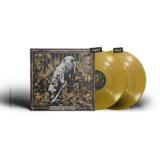
Swiss saxophonist Gilles Torrent may have been initially smitten by the sounds of US jazz giants like Coltrane, Shepp and Sanders, but as he’s developed and matured he’s cast his creative net much wider. After teaching himself the sax at 21 he spent the next 11 years studying the concepts and innovations of Coltrane before moving on to take the next logical step - exploring and soaking up the many styles music from around the world, and incorporating them into his Coltranesque vision of jazz.
Atestament to that workis the opening theme,‘La Longue Traversée Du Désert’whereTorrent directs an impressive ensemble of musicians – known collectively as World Jazz Sound - on a global trip from the plains of Africa to the pastures of England and even the mountains of his homeland Switzerland. Tracks like ‘Osso Varourn Ta Sidhera’, which pairs Beuna Vista-style Cuban rhythms with Grappelli-esque violin, or the transcendental calm of ‘Fridhia Mou’, complete with dainty harp and sultry Indian female vocal part, see the ensemble immersing themselves in the traditions and atmospheres of a panorama of different cultures, joining the dots between them all and gathering them up into one cohesive whole.
From the ancient and traditional – their effortlessly swung take on ‘Scarborough Fair’ for example – to the inspired but unconventional use of yodelling on ‘Chant des Alpes’, eventually giving way to a sensational modalworkout, this is an album full of widescreen freshness, surprises and, above all, the joy of discovery and experimentation. Originally released onCD in 2010, the sheer overwhelming beauty of the music withinhas compelled us at Jazzman to deliver these sanctified sounds onaudiophile standard 180g vinyl, for all to enjoy.
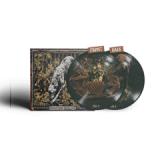
2x180g LPs featuring 8 tracks in total, housed in a single sleeve + download code.
Frisch aus den Höllen von ,Misterio Lounge 3000" (2024, lumpy/Inscrutable Records), bewegt sich die berüchtigte Gruppe aus Mexiko-Stadt weiterhin zwischen kosmischer Elektronik der 70er,minimalistischem Elektro-Punk und dem Erbe des Techno-Pop aus dem Mexiko-Stadt der 80er. "The frogs went to sleep this afternoon; they started dreaming". Und hinter all dem verbirgt sich ein tiefgreifender Impuls der Metamorphose, der keinen Raum für Ruhe lässt und ein ,Ambystoma mexicanum" erweckt, frei von jeglicher Fußball- und Kommunalpolitik-Werbung, damit es uns von seinen Träumen erzählen kann. Es ist auf eine Reihe automatisierter Wahrnehmungen gestoßen, gefolgt von gepunkteten Linien, die auf den ersten Blick wie unverbundene Bildausschnitte wirken, in denen sich jedoch in jedem Einzelnen eine Vielzahl von Geschichten offenbart. 13 Songs, 33 U/min
An acclaimed international cast of forward-looking artists – Jan Jelinek, KMRU, Lia Kohl, J. Albert, Laurie Torres, Jefre Cantu-Ledesma, Giuseppe Lelasi, Jung DJ and Smoke Point – remixes/remodels tracks from Arp’s transfixing late 2025 album Drifts for Barcelona-imprint Modern Obscure Music (Actress/ Sakamoto, Merzbow). Reflecting Arp’s stylistically-omnivorous approach, each remixer on Echo–Variations represents a unique corner of the music landscape, from the jazzy ambient glitch of storied German producer Jan Jelinek to the overdrivendrone landscapes of Kenyan ambient auteur KMRU to Smoke Point’s no frills club-tool to the haunted ambience of cellist Lia Kohl’s gorgeous electro-acoustic work. One can hear elements of hauntology, post-rock, minimal techno, glitch, spiritual jazz at play. Arp adds a few alternate mixes and two new tracks for good measure, ambient techno floater “Chlorophyll (1998 Mix)” and perhaps the most surprising of all, the dub techno heater “MMXXVI (Dub Mix).” Heart all together, its classic sounding heart RIYL Touch, Millie Plateaux: Creative,meditative, brain cleansing, thought provoking hauntological futurism.
Released in 2018 this extremely limited four track 7" EP is the only physical release by the Indonesian producer and local harsh experimental music pioneer Tembok Kamar Dinding Sekolah who unfortunately passed away only a few weeks prior to his actual vinyl debut on the underground imprint that is Flop Beat Disk.
Therefore this posthumous and highly limited to 120 copies pressing remains the only glimpse into his sonic world, seemingly formed and developed in a place rather isolated from the rest of the electronic music scene, a four track release spanning an arc from haunted Unformatted Techno to Rhythm Industrial x TechnoJazz amalgamations as well as bass heavy Broken Techno fusion and ethereal, hyperdecaying IDM x Glitch realms. This is for the most adventurous and headstrong amongst the DJs only.
Never officially distributed before this is the first time ever this unrecognized gem is available to a wider audience, albeit in highly limited quantities.
Rubbermaidxxx is a recent music performance project by the Irish artist Anna McCarthy, rather than simply the title of one autonomous artwork. Rubbermaidxxx is a character or unstable identity, an emancipatory underdog with a heart for daredevilry. The project sits naturally within McCarthy’s larger practice, which moves between drawing, assemblage, happenings and collective actions.
Clad in a black balaclava and fetish climbing wear, she abseils from buildings before entering the stage. For the first performance in New York City, she was invited by Kyp Malone of TV on the Radio to perform at his club Francis Kite Club in Alphabet City, NYC and since has continued to make a name for herself hanging off façades, singing, dancing and mopping the floor together with her performance collaborators Miss Philip a.k.a. Philip Errico and Michael Tapper at Pianos NYC, Kottbusser Tor and Genezarethkirche Berlin or the Villa Stuck Museum in Munich.
The album was produced in Munich and New York in 2025 in collaboration with her brother Nick McCarthy (Franz Ferdinand) and Anton Kaun (Rumpeln). What started as a quick improv turned into a high-energy 4-hour session of the siblings playing manic ball with beats, bass, guitars and vocals resulting in what laid the basis to this album. In the weeks following, Anna McCarthy, who is known for her cut-up production style, reminiscent of albums such as White Noise or Flying Lotus, continued to develop the vocals, performance and music by mixing in an amalgam of field recordings with her narrative spoken word, including sounds of protests, dollar stores or ice-cream trucks, as well as collaborating with the noise artist Rumpeln for the last two tracks of the album.
McCarthy is also known as the lyricist and singer of What Are People For? (debut 2022 on Alien Transistor) with its dystopic dance music candy-cane shows and equally humorously critical tongue-in-cheek bangers such as Bring back the Dirt, Drones or Partytime. Anna McCarthy's spoken word, social urgency and enthusiasm to experiment across mediums is comparable to other contemporaries such as Moor Mother, Miho Hatori, Gonjasufi, Tricky, or Cibo Matto.
The name itself is telling. Rubbermaidxxx evokes elasticity, artificiality, domestic labour and the commercial world of cleaning and garbage. It suggests a body capable of stretching, absorbing filth and cleaning up after society – only to revolt against the role it has been assigned.
Rubbermaidxxx is a master of deception, juggling fact and fiction as a reflection of our times – a diamond thief, a protester, or even responsible for the Louvre heist? This album invites the listener and viewer in, playfully dismantling hierarchies and power structures as she goes through a hopeful amalgam of dance, protest & love songs.
44 Page, A6 magazine.
UK Garage Volume 2 features the likes of Relentless, Hotpoint, Large Joints, Big Apple, Quench, EC2A and many more.
The Icon Catalogue is a series of small A6 zines profiling 40 record labels in various dance music genres such as Jungle, Techno, UK Hardcore and Dubstep. From the most important labels responsible for the scene’s foundations to rare, hard-to-find imprints that are now defunct, plus a few heavy-hitting newcomers.
Herbie Hancock is one of the most prolific jazz pianists of the 20th century. A child prodigy, he played with the greats such as Donald Byrd and Miles Davis. He was one of the first to embrace and master the electric piano, but he always stayed true to the acoustic sound. In fact, he always bounced back and forth between his electronic and acoustic sound, touching upon almost every development in R&B, funk and jazz while retaining an original and distinctive voice.
Sextant from 1973 was recorded just before Headhunters, and can be seen in the same vein, but it’s more than just an introduction to a masterpiece. It features a kind of post-modal, free impressionism while gracing the edges of funk. Three long instrumental tracks explore how far minimalism in jazz can go.
Sextant is available as a limited edition of 2000 individually numbered copies on blue marble vinyl.
For the seventh edition of the Vega Records 5 Pack Unreleased series, Louie Vega once again opens the vault to reveal a special collection of unreleased recordings, alternate versions, remixes, demos, tribute reworks and deep cuts from the Vega Records musical family.
5 Pack Unreleased VII brings together 15 tracks across five 12-inch records, showcasing the wide musical spectrum that has always been part of the Vega Records story. From soulful house and deep grooves to jazz, soul, Brazilian influences, live instrumentation, Latin influences, powerful vocals, disco-rooted rhythms and the freedom to experiment in the studio, this collection moves through many different sides of the music.
Some of these recordings have been waiting patiently in the vault. Others represent alternate versions of songs that continue to evolve through different interpretations. Together, they create another musical journey through the sounds, collaborations and ideas that have shaped the Vega Records universe.
These final recordings speak to something that has always been important to Louie’s musical journey: respecting the music that came before while finding a way to reinterpret it through his own musical language.
From Loleatta Holloway and Duane Harden to Elements Of Life, 2SoulFusion, Domo Domo, Brutha Louie & Brutha Basil, and the tribute recordings, 5 Pack Unreleased VII brings together different generations, different voices and different musical influences under one roof.
The Elements Of Life sound continues throughout the collection, with “Sunshine (I Can Fly),” “Every Step” and “Dreamer” offering special previews into the musical direction of the forthcoming 2027 Elements Of Life album.
This is the seventh chapter of the series, but the philosophy remains the same:
Open the vault.
Share the music.
Let the DJs discover it.
Let the dancers feel it.
Five records.
Fifteen tracks.
A collection of unreleased music, special versions, studio discoveries, tributes and musical experiments from the world of Vega Records — with plenty more waiting inside the vault.
Toronto’s Lammping is a project built on the idea that music can exist across timelines. Founded by Mikhail Galkin and Jay Anderson, the band’s sound draws equally from heavy psych rock, hip-hop, classic songwriting, and experimental collage, creating records that feel both familiar and impossible to place within a single era or genre.
Their latest album, So What, What?, is the clearest expression of that approach. Built from fragments of memory, influence, and lived experience, the record moves seamlessly between sampled textures, personal storytelling, and adventurous songwriting. References to everything from Soviet-era recordings to golden-age hip-hop sit alongside reflections on family, parenthood, and the uncertainty of the present moment. Yet despite its wide-ranging influences, the album remains firmly rooted in songcraft rather than nostalgia.
Australian psychedelic rock band Druid Fluids return with Pareidolia, an ambitious second album exploring perception, superstition and the human instinct to find meaning in patterns, whether real or imagined.
Written and recorded in Adelaide at songwriter and producer Jamie Andrew’s home studio, Pareidolia unfolds across ten expansive and immersive tracks that push the possibilities of psychedelic music. Released by Australia's Third Eye Stimuli Records, the album arrives as a 2LP vinyl exclusive that includes a D-Side with bonus tracks taken from the recording sessions.
Psych-rock and melodic pop collide with krautrock rhythms, cinematic dreamscapes, classically inspired arrangements and experimental production. No two songs inhabit quite the same world, and the album never lingers in one room for long.
Influenced by the inventive songwriting of The Beatles, The Beach Boys and Frank Zappa, the atmospheric sophistication of AIR and contemporary psychedelia from Tame Impala, King Gizzard and Melody’s Echo Chamber, Druid Fluids balance vintage warmth with a distinctly modern sense of possibility.
Pareidolia is hypnotic, intimate and surreal. Melodies twist and reform, rhythms circle back upon themselves and subtle motifs appear like half-recognised symbols. Its labyrinthine passages and dream-logic imagery invite listeners into an immersive space where clarity and confusion remain in constant negotiation.
Pareidolia follows the band’s acclaimed 2023 debut, Then, Now, Again & Again, whose first vinyl pressing sold out worldwide. Since then, Druid Fluids have toured Europe and shared stages with The Brian Jonestown Massacre, Wolfmother, Psychedelic Porn Crumpets, The Murlocs and Amyl and the Sniffers.
Immersive, melodic and wonderfully unpredictable, Pareidolia is a psychedelic masterpiece that rewards repeat listening, revealing new details and hidden connections with every spin.
Rekombinant is the solo project of Rome based composer and sound artist Alfonso Montagnese. Blending electroacoustic composition, analogue electronics, magnetic tape and sound design, his work explores the physical qualities of sound, embracing imperfection, transformation and degradation as expressive compositional tools.
Borrowing its title from the physical principle of parity symmetry, the album is less interested in scientific theory than in the possibility that an identity may endure even after profound change. Sound is treated as matter, it is stretched, reflected, saturated, compressed and displaced, yet never entirely separated from its origin.
Magnetic tape is the medium through which this question unfolds. Magnetic tape does not preserve sound faithfully, it reshapes the sound. It compresses, saturates, colours and gradually erodes it, producing not a copy but another state of the same material. Every recording becomes both document and transformation.
Most of the instruments used throughout the album were selected from more recent generations of electronic equipment compared to previous works. Their character is not defined by nostalgia, but by their functional and sonic qualities: instruments chosen for how they behave under pressure.
The album consists of fourteen compositions, each one approaching sound as a material in continuous state of alteration and was conceived within what feels like a new Middle Ages, one that is still unfolding. An era marked by increasing fragmentation, uncertainty and the erosion of shared cultural references. The music does not illustrate this condition; it absorbs and inhabits it.
Throughout these fourteen pieces, sound continuously changes its appearance without abandoning its identity. What remains after every inversion, every saturation and every layer of magnetic degradation is not certainty, but persistence.
Parity Symmetry is Conserved is ultimately an exploration of that persistence: the fragile possibility that memory, identity and human experience may continue to exist, even after passing through irreversible transformation.
Futurismo are proud to present DEVO’s NITROUS NIGHTMARE, Halloween Live ‘75. Never before released, or heard in it’s entirety, this legendary live performance is presented here in it’s full chaotic glory on limited edition 2xLP and 2xCD. The live release all hardcore Devo fans have been waiting for, Nitrous Nightmare demonstrates a band harnessing their artistic greatness in the purest of forms. This mythic performance captures Devo perfecting some of their most iconic concepts in the raw. Expertly restored, this live recording makes for a thrilling experience, it also captures Devo as a lightening rod for hostility. On Halloween 1975, Devo took the stage at the WHK Auditorium in Cleveland, in a supporting capacity for jazz legend Sun Ra, to perform for a raucous crowd dressed in the finest of Halloween cliché. Already riding high on Nitrous Oxide and booze supplied by the sponsoring radio station, this unaware horde was expecting to see a slick cover band churning out renditions of Bad Company hits, only to be subjected to an act of subversive performance art that would send the growingly aggravated crowd into eventual meltdown. Physical threats ensued, but Devo played on. Acting as a live companion release to Futurismo’s much lauded Art Devo, the tracklist featured here showcases the origins of de-evolution theory in a live setting. These songs would become some of their most famous material, with this recording believed to be the very first time ‘Jocko Homo’ was performed in front of a live audience; the full 12 minute version documented here is sure to please fans, even if it displeased the urban hippies and horror masked onlookers that evening. Whilst Devo may have felt they were trapped inside a negative energy vortex during that era, it is clear in retrospect that the band was using this energy to carve out the genesis of a sonic and visual art that has truly stood the test of time. The music performed that evening would mutate culture for decades to come, long after the denizens of the auditorium packed away their cheap vampire costumes and returned to their day jobs. Spanning 2xLP’s of unreleased live material, most of which has never been heard before, this wondrous performance draws purely from that integral early history. Mixed and mastered directly from recordings kept in the bands personal vaults, this live collection showcases why Devo was, and still is, one of the most important bands in American history. De-evolution is real. The art of DEVO is real. Here is the evidence. This 2xLP is housed in a gloss laminated wide spined sleeve. It has a tracklist that has been sourced directly from the archives, and contains colour inner sleeves and a fold-out containing archival imagery and liner notes by Gerald V Casale.
Forty years of cassette releases, pressed for the first time on vinyl
First of two instalments exploring the previously unreleased sonic archives of one of Poland’s most enigmatic
living artists - with its first volume focused on his deep listening practice and spiritual reverie (recorded 1990–2013)
The last time Andrzej Dudek-Dürer took a banknote bearing the face of the Polish anarchist Jarosław Dąbrowski from his pocket to trade it for a pair of shoes was in 1969. He bought them for 120zł - the equivalent of 100€ today - and never replaced them since then. Only rebuilt them, year after year, drawing a needle and thread through the leather each time it split, closing one wound before the next one opened. It became a ritual of precision, stitching a record of another year into their soles.
That same year, in Wrocław, he arrived at a conclusion that would recalibrate everything that followed. Convinced he was the reincarnation of Albrecht Dürer, he adopted the surname Dudek-Dürer, stopped cutting his hair and began wearing the same garments every day. It was the first ritual of many, though he wouldn't have called it that yet. Look closely enough, over the decades, and it is always the same gesture, returning in different material: hair growing in a single unbroken strand, a needle drawing thread through leather, sitar strings pulled taut across a neck he built with his own hands and magnetic tape spooling forward inside the cassette boxes stacked against his walls.
None of this began in a vacuum. Dudek-Dürer emerged from the Wrocław neo-avant-garde, in a Polish art world where an exhibition could be cancelled overnight by the stroke of a censor's pen. In 1973, his exhibition Auto-crucifixion was shut down by the state, and for a time he found himself blocked from exhibiting his own art at all - the one force in his life that ever came close to cutting the thread.
He seemed to experience it differently. In 1974, after long, patient research into sitar craftsmanship, he built his first prototype with his brother, a knowledgeable luthier. In 1978, in a smoked-out jazz club, he took his first steps into sound recording with the unreleased album Jazz From Underground with his first band. By 1979, recognition started to travel further than he could.
Turning toward Far-Eastern philosophy, meditation and the idea of reincarnation was another language of freedom for him. It was a way of claiming an inner territory the state could not reach, a border it could not close. Mail Art served a parallel function, reaching further out: in a country that restricted travel and expression, sending and receiving art through the postal system became an act of quiet rebellion.
The body, in his understanding, is only an envelope readied for constant transformation. From this came Metaphysical Telepathy: during the years he could not leave Poland, he treated that confinement as a rehearsal room, sending his mind out ahead on the same thread his body would later follow. Living Sculpture grew from the same root with performances of stillness beside static art objects, until the boundary between the object and the man beside it simply dissolved. Camera Meditation extended the same instinct into photography: a shutter click flattening three dimensions into two so that a single instant could be held forever. Inspired by the pioneers of self-portrait photography like Robert Cornelius, he used it to document time itself, and kept explaining to me: "You know. This is not about vanity. This is about observing time passing.”
The isolation did not end suddenly. It ended the way his own philosophy had already predicted it would, from the inside first. Mail Art quietly solved the problem politics couldn't. Correspondence built during years of confinement slowly worked its way through doors the state itself had kept locked. Contacts made through folded paper and stamps became invitations. Ultimately, invitations became passports.
In 1983 he made his first trip outside Poland, to Germany, in search of the audio technology he couldn’t get his hands on before. In 1985, he was invited by the Indian embassy in Poland to give a sitar concert on an instrument he had spent a decade patiently stringing together - half sitar, half tanpura, built from patience and determination. After the collapse of the People's Republic of Poland, the travels kept unspooling: South Korea, then Mexico, then Australia, Canada, New Zealand, Singapore, Japan and the United States - each stop leaving behind its own small knot of tape, tied off and carried home.
In the decades since, recognition arrived at the same unhurried pace: he conducted workshops at UC Berkeley, served as vice-president for artistic affairs of the Union of Polish Art Photographers and the Union of Polish Visual Artists between 2010 and 2014 and received the Bronze Medal for Merit to Culture - Gloria Artis. His visual work gradually entered collections including the National Museums of Warsaw, the Stedelijk Museum, Tate Modern, MoMA and the Venice Biennale. His musical practice, by contrast, never found that kind of room - left to circulate quietly, sharing his cassette tapes directly, waiting for someone willing to follow it further.
It took months before I could find a way to reach Andrzej Dudek-Dürer - his presence online is very close to nonexistent. Surprisingly, LinkedIn turned out to be the only door still open, a faintly absurd irony given everything else about him. I packed the strict minimum for a three-day trip and an empty notebook and made my way to Wrocław. His headquarters sits in the neighbourhood of Grabyszyn: a two-storey pre-war house that has belonged to his family for generations. The man who opened the door was long-haired, long-bearded, in his trademark leather shoes and patched jeans. We sat in his living room, in front of a computer where decades of recordings sat organised in cryptically named files, surrounded by books and objects that had arrived one layer at a time, leaving room for only two chairs in the middle. His shoes sat by the door, rebuilt so many times they had become their own quiet sculpture. Cassette tapes filled boxes against the walls, almost unlabelled, each one a spool of thread holding decades of sound that had never once been asked for, until now.
I listened for hours: meditating in front of strangers on the porch of a Seoul temple until the tourists stopped taking photos and simply waited with him; a stand-off with border guards at the US–Mexico crossing over an instrument they couldn't identify and didn't trust; a session with the Stockhausen family that he still, decades later, describes like it happened last week. All of it interrupted, occasionally, by the smell of soup boiling and fresh bread warming on the ceramic stove. After two days, it felt like being handed the end of a very long thread and asked, gently, to keep following it. I left with a USB drive holding his full discography, signed with his unmistakable signature.
Astral Meditations From A Living Statue is a length of that thread, drawn out from the boxes stacked against his walls - recordings gathered from different rooms, different countries, different decades. This first record breathes slowly: incense-thick, meditative, built for stillness. A cutting-edge séance in outer space where machines learn how to dream.
It begins with the neo-classical improvisations of Andrzej, space-delayed, recorded at Klub Muzyki i Literatury in Wrocław in 2002. 'When..So' opens the curtains with a deep-rooted meditation accompanied by slow-decaying piano figures illuminated by a candle-lit spirit gathering.
Los Angeles, 1990: a dormant villa, a grand piano, the voice of Bonnie Barnett. 'Exception' is captured in a single room, in a single afternoon - voice and keys circling each other, neither one leading, until the silence between the notes starts to feel like the instrument.
'The Meta...' and 'Tired Of...', recorded at Studio Morandi in Ponte Nossa, Italy, in 1992, settle into a sitar drone built entirely from patience - overtones stacking and beating against each other, strung by a man who never once set foot in India. 'Mastery Of...' follows, recorded the same year at Studio Suski in Łomianki, pushing that same hum further still, until pitch dissolves into a spectral reverie. 'Transcendental Sound', from 2000, closes the first record in a slow bath of celestial frequency - better heard beside the shores of the Odra river.
More than fifty years after deciding that a life could become an artwork, Andrzej Dudek-Dürer continues to inhabit that decision. His shoes keep wearing thin against the earth's crust. His hair keeps growing, one strand at a time. His cassette tapes keep spooling in the dark of their boxes.
Now the thread finds its last shape: a single unbroken groove, spiralling inward from the outer edge to the label at the centre. Never cut - the way nothing else in his life ever was. Drop the needle and it will find that groove and follow it, the same way a needle once followed leather, once followed a border it couldn't cross, once followed string into an instrument that didn't exist until he built it. This record is the other end of a thread that has been travelling for fifty years. For the length of both sides, it rests here, in your hands. This is a timeless proof that the Lord of the New Age was never lost."
Evasion and Conman return to our label with their brand new album "Shadow Circuit", refining their unique style. The release moves through cinematic soundscapes, blurring the lines between jungle and dnb, with intricate rhythms and deep low-end engineered with surgical precision.
Minutiae is the first full-length release form Stockholm’s Ināra Quartet, made up of brothers Kasper (guitar, banjo, mandolin) and Mauritz Agnas (bass, cello), Johan Graden (piano, harmonium, synths) and Mischa Grind (percussion). Drawing on wide performance and composition experience in free improvisation, jazz, and composed new music, the quartet have carved out a unique niche where radical approaches to rhythmic organisation and group interaction are wedded to immediately accessible, folkish melodic and harmonic material. Unfolding briskly across eight pop-song length tracks, Minutiae places these folk fragments under a microscope, expanding them into intricate patterns of group interplay by turns austere and lushly psychedelic.
The quartet’s layering of independent rhythms, pulses, and tempi suggests a range of precedents, from Ligeti’s ticking clock textures to the pulse music of John McGuire, the repeating asynchronous cycles of The Necks, and the intricate irregular crosshatching of Banda music. Rhythm, harmony and melody shade into one another within each of the instrumental layers that overlap to form the music’s rippling surface. At points guitar, bass, percussion, and keyboards can seem each to occupy their own world, each player moving independently according to their own internal tactus, but attention to the details of group interplay reveals carefully planned collective movement. On ‘Klapparen’, strummed acoustic guitar chords and clinking percussion accelerate and decelerate in unison, washed over by floating synth lines. At other points, the quartet as a whole suddenly shift direction like a This Heat tape edit. Check the opener ‘Box Pieces’, where a brief percussion tag cues an unexpected cut from frenetic layering of percussive attacks undergirded by slow moving synth and bass foundations to a rumbling, locked-in dirge.
The eight pieces span a range of tones, from plaintive abstraction to surging minimalism. Touches of whimsy relieve any threat of over-seriousness: witness the wacky electric guitar glissandi that open ‘Tilting’ or the lovely, almost Pascal Comelade-esque fairground wobbles that begin the wayward journey of ‘Cadence: not even,’ before it stumbles into a totally different zone of spacious Paul Bley balladry sprinkled with banjo plucks. Recorded across two days at Stockholm’s Atlantis studios, Minutiae’s minutiae truly sparkle thanks to the careful mixing work of Ghosted drummer extraordinaire Andreas Werliin. A wonderfully approachable document of the richness of the next generation of contemporary creative musicians from Sweden, Ināra Quartet’s debut also looks back to 70s touchstones like Archimedes Badkar in its joyful embrace of musical collectivity.
Zohar & Adam aren’t waiting for the future of music—they’re creating it. Osmosis is experimental, raw and impossible to box in, collapsing jazz, hip-hop, indie, electronic music and the sounds of the world around them into something entirely their own. Featuring Christian McBride, Steve Wilson, Skylar Tang and rapper Nory, the album connects generations without nostalgia and crosses genres without asking permission. In an era increasingly shaped by algorithms and artificial creation, Zohar & Adam are making a case for something radically human: instinct, improvisation, risk and the unpredictable chemistry that happens when real artists create together.
And the world is already paying attention. After opening for Marcus Miller before a sold-out audience at the Montreal Jazz Festival, Zohar & Adam head overseas for an 11-date European run before their debut album has even been released. But this is bigger than the arrival of a new album. Osmosis is the opening statement of a worldwide movement, one determined to put human creativity and artistic value back at the center of an ever-changing musical landscape. Zohar & Adam aren’t simply entering the conversation.
Manchmal beenden Nicole Mitchell und Joe Westerlund gegenseitig ihre Sätze. Genau diese telepathische Verbindung prägt ,Written in the Universe", ein Album, das aus jahrelangen gemeinsamen Auftritten in Durham, North Carolina, entstanden ist. Mitchell - eine international gefeierte Flötistin, Komponistin und ehemalige Vorsitzende der Association for the Advancement of Creative Musicians (AACM) in Chicago - und Westerlund, ein Schlagzeuger, dessen Werk von experimentellem Rock über Jazz bis hin zu elektroakustischer Improvisation reicht, schaffen Musik, die sich gleichzeitig geerdet und weitläufig anfühlt: echo-getränkte, elektronisch geprägte Improvisationen, die von Westerlunds tief verwurzelten Polyrhythmen getragen werden. Das Album wurde an zwei Tagen bei ,Betty's" aufgenommen, einem ländlichen Studio mitten im Wald außerhalb von Chapel Hill, und fängt die Spontaneität einer Live-Performance ein. Anstatt die Aufnahmen durch Overdubs oder umfangreiche Bearbeitung zu verfeinern, hat das Duo die intuitive Energie jedes Takes bewahrt. Die umgebende Landschaft - ihre Wälder, die freie Natur und das Gefühl von Weite - wurde zu einem stillen dritten Mitwirkenden, der den organischen Fluss der Musik subtil prägte. Das Ergebnis ist ein Album, bei dem es mehr um die Entdeckung als um das Ziel geht. Auf ,Written in the Universe" verweben sich Mitchells ausdrucksstarke Flöte und Live-Elektronik mit Westerlunds einfallsreicher Percussion zu einer Musik, die sich in Echtzeit entfaltet und die Zuhörer zu einem gemeinsamen Hörerlebnis einlädt, bei dem spontane Komposition und Intuition untrennbar miteinander verschmelzen.
Two seriously high-grade legends come together to mark the 30th anniversary of the cultured Seasons Limited imprint here: Don Carlos is behind one of Balearic house music's most enduring anthems in 'Alone' and Robert Owens has been voicing the genre since the 80s with his signature smoky tones. Here they cook up 'Inspired' in three different forms - there's a deep and soulful House Mix with an electric delivery from Owens, then a chord-laced and warm Classic Mix with a throwback Chicago bassline and finally a Dub Mix that strips everything back to a more breezy late-night sound that sinks you into the groove perfectly.
Naná Rizinni is a São Paulo-born drummer, producer, and composer whose work sits at the intersection of progressive electronics, jazz improvisation, and Brazilian rhythmic traditions. After relocating to London in 2020, Rizinni further expanded her distinctive sound, drawing on influences ranging from contemporary UK experimental jazz to forward-thinking electronic music. A respected collaborator and session musician in Brazil, she has performed with artists including Tiê, Johnny Hooker, Ana Cañas, and Thiago Pethit, and has appeared at major international festivals such as Lollapalooza, Rock in Rio, SXSW, and Primavera Sound.
Her new album,Epiblast, is a deeply personal and sonically adventurous statement. Written and co-produced with saxophonist and producer Mark Cake, the album explores themes of transformation, grief, new parenthood, and self-discovery through a rich blend of acoustic and electronic textures. Combining expansive sound design, intricate rhythmic interplay, modular synthesis, and Brazilian musical foundations, Epiblast draws comparisons to artists such as The Comet Is Coming, corto.alto, Mark Guiliana, and Richard Spaven while maintaining a unique voice of its own. Available on vinyl and digital formats, Epiblastshowcases Rizinni's most fully realized artistic vision to date and positions her as a compelling new voice within the global contemporary jazz and experimental music landscape.
Mack Loenz delivers his debut album From The Heart on Maceo Plex’s Lone Romantic imprint, expanding his razor-sharp, cinematic sound through analog synthesis and retro-futurist design.
Across its ten tracks, the album moves through a palette that is both nostalgic and forward-facing, with glistening arps, soaring pads and growling basslines shifting between physical club function and emotional extremes of melancholic yearning, romantic tenderness and futuristic intensity. ‘Follow Me’ opens with shimmering arpeggios and driving bass building to a euphoric crescendo, while ‘Switching My Flow’ pushes into heavier territory with gritty hoover synths, skittering vocals and chest-rattling subs. Elsewhere, ‘It’s Complicated’ brings a more tender, melancholic edge with rolling drums and expansive, symphonic synth work, and ‘Trust Issues’ leans into a nocturnal, romantic yet dystopian mood carried by sweeping leads and pitched vocal splicing. ‘Waiting Game’ moves into darker, industrial-leaning tension, before ‘Back To The Stars’ closes on a reflective, emotional resolve.
Shaped by a vision to push electro into a more expressive space, From The Heart carries a clear emotional core throughout. As Mack Loenz puts it, “In a time where there is a lot of darkness, this album is about bringing light, spreading positive energy, and creating moments that people can feel both on the dancefloor and within themselves.” That sentiment runs through the record, shaping a cohesive statement that balances club functionality with atmosphere, emotion and forward-facing electronic production.
NEXT WORLD SOUND SERIES vol. 5 continues the line of experimental compilations featuring one side of an artist exploring their individual take on the ambient genre. Pressed in clear green vinyl.
Knox Chandler is an American musician, producer, arranger, and visual artist whose career spans over four decades. He has worked with The Psychedelic Furs, Siouxsie and the Banshees, Cyndi Lauper, R.E.M., Depeche Mode, Grace Jones, and Dave Gahan, among others. After a decade in Berlin, where he developed his layered guitar technique called Soundribbons, he returned to the U.S. and settled on the Connecticut shoreline.
ANNA HOMLER, is a vocal, visual and performance artist based in Los Angeles. She has performed and exhibited her work in venues around the world. With a sensibility that is both ancient and postmodern, Homler sings in an improvised melodic language. Her work explores alternative means of communication and the poetics of ordinary things.
Anna is accompanied by: Jeff Schwartz, a very active Los Angeles-based improvised and experimental double bassist. He leads the Present Quartet, Intangible, and the Soapbox; performs with a variety of ensembles and orchestras; and has written books on music for SUNY Press and Routledge.
David Javelosa a composer, producer, recording artist and technologist based in Mar Vista California. Performing on modular, electronic instruments, he has created soundtracks for many of the major game platforms, and most recently has been performing with Microwave Buddha, a retrospective of his synth pop work in the 1980's.
Cult Argentinian darkwave act Euroshima’s Gala sees a vinyl reissue courtesy of Dark Entries. Euroshima was formed in 1986 by Fabián Iribarne, José Wyszogrod, Ricardo Parrabere, and vocalist Wanda. Originally released in 1987 on Polygram, Gala was a success throughout South America. But to the band’s dismay, they received minimal support from the record label, which meant the album would linger in obscurity outside of the region. A CD issue via Twilight Records surfaced in 2020, but this is the album’s first reissue on vinyl.
Gala’s legendary status among cognoscenti is warranted. The album’s nine tracks display all the hallmarks of the best darkwave: spiky guitars, analog synth basslines, and wailing vocals. But Euroshima make their mark on the genre with impeccable songcraft and a honed sense of the uncanny. While the band themselves rejected the label of “gothic”, it’s hard to resist busting out the black eyeliner when listening to gems like the uptempo “Como Los Otro” or the churning album-closer “Mejor Callarlo”. Highly recommended for fans of Xmal Deutschland, Lebanon Hanover, pummeling TR-707’s, and doom-laden synths.
This reissue is co-presented with Twilight Records, responsible for the 2020 CD reissue of Gala. It has been remastered by George Horn at Fantasy Studios. Also included is a double sided insert with lyrics and photos, as well as a postcard featuring a photo of the band.
In 2001, Shin’ichi Ogawa of Sugar Plant was working for the SAL Disc record label and came up with the idea of doing an E2-E4 tribute album with his friends. This album would come off the back of a Neil Young tribute album which might have seemed odd but these two artists, Neil Young and Ashra (Manuel Göttsching), would be played regularly as equals at after-parties that Shini’ichi would throw at his house. Longtime friend and collaborator, Taro Yoda, noted that the eclecticism of these after-parties were influenced by the variety of parties they were attending at the time, from the legendary Japanese open-air rave party Life Force to Cream at Amnesia in Ibiza. Taro was obsessed with European trance and left-field downtempo while the two members of Sugar Plant were into ’70s soul—especially Marvin Gaye and William DeVaughn and at the same time, they were listening to Phish and the Grateful Dead too. All three of them were of course inspired by the DJ’ing and selections of Larry Levan.
A- Side – Sugar Plant – “Just Be There” – Production began in my home studio. Since I was frequently attending a house party called “Life Force” (with DJ Nick the Record as the resident DJ) at the time, I thought deep house would be the perfect style for a Sugar Plant cover.
I looped a two-chord electric piano track and applied filters using plugins and outboard gear to create a “sound I could listen to forever.” I recorded the bass on guitar and converted it to an analog synth (Doepfer MS-404).
From there, I layered synths improvisationally, listening to the track over and over again to make fine adjustments. I think I worked on it for days, mostly late at night.
I recorded the guitar at the very end of the track. After playing it a few times ad lib without any set plan, I suddenly had the idea to add vocals during the bridge, so I set up a mic in my hallway and recorded them.
I think this track is packed with the emotions I felt when listening to “E2-E4” back then, as well as the vibe I experienced at that party. – Shin’ichi Ogawa
The Comfort enters the double digits of its catalogue with the label’s most ambitious release to date by Saudi Arabian artist Noboot, titled “Call and Pulsate”.
Fluid in genre yet wholeheartedly electro in spirit, Noboot’s creative output shapeshifts across the record: from four-to-the-floor acid-tinged propulsion to time-freezing illuminations, with neon-coloured synths, body-twisting low ends and piercing drum hits mutating throughout the album, and often within the tracks themselves.
Noboot’s capacity for sonic manipulation is on full display here with the pieces moving with a captivating direction and command. Sometimes gentle, sometimes dramatic, but always carried with a particular elegance and poise. To listen to the record from start to finish is to step into Noboot’s own conceptual world, one in which the artist has the confidence to take floor-oriented dance music and elevate it both in spirit and form.
There is composure and ambition in this approach. Tracks move the listener from one emotional state to another in the span of six minutes: not merely teasing transformation, but by fully taking the listener there. To deliver on that ambition requires control and idiosyncratic intuition. If “Desolated Delay” and “Timer Set” are striking examples of Noboot’s capacity for propulsion, “Meter Tired” shows the other side of their talent: the ability to make time feel briefly suspended in a weightless flux of cybernetic psychedelia.
To achieve this once or twice would already be impressive. To sustain it across an album of this scale is rare in electronic dance music, and makes The Comfort’s tenth release a defining moment in the label’s catalogue.
Precious Bloom producer Dea returns on the Rush Hour Store Jams imprint with a fresh four tracker... tip!
The idea for Fairlight began shortly after Aradea Barandana purchased a Yamaha DX1 synthesizer. While exploring its presets, one sound in particular—called Fairlight sparked the initial concept for the EP. From there came the desire to create an Italo wave inspired track that would feel fresh to contemporary ears while still referencing the character of early electronic music.
Rather than following the traditional structure of dance music where drum machines and synthesizers lock into repetitive synchronized patterns the EP approaches composition more like a narrative. The music gradually unfolds, allowing melodies and harmonies to evolve so the listener is encouraged to stay with the piece from beginning to end.
Some of the harmonic ideas draw inspiration from Baroque music, particularly chromatic ascending progressions and voice-leading techniques. In contrast, other moments introduce playful bubblegum-inspired synth lines, adding lightness and color to the overall sound.
The result is a small collection of tracks that sit between nostalgia and experimentation where vintage synthesizers meet a compositional approach that values movement, surprise, and a sense of musical journey.
We know there are copious amounts of PFAS in the water supply of Rotterdam, but there must be more! What else could explain the amount of talent this city provides? Foobar is yet another prime example of this phenomenon. coming of age in Burgundian Brabant and cultivated in the grimy streets of our beautiful harbour city, Foobar just has a way of looking beyond its imperfections and translating the warmer hidden sides of the city whilst still tapping into its more rugged edges in this 4 track EP, for his debut release "Shifting Phases" on WAXRDM. The title track Shifting Phases just eases you into the whole, getting you ready to face another day on the grind, that's Rotterdam baby! We work hard and we play hard, and when we play, these are the sounds we wanna play too. Proper House Music. Some serious anger management issues on Parallel Motion, hitting hard from the get go, starting off with some intimidating drums, in your face bass lines, enticing melodies & alluring vocals. All of a sudden you're 3 minutes in, and you can't even remember what got you so upset in the first place. Who said you needed to be loud to be powerful? Not us, that's for sure, and definitely not Foobar. Quiet Strength proves that point yet again, laced with the sultry vocals by ES-V, this jam just takes you even further into your own headspace, drums that keep you in motion, melodies that keep you grounded but bass lines that let you float off into the atmosphere. It's Monday again, another day at the office, cleaning apartments, trading cryptocurrencies or whatever the hell you do to make ends meet. Ahh damn, and now you remember what irritated you. Colleagues, employers, pay or the lack of it. It is a good thing you have Back on the grind to make it all sound relative, helping you forget and looking ahead at the weekend. The perfect come down track that moves forward.
With Shadows is the darkwave alter ego of Jordan Lieb, the acclaimed North American electronic producer also known as Black Light Smoke. Recognised for his house and techno releases on Scissor & Thread, The Hacker’s Zone and Tiga’s Turbo Recordings, Lieb explores a darker, more introspective sound under his With Shadows alias. Drawn from two digital releases on his own Ancient Spells imprint, this collection of electronic darkwave traces a journey in reverse: opening with dark Italo and EBM-inflected technopop, it gradually slows down, sinking into a shoegaze universe steeped in atmospheric melancholy. Cold synthesizers, basslines that pulse like a heartbeat and haunting vocals give way to blurred textures and dreamlike spaces, carrying the listener from the dancefloor into a more intimate inner world. On “There’s a Hole”, his instinct for rhythm meets a deeply personal voice, revealing the emotional weight beneath the electronics. With Shadows gives Lieb room to reach beyond club structures and express himself through songs, bringing his songwriting, vocals and multi-instrumental talents to the forefront and revealing a facet of his musical identity distinct from his work as Black Light Smoke.
DP11BOARDSOFCANADA Disco PogoBooks10.11.202610.NOV.26
ISBN: 978-1-0687642-4-0
Disco Pogo is excited to announce ‘A Disco Pogo Tribute To Boards of Canada’, a deep dive into one of the most important electronic acts of the 20th and 21st centuries. It is the fifth title in our Tribute series – following Daft Punk, Aphex Twin, LCD Soundsystem and Andrew Weatherall – and probably the most requested artist since we launched the series. Containing our trademark mix of timeline, family tree, album essays, thinkpieces, features, discography, gear list and much more.
The book features some of the best music journalists and writers operating today, including Simon Reynolds, David Keenan and Elizabeth Alker. The book is independently authored and published by Disco Pogo with the blessing of the band and their label, Warp.
Cécille Records revisits a standout cut from long-time label associate Christian Burkhardt, inviting Ben Sterling and Shokë to put their own stamp on “Content Creator”.
Long-time friend of the label Christian Burkhardt, hailing from Frankfurt, has been pushing his distinctive take on house and techno for more than two decades, combining complex, moving rhythms with the warmth of analogue gear. With releases across labels including Cocoon, Cuttin’ Headz, Oslo and Eastenderz, alongside his own imprint CB Sessions and Cécille, his sound has always felt naturally connected to the label.
The strength of the original opened the door for two contrasting interpretations. First up is London’s Ben Sterling, whose UK-rooted house and tech house influences and forward-thinking production style made him a natural choice to rework the track. His remix pushes “Content Creator” into a different space while retaining the character and groove at the heart of Burkhardt’s original.
Completing the package are Naples-based duo Shokë, returning to the label following their “Chiamami EP”. With the release still making its mark in the charts, the duo continue their close connection with Cécille, reshaping “Content Creator” through their own warm, groove-led house sound and unmistakable dancefloor energy.
Christian Burkhardt’s original sits firmly at the heart of the release, joined by two individual interpretations from Ben Sterling and Shokë – three cuts that each bring their own character while sharing the groove and timeless house aesthetic at the core of Cécille.
DJ Support: Kerri Chandler, Chris Stussy, Archie Hamilton, Fabe, Groovesh, Vlad Caia, Andrey P Ush Krav, Thor, Masimillano Pagliara, Dubtil, Reboot, East End Dubs, IULY.B, Josh Wink
Now repressed on Limited Edition green vinyl.
Kerri Chandler’s Kaoz Theory welcomes Amsterdam’s Chris Stussy onto its roster with the ‘A Glimmer Of Hope’ EP.
Amsterdam based producer and DJ Chris Stussy has become one of the most eminent figures in the contemporary house scene of the Netherlands and across the globe over the past five years, racking up releases on the likes of Eastenderz, Moscow, PIV, Contstant Sound and most recently his own Up The Stuss imprint. Here though he delivers his new four-tracker for Kaoz Theory.
Leading the release is ‘Central Frenzy’, laid out across six and a half minutes with skippy percussion, a snaking bass groove, intricate synth sequences and sweeping vocal chants. ‘Riva De Biasio’ follows and tips the focus over to airy atmospherics a jazz-tinged bass groove and squelchy acid licks atop swinging drums.
‘Deviant Shadow’ opens the flip-side and merges an amalgamation of expansive dub chords and bouncy sub bass tones with a robust 4/4 rhythm. Lastly to round things out is title-cut ‘A Glimmer Of Hope’, wrapping up the release on a deeper tip courtesy of ethereal pad swells, metallic synth licks and shuffled drums.
Bonobo alias Simon Green returns with "Distance In Static", his new album, which will be released on September 11, 2026, by Ninja Tune.
On "Distance In Static", Bonobo collaborates with a characteristically impressive lineup of artists, including Arooj Aftab, Joy Crookes, Nilüfer Yanya, Ichiko Aoba, Nicole Miglis (Hundred Waters), and Aanya Martin. The lyrics are written in English, Urdu, and Japanese, while historical Iranian samples and guzheng recordings stand alongside Bonobo's carefully crafted instrumental sounds. These were created during recording sessions in Los Angeles, Tokyo, London, and beyond: a significant part of the album was completed at Neil Young's legendary Broken Arrow Ranch in California, where he had retreated for several weeks earlier this year.
The album's title - "Distance In Static" - aptly describes Bonobo's current situation: it evokes images of distorted transmissions and fleeting frequencies, memory fragments and glimmers of meaning that echo through more than two decades at the forefront of electronic music. He sees the traces of his work reflected in a younger generation rediscovering trip-hop, downtempo, and experimental electronic music of the 1990s from a contemporary perspective. "I think the beginning of my work is relevant to younger people today," he says. "I liked the idea of listening for a distant signal - finding something in the noise," he continues. The entire album conveys the feeling of a search for transcendence: music that hovers between intimacy and vastness, the familiar and the unknown.
Within the universe of "Distance In Static", there is also a sense that this album marks something truly monumental. It is a moment of transition, a celebration of Bonobo's 25th anniversary, but perhaps also his last album in the traditional sense: with numerous guest contributions and a multi-year world tour with a full live band.
Whatever comes next, one thing is certain: "Distance In Static" is arguably Bonobo's best album to date; as ambitious and forward-thinking as ever and a reminder of why he has influenced so many people so strongly for so long.
Celestial Echo Records heads to the Cayman Islands for CER014, produced in association with Whale Rider Records and longtime friend of the label Medlar.
This release shines a light on two incredible sides from the legendary Memory Of Justice Band, one of the Caribbean's best-kept musical secrets. Formed in Grand Cayman during the 1970s, the group blended soul, reggae, funk and island influences into a sound entirely their own, becoming one of the region's most beloved bands in the process.
On the A-side is a gorgeous piece of sweet modern soul — warm, uplifting and packed with the kind of effortless musicianship that makes you wonder how it stayed under the radar for so long. It's exactly the sort of record Celestial Echo was built for: soulful, timeless and impossible not to fall for.
Flip it over and things move firmly onto the dancefloor with a reggae-boogie burner produced by the legendary duo Sly and Robbie. Built around a heavyweight groove, tight rhythm section and infectious hooks, it's the perfect counterpart to the sweetness of the A-side and a reminder of just how interconnected Caribbean music was during this period.
As always, Celestial Echo is here to put proper soul records back into circulation — respectfully cut, properly pressed, and ready to play.
The robots on late-night television kept saying the future was already here. We believed it. We promised the stars that we will visit. It felt impossible. But Dimi parked a rocket in front of our house, we got in. The stars were twice as bright as we launched the opposite way, towards the underground. A1 - Dimi Angelis - Mastodon A2 - Dimi Angelis - Hollow Earth B1 - Dimi Angelis - Tertiary B2 - Dimi Angelis - Habitable Zone C1 - Dimi Angelis - Subterranean River C2 - Dimi Angelis - Megatherium D1 - Dimi Angelis - Cataclysm D2 - Dimi Angelis - Cenozoic E1 - Dimi Angelis - The Icy Web E2 - Dimi Angelis - Volcanic Tubes F1 - Dimi Angelis - Quaternary Limited numbered version of TAR-LP5 with an extra vinyl lathe disc, an extra of 3 tracks. 2x12inch + 1 lathe cut vinyl. All tracks will be available digitally. including: free digital download code with 3 extra tunes, stickered outersleeve, printed innersleeves, printed labels.
Daybreakers reaches a milestone with DBR010, and it felt right to mark the occasion with something truly special.
Fred Everything is one of those producers whose influence runs deep. From his early releases on 20:20 Vision through to decades of essential records on Lazy Days and beyond, the Montreal based producer has quietly become one of the most respected names in deep house. A producer's producer, a DJ's DJ, and someone whose records seem to reveal a little more with every listen.
The story behind this release starts in Hackney. A few beers at the BBE Store, a conversation about old DAT tapes and eventually enough persuasion to get Fred digging through his archives. What came back was pure gold: three previously unheard tracks recorded between 1998 and 2004, sitting untouched for over twenty years.
There's something special about hearing these recordings now. Made during a period that saw Fred establish himself as one of deep house's leading voices, they capture that unmistakable blend of musicality, groove and craftsmanship that made his records stand out in the first place. This isn't nostalgia or a history lesson. These tracks still sound fresh, still sound relevant, and most importantly, still sound like they belong on a dancefloor.
The legendary Charlemagne Palestine returns to Black Truffle with KKKAAARRREEENNNIIINNNAAA, capturing a 2025 performance in London alongside two close collaborators of recent years, multi-instrumentalist Daniel O’Sullivan and guitarist Oren Ambarchi. While perhaps still best known for the ecstatic piano clouds of his ‘strumming music’ performances, Palestine’s life-long search for what he calls the ‘golden sound’ has taken in an enormous variety of methods of sound production. Now stretching back an incredible six decades, his exploration of continuous sound forms has led him to mega-instruments from the carillon bells of the Saint Thomas Episcopal Church to the synthesizer armada of the Moog Sound Lab, with stops along the way at many of Europe’s grandest church organs. Just as important, though, has been Palestine’s practice as a singer, beginning with his childhood experience of sacred Jewish music and growing through his studies of Indian and Javanese musical traditions in the 1970s.
KKKAAARRREEENNNIIINNNAAA reimagines a key work showcasing Palestine’s voice, the haunting ‘magic song’ Karenina for falsetto singing and harmonium, recorded in Paris in March 1997 to honour the spirit of Palestine’s recently departed black labrador. In this trio version, which Palestine describes as the ‘karaoke’ version, O’Sullivan controls three cassette machines playing the original recording, their slow drift out of phase creating complex patterns of delays and ricochets as the recorded voice chants the syllables of Karenina’s name and other trance words. Beginning with a held organ tone that gradually expands to fill out the frequency spectrum, the piece soon grows into a dense psychedelic mass, as Palestine’s electric organs and the echoing pre-recorded voices are joined by Ambarchi’s swirling Leslie guitar tones and O’Sullivan’s viola, synthesizer and additional vocals. Atop it all sits Palestine’s live voice, in an extraordinary performance of keening, shamanic intensity, sometimes delivered in melodic unison with his keyboard playing.
Though clearly a work of Palestine’s design that sits squarely within his oeuvre, Ambarchi and O’Sullivan are far from simple accompanists on KKKAAARRREEENNNIIINNNAAA. As the elements of the teeming, emotionally charged stew writhe and twist, different elements come momentarily to the surface, O’Sullivan’s spaced-out viola taking the lead in moments that recall Kosugi’s Catch Wave, Ambarchi’s gliding chords and signature stuttering tones enriching the details of many of the quieter episodes. Throughout all its transformations, the music is buoyed up by a sacred aura, as Palestine intones his hypnotic prayer for the soul of his departed pet. Arriving emblazoned with a striking labrador painting by O’Sullivan on the cover, KKKAAARRREEENNNIIINNNAAA is an essential slice of modern ritual music.
Following the critically acclaimed Fantômes… Futurs, praised by FIP, France Inter, Radio Nova, ARTE and International jazz press, double bassist and composer Kham Meslien returns with Vévés électriques, a deeply immersive second album where memory, landscape and improvisation merge into a singular sonic journey. Joined by Laurent Bardainne, Roger Raspail, Naïssam Jalal and David Neerman, Meslien expands the intimate language of his double bass with subtle loops and organic textures, weaving together echoes of Iceland, the Caribbean and imagined territories. Blending spiritual jazz, contemporary classical influences and ambient soundscapes, Vévés électriques is an invitation to drift beyond geography and into a profoundly personal exploration of emotion, identity and freedom.
Set upon an oil-smooth sea, an immense range of directions opens up before Kham Meslien for “Vévés Électriques”, his second album after “Fantômes… Futurs.”
With only his double bass and bow as vessel and sextant, a distant journey nevertheless begins to take shape. Vibrations and the striking of strings against wood quickly trace lines and winding paths across the surface of the water—so many routes to follow before leaving them behind, allowing the outward journey to become an inward voyage as well.
After an improvisation intended to shed light on the course ahead, isolated lands came into view: the shores of Iceland, the lands of the far north, places cut off from the rest of the world by vast expanses of water. Islands battered by a harsh climate that can only be endured by drawing warmth from deep within oneself.
Then the Caribbean arc appeared. The archipelago, a setting for joyful and unsettling experiences, takes Kham back to a childhood from which the passing years have carried him away. Rather than following the conventional channel of the music of these places, the West Indies emerge through memories whose colors are still vivid.
Through the morning mist, Roger Raspail’s percussion locks into the same frequencies of the groove. Double bass and struck skins then become companions on a road that intersects with Laurent Bardainne’s saxophone. Carrying a dreamlike message, David Neerman’s vibraphone also joins the narrative to write a few chapters of its own, while others are enchanted by the flute and voice of Naïssam Jalal, or struck by the metaphorical rhymes of rapper Rocé.
On the surface, through the themes along which the pieces navigate, landscapes slowly reveal themselves and change shape as the shore draws nearer or recedes. Straying from the marked course and allowing oneself to drift, breaking free from pure acoustic sound by adding loops first played live and then sampled, allows Kham to explore the depths. The depths of the ocean, as well as those of his soul. To enter a world of improvisation that reveals itself even as he explores it. Examined up close, feelings become shells to pick up and hold to one’s ear, so that they can be felt intensely until they take material form.
This sea, which had appeared peaceful, became the stage for a succession of stories and images, which then accumulated to give birth to a larger narrative.
ORUMA is a trio formed by Ola Rzepka (drums, zither, percussion), Artur Rumiński (electric guitar) and Mat Barski (electric guitar). At its foundation is the musical dialogue previously developed by Rumiński and Barski as a guitar duo and documented on the albums “On the Margin” and “At the Junction”. Their encounter with Ola Rzepka during Kraków’s Kakofonie series opened this music to a new sense of dynamics, pulse and
collective form.
ORUMA’s music exists at the intersection of free improvisation, noise, experimental postrock and post-kraut repetition. It avoids the conventional division between soloist and accompaniment. Instead, two electric guitars and drums gradually abandon their individual roles to form a single, constantly shifting sound organism — moving from silence, open space and isolated gestures towards dense masses of sound.
The trio’s debut album consists of five pieces: “Satellites”, “Stranger”, “This Mountain Is Alive”, “A Rough Plan For Nostalgia” and “Hyperborea”. Together, they form a coherent journey: from distant signals and the first moment of contact, through friction and increasing physical intensity, to an expansive fourteen-minute finale.
Ola Rzepka
Drummer, pianist, composer and performer. She graduated from the Karol Szymanowski Academy of Music in Katowice, where she studied at the Faculty of Composition, Interpretation, Education and Jazz. She was also a scholarship student at the Rhythmic Music Conservatory in Copenhagen, studying piano and percussion. She teaches piano improvisation at the Wojciech Kilar State Music School Complex in Katowice and runs her own music lessons and workshops. As a composer, she collaborates with acclaimed theatre directors in Poland, Germany and Switzerland. Her musical collaborators have included Raphael Rogiński and Antoni “Ziut” Gralak. She has performed her original music at numerous avant-garde, popular, jazz, improvised and contemporary music festivals across Poland and Europe. In Jazz Forum magazine’s 2024 Jazz Top critics’ poll, she was named among Poland’s leading drummers.
Artur Rumiński
Guitarist and member of bands including Furia, Thaw and ARRM. He also composes and improvises under his own name and performs in the experimental duo Marmur, which he co-founded with Macio Moretti. He has released several solo albums on labels including Antenna Non Grata, Gusstaff Records, Zoharum and Szara Reneta.
Mat Barski
Guitarist associated with the Kraków and Tricity music scenes. His projects include the duo Ekotonika, the Rumiński / Barski duo. He has released albums through Gusstaff Records and Antenna Non Grata. Alongside music, he works in motion design and visual postproduction. He is a member of the Kraków-based Skład Solny Association, where he coorganises concerts and exhibitions.
Dajusch brings his distinctive sound to Backspin Records with 'Oracle', a five-track EP that showcases his instinct for powerful grooves, deep low end and carefully selected synth work, rounded out by a remix from Dutch techno veteran Sterac. Another strong addition to Regal's Backspin Records, this EP balances Dajusch's musical sensibility with his feel for high impact club music, keeping the focus firmly on club functionality.
Opening with 'Boxer', Dajusch immediately strips things down to their essential elements. A buzzing deep bassline provides the foundation while a repeated vocal hook becomes the central motif, surrounded entirely by percussion including a punchy kick, heavy toms and crisp hats. 'Narrow' introduces a saw wave synth that functions simultaneously as bassline and lead, gradually building tension through repetition and a slowly opening filter before a droning pad leads into the return of the drums. Closing the A-side, 'Reeses Piece' is built around a wide gliding Reese bass moving across di?erent notes. A heavy breakbeat, clean claps and hats provide the framework while a high-pitched vocal brings a distinct 90s rave energy, with swinging toms adding movement to an already groovy production.
On the flip side, the title track 'Oracle' shifts the focus towards melody, with Detroit-influenced synth work taking centre stage. A classy melodic motive is complemented by heavily processed vocals transformed into euphoric, drone-like elements, adding another dimension without losing the track's directness. 'Strings' closes the original material with a hefty saturated kick while string synths carry the main theme. Drums straight out of a classic drumcomputer and warm chords build into a more expansive breakdown before returning to the groove. Closing the EP, Sterac's remix of 'Narrow' takes the original saw synth motive into a more hypnotic direction, playing with its pitch and arrangement while reducing the percussion and pushing an already deeper kick further into the mix, giving the synth work more space to breathe.
With 'Oracle', Dajusch delivers a focused statement rooted in classic Techno while remaining connected to a modern sound. Another strong addition to Regal's Backspin Records, this EP balances Dajusch's musical sensibility with his feel for high impact club music', reinforcing the label's dedication to forward-thinking techno with a clear respect for where techno came from.
LIP020: Ferdinger – Easy Warmth & Quiet Menace Life In Patterns marks its 20th release, and its last of 2026, with an EP from label head Ferdinger himself. "Easy Warmth & Quiet Menace" sees him move into darker, more textured territory without losing his signature relentless drive. From the sombre melodies of "Tears Will Dry" and the distorted, haunting synths of "Back At It" to the analogue modular textures of "Front Toward Enemy" and the gritty dub stabs of "Ruminations", the EP covers a lot of ground across its moods. Closing track "Fresh Impetus" ends things on a different note, with a driving old-school electro groove. "Easy Warmth & Quiet Menace" is out on 13 November 2026 on vinyl and digital.
Next year the iconic anthem Cafe Del Mar will celebrate its 30th anniversary, a landmark that will be celebrated with a series of brand new remixes alongside the finest existing remixes in specially remastered versions.
Launching the series of vinyl releases in September is a remastered vinyl-only release of the original mix, as well as the best-known version of this classic track, the iconic Three ‘N One Remix.
Nearly 30 years ago, Paul M aka DJ Kid Paul recording as Energy 52 unleashed a record onto an unsuspecting public that would go on to define club culture for an entire generation of dance music enthusiasts. Named as an homage to the legendary Ibiza sunset spot, Café Del Mar broke down boundaries between the underground and
the mainstream, charting in the UK singles charts on three separate occasions and named as the “best tune ever” by Mixmag at the start of the new millennium. In terms of cultural and emotional impact in dance music, it’s hard to find a record that comes close.
Café Del Mar has come to represent the most euphoric and hedonistic pleasures of dancefloors - in Ibiza and all around the world - and has been remixed by some of the biggest names in the industry. Now, 30 years after its original release, Superstition Records will be putting out a new series of releases, with brand new remixes as well as remastered versions of some of the many remixes from across the last three decades. The vinyl-only remastered version of the original and Three ‘N One mixes will launch the series, with further details about the rest of the series announced in the coming weeks.
In 2021 Paul Van Dyk’s Café Del Mar remixes launched a series of vinyl and digital re-issues on the Superstition Records imprint after an almost 20 years hiatus. From 1993 until 2003 Superstition Records was a groundbreaking Techno, Tech-House and Trance Label and released some of the biggest and most revered records of the early German electronic scene.
In the realm of Swedish melodic rock from Skövde, few bands command the attention and admiration quite like NIVA. With their signature blend of soaring melodies, powerhouse vocals, and infectious hooks, the band has established themselves as a force to be reckoned. Now, with the release of their highly anticipated 7th full-length album ""Stratospheric,"" NIVA once again proves why they are considered among the elite in the genre.
From the opening chords of the title track, it's clear that ""Stratospheric"" is an album that aims for the stars and reaches new heights of sonic excellence. Led by the Swedish powerhouse vocals of frontman Tony Niva, the album is a tour de force of melodic rock anthems that resonate with passion, energy, and raw emotion.
Throughout ""Stratospheric"" NIVA demonstrates their mastery of the melodic rock genre, effortlessly blending elements of classic rock, melodic rock, and AOR to create a Nordic sound that is uniquely their own. With its larger-than-life production and infectious energy, the album is a testament to the band's evolution and growth as artists, while also paying homage to the rich legacy of melodic rock and AOR that has inspired them along the way.
For fans of NIVA and lovers of melodic rock alike, ""Stratospheric"" is a must-listen experience that promises to transport listeners to new heights of musical ecstasy. With its unforgettable hooks, powerhouse vocals, and electrifying performances, the album is a fitting tribute to the band's enduring legacy and a testament to their status as one of Sweden's most beloved rock acts. So, strap in, turn up the volume, and get ready to embark on a journey to the stars with NIVA's new upcoming release ""Stratospheric"".
- Seventh studio album by the Swedish Melodic Rock group
- Feat. members of Master Massive, Lion’s Share, Wolf, Starchaser
- Produced by Tony Niva & Jan Strandh; mixed & mastered by Thomas Plec Johansson.
For fans of: Niva, Lion’s Share, Treat, Imperium, Eclipse
2026 repress
Dino Sabatini welcomes Concrete Records owner Maurizio Cascella to Outis Music.
Together they created their Chiron EP, an important chapter on Outis, bringing Sabatini’s immersive hypno grooves and the captivating sonorities of Cascella together. The duo explores mythological and archetypal themes, intertwining the intensity of mental techno with dark and transcendental atmospheres.
Here is the debut, self-titled album from a.s.o., singer/songwriter Alia Seror-O'Neill, and producer Lewie Day. 'a.s.o.' is a thematic consolidation of the previous three singles and an impressive artistic progression. Day and Seror-O'Neill show they've mastered the format of the radio-friendly pop song and found how to subvert it completely. Across eleven songs, they have built a rich and compelling body of work.
We know where we are now, emotionally complex, trip-hop torch songs for club freaks. But the palette has broadened to encompass ethereal dream pop à la Cocteau Twins, slow- burning AOR-soul, and dubwise stylings. As a result, 'a.s.o.' is a satisfyingly coherent listen but never a musical monoculture. Variously there are nods toward Julee Cruise, Fleetwood Mac, and the uneasy listening of Portishead. It's an album that wears its influences lightly, is never weighed down by them, and always sure of its own identity.
It's anchored by Alia's unique voice. Her words speak of restraint and release, taking us from the elegiac to the euphoric. This elegantly crafted, perfect pop music sounds like it has had enough of your shit. And Day's music is the perfect foil; deep, slightly menacing, restrained, and powerful. The album has a cinematic texture, as with David Lynch; the seemingly familiar becomes uncanny and strange the closer we look. a.s.o. take our emotions for a joyride before leaving us floating in space.
'a.s.o.' is a journey; by its end, we all are changed
Die in Austin ansässigen Lieblinge der experimentellen Indie-Rock-Szene, Font, haben ihr zweites Album über einen Zeitraum von zwei Jahren geschrieben. Nach ihrem Debüt ,Strange Burden" (2024) wollte die Band ihren Ansatz beim Songwriting neu ausrichten. Der Sound, der Lob von Pitchfork, Rolling Stone und anderen musikkritischen Medien erhielt, kam ihnen allmählich weniger originell vor. Viele der Songs auf diesem neuen Album entstanden aus Aufnahmen von Improvisationssessions im Studio ,Dutch Interiors" ihrer Freunde in Long Beach, Kalifornien, wo sie im Sommer 2025 drei Wochen lang komponierten. Nachdem es der Band gelungen war, aus den durch das erste Album geschaffenen Mustern auszubrechen, fanden sie die Grundzüge dessen, was schließlich zu ,American Bully XL" wurde. ,Wir ließen uns von vielen der gleichen Fragen leiten, die schon unser erstes Album geprägt hatten, zum Beispiel: Wo endet das Akustische und wo beginnt das Elektronische? Wie ist das Verhältnis zwischen Dunkelheit und Licht, Verzweiflung und Euphorie, dem Selbst und dem Anderen?" Obwohl all das für die Band von grundlegender Bedeutung ist, ist ,American Bully XL" das Ergebnis davon, dass die Band diese Fragen von der Live-Bühne ins Studio mitgenommen hat, wo sie lernten, die Musik für noch mehr Fragen zu öffnen: Was ist ein Song? Was ist Texas? Was ist ein Instrument? Was bedeutet es, ein Mann zu sein? Was ist eine Aufnahme? Wie kannst du das nur?
Following her acclaimed 2024 debut Rocky Top Ballads, Fine expands her world on Jazz Dreams, arriving in a fluid, surreal, and expansive place. Over the past sixteen months, the album has gradually taken shape in public. Early versions of songs appeared in live performances, while demos and alternate iterations surfaced through Fine's NTS residency, alongside the release of the singles "I Could," "Run," "Moment," and "Portal."
Self-produced, recorded and mixed by Fine, the album’s thirteen songs unfold as a collage of scenes, stories, and musical ideas stitched together with a logic reminiscent of a dream. At the center of it all is melody. Fine's intricate vocal melodies act as the connective tissue between the album's shifting scenes and moods, guiding the listener through its emotional terrain.
Throughout Jazz Dreams, Fine continues to make the mysterious feel intimate and human. The songs do not search for answers or destinations. They embrace intuition, allowing memory, longing, possibility, and imagination to stir together into something new. Like a jazz improvisation, the album follows instinct wherever it leads, transforming emotional fragments into a real dream.
Following her acclaimed 2024 debut Rocky Top Ballads, Fine expands her world on Jazz Dreams, arriving in a fluid, surreal, and expansive place. Over the past sixteen months, the album has gradually taken shape in public. Early versions of songs appeared in live performances, while demos and alternate iterations surfaced through Fine's NTS residency, alongside the release of the singles "I Could," "Run," "Moment," and "Portal."
Self-produced, recorded and mixed by Fine, the album’s thirteen songs unfold as a collage of scenes, stories, and musical ideas stitched together with a logic reminiscent of a dream. At the center of it all is melody. Fine's intricate vocal melodies act as the connective tissue between the album's shifting scenes and moods, guiding the listener through its emotional terrain.
Throughout Jazz Dreams, Fine continues to make the mysterious feel intimate and human. The songs do not search for answers or destinations. They embrace intuition, allowing memory, longing, possibility, and imagination to stir together into something new. Like a jazz improvisation, the album follows instinct wherever it leads, transforming emotional fragments into a real dream.
Portuguese experimental musician António Feiteira returns to Perf with Amuleto Apotropaico’s sophomore album. Língua Espúria (Spurious Tongue) withdraws from the guitar-and-drums interplay that anchored the self-titled debut, moving toward fully electronic arrangements of concrète mechanics. What was once shaped through shared physical gesture now condenses into a singular current: a hermetic pulse carving its own labyrinth through the pandemonium.
The album draws inspiration from Milford Graves's visionary mapping of the body's secret rhythms into function generators. Amuleto Apotropaico has engineered a system that emulates Feiteira's own improvisational drumming language such that muscle memory becomes stochastic digital precision.
Língua Espúria opens with 'Abafador'. A track relishing in burnt afterimages as it patiently leads the listener into Amuleto Apotropaico’s new sound world. Its insistent double-tapped rhythm splinters into four cascading versions of itself, a pulse folding & refolding until it becomes its own perforated haze.
'Carpideira' follows as an algorithmic lamentation set in motion by shimmering temporal reversals: motion-captures of cyclic grief. The track persistently builds until only a few pure tones remainder.
The album's most pared-down moment is 'Espinha de Vidro'. It is the clearest statement of the system underlying Língua Espúria. Here, Feiteira's rhythmic concern is laid bare, every detail exposed in a distilled form, its melodic thread emerging with equal exactness.
'Apotropia III' begins as a subtle hinge in the catalogue, its brutalist‑liturgical atmosphere recast in a divined, techgnostic register. A narrative, gestural drift threads through the piece that connects it to Feiteira’s 'Killswitch Counterpoint', which appeared on his Eastern Nurseries release Performing the Heimlich on an Ouroboros. Shared samples cross-feed his parallel projects, letting them momentarily run on the same signal path. Stuttering percussion, flickers of glitched air & a brooding bass melodic line fill out the margins before the track finally shears off into harsh, serrated noise.
,Concern and Simplicity Volume 1: Original Recordings, 1981-1986" versammelt zentrale Aufnahmen der Schweizer Pianistin und Komponistin Lotti Tauber, die in den 1980er Jahren in Eigenregie veröffentlicht wurden. Trotz schwerer körperlicher Einschränkungen entwickelte Tauber eine einzigartige minimalistische Klaviersprache, in der sich Intuition, Improvisation und spirituelle Konzepte miteinander verbinden. Geprägt von ihren Interessen an Jungscher Psychologie, Musiktherapie und Mystik schuf sie ebenso persönliche wie experimentelle Kompositionen, die an Künstler wie Arvo Pärt oder Philip Glass erinnern, dabei aber eine ganz eigene Stimme bewahren. Die Sammlung dokumentiert die kreative Hochphase ihres Schaffens und zeigt, wie Tauber mit einfachen musikalischen Mitteln intensive emotionale und klangliche Welten erschuf.
,Orua, Maldiçao (2016-2026)" feiert das zehnjährige Bestehen der brasilianischen Band Orua und versammelt 20 Songs aus unterschiedlichen Schaffensphasen. Angeführt vom Gitarristen und Produzenten Lê Almeida verbindet die Band Lo-Fi-Indie-Rock, Psychedelia, Noise, Krautrock, Afrobeat und brasilianische Rhythmen zu einem hypnotischen, experimentellen Sound. Die Aufnahmen entstanden über viele Jahre hinweg an verschiedenen Orten und spiegeln die kreative Entwicklung der Gruppe wider. Bekannt für ihre energiegeladenen Improvisationen und tranceartigen Grooves, bewegen sich Orua zwischen atmosphärischer Psychedelia und verzerrtem Rock'n'Roll. Ihr internationaler Bekanntheitsgrad wuchs durch die Zusammenarbeit mit Doug Martsch von Built to Spill, mit denen Mitglieder der Band tourten und später auch am Album ,When the Wind Forgets Your Name" mitwirkten. Die Retrospektive zeigt eindrucksvoll, warum Orua zu den spannendsten experimentellen Rockbands Brasiliens zählt.
On the Ifness ist das gemeinsame Projekt von Sean McGuinness (Pissed Jeans) und Mike Petillo (Protect-U, Geo Rip). Auf ihrem zweiten Album verbindet das Duo experimentelle Elektronik, psychedelische Klanglandschaften und hypnotische Rhythmen zu einem atmosphärischen, nächtlichen Sound. Musikalisch bewegt sich ,On the Ifness" zwischen Ambient, Jazz-Fusion, Dub, elektronischer Clubmusik und den sogenannten ,Fourth World"-Klängen von Jon Hassell. Organische Percussion, Synthesizer, Drones und improvisatorische Elemente verschmelzen zu vielschichtigen Kompositionen, die zugleich rhythmisch, meditativ und futuristisch wirken. Unterstützt wird das Album unter anderem von Geologist (Animal Collective) sowie weiteren Gästen aus der experimentellen Musikszene.
Tara Cunningham’s guitar glitch miniatures draw patterns in negative space on new mini-album Warm Ground. Operating predominantly within improvisational and experimental music, guitarist Tara Cunningham has developed a discrete sonic language that reveals the full textural and timbral range of her instrument.
Marking a new chapter for Cunningham that builds on her solo debut, Almost – Not Exactly, released on Non Classical in 2025, Warm Ground unfolds across seven compelling instrumental dialogues - each a conversation of rhythms and found sounds, syncopated and juxtaposed, open to encounter.
Implied by the title of first single ‘Following a Thought’, Cunningham weaves an exploratory melody into the spaces between field recordings. At once introspective and highly relational, each track ushers the listener into a world of different scales, seeking beauty and meaning in the everyday, from the discrete mechanisms of ‘Fridgelight’ to the delicately unhinged organism of ‘Flying Ant Day’.
Cunningham finds a natural home on Odda’s roster of artists sensitive to the details of their materials and surroundings, finding kinship alongside the intimate songcraft of Kirk Barley and Fohn in the gaps between composition and improvisation.
In 2026 she released a self-titled LP as The Sleeves with Jack Cooper, performing at Cafe Oto ahead of a US tour in the autumn. She continues to pursue a range of projects as collaborator and side person with Modern Nature, Sebastian Rochford, Red Snapper, Liam Noble, Laura Jurd and Caius Williams.
Spring Back, Ball Forward is the Soda Gong debut from Jung dj, nom de plume of shapeshifting multi-instrumentalist Randy Riback. Following a series of uniformly great self-releases and cassettes on the dearly missed Lillerne Tapes, this collection observes the spacious and angular dynamics of 1990s Midwestern post-rock through the lens of the bedroom electronic music producer.
Perhaps surprisingly, amp worship lies at the center of the album: a fascination with the grain, pressure, and emotional charge of amplification and gain, refracted through the strange remove of digital amp modeling. Tubes, speakers, sag, and in-the-red textures are a critical part of the album’s expressive vocabulary, imparting density and colorful saturation while lending even its most weightless passages a vital sense of physical presence. Over the course of twelve tracks, wistful ambience gives way to blunt heaviness and roiling catharsis, underpinned by a palpable sense of loss and grief.
The album’s auspicious cast of collaborators further complicates its emotional terrain. Spoken contributions from Natalia Panzer and Angelina Nonaj occupy strikingly different registers: Panzer’s diffuse and oblique, drifting in and out of the music’s contours; Nonaj’s a vivid travelogue, grounding the record in place and lived experience. Elsewhere, Soda Gong veteran Mister Water Wet joins a small constellation of guests whose playing folds naturally into Riback’s arrangements, blurring the boundaries between computer and ensemble music.
For all of its attention to texture, process, and the material qualities of sound, Spring Back, Ball Forward is first and foremost an emotionally potent work, possessed of a directness that can feel rare within experimental electronic music. Riback draws from a rich and idiosyncratic musical vernacular, arriving at something deeply felt and difficult to place: a singular statement whose pathos exceeds the sum of its references.
Symbol Of The Land marks Dialog's first beat-driven album, broadening the duo’s vision of dubwise electronic music into a long-player shaped by collaboration and global exchange.
Over the last two years, Helsinki-based producers Samuel van Dijk and Rasmus Hedlund have been refining their voice within modern dub techno, testing their material on the road and inviting kindred spirits to their studio for real-life feedback loops. During these sessions, they built the album around live mixing, repeatedly re-recording elements as they work, committing effects and modulation before pushing digital processes back out into analogue voltage.
Across the record, the smoky tones of their regular collaborator, Jamaican singer Benji, plus the original voice of dub techno Paul St. Hilaire (aka Tikiman) fold into an open exchange of rhythm, space and sound. Their musings are housed by warm, patient grooves across a range of tempos and moods; from the blissed-out, reggae style on “Mellow Mood” to the wispy and esoteric “Constellation Of Stars”.
The album, which follows a string of well-loved releases on the duo’s own DOT Records, lands via Richard Akingbehin’s Kynant imprint, a label regularly dialling into the transcendent qualities of vocal dub techno.
Born in West Palm Beach, Florida, to a mother of Indian and Congolese heritage and a father of Slovak and Belgian descent, Siân grew up between Belgium and New York before finally letting her travelling wings come to rest in Paris. What could have become a story of fragmentation instead became a source of creative strength. Singer, songwriter, composer and photographer, Siân has always turned borders into bridges.
She first honed her voice in the jazz clubs of Paris and New York, performing alongside renowned artists such as Richard Bona, Jon Batiste and Mike Stern. Yet her path has always extended far beyond the stage. For nearly a decade, she led cultural initiatives with women and children living through exile, violence and poverty across India and Southern Africa, weaving together music, photography and artistic transmission as tools for dialogue and empowerment.
The true turning point came when she discovered the kamele ngoni, the West African harp whose ethereal sound seemed to echo something long buried within her. The instrument became her musical alter ego—the invisible thread binding together her many inheritances. Guided by Malian master Abou Diarra, Siân embarked on an inward journey towards her African roots. Yet this return to her origins was never an act of retreat into identity. Instead, it gave rise to a body of work that remains profoundly open to the world, where Africa enters into conversation with jazz, folk, soul, alternative pop and the rhythms of Brazil.
Along the way, she has crossed paths with remarkable artists including Rogê, Chico César, Fatoumata Diawara, Lokua Kanza, Flavia Coelho, Thomas de Pourquery and Philippe Baden Powell. On stage and in the studio, Siân continues to shape a musical universe that refuses labels. Like artists such as Björk, Joni Mitchell and Laura Mvula, she moves forward as an explorer, guided not by genre but by intuition.
Today, Siân stands as one of the most distinctive voices of the new Francophone music scene an artist capable of uniting musical sophistication with emotional power, introspection with collective celebration, depth with an irresistible urge to dance.
Animal — The New Album
With Animal, produced by British musician Tom Excell (Nubiyan Twist, Africa Express...), Siân delivers her most intimate and assured work to date. Every song feels like a shedding of skin, a quiet metamorphosis, exploring self-acceptance, femininity, the freedom to be oneself, cultural heritage, and the reconciliation of one's own imperfections.
From Stereotype, a fearless manifesto against the expectations imposed on women, to the title track Animal, an anthem celebrating the beauty of imperfection ("I've turned my cracks into a crown"), the album gives a voice to everyone who refuses to fit into predefined boxes. In Terre, je danse sur toi, featuring Fatoumata Diawara, Siân pays tribute to Mother Earth and to the roots that unite us all. Oh! Congo, recorded with Lokua Kanza, reconciles her cultural heritage with an ancestral homeland that feels both distant and intimately familiar. En équilibre, with Flavia Coelho, embraces the exhilaration of risk and the courage to leap, while Put a Mask and I Could Kill confront hidden wounds and the invisible violences that quietly shape who we become.
In ADé, Siân addresses Adenomyosis as though speaking to an unwanted housemate. "My body is your battlefield," she sings, giving voice to an intimate shadow lodged deep within herself. This bittersweet lullaby transforms a pain so often left unspoken into an act of profound tenderness towards oneself.
The album also holds a rare treasure: Reste tel(le), an unpublished text by Pierre Barouh, the founder of the Saravah label. Never before set to music or performed, this elusive poem of free love finds new life through Siân's voice, becoming a dialogue across time between two artists united by the same devotion to freedom, métissage and openness to the world.
Driven by Tom Excell's vibrant Afro-pop pulse, the spiritual breath of the kamele ngoni, organic arrangements and deeply personal songwriting, Animal is an album of liberation. It invites us to lay down our masks, embrace our contradictions and reconnect with the free, instinctive and powerful animal that lies dormant within us all. More than a collection of songs, it is a radiant manifesto for the richness of identity, the passing on of memory, and reconciliation with oneself.
Animal is not simply the title of an album, it is a declaration of independence. An invitation to live fully, unapologetically, and without instructions.
A citizen of the world, travelling freely between continents, languages and memories, Siân Pottok delivers with Animal her most personal, and perhaps her most universal work to date: an album that reminds us that our fragilities, our roots and our differences are, beyond doubt, our greatest strength.
— Christophe Tison
Das Repertoire des aus Brooklyn stammenden Komponisten, Arrangeurs und Multi-Instrumentalisten Sammy Weissberg umfasst intime Stücke für Gitarre und Holzblasinstrumente, Filmmusik für Kammerorchester und alles dazwischen. Im Mittelpunkt seiner zeitgenössischen klassischen Werke stehen liebevoll geschwungene Melodien, markante Akkordfolgen und insgesamt eine grenzenlose musikalische Fantasie. ,Music for Strings and Brass", Weissbergs neueste Veröffentlichung (und sein Debüt bei Dear Life Records), enthält zwei Werke, die den Umfang seines künstlerischen Schaffens neu definieren und Techniken einbeziehen, die er während seiner Arbeit als Arrangeur für Songwriter (The Lemon Twins, Allegra Krieger, June McDoom, Frances Chang und viele mehr) verfeinert hat. Das Album enthält sein beeindruckendes, impressionistisches Streichquartett Nr. 2 und ein Blechbläserquintett, das die ergreifende, stimmähnliche Ausdruckskraft jedes einzelnen Instruments auslotet. In beiden Fällen erweist sich Weissberg als Komponist, dessen humanistische und unmittelbare Musiksprache keinen großen dramatischen Rahmen benötigt, um tief im Herzen nachzuklingen. Inspiriert von Komponisten der Spätromantik und der Moderne spricht Weissberg eine musikalische Sprache, die manchmal so klingt, als käme sie direkt aus einer anderen Zeit. An verschiedenen Stellen greifen seine Werke die anmutigen und eingängigen Instrumentalthemen von Antonín Dvorák und Sergej Prokofjew, das atomare rhythmische Zusammenspiel von Igor Strawinsky sowie die üppigen Klangwelten von Claude Debussy und Nino Rota auf. Doch stets verwandelt er diese nostalgischen Anknüpfungspunkte in zeitgemäß klingende, zutiefst persönliche Kammermusikwerke, die man unmöglich missverstehen kann: ausgefeilt und unprätentiös, außergewöhnlich und zeitlos. Seine Werke spiegeln die grundlegendsten Instinkte und die Struktur des Alltags wider - das Gefühl, dass wir ständig von irgendwoher kommen und irgendwohin gehen, auf der Suche nach einfachen, zugrunde liegenden Mustern, die komplexen Phänomenen Sinn und Sinnzusammenhang verleihen, und voller Sehnsucht nach jenem Gefühl der Leichtigkeit, das uns über das Vertraute hinaustreibt. ,Music for Strings and Brass" ist der perfekte Einstieg in die Art und Weise, wie Sammy Weissberg das Leben in Klängen verarbeitet - ein Album, das zu den warmherzigsten und zielstrebigsten Instrumentalveröffentlichungen des Jahres zählen dürfte.
Black Sheep is the influential hip‑hop duo from Queens, New York, formed by Andres “Dres” Vargas Titus and William “Mista Lawnge” McLean. Although both members hail from New York, they met as teenagers in Sanford, North Carolina, where their families had relocated. The duo became part of the celebrated Native Tongues Collective, alongside Jungle Brothers, A Tribe Called Quest, and De La Soul, a movement known for its creativity, positivity, and forward‑thinking approach to hip‑hop. After joining forces in 1989, Black Sheep made an immediate impact with their 1991 acclaimed debut album A Wolf In Sheep’s Clothing. The record earned widespread recognition for its inventive rhythms and sharp, witty, often humorous lyricism.
Their second album Non‑Fiction arrived in 1994, continuing their signature blend of jazzy hip-hop and clever, tongue‑in‑cheek storytelling. The album featured two singles “Without a Doubt” and “North South East West”.
Following its release, the group remained largely inactive throughout the decade, with the exception of Dres, who recorded a solo project under the moniker Dres The Black Sheep. Black Sheep eventually returned in 2006 with their long‑awaited third album 8WM / Novakane. Shortly thereafter, Mista Lawnge departed, while Dres has continued to release music under the Black Sheep name.
The Tango N'Vectif: Sessions 2LP contains tracks from the original CD version, the 2001 2CD reissue, remixes and alternate versions of album tracks, music from the Phi*1700 u/v EP on R&S and other exclusives, selected by Mike, completely remastered from DATs by Beau Thomas. µ-Ziq's Tango N'Vectif was released in 1993, a classic year for auteurist electronic music that didn't always fit on the dancefloor. Written by Mike Paradinas in his late teens with some help from Frank Naughton, it still stands up really well today and its influence on electronic music in the decades since is obvious. Across an expanse of ideas, taking influences from early Aphex, Detroit Techno and UK Hardcore, Mike created this spirited, funky, jerry-rigged, lo-fi version of rave; with crunchy drums and a knack for melody that fell somewhere between John Barry and classic TV themes. Without owning a computer, Mike had been writing techno, house and industrial tracks on and off since 1990, playing live keys alongside drum machine rhythms on his 4-track recorder. µ-Ziq started when Mike linked up with Frank who was also writing dance-influenced music, and importantly owned an Atari 1040ST computer with Cubeat software. They pooled their equipment and Mike would travel up to Frank's house a couple of miles away in Wimbledon to record together. By 1992, and after a false start when a proposed EP for Mark Pritchard and Tom Middleton's Evolution label got shelved, Mike had started at Kingston University where he deejayed and met like-minded people including a couple of guys who knew Aphex Twin who was also a student at Kingston too, and they passed Aphex a demo of Mike's material. A few days later Mike got a message from his mum to 'call Aphex Twin' and he gave Mike some advice, and seemed interested in releasing something. So when Frank and his family went on holiday that summer Mike borrowed his Atari and synths and wrote the majority of the Tango N'Vectif album during that 2 weeks. By the end of 1992 a release with Aphex Twin and Grant Wilson Claridge's Rephlex label had been agreed - Aphex had moved to the house in Clissold Crescent where he recorded a lot of his early classic albums and Mike went over to collect his advance, in the form of his very own Atari computer.
RADYO BOMBERO - ABOUT THE LABEL
Radyo Bombero is the record label founded by acclaimed filmmaker, author, DJ and record collector Fatih Akin. Born out of his personal passion for vinyl and film music, the label will initially focus on soundtracks from his films: previously unavailable works will be released on vinyl for the first time, while out-of-print titles will return as carefully produced reissues. Its inaugural release is the soundtrack to Akin's new film Geister, scheduled for release in November 2026. Further projects are already in development.
ABOUT THE RELEASE
MALAKOFF KOWALSKI - GEISTER
ORIGINAL MOTION PICTURE SOUNDTRACK
Composed by Malakoff Kowalski, the soundtrack to Fatih Akin's Geister is the inaugural release on Radyo Bombero.
Born in the United States, raised in Hamburg and now based in Berlin, Kowalski is a composer, pianist and multi-instrumentalist whose work moves between film music, contemporary classical composition, theatre and pop. He composed the music for eleven films by Klaus Lemke, as well as for productions including Schweigend steht der Wald and Stasikomödie. His solo work has been released by MPS and Sony Classical, and he has collaborated with artists including 2raumwohnung, Igor Levit, Chilly Gonzales and Nils Frahm. His sound combines elegiac melodies with a warm, cinematic atmosphere and a subtle sense of unrest beneath the surface.
For Geister, this distinctive musical language meets Fatih Akin's vision of a deliberately anachronistic and romantic score: a tribute to Ennio Morricone's great love themes that plays a defining role in the film's tragic love story and atmosphere.
LP 1 contains Kowalski's complete original film score.
LP by JUGGLERZ opens up a second musical world, bringing together four productions by the internationally successful Jugglerz on a four-track 12-inch disc at 45 RPM: the film's title song Ya Mami, performed by Aya Samra; Mood by Cloudee, Milaa and Jugglerz; Tip by Jugglerz, Limitlezz, Maureen and Demarco; and Beirut Nights Riddim. The four tracks bring Arabic tarab and contemporary Levantine pop together with hip-hop, urban beats and dancehall rhythms.
FATIH AKIN ON RADYO BOMBERO
"Radyo Bombero is on the air. Don't miss a tune!
"
Music is - alongside cinema and literature - a fundamental source of inspiration for me. Having grown up in the 1980s, the way I listen to music has hardly changed: I buy records, listen to them carefully and then copy them onto a portable device. It used to be a Walkman, then an iPod - today it is my smartphone with my playlists.
I do not use Spotify or any other streaming services. Why that is, I do not know. In most other areas, I try to keep up with technological developments. Not with music. I like unpacking a record, cleaning it before listening, holding the sleeve in my hands and reading who worked in the studio, who wrote the music and where the record was made. These things interest me. And they lower my cortisol levels.
Music plays a major role in my films. It is not that, as a director, I want to impose my favourite music on the audience. The music must always serve the story. In Head-On, for example, it tells us something about the characters and their biographies. Crossing the Bridge - The Sound of Istanbul is the musical portrait of a city. Its music tells us about the people who live there: where they come from, the cultures they brought with them and how those cultures have merged with local traditions. The Cut was conceived as a Western, and the music had to help reinforce that idea.
Geister tells a tragic love story. The music was meant to be gloriously anachronistic. And romantic. Just like the light and colours, it had to shape the atmosphere of the film. My films are often about cinema itself, and Geister is no exception. Its music is a tribute to Ennio Morricone's great love themes.
In Malakoff Kowalski, I found the perfect creative partner. He immediately understood my idea and realised it brilliantly. That made it all the more painful when I was told by the music industry that there could be no soundtrack release for Geister because soundtracks were too expensive to produce and would simply sit on the shelves.
It is not as though I am a spoiled child who absolutely has to have a lollipop. But this music is simply too good to withhold from the audience. The idea that there would be no soundtrack release felt like a great injustice.
Then several friends and collaborators advised me to release the record myself. No sooner said than done. But Radyo Bombero is not a one-off project. Geister is only the beginning.
Finally, I have the opportunity to gradually release all the soundtracks from my films that have remained unavailable. Soundtracks that were previously released but have since gone out of print will also return as reissues.
Hainbach's soundtrack to Amrum is already in development, as is a double album featuring the unforgettable German pop songs from The Golden Glove. And, finally, a vinyl soundtrack to Head-On.
Fatih Akin
Revelling in adventurous, malleable synthesis and a strong melodic instinct, long-standing techno heavyweight Oscar Mulero brings his Trolley Route alias to Dekmantel. Across four rush-inducing cuts of studio exploration the Spanish veteran showcases a lighter side to his muse without sacrificing maximal dancefloor impact.
Oscar Mulero first debuted Trolley Route back in the early 00s through albums and EPs for Pure Plastic, Minuendo and others, offering a more playful strain of machine music to contrast with the steely output under his own name. Embracing dub textures and Detroit-coded synth leads, the recently-revived alias has become a haven for the looser styles that spill out of his studio. It just so happens these outliers are as crucial as any of Mulero's primary club smashers.
From the swampy chord sequence that dominates 'New Visual Order' to the meaty sub-bass and delay-soaked synth sweeps of 'Relativity Of The Vision', the whole EP is spilling over with madcap charm and a casual boss-level quality that can only come from a true legend letting their hair down.
Isaac Carter returns to his own OCHI imprint with the 'Turn Me Up' EP. Carter renews his collaborative relationship with Biyi, along with an additional three dance-floor ready cuts in his trademark style. Grab these while you can!
What makes a life well lived? Career, home, savings, family: these are the milestones that make adulthood legible as success. Friendship, meanwhile, is often treated as something that either endures or doesn’t, more a matter of luck than a relationship requiring its own devotion, maintenance, and care. When really, as the world becomes more isolated and artificial by the day, friendships may be the most important thing a person ever builds.
“A lot of times in life I feel like a late bloomer, like I'm still trying to get my shit together in a way that other people have already figured out,” says Chastity Belt drummer/vocalist Gretchen Grimm. “But then I reflect on my adulthood, and my top priority has largely been my friends, which I do not regret at all.” That priority feels like the guiding principle on the band’s sixth album, All My Friends. Not that they set out to make an album about friendship—during mixing the band's longtime collaborator and engineer, Samur Khouja, pointed out that a lot of the songs referenced the subject. Which makes a lot of sense.
Julia Shapiro (guitar/vocals), Lydia Lund (guitar/vocals), Hunter Truscott (bass/vocals), and Grimm have been making music together for 15 years. Friendship has sustained the Chastity Belt project as its members have grown alongside one another, both as people and as musicians. Across a resonant catalog, they’ve moved from the raucous wit of their early records toward the lush, introspective moods they’ve refined on each album since via trademark intertwining guitars, meticulous rhythms, and double exposure of melancholy and optimism.
All My Friends comprises songs recorded across multiple years, time zones, and studios, including Seahorse Sound in LA, Way Out in Woodinville, and a centuries-old house on the Greek island of Hydra. The oldest track dates back to around 2018; the newest were finished within the past year. These days, the band spans three cities (Los Angeles, Seattle, and Chicago); less writing/rehearsal time means songs are often worked out in the studio, relying on the spontaneity and instinct that comes from knowing one another so well. The result is rawer and less polished than their last couple of records, closer in spirit to the band’s roots.
Irish techno producer, Kerrie, returns to Tresor Records on the 24th of October 2025 with her second EP for the label. Entitled Echoes Of The Live Wire, this collection captures the beauty and essence of live performance; a moment in time never to be repeated.
This fixing of time is also given a different meaning as the EP explores the ways in which intense moments in our lives, both joyful and painful, are crystallised into memory, both beautiful and haunting, lingering long after they've passed.
Layered meanings are employed throughout as Kerrie explores this idea: Live Wire draws connections between circuit boards and the human nervous system, whilst also toying with multiple meanings of the word “live”.
Echoes Of channels classic Detroit techno influences, resonating with the distant hum of memories that refuse to fade, while Moment To Memory is a beatless, floating piece which slowly builds to an ecstatic crescendo.
Digital bonus tracks Recircuit and Reclaim add further depth to the core metaphor: the former a driving, minimal yet building techno work-out, and the latter a cathartic and emotionally open track that delivers intensity with vulnerability.
Echoes Of The Live Wire reflects on memory as a complex, dual-sided force where joy and pain coexist with equal weight. Her creative process becomes a form of meditation and emotional processing, using machines to process, reflect, and let go. The result is a body of work that loops back on itself, telling a story of fleeting moments and their lasting emotional imprints.
Today we are happy to announce that we are reissuing Merucry Rev’s 1993 album Boces in the UK & EU! Available from the 13th of November, Boces has been newly remastered by Henry Rudkins at Air Studios and is available on black vinyl and CD.
Hailing from Buffalo New York, Mercury Rev are one of the US’s most well-respected bands, always experimenting and continually reinventing. The Guardian called them “a rarity in indie rock: a band who have continually evolved their sound, pushing at the boundaries of what rock music actually means…borrowing from jazz, funk, doo-wop, techno, folk and more along the way.”
Boces is such an important record in their discography, a grand and epic part of their story. The songs on the album came from the whole band. Everyone contributed and the recording process really allowed everyone’s freak flags to fly – partly thanks to their first ever major label recording budget. The opening 10-minute epic track “Meth of a Rockette’s Kick” really let’s you know that this album will be like nothing you have ever heard before.
Few tracks carry the weight of techno history quite like Dave Clarke’s ‘Wisdom To The Wise’. Created in a damp basement flat in Brighton in the early ’90s, the track was produced on an Atari 1040 and micro-sampler, drenched in dubbed-out reverb and shaped by a young Clarke still honing the sound that would soon make his name.
‘Wisdom To The Wise’ became the centrepiece of Red 2, the second instalment of Clarke’s seminal three-release series. With Red 1 already making serious waves, it was Red 2 that sent interest in Clarke into overdrive. Within a year, the series had helped propel him from underground producer to global techno force, culminating in a major-label album deal and international recognition.
The track’s influence has endured ever since, earning celebrated reinterpretations from techno heavyweights including Robert Hood, Marcel Dettmann, Boys Noize and Steve Rachmad. Now, Spectrum adds another chapter to that lineage with a very special remix from label boss Joris Voorn.
Staying faithful to the spirit and unmistakable character of the original, Voorn brings his own weight to the classic, reinforcing its impact with a heavier kick and the subtle production touches that have become his signature. Originally created as a weapon for his own sets, the remix has been road-tested on dancefloors and is now ready to be unleashed beyond the booth.
For over three decades, Berlin-based DJ, producer, and curator Marcel Dettmann has remained a central force in electronic music, continuously pushing the boundaries of the craft. Deeply rooted in early influences ranging from post-punk and industrial to synth-pop, his dynamic DJ sets and expansive discography, including seminal releases on Ostgut Ton and Dekmantel, effortlessly weave together raw techno, Chicago house, electro, and avant-garde soundscapes.
Far beyond club booths and releases on his own imprints, MDR and Bad Manners, Dettmann’s multidisciplinary ethos has led him into artistic territories spanning gallery soundscapes, ballet compositions, and cinematic film scores. This relentless creative curiosity defines a career built at the intersection of dancefloor functionality, collaborative experimentation, and perpetual sonic evolution.
Dettmann introduced My Own Shadow last year, a project where music, visual art, and photography converged in two EPs, Approaching (2025) and Faultline (2026) prior to the release of the full album this coming Autumn. More than just a name, this project lets sound, image, and vision blend organically, reflecting his intuitive process of deconstruction, resonance, and emotional discovery.
Speaking about the project Marcel says “My Own Shadow wasn’t born from a big concept. I simply liked the idea of working under another name and started following it. Different things I was doing - music, photography, visual work - slowly began to connect.
It happened quite naturally. My Own Shadow is me - just seen from another perspective.” Neither an alter ego nor a departure, My Own Shadow: Album is an intimate reflection of the artist; a transient, ever-shifting form that dances with the light and subtly reshapes its contours to reveal new depths.
My Own Shadow: Album is built with textural minimalism through rhythm, tension and release, embarking on a path through the recollections and experience of the dancefloor. This space remains the ultimate proving ground where history, instinct, and transcendence collide, guiding Dettmann through his musical interests.
My Own Shadow - Album is driven by rhythm, texture, space and tension. Across tracks such as ‘Gravitational Scar’ and ‘Resolution Vector’, these elements are constantly reshaped, connecting Dettmann’s past with a sound that remains firmly in motion.
This November, Brownswood Recordings will release Mek Do & Mend, the debut album from self-taught producer, multi-instrumentalist, composer and artist Wonky Logic. Although his name may not yet be familiar to everyone, Wonky Logic (AKA Dwayne Kilvington) has spent the past two decades quietly becoming one of the UK's most respected musical collaborators. His career has moved comfortably between London's jazz, electronic and contemporary music scenes, performing and recording with artists including Nala Sinephro, Yussef Dayes, Nightmares On Wax, Shabaka Hutchings and Emma-Jean Thackray. Alongside his work as a producer and composer, he's been musical director for projects with Eddie Chacon, John Carroll Kirby and I.G Culture's LCSM, scored the feature documentary Zandra With A Zed, contributed music to A24's The Smashing Machine, and continues to lead music workshops with young people, refugees and people experiencing incarceration.
Far more than a collection of compositions, Mek Do & Mend is a deeply personal reflection on the people, places and experiences that have shaped Kilvington throughout his life. It's the story of growing up on a Leeds council estate, where music became both a creative outlet and a way of understanding the world. Making music often meant working with whatever was available: a second-hand keyboard, a makeshift studio desk or ageing equipment that simply had to last a little longer. The title itself came from a conversation with his mother, capturing the resourcefulness that defined his upbringing and continued into the making of the album itself, which was written and produced to a tight deadline around touring, family life and Kilvington's work as a musician and educator.
Built from material spanning more than fifteen years, Mek Do & Mend brings together some of Wonky Logic's earliest compositions alongside brand new pieces written during the making of the record itself. Childhood ideas sit alongside music conceived only months before recording, creating an album that draws together a lifetime of writing rather than documenting a single moment. Running throughout are voice notes from family members, teachers, friends, mentors and collaborators—not simply as interludes, but as a reminder that no creative life is ever self-made. Rather than telling his own story outright, Kilvington invites listeners to discover him through the people who've shaped him: an aunt remembering him playing in church as a child, lifelong friends recalling early experiments making beats together, fellow musicians from different stages of his career and his mother describing him in her own words. Together they reveal the invisible network of relationships, philosophies, communities and experiences behind the music. "The album exists somewhere between being a biography and an autobiography," says Dwayne. "The biography is in the voice notes and how other people see me. The autobiography is in the music."
That same philosophy extends to the musicians who appear on the record. Every contributor has played a meaningful role in Wonky Logic's life beyond the studio. Long-time collaborator Luke Wynter, Steam Down drummer Benji Appiah, partner Vanessa Rani, Jonathan Enser, Joe Bristow, Brother Portrait and Nubiya Imani all feature not simply because of their musicianship, but because they form part of the album's story.
Across its fourteen tracks, Mek Do & Mend moves effortlessly between dynamic jazz arrangements, pulsating broken rhythms, delicate, twinkling piano passages, interstellar synth textures and elegant brass lines. Album opener and first single 'Strange Attractor' begins with a shimmering introduction before unfolding into an exhilarating surge of rhythm and momentum. Named after the mathematical concept of the same name, it serves as the conceptual point of origin for the album. Written when Kilvington was just seventeen, the composition reflects the idea that even the most unpredictable lives are guided by hidden patterns that often only become visible with time. Second single 'A Thousand Hands' features the unmistakable vocal tones of Brother Portrait, whose cerebral lyricism drifts over a low-slung, constantly shifting groove as woozy synth lines ebb and flow overhead. At its heart, the track celebrates the family, friends, mentors and collaborators whose often unseen influence shapes who we become, echoing the album's belief that every achievement is, in some way, a collective one. LP focus track 'BAME (Beyond All Marginalised Expectations)' is a lush, spiralling composition, brimming with both emotion and resolve. Reclaiming an acronym long imposed on racialised communities in the UK, the piece transforms it into a statement of possibility rather than limitation: a defiant rejection of stereotypes and a refusal to let identity be defined by other people's expectations.
The album itself only exists because other people believed in it. Isabel Gracefield made the RAK sessions possible, Rick David brought the record together with his characteristically thoughtful mix, and Gilles Peterson committed to releasing it on Brownswood before hearing any of the music. Away from the stage, Kilvington works with the charity Finding Rhythms, writing and producing original records with people experiencing incarceration, while also leading workshops with Arts Train and Dovetail Orchestra.
Recorded live in a single day in Studio One at RAK, Mek Do & Mend was mixed by Rick David through an analogue Cadac console before being mastered by Stuart Hawkes at Metropolis. The aim wasn't nostalgia or audiophile perfection, but to create a record people could return to throughout their lives, discovering something new with each listen.
As Dwayne puts it: "I don't want this body of work to be reduced to a jazz record. It's more like a novel about life told through music."
Cyphon Recordings welcome DJ, producer, musician, and D.KO co-owner Flabaire for the fourth outing on the label.
At just 29, the Parisian artist, already has a fair share of victories under his belt. On his acclaimed D.KO imprint, which will celebrate its 10th anniversary this year, he’s released three albums and several EPs, as well as charting releases for Organic-Music, Deeppa Records and South Street.
For his next solo EP, he brings his beautifully affecting and nostalgic blend of electro, IDM, and deep house to Cyphon. Doing what he does best, Flabaire’s ‘Entre-Deux’ is an EP brimming with emotion and atmosphere. Pulling at the heartstrings, opener ‘In Between’ layers an electro beat over lush pads with iridescent synth lines rising out of the haze. Cowbells swing into action, pads swell and glisten, making way for a squelchy 303 to bubble underneath.
‘No Minding’ moves into softer realms, a serene blend of deep house and electronica, it’s paced by a warm bass bounce and shuffling percussion sprinkled with chopped vocal samples and bright keys. Flabaire’s bass mastery continues ‘Click Plok’, as does his deftness at producing delicate, gliding pads, this time punctuated by tight bleeps, gentle open hats, and a meandering synth solo.
Closing out the EP the atmospheric ‘FBG’, a balmy syncopated groove joined by twinkling synth melodies that dance over dusty breakbeats and hushed vocal stutters.
Mercury Prize-shortlisted, MOBO Award-winning drummer, composer and producer Moses Boyd returns with his first album in six years. Since the release of his critically acclaimed album, Dark Matter, Boyd has continued to push at the boundaries of contemporary jazz. Songs For Sinners is a deeply personal body of work that explores the push and pull of faith as something profoundly human – a force capable of comforting, dividing, unsettling and restoring in equal measure. Across an ambitious, vocal-led collection that fuses gospel, jazz, soundsystem culture, Caribbean rhythms, 808s and soaring choir harmonies, Boyd expands the language of contemporary jazz into something entirely his own. It’s a record that draws from the church he grew up in, the London soundsystem culture that shaped him, and the freedom of improvisation, asking what sacred music can sound like when it’s no longer confined by convention.
Mercury Prize-shortlisted, MOBO Award-winning drummer, composer and producer Moses Boyd returns with his first album in six years. Since the release of his critically acclaimed album, Dark Matter, Boyd has continued to push at the boundaries of contemporary jazz. Songs For Sinners is a deeply personal body of work that explores the push and pull of faith as something profoundly human – a force capable of comforting, dividing, unsettling and restoring in equal measure. Across an ambitious, vocal-led collection that fuses gospel, jazz, soundsystem culture, Caribbean rhythms, 808s and soaring choir harmonies, Boyd expands the language of contemporary jazz into something entirely his own. It’s a record that draws from the church he grew up in, the London soundsystem culture that shaped him, and the freedom of improvisation, asking what sacred music can sound like when it’s no longer confined by convention.
'20 Años. Layered from the individual' is the first Compilation into the SEMANTICA 20 Years celebration.
This various is about to focus on raw and minimal techno, with no fear to showcase brightest to dark material, or exchange classic approach to non-standard visions in the same package.
An ambitious proposal featuring key artists such Oscar Mulero, Kaiser, Dimi Angelis or Adriana Lopez to name a few, but also solid names and fresh blood to put to test.
Across To Remind Myself I Have Lived, aquatic sounds drift through hazy electronics and lush bedroom textures, before giving way to harsher, more industrial British landscapes. Voices appear and disappear. Loops seem to circle memories rather than rhythms. Guitar fragments become dream sequences. Domestic spaces open onto something colder and more distant.
The new album by London-based Michele Tellarini under the Catholic Block moniker gathers works made across five years, moving between composition, improvisation and a more instinctive form of sound collage. Known for his work with concrete punks Qlowski (Feel It Records/Maple Death) and goth-punks Secrecy (La Vida Es Un Mus), Tellarini approaches this material without the conventions of a traditional song cycle, allowing disparate pieces to find their own connections.
There is something strangely timeless in these works: a quality shared with music that seems to exist slightly outside its own moment, from the intimate, confidential organic realm of Mount Eerie to Bruce Gilbert's more abstract electronic and ambient experiments or the haunting digital world of Holly Herndon. To Remind Myself I Have Lived belongs to that same uncertain space, music that feels both deeply tied to the circumstances of its making and somehow detached from them, music for the lonely that shines with crepuscular clarity.
Hailing straight from Quebec City, Canada, GET THE SHOT is a hardcore band formed in 2009. With their strong work ethic, they quickly established themselves as one of the flag bearers of the Quebec hardcore and metal scene.
Their powerful music incorporates elements of thrash, death metal, and hardcore, creating an intense and brutal sound that captivates fans of the genre. Inspired by iconic bands such as Hatebreed, Obituary, and Slayer, GET THE SHOT has developed a unique style of extreme music.
With an impressive discography including albums such as "Perdition" (2012), "No Peace In Hell" (2014), "Infinite Punishment" (2017), and their latest album "Merciless Destruction" (2022), nominated for a JUNO award, GET THE SHOT has built a solid reputation with impactful tracks and explosive live performances.
“CRUCIFIXION DEPICTION”, marks a shift in attitude and resolve for the band. While celebrating the addition of a new vocalist and the comeback of the original guitar player, the latest EP sees the band undergo a transformation into a new persona and exploring a more visceral sound, while sticking to its hardcore roots.
After more than 700 concerts on three continents, including some on the biggest international stages such as Wacken, Hellfest, FEQ and Resurrection Fest, the six members remain committed to the core values of authenticity, integrity, and equality at the heart of the hardcore movement, while addressing with disillusioned realism the flaws of an era defined by blind individualism.
Hailing straight from Quebec City, Canada, GET THE SHOT is a hardcore band formed in 2009. With their strong work ethic, they quickly established themselves as one of the flag bearers of the Quebec hardcore and metal scene.
Their powerful music incorporates elements of thrash, death metal, and hardcore, creating an intense and brutal sound that captivates fans of the genre. Inspired by iconic bands such as Hatebreed, Obituary, and Slayer, GET THE SHOT has developed a unique style of extreme music.
With an impressive discography including albums such as "Perdition" (2012), "No Peace In Hell" (2014), "Infinite Punishment" (2017), and their latest album "Merciless Destruction" (2022), nominated for a JUNO award, GET THE SHOT has built a solid reputation with impactful tracks and explosive live performances.
“CRUCIFIXION DEPICTION”, marks a shift in attitude and resolve for the band. While celebrating the addition of a new vocalist and the comeback of the original guitar player, the latest EP sees the band undergo a transformation into a new persona and exploring a more visceral sound, while sticking to its hardcore roots.
After more than 700 concerts on three continents, including some on the biggest international stages such as Wacken, Hellfest, FEQ and Resurrection Fest, the six members remain committed to the core values of authenticity, integrity, and equality at the heart of the hardcore movement, while addressing with disillusioned realism the flaws of an era defined by blind individualism.
On Beginningless, Anna Butterss, John Raymond, and Ben Lumsdaine combine acoustic instruments and effects to create a nocturnal, neon landscape both grounded and otherworldly. Recorded live over two days in a Los Angeles studio, the album expands the trumpet-bass-drums format through shared intuition, fluid textures, and patient, elastic interplay. The music is entirely improvised, with little overdubbing or post-production: what you hear is essentially the sound of three musicians discovering the music together in the room, using pedals and processing as extensions of their instruments.
POD & Edward Richards return for the third and final of their series of hand stamped vinyl with a very unique outing. In contrast to the slower tempo of the the Polar Phase and Temporal Loop Trascendance EP’s, the pair up the ante with a blend of bass music meets dub techno. With the addition of drummer Miles Henry, the sound transcends basic genre descriptions into a liminal space between live music and the repetitive machine form of electronic music. Miles contributes both acoustic kit and electronic drums to the title cut and Nautilus, and in his own words he seeks to capture the impossibility of playing like a machine. On the flip side Quadratic Illumination progressively builds, with layers of hardware synths atop a foundation of deep sub-bass, broken beat drums, and hints of electro. And to cap of proceedings there is an incredible remix by Evigt Mörker that embodies a sense of serene bliss, and is a near perfect end to not only this record, but to the series as a whole.
When Index moves, it’s in lockstep, as a single, indivisible unit. Alan Creedon and Alex Lichtenauer (both ex-Control Top) started the project in the summer of 2025, and it quickly became clear that its sound would be an outgrowth of their close friendship. Eschewing the densely orchestrated compositions of their previous band, Index would instead focus on sweaty, visceral physicality, with Creedon’s guitar intuitively latched to Lichtenauer’s drum kit, navigating corridors of tricky rhythm as one. Creedon and Lichtenauer recorded Vis Inertiae in NYC with acclaimed producer Arthur Rizk (Power Trip, Show Me The Body). Despite a litany of freak injuries that befell Lichtenauer before and during the band’s studio time, they say it was the best experience they ever had in a recording session, and Creedon concurs. Rizk was brought into the process early on, when the band played him some bare-bones demos that impressed him, and he was critical in helping ferry the songs to their final forms.
Praised by Rolling Stone, NME and the New York Times on release — the1996 debut from the members who went on to form bright eyes & cursive. Back on vinyl for its 30th anniversary!
Blanket Warm is a genuine buried-treasure reissue: a record contemporary critics compared to the Rolling Stones, Guided by Voices, and Tindersticks, and one a new generation of listeners has rediscovered as a missing link to Neutral Milk Hotel and Sufjan Stevens’ chamber-folk.
Lullaby for the Working Class formed in Lincoln, Nebraska in the winter of 1994, when multi-instrumentalist Mike Mogis and singer-guitarist Ted Stevens began writing together. Working from two home-recorded demos — and without having played a single live show — the band signed to New Jersey’s Bar/None Records in 1995. Blanket Warm was recorded and mixed by the Mogis brothers between December 1994 and April 1996 at their own Whoopass Recording Studio in Lincoln. Bar/None issued the album on CD in September 1996, while the vinyl LP went out through Lumberjack/Saddle Creek imprint in a pressing of just 1,000 copies — long out of print, and the edition this reissue restores to the format.
The result splits the difference between rustic and ornate: acoustic guitar, banjo, mandolin, and upright bass sit alongside a chamber ensemble of violin, cello, clarinet, trumpet, and trombone. Critics at the time reached for an unusually wide range of comparisons — the Rolling Stones, Guided by Voices, Tindersticks, Van Morrison — united mainly by the sense that nothing else sounded quite like it. Ted Stevens’ plainspoken, image-driven lyrics and unhurried delivery anchor songs that unfold with more patience and more instrumental color than the alt-country and lo-fi indie rock the band got lumped in with on release.







![Decka - Havoc [Printed Sleeve]](https://www.deejay.de/images/l/6/1/1267961.jpg)













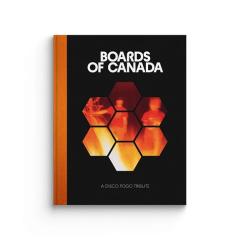

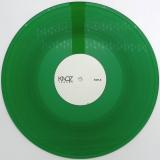






![Ferdinger - Easy Warmth & Quiet Menace [Incl. DL Codes]](https://www.deejay.de/images/l/0/4/1268804.jpg)