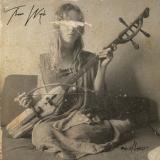
LP includes double-sided print insert. Thorn Wych makes instruments from tree branches; bowed strings, flutes and percussion that she runs through a chain of loopers, pitch bending glitches and delay pedals. Strange songs sung in tongues, mashed up chewed and spat out. As the adder weaves her way through the dirt and mycelium hum, we play in the mud and converse with insects. 'Aesthesis' is Thorn Wych's debut LP that she recorded and mixed herself at home, often performing long improvised pieces, then later editing them down, cutting and pasting and overlaying other instruments. This album takes inspiration from such works as 'The Secret Book of John', the 1940 film 'The Thief of Bagdad', and Lata Mangeshkar's 'Meera Bhajans'. She dedicates her work to the Divine Mother Asherah, Holy Spirit, Guardian of the Tree of Life.
For the best part of the last decade, Dumfries-born, Glasgow-raised Liam Shortall AKA corto.alto has been in his home studio in the Southside of the Scottish city, cooking up frenetic improvisations, diligently wonky productions and genre-spanning compositions with a close-knit group of local collaborators. Now signed to Ninja Tune, the multi-instrumentalist producer, composer and performer announces “SOME SMALL FORTUNE”, which finds Shortall at his most expansive and unpredictably exciting, working with his widest range of features to date, collaborating with the likes of Mick Jenkins, Vector, anaiis, Oscar Jerome, Jacob Alon (Brit Award winner), BINA., Terra Kin and Eriff alongside his longtime Glaswegian band, drummer Graham Costello, Mercury Prize nominated Fergus McCreadie and saxophonist Mateusz Sobieski to produce an electronic, classical, pop and indie-influenced record that extends far beyond the confines of its meticulous making
out of Stock
Last delivered 16 days ago available to reorder, subject to availability
It is virtually impossible to describe with mere words how emotionally powerful this work of art is. Just listen. Listen, listen, listen...
A blissed-out 80-minute epic, Hatchback's Phaser For The Ocean, Chorus For The Moon is his magnum opus, a sprawling masterwork that encompasses ambient, new age and environmental music to wondrous effect. Moving, hypnotic and deeply meditative, it's FFO Mike Brooks, Deuter, Klaus Weiss, Innovative Communication, Harmonia, Cluster, Ashra's New Age of Earth, Stomu Yamashta, Haruka Nakamura, Yoshimura, Hosono, the works.
A record truly deserving of the deluxe Be With treatment, the vinyl was specially cut at Abbey Road Studios whilst the original stunning artwork has been pleasingly expanded. Now, an eye-catching holographic-foil layer moon is set against the original tones, wrapped up in a sumptuous double-gatefold jacket.
Soaked in Californian consciousness and limited to a run of just 500 copies for the world, this release is a treasured balm like no other for these troubled times.
Hatchback is the atmospheric, melodious ambient alias of California-based artist Samuel Milton Grawe. Sam creates music that sings of the Cosmos, full of deep resonant tones, glistening arpeggios, lush pads and harmonic motifs.
"When I first was getting into the creative side of music making in my teens, I was heavily influenced by concept albums like Quadrophenia and The Lamb Lies Down on Broadway, as well as epic pieces that took up an entire side of a record: Pink Floyd’s Echoes, Yes’ Close To The Edge, Klaus Schulze’s Nowhere Now Here, Miles Davis' Shhh/Peaceful and He Loved Him Madly. In the extreme, these ideas coalesced in double albums where each side of each record is occupied by a single title - Yes’ Tales From Topographic Oceans and Tangerine Dream’s Zeit being primary examples. When I returned to making music after moving back to Northern California in 2020, the first piece I recorded landed around the 20-minute mark, and the idea of creating three other long pieces to realize a full album felt like a natural - if indulgent - goal. From there, each new piece followed sequentially. Four songs. My fourth album." - Sam Grawe
Phaser For The Ocean Chorus For The Moon is a pure expression, informed by a lifetime of deep listening unbound by algorithms or AI. These are songs for the sunrise and the sunset - and every colour in between.
out of Stock
Last delivered 13 days ago available to reorder, subject to availability
Desert planet house from inner spaces - the mountain people‘s premiere full EP outside their own imprint. Featuring sand shattering subbasses alongside vintage stabs, wobbling chords and otherworldly chanting. Something you will not dig up easily from your discogs collection and which will further enchant the children of the light.
Play or face the Gom Jabbar.
out of Stock
Last delivered 87 days ago available to reorder, subject to availability
For our 14th release on OCD we welcome Italy’s veteran producer Niki IL B, an artist whose career in electronic music spans decades. Active since the mid-90s, he established himself as an important figure in the early-2000s progressive house scene. Since then, he has crafted a very personal sound that is refined and distinctive, shaped by a long and diverse journey across genres and driven by a deep-rooted dedication to the craft, emerging from a generation that lived electronic music as a true way of life.
This EP is a showcase of Niki’s ability to confidently move through different moods and to draw inspiration from various genres.
out of Stock
Last delivered 42 days ago available to reorder, subject to availability
Bristol's Ben Pest returns to Co-Accused Records with four drops of full-pelt electro and techno on Lacquer of Empathy EP. A respected live artist and producer known for his production nouse, he’s taken his sound to Co-Accused’s Glasgow parties, Tresor and Glastonbury and released across respected imprints that include Mechatronica, Cultivated Electronics, I Love Acid and more. This release is exactly what he’s become known for turning out: rave-touched and highly effective dancefloor material.
The EP opens with 'D-Transfer', a pacey piece of machine funk which leads into ‘Mam Assid’ which right off the bat is an intensive, driving acid techno number. Over on the B Side, ‘Shruthi EB’ is a twisted machine workout, building and rebuilding through distorted synths before locking into a relentless groove. After being self-released on digital format on his own label The Glutch now gets a vinyl pressing on this EP riffing off a mechanical melody over an air-tight beat. To close out the EP is a digital bonus track with a ‘Rolling Edit’ of Shruthi EB.
out of Stock
Last delivered 22 days ago available to reorder, subject to availability
»Ampersand Curve« initiates a brilliant new phase of work by North Manchester’s most elusive artist, best known as Michael J. Blood. His string of ruffkut club bangers, as well as jams with Rat Heart & Samizdat over the past seven years, have made his records a true cult property, and now find him signed to one of the UK’s most foundational techno imprints – more of which later this year.
But under the Sees aegis, he swims in very different waters, following his instincts to use the studio-as-instrument to produce his most impressive, deep-minded work, made from – and for – the heart. Where MJB was all about off-the-cuff club jams cooked for immediacy, his new stylistic switch reveals myriad worlds of influence swirling under the hood, where interrelated spheres of spiritual jazz, dub, ambient, and concrète more clearly light up his rich inner world.
As the story goes, MJB was burgled a few years back and lost most of his studio just as the project was hitting its stride. It prompted a personal review of his practice, re-learning new kit, allowing him to bend the rules. Adopting a sort of first-thought, best-thought approach to composition, the new methodology fuelled a renewed imagination in flux, or what he identifies as Sees: a personalised way of conveying complex emotions. That undoing of musical and mental conditioning opens the walls of his music to vast new horizons. Opener »Ithaca« fathoms sonorous midnight jazz with 10 mins of a plangent, searching sax solo in HD widescreen, like some alternate version to the Blade Runner Love Theme, while a resonant vocoder soliloquy, »Unseem«, reaches into space harmonised between Alvin Lucier and Ron Trent, and »Sheer« chases the devil out of labyrinthine dub dimensions.
The floating dream architecture of »Caprices« caps the LP’s underlying narrative and painterly qualities with a romantic conclusion of blushing pads and shivered, metallic echoes of the subtropical that suggest a coming-to-terms with worries, refreshed and good to go again.
out of Stock
Last delivered 43 days ago available to reorder, subject to availability
No Drama, the imprint founded and curated by Roy Rosenfeld, continues to expand its artistic vision with a sixth release valuing originality over convention. The label has steadily established a platform for forward-thinking electronic music, inviting artists to challenge familiar structures while remaining grounded in musical substance.
The latest release features two tracks by internationally recognized producer Yuvée, known for seamlessly blending live instrumentation with deep house, melodic elements, and organic percussion. While Yuvée appears solo on one track, the other is a collaboration with Omer Inbar, who performs under the name Oi.
The opening track, Lava Core, presents the sound that has earned Yuvée international recognition. Tribal influences unfold through carefully crafted percussion, while evolving textures occupy every part of the stereo field. Every section advances the narrative, allowing the arrangement to grow naturally while maintaining dancefloor impact from beginning to end.
The second piece, Blue, brings Yuvée together with Oi, an internationally acclaimed DJ, producer, and sound engineer whose work bridges psychedelic vibes and groove-driven electronic music. The collaboration introduces greater club energy. Tonal and atonal elements interact with shifting harmonies and evolving instrumental phrasing, creating constant movement without losing coherence.
Rather than relying on formulas, the duo demonstrates the value of artistic perspective in an era increasingly shaped by technological automation. The result is music that balances intellect with feeling, offering a listening experience that remains equally compelling on a festival sound system, in a club, or through focused listening at home.
With its sixth release, No Drama reinforces its commitment to artists who expand the language of contemporary electronic music through craftsmanship, authenticity, and creative ambition.
Composing primarily with the piano, Kotaro Maruyama creates music for a variety of visual media, including commercials and short films. Influenced by the composer Toru Takemitsu, he places importance on the “silence” and "ambience" of sound, aiming to create works where the music quietly depicts a scene.
Kotaro Maruyama's first solo album, "Vapor Curve," is constructed entirely from the sound source of the OP-Z digital synthesizer. Notably, he avoids the concept of harmony for a single tone, instead pursuing a unique "woven harmony" created by intricately layering multiple independent melodies. Using only the OP-Z, and recording everything in a single take without using a computer, Kotaro Maruyama's "Vapor Curve" is distinguished by its uncompromising production style. The minimalist melodies that are layered to create an ambient soundscape, along with the incidental noise that gives an organic texture to the inorganic electronic sound, showcase the raw appeal of sound that is imperfect."
Originally scheduled for release September 2025, this album faced delays due to a series of errors involving the distributor, pressing plant, and cutting engineer. However, earlier this year, Personal Affair teamed up with a new distributor, Rubadub, who introduced them new pressing plant, allowing them to restart the entire pressing process from scratch. Emerging from Tokyo via Glasgow, this release is now ready to deliver a fresh sound to the world."
Manonmars’ 3rd album sees him at his most amorphous and psychedelic, at points sharper and laser focused, and at others more blurred and impressionistic than his previous records. Many of the core players remain the same, all of the production is once again handled by O$VMV$M (the duo of Neek and Amos Childs of Jabu) while Paulina Korobkiewicz (also of Young Echo) makes a return handling both the album’s cover artwork and contributing a series of diaristic field recordings and voice notes.
‘The project references movies, cartoons, fictional characters and video games, among other things. The album title is open to interpretation but all of these elements are forms of visual entertainment which have their own unique ability to transcend things like language barriers and cultural divides. The visual element is key because those details bridge the gap on a communicative level.’ - Manonmars
The album blends abstract, blurred braggadocio with more immediate personal details such as on ‘Volcanic Shield’ a posse cut of sorts featuring Bristol improv luminary Dali de Saint Paul and Franco Franco (½ of cyborg rap duo Kinlaw & Franco Franco) - where Mars recalls;
‘Memories of brighter days, happy meal hit the spot
Mum was spinning vinyl playing Super Ape or Pressure Drop
I would spend the weekend with the Turkish mandem on the block
single parent household, mum was studying or on the job
money came and went always was an on and off
made it back from school time to see what’s on the box’
The beat fades away to leave one of Korobkiewicz’s recordings of Mars’ mum talking about her life in London in the 80s, spending her money on reggae records as an ambient chord fades in like an echo of a jungle intro – stretching out as a link between generations of UK music.
The production by and large is brighter and more kinetic than earlier Manonmars records – with O$VMV$M drawing on everything from modern underground rap and drill through to jazz and acid ambient passages.
London is also a central character here, bustling and constantly shifting, either when bleeding in through field recordings, or as an ever-present backdrop in the lyrics;
‘I’m a fusion of Tippa Irie and Topper Harley
Hit the target like the black Atari
I dropped a tab now shit’s A Scanner Darkly
Got the munchies, Imma yam a sarnie
Pour the Wray and Ting like man at Carni
Exit Peckham Rye and turn left, walk past Hannah Barry
Get your (w)raps up like its January’
‘I've always considered London my home, despite spending some time in the South West of England too. My mum had been living in London for 25 years (...) That was a pretty big deal in some ways because it removed us from multicultural society during the period which overlapped with my teenage years. (...) I never got used to how quiet it was in the countryside (...) Bristol was the closest city to where we lived and it was through travelling there and making connections that I became involved in making music and playing gigs.’ - Manonmars
Mars’ practice as a painter (under his given name Jack Martyn Richardson) and photographer also loom heavy over the album, he cites Paul Verhoeven, Abdul Mati Klariwein and H.R Giger as influences – as well as Miles Davis, Drakeo the Ruler and DJ Rashad.
As with much of Richardson’s work the raps at times feel blurred to a point of almost inscrutability, creating a distance between the audience and himself. A process that ties into his visual work and the way he experiences the world as mainly abstract colour without his glasses. He explores this further in an ongoing visual collaboration with Korobkiewicz, ‘Fun and Games’ which serves as a visual archive of one of London's largest and oldest travelling fairgrounds.
‘I was diagnosed with very severe short-sightedness at the age of seven. I remember my early formative years as visually blurred. Some of my photography reflects this experience of partial vision and uncertainty, referencing memory and perception rather than fixed representation.’
Manonmars’ first public outing as a rapper was at a Young Echo radio event, broadcast shambolically from a practice room just off Jamaica street, Bristol in 2011, as much as things have moved on both stylistically and in terms of focus - strong links back to the city remain a key foundation throughout the collaborations and guest appearances.
‘I have no problem with being an outsider looking in. One of the things I enjoy about London is the anonymity (...) it's easy to be a stranger here when so much is happening. I feel like thats more valuable than people may realise.’
“La Conga Vieja” channels the spirit of the Nickodemus, Quantic and Tempo’s evergreen hit “Mi Swing Es Tropical” - a driving 4/4 groove built on Afro-Latin percussion, salsa piano, and punchy horn lines. What started as an improvised moment at a Puerto Rico show playing a borrowed, decades-old conga became the foundation for this uptempo dancefloor cut. Featuring vocals from Puerto Rican poet Flaco Navaja and trumpet from Carlos Sarduy, the track blends classic Latin rhythms with modern club sensibility. Perfect for DJs moving between tropical, house, and global sets. Includes a bonus beat, radio edit, and instrumental.
This release pairs 'In the Heights' standout Flaco Navaja with Grammy Award–winning trumpeter Carlos Sarduy (Chucho Valdés), delivering a globally rooted, crossover-ready sound. The track comes from internationally respected producer/DJ Nickodemus, whose catalog spans five albums and 11 Turntables on the Hudson compilations, backed by strong digital metrics (52k+ followers, 704k+ monthly listeners, 300M+ streams), including “Mi Swing Es Tropical” (63M+) and multiple other high-performing tracks. The release also features Italian percussionist Gabriele Poso, whose catalog has surpassed 10M+ streams. Nickodemus tours globally to consistent demand, with strong listenership across the USA, France, Spain, Germany, UK, Netherlands, Mexico, Italy, Canada, and Australia. Supported by press in Billboard, Rolling Stone, Complex, The FADER, and Paste, plus global radio (BBC 6, FIP, RFI, KCRW, KEXP).
c 03: La Conga Vieja (Radio Edit) feat. Flaco Navaja & Carlos Sarduy
[d] 04: La Conga Vieja (Rado Edit Instrumental) [feat. Flaco Navaja & Carlos Sarduy]
[c] 03: La Conga Vieja (Radio Edit) [feat. Flaco Navaja & Carlos Sarduy]
[d] 04: La Conga Vieja (Rado Edit Instrumental) [feat. Flaco Navaja & Carlos Sarduy]
out of Stock
Last delivered 45 days ago available to reorder, subject to availability
Joaquin ‘Joe’ Claussell returns to the Spring Revisited project, and he delivers another jazz-infused house mix of a classic funk track by the iconic Fatback Band. Spring Revisited is collaborative project between Ace Records and Acid Jazz, inviting influential house music producers to reinterpret classic tracks from seminal New York label Spring Records, a pioneer in funk, soul and disco. After a series of sell-out and chart-topping 12” and 7” releases, as well as a 2LP compilation, the project continues with these two new mixes of the Fatback Band’s ‘(Do The) Spanish Hustle)’. Claussell combines the original classic funk elements with Latino percussion and samba-styled trumpets.
First up is his 'Sacred Rhythm Version’, which lifts the tempo and loops a section of the original's percussion. Keeping the trumpets, and soulful vocal phrases, he adds a DJ-friendly kick drum and shows off his improvisation skills with a vibrant synth line. On the flip, he strips back some of the drums and horns and focuses on the bassline with the 'Spanish Harlem Dub,' which is a moody rework utilising some funk-infused organ chords. On the original track Joe says: "I can vividly recall the very first time I heard Spanish Hustle blasting through my brother Jackie’s stereo system. Not long afterward, I experienced its energy again on the dance floor at a discotheque known as The Inferno, where it was masterfully delivered by the legendary René Hewitt. The record left an imprint on my spirit that never faded.’ A spectacular continuation of the series, presented in the nowsignature Spring Revisited housebag, resembling an original worn-in promotional 12”, pressed in a strictly limited run!
out of Stock
Last delivered 17 days ago available to reorder, subject to availability
Big Crown Records is proud to present the debut full length offering from Les Imprimés, Rêverie. The stirring and ethereal sounds of Les Imprimés have been making fans of anyone who hears them since their first 7" single hit the speakers. Morten Martens is the man behind the band. Born, raised, and working in Kristiansand, Norway, he keeps a low prole while making his heart felt, highly infectious, and unique music. This album is a long time coming for Martens and it is sure to make him a name to be reckoned with. The first thing you notice listening to Les Imprimés is the high level of musician-ship. Martens plays nearly every instrument on the recordings and handles the production and arranging. He has been making records for decades, winning a Spellemann Award (aka, the Norwegian Grammy) in 2006 for producing a HipHop album as well as getting nominations across three other genres. While awards and accolades speak to the level of his talent, this new album really shows who he is an artist on his own terms. Moving away from being a hired gun on the touring scene naturally led him to start doing more studio work. Slowly collecting gear and getting more experi-ence behind the boards he built his own studio on the island of Odderoya and was making a living playing with and recording other people's music. As the story goes, after those sessions would end he would work on his own project into the wee hours of the night. From these late night sessions, Les Imprimés was born and Rêverie began to take shape. However, "it wasn't until COVID, when things locked down, that I was really able to nd the time to focus on Les Imprimés" Morten says about creating and leading his own solo project. "It was a scary time. But I knew I had to do something with it." He took the sum of his inuences, combined them with his own vibe and got busy writing the music, playing the instruments, and singing the songs. "It's soul music, but I don't exactly have the soul voice," Morten explains humbly. "But I do it my own way, in a way that's mine. "It is his sound, his fingerprint, his sensibility, that makes his music hard to put in a box. The album showcases both Martens' range and his ability to make a cohesive album. The lead single "Falling Away" starts with a raw drum break and turns into a lushly arranged tune that paints the picture of love when it slips away. On "Still Here" he professes his resilience through life's twists and turns over a thundering track that puts a new spin on the B side ballad genre. Songs like "You" and "Our Love" mix tones from 60s and 70s Soul with arrangement nods to Doo Wop records while Martens' lyrics and delivery leave you singing the melodies long after they finish. "Love & Flowers" finds Martens in a moment of clarity with a song that ts the niche sub genre of happy break up tunes, the four on the floor track will move the dancefloor or while the message will resonate with anyone who put too much effort into the wrong situation in their lives. However, it is songs like "Muse" and "Chess" that really encapsulate the uniqueness of Les Imprimés as they push the boundaries of genre, one a profession of love for music and the other a cover of an electronic record respectively. Martens' lyrics, emotion, and delivery truly make the whole thing come together and stand out from any of his peers. There's an infectiousness and a pop sensibility in the writing that is done with the utmost class and taste giving Les Imprimés the rare quality of immediate attraction that only deepens the more you listen.
Nachdem Elvin Jones 1963 gemeinsam mit dem Bassisten Jimmy Garrison, seinem langjährigen Partner aus dem John Coltrane Quartet, für Impulse! Records das Septett-Album “Illumination!” eingespielt
hatte, legte der Schlagzeuger 1965 mit “Dear John C.” sein erstes Album als eigenständiger Bandleader
bei dem Label vor. Obwohl das Titelstück des Albums natürlich eine Hommage an Coltrane war, legte
Jones großen Wert darauf, eine gewisse Distanz zur modalen Musik zu schaffen, die er seinerzeit mit dem
Quartett des Tenorsaxofonisten spielte. Dies tat er zum einen durch die Zusammenstellung des Repertoires,
das neben Stücken von Charles Mingus, Duke Ellington sowie Charlie Parker und Dizzy Gillespie auch einige
klassische Popsongs umfasste. Zum anderen besetzte er sein Quartett nicht mit einem Tenorsaxofonisten,
sondern mit dem Altsaxofonisten Charlie Mariano, der sich zuvor in der West-Coast-Szene einen Namen
gemacht hatte
Obwohl der Bariton Johnny Hartman bereits in den 1940er Jahren mit den Orchestern von Earl Hines
und Dizzy Gillespie sowie mit dem Pianisten Erroll Garner aufgetreten war, erlangte er erst 1963 durch das
brillante gemeinsame Album mit John Coltrane große Bekanntheit. Bob Thiele produzierte für Impulse!
Records anschließend noch zwei Soloalben mit dem Crooner, die seine samtige Stimme und seine subtile
Phrasierung in den Vordergrund stellten. “The Voice That Is!” entstand bei zwei Studiosessions unter
der Regie des Arrangeurs Bob Hammer. Am 22. September 1964 nahm Hartman mit einem Quartett um
den Pianisten Hank Jones jazzige Versionen von Standards auf. Zwei Tage später kehrte er mit einem
interessant besetzten größeren Ensemble ins Studio zurück, um Nummern aus populären Musicals und
Filmen einzusingen, denen mit Perkussion, Marimba, zwei Gitarren und Flöte ein lateinamerikanisches Flair
eingehaucht wurde.
Mariá Portugal has been active in the music scenes of Brazil and Europe as a drummer, composer, singer, and music producer. After graduating in composition, she has focused her research on free improvisation and its possible intersections with popular song. This exploration resulted in her acclaimed album EROSÃO (2021) and in the formation of two groups: the EROSÃO Septet and the EROSÃO Percussion Trio, both based in Germany.
She is also a member of the group Quartabê and has toured and recorded around the world with various artists, moving between pop, free jazz, free improvisation, and Brazilian popular music. She has performed and recorded with artists such as Elza Soares, Anthony Braxton, Joe McPhee, Fred Frith, and Tomeka Reid. She is a member of Fire! Orchestra, Fire! Trio, Endless Breakfast and MONSTER.
In 2020, Portugal was the 13th Improviser in Residence at the Moers Festival. As a curator, she has participated in the Soundtrips-NRW in Duisburg and currently coordinates the concert series “TOMA CHOCOLATE!” in Berlin, besides being the guest curator for this year's unlimited Wels festival. She also composes music for dance, theater, and film, including the award-winning soundtrack for the film “1976”, which earned her the Chilean Film Academy Award in 2025. She was nominated for the 2025 and 2026 German Jazz Prize in the drums and percussion category.
Emilio Gordoa is a Mexican sound artist, percussionist, and composer whose work focuses on sound and performance as primary means of expresion. Based in Berlin since 2012, he has been an active contributor to the city’s Echtzeitmusik scene and is involved in the international avant-garde music community.
His projects include solo and ensemble performances, sound installations, and compositions for film, theater and dance. He has collaborated with a wide range of artists, including Jérôme Noetinger, Ingrid Schomliner, Yuko Kaseki, Burkhard Beins, Don Malfon, John Butcher and Sabiene Vogel. Gordoa’s approach combines experimental percussive techniques with electronic elements, leading to invitations to perform at events such as the Moers Festival, Meakusma Festival in Belgium, A’larme!, and Maerzmusik in Berlin.
He founded WildSonico, a platform for experimental music, and has been part of artist residencies at institutions like the Akademie der Künste and Kunststiftung NRW. He also worked as the Improviser in Residence for the Moers Festival. His discography includes albums such as Substantial Myths (2022), Balderi Variations (2019), and GRIFF (2021), which reflect his ongoing engagement with music. His work has been supported by organizations such as the Goethe-Institut, Musikfonds e.V., and INM - initiative neue musik berlin, and he has received recognition, including an Honorary Mention at the Prix Ars Electronica.
Burkhard Beins was born in 1964 in Lower Saxony and has been living in Berlin since 1995. He is considered a stylistically influential percussionist as a composer/performer, due to his individually developed playing techniques. Additionally, he works with analog synthesizers and live electronics, plays electric bass, and has created various sound installations.
He collaborates as a soloist, as well as with artists such as Chris Abrahams, Keith Rowe, Sven-Åke Johansson, Axel Dörner, Andrea Neumann, and many others. He is also a member of several ensembles including Sawt Out, Activity Center, Polwechsel, The Sealed Knot, Zone Null, Perlonex, Trio Sowari, Vertigo Transport, the NoWave/Krautrock band Slurge, and the Berlin Splitter Orchestra.
Since the late 1980s, he has performed concerts and participated in international festivals for experimental and contemporary music across Europe, America, Asia, and Australia. He has released more than 70 CDs and LPs in collaboration with various artists.
Burkhard Beins has been an Artist-In-Residence at the Künstlerhäuser Worpswede (2009), EMS Stockholm (2014), Muong Studios, Hoa Binh/Vietnam (2015), the Robert Rauschenberg Foundation, Captiva/Florida (2017), as well as at DAR, Drsukininkai/Lithuania (2018), and the Agosto Foundation, Prague (2019).
This Mirror Weighs a Ton, Interpol’s first album in four years and debut for Partisan Records, finds the band turning inward while continuing to move forward. Across the record, reflection, distortion and perception become a lens through which familiar shapes are refracted into something slightly alien, as if seen through a different kind of light.
Produced with Grammy- and Oscar-winning Andrew Wyatt (ROSALÍA, Charli xcx) and mixed by Dave Fridmann, the album introduces vibrant new textures into Interpol’s world. Synthesizers, strings, acoustic guitars and percussion are integrated into the fabric of the songs, expanding the palette while revealing colors already latent within it. Nothing feels imposed. Instead, the additions deepen the band’s language of restraint, atmosphere and tension. At its center remains the creative relationship between Paul Banks, Daniel Kessler and Sam Fogarino, a partnership now approaching three decades and defined by intuitive alignment and momentum that continues to generate new possibilities. The result is an album that feels expansive, uncanny and alive with forward motion, not a reinvention but an evolution that allows Interpol to continue transforming without losing their identity.
“This Mirror Weighs A Ton” / “See Out Loud” is a study in duality, with Interpol moving fluidly between familiarity and departure. The title track unfolds from a skeletal progression into something vast and textural, built from warped bass, a wordless female voice and a sense of motion that feels tidal, bending the band’s familiar language into somewhere more expansive and unfamiliar. By contrast, “See Out Loud” carries the DNA of Interpol’s earliest work, sharp, propulsive and direct, while complicating it through layered vocals, shifting perspectives and a rare lead vocal turn from Kessler. Both tracks reflect the interplay between structure and spontaneity that defines This Mirror Weighs a Ton, expanding Interpol’s world through fresh textures while keeping the instinctive chemistry between Banks, Kessler and Fogarino at the center.
The double single is accompanied by two visualizers directed by Nick Steinhardt.
This Mirror Weighs a Ton, Interpol’s first album in four years and debut for Partisan Records, finds the band turning inward while continuing to move forward. Across the record, reflection, distortion and perception become a lens through which familiar shapes are refracted into something slightly alien, as if seen through a different kind of light.
Produced with Grammy- and Oscar-winning Andrew Wyatt (ROSALÍA, Charli xcx) and mixed by Dave Fridmann, the album introduces vibrant new textures into Interpol’s world. Synthesizers, strings, acoustic guitars and percussion are integrated into the fabric of the songs, expanding the palette while revealing colors already latent within it. Nothing feels imposed. Instead, the additions deepen the band’s language of restraint, atmosphere and tension. At its center remains the creative relationship between Paul Banks, Daniel Kessler and Sam Fogarino, a partnership now approaching three decades and defined by intuitive alignment and momentum that continues to generate new possibilities. The result is an album that feels expansive, uncanny and alive with forward motion, not a reinvention but an evolution that allows Interpol to continue transforming without losing their identity.
“This Mirror Weighs A Ton” / “See Out Loud” is a study in duality, with Interpol moving fluidly between familiarity and departure. The title track unfolds from a skeletal progression into something vast and textural, built from warped bass, a wordless female voice and a sense of motion that feels tidal, bending the band’s familiar language into somewhere more expansive and unfamiliar. By contrast, “See Out Loud” carries the DNA of Interpol’s earliest work, sharp, propulsive and direct, while complicating it through layered vocals, shifting perspectives and a rare lead vocal turn from Kessler. Both tracks reflect the interplay between structure and spontaneity that defines This Mirror Weighs a Ton, expanding Interpol’s world through fresh textures while keeping the instinctive chemistry between Banks, Kessler and Fogarino at the center.
The double single is accompanied by two visualizers directed by Nick Steinhardt.
The 2019-released label debut on Minor by Bristol-based producer Gordon Apps a.k.a. Relapse is another excellent showcase of how the long-standing underground imprint from Leipzig expands its sonic spectrum into dark and dubbed out Halftime Drum'n'Bass without losing its Industrial edge, providing a massive secret peak time weapon with the fluttering low end and seductive vocal snippets of the B-side tune „Multilingual Talk Channel“.
Never officially distributed before this is the first time ever this barely recognized underground gem is available to a wider audience, albeit in highly limited quantities. Limited pressing of 150 single copies on transclucent colour vinyl.
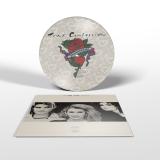
Originally released in 1986, True Confessions captured Bananarama at the height of their global success, blending their infectious pop hooks with the sleek production of Jolley & Swain and the newly discovered dance floor energy of Stock Aitken Waterman.
Featuring the international hit 'Venus' (Top 10 in 20 countries, #1 in 6 countries including the US Billboard Top 100) alongside fan favourites including 'More Than Physical', 'Do Not Disturb' and 'A Trick of the Night,' the album remains one of the defining releases of the 80s.
True Confessions saw Bananarama's transformation from DIY ingenues to MTV superstars. It would begin their imperial phase of peerless hit singles and introduction into the Guinness Book of Records for the highest number of chart entries for an all-female group.
To celebrate 40 years of True Confessions London Records is re-issuing True Confessions across a multitude of formats.
Originally released in 1986, True Confessions captured Bananarama at the height of their global success, blending their infectious pop hooks with the sleek production of Jolley & Swain and the newly discovered dance floor energy of Stock Aitken Waterman.
Featuring the international hit 'Venus' (Top 10 in 20 countries, #1 in 6 countries including the US Billboard Top 100) alongside fan favourites including 'More Than Physical', 'Do Not Disturb' and 'A Trick of the Night,' the album remains one of the defining releases of the 80s.
True Confessions saw Bananarama's transformation from DIY ingenues to MTV superstars. It would begin their imperial phase of peerless hit singles and introduction into the Guinness Book of Records for the highest number of chart entries for an all-female group.
To celebrate 40 years of True Confessions London Records is re-issuing True Confessions across a multitude of formats.
In Walter Benjamin’s seminal essay “Art in the Age of Mechanical Reproduction”, he posits that the aura of art objects is destroyed by the ability to photographically reproduce them. When you had to make a pilgrimage to a work it remained elusive, charged, ever distant; but when you can easily see a reproduction, such aura dissipates. What Benjamin did not anticipate is that in the age of AI and the frictionless fount of digital content, we have imbued mechanical and analog means of media production with aura. Film cameras from the last 100 years are in high demand (the point and shoot Olympus Mju I featured in Wim Wenders film Perfect Days still sells for $200), vinyl sales continue to grow year by year, 35mm and 70mm film screenings have become aura-drenched events people travel across country for, and as to the world of vintage and analog synthesizers, when a friend asked for the price on the Yamaha CS-80 synth used on Toto’s “Africa”, the answer was a cool $60,000.
Despite the ability to simulate almost any synthesizer on a computer, the original physical units retain their mystique. Perhaps this lies in the physical process, many of these synths are temperamental and difficult to fully utilize, and the effort and ingenuity can be felt in ways that will always be absent from easy digital simulacra. Perhaps there is an aura in their imperfection, as Brian Eno wrote: “Whatever you now find weird, ugly, uncomfortable and nasty about a new medium will surely become its signature. CD distortion, the jitteriness of digital video, the crap sound of 8-bit - all of these will be cherished and emulated as soon as they can be avoided.” Some may call this nostalgia, but such sonic imperfections are the sounds of humans interacting with the physical world, and it is understandable to feel a pang of emotion and attachment in a time of exponential alienation.
Marche 22 was recorded over a week at the Museo Del Synth Marchigiano in Macerata, Italy. The museum is filled with rare and obscure synths (especially CRB, GEM & Elka) as well as salvaged materials from a nearby shuttered Farfisa organ factory, including MARS, an unfinished realtime audio processing application developed by IRIS - similar to the now well known MAX/MSP. Kyle Dixon and Michael Stein play a suite of pieces that encompasses the last sixty years of synthesizer music—there are nods to Cluster, Tangerine Dream, Jean Michel Jarre, and Morton Subotnick. Dixon and Stein are like jazz masters playing the American songbook with their own riffs and quotations. What shines through in these varied works that are sometimes rhythmic, sometimes melancholic, and sometimes both, is a soul, a spirit, an emotion vibrating through the tones like the charge of coming rain or the thrum of a distant train on the tracks. - Neil Fauerso
For any other artist, an album like Asher White’s Love Aggregates might come out of a conscious push to treat no idea as off-limits, to make something bold and new. Jubilant art-funk about cocaine addiction—absolutely. Swooning orchestral pop about Jerry Garcia—why not? Rippling electronic noise, jazzy brushed drums, an elderly motorcyclist with dementia, a profoundly emotional bass solo—put them all in one song. There are threadbare folk tunes, glammed-up power-pop bangers, “Sir Duke” horn charts, Morton Feldman string arrangements, layers of guitar feedback like violins made of liquid chrome. Yes, for another artist, Love Aggregates might be the most adventurous album in their catalog. For Asher White, it’s what passes for settling down.
White is 25 years old and has been making records—writing, recording, producing, and playing almost everything herself—for over a decade. She’d released two dozen of them on Bandcamp before catching the indie-rock industry’s attention with 2024’s Home Constellation Study and last year’s 8 Tips for Full Catastrophe Living. The latter album’s dizzy eclecticism and formidable craft landed her on Rolling Stone’s Future 25 list with the likes of xaviersobased and Oklou, along with a slew of other accolades. That came as something of a surprise to White, who didn’t craft the chaotic 8 Tips with a breakthrough in mind. Love Aggregates feels like a chance, for one of the most thrilling musical talents of her generation, at a more deliberate introduction.
She wrote and recorded her new album while her previous one was gathering
momentum, tinkering in the DIY recording studio where she always works, acutely conscious now that people would be listening to whatever she came up with. At around the same time, her years-long romantic relationship ended in a flurry of betrayal and addiction, her first experience of devastating heartbreak. Even so, Love Aggregates is not a bitter album about wallowing or seething, but instead making use of those impulses as raw materials in work that transcends the specificity of its origins, fashioning them into something surprising and new.
When everything around is racing blindly toward ruin, change direction and spin as fast as you can until you defy gravity and rise above the ground into blissful madness. "K-drone", the debut album by three renegades—Jakub Šimanský, Michal Vaľko, and Ján Podracký—is like a hallucinatory Calvary with five stations. Each station is a time-loop capsule, a tiny utopia sneering at the phantom progress of the world outside.
The opening track, "Speedrone", is pure vertigo; for seven long minutes, there's nothing to hold onto. Šimanský’s banjo cuts through the air, Vaľko’s hurdy-gurdy sounds like someone scraping a rusted sheet of metal with a handful of nails, and Podracký’s bass recorder hums like a slowly intensifying migraine. "Sine" is like a train journey through a barren wasteland, where the images outside the window constantly repeat like a bad trip. "Pro DJ" starts like a gig in a bar at the end of the line—a gig that never actually goes anywhere. It’s as if all three are locked in a spasm, their repeated motifs turning into haunting earworms. "Alien Radigue" shifts into a strange idyll in a clearing in the middle of the forest, where an unknown bird species trills in the background. The end and definitive dissolution come in "Slush", where everything suddenly slows down. Šimanský plucks a simple guitar melody, Podracký’s harmonica drifts from side to side like a boat gently rocking by the shore, and Vaľko’s hurdy-gurdy drones like a drunken mosquito buzzing around.
"K-drone" sounds like an acid anti-western movie recorded in a tucked-away burrow, like smoke-soaked folk and experimental campfire songs echoing through a deep forest. It evokes Third Ear Band's "Alchemy", it screeches and repeats like some of Henry Flynt's experiments, and you could easily imagine hearing it drifting from one of the windows on the cover of Hala Strana's eponymous album.
Jakub Šimanský is the bard of Czechoslovak guitar primitivism, an earthy folk sommelier whose fingerpicking you may also know from the duo Šimanský Niesner. Michal Vaľko, aka Line Gate, needs no introduction to fans. He has released three albums on mappa, and his hurdy-gurdy meditations hold an important place in the drone and minimalist music scene. "Den", "Apex", and "Trap" have become essential listening. Ján Podracký is a self-taught composer and musician whom you might know from various participatory music projects, such as an orchestra where all the players play diatonic harmonicas. Besides harmonicas, he has long explored a wide range of flutes. In short, a pied piper who will guide you through other worlds.
Released in 1993 and never reissued on vinyl since, this album was recorded at Music Works Recording Studio, which was renamed that same year Anchor Recording Studio, well known among reggae enthusiasts. It was produced by Doctor Dread and mixed at the prestigious Lion & Fox Recording Studio, the American base of the RAS Records label.
The line-up is impeccable, featuring of course Flabba Holt on bass, Tee Bird on keyboards, Dwight Pinkney on guitar, and Sky Juice on percussion—in short, the full Roots Radics line-up.
As usual, Skelly, Wiss, and Apple take turns singing lead while the other two enhance the vocals with high-pitched melodic harmonies.
In a Roots Rock Reggae vein, this album is a cornerstone of the group’s discography, presented to you remastered, with a sound it had never been given before. The 180g vinyl pressing, glossy finish, and 350g sleeve make it a choice piece for all lovers of quality Roots reggae.
Morgan Noise erschaffen mit ihrer Musik eigene Welten, in denen sie Jazz-Sensibilität und alternative Experimentierfreude mit Singer-Songwriter-Flair verbinden. Alle vier Mitglieder, darunter Musikerinnen der Bands Fat Dog und Flur, verfügen über einen Jazz-Hintergrund. Ihre Improvisationskunst ist entscheidend für die Entfaltung und Weiterentwicklung der Songs. Inspiriert von den Klanglandschaften von Saya Gray, Nilüfer Yanya und Astrid Sonne, schlagen Morgan Noise eine kunstvolle Brücke zwischen komplexen Emotionen und klanglicher Präzision, lyrischer Nuancierung sowie künstlerischer Klarheit. Zu ihren bisherigen Erfolgen zählen Auftritte beim Green Man Festival sowie eine Live-Session für Riley & Coe. Nach der UK Support-Tour für Porridge Radio steht nun die Veröffentlichung ihres Debütalbums an – ein Werk, das vom Lebensgefühl der frühen 2020er-Jahre und den Erfahrungen während der Tourneen in dieser Zeit inspiriert ist.
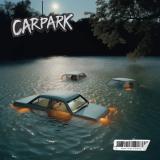
Carpark are the kind of band that turn everyday frustration into something loud, sharp, and impossible to ignore. Their debut EP *Born to Be Average* leans into the chaos of modern life with biting lyrics, jagged guitars, and a raw, unfiltered energy that feels both familiar and defiantly unpolished. Across five tracks, they blur the line between self-deprecation and quiet rebellion, capturing the sound of a generation stuck somewhere between apathy and ambition. It’s messy in all the right ways: honest, hooky, and built to be played loud on repeat. Pressed on vinyl, this release isn’t just a record, it’s a statement that being “average” was never really the point.
Eighteen months on from the runaway success of The Only Place I Know — the debut that crashed in at #1 on the ARIA charts and #2 on the ARIA Vinyl Chart — Lake Macquarie's Surf Trash are back, and they're not watering it down. Their sophomore album No Chaser lands neat, on the rocks, no apologies: ten tracks of melodic surf-pop-punk hammered out by a band that has clearly spent the last year sharpening every edge.
It's a record you can hear the kilometres in. Between The Only Place I Know and now, Andrew Scott, Lachlan Jackson, Patrick Russell and Nick Scott have torn through a sold-out national run, criss-crossed the UK and Europe, and made a habit of leaving rooms louder than they found them. No Chaser carries the dust from all of it — bigger choruses, leaner production, a touch more bruise underneath the gloss. There's still that windows-down, salt-on-the-windscreen feel that made the debut impossible to ignore, but it's wired into songs that swing harder and cut deeper. Less wistful afternoon, more last-light drive home with the volume creeping up.
The four-piece make melodic surf-pop-punk that sounds great turned up loud — driving in your mate's car on the way back to the beach. Their debut, The Fire Note wrote, "delivers a dynamic debut… blending raw energy, introspective depth, and timeless indie rock flair." Manchester World called their first show on UK soil "epic… high energy and great song after great song," and the live reputation has only grown since: a band that's earned every inch of the ceiling it now hits.
No Chaser is the sound of them no longer waiting for permission. Singalong harmonies, fast tempo changes, good old-fashioned rock 'n' roll with a sense of urgency.
American experimental composer Stephen O’Malley releases Avaeken, two sides of immense, immersive, self-annihilating music via Dais Records.
The record preserves site-specific work: O’Malley installed Avaeken as part of Wish You Were Here, the exhibition by renowned American artist Banks Violette, underscoring the tension between presence and absence, life and loss.
O’Malley and Violette have developed a distinct language of sound, space, and sculpture over the past two decades, reverberating through the walls of world-class institutions from The Guggenheim and Centre Pompidou to prominent galleries such as Maureen Paley in London, Gladstone Gallery in NYC, and Antwerp’s TICK TACK, the brutalist space where Wish You Were Here unfolded in early 2026.
Emerging now as an LP, Avaeken presents power and phenomena: low-frequency vibrations, deep oscillations, and phase cancellations that translate as innately effective in any environment. Violette’s visual expression — the impossibility of locating yourself within the loss of a friend and the broader decay of culture — now fills the LP sleeve and feels inextricable from O’Malley’s sound, both still without resolution.
“Natural harmonic tone coloured by the valves of the amplification is the one desired characteristic,” reads the initial notes.
“At first I asked, why would I write for another guitar player?” he says. “I realized how amazing it is to be a listener on the other side of the music; together we were able to try all these precisions with intonation, harmonics, specific microtonal ideas.”
The quartet performed Avaeken several times before O’Malley joined them for a recording session at Muziekcentrum De Bijloke, a 13th-century former hospital with modern acoustics in Ghent.
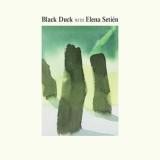
The Chicago trio of Black Duck is a natural fit for collaboration with acclaimed Basque musician Elena Setién. Black Duck"s bassist/guitarist Douglas McCombs, guitarist Bill MacKay and drummer Charles Rumback have been lauded for their adaptability as live performers and collaborators for decades, performing in countless ensembles from Tortoise to Brokeback to collaborations with Ryley Walker, Bill Callahan, James Singleton and many more. Setién honed her improvisational skills in duo Little Red Suitcase before going on to collaborate with the likes of Steve Gunn, Mary Lattimore, and Glenn Kotche (Wilco) to name a few. Black Duck and Elena Setién"s combined preternatural ability to converse at the boundaries of improvisation and composition makes for fertile ground in which every subtle gesture carries weight. On their debut, self-titled collaborative release, Black Duck and Elena Setién alchemize the ease of their live chemistry and their wealth of experience into a refined menagerie.
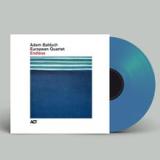
Die Transparent Blue Vinyl-Edition der auf Act Music erschienenen "Endless" LP von Adam Bałdych European Quartet ist erschienen.
Das Album dokumentiert ein kammermusikalisch geprägtes Quartett, das Adam Bałdych mit drei ausgewiesenen Persönlichkeiten der europäischen Improvisationsszene versammelt: Daniele di Bonaventura am Bandoneon, Jacob Karlzon am Klavier und Michel Benita am Kontrabass. Diese Besetzung öffnet einen weiten Klangraum, in dem Streichergesten auf die dunkleren, erzählerischen Farben des Bandoneons und das harmonische Feingefühl des Klaviers treffen. Konzertankündigungen und Pressetexte nennen die beteiligten Musiker und stellen die gemeinsame Arbeit als zentrales Element des Projekts heraus.
Musikalisch führt "Endless" die Ausdrucksformen zusammen, die Baldych über Jahre geprägt haben: die Verschmelzung von jazzimprovisatorischer Freiheit mit Elementen der europäischen klassischen Tradition und Anklängen an Renaissance-Polyphonie. Die Arrangements setzen auf dichte, dialogische Interaktion und erlauben solistischen Entfaltungsraum bei gleichzeitigem Fokus auf feine dynamische Nuancen. Typisch für Baldych ist die Kombination aus virtuoser Artikulation und lyrischem Tonfluss, wodurch der Violinklang zur treibenden Stimme einer kammermusikalischen Erzählung wird.
Die "Simple Game" LP von Sendecki & Spiegel erscheint auf Skip und führt das Duo mit einem reduzierten, zugleich präzisen Programm zusammen, das Klavier und Schlagzeug in den Mittelpunkt rückt.
Im musikalischen Zentrum stehen kompositorische Kürze und ein feines Gespür für Raum: filigrane Motive und pointierte Rhythmen wechseln mit offenen Passagen, in denen die beiden Musiker gegenseitig Impulse geben und Formeln aufbrechen. Die Stücke bewegen sich zwischen modernem Jazz, lyrischer Improvisation und Momenten, die an die introspektiven Tendenzen zeitgenössischer Klaviermusik erinnern. Dadurch entsteht ein ausgewogenes Gleichgewicht aus Struktur und Spielfreude, das dem Duo eine eigene Klangsprache verleiht.
Vladyslav Sendecki bringt seine Erfahrung als international gefragter Pianist ein; Jürgen Spiegel ist als Schlagzeuger des Tingvall Trio bekannt und in verschiedenen Rollen als Live‑ und Studiomusiker aktiv. Die Zusammenarbeit baut auf beiderseitiger Vertrautheit und langjähriger Praxis im Jazzbereich auf, wodurch Arrangement und Interaktion klar konturiert wirken. Frühere Veröffentlichungen des Duos zeigen denselben Fokus a
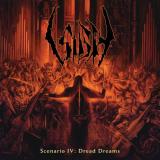
Euronymous’ Deathlike Silence Productions in 1993, & with each subsequent release, Sigh grew to become one of the country’s greatest & most revered metal exports. With a journey through the strange & the psychedelic, incorporating a whole eclectic mix of genre styles & experimentation throughout their career, Sigh has remained a vital creative force in the avantgarde field whilst maintaining their old school roots, as witnessed with the stellar 2022 album, ‘Shiki’. 2025 also saw Sigh remaking their ‘Hangman’s Hymn’ album for a release on Peaceville as part of the band’s 35th anniversary celebrations, in the shape of ‘I Saw The World’s End: Hangman’s Hymn MMXXV’.
With the ongoing early line-up of Mirai Kawashima, Shinichi Ishikawa, & Satoshi Fujinami, ‘Scenario IV: Dread Dreams’ was the band’s fourth studio album, originally surfacing in 1999. This was also notably the final title in partnership with Sigh’s then-label, Cacophonous Records. Delving evermore into the experimental side of music to conjure an interlinked gallery of twisted soundscapes; ‘Dread Dreams’ became more of a journey into the realm of psychedelia & rock over black metal, with this Zappa-inspired odyssey acting as somewhat of a direct pre-cursor to what was to follow with the celebrated ‘Imaginary Sonicscape’ opus.
‘Dread Dreams’ was once more recorded at Shinjuku On Air Studio with J. Yamada, with a selection of guests including Damian Montgomery of Ritual Carnage lending lyrics plus guest vocals, along with King Fowley (Deceased), & Killjoy (Necrophagia) supplying additional song lyrics. Cover art came courtesy of renowned artist Joe Petagno (Motörhead, Autopsy).
Continuing with Peaceville’s re-issues of Sigh’s classic works, this edition of ‘Dread Dreams’ contains a new master created by Patrick Engel at Temple of Disharmony.
The release also includes a new interview with main-man Mirai Kawashima conducted by Dayal Patterson of Cult Never Dies, with his thoughts, influences & reflections on the album & its challenges.
John Tchicai (1936 – 2012) was one of the most important free improvising saxophonists of the 20th Century: an artist of rare vision and aptitude whose lines soared and stood out even in the most hallowed company, and whose body of work as a leader / composer is among the most singular and distinct within the entire canon of that music. But Tchicai’s importance doesn’t end there. Born in Copenhagen, Denmark, to a Danish mother and a Congolese father, his life and career represent a crucial bridge between the European and American traditions of free jazz. Initially trained on violin as a child, Tchicai shifted his focus to the clarinet and alto saxophone during his mid-teens, and began touring Europe as a professional musician by his early 20s, which landed him at a socialist youth festival in Helsinki, Finland, where he met the trumpeter Bill Dixon and saxophonist Archie Shepp. Impressed by what they heard, Dixon and Shepp encouraged the young saxophonist to move to New York, and in so doing changed the history of jazz forever.
Tchicai’s arrival in New York marks the rare occurrence of a European player joining the intimate circle that was first wave of American free jazz. Following his landing in the city in November of 1962, in addition to regularly sitting in with Don Cherry’s group, Tchicai began playing with Bill Dixon's band alongside Archie Shepp and Roswell Rudd, forming the nucleus of the foundation of the New York Contemporary Five - one of the most important groups of the era - which counted Tchicai, Shepp, Cherry, Don Moore, and J. C. Moses as its members. From the ashes of this group, Tchicai would go on to found the legendary ensemble, New York Art Quartet, with Roswell Rudd, Milford Graves, and Lewis Worrell, as well as working within Albert Ayler's band, recording “New York Eye and Ear Control”, Shepp’s band, recording “Four for Trane”, the ensemble that recorded John Coltrane's “Ascension”, and the Jazz Composer's “Orchestra”.
By the time he decided to return to Denmark in 1966, had Tchicai chosen to record little else, his legacy within the history of music would have been ensured. Incredibly ambitious, his arrival home marked the beginning of an incredible period of activity which saw him radically expanding his creative explorations, which by the end of the decade would include becoming a founding member of Amsterdam's Instant Composers Pool and helping to record John Lennon and Yoko Ono's “Unfinished Music No.2: Life with the Lions”. This, however, was proceeded the formation of a new orchestra, Cadentia Nova Danica, led by Tchicai, dedicated to radical cross-disciplinary exploration. Remaining together between 1966 and 1971, the group and its shifting membership regularly fell into collaboration with artists and composers, notably Musica Elettronica Viva, who existed beyond the realms of jazz, as well as participating within multi-media events that incorporated the visual realms.
Cadentia Nova Danica’s only two LPs - “Cadentia Nova Danica” (Polydor, 1968), and “Afrodisiaca” (MPS, 1969) - are effectively Tchicai recorded efforts as a leader, and are legendary. There’s little mystery, once heard, why the later landed on Thurston Moore’s iconic “Top Ten from the Free Jazz Underground”, published by Grand Royal in 1996. Sadly, despite playing extensively during their five year run, with exception of a CD documenting a performance at Jazzhus Montmartre, in 1966, until now there has been no other publicly available recordings that allow us to capture a glimpse of this astounding band at work. Alga Marghen / Formalibera’s vinyl pressing of a never before released body of recordings, made in Copenhagen between 1969 and 1970, changes that in the most exciting of ways.
Comprising three pieces - “Mc Gub Gub, (I–VIII)”; “Ode to Skt. John”; and “Pladepip” - the material on this stunning LP comes from two specific events. The first, which encompasses the first side, “Mc Gub Gub, (I–VIII)” was recorded by Cadentia Nova Danica - in this instance, Tchicai, Sune Weimar, Theo Rahbek, Christian Kyhl, Niels Holt, Jørgen Thorup, Michael Schou, Morgens Bollerup, Allan Gregersen, Ole Matthiessen, Pierre Dørge, Willy Jaegert, Anthony Barnett, and Jon Finsen - on May 29th, 1969, at the ABC-Theatre in Copenhagen. Penned by Tchicai, the piece is a sprawling, evolutionary composition at the outer reaches of free jazz, rooted in large blocks of colliding tonality and rhythm - a sound only accessible to larger ensembles - that push territories explored by Charles Mingus to previously unimagined heights, threaded by moments of hard blown fire. Writhing like a stormy sea - skronking and devilish - “Mc Gub Gub, (I–VIII)” is a work of profound complexity that singlehandedly illuminates not only Tchicai’s singular vision as a composer, but also the power and uniqueness of Cadentia Nova Danica during the band’s most vital period.
The two pieces - “Ode to Skt. John” and “Pladepip” - taking up the flip side, were recorded on February 21st, 1970, at the Danish Broadcasting Corporation’s Radio House, and are the outcome of Cadentia Nova Danica’s extended residency there between 1969 and 1970. In many ways, these two recordings offer some of the best insights into the broad collaborative approaches that defined the band, in this case encountering them working with Danish experimental composer, Svend Erik Werner, who was among the earliest in his country to embrace stylistic pluralism and the use historical forms within a modern context. “Ode to Skt. John” - based on aspects of Gregorian music - was penned by Werner, incorporating heady improvisation by the members of Cadentia Nova Danica, this time made up by Tchicai, Sune Weimar, Hugh Steinmetz, Theo Rahbek, Christian Kyhl, Michael Schou, Morgens Bollerup, Ole Kühl, Torben Enghoff, Mauritz Tchikai, Kjeld Ipsen, Willy Jaegert, Ole Matthiessen, Ole Thilo, Pierre Dørge, Steffen Andersen, Jon Finse, and Clause Bøje. The piece is a fascinating binary of the composed and improvised, utilising the band’s large scale to introduce a remarkable sound within its slow progressions and furious, driving free moments, in this incredible meeting of worlds.
The album’s final piece, “Pladepip”, is arguably its most historically significant: an entirely singular piece, unlike anything in Tchicai’s recorded canon as his foray into musique concréte. Drawing upon two recordings of full-band improvisations by Cadentia Nova Danica, for its creation Tchicai also gouged the surfaces of 78rpm records in his collection to skip and create repeated phrases and patterns, creating a stunning sound collage of hard angles and abrupt phrase, that creates a striking counterpoint to the band’s flowing improvisations that bookend those passages. The result is an engrossing listen and easily one of the most unique and culturally important gestures in the entire history of musique concréte.
Truly incredible, Alga Marghen / Formalibera’s vinyl pressing of this never before released body of recordings, made by John Tchicai’s Cadentia Nova Danica, in Copenhagen between 1969 and 1970, offers an unprecedented window into one of the most important groups working in Europe during that period, significantly expanding their rare and slim discography to date. Accompanied by extensive exploratory liner notes by veteran jazz writer, Ed Hazell, this is easily one of the most historically important archival releases of the year and is impossible to recommend enough. Absolutely essential on every count.
The latest report from Fader Cap’s Mannequin World suggests rising pressure pon de dance floor.
Conditions continue to deteriorate – percussion has become more insistent, someone keeps messing with the lights, and what’s with all the ducks?
This music was made for a hybrid live set at Miscellania (Naarm) with Skydiver Records.
Heavyweight vinyl.
300 units.
out of Stock
Last delivered 20 days ago available to reorder, subject to availability
Anjunadeep Explorations delivers a third vinyl sampler, marking the label’s 100th release and two years since its launch. Anjunadeep, the imprint’s parent label, has become “one of dance music’s ultimate tastemaker labels” (Billboard), best known for breaking global artists like Ben Böhmer, Lane 8, Tinlicker and Dusky. The ‘Explorations’ imprint is an evolution of the much-loved Various Artist EP series of the same name, which spanned 25 editions between 2016-2023 on Anjunadeep. Responsible for bringing through now-mainstay acts to the label such as Ben Böhmer, CRi, Luttrell, Rezident and Simon Doty, the series also featured underground talents like Theo Kottis, Sam Goku and Gacha Bakradze. Between the label’s launch in July 2024 and the release of this sampler, the label has introduced just under 50 acts to the Anjunadeep label group, comprising just shy of half of the label’s output so far, and with a release schedule booked until 2027 shows no signs of slowing down.
The latest vinyl sampler features six exciting tracks showcasing fresh talent like British duo josh & sam who are twins and Argentina’s Rossie, alongside established names including the widely-respected lo-fi producer dj poolboi. In keeping with the imprint’s ethos, the product also sees three further label debuts from AFFKT, foglight and Giom respectively hailing from Spain, Lebanon and France
out of Stock
Last delivered 38 days ago available to reorder, subject to availability
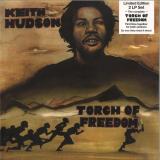
Limited edition 2LP set - for the first time together the complete Torch Of Freedom sessions. The acclaimed follow up to the classic 'Pick A Dub' and 'Flesh Of My Skin' albums. Original raw Mamba label Jamaica mix plus Keith's UK re-mix and re-sequence. Includes bonus dub 'Crying' previously only available on rare import 7" single.
Features the classic 'Turn The Heater On' as covered by New Order. Extensive sleeve notes by Keith Hudson biographer Vincent Ellis.
out of Stock
Last delivered 50 days ago available to reorder, subject to availability