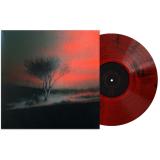
"After being praised as one of the best releases of 2025 by multiple platforms, the highly praised debut album from Obeka lands on vinyl via YUKU.
The rhythmic dynamics and emotive attitudes of A World No More captures the density of soundsystem culture in Obeka's ancestral roots. YUKU presents the Bermudians debut album capturing a Neo-Colonial dystopia, protest and Afro-Futurism hyperextended through decaying sonic structures of a dark past and its grievances which very much exist today.
Growing into adulthood within the walls of British and European Colonial systems meant the disconnection and lostness in a new country hid me from the world at a young age. Unlike London's vast and culturally engaging migrant communities, the industrial milling town of Stockport introduced a coldness towards people from other countries I experienced in my first year after relocating from Bermuda. I couldn't understand why. Whether cold words thrown towards me or actions upon other people who look like me, it has shown to be a dooming societal virus with no cure. The most comfort was found through what was familiar - drums and rhythmic spirituality of my homeland. It was a safe-haven, a place to empty the anger and confusion. It's been 15 years since relocating and as my sound evolved, it seems classism, racism, oppression and civil control of ethnic peoples has become worse - even now more legalised and normalised. Ogun (a powerful Yoruba deity associated with anger, justice and war) acts as the opening sequence of the record and its symbolism. Using distorted bass frequencies and dissected Regga-Dub immersed in live-sampled ghostly voices of the lost ones. This sonic exercising is also applied in Drillaman - a stampede of industrial framework and metallic instruments wielded over moody Dancehall MC'ing, magnifying two parallel worlds in cocooned evolution. The resurrection of Transatlantic African cultures and identity have never been silenced, rather carried elsewhere through trade routes of enslavement, which was pivotal when composing and completing the album upon returning home to the Caribbean for the first time ever. After reconnecting with my heritage my blurred vision of what's wrong in the world became so clear. Guidance in empty plains seek truth throughout the pain - A statement of finding oneself expressed on the poetic closing track A World No More.
On Fawohodie (A West African Adinkra symbol that represents independence, freedom, and emancipation stamped on the album cover) the motive and atmosphere begins to change. Afro-Caribbean idealism which refers to the philosophical concept that emphasizes the interconnectedness of individuals and the importance of community, often contrasting with Western individualism, begins to take shape in a new universe. We can co-exist. The track framework uses machine-led software forming frequencies we have no control over, then manipulated through decomposing soundscapes, scattered hand-drums and human-made weapons of control - exposing the hidden disparity that's been carried over generations whilst balancing hopeful and musical foundations towards equality and peace. On Pressure and Kuduro! the writing direction attempts to wake people up. Not settling for a composed approach like in past projects, quite the opposite. A call for native sonic awareness, dismantled vocals of protests, eroded percussion using chains, gears and motorised harmonies sculpted in challenging abstract behaviors far outside my comfort zone. A direct abrasiveness and weight I want people to feel, whilst finding hope and solace through enchanting choirs and hypnotic basslines in complete synchrony.
"Purity in sound manifests when you least expect it. The smallest memory or feeling grows from a seed into a sonic language that you, and only you can interpret and release back into the world." "
Gap Mangione's monumentally influential Diana In The Autumn Wind. AKA BEWITH200LP. And, without question, Be With's White Whale.
They said it could never be done. And with good reason.
We've spent the past 12 years trying to license this legendary 1968 recording from Gap and, after much work, it's finally here. Remarkably, this is the first ever vinyl reissue of Gap Mangione's Diana In The Autumn Wind, produced with the full and extensive participation of Gap. An exceedingly rare album, it's been coveted by funk, soul, jazz and hip-hop sample fiends for decades.
It's unarguably *the* most sought after album for J Dilla / Madlib sample collectors. It has also been brilliantly sampled by A Tribe Called Quest, Large Professor, Ghostface Killah, Kendrick Lamar and Talib Kweli.
But this record is so much more than a sample-spotters curio. It's solid gold throughout. Bursting with killer funky-jazz grooves and tracks adorned with warm electric piano, the release is notable for featuring some extremely significant players at the very outset of their careers; Tony Levin, at 21, whose superb playing on both acoustic and electric bass was the harmonic mainstay of the trio and Steve Gadd, at 23, one of the greatest drummers of his generation.
With acceptable copies of this holy grail changing hands for $400, to call this reissue "much-needed" underplays just how vital it is. Gap's story is told in his words alongside rare photos across a sumptuously designed 2-page insert and, to augment this deluxe edition further, its all wrapped up in a beautiful, no-expense-spared luxury tip-on sleeve, as per the original hens-teeth release. And, while we're talking packaging, just take a look at that cover - a work of art in and of itself.
The tracks are short but complex, with that extraordinary rhythm section backing the beautiful piano, organ and electric piano work of Gap. It's like the best ever library funk breaks record you never heard - but all your favourite golden age rap producers were all over it, long ago. It's a stunning blend of the vibrant, driving music of the Gap Mangione Trio coupled with the sensitive composition and superb orchestration of Gap's legendary brother, Chuck Mangione, who helmed an amalgam of seemingly disparate elements – rock, big band jazz, solo improvisation and "classical" music - into a spectacularly cohesive whole that has aged wonderfully well. As Gap himself notes in the liners, "with this group I was able to explore and add new and exciting elements from rock, Brazilian and then-current pop music."
Opener "Boy With Toys" triumphantly swaggers out the gate, all big band horns, flutes and dextrous organ work. The synthesis of everything going on is nothing short of stunning. When one wise YouTube commentator called this tune "old school superhero music", Gap agreed. Rap luminaries did, too, amongst them Talib Kweli, who rapped over DJ Scratch's chopped up intro for "Shock Body" on his Quality album back in 2002.
You've barely recovered from that incredibly affecting opener when you get hit over the head with the exquisite title-track. And now you see how two of the greatest beats of all time emerged from one single track produced nearly 50 years earlier. Unforgettably utilised by Dilla for Slum Village's heartbreakingly good "Fall In Love" and then Madlib for his "Official" beat for Dilla to rap over, on the Jaylib record. Regardless of the records it went on to spawn, this is just a staggering tune in its own right. Be beguiled by the flutes and the flutter tonguing, the counter-melody from the trombones, the soprano sax solo. All of it. Simply beautiful.
The questing organ and horn workout "Long Hair Soulful" deserves a lot more attention, overshadowed somewhat by the opening two monsters but no less fantastic. It swings, it grooves and Gadd and Levin truly cook. Up next, Gap's wonderfully percussive, mellifluously piano-heavy cover of "Yesterday" by some fellas called The Beatles. It's a subtly arresting gem. "The XIth Commandment" is damn fine, with thick, gorgeous electric piano and snappy drum work underpinning chaotic soundtracky horns. To close out the side, "St. Thomas" showcases the "fourth" member of the Gap Mangione Trio, conga drummer Dhui Mandingo. Having performed with the Trio since 1965, Dhui‘s African-based and jazz-latin-influenced style amazed listeners and its way to hear why.
Opening the B-Side, standard "You're Nobody Till Somebody Loves You" breezes along in the late-night jazz club fashion before things get super deep with the outstanding and - up to now - un-sampled "Pond With Swans". It's simply heavenly, and how its moody, melancholic intro has yet to be pilfered is anybody's guess. It oscillates between gentle, sombre movements and bombastic grooves, equally hypnotic and joyous. The rendition of "You Are My Sunshine" is yet another showcase for Gap's virtuoso playing and Gadd's mastery of the pocket. Indeed Gadd's drumming on "Free Again" is nothing short of neck-SNAPPING! Ghostface took it for not one but two "Iron's Theme" tracks across his seminal Supreme Clientele. It's got that Galt MacDermot "Coffee Cold" feel. Suuuuuper cool. The frantic "Dream On Little Dreamer" hurtles along and must've surely had the whole room absolutely swinging from the chandeliers back in Rochester in the late 60s. The album closes with the magnificent Graduate Medley, featuring memorable renditions of "Scarborough Fair", "The Sounds of Silence" and "Mrs. Robinson". The warm electric piano lines of the former were sampled by The Ummah (Dilla again!) for Tribe's "Pad & Pen" from their reappraised final album, The Love Movement, as well as by Large Professor on his much-loved "The LP (For My People)".
Under the watchful eye - and extremely attentive ears - of Gap Mangione himself, the audio for Diana In The Autumn Wind has been carefully remastered by Be With regular Simon Francis, with a few much needed tweaks here and there, according to the artist's wishes. At the prestigious Abbey Road Studios, Cicely Balston's expert skills have made sure nothing is lost in the cut whilst the records have been pressed to the highest possible standard at the always stellar Record Industry in Holland. The artwork restoration has taken place here at Be With HQ and has that drop-dead gorgeous cover artwork popping like new. Buy on sight!
Our latest Holy Grail reissue is this private press spiritual jazz gem out of California from Rickey Kelly and his vibes & marimba. Features Diane Reeves (vocals) & Adele Sebastian (flute)!
Heavyweight 180g LP with tip-on sleeve, individually numbered 1-1000, card enclosed for liner notes & audio download
"Rickey, I know these are your friends, the guys you went to school with, but if you wanna record an album, you record with musicians who have been playing their whole life; whatever you write, they'll put their whole life into it. You play with your friends; they may not even play in tune."
These are the words of Slave guitarist Kevin Johnson, and they were to change the course of young Rickey Kelly's life.
It was 1978, and music student Kelly had approached Johnson with a tape of rough demos of some songs he'd written. A San Francisco native, Kelly had recently moved the short distance south to study music at LA City College in East Hollywood. He was a member of E.W. Wainwright Jr.'s African Roots of Jazz, and was spending up to 10 hours a day in practice on both vibes and marimba. He also played with Horace Tapscott, and had his own band made up of fellow students, but it was his ambition to make an album that led to the conversation with Johnson. It was a turning point in his education, and a decision was looming.
The next thing Johnson said was "You call the best jazz musicians. How'd you like to play with Billy Higgins?", a line that would seal it for anyone; for a youngster like Rickey just starting out in the business, you just don't turn down the opportunity to play with the likes of highly accomplished musicians, especially those of the calibre of legendary jazz drummer Billy Higgins.
Some calls were made and the date was set to record at Studio Masters on Beverly Blvd, a studio set up just a few years previous in 1973, owned and operated by Dot Records founder Randy Wood with his son John. Some of the other music professionals set to record with Kelley that day were flautist Adele Sebastian, bass player Tony Dumas, saxophonist Charles Owens and vocalist Diane Reeves, none of whom had previously played with Kelly before.
Kelly was impressed with the studio, with the gold records displayed on the walls and the famous musicians hanging out. 'It took a lot of humility for me to record with them, I mean I was nobody, nothing, and for not a lot of money either' remembers Rickey in a later interview with Calvin Lincoln, 'It taught me a lot, to practice hard, and study for the rest of your life, to give your all, and there's a lot of all to give'.
As the recording session took place, John Wood was listening in. He was impressed. Kelly didn't have the funds to manufacture and release the album himself, so Wood suggested it was pressed up on his in-house studio label, Los Angeles Phonograph Records, and thus the LP 'My Kind of Music' was released early in 1979. The album also saw a subsequent pressing soon afterwards on Dennis Sullivan's New Note label.
Kelly remains humble and proud of his debut album to this day. 'I was still a beginner' he says, 'These masters walked in, smiling, and gave me something worth gold'.
"Melodic, dreamy bedroom pop with a nostalgic sheen" is how Tom Davies, creator of brand new dream-pop artist Flopsy's dream, describes this charming little album.
Some of you may know him as GeoWizard; the mad British adventurer/YouTuber who travels in straight lines, but here you get to see or indeed hear a completely different side to him - one that sings in soft, tuneful tones reminiscent of Damon Albarn or Ray Davies, builds ethereal, layered harmonies that wouldn't sound out of place on a Fleet Foxes track, and crafts gorgeous guitar and synth parts that could easily have come straight out of John Frusciante or Kevin Parker's handbook.
Written in a young Davies's bedroom between the years of 2008 and 2014, the songs themselves are far from brand new, but with the help of his good friend and writing partner Liam Rhodes (with whom he played in Birmingham Psychedelic outfit "Kinds of light"), Davies has brought these sentimental tracks to life whilst keeping them bang in line with their original vision.
The result is an album that doesn't really fit into any specific genre, in fact you could argue it's just regular old generic pop, but there's an innocence and a playfulness in there that disarms the listener and transports them to a simpler time when melody ruled supreme.
4am Kru make a return to vinyl with the Love On The Line EP, an exploration of the familiar, bittersweet story of a romantic relationship between two people, from start to finish.
Across seven tracks led by collaborator Layla Sibelle, we feel every facet of this universal human experience. Exploring the more vulnerable shades of 4am Kru’s proven dancefloor technique, each track on the Love On The Line EP shakes sound systems, while staying true to the record’s emotional core.
From the tingle of excitement depicted on 'Rush', to the disappointment of being let down on ‘Boy’, the relationship ending on ‘Hush Now’, alongside everything in between, Love On The Line EP keeps bodies moving, while pushing the sound and songwriting of 4am Kru in unexpected new directions.
Last year, following the special vinyl 45 release of Samba De Flora - the Romero Bros from Argentina presented a full LP of Latin and Brazilian club flavours to be exclusively distributed worldwide on vinyl by Echo Chamber Recordings.
It received brilliant feedback from a wide range of DJs across the planet and the full version of Samba De Flora was licensed to Acid Jazz Records for their legendary Totally Wired Compilation LP - so it was a natural idea for a couple of those people to be involved in this next release on a vinyl 45 - with the two tracks that gained the biggest feedback
Side A - “Cravo E Canela” with the Romero’s great take on the classic Brazilian anthem from Milton Nascimento originally on their LP from last year which gained a lot of airplay at the time. This 45 release this has been given an extra special remix / update from the legendary Chris Bangs. He adds more bass bounce to the ounce and a funky shuffle to make it even more club friendly
Side B - “Gabriel” - their Latinized version of Roy Davis Jr’s 90s club smash. LA based DJ Greg Belson was such a fan after he got the LP, that he immediately made an exclusive edit to put on a 45 dubplate - to pack on his 2025 UK Tour - dropping it to devastating effect in place like Glastonbury and club dates across the country. So it was a natural choice to include this version on the flip of the 45 - under his Preacher monicker to align with his other releases on the sister label - Echo Edits
With Neolithic Neon, Appleblim creates a kaleidoscopic reflection of the spirituality inherent within electronic music — the ineffable frequencies and communal traditions that spring from exploratory synthesis, deep-rooted rhythms and myriad other sonic codes.
Throughout his third album for Sneaker Social Club, Laurie Osborne continues to express a fascination with the ancient resonance held within modern rave as he guides his own studio practice towards more purposefully analogue processes. It's reflective of his desire to let go and trust his instincts within the more chaotic realm of voltages and signals, not to mention turning to a wider spread of instrumentation and opening up to noisier avenues. This direction defines the character of Neolithic Neon, which bristles with the living imperfections of the gear in the context of incisive and wide-ranging cuts touching on jungle, dubstep, techno, electro, acid and experimental electronic music of all stripes.
Across Osborne's solo output from 2018's Life In A Laser to 2021 tape Infinite Hieroglyphics, a strong melodic sensibility spills out of the richly layered production. It's equally audible in his Wrecked Lightship collaboration with Adam Winchester, and it charges Neolithic Neon with its star-gazing, contemplative streak. From the knotty plucks and licks weaving through opener 'Moorland' to the vaporous synths darting across the top of hardcore conductor 'Thunderstorm', a dreamlike evocation takes the sound off terra firma, musing on cosmic events and our connection to the enormity of the universe.
Eternally in thrall to the maverick vocabulary of pioneering beat scientists and fuelled by the inspiration of great thinkers dwelling on our purpose and place, Neolithic Neon unfurls big ideas without heavy-handed messaging. Instead, it trusts in the universal and time-honoured language of experimentation and rhythm to present its ideas, true to Appleblim's legacy to date while opening a new chapter in his ongoing sonic quest.
Foundations Records brings you their hotly anticipated third release from Sonar's Ghost on Rinse Out EP - a bold four-tracker of breakbeat jungle, atmospheric jungle and jungle-tekno.
Sonar's Ghost
Starting out DJing in the peak hardcore era of 1992, Dominic Stanton rose as a post-hip-hop and ragga kid, cutting his teeth at free parties across the Shires. Drawn into the new directions of hardcore and jungle, he earned early gigs at the legendary Sanctuary, Milton Keynes, performing as Dom-unique.
Learning the art of beat-chopping on the Amiga 500, Dom landed his first release on Reinforced Records in 1995 and continued releasing into the 2000s as Static Imprints and Sonar Circle. Inspired by Dego and the evolving trajectory of 4hero, Dom began moving into more unexplored territory, producing eclectic, soulful beats under the name Domu.
After a brief hiatus, Sonar's Ghost was born - an outlet to explore the years Sonar Circle missed, from 1991 to 1995. Creating alternate journeys through that era, Sonar's Ghost reimagines the original sound palette using original sources, new blends of beats, and a lifetime of musical influence. For Dom, Sonar's Ghost is his happy place.
The Foundations release blends the eras and directions Dom loves most - from '93 bouncy darkside through to '03 drum funk - with authentic drums and samples integral to the vibe.
Here's the support on radio:
- Makossa (Radio FM4 Vienna)
- Distant Planet (Infrared FM)
- Sun People (Sub FM)
- Alex Ruder (KEXP Seattle)
- Haus of Beats (Txapa Irratia)
- Haus of Beats (Txapa Irratia)
- Tom Ravenscroft (Rinse FM)
- Jon1st (Subtle Radio)
- Martha (NTS / BBC R1)
- Harper (Czworka Polskie Radio)
- Gremlinz (89.5FM Toronto)
- N-Type (Rinse FM)
- Michelle (NTS)
- Mathieu Schreyer (KCRW, LA)
- Darkerthanwax (The Lot Radio)
- Bevin Campbell (PBSFM Aus)
- Errol Anderson (NTS)
- Ian (94.9 CHRW)
- OPR8 (Sub FM)
- Tramma (Noods)
- Carlos Contreras (Tilos Radio Budapest)
- Jay Scarlett (BR Puls Munich)
- DJ Tuco (91.90FM Prague)
- Ed2000 (Cashmere / The Face)
- Vinyl Junkie (Eruption Radio)
- Klaus Fiehe (1WDR)
- Benji B (BBC 1Xtra)
Swedish producer Robert Leiner’s landmark 1994 album ‘Visions Of The Past’ finally gets a vinyl LP reissue on Apollo, the ‘ambient division’ of R&S Records. Long regarded as one of the pivotal ambient/electronic long players, the album has stood the test of time and serves as a reminder on how potent the early ambient techno releases were.
Leiner was a central figure in the early European techno and ambient landscape, carving out a distinctive sound that bridged atmospheric depth and rhythmic intensity. Known for his releases as The Source Experience and contributions to the R&S/Apollo catalogue, as a producer and engineer, Leiner’s work resonated across the underground, earning him a reputation for visionary, emotionally charged productions that stood apart from his contemporaries.
'Visions Of The Past’ captures this duality perfectly with expansive ambient passages that drift into hypnotic techno, while layers of intricate sound design and pulsating low end create a timeless and immersive listening experience. Tracks unfold with patience and precision, like the 12-minute-long marine epic ‘Aqua Viva’, balancing introspection with kinetic dance energy, and the new age ambience of ‘Dream Or Reality’ and ‘Northern Dark’ embodying the forward-thinking ethos that defined Apollo’s golden era.
Three decades on, this long out of print album finally returns on vinyl format, freshly remastered and restored, reaffirming its status as an essential document of electronic music’s evolution and Robert Leiner’s enduring influence.
‘Visions Of The Past’ by Robert Leiner is available on Apollo Records from 7th November 2025.
Ayô Dele — which means "joy comes to me" in Yoruba — is neither a slogan nor a promised miracle. It is a breath of fresh air. That of an album born in the interstices, where the word find their way between shadow and light, between the disorder of the worldand the impulse to be .
At the heart of the project, Julien Gervaix and Damien Tesson, multi-instrumentalist beatmakers, share a groove language that is both dense and airy, where every detail breathes and finds its place.
With background in Afrobeat, Dub, Funk, Soul, Roots Reggae, and Electronic Music, they treat the studio to be their playground. Their music is a hybrid groove that speaks to the body: round or bouncing basslines, brass oscillating between melodic warmth and funk energy, textured guitars, arpeggios, enveloping Rhodes, clavinet that slides, presses, and embraces. Everything comes together with precision and flexibility, in an inventive and warm composition. The meeting of their experiences and sensibilities gives rise to open, generous music, made for dancing and vibration.
With Ayô Dele , Ireke is embarking on a new chapter: the duo is refining its style,allowing the voices to breathe. The groove remains the driving force but opens up to intimacy. This intimacy is carried by two unique female voices: Nayel Hoxo, a Beninese-Nigerian singer/rapper, and Agnès Hélène, who has already made a name for herself on Tropikadelic with "Petit a Petit". They don't sing side-by-side; they coexist, respond to each other, and sometimes intersect. But each follows her own path: Nayel, with the power of her words in Yoruba, offers songs of elevation, healing, and resistance — a light born in the cracks Agnès explores these cracks themselves: what wavers within us, what reinvents itself in bonds, glances, and gestures.
For one track, Olivya (Dowdelin) joins this dialogue in Martinican Creole. Her sunny soul sketches the contours of gentle resistance and celebrates rediscovered light.
Ayô Dele embodies a quiet yet radical determination: to smooth nothing over, to let plurality, contradictory emotions, and mixed heritage live. An album that moves forward through vibrations, that speaks of emancipation without slogans, love without clichés, anger without uproar.
Two women, two inner worlds: a sensitive complicity, a shared breath. Music that seeks not effect, but echo, weaving a living soundscape between reinvented traditions and contemporary textures. An alchemy faithful to the spirit of Underdog Records, where music unites and brings people together. Ayô Dele : "joy comes to me." A lucid joy, crossed by shadows, patiently regained. Music that welcomes, releases, gives, and in doing so, makes us feel good.
In a saturated world, Ayô Dele chooses nuance: transmission without emphasis, joy without naivety. An album that vibrates more than it demonstrates, that connects more than it imposes, and which, in its quiet clarity, resonates with a deep desire to be fully alive.
7 Inch Orange Dinked Vinyl in Label Branded Sleeve
Originally issued on Paul Winley Records in 1973, “Smokin' Cheeba-Cheeba”—with Ann Winley on vocals—became a cornerstone of the 1980s UK Rare Groove scene, earning cult-classic status among collectors and DJs alike. On the flip, “Dance Girl”—also released under the Rimshots name—serves up one of the era’s most revered up-tempo breaks. Its unmistakable groove has been sampled by The Roots, Large Professor, and many others, cementing its place in hip-hop production history. The creative nucleus behind both The Mighty Tom Cats and The Rimshots would later evolve into the legendary Fatback Band, adding another layer of pedigree to this essential pairing. With original copies fetching high prices on Discogs, this special-edition Orange vinyl Dinked 7-inch, housed in a branded Paul Winley Records sleeve for Record Store Day, offers a rare chance to own two deep-cut funk/soul essentials on one collectible release.
Die Montrealer Ikone Tiga kehrt mit seinem vierten Album HOTLIFE zurück und läutet damit eine neue Ära in seiner unsterblichen Techno-Reise hin zu absoluter geistiger Freiheit ein. Mit Beiträgen von Boys Noize, Matthew Dear, Fcukers, MRD, Gesloten Cirkel, Paranoid London, Maara und den neuen Studio-Experten seiner Heimatstadt Priori und Patrick Holland befindet sich Tiga mit HOTLIFE auf dem Gipfel des Musikbergs und versetzt die Zuhörer mit ansteckenden Dancefloor-Klängen in Begeisterung: ,Wenn ich die Catharsis Machine einschalte", sagt der berühmte Sänger und Produzent, ,spielt es keine Rolle, ob Sie reich oder arm sind, denn Sie werden ein freier Mensch sein ..." Die Rückeroberung seines Platzes an der Spitze des himmlischen Firmaments der zeitgenössischen Tanzmusik verlief nicht ohne eine fesselnde und nachvollziehbare Erzählung. Nach einem mühsamen Kampf mit einer neurologischen Erkrankung, die er entdeckte und ,Vibe Fog" nannte, befand sich Tiga an einem Scheideweg: ,An einem bestimmten Punkt hieß es entweder, das Exoskelett zu kaufen und meine Virgin Megastore-Aktien zu verkaufen, oder Tiga City von Grund auf neu aufzubauen, Stein für Stein, Wasserspeier für Wasserspeier." Das Ergebnis ist ein Tiga, den langjährige Tiga-Beobachter als ,engelsgleich" und ,furchteinflößend" bezeichnen, was zu einem Album geführt hat, das die destillierte Essenz eines Trendsetters einfängt, der über alle menschlichen Grenzen hinausgeht. ,Meine Ja/Nein-Reaktionszeit bei künstlerischen Entscheidungen ist außergewöhnlich", fügt Tiga hinzu. ,Wir haben jede Sekunde, die wir bei jeder kreativen Entscheidung eingespart haben, in die Laufzeit des Albums reinvestiert. 12 Songs. 60 Minuten. Bemerkenswert."
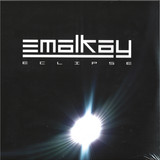
Please Note: This format is 3×12' Vinyl in a gatefold sleeve with the full 11 track CD inside. Dub Police are proud to announce the release of their first artist album courtesy of Birmingham-based producer Emalkay, who is set to release his hotly anticipated debut LP 'Eclipse' this Spring. First making a name for himself with early releases on his own Morphic Sounds imprint, Emalkay has continued to push the boundaries of underground bass music ever since, delivering a slew of huge releases on the way. Having been an integral part of the Dub Police stable ever since his 'Explicit / Heroics' 12' for the label in 2009, Emalkay has gone from strength to strength with a series of heavyweight tracks that includes the phenomenal 'When I Look At You' and recent smash 'Crusader'. Comprised of 11 tracks, 'Eclipse' is a bold and powerful album encapsulating perfectly everything that makes Emalkay such a prodigious talent, effortlessly showcasing the depth and diversity of his sound while always remaining true to his inimitable style. As addictive as it is hard-hitting, the album doesn't just provide a collection of dancefloor tracks, but a confident and coherent artistic statement. A brilliantly confident and varied debut album, 'Eclipse' is set to cement Emalkay's place as one of the biggest and most exciting producers working in bass music today.
a Emalkay - Flesh & Bone
b Emalkay - Metropolis
c Emalkay - Keep Goin On
d Emalkay - True Romance
e Emalkay - Space Hopper
f Emalkay - When I Look At You
Following Parnell March’s Back Bar Grooves EP in February and November’s release of the Dust Tears (lead song from Sarah/Shaun’s debut) remixes, Edinburgh’s Hobbes Music label returns with a second EP of dream pop from husband-and-wife duo Sarah/Shaun (pronounced simply Sarah Shaun), alias Sarah and Shaun McLachlan (pronounced McLochlun), who wooed hearts and wowed critics with debut EP ‘It’s True What They Say?’ last year.
‘It’s True What They Say?’ attracted fans across the board: Artist Of The Week in The Scotsman, rapturous reviews from The Skinny and Tokyo's Ban Ban Ton Ton blog, BBC 6Music airplay courtesy of Nemone (Mary Anne Hobbs' Morning Show), more radio play from Radio Scotland's Roddy Hart & Vic Galloway, plus Simone Butler (Primal Scream) and Jim Sclavunos (Bad Seeds) via their respective Soho Radio shows, not forgetting ringing endorsements from the likes of David Holmes, Youth, Kevin Bales (Spiritualized), Brent Rademaker (Beachwood Sparks) and Julian Corrie (Franz Ferdinand).
They played gigs supporting Glasgow's huge Glasvegas, at festivals (Kendall Calling, Dunbar Music, Hidden Door), plus a slew of venues across the Scottish capital, ending the year with a trio of shows supporting Glaswegian 80s pop legends The Bluebells at Aberdeen’s Tunnels, Dunfermline’s PJ Molloys and Edinburgh’s Liquid Rooms, while The List magazine tipped them among their Ones To Watch For 2025, with journalist Fiona Shepherd suggesting they were “blending the starry-eyed pop of Sonny & Cher with the electronic experimentation of Chris & Cosey.”
Very much the companion piece to the debut EP but arriving a full twelve months later, Someone’s Ghost is emblematic of the duo’s desire not to rush things or release anything half-baked.
“I’ve always wanted to create the perfect pop record and I do really feel that we’ve achieved that with this one,” says Shaun. And he’s clearly not the only person who thinks so.
REVIEWS, FEEDBACK ETC:
"I LOVE that! Dreamy dreamy pop." ROY MOLLOY (Marvellous Crane/Alex Cameron) on BLAST RADIO, Sydney
“the Scottish music scene’s cream of the cool... buzzy drum beats, high, distant chimes, and heavenly electronics…. very ethereal.” THE SKINNY
"Listening to Sarah/Shaun is like eavesdropping on a noir dreampop, long-distance phone call between them both, across two separate sonic locations. On this stunning 4-song EP, Sarah’s voice, effortlessly mesmerising, draws you into these big beautiful and haunting passages of perfect dream-pop. All beautifully produced in a multi-layered-scape of low-fi analogue textures, epic cinematic crescendos, intense electro-pulse grooves and warped psycho-pop guitar riffs. Within the songs lurk a sense of unresolved emotions, longing and pathos. There are shades of classic Lee Hazelwood & Nancy Sinatra but also Post-Punk Electronica and Beach House. But what a unique sound they’ve created of their own. I love it" DAVID MCCLUSKEY (The Bluebells)
"Absolutely beautiful" SEAN JOHNSTON (A Love From Outer Space)
"Lovely stuff here! Total quality." MARTYN 'MASH' HENDERSON
"Ooooh. Everything the last record promised is here. Well done" GEORGE T aka George Demure (Accident Machine)
"Vince clark Era Depeche Mode in places" KEVIN BALES (Spiritualized)
"Sounds cool. Well done" PETE KEMBER (Sonic Boom, Spacemen 3)
"Glorious, it (Debbie Harry) grabs hold of you and doesn't let go." IAIN DAWSON aka RAVECHILD (Everyone Wants To Play The Hits Podcast)
SOMEONE’S GHOST
Born out of an incredibly anxious, stressful time, the songwriting process for these recordings has been something of a personal tonic for Shaun…
“There was a period when I was having nightmares,” he reveals. “Apparently I was saying there was someone in the room, I was talking to that person and Sarah was seeing all this while I was still asleep.
So, I was thinking that this was my ghost. I started writing songs because I was going through something and I was dealing with something and writing songs was a comfort. My ghost was a comfort, whether it was real or not. The idea of it was a comfort.”
“I firmly believe that everyone has someone who watches over them but all of the songs are essentially about being there for someone,” he says. “Everybody needs someone but also everyone needs to stay real and keep what you have, keep it close, never let it go. If you don’t have it, continue to tell people you’re there for them. It’s about loving and hoping people will be good to you in return.”
While Shaun took the songwriting lead on Filter Of Love and EP closer The Sound Which Stresses The Sound Of My Ears, Debbie Harry was originally instrumentally conceived by producer Jaguar Eyes, alias Ali Chisholm, later lyrically completed by Shaun, and the EP’s lead track, Anhedonia, and one of its stand-outs (much like Starbed on the debut) was conceived by Sarah, as a result of experiencing a bit of a spiritual epiphany of her own.
“When I first heard the word Anhedonia, I didn't know what it meant but when I found out I thought about it quite a bit. How sad it would be to have no enjoyment in anything,” she explains. “This song is really about my own personal beliefs. When I have been down, that's one of the things that helps me the most. It talks about trying to make amends but realising, for some things, you can't. But I think with any kind of faith comes hope… which is always a good thing.”
A record about hope, truth, honesty, a belief in something bigger than oneself… and all set to a soundtrack that wouldn’t feel out of place in a David Lynch or Eighties feature film. What more could anyone ask for, really?
There’s equally a desire to offer something universal and positive to anyone who tunes in. The labels for the 12” edition reveal the dual mantras “Who just wants to survive?” and “It’s about time to live a little”, with both messages also engraved in each record’s run-out grooves. T-shirts accompanying debut EP It’s True What They Say? bore the slogan “Kill Them With Kindness” - leading caps intentional. Shaun carries the acronym KTWK everywhere he plays, as a reminder: it’s stitched into his guitar strap. And this particular wee pebble has already caused a few ripples: people have been approaching him at gigs to acknowledge their appreciation and respect for it.
"We feel we have made an honest, open, colourful, body of work,” say the duo. “We hope to go out and play the songs with the guys (our band) and then potentially make more records. We are taking things as they come. Everything has been organic so far, after all. We are looking forward to whatever this brings."
It’s True What They Say is the debut EP from Edinburgh-based, husband-and-wife duo Sarah/Shaun (pronounced simply Sarah Shaun), aka Sarah and Shaun McLachlan (pronounced “McLochlin”).
“Sarah and I both have a love for nostalgia,” explains Shaun. “We watched that amazing old 80’s Sci-Fi, (John) Carpenter movie, Starman, a few months back. Myself and my brother David used to watch it all the time. We must have been, roughly, 5-7 at the time. I remember loving the movie but the end, you know, with the beautiful, atmospheric, synth ending, I love that particular moment the most - best part of the movie, you know, when he goes home… It’s heartbreaking but stunning, all the same. It’s the music that moves you most… It did when I was 5 and it still does to this day. It must have had some form of a (much deeper) impact on me.”
The duo narrates stories across themes of love, hope, family, friends, dreams and sadness - the good that comes with the bad in everyday life, not just on a personal scale but within a community as well.
“Starbed is the first song I have ever written and just came out of the blue really, with Shaun playing a melody and me singing along,” says Sarah. “It’s simple and just about two people in love. Love songs are always the best songs, after all… Music has been a big part of my life from a young age. I was unwillingly dragged to piano and violin lessons, which I’m thankful for now! I’d say the first band I really became obsessed with growing up were the Beatles, and on the back of that a lot of 60s music and fashion. From then on, I had a love for music.”
“Shaun definitely opened my ears to a lot of sounds and got me thinking about soundtracks and all the noises that can be made,” she goes on. “We love just spending time experimenting in the house with instruments, pedals etc and Ali is a real magician to work with, too…”
The recordings took place over the summers of 2022 and 2023, with fellow Delta Mainline member Ali Chisholm (aka Jaguar Eyes) plus long-term friend and collaborator Gavin King. Further collaboration then came via the ‘net from the (international) likes of Chris Dixie Darley (Father John Misty), Darren Coghill (Neon Waltz) and Daniel Land (The Modern Painters), among others (see a full list of credits below).
Both Sarah and Shaun have a love for uber-soundtrack producers such as Hanz Zimmer, Max Richter, Cliff Martinez plus live acts such as Beach House, Spiritualized, M83, Suicide, Moby and OMD (to name a few). Shaun also credits the work of Kyle Dixon & Michael Stein (from Survive) on the Stranger Things score… “Even a moment in a movie, whether it be just 30 seconds during a particular scene, it grips you,” he says. But there’s something much deeper at play as well. “Music is a healer,” he goes on, “and I write from my own perspective but more so for others. Once I've done my bit, it doesn't belong to me any longer. It belongs to whoever wants it or needs it.”
The result is a cinematic, synth-wavey, dream poppy and downright beguilingly beautiful body of work. And they’re just getting started…
REVIEWS/RADIO/FEEDBACK:
“Starbed is folky, flavoured by pedal steel, cello, and brass. Dust Tears, in stark contrast, is a mini synth-pop rave epic. Part Bicep. Part Human League. Keep Your Eyes Closed summons a mood that’s romantic, but also dark and potentially doomed – like David Lynch’s Twin Peaks meets Cliff Martinez’s Drive score. My pick though is It’s True What They Say, whose interwoven jangle and picking recalls New Order’s more introspective moments (Love Vigilantes, Love Less… ). Drums crashing, cathartic. Guitar raising dramatic arcs. Its chorus a rush, like a reprise of Pains Of Being Pure Of Heart’s ‘Higher Than The Stars’.” BAN BAN TON TON
"Dust Tears sees them sharing vocal duties over a synth foundation reminiscent of Moby’s Go - Artist Of The Week” THE SCOTSMAN
"Woozy pop" NEMONE (Mary Anne Hobbs Morning Show, BBC 6Music)
"Nice one, very David Lynch meets Euro dream pop" YOUTH (Killing Joke, Paul McCartney, U2, The Orb, Spiritualized etc)
"Music sounds killer! Real emotion” DAVID HOLMES
"I’m enjoying it” TIM BRINKHURST aka LONDON (IKLAN, Young Fathers, Callum Easter)
“Oh, this is lovely!” SEAN JOHNSTON (A Love From Outer Space)
"It’s totally my cup of tea with milk and biscuit" BRENT RADEMAKER (Beachwood Sparks/GospelBeach)
"Beautiful, ecstatic electronica! Short and to the point" KEVIN BALES (Spiritualized, Julian Cope, Soulsavers, BE)
"Makes me wanna sit in the sun and sip an Arnold Palmer" CHRIS DIXIE DARLEY (Father John Misty)
“Really beautiful - Cocteau Twins / Spiritualized vibes but has its own thing going on, too - worth checking out!” JULIAN CORRIE (Franz Ferdinand, Miaoux Miaoux)
‘Sounded nice on a sunny day, makes me think of Twin Peaks, nice moods’ EAMON HAMILTON (Sea Power)
"Dealing in nostalgia, no bad thing at all, great to play that (Dust Tears) for you” RODDY HART (BBC Radio Scotland)
“I'll give the vocal tracks a spin before the release." VIC GALLOWAY (BBC Radio Scotland)
"Rather good!" IAIN ANDERSON (BBC Radio Scotland)
CREDITS:
Lyrics, Guitars, Keys, Synths, Drums, Drum Programming, Percussion, Mandolin, Glockenspiel: Shaun McLachlan
Lyrics, Vocals, Keys by Sarah McLachlan
Guitars, Synths, String Arrangements, Drum Programming, Engineering: Jaguar Eyes Percussion/Drums/Effects, Fire Extinguisher: Darren Coghill (Neon Waltz)
Guitars by Daniel Land
Slide Guitar by Chris Dixie Darley (Father John Misty)
Brass by Bruce Michie
Keys, pre-production & engineering on “It’s true what they say”: Gavin King
All produced by Jaguar Eyes and Shaun McLachlan and then mixed at Glasgow’s Chem19 Studios by David McCaulay (From Scotland With Love, Rick Redbeard, BBC TV’s Attenborough and The Mammoth Graveyard score).
Artwork: Jamie Walman (Fourteen Admirals)
MORE INFO:
Although Shaun released a pair of solo singles (When We Dance and Give Your Love To Me) during Lockdown, he will be better known to many via his work as the multi-instrumentalist in Edinburgh band Delta Mainline. With two albums released to date, Oh! Enlightened and Bel Avenir, both rapturously received by fans and critics alike, Delta Mainline have developed an international, cult following. Oh Enlightened (2013) achieved widespread critical acclaim on release, earning the band comparisons to Arcade Fire and Echo & The Bunnymen, while 2019’s Bel Avenir pulled in references to The Flaming Lips, Pink Floyd, David Bowie and krautrock. A third DM album is currently being mixed and due for release later this year…
Nicaraguan-American artist Dagmar Zuniga makes music that feels both intimate and expansive: songs drift like disrupted signals, carried by harmony, tape hiss, and a strong sense of touch. Her debut solo album in filth your mystery is kingdom / far smile peasant in yellow music — written and recorded in New York, Norway, and Athens, Georgia over a period of five years on her longtime companion, the Tascam 424 — was uploaded to Bandcamp and YouTube in January 2025, quickly garnering over two hundred thousand views and the attention of artists such as Mount Eerie, who invited her to tour with them that summer. This year, what was once a jewel of tapped-in algorithms and message boards will meet the world at large, with in filth arriving digitally on March 4, and physically on April 10, via AD 93.
in filth is an atmospheric, devotional collage where one voice multiplies into a chorus of selves, sometimes delicate, sometimes severe; an effect created by Zuniga’s masterful layering of texture and complex harmonies. Synths glitter out like spears of sunlight from beneath clouds of moody, time-distorted guitars, and songs spin about themselves like tightly-wound music boxes, making use of a kind of hypnotic repetition, before melting apart into their components or slipping into the following track.
Zuniga began recording to tape as a teenager, drawn to the physicality of the medium — how a tape recording is fragile, mutable, and alive. Though her ethereal sound may draw easy comparisons to other female pioneers of psychedelic folk, she is influenced just as much by the darker sounds of Syd Barrett and The Fall. Like Barrett, Zuniga is a painter, and she is interested not only in recording music but in creating a full, self-contained artistic universe: she creates her own artwork, merchandise, music videos, and bootleg tapes of new and unfinished music that she exclusively sells at live shows (“If something is not material, it does not exist,” she insists). Her world has not gone unvisited, garnering her a monthly show on NTS Radio ‘World of Pain’, as well as a forthcoming appearance at Rewire Festival in April 2026.
Though Zuniga’s work explores themes of solitude and suffering, the suffering in her songs is not borrowed or displayed; it is held, then opened outward through empathy — an exacting practice of attention that insists on shared ground. Solitude, in her work, is not withdrawal but a starting point for connection. Likewise, over time, her recording process has become increasingly communal, with in filth featuring musicians Hayes Hoey, Austyn Wohlers (Tomato Flower), and Zach Phillips (Fievel Is Glauque). Newer recordings widen the circle even more. For Zuniga, collaboration is a way to “find a place between worlds,” echoing Badiou’s idea of love as a vision refracted through the prism of difference. Meaning emerges there — in the space between voices, between artist and listener. “I hope my music helps people work through difficult experiences,” she says. “The same way it helps me.”
Assemble Music welcomes XDB for his first appearance on the label. Born and based in Germany with Greek roots, XDB (Kosta Athanassiadis) has been deeply involved in electronic music since the early 1990s. Known for his broad musical vision and refusal to be boxed into a single style, XDB has built a reputation through both his carefully curated DJ sets and hardware-driven productions. His sound draws from raw Detroit traditions, dub techno and deep house, favouring analog textures and stripped-back machine funk. On this three-track EP, XDB explores the darker edges of house and techno, blending classic Detroit influences with raw analog production to deliver a focused and uncompromising statement. With releases on respected imprints such as Sistrum, Ferox and Dial Records, this debut on Assemble Music feels perfectly placed and essential.
To celebrate over ten years of groove and sonic elegance, Roche Musique presents its “BEST OF” compilation, available exclusively on vinyl. A handpicked selection of 20 essential tracks tracing the label’s DNA — a refined blend of modern soul, nuanced electronics, and timeless groove.
Featuring the label’s cornerstone artists — FKJ, Darius, Kartell, Zimmer, Cezaire, Crayon, Dabeull, Lossapardo — alongside acclaimed collaborators such as Reva De Vito, Darianna Everett, Ayelle, Leven Kali, Panama, Chester Watson, Sølv, and more. From “Vibin’ Out” to “Espoir”, through “Wildflowers” and “I Can’t Stop”, this compilation captures the very essence of Roche’s sound: warm, heartfelt, and endlessly groovy. A pure analog listening experience designed for true music lovers and vinyl collectors — every groove telling the story of a decade of passion and sound.
Akusmi is the project moniker of French-born, London based composer, multi-instrumentalist and producer Pascal Bideau, who signs to the new Tonal Union imprint for the release of his album 'Fleeting Future.' With its hallucinatory, genre-defying blend of minimalism, cosmic jazz and Fourth World influences, and in its quest for optimism in the face of unknown and limitless possibility. 'Fleeting Future' stands apart as an inventive and inspirational debut.
The creation of the album's richly colourful and multi-layered sound world was originally inspired by Bideau's journey to Indonesia, where he immersed himself in traditional Gamelan and gong music. Many of the themes, motifs and melodies on 'Fleeting Future' seed from the 'Slendro' scale, one of the essential tuning systems used in Gamelan. However it is not musical scales, but scales as in the size or extent of things that most fascinates Bideau, specifically he explains; "the compelling way things dramatically change when you shift from any given scale to another."
The album connects directly to nature and the wider world in its evocation of perceptive shifts and transitions from microscopic to macro scale, as evidenced by the opening title track 'Fleeting Future', on which a simple dotted saxophone line morphs and billows into synths, brass and strings, indicating the musical voyage that lies ahead. Like the start of a journey or adventure it is full of anticipation, its arborescent growth conveying the optimism of the unknown and of limitless possibility. The album centrepiece 'Neo Tokyo' is a vibrating, ebullient mass of colliding elements which feels like zooming in to the electron level, as it teeters on the edge of chaos. The title is a reference to Katsuhiro Otomo's Akira, a dizzying work of art set in a sprawling futuristic metropolis.
'Yurikamome', meanwhile, is an imaginary soundtrack inspired by Bideau's yearning to visit Japan which he fuels by watching Youtube videos of drives and rides through Japanese landscapes and cities. "It's amazing" he adds, "that we have the ability to access almost anywhere in the world and see what it's like, that people document it and upload it. It's never going to be any replacement for the real thing, but with places that really touch you, it works." The track is named after a Japanese monorail train line which rides from Shinbashi to Toyosu, a last journey that feels like a new beginning.
'Fleeting Future' was composed and recorded by Bideau between 2017 and 2019 in his North London studio and features additional contributions recorded in Berlin by Florian Juncker (trombone), Ruth Velten (saxophone) and regular collaborator Daniel Brandt of Brandt Brauer Frick (drums / electronic percussion). Having been living through uncertain times, one thing that keeps spiralling into the unknown is the future, about which Bideau leaves us with a final thought:
"The future is fascinating: It is constantly readjusting to new events. I feel we left a linear approach to the future to enter an arborescent one where all the data and information we have about what could happen is exponentially ever-growing. Following a branch might allow you to glimpse into what it may become, but the evolution of the whole picture might very well render the prediction totally obsolete, and even meaningless. In that sense, there is not one future but innumerable ones all cancelling each other. That's what makes it fleeting."
The long-overdue revival of Bim Sherman’s catalog begins here. These essential recordings will become widely available again for the first time in decades, opening a new chapter in the appreciation of one of Jamaica’s most distinctive voices and representing a major moment for reggae and dub aficionados around the world. This reissue series will not only preserve his legacy but will also offer listeners the chance to experience the depth and timeless resonance of Sherman’s work in its full glory.
Bim Sherman—born Jarret Lloyd Vincent, in Westmoreland, Jamaica—holds a unique place in reggae history. Emerging in the mid 70s, his ethereal, haunting vocal style quickly set him apart from his contemporaries. He was soon collaborating with the top producers and musicians of the era, including Adrian Sherwood and the On-U Sound collective, bridging the gap between roots reggae and experimental dub and laying the groundwork for the fusion of Jamaican sounds with the vibrant underground scene in the UK. His career, from Kingston to London to Mumbai, was marked by an artistic daring and spiritual intensity that has earned him enduring respect across generations.
The centerpiece of this reissue campaign is Ghetto Dub from 1988, a record that distills Sherman’s artistry into its most potent form. Originally released in a limited number, the album embodies the stark yet soulful beauty of dub production. With its reverb-drenched drums, cavernous basslines, and echo-laden atmospherics, Ghetto Dub transforms Sherman’s various tracks into spectral presences that drift in and out of the mix. The arrangement and production—minimal yet profoundly textured—captures both the raw urgency of Jamaican street culture and the forward-looking experimentation of the UK dub scene. Each track unfolds like a meditation, balancing grit with grace, density with space. Ghetto Dub is more than an album; it is an immersive soundscape that reaffirms Bim Sherman as one of reggae’s most otherworldly and visionary figures.
‘Soul Psychédélique’, released on Two-Piers, takes you on a journey into the world of Psychedelic Soul & Funk, from its early beginnings in the 1960s and 1970s to the current crop of artists championing the more Psychedelic, Trippy end of the Soul sound today.
‘Soul Psychédélique’ brings together legends of the Soul Psych scene, such as Curtis Mayfield, The Chambers Brothers, Marlena Shaw, The Temptations, and the brilliant ‘Sugar Man’ by Rodriguez. Place alongside Soul Titans like Isaac Hayes, Bobby Womack, Chairman of the Board, Terry Callier all delivering stunning Psychedelic Nuggets for your Listening pleasure. Throw in some covers like ‘Dear Prudence’ by The Five Stairsteps, ‘Hard to Handle’ by Patti Drew and ‘California Dreamin’’ Bobby Womack and finish with some brilliant modern-day exponents of the scene like Khruangbin, Gabriels and Michael Kiwanuka. The result is a crazy ride through the world of Psychedelic Soul and Funk. If you ain’t dancing and smiling by the end - what the hell is wrong with you!
‘Soul Psychédélique (The Best of Lounge & Exotica 1954-2022)’ is the fourth instalment in the ‘Psychédélique’ Compilation series on Two-Piers, following the critically acclaimed ‘Pop Psychédélique (The Best of French Psychedelic Pop 1964-2019)’, ‘Garage Psychédélique (The Best of Garage Psych and Pzyk Rock 1965-2019)’ and ‘Lounge Psychédélique (The Best of Lounge & Exotica 1954-2022)’ and is available on 2LP Coloured Vinyl
Karkossyn returns to the shadows with Undergrowth, a harrowing descent into the Bristolian void that pushes dark drum and bass into its most predatory forms. The EP opens with a cold, eerie prologue. A warning that constructs a menacing world before the listener is dragged into the sonic abyss.
Drawing from dnb, trip-hop, and jungle, the soundscapes are characterized by a visceral dread birthed from the dampest corners of the South West. These tracks are built on distorted bass, gritty drums, and raw percussion, layered with atmospheric drones that heighten the feeling of suspense throughout.
Adding to the murk, Bristol’s own Pessimist provides a remix that results in a skeletal, rhythmic haunting. It is a definitive statement of UK dread, solidifying Karkossyn’s place as an uncompromising architect of industrial-tinged carnage.
Marking a milestone for the imprint, this serves as Erosion’s first physical release.
Incl. Remixes by Red Axes, Roman Flügel & Abe Duque
What does it mean to exist in sound?
It does not begin with a beat, but with a choice. With the moment when someone decides not merely to inhabit the space, but to shape it – and in doing so, makes themselves visible.
Roman Flügel stands as a constant in the background. Not as an authority, but as a collective consciousness. Since the 1990s, he has moved through club music like a seeker, never content with the first answer. House, techno, experimentation – these are not genres, but states of being. His remix thinks, hesitates, opens, strikes like a surging acid wave, warping reality and demanding true presence.
New York taught him that club music is never neutral. It is body, friction, attitude. Abe Duque’s remix carries a strangely enchanting relentlessness, a resistance to smoothness – as if the dancefloor were a place where freedom is not claimed, but fought for.
Red Axes do not enter this space; they conjure it. Their sound is raw, repetitive, circular, as if deliberately refusing linearity. House, dub, and acid elements become material for a movement that is more trance than structure. Their remix does not ask where it is going; it asks why one should ever stand still.
And then there is Tim Paris. Not at the center, but as a narrator. As someone who knows that the voice is an attitude. “That Boy” is not a pose, but a mirror, ironic, direct, vulnerable. Paris moves between new wave house and club, always aware that identity is never fixed, but formed in the moment.
This remix record is not a gathering of names. It is a situation, four perspectives on the same question:
What does it mean to exist in sound?
Yet sound alone does not tell the full story: like music, the visual is a space to be shaped, felt, and deciphered. The cover of Tim Paris feat. Foremost Poets – That Boy, created by Konstantin Fürchtegott Kipfmüller, a visual artist at the Hochschule für Gestaltung in Offenbach under Heiner Blum, embodies this principle. Drawing inspiration from the urban environment, Kipfmüller transforms traces of decay, weather, and time into abstract narratives that, like the music of Tim Paris, Roman Flügel, Abe Duque and Red Axes, unfold meaning layer by layer. The result is no mere adornment, but a mirror of the sonic landscape: every line, every surface an echo of the question of what it means to exist – fully, in the moment, in sound.
ZGMDP001 marks the first dubplate release on Zeugma Records.
Po-Sobachi. Set in place.
Four tracks engineered for structural pressure and dancefloor endurance. Reduced motion, reinforced grooves, concrete-weight frequencies designed to realign bodies under load.
Featuring Rikha, Pabloisnotkind, Eliptica (Rikha & Antonio Valente live project) and Lucretio (The Analogue Cops - Timeless) on remixing duties showing off his skills.
No gimmicks, just strenght.
Straight to the point, pure power.
Cut at Burbidub
Mastered by Riccardo Chiarucci (Rikha) in Colle di Val d'Elsa
Additional processing on B1, B2 by Andrea Pedra (Kian T)
Artwork by Luigi De Santis
DISPLACES represents Fabris' most personal musical journey to date, inspired by the concept of hyperobjects and cartographic practices. The album sculpts a high-dimensional phased time-space composed of concrete materials and digital archetypes in a state of constant displacement. It delves into the symbolic and philosophical realms of mapping as one of the greatest sense-making mechanisms for life, in dialogue with object-oriented environments, superimposition and non-locality applied to cosmic, temporal, and emotional memory.
The sonic ecosystem expands on the image of navigating a path through a set of places, from the microcosm of quanta to the macro force of dark matter, from underwater depths to overland terrains, encapsulating the cyclical flow between birth and death, both in ecological and anthropological sense. The intersection of these shifting states is explored through the extensive processing of the langspil, Iceland's only traditional instrument, intertwined with manipulated field recordings of biophonies and geophonies captured across Icelandic and Venetian territories. These recordings form the backdrop for a meditative process that relocate familiar objects into unfamiliar realms, reflecting on the transformative power of self-reflection while encapsulating the fragmentation and entanglement found in nature and the human state. The record plunges the listener into a disconcerting and physical soundscape, as a “ghostly spectrality that comes in and out of phase with normalized human spacetime,” evoking sensations of suffocation and release as each layer continuously unfolds the palimpsest of the enclosed labyrinth.
“Extraction of the I” embodies a subatomic reaction—erupting as a molecular force that rises, only to re-submerge with a solitary exhale underwater. In this mutated dark space, beluga whales breathe into "Xanadu Phasing," creating a pulsating tension that releases only to unveil a frozen landscape.
In “Barricading the Ice Sheets” the glacial material morphs into a liquid tunnel of digital artifacts, building a wall of noise that shatters into scattered fragments of ice, resembling bird calls from another world.
A moment of stasis is offered with the appearance of an asymmetrical loop in Monolith I, evoking a primitive rite before an unknown force emerges.
The physical intensity of subsonic material in "A Quake in Being" interrupts the hieratic tone, detuning into polluted sonic matter sourced from relics of the First World War in the Venetian Prealps. The geography of this place reconciles with the original homeland in "The Map is the Territory," blending negative space with anthropogenic elements and exploited sounds of the langspil.
The burning density of "Wolf-Rayet" projects into the void, echoing the residual sounds of a local church as relics of fossilized religions. Wolf tones are the remains in Monolith II, introducing the final track, "Topography of Extinction," where evolving psilocin textures invite the listener to uncover deeper layers of meaning and dislocation.
The debut release from a brand new imprint on the market - Patent by Gockel - a heavyweight 5-track vinyl journey into the world of the echo chamber, where baselines roll deep, claps crack like thunder, and each artist brings a unique flavor of dubwise pressure. From smoky steppers to spaced-out experiments, this compilation distills the essence of dub infused Techno into pure wax.
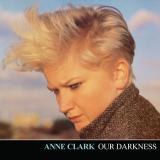
Doubting all the time. Fearing all the time. Our Darkness descends upon Dark Entries with a reissue of Anne Clark’s epochal proto-house masterpiece from 1984. As a young poet, Clark found herself drawn to London’s emerging punk scene. She became acquainted with Psychic TV affiliate David Harrow, with whom she would collaborate on 1983’s Changing Places and 1984’s Joined Up Writing. “Our Darkness,” off the latter album, was released as a single on Ink Records that same year, and became an underground club hit. It’s a singular piece of music: Clark’s lyrics, delivered with equal parts muscular confidence and unease, speak of urban alienation and heartbreak, while Harrow’s production pummels the listener with hydraulic beats and gloom-laced arpeggios. The song’s spirit would prove influential on both the early Chicago house and Detroit techno scenes, where mechanistic funk and existential despair could catalyse dancefloor mayhem. This reissue offers three versions of “Our Darkness”: the original 12” remix, the Razormaid mix, and a previously unreleased dub version uncovered by David Harrow. Also included is the extended mix of “Sleeper in Metropolis,” another dancefloor hit of Clark’s, as well as the elegiac “Poem for a Nuclear Romance.” The record includes an insert with liner notes and lyrics. “Our Darkness” channels timeless longing and contemporary dismay, a classic overdue for a little light shed upon it.
Four-time GRAMMY Award-nominated global superstar RAYE, is releasing her highly anticipated sophomore album THIS MUSIC MAY CONTAIN HOPE. The album, set in 4 “seasons” with each side of the vinyl being a different season, takes listeners on a sonic journey that begins with darkness and ends with light.
“Music is medicine. I’ve always said that, and I guess I’m in the process of making medicine for myself that I can share with the world. I want us all to say to ourselves that it’s going to be all right, and I’m going to have faith in the seeds that I’ve planted beneath the snow. I wanted to create something that is a hug or bed or soft place for that person who needs it.”
RAYE recently kicked off her massive 51-date sold-out arena tour THIS TOUR MAY CONTAIN NEW MUSIC includes arena dates across Europe and the UK — including six sold-out nights at The O2 — before heading to North America with stops at iconic venues such as Radio City Music Hall (April 15 and 16th) and the Greek Theatre (May 12 and 13th). Additionally, RAYE will be a special guest on Bruno Mars’ The Romantic Tour for 27 stadium shows across the US this summer.
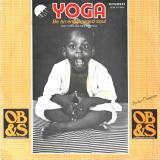
The rare and deeply funky LP "Yoga – Be An Enlightened Soul – Stay Young And Pure With Yoga"
by Osunfisan Brothers & Sisters is set to return to vinyl in an official reissue, marking the first
authorized repress of one of Nigeria’s most elusive spiritual records.
Originally released in limited circulation, Yoga occupies a unique place in many collectors grail list.
According to Mr Femi Osunfisan, the album was conceived by his senior brother and bandleader, "We
chose yoga to as a concept to channel our music, but it was not intended to practise yoga with the
music". Neither pop record nor conventional boogie LP, the album is highly sought-after for the amazing
production by the Sound master Odion Iruoje and for the heavy afro-disco workouts.
At a time when Nigerian music was dominated by Afrobeat, highlife, and disco, Osunfisan Brothers &
Sisters charted a more introspective path—using rhythm, voice, and repetition as tools for enlightenment
and personal grounding.
Bill Converse should be a household name in every head’s abode. He’s been DJing live with 3+ turntables since he was a teenager, always under the same name. Unfathomably envious record collection. Your favorite DJ’s as well as very likely your favorite DJ. Whether it is DJing or a live set, his presentation is head-spinning, hard-edged but hypnotic. His avalanching drum programming is as recognizable as Coltrane’s timbre. His records have been released on Dark Entries, Fit Sound, Texas Recordings Underground, Tabernacle Records, Immortal Sin, Acid Test, Feral Colony and Obsolete Future. Now Fixed Rhythms presents a 2×12” pack of Bill’s characteristically bewildering excellence.
The first 12” has four cuts. Woozy, heavy, bombastic machine workout opener “Stress Test” followed by the tension peaking sustainer “ZoneZone” on the A side. On the B side, “770” brings us to a new place of plucky bass lines and unconventionally tuned drum workouts, with “lure me” closing the first 12” with flexing low-end, percussive stabs syncopated with heavy snaredrum riffing.
Where does this music come from? Although you hear the decades of Midwest techno, jacking Chicago house, brain-tickling Warp Records cuts, and his dizzying skills as a DJ in the brew, his sound is uniquely Bill’s. The second 12” peels back the curtain a bit more, as the C and D side are two extended cuts from his live set at 2024’s Jackie O’Body Vol. 2 in Denton, Texas. We here at the label were at that gig. Pure energy. Sexy distortion. Rhythms that made you scream. After the set, the room erupted in a chant of “BILL! BILL! BILL!”. Dear reader, witness the power of Bill Converse’s raw, overdriven, drummy, jack house tech madness!
Nach dem erfolgreichen Release der CD „Techno 2026“ im letzten Jahr folgt nun eine exclusive Vinyl-Ausgabe.
Diese Schallplatte ist kein simples Re-Release, sondern ein kuratierter Auszug aus dem ursprünglichen CD-Projekt: Die drei DJs haben jeweils ihre persönlichen Highlights ausgewählt und daraus diese exklusive Vinyl-Edition zusammengestellt.
Treibende Grooves, hypnotische Sequenzen und atmosphärische Spannungsbögen spiegeln den Sound wider, der bereits die CD zum Erfolg gemacht hat – nun verdichtet und veredelt für das Vinyl Format
Berlin's Scheermann debuts on Mutual Rytm with deeply personal EP, 'Viciosa'.
Scheermann is at the heart of the Berlin underground as a DJ/producer, but also working behind the scenes at the Intakt Berlin vinyl pressing plant, where he first met Mutual Rytm founder SHDW. As a resident of the Lorem Ipsum party series, he delivers cultured and compelling grooves, and is also an active member of the Wesertekk collective - supporting and pushing club culture to the forefront in more rural areas. His music comes from a deeply personal place, never chasing hype or headlines, and is usually found at home on his own imprint, SAMMLER. This new EP marks his first appearance away from the label as he unveils a collection of records crafted over five years, with each track representing different moments in his life.
'Viciosa' kicks off with paranoid vocals panning about as swinging, warehouse-ready drums pound heavily below. The gritty synth craft adds plenty of texture as filters build the vibe. 'Placid Sin' is even more intense with unresolved synths tripping you in a loopy state while coarse percussion and cantering drums march on. 'Don't Care' is a rave-ready cut that injects your soul with urgent synth energy over more minimal and moody drums. 'Kano' brings a more elastic rhythm with dubby undercurrents and sleek sonar pulses infusing it with mystery, while 'Reika' is a nimble cut with icy hi hats and curious synth notes layering in late night suspense. First digital bonus 'Resoclap' is a heavyweight swinger with dark, groaning voices, before the second digital bonus 'Mizu' provides a speedy and supple workout for body and mind.
Scheermann 'Viciosa' lands on Mutual Rytm on 22nd August 2025.
Guti returns to Crosstown Rebels with improvisational new EP, ‘You Know Ya Miss Me’.An exploration of instinct, groove, and the new Latin sound, the Argentinian live maestro returns to Damian Lazarus’ imprint on 13th March 2026.
A new wave of Latin-infused groove arrives on Crosstown Rebels, and South American favourite Guti is at the helm. Returning to Damian Lazarus’ imprint with a release that captures his music in its most immediate and expressive form, his four-track ‘You Know Ya Miss Me’ EP marks his first material on the label since 2020, reigniting a relationship that stretches back over 15 years. For the Argentinian artist, the studio has always been a living room, a jam space, a place where ideas can breathe, collide, and evolve naturally. Throughout his career, Guti has blended groove-driven house and Latin percussion into a signature sonic language in which spontaneity guides the process. The result here is a new release that feels as alive as it does intentional, designed for ears, hearts, and dancefloors alike.
Title track ‘You Know Ya Miss Me’ opens with warm rhythmic layers and subtle instrumental interplay, a space where melody and movement coexist freely. ‘What You Give’ follows, pulsing with the organic energy of jam-session dynamics, each percussive gesture and melodic line alive with intention. On the flip, ‘The Truth’ unfurls a rich tapestry of percussion, soulful vocals, and improvisational motifs, while ‘La Nueva Onda Latina’ closes the EP as a vivid statement; an embodiment of the “new Latin sound” at the heart of Guti’s ethos, where instruments, electronics, and collaborative energy meet on equal footing. At its core, ‘You Know Ya Miss Me’ is a showcase of a musical mind at work: deliberate yet free, precise yet flowing, rooted in tradition but open to the unexpected. It’s a reflection of Guti’s belief that dance music can be both kinetic and expressive, that improvisation and groove can coexist, and that the most resonant sounds are born when musicians let go in the moment. This EP invites listeners into that space, to move with the rhythms, and to experience a sound unmistakably Guti; organic, vibrant, and alive.
As Nathan Fake rises from the nocturnal subterranea and rave catharsis of his previous records, on Evaporator, he resurfaces into the domain of daylight, bringing a tangible sense of air rushing against your face, of big skies, and endless landscapes. The idea of pop accessibility that trickled into 2023’s Crystal Vision is refracted here through the prism of sweeping ambient, deep electronica, and trance uplift. Evaporator is Fake’s idea of “airy daytime music”, with each track a different barometer reading across the album’s varying atmospheres, which range from vibrant sunbursts, bracing rainscapes, and fine mists of clement melodics. “It’s not overtly confrontational electronic club music,” states Fake. “It’s quite pleasant, it’s accessible. As I was progressing through making the tracklist, I called it a daytime album. It doesn’t feel like an afterparty album.” For the past decade Fake has been gingerly introducing collaborations with heroes and friends alike into his lone, idiosyncratic working process. Border Community alumni Dextro AKA Ewan Mackenzie transmutes his ferocious drumming for Pigs Pigs Pigs Pigs Pigs Pigs Pigs into the blurred choral thump of ‘Baltasound’. ‘Orbiting Meadows’, meanwhile, is his second collaboration with Clark, an eerily idyllic duet where microtonal 18EDO piano clangs slowly twirl around wailing pads. Evaporator marks the junction point of old technology and ever fresh creativity for Nathan. The trusty “dinosaur” age software, particularly Cubase VST5, that has powered two decades of music is rarely updated. “I used to sort of feel a bit ashamed of using such old software, and then I kind of had an epiphany – that’s just how I work”, comments Fake. “That’s just how I play. I’m very fond of these old tools, and I get the most joy out of them, but now I’ve incorporated new technology too.” When an artist accumulates so much synergy with their instrument, music making becomes instinctual. By Fake’s account, much of Evaporator just fell into place. The album title arrived randomly in his head (“it felt completely perfect. Airy.”), ideas looped and developed until things locked into place and just felt right. ‘The Ice House’ is a fleeting glimpse of the sonic world he taps into in this creative state, its glassy FM synths built around a counterpoint between rough-hewn crystalline arpeggios and sparse yet gravitas-bearing bass. “That riff I just wrote out on the keyboard, I just played it forever and ever and ever. The original track ended up being really short. Here you go, and it’s gone!” These unplanned channellings of sound call forth records from Fake’s past while he looks ahead, perhaps getting at the very essence of his musicianship. The opener ‘Aiwa’ (“the breeziest,” he muses) reminds of the introspection that characterised Providence, excited by the fire and grit of Steam Days’ textural experiments, its chunky slams and clatters surging into a flood of harmonic buzzing as they reach out for old wisdom. ‘Hypercube’ stampedes in a similar chronological confluence, infusing an incessant synth line reminiscent of the golden age of rave with the crackling, ecstatic energy of modern festival anthems. Like the vaporisation of liquid to particles, everything that Evaporator presents has a mutant desire to be amorphous. Sounds rarely settle; the irradiated garage beat of ‘Bialystok’ is pitched downwards to driving, rebounding effect, while ‘You’ll Find a Way’ warps static into shivering energy, cinematic synth strings building anticipation into a gradual gush of chords. This translates into a more expansive stereo field than Fake has explored before. ‘Slow Yamaha’ saves the wildest, most kinetic transformations for last with a cornucopia of crispy melodies and fried drums; a sibilance of cymbals on the left, a susurrus of shakers on the right, and kaleidoscopic lasers pulsing and fizzing all around. Evaporation culminating in pure excited atoms. In a world where music has increasingly become background content, making albums remains lifeblood for Fake: “It makes me realise how long; twenty years is ages! It’s weird to see how much the world has changed. Release day back then you did fuck all, now you spend all day on socials. When I grew up the people who made the electronic music I was into were quite mysterious, and the artwork was very abstract. There was a massive distance between you and that music, and that was a key part of it, really. Now it helps to be an extrovert, and I'm just not, but the album marks the first time my face has graced the cover art. I’ve never wanted to do this before, I'm very shy, and generally I don’t like being seen,” he professes. “But, twenty years in, I supposed I could try something new. I'm very lucky that I'm somehow surviving in this world, where the media world favours extroverts and interesting looking people. It’s not my world but somehow I’m still in it.” Evaporator continues to prove Nathan’s necessary presence, with some of his most engaging, varied, and magical music yet.
French DJ and producer Hemka makes a striking solo debut on Mutual Rytm with 'Introspection'.
Born in Marseille and based in Paris, Hemka has been shaping her take on techno for over a decade, steadily growing her international presence with music on respected imprints such as Token. Her music fuses the raw energy of 90s techno with modern textures and is fast-paced, groovy and laced with subtle psychedelia. By weaving in her own vocals, Hemka adds a deeply personal and authentic layer that resonates with both the body and mind. Following the strong reception of her track 'Fragrance' on the 'Federation Of Rytm III' compilation, this potent new EP is a powerful reflection of her bold, emotional and forward-thinking artistic voice and the start of an exciting new chapter with SHDW's Mutual Rytm.
'Abyss' kicks off with tightly coiled, heavy-hitting drum funk and eerie synths that never let up while ghoulish vocals layer in extra darkness and anxiety. 'Time' is another sleek, stripped-back but banging wedge of linear techno excellence and 'I Can't Shine' layers up paranoid vocals with high-speed glitches and rubbery drums to ensure maximum impact in the club. The excellence continues with 'The Bad Place' with booming drums and moody synth atmospheres, getting you up on your toes and keeping you there. Last, 'Unchanged' fizzes with static electricity as wordless vocals refract around the mix next to wispy synths and icy hi-hats. Digital bonus cuts 'Voice In My Head' and 'Eternity' round things out with more heady and intense techno for driving deep into the night.
M’Bamina – African Roll (1975)
The story of an album born between Africa, Italy, and the nightclub culture of the 1970s
In the heart of 1970s Italy — a country undergoing profound social change and a music scene just beginning to open itself to distant sounds and cultures — an extraordinary, almost improbable story took shape. It is the story of a group of young African musicians who found their way to Europe, of a Turin nightclub that became a crossroads for communities and experimenters, and of an album which, released in small numbers and largely unnoticed at the time, is now considered a rare jewel of Afro-fusion.
The band called themselves M’Bamina — an ensemble of musicians from Congo, Cameroon, and Benin, who arrived in Italy in the early Seventies. Settling between northern Italy and the Pavia area, they began performing in small clubs and community events, bringing with them a vibrant rhythmic heritage: African polyrhythms, call-and-response vocals, funk-infused bass lines, and Caribbean or Afro-Latin colours absorbed along their musical journeys. Their raw, contagious energy on stage quickly drew attention.
Meanwhile, in Turin, another story was unfolding. There was a venue becoming almost legendary: Voom Voom, one of the city’s liveliest nightclubs, run by Ivo Lunardi. The club attracted an eclectic crowd — students, artists, foreigners, night owls — and Lunardi quickly understood that the dancefloor wasn’t just a place for music, but a melting pot for a new kind of cultural energy. Out of this vibrant atmosphere came his idea: to turn the club’s name into a small independent record label, Voom Voom Music, capable of capturing the spirit of those years and giving voice to unconventional projects.
When Lunardi heard M’Bamina, he immediately sensed that this was the sound he had been searching for: fresh, different from anything circulating in Italy at the time, and capable of blending African tradition with funk and European sensibility. He brought them into the studio.
Production was handled by Lunardi along with Christian Carbaza Michel, while the engineering was entrusted to Danilo Pennone, a young sound technician with a sharp, intuitive ear.
The recording sessions — held in Turin in 1975 — produced a remarkably warm and direct sound. The music feels almost live: grooves rooted in African tradition, but open to funk-rock structures and modern arrangements. It is a natural fusion, never forced. Tracks move between tribal rhythms, funk basslines, light electric guitars, congas and Afro-Latin percussion, with call-and-response vocals and melodies that echo both Congolese tradition and the lineage of Latin jazz. Not by chance, one of the album’s most striking tracks, Watchiwara, reinterprets a Latin standard through M’Bamina’s own rhythmic language.
The album was titled African Roll — a name that was already a statement of intention. It is African music that “rolls,” that moves, adapts, transforms within a new geographic and cultural setting. It is not strictly Afrobeat, nor Congolese rumba, nor Western funk: it is a spontaneous, hybrid blend, shaped more by lived experience than by any calculated aesthetic program.
When African Roll was released, the world around it barely noticed. Distribution was limited, and 1970s Italy had yet to develop a cultural framework for receiving such music. The national music press rarely paid attention to African or “world” productions. The album slipped into silence — though the band’s own story did not.
M’Bamina continued performing across Europe and Africa, even sharing a stage in Cameroon with none other than Manu Dibango. By the late Seventies, they moved to Paris, signed with Fiesta/Decca, and recorded a second LP, Experimental (1978). Meanwhile, the peculiar record they had made in Turin began to resurface quietly among vinyl collectors, Afro-funk enthusiasts, and DJs hunting for forgotten grooves.
That is when the album’s fate began to shift.
Over the decades, African Roll emerged as an almost unique document: a snapshot of an intercultural Italy before the word “intercultural” even existed, a fragment of migrant history, a spontaneous experiment in musical fusion born far from major industry circuits but rich in authenticity. Original copies began commanding high prices on the collector’s market, and the album became recognized as one of the hidden classics of European Afro-fusion from the 1970s.
Today, more than fifty years later, this reissue finally restores visibility and dignity to a project that deserves to be heard, studied, and celebrated. It is not simply an album: it is the testimony of a rare cultural encounter, born in an Italy unaware of how fertile such exchanges would one day become.
It is the story of a visionary producer, an extraordinary band, and a fleeting moment in which music, migration, and nightlife came together to create something genuinely new.
African Roll is — now more than ever — the sound of a bridge: between continents, between eras, between cultures. A record that, after rolling far and wide, has finally come home.
Somewhere long ago in a vinyl galaxy near you We Play House Recordings released an E.P. called ‘This Is Still Belgium Vol 1’. The release was called like that because the music on it could only have been made by Belgians. Vol 2 never happened…until now. Label boss Red D has always been inspired by the rich Belgian club music of the 90’s and inevitably those influences have sneaked into his own productions, but never as clear as on the three tracks you are reading about now.
And so the original WPH series has been revived with WPH 024.5, aptly called ‘This Is Still Belgium Vol 2’. The music is situated somewhere between house, progressive house and early trance music, basically club music with soul & melody at its core.
On the A-side we find Red D teaming up with his friend Mona Lee, a soul sister who has been making waves in recent years in soulful house circles and who comes up with the vocal prowess to match Red D’s emotional trip of a track and heartfelt lyrics. Can you handle the break?
The B-side opens up with ‘Tides’, a deep hypnotic builder for late night eyes-closed dance floors and closes with ‘Papillon’, a track that came to life long ago in the minds of Telepaticos (Marcos Salon & Sandro Valcke). When Red D heard a demo version of this one the melody got stuck in his head and never really left him. Many moons later he rediscovered the parts of this one on a hard drive and got to work on his interpretation that features on this E.P. Safe to say the track holds a special place in Red D’s heart and we’re sure you’ll feel it as well!
London-based producer IZCO is set to release his latest single, “Guiding Star (feat. Reek0)”, blending soulful nostalgia with the raw energy of the capital’s underground sound.
Drawing from influences that span UK dance music, hip hop, and soul, IZCO’s music captures both the energy of the dancefloor and the emotion of lived experience. Over the years, IZCO has become a key figure in London’s cross-genre underground scene, collaborating with artists like Reek0, Greentea Peng, Sam Wise, Liam Bailey, and Novelist, and performing at iconic venues and festivals across the UK and Europe.
His previous releases, including tracks like soulboy - IZCO Remix, Beauty Inside, and OBiNRin - IZCO Remix, showcase his knack for crafting warm, sample-rich productions that balance classic influences with a distinctly modern edge. Whether behind the decks or in the studio, IZCO continues to push boundaries, creating music that feels timeless, authentic, and deeply rooted in community.
“Guiding Star” is no different. It pairs warm, vintage soul textures with the sharp percussion and bass-driven pulse that have defined IZCO’s sound across his discography. Featuring long-time collaborator Reek0, the single bridges eras and styles; a homage to the past while firmly rooted in the energy of today’s London.
Speaking on this release, IZCO says:
“Guiding Star. That classic shit, Combining the soulful sample with the London grit, real London track. Inspired by a mixture of 70s soul, US hip hop and UK grime.
Made this track without thinking much, the sample spoke for itself.
Reek0’s vocal was from one of the first sessions we ever did years ago, and it had never been released but it sounded perfect on this track. A taste of nostalgia, this track reminds me of good memories and friendships. Simple but meaningful. And an honour to use such a beautiful sample”
Later this year, fans will be able to own an exclusive 7-inch vinyl edition of Guiding Star, featuring both the original and instrumental versions - a collector’s piece for crate diggers and fans alike. Out on the 5th December.
With “Guiding Star (feat. Reek0)”, IZCO continues to carve out his place as one of the most versatile and soulful producers in UK production, grounding every beat in authenticity, emotion, and connection
There’s a special kind of feeling when everything falls into place - when the drums bounce easy, the bassline rolls steady, and a bright guitar line cuts through the warmth of tape. That feeling became the heart of the FULLNESS, from Marcus I meets aDUBta. The sound of FULLNESS is built on simple, living elements: real drums, deep bass, a warm sound, and melodies that leave space to breathe. It moves between Early Reggae, Rocksteady, and Roots - sometimes straight and solid, sometimes stretching out into Dub and Echo. With its voice, from singer and lyricist Marcus I, FULLNESS carries the message about gratitude, love, freedom, and the small moments of everyday life. While Marcus’s singing style nods to the great singers, he stays grounded in his own experience, which perfectly complements aDUBta’s production, giving him space to shine. This LP is a complete, warm, balanced, and uplifting experience from start to finish.
FULLNESS grew from a steady musical exchange between Marcus I and aDUBta - two people on different sides of the Alps (Marcus I in France and aDUBta in Germany), finding a shared rhythm. What began in early 2022 with a few Riddims sent back and forth soon turned into a regular flow of songs. Every week brought new ideas, new words, and new melodies. When they finally met in person at aDUBta’s Attic Roots Studio in Bavaria, Germany, it all fell naturally into place. Most of the instruments were played by aDUBta, and the whole LP was mixed live on his Tascam 388, keeping that raw, handmade feel. With several friends helping bring even more color into the music, aDUBta brought in Viti Sanchez to lend his expressive saxophone and horn lines, Michael Salvermoser with his warm trombone tones, and members of the Black Oak Roots Allstars - King HuHa and Jannis Klenke on bass and guitars, along with Morry 'Da Baron' (Dub Inc.) on bass. FULLNESS means the fullness of music, of life, of friendship, of gratitude. It’s what happens when music becomes more than a project - when it turns into a shared space where things just flow.
Fresh for 2026, Something System Records returns with its second four-track EP, showcasing a carefully curated selection of forward-thinking underground sounds from across the DnB and jungle spectrum.
A1 – Creativity Oxford-based producer SR makes his label debut with Creativity. Having already built a strong reputation through multiple vinyl releases and production collaborations with JEMONE on Metalheadz, SR delivers a powerful opener defined by tense atmospheres, razor-sharp drum programming, and weighty sub-bass. Designed to move both dancefloors and minds, this is a standout introduction.
A2 – 3 Times Around The Sun Duburban & Peeb return to Something System Records for their second appearance following a prolific period of releases on some of the scene’s most respected labels. This track channels lush, uplifting pads reminiscent of the golden era of Good Looking Records, underpinned by warm sub frequencies and expertly edited drumfunk breaks that evolve beautifully throughout. A deeply musical and rewarding listen.
B1 – Fresh Outlook Bristol-based producer Loma returns to the imprint with Fresh Outlook, a finely crafted 140 BPM jungle roller. Featuring intricately layered breaks, precisely placed subs, and an immersive atmospheric backdrop, the track takes the listener on a dynamic journey. With previous releases on John B’s BETA Recordings, Loma continues to demonstrate a bright and promising trajectory.
B2 – Tell Em Purdie Closing the EP, Something System Records proudly welcomes Pixl to the label for the first time, collaborating alongside Duburban & Peeb. A seasoned producer with releases on numerous highly respected DnB labels and founder of Loop Progression Records, Pixl brings depth and experience to this jazz-infused finale. Smoky club atmospheres, textured breaks, deep subs, saxophone lines, and a spoken-word sample referencing a legendary drummer combine to deliver a rich, soulful conclusion to the EP.
A gift to the overthinkers and overworked. Those who are over-concerned and always preoccupied. This is an invitation to hang up the bootstraps, take a load off, and visit a place in the mind where the sun is shining, the breeze is soft and the waves lap softly at your feet. Vacation From My Mind is a sonic realignment of melancholic soul, breezy soft rock, & mellow jazz-funk.
This album is a thoughtfully curated collection of 12 rare and obscure tracks from 1973 to 1981. From Jeanette Baker’s hypnotic 70’s soul title track “Vacation From My Mind” to the Latin rhythms of David Buckland’s jazz-funk “Celia”, this compilation was lovingly crafted to ease the stresses and worries of modern life. The Care Package’s song “The Storm” is a larger-than-life production of dreamy harmonies not often found on privately released 45s. Utopia’s “Lejos De Mi” is a slow-burning slice of Bolivian psych that will have you searching for similar sounds. Whatever your preference, we hope that this album will give you a vacation from your mind.
The breakout underground star of the past year, the deservedly hyped Thought Leadership returns with another X ideas: the deck this time chooses the suit of Cups. This new collection is closer to the Post-Punk tonality of Pentacles, than the breezy Balearic Jazz of Swords. Gone are the brushed drum samples and airy synths and in their place are BIG guitars, 808 thumps and a decidedly more prominent use of bass as a melodic device.
As the suit of Cups reflects the emotional heart of the Tarot, presented within are a further X pieces, this time displaying the full range and fervour of Thought Leadership.
You know the drill by now. Originally out on cassette only, we present the first ever vinyl issue. It's a hideously limited pressing of 300 for the world, so don't sleep on this.
Side A explores the emotional levels of consciousness; angst, joy, love, sorrow, relief, regret – they are all represented across the first seven tracks, and often within the same piece. XXI kicks us off with a huge tumbling D minor passage, layers and layers of guitar front and centre, whilst the drums pound away in the distance. Release is provided with a gorgeous G Dorian section, where we hear the bass take flight with a high melodic line.
We’re still in familiar Durutti Column meets Dif Juz territory here, but things switch up with XXII. This piece showcases a darker, more angular palette of guitars; think Alan Rankine (The Associates), or Deb Demure (Drab Majesty) in the unexpected harmonic shifts, knotty arpeggiated patterns and heavy, goth-adjacent modulation. A real love letter to 45+ years of darkly inclined guitar heritage.
XXIII enters the fray with tight, thumping 808s and Marr-esque guitar figures; and again, the bass providing heavy melodic counterpoint to the guitars. Enter chiming, lyrical lead phrasing, reminiscent of the eternal opening to "Everybody Wants To Rule The World". Another accidental perfect pop moment from the Thought Leader. Whilst on the topic of Tears For Fears, XXIV comes swinging out of the gate with some serious Sophisti-chug; we’re reminded of "Shout" in the A section, before being beautifully juxtaposed in the B section with more Vini-eqsue patterns, reminiscent of his timeless classic, Another Setting.
XXV gives us welcome pause to take stock midway through the A side. No drums this time, but instead a heartbreaking conversation between two guitars; think Kevin McCormick and David Horridge’s masterful Light Patterns, or perhaps even the early solo-Bill Connors mid-70s cuts for ECM. The moment of quiet reflection passes, and is quickly shattered by the thudding march of XXVI – this piece comes across like The Associates playing "Wicked Game"; heavy, moody, and utterly compelling. XXVII ends our journey across Side A with more Marr-inspired playing; one for the heads and already featured on mixes, this one is real testament to the vision of Thought Leadership.
Side B again takes us on a trip through three long-form semi-improvised pieces. XXVIII is like those classic Jonny Nash, early Melody As Truth releases, slowly unfurling, additional details introduced deliberately piece by piece, this idea builds across 7+ minutes culminating in some utterly joyous ebow fireworks at the end – well Balearic.
XXIX again, like XXV before it, dispatches the drums with a focus purely on melody and mood. The piece feels like a lost Save Room Theme from the Resident Evil series, pure golden age Capcom Sound Team vibes. Unadulterated aural nostalgia for hours spent with a PS1 in haze of hash.
XXX completes this majestic voyage with another Modal exercise; this time the Thought Leader has opted for the Lydian Mode. Beautifully dreamy, undeniably Soundtrack-y, and arguably the most concise distillation so far of everything this project stands for; drum machines, guitars, pedals, one-take improvised solos – XXX has the lot, and is surely destined for greatness.
So, another X epic statements for guitar, homespun with the humblest of means, for all the dreamers out there. The first ever vinyl release of IV Of Cups has been carefully remastered by Be With's engineer Simon Francis to ensure it sounds better than ever after its initial tape release. Cicely Balston's expert skills have made sure nothing is lost in the cut at Abbey Road Studios whilst the records have been pressed to the highest possible standard at Record Industry, in Holland. The original tape cover artwork, so crucial to Thought Leadership's striking visual aesthetic, has been rejigged for vinyl issue here at Be With.
Zwei Plattenspieler und ein Mikrofon. In der Klarheit dieser einfachen Schlussformel liegt eine Wahrheit - eine Wahrheit, die zugleich erahnen lässt, wie groß die Möglichkeiten innerhalb dieser Grenzen sind. Manchmal muss man daran erinnert werden.I Guess U Had To Be There, das neue Album des New Yorker Rappers ELUCID und des erfahrenen Produzenten Sebb Bash, ist genau so ein Fall. So frisch, als wäre es morgen entstanden - und doch kann man darauf wetten, dass man es auch 1989 hätte auflegen können und sofort alle Köpfe mitgenickt hätten.Es gibt Momente in der Musik, in denen Meister ihres Fachs sich auf dem Höhepunkt ihrer jeweiligen Schaffenskraft begegnen - Alben wie Madvillainy, Liquid Swords, Dr. Octagonecologyst oder Hell Hath No Fury -, bei denen das Ergebnis mehr ist als die Summe seiner Teile. ELUCID und Sebb Bash bewegen sich auf I Guess U Had To Be There genau in dieser berauschenden, scheinbar mühelosen Sphäre.Alles wirkt zugleich vertraut und bahnbrechend. Die Beats verschieben und wenden sich unter ELUCIDs Füßen, doch er balanciert sie wie auf einem Drahtseil - seine Performance so beweglich wie die einer Bergziege, Produzent und Rapper in perfekter Synchronität. Einige leuchtende Stars haben unvergessliche Gastauftritte: billy woods, Breezly Brewin, Estee Nack und Shabaka Hutchings. Doch im Kern ist dies eine Zwei-Mann-Show, und das Duo hält den Fokus genau dort, wo er hingehört.I Guess U Had To Be There ist ein fesselndes, konventionssprengendes Hörerlebnis und ein neuer Höhepunkt im Schaffen zweier der besten Künstler dieses Genres.
Back on Celestial Echo Records with CER010, a record that’s been a fixture in the right record bags for a long time.
Africano – “Open Your Hearts” is a serious modern soul tune for the Chicago DJs. Super funky, big on feeling, and powered by explosive instrumentation that just keeps driving. — strong, emotional, and made for proper dancefloors.
It’s been spun for years by DJs like Mark Grusane, Theo Parrish, and others in that Chicago scene — and it works every time. Part 1 on the A-side is the one you know, while Part 2 on the flip stretches things out and lets the groove roll on.
As always, Celestial Echo is about soul records that have earned their place. Remastered with care and pressed properly, Africano is one we’re proud to finally put back out there.
For more than two decades, Eamon Harkin has helped shape New York’s communal pulse. As a founder of Mister Saturday Night, Mister Sunday, Planetarium, and Nowadays, he’s created and DJed in spaces where dance, listening, and connection blur into something deeper — places where people come together to make sense of the world through sound.
On his new album, The Place Where We Live, Harkin turns that lens inward. Drawing on 25 years as a DJ and curator, he moves between house, techno, and ambient currents with a sense of stillness and searching. The result is a record that feels both physical and introspective — the sound of the dance floor seen through memory.
The title comes from psychoanalyst D.W. Winnicott’s idea of “the place where we live,” the psychic space between the inner and outer world — where play, art, and culture help us build meaning. For Harkin, an Irish immigrant long settled in another land, that idea resonates both philosophically and personally. The Place Where We Live captures the tension and beauty of the pulse of the club and the quiet of reflection — an album about belonging, transition, and the quiet resonance of finding home somewhere in between.
DJ support – Jamie Jones, Seth Troxler Damian Lazarus, Marco Corola, Joseph Capriati, The Martinez Brothers and Rey Colino
S.A.M. returns to Up The Stuss this summer with the third release in the UTSOFF series, delivering a potent double-header that’s been rattling dancefl oors for months. Titled ‘Hit You With My Phone’, the release arrives on 4th July and features two dynamic cuts that further cement the Danish talent’s place in the label’s core family.
A mainstay in Chris Stussy’s recent sets and one of the most talked-about IDs in recent months, title track ‘Hit You With My Phone’ is pure dancefloor dynamite — a helter-skelter ride through organised chaos, laced with warped vocals, frenetic percussion and a relentless groove that grabs you and doesn’t let go. It’s bold, it’s unpredictable, and it’s quickly become one of the most commanding tracks in the Dutch label boss’s arsenal.
On the flip, ‘Got Me Down’ offers a skippy contrast — a low-slung groover that channels tension and release with tightly wound drums and rolling bass, keeping things locked for deeper moments on the floor.
Marking S.A.M.’s third outing on Up The Stuss following their collaborative ‘Get Together’ project with Stussy and the solo ‘Check It Out’ EP, ‘Hit You With My Phone’ sees them explore new ground while staying true to the raw, club-focused ethos of the label. As the UTSOFF series continues to shine a light on uncompromising, forward-facing club music, this latest instalment delivers two cuts built for impact and ready to cause damage.
Since first forming in 2016, London's High Vis have steadily polished their palette of progressive hardcore with shades of post-punk, Brit pop, neo-psychedelia, and even Madchester groove, mapping a middle ground between hooks and fury, melodies and mosh pits. Singer Graham Sayle describes their third album 'Guided Tour' as an axis of competing forces: "It's trying to be a hopeful record, while also being incensed." Rounded out by drummer Edward 'Ski' Harper, guitarists Martin MacNamara and Rob Hammaren, and bassist Jack Muncaster, the band's deep roots in the UK and Irish DIY hardcore scenes have kept them grounded but growing, inspired equally by restlessness and righteous anger. As Sayle puts it, "Everyone's scratching, everyone's working all the time, and their idea of relaxing is just getting fucked and avoiding reality. This album is an escape from that."From its opening seconds of a cab door slamming, a car revving away, and a baggy rhythm swinging to life, 'Guided Tour' sounds like a band reaching for new heights, bristling with energy. Recorded across a few weeks at Holy Mountain Studios in London with producer Jonah Falco and engineer Stanley Gravett, the results feel dynamic and dialed-in, like anthems burned into sense memory through sweat and repetition. Harper cuts to the chase: "We had a clear idea going in, every moment got used. Maybe when we're 60 we can sit around and get a drum sound right, but for now it's about getting things done."The album's 11 songs span the spectrum of contemporary guitar music, sharpened by experience, camaraderie, and societal frustrations. From swaggering street punk ("Drop Me Out," "Mob DLA") to jangling indie sneer ("Worth The Wait," "Deserve It") to heavy alt ("Feeling Bless," "Fill The Gap") to shoegazey spoken word ("Untethered"), the group's chemistry transmutes any style to their unique intensity. Sayle champions this evolving fusion: "For years coming from hardcore, we had pretty clear boundaries - other scenes were separate worlds. Now things are getting more blended, drawing from different places."Nowhere is this sentiment flexed more boldly than on "Mind's A Lie," a dance- punk anthem inspired by Harper's love of house, garage, and pirate radio. Stabs of sampled female vocals (by celebrated South London singer and DJ Ell Murphy) build into a razor wire rhythm of low-slung bass, tense drums, and sparkling guitar before Sayle's staunch voice starts barking harsh truths ("Face to face with all I've known / I can't call these thoughts my own"). After a sudden breakdown, the track regroups and takes off, cruising into the horizon in a haze of chiming guitars and Murphy's ascendant voice, from the streets to somewhere beyond.
With over 20 years of intense production work and prestigious collaborations, Irie Ites Records has established itself as one of the most respected reggae labels on the international scene. In 2025, the label continues it's strong momentum with a brand-new volume of it's flagship series: Cream of the Crop 2025. Following the success of the previous editions (2022, 2023, and 2024), which each reached several million streams and gained strong visibility in reggae media and playlists worldwide, this new release stands as a must-have for all roots & culture reggae lovers. True to it's reputation for excellence, Irie Ites Records has once again teamed up with some of the finest musicians and producers in reggae: Mafia & Fluxy, Bongo Herman, Earl "Chinna" Smith, Lone Ark, Naram, The Ligerians, King Jammy, Willy William, among others. All tracks were mixed at the Irie Ites Studio (France), ensuring a warm, powerful, and authentic sound. To conclude the album, four exclusive dub versions add the final touch to this outstanding compilation.
You may be excused if, seeing the dazzling China Moses on stage, online, or on-air, you thought that she, fabulous and French, an orchestra trailing her, with one of those light-up-a-room smiles you only hear about in myth, was someone who might only be singing cheery songs about her glamorous musical life. Not so. It’s complicated… vibrates with the joy, wistfulness, ambivalence, and wisdom of a woman who’s been on many journeys, down many paths, and landed here, in your ears, on purpose, with something to say.
Through these songs, China captures the many hues of grown Black womandom: her choices, her regrets; her place in society as both citizen and observer. Her voice is girlish and playful; gritty and growly; truly prismatic, as Anthony Peyton Young’s cover art suggests, to reflect the many lives she’s lived. And she does all this with vulnerability, a quality that transcends and supersedes genre, taste, or ability. Of all the tools a singer-songwriter could possess, it might be the most important one. Though there is bravado here (“I can be happy”, the song and the video, are the best example), this is an album that taps into the full, resplendent spectrum of human experience, its many facets hewn into these 10 gems before you.
It’s complicated… and it’s complex. How could it be anything else?
Spider Taylor crawls over to Dark Entries with Surge Studio Music, an album of archival gay pornographic soundtracks. James Allan Taylor was born into a working-class family in Los Angeles in 1951. Nicknamed “Spider” by his father due to his frantic energy, Taylor was a natural-born guitarist, gifted with perfect pitch and a voracious musical appetite.
Throughout the 70s, he expanded his musical repertoire, playing in bands ranging from country to post-punk, like his outfit Red Wedding, while always looking for new sounds and styles to explore. During this period, Taylor also partnered with his soulmate and musical collaborator, Michael Ely. They were part of a wave of bold, young, gay couples living openly together in the years immediately following the Stonewall Riots. In the early 80s, while working at the West Hollywood gay sex club Basic Plumbing, Taylor met Al Parker, the legendary pornographic actor and director, who recruited Taylor to produce the soundtrack for a film he was working on. Parker’s partnership with Steve Scott running Surge Studios produced some of the most popular all-male films of the era. Spider’s music was a natural fit for Surge, and throughout 1985 and 1986, he composed the soundtracks for five films produced by the iconic studio. Assisted by engineer Steve Conrad and armed with a drum machine and some synths, Spider’s compositions for film veer from the expansive, reverb-drenched “Rainforest” to the Miami Vice-esque chugger “Tech.”
While Spider thought of this work as little more than a gig, tangential to his real craft, enthusiasts of VHS-era nostalgia and vintage erotica will be brought to bliss. Surge Studio Music will be available on both LP and CD, the latter of which includes a 20-minute version of “Strange Places…Strange Things!” as a bonus track. The album’s cover art was designed by Gwenael Rattke, and features stylish images from Surge Studios releases. Also included is an insert featuring liner notes by Will Lewis, a longtime friend of Spider. The music is released from Spider’s estate by Michael Ely, Spider’s partner of 43 years. The shadow of AIDS lingered over Surge; Steve Scott passed from AIDS-related illness in 1987, and Al Parker succumbed in 1992. In 2014, when it became legal for same-sex couples to marry in Arizona, Spider and Michael finally became wedded. Spider would pass away from liver cancer six months later.
As electronic music pioneers and co-founders of Soma Records, Slam have continually shaped the landscape of underground techno. With their forthcoming album, Dark Channel, they present a raw, club-focused record that stands as both a reflection of our turbulent times and a celebration of the dance floor's enduring power.
In 2025, the world feels fractured, dominated by division and extremism. Amidst this chaos, the dance floor remains a rare sanctuary-one of unity, self-expression, and collective escape. Dark Channel is an unapologetic tribute to this sacred space, where rhythm dissolves barriers and music serves as a universal language. Through relentless energy, deep textures, and hypnotic grooves, the album embodies the essence of club culture: a place where we reconnect with ourselves and each other.
Slam make no mistake when it comes to the sonic tone of the album as it opens with the tribalistic Use It, Lose It before the discordant sounds of title track Dark Channel hints at the relentless nature of things to come. The intensity continues with Parametric Factor & Glide - both pushing a pulsating, synth driven trip; the later leading on a more traditional Slam percussive workout. The dance floor warping Morganatic pursues dark territory while Infinit Spaces adds trippy FX to an already animated synth hook. The beautifully crafted Kuture Version delves into a more immersive sound as more direct, chord driven elements take the lead. The pace quickens yet again with Ghost Dancer highlighting sub tones whilst still crafting ominous intonations with its modulating FX. Approaching the conclusion, the ferocious Beat On The Drum delivers a lesson in rhythm and energy before the contorted Irregular Object completes proceedings in a suitably hypnotic fashion.
Five years on from her debut on the label, Surgeons Girl returns to Livity Sound with an EP of explorative, synth-rich techno. In the time since A Violet Sleep announced Sinead McMillan's fulsome analogue sound, she's maintained a considered presence with live, hardware-rooted performance and a select handful of releases.
On A Moment To Machine EP, McMillan showcases a widescreen strain of techno that leans into the expressive, emotional weight of powerful synth composition while maintaining a fierce physicality tuned up for the club. 'Under This Space' and 'Razor's Whip' dart along upwards of 150 without sacrificing depth and subtlety, while 'Steps Right' and 'Silken Place' shelve drums in favour of cascading arpeggios. 'Rested' brings balance to the record with needlepoint rhythmic exploration and pensive pads, rounding out Surgeons Girl's ever-developing, highly personal approach to techno.
Crate digger and music enthusiast James Endeacott compiles ‘Unlock Your Mind With Morning Glory’ for Two-Piers Records – A glorious heady mix of the weird and wonderful eclectic music from his radio show ‘Morning Glory’
“One weekday afternoon towards the end of 2017 I sat in The Lyric pub on Great Windmill Street, Soho with my dear friend Raf. I’d just finished another of my weekly Soho Radio shows and was starting to think about the next one. Raf had been on as a guest playing some of his favourite tunes of the day. We had a few drinks, told a few stories and started to plot and scheme. It was always a dream of mine to have a daily radio show. Radio had always informed and excited me from my early teens listening to John Peel under the blanket when I should’ve been either sleeping or revising right up to the present-day musical excursions of NTS, WFMU and numerous internet based stations.
We decided to speak to Adrian and Dan who ran Soho Radio to see if they’d be up for us doing a daily morning show. To our surprise they were into the idea and within 5 minutes Adrain came up with the name Morning Glory. We all liked it. We were all excited. It was all systems go. In December 2017 Raf and myself started a daily 2 hour show. We did the show together, got guests in and the musical policy was whatever we felt like that day. After several months Raf found the mornings too much. Off he went into the distance occasionally coming back with a smile, and a bag of new music. I carried on alone and then suddenly in March 2020 the world stopped, and we went into lockdown.
We set up in my house in Catford, Southeast London and carried on. The show became 3 hours a day and I started to invite friends, record labels, record shops, bands etc.. to supply me with hour long mixes that I played every day. The show took off during this time. My musical tastes expanded as I spent all day long searching for new sounds from around the globe. People started to send me more and more music. I became obsessed with the show. The audience started to take to social media and ask for certain tracks or artists to be played. I got listeners to make me mixes to play on the show and I did several phone interviews with musicians while playing some of their favourite tunes.
I was grateful that Soho Radio left me to my own devices. They never told me what to do or what to play – they trusted ma and I trusted my instincts.
The music on this compilation is not a ‘best of’ it’s just how I felt when I compiled it at the start of 2025. Apart from a couple of tracks they are all things I’ve come across since the show started in December 2017. If I did a list of tracks now I’m sure it would be completely different. Surely that’s the point. We never stick in one place. We are always moving and searching. Always trying to unlock our minds. Put it on. Take your time and let it take you somewhere” James Endeacott 2025
“Crazy Funky” marks the official debut of Tommy Soul as a producer — a track born from the desire to blend the groove of 80s funk and disco with a contemporary sonic approach. A warm, dominant funky bassline drives the track alongside a vintage-flavoured, punchy drum groove, supported by modern electronic synths and sound details that firmly place it in the present.The lyrics and vocal melody sung by Tommy Soul, reveal an unexpected falsetto, especially in the harmonic tension of the hook “make me crazy!” The goal was to reinterpret the spirit of original disco productions and bring it into a modern, more electronic and club-oriented dimension, while preserving the analogue soul and authentic warmth of the sound. The result is a track with a strong character: a relentless bassline, gritty vocals, an infectious groove, and an energy built for the dancefloor.
There is a breaking point where the mind yields and the body takes command. This is precisely the territory of Frenetic Habits EP.
Asymetric80 lands at INDUSTRIAS MEKANIKAS with an unapologetic statement: a direct immersion into the aesthetics of collapse and extreme habits. The work places you in the center of a post-apocalyptic scenario, where survival no longer relies on calm, but on your ability to endure mechanical tension.
The sound is built upon solidity and saturation. You won’t find fragility here, but rather an architecture of EBM, New Beat, and Industrial Techno designed to dominate any sound system that dares to play it.
Side A establishes the hierarchy with Frenetic Habits. Far from linear, the track unfolds a broken, demolishing rhythm, generating a devastating sonic pressure that completely envelops you. It is a piece of constant drive, an armored machine advancing over the very ground you stand on. It is followed by Exile and Unmasked, which shifts the strategy towards depth: a hypnotic immersion where industrial textures densify, creating a dark atmosphere that traps you with no escape.
On Side B, Bleak materializes the heaviness of the environment. A slow-burning, corrosive track with deep bass, which you can feel advancing with the force of concrete. To close, Dementia releases the accumulated tension with overflowing kinetic energy; a final outburst of controlled aggression that closes the cycle with maximum intensity.
Frenetic Habits EP is a record of ironclad textures and terminal atmosphere. A work that documents not defeat, but the brute force needed to remain standing when everything around has come crashing down.
"At Your Pace" is the second full-length album from Berlin-based duo Modha - drummer/producer Dhanya Langer and multi-instrumentalist Max Scholl. Following their acclaimed 2023 debut "Through The Cycle", which tackled mental health and vulnerability through soulful, genre-blurring compositions, "At Your Pace" doubles down on their signature approach: raw textures, emotional honesty, and deep collaboration.
Modeight proudly adds another chapter to its vinyl legacy with Fedo - a Ukrainian artist with deep Greek roots, known for his meditative groove architecture, percussive depth, and the raw spirit of live music. On Nuke Hook EP, Fedo delivers four deep and dynamic cuts that strike a perfect balance between minimalistic precision and emotional richness.
Each track feels lived-in - jammed rather than programmed - crafted to resonate both on the dancefloor and in the mind. "Life is Life" opens with a thick, dubby beat and a jagged, growling bassline.
Midrange sequences curl around the low-end like vapor trails, creating a shadowy, hypnotic space built for late hours and strobe-lit intimacy. "Madam from Athens" pays homage to his Hellenic roots - dipping into dreamy chords, textured atmospheres, and modular motifs wrapped in velvety vocals. Warm and transportive, it's a love letter to place and memory.
On the flip, "After Out" hits hard. Sub-heavy, percussive, and driven by acidic synth lines, it's a peak-time weapon that doesn't ask - it commands.
Rounding off the EP is the cerebral yet groovy "Nuke Hook," where crisp percussion dances around mysterious piano phrases and immersive textures. A subtle but magnetic closer that lingers long after the drop.
Fedo joins the Modeight family with a statement of intent - deep, expressive, and forged in the heart of the underground. The journey continues.
To mark 10 years since SOPHIE’s game-changing singles collection PRODUCT, Numbers are celebrating with a special edition featuring 11 songs across Deluxe Vinyl and Compact Disc.
This anniversary release includes bonus tracks, track-by-track slide posters, and a SOPHIE PRODUCT Card. Physical editions are now available for pre-order and released on 11th July 2025.
SOPHIE classics ‘BIPP’, ‘LEMONADE’ and ‘VYZEE’ are joined by two immaculate PRODUCT-era songs ‘OOH’ and ‘GET HIGHER’ recorded and produced at the time, each with colourful single artwork completing the set.
‘OOH’ is one of SOPHIE's earliest productions that has been through several revisions since 2011. It was one of three original tracks that Numbers had signed when SOPHIE uploaded the song alongside 'BIPP' and 'ELLE' to her Soundcloud, and while it had been through several iterations and speed changes, this finalised version was completed by SOPHIE in 2019.
SOPHIE once described ‘OOH’ as “hi tech club dance pop”. Musically speaking, the earworm hook is carved out by her signature portamento-infused synths and candy-coated lyrics, a firm cult classic approved by AG Cook and Charli XCX. Initially titled 'MAKE RESPECT', the track was first performed live by SOPHIE in 2011 to a handful of lucky people at a beach afterparty surrounding Sonar Festival, Barcelona and later that year at Manhattan's New Museum. The vocal was recorded as the first track in the same one-day recording session as SOPHIE's debut single 'NOTHING MORE TO SAY', released on the Huntley & Palmers label, where Sophie's songwriting was performed by the London vocalist Jaide Green.
The genesis of the ‘OOH’ and ‘NOTHING MORE TO SAY’ recording session is lore-worthy in its own right: after watching Jaide Green perform live with Olly Murs during the sixth series of The X Factor in 2009, SOPHIE reached out and invited Jaide to record in her home bedroom studio.
‘GET HIGHER’ was born during joyous sessions in 2013, when SOPHIE’s beat was introduced to the vocalists Cassie Davis and Sean Mullins. The track feels like a visionary precursor to ‘Vroom Vroom’, and doesn't sound out of place next to the sub-clang intensity of SOPHIE’s ‘HARD’ and ‘MSMSMSM’. Striking a playful balance between blissed-out hyperpop and club-ready Atlanta trap, it showcases SOPHIE’s signature, laser sharp sound design. Originally released as a bonus track on the Japanese CD edition of PRODUCT, ‘GET HIGHER’ has remained a hidden gem.
A groundbreaking producer, songwriter and performer, SOPHIE's visionary approach reshaped the landscape of pop and electronic music. Emerging in the early 2010s, SOPHIE introduced a hyper-detailed, futuristic sound defined by metallic textures, elastic basslines, and an uncanny blend of synthetic and emotional tones. Collaborating with artists including Charli XCX, Madonna, Vince Staples and Arca, SOPHIE helped pioneer a new pop movement while challenging conventions around identity, genre and production. SOPHIE's work continues to resonate deeply, leaving a lasting impact on a generation of artists and listeners alike. Discography: PRODUCT (2015), OIL OF EVERY PEARL'S UN-INSIDES (2018), SOPHIE (released posthumously, 2024).
cause we love vinyl. Following the huge success of Jackfruit Recordings, we founded the sublabel Jackfruit Traxx in 2023. And here is the first vinyl release on the label: Jackfruit Traxx Salad Vol.1. It features four tracks. Nesi, Edgar Peng with a remix for Nils Ohrmann, and of course Dompe as label head are all on board. Dompe also contributes an exclusive vinyl-only track. House music all life long.
Stay True Sounds supremo Allan Nicoll, aka Kid Fonque, and legendary UK producer Charles Webster have brought together the cream of the South African deep house scene for a unique album. The record was recorded at Flame Studios, a facility built inside a prison at Constitution Hill in South Africa, which is very significant to South Africans, because that's where the Constitution was written. “It's a remarkable institution,” says Charles. “Mandela was in there; you can really feel the history. You're working in a prison cell from a brutal regime. It's an important place. So, I didn't want the album to be too light, because you can't escape from politics anywhere, but especially somewhere like here - and you shouldn't.”
The world renowned “Maestro” of the dancefloor Louie Vega continues to deliver Dance Floor gems at a rate almost impossible to conceive, given that he also maintains a weekly touring schedule that regularly takes him around the world. Louie’s upbringing in the Boogie Down Bronx exposed him to the entire evolution of Disco and Funk at a time when those genres were at their peak in the 80’s, and he brings that wealth of knowledge and passion when it comes to remakes of the classics. His remake of “Last Night A DJ Saved My Life” featuring Anané and Tony Touch in its original version on the NYC Disco Album was a masterful update that kept the essence of the original classic, but was imbued with the irresistible House Music energy that Louie and featured vocalists Anané and Tony Touch can bring to a project like nobody else. The remix from Louie himself gives this peak house groover even more pump, while the Dub from Anané demonstrates that this talented performer has a big future as a producer as well. The bonus track on the B-side “In Search Of Peace Of Mind” shows Louie once again creating a unstoppable groove that respects the foundation of House Music but once again inspires an originality that places him firmly at the forefront the Dance Music Producer community.
Joji returns with long-awaited 4th studio album ‘Piss In The Wind’ via Palace Creek. The new LP cements his place as one of the most distinctive and genre-defying artists of his generation, balancing haunting melodies with gritty yet atmospheric production. The album captures the quiet contradictions that always defined his music, wrestling inner turmoil into something strangely beautiful. Features “PIXELATED KISSES,” “Past Won’t Leave My Bed,” and more.
Joji kehrt mit seinem lang erwarteten vierten Studioalbum „Piss In The Wind“ zurück. Die neue LP festigt seinen Platz als einer der markantesten und genreübergreifendsten Künstler seiner Generation, der eindringliche Melodien mit einer rauen, aber atmosphärischen Produktion in Einklang bringt. Das Album fängt die stillen Widersprüche ein, die seine Musik seit jeher auszeichnen, und verwandelt innere Unruhe in etwas seltsam Schönes. Mit „PIXELATED KISSES”, „Past Won’t Leave My Bed” und weiteren Titeln.
Danny Krivit pays tribute to the royal family of soul with a double A-side of classic house remixes from Michael and Janet, both appearing on 7-inch for the first time. Standouts from the revered era of ’90s house, these tracks have remained a steady presence in Krivit’s sets, a testament to their timeless appeal.
Mr. K’s edit of ‘Remember The Time’ takes E-Smoove’s punchy Late Nite remix from the original 1992 12-inch single — already considered the strongest mix on the release — and carefully condenses it to fill a 7-inch, retaining all the best elements while adding a highly mixable intro and a unique acapella ending. This edit might now be the definitive version of this classic club tune! The original mix of Janet’s ‘Any Time, Any Place’ hit radio in 1993, but it wasn’t until the following year when Darryl James and David Anthony’s smoothly uplifting and funky remix really took off in all the clubs, and it’s this D&D remix that Krivit turns his attention to for the flip side of this new MEU 45. A favorite of Frankie Knuckles, and Body & Soul, ‘Any Time, Any Place’ has remained a go-to cut for Mr. K, who shares his personal edit here on the compact format for the very first time.
Isa Gordon and Tony Morris were first brought together through their individual releases on Optimo Music, which established mutual respect within the label’s community. While they had not previously performed live together, they were invited to take part in a fundraiser hosted by Queen’s Park Arena in support of Glasgow NW Foodbank and later for JD Twitch’s end-of-life care. Tony asked Isa to contribute guitar and backing vocals to his set, including a track then called Last Night I Had a Dream. That performance became the seed for their collaboration.
The first phase of fleshing it out, recalls Tony: “Somebody said Isa sang like Shania Twain. That got me thinking about country music and call and response, prompting me to come up with alternative lyrics.” Isa remembers: “I cycled over to Tony’s house with my guitar, and we spoke about what the tune meant. It was about him being wrapped up in dreamland, luxuriating in his subconscious, while my character — impatient and trapped in her own routines — barely had time to remember her own dreams.” Tony continues: “Brilliantly I realised that I could never collaborate with anyone in situ and so I sat in the garden for two hours watching my wife tend to plants. Every now and again I would creep up the stairs and put my ear to the door. I could hear Isa warbling away and so would resume my garden watch. After two hours I went back upstairs to see how she was getting on, only to find that she had written one of the greatest songs I’d ever heard. I still think that.” Tony adds: “My overwhelming sentiment about Wake Up Baby is pride. I can honestly say that I’m more proud of it than anything else I have done. It ticks a whole load of boxes. Isa’s singing in various Scottish modes is unique. The way her electric guitar adorns the dance beat makes it a rock song as well as a dance and a C&W song — truly multi-genre.”
The B-side of the 12” release, Syringe Moustache, is a surreal, darkly playful counterpart to Wake Up Baby. The track was inspired by a dream Tony had: “I was in a shopping mall, in a two-level shoe shop, and my attention was taken by a little girl with a syringe taped beneath her nose like a moustache. She went about her business trying on shoes, confident and wise beyond her years. In the dream, I imagined her as the daughter of cultured, intelligent parents determined to raise her independently. I was struck by my own feelings of inadequacy — I knew I could never have coped with such a contraption myself.” Isa’s take on the meaning of this song somewhat differs: “Tony sent me the tune over Instagram months before I met him, and I was spooked — as far as I knew, he didn’t know anything about me, but the story felt like it was written about me as a little girl, growing up around heroin addiction. The syringe beneath the girl’s nose became a symbol of the inescapable constraints of that environment, literally written on her face, yet something you just have to carry on through. On a buzz from the serendipity, I added a full instrumental backing to this most bizarre of works.”
The result is absurd, unsettling, and strangely empowering, staking out its own surreal, cinematic space. The 12” dance single is a format Tony had long wanted to explore — a tangible artefact to leave for family, a medium that celebrates the physicality of sound and the ritual of listening. It allowed the artists to maximise the format’s potential: a strong, multi-genre A-side, a surreal B-side, and remixes that expanded the record’s sonic world. Glasgow music staples Auntie Flo and 100% Positive Feedback were invited to reinterpret the tracks, bringing their distinctive touch — Auntie Flo transforming the A-side into a luscious, dancefloor-ready meditation, and 100% Positive Feedback twisting Syringe Moustache into absurd, playful shapes with false-start drops and over-the-top vocal editing.
The cover photograph, taken at the University Café by Harrison Reid, captures Isa and Tony embodying the characters they brought to life in the songs — a visual reflection of the record’s narrative and emotional stakes. The Café also holds personal significance: it’s where all of Isa’s meetings with Keith McIvor took place, where she first remembers visiting Glasgow as a child, and a place Tony fondly likes to go to drip egg yolk down his tie and watch the world go by. Together, the 12” format, the remixes, and the artwork create a cohesive, tactile experience, amplifying the duality, theatricality, and emotional breadth of the collaboration.
From Germany to Montreal, a cross-continental dialogue takes form as Oovation and Jares unite for The Shift, a sweeping coalition of emotion and rhythm marking both artists’ debut on W. Anchored in cinematic depth and driven by kinetic pulse, The Shift stands as a powerful first statement, further expanded through stunning reinterpretations by Coeus, ACNØR, and Turker.
The original take of “The Shift” finds Oovation & Jares constructing a restrained groove before thumping kicks and meandering blips send us off on a highly narcotic affair. With the foundations in place, a swaying bassline takes control of the piece, infusing it with an irresistible sense of movement. As we venture deeper inside the rabbit hole, a lush arpeggio rummages across the piece, taking us closer to an airy break where echoes osurrender to a new directive.
For the first reimagining, Coeus drives “The Shift” into more dangerous, sensual territory. Built on a thunderous rhythmic foundation, the Serbian producer laces the mix with ghostly vocal traces and a relentless synthetic tension. The result feels cinematic in scope: an after-hours odyssey pulsing with urgency and redemption, where desire and danger move in lockstep.
Next, ACNØR transforms The Shift into a perpetual motion device where tension breathes and recedes like a living organism, shimmering under dim light. Reflective and transportive, this version feels like moving through mirrored corridors. Each twist refracts a new emotion, a new identity, culminating in a tantalizing entropy.
Finally, Turker closes the circle with a radiant reconstruction that leans toward transcendence. Textured percussion, raspy stabs, and a gleaming lead line spiral upward, pushing “The Shift” toward a horizon bathed in gold as vocal phrases drift in and out of focus, painting the mirage in full technicolor for a finale that feels both cathartic and luminous.
The Roots of Chicha, compiled by Barbès Records, was originally released in 2007 and became the first recording to popularize psychedelic cumbia around the world.
From the late 60's through the 80's, Peruvians invented a new popular musical hybrid inspired by music from the Americas. In 1968, Enrique Delgado released his first record on Odeon with his new group, Los Destellos, single-handedly creating Peruvian cumbia. He codified the genre early on by using the electric guitar as the primary melodic instrument, and mixing cumbia rhythms with folkloric huaynos, criollo voicings, Cuban guarachas and guajiras, rock, boogaloo, surf, psychedelia, oriental music, classical music, and bits and pieces from Brazil, France, Chile... All Peruvian cumbia bands for the next thirty years would end up drawing from the exact same sources (Grupo Celeste, Los Mirlos, Juaneco Y Su Combo, Manzanita Y Su Conjunto...).
This new wave of Peruvian cumbia came to be known as chicha. Chicha is originally the name of an alcoholic drink, made of fermented maize, which the Incas were especially fond of. In the past thirty years, however, the word has taken on a pejorative connotation. Peruvian cumbia started being called chicha in the late 70s, around the same time that the music came to be viewed as the expression of the slums – the pueblos jovenes. Little by little, the word became an adjective, and people now talk of chicha culture, chicha press, chicha architecture, even of a chicha president, and none if it – you guessed right – is meant as a compliment. Chicha suggests corruption, shady deals, and cholos – a derogatory term for a person of Andean heritage that, of late, is being reclaimed and worn as a badge of honor by the very cholos it was supposed to demean in the first place.
With Stronger, her third EP, Mira Ló continues her rapid ascent within the French electronic scene. A cathartic project born from a period of personal upheaval, this EP is both a cry of resilience and a celebration of club culture as a space for healing. The Paris-based queer producer and DJ turns pain into creative force, and the dancefloor into refuge, release, and rebirth. Across four emotionally charged tracks, Stronger traces the contours of a club where one rises through the energy of the beat, the warmth of a caring community, and the affirmation of self through sound and movement. “This EP is my response to a very dark period in my life. I chose to turn pain into strength, to stand back up through music, and to reconnect with joy, intensity, and the collective. Each track follows a movement, of a body rising, a heart beating stronger, a soul regaining its light. Stronger is also a tribute to those who carried me when I could no longer stand on my own. It's proof that even in chaos, we can rebuild together.” Mira Ló The first chapter of this inner journey, “Riser” is a house track filled with enveloping melodies, ethereal pads, and organic chords that create a suspended sonic space. Its steady pulse and warm basslines evoke a rising from within. “I wanted this track to feel like a build-up, like breathing again. It's about that moment when you feel you're ready to rise once more, even after a fall, like a gentle but powerful wave,” says Mira Ló. With its R&B textures, pop-infused touches, and radiant production, “Brighter” glows with warmth. It captures the return of inner clarity, the rediscovery of joy and ease. Made to bring people together, it’s Instagram | Youtube | TikTok | SoundCloudboth immediate and heartfelt. “It’s a song about shining again, after the dark. I wanted something full of light and simplicity, a track that speaks to the heart and makes you want to dance without thinking.” A personal and introspective nod to the French Touch, “Higher” is driven by filtered basslines and hypnotic grooves. It channels a sense of euphoria that builds gradually, almost meditatively, like a joyful vertigo. “This track is about finding euphoria again, that moment when music lifts you beyond yourself. I grew up with the French Touch, and this is my way of coming back to it with my own voice.” Closing the journey, “Louder” is the most assertive track on the EP. Inspired by the UK bassline and garage scene, it bursts with percussive, punchy energy. This is where everything comes into full light, bold, unapologetic, and free. “I wrote Louder as a statement: I’m here, I exist, and I won’t stay silent anymore. It’s about partying as self-affirmation, as a joyful, powerful scream of identity. Meant to be played loud. Very loud.” Mira Ló, born Ana Lopez, is a queer producer and DJ based in Paris. Drawing from the full spectrum of club music, her sets and productions blend melancholic emotion with a unique, high-energy, euphoric touch - inspired by artists like Disclosure, salute, and Sammy Virji. From her early days playing in Parisian bars and intimate clubs, she quickly rose to the lineups of top French venues and festivals such as Peacock Society, Marvellous Island, and Lollapalooza - extending her reach across Europe and even to Chicago. She’s carved out a strong place for herself within the new wave of the French electronic scene, leaving a lasting impression with every appearance. In 2023, she released her debut EP Memories and was featured in Apple Music’s “Women In Electronic” series. That same year, she became a resident at Sacré in Paris, before unveiling her second EP Tribute To Chicago in 2024. She returns in 2025 with her third release, Stronger - once again proving she’s one of the most promising artists shaping the future of electronic music.
January 2025. Serra Grande, Bahia.
The sound of the forest dampening the steps of weary travelers. The air dense with the song of the Araponga. In the distance, amidst the rustling leaves and tropical raindrops, a distant voice howls: “P… Cara… A…zing”. A child’s soul, expressed through the body of a Japanese man, plays ‘Gishiki’ for the first time with the innocence and wonder of a young alchemist that just turned a rock into gold. We were captivated by the elegance of the composition. A friendship was struck and months of work followed.
Fast forward, and we find ourselves down by a familiar Portuguese lake. Rushing towards another Floresta just in time to hand over the test press before a spellbinding set. ‘Suiryuu’ plays and everything magically falls into place.
We hope this record touches you the way it touched us and reminds us all how life can really be Pra Caralho Amazing.
A further landmark release number hit as we announce our 30th (eeek!) release on home label Rezpektiva. Stepping up for this occasion we present Mystic Base aka Ziggy P, producer and label owner of the original label it was released on in '92, Boo Records out of Düsseldorf. Consisting of three original tracks with magical tendencies that stand out for any time at any place you could argue its sound is more relevant than ever before.
SuckaSide know how to twist a classic into new realms. This latest is further proof on their own self-titled label, starting with a flip of Brazilian-inspired gem. Drums gently break like waves, the vocals are intriguing spoken words, and there's a dark soul lingering in the air. On the flip is their take on downtempo delight which becomes a high speed drum & bass roller with light pads and elevating chords. The lazy trumpets from the original remain in place for that nostalgic touch.
Massiande has become one of the most captivating talents South America has produced for authentic House music.
An artist of multicultural roots, he was born in 1988 in Santiago, Chile, has lived most of his life to the side of US American people, has Dutch family heritage and his name derives from a Sierra Leone dialect. All of these global influences have had a great effect in the way he perceives and lives music.
Growing up as a profound and dedicated fan of Soul, Jazz and Disco; discovering House, a genre that connected these genres' roots with electronic experimentation, was a life turning point.
DJing since 2007, he is known for performing emotive and dynamic sets, with a moving soulful drive that resembles much of the spirit of New York, Chicago and Detroit pioneers.
After starting to focus on music production, 2013 brought his debut record "Heart Rushed Love" through German label Housewax, a record of classic vibes that received praise for its charm and character on underground scenes worldwide and, most notably, from House music artists in Chicago, including his personal hero, House maestro Larry Heard. Such a start would be a sign of great things to come.
Inspired by the same Chicago spirit, in 2015 the release of "Stand", through the prestigious MOS Recordings, represented a step further in his career as a producer, finding its place on the crates of DJs as diverse as Patrice Scott, Voiski, Apparat or Honey Soundsystem.
These days, Massiande brings a deeper and mature House sound which is reaching a wider audience, with his conceptual "Freedom" EP through UK's Phonica Records and the landmark "Yesterday, Today, Forever" EP on Jimpster's Freerange, while also revealing a consistent variety of skills on a fully dancefloor-oriented EP for Hercules & Love Affair's Mr. Intl imprint.
With a growing discography whose flair endures the test of time, Massiande's path thrives with a true passion for House that's appealing to both casual listeners and the most loyal purists of the genre around the world.
Fides Records pushes further into its 10-year anniversary journey with X3, the third chapter of the series. Staying true to the label’s decade-long commitment to forward-minded underground techno, this new instalment sharpens the focus with five cuts that move between peak-time impact, melancholic tension, and dubwise pressure—each one a different angle on the Fides aesthetic.
Side A opens with Dustin Zahn’s “Madness”, a no-nonsense peak-time weapon built on stomping momentum, immersive pressure, and relentless drive—proof of why the US veteran remains a constant reference point. Marco Bruno follows with “Aura”, where melancholic leads and detuned synths shape an introspective yet heavy-hitting groove, capturing the Italian producer’s emotional weight and versatility. Closing the side, JANEIN (co-founder of Seelen Records) delivers “Polaris”, a spatial, bleepy roller that leans into darkness while keeping the propulsion locked forward.
Flipping to Side B, Yant’s “Fractured” shifts the palette: playful yet precise, kinetic in motion, with textures that keep mutating as the rhythm snaps into place. DHÆÜR “Sealand” captures the mood of a young Italian artist carving a new lane in minimal, elegant, unapologetic techno—energized and raw, yet defined by clean design, confident restraint, and a sharp personal signature. The record concludes with Hadone’s “No Longer Observed”, a dub-tinged stomper rich in detail and low-end depth; club-weight with an emotional undercurrent, balancing elegance and power in a way that feels unmistakably Fides.
Fantastisches Album mit 12 Liedern der Begena-Musiker Tafese Tesfaye, Admassu Fikre, Seyoum Mengistu und Alemu Aga. ""Die Begena ist eines jener seltenen Musikinstrumente, das seit über 5800 Jahren existiert. Faszinierend an ihr ist nicht nur ihr Alter, sondern auch die Tatsache, dass sich ihre Herstellung und ihr Verwendungszweck über all die Jahre hinweg nicht verändert haben. ... Während des Derg-Regimes, nach dem Sturz von Kaiser Haile Selassie, wurde sie nicht mehr als wichtig erachtet. ... Aber besonders in den letzten 15-16 Jahren hat es eine Renaissance erlebt. Es gibt viele, meist junge Begena-Spieler, von denen ich über 500 Schüler unterrichtet habe. Es gibt auch Begena-Bauer, die das Instrument für neue Schüler bauen. Das Interessante an diesem Instrument ist, dass die Musik, der Klang, der aus diesem Instrument kommt, die besondere Kraft hat, Menschen zur Konzentration, zur Ruhe und zum Nachdenken zu bewegen. Das ist eine besondere Qualität. Man muss kein Äthiopier sein, jeder kann es hören, es wird ihn automatisch zur Ruhe und Konzentration anregen."" – Alemu Aga (aus einem Interview mit Pit Budde für den WDR, Köln, 2008)
Another DINTE tape curated by cult WFMU show and blogger Bodega Pop; Gary Sullivan's long-running project rooted in a passion for digging for music in bodegas and cell-phone stores across NYC's boroughs. This edition focuses in on late 1990s and early 00s hip-hop & rnb from across Southeastern Asia.
"While on a work trip to Chicago in the mid-2000s, I was craving a bowl of pho. A bit of sleuthing led me to hop on the red line "L" up to Argyle Street, ground zero of Chicago's Little Saigon. In the 1960s, Chicago restaurateur Jimmy Wong invested in property on Argyle Street with a vision to build the city's new Chinatown, a kind of mall with pagodas, trees, and reflecting pools. In 1971, the Hip Sing Association, a labor/criminal organization, established itself in the area, and along with Wong, they bought up 80% of the buildings on a three-block stretch of the street. Wong reportedly broke both hips in an accident, leaving his dream to wither; in 1979, Charlie Soo of the Asian American Small Business Association brought it back to life.
Soo expanded the area into a vibrant mix of Chinese, Vietnamese, and other Southeast Asian businesses, pushing for renovations, including an Argyle station facelift and the Taste of Argyle festival. At the time I exited the station and crossed the street to get a better look at a shop with a poster for A Vertical Ray of the Sun in the window, the area was home to some 37,000 Vietnamese residents.
Opening the door, I was gobsmacked by a cavernous Southeast Asian media store, bigger than any I'd been to in Dallas, Montreal, New York, or Seattle. I spent some time at the bins, pulling out collections by some of my then-favorite singers — Giao Linh, Khánh Ly, Phương Dung — before approaching the register to ask the young woman behind the counter if the they carried any Vietnamese rap. It was a longshot, I knew, but if such a thing existed on physical media and anyone carried it, it would be this place.
'Have you heard Vietnamese rap?' she replied, her tone of voice and facial expression betraying a comically exaggerated level of distaste. I admitted my ignorance but assured her that I had long cultivated a high threshold for cheesy pop music of all kinds and genuinely tended to like hip hop from around the world.
She rolled her eyes and pointed to an area I had missed. I walked toward a far corner of the store and knelt over a small box on the floor sparsely populated with CDs, VCDs, and cassettes. I pulled out half a dozen Vietnamese hip hop compilations and a strange-looking CD with a cavalcade of odd typefaces in a queasy multitude of colors: THAILAND RAP HIT, it boasted, with 泰國 "燒香" 勁歌金曲 below it. The information on the back provided an address in Kuala Lumpur and the titles in Thai and English translation. The first track included three simplified Chinese characters after the English-language version of the title, "The Chinese Association": 自己人.
WTF was going on here? Walking back to the register, I waved the CD, asking "What's up with this one?" She gave me a look. I placed it on the counter so she could bask in the cover's full glory. She shrugged. "I'm guessing it's Thai rap?" She looked disappointed in me when I said I'd take it.
It turned out to be a Malaysian pressing of half-Chinese Thai hip hop artist Joey Boy's third album, Fun Fun Fun from 1996, and it completely changed my sense what the genre could sound like. The rapper's self-assured, effortless, silly-but-cool rapid-fire delivery weaved in and out of the most bizarre, antic beats I'd ever heard. The six Vietnamese hip hop CDs were a mixed bag, mostly "serious" sounding mimicry of US rapping over predictable production, but the highs were very high. When I got home and listened to it all, I made a point to find as much hip hop from this part of the world as I could.
The tracks collected here provide a limited but potent reflection of the two-decade ascendency
and ultimate world-takeover of hip hop, as it displaced rock and its endless variants for millions of listeners. This not a fair and balanced overview of regional production: I've only included tracks from Cambodia, Indonesia, Myanmar, Philippines, Thailand, and Vietnam. Nor is this a biggest or most important artists collection; instead, I've tried to recapture the pure visceral thrill of that first time I heard Joey Boy, choosing bangers that sound like nothing else, from nowhere else."
ULURU is a large sandstone rock formation in Australia. It's sacred to the Anangu, the local Indigenous of the area. For many years it had been deprived of its spiritual significance, due to mass tourism, capitalism, as well as greedy and selfishness of people who just want to make money out of it. However, as a result of the Anangu’s resilience, care and staunchness, huge changes took place in the national park around Uluru as well as in the broader public's consciousness, giving again to the Uluru the sacred identity that had been lost.
You might be reading and thinking now: so what's the point? Actually, there's no real point. I would rather say, there’s hope. The hope of seeing humans all around the world following the example of the Anangu. The hope of seeing humans finally stopping to treat the earth and all what’s part of it, what’s on and what’s in it, as a slave without soul. The hope of changing today, and if not today at latest by tomorrow. This system is failing. It's no longer sustainable, and there's no much time left.
For the first time on Little Beat More, Sweden’s Cumbiasound deliver a vibrant 7” that expands their ever-evolving exploration of tropical soundscapes. Led by Daniel Fridell, the band has long been pushing the boundaries of cumbia while keeping its analogue heart beating strong, blending classic Colombian and Peruvian sounds with Afrobeat, reggae, jazz, funk, and beyond.
The A-side Mas Paz (Rework) breathes new life into one of Cumbiasound’s most beloved tracks, originally featured on their album Cosas del Universo. Vocalist Lis Flores Varela brings her unmistakable smoothness, while Chilean rapper Boogie Castillo lays down thoughtful verses with his signature flow in a track that captures the essence of the band: rooted, soulful, and globally connected. And to top it off, this new version has a fresh new vocal feature by Congolese singer José Pereelanga.
On the flip side, Jinsei, is a collaboration with Japanese cumbia band Mumbia y Sus Candelosos, led by composer and percussionist Mutsumi Kobayashi. With its breezy guitars, soft tropical groove, and the warm vocals of José Pereelanga, the track drifts like a slow river, effortlessly bridging continents and traditions.
With this 7”, Cumbiasound once again affirms its place among the most interesting projects in today’s nu-cumbia landscape with a vision that crosses borders with ease.
Made with Love by Little Beat More 2025 “We Dance We Think”
For the fifth release on Silum Records, the in-house production collective Wavetest teams up with longtime friend Lexx for two tracks and completes the 12” with a new creation of their own. “Last Dance at Zukunft” and “Alpine State” were both inspired by the iconic Zurich venue Zukunft which closed its doors in the spring of 2025. Club Zukunft was a cornerstone of Zurich’s underground club culture for nearly two decades. Everyone involved in the making of this record spent countless nights there, whether behind the decks, on stage or dancing in the crowd. This release is both a celebration and a heartfelt farewell to a place whose impact on Zurich’s music scene remains unmatched.
This holiday season, global hip-hop icon Ice Cube makes a powerful return with Man Up — a brand-new album from a cultural trailblazer whose influence spans music, film, and activism. With over 10 million albums sold and six Platinum plaques, Cube’s legacy is undisputed, from his revolutionary work with N.W.A. to timeless solo anthems like “It Was a Good Day.” Now, sharper and more unapologetic than ever, he’s back to deliver a project that fuses his raw lyrical power with a message rooted in resilience and authenticity.
To mark the release, Man Up will be available exclusively as an ultra-limited vinyl drop this holiday season. Each record features a one-of-a-kind hand-crafted cover — a unique blend of artisanal design and proprietary technology (created without A.I.) — alongside city- and country-specific sleeves that pay homage to Cube’s global impact in places like LA, Tokyo, London, and France. The campaign will be amplified through a global social media rollout, city-focused influencer activations, and Ice Cube’s upcoming North American tour. Major press coverage and podcast appearances will further elevate the conversation, making Man Up not just an album, but a collector’s piece and cultural moment fans won’t want to miss.
DJ Support - Alan Fitzpatrick, Ben Sims, Colin Dale, Dave Clarke, DJ Bone, Doc Scott, Dustin Zahn, Ellen Allien, Fear-E, Fixon, Gary Beck, James Ruskin, Laurent Garnier, Luke Slater, Misstress Barbara, Radio Slave, Rebecca Delle Piane, Remy Unger, Rodhad, Scuba, The Advent & Truncate
Hardgroove returns with three powerful new remixes from rising Greek talent ANNE, who twists label boss Sim’s Snapshot ‘99 into a trio of peak-time weapons. Marking her third release on the legendary label, ANNE builds on acclaimed work for Out Of Place, Soma, and Hardgroove sister label Symbolism, seeing her in heavy demand with a packed 2025 touring schedule across the EU and beyond.
The Éthiopiques series returns! Essential archive recordings from an extremely fruitful period in Ethiopian music.
Before “Swinging Addis” took over the world, there was Moussié Nerses Nalbandian — the Armenian-born composer who shaped modern Ethiopian music. Mentor, arranger, and pioneer, he laid the foundations of Ethio-jazz.
This Éthiopiques volume revives his forgotten legacy, recorded live by Either/ Orchestra First issue ever with new exclusive photos and in depth liner 8-page insert.
“Ethiopian jazzmen are the best musicians that we have seen so far in Africa.
They really are promising handlers of jazz instruments.”
Wilbur De Paris
(1959, after a concert in Addis Ababa)
አዲስ፡ዘመን። *Addis zèmèn* **A new era.**
The time is the mid-1950s and early 1960s, just before "Swinging Addis" bloomed – or rather boomed – onto the scene. Brass instruments are still dominant, but the advent of the electric guitar, and the very first electronic organs, are just around the corner. Rock’n'Roll, R’n’B, Soul and the Twist have not yet barged their way in. Addis Ababa is steeped in the big band atmosphere of the post-war era, with Glenn Miller's *In the* *Mood* as its world-wide theme song, neck and neck with the Latin craze that was in vogue at the same period. Life has become enjoyable once again, with the return of peace after the terrible Italian Fascist invasion of Ethiopia (1935-1941). The redeployment of modern music is part and parcel of the postwar reconstruction. *Addis zèmèn* – a new era – is the watchword of the postwar period, just as it was all across war-torn Europe.
The generation who were the young parents of baby boomers** were the first to enjoy this musical renaissance, before the baby boomers themselves took over and forever super-charged the soundtrack of the final days of imperial reign. Music is Ethiopia's most popular art form, and very often serves as the best barometer for the upsurge of energy that is critical for reconstruction. Whether it be jazz in Saint-Germain-des-Prés or the *zazous* who revolutionised both jazz and French *chanson* after the *Libération*, be it Madrid's post-Franco Movida, or Dada, the Surrealists and *les années folles* that followed World War I, the periods just after mourning and hardship always give rise to brighter and more tuneful tomorrows. Addis Ababa, as the country's capital, and the epicentre of change, was no exception to this vital rule.
**Two generations of Nalbandian musicians**
Nersès Nalbandian belonged to a family of Armenian exiles, who had moved to Ethiopia in the mid-1920s. The uncle Kevork arrived along with the fabled "*Arba Lidjotch*", the** "*40 Kids*", young Armenian orphans and musicians that the Ras Tafari had recruited when he visited Jerusalem in 1924, intending to turn their brass band into the official imperial band. If Kevork Nalbandian was the one who first opened the way of modernism, pushing innovation so far as to invent musical theatre, it was his nephew Nersès who would go on to become, from the 1940s and until his death in 1977, a pivotal figure of modern Ethiopian music and of the heights it. Going all the way back to the 1950s. Nothing less. And it is Nersès who is largely to thank for the brassy colours that so greatly contributed to the international renown of Ethiopian groove. While the younger generations today venture timidly into the genealogy of their country's modern music, often losing their way amidst a distinctly xenophobic historiographical complacency, many survivors of the imperial period are still around to bear witness and pay tribute to the essential role that "Moussié Nersès" played in the rise of Abyssinia's musical modernity.
Given the year of his birth (15 March 1915), no one knows for sure if Nersès Nalbandian was born in Aintab, today Gaziantep (Turkiye/former Ottoman Empire) or on the other side of the border in Alep, Syria... What is certain is that his family, like the entire Armenian community, was amongst the victims of the genocide perpetrated by the Turks. Alep, the place of safety – today in ruins.
Before Nersès then, there was uncle Kevork (1887-1963). For a quarter of a century, he was a whirlwind of activity in music teaching and theatrical innovation. *Guèbrè Mariam le Gondaré* (የጎንደሬ ገብረ ማርያም አጥቶ ማግኘት, 1926 EC=1934) is his most famous creation. This play included "ten Ethiopian songs" — a totally innovative approach. According to his autobiographical notes, preserved by the Nalbandian family, Kevork indicates that he composed some 50 such pieces over the course of his career. This shows just how much he understood, very early on, the critical importance of song as Ethiopia's crowning artistic form. Indeed, for Ethiopian listeners, the most important thing is the lyrics, with all their multifarious mischief, far more than a strong melody, sophisticated arrangements or even an exceptional voice. (This is also why Ethiopians by and large, and beginning with the artists and producers themselves, believed for a long time — and wrongly — that their music could not possibly be exported, and could never win over audiences abroad, who did not speak the country's languages).
Last but not least, one of Kevork's major contributions remains composing Ethiopia's first national anthem – with lyrics by Yoftahé Negussié.
Nersès Nalbandian moved to Ethiopia at the end of the 1930s, at the behest of his ground-breaking uncle. Proficient in many instruments (pretty much everything but the drums), conductor, choir director, composer, arranger, adapter, creator, piano tuner, purveyor of rented pianos,... he was above all an energetic and influential teacher. From 1946 onwards, thanks to Kevork's connexion, Nersès was appointed musical director of the Addis Ababa Municipality Band. In just a few years, Nersès transformed it into the first truly modern ensemble, thanks to the quality of his teaching, his choice of repertoire, and the sophistication of his arrangements. It was this group that would go on to become the orchestra of the Haile Selassie Theatre shortly after its inauguration in 1955, which was a major celebration of the Emperor's jubilee, marking the 25th anniversary of his on-again-off-again reign.
At some point or other in his long career, Nersès Nalbandian had a hand in the creation of just about every institutional band (Municipality Band, Police Orchestra, Imperial Bodyguard Band, Army Band, Yared Music School…), but it was with the Haile Selassie Theatre – today the National Theatre – that his abilities were most on display, up until his death in 1977. To this must be added the development of choral singing in Ethiopia, hitherto unknown, and a sort of secret garden dedicated to the memory of Armenian sacred music, and brought together in two thick, unpublished volumes. Shortly before his death (November 13, 1977), he was appointed to lead the impressive Ethiopian delegation at Festac in Lagos, Nigeria (January-February 1977).
His status as a stateless foreigner regularly excluded him from the most senior positions, in spite of the respect he commanded (and commands to this day) from the musicians of his era. Naturally gifted and largely self-taught, Nerses was tirelessly curious about new musical developments, drawing inspiration from the very first imported records, and especially from listening intensely to the musical programmes broadcast over short-wave radio – BBC *First*. A prolific composer and arranger, he was constantly mindful of formalising and integrating Ethiopian parameters (specific “musical modes”, pentatonic scale, and the dominance of ternary rhythms) into his “modernisation” of the musical culture, rather than trying to over-westernise it. It even seems very probable that *Moussié* Nerses made a decisive contribution to the development of tighter music-teaching methods, in order to revitalise musical education during this period of prodigious cultural ferment. Flying in the face of all the historiographical and musicological evidence, it is taken as sacrosanct dogma that the four musical modes or chords officially recognised today, the *qǝñǝt* or *qiñit* (ቅኝት), are every bit as millennial as Ethiopia itself. It would appear however that some streamlining of these chords actually took place in around 1960. It was only from this time onward that music teaching was structured around these four fundamental musical modes and chords: *Ambassel*, *Bati*, *Tezeta* and *Antchi Hoyé*. A historical and musical “details” that is, apparently, difficult to swallow, especially if that should honour a *foreigner*. Modern Ethiopian music has Nersès to thank for many of its standards and, to this day, it is not unusual for the National Radio to broadcast thunderous oldies that bear unmistakable traces of his outrageously groovy touch.
Flanked by a team of collaborators - including Nick León, more eaze, Ultrafog and Kissen - Ben Bondy captures the Kwia-pop zeitgeist on 'XO Salt Lif3', sluicing down dappled emo and downtempo grooves with log drum thwacks, tempered field recordings and sandblasted shoegaze guitars.
Forget what you think you know about Ben Bondy; like Naemi's fuzzy 'Breathless Shorn', ‘XO Salt Lif3’ is a decisive shift away from the ambient world and towards contemporary underground pop. Last year's amapiano-tinted loosie 'Bend' serves as the album's opener and is the best taster, its slick DSP squelches, granulated drones and sub rumbles immediately swapped out for breezy acoustic guitar riffs, tuned log drum hits and Bondy's own Autotuned vocals. When Bondy turns down the temperature a little, letting the orchestral synth arrangements slip into fuller view on 'Halfmoon', a collaboration with Nick León and Aussie producer Lovefear, it's tempered by low slung emo riffs and mumbled sweet nothings.
By the time we hit 'Dreamseed', Bondy's in full swing, offsetting slow breaks and multi-tracked vocal harmonies with full-spectrum shoegaze power chords that cut into the mix like a chainsaw, with crunchy amp crackle foreshadowing the Bark Psychosis-like drop. Bondy hits a cruise when More Eaze helps out on 'There Is A Place'. Maurice's unmistakable pedal steel draws us in, used by Bondy to add an Americana accent to his euphoric fusion of amapiano and indie pop. It's music that'll make perfect sense if you've caught one of Bondy's notorious DJ sets, where you might hear anything from American Football and Jessica Pratt next to Gwen Stefani, Skinny Puppy or Sneaker Pimps. It’s this chaotic, open-hearted approach - which also plays a part in the Shineteac material - that makes 'XO Salt Lif3' so effortlessly enjoyable.
Seeking out the inspirational intersection between free improvisation, rave and ancient mysticism, Plants Heal deliver an album of kaleidoscopic, organic beatdowns to Quindi.
Plants Heal is a collaborative project between Dan Nicholls on synths, Dave De Rose on drums and Lou Zon (aka Louise Boer) on visuals. The roots of the project are entwined with Dan and Lou's London-based event Free Movements, which began in 2018 to explore how instrumental music could merge with live electronics and DJ sets. Dave and Dan found themselves playing together frequently at the event and as part of Dave's free improv project Agile Experiments, with their accomplished track records as multi-instrumentalists reaching across many layers of music culture. The particular synergy of their partnership taps into the subliminal, surreal and transcendental soundscapes, but they're reliably anchored by instinctive rhythms and driven by a natural flow-state.
From the tentative steps of their first collaborations, Dan and Dave coalesced Plants Heal as a more pronounced project with Lou's live visuals, culminating in a first self-released album in 2021 and since organically fed and watered through continued performances across adventurous festivals and intimate club spaces. Every incremental step along the path of the project yielded new surprises and the deepening sense of a unique, powerful energy. The trio opted to pour this energy into two days of studio sessions at Sonic Playground Studios in Athens, maintaining their unplanned approach and letting the music and visuals unfold in the moment. The end result is Forest Dwellers, a sincere document of truly free music that uses the rhythmic structure of dance and trance music as a springboard into heightened consciousness.
Throughout the album you can hear hints of the familiar - dub techno shimmers, trip hop boom-bap, kosmische momentum, snarling bass modulation, new age ambience and even the odd sizzle of disco. But none of these references are explicit, and they weave in and out of less placeable expressions deeply bedded into Dan and Dave's sonic practices. The end result is a swirling tapestry of unspooling groove, wide open and agile enough to shift gears mid-flow - just as comfortable letting the propulsion melt away as locking into a four-to-the-floor throwdown. From the slippery syncopation of 'Avena Moon' to the angular bait-and-switch of 'Alien Hardware', 'Yarrow's starry-eyed reverie and the rolling, warm-hearted funk of 'Space Ballad', the Plants Heal sound world is expansive and equally enthusiastic for immediate musical motifs as much as wild abstraction.
Lou's visual practice is an intrinsic part of the project. During performances she improvises with analogue footage from her library run through video mixers and synthesisers, focused on medicinal plants such as yarrow, hawthorn, nettle and thistle. All those plants feature in processed form on the cover of the record, which was designed in collaboration with Lou's brother Arthur Boer. Meanwhile, Lou recorded additional footage in Athens during the recording sessions to feed into the continued cycle of the project's live evolution.
Forest Dwellers' meaning honours this cycle and its reflection of the eternal undulations of the natural world. It's also a sincere tribute to the spiritual importance and radical potential of the dancefloor, drawn from the freedom taught by jazz and dedicated to reclaiming lost ideas about community, agency, bodies and the enduring allure of the unknown.
lim. 150 blue transparent 180 Gr LP + 7" + Poster / incl. Silent Servant Remix
A cross-cutting label exploring the boundaries between different disciplines based on deep listening and music research, Modern Obscure Music is set to release 'INRI' (INDUSTRIA NACIONAL DEL RUIDO INFINITO) on the 1st December, the new album from Dellarge.
Inspired by the scenic beauty of his studio's surroundings at Lake Pátzcuaro in Michoacan, Mexico, Alejandro Barba, aka Dellarge, delves deep into the depths of his artistic consciousness to craft a spiritual album that encapsulates the essence of the place. 'INRI' stands for Industria Nacional del Ruido Infinito (National Industry of Infinite Noise) and serves as a vessel for Dellarge's innermost self-expression and reflections on the potential of humanity.
A multifaceted artist and veteran of the music industry for over two decades, his latest musical creation is an intimate and personal album and a departure from previous Techno/EBM-orientated Dellarge releases. 'INRI' (INDUSTRIA NACIONAL DEL RUIDO INFINITO) offers a mesmerizing blend of ambient, futuristic, and industrial sounds that transport listeners into a realm of mysticism, futurism, and duality and stands as a testament to Dellarge's artistic growth and his ability to transcend boundaries, offering listeners an immersive experience that connects them to his world.
Drawing inspiration from numerous sources, Dellarge found creative fuel in books such as 'El Arte de los Ruidos' by Luigi Russolo, 'Manifiestos y Textos Futuristas' by F.T. Marinetti, and science fiction classics including 'Congreso de Futurología' by Stanislaw Lem, 'Neuromancer' by William Gibson, and 'Dune' by Frank Herbert. Musically, he delved into the works of Coil, Michael Bundt, The Threshold Houseboys Choir, krautrock legends CAN and Popol Vuh, early Kraftwerk, Arthur Brown, Yello, Esquivel, The Residents, and Hector Lavoe for inspiration.
When asked about the creative process behind the album, Dellarge revealed a disciplined routine that involved immersing himself in the sounds, focusing on minute details that connected with the vivid world he envisioned. Ethereal tracks such as 'Viento Androide' and 'Viaje al Sol' offer a glimpse of a hopeful future, while darker compositions such as 'Corpus de Sangre' and 'Toro de Falaris', explore the wickedness and compassion within humanity. Each piece in the album represents a unique sonic journey.
'Viaje al Sol', the first single to be taken from the album, is set for release on the 27th October, and is also available as an EP which includes a remix from Juan Mendez aka Silent Servant. The remix is also included on the digital version of the album and available on 7" vinyl alongside an exclusive reworking of 'Cascabel' by the founder of Modern Obscure Music, Pedro Vian.
Welcoming London-based artist House on the Strand to the Eastern Nurseries fold following his impressive 2024 debut, "Heroine", Ruben Elbrond-Palmer channels a sombre, cinematic sense of sound with "Unrest".
Interpolating the visual sensibilities of some of his favourite artists, filmmakers, and photographers into the sonic field, Elbrond-Palmer’s palette cuts loose from the percussive elements of his previous work, blending analogue synthesis with repurposed guitars, haunting melodies, and field recordings that call to mind the hazy delirium of a dusty summer’s day. Sitting at its core, "Unrest" places harmony front and centre, with each sombre movement rising and falling as electric fences hum, helicopters hover overhead, and unknown events are set in motion.
Deceptively simple, the resultant album is gestalt—an elegy of melancholic moments, lost to the world.
Mastered by Ike Zwanniken of Hysterical Love Project - mainstay mastering engineer behind majority of INDEX, Co:Clear & Theory Therapy Releases
Established in 2019, Eastern Nurseries is a platform for deeply emotional contemporary electronic music based between Porto and Newcastle upon Tyne. Curated by Rui P. Andrade (aka Canadian Rifles) and Christopher Macarthur Owen (aka Burning Pyre).
The label has released a steady yet considered magna of records from Hasfeldt, Emma Acs, innerinnerlife and VAs encompassing the likes of Conna Harraway, Severin Black & Slowfoam.
(Grey & Black Splatter effect 12’’ vinyl) Supported by leading artists such as Charlotte de Witte, Mha Iri, Amelie Lens, Klaudia Gawlas, Thomas Schumacher and more. Vibes Addikt, the label of N.O.B.A proudly unveils its latest vinyl release: a full-power EP from French producer Sta’an.
After previously appearing on the imprint, Sta’an returns with his first complete EP on Vibes Addikt, this time delivering a fully immersive project pressed on a grey splattered vinyl, echoing the aesthetic of the label’s previous collectors’ editions.
With five striking tracks oscillating between techno and hard trance, Sta’an showcases his signature intensity: driving kicks, razor-sharp synths, hypnotic atmospheres and high-voltage energy built for peak-time moments. Each track channels a raw yet modern rave spirit, perfectly aligned with the identity of Vibes Addikt.
With this explosive release, the label continues to push its techno-trance hybrid forward, cementing its place among the most impactful underground platforms for DJs seeking pure, cutting-edge dancefloor power.
Arguably one of the most memorable house music moments, born out of the black LGBT scene in Chicago at the legendary Warehouse and known as one of Frankie Knuckles earliest productions; ‘Your Love’ is a stone cold classic. A record that is up there with the greats, instantly recognisable and a song that only get better with time.
Written by Jamie Principle and originally released in 1986, ‘Your Love’ has become a seminal recording over the past 34 years. Originally an underground club anthem, famously borrowed on the crossover hit ‘You’ve Got The Love’ (The Source feat. Candi Staton), and most recently re-produced by as part of the Director’s Cut project which aimed to update a number of classic cuts for the modern dancefloor, this is a record that endures the test of time. Working alongside The Frankie Knuckles Foundation and Eric Kupper, SoSure Music now releases two new remixes for 2020 from Darrius Syrossian and Alan Dixon.
First up, House music aficionado and legendary Sankey’s resident Darius Syrossian offers his unique blend of beats to the remix package. With releases on the likes of Get Physical, Viva Music and Hot Creations, Darius’ production is heavily influenced by some of the greats – think of the finest spinners from Detroit, New York and Chicago – and is well placed to approach this huge task. Darius introduces a rolling house beat and some old skool breakbeats into his mix, keeping the energy high throughout; bringing a feeling of a euphoria and hitting the peak time moment.
Charting a rapid rise through the ranks in a relatively short time Alan Dixon is already building a name for himself in House and Nu Disco scene and has recently released on labels including Glitterbox, Permanent Vacation, Running Back and True Romance. Alan’s remix aims directly at the centre of the disco dancefloor. A strong beat dominates a unique energy through the mix along with a slightly nostalgic vibe. With a beautiful floaty interlude and a raw emotion this remix updates a classic with respect while also giving a fresh new twist.
This holiday season, global hip-hop icon Ice Cube makes a powerful return with Man Up — a brand-new album from a cultural trailblazer whose influence spans music, film, and activism. With over 10 million albums sold and six Platinum plaques, Cube’s legacy is undisputed, from his revolutionary work with N.W.A. to timeless solo anthems like “It Was a Good Day.” Now, sharper and more unapologetic than ever, he’s back to deliver a project that fuses his raw lyrical power with a message rooted in resilience and authenticity.
To mark the release, Man Up will be available exclusively as an ultra-limited vinyl drop this holiday season. Each record features a one-of-a-kind hand-crafted cover — a unique blend of artisanal design and proprietary technology (created without A.I.) — alongside city- and country-specific sleeves that pay homage to Cube’s global impact in places like LA, Tokyo, London, and France. The campaign will be amplified through a global social media rollout, city-focused influencer activations, and Ice Cube’s upcoming North American tour. Major press coverage and podcast appearances will further elevate the conversation, making Man Up not just an album, but a collector’s piece and cultural moment fans won’t want to miss.
ULURU is a large sandstone rock formation in Australia. It's sacred to the Anangu, the local Indigenous of the area. For many years it had been deprived of its spiritual significance, due to mass tourism, capitalism, as well as greedy and selfishness of people who just want to make money out of it. However, as a result of the Anangu’s resilience, care and staunchness, huge changes took place in the national park around Uluru as well as in the broader public's consciousness, giving again to the Uluru the sacred identity that had been lost.
You might be reading and thinking now: so what's the point? Actually, there's no real point. I would rather say, there’s hope. The hope of seeing humans all around the world following the example of the Anangu. The hope of seeing humans finally stopping to treat the earth and all what’s part of it, what’s on and what’s in it, as a slave without soul. The hope of changing today, and if not today at latest by tomorrow. This system is failing. It's no longer sustainable, and there's no much time left.
Alice Deejay was the Eurodance project founded and produced by Wessel van Diepen, Dennis van den Driesschen, Sebatiaan Molijn,
Eelke Kalberg and vocals by female singer Judy. Their 1999 single "Better Off Alone" reached charts worldwide, hitting #2 in the UK,
cracking the Billboard Hot 100 in the USA and dominated dance floors across Europe. Follow-ups "Back In My Life", " Will I Ever",
"Celebrate Our Love" cemented their place as one of the Netherlands' successful dance acts of the early 2000s.
Their debut albumWho Needs Guitars Anyway? was released in 2000 and also made strong impact across international charts, including the United Kingdom where it peaked at #8. Celebrating it's 25th Anniversary, the album is now available on vinyl for the first time, featuring their chart toppers
"Better Off Alone", "Back In My Life" amongst others. Who Needs Guitars Anyway? is available as a limited edition on purple coloured vinyl, and includes an insert.
Continuing his refraction of the rave continuum into pointedly dislocated, delicately bruising sound system meditations, Low End Activist returns to Peak Oil with a second instalment in his Airdrop series. This time around, he channels the ghosts of foundational tech-step and the quantum leaps of late-90s D&B to provide the inspirational fuel for his skeletal, astral constructions. A strong stylistic thread continues to weave through the LEA output from his earlier self-released EPs and Sneaker Social Club albums, where haunted atmospherics, blown out subs and snatches of breaks dart around each other in empty dancehalls, but the finer point of the sound design and synthesis makes very specific references to landmark moments in hardcore's evolution.
By weaving his own autobiography into the music, the Activist maintains a fundamental theme of his work to date. 'Colin's Golf', 'Smithy's Porsche,' 'Merv's Lazy Eye' and 'Brillo's Teeth' are all personal codes harking back to the formative Oxford rave scene. With the framework in place, he uses textures, timbres and studio tricks from scene-leading pioneers and local heroes of the era as ingredients in thoroughly modernist concoctions. None of the reference points are deployed as literal callbacks — they're waymarkers for the creative process and faint triggers bedded deep into Airdrop II's strange formations. Fleeting sonics might trigger latent memories for those who were there. For everyone else, Airdrop II is another step further along rave's eternally unspooling odyssey, guided by decades of precedents on a path into the future.
RAWAX proudly presents Acid Jesus aka Roman Flügel & Jörn Elling Wuttke with her groundbreaking debut album called "Acid Jesus" from 1993
Following the title of the classic Ecstasy Club record - be it a direct influence or merely a coincidence - Acid Jesus was the first of many collaborations between Roman Flügel and Jörn Elling Wuttke.
Situated in Germany’s then blistering techno scene and especially a mirror of Frankfurt at the time, the early recordings are also a feedback loop to what was happening in the UK and the USA before and at that very time. With many definitions and interpretations of techno already in place, and while its triumphal procession slowly geared itself into exhaustion, Flügel and Wuttke succeeded with their own and unique take on it, that owned as much to Underground Resistance and the Belleville Three as it did to Sven Väth and Andrew Weatherall. Depicting the booster detonation of what was to become the holy label trinity of Playhouse, Klang and Ongaku, this is a collection of tracks and experiments in sound that won’t sound dated, yet classic, mesmerizing and eternal. Jesus loves the acid and vice versa.
The Punky Rocking Christmas came over two different Xmas’s for the punk connoisseur. The first back in 1977 when the Sex Pistols took themselves up to Huddersfield to play a gig for the firemen but also as they arrived in the afternoon a gig for the local kids. After much cake throwing and high jinks and with the kids all cleared out the Pistols played the evening show for the adults. This it would turn out to be the Sex Pistols last show in England, as they went to America in January 1978 and imploded. That as they say is another story.
The second Christmas Punk bonanza took place in London’s Ladbroke Grove area when The Clash, possible inspired by the Sex Pistols previous Xmas gig, decided to play their own Xmas gig in 1979 on
Christmas Day at The Acklam Hall. The added bonus was they also played at the venue on Boxing Day. So there you have it the two biggest punk bands giving two xmas treats to their fans. To celebrate these festive treats Mal-One has written two songs to celebrate both events and dubbed up both versions for this Maxi-12” special. He has also provided two sleeves a Sex Pistols sleeve 250 copies and a Clash sleeve 250 copies plus a signed print in each. As they say what more could you want in your xmas stocking.
Ho Ho Ho and a punky rocking happy Xmas to you all.
On her fourth full-length album as Shedir, Sardinian sound artist Martina Betti offers a profound meditation on what it means to be human on the threshold of uncertainty.
We Are All Strangers is a series of ambient tapes-tries shaped by duality and introspection, where sound becomes a space to explore the tension between identity and ambiguity, presence and disappearance, connection and solitude. Inspired by the idea that we are all strangers, however, first and foremost to ourselves, Betti crafts seven fluid, slow-burn compositions that inhabit a sociological liminal zone—what she comments as an “inner elsewhere.”
These aren’t songs in the traditional sense, but evolving sonic environments that feel like emotional states made audible. Environmental textures, submerged electronics, and deep low-end pulses coalesce into a dreamlike architecture of sound: immersive, fragile, and quietly transformative.
Rather than offering answers or closure, the album invites us to live in radical openness—to stop trying to define everything we see and feel, and instead bathe in what remains unnamed. In this sense, We Are All Strangers is an invitation: to sit with uncertainty, to embrace the unfinished, and to find resonance even in our collective disconnection.
For listeners drawn to the introspective frequencies of Rafael Anton Irisarri, Félicia Atkinson, or Lawrence English, Betti’s music offers a similarly haunting and immersive experience—one where strangeness is not a flaw, but a starting point. In her hands, ambient music becomes a kind of reflective shelter: a place to brush against each other in the dark and begin to learn, as she puts it, “the difficult art of closeness.”
For the first time on Little Beat More, Sweden’s Cumbiasound deliver a vibrant 7” that expands their ever-evolving exploration of tropical soundscapes. Led by Daniel Fridell, the band has long been pushing the boundaries of cumbia while keeping its analogue heart beating strong, blending classic Colombian and Peruvian sounds with Afrobeat, reggae, jazz, funk, and beyond.
The A-side Mas Paz (Rework) breathes new life into one of Cumbiasound’s most beloved tracks, originally featured on their album Cosas del Universo. Vocalist Lis Flores Varela brings her unmistakable smoothness, while Chilean rapper Boogie Castillo lays down thoughtful verses with his signature flow in a track that captures the essence of the band: rooted, soulful, and globally connected. And to top it off, this new version has a fresh new vocal feature by Congolese singer José Pereelanga.
On the flip side, Jinsei, is a collaboration with Japanese cumbia band Mumbia y Sus Candelosos, led by composer and percussionist Mutsumi Kobayashi. With its breezy guitars, soft tropical groove, and the warm vocals of José Pereelanga, the track drifts like a slow river, effortlessly bridging continents and traditions.
With this 7”, Cumbiasound once again affirms its place among the most interesting projects in today’s nu-cumbia landscape with a vision that crosses borders with ease.
Made with Love by Little Beat More 2025 “We Dance We Think”
UK-based DJ and producer Wallace debuts on Phantasy Sound with an irresistible double A-side single, ‘Cravings (ft. Love Letters) / Concourse.’ Bubbling with sensuality and euphoria, both tracks reinforce Wallace’s burgeoning reputation as one of electronic music’s most impressive new voices, a crowning moment on Erol Alkan’s long-running label following a stellar run of singles for imprints including Cooking With Palms Trax, Rhythm Section, and Moxie's much-loved On Loop.
Led by a longing, inquisitive performance from vocalist and underground house music luminary, Love Letters, ‘Cravings’ builds from a simple throbbing bass line to an eruption of lyrical and musical joy. Exploring onset desire – risk, uncertainty, and ultimately, reward – Wallace’s deep and celebratory arrangement interweaves with Love Letters’ queer perspective to deliver universal satisfaction.
While ‘Cravings’ looks inward to find release, ‘Concourse’ goes for the jugular with a darker, more epic sensibility than Wallace has previously indulged. His flawless production touch seamlessly gifts magic to a widescreen techno epic that might not sound out of place on the terrace at Circoloco or else a field near early-nineties Frankfurt, repeatedly working his acid-oriented machines into a lather and conjuring cosmic drama from eerie, choral voices beneath a powerful groove.
Synaptic marks the second album of SIT on Sushitech, the latest visionary project from Cristi Cons and Vlad Caia. A true meeting of minds, the album was born from deep friendships and inspired studio collaborations.
Crafted through extended, boundary pushing sessions, Synaptic brings together a stellar cast of like minded artists, Silverlining, O.Bee, Jay Tripwire, Jamie Leather, DeWalta, Sublee, Cezar, Joe Rolet, Lawrence, Christopher Ledger and Mischa Blanos.
A powerful and immersive listening experience, it's an intricate blend of textures, moods and rhythms that captures the collective energy of some of the scene's most innovative producers, specially released as part of the label's 20th anniversary.
Party thrower in the land of French volcanoes, BAZⱯR takes a wax turn with the release of their very first EP!
Bringing together artists and friends from across the globe, this record reflects the crew’s journey and showcases the full spectrum of their musical vision.
From peak-time tension to trippy after-hours vibes, and sunny open-air delights, this debut vinyl is crafted to find its place both on the shelf and at the heart of every dancefloor moment.
A testimony to years of shared experiences and late-night adventures, it embodies the spirit of community that fuels BAZⱯR. With this release, the crew opens a new chapter ; one that resonates far beyond the night.
“Everything flows – nothing remains, there is only an eternal becoming and changing” is a well-known formulation of the river theory of the Greek philosopher Heraclitus, also known as panta rhei (ancient Greek: πάντα ῥεῖ, “everything flows”). This teaching states that everything in the universe is subject to constant change and that nothing stays the same forever. The metaphor of the river illustrates this: You can't step into the same river twice because both the river and you are constantly changing. The water is constantly flowing, but the river stays in one place. Thus, reality is constantly changing, even if sometimes perceived as constant.”
„Same Same but Different.“ Always different – always the same. Chill-Out DJ Heraklit
For the 26th time, the most consistent of all ambient compilations, in a constant flux of static change, is released on Kompakt. Joining good friends from the early days and reliable confidants are some new additions to the non-hierarchical charts of contemplative rapture culture.
Leading the way is Micå, a Japanese electronic musician whose finely chiseled, graceful musical style has made it onto the new collection with two pieces. Also making his debut is Richard Ojijo, a seasoned sound engineer known, among other things, for his long-standing collaboration with the artist Marcel Odenbach and the Cologne-based label Magazine. Oskø aka Max Hytrek, a multi-talented newcomer to Kompakt and the music scene, debuts with his rapturously ecstatic piece "Ar Vag." He's followed by Sebastian Mullaert, appearing for the second time—this time teamed up with Sebastian Lilja aka Hush Forever. After his surprise return last year after a 20 year hiatus, we are delighted that Tetsuo Sakae aka Pass Into Silence is back again this year with one of his distinctive sound gems. As are Dirk Leyers (Closer Musik) and Mikkel Metal. 18 tracks are featured on this CD. "Erlösung" (Redemption) is the title of Segensklang's closing track. A kind of ambient bolero into infinity. Or at least until next year...
And what would Pop Ambient be without the iconic, artistic cover design of Veronika Unland, who once again, in her unmistakable way, says through the digital flower: The eye always listens...
Natasha Pirard returns with her most personal project yet, dedicated to her mother and late grandmother, whose care shaped her life. Fernande, Cecile is a photobook of songs, weaving voice, field recordings, synthesizer, and violin into an ode to her matrilineal line. Pirard lost her grandmother at seven, yet Fernande’s warmth stayed with her as a touchstone. Her mother, Cecile, has been a constant presence, guiding her through difficult years.
Alzheimer’s—her grandmother’s illness—and the fragility of memory permeate the work. A conversation with her mother sparked the album: over coffee, Cecile placed a hand on her heart and said, “If I ever develop this disease, don’t forget I’m still here (inside).” That moment became central to the compositions, which translate Pirard’s gratitude and love into music as tender as possible.
The music moves in fragments—notes, chords, loops—evoking gardens, sunlight, and childhood afternoons. Rhythms shift like life itself, carrying echoes of loss and the persistence of memory. Ambient textures brush against her voice and instruments, sometimes punctuated by her grandmother’s favorite bird.
The album unfolds in two parts: Fernande, capturing her grandmother’s warmth and fading recollections, and Cecile, honoring her mother’s care and resilience. Track titles trace memories while the music drifts through longing and gratitude, articulating what words cannot.
The album was written and recorded by Natasha Pirard, produced and mixed by David & Stephen Dewaele of Soulwax/2manydjs at DEEWEE.
Various Small Whistles and a Song, the new album by Chicago-based artist Lia Kohl, incorporates notions of space, social relations, and humor. As the title suggests, the album responds to Ed Ruscha’s 1964 photographic artist book Various Small Fires and Milk, which Kohl sees as a wondrous celebration of ordinariness, one that reveals Ruscha’s trademark deadpan humor and depth. In the spirit of that publication, Kohl created her own series of sonic vignettes, with guest appearances from her close community of collaborators including claire rousay, Macie Stewart, Patrick Shiroishi, and others, reflecting the same sense of humor and mundanity.
The structure of the album—16 one-minute tracks—directly mirrors Ruscha’s book, which comprises 15 photographs of fire and one of a glass of milk. Ruscha’s “small fires” are represented here by recordings of whistles—mostly human whistling, with occasional appearances by train whistles, emergency whistles, and a woman selling penny whistles on the street in Guangzhou, China. About this choice of material, Kohl writes: “I’ve always been captivated by whistling—it’s musical but often a bit unconscious; usually solo but often done in public places. There’s something tender and human about hearing someone whistle, a socially acceptable version of hearing their mind wander.” As with Ruscha’s photographs, the whistles are not random snapshots but windows into social situations, narratives, or spaces.
The “milk” of the title — the 16th photograph in Ruscha’s book — is interpreted here as a single recording: a group of people singing together in Barcelona around 6 a.m. on New Year’s morning, captured through the floor of an Airbnb. Kohl describes this as a social, collective sound that contrasts with the solitary nature of whistling. The song functions as a counterbalance—a quiet celebration of shared experience.
Lia Kohl is a composer and sound artist based in Chicago. Her wide-ranging practice includes composition and performance, installation, improvisation, and collaboration. She tours nationally and internationally, working in theater, jazz, rock, and experimental contexts. Her work centers curiosity and patience, an exploration of the mundane and profound possibilities of sound.
‘3' saw the core Lifted duo of Max D & Matt Papich unravel their visions of excess into their most divergent and wide-eyed collection to date. Presented here by Peak Oil in a vinyl edition featuring the painting of Jordan Kasey (yes, related to Martin Kasey, saxophonist on 2019’s LP 2) and packaged for a seamless listen.
First scene ‘Chefs’ places us squarely off-center, landing in a cinematic environment that feels a bit like steadycam Luis Bunuel , wine bottle whoo-ing and horn fanfare. Its music without a hard surface, defined more by its fluidity and characters, found sounds and performed dialogue. “Cymbecko” shifts gears into blissful ambient dub, and paves the way for a Luke Stewart led excursion into the uncanny that is ‘Trip Tongue’. Stewart’s upright bass never stops seeking, while Jordan GCZs Rhodes barely touches down before lifting back up into and out of Jacob Long’s (Earthen Sea, Esau) liquid tone sheets. An outside world of percussion accompanies.
The mood morphs and the scene cuts in hard with “Born in the Roof”, slacker techno that grows shimmering parts, Perlon for potheads. Voiceover slacks right with it, a half-convo caught in the billowing chorus of fx. “Macarena” snaps things into focus, working almost like an open window to airing out the heady fog. Simplicity in the vignette.
After “Mecha Perfume & Variety”, “Snow Dancing” reignites the drama, with burning guitar by Jonny Nash taking a plucky and sliding lead over wildly fused drums by Max D, we get a test of new depths for Lifted with the somber and exuberant “Whipped Cream”. Crackling like a radio but with modern propulsion in the form of richly evocative pads courtesy of Motion Graphics, it sounds like a dinner, a space trip, a storyboard, a scene, threaded together in bouncing, oblique ways.
"Bobby V" drops refreshingly, timed like a credit roll and leaving an afterglow that feels more tuned-in than ever.
Players on this album include: Luke Stewart (Irreversible Entanglements, Blacks Myths), Jeremy Hyman, Jonny Nash (Melody As Truth), Jordan GCZ, Matt Papich, Josh Levi, Mezey, Hirama, Dawit Eklund (1432 R), Motion Graphics, Max D, Jacob Long (Earthen Sea, Esau)
d 4.Born In The Roof Radio Mix
e 5.Macarena Radio Edit
SOPHIE’s ‘OOH’ and ‘GET HIGHER’ are now available as a double A-side 12" vinyl. This release follows the single-series packaging format used for the other singles from PRODUCT: one track and slide image per side, black vinyl in a black inner sleeve, screen-printed with a white SOPHIE logo housed in a clear archive bag.
Earlier in 2025, Numbers marked 10 years since SOPHIE’s game-changing singles collection PRODUCT, with a special edition featuring 11 songs across Deluxe Vinyl and Compact Disc.
SOPHIE classics ‘BIPP’, ‘LEMONADE’ and ‘VYZEE’ were joined by two immaculate PRODUCT-era songs ‘OOH’ and ‘GET HIGHER’ recorded and produced at the time, each with colourful single artwork completing the set.
‘OOH’ is one of SOPHIE's earliest productions that has been through several revisions since 2011. It was one of three original tracks that Numbers had signed when SOPHIE uploaded the song alongside 'BIPP' and 'ELLE' to her Soundcloud, and while it had been through several iterations and speed changes, this finalised version was completed by SOPHIE in 2019.
SOPHIE once described ‘OOH’ as “hi tech club dance pop”. Musically speaking, the earworm hook is carved out by her signature portamento-infused synths and candy-coated lyrics, a firm cult classic approved by AG Cook and Charli XCX. Initially titled 'MAKE RESPECT', the track was first performed live by SOPHIE in 2011 to a handful of lucky people at a beach afterparty surrounding Sonar Festival, Barcelona and later that year at Manhattan's New Museum. The vocal was recorded as the first track in the same one-day recording session as SOPHIE's debut single 'NOTHING MORE TO SAY', released on the Huntley & Palmers label, where Sophie's songwriting was performed by the London vocalist Jaide Green.
The genesis of the ‘OOH’ and ‘NOTHING MORE TO SAY’ recording session is lore-worthy in its own right: after watching Jaide Green perform live with Olly Murs during the sixth series of The X Factor in 2009, SOPHIE reached out and invited Jaide to record in her home bedroom studio.
‘GET HIGHER’ was born during joyous sessions in 2013, when SOPHIE’s beat was introduced to the vocalists Cassie Davis and Sean Mullins. The track feels like a visionary precursor to ‘Vroom Vroom’, and doesn't sound out of place next to the sub-clang intensity of SOPHIE’s ‘HARD’ and ‘MSMSMSM’. Striking a playful balance between blissed-out hyperpop and club-ready Atlanta trap, it showcases SOPHIE’s signature, laser sharp sound design. Originally released as a bonus track on the Japanese CD edition of PRODUCT, ‘GET HIGHER’ has remained a hidden gem.
Samuel Kerridge, with his signature sonic arsenal, stands alone in the worlds of rhythm and noise. A singular artist, his music is to be appreciated on its own terms. Here, he returns to James Ruskin's Blueprint Records with the eleven track album, "Memoir Of Disintegration".
The British producer has been carefully turning techno inside-out for over a decade. Taking a distinctly post-punk approach to the genre, he has become an integral part of Regis' legendary imprint Downwards. Kerridge has helped to define the label's contemporary sound: broken techno and snarling punk, informed by industrial music and metal.
Samuel Kerridge has released seven EPs and five albums (including a collaboration with Dva Damas' Taylor Burch) and his recent, "Kick To Kill", has become something of a statement of intent, blossoming into a new label and event series with a focus that broadens beyond techno tracks into full-blown song writing. Aside from his solo work, he collaborates with OAKE in what he describes as the "power metal techno" duo UF, and has recently started his own guitar band, Death Disco.
Kerridge ran the Berlin-based Contort label and party series and curated the legendary Berlin Atonal festival for three years, underlining his credentials as a stalwart figure in the world of experimental, boundary-pushing techno. He's also an accomplished live performer, most recently developing a hybrid live-DJ set that dismantles hundreds of tracks into a sampler to make new music in real time. It's an inventive process that places him in the lineage of iconic and ground-breaking techno acts, while still carrying the flag for the darkest corners of underground electronic music.
Third outing here from Benedict following two incredibly well-received debuts
His familiar sound palette is in place across these four cuts, stripped down, classic, driving House music with hooks for days...
The electronic producer Franz Kirmann returns to Bytes for his eighth solo album. The “Almadies” are long wooden boats used by Senegalese fishermen. It is also the name of the neighborhood where Kirmann grew up, in the suburbs of Dakar, Senegal, near the Atlantic Ocean. "These new compositions are the result of sound experiments conducted over the past few months and reflections on the concept of mind-constructed geographies," Kirmann explains. "The way memories and souvenirs shape an image of a place or country that is part reality, part fantasy, part cliché, yet also deeply personal. This experience is influenced by education, social background, history, and other socio-economic factors. " The ten tracks are crafted from collages of electronic sounds blended with field recordings from various places Kirmann has visited — from Dakar to the Caribbean, as well as London and Paris. His aim is to blur the line between electronically generated sounds and real soundscapes, creating music where it becomes difficult to distinguish the real from the constructed. All the sounds on the album were produced using synthesizers and field recordings. No drum machines, percussion or traditional acoustic instruments were used. Influences include Brian Eno and John Hassell’s Fourth World, Vol. 1: Possible Musics (1980), described by Hassell as "a unified primitive/futuristic sound combining features of world ethnic styles with advanced electronic techniques" , which also works in the context of Almadies. Another big influence was Ariel Kalma’s Le Temps Des Moissons (1975) as well as artists including O Yuki Conjugate and Robert Aiki Aubrey Lowe to Susumu Yokota and Michael Banabila.
RAWAX proudly presents Acid Jesus aka Roman Flügel & Jörn Elling Wuttke with her groundbreaking debut album called "Acid Jesus" from 1993
Following the title of the classic Ecstasy Club record - be it a direct influence or merely a coincidence - Acid Jesus was the first of many collaborations between Roman Flügel and Jörn Elling Wuttke.
Situated in Germany’s then blistering techno scene and especially a mirror of Frankfurt at the time, the early recordings are also a feedback loop to what was happening in the UK and the USA before and at that very time. With many definitions and interpretations of techno already in place, and while its triumphal procession slowly geared itself into exhaustion, Flügel and Wuttke succeeded with their own and unique take on it, that owned as much to Underground Resistance and the Belleville Three as it did to Sven Väth and Andrew Weatherall. Depicting the booster detonation of what was to become the holy label trinity of Playhouse, Klang and Ongaku, this is a collection of tracks and experiments in sound that won’t sound dated, yet classic, mesmerizing and eternal. Jesus loves the acid and vice versa.
Channeling inventive sound design into incisive, characterful techno variations, Jurango returns to Livity Sound with an eight-track double EP — his longest release to date. Taíno Gold captures a moment in time for Bristol-based Nate Reece's continually evolving sound as it draws on the full spectrum of UK club music.
Following a debut for Livity's reverse label in 2021 and last year's An Amorphous Mass EP, Reece is more assured than ever tackling a variety of club-focused cuts. The tracks on the release all came together before, during and after a two-month visit to Reece's grandparents' home — an idyllic tropical environment in a small community at the top of a hill in the northern part of Jamaica.
Taíno Gold refers to the island's indigenous Taíno community and the legend of a witch luring Spanish settlers into a trap on the Martha Brae river. There are no messages explicitly embedded in the music, but the release is both a personal reflection of Reece's own experiences and family heritage, plus a reminder about the enduring sceptre of colonialism and the continued need to fight against it. From absorbing Jamaica's fraught history through museum and plantation visits to the abundant nature in the garden surrounding his grandparent's house, the double EP marks a place in time for Reece, with eight advanced, ear-catching tracks as the end result.
From the cascading arps of 'Black Torches' to the tunnelling chords of 'Waiting For Trelawny', the melodic dimension of the Jurango sound is more confident than ever. 'Hibiscus' is a shimmering celebration of dub techno and crooked drum pressure and 'Chalk On Trees' basks in aqueous, fathoms-deep pads to close out the EP. Elsewhere, Reece brings new textural and tonal detail to his percussive workouts, splashing acidic noise around the angular experimentation of 'Maybe It's Broken' and firing off double-time rhythms to inject 'Double Sevens' with infectious urgency.
With the space afforded by a longer release, Reece widens out the scope of his artistic identity while absorbing the particular scene and setting that surrounded him while making the tracks. Taíno Gold is a vibrant next step for Jurango and a natural continuation of his work with Livity Sound.
Livity Sound is a label set up by Peverelist in 2011 as a vehicle for a raw and exploratory strain of UK techno, rooted in the heritage of UK dance music and sound system culture. It has since become one of the UK's foremost protagonists for cutting edge underground electronic music.
Bread&Butter Records celebrates its 10th EP with a powerful statement from Romanian duo NTFO, a name synonymous with precision minimalism and timeless groove. The release unfolds across four masterfully produced tracks, each one engineered for those moments when the dancefloor turns into something deeper, heavier, and unforgettable.
Calibre sets the tone in classic NTFO fashion. Its stripped-bacb bassline rolls with hypnotic intent, carrying just enough weight to lock the floor in. By the three-minute mark, subtle shifts into a trance-like state, gently elevating the room into waves of euphoric release. It’s understated yet devastatingly effective, the type of cut that DJs treasure for its power to transform the atmosphere without ever shouting too loud.
Electr pares things back even further, pushing into pure minimal territory. Built on a sleek harmonic groove, it’s a masterclass in restraint, every sound feels perfectly placed, every movement precise. This is a track that thrives in the early hours, where tension, patience and subtle shifts in rhythm rule the floor.
Forap flips the script, injecting an upbeat energy that hits with instant impact. Around the three-to-four minute mark, a vocal element cuts through, commanding attention before the groove locks back in with unstoppable momentum. Hypnotic yet uplifting, it’s the perfect peak-time tool a track that lifts the room into a collective high, as though flying on pure feeling.
Nanomos closes the EP with finesse. A deeper, darker exploration, it glides through murky textures and intricate percussive details, carrying an otherworldly atmosphere that keeps the listener suspended in motion. It’s a slow-burner that lingers long after the last note fades, a testament to NTFO’s ability to balance groove and emotion in equal measure.
With this release, Bread&Butter not only cements its reputation as one of London’s most exciting underground imprints but also showcases NTFO at their most refined. Four cuts, four moods, all bound by that unmistakable Romanian touch that continues to set standards worldwide.
Stiletti City Tape Archives is the fourth Stiletti-Ana album, showing off the Finnish mastermind’s talent for making electronic music that’s immediately inviting while generously rewarding the focused listener.
Following on stand-out work for labels like Public Posession and Höga Nord – not to mention all sorts of odd jobs within the Sex Tags multiverse – Stiletti-Ana presents his latest offering: eight irresistible jams cooked up in the hallowed halls of Helsinki’s Haista II studio.
Here, vintage and modern synths joined forces with live drums and the occasional robot-voiced interjection, resulting in a body of work that’s dazzlingly off-kilter, rich in detail and instantly addictive. The artist himself states: “I think the music has a sense of urgency which relates to city life. Still,
Stiletti City is a small and cozy place, a bit freaky and not gentrified.” Stockholm label Studio Barnhus is delighted to invite fellow travellers into this secret town – welcoming and full of surprises.
Making this album was an absolute joy. We used Rothko’s artwork as a major influence. His use of colour fields, blending, mood and scale really helped us build an album of tracks that could stand on their own and also work together as a coherent whole across all the tones we had been working with. It was also a chance to fall back in love with our 909, 808 and 707.
While working on music for several other projects, the “Rothko” project got renamed Loud Ambient because it did not really sit right with the My Brutal Life series. We often talked about what people make of The Black Dog and whether they think we only make ambient music. We do not. Over the last year or so, one of us would be working on something and someone else would say, “That is a Loud Ambient track.” The name stuck. We liked the funny side of it.
With Loud Ambient, everything just fell into place creatively. Surprisingly for us, the tracklisting never changed, just small tweaks here and there. That rarely happens. It marks a first for us as a band. All the stars aligned and the confidence in this album is the strongest we have ever had.
Loud Ambient was made to dance to, something we have not done in a while. We welcome the return to the dancefloor with both hands. Will you join us?
Siggatunez makes his debut on Small Great Things with E-Motion EP — a heartfelt journey through deep, soulful house grooves and late-night dancefloor therapy.
This 4-track offering captures his signature blend of emotive textures, lush instrumentation, and raw rhythmic energy, cementing his place as a storyteller in sound. Whether it's the uplifting vibes of “U Give Me Hope,” the vocal warmth of “Keep On” and “Don’t Let Me Down,” or the introspective closer “You,” E-Motion EP moves with both heart and purpose.
From the uplifting opener “U Give Me Hope”, to the introspective warmth of “You”, each track pulses with intention. “Keep On” (featuring Pilar Jordan) inspires persistence and groove, while “Don’t Let Me Down” (with a soulful turn from Vany T Fair) delivers a rich, vocal-driven depth perfect for sunrise sets.
Both timeless and contemporary, E-Motion EP is a testament to Siggatunez’s ability to translate feeling into frequency. Pressed on wax and available digitally, it’s music to move bodies—and hearts.
In October 1995, as part of the annual Polar Music Festival, Geir Jenssen of Biosphere and Bobby Bird of The Higher Intelligence Agency, were commissioned by Nor Concerts to collaborate together on a musical project to take place in Geir's home town of Tromsø, Norway. The brief was for them to perform three concerts, using sounds sourced from the area as the basis of the music - the machinery of the local mountain cable lift, the snow, the ice etc...
Pyatigorsk-born dynamo b0n dishing out some naughty breaks for his debut on X-Kalay sub-label, Another Place.
Four distinct traxxx going from full-blown seismic tremors to lithe, dreamier fare. A love letter to the halcyon days of ‘90s hardcore, perhaps?
Synths darting (just how we like ‘em), ragga vocal samples enhancing that UK kinda feel. First track sounds a bit like something you might have heard in some disused airplane hangar circa ’92.
Kicking off with a trio of straight-to-the-point accelerators and closing on some lush, levitational gear. Hi-octane rave utopia or blistering ride into oblivion? You decide.
He said not to mess with his breaks. Nuff said really.
Bringing together the elder statesman of the Zulu guitar Madala Kunene and internationally acclaimed Sibusile Xaba, kwaNTU pulls two generations of South African guitar mastery into a single point of focus. Under-represented on recordings outside of South Africa, Madala Kunene (b. 1951), the ‘King of the Zulu Guitar’, is revered as the greatest living master of the Zulu guitar tradition. Sibusile Xaba, whose collaboration with Mushroom Hour Half Hour reaches back to his first recording in 2017 (Open Letter To Adoniah/Unlearning), has garnered international acclaim for his unique voice and virtuoso guitar stylings, which bring together multiple South African guitar lineages in an original, spiritualised fusion. Collaborating with Mushroom Hour and New Soil for kwaNTU, the two players come together to weave a filigree sonic fabric which reaches down to the heartwood of Zulu guitar music but moves resolutely outward, building on the past to create a deeply rooted statement about present conditions and future travels. kwaNTU – which can be roughly translated ‘the place of the life-spirit’ – is also conclave of teacher and student, as Xaba has been taught by Kunene for the last decade. Meditative, rich and sonically sui generis, kwaNTU finds these two musicians linking up within the inimitable space of sound and spirit that they share through Kunene’s teaching.
The great masters of South African music have not all had equal exposure. For many years the generation of musicians who were exiled during apartheid took centre stage, as the regime made it very difficult for those at home to be heard. More recently, a new cohort of important voices, especially in jazz, has broken through to international consciousness. But for the generation of musicians in between – those who shone like beacons in the most difficult final years of apartheid and immediately afterward – international recognition has been slow in coming.
Madala Kunene, ‘the King of the Zulu Guitar’, is among this number. A revered figure for current generations of South African musicians, Kunene began his recording career in 1990, at the bitter end of apartheid, with a now classic self-titled LP for David Marks’ storied Third Ear imprint. Born in 1951 in Cato Manor, near Durban, he had determined to be a musician from early childhood, and by the time he first entered a recording studio he had already had a long career as a popular performer. His virtuoso absorption and transformation of the venerable Zulu maskanda guitar tradition and his richly spiritualised approach to music immediately marked him out as someone special, and in the years that followed, Kunene cemented his position as one of South Africa’s musical elders. He is without doubt the grand master of the Zulu guitar tradition, but his sound and sensibility ranges far beyond it into varied sonic terrain, and he has collaborated with a wide range of musicians both at home and abroad. Now in his mid-seventies, he remains a shining light for those that are making music in contemporary South Africa.
‘He is really an amazing person,’ says the guitarist Sibusile Xaba, who has been mentored by Kunene for over a decade, and now invites a collaboration with him on kwaNTU. ‘As a mentor, he's really powerful in showing us the way. For us to have this opportunity to make music together and have a project together is really a blessing to me.’
Xaba himself grew up in Newcastle, KwaZulu-Natal, where his mother had been in a band and his father sang in a church choir, and from early childhood Xaba played homemade tin guitars. He only later realised that music was his calling. ‘I just loved music. I was fortunate. My parents loved music. And when it was time for me to leave home and go to study outside Newcastle, I knew that music was what I wanted to do. There was no second option. It was just music.’ Moving to Pretoria to study music formally, Xaba committed himself to his craft, developing a unique style that draws on both US jazz masters such as Wes Montgomery and Jim Hall, and the rich and varied heritage of the South African guitar, from inspirational jazz players such as Allen Kwela and Enoch Mthalane, to the music of the Malombo groups and Dr. Philip Tabane (Xaba has previously collaborated with Dr. Tabane’s late son, Thabang), and the Zulu guitar tradition embodied by Kunene.
‘I was really in love with the jazz guitar, I really admired it, and I was digging a lot in that direction,’ says Xaba, recalling his first encounter with Kunene’s music, over a decade ago. ‘And then one day on my timeline, Kunene popped up, and I was like – “What's this sound?” I was so connected to it. It really touched me deep. I started checking out his records, and then I found out he's from the same region as I am, which is Zululand.’ After Kunene played a show at the Afrikan Freedom Station in Johannesburg, Xaba make contact with him, and visited him at home in Durban. They struck up a friendship, and Xaba became the elder’s student, as Kunene began to pass on his knowledge and his inimitable way of playing.
kwaNTU is a tribute to this relationship and the deep learning that has defined it. The album was recorded in Zululand in the town of Utrecht, at a cultural centre called Kwantu Village, which gives its name to the album. ‘It's such a broad word,’ Xaba says, ‘but the elders teach us that Ntu is basically an energy, almost chi, an energy, a force that all living beings have within them. It's a living energy, so kwaNTU is like, almost the place of this energy.’ The two men sequestered themselves for five days of jamming, improvising and planning, and then the session was recorded in one take over a single night, with Gontse Makhene joining on percussion and backing vocals and Fakazile on vocals. Other voices and overdubs were later added in the studio in Johannesburg.
The result is a rich and meditative recording that finds two generations in a deeply engaged dialogue. Teaching and passing on his knowledge, the elder Kunene has brought Xaba into a space of sound and knowledge that they now share; Xaba’s own practice of deep communion with nature and his dedication to his musical craft make him the perfect interlocutor for Kunene. The result is an album that foregrounds the two musicians engaged at the highest levels of responsive listening, sympathetic unity, and collaborative concentration. Bringing an elder statesman of South African music to an international listening audience for the first time in decades by pairing him with one of South Africa’s most important new voices, kwaNTU is a meeting of generations and a powerful demonstration of musical lineage and continuity.
‘Before music, there is sound,’ Xaba observes, speaking of Kunene’s unique approach to music. ‘And sound is like a common compartment…it's not restricted to particular people or particular geographic places, you know what I mean? It's sound. Everybody can hear it. So when he constructs that sound into music, I think everybody resonates with the energy behind his construction of sound into song. Here at home, we really love him for preserving our history through the guitar, through his stories as well the music, the songs that he writes. We really, really admire him.’
Mieko Shimizu returns with a powerfully cinematic EP, Breathe Out 'Breathe Out' is an intricately crafted double offering that explores stillness and intensity in equal measure and further cements Mieko Shimizu's place at the forefront of experimental electronic music.
The new EP features two immersive tracks that showcase her signature blend of emotional depth and sonic experimentation. Opening with a soft exhale, unfolding slowly with airy textures and gentle pulses that create a sense of calm introspection. 'Breathe In' has a more urgent and restless tone, with shifting textures and a deeper emotional edge that draws the listener inward. Paired together, the two tracks form a striking contrast: Breathe Out will also be released alongside a captivating music video, featuring elegant and expressive movement by rising contemporary dance star Violet Savage, directed by diz_qo. Dropping alongside the visuals, this EP promises to captivate both ears and eyes.
BBC Radio 2 Support Live EP Launch Show in London, UK Press Campaign - with support from Electronic Sound, The Wire & Earmilk
Sean McCabe’s impressive Good Vibrations Music is back with its 3rd vinyl instalment and features 4 heavyweight, tried and tested soulful cuts.
Kicking off the 12 Inch is the Black Sonix & Sean McCabe Extended Mix of ‘Rise’ from the Matsiko World Orphan Choir, a moving and heart-felt orphan choir group based in Liberia. The choir is an initiative that aims to provide education and break the cycle of poverty for vulnerable children around the world. With a strong message embedded throughout and given the 5-star production treatment, ‘Rise’ has already been heavily pushed by a wide array of artists including Daniel Steinberg, Red Rack’em and The Shapeshifters.
Next up is Sean’s lush piano-laden remix of ‘Baby Don’t Make Me Wait’, from David Bailey and MissFly. David is a firm favourite amongst the London house music community and regular across labels such as Idris Elba's 7wallace, Makin Moves, Rhemi Music & Unquantize. MissFly is widely renowned for her soulful serenades and ability to write songs 'on the fly' in the studio as well as being found regularly on tour with the likes of Thelma Houston, Andrew Tosh, and The Notorious BIG. Sprinkled with luscious piano undertones and subtle string lines. With support from the likes of Dave Lee and Natasha Diggs.
On the flip is ‘Got It Bad’ from Ellis Aaron & Sean McCabe. Built on a rocksolid foundation of late-night, swing-heavy beats, ‘Got It Bad’ bubbles and froths with creamy Rhodes, lush organ swirls and a bassline that moves and grooves in all the right places. Ellis’ warm and rich soulful vocals are the perfect complement to that unmistakeable sound Sean has become renowned for. Early adopters include Ash Lauryn, Ralf GUM, and Mr V.
Rounding off the EP is Last Nubian’s ‘Dance Together’ which beautifully blurs the lines quite beautiful between Deep House, House and Broken Beat, Josh’s strikingly soulful vocals pair harmoniously with the lush, musical backdrop spear-headed with an abundance of Rhodes, soothing string & synth riffs and a tight, rhythmic drum arrangement that simply refuses to let your feet rest!
Interception, the second long player from Jensen Interceptor following 2018's Mother, is something of a state-of-the-nation that finds Melas consolidating several eras of his career, past and present, to form a distinct new sound that is the most experimental work he has produced to date.
In 2024, a freak accident at an event he was playing left him with multiple broken bones in his foot. The forced downtime became an opportunity for introspection, allowing him to revisit earlier projects and explore new musical territories. Blending his signature electro with genres such as IDM, footwork, and baile funk, Melas used this recovery period to fuse old influences with fresh global sounds. "Since I started making music I've always made music geared towards use in my DJ sets but there's always been an urge to explore the deeper side of electronic music.
That time off after the accident gave me the space to dive into genres and really experiment.
" The accident came at a time when he had already spent time, like so many others though the COVID-19 pandemic, assessing his next move. A full tour schedule had left him feeling constrained by the limitations of working in a single genre. As such, Interception is the end point of this reassessment and the start point of what Melas sees as the next stage of his musical evolution.
"I really wanted to challenge and, I guess, prove myself in other spheres, to take my music to a new place. I've never wanted to be too repetitive and found that expectations, imagined or real, were forcing me to get stuck on a specific sound both in my productions and DJ sets." This renewal is reflected in the title of the album, which eagle-eyed fans will note is the same as the first EP that was released under the Jensen Interceptor moniker, and the emotional and personal nature of the LP is likewise mirrored in the abstract impressionism of the artwork created by fellow Australian, Brodie Kaman, the artist behind the visual look of Lady Gaga's recent Mayhem LP as well as works for FKA Twigs, Nine Inch Nails, and more.
The design-resembling oil drifting across a microscope slide-uses a mix of vivid pastels and moody darks to express the album's emotional depth: a collection of distinct elements coalescing into something richer and more evocative.
East Kilbride’s Scott Fraser finally comes good on a 25 year promise to his younger self with his debut solo album on his own label DX Recordings out of London. This record represents the closing of this chapter and the opening of a new one.
A truly international and collaborative project pulling together the help and talent of friends around the world with mastering by Radioactive man Keith Tenniswood, cut by Frank Merritt at The Carvery and world class US visual art and design legends, Tim Saccenti and Nick Martin on photography, artwork and design.
Limited to 300 solid red heavyweight vinyl copies, brown kraft sleeves; individually hand stencilled and numbered by the artist, printed inserts feature a collection of moments and images from the last 25 years - the studio, the equipment, the people and the places that came together to make this release. Japanese rice paper inner sleeves.
Limited edition hand printed screen print by Niall Greaves at Newbridge Print Studios in Newcastle on the first 30 copies exclusively available via the DX Recordings Bandcamp page.
Musically diverse, crossing styles, flavours and moods, threaded meticulously with razor sharp Roland TR606 programming and glued together with a Space Echo, Expanded opens with the sub aquatic funk of ‘Eden And After’. Side one takes you through banging electro on ‘Energy In Constitution’, the dark dub techno of ‘To The Letter Of My Oath’, leaves you disappearing through a black hole on ‘The Path Of Helium Rain’ and the sound of aliens talking through FM synthesis on ‘Collected Stills’. On side two: a slice of dark, heavy instrumental hip hop gets things started with ‘Where Is That Perception? ‘. Next we get into some straight 4/4 club techno with cut up drums and bumping baseline in ‘Mi Dominante’ before moving through some blissed out Detroit vibes on ‘Earth Looking Inwards’, a rough as you like TR606 driven experimental electro groover ‘Object of Life’ and finally closing out with the Ectomorph inspired stark electro of ‘Steel (NB_BLOOD cut)’.
Mastered by: Keith Tenniswood at Curve Pusher, Hastings
Cut By: Frank Merritt at The Carvery, London
Distributed by: Rubadub, Glasgow
Artwork by: Timothy Saccenti, Nicholas Martin, Scott Fraser
Photography by: Kate Green, Javier Gonzalez, Scott Fraser, Timothy Saccenti
Solid red vinyl (300 copies), 30 coming with a limited edition screen print designed by Timothy Saccenti, Nicholas Martin and Scott Fraser, hand screen printed by Niall Greaves at Newbridge Print studios in Newcastle.
Despite immense challenges, SOYUZ have delivered a career-defining album in KROK.
“Krok” means “step” in Belarusian - and for Alex Chumak and his band this word comes with a lot of meaning. It’s the title and theme that ran throughout СОЮЗ (SOYUZ)'s fourth album, reflecting the journeys the band has navigated in recent years, having moved to Warsaw due to political unrest in their homeland of Belarus and the outbreak of war in Ukraine. Embracing the uncertainty became both the inspiration and main lyrical theme for Alex Chumak, SOYUZ’ composer and arranger, who also decided to go a step further and change the language in which he writes songs from Russian, which is used as lingua franca in many post-Soviet countries, to his native Belarusian. The result is nine songs about dreams and outer space, ordinary miracles, things very close and very distant at the same time.
In early 2022, Chumak and original members, Mikita Arlou and Anton Nemahai, joined tens of thousands of Belarusians seeking safety abroad. Resettling in Warsaw, the band released Force of the Wind in October 2022, garnering widespread acclaim, a string of major European gigs, and led to Polish musicians Albert Karch and Igor Wiśniewski joining the band.
Deeper and more melancholic than previous works, KROK is quintessentially SOYUZ, laced with hope, dreams and a celebration of life. Given the difficulties with finding rehearsal and recording spaces in Warsaw and the departure of the drummer Anton Nemahai from the band, Chumak explored alternative options. He reached out to friend and fellow musical collaborator, Sessa, about the possibility of recording the new album in his recently finished studio in São Paulo, with Sessa and Biel Basile coming onboard as recording engineers.
At the tail end of 2024, Chumak and SOYUZ’ new drummer, Albert Karch, made the trip to São Paulo to record the first sessions for KROK. Laid down directly to tape, these sessions featured prominent Brazilian musicians Sessa, Biel Basile, and Marcelo Cabral, with a guest vocal feature by Tim Bernardes recorded at a later date. The final touches were then added back in Europe. Lush string and woodwind arrangements written by Chumak and Karch were recorded at the Polish Radio studio in Warsaw, and Rhodes parts were added by Chumak at Sven Wunder’s studio in Stockholm.
Though primarily recorded in Brazil, KROK is not a Brazilian or MPB album. It blends the band’s Eastern European roots with jazz, folk and global influences. The genre of the music is hardly identifiable: there are folk ballads and jazz-driven pop compositions covered in lush and often dissonant string and woodwind arrangements where each note is placed with care and meaning behind it.
The title track was the first song Chumak wrote in Belarusian as an adult, making for a fitting opener and one of the band’s finest tracks. Darker than most of SOYUZ’ songs, the tensions lift and lighten as the track progresses. The cinematic library jazz of 'Voo Livre', with ghostly vocals sung by Ciça Góes and Ina, feels like a modern twist on the Italian library composer Alessandro Alessandroni through its sublime choir and woodwind orchestration. Elsewhere, the heartfelt 'Lingua Do Mundo', composed, written, and sung by Chumak and the incredible Tim Bernardes, features one of the standout string arrangements from Chumak and Karch. 'Cichi Karahod' is an instant SOYUZ classic, almost Pat Metheny-esque as it opens, with the acoustic guitar and bass riff transitioning into jazzy AOR / pop-folk territory. The record closes with 'Smak žyćcia', a gentle, dreamy spoken-word poetry piece in Japanese by singer-songwriter Manami Kakudo.
Soul Jazz Records’ new Soul Jamaica brings together a wicked selection of
reggae funk and soul tracks from the legendary Studio One stable, featuring
a stellar line-up of artists including Jackie Mittoo, The Heptones, The
Gladiators, Sim Smith, Peter Tosh and The Wailers, Cedric ‘Im’ Brooks and
many more.
For a short period of time at the end of the 1960s and early 1970s, nestled
between the end of rocksteady and the arrival of roots reggae, Studio One
released a small stream of superb soul and funk reggae tunes – covering
everyone from Sly and The Family Stone, Diana Ross and The Supremes,
Nina Simone, Gene Chandler, Tyrone Davis and more.
Most of the tracks featured on Soul Jamaica were only ever released on
Studio One’s UK-subsidiary label Bamboo in small-run pressings and are
now consequently extremely hard to find.
The cover photograph features images of Air Jamaica, the new airline
created by the Jamaican government at the end of the 1960s, showing how
in the years following independence the
country assumed its place on the world
stage, with reggae music playing a key
role in creating the island’s new
cultural identity.
'Transplant Rejection’ is the work of Estonian artist and IDA Radio co-founder Robert Nikolajev, this collection of seven ‘almost’ dark ambient tracks embody the melancholy of autumn whilst hinting at the forthcoming eternal winter. A man with many hats, Nikolajev operates on the fringes of the leftfield house underground for labels such as Incienso, Collect-Call and Sad Fun as well as being one half of the sporadic DIMA DISK act with Ragnar Rahouja. Eschewing the more rhythmic side of his productions for this Muscut tape, Nikolajev taps into the fictional soundtrack atmospheres the label is known for and brings his own brand of wistful, introspective world-building by way of machine harmony to the now Tallinn based imprint.
There’s a lo-fi, grainy quality running throughout the collection, a kind of sepia-toned nostalgia that envelops the listener and disorientates any perception of time or place. Buried vocal fragments sit in the mix on ‘Stifled’ alongside decaying synthesiser drones whilst ‘DDM’ channels an edgy post-rock dirge with its use of sagged bass guitar. Overall, an inspired look into the more ‘at home’ side of this increasingly prolific Estonian artist.
El AMBIE—TÓN is back. The reference #002 is an exercise of Memory (Memoria), it is a place where the water blooms on the earth and the wind in the mountains. It is jungle and city. Mountain and noise. Imbalance and harmony. It is a lake in the sky, a forest between seas. A still cloud in la cordillera, a name that floats. This collaboration between Colombian Drone Mafia and Gibrana Cervantes is the beginning and end of a fragile geography, like the magic and mafia of our platanal.
But who is behind this new combo and bridge between South and Central America? CDM is the new alias of Nyksan, a Bogota-born techno-affiliated deejay and sound artist who is also one of the co-founders of TraTraTrax. From the other side, Mexican composer and violinist Gibrana Cervantes is one of the most outstanding string voices in the daring electronic music landscape in recent times. The duo's cabalistic work creates intricate and dark ambient, all woven around gut-moving sonorities. Colombian Drone Mafia dissolves the boundaries between synthesis and field recordings, crafting experimental yet primitive textures that infect listeners through the layered melodic spaces that Gibrana masters.
We cordially invite you to listen to this journey of immersive drones through vegetation and concrete jungle, music that is at times contemplative and at other times violent. Music framed between deep listening and deep boredom. A glimpse of the sound of the end.
The begena is a large ten-stringed lyre which is part of the traditional Amharic heritage of Ethiopia. The Amharas, who have long formed the politically and culturally dominant people of Ethiopia, mainly inhabit the central and northern part of the country. In the majority, they follow the monophysite Orthodox Tewahido Church established in the early fourth century AD.
Music plays a very important part in the life of the church. Most of the liturgy is sung and, contrary to secular music, it is accompanied by percussion instruments only. The begena occupies a special place because it is the one melodic instrument exclusively dedicated to the spiritual repertory. Because of its mythical origin, it is highly respected. Tradition holds that the begena was given to king David by God, and brought to Ethiopia by Menelik I, together with the Ark of the Covenant. It has always been the instrument of kings and nobles. Played by pious men and women of letters, it never became widespread. But it never disappeared either, not even under the Derg regime (1974-1991) which had banned the instrument.
Among Amhara string instruments, the begena is the most carefully crafted, especially with regard to the ornately sculpted crossbar. Its ten gut strings are cleaned and twisted several times. The characteristic buzzing timbre equalled by no other Amhara instrument is due to the enzirotch, that is, small bits of leather placed between each string and the bridge. This plays an important part in the sound production by creating a brief contact between the string and the upper rim of the bridge, thus modifying the vibrating properties of the string. In this manner, the spectrum of the sound is considerably enhanced (up to over 10 kHz).
The begena is a very powerful instrument, it keeps the devil thirty steps away, and its presence in the home wards off malicious spirits. Priests and preachers recommend its presence, especially during Lent (Fassika Tsom) when the Orthodox Amharas ponder their sins and repent. Because of its spiritual import, the begena generates intense emotion. According to some musicians, playing the begena brings them into direct contact with God or the Virgin Mary. The religious role of the begena is underscored by the shape of the instrument, each part symbolises an important element of the faith. The crossbar for instance, which reaches across the entire width of the instrument, represents God who is above all things. The belly which "gives birth" to the sound represents the Virgin Mary, and the ten strings recall the Ten Commandments.
Recorded by Stéphanie Weisser in Addis Ababa, Ethiopia, March 2002-December 2005.
ULURU is a large sandstone rock formation in Australia. It's sacred to the Anangu, the local Indigenous of the area. For many years it had been deprived of its spiritual significance, due to mass tourism, capitalism, as well as greedy and selfishness of people who just want to make money out of it. However, as a result of the Anangu’s resilience, care and staunchness, huge changes took place in the national park around Uluru as well as in the broader public's consciousness, giving again to the Uluru the sacred identity that had been lost.
You might be reading and thinking now: so what's the point? Actually, there's no real point. I would rather say, there’s hope. The hope of seeing humans all around the world following the example of the Anangu. The hope of seeing humans finally stopping to treat the earth and all what’s part of it, what’s on and what’s in it, as a slave without soul. The hope of changing today, and if not today at latest by tomorrow. This system is failing. It's no longer sustainable, and there's no much time left. So everybody, don't sleep, be critical.
Fetter’s Body of Noise erupts at the threshold between ravey hypnosis and avant-pop experiment, slithering through the hinterlands of unconscious desire. Nine shape-shifting tracks conjure haunted landscapes where beauty refuses clarity and dancefloor logic warps underfoot. Vocals swoon, drift, and demand—stacking into fragments that multiply and weave through saturated pulses and shimmering, snarling synths.
Opening track "Like a Rose" traces a dreamer’s transition into the unstable physics of a perplexing but familiar dream world, where they gradually become lucid. “Beast” follows up humming with shadowed urgency, threading a path through self-sabotage and metamorphosis. “Spathiphyllums” drifts a while in a lush lostness, aching for something new before fracturing into wild, cathartic collapse. Side B’s “Do I Exist? (D.I.E)” and “The Longing” spiral into existential wonder, searching for a human origin story—both personal and collective—against a backdrop of uncertainty, while “Headache” thrusts forward as an absurd and insistent manifesto to stay the course and harness one’s own power within the madness.
Body of Noise is crafted not only for sweating bodies in motion, but for distorting time and opening psychic portals, where surrender becomes strategy and uncertainty transforms into ecstatic navigation. Rooted in all-hardware improvised production and shaped by Fetter’s years of boundary-blurring visual and performance art, their debut LP feels alive and in flux. Reminiscent of a spectral pop chorus trapped in a loop of broken machinery, or a lost broadcast from a dancefloor in a parallel realm, Body of Noise is a journey into chaos, transformation, and a bold refusal to be contained.
About Fetter:
Fetter makes clubby self-destructing noise pop to dance and weep to. Oscillating between ethereal and pounding, their all-hardware, largely improvised live sets take listeners through a foggy wilderness of saturated rhythms and menacing synth lines, a golden voice guiding the way through. Fetter is the stage moniker of multimedia artist Jess Tucker. Their performances take place in clubs as well as galleries, often incorporating video, installation, and interactive performance art elements to create other-worldly surrounds of mesmerizingly unhinged bodies and faces.
WEorUS has long been synonymous with forward-thinking electronic music, and their upcoming vinyl release further cements their reputation for sonic innovation. Featuring four distinct tracks from Anushka, Dragosh, Fabrizio Siano and Kaitaro, this record presents a nuanced exploration of groove, minimalism, and jazz-infused experimentation.
The release opens with Anushka’s “LVOE” a track that radiates warmth and rhythmic fluidity. Built upon a foundation of deep grooves and hypnotic layers, it embraces organic textures that evolve subtly throughout the arrangement. Expect an inviting bassline, shimmering synth work, and a rhythmic interplay that beckons dance floors into motion.
Dragosh delivers “Lampone” a groovy minimal cut that balances intricate percussive elements with a refined sense of space. There’s an air of elegance in the way this track unfolds—tight drum programming meets delicate sound design, resulting in an immersive experience that feels both intimate and expansive. A staple for selectors who appreciate understated yet compelling compositions.
Fabrizio Siano’s “What is Jazz” a contemporary minimal jazz experiment that defies conventional genre boundaries. Jazz-inflected chords weave through delicate electronic structures, resulting in a fusion that feels both nostalgic and futurist. A celebration of improvisation and groove, this track adds a sophisticated touch to the vinyl.
Dark, introspective, yet strangely hypnotic, Kaitaro’s “Nightmare” introduces a deep minimal aesthetic that veers toward atmospheric intensity. Layers build with eerie precision, each element strategically placed to create an evolving soundscape that feels cinematic yet firmly rooted in club dynamics. This is minimal at its finest—moody, unpredictable, and meticulously crafted.
What makes チトチック/クラクラ (CHITOTIHC/KULA-kura) so fascinating is that, in some weird way, it’s a meeting of minds and musical language of disparate artists at the forefront of a new kind of groove. There might be no “L” in the Japanese language but that doesn’t stop it from trying to find a working substitute. Similarly, Chito enlisted members from his Asiabeat and East Pulse, others from Mu-Project, K2, and Adi, and brought in Haruomi Hosono to play mercurial bass. In the great expanse of experimental Japanese-made pop music all of them might have gone in “out-there” in separate directions but on this record it was Chito who pointed their focus all on the same track.
“Bayou (バイヨー)” presents this floating idea of dance music with beats and rhythms that hover among the ethereal. Other like “Scribble Dance (らくがき)” use Harry’s acid bass lines to dig cavernous grooves that only come up for air via adrenaline-fueled jumps by Haruo Kubota’s quite Adrian Belew-esque guitar lines. Perhaps, Discipline-era King Crimson is an apt comparison to what Chito and his crew pull off here.
Where Discipline signaled a way to reconcile the most out-there polymeter music of prog with the more satisfying parts of post-punk and the new electronic wave, so to do I think チトチック/クラクラ (CHITOTIHC/KULA-kura) has that bit of heart/spirit in mind. This is the out-there of Japanese experimental music satisfying the best parts of the, then, new electronic wave. It takes a certain degree of proficiency and sheer chutzpah to go from “11” to the wonderfully impressionistic, ambient minimalism of a track like “Sanghyang (サンヤン)”.
It’s the joy of not knowing what each new track will hold and just letting yourself follow the hard-working hands of such learned musicians that brings the most out of Chito’s vision. It’s this very liquid music that keeps you on your toes on tracks like “Astral Lamp (無影灯)”. Tracks like “Jagg-chagg (ジャグチャグ)” and “Filament (フィラメント)” present a fourth world music bifurcated in exponential parts by the glitch of newer, modern, electronic modalities, intersected by expressions by differing voices. Every track you switch to presents a new way to get lost in the many phases and places Chito wants you to travel to.
In the end, as always, it’s not the destination but the journey through it that plants this album in your memory. – Diego Olivas
“In stark contrast to the stress-makingly staccato assault of your average 'ardcore rave, Telepathic Fish was a wombeldelic sound-and-light bath"
Simon Reynolds (Energy Flash: A Journey Through Rave Music And Dance Culture)
The first-ever illustrated compendium recounting the seminal underground South London ambient party that surfaced at the axis through which the likes of Ninja Tune, Warp and Rising High flowed. Telepathic Fish shared fertile waters with Megatripolis and The Big Chill, moving the early 90s London back room chill-out space into the kaleidoscopic spotlight.
Documenting the sights and sounds of South London’s seminal Telepathic Fish ambient parties. Hosted by Chantal Passamonte (aka Mira Calix - RIP), David Vallade, Mario Aguera and Kevin Foakes (aka DJ Food) - collectively named Openmind. With the help of Mixmaster Morris (The Irresistible Force) and Matt Black (Coldcut), they put on some of the earliest chill out events in London.
Rooted deep in the heart of the electronic underground they started DJing and decorating house parties or squats with mind-blowing installations and wholly idiosyncratic design, hosting the likes of Aphex Twin, Andrea Parker and Tony Morley (The Leaf Label). Within a year they were playing VIP after shows for the likes of Orbital and illegal New Year’s gatherings at the disused Roundhouse whilst guesting on Coldcut’s Solid Steel radio show on London’s KISS FM.
Whilst collaborations with legendary club nights such as Megatripolis saw them share bills with Autechre, Higher Intelligence Agency, Scanner and Global Communication, they also created their own ambient fanzine - Mindfood – to document the scene evolving around them. A 20-page history of their parties is included in the release, richly illustrated with personal photos, artwork and memorabilia from their adventures between 1992-95. The gatefold sleeve also features their Telepathic Fish logo, mirroring an original T-shirt design they sold in Ambient Soho, a record shop three of the four worked in at different times.
The selections featured here are all personal favourites that were played at the Telepathic Fish parties during the 90s. Picked and arranged by Mario, David and Kevin who combed their collections for key pieces they associate with the time and Chantal’s music tastes. Over a hundred tracks were selected, totalling nearly 11 hours of playing time, before being whittled down to the essentials by the trio, forming a snapshot of their world back in the day.
KEY POINTS:
* Features long deleted and hard to find tracks by Caustic Window (Richard D. James aka Aphex Twin), Tranquility Bass, Spacetime Continuum and Global Communication (Mark Pritchard and Tom Middleton).
• Pressed on DJ friendly double black vinyl
• Includes A 20-page history of their parties is included in the release, richly illustrated with unseen personal photos, artwork and memorabilia from the Telepathic Fish crew’s adventures between 1992-95, as well as detailed liner notes courtesy of founding members Mario Ageura and Kevin Foakes.
• Cover includes horizontal obi sticker with quote from Simon Reynolds' book Energy Flash: A Journey Through Rave Music And Dance Culture, describing the Telepathic Fish parties' place in the dance music landscape.
• Lacquer cut by Beau Thomas at Ten Eight Seven Mastering
With their musical roots deeply immersed in the fertile soil of Afro-American music, the Buttshakers have found a new direction for their nostalgia-heavy soul music. With Lessons In Love, their third album on Underdog Records, their early heartaches and furies have faded in favor of a more composed harmony – a sound enveloped in love and soaked in the blues. Guided by their singer Ciara Thompson, the Buttshakers have taken a more intimate path, whose compass, in the chaos of emotions and the modern world, points only in one direction: the light.
Seen from the sky, the view appears limitless. Accentuated by the sun, the ochre and sandy hues of the open road only reinforce this feeling of immensity. The sky stretches and the green stands out in striking contrast. In lighter tones, a road is drawn -- without bends or contours. This is the worn and weary road of soul music, which The Buttshakers explore on each album in new and unique ways. Soul music – a rare place to find a French band.
Vast, the musical direction could have taken them to lighter pastures. Yet the Buttshakers chose to evolve in a different way; to take a heavier load. Two paths – one sparked by social unrest, the other purely sentimental, Lessons In Love explores the deep roots of soul music, in the steps of Curtis Mayfield or Al Green. It is here that the heart and mind cross paths, merge, and become one. A weary road -- that brings together the agitation of a world where good intentions never rise above the level of digital outrage, and a faith in love which, however it manifests and expresses itself, remains the only truth that never loses its power.
Less rage and more compassion, it is through the haunting words and now tempered inflection of Ciara Thompson's voice, which opens to distinct emotions and perspectives, that the listener is guided. With its gaze fixed on the horizon, the acoustic guitar of Gotta Believe invites us on an intimate stroll through the open plains, while Dream On carries us away with a clavinet riff and a possessed saxophone; reconnecting the electric heat and neurosis of a city full of dreams. The senses are moved by the conjuring potion of the guitar which distills throughout Troubled Waters; the body is brought back into a visceral dance by the keys and brass section that are put to the test by Sure As Sin and its irrepressible rhythm. Passing through clouds of dust and sand has left a bluesy imprint on their groove: the miles travelled became hundreds, then thousands.
All of this leaves the listener bewitched by the halo of resilience that now surrounds Ciara's performance, as the ten tracks let the light fade. But certainly not hope in a better day. Like the sunflower that always lifts its head towards the sun’s rays, the Buttshakers continue to resource their sounds in the deep roots of soul music. Into the rich layers of African-American music of the 60s and 70s, The Buttshakers capture the spirit as much as the musical aesthetics of the epoch. A sound that reaches into the meanderings of the soul, bringing light to dark places and hope for all. A sound for the most parched of hearts, living in a damaged world, Lessons In Love confirms that even the tiniest beam of light can illuminate one’s path.
The begena is a large ten-stringed lyre which is part of the traditional Amharic heritage of Ethiopia. The Amharas, who have long formed the politically and culturally dominant people of Ethiopia, mainly inhabit the central and northern part of the country. In the majority, they follow the monophysite Orthodox Tewahido Church established in the early fourth century AD.
Music plays a very important part in the life of the church. Most of the liturgy is sung and, contrary to secular music, it is accompanied by percussion instruments only. The begena occupies a special place because it is the one melodic instrument exclusively dedicated to the spiritual repertory. Because of its mythical origin, it is highly respected. Tradition holds that the begena was given to king David by God, and brought to Ethiopia by Menelik I, together with the Ark of the Covenant. It has always been the instrument of kings and nobles. Played by pious men and women of letters, it never became widespread. But it never disappeared either, not even under the Derg regime (1974-1991) which had banned the instrument.
Among Amhara string instruments, the begena is the most carefully crafted, especially with regard to the ornately sculpted crossbar. Its ten gut strings are cleaned and twisted several times. The characteristic buzzing timbre equalled by no other Amhara instrument is due to the enzirotch, that is, small bits of leather placed between each string and the bridge. This plays an important part in the sound production by creating a brief contact between the string and the upper rim of the bridge, thus modifying the vibrating properties of the string. In this manner, the spectrum of the sound is considerably enhanced (up to over 10 kHz).
The begena is a very powerful instrument, it keeps the devil thirty steps away, and its presence in the home wards off malicious spirits. Priests and preachers recommend its presence, especially during Lent (Fassika Tsom) when the Orthodox Amharas ponder their sins and repent. Because of its spiritual import, the begena generates intense emotion. According to some musicians, playing the begena brings them into direct contact with God or the Virgin Mary. The religious role of the begena is underscored by the shape of the instrument, each part symbolises an important element of the faith. The crossbar for instance, which reaches across the entire width of the instrument, represents God who is above all things. The belly which "gives birth" to the sound represents the Virgin Mary, and the ten strings recall the Ten Commandments.
Recorded by Stéphanie Weisser in Addis Ababa, Ethiopia, March 2002-December 2005.
Celebrated DJ, producer, and sonic explorer Auntie Flo (aka Brian d’Souza) — described by The Guardian as “one of global club culture’s most vital voices” — returns this autumn with ‘Birds of Paradise’: a rhythmically rich, emotionally resonant, and ecologically grounded new album, out 23 October via his A State of Flo imprint. The album will be launched with a special live show at London’s Jazz Caféon the same day.
‘Birds of Paradise’ draws on d’Souza’s global club experience while deepening his connection with the natural world. Built around classic Roland drum machines and iconic vintage synths, the record is a joyful, body-driven celebration of rhythm and movement, but one grounded in ecology and place. The album’s spiritual centre lies in Saligao, Goa, near d’Souza’s maternal homeland where his Auntie Florie (where the name is derived from) is buried. Where he found his ‘paradise’ nearby, staying in a converted fisherman’s hut and recorded dawn choruses from a riverside studio overlooking mangrove-lined waters. Environmental textures from Japan also make their way into the music, creating a sonic map rooted in lived experience.
“Birds of Paradise is about finding beauty and rhythm in a chaotic world. It’s about listening, to nature, to our bodies, to what’s real. It’s a reminder that dance music can be both joyful and grounded.” The album blends Afro-Latin polyrhythms with Western 4/4 patterns, fusing instinctive, dancefloor energy with field recordings that anchor the music in the earth. Described by d’Souza as “tropical with a few deeper edges, a balance of light and dark.”
The new record follows the acclaimed ‘In My Dreams, I’m A Bird and I’m Free’, which earned 4 stars and Global Album of the Month from The Guardian, featured in Disco Pogo’s Albums of the Year, and received support from Luke Una, Resident Advisor, Juno, Bandcamp, Mixmag, DJ Mag, Electronic Sound, The Skinny, Beatport, Ban Ban Ton Ton, and more. The album’s launch show at Omeara London sold out. Other recent projects include the ‘Outernational Dance’ EP on cult label Multi Culti, event series ‘Plants Can Dance (and Mushroom’s Sing)’ which explore plant and fungi bioelectricity as a means of live composition, and ‘Black Beacon’, a haunting cassette release and soundwalk series recorded on the abandoned military island of Orford Ness. There, d’Souza explored the eerie intersection of nature, decay, and deep time, gaining special access to restricted buildings to capture long-form soundscape compositions.
Alongside his production work, d’Souza has emerged as a leading voice at the intersection of sound and science. He curated music for Imperial College’s groundbreaking psychedelic therapy trials, developing six-phase playlists to guide participants through psilocybin-assisted sessions treating conditions such as fibromyalgia and gambling addiction. His five-hour ambient set at Watching Trees Festival, selected as Resident Advisor’s Mix of the Day, continued this exploration into the therapeutic potential of sound in altered states. He also spent six months collaborating with BBC producer Tom Raine on a documentary for BBC World Service, centred on a two-week journey through Kenya and Goa. There, he performed live, led plant music workshops, and joined a deep listening retreat rooted in field recording. “I realised my studio isn’t just four soundproofed walls filled with instruments — it’s the journey itself. It’s the people I meet, the natural world I listen to, and the connections I feel.”
This same commitment to deep listening fuels his live concept Plants Can Dance, a project that combines the biosonification of plants and fungi with modular synthesis. The next event, on 14 September at Hideout Hackney Wick, will feature performances by Stella Z and Lapalace, with d’Souza and resident Lamine playing live alongside responsive plants in collaboration with Repot Hackney Wick and the label Music To Watch Seeds Grow By. “I’ve spent years exploring how electronic music can connect us, not just to each other, but to the natural world. Whether it’s translating mushroom data into melody or capturing birdsong at dawn, it’s about finding resonance across bodies, ecosystems, and machines.”
Rooted in his Goan and Kenyan heritage and shaped by years of travel and collaboration, d’Souza’s creative mission is simple: to reconnect the electronic world with the natural one. Through A State of Flo, he continues to blur the boundaries between club culture, sound art, and ecological awareness.
Detroit, MI – – Blank Code Records, a cornerstone of the underground electronic music scene, is proud to announce the launch of its highly anticipated sublabel, Modern Relics @modernrelicsrecords. This new venture is set to redefine the future of electronic music by merging a diverse range of genres, including techno, drum & bass, atmospheric, polyrhythms, ambient, and dub.
Conceived in the heart of Detroit, Michigan—an internationally renowned hub for electronic music innovation—Modern Relics is dedicated to exploring the freshest, most experimental soundscapes. The label aims to introduce listeners to groundbreaking productions that push the boundaries of genre and convention, reflecting the cutting-edge spirit of the underground scene.
Modern Relics will serve as a platform for both emerging and established artists who are unafraid to break free from traditional constraints, weaving together intricate rhythms and atmospheric textures that captivate and challenge the listener’s perception of sound. Drawing from a wide array of global influences, the label will focus on music that’s as dynamic as it is genre-defying, from hypnotic techno to the pulse of drum and bass, with hints of ambient sound design and the intricate complexity of polyrhythms.
"We wanted to create a space where experimentalism meets accessibility, where the boundaries of different genres can be blurred and redefined," says Co-Founder Chad Parraghi. "Detroit’s legacy in electronic music made it the perfect place to launch a new chapter that honors the city’s rich history while also pushing into the future with new and innovative sounds."
Modern Relics will launch with a series of forward-thinking releases. Expect immersive soundscapes that transport you into uncharted auditory territories—one where techno meets the experimental, drum and bass merges with ambient sound design, and dub echoes resonate within polyrhythmic structures. The label will feature a diverse roster of talented artists whose work reflects the international underground, bringing together voices from every corner of the globe.
Bio: Echoføn is the project of Detroit producers and Blank Code co-founders Chad Parraghi and Corbin Davis. Their music pulls from the roots of Detroit techno while folding in the energy of drum & bass and the complexity of polyrhythms, giving their tracks a sound that feels both raw and forward-looking.
Through their work with Blank Code, Parraghi and Davis have long been part of Detroit’s underground, building spaces for artists and pushing new ideas into the scene. Echoføn is a natural extension of that—two voices combining into something new, but still grounded in the city that shaped them.
Their first release, the Empty Space EP on Modern Relics Records, has already picked up support from artists like Polygonia, Kangding Ray, and Forest on Stasys, marking an exciting start for what’s ahead.
Modi: Three Days on the Wing of Madness is a 2024 biographical drama based on the life of renowned Italian artist Amedeo Modigliani.
Directed by Johnny Depp, the film stars Riccardo Scamarcio in the title role, with supporting performances by Stephen Graham,
Al Pacino, and Antonia Desplat. The film’s original soundtrack plays a pivotal role, blending evocative original compositions by The Tiger Lillies
with classic tracks from artists such as Charles Trenet, Augie March, Tom Waits, and The Velvet Underground & Nico.
The soundtrack is available as a deluxe 2LP vinyl set in a gatefold sleeve with imagery from the film
And as a 2CD Box Set with lift-off lid, featuring a 24-page booklet including exclusive notes from Johnny Depp and behind-the-scenes images
Following the success of the 12” “Trip To Your Mind (The Reworks)”—where Delfonic and LTJ Xperience both brought their own magic to Hudson People’s disco/jazz-funk anthem—we’re back with a fresh twist: DJ Friction steps in for an official 7” rework, breathing new life into this cult classic in his own unmistakable style.
For those who’ve been following the story, you know “Trip To Your Mind” is a true favorite among DJs and collectors since decades, from its creative inception by the writer Reginald Hudson with the GI funk band Body Heat, to the original recording taking place in the late 70s in London that eventually paved the way for disco lovers to produce this recent string of reworks.
Where the 12” reworks stretched out the groove with extended intros and club-friendly builds, Friction’s version keeps things tight and energetic. He adds his own drums, claps, synth touches, and some new vocal layers—combining the standout parts from both the original mix and the classic UK remix. The result is a punchy new take that’s perfect for DJs who want maximum impact in a short format, but still want all the funk and psychedelic flavor that’s made this song a dancefloor staple for decades.
And for collectors? The original 7” of “Trip To Your Mind” is notoriously hard to find—and pricey when it turns up. This new release finally makes it easy to spin a fresh, fully licensed version on 7” wax, expertly mastered for today’s systems.
Whether you were hooked by the Delfonic or LTJ Xperience edits, or you’re just discovering this tune for the first time, DJ Friction’s rework is a natural next step in the ongoing journey of “Trip To Your Mind.
Berlin-based Japanese DJ and producer Hisashi presents his debut EP on Snapout, The Snapout's Squad Day3 called The Place 2 B. A sonic snapshot of his unique world, the release blends deep grooves, playful textures, and emotive layers that reflect both the dance floor and the introspective moments beyond it. This EP marks Day 3 in the ongoing Snapout’s Squad series — each edition capturing a new chapter in the evolving narrative. Joining him is long-time friend and fellow artist Riku Sugimoto, who contributes a warm and trippy remix, adding his own perspective while staying true to the original spirit. A heartfelt first step, crafted between Berlin nights and nostalgic memories of home.
Continuing the release series on our town of multicultural multimedia hub called Sakskøbing, which has been named after a lovely place in Denmark. This time a true veteran of electronic music DJ Honesty steps up under his moniker Honeydrop. Delivering four cuts of honest house music infused with elements of dub and break this release is guaranteed to cause the turntables feeling good and appreciated, they will be asking you for more. Hans has been producing music fanatically for long time with first official releases dating back to 1995 so it is a true honour to welcome him to the label 30 years later, now in 2025. The release is an intergalactic warm blanket with music on it that is completely ready for different moods and settings of the events/parties/listening sessions one might find itself in. Starting with “Penha de Franca” right until the last track named after the release’s title “Free at Last” a smooth ride can be felt which hopefully by the end of it will set the listener free, if it needs to do so. Free at last dear listener, free at last.
After two albums inspired by vast northern landscapes, the forces of nature, and an ever-present sense of duality, Glass Museum shifts gears. The Brussels-based group-originally formed in 2016 by pianist Antoine Flipo and drummer Martin Grégoire-welcomes bassist Issam Labbene as an official third member, opening up a richer, more immersive sound and setting its sights on the rhythms of the modern city.
A true turning point in Glass Museum's career, the new album 4N4LOG CITY twists the codes of electronic music, explores the depths of jazz, and asserts its eclecticism through a fresh and infectious groove.
Signed to the forward-thinking Belgian label Sdban Records, the group shapes its identity within the vaulted ceilings of Volta, a creative hub in Brussels frequented by the vanguard of Belgium's "new scene." Sharing space with acts like ECHT!, Lander & Adriaan, and Tukan, the band continues to push its boundaries through collaboration and reinvention.
Recorded between the French countryside of Drôme, the industrial edges of Brussels, and Volta, 4N4LOG CITY features striking guest appearances. Swiss drummer Arthur Hnatek-known for his work with Tigran Hamasyan and Erik Truffaz, and praised by Gilles Peterson and Laurent Garnier-drives the opener "GATE 1" into hypnotic, krautrock-inspired territory. Meanwhile, rising vocalist JDS lends soulful grace to "Call Me Names", evoking the emotive textures and elegance of vintage soul-jazz reminiscent of the likes of Jordan Rakei or Tom Misch & Yussef Dayes.
Without abandoning their melodic roots and foundational approach, the trio takes daring steps into new terrain. The experimental centerpiece "III" explores the piano as a textural and rhythmic force, drifting between ambient and breakbeat. Elsewhere, the gritty "VAN GLAS"-a hip-hop-tinged track featuring rapper JAZZ BRAK of STIKSTOF-the band ventures far beyond their comfort zone, injecting streetwise lyricism in their mix of electronics and jazz.
Fueled by the heartbeat of the city, 4N4LOG CITY captures the mechanical ebb and flow beneath concrete towers-the anonymous rhythms of daily life moving over the asphalt, and the fleeting, meaningful connections made along the way. Produced by Antoine Flipo and mixed by Elsa Grelot (Avalanche Kaito), the album stands at the intersection of human emotion and urban architecture-a post-modern, deeply cinematic work that asserts Glass Museum's place at the cutting edge of European music.
What is it about New York City, that concrete jungle that continually inspires the creative spirit? From Warhol’s Factory to Larry Levan’s Paradise Garage to David Mancuso’s Loft, collectives that celebrate and nurture unfettered, organic artistry have been absolutely intrinsic to the story of this sprawling metropolis. Its latest chapter is being written at the hands of ‘The Maestro’, Grammy Award winner Louie Vega and his Expansions NYC parties, the sound documented in his latest album Expansions In The NYC (Nervous Records).
Starting in February 2019 in Manhattan and Brooklyn venues, Vega’s Expansions NYC parties have their origin not in his revered prowess as a DJ but rather his whole-hearted appreciation of the different elements of the dance floor surrounding him: the dancers, the musicians who bring their instruments to join him ad-hoc on the night, the small, dedicated crowd of clubbers whose ears to the ground keep them informed on the underground party information. The events included 6-hour DJ Sets with Louie under his select curation, and would usually end with 3 AM jam sessions involving keyboardists, guitar players and poets all performing in front of a jam packed crowd. In just a few short years the Expansions NYC events have evolved into an NYC-clubland institution, an intimate celebration of house, funk, disco, afro, R&B and more.
As with his parties, so goes his album. The collective vibe that forms the beating heart of Expansions NYC parties is absolutely front and centre in Expansions In The NYC, Vega drawing in one of the most comprehensive lists of collaborators in recent memory. House heavyweights Honey Dijon, Joe Claussell, Moodymann, Kerri Chandler and Anané rub up against legendary vocalists Bernard Fowler, Cindy Mizelle, Lisa Fischer, Audrey Wheeler and Tony Momrelle. Gospel royalty BeBe Winans and Debbie Winans, pop icon Robyn and rising star Karen Harding sit alongside disco-era champions Unlimited Touch, Cuban jazz pianist Axel Tosca, Nico Vega, Two Soul Fusion with Josh Milan and Vega and underground legend DJ Spinna. At the centre of it all, fingerprint on every beat, touch on every groove, sits a master at work, weaving the individual threads into a rich dance music tapestry.
"In the past few years I’ve found new inspiration both from the musicians I’m working with and the audiences coming to see me at my DJ shows,” Vega says. “So for me this album represents new beginnings, bringing together a beautiful mosaic of artistic perspectives to express musically what we call Expansions In The NYC."
At its heart, Expansions In The NYC is a love letter to New York, as much as melting pot as the city it represents, the scope of its line-up possible only because of the influence and reverence of Vega the artist, the DJ, the producer, the curator. In creating this album, Louie Vega has once again utterly enriched the lives and libraries of music lovers the world over, far beyond the hustling streets of NYC that have so indelibly left their mark on his work.
Dubstep, not Dubstep? Originally released in 2002, The Red EP was a bold fusion of Techno and Garage from the mind of Artwork. Drawing from his "Grain" techno project and the UKG sound he championed for years, this release laid the groundwork for what the world would soon call Dubstep — or did it? Broken beat/Bruk dons Bugz In The Attic were hammering Red in their sets, including this title on their “Fabriclive” mix CD in 2003 which shone further light on the EP, helping it soar in demand once again. “The Red EP” has never been repressed until now, with second hand copies exchanging hands for highs of £100 and lows of £40. Big Apple Records boss John Kennedy is blessing us with this repress which is a must have, even if you have the original, because now after Artwork found an unreleased gem on a DAT, we have added the find “RELIC”. It’s soooo punchy! You'll be hearing this all over the place all over again this summer. Limited edition Solid Red vinyl copies. DO NOT MISS OUT! BUY or CRY!
We Release JAZZ is honored to announce the release Shoals, a magnificent full-length album from Earth and Bones, the duo consisting of Liran Donin and Idris Rahman of acclaimed jazz outfit Ill Considered. Their majestic offering is available in an ultra limited edition 180g vinyl LP housed in a heavyweight sleeve with an original artwork by Dutch artist Vincent de Boer.
Carried by Liran Donin on double bass and shakers, and Idris Rahman on bass clarinet, tenor sax, shell, and Tibetan singing bowl, the 5-track album is a deeply entrancing meditative-shamanistic-ambient-jazz journey. The members of Earth and Bones poured their heart and beliefs into the project:
"From shamanic cultures and forgotten traditions, we delved deeper searching our ancient healers, exploring who they heal, what they heal, and how they do it. We wanted to focus on the poisonous human attributes that affect our animal kingdom, as well as how we can heal ourselves by balancing darkness and light. We express our forever gratitude to our community, tribe and animal kingdom.
Despite how governments and multinational corporations try to isolate us from one another, we can't make it alone without our shoal. To truly have a shoal, we need to accept each other for what we are."
Their friend, Vincent de Boer, delivers the visual side of Shoals:
"The living world and all its particular (eco)systems s increasingly a source of inspiration for my art process. When Idris and Liran showed me the new recording and the thoughts behind it, it immediately fell onto good grounds. A school of fish is eminently a metaphor for collective improvisation, something we are all engaged in on an artistic level. The group decisions go beyond causality, the energies provide a simultaneous awareness for choices of direction. The space between the entities thus form a new entity. Non-matter becomes matter and vice versa: an area where music and visual art meet.
I drew a school of fish and tried to make it look like a fixed entity, so that multiple lives become one collective. As a bird and perhaps as a rock or cave: outside becomes inside becomes outside: so that all domains of the living world are linked: the swimming, the crawling, the flying and the playing. The spiritual connection with the music of Idris and Liran is grand, the places it takes me are at once very distant and extremely close. From otherworldly to within the body: the opposites as well as the harmonies are of shamanistic proportions."
Points of interests
For fans of ambient-jazz, meditative music, shamanistic rituals, improvisational process, deep vibes, Ill Considered, Vincent de Boer, heartful connections, healers and healing, the body, the otherworld, life within and outside.
.Super limited edition vinyl of Earth and Bones' debut !
Interpit celebrates its tenth edition in glorious fashion. This anamalous record sports 2 remixes recorded by label founder Ohm Hourani.
The original songs are by George Wassouf, one of the most iconic singers in Middle Eastern music and an absolute living legend. Wassouf is a musical phenomena that will never be repeated, and an international treasure.
"Helef El amar" on the A-side is a song that has captured the ears and the hearts of millions since its release in 1988, and still does to this day. Play through the first bar or two to coax forth a smile on the listener's face or a tear on a lover's cheek.
On the B-side you'll find a more mysterious and trippy journey with a remix of an even older El Wassouf classic entitled “Dibna/inti ew ana ya rait anna kookh.” The remix is designed to make you visit places deep within your soul.
The creation of this record is a lifelong dream that carries an immense amount of emotion, and therefore we can't wait to share it with you.
Tom Jarmey returns with Daybreak, a widescreen second album weaving ambient textures, dusty drum breaks and hazy melodies into a deeply emotive listening experience. Known for his genre-blurring releases on Holding Hands and X-Kalay, the London-based producer continues to push his sound into bold new territory. Having clocked 20M+ streams and earned praise from DJ Mag, Mixmag, and Four Tet, Jarmey's second LP cements his place in the UK's new vanguard of genre-fluid electronic artists.
432HERTZ BERLIN Returns With a Fierce Second Vinyl: “303rd Dimensions”
After the hypnotic depths of its debut release, 432HERTZ BERLIN surges back with a blistering six-track compilation crafted for the more daring corners of the dancefloor.
“303rd Dimensions” is a raw and relentless journey through acid-laced techno and electro, where analog grit meets mind-expanding energy.
The label continues to push boundaries, cementing its place in Berlin’s underground with a second release that’s as functional as it is uncompromising.
Side A: Acid Pressure and Dancefloor Dynamics
• A1: Cognitive Dissonance – Dan Piu
An acid-drenched techno voyage from Dan Piu, where 90s-inspired psycho vocals intertwine with layered pads and driving TB-303 lines. Tension builds, reality blurs.
• A2: Reverse – Rinaldo Makaj
Rinaldo Makaj delivers a raw analog workout with “Reverse”: pounding drums, sizzling acid riffs, and sensual vocal snippets collide in a late-night warehouse ritual.
• A3: TAR 1000 – Electric City
A full-throttle electro weapon — massive analog sound design, laser-sharp grooves, and pure machine funk engineered for peak-time destruction.
Side B: Acid Tension and Mind Games
• B1: Drop The Bass – Gela
Obscure, elegant, and acid-infused — Gela crafts a stripped-back electro trip that hypnotizes dancers with subtle menace and percussive clarity.
• B2: Pressure – Mathii
Mystical vocals echo through a lattice of electro arpeggios, as Mathii channels tension and atmosphere into a slow-burning, magnetic groove.
• B3: Functionality – Gianluca Pellerano
A masterclass in minimal effectiveness — Gianluca Pellerano’s contribution is pure dancefloor utility, built with MPS precision, rhythmic control, and vocal finesse.
A Testament to Underground Electronic Music
Curated by Rinaldo Makaj, 432HERTZ BERLIN's second vinyl release is a powerful testament to the boundless creativity and diversity of underground electronic music.
When billy woods released Today, I Wrote Nothing ten years ago, it was an unexpected departure from a rapper who was just starting to make waves in the indie rap scene. After spending the earlier part of his career in the wilderness, woods had managed to crawl out of obscurity with the minor success of 2012’s History Will Absolve Me. Dour Candy, 2013’s collaboration with underground legend Blockhead drew accolades, which only increased with Armand Hammer’s debut Race Music.
Then, woods dropped out of sight for two years before returning with Today, I Wrote Nothing, a record that deviated significantly from what had come before. Where Dour Candy had been concise and focused, TIWN was a sprawling 24 tracks. Where History Will Absolve Me was anchored by hard-hitting beats, anthemic songs, and a couple high powered features, TIWN was comprised of short vignettes, quietly eclectic production, and the only guests were his Backwoodz label-mates. Only one video was released; the claustrophobic “Flatlands”, shot on a shoestring budget in a Brooklyn housing project. Reviewers didn’t know quite what to make of the record, and in many cases, neither did fans.
As is often the case for woods’ albums, many perspectives shifted as the years passed. Listeners came to see the sad, quiet beauty of Today, I Wrote Nothing; a road trip album that doubles as a meditation on life’s journeys and death’s hiding places. The album’s power is in it’s intimacy, it’s insistence on holding your hand through the darkness. Now, TIWN is considered one of the more unique and vital records in woods catalogue. The dynamic woods created with TIWN vis-a-vis History Will Absolve Me and Dour Candy is one that would come to define his ouerve; constant experimentation, a refusal to be pigeonholed, and an unwavering search for the emotional heart of his subject. For us at Backwoodz, being able to repress this album on it’s ten year anniversary is especially sweet, because we remember how long it took us to sell that original run of 500. To everyone who copped one of those and helped us keep the lights on, this is for you too, we couldn’t have gotten here otherwise.
Official Movie Soundtrack of the future cult "RAVE ON".
Produced and Edited by Inland (Ed Davenport).
Tracklist curated by Ed Davenport, Freddy K & Viktor Jakovleski.
RAVE ON is a brave, captivating feature film that portrays the subculture of techno like rarely before. Made by real club culture lifers and ravers, it stars Aaron Altaras with appearances by Hieroglyphic Being and Lucia Lu.
A movie by Berlin based filmmakers Viktor Jakovleski & Nikias Chryssos.
Berlin's Scheermann debuts on Mutual Rytm with deeply personal EP, 'Viciosa'.
Scheermann is at the heart of the Berlin underground as a DJ/producer, but also working behind the scenes at the Intakt Berlin vinyl pressing plant, where he first met Mutual Rytm founder SHDW. As a resident of the Lorem Ipsum party series, he delivers cultured and compelling grooves, and is also an active member of the Wesertekk collective - supporting and pushing club culture to the forefront in more rural areas. His music comes from a deeply personal place, never chasing hype or headlines, and is usually found at home on his own imprint, SAMMLER. This new EP marks his first appearance away from the label as he unveils a collection of records crafted over five years, with each track representing different moments in his life.
'Viciosa' kicks off with paranoid vocals panning about as swinging, warehouse-ready drums pound heavily below. The gritty synth craft adds plenty of texture as filters build the vibe. 'Placid Sin' is even more intense with unresolved synths tripping you in a loopy state while coarse percussion and cantering drums march on. 'Don't Care' is a rave-ready cut that injects your soul with urgent synth energy over more minimal and moody drums. 'Kano' brings a more elastic rhythm with dubby undercurrents and sleek sonar pulses infusing it with mystery, while 'Reika' is a nimble cut with icy hi hats and curious synth notes layering in late night suspense. First digital bonus 'Resoclap' is a heavyweight swinger with dark, groaning voices, before the second digital bonus 'Mizu' provides a speedy and supple workout for body and mind.
Scheermann 'Viciosa' lands on Mutual Rytm on 22nd August 2025.
A new release on Keinemusik is coming up, and ‘if you want it’ might be a bit of a rhetorical question to ask. The groundwork for „Crazy For It“ came together when Rampa and Boys Noize were exploring project ideas, and it was only a matter of time until things fell into place. Jack-of-all-creative-trades Vinson stepped in, and laid down those heartfelt vocals. The production was refined exclusively within the Keinemusik circle, and was premiered live together with Vinson at Coachella, showcasing „Crazy For It“ to be the most soulful, passionate, and driving tune you’ll be dancing your heart out to this year. Chances are you might even go crazy for it.
Planning For Burial is the solo project of Thom Wasluck, emerging from Wilkes-Barre, Pennsylvania. It’s Closeness, It’s Easy is the long-awaited follow-up to 2017’s Below The House. If Below The House was about returning home, following in the footsteps of one’s father and joining a union, and leaving behind youth’s wild days, It’s Closeness, It’s Easy embraces what comes next—the weight of all years, the quiet shifts, the reckoning with what remains. This record is many things. It captures the slow drift of time, the unnoticed shifts in a loved one—the creeping changes in mental health, the quiet pull of addiction, the kind of grief that settles in the bones rather than announces itself.
At its core, It’s Closeness, It’s Easy is about stepping into middle age and taking stock. It confronts the reality of living with the hand that’s been dealt and searching for meaning in what remains. It speaks to loss—the crushing weight of saying goodbye to a beloved 17-year old cat, the slow-motion grief of watching friends self-destruct, the inescapable passage of time as it bears down on aging parents and the self. But it also reflects the warmth of reconnection, the kind of love that never burns out but instead deepens. The feeling of picking up where things left off, untouched by the years in between.
While written over the course of two years, the recording process reflects a sense of immediacy. Rather than assembling songs piece by piece over time, the album took shape in singular, immersive sessions—less an act of construction, more an unveiling of something already waiting to take shape.
Rooted in a staunch DIY ethos, Wasluck handles every aspect of Planning For Burial project himself—recording the music, designing the artwork, and performing live as a one-man band. He books his own tours, ever and independent creative. This hands-on approach has led Planning For Burial to play hundreds of shows solidifying his place in the underground music scene. A defining moment came in 2018 when he performed at the Meltdown Festival in London, curated by Robert Smith of The Cure.
To coincide with the second birthday of Echo Chamber Recordings, it was right that we returned to the series that kickstarted it all in the summer of 2023 - with the fourth instalment of the “Boogaloo Lessons”. The Latin Brothers dig even deeper in their crates of original late 1960s vinyl from New York - to sample dozens of tunes for these next instalments. As ever, these are cut and pasted into a dancefloor party style and updated with extra beats ‘n’ FX for clubwise satisfaction - in homage to the classic Hip Hop Lessons series
The first two releases in the series sold out immediately…
This edition is only 300 worldwide - in order to move quickly and get more space on the shelves for the forthcoming releases on the way on ECR and it’s sister labels ECHO LABS and ECHO EDITS - which are queuing up right now at the pressing plant !
Having carved out a place in the contemporary club scene with releases on Glitterbox/Defected, Boogie Angst & Lovemonk Records amongst others, Madrid's Casbah 73 recently shed his skin and is now ready to introduce The Jade, a live ensemble that prioritises emotion, excitement and the art of the song. Led by Oli Stewart (Casbah 73), the project brings together a remarkable group of players. At its core, this is about people: musicians in dialogue, shaping rhythms and melody, singing songs from the heart, that shared pulse based on a timeless musical vocabulary.
Opening with the exuberant 'Let The Light In', this is sizzling hi-jazz and sunny soul, shot through with a dose of funky Afro-Latin rhythms for good measure. Josh Hoyer leads the charge, delivering a powerhouse vocal performance, while Nia Martin and Deborah Ayo bring that gospel glow. As, indeed, they continue to do so throughout, especially on the deep, soulful standout 'When Love Left' or the shimmering, street soul meets Brit-funk feel of 'Change!' Experience the spontaneity and playful nature of tracks like 'Si No Me Quieres Esperar' (with Cuban maestro Ale Gutiérrez on vocals) infused with funky Latin and Brazilian rhythms, as well as sparkling, alien disco dub in the form of 'Space Lines'. There's no-holds, hands-in-the-air, fluid disco club grooves on 'What It Takes' and driving, riotous soul-jazz on 'Being Seen'. Just when you think you've got it figured out, the band change it up and stretch out with beautiful jazz-funk instrumentals like 'At The Queensboro' or lush sonic gem 'On That Strange', a track that feels like a long, blissful afternoon fading into evening, with things left unspoken in the air and mystery in its kinky grooves.
The Jade's sound is post-pout, studs up, raw soul, free from modern dancefloor tyranny.It's intimate disco, dead-selfie freedom, Afro-Latin jazz-dance and Iberian funk all rolled into one, rooted in emotion and shot through with a healthy dose of funky bad ass groovism. Genres that blend and bleed into each other following one simple idea: songs and the expressive power of live instrumentation.
French talent Framboisier lands on the eighth Duality Trax release this August with his debut EP Planetary Vision, backed by a remix from breakbeat queen Angel D’lite.
Landing just in time for the height of summer, the release has already garnered support from scene heavyweights Spray, Job Jobse and James Zabiela. The Grenoble-based artist known as Framboisier has seen his prole steadily rise in the last two years, with his 90s-inspired house sound
lighting up labels like Shue Valley, Backspin and Gestalt. It was through the latter and a back-to-back set at Edinburgh’s legendary Sneaky Pete’s with Gestalt founder Steffan Todorović that label boss Holly Lester rst encountered Framboisier’s music - instantly recognising its place on Duality Trax.
The title track Planetary Vision kicks off the EP with a rush of prog-house nostalgia. Contemplative pads and shimmering synths verge with driving percussion and a bouncing Juno bassline, creating brief moments of euphoria before slamming back in for a powerful peak-time reprise.
Memory Access follows with sun-drenched textures and a rolling groove - locking into a deep, introspective danceoor moment led by an infectious bassline. The B-side shifts gears with Neuro System, a deep house excursion driven by sweeping pads, subtle melodies and a hypnotic low-end.
Rounding off the EP, Angel D’lite brings her signature rave energy to a remix of Memory Access, ipping it into a breakbeat-heavy workout packed with amen breaks, playful spinbacks, and cheeky vocal chops
To mark a decade as one of Ibiza's most iconic musical sanctuaries, Hostal La Torre announces 'La Torre Ibiza Volumen Cinco', a new compilation curated by long-standing residents Pete Gooding and Mark Barrott. Released June 27 on CD and double vinyl, the 15-track collection captures the spirit of the venue that has come to define the golden-hour soundtrack ofthe island's west coast.
Since opening in 2015, La Torre has established itself as a bastion of Balearic culture-set high on the cliffs overlooking the sea, where music flows with the sun rather than the clock. The fifth volume in the celebrated La Torre series is a journey through Brazilian soul, ambient electronica, classic deep house, orchestral minimalism, and dusk-lit Detroit techno-an emotional arc designed to mirror the progression of an evening at the venue.
From timeless icons like Nina Simone, Mazzy Star, Talk Talk (with their Spirit of Eden closer "Wealth"), and Boards of Canada, to boundary-pushers like Auntie Flo, Eden Burns, and µ-Ziq (aka Mike Paradinas), Volumen Cinco weaves together deep-rooted classics and leftfield discoveries. Mark Barrott contributes a brand-new exclusive, 'When Devils Become Gods', while the compilation closes on a rare gem from Yellow Magic Orchestra's Yukihiro Takahashi. Also includedis Software's 'Present Voice', a quietly powerful tribute to the late José Padilla, the spiritual architect of Ibiza's sunset sound.
Volumen Cinco is more than just a listening experience-it's a tribute to La Torre's ethos: open-hearted, genre-fluid, rooted in place and time. Each track is carefully sequenced to evoke a feeling, a shift in light, or a shared memory beneath the fading sun.
Over the years, La Torre has welcomed some of the most influential names in Balearic and electronic music, from José Padilla, Alfredo, and Jon Sa Trinxa to DJ Harvey, David Holmes, Lovefingers, Heidi Lawden, Wolf Müller, Don Carlos, and Phil Mison. With each summer season and each release, the venue continues to build a musical legacy that has earned critical acclaim from Resident Advisor, Phonica Records, Juno, and Piccadilly Records, regularly featuring in their year-end lists.
As Test Pressing once wrote, "La Torre is not a party, it's a place of pilgrimage. It feels almost sacred." That spirit resonates deeply in this anniversary compilation-a celebration of music, community, and connection that spans a decade.
La Torre Ibiza Volumen Cinco is dedicated to the artists, friends, collaborators, and guests who've shaped its story so far-and to everyone who continues to gather, listen, and lose track of time as the sun slips beneath the horizon.
London-based DJ and producer Theo Kottis steps into a defining new chapter with his debut EP on Fabric Originals. A respected figure on the European scene, Theo has spent the last decade refining his craft, delivering euphoric, high-energy productions and magnetic performances that have earned him a dedicated following across the clubbing & festival circuits.
Following standout releases on tastemaker labels including Dekmantel - where his track Lighthouse was dubbed "song of the summer" by Resident Advisor - and Fuse London, Theo’s sound has become synonymous with nostalgia-soaked dancefloor moments, seamlessly fusing rave, garage & bassline textures. His tracks have seen support from top-tier selectors like Ben UFO, Francesco Del Garda & Eris Drew - & his sets at Panorama Bar, Lux Fragil, and Robert Johnson further cement his reputation as a selector with deep musical intuition.
Now releasing on Fabric Originals, Theo is on his best form - following a run of acclaimed EPs on Dekmantel and FUSE London, affirming his place as a versatile & vital force in underground music.
This new EP sees him channel his signature sound through the venue’s rich legacy & forward-thinking ethos. The result is a bold and genre-bending body of work, shaped by both personal reflection and creative momentum.
Opening track Drone was born out of angst - heard through the powerful synths, weighty bassline & unrelenting energy, capturing the tension of that moment. In contrast, Momentum introduces lush pads & evolving textures, expressing a sense of release and optimism, a reflection of renewed focus and belief in the road ahead. Together, the two tracks form a deeply personal narrative, blending emotional resonance with club-ready impact. With momentum building across 2024, this release signals an exciting evolution for Theo Kottis as he continues to shape dancefloors well into 2025 & beyond.
German duo FJAAK remain one of techno's most distinct and uncompromising acts. Their new four-track EP is a raw, intense journey that feels more like a series of live jams than polished studio tracks. This release, FJAAK012, fully embraces their signature analogue sound, delivering four powerful tracks designed to own both big and underground stages and the most demanding dancefloors on the globe. The EP opens with 'Inside Out', a stripped-back groove loaded with industrial energy. It blends breakbeats, jungle influences and hardcore licks, fusing genres and eras while keeping that unmistakable FJAAK intensity front and centre. Next, 'Rekorder' delivers intricate beats with a raw, live-jam energy, dropping rigid sequencing for pure groove. Its coarse percussion and shifting melodic layers create a dynamic flow packed with attitude and character. Flip the record and 'Don't Give A F' steps up the pace with racy rolling grooves and relentless drive. The track's multi-genre beats and piercing analogue tones build a warehouse-ready sound that commands attention. Closing the EP, 'Leave A Message' is a special, one-of-a-kind slice of groove-heavy individuality, standing out with its truly unique sound. It combines hard-hitting rhythms with raw, textured layers and sharp transitions that keep you moving from start to finish. Based in Berlin, Felix Wagner and Aaron Robig have crafted their sound since childhood, pushing boundaries since the late 2000s. Known for their rebellious spirit and hardware-only live shows, they've revitalised the club scene with electrifying performances and DJ sets. In 2024, their genre-defying album FJAAK THE SYSTEM merged UK breakbeat, techno, d'n'b, jungle and more, featuring collaborations with Modeselektor, Skee Mask, Red Eye and Spandau20 co-founder J.Manuel. It marked a bold new chapter for the duo. Now, in 2025, FJAAK build on that momentum with fresh music, global tours, and expanding label rosters. They continue to challenge club music norms and maintain their place at the forefront of electronic music innovation.
Originally released following his acclaimed sophomore album, HYBRIDISM finds Ecuadorian producer Nicola Cruz at the height of his exploratory powers. Now reissued on limited editon green vinyl, this expansive EP re-emerges with renewed relevance—blending North African rhythms, ethereal Persian motifs, and vocal fragments that evoke both ancient traditions and imagined worlds. A contemporary take on global exotica, HYBRIDISM is a vital entry in Cruz’s ever-evolving sonic journey.
'Aima’, named after the refrain sung by Igbo girls from Nigeria, creates the illusion that you’ve dusted off a lost LP. The aesthetic details recall expertly produced French exotica from the 70s, an overall feeling of warmth and character rarely pulled off with such panache.
‘Naeku,' in Cruz’s words, is "a sorrowful song in minor tonalities, but with a warrior energy, strength and forward vision: a soul departs, but a new one arrives in the name of Naeku, a maasai child. Not all grief needs to be a suffering; a feeling which I can relate to the place I come from with a Quechua word: Llaquilla - triste, pero feliz (sad, but happy). As always, the 303 adds that heart touching feeling.” If there’s a template for Multi Culti’s ethos, Cruz has synthesized the formula: Masai lamentation filtered through Quechua wisdom with a touch of 303 for the soul.
'Drom Tradisie' is a nostalgic vignette that captures the fantasy of a scenic horizon on a lost beach, a portrait done with the FM domain of synths that somehow associates with tropical imagery.
'Third Eye Dub’ takes things deeper, exploring the fractal realm of concentration, a point where the Oud (played by Nasiri) acts on the pineal gland. This inward journey through the cavernous depths of the subconscious sails on a smooth modular groove that transports the listener across this psychic expanse, a filigree of Persian harmonies (in Shur, to be exact) tracing outlines in the dark.
Finally, 'Kawe’s Dream’ ventures even further into the imaginary spaces of the mind. It is an aural reconstruction of the Tibetan Bardo Thodol, or ‘Book of the Dead’, a sacred text that guides the spirit through the passage out of the body. In Nicola’s words "To paint that depth, I had these Tibetan chants in mind, that I ended up crafting with Ableton's vocoder over a piece of Ayan’s vocals (sung in a made-up language). A few notes, and it gave the gravity I was looking for in the song.” Stuff that only a producer as capable as Cruz could pull off.
Hybridism’s five tracks are sonically diverse, yet all possess an ephemeral quality, a pastoral, transitory feeling that travels through the music - we listen to the sounds pass us by, we might even catch a hook or two, but the feeling is of sand running through our hands, deep, elusive, beautiful.
I walked away from the mirror.
It was morning, it was afternoon,
it was night.
Nothing changed,
it was locked in place.
I was born for this.
Shot like a flower in the dance.
***
Early support by: Blawan, Perc, Clouds, James Ruskin, Truss, Pfirter, Chris Liebing, Adam Beyer, Drumcell, He/aT, P.E.A.R.L., Slam, ROD, Lucy, AnD, Gary Beck, Paul Birken, Exium, Ansome, Sawf, Henning Baer, Dustin Zahn, Objekt, Adam X, Rebekah, Norman Nodge, Markus Suckut, Jonas Kopp, Marcel Dettmann, Takaaki Itoh,...
Balmat 17 marks both a return and a new frontier. It is the second album on the label from Patricia Wolf, whose 2022 album See-Through is one of the most beloved in Balmat’s catalog; it also marks the first time that Wolf has turned her hand to a film soundtrack. The results are every bit as magical as fans of the Portland, Oregon, composer’s music might expect.
Hrafnamynd—Icelandic for “raven film”—is a new feature-length documentary by experimental filmmaker Edward Pack Davee. Shot on a mix of film and digital formats, and incorporating his father’s Ektachrome slides from the 1970s, the autobiographical film works on multiple levels at once: a reminiscence of his childhood in Iceland, an exploration of landscape and folklore, and a documentary study of the island nation’s ravens—including a talking raven named Krummi.
Wolf is the perfect artist to score such an unusual film. Mixing ambient music and field recording—including extensive experience documenting bird song—Wolf brings an unusually empathic perspective to her music. In the context of Hrafnamynd, her airy melodies, pensive atmospheres, and vivid textures intuitively complement the film’s grainy film stock and blown-out colors. Friends for years, the two artists further bonded when Wolf asked Pack to film music videos for her songs “Woodland Encounter” (from See-Through) and “The Culmination Of” (from I'll Look For You In Others). Pack used Wolf’s previously recorded music as placeholders as he began assembling a rough cut of the film, which made her a natural choice to help him complete his idiosyncratic vision with an all-new, bespoke score.
But Wolf’s soundtrack also indisputably stands alone as a full-length album. Largely created using the UDO Super 6 synthesizer, it features a carefully distilled palette of warm, string-like pads and darkly glistening mallets, rounded out with the very occasional introduction of nylon string guitar. Musically and stylistically, the album’s 11 tracks represent both a continuation of the ruminative sound of See-Through and also an extension into new expressive modes. Few musicians, ambient or otherwise, are as skilled at balancing melody with atmosphere, or at finding ways to eke fresh at finding ways to eke fresh, surprising sounds out of an intentionally reduced toolkit. Meditative, immersive, and emotionally generous Wolf’s Hrafnamynd soundtrack evokes a range of ambient classics from decades past while confidently marking out its own verdant patch of ground.
Artist’s Statement:
Edward and I have been friends for years, but we really started to get to know one another better after I hired him to make music videos for my songs “Woodland Encounter” and “The Culmination Of.” For those projects we got to spend a lot of time hiking in various locations around the Pacific Northwest with his camera, very nice lenses, and tripod. Keeping quiet, hidden, and vigilant we searched for wildlife, good light on the trees, meadows, lakes, rivers, and skies. Edward was already an appreciator of my music and I was already in awe of his filmmaking talents so it felt like a great fit. Although we work in different areas of art our styles compliment one another. We both tend toward slow and careful pacing, with a focus on emotion and introspective reflections on life and the landscapes around us. For this reason, Iknew that I could trust Edward to create videos for my music. We saw so many beautiful and unexpected things on our filming days, but I was moved to tears once I saw how magnificent and poetic it all was. His video work from the cinematography, to the editing, and color correction helped bring my inner vision to life.
A few months after that, Edward surprised me with an invitation to work on the soundtrack for his new film, Hrafnamynd. I enthusiastically said yes. I had always wanted to work on a film, and I knew that his filmmaking style would be inspiring to write music for. I had recently acquired an UDO Super 6 synthesizer but hadn't used it much. I decided that this would be the synth that I'd use for the film. It has the ability to sound very modern, but can also sound so warm and fuzzy, like a synth from the 1970s. It turned out to be the perfect instrument for this project as the film itself straddles time from the ’70s to today.
When Edward sent me the rough cut of the film, he used placeholder music to help give me an idea of the emotion and energy that he was hoping to achieve for each scene. For many of the scenes, Edward used music from my albums as temporary tracks. This told me that he trusted my work and style and therefore I should just trust my intuition with how to proceed. I wanted to make sure that everything that I made was a direct reflection of what was happening on screen, a mirror of its emotion and energy so people could really lock into the film psychologically. This process took my composing to unexpected places—like being led by a strange cat or a raven that seemed to have something to show me. I found that the approach made the music so much more dynamic than my usual style. I really enjoyed being influenced by the action and dialog on the screen. Thankfully, Edward was very happy with the work. I made sure to handle this project with the utmost care because this is about his life and his family, and an exploration of the experiences that made him an artist and filmmaker. While watching the film many times over, I found myself thinking about my own family and my early memories with them and how the place where I grew up has influenced who I have become. I found that his film invites the viewer to reflect on their own lives in a similar way. I hope that this music and film can guide others to contemplate on the history of their beingness and the people and places that shaped them.
Another aspect to this project is the splendor and wonder of Iceland itself. I had the opportunity to visit Iceland for the first time in 2023. I got to play a show there for the Extreme Chill Festival and met many friendly and brilliant Icelanders. I also got to collect field recordings that I used in the film. It's a fascinating place and culture that easily captures the hearts and imaginations of anyone who visits. Whether you spend your time in the city immersed in its impressive arts scene, or venture out into the wilderness to behold its wondrous landscape, it will leave a lasting impression. The soundtrack is also a love letter to Iceland itself.
The soundtrack of Imaginária Records continues through the natural elements of our planet. Split into the three moments of a single cycle, after the journey (The Trip) and then the places (The Place), to arrive at a conclusive return. The label traces the steps of a metaphysical journey that becomes a metaphor for life, the essence of research and the richness of encounters. And it is in this record: Home. The environment contains many sets of rhythms: those dividing day from night, sun from moon, summer from winter. To all things there is a season. There is a time for light and a time for darkness, a time for activity and a time for rest, a time for sound and a time for not-sound. It is here that the natural soundscape provides a clue, for if we could register all the periods of rest and activity among natural sounds, we would observe an infinitely complex series of oscillations as each activity rises and falls from exertion to slumber, from life to death.