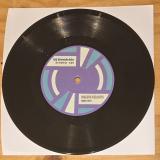
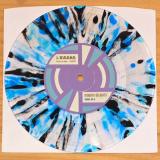
This Diggers Delights 08 is a LIMITED EDITION 45 - Hand numbered x 300 only. A: Welcoming : DJ Homicide to the Diggers Delights label. DJ Homicide - CA MUZIK comes correct with hard hitting club vibes under a classic old skool cut, speciallymastered for maximum loudness of the full length track on 45! A man who needs no introduction, DJ Homicide has brought out multiple 45's via Juno records and is often riding the charts! B: Label boss, J. Diggns brings a saucy blend, mixing Rap and Rnb classics for the club. With both sides at 96BPM this is one doubles of fun
This Diggers Delights 08 is a LIMITED EDITION 45 - Hand numbered x 300 only. A: Welcoming : DJ Homicide to the Diggers Delights label. DJ Homicide - CA MUZIK comes correct with hard hitting club vibes under a classic old skool cut, speciallymastered for maximum loudness of the full length track on 45! A man who needs no introduction, DJ Homicide has brought out multiple 45's via Juno records and is often riding the charts! B: Label boss, J. Diggns brings a saucy blend, mixing Rap and Rnb classics for the club. With both sides at 96BPM this is one doubles of fun
Expanding on his signature cinematic canvas, the EP solidifies the immersive, spiritual space Common Saints occupies in the contemporary landscape, a distinct sound with trademark intricate studio arrangements.
Following the structural foundation laid by the project's breakout singles "Night Light" and the title track "Illusions", the full EP stands as a striking philosophical assessment of the modern human condition. Age Of Illusions serves as an artistic reflection of cultural anxieties surrounding hyper-technological advancement, guiding the listener through a deliberate sonic architecture of self- discovery, spiritual rebirth, and final enlightenment.
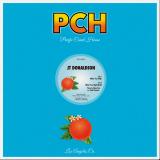
Introducing the 7th offering from the Pacific Coast House reissue series, JT Donaldson – Make You High. As with all these titles, grab them whilst you can!
Jay Duncan returns with another relentlessly boundary pushing take on dubbed out UK club music. The ghosts of hardcore are ever present, but distilled into bare bones, percussion-forward steppers. Late night body music.
On the B side Al Wootton provides a hollowed out, 10 minute dub techno wormhole remix.
The third release on Uprising pairs a sax-driven rockabilly thumper with one of the coolest dance craze records of the mid-60s. ‘Red Hot Car’ was Bobby Verne’s only recording and came out on the tiny Californian Doc Holiday label in 1962. Judging by the current price and collector demand for an original copy only a small quantity were pressed. This is a powerhouse of a tune that has been filling dancefloors across the globe for some time now.
As for the flip, in 1965, Buddy Wayne added self-penned lyrics to Gary Paxton’s rendition of the James Bond theme. Released on the Big Ben label – that only put out four records − it sat unwanted for decades. Then the rockabilly scene picked up on it in a big way when they discovered that it was the perfect stroller. This was closely followed by the northern soul and mod scenes. Today, it is at last crossing over to a more mainstream audience.
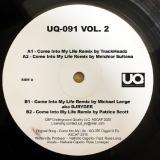
Jus-Ed's Underground Quality label has been living up to its title for more than 20 years now. The brief is simple - deep, smoky house music with soul, and it keeps coming at a steady rate from a blend of newer names and more established stars. Next up this late summer is a three-part remix package that revisits a gorgeous original by Nathalie Capello and Rose Lonegran. TrackHeadz kicks off with a nice swaying and dubby rework that is blissed out and spine-tingling, while Melchior Sultana taps into a melodic and Mediterranean sound perfect for sunset. DJRYDER's closer is a more percussive and prickly affair and Patrice Scott locks you into a zoned-out, late-night roller. Top-notch deep house.
Open Universe is a new record label founded in 2025 following an invitation to envision a series of releases for the German production music library Sonoton.
Curated by Jon Tye (Lo Recordings, Ocean Moon, Seahawks, MLO) with a remit to explore and create new worlds of sound in which to dwell and discover. Prismatic Fields is a collaboration between Ocean Moon and Silver Ley (Jon Tye & Bethany Ley), together they create metaphysical pop from another dimension where warm oscillations mingle and resonate to conjure a world alive with light and life.
An album that leans lightly into the worlds of fantasy synth and sacral medievalist electronics where silken harp glissandos, synth waves and enchanted vocal tones mix with lush fourth world textures and clusters of rhythmic invention.
Tripping into spaces modern and game-like, soundtrack moods that dip into the liminal dream states found in the work of Daniel Lopatin, Susumu Yokota and Boards Of Canada. Music that is both functional and formless, designed to stimulate and facilitate, to inspire and motivate.
Ocean Moon & Silver Ley will be performing live alongside Sonic Boom and Alexis Taylor at the Sonoton Music Label showcase @Schmidtchen, Hamburg 17th September 26.
In 2000, after almost two decades of hibernation under the ambient waves and dub currents of the Sargasso Sea, LSD revived the seminal ‘Auntie Aubrey's' series, an Orb Remix Project. Released as a 2 x CD compilation, Part 3 is a veritable smorgasbord of classic, new and unreleased labour-of love remixes that span three decades yet still transcend space and time.
Many influential artists have been involved with The Orb since the beginning, and the project keeps evolving and adapting. Dr. Alex Paterson, the gravitation centre of the Orb is known for his playfully subversive remixes and true to form this album highlights the diversity of his musical mind.
We see the good doctor remix the melancholy and evocative “The Last Lighthouse Keeper” from The Transit Kings, an early British electronic music group that included Jimmy Cauty of The KLF, one of the original members of The Orb. The remix of ‘Davy Jones’ Locker’ from System 7 takes you surfing on a sun-dappled sea of ambient dance nostalgia, while Killing Jokes’ ‘European Super State’ remix (in which LSD label founder Martin ‘Youth’ Glover plays bass guitar) sounds like the soundtrack for an imaginary spy thriller with the powerful lyrics and hypnotizing voice of Jaz Summers.
Legendary producer Youth teams up with Lx yet again on a psychedelic rocker with spellcasting vocals by Lara Smiles, and this is just the beginning! Boasting an all-star lineup, the compilation includes many of our scenes most esteemed electronic music producers such as Coldcut, David Harrow, Sendelica and Gaudi as well as the ambient blissed out vibes from the enigmatic DF Tram, Duende India Collective and The Gyuto Monks of Tibet, this collection offers up such the variety to appease even the most dedicated Orbsessives and music connoisseurs
Released in 2000 on Tommy Boy, the album fi nds Capone and Noreaga leaning into their chemistry: Capone's colder, clipped delivery grounding Nore's wild-eyed charisma and off-kilter bounce. The record features heavyweight production and appearances from names like DJ Premier, The Alchemist, Havoc, L.E.S., Nas, Mobb Deep, Foxy Brown, and Carl Thomas, surrounding CNN with some of New York rap's most recognizable voices and architects. Highlights like "Bang Bang," "Invincible," "Queens Finest," and "Phonetime" keep the album rooted in hard drums, prison- call tension, borough pride, and that unmistakable CNN slang. Commercially, it made a solid showing, reaching No. 31 on the Billboard 200 and No. 8 on Top R&B/ Hip- Hop Albums, with "Phonetime" hitting No. 22 on Hot Rap Songs. The Reunion stands as a hard-nosed second chapter for CNN: a tough, guest-heavy, post- millennium Queens record that captures Capone and Noreaga reconnecting without sanding off the grime. This deluxe edition features the remastered original album with 3 bonus tracks.
UK-based DJ and producer Drum Dance returns with a fresh three-track dance 12” on his Into The Cosmos label. Opening title track ‘Space Ritual’ is an almost 12-minute-long journey beginning somewhere in dreamy ambient, dub techno territory before evolving into a deep meditative trance with hypnotic percussive rhythms, rolling dubbed out hi-hats and euphoric synths; like Balearic meets Black Ark. The track then veers off in a new direction; playful arpeggiated synthesizers and stripped-back electronic drums taking it somewhere resembling early house or a cosmic Italo disco dub mix.
Techno goes outernational on ‘Arp Sequence 3 Dub’; stuttering lo-fi machine sounds and samples collide with pitched calypso percussion, dubbed out roots steppers drums and a deep walking bassline before heating up into a driving frenzy of 4/4 drums, siren synths and run-away FX.
‘Cosmo Jam’ starts life like a raw, moody Detroit house jam; tape-saturated kalimba, electric keys and loose drums skipping in and out of time. The track eventually gives way to a more ruff UK broken beat sound; cosmic jazz keys weave around outernational percussion, rhythmic vocals and a heavy low-end.
For the second installment of its renewed imprint, Fuse's own in-house resident and one of Belgium's proudest exports Phara takes the reins for a deep dive into thick percussion and vibrant club landscapes. 'The Wall' puts current dance music under a microscope with a brush of truly vintage spontaneity, merging techno's confrontational nature with house's harmonic genuineness. This duality is reflected through Phara's own relationship with his home base Fuse and the complementary contrast between its two rooms.
The EP's title track serves as a hypnotic introduction for the A1, imposing a bass-heavy rhythm and a persistently oscillating synthline. A dense production full of energy, 'The Wall' inspires intrigue throughout its duration, revealing its true intentions through a capable sound system. Sharing the first side of the press is 'Blaes 208', a name that Fuse club goers will likely recognise, that guides the listener from effect into embrace. With lush keys echoing past a comforting drum sequence fit for a close-eyed dancefloor experience, Phara's impactful tendencies meet his affinity for the melodic through a blissful six minutes of crowd to selector connection. Switching sides, a return to a cold cold aesthetic is quickly apparent through 'Hush Now 206'. A pummeling, saturated bass competes with a kick of equal effect, rolling through a storm of metallic stabs. Mastering the message of urgency, Phara presents a lightshow of resonating percussive work, defining his space just to cut right through it. To close out with a lasting impression, the producer mutes the acoustics of his work through razor-sharp sound design dotting along playful snares, a duality reminiscent of the dynamism of Detroit electro. 'Motion Steps', referring to the stairs that ascend from Fuse's main room to its more left-field counterpart, captures the atmosphere of the almost shimmering music that can be expected to be played there; a place where Phara and many others have been known to explore the extremities of their music. He swiftly throws in melodic elements to recontextualize an otherwise pressing composition, and after three chapters of considerable weight, he concludes his record with infectious groove that flaunts technical ability.
Party Store Records is back with their third release and are digging deep into the current Detroit
underground with a debut EP from live duo Lock & Hammer and an ethereal remix from legend
Terrence Dixon as Population One.
The four cuts are locked in across a range of vibes making this record a useful weapon across
the spectrum of peak time intensity to deep after-hours absurdity.
The title track, “Hofmann’s Bicycle”, is a mind melter that has the promise of a psychedelic
anthem. A driving, swirling stomper that will push you to limits you didn’t know existed. Fire up
the grill as your brain’s about to get cooked.
Population one aka Terrence Dixon delivers a cathartic and ultra deep remix of “Hofmann’s
Bicycle”, injecting a classic Detroit take with heavy strings overlaying a dense kick and hypnotic
groove.
“Freq” is a trip into the void, with sinister synth lines and hard hitting percussion propelling the
journey. Peak time engagement awaits any dancefloor it’s played on.
To round the package out “Sour Monkey” dives right back into pure absurdity, hanging at the
edge of right and wrong with drug addled rhythms and low end attack, this is already a cult hit in
the darkest of rooms.
Hysterical Love Project return with February’s Album, ten warm compresses steeped in the hum and hiss of late season humidity. Downcast guitars are aerated by sanguine refrains and flitting e-waste, languidly driven by a persistent low-end throb. Contentment pulsates with delerium; sweetness ripens into pressure.
You ask me, what’s the point of doubt? What’s the price of peace of mind? I open the windows to let the insects in and the light out.
FFO: Chris & Cosey, Labradford, City Centre Offices, YL Hooi
Written and recorded by Brooklyn Mellar and Ike Zwanikken
Physical Distrubution by Rubadub
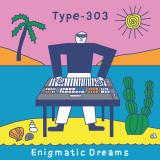
Type-303 is the project of Tampere-based Finnish producer, DJ and vinyl collector Dan Greijer. His releases for labels including Super Rhythm Trax, I Love Acid, Verrazzano, Zeitnot and 45 Live Records explore the connections between acid house, rave, early-'90s house and Balearic-influenced electronic music.
Enigmatic Dreams is Type-303’s first release on Cold Blow, a six-track 12" focused on the melodic and atmospheric side of classic electronic sounds. The release features Dr. Rhythm aka Mark Woollard, connecting Type-303’s production with the Cold Blow catalogue following the label’s previous compilation of Dr. Rhythm’s original 12"s, Hits The Vibes 91-92. Across the EP, Greijer draws from late-'80s acid, Italian dream house and early-'90s Balearic influences, using classic sounds including the Roland TB-303, 808 rhythms and M1-style piano tones.
LOGIC1000’s new album, featuring Kucka, Jam City, Christine and the Queens , Fauzia & Yune Pinku.
Includes All In For You, Jersey, The Only One & 2Love.
Dublin deep house fixture Glenn Davis returns with four tracks steeped in the smoked-out warmth of classic Chicago and New York house music, though there's enough personality here to stop things drifting into pure revivalism. 'The Journey' opens through supple drum movement and glowing Rhodes figures that unfurl lazily across the groove, as little chord flourishes flicker at the edges like light catching dust through half-drawn curtains. 'Love Is' softens the mood further through hazy vocal vapour and richly upholstered keys that melt gently into the rhythm. On the flip, 'Free Your Mind' introduces firmer rhythmic pressure without disturbing the record's low-lit sensuality. 'Da Jazz' closes things beautifully through brushed percussion and featherlight piano motifs with a rolling swing that feels most elegant in its looseness. Very classy deep house, this.
Yesca is back on Shall Not Fade with ‘Paint on Walls’ 12” EP.
2024’s Yesca EP on SNF - “Mood Loops” - set a high bar, so when we say this record is something special you should take note. Of course if you already know Yesca’s music or have had the pleasure of a Yesca DJ set then you will have already this queued up.
Sweet Spot: Ben Sims, Deetron, Oliver Ho, Vince Watson, Grain (Artwork’s Techno alias). Planet-E, Primate Recordings, Paul Mac & Stimulus Recordings found the sweet spot.
According to the OED the first use of the phrase “Sweet Spot” was in 1976 in reference to tennis rackets and golf swings. It’s where everything hits just right. And that’s what this EP does, hits just right. What strikes me is how descriptive the phrase ‘Sweet Spot’ is. Given enough swings and some luck we all know what it feels like to hit the sweet spot in some regard. Finding the sweet spot regularly though takes time and skill. But being able to hit the sweet spot by design every time, well that’s something different. That’s what makes the greats great.
For us at SNF there’s a consensus that in the lineage of electronic music there have been many moments where artists & labels converged on a sweet spot. One such sweet spot for us is in Techno
around 2003 when at the tail end of Hardgroove tempos began to slow and a groovier more refined tech house infused goodness appeared in the racks from a group of killer techno labels & artists (some mentioned above) that moment before the fuller emergence of the 2nd wave of Tech House in the mid 00’s.
That sound, while often emulated, never quite hit the same for us at least – until Yesca came along. His music has everything that we love about that sweet spot. Raw driving groove, rolling basslines and hip shaking percussion. What’s different on ‘Paint on Walls’ is that Yesca stepped on - he had already found the sweet spot on 2024’s Mood Loop EP - now his sound (or swing) is natural. Repeatable, refined and seemingly effortless. To revisit the tennis and golf analogy, this is the start of a Grand Slam run from an artist ready to etch their name in dance music history. Tiger..... Serena......Yesca.
Run the Tracks:
‘How I Do It (They Wonder)’ - A masterclass in less is more, and a serious DJ tool. Full of groove - slow it down and it will light the touchpaper in a house set - speed it up and you’ve got techno weaponry. Forget gatekeeping, this will make you feel like you just found a 2004 techno white label from the likes of Grain or Ben Sims.
‘I Desire’ - House music that I reckon Deetron would be proud of... Blissed out machine funk, whispered vocals, slick jazzy chords and dubbed out techno stabs are all grounded by Yesca’s impeccable, loopy drum programming. The best tunes always end too soon.
‘Domination’ - The ever rising bass, err, dominates this track and this track will dominate on many a dancefloor, but Yesca's knack for dubbed out swinging synth lines has to get a shout out here too. He turns what would be melodic elements into what feels like part of the percussion. Double Threat. Hands Up and Heads Down business.
‘Paint on Walls’ - It would be a tough call to say Yesca’s saved the best til last with the EP’s eponymous track given what’s come before, but Paint On Walls works all the highlights from the rest of the EP into a latin techno/house infused anthem. Skittering percussion, a hint of Detroit goodness and a deep deep rolling bassline and THAT vocal. In every way hopeful yet resistant, and that is what techno is all about.
Killer Groove Records presents a new 7" by Electric Circus, pairing "High Fever" and "Ogres": raw, hypnotic funk built on obsessive bass lines, sharp horns, dub delays and wah-wah guitars.
Both tracks are taken from Rites, the band's second studio album, out November 27 on limited-edition LP, CD and digital. The 7" is limited to 500 copies worldwide and is out September 25.
On the A-side, "High Fever" maps Electric Circus's territory: '70s funk, Afrobeat and psychedelia meet in a steady build toward a climax of synths and groove. The track grew from a bass line written over one feverish weekend and runs as a single continuous rise in tension.
The groove takes its cue from The Meters, locking syncopated accents into place while a punchy horn section cuts through from the opening bar. Dub delays and layered textures then open the arrangement out, trading space with wah-wah guitars and a treated clavinet that sounds vintage without dating the mix. After a darker, nocturnal passage, the saxophone rises over percussion and synths for the climax.
On the B-side, "Ogres" was the first track conceived for the album and the last to be completed. It began as a bass-and-percussion ostinato in an Ethiopian pentatonic scale, modelled on a war march, and grew into a dense groove with psychedelic and trip-hop textures. Its rhythm conjures a twilight bestiary of dark, menacing or perhaps merely curious creatures, building to a tense climax before resolving into a smooth, dreamlike finale that suggests awakening, or re-emergence.
Like the rest of Rites, both tracks started in jam sessions and were recorded in stages: live takes of the core arrangements first, then dedicated sessions for synths, horns and overdubs. Marco Sirio Pivetti engineered at Metrò Rec Studio in Riva del Garda, Gio Solo at Sberdia Studio in Turin. Overdubs were reamped through tube amplifiers and analog outboard. The band co-produced with Pivetti, who also mixed; Riccardo Ricci mastered at Velvet Room Mastering Studio in Brighton.
Electric Circus are based in Turin. They released their debut album, Canicola, in 2018 and have toured the U.S. Scoring Contrecourant (2021), a documentary series shot in Senegal and Mali, led them to Sahel Roots, a duo from the north of the country. The two groups recorded On est ensemble (Mieruba, 2023) remotely between Turin and Bamako, each writing two pieces for the other to finish.
For fans of The Heliocentrics, Calibro 35, BADBADNOTGOOD.
When the first JIM album Love Makes Magic was released in 2023, it was the end product of an experiment that had begun during the strange days of the pandemic. Cooped up in his studio, James Baron started fiddling about with an as-yet unnamed new album idea. It became Vicious Charm’s first LP release. Labelled variously as Balearic, folktronica, blue-eyed soul and Laurel Canyon, Love Makes Magic was perhaps all and none of those things: a record rooted less in Californian mythology than in Baron’s own musical world, somewhere between Sherwood, Nottingham, classic songwriting, electronic soul and the no-nonsense good times that have long run through his work under his other monikers (principally the anagrammatic Ron Basejam and, of course, Crazy P) One thing was indisputable, it connected with people... and still does.
The album was a minor hit, appearing in many a Best of 2023 chart and voted Album of the Year in Bill Brewster’s Furtive 50. A tour and a few memorable festival appearances – his 2024 We Out Here Festival being one of those wonderfully timed ‘moments’ - perfectly captured the horizontal vibes on the album, while injecting some live energy into its delivery. While there was a follow-up remix album for Love Makes Magic, JIM was already preparing a sophomore LP: “I wrote the majority of The Curious Case Of Existence in a couple of months at the beginning of 2024, then it was just a case of making the record over the next couple of years in between everything else.”
Drop the needle on this latest dispatch from the tape vaults, and we are back in Chicago at The Curtom Studios in 1977. For instalment number five in the "Hutson Sevens" series, Home of The Good Groove Records are so very honoured to deliver this previously unreleased cut from Leroy Hutson—a true titan of soul music and an absolute master of his craft.
"Betting On My Love" carries that signature smooth orchestration we have come to expect from Hutson’s finest hours. It moves with a wonderful, breezy optimism. Hutson’s joyful, velvet lead tones skip effortlessly across the groove, wrapped in lush backing harmonies that instantly evoke the feel of the Hutson II
classic, "I Think I’m Falling in Love".
Now, a brief confession of pure, crate-digging indulgence: if tailored strictly for the dancefloor, the track arguably hits its logical peak and fade just past the three-minute mark. But to cut it there would strip away the raw human magic of the session. If you let the wax ride to the very end, the arrangement dissolves into a wonderful, lingering instrumental outro, culminating in the studio players purposely "clattering" their instruments in a moment of pure creative release. It is a brilliant, candid studio artifact that was fortunately preserved on the original master recording. Essential listening for the global soul family—do not sleep on this debut pressing.
For the flip we present Leroy Hutson’s 1979 cut “ So Nice”, a masterclass in late-70s soul music. A stand out track from the “Unforgettable” album and a vital reminder of Hutson’s unmatched ability to inject sophisticated romanticism into the bleeding edge of that disco era.
Slightly edited for the 7-inch pressing, up steps our remastering and editing maestro Mr Phil Ward. Phil always has the utmost respect when remastering and editing original content, ensuring that every second of the groove is fully respected and preserved. His stellar work here includes the studio recording of the three-count drum intro, never heard before now, leading into that meditative smooth groove layout.
It is an exquisite arrangement of simmering electric keys, nimble basslines courtesy of the legendary Keni Burke, and subtle bongo accents that collectively deliver a timeless masterpiece. Now available on 7-inch vinyl for the first time.
Fully licensed ! Ltd to 500 copies. Singer and guitarist Ram John Holder was born in. 1939 in Georgetown, British Guiana, then moved to Cincinnati
in 1954, and to the East Coast to work as folk blues singer in the early 1960s. In 1963, he took residency in England where he recorded several
albums. Released in 1969 Black London Blues is surely is masterpiece. A socio-political manifesto the album chronicles the trials and tribulations
that were the result of being a black-immigrant in London, and it contains all the pathos and pain one can imagine. Self-conscious, as concept
albums often are, the record is almost like an audio A-Z or pub guide. It’s funky/soul and represents his own black experience. It is a must have
for all the blues revivalist out there, a record to rank along the lines of early Mike Cooper and American stalwarts like Eugene McDaniels or Sixto
Rodriguez!
Tracklist:
SIDE A: 1. Loie - 2. Lloro Tu Despedida - 3. Goin’ Home - 4. Me ‘N You
SIDE B: 1. Liebestraum - 2. Shu Shu - 3. Blue Samba - 4. Favela - 5. Linda Flor
SOULGRA
Tenuous Links welcomes Torino’s very own VIOLA to the label with his new ‘Wrinkles’ EP. As the label owner of Reflue Records, VIOLA first caught my attention with his debut full-length release, a body of work that showcased a deep, rugged sound and a clear technical prowess shaped by his surroundings rugged coastlines and industrial landscapes of Torino in northern Italy. After speaking with Cristiano for over a year, it felt like a natural progression to bring his music to Tenuous Links. “The music I write almost always functions as a visceral soundtrack to whatever environment surrounds and infects me while I'm creating. Deeply rooted in the architectural contrasts of the places I’ve inhabited.”
‘Wrinkles’ is VIOLA’s second full-length body of work, yet the years of graft and dedication behind it are immediately apparent. Across three original tracks and a remix from London’s Jay Duncan, the EP delivers pure grit and crunch, inhabiting large, cavernous atmospheres grounded by pummelling bass, dynamic drums and intricate rhythmic detail.
The title track ‘Wrinkles’ is an ode to club spaces and the scene that revolves around them. Its broken rhythm channels the dancefloors of Cristiano’s formative years, spent partying in abandoned bunkers and warehouses in and around Torino. VIOLA explains: “Crafting such a raw, gritty bassline felt like an absolute necessity during the writing process, retracing memories of long nights spent dancing in silence.” The track’s cavernous atmosphere mirrors those pitch-black, unlit spaces, drawing us deeper and deeper into the abyss, with only brief glimmers of light offering reprieve from its relentless, all-enveloping bassline.
‘Mon Tom’ draws heavily from VIOLA’s hometown and his complicated relationship with Torino ,a city where tranquillity and beauty sit alongside heavy industry. The calm of the coastline is violently interrupted by vast steelworks and plumes of black smoke, leaving an imposing industrial mark on both the landscape and its people. The track reflects these contrasts. Metallic yet fluid, it moves at a faster pace, built around a driving 4/4 rhythm designed to suspend the listener while skittering percussion creates an increasingly uneasy sense of movement. It’s a meeting point between the beauty and brutality of the environment that inspired it.
‘P Maggiore’ was written between 2019 and 2020 while VIOLA was living in Rome’s chaotic Porta Maggiore district. Surrounded day and night by the grinding noise of trains, screeching tram brakes and beaten metal, he translated those raw auditory memories directly into high-pressure sound design. Yet, in contrast to the intensity of his surroundings, VIOLA deliberately pulls back the tempo.
Rounding off the EP is a skeletal remix of ‘Wrinkles’ from London’s Jay Duncan. She strips the original back into a techy, rolling cut, retaining its atmosphere and darkness while introducing a lighter touch of minimal-esque sound design. The result is a subtly transformed take on the title track that provides a fitting conclusion to the EP.
‘Wrinkles’ EP is a record shaped by place, by architecture, industry, memory and the physical spaces that leave their mark on us. From Torino’s industrial coastline to the chaos of Rome and the darkness of abandoned club spaces, VIOLA turns his surroundings into sound. Coming to vinyl and digital October 16th of October.
This is the reissue of original 1993 Rephlex double vinyl album, completely remastered from DATs by Beau Thomas, with the original artwork, and photography by Richard James. µ-Ziq's Tango N'Vectif was released in 1993, a classic year for auteurist electronic music that didn't always fit on the dancefloor. Written by Mike Paradinas in his late teens with some help from Frank Naughton, it still stands up really well today and its influence on electronic music in the decades since is obvious. Across an expanse of ideas, taking influences from early Aphex, Detroit Techno and UK Hardcore, Mike created this spirited, funky, jerry-rigged, lo-fi version of rave; with crunchy drums and a knack for melody that fell somewhere between John Barry and classic TV themes. Without owning a computer, Mike had been writing techno, house and industrial tracks on and off since 1990, playing live keys alongside drum machine rhythms on his 4-track recorder. µ-Ziq started when Mike linked up with Frank who was also writing dance-influenced music, and importantly owned an Atari 1040ST computer with Cubeat software. They pooled their equipment and Mike would travel up to Frank's house a couple of miles away in Wimbledon to record together. By 1992, and after a false start when a proposed EP for Mark Pritchard and Tom Middleton's Evolution label got shelved, Mike had started at Kingston University where he deejayed and met like-minded people including a couple of guys who knew Aphex Twin who was also a student at Kingston too, and they passed Aphex a demo of Mike's material. A few days later Mike got a message from his mum to 'call Aphex Twin' and he gave Mike some advice, and seemed interested in releasing something. So when Frank and his family went on holiday that summer Mike borrowed his Atari and synths and wrote the majority of the Tango N'Vectif album during that 2 weeks. By the end of 1992 a release with Aphex Twin and Grant Wilson Claridge's Rephlex label had been agreed - Aphex had moved to the house in Clissold Crescent where he recorded a lot of his early classic albums and Mike went over to collect his advance, in the form of his very own Atari computer.
Since the release of DAMAGED in 2024, Michael Fiedler aka GHOST DUBS has been surfing intensifying waves of adulation, earning praise from such diverse underground legends as Justin Broadrick (Godflesh/Jesu), Regis, Stefan Betke (Pole) and Steve Von Till (Neurosis). With second album Oblique, his mastery of sculpting sound waves results in a spellbinding set of alien soundscapes: larger in scale, richer in tone and considerably more cinematic than its predecessor. Lower, deeper and moodier, its cloudy abstractions, shadowy pulsations and submerged rhythms find Fiedler reaching further into his own sonic void, crafting blurred melodies and addictive narco loops into something simultaneously heavyweight and hypnotic.
Lead single and album opener “Low Times” sets the atmospheric pressure to maximum, resembling a dream date between prime dirt-house era Andy Stott and Berlin dub-tech pioneers Basic Channel. From there, Oblique descends into a series of enchanting mood scenes: the furtive, balletic gyrations of “After All”, the haunting ambience and buried heartbeat throb of “Soft Collapse”, and the noirish atmospherics of “Blackout Dust”, which worms its way into the mind like some forgotten David Lynch scene. The spirit of reggae is more distanced here than on DAMAGED, but the ghost of Jamaican dub still permeates these foggy soundscapes, particularly on “Bombed Suburbs”, where Augustus Pablo-style melodicism is chopped, screwed and slowed into a magnetic lock groove.
Superficially minimal but maximal in its minute detail, Oblique is a record of contorted reflections, mesmeric echoes and tantalising audio mirages. By the vaporous mist of closing track “Almost a Structure”, obvious rhythm has been craftily filtered away, leaving a blurred and blunted residue full of mystery and implied narrative. Dense in the best possible sense and crushing when played loud yet equally potent played quiet, Oblique imagines dub techno burning its own rigid rulebook: sensual, funky and concussive rather than dry or alienating. Following Fiedler’s recent work scoring Sound of Falling, recognised at Cannes in 2025, Oblique finds Ghost Dubs shedding his influences and making it clear he has arrived at a sound entirely his own — essential deep listening and a bewitching dose of future shock.
Cristina Camargo broke onto the Brazilian boogie scene in 1980 with the single "Moral Tem Hora", penned by the by then already famous brothers Marcos and Paulo Valle. They were soon joined by the arranger/producer/musician powerhouse Robson Jorge and Lincoln Olivetti, who worked with practically all the big MPB stars from Jorge Ben and Gal Costa to Caetano Veloso and Gilberto Gil. Armed with the endless possibilities that the burgeoning Brazilian music scene provided, the group went into the studio and produced the eponymous debut album Cristina Camargo.
The result is a very special record built around that successful single that does what Brazil does best: blending their own musical heritage with sounds in vogue in the rest of the world, in this case the boogie disco that was all the rage in the USA in the first half of the 1980s. Expect endearing choirs, tight grooves, and a killer production value on par with the big-budget studios up north.
Cristina Camargo is available as a limited edition on yellow vinyl and includes an insert with lyrics.
Anyone who has had the sheer pleasure of seeing and hearing Leroy Burgess perform in concert will know just how amazing the live renditions of his iconic compositions of Disco Boogie hits and classics sound with a full band and a fully fueled audience. Accompanied by the ten piece French band and long time Leroy Burgess collaborative outfit Saving Coco, BBE Music is releasing live versions of two of those classics Let’s Do It and Big Time. Recorded and released by Rick James in 1980 Big Time is an absolute killer of a track that sounds so fresh decades later in this crowd energising performance. Famously released by Convertion Let’s Do It was a huge club hit in the early 1980s and is the perfect track to accompany Big Time on this release. Leroy Burgess is a certifiably genuine legend of Black music; his compositions have moved dancefloors across the world since the early 1970s as a member of Black Ivory, then Convertion, Paradise Garage favourites LOGG, Kleer and electro outfit Aleem. His collaborations with Patrick Adams, Inner Life, Dazzle and solo artists such as Eddie Kendricks, Rick James and Fonda Rae have cemented Leroy Burgess’ place in the annals of Black Music History. As a founder-member of the Universal Robot Band he co-wrote the massive perennial favourite Barely Breaking Even. Leroy Burgess feat. Saving Coco-Big Time/Let’s Do It is released as a 12″ vinyl and digital download and definitely belongs in the ‘make sure you get this’ category. Mixed by Marc Mac and mastered at the Grammy-nominated Carvery Studio by Frank Merritt. Available as 12″ vinyl and digital download. Release date September 25th, 2026
Though Scratch may have at times seemed crazy, it is worth noting that creative
genius appears so because geniuses see things others do not see and inhabit
realities unseen. As the music on this album reveals, Lee Perry's Black Ark creations
re-arrange the familiar into something new and magical.
Lee spent his early days working with legendary producers Coxsone Dodd, Duke Reid,
Joe Gibbs, Clancy Eccles and Prince Buster, and by 1968 he was an independent
producer, naming his studio musicians The Upsetters and scoring instrumental hits
with innovative rhythms that helped forge the new reggae style. In 1970-1971 he
produced what many consider the greatest works by the Wailers; in 1968 one of his
Upsetters productions hit #5 on the UK pop chart and more hits followed. That gave
him the funds to build his own studio and in 1973 the legendary Black Ark was born.
Among the many landmark classics cut at Black Ark are such incisive political
commentaries as Max Romeo's "War Ina Babylon," and Junior Murvin's "Police and
Thieves" (covered by the Clash). The Congos' "Heart of the Congos" album is a roots
classic and there are many wonderful obscure singles such as Carlton and the Shoes'
"Better Days." Many dub creations made innovative use of Scratch's sonic wizardry via
echo, phasing, reverb, fanging, wah-wah and various sound effects.
It all came to an end in 1978 as Lee, besieged by extortionists, freeloaders, religious
fanatics and assorted pilgrims, let the studio lapse. And then he set it on fre, some
say due to frustration, others say from mental collapse. He left Jamaica, collaborated
with musicians around the world, toured as a sort of mystic trickster/ shaman and
prospered. But his work at Black Ark will always stand as his ultimate creative
achievement.
Phwoar! TD go four for the floor on Volume 9, letting loose with a set of sure-shot hits from all corners of their sonic spectrum.
A tag team match up, this action spectacular trades peak-time pump, Balearic cool, Italo thrust and dance-punk theatrics on its way to snatch the championship.
Obviously TD ooze subtlety and taste, so as we sat sipping Schnapps from our Stanley cups, we couldn't help but take a little inspo from our kitchen decor. 'Live Love Pump' - what a mantra. In musical form, this philosophy takes the shape of a capital D-isco delight, equal Pats Cowley & Adams, EQ-freaked and filtered into something dafter than a pair of chrome clad millionaires. Big room mirrorball magic if ever we've heard it.
The A2 sees the drunk AOR funk of 'Sure Line' take a leisurely stroll down the coast, a Gauloises in the gob and tattered Baldwin in the back pocket, flipping and flopping along the prom to buoyant bass, melting brass and more than a little melancholy.
Booting off the B-side, 'Un America' is a massive mid-tempo chugger replete with laser fire, synth scree and nipple high guitar. Powering along on a serious bass sequence armed with hooks-a-plenty, mostly incomprehensible lyrics and a groove which won't quit, this has all the ingredients required for an Italo all-timer.
The finale finds us in the company of some punk pioneers at their absolute silliest, bringing the kind of whacky vocal vibe, surf-centric style and off kilter groove the B-52s made a career of. Add in animal chatter and scratchy guitars and you've got the sort of secret weapon the Idjuts unleash waaaay post peak.
Limited Press - Numbered Insert - Drum Fun Guaranteed
On Chuck Strangers’ latest opus, Glory Of The King’s Hand, he raps, “I still rap from the perspective of my government name…” The stage name “Chuck Strangers” is, of course, an alias but it’s not necessarily an alter ego. For the man born Che Jessamy, his rap moniker isn’t some over-the-top rock star persona contrived for public consumption, it’s just a name. What you hear on his records is really who he is - a heavy-tongued griot from East Flatbush, Brooklyn with a gift for vivid stream-of-consciousness storytelling. His bars are imbued with the wisdom he’s gained in his lifetime - especially in the 14 years since he first made his debut with the Pro Era collective.
The elaborate title of his new album, Glory Of The King’s Hand, speaks to his gratitude for the hand that life’s dealt him, which is a pretty good one. At age 34, he does what he loves professionally and does it on his own terms. That’s something to be thankful for.
Glory Of The King’s Hand, not only represents Chuck’s matured attiGlory attitude but also his matured sound. Key to this refined approach was tude collaboration. Chuck is a proficient beatmaker in his own right as evidenced by his production for himself and artists like Joey Baevidenced Badass, and Boldy James. But this time around Chuck chose to be a dass, producer in the Quincy Jones sense of the word, bringing together vocalists, producers, and musicians instead of handling all of the beats and rhymes himself. d Up Reprise
The list of contributing producers is a who’s who of underground sound scientists including The Alchemist, Animoss, Theravada, Kensound Kenny Segal, Preservation, Child Actor, and Morriarchi.
Fans and headz worldwide have been clamoring for a follow- up, but all Emapea wanted to do was just 'zone out.' And that's what happened, with the release of Emapea's twenty song album Zoning Out, Volume 1. Emapea's cuts are meant for the listener to get lost in - but they're not only for chilling, or when deep in thought, but also for getting in that crucial head-nod zone, like when the DJ drops the dopest beat. Expertly crafted and sequenced, the album presents a boom-bap journey that's dreamy and spacey while remaining tough and jazzy. "Check It Out" exemplifies the mood with its smooth drums, chiming keys, subtle sax riffs, and hip hop shout-outs. The vibe expands on "Motion", adding an exotic, worldly flavor to the seductively loping rhythm. And "Classy" features a smokey saloon piano melody that cruises smugly out of jeep-beat speakers.
This one means a lot to us. A project we’ve been working on for a couple of years. One where we hand over the curatorial keys of the label to very specific artists in whom we have absolute trust and who have an almost academic knowledge of a specific rhythm or a specific region where our eyes and sensitivity cannot reach. In order to amplify powerful voices from the global south, where the true underground is happening today, and that move away from the traditional axis of New York, London, Berlin. We present to you: Mzansi Bass curated by Shannen SP.
A project meant to explore the space between 3-step, Gqom, the dark sides of Amapiano, and mutations of Pritori rap deeply rooted in Black African rave music from the local scenes of Durban, Johannesburg, Cape Town, Eastern Cape, and their global mutations from Brazil and the Netherlands. The project is anchored around the legacy act of DJ Lag and new comers of South African bass whose music has broken international barriers with pure-emotionally-rich dance music. The release works as both a celebration of the roots and the future offering it projects. As Shannen puts it, it's electronic music with a futuristic feel, both raw but minimal, trance-inducing and deeply physical, built in a very particular geographic space for
the whole world to enjoy.
Indulge into this special soundscapes crafted by their own inhabitants. Expect a couple each year from now on.
Following the success of two collaborative releases (EMC “The Show”/2008 and Ace & Edo G “Arts & Entertainment” /2009), Masta Ace joins forces with the metal faced MF Doom for Son of Yvonne, a highly personal concept album that celebrates the life and legacy of Ace’s recently departed Mother. Like his 2004 landmark Disposable Arts, Son of Yvonne is meticulously constructed with stories, settings, and characters that resonate with flesh and bone humanity. Interstitial vignettes provide a thematic backbone to the experience, and each track complements and completes the previous to form a narrative whole: a sometimes visceral, sometimes nostalgic slice of Ace’s young life in Brownsville, Brooklyn. Entirely underscored by MF Doom’s iconic Special Herbs instrumentals, Son of Yvonne features the Juice Crew general Big Daddy Kane, new comers Pav Bundy (The Bundies), Reggie B and even MF Doom on the mic. It’s Masta Ace’s no frills flow, however, that looms largest above the dusty samples and digger loops that define Doom’s production. Ace’s photo-realistic rhymes about stick-up kids, spraycan artists and wack emcees add extra gravity to his already celebrated reputation as “truly an under-appreciated rap veteran and underground luminary” (Allmusic Guide). Like Eminem recalls in his 2008 autobiography The Way I Am, “Masta Ace had amazing storytelling skills. His thoughts were so vivid.” TRACKLIST: A1. DJ Ski's Intro A2. Ninteen Seventy Something A3. Son Of Yvonne B1. Da Pro B2. Store Frontin B3. Me & My Gang B4. Crush Hour feat Pav Bundy C1. Think I Am feat Big Daddy Kane & Mf Doom C2. Fresh Fest Reggie B C3. Hoe-Tel-leftovers C4. Slow Down D1. Home Sweet Home feat Pav Bundy D2. Dedication D3. I Did It D4. In Da Spot feat Milani The Artis D5. Outtakes
Coil’s 17-minute soundtrack for »How to Destroy Angels«, performed on January 19, 1984: ritual music ›for the accumulation of male sexual energy‹, structured around magickal and numerological concepts.
Throughout history man has made and used music for two distinct and separate purposes. In recent years, particularly since the advent of sound recording, the most popular use of music has been for entertainment - the temporary amusement and distraction of as large a number as possible. As a consequence, many people tend to overlook its more fundamental and ancient use as a tool for affecting man's body and spirit. The many varieties of religious music from around the world contain a vast quantity of clues to the way in which sound can affect the physical and mental state of the serious listener, yet many find their associations with religion itself too difficult a stigma to overlook in their appreciation of the sound and its potential, for its own sake.
On this record, hopefully the first in a series, we have tried to produce sound which has a real, practical and beneficial power in this modern Era. Specifically, it is intended as an accumulator of male sexual energy. Although we make neither claims nor rules for its use, we do suggest that for maximum potency it should only be played in circumstances that exclusively male and/or onanistic in nature. What these are is entirely up to you.
The execution of the piece was structured around concepts we felt would work for us - in this case magickal and numerological rather than conventionally musical in form. One image or symbol which we drew upon that may be useful to bear in mind is that of Mars, often indicated by the male symbol.
Should this music have any power, over and above the banal and transitory titillation achieved by most records available now, it is a positive and beneficial power to be used and controlled by the listener, as he desires.
Coil’s 17-minute soundtrack for »How to Destroy Angels«, performed on January 19, 1984: ritual music ›for the accumulation of male sexual energy‹, structured around magickal and numerological concepts.
Throughout history man has made and used music for two distinct and separate purposes. In recent years, particularly since the advent of sound recording, the most popular use of music has been for entertainment - the temporary amusement and distraction of as large a number as possible. As a consequence, many people tend to overlook its more fundamental and ancient use as a tool for affecting man's body and spirit. The many varieties of religious music from around the world contain a vast quantity of clues to the way in which sound can affect the physical and mental state of the serious listener, yet many find their associations with religion itself too difficult a stigma to overlook in their appreciation of the sound and its potential, for its own sake.
On this record, hopefully the first in a series, we have tried to produce sound which has a real, practical and beneficial power in this modern Era. Specifically, it is intended as an accumulator of male sexual energy. Although we make neither claims nor rules for its use, we do suggest that for maximum potency it should only be played in circumstances that exclusively male and/or onanistic in nature. What these are is entirely up to you.
The execution of the piece was structured around concepts we felt would work for us - in this case magickal and numerological rather than conventionally musical in form. One image or symbol which we drew upon that may be useful to bear in mind is that of Mars, often indicated by the male symbol.
Should this music have any power, over and above the banal and transitory titillation achieved by most records available now, it is a positive and beneficial power to be used and controlled by the listener, as he desires.
Dark Entries is ecstatic to announce Terminal Fascination, a retrospective release of the music of Camille O’Grady, subversive artist, leather witch, punk poet, and gender saboteur. O’Grady cut her teeth in New York’s burgeoning punk scene at clubs like CBGB’s, where her band Leather Secrets would share the stage with acts like Television. She became one of the few women to be welcomed into the Mineshaft, Wally Wallace’s legendary Manhattan gay BDSM club. Towards the end of the 70s, she would trek west to San Francisco to be with her partner, performance artist and gallerist Robert Opel, who was tragically killed in 1979. O’Grady would pass away from COVID in 2020, with her voluminous works across various media - text, image, and sound - having been unpublished during her lifetime.
Working with O’Grady’s estate, Dark Entries has assembled thirteen of her finest recordings, including instant classics like “James Dean to the Rescue,” “Tourniquet,” and, of course, “Toilet Kiss.” Two songs, “Angel with a Key” and “Love Comes Like a Cutthroat,” were recorded at a studio in Los Angeles for a 7” release that never materialized, while the rest of the material was recorded live in 1979 at The Ambush, a San Francisco leather club. O’Grady’s songs, often written from the perspective of a gay man, explode like a genderfuck version of Patti Smith, like Buffy St. Marie in leather, like the hedonic utopianism of the 1960s dragged (blissfully) through the broken glass of the 1970s. The release of Terminal Fascination coincides with the publication of ‘A Cross-Worlds Angel,’ a 300-page book of O’Grady’s work by Phillip Zimmerman. The record includes an insert featuring liner notes, lyrics, and photographs. Celebrate Camille O’Grady, the artist Jack Fritscher described as an “earth mother, a leather lioness of the arts.”
Pleasurewood return with 'Electric Telepathy', their second full-length LP offering Simla Space Funk, Psych-Library and Vintage-Cinematic Raga-Rock grooves.
This new offering from the band embraces more of their vintage Hindi Cinema soundtrack influences — "Chump Change", "The Hoverfly" and "RAMMM" could easily fit into the middle of an R.D. Burman score, each with their incongruous synthesis of different genres, infectious percussion, classical modes and funk chops.
There is also a slight sweep across a too-slow-to-disco tempo and feel with the moody Johnny Guitar Watson-esque slow burn of "Good Falcon" up to the nonchalant four-to-the-floor of "Last Dance Saloon" with its lyrical warning of digital over-saturation in our social-media saturated world and a foreboding of the mini-monoliths sat in the palms of our hands that in a Kubrickian way threaten to cosmically absorb us all as a species into their individual jet-black abysses.
And then, coming into focus like a sweet slice of disjointed, lo-fi, 8 bit space disco, "Mojave Desert" is a slacker-strut with telephone vocals dub guitars, dry cosmic synths and futurist Farfisa organ driven by an almost Acid-Jazz meets Post-Punk Bass line. The song is autobiographical in its account of an excursion along the 29 Palms Highway reflecting on an escape from the City of Angels not so far away, up into the stark psychedelic desert realm.
There is a lot to unpack in this record and yet more to discover so it will be best to allocate 40 minutes in a comfortable dimly-lit room with eyes closed and maybe a cognac in hand, to have a deep-dive into its well-travelled and esoterically funky grooves.
At this point, the vast swathes of unreleased Muslimgauze material Bryn Jones left behind when he passed away over 25 years ago are as legendary as any of his work. And sure enough, there's still some being unearthed today.
The fourth entry in a 7" single series is taken from one of Jones' customary completely unlabelled DATs, which he sent to labels seemingly as fast as he finished them.
A new series of singles collecting one of Bryn Jones’ innumerable DAT tapes that would show up at the labels he worked with sans any identifying marks.
Side A layers multiple voices (a background, faraway wail that either is or is akin to a muezzin, and a flatly declaimed two-word phrase that periodically halts proceedings) over his classic, slightly brick-walled hand percussion for a strangely meditative experience, as Jones phases elements in and out, more or less prominently in the mix. Side B however, open in a surprisingly dreamy place for Muslimgauze, with a looped ascending synth pad and beautiful sampled singing only gradually acquiring percussive accompaniment. As with the other side, Jones is content to let these elements interact and swap spaces in the mix for the duration, trusting in the sturdiness of his chosen components to carry the listener through.
Madelyn Byrd returns to Glasgow’s Somewhere Press with a hazed set of weightless soundscapes. »Night Rider« opens in widescreen with the chirp of cicadas dancing across a desert landscape, before Shiroishi’s saxophone eventually cuts through the dark like neon. The story Byrd tells is close to their heart: they spent their teenage years in the Sonoran Desert, the vast subtropical expanse spanning parts of Arizona, California, and Mexico. Its seemingly alien landscape — pocked with giant, tree-like cacti and looming rocky outcrops — is lodged in the cultural memory, a quality Byrd draws on as they slowly reveal their poetic narrative.
The album plays like a road movie of sorts, moving through Byrd’s memories and setting them to very different rhythms. Clattering drums emerge on »Of Nature, Of Bodies, Of Dreams«, while Byrd’s soft tones, processed to sound almost otherworldly, glide gently across the metallic clangs. Each track highlights a form of movement: there is the microscopic, insectoid crunch of »Imprint«, where guitar prangs meet Shiroishi’s spirited runs, while »Into Sonoran Pool« creates motion from the atmosphere itself, recreating the thick desert air with shimmering electrical currents and psychedelic processes.
At this point, the album begins to echo Robert Ashley’s late-period theatrical work: compositions that broke with familiar formats, juxtaposing dialogue with knowingly experimental orchestral flourishes. Byrd strikes a similar note through a fusion of poetry, sound design, choral music, and chiming, listless ambient elements that also recall Harold Budd. Budd grew up in the Mojave Desert, which borders the Sonoran, creating an eerie parallel with the moods he conjured throughout his long career.
Byrd finds a similarly aesthetic link to the West Coast landscape, referencing the history of experimental music while establishing their own voice. As the album rides into the sunset with a roar of engines, they offer a distinct vision of pop: »What Is, What Was« integrates a chugging break and ketamised vocal hook, while the finale, »In Perfume, Remember«, lands as a James K-like heartmelter.
Dark Entries is Filling Your Silence with the help of J.D. Slater. Legendary actor, director, and composer J.D. Slater is sometimes known as “the Lou Reed of gay porn.” Slater cut his teeth in the New York punk scene, even opening for the Talking Heads and Blondie at CBGB with his project Frenzy. A true polymath of the erotic, he co-founded Raging Stallion Studios with Chris Ward in 1999, which has remained a prolific outlet in the world of gay pornography. Having spent years in front of and behind the camera, 1999’s Filling Your Silence was his debut as maestro. This album collects the soundtracks from the first two Raging Stallion films - Sexpack One and Sexpack Two - to bring us nine tracks of sleazy beats and trance-like moments of pure ecstasy. Album opener “Seduction” begins with the iconic synthetic pan flute, one of the defining sounds of the 1990s, before pulling us along with its wild grooves.
Halfway through its nine-and-a-half- minute course, it breaks down to bust out a jazzy electric piano vamp. “Running with Scissors” ups the tempo with some crunchy breakbeats to undergird its portamento-laced lead synth. Elsewhere, like on “Mercy” and “Mercy (2nd Movement),” we see Slater embracing a bleep-adjacent sound close to early Nightmares on Wax or 808 State. Filling Your Silence’s endless grooves pursue that oceanic feeling. This record comes with a one-sided insert that includes archival Raging Stallion press materials. In the words of the Bay Area Reporter, Filling Your Silence is “quite possibly the best music for sex ever written.” A bold claim, but we can’t help but agree.