Hybrid is a word used indiscriminately in our daily lives. This record isn't a hybrid; it's beyond hybrid, post-hybrid, so to speak. Does this phrase sound complicated to you, and are you never overly convinced by music theory and its caricatural aspect? Then forget what you’ve just read and listen to both sides of this record. You'll soon realise that these tracks are deliciously deft, drawing their essence from dub while leaving room for some skillful jazz writing. For those of you intrigued by melodies, the art of musique concrète or the exploration of dub music’s deviant angles, this record will easily find its place on your turntable.
The two sides of the record are cut with play, improvisation and effects, while leaving room for themes and ideas. If this record’s first chapter was born from a request to remix and pay homage to Jackie Mittoo, its themes tell another story. They have been declined and even reduced to an explosion point. The tracks are also driven by subtle details of musique concrète, giving the record the effect of an intimate musical production – but, above all, one of uncategorisable beauty.
In Androo’s case, this is hardly surprising. He is a craftsman who is unassailable in every respect, a poetic dynamiter and, for this reason, one of the most unpredictable musicians in Geneva (and beyond). His appetite for dynamite is perhaps an indication of his conception of music as, first and foremost, an experience. His highly personal and inventive tribute to figures from free jazz and contemporary music proves the point. But perhaps it is also an indication of his attachment to Jean-Luc Godard. You'd have to imagine Androo at his mixing desk without a pre-written script. The idea of editing infuses the record. The two sides are very much in this style and spirit: (un-)shot, meticulous, (ir-)reverent. In this respect, this record is a formidable proposition, and perhaps difficult to understand, but not striving to be understood.
Its combination of improvisation and composition is underpinned by a razor-sharp precision and dexterity that's hard to ignore, especially if you're curious about the art of sound mixing and the romantic accidents. It has a dexterity that transforms musical grids into romantic essays and sketches. A romanticism in which Androo takes us on a liberating musical experience that makes us forget the inertia of the ramping formatting of the record industry. In any case, this record is an invitation to (un-)think the category, and will delight any ear curious to wander into territories of intuition where the word hybrid no longer makes sense.
Text by Carl Åhnebrink
out of Stock
Last delivered 22 months ago available to reorder, subject to availability
On her new album, ‘Almost in Your Arms’, Claire returns to a previous successful formula: her highly experienced Swedish trio of pianist, Martin Sjöstedt, double bass player, Niklas Fernqvist and drummer, Daniel Fredriksson accompanied by several superlative guest musicians. The songs Claire has chosen for the trio indicate her wide-ranging interest and knowledge in the many sub-genre areas of popular music and jazz. Claire’s innate enthusiasm for fresh stimulus and intriguing contrasts was invested in assembling a selection of material which she, with the assistance of James McMillan, found strong personal resonance with. Claire Martin is one of the most accomplished and inspired jazz singers in the world today. Full stop. This is a statement that would find virtually universal agreement with jazz writers, reviewers, broadcasters, listeners and live-performance audiences.
The seeds of composer Rafael Anton Irisarri’s latest LP were first planted during his 2016 tour in Italy, months before that Autumn’s unexpected presidential election. The linguistic glitch of an innocuous diner in Milan named “il Mito Americano” – meant as “The American Dream” but translated literally to English as “The American Myth” – sparked a series of ideas, both conceptual and musical.
Amid the chaos of 2020, while exploring the stark world of brutalist architecture and inspired by the false fronts of Potemkin villages, a vision started to take shape: FAÇADISMS. Composed over three years, it’s a late capitalist lament of simmering electric despondency.
Irisarri’s obsession with repeating motifs mirrors the cyclical nature of our tumultuous political history. The album’s eight tracks heave and storm like a tempest being drained of its rage. This is the sound of majestic dissipation, of morning afters, fashioned from a mournful haze with cavernous guitars and granular twilight. A euphony of a receding tide as one sifts through the remnants of what remains: dust, delusion, and memory.
Opening with the somber gauze of “Broken Intensification," FAÇADISMS moves fluidly between moments of absence and abandon. Ashen swaths of electronics billow above smoldering embers of melody, guitar, and scattered streaks of processed strings and voice, as on the rapturous doom of “Control Your Soul's Desire for Freedom,” featuring Julia Kent on cello and Hannah Elizabeth Cox on vocals. "The impoverished peoples of the Americas have known all along that 'freedom' is a cruel illusion crafted by the elites, akin to Potemkin's fake villages designed to impress Catherine the Great," Irisarri indicates. "FAÇADISMS illustrates a twisted inversion where the rulers deceive their subjects with illusions of safety, democracy, and free speech to create a grotesque mirage of control over their own lives.”
Elsewhere, Irisarri leans into passages of hushed oblivion (“Hollow,” “Dispersion of Belief”), while ragged drones rumble and disintegrate into wind-battered ambient wreckage. One has the sense that it’s all too late. The hour of fury has passed. The beauty has come and gone. Irisarri’s muse has become the crack in the façade of the unraveling myth.
The record closes with a climax of grand departure. Co-written with Kenyan sound artist KMRU, “Red Moon Tide” surges from flickering elegy to celestial disquiet, roiling waves of hymnal descent, and bristling noise. The effect is unsettling and unmooring: a soundtrack for the soul leaving the body, only to discover a void. It’s the sound of the center not holding, of shared illusions being dissolved in a tunnel of white light.
The cover photograph captures a profound sense of desolation. Taken in the historic shanty town of La Perla, Puerto Rico, where Irisarri spent his childhood, brutal colonial mysteries are lost to time. A skeletal concrete structure decays against an expansive blue horizon. Only the shadow of its shell ripples on the empty sea.
Has the American myth finally run its course?
out of Stock
Last delivered 23 months ago available to reorder, subject to availability
The seeds of composer Rafael Anton Irisarri’s latest LP were first planted during his 2016 tour in Italy, months before that Autumn’s unexpected presidential election. The linguistic glitch of an innocuous diner in Milan named “il Mito Americano” – meant as “The American Dream” but translated literally to English as “The American Myth” – sparked a series of ideas, both conceptual and musical.
Amid the chaos of 2020, while exploring the stark world of brutalist architecture and inspired by the false fronts of Potemkin villages, a vision started to take shape: FAÇADISMS. Composed over three years, it’s a late capitalist lament of simmering electric despondency.
Irisarri’s obsession with repeating motifs mirrors the cyclical nature of our tumultuous political history. The album’s eight tracks heave and storm like a tempest being drained of its rage. This is the sound of majestic dissipation, of morning afters, fashioned from a mournful haze with cavernous guitars and granular twilight. A euphony of a receding tide as one sifts through the remnants of what remains: dust, delusion, and memory.
Opening with the somber gauze of “Broken Intensification," FAÇADISMS moves fluidly between moments of absence and abandon. Ashen swaths of electronics billow above smoldering embers of melody, guitar, and scattered streaks of processed strings and voice, as on the rapturous doom of “Control Your Soul's Desire for Freedom,” featuring Julia Kent on cello and Hannah Elizabeth Cox on vocals. "The impoverished peoples of the Americas have known all along that 'freedom' is a cruel illusion crafted by the elites, akin to Potemkin's fake villages designed to impress Catherine the Great," Irisarri indicates. "FAÇADISMS illustrates a twisted inversion where the rulers deceive their subjects with illusions of safety, democracy, and free speech to create a grotesque mirage of control over their own lives.”
Elsewhere, Irisarri leans into passages of hushed oblivion (“Hollow,” “Dispersion of Belief”), while ragged drones rumble and disintegrate into wind-battered ambient wreckage. One has the sense that it’s all too late. The hour of fury has passed. The beauty has come and gone. Irisarri’s muse has become the crack in the façade of the unraveling myth.
The record closes with a climax of grand departure. Co-written with Kenyan sound artist KMRU, “Red Moon Tide” surges from flickering elegy to celestial disquiet, roiling waves of hymnal descent, and bristling noise. The effect is unsettling and unmooring: a soundtrack for the soul leaving the body, only to discover a void. It’s the sound of the center not holding, of shared illusions being dissolved in a tunnel of white light.
The cover photograph captures a profound sense of desolation. Taken in the historic shanty town of La Perla, Puerto Rico, where Irisarri spent his childhood, brutal colonial mysteries are lost to time. A skeletal concrete structure decays against an expansive blue horizon. Only the shadow of its shell ripples on the empty sea.
Has the American myth finally run its course?
out of Stock
Last delivered 23 months ago available to reorder, subject to availability
The seeds of composer Rafael Anton Irisarri’s latest LP were first planted during his 2016 tour in Italy, months before that Autumn’s unexpected presidential election. The linguistic glitch of an innocuous diner in Milan named “il Mito Americano” – meant as “The American Dream” but translated literally to English as “The American Myth” – sparked a series of ideas, both conceptual and musical.
Amid the chaos of 2020, while exploring the stark world of brutalist architecture and inspired by the false fronts of Potemkin villages, a vision started to take shape: FAÇADISMS. Composed over three years, it’s a late capitalist lament of simmering electric despondency.
Irisarri’s obsession with repeating motifs mirrors the cyclical nature of our tumultuous political history. The album’s eight tracks heave and storm like a tempest being drained of its rage. This is the sound of majestic dissipation, of morning afters, fashioned from a mournful haze with cavernous guitars and granular twilight. A euphony of a receding tide as one sifts through the remnants of what remains: dust, delusion, and memory.
Opening with the somber gauze of “Broken Intensification," FAÇADISMS moves fluidly between moments of absence and abandon. Ashen swaths of electronics billow above smoldering embers of melody, guitar, and scattered streaks of processed strings and voice, as on the rapturous doom of “Control Your Soul's Desire for Freedom,” featuring Julia Kent on cello and Hannah Elizabeth Cox on vocals. "The impoverished peoples of the Americas have known all along that 'freedom' is a cruel illusion crafted by the elites, akin to Potemkin's fake villages designed to impress Catherine the Great," Irisarri indicates. "FAÇADISMS illustrates a twisted inversion where the rulers deceive their subjects with illusions of safety, democracy, and free speech to create a grotesque mirage of control over their own lives.”
Elsewhere, Irisarri leans into passages of hushed oblivion (“Hollow,” “Dispersion of Belief”), while ragged drones rumble and disintegrate into wind-battered ambient wreckage. One has the sense that it’s all too late. The hour of fury has passed. The beauty has come and gone. Irisarri’s muse has become the crack in the façade of the unraveling myth.
The record closes with a climax of grand departure. Co-written with Kenyan sound artist KMRU, “Red Moon Tide” surges from flickering elegy to celestial disquiet, roiling waves of hymnal descent, and bristling noise. The effect is unsettling and unmooring: a soundtrack for the soul leaving the body, only to discover a void. It’s the sound of the center not holding, of shared illusions being dissolved in a tunnel of white light.
The cover photograph captures a profound sense of desolation. Taken in the historic shanty town of La Perla, Puerto Rico, where Irisarri spent his childhood, brutal colonial mysteries are lost to time. A skeletal concrete structure decays against an expansive blue horizon. Only the shadow of its shell ripples on the empty sea.
Camelot, the legendary seat of King Arthur's court in Early Middle Ages Britain, was probably not a real place. A corruption of the name of a real Romano-Briton city, the word "Camelot" accumulated symbolic, mythic resonances over centuries, until achieving its present usage as a near-synonym of "utopia." In the mid-20th century alone, Camelot inspired an explosion of representations and appropriations, among them the violent, affectless Arthurian court of Robert Bresson's 1974 film Lancelot du Lac and the absurdist iteration of Monty Python's 1975 Holy Grail, both of which feature armored knights erupting into fountains of blood; the mystical Welsh world of novelist John Cowper Powys's profoundly weird 1951 novel Porius, with its Roman cults, wizards and witches, and wanton giants; and the nationalist nostalgia of President John F. Kennedy's White House. Unsurprisingly there are fewer Camelots in more recent memory. Camelot, Canadian songwriter Jennifer Castle's extraordinary, moving 2024 chronicle of the artist in early middle age, charts a realer, more rooted, and more metaphorical place than the fabled Camelot of the Early Middle Ages (or its myriad depictions), but it too is a space more psychic than physical. In Castle's Camelot, the fantastic interpenetrates the mundane, and the Grail, if there is one, distills everyday experience into art and art into faith, subliming terrestrial concerns into sublime celestial prayers to Mother Nature, and to the unfolding process of perfecting imperfection in one's own nature. Co-produced by Jennifer and longtime collaborator Jeff McMurrich, her seventh record is at once her most monumental and unguarded to date, demonstrating a mastery of rendering her verse and melodies alike with crisply poignant economy. For all their pointedly plainspoken lyrical detail and exhilarating full-band musical flourishes, these songs sound inevitable, eternal as morning devotions. "Back in Camelot," she sings on the lilting, vulnerable title track, "I really learned a lot / circles in the crops and / sky-high geometry." The album opens with a candid admission of sleeping "in the unfinished basement," an embarrassing joke that comes true. But the dreamer is redeemed by dreaming, setting sail in her airborne bed above "sirens and desert deities." If she questions her own agency_whether she is "wishing stones were standing" or just "pissing in the wind"_it does not diminish the ineffable existential jolt of such signs and wonders. This abiding tension between belief and doubt, magic and pragmatism, self and other, sacred and profane, and even, arguably, paganism and monotheism, suffuses these ten songs, which limn an interior landscape shot through with sunstriped shadows of "multi-felt dimensions" both mystical and quotidian. The epic scale and transport of "Camelot," with its swooning strings, gives way dramatically to "Some Friends," an acoustic-guitar-and-vocals meditation in miniature on Janus-faced friends and the lunar and solar temperatures of their promises_"bright and beaming verses" versus hot curses_which recalls her minimalist last album, 2020's achingly intimate Monarch Season. (In a symmetrical sequencing gesture, the penultimate track, the incantatory "Earthsong," bookends the central six with a similarly spare solo performance and coiled chord progression, this time an ambiguous appeal to _ a wounded lover? a wounded saint? our wounded planet?) Those whom "Trust" accuses of treacherous oaths spit through "gilded and golden tooth"_cynics, critics, hypocrites, gurus, scientists, doctors, lovers, government, the so-called entertainment industry_sow uncertainty that can infect the artist, as in "Louis": "What's that dance / and can it be done? What's that song / and can it be sung?" Answering affirmatively are "Lucky #8," an irrepressible ode to dancing as a bulwark against the "tidal pools of pain" and the "theory of collapse," and "Full Moon in Leo," which finds the narrator dancing around the house with a broom, wearing nothing but her underwear and "big hair." But the central question remains: who can we trust, and at what cost faith, in art or angels or otherwise? Castle's confidence in her collaborators is the cornerstone of Camelot. Carl Didur (piano and keys), Evan Cartwright (drums and percussion), and steadfast sideman Mike Smith (bass) comprise a rhythm section of exquisite delicacy and depth. This fundamental trio anchors the airiness of regular backing vocalists Victoria Cheong and Isla Craig and frames the guitars of Castle, McMurrich, and Paul Mortimer (and on "Lucky #8," special guest Cass McCombs). Reprising his decennial role on Castle's beloved 2014 Pink City, Owen Pallett arranged the strings for Estonia's FAMES Skopje Studio Orchestra. On the ravishing country-soul ballad "Blowing Kisses"_Pallett's crowning achievement here, which can be heard in its entirety in the penultimate episode of the third season of FX's The Bear_Jennifer contemplates time and presence, love and prayer_and how songwriting and poetry both manifest and limit all four dimensions: "No words to fumble with / I'm not a beggar to language any longer." Such rare moments of speechlessness_"I'm so fucking honoured," she bluntly proclaims_suggest a state "only a god could come up with." (If Camelot affirms Castle as one of the great song-poets of her generation, she is not immune to the despairing linguistic beggary that plagues all writers.) Camelot evinces a thoroughgoing faith not only in the natural world_including human bodies, which can, miraculously, dance and swim and bleed and embrace and birth_but also in our interpretations of and interventions in it: the "charts and diagrams" of "Lucky #8," a daydreamt billboard on Fairfax Ave. in LA in "Full Moon in Leo," the bloody invocations of the organ-stained "Mary Miracle," and all manner of water worship, rivers in particular. (Notably, Jennifer has worked as a farmer and a doula.) The album ends with "Fractal Canyon"'s repeated, exalted insistence that she's "not alone here." But where is here? The word "utopia" itself constitutes a pun, indicating in its ambiguous first syllable both the Greek "eutopia," or "good-place"_the facet most remembered today_and "outopia," or "no-place," a negative, impossible geography of the mind. Utopia, like its metonym Camelot, is imaginary. Or as fellow Canadian songwriter Neil Young once sang, "Everyone knows this is nowhere." "Can you see how I'd be tempted," Castle asks out of nowhere, held in the mystery, "to pretend I'm not alone and let the memory bend?"
. For Fans Of: The Weather Station, Weyes Blood, Adrianne Lenker, Phoebe Bridgers, Joan Shelley, Lana Del Rey, Cass McCombs, Angel Olsen & Neil Young. Camelot, the legendary seat of King Arthur’s court in Early Middle Ages Britain, was probably not a real place. A corruption of the name of a real Romano-Briton city, the word “Camelot” accumulated symbolic, mythic resonances over centuries, until achieving its present usage as a near-synonym of “utopia.” In the mid-20th century alone, Camelot inspired an explosion of representations and appropriations, among them the violent, affectless Arthurian court of Robert Bresson’s 1974 film Lancelot du Lac and the absurdist iteration of Monty Python’s 1975 Holy Grail, both of which feature armoured knights erupting into fountains of blood; the mystical Welsh world of novelist John Cowper Powys’s profoundly weird 1951 novel Porius, with its Roman cults, wizards and witches, and wanton giants; and the nationalist nostalgia of President John F. Kennedy’s White House. Unsurprisingly there are fewer Camelots in more recent memory. Camelot, Canadian songwriter Jennifer Castle’s extraordinary, moving 2024 chronicle of the artist in early middle age, charts a realer, more rooted, and more metaphorical place than the fabled Camelot of the Early Middle Ages (or its myriad depictions), but it too is a space more psychic than physical. In Castle’s Camelot, the fantastic interpenetrates the mundane, and the Grail, if there is one, distills everyday experience into art and art into faith, subliming terrestrial concerns into sublime celestial prayers to Mother Nature, and to the unfolding process of perfecting imperfection in one’s own nature. Co-produced by Jennifer and longtime collaborator Jeff McMurrich, her seventh record is at once her most monumental and unguarded to date, demonstrating a mastery of rendering her verse and melodies alike with crisply poignant economy. For all their pointedly plainspoken lyrical detail and exhilarating full-band musical flourishes, these songs sound inevitable, eternal as morning devotions. “Back in Camelot,” she sings on the lilting, vulnerable title track, “I really learned a lot / circles in the crops and / sky-high geometry.” The album opens with a candid admission of sleeping “in the unfinished basement,” an embarrassing joke that comes true. But the dreamer is redeemed by dreaming, setting sail in her airborne bed above “sirens and desert deities.” If she questions her own agency whether she is “wishing stones were standing” or just “pissing in the wind” it does not diminish the ineffable existential jolt of such signs and wonders. This abiding tension between belief and doubt, magic and pragmatism, self and other, sacred and profane, and even, arguably, paganism and monotheism, suffuses these ten songs, which limn an interior landscape shot through with sunstriped shadows of “multi-felt dimensions” both mystical and quotidian. The epic scale and transport of “Camelot,” with its swooning strings, gives way dramatically to “Some Friends,” an acoustic-guitar-and-vocals meditation in miniature on Janus-faced friends and the lunar and solar temperatures of their promises—“bright and beaming verses” versus hot curses which recalls her minimalist last album, 2020’s achingly intimate Monarch Season. (In a symmetrical sequencing gesture, the penultimate track, the incantatory “Earthsong,” bookends the central six with a similarly spare solo performance and coiled chord progression, this time an ambiguous appeal to … a wounded lover? a wounded saint? our wounded planet?). Those whom “Trust” accuses of treacherous oaths spit through “gilded and golden tooth” cynics, critics, hypocrites, gurus, scientists, doctors, lovers, government, the so-called entertainment industry sow uncertainty that can infect the artist, as in “Louis”: “What’s that dance / and can it be done? What’s that song / and can it be sung?” Answering affirmatively are “Lucky #8,” an irrepressible ode to dancing as a bulwark against the “tidal pools of pain” and the “theory of collapse,” and “Full Moon in Leo,” which finds the narrator dancing around the house with a broom, wearing nothing but her underwear and “big hair.” But the central question remains: who can we trust, and at what cost faith, in art or angels or otherwise? Castle’s confidence in her collaborators is the cornerstone of Camelot. Carl Didur (piano and keys), Evan Cartwright (drums and percussion), and steadfast sideman Mike Smith (bass) comprise a rhythm section of exquisite delicacy and depth. This fundamental trio anchors the airiness of regular backing vocalists Victoria Cheong and Isla Craig and frames the guitars of Castle, McMurrich, and Paul Mortimer (and on “Lucky #8,” special guest Cass McCombs). Reprising his decennial role on Castle’s beloved 2014 Pink City, Owen Pallett arranged the strings for Estonia’s FAMES Skopje Studio Orchestra. On the ravishing country-soul ballad “Blowing Kisses” Pallett’s crowning achievement here, which can be heard in its entirety in the penultimate episode of the third season of FX’s The Bear Jennifer contemplates time and presence, love and prayer and how songwriting and poetry both manifest and limit all four dimensions: “No words to fumble with / I’m not a beggar to language any longer.” Such rare moments of speechlessness “I’m so fucking honoured,” she bluntly proclaims suggest a state “only a god could come up with.” (If Camelot affirms Castle as one of the great song-poets of her generation, she is not immune to the despairing linguistic beggary that plagues all writers.) Camelot evinces a thoroughgoing faith not only in the natural world including human bodies, which can, miraculously, dance and swim and bleed and embrace and birth but also in our interpretations of and interventions in it: the “charts and diagrams” of “Lucky #8,” a daydreamt billboard on Fairfax Ave. in LA in “Full Moon in Leo,” the bloody invocations of the organ-stained “Mary Miracle,” and all manner of water worship, rivers in particular. (Notably, Jennifer has worked as a farmer and a doula.) The album ends with “Fractal Canyon”s repeated, exalted insistence that she’s “not alone here.” But where is here? The word “utopia” itself constitutes a pun, indicating in its ambiguous first syllable both the Greek “eutopia,” or “good-place” the facet most remembered today and “outopia,” or “no-place,” a negative, impossible geography of the mind. Utopia, like its metonym Camelot, is imaginary
A 2024 edition of Terry Riley's »Descending Moonshine Dervishes,« originally recorded live in Berlin in 1975 and released by Kuckuck in 1982. This will be the first time the remastered album has been available since 2016.
Using just intonation and a modified organ, Riley conjures forth a rich and layered sound that challenges the Western ear, reflecting his associations with Indian classical singer Pandit Pran Nath and La Monte Young, whose Well Tuned Piano was well underway. »Descending Moonshine Dervishes« is a virtuosic and kaleidoscopic performance, standing as one of the finest works of a revolutionary composer and musician at the height of his powers.
»Descending Moonshine Dervishes« dates from 1975 and it belongs to a larger Dervish series of compositions whose origins predate Riley’s two signature works of minimalism, »In C« (1968) and »A Rainbow In Curved Air« (1969)… the piece is structured around just intonation, which stretches the listening experience into new areas. Played on a Yamaha organ with a bit of tape delay that allows Riley to duet with himself, the music of »Descending Moonshine Dervishes« is an ear expansion that goes through skittering arpeggios and long, droning notes that indicate something of the many levels that it operates on. – Louise Gray, The Wire Magazine (March 2017)
California composer Terry Riley launched what is now known as the Minimalist movement with his revolutionary classic 'In C' in 1964. This seminal work provided a new concept in musical form based on interlocking repetitive patterns. It's impact was to change the course of 20th century music and it's influence has been heard in the works of prominent composers such as Steve Reich, Philip Glass and John Adams and in the music of rock groups such as The Who, The Soft Machine, Tangerine Dream, and many others. His hypnotic, multi-layered, polymetric, brightly orchestrated eastern flavored improvisations and compositions set the stage for the prevailing interest in a new tonality. Riley has worked with Kronos Quartet, La Monte Young, members of Fluxus, Chet Baker, Pandit Pran Nath, his son Gyan Riley, choreographer Anna Halperin, and many others over the years.
out of Stock
Last delivered 23 months ago available to reorder, subject to availability
Watkins Group is a new project from one half of infamous Crust House vagrants Watkins & Almodovar, taking inspiration from the landscapes, myths and legends of ancient Scottish & Celtic culture. The title of this debut album on the newborn Frequency Consortium label, Beanntan a’ Bhròin (Mountains of Sorrow), might already give an indication as to where we’re headed here; evoking Nan Shepard’s meditations on the Cairngorms at their most isolationist & uncompromising as much as it does the creatures that occupy the crags, gullies & glens of old Caledonia. Watkins Group dive deep into fx-drenched grot and expansive somnambulant driftworks over six tracks, as spacious as they claustrophobic, recalling the works of Deathprod, early-90s Lustmord and at times even the stark soundtracks of Mica Levi.
[a] A1. Sluagh na marbh [Host Of The Dead]
[b] A2. Biasd Bealach Odail [The Beast Of Odal Pass]
[c] A3. Am Fear Liath Mòr [Big Grey Man Of Ben MacDhui]
[d] B1. Caoineag [The Weeper]
[e] B2. An Teàrnadh [The Escape]
[f] B3. Cait Sith [The Mysterious Black Cat]
The latest 45 from Durand Jones & The Indications out on Colemine Records features two tracks from their previous LP, Private Space. The A Side features the album's title track and is a laid-back, string-enhanced, smooth progression where guitarist Blake Rhein plays minimal but on-the-money strokes. The flip is an uptempo, drum heavy beat with lyrics depicting heartbreak and longing. "Sea of Love" delivers on that smell good, look good, feel good '70s synth sheen arrangements, lavish string charts, and double-down confidence from a band who gets to move their core expertly into a different decade.
The latest 45 from Durand Jones & The Indications out on Colemine Records features two tracks from their previous LP, Private Space. The A Side features the album's title track and is a laid-back, string-enhanced, smooth progression where guitarist Blake Rhein plays minimal but on-the-money strokes. The flip is an uptempo, drum heavy beat with lyrics depicting heartbreak and longing. "Sea of Love" delivers on that smell good, look good, feel good '70s synth sheen arrangements, lavish string charts, and double-down confidence from a band who gets to move their core expertly into a different decade.
out of Stock
Last delivered 21 months ago available to reorder, subject to availability
Somewhat of an oddity in Chet Baker’s catalogue, Blood, Chet & Tears is a record of Chet’s efforts to adapt to the changing musical landscape around him in 1970. Baker leans into light and easy-listening territory. His renditions of the Beatles’ “Something” and The Archies’ “Sugar, Sugar” gives some indication as to who he was intending to appeal to. On a different note, Baker’s rendition of “Come Saturday Morning”, a song that received an Oscar nomination for Best Original Song, is moving and highlights his unique vocal approach.
‘What makes Sex Swing so powerful is that they transcend the limitations of rock music. Their sound is so full of possibilities, violence, sexuality, sacrifice, even religion. If there was a future to look forward to for heavy guitar music, this is it’ The Quietus The locals call it Sop Ruak – eighty thousand square miles of mountains and mystery and unholy medicine. “It really is an endless seam of activity,” Sex Swing frontman Dan Chandler explains of Golden Triangle – both the title of their new album and the region between Myanmar, Thailand and Laos that inspired it. To know this contradictory corner of the world is to understand fully why the cult-beloved noise-rock artisans turned to it when writing their hotly-anticipated third full-length. The real-life Golden Triangle is a groundswell of both natural wonder and drug production, and who combines beauty and narcotic brutality better than Sex Swing? For a decade now, this
collective of revered UK underground musicians, comprising members of Earth, Mugstar, The Keep and Jaaw, have been pulling audiences into drug- like slipstreams with their alchemy of pummelling rhythms, towering guitars, and unrelenting saxophone through which glimmers of light occasionally pierce through. No wonder their Golden Triangle is an album telling distortion-shrouded tales from one of the most storied, enigmatic places on the planet, with enough invention within to fill eighty thousand miles and more.
Where does this violent, hypnotic aural travelogue take you within the Sop Ruak? The seven tracks that make up The Golden Triangle see the band – completed by bassist Jason Stoll, drummer Stuart Bell, guitarist Jodie Cox, synthesist/guitarist Oli Knowles and saxophonist Colin Webster – adventure first to ‘The Confluence of the Ruak and Mekong Rivers,’ full of shimmering orchestration and feather-light ambience. Then come stops in ‘Myawaddy’, named after a small town embroiled in bloodshed on the border of Myanmar
and Thailand, and ‘Boten, Route 13’ – sparked by stories of a seemingly endless stretch of road from Laos into China. Before long, listeners are plunged into ‘Hpakant’, one of the album’s most invigorating and singular moments, lyrically inspired by a jade mine in Myanmar, where the spoils of forced labour are exchanged for prostitution and methanphetamine. The result is a mesmerising slow-burn of sax, snaking rhythms and sinister spoken word courtesy of the Scottish-born Bruce McClure, who “took the theme and turned it into a sci-fi story of exploitation and vice,” explains the frontman. It’s a track that, like the rest of Golden Triangle, underlines the evolution Sex Swing have undertaken since forming in 2014. From the raw and primitive sounds of the self-titled debut full-length, followed up by the coruscatingType II in 2020. Sex Swing’s third effort retains those early primitive elements and adds layers of structure and complexity. Golden Triangle initial formation was that of programmed beats and bedroom recordings shared electronically in the height of the pandemic. Those ideas were then completed during intensive writing sessions at a secluded farm in Oxfordshire.
Album credits consist of recording by Stanley Gravett at Holy Mountain Studios in Hackney, mixing by Wayne Adams at Bear Bites Horse, mastering from James Plotkin, and the continued aesthetic collaboration with artist Alex Bunn. Golden Triangle bristles with a rawness familiar to fans of the British sonic punishers, but adds new elements indicative of a group never resting on their laurels or sitting in one place. Why would they, after all? There’s an entire world of mountains and mystery and unholy medicine out there to be explored. The Golden Triangle, it seems, is just the beginning.
‘What makes Sex Swing so powerful is that they transcend the limitations of rock music. Their sound is so full of possibilities, violence, sexuality, sacrifice, even religion. If there was a future to look forward to for heavy guitar music, this is it’ The Quietus The locals call it Sop Ruak – eighty thousand square miles of mountains and mystery and unholy medicine. “It really is an endless seam of activity,” Sex Swing frontman Dan Chandler explains of Golden Triangle – both the title of their new album and the region between Myanmar, Thailand and Laos that inspired it. To know this contradictory corner of the world is to understand fully why the cult-beloved noise-rock artisans turned to it when writing their hotly-anticipated third full-length. The real-life Golden Triangle is a groundswell of both natural wonder and drug production, and who combines beauty and narcotic brutality better than Sex Swing? For a decade now, this
collective of revered UK underground musicians, comprising members of Earth, Mugstar, The Keep and Jaaw, have been pulling audiences into drug- like slipstreams with their alchemy of pummelling rhythms, towering guitars, and unrelenting saxophone through which glimmers of light occasionally pierce through. No wonder their Golden Triangle is an album telling distortion-shrouded tales from one of the most storied, enigmatic places on the planet, with enough invention within to fill eighty thousand miles and more.
Where does this violent, hypnotic aural travelogue take you within the Sop Ruak? The seven tracks that make up The Golden Triangle see the band – completed by bassist Jason Stoll, drummer Stuart Bell, guitarist Jodie Cox, synthesist/guitarist Oli Knowles and saxophonist Colin Webster – adventure first to ‘The Confluence of the Ruak and Mekong Rivers,’ full of shimmering orchestration and feather-light ambience. Then come stops in ‘Myawaddy’, named after a small town embroiled in bloodshed on the border of Myanmar
and Thailand, and ‘Boten, Route 13’ – sparked by stories of a seemingly endless stretch of road from Laos into China. Before long, listeners are plunged into ‘Hpakant’, one of the album’s most invigorating and singular moments, lyrically inspired by a jade mine in Myanmar, where the spoils of forced labour are exchanged for prostitution and methanphetamine. The result is a mesmerising slow-burn of sax, snaking rhythms and sinister spoken word courtesy of the Scottish-born Bruce McClure, who “took the theme and turned it into a sci-fi story of exploitation and vice,” explains the frontman. It’s a track that, like the rest of Golden Triangle, underlines the evolution Sex Swing have undertaken since forming in 2014. From the raw and primitive sounds of the self-titled debut full-length, followed up by the coruscatingType II in 2020. Sex Swing’s third effort retains those early primitive elements and adds layers of structure and complexity. Golden Triangle initial formation was that of programmed beats and bedroom recordings shared electronically in the height of the pandemic. Those ideas were then completed during intensive writing sessions at a secluded farm in Oxfordshire.
Album credits consist of recording by Stanley Gravett at Holy Mountain Studios in Hackney, mixing by Wayne Adams at Bear Bites Horse, mastering from James Plotkin, and the continued aesthetic collaboration with artist Alex Bunn. Golden Triangle bristles with a rawness familiar to fans of the British sonic punishers, but adds new elements indicative of a group never resting on their laurels or sitting in one place. Why would they, after all? There’s an entire world of mountains and mystery and unholy medicine out there to be explored. The Golden Triangle, it seems, is just the beginning.
Celebrate the 30th anniversary of The Story of Thor (also known as Beyond Oasis), the Megadrive's cult action RPG, with its original soundtrack composed by Yûzô Koshiro, available for the very first time on vinyl!
Developed by Ancient (Yûzô Koshiro's studio), The Legend of Thor left its mark on several generations of gamers right from its release in 1994, offering rich gameplay and an enchanting soundtrack, the fruit of meticulous composition work by Yûzô Koshiro. The Story of Thor is recognized as one of the A-RPG classics on Sega's console.
For this newly remastered vinyl Edition, the music was directly recorded from a Megadrive console following a meticulous process to obtain the best sound quality.
The vinyl edition includes 34 tracks on two translucent discs inserted in a gatefold sleeve with an illustrated 12-page booklet.
LIMITED REPRESS ON 180g DOUBLE VINYL WITH DOWNLOAD CARD. This is the debut album from multi talented musician and producer Quantic. Having just turned 21 years old at the time of completion, this album was a positive indication of things to follow. Like the Bonobo album Animal Magic , this entire album was recorded in the writers bedroom - showing that DIY culture is strong and healthy in the UK and that good creative music can successfully be made and released to an appreciative audience without unnecessary hype. 'The 5th Exotic combines a variety of influences from jazz to soul to funk to hip hop. All the tracks have a strong musical element and a variety of tempos but each individual song has a connection which makes the album work as a whole. Like any good album this is one that grows on you with each listen. Richard Dorfmeister (Kruder & Dorfmeister) described The 5th Exotic as one of the best beats albums I have heard . Overall, The 5th Exotic is a truly accomplished debut album with a sound and style that is truly original.
The true test of originality for any musician comes when you hear an instrument being played and you instantly know who’s playing it. For electric guitarists, certainly Hendrix qualifies; Page and Clapton, too. Maybe Eddie Van Halen before the legion of imitators. You probably have your own list, but to us, standing toe-to-toe (or pick-to-pick) with those legends is Television guitarist and solo artist Tom Verlaine. His self-taught, jazz-influenced style, largely devoid of effects, and vibrato tone (oh, that tone!) makes any Verlaine solo unmistakably a Verlaine solo. That he was quite an accomplished, idiosyncratic songwriter is just a bonus. Real Gone Music is very, very proud to announce that we have arranged with the Verlaine estate to release Tom’s last three solo albums on LP; Songs and Other Things was the last record he released, in the same year (2006) as the all-instrumental Around. As the title indicates, this was indeed a return to lyrics and vocals, the first record with “songs” since 1990’s The Wonder (although the first track, “A Parade in Littleton”—one of the “Other Things”—is a low-key, funky instrumental that would have been home on a late Talking Heads album). The time off clearly allowed Verlaine to build up a strong cache of compositions, with “Nice Actress” and “The Earth Is in the Sky” among the highlights. The record also marks a welcome return of Verlaine’s enigmatic lyrics, which as always prompt head scratching while somehow making intuitive sense. But in the end, it’s the amazing guitar work—ably supported by Fred Smith of Television fame and Jay Dee Daugherty of The Patti Smith Group among others—that elevates Songs and Other Things to essential status, worthy of its exalted position as the final release of Tom Verlaine’s career. Bassist and original engineer Patrick Derivaz has mastered the album for its vinyl debut; Verlaine’s long-time partner Jutta Koether contributes notes. Teal vinyl pressing!
Replacement stylus offers a tactile feedback when seating, indicating a snug and secure fit, while a cut-out area in the front allows for far more accurate needle drops.
• Larger, wider and more robust stylus body
• Easier to grip and handle
• Better fix by metal spring
• Tactile feedback of correct mount
• Large stylus viewing cut‐out
Stylus MIX Technical data
Output voltage at 1000Hz, 5cm/sec. - 6 mV
Channel balance at 1kHz - 1,5 dB
Channel separation at 1kHz - 20 dB
Channel separation at 15 kHz - 15 dB
Tracking ability at 315 Hz at recommended tracking force - 100 μm
Compliance, dynamic lateral - 14 μm/m N
Stylus type - Spherical R 18 μm
Tracking force range - 2 - 4 g
Tracking force recommended - 3 g
Concorde cartridge weight - 18.5 g
Recommended exclusively for Concorde MkII MIX
Replacement stylus offers a tactile feedback when seating, indicating a snug and secure fit, while a cut-out area in the front allows for far more accurate needle drops.
• Larger, wider and more robust stylus body
• Easier to grip and handle
• Better fix by metal spring
• Tactile feedback of correct mount
• Large stylus viewing cut‐out
Stylus DJ Technical data
Output voltage at 1000Hz, 5cm/sec. - 6 mV
Channel balance at 1kHz - 1 dB
Channel separation at 1kHz - 22 dB
Channel separation at 15 kHz - 15 dB
Tracking ability at 315 Hz at recommended tracking force - 100 μm
Compliance, dynamic lateral - 14 μm/m N
Stylus type - Spherical R 18 μm
Tracking force range - 3 - 5 g
Tracking force recommended - 4 g
Concorde cartridge weight - 18.5 g
Recommended exclusively for Concorde MkII DJ
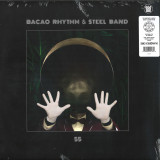
Shrouded in mystery, hailing from Hamburg, Germany, Bacao Rhythm & Steel Band (BRSB) releases their long awaited debut “55” on Brooklyn’s own Big Crown Records. Long time multi-instrumentalist and band leader Bjorn Wagner spent a few months in Trinidad & Tobago where he became fascinated with Steel Drums. His initial intrigue with local steel pan music culture led him to learning the instrument both through help of local players and on his own. After he became proficient on the pans Bjorn had his own instrument built from a used oil barrel by legendary pan man Louis C. Smith. Upon returning home to Germany, Bjorn set out to blend the Tropical Steel into his already sharply honed Funk, Soul, and Hip-Hop sensibilities. The outcome is an updated take on a classic format, a truly unique sound. Their first two recordings were covers of The Meters “Look A-Py-Py” & “Ease Back” which they self-released on a 45. Looking back on these two sides you can tell they were just getting their chops up for what was to come next. This is evidenced by how all hell broke loose when they went on to cover 50 Cent’s hit PIMP taking the DJ and vinyl collecting communities by storm. Many people thought the recording was the original sample and probably still do to this day when it is played. The original Mocambo pressing sold out quickly and is now a collector’s item fetching heavy prices when it changes hands. It was this tune that made the introduction between Bjorn and Danny Akalepse of Big Crown. They immediately hit it off and started making plans to do a full length project with the band. Keeping in the tradition of Steel Drum records, 55 is a journey through re-interpolations and covers with an updated approach, pushing Steel Pan music to uncharted territory. Flawlessly bringing previously untouched genres into the steel pan cannon ranging from Underground Hip Hop tunes to staple Funk tracks and some of all that falls in between. BRSB’s 55 is reinvigorating tunes both well-known and helping to shed some light on tunes still largely undiscovered. However, some of the strongest tunes on the album are original compositions, from spaced out Disco vibes on “Beetham Highway Ride” and “Port Of Spain Hustle” to the ugly face inspiring drums of “Laventille Road March”. Recorded to analog 8 track tape at The Mocambo Studios in Hamburg, 55 is a gritty, punchy journey in sound drawing on music from around the world, using production aesthetics from across both eras and genres, all coming together seamlessly. If the 45s that have already come out on Mocambo, Plane Jane, and Truth & Soul are an indication, this full length is going to be a staple to both casual listeners and Disc Jockeys alik
out of Stock
Last delivered 2 years ago available to reorder, subject to availability
Replacement stylus offers a tactile feedback when seating, indicating a snug and secure fit, while a cut-out area in the front allows for far more accurate needle drops.
• Larger, wider and more robust stylus body
• Easier to grip and handle
• Better fix by metal spring
• Tactile feedback of correct mount
• Large stylus viewing cut‐outStylus CLUB Technical data
Output voltage at 1000Hz, 5cm/sec. - 8 mV
Channel balance at 1kHz - 1 dB
Channel separation at 1kHz - 25 dB
Channel separation at 15 kHz - 15 dB
Tracking ability at 315 Hz at recommended tracking force - 100 μm
Compliance, dynamic lateral - 14 μm/m N
Stylus type - Special Elliptical r/R 13/25 μm
Tracking force range - 2 - 4 g
Tracking force recommended - 3 g
Concorde cartridge weight - 18.5 g
Recommended exclusively for Concorde MkII CLUB
Reissue of Annette Peacock and Paul Bley's "Dual Unity" album, originally released in 1972 on Freedom Records. Hailed as a pioneer and artistic genius by many, this album captures Peacock in her element alongside husband, Canadian jazz genius Paul Bley. Dual Unity is a landscape of aural vision captured on tape in 1970, during their first European tour. For 33 minutes and 21 seconds, the listener is absorbed by other spirits. Using Robert Moog's earliest synthesizers, Bley and Peacock apply the strategic use of silence to indicate its reflective nature with captivating results. A statement of immensity through synthetic minimalism and a milestone in the avant-garde, free jazz movement. Guests musicians: Han Bennink (drums) on "M.J." and "Gargantuan Encounter", Mario Pavone (bass) and Laurence Cook (drums) on "Richter Scale" and "Dual Unity".
Enjoy The Ride Records is happy to share an exclusive variant of the Milan Records release of Euphoria (Original Score from the HBO Series), Music by Labrinth.
Written and recorded in close collaboration with the Euphoria writer and director Sam Levinson, Labrinth‘s original compositions feature prominently throughout the hit HBO series as a sonic companion to the show’s angst-driven narrative and intoxicating visuals. The resulting 26-track collection is a genre-blending mix of gospel, soul, and electronic influences, indicative both of Labrinth’s imitable style as well as the show’s deeply moving storyline.
Of the album, Labrinth says, “My experience with Euphoria has made me a better musician. It was a dream come true to give wings and add magic to the different storylines. It was a collaborative effort among Sam Levinson, the crew, and the cast – I only added texture to an already phenomenal show. I hope that anyone who listens to the music embraces feeling something.”
Euphoria follows a group of high school students as they navigate love and friendships in a world of drugs, sex, trauma, and social media. The ensemble cast of Euphoria includes actor and singer Zendaya, Maude Apatow (Girls), Angus Cloud, Eric Dane, Alexa Demie, Jacob Elordi, Barbie Ferreira, Nika King, Storm Reid, Hunter Schafer, Algee Smith and Sydney Sweeney (Sharp Objects).
Euphoria is an American adaptation of an Israeli show of the same name, and all episodes are written by Sam Levinson (Assassination Nation), who also serves as executive producer.
The Enjoy The Ride Records Exclusive variant, ""Night Sky Blue,"" is limited to 1,000 copies. Euphoria is housed in a silver foil stamped & numbered soft-touch gatefold jacket with spot gloss and also contains a full-color insert.
Dive into the spiritual depths of Carnatic Music (Southern Indian classical music) - An enchanting journey of devotion and transcendence pulsates with raw sincerity and profound spirituality, casting a spell that transcends boundaries of belief.
Originally released on CD in 2000 from South Indian Carnatic music label and reissued on vinyl and digital first time in 2019 by Time Capsule. New 2024 repress vinyl has different tracks on the B side and it still remains as the reverse cut as the 2019 version.
2024 new vinyl repress with different track list on the side B. Reverse Cut Vinyl - This record plays from the inner groove to the outer groove. Comes with a hype sticker.
Born into a musician family steeped in the south Indian tradition of vocal music, the Mumbai-raised singer took advantage of the city’s cosmopolitism to study northern Hindustani disciplines, one of the few vocalists to train in both. Now revered as one of the greatest living exponents of Carnatic music, she received an Oscar nomination for her work on Ang Lee’s Life of Pi.
Within the first minute of opener Sada Bada (Slokam), Jayashri’s intensely spiritual vocals give a clear indication of why she has been increasingly embraced by a new generation of western listeners who’ve made the natural leap from ambient soundscapes to new age and devotional music. Accompanied on the following Bhajeham Bhajeham by a hypnotic rhythmic backing of mridangam drums, bells and the drone of a tambura, over its epic twenty-minute length she stretches her voice into a variety of spellbinding forms – her softly enunciated dedications to Shiva enveloping you with their immersive warmth and cosmic beauty. Keshvaya Namaha is an invocation to Lord Vishnu, the protector of creation and one of the other major deities of the Hindu tradition, while Raghavam recites the names and attributes of two of his most popular avatars: the heroic Rama and the playful, loving Krishna.
One of the album’s new-found devotees is label boss Kay Suzuki: “every time I listen I’m amazed at how such a small ensemble can create such a deep musical landscape. The incredible production plays a big part. That intricate percussion sounds so clear and sits in all the right pockets rhythmically and sonically. Just by following this groove I’m put into a timeless zone, but when her voice hits on top of that gorgeous drone sound and I focus on the details of her small melodies within melodies, my heart centres and I find myself in a blissful place.”
As professor of cultural and political theory in Universicty of East London, Jeremy Gilbert states in the album’s liner notes, the mesmerising sincerity and deep spirituality of these songs present an intense and spiritual charge that will appeal to an audience well beyond believers and devotees of Hinduism.
out of Stock
Last delivered 12 months ago available to reorder, subject to availability
“There are lots of outstanding Joe McPhee LPs. Nation Time being chief among them, but there’s also Pieces Of Light, Oleo and Topology. The Poughkeepsie, New York-based multi-instrumentalist, by now an international star of free music, has amassed a daunting discography, no doubt. If you want to peer deeply into the soul of Joe McPhee, however, there’s no way around it, you need to spend some quality time with Tenor. “Tenor is McPhee’s first solo record. He did not set out to make it. It was an afterthought, quite literally, born of a gathering of friends at the Swiss farmhouse of cellist Michael Overhage. A beautiful meal, some drinks, warm conversation, and ... why not, an impromptu recital. Hat Hut producer Werner X. Uehlinger was there and a year later issued it as McPhee’s third LP for the label (Hat Hut C in their famed letter series). “The existential blues ‘Knox’ sets the stage, indicating that this will not just be a toss-off postprandial singalong. ‘Good-Bye Tom B.’ carries on with aching melancholy, through burred notes and hushed harmonics. The relatively jaunty ‘Sweet Dragon’ is also emotionally loaded with Ayler-esque vibrato, slurs, wipes, and blasts of tone. The side-long title track comes without a theme, as a kind of pure investigation of the horn, its potential, its limits, its expressive capacity. There have been few solo sessions as comprehensive and devastating as this spontaneous after-dinner diversion in rural Switzerland in 1976. We’re very lucky someone pressed record.” —John Corbett (excerpt from the liner notes)
With a squall of guitar and a crash of drums, two years on from the release of their exhilarating debut EP, Chicago noisemakers Babe Report finally release their debut album in 2024, in the form of the rough-and-ready Did You Get Better, released this Spring via Exploding In Sound. Formed of ten new songs, and all wrapped in under half an hour, it’s an immediate and breathless arrival.
Opening track ‘Turtle of Reaper’ arrives in a flurry of noise and energy. Presented as an indictment of the fear-mongering in click-bait media, it’s a cacophonous two-minutes of scorched vocals and frenetic drums, the chorus a call back to 12/31/99, when all the news told people to turn off their computers before Y2K hit.
‘Universal’ offers something somewhat more refined, with occasional moments of restraint amid the commotion that arrives in a hardy whack of heavy riffs.
“This one is all about climbing up onto your neighbor’s back to succeed,” the band explain. “Most aspects of life are not a zero-sum game, but when they are, it feels ethically wrong to win.”
Elsewhere, ‘Allergy 2000’ is the album’s weighty centre-point, characterized by its soaring guitar lead line and stifled, murky vocals what might have started out as an experiment in writing a Yo La Tengo song soon comes into its own with a rabid tempo shift that feels indicative of the album’s fervent nature, never allowing the listener to rest on their laurels.
However it finds you or you find it, Did You Get Better finds a way to take the reins, ploughing headfirst into its journey and rarely looking back for approval, to even worry if anyone else is joining for the ride."
- Legendäre experimentelle Jazz-Aufnahmen von David Lynch und Angelo Badalamenti von Anfang der 90er Jahre. - die Musik wurde versatzweise in David Lynchs Film- und Fernseharbeiten verwendet, ist aber nie als richtige Veröffentlichung erschienen. Thought Gang wurde nach der Ausstrahlung der zweiten Staffel von ,Twin Peaks" geboren, als die Hauptproduktion des Kinofilms ,Fire Walk With Me" gerade erst begonnen hatte. Das esoterische Jazz-Side-Projekt von David Lynch und Angelo Badalamenti entwickelte sich ursprünglich aus dem Slow Cool Jazz, der die ,Twin Peaks" TV Serie mitgeprägt hatte. Thought Gang erblühte zu einem experimentelleren Sound: horizontlose Aussichten auf LSD-getränkten Freejazz, geschnürt mit gesprochenen Wortnarrativen und ausgedehnten Geräuschkulissen. Der Soundtrack zu ,Fire Walk With Me" präsentierte zwei vorläufige Tracks ("A Real Indication" und "The Black Dog Runs at Night") von einem Album, das von Mai 1992 bis 1993 stückweise aufgenommen und zweieinhalb Jahrzehnte lang nicht veröffentlicht wurde. In den folgenden Jahren tauchten Fragmente und Arbeitsversionen von Thought Gang-Material immer wieder auf: in einem von Lynch geführten Adidas-Werbespot; in Szenen in ,Hotel Room", ,Mulholland Drive" und ,Inland Empire"; in gelöschten Szenen von ,Fire Walk With Me" und am meisten in Showtimes dritter Staffel von ,Twin Peaks". "Frank 2000" und "Summer Night Noise" sowie ein alternativer Instrumental-Mix von "Logic and Common Sense" unterlegen Szenen der dritten Staffel und helfen, den ausgesprochen experimentellen, rauschhaften Soundtrack der Serie zu definieren. David Lynch über Thought Gang: "It's sort of like jet-fueled jazz in a weird way, but it's all based on stories. It's Modern Music."
An alignment protractor is used to find the correct distance from stylus tip to tonearm pivot.
When aligning a cartridge for tangency using the alignment protractor, it is essential to remember that you are attempting to align the cantilever (and, hence, the stylus), not the cartridge body. There is no guarantee that the cantilever is perfectly aligned within the cartridge body, so simply aligning the cartridge body will not necessarily produce the desired result.
Furthermore, many cartridge bodies have non-parallel sides, making tangential alignment of the cartridge body with the lines of tangency on the gauge virtually impossible.
An alignment protractor is a plastic template onto which are printed the null point(s) and lines of tangency against which the cartridge should be aligned. The template is placed over the turntable's spindle (made possible via a spindle-sized hole drilled in the template) and placed against the platter.
Cartridge must be adjusted until the cantilever is parallel to the set of parallel lines. And this should be achieved for both the indicated points. When the cartridge's longitudinal axis is parallel with the horisontal lines, tracking error will be at a minimum.
Rare debut LP by the eccentric Peruvian singer Jean Paul "El Troglodita", known for his wild performances and extreme way of life. Enrique Roberto Tellería made his Peruvian television debut in 1965 under the stage name Jean Paul El Troglodita and wearing an imitation leopard skin suit. He would switch from melodic calm to shouting wildly or suddenly drop to the floor on his knees and smash the furniture like crazy. At the age of 19, DisPerú signed him to the label on the strength of these early performances. His first single included a freely translated version of 'Secret Agent Man' in Spanish. He began to work on the eleven cover versions that would feature on his first LP immediately, writing all his own lyrics and accompanied by the beat band Los Steivos. Despite the predominance of English beat music in Peru, the album only included three songs directly related to the British invasion: 'Bus Stop' by The Hollies, also played in raga rock style; 'Paint it Black' by The Rolling Stones; and 'The House of the Rising Sun', which follows the arrangement recorded by The Animals. So most songs come the American songbook. Apart from 'Tema de El Troglodita' (a versión of 'Secret Agent' by The Challengers), we find the bluesy 'Mustang Sally' (Sir Mack Rice). Two other US numbers, originally performed with orchestral accompaniment, were adapted to fit the rock band format: 'Poor Side of Town' (Johnny Rivers) and 'Take Me to the Moon' (Kaye Ballard). 'El verdadero amor' ('True Love'), an uncredited version is in a similar vein. The Spanish song 'Negro es negro' (Los Bravos) and the Brazilian track 'Que todo se vaya al infierno' (Roberto Carlos) also feature on the LP. El Troglodita's association with the so-called nueva ola, indicated on the back cover, needs clarification. In Peru, nueva ola was a mixed bag rather than a specific musical style and encompassed slow rock, twist, bossa nova and all the styles that the record industry produced to tame the wild rock 'n' roll impulses of teenagers in the early sixties. The Peruvian artists that performed these inoffensive Spanish adaptations of Paul Anka, Neil Sedaka or Frankie Avalon, were presented as successful models of youth culture. This was until 1964, when the Beatles with their mop-top haircuts hit the charts, vindicating rock 'n' roll and imposing the group format over the soloist model. Meanwhile the press continued to call any youth music recorded during the rest of the decade nueva ola. Jean Paul noted these distinctions early on and distanced himself from it in several statements. He saw his performance more in a style as a solo artist as following in the footsteps of e.g. Los Saicos. His 'hippie' lifestyle got him arrested by the new de facto military government in 1968, who accused him of promoting drug consumption and corrupting the Peruvian youth. The charges were soon dropped but his reputation was tarnished, and he ended up emigrating to Central America. The album includes Spanish sung versions of British beat songs and covers of the American songbook as well as various international hits.
'The Animation Of Entomology' is an EP by American supergroup Blotted Science, originally released in 2011. Like on their 2007 debut album 'The Machinations Of Dementia', these instrumental songs are a product of the union of Watchtower guitarist Ray Jarzombek and
Cannibal Corpse bassist Alex Webster's imaginations, this time with former Obscura and current Triptykon drummer Hannes Grossmann behind the kit. Once again, the trio embark on unusual and unpredictable compositions, as crazy as their titles seem to indicate.
Virtuosity goes hand in hand with extremity and experimentation for an unforgettable, unrepeatable experience.
"All seven tracks on this EP are beautifully written and could be praised for hours" - No Clean Singing
"a real progressive metal tour-de-force" - Sea Of Tranquillity
'The Animation Of Entomology' is an EP by American supergroup Blotted Science, originally released in 2011. Like on their 2007 debut album 'The Machinations Of Dementia', these instrumental songs are a product of the union of Watchtower guitarist Ray Jarzombek and
Cannibal Corpse bassist Alex Webster's imaginations, this time with former Obscura and current Triptykon drummer Hannes Grossmann behind the kit. Once again, the trio embark on unusual and unpredictable compositions, as crazy as their titles seem to indicate.
Virtuosity goes hand in hand with extremity and experimentation for an unforgettable, unrepeatable experience.
"All seven tracks on this EP are beautifully written and could be praised for hours" - No Clean Singing
"a real progressive metal tour-de-force" - Sea Of Tranquillity
FIRST TIME ON VINYL
HALF SPEED MASTERED 180 GRAM VIRGIN VINYL PRESSINGS
INCLUDES COVER ART PRINT
INCLUDES EXCLUSIVE CHRIS ISAAC COVER VERSION
INCLUDES DOWNLOAD CODES FOR THE ORIGINAL MIX AND UNMIXED VERSION IN WAV AND MP3 FORMATS
Trentemøller is the Dane who did. He's been making electronic music of one kind of bent or another for over 15 years, first making his name as part of Trigbag, a live house act that toured extensively. But it's his solo material that has impacted on the dance community - and beyond. 'La Champagne' was a game-changer and his remixes of artists like Sharon Phillips secured his place as an artist with some serious chops. But that's not all he is. You can hear that yearning in his productions and it's evident here, a sort of Protestant northern European melancholy. He is aided on his journey towards the Baltic by some heavy hitters, of course: Velvet Underground, Mazzy Star, This Mortal Coil. But that's not the story, it's not where the plot comes from, it's not where we're going. It's just a little indicator to reassure you we know the way. No. For it's in the dark beauty of Low's tremulous 'Amazing Grace' or even the way that the Shangri-Las' '(Remember) Walkin' In The Sand', surrounded by the similarly inclined, takes on a funereal gait. As we navigate the flatlands of your mind, we're helped along by a generous sprinkling of Anders' fellow Danes, like Darkness Falls (the atmosphere of this mix aptly encapsulated right there), Ekko, Chimes & Bells and the Late Night Tales tradition, Trentemøller's cover of Chris Isaacs' 'Blue Hotel', sung by Marie Fisker and Steen Jørgensen.
Originally released in 2010 this mix has gone on to become a classic, it was never released on vinyl at the time, so due to public demand we have carefully mastered each track and carefully cut at half speed for optimum sonic reproduction.
Portable turntable for vinyl lovers & scratch artists
Mobile fun with your turntable, anywhere you go
Outstanding for mobile scratching and cutting
Out of the box: comes with 7'' scratch vinyl, pre-installed 45-mm-crossfader & cartridge, integrated speaker, Bluetooth audio receiver, USB recording function, slipmat, and dust cover
High-grade 7''-scratch-record: professionally recorded samples for scratching and beats for juggling
Bluetooth audio streaming: wireless streaming of music or beats to the device
Smart USB recording: direct recording of scratches & cuts to USB in MP3 format
Can also be used for digitizing vinyl
Integrated speaker on the turntable's left
3 selectable speeds (33 1/3, 45 & 78 rpm)
Extremely stable tone arm with transport lock
Cartridge with excellent tracking features
Precise 45-mm-crossfader with two-rail glide technology
Crossfader can be installed on preferred side (both-way)
Two headphones connections for listening and monitoring
AUX input facilitates connection of several turntables (daisy chain)
Easy battery charging via USB PSU or USB power bank (sold separately)
Installed start/stop button
Precise speed adjustment via pitch control with +/-20 %
Tone control to adjust low frequencies by +/- 10 dB
Volume control for AUX input and master/headphones
Power LED indicates the turntable's operational status
7'' record puck adaptor with holder
Anti-skip rubber feet for secure stand
Especially sturdy and portable shape factor with optional battery operation
Additional protection thanks to dust cover; can be transported via carrying handle when closed
Locking of dust cover for safe transport
Can be operated with regular USB PSU (5 V, 2 A), USB power bank or batteries (sold separately)
Batteries can be inserted into battery compartment on the device's bottom 2x Li-Ion 18650 (sold separately)
Incl. 7'' scratch vinyl, pre-installed cartridge, slipmat, dust cover, puck adapter, USB cable, instruction manual and Super Spin Duck Looper app
Technical Data
Belt drive
Inputs: AUX 3.5 mm stereo, Bluetooth audio
Outputs: master RCA, USB (USB-A), headphones 3.5/6.3 mm stereo
Recording format: MP3 with 192 kbit/s
Recording quality: 16 bit / 44.1 kHz
Battery type: 2x Li-Ion 18650 (batteries sold separately)
Power supply: 5 V, 2 A micro USB (PSU sold separately)
Dimensions: 370 x 95 x 260 mm
Weight: 2 kg
Nestled somewhere between the soul jazz, spiritual jazz, fusion, and post-bop subgenres, 1974’s Cosmic Funk headed, as the title indicates, in a funkier direction, with Lonnie Liston Smith’s brother Donald contributing smooth vocal stylings to John Coltrane’s “Naima” among other tunes. A transitional work but a fascinating one, with surehanded production once again from Bob Thiele. Features the original gatefold album art… another “post-fusion” masterwork fro
"Named for the band’s third lease on life, Third Wind finds Gulfer at a unique moment in their ten-plus year career. When they started in 2011, Gulfer played scrappy, complex math rock influenced by the emo revival. But in 2024 they’ve emerged almost unrecognizable, while still retaining the spirit of what made them all fall in love with Gulfer in the first place.
Third Wind’s stylistic turns are emphasized by deeper texture and simpler songwriting, influenced by the reemergence of 90s alternative and shoegaze. With a new emphasis on atmosphere and more straightforward composition, Gulfer give themselves space to explore audaciously.
Album opener “Clean” gets as close to pop as the band has ever been, where “No Brainer” dabbles deftly in downer rock that asks “what even is my fucking place in the world? "Bold juxtapositions feature elsewhere on Third Wind: pop-punk bruiser “Too Slow” stops on a dime before evolving into a slow burning drum n bass passage, all within two minutes. And then there’s “Heartshape”, a downright love song shrouded in virtuosic performance and electric-acoustic counterpoint. Although these contrasts could be construed as aimless fiddling, their seamlessness is the true essence of Third Wind, indicative of a sage band with a renewed love for what they do."
The AT-LP140XP fully manual professional DJ turntable features a high-torque direct-drive motor and anti-resonant, mass-damped, die-cast aluminium platter to ensure stable, on-axis rotation at 33-1/3, 45, and 78 RPM. It is equipped with an S-shaped tonearm with height adjustment, adjustable tracking force (counterweight) and adjustable dynamic anti-skate control.
Audio-Technica has been a leader in phono cartridge design for more than 50 years, and that expertise shows in the durable, high-output AT-XP3 DJ cartridge with 0.6 mil conical bonded stylus included with the turntable. It comes pre-mounted to an AT-HS6 universal ½"-mount headshell.
Designed to connect to components with a dedicated phono input, the turntable comes with a detachable dual RCA output cable which supplies a strong 5.5 mV phono output.
Additional professional features include a start/stop button; forward and reverse play; selectable high-accuracy quartz-controlled pitch lock and pitch change slider control with +/-8%, +/-16%, and +/-24% adjustment ranges; a stroboscopic platter with speed indicator; a retractable plug-type stylus target light; and a removable hinged dust cover.
Experience high-fidelity audio and professional DJ performance
Direct-drive, high-torque servo motor with speed stabilization
Fully manual operation
Adjustable dynamic anti-skate control
Selectable 33/45/78 RPM speeds
Professional anti-resonance, mass-damped, die-cast aluminium platter with felt mat
AT-HS6 universal ½"-mount headshell and AT-XP3 DJ cartridge with 0.6 mil conical bonded stylus
Balanced S-shaped tonearm with hydraulically damped lift control, height adjustment, and lockable rest
Dedicated phono-level output (5.5 mV)
Stroboscopic platter with speed indicator
Forward/reverse operation and variable pitch control with quartz speed lock
Retractable plug-type target light for easier cueing in low light
Damped base construction for reduced low-frequency feedback coloration
Includes: detachable RCA output cable (dual RCA male to dual RCA male), power cable, 45 RPM adapter, counterweight, felt mat, and removable hinged dust cover
Turntable
Bauart 3-speed, fully manual operation
Motor High-torque DC motor
Antriebsart Direct drive
Geschwindigkeiten 33-1/3 RPM, 45 RPM, 78 RPM
Plattenteller Die-cast aluminium
Pull the Rope, the new record by Ibibio Sound Machine, casts the Eno Williams and Max Grunhard-led outfit in a new light. The hope, joy, and sexiness of their music remain, but, further honing the edge of their acclaimed 2022 album Electricity, the connection they aim to foster has shifted venues from the sunny buoyancy of a sunlit festival to a sweat-soaked, all-night dance club. Williams and Grunhard attribute this shift to a matter of collaborators, recording Pull the Rope with Sheffield-based producer Ross Orton (Arctic Monkeys, M.I.A.) over the course of two weeks. The way the pair wrote songs changed significantly_rather than Eno penning lyrics to music generated by Max and company's jamming, Orton started with Eno and Max writing together before adding the band. With less time in the studio and a new way of considering how they built songs, the duo found making decisions about Pull the Rope's sound quicker and more instinctual than before. "Ross is from Sheffield, which has an edgier, more industrial vibe than London," Grunhard explains. "He hears things differently than us, is more grounded in rave and grungier sounds, and knew when to add drums or push the instrumentation more. It was very different for us, but it lends itself to where Ibibio Sound Machine is going." In melding their songwriting process, Grunhard and Williams have, impossibly, pulled the trick of making Ibibio Sound Machine a tighter band than ever before, building out from their core in a way that highlights the electrifying group of musicians they play with. Rather than recording with the full band in the room, Pull the Rope was sculpted, elements added and shaped by Grunhard, Williams, and Orton along the way. As a result, Pull the Rope is a nimble, sleek machine that's thrilling from the first note of the opening title track, Eno's otherworldly voice and PK Ambrose's throbbing bass driving through a kaleidoscopic array of house, post-punk, funk, Afrobeat and disco, bangers and ballads, making an argument for unity that begins on the dancefloor. "We are the places we grew up, the places we've been, and the people we've met along the way," Williams says. "Hopping around the globe, we've found that people are fundamentally the same_they're people. Opposing sides push and pull, but there is an alternative to war, violence, and suffering." Lead single "Got to Be Who U Are" literally globetrots, name checking locales across the world that would feel disparate were it not for how well-traveled they are. Eno growing up in the musical melting pot of the Ibibio region of Nigeria and Max being a conservatory-trained musician from Australia, one could call their meeting in London and formation of Ibibio Sound Machine predestined. "Mama Say" and "Let My Yes Be Yes" touch themes of female empowerment. They're indicative of the band's depth as they push further into the electronic; "Mama Say" hits notes of electropop while "Let My Yes Be Yes" fuses electro to Afrobeat. Ibibio Sound Machine have always imbued their music with political consciousness, and the light that shines through in Williams' vocals and voice has never felt more necessary. The sound of Pull the Rope, then, is hope in darkness, bliss in spite of bleakness. Once again, Ibibio Sound Machine are here to provide the soundtrack to the best night of your life, and the better world to come.
The AT-LP140XP fully manual professional DJ turntable features a high-torque direct-drive motor and anti-resonant, mass-damped, die-cast aluminum platter to ensure stable, on-axis rotation at 33-1/3, 45, and 78 RPM. It is equipped with an S-shaped tonearm with height adjustment, adjustable tracking force (counterweight) and adjustable dynamic anti-skate control.
Features:
Experience high-fidelity audio and professional DJ performance
Direct-drive, high-torque servo motor with speed stabilization
Fully manual operation
Adjustable dynamic anti-skate control
Selectable 33/45/78 RPM speeds
Professional anti-resonance, mass-damped, die-cast aluminum platter with felt mat
AT-HS6 universal ½"-mount headshell and AT-XP3 DJ cartridge with 0.6 mil conical bonded stylus
Balanced S-shaped tonearm with hydraulically damped lift control, height adjustment, and lockable rest
Dedicated phono-level output (5.5 mV)
Stroboscopic platter with speed indicator
Forward/reverse operation and variable pitch control with quartz speed lock
Popup stylus target light for easier cueing in low light
Damped base construction for reduced low-frequency feedback coloration
Includes: detachable RCA output cable (dual RCA male to dual RCA male), power cable, 45 RPM adapter, counterweight, felt mat, and removable hinged dust cover
Turntable
Type 3-speed, fully manual operation
Motor High-torque DC motor
Drive Method Direct drive
Speeds 33-1/3 RPM, 45 RPM, 78 RPM
Turntable Platter Die-cast aluminium
Starting Torque 2.2 kgf-cm
Wow and Flutter 50 dB
Output Level 5.5 mV nominal at 1 kHz, 5 cm/sec
Power Supply Requirements 115/230V AC, 60/50 Hz
Weight 10.0 kg
Pitch Variation +/-8% or +/-16% or +/-24%
Pull the Rope, the new record by Ibibio Sound Machine, casts the Eno Williams and Max Grunhard-led outfit in a new light. The hope, joy, and sexiness of their music remain, but, further honing the edge of their acclaimed 2022 album Electricity, the connection they aim to foster has shifted venues from the sunny buoyancy of a sunlit festival to a sweat-soaked, all-night dance club. Williams and Grunhard attribute this shift to a matter of collaborators, recording Pull the Rope with Sheffield-based producer Ross Orton (Arctic Monkeys, M.I.A.) over the course of two weeks. The way the pair wrote songs changed significantly_rather than Eno penning lyrics to music generated by Max and company's jamming, Orton started with Eno and Max writing together before adding the band. With less time in the studio and a new way of considering how they built songs, the duo found making decisions about Pull the Rope's sound quicker and more instinctual than before. "Ross is from Sheffield, which has an edgier, more industrial vibe than London," Grunhard explains. "He hears things differently than us, is more grounded in rave and grungier sounds, and knew when to add drums or push the instrumentation more. It was very different for us, but it lends itself to where Ibibio Sound Machine is going." In melding their songwriting process, Grunhard and Williams have, impossibly, pulled the trick of making Ibibio Sound Machine a tighter band than ever before, building out from their core in a way that highlights the electrifying group of musicians they play with. Rather than recording with the full band in the room, Pull the Rope was sculpted, elements added and shaped by Grunhard, Williams, and Orton along the way. As a result, Pull the Rope is a nimble, sleek machine that's thrilling from the first note of the opening title track, Eno's otherworldly voice and PK Ambrose's throbbing bass driving through a kaleidoscopic array of house, post-punk, funk, Afrobeat and disco, bangers and ballads, making an argument for unity that begins on the dancefloor. "We are the places we grew up, the places we've been, and the people we've met along the way," Williams says. "Hopping around the globe, we've found that people are fundamentally the same_they're people. Opposing sides push and pull, but there is an alternative to war, violence, and suffering." Lead single "Got to Be Who U Are" literally globetrots, name checking locales across the world that would feel disparate were it not for how well-traveled they are. Eno growing up in the musical melting pot of the Ibibio region of Nigeria and Max being a conservatory-trained musician from Australia, one could call their meeting in London and formation of Ibibio Sound Machine predestined. "Mama Say" and "Let My Yes Be Yes" touch themes of female empowerment. They're indicative of the band's depth as they push further into the electronic; "Mama Say" hits notes of electropop while "Let My Yes Be Yes" fuses electro to Afrobeat. Ibibio Sound Machine have always imbued their music with political consciousness, and the light that shines through in Williams' vocals and voice has never felt more necessary. The sound of Pull the Rope, then, is hope in darkness, bliss in spite of bleakness. Once again, Ibibio Sound Machine are here to provide the soundtrack to the best night of your life, and the better world to come.
out of Stock
Last delivered 2 years ago available to reorder, subject to availability