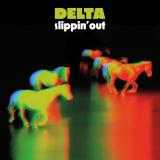
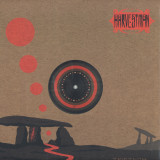
“From Birmingham and centred around the extraordinary songwriting talent of James and Patrick Roberts – initially as The Sea Urchins and since 1993 as Delta – they’ve only just got round to releasing their debut album, Slippin’ Out. It is a work of some beauty”. 9/10 NME ALBUM OF THE MONTH, 2000
“It’s classicist for sure, shot through with the influence of The Beatles, Byrds and Buffalo Springfield. In James’ downright beautiful closing ballad ‘I Want You’ one can also discern the school of ambitious English balladry that peaked in about 1968: The Casuals, Love Affair, Barry Ryan. The impression of accomplished old-schoolery is only furthered by the dizzying string arrangements penned by Louis Clark Jnr, son and namesake of the one-time orchestral chief of Electric Light Orchestra” – Mojo lead review, 2000
Having ended the 90s with the spirited ‘Laughing Mostly’ compilation of singles and demos (Guardian Album Of The Week) Delta finally released their debut studio album of twelve songs in the summer of 2000 on the Dishy Recordings label. Accepting that this might be their sole studio album the band threw everything at these recordings allowing it to exist in its own sphere, unbothered by their contemporary generation and disregarding the idea of even releasing a single.
Recorded at DEP International there was a notable difference to the scruffier, looser charm of their 1990s recordings, a tighter focus developed by having the experienced Lenny Franchi mixing the LP with them. Lenny had been working with a number of Island artists including My Bloody Valentine and Tricky so knew his way around a desk. There was also the question of budget (a few months passed between recording and mixing whilst funds were raised) so every day counted. Ultimately though you can hear the joy in the recordings, even amongst the melancholy and angst. As James recently recalled in an interview in Shindig! Magazine: “It was such a big deal for us. It’s one of my fondest memories doing that record. Everyone was happy. If there’s anything that I’d stand by, I think it would be that”
Louis Clark Jr joined the band towards the end of the ‘90s and brought a classically-trained element to the recordings particularly with his string arrangements. For ‘Cuckoo’, ‘I Want You’ and the prophetic ‘We Come Back’ Louis brought in eight players from the Birmingham Conservatoire; the baroque style is partly why the record often receives comparisons to Love’s ‘Forever Changes’.
On release ‘Slippin’ Out’ was a big favourite with writers at the NME, Mojo and The Guardian again and before long the band were signed to Mercury/Universal for their second studio album ‘Hard Light’, a far more expensive and expansive love affair. It was a temporary palatial home where things quietly fell apart again, but that’s another chapter.
“If long-term memory is nothing more than selective editing and only pop’s most weighty visceral works are built to last then it’s quite possible that in 50 years the Britpop era will be best recollected for the two bands it ostracised. Earlier this year we met Shack and thought their story of mercurial brilliance indicated the biggest music biz oversight of the 90s. We were wrong because we hadn’t met Delta yet. This is richer and more engrossing than anything by Shack”
Ayū returns to his home imprint with another EP, marking his second solo outing on the label. Whether operating alone or alongside Alfred Czital, Ayū has shaped a signature sound that fuels long nights and tightly packed dancefloors. Spiral Motion sees him dive further into his deeper, late-hour aesthetic. Smooth, yet hypnotic, and built for those moments when the room locks into a shared groove.
Side-A is a systematic prog compulsion. Starting with Ayū’s ‘Come on,’ the track deploys a strictly sequential energy curve, using its paced and nearly robotic vocal anchors as a command-line for dance-floor madness. A2, ‘Pure NRG’, as the name indicates, it’s an energy-based weapon built on a heavy bassline. Instrumental elements that add up sequentially through fades, boops, and rougher vocals.
Adding fuel to the EP, side B is dedicated to remixes of A-side creations. B1 by IN2STELLAR delivers the tech-house version of ‘Come on’. Drummy and spatial, the track builds up towards an explosion of rhythm. B2 crafted by D.Tiffany inverts ‘Pure NRG’ and presents it through a darker lens. Slowly, but surely, the track emphasizes shadow and minimal texture, flavored by D.Tiff’s tone & style.
out of Stock
Last delivered 4 months ago available to reorder, subject to availability
Aaron Frazer - der in Los Angeles lebende Sänger, Songwriter, Multi-Instrumentalist und Mitglied der gefeierten Gruppe Durand Jones & the Indications - lässt mit "Into the Blue" eine gewagte Mischung aus Soul, Psychedelia, Spaghetti-Western, Disco, Gospel und Hip-Hop auf sein hochgelobtes Debütalbum "Introducing_" aus dem Jahr 2021 folgen. "Into The Blue" repräsentiert die beeindruckende Bandbreite von Frazers klanglichen Talenten. "Es ist das klarste Porträt dessen, was ich als Künstler bin", sagt Frazer über sein zweites Solo-Album, auf dem er die unverwechselbare Falsettstimme und das klassische Songwriting beibehält, für das er bekannt ist, aber mit einer Hip Hop inspirierten Mentalität im Kern, die Genres und Produktionstechniken miteinander verwebt und "Into The Blue" somit fest im Hier und Jetzt verankert. "Into The Blue" ist das Ergebnis eines gebrochenen Herzens. Nach dem Ende einer langen Beziehung zog Frazer quer durchs Land von Brooklyn nach Los Angeles und begab sich auf eine Reise, die sich in den Themen des Albums widerspiegelt: Trauer, Einsamkeit und die Suche nach Heilung. "Into The Blue" enthält Momente mit überragenden Arrangements, die an David Axelrod und Ennio Morricone erinnern, wird aber durch die Rohheit von iPhone-Aufnahmen und One-Take-Vocals ausgeglichen. Als Co-Produzent für das Album konnte Frazer den Grammy-Gewinner Alex Goose gewinnen, der für seine Crate-Digging-Samples und die Zusammenarbeit mit Hip-Hop-Künstler*innen wie Freddie Gibbs, Madlib und Brockhampton bekannt ist. Frazer experimentierte auch zum ersten Mal mit Samples, die er aus unerwarteten Quellen wie der R&B-Gruppe Hi-Five aus den 90ern bezog. Und Obwohl "Into the Blue" aus Herzschmerz entstanden ist, hofft Frazer, dass es die Zuhörer*innen mit einem Gefühl des Optimismus zurücklässt. "Weißt du, man kann auch an einem Tag, an dem man trauert, lachen", sagt er, "es gibt keine Gipfel ohne Täler" - aber mit "Into The Blue" erreicht Aaron Frazer neue Höhen.
A rhythmic minimal ambient piece played with organic electronic sounds. Elements of electronic, psychedelic, and ethnic music are interwoven. The vinyl debut of Japanese composer / electronic musician NAT000. Mastered by ISAO KUMANO of Phonon, a Japanese audio equipment manufacturer. NAT000 : After performing live as a one-man drone under the name sonic mainly at 20000v in Koenji Tokyo and DOM in Nishi-Shinjuku (now EARTHDOM in Shin-Okubo), he became a band member of the hardcore bands BUTTHEAD SUNGLASS and ABRAHAM CROSS, which gained popularity in the underground scene in Tokyo in the 2000s.The Band has been performing in parks, abandoned buildings, and campgrounds. Since turning solo again, he has been producing electronic music and performing live using analog synths, samplers, drum machines, software, and effectors, and has privately released a CD of self-produced recordings. This album is a compilation of past works from those CDs and newly produced works for the album.
The song titles on Van Halen's aptly titled Fair Warning don't lie. The likes of "Unchained," "Mean Street," "Push Comes to Shove," "One Foot Out the Door," and more indicate the mood the band channels on its double-platinum 1981 record — the nastiest, darkest, and fiercest album of the group's storied career. For the fourth time in four years, Van Halen throws down the gauntlet to all challengers and emerges victorious.
Sourced from the original analog tapes, pressed on MoFi SuperVinyl at Fidelity Record Pressing, and strictly limited to 5,000 numbered copies, Mobile Fidelity's UltraDisc One-Step 180g 45RPM 2LP set plays with unfettered clarity, dynamics, and immediacy. Benefitting from superb groove definition, an ultra-low noise floor, and dead-quiet surfaces, this vinyl edition captures what went down in the studio with tremendous realism and involving presence.
Taking a more controlled approach in the studio and still completing everything in less than two weeks, Van Halen and producer Ted Templeman relied on studio amplifiers to direct the sound. Further diverging from the live-on-the-floor approach of its earlier albums, the ensemble also employed overdubs to great effect. The result: Dense, stacked architecture that underlines the hard-hitting tenor of the songs — and which comes alive like never before on this reference edition that looks as good as it sounds.
The premium packaging and gorgeous presentation befit the reissue's select status. Housed in a deluxe slipcase, it features special foil-stamped jackets and faithful-to-the-original graphics that illuminate the splendor of the recording. Aurally and visually, it is made for listeners who want to immerse themselves in everything involved with the album, including the iconic cover art adopted from William Kurelek's haunting painting, "The Maze."
Isolated frames from Kurelek's childhood-inspired work — including a man bashing his head into a brick wall, a guy pinning down an adversary as he delivers bare-fist blows to his face and others watch with apparent glee, a boy tied down on a conveyer belt and being sent through the equivalent of a meat saw — adorn the front and back covers. The sunnier visual disposition of Van Halen's prior efforts gives way to something sinister and tortured, traits reflective of the music within. The band members, too, are visually depicted not in glamorous shots but in a serious black-and-white portrait in which the quartet is clad in black leather jackets.
Tough, aggressive, stark: Fair Warning comes on like a series of bare-knuckled punches to the solar plexus and boasts lyrical narratives to match. Though not a concept record, the concise album revolves around themes of roughing it on the streets and struggling to survive amid dim prospects. Singer David Lee Roth reportedly penned many of the initial lyrics after traveling to Haiti and observing extreme poverty. The characters and situations populating Fair Warning reflect hardscrabble existence, last-chance desperation, and underlying danger.
Witness the crazies, poor folks, and hunters of “Mean Street”; the former prom queen turned pornographic actress on “Dirty Movies”; the menace and vice of “Sinners Swing!”; the streetwise hustle of “Unchained”; the isolation and alienation of “Push Comes to Shove”; the desire for escape on “One Foot Out the Door”: A carefree California beach party Fair Warning is not.
Having said he felt angry and frustrated during the sessions, guitarist Eddie Van Halen uses the forceful arrangements as a playground for his seemingly unlimited arsenal. Supported by a crack rhythm section and a hyped-up Roth, he performs with an almost impossible combination of punk-like intensity, technical finesse, lyrical fluidity, and unbridled emotion. The virtuoso was increasingly butting heads with Templeton and seeking a freedom in the studio he believed denied him.
No wonder he plays like a bat out of hell. Listen to the rapid-fire manner in which he slaps the high and low E strings on the 12th fret of his instrument on “Mean Street,” instilling the tune with funk flair and metal-spiked sharpness. For the pouty strut of “Dirty Movies,” Eddie Van Halen contributes slide guitar magic made possible after he sawed off the lower portion of a Gibson SG so he could reach further down the fretboard.
Related intensity, urgency, and daredevil momentum punctuate the surging “Sinner’s Swing!” A heavily flanged, delicately melodic introduction frames the attitudinal “Hear About It Later,” among the most creative arrangements of Van Halen’s career. And do riffs come any bigger or magnetic than those on the high-wire kick of “Unchained”? As for the out-of-left-field “Sunday in the Park,” an instrumental composed on an Electro-Harmonix micro-synthesizer: Who but Eddie Van Halen to supply creep factor in such an ingenious way?
Despite selling fewer quantities than Van Halen’s prior efforts, Fair Warning remains for many diehards the record that epitomizes all of the band’s immense strengths —Roth’s manic energy and tongue-wagging humor, Alex Van Halen’s rhythmic heartbeat-in-your-chest bombast, and Michael Anthony’s lucid bass lines included. Arriving when the New Wave of British Heavy Metal and new-wave movements were taking flight, it signaled a shot across the bow from a band determined to stay a step ahead and provide proof nobody could touch what it delivered.
More than four decades later, Fair Warning still sounds that alarm.
“From Birmingham and centred around the extraordinary songwriting talent of James and Patrick Roberts – initially as The Sea Urchins and since 1993 as Delta – they’ve only just got round to releasing their debut album, Slippin’ Out. It is a work of some beauty”. 9/10 NME ALBUM OF THE MONTH, 2000
“It’s classicist for sure, shot through with the influence of The Beatles, Byrds and Buffalo Springfield. In James’ downright beautiful closing ballad ‘I Want You’ one can also discern the school of ambitious English balladry that peaked in about 1968: The Casuals, Love Affair, Barry Ryan. The impression of accomplished old-schoolery is only furthered by the dizzying string arrangements penned by Louis Clark Jnr, son and namesake of the one-time orchestral chief of Electric Light Orchestra” – Mojo lead review, 2000
Having ended the 90s with the spirited ‘Laughing Mostly’ compilation of singles and demos (Guardian Album Of The Week) Delta finally released their debut studio album of twelve songs in the summer of 2000 on the Dishy Recordings label. Accepting that this might be their sole studio album the band threw everything at these recordings allowing it to exist in its own sphere, unbothered by their contemporary generation and disregarding the idea of even releasing a single.
Recorded at DEP International there was a notable difference to the scruffier, looser charm of their 1990s recordings, a tighter focus developed by having the experienced Lenny Franchi mixing the LP with them. Lenny had been working with a number of Island artists including My Bloody Valentine and Tricky so knew his way around a desk. There was also the question of budget (a few months passed between recording and mixing whilst funds were raised) so every day counted. Ultimately though you can hear the joy in the recordings, even amongst the melancholy and angst. As James recently recalled in an interview in Shindig! Magazine: “It was such a big deal for us. It’s one of my fondest memories doing that record. Everyone was happy. If there’s anything that I’d stand by, I think it would be that”
Louis Clark Jr joined the band towards the end of the ‘90s and brought a classically-trained element to the recordings particularly with his string arrangements. For ‘Cuckoo’, ‘I Want You’ and the prophetic ‘We Come Back’ Louis brought in eight players from the Birmingham Conservatoire; the baroque style is partly why the record often receives comparisons to Love’s ‘Forever Changes’.
On release ‘Slippin’ Out’ was a big favourite with writers at the NME, Mojo and The Guardian again and before long the band were signed to Mercury/Universal for their second studio album ‘Hard Light’, a far more expensive and expansive love affair. It was a temporary palatial home where things quietly fell apart again, but that’s another chapter.
“If long-term memory is nothing more than selective editing and only pop’s most weighty visceral works are built to last then it’s quite possible that in 50 years the Britpop era will be best recollected for the two bands it ostracised. Earlier this year we met Shack and thought their story of mercurial brilliance indicated the biggest music biz oversight of the 90s. We were wrong because we hadn’t met Delta yet. This is richer and more engrossing than anything by Shack”
out of Stock
Last delivered 10 months ago available to reorder, subject to availability
On a "Balearic-Jazz trip", the phenomenally hyped Thought Leadership returns with another X ideas: the deck this time chooses the Ace of Swords. In the acclaim garnered by III of Pentacles, there were many whispers of “Balearic” from those in the know. As soon as you drop the needle on XI you will be basking in turbo Balearica.
Originally out on cassette only, we present the first ever vinyl issue. It's a hideously limited pressing of 300 for the world, so don't sleep on this.
The sonic palate has been augmented by the addition of synth and bass; there are more guitar layers, more pedals and more organic drums this time – a much fuller production. Still DIY, and still recorded straight to multitrack, just ever so slightly grander in scale; think a rough-hewn, long-lost Claremont 56 cut and you’ll have some idea of how XI opens this future classic LP.
The touchstones so key to the vision of Pentacles (Cocteau Twins, Dif Juz, Durutti Column) are all still present and correct; XII could be a piece from Extractions, XIII is pure Garlands-era Guthrie and, now with the shuffling jazz drums, XV makes TL even more LC – but more disparate influences are found this time out too. ECM guitar legends John Abercrombie and Pat Metheny in the more considered melodic phrasing and harmonic structure of the ideas and a nod to the cosmic Balearic spirit in the overall vibe, means more is offered to the listener across Swords.
XVI and XVII are the biggest indicators to Thought Leaderships’ new found love of The Real Book and their grasp of jazz chords. The former sounds like if Mike Hedges had produced on a heavily sedated ECM date in the early 80s, whilst the latter is Bright Size Life condensed into a most post-punk shard of Strat conversation. The syrupy Phase 90 on the lead parts lends much weight to the guitar melodies, a beautiful tonal counterpoint to the Vox-ish chimes of the plangent chords we’ve all come to love.
The flip again treats us to three extended, improvised jams. XVIII owes as much to Canterbury as it does to Krautrock, another modal voyage through the stars. Light the incense and drift away, guided by delayed cymbals and weaving ribbons of guitar. XIX has almost a New-Wave/Sophisti-Pop energy to it in tone, if not in structure and execution. Something almost Tears for Fears-esque in the chiming chorus guitars. An interesting outlier that has already received a lot of love from those that have heard it. XX is the starkest idea, and the only piece this time with no drums. What we do get, however, is a free exploration over a two chord-vamp. It’s Harvest Time meets Planet Caravan and a fitting end to this Balearic jazz trip.
Be With is honoured to present the first ever vinyl release of Ace Of Swords, carefully remastered by Be With's engineer Simon Francis to ensure it sounds better than ever after its initial tape release. Cicely Balston's expert skills have made sure nothing is lost in the cut at Abbey Road Studios whilst the records have been pressed to the highest possible standard at Record Industry, in Holland. The original tape cover artwork, so crucial to Thought Leadership's striking visual aesthetic, has been rejigged for vinyl issue here at Be With.
The last one flew. You have been warned.
out of Stock
Last delivered 10 months ago available to reorder, subject to availability
Die erste Single von einem der vielversprechendsten neuen Stars der aktuellen Soul-Szene. Tauche ein in die Welt von Taylor Williams, einem talentierten jungen Soulsänger aus Greensboro, North Carolina. Er wurde der Colemine-Familie durch Blake Rhein, dem Gitarristen der Indications, vorgestellt und fand sofort eine kreative Verbindung zu Label-Besitzer Terry Cole. Seine erste Single für Colemine wurde in der Portage Lounge in Loveland, Ohio, mit Charles Alley am Schlagzeug aufgenommen. Taylor strahlt einfach Talent, Charisma und Freundlichkeit aus. Kurz nachdem die Rhythmus-Tracks für ,Dreaming" aufgenommen waren, schrieb er schnell den Refrain und die Strophen und nahm seinen Gesang im ersten Anlauf auf. Auf der B-Seite dieser 45er-Single ist Taylor Williams mit seiner Interpretation eines Juwels der Numero Group von The Exceptional Three zu hören. Produziert von Leroi Conroy in roher und minimalistischer Weise, bringt Taylor diesen staubigen Song ins Jahr 2025, ohne dabei die eindringliche Authentizität des Originals zu verlieren. Mr. Williams verleiht dem Track nicht nur seine hochfliegende und gefühlvolle Stimme, sondern spielt auch Gitarre, Orgel und Vibraphon. Ein wahrer Renaissance-Soul-Mann!
Die erste Single von einem der vielversprechendsten neuen Stars der aktuellen Soul-Szene. Tauche ein in die Welt von Taylor Williams, einem talentierten jungen Soulsänger aus Greensboro, North Carolina. Er wurde der Colemine-Familie durch Blake Rhein, dem Gitarristen der Indications, vorgestellt und fand sofort eine kreative Verbindung zu Label-Besitzer Terry Cole. Seine erste Single für Colemine wurde in der Portage Lounge in Loveland, Ohio, mit Charles Alley am Schlagzeug aufgenommen. Taylor strahlt einfach Talent, Charisma und Freundlichkeit aus. Kurz nachdem die Rhythmus-Tracks für ,Dreaming" aufgenommen waren, schrieb er schnell den Refrain und die Strophen und nahm seinen Gesang im ersten Anlauf auf. Auf der B-Seite dieser 45er-Single ist Taylor Williams mit seiner Interpretation eines Juwels der Numero Group von The Exceptional Three zu hören. Produziert von Leroi Conroy in roher und minimalistischer Weise, bringt Taylor diesen staubigen Song ins Jahr 2025, ohne dabei die eindringliche Authentizität des Originals zu verlieren. Mr. Williams verleiht dem Track nicht nur seine hochfliegende und gefühlvolle Stimme, sondern spielt auch Gitarre, Orgel und Vibraphon. Ein wahrer Renaissance-Soul-Mann!
out of Stock
Last delivered 11 months ago available to reorder, subject to availability
Originally only available DTC. Durand Jones & The Indications share a new version of the sweet soul anthem Cruisin' To The Park with a Mexican twist from Y La Bamba. The song is a bside of ‘Too Many Tears’ taken from their second album American Love Call, heavily inspired by Jackie Wilson, Curtis Mayfield, and The Impressions..
Für sein treffend betiteltes Solo-Debütalbum "Introducing..." hat Aaron Frazer mit Dan Auerbach von The Black Keys zusammengearbeitet. Soft spoken und mit dem Aussehen eines leicht unzufriedenen Matinee-Idols aus den 1950er Jahren gesegnet, besitzt Frazer eine einzigartige Stimme, die sowohl zeitgemäß als auch zeitlos klingt. Der in Baltimore aufgewachsene, zurzeit in Brooklyn lebende Songwriter wurde als Schlagzeuger und Co-Vokalist von Durand Jones & The Indications bekannt. Jetzt tritt er mit "Introducing..." als Solist hinter dem Drumkit hervor und demonstriert nicht nur seine beeindruckenden stimmlichen Qualitäten, sondern auch sein Können als hochklassiger Songschreiber. Schon die erste Single "Bad News" sorgte für Aufsehen ("a gorgeous piece of vintage R&B" - CLASH), die sich anschließende Lead-Single "Over You" ist inspiriert von elektrisierenden Northern Soul 45s der 60er Jahre. Nur zwei Belege der erfolgreichen Zusammenarbeit zwischen Frazer und Auerbach. Die zwölf Songs auf "Introducing..." verbinden gekonnt den Soul der 70er Jahre mit Dan Auerbachs besonderer Sensibilität für Vintage-Sounds im neuen Gewand. "Introducing..." enthält klassische Message-Songs im Stil von Künstlern wie Gil Scott-Heron sowie motivierende Liebeslieder, die von Disco-, Gospel- und Doo-Wop-Einflüssen durchzogen sind. Das gesamte Album wurde innerhalb nur einer Woche in Auerbachs berühmten Nashville-Studio nach einer schnellen und produktiven Songwriting-Session aufgenommen. Auerbach holte auch den legendären Songwriter und Falsettspezialisten L. Russell Brown (schrieb früher Hits für Frankie Valli von The Four Seasons) an Bord, der den wunderschönen Opener "You Don't Wanna Be My Baby" auf dem Album mitkopmponierte. Für "Introducing..." rekrutierte Frazer eine beeindruckende Schar alteingesessener Session-Musiker aus Nashville. Darunter Mitglieder der legendären Memphis Boys (die in Dusty Springfields "Son of A Preacher Man" und Aretha Franklins "You Make Me Feel Like A Natural Woman" mitspielten), den Perkussionisten Sam Bacco sowie diverse Musiker aus dem Daptone/Big Crown Records-Umfeld.
Turnend Tapes is back with some superb cuts from Swiss duo Le Lab Registered. These have only previously been available on CD having dropped back in 2006 and are indicative of their experimental, rule-breaking techno sound which is full of life and imagination. 'The Pitch' kicks off with rugged drums and haunting synth notes, 'Radio Tirana' then layers spoken words into eerie synth modulations and moody drones and 'CB Music' is a slithering and minimal sound with retro-future chords. 'Broadcast All Electronic' shuts down with another wiry arrangement, bleeps, squeaks and the sound of muffled vocals and radio interference all adding an occult edge.
out of Stock
Last delivered 6 months ago available to reorder, subject to availability
After more than a decade of music-making, Durand Jones & The Indications have blossomed as a unit and are basking in their successes. On their aptly titled new album, Flowers, The Indications unfurl their true colors _ embracing all their roots and influences, maturation and confidence, and share them with the world. Since forming in 2012, the road has taken The Indications from those origins at Indiana University, Bloomington to the global stage, selling out shows across Europe, Japan, Australia, and New Zealand to the West Coast_ where DJI has a strong following among the lowrider and vintage soul enthusiasts. For as far as Durand Jones & The Indications have come, Flowers grew from the desire to return to their roots in a Bloomington basement, a space where they first found camaraderie in gritty funk and Southern soul that would inspire their self-titled debut. Pulling sonically and spiritually from each of the group's previous releases and solo work, Flowers is the next stage of DJI's inspired soulful discography. DJI are not only accepting their flowers, but indulging in their sweet and sexy fragrance.
out of Stock
Last delivered 14 months ago available to reorder, subject to availability
At this point the vast swathes of unreleased Muslimgauze material Bryn Jones left behind when he passed away over 25 years ago is as legendary as any of his work. And sure enough, there's still some being unearthed today. The new »Single #One« is the first in a series of four (three 7"s and one 12") taken from one of Jones' customary completely unlabelled DATs he sent to labels seemingly as fast as he finished them. Both sides here indicate that, even on what might have been throwaway efforts for other artists, Jones was constantly chasing his muse around new corners.
Side A begins with the kind of tough percussion loop often found on Muslimgauze releases, but even as foreboding synths start to swell in the background, Jones introduces a rhythmic, peppy little keyboard riff far jauntier than most things he created. Side B, meanwhile, takes Jones' looped hand percussion in a dubbier direction, but unlike other times he explored that space there are some elements (phased zaps, a slightly skanking rhythm) that, while not reggae exactly, makes this feel more like a traditional dub than Jones tended to make. Both sides stand in testament to a creator who never stayed in one place for very long.
out of Stock
Last delivered 11 months ago available to reorder, subject to availability
From the depths of personal reckoning to the forefront of the UK"s alternative scene, SPLIT CHAIN have spent the past two years transmuting raw emotion into sound. Their debut album, motionblur, out soon on Epitaph Records, is a thunderous statement of intent-an electrifying fusion of shoegaze, grunge, and nu-metal that surges with both nostalgia and forward momentum. Sonically, motionblur captures a distinctive aesthetic, steeped in the melancholic haze of early 2000s alt-rock yet sharpened by the intensity of modern hardcore. Guitars drenched in chorus and distortion crash into ethereal, hook-laden vocals, forging a sound that"s at once crushingly heavy and deeply immersive. Following a string of self-released singles that organically amassed millions of streams, SPLIT CHAIN"s signing with Epitaph catapulted them further into the spotlight. Their first label-backed single pushed their streaming numbers past the 15-million mark, earning them accolades as AltPress" Breakout Artist of the Month and Revolver"s "Badass Rising Band to Know." With nods from Stereogum, The Needle Drop, BrooklynVegan, and Metal Injection, the buzz around Split Chain is undeniable. With motionblur, SPLIT CHAIN aren"t just making an album-they"re making a moment. And if their trajectory so far is any indication, this is only the beginning.
From the depths of personal reckoning to the forefront of the UK"s alternative scene, SPLIT CHAIN have spent the past two years transmuting raw emotion into sound. Their debut album, motionblur, out soon on Epitaph Records, is a thunderous statement of intent-an electrifying fusion of shoegaze, grunge, and nu-metal that surges with both nostalgia and forward momentum. Sonically, motionblur captures a distinctive aesthetic, steeped in the melancholic haze of early 2000s alt-rock yet sharpened by the intensity of modern hardcore. Guitars drenched in chorus and distortion crash into ethereal, hook-laden vocals, forging a sound that"s at once crushingly heavy and deeply immersive. Following a string of self-released singles that organically amassed millions of streams, SPLIT CHAIN"s signing with Epitaph catapulted them further into the spotlight. Their first label-backed single pushed their streaming numbers past the 15-million mark, earning them accolades as AltPress" Breakout Artist of the Month and Revolver"s "Badass Rising Band to Know." With nods from Stereogum, The Needle Drop, BrooklynVegan, and Metal Injection, the buzz around Split Chain is undeniable. With motionblur, SPLIT CHAIN aren"t just making an album-they"re making a moment. And if their trajectory so far is any indication, this is only the beginning.
After more than a decade of music-making, Durand Jones & The Indications have blossomed as a unit and are basking in their successes. On their aptly titled new album, Flowers, The Indications unfurl their true colors _ embracing all their roots and influences, maturation and confidence, and share them with the world. Blue Iceberg Splash Vinyl. Since forming in 2012, the road has taken The Indications from those origins at Indiana University, Bloomington to the global stage, selling out shows across Europe, Japan, Australia, and New Zealand to the West Coast_ where DJI has a strong following among the lowrider and vintage soul enthusiasts. For as far as Durand Jones & The Indications have come, Flowers grew from the desire to return to their roots in a Bloomington basement, a space where they first found camaraderie in gritty funk and Southern soul that would inspire their self-titled debut. Pulling sonically and spiritually from each of the group's previous releases and solo work, Flowers is the next stage of DJI's inspired soulful discography. DJI are not only accepting their flowers, but indulging in their sweet and sexy fragrance.
out of Stock
Last delivered 14 months ago available to reorder, subject to availability
First ever release of pioneering radiophonic / experimental / electronic / soundtrack composer you may never have heard of but really should have by now. 26 tracks in all.
As we began the mammoth task of whittling down material for this album Elizabeth recalled the time she met Delia Derbyshire. It was during a party for existing and former Radiophonic Workshop composers at BBC Maida Vale in the early 1980s. Delia introduced herself with typical energy and exuberance proclaiming "It's up to you now - I'm passing the baton. Show these men how we get things done". That must have been quite an honour and responsibility for a young, female composer establishing herself within the male-dominated environs at Delaware Road.
Looking back over a musical career spanning almost five decades, it's clear Elizabeth rose to the challenge and made her mark. She was consistently in demand with television and radio producers, composing for an array of ground-breaking, critically acclaimed and popular BBC projects. Whilst Delia's legacy has achieved mythical status with her position as an innovator and feminist icon secured, the majority of Elizabeth's recorded work remains unavailable so her contribution to the output of the Workshop and evolution of British electronic music is somewhat under-appreciated.
Perhaps this record will help start to remedy the situation. Included are early tape experiments, home demos and non-BBC commissions from the early 1970's to the late 2000s. Having listened to 260+ digital audio tapes from Elizabeth's personal archive we have barely scratched the surface but hope to provide an indication of the breadth of her compositional and sound design skills.
Classically trained in cello and piano, Elizabeth graduated from the University of East Anglia with a degree in Music in 1973. She was mentored by Tristram Cary who helped her to become UEA's first recipient of a Masters in Electronic Music and later awarded an Honorary Doctorate by Staffordshire University. Joining the BBC as a studio manager in 1975, Elizabeth transferred to the Radiophonic Workshop in 1978. One of her first tasks was to create special sound effects for Blake's 7 using tape loops, the EMS 100 and trusted VCS3.
Her celebrated score for The Living Planet in 1982 featured early use of the PPG synthesizer and earned an Emmy nomination. Over the following years studio technology evolved rapidly, but Elizabeth transitioned from analogue recording techniques to newer digital platforms with relative ease, using samplers, midi sequencing and computer controlled workstations.
With an incredible 1,400 commissions to her name, she created special sound for The Day Of The Triffids, Lord Of The Rings, countless radio dramas including Iris Murdoch's The Sea, The Sea, Harold Pinter's Moonlight, all of Howard Barker's plays, productions of King Lear, Wordsworth's Prelude and The Pallisers. The success of The Living Planet led to further work for the BBC Natural History Unit followed by numerous commissions for The Natural World. At one point in the late 1980's at least five of her signature tunes were being broadcast every week including Points Of View, Horizon, Doctors To Be and Everyman.
After the closure of the Workshop in 1996 Elizabeth became freelance, arranging Faure's Pavane for the BBC World Cup '98 coverage (reaching no. 9 in the UK singles chart). She wrote additional music for Monty Python's Holy Grail DVD, scored Michael Palin's Full Circle and Sahara TV series, The Lost Gardens Of Heligan and The Human Body with Robert Winston.
Retiring from the music industry in the late 2000's, Elizabeth recently returned to her East Anglian roots and now lives near the coast. She walks daily, listening to all kinds of music, new and old, on her beloved air-pods.
out of Stock
Last delivered 16 months ago available to reorder, subject to availability
We have had the honour of reissuing the work of Italian sonic polymath J.P Energy via our collaborative label with Transmigration, Sound Migration, over the course of the past year. Our third outing with J.P Energy is ‘Prima Dell’ Alba / Forbidden Planet’ - two sophisticated and sinister percussive tracks from 1997 that sit at the boundaries of Techno & Trance, indicative of the fruitfulness of creativity in underground dance music from Italy during this time. We are very pleased to bring this, until now, very difficult to obtain record into the hands of appreciative music lovers, complete with with a modern revision of Forbidden Planet by J.P Energy himself.
out of Stock
Last delivered 17 days ago available to reorder, subject to availability
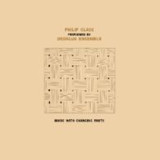
Founding work of minimalism, Music with Changing Parts is a piece with free instrumentation.The musicians choose which part to play among the 8 staves of the score. At each indicated cue, the musicians can change part, which produces an abrupt change of instrumentation. While the music is based on a melodic material limited to a few notes that are repeated in patterns that expand or contract, the changes in orchestration refresh the listening experience by producing sonic contrasts. These techniques at work
in Music with Changing Parts , written in 1970, will lead Philip Glass to renew his language and move from the monochromatic works that precede it to more dramatic works such as music in 12 parts and especially the opera Einstein on the Beach. When Philip Glass began rehearsing the piece, he was surprised to hear long notes when everything was written in eighth notes. After making sure that none of the musicians were playing held notes, he realized that the fact that the same notes were played by all the instruments in the ensemble produced, through a psycho-acoustic effect, a harmonic substrate of resonant frequencies. He then decided to add to
the score the possibility of playing long notes to reinforce this effect
On their debut album Seven Dances to Embrace the Hollow, Zurich-based artists Magda Drozd and Nicola Genovese, as Sopraterra, offer exactly what’s announced: seven compositions which, as they unhurriedly flow into each other, mark potential entry points to discover what might be lying underneath. By choosing Sopraterra, which translates to “above the earth” in Italian, as their shared project’s name, Drozd and Genovese indicate their own position in this archeological-looking endeavor, hinting at the potential for sonic explorations to produce deeply submerged discoveries.
Sopraterra’s object of inquiry isn’t easily grasped, traversing histories and blending influences alike. In a time-line-bending manner, musical signifiers from the past, along with specific tonal scales lifted from baroque and medieval music, get digitally synthesized. As sonic matter, the result is distinctly of today: a collection of electro-acoustic compositions that remain experimental at their core, referencing genres like post-rock, shoegaze, or psychedelic, while evoking aural memories of ancient times. Seven Dances to Embrace the Hollow pulls backward and pushes forward alike. Without ever forcing a didactic listening experience, musical motifs and archetypes are thoroughly investigated. But there is no scientific ambition at play here. Rather, the harmonies of late medieval Ars Nova or the transcendent elegance of Baroque chamber music lend their emotional qualities to perceived ideas of old times.
Oscillating between ambient and drone, the album’s seven brooding compositions bring primal connections to a universally shared past to the surface. In its multi-directional positioning, Seven Dances to Embrace the Hollow makes the case for embracing the confusion of warped time and paying attention to all that’s rather felt than seen.
out of Stock
Last delivered 17 months ago available to reorder, subject to availability
Full throttle from Vancouver, BC to wherever the open road takes them The Vicious Cycles are BACK with their new LP Get Wrecked on Pirates Press Records! Before you even get the shrink wrap off the gatefold jacket, you can guess what kind of party you're in for. "Our pal Shakey Deal is the cover model," says Cycles head honcho Billy Bones. "A tuff looking scrub on a minibike says a lot about who we are." And who is that exactly? "We play garage/punk rock and roll songs about motorcycles. We like to have a good time." The promise of debauchery carries over into song titles like "Naked On a Beach," and "On Fire in the Hot Tub." As rip-roaring, danceable party music goes, it's second to none, and rest assured there's plenty of bike enthusiast inside baseball, but the lyrics often go deeper than a superficial glance might indicate. For example, the lead single, "Hold On Tight," is about, as Billy puts it, "the physical feeling of riding with your favorite person on the back of your motorcycle - easily one of the best feelings a human can have." So, a classic biker anthem? "But also," he's quick to add, "a metaphor for life and relationships. We're gonna make it." Waxing philosophical with motorcycles as allegory over chrome-plated punk rock 'n roll? That's The Vicious Cycles' songwriting in a nutshell. Another album highlight, "Daddy Was a Gambler" references Billy's father - an ex-preacher who regularly hauled his kids to Circus Circus in his '57 Chevy - and his mother, a nurse and, as Billy puts it, "as close to an actual saint as anyone in the world. The song is an appreciation for the two of them, and how their differences made me who I am." "Naked On A Beach" sounds like a party, but Billy explains it's "a critique of capitalism and the tiny lives we're expected - and sometimes content - to live." Even the title track, "Get Wrecked," is more than just a statement of defiance; it's a message to Billy's son about dealing with the conformist naysayers of the world. Longtime fans & newcomers alike will be stoked for the straightaways, but stick around for the twists and turns, just like any good ride. The band brings in pals on strings & saxophone for a 60s Wall of Sound-inspired production on "Black Boots, Black Leather Jacket," and try their hands at their first murder ballad on "Pretty Hands." There's an instrumental tune ("Blowing Smoke") and hell, there's even a deep cut cover of "Trouble Again" - originally performed by Stewart Copeland of The Police - which only the biggest nerds of a certain age will recall as the theme song to the 80s Star Wars animated series Droids! In the end, no matter the detours, the band - along with Jesse Gander (Territories, Comeback Kid), & Mariessa McLeod at Rain City Recorders - kept their eyes on the prize: sing-along choruses, handclaps, and short songs that get the job done and don't overstay their welcome. "I didn't want us to write a record that you could dance to." quips Billy. "I wanted us to write a record that you couldn't not dance to."
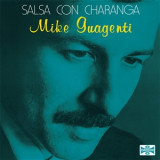
"Salsa con charanga" is really a feast for all salsa music lovers, a true jewel, which deserved much better when it originally came out in 1978. In addition to being a great salsa album, has the distinction that was released on Orfeon, a Mexican record label, due to the diligent work of the extraordinary producer Bobby Marin, and which miraculously received air play when powerhouse Fania label and few others ruled radio in the salsa music world. It comprises eight great, solid tracks; some, new interpretations from other albums in which Mike Guagenti participated with his handsome and captivating voice - a crooner with a salsero soul -, that, at times, could remind us of the late Tito Rodríguez, and even Ray Ramos. "The Mike Guagenti album," as indicated by Marin, "is a compilation of recordings by other artists. Originally a salsa album, I brought in Cuban Pupi Legarreta (violin and flute) and [Panamanian] Mauricio Smith (flute) to give it a charanga sound." With the exception of the cut 'Salsa con charanga,' which is an instrumental, the rest feature vocals by Guagenti. "Salsa con charanga" has developed a cult following, and finding a copy of the original could be quite expensive. Luckily, this officially licensed and restored edition will fill that void.
Rindert Lammers' debut album is a heartfelt exploration of gratitude, blending personal narratives with cinematic imagery in a serene and soulful ambient jazz style. Inspired by Japanese cinema and the raw authenticity of YouTube confessions, the album captures a mood of introspection and appreciation. Central to the album is the track "Thank You, Kirin Kiki," which draws from a powerful scene in the film Shopliers. Lammers explains "It's one of my favorites. The Japanese actress Kirin Kiki plays the grandmother of a ‘chosen family’, all of whom have fled or lost their own families in some way. In this scene, one of her last scenes before her (real) death, Kirin Kiki (the grandmother) looks at her family and says, 'Thank You!' twice towards the children and the sea. Kirin Kiki improvised these words on the spot, and it's such a poignant moment in the film, but also indicative of her impending death. I found the gratitude so moving it fit perfectly with the gratitude I found in the voice clip from "Thank You Hiroshi Yoshimura. "The fourth song, "Thank You Hiroshi Yoshimura," opens with a voice clip that acts almost as the protagonist of a film, reflecting on a turbulent time of sleeping in parks and on the streets. This voiceover was inspired by a comment on a Hiroshi Yoshimura video on YouTube that began, “This album reminds me of...” Lammers noticed the deeply personal responses le on these videos, so he recorded various similar YouTube comments from people around the world, initially intending to set them to music. Though much of this idea evolved, this particular voice clip remained a central influence, ultimately inspiring a cinematic journey within the album. "Summer in Shibuya" sets the scene as a trailer, "Opening Credits" introduces the narrative, and "Closing Credits" gently brings it to a close. While there’s a Japanese and Tokyo theme running through the tracks, Lammers doesn’t view the album as a tribute to Japan or Tokyo specifically—he’s never visited and admits to knowing only fragments of the culture. Yet he's drawn to Japanese environmental music and is an avid Murakami reader, seeing Japan as a powerful, visual inspiration in his mind’s eye. In a way, the album is also his “thank you” to the beautiful art that Japan has shared with the world.
Nach fast zwei Jahren meldet sich Okonski mit „Entrance Music“ zurück - ein Album, auf dem sich das Trio auf dem Höhepunkt seines improvisatorischen Könnens befindet und das Spontane und Meditative zelebriert. Nach dem Debüt „Magnolia“ von 2023 hat der Pianist und Bandleader Steve Okonski seine langjährigen musikalischen Mitstreiter (Durand Jones & The Indications-Bandkollege Aaron Frazer am Schlagzeug und Bassist Michael Isvara „Ish“ Montgomery) für eine weitere Session im Geiste von Künstlern wie The Bad Plus, Gerald Clayton und The Breathing Effect wieder zusammengebracht. Letztendlich ist „Entrance Music“ eine Einladung zu frühen Stunden, in denen die Songs in der Tür verweilen und ihre Anwesenheit ankündigen, bevor sie in die Luft zurückkehren, um sorgfältig in die nächste Runde zu treiben. „Entrance Music“ wurde in einer fünftägigen Session aufgenommen und war eines der ersten Alben, die in Portage Lounge, dem Studio von Terry Cole in Loveland, OH, auf Band gebannt wurden. „Es war ein neues Setup, aber mit Terry hinter den Reglern war es sehr vertraut“, sagt Okonski. „Ich kann nicht genug betonen, wie sehr sich Terry wie ein viertes Mitglied der Band fühlt, wegen des Raums, den er kuratiert, der Energie, die er einbringt, und den Produktionsideen.“ Die Energie und der Sound, die mit dem Colemine-Labelchef am Ruder entstanden sind, sorgen für ein Hörerlebnis, das sich mit den Katalogen von ECM oder Stones Throw messen kann. Während ein Großteil des Debüts auf seine Zeit in New York zurückgeht, fühlt sich „Entrance Music“ „ein bisschen weniger wie ‚auf den Straßen um 2 Uhr morgens‘ und ein bisschen mehr auf der Natur basierend an - ein bisschen mehr ätherisch“, sagt Okonski. „Es ist definitiv das Alter, die Umgebung und die Familie - all das kommt in der Musik durch.“
out of Stock
Last delivered 18 months ago available to reorder, subject to availability
Originally released on CD only – those were the days – “Triola im Fünftonraum“ counts as one of the most iconic albums of the early Kompakt era. Experience this timeless masterpiece of lush electronica lovingly restored and remastered for the first time on vinyl – 21 years after its inception.
We found this review from back in the days that perfectly sums up what “Triola im Fünftonraum” is all about:
The press material for “Triola im Fünftonraum” made allusions to home listening, when the album is mostly about movement… in a car …preferably a fast one … on a muggy spring day.
This might catch followers of producer Jörg Burger off guard. Up until this point, the producer’s Triola tracks – limited to three consecutive appearances on Kompakt’s yearly Pop Ambient series and a spot on “Leichtes Hören Teil 1” – were free-floating ambient washouts (albeit wondrous free-floating ambient washouts) with no pulse. The album, on the other hand, is beat-driven. Though still resolutely ambient – more an update of Burger’s lushest Bionaut tracks, only fully engaging instead of mildly diverting.
The soft, synthetic hand drums and tranquil vapors of “Leuchtturm” from Pop Ambient 2003, remain untouched and begin the album. Two other tracks that might sound familiar receive dynamic overhauls, now supported with quick dance rhythms and additional layers of synth gauze; the whispy flute trills and lightly flickering keys of “AG Penthouse”, for instance, are melted into a churning rhythm and some singing keyboard vamps that resemble a relaxed take on Tangerine Dream’s suspenseful soundtrack work for “Thief” (minus the crazy guitars).
What really makes the whole thing glow is the manner in which the tracks are attached, flowing in and out of another, rising and cresting and receding, with supreme poise – even if its title provides no indication, the album is as much a travelogue as Carl Craig’s “Landcruising”, Morgan Geist’s “Driving Memoirs” and Model 500’s “Deep Space”.
These are some of Burger’s most inventive productions, a remarkable feat since he’s been doing this so long. Catch yourself in the right frame of mind and you’ll wonder if everything he has released has been one extended ramp-up to this. In this age, it’s also refreshing to have a purely ambient techno album with absolutely no connection to “Boards of Canada”.
In other words, it’s a landmark for both its label and its genre.
Andy Kellman
Copyright 2025 TiVo Corporation
Ursprünglich nur auf CD veröffentlicht – das waren noch Zeiten – zählt „Triola im Fünftonraum“ zu den ikonischsten Alben der frühen Kompakt-Ära. Dieses zeitlose Meisterwerk schwelgerischer Electronica erscheint nun 21 Jahre nach seiner Entstehung erstmals liebevoll restauriert und remastered auf Vinyl.
Wir haben diese zeitgenössische Rezension gefunden, die perfekt zusammenfasst, worum es bei „Triola im Fünftonraum“ geht:
Das Pressematerial für „Triola im Fünftonraum“ spielt auf das Zuhören zu Hause an, obwohl es in dem Album hauptsächlich um Bewegung geht … in einem Auto … vorzugsweise einem schnellen … an einem schwülen Frühlingstag.
Das könnte die Fans des Produzenten Jörg Burger überraschen. Bis zu diesem Zeitpunkt waren die Triola-Tracks des Produzenten – beschränkt auf drei aufeinanderfolgende Auftritte in der jährlichen Pop-Ambient-Reihe von Kompakt und einen Platz auf „Leichtes Hören Teil 1“ – frei schwebende Ambient-Auswaschungen (wenn auch wundersame frei schwebende Ambient-Auswaschungen) ohne Puls. Das Album hingegen ist beatgetrieben, obwohl es immer noch entschieden Ambient ist – eher eine Aktualisierung von Burgers üppigsten Bionaut-Tracks, nur dass es voll und ganz fesselt, statt nur leicht abzulenken.
Die sanften, synthetischen Handtrommeln und die ruhigen Dämpfe von „Leuchtturm“ aus Pop Ambient 2003 bleiben unangetastet und bilden den Auftakt des Albums. Zwei weitere Stücke, die einem bekannt vorkommen könnten, erhalten eine dynamische Überarbeitung, die nun von schnellen Tanzrhythmen und zusätzlichen Schichten von Synthesizer-Gaze unterstützt wird; die flüsternden Flötentöne und leicht flackernden Tasten von „AG Penthouse“ zum Beispiel verschmelzen zu einem aufgewühlten Rhythmus und einigen singenden Keyboard-Vamps, die an eine entspannte Version des spannenden Soundtracks von Tangerine Dream erinnern, der für „Thief“ (ohne die verrückten Gitarren) verwendet wird.
Was das Ganze wirklich zum Leuchten bringt, ist die Art und Weise, wie die Tracks miteinander verbunden sind, wie sie ineinander fließen, ansteigen und ihren Höhepunkt erreichen und wieder abklingen, und das mit höchster Gelassenheit – auch wenn der Titel nichts darauf hindeutet, ist das Album ebenso ein Reisebericht wie Carl Craigs „Landcruising“, Morgan Geists „Driving Memoirs“ und Model 500s „Deep Space“.
Dies sind einige von Burgers einfallsreichsten Produktionen, eine bemerkenswerte Leistung, wenn man bedenkt, wie lange er schon dabei ist. Wenn man sich in die richtige Stimmung versetzt, fragt man sich, ob alles, was er bisher veröffentlicht hat, eine einzige Vorbereitung auf dieses Album war. In der heutigen Zeit ist es auch erfrischend, ein reines Ambient-Techno-Album zu hören, das absolut nichts mit „Boards of Canada“ zu tun hat.
Mit anderen Worten: Es ist ein Meilenstein für das Label und das Genre.
Andy Kellman
Copyright 2025 TiVo Corporation
out of Stock
Last delivered 18 months ago available to reorder, subject to availability
Research Records indicate their inclination for cosmic instrumentation and kraut pervaded polyrhythms once again with an introduction to newcomer Glass Beams. Recorded at the beginning of 2020, Mirage is the first release from the artist, issuing four compositions that lend from a profusion of sounds and influences.
The album's opener and title Mirage arrives with a coiling vocal mantra that conspires with a sliding bassline and transcendent synthwork, reminiscent of early 70's prog jams yet inverted and futuristic. Taurus is a brisk arrangement, steeped with spaghetti-western elements and space-jazz to pave the way for the agile Kong. Rife with psych-fusion guitar phrases and instrumentation, Kong unfolds like a forecast lysergic voyage. The finale Rattlesnake nudges the serpent with intergalactic scales and spellbinding riffs. We may not know much about the enigmatic Glass Beams but Mirage is one epic inauguration, leaving the listener with more questions than answers.
out of Stock
Last delivered 70 days ago available to reorder, subject to availability
Googling “paradise house”, the first results to pop up are an endless list of European b&b’s with whitewashed lime façades, all of them promising “…an unmatched travel experience a few steps from the sea”. Next, a little further down, are the institutional websites of a few select semi-luxury retirement homes (no photos shown, but lots of stock images of smiling nurses with reassuring looks). To find the “paradise house” we’re after, we have to scroll even further down. Much further down.
It feels like yesterday, and at the same time it seems like a million years ago. The Eighties had just ended, and it was still unclear what to expect from the Nineties. Mobile phones that were not the size of a briefcase and did not cost as much as a car? A frightening economic crisis? The guitar-rock revival?! Certainly, the best place to observe that moment of transition was the dancefloor. Truly epochal transformations were happening there. From America, within a short distance one from the other, two revolutionary new musical styles had arrived: the first one sounded a bit like an “on a budget” version of the best Seventies disco-music – Philly sound made with a set of piano-bar keyboards! – the other was even more sparse, futuristic and extraterrestrial. It was a music with a quite distinct “physical” component, which at the same time, to be fully grasped, seemed to call for the knotty theories of certain French post-modern philosophers: Gilles Deleuze, Félix Guattari, Paul Virilio... Both those genres – we would learn shortly after – were born in the black communities of Chicago and Detroit, although listening to those vinyl 12” (often wrapped in generic white covers, and with little indication in the label) you could not easily guess whether behind them there was a black boy from somewhere in the Usa, or a girl from Berlin, or a pale kid from a Cornish coastal town.
Quickly, similar sounds began to show up from all corners of Europe. A thousand variations of the same intuition: leaner, less lean, happier, slightly less intoxicated, more broken, slower, faster, much faster... Boom! From the dancefloors – the London ones at least, whose chronicles we eagerly read every month in the pages of The Face and i-D – came tales of a new generation of clubbers who had completely stopped “dressing up” to go dancing; of hot tempered hooligans bursting into tears and hugging everyone under the strobe lights as the notes of Strings of Life rose up through the fumes of dry ice (certain “smiling” pills were also involved, sure). At this point, however, we must move on to Switzerland.
In Switzerland, in the quiet and diligent town of Lugano, between the 1980s and 1990s there was a club called “Morandi”. Its hot night was on Wednesdays, when the audience also came from Milan, Como, Varese and Zurich. Legend goes that, one night, none less than Prince and Sheila E were spotted hiding among the sofas, on a day-off of the Italian dates of the Nude Tour… The Wednesday resident and superstar was an Italian dj with an exotic name: Don Carlos. The soundtrack he devised was a mixture of Chicago, Detroit, the most progressive R&B and certain forgotten classics of old disco music: practically, what the Paradise Garage in New York might have sounded like had it not closed in 1987. In between, Don Carlos also managed to squeeze in some tracks he had worked on in his studio on Lago Maggiore. One in particular: a track that was rather slow compared to the BPM in fashion at the time, but which was a perfect bridge between house and R&B. The title was Alone: Don Carlos would explain years later that it had to be intended both in the English meaning of “by itself” and like the Italian word meaning “halo”. That wasn’t the only double entendre about the song, anyway. Its own very deep nature was, indeed, double. On the one hand, Alone was built around an angelic keyboard pattern and a romantic piano riff that took you straight to heaven; on the other, it showcased enough electronic squelches (plus a sax part that sounded like it had been dissolved by acid rain) to pigeonhole the tune into the “junk modernity” section, aka the hallmark of all the most innovative sounds of the time: music that sounded like it was hand-crafted from the scraps of glittering overground pop.
No one knows who was the first to call it “paradise house”, nor when it happened. Alternative definitions on the same topic one happened to hear included “ambient house”, “dream house”, “Mediterranean progressive”… but of course none were as good (and alluring) as “paradise house”. What is certain is that such inclination for sounds that were in equal measure angelic and neurotic, romantic and unaffective, quickly became the trademark of the second generation of Italian house. Music that seemed shyly equidistant from all the rhythmic and electronic revolutions that had happened up to that moment (“Music perfectly adept at going nowhere slowly” as noted by English journalist Craig McLean in a legendary field report for Blah Blah Blah magazine). Music that to a inattentive ear might have sounded as anonymous as a snapshot of a random group of passers-by at 10AM in the centre of any major city, but perfectly described the (slow) awakening in the real world after the universal love binge of the so-called Second Summer of Love.
For a brief but unforgettable season, in Italy “paradise house” was the official soundtrack of interminable weekends spent inside the car, darting from one club to another, cutting the peninsula from North to centre, from East to West coast in pursuit of the latest after-hours disco, trading kilometres per hour with beats per minute: practically, a new New Year’s Eve every Friday and Saturday night. This too was no small transformation, as well as a shock for an adult Italy that was encountering for the first time – thanks to its sons and daughters – the wild side of industrial modernity. The clubbers of the so-called “fuoriorario” scene were the balls gone mad in the pinball machine most feared by newspapers, magazines and TV pundits. What they did each and every weekend, apart from going crazy to the sound of the current white labels, was linking distant geographical points and non-places (thank you Marc Augé!) – old dance halls, farmhouses and business centres – transformed for one night into house music heaven. As Marco D’Eramo wrote in his 1995 essay on Chicago, Il maiale e il grattacielo: “Four-wheeled capitalism distorts our age-old image of the city, it allows the suburbs to be connected to each other, whereas before they were connected only by the centre (…) It makes possible a metropolitan area without a metropolis, without a city centre, without downtown. The periphery is no longer a periphery of any centre, but is self-centred”.
“Paradise house” perfectly understood all of this and turned it into a sort of cyber-blues that didn’t even need words, and unexpectedly brought back a drop of melancholic (post?)-humanity within a world that by then – as we would wholly realise in the decades to come – was fully inhuman and heartless. A world where we were all alone, and surrounded by a sinister yellowish halo, like a neon at the end of its life cycle. But, for one night at least, happy."
out of Stock
Last delivered 3 months ago available to reorder, subject to availability
“Salsa con charanga” is really a feast for all salsa music lovers, a true jewel, which deserved much better when it originally came out in 1978. It comprises eight great, solid tracks; some, new interpretations from other albums in which Mike Guagenti participated with his handsome and captivating voice - a crooner with a salsero soul -, that, at times, could remind us of the late Tito Rodríguez, and even Ray Ramos.
It In addition to being a great salsa album, has the distinction that was released on Orfeon, a Mexican record label, due to the diligent work of the extraordinary producer Bobby Marin, and which miraculously received air play when powerhouse Fania label and few others ruled radio in the salsa music world. It comprises eight great, solid tracks; some, new interpretations from other albums in which Mike Guagenti participated with his handsome and captivating voice - a crooner with a salsero soul -, that, at times, could remind us of the late Tito Rodríguez, and even Ray Ramos. "The Mike Guagenti album," as indicated by Marin, "is a compilation of recordings by other artists. Originally a salsa album, I brought in Cuban Pupi Legarreta (violin and flute) and Panamanian Mauricio Smith (flute) to give it a charanga sound." With the exception of the cut ‘Salsa con charanga,’ which is an instrumental, the rest feature vocals by Guagenti. “Salsa con charanga” has developed a cult following, and finding a copy of the original could be quite expensive. Luckily, this officially licensed and restored edition will fill that void.
In der Musik der Latin-Sängerin und Songwriterin Michi verschmelzen verschiedene Epochen zu einem einzigartigen Sound: Die Nostalgie des R&B der MTV-Diven-Ära trifft auf den Groove von Funk und Soul der 70er und 80er Jahre. Die Songs ihres Debütalbums 'Dirty Talk' handeln davon, wie man mit Selbstliebe und Lebensfreude aus Liebeskummer herauskommt.
In den Songs von 'Dirty Talk' geht es darum, sich selbst zu seiner Weiblichkeit, seiner Sexualität und seinem authentischen Selbst zu bekennen. Produziert wurde das Album von Blake Rhein (Durand Jones & the Indications) und Paul Cherry (Jordana, Kate Bollinger).
- Zu den featured Artists auf dem Album gehören Kiefer und der zeitgenössische Bossa-Nova-Musiker Gabriel da Rosa.
- Für Fans von: Erika de Casier, Cleo Sol, Ravyn Lenae, Kali Uchis, The Marías, Omar Apollo, ELIZA.
- Ltd. Col. LP: (Cremefarbenes Vinyl mit vollflächig bedruckter Innenhülle)
out of Stock
Last delivered 9 months ago available to reorder, subject to availability
Nach fast zwei Jahren meldet sich Okonski mit „Entrance Music“ zurück - ein Album, auf dem sich das Trio auf dem Höhepunkt seines improvisatorischen Könnens befindet und das Spontane und Meditative zelebriert. Nach dem Debüt „Magnolia“ von 2023 hat der Pianist und Bandleader Steve Okonski seine langjährigen musikalischen Mitstreiter (Durand Jones & The Indications-Bandkollege Aaron Frazer am Schlagzeug und Bassist Michael Isvara „Ish“ Montgomery) für eine weitere Session im Geiste von Künstlern wie The Bad Plus, Gerald Clayton und The Breathing Effect wieder zusammengebracht. Letztendlich ist „Entrance Music“ eine Einladung zu frühen Stunden, in denen die Songs in der Tür verweilen und ihre Anwesenheit ankündigen, bevor sie in die Luft zurückkehren, um sorgfältig in die nächste Runde zu treiben. „Entrance Music“ wurde in einer fünftägigen Session aufgenommen und war eines der ersten Alben, die in Portage Lounge, dem Studio von Terry Cole in Loveland, OH, auf Band gebannt wurden. „Es war ein neues Setup, aber mit Terry hinter den Reglern war es sehr vertraut“, sagt Okonski. „Ich kann nicht genug betonen, wie sehr sich Terry wie ein viertes Mitglied der Band fühlt, wegen des Raums, den er kuratiert, der Energie, die er einbringt, und den Produktionsideen.“ Die Energie und der Sound, die mit dem Colemine-Labelchef am Ruder entstanden sind, sorgen für ein Hörerlebnis, das sich mit den Katalogen von ECM oder Stones Throw messen kann. Während ein Großteil des Debüts auf seine Zeit in New York zurückgeht, fühlt sich „Entrance Music“ „ein bisschen weniger wie ‚auf den Straßen um 2 Uhr morgens‘ und ein bisschen mehr auf der Natur basierend an - ein bisschen mehr ätherisch“, sagt Okonski. „Es ist definitiv das Alter, die Umgebung und die Familie - all das kommt in der Musik durch.“
out of Stock
Last delivered 19 months ago available to reorder, subject to availability
This one is from the minds of the Exist Dance label heads, Michael Kandel & Tom Chasteen, who’s work as High Lonesome Soundsystem & Voodoo Transmission we have had the honour to reissue previously. Under their Eden Transmission alias, we hear them delivering something at once totally indicative of the West Coast rave sound that they helped define but also something that goes beyond any means of simple classification and defies pigeon-holing. Breakbeats, in varying shades of blissful and nightmarish, hoover bass mental breakdowns and reality melting samples from the mouth of the psycho-magus Jodorowsky collide with elements of Trance in it’s euphoric, embryonic form. Psychic travel guaranteed.
out of Stock
Last delivered 29 days ago available to reorder, subject to availability
Two records came out in 1988 that forever changed the perception of "experimental" or "serious" music produced in Portugal. These were "Plux Quba" by Nuno Canavarro and "Música de Baixa Fidelidade" by Tózé (António) Ferreira. Both were released by the same label - Ama Romanta -, an influential independent imprint closely linked to avantgarde pop band Pop Dell'Arte. Because those records appeared in what could be perceived as an "alternative pop" framework, they rescued this difficult music from Academia. It helps that Canavarro played in a successful new wave pop band (Street Kids) during the period 1980-83. By association, being a friend since 1976, António was in close contact with many of the musicians and bands that were part of the equally celebrated and detested Portuguese Rock Boom (roughly 79-82).
He was not a musician then but through his friendship with Canavarro, who had the means to acquire electronic equipment, António became involved with that equipment and shared Canavarro's passion for experimentation and curiosity for knowledge. They tried to get hold of as many technical magazines as possible and learn while testing ideas. In 1983, Street Kids were about to break up, young lives drafted into the Army and maybe, in Canavarro's case, a whole new passion for challenging music similar to his bandmate Nuno Rebelo, by then in the process of discovering a wide range of "other" music mainly through Jorge Lima Barreto. Barreto, who had started Telectu with Vítor Rua, possessed a huge book and record collection and, like Rua before them, Canavarro, Rebelo and Ferreira became fascinated by the pool of knowledge they now had access to by frequenting Barreto's house in Lisbon. He was roughly a decade older, had published several books and other writings throughout the 1970s, cultivated an anarchic stance and a penchant for cultural indoctrination. Rebelo was the first to be introduced via his contact with Rua (who had invited him to play in his other band GNR).
Overwhelmed, he felt the need to share his enthusiasm with friends and eventually took a few to the house in true pilgrimage fashion. To see the Light. Among the few he led there was even João Peste, founder of Ama Romanta. Canavarro and Ferreira preceded him.
Ferreira recalls an exciting learning process added to his experiments with Canavarro's array of synths such as the Korg Ms 20, Korg polysix, ARP Axxe, Roland SH-01, the Ensoniq Mirage sampler... He read in a magazine article about someone who had studied at the Institute of Sonology (then in Utrecht, Netherlands) and went there during a vacation trip in the Summer of 1983. He became excited by the prospect of studying at the Institute but money was a problem. Canavarro, on the other hand, was admitted there in the following year. Back in Portugal, Ferreira eventually abandoned his Chemical Engineering studies in Lisbon's Technical Institute in favour of a more focused music practice. He collaborated with Telectu during 1984 and 85 as a sort of technical engineer, implementing some recording solutions and background tapes and went to work at a thermoelectric power plant in Sines, hoping to make enough money to fund his musical studies. He did and proceeded with the paperwork for admission at the Institute of Sonology, now based in The Hague. António studied there in 1986-87 and the present album includes two compositions developed at the Institute: "More Adult Music" and "This Is Music, As It Was Expected", both featuring the voice of Rodney Waschka II. Among other activities and talents, Rodney is an expert in computer music and to António his voice sounded similar to Robert Ashley's, whose work he admired.
What happened at the Institute was a systematization of António's self-taught practice. Computer software, Musique Concrète, noise and silence, organisation of abstract ideas and sounds. The original notes on the back sleeve of the LP give some indication of process and thinking, but a more detailed account was given by António in the liner notes of the CD reissue in 2002, which are also included in this 2025 LP reissue.
The music sounds deep and detailed, despite the fact of António calling it low-fi ("Baixa Fidelidade"). It flows like an improvised performance where several musicians might be responding to each other, respectful of their mutual space. Drama occurs, as a natural emotional connection is sought by the listener. Piano, bells, drone, processed voices, even the clear narrative of Rodney Waschka II, contribute to create a sort of alternative perceptual reality. The sounds are almost tangible, more a part of the physical world than ethereal manifestations and thus it would not be correct to invoke "ambient music" as a selling point. But although "physical" and distinct, this music is still alien, more so in Portugal's 1988 environment. In March, helped by Canavarro, António set up a home studio and there he recorded the remaining material for this album: "Algumas Pessoas Olharam O Sul E Viram Deserto", "Um Som, Seguido De Uma Cena Negra E Malva" and "O Verão Nasceu Da Paixão De 1921".
"Música de Baixa Fidelidade" stands not only as a proof of great resilience but as one of those magnificent works of art coming from someone who balanced technical inclination and emotional sensibility. Because of that, Tózé Ferreira is able to decode the phantom world of sound for anyone who cares to experience the sensation of inhabiting a version of the Future. First ever vinyl reissue, reproduction of the original artwork with an additional insert. Made in collaboration with the artist and the support of Paulo Menezes (Plancton Music), who provided valuable assistance. Remastered by Taylor Deupree.
Volume 1 of this expertly curated project of 90s Italian House - put together by Don Carlos.
If Paradise was half as nice… by Fabio De Luca.
Googling “paradise house”, the first results to pop up are an endless list of European b&b’s with whitewashed lime façades, all of them promising “…an unmatched travel experience a few steps from the sea”. Next, a little further down, are the institutional websites of a few select semi-luxury retirement homes (no photos shown, but lots of stock images of smiling nurses with reassuring looks). To find the “paradise house” we’re after, we have to scroll even further down. Much further down.
It feels like yesterday, and at the same time it seems like a million years ago. The Eighties had just ended, and it was still unclear what to expect from the Nineties. Mobile phones that were not the size of a briefcase and did not cost as much as a car? A frightening economic crisis? The guitar-rock revival?! Certainly, the best place to observe that moment of transition was the dancefloor. Truly epochal transformations were happening there. From America, within a short distance one from the other, two revolutionary new musical styles had arrived: the first one sounded a bit like an “on a budget” version of the best Seventies disco-music – Philly sound made with a set of piano-bar keyboards! – the other was even more sparse, futuristic and extraterrestrial. It was a music with a quite distinct “physical” component, which at the same time, to be fully grasped, seemed to call for the knotty theories of certain French post-modern philosophers: Gilles Deleuze, Félix Guattari, Paul Virilio... Both those genres – we would learn shortly after – were born in the black communities of Chicago and Detroit, although listening to those vinyl 12” (often wrapped in generic white covers, and with little indication in the label) you could not easily guess whether behind them there was a black boy from somewhere in the Usa, or a girl from Berlin, or a pale kid from a Cornish coastal town.
Quickly, similar sounds began to show up from all corners of Europe. A thousand variations of the same intuition: leaner, less lean, happier, slightly less intoxicated, more broken, slower, faster, much faster... Boom! From the dancefloors – the London ones at least, whose chronicles we eagerly read every month in the pages of The Face and i-D – came tales of a new generation of clubbers who had completely stopped “dressing up” to go dancing; of hot tempered hooligans bursting into tears and hugging everyone under the strobe lights as the notes of Strings of Life rose up through the fumes of dry ice (certain “smiling” pills were also involved, sure). At this point, however, we must move on to Switzerland.
In Switzerland, in the quiet and diligent town of Lugano, between the 1980s and 1990s there was a club called “Morandi”. Its hot night was on Wednesdays, when the audience also came from Milan, Como, Varese and Zurich. Legend goes that, one night, none less than Prince and Sheila E were spotted hiding among the sofas, on a day-off of the Italian dates of the Nude Tour… The Wednesday resident and superstar was an Italian dj with an exotic name: Don Carlos. The soundtrack he devised was a mixture of Chicago, Detroit, the most progressive R&B and certain forgotten classics of old disco music: practically, what the Paradise Garage in New York might have sounded like had it not closed in 1987. In between, Don Carlos also managed to squeeze in some tracks he had worked on in his studio on Lago Maggiore. One in particular: a track that was rather slow compared to the BPM in fashion at the time, but which was a perfect bridge between house and R&B. The title was Alone: Don Carlos would explain years later that it had to be intended both in the English meaning of “by itself” and like the Italian word meaning “halo”. That wasn’t the only double entendre about the song, anyway. Its own very deep nature was, indeed, double. On the one hand, Alone was built around an angelic keyboard pattern and a romantic piano riff that took you straight to heaven; on the other, it showcased enough electronic squelches (plus a sax part that sounded like it had been dissolved by acid rain) to pigeonhole the tune into the “junk modernity” section, aka the hallmark of all the most innovative sounds of the time: music that sounded like it was hand-crafted from the scraps of glittering overground pop.
No one knows who was the first to call it “paradise house”, nor when it happened. Alternative definitions on the same topic one happened to hear included “ambient house”, “dream house”, “Mediterranean progressive”… but of course none were as good (and alluring) as “paradise house”. What is certain is that such inclination for sounds that were in equal measure angelic and neurotic, romantic and unaffective, quickly became the trademark of the second generation of Italian house. Music that seemed shyly equidistant from all the rhythmic and electronic revolutions that had happened up to that moment (“Music perfectly adept at going nowhere slowly” as noted by English journalist Craig McLean in a legendary field report for Blah Blah Blah magazine). Music that to a inattentive ear might have sounded as anonymous as a snapshot of a random group of passers-by at 10AM in the centre of any major city, but perfectly described the (slow) awakening in the real world after the universal love binge of the so-called Second Summer of Love.
For a brief but unforgettable season, in Italy “paradise house” was the official soundtrack of interminable weekends spent inside the car, darting from one club to another, cutting the peninsula from North to centre, from East to West coast in pursuit of the latest after-hours disco, trading kilometres per hour with beats per minute: practically, a new New Year’s Eve every Friday and Saturday night. This too was no small transformation, as well as a shock for an adult Italy that was encountering for the first time – thanks to its sons and daughters – the wild side of industrial modernity. The clubbers of the so-called “fuoriorario” scene were the balls gone mad in the pinball machine most feared by newspapers, magazines and TV pundits. What they did each and every weekend, apart from going crazy to the sound of the current white labels, was linking distant geographical points and non-places (thank you Marc Augé!) – old dance halls, farmhouses and business centres – transformed for one night into house music heaven. As Marco D’Eramo wrote in his 1995 essay on Chicago, Il maiale e il grattacielo: “Four-wheeled capitalism distorts our age-old image of the city, it allows the suburbs to be connected to each other, whereas before they were connected only by the centre (…) It makes possible a metropolitan area without a metropolis, without a city centre, without downtown. The periphery is no longer a periphery of any centre, but is self-centred”.
“Paradise house” perfectly understood all of this and turned it into a sort of cyber-blues that didn’t even need words, and unexpectedly brought back a drop of melancholic (post?)-humanity within a world that by then – as we would wholly realise in the decades to come – was fully inhuman and heartless. A world where we were all alone, and surrounded by a sinister yellowish halo, like a neon at the end of its life cycle. But, for one night at least, happy.
out of Stock
Last delivered 83 days ago available to reorder, subject to availability
Spanish-born producer Digge Shim relocated to Malmö, Sweden a few years back and found his calling in the reincarnation of electro through his relentless output of acid-flavored 303 jams. Besides establishing the Malmø Traxx label he also ran the city’s foremost record shop for electronic dance music.
For his first release on @blundar.co the producer has sourced tracks from his archive of tapes and found a batch of unreleased gems that seemed to fit nicely together in a sort of megamix style. On Side I, he collects some indica-infused ambient and goes all in on Gregorian chants and samples of political speeches. Side II is a head nodding trip through leftfield experiments in downtempo, dubby disco and the tropical ghosts of boom bap.
The Dancefloor Records reissues on Emotional Rescue comes in the form a true House classic. Produced and released by the Chicago legend Andrew Komis, It’s You is an original Deep House bomb and an education to those increasingly misusing the term today.
Essentially a cover / updated version of the all-time early House classic in ESP’s Its You, this 1989 update shows how much the scene was progressing in just 3 years with a tougher, heavier and deeper 12” that was all about rocking club sound systems.
Coming out on Komis’ own (Dancefloor subsidiary) Big Shot Records, this might not of been as big as Dionne’s Come Get My Lovin’, but has long been an ‘in the bag’ record for the likes of Derrick Carter and Solar. Just one listen spread across the time-defining “Mixes” and it’s clear why.
The stepping bass of the New York – London Mix was so indicative of the time. As the latter’s ascent as a clubbing capital took hold, ears were pinned to what was emanating from across the seas, especially the clubs of NYC and ‘Windy City’. Trademark Komis bass and hats ride are all here to allow the breathy vocals space to do their magic.
However it is the Free House Mix that really shows where things were at. Skipping hats, electro-meets-Belgian bass and a dark synth line pull the track down before acid touches take the song to a much deeper place and has long been the favourite version for the discerning DJ.
Ending with what was indicative of the time, the title says it all with the NU Style Mix. A drum heavy work out, taking in elements of successful records of the time, we get Break 4 Love percussion arranged around a NYC influenced Konder’s style quick cut-up editing for a more 'freestyle' mix to round out what is simply, an underground bomb and therefore, worthy of what this label has always been about, bringing great records to new ears.
out of Stock
Last delivered 3 months ago available to reorder, subject to availability
Disco-Antistat Ultrasonic - The most thorough way to wash records!
Our record washing machine Disco-Antistat Ultrasonic combines over 40 years of experience in the pflege and cleaning of records with highly developed, state-of-the-art cleaning technology.
The combination of ultrasonic cleaning and our proven goat hair brush system ensures gentle, groove-deep cleaning of your records and an audible improvement in the sound image. During operation, the cleaningfluid is permanently clarified by a filter system and dirt particles are rausgefiltert to minimize impurities in the liquid and thus achieve the best possible cleaning result.
Through our special cleaner, the record is treated antistatically and thus permanently prevented from re-soiling by adhering dust. With only a few handgriffen our washer is ready for operation and the intuitive operability ensures optimal results from the first record!
The simple and intuitive handling as well as the operating elements reduced to the essentials enable best cleaning results from the first record.
The cleaning time can be conveniently adjusted to the degree of soiling of the record, supported by a functional display.
A clearly visible progress indicator provides information on the cleaning status at a glance.
After use, the gefilterte Reinigungsflüssigkeit can be conveniently filled back into the bottle at the touch of a button via a built-in pump.
The permanent filtering of the cleaner prevents the liquid from accumulating dirt. Thus, a consistent cleaning result is achieved.
Thanks to the innovative magnetic coupling, inserting and removing the record is simple and quick.
Driven by an electric motor, the record rotates evenly in the tank, whereby a homogeneous treatment with ultrasound is achieved.
Cleanliness you can hear! A powerful ultrasonic transducer generates so-called cavitation bubbles, which act directly on the dirt and remove it gently and effectively. The ultrasonic waves also reach places that are inaccessible to conventional cleaning methods and ensure cleanliness down to the depth of the groove. The loosened dirt particles are then wiped off on the soft goat hair brushes.
DE:
Automatische Ultraschall Plattenwaschmaschine
Disco-Antistat Ultrasonic – Die gründlichste Art der Schallplattenwäsche!
Unsere Schallplattenwaschmaschine Disco-Antistat Ultrasonic vereint über 40 Jahre Erfahrung in der Pflege und Reinigung von Schallplatten mit hochentwickelter, modernster Reinigungstechnik.
Die Kombination aus Ultraschallreinigung und unserem bewährten Bürstensystem aus Ziegenhaar sorgt für eine schonende, rillentiefe Reinigung Ihrer Schallplatten und einer hörbaren Verbesserung des Klangbildes. Während des Betriebs wird die Reinigungsflüssigkeit permanent durch ein Filtersystem geklärt und Schmutzpartikel herausgefiltert, um Verunreinigungen der Flüssigkeit zu minimieren und somit das bestmögliche Reinigungsergebnis zu erreichen.
Durch unseren speziellen Reiniger wird die Schallplatte antistatisch behandelt und so dauerhaft die erneute Verschmutzung durch anhaftenden Staub verhindert. Mit nur wenigen Handgriffen ist unser Waschgerät betriebsbereit und die intuitive Bedienbarkeit sorgt für optimale Resultate ab der ersten Platte!
Die einfache und intuitive Handhabung sowie die auf das wesentliche reduzierten Bedienelemente ermöglichen beste Reinigungsergebnisse ab der ersten Schallplatte.
Die Reinigungsdauer kann, unterstützt durch ein funktionales Display, bequem dem Verschmutzungsgrad der Schallplatte angepasst werden.
Eine gut sichtbare Fortschrittsanzeige informiert auf einen Blick über den Status der Reinigung.
Nach Gebrauch kann die gefilterte Reinigungsflüssigkeit auf Knopfdruck über eine eingebaute Pumpe bequem in die Flasche zurück gefüllt werden.
Durch die permanente Filterung des Reinigers wird verhindert, dass sich die Flüssigkeit mit Schmutz anreichert. Somit wird ein gleichbleibendes Reinigungsergebnis erzielt.
Das Einsetzen und Entnehmen der Schallplatte ist Dank der innovativen Magnetankopplung simpel und schnell erledigt.
Angetrieben von einem Elektromotor rotiert die Schallplatte gleichmäßig in der Wanne, wodurch eine homogene Behandlung mit Ultraschall erreicht wird
Sauberkeit, die man hören kann! Ein leistungsstarker Ultraschallschwinger erzeugt sogenannte Kavitationsblasen, die direkt an den Verschmutzungen wirken und diese schonend und effektiv ablösen. Die Ultraschallwellen erreichen auch Stellen, die für konventionelle Reinigungsverfahren nicht zugänglich sind und sorgen für Sauberkeit bis in die Tiefe der Rille. Anschließend werden die gelösten Schmutzpartikel an den weichen Ziegenhaarbürsten abgestreift.
NOTON and The Vinyl Factory are pleased to announce the release of the new edition of Carsten Nicolai’s ∞ (Endless Loop Color Edition), under his alias Noto.
This new limited edition box set celebrates Carsten Nicolai’s beloved interactive installation, bausatz noto, currently featured at The Vinyl Factory: Reverb exhibition at 180 Studios.
The exhibition features an expanded version of Nicolai’s artwork bausatz noto (1998) – an interactive piece centered around four Technics SL-1210 turntables and a selection of colored vinyl records. Visitors are invited to select and play the records, each of which has been cut with 9 or 8 unique locked grooves on each side. As Nicolai explains, “the different colors indicate different sound material, from the very abstract to the graphic” that users can loop and layer to create infinite permutations and combinations.
Previously released as a sold-out signed edition with a hardback book, this 2024 box set edition brings the installation into your own space. Comprised of twelve 10” colored vinyl records, each featuring 18 or 16 unique locked grooves (9 or 8 per side), the concept remains the same: Nicolai provides the tools to build your own soundscapes.
The records are sleeved in twelve custom-made archive folders, housed in a handmade box with artwork. Limited to 1000 copies worldwide.
Lacquers created by Lupo / Calyx Mastering
out of Stock
Last delivered 22 months ago available to reorder, subject to availability
Micron Audio embodies a hub for a modern and futuristic electro sound, led by its master DJ Stingray 313. The imprint beckons intense electronic sounds, roughened textures and geometries that speak to a guiding principle of making technological advancement accessible to the people. These technoid adventures of sci-fi sound design and arrays of unabating rhythm, draw its listeners through warped microworlds and wicked contortions. Behind the sounds, it exists as a display of artistic responsibility, making statements and providing solutions from socio-political commentaries.? The first Micron Audio physical release emerged in 2011, with DJ Stingray 313's Electronic Countermeasures EP, following a digital-only compilation that is no longer available. Tracks from the Micron Audio hemisphere have featured in several compilation records released by the likes of Rush Hour and Creme Organization, including Stringray's Urban Tribe project. It represents a crisply defiant and firmly electronic approach, drawing in the infective indicators of video games. Relaunching afresh in 2021, Micron Audio is working with new artists and is stepping not only further into the future but into the foreground, where its clear scientific intention and political attitude is entrenched through top-shelf sound design and pumping rhythms.
out of Stock
Last delivered 22 months ago available to reorder, subject to availability
Woven together from home studio recordings that span two decades, and with some notable guest appearances including; The Bug, Douglas Leal of Deafkids, Wayne Adams of Petbrick, Dave French of Yob and Sanford Parker, this final part of the Harvestman Triptych seeks once again for a lost world, with the voice of poet Ezra Pound extolling the virtues of "gathering from the air a live tradition".
Cloudy Clear plus Black Galaxy effect vinyl in dub style jacket. Limited and Non-Returnable.
At its heart, music has always been a questioning of inheritance – a dialogue with predecessors and forebears, the forging of one’s own perspective in relation to what has come before, and for some, a plunge into the boundless realms between. For Steve Von Till, that process has always taken on an added dimension to become the most sacred of tasks. Whether through the apocalyptic uprising of Neurosis, the sonic deconstructions of their sister project, Tribes of Neurot, the invocatory intimacy of his eponymous solo albums or his instrumental psychedelic reveries in the guise of Harvestman, that dialogue has never just been with musical influences, but with what underpins them: the primordial, elemental forces now banished to the peripheries of our contemporary consciousness, yet still broadcasting a signal for all who will listen.
Drawn to the megaliths, ruins and ancient sites mapped out along the British and European mainland’s geographical and psychic landscapes, the folklore and apocrypha forever resurfacing as portals from a rational world, Triptych is a meditation forged from traces and residues, and an hallucinatory recollection of artists who have tapped into that enduring otherworldliness embedded within us all. It’s a dream diary narrating a passage through Summer Isle where Flying Saucer Attack are wafting out of a window, a distant Fairport Convention are being remixed by dub master Adrian Sherwood, celestial scanners Tangerine Dream are trying to drown out Bert Jansch and Hawkwind are playing Steeleye Span covers, all prised out of time yet bound to its singularity.
"Herne's Oak" provides seismic bass waves that physically halt the track in its steps - giant footfalls as Herne's antlers themselves are dragged along a corridor. Another curious and mysterious piece of British folklore brought to life by Harvestman.
If Triptych is a multi- and extra-sensory experience, it extends to the remarkable glyph-style artwork of Henry Hablak, a map of correspondences from a long-forgotten ancient and advanced civilization. As with Triptych itself, it’s an echo from another time, an act of binding, a guide to be endlessly reinterpreted, and a signpost to the sacred that might not indicate where to look, but how.
Cover art is by Henry Hablak, who also designed the art for Part One and Part Two.
out of Stock
Last delivered 8 months ago available to reorder, subject to availability