Bekannt wurde Jones, der für "seinen rauen, kraftstrotzenden Bariton" (dpa) bekannt ist, als einer der Sänger und Haupt-Songwriter von Durand Jones & The Indications. Sein Solo-Debüt führt Jones nun von dieser hochgradig kollaborativen Band an einen Ort, der weitaus verletzlicher und einzigartiger ist, und bestätigt seinen Platz an der Spitze als modernen Vorreiter der Southern Black Music. Die elf Songs vereinen sich zu einer trotzigen Verkörperung von Jones' ganzem Selbst: Persönlich sowie kulturell, Vergangenheit, Gegenwart und Zukunft vereint. Auf der Grundlage von Rock, Folk, Kirchenmusik und R&B erkundet "Wait Til I Get Over" den eigenen Wert und den Glauben durch Liebe, Sehnsucht, Gedichte und Gebete - basierend auf dem Sound Durands eigener Heimat im ländlichen Schwarzen Süden Nordamerikas. Ein Großteil von "Wait Til I Get Over" basiert auf Jones' Beziehung zu seiner Heimatstadt Hillaryville, Louisiana, einer Stadt, die als eine Form der Wiedergutmachung für zuvor versklavte schwarze Amerikaner gegründet wurde. Die Stadt sowie Jones' Reflexionen sind ein Gewirr von Widersprüchen: Die unberührte Schönheit und die zerlumpten Straßen; sein jugendlicher Wunsch, wegzugehen, und sein erwachsener Wunsch, seine Wurzeln zu ehren; die Geschichte der Plantagen und das Auf und Ab der schwarzen Gemeinde, die Hillaryville erst zum Blühen brachte und dann unter ihrer langsamen, systematischen Verwüstung litt. "Lord Have Mercy" die rohe und ungestüme erste Single des Albums, erinnert an den charakteristischen Muscle Shoals-Sounds, der Elemente aus Gospelmusik, Blues, Soul, Rock und Country verbindet. Mitten im Herzen des Südens, wo R&B und Rock'n'Roll aufeinanderprallten.
out of Stock
Last delivered 3 years ago available to reorder, subject to availability
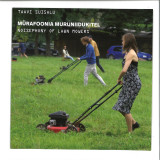
Taavi Suisalu is an Estonian media artist particularly interested into complex and adventurous sounds, field recordings and harsh audio emergencies, organized under the form of symphony or as a result of performative interactions.
In 2014 Suisalu received the Young Estonian Artist Prize as curator of Project of In-existent Villages, an articulate exhibition full of installations and site-specific sound performances. The use of peripheral spaces and the crossovers, sometimes extremely creative, of human interactions, data, sounds and technologies, are recurring in the works of Suisalu, whose subjective perspective unconventionally investigates different social and cultural phenomena. He is always attracted by the different forms of technologies. It can be an old seismograph he reconstructs to record the underground vibrations of a volcano, or, it can be some 3D models he uses to analyze a grain of soil coming from the ancient Pompei. The results of the researches would lead to the installations. The whole set of data is often the premise of a narration, a datafiction, as in the case of the signals recorded from some abandoned satellites, who are later presented with a speed set by the position of other satellites gravitating above the gallery hosting the event.
“Noisephony of Lawn Mowers" was originally composed in 2013, but it was unreleased until now, when Staalplaat, a fundamental label for its unusual experimental connections and for the sound events performed in unconventional spaces, decided to publish it. It's a score for lawnmowers, whose making is given to a conductor and executed by a group of artists. Suisalu reminds us that historically, lawn has been a symbol of power and wealth as it required substantial upkeep and unused land. Today, it still indicates wealth, but is mainly maintained by the owners themselves. This puts us in a schizophrenic situation where we strive to be privileged by taking the role of the servants.
“Silver Meets Ted” is the other track included in the selection. It's a recording of over ten minutes, whose trend cryptically moves on and with some unsettling minimal tolls, always more metallic. Some deaf beats follow, and then we have a splash of water and some slightly hinted neighs, chirps, different spills of liquid, more intense and measured, clackings and vibrations, some hardly identifiable frequencies and again a series of punctuated metal bells. The work by Taavi Suisalu stands out as a calibrated combination of mathematical coherence and elements of surprise, automatized and causal processes, some small oblique utopias, that work well together by improving highly subjective resources and create some slightly unsettling final results.
out of Stock
Last delivered 3 years ago available to reorder, subject to availability
Bekannt wurde Jones, der für "seinen rauen, kraftstrotzenden Bariton" (dpa) bekannt ist, als einer der Sänger und Haupt-Songwriter von Durand Jones & The Indications. Sein Solo-Debüt führt Jones nun von dieser hochgradig kollaborativen Band an einen Ort, der weitaus verletzlicher und einzigartiger ist, und bestätigt seinen Platz an der Spitze als modernen Vorreiter der Southern Black Music. Die elf Songs vereinen sich zu einer trotzigen Verkörperung von Jones' ganzem Selbst: Persönlich sowie kulturell, Vergangenheit, Gegenwart und Zukunft vereint. Auf der Grundlage von Rock, Folk, Kirchenmusik und R&B erkundet "Wait Til I Get Over" den eigenen Wert und den Glauben durch Liebe, Sehnsucht, Gedichte und Gebete - basierend auf dem Sound Durands eigener Heimat im ländlichen Schwarzen Süden Nordamerikas. Ein Großteil von "Wait Til I Get Over" basiert auf Jones' Beziehung zu seiner Heimatstadt Hillaryville, Louisiana, einer Stadt, die als eine Form der Wiedergutmachung für zuvor versklavte schwarze Amerikaner gegründet wurde. Die Stadt sowie Jones' Reflexionen sind ein Gewirr von Widersprüchen: Die unberührte Schönheit und die zerlumpten Straßen; sein jugendlicher Wunsch, wegzugehen, und sein erwachsener Wunsch, seine Wurzeln zu ehren; die Geschichte der Plantagen und das Auf und Ab der schwarzen Gemeinde, die Hillaryville erst zum Blühen brachte und dann unter ihrer langsamen, systematischen Verwüstung litt. "Lord Have Mercy" die rohe und ungestüme erste Single des Albums, erinnert an den charakteristischen Muscle Shoals-Sounds, der Elemente aus Gospelmusik, Blues, Soul, Rock und Country verbindet. Mitten im Herzen des Südens, wo R&B und Rock'n'Roll aufeinanderprallten.
We at Real Gone Music
were so knocked out by The
Skipper and The Skipper
at Home, the two Black
Jazz-label releases we put
out from Henry Franklin,
that we hunted down the
rights to his next record,
Tribal Dance, recorded in
1977 for the little-known
Catalyst label. You will find
many of the same players
that made Franklin’s two Black Jazz albums so intense
and enjoyable, including saxophonist Charles Owens,
trombonist Al Hall, Jr., and guitarist Kenneth Climax,
along with West Coast jazz stalwarts like percussionist
Sonship and pianist Dwight Dickerson. As the title
indicates, Tribal Dance leans a little more spiritual, but
without losing the pulsing drive of its predecessors
(and how could it, with The Skipper
at the helm on bass!). Never before
reissued on vinyl, with original
gatefold artwork intact…and pressed
at Gotta Groove Records where we
made the Black Jazz records!
Drop a needle on Psyché's debut double-sider – the debut album is out on May 19th – and you'll see visions, or rather Mediterranean visions, be they of waves of heat shimmering above dunes of sand, or of women dancing around a bonfire on a rocky plain, or of bushy cliffs overlooking emerald-green and turquoise sea. The name Psyché is of course ancient Greek for 'soul' or 'mind',signifying the band's love of psychedelic funk, but also the wide range of Mediterranean influences – from Southern Europe to the Balkan Peninsula, and from Anatolia to the Maghreb – that provide an endless source of inspiration for their hypnotic sound and minimalist style.
Psyché members Marcello Giannini (Guru, Nu Genea, Slivovitz), Andrea De Fazio (Parbleu, Nu Genea, Funkin Machine) and Paolo Petrella (Nu Genea) have been active in the Naples music scene for almost two decades, most notably during the first wave of the new Neapolitan Power movement (Slivovitz, Revenaz Quartet). Over the years they have often crossed paths and collaborated on side projects in various genres (math-rock duo Arduo and, more recently, Italo-disco duo Fratelli Malibu), before working together as the rhythm section of Nu Genea's live band. Following their first tour with Nu Genea in 2018, they started Psyché with the intent of exploring more minimalist styles and making musicwith just a few elements.
A unique combination of psychedelia, groove and improvisation, the music of Psyché goes back to the roots of our future; it evokes visions of a mythical past, blending centuries-old music traditions and mixing them with modern genres. Like a warm Mediterranean breeze, it travels across lands, seas and eras, distilling essential rhythms and cosmic pulsations.
"Cumbia Mahàre", on side A of the 7-inch, dives deep into the origins of rhythm, drawing us into the movements of an imaginary ritual dance (the term mahàre was used in Southern Italian dialects to indicate witches). Through the interplay between minimal synths and exhilarating rhythmic patterns of drums, percussion, guitar and bass, Psyché take a fresh and bold approach to contemporary afrobeat and cumbia fusion.
"Ophis", on side B, is a mesmeric blend of African, Balkan and Turkish rhythms and sounds. Ethereal vocalizations and warm, hypnotic bass lines combine with psychedelic riffs and haunting melodies on guitar to evoke ancient cultures whose spiritslithers like a snake across the dunes of a sun-scorched desert.
out of Stock
Last delivered 3 years ago available to reorder, subject to availability
Deluxe Eco Vinyl LP with 16 page lyric booklet! London slowcore band deathcrash have announced their new album Less, due March 31st via untitled (recs). Recorded at the UK's most remote studio in the Outer Hebrides, Less follows their critically acclaimed 2022 album, Return with a statement in reduction that turns out to be as powerful and potent as it is tender and introspective. "The mission statement was to be super minimal," says deathcrash singer Tiernan Banks. "Just simple and beautiful guitar parts and to be really bare. To be...less." Swiftly following Return, the band initially had no plans to make a full length. "The last thing we felt like doing was making another album," says bassist Patrick Fitzgerald. "It was like, 'let's do this little EP that's aesthetically quite different and pared down'." Less was always planned to be a statement in reduction but it soon became apparent that the songs the band were writing were significant, personal and, despite the intentions to strip things back, bigger. "As time went on, we started putting much more emotional weight into it and it became more important to us," says Banks. The result is a record that is as powerful and potent as it is tender and introspective, with arrangements that manage to feel refined yet detailed and with a deep emotional resonance at the core of the record. Banks' voice shifts from hushed whispers to guttural screams, one minute tapping into the kind of fragile beauty that artists like Elliott Smith managed so well, on tracks such as 'Duffy's' before unleashing a doom metal growl in thundering unison with the band on 'Empty Heavy'. The record has confirmed early press support from a number of UK publications, including a 4-page print feature in Loud & Quiet, a feature in Line of Best Fit, and early indications of support from Stereogum and a number of other U.S. publications too. A radio campaign will also be run for the second single 'Duffy's' and we expect support from BBC 6 Music, Apple Music and other tastemaker stations
T was released on the New York-based he second live album by the funk band Kool and the Gang, Live at P.J.’s,
De-Lite label in 1971. As the title indicates,
the LP was recorded at P.J.’s, which was a
popular nightclub and music venue in West
Hollywood, California. Kool & the Gang would
score a bunch of hits in the ‘80s, but that period
was nowhere near as funky and full of groove
and jazz flourishes as their earlier recordings.
That soul-jazz hybrid that they excelled in
playing can be found on this amazing club
performance. The band is predictably on fire
throughout the set, tearing through some hot
instrumentals, along with some nice vocals
on the medley of “Ike’s Mood” and “You’ve
Got That Lovin’ Feelin’.” The song “N.T.”
(No Title) contains a widely sampled drum
break which has been used in songs by
such artists as Nas, Q-Tip, N.W.A., Public
Enemy and Blue Boy
It's hard not to see the hype around BRUIT= as the next big thing in post-rock. While their 2018 EP Monolith provided a promising indication of their son- ic ambition, it was their debut LP The Machine is Burning and Now Everyone Knows It Could Happen Again which really set off the trig- ger. Receiving rave reviews around the globe and selling out the first vinyl pressing of 3.000 copies within less than a year, BRUIT= have no need to prove themselves beyond what they have already achieved so far. Consisting of three musical meditations, Apologie du Temps Perdu Eng. apology for time wasted sees BRUIT= cut down on their massive sound in favour of a more subtle contem- plation. In contrast with their recent streaming single «Parasite (The Boycott Manifesto)» with its direct message for Spotify CEO Daniel Ek and his listeners, the band have seemingly forgone their activist agenda paring back the grand thematic gestures and poignant spoken-word excerpts. Instead, BRUIT= let the music do the talking, reaching an activism which is more visceral, but all the more personal. "This ambient EP is conceived as a comma between our first album and the next one," explains bass player & violinist Cle'ment Libes about the purpose of this record. "It is an invitation to lose time, a parenthesis in the frantic race of our society." Existing somewhere between the grand genius of soundtrack composers like Hans Zim- mer and Ramin Djawadi, and the experimental prowess of fringe pop artists like Radio- head and Darkside, Apologie du Temps Perdu reveals the hidden power of film scores. We all know that moment in which we cease to be conscious of the musical accompani- ment and we become truly absorbed in the story. The music becomes part of scenery, and in this moment we lose track of time. Talking of his own work Ramin Djawadi (Game of Thrones, Westworld) notes: "If you were to turn the picture off, there is a story there and a connection to the characters and the plots." In the same way, through the sweeping strings of «La Sagesse de Nos Ai"eux», the ethereal tape loops of «Re^veur Lucide» and the undu- lating synths of «Les Temps Perdus», worlds are created to get lost in, and we experience the full power of music with our eyes and ears open. RIYL Hans Zimmer, Nils Frahm, Godspeed You! Black Emperor, Balmorhea, Max Richter, Olafur Arnalds, A Silver Mount Zion, Boards Of Canada
This is the first release from the lost, re-discovered, re-mastered tracks which were originally recorded some 20 years ago. Originally used as a vehicle for Gary "The General" to play unreleased tracks at the now infamous and legendary Manga club night in Edinburgh.
out of Stock
Last delivered 11 months ago available to reorder, subject to availability
“This music is staggeringly original and innovative, and while it’s possible to locate it in a chain of circumstance that links it to ‘Industrial’ music, P16.D4 indulged in none of the empty cliches associated with the genre, worked incredibly hard, and seem to have been aiming at a form of sound art that was much more profound, varied, subversive, and potentially dangerous. Kuhe In 1/2 Trauer’s accompanying credits indicate their radical approach to making music: lots of improvisation, lots of live electronics, extensive use of tape-loops, some conventional instrumentation, and much that isn’t – like the milk churn on ‘Paris, Morgue’ or the use of baking tray and washing machine elsewhere. Even when guitars, drums or keyboards are used, they’re played very weirdly. It’s not even made clear who was doing what; the main credit is ‘Concept,’ which I assume means that one of the three devised the framework in which the noise would operate itself, and while RLW gets the lion’s share of these credits, a lot of the cuts are evenly divided among the team and I have no doubt that the group operated in a very democratic or libertarian manner. None of this prepares you for the insane and troubling sounds that reach your ears, composed with scant regard for conventional logic and following an exciting, absurdist path, especially in the matter of tape edits and juxtapositions of recordings.” - Ed Pinsent, The Sound Projector.
“Though this German group started out as a the new wave band P.D., by the time of Kuhe in 1/2 Trauer, their first LP under the P16.D4 name from 1984, they had developed far beyond into extremely experimental music similar to other post-industrial artists working with abstract avant-garde soundscapes. There’s a bleak industrial feel to the gritty, lo-fi electronics and tape loops, while the group throws in enough curve balls to keep it interesting. On some pieces, strange, looped choirs bubble out of throbbing pulses and drones of feedback, while others have clanging and clattering, and elements of musique concrète and improvisation blur the boundaries even further. The opening track, “Default Value,” is one of those disorienting pieces with noises flying everywhere, while “Paris Morgue” takes excerpts from one of their old P.D. tracks and messes it up with additional instruments, while the ungainly titled fourth track throws in a heavy texture of percussive noises to create an edgy ambience about to teeter off the edge, and the even darker and more ambient title track takes the tension even further. Arrhythmic and amorphous and capable at moments of becoming quite noisy and abrasive, while at others far more somber and quiet, Kuhe in 1/2 Trauer is quite a fascinating release.” - Rolf Semprebon / AMG
P16.D4 was a German electronic noise music collective, active primarily from 1980 to 1988. P16.D4 embraced tape cut-ups, musique concrète, endless recycling and transformation of previously published material, and many long-distance collaborations with like-minded artists such as DDAA, Vortex Campaign, Nurse With Wound, and Merzbow. Their active participation in the international industrial tape scene yielded collaborative output such as their release Distruct, where bands such as Nurse with Wound, Nocturnal Emissions, Die Tödliche Doris, and The Haters provided the source material. The longest-term collaboration was with the installation and conceptual artist Achim Wollscheid, who used P16.D4 sounds as the basis for LPs he recorded under the name SBOTHI. Ralf Wehowsky, the only constant member of the group, later released solo material under the alias RLW.
Members of P16.D4 were also involved with Selektion, a collective of people involved with sound as well as the visual arts. Selektion published LPs, CDs, books, visual art and design.
The collective worked in a strongly improvised, spontaneous and anti-professional way, using acoustic and electronic instruments, using existing sound fragments, duplicating and alienating them, using repetition, distortion, changes in speed and playing direction. For this they used not only sounds of other artists but also their own material from earlier productions. Late works of the collective are associated with musique concrete.
Our next foray into the world of 12” vinyl sees three classic cuts from Tyrome - aka Kris Vanderheyden and Pascal Deneef, remastered for today’s standard and pressed onto glorious wax for that nostalgic feel. Tyrome formed in 1996 and quickly gained a following with their brand of electronic dance music. Their first outings appeared on the famous Bonzai Trance Progressive label where they’d deliver these three top-notch joints before appearing on other labels. Kris is a Belgian techno and electronic music producer who is considered one of the leading pioneers of the Belgian techno scene. He is also known by his stage name Insider, as well as The Assistant and he belonged to a host of groups including Quick Reverse, Cherry Moon Trax and Tripomatic Allstars to name just a few and he contributed heavily to the Bonzai sound of the 90’s. Pascal is also a name synonymous with the 90’s techno sound in Belgium. He worked closely with Kris on several projects including Indicator, Technodrive, Total Remedy and Quick Reverse. His repertoire also includes the monikers Big Jim and Emoryt (Tyrome spelt backwards) and has appeared on a raft of labels over the years.
On the A-side we get a taste of Tyrome’s most famous groove, the 1998 joint ‘Electric Voodoo’, with its instantly recognisable vocal sample. A highly charged and energetic slice of trance with a nice techno edge that always gets the crowd moving. On the flip, the B1 slot holds the much deeper grooves of ‘Noxious’ which saw the light of day in 1996. Dark and mysterious, the beat mesmerizes as a melodic siren fades up to the backdrop of erotic voices. A definite contender at any late-night session to keep the party flowing. Concluding the release in the B2 slot, the 1997 cut ‘Monkey Way’ has the honours. A feisty number with a driving groove thanks to a powerful bassline and rhythmic percussions. The track is laden with stabbing synths and pent-up energy just waiting to be unleashed onto the floors.
out of Stock
Last delivered 3 years ago available to reorder, subject to availability
Limited edition colored pressing is for Indies Only. Vinyl housed in a tip-on jacket. For Fans Of... John Carol Kirby, Pharoah Sanders, Bill Evans, Durand Jones & The Indications, Misha Panfilov. Debut LP from Okonski. Features current and former members of Durand Jones & the Indications (Steve Okonski, Aaron Frazer, and Michael Montgomery). Follows the debut single 'By The Lake', a collaboration with Germanbased artist and new Karma Chief signee Pale Jay (500k Monthly listeners). The studio at 122 West Loveland Avenue was not an unfamiliar space for Steve Okonski, the leader of his eponymous trio Okonski. Ever since the Colemine label set up shop in Loveland, Ohio it has been a host to a number of groups passing through town, including Durand Jones and the Indications who all of this trio’s members have connections to. After setting aside some time in winter of 2020, Okonski, trained initially as a classical pianist, invited Michael Isvara “Ish” Montgomery and Aaron Frazer to work on an album that was initially planned to be beat driven and fully composed trio instrumentals. After finishing this first session with some improvisations, a second week was booked in the summer of 2021 to try and capture some more of that spontaneous energy. During this session, the tracks were all improvised and recorded live to a Tascam 388 during several late nights at the Colemine HQ. They were structured to allow the group’s collective intuition to fully shape the melodies and arcs of the music. The album opens with Runner Up, where a triumphant yet melancholic melody in the piano leads to a more reserved B-section driven by the drums and bass of Frazer and Montgomery. As you journey through the remainder of the album you are met with a plethora of evoked and explored emotions. The calmness one has walking down a moonlit street after midnight, the connection one has for a person who comes into their world for just a moment or a lifetime, and the nerves and catharsis one feels when starting upon a new, unknown journey. Magnolia closes with Sunday, a track that was recorded late into the night at the close of their first recording session. Without the spontaneity of Sunday, the remainder of Magnolia would likely have never come to fruition. Magnolia was composed from the heart and from the spirit of those in the studio those late nights in Loveland. It is the culmination of an emotional and artistic release that was not afforded or recognized before the band sat at their instruments, and because of that it is introspective, meditative, spiritual, and new.
Hailu Mergia & Dahlak Band's Wede Harer Guzo is the third release on Awesome Tapes From Africa for Ethiopian keyboard and accordion maestro. In the years since Shemonmuanaye, Mergia has revamped his touring career, playing festivals and clubs worldwide, including a recent tour supporting Beirut. By 1978, Addis Ababa's nightlife was facing challenges. The ruling Derg regime imposed curfews, banning citizens from the streets after midnight until 6:00 am. But that didn't stop some people from dancing and partying through the night. Bands would play from evening until daybreak and people would stay at the clubs until curfew was lifted in the morning. One key denizen of Addis' musical golden age, Hailu Mergia, was preparing a follow-up to his seminal Tche Belew LP with the famed Walias Band. It was the band's only full-length record and it had been a success. But his Hilton house band colleagues were a bit tied up recording cassettes with different vocalists. Still Mergia, amidst recording and gigs with the Walias, was also eager to make another recording of his instrumental-focused arrangements. So he went to the nearby Ghion Hotel, another upmarket outpost with a popular nightclub. Dahlak Band was the house band at Ghion at the time. Together they made this tape Wede Harer Guzo right there in the club during the band's afternoon rehearsal meetings, with sessions lasting three days. Dahlak Band catered to a slightly more youthful, local audience, while Mergia's main gig with the Walias at Addis' swankiest hotel had a mixed audience that included wealthy Ethiopians, foreign diplomats and older folks from abroad. Therefore, their sets featured lighter fare during dinnertime and a less rollicking selection of jazz and r&b. Meanwhile, Dahlak was known more for the mainly soul and Amharic jams they served up for hours two nights a week to a younger crowd. Mergia released Wede Harer Guzo ("Journey to Harer," a city in eastern Ethiopia) with Sheba Music Shop, which was located in the Piazza district but has long since shut down. His cassette copy is the only known source we could find. Jessica Thompson at Coast Mastering managed to restore the recording to clean up layers of hiss, flutter and distorted frequencies, made worse by years of storage. Although there are some remaining sonic artifacts of the era's recording and cassette duplicating quality, this reissue captures the band's inimitable vibe. Recalling the audience's positive reaction to Wede Harer Guzo's novel arrangements, he says it sold well and found many fans. However, as no trace of the tape can be found online, there's no indication as to why the cassette appears largely forgotten until now
out of Stock
Last delivered 3 years ago available to reorder, subject to availability
The studio at 122 West Loveland Avenue was not an unfamiliar space for Steve Okonski, the leader of his eponymous trio Okonski. Ever since the Colemine label set up shop in Loveland, Ohio it has been a host to a number of groups passing through town, including Durand Jones and the Indications who all of this trio's members have connections to. After setting aside some time in winter of 2020, Okonski, trained initially as a classical pianist, invited Michael Isvara "Ish" Montgomery and Aaron Frazer to work on an album that was initially planned to be beat driven and fully composed trio instrumentals. After finishing this first session with some improvisations, a second week was booked in the summer of 2021 to try and capture some more of that spontaneous energy. During this session, the tracks were all improvised and recorded live to a Tascam 388 during several late nights at the Colemine HQ. They were structured to allow the group's collective intuition to fully shape the melodies and arcs of the music. The album opens with Runner Up, where a triumphant yet melancholic melody in the piano leads to a more reserved B-section driven by the drums and bass of Frazer and Montgomery. As you journey through the remainder of the album you are met with a plethora of evoked and explored emotions. The calmness one has walking down a moonlit street after midnight, the connection one has for a person who comes into their world for just a moment or a lifetime, and the nerves and catharsis one feels when starting upon a new, unknown journey. Magnolia closes with Sunday, a track that was recorded late into the night at the close of their first recording session. Without the spontaneity of Sunday, the remainder of Magnolia would likely have never come to fruition. Magnolia was composed from the heart and from the spirit of those in the studio those late nights in Loveland. It is the culmination of an emotional and artistic release that was not afforded or recognized before the band sat at their instruments, and because of that it is introspective, meditative, spiritual, and new.
Should 'The Great Encyclopaedia of Musical Genres' be at a loss for a word to describe the music of Ghent-based Ramkot, they wouldn't have to look far. 'Ramrock'; done. It's how the solidly carefree rocking Ghent triumvirate themselves describe the music with which they have been selling clubs, concert halls and festivals spicy maws since 2018. With two EPs to their credit, 'Ramkot' (2019) and 'What Exactly Are You Looking For' (2021), and a giglist that you can only be in awe of, the laureates of De Nieuwe Lichting 2021 thought it was high time to stamp their awe-inspiring sound on a first album.
Le nouveau Ramkot est arrivé: with 'In Between Borderlines', Ramkot delivers a debut full of particularly solid, yet danceable, 'ram rock' and bangs its way through the wall of sound to a - no doubt - very exciting future.
'In Between Borderlines' is the apotheosis of two years of rock hard work. Idea. Elaborating. Polishing. And there's the diamond. Ramkot is not the band to sit still and wait for the time to put their music on tape. The time is always ripe.
For 'In Between Borderlines', Ramkot dove into the studio for a year - at different times - where they canned eight songs, all with the familiar Ramkot signature: hard and cutting, melodic and danceable and now and then gleefully deviating from the usual path.
The two advance singles 'Exactly What You Wanted' and 'I Can't Slow Down' already beautifully indicated the tenor of 'In Between Borderlines': the back straight and firmly in line, ready to continue on the successful and - above all - very eager momentum. And did the music hit its mark? Absolutely. Studio Brussels, Willy and KINK were immediately on board. With a spot in De Afrekening, Catch Of The Day (Studio Brussel) and Daily Drop (KINK) as a result.
It is sometimes said that three is a magic number. It is. A three-piece band reduces music to its essence and cuts harder live than a Japanese chef's knife. Whereas during the recording process Ramkot was tempted to also get to work with synths, live they invariably opt for the more pared-down versions of their songs that - just like on the album - grab the audience by the neck and show them every corner of the room. And it is this playing live that has certainly not hurt the band in recent years. On the contrary, it made Ramkot more natural, tightened the reins and gave the band an even more distinctive look. 'In Between Borderlines' is brimming with the pleasure of playing, the desire and eagerness to go flat out until 'everything is broken'.
Ramkot never gets stuck. On 'In Between Borderlines' this manifests itself in multi-layered songs with tentacles in solid riffs, occasionally borrowing from other genres. Does a song have a ragtime feel to it? Or is there a hint of 'despacito'? The band is not afraid to blend some exotic influences with abrasive guitars and sulky drums. Extra flavour makes the dish more interesting. And as for 'In Between Borderlines', the starter, main course and dessert are immediately on the table. It may be finished in one sitting.
Should 'The Great Encyclopaedia of Musical Genres' be at a loss for a word to describe the music of Ghent-based Ramkot, they wouldn't have to look far. 'Ramrock'; done. It's how the solidly carefree rocking Ghent triumvirate themselves describe the music with which they have been selling clubs, concert halls and festivals spicy maws since 2018. With two EPs to their credit, 'Ramkot' (2019) and 'What Exactly Are You Looking For' (2021), and a giglist that you can only be in awe of, the laureates of De Nieuwe Lichting 2021 thought it was high time to stamp their awe-inspiring sound on a first album.
Le nouveau Ramkot est arrivé: with 'In Between Borderlines', Ramkot delivers a debut full of particularly solid, yet danceable, 'ram rock' and bangs its way through the wall of sound to a - no doubt - very exciting future.
'In Between Borderlines' is the apotheosis of two years of rock hard work. Idea. Elaborating. Polishing. And there's the diamond. Ramkot is not the band to sit still and wait for the time to put their music on tape. The time is always ripe.
For 'In Between Borderlines', Ramkot dove into the studio for a year - at different times - where they canned eight songs, all with the familiar Ramkot signature: hard and cutting, melodic and danceable and now and then gleefully deviating from the usual path.
The two advance singles 'Exactly What You Wanted' and 'I Can't Slow Down' already beautifully indicated the tenor of 'In Between Borderlines': the back straight and firmly in line, ready to continue on the successful and - above all - very eager momentum. And did the music hit its mark? Absolutely. Studio Brussels, Willy and KINK were immediately on board. With a spot in De Afrekening, Catch Of The Day (Studio Brussel) and Daily Drop (KINK) as a result.
It is sometimes said that three is a magic number. It is. A three-piece band reduces music to its essence and cuts harder live than a Japanese chef's knife. Whereas during the recording process Ramkot was tempted to also get to work with synths, live they invariably opt for the more pared-down versions of their songs that - just like on the album - grab the audience by the neck and show them every corner of the room. And it is this playing live that has certainly not hurt the band in recent years. On the contrary, it made Ramkot more natural, tightened the reins and gave the band an even more distinctive look. 'In Between Borderlines' is brimming with the pleasure of playing, the desire and eagerness to go flat out until 'everything is broken'.
Ramkot never gets stuck. On 'In Between Borderlines' this manifests itself in multi-layered songs with tentacles in solid riffs, occasionally borrowing from other genres. Does a song have a ragtime feel to it? Or is there a hint of 'despacito'? The band is not afraid to blend some exotic influences with abrasive guitars and sulky drums. Extra flavour makes the dish more interesting. And as for 'In Between Borderlines', the starter, main course and dessert are immediately on the table. It may be finished in one sitting.
Should 'The Great Encyclopaedia of Musical Genres' be at a loss for a word to describe the music of Ghent-based Ramkot, they wouldn't have to look far. 'Ramrock'; done. It's how the solidly carefree rocking Ghent triumvirate themselves describe the music with which they have been selling clubs, concert halls and festivals spicy maws since 2018. With two EPs to their credit, 'Ramkot' (2019) and 'What Exactly Are You Looking For' (2021), and a giglist that you can only be in awe of, the laureates of De Nieuwe Lichting 2021 thought it was high time to stamp their awe-inspiring sound on a first album.
Le nouveau Ramkot est arrivé: with 'In Between Borderlines', Ramkot delivers a debut full of particularly solid, yet danceable, 'ram rock' and bangs its way through the wall of sound to a - no doubt - very exciting future.
'In Between Borderlines' is the apotheosis of two years of rock hard work. Idea. Elaborating. Polishing. And there's the diamond. Ramkot is not the band to sit still and wait for the time to put their music on tape. The time is always ripe.
For 'In Between Borderlines', Ramkot dove into the studio for a year - at different times - where they canned eight songs, all with the familiar Ramkot signature: hard and cutting, melodic and danceable and now and then gleefully deviating from the usual path.
The two advance singles 'Exactly What You Wanted' and 'I Can't Slow Down' already beautifully indicated the tenor of 'In Between Borderlines': the back straight and firmly in line, ready to continue on the successful and - above all - very eager momentum. And did the music hit its mark? Absolutely. Studio Brussels, Willy and KINK were immediately on board. With a spot in De Afrekening, Catch Of The Day (Studio Brussel) and Daily Drop (KINK) as a result.
It is sometimes said that three is a magic number. It is. A three-piece band reduces music to its essence and cuts harder live than a Japanese chef's knife. Whereas during the recording process Ramkot was tempted to also get to work with synths, live they invariably opt for the more pared-down versions of their songs that - just like on the album - grab the audience by the neck and show them every corner of the room. And it is this playing live that has certainly not hurt the band in recent years. On the contrary, it made Ramkot more natural, tightened the reins and gave the band an even more distinctive look. 'In Between Borderlines' is brimming with the pleasure of playing, the desire and eagerness to go flat out until 'everything is broken'.
Ramkot never gets stuck. On 'In Between Borderlines' this manifests itself in multi-layered songs with tentacles in solid riffs, occasionally borrowing from other genres. Does a song have a ragtime feel to it? Or is there a hint of 'despacito'? The band is not afraid to blend some exotic influences with abrasive guitars and sulky drums. Extra flavour makes the dish more interesting. And as for 'In Between Borderlines', the starter, main course and dessert are immediately on the table. It may be finished in one sitting.
Projected into unexplored places, where time has vanished its power,
space has broken the limits, allowing infinite areas, uniform, soft surfaces, incomprehensible voices seem to suggest solutions to permanent reflections, flashes of light indicate a path, rhythmic structures trace the way, hypnotic percussions stimulate the matter, protected by incessant silences.
out of Stock
Last delivered 2 years ago available to reorder, subject to availability
Features:
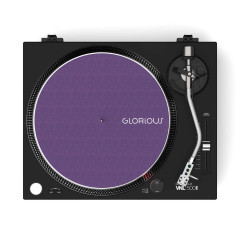
•Quartz-driven turntable with direct drive
•Perfect playback device for your home and for DJ or Studio use
•USB audio output making it easy to digitize your vinyl
•Precise motor control with 2 speed options (33 1/3 & 45 RPM)
•Powerful motor drive with 5.5 kg/cm torque
•Anti-resonant, die-cast aluminium platter with stable rotation
•Stroboscopic platter with speed indicator
•Statically balanced S-shaped tone arm with hydraulic lift and anti-skate control
•Universal connection for pick-up systems (SME)
•Built-in phono pre-amplifier (no grounding necessary)
•Switchable phono and line level output
•Shock-absorbing feet for vibration isolation
•Scratch-resistant finish in matt black
•Incl. removable hinged dust cover, platter, OM Black cartridge system (by Ortofon), headshell, slipmat, counterweight, detachable RCA output cable, power cord, operating instruction manual
With its name indicative of the music's boundary-testing diversity and Southwestern inspiration, On the Border finds the Eagles leaving everything on the table and embracing a harder edge that takes the band out of more relaxed territory and establishes it as a group that knows how – and wants – to rock. Glenn Frey, Don Henley, new member Don Felder, and company immediately announce their intent on the defiant album-opening hit "Already Gone" and never look back, crafting a gem of a record that from start to finish is arguably their most consistent and balanced effort.
Limited to 10,000 numbered copies, pressed on dead-quiet MoFi SuperVinyl at RTI, and mastered from the original analogue master tapes, Mobile Fidelity's ultra-hi-fi UltraDisc One-Step 180g 45RPM 2LP collector's edition pays tribute to the record's significance and enhances the experience for generations to come. Playing with reference sonics that elevate an effort revered by audiophiles, it provides a lively, dynamic, transparent, and intimate view of a release whose contemporary importance continues to grow. The opportunity to zero in on the particulars of the Eagles' golden harmonies, distinct vocal timbres, and cohesive interplay has never been better.
Visually, the premium packaging and gorgeous presentation of the UD1S On the Border pressing befit its select status. Housed in a deluxe box, it features special foil-stamped jackets and faithful-to-the-original graphics that illuminate the splendor of the recording. No expense has been spared. From every angle, this UD1S reissue exists as a curatorial artefact meant to be preserved, touched, and examined. It is made for discerning listeners that prize sound quality and production, and who desire to fully immerse themselves in the art – and everything involved with the album, from the iconic Navajo cover painting to the meticulous finishes.
And with On the Border, there's plenty to take in and soak up. Declared by famed critic Robert Christgau as "the Eagles' best album," the 1974 set claims a rich backstory. Initially recorded amid tumultuous sessions with producer Glyn Johns in London shortly after the release of the group's sophomore Desperado set, On the Border took a new turn after the band elected to scrap most of the prior work, return to its native California, and team with producer Bill Szymczyk to give the material less of a smooth, polished sheen and more toughness. Szymczyk also afforded the Eagles more input and freedom in the arrangements, and suggested adding another guitarist to play on "Good Day in Hell." Felder got the call, and so won over the Eagles with his skills, he quickly became the fifth member of the band.
While the late-arriving Felder only plays on one other album cut, "Already Gone," his mates more than prove their muster on the remainder of a double-platinum affair that established the Eagles as a force whose range transcended the calmer country-leaning style it perfected on their first two LPs. Primarily written by Jackson Browne and shelved during the Desperado sessions due to its higher-energy nature, the throttle-twisting "James Dean" ricochets with barbed riffs and rebellious swagger. Listen without limits to how Szymczyk's raw production stamps the song with a leather-and-jeans cool befitting its protagonist. Similarly rugged, the slide-guitar-fueled "Good Day in Hell" boasts its own mean streak. And the funk-laced, boot-stomping title track cautions "don't you tell me 'bout your law and order." Throughout On the Border, the Eagles are in no mood to mess around.
Not that the band skirts sentimental territory. On one of the era's finest covers, the Eagles nail the bittersweet feelings and bring high-definition detail to the vivid scenery of Tom Waits' "Ol' '55," a song the group makes its own. The rustic ballad "My Man" serves as a tribute to the recently deceased Gram Parsons, with singer-guitarist Bernie Leadon taking the lead on the microphone as he pours his heart out to his former Flying Burrito Brothers mate. And when it comes to romance, is it possible to top "Best of My Love"? Graced with Henley's honey-dipped vocals, refined wordless group harmonies, brushed drums, and the gentle strum of acoustic guitars, the Johns-produced cut soared to Number One and set the stage for what would soon be the Eagles' reality: global dominance.
More About Mobile Fidelity UltraDisc One-Step and Why It Is Superior
Instead of utilizing the industry-standard three-step lacquer process, Mobile Fidelity Sound Lab's new UltraDisc One-Step (UD1S) uses only one step, bypassing two processes of generational loss. While three-step processing is designed for optimum yield and efficiency, UD1S is created for the ultimate in sound quality. Just as Mobile Fidelity pioneered the UHQR (Ultra High-Quality Record) with JVC in the 1980s, UD1S again represents another state-of-the-art advance in the record-manufacturing process. MFSL engineers begin with the original master recordings, painstakingly transfer them to DSD 256, and meticulously cut a set of lacquers. These lacquers are used to create a very fragile, pristine UD1S stamper called a "convert." Delicate "converts" are then formed into the actual record stampers, producing a final product that literally and figuratively brings you closer to the music. By skipping the additional steps of pulling another positive and an additional negative, as done in the three-step process used in standard pressings, UD1S produces a final LP with the lowest noise floor possible today. The removal of the additional two steps of generational loss in the plating process reveals tremendous amounts of extra musical detail and dynamics, which are otherwise lost due to the standard copying process. The exclusive nature of these very limited pressings guarantees that every UD1S pressing serves as an immaculate replica of the lacquer sourced directly from the original master recording. Every conceivable aspect of vinyl production is optimized to produce the most perfect record album available today.
‘Albino Sound concocts textual delights in shades of metal on his forthcoming EP for Turnend Tapes.
The ‘Metallurgy’ EP forthcoming on Turnend Tapes sees Japanese artist Hirotaka Umetani transmit four club orientated tracks through a UK bass lens, delineating from past musical excursions and so marking a turning point of his works.
Indicative of this shift is the vast and varied sources of inspiration Hirotaka has tapped into in creating ‘Metallurgy’. Translating visual into sound through Hirotaka’s own experience, bare witness to granular detail made macro through swathes of sound design kinetically akin to the flurry of mineral-rich hot water springs, seething in chemical harmony.
Entwining impressions of the past with forecasts of the future Hirotaka deftly connects the dots between the sounds stemming from the alchemy of metal and it’s interplay with the natural environment as we proceed ever closer to organic-synthetic assimilation.’
out of Stock
Last delivered 3 years ago available to reorder, subject to availability
Tape
Hailu Mergia & Dahlak Band's Wede Harer Guzo is the third release on Awesome Tapes From Africa for Ethiopian keyboard and accordion maestro. In the years since Shemonmuanaye, Mergia has revamped his touring career, playing festivals and clubs worldwide, including a recent tour supporting Beirut. By 1978, Addis Ababa's nightlife was facing challenges. The ruling Derg regime imposed curfews, banning citizens from the streets after midnight until 6:00 am. But that didn't stop some people from dancing and partying through the night. Bands would play from evening until daybreak and people would stay at the clubs until curfew was lifted in the morning. One key denizen of Addis' musical golden age, Hailu Mergia, was preparing a follow-up to his seminal Tche Belew LP with the famed Walias Band. It was the band's only full-length record and it had been a success. But his Hilton house band colleagues were a bit tied up recording cassettes with different vocalists. Still Mergia, amidst recording and gigs with the Walias, was also eager to make another recording of his instrumental-focused arrangements. So he went to the nearby Ghion Hotel, another upmarket outpost with a popular nightclub. Dahlak Band was the house band at Ghion at the time. Together they made this tape Wede Harer Guzo right there in the club during the band's afternoon rehearsal meetings, with sessions lasting three days. Dahlak Band catered to a slightly more youthful, local audience, while Mergia's main gig with the Walias at Addis' swankiest hotel had a mixed audience that included wealthy Ethiopians, foreign diplomats and older folks from abroad. Therefore, their sets featured lighter fare during dinnertime and a less rollicking selection of jazz and r&b. Meanwhile, Dahlak was known more for the mainly soul and Amharic jams they served up for hours two nights a week to a younger crowd. Mergia released Wede Harer Guzo ("Journey to Harer," a city in eastern Ethiopia) with Sheba Music Shop, which was located in the Piazza district but has long since shut down. His cassette copy is the only known source we could find. Jessica Thompson at Coast Mastering managed to restore the recording to clean up layers of hiss, flutter and distorted frequencies, made worse by years of storage. Although there are some remaining sonic artifacts of the era's recording and cassette duplicating quality, this reissue captures the band's inimitable vibe. Recalling the audience's positive reaction to Wede Harer Guzo's novel arrangements, he says it sold well and found many fans. However, as no trace of the tape can be found online, there's no indication as to why the cassette appears largely forgotten until now
Debut album by Dutch producer w1b0, who passed away in August, to be released in November on U-TRAX.
Wibo Lammerts' sudden death on August 15thshocked the worldwide electro community, and also left the record label, that had been working on the debut album with the artist known as w1b0 for the past two years, dumbfounded and in grief.
Wibo had jokingly always called his upcoming debut album 'his legacy', which now sadly has become a painful truth. With the support of Wibo's family, U-TRAX is now doing the only thing that doesn't feel totally wrong: proceed as planned, and release 'When Humans Ruled The Earth' on November 11.
W1b0 made quite a name for himself with heavy electro tracks that he released on labels like Bass Agenda, Hilltown Disco and Discos Antónicos. Standing at 202 meters, and combined with a cheerful character, most people remember him as the gentle giant of electro.
For this album, Wibo wanted to steer away from the dark and heavy electro he mostly made until then. The idea of having a platform to create delicate electronic music in different styles, and make it a showcase of his versatility, was very appealing to him. And that is where he and U-TRAX found each other.
The full-length album (over 75 minutes on cd and digital) comes after 'The Pilex Program EP', released in October, that featured a remix by Detroit's Ectomorph of 'Pilex Driver' and saw 'Program Yourself To Feel' remixed by a well-known Dutch producer that recently created the new 'techno alias' Human Form.
As usual with U-TRAX, the album comes in three different editions, with the 11-track double vinyl version containing the Ectomorph and Human Form remixes. The CD and digital version boast original versions only, plus four additional tracks: 'Alternate Reality Interface', 'Mixed Matter Fluctator', 'Synthetic', and 'In There'. The cassette version more or less has the same track list as the CD/digi version, but has both aforementioned remixes and a bonus track in the incredibly hypnotizing 'I Wanted You', a track that unfortunately couldn't be on the CD and vinyl versions.
Buyers of the physical releases get treated on superior quality products, another trademark of U-TRAX. The vinyl edition boasts over one hour of music, on two 180 grams, green vinyl discs, in a black & white & neon green gatefold sleeve. The eye-catching artwork is created by Utrecht artist Leffe Goldstein, known amongst others for his psychedelic beer can designs for Utrecht brewery Maximus. Wibo, being the beer lover he was, had zero doubts about having Leffe Goldstein do the cover for his album. The CD has a total playing time of 75 minutes and comes in a beautiful 6-panel digipack, while the cassette will have full-color on-body print and comes in a plastic-free Maltese cross fold-up sleeve.
Buyers of the physical releases get treated on superior quality products, another trademark of U-TRAX. The vinyl edition boasts over one hour of music, on two 180 grams, green vinyl discs, in a black & white & neon green gatefold sleeve. The eye-catching artwork is created by Utrecht artist Leffe Goldstein, known amongst others for his psychedelic beer can designs for Utrecht brewery Maximus. Wibo, being the beer lover he was, had zero doubts about having Leffe Goldstein do the cover for his album. The CD has a total playing time of 75 minutes and comes in a beautiful 6-panel digipack, while the cassette will have full-color on-body print and comes in a plastic-free Maltese cross fold-up sleeve.
Opener 'Acid Whip' is one of the oldest compositions on this album, in which a dark 303 bassline hums over layers of spacey strings. Wibo named it after the legendary Whip It party in Amsterdam's De Melkweg. 'Alternate Reality Interface' then presents bouncy rhythms toying around with all sorts of analog (bass) synthesizers, before we go really deep with the epic ambient techno track 'Wandering Souls'.
Then things get a little lighter spirited: 'Mixed Matter Fluctator' is an electro track that builds on sounds created by Matt Buggins. It has very strong Detroit influences, the city Wibo loved so much and that he made a pilgrimage to with a group of friends that called themselves 'The Techno Tourists'. The tempo goes up a notch in 'Program Yourself To Feel', that halfway opens up in wide science fiction strings that evoke memories of Star Wars, the movie series that Wibo was a great fan of, and that was the source of many of his tracks' names. The Human Form remix opens the vinyl edition of this album and is a downright belter of a track.
Next is a somewhat experimental intermezzo named 'Synthetic'. Erratic beats and pounding bassdrums get accompanied by very subtle eerie-sounding strings, before melancholic synthesizers and piano chords take over. This is an excellent prelude to the epic 'Hologram Computing', a track that is one of our favorites. It slowly and softly builds and builds, before a pounding bassdrum breaks loose and a hypnotic arpeggio takes you to higher planes.
Not ready to letting the listener relax, w1bo then serves 'Beilstein Reference', which again presents his trademark cocktail of down-to-earth electro rhythms and catchy melodies, covered in all sort of little sounds and noises, giving the song a lot of energy. What follows is 'Hit me', a track loosely based on a song by Dutch indie rock band Mr. Joe Abe. Wibo met the band's singer on a camping site while being on holidays and the two decided Wibo should do a remix of one of their songs. Nothing was left of the original except the vocals, and the result is a remarkable cheerful, poppy electro song.
'Anticipated Input' is one of the more recent tracks Wibo made for this album, combining electro, acid and, yes: epic strings. But not all is peace and quiet on this album, as 'Pilex Driver' shows. This is w1b0 going experimental in a danceable fashion: Industrial sounds make the track sound like we're passing a construction site that is playing loud electro music. On the vinyl version of this album, Ectomorph totally decomposed the original and made it into a mysterious, almost subdued, and totally brilliant electro track that sees a main role for the retro Roland CR drum machines sounds.
TFHats, Wibo's fellow member of the Transhumanism collective, added lyrics to 'Cartesian Coordinates'. His vocals add a pleasant New Wave flavor to this song, that has breaks that remarkably reminds one of Nirvana's 'Smells Like Teen Spirit'. What follows is the most personal track on this album. 'Fornan' is a song that Wibo made for his wife Nanette, and was added as the last piece of the puzzle that creating an album is. The warm Detroit techno atmosphere in this electro song couldn't be a more beautiful tribute to his love, and mother of their two young boys.
The album then takes a surprising detour through a 1980s landscape with 'In There', that features the Joy Division-esque vocals of another one of Wibo's friends, indicated only as Vincent. The super slow and gloomy track is a treat for anyone that loved the darker side of New Wave. The album has a worthy closer in the sensitive, yet playful 'Schlegel Diagram'.
h 08: Hit Me (w1b0's Slugfest Assault Dub) feat. Mr Joe Abe
out of Stock
Last delivered 3 years ago available to reorder, subject to availability
When Durand Jones & The Indications debut album was released they didn't have "buzz". They didn't have a following. They didn't have the measured flash of more polished operations. But as the final mixes spun off of the master reel, Colemine knew what they did have was one remarkable soul record. To everyone's delight, the record was a smash and their no-frills LP continues to fly off the shelves and Colemine released a 45 featuring cuts from the debut album. The politically poignant and fiercely funky "Make A Change" is backed with the lowrider anthem "Is It Any Wonder" featuring drummer Aaron Frazer's silvery falsetto.
out of Stock
Last delivered 3 years ago available to reorder, subject to availability
After a few nice but largely unnoticed 12"s for lower-profile labels, Dürerstuben is ready to make a serious maneuver, and Pampa is pleased to provide them with the proper platform. The Sheets of Rane EP is the Berliner duo's most sophisticated statement yet, imbuing cold programmed sounds with a glowing human touch and a penchant for melody. A1 'Gscheids Planet' unfolds with a deceptive intro, click-clackety downtempo stomps and crunchy snares beneath a tender vocoder coo, just when some muted guitar plucks crescendo into a burst of robo-synths. Although three minutes have passed, only now does the song reveal its true nature, a summery tune with rich synths that billow in the wind. Then, as its title indicates, 'Haeckles Kosmos' further explores Dürerstuben's fascination with the unlimits of outer space. This star system in particular has a very tropical flair, punctuated with bouncy parallel fifths straight out of the Italo Orient. In between movements, the duo makes some brief non sequiturs into piano balladry, the kind that force a smile (and a record deal) out of DJ Koze. Finally, venturing even further into jacking territory, 'Freiherr in der Wall' hinges upon syncopated, sometimes faltering beatbox rhythms, a swaggering bassline and fluttering arpeggiation. Coupled with hand-played chords, this is a prime example of how Dürerstuben can tame the beast machine and let irregularities be strengths. If you can get down with Metro Area, Zapp, Tensnake, and yes, even Survivor, then pick this one up.
out of Stock
Last delivered 2 years ago available to reorder, subject to availability
Pusher returns to his own Indicate at the end of October with the two-track ‘Pianos By Day / Sounds Like Voodoo’ EP. Over the past few years Ireland’s Pusher has been unveiling a series of EPs on his own Indicate imprint, showcasing his own twist on contemporary House while stirring in elements of progressive, trance and electronica throughout. Here Pusher offers up the eighth release on the label and leading the way is ‘Pianos By Day’, as the name would suggest a piano laden, sun-drenched house anthem laid out across six and half minutes with robust, swinging drums, bumpy bass stabs and a sweeping, filtered hook at its core.
‘Sounds Like Voodoo’ follows on the flip side and embraces a more classic tech house feel via gritty bass stabs, intricately intertwined synth sequences, metallic melodies and playful vocal chants running atop an up-tempo organic drum groove throughout.
out of Stock
Last delivered 3 years ago available to reorder, subject to availability
The essential series from the ’80s has been rebuilt, remastered, and carefully portioned onto a five disc set of 7-inch singles, including all the classic vocal bits that became iconic samples, and more than a few new additions to bring things up to date.
Where would dance music be without Acapellas Anonymous? Although many records claim to have changed the game, the arrival of the Acapellas Anonymous series in the mid/late ’80s actually did just that. A hugely popular, multi-volume set of vocal tracks sourced from a wide variety of dance classics, AA was used extensively at the dawn of sampled music to provide hooks for numerous hits. “I’ve Got the Power,” “Ride On Time,” multiple Clivillés and Cole tracks, Pal Joey’s “Party Time,” ’90s Italo house and rave cuts, and untold others all found their choruses among the many acapellas collected on the series. As Ultimate Breaks & Beats was for funk and hip-hop sampling, so was AA for dance music, both for producers and as a must-have for the creative DJ. Sure, before these records came along, DJs had their own choice vocal bits that they used in sets or layered into edits. But suddenly, much like Ultimate Breaks, these carefully guarded secret sources were available easily, and in convenient form, for the first time. And the response, from DJs and a new generation of producers, was immediate.
That part of the story is widely known, and indeed, was widely experienced by anyone paying attention to music of the time. But the questions linger: who was it that found these acapellas, many of them only existing on promo singles, or as tiny fragments buried on obscure B-sides? Who edited and put them together? By now, you may have guessed that once again we owe an enormous debt to the maestro of edits and our hometown hero, Danny Krivit. And it’s to him we must tip our collective caps for this latest release, a carefully revised, fully remastered, and immaculately executed update to the series — this time on 7-inch.
All of the classics are here, rinsed but still powerful: “Let No Man Put Asunder,” “Weekend,” “Don’t Make Me Wait,” “You Don’t Know,” and dozens more. New additions make a few clever appearances as well, with Roland Clark’s “I Get Deep” (used for Fatboy Slim’s “Star 69”), and Rickie Lee Jones’s stoned rambling known as “Little Fluffy Clouds” showing up for the first time. This is no nostalgia trip — Acapellas Anonymous was recently tapped for a Cardi B megahit, and naturally you’ll find that source, Frank-Ski’s “Whores In This House,” included. All in all, an astounding 80 high-quality acapellas and vocal hooks are spread across the five 7-inch, 33RPM singles, which have each been sequenced thematically with attention paid to timings and tempos to provide maximum utility for the working DJ. And if the past is any indicator, we will likely see a new crop of tracks spring up as these find their way into the production toolkits of the world’s track-makers.
out of Stock
Last delivered 9 months ago available to reorder, subject to availability
Spooner Oldham produced six recordings by Barbara Lynn for Atlantic in mid-1968, but session information had previously been scant. Spooner recently confirmed that these tracks were "recorded at American in Memphis" and when the late Red Kelly (Soul Detective) digitised guitarist Reggie Young's session diaries, his endeavours presented further clarity.
Reggie's 1968 diary indicates two American sessions on June 14th and 15th. Four songs were recorded, with "Unloved, Unwanted Me" being shelved. No songwriting credit was documented, but its sorrowful yearning is perfectly executed by Barbara.
A third session the following month yielded two more songs, including the first known recording of "Soul Deep" (its writer Wayne Carson and The Box Tops each recorded the song in 1969). Reggie's diary documents a fortnight's holiday in July, but the distinct lack of guitar and the audible presence of other American Studio musicians further suggests Barbara Lynn's version was possibly recorded in Memphis too.
Both songs make their 7" vinyl debut here. Enjoy!
out of Stock
Last delivered 3 years ago available to reorder, subject to availability
INTRODUCING: TRADER Hailing from Aarhus, Denmark, this explosive, close-knit four-piece have created what is best described as a sonic freight train. Equally noisy and catchy, the songs are driven by distortion, relentless drumming and an enchanting sense of directness. Throughout their existence Trader have thrilled audiences and critics alike, gaining a reputation as a riveting live band as well as trusted deliverers of potent rock anthems. This October, Trader will release their sophomore album “Their Best Work So Far”. The album sees Trader taking on a more diverse and dynamic sound while still homaging their beloved grand era of American 90’s alternative rock music. As the album title wittily indicates, the band took the ambition of good, sincere songwriting and craftsmanship as their cornerstones. To fulfill this ambition, the band relocated from the confines of their home studio to the legendary Silence Studio in Sweden - an old, refurbished two-storey school house hidden in the woods of small-town Koppom. This was the perfect remotion for Trader to escape the everyday humdrum and focus their piled-up energy into 9 songs. Being a hard-working band with no big commercial payoffs in sight can make you question if you chose the right path in life. Drummer Kristian Vissing elaborates: “We just had an anniversary at our old high school and met with our class mates from back then, who talked about how great it was to finish university and finally have a career going. These expectations from peers and society on how to lead a good and proper life can get you down sometimes and leave you with doubt. It’s sort of a theme on this album. We want to urge everyone to take a halt and enjoy where you’re at right now and not always have your eyes set on the future.” “Their Best Work So Far” is out on November 11 via Part Time Records.
Wganda Kenya was ahead of its time, anticipating current contemporary Afro-Latin-funk trends in a prescient way that has inspired a legion of fans across the globe. As part of that legacy, "Africa 5.000" (1975) has a legendary reputation as one of Discos Fuentes' best hard-to-find Afro Caribbean funk records and is a highly prized collector's piece. This LP features several classic dance floor gems as well as some lesser-known nuggets and a non-album bonus cut, plus informative notes. "Africa 5.000" (1975) has a legendary reputation as one of Colombia's best hard-to-find Afro-funk records and is a highly prized collector's piece today. The epic 'La torta' ('The Cake') kicks things off with a lively Colombian interpretation of Haitian compas. The tune is still remembered as a big picó (amplified sound system) hit at the verbenas (outdoor dance parties). 'Fiebre de lepra' ('Leprosy Fever') was also released as a 45 single and is certainly one of Wganda Kenya's wilder tracks. Funky wah-wah guitar, makossa style bass, manic organ, and feverishly insane vocals (from Wilson "Saoko" Manyoma and Joe Arroyo) indicate that Fruko and his pals were having a ball goofing around in the studio. If for no other reason, "Africa 5.000" is sought after for being the album containing Fruko and Javier García's outrageously funky and off-kilter 'Tifit hayed', which has become a tropical dance floor favorite in recent years. Again the "kitchen sink" approach is employed, including massive Latin bass lines, tasty Farfisa organ stabs, a bluesy, jazzy piano solo, and plenty of humorous vocal sound effects (including animal noises and lip burbling). However, it's the stomping break beats and cowbell counterpoint that has kept dance floors busy. Side B leaps out of the speakers with the heavy, strutting 'El caterete', which was the flip side to the 'Fiebre de lepra' single and is based on the 1970 song 'Cateretê' by Brazilian singer/songwriter Marku Ribas. Like its sibling Fuentes studio band Afrosound, Wganda Kenya was ahead of its time, anticipating current contemporary Afro-Latin-funk trends in a prescient way that has inspired a legion of fans across the globe, and this reissue of "Africa 5.000" will only serve to further cement the band's growing reputation amongst today's diggers of tropical psychedelia. First time reissue.
out of Stock
Last delivered 3 years ago available to reorder, subject to availability
Aggressive Blackened Death Metal with hooks and technical finesse that invokes the Ancient Gods! Aurora Borealis has been around for years (going back to as far as 1994! and it has mostly self-released their albums. Underground fanatics might remember the band reaching out to promote its music on forums back in the day and tracking its progress, each album was a large improvement over the earlier ones. And through time Aurora Borealis had great drummers ranked in its line-ups: Tony Laureano, Derek Roddy and Tim Yeung, which indicates the quality and level we talk about here. Aurora Borealis plays Black/Death Metal, remaining gritty not unlike Angelcorpse, but being more dynamic comparatively. It has got unique themes and the album artworks represent that. As the band name suggests, they are indicative of the Aurora Borealis phenomenon although the band has progressed to involve sci-fi imagery not far removed from Nocturnus, where artworks are concerned. Musically, the band remains true to its original Black/Death sound but it’s doing it with far more potential and competency than the others. The band’s definitely got a solid US death metal sense, it is not flirting too much with the European style of melody-infused death metal as it may appear. One will be surprised to find it so hard-hitting and gravelly and yet be rife with some of the most driven and enthusiastic activity. It is not solely focused on being technical (which in a way it is) but it is varied and it is catchy. Floridian Death Metal bands have much in common with the way Aurora Borealis structures its songs and there is the ever-present Morbid Angel influence, infected with some early Malevolent Creation rabidity. This is what makes death metal so good, few could contest with that. It’s got Death Metal in its genes, but Aurora Borealis takes the vitriol from Black Metal especially in the vocal department and gives the music an edge that is hard to miss. Here there is that special spice, that sizzling quality that comes from the rasps, adding a certain Thrashiness to it as well. The hooks make this album special, because writing good songs can be safely left in the hands of founding member Ron Vento.
The legendary Brownsville duo of Lil Fame and Billy Danze followed up their first group single "How About Some Hardcore" with their first full-length studio album, To The Death, in the Spring of 1994, and they haven’t let up the pressure since. While some solo offerings came earlier - most notably Fame’s appearance on The Hill That’s Real compilation- the classic aggressive energy the two emcees exhibit while trading rhymes back and forth is what street-rap fans have come to know and love from the group. If you are not into the that smash-ya-face-in style, then simply put, the Mash Out Posse is not for you. The album was produced entirely by DR Period, except for track "Guns N' Roses" (produced by Silver D), and it solidified what has become a successful 30 year career for M.O.P. Fame and Danze haven’t waivered from their grimy, crimey, high-energy boom bap style to this day, and the songs on this album established that fact early on. Tracks like "Rugged Neva Smoove", “Blue Steel”, “Guns N’ Roses”, and the robbery-story driven "Heistmasters" are early indicators of the ruckus they would later bring on anthems like “Stick To Ya Gunz” and “Ante Up”.
THERION have always been a band that have challenged themselves to explore new paths, while remaining true to their musical core values. For their 17th studio album, mastermind Christofer Johnsson and his collaborator Thomas Vikström have created something that has been previously unthinkable to the guitarist and the singer. "We have done the only thing that was left of all the different angles to explore", explains Christofer. "We have decided to give the people what they kept asking for. 'Leviathan' is the first album that we have deliberately packed with THERION hit songs."
True to the Swede's words, the album opens with the catchy and swift tune 'The Leaf Of The Oak Of Far' featuring female and male antiphonal singing as well as a choir that seems to have evolved straight out of THERION's breakthrough full-length "Theli" (1996). This is immediately followed by the obvious highlight 'Tuonela', in which Christofer cleverly underscores this hit-track's Finnish vibe by employing NIGHTWISH’s "metal voice" Marko Hietala. Next up in this parade of future fan-favourites is the title track 'Leviathan' that offers classic THERION material with operatic female vocals and a massive choir.
Christofer Johnsson's passion for classic voices, choirs, and orchestral elements as well as his penchant for epic melodies in combination with rock and metal shines clearly through the following sing-along ballad 'Die Wellen Der Zeit', which indicates another nod to German romantic composer Richard Wagner. "Ever since 'Theli', Wagner has been and will always be at the core of THERION", emphasises Christofer. "When we started to combine metal and opera, it was something new and original. Today, symphonic metal has long been a firmly established genre." When THERION came into being in 1988 by changing name from the already existing band BLITZKRIEG, which was founded a year earlier, Christofer had rather taken inspiration from SLAYER's "Reign In Blood" among other classic metal albums.
At the beginning, the Swedes were firmly rooted in death metal, a genre which they helped to define, as witnessed by their debut album "Of Darkness...." (1991). Yet even back then, there were hints of "something else" lurking beneath the rough surface. The use of female vocals is another core ingredient of THERION today, which developed gradually. CELTIC FROST had basically introduced the female element to extreme metal on "To Mega Therion" in 1985. THERION began with both a female and male vocalist emulating a church like choir already in their sophomore full-length 'Beyond Sanctorum' (1992). With Symphony "Masses: Ho Drakon Ho Megas" (1993) and "Lepaca Kliffoth" (1995), Christofer continued to developed his trademark sound by gradually drifting towards cleaner vocals and more keyboards.
With "Theli", the Swedes had firmly established a reputation of pushing the boundaries of metal in the 90s –among such acts as their compatriots TIAMAT, THE GATHERING, and MOONSPELL that were often referred to as "gothic metal" at the time. THERION continued to break new ground leaving inspiration for others to follow in their wake: On "A'arab Zaraq -Lucid Dreaming" (1997), Christofer further explored the use of Near Eastern music in metal which he had already begun in 1992, while "Secret Of The Runes" (2001) dared to have Swedish lyrics in some songs.
While critics were left confused and fans challenged, THERION were often ahead of their times and vindicated in hindsight. Even the band's 25th anniversary excursion "Les Fleurs Du Mal" has by now overcome the initial shock the album caused and is only beaten in terms of streaming by the classic "Vovin" (1998). When Christofer faced the question of where to go next after the dramatic "Beloved Antichrist" (2018) had finally fulfilled his musical mission, his answer is "Leviathan" named after a giant sea monster from Judeo-Christian myth that has roots in Babylonic lore: THERION have created a giant hit album –and for the first time in the history of the Swedes, their fans are not asked to explore something new, but simply to lean back and enjoy the best from their band!
"While focusing on the current conditions we find ourselves in and bracing for what seems like the collapse of humanity, I made this collection of music in an attempt to ignite the essential remnants of my inner euphoria, and perhaps yours too" - Feldermelder
Euphoric Attempts is a finespun, voluminous manifestation of euphoria, a testimony to creativity, produced at a time when the outside world seems to be slowly disintegrating. The musical language is pure, vast, resilient, and vulnerable. The compositions of Feldermelder have a tonality both strange and familiar, intensified and influenced by classical music, yet distinguished by the coalescence of contrasting styles.
Euphoric Attempts relates to the state of our external surroundings but also refers to our inner life: it passes through our memories — through our organism — through our stories, and intends to elude the cold grip of analytical listening, instead retrieving intrinsic truths. The track titles signify a form of homage to our inner individuality, existing in parallel with the severities of the tangible, the external.
For this album, Feldermelder draws together compositions from his extensive archives, focussing on material that reflects the simple joy of making music. As a counterpoint to the abstract complexities and intricate rhythms of his live performances, here Feldermelder creates candid compositions of purity and minimalism, finding a sense of elegance in the details. Euphoric Attempts discovers the prospect of liberation and vitality in concealed intimacies, capturing their resemblance in gentle, elaborate, and prodigious movements of sound.
Feldermelder is a Swiss musician, sound designer, producer, and installation artist. He is co-founder of -OUS and part of the audio-visual collective Encor.studio. He has previously released several releases on -OUS, both as a solo artist, and in collaboration with Sara Oswald and Julian Sartorius. Feldermelder's influences range from pioneering early electronic music to contemporary analogue electronics to classic jazz and beyond. The diversity of the music that inspires him is mirrored in his own work, which illustrates an ever-evolving sound, and indicates that influence is seen as both map and compass, guiding divergent inclinations.
out of Stock
Last delivered 3 years ago available to reorder, subject to availability
New pressing on Opaque Natural Vinyl. For Fans Of... Durand Jones & The Indications, Tame Impala, Temples, Lee Fields. Monophonics cordially invite you to attend the grand re-opening of the once thriving, once vibrant establishment, the legendary Sage Motel. A place where folks experience the highs and lows of human existence. A place where big dreams and broken hearts live, where people arrive at without ever knowing how they got there. It's where folks find themselves at a crossroads in life. So join us as we examine where the stories are told and experiences unfold..... and sink into a soft pillow of soulful psychedelia.....down at the Sage Motel. Sage Motel, Monophonics' fifth studio album since 2012, tells its story. Once again produced by brilliant bandleader Kelly Finnigan, the album captures a timeless sound that blends heavy soul with psych-rock. With their previous album, It’s Only Us, selling over 10,000 physical units and garnering over 20 million streams, Monophonics have built a reputation over the past decade as one of the most impactful bands in the country. If these walls of the Sage Motel could talk, this is what they'd say. So join us as we examine where the stories are told and experiences unfold.....and sink into a soft pillow of soulful psychedelia.....down at the Sage Motel. Tracks 1. Check In 2. Sage Motel 3.Let That Sink In 4.The Shape of My Teardrops 5. Broken Boundaries 6. Love You Better 7. Never Stop Saying These Words 8. Warpaint 9. Crash & Burn 10. Check Out
out of Stock
Last delivered 4 years ago available to reorder, subject to availability
Completely unknown album by Salah Ragab's Cairo Jazz Band vocalist Maha, recorded in Cairo in 1979. Features productions by Hany Shenoda of Al Massrieen. Maha’s “Orkos,” originally released on cassette, is one of these standout musical diamonds that combines Jazz and Egyptian vocal traditions with Funk, Latin and Soul. Out via Habibi Funk October 10th.
Maha’s “Orkos” immediately catches your ear as a unique album. A strong and energetic voice, equally grounded in jazz as well as Egyptian vocal traditions, Maha sings over instrumentals that offer a wide palette of influences, sonically emblematic of the cultural changes that were occurring in the country. The album features rich compositions and productions by renown Egyptian musician Hany Shenoda, who’s group, Al Massrieen, Habibi Funk worked with in 2017 (the release led to sync placements in Hulu’s “Ramy” TV Series).
At the time of its release, however, the “Orkos” cassette quickly faded away among the growing number of releases populating the Egyptian musical soundscape. For more than 40 years, it sat in near obscurity before being given new life in the form of a properly licensed vinyl release. Habibi Funk and Disco Arabesquo are honored to play a part in sharing Maha’s story. Below is a bit more context around the release as well as the campaign schedule.
The arrival of the cassette brought a seismic shift in how music was produced and consumed around the world. Smaller bands and labels were able to release music without the logistical and financial barrier present in vinyl manufacturing. At the same time, in Egypt, a new crop of musicians and composers made their way into the scene, seeking to bring something fresh to what was perceived as the widely monophonic musical traditions of Egypt. Hany Shenoda, Mohamed Mounir, Magdy El Hossainy, Omar Korshid, Salah Ragab and Hamid El Shaeri are some names that come to mind. Many built their sounds combining their own musical upbringing with influences coming from the outside. The success of these projects varied widely, but for each there were numerous lesser-known bands and singers. Many of these often-short-lived projects would release their music on cassettes on tiny labels only to fade into the musical ether.
Maha’s “Orkos” album fits this category. Put out in a small run of cassettes, it’s fair to say that the singer’s sole recording outing was not a financial success when it was originally released by Egyptian label Sout El Hob in 1979. While it may not have found an engaged and open-eared audience upon its release, the first few bars of the album indicate this is a special, timeless album that transcends the musical boundaries that many artists were seeking to break through at the time.
From the funk sounds of “Law Laffeina El Ard” (Single 1, out September 1 with Pre-Order announcement); the moody, mellow sounds of “Kabl Ma Nessallem We Nemshy” (Single 2, out September 23) or “We Mesheet;” to excursions into Latin sounds in the title track “Orkos,” and disco with “Ana Gaya” (Album Focus Track, out October 10) the album is an amalgamation of genres that stands out from the immense creativity present in Egypt at the time.
We connected Maha in late 2021 and she was clearly surprised to have someone call about music she recorded more than 40 years ago. She also seemed interested in the idea in bringing her music back to people’s attention. A few weeks later we were speaking with our friend Moataz, who runs the Disco Arabesquo project and showed him this great new album we found and to our surprise he knew the album, having found a copy of it a year or two before, in Cairo. It was then obvious to team up for a collaboration for this project. You can find Moataz’s story about Maha and her music, as well as extensive interviews with Maha herself, in the booklet accompanying the release.
As always, both vinyl and CD come with an extensive booklet featuring interviews with Maha as well as unseen photos.
out of Stock
Last delivered 18 months ago available to reorder, subject to availability
The Jack Moves debut album was originally released on the Wax Poetics
imprint in 2015 and has been out of print since the initial pressing
The album has become a cult classic that ushered in a new era of modern soul
acts such as Durant Jones and the Indications, The Atons, and Thee Sacred
Souls. Powell lays down a solid groove over horns and wah- wah guitar, and
Desmondes sounds almost like an Off the Wall- era Michael Jackson, with his
swoon- worthy lyrics and pitch- perfect countertenor melodies - Passion of the
Weiss.
For Fans Of.. Durand Jones & The Indications, Frightnrs, Thee Sinseers, Jr. Thomas & The Volcanos, Bobby Orozo. Producer, songwriter, and member of Thee Sinseers. Upcoming LP on Colemine Records. Joey embodies the East LA sweet soul scene, and it now dipping into reggae! As the leader of the modern Chicano soul outfit, Thee Sinseers, and releasing a string of singles as a solo artist, Joey Quinones and his crew have recently been ushering in a new era of modern soul. It is the type of music that shares a genesis with the birth of soul and R&B sounds emitted from the classic lowrider cruising down Whittier Boulevard to the sunshine-y vibes of traditional ska and dancehall reggae. And with his debut 45 on Colemine, Quinones shows that he's adept at not just the slow and low, but also the mellow sounds of early reggae. We are proud to present "For You" by the ever-sweet and oh-so-talented Mr. Joey Quinones.
out of Stock
Last delivered 4 years ago available to reorder, subject to availability
Alden Tyrell dusts of the Roland MC202 MicroComposer for a 6 track EP based around just the one synth. Easily floating between techno, electro, IDM and ambient this collection shows the versatility of the machine and the producer. MC-202 MICRO COMPOSER The MC-202 is a 2 channel microcomposer incorporating a monophonic synthesizer and offers a total memory capacity of 2600 steps (approx. 150 measures with 8 steps in each measure). Also the display window tells you how many more steps you may enter. The LCD indicates the current information or tempo, etc. A beep wil be heard if the operation has been done correctly.
out of Stock
Last delivered 2 years ago available to reorder, subject to availability