Renegade Methodz pushes deeper into the depths of real, underground Techno with its thirty-first catalog delivery, welcoming Jerical to the roster. 'Strange Patterns' is a showcase in uncompromising, machine-driven functionalism. Timeless music stamped with the Renegade Methodz seal of approval.
out of Stock
Last delivered 26 days ago available to reorder, subject to availability
012 proudly presents 01211, a release marking the first-ever collaboration between Claudio PRC and CONCEPTUAL. A long-anticipated meeting of two like-minded artists, Syklit unfolds as a shared exploration of depth, restraint, and sonic research, supported by a masterful revisit by Marcal.
Built around the concept of cycles as continuous motion and transformation, Syklit develops through three original cuts that function as interconnected chapters of a single narrative. Hypnotic structures, stripped-back grooves, and carefully sculpted sound design define the EP. It blends techno sensibilities with an introspective, atmospheric approach. On top of that, Marcal delivers a striking reimagining of Sykli I, merging raw tribal energy with cutting-edge, sci-fi-driven sound design to unleash a relentless groove made for peak-time, late-night sessions.
The result is a cohesive and powerful release, equally suited for immersive listening and deep, forward-thinking dancefloors, celebrating a meaningful first-time collaboration and uncompromising shared sonic visions.
out of Stock
Last delivered 45 days ago available to reorder, subject to availability
Rhythm by Nature is back with Somefink Old, Somefink New, a three-tracker from seasoned producer Grant Dell that bridges past and present: sketches first laid down in the mid-2000s rediscovered and reworked alongside a brand-new cut, forming a dialogue between memory and renewal.
The EP opens with Feel Me?, a deep tech construction driven by a heavy low-end, its groove unfolding patiently while flashes of disco glimmer through the framework. On Light of Day, Dell shifts into full deep house territory — spacey pads and floating strings suspended across open structures until acidic stabs break through, twisting the track into brighter, playful directions. Closing with Death Disco in Dub, Dell channels the hallmarks of his Tribalation project: dub-infused atmospherics, light percussion and echo-drenched fragments circling around a hypnotic core, equally suited to open or dissolve a night.
With Somefink Old, Somefink New, Rhythm by Nature traces the arc of an artist deeply embedded in the underground, reuniting past forms with present gestures in a release that reaffirms the label’s consistency in quality and commitment to timeless club music.
out of Stock
Last delivered 10 days ago available to reorder, subject to availability
Follow up of FREED FROM DESIRE, LET A BOY CRY is a
powerful statement about emotional freedom, staying
true to yourself and breaking free from the society’s
expectations. Beneath its iconic ‘90s dance sound lies a
much deeper message: a celebration of vulnerability,
individuality, and the courage to be yourself.
out of Stock
Last delivered 7 days ago available to reorder, subject to availability
Multi-award-winning singer and songwriter Jorja Smith announces her new album, What Are The Odds featuring sole production from P2J and collaborations with Afrobeat star Wizkid and Grime icon Devlin.
With her third album What Are The Odds, Jorja continues to build on her legacy with a euphoric offering rooted firmly in dance music. Confidently channelling UKG, Grime, 2Step, Funky House, Soulful House and Afro House, this thrilling, pulsating record rarely dips below 140 BPM.
This is music to make you move says Jorja. I want people to hear it on the dancefloor, where the sun is shining, in the car and in their headphones on the night bus home. This is a record for driving and vibing.
"The electroclash genre sure has been having a bit of a renaissance moment. During its first coming an odd 25 years ago the French act Sweetlight was a favorite over here. Originally active between 2002 and 2010, they quickly positioned themselves within a refined strand of the global underground scene: inspired by 90s acid house club culture, they rose to prominence by releasing a sparse selection of original tracks and a multitude of remixes that were both dancefloor-effective and immediately recognizable. After the EPs stopped coming, the project seemed to have faded. But their tracks never left our bag: they combined minimalism with ambiguous elegance and retained a distinct, timeless quality, easily transcending the turn-of-the-century style they were most closely associated with. We are delighted, in what we consider nothing less than a full-circle moment, to release "Selected Recordings: 2004 - 2006" and shed light on an underrated yet, in our eyes, absolutely essential project. ALT022 is an anthology release featuring four extensive, remastered cuts. Abusator, arguably the act's hallmark track and a crossover hit, kicks off the EP. It is joined by Mecaniques Remontees, which opened the milestone Suck My Deck mix by Ivan Smagghe, and Too Shy, both initially part of the same EP back in 2004. Noir Comme Le Beat, an unreleased curiosity from the same era, closes the record. You will find dark, endless, ever-modulating arpeggiator basses, Detroit-via-Paris chord progressions, and spartan drums. The work is, in the artists' own words, low-profile, detail-oriented, and built for late hours. It's an ideal compilation or - depending on the case - introduction, especially now that new work is rumored to be finally on its way."
out of Stock
Last delivered 45 days ago available to reorder, subject to availability
“Ruins are the style of our future cities, future cities are themselves ruins.” - Izosaki Arata
A note from Lawrence English: Nostalgia is not an ideology, though in this moment, we could be mistaken for thinking it might be just that. Over the past years, the idea of nostalgia has been filtered through various political and technological lenses and has become a tool used for forgetting, rather than remembering. Instead of embracing histories’ complexities and inconsistencies, this version of nostalgia seeks only singular recollection. This contemporary phenomenon of nostalgia has become a methodology at best, and a weapon at worst, used to erode the past and project forward a collapsed and unimaginably sanitised version of things, places, and ways of being from former times. It’s this projection that sees it playing a mounting role in a social pathology associated with reducing the imagined possibilities of future.
The Rest Is My Ghost is a record that interrogates the manifestations of this reductive futuring and celebrates those that have tried (and failed), and those who continue to push back against decayed and revisionist positions. It’s a record that considers the weaponisation of nostalgia for the purposes of cloaking possible futures.
In recent times, I’ve proposed a term for this weaponised use of nostalgia, something I have called Acid Nostalgia. I offer it as a shorthand to describe the de-contouring of the future through a corrosive fixation on a flatten rendering of the preceding times. It is, in part, a certain type of lazy cultural scripting where tropes of the past are presented in the absolute, as empty pictorials; photocopies without any original from which to draw actual meaning, or useful detail.
Acid Nostalgia describes an increasingly common political projection of nostalgia that exists without any subjective connection to the memory surrounding and contained within it. Like acid poured onto a surface, this use of nostalgia seeks to erodes and smooth out the complexity and texture of lived connection and longing, which has until recently guided contemplations of nostalgia. Acid Nostalgia instead erases the texture of histories and de-contours the past, and in doing so dematerialises the horizon of possibility, which by its very nature marks the beginning point for any (and all) imaginable futures. Acid Nostalgia is a dreamless screen, where uncertainty, restlessness and aspiration are subjected to corrosion, breaking down and neutralising the wellspring of futures which are birthed from within the ambiguously charged, complex and at times chaotic atmospheres of the present.
The Rest Is My Ghost is not however some universal reading of these things and happenings. Rather it draws its breath from a very personal pathway carved through my own fraught experiences of nostalgia and framed through a disparate collage of chance encounters, situations, places and provocations. It takes oblique notes from civic and architectural references such as Japan’s Metabolist movement, Hong Kong’s ‘one line sky’ and Los Angeles’s vanished Sodium Vapour lights. It interpolates texts – factual and fictional – by authors such as Franco Berardi, Kate Crawford, JG Ballard, Katsuhiro Otomo, Mark Fisher and Alexei Yurchak who have each so wonderfully sought to rupture the familiarity of now, and push us towards other ways of imaging ourselves, our surroundings and our very ways of being in this world.
I also owe a debt of thanks to Adam Curtis in helping launch what has become this edition. It was his provocation, in a conversation we shared about an overwhelming and profound sense of uncertainty around being able to predict the immediate future and how to respond to that, which sparked the earliest inklings of this edition.
The Rest Is My Ghost is ultimately a record about the promise of constructions and connections to come, material, social and political. It's a record that accepts the fragility of failure as a source of ultimate potential, and a position from which the deepest freedom of imagination might be sought and summoned forth to conjure even the most unimaginable, (but) possible futures.
out of Stock
Last delivered 47 days ago available to reorder, subject to availability
Fresh off of their 2020 offering Adult Themes, El Michels Affair is back with a new full-length release. Titled Yeti Season, this newest album has everything we've come to expect from EMA's patented cinematic style of instrumental soul music. Where Adult Themes inspired a soundtrack to an imaginary film, Yeti Season brings us to a different place in time_with new inspirations. Taken with Turkish-styled funk and an almost Mumbai-esque take on soul, El Michels Affair offers us a different kind of drama and imagination with Yeti Season. If you've been following along, this shouldn't be viewed as too far a departure for El Michels Affair. The first single off of Yeti Season showed their hand back in 2018. A double-sided banger, that release brought the musical textures to the fore that dominate this record. The first song, titled "Unathi," is fully realized with the beautifully haunting-yet-hopeful vocals of Piya Malik, formally of 79.5_another Big Crown artist. Singing in Hindi, Piya's ethereal voice is telling us to work and strive together toward progress. Even if you don't understand her language, you can still hear the urgency of purpose, creating a lasting vibe that sits on top of it all. Leon Michels explains that Piya had a vital influence on this record: "When Piya started singing in Hindi, she had a different voice, a different tone. I knew we had to do something together." And so Piya appears on three other songs on Yeti Season: "Zaharila," "Murkit Gem," and "Dhuaan." Each providing particular signatures to the album. "Zaharila" is a building and changing love song punctuated by blaring trumpets, driving drums, and Piya's pleading lyrics. While the more upbeat "Murkit Gem" opens with a fuzzed out, Wu-Tang-esque baseline that buoys Piya's stylings. The psychedelic guitar and Piya's changing tones and textures singing about an all-consuming love are what pushed "Dhuaan" on to the second single from Yeti Season. There is also a vocal appearance from Shannon Wise of The Shacks, yet another Big Crown artist. Her song called "Sha Na Na," lies more in the familiar EMA vein: melodic, hypnotic, soulfully visual. But between Shannon's airy singing, the jumpy baseline, moody vibes, the active drum lines, it sounds like a pensive walk home after a strangely dramatic night. So what is Yeti Season? It could be more of a feeling than an actual place or time of year. It's a heavy album_as evidenced by the signature musicianship and dramatic vocal expressions. But it's also a hopeful record, with phrasings, textures, and chord changes that hint at something better_or fuller_coming our way. You hear it in songs like "Ala Vida," with its stabby, pulsing chords laying a bedrock for EMA's bright, atmospheric horn lines. Or even in "Fazed Out," which leaves you with a feeling of determination, a striving for resolution even though the driving, march-like song structure should accompany some conquering army. This persistence has to come from the fact that Leon Michels and company finished this record during the lockdown. It was a tough and troublesome time. But look at what has come of it: Yeti Season_a record of high and heavy drama, but also one of hope and promise. It may take a year like 2020 behind us to find hope in a winter big footed creature like a Yeti, but that's where we are.
out of Stock
Last delivered 47 days ago available to reorder, subject to availability
When Leon Michels and El Michels Affair released their rst record, Sounding Out The City, in 2005, it was hard to guess what was next for Michels and his then-introduced, now-patented "cinematic soul" sound. Now, four EMA studio albums and scores of tribute and remix projects later - all while producing for some of the biggest names in the industry - Michels has trademarked his sound, with each project taking audiences somewhere new and pushing the boundaries of what he is known for. The man is a river, not a lake and this time he takes his golden touch into the realm of hip-hop laying down a musical bed for one of the greatest to ever rhyme into a microphone: Black Thought of The Roots crew. Releasing on Big Crown Records, the LP is called Glorious Game and it is a remarkable debut partnership in more ways than one. Michels provides his bottom-heavy, soul-tinged production for Black Thought who gives us some of the more personal and transparent verses we've ever heard from him. Michels and Black Thought have been in each other's orbit for a while now. The two first met in the 2000s when Thought was first getting familiar with the contemporary soul scene. "Out of that whole world, Menahan Street Band was probably my favorite," recalling the funk and soul group Michels was a founding member of back in 2007. Fast forward a few years and musicians from that collective - Dave Guy on trumpet and Ian Hendrickson-Smith on sax - are now full time players with The Roots. This connection eventually led Leon and Thought to doing a few fundraising events around NYC and Philly together. "Before long, Black Thought was coming around the studio and would jam with us from time to time," Michels explains. "Then, fast forward to 2020 and COVID lockdowns, he just hit me up out of the blue, wanting me to send him stuff to write to. We both were looking to stay busy" Being that Black Thought is the co-founder and emcee for, hands down, the best live-band group in hip-hop. Michels took a decidedly different approach to this project and instead of sending recorded tracks of live compositions, he pulled out the sampler and sampled himself and some records from his collection. "I'm a big fan of soul music," as if Michels has to remind us. "And part of hip-hop's appeal to me has always been the sample-based production" For Glorious Game, Michels would make wholly composed and recorded soul songs in his studio, sample himself, then chop and/or loop up his sounds and create instrumentals for Black Thought. On some tracks he took a more traditional hip-hop approach, starting from samples of other people's music but then adding live instrumentation on top. But for the most part, it's him reinterpreting his own compositions into something new. The result is an organic feel of loop-based tracks that breathe and uctuate enough for Black Thought to ex on. "What I write about is determined by the equation of the producer's energy and my energy," Black Thought says. "It's about where we meet." So armed with Michels sampled and re-sampled soul cinematics, Black Thought rhymes through personal memories.
out of Stock
Last delivered 47 days ago available to reorder, subject to availability
For the orbit travelers comes the new instalment by the Spanish maestro Do or Die. This very well-known figure in the world of non standard audio frecuencies has crafted 4 trance infused weapons for different occasions and settings one might find themselves in. The appropriate clothing attire is needed for this space journey without any holes or tears in, so it can be assured no outside force will penetrate through. All four tracks has been crafted immaculately with the unified idea of orbit travel and translates this epic journey well. Ahead of the listener is an important trip from the moment needle will touch the grooves to the very last second of the title track located on the B side. It is a great honor to welcome this talented artist to the label family roster and marks a beginning of a beautiful story that will be told through the medium of music.
out of Stock
Last delivered 10 days ago available to reorder, subject to availability
You have to imagine that American ambient obsessive zake never actually steps away from his machines, let alone turns them off. He is one of the most prolific artists in any genre, and his Past Inside The Present label is where it all gets served up. Next up is a lovingly assembled picture disc with fitting artwork that represents the sounds inside: sorrowful but charming drones, long-held chords that pass at glacial speed like clouds on a windless day. There is just one piece per side, and both are signature meditations and mindfulness exercises that leave you feeling completely at peace with the world, no matter what was going on before you hit play.
Others take years to reveal why they belong together.
PLNK008 is the first solo release by Natural Goofy on Planka Records. Following a series of appearances across various labels and collaborations, this record offers a deeper look into the sound he has been quietly shaping over the years.
A collection of recordings gathered over time, connected less by genre than by a shared sense of mood and movement.
Rather than chasing functionality, the record follows instinct. Loops are allowed to breathe. Details appear slowly. Tension builds almost unnoticed. Elements drift in and out of focus. The intention was never to arrive somewhere quickly, but to stay inside a feeling for as long as it remains interesting.
The release also includes a special reinterpretation of one of the EP's tracks by dear friend and talented Italian producer Shkedul.
The original version of the track will be available exclusively as a digital bonus on Planka's Bandcamp.
These tracks were not designed to demand attention. They reward it.
For those willing to spend time with them.
Limited edition. Vinyl only.
out of Stock
Last delivered 4 days ago available to reorder, subject to availability
Glasgow’s Hot Towel are a DJ & production duo, community dance party organiser and now record label reimagining the balearic spirit far from its original context and sunnier climes.
This debut EP contains 4 dance floor focused tracks tested and developed on the Hot Towel dance floor and beyond. Produced over the last 4 years in grey and rainy Glasgow these 4 tracks reinterpret the joy of warmth, connection and world building in dance music.
Warm in Your Office is a feet on the floor, head in the clouds, bouncing 90’s piano house inspired track with warm driving bass, punchy gated snare, percussion samples and a surprising nostalgic drop for fans of late 90’s and early 00’s Serie A.
The lo-fi beatbox rhythm of Low Pressure in Paradise features a melodic, rumbling bassline, vintage synth string stabs and a warm melancholic synth pad swell reminiscent of the day after the night before, or the thunderous ambience of an oncoming storm and the reflection that brings. Think warm orange and magenta sunset overcast with heavy mauve clouds and possibly a hangover from one too many negronis.
A sunbaked synth flute melody shimmers like heat haze in the latin / balearic inspired beach bar romp Last Minute Staycation. Cowbell and syncopated piano move the hips, while romantic synth strings pine for that magical other world away from the mundane. A shift in tone midway evokes the peril of a balearic dream turned nightmare, capped off with timbale and a shredding electric guitar solo serving Lambada meets Zappa.
Endless Cosmic Procession is a downtempo balearic builder that chugs along with minimal effort. Tuned percussion drives the groove, with bass and synth punctuations that reverberate into space and swirl with delay. A rising arpeggiator gently brings melody to complete the harmonic space of the track that rounds off the EP with a contemplative dance floor moment.
out of Stock
Last delivered 10 days ago available to reorder, subject to availability
To celebrate the launch of the 4th and last DLC of Atomic Heart, Kid Katana Records teamed up with Mundfish to bring you this high quality album for the first time on an exclusive double vinyl.
With over 10 million players since its release, and a nomination at the 14th Hollywood Music in Media Awards, Atomic Heart has kept on bringing new content in the game, enriching the players’ experience with new Stories, Threats and Music to pursue the fight for freedom and progress.
The physical edition is a premium 2LP designed in close relationship with the game's creative team: Track selection handpicked by Atomic Heart team, including tracks from Mick Gordon, GeoffPlaysGuitar and Boogrov, and 1 new track (DLC #4 trailer exclusive) 2-colored vinyls with unique red and black “corona” effect: handmade vinyl effect melting red and black colors to shape a unique vinyl color on each product, mirroring the cover art.
Exclusive cover art with mat finishing and glossy effect on the Twin and motorcycle
out of Stock
Last delivered 10 days ago available to reorder, subject to availability
This is white08's debut EP on Spulenmusik, featuring four tracks pressed to vinyl and two additional digital tracks, including an Idu Berg remix. The percussion work is deeply layered, creating rhythmic textures that reveal themselves gradually as the music unfolds. Each track maintains a minimal aesthetic while building rich, organic layers of sound that feel natural rather than constructed. The energy throughout the release is present and purposeful, but it emerges from the textured foundation rather than announcing itself loudly. This is music that rewards close listening, where the interplay of percussive elements and careful arrangement creates a coherent sonic experience.
out of Stock
Last delivered 35 days ago available to reorder, subject to availability
If It Aint Jazz, is about quality over quantity, inviting world class musicians and producers to bring a modern edge to jazz and soul roots...
Back for Volume 5 of their vinyl only series, this time they invite young Australian artists Close Counters. The duo effortless blends jazz, disco and soul with house and broken vibes for yet another killer 12".
On the A side, 'Sunshine' flips a classic gospel cut into a euphoric anthem with a raw shuffling groove that will work for the house heads and broken beat and garage fans.
'Soul to Soul' features a catchy bassline, vocal chops and added synth parts that build into a peak time disco weapon.
On the flip side, 'House of Lucien' and 'Bruk of Lucien' gives us two electric grooves that have already been setting dancefloors on fire !
out of Stock
Last delivered 48 days ago available to reorder, subject to availability
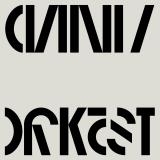
BUCHLA MEETS ORCHESTRA IN QUADRAPHONIC SPACE ON CIANI/ORKEST
Suzanne Ciani, Metropole Orkest and Simon Dobson release historic immersive performance in multiple immersive formats including quad vinyl.
Silverlake, CA \\ June 4, 2026 – Electronic music pioneer and five-time Grammy nominee Suzanne Ciani joins the internationally acclaimed Metropole Orkest, conducted by Simon Dobson, for the release of CIANI/ORKEST, a landmark live album composed entirely of new work, created specifically for this unprecedented collaboration.
Recorded at Amsterdam Dance Event (ADE) before a rapt audience, CIANI/ORKEST is not a retrospective. It is a bold, immersive meeting of the Buchla electronic instrument and 50-piece orchestral sound. The result is a sweeping sonic landscape, at once intimate and monumental.
Under the direction of the Metropole Orkest, renowned for its genre-defying collaborations with artists from jazz to contemporary classical - strings shimmer, brass swells and woodwinds echo the organic, fluid qualities that have always defined Ciani’s sound. “This project feels like a homecoming,” says Ciani. “The Buchla was always orchestral to me, an instrument capable of infinite color. Hearing those colors unfold through the Metropole Orkest has been profoundly moving.”
At the heart of CIANI/ORKEST lies Ciani’s lifelong commitment to quadraphonic sound. From her early Buchla performances in the late 1960s to her 2018 release LIVE Quadraphonic, Ciani has treated space as a primary compositional parameter. Working alongside immersive producer KamranV, Ciani continues to explore immersive sound as both artistic and human gesture. Kamran’s decades of work in spatial formats, converge here in service of a singular goal: to let sound behave as it does in the physical world. “For both of us, quad is musical,” Kamran notes. “The way Suzanne works, quadraphonic is nested in — not the technology per se — but the intent you bring to the work.”
The recording stands as a meditation on legacy, evolution, and the enduring dialogue between technology and human expression. The live album captures the electricity of performance, the immediacy of touch plates under Ciani’s hands, the collective of musicians responding in real time, and the audience’s shared immersion in quadraphonic-inspired space.
CIANI/ORKEST is released by Atmospheric/AKP Recordings/CyKiK in multiple double-disc quadraphonic 12” Record packages designed by grammy-nominated designer Rebeka Arce. Each pressing is made regionally to minimize carbon emissions and also contributes to nature via Brian Eno's EarthPercent, the music industry's climate and nature foundation.
The release is encoded using the dublab Quadraphonic Universally Accessible Resource Kit (QUARK). QUARK enables binaural listening via standard 2-channel playback or 4-speaker playback via Involve Audio hardware decoders, vintage Regular Matrix quadraphonic receivers, Dolby Pro-Logic II/Dolby Surround Upmixer (DSU) receivers, or any multi-channel audio interface equipped computer. This album is immersive via all formats: digital download, streaming (Qobuz, Spotify, SoundCloud, Bandcamp), radio broadcast, vinyl and high-resolution Dolby Atmos (Apple Music, Tidal, Amazon HD, IIA), Sony 360RA (Nugs, Amazon HD) and Eclipsa Audio (YouTube).
About Suzanne Ciani
Suzanne Ciani is a composer, pianist, sound designer, and electronic music pioneer whose work spans experimental, new age, classical, and cinematic sound. A five-time Grammy nominee and recipient of the Moog Innovation Award, she continues to perform internationally, captivating audiences with immersive modular synthesis performances.
About Metropole Orkest
Based in the Netherlands, the Metropole Orkest is one of the world’s leading genre-crossing orchestras, known for collaborations with artists including Brian Eno, Herbie Hancock, Snarky Puppy, Jacob Collier, and within contemporary classical and electronic spheres.
Manonmars’ 3rd album sees him at his most amorphous and psychedelic, at points sharper and laser focused, and at others more blurred and impressionistic than his previous records. Many of the core players remain the same, all of the production is once again handled by O$VMV$M (the duo of Neek and Amos Childs of Jabu) while Paulina Korobkiewicz (also of Young Echo) makes a return handling both the album’s cover artwork and contributing a series of diaristic field recordings and voice notes.
‘The project references movies, cartoons, fictional characters and video games, among other things. The album title is open to interpretation but all of these elements are forms of visual entertainment which have their own unique ability to transcend things like language barriers and cultural divides. The visual element is key because those details bridge the gap on a communicative level.’ - Manonmars
The album blends abstract, blurred braggadocio with more immediate personal details such as on ‘Volcanic Shield’ a posse cut of sorts featuring Bristol improv luminary Dali de Saint Paul and Franco Franco (½ of cyborg rap duo Kinlaw & Franco Franco) - where Mars recalls;
‘Memories of brighter days, happy meal hit the spot
Mum was spinning vinyl playing Super Ape or Pressure Drop
I would spend the weekend with the Turkish mandem on the block
single parent household, mum was studying or on the job
money came and went always was an on and off
made it back from school time to see what’s on the box’
The beat fades away to leave one of Korobkiewicz’s recordings of Mars’ mum talking about her life in London in the 80s, spending her money on reggae records as an ambient chord fades in like an echo of a jungle intro – stretching out as a link between generations of UK music.
The production by and large is brighter and more kinetic than earlier Manonmars records – with O$VMV$M drawing on everything from modern underground rap and drill through to jazz and acid ambient passages.
London is also a central character here, bustling and constantly shifting, either when bleeding in through field recordings, or as an ever-present backdrop in the lyrics;
‘I’m a fusion of Tippa Irie and Topper Harley
Hit the target like the black Atari
I dropped a tab now shit’s A Scanner Darkly
Got the munchies, Imma yam a sarnie
Pour the Wray and Ting like man at Carni
Exit Peckham Rye and turn left, walk past Hannah Barry
Get your (w)raps up like its January’
‘I've always considered London my home, despite spending some time in the South West of England too. My mum had been living in London for 25 years (...) That was a pretty big deal in some ways because it removed us from multicultural society during the period which overlapped with my teenage years. (...) I never got used to how quiet it was in the countryside (...) Bristol was the closest city to where we lived and it was through travelling there and making connections that I became involved in making music and playing gigs.’ - Manonmars
Mars’ practice as a painter (under his given name Jack Martyn Richardson) and photographer also loom heavy over the album, he cites Paul Verhoeven, Abdul Mati Klariwein and H.R Giger as influences – as well as Miles Davis, Drakeo the Ruler and DJ Rashad.
As with much of Richardson’s work the raps at times feel blurred to a point of almost inscrutability, creating a distance between the audience and himself. A process that ties into his visual work and the way he experiences the world as mainly abstract colour without his glasses. He explores this further in an ongoing visual collaboration with Korobkiewicz, ‘Fun and Games’ which serves as a visual archive of one of London's largest and oldest travelling fairgrounds.
‘I was diagnosed with very severe short-sightedness at the age of seven. I remember my early formative years as visually blurred. Some of my photography reflects this experience of partial vision and uncertainty, referencing memory and perception rather than fixed representation.’
Manonmars’ first public outing as a rapper was at a Young Echo radio event, broadcast shambolically from a practice room just off Jamaica street, Bristol in 2011, as much as things have moved on both stylistically and in terms of focus - strong links back to the city remain a key foundation throughout the collaborations and guest appearances.
‘I have no problem with being an outsider looking in. One of the things I enjoy about London is the anonymity (...) it's easy to be a stranger here when so much is happening. I feel like thats more valuable than people may realise.’
2026 Repress
Temudo - Meteora (FUSE06) by Noah Hocker
A leader of the Portuguese wave in techno co-founding Hayes Collective while boasting acclaimed releases on Klockworks, Blueprint, and Soma, Temudo grabs the reins to take club music back to its days of audacity and risk taking. A more than promising up-and-comer turned modern reference, Temudo defends his reputation with a release showcasing depth in his various sonic universes and a deep understanding of his music's history. For its seventh release, Temudo's 'Meteora' is a logical next step for the club's direction - a sweet spot between dancefloor efficiency and enduring aesthetic.
Combining the intrigue of mental soundscapes with the reliability of imposing rhythm, 'Meteora' finds itself collected, expressing effect through restraint. The title track, claiming the EP's A1, is just that - a force of interweaving sound design and powerful micro transitions. Some believe the best techno records are able to express emotion and attitude despite its dissonant and machinelike nature; if that's the case then Temudo has mastered the craft. 'When I Grow Up', however, puts the focus back on the body. What sounds like warbling tape modulation over a percussive lead makes this record an addictively delirious ride from start to finish, fitting in with the track before while shifting to different priorities. Proving his versatility, 'Vrthng' at first seems reminiscent of the minimal Berlin style with a higher pace, but quickly progresses into something intensely euphoric. With experience and measure, an out of the box approach can really pay off, and the added emotion in 'Vrthng' is certainly a turning point in the EP. This mindset is clearly carried over in the project's conclusion : 'It's Always Past'. A surprising use of harmony and storytelling, this final chapter ends with Temudo sealing his style with confidence. The track is mystified by its chords, ending 'Meteora' with a question mark that leaves us in anticipation for what Temudo dares to do next.
Composing primarily with the piano, Kotaro Maruyama creates music for a variety of visual media, including commercials and short films. Influenced by the composer Toru Takemitsu, he places importance on the “silence” and "ambience" of sound, aiming to create works where the music quietly depicts a scene.
Kotaro Maruyama's first solo album, "Vapor Curve," is constructed entirely from the sound source of the OP-Z digital synthesizer. Notably, he avoids the concept of harmony for a single tone, instead pursuing a unique "woven harmony" created by intricately layering multiple independent melodies. Using only the OP-Z, and recording everything in a single take without using a computer, Kotaro Maruyama's "Vapor Curve" is distinguished by its uncompromising production style. The minimalist melodies that are layered to create an ambient soundscape, along with the incidental noise that gives an organic texture to the inorganic electronic sound, showcase the raw appeal of sound that is imperfect."
Originally scheduled for release September 2025, this album faced delays due to a series of errors involving the distributor, pressing plant, and cutting engineer. However, earlier this year, Personal Affair teamed up with a new distributor, Rubadub, who introduced them new pressing plant, allowing them to restart the entire pressing process from scratch. Emerging from Tokyo via Glasgow, this release is now ready to deliver a fresh sound to the world."
Your favourite edits (probably) crew, Local Sugar Diggers, aka the trio of sonic sculptors that are Scruscru, Tony Lavrutz and Los Protos all come together here on a new 7" offshoot label from the Soul Service. The a-side cut 'Rave w Polsce' is a full-fat funker with deep cut grooves that roll on rubbery bass and soar with rasping wind leads. Plenty is going on wherever you listen and it all serves to get you moving. 'Otra Ritmo' is an immediate portal to a communal get down somewhere sun-baked and lush with green in South America. The horns, the freewheeling percussion and the loosely assembled rhythm are all irresistible invitations to cut loose.
out of Stock
Last delivered 49 days ago available to reorder, subject to availability
Joaquin ‘Joe’ Claussell returns to the Spring Revisited project, and he delivers another jazz-infused house mix of a classic funk track by the iconic Fatback Band. Spring Revisited is collaborative project between Ace Records and Acid Jazz, inviting influential house music producers to reinterpret classic tracks from seminal New York label Spring Records, a pioneer in funk, soul and disco. After a series of sell-out and chart-topping 12” and 7” releases, as well as a 2LP compilation, the project continues with these two new mixes of the Fatback Band’s ‘(Do The) Spanish Hustle)’. Claussell combines the original classic funk elements with Latino percussion and samba-styled trumpets.
First up is his 'Sacred Rhythm Version’, which lifts the tempo and loops a section of the original's percussion. Keeping the trumpets, and soulful vocal phrases, he adds a DJ-friendly kick drum and shows off his improvisation skills with a vibrant synth line. On the flip, he strips back some of the drums and horns and focuses on the bassline with the 'Spanish Harlem Dub,' which is a moody rework utilising some funk-infused organ chords. On the original track Joe says: "I can vividly recall the very first time I heard Spanish Hustle blasting through my brother Jackie’s stereo system. Not long afterward, I experienced its energy again on the dance floor at a discotheque known as The Inferno, where it was masterfully delivered by the legendary René Hewitt. The record left an imprint on my spirit that never faded.’ A spectacular continuation of the series, presented in the nowsignature Spring Revisited housebag, resembling an original worn-in promotional 12”, pressed in a strictly limited run!
out of Stock
Last delivered 21 days ago available to reorder, subject to availability
Detroit's mythic architect Walt J surfaces on Lost Control 2097 with three cuts steeped in deep emotional drama and late-night intensity. 'Resonance' lands with razor-sharp drums and weightless, ethereal chords, elevated by Prince of Hydro's poetic vocal transmissions that feel like signals from another realm. 'Love Petals' resurfaces from Walt's vault, a reworked version of an already transcendent classic, refined, deeper, and glowing with subterranean energy. 'Origin' channels the spirit of Larry Heard-style melodies while anchoring itself firmly in the grit and gravity of the Motor City. Prince of Hydro closes it out by activating full ultra-sonar mode, delivering a remix that drags you into crushing ocean depths where the pressure builds and something immense is about to break through.
out of Stock
Last delivered 38 days ago available to reorder, subject to availability
First track is a pure jewel of dark acid pumpin style... that risin newskool awaking the Okupe kick for a new sound exploration... On da way to the Olschool sounds !
For the first time ever, Los Campesinos! are proud to offer new pressings of their first three studio albums on their very own record label; Heart Swells.
2026 marks the 20th anniversary of LC!’s formation, and coincides with the band being more popular and relevant than ever before. The 3 albums are available for the first time since 2020, on brand new colour ways, on 12” vinyl and CD, with updated artwork and packaging.
What the press said:
“an absolutely astounding album” 4.5/5 - DIY
“Romance Is Boring is a triumph.” - 8.3/10 - Pitchfork
“The fact that the seven-piece manage to make music that is as orchestrated and coherent as it is invigorating is only one of the few astonishing things about them.” - 9/10 Popmatters
“What primarily sets ‘Romance Is Boring’ up as a significant step forward is that it’s incredibly structurally cohesive, and yet blows anything they’ve previously released out of the water in terms of textural intricacy, technical prowess and general experimentation.” - 4/5 NME
'Channel Zero is a new release produced by the London-based Brazilian artist Protocol. It is made up of 4 unprocessed live jam recordings of heavy, stripped-down techno. Composed over a period of 2 years, the artist focuses on experimenting on the far edges of techno, inspired by early avant-garde music, drone, and Musique Concrete. It comes in a hand-numbered limited edition of 180g black labels, in a 3mm inside-out cover with a black inner-sleeve.
'The work is a confirmation that techno still thinks forwardly, but pays homage to its mostly overlooked origins. The titles come from one of the early Cybernetic Culture Research Unit essays, also named Channel Zero.
'Lost Signal (Noise) opens up the EP with reverberated static noise, followed up by a deep bass with more layers of percussion and atmospheric noise patterns, slowly evolving into unexpected rhythms. The second track, Blind Belief, is composed of a deconstructed kick sequence, with machinic-like sound structures in the background and a hi-hat that morphs with various envelopes, together with a nostalgic 909 rim-shot. Turning to the B side, Electromagnetic Shadow is an atmospheric four-to-the-floor techno track, where deep kick drums and polyrhythmic noise soundscapes move into industrial noise pattern. Closing Protocol's debut EP, Black Snow Cult brings together the EP's sound palette into aggressive patterns of Birmingham-esque industrial percussions, where synthetic sounds are put together in primitive sounding sequences together with high pitched frequencies.'
This next manifestation of Corvus Corone is a project featuring one As’teka tribal original and 3 collaborators with their own take. All RMX’s are different but stay within the parameters of the original and the label. Get two 12“ and mix for an endless experience.
A trip into the dark heart of the jungle where evil could be lurking anywhere. Are those birds or bats? Was that a gigantic insect crawling? Was that shadow moving? Did you hear that voice? Arghh, is it day or nite? What day is it? I am getting stuck in quicksand - I...am...being...sucked...in...
Comes with liner notes and interview on the back of the sleeve.
Dennis & Christy Soares are a husband-and-wife duo whose prolific output - over 100 albums and nearly 2,000 songs recorded across CD, cassette, vinyl, and streaming - stands as one of the most quietly remarkable self-made catalogs in contemporary music. Based for two decades on the Big Island of Hawai'i before recently relocating to Centralia, Washington, the pair have been making music together since meeting at San Joaquin Delta College in 1986, channeling a DIY spirit rooted in sincerity, spirituality, and an unshakeable belief in the power of a song. Their work spans platforms most listeners have never heard of, distributed through sheer determination and an infectious enthusiasm for reaching new ears.
Free At Last is an 11-track anthology compiled by AGS founder Roger Bong, representing less than 1% of Dennis & Christy's total recorded output. Drawing from more than 600 songs considered over the course of 12 years, the collection makes no claim to being definitive - instead, it offers what Bong calls "simply an invitation": a way in for new listeners, and a distillation of the warmth and pure intention that runs through everything this duo creates. From their earliest recordings to the present day, Dennis & Christy have never stopped making music on their own terms. Free At Last is an introduction long in the making, and very much overdue.
OOZ proudly presents the sixth instalment on the label with Nate Oldfield’s inaugural solo EP. Informed by minimalist techno and intuitive modes of machine music – made predominantly with hardware – Nate puts forth a record that feels as though it’s dancing out of the shadows and into the light. Eery chords and vocals are paired with sharp percussive rhythms by a producer that seems to revel in the play of music-making. At points stark and almost plaintive, the depth of feeling throughout the record is contrasted by the playful nature of how sound is manipulated. Grooves plod along to cold, melodic chimes, guitar plucks and a discussion about walking through Danson Park near Nate’s hometown of Abbey Wood, South-east London.
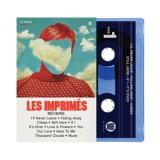
Big Crown Records is proud to present the debut full length offering from Les Imprimés, Rêverie. The stirring and ethereal sounds of Les Imprimés have been making fans of anyone who hears them since their first 7" single hit the speakers. Morten Martens is the man behind the band. Born, raised, and working in Kristiansand, Norway, he keeps a low prole while making his heart felt, highly infectious, and unique music. This album is a long time coming for Martens and it is sure to make him a name to be reckoned with. The first thing you notice listening to Les Imprimés is the high level of musician-ship. Martens plays nearly every instrument on the recordings and handles the production and arranging. He has been making records for decades, winning a Spellemann Award (aka, the Norwegian Grammy) in 2006 for producing a HipHop album as well as getting nominations across three other genres. While awards and accolades speak to the level of his talent, this new album really shows who he is an artist on his own terms. Moving away from being a hired gun on the touring scene naturally led him to start doing more studio work. Slowly collecting gear and getting more experi-ence behind the boards he built his own studio on the island of Odderoya and was making a living playing with and recording other people's music. As the story goes, after those sessions would end he would work on his own project into the wee hours of the night. From these late night sessions, Les Imprimés was born and Rêverie began to take shape. However, "it wasn't until COVID, when things locked down, that I was really able to nd the time to focus on Les Imprimés" Morten says about creating and leading his own solo project. "It was a scary time. But I knew I had to do something with it." He took the sum of his inuences, combined them with his own vibe and got busy writing the music, playing the instruments, and singing the songs. "It's soul music, but I don't exactly have the soul voice," Morten explains humbly. "But I do it my own way, in a way that's mine. "It is his sound, his fingerprint, his sensibility, that makes his music hard to put in a box. The album showcases both Martens' range and his ability to make a cohesive album. The lead single "Falling Away" starts with a raw drum break and turns into a lushly arranged tune that paints the picture of love when it slips away. On "Still Here" he professes his resilience through life's twists and turns over a thundering track that puts a new spin on the B side ballad genre. Songs like "You" and "Our Love" mix tones from 60s and 70s Soul with arrangement nods to Doo Wop records while Martens' lyrics and delivery leave you singing the melodies long after they finish. "Love & Flowers" finds Martens in a moment of clarity with a song that ts the niche sub genre of happy break up tunes, the four on the floor track will move the dancefloor or while the message will resonate with anyone who put too much effort into the wrong situation in their lives. However, it is songs like "Muse" and "Chess" that really encapsulate the uniqueness of Les Imprimés as they push the boundaries of genre, one a profession of love for music and the other a cover of an electronic record respectively. Martens' lyrics, emotion, and delivery truly make the whole thing come together and stand out from any of his peers. There's an infectiousness and a pop sensibility in the writing that is done with the utmost class and taste giving Les Imprimés the rare quality of immediate attraction that only deepens the more you listen.
LIMITED THIRD PRESS. 300 ONLY CLEAR VINYL WITH RED BLOOD SPLATTER, HOUSED IN A RED AND METALLIC SILVER SLEEVE.
The Swedish underground legends return with a brand new album. Let this reddit user take over …
“Listening to Brainbombs has been one of my weirdest experiences with music. Brainbombs are most definitely a band. I guess at the core they’re a hardcore punk/noise rock hybrid I guess? But… It's so unlike anything I’ve ever heard and I still don’t know if it's good or bad. I saw the edgelord Ed Gein album cover, and it intrigued me, so I listened to their biggest song and it was easily THE WORST thing I had EVER FUCKING HEARD. I shut it off as soon as it got to the vocals. I was shocked by the fact that it had almost a half million streams. But, a few hours later, I clicked on it again and didn’t know why.
Over the past few days, I’ve listened to all of their discography and looped a lot of it. And I don’t even think I like them. The music is abysmal, it's the same single riff and verse repeating for 5 minutes. To make it worse, the vocals are just a guy with a swedish accent awkwardly talking about murder and rape. That sounds awful right? It is awful. But at the same time I want to keep listening? It’s so childishly edgy and obnoxiously repetitive but so.. intriguing? Catchy? I’m not even sure. It's one of if not the weirdest experience I’ve ever had with music and I don’t know how to feel about it.”
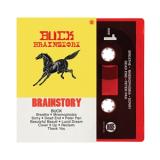
What is Buck? Buck is a state of mind, a way of life, a demeanor that gets you through the good times and the bad. If you ask Brainstory, It is also the energy that permeates their debut album. Kevin, Tony, and Eric are a trio of brothers bounded by blood, fate, and a small town with nothing to do. Their story begins in the long lost lands of the San Bernardino Valley, in the twilight zone known as Rialto, California: An arid wasteland of boredom and empty lots. Through punk rock and skateboarding they found temporary liberation from the local monotony. However, it wouldn't be long before a hunger for more led them to explore musical realms beyond that of the hardcore punk they admired. After stints at music school and steady disappointment trying to navigate their local jazz scene they moved to Los Angeles and Brainstory was born. Through a introduction from Chicano Batman's bassist, Brainstory caught the ears of Big Crown head honchos Danny Akalepse and Leon Michels. Shortly thereafter they were on their way to Queens, to record at The Legendary Diamond Mine with Michels at the helm. An instant chemistry yielded 10 songs in 10 days and now Brainstory has gifted the world with one hell of an introduction to all things Buck. Highlights include the sublime slow burner, "Dead End" which was the A-side to their first 45 on Big Crown that sold out in a matter of days. With Kevin's sublime falsetto floating atop Tony and Eric's unflappable and unmistakable backbeat, this tune has become a favorite with the ballad heads, the low-riders, and the slowie collectors. "Breathe" showcases another side of their sound taking a page out of the Shuggie Otis playbook and flipping the script with some stoned out west coast swag. Kev and Tony's father, Big Tone, an accomplished performer himself, steps in on "Peter Pan" to sing lead vocals over a chorus of friends and family. Bassist extraordinaire, Tony, takes over lead vocal duties on "Sorry", a smoked out, G Funk groove that is just waiting to be sampled. These guys have come a long way from their self released EPs and opening tours with Chicano Batman. Their musical growth is undeniable, and taking their California sunshine vibes and mixing them with Michels' NYC aesthetic has proven to be an amazing combination. It's a debut record that pulls influences from so many genres seamlessly it's hard to nail down. Call it Funk, call it Rock, call it Soul, but over here at Big Crown HQ, we've decided to call it BUCK.
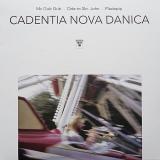
John Tchicai (1936 – 2012) was one of the most important free improvising saxophonists of the 20th Century: an artist of rare vision and aptitude whose lines soared and stood out even in the most hallowed company, and whose body of work as a leader / composer is among the most singular and distinct within the entire canon of that music. But Tchicai’s importance doesn’t end there. Born in Copenhagen, Denmark, to a Danish mother and a Congolese father, his life and career represent a crucial bridge between the European and American traditions of free jazz. Initially trained on violin as a child, Tchicai shifted his focus to the clarinet and alto saxophone during his mid-teens, and began touring Europe as a professional musician by his early 20s, which landed him at a socialist youth festival in Helsinki, Finland, where he met the trumpeter Bill Dixon and saxophonist Archie Shepp. Impressed by what they heard, Dixon and Shepp encouraged the young saxophonist to move to New York, and in so doing changed the history of jazz forever.
Tchicai’s arrival in New York marks the rare occurrence of a European player joining the intimate circle that was first wave of American free jazz. Following his landing in the city in November of 1962, in addition to regularly sitting in with Don Cherry’s group, Tchicai began playing with Bill Dixon's band alongside Archie Shepp and Roswell Rudd, forming the nucleus of the foundation of the New York Contemporary Five - one of the most important groups of the era - which counted Tchicai, Shepp, Cherry, Don Moore, and J. C. Moses as its members. From the ashes of this group, Tchicai would go on to found the legendary ensemble, New York Art Quartet, with Roswell Rudd, Milford Graves, and Lewis Worrell, as well as working within Albert Ayler's band, recording “New York Eye and Ear Control”, Shepp’s band, recording “Four for Trane”, the ensemble that recorded John Coltrane's “Ascension”, and the Jazz Composer's “Orchestra”.
By the time he decided to return to Denmark in 1966, had Tchicai chosen to record little else, his legacy within the history of music would have been ensured. Incredibly ambitious, his arrival home marked the beginning of an incredible period of activity which saw him radically expanding his creative explorations, which by the end of the decade would include becoming a founding member of Amsterdam's Instant Composers Pool and helping to record John Lennon and Yoko Ono's “Unfinished Music No.2: Life with the Lions”. This, however, was proceeded the formation of a new orchestra, Cadentia Nova Danica, led by Tchicai, dedicated to radical cross-disciplinary exploration. Remaining together between 1966 and 1971, the group and its shifting membership regularly fell into collaboration with artists and composers, notably Musica Elettronica Viva, who existed beyond the realms of jazz, as well as participating within multi-media events that incorporated the visual realms.
Cadentia Nova Danica’s only two LPs - “Cadentia Nova Danica” (Polydor, 1968), and “Afrodisiaca” (MPS, 1969) - are effectively Tchicai recorded efforts as a leader, and are legendary. There’s little mystery, once heard, why the later landed on Thurston Moore’s iconic “Top Ten from the Free Jazz Underground”, published by Grand Royal in 1996. Sadly, despite playing extensively during their five year run, with exception of a CD documenting a performance at Jazzhus Montmartre, in 1966, until now there has been no other publicly available recordings that allow us to capture a glimpse of this astounding band at work. Alga Marghen / Formalibera’s vinyl pressing of a never before released body of recordings, made in Copenhagen between 1969 and 1970, changes that in the most exciting of ways.
Comprising three pieces - “Mc Gub Gub, (I–VIII)”; “Ode to Skt. John”; and “Pladepip” - the material on this stunning LP comes from two specific events. The first, which encompasses the first side, “Mc Gub Gub, (I–VIII)” was recorded by Cadentia Nova Danica - in this instance, Tchicai, Sune Weimar, Theo Rahbek, Christian Kyhl, Niels Holt, Jørgen Thorup, Michael Schou, Morgens Bollerup, Allan Gregersen, Ole Matthiessen, Pierre Dørge, Willy Jaegert, Anthony Barnett, and Jon Finsen - on May 29th, 1969, at the ABC-Theatre in Copenhagen. Penned by Tchicai, the piece is a sprawling, evolutionary composition at the outer reaches of free jazz, rooted in large blocks of colliding tonality and rhythm - a sound only accessible to larger ensembles - that push territories explored by Charles Mingus to previously unimagined heights, threaded by moments of hard blown fire. Writhing like a stormy sea - skronking and devilish - “Mc Gub Gub, (I–VIII)” is a work of profound complexity that singlehandedly illuminates not only Tchicai’s singular vision as a composer, but also the power and uniqueness of Cadentia Nova Danica during the band’s most vital period.
The two pieces - “Ode to Skt. John” and “Pladepip” - taking up the flip side, were recorded on February 21st, 1970, at the Danish Broadcasting Corporation’s Radio House, and are the outcome of Cadentia Nova Danica’s extended residency there between 1969 and 1970. In many ways, these two recordings offer some of the best insights into the broad collaborative approaches that defined the band, in this case encountering them working with Danish experimental composer, Svend Erik Werner, who was among the earliest in his country to embrace stylistic pluralism and the use historical forms within a modern context. “Ode to Skt. John” - based on aspects of Gregorian music - was penned by Werner, incorporating heady improvisation by the members of Cadentia Nova Danica, this time made up by Tchicai, Sune Weimar, Hugh Steinmetz, Theo Rahbek, Christian Kyhl, Michael Schou, Morgens Bollerup, Ole Kühl, Torben Enghoff, Mauritz Tchikai, Kjeld Ipsen, Willy Jaegert, Ole Matthiessen, Ole Thilo, Pierre Dørge, Steffen Andersen, Jon Finse, and Clause Bøje. The piece is a fascinating binary of the composed and improvised, utilising the band’s large scale to introduce a remarkable sound within its slow progressions and furious, driving free moments, in this incredible meeting of worlds.
The album’s final piece, “Pladepip”, is arguably its most historically significant: an entirely singular piece, unlike anything in Tchicai’s recorded canon as his foray into musique concréte. Drawing upon two recordings of full-band improvisations by Cadentia Nova Danica, for its creation Tchicai also gouged the surfaces of 78rpm records in his collection to skip and create repeated phrases and patterns, creating a stunning sound collage of hard angles and abrupt phrase, that creates a striking counterpoint to the band’s flowing improvisations that bookend those passages. The result is an engrossing listen and easily one of the most unique and culturally important gestures in the entire history of musique concréte.
Truly incredible, Alga Marghen / Formalibera’s vinyl pressing of this never before released body of recordings, made by John Tchicai’s Cadentia Nova Danica, in Copenhagen between 1969 and 1970, offers an unprecedented window into one of the most important groups working in Europe during that period, significantly expanding their rare and slim discography to date. Accompanied by extensive exploratory liner notes by veteran jazz writer, Ed Hazell, this is easily one of the most historically important archival releases of the year and is impossible to recommend enough. Absolutely essential on every count.
When everything around is racing blindly toward ruin, change direction and spin as fast as you can until you defy gravity and rise above the ground into blissful madness. "K-drone", the debut album by three renegades—Jakub Šimanský, Michal Vaľko, and Ján Podracký—is like a hallucinatory Calvary with five stations. Each station is a time-loop capsule, a tiny utopia sneering at the phantom progress of the world outside.
The opening track, "Speedrone", is pure vertigo; for seven long minutes, there's nothing to hold onto. Šimanský’s banjo cuts through the air, Vaľko’s hurdy-gurdy sounds like someone scraping a rusted sheet of metal with a handful of nails, and Podracký’s bass recorder hums like a slowly intensifying migraine. "Sine" is like a train journey through a barren wasteland, where the images outside the window constantly repeat like a bad trip. "Pro DJ" starts like a gig in a bar at the end of the line—a gig that never actually goes anywhere. It’s as if all three are locked in a spasm, their repeated motifs turning into haunting earworms. "Alien Radigue" shifts into a strange idyll in a clearing in the middle of the forest, where an unknown bird species trills in the background. The end and definitive dissolution come in "Slush", where everything suddenly slows down. Šimanský plucks a simple guitar melody, Podracký’s harmonica drifts from side to side like a boat gently rocking by the shore, and Vaľko’s hurdy-gurdy drones like a drunken mosquito buzzing around.
"K-drone" sounds like an acid anti-western movie recorded in a tucked-away burrow, like smoke-soaked folk and experimental campfire songs echoing through a deep forest. It evokes Third Ear Band's "Alchemy", it screeches and repeats like some of Henry Flynt's experiments, and you could easily imagine hearing it drifting from one of the windows on the cover of Hala Strana's eponymous album.
Jakub Šimanský is the bard of Czechoslovak guitar primitivism, an earthy folk sommelier whose fingerpicking you may also know from the duo Šimanský Niesner. Michal Vaľko, aka Line Gate, needs no introduction to fans. He has released three albums on mappa, and his hurdy-gurdy meditations hold an important place in the drone and minimalist music scene. "Den", "Apex", and "Trap" have become essential listening. Ján Podracký is a self-taught composer and musician whom you might know from various participatory music projects, such as an orchestra where all the players play diatonic harmonicas. Besides harmonicas, he has long explored a wide range of flutes. In short, a pied piper who will guide you through other worlds.
Piece of Me, das zweite Album von Lady Wray, ist so etwas wie eine Heimkehr für Nicole. Während ihr Solo-Debüt Queen Alone aus dem Jahr 2016 mehr in Richtung Soul und R&B mit einem Hauch von HipHop tendierte, ändert sich dies bei diesem Album. Es ist immer noch R&B mit den Texturen von analogem Soul, doch zeichnet sich ein starker HipHop-Einfluss ab, der Nicoles Schaffen für die Zukunft definieren wird. Boom-Bap-Drums und deepe Basslines stehen im Vordergrund und bilden den perfekten Hintergrund für Lady Wray, die sich auf ihrer bisher persönlichsten Sammlung von Songs mit dem Guten, dem Schlechten, dem Schwierigen und dem Freudvollen auseinandersetzt. Der Titelsong Piece of Me, der seit seiner Veröffentlichung 2019 bereits zum Klassiker geworden ist, handelt von den Menschen in deinem Leben, die mehr brauchen, als du zu geben bereit bist. Dieses Stück und die B-Seite der 7" Come On In waren die ersten Songs, die für dieses Album aufgenommen wurden - als Nicole im achten Monat schwanger mit ihrer Tochter war. Ihre Stimme ist so kraftvoll, so rau bei diesen ersten Songs, erstaunlich, wenn man sich vor Augen führt, wie sie aufgenommen wurden. Und noch verrückter ist es, zu wissen, dass sie sie alle in einem einzigen Take aufgenommen hat. Ihr langjährige Mitstreiter und Produzent Leon Michels entwirft das musikalische Fundament gekonnt zurückhaltend, um Lady Wray ausreichend Raum zu geben. Während die energiegeladenen Songs Under The Sun und Through It All mit Sicherheit zu Hits werden, die Lady Wray wieder mit ihrer R&B-Fangemeinde aus den 90ern connecten, zeigt Where Were You, wie ihre Jugendjahre wirklich waren. in dem poetischen und kraftvollen Beauty In The Fire setzt sich Nicole mit den Spannungen zwischen den Ethnien in Amerika auseinander und lässt sich im Showstopper Thank You stark von ihrem Glauben und ihrempfindet und in Joy & Pain feiert sie die Höhen und Tiefen des Lebens. Im Jahr 2021 ist es eher selten, ein eklektisches und doch zusammenhängendes Album ohne ,Ausreißer" zu hören - aber genau das ist Piece Of Me. Die bewährte Chemie zwischen Lady Wray und Leon Michels hat unbestreitbar das nächste Level erreicht, dieses Album ist ein Zeugnis ihrer Entschlossenheit und Hingabe.
South Coast artist Howman lands back on DNO Records for his second outing, ‘Trap Eastwood’. First introducing his heavyweight fusion of rock, hip-hop, dubstep and electronica via his outstanding 2023 debut, ‘Moon Operator’, the multi-instrumentalist and producer returns with a refined palette. Still bearing the first class musicality, rich layering and imaginative sonics that we’ve come to expect, the new EP is more stylistically focused than its predecessor. This time, Howman homes in on a spot somewhere in the 140/dubstep/trap sphere, decorating it with digital fizz, alien bleeps, snarling bass, and the signature gruff twang of guitar that makes his music feel deeply personal and eternally human.
The title track is perhaps the most prominent example of the latter, where Howman’s Western-esque riff conjures up the tension before a duel at high noon, while the bend and wobble of each string shapes the movement of the track like the curves of a rattlesnake.
But it’s a constant from the start, like on opener ‘Strip Search’, with its cinematic guitar intro, and combination of repetitive keys, earnest strings and bear-hug bass that nods to classic hip-hop.
Or closer ‘Fatigue’, where the layers of stuttering plucks, emotive melody and scratchy slide noises form a downtrodden soundscape plagued by police sirens and punctured by “Champion Sound” snippets.
On ‘Navigator’, Howman’s approach is more subtle: fluttering strums and a simple bassline creating a brooding, enigmatic vibe in stark contrast to the urgent, alarm-like stabs which first grip the attention.
Throughout there is an overriding sense of the unknown. ‘No Spring’ weaves drawn-out flute notes, tinkling percussion, super-massive 808 lows and spurts of breakbeat into a twisting, winding thing that wants to lure and enchant. While ‘Frosty’ is as ice cold as its name suggests, murderous bass meeting a spidery piano melody in dread-inducing matrimony — along with snatched words from some familiar faces outside a Berlin edition of THE MINE.
Produced between 2022 and 2025 across various locations, influenced by Howman having to move into more solo live performance (as opposed to his previous band setups), and miraculously surviving a catastrophic data loss incident, the EP is a snapshot of disruption focused into creative cohesion. We’ve been told, however, that it’s not a new direction or a sign of things to come, which only serves to make his next release that much more enticing, that much more of a mystery.
Rhythms of postmodern realism at the very bottom of the DNO.
The compositions recorded here are a product of work with computers in synthetic speech, song and vocal sounds and were created between 1972 and 1975. The music was realized on two different computer music systems and takes advantage of, and attempts to extend and explore their features. The system employed to realize speech songs was created at the Bell Telephone Laboratories for research in synthetic speech and speech communication. Since the system was not designed for musical purposes, its limitations were severe and its musical use a great (and often rewarding) challenge. The system used for In Celebration and The Story of Our Lives was designed with the expressed purpose of creating synthetic musical voices, and was therefore much better suited to the task at hand. As with any high technology project, there was extensive collaboration in the production of the works.
The works on this disk are called computer music because the sounds were created numerically in a computer before reaching magnetic tape and loudspeakers. The computer did not compose the music. However, it was only used as a sound synthesis and analysis medium. In order to hear the sounds which are represented in the computer as successions of numbers it was necessary to attach a digital-to-analogue converter to the computer. The converter transformed the succession of numbers into a fluctuating voltage which was recorded directly on to audio tape.
The technique used to create the synthetic voices is called speech synthesis-by-analysis. For this method of speech synthesis, only those words, phrases and sentences which have been spoken into the computer previously (via an analogue-to-digital converter) may be synthesized. First the digitally-recorded speech is analyzed by programs which extract the attributes (parameters) of the speech for short time segments (.01 sec.). From these parameters the speech may be recreated in a form which resembles the original recording very closely. But for musical purposes the parameters are most often altered before synthesis. It is possible, for example, to change the natural pitch contour of the speech into a melodic line or to change the speech speed without altering the natural pitch level.
The variety of musical patterns which may be created from the analytic parameters is limited only by the composer's imagination. Most of the speech sounds on the recording were created by changing the pitch and duration attributes of the original on resynthesis, but for a few, the resonances (the formants) of the speech were altered as well. The voice of the book in The Story of Our Lives was created by replacing the program which simulates the sound of the human vocal cords with one consisting of 64 sine tones glissandoing at different rates. All the textures in which more than one voice is heard were obtained by mixing the synthetic voices together digitally.
Der Mann hinter der Maske, Jonathan Bree, kehrt mit seinem sechsten Studioalbum "Don't Call It Love" zurück. "Don't Call It Love" kommt als Doppelalbum mit 17 Songs und ist ein erotisches Konzeptalbum, das sich mit Sexualität auseinandersetzt und Kollaborationen mit Frauen aus den Bereichen Musik, Film, Fotografie und Tanz enthält. "Don't Call It Love" klingt wie der düstere Soundtrack zu einer versteckten, mit Samt ausgekleideten Bar in einem schummrigen Keller - mal verspielt und verführerisch, mal beunruhigend und provokativ. Brees neue Songs setzen sich mit dem gesamten Spektrum der Sexualität und ihrer emotionalen Last auseinander - ein Album, das sich weigert, wegzuschauen, und sein Herz buchstäblich auf der Zunge trägt. Fans haben diesen neuen Sound bereits mit den düster-nostalgischen Klängen von New Order und Siouxsie & The Banshees verglichen, wobei Brees musikalische Entwicklung über die Jahrzehnte hinweg endlich ihr von den 80ern durchtränktes, melancholisches Ziel erreicht hat: ein melodramatisches Meisterwerk raffinierter Sleaze-Musik. Jonathans charakteristische Orchesterarrangements sind nach wie vor vorhanden und verbinden diesmal eine karge, düster angehauchte Noir-Ästhetik mit filmischer Instrumentierung und seinem grüblerischen Bariton. "Don't Call It Love ist zudem Jonathans bisher kollaborativstes Album, auf dem eine außergewöhnliche internationale Riege von Frauen einige der entscheidenden Momente des Albums mit ihren einzigartigen Stimmen bereichert. Die bei den Fans beliebte Princess Chelsea kehrt für drei beeindruckende Songs zurück ("Live To Dance", "Part Time Love", "Slow"); Neuseelands bestgehütetes Musikgeheimnis Rachel Clarke bewegt sich bei "Savour My Love" von intimer Zurückhaltung zu schwindelerregender Intensität; die französische Fotografin und Künstlerin Eloïse Labarbe-Lafon liefert auf "Chameleon" eine charaktervolle Gesangsdarbietung, die an die Tradition von Jane Birkin anknüpft; während die französische Musikerin und Schauspielerin Adah Dylan auf dem Titeltrack zu hören ist und den Leadgesang mit direkter, schnörkelloser Klarheit trägt: "don't call it love_ when we fuck." Für einen Künstler, der bereits sechs Alben veröffentlicht hat, gibt es hier eine Reihe von Premieren - sein erstes Doppelalbum, sein gitarrenlastigstes Album, sein kollaborativstes und sein bisher kompromisslosestes konzeptionelles Werk. Es wird nicht jedem gefallen, und es ist klar, dass Bree kein Interesse daran hat, es abzuschwächen. Wie er es ausdrückt: "Als ich meiner Mutter davon erzählte, schlug ich ihr vor, dieses Album vielleicht lieber auszulassen."
LIMITED EDITION FIRST PRESS OF 300 COPIES ON TRANSPARENT RED VINYL WITH JAPANESE STYLE OBI. NON-RETURNABLE.
Osaka quartet HIBUSHIBIRE return this August with their fifth studio album ‘Phantom Fuzzy Exotica‘.
Phantom Fuzzy Exotica continues to find the band exploring their own little universe, where psychedelia, 70’s hard rock and folk rock influences collide. You’ve got the short punchy riff heavy songs, the mellow time-out bits, and of course the epic psych jams and more vocals then previously. It’s all here, and as always they deliver the goods.
Phantom Fuzzy Exotica … in the bands own words
The initial image behind this album was “phantoms”- things that seem to exist, yet somehow don’t. Another thing that sets this album apart from our previous releases is that four of the five tracks feature vocals. The only instrumental is “Invocation and Ritual Dance of the Electric Nonsense.” We didn’t consciously plan it that way; it just happened naturally. After finishing last year’s tour, we didn’t have much time, but everyone’s ideas came together, and I think we’ve created an album we’re truly satisfied with.
Mandrake Oracle: The opening track of the album.Built around a single guitar riff by changchang, while the other instruments and electronics keep pushing the music forward. Personally, I imagined Deep Purple playing a Pink Floyd song while writing this one.
Minagoroshi Western: Imagined as the soundtrack to a fictional spaghetti western. In the end … everybody dies.
Daydream Rendezvous: A piece of daydream acid psychedelic folk.
Invocation and Ritual Dance of the Electric Nonsense: Hard psychedelic jazz rock. The title is a little nod to Frank Zappa.
Ai Vist Lo Lop (Cover): I’ve always loved Ai Vist Lo Lop by the wonderful Occitan traditional band Mont-Jòia, and I’d wanted to cover it someday. We especially enjoyed creating the a cappella section and finding the right sound for the main melody.
We sincerely hope you enjoy listening to this album as much as we enjoyed making it. — changchang
The Phantom Fuzzy Exotica European Tour 2026
AUGUST
19th Archive, Liverpool (UK) , 20th Ivory Blacks, Glasgow (UK), 21st The Golden Lion, Todmorden (UK), 22nd The Bunkhouse, Swansea (UK), 23rd Beautiful Days, Devon (UK), 25th The Peer Hat, Manchester (UK), 26th Le Pub, Newport (UK), 27th Strongroom Bar, London (UK) with Black Helium, 28th The Holloway, Norwich (UK), 29th The Sunflower Lounge, Birmingham (UK), 30th The Piper, St Leonards (UK) with Black Helium
SEPTEMBER
1st DND, Dunkirk (FR), 3rd Pilsen Busking Fest, Pilsen (CZ), 4th Pilsen Busking Fest, Pilsen (CZ), 6th Riff, Budapest (HU), 7th Végállomás Klub, Szombathely (HU), 8th A Beton, Győr (HU), 9th Chemiefabrik, Dresden (DE), 10th Bar Neun, Berlin (DE), 11th Subsol, Dusseldorf (DE), 12th Magasin 4, Brussels (BE), 13th De Onderbroek, Nijmegen (NL), 14th La Bulle Café, Lille (FR)
HIBUSHIBIRE are
Changchang (Guitar/Vocal/Bouzouki/Electronics/Melting Eye Spectacle), Tetsuji Toyoda (Bass/Vocal/Mermaid Mountain), AOI HAMA (Drums/Vocal/Cat Tongue Queen), Kohei Katsuma (Conga/Vocal/Theremin/Percussion/God Dog Family)
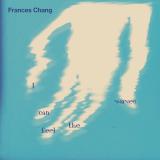
A boundary-pushing musician and multi-media artist from Brooklyn, New York, Frances Chang disrupts accepted reality through her unique and enchanting compositions. Chang’s songs are an exercise in communication, probing the tension between idiosyncratic personal experience and the drive to understand, and be understood, through a collective language.
For “I can feel the waves,” Chang’s new single and debut on RVNG Intl., a piano-centric melody is ornamented with primitive electronics and poetic vocals. The track boldly demonstrates Chang’s strength for unconventional yet contagious songwriting, and pioneers a genre the artist refers to as “slacker prog”: roomy and playful, offbeat and occasionally jarring, brimming with spiritual and emotional resonance.
The b-side, “Marry,” is a rollicking yet laid-back composition, with undaunted wobbly kicks bubbling under pianistic textures until a dialogue, acted out between Chang and Sylvia Gorelick, takes the foreground in the final moments of the track. As the instrumental carries its freewheeling pulse forward, the conversation, inspired by films like Kenneth Lonergan’s Margaret and Catherine Breillat’s Fat Girl!, along with Broken Social Scene’s “Anthems for a Seventeen-Year Old Girl,” turns toward the relationship between internal subjectivity and the external necessity of “staying small.”
Where is Frances headed from here? A piano is at the center, synths and strings swelling around its shoulders. A little less tension, a lot more production. Some shadows will be encountered, some forgotten skeletons unearthed. Music excavated from the subtler, deeper layers of cerebral and shared experiences. Music that is truly its own.