Deep in the sea lives one of Earth's most ancient creatures: the Nautilus. Hunted for its beautiful shell and now, through our global evolution, endangered, like so many other beings. Perhaps most astonishingly, no one has ever observed a baby Nautilus in the wild. The title track of this debut EP takes you on a dark journey, searching through the deep ocean for this elusive animal.
On the other side, I don't believe in Fermi’s Golden Rule, is a sonic interpretation of a statement made during a quantum field theory lecture, questioning the experimental mathematics often used to derive the famous rule. But actually, trying to express the confusion about quantum physics in general.
The dub-infused EP is mainly inspired by the pioneering magic of Detroit’s electronic music scientists and the experiments of European electro wizards.
In this post Sounds world, the boundaries of Post Punk have not only broadened but splintered. And over the course of (now) four releases, Index For Working Musik have seen to using the sprawling boundaries to great effect, flexing a polyglot of styles to convey the language of the moment. On Which Direction Goes The Beam, the murky, distant ambience that was 2023's Indexé has been fleshed out, incorporating everything from the Brian Aldiss laced, ground lightning shudder of Dome, to the chamber-like arrangements of This Kind Of Punishment. There's even a candle flickering in the window for Think Fellers Union Local 282 that warmed these ears. And if you're a fan of the great Dutch band, Trespassers W (who isn't?), the collective consciousness IFWM enunciates on here is a similar testament of a band growing more sure footed in the pursuit of not only knowing all the ways in, but carving a few of their own on the way out. And it's discerning releases like Which Direction Goes The Beam that keep us in the hunt. Long may they forge. - Tom Lax. RIYL: Brian Jonestown Massacre, Velvet Underground, TOY, John Cale, Wire, Dome
Often credited as the father of multi-media theatre, Alwin Nikolais (1910-1993) took complete creative control over his productions - including cutting-edge approaches to lighting and costume that transformed human bodies into shifting sculptural shapes, while also composing wildly innovative electro-acoustic and synth-based audio as accompaniment.
After initially experimenting with musique concrète and tape manipulation (as demonstrated on the 1959 LP Choreosonic Music of the New Dance Theatre of Alwin Nikolais) Nikolais became the first owner of Robert Moog's synthesizer at the Audio Engineering Society convention in New York in late 1964. Relying heavily on the Moog and later the Synclavier synth/sampler, these 21 tracks document Nikolais' highly-prescient compositions across the mid 1960s through to the late 1980s - existing not only as extensions of his other-worldly choreographic productions, but standalone pieces of foundational mid-century American electronic and experimental music.
"Born in Southington, Connecticut in 1910, Nikolais’s early years and early career were in acting, music and puppetry. It was not until the late 1930s that he began his work as dancer/choreographer in Hartford, Connecticut, where he was commissioned by the Avery Memorial Theatre, a part of the Wadsworth Atheneum, to create an evening-length work to the music of Ernst Krenek. Previously his work and study as a pianist-organist found him accompanying silent films. This sort of accompaniment required from the musician not only a playing skill but also a versatility in improvisation, matching movement to sound, and evoking mood to situation.
Nik was drawn initially to dance by his involvement with the percussion scores used by the illustrious early twentieth century German dancer Mary Wigman. In trying to learn more about percussion, he was lured into dance class and thus his career began. His development of music and dance occurred simultaneously. His introduction to the twelve-tone technique opened his mind to the expanding areas of atonal music, and his dealing with music as sound per se. In 1948, after being appointed director of the Henry Street Playhouse in New York, Nikolais formed the Playhouse Dance Company, later known as the Nikolais Dance Theater, and began his aesthetic orientation toward dance as a study of motion. By the 1950s, he had ceased creating literal dances and began his explorations and eventual milieu as an abstractionist.
Sound became an important part of his abstract theatre. For his first dances, which involved his new thinking of dance as both a visual and kinetic art, he used live percussion scores in which he directed his dancers to play instruments of all nature. There was a combination of children’s toy instruments as well as harsh and resonant automobile brake drums, and other pitched auto parts which he also used to accompany classes. Once he installed his own tape recording machines, he quickly used the limited range these instruments provided in a new way, slowing and increasing speed and reversing sound. He also made the sounds adhere to the choreographic structure (not the other way around), thereby giving the dance its independence from the musical phrasing. But the real need remained: the search for new sound. Nik made a sound library, recording noises and percussion and vocal sounds, which the French aptly called musique concrète. Needless to say, he became a master at splicing bits and pieces.
From 1956 to 1962 Nikolais composed eleven major scores for his theatre pieces using such techniques. In 1963, James Seawright, who at the time was assisting Nik in his productions and also working at the Columbia-Princeton Center for Electronic Music, recorded a sound bank for the production Imago (1963). With this material, Nikolais created his first synthesizer score. Imago won the Paris Grand Prix in 1968 and launched the Nikolais Dance Theatre towards its national and primarily international acclaim.
During the same period, Seawright came to Nik and told him of a young man who had invented and constructed a simplified synthesizer and insisted that Nik visit the electronic fair currently being held in New York. Nik did so and met Robert Moog. He was completely taken by the new machine and after making some suggestions to Moog, (which Moog made), Nik bought the inventor’s first machine with the aid of a Guggenheim Fellowship. Moog himself was astonished by what his machine could produce for Nik. This machine was later acquired by the Museum of Musical Instruments at the University of Michigan at Ann Arbor as the first Moog synthesizer. The Synclavier was Nik’s next source of sound and since the mid-1970s remained the major instrument in the Nikolais soundroom.
Alwin Nikolais has been honored and awarded throughout the world. He has received the French Legion of Honor, the Kennedy Center Honors, National Medal of the Arts, two Guggenheim Fellowships, as well as Mellon, Ford, and Rockefeller grants. He has been a recipient of NEA grants since 1966, been awarded five honorary doctorates, all for his remarkable achievements in Dance Theater. His genius has influenced several generations of artists."
—Murray Louis
Platypus Trax's first edition of the annual vinyl VA-series brings together an impressive bunch of artists around the globe! A1 - Guchon (Japan) - Hard Normal: A timeless club roller with a hardgroove attitude and inventive splatter of vocal cuts and sounds, that blend together with the driving drums and hard and stabby bassline. 140BPM A2 - Chambray (Germany) - Step Aside: A legend that is Chambray brings the old school ghetto techno back to his repertoire with Step Aside, not shying away from keeping it as minimal as possible, yet keeping the overall sound as full and destructive as possible. 132BPM A3 - Joedan & Killaman (UK) - Slam Down: A fun little ender for the A-side by them boys from Leeds. Big drums and even bigger techy bassline for the peak time of almost any event imaginable. 135BPM B1 - Little By Little (France) & Reginald (Finland) - City Skyline (Detroit Mix): A touch of experimentalism and big synths molded together with sick drum groove and stretchy vocal line. Wait for the second drop for pure nostalgia! 140BPM B2 - Beth Alana (Germany) - Birds of Paradise: A minimalistic workout from the depths of Berlin. Fresh soundscapes and the voices of birds counterbalancing the deep groove and heavy basses. Meditative piece to end the compilation with pure style and respect. 145BPM
The sonic movement once known as downbeat continues to cast a long and intimidating shadow over the Austrian electronic music scene, with influential figures like Kruder & Dorfmeister reigning atop a metaphorical mountain of venerable dubplates, resembling ancient gods.
Now, emerging from the depths of this mountain, comes "Triangle," poised to rejuvenate the genre with its eponymous album, brimming with the purest liquid downbeat gold.
Featuring an abundance of dusty breaks, reggae vocals, atmospheric keys and strings, dub stabs, wonky acid sequences, and deep basslines, these tunes check all the right boxes without ever feeling like mere imitations. The overall vibe remains warm, mellow, and hazy, while each track seamlessly weaves in an array of peculiar soundbites.
After a second listen, you may well conclude that this album is a rediscovered DAT tape from the 90s, unearthed from a Viennese basement.
Dive into the depths of "Triangle," an album that bridges eras of timeless electronic soundscapes.
For nearly 30 years, SUNN O))) – Stephen O’Malley and Greg Anderson – have pushed the boundaries of heavy music, straddling the worlds of the avant-garde and rock to forge a style instantly recognisable as their own. Now, SUNN O))) return with their first album of new material since 2019’s acclaimed Pyroclasts. Their tenth album – their debut for Sub Pop – demonstrates the duo’s mastery of time and space, light and dark, and their willingness to evolve their unmistakable sound into bold new forms.
The eponymously titled SUNN O))) was tracked at Bear Creek Studios, Woodinville, Washington with Brad Wood (HuM, Tar, Sunny Day Real Estate, Liz Phair). This location proved crucial to the recording process. “The vast tracking room had big windows looking out on trees,” says O’Malley. “We could go hiking and be out in the woods, spend time outdoors. That became a big part of it.”
SUNN O))) have long welcomed collaborators into their self-contained world: past work has featured, Attila Csihar (Mayhem), composer Hildur Guðnadóttir, multi-instrumentalist Steve Moore, polymath Mark Deutrom, Silkworm’s Tim Midyett and legendary singer-songwriter Scott Walker. But on this album O’Malley and Anderson found fresh possibilities in the primal territory of the duo format, performing all the instrumentation themselves. “What’s been happening with our performances over the last couple years with the two of us and no other collaborators has been really fresh and exciting,” says Anderson.
The compositions on SUNN O))) are expansive and panoramic yet finely detailed, reflecting the arboreal setting in which they were recorded. Amidst howling feedback and glacial crunch, one finds surprisingly delicate moments: a field recording of water trickles beneath, piano interludes lend a hushed, solemn feel. All while the duo attains fresh heights of telepathic intensity as they shape music that breathes the bracing, earthy air of the Pacific Northwest.
Framing the album visually are two paintings by the late American artist Mark Rothko. Liner notes are by award-winning British writer Robert Macfarlane, famed for his works concerning landscape and the relationship between humanity and nature. Through the work of the band, Macfarlane, and Rothko, sound, word and visual combine into a fully immersive experience that is undeniably, completely SUNN O))).
DJ Support: Sam Don, Severino Panzetta (Horse Meat Disco), Chris Howler, Sean Johnston, Bill Brewster, For Mankind, Craig Thompson, Andy Taylor, Massimiliano Pagliara, Dean Dixon, Nathan Detroit and many more
Underground Institution Stompa Phunk Re-Launches Vinyl Label with Raw, Chi-House-Inspired Energy. After three decades of defining the UK’s underground club landscape, legendary Brighton party collective Stompa Phunk is officially moving from the dancefloor to the wax with the relaunch of Stompa Phunk Records Inc.
The Heritage: From The Warehouse: The releases will directly honour the roots of house music, a genre born in 1977 at Chicago’s legendary nightclub, The Warehouse. As that scene matured, a grittier, faster, and more experimental counterpart emerged. Defined by an uninhibited, bass-heavy style, it was a movement driven by local innovators who pushed drum machines and synthesisers to their breaking point... It wasn't just a genre; it was a collision between pure imagination and raw machines. A true "sound klash" transformed the local underground subculture into something global...
Release 1: You Had It (Edit) / Music Got (Dub): Capturing the exact spirit of rough, tape-spliced dubbed cuts. The 12-inch from SP resident Sound Klash pairs a vintage production ethos with old hardware pushed to its limits...
The Philosophy: This EP perfectly mirrors the exact philosophy that has fueled Stompa Phunk’s dancefloors since 1996: uncompromising electronic music rooted in heavy sample-delia, jackin' bodies, Acid energy, disco-dub mentality and second-hand technology. Jackinacidiscotech!
On the occasion of the 40th anniversary of the release of Remek Depo, the very first electronic record from the former Yugoslavia, the group Beograd has decided to unveil eight previously unreleased tracks in the context originally intended. The band initially planned to title their first album as Mrak ( eng. Dark). Recorded with Du Du A and other collaborators, this album serves as a manifesto of resistance—not only in Belgrade and Yugoslavia but everywhere else.
The A-side opens with the track 1984, named after George Orwell’s seminal novel. This piece was recorded in a single night in the same year, featuring Zoran Zagorcic (Du Du A) and one of the first Yamaha DX7 synthesizers. It encapsulates the dark and tense atmosphere of Belgrade during a period marked by economic crisis, characterized by shortages of essential products like coffee and oil, as well as electricity restrictions. This oppressive environment also impacted personal relationships, leading to unconventional expressions of passion and desire, as exemplified by the subsequent track from 1985, Mracni Predjet Zelja (eng: That Obscure Object of Desire). However, the primary source of frustration was political, stemming from the abuse of nationalism and the incitement of inter-ethnic conflicts within the complex Yugoslav society. This sentiment is vividly illustrated in the songs Hare Krishna and Belgrade Beat, recorded just before the country’s collapse in 1991. Remarkably, despite their protest, these songs convey messages of strong optimism and hope. In “Belgrade Beat Dejan Kostic (Du Du A) raps and Dejan Stanisavljevic sings. ”Od Studija B do Amerike, Beograd širi svoje talase, mi nismo sami u nama je svet, dolazi veliki preokret” (eng. “From Studio B to the USA, Belgrade spreads its waves, we are not alone, the whole world is with us, a great change comes!”). It is no surprise that this song was frequently broadcast on student Radio Index during the student and anti-war protests in 1992.
The B-side features contemporary songs produced by Beograd, which reflect protests against the current societal conditions in post-war Belgrade. Crafted with musical clarity and irony, these tracks satirize figures of repression, hitting their mark with an almost childlike purity, reminiscent of Hans Christian Andersen’s fairy tale, “The Emperor’s New Clothes.” The collaboration between Dejan Stanisavljevic, the leader of the Beograd and the Du Du A group not only influenced his musical expression but also laid the groundwork for the group’s socially engaged music in their later career.
As we remember the two late leaders of the Du Du A group, Dejan Kostic and Zoran Zagorcic, alongside the recently departed member of the Beograd, Milan Bubalo, this gramophone record stands as an important testament to the contributions of previous generations of artists in the fight for a fairer society. We hope it will inspire the younger generation in their current struggles, especially at a time when such inspiration is needed more than ever.
Your Trip bw Workout is the second release by Magnus Dahl under his MDHL moniker. Your Trip is a machine funk techno including acidic melodies, ethereal sounds and a vocal sample on top of a relentless funky bassline. The second mix strips it down to the bare essentials. A rhythmic dubby take that lets the bassline shine. On the flip is the long Workout. In a slightly slower pace the murky kick and metallic percussion is combined with an ambient, dubby, dreamscape that keeps evolving as it unfolds.
Techno innovator Regent has already made his mark on Mutual Rytm with two previous outings highlighting his refined but powerful style. The Berlin-based artist joins the dots between bold percussive grooves and distinct cerebral layers, with his productions continuing to receive wide support from DJs and tastemakers across the globe. This return to SHDW's flourishing label features one of his most anticipated tracks to date - a truly timeless warehouse anthem that marks an exciting new chapter for both Regent and the label.
'Permean' is a raw but sophisticated piece of techno that merges powerful drums with hypnotic pads. It brims with surgical sound design. While the groove is fierce, a haunting melodic touch adds a soft and deeply emotional edge
as Regent explores the tension between permanence and decay, delivering a timeless and essential track.
The first remix comes from Steve Rachmad under his Sterac guise. This version channels the spirit of his early work - pure, stripped-back techno at its finest. Tightly programmed and deep, it features burrowing bass and impish synths dancing up top to occupy the mind while the body moves.
Next comes a remix from one of the most innovative producers of our time, Rene Pawlowitz, under his Head High alias, a project reserved for his more house leaning sounds. His 'Power Tool Mix' brings his signature loopy style with thudding kicks, raw hi-hats and twitchy synths - already shaping up to be a summer hit. Pawlowitz then steps out under his renowned techno alias Shed. His 'Forceful Pressure Mix' is a blistering and unrelenting weapon, with rusty textures and powerful bass locking you in its glitches, unresolved loops and booming low end.
The debut release by Confusion on Incompetence Records documents an exercise in disciplined spontaneity, a jam session where organic interaction is rigorously shaped into form. Recorded live in Belgrade by Dmitrii Steinberg, Aleksei Siubaev, Viktor Volkovich, Evgenii Piankov, and Leonid Lipelis, the material was subsequently dissected and reassembled with a scalpel like precision reminiscent of Teo Macero’s landmark edits for Miles Davis. What emerges is not a loose improvisational document but a suite of cohesive constructed pieces: weightless structures suspended over a hypnotic pulse, steeped in cosmic vibes and soft psychedelia. There is a slo mo insistence to the grooves, a kosmiche drift that folds jazz funk rituals into something both intimate and expansive. For musicians previously orbiting rare groove, house, indie rock, and modern composition, Confusion expands their explorations into a terrain where genre dissolves into texture and intention. The record’s mesmerizing beauty lies in its restraint, motifs surface, dissolve, and return as if refracted through magnetic tape memory, each fragment locked into place yet breathing with human elasticity. Rather than presenting virtuosity, the quintet channels it into atmosphere, into a patient, glowing continuum that feels less like a jam and more like a carefully mapped inner cosmos, calibrated for deep listening and slow revelation.
*TIP* Previously released on Low Company in 2023, now back... a weirdo lo fi gem
Naturestrip, Naarm, Australia write:
"purely physical teeny tapes perform an invaluable public service in exhuming static cleaner lost reward’s ‘breathing under honey from the heady year o’ 2023’, a slack-jawed riddle within the all-consuming enigma that is thee world of tarquin manek™.
few records command a reissue so soon after their release, the soil heaped atop the (sainted) low company corpse still remaining more than a little damp, but this one’s discreet-to-the-point-of-fury initial release justifies the flogging of the proverbial carked horse, boiled back down into glue for a fresh round of rollicking mucky. arriving as the last release on that fine imprint, ‘breathing under honey’ represents (obliquely, natch) something of a convenient summary of that aforementioned elegantly sloshed world™, condensing as it does the artist’s proclivities exercised among the sweetest of contemporary depth-dwellers, articulated alongside/within y.l. hooi, bum creek, carla dal forno, f ingers, kallista kult, under endless solo monikers…the fun never ends.
let loose here in a suitably gonzo/spellunked mood, the second full-length under the static cleaner moniker (see debut $mile$ from 2013 thru altered states) is compiled of delirious half-thoughts & riddimic gestures accumulated between 2013 & 2020, everything wet & awash with a fine sprouting of lysergic mush between its digits. the implication thereof might suggest something schlonky or amateurish, but fear not, prospective listener, for your ears are in the sticky hands of one of the finest shit-savant prodigies these times have known, crud-caked technoid shapes & blissed pop-glob nous submerged in sublime dubbed-out grog, the resulting sonar-pong shards positively chemical in their ability to simultaneously slant + seduce.
think: martin denny face-deep in a paper bag at the black ark, graciously fucked tropicalia, liquid dub techno housed in vat of spiked quaff, the skaters infiltrating urban tribe, lopsided + caked to the nines in glitter for the gutter.
utterly tranced, sumptuous/sweet & patently ill. a classique of this modern horror epoch if there ever was one."
Dim City is a very juicey and special boy crafting hypnotic club music where deep grooves, acid textures and raw emotion collide - if it feels good, proceed with caution. Rarely seen and never chasing trends, every release is treated as a statement—designed for late-night dance floors rather than algorithms. With a sound balancing underground house, leftfield electronics and timeless rhythm, Dim City lets the music speak louder than the artist, building a reputation through carefully selected releases and uncompromising quality.
Can we still have fun with house music? Lets get mad, juicey & fun together.
Hamburg's GOME joins the roster of Cinthie's 803 Crystal Grooves Collective Cuts sub-label here with a new fourtrack EP entitled 'Free Refill', featuring a collaboration with James Juke. GOME is shaking up dance floors worldwide with a raw, 90s-inspired House sound infused with Funk, Soul and Disco.
Having built a strong reputation through releases on Heist Recordings and his own Snackwax imprint, GOME has earned support from leading DJs and performed at renowned venues including Robert Johnson (DE), Berghain (DE), Golden Pudel (DE), Shelter (NL), Lofi (NL) or Blitz, to name but a few. Alongside celebrated live hardware performances and the community-focused "GOME + The Gang" events, GOME has become known for an authentic DIY approach, making this new 'Free Refill' project a fitting addition to the Collective Cuts catalogue. Leading the EP is the collaborative 'Keep The Party Going' with James Juke, an apt title for a frenzied five-anda- half-minute House jam featuring swinging, snappy drums, siren-like synth swells, gritty chord stabs and an amalgamation of vocal hooks throughout. 'Extraordinary' follows, employing a gritty electro-leaning bassline, a crunchy off-kilter rhythm section, twitchy arpeggio lines and a loopy, infectious vocal refrain. On the flip-side, 'CONGRATULATIONS' sees GOME lean heavily into House roots, perfectly aligned with the Crystal Grooves sonic aesthetic. Harkening back to 90s rave culture, it combines shimmering piano hooks, squelchy 303 licks, robust 909 drums and murky low-pitched vocals. 'You Make' then closes the EP, a loop-led cut fuelled by circling synth lines, bright strings, a bouncy low end and a fluttering vocal hook.
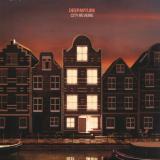
2026 has been the year of Deeparture as we have approached this milestone moment for the producer; quality releases from the Dutch artist have pathed the way to his debut album ‘City Reverie’.
‘City Reverie’ is all about Amsterdam – an album created, inspired and born in the great city. Deeparture finds home there but over the years it has been a place where his music has developed and grown into the stunning style he has created throughout this body of work. As an artist on Zerothree, he has been an important part of the label family and working on this album has really seen unique creative aspects, impressive themes and a work ethic that just inspires.
The album features collaborations alongside Lazarusman, Tim Morrison, Jantine, Yves La Rock and plenty of solo material that brings a retro proggy take on 2026 dance music. A real touch of genius and a great body of work that will be timeless.
Presenting ‘Nothing Is Lost’, A.Morgan continues his journey through high pressure, pummeling techno, this time on SIDE B. Proving the degree of his effect as well as his stylistic versatility, Morgan pulls different influences from afar to craft a record that pushes forward with a nod to the past through three powerful cuts and a remix by Yant. The EP starts with ‘Sucker Love’, appropriately named for its commanding rhythmic section while bleeding almost into house music with a hypnotic vocal loop. The track oscillates between stabs of cold dissonance and an extraverted flare, creating a natural intrigue throughout its progression. The follow up is Yant’s remix, a hyper-focused take on ‘Sucker Love’ with significant weight in the low end. Thundering percussion widens the dimension of the track, flicking through a brutal synth sequence over slithering hi-hats and claps. Yant reaffirms his understanding of uncompromising club music with this remix, creating a tunneling track fit for a concentrated peak-time set. Highlighting the B-side, A.Morgan takes back control of the record with the ‘Cloudfall’. Undulating the bass of the track, Morgan sneaks in a lurking melody that detunes throughout his arrangement, creating increasingly destabilized moments to pack intrigue in the cut. White noise whips around the production to create a storm of ambiance over a violently binary lead, underlining the undeniable effect of minimalism in techno. The EP concludes with the title track ‘Nothing Is Lost’, combining instructive percussion, biting chords, and cold vocals - as is Morgan’s custom. Here, the British artist brings a harmonic quality with the synth work that comes and satisfyingly completes the project. The embrace of the chord selection immerses the listener over a highly tuned rhythm, pushing ‘Nothing is Lost’ into a state of euphoria for the conclusion. Words by Noah Hocker
Sciahri and Sublunar are truly proud to present the next chapter in the label's journey: Hadone's debut album, Kept What Remained. Known as the co-founder of TSSRCT alongside UFO95, and following his contribution to Veil Of Echoes II, Hadone returns to Sublunar with a body of work that fully showcases the breadth of his artistic vision. Throughout the album, he reveals an impressive ability to merge emotional depth, powerful rhythms and sophisticated sound design into a deeply personal and unmistakable sonic identity, further establishing himself as one of the most compelling artists in today's techno landscape. The journey begins with the ambient title track, "Kept What Remained", an atmospheric introduction that sets the tone for everything that follows. It seamlessly transitions into "It Was Never Really Gone", a deeply emotional piece with a memorable arrangement that lingers long after it ends, before "Red Hour" raises the intensity through driving percussion and a tougher sonic approach. The B-side opens with "The Enemy Within", an explosive combination of intricate sound design and powerful rhythmic structures. It is followed by "Claim Your Due", a more submerged and atmospheric composition whose versatility makes it equally effective across different moments of a set. On the C-side, "Nobody Hears The Warning" gradually builds momentum through hypnotic energy and striking production, leading into "A Gentle Kind Of Madness", where beautifully crafted synth work and meticulous arrangements create one of the album's most distinctive moments. The final side begins with "A Dog That Learned To Speak", blending contrasting synth textures and detailed effects into a constantly evolving soundscape. The album concludes with "The Quiet Refusal", an epic and powerful closing statement that perfectly brings together the emotional intensity, coherence and artistic vision of the entire record. With Kept What Remained, Hadone demonstrates that innovation doesn't require sacrificing identity. Instead, he delivers an album that is bold, emotionally resonant and unmistakably his own, confirming his place among the leading voices of contemporary techno.
2026 Repress
Berlin-based duo Disguised land on Mutual Rytm with a splash of signature driving techno on ‘Nightrun’. German-born, Berlin-based pairing Alvaro and Domenik are Disguised, a duo that feels closely connected to their favourite club RSO and its Robus Floor, where most of their musical inspirations happen. They head up their own label, Inherit Records, and also host parties at Berlin's new C115 venue on the Berlin highway. Already this year, they have dropped an impressive collaborative EP with their studio partner and close friend Fabio, aka FANK, who features on this EP with his own vocals. Their sound is always defined by driving drums and hypnotic melodies that build up to intense dancefloor peaks, and here they showcase this to its fullest on their Mutual Rytm label debut via five vinyl-only cuts and three digital bonuses built and crafted to make a lasting impact. The powerful 'Where Thoughts End (ft. FANK)' rises up through the ground like an oncoming train, as drums rumble, synths peel off the groove, and moody voices have you looking over your shoulder. 'Nightrun' is glitchier and more textured, with a fractured energy that keeps you on your toes. 'Crusher Wheels' is a deep, back-lit, and trance-inducing sound made for 4am, while 'Ashes and Algorithms' layers up eerie melodic details with bulky drums for a spare but atmospheric trip. 'All You Find (ft. FANK)' is dubby, greyscale techno with a muscular rhythm and unsettling synths, taut and tensile, balancing right on a knife-edge. Three digital bonuses explore different moods - the subtle melodic touches of 'Silent Pulse', the cosmic energy of 'Sceptre Rd', and the rising optimism of 'Twinfall’.
Ribe & Roll Dann serve up potent techno on Mutual Rytm with 'Virtus Occulta'.
Built around concepts of unacknowledged work and enduring merit, the release marks their first EP on SHDW's widely
respected label.
Based in Toledo and Madrid, Ribe & Roll Dann are exciting residents at Laster Madrid and Lanna Club, two of Spain's leading venues. Emerging as driving forces in their national techno scene, they have also made an impact on the global landscape, making wider moves through collaborative releases on Klockworks, and individual outings on a number of other influential labels. Having previously featured in the label's Federation of Rytm IV compilation, the pair make their full EP label on SHDW's Mutual Rytm imprint to open March with a deep dive into their expansive sound.
Opener 'Sub Terra' is a pure club tool that is direct, physical and rooted in the underground with a seriously heavy low end. 'Extra Lumen' is more restrained but still built on a steady, forceful rhythm with controlled energy that prefers to operate in the shadows. 'Ars Non Placens' stays true to the idea that music is not made to please, but to exist on its own terms with hunched drums and dubby undercurrents. Next, 'Meritum Negatum' fizzes with static electrical charge and minimal drum funk and is a direct reflection on overlooked skill and unacknowledged work, before closer 'Virtus Persistens' delivers a continuity and a steady pulse rather than an explosive ending, keeping you locked throughout.
In addition, three digital bonus cuts come alongside the vinyl package. 'Labor Inauditus' speaks to hours of technique, production and booth experience that remain invisible. Next come the taught, rubbery rhythms and unrelenting atmosphere of 'Silentium Testium', while 'Sine Aplausu' - which means without applause - brings a ghostly late night vibe that you will never want to end.
Industrial badman Sei2ure back on PRSPCT release with a huge 2 track vinyl EP.
Some say industrial hardcore is dead. If that were the case then this one is for sure the one to bring it back to life!
On the A side we have Send You To Hell. A 175BPM monster containing almost everything both Sei2ure and PRSPCT stand for. Driving pounding kick drums, catchy hooks and that perfect dose of snare drum warfare making this the perfect track to kill it on both Hardcore & Drum & Bass events. Huge track!
On the flip we have Push The Prozac. A 190BPM beast tune pushing up the tempo a bit without losing the groove and that dark Industrial vibe we love to death and have been missing so much.
Again another release on PRSPCT that is All Killer, No Filler. Enjoy!
For the second release on 777Hz, ‘Hiss is Bliss’ teams up with the legendary singer ‘Linval Thompson’ who delivers an amazing vocal cut with his unique voice. Recorded in the heart of Kingston Jamaica at Caveman Studios the A side track takes it back to the roots! While on the B side the Dub version will send you straight back to Detroit.
In 1991, the rave scene was at its peak in Italy, and DJ Cirillo was right at the heart of it.
It felt only natural for him to join forces with another rave legend, Leo Young, and create four tracks that were pressed in extremely limited quantities and distributed by hand to a carefully selected group of DJs.
The record quickly found its way into the hands of some of the era's most influential figures, including Lory D, Grooverider, DJ Cirillo himself, and many others.
We are truly proud to present the official release of this record on a label—and even prouder that our label is the one bringing it to the world.
Thank you to the master, DJ Cirillo, for continuing to inspire us, and thank you to Leo Young for being a true pioneer and for always pushing things forward.d.d
Techno mainstay Gary Beck drops hugely sought-after cut 'Hopper' on SHDW's Mutual Rytm sub-label Spectra, with remixes from KiNK.
Glasgow-born Gary Beck is a primary figure in techno and has been for well over a decade. Dropping seminal
underground classics and cultured full-lengths on an array of leading labels, as well as his own BEK Audio imprint,
he has also led the way as a revered DJ as his legacy continues to build. Now, adding to his standout 'Upside
Criminal' EP as well as his well-received track 'Fold' on the 'Federation Of Rytm III' VA, he returns with a record that
has often featured in both his and Mutual Rytm boss SHDW's sets, stepping out on the label's Spectra series with
a cut that has long been sought-after by those who know.
A spontaneous studio moment turned club weapon, the timeless 'Hopper' merges a syncopated disco bassline with
subtle nods to funk and classic dancefloor energy. It's one of those tracks that lingers in your head long after the
night ends - a pure embodiment of Beck's raw energy and production finesse built on an infectious groove full of
contrast and character.
Bulgarian synth wizard, hardware genius and tireless innovator KiNK delivered Spectra's inaugural release, so he
lands as the perfect person to remix. His first interpretation stays close to his roots with a house-leaning, slowed
down take that channels warmth and groove in equal measure. On the B2, however, he flips the script with a high
octane fusion of techno and UKG. It's a peak-time anthem engineered to ignite dancefloors and closes out a
standout EP with the third release in the Spectra catalogue.
Gary Beck 'Hopper' drops via Mutual Rytm Spectra on 20th June 2025.
NOTON is pleased to announce the release of LICHTSTIMME and SCHATTENSTIMME by Alva Noto: two soundtracks for a film that never existed.
The starting point is E. T. A. Hoffmann's The Sandman: a world where perception and reality drift apart, and the question of identity remains unresolved. Recognition, in Hoffmann, is never quite secure. The doppelgänger is less a figure than a condition, the point at which the self can no longer vouch for itself.
The first record, LICHTSTIMME begins in an open, almost weightless sonic world. Something still appears untouched. The music carries a sense of proximity, clarity and trust. But this sense of certainty does not remain. Gradually, the proportions begin to shift. Sounds lose their definitiveness; familiar structures become strange. The music begins to question its own surface. What initially appears as light already contains the possibility of its shadow.
With the second record, SCHATTENSTIMME, the instrument enters the sonic space. The pieces were recorded together with percussionist Rainer Römer and the Ensemble Modern. A central role is given to the Sixxen, the extraordinary metallic percussion instrument originally developed by Iannis Xenakis together with Les Percussions de Strasbourg and instrument maker Robert Hébrard for Pléiades. Its resonances, unusual microtonal structure and distinctive timbre make it an instrument that resists being placed within a familiar musical context. Complete Sixxen sets are extremely rare and require highly specialised construction.
The instrument appears only on the second record. Its absence from LICHTSTIMME and its arrival on SCHATTENSTIMME are structural. It behaves like a shadow: present only when something else has already changed. With its appearance, it is not only the sound that changes. The entire musical space seems to shift its character. The Sixxen's metallic sound becomes the unfamiliar. The unfamiliar becomes a counterpart.
The two records follow an inner movement: from light to shadow, from trust to doubt, from identity to doppelgänger, and back to a harmony that is no longer quite the same. What emerges as an independent, personal sonic language has been transformed by the journey. The unfamiliar has not disappeared. It has become part of the self.
LICHTSTIMME and SCHATTENSTIMME are records about the instability of the familiar. Something is always almost recognisable and never quite confirmed, in the story, and in the sound.
Album art designed by Carsten Nicolai & Nibo.
NOTON is pleased to announce the release of LICHTSTIMME and SCHATTENSTIMME by Alva Noto: two soundtracks for a film that never existed.
The starting point is E. T. A. Hoffmann's The Sandman: a world where perception and reality drift apart, and the question of identity remains unresolved. Recognition, in Hoffmann, is never quite secure. The doppelgänger is less a figure than a condition, the point at which the self can no longer vouch for itself.
The first record, LICHTSTIMME begins in an open, almost weightless sonic world. Something still appears untouched. The music carries a sense of proximity, clarity and trust. But this sense of certainty does not remain. Gradually, the proportions begin to shift. Sounds lose their definitiveness; familiar structures become strange. The music begins to question its own surface. What initially appears as light already contains the possibility of its shadow.
With the second record, SCHATTENSTIMME, the instrument enters the sonic space. The pieces were recorded together with percussionist Rainer Römer and the Ensemble Modern. A central role is given to the Sixxen, the extraordinary metallic percussion instrument originally developed by Iannis Xenakis together with Les Percussions de Strasbourg and instrument maker Robert Hébrard for Pléiades. Its resonances, unusual microtonal structure and distinctive timbre make it an instrument that resists being placed within a familiar musical context. Complete Sixxen sets are extremely rare and require highly specialised construction.
The instrument appears only on the second record. Its absence from LICHTSTIMME and its arrival on SCHATTENSTIMME are structural. It behaves like a shadow: present only when something else has already changed. With its appearance, it is not only the sound that changes. The entire musical space seems to shift its character. The Sixxen's metallic sound becomes the unfamiliar. The unfamiliar becomes a counterpart.
The two records follow an inner movement: from light to shadow, from trust to doubt, from identity to doppelgänger, and back to a harmony that is no longer quite the same. What emerges as an independent, personal sonic language has been transformed by the journey. The unfamiliar has not disappeared. It has become part of the self.
LICHTSTIMME and SCHATTENSTIMME are records about the instability of the familiar. Something is always almost recognisable and never quite confirmed, in the story, and in the sound.
Album art designed by Carsten Nicolai & Nibo.
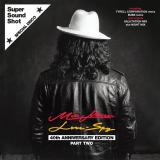
The first chapter of our 40th Anniversary celebration brought “Love Spy” back to vinyl and invited a new generation of producers to look at Mike Mareen’s 1986 classic from their own perspective.
Part 2 continues the story, but there is no reason to tell the same tale twice.
This time we reach once again into the original 1986 package and bring back the “Salutation Mix”, pairing it with two completely new remixes created by two remarkably colourful personalities from today’s European electronic underground.
And colourful is definitely the right word.
The first comes from Tyrell Corporation.
Behind that name stands Martijn Hoogendijk, better known to most electronic music heads as Alden Tyrell.
For almost three decades, Tyrell has been one of the most distinctive characters of the Dutch electronic scene. His musical world has moved freely between Italo Disco, electro, techno, acid, house and EBM, always with an obvious fascination for machines, analogue synthesis and the raw energy of early electronic dance music.
His relationship with Italo is certainly not a recent fashion. One of his earliest Alden Tyrell releases, “Love Explosion”, appeared on I-F’s Viewlexx label back in 1999, at a time when only a relatively small group of Dutch fanatics were already rediscovering and reinterpreting the forgotten European electronic sounds of the previous decade.
Since the early 2000s he has also been deeply connected with Rotterdam’s legendary Clone Records, not only as a producer and collaborator, but as one of its most important mastering engineers. His fingerprints can be found on an enormous number of Clone releases, including the label’s celebrated work restoring and reissuing the Drexciya catalogue. His studio tells much the same story. Synthesizers, drum machines and hardware collected over decades surround a producer whose fascination with electronic instruments started when he bought his first synthesizer in the 1980s.
For “Love Spy” he appears as Tyrell Corporation and delivers exactly what one might hope for from someone with that history: a remix that understands the original language of Italo and Hi-NRG, but speaks it with the experience of nearly three decades spent inside Dutch electro, techno and machine music.
The second new interpretation comes from France. Bubs, real name Maxime Bunel, followed a very different route.
His earlier productions grew from house, disco and French-touch influences, but over the last few years his attention has increasingly shifted toward Italo Disco, Hi-NRG and the rapidly expanding contemporary italowave scene.
In 2025 he made that commitment official by launching Filter Phaser, his own label dedicated specifically to the new generation of Italo Disco and Hi-NRG. And his “Love Spy” remix shows exactly why his name has been appearing more and more often in this scene. This one is pure dancefloor ammunition.
Bubs keeps the elements that make “Love Spy” instantly recognisable, but raises the temperature considerably. The energy is harder, the dynamics are bigger and the production has been pushed towards the sound of contemporary italowave without sacrificing the melody, drama and personality of Mike Mareen’s original. Old DNA, new blood.
The result is not an attempt to drag “Love Spy” away from 1986. Quite the opposite.
Both remixers clearly understand why the record still works forty years later. They simply approach that DNA from two different generations and two different corners of European electronic music, but with the same respect and adoration to Mike Mareen’s legacy.
The 40th Anniversary Edition Part 2 comes pressed on classic black vinyl and a special ruby-red vinyl edition.
It is also the final Vintage Pleasure Boutique release of 2026.
And somehow it feels like the right record to close the year.
The vibrant genre Eurodance originated in the late Eighties in Europe and combines many elements of rap and rich melodic vocals with strong bass rhythms and cutting-edge synthesizers. The 2LP Eurodance Collected compiles the best hits from Eurodance, including Snap! ""Rhythm Is A Dancer"", Technotronic's worldwide smash ""Pump Up The Jam"", catchy sing-a-long self-titled Captain Jack track, Dutch group Vengaboys' ""Boom, Boom, Boom, Boom!!, Belgium's hit-wonder 2 Unlimited's ""No Limit"" plus 22 other guaranteed dancefloor fillers. Eurodance Collected is available as a limited edition of 2000 copies on pink (LP1) and purple (LP2) coloured vinyl and includes an insert.
Eurodance Collected by Various Artists, released 19 April 2024, includes the following tracks: "Mc Sar & The Real McCoy - It's On You", "La Bouche - Be My Lover", "Vengaboys - Boom, Boom, Boom, Boom!!", "2 Brothers On The 4th Floor - Dreams (Will Come Alive)" and more.
This version of Eurodance Collected comes as a 2xLP. This release comes with (a) Insert(s).
The vinyl is pressed as a pink disc. Another vinyl is pressed as a purple disc.
Al Wahem (“The Illusion”) is the new full-length release by PRAED, the Swiss–Lebanese duo of Raed Yassin and Paed Conca. Recorded between Beirut and Berlin, the album returns to the group’s central aesthetic: a rhythm-driven weave of Egyptian shaabi, electronics, improvisation and the gritty pulse of street-level sound. Nearly twenty years into the project, PRAED have distilled their approach into four pieces that subtly shift the listener’s bearings, reordering grooves and fragments until familiar elements take on new identities.
The twenty-minute title track sets the tone. A tightly interlocking two-drum foundation from Pascal Semerdjian and Ayman Zebdawi shapes a structure that expands steadily: synth figures branch outward, clarinet and bass lines act as internal guideposts, and brief vocal calls from Yassin and guest singer Mayssa Jallad sit inside the texture rather than leading it. PRAED’s shaabi keyboard language is present, but the duo stretch it outward, building tension and movement through patient accumulation.
“Al Hathayan,” at 4:46, tightens the focus. Conca’s clarinet moves between melodic arcs and clipped rhythmic gestures, threading through electronic loops that surface and disappear. Zebdawi’s percussion adds a raw, tactile quality, placing acoustic patterns and electronics in direct conversation. The piece acts as a bridge between the album’s two long-form compositions.
Side B begins with “Al Maraya,” a thirteen-minute piece that relies on electronic, bass and clarinet interplay. The atmosphere nods to the breadth of PRAED Orchestra!, but remains anchored in the duo’s rhythmic foundations. Rather than building mass, the layering creates a sense of depth, as if new spaces were opening inside the groove.
The album closes with “Assarab,” featuring keyboardist Amr Said. Semerdjian and Zebdawi again form a dual percussive axis, while synths hover between melody and pulse, and themes recur in widening circles rather than building vertically. The porous boundary between electronic and acoustic sources — processed clarinet mistaken for a sequencer, rhythmic figures springing from live drums — is where the album’s theme of “illusion” shows itself most clearly.
Al Wahem follows a long arc: early releases on Annihaya, a key appearance on Ruptured Sessions Vol. 5 – Live at Radio Lebanon (2013), later albums on Akuphone, and the large-scale PRAED Orchestra! documented on Morphine Records. This new Ruptured/Annihaya co-release brings the duo back to a concentrated format, reorganizing their familiar materials with renewed clarity and intent.
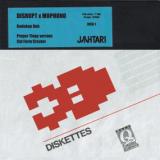
Hard-hitting limited 7” floppy disk by West Coast beat maestro Mophono, mashing up two 8bit mini epics by disrupt and shooting them into outer space.
“Budokan Dub” is the instrumental cut of Roger Robinson’s “Bristol Crystal” from the Jahtarian Dubbers Vol. 6 compilation: a bass heavy mutation of Rob Hubbard’s 1989 fighting game soundtrack, re-worked by disrupt on a DIY commodore synth, with added extra rocket fuel by Mophono, cranking the psychedelics up to eleven.
Made with the same DIY synth, “Proper Tings version” on B is based on the original riddim track for Tikiman’s “Who Goes There”. Mophono now sent it through the cosmic slice machine, turning it into a deadly sound system rattler, designed to take the roof off at those very special moments.
Coming with the additional beat tool “Dub Form Creator” and a nice’n’gritty floppy disc sleeve this crucial little data package is not to be missed!
2026 Repress
The dream team is back! Borrowed Identity and his boyhood friend Mechanical Soul Brother have been doing hot sessions in their studio and the output is the fantastic „Return to yourself EP“. All tunes have a classic yet modern house flair. The A-side is full of groovy rhythms, deeeeeep basslines, splendid vocals and subtle acid lines - „just be yourself“ might even slightly recall Larry Heard/Mr. White’s „the sun can’t compare“! The club friendly b-side offers two versions of „point of no return“. The 2 am version has those old schoolish drums and some blissful sounds and voices, just the way we love it, whereas the 6am version is the more straight forward, catchy early morning groover. What a return from Borrowed Identity & Mechanical Soul Brother! Watch out for the limited coloured vinyl edition!
COEO are back on Toy Tonics! After uninterrupted touring around the globe, followed by a short creative break the guys come back with an even stronger sound. With the new EP they go more underground again. Its addressed to the clubs and night owls out there, who turn night into day and won't stop dancing!
The sound is based on classic house patterns and includes a lot of cool saxophones, big piano stabs & rhythmic piano solos. They even go tribal, use arpeggios and switch into breakbeat heaven. The four Originals are a great next step in the COEO evolution. The unique warm, catchy atmosphere of the tracks can create that special COEO euphoria which made them a lot of fans. From Moodymann to Disclosure, Mall Grab to Kenny Dope, the list is long.
It’s fantastic to see how popular they became over the last couple of years. The last COEO vinyl sold over 2500 copies and some of their tracks have millions of Spotify plays. It’s DJ FOOD. Pure bliss!
The Shroud's appearance on Droogs is a masterclass in the fundamentals with four tracks that wear their influences proudly without ever becoming slavish to what has come before. Opener 'Cross' dives deep and rarely surfaces, rewiring classic shapes in murky bass underworlds. The title track is a rhythm slasher with steely-plated drums and growing low end menace, then 'Ouroboros' cranks the pressure to new levels without ever veering too far from meticulously programmed breaks. It has a schizophrenic panic to it in the scratchy textures and vocals that bleed in and out, then 'Restless Minds' closes things out with the sort of rhythm that gets you dropping your shoulder and fully locked in to each and every bump.
Bringing mutant verve and a deadly swing to the bassweight discipline, Lyeform lands on Sneaker Social Club in resonantly rude form. Strong doses of UKG, wormhole techno and dubstep course through the veins of this muscular four-deep drop, but the London-based producer's metabolism strips the strands down to an atomic level and rebuilds the dance in his own design.
There's a dense and dank mood hovering over 'Drift Into Dread,' shaped out by rugged, noisy percussion steering towards mind-melting immersion. Rather than resting in technoid repetition, the landscape keeps shifting as dislocated rhythmic phrases slide in and out of earshot, led by the disembodied toasting of a mysterious MC.
'Vintage Gilly' has a much starker sound palette, all crackling drums sparking static interference into negative space with subs so low you might mistake them for heart murmurs. All the better to savour the subtleties as they tease into the mix, not least the understated lead lines loping lazily on the threshold.
The 2-step swagger is unmistakable on 'Godkiller' as it comes bowling into earshot, but there's not a whiff of garage revivalism in earshot as we channel hop between metallic feedback interference and needlepoint noise snaking around the minimalist framework of the beat.
'Glass Eater' closes the record out on another skippy stepper, but here Lyeform makes room for cavernous dub techno chords, overdriven bass harmonics and teeth-grinding noise. It's a final maverick swerve from an artist carving out a formidable impression via micro-level textural exploration within the context of dark and deadly soundsystem tackle.
Originally released in 2006, John Acquaviva presents Swen Weber's ‘First Stroke’ returns on Secret Weapon Records with a
brand new remix from Luca Lozano. A defining Electro House record of its era, built around its instantly recognizable synth
theme, now gets a sharp 2026 update as Lozano moves the hook onto a break-driven groove, adding playful bass movement
and a futuristic vocal touch.
The remastered original is included on the flip, preserving one of the standout club records from the mid-2000s Electro House
boom.
MONSKI´S SOUND FEELS LIKE A 90s SKATEVIDEO ON VHS - ELECTRONIC, WARM AND LOVINGLY HANDMADE. IMPERFECTIONS WELCOME.
THE MAIN INSTRUMENTS DOUBLE BASS, GUITARS AND ANALOG SYNTHS MELT WITH INTENSE ELECTRONIC RHYTHMS TO DEEP AND HYPNOTIC GROOVES - INSTRUMENTAL AND MOSTLY DOWNTEMPO.
MONSKI EARNS HIS MUSIC GEAR BY SHOOTING FILMS - NO WONDER HIS SOUND IS OFTEN DESCRIBED AS CINEMATIC. INSPIRED BY VISUALS - ESPECIALLY BY CAPTURED PERSONAL MOMENTS WHICH OFTEN TURN INTO HIS RELEASES´ ARTWORK. IT´S HARD TO PUT THIS EP INTO A BOX - ITS UNIQUE STYLE HOVERS SOMEWHERE BETWEEN ORGANIC DOWNTEMPO, TRIP HOP, FOLKTRONICA AND HOUSE.
ENDUROS - 6 TRACKS OF MONSKI´S RAW SIGNATURE SOUND:
ROLLER: THE MOODY DRAGGING TRIP HOP GROOVE (88 BPM) STARTS DEEP AND REDUCED BUT RESOLVES INTO A WIDER CINEMATIC HARMONY OF SYNTHS AND STRINGS.
ENDUROS: EVOLVING FROM ELEMENTS OF ROLLER, IT SPEEDS UP TO 120 BPM AND ENTERS THE REALMS OF ORGANIC HOUSE / FOLKTRONICA. AN UNPOLISHED HANDMADE BEAT WITH DRIVING BASS AND GUITAR RIFFS, CULMINATING IN A MELODIC CLIMAX.
FUNZEL: ORGANIC DOWNTEMPO ELECTRONICA (100 BPM). WARM AND SOFT SYNTH CHORDS AND A SAX SAMPLE ADD A JAZZY FEEL TO THE RHYTHMIC FOUNDATION OF DOUBLE BASS, GUITARS AND PERCUSSION.
ADDITIONALLY THE EP ROUNDS UP THE ALREADY RELEASED TRACKS: RADIO BEAMER, ELECTRIC BOX, AND QUARTZ.
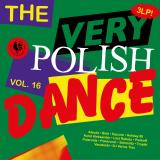
TVPCO has always been a label created by DJs, for DJs. The best proof of this was their sampler series tailored for eclectic sets, where floor-filling dance tracks were consistently contrasted with slower, more atmospheric cuts. Although the catalog gradually expanded to include more listening-oriented music, reissues, and artist albums, the label is returning to its roots for its 16th anniversary.
THE VERY POLISH DANCE VOL. 16 delivers 100% dancefloor bangers from the 70s, 80s, and 90s. The tracklist features gems like "Daj mi", "Serce to jest tancerz", "Zabawa", and "Graj dla nas, graj", along with a stack of delightfully cheesy, slightly cringe-worthy, but undeniable anthems sung in Polish. You'll definitely recognize some from the labels late-night parties (if you ever attended one) or the depths of the internet, while others will be complete surprises.
Both musically and visually, the release pays homage to the iconic Polish compilation tapes that flooded local open-air markets in the 90s, as well as the 80s promotional vinyl sent directly to radio and club DJs.
The brilliant, era-accurate artwork was crafted by the one and only Bartek Szymkiewicz.
Sincere yet uninhibited. Powerful yet vibrant. This remarkable debut album captures the breakthrough moment of rising pianist Mikio Masuda.
Mikio Masuda first came to prominence as a member of the Terumasa Hino Group, and this is his debut album as a leader. The musicians are essentially the same lineup that was performing with the Hino Group in 1974, but with Masuda at the helm, the music takes on an especially fresh and energetic character. He plays with remarkable freedom and confidence, as if completely at home in the spotlight.
Four of the album’s six tracks are Masuda originals. At times he moves forward with a light, agile touch; at others, he unfolds beautiful themes with lyrical sensitivity. The variety of the compositions and the freshness of the performances are consistently striking.
Among the highlights is “Prayer”, a powerful, Afrocentric piece that stands as an outstanding example of the post-Coltrane approach. Both compositionally and performance-wise, it ranks among the album’s defining achievements.
This album marks the starting point of Masuda’s career and remains one of his signature works, documenting the emergence of an artist who would later become one of the leading figures of the fusion era.
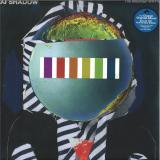
Celebrate a decade of a modern masterpiece. Originally released to critical acclaim, DJ Shadow’s The Mountain Will Fall gets a definitive reissue for its 10th Anniversary. Featuring the explosive, Gold-certified hit "Nobody Speak" featuring Run The Jewels, this album remains a towering achievement in instrumental hip-hop and experimental electronic production. This special anniversary edition is pressed on 2 x 140g classic black vinyl, delivering the rich, warm analog sound the album deserves. The release is housed in a stunning gatefold jacket showcasing brand-new artwork by the renowned artist Paul Insect, complete with premium spot gloss hits that make the visual design pop.
Bogdan Ra kicked off his new label Love Affair with some banging house cuts that threw it back to early Chicago styles. This third outing flips the script and shows his range with four disco sounds that take their cues from the late 70s and 80s: all the hallmarks are there, from the classic synths and vocoders to dusty drum machines. 'Complimento' is a smooth title track, while 'Shout' is a French-tinged funk workout., 'Paramour' glides through cosmic disco textures, while 'Fire in Cairo' brings an unexpected vocal twist and acrobatic bassline full of movement. Charming stuff.
Epicentre was an R&B/funk group formed in Seattle, Washington by keyboardist Ric Ulsky. The band developed a loyal following, playing the extensive NW club, concert and dance venues throughout the mid-to-late 1970s. Their sound was a blend of melodic R&B and powerhouse funk that dependably filled music venues throughout the Western US. Bernadette Bascom was the lead vocalist, who captivated audiences with her powerful yet velvet-smooth voice and commanding, magnetic stage presence.
In 1978, Epicentre worked with Seattle producer Don McKinney to record their music in Seattle's now legendary Kaye-Smith studios. The result was seven strong, fully -produced R&B songs, with occasional horn and string orchestrations tastefully added to the final versions.
Their music quite literally sat on a shelf for decades until McKinney decided that all the hard work and talent should no longer remain undiscovered and it needed to find its audience. He restored and digitized his copies of the master tapes and looked for an opportunity. A chance call to the former leader of the group, Kell Houston, led to a serendipitous introduction to UK boutique/funk/R&B label founder Russell Paine. The result was an agreement to release their music, starting with two songs, "When You Were In Love With Me", and "Magic Carpet."
And now the follow up single of "Searchin/Tongue Tied"
Footnotes: Lead singer Bernadette Bascom became a protegé of Stevie Wonder, and was the first artist to be signed to his label Black Bull , starting a period of collaboration between the two. Bermadette is the daughter of Reverend Dr. Marion C. Bascomb (1925-2012), one of Baltimore's major civil rights voices and pastor emeritus of Baltimore's Douglas Memorial Community Church. Ric Ulsky eventually left the group to play keyboards and tour extensively with The Association. You can also find Epicentre's music on the compilation album "Seattle Funk, Modern Soul & Boogie: Volume II 1972-1987." In addition to Bernadette, the musicians on the 1978 sessions are Kell Houston, keyboards, Michael Cox, bass, John Carmondy, guitar, and Ricky Lynn Johnson, drums and vocals. While their recorded material is primarily original, Stacy Christensen from Seattle's Gabriel contributed two of his compositions.