For its 3rd releases, Nubiphone is proud to present you a compilation of the best early 7inch releases of the mythical Cameroonian band Los Camaroes.
10 raw tracks taken from various singles from 1968 to 1975, that present the musical diversity played by those seven young people: Bikutsi, Afro-Funk, Jerk, , Soukous, Rumba & Blues music. The band led by the charismatic lead vocal Messi Martin that managed to modernized Cameroonian music. Deluxe edition that includes an 8-pages booklet, with exclusive pictures, biography in both English and French languages, and a HQ digital download
card.
Cerca:its a musical
Dwight Druick’s born in Montreal to a professional gambler and an ex-Radio City Rockette. One of five children, he grew up in a family buoyed by music and beleaguered by the vagaries of miscalculated risk. After attaining a McGill University bachelor’s degree in Art
History, Dwight fully embraced both music and risk by traveling to London, where he signed a contract with Pye Records and Joe Cocker’s management company. The ensuing record,
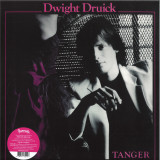
Druick & Lorange was released to critical acclaim and relative success. After returning to Canada, Dwight recorded two albums with Phil Vyvial: Midnight and Minuit. Recorded with the Muscle Shoals Rhythm Section in Alabama, the duo’s work achieved airplay success in Quebec and across Canada. Dwight subsequently released his first French language solo album, Tanger, released in 1980 by the Canadian label, Bobinason.
Today quite hard to find in its original version, Tanger is first of all an incredibly solid album, clearly underrated and deserving more credit. Mostly known by collectors and DJs for the
stunning cover of Toto’s classic hit, “Georgy Porgy”, which was produced and arranged with the help of George Thurston (Boule Noire), it includes many other tasty titles, with amongst
them another fine rendition of “Open Your Eyes” by The Doobie Brothers. In fact, with its brilliant mix of Modern-Soul, Disco and AOR styles, the whole album is already considered
by many connoisseurs as a classic, and clearly a must have for anyone enjoying this musical blend. Never reissued on vinyl until now, there was not much more needed at Favorite Recordings
to make it happened. Officially licensed to Dwight Druick, who was unfortunately not able to provide the original tapes, Tanger has been perfectly restored and remastered by Frank Merritt, at The Carvery, London. CD and digital edition will also come with “Georgy Porgy (Version Disco)” as a bonus track.
Rolf Hansen, who as a guitarist is originally rooted in jazz, has been one of the most in-demand studio and session musician in the Danish rock, pop, and folk scene. Between 2010 and 2017, he toured under the name Il Tempo Gigante as a solo artist and released two albums: »Lost Something Good« (Speed of Sound, 2010) and »Watch It Watch« (Resonans, 2014). With subsequent tours throughout Europe, he made a name for himself in the alternative folk scene.
After a phase of reorientation, he now releases his first purely instrumental record under his real name through the Berlin-based Karaoke Kalk label in September. On his third album »Elektrisk Guitar«, the many different influences Hansen has gathered as a composer, solo performer, session musician and producer shine through.
The concept of limitation - an album composed for and played with solo guitar - is being mirrored in the conception of the album itself. Not only does Hansen resolutely constrain himself to a sole instrument, he also eschews traditional composition techniques and follows an experimental approach.
»Elektrisk Guitar« is an album that enters into a dialogue with its conscious and attentive listener. Pieces whose melancholy is carefully weighed meet complex musical structures that again and again provide new challenges. In just 43 minutes, »Elektrisk Guitar« offers a plethora of ideas, impressions, details, and inspiration. And even more so, it opens up a room for its listeners to explore, precisely because its minimalistic compositions create a lot of space in which to get accommodated in.
Apart from his solo projects, Rolf Hansen has for several years been connected to Donna Regina as well as Anders Mathiasen (formerly Murder, now Vessel, DK) and Henriette Sennenvaldt (formerly Under Byen, DK) through close collaborations.
Max Duke's first LP “My Sins” is a journey between house and Techno via electronica, with a unique french house touch that forms an unusual and cohesive debut album. It’s the sound of the musical universe and the influences that have taken hold of the french artist. The album unfolds over the course of 11 tracks, each piece serving as a building block and the result of many months of Max’s work. It is the product of experimenting in the studio, seizing the mood of the moment and reflecting on life experiences. Each song has its own story and helps to complete and close the circle of this captivating musical journey. Guitar, piano and synths are his words in the story; the channel that perfectly transmits all the emotions and feelings bottled up in the album. The range of moods, tempos, impressions, sounds and rhythms oscillates between
downtempo and techno with hints of breaks and house.
Straight up dancefloor cuts like “Almost Done”, “Echoes” and title track “My Sins” rub shoulders with the closed-eye mind wandering soundtrack of “Covered”. “A New Reality” emerges as a tribute to 90s trance. The two sections of “Characters” explore an instrumental middle ground between almost orchestral and minimalism. “My Sins” is the work of an artist in constant movement and evolution who opens the door to his unique world in full. The album will be released 30th September on Redlight Music.
Jatinder Singh Durhailay and David Edren released Tea Notes as a cassette back in April of 2018. London-based Jatinder Singh Durhailay is a painter and student of Indian Classical music. He has trained in both the sitar and the Hindi singing technique, Dhrupad. He also plays two traditional Sikh instruments; the bowed, stringed Dilruba and Taus. Poetic Pastel Press issued his solo debut, The Last Ballad Of Mardana, in 2017. David Edren`s expertise lies with machines and modular synthesis. His Kosmische and New Age-Inspired electronics have featured on numerous cassettes, and compilations, produced for imprints from the current Belgian underground, such as Jj Funhouse, Social Harmony, and Ultra Eczema. These recordings appearing, since the turn of the millennium, either under his own name, or the moniker DSR Lines. Jatinder and David’s collaboration, Tea Notes, is a celebration, a meditation, on both the beverage, and the communal time shared imbibing. The coming together to partake in its ritual. Each of the six tracks represents a different infusion. The opening piece is a tribute to semi-oxidised Oolong, from China`s Wuyi Mountains, with hammered dulcimer-like glissando. Gongs shimmering, gently crashing, as if signaling a change in the weather. A calm of thin, stretched synths and Ai angels introduces Tulsi from India. The Holy Basil of Hinduism, used in the worship of Vishnu, Krishna, and Rama. A traditional herb of Ayurveda and Siddha medicine. Automated arpeggiated sequences raising a vibrating wall of hallucinatory sound. Pairing swooning strings with a racing robot heart. Ceylon is a modern twist on the classical raga. Serving to tell the story of a tea smuggled into Sri Lanka in the 19th century. Plants stolen from South West China, where the brew had been enjoyed since the days of the Shang Dynasty (1766 to 1122 BC). The contraband founding fresh industry in its new home when the indigenous coffee crops failed. Muted organ and sleepy, treated sine wave microtones describe Kava, the Polynesian fireweed root, whose extract serves as both sedative and euphoriant.Shincha are the first young leaves of the season. Picked in Southern Japan and steamed to prevent oxidization, retain their flavour and green / gold colour. Their musical counterpart finds Edren establishing an ecclesiastical drone, while Durhailay`s strings chart an ancient romantic ache. Sonic stars shine. Singing out to the infinite, the universe, before dissolving into knots of Radiophonic Workshop noise.Melodies treated with subtle sustain and delay denote Pu-Ehr, from the Yunnan province. The only truly fermented black tea - made distinctive by the action of bacteria, moulds, and yeasts. Its musical themes hovering in the vapour trails, the atmospheres, they themselves create. Spiraling, soaring, reaching for the heavens, while pretty music box glitches - tiny chimes turned in on themselves. Catching, reflecting, like light at play on fresh running water. (words: Robert Harris)
The Juan Maclean return to DFA with a compilation LP of 12-inch singles they’ve amassed over the past six years – re-edited, re-mastered, and ready for fans who may have missed the tracks the first time around. From the dub house sway of 2013’s “You Are My Destiny” to the high-energy stomp of this May’s “Zone Non Linear,” and featuring two never-before-released tracks, “Quiet Magician” and “Pressure Danger,” The Juan Maclean once again justify their longevity as a musical force that is more than capable of repurposing club tracks for every setting.
The Brighter The Light is put together in a way that lends itself to appreciating the sheer banging quality of the songs while simultaneously being able to dance to them in your living room. For example, take “Feel Like Movin,’” which Pitchfork called “gloriously beatific” and “pure DFA gold.” In the new remastered version, the fullness of the keys and the kicks takes over, unfurling across the listener. Deep house rhythms, sparkling synths and a certain spaciousness are what’s emphasized across the record. Gone is the slow-motion melancholy disco from their recent full-lengths – The Brighter The Light is all fierce enthusiasm and dance floor missives, perfect for those who aren’t quite ready to let go of summer.
Juan Maclean is a DJ and producer who has been a mainstay of the New York club scene, as well as maintaining a rigorous international touring schedule, since the release of his first records on DFA in 2002. Vocalist Nancy Whang is his longtime collaborator, best known as a founding member of LCD Soundsystem and a busy touring DJ. Together, the two artists have released an extensive catalogue of 12” singles and full-length albums for DFA, including 2014’s seminal In A Dream LP. The proper follow-up studio album will follow in 2020.
- A1: Rainbow Deux (6 57)
- A2: Let Love In (6 14)
- A3: Sigh (4 08)
- B1: The Darkest Night (7 32)
- B2: Surrender Now (6 08)
- B3: Summer Is Her Name (4 37)
- C1: Are You Ready (3 18)
- C2: Streets (Keep Me Runnin’) (7 00)
- C3: Samba Dreams (3 20)
- D1: Let’s Go Deep (5 27)
- D2: We Should Be Laughin’ (3 45)
- D3: Wishful Thinking (4 00)
TThe melodically adventurous soul of Leon Ware continues its expression in his final opus Rainbow Deux, released on double vinyl on September 13th. The album features new songs recorded and performed by Leon before his health turned, leading to his transition on February 23rd 2017. Co-produced by Taylor Graves, it has stellar musical contributions from the likes of Kamasi Washington, Thundercat, Ronald Bruner Jr, Rob Bacon and Wayne Linsey.
Taylor Graves came into Leon’s musical family in 2002 when he, his brother Cameron and the Bruner brothers Ronald Jr and Stephen (Thundercat) were playing along with their schoolmate Kamasi at an L.A. jazz club. Taylor, Cameron, Ronald and Stephen became Leon’s band for his debut shows in Japan in 2002 and Taylor continued to work with Leon as his mentor and collaborator over the next 15 years.
“Leon was ALWAYS writing something or developing his musical palette” his wife Carol Ware tells us, so it’s impossible to pinpoint any single moment of Rainbow Deux’s genesis. Six of the songs go back to 2012/2013 and were released in 2014 as part of Sigh, a Japan-only CD collection heavy with Rob Bacon’s tasteful licks and Wayne Linsey’s piano vibes. The rest of the material comes from Leon’s sessions with Taylor.
Describing Leon’s and his process, here’s Taylor: “We’d start by having some great homemade food! Then a glass of wine ‘to slow down time’. After we’d have our fill and smoked our joints we’d go into his studio room to listen and create.”
The album was finished-up around August of 2016 in a back-and-forth between Leon and his go-to mastering engineer Toni Economides in the UK.
Leon worked on Rainbow Deux with life’s greatest challenge looming over him, yet it is one of his most focused and cohesive solo offerings since the 1980s. The entire record is a vibe: mellow, deep and smooth as silk. The lyrical themes are eternal, and the music is elegant, soulful and sensual.
The album opens with the hypnotic throb of “For The Rainbow”, coming on like a percussive, slow-mo house shuffle. Gilles Peterson is a fan. The exotic “Let Love In” follows, with its gradual-build Island Funk, intricate guitar picks and sassy female vocals. It explodes when it hits its stride. “Sigh” is the stylish slow jam close-out to side A. Serene guitars and polished drums create neck snapping funk, with a swaggering finger-snap strut.
Side B opens with the easy-burning broken-beaty “The Darkest Night”, the centrepiece of the album. Kamasi Washington’s lurking sax, restrained and beautiful, unfurls into the dank, sticky atmosphere of Thundercat’s signature creeping bass laid over his brother’s in-the-pocket drums. Leon’s vocals are perfect, a masterclass in seductive sax-soul.
“Surrender Now” conjures waves of vocals to swell and wash over the glossy piano, subtly bumping hip-hop drums and bubbling synth-bass stabs. It’s got the trademark Leon layers. “Summer Is Her Name” has Kamasi’s effortless, melancholic sunshine sax give way to rising tempos and propulsive rhythms.
“Are You Ready” is a total highlight (and we’ve been playing it out for ages). It’s a nimble groove of piano and synth rolling around Theo Croker’s sensual trumpet playing. Digi-soul at its finest. With lush G-Funk sensibilities “Streets (Keep Me Runnin’)” sounds like a lost Dam-Funk produced gem. All tough kicks and snares and street sounds. Leon’s hood pass will be forever intact.
“Samba Dreams” is the first of two tracks that bring a little Rio magic to Rainbow Deux. Leon created a whole body of work in partnership with Brazilian legend Marcos Valle that includes “Rockin’ You Eternally” - a hit for Leon - and “Estrelar” – a hit for Marcos. Leon channels his obvious love of Brazilian music here through more of Croker’s sumptuous trumpet, played over loose percussion. “Let’s Go Deep” is next up. A dreamy between-the-sheets quiet storm anthem and a real showcase for Leon’s vocals.
The dripping, honeyed harp-funk of “We Should Be Laughin’” marks the star turn of the brilliant Kimbra. Leon first met her on-stage to do an impromptu duet of “Inside My Love” during an open-air celebration of Minnie Riperton in July of 2014. Kimbra was working with Taylor on her music and he brought her to Leon’s house to do some writing. This was the result.
Warm synths radiate shuffling samba soul on “Wishful Thinking” as those Brazilian rhythms return to bring Rainbow Deux to a close.
During an apartment move Leon and Carol rediscovered some watercolours Leon had done years ago. One of these paintings had been dubbed “Deux Hearts” and Leon decided it should be on the cover of Rainbow Deux, getting as far as approving a draft concept for the artwork.
Carol has overseen developing that draft into the final gatefold sleeve. It brings together quotes, photographs and tributes in what is a reflection on the music, relationships and philosophy of the sensual minister.
Gerry “the gov” Brown, Leon’s long-time sound engineer, was by his side throughout the project, recording and mixing. The album was mastered by Toni Economides and Simon Francis’ additional sensitive work makes sure this double LP sounds like it should on vinyl.
Be With’s first ever release was Leon’s eponymous LP. Re-issuing that album planted the seed of a relationship that has grown to grant us the privilege of presenting his crowning achievement. We know that Leon’s fans all over the Earth will love Rainbow Deux. But we also hope that this album, the final entry in a phenomenal body of work, will reach new fans and find fresh conduits for the spirit of this oft-unsung hero of Soul.
Leon always said “they will get it when I'm gone.”
He also said that “the spirit never dies”…
Acclaimed by many as one of the greatest and rarest library LPs of all time, the album 'FEELINGS' by Jay Richford & Gary Stevan aka Stefan Torossi. With its iconic 'naked lady in the wild' cover, has been coveted for many years by collectors of all musical genres. This album showcases some outstanding compositions & arrangements that explore the exciting connections between rhythmic funk and orchestral jazz - and are now for the first time issued on 7" 45 vinyl double pack!
We open with the uplifting “Running Fast” - a driving, pulsating groove laden with Fender Rhodes and swept along by lush strings. If you're not feeling it - book an appointment to see your doctor! Next follows a B-Boy dancer filled with battle floor emotion - “Fearing Much” - this one packs a heavy bass and syncopated drum groove with dramatic, stirring strings. A must have 45 DJs fave! The opening drum break to “Feeling Tense” gives way to mellow vibes with a deep bass, silky strings and charged horns that deliver the perfect slick, down-tempo groove. Last one is another down-tempo vibe heavy on the bass and strings, “Walking in the dark”.
All in all yet another MUST HAVE Dynamite Cuts 45!
After an intrepid new phase in the label’s history - initiated by the “Solidarity Forever” series and followed by releases from Katerina, Mujaji The Rain, Gladkazuka and also Matias Aguayo’s “Support Alien Invasion” (w/ “Crammed Discs”) - Cómeme is happy to announce a new release by a wonderful and unique artist, who chooses to walk adventurous paths beyond nowadays musical normativity, and media spectacle: JOE.
(You might already be acquainted with his releases on the ever - exciting “Hessle Audio” label) On his first EP on Cómeme, JOE invites us to “Get Centred” via fresh sounds, perfect beats, and unusual time signatures – difficult to play, and easy to dance!
A1 GET CENTRED
New rhythms inspire new dances and new ideas, and already at the very first bars you realize that this record can be both a joyfully twisted dance floor work out as also beautiful listening experience - with its shifting arpeggios and trippy crescendos. Reminiscent of minimalist milestones it crosses the artificial barriers between body, mind and soul, satisfying those in need of getting centred, in times of accelerated alienation...
A2 LINE TO EARTH
Triplets are back and here to stay! Such as in this percussive creature Joe unleashes onto the festive crowd. This very catchy jam is clever and intense drum programming at its best, with its swirling toms that seem to float in the air. We feel them activating different body parts for futuristic popping, whereas the relentless boogie rhythm that lays the foundation for this track gives us material to twist our legs in sync to the beat.
A3 RIO LEA
Joe closes this EP with “Rio Lea” - an elegantly swinging jam that smoothly and slowly builds up to a melodic meditation. Its many decorative elements seem all - necessary to make this work and are always falling rightly into place. You can imagine this a perfect fit for a long drink on a spacecraft, watching meteorites pass by, as we are sure it will also work in a bus on headphones late at night, watching the rain rolling down the windows...
- A1: Penny Penny - Shilungu
- A2: Alaska - Accuse (Instrumental)
- B1: Ze Spirits Band - Tucheza (Esa Extended Mix)
- B2: Nonku Phiri - Sîfó (Feat. Dion Monti)
- B3: Os Panteras - Melo Do Anjo (Outra Edit)
- C1: Pascal Latour - Lague Yo (Boulo Edit)
- C2: Masalo - Yera (Feat. Doussou Koulibaly)
- D1: Esa - Pantsula Traxx
- D2: Narchbeats - Cheeks
- D3: Dj Spoko - #Justsnares
Esa's compilation Amandla: Music To The People holds diverse dancefloor tracks from over the world. The first compilation in 2019 for Soundway and a comprehensive picture that connects the dots of Esa’s musical journey.
Growing up in Cape Town, South Africa, during the last days of Apartheid, Esa recalls the immense power that music had in resisting oppression and division. “Amandla, Awethu”, which literally means “the power is ours”, was an ubiquitous chant echoing throughout the politically charged atmosphere of the time – a call to unite, and a call from which this release derives not only its title, but its intention as well.
“Music was a crucial way of bringing people and communities together”, reflects Esa, “and it’s what I hope to achieve with this compilation, too”. For Esa Williams is not only a musical polymath but also passionate about connecting people through music – be it as a skilled DJ, an educator in production, a band leader reigniting the legendary Ata Kak band from Ghana, or a collaborator with the likes of Tanzanian artist Mim Suleiman. A firm favourite on the DJ circuit, he held a monthly residency at Phonox London for over 6 months - bringing guests such as Nu Guinea to Brixton audiences - as well as delivering memorable sets at Dekmantel, Atlas Festival, Boiler Room and more.
The last few years have seen a recent surge in interest in South African music from the 80s and 90s, including bubblegum, which was recently showcased on Soundway’s critically acclaimed 2018 compilation Gumba Fire: Bubblegum Soul & Synth Boogie in 1980s South Africa, put together by DJ Okapi. It was only natural that the label looked to delve deeper into the country’s rich musical legacy and tap another of its esteemed ambassadors for the role of compiler.
The result is a rainbow of complementary electronic styles hailing from not only South Africa but further afield, including zouk from Brazil and the French Antilles, as well as Afro-futurism. Together, they form a comprehensive picture that connects the dots of Esa’s musical journey – from growing up in South Africa, to artists he has encountered in his worldwide travels who have helped develop his identity as a musician.
- A1: Jacques Thollot - Cécile
- A2: Philippe Besombes - La Plage
- A3: Igor Wakhévitch - Materia-Prima
- A4: Mahjun - Les Enfants Sauvages
- B1: Lard Free - Warinobaril
- B2: Etron Fou Leloublan - Le Désastreux Voyage Du Piteux Python
- B3: Jean Cohen-Solal - Captain Tarthopom
- C1: Z. N. R. - Solo Un Dia
- C2: Red Noise - Sarcelles C’est L’avenir
- D1: Pierre Henry - Générique (Thème De Myriam)
- D2: Horrific Child - Freyeur
- D3: Dashiell Hedayat - Fille De L’ombre
- D4: Jean Guérin - Triptik 2
After years of mythology, misinterpretation and procrastination Nurse With Wound’s Steven Stapleton finally chooses Finders Keepers Records as the ideal collaborators to release “the right tracks” from his uber-legendary psych/prog/punk peculiarity shopping list known as The Nurse With Wound List, commencing with a French specific Volume One of this authentically titled Strain Crack Break series. Featuring some Finders Keepers’ regulars amongst galactic Gallic rarities (previously presumed to be imaginary red herrings) this deluxe double vinyl dossier demystifies some of the essential French feee jazz and Parisian prog inclusions from the alphabetical “dedication” inventory as printed the anti-bands 1979 industrial milestone debut.
When Steven Stapleton, Heman Pathak and John Fothergill’s anti-band Nurse With Wound decided to include an alphabetical dedication to all their favourite bands on the back of their inaugural LP the notion of creating a future record dealers’ trophy list couldn’t have been further from their minds. By adding a list of untravelled European mythical musicians and noise makers to their own debut release of unchartered industrial art rock they were merely providing a suggestive support system of existing potential likeminded bands, establishing safety in numbers should anyone require sonic subtitles for Nurse With Wound’s own mutant musical language. Luckily for them, the record landed in record shops in the midst of 1979’s memorable summer of abject apathy and its sound became a hit amongst disillusioned agit-pop pickers and artsy post-punks, thus playing a key role in the bourgeoning “Industrial” genre that ensued. On the most part, however, the list , like most instruction manuals, remained unreadable, syntactic and suspiciously sarcastic... As potential “real musicians” Nurse WIth Wound became an Industrial music fan’s household name, but in contrast many of the names on The Nurse With Wound List were considered to be imaginary musicians, made-up bands or booby traps for hacks and smart-arses. It took a while for the rest of the record collecting community to catch on or finally catch u
Since then, many of the rare, obscure and unpronounceable genre-free records on The Nurse With Wound List have slowly found their own feet and stumbled in to the homes of open-minded outernational vinyl junkies, D’s and sample hungry producers, self-propelled and judged on their own merit, mostly without consultation of the enigmatic NWW map. But, to the inspective competitive collector’s chagrin, one resounding fact recurs, NWW got there first! Via vinyl vacations, on cheap flights and Interrail tickets, buying bargain bin LPs on a shoestring while oblivious to the pending pension worthy price tags after their 40 year vintage, Stapleton and Fothergill, even if you’ve never heard of them, were at the bottom of the pit before “digging” became paydirt. And NOW at huge international record fairs that occur in massive exhibition halls (or within the confines of your one-touch palm pilot) amongst jive talk acronyms such as SS, PP, BIN, DNAP and BCWHES the coded letters NWW have begun to appear on stickers in the corner of original copies of the same premium progressive records accompanied by a customary 50% price hike to titillate/coerce the initiated as dealers extort the taught. Like “psych” “PINA” or “Krautrock” did before, “NWW” has become a buzzword and in the passed decades since its first publication The List has been mythologised, misunderstood and misconstrued. It’s also been overlooked, overestimated and under-appreciated in equal measures, but with a growing interest it has also come to represent a maligned genre in itself, something that all members of the original line-up would have deemed sacrilegious. Bolstered by the subtitle “Categories strain, crack and sometimes break, under their burden,” all bands on the inventory (many chosen on the strength of just one track alone) were chosen for their genre-defying qualities... A check-list for the unchart
Forty years after Nurse With Wound’s first record, Finders Keepers Records, in close collaboration with Steve Stapleton remind fans of THIS kind of “lost” music, that there once existed a feint path which was worn away decades before major label pop property developers built over this psychedelic underground. As long-running fans and liberators of some of the same records, arriving at the same axis from different-but-the-same planets, Finders Keepers and Nurse WIth Wound finally sing from the same hymn sheet resulting in a collaborative attempt to officially, authentically and legally compile the best tracks from the list, succeeding where many overzealous nerds have deferred (or simply, got the wrong end of the stick). Naturally our lavish metallic gatefold double vinyl compendium would only scratch the surface of this DIY dossier of elongated punk-prog peculiarities hence out decision to release volume one in a series which, in accordance with Steve’s wishes, focusses exclusively on individual tracks of French origin, the country that unsurprisingly hosted the highest content of bands on the list. Comprising of musique concrète, free jazz, Rock In Opposition, Zeuhl School space rock, macabre ballet music, lo-fi sci-fi, and classic horror literature inspired prog, this first volume of the series entitled Strain Crack And Break throws us in at the deep end, where the Seine meets the in-sane, introducing the space cadets that found Mars in Marseilles.
Like the Swedish flat-pack record shelves that attempt to house the vast amounts of vintage vinyl that goes into a multi-volume compilation like this, its time to prepare your own musical penchants and preconceived ideas about DIY music and hear them slowly strain, crack and b
Matasuna Records once again dug deep for its latest release and comes up with probably one of the best Latinfunk tunes. It was recorded by US band "Los Sobrinos del Juez" and released on their debut album in 1974. Matasuna Records is delighted to officially reissue two cuts from the album on 7inch single.
Founder, producer and singer of the band is Carlos Oliva, who was born in Cuba. He moved to Miami, Florida in 1961, where he had his first engagements. There he linked to other Cuban musicians and decided to move to New York with them to make music.
Some time later Oliva returned to Miami and founded his own band "Los Sobrinos del Juez (The Judge's Nephews)" in 1967. The group is regarded as one of the pioneers of musical fusion, which developed in Miami in the late 1960s and became known as the "Miami Sound". The music styles rock, blues, funk and soul that were popular at that time had an influence on their own compositions, which were enriched and spiced with Cuban/Latin American sounds. The band's first album was released in 1974 on an independent label in Miami and is a good example of this new sound. The album is much sought after and hard to find.
Oliva has released several albums with the band and toured Latin America and Europe. In the early eighties he also founded his own label. In the course of time he and his eight-man band got deeply rooted in the cultural life of Miami and enjoy attention and recognition. They are still on stage as "Los Sobrinos del Juez".
"Harina de Maiz" is the name of the song on the A-side - an uptempo latin funk monster driven by the characteristic wah wah guitar and a psychedelic sounding organ. Listening to it reveals why the song is one of the most funky Latinfunk tunes.
On the flip side it's quite different: "Corned Beef Hash" is a vibrant easy Latinjazz tune, where the talent of the musicians is audible. The perfect interaction of the piano player, the vibraphonist, the flute player and the rest of the band is a musical delicacy for its connoisseur.
a A1 Harina de Maiz clip
- A1: A Roller Skating Jam Named Saturdays - De La Soul Featuring Q-Tip & Vinia Mojica
- A2: Bonita Applebum - A Tribe Called Quest
- A3: Sunshine Men - The Freestyle Fellowship
- A4: Mistadobalina - Del Tha Funkeé Homosapien
- A5: What's Up Doc? (Can We Rock?) (K-Cut's Fat Trac Remix) - Fu-Schnickens With Shaquille O’neal (Shaq-Fu)
- B1: Doowutchyalike - Digital Underground
- B2: Peachfuzz - Kmd
- B3: Doin' Our Own Dang - Jungle Brothers
- B4: Mama Gave Birth To The Soul Children - Queen Latifah Featuring De La Soul
- B5: O.p.p. - Naughty By Nature
- C1: Where I'm From - Digable Planets
- C2: It's A Shame (My Sister) - Monie Love Featuring True Image
- C3: K Sera Sera - Justin Warfield
- C4: All For One - Brand Nubian
- C5: Case Of The P.t.a. - Leaders Of The New School
- D1: My Definition Of A Boombastic Jazz Style (Album Version) - Dream Warriors
- D2: The Choice Is Yours (Revisited) - Black Sheep
- D3: Age Ain't Nothin' But A # - Chi-Ali
- D4: We Run Things (It's Like Dat) - Da Bush Babees
- D5: You're Not Coming Home (Mase's Funkay Recall Mix) - Groove Garden
It wasn’t really a movement, barely even a moment, but the Daisy Age was an ethos that permeated pop, R&B and hip hop at the turn of the 90s. Playfulness and good humour were central to De La Soul’s 1989 debut album, “3 Feet High And Rising”, which would go on to cast a long, multi-coloured shadow over rap.
In Britain, the timing for “3 Feet High And Rising” couldn’t have been better. The acid house explosion of 1988 would lead to a radical breaking down of musical barriers in 1989, and its associated look – loose clothing, dayglo colours, smiley faces – chimed with the positivity of De La Soul and rising New York rap acts the Jungle Brothers and A Tribe Called Quest, all at the heart of a growing collective called Native Tongues.
The Native Tongues’ charismatic, summery aura quickly spread west to the Bay Area’s similarly-minded Hieroglyphics crew (Del Tha Funky Homosapien’s ‘Mistadobalina’); Canada’s Dream Warriors (‘My Definition Of A Boombastic Jazz Style’) used “3 Feet High”’s colour palette and borrowed Count Basie and Quincy Jones riffs; Naughty By Nature (OPP) were mentored by Native Tongues heroine Queen Latifah, while Londoner Monie Love was also adopted by the collective, resulting in her Grammy-nominated ‘It’s A Shame (My Sister)’.
It wasn’t built to last, but the Daisy Age reintroduced Multiplication Rock, bubble writing and the gently psychedelic into the charts. It was a brief, but extraordinarily warm and optimistic moment. The songs on this collection promised that the 90s would be a lot more easy-going than the 80s.
Available on CD and double LP.
Can it really be thirty years since The Brand New Heavies first sashayed into the public eye with a romantic’s heart, a hedonist’s spirit and a Superfly sensibility?
A heady cocktail of Chic-style funk-pop, sunshine grooves and scorched soul balladry, the release of TBNH on September 6th sees The Brand New Heavies writing a new chapter in what has been an illustrious journey whilst also marking a return to their spiritual home, Acid Jazz Records.
Today The Brand New Heavies share a breath-taking version of Kendrick Lamar’s These Walls recorded with long-time associate and vocalist N’Dea Davenport and produced by uber-fan Mark Ronson. It was that line-up of the band that had originally brought the funk into his life having caught their show in New York in 1991, later inviting them to play at his 40th birthday party. Insistent once more to reconvene that line-up, successfully reuniting N’Dea and The Heavies for his production of this track for their 30th-anniversary album.
The album’s heart, both musically and physically is a friendship that can be traced back to the mid-Eighties - more specifically the shared experiences growing into adulthood on the western reaches of London for Simon Bartholomew (guitar) and Andrew Levy (bass) and a return to the formula that saw the band score sixteen Top 40 hits and three million album sales.
Refined, reimagined and revisited, TBNH was recorded under the watchful eye of producer Sir Tristan Longworth, as Andrew elaborates; “as fathers of young kids, time was important, and we needed someone to crack the whip.” Adding further with a grin; “he also makes these amazing gin and tonics with chilli’s in. The pair also decided to feature various vocalists on these tracks, not only reuniting with Heavies alumni, N’Dea Davenport and Siedah Garret but collaborating with soul legends Beverley Knight and Angie Stone alongside current singer Angela Ricci and new boy on the block, label mate Laville – to present a gilt-edged collection of songs making arguably the best album of their career. Summed up by its cover artwork- shot in the suitably louche environs of ultra-hip nightspot Annabel’s – Simon explains with a smile; “It’s a bit clubby, a little bit sleazy, with a bit of luxury and a smidgen of street.”
- A1: Catherine Brénot – Et Tout Est Yin Et Tout Est Yang (Club Mix)
- A2: 1 Plus 1 – Coming Up For Air (Instrumental)
- A3: Fragile - We've Got Tonight, Boy
- B1: Jarmaz – Night City Life (Disco Remix)
- B2: Friend Of Mine – Just Your Pride
- B3: Mac & Monica – You’re So Good To Me
- B4: Sala & H – Feel The Love
- C1: Alexandra – Fantasia (Fantasy)
- C2: Gioia – No Secrets (Instrumental)
- C3: Janelle – Don’t Be Shy (Dub)
- D1: Alessandro Scellino – Dinner In The Jungle (Erotic Mix)
- D2: Brian Tatcher – Hot Love (Instrumental Dub Version)
- D3: Preludio – Mysterious Nights
Should you find yourself taking a Thames-side stroll in the shadow of the City of London, keep an eye out for the headphone-clad figure of Ilan Pdahtzur. While be-suited bankers and frustrated office workers scurry home to their families, Ilan can frequently be found casting admiring glances towards the blinking lights of towering skyscrapers while filling his ears with the synthesizer-driven sounds of lesser-known 1980s dance music.
Ilan, an avid but little-known record collector best known for sharing the artwork of obscure and under-appreciated early-to-mid ’80s club cuts on his popular Instagram feed, has been digging for vibrant, kaleidoscopic records since his teens. Now, thanks to Spacetalk, he’s been given a chance to offer a glimpse into his neon-lit nocturnal musical world.
The result is Night City Life, a killer collection of 1980s synthesizer songs inspired by Ilan’s admiration for the glow of London’s late night skyline. Over the course of 13 essential tunes, Ilan escorts us on a vibrant sprint through rare Italo-disco, steamy South African synth-boogie, fizzing American freestyle, oddball Austrian electrofunk and so much more.
There are naturally a fair few sought-after cuts present, but also a fine selection of under-appreciated gems that for one reason or other have been all but ignored since they were released three and a half decades ago. In fact, some selections are so obscure that barely any information exists about them online.
Check for example Preludio’s “Mysterious Nights”, an evocative fusion of slow electronic grooves, dreamy chords and twinkling piano motifs previously buried on a lesser-known album of unremarkable German synth-pop, or the dollar-bin brilliance of Fragile’s sweet synth-pop gem “We’ve Got Tonight, Boy”, a cut that Ilan says is capable of “wrapping itself like tendrils around your soul”. He’s not wrong.
At the other end of the scale you’ll find the ultra-rare Italo-disco breeziness of Friend of Mine’s incredible “Just Your Pride” and Mac & Monica’s soulful 1986 South African synth-boogie cut “You’re So Good To Me”, copies of which regularly change hands for hundreds of pounds online. Ilan originally reached out to the men behind the record last year to tell them how one of their other forgotten gems had been played on a Boiler Room session; naturally, they were thrilled.
There’s plenty to admire elsewhere on the compilation, too, from the waves of analogue synths, bubbly melodies and bobbing beats of the instrumental dub version of Brian Tatcher’s “Hot Love” – a cold-war era cut inspired by the idea of love blossoming in the midst of a nuclear meltdown – to the Bobby Orlando-esque freestyle bustle of Janelle’s “Don’t Be Shy (Dub)” and the sparkling post-boogie brilliance of Jarmaz’s “Night City Life (Disco Remix)”, a track Ilan has listened to countless times while admiring the midnight skyline of his home city.
"Timeless", Goldie's first album in 1995, changed the face of the musical culture in England by democratizing the drum & bass scene, conscripting Goldie as a local star. But not only: with the
enthusiastic support from artists such as David Bowie, he crossed the Channel and the Atlantic.
However, while everyone was waiting impatiently the following of "Timeless", Goldie had other plans: with "Saturnz Return" (1998) he came back with a concept album of 150 minutes (in its CD version), innovative, experimental and cleavable.
21 years later, his radical and innovative vision was taken up and adapted by many artists, from Carl Craig to Pete Tong. For the first time, thanks to London Music Stream label, "Saturnz Return" is finally ready to receive the critical reception it should have received when it was released. The avant-garde has become a reference.
Konstruktivists is the Industrial project of Glenn Michael Wallis from Kent, England. In the late ’70s Wallis was a “control agent” for Throbbing Gristle and the Industrial Records crew. Influenced by Krautrock bands like Can, NEU!, Cluster/Harmonia as well as Tuxedomoon, Yello, Chrome, and SPK, Glenn began to record his own material. After several cassette releases, Konstruktivists’ first LP ‘A Dissembly’ was released in 1982 followed by ‘Psykho Genetika’ in 1983 and ‘Black December’ in 1984. That same year Wallis collaborated with his friend Chris Carter, of Throbbing Gristle and Chris and Cosey fame, on CTI’s ‘Conspiracy International One’.
In 1985, Glenn spent a week at Chris and Cosey’s studio recording 11 tracks that would become the ’Glennascaul’ album originally released on Nigel Ayers' Sterile Records. Produced and mixed by Chris Carter, it marked a complete change in style for the band towards a beat-orientated rhythmic sound. ‘Glennascaul’ is proto electro at its very best, with Glenn’s hallucinogenic vocals on top. A musical collage designed to invoke images in the mind. The back cover clearly states “No guitars. No Fairlights.” For this deluxe reissue we’ve added two bonus tracks recorded around the same time, now vinyl for the first time ever. All songs have been remastered for vinyl by George Horn at Fantasy Studios in Berkeley. The record is housed in an exact replica of the original jacket featuring cover art, which is a co-production of Trevor Brown, Nigel Ayers and an image Glenn Wallis supplied. Each copy includes a double-sided 8x11 insert with liner notes by Nigel Ayers, press clippings, and photos.
Manchester songwriter Ryan Kennedy returns with his fourth album "The Unforgiving Current". Recorded in and around Tokyo hotel rooms, apartments and studios, the album is a badly lit stroll through Tokyo's winding streets, stopping in only the most questionable bars. Despite its seemingly overpopulated centres, there is often a strange isolation. This Isolation would be the fuel behind "the Unforgiving Current".
After moving to Tokyo early 2018 Kennedy began work on the album. Amidst language and work issues his rosey outlook soon dimmed and what follows is Kennedy's exploration and loneliness in this foreign land. Previous musical similarities may be unearthed but what runs through this record is a vein of (dare I say) mature introspection which sets it apart from previous works.
Soul Deep Exclusives is proud to present our latest vinyl release! This time we've recruited 4 talented producers that have created 2 tracks of musical bliss. Greek producer, mSdoS, has gone to the other side of the world to collaborate with Subsid, a Brazilian Producer, to craft up the song entitled, "Malibu". The song oozes with uplifting musicality and summer vibes, heating things up for the warmer time of the year. British producers, Payback & Conspire, team up to produce the second offering. The track offers up a more edgy sound, but is softened up by its epic pads and dreamy soundscapes. Overall, these 4 producers have created some classic music that will stand the test of time. Classy vibes!
Since completing his two-decade-long hip-hop trilogy as Dabrye in 2018, Ann Arbor-based artist and Bopside label head Tadd Mullinix has engaged his arsenal of aliases with renewed heat. First came the debut of X-Altera, a new project flexing a wildstyle hybrid of drum & bass and deep techno. Now, he returns to James T. Cotton, a moniker which dates back as far as Dabrye and helped define Spectral Sound, the dance imprint of Ghostly International. While historically tagged as Mullinix’s acid house alias, JTC has always expressed with a more pliable sense of genre, freely fusing an eclectic blend of classic electronic sounds; helpings of Chicago acid, Belgian New Beat, and the leftfield techno stylings popularized both in Berlin and Detroit. With Indigo, Flesh and Fire, Mullinix moves closer to the latter city, adopting a bright, optimistic tone informed by minimalism and futurism.
"I have been more withdrawn and introspective on a personal level, in a positive sense, and I think that fact has made my creativity reach toward feelings about peace, positivity, fantasy, wonder, and openness,” says Mullinix.
The EP is packed, but still playfully ambiguous; a club-ready set built to max out mixing boards with spacious and nuanced melodies and motorized percussion. Five tracks, each with roughly five-minute run-times, offering all but a few breaths in a quest for highly operative dancefloor hypnosis. The record wastes little time locking in; on the first track, “Innerloire Rendezvous,” a dense square kick plows through a brisk four-on-the-floor routine phasing over harmonious synth stacks of rubbery fifths and sevenths. The title track splatters a lenticular static spray between thumping kick, billowy melodic swells, and staticky clicks, snaps, and claps.
Mullinix’s distilled musical vocabulary, developed by his many years in the game, gives the set a misty-eyed quality without compromising its contemporary merit. This is music, inspired by history but fiercely forward-thinking, that feels both subterranean and airborne; in the grind on the ground and soaring above in an iridescent super-charged fog.
key selling points: - Debut release on Spectral Sound - Past releases on Firm Tracks, Nite Owl Diner, Sweat Equity, FCR, Clave - Limited to 300 copies worldwide.
ODD OKODDO is a Kenyan/German duo formed by Olith Ratego and Sven Kacirek. This vinyl single marks their first outing, announcing the album "Auma" which will be ripe and ready in autumn 2019. Olith Ratego performs his immaculate vocals in the musical style called "dodo", which originates from the shores of Lake Victoria in Kenya, high in pitch and soulfully expressive. He himself refers to his music as "dodo blues". As a skilled luthier, Olith Ratego designs and builds his string instruments himself, first of all the five-stringed Okoddo which lends its name to the project. Sven Kacirek is a multi-instrumentalist commuting between Germany and Kenya for many years now. He plays the marimba, percussions and piano, next to producing this project. He has closely collaborated with various international musicians, among them Nils Frahm, Shabaka Hutchings, F.S. Blumm and Marc Ribot. "Okitwoye" is one song of the first ODD OKODDO album "Auma“, it comes in a multi-layered, ambiguous rhythm between three and four. The remix on the B side amplifies the essence of the song. Peter Power is a part of the Voodoohop collective from Brazil and his releases on Multi Culti or Polychrome Sounds fuel the rather slow, organically hypnotic dancefloors. He premiered this remix at the Heliodora festival in Brazil, at sunrise next to a giant waterfall, and it was just perfect.
Following up on the 2017 debut EP 'Don't Get Me Wrong’, Dazion returns with his second release on Second Circle.
On his latest EP; 'A Bridge Between Lovers’, we hear the Dutch multi -instrumentalist take even more unexpected swerves and turns in the form of fi ve new tracks recorded in his home studio in Den Haag. Setting himself loose from any musical confines, his process develops spontaneously; a Spanish guitar connects with an Indonesian wind instrument, wood sticks are channelled through a gritty sampler, while weird drum pattErns make their way out of Alesis HR 16-B and Yamaha computers. The results of these recordings are a fluid yet familiar Dazion sound; typically utilising electronic and organic sounds in his own distinctIve way. As with its predecessor, the tracks on ‘A Bridge Between Lovers’ are heavily rhythmically fuelled as well as rich in melody. Not least during another collaborati on with the Portugese vocalist Paulo on the alluring opening track ‘Eu Ñ ao Sei’, where Dazion again radiates what he himself calls, his "musical message of love to everyone".
Canadian composer Scott Morgan’s 12th long-player as loscil takes its title from an influential series of early 20th century photographs by Alfred Stieglitz, abstracting clouds into miasmic, painterly canvases of smoke and shadowplay.
It’s a deeply fitting analog for Morgan’s own musical process across the past two decades, fraying forms and tones into widescreen mirages of opaque texture and negative space.
The name Equivalents referred to Stieglitz’s notion of the photographs as being equivalent to his “philosophical or emotional states of mind;” the same could be said of these eight weighty, shivering chiaroscuros of sound. Each piece unfolds and evolves enigmatically, adrift in low oxygen atmospheres, shifting dramatically from pockets of density to dissipated streaks of moonlit vapor.
The entirety of the record was created specifically for the album with the exception of “Equivalent 7,” which began as a dance score for frequent collaborator Vanessa Goodman.
The album version of this track was reworked with Vancouver musician Amir Abbey aka Secret Pyramid.Cloud photographs taken by Scott Morgan at various locations throughout Cascadia in 2018.
Drummer/producer Teppo Mäkynen presents a new album by his lauded trio ensemble 3TM in 2019. Before the second 3TM album "Lake" comes "Abyss", a collection of 10 ambient pieces laying the groundwork for the upcoming album. This prelude album is a full-bodied work in itself, a glorious and somewhat mysterious LP which brings forth yet another shade of multifaceted Mäkynen's musical vision. The 10 compositions on "Abyss" feel like the discovery of life and movement in deep waters, where only the rare shades of light breaking through indicate that another world exists above the surface.
"Abyss" will be available as a clear vinyl edition, on tape and digitally, and both as a standalone album and as a bundle with the upcoming 3TM trio album "Lake".
Teppo "Teddy Rok" Mäkynen is a drummer/producer from Helsinki, who works at the centre of the lively jazz scene in Finland. His work includes projects such as 3TM, The Stance Brothers, Teddy Rok Seven and the new duo with sax player Timo Lassy. Mäkynen also plays drums in several highly-regarded ensembles such as Timo Lassy Band, Aki Rissanen Trio, Jukka Eskola Soul Trio, Verneri Pohjola Quartet, Nicola Conte Jazz Combo, plus many more. As a producer, his work has been highly regarded in projects such as 3TM, The Stance Brothers, and the albums of Timo Lassy and Jukka Eskola.
TV Victor was one of the first artists of Tresor Records where he became legendary with several of his ambient and trance productions including Trance Garden 1-3 and Trancecology Chapter 1. In 1989, he launched his first solo project: Moondance - The Magic Sound of the Moon, where he lay foundations for later explorations with experimental sounds fused with pop elements and anticipated an ambient excursion to be had in the future.
In the following decades TV Victor created impressive solo works that traversed between ambient and trance, he collaborated with artists like Moritz v. Oswald, Max Loderbauer, Ari Benjamin Meyers, Paul Browse and Tobias Freud. Contrary to common mainstream tendencies he created a very unique interpretation of both genres. In recent years Victor has concentrated on creating experimental and abstract sonic spaces for escaping reality, spaces that live through the imagination of the listener. Each piece, a segment of a larger musical movement; stands alone to create new sonic continuums. Otherworldy music that is in its own sphere.
30 years after the release of Moondance and 50 years after the first landing, Lullabies For Insomniacs revisit TV Victor's musical roots with 'Back To The Moon'. The previously unreleased works were carefully selected from his vaults and restored by Berlin based engineer Brett Olke (B Ashra), the album offers a glimpse into the future by creating a soundtrack for mankind's settlement of beyond in a conceivable hereafter.
Available on vinyl for the first time in 40 years, Outernational Sounds proudly presents a cornerstone document from the Los Angeles jazz underground, Flight 17 – the first appearance on record of the legendary Pan-Afrikan Peoples Arkestra, led by their founder and mastermind, Horace Tapscott.
"The Arkestra would allow the creativity in the community to come together, would allow people to recognize each other as one people and ask, “Now what can we do to make this community better? What can we do for this community together?”...That’s how the Pan-Afrikan Peoples Arkestra – the Ark – began, with the knowledge that we wanted to preserve the black arts in the community."
Horace Tapscott
Horace Tapscott’s Pan-Afrikan Peoples Arkestra (P.A.P.A.) was one of the most transformative, forward-thinking and straight-up heavy big bands to have played jazz in the 1960s and 1970s. Countless musicians passed through its ranks, and in Tapscott it was led by a musical visionary who should be ranked with the very greatest names in the music. If P.A.P.A. doesn’t have the interstellar rep of that other famous Arkestra, and if the name Tapscott doesn’t ring bells like Monk or Tyner, there’s a reason why: in an industry dominated by record labels, a band that doesn’t record doesn’t count. And the Pan-Afrikan Peoples Arkestra didn’t record for nearly twenty years. But recording success was never their concern – they weren’t about that.
First formed as the Underground Musicians Association in the early 1960s, Tapscott always wanted his group to be a community project. From their base in Watts, UGMA got down at the grassroots. They played for the people, organising fundraisers in parks and coffee houses, hosting teach-ins and workshops for young and old, and mixing it with radical theatre groups, firebrand poets, political radicals, Black separatists, community groups and churches. They lived communally, supporting each other and their people, and built an ark for the Black arts in the heart of the city. The group was renamed the Pan-Afrikan Peoples Arkestra in 1971, and soon after they established a monthly residency at the Immanuel United Church of Christ which ran for over a decade, while still playing all over LA and beyond. But through all this, they never released a note of music.
It was the intervention of Tom Albach, a fan of Tapscott and the group, that finally got them on wax. Determined that their work should be documented, Albach founded Nimbus Records specifically to release the music of Tapscott, the Arkestra, and the individuals that comprised it. The first recording sessions in early 1978 yielded enough material for two albums, and the first release was Flight 17. From the surging avant-gardism of Herbie Baker’s title track to the laid- back summertime groove of Kamonta Lawrence Polk’s ‘Maui’, or Roberto Miranda’s uptempo Latin jam ‘Horacio’, Flight 17 showcased the radical voices of the Arkestra’s members. Led out by Tapscott’s hard-swinging piano, this is the first flight on wax of the West Coasts’ foundational community big band – energised, hip and together. Open up the gates and prepare for departure!
This edition of Flight 17 contains two tracks previously only available on the 1997 CD edition: ‘Coltrane Medley’ and ‘Village Dance’, recorded live at the Immanuel United Church of Christ. It is released as a limited vinyl-only edition on a 180g pressing by Pallas. Fully licensed from Nimbus West founder Tom Albach.
Apollo are delighted to welcome the return of Australia duo Albrecht
La’Brooy AKA Sean La'Brooy and Alex Albrecht with their blissful new
album 'Healesville' recorded in a mud-brick hut on a strawberry crop
in the Melbourne countryside.
Apollo are delighted to welcome the return of Australia duo Albrecht
La’Brooy AKA Sean La'Brooy and Alex Albrecht with their blissful new
album 'Healesville' recorded in a mud-brick hut on a strawberry crop in the
Melbourne countryside. 'Healesville' follows on from the bucolic wonder of
their Apollo debut 'Tidal River' which took inspiration from the duo's visit to
the beautiful Wilson's Promontory (a remote national park on the South
East coast of Australia). "Late last year, we trekked out to a beautiful mudbrick studio located next to a large strawberry crop in Healesville," Albrecht
explains. "We spent a few days capturing the feeling of the slow-paced,
relaxed surrounds: The wildlife, the strawberry pickers, the sounds of the
night, and improvising a response to them with music we felt suited."
Setting up their favoured musical equipment, which included two pianos, a
Waldorf, a Nord and a clutch of microphones the long-form improvisations
began. "The physical construct of the hut imparted a warm and acoustically
interesting environment to record in," Alex explains. "It also allowed us to be
as close to the strawberry crop itself - we positioned a mic out the window
to capture the recordings of the sound outside. During one of the sessions,
a harvest was taking place, and you can hear tractors passing and workers
talking and laughing in the recording. The resulting drowsy pieces were
completely improvised (augmented by percussionist Joseph Batrouney,
guitarist Carla Oliver (Badskin) and guitarist Oliver Patterson), freeform
recordings that explores themes of relaxation, sleep and dreams;
somnambulant piano figures are caressed with delicate guitar passages
bathed in the bucolic field recordings of the Healesville environs. Recording
the album proved to be as relaxing and civilised a process as listening to it:
"We cooked nice dinners, enjoyed good wines, and took plenty of walks
through the landscape to break up the sessions," Alex shares. The resulting
record is one of quietly sozzled majesty - a delicate fusion of ambient
electronic textures, live instrumentation and field recordings that beguiles
and soothes the listener in these troubled times. — Recorded live at Earth
Mud Straw in Healesville by Alex Albrecht and Sean La'Brooy. Guitar by
Oliver Paterson and Carla Oliver (Badskin), Percussion/FXs by Joseph
Batrouney. Mastered by Corey Kikos. Thanks to Sabbine, Boomtown wines
and the strawberry pickers in Healesville.
Originally a Library oriented Music label, Apollo Sound by the mid 70s commissioned contemporary musical pieces from new composers, aiming presumably to provide atmospheric backgrounds for film, television and advertising, and to feed the burgeoning demand for ‘New Age’ music. Therefore comes Following The Light.
While certainly melodic, Owen’s music makes no concessions to mid-afternoon mindfulness or commercial use and reuse. Instead, Following The Light - whose title is taken from the Tao. Number 27 - is a deep and immersive listening experience, clearly the work of a singular musical imagination following its own rules in its own way.
With the help of Katherine Sweeney on violin and Milada Polasek on electric piano and organ, Albert Alan Owen recorded Following The Light in “live” condition, taking profit of a strong use of the digital effects which were in its infancy at this time; the music was written to make the most of what technology was available, resulting a singular piece of music of sheer beauty
The record demands to be considered as a stand-alone unit, its three sections unfolding elegant and propulsive by turns, as reoccurring themes answer each other through the layers. There are echoes of Reich and Riley in the use of delay, that warm rolling repetition and those bass pulses. But this is not in the service of a system. There is something more lyrical, more humane at work in the music.
With Following the Light, Albert Alan Owen has given us a record that stands outside of time and place, it’s familiar elements made strange and new, all bathed in magic hour light.
In the early eighties, Edmond Mondésir, professor of philosophy and Léon Bertide, trade unionist, founded the Bèlènou group. They were actors of the great agricultural strike of 1974, which resulted in the death of two workers (Ilmany and Marie-Louise) and left many wounded. Activists of the patriotic movement Asé Pléré An Nou Lité (Stop crying, Fight), they were part of the identity and the cultural affirmation la revendication identitaire et culturelle of the time. Like the Guadeloupean musician Gérard Lockel and his work on the Gwo Ka, they put the Bèlè, in its traditional form, back in the spotlight during Swaré Bèlè (Bèlè nights).Minimalist and spiritual, a true rural ancestral art from Martinique, the Bèlè combines dance and music from responsorial monodies, which is a choir that responds to the lead singer (Respondè / La vwa dèyè), on codified drum rhythms and ti-bwa (2 sticks that hit the back of the drum or a piece of bamboo). It comes in a series of collective choreographies, working up into the trance. The texts are simple, short and tell the story of everyday life and struggle. While preserving the emotion and the drum’s central place, the fundamental contribution of Bèlènou is to keep the traditional form of Bèlè while adding a modern instrumentation: bass, guitar, saxophone, drums...
Emosyon Tambou-a (Emotion of the Drum) was released in 1990. This third opus of the band expands the musical spectrum in harmonies, arrangements and influences to create a contemporary music anchored in the Bèlè matrix, while keeping the beat, the energy and ancestral roots of music. Bèlènou adapts some classic rhythms: Bélya, Gran Bèlè, Bèlè Pitjé or Ting-Bang rewritten here for an orchestra.With the appearance of long couplets and a complex harmonization of the choruses, Bèlènou's music brings a form of modernity, it opens notably to jazz territory as well as to other forms of music and grooves. Also, Bèlènou leaves the musicians with space for improvisation: not only on the saxophone or the guitar, but also with the drums (cleverly adaptating traditional rhythms to the drums).
The texts sung in Creole are of a social nature, appealing to the solidarity and self-denial of the people (Bélya pou péyi-a, Tout pèp-la sanblé), to the struggle for political emancipation towards a new democracy (Wi ny ké rivé, Ni dé jou, Démokrasi); land protection (Sové tè-a); finally, to the vitality of the Bèlè culture ... (Emosyon Tambou-a, Dansé Ting-Bang)...Culture participates, according to the expression of Aimé Césaire, as "Miraculous Weapons". Bèlènou sings a project of a new and united society. A precursor group, experimental in the its early years, Bèlènou reconciles with talent tradition, modernity and cultural identity.
Lovely crafted tip-on sleeve. Remastered. 700 copies
On 28th June 2019, drummer / producer / composer Myele Manzanza will release his eagerly anticipated third album 'A Love Requited' on First Word Records (winner of Worldwide Awards 'Label of the Year' 2019).
Produced with award winning Australian bassist & long time musical collaborator Ross McHenry and featuring a plethora of New Zealand and Australia's finest young instrumentalists, 'A Love Requited' is as much a musical journey as it is an attempt to process, work through and come to terms with the life around him.
"The music on this record was written often as a place of psychological refuge from the tensions of an ultimately failed relationship at home, as well as an attempt to come to grips with thought patterns and personal history that caused an often problematic relationship to music itself. Meditating on themes of love, fear, family, anger, death, ego and acceptance has helped create a narrative arc that grounds the album as well as a mode of therapy to begin working through these issues for myself.
'A Love Requited' is easily my most personal work to date and my hope is that beyond the music itself it may be of help to others, if only to say that your not alone in your struggle to make sense of the world".
This album also features the stellar talents of APRA award winning NYC based pianist Matthew Sheens (John Pattitucci, Cecil McBee, Ross McHenry Trio), alto saxophonist Jake Baxendale (Antipodes, The Jac), trumpeter Ben Harrison (Dave Douglas, Horns Of Leroy), trombonist James Macaulay (The Lagerphones, Epic Brass), multi-reedist Jason McMahon (The Shaolin Afronauts), flautist Adam Page (NZSO, John Psathas, Noel Gallagher), guitarist Django Rowe (Wizard Tone Records) as well as additional keyboard contributions by longtime collaborator Mark de Clive-Lowe (Ropeadope Records, Mashibeats), Brenton Foster and Jack Strempel.
Where Manzanza's debut album 'One' presented his ability as a producer / beatmaker, and his sophomore album 'OnePointOne' showcased his live performance and band leader prowess, 'A Love Requited' puts Manzanza's skills as a composer to the fore.
"Over the last few years I've really enjoyed the process of getting away from music software tools and just sitting at a piano with some manuscript paper and a cup of coffee and seeing what comes of it. I'm a very amateur pianist and my music theory knowledge is fairly limited, but in some ways that's an advantage as I'd be starting with a basic barometer of "does this sound good to me?", without too much consideration for formal rules and structure. From there, developing the arrangements to present to musicians forced me to get a better understanding of melody, harmony and orchestration and to really hone in on refining my ideas to a point where I now feel as much satisfaction and confidence putting myself out on the world stage as a composer as I do playing the drums."
'A Love Requited' will be available on vinyl & digital from the 28th June 2019.
Black Truffle is pleased to announce the release of this genuine head-scratcher, the first collaboration between DJ/mixtape-compiler Kayo Makino and underground legend Tori Kudo. Originally created to be played between acts at the launch of Eiko Ishibashi’s acclaimed The Dreams My Bones Dream and then reworked and refined for LP release, the two side-long pieces are sonic environments constructed by Makino for Kudo’s piano to inhabit, or, as the LP’s credits suggest, a cinéma pour l’oreille in which Kudo’s piano plays the starring role. Beginning with a soothing field recording of crickets dramatically punctuated by smashing glass, the first side finds Kudo playing his way repeatedly through one of Satie’s 1897 Pièces froides. Best known to many listeners for his role as leader of the ecstatically shambolic rock unit Maher Shalal Hash Baz, Kudo’s performance of Satie’s whimsical yet haunting melody is alternately halting and fluid, delighting in the hesitations of unstudied technique and the subtle variations between repeated attempts. While the combination of Kudo’s piano and the background of crickets initially suggests a documentary approach to recording – as if the we are simply hearing incidental sounds creeping through an open window – things take an unexpected turn a few minutes in when Kudo’s piano is suddenly doubled. Layering two separate attempts at the same piece of top of each other, Makino’s unorthodox mixing blurs Satie’s original into a fog of stumbling echoes that becomes increasingly dreamlike as the chirping crickets are overtaken by pattering rain, German dialogue and traffic sounds. The second side begins in a similarly inscrutable vein, with snatches of birds and film music providing a gentle backdrop for Kudo’s improvisational variations on a chord progression that, as his performance builds over its twenty-minute duration, somehow begins to suggest the sadly swaggering grandeur of Mick Taylor-era Rolling Stones. Makino accompanies and eventually overwhelms Kudo’s piano with a bizarre layer of digitally processed voice and drums, stretched out into a disorienting haze before suddenly retreating to leave Kudo’s piano accompanied only by a barking dog. Seemingly unrelated to anything else being produced in the world of contemporary music, this is a striking collaboration between two unique musical personalities that bridges the mundane and the surreal, opening up a dream-space both haunted and hospitable.
On July 26th the top-ranking leftfield star Clark will release ‘Kiri Variations’, via his own label Throttle Records – and as always, he has musically metamorphosized into something fresh and new.
This album of plaintive beauty, eerie wyrd arcadian horror and childlike outsider music epitomises his constant ability to flip-the-script and coherently organise an abundance of new ideas.
Mysterious and morbidly beautiful pieces driven by piano, harpsichord, clarinet, strings, electronics and voice are interspersed with fabulously unusual and highly original curveballs:
Odd-in-a-brilliant-way, the faux naïve ‘Kiri’s Glee’, evokes traveling minstrels of yore accidentally eating the wrong ‘shrooms, and ‘Coffin Knocker’ has diffracted psych feel, like David Axelrod’s work with the Electric Prunes, but chopped, screwed and scorched.
‘Forebode Knocker’ is darkly funky, like the kind of lost diggers’ nugget unearthed and sampled by RZA, whilst the sonically-perfect ‘Primary Pluck’ unfurls exquisitely, swaying slowly ever forward like a funeral march.
‘Cannibal Homecoming’ is nothing short of Clark’s most song-based composition ever, featuring augmented human voice as evident elsewhere and also a fully-fledged vocal sung by him.
‘Kiri Variations’ started life as the score to the BAFTA-nominated TV program ‘Kiri’, but only a small (and highly effective) portion of the music recorded was used – intentionally sparingly – by director Euros Lyn. That first incarnation has since grown and morphed intosomething entirely of its own being; a proper artist album.
“In addition to my usual methods of controlled randomness and tangential ideas, the TV commission was a prominent spark for new approaches. It’s a great balancing contrast with the solipsistic studio album”, Clark explains.
The record allows simplicity and playfulness to shine through: “It’s a skeleton of an album, reduced to bare essentials, although it started out rather dense - the thing that takes time is making it succinct."explains Clark. “Certain parts are also what you could call anti muso – for example the recorder on ‘Kiri’s Glee’ is totally out of tune – but it sounds so colourful. I can’t resist the primary paint of acoustic instruments; it’s an antidote to frictionless digital music.
“In October 2018 we took several recordings in and around Eddie Prévost’s home village of Matching Tye in Essex, where he has been living for the past fifty years. The majority of the pieces that made it to this LP took place in All Saints Church, High Laver, the burial site of John Locke. This fact was notable in the choice of title for this set of recordings, and it seemed necessary to put forward Eddie’s own take on Locke that he offered in our correspondences:
“Scholars of Locke’s philosophy will be familiar with the idea of mixing labour with materials as a fore-running notion of possessive individualism and basis for private property. Such ‘mixing’ is a persuasive description of a creative act. But the theory is more worthy of a social dimension.” As for the individual titles for each of the studies on the LP, each takes ideas and elements from music past. For example, MaxPlus makes a nod towards bebop pioneering drummer Max Roach who offered an earlier hit-hat study. Eddie utilises such examples, offering further creative insights which can then be woven back into the common wealth of sound. The final track, returning to the bowed cymbal method of the first, was recorded outdoors on a breezy green, and is pictured on the back cover of the sleeve. It was an attempt to capture the playing in its ‘metamusical’ relationship with the untempered sounds of the external environment.
Eddie has written about Metamusic in his book The First Concert (Copula, 2011): invoking childlike ‘protomusical’ behaviour, or the sense of music that a person might possess before the inevitable influences come to play any role in their productive, and appreciative, musical development.
Ross Lambert provided a few words along side his cover drawing entitled ‘The Metamusician’: “The eyes would symbolise for me things like searching, examining, closeness or friendship I think; engagement with the world. Decisions in making the image were completely intuitive, this is just me looking for the meaning, post-analysing, post rationalising.””
- Daniel Kordik & Edward Lucas, March 2019
Yeketelale is the third album from Franco-Ethiopian group uKanDanz, combining a heady brew of rock energy, saxophone zigzags and Ethiopian melodies, all fronted by veteran singer Asnake Gebreyes grooving harder than ever.
In Ethiopia, sons follow fathers and, together, their names tell a story. Some discographies are the same way. After Yechelal (''It's Possible''), Awo (''Yes!''),here's Yeketelale (''It Continues''), the third album from Ukandanz.
The adventure that links Damien Cluzel (guitars) and Lionel Martin (tenor sax), the two founders of the group, with the Ethiopian singer Asnake Guebreyes continues and, with this album, takes on new colors and a new dimension. It is a polished synthesis that keeps the rock energy of their first recordings and gives even more space to the subtle vocal ornamentations that mark great Ethiopian singers. Add to that a groove that is more danceable than ever, carried by Adrien Spirti's synth bass and Yann Lemeunier's drums, and you have the magic formula of Yeketelale.
This came about slowly over the course of a dialogue that began in the early 2000s when Damien Cluzel, arriving with a circus in Ethiopia, met up with the occupant of the next room in their hotel. A stroke of luck: this was Francis Falceto, high priest of the Ethiopiques collection (Buda, 30 volumes to date) which had introduced to the West the treasures of swinging Addis, the capital that vibrates to the sound of big brass orchestras. With him, he dives into the capital's nightlife and meets a galaxy of musicians. The singer Asnake Guebreyes is among them.
Recruited by the famous Police Orchestra at the tender age of 16, he already had all the power, energy and class of his role model, Tlahoun Guessessé ''the Ethiopian James Brown''. He began his solo career at the beginning of the 1990s with several major successes, most famously an explosive duo with the singer Fekker Addis.
This experience made a big impact on the French guitarist. Having learned how to blend in with a uniquely Ethiopian groove, he was now ready to take it to other places and in other directions. In his old friend Lionel Martin, he found an ideal partner to engage in such experiences. But they needed a singer. The idea of Asnake Guebreyes was mentioned. Then Francis Falceto called and suggested going to see him at the Addis Music Festival. Ukandanz, a rock version of Ethiopian groove, was born.
Some pieces, like the disturbing Yene Hassab, call to mind Herbie Hancock's experiments in the seventies, as well as the Juju guitars of the Gulf of Guinea. Others, like the dark Fetsum Deng Ledj Nesh, allow Asnake's voice to soar above the synthetic waves, like a siren song for a freighter in distress. Dance and trance are not left out, with inspiration from the inexhaustible Ethiopian traditional repertoire. In a nod towards Asnaké's first album (Ahadu, also reissued by Buda) Ukandanz returns to its track Ajiré, transfigured by the guitar, claps and synthetic bass and takes us back to the glory days of breakdancing. Listening to the two versions gives the key to understanding the unique touch of Ukandanz and of the rich musical colours of Yeketelale (''It Goes On''), a fusion musical journey that brings the electric spark of the Frendj (Westerners) to Ethiopian lyricism.
- A1: Phil Stroud - Banksia
- A2: Dufresne - Pick Up / Galaxy
- B1: Kuzich - There Is No Time
- B2: Audrey Powne - Bleeding Hearts
- D1: Zeitgeist Freedom Energy Exchange - Powers 2 (The People)
- C2: Laneous - Nice To See You
- D3: Silentjay - Eternal / Internal Peace
- E1: Horatio Luna -The Wake-Up
- E2: Allysha Joy – Orbit
A heavy new compilation from Brownswood shines a light on the independent underground in Melbourne, where a close-knit collection of artists have taken cues from soul, jazz and club culture to carve out a fresh Melbournian sound. Featuring nine different groups, many of them sharing members and studios, the record surveys the musical contours of this bubbling scene, nodding to house, broken beat, samba, p-funk and soul.
Recorded over a week at The Grove, a fabled house-cum-studio in the North Melbourne suburb of Coburg, it’s home to the record’s engineer, Nick Herrera, and two members of Hiatus Kaiyote, the city’s breakout gangster-soul dons with whom many of the record’s personnel have collaborated. Silentjay was musical director, the Rhythm Section-affiliated multi-instrumentalist and producer (who’s played with Joey Bada$$ and Flying Lotus) marshalling together the album’s different players, many of them part of influential collectives 30/70 and Mandarin Dreams.
Nurtured in the city’s collaborative, close-knit confines, the scene has been bubbling up under the radar of Australian music institutions, in the garages and makeshift studios of Melbourne’s suburban sprawl. Sunny Side Up is a colourful portrait of the scene’s potential, exploring the story behind this flourishing period and shining light on some of its most compelling figures.
Craig Leon revisits the extraterrestrial origins of civilization on Anthology of Interplanetary Folk Music Vol. 2: The Canon, a continuing chronicle of his early 80s albums Nommos and Visiting. Exploring the cosmic lore of Leon’s earlier work, The Canon expands upon the conceptual cycle based on the alien and mathematical relationships that backbone the creation of art, architecture, science, and music.
In 1981, producer and composer Craig Leon, known in the downtown New York zeitgeist for his production on The Ramones and Suicide’s debut albums, released Nommos, a minimal, primitive electronic exploration based on a speculative, wildly imaginative anthropology.
After viewing an exhibition of Dogon art at the Brooklyn Museum in 1973, Leon remained fascinated by the Mali tribe’s creation myth that the Earth was visited in ancient times by the Nommos, a semi-amphibious alien race who travelled from the white dwarf Sirius B to impart their wisdom to mankind.
Nommos, curiously released on John Fahey’s Takoma Records, manifested Leon’s obsession and investigation: an abstract, ascendent collection of music that could have soundtracked the interstellar visitors’ journey to Earth. Shimmering, mechanical, and anchored by an entrancing pulse of the Dogon’s ceremonial music, Nommos and its sequel, the privately pressed 1982 album Visiting, careened into obscurity.
In the intervening years, while Leon pursued his career as a successful producer, cult interest in the albums grew, culminating in the Anthology of Interplanetary Folk Music Vol. 1., the 2014 archival collection which presented Nommos and Visiting as they were intended to be heard, two sides of the same coin.
The Canon picks up where Nommos and Visiting left off, tracing the path of ancient wisdom imparted by the Dogon’s alien visitors spreading from Mali into Egypt and across the water to Greece as imagined in William Stirling’s ""The Canon,"" an anonymous exposition of cosmic law published in a nearly invisible print edition in 1897.
Though the music – propulsive and spacious – is clearly of a part with Nommos and Visiting, the alien sounds of the Nommos become more familiar to western ears and musical vocabulary as the album narrative thrusts forward. The Canon implies – through ecstatic, contemporary sound and synthesis – that the origins of Western thought, and civilization itself, lie in the great beyond.
Nearly four decades since their first collaboration on Nommos and Visiting, Leon is once again joined by his partner Cassell Webb on vocals and album production. Leon composed, and both he and Cassell performed, and produced all of the music of The Canon, consciously engaging many of the same synthesizers and programs of Anthology of Interplanetary Folk Music Vol. 1 for Vol. 2.
One of the musical highlights from Louie Vega’s NYC Disco album, “Rebel Nation” is a collaboration between grammy award winner Louie Vega, legendary multi-platinum producer Patrick Adams, and Nulu Records president, international DJ and artist Anané. Patrick initially had the idea for the song after seeing a recent Star Wars movie. Louie saw the vision of what it could ultimately be with live music additions, and Anané added the inspired lyrical content and vocal performance. In Louie’s own words, “I call Anané a chameleon, because she transcends so many different sounds with her voice. She gave the track just the right feeling vocally. It’s a very punk-rock approach; the kids speaking out, all kinds of people making the statement, Get Up! Stand Up! Let’s Rise! Rebel Nation.”
Lauded critically and on dancefloors worldwide in its original album version, the track has now been given the all-star remix package treatment with contributions from Danny Krivit, Carl Craig, Soul Clap and Felix Da Housecat X Chris Trucher.
Karen Gwyer returns to Don't Be Afraid with her first new work since 2017's Rembo LP, which gained critical acclaim for its powerful body music and melancholic melody led pieces. Man On Mountain EP is a further evolvement of the duality and nuances in moods and emotions that make Gwyer's music so impactful. Resetting, rebuilding and subverting atmospheres and rhythms is a constant in her music and Gwyer builds on that more in this latest instalment.
The low swung weight of opener Faces On Ankles' bassline is full of suspense, alternating between rolling fluidity and unpredictable kick patterns, while a dubby melody dances alongside glossy, introspective arpeggios. The EP then weaves suddenly into cosmic drone that snarls with tension and desolation on Ian On Fire. You can sense contrasts between these two musical spaces – luscious, bouncing techno that nods directly to Gwyer's Midwest upbringing (Faces on Ankles, Cherries On Shoulders) and darker drone experiments where light peeks through the composition that adds balance to the mood, (Ian On Fire, Ribbon on Neck). Gwyer's music takes a different path with each record while holding onto elements of previous incarnations of her sound and Man On Mountain adds new dimensions to the bold and open minded spirit she embodies.
Mario Pierro aka Raiders of the Lost ARP (ROTLA) returns to Edizioni Mondo. “Trasmissioni” is his debut LP under this moniker, using fictitious TV show themes as an excuse to create his musically most eclectic record so far. Departing slightly from the Balearic and prog rock influences of the previous “Laguna” EP, in “Trasmissioni” ROTLA covers many territories: opening with the science-celebrating arpeggios of “Progressi della Scienza” (Italian for “advances in science”), to the funky, off-beat grooves of “Telemusic”, then taking a step into a disco during “Nightlife”, before programming his rocket towards eerie nordic drum machines and Hammond organs in “Esterno Neve” and “Effetto Notte”, and many planets more. A welcome edition to the ever expanding Edition Mondo universe and a record you can’t grow tired of. Eco-Friendly green artwork that shows how tiny we all are. Good listening!
The name MONDO has its roots in “MONDO MOVIES", an italian movie genre born in the 60’s. Mondo movies are characterized by documentary-like content that addresses several topics from around the world ("mondo"). The Mondo label has the goal to produce music that is descriptive of concepts, images and environments. Mondo is inspired by library music, a genre frequently used as theme or background music in radio, film and television in that very same period. Production music libraries typically offer a broad range of musical styles and genres describing everything ranging from deserts to war and sports. Library music composers and session performers had no constraint at all. They typically work anonymously, have rarely become known outside their professional circle and they have produced what probably is the most creative music catalogue ever. The Mondo productions start with four releases dedicated to seascapes; scenarios range from sea fauna to poaching, from natural parks to sea dunes.
Following the release of Encores 1 on June 1st, Nils Frahm releases of Encores 2, the second in a series of EPs following the release of the universally acclaimed album, All Melody, released in January of this year.
While Encores 1 focused on an acoustic pallet of sounds with just a solo piano and harmonium, Encores 2 explores a more ambient landscape from the All Melody sessions, the pinnacle of which is the astral 12 minute showpiece Spells. Recorded through an amplified stone well Frahm found on Mallorca, Encores 2 is at once unique but familiar; orbiting the universe of All Melody while inhabiting its own world.
'The idea behind Encores is one we had from before All Melody; to separate releases each with their own distinct musical style and theme, perhaps even as a triple album. But All Melody became larger than itself and took over any initial concepts. I think the idea of Encores is like musical islands that compliment All Melody'
Nils Frahm wraps up an exultant year with two shows at London's Hammersmith Apollo on December 4th and 5th, followed by a sold out four night residency where it all began at Funkhaus Berlin, December 11th-14th. The All Melody world tour continues apace in 2019 across Europe and the US, for all dates and tickets.
Following the reissue of ZiadRahbani's "Abu Ali" album, Wewantsounds is pursue its exploration of great Lebanese music with the reissue of "Wahdon," released in 1978 by legendary Middle Eastern diva Fairuz and recorded during the Abu Ali sessions and including the Lebanese dancefloor cult classic “Al Bostah“. 1978 is a turning point for the Lebanese Diva. The 70s had seen her rise as an international star, playing sold out concerts in the US and in Europe, and appearing on national TV in France. She had had a long-lasting artistic collaboration with her husband AssiRahbani and his brother Elias (aka The Rahbani Brothers) who, together, had penned most of the singer's classics. In 1978, Assi who had suffered a brain haemorrhage in 1972 got weaker and the collaboration finally ended (together with their personal relationship). Their 22 year old son Ziad took over Fairuz's musical reins and set to work on their first album together, "Wahdon" ("Alone"), serving as her mother's producer, composer and musicaldirector. Wahdon typifies this key moment in Fairuz's career when she switched from traditional to more modern arrangements. The first side of the album encapsulates the more traditional side of the singer with such mesmerising songs as "Habaitak Ta Neseet Al Naoum" ("I loved you so much i forgot to sleep") or "Ana Indi Haneen" ("I'm Nostalgic"), filled with gorgeous arabic strings and percussion. The Second side though is a whole different affair. Recorded in Athens at the EMI Greece studio at the same time as the Abu Ali sessions, the two long tracksbrings a hipper, contemporary funk and disco feel that has made the album such a collector's item with DJs and diggers around the world. Clocking at almost nine minutes "Al Bostah" ("The Bus") tells the story a woman in love remembering a bus journey with her lover under a scorching heat, enhanced by an hypnotic uptempofunkified disco beat, while "Wahdon" brings a slower and jazzier underlay to Fairuz's superb singing. These tracks shocked some of the diva's fans at the time but they've since passed the test of time and have become highly sought after. Whadon has since become both aclassic Fairuz album and a cult ZiadRahbani production that Wewantsounds isdelighted to bring to a wider audience for the first time.
- A1: Afrodite Se Quiser - Fora De Mim
- A2: Lilith - Todo Amor E Bom (Remix)
- A3: Fabio Fonseca - Ladroes De Bagda Feat.marina Lima
- A4: Fernanda Abreu - Hello Baby
- A5: Luna E Dj Cri - Acabou Como Comecou
- B1: Junior - Vim Te Buscar
- B2: Thaide & Dj Hum_Coisas Do Amor (Trepanado Edit)
- B3: As Damas Do Rap - Um Sonho Real
- B4: Mc D' Eddy - Jeito Do Se Menina (Inst)
- B5: Sharylaine_Saudade
I grew up fascinated with the music played late at night on the radio.
As a kid, when times were tough and I couldn't get myself to sleep, I would tune the radio to my favourite FM station and dream on.
This was back in the late 80's and lasted until the mid 90's, a time when I was getting hooked by Hall & Oates, Loose Ends, Maze, S.O.S. Band, Soul II Soul, and other artists that used to rule the dial in the wee hours.
So this music didn't only comfort and nurture me at the time, it also shaped my music personality.
When Renata approached me in order to work on the first ever compilation for Hello Sailor, I knew the selection would end up reflecting this side of me. It had to come from the heart.
It also had to bring to the table something different than what's already associated with Brazilian music, and exploring our own take on the street soul genre sounded good.
It was never done before and it's also faithful to Brazil's musical heritage.
Back in the 80's and into the 90's, it was very common at parties to have a slow dance moment in between the more uptempo sections. A timeout from all the frantic dancing, when people could cool off and flirt in a more romantic way. (It does sound like a great idea to have this intimate just-the-two-of-us moment in the middle of a party; maybe it explains the number of marriages at that time.)
This is a tradition that goes back to the black music balls in the late 70's, which helps to explain why the majority of the early rap acts from Brazil used to have a couple of romantic songs in their albums. When you add to this recipe the power of the mellow pop acts during the aforementioned period, one can realise why it extended its tentacles to deeper depths of pop music in Brazil.
This compilation features some of my favourite music ever, songs that I've crossed paths with in different moments of my life.
Fernanda Abreu, for instance, is a longtime crush - I have been in love with her music since the mid 80's when she used to sing in a band called Blitz, which my mom loved.
Afrodite Se Quiser, on the other hand, created some buzz while the group was active with the minor hit "O Que Que Ela Tem Que Eu Nao Tenho", from their first album (1987), but I didn't know about "Fora de Mim" until 2015. My point is: even if it took me 25 years to find this track, I had a reserved spot in my brain for it and it laid there perfectly as if it innately belonged there.
It's a built memory, and I love playing with this idea when presenting music to people.
Street Soul Brasil is part mellow pop, part R&B, part rap.
One can surely feel a lot of street energy from the B Side. The music reflects the influence of international pop at the time, but it also shows how Brazilians are talented in making any sound their own!
This compilation is supposed to be a mixed collection of songs, something that might trigger the feeling of flipping through an old photo book full of tender memories. These are songs that should speak straight to the heart, music to comfort and heal, music that deals with joy and pain, feelings that I always liked being transmitted through music.
It's among the best forms of therapy. It worked for me and I hope it works for you...
In a landscape increasingly dominated by surface-level sonics and a lack of true organic – man-made-machine-driven - sound, the newly found and London-based Gaia Tones project rises with an unforgiving grasp over the science of improvisation and mystery. Like a gust of wind from Mother Nature herself, the duo comprised of John Swing and David Soleil-Mon breathe a new, highly perceptible form of life into the UK’s long ‘dub and ‘bass’ dynasty.
Contrary to the consumer plastics found across much of the ‘digital’ musical spectrum, the two artists impose their own vision and aesthetic to a framework of sound that has somehow always existed but never fully explored before. Heady, stoned-out and surely emanating from physical matter, their two debut tracks are set to redefine the standards going into the next decade.
The A-side “Lychees”, stutters its own brand of dread paranoia over a sea of complex, morphing percussion that together create a whole new palette of exploratory sound, loosely tied up into a hazy, nomadic groove. On the flip, “Wonkadonk” feels like its natural extension, evolving that familiarly off-kilter assembly of drums to work around a devotedly dystopian swell of bass that pushes further and further out into the ether.
In the end, the universe tends to unfold as it should.
Label artwork by Egidio Sterpa
A cryptical presence hiding behind many different aliases spread across a range of underground labels: co-owner of LiveJam Records alongside EMG, John Swing begins producing with a live and spontaneous approach that pushes the boundaries and general conceptions of club music while digging deeper into the techniques of the past.
The production process through ananlog equipment that John Swing so strongly supports with an uncompromising attitude is the key to his underground success and esteem.
With a back catalogue of over seventy releases including collaborations with established artists such as Mr. G and Ben Sims, the London based talent has been receiving recognition by established artists including Floating Points, Gerd Janson, Levon Vincent, Theo Parrish and many others.
Inspired by London's Plastic People and it's bonding vibes, through a well refined spectrum of musical knowledge John Swing engages with the dance floor in a physical yet emotional way: the strength and power of pure house is blended with black soul music in a constant crossover between underground aesthetics and cherry-picked funk and disco. His subtle understanding of the dance floor guarantees a deep-rooted experience for the mind, body and soul.
“Acid Sensible EP” released by Johnkôôl Records is a compilation of tracks composed by french producer Botine (already seen on Acid Avengers Records) along those formative years. It is truly the fruit of back-and-forths between the stage and studio environment from 2013 to 2016.
The term Acid Sensible first appeared in Clément’s graphic work as he developed his musical adventures. It’s a tale in which pets, organized in a micro-society produce music that will free them from humans and their alienating lifestyle. Acid Sensible is how they name that musical genre they created and that Botine appropriated himself. Built on a complex mix of influences, Acid Sensible is a careful and melodious pop balance between new-beat rhythms and meditative sounds sourced from IDM, Braindance, Psychedelic Rock and Krautrock.
Most of the tracks on the EP were composed on analog devices. The recording was done in one take only, thus preserving its powerful esthetic sourced from the live environment.
“The year is 1982. Rita Mitsouko has not yet recorded its eponymous debut album. The pile of ashes that once was Disco is still smoking on the field of Comiskey Park. New Wave is a phrase, Post-Punk Rock a thing. In France, young musicians dream of New York City – some with more devotion than others. Lapassenkoff are to early 1980’s downtown New-York what seminal New Wave act Marie Et Les Garçons (who met John Cale on their way to CBGB) are to the city’s musical scene in the late 1970’s: an unexpected cousin from Lyon.
Indeed, going through Shing ‘n’ Tsé! sometimes feel like an impromptu meeting between John Lurie and Tom Tom Club in the basement of some French record store. If we press pause for a minute, a question comes to mind: how on earth such a unique blend of funk, post-punk, jazz fusion & hip hop (!) – more easily associated with, say, The Mudd Club, than with Les pentes de la Croix-Rousse – made its way to the brains of three French musicians?
The answer probably lies in a Swiss chalet, some 40 kilometers away from Zurich. Sent there by the wise people from Mosquito (the label which also gave Ramuntcho Matta and Carte de Séjour the opportunity to record their first album), the band experiences Alpine ennui and mysterious neighbours (a certain Carlos Peron, for instance). That is probably during this stay in Swiss meadows that they opened a Pandora’s box called experimental music, leading them into recording the mind-blowing sample-based – and accidentally proto-everything – M Le Maudit,, that would later grace Belgian airwaves via the famous Liaisons Dangereuses radio show.
But if we’re looking for a bigger picture, M Le Maudit is just an example of how inventive their approach to music was. This compilation is a testimony of a decade-long feverish flirt between the Lyon trio and dance music. From the infectious electric boogie cuts Shing A Ling and Roadie to the somehow euro-house-fuelled Ma Poubelle Angelina, via many unclassifiable yet iconic songs like Bossi Le Bosseman or Fièvres, Frissons, the compilation demonstrates one thing: Lapassenkoff took the road less traveled by and contributed to a different history of French Pop music.”
Pierre-Arthur Michau.
Ape-X Records is the new label created by the people behind the Newcastle club party of the same name.
After 11 years of bringing global DJ talent to the North East of England, Ape-X is now turning things on its head and bringing the musical talent of the North East to the rest to the world.
Its first release features the debut release by the mysterious new spoken-word musician “MARSKE”.
“Hospital Corners” is as high brow as it is lo fi, and is difficult to describe beyond saying it shares DNA with House Music, Techno, No Wave and Beat Poetry
Production duties for the original track come from North East artist (and Ape-X’s Label Manager), Man Power.
The record also features an Instrumental version, as well as 2 incendiary remixes, from Spencer Parker (Rekids) and Boxia (Drumcode) respectively..
Over its 11 Year tenure in Newcastle, Ape-X has always followed its own uncompromising musical path, immune to trends, and with a distinctly northern personality.
As a result, a specific sound for the party will always remain hard to pin-point, but Luke and Gabe from the party best describe the sound of the label as:
“attempting to capture the unhinged moment in every party where the energy remains high, but the vibe can turn weird. Where the excitement and emotion are both balanced enough to let the DJ move peoples minds as much as they move their feet”.
Dub echo, hip-hop lyricism and heavy guitar fuzz are boiled down into a heady, characteristic musical brew.
On “Dreaming Is Dead Now”, multi-talented wonder Skinny Pelembe meditates on grief, heartache, stunted aspirations and fresh possibilities in post-recession Britain. For his debut album, the Johannesburg-born, Doncaster-raised artist weaves together a patchwork of personal and musical touchstones; memories and observations are dreamily laced together, sun-dazzled California folk diced with the murkier corners of the UK dance lineage.
Tipping a hat to West London broken beat as much as My Bloody Valentine, the album was co-produced by Malcolm Catto (of The Heliocentrics, who’s previously worked with Yussef Kamaal, DJ Shadow, and Madlib), who helped to distil down its bounty of ingredients into the record’s distinctive flavour. Tough, tight-programmed rhythms are washed over with fuzzy overtures, and the title track is the product of a studio session with a foundational drum & bass duo (credited under the covert alias of The Bleeding Edge). It’s the rare kind of record where the messy, in-between musical spaces are given a light to shine.
First discovered through the Gilles Peterson- and Brownswoodfounded Future Bubblers programme, Skinny has since made it onto Peterson’s iconic Brownswood Bubblers compilation series, performed and collaborated with fellow Future Bubbler Yazmin Lacey, and been tipped by the likes of Ghostpoet and James Lavelle. Praise has also come from The Observer, The Quietus and Huck, with previous singles “Spit / Swallow” and “I Just Wanna Be Your Prisoner” bumped up onto heavy rotation on BBC 6 Music’s A-List. He’s also been in demand for live sessions with The Vinyl Factory and Worldwide FM, and supported Nightmares on Wax and Maribou State.
- A1: Cecilia - Si Me Olvidas
- A2: Electropic - Cine Cha Cha Cha
- A3: Laurent Stopnicki - Amour Fonctionnel
- A4: Zig Zag - Ca S\'Arrange Pas
- B1: Bisou - Marre D\'Aimer
- B2: Milpattes - Je Vais Danser
- B3: Janou - Demodee
- C1: Martin Circus - Bains-Douches
- C2: Sonia - J\'Sais Plus Ou J\'En Suis
- C3: Fabienne Stoko - Poupee
- C4: Anne Lorric - Delivrez-Moi
- D1: Yogo - Reve De Star (I:cube Dreamy Edit)
- D2: Arielle Angelfred - Cauch\'Mar Bizarre
- D3: Ronan Girre - Je N\'Sais Pas Avec Qui
- D4: Reserve - Une Fille En Transe
Any historians keen on the subject of "French youth in the 1980s" are holding a treasure in their hands. As a true archaeologist of this decade dedicated to disposable culture, digger-in-chief Vidal Benjamin with his newest compilation, 'Pop Sympathie', offers them a unique journey in the heart of the cyclone of emotions that struck all teenagers during the first seven years of François Mitterrand's mandate. Fifteen musical nuggets, exhumed from the dungeons of history, each and every one of them teaching us about what really obsessed the youngsters at that exact moment, i.e. what happens when the city lights come on at dusk, when irrepressible urges that stir them to get lost even more appear until the end of the night.
The artists gathered here did not have the honour of breaking into the local charts, but they all individually reached for the sky. Each song of 'Pop Sympathie' tells more or less the same story: that of a girl who throws herself into the night like one immerses one's self into the void, who rushes into a one-night adventure to become a star. And too bad if in the early morning she finds herself back at square one. In all these miniature odysseys there is neon lights, lasers, smoke machines, broken glass on checkered tiles, strangers on leather benches, celebrities in the bathrooms, stolen kisses, alcohol, drugs and cigarettes, Polaroids, venetian blinds and radioactive tubes.
If the first opus of Vidal Benjamin, 'Disco Sympathie', focused on the funky mood of songs that could have been played at Le Palace, then 'Pop Sympathie' develops itself as the imaginary soundtrack of another nightclub, Les Bains-Douches, the capital’s epicenter of nocturnal drifts. So what do we listen to, blasé, at Bains-Douches? Mainly synthesizers. The child of punk and post punk, French New Wave celebrates the matrimony of machines and lolitas under the auspices of a retro trend that revisits the atomic age. Trying to surf on that wave and hit the charts, a bunch of producers (Stéphane Berlow, Laurent Stopnicki, Bernard "Black Devil" Fèvre, Johny Rech, Jean-Yves Joanny ...) will spot their talents amongst friends, in a travel agency or at the local bar. These virtual stars are called Cecilia, Laurent, Sonia, Janou, Fabienne, Anne, Arielle or Ronan, not even 20 years old, and often leaving just an overexposed photo and their first name on a single as the only memories of their swift passage in this particular musical story. It took all the love and sweet madness of Vidal Benjamin to bring them back in the light of day.
Clovis Goux
- A1: Patrick Manent - Kabaré Atèr (Jako Maron Remix)
- A2: Boogzbrown - Timbila
- A3: Loya - Malbar Dance
- A4: Jako Maron - Batbaté Maloya
- B1: Sheitan Brothers - Gardien Volcan
- B2: Ti Fock - Kom Lé Long (Do Moon\\\\'S Edit)
- B3: Boogzbrown & Cubenx - Butcha
- B4: Force Indigène & Jako Maron - Mazigador
- C1: Agnesca - Bilimbi
- C2: Zong - Mahavel (South Africa Dub Studio)
- C3: Labelle - Block Maloya
- C4: Psychorigid - 303 Militan
- D1: Salem Tradition - Kabaré (Alma Negra Rework)
- D2: J-Zeus - Koloni
- D3: Kwalud - Angel Choir
Formerly clandestine, today manifest, both sacred but also profane, sometimes meditated, very often improvised, the Kabar transpires in the daily Reunion, getting rid with insolence of any label that dares to impose. The Kabar is a fleeting but bubbling manifestation of an identity and a local culture that is still difficult to define. A moment of life and sharing where handcrafted instruments, neighborhood meetings, ritual dances and lyrical demands are mixed. A meeting.
Born from the musical union of maloya and electronic music, Digital Kabar is a compilation at the crossroads of cultures, porous to all sound experiences. It's also the result of a friendship that drives InFiné at Les Electropicales festival, from the fascination of a small team dedicated to the independent musical cause for a musical scene and its diversity.
Digital Kabar features tracks & reworks from Jako Maron, InFiné affiliate Labelle, Alex Barck, Christine Salem, Boogzbrown, Loya, Sheitan Brothers,Ti Fock, Force Indigène, Agnesca, Zong, Psychorigid, J-ZeuS, and Kwalud.
Aggelos Baltas is a veteran of the global electronic music scene, responsible for a handful of celebrated EBM 12”s as Dream Weapons, and a particularly heady and open-ended brand of krautrock as Fantastikoi Hxoi. His newest project, Anatolian Weapons, was conceived as a way to bring together these two seemingly mismatched concepts, with the polyrhythmic percussion and wailing tones of Greek folk music serving as their unlikely bonding agent. His output garners praise particularly around the Golden Pudel scene, such as Vladimir Ivkovic, and Phuong Dan. Lena Willikens, from the same circle, included Baltas’ track “Disillusioned” on her Dekmantel Selectors compilation in 2018.
But where much of what Baltas has released as Anatolian Weapons is instantly recognizable as dance music, To The Mother Of Gods—Baltas’ debut album for Beats In Space—is something else entirely. Created in tandem with Greek folk musician Seirios Savvaidis, it is a work of simultaneous collaboration and subtraction whose meticulous construction becomes more apparent with every listen. An album-length exploration of what happens when the principles of dance music are applied to pre-digital musical modalities. It is a record of psychedelic folk music that has more in common with Kikagaku Moyo, Minami Deutsch, and the Habibi Funk label than it does with anything else Baltas has produced under any alias. It’s difficult to imagine this music in any kind of club setting.
And yet, it’s very much the work of a DJ. Baltas initially heard Savvaidis’ music through a friend, and was absolutely amazed. “It was his very esoteric, pagan [music and] beautiful lyrics that grabbed me,” he writes. Seirios is a composer and performer of traditional Greek folk music with a growing discography of regional psych-rock gems. Baltas reached out to collaborate and the seeds of To The Mother Of Gods were sown.
Savvidis contributed stems of ten songs, which Baltas deconstructs and rearranges with appreciation of the ancestry of their lineage and of the deceptively ancient eerie, droning qualities inherent in the style. Occasionally augmenting Savvaidis’ recordings with his own, Baltas treats these elements as if raw materials for an architectural process.
To The Mother Of Gods showcases Baltas’ arrangement skills. He treats Savvaidis’ songs as landscapes, filling them with slanted, droning light and setting the singer’s vocals in dead center. His years behind the decks have given him an intuitive understanding of dynamics—drums crest and recede like tides, snippets of bassline repeat and swirl. He knows how to entrance, and when to push the music from the head to the body. Opener “Taratchi Katarratchi” (“Stormy Cataract”) is sung as a spell to ward off the fear of death, but Baltas’ orchestration demonstrates that dancing is an equally effective way of dispelling the darkness. The beat he assembles from Savvaidis’ playing recalls the late-night ecstasies of Primal Scream circa Screamadelica.
To The Mother Of Gods is a reminder that folk music and dance music are both powered by their audience as much as the musicians themselves. Savvaidis’ lyrics echo pagan Greek themes, touching on what Baltas calls “the magic of nature.” At times, as on “Kalesma” (“Invitation”), this can feel incantatory. Savvaidis chisels his vocal melodies into hard, clipped syllables, their cadence recalling Gregorian chant, and yet Baltas cloaks these details in washes of distortion. “Ston Stavraito” (“In Stavraithos”) is delivered with a lamentive tenderness that Baltas swells into a prideful stomp, immersing Savvaidis in marching drums and distant vocals that form a resilient protest-song. To The Mother Of Gods is a testament to the ongoing and innate truth that music can take us beyond ourselves. That repetition and drone can shepherd us to a liminal space beyond thought and rationality, where the wall between perception and reality does not exist. Call it spirit, if you want, and watch as it courses its way through modern-day dance music, mid-century psych, and the ancient sounds of the anatol.
Anatolian Weapons’ To The Mother Of Gods will be available from Beats In Space on June 14, 2019 in limited vinyl and unlimited digital forms.
Artist Highlights
• Aggelos Baltas is an Athenian music producer creating and Djing under the monikers of Anatolian Weapons, Fantastikoi Hxoi, and Dream Weapons.
• The Anatolian Weapons moniker is an outlet for Baltas to explore global music—from African to Anatolian and Middle Eastern, while also incorporating sounds from his home country of Greece.
Low Distance is Deaf Center´s third full-length studio album and perhaps the most focused effort by the Norwegian duo to date. After their last record Owl Splinters (2011) was quite an eclectic endeavor, Erik K Skodvin & Otto A Totland draw their sound back into something more quiet and minimal.
The record starts with a piece of sweeping analougue electronics. It´s a spacious, yet dynamic opener that leads directly into the static tones and piano motivs of Entity Voice, which balances a new sense of abstractation with the classic Deaf Center sound. It´s warm and close while sounding like it´s set in the outer horizon. Overall Low Distance feels both alien and familiar with its atonal synths, close pianos and drowned out noises.
After meeting in studio for the first time since 2011, the recordings came out of a 3 day session in 2017. It was then mixed at both EMS Stockholm and at Erik´s home studio over a longer period to create a blend of deeply layered as well as stripped down pieces. Both Erik & Otto have been active individually since their last meeting as Deaf Center: Otto released 2 solo piano albums, while Erik has furthered his descent into musical abstractation both under his own name and as Svarte Greiner. It´s long overdue to hear them connect their personalities into something new. Low Distance is a welcome return replete with beauty, mystery and uncertainty.
L’Illustration Musicale, Sonimage, Técipress-In Editions (Timing), Musax, Freesound,
Montparnasse 2000 in France but also De Wolfe and Chappell in England, every of these
sound illustration labels have in common to bring out as a legendary spectre the name of Jacky
Giordano and his aliases. Widespread practice in the library music world, Joachim Sherylee,
chosen for the In Motion album, is one of his plentiful aliases (with José Pharos, Jacky
Nodaro, Gruppo Sounds, Rubba...) used by the french composer, that we regain as well for
Black Devil with Bernard Fèvre or even for the Shifters with Yan Tregger.
For his enthronement on the mythical English label De Wolfe, it's under the obscure name of
the Rubba collective that Jacky Giordano aka Joachim Sherylee sneaked in the londonian De
Wolfe studios with the companionship of British colleagues such as John Hyde (aka John
Saunders, James Harrington, Astral sounds or even Wozo) and his wife Monice Hyde (aka
Monica Beale), Alan Howe (aka John Collins), Robert Poole and Tim Broughton.
Published in 1980, the In Motion: Modern Progressive Group Sounds Played By Rubba LP
and its minimalistic and utilitarian red record cover which contains 13 tracks, mainly composed
by Joachim "Giordano" Sherylee and was never reissued since then. This record became cult
over time; it will have taken that the Hip-Hop world seizes it in order to dig out from the
disregarded and underestimated musical gems graveyard. First of all with beatmaker Madlib
and Freddie Gibbs in 2011 with the track “Thuggin'”, in which he sampled the track “Way Star”,
also used more recently by Mil and the rapper Westside Gunn on his track “Brains Flew” by
(1964 Version).
Nearly 40 years after, the Farfalla Records label, after publishing Timing Archives, presents
another aspect more progressive and psychedelic of the multi-faceted composer Jacky
Giordano by fully reissuing at last this coveted, mysterious and mesmerizing "Rubba". Very
desired by crate-diggers, In Motion appears in the want-list of plenty enthusiasts in this
enigmatic world of the library music. (Erwann Pacaud)
- A1: Tomás Tello - Valle Interandino (Peru)
- A2: Wellman – Cumbianchina (Argentina)
- A3: Joa Joys – Nadando (Argentina)
- A4: Horacio – Chacbril (Argentina)
- A5: Simón Vs Saimon - Amor10 (Peru)
- A6: M3Y – Aguas (Argentina)
- B1: Manrico Montero - Canto Interandino (Mexico)
- B2: Gil Sanson - Interludio Con Mbira (Venezuela)
- B3: Pandelindio - La Fuerza Domesticadora De Lo Pequeño (Argentina)
- B4: Gustavo Obligado - Gaoh El Gigante (Argentina)
- B5: Ciudad Satélite - Los Muertos De Siempre (Bolivia)
- B6: José Soberanes – Sus (Mexico)
La Danza del Agua" (The Dance of Water) is an eclectic musical journey through Latin American experimentalism - a sort of unofficial companion to the Anthologies of Atypical Portuguese Music volumes but focussing on South American music themes instead.
Originally released as two volumes on digital and tape versions on Papaki Records (2017, Argentina), this new concise edition presents 12 of the original 38 artists. Not to be seen as exhaustive document representing the wide styles of the even wider continent, it hopes to showcase some of its more marginal music with artists from a variety of countries such as Argentina, Mexico, Peru, Bolivia & Venezuela.
As such, this compilation shines a wider light on new and exciting sounds from the vast continent with a wide range of styles such as digital cumbias, sound experimentation, freak folk, noise, exotica, danceable beats and much more, mixed together to give life to the continuing strange world of contemporary South American experimental music.
A logical continuation of our New Weird South American explorations after releasing works from Meridian Brothers, Romperayo, Chupame El Dedo and a tape batch on Sucata sister label featuring Panchasila, Los Siquicos Litoraleños, Bardo Todol, Tomás Tello and more.
George & Glen Miller’s 1979 hit “Easing” - encapsulating late 70s New York in its blend of disco, soul and Caribbean soca... BIG tune! Version on the flip..
The Miller brothers’ musical journey began in Trinidad and Tobago in the early 70s. During their teenage years they formed The Groovy Millers - a five piece band made up of George, Glen and their three siblings. After a chance meeting with Lord Shorty, they went on to collaborate with one of the Soca stars of the time and firmly plant their feet in the Soca scene of the musically rich Caribbean island.
Of the five siblings it was George and Glen that pursued a career in music, and in the late 70s the two brothers made the move to North America to develop their music style. Disco dominated the airwaves at the time and a studio session with the prolific Frankie McIntosh resulted in the masterpiece that is Easing. Drawing influence from the blossoming disco and soul scene, George and Glen added Caribbean flavour to the New York sound to startling effect. Soft, subtle keys and guitars are punctuated with layered trumpet and violin riffs, complimenting George’s silken, restrained vocal. Frankie McIntosh’s arrangement shines through with what might be his finest work, placing this track on the mantle with other New York classics of the time.
- A1: Aurora Feat Madjo
- A2 5: Th Season Feat Fakear
- A3: Typical Boy Feat Zefire
- A4: Nobu Feat Grems & 20Syl
- A5: Free Flow Feat Sara Lugo
- A6: I Thought Feat Unno
- A7: What Eva Feat Mr J Medeiros
- B1: Lying
- B2: Maluca
- B3: Illa Beez
- B4: The Source Feat T3 & Illa J
- B5: Va Volver
- B6: Fonk Jedi Feat Declaime & Georgia Anne Muldrow
- B7: Ouroboros
New LP from French beat-makers La Fine Equipe featuring Illa J, T3, 20Syl, Mr J Medeiros, Georgia Anne Muldrow, Fakear ...
Let's be clear: La Fine Equipe is a band. The numerous hats wore by its four members are so various that it could mislead one's. Indeed, surrounding Blanka, oOgo, Chomsky and Mr. Gib, there are recording studios, collaborations, lives, side-projects... There is also and especially a whole universe built during the past ten years around their passion for beatmaking, embodied by the release of « 5th Season », new album.
So yes, La Fine Equipe is a band, but it's also much more than that.
Since their creation in 2006 and their first album « La Boulangerie » two years later, the four producers became inevitable when you think about a new scene breaking the barriers between musical genders. Hip Hop is at the heart of their craft, corner stone of their musical background and inspirations where the paths of J Dilla, Madlib, Flying Lotus, Kaytranada and the turntablists A-Trak, C2C and Birdy Nam Nam are crossing ways. Two things gather La Fine Equipe and those big names, the constant need of collaboration with other artists, and this thirst of discovery, main feature of the digger.
From 2008 to 2014, La Fine Equipe mastered its craft with the « Boulangerie », compilation gathering 34 beatmakers on 113 tracks. They also work on the creation of the label Nowadays Records (Fakear, Skence, Unno, Clément Bazin, Leska, Douchka...) and released more than 75 EPs and LPs in five years.
With an outrageous number of shows across the world, tour in Asia, South America, collaborations with several international artists... Their success changed the game: Whereas many producers coming from this environment where isolated, La Fine Equipe federated a growing scene and became its reference.
After years spent paving the way for other artists and creating a structure that could support the growth of a musical scene, they decided to go further and launch a new era with « 5th Season ».
Because the band works with eight hands and four brains, there's nothing surprising in the fact that the album sounds like a condensed of each and everyone inspirations and experiences, from hip hop and sampling, to electronica, jazz and Latinas inspirations. If homogeneity is the new trend, La Fine Equipe isn't ready to sacrifice its wishes to fit the mould.
« 5th Season » is also a glance at the world looking over our planet's current state, the cosmos, the vegetal and these things that are greater and stronger than us, and the things and behaviour that could led to our loss.
It's an almost apocalyptic vision of our future, but full of optimism at the same time. There is something solar and cinematographic in this album, a format that goes beyond the one chosen before, closer to playlist and compilations such as the three Boulangerie opuses remind us.
Loyal to their status of ambassadors, the four beatmakers keep on inviting other artists to complete their universe. Illa J and T3, respectively brother and partner (Slum Village) of the late J. Dilla, make the connection between a glorious past and the future embodied by La Fine Equipe on the track « The Source ». With « Aurora », it's the solemn and mystical voice of Madjo that take this electro-pop track to another level. The American rapper Mr. J. Medeiros on the boom bap anthem « What Eva », the Montrealer ZeFire on « Typical », each and every artists brings its stone to the edifice of « 5th Season », giving to the album a limitless and freed musical richness.
But to release an album isn't enough. In parallel, each member of La Fine Equipe continues to fulfil its multiples tasks and work on a new concept live show bringing a scenic and visual show in addition to their music. It is what the artists looking toward the future do, and La Fine Equipe is looking straight ahead.
_________________________________________________________________________
TRACK BY TRACK
AURORA (Ft. Madjo)
Already remixed by the quatuor on the beautiful track « Choose The Heart », it's Madjo's turn to be invited by La Fine Equipe for a collaboration. Her mystical voice, which fragility paradoxically seems to strengthen its power, turns the track into an epic pop anthem.
NOBU (Ft. Grems & 20syl)
The association of these three names seems obvious, like a family reunion. Grems did the visual of the anniversary box of La Boulangerie, 20syl (C2C, Hocus Pocus) was one of the beatmakers who took part in the project.
This time, the two big brothers are side by side behind the mic, for the first French speaking collaboration of La Fine Equipe.
On this trapy/footwork beat, the two rappers ring the alarm before it's too late to save our house, the earth.
THE SOURCE (Ft. T3 & Illa J)
In the family of Hip Hop jewels of 5th Season, here is one coming from the USA. Fans of J Dilla and Slum Village since the first hour, La Fine Equipe pays its respects to its influences by inviting T3 and Illa J. Respectively member of Slum Village and brother of the legendary Detroit producer, these two MCs build a bridge between the eras and let their sharpened flows confuse our perception of time.
5TH SEASON (Ft. Fakear)
A second collaboration with their little brother from the Nowadays Family, Fakear. Eponymous title, it represents the universe of both entities, true road trip through Fakearians melodies and La Fine Equipe's funk declined in five seasons.
TYPICAL BOY (Ft. ZeFire)
With « Typical Boy », La Fine Equipe express its love for House music with chopped rhythms and a heavy but swaying bass line. The freed track oscillate between power and lightness. A beat that quickly becomes ZeFire's playground. The Montreal singer, already heard on Her's tracks, brings a missing r'n'b touch to create the perfect chemistry.
* The third release on SLEEVE fearlessly defies doubt-both internal and external-and continues its self-assigned mission forward. This last EP in the trilogy by STRIPPER™ completes a foundational artistic statement defined by it’s auditory, visual, and physical presence, with each piece playing equally an important part. The underlying theme of the EP is defined using a lexicon of atypical beat patterns and deep atmospheric textures.
“Personal Nightmares” and its corresponding Farron remix explore two deep emotional extremes: from sinking hopelessness to the manic commitment to self-resurrection. “Clairsentience” is a cavernous journey that allows little for the listener to hold on to: there won’t be any guide ropes here. The final track “No Vision” is built around a snare reminiscent of a surgical scalpel, but is otherwise deprived of a musical theme. It’s only purpose is to cut through swiftly and efficiently through the listener’s mind.
* This is a physical release of a four track EP. It contains music tracks intended for social settings. Suitable for DJ Sets of varying styles in the range of 125 — 135 BPM. The material presented here is also available digitally.
All tracks produced, mixed, and stripped by Stripper™ using digital synthesizers and sequencers.
The Jazz Diaries is proud to announce NYC’s favorite underground papi Toribio will be releasing his sophomore EP June 14th 2019. Hot of-the-heels of his Gator Boots 12” for Soul Clap, which received hands in the air support from Seth Troxler, Adam Port, and Soul Clap, Toribio makes you feel at home in the club with his expressive new EP - Capicua!
Growing up playing Dominican percussion instruments from an early age, and being a staple DJ in the NYC circuit for the last 7+ years playing with a who’s who of DJs (Danny Krivit, Rick Wilhite, Louie Vega etc), Toribio expands the palette of what dance music is, fusing his Dominican roots, afro-cuban latin riddims and 90s hip-hop to create a cultural melting pot that signals a change in the guard for NYC House Music.
As Toribio rightly puts…
“Capicua!” is an expression Dominicans yell as they slam the last domino of a certain hand with belligerent righteousness. It means you win on both sides of the table no matter which way you look at it. Top to bottom. This my musical way of saying in a Dominican style... I won on both sides with this record.
This is certainly true of EP opener ‘Get Up’, which hits you on the upside with a nasty dose of p-funk over a bed of live and programmed house riddims. The record showcases Toribio’s penchant for the funky, yet rhythmically inquisitive. It is this trademark sound that permeates the record and continues its way through the acid tinged ‘Make Your Mark’, where long time friend and collaborator Byron the Aquarius steps in on remix duties - providing a lush reprise from the frenetic afro-cuban percussion found in the original mix.
Last but not least, Toribio rounds of the EP with a sensual, take your girl home cover of ‘Household’ by Totally Enormous Extinct Dinosaurs. The tune showcases the broad depth of Toribio’s musical portrait, prominently featuring his voice and guitar, further giving credence to the musicality and diasporic nature of the new Nu York, and further cementing Toribio’s place in it for years to come.
Names You Can Trust's long-running Swing-A-Ling party in Brooklyn has become an epic warm weather celebration of all classic styles of Jamaican sound system music on vinyl. The party itself, set in the deepest crevices of BK's Caribbean community, has been known to stretch for 12+ hours each session, serving non-stop musical entertainment and buckets of jerk chicken & curry goat to an adoring crowd of all ages, young and old. The event has also been the occasion of some extremely limited edition record presses that have come to embody both the ethos of the party and the NYCT label. The second in the series of the playfully titled Swing-A-Ling NOW SOUNDS is a new entry in modern reggae production from The Mad Geezers. Like the party's signature sound, the tunes on this double-sided single are timeless, intriguingly left-of-center, and most importantly in deep homage of the vast influences and inspirations that have been carved to vinyl throughout Jamaican recorded history. Elements of rock steady, dub, soul and middle eastern snake charmer sounds all find their way through the hands of the Geezers' skilled musicians and the resulting 45 record is sure to be another sneaky staple in sound systems all over.
In her varied career that would combine art gallery installations, major film soundtrackings and commissions for Atari, Suzanne Ciani’s earliest experiments remain some of her most challenging, beguiling and timeless... Flowers Of Evil ticks all the above boxes and flicks switches that would power-up a new uncharted universe of her own musical modernité. Finders Keepers present the first-ever release of these vital archive recordings.
As a genuine vanguard of electronic music composition at the forefront of the modular synthesiser revolution in the late 1960s, Suzanne Ciani’s forward-thinking approach to new music would rarely look to the past for inspiration, which makes this unheard composition from 1969 a rare exception to the collective futurist vision of Ciani and synthesiser designer Don Buchla. In choosing to adapt the controversial prose of French poet Charles Baudelaire, Suzanne would join the ranks of ongoing generations of pioneering musicians like Olivier Messiaen, Karlheinz Stockhausen, Serge Gainsbourg, Etron Fou Leloublan, Celtic Frost and Marc Almond (not forgetting Star Trek’s William Shatner!), all equally inspired by the 19th century writer’s works of “modernité” (modernity), a self-coined term dedicated to capturing the fleeting, ephemeral experience of life in an urban metropolis, best exemplified in his symbolic, erotic and macabre ode to Parisian industrialisation, Les Fleurs du mal (Flowers Of Evil).
In her varied career that would combine art gallery installations, major film soundtrackings and commissions for Atari, Suzanne Ciani’s earliest experiments remain some of her most challenging, beguiling and timeless... Flowers Of Evil ticks all the above boxes and flicks switches that would power-up a new uncharted universe of her own musical modernité. For the many enthusiasts that have already drawn the parallels between Baudelaire’s writings and experimental/electronic music (a relationship rivalled only by the likes of J. G. Ballard and Aldous
Huxley) some might instantly recognise an unconscious sistership between this recording and another 1969 electronic adaptation of Flowers Of Evil by celebrated female electronic composer Ruth White. An interesting distinction of White’s excellent version of Flowers Of Evil (released via Limelight records, home to the likes of Fifty Foot Hose and Paul Bley) is that its dark tone generation and vocal manipulation was created with a Moog synthesiser, the commercially triumphant
rival to Suzanne and Don’s Buchla Systems (Buchla and Moog’s historic, simultaneous, neck-and-neck synth developments are well documented.) The fact that Ciani’s version was never intended for commercial release (not unlike her 1975 Buchla concerts, which could easily have taken Morton Subotnick’s Bull by the horns!) is also poetically reflective of the nature of Ciani and Buchla’s alternative perspective. The choice to present this extract from Flowers Of Evil in its intended French language further distances Ciani’s faithful reaction from some of its better-known variations. Having attempted to voice the poem herself, the multilingual Italian-American composer’s French accent did not meet her own standards, resulting in the request for a fellow unnamed French student who lived on campus at Mills College in Oakland to accurately verbalise the section of Baudelaire’s collection entitled Élévation.
Low Distance is Deaf Center´s third full-length studio album and perhaps the most focused effort by the Norwegian duo to date. After their last record Owl Splinters (2011) was quite an eclectic endeavor, Erik K Skodvin & Otto A Totland draw their sound back into something more quiet and minimal.
The record starts with a piece of sweeping analougue electronics. It´s a spacious, yet dynamic opener that leads directly into the static tones and piano motivs of Entity Voice, which balances a new sense of abstractation with the classic Deaf Center sound. It´s warm and close while sounding like it´s set in the outer horizon. Overall Low Distance feels both alien and familiar with its atonal synths, close pianos and drowned out noises.
After meeting in studio for the first time since 2011, the recordings came out of a 3 day session in 2017. It was then mixed at both EMS Stockholm and at Erik´s home studio over a longer period to create a blend of deeply layered as well as stripped down pieces. Both Erik & Otto have been active individually since their last meeting as Deaf Center: Otto released 2 solo piano albums, while Erik has furthered his descent into musical abstractation both under his own name and as Svarte Greiner. It´s long overdue to hear them connect their personalities into something new. Low Distance is a welcome return replete with beauty, mystery and uncertainty.
Unstable Signal is a new record label focused on quality Electronic music founded by Michalis Vassiliou in early 2018. The label’s vision is to support the underground music culture, through the pressing of records, as well as pushing for quality curations at the events/concerts of the label.
In less than a year of activity it has managed to associate its name with very strong events such as the debut party at About Blank in Berlin, the follow up in Athens with Ancient Methods and the one with SHXCXCHCXSH at Temple Athens.
Also the long awaited EP of Celldöd under the name Myndighetsförakt is finaly available by the label in 12-inch vinyl and digital format.
Celldöd Is the Stockholm based producer Anders Karlsson. Anders has been active in the music scene for some time working on different musical projects, always with a strong DIY ethic.
Celldöd has built a reputation as a strong live act through gigs at Berghain, About Blank and Griessmühle in Berlin, Joy in Moscow, Femur Club in Madrid as well as live performances as far away as the Epizode festival in Vietnam.
His music has been played and supported by DJs such as Ancient Methods, Beta Evers, Alienata and The Hacker.
His EP on Unstable Signal is the debut release for the label.
Soft Machine is a surreal wander through the mystical sonic forest. A vision curated and designed by Chicago native Justin Aulis Long. A Cyclopian point of view while gazing through a wide lensed scope, which exists in the liminal spaces where light meets dark and angelic forces bath in the sludge and stardust of unfiltered eroticism.
Eye of the Minotaur - collage 001 is a collection of artists working in varying musical practices that are channeling the solitude of mutantness, strolling through the familiar yet unfamiliar halls of the uncanny, refusing ordinary structures of the mundane, grasping the cold humor of cynicism, basking in the dichotomy of cosmos and chaos, and invoking the energies of Eris and Eros.
Setting the ground is Ciarra Black, a Berlin based New Yorker who makes no apologies for her bare knuckled soundscapes. DuPont Street is a ritualistic unification of discordant entities that summons visions of Pazuzu (lord of the demons) and Inanna (goddess of love) fornicating beneath The Tree of Life. Razor edged synthesizers slice through the atmosphere with the precision of an avenging angel’s flaming sword, while a psychedelic drum code activates ritual movement of the body.
As the needle passes beyond the next threshold it is met by a towering totem, bristling with the illuminated light of the sonic astral plane. Erected from the foundational matter that birthed the Detroit electro punk sound, Eyes Up continues to add to the narrative that is drenched in deranged electronics intuitively mangled in a post punk tradition. Dystopian percussive rhythms generate an unorthodox domain where muffled utterances present an aural Rorschach test. Could this be the riddle of the Sphinx, or an ancient spectral being that possesses secret knowledge? Only its creator, Stallone the Reducer, holds the key.
Fixed at the axis of the journey, Perfect Headache Forever, a mystic operating within the DIY spaces of Chicago, levitates on a transcendental mass that is equally melancholic and optimistic. Her voice hosts a strength equal to a pantheon of titans. Armed with a magical electronic musical box, she weaves narratives that are prophetic. Itself Ecstatic is a voyage through a misty soundscape that begins at one point, but ends in a distant other, in accordance with a system of divination.
Gazing into the murky waters of the oracle’s cauldron, Circling Vultures, (a collaborative effort by Justin Aulis Long and Kenneth Zawacki) channel and evoke the spirits of Antonin Artaud and Geroges Bataille. The poet’s voice, engaged in an act of mutilation and self cannibalization, howls while projecting visions of sacred conspiracies, sensations of vertigo while peaking over the edge of the abyss, and the looming weight acquired from the solitude of the Minotaur alone, sitting silently at the center of the labyrinth. Accompanying the mystical bard’s verbal declaration is a triggered mechanized synth that roars with the vitality of Cold War era Wave music, which is then juxtaposed against applications of loose keyboard playing. The artist’s hand is revealed against the calculated actions of machines.
Bringing the document to its finale, Libby Del Barrio, a multi disciplinary artist based in San Antonio, performs a closing ritual in a manner that only she knows. Setting fire to the Elysium Fields while personified as Moze Pray, Del Barrio rejects plastic narratives that aim to pacify. No Tears, is an unapologetic account of life’s feedback loop around the Wheel of Fortune. Sacrificial actions through ceremonial performance reveals a gateway founded on truth and torment. Moze Pray’s ability to combine musical production, poetic vocalization and ritualistic body performance is charged by chaos and amalgamates into a product of pure expression that defies the rose colored filters aiming to conceal harsh realities.
Celebrating its 25th anniversary, Far Out Recordings proudly presents two albums of previously unheard Azymuth demo recordings from 1973-75
Since their debut album release in 1975, Azymuth have risen to rank alongside the world’s greatest jazz, funk and fusion artists. As young men in Rio de Janeiro, they stood out for both their exceptional talent as musicians, and their wild rock ‘n’ roll antics in the predominantly middle-class worlds of bossa nova and jazz. Their signature ‘Samba Doido’ (crazy samba) sound ruptured the tried and tested musical structures of the day, resulting in what can only be described as an electric, psychedelic, samba jazz-funk hybrid.
Before they became Azymuth, José Roberto Bertrami (keyboards), Ivan ‘Mamão’ Conti (drums), Alex Malheiros (bass) and Ariovaldo Contesini (percussion) played backing band to just about every major artist in Brazil. Bertrami was also contracted as an arranger and songwriter at some the biggest labels of the era: Polydor, Philips, Som Livre, and EMI being just a few. Azymuth’s name can be found on record sleeves by the likes of Jorge Ben, Elis Regina, Marcos Valle, Ana Mazzotti and countless others. But at the dawn of the seventies, fascinated by developments in improvisational music - from jazz in the US, to progressive rock in the UK and of course samba, bossa and tropicália on home turf - the energetic young group were inspired and ready to move forward. Any spare moment in which they weren’t in sessions and writing music for other artists, they would be carving out their own sound.
These previously unheard recordings took place between 1973-75 at Bertrami’s home studio in the Laranjeiras district of Rio de Janeiro. At the time of recording, there was nothing in Brazil, less the world that sounded anything like them, so perhaps it’s unsurprising that when Bertrami presented his demos to the record companies he had been working for, he was turned away, and told in effect that the music was ‘wrong’.
One of the demos ‘Manhã’ would be picked up by Som Livre and Azymuth released their seminal debut album in 1975. Throughout the late seventies and eighties, the group released a series of now classic albums for Milestone Records, before taking an indefinite hiatus to pursue their individual careers.
When English producers Joe Davis and Roc Hunter arrived in Brazil in 1994 to record the first Azymuth album in over a decade, Bertrami dug out the demos which had sat virtually untouched for over twenty years. Joe recalls how he was “blown away by the freedom and intensity of the music, as well as the genius of the ideas musically.” Beginning a long and fruitful relationship, ‘Prefacio’ would be the first track Azymuth recorded for Far Out Recordings and was released on the Carnival album (1996).
Along with ‘Manhã’ and ‘Prefacio’, only a handful of these demos were ever professionally recorded and released, making this the first opportunity to hear many of these early Azymuth compositions in their raw, original form.
On every track the frenetic energy in the studio is palpable, giving the recordings a beautifully personal feel and a sense of the phenomenally creative vision Bertrami, Malheiros and Conti were realising at the time. Fifty years on, Azymuth’s earliest recorded music retains an ineffable, futuristic quality, standing amongst their most captivating and moving work.
Credits:
Keyboards: José Roberto Bertrami (Mini Moog Series One, Arp Omni, Arp 2600, Arp Solina Strings, Fender Rhodes 88, Hammond B3 with box speaker, Clavinet with Wah Wah)
Drums: Ivan ‘Mamão’ Conti
Bass: Alex Malheiros
Percussion: Ariovaldo Contesini
Produced by Azymuth and Jose Roberto Bertrami
Recorded at José Roberto Bertrami’s home studio in Laranjeiras, Rio De Janeiro, Brazil between 1973–1975.
Issue and project co-ordinator: Joe Davis
Tape transfers by Roc Hunter (thanks to Simon Hitner)
Mastered by Daniel Maunick at the Sugar Shack, Lanark, Scotland
Mastered by Frank at Carvery Cuts
All tracks published by Far Out Music Publishing/Westbury Music LTD
Celebrating its 25th anniversary, Far Out Recordings proudly presents two albums of previously unheard Azymuth demo recordings from 1973-75
Since their debut album release in 1975, Azymuth have risen to rank alongside the world’s greatest jazz, funk and fusion artists. As young men in Rio de Janeiro, they stood out for both their exceptional talent as musicians, and their wild rock ‘n’ roll antics in the predominantly middle-class worlds of bossa nova and jazz. Their signature ‘Samba Doido’ (crazy samba) sound ruptured the tried and tested musical structures of the day, resulting in what can only be described as an electric, psychedelic, samba jazz-funk hybrid.
Before they became Azymuth, José Roberto Bertrami (keyboards), Ivan ‘Mamão’ Conti (drums), Alex Malheiros (bass) and Ariovaldo Contesini (percussion) played backing band to just about every major artist in Brazil. Bertrami was also contracted as an arranger and songwriter at some the biggest labels of the era: Polydor, Philips, Som Livre, and EMI being just a few. Azymuth’s name can be found on record sleeves by the likes of Jorge Ben, Elis Regina, Marcos Valle, Ana Mazzotti and countless others. But at the dawn of the seventies, fascinated by developments in improvisational music - from jazz in the US, to progressive rock in the UK and of course samba, bossa and tropicália on home turf - the energetic young group were inspired and ready to move forward. Any spare moment in which they weren’t in sessions and writing music for other artists, they would be carving out their own sound.
These previously unheard recordings took place between 1973-75 at Bertrami’s home studio in the Laranjeiras district of Rio de Janeiro. At the time of recording, there was nothing in Brazil, less the world that sounded anything like them, so perhaps it’s unsurprising that when Bertrami presented his demos to the record companies he had been working for, he was turned away, and told in effect that the music was ‘wrong’.
One of the demos ‘Manhã’ would be picked up by Som Livre and Azymuth released their seminal debut album in 1975. Throughout the late seventies and eighties, the group released a series of now classic albums for Milestone Records, before taking an indefinite hiatus to pursue their individual careers.
When English producers Joe Davis and Roc Hunter arrived in Brazil in 1994 to record the first Azymuth album in over a decade, Bertrami dug out the demos which had sat virtually untouched for over twenty years. Joe recalls how he was “blown away by the freedom and intensity of the music, as well as the genius of the ideas musically.” Beginning a long and fruitful relationship, ‘Prefacio’ would be the first track Azymuth recorded for Far Out Recordings and was released on the Carnival album (1996).
Along with ‘Manhã’ and ‘Prefacio’, only a handful of these demos were ever professionally recorded and released, making this the first opportunity to hear many of these early Azymuth compositions in their raw, original form.
On every track the frenetic energy in the studio is palpable, giving the recordings a beautifully personal feel and a sense of the phenomenally creative vision Bertrami, Malheiros and Conti were realising at the time. Fifty years on, Azymuth’s earliest recorded music retains an ineffable, futuristic quality, standing amongst their most captivating and moving work.
Credits:
Keyboards: José Roberto Bertrami (Mini Moog Series One, Arp Omni, Arp 2600, Arp Solina Strings, Fender Rhodes 88, Hammond B3 with box speaker, Clavinet with Wah Wah)
Drums: Ivan ‘Mamão’ Conti
Bass: Alex Malheiros
Percussion: Ariovaldo Contesini
Produced by Azymuth and Jose Roberto Bertrami
Recorded at José Roberto Bertrami’s home studio in Laranjeiras, Rio De Janeiro, Brazil between 1973–1975.
Issue and project co-ordinator: Joe Davis
Tape transfers by Roc Hunter (thanks to Simon Hitner)
Mastered by Daniel Maunick at the Sugar Shack, Lanark, Scotland
Mastered by Frank at Carvery Cuts
All tracks published by Far Out Music Publishing/Westbury Music LTD
Cochemea Gastelum is coming home to connect with his roots. After nearly 15 years of touring the world with Sharon Jones and The Dap-Kings, the saxophonist offers a deeply personal album of jazz and indigenous-influenced rhythms. All My Relations¸ out February 22 on Daptone Records, is 10 tracks of mesmerizing and spiritually ascendant instrumentation. The first single 'All My Relations' is available now.
'All My Relations is a way for me to explore my roots through music. Some of it is a memory that is imagined from a time and place I've never been ('Sonora') or a musical impression of ritual ('Mitote'),' Cochemea says. 'I felt compelled to add the way I feel when I go to ceremony, when I feel connected with my ancestors, to the musical narrative.'
A California native with Yaqui and Mescalero Apache Indian ancestry, Cochemea grew up surrounded by music but without knowing much about his heritage. Both his parents were musicians, and they gave their son a heavy name meaning 'they were all killed asleep.' Cochemea has spent much of his diverse musical career - as a soloist, musical director, composer and ensemble player - exploring and iterating on roots music, and All My Relations is a capstone meditation on his own ancestry.
Originally conceived during Sharon Jones and The Dap-Kings' final year of touring, Cochemea and Daptone's Gabe Roth cast a varied but familial set of New York musicians to bring All My Relations to life. A large portion of the album was created through improvisation and collective writing, where its 10 musicians created a melodic, percussive conversation. 'It was a beautiful experience - people would start playing and we'd work up these arrangements on the spot, then record it.'
'In a sense, this record is a prayer for unity, love and the recognition that we are all part of a web, and everything we do effects everything else,' Cochemea says. 'These days there's so many lines being drawn, I wanted to focus on what unites us.'
Cochemea has a long history of uniting multiple genres with his powerful polyrhythmic sensibilities. His roots in jazz, Latin, funk and rock led to multiple tours with funk-jazz organist Robert Walter's 20th Congress, and connected him with Sharon Jones & the Dap-Kings for their 2005 Naturally tour. Cochemea also played tenor sax with The Budos Band and Antibalas, and Baritone sax on the Amy Winehouse sessions, before becoming a full-time Dap-King in 2009.
In between marathon tours, Cochemea recorded a critically acclaimed solo album of soul, funk, and afro-Latin jazz, The Electric Sound of Johnny Arrow, all while doing session work for the likes of Mark Ronson, Rick Rubin and Quincy Jones. He's performed alongside Archie Shepp, Beck, David Byrne, Public Enemy and The Roots. Cochemea was also a featured soloist in the award-winning Broadway play Fela!, which led to historic performances in Lagos, Nigeria.
Deformer is known for breaking down musical barriers as well as crushing taboos and oh boy, are you in for a treat with this latest release. Musically Deformer reinvents his recognisable sound once again and it's no surprise that over the years many people consider Deformer a genre in itself. The record is fierce, it has dark humor, explicit content, original arrangements and the Deformer signature sound. What better to wrap this release with the bizarre artwork of famous Japanese manga artist Shintaro Kago. It's a match made in.. well, a horror hentai dungeon I suppose. I never knew that I would be comfortable in such a place, but all I can say is that I can't get enough of this record! Deformer has gained popularity in Japan in recent years and this is his tribute to his Japanese fans. Inspired by Japanese hentai Deformer introduced a new genre, sexually explicit Japanese Breakcore now known as: 'Bukkakecore'.
The vinyl release comes with a download code containing two bonus remixes by Japanese Hardcore heroes Myosuke and DJ Technorch.
[a] a1 Bukkakecore [Beat-Bukkake]
- A1: Noel Kelehan Quintet - Spon Song
- A2: John Wadham - Floatin
- A3: Louis Stewart - Araby
- B1: Joe O'donnell - Caravan
- B2: Taste - On The Boards
- B3: Granny's Intentions - Nutmeg, Bitter-Sweet
- B4: Mellow Candle - Lonely Man
- C1: Sonny Condell - Red Sail
- C2: Supply, Demand & Curve - When You're By Yourself
- C3: Rosemarie Taylor - Mister Sleep
- C4: Apartment - Weekend
- D1: The Plattermen - Africah Wah Wah
- D2: Jonathan Kelly's Outside - Misery
- D3: Dr. Strangely Strange - Mary Malone Of Moscow
- D4: Stacc - Holy Smoke
- D5: Zebra - Silent Partners
'Buntús Rince' translates from Irish as 'basic rhythms', and this new compilation explores how Irish musicians were influenced by strands of different genres of music from around the world, merging them to create their own unique sounds. The compilation features some of the most innovative and talented figures in the history of Irish music and includes rare Irish jazz, fusion and folk outliers from the 1970s and early 1980s from musicians relatively unknown outside of Ireland.
Often regarded as a musical backwater, the 1970s finally saw Ireland begin to make its mark on international music. The nature of this feat is all the more commendable, considering how isolated and conservative the country still was in the middle of the last century. The emergence of acts like Skid Row, Thin Lizzy and Van Morrison instilled in budding young Irish musicians the belief to dream big.
Unlike many other European countries, Ireland had not benefited from the cultural impact of immigration. Pioneering Irish musicians did not have access to the type of vibrant music scenes ubiquitous to most European cities at that time. With no talented players or even in some cases recordings of the music, they had to cultivate and invent their own small scenes.
A jazz scene had begun to blossom in Dublin in the late 1950s. Self-taught players like Noel Kelehan and Louis Stewart emerged as the Irish standard-bearers. Their level of musicianship saw them play with some of the world's most renowned artists. The 1960s would see the emergence of the 'beat' scene in Ireland, with groups like Granny's Intentions, Taste and Eire Apparent finally challenging the hegemony of Irish Showbands. Change was in the air.
The late 1960s also saw many Irish emigrants returning home, bringing with them inspiration from the new styles and sounds of London and further afield. The arrival in the late 1960s of pirate radio stations like Radio Caroline, new music magazines and the availability of music on vinyl meant that different genres were now becoming more accessible. The musical landscape of the country began to transform and evolve, influencing a new generation of musicians in the process.
The 1970s saw advancements in studio technology. 8-track studios began appearing in Dublin, offering more opportunities for groups to record singles and albums. Synthesizers and other instruments were also becoming easier to acquire as the younger generation turned to electric jazz and fusion music.
While the level of musicianship was high, the levels of opportunities in Ireland were still very limited. Many groups and solo musicians had to emigrate to try and succeed.
Thankfully for those who remained, this new emerging scene didn't go totally unnoticed and local labels began to take a chance on more obscure Irish groups. Labels like Mulligan and also producers like John D'Ardis and Terri Hooley championed and documented music from the Irish underground of the 1970s.
Their valuable work is a common thread which connects many of the tracks on this compilation. From the soaring flute playing of Brian Dunning, to the swinging piano of Noel Kelehan and the sonic force of Jolyon Jackson's synthesizers; 'Buntús Rince' lifts the lid on a vastly underappreciated period of Irish music history.
One for the collectors.
Varme continues its musical exploration, with the purpose of releasing and promoting under the radar artists, carefully selected by its founder Paul Popa.Second release is by Crump, a rising producer from UK, who provided 3 tracks with a minimalistic touch + a breaksy remix by long-time friend Christian Jay.
Make Mistakes head honcho Roy England teams up with pianist AC Jones to deliver The Shadow Gallery, a sprawling, hypnotic love letter to the dance floor. Music for the modern dance floor, with classic flare, and its heart on its sleeve.
From High On You, to Wayfaring at the end, The Shadow Gallery delivers a cohesive, focused musical journey. But, We Can Make It delivers best on the albums promise. Classic house grooves and bass propel the track forward, with AC’s piano weaving a melodic counterpoint to the relentless dance floor hustle.
While the front half of The Shadow Gallery begs for the afterhours sweatbox, the back half delivers peak hour party cuts for lovers. Anchored in the middle by the title track, The Shadow Gallery, a tune that would sit comfortably in any epic house journey. By crafting such a smooth progression through the collaboration, Shadow Gallery works just as well as sit down, and listen to some true pros bringing their skills together in a way that feels evokes the ghostly spirit of dance music’s past, while creating a modern sound for discerning ears.
Get some.
“We have no idea, now, of who or what the inhabitants of our future might be. In that sense, we have no future. Not in the sense that our grandparents had a future, or thought they did. Fully imagined cultural futures were the luxury of another day, one in which 'now' was of some greater duration. For us, of course, things can change so abruptly, so violently, so profoundly, that futures like our grandparents' have insufficient 'now' to stand on. We have no future because our present is too volatile. ... We have only risk management. The spinning of the given moment's scenarios. Pattern recognition”
― William Gibson, Pattern Recognition
Spatial Cues releases split singles and solo EPs that sound out main(void)’s and Kon Janson’s shared musical space. Operating out of Berlin and London, the two artists join forces to showcase their mutual vision of techno music.
CUES005 aligns itself with the deep and hypnotic side of the series by inserting repetitive themes into flowing soundscapes and subtly shifting rhythms.
Spiralling deeper and deeper into a slowly evolving vortex of sound, CUES005 A emits gleaming signals into the expansive space emanating from its mesmerising bass line.
Held together by the gravitational pull of its sub-heavy kick drum, CUES005 B’s swirling drums orbit around a minimalistic synth pattern that echoes back in bleepy accents.
- A1: The Flood Feat Silka
- A2: May I Assume Feat. Jimetta Rose & Fatima
- A3: My-Story Of Love / Starring You
- A4: Dmt (The Whill)
- B1: Between Us 2 Feat. Bilal
- B2: Mrs Crabtree Feat. Erykah Badu, N\\'Dambi & Aset Sosavvy
- B3: On Our Way Home Feat. Fatima & Jimetta Rose
- B4: Walking Round Town Feat. Silka
- C1: Cycles Feat. Hiatus Kaiyote
- C2: Message In A Bottle Feat. Coultrain
- C3: Its Better For You Feat. Anderson Paak
- C4: Show Me How You Feel Feat. Karen Be
- C5: Hours Away Feat Om\\'Mas Keith & Coultrain
- D1: Twelve Feat. The Dove Society
- D2: Picking Flowers Feat. El Sadiq
- D3: Optimystical Feat. Robert Glasper
- D4: New Worlds Over
'The Loop' is the new LP by Los Angeles based polymath Shafiq Husayn, an epic project which saw its inception in 2012 through a series of studio sessions at Shafiq's home, including collaborations with the likes of Thundercat, Erykah Badu, Flying Lotus, Bilal and Anderson Paak. Amongst a close knit circle of friends and family the golden tones of The Loop were created, deeply rooted in ideas of song, story, history, guidance and spirituality. The album bumps, jumps and jangles through progressions in jazz, hip hop, soul and funk, following on from his debut album 'Shafiq En' A-Free-Ka' and adding further to his rich history of timeless, unique music. On The Loop past, present and future are brought together through a psychedelic concoction of time traveling drum machines, celestial string sections and trails of synthesizer vapour. Inflections of Sly Stone, Pharaoh Sanders and Earth Wind And Fire traverse with Marley Marl and Dilla-esqe drums making for an organic yet LA-trifying experience.
Shafiq has brought together an impressive array of LA's musical royalty, enlisting the likes of Thundercat, Miguel Atwood-Ferguson, Kamasi Washington, Chris 'Daddy' Dave, Eric Rico, Coultrain, Computer Jay, Jimetta Rose, Om'Mas Keith, Kelsey Gonzalez, I-Ced and more to provide the backbone to his recording sessions. Drawing in features from an international cast of performers and artists like Erykah Badu, Robert Glasper, Hiatus Kaiyote, Fatima and Karen Be amongst others. Now complete and finally ready for release in 2019 The Loop is truly something to behold. The records is accompanied by a series of paintings by acclaimed Japanese visual artist Tokio Aoyama, who worked in tandem with Shafiq to create a painting for each song on the record.
Alt-rock icon Josephine Wiggs is best known as bassist in The Breeders, rising to superstardom in the '90s and continuing to draw crowds and critical acclaim in the wake of their 2018 album All Nerve.
But over the years, Wiggs has released several of her own albums, all of which delightfully defy genre. Her new solo record, We Fall, is both a departure and a distillation of an enduring personal aesthetic: moody and spare but also melodic, at once contemporary and nostalgic.
Some influences are clear: We Fall is reminiscent of the experimentalism of Brian Eno's Another Green World and recalls the delicate, languid minimalism of Harold Budd. The album's classical inflections, sharpened by a dialog with electronic elements, evoke Alva Noto and Ryuichi Sakamoto. This is an album of juxtapositions: minimalist at moments, richly layered in others; ambient while also sharply focused; melancholy yet resolute.
There's something both dreamy and scientific about We Fall. Wiggs, an enthusiastic amateur mycologist, has an impressive collection of mushrooms she's photographed in her travels. We Fall could be the soundtrack to what can't be captured in a single photo—the growth and decay of miraculous creatures that a less astute and sensitive eye might overlook entirely.
Composed, performed and recorded by Wiggs, with drums and electronics by her longtime friend and collaborator Jon Mattock (Spacemen 3, Spirit , We Fall is a lyrical, bucolic album with an undercurrent of disquiet. Think of a wintertime walk in the woods as dusk falls too soon. True to the classic album form, the 10 almost entirely instrumental tracks on We Fall form a compelling whole: a crystalline meditation on paths not taken and words unspoken, an elegy for moments lost and last embraces.
JOSEPHINE WIGGS BIO
Josephine Wiggs grew up in an unconventional family north of London. Returning home from a summer holiday with a donkey riding in the back of the family's 1927 Rolls Royce was not considered at all bizarre. Wiggs studied cello as a child, segued from college in London to undertake a master's degree in Philosophy, and then, in a move few would have predicted, joined a rock band.
After making three albums with The Perfect Disaster (1987-1990), Wiggs left to join Kim Deal (Pixies), Tanya Donelly (Throwing Muses), and Britt Walford (Slint) in forming indie supergroup The Breeders, whose debut album Pod came out in 1990. Following a shift in line-up—with Kelley Deal on guitar and new drummer Jim Macpherson—The Breeders released Last Splash in 1993; with its hit single 'Cannonball' and 'Divine Hammer,' they became alternative rock superstars.
During the same period, Wiggs released two lower-key albums with Jon Mattock (Spacemen 3, Spiritualized): Nude Nudes (1992) under the name Honey Tongue, and Bon Bon Lifestyle (1996) using the moniker The Josephine Wiggs Experience. She also recorded and produced Klassics with a K (1996), the beloved and only album by the Kostars (Luscious Jackson's Jill Cunniff and Vivian Trimble). During a brief run of shows, Wiggs joined the band on drums, showing her range of musical ability.
In the late '90s Wiggs collaborated with Vivian Trimble as Dusty Trails, whose eponymous 2000 album is an homage to neo-noir soundtracks, spaghetti westerns, and Gallic pop. Time Out described it as 'one of the most subtly suggestive, understatedly elegant...things likely to have caressed your cochlea in years.'
Allusions in Dusty Trails to film music foreshadowed the next stage of Wiggs's career, writing scores for feature and documentary films—from Happy Accidents by Brad Anderson in 1999 to Appropriate Behaviour by Desiree Akhavan in 2014. Her new album We Fall began as a suite of short pieces for the documentary film Built on Narrow Land. Wiggs has also composed and recorded music to accompany live performance and short films by the acclaimed Brazilian choreographers chameckilerner.
In 2013, following the 20th anniversary of Last Splash, the classic lineup of The Breeders reunited for a world tour. Five years later in 2018 they released All Nerve, with Wiggs co-writing two songs and singing lead on the standout track 'Metagoth.' We Fall, Josephine Wiggs' third album of her own design and ninth album in a career spanning three decades, will be released on vinyl and available for download and streaming on April 12, 2019 by Sound of Sinners.
Dark Star Safari, a newly formed group featuring Samuel Rohrer, Jan Bang, Erik Honoré and Eivind Aarset, present its eponymous recording debut, an evocative song-driven album. These songs conjure shadows of memory, clouds of dreaming and silhouettes of foreboding through the album’s layered, many-textured fabrics and Jan Bang's silken delivery of Erik Honoré's acute lyrics. Dark Star Safari is the work of four kindred spirits, their open modus operandi, and a remarkably interconnected creative nerve system. Key to their collaboration is an organic freedom that enables the music “to fill itself in", to be self-actualizing via the musicians as medium. The music of the 10 songs resulted from a two-stage process: an initial phase of free flowing open improvi- sation, and a subsequent exploratory phase where hidden potenti- als were discovered and nurtured. The groundwork of the album’s music originates from a session initiated by Samuel Rohrer, who invited Jan Bang and Eivind Aarset to the renowned Candy Bomber studio in Berlin. The ses- sion was run under the imaginative craftsmanship of sound engi- neer Ingo Krauss, who worked in the famous Conny Plank stu- dio, and its recording and mixing employed sophisticated use of vintage analogue equipment alongside cutting edge digital pro- cesses. This meeting opened the door for something larger to emerge. The group did not settle for just the outcome of the initi- al open improvisation. They were driven to dig deeper, to atten- tively examine and manipulate the material, in order to discover what it had to offer. This caused a creational chain reaction, forcefully spreading across the group. During this second phase, Jan Bang, while meditating upon the possibilities and reach of the improvised material, felt a strong urge to give additional shape and colour to it by singing. Thus, he organically stepped into the role of vocalist, a role he had not pursued since the early days of his musical career. He sent the results to Erik Honoré, who immediately was inspired by its po- tential, quickly penning lyrics and providing the project with its name. Honoré composed two additional songs, Mordechai and Fault Line, and thus rounded the project out towards a fully reali- zed opus. The group continued this back and forth process, with Samuel Rohrer and Eivind Aarset bringing in fine-tuning and e nrichment to the song structures and textures.
Penalties Of Love Is The Debut 12' From 21 Year Old Vocalist, Multi-instrumentalist And Producer Sequoyah Murray. It Is A Remarkable Debut, Striking In Its Maturity And Originality. Writing Deeply Confessional Lyrics And Creating Abstract Textured Song Structures, Sequoyah Is A Product Of His Time, Place And Borderless Generation, Making Music That Is Both Wildly Experimental And Unforgettably Accessible, His Lyrics Proudly Recasting His Vulnerabilities As Strengths. He Was Born Into A Musical Family Atlanta, Georgia, One Of The Music Capitals Of The World: His Mother Is A Singer, And His Father A Percussionist, Both Having Spent Their Lives As Creative Musicians. If His Frst Loves Were The East African Music Introduced To Him By His Father And His Mother's Sumptuous Falsetto, The Booming Baritone Of Arthur Russell Became One Of His Oldest Friends And Most Important Touchstones. Just Like Russell, His Music Is At Once A Self-created World And The Result Of Deeply Organic Collaboration. While Sequoyah Serves As His Own Producer, He Enlisted The Help Of Acclaimed Producer And Remixer James Ginzburg (empstyset, Ginz, Bleed Turquoise) & David Corney To Mix. His Family Also Contributed, With His Father's Drumming Throughout, And His Mother And Little Brother Singing On penalties Of Love', And second Born', Respectively. 12' Ep Pressed On Virgin Vinyl And Packaged With With Free Download Card
Heist is first and foremost a label dedicated to quality house music with an eccentric angle. Promoting great music from the Netherlands comes as a close second. After presenting a lot of notable artists from our country, it’s great to showcase another young Dutch talent with our latest release: Perdu.
You might know him from his solo debut on Let’s Play House or the follow up on Optimo Music last year. Perdu’s music gets played by the big ones in the game like Hunee, Optimo and Palms Trax to name a few; and obviously, by us. We’re proud to introduce you to his “Skye EP”. His new release includes 3 varied originals and a rave anthem made by none other than our fun loving Ozzie friend DJ Boring.
The A side kicks off with “Jane’s World” and is the track that made us fall in love with this EP when we heard the demo. It’s a worldly tinged house monster, filled with harmonized drum rolls, a counting Frenchman and a funky arpeggio for good measure.
“Sacramento” takes a more introverted approach, leaning on a broken beat and atmospheric pads. The consistency of the kalimba with the vocal gives it a certain swing that got our ears longing for more.
The B-side starts with “Morbid”, a life-affirming electronic anthem, where Perdu shows his mastery of creating a proper build up. Over the whole course of the track, there’s a lead that slowly but surely opens its filter. There’s bells, harps, hand percussion and rides that all build up towards a lovely climax towards the end, while the track never feels like it’s forcing itself upon you.
Where the 3 originals are all, to some extent, quite introverted and modest, DJ Boring’s remix is anything but that. His version of “Jane’s World” is all about ravey leads, powerful percussion and huge breakdowns, which will do wonders at any festival or club closing set.
We hope to pleasantly surprise some of you, and as always, make a musical impact on your moment in the club, at home, or wherever it is you enjoy the music of our new Heist release.
Yours Sincerely,
Maarten & Lars.
Another Van, the label head of Ran Music’s sub-label Ran Groove, is releasing his debut EP “ The Night Is Yours” (RGV010-12) on his own label which includes 6 tracks rang-ing from Acid House to Minimal that he created between 2015-2017 in Beijing and Shanghai, performed and recorded all at once using his hardware live set-up. The immortal acid sound and minimalist groove are his forever loves. In 3 years the time, locations, and people kept changing, and all the memories of his life experiences are being mixed and melted into these 6 musical stories.
The EP name “The Night Is Yours” is inspired by a billboard which says “The World Is Yours” in the movie “Scarface”. Another Van believes that the night never belongs to anyone, the night is itself an eternal DJ, and this EP is full of tracks that touch you the most before sunrise.
Originally released on Illuminated Records in 1983, "Viral Shedding" is surely one of the most important references for the industrial/funk dance music.
Between pure noise and electronic beats, 'Viral Shedding' is creating a twisted and percussive rhythmic urge, a funky disco sound permeated by digital industrial beats. Nigel Ayers and Caroline K take their inaccessible best and thrown it into the melting pot with a set of pumping rhythms. The result is the frustrated son of mutant disco, swimming in the same waters of Cabaret Voltaire, 23 Skidoo, Tackhead, Meat Beat Manifesto and Hula.
As Nigel Ayers recalls, "Popular music picked up on what we were doing 1983-1984, which helps explain why records such as -Viral Shedding- sound clubbier today than they did at the time, but the technology of music making locked in a seat of aesthetics in those days that shaped pop as a whole more than industrial music itself did. Whether by synthesizer manufacturers' musical design or through engineering limitations, the more automated a band allowed their music to become, the dancer it was likely to be."
Features the classics 'Suffering Stinks', 'Going Under' and 'No Separation'.
Following their hotly tipped 2018 debut album 'On' - Altin Gün returns with an exhilarating second album. 'Gece' firmly establishes the band as essential interpreters of the Anatolian rock and folk legacy and as a leading voice in the emergent global psych-rock scene. Explosive, funky and transcendent.
Some words from the label:
The world is rarely what it seems. A quick glance doesn't always reveal the full truth. To find that, you need to burrow deeper. Listen to Altin Gün, for example: they sound utterly Turkish, but only one of the Netherlands based band's six members was actually born there. And while their new album, Gece, is absolutely electric, filled with funk-like grooves and explosive psychedelic textures, what they play - by their own estimation - is folk music.
'It really is,' insists band founder and bass player Jasper Verhulst. 'The songs come out of a long tradition. This is music that tries to be a voice for a lot of other people.'
While most of the material here has been a familiar part of Turkish life for many years - some of it associated with the late national icon Neset Ertas - it's definitely never been heard like this before. This music is electric Turkish history, shot through with a heady buzz of 21st century intensity.
Pumping, flowing, a new and leading voice in the emergent global psych scene.
'We do have a weak spot for the music of the late '60s and '70s,' Verhulst admits. 'With all the instruments and effects that arrived then, it was an exciting time. Everything was new, and it still feels fresh. We're not trying to copy it, but these are the sounds we like and we're trying to make them our own.'
And what they create really is theirs. Altin Gün radically reimagine an entire tradition. The electric saz (a three-string Turkish lute) and voice of Erdinç Ecevit (who has Turkish roots) is urgent and immediately distinctive, while keyboards, guitar, bass, drums, and percussion power the surging rhythms and Merve Dasdemir (born and raised in Istanbul) sings with the mesmerizing power of a young Grace Slick. This isn't music that seduces the listener: it demands attention.
Altin Gün - the name translates as 'golden day' - are focused, relentless and absolutely assured in what they do. What is remarkable is the band has only existed for two years and didn't play in public until November 2017; now they have almost 200 shows under their belt. It all grew from Verhulst's obsession with Turkish music. He'd been aware of it for some time but a trip to Istanbul while playing in another band gave him the chance to discover so much more. But Verhulst wasn't content to just listen, he had a vision for what the music could be. And Altin Gün was born.
'For me, finding out about this music is crate digging,' he admits. 'None of it is widely available in the Netherlands. Of course, since our singers are Turkish, they know many of these pieces. All this is part of the country's musical past, their heritage, like 'House of The Rising Sun' is in America.'
As Verhulst delves deeper and deeper into old Turkish music, he's constantly seeking out things that grab his ear.
'I'm listening for something we can change and make into our own. You have to understand that most of these songs have had hundreds of different interpretations over the years. We need something that will make people stop and listen, as if it's the first time they've heard it.'
It's a testament to Altin Gün's work and vision that everything on Gece sounds so cohesive. They bring together music from many different Anatolian sources (the only original is the improvised piece 'Soför Bey') so that it bristles with the power and tightness of a rock band; echoing new textures and radiating a spectrum of vibrant color (ironic, as gece means 'night' in Turkish). It's the sound of a band both committed to its sources and excitedly transforming them. It's the sound of Altin Gün. Incandescent and sweltering.
Creating the band's sound is very much a collaborative process, Verhulst explains.
'Sometimes me or the singer will come in with a demo of our ideas. Sometimes an idea will just come up and we'll work on it together at rehearsals. However we start, it's always finished by the whole band. We can feel very quickly if it's going to work, if this is really our song.'
Just how Altin Gün can collectively spark and burn is evident in the YouTube concert video they made for the legendary Seattle radio station KEXP. In just under 20 minutes they set out their irresistible manifesto for an electrified, contemporary Turkish folk rock. It's utterly compelling. And with around 800,000 views, it has helped make them known around the world.
'It certainly got us a lot of attention,' Verhulst agrees. 'I think a lot of that interest originally came from Turkey, plenty of people there shared it.'
That might be how it began, but it's not the whole tale. The waves have spread far beyond the Bosphorus. What started out as a deep passion for Turkish folk and psychedelia has taken on a resonance that now travels widely. The band has played all over Europe, has ventured to Turkey and Australia and will soon bring their music to North America for the first time.
'Not a lot of other bands are doing what we do,' he says, 'playing songs in that style and seeing folk music in the same way.'
Cut by Rashad Becker at Dubplates & Mastering, Berlin, November 2018
Mastering: Mathias Durand
Translations: Valérie Vivancos
Layout: Stephen O'Malley
Photos: Stéphane Ouzounoff, Bernard Bruges-Renard
Coordination GRM: François Bonnet
Executive Production: Peter Rehberg
SIDE A
Contrée (2013), 20'
SIDE B
Allégeance volatile (2002), 8'46
Esquive (2010), 10'10
The mastering of these tracks was done by Mathias Durand at François Lê Xuân's Studio 101, in Paris. I would like to warmly thank him for this.
Allégeance volatile and Esquive each tackle the same issue in their own way. Overcoming time: whether it be successive, additional, enumerative, or repetitive. However, there is nothing here about the ensuing nature of so-called "repetitive" music. These are types of high-end music. And it is more about insistence, the obstinacy of an individual who keeps knocking on a door that will never open.
Allégeance's rustic drumming, talkative, acidulous, colourful and overarticulated, with almost clownish desinences, eventually dies out in this very respite. The iterative and puffy shimmering of Esquive with its dull, thin and precise sounds, shifts and is engulfed into another sonic world — which appears as a gaping and collapsed response to this prime insistency.
This is, indeed, a 'volatile allegiance' and 'avoidance' from the sonic to the musical elements: the musical phenomenon anticipated and pursued as the non-sound of sound — or, in other words, the void of sound. This seems to be the lesson of the concrete attitude in music. Such is the kind of questioning that stirs the composer.
He returns with another title: Contrée, which, once again, speaks of a counter-event. Here, the movement is broader, more generous, more confident. Time spreads and stretches out. What seems to be a landscape of entanglements, trajectories, influx, masses and points emerges. "Something" rises and presents itself out of the sounds - these escaping beings, these "relatively short combustion flames " (Schaeffer).
The piece consists of five consecutive and uninterrupted parts: Entrée and Stance I — Véhémence de l'air and Stance II — Grande Allure. It is the central section of an electroacoustic triptych with Sables (2011) as the first and Nil (2017) as the last.
- 180 GRAM AUDIOPHILE VINYL
- PVC PROTECTIVE SLEEVE
- MIKE OLDFIELD'S TUBULAR BELLS IS INSPIRED
BY THIS ALBUM
- FEATURED IN GRAND THEFT AUTO IV ON THE
RADIO STATION 'THE JOURNEY.'
- 50TH ANNIVERSARY LIMITED EDITION OF 500 INDIVIDUALLY NUMBERED COPIES ON TRANSPARENT VINYL
Keyboard virtuoso Terry Riley started experimenting with different instruments in the '50s. One of his electronic music landmarks is his third album A Rainbow in Curved Air. Through the use of overdubbing, he recorded all the instruments to feature on the title track. The composition consists of three movements, each representing another part of his musical influences. As the song progresses, its structure goes through frequent changes. It's an colorful, psychedelic, atmospheric and revolutionary song. The second track consists of a loop of saxophones and is the dreamy and calm opposite of the title track. Fans of electronic music, such as Tangerine Dream and Klaus Schulze, would love this record. Taking inspiration from Hindustani classical music and jazz techniques, Riley's masterpiece influenced many musicians, from the likes of Brian Eno to Emeralds.
A Rainbow in Curved Air 50th anniversary limited edition is available as 500 individually numbered copies on transparent vinyl.
For the label's second release, Amsterdam imprint yeyeh has brought together two musicians from vastly different backgrounds to celebrate the far-sighted musical potential of the Theremin on the 100-year anniversary of the instrument's invention.
'Waves' is the product of two weeks of studio collaborations between award-winning composer and Theremin soloist Carolina Eyck and Eversines, an electronic music producer who has previously released music on yeyeh's sister label ninih. It builds on Eyck's work composing for 'Theremin & Voice', with both artists playing a part in processing, modulating, layering and arranging vocal and Theremin sounds to create six breathtaking electronic compositions.
Varied in tone and execution, the album's six tracks are arguably closer to instrumental pop than academic electronic music. Some tracks bear comparison to the cyclical melodic movements associated with the greats of American minimalism, while others recall the alien, otherworldly futurism of the Radiophonic Workshop, classic ambient music and the sun-bright bliss of early '90s IDM. Yet despite these possible perceived parallels, 'Waves' sits on its own as a stunning work crafted from the simplest of musical elements.
After expanding its roster and musical scope into jazzier terrains with Jukka Eskola Soul Trio, Timmion now introduces Sami Linna Quartet. Led by guitarist Linna, this international group of elite players paves way for their full length album with the single release "Mode For Tomorrow" b/w "Umoya".
The single hints to what's to come with a deep modal tune referencing 1970's spiritual jazz on the A-side, and groovy soul jazz on the flip. You can immediately hear that these compositions have been crafted with thorough understanding of the tradition, but with passion and capability to breath them to life in this modern age.
The lineup is truly something to write home to. Linna himself has over 20 years of experience working in the Finnish jazz scene, same as saxophonist Jussi Kannaste. Organist Mikko Helevä plays in Jukka Eskola Soul Trio as well as a host of other top jazz groups. But it is drummer Dana Hall who's is the most seasoned member of this experienced troupe. Namedropping might seen lame, but in this case we'll take it there as Hall has worked side to side with Joe Henderson, Kenny Barron, Bobby Hutcherson, Ray Charles, Horace Silver, and Benny Golson to name a few.
Both tracks get a single edit treatment here and the full length versions will be available on the coming album. This is not jazz for the faint hearted, but the real deal meant for real people.
To happiness through simplicity. Rendering a very personal tribute to well understood minimalism, the same that is based on simplicity and conceptual refinement and that is adapted to the creation and musical production -respecting that electronic maximum canonical of "less is more" - in terms of its compositional process, instrumentation, mixing, effects, etc. 'Simple Things' can be danced throughout the night. It is a collection of tracks with punch, made from the clarity and personality that characterize Nacho Marco, susceptible to being played at very different times and places. Exhale, from beginning to end, a natural love towards the dancefloor. From the simplicity of the search for this objective, its author -in his Warm Studio in Valencia- has used different rhythm boxes -programmed internally- for each track in order to, also based on a raw mix - especially in percussion and basses - to provide the tracklist with a varied air -between digital and analogue- through which to enjoy traveling through deep-house, nu-disco, acid, etc. and, therefore, in funk, soul, jazz, etc. From Chicago to Valencia, passing through N.Y. and Detroit. And all this avoiding arguments and essays of style. From a maximum freedom of creation and enjoyment. Yes, we are facing a "100% Nacho Marco" job.
An exploration of traditional Chadian music with an electronic twist...
Chad is in many ways a blind spot on the map of today's global musical conversation. Overlooked, misunderstood and misrepresented, outside observers rarely concede the country an autonomous voice over its past, present and future. N'Djamena, the dusty capital of Chad with its well-kept stories of boundary-breaking musical collaborations and thirst for experimentation is a city that reflects the country's diversity: the arid North, bordering the Sahara, where nomadic tribes revere the endless desert with their handcrafted instruments. The lush tropical South, where the frenetic drumming of local initiation ceremonies blends with sounds of neighboring Congo and Cameroon. Right in the middle: N'Djamena, a forgotten melting pot of cultures and peoples bursting with unrecorded stories of life at the margins of the world's attention.
Tackling this view is precisely one of the aims of Pulo NDJ. In May 2018, Nickodemus accepted an invitation from Hape Collective to travel to N'Djamena to teach a group of young adults DJ'ing and electronic music production, which resulted in the encounter between and a group of talented artists from Cameroon, Chad, Congo and Togo. After a weeklong series of listening to original songs & demos, the recordings continued in a pop-up studio created by DJ Buosis & Nickodemus which culimated in Desert To Douala, an album featuring 11 songs, all originally written and recorded in N'Djamena.
The project found its inspiration in the city's un-narrated diversity and seeks to explore the possibilities offered by technology to demonstrate how the country's rich heritage connects with existing musical conversations. It strives to create bridges in a world of walls. It has been a yearlong creative process that built friendships and fostered understanding among people united by a passion for music and creation.
Fix Me is a techno symphonic soundtrack of the collaboration between the choreographer Alban Richard and Arnaud Rebotini, dandy of the French electro and César 2018 of the best musical composition for the film 120 beats per minute.
Interested by the sound energy, Alban Richard conceives a piece that draws its power in fervor. Eloquent bodies, sermons and slogans, this choreographic, musical and plastic montage is exhilarating. The four performers translate their actions into words: American evangelical sermons, political speeches and feminist hip-hop songs. The light worked on a vibratory mode bathes interpreters and spectators in the same hypnotic halo.
Driven by an incessant flow, music and dance interfere each in the sphere of the other and compete with energy to monopolize the eyes and listen to the audience.
On this third release, Deviant Disco keeps on digging up lesser known gems of various origins and delivers a hot batch of four brand new edits. The French label sticks to its peculiar aesthetics and welcomes you once again to an enthralling musical trip — starting with Tchamy Patterson's groovy & percussive afrobeat only to spiral into Barnes' and Ygalove's hypnotic The Mongol Raid slow-mo trance edit, and steering from La Decadanse's tropical and sensual rework of Yves Simon vintage hit Amazoniaque all the way down to Eric Vincent's obscure 80s French erotica.
A cat may have nine lives, but Peter Cat Recording Co. has a multitude of dimensions. Formed in New Delhi around 2010 by the crooner Suryakant Sawhney, it's a group that's mutated over time, shedding members and accruing more, always evolving musically with each album: from gypsy jazz to psychedelic cabaret; ballroom waltzes to epic space disco; bossa supernova to uneasy listening. What's more they play jajj, which you've almost certainly never heard of.
'Gypsy jazz is the description we used around the time of our first album Cinema that we sound nothing like now,' says Sawhney, before adding: 'At the time I was really into Strauss.'
Portrait of a Time 2010 - 2016 is the first taste many Europeans will have of this highly original, musically capricious and deeply inscrutable New Delhi four-piece. The compilation helps you get to know a band who are essentially unknowable, not that that will stop you from trying. Furthermore, in a capital city known for its mystery, madness and mayhem, Peter Cat Recording Co. is something of ananomaly there too.
While Suryakant's crooning is spookily reminiscent of a hipster 50's Sinatra, it was more his intention to ape legendary Bollywood playback singers like Kishore Kumar, Mohammed Rafi and especially Hemant Kumar. There are diverse American influences in the mix too, including Sam Cooke, Etta James and even Tom Waits, and time spent in San Francisco studying film may have contributed to the cinematic melange. Thrown together it becomes something unique that equates less to a listening experience and more to an out-of-body experience.
They were signed to new French record company Panache after label boss Alexandre Rabia was trawling through YouTube one day and happened upon their remarkable promo for 'Love Demons'. It's a mind-blowing eight minute epic featuring the desert, one camel, a movie theatre, swirly organs over coruscating beats, dancing girls, more police and a cavernous pit that then-bassist Rohan Kulshreshtha falls into.
You can try to compartmentalize them all you want, but just when you think you've got them pegged, they will evolve and transmogrify and the description you have in your hand will slip through your fingers like sand. Who knows if Peter Cat Recording Co. has nine lives, but you can listen to a past life on Portrait of a Time, and a future incarnation - much of it recorded in Paris - will be available in the autumn. Just remember, unlike a cat, you'll never put them in a box.
serenitatem, the fifteenth installment of FRKWYS, RVNG Intl.'s collaboration series pairing intergenerational artists in creative conversation, joins Visible Cloaks with Yoshio Ojima and Satsuki Shibano, two trailblazers of the Japanese avantgarde music and visual arts scenes of the 1980s and 90s.
Yoshio Ojima began his career as a composer of environmental and ambient music, with a particular interest, and optimism, in the possibilities of generative software. His compositional pursuit of human synthesis with computerized forms was realized in its fullest potential alongside Satsuki Shibano, a pianist renowned for her interpretations of Erik Satie and Claude Debussy. Together, they were among a handful of influential Japanese artists whose innovations still resonate, if not more vibrantly than ever, well beyond the tightly-knit scene's original core. In the early 90s, Ojima was among the programmers of the influential satellite radio experiment St. Giga, a constantly-evolving sonic landscape that combined field recordings and sound collage with occasional readings of Japanese poetry. Satsuki was a regular reader for the station. This musical terrarium bloomed out of sight in a small Tokyo studio, a greenhouse of sound with no set start or finish time that audiences could tune into, absorb, and immerse.
The perpetual flow state of St. Giga — recordings of which Ojima shared with Visible Cloaks — would be highly influential to serenitatem's constitution. As Visible Cloaks, the Portland, Oregon duo of Spencer Doran and Ryan Carlile have developed their own set of creative strategies that form an aesthetic fuse point between human intention, aleatoric composition, and improvisation.
These are notions most recently reflected in 2017's Reassemblage and Lex, a respective album and EP in which the duo combined generative software and virtual representations of global instruments into lacy, interlocking patterns. Long time admirers of Ojima's work on albums like 1988's Une Collection Des Chainons, Doran and Carlile discovered after an online introduction that they shared with Yoshio and Satsuki an abiding interest in pre-classical composers, the Lovely Music, Ltd. label, and the British avant-garde, as well as a mutual respect for one another's techniques and processes.
The four musicians met in Tokyo, Japan at Sounduno Studios in December 2017, at the tail end of Visible Cloaks' first Japanese tour, to commence work on serenitatem. Leading up to the studio sessions, Doran and Carlile sent Ojima processed sound sketches recorded while on a European tour, which Yoshio would add to and return. Visible Cloaks would then fold Yoshio's edits back into the original compositions, which Doran and Carlile brought to the exploratory recording session. During that week together in Tokyo, the quartet made use of a number of creative strategies — 'echoing sound together,' as Yoshio puts it. Among the strategies, MIDI randomization gave the quartet melodic lines and what Doran calls 'randomized clouds,' or 'tightly grouped notes that become smeared tonal clusters functioning more like chords in themselves.' Carlile would also feed Ojima and Satsuki's text into Wotja, a generative music software which produced a MIDI language around which the quartet expanded their compositions.
'The aim,' Doran says of serenitatem, 'was to make a work that was not specifically ambient (or environmental), but something more multi-hued, weaving these deconstructive concepts into an album that has a deeper architecture underpinning it.' Accordingly, serenitatem is a marvelously sharp record, its sutures between human and machine virtually impossible to find but suggested everywhere you turn. The collaboration among Ojima, Satsuki, and Visible Cloaks is both musically and conceptually inseparable from the technology that made it possible. Throughout the album, Shibano's playing resonates like Satie's, her rhythms cascading like drops from leaves an hour after the rain. Overtones are stretched and warped like modeling clay, then spun around and shown off from multiple angles.
A single soaring note might seem to be suddenly plunged underwater, its richness of sound made shallow and its sharp edges blunted. Pittering chimes and rapidly warping vocal samples hang in the luxuriously glossy space, water trickles from ear-toear, familiar melodies rise from nothing and dissolve before they can be traced. With the depth of its emotional charge, serenitatem burns away the easy cynicism of the day, presenting itself as the kind of delocalized work of art the internet promised us decades ago — a synthesis of artistic visions, technological sophistication, futurist ambition, and, occasionally, ancient polyphony. Listening to it can feel a bit like tuning in to a 21st Century version of St. Giga: It's a place where the future still grows.
Visible Cloaks, Yoshio Ojima, and Satsuki Shibano's serenitatem, FRKWYS Vol. 15, will be available across LP, CD, and digital formats on April 5, 2019. The quartet will perform select live shows throughout 2019.
moogmemory is the latest album from multi-award winning pianist and composer Matthew Bourne, who has turned his considerable talents to the world of analogue synthesizers.
Very much in demand as a collaborator and co-conspirator, Bourne has his fingerprints on a huge number of projects, having worked with artists as diverse as John Zorn, Annette Peacock, Nils Frahm, Nostalgia 77, Amon Tobin and Broadway Project.
Growing from spontaneous improvised live performances, the album took shape in the studio as Bourne explored and moulded the vast sonic possibilities of voltage-controlled oscillators, creating beautiful, brooding landscapes of thick impasto and translucent sunbursts.
The seed for this project was planted when Bourne acquired an uncooperative 1982 Memorymoog, having it painstakingly modified and upgraded by Rudi Linhard in Germany .
Created without the use of computers or sequencers,Moogmemory is the first album to be recorded using only the Lintronics Advanced Memorymoog.
Bourne will tour moogmemory in collaboration with brilliant visual artist Michael England, who has worked with Autechre, Bola, Leila, Demdike Stare and many more.
The album will be available on CD and as a limited edition LP (with CD) in an intricate embossed sleeve designed by England.
Album press release written by Bourne fan Graham Massey (808 State).
The album follows the critical success of Radioland: Radio-Activity Revisited, a visceral live audio/visual experience created to mark the 40th anniversary of Kraftwerk's seminal album, with Franck Vigroux and video artist Antoine Schmitt.
Bourne's first solo studio album, Montauk Variations (The Sunday Times' Leftfield Album of the Year in 2012), was celebrated for its sense of stillness and serenity, marking an important musical turning point in his career and the beginning of a new creative direction.
Tracks from Montauk Variations have appeared on compilations by Bonobo and Needwant.
We Are Mattimatti. Two Mattis Living In Different Countries - Sweden (malmö) And Germany (berlin). We Travel Around The World Playing Music While Asking Ourselves, 'who Are We'. The Answer Seems To Change Just As Our Surroundings Do. But The Music Stays With Us And So Does The Friendship. It Is Cliché That It's Hard To Put A Label On Music. And To Say It Has Almost Become A Cliche Itself. But Whole Meaning Of Music Is To Listen To It And Create Your Own World By It. To Create One's Own World One Needs Space. Space That Is Not Interrupted By Either Style Or Defining Categories. Mattimatti Is An Attempt To Step Into That Space Creating Music That Is Solely Built On Improvisation. Our Music Is An Invitation To Places Not Yet Known, Where Rhythmic, Suggestive And Meditative Soundscapes Meet The Present Moment. Music Represents Many Things For Us. First Of All, It Is In-sync With Our Friendship, When The Relationship Is Stuck So Is Our Music. Our Music Is Therapy. We Need To Be Authentic With The Music In Order To Have A Real Friendship And The Other Way Around. As Friends And Musicians We Welcome The Unexpected. This Has Lead Us To Places Where We Never Would Have Ended Up In If It Weren't For The Music. In That Way, Music And Life Walk Hand In Hand. If We Dare To Be Real About It. We Are Living In A World Full Of Confusion When It Comes To Identity. It's Easy To Loose Yourself. All Of A Sudden You Are Standing There Playing Music But Missing The Music At The Same Time, Or Hanging Out With Your Best Friend While Missing The Friendship. We Are Trying To Stay Connected. It Is A Constant Task. We Lose It But Then We Find It Again, Just Like Everybody Else. Sometimes It Ends Up In Music For The Moment. Sometimes It Ends Up In The Shape Of A Record. We Met On The Streets Of Berlin In Spring 2013 While One Of Us Was Playing On The Streets. After We Played The First Time Together, There Was No Question That We Would Travel A Musical Journey Together From That Day. Mattimatti Was Initiated. On Our Quest We Began Playing Improvised Tunes On Sitar And Hang On The Street While Travelling Through Sweden And Germany. This Lead Us To Be Invited To Numerous Festivals All Over Europe While Constantly Developing Our Music And Sound. Since Then Our Set Has Added New Instruments Such As A Drum Kit With Hang, African Harps, Sitar, Guitar, Harmonica, Clarinet, Hank Drum And Vocals On Top Of It Extending The Sound With A Space Echo. The Long, Intimate Tunes That We Are Creating Have An Original Structure And Sound. There Is A Certain Present Resting In The Music Which Is Hard To Describe But Easy To Experience If You Listen To It. Our Live Concerts Have Been Dubbed Mythical, Hypnotic, Magic And Epic. Traveling Is Our Biggest Influence On Music. Mattimatti Are Now Both Based In Berlin & Malmoe And Work Together With The Contemporary Circus, Dance And Music Group - kollektiv Knaster .
German duo Avidus bring their spellbinding style to Crosstown this March. The pair have conceived a four track EP that serves to showcase their unique sound.
Avidus have produced a mesmerising EP that submerges the listener in an intriguing sonic soundscape. On title track XII prominent drums arise alongside dramatic strings that create a track full of suspense. Psalm 23 opens with an ethereal vocal sample that bleeds into a high-octane beat that's pacing and intense. On the flip, Lux is a dreamy and emotive number, calmer than its predecessors with a breathtaking breakdown, whilst last year's Revenge Of The Whales gets a rework for Crosstown.
Hailing from Kiel in North Germany Fritz Wagner and Marc Wolf, aka Avidus, have forged a strong partnership over the years. Fritz began producing music in the late 90s, making Hip Hop beats and pop music before moving on to house. During his early years, Marc produced backing tracks for hardcore bands before DJ'ing at illegal, outdoor raves. He started his own night ENDVR at Kiel's Luna Club, where he invited guest such as Âme, Roman Flügel, Barnt and Marcus Worgull. Their diverse musical tastes and influences are apparent in their music, which refuses to be confined to any one genre. The duo launched their own imprint Empore Music in 2014 that has charted releases from Johannes Albert amongst others.
After a brief wander 'round the garden, Chilean-born Ricardo Tobar returns to the ESP Institute bearing earthly delights. With 2017's Liturgia, he introduced his creative point-of-view—instantly substantiating a sense of rhythm that was deliberately complex yet slightly rough around the edges, while touching upon his musical origins from the guitar-driven corners of psychedelia— however with his debut 2xLP Continuidad, he leaves us gobsmacked and seeking shelter as he leaps from dancefloor comforts and descends into absolute chaos (in more ways than one). Emotionally, the artist has crossed all previously self-imposed and subconscious thresholds, putting his true imagination on display and exposing an unwavering attraction to all things loud, orgasmic and transcendent. He's not subtly hinting at a fetish, but opening his arms wide with conviction, abandoning genre taboos and personally inviting everyone to join his enchanted caravan. Sonically, his appetite for intensity is clear throughout—epic chord changes, ascending peaks in arrangement, accumulating layers of grit that build into impenetrable blankets of distortion and feedback—a kind of aural hedonism that translates visually into the potent video abstractions our Mario Hugo has summoned for the album's packaging. This might all sound like a warning for Hurricane Ricardo, but fear not, listeners will still find some security in the album's rhythmic underpinnings, and although this foray into primitive, ritualistic bang-the-drum percussion is significantly more dangerous than his previous programming, its the imperfection in his passionate studio performances that imbue Continuidad with something remarkably human.
" I used to live in rue de Clignancourt, and remember as a kid going to the 14th of July West Indian ball organized by my father rue André Del Sartre in Montmartre every year. There I would meet, among others, saxophonist Robert Mavounzy. Sticking to the area, my older brother had a band and often played at the famous venue La Cigale, where even Henri Salvador joined him for a jam from time to time."Since childhood Serge Fabriano bathed in music, to-ing and fro-ing between his native Guadeloupe and Paris where he grew up. He attended the music conservatory, learnt how to play bass, met and played with many musicians and was ultimately angling for a career as a music teacher. But Serge had wanderlust; he lived to meet new people and was passionate about travel.Thus, it was in a squat located rue de Flandres in the 19th district of Paris that Serge Fabriano met by chance zarb player Djamchid Chemirami, one of Iran's greatest percussionists, who invited him to the Arts Festival of Shiraz-Persepolis. After a month-long motorcycle journey, he and his guitar teacher, Roger Bénichou, arrived in Tehran. Sadly their guitars didn't survive the journey. It was there that he met, among others, Woody Shaw, Max Roach and his wife Abbey Lincoln. Serge also formed a friendship with saxophonist Gary Bartz and stayed on a month playing with the cream of the musicians who'd attended to the Festival.During the mid-70's, he alternated between teaching classes and live gigs, and performed in Germany with a funk band comprised of ex-GIs from the US Army. He also met the members of Chick Corea's group, Return to Forever, and especially Stanley Clarke who became a great source of inspiration to him.From 1978 onwards, Serge Fabriano put aside teaching and devoted more time to music. He became a musician's musician, doing studio recordings with rock bands. He also played with members of the Caribbean diaspora, which included the great drummer Marcel Lollia (known as Velo), Patrick Jean-Marie, Guy Conquette, Winston Berkley, Mino CineluDuring the "Ayatollah Comédie" musical comedy tour organized by the Journal Liberation, Serge met actor Pierre Clémenti (Il Gattopardo, Belle De Jour, The Conformist). This was a game-changer : "I was trying to record my first record. Clémenti suggested the Studio Beaubourg in Paris. "The group Fabriano Fuzion - Fabriano Unit Zion - was born.The band brought together some of the Caribbean's most inspired musicians: Martinican-born Mario Canonge on the piano (his first appearance on an album), Alain-Jean Marie on the synthesizer, Edouard and Pierre Labor on saxophones, Claude Vamur (Kassav ') on the drums, singer/percussionists Marie-Reine Lamoureux and Marie-Céline Lafontaine, percussionists Roger Raspail, Sully Cally and Hector Ficadière (Tumblack, Vent Levé) on Ka percussions.It is precisely the Gwo Ka - this ancestral 'root' music deeply embedded in the heart of the Guadeloupe musician - which constitutes the rhythmic backbone of this first opus. The Gwo Ka, the jazz, the poetry and the spiritual vibe are gathered here to form a splendid album; one of the true masterpieces to emerge from the French West Indies.Rarely will a band have borne its name so well than Fabriano Fuzion - its music is a multiple and collective work in which each element brings its identity and its richness, conferring to this major work a truly fusional dimension.
Ted Scotto began his musical life as a trumpet player, but got his foot in the door of production soundtracks when he composed the theme for the 1968 French animated series 'Les Shadoks'. Soon taking on the pseudonym Yan Tregger (chosen for its nonspecific, English-sounding connotations), Scotto wrote and recorded more than thirty library records, ranging from funk and R&B tunes to deep dives into the then-prevalent Italo-Disco sound.
He also continued to record commercial music (including two albums with his disco act M.B.T. Soul and the under- water trumpet novelty hit 'Bubble Bubble'), and work on film
scores.
In 2018, Mark Grusane adapted the track 'Riff On' from Catchy LP for BBE Records, which later decided to reissue Catchy and Duck & Drakes on vinyl. For this new 12inch release,
Yan Tregger has done us the honor of reworking two unpublished tracks from the M.B.T project. You will have a bliss listening to two originals tracks, slightly transformed, and two
reworks that will make you travel through Balearic and Dub atmospheres, preserving to the maximum the soul of the original grooves.
This release announces a turning point in the production. Parisian Soul converges on an exclusive and unique dimension with a live sampler concept on stage to remix their Maxi vinyl in real time. Surrounded by pianist Alexandre Destrez (St Germain, Dimitri from Paris and Dj Yass), and percussionist Edmundo Carneiro (St. Germain, Bob Sinclar, De La Soul).
- A1: Gypsy's Curse
- A2: Fake Fur
- A3: The Ride Pt.2
- A4: Where Water Flows
- A5: The Black Light
- A6: Sideshow
- A7: Chach
- A8: Missing
- B1: Minas De Cobre (For Better Metal)
- B2: Over Your Shoulder
- B3: Vinegaroon
- B4: Trigger
- B5: Sprawl
- B6: Stray
- B7: Old Man Waltz
- B8: Bloodflow
- B9: Frontera
- C1: El Morro
- C2: Man Goes Where Water Flows
- C3: Glowing Heart Of The World
- C4: Too Much Sprawl
- C5: Rollbar
- D1: Minas De Cobre (Extend-Omix)
- D2: Minas De Cobre (Spatial Mix)
- D3: Minas De Cobre (Acoustic Mix)
- D4: Lacquer
- D5: Drape
- D6: Bag Of Death
+ download coupon
2LPX version is an indies only format.
An Album About Crossing Physical And Metaphorical Borders That Has Never Been Timelier: Calexico's Classic Album 'the Black Light' Turns 20 This Year. This Limited Celebratory Anniversary Edition Includes All New Artwork By Victor Gastelum, Extensive Linernotes, And 11 Bonus Tracks.
What Was Surprising About The Black Light (and What Set Its Architects Apart From Their Indie Rock Peers) Was The Album's Unusual Willingness To Wade Into The Rapids Of American And Mexican Culture, Fully Immersing Itself Midstream. From The Outset, With 'gypsy's Curse', The Record Combines Guitar Twang And Flamenco Flourishes; And By Its End, Almost An Hour Later, It's Contrived A Skillful And Instinctive Union Of Smoky Bar Room Jazz, Arthouse Indie Rock, And Compelling Mariachi Brass In 'frontera'. If Calexico Falls Short As A Name, It's Only In The Fact That - Alongside Their Mining Of Mexico's Fertile Musical Past - Joey Burns And John Convertino Weren't Just Digging Into California's Songbook...they Were Unearthing America's Too.
- Anniversary-edition On 180g Heavy Double Vinyl Including 11 Bonus Tracks
- Limited Clear Double Lp On 180g Heavy Vinyl
- New Alternative Artwork By Victor Gastelum
- Gatefold Cover With Embossed Logo And Silver Print And 8 Page Booklet
- Limited To One Pressing Only
Fifth part of the Strata-East Dolphy Series, Glass Bead Games is arguably the crown jewel of the Strata East movement, an amorphous genre that treads an unusual path between post-bop, 70's avant-garde and spiritual jazz, with a groove.
Glass Bead Games is full of revelations at many levels. First, the decade of the 1970s did produce genuinely creative, "human" new music flowing from the jazz mainstream; second, Bill Lee was more than Spike's dad: he was a superlative bassist, a team player of the first order, a powerful catalyst who, if anything, deserves to be better known than his son; third, Billy Higgins was, as so many musicians insist, a once-in-a-lifetime drummer—the bellows inspiriting the collective flame.
Most importantly, Clifford Jordan was an artist of the first order, his playing so effortless and unforced, unselfconscious and focused, mature and wise that, at a time when altissimo fury was all the rage, it's small wonder his authentic voice frequently went unheard. His musical rhetoric is so personally expressive, its substance so compelling, the listener couldn't care less about the extraordinary technique required to convey its captivating message. Compared to some of his more acclaimed peers he's a less aggressive yet paradoxically more directive and shaping influence. The climaxes, rather than spelled out, are merely suggested, registering with deep and lasting impact on the listener. It all comes down to learning the language, those precious little beads. Not every player, including Jordan or the listener, can use it like Shakespeare, but all can learn to read Shakespeare and understand its principles of arbitrariness and serendipity, of invariance and transformation.
Jordan, no less than Shakespeare, requires a like-minded cast of players—in this case four musicians of such redoubtable proficiency that each remains committed to keeping the beads in play. He's not a man content with a mere musical "dialogue" with his fellow musicians nor is he about to take the initiative in pulling his troops up to his level. Instead he begins to tell a musical story that's so compelling his three comrades are inspired equally to contribute to a collaborative narrative. This is brilliant music-making by a Coltrane- influenced successor who feels no obligation to mime the predecessor. It may be the most significant saxophone performance on record since Coltrane and, providing the listener stays with it for any length of time, the most deeply satisfying. Jordan's game—so effortless, unforced, and "level"—erases distinctions between composed and improvised, soloist and ensemble, narrator and narrative, the dancer and the dance. It seems incapable of wearing out its welcome.
By Samuel Chell/All About Jazz
The B-52's The B-52's on Numbered Limited Edition LP from Mobile Fidelity Silver Label
Ranked at #152 on Rolling Stone's List of the 500 Greatest Albums of All Time Delightfully Campy, Intentionally Goofy, Lyrically Kitschy: 1979 Set Is Nothing But a Good Time
Mastered on Mobile Fidelity's World-Renowned Mastering System and Pressed at RTI (America's Best Record Plant): LP Bursts Forth With the Color and Vibrancy of the Brilliant Pop Within
The B-52's' Wild Planet and Cosmic Thing Also Available on Silver Label LP Boffo! Beehive hairdos, goofy sci-fi humor, lava-lamp kitsch, thrift-store fashions, party-starting tunes, unconventional perspectives, and the unique blending of the underground aesthetic with mainstream accessibility: The B-52's mix all this and more into a dizzying cocktail on their self-titled debut, which remains one of the most ahead-of-its-time, endlessly enjoyable, and vividly colorful albums ever released.
Ranked at #152 on Rolling Stone's list of the 500 Greatest Albums of All Time, The B-52's has its roots in the band's improbable genesis, itself reflective of the record's gleeful moods and quirky charms. The five members first played after sharing a tropical alcoholic beverage at a Chinese restaurant, the ironic silliness and spontaneous irreverence indicative of the music on its breakthrough record. Not to mention how it mirrors the unusual hodgepodge of instrumentation: organs, walkie talkies, bongos, glockenspiels, tambourines, toy pianos, smoke alarms, and more!
Musically, the band proves just as adventurous and whimsical. Using pleasant harmonies as a backdrop and Kate Pierson's squealing organ as a starting point, the B-52's draw upon surf-rock grooves, beach-bound soul-pop, herky-jerky funk riffs, minimalist rhythms, and Ricky Wilson's unusual guitar lines to craft songs that tower above the sarcastic suggestiveness and campy declarations. Of course, the latter are plenty entertaining on their own, but there's no denying the dance-bound persuasiveness and melodic shimmy associated with the classic cult single 'Rock Lobster' and splendid cover of the ubiquitous Petula Clark standard 'Downtown.' You've never heard anything like this.
Indeed, the B-52s were about a decade ahead of the alt-rock revolution when they recorded this delightfully campy, intentionally goofy, lyrically tawdry, and undeniably harmonic 1979 new-wave set that comes off as the best dance party you might ever hear. This is 40 minutes of nothing but a good time.
Mastered on Mobile Fidelity's world-renowned mastering system and pressed at RTI (America's best record plant), Silver Label numbered limited edition LP presents the B-52's brilliant debut in a fidelity it's never previously enjoyed. So detailed and realistic are the timbres, accents, and harmonies, you'll think the band's bright outfits are appearing right in front of you. Plus, the LP is worth the cost alone for the iconic album cover, which spotlights those bouffant 'dos.
Rian Treanor will release his anticipated debut album 'ATAXIA' on Planet Mu this March. The striking full-length follows singles for The Death Of Rave and Warp's Arcola imprint as well as live sets at Boilerroom x Genelec, Nyege Nyege festival, tours in India and various high profile EU shows.
The title 'ATAXIA' means 'the loss of full control of bodily movements' and relates to Rian's music which is 'intended to make people's bodies move in unpredictable ways.' He adds 'the angles in the letters, the phonetics seem to mirror the geometry and idiosyncratic patterns in the music.' Rian explains that components of the tracks were made by generating a series of irregular events and re-structuring them, or by destabilising a pattern that is constant.
When asked how the album compares with his previous releases, he says 'My earlier EPs share a similar interest in angular and asymmetrical rhythms that are designed for club sound systems,' adding 'they were more improvised, focusing on sequencing and pattern modulation, using standard drum sounds and synthesiser patches. ATAXIA is more focused and stricter, it's more co-ordinated in terms of the track selection and the rhythmic structures. I spent more time refining the synthesis and sound design, pushing it further than the previous releases.' He expresses an interest in exploring opposites in his music: 'fluidity and syncopation,' 'systematic and unpredictability,' 'reduction and extremity,' 'irregular symmetry,' 'easy listening and brutal'.
There's clear a conceptual backdrop, but the music itself is not overthought. There's an immediate joy to much of the album - check out ATAXIA_D3 with its wonderful cut-ups and modulations of the phrase 'people don't understand people.'
The roots of Rian's playful sound are directly linked to his love of the music he grew up with. Coming from Sheffield, you can hear elements of industrial, synth-pop, bleep, extreme computer music and speed garage at play. From Cabaret Voltaire to Warp and beyond; the sound of his city has been, and is, an integral part of his musical development and is still a direct influence.
Last year, he noted in an interview that "I'm not a computer programmer, I'm not an articulate person in that kind of way. I'm a visual artist." Now he elaborates 'I meant more that I'm a visual thinker.' Drawing and visual art have been a fundamental part of his life 'since I was a child. I got really into graffiti as a teenager and around the same time I got into mixing and these both developed together.' You can sense the mind of a visual artist at work in his music which is also reflected in the artwork he created for this project.
As well as his visual art, installations and multichannel sound works he is involved in numerous collaborations such as with composer Nakul Krishnamurthy exploring the common ground between Indian classical music and electronic music and his work with improv saxophonist Karl D'Silva, plus his time studying with Lupo at Dubplates and Mastering in Berlin (who taught him the 'importance of reduction') have all helped shape and push his sound into other unique and adventurous zones. Treanor is developing on different levels and in different forms all at the same time, re-imagining the intersection of club culture, experimental art and computer music, presenting an insightful and compelling musical world of fractured and interlocking components.
This was Charles Tolliver's first album as a leader. The setting is unique only because his second Freedom-Black Lion album 'The Ringer' and all of his subsequent albums on Strata-East featured his quartet Music Inc. with pianist Stanley Cowell. Here he is surrounded in quartet and quintet formats with a truly stellar cast of the leading players on the New York jazz scene.
Charles plays the role of leader, composer and trumpeter. But it is surely that last role that deserves the most attention. The trumpet is a brass instrument that leans toward a hard sound and staccato phrasing. Yet Tolliver is the quintessence of fluidity. While it may be undeniable that he has learned from his musical heritage and past trumpet masters, a trumpeter of such flow, tone, control, lyricism and creativity is, by definition, a major musician.
Charles Tolliver first came to the professional jazz scene in the mid-sixties, when he first met Jackie McLean. Under McLean's leadership, he played on a number of Blue Note record sessions, some of which have yet to be released. He contributed original tunes to many of those sessions.
Within a couple of years, Tolliver was a well known figure in New York circles, playing and/or recording with Booker Ervin, Archie Shepp, Andrew Hill, Roy Ayers, Art Blakey, Sonny Rollins, Willie Bobo, Gerald Wilson, McCoy Tyner, Hank Mobley, and many others. His compositions were getting recorded by many artists. He gained his greatest recognition during a two year stint with the Max Roach quintet that also included Gary Bartz and Stanley Cowell.
There is also a previously unreleased bonus track of the song, "Repetition", recorded by Charles for this LP which will be included on this new release of the album. This song was originally made famous by Charlie Parker's LP With Strings.
This album is certainly an important and lasting document in light of the musicians involved and in light of its unique context for Charles Tolliver. But basically, it is just a great album to listen to. Michael Cuscuna
It's safe to say that Detroit, a city steeped in economic, cultural and musical history, will soon weave its way into your soul should you spend any sustained time there. This rings all too true for Monty Luke. He has immersed himself in Detroit's scene since moving to the Motor City in 2008. His new eight track LP, released via Dogmatik, showcases the style of a new generation of Detroit producers carrying the beacon for a deep, Detroit sound that blends analogue weight and punchy drum programming together with masterful synth work and raw emotion.
Even at first glance the polarised artwork, an aerial map of Detroit, shows the more introspective nature of this Motor City ingrained release, with Luke purposefully steering away from writing club ready material. Introductory track 'City Lights' gives a first taste of this, combining swelling synths, dreamlike arps and crisp percussive hits. There's a real weight to the bass synth that compliments Abi B's soulful vocals all too well. 'Anton's Room' & 'Crime Wave' follow suit -the former with itslayered gritty bass, expansive stabs, glitchy bleeps and undulating arps and the latter creating a sonic swell between your ears manifested by a surging, panned arp, alongside sirens and punchy, gunshot like snares. Inspirations from Moodymann to Theo Parrish are clear to be seen in tracks like 'Move', taking a range of jazzy loops and samples and chopping them into a low slung, bouncing MPC laden jam.Progressing into the 2nd half of the album there's a transition from deep, Detroit house into harder hitting, electro territory. 'Willie Maze' with its killer drum programming, reverberating Rhodes and dynamic bass and 'Roja', combining emotive late-night chords and melancholic synth melodies, really honeinon that pensive, thought-provoking aesthetic. One of the highlights, 'Wasteland', is the best example of this transition -interlacing a commanding electro drum pattern with squelching, synth melodies and Serene Arena's introspective lyrics.
Then taking it full circle, closing track 'Block Is Hot (Black Hole Mix)' -co-produced by King Britt in Philadelphia (alongside City Lights, Crime Wave & Willie Maze), returns to the 4/4 path with a thumping party track, carrying through that raw nature emanating from the dark melodies and Monty's adlibbed vocals.
'Hard Work/ Not Hype' is a record flying the flag for those underground artists working tirelessly behind closed doors to produce material that's based on feeling, emotion and skill, rather than riding off the back of an inflated, socially constructed image. Monty Luke, as someone that follows that mantra, has been able toconstruct an album showcasing this, creating a real weight and depth to this release; it's raw, powerful and thought provoking, expertly capturing the soul of Detroit -the city that's had such a profound effect on him
DETROIT SWINDLE
Ouch that's HOT! Bring it on.
KRISTIAN RAEDLE/ INNERVISIONS
Yes please. Very nice.
AYBEE
Fanatastic Work Monty!!
ASHLEY BEEDLE
Thanks for sending over the Monty Luke album to listen too. It's a great
contemporary album with of course Detroit running through it's veins! It
really pulls you in and I think the arrangements and productions are great.
Fave tracks are City Lights, Roja, Willie Maze and Block Is Hot.
LAURENT GARNIER
Oh yes..This is so elegant and sexy. Love it Would love to play it
OSUNLADE
This one is a guilty pleasure vibe..hate that I love every song equally
Burek is turning 18 with this one and we're honored to have the opportunity to welcome one of Chicago's most interesting producers to our family. His name is Mr Gene Hunt and if you've been into proper house music, it's impossible to miss one of his records.
For this EP, titled 'Reborn Rhythms', Gene delivers 4 full-blooded house bombs. All tracks are going beyond 8 minutes of length and are making good use of that time. Common denominator of all tracks is the irresistible and effective groove which is almost challenging you to try and not to move to it.
A side is reserved for two versions of already anthemic-sounding 'Deep House Thang' featuring Laffeyette Parker on the vocals. First up is the instrumental mix, and the second a full vocal.
Mr Hunt managed to come up with a skillfully balanced juxtaposition of a latin-sounding groove, catchy funk-sounding synth hook and gorgeous cascading pads. By the point the vocal drops, the whole room understand that the words are true.
Full vocal version is musically same as the instrumental but puts a much bigger spotlight to Laffeyette's soulful vocal. He's much more present and is developing the theme through several verses, in comparison to the instrumental one where only the chorus appears.
First cut on the B side, 'Get Down', is a ready-for-the-floor house track which during the first 20 seconds locks you into a heavy guitar-based bassline groove which bites like a bulldog. Throw Gene's drum programming into the mix, with several different vocal chunks exchanging roles and you've got something you'll be reaching for a lot. Serious house music vibes.
Second cut on the B side, 'The Message', could be described as the 'calmest' or the 'deepest' of the batch but that description doesn't do it justice. It's a beautiful peak-time house song which manages to build and move quite a lot without losing you in the richness of its piano chords, airy choir-reminiscent synths and beautiful strings. Simply timeless.
Nyami Nyami Records present a lost piece of Zimbabwean musical history: the only album from local legends the New Tutenkhamen, combining Jazz, Soul, Folk and Township rhythms. There are only 2 known copies of the original LP - this reissues make the music available again for the first time in over 40 years.
The New Tutenkhamen included many stars of Zimbabwean township music: Elisha Josamu was an alumnus of the fabulously-named Hallelujah Chicken Run Band (alongside Thomas Mapfumo), and Green Jangano's long-running Harare Mambos, and would later form Two Plus Two with bassist Christopher 'Chex' Tavengwa. Jethro Shasha played the drums, and would arguably become the New Tutenkhamen's most famous export, making continental waves working with likes of Salif Keita. Paul Sekerani played the rhythm guitar, with Amos Chatyoka on the organ, while the enigmatic Maggie Mbuli provided vocals and F. Manda played the sax.I WISH YOU WERE MINE was recorded at Teal Records and was produced by Crispen Matema, a talented jazz drummer in his own right who had played drums on the all-time classic 'Skokiaan', and had backed Louis Armstrong on his 1960 Rhodesia visit. Combining the heavyweight producing talents of Matema and the writing chops of Josamu, the New Tutenkhamen band created an album showcasing various musical styles popular at the time.
From the afro-jazz jam session aesthetics of 'Tutenkhamen Theme', 'Big Brother Malcom' and 'Forever Together', to the almost Van Morrison-sounding 'Sunday Morning'; from the upbeat rock ballad 'True Love', to the funk-infused dance song 'Togetherness'; from the bouncy jazz exhortations to work hard in 'Ane Nungo', to the brassy, raunchy foot-stomper 'Me & Dolly'. The title track 'I Wish You Were Mine' is a ska-infused ballad that wouldn't be out of place in post-war Birmingham, while the star of the show is 'Joburg Bound', itself a fast-paced rock piece with Motown undertones and funky guitar lines.
April 2017, Osaka, Sakura, the beautiful time of the cherry blossom. We quickly get a warm coffee from the drinks vendor down the street, then off to Kabamix' LMD studio downtown. Time is short, the off-days are counted on tour. As the year before at the SVS label camp in Budapest, we stick to the plan: one track a day. This time we have guests! Marimari, Arihirua and Ryoko epitomize the perfect antipodes to the lonesome samurai on his white horse (Shiroi Uma) we had in mind on our first EP (SVS010). Everything flows, everything is improvised, the music itself is the place where we meet, no much talking about what´s happening, we just carry on doing the thing. The studio of Kabamix, longtime soundengineer of Haruomi Hosono, has built up over many years, it´s a hoard of like-minded people. Gekko No Odoriko translates to 'Moonshine Dancer'. The rhythm, as usual a driving force in our music, is converting every listener unwillingly into a squirrelly moving dancer. Heavy, yes, bassy, yes, yet never isolated drums build the foundation of the beatgrid as well as the arrangement. With an ascending condensation of musical events, the track enfolds it´s physical energy vertically and horizontally. And just as the spacey synth enters the track, Mari Mari has entered the studio, a Korg Prophecy under her arm, straight into the recording cabin, recording 'it'. Vocals by Ryoko aka Mt.Chills and us happy bunch. Holy Water: Visiting the holy mountain near Nara national park, the impossible seemed so simple: capturing water. An old man mumbling on the floor next to the entrance, little volvic bottles making their rounds to this special zone, bamboo growing high all over the place, deers walking close by as if there was no distinction between us living beings.
Line Explorations present its first release - a compilation consisting of six tracks by six national artists, producing under the names of T'iwu, HTL, PX, emme, AMSH and Mensaje Sanador, serving as a sampler for what's to come in the future on the label and the sounds the label will evoke such as techno, IDM, ambient, noise, drone and experimental vibrations from the further avant-garde,
The first track focuses on growing an organic and everyday sonic scape with the use of chords and melodies filled with light touch - reminiscent of clear skies and sunshine - which creates an ambient feel similar to that of daily vibrations of life as presented and explored by T'iwu.
HTL enhances the depth of the reflections of today's emotions one can feel by delving deeper into everyday surroundings and exploring the noise/drone side of the ambient musical styles by mixing melodic elements with the out of the ordinary effects which shock and ululate while shaping the musical texture into a darker and deeper atmosphere.
The following track, by PX, elevates the atmosphere into a more jovial soundscape full of '80's inspired electronica and sci-fi soundtracks. The beat rolls off and twists in a funky groove helping develop a danceable pace for the release.
On top of that, emme presents the fourth track - in the shape of techno meets breaks - where more classical elements of industrially influenced electronic music can be traced from yesteryears. The sounds engulf in warmly distorted melodic strings while flowing over and under the rhythmic structure.
In contrast, AMSH's ''Subway'' presents a downpour of heavy sounds, such as noise influenced synths and delayed infected percussion, along with field recording of trains help envision the movement of a manmade machine and its flow through the undergrounds of today's world.
The final piece, of the label's initial release, comes in the shape of a Mensaje Sanador or healing message. The track takes on the elements of the three titles that have preceded it and explores further the dynamics between current and classical sounds of the electronic dance music genres by delving deeper into sound synthesis, melodies and rhythm as to help one submerge further into exploring such sounds, their history and the future to come.
So Here We Go, Album Number Three By Till Von Sein. Attentive
Observers Of Tilly's Record History Might Notice, Something
Different Is Going On With This Cycle Of Tunes. Other Than The
Constitution Of His Previous Two Full Lengths, ocean' Tends To
Elaborate An Idea, A Pallet Of Sounds, An Overall Aesthetic, That
Come From Just One Place. Appropriate To The Release On Von
Sein's Own Label Imprint Tilly Jam, These Cuts Indeed Feel Like
Proper Jams. Deriving From A Certain Mindset, Building Up A
¢ow, Drifting Into Various Spheres, Delving Into Moods, And
Meanwhile, Forgetting About Time And Principles Of Structure,
Most Of His Previous Efforts Complied With. Surprisingly, No Vox
On Here. But Evidently, The Arrangements, Textures And Sonic
Nuances On ocean' Create A Narrative On Their Own. It Is An
Album That Puts Musicality Over Functionality. An Album To
Immerse Into, A Piece Of Music That Claims Attention And
Rewards With An Embracing Listening Pleasure. aloha', As The
Introducing Track, Sets The Tone Of Ever Reoccurring Leanings
Towards Balearic- And Mellowed Down House- And Funk
In¢uences. neptune' Directly Picks Up, Leading The ¢ow Of
Soothing Harmonies Into Slightly More Dancey Vibes. It's
Meeting The Relaxed Tempo Of cruise Control', Introducing Its
Catchy Synthbass And That Heart Melting Piano Hook. We Couldgo On, How The Funk Bass, The Spaced Out Break, The Tender
Chimes And The Harmonica Solo Of mission Muizenberg' Kind
Of Form The Centre Piece Of This Record, How junjung' Refers To
The Inciting Verve Of A Marching Band And At The Same Time
Grounds The Tune On Warm And Longing Melodies. How la
Boum' Is Bringing A Saturated Kickdrum Into Its Organic ¢ow,
How level 61' Merges G-funk Hints With A Neo-disco Attitude
Or How ocean' Lands This Record On A Dreamlike Loop. Yet, It
Wouldn't Paint The Picture Colourful And Bright Enough. Only
ocean' Itself Can Do. Album (release 22.02.19):
As humans living on the planet today, we have become so removed from our original, natural habitat—the forest—that we forget our wild roots, our primal, animal origins. Music is one of the things that can bring us back to that place, that can put us in contact with a felt world of instinct, immediacy, and presence: a world where language and the problem-solving mind are not needed, where the music keeps your mind and body in the present moment, and the point of dancing becomes the dance of our inner wildness and animality itself. Hans Berg's Sounds of the Forest Forgotten affirms that music can bring us to a state of mind and body that can help us feel what we've forgotten from the forest. The overlaying project of the album is to conjure musical and conceptual resonances between mysticism and nature, summoning the incredible depth and force of nature that we usually miss, especially living in contemporary urban cities. Sounds of the Forest Forgotten channels the creativity, playfulness, and freedom of a life both before and beyond ours through the sounds of analog and digital synthesizers, a modular system, drum machines, and computers. Recorded between Hans's studios in Berlin and on the Swedish countryside, the album similarly shuttles between contemplative and ecstatic, between delicate and powerful, mixing sublime psychedelic techno compositions like 'Emerald Sea' with acidic dance-floor bangers like 'Storm' and 'Milk Thistle,' all nestled between contemplative and textural ambient compositions like 'Butterfly' and 'Glow Worm.' Berg is known for his enthralling productions and energetic livesets that capture dance floors with his particular brand of hypnotic techno, replete with angular lines, affecting melodies, pulsating basslines, and big drums. He also produces atmospheric scores and ambient soundscapes to accompany the video art and installations of long-term collaborator and celebrated artist Nathalie Djurberg. Berg's live sets have found a home in nightclubs around the world, with recent gigs in Berlin, Stockholm, New York, Tokyo, and Melbourne, to name a few. In addition to 2MR, he has released his solo work on record labels including Ian Pooley's imprint Montage, Klasse Recordings, and The Vinyl Factory. His ongoing collaboration with fellow Swede Johanna Knutsson - as Knutsson/Berg - has led them to start the label UFO Station Recordings, on which they release their own material. The duo also has released on labels such as Idle Hands, Default Position, Kann, and Random Island.
- A1: La Fine Equipe & Fakear - 5Th Season
- A2: Clement Bazin - Xo Ft. Jt Soul
- A3: Robert Robert - Okay Alright Okay
- A4: Fakear - Mana
- A5: Leska - Waterfall Ft. Madjo
- A6: Lénéré - Living Waters Ft. Clara Sergent
- B1: Jumo - Tout Ira Bien
- B2: Gangue - Geste Propre
- B3: Everydayz - Secret Fire
- B4: Kultur - Second Youth
- B5: Yann Kesz - Parabox 432H
- B6: Skence - The Speech
- C1: Fakear - Skyline
- C2: Clement Bazin - "Romeo
- C4: La Fine Equipe - Make U Greedy
- C5: Douchka - This Mood Ft. Hi Levelz
- C6: Everydayz & Phazz - Algeria
- C7: Robert Robert - Let Her Go Ft. Lia & Le Vasco
- D1: Unno - Walls
- D2: Jumo - Nomade
- D3: Awir Leon - Maybe We Land
- D4: Brnkfd - Sixteen Ft. Camille Michelle Gray
- D5: Hugo Lx - Doma Ft. Nia Andrews
- D6: Hoosky - Rush Hour
* Five years have passed since the first release of Nowadays Records.Launched with Fakear's signature (seen on Ninja Tune), the label founded by oOgo and Chomsky from La Fine Equipe has seen the growth of many projects such as Clément Bazin, Everydayz, Phazz (who produced for Travis Porter, did remixes for Soulection, Interscope and Mad Decent), Leska, Jumo and many others, all of them carried by the irreplaceable quartet of La Fine Equipe.
Five years during which Nowadays Records released 75 EPs and LPs, toured in and outside of France, and generated several hundred millions stream plays.With its heart in the right place, its eyes on the emerging scene and its ears open on the world, Nowadays built itself a singular and racy identity through the time. Fed by inspirations like Stone Throw, Ninja Tune or Warp, the label places itself as an ambassador of a fast growing scene, defending it through its shows, releases, and events like the two Boiler Room shows in Paris and London.Without sticking itself to a musical gender, Nowadays keeps on widening its horizons by working with foreign artists and mixing the inspirations through its releases, driven by its sound and visual trademarks and aesthetics.
In order to celebrate those five years spent defending as many projects as musical crushes they had, and to thank its community made of more than 150 000 followers around the world, Nowadays unveils the 'Nowadays V', double album with a digital and physical release on November 30th.Through this compilation, Nowadays gathers on one side the tracks that marked its history and, on the other side, unreleased tracks that sometimes lead to collaborations such as the one between Clément Bazin and Leska, or the one between Fakear and La Fine Equipe.
Third LP of Cabaret Contemporain, French band (featuring Fabrizio Rat on keys) who use acoustic instruments (piano, guitar, bass, drums, contrabass) to produce a « hand-crafted » club music infused with techno. Inspired by Jeff Mills, Robert Hood or Drexciya, the five members already had a career on classical scene; their idea is not to replay classical techno tunes but to create a new path for the electronic music. 2 tracks featuring with the label boss, Arnaud Rebotini.
« Ballaro », which opens Cabaret Contemporain's third album, begins with light percussions, which seem to turn on themselves, while being conveyed by reverberations close to dub. After a few minutes of convolutions, the piece gets out of hand, transporting the listener into a rich form of pulsating trance, irrigated by a soaring melody and punctuated by persistent piano tones. « La selva »; more subdued, has the same energy, the track ending in an even more powerful way, a kind of paroxysm.
Finally, the strangest and most minimal « Cactus », features a singular groove, which evokes the most brutal house from Chicago, or the sometimes obsessive techno from Detroit. Just like other tracks such as « Transistor » or « TGV », fuelled by sweat and trance, Séquence Collective bears all the intensity of a techno cut for clubs' dancefloors. The only difference being that their music is not played with synths, drum machines or software, but with acoustic instruments. Dual curriculum The band is composed of five musicians and a sound engineer: Fabrizio Rat on piano, Giani Caserotto on guitar, Julien Loutelier on drums, Ronan Courty and Simon Drappier on double bass and of course Pierre Favrez on console. They are all in their thirties and met at the prestigious Paris Conservatoire in the late 2000s. However, all the musicians in the band have a double curriculum and navigate freely between the institutional realm and the underground or pop music scenes. Through classical or contemporary music, jazz and improvisation, rock and experimentation, they share a common passion for the original and futuristic techno of the 1990s, that of Jeff Mills, Robert Hood or Drexciya, which they have decided to reinvent and further in their own way. Not as a simple stylistic exercise practiced by virtuoso musicians, but rather as a new path for modern music, and for their generation. « The original idea » they say, « was to make club music by hand, like craftsmen. Like in the early days of jazz, our band managed to transform itself into a kind of dancing machine. Our music is therefore functional because it is danceable, but also mental and abstract, while offering several layers of listening. You can dance and play, have a purely physical and sensory connection to the music. But you can also immerse yourself in its listening, perceive refined harmonies or more complex rhythmic superpositions »
If the tones of Cabaret Contemporain are truly unique it is because each member of the band has developed a very personal approach through the use ''prepared'' instruments. The strings of their piano, guitar or double bass may recall strange machines with literally incredible sounds, obtained using objects such as chopsticks, clothes pegs, foil, hangers, a tiny pie mould or many other utensils from a DIY store. A collective energy
Cabaret Contemporain is first and foremost a live band that has been performing in venues and festivals since its inception in 2012 (Nuits Sonores, Siestes Electroniques, L'Aéronef, Le Trabendo, Philharmonie de Paris, Gaîté Lyrique, Rewire, Dancity, Barcelona Accio Musical...), both at traditional jazz and contemporary music venues, and more often at electro music hubs. When facing the audience, the band, which plays each of its sets in one go, without a break, shows an intense physical presence, which competes with the musical power of DJs who share the stage with them. Their performance, full of tension and repetition, which requires maximum concentration and a state close to trance from the musicians, is sometimes, according to them, « a mental journey and a mystic experience ». A dimension that brings to mind the historical techno culture and its dancers who, communicating on the dancefloor, were carried until the early hours of the morning by the power of the beat. An album inspired by the stage Since their beginnings, their compositions on record have drawn their energy directly from the practice of their concerts, whether referring to Terry Riley (2014) or Moondog (2015), an EP and an album dedicated to the repertoire of the two American artists, the original compositions of Cabaret Contemporain (2016) and Satellite EP (2017), as well as this new album. Séquence collective can be listened to as a condensed transcription of their inventions and their live experiments. The tracks, more than half of which were improvised during sessions held in the former Vogue studios near Paris, were recorded in live conditions, « like an old school rock band » they say. As usual, they invited a new musician to join them in the studio. After collaborating with Étienne Jaumet or Château-Flight, Arnaud Rebotini, César winner for best film music, added a welcome synth touch on two tracks (Pro- One, Prophet 600), which boosted the group's formidable collective energy. The album ends with « October Glide », again performed with Rebotini, a lyrical and lively track, built on a powerful and slow progression of timbres and percussions, which would ideally find its place at the core of a techno party « peak time »
- D2: Johnny Clarke - Time Will Tell
- D3: The Aggrovators - Drums Of Africa
- D4: Dillinger & King Tubby - Jah Jah Dub
- E1: Winston Wright - Marvelous Rocker
- E2: The Mighty Diamonds - You Should Be Thankful
- E3: King Tubby, Prince Jammy & The Aggrovators - A Thankful Version
- E4: Dillinger - Check Sister Jane
- F1: Prince Jazzbo - The Wormer
- F2: The Uniques - You Don't Care For Me
- F3: Shorty The President - Natty Dread Have Ambition
- F4: King Tubby & The Aggrovators - This A The Hardest Version
Johnny Clarke & King Tubby & Dillinger & Prince Jazzbo feat. Tommy McCook & The legendary Aggrovators & The Mighty Diamonds - Soul Jazz Records presents Bunny Lee: Dreads Enter the Gates with Praise - The Mighty Striker Shoots the Hits!
Soul Jazz Records presents this new collection featuring the heavy 70s roots reggae of Bunny
Lee - a living legend, one of the last of the great Jamaican record producers who helped shape
and define reggae music in the 1970s from a small island sound into an internationally
successful musical genre.
From teenage fan to young record plugger for Duke Reid, Sir Coxsone and other early
pioneering Jamaican musical entrepreneurs, Lee has spent his whole professional life inside the
Kingston music industry. In the 1970s he rose up to become one of the major record producers
in Jamaica alongside Lee 'Scratch' Perry and the other 'small axe' producers who broke the
dominance of the 'big tree' producers that had ruled Jamaican music in the 1960s.
Featuring some of the heaviest Jamaican artists, including Johnny Clarke, King Tubby, Dillinger,
Prince Jazzbo, Tommy McCook, The legendary Aggrovators (featuring Sly and Robbie), The
Mighty Diamonds and more, the album is a rollercoaster ride of rare, deep and classic 1970s
roots, dub and DJ sounds.
During this era, 'flying cymbals', crashing reverbs, dark echoing thunderclap gunshots and
other 'implements of sound' filled his record productions as Bunny Lee explored the outer limits
of dub with his friend King Tubby in the mix on wild versions that accompanied any 45. A
Bunny Lee record provides a creative and mysterious hidden guide to reggae music itself, a
double-sided three-minute intangible history lesson etched in wax.
Bunny Lee was one of the first Jamaican producers to travel to England in the late 1960s, at
the beginning of the nascent British reggae music industry as record companies such as
Trojan, Pama and others began licensing Jamaican music in the UK to supply the expanding
West Indian communities living up and down England. Lee encouraged other Jamaican
producers to do the same, including Lee Perry, Harry J and Niney The Observer and also
became a conduit between the British music industry and numerous younger Island-based
producers - a frequent flyer reggae ambassador, a musical courier exchanging tapes for
royalties.
Bunny Lee's first recordings in the late 1960s were mainly rock steady but as the 70s
approached the music soon began to mutate and slow down into 'reggae' as the sound became
heavier, more rootsy and the sound itself began to change with the explosion of dub.
Lee was at the forefront to this dramatic musical shift into roots reggae and by this time had
become a major producer, capable of working with whoever he chose as world-famous singers,
DJs and musicians lined up to work with the charismatic man. Lee also employed a fluid but
stable set of crack session musicians who he named The Aggrovators.
Most of the recordings featured here come from the mid 70s, a time when Bunny Lee was
definitely in the zone, releasing heavyweight singles at an almost unstoppable rate. Bunny
Lee's career stretches over five decades and he has upwards of 2,000 production credits on
vinyl.
This album comes with extensive sleevenotes, an interview with Bunny Lee and exclusive
photography. The album is available as a CD pack with 24-page booklet, massive triple LP vinyl
with digital download code, house inner and full notes, as well as digital album.
Chemistry between individuals is an amorphous and elusive notion. It is usually seen as something that occurs between two people who are sharing a physical space, with access to each other's body language and energy. However, modern technology has provided many other opportunities for chemistry to blossom and be explored and this record is just one example of that: Vent is proud to present Kina, a double LP of musical collaborations between MAYa and Tolga Baklacioglu.
Tolga Baklacioglu is an associate professor in aeronautical engineering. He is also a musician. For several years, he has been steadily building a body of work that explores the outer boundaries where techno and abstract textures merge and blur. In 2014, Tolga created a label, VENT, as a platform for his explorations and those of likeminded travelers within this sonic realm.
MAYa Hardinge works in film. She is also a musician. She has collaborated with numerous artists. Beginning in 2008, She released 4 EPs under her solo guise MAYa. Considering her background in film, it comes as no surprise that her work has a strong visual element. Pre- dating Beyonce´'s Lemonade by many years, her last two EPs were visual albums made in
collaboration with various directors.
It makes total sense that MAYa and Tolga should have made an album together. Their interests and backgrounds overlap and diverge meaningfully in a way that has all the hallmarks of good musical chemistry. There is however one unusual element to their collaboration: they have never met. Tolga lives in Eskisehir (Turkey) and MAYa lives in New York City.
Always on the look out for inspiration and new collaborators, Tolga stumbled across MAYa's videos online. What he saw and heard inspired him to reach out and contact her. After some correspondence they decided to experiment with the prospect of making music together. Perhaps deprived of the traditional notions of chemistry defined by proximity, they found inspiration across time and space in the name of exploration and discovery. Tolga began by sending MAYa files of beats and ambiance. Upon finding the ones that spoke to her, MAYa went to work disassembling, adding, subtracting and rearranging. MAYa's work would then go back to Tolga, a world away, for further input and then back again. In this way each track was painstakingly constructed and a true chemistry was born. One built on sensitivity, support and honest artistic communication. In a word: LISTENING.
The songs cover a broad spectrum of topics, from the deeply personal feelings and experiences, to world events, and the fundamental aspects of life and death. Kina is a document of two artists from different backgrounds and their shared visions of the interplay
between one's private microcosm and the global macrocosm of our time; a testament to the fact that, for all its vastness and diversity, this world offers inspiration and potential collaboration around every corner. The music contained within has traveled around the world many times before reaching your ears. As MAYa and Tolga have done before, it is now your turn to LISTEN.
This March, the New York City-based imprint Absence Seizure will see its joint founders Abe Duque and Matuss join forces once more to deliver 'Seizure No. 11', following up on their recent collaborative effort 'Seizure No. 10' with another four tracks of soulful, stripped-down techno.
The EP begins in quintessential Duque fashion, running quirky and soulful melodies over a throbbing bassline and emotionally charged synths, whilst tying in the acid sounds that have been a staple of his music since his very earliest releases all the way back in 1993 as a regular in the New York wave of acid house and underground techno. '22 October' presents us with a progressive and skilfully executed cut, toning down some of the more muscular techno he sometimes produces in favour of a more freeform and chilled out vibe that layers funky synth melodies over bouncy rhythms and drawn-out sonic ambient textures.
The baton is then passed to Matuss for the remainder of the EP, beginning the journey straight off the bat with 'Between 4AM and Basement', beginning as an altogether more threatening number than the release's opener. The minimalism of the stripped-back beats instantly builds a dark atmosphere, creating a compelling flow through the track that opens up into a shuffling house-tinged beat and dreamy background soundscapes that carry you gently along for the ride.
The muted rhythms of 'Meet You at the Back Door' morph and skip around from one beat to the next to forge a jumpy and infectious musical trip that will instantly catch you up in its driven grooves. The EP's finale 'Moon Guardian' then opts for a different tack entirely, starting out with a confident, breaky beat and adding layer upon layer until the track reaches an exhilaratingly multifaceted climax. Unsettling cosmic ambience, distorted vocal samples, crescendos of noise and the ongoing and constantly evolving beats are brought to a perfect balance in this track, bringing the EP to a mysterious and gripping conclusion.
Over the past few months, Bajram Bili has been a revelation at Lumière Noire. On the labels compilation From Above, the French producer drew praise from listeners, DJs and critics alike with the eight housey, cerebral minutes of his contribution, Restart.
Bajram Bili is far from being a newcomer: Adrien Gachet has been making music under the exotic moniker for several years, combining krautrock and IDM influences into a rather convoluted genre. On his previous album, 2017s Remembered Waves, he had opted for a metamorphosis, bringing a new sense of freedom to club music, and this debut Lumière Noire EP is bound to elicit further interest in the artist.
Stretching over nine minutes, the playful No Fugue is complemented by a vocal track that seems to encourage the listener to visit the euphoric spaces in between. The Dantean, techno-accented Fluttering maintains this unsettling pace and amplifies, building up anticipation by bouncing from hot to cold and culminating in an epic journey. The beatless Mother presents a complete change of scenery, with Gachet offering up a contemplative composition haunted by tinges of Vangelis and Carpenter. With its acid accents, red-hot closing track Divided Flash completes the EPs musical register, closing the ambitious four-track arc and leaving the listener hoping for more and soon..
Swordfish Proudly Continues Its Reissue Series Of Classic Vintage Arthur Brown Recordings With The Third Kingdom Come Album 'journey'. The First Album To Be Constructed Around A Drum Machine, It Is One Of The Most Original And Innovative Albums Of Its Era Pointing Towards Musical Developments That Would Become Clear Decades Later. Issued Under License And Fully Remastered, Featuring All The Original Artwork And An Insert With Newly Written Notes/image From Arthur Brown.
Genre: Electronic, World (Arabic). 180gram vinyl includes 12'x24' art print poster + 320kbps DL card. RIYL: Matar Mohammad, Pauline Oliveros, Nadah El Shazly, Lucrecia Dalt, Chino Amobi, Sote, Arca, Fatima Al Qadiri, Tacita Dean, Stan Brakhage. Jerusalem In My Heart (JIMH) returns with Daqa'iq Tudaiq, the third full-length album from the Montréal-Beirut contemporary Arabic audio-visual duo, following the acclaimed 2015 release If He Dies, If If I f If If If (ye ar-end li sts at The Wire (#39), The Quietus (#24) and A C loser Listen (Top 10), among other accolades).
Featuring voice, electronics, buzuk and other instrumentation from composer-producer Radwan Ghazi Moumneh (Matana Roberts, Suuns, Big Brave) and abetted by the 16mm analog film work of Charles-André Coderre in live performance, JIMH continues to expand the horizons of its profound conceptual and aesthetic engagement with Arabic/Middle-Eastern traditions. Daqa'i q Tudaiq translates as 'minutes that bother/oppress/harass'—which presumably needs no further explanation—and features two distinct album sides of music. Side One realizes a long-held dream of Moumneh's to record a modern orchestral version of the popular Egyptian classic 'Ya Garat Al Wadi' by the legendary composer Mohammad Abdel Wahab. JIMH assembled a 15-piece orchestra in Beirut, enlisting the celebrated Montréal-Cairo composer Sam Shalabi (Land Of Kush) as arranger and musical director for the session. Anchored by the stately hypnotic pace of mallet and percussion instruments (riq, santur, derbakeh, kanun), the piece unfolds with lush, languid, reverb-drenched manoeuvrings through virtuosic Maqam shifts (Oriental scales). Moumneh's melismatic lead vocals and electronic production sensibility pay homage to the genre's documented historical recording traditions, while pushing things subtly and respectfully into new territories of sonic distortion and noised, artefact-laden transmission.
The song's original title (with lyrics penned in 1928 by the poet Ahmad Shawqi) translates as 'Oh Neighbour Of The Valley', but JIMH takes a different line from the original lyric as the new title for its orchestral-electronic re-interpretation. 'Wa Ta'atalat Loughat Al Kalam' (' The Language Of Speech Has Broke Down') is an expression of wordless love and transcendent communication between two lovers' eyes in Shawqi's poem; JIMH re-titles the song with this line, exploding the sentiment with more complexity, tragedy and socio-political meaning - also prefiguring the formal aesthetic ruptures JIMH bring to the piece itself. Love in a time of politics, politics in a world conspiring against love, and the specificity of Arab diasporic experience in our brutish 21st century. Side Two comprises four tracks of non-ensemble 'solo' material by Moumneh which push rupture and decomposition/recomposition of tradition further into avant-garde territory - voice, buzuk and electronics take the lead on a suite of emotive and evocative songs, including the percussive loopdriven instrumental 'Bein Ithnein' ('Between Two' ) and the stunningly unsettling processed vocal track 'Thahab, Mish Roujou', Thahab' ('(The Act Of) Departing, Not Returning, Departing'). Daqa'iq Tudaiq is a masterful, mesmerizing artistic statement and confirms Jerusalem In My Heart as one of the most engaged and forward-looking avant-Arabic projects at work in contemporary music today. Thanks for listening.
+++ Available in a non-specified number of copies, these releases are hand-cut on vinyl by the label itself.
Transparent vinyls with a center white silk screen design and hand stamped catalogue number.
External cover designed by Regno Maggiore in white silk-screen print on die-cut black paperboard.
Internal sleeve with an illustrated poetry by Regno Maggiore, tracklist and info +++
Written and recorded in 2018 during and after a nomadic travel in the open air, Astroveliero is the debut ep of Regno Maggiore and an introspective journey inside h** beliefs and experiences.
Across 6 free-flow tracks, the artist has created a world of multi- layered textured details and organic instruments, blended with a fine tune work of sound engineering.
Astroveliero joins together different musical influences as well as world cultures, with a result that could be assimilated to the fourth world tradition.
The ep spans from the quasi- krautock ambient composition in Oracolo to percussive songs like La Danza di Sabasaa and Selva Oscura, balancing haunting atmospheres and benign forces, drawing modern anxiety, spiritual raises and dreamlike visions.
With just a quick appearance on the recent compilation Paradisia V, out on Gang of Ducks as well, Regno Maggiore is creating a new bold world around h**, and we just can't wait to listen more.
The Orbit was founded in 2016 by saxophonist Soren Lyhne Skov and pianist Peder Vind. The two had been playing together for over a decade in various groups inspired by afro-beat and ethio jazz. The idea with Orbit is to maintain the feel of certain musical traditions but to explore them through a modal jazz perspective.
The ominous Orbit Bound is centered around the figure played by the bass clarinet. The time is 9/8 and with the sound of the bass clarinet you might get a Balkan feel. But the scale is more Middle Eastern making it difficult to place precisely - like an orbit constantly moving.
NV is a tribute to the North Western borough of Copenhagen, which is a multi-ethnic and partly still ungentrified part of Copenhagen. The area has its struggles and social problems but at the same time it is also a place of warmth, surprises and lot of untapped talent.
This song has a loose minor scale theme with some sparse piano chords and a solid bassline leading the way. The drums are constrained giving the track a feeling of unreleased energy similar of the potential energy in NV.
- A1: If God Were Alive (& He Is) You Could Reach Him By Telephone
- A2: R4T
- A3: Et Tu, Klaatu
- B1: Eenie Meenie Chillie Beenie
- B2: Novena
- B3: Mind Power
- B4: Yellow Yankee
- C1: Want You
- C2: Vocal Variety
- C3: Kokole
- C4: Cincinnati 1830-1850
- D1: Edison's Piano
- D2: The Lecture Of Comrade Stalin At The Extraordinary 8Th Plenary Congress
Paul DeMarinis is a key figure in the history of electronic music since the 1970s. Collaborator with the likes of Robert Ashley, David Behrman, and David Tudor, DeMarinis is a pioneer in the development of gallery sound installation and digital music technologies. Black Truffle is thrilled to announce the release of a double-LP collection, selected in collaboration with the artist, focussing on DeMarinis's exploration of synthesized voice and the digital analysis and manipulation of speech sounds. Drawing together tracks dispersed on compilations along with a number of pieces previously unheard in any form, Songs Without Throats offers a revelatory look into DeMarinis's alternately accessible and uncompromising production between 1978 and 1995. Opening with a mesmerizing piece from 1978 pairing the voice and tamboura playing of Anne Klingensmith with strings of letters spat out by a Speak n' Spell to the accompaniment of the randomised melodic patterns of DeMarinis's homebuilt electronic instrument 'The Pygmy Gamelan', the record then dispenses with the live human voice in favour of its recorded and synthetic doubles. We follow DeMarinis's restless probing of the possibilities of new technologies, from the hacked Speak n' Spell (which gives us the austere 'Et Tu, Klaatu' 1979, another duet with Klingensmith, this time on bowed psaltery, in which the toy's synthetic voice is stretched into an alien song) through to the use of digital audio samples manipulated with home computer technology in the early 1990s (including a remarkable dream-like collage piece that weaves a rare recording of Stalin's voice and bird-like electronic twittering derived from its formant-glides into a rich tapestry of samples reflective of the dictator's musical life). In between we get a rich sampling of DeMarinis's signature work with speech melodies - usually unnoticed melodic inflections that lie within speech patterns - which he analyses and translates into synthesized musical accompaniment. These pieces draw on a wide variety of textual and vocal sources, which range from the hilarious to the menacing ('Cincinatti (1830-1850)' sets a detailed description of butchering techniques, for example) and an equally broad range of musical conceptions, combining elements as seemingly unlikely as Beethoven's Opus 31 pianos sonatas and the sounds of 80s synth pop. The results are an extraordinary combination of the alien and the familiar. As DeMarinis himself characterises his work with vocal synthesis, this is 'a kind of signal that simultaneously carried and obscured meaning and ideation, even as it created a sound world totally alien in esthetic'. Presented in a deluxe gatefold sleeve with archival images and liner notes by Paul DeMarinis. Design by Stephen O'Malley. Mastered and cut by Rashad Becker at D&M, Berlin
Tarawangsawelas are a musical duo from Bandung, mainly performing a contemporary version of Tarawangsa, the sacred music from Sundanese West Java. Here they are joined by their teacher and maestro, Pak Pupung Supena, together with, Pak Jaja, on Sekalipon. Wanci is a minimalist, cosmic album composed with a careful modern interpretation of one of the most mystical and spiritual genres in Indonesia. A gorgeous and infectious six track album. TIP!
.
Producer Rabih Beaini says "Last year, Europalia Festival commissioned me to work on a musical project with local musicians from Indonesia and develop a performance to tour during Europalia 2017. I chose to work with Tarawangsa, the sacred music from Sundanese West Java. Tarawangsa is played on two string instruments: a rababa-like two-stringed bowed instrument itself called Tarawangsa, and the Jentreng, a seven-stringed kecapi-like instrument. Typically from Rancakalong village in Sumedang, West Java, Tarawangsa is played as part of a ritual consisting of almost eight hours of music and dance, complete with offerings and prayers. During a performance, a selection from the forty two known Tarawangsa pieces slowly build up from a cosmic slow groove to more repetitive and hypnotic rhythms, inevitably bringing the listener and dancer to a trance state. During the residency I had the great honor to be able to develop new structures and pieces together with Tarawangsawelas, recording them in Bandung, and ultimately having them joined by their teacher and Tarawangsa maestro Pak Pupung Supena together with Pak Jaja on jentreng. This album is a modern description for one of the local Indonesian music scene, but mainly it is an offering for the Tarawangsa ritual, like the food and incense and the prayers, and the messages of the ancestors to the people of Rancakalong."
Composed and performed by Teguh Permana, Wisnu Ridwana and Rabih Beaini, except Sekalipun (traditional) performed by Pupung Supena, Jaja Rohmat, Teguh Permana & Wisnu Ridwana.
Recorded in Bandung, march 2017
Produced, mixed and arranged by Rabih Beaini.
Mastered by Neel at Enisslab.
Cover design by George Sowden, curated by M-L-XL,
Aethers Spring is a new project based out of Copenhagen. The music of Aethers Spring will manifest through three distinct personas, each with their own distinguishing sounds, styles and narratives. In this sense Aethers Spring is a Gesamtkunstwerk making use of multiple art forms to augment and enhance its musical output via visual and written work.
Aether's Spring begins with ""WATER: Dancing Moon"". A hypnotic and oneiric EP of electronica, it sits strikingly between heady nighttime listening and the converse territories of functional dance-floor music. Some kind of dream. Some kind of dance. Its story is told via the artwork of Frederick E. Woodward and Denis Chapon.
BENJAMIN FINGER, JAMES PLOTKIN and MIA ZABELKA craft a mesmerizing sonic world that buzzes and drones, glitches and slithers, eventually careening into unexplored musical territory.
"Pleasure-Voltage" was born in the mind (and studio) of BENJAMIN FINGER - a composer, electronic music producer, DJ, photographer and film-maker based in Oslo / Norway who in recent years has become quite a prolific artist, expanding his stylistic palette from piano miniatures and off-kilter pop experiments to lysergic, dream-like sound collages spiced with gentle warmth and sublime melody. These ingredients are also characteristic on this latest work where FINGER set the musical frame before passing it on to his inspired collaborators: MIA ZABELKA who for decades now has been involved in countless projects, be it as musician (violin / electronics), curator or founder of the international sound art centre klang.haus and who has worked with a.o. JOHN ZORN, FRED FRITH, ELECTRIC INDIGO, ROBIN RIMBAUD (SCANNER), DÄLEK or PHIL MINTON. And last but not least there's JAMES PLOTKIN who entered the scene with his first band OLD LADY DRIVERS (or OLD) on EARACHE in 1987 and later was a member of KHANATE (with a.o. STEPHEN O'MALLEY) while also exploring the areas of dark ambient and electronics by working with or remixing SCORN / MICK HARRIS, K.K: NULL and many more.
On "Pleasure-Voltage" which had its live-premiere at the REWIRE festival 2018, the trio craftsa mesmerizing sonic world that buzzes and drones, glitches and slithers, eventually careening into unexplored musical territory somewhere between ambient / drone / psychedelia.
- A1: Ikarie Xb-1
- A2: Surveillance On Standby-Alpha Centauri
- A3: A Small Stone In Space
- A4: Sunflower For A New Star
- A5: The Backwoods Of The Universe
- A6: Silver Ball (Vera In Cameo)
- A7: E.v.a. Will Teach You
- B1: The Tigers Breath
- B2: The Dark Star
- B3: Do Not Eat The Fruit
- B4: The Awakening
- B5: Voyage To The End (Of The Universe)
- B6: The White Planet
Liška, the Czechoslovakian word for fox. Beguiling in its beauty, cunning in it's charm. Said to be one of the most intelligent animals on the planet its global family consists of thirty-seven varieties; all of them recognised, respected and feared for their persuasive, creative, resourceful and elusive nature. The Liška we will talk about today is no exception to these hereditary rules and within the grooves of this record Finders Keepers present an 'elusive' musical artefact that best exemplifies every facet of this composer's animal namesake.
Had he not been born in the small Bohemian town of Smecno in the early 1920s the story of The Fantastic Mr. Liška might have well taken a different course. Alternatively, fettered by the hampers of communism, this lifelong resident of Czechoslovakia would never quite find his seat at the same table as the likes of John Barry, Ennio Morricone, Michael Nyman and Stanley Myers, nor drop enough phonographic breadcrumbs to track his legacy. But having waited patiently behind the borders of the wider landscapes of international cinema, Liška's musical brood, spanning multiple stylistic decades and generations, has now started to walk proudly amongst his would-be, latter-day compeers. In an era where music lovers have almost become immune to adjectives like 'lost', 'rare' and 'unreleased' in a climate where previously lesser-known off-kilter master composers such as Vannier, Kirchin and Axelrod have become widely revered, it is perhaps the perfect time for discerning listeners to advance above the feeding trough and seek out this truly pioneering and revolutionary Eastern European composer. Rivalled only by the likes of Krzysztof Komeda and Andrzej Korzynski in Poland, alongside Alexandr Gradsky in Russia, and often splitting workloads with fellow Czech composers like Luboš Fišer, Zdenek Liska's filmography of over almost 300 fully formed movie scores virtually eclipses the achievements of these socialist era luminaries. Respected unanimously in both Czech and Slovakian by studio bosses, producers, directors and actors alike Liška is widely known for his ability to take the existing energy in a reel of film and literally change the polarity to suit his own interpretation while maintaining the full support from his 'client' who would in-turn end up working under this composer's creative direction. Not only was Liška a genius of emotive orchestral and coral composition, his grasp on small group arrangements and intimate, minimal scores set him above the competition. By utilising primitive sample techniques by 'looping' a films existing ambient noise, or rearranging found sounds and dialog into subtle melodic arrangements, Liška would independently develop his own techniques which had simultaneously become known in Paris as musique concre`te. It is a direct extension of these experiments that saw Liška also draw parallels with Walter Branchi (Ennio Morricone's main electronic sidekick) in Italy as well as Daphne Oram in the UK, making Liška a relatively untravelled pioneer of early electronic composition and sound design due to his unlikely global environment. Imprisoned, preserved or reserved; time has been kind to Liška's music.
The second release on AF Trax, again with all profits being donated to Hope Not Hate, is the debut from Al Jerry who has the following to say -
I was initially picturing Al as an ambivalent character trying to evoke in his music deep issues and emotions related to Middle Eastern cultures, but not without a certain self-depreciating sense of humour and a questionable taste for stereotypical arabesque harmonies.
On a personal level, I'm from a family who is half-French, half-Armenian (from Turkey). I grew up with this sort of historical ambivalence in mind, born and bred in the relatively untroubled French culture but not completely oblivious (how could I) of the troubled past of my modern Armenian ancestry who had experienced the first genocide of the 20th century - which as you may know some people and countries still deny its very existence as we speak now in 2018. So, instead of doing something purely on my personal history and origins, I just wanted to celebrate/acknowledge the modern history of the both fascinating and chaotic Middle Eastern cultures.
When I introduced that vague idea of a project/alias to B with an early version of Sana'a Riots, he got instantly into it. The hybrid feel of the project really allowed us to experiment and mess around with odd tonalities and enthused solos. It was the first time for both of us that we manage to collaborate on an EP with someone else. We had never tried something together before and it actually turned out to be a lot of fun. More to come from Al then :)
AF Trax = Against Fascism Trax and is a new label project instituted by JD Twitch/Optimo Music. Its aim is to make a musical and cultural protest in opposition of rising far right politics and ideology in the world. Encouraging artists to make music intended to interrogate these toxic ideas, and with all label profits donated to Hope Not which campaigns to counter racism and fascism. Against Fascism Trax's intent is to provoke conversation, inform and financially support the opposition to fascist thinking. Its simple idea is that we must do something more than just talking. The moral thing to do is to act
When the past and the future collide, unexpected things can happen. And when we have music at the core and such talent providing the raw materials being the vector for this encounter is a privilege we like to gloat. Carioca avant-gardiste Guerrinha's Repetentes 2008 is a project that is close to our hearts and minds through its rare ability to convey deep nostalgia in a playful futuristic way, renovating a tradition that is the quintessence of their hometown's musical heritage with a zest for jest. Exactly what the offer here in two irresistible grooves that, while maintaining the clarity of references they lie upon, refresh them in a joyful way: 'Missão Misturebar' and 'Judas Preist'. The flipside 'Gelo Geronimo' takes us across a similar path, but intensifies the emotional element and desnifies the rhythmic components to deliver the kind of track that only a master of French alchemy such as Gilb'r could transmutate by subverting its principles in a somewhat darker take. How about that for science
White Shadows In The South Seas is the title of a book written in 1919 by Frederick O'Brien as part of a trilogy he wrote based on his experiences living in the Pacific islands in the early part of the 20th century. His book was taken as the starting point for a film to be directed, initially, by Robert Flaherty (famous at the time for his groundbreaking documentary / fiction film Nanook Of The North) with W.S.Van Dyke as his support. The film, ultimately, apart from the title, had little to do with O'Brien's book and Flaherty left the film after a few months leaving Van Dyke to finish it.
I purchased O'Brien's book, along with many others, from Basement Books, a secondhand bookstore in Melbourne/Australia. Part of my 'Islomania' and on going fascination with all things Pacific. When I discovered there was a 1929 silent film based on the book I sought it out and started to present it as part of my 'Live Music/Silent films' repertoire. Tabu by Frederick Murnau, which coincidently also had Flaherty as co-director originally, was the first film I ever wrote / improvised a score for and presented as a live film/music performance. My repertoire extends to over 23 films now.
My eclectic and diverse musical and artistic interests extend into 'Hawaiian', 'Exotica', 'Ambient' and 'Electronic' Music. I have produced several volumes of so called 'Electronic, Ambient, Exotica' on CD and Vinyl, including Kiribati, Globe Notes, Rayon Hula ( on Vinyl, CD and digital format ) and most recently, New Globe Note on Vinyl and White Shadows In The South Seas on CD.
White Shadows In The South Seas features some of the music presented in my live screenings of the 1929 silent film.
The film is the story of Dr. Matthew Lloyd, an alcoholic doctor who is disgusted by the exploitation by white people of the natives on a Polynesian island. The natives dive for pearls, however, numerous accidents occur and one diver dies. In anger, Dr. Lloyd punches Sebastian, the employer. As revenge and to prevent further interruption of his activities, he tricks Dr. Lloyd onto a ship with a diseased crew (thinking they are ill) and his men rough him up and send the ship off into a storm. Dr. Lloyd survives and is washed ashore on an island where none of the natives have ever seen a white man before. Lloyd is rescued and ultimately falls in love with the chief's daughter, who is Taboo, hence Lloyd is prevented from pursuing his love for her. An incident occurs and a young boy is thought to have drowned but Lloyd is able to revive him, earning him points and permission with the chief's daughter. Lloyd begins to realise that the local islanders have no sense of the value of the black pearls which grow in abundance around their island and he starts to dive for them and collect them. One morning the white man Sebastian unexpectedly turns up on a scooner and starts to offer the islanders trade for their pearls. Llloyd tries to interrupt the encounter and is shot and dies. His wife and the islanders morn for his dead body and, symbolically, the passing of a way of life.
Mike Cooper plays - Electric and acoustic lap steel guitars / electronics / Zoom Sampletrack / Kaos Pad / Casio SK1 / Korg Drum Machine / Self Made Instruments.
It also features field recordings made on Pulau Ubin by Mike Cooper during a month as Artist In Residence for The Artist Village / Singapore.
I would like to acknowledge and thank Lawrence English (Room40 Records) for his assistance and encouragement with the original recordings and the CD version of White Shadows In The South Seas.
All music written and played by Mike Cooper PRS/MCPS - except Po Mahina (trad. Arr. Cooper) and Hilo Hanakahi (trad. Arr. Cooper)
Recorded and Mixed at the Steelworks in Rome 2012/2013.
A White Shadow In The South Seas
In February 2014 'A White Shadow In The South Seas' was the title of an audio-visual installation I made at the Teatro In Scatola in Rome, Italy, presented as part of a series of sound installations titled 'Visitazioni' produced by Proposte Sonore.
The essay below, as well as our collection of Hawaiian shirts, Exotica and Hawaiian vinyl records, was an inspiration for this installation.
'..the transformation and reconstitution of the souvenir commodity as an indigenous ethnic art form and a scarce relic of Hawai'i's romanticized past...' from - Clothing and Textile Reasearch Journal - From Kitsch to Chic by Marcia A. Morgado.
And....
Michael Thompson's Rubbish Theory (1979)
' ...a critical aspect of Western culture is the pre-disposition to see objects in terms of two overt categories: the transient and the durable. Objects identified as transient have finite life spans and lose value over time, whereas those identified as durable have infinite lives and over time increae in value....category assignments are arbitrary, but once assigned a category membership determines relative value. Fashion apparel-by defenition-is assigned to the transient category; paintings commonly are designated durables....how is it that transient objects.. ( e.g. Hawaiian shirts and vinyl records ) ..sometimes become durables.
Objects assigned to the rubbish category are largely invisible, have no value and, ideally, no life span. Fashion for example, no longer worn and relegated to the back of the wardrobe has fallen into the covert rubbish category. But rubbish can be rescued and transformed. Thompson says ' What I believe happens is a transient object gradually declining in value and in expected life span may slide across into rubbish. Here it exists in a timeless and valueless limbo where it has a chance to be re-discovered and be successfully transformed to a durable. Such transferes are radical: objects gradually slide from transcience to rubbish, but the transformation from rubbish to durable involves an all-or-nothing leap across two boundaries, that separating the worthless from the valuable and that between the covert and the overt. Things drift into obscurity but they leap into prominence.
The delightful consequence of this hypothesis is that in order to study the social control of value we must study rubbish.
The rubbish-to-durable transformation is accompanied by the development of highly specialized knowledge derived from the discovery of subtle variations and complex details that went unnoticed in the objects transient stage. The discoveries initiate renewed interest in the object and its market value begins to climb. As prices soar beyond the reach of ordinary people, the object becomes available only in high priced collectors' markets. Furthermore, as market values rise, the aesthetic value of the object undergoes a reassessment as well, and it becomes increasingly apparent that the objects intrinsic beauty has been overlooked. Ultimately the object is re -assigned as a durable and becomes recognized as a timeless classic.
Exotica, Ambience and Pacificism - A dialogue with Mike Cooper & Professor Philip Hayward Deputy Pro Vice Chancellor of Research Southern Cross University, Lismore, Australia.
Belgium DJ / Producer ED1999 kicks off the debut release for his newly minted 'Porpax' imprint with 'Melodius Hubbub, a 4-track EP of hypnotic dark Techno saturated with modular wizardry. The release confidently displays ED1999's production power as well as the serious direction the label is aimed at taking. The music featured clearly inspired by the energy found in Tbillisi, Berlin, Detroit and anywhere else heavy duty underground music is celebrated.
'Path Of Hope' is a punchy mover heavy on the reverb, with washes of metallic gray atmospherics floating in and out of the steady analogue drum patterns. The track grows in energy throughout with additional claps, hi hats and melodies generating an absolutely effective tension building weapon.
Title track 'Melodius Hubbub' is pure hypnotic Techno at its absolute finest. Black as midnight elements drive the energy to dark territories. ED1999's perfectly positioned sonic peaks and valleys of thick musical textures ensure the dancefloor never loses a moment getting lost in the incredibly positioned hypnosis of sound.
'Winding Course' is centered around a gurgling synth ride which gives the track an uneasy and twisted vibe throughout. Additional melodic effects join the main synth, adding a romantic sense of danger and dancefloor movement. Akin to ED1999's brilliant ability to keep his music restrained and effective for serious club-goers.
'Sleazy Nook' is the darkest of the dark tracks found on the release, with shudder inducing effects and ice cold soundscapes residing alongside the winding rhythms. A truly intense breakdown midway through the track generates a clever sense of sinking, with only the kick drum returning to keep people safe from going under.
- 1: Tomb
- 2: All To The Wind
- 3: You Needed Love, I Needed You
- 4: I Could Be Wrong
- 5: Tide
- 6: Kaitlin
- 7: Time
- 8: Somewhere Far Away
- 9: Wanderer
- 10: A Good Man's Light
- 11: Bird Has Flown
- 12: All Your Life
'tomb', The Third Full Length Album From Thousand
Oak, Ca's Angelo De Augustine, Addresses Lost
Love, The Cost Of Honesty And The Ramifications Of
Regret. It's A Deeply Inward Album But, Like The
Best Albums About Heartbreak, 'tomb' Transforms
Pain Into Beauty. 'this Album Is At Its Core A Prayer
For Hope And Clarity, And A Prayer For Love,' Says
De Augustine.
The Record Is A Significant Shift From His Earlier
Home Recordings, Such As Previous Album 'swim
Inside The Moon'. It Was Recorded At Nyc's
Reservoir Studios With His Friend And Renowned
Musician Thomas Bartlett (aka Doveman), Whose
Credits Include Work On Albums For Sufjan Stevens,
Glen Hansard And Rhye.
'tomb' Is A Musical Breakthrough For De Augustine,
With Bartlett's Artful Production Spotlighting His
Increasingly Impressive Songwriting.
The Simple Strength Of Songs Like 'time', 'you
Needed Love, I Needed You' And 'kaitlin' Will
Remind Listeners That De Augustine Is Among The
Best Of The Rising Crop Of Young, Emotionally
Compelling Singer Songwriters.
- A1: Suck - The Whip
- A2: The Invaders - Astral Iii
- A3: Otis Waygood - Straight Ahead
- A4: Abstract Truth - My Back Feels Light/What Can You Say
- A5: Dickie Loader With Freedom's Children - The Eagle Has Landed
- A6: Buzzard - Blurry Visions
- A7: The Fireflies - Cathy Come Home
- B1: Hawk - Predictions
- B2: Freedom's Children - Kafkasque
- B3: Bryan Miller's Destruction - Blue Machines And Dreams
- B4: John & Philipa Cooper - The Mad Professor
- B5: Tidal Wave - Morning Light
- B6: The Idiots - Magic Dragon
- B7: Mccully Workshop - Birds Flying High
This collection brings together rarities from well-known artists like Abstract Truth, Suck, Otis Waygood, Freedom's Children, John & Philipa Cooper, McCully Workshop and Hawk, as well as lesser known acts like Buzzard, The Fireflies, The Idiots, Tidal Wave, and The Invaders. Although the South African rock movement of the late sixties and early seventies was not a major commercial success, its participants heralded an exciting new age in South African rock and started a movement aimed at changing the musical tastes of fans in a spectacular way. Stadium concerts became the vehicle for feeding the youth with heavier rock sounds, and behind studio glass were producers like Clive Calder, Billy Forrest, Graham Beggs and Selwyn Miller who acted as change agents to transform conventional pop into heavier 4 to 5 minute songs. The movement's struggle for recognition through airplay remained unanswered and only the true fans of rock knew about their existence. Licensed by the Fresh Music label in South Africa and available on vinyl for the first time, complete with insert and liner notes.
Sticks & Stonez make their debut release on Glitterbox Recordings with the stunning 'You're My', featuring rising star Liv East on vocals. This special 7' vinyl release illustrates the East London duo's capability as producers, taking influence from modern house and disco, the combination of the instrumental horns, slick production and East's smooth vocal makes for a blissed-out record that transports you to hazy summer days. The stripped-back instrumental version also features on the release, offering an insight into how the carefully curated track balances its musical elements.
- A1: Tiene Sabor, Tiene Sazón
- A2: Punkero Sonidero
- A3: Libya
- A4: Suena
- B1: Locomotora Borracha
- B2: Remando
- B3: Ska Fuentes
- B4: 3 Reyes De La Terapia
- C1: Gaita Trópica
- C2: I Ron Man
- C3: Dos Lucecitas
- C4: Cumbia Espacial
- C5: Swing De Gillian
- D1: Bomba Trópica
- D2: Linda Mañana
- D3: El Caimán Y El Gallinazo
- D4: Mambo Loco Especial
- E1: Papi Shingaling
- E2: Mi Negra
- E3: Traigan La Batea
- E4: Donde Suena El Bombo
- F1: Curro Fuentes
- F2: Descarga Trópica
- F3: Cien Años
- F4: Rap-Maya
- G1: Pig Bag
- H1: Homenaje A Landero
Colombian musician, Mario Galeano, the force behind the band Frente Cumbiero, and English producer Will Holland a.k.a. Quantic, joined forces in 2012 to create the celebrated Ondatropica project.
Recorded at Discos Fuentes in Medellin, Ondatropica exists to explore and expand the tropical sound of Colombia in its rawest form and to marry it with contemporary influences from around the world. The concept brings together an iconic group of top Colombian musicians representing both the classic and more modern styles of la musica Colombiana. Artists such as Fruko, Anibal Velasquez, Michi Sarmiento, Alfredito Linares, Pedro Ramaya Beltran, Markitos Mikolta and Wilson Viveros joined a group of younger Colombian musicians, members of both Mario's band Frente Cumbeiro and Quantic's Combo Barbaro, to (re)generate the excitement that positioned Colombian music as one of the most influential in South America.
Ondatropica's eponymously titled double album fuses traditional Colombian styles such as cumbia, gaita, champeta with boogaloo, ska, beat-box, MCs, ska, dub, funk and creates a progressive collection of 26 tracks that re-interpret the tropical musical heritage of Colombia with new approaches in composition, arrangement and production.
"The bird songs which I had recorded in the West Indies in 1969 made me inclined to find out more about those of the nearby South American continent, and convinced me, moreover, that musically speaking, they possessed an unquestionable originality in comparison with those of Africa and Europa. I therefore decided to carry out a series of orthonological trips on this continent, starting with the North: Venezuela, and so, with this in mind, i disembarked at Caracas on 27th May 1972.
The unusual musical volume of this tropical country made its impact on my arrival in town, where the unbearably shrill chirping of the cicadas overwhelmed me each time I passed under a tree. At night fall, around even the meanest of ditches filled by the daily rain, myriads of toads and frogs struck up a concert, which, through its sheer intensity, muffled all other surrounding noises. When I penetrated the forest, I could hear bird species literally by the dozen and individuals by the hundred, all calling and singing together at dawn and at dusk..."
- Jean C. Roché
"Among many of his amazing records I came across Jean C. Roché's Birds of Venezuela, beautifully produced LPs of birdsong. I began to plan a trip to Amazonas, to record the unearthly song of potoos and Yanomami shamanism."
- David Toop
Jean-Claude Roché (May 11, 1931) is an French ornithologist and wild life field recordist. Roché recorded bird songs worldwide for over 30 years and released over 130 records out of his recordings.
AF Trax = Against Fascism Trax and is a new label project instituted by JD Twitch/Optimo Music. Its aim is to make a musical and cultural protest in opposition of rising far right politics and ideology in the world. Encouraging artists to make music intended to interrogate these toxic ideas, and with all label profits donated to Hope Not which campaigns to counter racism and fascism. Against Fascism Trax's intent is to provoke conversation, inform and financially support the opposition to fascist thinking. Its simple idea is that we must do something more than just talking. The moral thing to do is to act.
AF Trax plan to release 10 Eps in 2019. The first release is a 4 track EP from Logtoad, channeling UK hardcore but in a 21st century way.
Logtoad is a performance artist, sound designer, DJ and veteran of Glasgow's music community, active since 1992.
He has performed live music a handful of times under a variety of aliases. He currently lives 225m above sea level, less than 50km from Hunterston B nuclear power station.
After the solo album Paths Of The Errant Gaze in 2016 Reinier van Houdt returns to Hallow Ground with Igitur Carbon Copies - an album based on the unfinished gothic tale Igitur, a collection of texts that eventually was abandoned by its author Stéphane Mallarmé in 1869.
Connecting with Mallarmé's obsessions about chance and destiny, Igitur Carbon Copies is the fragmentation of all the roots that ran under its predecessor Paths Of The Errant Gaze and brings these to a provisional close: guided by David Tibet's voice reading the reworked text we descend through spheres of deserted anthems, disembodied voices, morse signals, crank calls, corroded tapes, radio statics, stones, while doing counting games. Here the acoustical spaces are manifold, blended or shifted in a heartbeat, where far and near, up and down are relative, where Riemann's god is pointless and angels are enjoying their space. Here perception is a vice that constantly hallucinates realities.
Reinier van Houdt started experimenting with taperecorders, radio's and objects at a young age. Later he studied piano at the Liszt Academy in Budapest and the Royal Conservatory in The Hague. He developed a fascination for all matters that defy notation: sound, timing, space, physicality, memory, noise, environment - points beyond composition, interpretation and improvisation. He has built himself an unusual repertoire that consistently resulted from personal quests; from composing with non-musical sources, from collaborations with composers and musicians, from research in archives or from unorthodox studies of classical music. He has collaborated with artists like Francisco López, Maria de Alvear, Robert Ashley, Luc Ferrari, Annea Lockwood, Alvin Curran, John Cage, Christian Marclay, Walter Marchetti, Charlemagne Palestine and joined the legendary outsider-collective Current 93 in 2012.
Marco Faraone returns to Drumcode with some of his most inspired work ever, comprising of four tracks crossing the Techno spectrum.Growing up Marco was surrounded by 90s Italo house and techno, which have all had a part in the current sound he produces today. Never one to stick to any individual style, he can often surprise his fans with a set pumping out peak time beats to down tempo house cuts with catchy vocals.
'With this release, I took some inspiration from listening back to some old Vitalic sounds and giving some extra power to the use of synths in each track. It's got a festival vibe to it, which is something I wanted to achieve' - Marco His last Drumcode EP was back in 2016, so this October he makes a welcome return showing his multiskilled productions at their full potential on this mega 4 tracker, opening with the gargantuan 'Never Forget'.Mutating rhythmic synths hark back to the good ol' days of BXR and the limitless talent of the Italian Techno scene in the late 90s. Boiling over in the main break this is crowd-pleasing dance music at its finest.
'Cruiser' is a bumpy upbeat ride with a strong melodic hook that will have the hands raised and the feet stomping.Title track 'Lunar Eclipse' is a dense, at times claustrophobic roller. Menacing to begin with, the addition of the main melodic motifs lifts the mood midway. 'Take This Trip' rounds out an incendiary EP. Lighter and more musical that the previous three, it offers a joyful, softer message. 'This is a special release for me, I wanted this to have explosive power yet the perfect balance of melodies and sounds to create a different and unique atmosphere for each track'
- Marco Faraone
A Credible Eye Witness teams up with enigmatic Ghost Ride to create a new aesthetic and musical identity to his ACEW project. Loud yet energetic "Stellar Tunes" introduces four dancefloor electro cuts characterized by European noir tones and US funk sororities. From the Detroitish influences of opener "Sound Odyssey" to the ultimate 90's groove of synth pop 'Political Collapse', passing through the cosmic analog style of emotional "Purple Sky" or the hammering vibes of psychedelic "Obsidian", the 12' brilliantly combines acid abstract sounds, experimental and structural elements that underline the mastery of Emilio Urbano in developing original and intricate electro music. 'Stellar Tunes' sees the Italian moving on a bit from his first productions to explorate funkier landscapes. Expect nothing but electro at its finest!
Soundwalk Collective is a multi-disciplinary audio-visual collective founded by Stephan Crasneanscki, including members Simone Merli and Kamran Sadeghi.
The Collective's approach to composition combines anthropology, ethnography, non- linear narrative, psycho-geography, the observation of nature, and explorations in recording and synthesis. The source material of their works is always linked to specific locations, natural or artificial, and requires long periods of investigative travel and field work.
Their recent projects include a collaboration with Patti Smith and reworking the archive of recordings on Jean-Luc Godard's film set.
For the 8th Marionette publication, Soundwalk Collective present 'Death Must Die'. A sound piece that began in 2004 and ended up as a composition for the PS1 radio in NY. For this New release the Collective has revisited the piece in a more musical way.
'Death Must Die' is based on Stephan Crasneanscki's multiple visits to the sacred Indian city of Varanasi, originally known as Kashi and Banares. Sacred texts maintain that Varanasi isn't even a city, but rather a lingam of celestial light, the subtle and cosmic form of Lord Shiva which manifested itself as a city for the sake of seekers of liberation. To bathe in the holy Ganga is to be purified of your sins. To die in Varanasi, is to attain liberation and to bring an end to the cycle of rebirth known as transmigration. Determined to capture the elusive reality of this ancient city, Stephan has day by day recorded and re-imagined his understanding of how to perceive the continuously moving stream of the holy Ganga; performing a simple form of sadhana, which request is to be very alert but also to allow your mind to be quiet, making it easier to slip into the streams, and into the current that both the city and the river are offering.
'Death Must Die' begins before the rising of the sun and reproduces the cycle of a day in Varanasi, going down the river that is believed to be the divinity descended to this Earth in the form of water. She grants us happiness and salvation. The composition attempts to emulate the vibration of Kashi that encourages the kind of interiority that enables a person to get a better perspective on reality than one might have, while constantly being in the current of human life. A vibration dedicated to eliminating the distinction between human and non-human, between alive and dead, between light and dark.
- A1: Theme From The Conversation (3:33)
- A2: The End Of The Day (1:37)
- A3: No More Questions / Phoning The Director (2:18)
- A4: Blues For Harry (Combo) (2:39)
- A5: To The Office / The Elevator (2:40)
- A6: Whatever Was Arranged (2:09)
- A7: The Confessional (2:21)
- B1: Amy's Theme (2:51)
- B2: Dream Sequence (2:35)
- B3: Plumbing Problem (2:54)
- B4: Harry Carried (2:47)
- B5: The Girl In The Limo (2:25)
- B6: Finale And End Credits (3:54)
- B7: Theme From 'The Conversation' (Ensemble) (2:31)
THIS IS NOT A REISSUE. THIS IS THE FIRST TIME THIS AMAZING MINIMAL SCORE HAS BEEN ISSUED ON VINYL
This is the first time the complete score to The Conversation has been released on vinyl. The film itself was originally released in 1974 and a 7' demo of the theme was sent out as promotional material by Paramount (PAA-0305), but a USA stock edition was never issued. In Japan the same music was also issued on a 7' at about the same time (JET-2273), with a picture sleeve, but until now nothing else has ever been pressed on vinyl.
Jonny Trunk's little obsession with this music began after I'd caught the film, late night, sometime in the mid 1990s. Musically it's an exceptional example of the 'new minimalism' in film music of the period, marking a departure (for some) from big scores to smaller, more economic ensemble sounds.
The film was written, produced and directed by Francis Ford Coppola and is still a thrilling journey into sound, mind and murder. Heavily influenced by Antonioni's Blow-Up (and not, as some thought, by Watergate), Coppola wanted to fuse the concept of Blow-Up with 'the world of audio surveillance'. The story centres around Harry Caul (Gene Hackman), a mac-wearing professional wire-tapper and clandestine bugger who gets unusually consumed by a conversation he's been paid to record. Caul is a loner, an obsessive-compulsive character with numerous neuroses that play out brilliantly throughout the film. And as he slowly pieces together the conversation fragments and forms his own story around it, his world falls apart.
Sonically this movie - all about sound - is groundbreaking in many ways, with actual 'sound Design' Provided By The Legendary Walter Murch - The Man Who Actually Invented The Term In The First Place.
For The Music, Coppola Wisely Chose A Young David Shire, His Brother In Law. Shire's Deceptively Simple Piano Theme (composed Because Of No Budget For Big Orchestra) Is One Of Tragic Beauty, Brilliantly Capturing Caul's Loneliness, His Slightly Disturbed Nature And This Trip Into Darkness. The Melody Has Both Sweet And Sour Tones, Feeling A Little Like A Slow Ragtime, Which Both Develops And Retreats Throughout The Film; There Are Even Trips Into Avant-garde Territory With Electro-acoustic Flourishes And Concrète. The Solo, Agitated Figure Of Caul, Wearing His Distinctive Transparent Mac, Is Made All The More Raw And Poignant By The Score - The Sparse And Curiously Emotional Compositions Are Unlike Any Others I Can Think Of From The Period.
The Soundtrack For The Conversation Proved To Be A Major Break For Shire, His Career Really Taking Off From This Musical Point. His Next Score Was To Be The Underground Classic Taking Of Pelham 123, Followed Up Later Ironically By All The Presidents Men - A Thriller About The Watergate Scandal.
The Conversation Went On To Win Several Awards And Nominations, And Has Become A Classic Of The 'new Hollywood' Movement. Hopefully Now This Music May Become Part Of The Renewed Interest In Old Film Soundtracks.
Matasuna Records has once again unearthed two Latin gems for its latest release: two rare tracks by Argentina-born musician Enrique Lynch. Lynch moved from Argentina to Peru in the 1960s and became artistic director and producer of the Sono Radio label. He released an astonishing amount of albums with his various bands over the span of nearly three decades.
The two songs will be available together on a vinyl single for the first time - and the track from the flipside will also be released on a 7inch for the first time. For this official reissue Matasuna was lucky enough to have access to the original master tapes. The tracks were carefully restored and remastered in Lima (Peru).
African Bump is one of Enrique Lynch's greatest tracks and the original 7inch is much sought after by collectors and DJs alike. The song immediately captivates the listener as the Wah Wah guitar begins to play and enters into perfect harmony with organ and brass. A thrilling disco funk beat, rhythmic percussion elements and a hypnotic hookline spice up the track and show what great musical treasures South America has to offer.
On the flipside there's a great cover version of the Soul and Funk anthem K-Jee by American band The Nite-Liters, which had a hit with this song in 1971 and even entered the billboard charts. Enrique's version adds some extra grooves with killer beats and breaks, a heavy bassline and wild percussion parts. A distinctive horn section meets funky guitar riffs and deep organ sounds. A fantastic funk tune that will set any dance floor on fire!
- A1: Debris
- A2: Pull Up Feat. Takura
- A3: Hold Me Close
- B1: Make It Real Feat. Riya
- B2: No Lights Feat. Mc Fats & T.r.a.c
- B3: Alibi - Destiny
- C1: Alibi - Scuffed
- C2: Said & Done Feat. Drs
- C3: Smash Through The City Feat. Serum, L-Side & T.r.a.c
- D1: Musihertz Feat. Sofi Mari
- D2: Alibi - Recycle
- D3: Grace Feat. Cleveland Watkiss
- D4: You Feat. Lorna King
* 13 tracks featuring the likes of DRS, Serum, Riya, Cleveland Watikiss, Lorna King, L-Side, MC Fats, T.R.A.C and Sofi Mari.and many more.
* Colourful, effervescent, and energetic, the Brazilian drum & bass scene has given us some of the most distinctive production voices in the game. Including São Paulo's Level 2 and DJ Chap or, as they're known collectively, Alibi.
* 'In each of the songs, we expressed our feelings and each song carries a unique message. The album itself talks about life. We all go through times where we fall and get hurt. Then we get up and we recycle. In every single situation: we learn.' - Alibi
* Alibi signed exclusively to V Recordings at the end of 2015, and this LP shares the characteristics held dearly by both the duo and the label. Weaving together threads from the duo's shared funk, soul, reggae, and hip-hop influences with the drum 'n' bass tutelage of shared heroes like S.P.Y., Calibre, D-Bridge and the late Marcus Intalex, this is set to be the most complete statement of their musical vision so far.
* Each track from the album stands as an example of their impeccable production, starting with 'Debris' which is filled with cinematic textures and a sub-low reese typical to their sound. The album plays home to a handful of other lighter atmospheric pieces, including 'Recycle', 'Destiny', and 3 other tracks with Riya, Cleveland Watkiss and Lorna King, all gracing the booth with their vocals. The duo can effortlessly skip between sub-genres, shown by the tracks on the LP that would be more suited in a dark club at 5am, such as 'Smash Through The City' with Serum, L-Side & T.R.A.C., as well as the floor shaking 'Scuffed' - there's a style to cater to everybody.
* With V Recordings celebrating their 25th anniversary, there really is no better time for Alibi to cement themselves as one of the crown jewels of the label and the scene as a whole.
Known for a broad swath of genre-obliterating club tracks on crucial labels including Critical, Exit, and 50Weapons, Sam Binga approached us earlier this year with a radically different kind of project, a collaboration with Welfare, true junglist and label boss at D&B bastion Rua Sound. The result of their team-up is Conamara Fieldworks. Its unique inspiration and patient process are best described by the duo themselves:
"In early November 2016, we set off through the bleakness of an Irish November into the wilderness that is Conamara, County Galway, Ireland, with about half an idea of what we wanted to do. Our friend Laney had been kind enough to allow us the use of a 300 year old cottage overlooking the sea, itself belonging to her family through generations which she was bit by bit restoring to its former glory. The isolation was perfect - very little in the way of creature comforts, no network coverage, but plenty of turf for the stove and Guinness for the belly.
Our routine for the next few days consisted of trudging the length of the rugged coastline in search of interesting sounds we could potentially process into usable elements for some kind of dub/dub techno-inspired composition...This took us inside tidal caves and abandoned ruins, across sheep fields, up and down mountains and winding country lanes, in and out of the odd pub, under upturned boats and (carefully) across huge washes of seaweed-covered shoreline. Using our handheld recorder (shouts Danny Scrilla for the lend) we assembled a palette of varied noises, constantly battling with the peaking and distortion created by the incessant Atlantic gusts.
Each evening, following some intense huddling around the stove and vital Irish home cuisine and stout, we'd examine and dissect what we had collected that day, sometimes discovering the most interesting material firmly planted in the background of the soundscapes. A certain amount of (but not too much) processing later we had the bones of a few short loops of each sound which made some kind of musical sense when played alongside each other.
Binga suggested staying true to the craft and keeping the rawness to the foreground by attempting to develop the loops into full compositions via live desk mixing, arrangement and effects. We said our goodbyes to Conamara and a month or two later said our hellos to the Dubkasm shedio. Following a crash course from the dynamic duo, we set to work for the day, learning as we went along and enjoying to the full the unpredictability, intuition and sheer vibes a dubbing session can bring, particularly in a studio kitted out with some fine analogue gear which undoubtedly helped us to keep that damp, saturated feeling that Conamara had sown."
The resulting collection of music speaks for itself, and does so in its own language. It is meditative, deeply textural, and richly saturated, with awesome sound design, generous bass weight, and dubwise finesse. Referencing ambient, concrete, and dub techno while never letting any genre dictate its path, Conamara Fieldworks is a deeply rewarding and intensely involving listen. A restrained yet transporting remix from the one Ossia completes the set.
From the redwood forests of Big Sur and the industrial warehouses of downtown Los Angeles comes PFEIFFER, a label dedicated to quality and a diverse musical output. Pfeiffer has quickly built a name for itself by releasing a wide range of techno and house with a common thread of unique and unpredictable energy. Pfeiffer draws inspiration from the raw simplicity and effortless magnetism of its namesake location on the central coast of California.
Pfeiffer's fourth release brings a prolific U.K. producer to the fold, Manchester's own Jozef K. Following recent signings to some of the biggest labels in house and techno, we are excited to share this latest record from Jozef. A-Side 'Devotion' is a straight club killer, 90's house affair. You can definitely feel Mr. K's early acid house connection with Manchester institution the Hacienda in this jam. Already racking up support from Kim Ann Foxman on Boiler Room, this cut is sure to continue setting dancefloors alight across the globe. On the flip, 'Anti-Star System' (taken from Daft Punk's mistaken translation for the word 'underground') is true to Jozef's underground roots with jacking 909 drums and uplifting old school piano hits.
Black Vinyl[27,69 €]
When the new Halloween movie hits theaters in October 2018, it will have the distinction of being the first film in the series with creator John Carpenter's direct involvement since 1982's Halloween III: Season of the Witch. Carpenter serves on the new David Gordon Green-directed installment as an executive producer, a creative consultant, and, thrillingly, as a soundtrack composer, alongside his collaborators from his three recent solo albums, Cody Carpenter and Daniel Davies.
The new soundtrack pays homage to the classic Halloween score that Carpenter composed and recorded in 1978, when he forever changed the course of horror cinema and synthesizer music with his low-budget masterpiece. Several new versions of the iconic main theme serve as the pulse of Green's film, its familiar 5/4 refrain stabbing through the soundtrack like the Shape's knife. The rest of the soundtrack is just as enthralling, incorporating everything from atmospheric synth whooshes to eerie piano-driven pieces to skittering electronic percussion. While the new score was made with a few more resources than Carpenter's famously shoestring original, its musical spirit was preserved.
On her deeply moving debut album At Weddings, Sarah Beth Tomberlin writes with the clarity and wisdom of an artist well beyond her years. Immeasurable space circulates within the album's ten songs, which set Tomberlin's searching voice against lush backdrops of piano and guitar. Like Julien Baker and Sufjan Stevens, she has a knack for transforming the personal into parable. Like Grouper, she has a feel for the transcendent within the ordinary.
Born in Jacksonville, Florida, and now based in Louisville, Kentucky, Tomberlin wrote most of At Weddings while living with her family in southern Illinois during her late teens and early twenties. At 16, she finished her homeschooling curriculum and went to college at a private Christian school she describes, only half-jokingly, as a "cult." By 17, she had dropped out of school, returned home, and begun to face a period of difficult transition in her life. The daughter of a Baptist pastor, Tomberlin found herself questioning not only her faith, but her identity, her purpose, and her place in the world.
"I was working, going to school, and experiencing heavy isolation," Tomberlin says of the time when she first began writing the songs on At Weddings. "It felt monotonous, like endless nothingness. It was a means to get through to the next step of life." In songwriting, Tomberlin found relief and lucidity she had trouble articulating otherwise. When she was 19, she wrote "Tornado" on her parents' piano, and began to develop confidence in her music. A year later, she had written enough songs to fill an album.
Throughout At Weddings, Tomberlin's lyrics yearn for stability and belonging, a near-universal desire among young people learning to define themselves on their own terms for the first time. "I am a tornado with big green eyes and a heartbeat," she sings on "Tornado," her voice stretching to the top of her range. Rich, idiosyncratic imagery — a fly killed with a self-help book, brown paper bags slashed violently open, clouds that weep over a lost love — sidle up to profound realizations about learning to be alive in this world. "To be a woman is to be in pain," Tomberlin notes on "I'm Not Scared." On "A Video Game," she muses, "I wish I was a hero with something beautiful to say."
Tomberlin cites the hymns she grew up singing in church as her greatest musical influence, and while At Weddings in many ways documents the unlearning of her childhood faith, it's easy to hear the reverential quality of sacred music in her songs. "A lot of hymns talk about really crazy stuff — being saved from the depths and the mire, judgment. When you actually realize what you're singing, it becomes really overwhelming," Tomberlin says. "I grew up singing in church. I was still helping to lead worship when I started coming to terms with the realization that I didn't know if I believed. I felt nauseous and shaky reading these words I was singing and feeling their intensity. If I did believe this, how could I sing these words without being scared out of my mind That's what's influenced how I write."
At Weddings is laden with reverence for music itself, for the power it has to heal others and help people navigate their lives. It is a record about learning to love oneself and others without reservation, from a place of deep sincerity — a lifelong challenge whose tribulations Tomberlin articulates beautifully. "My number one goal with my music is for honesty and transparency that helps other people find ways to exist," she says. With At Weddings, this remarkable young songwriter offers up comfort and wonder in equal measure.
a1 | Any Other Way
a2 | Untitled 1
a3 | Tornado
a4 | You Are Here
a5 | A Video Game
b1 | I'm Not Scared
b2 | Seventeen
b3 | Self Help
b4 | Untitled 2
b5 | February
- A1: Dave Porter - Breaking Bad Main Title Theme (Extended)
- A2: Rodrigo Y Gabriela - Tamacun
- A3: Working For A Nuclear Free City - Dead Fingers Talking
- A4: Glen Phillips - The Hole
- A5: Darondo - Didn't I
- B1: Mick Harvey - Out Of Time Man
- B2: The In Crowd - Mango Walk
- B3: Ticklah - Nine Years
- B4: Fujiya & Miyagi - Uh
- B5: The Silver Seas - Catch Yer Own Train
- C1: The Walkmen - Red Moon
- C2: The Be Good Tanyas - Waiting Around To Die
- C3: Los Cuates De Sinaloa - Negro Y Azul: The Ballad Of Heisenberg
- C4: Calexico - Banderilla
- D1: Far East Movement - Holla Hey
- D2: The Black Seeds - One By One
- D3: Blue Mink - Good Morning Freedom
- D4: Yellowman - Zungguzungguguzungguzeng
- E1: Chuy Flores - Pollos Hermanos Veneno
- E2: Los Zafiros - He Venido
- E3: Vince Guaraldi & Bola Sete - Ginza Samba
- E4: Teddybears Feat. Eve - Rocket Scientist
- F1: Prince Fatty - Shimmy Shimmy Ya
- F2: Son Of Dave - Shake A Bone
- F3: The Association - Windy
- F4: Quartetto Cetra - Crapa Pelada
- F5: America - A Horse With No Name
- G1: Alexander - Truth
- G2: Ana Tijoux - 1977
- G3: Bang Data - Bang Data
- G4: Fever Ray - If I Had A Heart
- H1: Apparat - Goodbye
- H2: Thee Oh Sees - Tidal Wave
- H3: Taalbi Brothers - Freestyle
- I1: Whitey - Stay On The Outside
- I2: The Peddlers - On A Clear Day You Can See Forever
- I3: Knife Party - Bonfire
- J1: Tommy James & The Shondells - Crystal Blue Persuasion
- J2: The Limeliters - Take My True Love By The Hand
- J3: Marty Robbins - El Paso
- J4: Badfinger - Baby Blue
First time on vinyl
10th Anniversary of the Breaking Bad TV Series
5 x 10' vinyl in 5 different jackets, 1 relating to each season
Each 10' is the same colour, Strictly Limited Edition Albuquerque Crystal Coloured (transparent with a hint of turquoise) Vinyl!
Lift off box-set with Breaking Bad logo on front with special drip-off varnish
Exclusive Breaking Bad Poster & Pollos Hermanos plastic ID badge
Booklet with exclusive pictures and extensive liner notes by Thomas, the musical supervisor of Breaking Bad
One run only of this very exclusive BOX-SET
Individually numbered the manufacturing qty for Worldwide is est 4000 with 800 for the UK - we could get some more
PLEASE ORDER BY 12.00 TUESDAY 25 SEPT TO BE GUARANTEED YOUR QTY
Available worldwide
Weight ESTIMATED 950g
All the essential Breaking Bad songs by Badfinger, Calexico, Far East Movement, America, Fever Ray, Apparat, Whitey, Knife Party, The Peddlers and others
Various dialogies by Walter, Jesse, Skyler, Mike, Gus, Saul and many more
This release will be heavily promoted on social media, including the social media accounts of Breaking Bad (facebook, over 11 million followers!!!).
MOV proudly presents the OST - BREAKING BAD (MUSIC FROM THE ORIGINAL SERIES) 5 x 10' BOX-SET!
A TOP PRIORITY RELEASE with WORLDWIDE RIGHTS!
So far only the score music has been released on vinyl and now finally, for the very very first time, the original soundtrack music is released on vinyl!
Breaking Bad is widely regarded as one of the greatest television series of all time and celebrates its 10th anniversary in 2018.
The legion of fans have been waiting for this to be released for a long time. There will be a huge demand for this exclusive BOX-SET!
This release was never released in any other format (CD, vinyl, digital) before and will only be available on vinyl!
OST - BREAKING BAD (MUSIC FROM THE ORIGINAL SERIES) is presented in a beautiful Lift off box-set with Breaking Bad logo on front with special drip-off varnish. The box-set includes a selection of defining songs, devided in five 10' records on coloured vinyl, each representing a season with accessory artwork. The numbered box-set also includes a booklet, poster and Pollos Hermanos plastic ID Badge. Next to all essential Breaking Bad songs by Badfinger, Calexico, Far East Movement, America, Fever Ray, Apparat, Whitey, Knife Party, The Peddlers and others, the 10' records also include various dialogies by Walter, Jesse, Skyler, Mike, Gus, Saul and many more. The box-set is a ONE-RUN-ONLY and is STRICTLY LIMITED!
Breaking Bad is an American neo-western crime drama television series created and produced by Vince Gilligan. The show originally aired on the AMC network for five seasons, from January 20, 2008 to September 29, 2013. The series tells the story of Walter White (Bryan Cranston), a struggling and depressed high school chemistry teacher diagnosed with lung cancer. Together with his former student Jesse Pinkman (Aaron Paul), White turns to a life of crime by producing and selling crystallized methamphetamine to secure his family's financial future before he dies, while navigating the dangers of the criminal world. The title comes from the Southern colloquialism "breaking bad", meaning to "raise hell" or turn toward crime. Breaking Bad is set and filmed in Albuquerque, New Mexico.
Walter's family consists of his wife Skyler (Anna Gunn) and children, Walter, Jr. (RJ Mitte) and Holly (Elanor Anne Wenrich). The show also features Skyler's sister Marie Schrader (Betsy Brandt), and her husband Hank (Dean Norris), a Drug Enforcement Administration (DEA) agent. Walter hires lawyer Saul Goodman (Bob Odenkirk), who connects him with private investigator and fixer Mike Ehrmantraut (Jonathan Banks) and in turn Mike's employer, drug kingpin Gus Fring (Giancarlo Esposito). The final season introduces the characters Todd Alquist (Jesse Plemons) and Lydia Rodarte-Quayle (Laura Fraser).
Breaking Bad is widely regarded as one of the greatest television series of all time. By the time the series finale aired, it was among the most-watched cable shows on American television. The show received numerous awards, including 16 Primetime Emmy Awards, eight Satellite Awards, two Golden Globe Awards, two Peabody Awards, two Critics' Choice Awards and four Television Critics Association Awards. For his leading performance, Cranston won the Primetime Emmy Award for Outstanding Lead Actor in a Drama Series four times, while Aaron Paul won the Primetime Emmy Award for Outstanding Supporting Actor in a Drama Series three times; Anna Gunn won the Primetime Emmy Award for Outstanding Supporting Actress in a Drama Series twice. In 2013, Breaking Bad entered the Guinness World Records as the most critically acclaimed show of all time.
Harlem's legendary Disco label Queen Constance has long been a cult favourite among fans of underground dance music for decades.
One of many labels operating under the equally legendary P&P family of imprints Queen Constance was operated by one Peter Brown, a truly colossal figure in NYC's music scene, its catalogue still fascinates music lovers to this day. Covering a wide range of styles including Gospel, early Rap and Disco the label's output continually finds it way into the playlists of respected DJ's and selectors across the globe. This latest repress from the vaults is a real biggie - a true NYC underground disco CLASSIC!
High Voltage is one of the more familiar names in the P&P / Queen Constance galaxy. Led by Peter Brown and Patrick Adams right hand man and producer Michael Campbell who presided over some of the biggest and best sides the labels put out. This one is a must, essential, do not sleep business. 11.00 minutes of Disco fury! One is forgiven in thinking that this would've been huge had it have come out on one of the 'bigger' Disco labels, but that hasn't stopped 'Rock, spank, freak' becoming a true blue club anthem. Appearing in the playlists of DJ's and selectors as diverse as Larry Levan, Danny Krivit and Daniele Baldelli. Rough n'ready, unpolished but musically explosive the sounds contained on this here 12" are indeed High Voltage! As with a lot of these jams, this one's been badly bootlegged, so ignore those wack counterfeits that are out there and bag you a fully licensed reissue of this absolute bomb. Dope.
This is a 100% legit reissue, made in conjunction with Above Board distribution and the Demon Music group, lovingly remastered with love by Optimum Mastering, Bristol UK.
Same track on both sides
- A1: Thore Pfeiffer - Alles Wird Gut
- A2: Coupler - A Plain Of Reeds
- A3: The Black Frame - The Uncertainty Principle
- B1: Kenneth James Gibson - Gone Too Soon
- B2: Morgen Wurde Feat. Maria Estrella - Schien Immer
- C1: Gregor Schwellenbach - Rot 2
- C2: Last Train To Brooklyn - Bluebird
- C3: Max Würden Feat. Luis Reichard - Zweitens
- C4: Thomas Fehlmann - Karenina
- D1: Leandro Fresco - Araña De Vidrio
- D2: Yui Onodera - Cromo 3
- D3: Triola - Adren
- D4: Max Würden - Core
Boum Boum Boum! 25 years of KOMPAKT. When a record label still thrives after a quarter of a century thanks to a focus of what was expected to be a short lived music phenomenon called TECHNO, then it stands to prove two things; that it techno has taken its place amongst serious, multilayered musical genres like rock'n'roll, pop and folk music. And that KOMPAKT has never been only for techno, but KOMPAKT stands as a broad-minded, genre-defying entity that has set out to cross-pollinate all kinds of musical inventions within the realm of electronic music. Through its course, KOMPAKT has sent 'Around The World', all kinds of sub-genres, concept series and crossover adventures based on the non- negotiable 4/4 beat. And back again.
Without a doubt, the 100% kickdrum-free POP AMBIENT series is the most endearing and enduring concept that I have had the pleasure to curate. From the start, I felt there was a strong need to add a certain pop- elegance - ensouled by discourse as much as hedonism - to a sound that was recognized as 'Chill Out' music that could be heard in seedy techno club back rooms and forgotten festival areas. Over the years, I like to imagine that POP AMBIENT has crystallized into a highly recognizable trademark sound and a multi-facetted musical universe of its own.
So once again, I had the pleasure to put together this year's edition by plowing through an ocean of sonic jewelry that had been submitted from all over the world by new and old friends. The task was clear: for this special edition, I must create a homogenous listening experience that would both appeal to our trusting followers, to continue our tradition while integrating new micro facets , variations and influences from neighboring musical universes as possible. Obligatory while being innovative. Conspirative while being cosmopolitan. Albeit the headline 'Ambient' might sound a little too humble for a compilation that encompasses aspects of neo classic, atonal music and the most beautiful aural kitsch imaginable, it still helps as a necessary means of orientation in the best possible sense. Same goes for another dear tradition: Veronika Unland's abstract-floral cover design that keeps on pleasing our sore eyes year after year.
Although each and every POP AMBIENT edition doesn't shy away from diving into the relevant question of 'What is contemporary discourse music' - in the end it all boils down to that elevated moment where all theory dissolves into ambient air, into a higher state of cosmic bliss. POP AMBIENT is sacral music for non-believers.
Wolfgang Voigt Cologne, October 2018
Bum Bum Bum. 25 Jahre KOMPAKT. Wenn ein Musiklabel, das seine inhaltliche Ausrichtung im Wesentlichen auf den anfangs als schnelllebig und vor allem kurzlebig apostrophierten - hype' Techno setzt, nach 25 Jahren in jeder Beziehung immer noch voll im Saft steht, dann zeigt das zwei Dinge: Das erstens mittlerweile jeder bemerkt haben du¨rfte, dass Techno eben kein kurzftristiger hype ist, sondern vielmehr ein vielschichtiges, ernstzunehmendes Genre, das sich ebenso wie Rock'n'Roll oder Schlager fest in der Musikgeschichte etabliert hat.
Und zweitens, dass KOMPAKT nie nur ein reines Technolabel war und ist, sondern ein nach vielen Seiten aufgeschlossenes Experimentierfeld, das sich von Anfang an der Grenzu¨berschreitung und dem musikalischen Erfindungsreichtum verschrieben hat. U¨ber die Jahre wurden unter dem KOMPAKT-Signet etliche Subgenres, Konzeptreihen und Crossoverwagnisse auf Basis der unverhandelbaren geraden Bassdrum - around the world' und wieder zuru¨ck geschickt.
Eine der wohl scho¨nsten und nachhaltigsten Konzeptreihen du¨rfte wohl die bassdrumfreie POP AMBIENT-Serie sein, die ich als KOMPAKT-- Altvorderer' nach wie vor die ja¨hrliche Freude habe, zu kompilieren. Dabei hat sich u¨ber die Jahre aus dem anfa¨nglichen Bedu¨rfnis der seit den fru¨hen 90er Jahren in den sogenannten - Chilloutrooms ' grossra¨umiger Technoclubs, - Lounges' und - Muzakkneipen' entstandenen - Entspannungsmusik' etwas entgegenzusetzen, eine eher von Pop-Eleganz, Diskurs und Hedonismus beseelte, eigene Spielart ambienter Musik, eine vielschichtige programmatische Musik mit hohem Widererkennungswert entwickelt.
So hatte ich auch im Jubila¨umsjahr einmal mehr die Qual der Wahl, aus den aus aller Welt kommenden, grossartigen Klangpreziosen guter alter sowie neuer Freunde die subjektiv besten zu einem homogenen Ho¨rerlebnis zusammenzufu¨hren. Dabei ist mir immer sehr wichtig, einerseits den Erwartungen der treuen Ho¨rerschaft im Bezug auf Traditionsverpflichtung gerecht zu werden und andererseits auch immer mo¨glichst viele Mikrofacetten, Varianten und Einflu¨sse angrenzender Stile und Universen aufzugreifen. Innovativ und verbindlich. Konspirativ und weltoffen. Auch wenn der U¨berbegriff Ambient, fu¨r eine Kompilation die sowohl Aspekte von Neuer Klassik, Atonalita¨t und Kunstmusik mit den allerscho¨nsten Seelenkitschklangwelten zu vereinen sucht, zu eng gefasst ist, so hilft er doch bei der notwendigen Orientierung im besten Sinne. Ebenso wie die Tradition gewordenen, wunderscho¨n abstrakt-floralen Kunstblumenwelten der von Veronika Unland gestalteten Cover, die ein ums andere Jahr auch die Augen in Verzu¨ckung versetzten.
Auch wenn jede Kompilation sich aufs Neue an den relevanten Fragen zeitgema¨sser Diskursmusik abarbeitet, so ist der erhabene Moment am Ende doch der, in dem sich alles zu Gunsten eines - ho¨heren, kosmischen' Ho¨rerlebnisses, im wahrsten Sinne des Wortes in ambiente Luft auflo¨st.
POP AMBIENT ist die sakrale Musik der Ungla¨ubigen.
Wolfgang Voigt / September 2018
- A1: A Winter In Los Angeles Feat. Private Agenda
- A2: Trust The Direction Of The Wind Feat. Peaking Lights
- A3: Feel Live
- B1: Villaggio Paradiso (On Acid)
- B2: I Promise
- B3: Geometric Crystal Spaces
- C1: Endless Change
- C2: Raving At The Acropolis
- C3: Fare Spazio
- D1: Properties Of Distance
- D2: Floating Room Feat. Fort Romeau
- D3: Two Weeks Later Feat. Kim Anh
The body never lies. Every dance is a graph of the heart. Nothing is more revealing than movement.
These are the words of Martha Graham, one of the greatest American dancers and choreographers of the 20th century. Massimiliano Pagliara might as well have them tattooed on his chest, close to his heart, being an accomplished dancer, too. He has studied contemporary dance in Milan and Berlin, and went on to dedicate his life to transforming experience into movement, be it musical, physical, or spiritual. Massimilano's message is clear: Don't stand still. Don't keep looking back. Know where you are coming from, but don't remain petrified by the past. Take a chance at Endless Change, instead. Move on! Just like Massimilano did.
Stemming from Lecce province, an area at the south-eastern-most tip of Italy, Massimilano has been based in Berlin for several years where he's been one of the main forces behind recombining the city's hardboiled techno scene with an often overlooked sensibility for the soft and the tender. Call it underground disco passion. Massimilano's last and sophomore album, With One Another, released in 2014, was about celebrating the joy of human encounters and in parts seemed like a big get-together with like-minded artists and friends (among them nd_baumecker, Lee Douglas, and Credit 00). The record quickly hit the number one spot in Groove magazine's album chart - and its creator hit the road.
Besides his busy DJ schedule and far from the usual club circuit routines, Massimilano dedicated himself to intense travelling and exploring the world anew. 'I felt like I have lived more than ever,' he states. 'Getting to discover all these beautiful places around the world and meeting so many lovely interesting people, has inspired me in many different ways. I feel enriched.'
The result of these experiences is Feel Live, Massimiliano's third full-length endeavour. It was recorded in several intimate, sometimes improvised studio settings between Los Angeles, Portland, and Massimiliano's homebase in Berlin as well as at airports and on intercontinental flights high up in the sky. Featuring vocals by Private Agenda, Peaking Lights, Kim Anh and instrumental contributions by Fort Romeau, Tim K, and Jules Etienne, Feel Live is Massimilano's most playful and imaginative work to date. It's as emotional as sensual, as vibrant as the first ray of light after a thunderstorm has cleared the air.
Is it awkward or odd to call this record jazzy Presumptuous to pinpoint its spacial, almost orchestral qualities Unfair on the ruling Cosmic powers to highlight its aspirations of founding a new land of Balearic Harmonia and getting down at a huge fertility rite with electro enthusiasts and house lovers Not one bit. Feel Live is pure grandeur and elegance. It feels like an eternal movement.
Martha Graham has dedicated her whole life to dancing. 'It's permitting life to use you in a very intense way,' she said. 'Sometimes it is not pleasant. Sometimes it is fearful. But nevertheless it is inevitable.' Massimilano couldn't agree more. His advice when facing the inevitable: 'Live what you are feeling, feel what you are experiencing, good or bad, it is an experience.'
Upon examining the eventful life of Can bassist Holger Czukay, one might conclude that this intrepid musician was a loner. His turbulent career exuded an enduring eccentricity governed by a boundless free spirit. Yet Czukay,
who passed away unexpectedly last year at the age of 79, constantly emphasized that his creativity was always contingent upon a musical partner, whether that was a skin-and-bones counterpart or an anonymous manifestation that interacted with him through radio waves or, as happened later, the internet. Nonetheless, most of his partners were of flesh and
blood.
His oeuvre, which is in itself cinematic in nature, boasts a cast worthy of a Martin Scorsese film. Only the most interesting character actors were cast:
Brian Eno, Phew, Rolf Dammers, David Sylvian, Annie Lennox, Jah Wobble, his Can bandmates... the list could go on and on.
Many of these masterpieces are now out of print, so Groenland Records, who already released the highly acclaimed retrospective 'CINEMA' to mark the occasion of Holger's 80th birthday at the beginning of the year, has taken it upon themselves to release reissues of Holger's music in order to make it accessible once again.
Upon examining the eventful life of Can bassist Holger Czukay, one might
conclude that this intrepid musician was a loner. His turbulent career exuded
an enduring eccentricity governed by a boundless free spirit. Yet Czukay,
who passed away unexpectedly last year at the age of 79, constantly
emphasized that his creativity was always contingent upon a musical
partner, whether that was a skin-and-bones counterpart or an anonymous
manifestation that interacted with him through radio waves or, as happened
ater, the internet. Nonetheless, most of his partners were of flesh and
blood.
His oeuvre, which is in itself cinematic in nature, boasts a cast worthy of a
Martin Scorsese film. Only the most interesting character actors were cast:
Brian Eno, Phew, Rolf Dammers, David Sylvian, Annie Lennox, Jah Wobble,
his Can bandmates... the list could go on and on.
Many of these masterpieces are now out of print, so Groenland Records,
who already released the highly acclaimed retrospective 'CINEMA' to mark
he occasion of Holger's 80th birthday at the beginning of the year, has
aken it upon themselves to release reissues of Holger's music in order to
make it accessible once again.
Upon examining the eventful life of Can bassist Holger Czukay, one might
conclude that this intrepid musician was a loner. His turbulent career exuded
an enduring eccentricity governed by a boundless free spirit. Yet Czukay,
who passed away unexpectedly last year at the age of 79, constantly
emphasized that his creativity was always contingent upon a musical
partner, whether that was a skin-and-bones counterpart or an anonymous
manifestation that interacted with him through radio waves or, as happened
later, the internet. Nonetheless, most of his partners were of flesh and
blood.
His oeuvre, which is in itself cinematic in nature, boasts a cast worthy of a
Martin Scorsese film. Only the most interesting character actors were cast:
Brian Eno, Phew, Rolf Dammers, David Sylvian, Annie Lennox, Jah Wobble,
his Can bandmates... the list could go on and on.
Many of these masterpieces are now out of print, so Groenland Records,
who already released the highly acclaimed retrospective 'CINEMA' to mark
the occasion of Holger's 80th birthday at the beginning of the year, has
taken it upon themselves to release reissues of Holger's music in order to
make it accessible once again.
- A1: Dokkerman & The Turkeying Fellaz - Dusk
- A2: Abase Feat Ill Spokinn, Rabbi Darkside - Barbes
- A3: Bete Aka Suhov - Oli Oli
- A4: Tom Caruana Feat Yamin Semali, Yu & Boog Brown - Three Days
- A5: The Mabon Dawud Republic - Taeb Adub
- A6: Umoja - Regina
- B1: M.w.d - Nu Shoes
- B2: Chillum Trio - Taim
- B3: Auto Reverse - Cruisin' The Milky Way
- B4: Freakin' Disco - Perfect Noise
- B5: Crookram - Like A Cat
Budabeats Records celebrates its 10th anniversary in 2018, on this occasion label bosses Dj Gandharva & Von Yodi picked 11 previously unheard tracks from artists of the Budabeats family and created a compilation that perfectly represents the imprint's musical approach: no restrictions in terms of genre or style, the only thing that matters is the quality of the music.
Shades Of Budabeats features African- influenced jazz and funk (Dokkerman & the Turkeying Fellaz, The Mabon Dawud Republic), head-nodding hip-hop beats (Abase, Tom Caruana), straight dancefloor friendly pieces (BeTe aka Suhov, Umoja, M.W.D, Chilum Trio & Auto Reverse) and also, laidback grooves (Freakin' Disco & Crookram).
All kinds of good vibes that will feed your soul and make your body move !
Russian born and very gifted musician Aleceo is a new addition to the ongoing rooster of Copenhagen's prolific Music For Dreams label - Aleceo came to attention of label boss Kenneth Bager with the brilliant first Ep 'Clouds' - (all tracks included here.).
Aleceo has his own musical voice, he produces and composes music that is rich in harmonies and melodies - he sits somewhere between Balearic and Deep House - combining the past and moving forward and this double vinyl 'Teletrip' is an excellent taster of his many talents and a real body of work.
'Liebe Tanzen' is a sunny mood full of vintage Roland vocoders, imagine yourself in a Zeppelin watching the earth from the skies and hearing handclaps, acidic noodling and beautiful rhodes combined with a high-pitched soulful voice repeating 'Take My Love' and you have the mood of a modern soul track supported by the balearic brigade. 'Dipping Into You' is a deep house mood featuring the beautiful voice of Jelila- sounding like a late 80 ties Boy's Own track played in a barn just when the Sunrise appears.
One of the outstanding killer tunes and a real grower on the debut album by Aleceo is the single 'Whisper To the Wind' a track recorded with Canadian singer Wulf SoulFire - ten minutes of powerful Roland 909 drums, talking verses and a sublime chorus.
'Nevesomost' - a cinematic, melancholic acidic journey that was inspired by the old USSR Sci Fi movie 'Moscow - Cassiopeya' where a group of children was sent to Mars. 'Monotone' recorded in Bali and sung by guest singer Masha Verymaryland - a french song about a girl who loves to dance and sing with arpeggios, Xylophones that sets the mood for a dreamy French Riviera. 'Clouds' is first class ambience feat the Siberian multi-instrumentalist Sergi
Kampanella playing the Mandolla. The title track 'Teletrip' is tv samples mixed with 80 ties new wave drum machines. 'Priceless' is a downtempo documentary live recording Aleceo did with his American native friend Kita. 'Dome' full of accordions, balalaika, handclaps and melancholic keys tells the story of Dome of God - the place of peace and happiness and makes you wanna sit by the seaside.
'Know Him' is inspired by gospel from the Mississippi church. 'Mzi' wouldn't sound out of place in a Leo Mas warm up tape from Amnesia in Ibiza - middle 80ties with its obscure breakdown full of 30/40ties voices.
Bonus is the inclusion of Kenneth Bager's reprise of 'Dome'.
The album 'Teletrip' by Aleceo feels like a forgotten balearic album with a modern twist suddenly washed upon the shores on the White Isle.
LP,180, 2018 REISSUE - REMASTERED FROM ORIGINAL TAPES, CAREFULLY REPRODUCED ORIGINAL ART
Piano Viberations' 'small group jazz featuring piano and vibes with rhythm' makes for a gorgeous Francis Coppieters showcase, surely one of Belgium's best-kept musical secrets. Released in 1975, and arguably the most low-key of the KPM and Themes records we're re-issuing, this is easily our current favourite.
'The Open Highway' is the appropriately-named opener, and immediately demonstrates Coppieters' dexterous interplay between piano and vibes in assured, joyous fashion. The shufing bossa of 'Sales Notes' is a jaw-dropper, well-mined by samplers with impeccable taste. The mellow head-nod drum-break
that is 'Funky Chimes' brilliantly demonstrates Coppieters' quiet majestic side with its slow-motion funk rhythm with beautifully refective notes throughout.
The upbeat and joyful 'Cross Talk' closes out side A. Vibes and piano are defnitely at the heart of the arrangement here. The quick cut movement of 'Piano In Transit' is another gem, driven principally by piano but those vibes along for more than just the ride. On a more gentle, elegiac note, 'To Shearing With Love' is a warm, slow, romantic piece in the style of George Shearing. It's
plaintive and sublime.
Piano Viberations is one of those rare library records the original description of which makes as much sense now as it did when it was frst released. Piano and vibes with rhythm indeed.
As with all ten re-issues, the audio for Piano Viberations comes from the original analogue tapes and has been remastered for vinyl by Be With regular Simon Francis. We've taken the same care with the sleeves, handing the reproduction duties over to Richard Robinson, the current custodian of KPM's brand identity.
Many know Luther Davis from his more familiar and previously reissued disco floater 'You Can Be A Star', not so many people outside the collector's world know the disco-funk 45 'Keep on Dancin' as its about 4x as rare and slightly more out there musically (which is a good thing). The horn and guitar led disco funk hook float's almost precisely between Modern Soul and Deepfunk (The scene that played it first) and for a change i love the guitar solo, used almost like a synth effect. On the flip is an admittedly formulaic deep soul joint that just works due to the dope backing vocals and crispy drumming.
LMYE first came to light in 2016 on Funkineven's Apron imprint with the LMYE EP, which quickly became a regular fixture at the London label's infamous parties and bbqs as well as with house DJs worldwide. Since then the pair have been relatively quiet, only appearing once on record, with a release for Bristol's Idle Hands in 2016.
The paucity of their output though belies a busy production schedule behind the scenes. Tracks from those sessions have surfaced occasionally in the sets of DJs like Shanti Celeste and Ben UFO but they have never seen the light of day on a full release until now.
As you would expect from their first releases, the self-titled LP treads a line between classic house and UK garage with a nod here and there to boogie and Latin freestyle, genres which have inspired their production techniques.
From barnstorming new jack house cut 'The Gift' to the classic UK funky sound of 'Hypnotized', LMYE have selected only the most weighty numbers at their disposal, with the aim of offering an LP that will catch the ear of those at every end of the house spectrum.
That's not to say that this is an LP of dancefloor-only cuts though. 'Long Island at Night', which features Bristol's Typesun and Adam Davies live in session, shows the softer, more musical side of LMYE's output. Meanwhile 'XTC Rising' is a uk garage cut with a classic edge which nevertheless still feels modern and up to date in its outlook.
In short, 'LMYE' collects the highlights of a number of years' work, with the aim of finding a home in the boxes of the most discerning and listeners for years to come.
To sign off 2018, Malka Tuti are releasing a mega 4- tracker ep by Khida, in collaboration with their old time friend from back home Mihai Balabas. The 4 different tracks were written over the past few years, slowly plotted produced and perfected, each in its own 'twisted' direction. There are no dancefloor killers here, but instead 4 very unique voyages, experimental sonic excursions in time and space. It was the track Chloe that caught our attention, back in 2015. It's not a typical Khidja track, but the musicality and the composition in it reminded us of lost balearic moments. It made us reminisce on summery Sunday mornings back when life was still a bit more innocent, and naive. Out of our infatuation with that track came the idea of 'sitting on it' until the right tracks will be ready, and here we are, more than 3 years later.
Freedom To Spend's first catalog wide deep dive into an artist's career focuses on four albums from Rimarimba, beginning with 1983's Below The Horizon, followed by 1984's On Dry Land, 1985's In The Woods, and finally, the once-imagined, now-realized assembly of 1988's Light Metabolism Number Prague.
Somewhere out there around the turn of the 1980s, to the left of the post-punk crew, to the right of the minimalists, and surfacing with a friendlier face than the dour industrialists of the time - there existed, seemingly unbidden, an entire, networked, tape-trading community; a community that crossed continents and oceans, that relied on the postal service to do its bidding; a community full of humble visionaries and lost, misunderstood, or just plain ignored home steeped genius.
Exploring that thicket of weirdness in the UK wild, you'd likely stumble across labels like Cordelia, Hamster, and Unlikely; compilations like the should-be-legendary Obscure Independent Classics series, or the Real Time cassettes; and inexplicable one-offs like The Deep Freeze Mice, Jody & The Creams, R. Stevie Moore, Leven Signs, Jung Analysts, and Rimarimba.
Rimarimba was the project of Robert Cox, based in Felixstowe, on the seaside in Suffolk, UK. Rimarimba was not Cox's first entry into the world of recorded music, but was the first time he explored, most perceptively, the parameters of a particular musical mode: one where minimalism is removed from its 'high-art' mantle, Cox inveigling its practices in amongst the doit-yourself creativity of a burgeoning and beguiling underground, letting the music breathe - and most importantly, letting it play, gifting it with imagination.
The first in the Rimarimba series, 1983's Below The Horizon, feature Cox in exploratory mode, figuring out exactly how to make his music. There's a pleasure in hearing how he feels out the parameters of his aesthetic, here - there's a boxy minimalism, slightly clunky and charming with it, that reflects the home-spun, improvisatory tenor of the compositions. It's ambitious music, though, wanting to do the most and the best it can with its limited resources. Cox himself admits to not being 'pre-wired' to making this music, but that only makes it more compelling: 'Were I to be properly musical, it wouldn't actually work as well in some ways; it'd be just another album of contemporary clattery music.'
On October 5, Freedom To Spend will offer Below the Horizon in a one-time edition of 750 copies, followed On Dry Land and In The Woods on January 8, 2019 and February 22, respectively. Each album features artwork reinterpreted from its original edition by Will Work For Good, and accompanying abstracts by Jon Dale.
Billy Milligan Trio, 3rd release of the label Lowlife Cartel, collects new ambient music that reflects our present moment. The musical aesthetic is described as a unified primitive/futuristic sound combining features of world ethnic styles with advanced electronic techniques. Predominant melancholic atmosphere, work on textures and hybridation with acoustic inherited by experimental jazz. Its title "Billy Milligan Trio", is a reference to sci-fi book from Daniel Keyes "The Minds of Billy Milligan".
The EP begins with "The Sky Was Pearl Grey" , by Shcaa (Archipel, Sharingtones), track, without beat, a guitar note accompagnied by a drone lament releases a trippy and introspective atmosphere. A light vocal, by Shcaa himself, comes subty at the middle of this gloomy exploration.
"Useless Man" by Mårble (Hair Del Records) is a leftfield saturated complaint, mixing jazzy and electronic elements. A distorted voice accompagnied by a piano as the key melody. "Para La Olimpiada" by Mårble is defined by fourth world music genre. The release ends with "Toll Fraud", by L:E:R (Archipel), cut from a full electronic live session, oscillating between a minimal beat and slightly evolving ambiance. In its entirety Billy Milligan Trio is a spirograph of uniquely experimental artists merging together to create something even more beguiling. A truly arresting listen.
Following a first vinyl appearance on You And Your Hippie Friends' 'A Very Nice Combinado Volume Dos' (YAYHF 03) earlier this year, Mexican producer PAULOR aka Paulo Rodriguez gets ready for his first solo outing with Hippie Dance's sister label.
Curated by Rebolledo, the imprint has established an impressive talent pool within only three releases, including both veteran and upcoming talent such as Sebastien Bouchet, El Güero, Zombies In Miami, Beyou, Roman Flügel and more. It's a testament to the label's chiselled vision that an idiosyncratic and diverse group such as this is able to sustain individual approaches to electronic music while weaving a coherent sonic tapestry from all its ingredients, the whole quite organically being more than the sum of its parts.
Now, it's up to PAULOR to flesh out his own sound cosmos on You And Your Hippie Dance's latest 12' drop, presenting a concoction of salt-caked beats, riffing guitars and flexing bass that evokes a sense for space and untouched, psychedelic landscapes not unlike Rebolledo's very own desert funk vignettes. After 'La Race' (his contribution to 'A Very Nice Combinado Volume Dos') and the 'Discótico Desértico' remix for Rebolledo's 'Mondo Re-Alterado' (HIPPIE DANCE 10 LP) started making the rounds in tastemaker DJ sets, PAULOR caught a major moment of inspiration while performing at Monterrey's TOPAZDeluxe - which lead to the husky, hypnotic cut PAULOR'S BLUES, pièce de résistance and headstone in one, as it set the scene and also birthed enough follow-up tracks to naturally grow into a cohesive, full-blown EP.
From echo-drenched, beatless opener NEBLINA to the percussion-infused intrigue of DELIRIO EN CARRETERA, the athletic pop minimalism of AMIGOS or the slow burn of brooding mystery shuffle LUCES CALLING, PAULOR creates a unique, atmospheric sound panorama that excites minds and bodies alike. Adorned with a starry night sky, the record's cover artwork couldn't be more fitting - it's a dominant musical vista in PAULOR's work, whose vantage point is not necessarily a specific place (although all tracks were recorded in Xalapa), but a feeling of exquisite duality: the feeling of being lost between the stars, lonely and connected at the same time, a speck of dust and the center of the universe.
Moonshoe set their sights south of the border, shining a light on a collaboration between two vanguards of the Melbourne underground - Ziggy of 30/70 and Analogue Attic alumni Matthew Hayes. This EP bridges both their sounds while retaining a flavour all of its own, and Hayes' spacious production affords their ideas room to breathe. The result combines disparate influences from jazz, ambient techno, house music, and broken beat to form a musical vernacular that feels singular to these two.
Basement Freaks serves up a classic funk instrumentation version of his own jam 'White Hot' which features the sizzling vocals of Ms. Kylie Auldist (The Bamboos, Cookin' On 3 Burners) over a jumping groove. He's taken it back to the old school and managed to achieve the seemingly impossible of improving on his already impeccable music.
Over on the flip he's taken the Smoove & Turrell frontman's sweet and soulful vocals of the track 'Won't Get Fooled Again' and revised it into a barnstorming electro funk joint. It's not the first time these two have come together musically and whenever they do its always-on-point.