An absolutely legendary album from Lebanon by Issam Hajali’s group Ferkat Al Ard, “Oghneya” stands out as one of the great musical gems of the Arab world. A groundbreaking release from 1978 that represents the meeting point of Arab, jazz, folk and Brazilian styles with the talent of Ziad Rahbani, who did the albums arrangements. Filled with a variety of sounds and genres, from Baroque Pop to Psych-Folk to flashes of Bossa Nova, Tropicalia and MPB, “Oghneya” is like if Arthur Verocai took a trip to Beirut in the 70’s to record an album.
In 2015 we heard Ferkat Al Ard’s music for the first time, a Lebanese trio compromised of Issam Hajali, Toufic Farroukh and Elia Saba. It was a stunningly unique release that blends traditional Arabic elements, jazz and Brazilian rhythms hand in hand with poetic-yet-politically engaged lyrics. The band was active in the left-wing movement of Lebanon of the time and they communicated their political ideas candidly through their songwriting.
In our mind the idea was to see whether Issam was interested in re-releasing “Oghneya.” He was not opposed to it, but also made it clear that it was not his priority for a first project. He suggested we start with his first album, before Ferkat Al Ard was formed, “Mouasalat Ila Jacad El Ard,” which was recorded in 1977 in Paris together with his friend Roger Fakhr (whose work we have been privileged to re-release in the meantime as well.) “Mouasalat Ila Jacad El Ard” is melancholic, stripped-down, guitar-based folk intertwined with jazz-fused breaks, and the unique sound of the santour glistens through. While the music is very accessible, some song structures are rather atypical, neglecting common patterns of verse, hook, verse, hook. The lyrics mostly trace back to the poetic work of Palestinian author Samih El Kasem, with one song also written by Issam, who composed the music for the whole album.
We re-released Issam’s “Mouasalat Ila Jacad El Ard” in 2019 to a great reception, with positive reviews all over the place and an ongoing appreciation for the album. This meant it was time for us to undertake an “Oghneya” re-release again!
If you compare “Mouasalat Ila Jacad El Ard” and “Oghneya,” one apparent distinction is the strong Brazilian influence in the music. Issam Hajali explained that you can already hear traces of this influence on his debut, but it’s “Oghneya” where this musical relationship really peaks. Lebanon and Brazil have had a strong connection for nearly a century due to the continuous flow of immigrants from one country to the other. Today, Brazil has the largest Lebanese diaspora in the world, the “Brasilibanês”. The migratory route was not a one-way street, however, and some Lebanese returned to their home country, taking recordings of the music they learned to love in Brazil with them. They were followed by Brazilian musicians who visited primarily Beirut during the 1960’s and the first half of the 1970’s, just like many other musicians from around the world. In these years between the independence and the beginning of the civil war, Beirut became even more of a cultural center and regional hub than it already was.
Bossa Nova, at that time, was one of the defining sounds of Brazilian popular music. Issam Hajali remembers hearing it at a bar in Beirut’s Hamra district in 1974, which hosted musicians from Brazil playing the occasional gig. When Issam had returned from Paris in 1976 he got to know Ziad Rahbani, son of Fairouz, who had a shared passion with Issam for a lot of things, among them Brazilian music. Issam showed him some of the tracks he was working on, and Ziad agreed to help with arranging. The music that evolved from this cooperation between Ferkat Al Ard and Ziad Rahbani’s arrangement is, to put it lightly, outstanding. Issam’s singing is embedded into the uniquely beautiful string arrangements backed by the band’s poignant, swinging groove. The lyrics of the songs on “Oghneya” are based on poems by Mahmoud Darwish, Samih Al Qasem and Tawfiq Ziad, three pillars of Palestinian poetry within the last century, and their influence on “Oghneya” was itself a strong political statement during the Lebanese war.
“Oghneya” was eventually released in 1978 by the band themselves on cassette tapes. Finding a blank tape that fit the playing time proved to be impossible during the war so they needed to open up the case of each cassette to physically cut down the tape and customize it to the playing time. The album was well received, though some cultural critics deemed it too “occidental” in its sound. While the cassette was circulating, Ziad Rahbani started a label called Zida, together with Khatchik Mardirian. They decided to help the band with a re-release on vinyl in 1979, a year after “Oghneya” was originally released on cassette.
Sadly, there are two tracks from the original release of “Oghneya” that did not make it onto the reissue. “Ghfyara Ghaza” was replaced by the song “Juma’a 6 Hziran.” while “Huloul” was taken off without a replacement. This happened as a precondition from the band for this reissue to happen. We would have loved to include all tracks, but the decision ranged between having either a reissue like the one we put out or no reissue at all. Thus, an easy choice for us.
As always both vinyl and CD come with an extensive booklet with an interview with Issam as well as unseen photos from the recording sessions.
Search:its not over
Four killer tracks of high grade electronic soul from James Baker AKA REKAB. A fantastic EP showing both breadth of style and respect for the roots and traditions of the music from this artist.The first, Locked on Dodge, is a driving deep Detroit techno track with a hypnotic arpeggiated lead and filtered atmospherics to lose yourself inside. Don’t get too comfortable though, it’s capped with a surprise electro switch in the breakdown to keep the floor on their toes! The second track, We Need to Care, delivers a cool clear synth sound design over Chicago influenced house tempo beats and lush pads. Simultaneously groovy and comforting, this is a track for those special moments. Jacking with your eyes closed and a big grin on your face.
Third we have a clear tribute to Drexciya with In Search of the Deep Sea Dweller. Tough 808 beats and laser zaps punch through a bed of evocative strings whilst a filtered single note loop rises and falls like the tide. An abstract robotic voice presides over the track, adding atmosphere whilst giving it a sense of mysterious machine driven intelligence.
Lastly, Too Much Time gets its space boogie on. Electro funk beats jump round staccato synth chords and a simple but effective Moog-like bass line. Once the scene is set, a writhing 303 joins the proceedings accompanied soaring pads and beautiful melodic leads that make you feel like you’re being lifted into the cosmos.
----------
ReKab aka James Baker from the UK started Djing in the early 90’s. Later on he started playing around with music. Finally the ReKab sound was established in 2019 with his first release on Where We Met records. Other releases followed soon on Móatún, Withhold, Intellitronic Bubble, We’re Going Deep and Fourier Transform.
His music is very deep and full of emotions and influenced by his love for Detroit.
(Emmanuel Top, Tom Hades, Kony Donales + original remastered) Zolex heads up our next Bonzai Classics vinyl release with his 1993 cut, Time Modulator. New remixes come from Emmanuel Top, Tome Hades and Kony Donales who add their own unique twists to a techno classic.
Zolex heads up our next Bonzai Classics vinyl release with his 1993 cut, Time Modulator. New remixes come from Emmanuel Top, Tome Hades and Kony Donales who add their own unique twists to a techno classic. Back in the mid-nineties, Frank Struyf was churning out top club hits on Dance Opera, Circus, Frank’s own Zolex Records and our very own XTC and Bonzai Records imprints. Despite his busy DJ schedule Frank still found the time to produce his own sounds. Many years of producing quality records followed and he is still twiddling the knobs and spinning sets to this day.
The Original Mix graces the A1 slot, with its dark drums and rolling techno vibe hitting the spot. Moody and twisty, the groove becomes infectious and hypnotic thanks to a combination of blippy, bleepy sounds and relentless strings. The energy levels rise after the break, causing chaotic scenes on the floor, an absolute stomper. French DJ and producer Emmanuel Top takes up the A2 slot, delivering a fine remix with his instantly recognisable signature sound. Responsible for so many acid laden moments throughout his career, Emmanuel Top remains an inspiration to many. On the remix here, the tension mounts as 303 lines fade up alongside a hybrid drum construction and hypnotic FX. The acid effect takes hold, dominating the groove, the perfect set builder to whip up the crowd. Over on the flip, Belgian artist Tom Hades offers up his interpretation, turning the original into a slamming slice of techno for the modern dancefloor. Undoubtedly, Tom is responsible for some of the best techno joints released in recent years. Here, he employs his skills to great effect, using banging beats and minimalistic sounds that drive a solid, dark room techno vibe. This one is a must have, no doubt. To complete the vinyl, we have French artist Kony Donales on remix duties. Kony is the owner of Cayden Records which has churned out top techno tracks since 2011. He is known for his minimal style and he definitely knows how to work a track. The remix here brings the essence of Time Modulator into the 21st century with a strong contemporary groove. Nice pounding kicks and crispy percussions set the rhythm loose as metallic hits join raucous percussions and FX. Top-notch stuff once again.
Without a brutal evaluation of their own becoming, TV Priest might have never made their second album. Heralded as the next big thing in post-punk, they were established as a bolshy, sharp-witted outfit, the kind that starts movements with their political ire. There was of course truth in that, but it was a suit that quickly felt heavy on its wearer's shoulders, leaving little room for true vulnerability. "A lot of it did feel like I was being really careful and a bit at arm's length," says vocalist Charlie Drinkwater. "I think maybe I was not fully aware of the role I was taking. I had to take a step back and realize that what we were presenting was quite far away from the opinion of myself that I had. Now, I just want to be honest." Having made music together since their teenage years, the London four-piece piqued press attention in late 2019 with their first gig as a newly solidified group, a raucous outing in the warehouse district of Hackney Wick. Debut single "House of York" followed with a blistering critique of monarchist patriotism, and they were signed to Sub Pop for their debut album. When Uppers arrived in the height of a global pandemic, it reaped praise from critics and fans alike for its "dystopian doublespeak," but the band - Drinkwater, guitarist Alex Sprogis, producer, bass and keys player Nic Bueth and drummer Ed Kelland - were at home like the rest of us, drinking cups of tea and marking time via government-sanctioned daily exercise. As such, the personal and professional landmark of its release felt "both colossal and minuscule" dampened by the inability to share it live. "It was a real gratification and really cathartic, but on the other hand, it was really strange, and not great for my mental health" admits Drinkwater. "I wasn't prepared, and I hadn't necessarily expected it to reach as many people as it did." As such, My Other People maintains a strong sense of earth-rooted emotion, taking advantage of the opportunity to physically connect. Using "Saintless" (the closing song from Uppers) as something of a starting point, Drinkwater set about crafting lyrics that allowed him to articulate a deeper sense of personal truth, using music as a vessel to communicate with his bandmates about his depleting mental health. "Speaking very candidly, it was written at a time and a place where I was not, I would say, particularly well," he says. "There was a lot of things that had happened to myself and my family that were quite troubling moments.Despite that I do think the record has our most hopeful moments too; a lot of me trying to set myself reminders for living, just everyday sentiments to try and get myself out of the space I was in." "It was a bit of a moment for all of us where we realised that we can make something that, to us at least, feels truly beautiful," agrees Bueth. "Brutality and frustration are only a part of that puzzle, and despite a lot of us feeling quite disconnected at the time, overwhelmingly beautiful things were also still happening." This tension between existential fear born from the constant uncertainties of life, and an affirmative, cathartic urge to seize the moment, is central to My Other People, a record that heals by providing space for recognition, a ground zero in which you're welcome to stay awhile but which ultimately only leads up and out. For TV Priest, it is a follow-up that feels truly, properly them; free of bravado, unnecessary bluster or any audience pressure to commit solely to their original sound.
Second Sub Pop album by acclaimed UK act TV Priest finds them building on the
post-punk of their early material and maturing into a powerhouse of tense, politically
caustic, and thoughtful rock music.
Without a brutal evaluation of their own becoming, TV Priest might have never made
their second album. Heralded as the next big thing in post-punk, they were
established as a bolshy, sharp-witted outfit, the kind that starts movements with their
political ire. There was of course truth in that, but it was a suit that quickly felt heavy
on its wearer’s shoulders, leaving little room for true vulnerability. “A lot of it did feel
like I was being really careful and a bit at arm's length,” says vocalist Charlie
Drinkwater. “I think maybe I was not fully aware of the role I was taking. I had to take
a step back and realize that what we were presenting was quite far away from the
opinion of myself that I had. Now, I just want to be honest.”
Having made music together since their teenage years, the London four-piece piqued
press attention in late 2019 with their first gig as a newly solidified group, a raucous
outing in the warehouse district of Hackney Wick. Debut single ‘House of York’
followed with a blistering critique of monarchist patriotism, and they were signed to
Sub Pop for their debut album. When ‘Uppers’ arrived in the height of a global
pandemic, it reaped praise from critics and fans alike for its “dystopian doublespeak,”
but the band - Drinkwater, guitarist Alex Sprogis, producer, bass and keys player Nic
Bueth and drummer Ed Kelland - were at home like the rest of us, drinking cups of
tea and marking time via government-sanctioned daily exercise. As such, the
personal and professional landmark of its release felt “both colossal and minuscule”
dampened by the inability to share it live. “It was a real gratification and really
cathartic, but on the other hand, it was really strange, and not great for my mental
health,” admits Drinkwater. “I wasn’t prepared, and I hadn’t necessarily expected it to
reach as many people as it did.”
As such, ‘My Other People’ maintains a strong sense of earth-rooted emotion, taking
advantage of the opportunity to physically connect. Using ‘Saintless’ (the closing
song from ‘Uppers’) as something of a starting point, Drinkwater set about crafting
lyrics that allowed him to articulate a deeper sense of personal truth, using music as
a vessel to communicate with his bandmates about his depleting mental health.
“Speaking very candidly, it was written at a time and a place where I was not, I would
say, particularly well,” he says. “There was a lot of things that had happened to
myself and my family that were quite troubling moments. Despite that I do think the
record has our most hopeful moments too; a lot of me trying to set myself reminders
for living, just everyday sentiments to try and get myself out of the space I was in.”
“It was a bit of a moment for all of us where we realised that we can make something
that, to us at least, feels truly beautiful,” agrees Bueth. “Brutality and frustration are
only a part of that puzzle, and despite a lot of us feeling quite disconnected at the
time, overwhelmingly beautiful things were also still happening.”
This tension between existential fear born from the constant uncertainties of life, and
an affirmative, cathartic urge to seize the moment, is central to ‘My Other People’, a
record that heals by providing space for recognition, a ground zero in which you’re
welcome to stay awhile but which ultimately only leads up and out. For TV Priest, it is
a follow-up that feels truly, properly them; free of bravado, unnecessary bluster or
any audience pressure to commit solely to their original sound.
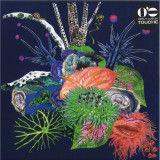
O’o share many of the musical characteristics of their ornithological namesake. The Kaua’i O’O produced the most exquisite birdsong before its extinction in Hawaii in the late 1980s. The beauty and character of its voice was delicate and mysterious, tuneful and surprising. You can experience it with just a cursory websearch, a haunting cri de coeur from the last century. If the poor O’O is consigned to history, then life is just beginning for this French duo, based in Spain, who’ve won plaudits and awards already in their short musical lifespan.
O’o are about to release their sublime debut album Touche. This is not an endling, it’s just the beginning: “I found the name on a website of weird English language words, and I loved the way the letters were arranged like a pair of glasses,” says O’o singer Victoria Suter. “Afterwards, I went onto YouTube and started listening to the last bird of its species, calling for a mate that would never come. I thought: ‘Oh my God, that’s so sad’. Then we talked about the name and we thought it could be a nice thing to honour it and keep it alive in some way.”
Suter met her musical partner Mathieu Daubigné at college in Agen, South West France, when the pair were studying music theory in their teens. Victoria moved to Barcelona in 2010; Mathieu followed six years later. Their debut EP, Spells, appeared in 2018 a beautifully crafted patchwork of vocals and samples that is redolent of the uncanny vocalese of Laurie Anderson. The bird makes an appearance at the beginning of the EP: “Sweet tooth beak. Soft melody peak / Oh O’o, go round and round in circles / Looking for a honeydrop, til you vanish, til you drop”.
That sense of profound longing for something lost is carried over to Touche, as well as the same heightened sensory awareness of the world around them. What has developed in spades is the creative process. O’o have blossomed organically, augmenting their pop sensibilities. Avant-garde techniques have been brought to heel as the pair create off-kilter pop music that warms the heart and nourishes the brain. The catalyst that enabled this bold pop transformation came with the song ‘Touche’ itself, a saucy chanson at the heart of the album. Suter’s wry narrative about a botanical femme fatale is inserted into a lithe and skittish song with reggaeton beats and an inviting, balmy atmosphere.
“The song is about a flower which attracts male insects, producing the very same smell as the female of the species,” explains Victoria. “The poor male is fooled by the sex-appeal of this botanical trap, and gets so excited that he exhausts himself and wastes all his other chances of ulterior mating and having any offspring. The flower entices the insect in in mermaid-like fashion, to come nearer and touch her. It’s the hot track!”
‘Touche’ reaches into hitherto unexplored areas of pop, while the rest of the album is accessible in the way that James Blake, Radiohead or Kate Bush are accessible, and it always challenges, in a way that pop isn’t supposed to. Suter writes playful, poignant, observational songs that tell stories as well as tell us something about ourselves. Songs like ‘Dorica Castra’ are built upon the voice as an instrument, centrifugal and layered from its core.
Complimentary to this method is Daubigné, who brings startling innovation with found sounds, samples and clever vocal manipulations—creating unique, otherworldly sonic flourishes. A guitar whirs like a musical spinning top on ‘Spin’, created in Ableton; an Ondes Martenot appears to make a guest appearance on the title track, though it’s the ingenuity of the Prophet 8 synthesiser. “I’ll often say to Mathieu, ‘what’s that?’” says Suter, He’ll reply, ‘that’s your voice’.”
O’o found their own voice when they won a competition held by the legendary festival organisers Primavera Sound. Victoria entered the band into a competition she saw on Instagram, sending off rough demos on the final day of entry, thinking little more about it other than the fact Mathieu might be annoyed. Soon they would have to build a live set from scratch and figure out how to present their music for the first time. At stake was seventy hours of recording time at Aclam studios, used by Rosalía and Kendrick Lamar, and for the winner a coveted spot at the festival. A pool of 350 acts were whittled down, and then O’o triumphed at a Battle of the Band style face off.
The O’O might be extinct, but O’o the band have learned how to fly. Just watch them go.
Following the sublime smash debut "X17", LA-based label Elbow Grease head conductor Dave Aju continues on his righteous piece-by-piece journey toward a multi-genre multiverse, where deep musical roots come together in kaleidoscopic expression, and unfakeable funk reigns supreme.
"Spacio Tempo" picks up where we last left off, though with a notable drop in bpm as the title implies, with a rolling 4/4 textural tapestry that combines pulsating layers of soulful synth work, effervescent live percussion, and heavenly strings into a dense yet open-as-the-night-sky extended gem yet again. Just as the machine patterns of near-equator rhythms bubble over and begin to lock into a hypnotic groove, a bold left turn into a dank latin jazz noir vibraphone solo and SH-101 duet tango ensues, before landing us safely back at home base - right on time, at its own spacial pace.
As per the Elbow Grease release recipe so far, the B1 cut offers DJs a more driving flex, this time in the form of the "Acido Tempo Mix": a raw 303-driven take on the original which will undoubtedly stomp its way fiercely thru many bass bins in sweaty basements and warehouses worldwide. Finally the B2 blessing "Domingo Dub" closes things out, removing all but the highest vibes as an ambient drifting and uplifting take on the main theme, where the faintest of vocal tones, space echoes, and light percussive touches leave us elated in a West Coast, with subtle splashes from the D, sunset dream. Another solid single turned three-tracker sure-shot from EG.
FEAN II is the following of the first opus released on Moving Furniture Records in 2018, from some materials of the improvisatory collective FEAN based around Jan Kleefstra (voice, poems), Romke Kleefstra (guitar, bass and effects), Mariska Baars (vocals) and Rutger Zuydervelt (electronics) from Netherlands, joined by the Belgian musicians Annelies Monseré (church organ, keyboard), Sylvain Chauveau (tuned percussion, radio) and Joachim Badenhorst (acoustic and amplified clarinet, bass clarinet, saxophone). Like The Alvaret Ensemble, this project is the result of some improvisations in a Church. But at not the same place.
The FEAN project gets its inspiration from the ecological decay of peatland in the Dutch province Friesland and in other parts of Europe. Agriculture and peat extraction are threatening the landscape severely and with long term consequences. This forms the underlying thought for the improvised recording sessions, which were overseen by Jan Switters. Although the Piiptsjilling members are obviously used to perform and record together, adding the three Belgian guests (who didn’t play together before) added an extra dimension to the group’s dynamics, resulting in a concentrated yet playful series of improvisations, that were later mixed and edited for the project.
For laaps, that was an obvious choice to continue the exquisite corpse project with FEAN and a part of the same members than the first release, just before to move to the Spring season and some news bridges, colors and sounds imprints to come.
Tetra Hydro K is a laboratory in which two dub alchemists are experimenting with multiple sounds to mark their imprint on the French electro-dub scene. The duo of producers returns this year with a new album "Odyssée".
Coming respectively from the free party and trip-hop universe, they took their inspirations from French dub tenors such as High Tone, Improvisator Dub or Kaly Live Dub. Kanay creates a strong rhythm while Krilong brings his melodic genius with his saxophone. Electronic? Acoustic? Dub? Drum'n'Bass? Tetra Hydro K focuses on the combination of organic elements in an electronic universe. After 4 EPs since 2010, the band decided to evolve in 2016 with a first album "Labotomie". It was followed by 2 albums in 2017 and 2018 and season 1 of the amazing "Smoking Sessions" last year.
With this new album "Odyssée", THK rightly marks its stamp on the French dub landscape. They turned their passion in a life-size experimentation, a great diversification of the genres and musical influences that shines through various guests. The stellar dub of the French producer Panda Dub remixed by THK in "Labyrinthe" confronts with the Raggatek rhythm of the track "Nah Come Fi Test" for a top-notch collab alongside Sensi T. On "Black Ship" the duo signs a deep instrumental with a dark and dubby psychedelic vibe.
The rapper KT Gorique shows all her power on the track "L'impasse", displaying her powerful flow, no matter the rhythm. On this album, THK collaborates on two tracks with Tom Spirals. This MC from Glasgow lay down his voice in two different ways, first with a Hip-Hop vision, slightly Trap, in "Expedition 808" then with a Reggae flow on "Cut to the Chase". "Skanking Trip" adds a touch of Dub Stepper in this album with vocalist Loïc Paulin in full power over the heavy-weighted bass. Three instrumental tracks complete this album including the monstrous "Charcuterie Monin".
Tetra Hydro K is back on the road in 2022 to take us in their new odyssey !
Tropical Horses has been a figure of the Parisian underground for a little decade. After almost mistakenly seducing young talent runners who had only understood his music at its brightest, the boy released the very dark "Mirador" on Anywave in 2016, a hybrid between malevolent pop, walls of sound and assumed madness.
Since then, this great loner has never stopped rising to the hard, alone with his loopers, in intense and rough concerts while finely mixing extra-western grooves and melodies to his art. From these 5 years of maturation and opening results Fever, haunted, joyful and overpowering record.
Propulsive tabla percussion and meditative drones collide in deep instrumental conversation on Shruti Dances, the debut collaborative album between UK heavyweights Auntie Flo and Sarathy Korwar, forthcoming on the newly relaunched, Make Music imprint.
Across six exchanges of dynamic electronic production and richly layered Indian classical percussion, Shruti Dances discovers two architects of rhythm and movement on an explorative journey through South Asian tonality and diasporic identity.
One an elemental force on drums, the other on the decks, London-based, Indian-raised drummer/composer, Sarathy Korwar and Scottish-Goan producer/DJ, Auntie Flo first connected back in 2019, unaware both were navigating opposite ends of the beat equilibrium. Where Auntie Flo (aka Brian D’Souza) was new to Korwar’s reimagining of jazz, Indian classical music, electronics and spoken word, Korwar was already a big admirer of Auntie Flo’s intl-facing club output, having first discovered D’Souza’s Rainfall On Red Earth off his Soniferous Garden 12” and 2019 SAY award-winning (Scottish Album of The Year), Radio Highlife. Once properly acquainted, Korwar invited Auntie Flo to remix a track off his landmark 2019 album, More Arriving, described by The Guardian as “a stylistic leap from jazz to hip-hop to spoken word…a protest record encompassing the breadth of immigrant experiences”.
The seeds of an unlikely yet powerful musical bond had been sown and when mutual friend, co-founder of Mixcloud, and Make Music label organiser, Nikhil Shah, asked the duo to inaugurate the label’s new live/electronic direction (previously home to Leon Vynehall, U and George Fitzgerald), Korwar and D’Souza hit the studio. Expanding on early conversations around traditional Indian instrumentation, practicing meditation and improvisation, Shruti Dances (a riff on free dance movement, Ecstatic Dance) was born. Meaning 'that which is heard' in Sanskrit, shruti refers to a note in musical terms, but in this case also references the album’s most prominent influence and instrument, the shruti box.
“The shruti box formed the basis of the sound of the project. It’s a drone instrument, similar to a harmonium, and it makes an amazing sound. I’ve spent the last two years studying sound therapy, and immersing myself in ambient and drone through the Ambient Flo project, and am particularly interested in how they can induce meditative states of consciousness. I was really excited to hear what the Shruti box could do with this EP.” Auntie Flo
Across six tracks, (each named after 6 of the 7 main musical notes in the Indian solfege system), Shruti Dances draws on a celestial mix of traditional percussion and processed digital effects. On opening track Dha, Korwar’s sparse tabla rhythms hop across D’Souza’s scattered, arpeggiated synths, where as on Pa, a Balearic shuffle channels Moroccan Gnawa music and Senegalese sabar meets Mark Ernestus’s Ndagga Rhythm Force. Harmonic speed tabla and roaming drones provide a sense of the ethereal and fourth-worldly on Ma, a track that’s resplendent, curious atmosphere would fit snug into the deep listening-focused programming of Auntie Flo’s Ambient Flo online radio station, a curatorial platform and avenue exploring his interest/promotion of mental health, launched over the UK’s first lockdown. Ni sees Korwar pick up the sticks, thrashing toms in a spirited frenzy, whilst downtempo album closer Sa offers some room for reflection, its slow, swirling chords cloud our focus, leaving us with all but the distant sound of birdsong.
For more than twelve years, Morphology have been re-writing the rules of electronics. Michael Diekmann and Matti Turunen have melted electro, IDM and techno into their own unique sound. To celebrate their achievements, FireScope has sifted through the impressive discography of this Finnish pairing to bring long out of print tracks to a life.
Twelve 1 collects music released between 2009 and 2016, a dozen works that span labels like Abstract Forms, AC Records, Cultivated Electronics, diametric., Semantica, Stilleben and Vortex Traks. Opening with the cold love affair of “Manmade Woman,” this collection brings together frosted floor funk, cerebral armchair electronics and a quality of composition that only Morphology can provide. Embedded in the album are outposts of electro menace, tracks with that extra bit of bite such as “Dementia” and “Dalek Invasion. Deep and thought-provoking pieces abound, such as the otherworldly dreamscapes of “Magellan Probe” and “Moebius Strip” which were first heard on Arne Weinberg’s diametric. An understated balance permeates the record, broad concepts are interwoven with subtle shifts to bring a timeless quality to pieces like “Spacetime Interval”, “Europa” and “Plankton.” A perfect expression of over a decade of work.
Not only does this double LP gather rare tracks never before heard together, but also each piece has been lovingly remastered to breath new life into these wonderful works. Twelve 1 celebrates the music of Morphology in all its glory, two masters of modern electronic music who continue to re-define and re-design genres.
Label favourites Balearic Ensemble return to the fore following last summer's spectacular 'Cachonda' EP, this time with a 12" treasury of wonderful, eclectic dancing music of the highest balearic order. They're joined by Das Komplex, notable for recent excursions on DJ Harvey's Mercury Rising, to round out their five-track excursion for the label: this is the Mediterráneo EP.
Opener 'Pitiusas First' sets the tone with dizzy, downbeat percussions as a bass guitar skates and glissades underfoot; soaring, starry-eyed synth work and Latin organ stabs in concerto. This homage to the islands and islets of Ibiza comes with a note of melancholy, or nostalgia: waking up to find that your best years might have evaded you - and celebrating the fact. It's a maturing of the Residentes sound in a way we haven't heard before; a gorgeous moonlight serenade, the last tango on Formentera, and a tip for orange-tinted sunsets all summer long.
Second track 'Almendros y Drones' takes us deeper into the throes of that distinctive Mediterranean sound with dizzying arpeggios and analogue bass over teetering hihats and fizzing synths; it's an eruptive, volcanic beast of a track that will take liberties with your dancefloor. Over-the-top filter action and driving piano perforations, crashing snares and resonant howls, Almendros, Drones.
The third offering is 'Mojada', taking cues from classic deep house with its deep-set bassline and modular squeaks. It's a slow burner, an aquaplane on Eivissa, cueing 303 squelches and 90s drum machine riffing before its eventual, explosive peak.
After Mojada we enter the chugging, gritty realm of Das Komplex's remixes. He refashions the heady throes of 'Mojada' into a driving, churning unit; percussions, distorted into infinity; basslines bent and buckled into submission; slabs of piano lathered with space echo delay. Wonky late-nite dancing music at its very best.
Extra treat: Das Komplex also left us his 'Pineapple Bonus Mix' of Mojada, which is a more sunset-suited affair altogether. This special mix lasers in on that exuberant piano part, then plays with percussions and dynamics to create a full-on dub version of the original track.
Fuchs is a band that never was. It vanished as quickly as it appeared in the picture, much like the animal that can be seen on this album and after whom it was named. In 2005, Kante singer and guitarist Peter Thiessen travelled to Weilheim to visit Markus and Micha Acher in their studio, where they were joined, among others, by Notwist-affiliated musicians like Cico Beck, Robert Klinger, Carl Oesterhelt and Stefan Schreiber. Spirits were high, but schedules were full: after a week of improvised sessions, everyone went their own way. The recordings gathered dust until Markus Acher found them again in 2021 while cleaning out his studio. After carefully re-evaluating the rough mixes, the musicians decided to finally release them. The resulting album comprises six tracks that musically draw on jazz, aesthetically lean on dub techniques and ideologically pick up on krautrock: there’s no solos to be heard on this record, just a few equally skilled and open-minded musicians listening to each other carefully, providing each other with space in which to unfold. »Fuchs« is a document of egos dissolving in a collective spirit.
Thiessen and the Acher brothers met in the 1990s and bonded not only over their shared background in hardcore music and the DIY ethos in which it was rooted, but also over their love for jazz. »If you look at those two things combined, you will eventually become convinced that you don’t have to be formally trained to make music that at least resembles jazz«, says Thiessen today. He invited Micha Acher to join his band Kante on flügelhorn in 2004 for a tour that saw the expanded group play unusual encores after the official concert was over. »Micha had taught us some dixie pieces, so night after night we would play a freestyle dixieland ska set in front of the remaining audience!« Naturally, the Acher brothers didn’t have to ask twice when they invited him for a visit in Weilheim to further explore their mutual interests in a studio setting. »I got on my way immediately and took two or three loose ideas, a tape echo and a guitar on whose headplate you could create fantastic sounds with me«, says Thiessen.
Between immersing themselves in books by the photographer Leonore Mau, cooking together and drinking the occasional fruit schnapps, the trio went into the studio. Says Thiessen, »Micha brought his flügelhorn and some wonderful ideas with him, Markus an Indian harmonium and a plan, Carl Oesterhelt came with a glockenspiel and a Chinese zither and a bunch of amazing jazz musicians joined in, too.« He considers the resulting recording sessions to be a kind of attempt at musically translating their conversations during those days. They discussed different approaches to jazz, whether sampling and musical miscitations can unlock ecstatic potentials and the possible parallels between syncretistic religions and pop music. »There’s traces of glossolalia, it's like a blurry séance«, adds Thiessen in regard to the sessions.
It is especially this spirit that managed to live on even though the recordings themselves were abandoned. »What we all liked most when listening back to the recordings is probably their marginal and fragmentary character, the empty spaces—the moments in which the virtuoso solo never comes, in which the centre remains empty.« The six pieces on »Fuchs« are chock-full of exactly these moments. When at one instant, the players seem to disperse and improvise freely, they always meet again on common ground a short time later, continuing on their way together. There are no conventions or even previous agreements that guide them, just a shared will to explore a vast range of curious sounds and unusual rhythms together as a truly unified constellation of very different musicians. Fuchs is a band that never was. Its ideas still reverberate vividly even 17 years later.
Following on from the success of 2018’s epic triple album The Saving Of Cadan, Cornwall’s space/psych/folk-rock/post-punk cross-pollinators HANTERHIR are back with a new studio album. After more than a decade, …Cadan finally found the band breaking out of their Redruth bolthole, playing a major headline show at London’s Kernow In The City festival in March 2020, just before lockdown. As with many others, this enforced break from gigging encouraged the band to get creative and the new album was soon progressing…Its Cornish title Nyns Eus Denvydth Bys Trest roughly translates as ‘There is no-one to trust’ – “Writing and recording the album was done over the backdrop of Brexit, a falling apart relationship and then Covid lockdowns,” explains singer, guitarist, and songwriter Ben Harris. “With all the wacky things that have come out of people’s mouths over the past few years I think the title pretty much sums everything up.” A massive labour of love for Ben, …Cadan was a sprawling concept based on Cornish legend, which required him to write within a theme. The creation of this album has therefore been a breath of fresh air, a more organic experience allowing him to write from a more personal and immediate perspective. Displaying elements of Hawkwind’s sturm und drang spacerock and Psychedelic Furs’ sax-driven post-punk squall, opener ‘Always On’ finds the septet celebrating themselves: “We play so many gigs with so many other bands and one thing that strikes me about us is that we're always ready, we don't spend hours soundchecking, just point us in the direction of a stage and we'll play there. “‘Honeybees’ is us singing to the people that it's possibly time to stop voting for the same political parties and following the same failed systems,” he continues. “As far as I can see nothing's got better over the past year, or ten years or whatever, things just get slowly worse and people accept it. ”The song ‘Yeah’, which fuses Steeleye Span folk-rock melody and Sonic Youth chaos with spiralling psych guitar, has backing vocals which translate as “I am the same as you”, which Ben thinks is very important: “We're all the same and no-one is more important that anyone else”. Recorded at MHRCC, The Chapel and VIP Lounge by Peasy and Dare Mason; produced by Peasy and mastered by Anders Petersen at Ghost Sounds, Stockholm.
Limited edition 180g blue vinyl pressing of Sun Ra and His Arkestra's
classic 'Jazz In Silhouette', includes bonus track featuring John Gilmore
and a unique sticker
Penguin Guide To Jazz selected this album as part of its suggested "Core
Collection" and awarded it a "crown" accolade.
"Jazz in Silhouette stands as an overlooked masterpiece, a work that shows Ra
not as a mere curiosity or backwater galaxy, but as a major creative force in the
jazz universe, a centre of gravity around which many of jazz's major
developments have orbited. This album simply inspires, no matter what
perspective you adopt: rhythm, melody, ensemble or mood...Jazz in Silhouette
shows Ra doing what he did like few others: looking at the past, present and
future simultaneously while maintaining a unified musical direction...what results
is a captivating set of music that not only firmly establishes Ra in the jazz
tradition, but actually puts him on its leading edge, pointing the direction forward."
- Mathew Wuethrich
“Whoever gives nothing, has nothing; the greatest misfortune is not to be unloved, but not to love “ - Albert Camus
Cristian Marras - OCD - JoeFarr - Codex Empire
After a massive 30-tracks digital compilation celebrating a decade of existence, Gegen keeps moving forward with the release of their third vinyl record.
Starting it off is Berlin-based Cristian Marras: DJ, Producer and Rebels Conspiracy label founder who plays solid driving Industrial Techno and his track for Gegen is no exception. Opening with ethereal chants like a coven calling to arms, Asymmetric sounds like an existential journey from awakening to action, the switch in state of mind materialized by a menacing acid line immerging halfway through, leading us out of darkness.
Next is UK’s JoeFarr, a versatile and skilled craftsman who recently got music out on Soma followed soon by a release on Rebekah’s Elements. His track for Gegen is the bittersweet Timeless, built on the duality between soft emotional hopeful melodies and raw distorted cutting martial basslines and crushing sound design.
On the B side, Berlin’s OCD’s artist statement centered around the ideology of pain and the battle against anxiety caused by a senseless world with the goal to turn people’s fear and information overload into rage and find pleasure from overwhelming emotions in modern rhythms is in full effect on her track Egoismus. With its mournful pads like heartbroken fairies floating above an army on the move and thumping kicks characteristic of her hard sound, OCD brings you into an oneiric state where everything is out of control and too fast — a metaphor for our ages.
To round it all up is British-born, Vienna-based Codex Empire whose productions you might have heard on aufnahme + wiedergabe or Sacred Court. He brings to Gegen his signature dark and intense techno with Hagane, a track built on heavy rhythmic elements and metallic pounding sounds bouncing off each other for an unstoppable groove.
Folksongs and Ballads by Tia Blake & Her Folk-Group, is more than just a “lost classic”. As clear and honest as can be, Folksongs and Ballads is a magnetic record, a refuge like only Nick Drake, Nico, and a few others have been able to create. A graceful, delicately minimalist approach to classic Appalachian and British folk songs.The perfect balance between melancholy and daydream. Originally released only in France in 1971, Ici Bientôt is very pleased to present the first-ever reissue on vinyl.
When she recorded her only album, Tia Blake was nineteen years old and had just arrived in Paris a year and a half beforehand. She spent most of her time at Disco’Thé, a record shop in the Latin Quarter, a free space, peaceful and inspiring, a hub for students as well as the local artistic community.
There, Tia would occasionally sing—when she managed to overcome her shyness. Two young guitarists who were passionate fans of folk music and regulars at the shop began to accompany her, forming “Her Folk Group.” One year later, they cut 11 tracks at Pierre Barouh’s Studios Saravah.
Folksongs and Ballads is composed of traditional tunes that have been covered many times, but they’re not the best-known folk standards. A collection of stories ranging from the Middle Ages to the 1960s, bringing together sublimely doleful ballads, lamentations for a lost lover, and an unexpected, brilliant version of the road anthem “Plastic Jesus.”
Tia Blake's haunting, unaffected voice captivates and comforts us, wrapping us in its cool embrace. Meanwhile, the tasteful, stripped-down, mellow acoustic arrangements provided by the guitarists, reminiscent of Bert Jansch and John Renbourn, occasionally supported by a kena flute, have created the space Tia Blake needed to reinvent these traditional songs.
Folksongs and Ballads is a timeless record, deep and unique, a longtime companion for repeated listening, in the vein of works by Sibylle Baier, Bridget St. John and Vashti Bunyan.
International Feel founder and guru of the sunset soundtrack, Mark Barrott returns with a new EP entitled Travelling Music. After spending the last few years writing & producing for other people, Mark is focusing his creative efforts inwards & rediscovering his own musical compass, calling it ‘the best medicine and therapy there is’. It’s this energy he looks forward to sharing via a number of releases over the coming months, including a new La Torre compilation, a series of Bandcamp only releases (Bandcamp Editions), the soundtrack to a new Japanese documentary (??) and this new vinyl release, Travelling Music.
He refers to the title track as Balearic trance. Not in the overblown Dutch sense, but trance as a metaphor/mechanism for an altered state, through hypnotic unraveling synth lines and a dash of wonkiness thrown in for good measure . Elsewhere on the EP, Arcade Scene flexes its melodic Italo dance moves with a slight nod to New Order, but a version of the group that’s beamed in from an alternate reality, where The Haçienda was called Il Tesoro and relocated to Ancona via a Gerd Janson DJ set circa 1991.
Chillin’ 4 work channels Aphex Twin from his easy listening Gentle People remix era, with added Sketches from an Island / Ry Cooder-esque guitars and the reprise of Travelling Music already feels like a La Torre sunset classic, bouncing with sequenced polyrhythmic arpeggios, before gently evaporating into a Vangelis-meets-Edgar Froese heat haze.
As with most of his work, Barrott calls this folk music…the telling of stories from everyday life and being Ibizan in origin, there are always a lot of varied & crazy stories to tell, but this chapter in particular feels like a deep burnt therapeutic transmission straight from the heart.