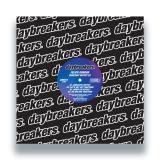
Dave Charlesworth is responsible for so many amazing rave classics, under loads of different names. This is another of his aliases and a huge classic originally released on his After Dark Recordings back in 1993.
Four years after its original release, Mochakk's breakout anthem 'Da Fonk' featuring Joni continues to define a generation of house music. Originally released via Nervous Records in 2022, the record has surpassed 60 million Spotify streams alone, becoming Mochakk's signature track and one of the most recognizable records in modern dance music.
Fronted by fellow Brazilian artist Joni's soulful vocals, "Da Fonk" bridges classic house and contemporary club energy. Its stripped-back bassline and timeless groove have made it a fixture on stages and dancefloors around the world, while also marking a turning point for Mochakk, who has since become one of electronic music's defining artists, widely praised for his vibrant live sets in which "Da Fonk" has remained a staple. To celebrate the track's continued success, Nervous Records releases the 'Da Fonk' Remix Pack today across all streaming platforms, alongside a limited edition three-vinyl release available during Mochakk's long-awaited New York City takeover from August 28, 29 and 30.
Spanning three parts, the remix pack brings together a wide range of artists, each offering a different take on one of house music's most enduring records of recent years.
The first vinyl features Mochakk’s Original Mix and OG Dub of “Da Fonk”, in addition to a new Bass Mix from Marco Carola, whose signature rolling grooves and understated approach bring fresh weight to the original without losing its unmistakable feel. The second vinyl moves across a broad spectrum of club sounds. Australian duo Confidence Man inject their playful, high-energy style into the track, while Berlin's DJ Gigola delivers a sleek, club-focused interpretation. Cinthie, known for her deep-rooted house sound and analogue production style, offers a warm and driving remix, with Brazil’s Bronka rounding out the record on a fresh, contemporary rework. The third vinyl shines a light on Brazil's electronic music scene with an all-Brazilian lineup. Solarce Brothers contribute a soulful reinterpretation that nods to the original's house roots, alongside remixes from DJ Fuzil, Classmatic, and Deekapz & kLap, each bringing their own perspective to one of Brazil's all-time most influential electronic releases on global stages.
a time patterned is Lara Somogyi’s second full-length work: an electroacoustic harp record that maps personal transformation through rhythm, resilience and resonance. Built from loops, pedal textures and electronics, virtuosic arpeggios, stacked tape machines, ambient processing, contemporary extended harp techniques, sweeping symphonic language, and field recordings.
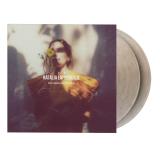
Un Canto por México, Vol. 2 is Natalia Lafourcade's second album dedicated to the reconstruction of the Centro de Docementación del Son Jarocho, a cultural building that was damaged after the 2017 Puebla earthquake. The album features unique new interpretations of her earlier songs, as well as collaborations with artists such as Caetano Veloso and Silvana Estrada. This album really showcases the enduring strength of her songs, which remain powerful in any form.
The album was very positively received by fans and critics. It even got nominated for multiple Latin Grammy Awards (Album of the Year, Best Engineered Album) and Grammy Awards (Best Regional Mexican Music Album).
Un Canto por México, Vol. 2 is available as a limited edition of 2000 individually numbered copies on smokey marble vinyl, packaged in a gatefold sleeve, with printed inner sleeves.
John Weldon "J.J." Cale was an American guitarist, singer, and songwriter. Though he avoided the limelight (being temperamentally averse to celebrity), his influence as a musical artist has been widely acknowledged by artists like Mark Knopfler, Neil Young, and Eric Clapton, who described him as one of the most important artists in the history of rock.
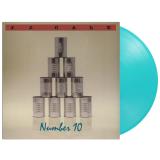
J.J. Cale is considered to be one of the originators of the Tulsa Sound, a loose genre drawing on blues, rockabilly, country, and jazz. Cale unfortunately passed away in 2013, but his legacy lives on. Number 10 is Cale’s 10th album and contains another wonderful and laid back/mellow collection of typical J.J. Cale tunes. "Traces", "Artificial Paradise", "Low Rides" and "Jailer" are considered part of his best 1990s songs.
Number 10 is available as a limited edition of 1000 numbered copies on turquoise vinyl, and includes an insert.
Grammy- and Academy Award-winning rapper and actor Common is widely regarded as one of the most influential Chicago rappers of all time. He is best known for his sophisticated lyrics and jazz-rap, which introduced the world to hip-hop classics such as "I Used to Love H.E.R.", "The Light" and "GO!".
He started his career with Can I Borrow a Dollar? This album immediately drew attention thanks to its top-notch production and clever, playful lyrics. Common worked with contemporary household producers like No I.D., The Twilite Tone and The Beatnuts to create this album, which put Chicago hip hop on the map.
Can I Borrow a Dollar? is available on black vinyl.
Celebrating 30 years since ‘Buena Vista Social Club’ was released, this classic will be made available on limited edition pearl vinyl and features the remastered audio and bonus tracks released as part of the album’s 25th Anniversary in 2021.
Masterminded by the trio of Cuban bandleader Juan de Marcos González, American producer and guitarist Ry Cooder, and British producer and label owner Nick Gold, 'Buena Vista Social Club’ is both the name given to this extraordinary group of musicians and the album they recorded in just seven days in 1996 in Havana’s 1950s vintage EGREM studios. It was clear from the atmosphere of the recording sessions that something very special was taking place. However, no one could have predicted that Buena Vista Social Club would become a worldwide phenomenon – awarded a Grammy in 1997 and, at over 8 million copies, outselling any other record in the same genre.
The acclaim of the original album elevated the artists (including Ibrahim Ferrer, Rubén González, Eliades Ochoa, Compay Segundo and Omara Portuondo) to superstar status, inspired an award-winning film by Wim Wenders, a Tony Award-Winning Broadway Musical and contributed to popularising Cuba’s rich musical heritage. Produced by Ry Cooder and Executive Produced by Nick Gold for World Circuit, the timeless quality of the music and the sheer verve of the veteran performers have ensured that this album will go down as one of the landmark recordings of the 20th century.
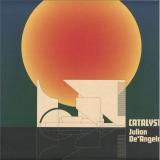
Nearly a decade in the making, Catalyst is Julion De’Angelo’s long-awaited debut album, a bold statement of artistic vision and musical dedication. Released on his Maybee Hill Music imprint, the album blends driving rhythms with rich melodies, from the Beatdown house energy of “The Tundra” and “Antheme” to the expansive jazz textures of “Karma” and “Confused Ones.” Honoring Detroit’s legacy while pushing beyond it, Catalyst bridges soulful experimentation, organic composition, and contemporary dance music into a sound that is distinctly Julion’s own. Spanning six tracks across the double 12″ vinyl with full color double-sided insert, pressed at Mother Tongue Records.
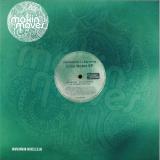
Dutch producer Kid Sublime presents his first EP on Makin’ Moves, here he teams up with Philly singer/song writer Lady Alma exploring elements of soul, broken beat and house.
The EP kicks off with The Grind a super smooth soulful house track, that catches your attention straight away with its groovy baseline that remains throughout adding to that Alma’s meaningful lyrics demonstrating the power of the music as she uses it as to get herself through the day.
The positivity continues on ‘Can You Feel It’ another quality piece of soulful house as the action moves to the dance floor as the beat and grove winds you in as once again Alma’s lyrics drop perfectly on the track.
The B side shows Kid switch it up on the broken beat production wiith ‘Ready To Meet You’ a touching song about two individuals excited to meet each other for the first time, a sure shot hit for the ‘bruk’ beat and dance heads alike!
Duality Trax reaches its tenth release with a defining moment for the label, as label boss Holly Lester steps forward with her debut EP. A personal milestone as much as a catalogue marker, the record channels sounds that have shaped her sound to date - early tech house, the low-end swing of UK garage and breakbeat, the rolling pulse of mid- 2000s European dancefloors, and the emotional lift of ’90s progressive house - all refracted through a distinctly personal lens. Open Your Mind sets the tone with a sense of lift and release: a wide, expansive bassline carries skippy, garage-tinged percussion, while bright piano stabs cut through guided by playful, restless FX. Big Fill pivots into tougher territory, a driving cut built on a rolling sub that pulls you into the groove - equal parts pressure and introspection, with moments of dreamlike suspension between the weight.
On the flip, Tanit drifts into more atmospheric space —an ode to Ibiza that still carries a distinctly UK undercurrent. A squelching, elastic bassline and cheeky, garage-leaning wubs provide a foundational groove but everything around it drifts: gated synths shimmer, drums sparkle, half-heard vocals dissolve into the mix and the track unfolds with a blissed-out, cruising energy. It feels just as natural in a dark room as it does out on open water, coasting past Formentera. For the remix, Holly turns to one of her favourite producers of the moment, DJ Life, who draws Open Your Mind into deeper waters. The Berlin via Australia producer stretches the groove into something more hypnotic and submerged, a patient 5am burner that lingers in the air,equally at home in basements, afterhours, and those inbetween moments as night slips quietly into day
Continuing with the next installment Len Faki's Hardspace series, he breathes new life into four distinct tracks, re-imagining them through the signature Hardspace lens: heavy, thumping, and relentlessly propulsive. Spanning decades of sound, these reworks bridge the gap between nostalgic grit and future-facing intensity, proving once again that a strong is often the most effective tool in the bag.
DJ Sneak's 2009 cut Acido sits perfectly between acid-house and techno-leaning aesthetics-a natural fit for a Hardspace edit that amplifies its jacking, loopy groove. Staying closer to techno's roots is Like A Tim's warehouse classic Rashness; here, Faki channels the raw, frantic energy of the original, proving how nuanced changes can generate a completely different, captivating energy as he reshapes the track's dynamic impact and tightens the low-end.
The B-side takes two contemporary cuts further into the red: the Snuff Crew edit ramps up the intensity, stripping back Where's The Bad? to a singular, hypnotic loop for peak-time impact. Finally, Umfang's Complete Your Collection undergoes quite the transformation, adding layered, rhythmic complexity and shifting bass weight to create a trippy but floor-focused drive.
Finnish producer DJ Dats returns with the four-track EP “Phuture 3030” on his own label, Allowance Trax. The title track is built on solid 808 rhythms, a sliding 303 bassline and futuristic synth textures, while “Test Drive” is driven by a heavyweight Moog bassline and shuffling house drums.
Detroit’s Nels the Operator reworks “Phuture 3030” with his modular synth setup, giving the track a rawer, more live feel and a richly layered sound. London’s Moroka remixes “Test Drive” in his signature style, blending house grooves with jazz fusion influences.
ANDREW MACARI, JASON HODGES, GIL AGUILAR, and DANIEL ALLEN need no introduction, and this release is a must have for all house heads. Jackin', thick and soulful, these cuts are all made to keep the people moving and smiling. This release is why we love house music.
Amsterdam-based Moody Mehran captures the atmosphere of a soft Mediterranean sunset perfectly. Just in time for late summer, the Dutch-Iranian artist debuts on SEVEN with four trance-infused, uplifting cuts, alongside a remix by Maruwa. The EP channels a distinct Balearic-leaning, '90s trance sensibility. Melodic, sun-drenched and emotionally direct. Built for open-air floors and festival moments, these tracks are driven by shimmering synth sequences, rolling basslines, crisp percussion and psychedelic sound design. It’s a sound reminiscent of trance’s golden era reduced to its essence: simple, euphoric, and highly effective.
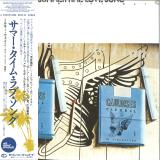
Wewantsounds is delighted to present the first official reissue of the highly sought-after 1979 classic, Summer-Time Love Song by The Milky Way. Originally released on the Seven Seas label in Japan and produced by the legendary Makoto Matsushita-the visionary behind the cult album First Light -the album is a premier example of the sophisticated sound that defined the era. Featuring the cream of Japanese musicians, including Yasuaki Shimizu, the record offers a superb mix of AOR, jazz fusion, funk, and bossa nova. Remastered for vinyl by Colorsound Studio, this deluxe reissue features the original artwork, an OBI strip, and a 4p booklet with a new introduction by Paul Bowler.
Pressed onto a deep summer orange 12", accompanied by sky-blue outer packaging reminiscent of Netsky's 'Second Nature' LP - this is an unmissable collectible of Hospital Records history.
With Memory Lane being one of the tracks to first ascertain Netsky's legendary status, to 'Everybody Loves The Sunshine' becoming a household D&B anthem - this 12"" is a glimpse into the cross-generational success of one of Hospital's earliest signings.
After years of steadily building momentum within the deeper side of drum & bass, Monika now delivers his long-awaited debut album, How We Saw Forever, landing this August on Spearhead Records.
UK-born and now based in New Zealand, Monika has developed a sound that blends deep rolling grooves, soulful textures, delicate musicality and moments of genuine emotional weight. Across the album he moves effortlessly between late-night introspection, euphoric warmth and darker, more experimental territory, showcasing an artist fully confident in his own sonic identity.
Having already made a strong impression through previous releases on Spearhead and appearances across the label’s 20-year anniversary campaign, How We Saw Forever feels like a major step forward creatively. From the haunting beauty of “What Turns Your World” featuring Oktae, through to the nostalgic rave energy of “Mango Pop” and the weightier pressure of “Syndicate”, the album captures Monika’s ability to balance emotion, atmosphere and dancefloor impact without ever feeling formulaic.
At its core, How We Saw Forever is an album about atmosphere, memory and emotion, music designed equally for solitary headphone moments and packed dancefloors at sunrise. There’s a cinematic thread running throughout the project, but also a raw honesty that gives the album its real depth.
Speaking about the album, Monika says:
“This project became a reflection of so many different seasons of life over the last few years. Some tracks came from really emotional places, others were written purely from joy and escapism, but together they tell the story of where I’ve been creatively and personally. I wanted the album to feel immersive, something people could disappear into.”
Released via BCee’s Spearhead Records — a label long celebrated for championing soulful and emotionally rich drum & bass. How We Saw Forever marks another exciting chapter for both Monika and the wider Spearhead family.
Coming off a serious drop as of the DISCO FIEBRE duo, MEMORY LOUNGE makes his solo debut on CUENTO DE NUNCA ACABAR with fresh edits of classic Mexican funky disco, tailoring OG infectious percussive grooves, sizzling brass, & driving bass for maximum impact on modern sound systems.
The fourteenth release on Early Morning brings Roy Rosenfeld back to the label for the first time since its second. The two years in between have not had a quiet stretch in them: new singles every few months across 2025 and 2026, and a touring year running from Mexico City and New York through Paris, Barcelona, Ibiza and Amsterdam to Montreal, Santiago and Buenos Aires. He is back in New York on the day this record goes global, and in Amsterdam for ADE later the same month. What arrives here is two long-form pieces, 15 minutes and 15 seconds together, both built on patience and both written for rooms where there is time to stretch out.
New Life takes its time. A full minute passes in suspended texture before the groove arrives, and when it does it carries the weight of everything that was withheld. The track moves in patient cycles, stepping away briefly at its midpoint before opening into an extended central passage where the rhythm withdraws and the harmony is left exposed. The return is the payoff, and Rosenfeld holds it to the final bar rather than letting it fade.
Seven Three Eight begins where New Life arrives. It is in motion from the first bar, with no preamble and no easing in. The low end breathes in long swells beneath a top layer that keeps shifting, and two breakdowns punctuate the arc without ever surrendering the momentum. It closes at full stride, running the seven minutes and thirty-eight seconds its title names.
Two tracks, near identical in length and opposite in approach. EARLY014 is a record about pacing, and about a producer who trusts the long form to do the work.
Hamburg-based artist Maasym joins Lost Verses with his new EP, Angle45, featuring three hypnotic and driving techno cuts, plus a remix by label owner Oxygeno. Four tracks built for the dancefloor, ranging from deep to intense.
We’re delighted to announce the new SFJ album Tabibito-tachi 旅人達 (The Travellers) on WONDERFULSOUND
SFJ's album under the duo name, due for release at the end of November. As Oscar SHOLTO Robertson and David Bardon's first outing as recording artists in their own right — following years spent producing and playing session for other acts — the campaign is in its early stages, with the album's arrival set to anchor the wider push. A live launch party in London is planned around the LP's end-of-November release date, marking the duo's first live outing to celebrate the record. Radio and press activity is yet to come; the campaign will build from the single's release through to the album launch and live show.
Recorded in Rented apartments and rehearsal rooms on the move last year through Japan, China and London, the album grew out of a constantly shifting creative process.
"We set up wherever we were staying, turning temporary rooms into makeshift studios and capturing ideas as they emerged between journeys."
Packaging: 1 X Black 140 grs vinyl, gatefold sleeve reversed board, black dust inner sleeve, marketing sticker, marketing sticker
- Alewya's acclaimed debut album Zero - digitally released June 2026, establishing her as one of the UK's most distinctive voices in alternative music
- Ethiopian-Egyptian heritage meets London's underground, blending electronic, R&B, percussive and experimental influences into a distinctive sound and visual world.
- A deeply artist-led record, developed over three years and built around themes of identity, instinct, freedom and self-discovery.
- Physical release November 27th :
Packaging: 1 X Black 140 grs vinyl, gatefold sleeve reversed board, black dust inner sleeve, marketing sticker, marketing sticker
- Alewya's acclaimed debut album Zero - digitally released June 2026, establishing her as one of the UK's most distinctive voices in alternative music
- Ethiopian-Egyptian heritage meets London's underground, blending electronic, R&B, percussive and experimental influences into a distinctive sound and visual world.
- A deeply artist-led record, developed over three years and built around themes of identity, instinct, freedom and self-discovery.
- Physical release November 27th :
Kisah Pasar Baru: The Modern Sound of 1950s Indonesia
When Indonesia gained its independence from the Dutch colonial government in 1945, politicians and soldiers weren’t the only ones playing a major role in building the sense of national identity.
Also working on the nationalist front were merchants and traders of phonograph records, who prior to the country’s independence served as local agents for foreign labels like Odeon and Beka. In Batavia, one of these traders were Tio Tek Hong, distributor of the international label Odeon and the other figure was Soejoso Soekarso, who also served in the Indonesian Military as an Air Force Marshall.
Irama Records, the music label he founded in 1951, was first attempt to “nationalize” the means of production of “indigenous music” from both foreign labels and intermediaries like Tio.
Soejoso stood at the intersection of music, business, and nationalism. He was the vanguard in the process of popularizing of a new breed of “national” music, especially the type he showcased in the compilation Kisah Pasar Baru: The Modern Sound of 1950s Indonesia, released in 1958.
Yet, the idea of an indigenous music championed by Soejoso was in fact the amalgamation of a myriad of cosmopolitan strands. As an air force officer, Soejoso spent some of his time playing in the Hawaiian band Lieve Souvenier in Semarang before relocating to Jakarta and started jamming with the band Elshinta Hawaiian Senior.
In addition to Hawaiian music, Soejoso was a versatile musician who also had the chops for jazz, a musical genre wildly popular in the 1940s and early 1950s Indonesia. And it was jazz that he first recorded for his Irama Records label.
One night in 1951, he squeezed pianist Nick Mamahit, bassist Max van Dalm, drummer Dirk van der Capellen, and guitarist Dick Abel into a 2×3-meter studio on Jl. H. Agus Salim, Central Jakarta, to record the first local jazz album of the post-independence era.
Kisah Pasar Baru is a compilation of hybrid music that Soejoso and his coterie of musicians championed in the early 1950s, a mix of Hawaiian, Keroncong and Jazz and it became a hit soon after being release.
One of the best compositions on this album, “Pajung Fantasi,” composed by the legendary composer Ismail Marzuki, is essentially built from Bing Slamet’s baritone—Indonesia’s equivalent of Bing Crosby--and the distinctive Hawaiian-styled steel guitar. The most famous song on the album, “Sabda Alam,” also written by Ismail Marzuki, follows the same pattern, its steel-guitar works now backing Theresa Zen’s hauntingly ethereal vocals.
Kisah Pasar Baru was never designed to be a long-playing record, and its presence on the market was to capitalize on a new trend in the recording industry. The album is a greatest-hits compilation, with songs in this album previously circulating individually on 78-rpm discs—a format that was gradually abandoned following the invention of the 7-inch single and the 12-inch long-play vinyl.
This is the first time this monumental record is being reissued for the international market outside of Indonesia.
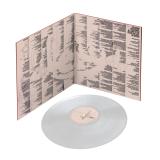
Hey! Mein Name ist Terry Cole, und ich habe das Privileg, ein wunderbares unabhängiges Plattenlabel namens Colemine Records in Loveland, Ohio, zu betreiben. Wir machen das schon seit fast 20 Jahren, und wir haben das Glück, unser Label direkt über unserem ebenso wunderbaren Plattenladen namens Plaid Room Records zu betreiben. Im März 2020, als die Realität einer globalen Pandemie einsetzte, waren wir uns nicht sicher, wie es mit unserem Veröffentlichungsplan weitergehen sollte. Alles kam quasi sofort zum Stillstand. Aber nach ein paar Wochen des Brainstormings beschlossen wir, dass wir - obwohl unser Plan für physische Veröffentlichungen völlig auf den Kopf gestellt worden war - jeden Donnerstag abends eine neue digitale Single veröffentlichen würden, bis wir den normalen Betrieb wieder aufnehmen konnten. Wir nannten die Kampagne ,Brighter Days Ahead", denn bei Colemine versuchen wir, immer das Positive zu sehen, wann immer es geht. Also haben wir den größten Teil des Jahres 2020 lang jeden Donnerstag digitale Singles veröffentlicht; dazu gab es virtuelle Listening-Partys und DJ-Sets auf YouTube. Das hat ziemlich viel Spaß gemacht. All diese Songs gipfelten in einem 2-LP-Set, das wir schließlich 2021 in physischer Form veröffentlicht haben. Und obwohl wir hoffen, dass so etwas wie eine globale Pandemie nie wieder passiert, musste ich zugeben, dass ich einen Weg finden wollte, die ,Brighter Days Ahead"-Kampagne zu einer Art dauerhaftem Projekt für uns zu machen. Während ich das hier schreibe, ist es das Jahr 2026 - offensichtlich habe ich also ein paar Jahre gebraucht, um diese Idee zu entwickeln, aber wir sind endlich am Ziel angekommen und das fühlt sich verdammt gut an. Die Idee ist ziemlich einfach: Der erste Band von ,Brighter Days Ahead" verfolgte einen rückblickenden Ansatz _ eine Zusammenstellung dessen, was wir bereits veröffentlicht hatten _ und dieses Mal verfolgen wir einen vorausschauenden Ansatz. Was du in deinen Händen hältst, ist ein Vorgeschmack auf das, was noch kommen wird. Diese Platte ist eine Kristallkugel, die tief in die musikalische Zukunft des Jahres 2027 blickt und dir einen kleinen Vorgeschmack darauf gibt, worauf du dich aus dem Colemine-Universum freuen kannst. Und wisst ihr was? Dieses Stück Plastik, das ihr in euren Händen haltet, ist die einzige Möglichkeit, es zu hören. Diese Songs sind noch nicht digital erhältlich. Einige davon sind Rohmischungen. Manche sind so brandneu, dass die Songtitel noch nicht einmal endgültig feststehen. Also reißt die Schutzfolie ab und schnallt euch an - ihr seid dabei, eine Zeitreise in die Zukunft zu unternehmen, ganz ohne Fluxkompensator. - TERRY COLE (Inhaber / Betreiber Colemine Records)
Santiago Salazar has been operating in the deeper frequencies of Detroit and beyond for more than three decades. Originally coming up through the early ’90s Los Angeles underground, to Detroit in the early 2000s, becoming part of the Underground Resistance collective and a member of Los Hermanos, while also contributing to the Galaxy 2 Galaxy universe. Here he is with the sublime Bespoke Electronics EP for his Cyphon Recordings debut.
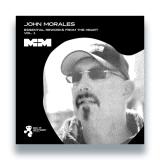
The first vinyl release from Do It Anyway Records brings together three John Morales reworks: Early In Da Morning featuring Brian Lucas, All My Love featuring Brian Lucas, and Can You Handle It featuring Tasha LaRae.
The evolution of Andreas Tilliander's moniker TM404 has reached its third stage. The first TM404 album was a heavily self-restricted concept album, live recorded with classic Roland machines. The subsequent album had a more playful vibe, shaped by Tilliander's extensive live touring. This third TM404 album on Kontra-Musik simply tells the story of what he's been up to since. The third part of a musical diary, initiated in 2013. The TM404 venture might have started out as a dreamy acid dub project, more suited for the chill-out than the main floor. But by popular demand Tillander found himself touring big clubs around the globe and the TM404 sound adapted organically. As a result, the album features tracks like Vactro and Rymdeko: fast paced acidic techno tracks in the same vein as classic Plus 8 releases, but with more space echo. Much more. But never fear, fans of the classic warm and bubbling TM404 sound. You'll certainly get yours as well. A substantial portion of this album was recorded in a studio flat in Berlin as part of an artist residency. For obvious reasons, Tilliander could only bring a small portion of his studio gear to this German sanctuary. As a consequence, this album has a more stripped down vibe than its predecessors, which creates more space for Tilliander's glowing melodies. The last track on the album, a loving homage to Kontra-Musik's label boss, is a sublime example. And for the Instagram generation, here's the short version: The album is called Syra. That translates to Acid. You're welcome.
ARMOR, a new alias by Pascal Pinkert (Ambassade / Dollkraut). A few years ago he visited Turkey and Lebanon to collaborate with artists such as trip-hop legend Zeid Hamdan and Egyptian singer Maii. While many of these recordings found their way into Dollkraut releases, revisiting the material sparked the need for a new outlet. With ARMOR, Pinkert dives deeper into the space between folk traditions and electronic experimentation. Hypnotic drones merge with Middle Eastern percussion, while subtle rhythmic structures fuse with immersive soundscapes.
Sohrab Karimi is doing a fine job of establishing his still young but increasingly vital label Kolony Gorky with another superb two-tracker here. 'Work It!' kicks off at pace with slick, punchy tech house drums, but the structure of them is offset by liquid synths, trippy details, and warped melodies that bring an after-party vibe where space and time melt away to a fuzz. On the flipside is a deeper jam, 'Yousef Abad, which is slower, more dubby and soothing for those late-night hours when you just want to lock into a groove and zone right out.
The Jazzcodes and Michele Chiavarini kick off this fine survey of contemporary deep house with 'Wolf Dust (Saison Rework)' which draws on jazz-inflected motifs and feeds them into a steady groove with layered keys sitting over a controlled kick pattern. 'Friday' from DJ Romain works in a more direct frame driven by looping piano stabs and clipped drums with diva vocals injecting heat. 'In The Moment' has an air of cool jazz to it with deft horns and spoken word that muse on the great genre while Saison's 'This Is A House Record' sure is that: classic drums and knotted little synths bring a warming vibe for grown-up floors.
FatCat was recorded in a single session-live, with all four musicians together in the same place. What you hear on the record isn't a polished production, but a one-of-a-kind recording of four people playing at the same time in the same room.
This is not a nostalgic gesture. It's a stance. As music is increasingly understood as the output of a prompt, the question of what actually makes music becomes urgent again. Not flawless, efficient production, but the imperfect moment and its context. Not the result, but the process in which four people listen to each other, react to each other, misjudge, and find one another. This fallibility - the hesitation before an entrance, the slight pull in the timing, the glance between musicians that signals a turn - is not a weakness but the substance itself. It cannot be synthesized, because it isn't a data point but a lived relationship: between the instruments, between the people, between their shared history and what emerges new in this one take. The album is thus also a statement on the question of where, in the age of generative music, authorship and art can still be located: not in the result alone, but in the shared risk taken in creating it.
"The question was always: how do I bring my work as a producer and beatmaker onto the stage? How can something that usually happens alone behind closed studio doors become a live experience?" With the album FatCat, Sepalot pursues this question to its logical conclusion: what began as a live performance now becomes the recording itself - the studio becomes a stage for a day, and the stage becomes the definitive version of the album.
The love for electronic music remains, the raw pressure of hip hop is still palpable - and yet everything on FatCat sounds like a fresh start, captured in the very breath in which it was played.
On stage as in the studio, the four characters fit together like a puzzle. Sepalot's signature as producer and mastermind is unmistakable. On drums, Fabian Füss, longtime partner behind the kit and the voice that makes Sepalot's radio hit "Rainbows" so unforgettable. On bass, Robin Jermer. On trumpet, Matthias Lindermayr, multiple award-winning jazz virtuoso with his own albums on Enja Records. And then there's Sepalot himself, who turns it all into more than just the sum of its parts.
The eclectic beats, the pulsing bass, Sepalot's passion for atmospheric sound design - all of it remains, now joined by an element of jazz and captured in its most immediate, unpolished form. The album shows what four people in one room are capable of: a sound born of shared experience, and precisely for that reason, unique.
Truths and secrets often reveal themselves at night, under the freedom of shadowy darkness, away from prying eyes. In creating Given to the Night, sisters Valentine and Clementine Nixon have crafted a world that drifts through the in-between: between dream and reality, between day and night and the undefined, and ultimately a world that embraces the discomfort of being untethered. A process that follows simplicity and intuition rather than pre-determined narratives. “We recorded songs as they appeared, which sometimes felt like catching light. Before we realised it we had a record”, the duo explain.
While making the record Valentine and Clementine gently pushed away from the world- deleted social media, retreated into the trees of their native New Zealand - and only invited a couple of people in during the recording process. From that space, the album came together in an eerily easeful way.
There is a dream-like drift and sonic timelessness to the the record, as reflected in its nocturnal title, which can be read in two ways:
“Being taken by, or being inclined towards nighttime, preferring its blurry cloak of shadows to the harsh light of day; or giving oneself up to night, in sacrifice, letting go of fear and melting into the darkness.”
Written during a time of personal transition there was “a sense of finding the light in the shadow” they add. Guitar lines float, synth lines entwine, tapes hiss and vocals stream creating a kaleidoscopic montage of transient memories and emotions. A spectrum of feelings arise - isolation and joy, insomnia and manic highs, confusion and fleeting clarity, grief and healings. In the record, these feelings all merge and fade into one another in a nonlinear manner, as life tends to do; creating something deeply human that simultaneously gestures towards the transcendental.
Consummate selector DJ Sundae returns to Efficient Space with Nothing Ever Was, an immaculate compendium of phantom independent melancholia spanning '60s/'70s village green folk, outsider shoegaze and new millennium domestic pop. Each recording an emotional exorcism, Sundae breathes oxygen into music that was barely there in its own time, made in quiet places and crawl spaces, shared only with a precious few via private presses, hobby labels and now-decaying CD-Rs.
Free of any prescribed epoch, continent, scene or rarity, Noughties homemade indie pop opens both sides with the 4-track wonders of The Motifs and Betelmire, unlinked contemporaries finding their place alongside Andrew Jay's Crazy Horse rust, the regional-garage adolescence of Pauline Scribner and the anaesthetised Mancunian guitar-poetry of the late Quigley.
The remaining coordinates zigzag between the UK and US. Folk wayfarers John Strang & Valentine Lewis Lloyd, Virgin Insanity, Kusudo & Worth and Penny Wager's spartan Garden of Eden acoustica find their mirror in Empress and Slumber's close-quarters indie pangs. Chicago power pop fixture Phil Angotti is caught at his most tender, while Teri Rini takes the final bow with her universe-stopping hotel lounge torch song.
A deeper, more personal exploration of Sky Girl's sentimental songwriting, Sundae found himself amassing a cache of tracks too undeniable to remain confined to his anonymous mixtapes for TTT, P.A.M. and Good Morning Tapes, or bi-monthly hour on NTS Radio. Again his emotional sorcery draws together an unlikely cast, their unwritten narrative assembled from fragmented memories of past lives left behind by future horse trainers, ketamine therapists and Fab Four cover band careerists.
With not a second squandered across 1LP, it took a village to bring this new companion into being, with David Bergot's forensic audio restoration, dreamlike imagery from Matthieu Crozier, Ivan Liechti's elegant design and a perceptive foreword by kindred spirit Jessica Pratt.
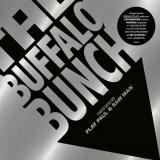
A key name from the golden era of French Touch, The Buffalo Bunch return to the spotlight with a selection of some of their most essential cuts, including their highly sought-after remix of Phoenix’s “If I Ever Feel Better” — a track that has become increasingly elusive on vinyl over the years.
Also featured is We In Music’s “Grandlife”, a cult early-2000s gem born from the same creative circle. Built on addictive disco-funk loops and straight-to-the-floor energy, it sits perfectly alongside The Buffalo Bunch’s signature productions.
Filtered house, disco, funk and raw groove collide throughout the compilation, capturing the unmistakable sound of a duo whose records have become firm favourites among DJs and collectors.
More than twenty-five years after their first releases, TMS Records brings these tracks back into circulation with a vinyl edition made for the dancefloor, the record bag and a new generation digging deeper into the French Touch legacy.
DAYBREAKERS welcomes Felipe Gordon to the label with DBR012 – Constant Output EP, a four-track 12” from one of the most exciting house producers to come out of Colombia.
Based in Bogotá, Felipe has built a reputation as a producer, DJ, label head and proper multi-instrumentalist, with records across labels including Toy Tonics, Heist, Razor-N-Tape, Local Talk, Shall Not Fade, Clone Royal Oak and his own Wide Awake / Nómada projects. His sound has always carried more than just club function — jazz keys, loose basslines, acid touches, live-feeling percussion and that raw, human edge that makes his records stand out.
There’s a natural connection here too. Felipe’s “Let’s Get, Get Together” appears on Rainer Trüby’s Root Down compilation, released on DAYBREAKERS, making Constant Output EP a perfect choice to end 2026 with. From Bogotá to Freiburg to London, it’s exactly the kind of musical thread DAYBREAKERS was built to follow.
Across the EP, Felipe does what Felipe does best: warm, jazzy, deep house with swing, musicianship and enough grit for the club.
For DAYBREAKERS, this is a proper fit. Buy or cry.
DAYBREAKERS welcomes Felipe Gordon to the label with DBR012 – Constant Output EP, a four-track 12” from one of the most exciting house producers to come out of Colombia.
Based in Bogotá, Felipe has built a reputation as a producer, DJ, label head and proper multi-instrumentalist, with records across labels including Toy Tonics, Heist, Razor-N-Tape, Local Talk, Shall Not Fade, Clone Royal Oak and his own Wide Awake / Nómada projects. His sound has always carried more than just club function — jazz keys, loose basslines, acid touches, live-feeling percussion and that raw, human edge that makes his records stand out.
There’s a natural connection here too. Felipe’s “Let’s Get, Get Together” appears on Rainer Trüby’s Root Down compilation, released on DAYBREAKERS, making Constant Output EP a perfect choice to end 2026 with. From Bogotá to Freiburg to London, it’s exactly the kind of musical thread DAYBREAKERS was built to follow.
Across the EP, Felipe does what Felipe does best: warm, jazzy, deep house with swing, musicianship and enough grit for the club.
For DAYBREAKERS, this is a proper fit. Buy or cry.



![Lara Somogyi - a [time] patterned LP](https://www.deejay.de/images/l/7/6/1239076.jpg)








![VARIOUS - BRIGHTER DAYS AHEAD [VOLUME 2]](https://www.deejay.de/images/l/7/1/1270471.jpg)