*First-ever release on vinyl
*Produced in full cooperation with Hiroshi Yoshimura's estate
*Remastered from original sources by John Baldwin
*English translations of original 1996 release liner notes
*Reproductions of Yoshimura's handwritten recording notes
*Vinyl includes 5" x 7" postcard print
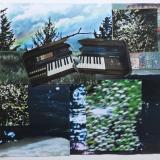
"My encounter with the Hoh Rain Forest, located inside Olympic National Park across the water from Seattle, felt like seeing a whole new world for the first time in my life. Long green fronds draped along the branches, like a scene in which fairies could be heard whispering to one another. But when you try to listen, no sound can be heard. Amidst the mysterious silence, in which no birds or insects make a sound, every living thing seemed to have stopped in its place, only to start dancing when some kind of spell is cast over them.
-Hiroshi Yoshimura
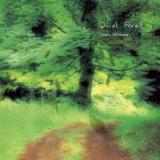
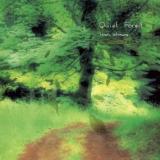
Originally issued on compact disc in 1996, Quiet Forest was Hiroshi Yoshimura’s last album-length work to be released before his passing in 2003. Largely inspired by his trip to the vast forests of the North American Pacific Northwest, the album is an aural reflection of the fantastical, surreal beauty he experienced as he walked through the otherworldly wilderness for the first time. The basic tracks were recorded in the fall of 1993. After numerous revisions to the song titles and a scrapped idea to overlay the tracks with nature field recordings, Hiroshi ultimately produced a latter-day masterwork that feels like the spiritual follow-up to Green, one of his defining works from a decade earlier."
*Produced in full cooperation with Hiroshi Yoshimura's estate
*Remastered from original sources by John Baldwin
*English translations of original 1996 release liner notes
*Reproductions of Yoshimura's handwritten recording notes
"My encounter with the Hoh Rain Forest, located inside Olympic National Park across the water from Seattle, felt like seeing a whole new world for the first time in my life. Long green fronds draped along the branches, like a scene in which fairies could be heard whispering to one another. But when you try to listen, no sound can be heard. Amidst the mysterious silence, in which no birds or insects make a sound, every living thing seemed to have stopped in its place, only to start dancing when some kind of spell is cast over them.
-Hiroshi Yoshimura
Originally issued on compact disc in 1996, Quiet Forest was Hiroshi Yoshimura’s last album-length work to be released before his passing in 2003. Largely inspired by his trip to the vast forests of the North American Pacific Northwest, the album is an aural reflection of the fantastical, surreal beauty he experienced as he walked through the otherworldly wilderness for the first time. The basic tracks were recorded in the fall of 1993. After numerous revisions to the song titles and a scrapped idea to overlay the tracks with nature field recordings, Hiroshi ultimately produced a latter-day masterwork that feels like the spiritual follow-up to Green, one of his defining works from a decade earlier."
180g vinyl LP with original obi strip and liner notes reproduction, remastered and cut by Bernie Grundman, pressed and printed in Japan
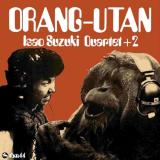
Sony Japan is pleased to present Isao Suzuki's fourth album off the Three Blind Mice label, "Orangutan". The 1975 free jazz album features acclaimed saxophonist Mori Kenji and guitarist Kazumi Watanabe, and remains undiminished by the years.
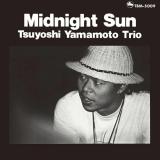
TBM’s 9th title, newly recorded by Tsuyoshi Yamamoto with renewed energy after his time training in the U.S. Featuring a lyrical touch on "Autumn Leaves", a bold and swingin’ Tsuyoshi-style take on "Wave", and the superbly tasteful "Blue Manhattan" in both performance and composition—an exquisite piano trio album.
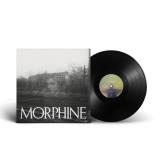
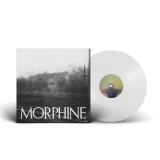
At the height of grunge, Morphine sounded like nobody else. The Boston trio built their own strange, seductive musical language (coined "low rock" by frontman Mark Sandman), built around Sandman's two-string slide bass and unmistakable voice, Dana Colley’s baritone & tenor saxophone, and stripped-back drums (Jerome Deupree, Billy Conway). Morphine became one of the defining cult bands of the ’90s, but their story came to an abrupt end in 1999, when Sandman suffered a fatal heart attack on stage during a concert in Italy.
More than 25 years later, Cocoon offers an extraordinary final chapter. Its eight songs were recorded during Morphine’s late-’90s sessions before Sandman ultimately shelved the material on the path toward what would become their final album. Rediscovered in the band’s archives decades later, Sandman’s life partner and Morphine estate manager Sabine Hrechdakian and producer Paul Q. Kolderie (Radiohead, Pixies) transferred the original tapes and carefully assembled this unified collection of Morphine songs. Dana Colley returned to add new saxophone parts, and Kolderie then brought new mixes to the table. Rather than a collection of demos or outtakes, Cocoon is a fully realized Morphine album revealing a band still pushing forward that somehow waited nearly three decades to find its way into the world
Album Background
The background on the album is that the majority of the songs existed in demo form on a CD release called "Sandbox" a semi-legit release of Mark Sandman music on 2004. These versions are the completed tracks that include contributions from Morphine saxphonist
Dana Colley and produced and mastered by Morphine's long time producer Paul Kolderie.
At the height of grunge, Morphine sounded like nobody else. The Boston trio built their own strange, seductive musical language (coined "low rock" by frontman Mark Sandman), built around Sandman's two-string slide bass and unmistakable voice, Dana Colley’s baritone & tenor saxophone, and stripped-back drums (Jerome Deupree, Billy Conway). Morphine became one of the defining cult bands of the ’90s, but their story came to an abrupt end in 1999, when Sandman suffered a fatal heart attack on stage during a concert in Italy.
More than 25 years later, Cocoon offers an extraordinary final chapter. Its eight songs were recorded during Morphine’s late-’90s sessions before Sandman ultimately shelved the material on the path toward what would become their final album. Rediscovered in the band’s archives decades later, Sandman’s life partner and Morphine estate manager Sabine Hrechdakian and producer Paul Q. Kolderie (Radiohead, Pixies) transferred the original tapes and carefully assembled this unified collection of Morphine songs. Dana Colley returned to add new saxophone parts, and Kolderie then brought new mixes to the table. Rather than a collection of demos or outtakes, Cocoon is a fully realized Morphine album revealing a band still pushing forward that somehow waited nearly three decades to find its way into the world
Album Background
The background on the album is that the majority of the songs existed in demo form on a CD release called "Sandbox" a semi-legit release of Mark Sandman music on 2004. These versions are the completed tracks that include contributions from Morphine saxphonist
Dana Colley and produced and mastered by Morphine's long time producer Paul Kolderie.
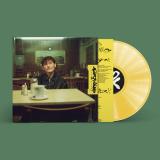
Soak’s fourth album, decembers, was born in literal silence. Contending with an autoimmune disease that prevented them from singing, it was the absence of sound that birthed the Derry artist’s most sonically and lyrically remarkable album to date.
The space that expanded from that enforced quiet, and the life lived within it - transitionary, liminal, escaping in search of connection - cracked something open. What floods in, is an album of stunning tenderness, honesty, and astonishing storytelling from an artist discovering the revelations at the end of the line.
In decembers, we travel on the road through America, walk the frost-glistened paths of Dublin at night, search for a meteor in Portugal, and return home to Derry. Everywhere, here is an artist evolving, exploring, releasing themselves, coming undone, and eventually, becoming.
At the core of the album is this lyrical statement: “Getting lost is getting free.” How brave it is to face the unknown. Because when you really go there, that’s where discovery lies. That discovery in decembers is a creative one, but it’s also about connection to people and place, to forgiveness, and ultimately to prioritising honesty. “A consistent theme is struggling for direction, battling the urge to run,” Soak says, “and instead, planting my feet.”
Soak’s fourth album, decembers, was born in literal silence. Contending with an autoimmune disease that prevented them from singing, it was the absence of sound that birthed the Derry artist’s most sonically and lyrically remarkable album to date.
The space that expanded from that enforced quiet, and the life lived within it - transitionary, liminal, escaping in search of connection - cracked something open. What floods in, is an album of stunning tenderness, honesty, and astonishing storytelling from an artist discovering the revelations at the end of the line.
In decembers, we travel on the road through America, walk the frost-glistened paths of Dublin at night, search for a meteor in Portugal, and return home to Derry. Everywhere, here is an artist evolving, exploring, releasing themselves, coming undone, and eventually, becoming.
At the core of the album is this lyrical statement: “Getting lost is getting free.” How brave it is to face the unknown. Because when you really go there, that’s where discovery lies. That discovery in decembers is a creative one, but it’s also about connection to people and place, to forgiveness, and ultimately to prioritising honesty. “A consistent theme is struggling for direction, battling the urge to run,” Soak says, “and instead, planting my feet.”
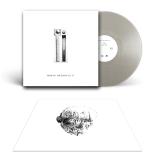
Mario Batkovic’s music occupies a singular space between composition, performance and sonic experimentation.
Based in Bern, Switzerland, the composer, accordionist and multi-instrumentalist has developed an intensely personal musical language rooted in a radical interrogation of the accordion — its timbre, mechanics, physicality and rhythmic potential. In Batkovic’s hands, the instrument becomes something far beyond its conventional role: a source of intricate, evolving sound in which performer and machine appear to become one.
Batkovic received International critical acclaim when his eponymous debut album was released on Invada Records in 2017, with Rolling Stone listing it in the top 10 avant-garde albums of the year. ‘INTROSPECTIO’ followed, a self-questioning, self-examination of society which featured collaborations with Colin Stetson, James Holden and Clive Deamer (Radiohead / Portishead).
II sees Batkovic venture further into radical, uncompromising and experimental territory, both in the reduction and the expansion of sound. Voices overlap, rhythmic structures develop an almost mechanical force, and layers of sound evoke analogue synthesizers. Then everything falls away: near-total silence, the breath of the bellows, a single frequency. Sounds emerge that can barely be traced back to any particular instrument.
The album is built entirely around the physical relationship between one musician and one instrument. No loops, no electronic layers. Everything you hear comes from an uncompromising exploration of the instrument itself. A primal force of creation and destruction.
With credits that include music for the global hit game 'Red Dead Redemption II’, commissions for AMI Paris, Cartier Fondation, Hugo Boss, Chanel and film scores ‘Mad Heidi’ and ’Shame and Money’ his compositional work has extended into some of the most distinctive fields of contemporary culture.
Heir to French Touch, French 79 opens a radical new chapter with his fourth album, Close to the Giants. For this project, French 79 relocated his studio deep into the wilderness, standing alone against the elements from high alpine peaks to the open sea. Armed with a portable modular synthesizer, he composed the entire album in the very heart of nature.
Fueled by the raw adrenaline of the elements, French 79 translates the intensity of his emotional journeys into a raw, moving electronic language—navigating from electronica to dance and tech-house, by way of electropop and French Touch.
Far more than an album, it is an intuitive, intense, and compelling logbook of a quest for solitude and human experience, honoring the legacy of French electro pioneers through signature analog arpeggios, hazy synths, and spellbinding melodies.
Zum ersten Mal auf Longplay-Vinyl, neunzehn rare Titel/Versionen von vergriffenen Vinyl-only 7" Singles und Samplern. Eine Zusammenstellung der besonderen Art, wie alles von den Lokalmatadoren. "Musikalisch (?) gibt's Punkrock der einfachen Schule, so RAMONES (die man angeblich hasst) für Arme (sehr Arme!) mit Texten zum Menschheit abschreiben oder totlachen.(...) die harte (Mühlheimer) Punk-Schule auf Imbiss-Bier-Niveau. Aber zum gelegentlichen Gehirn ausschalten." - Blueprint-Fanzine.de // "Kaufen, in den Schrank stellen und vergöttern!" - Ox-Fanzine.de
Ein in sich geschlossenes, grandioses, Zeichen setzendes Monumentalmeisterwerk, 2026 neu gemastert! Die Lokalmatadore bestehen seit Anfang 1982 und sind aus Mülheims allererster Punkband "Pissrinne" hervorgegangen. "Söhne Mülheims" erschien 2010 und war das fünfte richtige Album der Lokalmatadore und etwas punkiger als der Vorgänger "Männer Rock_n_Roll" anno 2000. Enthalten sind fünfzehn lokalmatadoretypische Hymnen plus ein Bonusstück. Wieso, weshalb, warum ein Bonusstück, dürft ihr selber raten...Neben eigenen Titeln gibt es zwei Coverversionen von Buzzcocks sowie Peter and the Test Tube Babies sowie das Steigerlied als Huldigung an die Bergarbeiter. Fußballmäßig wird der lokale Club V.f.B. Speldorf geehrt und der kosmische Analphabet dürfte einmalig sein. Einmalig Lokal halt, wie so oft.
Special remarks : coloured vinyl, Orange
On his first vinyl LP release for Stasis Recordings, SubDan delivers an album that feels like an Acid Smiley Face. His sound is so rooted in the TB303 that it is the backbone to every track, and yet, he doesn’t use it as a baseline (which was the instrument’s original intention, according to Roland), but as melody, a mood, a feeling. This LP is full of retro feels combined with futuristic beats, languid atmospheres and urgent callings. SubDan uses the TB303 like no other musician I know and on this LP his creativity is on full display.
The project first appeared as an anonymous transmission: a folder sent through the network, containing music, instructions and a name - Transpac. No photograph. No biography. Just the request to use the name and let the music speak.
There have been several transmissions since. Still no interviews, no confirmed identity, no explanation of who - or what - is behind the name.
Some say Transpac is a person. Others insist it is a machine. A few believe it is simply a data packet that escaped the network and somehow learned how to make music.
The name itself offers a possible clue. TRANSPAC was once the name of a French public data network, launched in 1978 and built around X.25 packet switching - breaking information into packets and moving them across a network long before the Internet became what it is today.
Perhaps Transpac has been travelling ever since.
Packet Switching EP is the latest intercepted transmission: six packets of pure machine music, assembled somewhere between circuitry, communication protocols and whatever exists on the other side of the network.
Whilst the packets have been received, the sender remains unknown.
Synaptic Cliffs is particularly pleased to have brought Transpac into its network - a feat made possible, not least, by its principal operative, pdqb. Through communication channels inaccessible to ordinary Earthlings, pdqb was able to locate Transpac with remarkable ease and secure its transmission for the label.
The artwork, rendered in yellow and black and largely composed of binary code, echoes the visual language of the early machine age - a world of geometric systems, electronic signals and human beings beginning to communicate with machines. Created by the legendary Infamous Image Division.
ALOUD! is about breaking rules in order to create your own. It’s about speaking your truth unapologetically and not worrying about being judged for it. At its core, this album is meant to feel fun. There’s so much heaviness in the world right now, and sometimes people just need to dance, escape for a minute, and let themselves feel free. Honestly, I need that too.
With this project, I wanted to tap into a lighter side of myself. I wanted to make music that feels fun and accessible. This album is about letting go, being present, and allowing yourself to enjoy life without overthinking every move.
Don’t let anybody silence you or tell you who you’re supposed to be. Say what you want, move how you want, and dance your way through the hard times. Stay ALOUD. You’re allowed to live life on your own terms.
Following 2024’s Echoes of the Night EP, Michael Hodgson returns with Apply the Dub: four stunning new Adrian Sherwood remixes, this time of his long-running solo project, Misled Convoy.
The EP’s title is a nod to Sherwood’s renowned process in which tracks are not simply remixed, but dismantled, fed into his dub machinery and reimagined. The results are spacious and compelling, epic in scope, rich in detail and loaded with bass.
The prophetic voice of Kat Five (Feral Five) looms large on the opening track, as does Miho Wada’s flute on the last. David “Ital Horns” Fullwood returns to the project, providing trumpet to two of the tunes, while Doug Wimbish (Tack>>Head / Living Colour) adds bass, and Mark Bandola (The Lucy Show) guitar and keys, to a different pair of remixes.
The sessions began in 2025, with the original tracks drawn from the more experimental and industrial side of Misled Convoy, giving Sherwood plenty of room to work with sonically. In his Ramsgate studio, frequencies were pulled apart, bass lines elevated and melodies stretched while sounds disappeared into layers of delay, echo and dub processing before emerging dazed & confused and somewhere else entirely.
Since dub is the compositional glue that fuels Hodgson’s creative dynamic, this collaboration meant reverse engineering his process and stripping his compositions back to the bare bones: “Before we hit the studio, I had to remove a whole lot of my effects to make space for Adrian, which made the track sound empty and super weird, but this is how the magic happens. When you do a remix, you are inviting an artist you respect into your creative process and watch it get reimagined. This is a big part of dub and remix culture.”
Very much a meeting of two complementary approaches to sound, Apply the Dub has Hodgson’s dark and atmospheric electronica enhanced and deeply embellished by Sherwood’s long-established sonic manipulation and dub-mixing.
For Hodgson, the connection with Sherwood and On-U Sound has been life-long, from being a fan in his youth in Aotearoa New Zealand to supporting Patrick Docktor’s archiving of the label’s video and audio collection in London. In 2019 Sherwood invited Hodgson to collaborate with artist Peter Harris to create a visual backdrop to accompany his Time Boom X The Upsetter Dub Sessions tour. Hodgson went on to create videos for On-U’s 40th anniversary celebration at The Forum in London, helped with the immersive 3D Live Dub Experience at Earth Theatre and travelled to Japan for the Collapse of Everything tour where he worked on live video triggering for Sherwood’s shows.
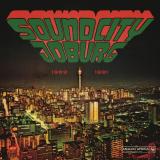
Analog Africa's latest essential compilation began with a ruined needle. Samy Ben Redjeb, who was newly back from a 2002 digging trip, dropped a stylus into a groove that censors at the SABC had gouged with a blade. The record had been marked "not suitable," and the story behind it runs through the whole compilation. The 22 tracks pull American soul, funk and disco toward jazz, reggae and local rhythm until the result sounds utterly Jo-burg. 'How Long?' and 'Take It' are the early standouts, though the Beat Set two-parter and Dudu And The Big Time Boys hold their own. The 16-page booklet fills in the context nicely on this well assembled deep dive.
Ghost Funk Orchestra (GFO) kehren mit ,Yours in The Ranks of Death", ihrer bisher bodenständigsten und persönlichsten Sammlung von Songs, in unseren Orbit zurück. Nachdenklich und ätherisch - auf dem fünften Album von Ghost Funk Orchestra reduziert Komponist und Mastermind Seth Applebaum die Klänge und konzeptionellen Grundlagen und schafft so für seine typischen Grooves einen klareren Rahmen, in dem sie über den Plattenteller gleiten können. Wie die Strahlen der Sommersonne, die den Morgennebel langsam auflösen, treten nun die Konturen und kristallklaren Figuren deutlicher hervor, die Ghost Funk Orchestra seit ihrem Beitritt zum Label im Jahr 2018 zum groovigen, modernen psychedelischen Soul-Jazz-Boogaloo-Rückgrat von Karma Chief Records gemacht haben. Eine treibende, poetische und funkige Form der Selbstreflexion.
Ghost Funk Orchestra (GFO) kehren mit ,Yours in The Ranks of Death", ihrer bisher bodenständigsten und persönlichsten Sammlung von Songs, in unseren Orbit zurück. Nachdenklich und ätherisch - auf dem fünften Album von Ghost Funk Orchestra reduziert Komponist und Mastermind Seth Applebaum die Klänge und konzeptionellen Grundlagen und schafft so für seine typischen Grooves einen klareren Rahmen, in dem sie über den Plattenteller gleiten können. Wie die Strahlen der Sommersonne, die den Morgennebel langsam auflösen, treten nun die Konturen und kristallklaren Figuren deutlicher hervor, die Ghost Funk Orchestra seit ihrem Beitritt zum Label im Jahr 2018 zum groovigen, modernen psychedelischen Soul-Jazz-Boogaloo-Rückgrat von Karma Chief Records gemacht haben. Eine treibende, poetische und funkige Form der Selbstreflexion.
featuring the complete 17-track deluxe edition available on vinyl for the very first time, plus additional rare bonus track "Stay With Me Baby", making this the definitive edition for collectors and fans.
Das Debütalbum ,Dins" von Psychic Ills erscheint anlässlich seines 20-jährigen Jubiläums in limitierter Auflage auf Vinyl! ,Dins" führt die Band weit über ihre beeindruckende Live-Dynamik aus kreisenden Rhythmen und Gitarren-Spektakel hinaus. Sie verbinden nahtlos unkonventionelle Instrumentierung und Studio-Improvisation mit einer mitreißenden Rock-Dynamik zu einem unglaublich kraftvollen Debüt, aufgenommen von Charles Burst, der bereits mit Bands wie Black Dice, Gang Gang Dance und The Double zusammengearbeitet hat. ,Dins" strotzt nur so vor Psychedelia - getränkt in Hall und grenzenlosem Dröhnen - und greift mit seinen achtminütigen Rock-Hymnen wie ,I Knew My Name" und ,Another Day Another Night" die Psych-Rock-Inspirationen der frühen 90er wie Sonic Youth und The Velvet Underground auf. Während andere Tracks einen glückseligen Geisteszustand erzeugen, deine inneren Spannungen lösen und dich mit endlosem, surrendem Gitarrensound hypnotisieren - wie ,Electric Life". Ein unvergessliches Debüt mit weltweiten klanglichen Inspirationen: Psychic Ills geben auf ,Dins" alles. Lehn dich zurück und mach dich bereit für den Trip deines Lebens.
SHORT INFOS
Because Music celebrates the 50th Anniversary of Cerrone's debut album "Love In C Minor (Cerrone I)" .
A record which is one of the mots important of its time. It brought French Disco to the World and established Cerrone as the French King of Disco.
- Pressed in exclusive 2026 Apple Green Crystal Clear vinyl
- Original 1976 artwork - Digitally remastered from original tapes.
BIOG
Cerrone I
Love in C Minor (1976)
The story behind Cerrone's first album could be summarised in the libertarian atmosphere and the creative energy of the 70s, inherited from the 60s revolutions, spiritual, aesthetic or sexual. Looking back now, this record is one of the most important of its time. It helped creating the sound of an era and brought French disco to the world. It is also, and this is fundamental to understand its success, the result of a man's vision: Marc Cerrone, a free spirit inhabited by music, who ended up with a major work of art. With this album, Cerrone accumulated the main elements that make a record timeless, even bigger than its creator: the pure originality, the madness of a vision without compromise, a sense of the market and a great dose of luck too. To some extent, this is the perfect record to start a career, even though Cerrone's one already existed in an implicit way. He actually began in a rather popular band, Kongas, signed by Barclay. Between 1972 and 1974, the band was famous and made it abroad, particularly in Japan, where people loved its sound. Despite this success, probably fed up with the music and not ready to follow the orders of a label that wanted the band to sound more pop, Cerrone disbanded Kongas. He had the sound of his instrument in mind and mostly its central element: the bass drum. The idea of this first solo album came to him after a detour via selling records. Wishing to forget about the studios, he took the head of a small chain of stores, selling records imported from the States. That's when he discovered a daring new sound coming from New York: disco music. This energy inspired him to record again. He then remembered the crazy reaction of the audience when, during the Kongas' concerts, he used to hit his bass drum hard. Cerrone felt like going back into the studio but to make something different. He decided to record a sixteen minutes long track, driven by its beat, that would fit on its own on one side of a LP (during these vinyl days, musicians used to think in terms of sides…), with girls' voices simulating sex. This concept of musical and physical orgasm was recorded at Trident Studios in London (where pop stars used to record at the time… ) with Don Ray, of Kongas, man in the shadows and brilliant arranger who'd follow Cerrone during his whole career. Obviously, like always in pop music (it happened to the Beatles), record companies started by turning this weird track down, convinced that radios would never play sixteen minutes of beats and moaning. Cerrone, a born fighter, decided to trust his instinct (a mix of ego and business sense) and chose to believe that if the radios wouldn't play the track, people would dance to it in the clubs. He released the record himself, with a sexy cover a bit provocative where he wore a black bathrobe, a young short-haired girl leaning on him. Being played here and there, thanks to Cerrone's own network, the record started to work a bit in France. But luckily, things really happened in the States. Due to a mistake, a box of "Love In C Minor" albums were sent to the States via Cerrone's record shop instead of some unsold American LPs. Once in New York, the box was opened and the record with its intriguing cover was instantly loved and passed through the hands of radio and club DJs. All of a sudden, and unknown to its creator, the track that was turned down by every French label, became a hit on the New York disco scene. Casablanca, the US disco label, released a cover recorded by an ad hoc band because nobody knew Cerrone of how to find him. Once he discovered what was happening in the States, Cerrone flew to New York. He realised he had a hit, one of the biggest then, that opened the doors to every record company and especially Atlantic. He was welcome by Ahmet Ertegun, one of the main visionaries of the American music who, among other artists, signed Aretha Franklin and John Coltrane. It's believed that Ertegun understood that the French young musician, like some Atlantic artists, was about to define the sound of his time and that his work would live long after its birth date. "Love In C Minor" was the first step, adamant and successful.
Transcendental dreamstates and techno synthscapes projecting from 1992 into the future.
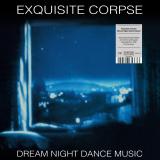
Written and recorded shortly before his departure from Psychick Warriors Ov Gaia, Dream Night Dance Music is the visionary first album from Robbert Heijnen under his celebrated alias, Exquisite Corpse. Exploring ritualistic rhythms and organic synth sculpting with a delicacy far beyond most techno released in 1992, the seductive atmospheres and rolling sequences of Dream Night Dance Music reach well beyond pure dancefloor functionality to become an immersive experience for introspection and extroversion alike.
Belgian label KK Records originally released Dream Night Dance Music as a single LP and CD, long-since out of print and highly sought after by the notoriously enthusiastic PWOG / Heijnen fanbase. This expanded reissue on Forever Records spreads the release across two 12"s, adding the track 'What A Life' originally released on the Reassembling Reality single, recorded during the same sessions as Dream Night Dance Music. In addition, the limited vinyl edition comes with a bonus 10" featuring previously unreleased tracks 'Calling' and 'Sure'.
Praise for Dream Night Dance Music:
"The Dream Night Dance Music CD is… electronic opium… The soft, analogue synth sounds and arrangements strongly recall minimal music (Glass/Reich). Music that never ends, constantly winding new loops and coils around the listener's vulnerable inner self." Fritz, Trust Zine, 1992.
"The sound is very trance-like and hypnotic, yet remains highly danceable and never gets boring… It is sure to appeal to night owls, cyberpunx, and neon-light junkies alike." Spex, 1992.
"Heynen strikes a compelling balance between a multitude of rhythms, melodies, and timbres. Permeated by an almost swaying groove, the music reflects influences ranging from the early "minimal music" of composer Steve Reich and the electronic architecture of pioneers Kraftwerk to various non-Western, mystical traditions without ever resorting to mere imitation." Corné Evers, Oor, 1992.
Transcendental dreamstates and techno synthscapes projecting from 1992 into the future.
Written and recorded shortly before his departure from Psychick Warriors Ov Gaia, Dream Night Dance Music is the visionary first album from Robbert Heijnen under his celebrated alias, Exquisite Corpse. Exploring ritualistic rhythms and organic synth sculpting with a delicacy far beyond most techno released in 1992, the seductive atmospheres and rolling sequences of Dream Night Dance Music reach well beyond pure dancefloor functionality to become an immersive experience for introspection and extroversion alike.
Belgian label KK Records originally released Dream Night Dance Music as a single LP and CD, long-since out of print and highly sought after by the notoriously enthusiastic PWOG / Heijnen fanbase. This expanded reissue on Forever Records spreads the release across two 12"s, adding the track 'What A Life' originally released on the Reassembling Reality single, recorded during the same sessions as Dream Night Dance Music. In addition, the limited vinyl edition comes with a bonus 10" featuring previously unreleased tracks 'Calling' and 'Sure'.
Praise for Dream Night Dance Music:
"The Dream Night Dance Music CD is… electronic opium… The soft, analogue synth sounds and arrangements strongly recall minimal music (Glass/Reich). Music that never ends, constantly winding new loops and coils around the listener's vulnerable inner self." Fritz, Trust Zine, 1992.
"The sound is very trance-like and hypnotic, yet remains highly danceable and never gets boring… It is sure to appeal to night owls, cyberpunx, and neon-light junkies alike." Spex, 1992.
"Heynen strikes a compelling balance between a multitude of rhythms, melodies, and timbres. Permeated by an almost swaying groove, the music reflects influences ranging from the early "minimal music" of composer Steve Reich and the electronic architecture of pioneers Kraftwerk to various non-Western, mystical traditions without ever resorting to mere imitation." Corné Evers, Oor, 1992.
I SPLIT MY ORGAN IN TWOS - a sonic world where animals could speak and parents would never grow old. Music is playing beneath the trees. Creeks are flowing towards the treehouse. Bears are singing and Owls are sailing through the wind like miniature spaceships. Solitude is a chosen path of clarity. And when this world collapses, all memories will vanish. Left behind is the Sting that keeps us separated from the insane.
The debut album I SPLIT MY ORGAN IN TWOS by Munich indie project plainhead is a freak folk inspired rockrecord fusing key aspects of 00s experimental indie with 90s indie rock.
The organic soundscapes remind of yetto-be-refined the Microphones from the album It Was Hot, We Stayed in the Water (2000). Acoustic Guitars fuse with the sound of fuzz and distortion. Clarinets and pianos can be found somewhere buried beneath the noise,
while the vocals remain dry and tired in the front. The 18-track double LP features easy-listenable songs such as the single Ghost / Smoke, short playful instrumentals named after animals and long ever-evolving operas such as River and Sunsick. The album was released on Munich local DIY recording label new basement.
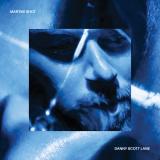
Martini Shot is the new album from Danny Scott Lane-a catchy, nostalgic and slightly manic collection that feels a little like one drink too many. Moving between lounge, soul, indie pop and exotica, the record plays more like a mixtape than a single idea, with a distinctly '90s streak running through it.
Lane sings on seven of the album's ten songs, a departure from his largely instrumental past work, and plays drums and percussion for the first time alongside his usual synths, keyboards, guitar and bass. Longtime collaborator David Lackner contributes flute, joined by new collaborators Logan Hone on flute and Katie Jacoby on violin.
Martini Shot marks Lane's second release with Records We Release, following the well-received House of Alice. The result is loose, romantic, restless and a little unpredictable.
Martini Shot is the new album from Danny Scott Lane-a catchy, nostalgic and slightly manic collection that feels a little like one drink too many. Moving between lounge, soul, indie pop and exotica, the record plays more like a mixtape than a single idea, with a distinctly '90s streak running through it.
Lane sings on seven of the album's ten songs, a departure from his largely instrumental past work, and plays drums and percussion for the first time alongside his usual synths, keyboards, guitar and bass. Longtime collaborator David Lackner contributes flute, joined by new collaborators Logan Hone on flute and Katie Jacoby on violin.
Martini Shot marks Lane's second release with Records We Release, following the well-received House of Alice. The result is loose, romantic, restless and a little unpredictable.
London-based Frankfurt export Claus Fuss brings his vibrant creativity to Rant & Rave with the Läuft! EP. Claus’ output includes a whole bunch of solo productions and collaborative projects with OneOneOne and LANDER, as well as co-productions with UK legends such as Zed Bias, Emerald a.o. His analogue-produced cuts have been signed to labels such as Khemia, Crème Organization, Neighbourhood, Heras and Kaizen. With his arrival on Rant & Rave, Claus drops four scintillating examples of rough and ready techno, including a collab with label head MAEDON. The EP kicks off with the title track ‘Läuft!’ (Running! in English), a mesmerising cut with a repetitive vocal snippet that forms part of the main riff. The beats are exquisitely programmed, and Claus keeps that track progressing, shifting and evolving masterfully.
Subtle layers add depth, while the main thrust of ‘Läuft!’ remains potent and captivating throughout. Next up is ‘Schwarze Löcher’ (Black Holes). As the title suggests, this one is dark and deep, sucking you into the sonic void. Elastic kick drums propel this one forward, as a rhythmically peppered, resonance shifting riff rises and falls. Claus gradually ramps up the intensity until we reach a breakdown, where that riff really works its magic. When the drums are reintroduced, it’s a powerful moment. Then we have ‘TopUp’, a lively, upbeat cut with contagious energy. Claus hooks the listener with an irresistible rhythmic structure, the bassline is especially addictive. Fast paced, dynamic drum programming keeps this one moving at a frenetic pace. On the surface it’s deceptively simple, but attentive listeners will pick up on all the details that make this one a compelling listening (and dancing) experience. Finally, we have ‘Zwanzig’ (Twenty), a heady collaboration with Rant & Rave boss MAEDON. This one brings together MAEDON’s earworm melodies and Claus’ penchant for hypnotic grooves. An insistent groove gives this cut a feel of urgency, while a relentless riff and punchy beats aim squarely at mind and body. A masterclass in dance floor engagement and connection.
Original Jazz Classics celebrates Miles Davis’ centennial with the release of Steamin' with the Miles Davis Quintet. Released on Prestige in 1961 as one of four albums recorded in 1956 at Van Gelder studios, Steamin’ features Davis with his first great quintet of John Coltrane, Paul Chambers, Red Garland and Philly Joe Jones. This new edition of the album is released on 180-gram vinyl pressed at RTI with all-analog mastering from the original tapes at Cohearent Audio and a Tip-On Jacket.
Originally released in 1962 on the Riverside label, How My Heart Sings features the Bill Evans Trio of Evans (piano), Paul Motian (drums) and Chuck Israels (bass). A lively mix of jazz standards and originals, highlights include "I Should Care," "In Your Own Sweet Way," and "Summertime.”. This new edition is released as part of the Original Jazz Classics series and is presented on 180-gram vinyl pressed at RTI with all-analog mastering from the original tapes at Cohearent Audio.
1986 was a very good year for Mike Mareen. It was the moment when something changed in his music. After years of searching for the right sound, Mike decided to change his production team and it turned out to be exactly the right decision. The first major result was “Love Spy”, with Lutz Rahn playing a crucial role in shaping its sound. The record simply exploded. Even without the kind of massive promotion normally associated with an international hit, “Love Spy” became one of the defining records of that peculiar German intersection between synth-pop, electro, Hi-NRG and Italo Disco. But Mike and Lutz were only getting started. Soon afterwards they wrote and recorded “Agent Of Liberty”. And once again, everything worked. The single travelled far beyond Germany, appearing in places as distant as Mexico, Australia, Sweden, Denmark, Norway, Venezuela and South Africa. It was another demonstration of how sophisticated Euro Disco could be when it was treated as serious electronic music rather than disposable dance-pop. The sound was simply dope. Sharp digital synthesizers, metallic FM textures, punchy electronic drums, dramatic arrangement changes and the kind of bright, futuristic timbres that made the Yamaha DX7 era so instantly recognizable. But the biggest change… was Mike himself. This was no longer the romantic lover of “Dancing In The Dark”. On “Agent Of Liberty” he sounds tougher, sharper and more confrontational. His half-spoken, half-rapped delivery cuts through the production with almost streetwise confidence, while huge uplifting backing vocals and highly melodic synth lines keep pulling the track back towards the dancefloor. And beneath the attitude there was something much more interesting going on. “Agent Of Liberty” announced a new chapter in Mike Mareen’s music, a direction that would later be developed much further on the “Let’s Start Now” album. Mike wanted to belong to the intelligent side of the electronic scene. And, just as importantly, he wanted to help shape where that scene was going next. “Agent Of Liberty” is probably one of the clearest examples of that ambition. It has all the ingredients of a huge club record, but there is tension in it, drama, attitude and a sense that something bigger is happening behind the beat. Four decades later, it still sounds completely distinctive. Not merely like a record made in 1986, but like a record that captures what was exciting about 1986 in the first place.
For its 40th anniversary, Vintage Pleasure Boutique brings “Agent Of Liberty” back to vinyl in newly remastered form. The release will be available on classic black vinyl and in a striking bright orange edition. And because this is not meant to be just another archival reissue, we have added two brand-new interpretations. Disco Computer takes the track into more adventurous territory. His remix is the more unconventional of the two, approaching the original from a slightly more modern and experimental angle while keeping its unmistakable melodic identity. A.P. Mono takes almost the opposite approach. Rather than trying to reinvent “Agent Of Liberty”, his version works more like a contemporary DJ edit. The original character remains intact, but the structure has been reshaped for the modern dancefloor, with stronger build-ups, clearer mixing points, carefully controlled changes in dynamics and moments designed to let the tension rise before the track hits again. The idea was simply to give DJs two new ways of playing it.
Forty years after its first release, “Agent Of Liberty” remains one of the most characteristic records not only of Mike Mareen’s career, but of the entire German electronic dance scene of the 1980s. Powerful, melodic, intelligent and wonderfully excessive. The Agent is back.
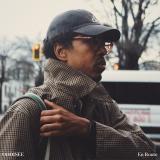
On En Route, Oddisee captures the tension of motion—between where you’re from and where you’re headed, between ambition and grounding, between survival and purpose. Released at a moment when his voice was sharpening into something unmistakably his own, En Route feels like a checkpoint record: reflective, hungry, and deeply human.
Built on warm, head-nodding production and Oddisee’s signature blend of jazz-inflected beats and conversational clarity, the album balances internal dialogue with outward observation. He raps not as a distant narrator but as someone in the thick of it—touring, questioning, recalibrating—turning everyday moments into quiet revelations. Themes of independence, self-definition, and forward momentum run through the record without ever tipping into cliché; this is movement with intention, not escape.
What makes En Route endure is its honesty. There’s no forced grandeur here, just earned confidence and craft. Oddisee treats growth as a process rather than a destination, letting listeners ride alongside him as the miles stack up. The result is an album that feels lived-in and timeless—music for long drives, late nights, and anyone figuring out who they are while still on the way.
DJ Support: Glenn Underground, Crazy P, Terry Farley, Aroop Roy, Chris Coco, Frank Tope, Greg Wilson, Dom Servini, Francois K, Max Essa, Oliver Dollar, Pete Herbert and many more
Danny Ward’s Balaphonic project, one of many the long-serving performer, producer, percussionist, drummer and DJ has utilised over a career spanning over three decades, has evolved considerably since his first release under the alias 11 years ago. Conceived as a platform to explore his love of Afro-Cuban and Brazilian musical culture, it gathered new impetus during lockdown and the recording of superb first album Resolution Revolutions, which fused these influences with nods to Balearica, dub, dancehall and deep house.
On the Organic Matters EP, Ward’s follow-up to that critically acclaimed set, the Balaphonic musical universe has expanded once more, with the Manchester native showcasing a wealth of eye-catching collaborations and an even more intricately layered and sonically detailed sound rich in live percussion and instrumentation. It’s an ambitious and widescreen musical vision wrapped in sun-soaked melodies, morning-fresh motifs and simmering, sunset-friendly soundscapes.
The dizzying new heights scaled by Ward on Organic Matters is evident from the opening bars of ‘Dew Drops’, a piece created in unison with internationally renowned composer and arranger Robin Dewhirst. Between them, the pair have conjured up a yearning, life-affirming samba shuffler where picturesque piano, xylophone and balafon melodies rise above Ward’s dense, layered Latin percussion and warming bass.
Next, Ward delivers a thrillingly different take on his 2005 composition ‘Switch’, featuring legendary Brazilian jazz vocalist Flora Purim and her equally talented daughter Diana Moreira Booker. Whereas that was a jazzy deep house workout, Ward’s Balaphonic re-make is a shuffling, gentle exploration in 7/4 time – a heartfelt tribute to the Brazilian records with which Purim first made her name in the 1960s and ‘70s.
‘Balaventurers’ sees Ward join forces with an old friend from the North-West scene, R.S.L founder Joe Botham AKA Baleardelica – a multi-instrumentalist and producer whose Flamenco-inspired acoustic guitar motifs provided the starting point for another vividly colourful exploration rich in layered vocalisations, twinkling keys and impeccably arranged percussion.
It’s followed by ‘Life of Strings’, a more up-tempo and dancefloor-leaning excursion written and recorded alongside Amsterdam-based violinist, and composer Katya Gabeli. While Ward’s percussion-rich groove provides propulsion and a rock-solid foundation, it’s Gabeli’s evocative string arrangement that provides the focal point and emotional resonance. It’s a genuinely brilliant collaboration.
To round off a second stunning Balaphonic release on NuNorthern Soul, Ward delivers two simmering, slow-motion delights: the Afro-Cuban rhythms, cascading melodies and melodic percussion motifs of ‘Boxfresh’, and stunning EP closer ‘Home’ – an almost overwhelmingly poignant and beautiful number that gently ebbs and flows on waves of tracked piano, dreamy chords and a comforting sense of closure. It’s a genuinely sublime conclusion to another wonderful Balaphonic release.
Magazine Announces 15th Anniversary Remaster of Barnt’s Techno Classic Geffen
Cologne-based record label Magazine celebrates the 15th anniversary of Barnt’s visionary anthem Geffen. One of electronic music's most defining tracks of the 2010s will be reissued in a 2026 remaster edition, marking the first time it receives its own dedicated standalone release.
Originally published on the legendary Cómeme imprint as part of the Various Artists EP The Power Of Now, the track rapidly became a global phenomenon. Looking back, one can hardly imagine Geffen without the 2010s, or, conversely, maybe even electronic music of that era without it. The composition mirrors the expressive possibilities of bedroom producers at the beginning of that decade—an era where artists could launch tracks into the world and have them resonate through their sheer sonic power, without major marketing efforts.
Barnt remembers: "It was one of my earliest tracks. I had just entered art school and didn't own much equipment. My MIDI keyboard only had two octaves. I would always play notes with my right hand while simultaneously shifting through the octaves with my left. This is how the hook line came to life. The production only consisted of seven or eight stems, and barely any equalizers were used during the mixdown. In hindsight, this sparse approach to production probably made it sound different and is why it hits so hard on big sound systems (while sounding unfinished to some on YouTube). At that time, we were doing a small festival on a playground in the center of Cologne. When I played the CDR there, Matias Aguayo demanded it right after. That is how it ended up on Cómeme."
The release comes with two very Magazine-esque reinterpretations from the label's two other co-founders alongside Barnt: a powerful atmospheric club remix by Jens-Uwe Beyer, and Magazine Hallucination, a wild, collaborative, psychedelic mutation by Crato and Beyer.
Jörg Burger, who already mastered the original track, is also responsible for the mastering of this release.
Swooped Records would like to introduce our limited series of vinyl only edits We love many of the edit labels with 1-2 tracks per release, and we’re going to help you value up with 4 top-shelf cuts on every record! We kick it off with Chainsnatcher “Jump Up In It” Vox that is straight up, dirty, bumping House music! It’s also featured on Derrick Carter’s for The 6 Mix w/ Mary Anne Hobbs on BBC’s flagship BBC Radio 6 Music. Next up Ric Viera of Guided Methods fame teams up with Elrose for “Only Ewe”. This funky House take on an afro-boogie jam will shake the dance floor and keep the discerning heads nodding. The flip side brings us Chainsnatcher “Jump Up On it” Dub. This is for those that want a stripped back version of the Vox with well placed, minimal vocal snippets and that dance floor boogie. Agent 818 rounds it off with “Don’t Let Nobody” and it’s time to get the summer time vibe started pronto! This jam will do the trick whether it’s day party-fun to after-hours strutting, just ask DJ Heather as she’s been playing it for a minute now.
Mit ihrem neuen Album Nine setzt das aus Chicago stammende Post-Metal-Trio Russian Circles seine bedächtige Weiterentwicklung und disziplinierte Verfeinerung fort. Dabei besinnen sie sich auf ihre Stärken und erweitern zugleich die Grenzen ihres Klangspektrums. Dies ist eine Band ohne Radio-Hits. Es gibt keinen Konsens unter Fans darüber, welches ihr bestes Album ist. Was bleibt, ist der Ruf nach Beständigkeit und Qualität - ein Ruf, der sie zu einer der weltweit bedeutendsten Bands im Bereich des instrumentalen Heavy Rock gemacht hat. Auch wenn sie betonen, dass ihre Musik aus einer Vielzahl unterschiedlichster Einflüsse schöpft, lässt sich sagen, dass sich die experimentierfreudige Vielfalt von Russian Circles zu einem unverwechselbaren, einzigartigen Sound entwickelt hat. Obwohl die Mitglieder von Russian Circles mittlerweile über das ganz USA verstreut leben - Gitarrist Mike Sullivan in Los Angeles, Schlagzeuger Dave Turncrantz in Chicago und Bassist/Keyboarder Brian Cook auf Vashon Island bei Seattle -, haben sie für Nine ihre jeweiligen Standorte musikalisch miteinander verwoben. Die sieben gewaltigen, fast seismischen Titel wirken wie Soundtracks zu den Herausforderungen und Tragödien des modernen Lebens. "Unsere Musik ist ein gemeinsamer Prozess der Versöhnung, der Orientierung und der Reflexion über das Älterwerden - sowohl als Individuen als auch als kreative Einheit. Das Leben hat reale räumliche Distanzen zwischen uns geschaffen, doch die Band bildet weiterhin unseren gemeinsamen Mittelpunkt. Diese kreative Zusammenarbeit ermöglicht es uns, den Lauf der Zeit zu erfassen und zugleich voller Zuversicht in die Zukunft zu blicken", erklärt die Band. Während frühere Alben beim Erkunden verschiedener musikalischer Gefilde fast spielerisch wirkten, ist Nine das Zeugnis einer Band, die ihr Terrain genau kennt und ihre Position in dieser vielfältigen Klanglandschaft festigt.
Body Clinic enters the realm of Big Trouble Records with 4 no nonsense, hard hitting club tools.
“Connection Lost” EP tells a story, between the influences of the early 2000’s East London scene, and the classic elements of House with an ever-evolving modern yank. Deep rolling subs keep the body moving, while classic organ sounds weave through the soul. A true diggers paradise, with tracks that journey their way through all hours of the night.
NIX doesn’t do compilations very often. They’d rather focus on artist EPs. But every now and then a track comes along that deserves to be released, even if it doesn’t quite belong anywhere else.
NIXW006 brings together a handful of those tracks - some of their favourites, finally finding their place.