São Paulo-based carnival collective and brass band combine retro horns with cumbia, baile funk, jazz, Michael Jackson & more
A Espetacular Charanga do França started as a political act, part of a recent movement which has seen the people of São Paulo reclaim their streets, turning their city into a revelation of Brazilian carnival. The group takes equal inspiration from the powerful charanga horn and percussion bands that stir the crowds at Brazilian football matches, and the expertly-arranged sounds of 60s
samba, finding that sweet spot between musicianship and music that makes you lose your shit. And they do it with humour, clear as day in their covers of Michael Jackson and pagode pop hits, and the baile funk and Balkan rhythms that sneak their way in to the tunes.
Since forming in 2013 the group have become an iconic staple of São Paulo’s revived carnival, generating crowds 15,000 strong. Though COVID-19 put a stop to them hitting the streets this year, in 2020 they made their way to carnival with over 60 brass players and 30 percussionists, declaring their bloco an anti-fascist zone, their reply to a political climate in Brazil that is suffocating human rights, culture and any hope for equality.
“I like to think that Charanga is an oasis in the middle of all the shit that we live, where you don't have to be worried about who you are, what are your preferences, whether you can be comfortable. If you want to parade with us wearing a tea towel you can, you won't be harassed. And it's also about music, it's about listening to music. We do this thing the whole year, we rehearse all year, we do too much so that people can just get crazy and not care about the music.” Thiago França
The group is the brainchild of saxophonist Thiago França, best known as a founding member of Afro-punk explorers Metá-Metá, and one of São Paulo’s most in-demand horn men, with credits on influential albums by Criolo, Elza Soares, Céu and Lucas Santtana. A
out of Stock
Last delivered 3 years ago available to reorder, subject to availability
Holistico Records delivers its third release with a split record between well-known Uruguayan artist Federico Lijtmaer on A side and introducing Vittorio Pagani on B side. Also from Uruguay, Vittorio knows no musical boundaries; his music quest runs through experimental jazz to techno without loosing his personal sound.
out of Stock
Last delivered 20 months ago available to reorder, subject to availability
Alison Goldfrapp has set a towering bar for British synth-pop in the 21st century and she’s only just getting started. The magnetic London-born singer, songwriter and producer’s seven albums with Goldfrapp were fuelled by an unfailing modernity and a sixth sense for sounds that were more timeless than any trend. With the release of her debut solo album The Love Invention—an electrifying dance-pop suite—her multi-faceted musicianship reaches a new peak.
The Love Invention marks Alison’s reawakening as a dancefloor priestess, in an intoxicating showcase of the disco and house influences that have always been at the heart of her musical DNA. “So Hard So Hot” bottles the ephemeral joy of a dancefloor with its anthemic house beat, disco handclaps, and an exquisitely alluring vocal from Alison. The sense of uninhibited liberation courses through album highlights like “In Electric Blue,” a yearning synth-pop confection with a chorus as blissful as love’s first butterflies. On “Never Stop,” she is flooded with the rush of an all-encompassing love over a buoyant, rubberised beat; the sublime synth-pop of “Fever” is an ode to the intoxicating majesty of the dancefloor, with a chorus that explodes as if setting off a glitter cannon.
out of Stock
Last delivered 3 years ago available to reorder, subject to availability
Offering a three track EP on Token, emblematic UK producer James Ruskin proves his capability and linear focus once again through 'From the Ashes'. Looking past trends to create a lasting record rich in texture and thick with impact, the project affirms what the scene has already known to be true about his work for the past 25 years.
Setting his intentions from the A1, Ruskin wastes no time by creating an intimidating introduction. Saturated percussion and stuttering keys whip through a 4 minute masterclass of sound system focused production. Adventurous in structure, Ruskin remains unquestionably in control of a bursting, almost chaotic track. 'From the Ashes 2' picks up what was left off, containing a hard-set groove with hi hats slithering in progressively from the stereo image to slightly destabilize an impressive club-heavy tool. With intricate work being done in the ambience, the EP's hard hitting second track booms through a cavernous acoustic, giving the record not only body, but dimension. Switching up the rhythm and focusing on more mental synth work for the third act, Ruskin quickly and mercilessly rips through his work with a shrill pad, creating overwhelming tension to be released in the first third of the recording. He brings a dosed dissonance between his elements, reflective of the qualities of vintage techno with today's capabilities and arrangement. Pushing intensity through waves, Ruskin leaves us in anticipation of a fourth track that is never given.
out of Stock
Last delivered 12 months ago available to reorder, subject to availability
Irish-born, Manchester-based Kerrie is a multi-disciplinary artist, incorporating live sets, DJing, producing and running her label Dark Machine Funk across her repertoire of work. Now, Kerrie follows up last year's 'Raw Regimen' (BP063) with a second EP for James Ruskin's seminal Blueprint Records.
Having garnered a rich musical education through working at and holding a DJ residency for one of the UK's most respected record shops Eastern Bloc, Kerrie's in-depth knowledge and unwavering dedication to music shines through her notable back catalogue and bolshy, unforgiving DJ and Live sets. Honing her craft for over a decade, Kerrie has played worldwide in celebrated venues such as Tresor, Berghain, fabric, FOLD, Elsewhere NYC and festivals including Freedom Medellin, Freerotation, Drift and Basilar.
First learning to mix via her brother's turntables in the early 2000s, it wasn't until 2009 that Kerrie invested in her own set-up and built an extensive record collection, covering everything from ambient, electronic, house, EBM, acid, electro, and her go-to genre, techno. Kerrie delivers tough moods from the turntables, as conveyed in her mixes for Reclaim Your City, Bassiani, SLAM and Crack, where she carefully blended high-energy styles of UK, Detroit, and European techno, many of which stem from the 90s and the 00s. It's frequent to hear Kerrie weave broken elements into her mixes too, chopping up the 4/4 groove at just the right moment to keep things propulsive. Kerrie's Live sets are fast becoming renowned for their trippy motifs and high impact on the dancefloor, applauded by Berlin's long-running club Tresor, where she made several appearances with her Elektron machines. Kerrie's Live set at Freerotation in 2019 was one of the festival's most talked-about debuts, and this year, Kerrie will return to and debut at multiple festivals and clubs across Europe and the Americas.
Following well-received releases on labels such as Don't Be Afraid, Cultivated Electronics, I Love Acid and Symbolism, Kerrie launched her imprint Dark Machine Funk DMF in 2020. The label homes her distinctly raw aesthetic and honours her love for dark, gritty, metallic and industrial sounds melded with elements of funk, heavily influenced by second-wave Detroit artists, UK techno and music by some of her favourite artists; James Ruskin, Blawan and Surgeon. Kerrie's first release on DMF, 'Inner Space PT1', was praised by Resident Advisor, who credited her ability to make "lean, fierce techno that knows how to groove."
2022 was a watershed year for Kerrie's productions. She debuted on the monumental UK techno label Blueprint with her EP 'Raw Regimen', which landed acclaimed reviews. Truly welcomed to the Blueprint family, Kerrie shares her second EP on the label in May and joins the crew at Blueprint showcases around the globe. This year marks the release of Kerrie's 10th EP on vinyl, and considering her consistent output on DMF, Blueprint and many more labels, the producer shows no sign of slowing down.
Coming to international prominence in more recent years, regardless of her decade-long tenure in Manchester's vibrant scene, Kerrie is deeply invested in the culture of electronic music, starting from her teenage era as a raver in Ireland up to her innovative projects today. In 2017, she founded Eastern Bloc's in-house event space to nurture local talent, which remains at the heart of Manchester's music community. Having ended her 11-year stint at the shop in 2023 to fully commit to the studio and accommodate her increasingly busy tour schedule, Kerrie is forging a long-lasting path fuelled by drive, passion, authenticity and a community-first way of thinking.
out of Stock
Last delivered 3 years ago available to reorder, subject to availability
The »Icol Diston« compilation, released in 2002 on DIN, comprised the three first EPs released by Uwe Zahn under his Arovane moniker. Following up on vinyl reissues of his path-breaking debut album »Atol Scrap« as well as 2000’s »Tides,« the German Keplar label finally makes »Icol Diston« available in its entirety on vinyl for the first time in a remastered version with new artwork. This expansive reissue sheds a new light on Zahn’s first two outings as a producer on the »I.O.« and »Icol Diston« EPs on Torsten ›T++‹ Pröfrock’s legendary label as well as highlighting his radical inventiveness as a remixer with the two renditions of Pröfrock-produced material offered on »AMX.« Taken together, these musically complex and emotionally rich electronic compositions form the prologue to an artistic story like none other while also documenting a very specific era in cultural history.
The energy running through Berlin and its boundaryless electronic music scene at the end of the 1990s is reflected by and refined through these eleven tracks. »There was an overwhelming dynamic of liberation reverberating through the city—through the clubs, the arts, the people,« says Zahn today. At this early stage in his career, he had a head full of ideas and slowly started filling up his studio with samplers, synthesizers, and sequencers to put them into practice. »I would compose percussive structures in my mind during long metro rides and record them once I was back at the studio as well as composing melodies spontaneously on my sequencer.« The Yamaha QY700 would become his sketchbook that allowed him to experiment with different patterns, creating polymetric figures out of discrete musical elements.
Zahn’s sessions, recorded live in stereo and straight to DAT, resulted in two very different EPs of original material. His debut »I.O.« showcases a playful and gentle, albeit dubby and at times moody aesthetic. The four tracks are exercises in sonic worldbuilding, creating vast spaces and filling them with a plethora of intertwining melodies and rhythms. Its successor »Icol Diston« drew on similar parameters, but painted a very different picture in terms of atmosphere and mood. »Berlin’s history felt still so tangible and yet somewhat ghostly during the 1990s, and it is a reflection of all that,« explains Zahn. »The weight of its past, starting with World War II up to the end of the GDR, clashed with an atmosphere of departure, a new zest for life among the people in the city.« It is perhaps no surprise then that the five tracks put a firmer focus on beats, at times even approximating techno or electro grooves despite never eschewing the complexity that is so central to Zahn’s work.
The »AMX« EP features two remixes of tracks originally produced by Pröfrock under two different guises. »Außen vor« had been released under his Dynamo moniker and was reworked by Zahn after having been introduced to his label owner’s Studio 440 sampler, sequencer and drum machine. By leaving the groove at the core of the original track mostly intact but infusing it with more dub as well as anthemic synth drones, Zahn gave it more depth both sonically and emotionally. With his remix of »No. 8,« released under Pröfrock’s tongue-in-cheek pseudonym Various Artists, Zahn followed a more radical approach which led him even deeper into dub territory. »I used a relatively short sample as the tonal foundation and then added an incredibly deep bass and percussive elements,« he explains. Widely different from the original version, it perfectly translated the spirit of this singular masterpiece into another stylistic idiom.
The »Icol Diston« compilation is imbued with a forward-thinking spirit that remains exhilarating until today. It captures the sound of one unique artist, but also electronic music during that time more broadly. This is the sound of opening a new chapter, the willingness to venture into the unknown.
All tracks composed and recorded by Uwe Zahn in 1998/99.
D1 is a remix based on the track by Dynamo. D2 is a remix based on the track by Various Artists.
Originally released on three 12inches by DIN in 1998/99 and on CD in 2002.
Remaster and cut by Kassian Troyer @ D&M.
Cover art by Jim Kühnel based on a photograph by Uwe Zahn.
Text by Kristoffer Cornils.
out of Stock
Last delivered 3 years ago available to reorder, subject to availability
Following on from Soundway’s 2022 compilation, Padang
Moonrise, are two late 1960s tracks from Java, Indonesia. one
instrumental psychedelic organ version of Classic Indonesian
track ‘Bubuj Bulan’ and the other a raw funk cut sung in
Arabic.
Rully Djohan recorded this unique, psychedelic instrumental
version of Benny Corda’s classic ‘Bubuj Bulan’ for his album
of instrumental organ versions of popular Indonesian songs
recorded in 1971-72. With echoes of Indian, Ethiopian and
Egyptian jazz melded with traditional Javanese music this
version is a shimmering, dubbed-out take on a song that
has been recorded by many Indonesian vocalists. Djohan is
backed by The Galaxies Band, and led by one of Indonesia’s
most original band leaders and arrangers Jopie Item, who
also plays sitar and guitar alongside Djohan’s electric organ.
On the flip-side, Munif Bahasuan delivers a deep funk track
sung in Arabic. Munif was a Jakarta-based vocalist who sung
mostly in Arabic and English. Jakarta has a small population
of Arabic, ethnically Middle Eastern people who settled in
Indonesia via connections with Islam and Islamic culture, the
dominant religion in Java, Sumatra and many other of the
main islands in the Indonesian archipelago
out of Stock
Last delivered 3 years ago available to reorder, subject to availability
We're thrilled to release two exciting electro tracks by Art P, as well as the classic minimal synthwave tune 'Der böse Osten' by related band project Die Synthetische Republik on this limited split 12".
The single kicks off with 'Genscher Pull and Push', an incredible and previously unreleased electro/wave/proto-techno tune from the P.A.P. archives, recorded in October 1982 with a political background. The song was only available on a demo cassette for a radio show and had been forgotten since then. Genscher was a long-time Federal Minister for Foreign Affairs and Vice Chancellor of Germany, who played a key role in a coalition change in September/October 1982, leading his party, the FDP, to leave the Helmut Schmidt cabinet with the SPD and continue with the opposition, the CDU/CSU. As a result, the German lyrics of the song shout 'bitte geh nach links / bitte geh nach rechts' ('please go to the left' - meaning the left-leaning SPD, and 'please go to the right' - meaning the right-leaning CDU), and so on.
Unfortunately, this track was never released, as the topic of the coalition change quickly became uninteresting and outdated. If it had been issued on vinyl in late 1982, it would probably be considered one of the first proto-techno tracks ever. With its driving and heavily-punching 808 rhythms, and the bending synth bass leads played on the Jupiter 4 synthesizer, it gives you a groove that owes as much to Kraftwerk's 'Computerwelt' album as it may rhythmically pre-date the sound of Detroit's Juan Atkins. The energetic German vocals are giving the track a unique Neue Deutsche Welle touch. They are heavily left/right panned to fit the political topic.
Next up on the Art P side is a remix of 'Polaroid', originally found on the No Message LP that we re-released last year. The track was recorded in 1985, and at that time, the duo of Frank Grotelüschen and Jens-Markus Wegener had become bored with the sound of the Roland 808 drum machine, so they made the track with a DrumTraks by Sequential Circuits. However, for this remix, DJ Scientist, the curator of this 12", wanted to recreate the typical electro-funk sound of the era and added 808 bass drums and claps. The track was also shortened to a more DJ-friendly arrangement. The result is a dancefloor delight for all lovers of classic electro and SVC-350 vocoder sounds!
Die Synthetische Republik was a project by Wegener of Art P and Olav Neander. The track 'Der böse Osten' can originally be found on the cassette album 'Faktor D', recorded in just two weeks on a Tascam Portastudio 245. The original recording sessions were pure fun but also rushed. Hence, none of the tracks was perfectly mixed. With digital technologies, we remastered 'Der böse Osten' to achieve the best possible result and are pleased to release this serious synth wave gem on a loud 12" for the first time as an exclusive extended mix.
The split 12" is released in a picture sleeve with a unique artwork on each side. It is limited to 500 copies.
out of Stock
Last delivered 12 months ago available to reorder, subject to availability
Since relocating to Brazil some years back, Needs Music co-founder Lars Bartkuhn has returned to his long-held love of musical improvisation. Although it’s a product of his jazz roots and classical training, the German producer has constantly found new ways to apply it to his work in the sphere of electronic music.
‘Dystopia’, his first solo album for almost nine years, was born out of two interlinked ideas: a desire to create improvised music without the aid of computer sequencers or an electronic drum set, and a deeply held love of storytelling through sound. Bartkuhn set to work improvising with modular synthesizers, acoustic instruments and hand percussion, later adding light-touch overdubs to a handful of pieces. When he listened back to the recordings, an aural narrative emerged, and you’ll hear it if you listen to the album from start to finish, as is intended.
As you’d expect from a musician and composer of Bartkuhn’s undoubted ability, ‘Dystopia’ is a stunning album – an undulating, expansive ambient journey packed with emotional resonance. While Bartkuhn naturally sees it as a logical progression of his previous ambient-leaning work with Kabuki as The First Minute of a New Day (and particularly their self-titled 2020 album Séance Centre), ‘Dystopia’ also features subtle nods to many of his long-held musical loves, including John Hassell’s ‘fourth world’ recordings, the impossible-to-pigeonhole 1970s catalogue of deep jazz imprint ECM, and the far-sighted American minimalism of Terry Riley and Steve Reich.
The album’s emotional depth is evident early on, with the slow-burn title track – all bubbling electronics, billowing chords, clarinet-style notes and gently strummed guitars offering the most melancholic and bittersweet of openings. The becalmed ‘A Drop Of Water In The Ocean’ follows, with discordant aural textures and hand percussion mimicking the rolling ocean, before ‘Largo (Calm Before The Storm)’ hints at unsettling times ahead.
‘Water and Warm Air’, the only track on the album whose starting point was not Bartkuhn’s cherished modular set-up, bleeps and bubbles across the sound space, adding a starry and otherworldly slant to proceedings, while ‘Disembodied Journey (Parts 1, 2 and 3)’ is a sublime, slowly unfurling journey in three movements – all Tangerine Dream style synthesizer motifs, Pat Metheny-esque guitars and jazz-fusion instrumentation.
So the album continues, with the poignant warmth and looped motifs of ‘Still Existing’ and the sparse, dubbed-out minimalism of ‘Do You Know How To Get Out?’ – a kind of 21st century jazz-fusionist’s take on sparse electronic hypnotism – giving wat to closing cut ‘Into The Waves’, a gentle combination of undulating electronic arpeggios and echoing instrumentation that offers a hopeful and undeniably picturesque conclusion.
Fittingly, the album cover features a painting by the late Dutch artist Franz Deckwitz (1934-94), whose images of alien landscapes were used by Phillips on a series of music concrete compilations. The image featured on the cover of ‘Dystopia’, depicting a deep blue ocean and shoreline, was painted by Deckwitz in Amsterdam in the late 1970s and inspired by a trip to the island of Ponza, Italy.
Matt Anniss
out of Stock
Last delivered 6 months ago available to reorder, subject to availability
Tom Trago returns to Rush Hour after 10 years with a wonderfully accomplished mini-album, tip!
During the years he spent living in Amsterdam, when his DJ career seemed to become an unstoppable juggernaut, Tom Trago was a regular visitor to Deco Sauna, a local institution that helped him “decompress” and de-toxify his body. Eventually, a more extended period of “decompression” was needed, with Trago moving to the coast to reassess his priorities and spend more time with his young family.
‘Deco’, his sixth album and first for Rush Hour in a decade, was recorded following an extended absence from club dancefloors, as Trago cut back on DJ commitments to prioritise family life. When he returned to the studio, often with his daughter by his side, Trago initially struggled to get back into the groove. The desire to make dancefloor-focused music had – temporarily, at least – deserted him; instead, he found himself drawn towards a desire to create “electronic lullabies” and music that reflected his more pastoral environment (his home backs on to a patch of woodland in which he would walk every day).
Returning to his most familiar synthesisers – and specifically the first synthesiser he bought, on credit, as a young DJ and wannabe producer – Trago set about navigating different musical routes without the straight-jacket of club-focused dancefloors. Occasionally, old friends from Amsterdam would join him in the studio – Tracey and Maxi Mill, both of whom are part of his Voyage Direct label roster, contributed to tracks on the album – but for the most part the production process was a solo endeavour: musical therapy for an artist determined to do things differently after years spent making club hits and sweat-soaked peak-time workouts.
The results are rarely less than spellbinding. Trago sets his stall out with opener ‘Dark Oak’, a gorgeous, colourful, sun-bright scene-setter co-produced by Tracey that layers tumbling lead lines, chiming melodic motifs and kaleidoscopic chords atop the gentlest of bubbly beat patterns. Maxi Mill lends a hand on ‘Central Park’, a deep and hypnotic excursion marked out by rhythmic bleeps, minimalistic beats and layered melodies, and the summer sun-down rush of ‘Never Peace a Puzzle’, where kaleidoscopic synth sounds, meandering solos and looped electronic stabs rush towards a dancefloor of the mind.
Trago’s desire to create “electronic lullabies” for his young daughter comes to the fore on ‘To Be Left Unlocked’, a hypnotising fusion of spacey electronic motifs, Steve Reich style (synth) marimba melodies and slowly building musical intensity, while the echoing Fender Rhodes riffs, squelchy synth-bass, glistening guitar notes and sparse, snappy post hip-hop beats of ‘When The Sky Is Watching Us’ doff a cap to the producer’s roots as a bedroom beat-maker.
Given the project’s genesis, it’s perhaps fitting that Trago chose to conclude proceedings with ‘It Might Be Forever’ and the digital only ‘Blue Dope’, the album’s most rejuvenating, immersive, and vibrant moments. Both feature sustained chords painted with vivid aural brush strokes and come blessed with the merest hint of a rhythmic pulse – a thread that subtly runs throughout Trago’s most mature and musically rich album to date.
Matt Anniss
out of Stock
Last delivered 57 days ago available to reorder, subject to availability
Introducing ‘Duality’, the new double album from Andrew Bayer. Two musical threads weave through the collected works of Andrew Bayer. One thread gave us the downtempo masterclass of 2013’s ‘If It Were You We’d Never Leave’ and the brilliant 'In My Last Life' LP. The other thread produced arena-sized anthems like 2014’s ‘Once Lydian’, his epic 'Super Human' with Asbjørn and the club remix project 'In My Next Life'. From the introspective to the explosive, these records are our community’s shared soundtrack: we’ve all got a favourite Andrew Bayer record. But they have come in so many forms and styles. It leaves us asking the question, who exactly is Andrew Bayer? It’s a question he’s asked himself. “Since day one, I have always struggled with how to present myself. I love making these experimental home listening albums of electronica and indie sounds, but I also love DJing and making trance bangers. On my last album I had to remix the album in full after it was released to make the worlds fit. This time around I wanted to capture all the breadth, depth and tension within that duality under one single project” - Andrew Bayer ‘Duality’ brings these two creative threads together under one album for the first time since his debut album 'It's Artificial'. Crafted over three years, Bayer is joined by an eclectic cast of collaborators old and new. ‘Duality’ pt. 1 explores Bayer’s passion for downtempo and indie-pop, while ‘Duality’ pt. 2 takes on his forward-thinking trance and progressive sond. Both are tied by Bayer's unique vision, a shared sensibility and same group of collaborators. Today, you can hear a sample from each side: ‘Equal’ (with Asbjørn), and ‘Midnight’ (with Alison May). ‘Duality’ is the true follow up to my first album ‘It’s Artificial’. It is by far my most raw and honest work, and I can’t wait to celebrate the album around the world with you all on tour” - Andrew Bayer
London based label Natural Selection present their 4th release in the form of a 4-track physical and digital Techno EP courtesy of Rommek, entitled "Devil's Playground EP". Cut by Simon at The Exchange Vinyl and mastered by Dadub Studios, Berlin.
Based in London, Rommek has seen his music released by the heaviest of renowned labels such as MORD, ARTS & James Ruskin's Blueprint Records. Rommek returns to Natural Selection after releasing with the label via their widely acclaimed VA compilation fundraiser "In Aid Of Ukraine" in 2022, with his track "All Blood Is Red", which has gained support by some of the most respected DJ's worldwide.
Since his debut release in 2014, Rommek has creatively expanded his own sound and has firmly established himself within the global techno and experimental scene. His extensive interest in sound design is crafted within the dense atmospheres, heavy broken drums and dynamic tones found within his productions. After various releases that grounded him within the Blueprint family, Rommek then completed his most established work to date, the 'Set In Stone Trilogy' in 2018. The three part release compromises of 12 tracks, original and remixes from key members of the Blueprint team; James Ruskin, O/V/R (James Ruskin & Regis), Broken English Club and Makaton.
After releasing over 15 solo EP's, Rommek has gained a wide range of noteworthy support, from being played on BBC Radio 1, to features and reviews in Mixmag, The Wire and The Quietus magazines. In 2018 he was featured within the top 100 globally charted artists on Resident Advisor. From this, it is clear that Rommek is driven to continue expanding his capabilities and keep excelling forward. After forming a close connection to Natural Selection in recent years, he has now cemented himself as one of the main front-line artists and residents within the London based imprint.
Natural Selection are well known for bridging the heavier spectrum of Techno, Electro, IDM, Acid, etc. with new, experimental style and form. One can always expect cutting-edge, hard-hitting, underground electronics from Natural Selection, with extreme diversity in sound.
out of Stock
Last delivered 13 months ago available to reorder, subject to availability
Today sees Belgian-Caribbean provocateur Charlotte Adigéry and her long-term musical partner, Bolis Pupul announce their debut album Topical Dancer, due for release on March 4 2022 via Soulwax’s iconic label DEEWEE.
Cultural appropriation. Misogyny and racism. Social media vanity. Post-colonialism and political correctness. These are not talking points that you’d ordinarily hear on the dancefloor but Charlotte Adigéry and Bolis Pupul are ripping up the rulebook with their debut album Topical Dancer. The Ghent-based duo, who broke out with their 2019 Zandoli EP, are rare storytellers in electronic music: they take the temperature of the time and funnel them into their playful synth concoctions – never didactic and always with a knowing wink.
Their debut studio record – which cements them as a duo under both their names for the first time and is co-written and co-produced by Soulwax – is both a triumph of kaleidoscopic electro-pop and “a snapshot of how we think about pop culture in the 2020s.” It captures Charlotte and Bolis’s essence as musical collaborators and the conversations they’ve had over the past two years on tour, as well as their perspectives as Belgians with an immigrant background, Charlotte with Guadeloupean and French-Martinique ancestry and Bolis being of Chinese descent.
Beyond the album’s thematic heft, Topical Dancer reflects Charlotte and Bolis’s idiosyncratic sound: it’s thoughtful but it bangs. Their take on familiar genres is always off-kilter; songs sound undone or a little wonky; but these are nocturnal heaters to make the club throb. “We like to fuck things up a bit,” laughs Bolis. “We cringe when we feel like we're making something that already exists, so we're always looking for things to combine to make it sound not like a pop song, not like an R&B song, not a techno song. We’re always putting different worlds together. Charlotte and I get bored when things get too predictable.”
Topical Dancer is fizzing with ideas – there’s certainly no filler among its 13 tracks. But above all, perhaps, it has a restlessness, a desire not to be boxed in and to escape others’ narrow perceptions of who they are. It’s summarised by the refrain of their new single, ‘Blenda’: “Don’t sound like what I look like / Don’t look like what I sound like.” “One thing that always comes up,” says Bolis, “is that people perceive me as the producer, and Charlotte as just a singer. Or that being a Black artist means you should be making ‘urban’ music. Those kinds of boxes don’t feel good to us.”
‘Blenda’ in particular references how “I am a product of colonialism,” says Charlotte, “and I feel guilty for taking up space in a white country.” The song was inspired in part by Reni Eddo-Lodge’s book Why I’m Not Longer Talking To White People About Race. “It talks about the colonial past and post-colonial present in the UK,” Charlotte continues, “but that isn’t merely a British or American problem, Belgium is part of that as well.” She says that her home country is likewise “oblivious to a big part of its history” which “results in general ignorance and a lack of understanding and empathy towards Belgian inhabitants of immigrant descent.”
On Topical Dancer, it’s less about finger pointing or being dogmatic about all the things they speak about. It’s about emancipation through humour. “I don’t want to feel this heaviness on me,” says Charlotte. “These aren’t my crosses to bear. Topical Dancer is my way of freeing myself of these issues. And of having fun.”
out of Stock
Last delivered 2 years ago available to reorder, subject to availability
We are very happy to announce a new release on Mr. Bongo scheduled to be released on the 9th of June 2023. This is a repress of Rio de Janeiro's very own Bala Desejo's debut album "Sim Sim Sim". The album was previously only available on very limited runs in Japan and Brazil and it is now presented and available for worldwide distribution for the very first time.
Bala Desejo could be described as a supergroup, uniting some of the most talented musicians taking part in the current renaissance of the Rio de Janeiro sound. As solo musicians they have worked and collaborated with legends such as Gal Costa or Milton Nascimento. Together they decided to explore new routes and ways, channeling influences from the best of MPB into a fresh and innovative recipe.
Sim Sim Sim went on to win a Latin Grammy in 2022 for the Best Contemporary Pop album in Portuguese language and is the first testimony from one of the most fascinating outlets to come out of Brazil in recent years.
out of Stock
Last delivered 3 years ago available to reorder, subject to availability
BRIT Award-winning, multi-platinum selling musician George Ezra today announces his hugely anticipated new album Gold Rush Kid, due for release on 10th June via Columbia Records.
“The Gold Rush Kid? That’s me,” says George, reflecting on the title of his third record – a 12-strong suite of marvellous, transporting, elevational songs, that more than anything “sound like me. That’s what ties them together.”
After two blockbuster albums – Wanted On Voyage (2014) and Staying At Tamara’s (2018), both of which reached number 1 in the UK and sold millions around the world, and the latter of which earned him his first number 1 single in ‘Shotgun’ and won him the 2019 Brit Award for British Male Solo Artist – it was time to return to heart and hearth, with an album written and produced entirely in London with longstanding collaborator Joel Pott.
Turkish underground rock misfit Erbatur Çavusoglu's first solo album is finally here: an intimate collection of previously unreleased songs and new versions, with fresh arrangements by Big Daddy Mugglestone. The result is like Iron & Wine being fronted by a Taksim Square street poet, or a Turkish Crazy Horse.
Erbatur's wavering falsetto delivers heartfelt and tender songwriting, accentuated by an eclectic band of old and new Berlin friends. A must for fans of Indie Americana and Turkish Psychedelic Folk, this is a warm and haunting departure from his previous work with Zardanadam, deeply personal but with open arms.
Supported by Initiative Musik gGmbH with project funds from the Federal Government Commissioner for Culture and Media
out of Stock
Last delivered 3 years ago available to reorder, subject to availability
Ghost Producer aka Badawi (aka Raz Mesinai aka Bilal ibn Yakub al-Badawi) is a prolific producer and artist who has been on the forefront of underground experimental jazz and electronic music scenes around the world for over thirty years, with a catalog of albums on labels as ROIR, Asphodel and Tzadik under various monikers dating back to the late 1980s.
Ghost Producer released his first albums starting in the late 80’s under the monikers Psy Co. and Ruff Riddim Productions, selling his cassette tapes in NYC. He produced, on average, at least one album per week since 1988 until today. One of the twenty or so monikers was Badawi, later being signed to ROIR Records and releasing the seminal experimental dub, punk albums »Bedouin Sound Clash« and later »The Heretic of Ether« on Asphodel. Spending time as a child between Occupied Jerusalem, the West Bank (Balata) and New York City (Rock Steady Park) during the height of the B-Boy era in the 70s and 80s informed Ghost Producer’s singular sound of heavy driving Sufi rhythms, sonic experiments, percussion, piano playing and sound design which has connected him to a wide variety of artists ranging from Maryanne Amacher to John Zorn, to added elements of darkness to music by such artists as Hanz Zimmer (Black Hawk Down) and rappers Danny Brown (Pneumonia) and Skepta and Double D (Don) among many others.
At age 14, Ghost Producer was discovered by visionary jazz and rock musician, Juma Sultan (Jimi Hendrix) whom later trusted Ghost Producer with producing the archive of over 2000 hours from recordings from »Studio We« and the Free Jazz Loft Movement in NYC in the 60s and 70s. As a composer, he has worked with Kronos Quartet and has had premiers at Carnegie Hall (Cross Fader, The Echo of Decay) and Lincoln Center (String Quartet For Four Turntables). In addition, Ghost Producer has released several albums on John Zorn’s Tzadik label, where he explored producing to the books of Franz Kafka (Before The Law, Resurrections for Goat Skin, Cyborg Acoustics)
As a composer for film, he coined the term »score design» to describe his work in conceiving and producing scores for films with particularly demanding needs, working on such films as A Late Quartet (director Yaron Zilberman composer: Angelo Badalamenti), The Fountain, Black Swan and The Wrestler (Darren Aronofsky/Clint Mansel), Black Hawk Down (Ridley Scott/Hans Zimmer) and many more. In 2014, he was awarded as a fellow in the Sundance Composers Lab.
In 2015, Ghost Producer formed the Underground Producers Alliance, a unique program for developing producers, performers and composers, with co-founders Scotty Hard (Wu Tang Clan, Medeski Martin and Wood, De La Soul), HPrizm aka High Priest (Anti Pop Consortium), Honeychild Coleman (the 1865, The Slits) and Prince Paul (Jungle Brothers, De La Soul), where Ghost Producer produces entire albums with student participation in his master course.
This album, »The Book of Jinn«, is one of many productions done within the course, featuring players/mentors Juma Sultan (percussion), Chandenie (voice) and Shahzad Ismaily (electric bass), with additional student participation from Adam Culbert and Jonah Sollins (aka Goodnight 1500) on synths and percussion as well, then all remixed and rearranged by Badawi into what you hear here, The Book of Jinn.
A precedent of sorts to, erm, Armand van Helden vs Fatboy Slim’s 1999 bout, ‘The Heavyweight Sound Fight’ takes pride of place among iDEAL’s hall of oddities with one of the zaniest recordings by three international leaders of the avant-garde. Double LP with an LP-sized 12-page booklet designed by Sean McCann of Recital.
Adapting all the pomp and ceremony of a boxing match to ludicrous ends - including a flier depicting each artist with their dukes up - they produced what sounds like a great night out for NYC’s experimental cognoscenti with Charlie Morrow (USA) vs Carles santos (Spain) each backed by a band - Soho Baroque Opera Company with the assistance of the New Wilderness Foundation - while Sweden’s Sten Hanson acts as referee, and Armand Schwerner takes the role of announcer in thick, nasal New York brogue. It’s brilliantly daft and subversive but accomplished in a witty way that maybe escapes too many solemnly po-faced avant-garde conceptualists nowadays, and remains a strange outlier in the history of NYC avant garde and beyond.
“Operating as an aural window into an happening that occurred more than 40 years ago, “The Heavyweight Sound Fight” unveils a different context of experimental music than is not often encountered today. Running across the album’s four sides, within all the seriousness of art and technique, is the unmistakable presence of humor, play, and the absurd. The audience can’t help but laugh and cheer as the announcer - effecting a deep New York accent and nodding toward notable attendees like Allison Knowles, Dick Higgins, and Jackson Mac Low - takes an active role in the fight, each artist delivering an array of vocalizations - from extended technique utterances to rants - against the next, with the bands weighing in and engaging in their own battles, ranging from big band dirges and marches, to outright experimental electronic madness. It’s a trully raucous affair that brings that radicalism carried by its sounds into entirely new zones.
According to Marrow, he was deemed “winner” in an “off-script” move by the judges, and Santos never spoke to him again, continuing the wild and wonderful mystery and humor of the performance into the present day. Who knows what Santos, who sadly passed away in 2017, would say.”
X-Plode is a master of the 1992 rave sound. Listening to any one of his tracks, you could easily imagine them being part of a Top Buzz set back in the early 90’s. Hailing from Bolton, Lee aka X-Plode self-released his debut EP on white label in ’92, which would go on to be a highly collectable item and in turn would prompt Vinyl Fanatiks to track him down, which was not easy I can tell you, in order to repress it in 2020.
A friendship was born and in turn Lee was inspired by the interest in his old EP when reissued that he decided it was time to start making music again, 27 years after he downed tools. And we are very luck he has, because he is a rare talent, with an ability to capture an era in music so genuine and respectful that you would struggle to even tell it was made in the 21st century.
This is X-PLode’s second EP on Amen Brother and another EP has been made for a new label run out of the Vinyl Fanatiks stable called Acid Boom, where Lee showcases his unique ability to perfectly capture another era of British dance music… Adddiieeeeddd!
out of Stock
Last delivered 2 years ago available to reorder, subject to availability
As Warped Tour pop-punk and American Apparel indie rock dominated the strange post-Y2K guitar-band milieu, Boston's Karate delivered an engrossing shot of rock that constantly shifted between several shades of subterranean sounds. The quiet moments on Karate's millennium busting fourth album carry much of that old, unbridled intensity, braided into subdued jazz melodies and slowcore restraint. Karate's transition into rock maturity bore supple fruit with Unsolved, presented here with three previously unreleased songs.
As Warped Tour pop-punk and American Apparel indie rock dominated the strange post-Y2K guitar-band milieu, Boston's Karate delivered an engrossing shot of rock that constantly shifted between several shades of subterranean sounds. The quiet moments on Karate's millennium busting fourth album carry much of that old, unbridled intensity, braided into subdued jazz melodies and slowcore restraint. Karate's transition into rock maturity bore supple fruit with Unsolved, presented here with three previously unreleased songs.
As Warped Tour pop-punk and American Apparel indie rock dominated the strange post-Y2K guitar-band milieu, Boston's Karate delivered an engrossing shot of rock that constantly shifted between several shades of subterranean sounds. The quiet moments on Karate's millennium busting fourth album carry much of that old, unbridled intensity, braided into subdued jazz melodies and slowcore restraint. Karate's transition into rock maturity bore supple fruit with Unsolved, presented here with three previously unreleased songs.
Recital presents »As Above, So Below, a new album from French multi-instrumentalist Delphine Dora. Over the past decade, from poetry reading, chansons, organ performances, tape compositions and so on, each album in Dora’s lush discography feels like a feather from a different bird. A keen ability to defy any singular “sound,” always diving to different depths.
»As Above, So Below« centers around mystic piano and voice recordings. In a distinct gothic landscape, each of the nine tracks float into one another. From verdant piano works that revolve like beautifully stretched out miniatures, expanding and bending like shadows across the floor, to foggy vocal arrangements hovering above beds of rural field recordings. Quiet synthesizers crawl in the backdrops, never disturbing the spirit of the piano motions.
On the track »Cantique spirituel,« Dora, from a cloud of her phantasmal caroling, recites a poem by German author Novalis (1772-1801). »Blindly we strayed in night’s confusion…« This poetic essence is found throughout the album… »gladness and grief alike consume.«
»As Above, So Below« was produced and mixed by the brilliant British musician Andrew Chalk, whose presence tints the air throughout Dora’s album. Chalk ornaments the pieces with additional instrumentation, along with Jean Noël Rebilly playing clarinet.
Coherence is overrated. Especially if keeping things hazy, and not smoothing away all the rough edges, and allowing all the seeming contradictions to find their own unique harmony with each other in their own time can result in the heady magic of Lock Eyes & Collide, the second EP from South London-based quintet Moreish Idols. Across these four tracks, Moreish Idols deal in tangles of hyper-melodic guitar, sleepy-eyed murmurs glowing with unassuming poetry, blossoms of wise saxophone, rhythms that pulse and purr to their own inarguable logic. You could spend days trying to define what exactly it is they are doing over these fifteen or so minutes, but you’d be wiser to just lose yourself within Lock Eyes & Collide’s laser-guided twists and turns.
Pulling into focus. They passed tracks from initial collaborative song-writing sessions along to Dan Carey, who signed Moreish Idols to his Speedy Wunderground label and produced their first release on the label, the Float EP, in the summer of 2022 (they’d released a pair of self-released 7”s before lockdown). Restless, jerky, jagged and rhythmically centred, many of Float’s energetic pleasures bore the influence of their earlier flirtation of post-punk, but the ruminative When The River Runs Dry spelled deeper treasures lay within, while the erratic, wonderful Speedboat spoke to Moreish Idols’ essential gift for mystery. Lock Eyes & Collide is something else altogether, though – a looser constellation of ideas, a clearer hint of the group’s future.
The elements that compose the EP – swooning tremolo guitars, prickly melodic riddles, erudite saxophone improvs, loose and flexible rhythms – make perfect sense together, on vinyl if not on paper, sounding like Watery, Domestic-era Pavement one second and some bucolic Canterbury Scene prog the next, but always, always like Moreish Idols most of all.
The future that is undefined is limitless. If Lock Eyes & Collide captures Moreish Idols’ present, what do they see in their future? “If we’d just made Float II for our second EP, people would be, ‘Oh, they’re the band that does that,” says Tom. “I’m so glad we’ve made this weird alter-ego of our first EP; now we feel we can do whatever we want.”
Umse ist ein Kind des Ruhrpotts – und ewig Reisender. Ein Malocher-MC mit langem Atem, der sich endlich auszahlt. Der Top-20-Künstler chartete mit seinen letzten beiden Alben „Kunst für sich“ (#36) und „Haiwanischer Schnee“ (#16), die über die Indie-Institution Jakarta Records erschienen. Für sein neues Album nahm er sich zwei Jahre Zeit, musste Tiefschläge überwinden, um „Durch die Wolkendecke“ gehen zu können. Heute präsentiert er mit „Bescheid“ das erste Video zu seinem neuen Album, das am 28. September erscheint.
In zwei Jahren hat sich einiges angestaut: an Texten und Erfahrungen. So veröffentlichte Umse erst im Mai die 6-Track starke „Flammenwerfer“-EP und nun bereits Ende September ein neues Album. Der Ruhrpott-Rapper, der in einer Tugend-Tradition mit den lokalen Legenden RAGund Too Strong steht und doch nach State of the Art klingt, tourte jahrelang durchs Land und erspielte sich von Konstanz bis Kiel einen exzellenten Ruf als Live-MC.
Über die Jahre hat sich Umse eine loyale Fanbase aufgebaut, die ihn für seine Bodenständigkeit schätzt. Er verkörpert die Werte der alten Schule, vereint Technik und Tiefgang und befriedet mit seinem Neo-Boombap-Entwurf die Rap-Generationen. „Durch Die Wolkendecke“ setzt diesen Weg konsequent fort und zeigt dabei neue Impulse und Perspektiven auf. Der Titel deutet bereits an, dass es düsterer und nachdenklicher zugeht; er steht aber auch sinnbildlich für: „Sky is the limit“.
Dieses Limit ist für den Grown-Man-Rapper noch lange nicht erreicht: Er ist weder hängengebliebener Oldschooler noch gesichtstätowierter Mumble-Rapper, und doch fruchtet sein Scheuklappen-freier, samplelastiger Trademark-Sound im Hier und Jetzt. Mal erinnern die Sing-Sang-Hooks an den frühen 50 Cent, mal an die Crowd-Control-Choruse der Dilated Peoples.
Das Regionale und das Reisen sind zwei Konstanten und Extreme, die sich durch die Karriere von Umse zu ziehen scheinen. Nachdem er sich mit Hofproduzent Deckah für die Produktion von „Hawaianischer Schnee“ in einem Landhaus in der niederländischen Provinz einmietete, flogen sie für „Durch Die Wolkendecke“ bis nach Colorado und Teneriffa. Der Track „Wenn Die Ferne Ruft“ thematisiert dieses Fernweh, das für Umbeck so inspirierend wirkt, mit markanten Lines: „Man tut es wieder, wenn man merkt, das Reisen Wunder bewirkt.“
Der Opener „Bescheid“ ist nur vordergründig ein Representer und offenbart bei genauerem Hinhören reife Reflexionen eines Mittdreißigers. Auf „Mach Das Kleine Groß“ zeigt Umse dialektisches Talent, schließt von dem Großen auf das Kleine, vom Lokalen aufs Globale, von sich als Individuum auf die Gesellschaft und Szene. Das rührende Outro „Jederzeit“ klingt wie eine Art Testament, mit der sich Umse endgültig in den Real-Rap-Analen als eine der wichtigsten Stimmen seiner Generation verewigt.
Umse sagte einmal sinngemäß über die Langlebigkeit von Alben: „Es interessiert keine Sau, wie lange du daran gearbeitet hast, es zählt, wie lange sie rotiert.“ Und eine lange Haltwertszeit hat dieses zeitlose, detailverliebte Werk ganz sicherlich.
As Warped Tour pop-punk and American Apparel indie rock dominated the strange post-Y2K guitar-band milieu, Boston's Karate delivered an engrossing shot of rock that constantly shifted between several shades of subterranean sounds. The quiet moments on Karate's millennium busting fourth album carry much of that old, unbridled intensity, braided into subdued jazz melodies and slowcore restraint. Karate's transition into rock maturity bore supple fruit with Unsolved, presented here with three previously unreleased songs.
Robb Weir ist nie ein Mann, der das, was er hat, als selbstverständlich ansieht. Nachdem er die TYGERS OF PAN TANG seit ihrem ersten Album durch eine Reihe von Besetzungswechseln geführt hat, weiß er, dass die aktuellen Tygers wahrscheinlich die stärksten sind, seit sie an der Spitze der NWOBHM standen. Weir, der stets optimistisch war, gründete eine neue Version der Band, um sowohl das alte Material zu spielen als auch Songs zu schreiben, die diese "neuen" Tygers repräsentieren sollten. Das Rückgrat der Band - Craig Ellis am Schlagzeug und Jack Meille am Gesang - sind nun schon wesentlich länger zusammen als die ersten Tygers und wurden kürzlich durch Francesco Marras an der Gitarre und Huw Holding am Bass ergänzt.
Francesco kam über Solo- und Session-Arbeiten, die ihn zu einem gefragten Gitarristen gemacht haben, und Huw hat bereits mit
NWOBHM-Bands wie Blitzkrieg, Avenger und Holosade gearbeitet. Jetzt ist die Band bereit für die Veröffentlichung ihres neuen Albums "Bloodlines".
Das Album wurde komplett von den Musikern der aktuellen Besetzung aufgenommen und ist eine Tour de Force dessen, was die NWOBHM zu einer solch starken Kraft in der Musik machte. Die Songs, die alle aus eigener Feder stammen, zeigen erfolgreich, wie gut der Kern von Weir, Meille und Ellis mit den neuen Jungs harmoniert hat. Der neue dänische Produzent Tue Madsen (The Haunted, Moonspell, Sick Of It All) hat dem traditionellen Tygers-Sound eine zeitgemäße Note verliehen und sich sofort mit der Band angefreundet, da er genau erkannt hat, wonach sie gesucht hat.
Der melodische Gesang und die vorbildlichen Gitarrensoli sorgen dafür, dass die Songs mit den besten Songs aus ihrem Backkatalog mithalten können.
Robb Weir ist nie ein Mann, der das, was er hat, als selbstverständlich ansieht. Nachdem er die TYGERS OF PAN TANG seit ihrem ersten Album durch eine Reihe von Besetzungswechseln geführt hat, weiß er, dass die aktuellen Tygers wahrscheinlich die stärksten sind, seit sie an der Spitze der NWOBHM standen. Weir, der stets optimistisch war, gründete eine neue Version der Band, um sowohl das alte Material zu spielen als auch Songs zu schreiben, die diese "neuen" Tygers repräsentieren sollten. Das Rückgrat der Band - Craig Ellis am Schlagzeug und Jack Meille am Gesang - sind nun schon wesentlich länger zusammen als die ersten Tygers und wurden kürzlich durch Francesco Marras an der Gitarre und Huw Holding am Bass ergänzt.
Francesco kam über Solo- und Session-Arbeiten, die ihn zu einem gefragten Gitarristen gemacht haben, und Huw hat bereits mit
NWOBHM-Bands wie Blitzkrieg, Avenger und Holosade gearbeitet. Jetzt ist die Band bereit für die Veröffentlichung ihres neuen Albums "Bloodlines".
Das Album wurde komplett von den Musikern der aktuellen Besetzung aufgenommen und ist eine Tour de Force dessen, was die NWOBHM zu einer solch starken Kraft in der Musik machte. Die Songs, die alle aus eigener Feder stammen, zeigen erfolgreich, wie gut der Kern von Weir, Meille und Ellis mit den neuen Jungs harmoniert hat. Der neue dänische Produzent Tue Madsen (The Haunted, Moonspell, Sick Of It All) hat dem traditionellen Tygers-Sound eine zeitgemäße Note verliehen und sich sofort mit der Band angefreundet, da er genau erkannt hat, wonach sie gesucht hat.
Der melodische Gesang und die vorbildlichen Gitarrensoli sorgen dafür, dass die Songs mit den besten Songs aus ihrem Backkatalog mithalten können.
Sophomore album from Tenerife based trio, LAGOSS (Gonçalo F. Cardoso, Mladen Kurajica and Daniel García).
Moving away from their megamix vignette based first volume, the trio now experiments with a more song based approach whilst still keeping their trademark jam infused tropicalia and electronic freak outs with an offering to their 1970’s sci-fi masters – enter the lift to the stars.
First proposed by Russian rocket scientist Konstantin Tsiolkovsky and taken to mystical literary heights by Arthur C. Clark in his 1979 book Fountains of Paradise, the concept of a space lift takes a spiritual turn here, with LAGOSS chronicling its construction, right here and there on a near future version of their Island of Tenerife, in the Canary Archipelago.
The album moves freely through ideas and moods akin to the world imagined by Arthur C. Clarke. It conveys a new story by sonically imagining future civilizations in a faux ethnographical exercise whilst exploring current ideas of technology, religion and alternative history by creating its own particular insular sound world.
The album counts with the participation of dear friends such as a synth solo by Spencer Clark (Monopoly Child Star Searchers et all.) and a punchy, full blown remix by Muqata’a. Altogether creating a unique collection of eerie musical moments made of sub tropical moods and cyber exotica jams from a band that keeps growing and evolving into their very own personal sound.
Enter Tenerife in the late 21st Century, meet the Aquachachos and Guayechi, and ascend!
out of Stock
Last delivered 3 years ago available to reorder, subject to availability
Kayama Japan based artist DAISUKE KONDO serves up a hearty dose of Detroit inspired soulful house, with a dash of jazzy broken beat on this 4 tracker from Chicago's JITNEY MUSIC.
This 12" aims straight at the hearts and souls of fans of labels like SOUND SIGNATURE as well as artists like DEGO.
out of Stock
Last delivered 2 years ago available to reorder, subject to availability
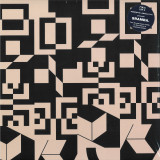
Tom Zé and Faust collide in Domenico Lancellotti's "machine samba"
Domenico Lancellotti's SRAMBA reaches back to the roots of samba whilst completely revamping its blueprint, indoctrinating guitar and percussion-led rhythms with analogue synthesisers, courtesy of album producer Ricardo Dias Gomes.
The majority of SRAMBA was recorded over two months in The Cave - Domenico's home studio in Lisbon, the city both Brazilian ex-pats reside in, where the arrival of a couple of Russian-designed synths purchased by Ricardo influenced the direction of their initial experimentation: "Ricardo had these instruments, modular machines" remembers Domenico, "and I had my guitar, some percussion instruments. On the first day we started making sounds and recording them, and songs started to appear, sambas started to appear."
The son of a renowned samba songwriter, at home Domenico would watch his father play and compose. At parties, the adults would hand his father a tamborim (a small tambourine) and ask him to play along. "I grew up inside samba, it's my roots", he says. "For me, everything is samba, I bring it into whatever style of music I am making".
Domenico and Ricardo instantly saw how the synthesisers were not at odds with the sambas they were playing, instead they had a similar sound to its typical percussion instruments (ganza, repinique, surdo, tarol). What's more, they saw a connection with roots samba, the samba that existed before bossa nova and samba jazz came along. This was rhythmic samba, with grooves that could go on ad infinitum. "It's samba de clave, geometrically structured" says Domenico. "It's ostinato samba", adds Ricardo.
"Diga" is a great example of what their proposal is capable of, as what begins as a glitchy machine whirring into action soon turns into a glorious samba in which the gurgles and scratchy beats coming from the analogue equipment only add to the arrangement. Likewise, on "Tá Brabo" it's an aching melody from one of the synths that gives the guitar rhythm its needed counterpoint, and shows how the duo's greatest accomplishment is not in invention alone, but in creating a great samba album. It's an album that can go from the opening track "Ere" with its reverberant bass thud, mantra-like vocals and staccato rhythms to the string-accompanied "Nada Sera de Outra Maneira", a swooning samba that pays tribute to the Brazilian ensemble Tamba Trio, who along with Tom Zé's Estudando O Samba, Domenico names as the biggest influence on their treatment of samba.
Other important reference points are made clear on "Um Abraço No Faust". One of three instrumentals on the album its title riffs off a JoãoGilberto song, "Um Abraço no Bonfá", but whereas JoãoGilberto was giving a hug (um abraço) to bossa nova guitarist Luiz Bonfá, Domenico and Ricardo are giving theirs to the German avant-gardists Faust. "Quem Samba", with its horn section and dramatic melody give a whiff of Domenico's Italian ancestry, while "Descomunal" is devoid of rhythm whatsoever, guest vocalist Tori singing over a bed of electronic drums, cello and swirling synths, that highlights the duo's unwillingness to stick to a particular formula.
Both Domenico Lancellotti and Ricardo Dias Gomes are revered names within Brazilian music over the past 20 years. As a member of the +2's, with Moreno Veloso and Kassin, Domenico released a trio of albums on Luaka Bop in the early 00s that pioneered a new Rio samba sound with elements of funk and psychedelia. With Veloso and Kassin he would later form Orquestra Imperial, a big band intent on reviving ballroom (gafieira) samba, and that has worked with guest vocalists such as Seu Jorge, Elza Soares and Ed Motta. SRAMBA is his fourth solo album. Multi-instrumentalist Ricardo Dias Gomes first came to notice as a member of Caetano Veloso's band Cê which helped reinvigorate Caetano's career with a sound influenced by British new wave. As well as collaborations with Lucas Santtana, Negro Leo and Thiago Nassif, and work with his own group Do Amor, he has released a series of acclaimed solo albums that reveal a restless music-maker.
SRAMBA is a glorious showcase of the duo's style, uniting Domenico's playful lyrics and rhythmic, samba-rooted songs with with Ricardo's assured accompaniment of unorthodox textures and instrumentations. It may be a new language for samba, machine samba (samba de máquina), but as Domenico says, "samba da máquina is samba".
out of Stock
Last delivered 3 years ago available to reorder, subject to availability
Following on from his breakthrough debut EP, ‘Raised by Electro’ Unit Boy has made his first solo release since 2020, in the form of ‘SSV’; a five track collateral via Mutual Pleasure.
Within his sounds, Unit Boy exudes a raucous nature that feels at home on Mutual Pleasure: a perhaps perfect marriage of mischief-laden, high voltage weapons of sound, built for dancefloor deterioration. Unit Boy has steadily begun carving his name into the underground Electro and Techno scene; with a name that, in light of this release, is becoming more deeply engraved.
‘SSV’ features a cataclysm of sounds, as the producer layers pulsating bass lines beneath contagious synths and infectious, manipulated vocals; a combination that has become to define the very DNA of Mutual Pleasure’s uniquely electrifying sound.
Fuelled by an innately raw energy, this EP sets the tone for Unit Boy’s progression as an artist, as his sound continues to grow and evolve in unpredictable ways. A true boundary breaker, Unit Boy’s ‘SSV’ is a staple for himself as a producer, and for Mutual Pleasure, the label that continues to produce some of the most daring sounds within the electronic dance music scene.
out of Stock
Last delivered 12 months ago available to reorder, subject to availability
Fresh off his explosive Boiler Room performance in Liverpool, the dust is yet to settle from the electronic eruptions caused by GTOWN head-honcho and energy inducer, KETTAMA. Namely, the damage caused by his latest armoured artillery; ‘GTOWN004’, a radioactive EP with devastatingly euphoric consequences.
‘Samba Soccer 2001’ is the track that opens the door to ‘GTOWN004’, as we’re welcomed by an anonymous voice that insults the listener; a perfect introduction to a project that is wildly unapologetic in its character, and utterly ruthless in its delivery. Released as the first single from the ‘GTOWN004’ EP, ‘Samba Soccer 2001’ has already been greatly received by the GTOWN faithful, and sets the tone for what is arguably KETTAMA’s most complete, and anticipated project yet.
The EP starts as it means to go on, as KETTAMA drops another bombshell with ‘Blitz Zuruck.’ With a euphoric soundscape which the producer partners with a punishing bassline, this track is deeply nostalgic, embodying a time-capsule in the thick of a modern rave-renaissance. Further elements of revamped rave-nostalgia are seen in ‘Slaap Lekker’, before we’re taken deep into the belly of the Galway beast with the atomic ‘GTOWN IN EFFEKT’, and finally killed off with the ‘Rock Da Cliffe Mix’ of ‘Blitz Zuruck.’
‘GTOWN004’ features an ungodly blend of sounds, and in the process, creates an atmosphere that is both ecstatic enough for heaven, and sinister enough for hell. Purpose built for dance-floor destruction, KETTAMA’s infusion of stomach-churning bass, hypnagogic synthesisers, soulful vocals and contagious drum patterns result in an utterly pure, addictive sound.
From Galway to Vienna, Liverpool to New York, the track will be road tested amongst an armoured artillery of records, with dance-floor devastation an inevitable outcome. With his name boldly imprinted on the lineups for the likes of AVA Festival in Belfast, CRSSD in Miami, 121 Festival in New Zealand and Terminal V Festival in Edinburgh, KETTAMA’s worldwide domination of sound-systems continues.
out of Stock
Last delivered 18 months ago available to reorder, subject to availability
Dimitri From Paris remixes Space Talk! Naya Beat is proud to announce a historic Asha Puthli 12” disco single, "Space Talk: With Remixes By Dimitri From Paris", the first in a series of Naya Beat remixes and retrospective releases featuring the legendary Asha Puthli. Working with the original Space Talk stems and studio recordings, Dimitri From Paris does the impossible – delivering not one but two stellar versions of the original masterpiece. Two remixes that are destined to be classics in their own right.
Be it the world of disco, rare groove or hip hop, Space Talk is one of those rare tracks that transcends time, genre and place. A track equally at home in David Mancuso’s The Loft as in the hands of afro cosmic pioneers Beppe Loda and Daniele Baldelli. A track that has been sampled by The Notorious B.I.G and P Diddy, 50 Cent, and Redman. A track that has seen countless bootleg disco edits but that until now has never been remixed. No stranger to working with iconic music, Dimitri’s two stand apart remixes deliver his trademark sound and more. This is Dimitri at his best. Beautifully dubbed out and magically lush production (with plenty of laser sounds to boot) builds on the original’s interplanetary excursions. While the remixes are quintessentially Dimitri, they also pay homage to greats like Tom Moulton, Patrick Adams and Larry Levan. Exclusive to this release (along with "Dimitri From Paris Spacer Dub") are a "2023 Mix" and "Extended Mix" of the original, lovingly mixed for the discerning DJ by Naya Beat cofounders Turbotito & Ragz using the original studio recordings.
Their very existence the stuff of rumour and legend, Naya Beat and Asha have tracked down the original stems and studio recordings from her most seminal albums, including "The Devil is Loose". "Space Talk" is the precursor to a full length LP coming out in September 2023 featuring remixes by legends like Maurice Fulton, Yuksek, Kon, Psychemagik, JKriv and Black Devil Disco Club to name a few. This is a once in a lifetime opportunity for producers inspired by her music to honour Asha’s influence and legacy.
This is Naya Beat’s third release in a series of reissues, reworks, remixes and compilations dedicated to uncovering electronic and dance music from the subcontinent and South Asian diaspora.
out of Stock
Last delivered 69 days ago available to reorder, subject to availability
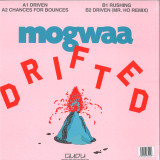
Mogwaa returns to Peggy Gou’s Gudu label with Drifted, his second EP for the imprint and a perfect summary of what makes him one of Korea’s most exciting contemporary artists - complete with a remix by Klasse Werks founder Mr. Ho.
A staple of Seoul’s electronic scene, Mogwaa’s catalogue takes in everything from ambient to jungle - but at the centre of his music, there’s always a distinct sense of melody and pure compositional chops that defines his music regardless of style or tempo. Put simply, you know a Mogwaa track when you hear one.
Quicker in tempo than his last EP for Gudu, Drifted opens with ‘Driven’ - a combo of chopped-up breaks and a relentless riff that does just what the title implies - before Mogwaa really flexes those melodic chops on ‘Chances for Bounces’, getting heady with synthesized voices and an almost Detroit-leaning bassline over an 808 groove. ‘Rushing’ takes things further into peaktime with an acid bassline and some nifty automation to keep things ascending, before Mr. Ho’s remix of ‘Driven’ closes the EP on a dreamy techno tip.
Following several European runs last year that saw Mogwaa perform at Warehouse Project, Pleasure Gardens and more, plus a Boiler Room in Seoul alongside Anz, Sharda, Finn, Closet Yi and Seesea, Drifted is another snapshot into the sound world of this remarkable talent.
out of Stock
Last delivered 3 years ago available to reorder, subject to availability
Over the course of a nearly 50 year romantic and creative partnership sound artist Annea Lockwood and the late pioneering electronic composer Ruth Anderson have shared space on a number of significant releases of early electronic and tape music, including Charles Amirkhanian’s trailblazing 1977 anthology of women electronic composers New Music for Electronic and Recorded Media, a 1981 split LP on Opus One, a 1997 CD for Phill Niblock’s XI imprint, and 1998’s Lesbian American Composers compilation on CRI. The couple additionally taught a course on the history of women’s music-making, at Hunter College, called Living Women, Living Music. Throughout their time together, they co-authored a number of Hearing Studies designed for people with no formal musical training, which were collected for a 2021 book publication by Open Space Music. They spent most of their private life between Crompond, NY and the house they built themselves at Flathead Lake, Montana. Although Ruth passed away in 2019, the composers’ dialogue continues today with Tête-à-tête, a collection of unreleased archival and new material spread across an LP and a single-sided 10” record.
It all began with a telephone call. In 1973, Ruth Anderson was seeking a substitute to cover a yearlong sabbatical from her position as the director of the Electronic Music Studio she had founded at Hunter College in New York City. Her friend Pauline Oliveros too was on sabbatical, but recommended Ruth call Annea Lockwood—then living in London—about the post. Already drawn to America by the work of the visionary composers with whom she would soon be labelmates on Lovely Music, Annea jumped at the opportunity and within days of meeting in person the pair were, in her words, “joyously entangled.”
Over the next nine months, while Ruth was living in Hancock, New Hampshire, the couple would speak daily by phone in between visits. Ruth recorded these phone calls and, in 1974, surprised Annea with a cassette containing “Conversations,” a private piece she composed by dexterously collaging fragments of their conversations alongside slowed and throwed snatches of old popular songs: “Yes Sir, That’s My Baby”; “Oh, You Beautiful Doll”; and “Bill Bailey.” The centerpiece of Tête-à-tête, this side of intimate musique concrète extends to its listeners a rare invitation to eavesdrop on the halcyon phenomenon of two people falling in love. Tender and playful throughout, “Conversations” comes to its zenith with a cut-up of relentless laughter of a contagious beauty that is, for once, properly convulsive.
“For Ruth” is Annea’s elegy to her life partner. In 2020, Annea returned to Hancock as well as to Ruth’s resting place at Flathead Lake to make field recordings, which she wove together with further excerpts of the couple’s 1974 conversations for a commission presented as part of the 2021 Counterflows Festival in Glasgow. A consummate field recordist, Annea imbues the simple sounds of church bells, birds, wind, and the bodies of water that permeated her time alongside Ruth with an otherworldly depth and sense of narrative akin to that of her celebrated sound maps of the Hudson, Danube, and Housatonic rivers. An oneiric, subtly tonal evocation of a meeting at the shores of existence.
The collection opens with “Resolutions,” Ruth’s last completed electronic work, from 1984. A meditation for the individual listener composed as the result of her study of Zen, it’s a rigorous, process-driven piece that charts the very slow, smooth descent of a 5th from the octave above middle C down to sub-bass frequencies. Minimalist in execution, yet powerful in effect, it glides by almost imperceptibly, with new tones arriving and hovering or levitating upwards, seemingly out of nowhere. A healing piece, it harnesses the highly focused energy of pure tones as a means to, in Ruth’s words, “further wholeness of self and unity with others.”
Tape transfers by Maggi Payne, master by Giuseppe Ielasi and lacquers cut at Dubplates & Mastering, with domestic photos and liner notes provided by Annea Lockwood.
Bereits zwanzig Jahre geben ELVENKING den Ton an, wenn es um Folk Power Metal geht. Mit dem elften Album "Reader Of The Runes - Rapture" wird die italienische Band ab dem 28.04.23 die beliebte "Reader Of The Runes"-Reihe fortführen und ihren berechtigten Kultstatus verteidigen. Ein weiteres Fundament für mystischen, verzauberten und brachialen Power Metal.
Nach drei Jahren Wartezeit folgt nun der zweite Teil der Reader Of The Runes Trilogie und gleichzeitig elfte Album der italienischen Folk Power Metal Legenden ELVENKING! Mit "Reader Of The Runes - Divination" wurde 2019 diese mystische Reise begonnen, welche auf "Reader Of The Runes - Rapture" einen weiteren fabelhaften Höhepunkt findet. Seit zwanzig Jahren stellt die Band schon unter Beweis, dass sie nicht umsonst Kultstatus in der Szene haben und nicht nur durch herausragende Liveshows ihre Fanschar immer mehr erweitern können. Mit "Reader Of The Runes - Rapture" zeigen ELVENKING, dass sie nicht auf der Stelle treten und ihren Sound weiterentwickeln, ohne ihr Trademark zu verlieren. Ein weiteres starkes Fundament in einer gewohnt fehlerfreien Diskografie. Über 70 Mio. Streams allein auf Spotify lügen nicht. Diese Band wächst nach wie vor und wird mit "Reader Of The Runes - Rapture" über sich hinaus wachsen.
Russell and Craig have collaborated on several site specific projects over the years (Cotton Goods & Wist), notably sharing a graphic score concept for the production of their Atlantic Cable release. The album Diagenesis represents a change in their working process through which the materiality of field recordings is somewhat privileged over musicality. This work was created through a process of exchange - passing tracks back and forth, each layer of sound buried a little deeper beneath the next.
Diagenesis: The watery interactions, microbial activities, alterations, compactions, and chemical transformations of sediments slowly converting to rock.
Russell Burden (Being) is a sound and visual artist living on the south coast of the UK. His practice develops work that explores qualities of ambient perception, most often through the lens of hydrological, geological or biological processes. He has delivered gallery exhibits in various mediums including live cymatic feed, and dark space installation. Russell was also a member of The Humble Bee & Players and last year as artist in residence for a site specific project produced a set of drone works on his own imprint, riverwork press.
Craig Tattersall (The Humble Bee) works across music and visual art with an interest in their intersection, and often works collaboratively producing art objects and sound works which have been released on numerous labels. His main focus is with environment(s) and his own interactions within. He has curated a number of micro-labels including cotton goods, mobeer:: | moteer::, our small ideas and now co-curates umbrella publishing.
11th album by the one-of-a-kind collective: psychedelia and free form jazz (not jazz) trigger a sophisticated excursion into weird textures with drastic turns. Dislocated dense music full of secret connections!
Kammerflimmer Kollektief – "Schemen"
Before reason prevails, invoked by those who want everything to remain as it is, Kammerflimmer Kollektief disrupts the established supply chains of sound. It seeks more interesting ways to assemble them. Trusting in this, because of the fact that every sound that still comes out of a guitar, a bass, a harmonium, drums and electronic devices has already been taken into the common mangle of meaning anyway. Enough of all that. Here, nothing is explained. Here we speak in schemes. Polished and jerky.
The images that Kammerflimmer Kollektief conjures up therefore happen not in the focus of consciousness, but rather in its outer realms. In those to which one does not give one's full attention at the moment, but which are nevertheless perceived. For example, when a leaf falls from the ground back up to the tree in the corner of your eye, and for an instant you think this is possible, before you realize it was a small bird flying into the tree; it is in just such irritating moments between perception and realization that the art of the Kollektief also unfolds. On "Schemen", familiar fragments float gently around their core – a Fender Rhodes tone, a bass figure, a guitar motif, a masterful drum shuffle, a moment of icy stasis borrowed from the harmonium playing of Christa 'Nico' Päffgen. Triggering brief associations, they slowly rush off in other directions through free jazz-informed editing work, whereupon such zones can also arise in which perception has a few tricks ready and earlier experience suddenly breaks into the now in a completely different way. Half suspected, half seen.
Half-music like Can from Cologne – also masters of improvised editing – sometimes produced a few decades ago in their in-between moments. The first minutes of "Future Days" for example, which fade in gently, sketch a barely graspable figure emerging from all directions of the room. Kammerflimmer Kollektief also engages in similarly open moments of development. Loosely, it eludes the first formative impressions, keeping itself ready for moments that do not follow any logic of appointment. This looseness in handling makes Kammerflimmer Kollektief so fluidly audible, even when dissonant peaks and free playing arise. What Karlheinz Stockhausen is to Can's understanding of composition, the recordings of The Cocoon are to Kammerflimmer Kollektief. The Cocoon, a meeting of garage psychedelics from the Hannover area with free jazzers from the Galaxie Dream Band, whose album "While The Recording Engineer Sleeps", recorded in 1985 in unguarded moments, operates in a very similar way with decentralized perceptual ambivalences and only appeared more or less secretly four years later on Wilhelm Reich Schallspeicher. Other traces of "Schemen" lead to the debut album of Quicksilver Messenger Service. The guitars of Gary Duncan and John Cipollina, which refer to themselves in an unforced manner, are instructions to let go. They don't want to be traced in every note as a solo, but they give their music a sense that the essential takes place off center, in the mutual and intuitive gift of loving attentions. Consciousness-free.
Loving turns like the little guitar phrase that, like a kind of leitmotif, is repeatedly ghosting more or less unchanged through all of the Kammerflimmer Kollektief albums. A Coricidin induced, very catchy slide idea filtered out of ancient Æther, which – who knows – maybe even centuries ago found its way from somewhere to America – the old, the eerie – and from there wafted on through the ages to southern Germany, to a smoky studio in the Upper Rhine lowlands. A memory of which even the memory no longer knows what it once reminded. Unsaid, then forgotten.
In Kammerflimmer Kollektief you will also find a friend of slowly building, unhurried music, which probably would have been appreciated by the old Franz Mesmer, who 200 years ago, after tranquilizing treatments, sometimes used to play for his patients ambient melodies on the enormous glass harmonica. However, in order not to surrender completely to the flow of one's own life energy, as Mesmer had in mind with his therapies, Kammerflimmer Kollektief occasionally adds hectic tensions, gently embraced by the droning of a sine wave generator, as if a trance could briefly refesh. This old analog sine wave generator is new in the Kammerflimmer assortment of sounds. So, the art of the Kollektief likes to dock occasionally in modern times, yet with the past in mind. Mental states begin to flicker between imagination and certainty, between culture-bound art expression and coincidences: A cawing and scraping can always just be a cawing and scraping with Kammerflimmer Kollektief, the way Andy Warhol's mushroom eater just eats a mushroom.
Heike Aumüller's cover works, which illustrate all the Kammerflimmer Kollektief albums, additionally act as amplifiers of unexplained refractions. Her style consists of eye-corner art that remains so, even when looked at directly. Her shots remain disquieting because they do not jolt themselves into a reassuring order, even in retrospect. Rather than evading the fear that arises when looking at them by trying to impose some irrational rhyme or reason, that fear must simply be endured. This strategy of endurance is equally applicable to the music. The trick is to let parts be parts without compulsively seeking delusional patterns that lull us into a false sense of security and in doing so, possibly delude ourselves. In this context, freedom means not having to anxiously attach a fantasized superior meaning to everything. "Schemen" has an conspiracy disintegrating effect.
b A2 Zweites Kapitel (ruckartig) [feat. Heike Aumüller]
Dial D for Digitalism. The return of Hamburg’s most prolific and bewitching production duo is a two-sided one. Back To Haus is their second outing for Running Back after Reality 2 in 2020. And on top of that, it does what it says on the tin. Based on the roots of house, which was the sound that Ismail Tuefekci and Jens Moelle started their DJ careers with, their modern day interpretation of it is far from nostalgic, boring or conservative.
Take the title track for instance. Now a track-id favorite, it was meant to be a sound test. It’s recipe is as simple as it is infectious. Mix some Roland drum machines with a few piano chords and expertly arrange the rest with a marathon intro and a corresponding break down. Voilá! Patience might be bitter, but its fruits are sweet.
Chicagostrasse is not only an existing street in the warehouse district of Hamburg’s harbor, but also a nod to all-time heroes Johnny D and Nicky P of Henry Street fame and their samplers-and-beats approach. Heavy hypno house.
4TH Floor sees the duo sampling themselves (again) for a fast paced and open-airy party jam the references one of their favorite New York labels, when they met at Hamburg’s late house music record store institution Underground Solution beginning of this millennium. Happiness is just a state of mind.
Closing it all off, but not winding it down is Warehaus and its convoying beat tool Empty Warehaus. Like Todd Terry visiting a Summer of Love rave in the UK. Descriptive and positively destructive. All in all, a worthy double, a DJ’s delight and a dancer’s delight.
out of Stock
Last delivered 20 months ago available to reorder, subject to availability