Feines Tier is kicking off in 2021 with a top notch EP by St. Petersburg based brothers Radial Gaze. Andrey is an electronic musician, producer and mixing engineer, resident of the club "Skotny Dvor". Stas is a sound designer, theatre director and author of music for theatrical performances. So non-trivial synthesis, new media and club vibes meet classic arts and Russian percussion! The Apollonius EP contains three original tracks plus remixes by the likes of Roe Deers and SHMLSS making this record just a perfect club music ride. Vinyl diggers are appreciating the beautiful artwork of the limited and hand numbered edition on black plastic
out of Stock
Last delivered 4 years ago available to reorder, subject to availability
Just when you thought every loner folk genius had been outed/discovered, hyped, and pontificated about, a new/old challenger lurks in the murky depths of time...and Maine. Sure, you have your Skip Spences, Dave Bixbys, Stone Harbours, and Perry Leopolds already, but have you heard the lonesome sound of Bill Stone? Well, don't feel bad or "unkool", hardly anyone has--unless you lived in rural Maine in the early 70s and grabbed his barely-ever seen LP in the day. Titled simply Stone, Bill's mysterious album was pressed in the micro-est of quantities, covering wistful, airy psychedelia on par with the UK's Mark Fry's classic Dreaming of Alice, while still evoking the earthy, evening-hour melancholy of Leonard Cohen or Tom Rapp. Stone was also especially influenced by one Donny P. Leitch, one Robby Zimmerman, and much trad folk, while growing up in his hometown of Old Town, Maine. Stone started out playing in a few small folk ensembles while also moonlighting with occasional solo gigs, finally recording this lone platter in 1969 in a pottery studio (!?) on a 2-track Panasonic tape recorder in Boothbay, Maine (where he says, they competed with a cat in heat). The LP features Tom Blackwell/Bill Stone-guitars, Arthur Webster-bass, Bob Blackwell/Skip Smith-drums, Bill/Beth Waterhouse on vocals. It also seems cover artist Doug Bane went on to become an acclaimed cosmic painter--committing loads of animals, psychedelic scenes, and Native American portraits to canvas, who knew? But we digress--anyhow, seems Stone's solo career slowed down after marriage hit, and he transitioned to playing covers in bars for cash, but after acquiring a masters and doctorate in education, he moved into the teaching walk of life. Bill published books and articles on subjects as diverse as school counseling and chaos theory--but now retired, he's returned to music, even recording a new album of originals and traditional numbers, based on his experiences as a cab driver (another wrinkle in the Stone Saga we must hear more of someday - but for now check out). So with Bill back in action and the world slowly crawling out of a disillusioning haze, now seems like the perfect time for a first-time-ever reissue of this incredibly rare, happy-sad, gently delicate, Stone(d) classic of a downer song-cycle.
LP Ltd edition PINK Vinyl (300 copies) + BONUS Fire Records Compilation CD. A Powys trio whose free-spirited invention and exuberant intensity flows through experimental pop: hypnotic, exhilarating and defiantly unique. The Welsh band Islet return with the release of their long-awaited new album, and now available on Ltd edition Pink Vinyl. Eyelet was recorded at home tucked away in the hills of rural Mid Wales. It took form the months following the birth of band members Emma and Mark Daman Thomas' second child and the death of fellow band member Alex Williams' mother. Alex came to live with Emma and Mark, and the band enlisted Rob Jones (Pictish Trail, Charles Watson) to produce. 'Caterpillar' described by Emma as "a song for my unborn child". It's followed by syncopated lullaby 'Good Grief' with its haunting keyboard hook and icy percussion thawed by Emma's yearning vocals about the quiet strength of generations of women. With nods towards Arthur Russell and Jenny Hval, 'Geese' is a mini symphony of driven electronica inspired by Welsh cultural theorist Raymond Williams' novel People Of The Black Mountains. Young Fathers inflected rhythm can be heard on 'Radel 10' that accompanies the multi-tracked variations of Emma and defiant lyrics that were inspired in part by The Good Immigrant - the landmark anthology of essays on race and immigration by BAME writers. "One of the best albums to come out of the UK in years" Louder Than War // "Unhinged, euphoric, wonderful." Pitchfork // "They create an ideology that fuels creativity" The Quietus // "They invigorate life on the margins with this whirlwind of psychedelic pop" The Guardian // "Full of reflective, explorative psych wonderment" ???? The Line Of Best Fit // Short listed for Welsh Music Prize 2020 // ????? The Vinyl District // ????? Buzz // ????? God Is In The TV // ???? AllMusic // Track
LP Ltd edition YELLOW vinyl (300 copies), DL card + BONUS Fire Records Compilation CD. New album from kosmiche folk-rock quartet Modern Studies on LTD edition Yellow vinyl. A glorious compendium of haunted disco hallelujahs, mercurial krautrock chorales, cosmic pop adagios and euphoric, resilient, anthems. 'The Weight of the Sun' sees principal songwriters Emily Scott and Rob St John further their warm, esoteric field studies with Pete Harvey and Joe Smillie, as previously reconnoitred on 'Swell To Great' (2016) and 'Welcome Strangers' (2018). "The exact point where Fairport Convention meet Jim O'Rourke at a remote Scottish railway station."
Marika “Politissa” Frantzeskopoulou was a Greek singer from Constantinople, renowned for her precise, fluid and graceful performances and depth of feeling.
Backed by some of the best musicians of the era on lyra, violin, oud, kanonaki and guitar, Marika’s repertoire and techniques drew from Byzantine and Ottoman musical traditions.
She possessed an ability to devastate her audience through her expressions of grief, exile, and tragic love, running the gamut of cafe aman, torch songs, lilting and fragile odes to heartache, heavy Piraeus style rebetika, and ecstatic Near-Eastern climaxes, all with a visceral sense of atmosphere, emotion, and fatalism.
Marika’s voice is complimented beautifully by her backing musicians, creating a pulsing acoustic foundation over which her voice soars with clarity and purpose.
Dehumanization is the only full length album from the band Crucifix. Recorded in 1983, it is considered a classic American hardcore album and a landmark of anarcho-punk.Dehumanization delivers a raging critique of war, violence, displacement, and the decimation of human rights and human dignity—themes at once global in scope and also completely endemic to Reagan-era America. The intensity of this message is matched only by the intensity of the sound: a heavy minimalist construction built on brutal guitar riffs, low-end distortion, hardcore fury and teenage speed. It is an album of pure raw power, a hot blast of personal and political outrage and musical adrenaline.Fusing California hardcore with metal and second wave British anarcho-punk, Crucifix carved out their own highly distinctive wall of sound on this release. Ignoring the rules of punk purism in favor of a well produced huge guitar sound, the album preceded much of the hardcore metal crossover of the mid-80s and played an influential but often unacknowledged role in the punk and metal subgenres that followed. “Annihilation,” the album’s opening track, has become iconic . Quoted often, it’s been sampled by Orbital and covered by A Perfect Circle and Sepultura. The original vinyl version of Dehumanization was released on the Crass Records offshoot label Corpus Christi in the UK, and has been out of print since the 1980s. This new Kustomized rerelease has been carefully remastered from an original vinyl source and adheres closely to the audio quality of the original. In addition, the six-panel foldout poster sleeve has been reproduced in its entirety. Taken together, the words, music and graphics of Dehumanization form a complete work and a resonant and enduring document of the period
Influenced by a life split between Lima, London, and Twentynine Palms, Peru-born M. Caye Castagnetto’s Leap Second is an intriguingly personal and hard to classify debut album. The album is a thick collage of samples Caye recorded with different artists and musicians, including Beatrice Dillon and the late Aileen Bryant, that spans five years in the making. There is something in Leap Second that tracks the speed of bodies, how they approach and retreat. The ten tracks are speedy and languid, thick ruffles, and dirges. In parts it feels like one’s stumbled upon a forgotten incredible ’70s folk record but that feeling gets broken quickly by clever sleights of hand. Caye’s balladry is angular, time is elastic. Each song is a fresh cape. How dandies really mean it, so masc- that it’s fay, how the only moment is this one and it’s just passed, etcetera.“While it doesn’t really sound like anything else, there are moments that feel like a Latin-flavored Nico, that’s edging its way towards some of the outings of the Sun City Girls. In my opinion it checks all the boxes, by checking none of them.” —Bjorn Copeland, Black Dice “A truly interesting conglomeration of loose inspirations and conjurings. A hard to decipher sound all together which makes it worth every moment...a sprinkling of Catherine Ribeiro, Dr. John, Terje Rypdal and Nico. Far-out sun-soaked odysseys and moon-dappled woodland night creepers...” —John Dwyer
African-born, Baltimore-based experimental hip-hop producer Infinity Knives joins PhantomLimb for the release of his unique debut album Dear, Sudan, a vibrant and polymathic labyrinth of moods and colours.
Infinity Knives - aka producer and musician Tariq Ravelomanana - moved from Tanzania (via Kenya, South Africa and Madagascar) to Baltimore with his family as a teenager, soaking up the raw,vociferous hip hop culture around him, devouring Western classical music, and embedding himself with the city’s verdant music scene. This unique combination of life experiences and contrasting strands of musical education empowered and enabled him to create his Infinity Knives guise, allowing us a window into his singular energy with Dear, Sudan.
Tariq writes “Music has always been my medium. Since I was a child living in Tanzania, music has been my babysitter. The one central idea I kept dwelling on was that all humans experience sorrow, but despite the fact that it's universal, we still experience it as if we were alone.”
Appropriately, Infinity Knives casts a wide and thrilling net. Dear, Sudan runs like a masterful showreel of deftly balanced disparate elements, a late night channel-hopping between multiple, vital, powerful musics. Tariq himself offers “experimental, drone, hip hop, leftfield minimalism, neo-classical and Baltimore” as his key styles. “I wanted Dear, Sudan to be a record of the things that I enjoy, the things that keep me coming back to this life and I wanted it to be in the language I understand the most. I hope that this album can be a companion to those in need.”
Magnum are an English rock band formed in Birmingham in 1972. The Eleventh Hour is their fourth studio album. It was produced by the band themselves, after their record label Jet Records denied the band a big name producer due to the delay to their first and third albums. The record is available as a limited edition of 1000 individually numbered copies on purple coloured vinyl. It includes two bonus tracks: “The Word (Alternative Orchestral Version)” and “True Fine Live (Outtake)”. The packages comes with an insert.
There’s a lonesome vibe to his brand of heartland rock, evoking late nights on a deserted road, or neon-lit streets just after a rainstorm.” (Brooklyn Vegan)
“His music has a distinct cinematic quality to it, as it explores the weird, grotesque, and strangely beautiful corners of the human psyche.” (Noisey)
'Highway Dancer' was the latest addition to Calvin Love's catalog of cerebrally-crafted, atmospheric indie pop, before his b-side and rarities album 'Night Song' came out via Taxi Gauche Records a year ago. The album stems from the same period of songwriting as his 2017 EP, Ecdysis, and encapsulates the observations and inspiration from Love's life on the road. 'Highway Dancer' is now re-issued on vinyl.
"The songs you hear on this album were compiled from a larger collection over the past three years. Many of the songs are the subconscious soundtrack to my life and travels before my mind had a chance to conceive them. Inspiration came from everything that attracted my inner soul to the external forces and beauty this world has to offer."
For fans of: Weyes Blood, Father John Misty, Cut Worms, Sam Cohen
Wisconsin musician Jon Mueller is inquisitive. Open to pushing his
experience and his limits, he’s demonstrated the many sides of himself both as a solo performer and as a key member in mind-bending projects like Mind Over Mirrors, Volcano Choir, and Death Blues, or by running his shop of curiosities Within Things.
On his new four-piece collection Family Secret, the experimental musician maintains a meticulous, sustained tension, re-engaging with a technique he developed as an adolescent - reframing the environs of creation, and naturally altering his perception, through changes in light and space - while also considering the role of family and divorce.
Gentle, metallic bellows fade in and shifting timbres immerse the listener, each wave of sound folding atop the previous. Mueller has created a room, or at least an enclosure.
For Rhye’s Michael Milosh, the home is the center of creativity and community. It transcends conventional understandings of walls, stairs and hardwood floors. A culmination of a wayfarer’s journey, the home is a balm for a restless spirit — a place to simply be.
For much of his life, the Canadian singer, songwriter and multi-instrumentalist has wandered, decamping in Toronto, Montreal, Thailand, the Netherlands, Germany and Los Angeles at varying times. Since the meteoric rise of Rhye’s 2013 debut Woman, he’s mostly lived on the road—playing between 50 and one hundred shows a year. But over the last couple of years something changed. On the heels of some major life changes, including a new relationship, Milosh yearned for a more permanent space. “It's this idea of creating a safe place that's not just conducive to creativity, but one that’s truly an anchor point from which to make art and be creative,” he says.
That longing was fulfilled in August of 2019 when Milosh and his partner Genevieve happened upon the perfect place in Topanga. It had been on and off the market for two years as the owner sought the perfect buyer, one who would carry on its creative tradition. “She did this ceremony somewhere on the property where she was trying to call in the right people, and apparently we came the next day,” Milosh explained. “The right kind of home presented itself to us, and we presented ourselves to it. It was like a union between us and the home.”
Written throughout 2019 and early 2020, recorded at Milosh’s home studio, United Recording Studios and Revival at The Complex, and mixed by Alan Moulder (Nine Inch Nails, Interpol, My Bloody Valentine, U2, The Killers), Home is familiar in its synthesis of propulsive beats, orchestral flourishes, piano ruminations and sultry, gender-nonconforming vocals, but never have they sounded more cohesive or alive.
“I'm always trying to always accomplish musical goals that are connected to the way I listened to and interact with music as a child,” Milosh says. The sentiment also underscores a broader, less obvious, but no less important theme echoed through his new record: No matter where life takes us, we can always go home.
out of Stock
Last delivered 5 years ago available to reorder, subject to availability
Billy Nomates, the fierce, funny, outspoken force of nature who hails from Melton Mowbray and now flits between Bournemouth and Bristol, has arrived to rattle cages.
The songs on her debut album all come from a place of defiance. Rebellion against Brexit. Against soul-sapping, dead-end jobs and zero-hours contracts. Against gender inequality, sexual harassment and festivals with obligatory female acts hidden in the small print. Billy’s songs lampoon the same bleak reality satirised by her beloved Scarfolk website and explored so abrasively in the fringe theatre
she finds solace in.
Musically, there are snatches of Nick Cave’s rumbling sprechgesang; the “off-the-wall-ness of musicians like Captain Beefheart”; Sleaford Mods’ febrile post-punk; the groovesome lofi art-rock of Sonic Youth and the brassy Americana of Emmylou Harris. What dominates, though, is a feeling of release. Of letting it all out.
The track ‘Supermarket Sweep’ features guest vocals by Jason Williamson of Sleaford Mods.
LP is pressed on yellow vinyl, housed in a heavyweight spined sleeve with gold foil text print. Includes printed insert with handwritten lyrics and digital download card.
out of Stock
Last delivered 5 years ago available to reorder, subject to availability
On the highly acclaimed “Old New Ballads Blues”, originally released in 2006, the blues-rock legend Gary Moore is stepping back in time, mixing self-penned songs with blues classics such as Willie Dixon’s ‘You Know My Love’ and ‘All Your Love’ by Otis Rush.
An exciting album, which is now available on vinyl again. The re-release comes on black heavyweight double vinyl in a gatefold packaging and is a definite gem in every vinyl lover’s collection.
out of Stock
Last delivered 5 years ago available to reorder, subject to availability
Alan Fitzpatrick returns to Radio Slave’s Rekids with the ‘Immortal Daydream’ in January.
Following 2020’s ‘Step Away’ on Rekids, as well as multiple releases on heavy-duty labels such as Drumcode, Hotflush, and of course his own We Are The Brave, Alan Fitzpatrick returns in full techno mode for his second appearance on the imprint in 2021 with an EP of crushing, hypnotic, and uncompromising techno.
Classic 909 kits and spacey reverberations take front and centre across the record, neatly displayed on lead track ‘Everlasting’, which kicks off proceedings by rumbling through a series of sizzling effects and dubbed-out chords. ‘Titan Silence’ follows with reserved synths built delicately around thunderous and attention- grabbing drums; a track built for dark cavernous rooms.
On the flip, ‘Droid Disco’ sees the Southampton powerhouse look to the twilight hours, as off-kilter synths wriggle and evolve throughout, leading into the closing track ‘The Underdog’, which sees Fitzpatrick delve further into the night, combining crunchy drums with soft, elegant synthesis to close off a memorable 12” on a quintessential label.
out of Stock
Last delivered 4 years ago available to reorder, subject to availability
NOTON signs Italian-born, Bern-based sound-artist and producer Saele Valese.
In ‘IVIC’, his debut LP, Saele Valese, distills hauntological noise, droning tonal experiments and minimalist rhythms into a series of electro-acoustic-wave ventures written over five years in Berlin, Saas-Fee and Thun.
Drawing influences from the psychoacoustic properties of the live album format, IVIC’s 11 tracks were mixed and recorded live on DAT cassettes and through DAW experimentation, without the possibility to revise the final recordings. Valese adopted this approach to conceptually propose reconciliations between the irreversibility of the
past, and acceptance of its residuals in the present. The track titles themselves follow this pathos, citing the works of the American photographer Francesca Woodman and the poet Sylvia Plath. The inclusion of passages incorporating live sonics and throes of industrialismnso,ton.info contributes to the images of gravity, intimacy and spatiality that the music presented here invokes.
In keeping with this imagery, the music possesses a dilated, shuffling rhythmic base, much like the firm traversal of a tanker against a storm of jangling components, and still moments of gloomy sonics
alternating with more ravenous upheavals of power electronics.
If the track divisions do not pass by unheeded, they are consistently assembled to sonically accompaign the emotional charges and momentum of an imaginary cinematic experience; the beats caves in
for instants of relief, only to recoil in a cognated tempo but rearranged structurally. In another gesture of cogitated stride, the portentous waves of the record progressively rage into a turmoil in its third quarter during 'Horse The Color Of Rust'. The album reaches its closure fluctuating through microtonal oscillations to slowly eclipse into silence.
´In Your Rosary ì and Yì ou Cannot See Me From Where I Look At Myself ì were previously released on vinyl via Saele Valese’s own imprint, JSMË.
The track ‘You Cannot See Me From Where I Look At Myself’ 4 - is dedicated to the memory of Marco Bacher.
Artwork designed by Carsten Nicolai. Mastering by Matt Colton (Metropolis Studios, London).
out of Stock
Last delivered 2 years ago available to reorder, subject to availability
It was a solid bet that Skratchorama Records would release a 7” DJ tool specifically crafted for the international portable turntable scene. DJ Chmielix is known as a perfectionist when it comes to music production, turntable music, DJ battles and a rubix cube… he’s as hard on the cut as they come and the Mighty Wicked 7” embodies these vibrations.
The A & B side of this record both include 6 original skipless acapella scratch loops with a variety of laser samples, aaaahhhs and fressshhhhes. Side A has 4 tracks arranged in 100BPM and 2 tracks in 133.33BPM. Side B is all arranged at 83.33 BPM for use at regular speed on a turntable. This offers the ideal track size for a 7” battle record. The tracks are large enough to easily cue the needed loop on the fly, and small enough that the maximum amount of samples can be put on the record… needle dropping made easy! Each side’s tracks are separated by hidden samples which inject creativity into performances using this record. At the end of each side a single rotation of each skipless loop has been arranged twice back to back giving DJ’s two full sample banks to get dirty on the cut with.
The record has a secret theme, but we’ll leave it to you to figure it out!
Pressed on blue vinyl, artwork by Maciej Kwietnicki, and mastered by the legendary D. Perez, you are in for one of 2020’s finest scratch records… it’s time to take it to the next level!!
out of Stock
Last delivered 5 years ago available to reorder, subject to availability
Self-styled ‘house husband, record producer’, DMX Krew, continues his effortless stretch of releases that date back to the early 90s, with a new album for Hypercolour.
His deft melodies and mechanical, electro-tinged beats have made for some classic albums in his repertoire, from his incredible run of albums for Rephlex Records, up to 2020’s ’Ghost Bubbles’ long player for Terrestrial Funk. And so ‘Loose Gears’ marks DMX Krew’s fourth album for British stalwarts, Hypercolour, and fans will not be disappointed.
Armed with an arsenal of hardware, and a head full of futuristic visions, ‘Loose Gears’ collects eleven tracks of the customary quality we have come to expect from DMX Krew.
From the funk laden ‘Solar Transit’ to bleepy chugger ‘Dejected Ambient Twerp’, the vibrant synths and spongy rhythms of ‘Torpedo Tube’ to the beatless wiggle of ‘Xpansion 2’, there’s much in store to be savoured on ‘Loose Gears’, as DMX Krew serves up another fine selection of electronic goodies.
out of Stock
Last delivered 3 years ago available to reorder, subject to availability
Columbus, Ohio’s Rudolph Johnson drew comparisons to John Coltrane during his career; like the jazz legend in his later years, Johnson eschewed drugs or alcohol and spent his time every day either meditating and rehearsing on his horn. You can definitely hear
a little bit of Coltrane in Johnson’s playing on this, his 1971 debut release for the Black Jazz label, the first of two he recorded for the
imprint and the first he recorded as a leader after some sideman work (most notably for organist Jimmy McGriff); his ability to explore the upper registers and overtones of his tenor sax while retaining control is quite striking. Of course, this being a Black Jazz release, along with the bebop sounds of “Sylvia Ann” and the mid-‘60s Blue Note stylings of “Sylvia Ann,” there’s the soul jazz of “Diswa” and the groove funk of “Devon Jean,” all played by, as is typical on Black Jazz releases, by top-notch sidemen including drummer Raymond Pounds, who’s layed
with everybody from Stevie Wonder to Pharoah Sanders to Bob Dylan, and pianist John Barnes, whose work is very familiar to Motown fans (Supremes, Temptations, Marvin Gaye). Bassist Reggie Jackson, who appeared on the Walter Bishop, Jr. Coral Keys record we previously released, rounds out the quartet. First vinyl reissue of another stellar Black Jazz release!
A western film noir mixed with softcore sex scenes and a Reefer Madness-style warning about the perils of marijuana…it’s all there in Cherry…& Harry & Raquel, one of Russ Meyer’s wackiest romps. And composer Bill Loose is up to the task of bridging some yawning gaps in style and plot, with a little help from fellow soundtrack composer Stu Phillips, whose fantastic garage pop tune “Toys of Our Time” (performed by “The Jacks & Balls”) appears twice, once in mono, once in stereo.
“You’re trouble” is an avant-garde electronic pop album about questioning and locating a sense of self in a disorienting, breaking environment of dissolving certainity which grows increasingly chaotic, about dysmorphic dissatisfaction, becoming disillusioned and alienated. It seeks to juxtapose beauty, serenity and vigour with instability, ugliness, chaos and crisis, expressing itself fluidly without genre or otherwise boundaries. A kind of sinister, anxious but still forward-pushing and at times positive and hot-blooded empowering energy can be felt that wants to urge the listener not to give up but to try and take courage and take control of the troubles and fears in their life. The tone is sometimes reflective, sometimes confronting. The album navigates fairly abstract musical territory, cathartic abrasiveness, heavy and unrelenting sounds of post-club music and noise fused with stretches of pop music, never settling down or resting for long, constantly breaking up and re-assembling itself. Between chaos and form, it’s finding relief in imperfection and the in-between. As such the music is ambivalent and is equal parts some kind of crisis club music as well as introspective reflection.
Downloads
out of Stock
Last delivered 5 years ago available to reorder, subject to availability
Much has changed in the musical life of renowned composer and director John Carpenter since 2016's Lost Themes II. Following the release of that album, he went on his first-ever concert tour, performing material from the Lost Themes albums, as well as music from his classic film scores. He re-recorded many of those classic movie themes for 2017's Anthology album, working alongside son Cody Carpenter and godson Daniel Davies. The following year, he was asked to executive produce and compose the music for the new Halloween movie directed by David Gordon Green, which promptly became the highest-grossing installment in the series. Now, he returns with his first album of non-soundtrack music in nearly five years, Lost Themes III: Alive After Death. Underpinning Carpenter's renaissance as a musician has been his collaboration with Cody Carpenter and Daniel Davies. They've composed and performed as a trio throughout this entire run, on studio albums, on soundtracks, and onstage. Here, the trio reaches a new level of creative mind meld. Richly rendered worlds are built in the interplay between Davies's guitar and the dueling synthesizers played by the Carpenters. "We begin with a theme, a bass line, a pad, something that sounds good and will lead us to the next layer," John says of the trio's process. "We then just keep adding on from there. We understand each other's strengths and weaknesses, how to communicate without words, and the process is easier now than it was in the beginning. We've matured." Whereas the original Lost Themes album came as a pleasant surprise after years of relative silence from Carpenter, the third installment sees him in the midst of a resurgent moment as a cultural force. The 2018 Halloween score gave his music its biggest audience in decades, and the world he releases his new album into is one that has, at long last, given him the credit he deserves as a founding father of modern electronic music.
Much has changed in the musical life of renowned composer and director John Carpenter since 2016's Lost Themes II. Following the release of that album, he went on his first-ever concert tour, performing material from the Lost Themes albums, as well as music from his classic film scores. He re-recorded many of those classic movie themes for 2017's Anthology album, working alongside son Cody Carpenter and godson Daniel Davies. The following year, he was asked to executive produce and compose the music for the new Halloween movie directed by David Gordon Green, which promptly became the highest-grossing installment in the series. Now, he returns with his first album of non-soundtrack music in nearly five years, Lost Themes III: Alive After Death. Underpinning Carpenter's renaissance as a musician has been his collaboration with Cody Carpenter and Daniel Davies. They've composed and performed as a trio throughout this entire run, on studio albums, on soundtracks, and onstage. Here, the trio reaches a new level of creative mind meld. Richly rendered worlds are built in the interplay between Davies's guitar and the dueling synthesizers played by the Carpenters. "We begin with a theme, a bass line, a pad, something that sounds good and will lead us to the next layer," John says of the trio's process. "We then just keep adding on from there. We understand each other's strengths and weaknesses, how to communicate without words, and the process is easier now than it was in the beginning. We've matured." Whereas the original Lost Themes album came as a pleasant surprise after years of relative silence from Carpenter, the third installment sees him in the midst of a resurgent moment as a cultural force. The 2018 Halloween score gave his music its biggest audience in decades, and the world he releases his new album into is one that has, at long last, given him the credit he deserves as a founding father of modern electronic music.
It's tempting to think that you have all the answers, screaming your gospel every day with certainty and anger. Life isn't quite like that though, and the debut album from London four-piece TV Priest instead embraces the beautiful and terrifying unknowns that exist personally, politically, and culturally. Posing as many questions as it answers, Uppers is a thunderous opening statement that continues the UK's recent resurgence of grubby, furious post-punk music. It says something very different though - something completely its own. Four childhood friends who made music together as teenagers before drifting apart and then, somewhat inevitably, back together late in 2019, TV Priest was borne out of a need to create together once again, and brings with it a wealth of experience and exhaustion picked up in the band's years of pursuing 'real life' and 'real jobs', something those teenagers never had. Last November, the band - vocalist Charlie Drinkwater, guitarist Alex Sprogis, bass and keys player Nic Smith and drummer Ed Kelland - played their first show, to a smattering of friends in what they describe as an "industrial freezer" in the warehouse district of Hackney Wick. "It was like the pub in Peep Show with a washing machine just in the middle_" Charlie laughs, remembering how they dodged Star Wars memorabilia and deep fat fryers while making their first statement as a band. Unsurprisingly, there isn't a precedent for launching a band during a global pandemic, but among the general sense of anxiety and unease pervading everything at the moment, TV Priest's entrance in April with the release of debut single "House Of York" - a searing examination of the Monarchy set over wiry post-punk and fronted by a Mark E. Smith-like mouthpiece - served as a breath of fresh air among the chaos, its anger and confusion making some kind of twisted sense to the nation's fried brains. It's the same continued global sense of anxiety that will greet the release of Uppers, and it's an album that has a lot to say right now. Taking musical cues from post-punk stalwarts The Fall and Protomartyr as well as the mechanical, pulsating grooves of krautrock, it's a record that moves with an untamed energy. Over the top of this rumbling musical machine is vocalist Charlie, a cuttingly funny, angry, confused, real frontman. Uppers sees TV Priest explicitly and outwardly trying to avoid narrowmindedness. Uppers sees TV Priest taking musical and personal risks, reaching outside of themselves and trying to make sense of this increasingly messy world. It's a band and a record that couldn't arrive at a more perfect time.
This LIMITED LOSER INDIES edition is on GREY MARBLED Vinyl! It's tempting to think that you have all the answers, screaming your gospel every day with certainty and anger. Life isn't quite like that though, and the debut album from London four-piece TV Priest instead embraces the beautiful and terrifying unknowns that exist personally, politically, and culturally. Posing as many questions as it answers, Uppers is a thunderous opening statement that continues the UK's recent resurgence of grubby, furious post-punk music. It says something very different though - something completely its own. Four childhood friends who made music together as teenagers before drifting apart and then, somewhat inevitably, back together late in 2019, TV Priest was borne out of a need to create together once again, and brings with it a wealth of experience and exhaustion picked up in the band's years of pursuing 'real life' and 'real jobs', something those teenagers never had. Last November, the band - vocalist Charlie Drinkwater, guitarist Alex Sprogis, bass and keys player Nic Smith and drummer Ed Kelland - played their first show, to a smattering of friends in what they describe as an "industrial freezer" in the warehouse district of Hackney Wick. "It was like the pub in Peep Show with a washing machine just in the middle_" Charlie laughs, remembering how they dodged Star Wars memorabilia and deep fat fryers while making their first statement as a band. Unsurprisingly, there isn't a precedent for launching a band during a global pandemic, but among the general sense of anxiety and unease pervading everything at the moment, TV Priest's entrance in April with the release of debut single "House Of York" - a searing examination of the Monarchy set over wiry post-punk and fronted by a Mark E. Smith-like mouthpiece - served as a breath of fresh air among the chaos, its anger and confusion making some kind of twisted sense to the nation's fried brains. It's the same continued global sense of anxiety that will greet the release of Uppers, and it's an album that has a lot to say right now. Taking musical cues from post-punk stalwarts The Fall and Protomartyr as well as the mechanical, pulsating grooves of krautrock, it's a record that moves with an untamed energy. Over the top of this rumbling musical machine is vocalist Charlie, a cuttingly funny, angry, confused, real frontman. Uppers sees TV Priest explicitly and outwardly trying to avoid narrowmindedness. Uppers sees TV Priest taking musical and personal risks, reaching outside of themselves and trying to make sense of this increasingly messy world. It's a band and a record that couldn't arrive at a more perfect time.
Harry Bertoia's Glowing Sounds LP contains three versions of the same composition, each transferred at different tape speeds in accordance with the artist's instructions. This is the third LP to be released from Bertoia's extensive tape archive and it's the first, of many, to be released using instructions left behind by the artist himself.
Bertoia wrote the concept for this Glowing Sounds LP on a note in 1975 and slipped it into the master tape case where it sat unread for 45 years. The idea was simple, transfer the original recording at its original speed and two slower speeds. Bertoia noticed that the results, however, were profound.
Recorded on January 20, 1975 using two large gongs, Glowing Sounds is one of the most powerfully minimal recordings yet discovered in Bertoia's collection. The artist's note left with the tape indicated that it was recorded at a speed of 15 IPS (inches per second) but slowing it down to speeds of 7.5 IPS and 3.25 IPS were quite effective for enhanced playback. Side A features the original 15 IPS recording and the 50% slower 7.5 IPS recording. Side B features a 20 minute, ultra-slow version at 3.25 IPS.
Long, deep drones and powerful overtones define the sound of this recording. Comparison of the three speeds provides a revealing magnification of Bertoia's gongs, overtones and the artist's inventive approach to performance, composition and recording.
Bio:
Harry Bertoia first gained some artistic visibility in the early 1940s, then came into prominence with his sculptural, ergonomic chairs, produced by Knoll Furniture beginning in 1952, which quickly became classics of modernist furniture. Inspired by the resonant sounds emanating from metals as he worked them and encouraged by his brother Oreste, whose passion was music, Harry restored a fieldstone "Pennsylvania Dutch" barn as the home for this experiment in sounding sculptures which he had begun in the late 1950s. Bertoia was an obsessive composer and relentless experimenter, often working late into the night and accumulating hundreds of tapes of his best performances; Oreste, too, would explore and record the sculptures' sounds during his annual visits to his brother's home in rural Pennsylvania.
Harry Bertoia's recently dismantled Sonambient barn collection was an attentive listener's paradise full of warm, expressive instruments that were gorgeous visually and audibly. Nothing could prepare you, even on return visits, for the overwhelming experience of entering the spacious wood and plaster interior where gongs, some of them giant, hung among the ranks of standing sculptures of various metals. Over nearly twenty years of adding, culling and rearranging, Bertoia carefully selected nearly 100 harmonious pieces ranging in height from under a foot to more than fifteen feet. He considered this barn a full experience, sights and sounds comprising not a collection of works, but one piece unto itself. It was here, deep in the woods, that his Sonambient recording work took place.
Learning by experimentation was common for Bertoia and he mastered the art of tape recording, turning the Sonambient barn into a sound studio with four overhead microphones hanging from the rafters in a square formation. He would experiment with overdubbing by performing along to previous recordings, sometimes backwards, constantly improving his methods while also honing his performance skills. Bertoia was a careful editor of his own work and only chosen recordings remained, each with a date and carefully considered observations written on a note included with each tape. Through these pieces of paper a the artist's logic can be uncovered, a careful approach to composition, ideas, feelings and forms. The story of Sonambient barn collection will slowly be told through the release of recordings from the archive as well as installations and performances built from Bertoia's own recordings, lectures and a book.
The five members of Sun June spent their early years spread out across the United States, from the boonies of the Hudson Valley to the sprawling outskirts of LA. Having spent their college years within the gloomy, cold winters of the North East, Laura Colwell and Stephen Salisbury found themselves in the vibrant melting-pot of inspiration that is Austin, Texas. Meeting each other while working on Terrence Malick's 'Song to Song', the pair were immediately taken by the city's bustling small clubs and honky-tonk scene, and the fact that there was always an instrument within reach, always someone to play alongside. Coming alive in this newly discovered landscape, Colwell and Salisbury formed Sun June alongside Michael Bain on lead guitar, Sarah Schultz on drums, and Justin Harris on bass and recorded their debut album live to tape, releasing it via the city's esteemed Keeled Scales label in 2018. The band coined the term 'regret pop' to describe the music they made on the 'Years' LP. Though somewhat tongue in cheek, it made perfect sense ~ the gentle sway of their country leaning pop songs seeped in melancholy, as if each subtle turn of phrase was always grasping for something just out of reach. Sun June returns with Somewhere, a brand new album, out February 2021. It's a record that feels distinctly more present than its predecessor. In the time since, Colwell and Salisbury have become a couple, and it's had a profound effect on their work; if Years was about how loss evolves, Somewhere is about how love evolves. "We explore a lot of the same themes across it," Colwell says, "but I think there's a lot more love here." Somewhere is Sun June at their most decadent, a richly diverse album which sees them exploring bright new corners with full hearts and wide eyes. Embracing a more pop-oriented sound the album consists of eleven beautiful new songs and is deliberately more collaborative and fully arranged: Laura played guitar for the first time; band members swapped instruments, and producer Danny Reisch helped flesh out layers of synth and percussion that provides a sweeping undercurrent to the whole thing. Throughout Somewhere you can hear Sun June blossom into a living-and-breathing five-piece, the album formed from an exploratory track building process which results in a more formidable version of the band we once knew. 'Real Thing' is most indicative of this, a fully collaborative effort which encompasses all of the nuances that come to define the album. "Are you the real thing?" Laura Colwell questions in the song's repeated refrain. "Honey I'm the real thing," she answers back. They've called this one their 'prom' record; a sincere, alive-in-the-moment snapshot of the heady rush of love. "The prom idea started as a mood for us to arrange and shape the music to, which we hadn't done before," the band explains. " Prom isn't all rosy and perfect. The songs show you the crying in the bathroom,, the fear of dancing, the joy of a kiss - all the highs and all the lows." It's in both those highs and lows where Somewhere comes alive. Laura Colwell's voice is mesmerising throughout, and while the record is a document of falling in love, there's still room for her to wilt and linger, the vibrancy of the production creating beautiful contrasts for her voice to pull us through. Opening track 'Bad With Time' sets this tone from the outset, both dark and mysterious, sad and sultry as it fascinatingly unrolls. "I didn't mean what I said," Colwell sings. "But I wanted you to think I did." Somewhere showcases a gentle but eminently pronounced maturation of Sun June's sound, a second record full of quiet revelation, eleven songs that bristle with love and longing. It finds a band at the height of their collective potency, a marked stride forward from the band that created that debut record, but also one that once again is able to transport the listener into a fascinating new landscape, one that lies somewhere between the town and the city, between the head and the heart; neither here nor there, but certainly somewhere.
Hot on the heels of our tentacular project "The Most Famous Unknown", Planet Phuture is proud to welcome rising French talent Cuften to the fold. A most fitting match for PP's phuture-facing vision, Damien Peltier has been pushing some of the finest techno around over the last couple of years, landing a handful memorable cuts via the likes of Parisian label Tripalium and his own imprint, Purusu. Cloaked in dim-lit atmospheres and open-ended post-apocalyptic narratives, his debut solo 12" blends in all of the elements that made his sound stand out from the crowd of releases coming up these days - traversed by dogged primitive rhythms and reassessed 303-infused Detroit'isms, but also stamped with his signature no-frills rave elegance.
Speeding up the cosmic highway like Deckard roams San Fran's neon-splattered alleys on the hunt for replicants, Cuften takes us on a full-immersion journey into dystopian electronic soundscapes. Full-beam on, "Solar Ashes" has us drifting amidst ruins of a devastated city - its lysergic bass languidly threading its way across brutalist concrete facades and cold ember set for reignition. A more martial affair, "The Black Rain Order" pulls out the rattling drums, slo-boiling arpeggios and moebius-strips of wistful acid to score a supremely tense crescendo, both optimally tasted on and off the dance floor.
Moving up closer to the free-spirited vibe of the '90s open-air raves, "Rise Of The Neo-Humans" unleashes a baroque firestorm of sucker-punchy toms and hyperventilating shuffle, woven against an endlessly expanding corolla of hallucinogenic shapes and fluttering harmonics. Sinking further deep into all-dark dubby grounds, "Lasttt Batttle" extrudes its obsessive melody out a thick gangue of squelchy chords and bleepin' engineering to form the kind of brain-washing hybrid pumper that'll roast your last remaining neurones. Trouble-brewing isn't over though and the droney "Kjhfskjoize" shall take you to places unknown through eleven minutes of envelope-shifting shamanism, thinking noise bake-off and gravity-defying arrangements. Bend your mind.
out of Stock
Last delivered 5 years ago available to reorder, subject to availability
Somewhere Between: Mutant Pop, Electronic Minimalism & Shadow Sounds of Japan 1980–1988 hovers vibe–wise between two distinct poles within Light In The Attic’s acclaimed Japan Archival Series—Kankyō Ongaku: Japanese Ambient, Environmental & New Age Music 1980–1990 and Pacific Breeze: Japanese City Pop, AOR & Boogie 1976–1986. All three albums showcase recordings produced during Japan’s soaring bubble economy of the 1980s, an era in which aesthetic visions and consumerism merged. Music echoed the nation’s prosperity and with financial abundance came the luxury to dream.
Sonically, Somewhere Between mines the midpoint between Kankyō Ongaku’s sparkling atmospherics and Pacific Breeze’s metropolitan boogie. The compilation encompasses ambient pop, underground electronics, liminal minimalism and shadow sounds—all descriptors emphasizing the hazy nature of the nebula. Out–of–focus rhythms wear ethereal accoutrements, ballads are shrouded in static, and angular drums snake skyward on transcendent tones. From the Avant–minimalism of Mkwaju Ensemble and Yoshio Ojima, to the leftfield techno-pop of Mishio Ogawa and Noriko Miyamoto (featuring members of YMO), and highlights from the groundbreaking Osaka underground label Vanity Records, these are blurry constellations defying collective categorization.
These tracks also exist in a space of transition when the major label grip on the Japanese recording market began to give way to the escalation of independents. Thanks to the idyllic economic climate and innovations in domestically–manufactured music gear, creators on the edges were empowered to focus on satisfying their artistic visions in the open headspace of home studios. While labels like Warner Music and Nippon Columbia explored new sounds through traditional channels, it was possible for Vanity, Balcony and other indie labels, not to mention self–released artists like Ojima and Naoki Asai, to publish their work via affordable media such as cassettes, 7" vinyl, and flexi–discs.
Expertly curated by Yosuke Kitazawa and Mark “Frosty” McNeill (dublab), Somewhere Between is a collection of music, much of it released for the first time outside Japan, that is bound more by energetic vibration than shared history, genre or scene. They are the sounds of transition and searching—a celebration of the freedom found in floating.
Note: The track “Days Man” by Yoshio Ojima is only available on the LP and Cassette versions.
out of Stock
Last delivered 4 years ago available to reorder, subject to availability
Small Town Dubz bringing their dub sounds to vinyl featuring Razaman on vocals and Vale on trumpet. The B-side features a Frenk Dublin remix of 'Soundman a Play' with Rumble B on vocals.
out of Stock
Last delivered 4 years ago available to reorder, subject to availability
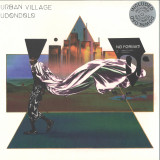
Signed to Parisian label N F rmat! (home to Oumou Sangar , Blick Bassy & M lissa Laveaux), Soweto-based 4 piece band Urban Village present their debut album, ‘Udondolo’.
Marrying the day-to-day experiences of black South Africans with ebullient elements from traditional Zulu music, Urban Village is the alias of four experimental musicians all born & raised in the township of Soweto at the tail end of apartheid.
Urban Village release music under a name which specifically references the blend of cultures, music & rites which were assimilated into the now 1 million strong population of Soweto, when black South Africans from multiple provinces were brought to the area during the establishment of apartheid, under strict segregation from Johannesburg’s white suburbs.
Born for the most part in the last years of apartheid, whilst growing up the band plunged happily into house and dance music that turned the page of a heavy past. Guitarist Lerato came across older Zulu musicians and their style of maskandi playing. Lerato has since mixed styles from homelands and rural areas, sharpened in club jam sessions (where he went on to meet Tubatsi and form Urban Village) during which spoken word, hip-hop and jazz rub shoulders freely.
‘Udondolo’ - partially recorded at legendary Downtown Studios in the heart of Johannesburg and at Figure of 8 studios in the leafy suburbs of Randburg, - is a journey through all the colours of Soweto. This is where it draws its consistency, strength & identity. That of Soweto itself - a dormitory town designed to
monitor those who were sent there, it has become a laboratory of music where the hopes of an entire people resonate, even today.
out of Stock
Last delivered 5 years ago available to reorder, subject to availability
In 2019, the power-acoustic musician Francisco Meirino presented A New Instability a commission for the venerable Ina-GRM in paris. Of course, this institution is the pre-eminent center for the research and study of electro-acoustic music dating back to founding of Groupe de Recherches Musicales in 1958 by Pierre Schaeffer. To this day, Ina-GRM continues to be at the vangarde of the electro-acoustic composition, and it is quite an accomplishment and very appropriate for Meirino to receive such a commission.
This recording for A New Instability condenses the 32-channel original piece down to a still very active stereo version. here, Meirino continues to amplify and refine his compositions that walk a fine tightrope between raw expressivity of brutalist noise and conceptual rigor of more academic pursuits. Such a work ranks him in with the likes of Zbigniew Karkowski, Dave Phillips, Puce Mary, and Illusion Of Safety.
Field recordings from a kendo dojo in his hometown of Lausanne, Switzerland cast a pugilistic, combative arch to these recordings which snap, burst, explode, and erupt with utterances of men and women engaged in hand-to-hand combat. Searing frequencies build, swarm, and amass out of these episodes rise to psychologically tense crescendo that rupture at their heights, quickly turning attention towards a violence that originates from within. It is as if the objective observations of those martial arts recordings are sublimated within a subjective experience of psychic unease, disquiet, and imbalance.
A New Instability is another magnificent chapter in the ongoing body of work for this accomplished composer of electro-acoustic noise.
Alkisah is the new album by Indonesian duo Senyawa. Alkisah is co-released by a multitude of independent record labels from all over the globe each with different packaging and design, with multiple version of remixes by various artists.
Senyawa is an experimental music duo made up of Rully Shabara (extended vocal technique) and Wukir Suryadi (homemade instrument). The music that they create is a combination of extended vocal technique and a homemade instrument. The instrument was handcrafted by master instrument builder Wukir out of one long piece of bamboo, it is a string instrument with guitar pick-ups—it is amplified and processed through several effects pedals but at times is played as an acoustic instrument, percussion and string instrument.
They are located in the ancient city of Jogjakarta, Central Java, Indonesia and their music is a reflection of their traditional Javanese heritage filtered through a framework of contemporary experimental music practices. Senyawa try to push the boundaries of both traditions in an attempt to mix the musics’ of the east and the west to create a new sound.
As a duo they have been performing and playing together extensively for the last 3 years and we have toured Indonesia several times over. Last year they were invited to perform internationally for the first time at the Melbourne International Jazz Festival sharing the stage with many great musicians such as Faust, Yoshida Tatsuya, Tony Conrad and Charlemagne Palestine.
out of Stock
Last delivered 5 years ago available to reorder, subject to availability
DeWolff return with their new album, Wolffpack, released on 5th February 2021 via Mascot Records.
DeWolff, the kaleidoscopic warriors were not long into their 2019 Tascam Tapes European Tour when the Covid19 pandemic broke and they, like so many others, had to turn back and head home. They started working on the new album Wolffpack.
The album kicks off with the first song they finished, the soulful psychedelic funk of "Yes You Do," featuring Ian Peres and longtime friend of the band, Judy Blank. "We wrote it in a Zoom meeting!" Pablo says. "Treasure City Moonchild," struts in with a funky swagger and Piso's trademark swirling Hammond, with Dawn Brothers' Levis Vis providing some Bass juice. "Do Me," includes Theo Lawrence on vocals and is through the eyes of an anti-hero who realizes he isn't worthy of the woman of his dreams, and dates back to 2019 and the Next of Kin live show. "I consider this the best song I ever wrote, so I couldn't stand the idea that it was only used for those Next of Kin shows and then never again! That's why I brought it to DeWolff, but it needed some rearranging," he says. Another song from the Next of Kin sessions was "Sweet Loretta" and features Dawn Brothers' Stefan Wolfs and Darilyn's Diwa Meijman. "Loretta is the protagonist's childhood sweetheart. She has a rich dad, but he's really conservative, and so she can only inherit his money if she marries a man. But she's lesbian. So, the protagonist, who's also out for this old guy's money, suggests they play pretend and marry so they can split the money."
They sweep through disco on "Half Your Love," swamp rock on "Bona Fide" and take on sci-fi and the Old Testament on "RU My Savior." Their tour buddies The Grand East show up on "Roll Up the Rise." Written in the first days of quarantine, it's about the end of the quarantine - told from a future perspective. "Lady J," came after Pablo watched the documentary "13th." "I was quite shaken up by it," he admits. "The lyrics are based on the idea that Lady Justice seems to have a scale that doesn't measure the "weight" of your crime but the tone of your skin. She is supposed to be blindfolded, but the people who act in "her" name aren't blind at all: they discriminate between white and black."
The album ends with the forlorn "Hope Train." Based on the Pulitzer prize-winning novel by Colson Whitehead about two slaves in the US during the 19th century, who make a bid for freedom from their Georgia plantation. "I found it really hard to envision the world in which it takes place," he says. The band used a 1970s Fisher-Price Toy cassette recorder in the intro, "We wanted to see if we could somehow approach the sound of those very early country blues recordings, like the ones by Blind Willie Johnson.”
"Over the years, I have had the absolute pleasure of meeting countless wonderful people in every corner of this beautiful planet, and a lot of times these music enthusiasts have expressed a very similar-sounding story. That our presence – whether it be via a studio recording or our ferocious show – is capable of transporting them to a better place and washing away all earthly worries. Doesn't this sound amazing – especially during these challenging times?"
This gentle voice belongs to the vocalist-guitarist Jonne Järvelä, who happens to be the creative force behind the unique Finnish ensemble KORPIKLAANI. Having experienced multiple triumphant years within the inner circle of folk-influenced heavy metal, Jonne now acknowledges his position as one of the most recognisable artists ever coming from the land of a hundred thousand lakes.
KORPIKLAANI – preceded by Jonne's own project SHAMAANI DUO (1993-1997) and the band SHAMAN (1997-2003) – was founded somewhere deep in the primeval northern forests in 2003. Ten celebrated studio albums, numerous world tours and hundreds of millions of digital streams alongside multiple other releases, have established KORPIKLAANI’s status as one of the leaders of innovative heavy music. For their diehard legion of fans, they are known as Folk Metal Superstars.
"I have always been fascinated by ancient Lappish/Samish culture and the infectious melodies of aged folk songs. However, that's only one side of the coin as I have loved rip-roaring metal since I was a frantic kid looking for some rebellious sounds. My butt was kicked by the likes of MOTÖRHEAD, IRON MAIDEN and JUDAS PRIEST", says Jonne.
"Since the early 2000s, KORPIKLAANI has combined these elements as we have tirelessly attempted to pump new life into the ancient tales of joy and heartbreak, and added the enormous energy of current heavy metal into that folk metal melting pot.We have always been on a mission to create something new and unprecedented."
Here and now, KORPIKLAANI’s fearless journey continues on – and this time, the journey is powered by rather serious subject matter. Their eleventh full-length studio record "Jylhä" (which has no direct translation but can be described as majestic, or wild and rugged in a beautiful way) brings all the well-known and essential ingredients to the table: heavy-duty guitar riffing, rhythmic folk melodies and more.
What about the tales of the wilderness then? The fascinating and miscellaneous tales have always been a crucial part of KORPIKLAANI’s journey within the realms of unspoiled Finnish nature, ancient Scandinavian myths, shamanistic voyages and beyond. "Did I already mention that "Jylhä" offers some new angles?", the singer/guitarist laughs. "Well, lyrically, there are definitely some previously unknown passages – such as fables connected to the infamous Lake Bodom murders in Southern Finland in early 1960s."
KORPIKLAANI’s long-time lyricist Tuomas Keskimäki – the renowned Finnish poet and author, comments: "When I am coming up with narratives, interesting wordplays and other ideas for KORPIKLAANI, I often feel like I am diving into some absorbing fantasy world. I would describe this state of mind as some kind of a deep trance", says Keskimäki.
"As a whole textual piece, "Jylhä" is rather widespread. For example, there are stories about the fragility of life, revealed by using nature metaphors. ‘Miero’ is one of these tales: after all, it's a fact that the lifetime of a human being is just one blink of an eye compared to the eternal aeons of the cosmos."
"On the darker side, there are several murder songs - I wasn't really planning these rather untraditional lyrics, they just happened... One of these is ‘Kiuru’, and that story is inspired by a famous Finnish double homicide case, which took place in the small village of Tulilahti in 1959. In these lyrics, the character called Kiuru – Skylark in English – acts as eyewitness and a prophet, but at the same time, this creature also functions as an allegory of many things... All in all, I am really happy with the lyrics and all these new themes!"
When asked about his current sentiment regarding the new KORPIKLAANI opus "Jylhä", the commander of the forest clan sighs and smiles. "Using "Jylhä" as our solid steppingstone, we are able to reach completely new heights. For me, it's crystal clear that KORPIKLANI has never been better."
It is a fitting album for our dark times, summed up well by the song ‘Huolettomat’ (The Careless). It talks about living in the present moment, alongside a story of joy and celebration. Today is today, tomorrow is uncertain.
It’s a decade since The Staves self-released their first EP and a lot has happened since then. Their third album Good Woman was written and recorded amid major upheaval, heartbreak and bereavement. The new-found boldness, loudness and lyrical directness on this record are indicative of lives forced to become a serious concern.
In early 2020 the band resumed touring, unveiling their expansive and exhilaratingly powerful new sound, and previewing these emotionally affecting songs in intimate venues across the country; with tickets selling out in seconds. They ended the tour with a triumphant homecoming appearance at the 6 Music Festival.
The Staves’ first album in five years is an accumulation of everything that life has thrown at them in that time.
Emily: “You find strength in the vulnerability and you find beauty in the sadness and magic in the despair. We lost so much, but we found so much. And while the album is not all about mum, something shifted in us when she died that made us make the record in the way that we made it. We became more fearless.”
Camilla: “It feels more about trying to take ownership of these events and not letting sadness or trauma rule you.”
Jessica: “It’s a record about sisterhood, motherhood and daughterhood; love, loss, change and trying to be a good person, a good woman.”
Close is the debut album from American Dreams Records founder & ONO member Jordan Reyes.
The album is comprised of six songs composed on modular synthesizer working in a rhythmic ambient, electronic realm - songs like ‘Quicksand’ are glacial and melodic while others like ‘Lost Machine’ skew to the kinetic.
On this album, Reyes mused on idea of sobriety, endurance, and being in a state of trance - wading deep in the patch cords of the eurorack synthesizer allowed him to reach a state of non-attachment, similar to running or biking a long distance. This kind of tunnel vision allowed him to perceive himself fading from the day-to-day and exist wholly inside the machine, becoming a more cybernetic organism.
Though synthesizers are the backbone of Shen’s music, while performing live, she plays self-made synths, invented instruments, and even acoustic objects like a bull whip.
Her live show vacillates between moments of restraint and swells of frenetic and confrontational movement. Her sound is dynamic with a sensitivity to texture and structure throughout. This sensitivity is maintained in her debut LP
Hair Birth, the result of several weekends locked in a studio creating cacophonous, wondrous synth noise with Harvard’s Buchla 100 and Serge modular systems.
She tracked hours of stems before cloistering herself in a painstaking editing process. Songs like ‘Under The Stall Door’ sound like a cybernetic rollercoaster with rumbles and shrieks that hurtle the listener through virtual space. Others, like ‘Bolete,’ are tense, dense mood pieces that move from the queasy to the tranquil to the surreal.