DJ AGITATED, the secret techno moniker of a longstanding Belgian electronic music producer, returns to Steffi's popular dolly TS series with his 3rd release: Archive of Disappearing Now. Stepping out of his usual sonic territory to challenge the underground, this latest release delivers a powerful blend of melodic, high-quality, and deeply meaningful techno. Crafted for both the body and the soul, it is a timeless sonic journey that demands your attention. Join the agitated ride!
Vocalisations like ‘Hooo’ and ‘Huhuh’ form the wordplay on Use Knife’s upcoming release as these sounds are meant to summon strength, overcome fear and unleash unwavering sonic assault. Set for November 20, the EP ‘Hooo Huhuh’, on the band’s own Hooo Huhuh record label, is Use Knife’s first release since its acclaimed 2nd album ‘État Coupable’ on VIERNULVIER records in 2025.
The journey of Use Knife began in 2020 during a music residency in art centre VIERNULVIER (Gent, be) when Iraqi percussionist Saif Al-Qaissy, Stef Heeren and Kwinten Mordijck, as well as the multidisciplinary artist and scenographer Youniss Ahamad, came together to form Use Knife, later joined by Jerusalem In My Heart’s Radwan Ghazi Moumneh as mixer and guest musician. The project quickly gained the attention of prestigious platforms like The Wire, The Quietus, BBC6's New Music Fix, KEXP, NTS, Inverted Audio, METAL Magazine, Ma3azef, A Closer Listen, and others documenting the universal resonance of Use Knife's message.
Since releasing its debut album ‘The Shedding of Skin’ on VIERNULVIER, a remix EP ‘Peace Carnival’ on Morphine records, and follow-up album ‘État Coupable’, Use Knife has played its visceral audio-visual liveshows at many prestigious festivals like Le Guess Who?, Tremor, Colours of Ostrava, Les Trans Musicales, Rewire, Sonic City, Resonator, Roadburn, Donau, Fusion, Rage Sacrée, Micro, Clandestino, E-fest and many more.
Praised by The Quietus and The Wire for its vibrant and wholehearted performances, Use Knife has been described as an electrifying live act that fully engages its members and audience alike. Their sound, dubbed 'industrial Iraqi EBM', is celebrated for its ability to immerse the audience in a hypnotic state, erasing global borders through real-life connection and dazzling visuals on gigantic projection fabrics, resulting in exhilarating sensory experiences.
Further extending Use Knife's influence, Radio alHara in Palestine has hosted Use Knife's 'Feeding the Gentry' show since 2023, where the band aims to build a community by opening their platform to other guests like Saint Abdullah & Eomac, Monstera Occulta, Cinna Peyghami, Bader, Anthony Sahyoun, ... thus broadening the band's international reach and impact.
Earlier this year, Use Knife collaborated with Rabih Beaini from Morphine Records to re-remix the band’s track ‘To Feed the Gentry’ (feat. Radwan Ghazi Moumneh), blending in the beautiful track ‘Kunna’ by Rully Shabara. The resulting track was included in Beacon Sound’s compilation ‘Gaza is the Moral Compass’ to help support Palestinian-led mutual-aid groups on the ground in Gaza.
The forthcoming 'Hooo Huhuh' EP, releasing on November 20, advocates for the resilience and determination of the people, their collectives and communities, with energetic vocalizations, distorted percussion and throbbing saxophones. The title track, originally mixed by Radwan Ghazi Moumneh and mastered by Heba Kadry during the ‘État Coupable’ sessions, has been surgically reworked into the clubby rant that is ‘Ho Hahaa Huh’ and the drone-like mantra ‘Nobody Can Separate Us محد يكدر يفركنا’.
The limited vinyl edition comes with a 3-color risoprinted sleeve designed by Lebanese artist and graphic designer Farah Fayyad.
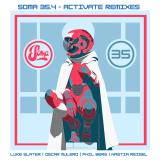
Soma's 35th anniversary remix series continues with SOMA35.4, turning its focus to one of the label's more recent defining tracks - Slam's 'Activate'.
Originally released as part of Slam's catalogue over the last decade, 'Activate' quickly established itself as one of the duo's most recognised and widely played tracks of the period. For SOMA35.4, the track is handed over to four artists who each bring a distinct perspective to its driving, functional foundations.
Luke Slater takes 'Activate' and applies his trademark precision and raw club-focused approach. Oscar Mulero delivers a tougher, more industrial interpretation, pushing the track deeper into his characteristic high-pressure sound. Phil Berg brings a hypnotic, groove-led edge to his version, while Nastia Reigel offers a more contemporary, atmospheric take that reshapes the track through a different sonic lens.
SOMA35.4 continues the ethos behind the 35-year project: bringing together established figures from Soma's history and artists operating within its wider sonic sphere.
Tracks 1, 3 & 4 Mastered By Conor Dalton @ Glowcast Mastering
Track 2 mastered by Carlos Koschitzky
2026 Repress
Gockel steps out with Otorongo - a 4-track EP of deep, dub-infused techno touched with Detroit spirit. Heavy low-ends, driving rhythms, and atmospheric layers make this one built for heads and dancefloors alike. Each track carries its own depth and character, yet together they form a powerful and immersive journey. Released as the second chapter on Patent, this record showcases the label's evolving sonic identity.
Detroit's Javonntte returns to Yore Records with four soulful, late-night house cuts, blending deep grooves, warm jazz-infused harmonies and rich chord progressions. Staying true to his unmistakable style, the EP combines timeless musicality with dancefloor functionality, creating an atmosphere equally suited for intimate listening sessions and underground clubs.
Adding another personal touch, Javonntte performs his own vocals on selected tracks, bringing even more soul and authenticity to this deeply personal collection.
From the driving "Donnie Brasco" and atmospheric "Dream of Mind" to the heartfelt "Let's Not Wait Any Longer..." and uplifting "Morning Till the Groove", this is classic Yore Records territory: sophisticated, soulful house music with depth, warmth and lasting appeal.
At the heart of ‘Diese Fragile Praesenz’ lies a melancholic yet propulsive drone, constructed from a field recording and drenched in white noise. Around this softly glowing orb Kelovolt constructs a vast, shifting, sombre soundscape. Lush, magisterial pads, starry-eyed synth work, cold washes of tape hiss and static melt in and out of the mise-en-scène. Crumbling walls of bass and distortion collapse in slow motion even as rich, brasslike harmonies elevate the listening mind. Long keening synth notes emerge from the fog, intertwining with falling tubular figures, a journey through a wormhole of sound both monumental and fragile.
The accompanying reinterpretations approach this deeply rich source material with discerning reverence. Voltmar's version deepens the grain of the original, with sharper percussion and washes of static that blow through the mix like little gales of dust. Anthony Linell's PM and AM remixes delve into a darker emotional core, placing at the centre a low, shadowy synth pulse around which mists of tape hiss and distortion swirl. Black Merlin steers the track down the path of eerie psychedelia, echoing clicks and dubwise space around a groove often found in the deeper chasms of contemporary techno.
Elsewhere, Die Wilde Jagd stretches the original into a mesmeric landscape of drones, occasional distant percussion and heavy fog, punctuated by fleeting moments of melodic clarity and beautifully resonant bell tones. CV313's pair of reworks complete the collection by exploring two complementary dimensions of the original through his signature dub approach. The Gravitational Pull mix feels the most true to the title track, amplifying its starry-eyed, celestial qualities, with a softer, hazier version built around a deep bass groove, while the Dimensional Dub descends into vast caverns of echo, resonance and alien texture - strong dub-techno sensibilities loom large in this mix.
Endlessly contemplative, endlessly exploratory, minimood027 is a trip to its own sonic galaxy that spirals inexorably outward, carrying the mind to ever wider astral planes. But at the core is that ever-pulsing drone, the black abyss that draws consciousness powerlessly back into the great nothingness.
Balaise was the original title of Vers le Nord’s debut album. In French slang, balaise means something in between badass and flamboyant. The word keeps popping up throughout the record, like a teenager’s graffiti scrawled on a bus shelter after a few drinks. Balaise robots. Balaise ghosts lurking in the shadows. Balaise is the barfly who fantasies about becoming a street vigilante. In many ways, Matthieu Pellerin's new solo project is entirely contained within that word: a gigantic piece one man against the world cobbled together, a monument shaped by hand using layers of synthesizers sounding like cathedral organs cast in concrete.
Stitching this type of freak together took time. Five years, or what sounds like forever in an age obsessed with career trajectories and content strategies. But for Matthieu Pellerin, it was never about career plans or taking the easy road. Or he would have dug up the rotting corpse of Oi Boys, his now-defunct band, whose brief existence and explosive popularity once united sullen skinheads, gothic street punks, and old school punks alike. Or he would have fully embraced the Metz scene, now that the Great International Triple Alliance of the East (Noir Boy George, The Dreams, The Feeling Of Love...) and rising solo acts like Tune Zitoune, Josy Bazar, Fantôme Josepha, and Tony Gerrano have somehow transformed this sprawling open-air heroin camp into an unlikely capital of cool. But Vers le Nord doesn't point East, and it is as a lone rider that Matthieu Pellerin can fully reveal his songwriting scope.
With Le Seul Élément, his first solo project, the Lorraine native had already shown a rare gift for crafting worlds. Picture vast sonic masses stretching like industrial zones, noise-filled fog pierced by pale neon lights and landscapes caught somewhere between the gnarliest dive bar and a doomsday bunker. And slipping through the soul-crushing slowness and fractured blackened atmospheres, one could perceive a throwback to his years plotting in black metal-tinged Loth and Bishop.
Vers le Nord populates those landscapes that once were rough sketches. Damaged characters reign supreme, with a plethora of exquisite mutts brought to life, rather than outcasts committed to the cause. Where Nuits Blanches —his new supergroup featuring members of Rixe, Lion's Law, Headbussa and La Femme— pulls no punches with raw confessions, Pellerin switches gear for tales of robot apocalypses, vagrants and fam-seeking school shooters, delivered with William Sheller-esque rhymes and striking images. Yet even within fiction, he manages to create something deeply intimate, almost defining, showing very little effort: he is a natural. All in all, à l’aise (at ease). Songs resonate deeply with the listener, perhaps because of Pellerin’s odd way or always addressing someone without ever really naming them, a floating, obsessive and inescapable “you” calling us out.
Despite all of the darkness, Vers le Nord stirs deep emotions. There is something of Type O Negative or Anna von Hausswolff in its constant collision of the ludicrous and the epic gothic, its bleak romanticism that never tells a sordid tale. While the vocals remain rooted in a distinctly French punk lineage—think No Class, La Souris Déglinguée and OG Bérurier Noir—the reactor core is hidden somewhere else. Oneohtrix Point Never feels like a closer relative with his ultra-emotional music made of cold synths and disembodied anthems, swallowing and regurgitating forty years of icy, contemplative new wave across ten songs. It comes as no surprise that Lila Ehjä and Aimable, two rising specialists in lowering the temperature below seasonal norms, appear on “Enterrez-moi bordel” (“Bury Me, for fuck's sake”), a grandiose, spectral and magnificently arrogant finale. And in the end, Vers le Nord starts where the original idea was hiding all along: somewhere amid the ruins, definitely balaise and yet somehow, completely à l'aise.
Volume 1 - Growth
Resurrection is a long-term musical work that has accompanied Christine Benz for almost twenty years. The first track was created in 2007 (track id - Born after Code), with another piece added nearly every year thereafter.
Throughout this time, she continued to produce other music while steadily developing her artistic language.
Musically, the album moves between minimal techno, ambient and experimental electronic music. Across different phases of her life, Resurrection gradually grew into an archive of her personal and musical evolution.
The complete work unfolds as a trilogy across Volumes 1-3.
At its core lies her fascination with sound as material. Rather than thinking in terms of conventional melodies, she works with textures, vibrations, and spatial relationships. A small number of elements give rise to complex sonic spaces, where minimal changes can have a profound effect. Mistakes, chance occurrences, and unexpected responses from the systems she uses also become part of the music. Even from chaos, remarkable structures
emerge. Whenever unplanned beauty reveals itself, she preserves it as a small “miracle” in which control and chance intertwine.
The complete work unfolds across three chapters: Growth, Structure and Resonance, exploring repetition, frequency, perception, consciousness and technological development in the relationship between humans and
machines. It moves from origin through the formation of an internal order towards connection and interaction.
Volume 1: Growth, draws upon the Fibonacci sequence and the spiral as symbols of natural development, with the music growing through repetition and minimal change into increasingly complex forms. Throughout the
project, technology appears as a tool, a partner and a mirror of our perception, raising the question of whether consciousness, responsibility and empathy can evolve alongside technological progress.
During the project’s long evolution, Donato Dozzy developed an interest in Christine’s distinctive sound design.
In 2021, this led him to propose his own interpretation of Our Determination for Volume 1, subtly reworking the track through his own musical perspective.
The artwork developed by Christine also went through a creative process of its own. The original photographs were taken in a basement around 2019, with a wet curtain draped over her. In 2026, she decided to transform
this visual world into a moving-image artwork. For the production, a film crew reconstructed the entire setting.
The video shoot demanded a great deal from Christine: after several hours beneath the wet curtain, the cold was no longer merely part of the staging. This elaborate creative process gives the artwork its distinctive character
and makes it an essential part of Resurrection.
The first chapter will be released in November 2026 as a double-vinyl edition housed in a distinctive gatefold sleeve with an inside-out finish, matte varnish, and partial raised spot UV varnish. Two further double-vinyl
releases, Structure and Resonance, will complete the trilogy. All three volumes will be released on Pirat Records.Records.
Andreas Tilliander released »Ljud« in 2001 as the first full-length album under his real name. The year before, the Swedish producer’s »Cliphop« album under his Mokira moniker had established him in the world of adventurous electronic music and the clicks’n’cuts scene. »Ljud« was just as minimalistic, warm, and playful as its predecessor while also notably inspired by house music. It is a timeless record based on happy accidents, playful loops, and lively spontaneity. For its 25th anniversary, Keplar presents a vinyl reissue with adjusted artwork by graphic designer Marc Hohmann and updated mastering by the artist himself.
Tilliander laid the foundation for his two first albums when he got rid of most of his music gear in 1998 after meeting Joel Brindefalk, who was already releasing music on the legendary Börft label. Brindefalk was using a computer as his main instrument and introduced Tilliander to the audio editing suite Sonic Foundry Sound Forge. »What he did with that software is what made me sell most of the hardware except my Nord Modular and a Korg MS-20.« The former synthesizer played an integral role while Tilliander made the tracks for »Ljud,« working primarily in the modular studio environment Jeskola Buzz.
»Ljud« came together in an intuitive process. »It’s still how I work 25 years later: I first make loops, create bits and pieces, and build up my own sound library as a foundation,« Tilliander explains. The Nord Modular and Buzz, which allowed him to swap samples and produce new sounds out of pre-existing ones, provided him with material for loops that formed the basis of the ten tracks. »I would start with a few elements, add more into the mix, then take them out again—arranging the pieces in real time while recording.« The casualness and vivacity of this improvisational approach becomes tangible throughout »Ljud.«
»Ljud« was released on Achim Szepanski’s Mille Plateaux, which had published the seminal »Clicks+Cuts« compilation in 2000. »I was part of that scene and I liked the digital aesthetic of the label,« says Tilliander »Coming from a very analogue setup, working with computer music and this kind of minimalism was very inspiring.« When preparing »Ljud« for the Keplar reissue, he ran the music through an analogue outboard and noticed he was still happy with the way it sounded. »It brought back fond memories. I hope the same is true for people who heard it back then, and that everyone who discovers it now will enjoy it, too!«
Naughty Boys, originally released in 1983, was Yellow Magic Orchestra’s seventh and final album to top the Japanese Oricon Pop charts.
A remix album, Naughty Boys Instrumental was released in July 1983. It contained nearly the entire Naughty Boys album as instrumental tracks in an entirely different running order, as well as the b-side to "Kimi Ni Mune Kyun", "Chaos Panic"; and the full instrumental version of "You've Got to Help Yourself", of which the vocal track was included on Service.
Naughty Boys Instrumental featured additional synthesizers imitating the vocal lines, as well as new embellishments and mixes. Several tracks featured sonically updated percussion tracks, while "Ongaku" featured an acoustic piano soloing over the piece.
This release combines both the original and instrumental albums. Naughty Boys & Instrumental is available on black vinyl and includes a 4-page booklet.
22, A Million is a record of dualities. First released in 2016, Bon Iver's third album found Justin Vernon reckoning with pain and love, suffering and redemption, omens and happenstance. Such ambiguity is the core of how Justin composes words: there are always two ways to see something. Inside a fragmented language of symbols and numbers is a sonic distillation of past years of turbulence and how to recover. Across ten songs, 22, A Million shattered expectations of what a Bon Iver record could be. Through different groups of friends—close, passing, new, old—he began to assemble proto-melodies, vague textures and specific moods from hundreds of hours of recorded improvisations. Songs like “22 (OVER S--N),” “33 ‘GOD’,” “715 - CRΣΣKS” and “8 (circle)” traded familiar structures for fractured electronics, pitch-shifted vocals and dense layers of sound. What initially felt like a radical departure has since become one of the most influential and enduring works in Bon Iver’s catalog. 2026 marks the ten-year anniversary of 22, A Million. To celebrate,
Bon Iver and Jagjaguwar will release a deluxe anniversary edition pressed on Frosted Silver vinyl, featuring new alternative artwork with soft-touch finish and spot UV gloss detailing. The package will include the original 28-page lyric booklet, represented here in 3x silver inks, with an additional 12-page full-color inlay booklet documenting the album’s creative process through previously unseen artwork and an essay penned by Eric Timothy Carlson. The Brooklyn-based artist’s visual work has shaped the Bon Iver world since 22, A Million and his visual language has become inseparable from the album itself. A custom 12-panel ‘inverted cross’ CD edition will also be available.
Aocram returns to their eponymous label with a high-end techno EP featuring four psychedelic cuts that unfold through intense and sophisticated soundscapes while revealing the breadth of a distinctive sonic palette.
SIDE B presents the first installment of a new series aimed at eroding classic structures within club music from inside the playing field. 'The Unshaped Series' pushes depth into the label's mission statement, isolating tone and texture, and confronting its listeners by raising not only the experimental undertones of the music it has been showcasing. This new take provides an opportunity for these spaces to be described and for new emotions to glow between the same walls in turn.
For 'The Unshaped Series' first volume, SIDE B emphasizes its name by challenging ten techno producers to detach themselves from their habitual arrangements. If the rhythm that we hold so dear is taken out of the equation, what is left? This question is answered by the bleeding edge of the international scene and pressed on wax to offer a unique product in concept and quality. Techno has spearheaded sonic research and its artistic application since its beginnings, so to honor this tradition, SIDE B compiles these pieces to boil down the true essence of club music into what it truly is : sculpting time and space.
DJ Stingray 313's INDUSTRY 4.0 EP is a sonic exploration into modern manufacturing concepts and the impact on humanity.
Moods and titles across the EP cover artificial intelligence (LARGE LANGUGE MODEL), the internet, and robotics (MULTI FUNCTIONAL ROBOTICS and SENSOR DATA) – all set to his signature high-energy, industrial, cyborg-style productions.
Together, the tracks on INDUSTRY 4.0 work as a striking and current introspective of humanity’s uncertain evolution, moving as fast as the technology it creates.
Gyros Heroes is the latest release from Adlibitum Tum Tunes, showcasing the unmistakable synergy between label curator Kirill Matveev and trusted maestro Nicolas Barnes, a resident artist renowned for his consistently refined and emotive sound.
The EP unfolds as a sophisticated blend of deep- and tech-house aesthetics, designed to uplift, move, and connect. It balances percussive bounce with emotional subtlety, offering a graceful flow that is both club-ready and sonically rich.
A1. Kirill Matveev – Am I Happy With That and A2. Kirill Matveev – Once At Dawn deliver the opening momentum, channeling sleek grooves and playful introspection with polished restraint. These tracks glide effortlessly between warmth and drive—embracing the listener without overwhelming.
On the flip side, B1. Nicolas Barnes & Kirill Matveev – Naar Shada blends the duo’s sonic sensibilities into a mood-driven piece with elegant progression and percussive intricacy. Closing with B2. Nicolas Barnes – Qeezy, the record reaches its emotional high point: a dancefloor-oriented yet soul-touched cut that radiates both sensuality and controlled energy.
Gyros Heroes is a finely tuned experience—bright yet deep, emotive yet precise—crafted for selectors who value atmosphere as much as movement. This is an EP that invites you into its positive orbit, reminding us how expressive and graceful club music can be when shaped by masters of tone and detail.
Adlibitum Tum Tunes is a division of MixCult Records
Astro’, the new double LP by Donato Dozzy, is in many ways a culmination and intersection of life-long interests, and Tresor Records is delighted to announce that it will launch into the cosmos on November 20, 2026.
Donato Dozzy is beloved for his way of blending synthesised sounds into seamless, deep, hypnotic works, whether as a DJ or in the studio. So it might come as a surprise that at the root and source of Dozzy’s musical inspiration, we find Japanese children’s cartoons and toys.
In the late 70s into the 80s, Italian youngsters, including Dozzy, were captivated by a wave of Japanese cartoons featuring Jumbo Machinders, awe-inspiring robots on adventures beyond our solar system. Every episode came dubbed into Italian, and had its own specially written Italian theme song, each pressed onto a 7inch single. This was the launchpad for two lifelong obsessions: vinyl records and vinyl figurines, and still kept in his home today in immaculate, carefully tended collections.
In 2025, Dozzy took a sample from the first of the Japanese themes he ever owned, Astro Robot Contatto Ypsylon. Marking the first time he had directly sampled a song for his own work, later to become the track ‘Astro’, this created an impulse to begin a series of new music, sparked by the robots in his collection.
Dozzy’s meticulous respect for his collections is reflected in the precision of these tracks. Elements within each track are harmoniously organised together while ever retaining a sense of space that reflects the cosmic subject matter. Explorative tracks like ‘Raydeen’, and ‘Himika (M Song)’ exemplify this with powerful yet gentle arpeggios, while ‘Pegasu’ brings forth visions of robots assembling for a deep-space mission launch.
Much like the human characters in the cartoons who piloted the Jumbo Machinder robots, on ‘Astro’, Donato takes control of mighty machines such as the EMS Synthi AKS to create sonic journeys for us all to embark on. ‘Jumbo Crack’, written on the AKS, is a soaring beatless piece built of rising bass tones and white noise that combine to conjure taking off from earth or a long journey through space. The whole collection is rounded out with ‘Ryoma (Lò Song)’, a gigantic trance anthem that could easily be the closing credits of your favourite childhood cartoon.
With ‘Astro’, Donato Dozzy pulls together threads in his life: the warp of music and synthesisers intertwining with the weft of childhood memories. A tribute to that freedom to dream, and to the sounds that, from the turntable of his childhood, led him toward alien and technological musical territories.
The Third Room launches its new curator-led series with Oscar Mulero, one of techno's most uncompromising and influential voices. Through decades of releases, DJ sets and his work with PoleGroup, Mulero has helped shape a sound defined by tension, reduction and depth, leaving a lasting mark on contemporary techno culture. For this first chapter, he brings together artists who reflect that same discipline and sonic clarity. Rather than focusing on solo authorship, Mulero shifts towards dialogue - connecting with producers who operate within a shared language, while bringing their own distinct perspectives to the record. He opens with Sonic Synergy, the only solo track: restrained, dub-influenced and immersive, built on warm low-end and gradual development. The centrepiece of the record follows with Reaction Pair, a collaboration with DVS1. Bringing together two of the scene's most established voices, the track unfolds as a fluid, open construction: a rolling, slightly woobly bassline meets evolving chords that build and dissolve tension in continuous cycles, creating a sense of forward motion without obvious peaks. Seven, with Luigi Tozzi, introduces a more spatial dimension, merging Tozzi's atmospheric depth with Mulero's steady drive. Closing track Between the Stars, with Isabel Soto, leans into a timeless, understated energy - functional without ever becoming forceful. Across all four tracks, the EP remains consistent in tone: spacious, spheric and focused on long-form movement. As the first entry in the series, it sets a clear direction - reduced, hypnotic techno built for longevity. ? 2026 The Third Room A1 Written and Produced by Oscar Mulero | A2 Written and Produced by Oscar Mulero & Zak Khutoretsky | D1 Written and Produced by Oscar Mulero & Luigi Tozzi | B2 Written and Produced by Oscar Mulero & Isabel Soto Mastered by Ahmet Sisman (The Third Room Studios) Artwork by Charlotte Ernst Design by Daniel Bornmann (STUEDIO.XYZ) Distribution by Clone Pressing by Matter Of Fact
The second chapter of The Third Room's curator-led series is shaped by D.Dan, one of the defining voices of a new generation pushing techno into sharper, more forward-leaning territory. Through his productions, DJ sets and close ties to an emerging network of artists, he has helped shape a sound defined by precision, intensity and subtle experimentation. For his curation, the focus lies on collaboration and alignment. Rather than presenting a wide spectrum, the release draws a tight circle around a shared sound: one defined by contrast and a strong sense of aesthetic cohesion. D.Dan's Bound sets the tone: reduced, warm and controlled, balancing sharp accents with a steady, grounding low-end. On Dynamic, Rene Wise delivers a record's standout moment: a fluid, rolling tool shaped by subtle disruptions and evolving tension. Slither by Connor Wall expands into a more trippy, forward-facing space, while Gensou by Sunju Hargun & DJ MARIA. closes on a fresh, detailed take on acid - understated but effective. Across all four tracks, the release feels tightly unified - less like a compilation, more like a single body of work shaped from a shared sonic language. Contrast plays a central role: between tension and warmth, control and surprise, functionality and detail. Cohesive and focused, the record feels carved from a single aesthetic, where contrast and small, unexpected shifts drive its momentum. Copyright 2026 The Third Room A1 Written and Produced by Theodore Su-Ahn Shin | A2 Written and Produced by Andrew Shobeiri | B1 Written and Produced by Connor Wall | B2 Written and Produced by Sunju Hargun & DJ MARIA. Mastered by Ahmet Sisman (The Third Room Studios) Artwork by Charlotte Ernst Design by Daniel Bornmann (STUEDIO.XYZ) Distribution by Clone Pressing by Matter Of Fact
Following the first volume released on Details Sound in 2023, Vago Spazio del Ritmo Vol. 2 expands its investigation into the relationship between sound and space, this time exploring the inner sphere through resonance.
Here, as the subject seeks to preserve itself while still being open to reciprocal transformation with the world, sound—through its shifting frequencies and vague, indefinite forms—and the inner sphere—as a field of possibilities, variations, and deviations—become the medium guiding the listener toward an authentic form of being-in-the-world.
Compiled and curated by Luce Clandestina, the compilation explores a rich spectrum of ambient textures and IDM-tinged dilated rhythms. Side A opens with soft, melodic explorations and atmospheric soundscapes crafted by Andrea (Ilian Tape), D’Arcangelo, Eusebeia, and Philipp Otterbach. Side B, featuring contributions from DSR (Dream Sonic Research), Sun Genam, Katatonic Silentio’s remix of Otterbach piece, and a second appearance by D’Arcangelo, turns toward transcendental forms of resonance.
Mastered by Marco Milanesio, O.F.F Studio (Turin, IT)
Design by Beatrice Lattuada
Pressed at R.A.N.D Musik
After years of steadily building momentum within the deeper side of drum & bass, Monika now delivers his long-awaited debut album, How We Saw Forever, landing this August on Spearhead Records.
UK-born and now based in New Zealand, Monika has developed a sound that blends deep rolling grooves, soulful textures, delicate musicality and moments of genuine emotional weight. Across the album he moves effortlessly between late-night introspection, euphoric warmth and darker, more experimental territory, showcasing an artist fully confident in his own sonic identity.
Having already made a strong impression through previous releases on Spearhead and appearances across the label’s 20-year anniversary campaign, How We Saw Forever feels like a major step forward creatively. From the haunting beauty of “What Turns Your World” featuring Oktae, through to the nostalgic rave energy of “Mango Pop” and the weightier pressure of “Syndicate”, the album captures Monika’s ability to balance emotion, atmosphere and dancefloor impact without ever feeling formulaic.
At its core, How We Saw Forever is an album about atmosphere, memory and emotion, music designed equally for solitary headphone moments and packed dancefloors at sunrise. There’s a cinematic thread running throughout the project, but also a raw honesty that gives the album its real depth.
Speaking about the album, Monika says:
“This project became a reflection of so many different seasons of life over the last few years. Some tracks came from really emotional places, others were written purely from joy and escapism, but together they tell the story of where I’ve been creatively and personally. I wanted the album to feel immersive, something people could disappear into.”
Released via BCee’s Spearhead Records — a label long celebrated for championing soulful and emotionally rich drum & bass. How We Saw Forever marks another exciting chapter for both Monika and the wider Spearhead family.
In the seclusion of a house in the Bavarian Forest, something unfolded that felt less like a conventional album production and more like an internal process of condensation. This house wasn’t a studio - it was a retreat. Its 1960s-inspired interiors, creaking wooden stairs, and crackling fireplace shaped the sound of Carl Gari as much as the instruments themselves. Though the house no longer exists, its atmosphere remains present in the recordings.
The music of Carl Gari - Jonas Yamer, Till Funke, and Jonas Friedlich - resists easy categorization, a trait that continues on this monumental new album. From the friction between electronic music and guitar textures, the trio forges a distinctive, idiosyncratic sound. Distorted electric guitars and pulsating basslines intertwine with analog drum machines, tape delays, and intricate effect chains, creating music that is raw, organic, and psychedelic. A new element on the album is the trio’s first use of vocals: Jonas Yamer, usually on bass, raises his voice in a punk-tinged, invented language that hints rather than narrates, unsettling more than it explains.
The guest artists do not merely decorate the sound - they alter its very structure at critical points. Polygonia contributes layered vocals that mesh seamlessly with the album’s technoid architecture. Will Brooks of Dälek delivers a dark rap feature on ‘Poison Shyness (Anti-Social)’, his words carving the sonic space with precision. Coby Sey adds introspective vocals that hover between experimentation and restraint on ‘Inner Link’. New York rap pioneer Sensational introduces a deliberately rough, individual counterpoint on ‘Disco Lights’, while the German percussionist Simon Popp drives the album forward with an uncompromising drum performance that insists rather than accompanies on ‘Zeitesser’.
The cover photographs, taken by Jonas Yamer, project images of corridors onto paintings located in the now demolished house where the album was recorded. Visually, this reflects a key motif of the album: spaces exist only as overlays and echoes - not mystical ghosts, but traces of a place that has physically vanished.
Recorded between 2016-2024 in Neunburg vorm Wald and Munich. With kind support by Kulturreferat der Landeshauptstadt München.
Mixed by Johannes Wagner aka J.Manuel at Apollo Studio, Berlin (A1, D1 w/ Fadi Mohem). Mastered & cut by Stefan Betke at Scape Mastering.
Photography by Jonas Yamer. Packaging design by Sepehr Mokhtarzadeh.
Belgrade's rising underground force Ledeni makes his KUJE Records debut with Liminal State, an emotional four-track EP exploring vivid sonic narratives through driving rhythms and hardware textures, inspired by the roots of acid and dub techno.
Truths and secrets often reveal themselves at night, under the freedom of shadowy darkness, away from prying eyes. In creating Given to the Night, sisters Valentine and Clementine Nixon have crafted a world that drifts through the in-between: between dream and reality, between day and night and the undefined, and ultimately a world that embraces the discomfort of being untethered. A process that follows simplicity and intuition rather than pre-determined narratives. “We recorded songs as they appeared, which sometimes felt like catching light. Before we realised it we had a record”, the duo explain.
While making the record Valentine and Clementine gently pushed away from the world- deleted social media, retreated into the trees of their native New Zealand - and only invited a couple of people in during the recording process. From that space, the album came together in an eerily easeful way.
There is a dream-like drift and sonic timelessness to the the record, as reflected in its nocturnal title, which can be read in two ways:
“Being taken by, or being inclined towards nighttime, preferring its blurry cloak of shadows to the harsh light of day; or giving oneself up to night, in sacrifice, letting go of fear and melting into the darkness.”
Written during a time of personal transition there was “a sense of finding the light in the shadow” they add. Guitar lines float, synth lines entwine, tapes hiss and vocals stream creating a kaleidoscopic montage of transient memories and emotions. A spectrum of feelings arise - isolation and joy, insomnia and manic highs, confusion and fleeting clarity, grief and healings. In the record, these feelings all merge and fade into one another in a nonlinear manner, as life tends to do; creating something deeply human that simultaneously gestures towards the transcendental.
Oscar-nominated composer Max Richter's new album While The Flood Rages, drawn from Richter's latest collaboration with choreographer Wayne McGregor, MaddAddam, inspired by Margaret Atwood's trilogy.
Across 15 tracks split into three acts, Richter blends orchestral writing, electronics, processed field recordings, choir and piano to create an immersive sonic journey.
Themes of ecological collapse, technological acceleration and resilience run throughout, with recurring piano motifs providing moments of reflection amid dense, cinematic soundscapes.
Elypsia Records presents A Future Tribe, the new album from Italian electronic music producers CEM3340 & 2030. Rooted in the formative language of electro and early techno, A Future Tribe channels the past through a lens very much focused on the future. Across the album, analogue warmth, machine-driven funk, synthetic textures and futuristic atmospheres come together in a sound that channels the pioneering spirit of early Detroit while remaining unmistakably connected to the present. For CEM3340 and 2030, machines are not simply tools, they are central to the creative process. Both producers have spent years immersed in the culture of electronic hardware. They've been carefully building and refining their own approach to production through an extensive collection of synthesisers, drum machines, sequencers and studio equipment. Based in Bari, southern Italy, their work reflects a deep fascination with the physicality of electronic music: oscillators, circuitry, voltage, rhythm and the unpredictable character of machines programmed and played with a human touch. That philosophy is deeply embedded in A Future Tribe. Rather than treating the early years of techno as a museum piece, CEM3340 & 2030 approach its foundational ideas as a living language - one that can be stripped back, re-translated and taken somewhere new. The influence of Detroit's first generation of electronic innovators is unmistakable. There are echoes of the futuristic electro and techno pioneered by artists including Juan Atkins and his contemporaries, where funk, science fiction, machines and the possibilities of tomorrow became part of a new musical vocabulary. It is an approach that has already earned the duo recognition within that lineage. Their previous Machines Awake EP, released through Atkins' Metroplex Records, was described as paying homage to the classic foundations of the genre while pushing them into new territory. Juan himself gave the release his sonic approval. But A Future Tribe is not an exercise in retro-futurism for its own sake. The album comes from two producers who understand the history, have the hardware to explore it and, crucially, are interested in what happens when those influences are given space to evolve. The result is electronic music that is full of funk, groove and a kind of nostalgia that is pure and intentional without being a pastiche. Together, they make music that is rooted in one simple truth: machines can't come to life without human creativity.
Released at a pivotal moment in Opeth’s ascent, Deliverance offers a snapshot of a band refusing to stand still.
Emerging in the wake of the breakthrough success of Blackwater Park, and produced in tandem with Steven Wilson, their sixth studio album boasts unapologetic heaviness, immersive songcraft, and intoxicating atmospheres. Whilst many contemporaries relied on tried and tested formulations to recreate and restructure, Opeth demonstrated true determination in ambition and sonic exploration.
Now, even after two decades Deliverance continues to hold reverence as a true jewel in the crown of modern progressive metal. This new reissue offers a fresh opportunity to revisit a record whose power, innovation and enduring legacy remain as impactful today as when it first arrived.
Tour-Maubourg opens a new chapter with Alone Together, his own imprint created to explore multiple aliases and sonic directions under one creative umbrella. Inspired by the 90s classic house north american scene (MAW, Glenn Underground, Strictly Rhythm, Nu Groove, etc.), the label's first record, "It's Time EP", fuses Tour-Maubourg's classic signature sounds, jazz chords, MPC grooves, organic musicianship, and carefully chopped vocal samples in an old school and club-focused aesthetic.
Terramar is the confluence of Causa Sui and SoCal guitar genius Isaiah Mitchell. Recorded during a week-long immersion in the El Paraiso studio in Odense, Denmark, the group manifests deep currents of psychedelia and kosmische, riding them into a heavy, uncharted swell of sonic exploration.
On the group's self-titled debut album, Isaiah Mitchell – best known for expansive, high-powered guitar solos in Earthless – brings previously unrecognized sides of his musical personality to the surface. And what better assemblage for this endeavor than the El Paraiso Records crew – known for their genre-defying deep dives that explore krautrock, spiritual jazz and even electronic minimalism? The result is exactly what one could have hoped for in a trans-atlantic session like this: a collaboration where each party reveals new angles in the other's musicianship. A joint venture that manages to bring something new to light by paying homage to traditions of the past: Californian psychedelia, German kosmische and Scandinavian commune rock.
The group flies high on tracks such as ”Swell” and the scorching ”Melted Mountain”, but pushes into deeper experimental territory on ”Ritual De Fantasmas”, ”Caterpillar” and ”Borrego”, weaving synthesizers and studio manipulation into the fabric of their sound. Terramar is a true psychedelic delight.
Terramar is the confluence of Causa Sui and SoCal guitar genius Isaiah Mitchell. Recorded during a week-long immersion in the El Paraiso studio in Odense, Denmark, the group manifests deep currents of psychedelia and kosmische, riding them into a heavy, uncharted swell of sonic exploration.
On the group's self-titled debut album, Isaiah Mitchell – best known for expansive, high-powered guitar solos in Earthless – brings previously unrecognized sides of his musical personality to the surface. And what better assemblage for this endeavor than the El Paraiso Records crew – known for their genre-defying deep dives that explore krautrock, spiritual jazz and even electronic minimalism? The result is exactly what one could have hoped for in a trans-atlantic session like this: a collaboration where each party reveals new angles in the other's musicianship. A joint venture that manages to bring something new to light by paying homage to traditions of the past: Californian psychedelia, German kosmische and Scandinavian commune rock.
The group flies high on tracks such as ”Swell” and the scorching ”Melted Mountain”, but pushes into deeper experimental territory on ”Ritual De Fantasmas”, ”Caterpillar” and ”Borrego”, weaving synthesizers and studio manipulation into the fabric of their sound. Terramar is a true psychedelic delight.
Tresor Records is delighted to welcome Rod Modell to its catalogue, with the release of his new album Captagon.
Rod Modell needs no introduction, his various projects render him a master of techno. In repetition and barely noticeable change, Modell resculptures perceptions. His sound-design echoes cinematic ethereality, where ferric artefacts slam against percussion, rusty delays filter observation - the resulting web is a complex, radiating ambience that etches a natural ebb and flow.
Transformative sounds alight from the outset, “Triangulation” recalls flickering harmonies and grains, a tectonic swipe. Fast-paced dub techno emerges in “Reiki”, the disorienting clangs suggesting a step away from his recent ambient excursions. “Ito” crunches the pulse further with insistent noise, into soaring epiphanies of darkened transmissions.
Modell singularly uproots standard sonic hierarchies of techno production, crisp static as forceful as his beats, a provocation of rhythm and noise. Unceasing in its fast tempo, “Jade” is trademark Tresor business - the seismic sub-sonics underpin a momentous drive, with reverberated vocal inflections disfiguring warped, dancing materials. “Scrawler” is upfront and direct, a slamming groove and swaying chords di using ethereality. Enter vast chambers of smeared minimalism.
Where Modell’s recent releases had indicated a priority for ambient sounds, this new album extends Modell’s essential vision within techno. Closing track “Air-Port” shows Modell at his most crucial best - an ethereal colossus of sub-bass weight and morphing geometry.
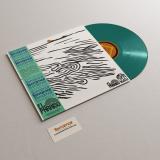
TM Shuffle teams up with Konstantin Kost to deliver a pair of deep, meticulously crafted tracks designed to transport the listener. Built on sprawling echoes, immersive reverbs, and subtle vocal textures, the duo weaves an ethereal sonic journey that resonates just as powerfully in the intimacy of your living room as it does on a packed dancefloor. On remix duties, Brenno reworks the original samples into a weightier, club-focused weapon. Stripping back the atmosphere in favor of driving dub house sensibilities, he pairs classic drum machine rhythms with crisp, dry dub aesthetics, allowing listeners to sink completely into the duo's heavy basslines. Following TM Shuffle's stellar remix on our fifth release, we are thrilled to welcome him back alongside Konstantin Kost for a release that demands your full attention.
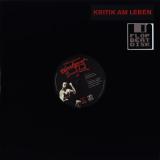
Put out on the circuit in 2016 as a collaboration between Leipzig's Flop Beat Disk and the Zombieflesheater-run micro label operating as Kritik Am Leben this limited to 150 copies 12“ EP sets out to kill and slaughter. Heavy distortions set to maximum levels meet loudness wars taken to the extreme and hyper-fragmented beat violence which follows just one singular device: Mash Up Di Place! And it succeeds.
Never officially distributed before this is the first time ever this unrecognized gem is available to a wider audience, albeit in extremely limited quantities.
*Kissa* is an immersive ambient electronic project crafted by Mathias, drawing inspiration from the serene and evocative atmosphere of Japanese jazz kissa cafés. These intimate spaces, known for their deep reverence for music, serve as the foundation for *Kissa’s* sonic landscape—where warm nostalgia and futuristic minimalism intertwine. Consisting of eight expansive compositions, *Kissa* abandons traditional rhythmic structures, allowing sound itself to guide the listener. Ethereal textures, evolving drones, and subtle harmonic shifts create a meditative experience that blurs the lines between memory and imagination. Each track is a portal—an invitation to lose oneself in sound, to explore the spaces between notes, and to embrace stillness as a form of movement. With *Kissa*, Mathias redefines the boundaries of electronic music, crafting an experience that is at once deeply personal and universally resonant. Whether serving as a soundtrack for introspection or a companion for late-night contemplation, *Kissa* embodies the essence of timeless listening—where music is felt, not just heard.
PYRAMID TRANSMISSIONS are excited to present our next release by one of our favourite artists on the scene, FLECK E.S.C (Franck Collin)
Hailing from FRANCE but resident in TOKYO, FLECK's music is a myriad of Scifi sound design, pulsating funk ridden beats and this release reaches Autechre like intricacy.
He has recorded for many labels such as ELECTRIX, SCIENCE CULT, SHAMELESS TOADY and PYRAMID TRANSMISSIONS among may others.
This is a sonic masterpiece of Electro and IDM!!!!!!
Massage Brain Cult returns with its second Various Artists compilation, available on vinyl and digital. Featuring tracks from p1nkf1re, Lini, Uf0, Lee, Mause, AZARYC and a djtool by Suso Flores. The release offers a fresh sonic flavor—staying true to the label’s reputation for diversity.
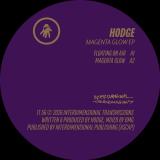
IT is celebrating the Detroit - Bristol connection with the "Magenta Glow EP" from Hodge. This began with Hodge playing for IT in Detroit, first at Return to the Source, and then at a spring party at Tangent, where he was so inspired by what he saw that he began composing music for these environments. It quickly expanded to a number of songs, each to be carefully mixed from their stems by BMG in the Interdimensional Laboratory on hardware to give the record the largest and most solid sonic footprint it could have, using the same process as the recent Andy Toth record and Alchemical Sisters album. Each song is unique, yet each is so strong it could be its own single. Science fiction themes are highlighted with "Magenta Glow" referencing Philip K. Dick, and "Oankali" being named after entities from Lilith's Brood by Octavia E. Butler.
Some things in life are meant to be consumed whole: a perfectly paced movie, an oyster at Whitstable Bay, a novella on a sunny afternoon. Into this pantheon of singular experiences comes Runners, the second album from London instrumental rock quartet Dog Unit. The follow-up to At Home, the band’s cult favourite 2024 debut album, Runners moves seamlessly across its 42-minute runtime. It finds the quartet – comprising Sam Walton, Henry Scowcroft, James Weaver and Lucy Jamieson – crafting tracks that undulate, churn and yearn in service of a greater purpose as they plough fertile fields of sonic storytelling. Made over the first four months of 2026 at the band’s studio in Limehouse, East London, Runners finds the core group, alongside producer and long-time collaborator Mark Estall, operating with greater ambition and scope than ever before. This time they commissioned a string quartet specifically for this project, and reappointed noted experimental bass clarinetist Heather Roche, as well as taking in a cavalcade of instruments at their studio, including vintage synths, drum machines, pianos, and harmonium. The band’s music is often compared to cinema, and if At Homewas a charming micro-budget indie flick bursting with potential, Runners is a widescreen realisation that stands up to repeat viewings.
Multi-faceted artist Calibre today shares his sixteenth studio album "Feeling Normal". The album is out now to pre-order on Vinyl, CD and on digital platforms via his own independent imprint Signature Recordings.
The record is his first bonafide 140bpm record and a staggering body of work that shows the genius levels of one of electronic music's most respected auteurs. Across the 13 tracks, he transcends through space and time, creating music that will take the listener on a weighty sonic journey. The album announcement is accompanied by two dub versions "Bad" and "Badder" deconstructed from the track "Badman" with DRS from Mark Ernestus available via his Hardwax store January 29th and Bandcamp February 12th. "Getting to work with Mark Ernestus is a real honour, I collected Basic Channel, Rhythm & Sound and his other work for many years and still do. It's hard to avoid the influence of this guy in electronic music across genres and so it is a real pleasure to have him do his thing with the Badman tune which I think sounds closely related."
All of the tracks on the record have been road-tested in Calibre's DJ sets over the last 2/3 years with many of them being sought-out by his hardcore fans. It was only a matter of time then that he put them out for all to consume. With a nod to the dancefloor, the clear idea for the album came about following the release of his most personal album to date "Planet Hearth". "It still works in the headspace but ultimately it's been written for the sweaty club experience we miss now, also after an album like Planet Hearth it felt very liberating to do," he remarks. When writing albums, he often just puts it down to the general chaos of life, not citing any one influence but generally just waits to see what comes. With one of the tracks on the album written 7 years ago on the island of Valentia, It became a project that he spent the intervening years collecting tracks for, not really knowing when he was going to put it together as an album. "The whole album is special to me, everything on there has import and meaning beyond for me, I have spent much time on all these and hope they are special for other people too."
Belfast-born, Berlin-based Calibre - AKA Dominick Martin - shows no sign of slowing down. As a producer, DJ, songwriter, multi-instrumentalist and painter, he is one of the most unique and inspiring living artists. With a career spanning two decades, his ability to remain underground whilst being one of the most-respected is testament to who this enigmatic artist is. To this day, he has never been remixed and has a seriously impressive amount of unreleased music under wraps. With everything on hold and gigs on the backburner, this record is exactly what the world needs right now.
When Khalab and Baba Sissoko first recorded together in 2015, they produced something definitive: a record where electronics and griot tradition achieved genuine synthesis rather than polite cohabitation.
Not layered genres maintaining separate identities, but two forms evolving into something singular. "Tata" took Track of the Year at the 2016 Gilles Peterson Worldwide Awards, found champions in Laurent Garnier, Ben UFO, Matthew Dear, Bonobo, and many others — but more significantly, it established a working method built to last.
Eleven years on, they return with Foli Bah on Hyperjazz Records. Theirs is a relationship built on trust. Khalab constructs structures that don't develop linearly but spiral inward — loops that reveal something new with each rotation, tightening until the listener stops resisting and surrenders. Sonic architectures that don't expand outward but deepen over time, layering toward saturation. Baba Sissoko inhabits these structures with instruments from Malian tradition, not as ornamentation but as load-bearing elements: the tradition becomes structure, not decoration. Electronics and griot practice stop negotiating terms and start speaking the same language.



















![TM Shuffle & Konstantin Kost - Dub Stories [180 grams,Colored Vinyl]](https://www.deejay.de/images/l/7/4/1266974.jpg)