We are pleased to announce the launch of a new series at Innervisions called “Quantum Spits”.
House music has been around for decades, and throughout its evolution, it has spawned numerous sub-genres. “Quantum Spits” aims to explore and celebrate this diversity by dedicating each release to a particular aspect of this thing we call House.
Our goal is to provide a platform for both established and up-and-coming producers to express their unique take on house music while also paying homage to the roots of the genre.
We are kicking off the series with Skatman, the Tunisian-born producer, DJ and label head. On „Rewarped“ he slams old school hip-hop samples into some raw and pumping house tracks, providing a fresh and up to date connection between these distinct musical eras to deliver six new cuts of raw concise electronic music.
“Taking familiar elements and giving them a fresh twist,” says Skatman aka Aziz Haddad.
Suche:j twist
- A1: Zwischen Planeten
- A2: Stimme Des Wegelagerers
- A3: Aus Dem Feuer, Aus Dem Licht
- A4: Immer Wieder Im Kreis
- A5: In Den Tiefen
- A6: Hinein, Hinaus, Hinüber
- A7: Fantasiegebilde
- A8: Der Verwunschene Hain
- A9: Blick Nach Drüben
- B1: Innerlich Außerhalb
- B2: Schimmernde Chimäre
- B3: Gemeinsam Hindurch
- B4: Mit Verbundenen Augen
- B5: Purpur-Trank
- B6: Im Sternstrom
- B7: Schlingerling
- B8: Endstation Sehnsucht
Turning their gaze to the buoyant culture of wyrd, modernist German folk music, Quindi welcome a spectacularly idiosyncratic offering from Johannes Schebler, aka Baldruin. Bewildering narrative twists, high drama and intricate delicacy make Mosaike der Imagination an engrossing listen from the outset, as baroque atmospheres and tumbledown drums intertwine with tactile string plucks and needlepoint synthesis in an authoritative bridging of ancient and hypermodern sonic sensibilities.
Schebler's catalogue as Baldruin is extensive, reaching back to the late 00s and covering a lot of ground through cassette albums on respected underground labels like SicSic, A Giant Fern and Lullabies For Insomniacs. Meanwhile, his work has been recognised as part of a broader movement of experimental electronic music in Germany taking inspiration from folk traditions, as documented on last year's essential Bureau B compilation, Gespensterland. Beyond his solo work, Schebler also works with Jani Hirvonen as Grykë Pyje (mappa), and both collaborate with Paul Wilson as Yayoba (Not Not Fun). Christian Schoppik of leading dark folk project Brannten Schnüre joins him as Freundliche Kreisel (STROOM). It's a tangled, fascinating and evocative sound world which Mosaike der Imagination offers a compelling window into.
No two tracks on the album follow the same pattern or palette, whether gliding through the Giallo synth undulations and post rock tonal arcs of 'Stimme des Wegelagerers' or spelling out miasmic incantations through flickering flames on 'Aus dem Feuer, aus dem Licht'. 'Hinein, hinaus, hinüber' revolves around meditative drum mantras and cascading melodic phrasing, densely layered and evolving with purpose. 'Gemeinsam hindurch' flicks between swooping strings and pizzicato plucks in a purely romantic expression of orchestration, 'Mit verbundenen Augen' is a bewildering choral voice study and 'Im Sternstrom' revels in ecstatic synth arpeggios. Nothing can be predicted except the vibrancy and clarity of Schebler's vision.
It's a vision which extends to the front cover artwork for Mosaike der Imagination — a glorious tapestry created by Finnish artist Jan Anderzén, with a responding design and layout from Schebler adorning the rear sleeve.
Stepping to the side of the cosy daydream reveries that inhabit much of the Quindi output, Mosaike der Imagination indulges the label's penchant for sophistication in a freakily fascinating new framework from the heart of an exciting movement in experimental folk music.
Here, gleaming tensile techno forms clean, straight lines while scratchy acoustic guitars scuff up edges to produce
ghostly audio. Poetry is snatched from the overhead, removed from the overheard; words borrowed from the ether are
spun into dizzying new shapes, sometimes reappearing in new settings, twisted back to front, side to side. Each track a
very different room - some soundtracked by little more than metronomic kick drum and robotic voice, others deep in
layer upon layer of melody and euphoric noise - and each room unmistakably, uniquely Underworld. The only advice
from Underworld’s Rick Smith and Karl Hyde upon entering: “Please don’t shuffle.”
Strawberry Hotel features the singles ‘and the colour red’ and ‘denver luna’, as well as new release ‘Black Poppies’ - a
celestial love song, a hymn to the universe and to boundless, positive change. Ambient and beatless, Black Poppies is
a celebration of full dancefloors and the beauty of life itself.
Underworld are Rick Smith and Karl Hyde. Their peerless first album - dubnobasswithmyheadman - was released to universal acclaim in 1994. In the thirty years since that mould breaking debut, the band have established their reputation as one of the most groundbreaking and important electronic acts of all time, one that constantly pushes creative boundaries, twists genres, and refuses to stay still. In those thirty years, their music has soundtracked approximately 100,000,000 nights out, and the mornings after. In the past year alone, Underworld have played live in front of over half a million people across the globe.
On his latest full-length, Low End Activist swerves towards weightless grime and suspended hardcore miniatures to tell a very personal story. The UK-rooted producer continues his habit of zeroing in on a distinct approach for each release, leaving a logical breadcrumb trail of soundsystem science in his wake as he channels decades of bass absorption into 14 atmospheric cuts that prize patience and precision over obvious club functionality.
Municipal Dreams plays out as a semi-autobiographical tour through the Blackbird Leys estate that the Activist grew up on. It’s a lived reflection on inequality and the ripple effect it has in working class communities, using the sonic palette to set the mood and scattering pointed samples throughout to spell out the story.
In sampling the exhaust of a stolen Subaru Impreza, ‘TWOC’ looks back to the recreational car theft which was standard entertainment for the kids in his community. There’s an underlying idea that this ‘council estate sport’ wouldn’t have been so prevalent if there were public services and opportunities presented to the scores of disaffected youth looking for somewhere to direct their energy and frustration.
In ‘Just A Number (Institutionalised)’ LEA alludes to the shattered juvenile detention system, growing up seeing friends and family members locked up at ease with little to no support on being released back into society, just meant that the same cycles of behaviour would play out over and over.
‘Violence’ samples from a short film shot by the drama division of the Blackbird Leys Youth Club to evoke the physical threat which formed a background hum to life on the estate. The industrial mechanics of the local car factory, which served an integral role as a workplace for many in the community, gets sampled in ‘They Only Come Out At Night’ while the ‘Everyone I look up to are either junkies or criminals’ sample in ‘Broke’ looks to a lack of positive role models.
Municipal Dreams isn’t a one-note indictment of life on the estate, ‘Innocence’ captures the simplicity of a child at birth before their environment has time to shape them. The Hope interludes cut through the grim honesty of the longer tracks while a subtle thread of wry humour finds its way into some of the talking heads cutting through the signature LEA murk.
But honesty is the operative word here, and the message feels all the more meaningful at a time when the UK’s social divisions are laid bare in the wake of a devastating stretch of austerity. Returning to Blackbird Leys to shoot images for the photo-zine and album cover, the Activist found the local community centre being demolished. The local pub stands derelict, its faded Welcome sign a grimly ironic portent of the options facing children of the estate in the wider world.
Funnelling his memories, hopes and fears into a singular twist on the bass weight tradition, LEA captures evocative scenes that land somewhere between kitchen sink realism and rave futurism.
Die PBS-Serie Earth Focus befasst sich mit den komplizierten Verbindungen zwischen Südkaliforniens Naturlandschaften und städtischer Entwicklung. Jede Episode erforscht einen bestimmten Ort, darunter den Los Angeles River, das Diablo Canyon Nuclear Power Plant, Joshua Tree National Park und die Mojave Wüste. Der Soundtrack der Serie, komponiert von Elori Saxl, unterstreicht die emotionalen Erzählungen dieser Orte und betont das Zusammenspiel zwischen Menschen und der Natur sowie die Auswirkungen der vom Menschen geschaffenen Umwelt. Dabei ließ sie sich von Künstlern wie Alice Coltrane und Hiroshi Yoshimura inspirieren, Saxl hat die Musik mit digital manipulierten Aufnahmen von Wasser und Wind, analogen Synthesizern, MIDI-Samples und bearbeiteten Holzbläsern gespielt von Stuart Bogie (Klarinette, Bassklarinette, Flöte) kreiert. Diese einzigartige Mischung aus Klängen erinnert an das musikalische Erbe von Los Angeles und an die allgemeine Atmosphäre von Wind, Sonne und südkalifornischer Kultur. Die Musik bezieht sich lose auf die psychedelischen und traumhaften Klänge, die mit der Vergangenheit und Gegenwart von Los Angeles verbunden sind. Sie enthält jedoch einen modernen Twist, der reale und synthetische Elemente vermischt, um das zeitgenössische und zunehmend spürbare der von Menschenhand geschaffenen Landschaft in Los Angeles und den angrenzenden Regionen zu reflektieren.
"When you wish upon a star… that turns out to be Saturn.
Previously unheard Ra culled from the archives and compiled based on their association to that children's film corporation with the cartoon rodent.
Jazz aficionados and Disney nerds alike will marvel at how seamlessly Sun Ra and his Arkestra put their own unique twist on both well-known and overlooked Disney songs. Pink Elephants on Parade takes nine songs from Disney’s storied catalog and recontextualizes them as beautiful, fun, and sometimes terrifying pieces of Afrofuturist jazz. The collection also shows further proof of how Ra was always willing to transcend conventions of jazz. Listen to the full album and you will likely never look at the Disney music catalog the same way ever again.
Originally known for accompanying Dumbo and Timothy’s colorful alcohol-induced hallucinations, this song is given a whole new life by Ra and the Arkestra in more ways than one. It also feels faithful to the original at the same time, with the cacophony of horns, drums, percussion, and cowbell resembling that of a marching band. However, the demented grandeur of the song is turned up to eleven with zany vocal lines (hence the high-pitched “What’ll I do” inflections) and other performances that somehow sound more evil and gruff here than they did on Oliver Wallace and Ned Washington’s version. Though the Sportsmen’s vocals from that particular arrangement had a certain creepiness to it, the Arkestra takes a previously innocent sounding song and makes Pink Elephants On Parade sound even more terrifying."
This epic remix EP takes the four brilliant tracks from Madcap's "B-Boy" EP and gives them a fresh spin. Featuring the unstoppable talents of Digital, Villem, Phaction, and Zero T, each remixer takes a slice from the original tune and twists it into theiur own personal space, creating an EP of hard hitting and diverse remixes!
Ltd White Vinyl, DL card. 1992's 'Untitled' brought the band's third album that re-cemented the duo once again as the progenitors of the "lo-fi" genre. This breakthrough set transitioned "The Trux" into a never ending all-inclusive rotating cast of musicians. Continuing Fire Records' series of classic remastered albums from Royal Trux, 'Untitled' is released on white vinyl and features updated monochrome and silver artwork. As unpredictable as ever, Neil Hagerty and Jennifer Herrema shook off the next level layering and noise of 'Twin Infinitives' to embrace the history of rock 'n' roll in all its deformed grandeur. Utilizing their ever present mind set of macro-inclusivity, they allowed the subconscious "radio stations" of their lives to infiltrate, lead, and dictate. Culling from their collective minds and memories twisted tunes that touched them. After the blood rush of their much-hailed avant-garde masterpiece 'Twin Infinitives' (1988), this eight-song opus added to the lo-fi genre that originated on 'Twin Infinitives'. On 'Untitled' Hagerty uses his 5-string blues roots and hails rock's twisted potential, while Herrema slurs and snarls in ecstasy. They sound like they're locked in a fourth-floor boudoir at the Chelsea Hotel; bottles clink, an album clicks on its run-out groove, the band plays on. In the mix are the characters and casualties of the 90s, a roll call of swaggering misfits. These aren't superficial sketches, the Trux cut much deeper than that_ "'Junkie Nurse' isn't just about addiction; it's about the twisted hope that even the most broken people can somehow mend others, even when they're falling apart themselves." Jennifer Herrema, Royal Trux. With 'Untitled' Royal Trux justifiably increased their coterie of convicted followers, becoming the cult heroes for a transgressive generation, and the Rosetta Stone for male/female duos (ie:The White Stripes, The Kills etc... ) over the years inspiring everyone from The Silver Jews (David Berman) & Sonic Youth through to melodic blue-eyed soulsters like Hot Chip - "I urge and encourage you to enter the harmolodic multiverse of their music." Alexis Taylor, Hot Chip. "Royal Trux were nothing if not fearless." Pitchfork.
- Blue Christmas
- Run Rudolph Run
- Merry Christmas Baby
- Rudolph The Red-Nosed Reindeer
- Please Come Home For Christmas
- Twistin Bells
- Santa Claus Is Coming To Town
- My Christmas Prayer
- I Ll Be Home For Christmas
- The Chipmunk Song (Christmas Don T Be Late)
- Christmas Auld Lang Syne
- White Christmas
- The Little Drummer Boy
- Rockin Around The Christmas Tree
- Christmas Presents
- Frosty The Snowman
- Christmas Day
- Jingle Bell Rock
- Winter Wonderland
- Happy New Year Baby
- I Saw Mommy Kissing Santa Claus
- It S Christmas Once Again
- We Wish You A Merry Christmas
"A sparkling mixture of American and British stars, featuring 23 of the biggest Christmas songs ever recorded. With Elvis Presley wishes you a “Blue Christmas”, the Drifters wishing you a “White Christmas”, a “Christmas Prayer” by Billy Fury, a “Christmas Present” from Solomon Burke, “Rockin’ Around The Christmas Tree” with Brenda Lee, “Twistin’ Bells” by Santo & Johnny, and the “Jingle Bell Rock” with Chubby Checker & Bobby Rydell. The Cadillacs sings “Rudolph The Red-Nosed Reindeer” and Chuck Berry “Runs With Rudolph”, Frankie Valli & The 4 Seasons “Saw Mommy Kissing Santa Claus”, Johnny Cash with his “Little Drummer Boy” and finally David Seville and the Chipmunks with “The Chipmunk Song”."
The seeds of composer Rafael Anton Irisarri’s latest LP were first planted during his 2016 tour in Italy, months before that Autumn’s unexpected presidential election. The linguistic glitch of an innocuous diner in Milan named “il Mito Americano” – meant as “The American Dream” but translated literally to English as “The American Myth” – sparked a series of ideas, both conceptual and musical.
Amid the chaos of 2020, while exploring the stark world of brutalist architecture and inspired by the false fronts of Potemkin villages, a vision started to take shape: FAÇADISMS. Composed over three years, it’s a late capitalist lament of simmering electric despondency.
Irisarri’s obsession with repeating motifs mirrors the cyclical nature of our tumultuous political history. The album’s eight tracks heave and storm like a tempest being drained of its rage. This is the sound of majestic dissipation, of morning afters, fashioned from a mournful haze with cavernous guitars and granular twilight. A euphony of a receding tide as one sifts through the remnants of what remains: dust, delusion, and memory.
Opening with the somber gauze of “Broken Intensification," FAÇADISMS moves fluidly between moments of absence and abandon. Ashen swaths of electronics billow above smoldering embers of melody, guitar, and scattered streaks of processed strings and voice, as on the rapturous doom of “Control Your Soul's Desire for Freedom,” featuring Julia Kent on cello and Hannah Elizabeth Cox on vocals. "The impoverished peoples of the Americas have known all along that 'freedom' is a cruel illusion crafted by the elites, akin to Potemkin's fake villages designed to impress Catherine the Great," Irisarri indicates. "FAÇADISMS illustrates a twisted inversion where the rulers deceive their subjects with illusions of safety, democracy, and free speech to create a grotesque mirage of control over their own lives.”
Elsewhere, Irisarri leans into passages of hushed oblivion (“Hollow,” “Dispersion of Belief”), while ragged drones rumble and disintegrate into wind-battered ambient wreckage. One has the sense that it’s all too late. The hour of fury has passed. The beauty has come and gone. Irisarri’s muse has become the crack in the façade of the unraveling myth.
The record closes with a climax of grand departure. Co-written with Kenyan sound artist KMRU, “Red Moon Tide” surges from flickering elegy to celestial disquiet, roiling waves of hymnal descent, and bristling noise. The effect is unsettling and unmooring: a soundtrack for the soul leaving the body, only to discover a void. It’s the sound of the center not holding, of shared illusions being dissolved in a tunnel of white light.
The cover photograph captures a profound sense of desolation. Taken in the historic shanty town of La Perla, Puerto Rico, where Irisarri spent his childhood, brutal colonial mysteries are lost to time. A skeletal concrete structure decays against an expansive blue horizon. Only the shadow of its shell ripples on the empty sea.
Has the American myth finally run its course?
The seeds of composer Rafael Anton Irisarri’s latest LP were first planted during his 2016 tour in Italy, months before that Autumn’s unexpected presidential election. The linguistic glitch of an innocuous diner in Milan named “il Mito Americano” – meant as “The American Dream” but translated literally to English as “The American Myth” – sparked a series of ideas, both conceptual and musical.
Amid the chaos of 2020, while exploring the stark world of brutalist architecture and inspired by the false fronts of Potemkin villages, a vision started to take shape: FAÇADISMS. Composed over three years, it’s a late capitalist lament of simmering electric despondency.
Irisarri’s obsession with repeating motifs mirrors the cyclical nature of our tumultuous political history. The album’s eight tracks heave and storm like a tempest being drained of its rage. This is the sound of majestic dissipation, of morning afters, fashioned from a mournful haze with cavernous guitars and granular twilight. A euphony of a receding tide as one sifts through the remnants of what remains: dust, delusion, and memory.
Opening with the somber gauze of “Broken Intensification," FAÇADISMS moves fluidly between moments of absence and abandon. Ashen swaths of electronics billow above smoldering embers of melody, guitar, and scattered streaks of processed strings and voice, as on the rapturous doom of “Control Your Soul's Desire for Freedom,” featuring Julia Kent on cello and Hannah Elizabeth Cox on vocals. "The impoverished peoples of the Americas have known all along that 'freedom' is a cruel illusion crafted by the elites, akin to Potemkin's fake villages designed to impress Catherine the Great," Irisarri indicates. "FAÇADISMS illustrates a twisted inversion where the rulers deceive their subjects with illusions of safety, democracy, and free speech to create a grotesque mirage of control over their own lives.”
Elsewhere, Irisarri leans into passages of hushed oblivion (“Hollow,” “Dispersion of Belief”), while ragged drones rumble and disintegrate into wind-battered ambient wreckage. One has the sense that it’s all too late. The hour of fury has passed. The beauty has come and gone. Irisarri’s muse has become the crack in the façade of the unraveling myth.
The record closes with a climax of grand departure. Co-written with Kenyan sound artist KMRU, “Red Moon Tide” surges from flickering elegy to celestial disquiet, roiling waves of hymnal descent, and bristling noise. The effect is unsettling and unmooring: a soundtrack for the soul leaving the body, only to discover a void. It’s the sound of the center not holding, of shared illusions being dissolved in a tunnel of white light.
The cover photograph captures a profound sense of desolation. Taken in the historic shanty town of La Perla, Puerto Rico, where Irisarri spent his childhood, brutal colonial mysteries are lost to time. A skeletal concrete structure decays against an expansive blue horizon. Only the shadow of its shell ripples on the empty sea.
Has the American myth finally run its course?
The seeds of composer Rafael Anton Irisarri’s latest LP were first planted during his 2016 tour in Italy, months before that Autumn’s unexpected presidential election. The linguistic glitch of an innocuous diner in Milan named “il Mito Americano” – meant as “The American Dream” but translated literally to English as “The American Myth” – sparked a series of ideas, both conceptual and musical.
Amid the chaos of 2020, while exploring the stark world of brutalist architecture and inspired by the false fronts of Potemkin villages, a vision started to take shape: FAÇADISMS. Composed over three years, it’s a late capitalist lament of simmering electric despondency.
Irisarri’s obsession with repeating motifs mirrors the cyclical nature of our tumultuous political history. The album’s eight tracks heave and storm like a tempest being drained of its rage. This is the sound of majestic dissipation, of morning afters, fashioned from a mournful haze with cavernous guitars and granular twilight. A euphony of a receding tide as one sifts through the remnants of what remains: dust, delusion, and memory.
Opening with the somber gauze of “Broken Intensification," FAÇADISMS moves fluidly between moments of absence and abandon. Ashen swaths of electronics billow above smoldering embers of melody, guitar, and scattered streaks of processed strings and voice, as on the rapturous doom of “Control Your Soul's Desire for Freedom,” featuring Julia Kent on cello and Hannah Elizabeth Cox on vocals. "The impoverished peoples of the Americas have known all along that 'freedom' is a cruel illusion crafted by the elites, akin to Potemkin's fake villages designed to impress Catherine the Great," Irisarri indicates. "FAÇADISMS illustrates a twisted inversion where the rulers deceive their subjects with illusions of safety, democracy, and free speech to create a grotesque mirage of control over their own lives.”
Elsewhere, Irisarri leans into passages of hushed oblivion (“Hollow,” “Dispersion of Belief”), while ragged drones rumble and disintegrate into wind-battered ambient wreckage. One has the sense that it’s all too late. The hour of fury has passed. The beauty has come and gone. Irisarri’s muse has become the crack in the façade of the unraveling myth.
The record closes with a climax of grand departure. Co-written with Kenyan sound artist KMRU, “Red Moon Tide” surges from flickering elegy to celestial disquiet, roiling waves of hymnal descent, and bristling noise. The effect is unsettling and unmooring: a soundtrack for the soul leaving the body, only to discover a void. It’s the sound of the center not holding, of shared illusions being dissolved in a tunnel of white light.
The cover photograph captures a profound sense of desolation. Taken in the historic shanty town of La Perla, Puerto Rico, where Irisarri spent his childhood, brutal colonial mysteries are lost to time. A skeletal concrete structure decays against an expansive blue horizon. Only the shadow of its shell ripples on the empty sea.
Has the American myth finally run its course?
Conoley Ospovat, with appearances on Otake, Kimochi Sound, Blankhaus, and Cervidae, continues to build his longrunning home imprint: Continental Drift. Opening with a jazzy, atmospheric strut, Transcontinental Trip's title track sets the tone for this record as a more driving, basslinefocused affair than some of his recent downtempo excursions. The taut restraint & open air vibe of loose drumming & ¬eld recordings for Hold On feel like a nonchalant response to Ricardo's Sei Es Drum. Then, Ospovat's attention to melody & clever programming comes to the fore again on Sunbreaks. The tune is a moody danceoor builder full of twists & turns before the EP closes out with the carbonated haze of Paci¬c Coast Rain
The beats on Capital Punishment, from RZA, Rockwilder, Domingo, and other A-list maestros, are grimy, radio- friendly, yet low-ley cutting-edge, affirming its status as an undisputed classic. Big Pun was as much a visionary — conceptualizing every song — as a consummate pro in the booth. Citing Picasso and Baby Jesus while purporting to “twist your temples into pretzels,” Pun made Minute Rice out of multi-syllables. There’s no way to describe Pun’s febrile liberties with the king’s English. He doesn’t really breathe; when he does, it’s a sharp gasp for air that almost mimics his Ginsu-like wordplay. Pun’s habit of sucking wind before spitting an ill verse mimics the effect of a lit grenade about to land and decimate entire sections of the population. If Pun’s dense rhymes invoke mixed metaphors, that’s likely because he’s an impossible amalgam of wanton wooer and lyrical hitman, an overweight lover with a murderous mouthpiece.
- Sleigh Ride
- Jingle Bell Rock
- Boogie Woogie Santa Claus
- The Son Of Mary (Greensleeves)
- White Christmas
- Christmas Candles
- Silent Night
- I Saw Mommy Kissing Santa Claus
- Little Drummer Boy
- Rockin' Around The Christmas Tree
- The Happiest Christmas Tree
- This Time Of The Year
- Nuttin' For Christmas
- Zat You, Santa Claus?
- I'll Be Home For Christmas
- I'm Gonna Tell Santa Claus On You
- What Are You Doing New Years Eve?
"A sparkling mixture of American and British stars, featuring 23 of the biggest Christmas songs ever recorded. With Elvis Presley wishes you a “Blue Christmas”, the Drifters wishing you a “White Christmas”, a “Christmas Prayer” by Billy Fury, a “Christmas Present” from Solomon Burke, “Rockin’ Around The Christmas Tree” with Brenda Lee, “Twistin’ Bells” by Santo & Johnny, and the “Jingle Bell Rock” with Chubby Checker & Bobby Rydell. The Cadillacs sings “Rudolph The Red-Nosed Reindeer” and Chuck Berry “Runs With Rudolph”, Frankie Valli & The 4 Seasons “Saw Mommy Kissing Santa Claus”, Johnny Cash with his “Little Drummer Boy” and finally David Seville and the Chipmunks with “The Chipmunk Song”."
Where would a painter paint if it were not on a white canvas? Where would a composer compose if it were not on the stave and the spaces in between the lines? How would a musician play his instrument if there were no melodies composed, written down, painted for him to follow?
The magic of art needs a frame, a somewhat solid container to hold the freedom that can only be found once we integrate some form of structure. And that also holds in every other area of life. We all need a frame, a structure, a rhythm, or else, we fall apart. This human form needs the body, and yet it transcends the limitations of the body - through art.
Consistency being one of them seems oftentimes less tangible, for it resides more in the act of doing, and showing up for the practice, for devoting energy and presence. Strangely, if we consistently show up for our practice, regardless of its form, the solid frame of the hour we devote to playing the instrument, learning a language, doing the sport, sitting silently for that meditation: It feels different every single time. It feels new every single time.
The repetitive consistency in being present again and again allows for nothing short of magic to happen. Magic feeds consistency. Consistency feeds magic. Consistency sets a foundation that strengthens over time. It allows us to slowly but surely develop any kind of skill, to find and hence to embody expertise. On the fertile grounds of such a solid foundation, creativity fosters, and innovation blossoms.
Establishing consistent rituals and routines can bring a sense of comfort and safety into every-day-life. For routine beholds repetition and its frame enables our experience within to change. In the familiar, we dare to explore, maybe even experiment, merely because a part of us remembers we depart from, and always return to, a safe space. We do not get lost. We do not fall apart. As we practice, again and again, we build resilience in overcoming obstacles or literally persevering through challenging situations and stretches of time.
While consistency gifts steadiness and stability, its overdose risks to result in what may appear as uniformity. It feels like constantly - consistently - dancing on the fine line of freedom within a structure. Life is filled with unexpected twists and turns, adjustments need to be made to accommodate change and avoid rigidity. By striking a balance between consistency and flexibility, we can create harmony in our lives, just like a beautiful melody that flows smoothly from one note to the next.
Within the magical waves of music, skills are needed, too. Consistency is key to show up and do the work. It frames the freedom of magic that resides beyond and only beyond effort. Learning to play an instrument, learning to sing, does never happen within the blink of the eye. It takes time. Time to show up for the practice, to do precisely that: practice. Again and again, every single time, again and again. Precision feeds perfection that falls apart inside the structure of a song, a line, a rhythm, dissolving into magic.
Consistency in practicing, in composing and sharing music with the world regardless of the form allows any musician to refine his style, to carve out his uniqueness. For any artistic expression is, after all: Unique. And this uniqueness is born inside the vessel of any structure, over and over again. Sharing music in the form of new releases and public performances nourishes the bond between artist and audience. And for that to unfold, both parties need to show up - while the underlying beat of this never-ending practice is presence fuelled by consistency.
- A1: Slit My Wrist
- A2: Twist My Sister
- A3: Dead In Hollywood
- A4: Love At First Fright
- A5: People Hate Me
- A6: She Was A Teenage Zombie
- A7: Die My Bride
- B1: Grave Robbing U.s.a
- B2: 197666
- B3: Dawn Of The Dead
- B4: Let's Go To War
- B5: Dressed To Depress
- B6: Kill Miss America
- B7: B-Movie Scream Queen
- B8: Motherf**Ker I Don't Care
Beyond the Valley of the Murderdolls is the debut studio album by American horror punk supergroup Murderdolls. It was released in 2002. The album reached number 40 on the UK Albums Chart, and sold over 100,000 copies in the U.S.
Murderdolls are a side project for Slipknot drummer Joey Jordison and Static-X guitarist Tripp Eisen.
The music on the album is fast and macabre, stuck in a time warp that hurtles them backwards to the decayed sounds of the '80s. Call it gutter-punk, glam rock, or hair metal, every style is displayed here in its despondent glory, bearing close comparisons to shock-punkers the Misfits. The Murderdolls draw inspiration from movies such as Friday the 13th, Night of the Living Dead, and Phantasm. The 15 tracks found here are full of tongue-in-cheek horror clichés.
Beyond the Valley of the Murderdolls is now available on black vinyl and contains a 6 panel insert.
- First To Betray Me
- Runaway From You
- I Hope Somebody's Loving You
- Skirty
- Goddamn Biscuit
- Living With Strangers
- Zollifer Files
- Devil In My Pocket
- California Loner
- My Only Friend Is You
- Crooked Road
- The Children Are Waiting
- This Little Light Of Mine
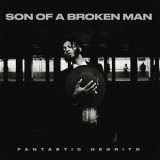
- Son Of A Broken Man
Born Xavier Amin Dphrepaulezz, by now much has been made of Fantastic Negrito's own unique story--his early years growing up in an orthodox Muslim household, the doomed major label deal that turned him off of the music industry altogether, the near-fatal car crash that permanently damaged his guitar playing hand--as well as the remarkable redemption arc that began in 2015, when he won the first ever NPR Tiny Desk Contest. In the years that followed, Negrito would go on to take home three consecutive GRAMMY Awards for Best Contemporary Blues Album, tour with everyone from Sturgill Simpson to Chris Cornell to Bruce Springsteen, collaborate in the studio with the likes of Sting and E-40, launch his own Storefront Records label, perform at Lollapalooza, WOMAD, Glastonbury, Newport Folk, Byron Bay Blues, and nearly every other major festival on the map, and found the Revolution Plantation, an urban farm aimed at youth education and empowerment. Son of a Broken Man sees Fantastic Negrito encapsulating the inimitable elements of his celebrated body of work to date, from hard-hitting distorted guitar riffs to melodic and expressive ballads, all fueled by the unexpected twists that have become his trademark. The album stands as perhaps Fantastic Negrito's most personal thus far, exploring family, deception, and the human desire to hide the true self as he dives deep into one of the oldest conflicts in human history, the struggle between father and son. Beginning at a young age, Negrito was served untruths by his father. A made-up last name, a fabricated ancestry, and a fake Somali accent. Why lie? Why create this false narrative? Those are the questions Negrito had to ask himself and the questions that lie at the heart of Son of a Broken Man.
Warehouse find
We've been doing some housekeeping and found this first release on the Soco Audio label hidden deep in our warehouse.
It is the work of Hakan Lidbo and was first related in 2001. It opens with the 'Sinful Sadie' title track which is drenched in loved-up synth warmth and has a steamy female vocal coo floating above the shimmering deep house beats. 'Kung Pa Klubben' has more twisted synths and a vocoder vocal that brings a futuristic vibe and 'Scrubber' then closes out with some tight and percussive tech funk that still sounds as good now as ever.
Rian Treanor keeps knocking new doors of possibility with his new label Electronic Music Club and its initial focus on Rotherham Sight & Sound, participants of a community-based initiative in their shared post-industrial home town Rotherham. Utilising software synths designed by Rian and his dad Mark Fell, the trio twist out vortices of shearing, asymmetric anarchitecture, rudely resembling the sort of hyper-contemporary styles alluded to in Rian’s solo works, but inflected with cranky timing and an intuitive freedom that bears extraordinary results, especially when considering the fact the trio had no prior musical ability, and only encountered electronic music a few years ago.
After a couple of years of practice and performance, ‘Action Potential’ now firms up their quicksilver sound for club and home buzzes with seven actions that warp and morph from the needling jolts and hoof of ‘Pass The Go’, to shuddering detonations in ‘Dial’, each with a properly electrifying force carrying a genuine futureshock. Working within Rian’s systems-based framework, Anne, Kathleen, and Mick deploy a tactile feel for the machines, finely honed over the course of many sessions at the Rotherham Sight & Sound facility, that uses their visual impairments to synaesthetic advantage.
Between the wickedly metallic ragga swivel of ‘Hold’, the diffractive chain reactions of ‘When It Ends’, and more tempered, sloshing sensuality of ‘30 Seconds’, the trio follow their noses down wormholes that manifest an ideal of accessibility and expressionism within electronic music contexts that Rian and Mark have long worked towards, with Anne, Kathleen and Mick’s relative lack of cultural conditioning in this paradigm prompting them to act on pure instinct