MUSIC FOR BUS STATIONS is an astonishing work that pours into the soul of those allowing themselves to be transported in a dimension where sound turns into background noise. Sound becomes part of us, of our movements, our thoughts, our looks and our silences. There is no reason for resistance. Let's be silent. The noise around us is quite good.
"Generative sonic backdrop for bus stations. Designed to enhance space and portray a mod of progressiveness, grandeur, and ethereal calm. A slowly shifting static backdrop designed to enhance modern architecture, rather than compete with it. Sounding as if the structure itself was resonanting. Hovering sound-fields that utilizes sonic phenomena proven to induce states of calm. Can be presented as a multichannel, polyrhythmic installation with different components of the composition emanating form different areas within the structure, and elements constantly shifting in relationship to other elements, creating an organic sonic-tapestry that never repeats the same way. In essence, the soundscape becoming a living organism with unpredictable behavior. Inspired by avant-garde bus station designs such as Domitianus Arquitectura's station in Rio Maior, Portugal; Bluck & Morgen's Busbahnhof Poppenbuttel in Hamburg, Germany; and Metaraum Architect's bus station in Pzorzheim, Germany."
Rod Modell, January 2024
out of Stock
Last delivered 16 months ago available to reorder, subject to availability
Spectral Bounce returns with a groovy and moody set of tracks by Uruguayan tastemaker Molen. 'Future is Gone' explores dark yet glistening corners of minimal tech house, blending distorted basslines, resonant synth leads, and muffled vocals to create a cinematic aesthetic.
Spectral Bounce’s third release continues to solidify the label’s sonic identity while opening avenues for artists to present their unique interpretations and perspectives, and Molen delivers on that promise.
Art by Susanne Janssen
Words by Hervé Kacou
out of Stock
Last delivered 10 months ago available to reorder, subject to availability
Camelot, the legendary seat of King Arthur's court in Early Middle Ages Britain, was probably not a real place. A corruption of the name of a real Romano-Briton city, the word "Camelot" accumulated symbolic, mythic resonances over centuries, until achieving its present usage as a near-synonym of "utopia." In the mid-20th century alone, Camelot inspired an explosion of representations and appropriations, among them the violent, affectless Arthurian court of Robert Bresson's 1974 film Lancelot du Lac and the absurdist iteration of Monty Python's 1975 Holy Grail, both of which feature armored knights erupting into fountains of blood; the mystical Welsh world of novelist John Cowper Powys's profoundly weird 1951 novel Porius, with its Roman cults, wizards and witches, and wanton giants; and the nationalist nostalgia of President John F. Kennedy's White House. Unsurprisingly there are fewer Camelots in more recent memory. Camelot, Canadian songwriter Jennifer Castle's extraordinary, moving 2024 chronicle of the artist in early middle age, charts a realer, more rooted, and more metaphorical place than the fabled Camelot of the Early Middle Ages (or its myriad depictions), but it too is a space more psychic than physical. In Castle's Camelot, the fantastic interpenetrates the mundane, and the Grail, if there is one, distills everyday experience into art and art into faith, subliming terrestrial concerns into sublime celestial prayers to Mother Nature, and to the unfolding process of perfecting imperfection in one's own nature. Co-produced by Jennifer and longtime collaborator Jeff McMurrich, her seventh record is at once her most monumental and unguarded to date, demonstrating a mastery of rendering her verse and melodies alike with crisply poignant economy. For all their pointedly plainspoken lyrical detail and exhilarating full-band musical flourishes, these songs sound inevitable, eternal as morning devotions. "Back in Camelot," she sings on the lilting, vulnerable title track, "I really learned a lot / circles in the crops and / sky-high geometry." The album opens with a candid admission of sleeping "in the unfinished basement," an embarrassing joke that comes true. But the dreamer is redeemed by dreaming, setting sail in her airborne bed above "sirens and desert deities." If she questions her own agency_whether she is "wishing stones were standing" or just "pissing in the wind"_it does not diminish the ineffable existential jolt of such signs and wonders. This abiding tension between belief and doubt, magic and pragmatism, self and other, sacred and profane, and even, arguably, paganism and monotheism, suffuses these ten songs, which limn an interior landscape shot through with sunstriped shadows of "multi-felt dimensions" both mystical and quotidian. The epic scale and transport of "Camelot," with its swooning strings, gives way dramatically to "Some Friends," an acoustic-guitar-and-vocals meditation in miniature on Janus-faced friends and the lunar and solar temperatures of their promises_"bright and beaming verses" versus hot curses_which recalls her minimalist last album, 2020's achingly intimate Monarch Season. (In a symmetrical sequencing gesture, the penultimate track, the incantatory "Earthsong," bookends the central six with a similarly spare solo performance and coiled chord progression, this time an ambiguous appeal to _ a wounded lover? a wounded saint? our wounded planet?) Those whom "Trust" accuses of treacherous oaths spit through "gilded and golden tooth"_cynics, critics, hypocrites, gurus, scientists, doctors, lovers, government, the so-called entertainment industry_sow uncertainty that can infect the artist, as in "Louis": "What's that dance / and can it be done? What's that song / and can it be sung?" Answering affirmatively are "Lucky #8," an irrepressible ode to dancing as a bulwark against the "tidal pools of pain" and the "theory of collapse," and "Full Moon in Leo," which finds the narrator dancing around the house with a broom, wearing nothing but her underwear and "big hair." But the central question remains: who can we trust, and at what cost faith, in art or angels or otherwise? Castle's confidence in her collaborators is the cornerstone of Camelot. Carl Didur (piano and keys), Evan Cartwright (drums and percussion), and steadfast sideman Mike Smith (bass) comprise a rhythm section of exquisite delicacy and depth. This fundamental trio anchors the airiness of regular backing vocalists Victoria Cheong and Isla Craig and frames the guitars of Castle, McMurrich, and Paul Mortimer (and on "Lucky #8," special guest Cass McCombs). Reprising his decennial role on Castle's beloved 2014 Pink City, Owen Pallett arranged the strings for Estonia's FAMES Skopje Studio Orchestra. On the ravishing country-soul ballad "Blowing Kisses"_Pallett's crowning achievement here, which can be heard in its entirety in the penultimate episode of the third season of FX's The Bear_Jennifer contemplates time and presence, love and prayer_and how songwriting and poetry both manifest and limit all four dimensions: "No words to fumble with / I'm not a beggar to language any longer." Such rare moments of speechlessness_"I'm so fucking honoured," she bluntly proclaims_suggest a state "only a god could come up with." (If Camelot affirms Castle as one of the great song-poets of her generation, she is not immune to the despairing linguistic beggary that plagues all writers.) Camelot evinces a thoroughgoing faith not only in the natural world_including human bodies, which can, miraculously, dance and swim and bleed and embrace and birth_but also in our interpretations of and interventions in it: the "charts and diagrams" of "Lucky #8," a daydreamt billboard on Fairfax Ave. in LA in "Full Moon in Leo," the bloody invocations of the organ-stained "Mary Miracle," and all manner of water worship, rivers in particular. (Notably, Jennifer has worked as a farmer and a doula.) The album ends with "Fractal Canyon"'s repeated, exalted insistence that she's "not alone here." But where is here? The word "utopia" itself constitutes a pun, indicating in its ambiguous first syllable both the Greek "eutopia," or "good-place"_the facet most remembered today_and "outopia," or "no-place," a negative, impossible geography of the mind. Utopia, like its metonym Camelot, is imaginary. Or as fellow Canadian songwriter Neil Young once sang, "Everyone knows this is nowhere." "Can you see how I'd be tempted," Castle asks out of nowhere, held in the mystery, "to pretend I'm not alone and let the memory bend?"
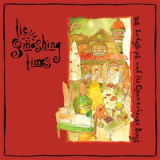
"Mrs. Ladyships and the Cleanerhouse Boys" are your new favorite MOD heart throbs. Is there REALLY a new Merseybeat Revolution? How many times can you really REALLY watch The Blow-Up alone in your room? Why don't you venture out the front door and take a bite of the real thing? The Smashing Times are a mainstay in the indie pop underground. The group mistrals the new modern life perfectly, the sharper world. collaged with 12 string guitar and mallet on the floor tom. 14 tracks 33RPM.
Collapsing new rhythms and industrial visions meet restless melodic vocals on Gateway, the debut album from San Francisco duo YANTRA on Swiss label Subject To Restrictions Discs. This isn’t dance music, but you will dance to it. It isn’t ritual music, but it will channel spirits.
The dreamer is still asleep. She awakens to heed the call. Curious downtempo drums, spartan and potent, animate the body. Running through the city, shadows dance on walls, and alluring voices, whispered, sung, and soaring, possess the mind. At the end of the path, gazing at the mirror’s edge, she finds the source of the voice—and realizes it’s her own.
YANTRA are artist-producer Yaniv de Ridder, also known by the alias YNV, and lyricist-vocalist-instrumentalist Janina Angel Bath. The pair have worked together for some time, beginning with YNV’s 2021 LP Golden Hour Ritual. On Western Paradox, a YNV EP released last year on Subject To Restrictions Discs, Bath contributed vocals—and so YANTRA, the project and the concept, was born. Working together, the pair craft new forms of transcendent sound, timeless and familiar all at once
Elvis Costello: King of America & Other Realms umfasst 6 CDs und erforscht das karrierebestimmende
Album von 1986, das von T-Bone Burnett produziert wurde: von den Solo-Demoversionen der Songs auf
King of America bis hin zu den von Memphis und New Orleans inspirierten Aufnahmen und Kollaborationen
der letzten vier Jahrzehnte.
Die Reise durch die Musik wird von Costellos neuem, selbst verfassten 35-seitigen Essay und zahlreichen
seltenen und nie zuvor gesehenen Fotos begleitet. Den Kern der Sammlung bildet CD1, ein neues Remaster
des Albums aus dem Jahr 2024 von den Original-Masterbändern. CD2 versammelt die 1985 aufgenommenen Solo-Demos und enthält nun 6 nie zuvor gehörte Aufnahmen der Red Bus Session. CD3 ist ein nie
gehörtes, von den Mehrspurbändern abgemischtes 17-Song-Konzert, aufgenommen in London, UK am 27.
Januar 1987. Hören Sie Elvis im Konzert, begleitet von James Burton, Jim Keltner, Jerry Scheff, Belmont
Tench & T-Bone Wolk. Das Set schließt mit 3 Compilation-CDs, die Costellos Studioaufnahmen, bisher
unveröffentlichte Demos, Outtakes und Live-Aufnahmen zusammenfassen.
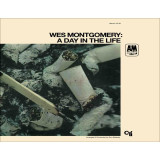
A Day in the Life' was released in 1967 and reached #1 on the Billboard Jazz Albums chart.
From the early 1960s to the late '80s, A&M was one of the most eclectic and powerful independent record labels in the world. The roster of artists who recorded there includes The Carpenters, Captain Beefheart, The Police, Joe Cocker, Suzanne Vega, Procol Harum and Janet Jackson, among others. Founded as an independent company by Herb Alpert and Jerry Moss in 1962, soon the label garnered interest and success, and was acquired by PolyGram in 1989. Throughout its operations, A&M housed well-known acts such as Sting, Sergio Mendes, Supertramp, Bryan Adams, Burt Bacharach, Liza Minnelli, Paul Williams, Quincy Jones, Cat Stevens, Peter Frampton, Carole King, Extreme, Joan Baez, the Human League, Soundgarden, Duffy, and Sheryl Crow, among others. Reissue of the debut album on A&M Records by jazz guitarist Wes Montgomery, released in 1967. It reached #1 on the Billboard Jazz album chart and #2 on the R&B chart. Considered by far the best of his three albums on A&M (in partnership with Creed Taylor’s CTI Records), A Day in the Life features a plethora of star sidemen, such as Herbie Hancock, Ron Carter, Ray Barretto and Grady Tate, among others, as well as superb arrangements by Don Sebesky.
. For Fans Of: The Weather Station, Weyes Blood, Adrianne Lenker, Phoebe Bridgers, Joan Shelley, Lana Del Rey, Cass McCombs, Angel Olsen & Neil Young. Camelot, the legendary seat of King Arthur’s court in Early Middle Ages Britain, was probably not a real place. A corruption of the name of a real Romano-Briton city, the word “Camelot” accumulated symbolic, mythic resonances over centuries, until achieving its present usage as a near-synonym of “utopia.” In the mid-20th century alone, Camelot inspired an explosion of representations and appropriations, among them the violent, affectless Arthurian court of Robert Bresson’s 1974 film Lancelot du Lac and the absurdist iteration of Monty Python’s 1975 Holy Grail, both of which feature armoured knights erupting into fountains of blood; the mystical Welsh world of novelist John Cowper Powys’s profoundly weird 1951 novel Porius, with its Roman cults, wizards and witches, and wanton giants; and the nationalist nostalgia of President John F. Kennedy’s White House. Unsurprisingly there are fewer Camelots in more recent memory. Camelot, Canadian songwriter Jennifer Castle’s extraordinary, moving 2024 chronicle of the artist in early middle age, charts a realer, more rooted, and more metaphorical place than the fabled Camelot of the Early Middle Ages (or its myriad depictions), but it too is a space more psychic than physical. In Castle’s Camelot, the fantastic interpenetrates the mundane, and the Grail, if there is one, distills everyday experience into art and art into faith, subliming terrestrial concerns into sublime celestial prayers to Mother Nature, and to the unfolding process of perfecting imperfection in one’s own nature. Co-produced by Jennifer and longtime collaborator Jeff McMurrich, her seventh record is at once her most monumental and unguarded to date, demonstrating a mastery of rendering her verse and melodies alike with crisply poignant economy. For all their pointedly plainspoken lyrical detail and exhilarating full-band musical flourishes, these songs sound inevitable, eternal as morning devotions. “Back in Camelot,” she sings on the lilting, vulnerable title track, “I really learned a lot / circles in the crops and / sky-high geometry.” The album opens with a candid admission of sleeping “in the unfinished basement,” an embarrassing joke that comes true. But the dreamer is redeemed by dreaming, setting sail in her airborne bed above “sirens and desert deities.” If she questions her own agency whether she is “wishing stones were standing” or just “pissing in the wind” it does not diminish the ineffable existential jolt of such signs and wonders. This abiding tension between belief and doubt, magic and pragmatism, self and other, sacred and profane, and even, arguably, paganism and monotheism, suffuses these ten songs, which limn an interior landscape shot through with sunstriped shadows of “multi-felt dimensions” both mystical and quotidian. The epic scale and transport of “Camelot,” with its swooning strings, gives way dramatically to “Some Friends,” an acoustic-guitar-and-vocals meditation in miniature on Janus-faced friends and the lunar and solar temperatures of their promises—“bright and beaming verses” versus hot curses which recalls her minimalist last album, 2020’s achingly intimate Monarch Season. (In a symmetrical sequencing gesture, the penultimate track, the incantatory “Earthsong,” bookends the central six with a similarly spare solo performance and coiled chord progression, this time an ambiguous appeal to … a wounded lover? a wounded saint? our wounded planet?). Those whom “Trust” accuses of treacherous oaths spit through “gilded and golden tooth” cynics, critics, hypocrites, gurus, scientists, doctors, lovers, government, the so-called entertainment industry sow uncertainty that can infect the artist, as in “Louis”: “What’s that dance / and can it be done? What’s that song / and can it be sung?” Answering affirmatively are “Lucky #8,” an irrepressible ode to dancing as a bulwark against the “tidal pools of pain” and the “theory of collapse,” and “Full Moon in Leo,” which finds the narrator dancing around the house with a broom, wearing nothing but her underwear and “big hair.” But the central question remains: who can we trust, and at what cost faith, in art or angels or otherwise? Castle’s confidence in her collaborators is the cornerstone of Camelot. Carl Didur (piano and keys), Evan Cartwright (drums and percussion), and steadfast sideman Mike Smith (bass) comprise a rhythm section of exquisite delicacy and depth. This fundamental trio anchors the airiness of regular backing vocalists Victoria Cheong and Isla Craig and frames the guitars of Castle, McMurrich, and Paul Mortimer (and on “Lucky #8,” special guest Cass McCombs). Reprising his decennial role on Castle’s beloved 2014 Pink City, Owen Pallett arranged the strings for Estonia’s FAMES Skopje Studio Orchestra. On the ravishing country-soul ballad “Blowing Kisses” Pallett’s crowning achievement here, which can be heard in its entirety in the penultimate episode of the third season of FX’s The Bear Jennifer contemplates time and presence, love and prayer and how songwriting and poetry both manifest and limit all four dimensions: “No words to fumble with / I’m not a beggar to language any longer.” Such rare moments of speechlessness “I’m so fucking honoured,” she bluntly proclaims suggest a state “only a god could come up with.” (If Camelot affirms Castle as one of the great song-poets of her generation, she is not immune to the despairing linguistic beggary that plagues all writers.) Camelot evinces a thoroughgoing faith not only in the natural world including human bodies, which can, miraculously, dance and swim and bleed and embrace and birth but also in our interpretations of and interventions in it: the “charts and diagrams” of “Lucky #8,” a daydreamt billboard on Fairfax Ave. in LA in “Full Moon in Leo,” the bloody invocations of the organ-stained “Mary Miracle,” and all manner of water worship, rivers in particular. (Notably, Jennifer has worked as a farmer and a doula.) The album ends with “Fractal Canyon”s repeated, exalted insistence that she’s “not alone here.” But where is here? The word “utopia” itself constitutes a pun, indicating in its ambiguous first syllable both the Greek “eutopia,” or “good-place” the facet most remembered today and “outopia,” or “no-place,” a negative, impossible geography of the mind. Utopia, like its metonym Camelot, is imaginary
Imagine a late-1980s British band who ignored the prevailing chest-beating roots rock and jangly indie, and opted instead for terrace chant pop choruses, lyrical wit and a high-fashion boot-boy image: Queen meets the Sex Pistols. But wait ... the band actually existed and quite possibly invented Britpop. Reviled by the press at the time, Boy Wonder's recently discovered recordings now sound remarkably prescient: Blur's London; the Sladeier side of Oasis; Supergrass' sense of fun; and the arched eyebrow of Pulp. Never previously available, Question Everything is a revelation.
Since ten years Galerie Kurzweil enriches the electronic club scene and has made a name for itself worldwide, not least thanks to excellent bookings and its impressive sound system. To celebrate its anniversary, Galerie Kurzweil releases a 3 x color vinyl compilation with beautiful artwork by Jofeca and exclusive tracks by renowned artists Gerd Janson (aka DJ Oyster), Cinthie, Lauer x Johannes Albert, Sound Support, Wolfram, Move D and its residents Thomas Hammann (aka Retina Dreams), Terry Lee Brown Junior, Lui Hill, Phonk D, Lukas Lehmann, Levitation Venue and Accent Circonflexe. If you want to get hold of this sexy collector's item, you should pre-order directly – the compilation is limited to 400 copies.
out of Stock
Last delivered 19 months ago available to reorder, subject to availability
By the end of 1957, the rockabilly heyday of Sun Records was virtually over. Ray Smith's importance to the legacy of the label is that his first Sun session in January 1958 heralded the new era of rock 'n' roll.
Despite recording a string of excellent rocking singles for Sun, commercial success eluded Ray Smith. A year after a series of outstanding concert performances in the UK and Holland during 1978, Ray Smith died tragically as a result of a shooting accident on 29 November 1979.
'Shake Around' Includes 'So Young', 'Rockin' Bandit' and 'Break Up', which he recorded several months before labelmate and friend Jerry Lee Lewis' made it a hit single.
"Nobody wanted recognition more than Ray. He was totally wrapped up in what he was doing. There was never a dry thread on him after a show!" - Sam Phillips
For the Northern Soul collector few places rival Detroit as a source for quality, rare records. But Philadelphia comes pretty close and it is the city of brotherly love that produced America's number one independent record label... the mighty Cameo-Parkway. Here, for the first time, we present the very best that that iconic company has to offer.From the Wheel to Wigan, to the Weekender and beyond, the sound of Cameo-Parkway has packed the dance floors across the UK for over 50 years. From the opening bars of Dee Dee Sharp's driving cover of Mel Tormé's Comin' Home Baby' it's easy to see why the label is so highly prized by collectors and dancers alike and why this unique vinyl tribute will touch the hearts of the faithful! All of the classics are here: Chubby Checker, Christine Cooper, Bobby Paris, Yvonne Baker, Bunny Sigler, Jerry Jackson etc etc. The difficulty has been in deciding what to leave out, not what to include, maybe a second volume later in the year One thing is for certain, 1.2 million YouTube viewers just love Cameo-Parkway!
In 2007 an Italian film festival invites Mouse on Mars to score a film of their choice. The organizers claim to be able to clear the rights for any movie the band chooses. Werner Herzog’s fictional documentary Fata Morgana, which merges footage of several desert explorations by Herzog and his team into one continuous association, has long been a band’s favorite. The film comes with a soundtrack by Mozart, Leonard Cohen, Third Ear Band and field recordings. Andi Toma and Jan St. Werner are sent a DVD to Düsseldorf and start working. The idea is to score the film in real time so instrumentation has to be readily at hand: guitar, percussion, electronics, mouth harp, pedals, software, tapes, samplers. Once the arrangement for the three-part film is sorted Mouse on Mars bring their score to stage. Herzog Sessions is performed twice: first when the band still thought the rights had been cleared, and a second time at London’s Southbank Center knowing that Herzog would have never approved a new score.
--
Mouse On Mars – London Queen Elizabeth Hall soundtracking Werner Herzog.
By Mike Diver, 24.04.2009
Filmed in 1971, Fata Morgana is perhaps not one of Herzog’s best-known works (think Grizzly Man, Rescue Dawn, et cetera…), but then Mouse on Mars have never been ones to embrace the mainstream, quietly letting their modern, experimental take on krautrock do the talking over the years, thus producing some quietly brilliant electronica that far outweighs their modest profile.
The film itself is not altogether dissimilar to the wonderful, Phillip Glass-scored Koyaanisqatsi, with sweeping landscape shots and no obvious plot or narrative, though Fata is concentrated purely in one place – in and around the Sahara Desert, switching from images of barren wasteland to desert tribes and dead, skeletal cattle.
The obvious thing to do when soundtracking such powerful imagery is to vie for dreamy electronic soundscapes which can be sustained for a long period, and whilst this ambient shoegaze approach was present and correct (also carefully constructed and highly effective), Mouse on Mars added a human element to the performance, incorporating a live dimension by using and looping guitars, harmonicas, processed vocals and even a live horn player (quite possibly a flugelhorn. Look it up if you don’t believe me) for the final section of the film.
Some of the most interesting points arose when the duo suddenly switched from solemn, ambient tones to glitchy, bouncing electro (reminiscent of their more upbeat work) whilst on the same film shot – causing the audience mood to flick from tripped-out bliss to attentive semi-wired, utterly subverting any idea of a narrative the film may have possessed. Clever stuff.
Ranging from sinister to surreal to humorous, all the moods portrayed in Fata Morgana were successfully matched by Mouse on Mars’ live rescore – no mean feat. The duo also went above and beyond the call of duty with their own soundtrack, adding a fascinating personal signature to an already unique film.
out of Stock
Last delivered 23 months ago available to reorder, subject to availability
Geplant war es von Omega damals logischer Weise nicht, die eigene Karriere in Genre-Phasen einzuteilen. So etwas machen später Musikjournalisten und Fans - und unter ihnen besonders die Statistiker. Nach deren Lesart gilt die zweite Hälfte der Siebziger als Space-Rock-Ära der ungarischen Band. Abgebildet wird sie durch die Trilogie "Time Robber" (1976), "Skyrover" (1978) und schließlich "Gammapolis" (1979). Zwar waren sphärische Klänge bereits davor und auch danach noch im Schaffen des Budapester Quintetts zu vernehmen, derart konzeptionell fokussiert zeigten sich Omega jedoch tatsächlich nur auf diesem Triple. Nimmt man die Erfolgs-LP "Time Robber" weiterhin als Qualitätsmaßstab, hielt auch "Gammapolis" mühelos mit. Die Kompositionen der Gruppe um Sänger Jànos Kòbor waren melancholischer geworden, die bittersüßen Melodien schmeichelten. Das galt besonders für den siebenminütigen Opener "Dawn In The City" ("Hajnal a város felett"), dem Titelsong "Gammapolis" und "Silver Rain" ("Ezüst esö"). Zwischen der westeuropäischen, englischsprachigen Version und dem ungarischen "Original" gibt es neben dem Gesang und der Sprache in der Titelreihenfolge und bei der Songlänge einige kleine Unterschiede. Minimal ließen Omega die instrumentalen Passagen einiger Stücke auf der Muttersprachenvariante länger fließen. Für die westeuropäischen Omega-Platten-Käufer jedoch hatten diese feinen Unterschiede keine Relevanz, kannten sie meist die ungarischen Songs gar nicht. Ebenso wenig dürften sie registriert haben, dass GAMMAPOLIS in Omegas Heimat mit fast einer dreiviertel Million Einheiten die am besten verkaufte LP der Band-Karriere wurde. Das deutsche Cover-Artwork wich jedoch von der ungarischen Version erheblich ab: Zeigte die Bacillus/Bellaphon-Variante die Silhouetten der Musiker vor einem von Flak-Scheinwerfern durchschnittenen Nachthimmel, war auf dem Pepita-Album offenbar die zwar futuristische, allerdings auch karge Welt auf einem fremden Planeten zu sehen.
Elephant9 begründeten ihren Ruf als Live-Powerhouse schon lange vor ihrem Albumdebüt im Jahr 2008 und haben seitdem sechs weitere Studioalben sowie die beiden Doppel-Live-Alben Psychedelic Backfire I und II im Jahr 2019 veröffentlicht, letzteres mit Gastgitarrist Reine Fiske, dessen Lieblingsgitarrist zufällig Terje Rypdal ist. Da beide Alben vergriffen sind, ist Catching Fire eine höchst willkommene Ergänzung ihrer Diskografie. Aufgenommen bei einem bemerkenswerten Konzert von 2017 in Oslo - Rypdal würde in diesem Jahr 70 Jahre alt werden. Catching Fire hat Gemeinsamkeiten mit klassischen Live-Alben von Mahavishnu Orchestra, ELP und King Crimson, vor allem, was das Energieniveau und den Sinn für ungezügelte Intensität angeht. Dennoch gibt es auch ruhige Passagen, vor allem im 22-minütigen Opener, in dem sich Rypdal mit einigen typischen, gletschermelodischen Linien vorstellt. Rypdal ist die ganze Zeit über Feuer und Flamme für Lead-Action, heftige Rhythmusarbeit und abstrakte Akrobatik aus seinem Werkzeugkasten.Terje Rypdals Hauptwerk ist bei ECM erschienen, zunächst als Mitglied des Jan Garbarek Quartetts (Afric Pepperbird, 1970) und mit seinem ersten Soloalbum Terje Rypdal (1971), das bis zu Conspiracy (2020) insgesamt etwa 30 Veröffentlichungen umfasst.Ståle und Terje teilen ein gemeinsames musikalisches Verständnis, das daher rührt, dass Ståle seit fast 30 Jahren die ,rechte Hand" des Gitarristen ist, sowohl im Studio als auch auf der Bühne. Torstein und Nikolai sind die solideste aller Rhythmusgruppen, ein gut geölter Motor, der Finesse und Kraft vereint. Ståle Storlokken - Hammond, Rhodes, Mellotron Nikolai Hængsle - Electric bass Torstein Lofthus - Drums Terje Rypdal - Electric guitar.
Greg Wilson returns to Running Back with another special project.
Forty years on from the release of the groundbreaking ‘Street Sounds UK Electro’ LP, ‘Real Time’ (two versions of which opened the separate sides of the album), finally gets a 12” release. Despite its prominence on ‘UK Electro’, it was the only inclusion not to be issued on 12” back in 1984.
Zer-o, like Syncbeat and Forevereaction, were the same trio – Manchester musicians, Martin Jackson and Andy Connell, and DJ Greg Wilson, making his first foray into record production. They also teamed up with rappers, Kermit and Fiddz, for the Broken Glass
track, ‘Style Of The Street’, one of the early UK hip hop releases. Fictional production and songwriting credits were added by Street Sounds to suggest a thriving British electro scene, the music having blown-up in New York during ‘82/’83, with the ‘Street Sounds Electro’
series, launched in October ’83, documenting these developments and unlocking a significant youth market who’d religiously collect these compilations.
Featured here is a Greg Wilson edit of ‘Real Time’, the ‘retrospective dub’ (the ‘UK Electro opener, which was in fact the original demo version of the track), and a Gerd Janson bonus beats edit. Flip it over and you’ll find a pair of 2024 reworks – the retrospective
dub, and the more downtempo introspective dub – courtesy of Greg and Ché Wilson, whose recent collaborations have included remixes for Gabriels and Confidence Man.
out of Stock
Last delivered 12 months ago available to reorder, subject to availability
"The Night The Zombies Came is Pixies’ tenth album, if you count their classic 1987 4AD mini LP Come On Pilgrim, and first new music since 2022’s acclaimed Doggerel LP. 13 new songs that find Pixies looking ahead to the most cinematic record of their career. Songwriter, vocalist and guitarist Black Francis explains: “Fragments that are related and juxtaposed with other fragments in other songs. And in a collection of songs in a so-called LP, you end up making a kind of movie.” Druidism, apocalyptic shopping malls, mediaeval themed restaurants, 12th century poetic form, surf rock, gargoyles, bog people, and the distinctive dry drum sound of 1970s era Fleetwood Mac are just some of the disparate wonders that inform the new songs. For the new album recording sessions the band returned to work with producer Tom Dalgety, who drummer David Lovering refers to as “a fifth Pixie” after producing 2016’s Head Carrier, 2019’s Beneath the Eyrie and 2022’s Doggerel. Early on in the recording process at Guilford Sound studio in Vermont, the band noticed the new songs were dividing into two camps: what they came to call the “Dust Bowl Songs” - country-tinged, ballad-esque numbers such as ‘Primrose’ and ‘Mercy Me’, and on the other side, the album’s furious punk numbers such as ‘You’re So Impatient’ and ‘Oyster Beds’. Only ‘Jane (The Night the Zombies Came)’ keeps its feet in both camps — reminiscent of early 60s Phil Spector, the band hitting the sweet spot between mushy and abrasive, it’s a track that Black Francis allegedly likened to being chased by a swarm of bees.
The Night The Zombies Came sessions also saw Pixies welcoming new bass player Emma Richardson (Band Of Skulls) to the line up; the first British band member to join the group. There’s also an expanded role for guitarist Joey Santiago. After contributing his first-ever Pixies lyrics on Doggerel, for the new record Santiago wrote the words to ‘Hypnotised’ by completing a complex lyrical riddle of sorts, known as a sestina.
The Night The Zombies Came is released via BMG on CD, black vinyl"
Thirty years after it was released on CD and cassette, Fuemana’s cult classic New Urban Polynesian album is finally available on vinyl. Born from the blood, sweat and tears of the late great Polynesian renaissance man Phil Fuemana and his family and friends, Fuemana’s music transports the listener back to the autumn and winter days of 1994 in the antipodes, where they turned love, loss, grief and acceptance into the finest R&B/street soul album ever recorded in Aotearoa New Zealand.
Fuemana spent several late nights tracking one-take sessions at The Lab Recording Studio with engineers Simon Taylor, Chris Sinclair and Mark Tierney. From there, New Urban Polynesian came together quickly. Across the album, Phil showed off his prodigious skills as a multi-instrumentalist and producer, playing most of the smooth, sophisticated, and heartfelt music himself. In the studio, he shared the lead with Christina and Matty J, supported by a cast of backing vocalists, musicians and guest vocalists, including a young Carly Binding.
From the lush openings of their soulful Roberta Flack, Donny Hathaway, and Stevie Wonder covers ‘Closer’ and ‘Rocket Love’ to the misty new jack swing serenade of his original ‘Seasons,’ Phil’s goal was to craft material that would let the music industry know the Fuemanas had arrived while also inspiring the next generation.
In 1995, the Fuemana family’s youngest sibling, Pauly, borrowed the initials from Ōtara Millionaires Club and began performing as OMC. Not long after, he changed everything for New Zealand music by recording the feelgood guitar-laced Polynesian pop global mega-hit ‘How Bizarre’ with producer Alan Jansson.
Consumed by a desire to do more musically, Phil established Urban Pacifika Records, where he launched the careers of a new wave of Pacific hip-hop and R&B talent, including Lost Tribe, Moizna, AKA Brown, and Sani Sagala, aka Dei Hamo.
In 2005, Phil tragically passed away from a heart attack aged 41. Five years later, Pauly, equally tragically, joined him after an extended battle with a rare neurological disorder, leaving Tony and Chirstina to grieve and make sense of their family’s extraordinary story.
When New Urban Polynesian first hit record store shelves in 1994, the Fuemanas dedicated the album to their father, Takiula Fuemana. Three decades later, it has expanded in meaning to become a remembrance of their youngest brother Pauly and a celebration of the life and times of their big-hearted big brother, Mr. Fuemana, Mr. Phil Fuemana.
Words by Martyn Pepperell in conversation with Tony & Christina Fuemana.
Gazebo Records feel honoured for the opportunity to share this important album for our inaugural release, now available for the first time on vinyl with remastering by Mikey Young.
All proceeds from this record flowing to the Fuemana family.
out of Stock
Last delivered 19 months ago available to reorder, subject to availability
A RADICAL HORIZON is comprised of a series of duets between cellist Lori Goldston and pianist Stefan Christoff, recorded on a late Fall afternoon in Brooklyn, NY. A conversation between friends, these improvised excursions reflect a willingness to be open to the spirits in the space and between the notes; a spirit of communion that, as Stefan writes, "guides and dances with our dialogue together".
Stefan Christoff is a Canadian musician, community organizer, and journalist based in Montreal, Quebec. He has collaborated with artists such as Sam Shalabi and Adriana Camacho, performs with his brother Jordan as a duo in Anarchist Mountains, and has released music on labels such as Moon Villain, Shimmering Moods, and Aural Canyon.
A lifelong community activist, he helped establish the Musicians For Palestine project and has engaged in street-level solidarity work in Lebanon and The Philippines as well as closer to home in Montreal. This is his second appearance on Beacon Sound after 'In Sofia', an album of piano improvisations recorded in Bulgaria, was released on the label in 2023.
Classically trained and rigorously de-trained, possessor of a restless, semi-feral spirit, Lori Goldston is a cellist, composer, improvisor, producer, writer and teacher from Seattle. Her voice as a cellist, amplified or acoustic, is full, textured, committed and original. A relentless inquirer, her work drifts freely across borders that separate genre, discipline, time and geography.
Current and former collaborators and/or bosses include Earth, Nirvana, Mirah, Jessika Kenney, Ilan Volkov, Eyvind Kang, Stuart Dempster, David Byrne, Terry Riley, Jherek Bischoff, Malcom Goldstein, Steve Von Till, Lonnie Holley, Cat Power, Ellen Fullman, Maya Dunietz, Mik Quantius, Embryo, O Paon, Tara Jane O’Neil, Natacha Atlas, Broken Water, Ed Pias, Christian Rizzo and Sophie Laly, Threnody Ensemble, Cynthia Hopkins, 33 Fainting Spells, Vanessa Renwick, Mark Mitchell, Lynn Shelton, and many more.
Her work has been commissioned by and/or performed at the Kennedy Center, Sydney Festival, Cineteca Nacional de México, Tectonics Festival, Frye Art Museum, Time Based Art Festival (TBA), WNYC, The New Foundation, Paris Fashion Week, Northwest Film Forum, On the Boards, Seattle International Film Festival, Seattle Jewish Film Festival, Bumbershoot, Crossing Border Festival, Boston’s Museum of Fine Arts, Joe’s Pub, the Stone, University of Chicago, and venues large and small throughout North America, Mexico, Australia, and Europe.
Emerging from the same circle of musicians that spawned Squirrel Bait and Slint, Rodan formed in 1992 out of a failed high school rap project. Guitarists Jason Noble and Jeff Mueller enlisted Tara Jane O’Neil on bass and a couple drummers before Kevin Coultas came aboard permanently. After a couple 7”s and self-released cassettes, Quarterstick Records released the band’s first and only full-length Rusty in 1994. The band broke up at the end of the year, aiding their growing cult following. Jason went on to form Rachel's, Jeff started June of 44, and Tara began a solo career after recording with Retsin, and The Sonora Pine. Jason and Jeff later reunited in The Shipping News. Rodan was Quarterstick’s indie rock super group that spawned numerous other intriguing projects. “(Thirty years ago) a Louisville band called Rodan released the only record they’d make in their two year tenure. Rusty would become one of those records that launched a thousand very f**king good bands in the 90’s, an historical moment in real need of poets and punks and beautiful freaks who could render some sense and beauty out of the cultural grey water”. Joe Manning // “Whatever scene or geographical associations Rodan dealt with by being from Louisville, KY, in the early '90s, setting those aside and looking at the music straight up reveals one key fact: this was an amazing band, one with clear roots but also one with a sense of its own strong fusion… this is an album to readily get lost in”.
Onsloow burst onto the Norwegian indie scene in 2022 with their self-titled debut album. They quickly transitioned from obscurity to performing concerts nationwide, garnering rave reviews, playing at festivals, and receiving increasing radio play with each new single. As is the case for many passionate amateurs with families and day jobs, this couldn’t last indefinitely. Vocalist Johanne Rimul became busy with her master’s degree and growing family, Mathias Nylenna returned to his regular job at national radio, and drummer Morten Samdal and bassist Lasse Berg pursued their own musical projects. But Onsloow wasn’t finished. They soon returned to their practice space in Trondheim, working tirelessly on new songs for over two years. The result is their second album, aptly named Full Speed Anywhere Else.
With Rimul’s commitments making further band activity impossible, Onsloow had to search for someone who could continue the band's signature sound—distinctive, melodic vocals atop jangly pop guitars and driving drums. Fortunately, Helene Brunæs, frontwoman of the emo/pop-punk sensation Lille Venn, jumped on board without hesitation. Despite her busy schedule with regular releases, a US tour, and gigs alongside pop stars like Sigrid, she found time to join Onsloow's ambitious plans. Her warm, airy vocals perfectly match Onsloow's universe of catchy power pop, quirky indie rock, and energetic pop-punk. The new album even features hints of country and Americana. Over several sessions with producer Marius Ergo, the album took shape, with the band focusing more on details and arrangements than ever before. The goal was to elevate their music beyond their self-titled debut album.
Full Speed Anywhere Else’s ten meticulously crafted tracks form a cohesive unit, allowing the band to explore various directions, moods, and expressions without losing their essence: straightforward, catchy power pop that sticks, with plenty of nuances for those who appreciate the finer points.
Vind is 12 pieces written and performed by CTM and produced by Jakob Littauer.
The album consists of cello compositions with few exceptions - a daf enhancing the rhythm, a distant memory of the kora, a pensive flute or folly sounds. The softness of the acoustic instruments is counterplayed by concise compositions and hyperreal productions.
The music presents itself as part spirit, part form; the movement in the moment, repetition, anticipation, what happened and what is to come. It's a sensuous search into stretched out moments, captured and held in one’s hand for a little while. It finds play and devotion, love and light.
Dedicated to Jannis Noya Makrigiannis
out of Stock
Last delivered 23 months ago available to reorder, subject to availability
Phoebe Rings is a dream-pop band offering a unique blend of introspective yearning with celestial danceable grooves. Their self-titled debut EP, a hopeful collection of musings, out on Carpark Records, is a testament to the distinctive musical style of Auckland jazz-school-trained pianist and songwriter Crystal Choi. Across six tracks, the EP is a love letter to some of the band’s influences: Studio Ghibli films, Zelda and Stardew soundtracks, Bossa Nova, Stereolab, and 90’s Korean ballads.
In 2020, the band played their first gig in a ‘funny side room’ during a festival at Auckland Town Hall. Choi’s songwriting was brought to life with Alex Freer on drums, Simeon Kavanagh-Vincent on guitar and synths, and Benjamin Locke on bass. Choi says she knew the tracks had to be recorded after the band played the songs better than she could ever imagine. And so, remotely through the COVID-19 lockdowns, the band started recording the EP.
“Daisy” is the vibrant leading single, with the shimmery refrain “Ooh-wee-a-waa” and the uplifting mantra: “When you’re next to me, the world’s full of daisies.” The swirling synths fizz on the skin like warm sun, promising growth and new starts. “Cheshire” is an Alice in Wonderland-inspired trip through the rabbit hole, pacing in anticipation. “Like a Cheshire cat, it grins and disappears in moments when you accept yourself,” explains Choi. Locke and Choi finished the lyrics one evening, huddled in the corner of a local underground music venue, with references to Murakami’s book Dance Dance Dance.
Choi grew up in Seoul, developing a palette for K-pop and retro sounds. The city-pop influence of “January Blues” shines through, with Choi crediting one of her favourite songs from the ’80s: “연극이 끝난 후 After Play”. The track explores her disconnect with the summer break. “In the Northern Hemisphere, January is winter,” says Choi. “I missed that a lot, and I don’t vibe with the beach.”
“Spissky,” chimes in with Choi’s lilting vocals reminiscent of childhood lullabies, inspired by a lonely-looking castle she saw on tour with Princess Chelsea in Slovakia. While “Ocean” leans into its mumble-core roots, taking a leaf from the Cocteau Twins. There’s an external shift in the EP, with “Lazy Universe” being the most energetic track, evolving with the band’s chaotic sci-fi experimentation. Asking, “Are you still waiting for a kiss?” Choi is self-critical and urgently speaks up from being passive.
The members of Phoebe Rings are cemented in the musical ecosystem, balancing other projects and full-time work. Yet Sundays will always be carved out for Phoebe Rings to dream up imaginative, world-building tunes — often with a Nintendo game soundtrack in the background as inspiration.
The debut EP from Laura Jane Grace & The Mississippi Medicals entitled 'Give An Inch' releases on a Dial Back Sound exclusive variant of "Fun Dip" colored vinyl. This six song EP was recorded at Dial Back Sound in Water Valley, MS and lacquered for 140g vinyl at historic Sam Phillips Recording Service in Memphis, TN by Jeff Powell. Disc plays at 45rpm for maximum deep grooves. The Mississippi Medicals are Laura Jane Grace (Against Me!), Paris Campbell Grace, Matt Patton (Drive By Truckers) and Mikey Erg!
Laura Jane Grace & the Mississippi Medicals - das brandneue Rock-Quartett unter der Leitung von Grace und mit Matt Patton von den Drive-By
Truckers (Bass), Mikey Erg von The Ergs (Schlagzeug) und Paris Campbell Grace (Gesang, Perkussion) - freuen sich, die Veröffentlichung der Debüt-EP
Give An Inch ankündigen zu können.
Aufgenommen von Patton bei Dial Back Sound in Water Valley, MS, läutet Give An Inch ein neues und aufregendes Kapitel für die Emmy-nominierte
Künstlerin, Autorin und Aktivistin ein, indem sie auf die verschiedenen Talente dieser erfahrenen Musiker zurückgreift. Angeführt von den Singles „All
Fucked Out“, einem Stück, das der Rolling Stone als „eine staubige Plane aus treibendem Country-Punk“ bezeichnete, und dem ausgelassenen „Karma
Too Close“.
Noodzakelijk Kwaad heeft een nieuwe plaat.
‘Morsen Met Mensen’
Het kwartet bestaande uit Jef Mercelis, Teuk Henri, Frank Pay en Jan Ducheyne spelen nu al meerdan zes jaar samen. En dat is er aan te horen als ze op een podium staan. De gitaren van Teuk Henri klinken helemaal in evenwicht met de zoemende Korg van Jef Mercelis, die er dan nog eens zijn gouden stem bovenop gooit als het even past. Frank Pay zorgt dat alles strak en los tegelijk zit met drums en percussie en welgemikte achtergrondzang.
Jan Ducheyne kan als geen ander zijn teksten in de nu eens voortstormende, dan weer langzaam
kabbelende muziek van Noodzakelijk Kwaad leggen. Improvisatie is nooit ver weg eens dit viertal het podium bestijgt.
Wat niet wil zeggen dat ze geen songs schrijven. ‘De Wind’, ‘Morsen Met Mensen’, ‘Wilde Bloemen’, ‘Kabine’ het is maar een greep uit de vijftien nummers die op de dubbelplaat staan.
De plaat is opgenomen bij de wizzard Pascal Deweze in Studio Jezus in Hoboken.
Het hoesontwerp is van de handen van Jirka De Preter en Emma Ducheyne.
De plaat komt uit bij Rotkat Records.
Noodzakelijk Kwaad is een belevenis, een openbaring voor zij die hen nog nooit aan het werk zagen en een genot en immer blij weerzien voor al wie dit viertal al langer volgt.
Noodzakelijk Kwaad heeft er zin in! Tot in uw oren!
"Adult Swing" is the first full album as KCT (aka Karel Cuelenaere from Black Flower, John Ghost and Ping O.D and is immediately one that will put the trio firmly on the map.
Karel Cuelenaere, in the wake of Black Flower, John Ghost and Ping O.D. has gained numerous compliments from the international press. Louder Than War (UK) talks about his "incredible keyboard virtuosity" and OOR (NL) labels him as a "descendant of Keith Emerson". The Standaard (Belgium praises his "decisive contribution to the sound" of the aforementioned bands.
While Karel is now mainly perceived as a keyboardist within the prog-, rock- and hybrid jazz scene, with KCT - abbreviation of Karel Cuelenaere Trio - he resolutely opts for the grand piano. He is assisted by double bass and drums, respectively performed by Cyrille Obermüller and Gert-Jan Dreessen, both highly respected musicians in the Belgian jazz scene.
The trio is stylistically anchored in the Belgian jazz tradition, building on the work of Aka Moon, Octurn and Jozef Dumoulin, among others, and incorporates the atmosphere of 'saudade', a kind of melancholy that Karel got to know on a tour in Brazil and recognizes in the recordings of pianist Keith Jarrett during the 60s.
"Adult Swing" is the first full album as KCT and is immediately one that will put the trio firmly on the map.
When the world — and his previous band Star Tropics — crumbled in the early days of the pandemic, Chicago's Loren Vanderbilt began rebuilding himself through song. Daydreaming to the chime of IRS-era R.E.M., Felt, The Railway Children, New Order, and 90's staples like Ride, Pale Saints and Slowdive, he fell backwards in time through records as a means of escape. To break away from the present and embrace the nostalgia of musical eras gone by, Loren formed Humdrum — a band built around his favorite elements of dream-pop, indiepop, shoegaze, and new wave. On his debut album, "Every Heaven," Loren establishes himself as a talented songwriter and master of melody across 10 tracks brimming with jangly guitars and lovelorn vocals—all punctuated by the pulse of a driving beat. A deeper listen reveals a juxtaposition between the album's carefree melodies, and its sobering truths about the life, loss, and the questions of being a queer 30-something artist. With "Every Heaven" Humdrum has presented 10 songs that speak to life's dynamic moments. And they can't wait for you to hear them.
Nour Mobarak’s Dafne Phono is an adaptation of the first opera, Dafne, composed and written by Jacopo Peri and Ottavio Rinuccini in 1598. Drawing on the myth of Daphne and Apollo from Ovid’s Metamorphoses—a story of unrequited love, patriarchal possession, conquest, and transformation—Mobarak’s multimedia and multispecies reimagining splinters the opera’s Italian libretto. Alongside English and Greek versions, it is translated into some of the world’s most phonetically complex languages—Abkhaz, San Juan Quiahije Eastern Chatino, Silbo Gomero, and !Xoon. In this process, the narrative—and an artifact of Western culture—is dismantled, metabolized, and rendered into unruly utterances that shape the sensorium as much as they do the capacity for sense-making. These voices are given material form by a cast of mycelium sonic sculptures whose rhizomatic compositions and broadcasted recordings resemble the formation and mutation of language over time, reconstituting speech into a new, polyphonic body politic, composed of voices whose striking, poetic utterances transfix and transcend meaning.
The A-Side of the record presents a stereo version of Mobarak’s 15-channel sound installation, Dafne Phono. The B-Side uses a recording of a portion of the translation process the libretto underwent in Namibia, live-processed by the artist.
The LP is published on the occasion of Nour Mobarak’s exhibition at The Museum of Modern Art, New York (October 26, 2024–January 12, 2025), with support from Sylvia Kouvali.
Artist Bio:
Nour Pamela Mobarak (Lebanese-American, b. 1985, Cairo, Egypt) lives and works between Los Angeles; Bainbridge Island; and Athens, Greece. Her works have been shown at Sylvia Kouvali (formerly Rodeo), London/Paris; Schinkel Pavillon, Berlin; MIT List Visual Arts Center, Cambridge, MA; Amant, Brooklyn; JOAN, Los Angeles; Kim? Contemporary Art Centre, Riga; Miguel Abreu Gallery, New York; Hakuna Matata, Los Angeles; and Cubitt Gallery, London. Exhibitions at the Museum of Modern Art, New York, and Castello di Tivoli Museo d’Arte Contemporanea, Turin, are forthcoming. She has performed at Western Front, Vancouver; 2220, the Hammer Museum, and LAXART, Los Angeles; Cafe OTO, London; Renaissance Society, Chicago; the Museum of Contemporary Art, San Diego; and elsewhere. Her music has been released by Recital (Los Angeles), Cafe OTO’s TakuRoku (London), and Ultra Eczema (Antwerp), and she has had sessions on BBC Radio 3, NTS Radio, and Dublab Radio. Mobarak’s writing has been published in Triple Canopy, F.R. David, The Claudius App, and the Salzburg Review, and her first catalog, Sphere Studies and Subterranean Bounce was published by Recital (2021). She received a BA in English and Media Studies from Sussex University and did further studies at Université Paris-Sorbonne, Paris IV. She has held residencies at Denniston Hill, New York and the Institute of Contemporary Art, Los Angeles, and was the recipient of the 2023 FOCA fellowship award. Mobarak was a 2024 faculty at Bard College MFA program.
Dafne Phono Vocalists:
Apollo: Renato Grieco (Italian)
Cupid: Arnou Argun (Abkhaz)
Dafne: Agnes | xaye (!Xoon)
Ovid: Olivia O’Dwyer (Latin)
Venus: Don Eugenio Darias (Silbo Gomero)
Abkhaz Chorus: Liana Ebzhnou, Murman Guaramia, Fatima Kharzalia, and Gunda Osia
Chatino Chorus: Felix Daniel Peña Mendes, José Vasquez Canseco, Catalina Candelario Matias, and Claudia Garcia Baltazar
!Xoon Chorus: Franco Tsame, John Djujui Klosi Barase, and Charity Tsame
Clarinet: Steve Kado
Die Londoner Experimentalisten Kinkajous releasen ihr neues Album auf dem Nottinghamer Label Running Circle. "Nothing Will Disappear" ist Ambient-Maximalismus in seiner subtilsten und zartesten Form. Anklänge an Floating Points und subtile Klangfarben-Shifts á la Jon Hopkins und James Holden sind deutlicher zu erkennen als bei anderen zeitgenössischen Jazzacts. Die beiden Vorgänger "Hidden Lines" (2019) und "Being Waves" (2021) sind Paradebeispiele für ihre Mischung aus analoger, akustischer und orchestraler Instrumentierung und schafften es beide in zahlreiche Jahresendlisten.
Von CLASH als "ein wichtiger Teil der britischen Musiklandschaft" beschrieben, beziehen Kinkajous ihre Inspiration aus Orchester-, Instrumental- und elektronischer Musik und sind für ihren fesselnden und filmreifen Sound bekannt. Angeführt von Schlagzeuger/Produzent Benoît Parmentier und Saxophonist Adrien Cau, können sie mit einer beeindruckenden Besetzung aufwarten, zu der auch Keyboarder Jack Doherty und Bassist Andres Castellanos gehören. Die mutigen neuen Räume, in die Kinkajous vorgedrungen ist, kommen gut an, mit ausverkauften Headliner-Shows im Londoner Jazz Café und King's Place, neben einer gigantischen Zusammenarbeit im letzten Winter mit dem London Contemporary Orchestra im Londoner Earth Theatre und Auftritten bei den Bluedot und EFG London Jazz Festivals.
`Empty Estate' is the follow-up EP to the critically acclaimed "Nocturne", which received several year-end accolades including album of the year in Under The Radar and iTunes. The 7-song EP was recorded in Brooklyn at Gary's Electric by Al Carlson in January.
Víkingur Ólafsson hat seine weltumspannende Tournee mit Bachs Goldberg-Variationen gerade abgeschlossen
und schon bringt er sechs neue Interpretationen des Komponisten heraus, von denen er vier selber arrangiert hat. Die Klavierarrangements geistlicher Musik Bachs spielte er im Januar in Reykjavíks Konzerthalle
Harpa ein. Víkingur Ólafsson: „Wenn ich Bachs Werke spiele, wird mir bewusst, dass historische Epochen
in der Musik Konzepte sind, die wir auf etwas projizieren, das im Grunde ein Kontinuum ist: ein ununterbrochener Fluss, der uns alle verbindet, ein fließender Strom, der durch uns hindurchströmt – was die
Deutschen übrigens einen Bach nennen.“ Continuum ist Víkingur Ólafsson’s persönliches Bach-Tagebuch,
ein Dialog mit Bachs Musik und eine fortwährende Hommage an sein künstlerisches Schaffen.
Die EP ist als schwarze & Crystal Clear in 180g Vinyl erhältlich.
Víkingur Ólafsson hat seine weltumspannende Tournee mit Bachs Goldberg-Variationen gerade abgeschlossen
und schon bringt er sechs neue Interpretationen des Komponisten heraus, von denen er vier selber arrangiert hat. Die Klavierarrangements geistlicher Musik Bachs spielte er im Januar in Reykjavíks Konzerthalle
Harpa ein. Víkingur Ólafsson: „Wenn ich Bachs Werke spiele, wird mir bewusst, dass historische Epochen
in der Musik Konzepte sind, die wir auf etwas projizieren, das im Grunde ein Kontinuum ist: ein ununterbrochener Fluss, der uns alle verbindet, ein fließender Strom, der durch uns hindurchströmt – was die
Deutschen übrigens einen Bach nennen.“ Continuum ist Víkingur Ólafsson’s persönliches Bach-Tagebuch,
ein Dialog mit Bachs Musik und eine fortwährende Hommage an sein künstlerisches Schaffen.
Die EP ist als schwarze & Crystal Clear in 180g Vinyl erhältlich.
Die britische Sängerin, Songwriterin, Multi-Instrumentalistin und Produzentin Fabiana Palladino veröffentlicht am 5. April 2024 ihr selbstbetiteltes Debütalbum bei Paul Institute / XL Recordings. Das Album entstand nach dem Ende einer langen Beziehung und setzt sich mit komplexen Fragen zu Liebe und Einsamkeit in Beziehungen auseinander. Das Ergebnis sind 10 Songs, die sich von den großen R&B-, Soul-, Pop- und Disco-Studioproduktionen der 80er und 90er Jahre inspirieren lassen, gefiltert durch einen modernen Blinkwinkel. Es ist eine intime Platte, die die Toughness und Weiblichkeit von Janet Jackson auf ihrem 1986er Album "Control" und Annie Lennox" bei "DIVA" ausstrahlt, das klassische Songwriting von Kate Bush und Joni Mitchell aufgreift und die romantischen Motown-Duette von Marvin Gaye und Tammi Terrell unterläuft, um die Normativität in Beziehungen zu hinterfragen. Das von Palladino selbst geschriebene und eigenproduzierte Album enthält Beiträge von renommierten Musikern und engen Freunden, darunter vom Mitbegründer des Paul Institute, Jai Paul, dem legendären Session-Bassist Pino Palladino (Fabianas Vater), ihrem Bruder und Yussef Dayes-Bassisten Rocco Palladino, dem bekannten Schlagzeuger Steve Ferrone sowie Streichern von Rob Moose. Fabiana Palladino hat in den letzten Jahren als gefragte Session-Musikerin für Acts wie Jessie Ware, Sampha, SBTRKT oder Laura Groves gearbeitet, während sie in ihrer eigenen Musik intensiv nach Pop-Perfektion strebt. Im vergangenen Jahr war sie Teil von Jai Pauls Band für sein lang erwartetes Live-Debüt, sowie Support-Act der gefeierten Shows.
out of Stock
Last delivered 23 months ago available to reorder, subject to availability
In Cornish slang it is said that things get done ‘dreckly’; that is, not now, not necessarily tomorrow, but, at some indefinite point...in the future...soon...
Fitting then that when Bristol’s Langkamer decamped to their de facto home-from-home in the picturesque south-west seaside town of Falmouth to record their third album in as many years (with an EP thrown in there too) - there was no particular need to rush things: “The process was much slower and more considered for Langzamer.”, drummer/vocalist Josh Jarman explains: “The first two albums felt pretty urgent, and each was finished in about 6 months, but this one feels a lot more deliberate. It’s taken us two years to get this done.”
Equally fitting too that Langzamer kicks off proceedings with ‘Heart of Tin’: the first bars are languidly lugubrious, so deliciously plucked-out and scuzzed-up that they linger in the air like passing smoke, magically, slowing time down to their own assured and steady will. And in so much time, that also feels like no time at all, comes an opening line of such stark, disarming confessionalism as might be found in the David Berman/Silver Jews songbook: “Do you want the good news or the bad news first? // They’re both bad news, but the bad is worse” It’s Langkamer in a nutshell: embattled, heart-on-sleeve Slacker Rock slaked with twinges of fret-sliding Americana, yet deeply embedded in the folk mythologies, colloquialisms and experiences of the band’s West Country roots.
Throughout Langzamer, confronting the listener again and again is this conflict between the band’s breezy, melodic charm, and the threat of something more sinister lurking in the undergrowth. While those more familiar with Langkamer’s oeuvre to date will have already come to know and love their often self-deprecating yet witty lyricism, the songs on Langzamer take this trademark ebullient gloominess to more challenging plains: “Principally this is an album about grief, and everything that entails...” explains Jarman. “in a sense death brought these songs to life.”
This thread is felt no more so than on ‘Salvation XL’. Inspired by a “particularly bad batch of food poisoning I had in Morocco”, Jarman explains, and beginning with the memorable opening line, “Jesus came to me a Burger King in Marrakech”, the band wind their way through the ‘big topics’: death and God.
“This trip was shortly after a few of my friends had passed away, and I think a lot of my thoughts and actions at that time were being influenced by my grief without me realising it.”, he explains, “Whenever I dwell on grief, and how death has given my life a new context, I come back to that. The ongoing battle between agnosticism and atheism. I wasn’t raised in a very strict religious home, but I come from a long line of methodists, and it’s interesting to think about the way theism and religion have shaped my life without me knowing it. I think that’s being channelled on this album a lot. The uncertainty that comes with disbelief.”
Our collective mortal frailties are also felt on lead single ‘Richard E Grant’. With a trademark bittersweetness, a track that begins as an appreciation of the actor’s humorous social media presence unfolds as a study on “finding healthy coping strategies to deal with loss.”. Elsewhere, ‘At The Lake’ - to the tune of mournful, folk-like balladry - explores binge-drinking culture and the troubled association between unhealthy behaviour and creativity. The listener is left in no mind as to the meaning behind the references to James Joyce and Janis Jopin as “souvenirs stolen from the dark”.
With themes as weighty as these strewn across the album’s 10 tracks, It seemed like a particularly astute move then for the band to personally approach Ben Woods, founder of the Golden Dregs, to assist on production duties. Not only would the delicate intimacies of Woods’ main project - see 2023’s On Grace & Dignity for reference - add an appropriate moodiness, but Woods was also born and raised in Cornwall, where the album was recorded; amidst “eating pasties” and breaks by the sea, Woods and the band transformed the vaults underneath iconic Falmouth venue The Cornish Bank into a makeshift studio for a weeks’ worth of recording. Occasionally friends would drop by to lighten the load; Zander Sharp tracking violin on ’Double Island’ and ‘Flight’; Josh Law and Ben Sadler of Breakfast Records labelmates Getdown Services, both of whom contribute to the soul-stirring ‘mountain’ chorus on ‘Aberfan’.
When compared to the brightness of 2023’s The Noon and Midnight Manual, Woods’ influence on the record seems indisputable. On the aforementioned ‘At The Lake’, for instance, which features backing vocals from Woods. Or, most acutely, on the piano strains of harrowing closer ‘Bluff’, a track with such chilling, spectral severity as to effect the band’s most heartbreaking effort to date. While it’s particularly sombre note on which end proceedings, it's also an appropriate one: Langzamer bravely stands tall as their most restrained, matured, and sincere collection to date. And almost by virtue of its impeccable honesty, those moments of sunshine-joy that creep through the cracks feel that much more golden.
Chita, the third album proper by Japanese guitar pop trio Usurabi, is their most elegant, stylish confection yet. Over the past four years, Toshimitsu Akiko (vocals, guitar), Kawaguchi Masami (bass) and Morohashi Shigeki (drums) have been recording, playing live, and releasing songs of rare melodic warmth, centring Toshimitsu’s unique musical vision, where melancholy and joy can co-exist, a split-second flick of her wrist switchblading the guitar from languorous sweetness to overloaded rock action.
Chita expands on the smartly sculpted pop and rock songs found on their previous albums, Remains Of The Light (2021) and Outside Of The World (2023), while infusing the music with more of the rough- housing energy that also coursed through the live CD, Once In A Red Room, they self-released in January 2024. There’s still a through-line, of course, that connects the music here to Toshimitsu’s earlier groups, Doodles and Animone, but Chita feels more deeply like a sussed, sharp take on the crumbling edges of sixties psychedelic folk and rock: the harmonica that blasts through the opener, “Bansho”, is pure Dylan in effect.
One of the many smart things about Usurabi, though, is that they never feel beholden to the historical moment. Soon after “Bansho”, we encounter “TurnOff”, a lush pop song that turns on a dime, with Toshimitsu tearing fuzztone notes from six strings that are like a more folk-reverent Kaneko Jutok. And there’s something about the guitar and bass riff that doubles through the thrilling two-and-a-half minutes of “Hakanonaka” that’s a dead ringer for the Only Ones. Flip the record, and things get more expansive, the spindly jangling of the title song spiralling ever inwards, before the sweet, sugary rush of “Kanata” resolves to the martial rhythms that pulse through “Aseranai”, winding the album down to its poetic, becalmed resolution.
out of Stock
Last delivered 2 years ago available to reorder, subject to availability
'We're excited to be able to bring you the latest wonderful album from Chester's boycalledcrow, after a series of superb releases for labels such as Mortality Tables, Waxing Crescent Records and Subexotic Records, including the wonderful Kullu from earlier this year.
Knott's music doesn't sit easily in any pre-existing genres, being at once strange and experimental, yet melodic and somehow comforting. His music is intimate and evocative, deeply personal, and manages to be both bucolic and yet totally 21st century, like Kraftwerk's robots dreaming of sheep.
The songs and sounds on “eyetrees” are inspired by a rich family life and the wonderful times spent with his wife and kids, both at home and out in nature.'
Knott said of the album and its inspirations:
“We enjoy spending time in the woods with our young children, creating stories about the "eye tree”. This tree, with thousands of eyes, watches over us and cares for us like family. We make fox medicine and cherish these blissful moments. The music reflects these times, seen through the colors of an old, fuzzy reel—orange, red, and yellow with blurred edges, like an old photo scorched by the sun.
I feel a deep spiritual connection to the countryside; the hands of Arcadia cradle me when I feel sad. Some of the album was created during times of sadness when I felt death was close and the lines between worlds were blurred. This feeling—that anything can happen and that life is delicate and can be taken away in a flash—permeates the music.
The song titles are stories and memories of my family, filled with hazy pinks, yellows, reds, and oranges.
Wonky acoustic guitar, broken electronics, and a warm, otherworldly space."
Die Band, die ihre ursprünglichen Wurzeln im Thrash-Metal und Screamo immer noch stolz auf ihren Ärmeln trägt, hat ihren Sound stetig weiterentwickelt und euphorische Elemente aus Post-Rock und Shoegaze mit spektakulärem Effekt eingebaut. "Eunoia", ein Wort, das das gegenseitige Wohlwollen zwischen einem Redner und seinem Publikum beschreibt, nimmt diese Dichotomie von Ruhe und Chaos auf und destilliert sie noch weiter, indem es die Band wirklich in ihrem Element zeigt, sowohl auf der Bühne als auch im Studio. Das Album besteht nur aus Songs, die die Band auf der Bühne spielen kann und will. Es wurde um die Idee herum geschrieben, nach Hoffnung und Inspiration im täglichen Leben zu suchen, während man sich machtlos gegen das Gewicht der Welt fühlt. Die Leadsingle ,Beyond the Raindrops" war einer der ersten Songs, die für das Projekt geschrieben wurden, wurde aber erst in letzter Minute aufgenommen. Der epische Halftime-Groove und die schwebenden, klangvollen Gitarren sind ebenso melancholisch wie großartig, und Tetsus zu Herzen gehender Text wurde im Moment geschrieben, als ehrliche Antwort auf die eindringliche Melodie des Songs. In anderen Stücken wie Whiteout" werden die frenetischen Ursprünge von Envy mit einem pochenden Schlagzeugsolo, das eine stakkatoartige Post-Hardcore-Gitarrenarbeit einleitet, und einem Gesang, der wild zwischen gutturalem Gebrüll und einem Ansturm von gesprochenen Worten schwankt, kanalisiert. Der Eröffnungstrack 'Imagination and Creation' wird von ENVY als ,ein Schritt vorwärts in die Zukunft, der die Vergangenheit als Nahrung nutzt" beschrieben. Blastbeat-Drums und kreischende Gitarren treiben eine trotzige und ansteckend hoffnungsvolle Gesangsmelodie ins Ungewisse, während eine Band mit einer so geschichtsträchtigen Vergangenheit lernt, das Jetzt zu schätzen, um sich für das zu wappnen, was als nächstes passiert. "Eunoia", ENVYs achtes Album, ist wahrhaftig ein Meilenstein; die perfekte Balance zwischen Aggression und Begeisterung, in der das wiederbelebte Lineup der Band ein latentes Gefühl der Machtlosigkeit angesichts einer zerbrochenen und zunehmend gespaltenen Welt erforscht.