Поиск:jazz transit

Стили
Все
PRINZ EZO - KURIER

PRINZ EZO

KURIER

12inchTNLP02
Tech-Nology
22.08.2025
 
4
также имеющийся в продаже

Black Vinyl[14,24 €]


Tech-Nology was launched in 2003 specifically to make records with the artist Bjorn Svin. Bjorn was the first Danish artist who made underground crossover into commercial hit territory via "Mer Strom" - but still keeping respect in the "real" music world for his enthusiasm, non-compromising style, persona, and sweaty live performance skills - his musical understanding and need to explore new directions took the crowd on a personal musical journey from jazz and classical musicians to early electronic pioneers - but always in a tone of his own. Bjorn always felt a need to escape norms, to grow and not to repeat, but investigate and create. The first record on Tech-Nology was born under the alias - El Far: Couples of lonely dancers. "Bjorn is maybe the most talented electronic producer ever in Denmark" and he was celebrated as a wonder kid by the media back in the 90's. An insider with new knowledge of Bjorn told us: "Yeah I think its good music.. It's not for everyone I must add, but it's definitely quality music for those who dig this sound.. sometimes a bit too deep.. which kind of works against it, cause you really need to listen to it.. you cannot just skip through it, cause then you don't really grasp the soul of it.. so this is what makes it more difficult to sell - but if a guy like this was a bigger name he would sell much better.."

We love Bjorn and we agree - We have tried to sell Bjorn and his music for over 2 decades now - But you can't capture Bjorn, you can't own him - he is only making music for himself - and you can get on the ride if you want to, but don't expect all the rides to be fun - sometimes it hurts! Bjorn is difficult to sell, but we don't think Bjorn really would like to sell much better if he had the option to do a more commercial approach to his music - because Bjorn is about not selling out, he's a purist at heart, making music documents for the few. Bjorn is bigger than superficial success and streaming numbers. He made jingles for Nokia, toured and played Roskilde's main stage, the biggest Festival in Denmark, but he still doesn't care... and that is important if you want to make interesting music that last for the future. When Bjorn met Mester Jakobsen, label boss of Tech-Nology, he has been releasing on numerous underground labels, made the jump to a major label, and everything more or less turned out as a big disappointment, so Bjorn presented a completely experimental album to the Tech-Nology label under the moniker Prinz Ezo - The Body Offset. We loved it then - we still love it now - and a truly collectors item and a secret DJ tool.

Today, Bjorn is still breaking all habits and rules, still doing the same thing - just in new ways, but he has gained insight on another level, adding even more nuances and textures to his post-genre compositions.

Welcome to the second album by Prinz Ezo on Tech-Nology: KURIER Why Kurier? Because Bjorn left to explore the Berlin Underground, shortly after the first two releases on Tech-Nology - he left his roots to search for a bigger meaning, a bigger understanding, to compose real mature sounds and understanding his skills, at the point where you understand why you have to cross borders, still incognito, doing smuggler-sounds, always in transit - between cities, between cultures, between worlds, time and space. Not Restless nor rootless, just forever on the move, always discovering new landscapes! But now Bjorn is settling down - accordingly with the music - to find - not inner peace, but to be completely in balance with the music inside of him. Prinz Ezo is raw, narrative, minimalistic electronic storytelling that refuses to freeze. Tension builds and releases - feel the energy and the drama for the last 2 decades if you dare to take the journey?

Almost twenty years after the first Prinz Ezo album, it has now been possible to make the music for those who never arrived.


нет на складе

Закажите сейчас, и мы закажем товар для вас у нашего поставщика.

14,71

Последний логин: 7 мес. назад
TGZ - Long Shape

Tgz

Long Shape

12inchOSO007
O Sótão Records
15.07.2025

Transitioning from the successful 2 Years EP (O Sótão Records, 2023), Tiago Fonseca became an up and coming Producer and DJ based between Lisbon and Porto. On the back of gigs at some of the best clubs in the country, he also transitions from Tiago A.F. to TGZ (sounding Tigz) as his moniker for what’s to come ahead. Long Shape, his latest project, is O Sótão’s first vinyl release, and the first to be delivered with higher standards of professionalism. Learning the trade, the processes, the timeframes, the costs, and having just completed 10 years of existence. A good time to go a bit deeper.

In the summer, Tiago sent me a golden playlist of unfinished projects for a second opinion. The idea for a new record started there, and from the bunch we handpicked a selection that ended up making really a lot of sense for us. We were looking for wet deepness and eternal warm ups, pulling up the fader slowly. An invitation to leave our mental capsules and divert attention towards a seductive bassline cliff-hanging a dream. Progressiveness and jazz. Long shapes and melodies in the last frontier between nostalgia and hope.

To help, we invited Miguel Tenreiro (a.k.a. Gazpa) to master the tracks, with him adding a smooth-extra-delicious pump on the beautiful original elements. Miguel also picked up the title-track for a remix treatment, breaking up the tempo with a hip-hop-electronica finale, sprinkled by a guitar solo from Zé Nuno - another great musician stemming from Mr. Bean’s bar, where we held a residency for the past year.

Long Shape will drop on March 21st. Vinyls might be only available a bit later. It will be a landmark moment for us, being Tiago’s most complete work to date, and a better representation of his rich musical influences, expanding it, as we speak, to another level. It’s also been 10 years for O Sótão, so there’s that too. To sum up, I’m just very glad that Long Shape sounds exactly where we would like to be after all this time, with a quick image of a nite-lit skyscraper cutting into a couple of rocks being dropped in the coolest whiskey glass, and the people warming up to a dream.

Edition of 100 Vinyl 12’’, Cover 3mm spine

Сделать предзаказ15.07.2025

он должен быть опубликован на 15.07.2025

25,84
Theon Cross - Affirmations - Live At Blue Note New York
  • 1: Greetings
  • 2: We Go Again
  • 3: Transition
  • 4: Play To Win
  • 5: Leap Of Faith
  • 6: Wings
  • 7: Transcending
  • 8: Affirmations
  • 9: Radiation
  • 10: Candace Of Meroe
  • 11: Confidence In Your Ability

A powerful transatlantic convergence, Live at the Blue Note New York captures Theon Cross’s electrifying U.S. debut at the legendary club—one of the first jazz albums recorded there in over two decades. Featuring standout performances by Isaiah Collier, James Russell Sims, and Nikos Ziarkas, this live set channels deep musical chemistry into a bold, spiritual statement of modern jazz.

Сделать предзаказ11.07.2025

он должен быть опубликован на 11.07.2025

30,88
FONTAINE, BRIGITTE / BELKACEM, ARESKI - BARAKA 1980

After the explosive Comme à la radio, infused with the free jazz energy of the Art Ensemble of Chicago, Brigitte Fontaine and Areski Belkacem released six albums together or separately between 1972 and 1977. Their music, often stripped down to voice, guitar, and percussion-or performed a cappella-stood in stark contrast to the orchestrated French pop of the time. This minimalist and spontaneous approach highlighted the poetic power of the lyrics and the intimacy of the melodies, earning them recognition in the counterculture and underground scenes. By the end of the 1970s, Fontaine sought to make her work more visible without losing its originality. The Baraka album marked this transitional moment, initially recorded in a home studio without external musicians. Its title (meaning "blessing" in Arabic) hinted at a desire for success. Mixing introspection, absurd humor, and bold stylistic choices, the album was technically ambitious, featuring stereo duets and layered vocals, and lyrically rich, tackling everything from metaphysical themes to playful nonsense. However, the project ultimately veered off course. After moving the recordings to the massive Studio Davout and bringing in producer and guitarist Martial "Mimi" Lorenzini, the album lost its original intimacy. Overproduced arrangements clashed with the simplicity of Fontaine and Belkacem's initial intent, resulting in an album-renamed Les églantines sont peut-être formidables-that the artists later disowned, refusing to allow its commercial release. Recently rediscovered demo tapes, stripped of their bombastic layers, reveal the raw, emotional core of the songs-showcasing the duo's voices with a rare authenticity. These recordings bridge a missing link in their discography, between their experimental lo-fi years and their later, more accessible work. Decades on, Fontaine and Belkacem remain defiant originals, never settling into a formula, always evolving, and continuing to shake the foundations of French chanson.

Сделать предзаказ20.06.2025

он должен быть опубликован на 20.06.2025

26,68
Terje Rypdal - Bleak House LP

The 1968 debut album from Norwegian guitar legend Terje Rypdal stands as a significant entry in the late 1960s jazz landscape, exemplifying the transition from psychedelic rock to a more intricate, freeform blend of jazz elements. Collaborating with legendary musicians like Jan Garbarek, Rypdal's work on this album showcases his innovative talent.

Recorded during three sessions in Oslo in 1968, Bleak House marks Rypdal’s departure from the psychedelic group The Dream as he ventured into new musical territories. He would go on to become one of the most recognizable instrumentalists in European jazz, with releases on the ECM label filled with his searing, evocative guitar sounds that evoke a future tundra.

Though only 21 at the time, Rypdal was already creating music that was incredibly mature, smooth, and sophisticated. While it undeniably captures the essence of the 60s, it remains enjoyable today. The album, originally released on Polydor, features slight Latin and blues influences, along with big-band arrangements that are both well-crafted and enchantingly loose.

The reissue of Bleak House offers much to unpack. Historically, it represents a bridge in the European transition from jazz-rock to a unique avant-garde/free jazz hybrid. Even at this early point in his career, Rypdal's ability to incorporate post-bop, fusion, and avant-garde elements into a cohesive album was an impressive feat of imagination. Rypdal has always been a bold composer, capable of weaving intoxicatingly discordant melodies, as exemplified in tracks like "Winter Serenade", or evoking an unearthly sadness in his more reflective pieces.
Bleak House is a timeless and important recording, and it is a pleasure to hear it in this 180g virgin vinyl format.
A must-listen for anyone interested in the evolution of modern jazz.

нет на складе

Закажите сейчас, и мы закажем товар для вас у нашего поставщика.

22,65

Последний логин: 10 мес. назад
Miles Davis - Black Beauty: Miles Davis At Fillmore West LP 2x12"

Dateline: April 10, 1970. Setting: The storied Fillmore West in San Francisco, CA. Context: Miles Davis, three days removed from his first session for Jack Johnson and, with newly recruited soprano saxophonist Steve Grossman in tow, opening shows for countercultural heroes the Grateful Dead on the latter’s home turf. Result: The initial rumblings of a thrilling era in which Davis and his cohorts would again upend jazz and popular conceptions of the genre with music steeped in groove, improvisation, and hang-on-for-your-life adventurousness. All captured on Black Beauty: Miles Davis at Fillmore West.

Mastered at MoFi’s California studio, pressed at Fidelity Record Pressing in California, and housed in a Stoughton gatefold jacket, Mobile Fidelity's numbered-edition 180g 33RPM 2LP set helps bring what went down that spring evening in Bill Graham’s venue to your listening room with exceptional clarity, balance, and presence. Originally only released in Japan in 1973 and unavailable in the United States until the late ‘90s on compact disc, this marks the first time Black Beauty has been issued on domestic vinyl. The wait is worth it.

Benefitting from quiet surfaces and excellent definition, these LPs present the band’s livewire energy and torrential storm of notes with captivating dynamics, pacing, and fullness. At its core, this audiophile reissue takes you into the walls of sound erected by a band learning on-the-fly the sheer power, will, and breadth of the electric jazz Davis was orchestrating and realizing, on the spot, would reach rock audiences that until that point had only a faint awareness of his mad-scientist experimentation. The sense of release and reach conveyed by these carefully restored records make it clear the veteran bandleader was in the process of a permanent shift that he’d chase for the next five years.

Given Davis was only a few months away from releasing the pioneering double album Bitches Brew, it shouldn’t come as a surprise that much of the fare here adheres to similar explorative approaches. Turbulent rhythms, provocative trumpet passages, and rich, saturated tonal colors that seemingly splash against a blank canvas take precedence over any traditional attempts at organization and melody. Davis and Co. intentionally play everything on a line with the bandleader signaling changes with his horn via coded phrases. The group speaks a common language — with each member having gone to achieve iconic status for their career contributions and technical prowess.

In the company of Grossman, Chick Corea (piano), Dave Holland (bass), Jack DeJohnette (drums), and Airto Moreira (percussion), Davis constructs themes around “Directions,” “Miles Runs the Voodoo Down,” “It’s About That Time,” the title track to Bitches Brew, and more from his then most-recent studio works and the in-progress Jack Johnson. His farewell to the popular standards that for nearly two decades remained a part of his repertoire arrive via a brief dalliance with “I Fall in Love Too Easily,” a shortened albeit aggressive “Masqualero,” and the “Theme” finale of “Spanish Key.” Initially, Black Beauty lacked specific track listings due to Davis’ increasing frustration with listeners over-analyzing his music.

In retrospect, it’s difficult to blame anyone for wanting to view what’s on display here with the aural equivalent of a magnifying glass. Leaning in rock directions, yet maintaining an ear for spaciousness and solos, Black Beauty survives as a snapshot of a thrilling moment amid a transitory period in which evolution came fast and furious. Just two months later, Davis would add another instrumentalist to the lineup in the form of organist Keith Jarrett, and the perpetually restless visionary would blast off to a more atmospheric and arguably more chaotic universe.

Consider, then, this live document a bridge to that galaxy and a breathtaking example of the possibilities of jazz itself.

Сделать предзаказ30.04.2025

он должен быть опубликован на 30.04.2025

88,19
Enemy - Fiend

Enemy

Fiend

12inchEDNLP1266
Edition Records
11.04.2025
  • Monks
  • Fiend Bypass
  • Faster Than Light
  • Countdown
  • Liability
  • Sun Flex
  • Neglecting Number One

The new live album from Enemy, marking their fourth release, captures a decade of fearless exploration and deep musicalconnection between pianist Kit Downes, bassist Petter Eldh, and drummer James Maddren. Reuniting with Edition Records after three albums that spanned Edition, ECM, and We Jazz, this album was recorded over a two-day residency at Bird’s Eye in Basel.

It’s an ambitious retrospective and forward-looking statement, covering pieces from each record while presenting new material that reflects how Enemy’s sound has evolved—balancing intensity with a striking, refined subtlety. Known for their masterful use of poly rhythms, Enemy’s live performance pushes their collective improvisation to new heights, with the trio freely transitioning between themes and compositions without a set list. Signature tracks like “Faster than Light” showcase an evolving interplay, where intensity meets lightness and bursts of colour emerge from unexpected places.

This album also nods to the spirit of 90s studio jazz, with layered tunes and a playful yet sophisticated approach that challenges the boundaries of thepiano trio.

Kit Downes’ remarkable profile growth has only enriched the trio’s dynamic, bringing an ever-expanding lyricism to Enemy’s sound. Petter Eldh and James Maddren, both with deep ties to Edition through Eldh’s Project Drums and Maddren’s many Edition collaborations, add their own layers of innovation and depth to this release.

Together, they create an electrifying conversation thatis both intricate and instinctive—this is Enemy at their most potent, capturing a decade of artistic synergy and setting the stage for the next chapter.

Сделать предзаказ11.04.2025

он должен быть опубликован на 11.04.2025

25,17
IT'S A BEAUTIFUL DAY - CHOICE QUALITY STUFF
  • Creed Of Love
  • Bye Bye Baby
  • The Grand Camel Suite
  • No World For Glad
  • Lady Love
  • Words
  • Place Of Dreams
  • Oranges & Apples
  • Anytime
  • Bitter Wine
  • Misery Loves Company
также имеющийся в продаже

PURPLE VINYL[26,01 €]


Orange/Black/Sunburst Vinyl "Choice Quality Stuff/Anytime," released in 1971, marked the third studio album by It's a Beautiful Day, a band celebrated for their eclectic blend of rock, jazz, folk, classical, and world-beat influences. Formed in 1967 in San Francisco during the height of the city's vibrant music scene, the band initially featured vocalist Pattie Santos, violinist David LaFlamme, and keyboardist Linda LaFlamme. Their distinct sound, highlighted by David's five-string violin, set them apart from their contemporaries, even though they never reached the same level of fame as Jefferson Airplane or Santana. By the time of this album, the band's lineup had shifted significantly. Founding members Mitchell Holman and Hal Wagenet had departed, replaced by bassist Tom Fowler (later known for his work with Frank Zappa) and guitarist Bill Gregory. The album, recorded amid these transitions, reflects both the band's creative maturity and their ability to evolve while staying true to their signature style. Tracks like "Creed of Love" and "Anytime" exemplify their musical diversity and lyrical depth. "Choice Quality Stuff/Anytime" was a continuation of the band's legacy, cementing their place as a unique voice in the late 60s and early 70s rock scene, even as their lineup and fortunes changed.

Сделать предзаказ14.03.2025

он должен быть опубликован на 14.03.2025

29,83
IT'S A BEAUTIFUL DAY - CHOICE QUALITY STUFF

Purple Vinyl. "Choice Quality Stuff/Anytime," released in 1971, marked the third studio album by It's a Beautiful Day, a band celebrated for their eclectic blend of rock, jazz, folk, classical, and world-beat influences. Formed in 1967 in San Francisco during the height of the city's vibrant music scene, the band initially featured vocalist Pattie Santos, violinist David LaFlamme, and keyboardist Linda LaFlamme. Their distinct sound, highlighted by David's five-string violin, set them apart from their contemporaries, even though they never reached the same level of fame as Jefferson Airplane or Santana. By the time of this album, the band's lineup had shifted significantly. Founding members Mitchell Holman and Hal Wagenet had departed, replaced by bassist Tom Fowler (later known for his work with Frank Zappa) and guitarist Bill Gregory. The album, recorded amid these transitions, reflects both the band's creative maturity and their ability to evolve while staying true to their signature style. Tracks like "Creed of Love" and "Anytime" exemplify their musical diversity and lyrical depth. "Choice Quality Stuff/Anytime" was a continuation of the band's legacy, cementing their place as a unique voice in the late 60s and early 70s rock scene, even as their lineup and fortunes changed.

Сделать предзаказ14.03.2025

он должен быть опубликован на 14.03.2025

26,01
Lagowski, Chromium - Chromium Industries 1990 - 1991 LP 2x12"

Mannequin Records is thrilled to announce the upcoming release of Chromium Industries, a double LP (MNQ 162) capturing the innovative spirit of two pioneers of electronic music: Andrew Lagowski and Paul (Howie D) Howard. This long-anticipated album marks a return to the seminal sounds of the Chromium Industries label, which emerged as a crucial platform for boundary-pushing techno and electronic music in the early 1990s.


Andrew Lagowski, a name synonymous with exploration in electronic music, has been at the forefront of sound innovation since the early 1980s. Known for his work under various aliases, including Lagowski, Legion, and S.E.T.I., his early output in experimental and industrial sounds paved the way for his later techno-focused ventures. Albums like Knowledge (S.E.T.I.) and Nadir (Lagowski) highlighted his pioneering approach to unconventional sound sources and production techniques. In the 1990s, his work with Chromium Industries brought him into the techno spotlight, with a series of influential 12” singles that helped shape the electronic music landscape. With over 60 albums and 10+ singles to his name, Lagowski’s versatility and dedication have garnered him a loyal following and lasting influence across genres.


Paul Howard, aka Howie D, brought his DIY ethos from the punk scene of the 1970s into electronic music. As a founding member of The Frames and co-founder of the Brain Boosters and Spacematic labels, Howard has consistently pushed boundaries. His early forays into hip-hop saw him release the genre-pioneering jazz-rap track Miller Light as Fission. The transition from punk and hip-hop to electronic music was a natural one, culminating in his creation of Chromium Industries after a fateful night hearing Lagowski’s Vermilion at a London party. The label brought some of the most unique techno releases to the scene, with tracks like Blue Anomaly causing near-riots on the dancefloor. Since then, Howard’s work has evolved to include multiple aliases, including The Legend That Is, Phase Collective, and Skulpture.


Chromium Industries 2xLP will be available for purchase from January 2025 through Mannequin Records and select distributors.


This is an essential release for collectors, DJs, and anyone who reveres the legacy of 1990s techno and early rave.

нет на складе

Закажите сейчас, и мы закажем товар для вас у нашего поставщика.

27,31

Последний логин: 11 мес. назад
TV DUST - TRANSITION LP

After four EPs of skeletal kraut-punk and slimmed down post-motorik alienage Milan’s Tv Dust are back with an entirely different beast, their proper debut ‘Transition’, an incredible collection of no-jazz, breakneck rhythms, mutant-wave, trance-funk, shredded sax jags and furious, yet mysterious assaults.

Tv Dust run a tight ship, they jam econo, with the album strongly based around the incredible interplay of drums (Sergio Tringali), bass (Filippo Aloisi) and sax/synth (newest member Gaetano Pappalardo). Shedding the use of vocals has completely freed the band up into a mutating beast, wild horses racing beside a volcano eruption, improv bursts that perfectly soundtrack the ruins of a city facing the inhuman consequences of wild expansion and dumb economics.

Transition is a no-jazz, no-panic, no-border album, born between a small bar and a basement, reworking some ideas from the first Tv Dust sessions with a new mindset, with improvisation becoming an important tool in the trio's new path that already sees releases on Occult Punk Gang, My Own Private Records, Sentiero Futuro and Maple Death.

Transition like the transformation of the group, you still get the original package of furious hypnotic grooves, shortwave radio alien funk, devo-id convulsions, jittery no-wave and Italo post-punk tradition alongside dada-jazz and freeform freakouts.

Сделать предзаказ21.02.2025

он должен быть опубликован на 21.02.2025

25,83
Ultramarine - A User's Guide LP 2x12"

Reissue!

WRWTFWW Records is honored to reissue revered UK electronic duo Ultramarine’s best kept secret from their discography, the superb A User’s Guide album, available as a limited double LP housed in a beautiful heavyweight sleeve with inside out printing.

On the rare occasions that Ultramarine’s story is told, the duo’s fifth album, 1998’s A User’s Guide, tends to get omitted from the narrative. Radically different to anything the duo released before or since, it has remained a slept-on, timeless and inherently futurist classic ever since.

Unavailable on vinyl since the year it was released – in part because the label it originally came out on, New Electronica, folded shortly afterwards – A User’s Guide was the result of a conscious decision by Ultramarine members Paul Hammond and Ian Cooper to change their working methods and the “sound palette” that underpinned their work.

Out went the partially improvised hybrid electronic/acoustic sounds and the collaborations with guest musicians they’d become famous for. They were replaced by painstakingly created electronic sounds and textures, metallic motifs, spaced-out chords, rhythms rooted in contemporary techno and drum & bass culture, and nods aplenty to pioneering music of the period, from the post-rock atmospherics of Tortoise, and the hazy dub techno of Basic Channel, to the tech-jazz of Detroit, the minimalism of Berlin, and the musically expansive warmth of Chicago deep house.

It may have taken a year to create – part of which was spent developing this head-spinning new sound – but the results were undeniably unearthly and effortlessly forward-thinking. Over a quarter of a century may have passed since it first appeared in record stores, but A User’s Guide still sounds fresh and modern – a remarkable achievement given the relatively sparse and basic equipment used in the making of the album.

As this first vinyl reissue conclusively proves, the material showcased on A User’s Guide has lost none of its sparkle in the 26 years that have passed since its release. For proof, check the head-nodding IDM bubbliness of opener ‘All of a Sudden’, the queasy, lopsided tech-jazz of ‘Sucker For You’, the locked-in beats and mind-mangling motifs of ‘Zombie’, the ghostly, out-there electro of ‘Ambush’, the Autechreesque ‘Ghost Routine’ and the triumphant closing cut ‘What Machines Want’, a classic of minimalistic, jazz-flecked techno futurism.

Fully remastered from the original DATs by Jason G at Transition Studios, the 2024 vinyl edition of A User’s Guide thrusts Ultramarine’s most overlooked album back into the spotlight. This WRWTFWW edition also features brand new contextualizing sleeve notes, complete with new quotes on the production process from Ultramarine, by dance music historian Matt Anniss (author of Join The Future: Bleep Techno and the Birth of British Bass Music, and founder of online electronic music platform Jointhefuture).

Points of interests For fans of electronic, leftfield, postrock, tech-jazz, IDM, minimalism, futurist electronica, dub techno, house, experimental, Autechre, Tortoise, Basic Channel, forgotten gems from superb discographies, very good music, and very very very very good music.

Official vinyl reissue of legendary UK electronic’s duo Ultramarine’s timeless and radical album A User’s Guide.

нет на складе

Закажите сейчас, и мы закажем товар для вас у нашего поставщика.

29,37

Последний логин: 3 мес. назад
Various - ECHOES OF ITALY - ARTISTS IN WONDERLAND – EARLY 90S HOUSE VIBES VOL.1 LP 2x12"

Volume 1 of this expertly curated project of 90s Italian House - put together by Don Carlos.

If Paradise was half as nice… by Fabio De Luca.

Googling “paradise house”, the first results to pop up are an endless list of European b&b’s with whitewashed lime façades, all of them promising “…an unmatched travel experience a few steps from the sea”. Next, a little further down, are the institutional websites of a few select semi-luxury retirement homes (no photos shown, but lots of stock images of smiling nurses with reassuring looks). To find the “paradise house” we’re after, we have to scroll even further down. Much further down.

It feels like yesterday, and at the same time it seems like a million years ago. The Eighties had just ended, and it was still unclear what to expect from the Nineties. Mobile phones that were not the size of a briefcase and did not cost as much as a car? A frightening economic crisis? The guitar-rock revival?! Certainly, the best place to observe that moment of transition was the dancefloor. Truly epochal transformations were happening there. From America, within a short distance one from the other, two revolutionary new musical styles had arrived: the first one sounded a bit like an “on a budget” version of the best Seventies disco-music – Philly sound made with a set of piano-bar keyboards! – the other was even more sparse, futuristic and extraterrestrial. It was a music with a quite distinct “physical” component, which at the same time, to be fully grasped, seemed to call for the knotty theories of certain French post-modern philosophers: Gilles Deleuze, Félix Guattari, Paul Virilio... Both those genres – we would learn shortly after – were born in the black communities of Chicago and Detroit, although listening to those vinyl 12” (often wrapped in generic white covers, and with little indication in the label) you could not easily guess whether behind them there was a black boy from somewhere in the Usa, or a girl from Berlin, or a pale kid from a Cornish coastal town.

Quickly, similar sounds began to show up from all corners of Europe. A thousand variations of the same intuition: leaner, less lean, happier, slightly less intoxicated, more broken, slower, faster, much faster... Boom! From the dancefloors – the London ones at least, whose chronicles we eagerly read every month in the pages of The Face and i-D – came tales of a new generation of clubbers who had completely stopped “dressing up” to go dancing; of hot tempered hooligans bursting into tears and hugging everyone under the strobe lights as the notes of Strings of Life rose up through the fumes of dry ice (certain “smiling” pills were also involved, sure). At this point, however, we must move on to Switzerland.

In Switzerland, in the quiet and diligent town of Lugano, between the 1980s and 1990s there was a club called “Morandi”. Its hot night was on Wednesdays, when the audience also came from Milan, Como, Varese and Zurich. Legend goes that, one night, none less than Prince and Sheila E were spotted hiding among the sofas, on a day-off of the Italian dates of the Nude Tour… The Wednesday resident and superstar was an Italian dj with an exotic name: Don Carlos. The soundtrack he devised was a mixture of Chicago, Detroit, the most progressive R&B and certain forgotten classics of old disco music: practically, what the Paradise Garage in New York might have sounded like had it not closed in 1987. In between, Don Carlos also managed to squeeze in some tracks he had worked on in his studio on Lago Maggiore. One in particular: a track that was rather slow compared to the BPM in fashion at the time, but which was a perfect bridge between house and R&B. The title was Alone: Don Carlos would explain years later that it had to be intended both in the English meaning of “by itself” and like the Italian word meaning “halo”. That wasn’t the only double entendre about the song, anyway. Its own very deep nature was, indeed, double. On the one hand, Alone was built around an angelic keyboard pattern and a romantic piano riff that took you straight to heaven; on the other, it showcased enough electronic squelches (plus a sax part that sounded like it had been dissolved by acid rain) to pigeonhole the tune into the “junk modernity” section, aka the hallmark of all the most innovative sounds of the time: music that sounded like it was hand-crafted from the scraps of glittering overground pop.

No one knows who was the first to call it “paradise house”, nor when it happened. Alternative definitions on the same topic one happened to hear included “ambient house”, “dream house”, “Mediterranean progressive”… but of course none were as good (and alluring) as “paradise house”. What is certain is that such inclination for sounds that were in equal measure angelic and neurotic, romantic and unaffective, quickly became the trademark of the second generation of Italian house. Music that seemed shyly equidistant from all the rhythmic and electronic revolutions that had happened up to that moment (“Music perfectly adept at going nowhere slowly” as noted by English journalist Craig McLean in a legendary field report for Blah Blah Blah magazine). Music that to a inattentive ear might have sounded as anonymous as a snapshot of a random group of passers-by at 10AM in the centre of any major city, but perfectly described the (slow) awakening in the real world after the universal love binge of the so-called Second Summer of Love.

For a brief but unforgettable season, in Italy “paradise house” was the official soundtrack of interminable weekends spent inside the car, darting from one club to another, cutting the peninsula from North to centre, from East to West coast in pursuit of the latest after-hours disco, trading kilometres per hour with beats per minute: practically, a new New Year’s Eve every Friday and Saturday night. This too was no small transformation, as well as a shock for an adult Italy that was encountering for the first time – thanks to its sons and daughters – the wild side of industrial modernity. The clubbers of the so-called “fuoriorario” scene were the balls gone mad in the pinball machine most feared by newspapers, magazines and TV pundits. What they did each and every weekend, apart from going crazy to the sound of the current white labels, was linking distant geographical points and non-places (thank you Marc Augé!) – old dance halls, farmhouses and business centres – transformed for one night into house music heaven. As Marco D’Eramo wrote in his 1995 essay on Chicago, Il maiale e il grattacielo: “Four-wheeled capitalism distorts our age-old image of the city, it allows the suburbs to be connected to each other, whereas before they were connected only by the centre (…) It makes possible a metropolitan area without a metropolis, without a city centre, without downtown. The periphery is no longer a periphery of any centre, but is self-centred”.

“Paradise house” perfectly understood all of this and turned it into a sort of cyber-blues that didn’t even need words, and unexpectedly brought back a drop of melancholic (post?)-humanity within a world that by then – as we would wholly realise in the decades to come – was fully inhuman and heartless. A world where we were all alone, and surrounded by a sinister yellowish halo, like a neon at the end of its life cycle. But, for one night at least, happy.

нет на складе

Закажите сейчас, и мы закажем товар для вас у нашего поставщика.

28,99

Последний логин: 6 мес. назад
Miles Davis - Birth Of The Blue LP
  • A1: On Green Dolphin Street
  • A2: Fran-Dance
  • B1: Stella By Starlight
  • B2: Love For Sale

Mastered by Matthew Lutthans at The Mastering Lab from a new 30 ips quarter-inch stereo master tape transferred from the original 3-track session tapes. Plated and pressed at Quality Record Pressings for flawless production and superior fidelity! Stoughton Printing Old Style tip-on gatefold heavyweight jacket with scuff-resistant matte finish.

Miles Davis's Kind of Blue was the number-one jazz album in history. It totaled five songs. There are four more songs from that same historic group, recorded in the same time period and at the same studio. And here they are. These songs deserve to stand on their own with artwork to highlight the quality of the music and that matches the time period of the recording. This is a rare opportunity to have a smash follow-up to what many consider the greatest jazz record ever!

Through the years, these four remarkable performances — all from a single recording session in 1958 and all exemplary of the sound of Miles Davis' legend-loaded sextet of that year — have not been served well. They have been largely treated as add-ons for other compilations. Now, for the first time, Analogue Productions, the audiophile in-house reissue label of Acoustic Sounds, Inc., together with Quality Record Prssings, has deservedly given these tracks a stellar stand-alone release for jazz fans to savor!

The once-in-a-generation lineup that recorded these tunes is the very same that would be immortalized for the enduring classic they would record almost a year later, Kind of Blue. Davis played trumpet sublime with his ensemble sextet featuring pianist Bill Evans, drummer Jimmy Cobb, bassist Paul Chambers, and saxophonists John Coltrane and Julian "Cannonball" Adderley.

Undervalued since their recording, the tunes on this album reflect historial and musical significance. They offer early glimpses into the modal jazz that Kind of Blue would bring to the forefront. Using modes common in modern classical music, rather than the chords of popular songs, Miles had begun to experiment with the new approach on the Milestones recording sessions previously.

Analogue Productions is proud to present Birth of the Blue in an exclusive first-of-its-kind stand-alone release that reflects our reputation for meticulous production, capturing authentic sound with clarity, depth and fidelity that exceeds the audiophile standard.

For this release, we started with the original 3-track recording session tapes that were mixed down to a brand-new 30 ips quarter-inch stereo master tape by senior mastering engineer Vic Anesini at Battery Studios. From that stereo master tape, Matthew Lutthans at The Mastering Lab cut the lacquers at 33 1/3 RPM utilizing the legendary Doug Sax's custom all-tube system and cutting lathe. The lacquers were plated and pressed on 180-gram vinyl at Quality Record Pressings. Lastly, the Stoughton Printing tip-on gatefold jacket with a deluxe scuff-resistant matte finish is the highest quality available. The artwork has an incredible spot-on look to a 1959 Columbia records release!

Features:


• Pioneering Ensemble: Captured the same rare and short-lived alignment of jazz legends including Miles Davis, John Coltrane, Cannonball Adderley, Bill Evans, Paul Chambers, and Jimmy Cobb, as heard on the historic Kind of Blue.


• Innovative Sound: The session represented a crucial transition in jazz, blending elements of hard bop with early modal jazz influences, showcasing the ensemble's experimentation and forward-thinking approach.


• Undervalued Legacy: Despite its historical and musical significance, the session's recordings have been historically overlooked, often relegated to being add-ons in compilations rather than recognized as standalone masterpieces.


• Modal Jazz Precursor: Offered early glimpses into the modal jazz that would later be fully realized in Davis's groundbreaking album "Kind of Blue," laying the groundwork for future jazz innovation.


• Impact on Artists: Served as a critical point of development and confidence for the musicians involved, particularly Bill Evans, who noted the significant impact of this experience on his own identity and style.


• Historical Context: Occurred at a peak moment in Miles Davis's career, following his signing with Columbia Records and his critical and commercial successes with albums such as ‘Round About Midnight and Miles Ahead.


• Revealed backstory: Extensive liner notes by the Grammy Award-winning author Ashley Kahn, who also penned the estential book, Kind Of Blue — The Making Of The Miles Davis Masterpiece

Сделать предзаказ31.01.2025

он должен быть опубликован на 31.01.2025

57,94
Leonhart Brass Band - Jabbar/The Iceman

The latest from prolific producer and trumpeter Michael Leonhart (Steely Dan, Mark Ronson, El Michels Affair, Elvis Costello). The Leonhart Brass Band features members of Antibalas, the Dap-Kings & Red Baraat. The Leonhart Brass Band was conceived during the 2020 COVID-19 quarantine when trumpeter/composer/producer Michael Leonhart was unable to perform with his 18-piece orchestra at NYC's famous Jazz Standard. Leonhart began composing music for a small brass band that would be capable of playing outdoors without amplification. Building on the foundation of the classic brass bands (Dirty Dozen Brass and Rebirth Brass Band), Leonhart has infused elements of hip-hop and funk to create his own sound. The Leonhart Brass Band features members of Antibalas, the Dap-Kings & Red Baraat. "Jabbar" – Dedicated to and inspired by hooping legend Kareem Abdul Jabbar (aka Lew Alcindor), whose father was a transit police officer/jazz musician and whose mother worked as a department store price checker. In addition to Jabbar's storied career on the hardcourt, Jabbar grew up surrounded by jazz and has been a die-hard music fan his entire life, tragically losing his vast record collection in a 1983 fire that destroyed his LA home. Leonhart's tribute centers around an infectious bass riff in C minor, punctuated by brass stabs and solos by Leonhart on trumpet and Jason Marshall on the seldom-heard bass saxophone. "The Iceman" – The title is taken from basketball great George Gervin's famous nickname given to him during his years playing in both the ABA (American Basketball Association) and the NBA (National Basketball Association) for teams such as the Virginia Squires, San Antonio Spurs and Chicago Bulls. Legend has it the name came from Gervin's cool temperament on the court and his rare ability to play incredibly hard without breaking a sweat. "The Iceman" sees the Leonhart Brass Band horn section dividing into two groups as they play counterpoint melodies against one another. The tape echo effected bari sax solo is performed by Stuart Bogie

нет на складе

Закажите сейчас, и мы закажем товар для вас у нашего поставщика.

17,86

Последний логин: 14 мес. назад
Cannonball Adderley Quintet - Cannonball Adderley Quintet in Chicago LP
  • Limehouse Blues
  • Stars Fell On Alabama
  • Wabash
  • Grand Central
  • You're A Weaver Of Dreams
  • The Sleeper

Cannonball Adderley Quintet in Chicago is revered among jazz aficionados as an essential document of late 1950s hard bop

It captures two of the greatest saxophonists in jazz, Adderley and Coltrane, at a time when they were both at a creative peak. The album is a vital recording from a golden era in jazz, featuring a rare and electric partnership between two saxophone giants. Its hard bop foundation, infused with hints of modal jazz, places it among the most important recordings of its time. The album was recorded the February 3, 1959 during a time when Adderley was playing as part of Miles Davis' group, and it captures the quintet during a pivotal moment in jazz history. On Cannonball Adderley Quintet in Chicago, you can hear Coltrane at a transitional stage, balancing between his earlier bebop style and the modal, more avant-garde approaches he would later pursue. His interaction with Adderley is fascinating because it blends his dense harmonic language with Adderley's more traditional, bluesy approach.Cannonball Adderley had been recruited by Miles Davis in 1957, joining what would become one of the most influential jazz groups of all time. Adderley's style was deeply rooted in the blues, and he brought a strong sense of soulfulness and swing to the Davis group. While Davis' style was often cool and restrained, Adderley's alto saxophone was the opposite: robust, fiery, and emotional. Adderley's command of the instrument was remarkable, and his ability to balance technical prowess with a highly accessible, bluesy feel is on full display throughout Cannonball Adderley Quintet in Chicago . His solos are expressive and lyrical, often imbued with a sense of joy and exuberance. This makes for a perfect contrast to Coltrane's playing, which at this point was becoming more dense and harmonically complex

Сделать предзаказ17.01.2025

он должен быть опубликован на 17.01.2025

20,13
BLACK TRUFFLE - GOURMET EDITS

Black Truffle is back with a delicious new EP, "Gourmet Edits", which takes you on a four-course adventure through the vintage disco territory, blending Jazz-Funk and Latin elements.
Black Truffle's distinctive style is characterised by skilful reinterpretations of hidden treasures from the 70's with a passionate focus on preserving the essence of the original material...

'Disco Meringue' is a crispy piano-driven appetiser with Latin flavour. Its syncopated piano riffs imbue it with a jazzy vibe that makes it a great tool to seamlessly transition between disco, Latin, and modern deep house in your set.

'Drum Tartar' is a percussive tour de force that oscillates between groovy Jazz-Funk and spicy Bossa-Nova, culminating in a thundering drum break that continues for an impressive third of the track.
'Consomme' is the EP's bread and butter for the dance floor layering pulsing percussion, wailing organ riffs, crunchy guitars, curious vocoders and many sax and organ solos that keep on taking it higher and higher resulting in a sizzling high-energy banger.
For dessert, we have 'Souffle', a fluffy big-band Jazz number with a funky Disco beat that gradually develops into an ecstatic culmination with a choir.

нет на складе

Закажите сейчас, и мы закажем товар для вас у нашего поставщика.

16,39

Последний логин: 10 мес. назад
Nitai Hershkovits & Daniel Dor - The Garden Suite (LP)

Acclaimed musicians Nitai Hershkovits and Daniel Dor will release their highly anticipated album, “The Garden Suite”, on Circus Company. Following their previous collaboration on Daniel Dor’s debut album, “Four Petals”, this new project sees the duo exploring uncharted musical territory with an innovative, Moog-based sound.
Inspired by the groundbreaking work of synth pioneer Malcolm Cecil, “The Garden Suite” marries electronic textures with the richness of orchestral sound. Drawing from a vast range of influences, including the works of Benjamin Britten and Fredrick Delius, Hershkovits and Dor meticulously composed each track, layering Moog synthesizer melodies to emulate various instruments from the orchestra - from French horn to percussion, guitar, brass, and woodwinds. The result is a sound that is lush yet light, deeply textured yet not dense.
“The Garden Suite” marks a significant evolution in the partnership between Hershkovits and Dor, with their new compositions shifting from the rhythmic focus of “Four Petals” to a more texture-driven approach. The album showcases their ability to create genre-defying soundscapes, blending Daniel’s rhythmic system, “The Flower,” with lush, ambient layers of sound created on the Moog.
Nitai Hershkovits, known for his extensive work in jazz and classical music, began his musical journey as a clarinetist before transitioning to piano at the age of 15. His early passion for improvisation and jazz earned him several jazz competition awards in Tel Aviv. Nitai’s career highlights include his fiveyear tenure with the Avishai Cohen Trio, and his numerous projects as a solo artist, including work with ECM and his band Apifera.
Daniel Dor, a drummer and multi-instrumentalist, was born into a family of musicians in Tel Aviv. He began exploring rhythm at the age of 10, building his first drum set out of household objects. His innovative rhythmic method, “The Flower”, gained attention with his debut solo piano album, “Four Petals”, which led to his collaboration with Hershkovits. Daniel has performed with notable artists such as NOA, Avishai Cohen, and Chano Dominguez, and regularly lectures on rhythmic symmetry and music.
With “The Garden Suite”, Hershkovits and Dor offer a unique listening experience that challenges traditional genre boundaries. Their seamless fusion of rhythm, melody, and texture creates a soundscape that is as experimental as it is captivating.

нет на складе

Закажите сейчас, и мы закажем товар для вас у нашего поставщика.

21,81

Последний логин: 16 мес. назад
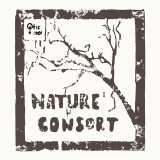
Nature’s Consort - Nature’s Consort

Obscure & outstanding free jazz album reissued for the first time since it’s original release in 1969. Old-style gatefold sleeve LP, with liner notes by Ed Hazell.

In the late 1960s, young jazz musician Bobby Naughton, a keyboardist and vibraphonist, faced significant challenges as he sought to record his first album. With major record labels and jazz clubs catering only to big names, Naughton and other creative musicians of his generation found themselves sidelined by the mainstream music industry. They turned to self-reliance and self-production, becoming part of a movement of independent musicians. Naughton’s debut album, Nature’s Consort, was a DIY effort in every sense—recorded on home equipment and featuring a hand-printed woodblock cover. The album was distributed independently at concerts and by mail, receiving little attention initially, but over the years it gained a reputation as a rare, sought-after artifact of the period.

Though recorded during an outdoor concert in Connecticut, Nature's Consort reflected the "loft jazz" scene in New York City. This avant-garde jazz movement centered around musicians who lived and played in loft spaces in lower Manhattan. Naughton commuted from his home in Southbury, Connecticut, to play with his bandmates Mark Whitecage, Mario Pavone, and Laurence Cook in New York's lofts. These musicians regularly performed at venues like Studio We, a key gathering spot for free-form jazz, where musicians could experiment and develop their sound, often with no audience present.

Naughton’s journey into jazz was a winding one. Originally from Boston, he played rockabilly and blues-rock before transitioning into free jazz. Inspired by avant-garde artists like Carla Bley and Paul Bley, Naughton sought to explore new forms of music that went beyond traditional jazz structures. His bandmates, Mark Whitecage and Mario Pavone, were both deeply affected by the death of John Coltrane in 1967, which prompted them to quit their day jobs, attend Coltrane’s funeral, and move to New York to pursue jazz full-time.

Nature’s Consort was a collective project, with band members sharing equally in any profits. However, Naughton was the driving force behind the group’s creative direction. He composed much of the original material and selected pieces by Ornette Coleman and Carla Bley for the band’s repertoire. Jazz critic Nat Hentoff praised the album for its “high-risk improvisation” and the musicians' ability to anticipate each other’s moves. Though Nature’s Consort received little press at the time, it has since been recognized as a significant early document of the loft jazz era, representing Naughton’s disciplined, improvisational approach to music.

Сделать предзаказ06.12.2024

он должен быть опубликован на 06.12.2024

26,68
Dr Tree - WB020 LP 2x12"

Dr Tree

WB020 LP 2x12"

2x12inchWB020
Wallen Bink
20.11.2024

"In 1971, Dr Tree emerged as a highly innovative jazz-fusion ensemble from Auckland, formed by two of New Zealand's most seasoned session musicians, Frank Gibson Jr. and Murray McNabb - the pair had jammed together since grammar school. Drawing sizable crowds while working the Auckland circuit, the band caught the attention of EMI scout, Alan Galbraith, who wasted no time signing them up for an album. Galbraith, a trained musician and adventurous producer, brought in additional support from Julian Lee, an internationally acclaimed arranger and producer (who had recently returned to New Zealand after a decade Stateside on Frank Sinatra's insistence).

The album's an all-instrumental excursion into territory mapped out by the likes of Return To Forever, Weather Report and Tony Williams Lifetime - all acolytes of Miles Davis's late- 60s explorations. The session combines experimental studio techniques with blazing artistry, juxtapositioning trippy electronic textures and improvised jazz, creating a hypnotic kaleidoscope of sound."

Double LP featuring previously unreleased recordings and outtakes.
Restored and remastered at�Abbey Road Studios by Grammy award-winning engineer Sean Mage.
Heavyweight tip-on gatefold sleeve featuring archival band photography.
Restored and newly remastered at Abbey Road Studios.
Limited edition of 600 copies (300 in New Zealand, remaining 300 worldwide).

нет на складе

Закажите сейчас, и мы закажем товар для вас у нашего поставщика.

47,48

Последний логин: 8 мес. назад
Продуктов на странице:
N/ABPM
Vinyl