Since debuting on the label in May 2017, East London duo Earthboogie has been part of the extended Leng family. In rhat time, Izak Gray and Nicola Robinson have delivered a swathe of superb singles and a fine debut album, 2018’s critically acclaimed Human Call. Here they present their sole single of 2019, a two-track fusion of intergalactic, terrestrial and tribal elements reflective of their by-now trademark style. Fittingly, lead cut “Creepy Steve” – a previously unheard workout recorded during the sessions for Human Call – contains many of the musical ingredients that made Earthboogie such an enticing proposition. It boasts a raw, fuzzy and driving analogue bassline, densely layered tribal percussion, dub disco-influenced guitars, woozy electronics and sporadic blasts of African style chanting. As if that wasn’t enough to get the blood pumping, Gray and Robinson have also thrown in some extended, rock style guitar solos and more cowbells, bongos and timbales than you can shake a stick at
It comes accompanied by a previously unheard remix of “Human Call”, the title track from their superb debut album, by friend and fellow musical fusionist Joel Harrison. His version is warm, woozy, driving and percussive, brilliantly re-imagining Earthboogie’s original version as a supersonic slab of peak-time ready deep house. The band’s original chanted vocals, guitars and melodies slowly rise above bustling, all-action drums, weighty bass, alien-sounding electronic flourishes, poignant trumpet parts and seriously dreamy sustained chords.
non in magazzino
Ultima consegna 6 anni fa riordinabile senza garanzia
The first release of 2023 on SHERELLE and NAINA’s Hooversound imprint comes from London based DJ, producer and AV artist, Drumskull.
Drumskull is the moniker of Joel Harrison, started during lockdown in 2020. His debut album, ‘Interlocked’ garnered support from the likes of Addison Groove, Ahadadream, Doc Scott as well as receiving radio support from Tom Ravenscroft on BBC Radio 6 and Avalon Emerson on her BBC Radio 1 Residency.
In joining the Hooversound family, he again showcases his style of meshing jungle, footwork with deep house and breaks across two tracks. 'Muscle Memory’ also features two huge remixes from Nottingham’s Lone and LMajor - both making debuts on the label.
The EP wraps up a busy year for Hooversound who also put out releases by RAVETRX, Prayer, Thugwidow and Bruised Skies as well as remixes from Response and Denham Audio. Since launching in 2020, Hooversound has become a go to label that pushes the bass continuum, being championed globally by Resident Advisor, Crack Magazine, FACT, Groove, Mixmag and more.
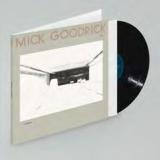
Mick Goodrick (1945–2022), den das Magazin DownBeat in seiner Rezension dieses Albums als „technisch
einen der besten Gitarristen überhaupt“ pries, war ein subtiler Meister der Gitarre und ein ebenso zurückhaltender Komponist – beide Qualitäten treten auf dieser einzigen ECM-Aufnahme unter seinem eigenen
Namen deutlich hervor. Der Pianist Fred Hersch nannte ihn „den Gitarrenflüsterer“, während John Scofield
bemerkte: „Ich durfte mit Mick spielen, was eine wertvolle Lernerfahrung war – ganz abgesehen davon,
dass es Spaß gemacht hat. Ich liebe sein ECM-Album In Pas(s)ing – ein besonderes Werk, das auch heute
noch relevant klingt.“ Für In Pas(s)ing wurde der Gitarrist, der maßgeblich zu Gary Burtons erfolgreicher
ECM Albumserie der 1970er Jahre beigetragen hatte, von hochkarätigen Begleitern unterstützt: John
Surman, hier überwiegend am Baritonsaxophon zu hören, Bassist Eddie Gomez sowie Schlagzeuglegende
Jack DeJohnette. In weit-offenem, lyrischem Zusammenspiel entfalten die vier Improvisatoren eine leiseeruptive Session voller filigraner Interaktion und heimlich einprägsamer Melodien. Das Magazin Melody
Maker bezeichnete Goodrick in seiner Rezension von 1979 als einen „Komponisten und Bandleader, der
seiner Musik erlaubt an Ort und Stelle anmutig Pirouetten zu drehen“, und führte weiter aus: „Unter den
gegenwärtigen Gitarristen der ECM-Schule scheint er die gelungenste Verbindung von Tradition mit einer
modernen Konzeption zu besitzen. Modisch unaufdringlich versieht er die Musik dennoch mit einer unverwechselbaren Handschrift – durch seinen kühlen, singenden verstärkten Ton, sparsam eingesetzte, aber
feste Hintergründe und das wunderbare Zusammenspiel mit Surman.“ Auch die Mitmusiker würdigte der
Artikel ausdrücklich: „Dies ist jedenfalls eine der besten Aufnahmen Surmans seit Jahren. Natürlich sind
Gomez und DeJohnette entscheidend für den Erfolg der Platte – der Vorwärtsdrang, den sie erzeugen, ist
beinahe übernatürlich diskret, aber absolut real.“ Das Album wurde im November 1978 im Talent Studio
in Oslo aufgenommen und von Manfred Eicher produziert.
Im Rahmen von ECMs Luminessence Reihe neu aufgelegt, erscheint In Pas(s)ing in einem hochwertigen
tip-on Klappcover mit neuen Linernotes von Joel Harrison sowie Photographien aus dem Archiv.
Nonesuch releases a remastered, special edition of the 2005 record Our New Orleans for the first time on vinyl. The two-LP set, also available digitally, includes five previously unreleased tracks: ‘Do You Know What It Means’, by Davell Crawford; ‘Let's Work Together’, by Buckwheat Zydeco and Ry Cooder; ‘Crescent City Serenade’, by Dr. Michael White; ‘Walking By the River’, by Dr. John; and ‘Do You Know What It Means’, by The Wardell Quezergue Orchestra featuring Donald Harrison.
The $1.5 million raised from the 2005 release went toward providing housing in partnership with low-income musicians and others through the New Orleans Habitat Musicians’ Village, a concept that was developed by New Orleans Area Habitat for Humanity, working with Branford Marsalis and Harry Connick, Jr. Habitat–built homes in the village now provide musicians and others of modest means the opportunity to buy decent, affordable housing. The centerpiece of the village is the Ellis Marsalis Center for Music, dedicated to celebrating the music and musicians of New Orleans and to the education and development of homeowners and others who live nearby.
For Our New Orleans, many of the Crescent City’s best-known musicians recorded songs that are integral to their lives and that express their feelings about the city and the trauma of Katrina. The album was made swiftly and simply, over the course of a month, in one-day sessions across the country. Nick Spitzer, host of public radio’s New Orleans–based American Routes, contributed liner notes to the record, as did Pulitzer Prize–winning author Richard Ford, also a Crescent City resident. Other producers who made enormous contributions include Mark Bingham, Ry Cooder, Joel and Adam Dorn, Steve Epstein, Joe Henry, Doug Petty, Matt Sakakeeny, and Hal Willner.
Nonesuch’s parent company – Warner Records, part of the Warner Music Group – donated all production costs for Our New Orleans as part of the Group’s larger efforts on behalf of hurricane victims on the Gulf Coast. Many others involved in creating the album also generously donated their time and services.
Nonesuch President David Bither recalls, “What was most remarkable to me was the immediate response of the musicians. Many were in New Orleans when Katrina struck. Many lost everything they owned including even the musical instruments that are their livelihood. Yet they responded within days to the question of whether they might participate in this project. The emotion and the power of Our New Orleans come both from their anguish and from their incredible generosity.”
And the label’s Chairman Emeritus Bob Hurwitz said, “When we pick up a CD booklet, we usually skip over the page that says, ‘Special thanks to…’, but in the case of Our New Orleans, it is, after the listing of the musician’s names, the most important part of this package. Everyone wanted to help – studios that insisted on contributing free time, caterers, photographers and videographers, instrument rentals, producers, engineers – every step down the line, people gave, not only their profits, but absorbed all of their costs. It was an incredible outpouring of generosity.”
“Our New Orleans is a testament to the power of music to heal and provide a sense of community,” said Marguerite Oestreicher, Executive Director of New Orleans Area Habitat for Humanity. “Musicians helped the city heal after Hurricane Katrina, and Musicians’ Village helped them come home. We’re grateful to Nonesuch and everyone who worked on this album. This year has brought new challenges to everyone, but especially to our culture-bearers. This re-release could not be more timely.”