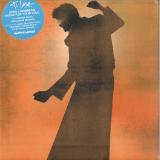
“My vision was big,” says Brighton-based singer Macve of the road to her second album. “I knew I wanted to do something more expansive than my first record.” With reach, feeling, storytelling power and a stop-you-dead voice, Macve sizes up to that mission boldly on Not The Girl. Following on from the rootsy saloon-noir conviction of her 2017 debut, Golden Eagle, Holly sets out for
deeper, often darker territory with a firm, unhurried sense of direction on her second record: on all fronts, it’s an album that looks its upscaled ambitions in the eye fearlessly.
For Macve, the combination of influences such as Nancy & Lee with time spent touring helped widen her horizons. “I wasn’t afraid of trying new things, and I wanted to explore sounds and develop my skills in production, composing and engineering. When I wrote the songs on Golden Eagle I had never toured, it was just me in my bedroom playing acoustic guitar. I then got the chance to tour the world with a band and sing with a symphony orchestra with Mercury Rev in 2017. My little world grew and I realised there was so much for me to learn about how I can use my skills as a singer and writer. I didn’t want to limit myself – I wanted to push my boundaries.”
At every turn, Macve’s powers of evocation are matched by the depth and strength in her voice. Witness the meeting of a plangent pedal-steel with her elastic vocal on the atmospheric “Be My Friend”, or the sultry verses and soaring chorus of “You Can Do Better”, which bring to mind a prairie-sized Mazzy Star. Guest guitarist Bill Ryder-Jones’ spacious contributions help enhance its sense of space. “Bill was an important part of the story of this record,” says Holly. “I love his playing – it helped create that kind of heavy, lazy, dreamy sound I’m such a fan of.”
Elsewhere, rich seams of contrast and counterpoint emerge. The Velvet Underground-ish “Sweet Marie” is epic drone-country, “Little, Lonely Heart” a symphonic waltz around the rootsy stuff of bad love, jealousy, and guilt. “Who Am I” merges a Phil Spector-ish wall of sound with a grunge-y melodic insouciance, while “Daddy’s Gone” finds Macve reflecting on the death of her father over Memphis soul-style backing, rendering complex emotions with controlled reserves of detail and drama before a roistering climax.
Cerca:jus phil
“My vision was big,” says Brighton-based singer Macve of the road to her second album. “I knew I wanted to do something more expansive than my first record.” With reach, feeling, storytelling power and a stop-you-dead voice, Macve sizes up to that mission boldly on Not The Girl. Following on from the rootsy saloon-noir conviction of her 2017 debut, Golden Eagle, Holly sets out for
deeper, often darker territory with a firm, unhurried sense of direction on her second record: on all fronts, it’s an album that looks its upscaled ambitions in the eye fearlessly.
For Macve, the combination of influences such as Nancy & Lee with time spent touring helped widen her horizons. “I wasn’t afraid of trying new things, and I wanted to explore sounds and develop my skills in production, composing and engineering. When I wrote the songs on Golden Eagle I had never toured, it was just me in my bedroom playing acoustic guitar. I then got the chance to tour the world with a band and sing with a symphony orchestra with Mercury Rev in 2017. My little world grew and I realised there was so much for me to learn about how I can use my skills as a singer and writer. I didn’t want to limit myself – I wanted to push my boundaries.”
At every turn, Macve’s powers of evocation are matched by the depth and strength in her voice. Witness the meeting of a plangent pedal-steel with her elastic vocal on the atmospheric “Be My Friend”, or the sultry verses and soaring chorus of “You Can Do Better”, which bring to mind a prairie-sized Mazzy Star. Guest guitarist Bill Ryder-Jones’ spacious contributions help enhance its sense of space. “Bill was an important part of the story of this record,” says Holly. “I love his playing – it helped create that kind of heavy, lazy, dreamy sound I’m such a fan of.”
Elsewhere, rich seams of contrast and counterpoint emerge. The Velvet Underground-ish “Sweet Marie” is epic drone-country, “Little, Lonely Heart” a symphonic waltz around the rootsy stuff of bad love, jealousy, and guilt. “Who Am I” merges a Phil Spector-ish wall of sound with a grunge-y melodic insouciance, while “Daddy’s Gone” finds Macve reflecting on the death of her father over Memphis soul-style backing, rendering complex emotions with controlled reserves of detail and drama before a roistering climax.
Cuernavaca / Stateville / Frankincense And Myrrh / Apsara / Ancestral / Spin / Zincali
Approaching his eighty-fifth birthday, sharp and lean, Phil Cohran lives a couple of blocks from the lake on the north side of Chicago. His modest apartment is filled with a palpable richness. His cornet and trumpets, zithers, French horn, harp and frankiphones (an electric kalimba of his own invention); his beloved telescope; African art; a mural of the Chinese monastery where Muslim monks bestowed on him the name Kelan ('holy scripture'); hand-printed posters from the culture wars of 1960s Chicago; all reflect a life dedicated not just to music, but also to science and astronomy, to history and activism. In its range of subject matter the track-list of Kelan Philip Cohran & The Hypnotic Brass Ensemble embodies this invigorating and all-embracing curiosity: a Mexican hill-town filled with perfume and flowers... an Illinois state prison where Cohran taught inmates in the 1960s... heavenly dancers in the temples of Cambodia... a tribute to a sixteenth-century Venetian musicologist. Welcome to the musical world of Kelan Philip Cohran.
Cohran was born in Mississippi and grew up in St Louis. In the immediate post-war years St Louis was a jazz heartland, home of stalwarts like Clark Terry and Oliver Nelson (both of whom he played with), not to mention a genius called Miles Davis. In 1950 Cohran moved to another heartland, Kansas City, where he played trumpet in one of the hardest swinging swing-groups, led by Jay McShann (who famously had given Charlie Parker his first job). With McShann he spent 'the best year of my life', touring as far as Mexico and playing proto-rock'n'roll in Texas with the likes of Big Mama Thornton on vocals. Back in St Louis Cohran led his own group, the Rajas Of Swing, whose show involved wearing red jackets, grey slacks, blue suede shoes and turbans.
Then in the mid-50s he moved to Chicago. He had a small group with a friend, the legendary tenor saxophonist John Gilmore, whose regular gig was to play at Sarah Vaughan's weekly 'birthday' parties, an excuse for the Sassy One to splash the cash and have some fun. ('What, Sarah Vaughan would sing with you and John Gilmore' 'No way, Sarah didn't sing, she was too busy partying.') And in 1959, through Gilmore, he was invited to join Sun Ra's Arkestra, at a crucial period in the evolution of that extraordinary group. Effortlessly wrapping traditions as divergent as boogie-woogie and electronica in an Afro-centric, intergalactic mythology of his own making, Sun Ra casts a huge shadow across conventional narratives of jazz history. 'With Sunny', Cohran simply says, 'I found my own voice'.
You can hear the emergence of this voice on the LP Angels And Demons At Play, recorded in 1960 - Sun Ra's masterpiece from the period. On the track Music From The World Tomorrow, against the urgent whipped and chopped percussion of the Arkestra, it is Cohran's zither, initially bowed and then plucked and strummed, which is the track's magic ingredient. More profoundly it was Sun Ra's example - his defiant self-confidence and sense of purpose - that set Cohran on his own (to quote another Ra composition) 'pathway to unknown worlds'. Indeed this spirit of self-belief led Cohran to turn down the invitation to accompany the Arkestra when Sun Ra moved east in 1961.
Staying in Chicago, Cohran founded the Affro-Arts Theater and performed with the Artistic Heritage Ensemble, recording the group for his own Zulu Records imprint. (Co-members went on to become Earth Wind & Fire; Cohran taught the group's leader Maurice White the mysteries of the frankiphone). The AACM, a musicians' collective of immense influence and importance, had its first meeting in Cohran's front room. With Oscar Brown Jr and Gene Page he wrote and performed in a show celebrating the nineteenth-century Afro-American poet Paul Lawrence Dunbar. He taught music tirelessly in schools and prisons. His studies into music theory and history led him to the discovery of a key book in his life, Gioseffo Zarlino's treatise on harmony, published in Venice in1558. Astronomy is another passion and another area of expertise. One of the gems of the Cohran discography is African Skies, with its lovely harp playing, commissioned by the Chicago Planetarium in 1993.
In Chicago he also raised a large family. Many of his children have gone on to become professional musicians; eight of them are the Hypnotic Brass Ensemble. For each of them, their first teacher was their father, who famously insisted on giving them music lessons not just for several hours after school, but for several hours before school as well. Their father's music was all around them as children; they all vividly remember lying in bed at night not being able to sleep because their father was rehearsing with the Jazz Workshop downstairs.
For the Hypnotic Brass Ensemble, the voyage to where they are now - whether tearing up festivals from Glastonbury to Melbourne, or touring with Gorillaz, or recording their first album on Honest Jon's - has involved a necessary stepping away from their father's shadow. Phil Cohran is the first to recognise this, happily allowing their sound - heavy on the funk, with the urgency of hip hop never far away - to blossom.
But likewise this album is for all of them a natural step. Recorded in Chicago in June 2011, the idea was beautifully simple - 'my music and their band' as Phil puts it, 'we don't have to rattle on more than that'. Only to point out perhaps that here - in the majestic surge of Zincali, for instance, or in the sheer verve and bounce of Cuernevaca - is music not just filled with the warmth of home. This is music that plumbs the depths and rings with joy.
'Cuernevaca is a town in the mountains south of Mexico City. I was there in 1950 when I was on the road with Jay McShann's band. It's a place close to paradise, a city filled with the fragrance of flowers. I always wanted to go back... In 1974 I taught workshops at the prison in Stateville, the Big House where Al Capone spent time. There's a huge wall around the prison, and once I took Hypnotic there - ha - to see what the future holds for them... Makeda, the Queen of Sheba, sent a caravan of gifts to King Solomon - a caravan that took more than a day to pass one point - and the main gifts were Frankincense And Myrrh... I wrote Apsara in 1967, when Jackie Kennedy was in the news with her visit to the temple of Angkor Wat in Cambodia. Apsara were celestial beings, dancers who brought forth the civilization of ancient Cambodia, by dancing in the holy nectar called Amrita... Ancestral is a meditation drone written for my Friday-night residence at the Ethiopian Diamond Restaurant in Chicago's Rogers Park... Spin is the latest of these compositions. Everything in the cosmos spins, from the smallest objects we can see in a microscope to the largest galaxies. Spin is the motion of all things whether it looks like it or not... Zincali is a name Spanish gypsies call themselves. 'Zin', East Africa; 'cali', the people. One of the offshoots in my research into Moorish Spain has led me to Gioseffo Zarlino, the sixteenth-century master of music at St Mark's in Venice. It's said that Bach lost his sight reading Zarlino's treatise on counterpoint. His greatest composition is his setting of the Song of Songs - 'Nigra Sum', 'I am black'. This is my tribute to Zarlino and to the zincali.'
After two UK #1 albums, 2 million album sales and an array of international acclaim, you might’ve thought you knew what to expect from Royal Blood. Those preconceptions were shattered when they released ‘Trouble’s Coming’ last summer. Hitting a melting pot of fiery rock riffs and danceable beats, they delivered something fresh, unexpected and yet entirely in tune with what they’d forged their reputation with.
The reaction was phenomenal, with highlights including 20 million streams, a premiere as Annie Mac’s Hottest Record and a run on Radio 1’s A-list and earned alternative radio support and media attention across the globe. In short, Royal Blood are primed to be bigger than ever before. That feat is set to be realised when they release their eagerly anticipated third album ‘Typhoons’ on April 30th via Warner Records.
When Mike Kerr and Ben Thatcher sat down to talk about making a new album, they knew what they wanted to achieve. It involved a conscious return to their roots, back when they had made music that was influenced by Daft Punk, Justice, and Philippe Zdar of Cassius. It also called for a similar back-to-basics approach to what had made their self-titled debut album so thrilling, visceral and original.
“We sort of stumbled on this sound, and it was immediately fun to play,” recalls Kerr. “That’s what sparked the creativity on the new album, the chasing of that feeling. It’s weird, though - if you think back to ‘Figure it Out’, it kind of contains the embryo of this album. We realised that we didn’t have to completely destroy what we’d created so far; we just had to shift it, change it. On paper, it’s a small reinvention. But when you hear it, it sounds so fresh.”
Those traits pulsate throughout the new single and title track. Kerr’s spiralling bass riff casts an hypnotic allure as it grows in intensity, while his vocals switch at will between a raw rock roar and a soulful falsetto. It’s underpinned by Thatcher’s thundering beats, his taut rhythms infused with groove-laden hi-hats.
After setting the tone with ‘Trouble’s Coming’, the album opens in breathless, take-no-prisoners style with the fierce metallic grooves of ‘Who Needs Friends’ hitting an early visceral peak. Royal Blood further reference their fresh array of influences by deploying vocodered vocals on ‘Million & One’ before dynamically switching between the biggest contrasts of their sound with ‘Limbo’. Already a fan favourite having been a regular during the duo’s 2019 shows, ‘Boilermaker’ lives up to its reputation and is more than matched by ‘Mad Visions’, which evokes a hyper-aggressive Prince. It ends with a final surprise in the shape of the stark piano ballad ‘All We Have Is Now’, a vulnerable and revealing reminder to live in the moment.
That song’s unguarded sentiments gives the album a redemptive finale. Whether directly or allusively, the album focuses on exploring the flipside of success that they’ve experienced. It comes from the realisation that success is much more complicated than it seems and that having the time to regain perspective is a precious commodity which becomes ever more elusive. The situation called for reflection and change, which Kerr addressed in Las Vegas. He downed an espresso martini and declared it to be his last drink, and soon discovered that his new-found sobriety would have a positive impact upon his creativity and life as a whole.
That new approach manifested itself in the duo’s decision to produce the majority of ‘Typhoons’ themselves. ‘Boilermaker’ was produced by Queens of the Stone Age frontman Josh Homme, the two bands having first connected when Royal Blood supported them on a huge North American tour. Meanwhile, the multiple Grammy Award winner Paul Epworth produced ‘Who Needs Friends’ and contributed additional production to ‘Trouble’s Coming’.
After two UK #1 albums, 2 million album sales and an array of international acclaim, you might’ve thought you knew what to expect from Royal Blood. Those preconceptions were shattered when they released ‘Trouble’s Coming’ last summer. Hitting a melting pot of fiery rock riffs and danceable beats, they delivered something fresh, unexpected and yet entirely in tune with what they’d forged their reputation with.
The reaction was phenomenal, with highlights including 20 million streams, a premiere as Annie Mac’s Hottest Record and a run on Radio 1’s A-list and earned alternative radio support and media attention across the globe. In short, Royal Blood are primed to be bigger than ever before. That feat is set to be realised when they release their eagerly anticipated third album ‘Typhoons’ on April 30th via Warner Records.
When Mike Kerr and Ben Thatcher sat down to talk about making a new album, they knew what they wanted to achieve. It involved a conscious return to their roots, back when they had made music that was influenced by Daft Punk, Justice, and Philippe Zdar of Cassius. It also called for a similar back-to-basics approach to what had made their self-titled debut album so thrilling, visceral and original.
“We sort of stumbled on this sound, and it was immediately fun to play,” recalls Kerr. “That’s what sparked the creativity on the new album, the chasing of that feeling. It’s weird, though - if you think back to ‘Figure it Out’, it kind of contains the embryo of this album. We realised that we didn’t have to completely destroy what we’d created so far; we just had to shift it, change it. On paper, it’s a small reinvention. But when you hear it, it sounds so fresh.”
Those traits pulsate throughout the new single and title track. Kerr’s spiralling bass riff casts an hypnotic allure as it grows in intensity, while his vocals switch at will between a raw rock roar and a soulful falsetto. It’s underpinned by Thatcher’s thundering beats, his taut rhythms infused with groove-laden hi-hats.
After setting the tone with ‘Trouble’s Coming’, the album opens in breathless, take-no-prisoners style with the fierce metallic grooves of ‘Who Needs Friends’ hitting an early visceral peak. Royal Blood further reference their fresh array of influences by deploying vocodered vocals on ‘Million & One’ before dynamically switching between the biggest contrasts of their sound with ‘Limbo’. Already a fan favourite having been a regular during the duo’s 2019 shows, ‘Boilermaker’ lives up to its reputation and is more than matched by ‘Mad Visions’, which evokes a hyper-aggressive Prince. It ends with a final surprise in the shape of the stark piano ballad ‘All We Have Is Now’, a vulnerable and revealing reminder to live in the moment.
That song’s unguarded sentiments gives the album a redemptive finale. Whether directly or allusively, the album focuses on exploring the flipside of success that they’ve experienced. It comes from the realisation that success is much more complicated than it seems and that having the time to regain perspective is a precious commodity which becomes ever more elusive. The situation called for reflection and change, which Kerr addressed in Las Vegas. He downed an espresso martini and declared it to be his last drink, and soon discovered that his new-found sobriety would have a positive impact upon his creativity and life as a whole.
That new approach manifested itself in the duo’s decision to produce the majority of ‘Typhoons’ themselves. ‘Boilermaker’ was produced by Queens of the Stone Age frontman Josh Homme, the two bands having first connected when Royal Blood supported them on a huge North American tour. Meanwhile, the multiple Grammy Award winner Paul Epworth produced ‘Who Needs Friends’ and contributed additional production to ‘Trouble’s Coming’.
‘Any Other City’ by Life Without Buildings, the only
album recorded in their brief existence, is
repressed and available again. Originally released
on Tugboat Records (a Rough Trade affiliated
label) in February 2001, ‘Any Other City’ has slowly
become a widely admired cult album.
Life Without Buildings formed in Glasgow in 1999,
they existed for three years and then split in 2002,
having released just one album and three double A
side singles, yet they’ve continued to build a
strong underground following in the years since,
which has culminated in copies of the original
album on vinyl changing hands for exorbitant
figures and numerous musicians citing it as a
major influence and inspiration.
Frontwoman Sue Tomkins’ unique vocal delivery
which is somewhere between talking and singing,
a kind of narrative, combined with the often spiky,
course backing that the rest of the band provide,
tends to prove magnetic after a few listens.
Life Without Buildings managed to be utterly
unique in the sound they made and ultimately
that’s what has made this album’s reputation grow
over time to be deemed absorbing, timeless and
utterly essential listening.
"Where Do We Go From Here" is Dumpstaphunk's first album in seven years. It will be released on April 23, 2021 on The Funk Garage, an imprint of Mascot Label Group.
Over its past 17 years, Dumpstaphunk has earned its reputation as the most well-regarded next-generation New Orleans live powerhouse, the type of band whose live shows attract sit-ins from legends like Carlos Santana, Bob Weir and Trombone Shorty. Alongside Hall, Daniels, Alex Wasily, Ryan Nyther and drummer Devin Trusclair, cousins Ivan and Ian Neville have built upon their family’s iconic NOLA legacy as they’ve transformed Dumpstaphunk into the city’s pre-eminent 21st-century funk-fusion export.
The band’s mix of classic and modern influences can be heard throughout the party-friendly mix of R&B, funk, rock, swamp-pop and blues of "Where Do We Go From Here," from the slap-bass rave "Make It After All" to the band's contemporary renderings of NOLA R&B rarities (the 1975 Blackmail gem "Let’s Get At It") and early Seventies classics (Sly and the Family Stone's "In Time”).
‘Where Do We Go From Here’ is perhaps the best evidence yet of Dumpstaphunk’s ability to strengthen and transform their singular NOLA roots in combination with the deeper outside musical and philosophical influences on which the band is founded.
Sometimes a work of art comes unintentionally from a place from deep within the soul. It meanders and flops onto a table and sits and waits for its birth.
The album begins with "Wait Till The Stars Burn", a planetary ode to the Sun. The second track "Tribute to the Pharoahs Den", is a requiem for Danny Ray Thompson (R.I.P.) of the Sun Ra Arkestra, his music and legacy now floating above us in the infinity of space. Both tracks and featuring Marshall Allen and Knoel Scott (of the Sun Ra Arkestra).
The album ends with a requiem for Hal Willner (R.I.P.) whose devotion to celebrating the weird and insane was like an insatiable thirst leading to deep introspection and joy in harmony and sonic dissidence.
These compositions have all come from this place inside my bipolar, seroquil ridden mind. It is as much a tribute to the great composers who have inspired me; Alice Coltrane, Rahsaan Roland Kirk, Philip Kelan Cohran, Bernard Herrmann, Ennio Morricone, Miles Davis, Sun Ra, John Carpenter, Quincy Jones, Old Bollywood, Film Noir, to name just a few. In my 23 years of being a composer of music I have had the great opportunity to score several films all of which never got any commercial fame. These films were made from the blood and sweat of film directors and their crews who tirelessly made incredible documents that were ultimately ignored by humanity. But that never stopped them nor will it stop me. These tracks are from the infinite celluloid that runs deep in my mind, body and soul. In my lifetime i never thought i would see the deaths of "Celluloid" or "analog recording". I refuse to accept the coroner reports on said fatalities, so here is my offering to the canon of cinematic overtures and analog self-preservation, for the films in our heads yet to be made.
Just like Freddy Krueger, Final Dream resurrects from the past to haunt your nights and deliver to the masses his threatening message. Author of a mighty album and three collector EP's on experimental techno label Audio Illusion Recordings from 1995 to 2002, British Electro veteran Phil Klein aka Bass Junkie returns with a vengeance under his most frightening alias. 19 years after his last transmission, he serves up a new four tracker full of his infectious strain of corrosive and weird electro.
The A-side opens with the mental "Dark Flow", a pounding tune based upon hammering beats surrounded by sinister strings and a gloomy atmosphere. The title track "Project Fear" coming next goes deeper into the realm, merging lethal frequencies to demonic beats.
The flipside introduces "Force Majeure", a milestone of an instant classic made of robotic drums sequences fused into subtle acid lines while "The Devil's Playground" concludes the 12" with 7 minutes of brain manipulations. Present "Project Fear EP" appears as an opened window to the future, an invitation to foresee what Evil is cooking for you in his laboratory. Just a reminder that there's no way to hide, accept your fate, nothing can stop the darkness!
The NE-21 return to She Lost Kontrol after their first pitch-perfect 80s dark wave release in 2016. After releasing a collaboration with Donato Dozzy with the project ‘Men with Secrets’ at the beginning of the year, the duo lands on the label with their new work “In The Realm of Electricity”. The album is a collection of 8 tracks composed and recorded between 2012 and 2020 at the Sy6 studio in Boscoreale. The outcome is a perfect blend of synth pop and minimal wave, filled with icy synths, shuddering bass, and anthemic vocals, ranging from mumbled vocoder to arch talk-singing. While diverse in atmospheric scope, swells of ghostly synths circle the driving beat throughout, producing a haunting totality drenched in an ethereal midnight trance; the submerge of cold, spectral vocals sing within the darkest depths of a starry soundscape – the gloomy romanticism of low, distant vocals bursting with post-punk melancholia. The track’s unease between purpose and utility create a discrete synthesis, and, like a piece of speculative fiction, the memory of the body and its coalescence with the future become prime motives for this liquid age. Akin to Ballard or Philipp K. Dick, the workis not only dreamlike and surreal, but vocally sinister, as if this spectrum of lush new wave ‘80s pop and Almond-style weirdness hides a truth waiting to be grasped. The album in essence sounds unashamedly distinctive, unique and charming. Whether you fall in love with the whole act or you’re just stunned by the bizarreness of it all, one thing’s for sure – you’ll be compelled and gripped right to the infectiously smutty end. Composed, recorded and mixed by Nicola Buono & Lino Monaco at Sy6 Studio. Vocals and lyrics by Lino Monaco. Mastering by Joshua Eustis, Los Angeles. Design By Michelangelo Greco She Lost Kontrol Records 2021
“This is the time. And this is the record of the time.”
Laurie Anderson’s 1982 debut album, Big Science, will return to vinyl for the first time in 30 years with a new red vinyl edition on Nonesuch Records. The release includes the re-mastered original album first released on CD for the 25thanniversary in 2007.
In the early 1980s, Laurie Anderson was already respected as a conceptual artist and composer, adept at employing gear both high-tech and homemade in her often violin-based pieces, and she was a familiar figure in the cross-pollinating, Lower Manhattan music-visual art-performance circles from which Philip Glass and David Byrne also emerged. While working on her now-legendary seven-hour performance art/theater piece United States, Part I–IV, she cut the spare ‘O Superman (For Massenet)’, an electronic-age update of 19th century French operatic composer Jules Massenet’s aria ‘O Souverain’, for the tiny New York City indie label 110 Records. In the UK, DJ John Peel picked up a copy of this very limited-edition 33⅓ RPM 7” and spun the eight-minute-plus track on BBC Radio 1. The exposure resulted in an unlikely #2 hit, lots of attention in the press, and a worldwide deal with Warner Bros. Records.
’Cause when love is gone, there's always justice.
And when justice is gone, there's always force.
And when force is gone, there's always Mom. Hi Mom!
At the time of its original release, the NME wrote of Big Science, ‘There’s a dream-like, subconscious quality about her songs which helps them work at deeper, secret levels of the psyche.’ With instrumentation ranging from tape loops to found sounds to bag pipes, Big Science anticipated the tech-savvy beats, anything-goes instrumentation and sample-based nature of much contemporary electronic and dance music. On the album’s 25th anniversary, Uncut noted, ‘The broader themes of alienation and disconnection still resonate, while Anderson’s use of loops and traditional/synthesized instrumentation is prescient.’
“In the ’70s I travelled a lot,” Anderson recounts. “I worked on a tobacco farm in Kentucky, hitchhiked to the North Pole, lived in a yurt in Chiapas, and worked on a media commune. I had my own romantic vision of the road. My plan was to make a portrait of the country. Big Science, the first part of the puzzle, eventually became part two of United States I–IV (Transportation, Politics, Money, Love). My goal was to be not just the narrator but also the outsider, the stranger. Although I wasfascinated by the United States, this portrait was also about how the country looked from a distance. I was performing a lot in Europe, where American culture was simultaneously booed and cheered. But the portrait was also a picture of a culture inventing a digital world and learning to live in it. Big Science was about technology, size, industrialization,shifting attitudes toward authority, and individuality. It was sometimes alarmist, picturing the country as a burning building, a plane crash. Alongside the techno was the apocalyptic. The absurd. The everyday. It was also a series of short stories about odd characters – hatcheck clerks and pilots, preachers, drifters and strangers. There was something about Massenet’s aria ‘O Souverain’ – which inspired ‘O Superman’ – that almost stopped my heart. The pauses, the melody. “O souverain, ô juge, ô père” (O Lord, o judge, o father). A prayer about empire, ambition, and loss.”
Laurie Anderson is one of America's most renowned – and daring – creative pioneers. Her work, which encompasses music, visual art, poetry, film, and photography, has challenged and delighted audiences around the world for over 40 years. Anderson released her first album with Nonesuch Records in 2001, the critically lauded Life on a String. Her subsequent releases on the label include Live in New York (2002), Homeland (2010), the soundtrack to Anderson’s acclaimed film Heart of a Dog (2015), and her Grammy-winning collaboration with Kronos Quartet, Landfall (2018). Additionally, Anderson’s virtual-reality film La Camera Insabbiata, with Hsin-Chien Huang, won the 2017 Venice Film Festival Award for Best VR Experience, and, in 2018, Skira Rizzoli published her book All the Things I Lost in the Flood: Essays on Pictures, Language and Code, the most comprehensive collection of her artwork to date.
- A1: The Lady Is A Tramp - Vince Giordano & The Nighthawks
- A2: Jeepers Creepers - Vince Giordano & The Nighthawks
- A3: Mountain Greenery - Kat Edmonson, Vince Giordano & The Nighthawks
- A4: Have You Met Miss Jones - Vince Giordano & The Nighthawks
- A5: I Didn’t Know What Time It Was - Benny Goodman & His Orchestra
- A6: Taxi War Dance - Count Basie & His Orchestra
- A7: Zing Went The Strings Of My Heart - Vince Giordano & The Nighthawks
- A8: Manhattan - Vince Giordano & The Nighthawks
- B1: My Romance - Vince Giordano & The Nighthawks
- B2: Pick Yourself Up - Vince Giordano & The Nighthawks
- B3: I Only Have Eyes For You - Ben Selvin
- B4: Bthe Peanut Vendor - Yerason
- B5: There’s A Small Hotel - Vince Giordano & The Nighthawks
- B6: Out Of Nowhere - Conal Fowkes, Brian Nalepka, John Gill
- B7: This Can’t Be Love - Conal Fowkes
Café Society opened the 69th annual Cannes Film Festival to rave reviews. Woody Allen became the first and only director to have three opening night films selected for the Cannes Film Festival.
It’s New York in the 1930s. As he has more and more trouble putting up with his bickering parents, his gangster brother and the family jewelry store, Bobby Dorfman feels like he needs a change of scenery. He decides to go and try his luck in Hollywood where his high-powered agent uncle Phil hires him as an errand boy.
In Hollywood he soon falls in love, but unfortunately the girl has a boyfriend. Bobby settles for friendship – up until the day the girl knocks at his door, telling him her boyfriend just broke up with her. All of a sudden Bobby’s life takes a new turn, and a very romantic one at that.
The soundtrack features a great collection of the music from the 1930’s. The music is featured prominently in the movie and has been chosen by Woody Allen himself and features newly recorded jazz standards by Grammy Award winners Vince Giordano & The Nighthawks and classic recordings from Ben Selvin, Benny Goodman and Count Basie.
RELEASE: 9-4-2021
Woody Allen says about the soundtrack: “The soundtrack consists of music from the
1930s since that’s when the picture takes place. Most of the material is Richard Rodgers and [Lorenz] Heart, who was very dominant in those years and Lorenz Heart has that bitter sweet romantic quality that defines the spirit of the movie itself.”
This limited edition contains of 500 individually numbered copies on solid gold coloured vinyl. It includes a 4-page booklet with pictures from the film and credits.
Sam Gendel’s new album, DRM, is the follow-up to his Nonesuch debut, Satin Doll, released earlier this year. DRM features Gendel’s solo musical experiments with vintage instruments such as a forty-year-old Electro Harmonix DRM32 drum machine, antique synthesizers, and a sixty-year-old nylon-string guitar — accompanied by his voice. While Satin Doll was a futuristic homage to classic jazz, DRM includes just one cover song: Lil Nas X’s ‘Old Town Road’, which Gendel interprets as an instrumental, playing the melody on an old German analogue synthesizer. The album’s accompanying short films were directed by Marcella Cytrynowicz and filmed at various locations around Gendel’s home state of California during COVID lockdown.
“I’m imagining people listening to DRM and thinking, ‘What the hell is this?’, like they’d just encountered some sailing ship in the sky,” Gendel says of the new work. “I imagine it as if someone many years into the future listened to the popular music of today and then tried to recreate it, without any of the tools or the understanding. Stylistically, it’s not too far from so much contemporary pop-rap music that you hear on the radio. A lot of those electronic backgrounds and instrumentals you hear today are tending towards something really out-there and experimental. It’s rhythmic and pointillistic, collaging different, seemingly unfitting elements together in cool ways. The visuals aren’t necessarily dictated by the music, but they both share the same slightly surreal feel, like I’m a video game character, inhabiting all these different backgrounds,” says Gendel.
Gendel is best known as a world-class saxophonist — it’s the instrument with which he’s led most of his bands, as well as the instrument on which he’s guested with the likes of Vampire Weekend, Ry Cooder, Moses Sumney, Sam Amidon, and Louis Cole’s Knower — but DRM is saxophone-free. “There was no active effort on my part not to include it; it just wasn’t part of the equation when I started recording it,” he says. “I just found a formula, working around this DRM32 drum machine, and rolled with it. I don’t consider myself just a saxophonist, I’m just someone who works in music.”
DRM was recorded in one sixteen-hour session, and then manipulated by Gendel with electronic percussionist Philippe Melanson. It was mixed by Blake Mills, and mastered by Grammy-nominated engineer Mike Bozzi. Gendel’s previous discography includes 2018’s Music for Saxofone & Bass Guitar with bassist Sam Wilkes, 4444, and Satin Doll, which the Los Angeles Times called “a woozy, blissfully twisted album.” He also performs on two other Nonesuch releases this month: Joachim Cooder’s Over That Road I’m Bound and Sam Amidon’s new self-titled album.
- A1: Missing Highs
- A2: Caveat Emptor
- A3: Ultra Blue (Feat Newborn Jr)
- A4: An Obstruction In The Clear Plastic
- A5: What Else Do You Want? (Feat Baltra)
- A6: Utica
- A7: Salvaged Copper (Feat Terrence Dixon)
- B1: Basic Needs (Feat Nick Murphy)
- B2: Asmr/Exhaustion
- B3: Cement Object, Vacuum Sealed
- B4: Pain Tolerance
- B5: Muscle/Maintain/Feen (Feat Danny Scales)
- B6: Faith For The Weak
- B7: Life Out Of Balance (Feat Santpoort, Shigeto & Krzysztof Wodiczko)
Since his 2012 debut as Heathered Pearls, Jakub Alexander has constructed art — music, objects, installations, performances — as a way of re-imagining fragments of his past and mapping ideas for his future. The Polish-born, Michigan-raised, New York-based artist and producer sees imagery and narrative framework as fluid components to his craft. Alexander’s first album, Loyal, mimicked the hypnotic motions of ocean waves at night, offering melodic, loop-based ambient music as a tribute to the tasteful influence of his mother and aunt. The second Heathered Pearls album, Body Complex, found inspiration from comfort, imperfection, and visions of interior architecture, transforming Loyal’s soft textures into driving 4/4 figures, glacial tone drifts, and starry synth plateaus. His 2017 EP, Detroit, MI 1997 - 2001, reflected on a formative era through ephem- eral dance music. The third Heathered Pearls full-length,
Cast, returns to moodier loop formats joined by the distinctly new presence of the spo- ken word. The move mirrors the multitudes of its namesake: collaborators comprise a cast, healing in the bind of a cast, complex emotions and the shadows they cast. Alexander started work on Cast when living in Berlin and in Queens.
“I hit a wall listening to these tracks when they were instrumental.” This is where he diverged from previous modes, deciding to integrate speech. With a healthy distaste for aspects of performance art, he invited strictly non-scripted recordings, a series of anti-performances. This new format adds a surprising human element to music that has previously operated as sea-shapes or infrastructure. These flashes of language, Alexander’s close friends speaking about things, narratively and cerebrally, casually and profoundly, turn the distinctive Heathered Pearls sound into some- thing surprisingly gritty, tangible, and in certain sweeps, cinematic. It is as if the world outside of these compositions bleeds into the music, casting their verbal being from just off the surface, like the album’s cover artwork where the light hits the plexi object but misses the wall.
Alexander sees his covers as naturally unfinished workstations; the gauzed and patinaed copper on Cast continues in this philosophy. This is all to say Cast deals with absence as much a presence. Among the guest storytellers is Alexander’s friend and tourmate Nick Murphy (formerly Chet Faker), who unwinds a series of tender observations on “Basic Needs.” The swirling synthesizer immerses a series of empathies; feeling like an egg yolk, a window’s view, his love for the color yellow, and wanting yellow to love him back.
This is a sensation! For the first time, the previously unreleased jazz
recordings of the legendary German bandleader Kurt Edelhagen and his orchestra,
which were recorded between 1957 and 1974 in the
studios of the WDR, are presented here in a 3-CD box with
detailed liner notes.
Edelhagen, who was also responsible for more commercial recordings, shows off his talent for arranging and leading jazz big bands and shows that his orchestra are up there
with the best large jazz ensembles of that time. The development of the orchestra is
generously shown on this 3 CD box from the swinging 1957 ensemble to the experimental band of 1974.
The names of the contributing soloists speak for themselves: Maynard Ferguson, Mark
Murphy, Philly Joe Jones, Toots Thielemans, Albert Mangelsdorff, Benny Bailey, Jiggs
Whigham, to name just a few.
Another must have archival record from Jazzline!
“I made this record for young women to feel invincible.” - Izzy B. Phillips, Black Honey Having last week been pre-empted by the landing of their colossal new single ‘Run For Cover’, today Black Honey have announced their brand-new album – ‘Written & Directed’. ‘Written & Directed’ will be released on the 29 th of January 2021 on Foxfive Records. ‘Written & Directed’ is Black Honey’s second album. It follows their outstanding self-titled debut released back in 2018 when the world that surrounded the Brighton four piece looked and felt like a very different place. Black Honey however are still the bad-ass, truly original band they have always been, they’ve just graduated from the intriguingly anomalous newcomers to becoming one of UK indie’s most singular outfits. They've travelled the world and released a Top 40 album; graced the cover of the NME and become the faces and soundtrack of Roberto Cavalli's Milan Fashion Week show; smashed Glastonbury and supported Queens of the Stone Age, all without compromising a shred of the wild, wicked vision they first set out with. It's now time for the next instalment of their story – ‘Written & Directed” – which see’s Black Honey deliver one, very singular, message – a 10 track mission statement that aims to unashamedly plant a flag in the ground for strong, world-conquering women. For fierce frontwoman and album protagonist Izzy B. Phillips – it’s the most important message she could send to inspire her cult-like fanbase and fill the female-shaped gap that she felt so acutely when she was growing up and discovering rock music for the first time. Written throughout 2019 and recorded in fits and spurts between touring, ‘Written & Directed’ is drenched with a hedonistic, anything-goes attitude. It’s also the most full-throttle collection of music that Black Honey have ever-written – egged-on by their run of shows supporting long-term friends and collaborators Royal Blood. Exploring everything from womanhood, to identity and power, it’s an album that revels in the rich history of pop culture, throws a wink to its rock- and-roll heroes, but ultimately (and in true Black Honey fashion) it stands on its own two feet. With a typically hyper-visual world referencing grindhouse cinema, kitschy pulp films and a flip-reverse of female cinematic representation all primed to unfurl and explode around them, 'Written & Directed' is the sound of Black Honey strapping in and saddling up, of harnessing their quirks, and, as the Phillips has always hoped, riding them joyously into the sunset.
A quick, spontané voyage to the French Riviera ca. 1968, good times long before things went south, Organi’s “Parlez-vous Français?” is a woozy, tripping, soothing sojourn: DIY dream pop, hazy psychedelia, blurred-but-steady beats dripping down the golden boulevard, complete with mystical chants, a dash of half-remembered Franglais that goes down like some vintage eau-de-vie. There’s a fine massage waiting behind those venetian blinds. Pay half an hour, you’ll be relaxed and revived after 22 minutes. Très irrésistible when streamed, Organi’s haunting, hard-boiled French lesson is even better with that classique vinyl crackle in the mix.
Following the cinematic title skit with its bass loop appendix, Oakland-based producer and multi-instrumentalist Mike Walti (and his songwriting partner Maryam) aka Organi invites singer Jessica Bailiff along for the majestic entrée, an interpretation of Philamore Lincoln’s 1970 tune “The North Wind Blew South” (doesn’t it always?), adding anticon. heavyweights Jel and Odd Nosdam on synths and bass for à la mode enhancements and additional bric-à- brac.
Whereas the theme tune “Organi” comes with big drums, big organ, seductive overtones, pure hypnosis, “Whispers” is the soundtrack to some kind of psychedelic campfire tableau vivant: all brumeux, hazy, with spare guitar, Gauloises or Gitanes dangling, a glass of Bordeaux waiting on the dusty old amp, and featuring guest vocalists Yea-Ming Chen & Susy Borhan. It gets even more Parisienne after that: a French woman just knows how to look classic, even when all she’s got is some attitude, a ramshackle tambourine, a craving for old Sukia weirdness and those budget-couture “4 Dolla Jeans”...
Clearly in love with analog equipment, Organi turn The Vaselines’ “Slushy” into a slow- moving, bottomless lullaby – “... you'll never miss what you never had” –, and the femme fatale minimalism of “Stay The Night” is too magnétique and alluring: A fuckin’ sexy chanson, très léger and yet such a hard-knockin’ head-nod anthem, it’ll make you stay for sure, hungry for la petite mort.
Before the expansive denouement – a bank robbery in style: with bangs and a bucket bag (“Danger Walked In”) – the session gets super loose on “The Getaway,” head scarves and berets shimmering in the cabriolet, and featuring Jena Ezzadine on vocals & Headnodic on bass.
Mike Walti aka Organi is an Oakland-based musician and producer. A third generation Bay Area native, Walti has been running wyldwood Studios in Oakland CA for 10+ years (recording artists like Why?, Latyrx, Del, Dan The Automator, and Big Freedia, to name but a few). A longtime friend of Odd Nosdam, he loves to work with analog equipment (“We just love us some analog!” “Just listen to those relays purr...”). Recorded and mixed by Mike Walti at wyldwood, and mastered by Odd Nosdam.
Nils Petter Molvær and Mino Cinelu had both come a long way in their careers before they met. Cinelu gained international renown on Miles Davis’ albums We Want Miles and Amandla, also noted for his playing with the likes of Weather Report, Gong, Herbie Hancock, Pat Metheny, Sting, Santana, Lou Reed and Laurie Anderson, to name just a few. He has also released 3 solo records and collaborated with Dave Holland and Kevin Eubanks on the World Trio album. Nils Petter Molvær, meanwhile, is one of the most outstanding figures in European jazz. In 1997, he made his debut on ECM Records with the album Khmer, combining the Nordic feeling of nature with the Southeast Asian philosophy of sound. His journey into the uncharted areas of music spans almost a dozen records, on which he explores various combinations of acoustic and electrical sounds. He collaborated with Berlin’s electronic producer Moritz von Oswald in 2013, with the reggae philosophers Sly & Robbie in 2018 and with Bill Laswell on several occasions.
Cinelu and Molvær in some senses represent two worlds, which – at first glance – could hardly be more different. Their musical home is the entire planet, but while Molvær's hoarse and cloudy trumpet sound evokes boreal cold, Cinelu stands for the rhythmic fire of Latin America and Africa. On ‘SulaMadiana’, they’ve found their common playground - the album’s title itself a tribute to the two musicians’ heritage. Sula is the Norwegian island from where Molvær grew up, and Madiana is a synonym for Martinique, from where Cinelu's father hails.
SulaMadiana is a cornucopia, spilling out reverberations of Miles Davis, Gong, and previous works of Molvær, and yet Molvær and Cinelu open up doors to entirely new worlds. Cinelu becomes a singer on his percussion, while Molvær's electronically distorted sounds create a driving pulse. Cinelu plays acoustic guitar, Molvær conjures up drones on the electric guitar. The interplay between the two musicians is key, Molvær observing; “We are different, but what we have in common is that we like to give some space to things. I create space for him, he creates space for me, and we both create space for music.” Cinelu adds: “It doesn't matter who has what share in music. We both know each other’s cultures, we find bridges and crossings, and often we walk these paths that lead in the same direction. We wrote everything together and followed our feelings. There are no limits or barriers.”
PHILLIP BALLOU Pittsburgh-born Phillip Ballou’s earliest years were spent in the gospel field; after he moved to New York City in the ‘70s, he teamed up with Bennie Diggs and Arthur Freeman, founding members of The New York Community Choir and singer Arnold McCuller to form the group Revelation. The quartet recorded for RSO Records, scoring some R&B success in the US with tracks like “Get Ready For This” and “You To Me Are Everything,” touring the Bee Gees among others. Phillip also sang on albums by NYCC recorded for RCA Records and continued with Revelation until 1982. Frequently hired for sessions in and around New York, Phillip teamed up with UK soul music journalist David Nathan (who he’d met in 1974 during Nathan’s first US visit) and John Simmons, formerly a member of The Reflections, another New York vocal group to write a series of songs for his own proposed solo record deal. Although a contract did not materialize, one of the songs – “Ain’t Nothing Like The Love” – got some interest from famed Philadelphia producer Thom Bell who presented it to The O’Jays. Ultimately, the tune was turned down by Kenny Gamble and John Simmons, by then musical director for Stephanie Mills, recorded his own version for a small independent label in 1981. Phillip continued his own musical journey, touring and recording with James Taylor and Todd Rundgren. In addition, Phillip’s name graced recordings by George Benson, Billy Ocean, Kashif, Nona Hendryx, Jonathan Butler, Teddy Pendergrass and Melba Moore; in 1981, he began recording with Luther Vandross and became a part of Luther’s touring band for many years, as well as singing on productions by Luther on Aretha Franklin, Dionne Warwick and others, continuing his association with him until Luther’s 2003 stroke. Phillip returned to his gospel roots in 2004 as Minister of Music at a Brooklyn church and passed away in March 2005, aged 55 .We are proud to bring you Phillips second single on Super Disco Edits, and perhaps his best! "We'll be together" is an uplifting song with an almost gospel tinged melody. But the songs lyrics portray a love thats just about to blossom.
Heady power pop trio Portable Radio announce the release of their debut eponymous LP on March 12th 2021 on Crimson Crow Records. Lead track and first single Hot Toddy, out in February, introduces the album with its ethereal brooding pop arrangement.
Some years ago, the world started to go weird – and that’s when the then duo, Portable Radio, decided it was as good a time as any, to start making first steps.
Phil … and Mof … shared some messages and a love of melodies, and as a gift to friends and those feeling the weight of everything, recorded a version of Brian Wilson’s gorgeous opus, ‘Love & Mercy’. The result was enough for them to start writing songs, and the blueprint for Portable Radio was born – hope, empathy, fun, love, and mercy.
Phil had cut his teeth in the Beep Seals and Mof was a DJ and student of pop, and in each other they both wanted to make music that was a tonic for the times; what transpired was a clutch of songs that were filled with uplifting, rich harmonies – stirring power pop inspired by Todd Rundgren, Wings, Carole King, Electric Light Orchestra, NRBQ, Emitt Rhodes, ‘70s West Coast AOR, The Zombies, and of course, The Beach Boys.
The duo released their Baroque Pop debut single with You Are The Cosmos recordings – the double A-Side of ‘Seven Hills’ and ‘Parades’. A cult following started and some shows and radio sessions ensued, joined by extended family – tap room-Mozart Jim Noir, shed-pop wizard Aidan Smith, and Phil’s previous bandmate, the supremely talented Ian Smith (Beep Seals/Alfie).
Soon, Robyn Gibson (The Junipers/Bob Of The Pops) joined the ranks for their star turn and appearance on the ‘12 String High’ compilation. The two becoming a trio, the output cranked up, seeing the release of the debut Portable Radio EP (produced by Jim Noir) and the Christmas Selection Box, all loaded with killer hooks, washes of dreamy harmonies, and just a sprinkling of cynicism because no-one is impervious to the all-encompassing weirdness of the last couple of years.
All of these things were the groundwork for the imminent full-length, self-titled debut, out in March 2021. The LP (vinyl/download/streaming) is full to bursting with big choruses, reflective popsike, FM ready pop, melancholic ballads, with each song is treated like it’s going to be a single.
The American rock/metal band Alter Bridge released their third album AB III in 2009. It was a new venture in which they combined progressive metal and hard rock. The album received acclaim from many music critics. Rob Laing from MusicRadar called it “one of the guitar albums of the year” and Rick Florino from Artistdirect gave the record a perfect 5 out of 5 score and said “it’s a sprawling masterpiece that illuminates just how brilliant this band truly is”. “Isolation”, the band’s most successful single to date, is one of the many highlights the band recorded for this album. It doesn’t matter if you like to call it a metal or a hard rock album, because it’s the music that speaks for itself.
Alter Bridge was formed by Creed bandmembers Mark Tremonti, Scott Phillips and Brian Marshall. They recruited vocalist Myles Kennedy, and have since released five albums, all of which charted in both the UK as well as the US charts.
I’ve known Alex Bleeker my entire life. Well, okay, maybe not since I was born, but there’s no doubt that I’ve shared a fair bit of memories with him over the years. We’ve acted in high school productions of Shakespeare together, gone on late-night diner runs, argued about which Weezer album is the band’s best, and swapped mutual appreciation for the music of Yo La Tengo on car rides careening around the snaky suburbia of our hometown. Just like his Real Estate bandmates Martin Courtney and Julian Lynch, we attended high school in the New Jersey enclave of Ridgewood, a place where sticky summer days yielded cool nights with a glow so nocturnal that you can practically hear the fireflies buzzing off of this sentence alone.
Indie rock—a type of music that can easily be made or listened to in someone’s garage—often dominates teenage suburban preoccupations, and both Alex and I were no exception. You can hear this legacy of listening on his new album Heaven on the Faultline, which departs from his last full-band outing as Alex Bleeker and the Freaks, 2015’s Country Agenda. Whereas that album had a more full-bodied explicitly folk-y feel, Heaven on the Faultline finds Bleeker getting back to his homespun roots over the course of its 13 songs, from the jangly guitar pop of New Jersey heroes the Feelies and YLT’s hushed, acoustic reveries to the open-hearted folk rock that marks so much of the Grateful Dead’s early catalog.
Written and recorded over the last several years, Heaven on the Faultline’s songs were initially recorded straight to GarageBand in Bleeker’s bedroom before receiving further studio refinement in co-producer Phil Hartunian’s Tropico Beauty space in Los Angeles. With contributions from Confusing Mix of Nations’ Josh Da Costa, Cameron Stallones of Sun Araw, singer-songwriter Kacey Johansing, and Parting Lines’ Tim Ramsey, Heaven on the Faultline achieves a warm and intimate feel that defines Bleeker’s mission for the album: “I wanted to capture the moment in which I fell in love with making music to begin with. This is music for myself—me getting back to music for music’s sake.”
The unsteady times we live in certainly creep into view on Heaven on the Faultline. The deceptively easygoing “D Plus” was written on the day of President Donald Trump’s inauguration with the cursed event in mind, while the anxiety of climate change hovers just above the lovely guitar loops of “Felty Feel.” “The album is very much about dealing with the anxiety of a sense of impending doom,” Bleeker states while discussing the album’s portentous vibes. “When is the hammer going to fall? How do we go forward in the face of such anxiety and experience the complexity of life?”
Tough questions with few answers, but try not to stress too much. It’s possible to experience such existential doubt while also enjoying the simple pleasures that life has to offer, and that ethos is square at the heart of Heaven on the Faultline. It defines who Alex Bleeker is, too, and is one of many reasons why I’m proud to have known this special person and artist for so long.
Larry Fitzmaurice
Justin Thurgur has been at the heart of the UK's World Music scene for over twenty years, primarily through his collaborations with the Afrobeat maestro Dele Sosimi (former keyboardist for both Fela and Femi Kuti) and with the pianist Kishon Khan. Most recently in Khan's projects Lokkhi Terra and the Afrobeat/Cuban crossover, Cubafrobeat.
Thurgur has worked with Cuban giants Giraldo Piloto, Changuito and Julito Padron, with the Nigerian drum legend Tony Allen and with Damon Albarn's Africa Express project; which included Cheick Tidiane-Seck and Fatoumata Diawara. He's also worked with the likes of Bukky Leo, Francis Fuster, Pandit Dinesh, Baby Akhtar, Inemo, Tony Kofi, Kodjovi Kush, The Soothsayers, The Levellers and The Selecter.
He is perhaps most known as the trombonist from the multi-award winning 'folk' group Bellowhead. Their split in 2016 led to him forming his own band and releasing his debut album as a bandleader, 'No Confusion'.
The album features original compositions written by Thurgur in collaboration with double bassist Max De Wardener, piano/rhodes/Hammond organ player Kishon Khan and guitarist Phil Dawson, with band members including the likes of Graeme Flowers on trumpet, James Allsopp on bass clarinet and Oreste Noda on congas.
Thurgur promoted 'No Confusion' throughout 2016 and 2017, culminating in an enthusiastically received performance at Love Supreme Jazz Festival in 2017. Jazz FM, in particular Chris Philips, gave extensive airplay to the album as well as streaming a live performance from the Jazz FM studios and doing an interview. They subsequently playlisted two of Thurgur's single releases. Lopa Kothari played a track on BBC Radio 3's show 'The World On 3'. The band did a live interview and performance on DJ Ritu's 'A World In London' show on Resonance FM. Beyond this Thurgur has been developing relationships with various other digital radio stations, including Gordon Wedderburn, John Waugh and a number of Global music stations based in Europe.
Born in Newtownards, County Down, Northern Ireland, singer/songwriter/guitarist Ricky Warwick was cut from the cloth of a mill workers’ jacket. Raised on a diet of Patsy Cline, Johnny Cash, Thin Lizzy, Stiff Little Fingers, Motown and everything in between. Saving his money from a newspaper round and a little help from his father, Ricky got his first electric guitar at age 13. “That cheap electric guitar changed my life....it saved me, it was more than just notes on a fretboard, it was the deepest breath of life I ever experienced.“ explains Warwick.
At age 14 Ricky and his family relocated to Strathaven, Scotland. It was here that Warwick fully immersed himself in the sonic seas of Rock n Roll. Writing and practicing every free moment he wasn’t working on his father’s farm, Ricky got a call to join acclaimed U.K. Punk/Folk band New Model Army as rhythm guitarist on their 1987 ‘Ghost Of Cain‘ World Tour. Following New Model Army, Ricky went on to form The Almighty in Glasgow who enjoyed ten top forty singles and four top twenty albums in the U.K. during the late 80’s/early 90’s, touring worldwide with such iconic bands as The Ramones, Motorhead, Megadeth and Iron Maiden.
In 2002, after relocating back to Ireland, Ricky recorded his first solo album ‘Tattoos & Alibis‘ in Joe Elliott of Def Leppard’s studio in Dublin with Joe also handling production duties. It marked a shift in direction “I realized that I didn’t need to yell over a wall of sound to make my point...less is more, stripped back instrumentation could achieve the same goal just as effectively. I learned so much making that record, primarily about myself”. Warwick would go on to release two more solo albums between 2002 -2010 and tour globally opening for the likes of Def Leppard, Cheap Trick, Bryan Adams and Lynyrd Skynyrd.
In January 2010 Ricky received a call from his old friend Scott Gorham who was spearheading a reformation of Ireland’s favourite sons Thin Lizzy and wanted Ricky to front the new line up. ”I was shocked, terrified, excited and extremely humbled when I got that call. Phil Lynott was my hero and Thin Lizzy were the soundtrack of my life. I realized that I could never hope or even dare to try and stand in Phil’s shoes. All I could do was try and stand beside them and sing his songs with as much heart, soul and passion possible. In late 2012, with a necessity to write and perform new material, out of respect for the Thin Lizzy name, Black Star Riders were born. Warwick is the frontman and main songwriter for the band and 2013 saw the release of Black Star Riders acclaimed debut album
‘All Hell Breaks Loose‘.
Black Star Riders have now released four critically-acclaimed and commercially successful albums, the most recent being 2019’s ‘Another State Of Grace‘. They have achieved two U.K. top 15 albums and one U.K. top 10 album as well as mainstream radio play which includes claiming two “singles of the week” on BBC Radio 2.
Following 2016’s lauded ‘When Patsy Cline Was Crazy... And Guy Mitchell Sang The Blues’, Warwick is getting ready to unleash his 5th solo album in 2021. Titled ‘When Life Was Hard And Fast‘, it was recorded in Los Angeles and produced by Keith Nelson (ex-Buckcherry), who also co-wrote the majority of the songs on the record with Warwick. “Keith Nelson and I share a passion for good, honest, rock ‘n’ soul. Making the album with Keith who shares a similar outlook and work ethic as myself was a no brainer ....also the fact that he has a killer collection of vintage guitars contributed greatly”
“I wanted to create an album that had the simplistic melodies of Tom Petty and the Heartbreakers charged with the electric hedonistic fury of Johnny Thunders And The Heartbreakers. Recording the album as live as possible with a full band was requisite to achieving the desired effect”. Xavier Muriel (Ex-Buckcherry) on drums and Robert Crane (Black Star Riders) on bass completed the core band and turned in stellar performances, giving the songs a real lease of life.
Also, once again, Warwick tapped some of his closest friends for guest appearances on the record, including Andy Taylor (Duran Duran & Power Station) Luke Morley (Thunder), Joe Elliott (Def Leppard), Dizzy Reed (Guns n Roses). Ricky also duets with his daughter Pepper on the song ‘Time Don’t Seem To Matter‘. “I can’t wait for people to hear this album and to hit the road touring it whether it’s with my band The Fighting Hearts or just myself and my acoustic - it will be amazing. I’m grateful that after 30 years of making records my appetite for writing and playing is the same as it was that day all those years ago when I got my first electric guitar”
For those intrigued by the album cover, it depicts a crash scene from the famous Ards TT Motor Car Race in County Down Northern Ireland. The race ran from 1928 until 1936 was watched by over 250,000 spectators annually. The embankment in the photograph that the spectators are on is actually a field belonging to Ricky’s Great Grandfather’s Farm, which he grew up on for the first fourteen years of his life.
For Another Michael, it all boils down to trust. In mid-2017, the critically acclaimed indie three-piece packed their bags and collectively relocated from Albany, NY to a shared house in West Philadelphia. This move signaled not only the start of a new chapter for the trio, but also a deepening of the bonds that would come to define their captivating debut LP, `New Music and Big Pop.' "It's hard for a group of people to get closer than living together," says bassist and producer Nick Sebastiano. "The stronger our connection grew, the more it shaped the music we found ourselves making." It should come as little surprise, then, that `New Music and Big Pop' is Another Michael's most collaborative work yet. Recorded in a small A-frame house-turned-makeshift studio outside Ferndale, NY, the record finds the trio pushing their sound in a dreamier, more folk-influenced direction, building songs around vulnerable, intimate performances using an ethereal palette of breezy guitars, subtle keyboards, and layered harmonies. As on the band's early EPs, singer and songwriter Michael Doherty's mesmerizing voice is front and center here, calling to mind Robin Pecknold or Ben Bridwell in its reedy, crystalline timbre, but it feels more at home than ever before amidst the album's lush, Technicolor landscape, which the band partnered with producer and fellow housemate Scoops Dardaris to create. The result is a masterfully understated record that belies its status as a full-length debut, a thoughtful, poetic, collection all about growth and change, hope and faith, endings and beginnings, delivered by a band that's only just begun to scratch the surface of their story.
SebaKaapstad is not just a band; SebaKaapstad is about showingpeople what it looks like when cultures collide - stories that come from the lives of PalesaModiga, Philip Scheibel, Ndumiso Manana, and Sebastian Schuster. If you have ever wondered what it would sound like if a South African, a Swazi and a few Germans got together and used their talents to express themselves, this is your answer. SebaKaapstad is the coming together of worlds and experiences while appreciating how alike we are as human beings. Through the global perspective of the members, SebaKaapstad are able to explore a soundscape influenced by soul, groove, electronic undertones, jazz and African music.
Laurel Halo, Donato Dozzy and Teheran sound artist Tegh give us their "Glassforms Versions"alongside a new edit by Max Cooper. The works of Philip Glass are reflected and refracted in a myriad of ways by some of the most renowned electronic artists alive, making for a blissful, multi-dimensional listening experience.
Textextext - (add your write up)
With "Glassforms", Max Cooper and Bruce Brubaker set out on an intimate, nuanced exploration of the works of Philip Glass. The resulting recordings, developed in a fluctuating exchange between the American pianist and the Irish scientist-artist, are an astounding testament to the innovation that artistic collaboration can achieve and what depths are yet to discover in Philip Glass' compositions. The two artists did not just rework, but fundamentally rewired the original songs using algorithmic software to process and augment the musical data it received from Brubaker's piano live on stage.
When approaching his remix, Donato Dozzy also tapped into that inspiration to create something new rather than just reworking it, which is one of the core motives that emanates from "Glassforms". The Italian producer and label owner is known for his drive to explore: he develops installations for public spaces and museums, uses obscure musical instruments and collaborates with classical singers or visual artists. "I chose "Two Pages" for it's hypnotic feel in the notes repetition", he says, "but I did not want to merely sample the piano, but instead ask someone I trust and admire to carve it from scratch and even go further." So he followed the lead of Brubaker and Cooper and teamed up with the renowned Italian percussionist and jazz musician Daniele Di Gregorio to completely rewire "Two Pages" into a gorgeous piece of endlessly modulating ambient electronica.
Laurel Halo, the second remixer on "Glassforms Versions", does not need a long introduction either: the American musician is at the forefront of electronic music in 2020, a bright star today after releasing her debut "Quarantine" on Hyperdub in 2012. Her remix of "Opening" brings to mind the string section of an orchestra tuning their violins before the performance - forever. They glide in and out of tune, sometimes individually, then together, then are accompanied by keys that are most likely a ghostly representation of Brubaker's piano, sampled and pitched down, but sound almost jazzy in the context of Halo's remix. It's a blissful listening experience, calling to mind her recent collaboration with cellist Oliver Coates on "Raw Silk Uncut Wood" and showing a deep understanding of Philip Glass' work.
Sound artist Tegh is the third on the remix bill - the electronic musician from Teheran delivers his take on "ƒTwo Pages", once again showcasing how versatile, how inherently complex the works of Philip Glass are. They can be interpreted in a myriad of ways - Tegh's version is a bounding, brooding piece filled with raw energy that feels like it is performed live, just for you, every single time you listen. His version is, at first, much more focused on the underlying moods, electronic undercurrents of the original than Dozzy's version, and yet, when the piano finally does break through, it becomes clear that we are listening to Philip Glass, reflected manifold: through the piano of Bruce Brubaker, the synths of Max Cooper, and then again through the mind of the artist Tegh.
Concluding the new "Glassforms Versions" is a previously unheard edit of "Two Pages". It's difficult to edit a piece of minimalistic beauty without losing it's essence, but Max Cooper - after many efforts and close conversations with Bruce Brubaker - managed to bring these shorter edit into a satisfying, conclusive form.
Leeds-based art-rock trio Mush release their feverish second
album, ‘Lines Redacted’, via Memphis Industries. The new
release, which finds the group recruiting Lee Smith (The Cribs,
Pulled Apart By Horses) on mixing duties, arrives just under a
year after their debut, ‘3D Routine’, capping off what has been
an obviously tumultuous but remarkably prolific year for the
band. With any prospect of live shows decimated, the group,
led by songwriter Dan Hyndman, have found the time to
release two EPs (‘Great Artisanal Formats’ and ‘Yellow Sticker
Hour’) and now a duo of full-length albums.
Tipped previously by the likes of 6 Music, Loud & Quiet, Uncut,
Q, Stereogum, DIY, The Line of Best Fit, Dork and more, Mush,
comprised of Hyndman (guitar/vox), Nick Grant (bass/vox) and
Phil Porter (drums), present their own sonic idiosyncrasy. It’s a
sound that blurs the lines of abstract surrealism, existentialism
and social commentary; utilising guitars as tools in 2020 to
stave off malaise whilst simultaneously commenting on the
nation’s ability to fall into such dire straits. It’s a sensory
overload of wiry tones that zig-zag between punk, prog and
sardonic-funk with a relentless ability to reflect society’s faults
and apathy in a unique and acerbic manner.
Whereas the band’s debut was very much a product of its time,
something part-inspired by the political atmosphere of mid-
2019 and a genuine moment of optimism when the prospect of
a socialist government in the UK was on the cards, this new
record uses tongue-in-cheek cynicism as a coping mechanism
for the environment that we now find ourselves in. From one
song to the next, ‘Lines Redacted’ introduces a string of
different narrators with each providing a different reflection on
the Armageddon scenario that we are slowly entering, whether
that’s bemoaning it or gleefully willing it along. ‘3D Routine’
presented a bed of scathing political jibes latching onto themes
and decisions of the time. ‘Lines Redacted’ mutates these ideas
into something slightly more sinister whilst maintaining all of
Hyndman’s razor-sharp wit that permeates the album.
MSG is a legendary name. After two phenomenal records under the guise of Michael Schenker Fest, a true guitar hero is returning to his roots. By forming Michael Schenker Group (MSG) back in 1979, Michael Schenker laid the foundations for one of hard rock’s most glorious solo careers of all times. And while nobody expected anything less from a former guitarist for Scorpions and UFO, it’s close to impossible mentioning everything Michael has built over the past 50 years, or the countless people he influenced or played with. This, truly, is the stuff that hard rocking myths are made of.
“I never looked back,” is how Michael dryly sums up an extraordinary career. Due to this mindset, he only realised much later what a huge impact his playing had made on the world of metal and hard rock. Very few guitarists can be cited as a primary influence for the likes of James Hetfield, Kirk Hammett, Dave Mustaine, Dimebag Darrell, Slash or Kerry King. However, to understand Michael Schenker means to understand one primary thing: he’s not here to be worshipped or adored, he’s not here to get rich, he’s here to play. And at 65, he’s doing it with the same swagger, verve and dizzying artistry as always. “I’m still 16 in my head,” he laughs.
Right in time for his 40th anniversary as a solo artist and his 50th birthday as a musician, he resurrects the immortal Michael Schenker Group. “Immortal” is also the name of his new album, recorded by likely the strongest line-up in his long history. Its a lightning bolt of an album that sounds fresh, bloodthirsty and agile. “Immortal” showcases the gargantuan vocal talents of Chilean hard rock prodigy Ronnie Romero (Rainbow), backed by singers Ralf Scheepers (Primal Fear), Joe Lynn Turner (ex-Deep Purple) as well as Schenker’s brother in arms, Michael Voss (Mad Max) who again produced the record alongside Michael Schenker – flawlessly, punchy and at full steam as if their very lives depended on it.
Next to Michael Schenker caressing his iconic black and white Dean Flying V, we hear bass player Barry Sparks (Dokken), keyboard player Steve Mann as well as the three drummers Bodo Schopf, Simon Phillips (ex-Toto) and Brian Tichy (ex-Whitesnake) pumping gallons of fresh blood through the tracks. And that’s not all, keyboard wizard extraordinaire Derek Sherinian (Dream Theater, Black Country Communion) gives the listener a baptism of fire in the blistering, heavy hitting opener “Drilled to Kill”, powered by Ralf Scheepers’ unbelievable vocal tornado.
Michael Schenker doesn’t live to play, he plays to live, and there’s no better way of summing up his relationship to his music than this – now for half a century and counting. The most emblematic representation of this relationship is the monumental closing track “In Search Of The Peace Of Mind”, a new recording of the very first song he ever wrote. “I composed this track in my mother’s kitchen back when I was 15,” he looks back half a century and smiles broadly: “The solo is just so perfect, I wouldn’t change a single note even today. This is the most important song of the last 50 years for me. It’s what started it all.”
When it finally got released in 1972 on the Scorpions’ debut “Lonesome Crow” Schenker had already moved on to UFO. What followed were several decades of pure hard rock ecstasy on and off stage, featuring a rotating cast of stellar players, always pressing the pedal to the metal. Now, in 2020, he reaps what he sowed. Alongside many of his peers, friends and contemporaries, he is celebrating 50 years of hard rock – fittingly with an album that is something like a zeitgeisty reminiscence of everything he’s ever done. The massive midtempo smasher “Don’t Die On Me Now” sees Joe Lynn Turner going all in, Ronnie Romero works his magic in “Knight Of The Dead” while Michael Voss cuts a grand figure before the microphone as well as behind the mixing desk on the furious second single “After The Rain”.
Towering above them all, Michael Schenker and his guitar prove they’re truly and utterly invincible. The celebrated icon pulls out all the stops – including his legendary “howler”, the fabled magnet he’s used on his fingerboard for a while now. And here’s yet another thing that’s just so archetypically Schenker, when bringing up his fiery and dedicated performance on “Immortal” he nonchalantly shrugs it off: “I simply played from the heart, as always.” This, dear Michael, is the understatement of the year – all the more so for a record that is already one of the top contenders for hard rock/metal album of the year.
MSG is a legendary name. After two phenomenal records under the guise of Michael Schenker Fest, a true guitar hero is returning to his roots. By forming Michael Schenker Group (MSG) back in 1979, Michael Schenker laid the foundations for one of hard rock’s most glorious solo careers of all times. And while nobody expected anything less from a former guitarist for Scorpions and UFO, it’s close to impossible mentioning everything Michael has built over the past 50 years, or the countless people he influenced or played with. This, truly, is the stuff that hard rocking myths are made of.
“I never looked back,” is how Michael dryly sums up an extraordinary career. Due to this mindset, he only realised much later what a huge impact his playing had made on the world of metal and hard rock. Very few guitarists can be cited as a primary influence for the likes of James Hetfield, Kirk Hammett, Dave Mustaine, Dimebag Darrell, Slash or Kerry King. However, to understand Michael Schenker means to understand one primary thing: he’s not here to be worshipped or adored, he’s not here to get rich, he’s here to play. And at 65, he’s doing it with the same swagger, verve and dizzying artistry as always. “I’m still 16 in my head,” he laughs.
Right in time for his 40th anniversary as a solo artist and his 50th birthday as a musician, he resurrects the immortal Michael Schenker Group. “Immortal” is also the name of his new album, recorded by likely the strongest line-up in his long history. Its a lightning bolt of an album that sounds fresh, bloodthirsty and agile. “Immortal” showcases the gargantuan vocal talents of Chilean hard rock prodigy Ronnie Romero (Rainbow), backed by singers Ralf Scheepers (Primal Fear), Joe Lynn Turner (ex-Deep Purple) as well as Schenker’s brother in arms, Michael Voss (Mad Max) who again produced the record alongside Michael Schenker – flawlessly, punchy and at full steam as if their very lives depended on it.
Next to Michael Schenker caressing his iconic black and white Dean Flying V, we hear bass player Barry Sparks (Dokken), keyboard player Steve Mann as well as the three drummers Bodo Schopf, Simon Phillips (ex-Toto) and Brian Tichy (ex-Whitesnake) pumping gallons of fresh blood through the tracks. And that’s not all, keyboard wizard extraordinaire Derek Sherinian (Dream Theater, Black Country Communion) gives the listener a baptism of fire in the blistering, heavy hitting opener “Drilled to Kill”, powered by Ralf Scheepers’ unbelievable vocal tornado.
Michael Schenker doesn’t live to play, he plays to live, and there’s no better way of summing up his relationship to his music than this – now for half a century and counting. The most emblematic representation of this relationship is the monumental closing track “In Search Of The Peace Of Mind”, a new recording of the very first song he ever wrote. “I composed this track in my mother’s kitchen back when I was 15,” he looks back half a century and smiles broadly: “The solo is just so perfect, I wouldn’t change a single note even today. This is the most important song of the last 50 years for me. It’s what started it all.”
When it finally got released in 1972 on the Scorpions’ debut “Lonesome Crow” Schenker had already moved on to UFO. What followed were several decades of pure hard rock ecstasy on and off stage, featuring a rotating cast of stellar players, always pressing the pedal to the metal. Now, in 2020, he reaps what he sowed. Alongside many of his peers, friends and contemporaries, he is celebrating 50 years of hard rock – fittingly with an album that is something like a zeitgeisty reminiscence of everything he’s ever done. The massive midtempo smasher “Don’t Die On Me Now” sees Joe Lynn Turner going all in, Ronnie Romero works his magic in “Knight Of The Dead” while Michael Voss cuts a grand figure before the microphone as well as behind the mixing desk on the furious second single “After The Rain”.
Towering above them all, Michael Schenker and his guitar prove they’re truly and utterly invincible. The celebrated icon pulls out all the stops – including his legendary “howler”, the fabled magnet he’s used on his fingerboard for a while now. And here’s yet another thing that’s just so archetypically Schenker, when bringing up his fiery and dedicated performance on “Immortal” he nonchalantly shrugs it off: “I simply played from the heart, as always.” This, dear Michael, is the understatement of the year – all the more so for a record that is already one of the top contenders for hard rock/metal album of the year.
MSG is a legendary name. After two phenomenal records under the guise of Michael Schenker Fest, a true guitar hero is returning to his roots. By forming Michael Schenker Group (MSG) back in 1979, Michael Schenker laid the foundations for one of hard rock’s most glorious solo careers of all times. And while nobody expected anything less from a former guitarist for Scorpions and UFO, it’s close to impossible mentioning everything Michael has built over the past 50 years, or the countless people he influenced or played with. This, truly, is the stuff that hard rocking myths are made of.
“I never looked back,” is how Michael dryly sums up an extraordinary career. Due to this mindset, he only realised much later what a huge impact his playing had made on the world of metal and hard rock. Very few guitarists can be cited as a primary influence for the likes of James Hetfield, Kirk Hammett, Dave Mustaine, Dimebag Darrell, Slash or Kerry King. However, to understand Michael Schenker means to understand one primary thing: he’s not here to be worshipped or adored, he’s not here to get rich, he’s here to play. And at 65, he’s doing it with the same swagger, verve and dizzying artistry as always. “I’m still 16 in my head,” he laughs.
Right in time for his 40th anniversary as a solo artist and his 50th birthday as a musician, he resurrects the immortal Michael Schenker Group. “Immortal” is also the name of his new album, recorded by likely the strongest line-up in his long history. Its a lightning bolt of an album that sounds fresh, bloodthirsty and agile. “Immortal” showcases the gargantuan vocal talents of Chilean hard rock prodigy Ronnie Romero (Rainbow), backed by singers Ralf Scheepers (Primal Fear), Joe Lynn Turner (ex-Deep Purple) as well as Schenker’s brother in arms, Michael Voss (Mad Max) who again produced the record alongside Michael Schenker – flawlessly, punchy and at full steam as if their very lives depended on it.
Next to Michael Schenker caressing his iconic black and white Dean Flying V, we hear bass player Barry Sparks (Dokken), keyboard player Steve Mann as well as the three drummers Bodo Schopf, Simon Phillips (ex-Toto) and Brian Tichy (ex-Whitesnake) pumping gallons of fresh blood through the tracks. And that’s not all, keyboard wizard extraordinaire Derek Sherinian (Dream Theater, Black Country Communion) gives the listener a baptism of fire in the blistering, heavy hitting opener “Drilled to Kill”, powered by Ralf Scheepers’ unbelievable vocal tornado.
Michael Schenker doesn’t live to play, he plays to live, and there’s no better way of summing up his relationship to his music than this – now for half a century and counting. The most emblematic representation of this relationship is the monumental closing track “In Search Of The Peace Of Mind”, a new recording of the very first song he ever wrote. “I composed this track in my mother’s kitchen back when I was 15,” he looks back half a century and smiles broadly: “The solo is just so perfect, I wouldn’t change a single note even today. This is the most important song of the last 50 years for me. It’s what started it all.”
When it finally got released in 1972 on the Scorpions’ debut “Lonesome Crow” Schenker had already moved on to UFO. What followed were several decades of pure hard rock ecstasy on and off stage, featuring a rotating cast of stellar players, always pressing the pedal to the metal. Now, in 2020, he reaps what he sowed. Alongside many of his peers, friends and contemporaries, he is celebrating 50 years of hard rock – fittingly with an album that is something like a zeitgeisty reminiscence of everything he’s ever done. The massive midtempo smasher “Don’t Die On Me Now” sees Joe Lynn Turner going all in, Ronnie Romero works his magic in “Knight Of The Dead” while Michael Voss cuts a grand figure before the microphone as well as behind the mixing desk on the furious second single “After The Rain”.
Towering above them all, Michael Schenker and his guitar prove they’re truly and utterly invincible. The celebrated icon pulls out all the stops – including his legendary “howler”, the fabled magnet he’s used on his fingerboard for a while now. And here’s yet another thing that’s just so archetypically Schenker, when bringing up his fiery and dedicated performance on “Immortal” he nonchalantly shrugs it off: “I simply played from the heart, as always.” This, dear Michael, is the understatement of the year – all the more so for a record that is already one of the top contenders for hard rock/metal album of the year.
2 printed inner sleeves, insert. first ever legal reissue with permission of Phil Newtons family and Heir, the copyright owners. Sleevenotes by band members and family.
a masterpiece of progressive rock, heavy yet melodic, dominated by phil newtons brilliant guitar playing and songwriting. remastered sensitively to retain the power of the original which was lost in all the previous pirated editions. the record collector edition was unofficial. 6 perfect songs ranging from the melodic charm of dawn and leaving, to the fab riffs of saga of the sad jester. a string of mishaps destroyed a career that should have seen grannie the equals of stray and wishbone ash. instead the world is left with one lp, badly mixed in 1971 by amateur srt engineers, and a legacy of just six songs on one of the most cohesive, consistent and masterful lps of the early seventies. one of the only uk private lps that may attain classic status alongside Argus and Led Zep IV.
Originals have sold for over £5000.
This is a particularly deluxe edition with die-cut sleeve, inner sleeves and special art work, hence slightly more.
- 1: Fender Iv - Everybody Up
- 2: The Sonics - Marlene
- 3: James Mask - Hootchie Coochie Gal
- 4: John Worthan - The Cats Were Jumpin
- 5: Vince Maloy - Hubba Hubba Ding Ding
- 6: Don Wade - Gone, Gone, Gone
- 7: Billy Wayne - I Love My Baby
- 8: Wally Willette And His Globe Rockers - Pink Elephantssi
- 1: Darrell Rhodes And The Falcons - Four O'clock Baby
- 2: Arlie Miller And The Bullets - Lou Ann
- 3: Cruisers - Betty Ann
- 4: Joe D. Johnson - Rattlesnake Daddy
- 5: Bobby Mcdowell - Lonely
- 6: Jerry Arnold And The Rhythm Captains - Can't Do Without
- 7: Gene Terry - The Woman I Love
- 8: Glen Glenn - Blue Jeans And A Boys' Shirtside C
- 1: Red Moore - Crawdad Song
- 2: Maylon Humphries And His Tri-Seniors - Worried 'Bout Yo
- 3: Van Brothers - Servant Of Love
- 4: Sonny Fisher - Sneaky Pete
- 5: Benny Cliff Trio - Shake Um Up Rock
- 6: Gene Norman - Snaggle Tooth Ann
- 7: Tommy Nelson - Hobo Bop
- 8: Lloyd Mccollough - Gonna Love My Babyside D
- 1: Don Ellis And Royal Dukes - Blue Fire
- 2: Sonny Wallace - Black Cadillac
- 3: Floyd Mack - I Like To Go
- 4: Rod Morris - Alabama Jailhouse
- 5: Carl Trantham And The Rhythm Allstars - Where There's A
- 6: Jim Oertling - Back Forty
- 7: Hodges Brothers - I'm Gonna Rock Some Too
- 8: Lonesome Drifter - Eager Boy
Nach Crazy Rhythms Of Mata Hari, Shake Your Bones, dem Cool Cat Club und Born To Hula! Folgt nun der 5. Teil der DJ-Set Serie auf Stag-O-Lee. Wie auch bei den Vorgängern handelt es sich hier um einen auf 80 Minuten eingedampftes DJ-Set von einem verdienten Recken der Zunft - Keb Darge. Gaz Mayall folgt direkt mit Volume 6. Linernotes: Rockabilly didn't cross my world until the early nineteen eighties at a Dirtbox weekender in Bournemouth, until then I was a pure northern soul boy. I didn't really get stuck into collecting the stuff until a decade later, but when I did what a wonderful world of tunes opened up to me, and I went wild on it. I was very lucky to be doing a record stall in Camden market at the time just across from Boz Boorer and Neil Scott's stall. They along with other serious collectors Dave Vickers, Barney Koumis, Cosmic Keith, Jim Fox, Dave Crozier, and many others taught me all I needed to know. I only ever made one great rockabilly discovery which none of them knew, "Little Bit Lonesome" by Charles Ross, but I was happy enough buying all their recommendations as they were all new and exciting for me. I have done several rockabilly comps before, but sadly the Philippines typhoon in 2013 destroyed my village and forced me to sell the bulk of my collection. Here are some of my favourites that I never got round to putting out before that happened. Two of the aforementioned collectors are no longer with us. I therefore dedicate this comp to Dave Vickers and Cosmic Keith who both had a huge influence on my life and my musical taste.
- A4: How Does It Feel To Feel
- A1: How Does It Feel To Feel
- A2: Sylvette
- A3: Life Is Just Beginning
- A5: I Am The Walker
- A6: Ostrich Man
- A7: Sweet Helen
- B1: Midway Down
- B2: The Girls Are Naked
- B3: Bony Moronie
- B4: Mercy, Mercy, Mercy
- B5: For All That I Am
- B6: Uncle Bert
• The Creation was formed in 1966 from beat combo The Mark Four, and was quickly signed to a production deal with Shel Talmy, The Who’s producer. The first release was the urgent “Making Time”, which featured guitarist Eddie Phillips playing his guitar with a violin bow, two years before Jimmy Page started doing so.
• Alongside the “We Are Paintermen” LP, “How Does It Feel To Feel” rounds up the remainder of the recordings they made with Shel Talmy. This LP features the 2016 stereo mixes of Creation classics “How Does It Feel To Feel” (both the UK and US versions), “Life Is Just Beginning” and “Sylvette”. The last 60s lineup of The Creation, which featured future Face and Rolling Stone Ron Wood, is represented by all four sides of their two single releases.
• Pressed on 140 gram clear vinyl, the inner sleeve features 60s photos of The Creation from the collection of designer Phil Smee.
a A1. How Does It Feel To Feel UK version
[d] A4. How Does It Feel To Feel [US version]
Kiwi Jr. is a phenomenal "rock" and/or "punk" and/or "indie-rock" (whichever you like more) band from Canada, made up of Jeremy Gaudet (mic, guitar), Brohan Moore (drums), Mike Walker (bass), and Brian Murphy (guitar). Cooler Returns is their second album, and their first for Sub Pop. Despite being a snapshot of the pandemic-infused beginnings of this decade, Cooler Returns is truly a whole lot of fun. RIYL indie-pop from down under, things that are smart/exuberant/catchy all at once. Buildings burning in every direction; macabre unknowns in your friendly neighbor's basement; undecided voters sharpening their pencils: under pressure we could call Kiwi Jr.'s Cooler Returns "timely." But what year is it, again? On Cooler Returns, Kiwi Jr. cycle through the recent zigs & looming zags of the new decade, squinting anew at New Year's parties forgotten and under-investigated small town diner fires, piecing together low-stakes conspiracy theories on what's coming down the pike in 2021. Put together like a thousand-piece puzzle, assembled in flow state through the first dull stretch of quarantine, sanitized singer shuffling to sanitized studio by streetcar, masked like it's the kind of work where getting recognized means getting killed, Cooler Returns materializes as a sprawling survey from the first few bites of the terrible twenties, an investigative exposé of recent history buried under the headlines & ancient kings buried under parking lots. Not so long since their debut Football Money in archaeological time, unending gray eons later in the dog years of quaran-time, spiritually antipodean Canadians Kiwi Jr return to disseminate this year's annual report to the shareholders, burying the incriminating numbers in the endless appendices of a longform narrative record, a 3,000 word tract for stakeholders to pore over. These stories - memories of Augusts past, unrepressed & transcribed fast - go down easier thanks to meaningful changes enacted in 2019's KiwiCares Pledge: delivering on a promise to transition from Crunchy to Smooth by 2021, the caveman chug of Football Money has been steamed & pressed with the purifying air of a saloon piano - operated with bow-tie untied - and a spring green side-salad of tentatively up-tempo organ taps & freshly fluted harmonica. A chronically detuned spin of the dial through swivel-chair distractions & WFH daydreams, an immersive ctrl-tab deluge cycling through popular listicle distractions like the unentombing of Richard III, or the deja vu destruction of the Glasgow School of Art, Kiwi Jr. sing this song to an indoor audience, crisscrossing canceled, every other prestige distraction source wrung dry, only songwriting remaining to deliver engrossing tales to the populace, just how I imagine it worked in the old days. Fixing loose ingredients into a sturdy whip, Kiwi Jr. beam in live from the 9-5, striding into 2021 with a mastered brainwave that comes equally from the back room of the record store as the penalty box. And how do we, left holding this box of deliberate entanglements, sign off to those as yet uninitiated, undecided, uncertain, unseen, absent return coordinates - Best Wishes, Warm Regards, Good Luck? Cooler Returns, Cooler Returns, C o o l e r R e t u r n s ! Cooler Returns was produced by Kiwi Jr., mixed and engineered by Graham Walsh (METZ, Bully) in Toronto, and mastered by Phillip Shaw Bova at Bova Labs in Ottawa, Ontario.
LTD. LOSER EDITION
Kiwi Jr. is a phenomenal "rock" and/or "punk" and/or "indie-rock" (whichever you like more) band from Canada, made up of Jeremy Gaudet (mic, guitar), Brohan Moore (drums), Mike Walker (bass), and Brian Murphy (guitar). Cooler Returns is their second album, and their first for Sub Pop. Despite being a snapshot of the pandemic-infused beginnings of this decade, Cooler Returns is truly a whole lot of fun. RIYL indie-pop from down under, things that are smart/exuberant/catchy all at once. Buildings burning in every direction; macabre unknowns in your friendly neighbor's basement; undecided voters sharpening their pencils: under pressure we could call Kiwi Jr.'s Cooler Returns "timely." But what year is it, again? On Cooler Returns, Kiwi Jr. cycle through the recent zigs & looming zags of the new decade, squinting anew at New Year's parties forgotten and under-investigated small town diner fires, piecing together low-stakes conspiracy theories on what's coming down the pike in 2021. Put together like a thousand-piece puzzle, assembled in flow state through the first dull stretch of quarantine, sanitized singer shuffling to sanitized studio by streetcar, masked like it's the kind of work where getting recognized means getting killed, Cooler Returns materializes as a sprawling survey from the first few bites of the terrible twenties, an investigative exposé of recent history buried under the headlines & ancient kings buried under parking lots. Not so long since their debut Football Money in archaeological time, unending gray eons later in the dog years of quaran-time, spiritually antipodean Canadians Kiwi Jr return to disseminate this year's annual report to the shareholders, burying the incriminating numbers in the endless appendices of a longform narrative record, a 3,000 word tract for stakeholders to pore over. These stories - memories of Augusts past, unrepressed & transcribed fast - go down easier thanks to meaningful changes enacted in 2019's KiwiCares Pledge: delivering on a promise to transition from Crunchy to Smooth by 2021, the caveman chug of Football Money has been steamed & pressed with the purifying air of a saloon piano - operated with bow-tie untied - and a spring green side-salad of tentatively up-tempo organ taps & freshly fluted harmonica. A chronically detuned spin of the dial through swivel-chair distractions & WFH daydreams, an immersive ctrl-tab deluge cycling through popular listicle distractions like the unentombing of Richard III, or the deja vu destruction of the Glasgow School of Art, Kiwi Jr. sing this song to an indoor audience, crisscrossing canceled, every other prestige distraction source wrung dry, only songwriting remaining to deliver engrossing tales to the populace, just how I imagine it worked in the old days. Fixing loose ingredients into a sturdy whip, Kiwi Jr. beam in live from the 9-5, striding into 2021 with a mastered brainwave that comes equally from the back room of the record store as the penalty box. And how do we, left holding this box of deliberate entanglements, sign off to those as yet uninitiated, undecided, uncertain, unseen, absent return coordinates - Best Wishes, Warm Regards, Good Luck? Cooler Returns, Cooler Returns, C o o l e r R e t u r n s ! Cooler Returns was produced by Kiwi Jr., mixed and engineered by Graham Walsh (METZ, Bully) in Toronto, and mastered by Phillip Shaw Bova at Bova Labs in Ottawa, Ontario.
ACCEPT ARE BACK! The German kingpins of heavy metal will release their new, eagerly-awaited studio album via Nu- clear Blast on January 15th 2021. The ingenious title of the masterpiece is “Too Mean To Die”.
Speaking of heavy metal kingpins, when ACCEPT first launched at the end of the 70s, the metal genre didn’t even exist - at first the band could only be labelled with the (quality) seal “crazy loud and crazy wild”. Today we know that this was (and is) metal par excellence. And we also know that ACCEPT opened the door to thrash metal, inspiring giants such as Metallica. Guitarist Kirk Hammett recently stated in the German magazine “Gitarre & Bass”: “Wolf Hoffmann has a huge influence on me.“
ACCEPT, who once had their origins in the city of Solingen, a city of sound, have been a worldwide music phenomenon for more than 40 years. They still impress with razor-sharp guitar licks and a steel-hard sound. The band created all-time metal classics like “Balls To The Wall”, “Metal Heart” and many more.
Countless world tours and headline slots at the biggest, cutting-edge festivals cemented the band’s reputation as one of the best, hottest and loudest live acts ever. In addition, the band has sold millions of records, has achieved gold status in the USA, top 10 chart positions worldwide and a number 1 album (Germany, Finland) for “Blind Rage” (2014).
Now with “Too Mean To Die” their 16th studio album is in the starting blocks - it is the fifth album that US vocalist and front man Mark Tornillo has put his incomparable vocal stamp on.Recorded in the world music capital of Nashville (USA), ACCEPT’s music was once again produced by British master producer Andy Sneap, who is responsible for the mix. Sneap, who works for Judas Priest and Megadeth among others, has also been responsible for all ACCEPT productions since 2010.
Special circumstances often lead to very special albums. This is certainly true for “Too Mean To Die”, which of course alludes to the Corona period, although in a different way than one might assume. Hoffmann says: “Its to be expected that many musicians will address the Corona situation in their songs. There will certainly be slogans for cohesion, through which positive vibes should be spread, which is also good. But we have decided to not let ourselves be influenced by it. The fans will get a hard, direct and uncompromising metal album, but of course accompanied with a wink: We are too mean to die! Weeds do not go away! ACCEPT do not let themselves get down!”
Wolf isn’t wrong - the title track is a classic Accept cracker: dynamic and unwavering, turned up to eleven!
Zombie Apocalypse’, also relentless and hard, strikes the same note in the band’s signature style.
The first single - which will be released on October 2nd 2020 together with a remarkable video - is different. Titled ‘The Undertaker’, its a terrific midtempo number with great vocals and a built-in character that chugs along – certain to deliver some mermorable live moments! According to Wolf Hoffmann its one of the most catchy, pleasing pieces of the album.
New to the band, and thus to be heard for the first time on an ACCEPT album, is Philip Shouse (Gene Simmons Band, among others). The US guitarist fights hot duels with Hoffmann, while Uwe Lulis makes the guitar trio perfect and pro- vides the right rhythm. “Phil was part of our orchestra project and was also completely convincing live. We recognised his great talent immediately and simply didn’t let him go,” explains Hoffmann.
Just how varied the ACCEPT guitar trio performs on the new album is proven by one of the secret highlights: ‘The Best Is Yet To Come’ – a beguiling ballad in which Mark Tornillo is at his best. The metal world knows that Mark can scream like no other, but here it shows once again that the frontman can also sing magnificently. “Mark sang this, for us rather unusual song stunningly well. The fantastic thing about Mark is that he not only masters the typical metal screams, but can also sing melodically and beautifully. He proves this impressively in this song”, chief guitarist Hoffmann raves.
In addition, ACCEPT have strengthened their team even further with newcomers Martin Motnik (bass) and Philip Shouse (guitar), thus forming an unbeatable team together with “Drum God” Christopher Williams and “Rhythm Mas- ter” Uwe Lulis.
There’s no doubt that with “Too Mean To Die” Accept are once again playing at the top of the Champions League of the genre. Wolf Hoffmann & Co. present the (music) world eleven masterpieces at the beginning of 2021 - eleven songs for eternity!
Philipp Gorbachev presents his latest 5-track EP "Nichego Ne Ponyal" on System 108. Philipp Gorbachev is amongst Moscow's most renowned dance music artists. The musician, DJ, and live performer is also known as the resident of MUTABOR, a member of ARMA17 and the System 108 community. His previous releases on Comeme, Trip, ARMA, and his own PG TUNE label contribute to a big variety of music genres: full live bands, church bell music, and techno. The new EP, which translates to 'I understood nothing' is an ode to isolation, where one's personal state of solitude simultaneously clashed with a global pandemic lockdown. The record was produced in the process of a fleeting stream of thought, and rather than relying on the use of automatization and the digital, it consists of recorded instruments. Drum machines, live drums, drum pads, keyboards, accompanied by bewildering vocals - all create an enticing audio tale that embodies the ethereal state of today's existence. Whilst being confined in the new secluded and virtual reality of the world, the artwork was devised via Facetime by photographer Nick Gavrilov, and just like the EP, it depicts the act of creation as such; Gorbachev's kitchen transformed into a temporary art studio where the interchange of imagination roamed free. The 'Nichego Ne Ponyal' EP is a result of Philipp Gorbachev's collaboration with System 108 and is the 3rd vinyl release of the creative platform, which is recognized for delivering outstanding events in Moscow's electronic music scene.
2023 Restock
Within the elusive confines of this film awaits an unreleased album that defies categorisation by a musician who in a different time and space would be revered amongst some of the most important exponents of progressive rock, dark ambient, Krautrock and pioneering synthesiser composition - not to mention sound design and art-house film scores. As a protégé of François Bayle and Luc Ferrari who had studied classical music before immersing himself in found-sound manipulation and oscillators, Alain Pierre quickly became an enthusiastic go-to man for sound sculpture and technical studio proficiency in Belgium’s small film industry.
To the many generations of dedicated fans of the visual work of Philippe Druillet it might seem virtually impossible to adequately “score” the alien, futurist landscapes of the man who many called the “space architect” (on account of his space age reductions of Gothic cathedrals, Art Nouveau, and Indian temples), but once you have heard the sonic reactions of Alain Pierre on this the first-ever dedicated Druillet documentary, Ô Sidarta, complete with his own equivalent sound palette, it will be difficult to “hear” Druillet’s world via any other composer. Despite Druillet’s truly incredible record sleeve designs for projects like cosmic disco ensemble Black Sun, concept albums such as Attention by Jean-Pierre Mirouze (composer of Le Mariage Collectif), Parisian metal bands like Sortilège, gatefold portraits of Jimi Hendrix, later period albums by William Sheller and most relevantly on albums by Igor Wakhévitch (Docteur Faust, 1971) as well as separate releases by both Richard Pinhas and Georges Grünblatt (both from the cosmic prog outfit Heldon), it is fair to say that this criminally unreleased album by Alain Pierre would conjure up the closest synergy between sound and vision that either artist would come close to.
The almost twelve of continuous music that Alain Pierre supplied for Ô Sidarta in 1974 fortunately appears in its entirety, unedited, as it does here for the first time ever away from its original broadcasts. Broadcast on Belgian and French TV that autumn, the film received a warm reception from Druillet fans, prospective film producers and space rock fans lucky enough to catch the short feature.
Throughout his career Alain’s commitment to conceptual music excelled within both cinematic realms as well as with the live arena. Never shying away from the constraints of transporting heavy synthesiser technolog and unpredictable analogue equipment to public spaces, Alain took his self-initiated “live” work very seriously. It was within his lesser-documented performances that you would find the closest sound to the music on Ô Sidarta, proving that the Druillet collaboration was naturalistic and conceptually close to Alain’s personal stylistic agenda. A rare recording of a one-off concert at the Université libre de Bruxelles in October 1976 reveals a very similar set of movements and soundscapes found on Ô Sidarta. This rare artefact has been included on the second side of this record under its original title Notions de physique intérieure (Notions Of Interior Physics) and stands as a perfect companion piece to Ô Sidarta - complete with a very similar “kit list” including the welcome addition of an Arp Sequencer, a Korg Vocoder and a Theremin (a back line whose total would far surpass any stationary studio of the era never mind a live show!).
By looking back at his original composition for one of his very first solo soundtrack commissions, Ô Sidarta, you can hear that back in 1974 Alain had already successfully managed to combine more unlikely musical influences, experimental techniques, and previously unheard soundscapes and studio tricks in to one twelve-minute score than most musicians fail to cram in to a whole discography. But still there is so much music yet to be discovered and Ô Sidarta is just the tip of the iceberg in the middle of a cosmic sea. Much like a character from one of Philippe Druillet’s books, Alain Pierre is a rogue pilot, steering his own ship in to the unknown, uncharted, unnoticed and quite unbelievable.
Unbegrenzt is the third in an ongoing series of archival records of the unheard music of Swedish composer Catherine Christer Hennix, co-released by Blank Forms Editions and Empty Editions. It follows Selected Early Keyboard Works and Selections from 100 Models of Hegikan Roku (named the #1 archival release of 2019 by The Wire), in addition to a two-volume collection of Hennix’s writing titled Poësy Matters and Other Matters.
Recorded in February of 1974 and featuring Catherine Christer Hennix (recitation, percussion, and electronics) and Hans Isgren (bowed gong), Hennix’s realization of Karlheinz Stockhausen’s “Unbegrenzt” (German for “unlimited”) from Aus den Sieben Tagen is an elaboration both rigorous and radically different from the canonical 1969 recording issued by Shandar. The collection of 15 text pieces written in Paris during May of 1968, Aus den Sieben Tagen, denies its performers notated direction and instead provides poetic cues that hinge upon Stockhausen’s conception of “intuitive music,” a Eurocentric perspective on improvisation antithetical to the vernacular forms Hennix had engaged with as a young drummer performing in Stockholm jazz clubs with musicians like Bill Barron, Cam Brown, Hans Isgren, Lalle Svenson, Allan Vajda, Bo Wärmell, and many others. While both Hennix and Isgren saw the formal prospect of Aus den Sieben Tagen as a productive development of and beyond La Monte Young’s event scores, she here steadfastly counters his rationalization of intuition with the Principle of Sufficient Reason. (Cf. Brouwer’s Lattice.) Eschewing the busy, conservatory-addled lapses into idiomatic citation of Stockhausen’s 1969 recording, Hennix’s alternative realization of the “Unbegrenzt” score’s instructions to “play a sound with the certainty that you have an infinite amount of time and space” is based on her concept of Infinitary Compositions, the trademark of her ensemble The Deontic Miracle which, at one time, considered adding Stockhausen, La Monte Young and Terry Jennings scores to its repertoire. Taking a mature, minimal iteration of Stockhausen’s compositional method of “moment-forming” to heart, her version’s dark, controlled feedback and amplified bowed gong subtly shift through an immanent sequence of formative moments, step by step. Its bubbling computer noise, percussion, and repeated ominous transient sounds of temple blocks over the bowed gong terminate with the integrated recitation of exotic text fragments from Hevajra Tantra which faithfully take Stockhausen’s score into deeper vistas of the unconscious and a more devastating opening to the unlimited time and space of a dreaming mind.
Audio restoration and mastering by Stephan Mathieu, with an essay by Bill Dietz.
Catherine Christer Hennix (b. 1948) started her creative life playing drums with her older brother Peter, growing up in Sweden where she heard jazz luminaries, such as John Coltrane, Eric Dolphy, Dexter Gordon, Archie Shepp, and Cecil Taylor perform from 1960 to 1967. Directly after high school, Hennix went to work at Stockholm’s pioneering Elektronmusikstudion (EMS), where she developed early tape music, incorporating computer generated speech done at the Royal Technological University (KTH), where she was an undergraduate student. After traveling to New York In 1968, she met artists Dick Higgins and Alison Knowles who invited her to stay at the Something Else Press Town House where she had the opportunity to meet, among others, composers John Cage, James Tenney, and Phil Corner. During the following years she developed fruitful collaborative relationships with many composers in the burgeoning American avant-garde, including, most significantly, Henry Flynt and La Monte Young. Young introduced Hennix to Hindustani raga master Pandit Pran Nath and she would later study intensively under him as his first European disciple. While Hennix continued to make music performing alongside Arthur Russell, Marc Johnson, Henry Flynt, and Arthur Rhames, she also served as a professor of Mathematics and Computer Science at SUNY New Paltz and as a visiting Professor of Logic (at Marvin Minsky’s invitation) at MIT’s Artificial Intelligence Laboratory. In recent years Hennix has led the just-intonation ensemble the Chora(s)san Time-Court Mirage, which has featured musicians Amelia Cuni, Amirtha Kidambi, Chiyoku Szlavnics, Hilary Jeffrey, Amir El-Saffar, Benjamin Duboc and Rozemarie Heggen. She currently resides in Istanbul, Turkey pursuing studies in classical Arabic and Turkish makam.
'Kind of Strange' is taken from Edinburgh super group, Out of the Ordinary's debut album, 'Stranger Things Have Happened'. The original version is an eerily, atmospheric track with a classic film noir vibe, underscored with beats provided by Joseph Malik on the ones and twos, in collaboration with Check Masses members Vic Galloway, Saleem Andrew McGroarty and Philly Collins. Vocal powerhouses, Rosanne Erskine and Philly Collins will have you looking over your shoulder with their edgy, unsettling vocal delivery – was that a ghostly outline or just a curtain blowing in the breeze?
Combine all of these elements with the mighty Steven Christie's keyboard, Paulo ‘Brother’ Riddle’s anchoring percussion and Saleem Andrew McGroarty at the production controls, something rather special comes out of the speakers.
To prepare for their ‘North Street’ remixes, Jo Wallace and Darren Morris immersed themselves in continuous re-runs of iconic TV series, ‘Randall + Hopkirk Deceased’ and ‘Tales of the Unexpected’ enabling them to channel their inner John Barry. Throughout the track, Darren provides swirling, cinematic vamps and lush string arrangements echoing the Warsaw Concerto whilst Chris Greive’s haunting trombone and Vic Galloway, on his electric guitar, beautifully underpin the melody, transporting the listener back to a world of Black and White mystery and suspense.
- A1: Volume (Lp1 Gyrate)
- A2: Feast On My Heart
- A3: Precaution
- A4: Weather Radio
- A5: The Human Body
- A6: Read A Book
- B1: Driving School
- B2: Gravity
- B3: Danger
- B4: Working Is No Problem
- B5: Stop It
- C1: K (Lp2 Chomp)
- C2: Yo-Yo
- C3: Beep
- C4: Italian Movie Theme
- C5: Crazy
- C6: M-Train
- D1: Buzz
- D2: No Clocks
- D3: Reptiles
- D4: Spider
- D5: Gyrate
- D6: Altitude
- E1: The Human Body (Lp3 Razz Tape)
- E4: Working Is No Problem
- E5: Precaution
- E6: Cool
- E7: Functionality
- F1: Efficiency
- F2: Information
- F3: Dub
- F4: Modern Day Fashion Woman (Version 2)
- F5: Danger
- F6: Feast On My Heart (Working Version)
- G1: Untitled (Lp4 Extra)
- G2: Cool
- G3: Dub
- G4: Recent Title
- G5: Danger!! (Danger Remix)
- H1: Crazy (Single Mix)
- H2: Reptiles (Channel One Version)
- H3: No Clocks (Channel One Version)
- H4: Spider (Alternative Mix)
- H5: 3 X 3 (Live)
- H6: Danger Iii (Live)
- E2: Modern Day Fashion Woman (Version 1)
- E3: Read A Book (Instrumental)
In the late-1970s Athens, Georgia was buzzing with a raw but sophisticated music scene. Traditional Southern rock had been the Georgia musical export for years before but the turn of the decade began producing new sounds from bands like the B-52’s, REM and Alt Rock luminaires Pylon.
Before they were a band, Pylon were art-school students at the University of Georgia: four kids invigorated by big ideas about art and creativity and society. However, Pylon were less of a band and more of an art project, which meant they had very specific goals in mind, as well as an expiration date.
While their time together as a band was short lived (1979-1983), Pylon had a lasting influence on the history of rock and roll. Throughout their brief history, they were able to create influential work that would help foster the post-punk and art-rock scene of the early 80s. Artists like R.E.M., Gang of Four, Sonic Youth, Sleater-Kinney, Interpol, Deerhunter and many more claim inspiration from the band.
Their 1979 single ‘Cool’ / ‘Dub’ reached legendary status, with Rolling Stone titling it one of the 100 Greatest Debut Singles Of All Time.
In 1980 the band released their first record, ‘Gyrate’, and began touring across the country in support of the release. The band would soon develop a following across the country and specifically in the bustling music scene in New York City. One of their earliest gigs was opening for the Gang of Four in the Big Apple.
Following the critical acclaim of their debut release, Pylon went back into the studio. They gleefully pulled their songs apart and put them back together in new shapes, revealing a band of self proclaimed nonmusicians who had transformed gradually but noticeably into real musicians. The resulting album, ‘Chomp’, was barely off the press when Pylon were booked to open a run of dates for a hot new Irish band called U2 (after previously playing two arena shows with them in the month leading to the album release). Most bands would have jumped at the opportunity but Pylon were sceptical. At a critical point in the life of Pylon, they opted to become a cult band rather than stretch their defining philosophy too far.
“We fully intended Pylon to be an almost seasonal thing that we were gonna do for a minute and then get on with our lives,” says Curtis Crowe, drummer for the band. “But it just never went away. It still doesn’t go away. There’s a new subterranean class of kids that are coming into this kind of music, and they’re just now discovering Pylon. That blows my mind. We didn’t see that coming.”
New West Records are proud to partner with Pylon to reissue ‘Chomp’ and ‘Gyrate’ back into the masses. Beautifully remastered from the original audio sources and pressed on vinyl (140g) for the first time in over 30 years.
New West Records also present ‘Pylon Box’, a comprehensive look at the band that features the remastered studio LPs ‘Gyrate’ and ‘Chomp’, the 11-song collection ‘Extra’ - which includes rarities and previously unreleased studio and live recordings - and ‘Razz Tape’, Pylon’s first ever recording: a 13-song unreleased session that pre-dates the band’s seminal ‘Cool’ / ‘Dub’ debut.
‘Pylon Box’ also includes a hardbound 200-page full colour book featuring pieces written by the members of R.E.M., Gang of Four, Steve Albini, Corin Tucker and Carrie Brownstein of Sleater-Kinney, Sonic Youth, Interpol, B-52’s, Bradford Cox of Deerhunter, Mission of Burma, Calvin Johnson of Beat Happening and K Records, Anthony DeCurtis, Chris Stamey of the dB’s, Steve Wynn of the Dream Syndicate and many more. Features an extensive essay chronicling the band’s history, with interviews with the surviving members of the band as well as members of R.E.M., B-52’s, Gang of Four, Method Actors and more. It also features never before seen images and artifacts from both the band’s personal archives as well as items now housed at the Special Collections Library at the University of Georgia and the Georgia Museum of Art, UGA.
- A1: Famous Ward Singers - I'm Getting Richer
- A2: The Harmonizing Five - I Don't Need Nobody But The Lord
- A3: The Sensational Six - Let Freedom Ring
- A4: The Gospel Harmonettes Specials - How Much More
- A5: The Christones - Lord, It's Me
- A6: The Staple Singers - Low Is The Way
- B1: Swindell Brothers - Trouble Of Mine
- B2: The Roberta Martin Singers - I'm Glad I'm A Witness For My Lord
- B3: Jimmy Scott - Sometimes I Feel Like A Motherless Child
- B4: Shirley Caesar And The Caravans - He First Loved Me
- B5: The Blind Boys Of Alabama - On Some Day
- B6: The Hightower Brothers - He That Believed
- C1: North Philadelphia Juniors - There's Something Within Me
- C2: The Selah Singers - The Wicked Race
- C3: The Ward Singers - Let The Train Roll Easy
- C4: The Stars Of Faith - Mean Old World
- C5: Marion Williams - Get Your Business Right
- C6: The Gospel Cavaliers - Are You Listening
- D1: The Caravans - Mercy
- D2: Eddie Williams And The Crusaders - They Won't Believe In Me
- D3: The Davis Sisters - Earnestly Praying
- D4: The Gospel Chimes - My Jesus Love Just Bubbles Over
- D5: The Angelic Gospel Choir - It's The Holy Ghost
- D6: The Angelic Choir - Wade In The Water
The first of three volumes: stomping, rollicking gospel music, intermingling with raw soul, searing blues, hard-rocking doo-wop and jazz, and storming r&b.
Infused and incandescent with the hurting, surging indignation of the Civil Rights movement, here are twenty-four precious scorchers by giants like the Staple Singers and Jimmy Scott, alongside devastating sides by less celebrated names like the Harmonising Five of Burlington, North Carolina, and teen-group the North Philadelphia Juniors, culminating triumphantly with slamming, sanctified versions of Hit The Road Jack and Wade In The Water.
Gatefold sleeve, with full-size booklet; beautifully designed, with stunning, rare photographs and original Savoy artwork.
In the late-1970s Athens, Georgia was buzzing with a raw but sophisticated music scene. Traditional Southern rock had been the Georgia musical export for years before but the turn of the decade began producing new sounds from bands like the B-52’s, REM and Alt Rock luminaires Pylon.
Before they were a band, Pylon were art-school students at the University of Georgia: four kids invigorated by big ideas about art and creativity and society. However, Pylon were less of a band and more of an art project, which meant they had very specific goals in mind, as well as an expiration date.
While their time together as a band was short lived (1979-1983), Pylon had a lasting influence on the history of rock and roll. Throughout their brief history, they were able to create influential work that would help foster the post-punk and art-rock scene of the early 80s. Artists like R.E.M., Gang of Four, Sonic Youth, Sleater-Kinney, Interpol, Deerhunter and many more claim inspiration from the band.
Their 1979 single ‘Cool’ / ‘Dub’ reached legendary status, with Rolling Stone titling it one of the 100 Greatest Debut Singles Of All Time.
In 1980 the band released their first record, ‘Gyrate’, and began touring across the country in support of the release. The band would soon develop a following across the country and specifically in the bustling music scene in New York City. One of their earliest gigs was opening for the Gang of Four in the Big Apple.
Following the critical acclaim of their debut release, Pylon went back into the studio. They gleefully pulled their songs apart and put them back together in new shapes, revealing a band of self proclaimed nonmusicians who had transformed gradually but noticeably into real musicians. The resulting album, ‘Chomp’, was barely off the press when Pylon were booked to open a run of dates for a hot new Irish band called U2 (after previously playing two arena shows with them in the month leading to the album release). Most bands would have jumped at the opportunity but Pylon were sceptical. At a critical point in the life of Pylon, they opted to become a cult band rather than stretch their defining philosophy too far.
“We fully intended Pylon to be an almost seasonal thing that we were gonna do for a minute and then get on with our lives,” says Curtis Crowe, drummer for the band. “But it just never went away. It still doesn’t go away. There’s a new subterranean class of kids that are coming into this kind of music, and they’re just now discovering Pylon. That blows my mind. We didn’t see that coming.”
New West Records are proud to partner with Pylon to reissue ‘Chomp’ and ‘Gyrate’ back into the masses. Beautifully remastered from the original audio sources and pressed on vinyl (140g) for the first time in over 30 years.
New West Records also present ‘Pylon Box’, a comprehensive look at the band that features the remastered studio LPs ‘Gyrate’ and ‘Chomp’, the 11-song collection ‘Extra’ - which includes rarities and previously unreleased studio and live recordings - and ‘Razz Tape’, Pylon’s first ever recording: a 13-song unreleased session that pre-dates the band’s seminal ‘Cool’ / ‘Dub’ debut.
‘Pylon Box’ also includes a hardbound 200-page full colour book featuring pieces written by the members of R.E.M., Gang of Four, Steve Albini, Corin Tucker and Carrie Brownstein of Sleater-Kinney, Sonic Youth, Interpol, B-52’s, Bradford Cox of Deerhunter, Mission of Burma, Calvin Johnson of Beat Happening and K Records, Anthony DeCurtis, Chris Stamey of the dB’s, Steve Wynn of the Dream Syndicate and many more. Features an extensive essay chronicling the band’s history, with interviews with the surviving members of the band as well as members of R.E.M., B-52’s, Gang of Four, Method Actors and more. It also features never before seen images and artifacts from both the band’s personal archives as well as items now housed at the Special Collections Library at the University of Georgia and the Georgia Museum of Art, UGA.
The Great Dismal, NOTHING’s new full-length album explores existentialist themes of isolation, extinction, and human behavior in the face of 2020’s vast wasteland. Closing in on the band’s ten-year mark, frontman Domenic Palermo finds himself stringing together songs of misanthropic tales of Philadelphia with a refined and refreshed take on NOTHING's classic sound. “The Great Dismal refers to a swamp, a brilliant natural trap where survival is custom fit to its inhabitants,” Palermo states. “The nature of its beautiful, but taxing environment and harsh conditions can’t ever really be shaken or forgotten too easily.” The ever progressive NOTHING keep true to their chaotic outlook on life, keeping a keen eye to avoid repetition. With a radical cast of talented contributors such as harpist Mary Lattimore, classical musician Shelley Weiss, and singer/songwriter/producer Alex G., The Great Dismal showcases yet another essential side of the band’s trademark American Post-Shoegaze.
- A3: James Ocampo - One One Six Bee
- A4: Thabiso Makhetha - Coogan Radio
- A5: Rashid Al Balushi - Micro-Sister (Al'ukht Alsaghira) (Al'ukht Alsaghira)
- B1: Liv Jacobsen - Mond
- B2: Eteroa Apinelu - Sansobavo Mix
- B3: Zzodiakk - Sans Titre (Fumee V 3) (Fumee V 3)
- A1: Giuseppe Moretti - Ragazza Raddrizza (Live Excerpt)
- A2: Daryana Jean - Scvb
- B4: Alima Akmatova - Below The Rainbow
GRITTY, ODD & GOOD is a new weird, pseudo-music compilation curated by avant-garde experimental composer and audio artist Francisco López.
As far as creation itself is concerned, big cities do not manifest anymore as the catalytic cultural centers they used to be. Their iconic status as hip locations seems more symbolic than real. The combined mighty forces of neocapitalist gentrification and telecommunication / information decentralization might have generated a substantially different landscape of geographical cultural distribution. And so unlikely places are also sources of physically-isolated, but culturally-interconnected, new creation. This is just but one more example of the larger phenomenon of techno-cultural atomisation (not to be confused with the more restricted so-called “democratisation”) that allows millions of people to create and share, pre- and post-internet. The amateur is the new potential master; and that is decided by the crowd in the circus and the stadium, not at the academy. With all of this comes the potential for new aesthetics, or at least the open-ended evolution of the previous ones, –far better than the current confusion between ethics and aesthetics- from the uninformed and the unknown. Atomization of this kind also brings for some the desire and the right to anonymity. And so it is for the unknown obscure artists of this compilation of weird experimental music –“gritty, odd & good”, with drones, glitches, cut-ups and more- who won’t reveal anything beyond their unlikely locations: San Marino, French Guiana, Philippines, Lesotho, Oman, Faroe Islands, Tuvalu, Liechtenstein, Kyrgyzstan. An innovative compilation presenting a world of unusual experimental de-constructed and recombined music casting a strong and exciting light into the unusual corners of our world. Dive in.
Compiled and Mastered by Francisco López
Vinyl mastered by Rashad Becker
a 1 Ragazza Raddrizza (Live Excerpt) - Giuseppe Moretti San Marino 3:00
b 2 SCVB - Daryana Jean French Guiana 4:39
[c] 3 One One Six Bee - James Ocampo [Philippines] 5:37
[d] 4 Coogan Radio - Thabiso Makhetha [Lesotho] 3:18
[e] 5 micro-Sister (Al'ukht Alsaghira) - Rashid Al Balushi [Oman] 3:59
[f] 6 Mond - Lív Jacobsen [Faroe Islands] 3:10
[g] 7 Sansobavo Mix - Eteroa Apinelu [Tuvalu] 8:38
[h] 8 Sans Titre (Fumée v.3) - Zzodiakk [Liechtenstein] 6:38
[Kyrgyzstan] 1:17
Retro future past explorer. Ultraromance, hazy desire, a whiff of nostalgia. Excitement, confusion, and disenchantment. Internalization leads to alienation. And the cognition that everything can turn into a straight up joke after a while. So »relax and implode«…
The second full-length album of Berlin musician and futurologist André Uhl invites the listener to a sonic adventure with high emotional impact. Eleven songs are carefully crafted like sculptures in a swampy landscape. Warm, gritty, and viscid, the unique sound aesthetic leads the path through the dusty twilight, breathing down your neck, providing comfort and disturbance at the same time.
The sound material was recorded in a church during André’s two months long artist residency in a monastery in Alsace, France, where a specific set of microphones was used to capture the unique reverb of the nave. Additional material was recorded in Philadelphia, New York and in André’s Berlin studio.
Field recordings play a central role in the album, defining the mood and building the rhythmic foundation for all the compositions. Other elements were produced with a wide range of different analog and digital instruments. A powerful lead of a Roland Jupiter 6, the warm organ of a Moog Opus 3, the quirkiness of a circuit-bent Casio PT10 – or the clicking of an electricity meter in an apartment. »Relax and Implode« by André Uhl will be released on 16 October 2020 on Martin Hossbach.
So much legendary hip-hop begins with a misunderstanding. You might not realise it on first or even hundredth listen, but ‘Insane in the Brain’ is a diss track. What has become one of the hip-hop’s most iconic party anthems, and one of Cypress Hill’s biggest hits, started out with them taking offence at Chubb Rock.
He’d flipped some of their lyrics on his own ‘Yabba Dabba Doo’ song in 1992 and the group didn’t like it. While B-Real’s lyrical attack on Chubb is subtle and almost subliminal, Sen Dog spends most of his verse making fat jokes at Chubb’s expense.
It’s a little known beef, hidden beneath the vast success of this single in 1993, with it reaching number one in the US rap charts and proving a pop hit worldwide too. At this stage, the group’s producer DJ Muggs had perfected an idiosyncratic sound all of his own, lending it to tracks for the likes of House of Pain and Funkdoobiest.
Here he melds samples from Sly and the Family Stone and The Youngbloods with a beat lifted from George Semper’s instrumental cover of ‘Get out my life, woman’. Those subtle songs are alchemised into a boot-stomping head-nodder that transcended hip-hop to become a festival favourite, a rise that ended in Ned Flanders delivering the line, “this may sound just a teensy bit insane in the old membrane, Homer,” in The Simpsons.
The only official 7” of this was released in the Philippines, and fetches prices in the hundreds of pounds – this reissue puts a hip-hop classic in crate-friendly form.
Hypnoskull is part of the global anti-music conspiracy networkTM (since 1992). Hypnoskull was created in 1992 as a solo project in order to experiment in the area of electronic noise combined with rhythmical structures. In the first years of its existence, Hypnoskull was releasing cassettes and tracks on international labels in the so-called cassette network, a widely spread network of independent and experimental musicians and artists who expressed themselves throughout limited tape releases often including artworks, ideas, texts. In 1998, hypnoskull signed to the German label ant-zen and up to today he is still releasing his albums on this highly influential record label. That is not a coincidence: ant-zen stands for ‘anti-zensur’ (anti-censorship), one of the main starting points of the provocative hypnoskull project. Patrick Stevens does not limit himself to just producing music as such, albums always include a severe message, a thought-provoking underlying concept text, questions. The main philosophy: ‘the dance floors, the clubs, the festivals,… are staged warzones with a different set of rules – a therapeutic zone where hidden anger and even aggression of both the artists as well as the spectators can be released in a proper, human way. Music as a means to open up the deepest anger inside human beings, letting it out in a way which is not harmful to others. A strange symbiosis between the two worlds Patrick Stevens is a part of: the techno and the industrial scene. Techno being a genre promoting a peaceful yet hedonistic way of life, industrial on the other hand being a highly nihilistic, philosophic but pitch black reflection on society. The mix of both musical as well as content wise elements of these genres result in what hypnoskull is all about. Added to this an explosive mixture of post-war and contemporary western subversive philosophy – in a rather impulsive manner – makes the project what it is today, after 30 years of existence.
Two leaders from very different musical worlds, the innovative pianist Bruce Brubaker and scientist-now-electronic-artist Max Cooper collaborate to create this latest expression of music by Philip Glass and tell a story of diversity and vulnerability.
Commissioned by and introduced at the Paris Philharmonie in 2019, Glassforms melds the acoustic concert grand piano with synths and cutting-edge electronic production techniques to create a compelling album and a dynamic live experience.
Rather than just reworking or augmenting via traditional means, Max Cooper and Bruce Brubaker fundamentally rewire Glass’ forms in a manner that’s not possible with human composition tools. Max built a new system for musical expression through coding with software developer Alexander Randon, creating a tool for taking live data from the piano and transforming it into new but intimately related forms which drive his synths on stage.
The result is that each of the pieces by Glass becomes its own electronic “instrument,” an instrument Bruce plays in addition to, and simultaneously with the original piece. As Bruce plays the piano and controls synths with his playing, Max modulates and augments, sometimes adding his own melodies to form hybrid variants.
- A1: Mose Allison - If You're Going To The City
- A2: Les Mccann - Sad Little Girl
- A3: Lee Morgan - Psychedelic
- A4: Eddie Harris - Listen Here
- A5: Harold Mcnair - The Hipster
- B1: Art Blakey's Jazz Messengers - Kozo's Waltz
- B2: Joe Gordon - Terra Firma Irma
- B3: Blossom Dearie - Now At Last
- B4: Blue Mitchell - Mi Hermano
- C1: Jimmy Smith - A Walk On The Wild Side
- C2: David Axelrod - Get Up Off Your Knees
- C3: Brand New Heavies - Sphynx
- C4: Marlena Shaw - Look At Me, Look At You
- C5: Charles Williams - Trees & Grass & Things
- D1: Geoffrey Stoner - Bend Your Head Down Low
- D2: Blacks & Blues - Chains
- D3: Leon Thomas - Just In Time To See The Sun
- D4: Norman Connors - Mother Of The Future
- D5: Kamasi Washington - The Rhythm Changes
A follow up to 2018’s Jazz On The Corner which has now sold over 10,000 copies, and last year’s equally successful Soul On The Corner, this compilation see Martin and Eddie return to the world of jazz for another bite at the cherry after Volume one was declared to be “the best jazz compilation of the last 20 years” by Jazz FM’s Chris Phillips
The concept came from a radio show that Freeman and Piller put together for BBC Radio 6 Music which was so well received that the pair decided to dig deep into their record collections and build a double album of some of their favourite tracks.
The concept is simple: an album packed full of jazz gems which they hope are slightly off the beaten track. This year we have hidden gems from Nina Simone and Nicola Conte, classics from Roberta Flack, Roy Ayers and The MJQ, whilst the new British jazz generation is represented by Emma Emma-Jean Thackray. Running the gamut from hard bop, to progressive fusion via Latin beats, it’s an exhilarating listen from start to finish.
- A1: Hang In Long Enough
- A2: That's Just The Way It Is
- A3: Do You Remember?
- B1: Something Happened On The Way To Heaven
- B2: Colours
- B3: I Wish It Would Rain Down
- C1: Another Day In Paradise
- C2: Heat On The Street
- C3: All Of My Life
- D1: Saturday Night & Sunday Morning
- D2: Father To Son
- D3: Find A Way To My Heart
Phil Collins revisits a career that can boast over 100 million sales and numerous worldwide #1 albums. Both Sides will be remastered by Nick Davis, who earned a Grammy nomination for Best Surround Sound album for his work on the Genesis '1970-1975' box set. Davis has also worked on all of the Genesis retrospective reissues.
Entirely curated and compiled by Collins himself, his idea for this release is to examine how his songs have evolved over time, with the majority of the additional content throughout these releases focused on live versions of the tracks. By contrasting the original studio versions of the material with later performances, the series demonstrates how Collins' songs take on a life of their own once they're freed from the confines of the studio.
Originally released in December 1989, '...But Seriously' features many of Collins' biggest hits and was one of its era's biggest selling albums. In the UK, it spent a total of 15 weeks at #1 during an extended run of almost a year in the Top 10 en route to becoming the biggest selling album of 1990. The album campaign culminated with his fourth and fifth BRIT Awards for British Single ('Another Day in Paradise') and British Male.
While the ongoing global pandemic means our chances to gather and dance beneath deep blue skies are likely to be limited, there’s never been a greater need for warm, positive and life-affirming music. NuNorthern Soul has decided to do its bit by offering up a brand new 'Summer Selections' sampler that’s packed to the rafters with magical musical treats lifted from some of the label’s most potent forthcoming releases.
The EP begins with something rather special from Canadian producer Igor B: a gentle, sunrise-ready soundscape rich in languid hand percussion, bubbly synthesizer lines and glistening guitars. Entitled 'Deep Breath', the track is just one of the many highlights you’ll find on his forthcoming debut album, “Stranded Seaside”.
There’s a similarly tactile and immersive feel to 'Early Morning Ferry' by George Koutalieris, a Greek producer whose debut album 'Stop, Look, Listen' will be released by NuNorthern Soul later in the year. On his contribution to 'Summer Selections Two', Koutalieris wraps lilting, sun-soaked guitar solos and soft-touch electronics around a chunky groove that doffs a cap to the more laidback end of the 1970s West Coast rock spectrum.
Next up, long-time friend of the family Chris Coco delivers a stunning interpretation of 'Dinum', an overlooked neo-classical/ambient fusion track by Faroe Islands-based producer Kristian Blak’s Yggdrasil project. Coco’s simmering, string-drenched re-imagining is featured here as a teaser of NuNorthern Soul’s reissue of the 2014 track in the autumn, which will also feature a mind-blowing 10-minute rework by Mike Salta – an artist who is also featured on 'Summer Selections Two'.
This time round you’ll find Salta collaborating with Mortale on the starry, EP-ending ambient bliss of 'Bells of Burgibba', a deliciously drowsy mixture of twinkling electric piano motifs, chiming lead lines and woozy pads taken from the forthcoming “Celestial Hike EP”. It paddles in similar sonic waters to label boss Phil Cooper’s stretched-out, slo-mo Balearic dub of new signing Faint Waves’ 'Aphrodesia', a teaser of the artist’s “Islands In Time EP” which can be found elsewhere on 'Summer Selections Two'.
No NuNorthern Soul label sampler would be complete without a contribution from BJ Smith, an artist who has been with the imprint from its earliest days. Smith returns to the imprint with another reminder of his uncanny ability to deliver ear-catching cover versions that re-cast classic cuts as loved-up rays of Balearic sunshine. This time round Smith takes us on a huggable shuffle through Prefab Sprout’s 'All the World Loves Lovers', re-imagining it as a future Balearic anthem and a summer 2020 sing-along. It’s not only a sneak peak of what we can expect from 'Dedication to the Greats Volume 3', his first covers collection for nigh on six years, but also a life-affirming highlight of an EP that oozes musical positivity from start to finish.
Startisha introduces Naeem as a restlessly creative artist with an impressionistic, genre-bending album. As a complete work, Startisha exemplifies artistic daring and emotional intelligence while exploring new ideas and sounds, and philosophically excavating the artist's histories. Startisha may be loaded with impressive collaborations and left-field sounds, but don't get it twisted_this music comes straight from Naeem's heart, representing the journey he's taken to get to this point as well as what lies in the future for him. Baltimore-hailing Naeem Juwan has spent much of the last decade stretching his creative legs in a variety of ways: he's hit the road with artists ranging from the Avalanches and Bon Iver to Big Red Machine and Mouse on Mars, took part in a 37d03d residency in Berlin, and was selected as the music resident in 2019 for New York's Pioneer Works space. Through it all, he's been building the songs that make up Startisha, a record a half-decade in the making that featured Juwan pulling from creative circles all across the U.S. to craft a truly unique document of sound. After studio sessions in Philadelphia and New York, Juwan decamped to Minneapolis and holed up in Justin Vernon's home studio, where Startisha continued to come together with contributions from Vernon, Ryan Olson (Gayngs, Polica), Swamp Dogg, Velvet Negroni, Francis and the Lights, and regular collaborators Amanda Blank and Micah James.
- A1: Ça Fuit De Partout (G Deleuze) 05 05
- A2: Condamnez-Vous Les Violences ? (Éditocrates) 02 14
- A3: The Axis Of Evil (G Bush) 04 38
- A4: Less Than 1% Of Patients Become Addicted (Oxycontin Commercial From Purdue Pharma) 03 25
- A5: There Is No Alternative (M Thatcher) 03 19
- A6: Nada Es Gratis En Esta Vida (S Pin~Era) 01 31
- B1: You Can Do It (G Deleuze) 01 38
- B2: The Herbicide That Gets To The Root Of The Problem (Monsanto) 02 41
- B3: I Prefer A Liberal Dictator To Democratic Government Lacking Liberalism (F Hayek) 02 30
- B4: Green Growth” - 04 00
- B5: Delivering A Smoke-Free Future (P Morris) 01 13
- B6: Les Malheureux Sont Les Puissances De La Terre (Saint-Just)
Classically trained experimentalist Aarp releases his compositionally expansive and pointedly political debut album via InFiné. ‘Propaganda’ is an album that rewards repeat listens and inspires research, pushing listeners to look for the truth beyond the headlines. The title ‘Propaganda’ is inspired in part by the death of a young man in Nantes who drowned following a police altercation at “Fête de la Musique” in 2019. Despite the fact that he was only dancing and there was clear evidence of negligence, the media campaign that followed cleared all involved and disinformation spread, distorting the truth and allowing French authorities to evade any consequence. This blatant and very recent example of press propaganda lead Aarp to explore a multitude of moments in history, each one informing a single track from his new record. Each song title is a direct quote taken from different examples of these moments, from George W. Bush to Margret Thatcher and French philosopher Gilles Deleuze to the infamous Oxycontin commercial by Purdue Pharma.
Marking their 20th year as a band, Maserati returns with their first new album in five years. Produced by the band and mixed by Grammy-winning producer, John Congleton (Explosions In The Sky, Swans, Angel Olsen), Enter The Mirror is Maserati's most compelling mélange of triumphant guitar hooks, abstract synth-pop, and Wax Trax-inspired noise anthems. The gated drums of Phil Collins and chorus-drenched guitars of INXS were prominent influences on Enter The Mirror, paired to magnificent effect with the increasingly dystopian lyrical themes (which, ironically, were also massive influences on popular music in the 1980s, and feel ever more relevant now). In addition to longtime members Coley Dennis, Matt Cherry, Chris McNeal, and Mike Albanese, Maserati are joined by friends and collaborators, Bill Berry (R.E.M.), Owen Lange, and Alfredo Lapuz Jr. Self-reflection and loss of control as both a positive and negative aspect of modern existence is at the heart of Enter The Mirror. It is Maserati's most efficient and cohesive album, and a monumental accomplishment for a band who have weathered many storms throughout their first two decades - and found the will to not just keep moving, but to move with style and chase.
Following 2019’s New Atlantis LP under his experimental techno alias Efdemin, Phillip Sollmann’s Monophonie is a project dedicated to uniting different strands of utopian music. His approach: combining and recontextualizing rare historical instruments of sonic research of Hermann von Helmholtz (19th century) with the self-designed, microtonal instruments of Harry Partch and metal sound sculptures of Harry Bertoia.
The result is a psychedelic investigation into just intonation – alternative tuning systems that create unique sets of harmonics not found in conventional scales. Monophonie recasts these sounds into new rhythmic environments where epic kosmische, polyrhythms, acoustic techno and microtonal glow are interwoven into a rare music.
Over nine tracks, the album explores multiple forms of minimalism, from unwavering repetition to paired-down chords and sparse sonic environments. But it also seeks to expand the sound spectrum of Partch’s custom built organs and melodic percussion instruments as well as Bertoia’s sonambient singing metal rods into a atmospheric otherworldliness.
Monophonie was first composed in 2016 and premiered at Berlin’s Volksbühne theatre in 2017, before it went on to the renowned Ruhrtriennale and Kampnagel in Hamburg. It was performed by one of Germany’s premier neue musik collectives Ensemble Musikfabrik together with Sollmann himself on von Helmholtz’s original double siren, with set design by Michael Kleine and wardrobe by Peter Kisur of Honeysuckle Company.
A1 - Bitch - Late Nite 'DUB' Addict (Original Mix)
Is a Deep / Jackin House track with driving drum parts, deep old skool organ stabs, with lots of MPC style swing. The track is an energetic groover that could well be another hit for the (Late Nite 'DUB' Addict) who owns / runs (Digital Label) (DEEP 'N' DOPE RECORDS (UK).
If you like artists / DJ's such as (DJ Sneak / Phil Weeks / Black Loops / Dub Striker / Dumuir / Demuja / Kerri Chandler /Todd Terry / Kenny 'Dope' Gonzalez / Justin Martin / Scott Diaz / Sebb Junior + Filta Freqz) This track might be for you.
A2 - Fight For Your Rights - Late Nite 'DUB' Addict (Original Mix)
Fight for you right is most definately got the potential to become a future house anthem.
The track has allready recieved support and airplay from (London's Own) FANTASY FM
+ Groove City Radio (Scotland / Glasgow). This can only be described as deep / classic (U.S) style Garage / House / Banger, This Deep Underground but classic house track carries an abundance of energy, the track contains spoken vocals from a influential but controversial leader which gives the track an edge which just help build atmosphere and builds tension in the track - But definately in a good way. This track is a stand out groover that screams Anthem.
If you like DJ's like (Kerri Chandler / Mr V, Karrizma / Phil Weeks / Black Loops, Art Of Tones / Sebb Junior / Louis Vega, Mood II Swing / Dub Striker / DJ Pierre / Andres /Dan Shake then this energetic / warm (90's) style classic house number will be right up your street
B1 - Confessions Of A 'DUB' Addict - Late Nite 'DUB' Addict (Original Mix)
This track is a minimal style (Deep House) track that has been influenced by the early (Rave) era and early (Chicago + Detroit) House + Techno scenes. The track has a slightly darker edge but still remains jumpy and is definately made for the danecfloor in the early hours of the morning, and has a certain wharehouse 'Feel' to it. The track contains bleeps, stabs, and 808 + 909 compressed drums. The track contains poly rythums and drums which evolve and give alot of movement within the track. This is another "Big Track" from the (Late Nite 'DUB' Addict) that has also recieved support from the (legendary) FANTASY FM.
B2 - Heroes In Our Own Home - Late Nite 'DUB' Addict (Original Mix)
The (Late Nite 'DUB' Addict) states it is no secret that his productions are heavily influenced by the (U.S) Garage / House scene of (New York) in the early (90's).
An era that he said was huge in the way the house scene defined the (Deep House + Classic House) scene that is still massively current today. The DJ / Artis's that has influenced him the most from this era is (Todd Terry / Kenny Dope / Dennis Ferrer /
DJ Sneak / Mood II Swing + MK + Kevin Saunderson. This Hip / House track is the
(Late Nite 'DUB' Addicts) take on the Garage House scene / Hip House scene of
this special era!!!
Kicking off 2020 – Great Circles takes a step away from the dance floor with the release of the monolithic new work from Philadelphia-based artist Radere, ‘I Do Not Want What I Have.’ This long-in-gestation set of slow burning electronics and shadowy drones is part of the label’s growing selection of releases dedicated to deep listening, following on from the 2017 Prefix Moniker LP.
Radere is the ongoing project of Carl Ritger, who has worked under the nom de plume since 2009 and has deep ties to the Great Circles family. He played some of his earliest shows at Inciting HQ, the recently shuttered, label-affiliated venue, and invited Justin Gibbon AKA Westov Temple and Great Circles label founder to contribute to some of his earlier recordings. While he started out as a more straightforward ambient guitarist, Ritger’s work developed into more experimental textures as he explored modular synthesis and processed found sounds.
Ritger’s releases from his time spent living in Denver, CO c. 2011-2018 are marked by a particular strain of east coast nihilism and an angular aesthetic that keeps the listener off balance. Now back in his native Philadelphia, the two long-form pieces that comprise ‘I Do Not Want What I Have’ represent a perhaps more nuanced meditation on pain and loss. “Spitty Kisses,” the 15-minute album opener, takes aim at the listener with a brutal salvo. It is almost sadistic in its sonic intentions – acerbic modular sound and abrupt stuttering in the material leave a listener personally affected. “You’ve Been A Ghost Your Whole Life,” on the flip, delivers a salve for the A-side’s wounds and resolves its masochistic tones.
Written through a period of intense personal trauma as a means to seek comfort and solace through creative action, it’s clear that the puerile humor of nihilism is gone and grown out of in Ritger’s work.
FFO: taking long walks off of short piers, the legend of the monk Kelpius living among the trees of the Wissahickon, traditional creation and destruction stories in polytheistic faiths, and John Coltrane.
The record is accompanied by a digital-only series of remixes by friends of the artist and regular collaborators, including new works from Borne and Shivers, as well as Great Circles alums Westov Temple, Chaperone, and WOLF DEM.
- A1: Episode One - Fit The Twenty
- B1: Episode Two - Fit The Twenty-Eighth
- C1: Episode Three - Fit The Twenty-Ninth
- D1: Episode Four - Fit The Thirtieth
- E1: Episode Five - Fit The Thirty-First
- F1: Episode Six - Fit The Thirty-Second
‘Oh, baby, this is where it gets good.’ - Zaphod
The last ever BBC radio series of The Hitchhiker’s Guide to the Galaxy makes its vinyl debut! Materialising in the lavish packaging style of the preceding five series (Primary Phase, Secondary Phase, Tertiary Phase, Quandary Phase and Quintessential Phase) the Hexagonal Phase will make its presence known to all humanity on heavyweight Neon Geen vinyl! First broadcast in 2018, the Hexagonal Phase is based on Eoin Colfer’s And Another Thing…, the first - and, to date, only – official sequel to Douglas Adams’s original book series. This is also the first ever publication of the original radio edits of the Hexagonal Phase, as heard on their original Radio 4 broadcast. Arthur Dent and friends are thrown back into the Whole General Mish Mash in a rattling adventure featuring Viking Gods and Irish confidence tricksters, taking in a rare glimpse of Eccenrica Gallumbits and a brief but memorable moment with The Ravenous Bugblatter Beast of Traal.
Starring John Lloyd as The Book, with Simon Jones as Arthur Dent, Geoff McGivern as Ford Prefect, Mark Wing-Davey as Zaphod, Sandra Dickinson as Trillian/Tricia McMillan, Samantha Béart as Random and Jim Broadbent as Marvin, with a guest cast including Jane Horrocks, Lenny Henry, Jon Culshaw, Mitch Benn, Ed Byrne, Toby Longworth, Professor Stephen Hawking and many more, with music by Philip Pope. Adapted, Directed and Co Produced by Dirk Maggs, based on the novel And Another Thing… by Eoin Colfer, with additional material by Douglas Adams.
Presented on 3 x 180g heavyweight neon green vinyl, and
presented in illustrated wallets inside a rigid, bound 20 page book,
including a perspective sleeve note by Geoff McGivern and a
concluding overview of the series’ development by Jem Roberts,
Adams’s official biograph
You’re home just in time for tea.’ - Fenchurch
It's been a long, winding road to Hailu Mergia's sixth decade of musical activity. From a young musician in the 60's starting out in Addis Ababa to the 70's golden age of dance bands to the new hope as an emigre in America to the drier period of the 90s and 2000s when he mainly played keyboard in his taxi while waiting in the airport queue or at home with friends. More recently, with reissue of his classic works and a re-assessment of his role in Ethiopian music history, Mergia has played to audiences big and small in some of the most cherished venues around the world. With 2018's critical breakthrough "Lala Belu" Mergia championed himself and consolidated his legacy, producing the album on his own and connecting with listeners through the sheer creative power of his version of modern Ethiopian music. His subsequent performances revealed an artist who is in no way stuck in the nostalgia for the "golden age" sound. The press agreed, including the New York Times, BBC and Pitchfork, calling his music "triumphantly in the present" in its Best 200 Albums of the 2010's list. Mergia's new album "Yene Mircha" ("My Choice" in Amharic) encapsulates many of the things that make the keyboardist, accordionist and composer-arranger remarkable_elements that have persisted to maintain his vitality all these years, through the ebb and flow of his career. The rock solid trio with whom he has toured the world most recently, DC-based Alemseged Kebede (bass) and Ken Joseph (drums), forms the nucleus around which an expanded band makes a potent response to the contemporary jazz future "Lala Belu" promised. "Yene Mircha" calcifies Mergia's prolific stream of creativity and his philosophy that there is a multitude of Ethiopian musical approaches, not just one sound. Enlisting the help of master mesenqo (traditional stringed instrument) player Setegn Atenaw, celebrated vocalist Tsehay Kassa and legendary saxophone player Moges Habte from his 70's outfit Walias Band, Mergia enhances his bright, electric band on this recording with an expanded line up on some songs. Mergia produced the album which features several of his original compositions along with songs by Asnakesh Worku and Teddy Afro. An artist still reinventing his sound every night on stage during his marathon live sets, this 74-year-old icon refuses to make the same album twice. The album feels as urgent and risky as his concerts can be, pushing the band to the outer limits of group improvisation and back with chord extensions during his exploratory solos. "Yene Mircha" captures this live experience and fosters an expansive view of what else could be in store for this tireless practitioner of Ethiopian music.
»Alchemy« is the debut album from 22-year old singer-songwriter Tara Nome Doyle, following the singles »Heathens«, »Neon Woods« and »Mercury«. Doyle’s 2018 EP »Dandelion«, featuring her breakthrough-hit »Down with You«, has so far amassed nearly two million streams. Recently, two of her songs featured in Sophie Kluge’s feature film »Golden Twenties«. Doyle is a member of Kat Frankie’s choir on whose a capella EP she features.
»Alchemy« deals, in two songs each, with the four phases of development of the pre-modern natural philosophy, the alchemy. The album can be read psychologically or as a portrait of someone coming of age. Experience and reflection are closely entwined which is as beautiful as it’s threatening.
Doyle, whose middle name is pronounced just like »Naomi«, is from Berlin-Kreuzberg, her parents are from Ireland and Norway. She speaks (and sings) both languages without accent. Is it permissible to recognize the biographical background of these landscapes in her art? The stored heat and the fog from the Irish peat bogs, the magic of the the Norwegian forests?
The concept album was recorded in large parts with David Specht (bass player and producer of Isolation Berlin) and Doyle's newly founded band in Berlin. Specht remains reserved, keeping the band in check. It’s the interiors that we should hear – acoustically, but also thematically. The drums sound more like a knock on the window pane than the city noise outside the door, the guitar controls the harmony and not the power supply. The first instrument remains Doyle’s voice, which is always working and is looking for a way. Inward, outward. All songs were written by Doyle, for the arrangement for »Neon Woods« she worked with Max Rieger (Die Nerven, producer for e.g. Drangsal and Ilgen-Nur).
- A1: Spooky - Frankie Greer Quartette
- A2: Early In The Morning - Bill Beau Trio
- A3: String Around My Heart - Eunice Haze
- A4: My Man - Phylis Hendricks
- A5: Kitchen Cookin - Eddie Buster Band
- B1: Coming Home Baby - Ronny Pellers Satin Sound
- B2: Under The Covers - The Kats
- B3: The Mustang (Pt 1&2) - The New Philadelphians
- B4: Evil Ways - The Lido
- B5: El Mexicano - Brazada
- C1: Title Town - Herb Crawford Jazz Ensemble
- C2: Louisville Assembly Plant - The Runningboards
- C3: Little Sister (Pt 1&2) - The Headliners
- C4: Body Wave - Victoria
- D1: Radiation Funk - Maxwell
- D2: Oh Linda - Starfoxx
- D3: Come On - Johnny Spinosa
- D4: Monkey Time - Johnny Spinosa
+ Bonus 7" 400 ltd!
Christina Aguilera, Donny Hathaway, and Gregory Porter. If you are curious to learn how these three names are connected with Movements Vol.10 then all you got to do is to keep on reading.
Those of you who have been enjoying Tramp Records' Movements series from the very beginning know that this series is not just about funk. It actually covers a wide spectrum of genres: early Rhythm & Blues, Soul-Jazz, Latin-Soul, heavy James Brown-style Funk, and mid-70's pre-Disco. The track listing is, as on all previous volumes, selected in chronological order.
For this, our 10th jubilee album, we go back in time more than 60 years. The Frankie Greer Quartet opens the set with their beautiful composition "Spooky". Just as sweet is "Early in the Morning" by the Bill Beau Trio which was recorded in 1958. What Eunice Haze, Phylis Hendricks and the Eddie Buster Band have in common is the fact that each of them has recorded only one 45rpm single in their musical career.
Johnny Spinosa's "Come On" is a fierce Rhythm 'n Blues monster of the highest order. The same goes for The New Philadelphians. No one would question if "The Mustang" was announced as an unreleased Blue Note recording by Lou Donaldson from 1968. Cleveland Eaton, who became one of the most versatile and best jazz bassists in 1970s, started out with his band The Kats in the late 1960s. "Under the Covers" was arranged by none other than Donny Hathaway (of "The Ghetto" fame) with who he has worked closely together in his early days.
Probably one of the finest and most sought after versions of "Coming Home Baby" out there has been recorded by a german dude and bis band, Ronny Pellers Satin Sound. Another excellent cover version is delivered by The Lido which should leave any latin-jazz fan speechless. "El Mexicano" is an inconspicuous little groover while the next two tunes by Herb Crawford's Jazz Ensemble and The Runningboards are more in the soul-jazz vein. Listen to the dummer on "Louisville Assembly Plant" who goes nuts!
A record to be enjoyed to its very last second AM Jazz is set to place this songwriter where he just might, finally, receive the recognition he deserves; from unsung hero to a truly worthy candidate for being called up to join the City of Manchester’s ranks of great musical icons. Whether you prefer to know him as Mr. Roberts or simply call him Al, it’s time to become acquainted with the real Jim Noir.
Tossing his bowler onto the hat stand and sliding on his slippers, AM Jazz sees ‘Jim’ putting his feet up whilst Alan Roberts takes the lead. A creative masterpiece for the record player and the mantlepiece, it’s a multi-layered album that features close friends including those dearly departed, and is his truest record to date, by a songwriter painting his own hypnotic Portrait of the Artist as a Young Man.
“I haven’t 'felt' like Jim Noir for a long time. I’m not sure I ever did; it was a construct of other people’s imaginations,” reveals Al. “AM Jazz is definitely the kind of music I make generally. It harks back to when I started making music years ago and didn’t worry about capturing a particular style. It will be nice to show people more of that.
It's the best album I've written; real hypnotic minimalism, the good stuff!” 15 years since he recorded the first ever 'Jim Noir' EP, AM
Jazz is the record all Noirheads won’t be surprised Al had inside him.
Letting the Beatlesesque stylings of his most recent album Finnish Line be (5 years ago no less), AM Jazz suits the Noir repertoire of his catalogue so far and is another homegrown offering which sees the Daveyhulme composer tinkering in his suburban Manchester studio once more, with the magic of his computer work sorcery, analog and tape recordings.
“For this I went back to the slightly more haphazard way I wrote my first album, Tower Of Love, wherein I’d use things in front of me, or a bit wrong like headphones for a microphone, to make the most Hi-Fi Lo-fi album ever.”
Whilst a brief disappearance of Jim’s online persona may have provoked bleak theories as to his whereabouts, Al had little time for digital distraction. Whilst writing and creating with friends, he has worked on electronic pet project, FAX with former Alfie guitarist, Ian Smith, and the vintage analogue house meets electro sound of his own solo EP Granada Personnel Recovery, as well as producing local band, Shaking Chainsor, and helping long-time musical colleague, Aidan Smith with his long-awaited 'The Planets' project; “I’ve been writing in dribs and drabs when I feel like it,” Al says. “I used to write all day everyday but it’s a lot harder now I’m (feeling) over 100 years old.” Never not sonically exploring or being inspired by the sounds around him, there was even a red-carpet moment when he appeared as a film premier guest after a couple of his songs were selected for the OST of director Jason Wingard’s film Eaten By Lions.
Performing all AM Jazz’s instrumental parts himself but also, at the right moment, bringing in present and past pals along the way, sexy lounge song, ‘Hexagons’ features 'Phil Anderson' and Mark Williamson singing and playing “legendary OTT guitar solo” respectively. Meanwhile the orchestration of ‘Peppergone’ waltzes like a beautifully romantic ode to Beethoven’s Moonlight Sonata – a tribute to dearly departed best friend 'Batfinks' who originally wrote the chords in his song 'Peppercorn.' “I hope he doesn’t think it’s shit,” Al jests. Listen closely and you may even find a few unsuspecting celebrity guest appearances as, perhaps, it could be the very first album to feature soundbites of podcasts sneaking onto the recordings. “I will have a podcast on if I’m recording; Adam Buxton, Athletico Mince, Frank Skinner or Richard Herring… I’m sure some mics will have picked them up, like in the old Tower of Love days,” he says referring to his breakout debut.
Culled from around 50 tunes AM Jazz moves like the time of the day, from dawn to night, stirring from the pop of ‘Good Mood’ and ‘Upside Down’s Beta Band groove. “As the album was playing, I imagined this smoky backstreet with all those neon signs outside clubs at about 4am,” Al says. Mellow ‘TOL Circle’ is like Percy Faith’s Theme From A Summer Place synthesized, capturing the style of TV library music or movie soundtrack obscurity that has always stirred Al’s curiosity, and the album plunges into a vast chasm of instrumental exploration with ‘Mystermoods,’ visiting Japan’s funky synth whiz duo Testpattern and Hakabashi Sakamoto. Darkening and deepening in intensity, ‘Eggshell’ is like an undiscovered gem from Angelo Badalamenti’s cutting room floor, the Panda Bear shimmer of ‘Lander’ is where blissful positivity and sadness meet, about another of his friends who left the world too young. “By the album’s close, its nearly time to let go and enter the ether,” he says of the album’s story. “Like one would do when they take their final sigh on this earth.”
Skyf Connection (pronounced skAyf) was a short lived project by long time friends Anthony Mthembu and Enoch Nondala. At the time they were working for Annic Music, an independent label run by married couple Anne and Nic Blignaut. Although the label was known mostly for Zulu, Sotho, Tsonga and other traditional styles, they had a few Disco releases on the label including groups like Keith Hutchinson’s Focus and Enoch’s discovery Lena, who went on to have huge success under the name Ebony a few years later.
In 1984, when an artist didn’t show up for a booked session they decided to make use of the studio time and began working on a demo. At the time Anthony and Enoch had been playing for a year at a new club called Gamsho, located on a farm on the outskirts of Kliptown Soweto. Along with Blackie Sibisi, Sepate Mokoena and Elijah “chippa” Khumalo they made up the resident house band. Due to cultural boycotts and American artists refusing to perform in the country, locals took it upon themselves to fill the market with the American sound the crowds demanded. The demo they recorded at Blue Tree Studios was going to be their product they could use to promote their brand of the American sound. They then took the demo to Universal Studios where their friend and trusted engineer Jan “fast fingers” Smit was working. It would be here that they would polish their demo into something they could take to their bosses and have pressed. Equipped with a DX 7, Linn Drum and some Juno synthesizers they were on their way. Jan lived up to his name and programmed the drums, it is rumoured he could program in almost real time, a skill that translated to the local arcade where he held high scores on many machines. Enoch would be singing and playing guitar while Anthony would do all the Bass and Keyboards. The result was 4 funky party anthems with synth work like no other recording at the time. Their take on what they believed the crowd would want to hear at the beloved club they called home.
From start to finish the 4 tracks portray what would have been a standard night at the Gamshu. Although the club would open earlier and the standard hours of most clubs was 6 to 6 , the band would start playing at 10pm. With their standard set time and Anthony and Enoch unique view on what a Disco should be, they chose the motto Ten to Ten as the album title because those were the hours when they were the stars and Disco ruled the dance floor. To get to the club was a bit difficult, you needed to drive along an empty road where thieves waited for any patrons trying their luck walking after dark. Since there was no transport during the night, the safest way to get home was to wait till the next morning to walk home. Even though in the summer months of Johannesburg light begins to peek in just after 4am, crowds refused to leave and stayed enjoying good music and company until 10am. The lead off track “Let’s Freak Together” has powerful lyrics encouraging people to let go of their worries, put aside any differences and let the music bring everyone to freak and dance together. The whole album is about the joy we can all feel when we share the same moments and how music can bring people together in a unique way, a philosophy shared with the original nightclubs of 70s New York. This approach to music is where the name Skyf Connection comes from, translating from slang to mean the connection we create through sharing, in this case Music and good times.
Skyf Connection would go on to play at Gamsho till the club’s closure in 1986. In those years their popularity lead to being booked for private events like weddings and birthday parties, as well as gigs in some other venues like Mofolo Hall. They would share the stage with many artists through the years learning artist’s songs and providing support as a backing band. After the club closed Anthony would go on to join the house band at The Pelican, another famous club located in Orlando East, as well as dabbling with songwriting for artists like Phumi Maduna and helping Enoch on many projects through the years. Enoch would ditch live music altogether and immerse himself in studio work, starting full time as a house producer and A&R for the recently formed Ream Music. He would go on to produce hit albums for pop artists like Percy Kay and Makwerhu but made his mark discovering countless artists that would become stars in the traditional market. They would remain friends until Anthony’s passing in 2016 and although Anthony is no longer with us his spirit lives in the grooves he left on this one of a kind record. His wife Vinolia will be accepting his portion of the profits on his behalf.
‘Still Strange’ reaches back into the prized loft tapes of Jeff Sharp aka Orior following the revelatory discovery of his overlooked early ‘80s gems on 2016’s ‘Strange Dream’ collection, as coaxed out by
DDS dons Miles Whittaker and Sean Canty.
Huddling another sublime, dusty set of analogue tapes freshly baked and remarkably well-restored by Andy Popplewell, ’Still Strange’ contains four gorgeous flashbacks to the era 1979-1983
surrounding and even pre-dating ‘Strange Beauty’, and then shifts focus to recordings that Orior made around the early ‘90s.
As with its predecessor, Orior is not alone on the material in ’Still Strange.’ From those feted early tapes we find Phil Hollis returning to lend jagged guitar on the drum machine sizzle of ‘Feels Like
Summer’, while the mysterious synth player New Cross John makes vital contribution to ‘Invium.’
Along with the aching synth sigh of ‘To Return’, which pre-dated all of these recordings, and the nine minutes of haunting bedsit strums in ‘Larbico Alt Mix’ which came from the first batch, the
early material is all arguably worth the price of admission alone for seekers of lost synth treasures - really this stuff is just so good..
However, the album’s other six tracks expand knowledge of Orior’s work into the ‘90s and also contain some extraordinary material. Salvaged from further loft tapes found in various states of degradation, and subsequently mixed down between London’s Goldsmiths College and Miles Whittaker’s Whalley Range attic (and elsewhere), they are decidedly more blunt and gloaming, especially in the Deathprod-like ‘Under Shadow’ and the near static witching hour ambience of ‘Endless’, while shorter vignettes such as ‘Unknown Future’, ‘Gothic’ and ‘Another’ point to pre-echoes of BoC’s crepuscular scapes and even Bladerunner-esque sci-fi noir soundscapes
Analog Fluids of Sonic Black Holes is a new full-length by Philadelphiabased artist, poet, and musician, Camae Ayewa, who performs under the name Moor Mother.
A sonic black hole is a place where fluid moves so fast that it traps all sound.
To be entangled in its gravity is to feel the pressure of an unjust system -- corruption so powerful that it drowns out whatever you throw at it. Analog fluids are resistance -- individuals who work to create and preserve community in the face of immense darkness and cosmic pressure.
Begun in 2017 as a sonic counterpart to Ayewa’s art show at New York performance space, The Kitchen, Analog Fluids was refined through exhaustive touring. It tracks Ayewa’s emergence into an expanded artistic ecosystem, with contributions from a distinctive set of friends and collaborators like Justin Broadrick (Godflesh, Zonal), King Britt, Saul Williams, Giant Swan, and Bookworms
- 1: I
- 2: Ii
- 3: Iii
- 4: Iv
- 5: V
- 6: Vi
- 7: Vii
- 8: Viii
- 9: Ix
- 10: X
Oscar- and Grammy-nominated composer, vocalist and multi-instrumentalist Sufjan Stevens will release his acclaimed score for Justin Peck’s ballet TheDecalogue October 18 via his own label, AKR. Performed by the pianist Timo Andres, the recording is the first time the score, premiered during the NewYork City Ballet’s 2017 season, is available to the public.
The Decalogue is the third collaboration between NYCB Resident Choreographer Peck and Stevens, following 2012’s Year of theRabbit and 2014’s Everywhere We Go. The piece was widely praised upon its premiere; The New York Times lauded the “beauty and charm” of Peck’s choreography as well as Stevens’ “romantically modernist études.”
Brooklyn-based composer-pianist Timo Andres is a Nonesuch Records artist, who has written major works for the Boston Symphony, Carnegie Hall, the Barbican, the Takács Quartet, the Concertgebouw, and elsewhere. He performs regularly with Gabriel Kahane, and has frequently appeared with Philip Glass, Becca Stevens, Nadia Sirota, the Kronos Quartet, John Adams, Ted Hearne, and others. As a pianist, Timo has performed at Lincoln Center, for the NewYork Philharmonic, the LA Phil, at Wigmore Hall, for San Francisco Performances, and at (le) Poisson Rouge. Upcoming highlights include a curated program for the Cincinnati Symphony (featuring Dance Heginbotham and a performance of Andres’s cello concerto, Upstate Obscura), and a solo piano recital for Carnegie Hall. Previous work with Sufjan Stevens includes the orchestration of “Principia” for Justin Peck and the New York City Ballet.
Wewantsounds continues its collaboration with Bob Shad's grandchildren, Mia and Judd Apatow, to present a 2LP selection of 13 turntable-friendly Mainstream Records tracks recorded between 1970 and 1973 and showcasing the label's superb blend of Funk, Soul and Jazz. All tracks remastered from the original tapes, most of them released for the first time since their original release with a few highly sought-after ones. Liner notes by UK journalist Paul Bowler. The Mainstream sound is unmistakable: earthy, rich and funky, it's the signature sound of producer Bob Shad. After working with such geniuses as Charlie Parker, The Platters, Billie Holiday and Janis Joplin over three decades, Shad decided to go back to producing Great Black Music in the early 70s through his label Mainstream Records and started releasing a formidable series of jazz albums known as the 300 series. Released between 1971 and 1974, these albums are the main source of this set. Coincidentally, it opens with one of the two tracks on the tracklist not produced by Shad himself. Saundra Phillips' "Miss Fatback" is nonetheless fascinating as it's one of cult disco producer Greg Carmichael's earliest productions from 1975 (before he went on to produce Inner Life, Bumblebee Unlimited, Universal Robot Band with fellow producer Patrick Adams). The other track not issued by the Shad sound factory is Almeta Lattimore's 7" single "These Memories," a truly great soulful track from 1975 and now a sought-after classic on the international Soul scene. Shad's forte was Jazz, and the sessions usually used the best musicians you could think of, including Bernard Purdie, Billy Hart, Stanley Clarke, Dom Um Romao, Joe Sample, Freddie Robinson, Gordon Edwards, Larry Willis, Wilbur Bascomb to name just a few. Filled with gorgeous Fender Rhodes chords and heavy basslines, they define the unmistakable Mainstream sound which had one foot in the great jazz and bop tradition and the other in the sonic jazz explorations of the early 70s. Oscillating between jazzed-up covers of soul hits like Jay Berliner’s "Papa Was A Rolling Stone" or Afrique’s "Kissing My Love" and more introspective originals such as Hal Galper's "This Moment" or Dave Hubbard's "T.B.'s Delight", They all have this perfect balance between groove and depth. One perfect example is Pete Yellin's "Bird and The Ouija Board," a superb 12 min opus starting off with a deep abstract improvisation before switching to an up-tempo funk beat fueled by drummer Billy Hart and bass player Stanley Clarke.
Welcome to our 2nd EP of Original tracks from 12tree's new label, Hot Piroski. The label is a boisterous mix of Space Disco, Deep Funk edits and Balearic Beats. The Previous EPs saw support from Radio 1 Essential Mix, Pete Herbert, Ursula 1000, Phil Mison, Justin Rushmore, Dan McKie, DNS beats, Primavera sound and more ...
A side: 'In the Sun' - featuring soulful vocals from Katty Heath over a Deep disco re-edit that morphs into a deep house-tinged groover.
On the flip: 'Magic Dust' - poolside blissed out beats on a vapour wave tip. 'Guitar Solaar' - soul-tinged groover with a wiff of Marvin Gaye.
All tracks Produced and recorded by 12Tree at his studio in Barcelona.
- A1: Jacques Thollot - Cécile
- A2: Philippe Besombes - La Plage
- A3: Igor Wakhévitch - Materia-Prima
- A4: Mahjun - Les Enfants Sauvages
- B1: Lard Free - Warinobaril
- B2: Etron Fou Leloublan - Le Désastreux Voyage Du Piteux Python
- B3: Jean Cohen-Solal - Captain Tarthopom
- C1: Z. N. R. - Solo Un Dia
- C2: Red Noise - Sarcelles C’est L’avenir
- D1: Pierre Henry - Générique (Thème De Myriam)
- D2: Horrific Child - Freyeur
- D3: Dashiell Hedayat - Fille De L’ombre
- D4: Jean Guérin - Triptik 2
After years of mythology, misinterpretation and procrastination Nurse With Wound’s Steven Stapleton finally chooses Finders Keepers Records as the ideal collaborators to release “the right tracks” from his uber-legendary psych/prog/punk peculiarity shopping list known as The Nurse With Wound List, commencing with a French specific Volume One of this authentically titled Strain Crack Break series. Featuring some Finders Keepers’ regulars amongst galactic Gallic rarities (previously presumed to be imaginary red herrings) this deluxe double vinyl dossier demystifies some of the essential French feee jazz and Parisian prog inclusions from the alphabetical “dedication” inventory as printed the anti-bands 1979 industrial milestone debut.
When Steven Stapleton, Heman Pathak and John Fothergill’s anti-band Nurse With Wound decided to include an alphabetical dedication to all their favourite bands on the back of their inaugural LP the notion of creating a future record dealers’ trophy list couldn’t have been further from their minds. By adding a list of untravelled European mythical musicians and noise makers to their own debut release of unchartered industrial art rock they were merely providing a suggestive support system of existing potential likeminded bands, establishing safety in numbers should anyone require sonic subtitles for Nurse With Wound’s own mutant musical language. Luckily for them, the record landed in record shops in the midst of 1979’s memorable summer of abject apathy and its sound became a hit amongst disillusioned agit-pop pickers and artsy post-punks, thus playing a key role in the bourgeoning “Industrial” genre that ensued. On the most part, however, the list , like most instruction manuals, remained unreadable, syntactic and suspiciously sarcastic... As potential “real musicians” Nurse WIth Wound became an Industrial music fan’s household name, but in contrast many of the names on The Nurse With Wound List were considered to be imaginary musicians, made-up bands or booby traps for hacks and smart-arses. It took a while for the rest of the record collecting community to catch on or finally catch u
Since then, many of the rare, obscure and unpronounceable genre-free records on The Nurse With Wound List have slowly found their own feet and stumbled in to the homes of open-minded outernational vinyl junkies, D’s and sample hungry producers, self-propelled and judged on their own merit, mostly without consultation of the enigmatic NWW map. But, to the inspective competitive collector’s chagrin, one resounding fact recurs, NWW got there first! Via vinyl vacations, on cheap flights and Interrail tickets, buying bargain bin LPs on a shoestring while oblivious to the pending pension worthy price tags after their 40 year vintage, Stapleton and Fothergill, even if you’ve never heard of them, were at the bottom of the pit before “digging” became paydirt. And NOW at huge international record fairs that occur in massive exhibition halls (or within the confines of your one-touch palm pilot) amongst jive talk acronyms such as SS, PP, BIN, DNAP and BCWHES the coded letters NWW have begun to appear on stickers in the corner of original copies of the same premium progressive records accompanied by a customary 50% price hike to titillate/coerce the initiated as dealers extort the taught. Like “psych” “PINA” or “Krautrock” did before, “NWW” has become a buzzword and in the passed decades since its first publication The List has been mythologised, misunderstood and misconstrued. It’s also been overlooked, overestimated and under-appreciated in equal measures, but with a growing interest it has also come to represent a maligned genre in itself, something that all members of the original line-up would have deemed sacrilegious. Bolstered by the subtitle “Categories strain, crack and sometimes break, under their burden,” all bands on the inventory (many chosen on the strength of just one track alone) were chosen for their genre-defying qualities... A check-list for the unchart
Forty years after Nurse With Wound’s first record, Finders Keepers Records, in close collaboration with Steve Stapleton remind fans of THIS kind of “lost” music, that there once existed a feint path which was worn away decades before major label pop property developers built over this psychedelic underground. As long-running fans and liberators of some of the same records, arriving at the same axis from different-but-the-same planets, Finders Keepers and Nurse WIth Wound finally sing from the same hymn sheet resulting in a collaborative attempt to officially, authentically and legally compile the best tracks from the list, succeeding where many overzealous nerds have deferred (or simply, got the wrong end of the stick). Naturally our lavish metallic gatefold double vinyl compendium would only scratch the surface of this DIY dossier of elongated punk-prog peculiarities hence out decision to release volume one in a series which, in accordance with Steve’s wishes, focusses exclusively on individual tracks of French origin, the country that unsurprisingly hosted the highest content of bands on the list. Comprising of musique concrète, free jazz, Rock In Opposition, Zeuhl School space rock, macabre ballet music, lo-fi sci-fi, and classic horror literature inspired prog, this first volume of the series entitled Strain Crack And Break throws us in at the deep end, where the Seine meets the in-sane, introducing the space cadets that found Mars in Marseilles.
Like the Swedish flat-pack record shelves that attempt to house the vast amounts of vintage vinyl that goes into a multi-volume compilation like this, its time to prepare your own musical penchants and preconceived ideas about DIY music and hear them slowly strain, crack and b
Untameable Anatolian feline fuzzy folk funk finally uncaged. A spontaneous Turkish-Norwegian-Dutch expedition, where seafaring jazz cats entangled with fugitive roadies and Tee-Set mods, makes the story of Durul Gence’s highly anticipated/ill-fated Asia Minor Mission group the stuff of lost-rock legend and remains one of Turkish music’s great “what ifs?” The black cat is finally out of the bag...
Having forged a celebrity status as one of Turkey’s premier percussionists and bandleaders, Durul Gence assembled the underground fusion group known as Asia Minor Mission (AMM) in early 1972 (with Irfan Sumer, Oguz Durukan and Ugur Dikmen) while trying to escape the constant daze of paparazzi camera flashes that followed him across Turkey. During a far-fetched post-gig brainstorm the group pondered relocating to Norway (based on fact that none of them had ever visited the country) when a local seaman who claimed to have recording studio connections in Oslo overheard them. Enlisting the roadie services of a streetwise Istanbul taxi driver friend on the run from the police AMM took the plunge, accepting the sailor’s offer of passage on his next sailing.
In these new idyllic surroundings, the same region that played host to fellow Turkish percussionist Okay Temiz, Durul found the peace he desired discovering a muse in Norway’s welcoming creative climate. Much like Barıs Manço and Mogollar in France, Cem Karaca and Gökçen Kaynatan in Germany, Gence’s relationship with Norway rekindled a passion for composition in ways he couldn’t have imagined in his homeland, opening doors thought previously unreachable. As a potential prodigal son for Anadolu pop Durul joined a wider pop-cultural diaspora alongside electronic pioneer Ilhan Mimaroglu, Tülay German (aka Tuly Sand) Kardasllar’s “Alex” Wiska (collaborator with Krautrockers Can) and Maffy Falay from the band Sevda.
Despite a blooming fan base and original repertoire the Nordic dream was not to be and after two years without a studio session, AMM called it quits during a tour of Holland after which Durukan and Dikmen went home to join Cem Karaca’s band Dervisan - Dikmen’s keyboards feature on Finders Keepers releases by Turkish singer Selda (FKR011). Retreating to the city of Delft to ponder his next move, Durul met Peter Tetteroo, former vocalist from successful Dutch psych-pop combo Tee-Set, who also found himself in a lonely boat after the demise of his long-running group. As an AMM fan, Tetteroo suggested they record two Gence penned AMM demos for Dutch Philips signed exotic songbird Sasi Naz at Peter’s home studio. A session was hastily arranged and a talented, yet unconfirmed, guitarist was enlisted. Durul maintains it was the work of Ferry Lever from Tee-Set/After Tea, something Ferry has denied, and with Tetteroo having died in 2002 the question remains. Upon entering the humble studio Durul stumbled upon a skeletal drum kit. Lacking hi-hat, toms or even a snare he cobbled together a bongo and a tambourine and set to work. Together, under the watchful eye of Tetteroo, the pair jammed stripped back versions of the AMM live staples Black Cat and Boo Song, with an added freak factor otherwise missing from their jazzier approach. Laid down in just 30 minutes, with Gence’s accomplished guide vocals and fuzzy overdubs, the rudimentary but professional recordings never made it to Philips execs and the tapes returned to Turkey under Durul’s arm as one of only two documented AMM recordings (the other being a live performance in Oslo’s Hennie-Onstad Art Centre in May 1973).
Unintended for commercial release, curiouser and curiouser, Finders Keepers proudly present these previously unheard tracks sourced directly from original tapes, which stand as a testament to the inimitable talent of Gence and the only studio document of the mythical AMM Turk jazz funk troubadours, representing a pop-psych Hollandaise holiday postcard which has taken five decades to be delivered. 45 revolutions later... The cat’s got the cream.
2025 Repress
2019 marks the year that Music for Freaks has officially been running for over 20 whole years. Two decades of topsy turvy, downright Freakish behaviour. How the hell did that happen?
So, what better time to delve deep into the labels vaults again and uncover more of its hidden treasures. Back in 2015, we approached some of today's most discerning producers, those who truly "get" the label's ethos from old, to let them loose on tracks old and new. It brought to the fore the "Freaks - Let's Do It Again" series of releases and we're super chuffed to bring you the 3rd in the series to kick off the label's 20th anniversary celebrations; a new collaboration with likeminded artists and we think you'll agree it's another testament to the divergent & insouciant house music that has always been the beating heart of this label.
First up, we welcome back the Chilean anti-hero Ricardo Villalobos.
When we sent Ricardo the parts to the Freaks album, "The Man Who Lived Underground" a few years ago, he sent back 5 interpretations which blew our collective minds. This is the 3rd of his journeys. Edited by head Freak, Justin Harris, it delivers a tripped out, discordant tech mix of the Freaks track, 'He's Angry' and is a wonderfully warped and highly hypnotic jam, that drives deep down into the subconscious.
The 20th anniversary wouldn't feel right without some brand spanking new music from Freaks themselves.
This track was properly hidden in the Freaks DAT vaults from the 1990's and Justin & Luke have dusted it off, mixed it down and "Unbeknown To Us" will finally see the light of day. It's safe to say Freaks have always had a timeless feel to their music and this track, despite being 20 years old as an original production, is no exception.
Next up, The Martinez Brothers make their MFF debut and to say we're chuffed to be releasing this one after 3 years of it being in the vault, is a huge understatement. There's nothing but good vibes, cranked to eleven, on this cut and the brothers have cooked up a true rip snorting tech house remix of "Time", that will charm the roof off any self-respecting club or festival tent.
And last but by no means least, fellow previous collaborators on Let's Do It Again, Part 1, Gerd Jansen and Phillip Lauer, aka Tuff City Kids, have graced us with another superb remix of a firm Freaks favourite from back in the day, "Turning Orange". The duo have whipped up an excellent stripped 808, electro-hop mix with low slung electro beats, minor key atmospherics and nostalgic 80s vocal pitch-shifts. Villalobos, Martinez Brothers, Tuff City Kidz and Freaks all on the same record? This is the type of house music madness that dreams are made of.
A fitting start to the celebrations - we reckon you'll agree!
The second EP in The Patchouli Brothers two part release on GAMM begins with 'Fuqua & James', an uplifting, warm and soulful disco jam that aims straight for the heart of any soulful disco head.
The B side 'Peace, Love & Understanding' is for all the Philly fans out there...just straight-up good disco music.
“In October 2018 we took several recordings in and around Eddie Prévost’s home village of Matching Tye in Essex, where he has been living for the past fifty years. The majority of the pieces that made it to this LP took place in All Saints Church, High Laver, the burial site of John Locke. This fact was notable in the choice of title for this set of recordings, and it seemed necessary to put forward Eddie’s own take on Locke that he offered in our correspondences:
“Scholars of Locke’s philosophy will be familiar with the idea of mixing labour with materials as a fore-running notion of possessive individualism and basis for private property. Such ‘mixing’ is a persuasive description of a creative act. But the theory is more worthy of a social dimension.” As for the individual titles for each of the studies on the LP, each takes ideas and elements from music past. For example, MaxPlus makes a nod towards bebop pioneering drummer Max Roach who offered an earlier hit-hat study. Eddie utilises such examples, offering further creative insights which can then be woven back into the common wealth of sound. The final track, returning to the bowed cymbal method of the first, was recorded outdoors on a breezy green, and is pictured on the back cover of the sleeve. It was an attempt to capture the playing in its ‘metamusical’ relationship with the untempered sounds of the external environment.
Eddie has written about Metamusic in his book The First Concert (Copula, 2011): invoking childlike ‘protomusical’ behaviour, or the sense of music that a person might possess before the inevitable influences come to play any role in their productive, and appreciative, musical development.
Ross Lambert provided a few words along side his cover drawing entitled ‘The Metamusician’: “The eyes would symbolise for me things like searching, examining, closeness or friendship I think; engagement with the world. Decisions in making the image were completely intuitive, this is just me looking for the meaning, post-analysing, post rationalising.””
- Daniel Kordik & Edward Lucas, March 2019
The Soulpop Continuum – by Arno Raffeiner
Six songs, one sound signature, one vision. Supreme Beats Series by Drei Farben House is an album
that firmly stands in the tradition of the big records of the disco era: a vinyl disc full of kicks and licks,
just as much as two sides in amazing sound quality can hold.
The album is the latest work of Michael Siegle, the Berlin-based producer and owner of Tenderpark
Records. 13 years after Drei Farben House's first full-length on the acclaimed Force Tracks label, it
features contributions by singer and songwriter Mavin and none other than Robert Owens who's voice
shaped house music forever. The trademark sonic elegance of Drei Farben House blends perfectly
with the timbre of the man behind Fingers Inc.'s Mysteries Of Love. Siegle's work as a producer is not
so much about turning this rich heritage upside down, but about refining it and creating a space within
that realm that's very much his own.
The title of the opening song with Owens states it: I’m Remaining Here. And Supreme Beats Series
invites you to come over and stay there, too, in a refuge of class and funkiness. The record offers
dense layers of rhythm, vintage keyboard sounds, chucking guitar, and vocal samples that indulge in a
many-voiced conversation. Not to forget the prominent, singing rather than walking bass lines
performed by the hands of Michael Siegle himself with his bass guitar.
New Release Information
You could think of Supreme Beats Series as a cross-section in time and space. It allows you to take a
closer look at the here and now of a much bigger picture, both aesthetically and socially. Siegle uses
the vocabulary of house music in a way that transcends its conception as merely a genre and speaks
of the historic evolution and the profound roots of this music as a movement. His record takes
inspiration from 60s Motown hits as well as the blue eyed soul of the 80s, you can discover influences
ranging from Philly's pre-disco craze to new jack swing and on to the heyday when house-pop divas
stormed the charts. By drawing these lines, Siegle deliberately opens up the space of a visionary
Soulpop Continuum.
In the 1950s, the American issue of Vogue magazine had their say about Coco Chanel's work and its
ever-lasting impression on fashion and design. They claimed it was all about “infinite variety within
narrow limits,“ and meant that as a compliment, of course. Michael Siegle likes to think about Drei
Farben House in a similar way. And you should, too.
Info about the artwork:
As far as the cover artwork of 'Supreme Beats Series‘ is concerned, the release of Drei Farben
House’s new album shows the second part of an image series which has been started with TDPR
release # 021 and which revolves around architectural photos taken by Achim Valbracht. Tenderpark
art director Till Sperrle and photographer Achim Valbracht like these pictures of various commercial
buildings erected in Berlin in the 1990s to be seen as a critique of investor-driven architecture which
has been dominating Berlin for several decades now.
The fascination of these pictures lies in their ambivalence of staging a normalised and globally
standardised kind of beauty, but at the same time revealing a strong sense of isolation - noticeable not
only but also in the absence of human beings. This new series of images is to some extent a
continuation of art director Till Sperrle's and label manager Michael Siegle’s interest in architectural
photography. However, at the same time the photo series also embodies a new angle on the subject
since all previous picture series on Tenderpark had been an affirmation of socially progressive
architecture which expressed a longing for socio-cultural utopia.
- A1: Episode One – Fit The Nineteenth
- B1: Episode Two - Fit The Twentieth
- C1: Episode Three - Fit The Twenty-First
- D1: Episode Four – Fit The Twenty Second
‘Just rain! Tell that to the dolphins!’
The brand new first-time vinyl edition of The Hitchhiker’s Guide to
the Galaxy: Quandary Phase comes on heavyweight blue vinyl,
packaged in the lavish style of the preceding Primary Phase,
Secondary Phase and Tertiary Phase LP releases.
Here, for the first time ever on vinyl, are Episodes 19 to 22 of the
BBC radio series. First broadcast in 2005, the Quandary Phase is
based upon the Douglas Adams’s fourth novel So Long, and
Thanks for all the Fish. This is the first ever publication of the
original radio edits of the Quandary Phase, as heard on their
original Radio 4 broadcast.
Hitching a lift back to Earth after it miraculously reappeared, Arthur
Dent returns to his cottage and tries to resume normal life. But an
encounter with a striking woman named Fenchurch leads to a
series of unanswered questions. Why has the planet’s entire
population of dolphins vanished, leaving behind them some very
charming crystal bowls? Who is Wonko the Sane, and what is
God’s Last Message to His Creation? Meanwhile Ford Prefect is
Having revelations of his own, and as for Marvin the Paranoid
Android…well, just don’t ask. Suffice to say, things may never be
the same again.
Starring William Franklyn as The Book, with Simon Jones as
Arthur Dent, Geoffrey McGivern as Ford Prefect, Bill Paterson as
Rob McKenna, Jane Horrocks as Fenchurch, Sandra Dickinson as
Tricia McMillan and Stephen Moore as Marvin the Paranoid
Android, with a guest cast including Arthur Smith, June Whitfield,
Stephen Fry, Jackie Mason, Rula Lenska, Patrick Moore and
Christian Slater, with music by Philip Pope and Paul ‘Wix’
Wickens. Adapted, Directed and Co-Produced by Dirk Maggs
Two 180g heavyweight coloured vinyl discs are presented in
illustrated wallets inside a rigid, bound 20 page book, including a
moving tribute to Douglas Adams written by Stephen Fry and
sleeve notes by Jem Roberts, Adams’s official biographer.
‘Whoooo…I’m flying…’
Celebrating its 25th anniversary, Far Out Recordings proudly presents two albums of previously unheard Azymuth demo recordings from 1973-75
Since their debut album release in 1975, Azymuth have risen to rank alongside the world’s greatest jazz, funk and fusion artists. As young men in Rio de Janeiro, they stood out for both their exceptional talent as musicians, and their wild rock ‘n’ roll antics in the predominantly middle-class worlds of bossa nova and jazz. Their signature ‘Samba Doido’ (crazy samba) sound ruptured the tried and tested musical structures of the day, resulting in what can only be described as an electric, psychedelic, samba jazz-funk hybrid.
Before they became Azymuth, José Roberto Bertrami (keyboards), Ivan ‘Mamão’ Conti (drums), Alex Malheiros (bass) and Ariovaldo Contesini (percussion) played backing band to just about every major artist in Brazil. Bertrami was also contracted as an arranger and songwriter at some the biggest labels of the era: Polydor, Philips, Som Livre, and EMI being just a few. Azymuth’s name can be found on record sleeves by the likes of Jorge Ben, Elis Regina, Marcos Valle, Ana Mazzotti and countless others. But at the dawn of the seventies, fascinated by developments in improvisational music - from jazz in the US, to progressive rock in the UK and of course samba, bossa and tropicália on home turf - the energetic young group were inspired and ready to move forward. Any spare moment in which they weren’t in sessions and writing music for other artists, they would be carving out their own sound.
These previously unheard recordings took place between 1973-75 at Bertrami’s home studio in the Laranjeiras district of Rio de Janeiro. At the time of recording, there was nothing in Brazil, less the world that sounded anything like them, so perhaps it’s unsurprising that when Bertrami presented his demos to the record companies he had been working for, he was turned away, and told in effect that the music was ‘wrong’.
One of the demos ‘Manhã’ would be picked up by Som Livre and Azymuth released their seminal debut album in 1975. Throughout the late seventies and eighties, the group released a series of now classic albums for Milestone Records, before taking an indefinite hiatus to pursue their individual careers.
When English producers Joe Davis and Roc Hunter arrived in Brazil in 1994 to record the first Azymuth album in over a decade, Bertrami dug out the demos which had sat virtually untouched for over twenty years. Joe recalls how he was “blown away by the freedom and intensity of the music, as well as the genius of the ideas musically.” Beginning a long and fruitful relationship, ‘Prefacio’ would be the first track Azymuth recorded for Far Out Recordings and was released on the Carnival album (1996).
Along with ‘Manhã’ and ‘Prefacio’, only a handful of these demos were ever professionally recorded and released, making this the first opportunity to hear many of these early Azymuth compositions in their raw, original form.
On every track the frenetic energy in the studio is palpable, giving the recordings a beautifully personal feel and a sense of the phenomenally creative vision Bertrami, Malheiros and Conti were realising at the time. Fifty years on, Azymuth’s earliest recorded music retains an ineffable, futuristic quality, standing amongst their most captivating and moving work.
Credits:
Keyboards: José Roberto Bertrami (Mini Moog Series One, Arp Omni, Arp 2600, Arp Solina Strings, Fender Rhodes 88, Hammond B3 with box speaker, Clavinet with Wah Wah)
Drums: Ivan ‘Mamão’ Conti
Bass: Alex Malheiros
Percussion: Ariovaldo Contesini
Produced by Azymuth and Jose Roberto Bertrami
Recorded at José Roberto Bertrami’s home studio in Laranjeiras, Rio De Janeiro, Brazil between 1973–1975.
Issue and project co-ordinator: Joe Davis
Tape transfers by Roc Hunter (thanks to Simon Hitner)
Mastered by Daniel Maunick at the Sugar Shack, Lanark, Scotland
Mastered by Frank at Carvery Cuts
All tracks published by Far Out Music Publishing/Westbury Music LTD
Celebrating its 25th anniversary, Far Out Recordings proudly presents two albums of previously unheard Azymuth demo recordings from 1973-75
Since their debut album release in 1975, Azymuth have risen to rank alongside the world’s greatest jazz, funk and fusion artists. As young men in Rio de Janeiro, they stood out for both their exceptional talent as musicians, and their wild rock ‘n’ roll antics in the predominantly middle-class worlds of bossa nova and jazz. Their signature ‘Samba Doido’ (crazy samba) sound ruptured the tried and tested musical structures of the day, resulting in what can only be described as an electric, psychedelic, samba jazz-funk hybrid.
Before they became Azymuth, José Roberto Bertrami (keyboards), Ivan ‘Mamão’ Conti (drums), Alex Malheiros (bass) and Ariovaldo Contesini (percussion) played backing band to just about every major artist in Brazil. Bertrami was also contracted as an arranger and songwriter at some the biggest labels of the era: Polydor, Philips, Som Livre, and EMI being just a few. Azymuth’s name can be found on record sleeves by the likes of Jorge Ben, Elis Regina, Marcos Valle, Ana Mazzotti and countless others. But at the dawn of the seventies, fascinated by developments in improvisational music - from jazz in the US, to progressive rock in the UK and of course samba, bossa and tropicália on home turf - the energetic young group were inspired and ready to move forward. Any spare moment in which they weren’t in sessions and writing music for other artists, they would be carving out their own sound.
These previously unheard recordings took place between 1973-75 at Bertrami’s home studio in the Laranjeiras district of Rio de Janeiro. At the time of recording, there was nothing in Brazil, less the world that sounded anything like them, so perhaps it’s unsurprising that when Bertrami presented his demos to the record companies he had been working for, he was turned away, and told in effect that the music was ‘wrong’.
One of the demos ‘Manhã’ would be picked up by Som Livre and Azymuth released their seminal debut album in 1975. Throughout the late seventies and eighties, the group released a series of now classic albums for Milestone Records, before taking an indefinite hiatus to pursue their individual careers.
When English producers Joe Davis and Roc Hunter arrived in Brazil in 1994 to record the first Azymuth album in over a decade, Bertrami dug out the demos which had sat virtually untouched for over twenty years. Joe recalls how he was “blown away by the freedom and intensity of the music, as well as the genius of the ideas musically.” Beginning a long and fruitful relationship, ‘Prefacio’ would be the first track Azymuth recorded for Far Out Recordings and was released on the Carnival album (1996).
Along with ‘Manhã’ and ‘Prefacio’, only a handful of these demos were ever professionally recorded and released, making this the first opportunity to hear many of these early Azymuth compositions in their raw, original form.
On every track the frenetic energy in the studio is palpable, giving the recordings a beautifully personal feel and a sense of the phenomenally creative vision Bertrami, Malheiros and Conti were realising at the time. Fifty years on, Azymuth’s earliest recorded music retains an ineffable, futuristic quality, standing amongst their most captivating and moving work.
Credits:
Keyboards: José Roberto Bertrami (Mini Moog Series One, Arp Omni, Arp 2600, Arp Solina Strings, Fender Rhodes 88, Hammond B3 with box speaker, Clavinet with Wah Wah)
Drums: Ivan ‘Mamão’ Conti
Bass: Alex Malheiros
Percussion: Ariovaldo Contesini
Produced by Azymuth and Jose Roberto Bertrami
Recorded at José Roberto Bertrami’s home studio in Laranjeiras, Rio De Janeiro, Brazil between 1973–1975.
Issue and project co-ordinator: Joe Davis
Tape transfers by Roc Hunter (thanks to Simon Hitner)
Mastered by Daniel Maunick at the Sugar Shack, Lanark, Scotland
Mastered by Frank at Carvery Cuts
All tracks published by Far Out Music Publishing/Westbury Music LTD
Rain&Shine proudly present Steve Elliott's first album -True Image (1981). After failing to find musicians with the same direction and devotion to music he had acquired, Steve taught himself to play eleven different instruments and move from hometown of Pasadena, California to Denver Colorado.
Eager to express his musical ability, Steve became a DJ on KDKO radio, and would then go on to compose, arrange and perform True Image on September 20th 1981 with a collection of drum machines, synthesizers, and contributing musicians on rhodes, flute, guitar and vocals.
Mr. Elliott's philosophy is 'You hold in your hand a dream, a dream come true by a man whose only objective was to express the love he contains, the love we all contain within through music.'
On many collectors want lists, passing for a median price of $450 online.
Charlemagne Palestine's majestic 1976 work The Golden Mean, originally performed by Palestine on two pianos, is revisited here as The Goldennn Meeenn + Sheeenn, a new collaboration between Palestine and enigmatic musician Rrose.
March 2018: the Festival Variations in Nantes commissions Charlemagne Palestine to reinvent The Golden Mean for two pianists. Palestine chose Rrose to join him in this new rendition of the work. Together, they performed The Goldennn Meeenn + Sheeenn onstage at the main opera house in Nantes -- the sumptuous Théâtre Graslin – with extraordinary results.
The concept of the 'golden mean' goes back to the roots of mathematics, and ancient Greek philosophy. It is an important work in the Palestine mythos, embodying his total immersion in the power of the interval. "It's probably his most systematic work . . . a step-by-step journey through the intervals of the octave," says Rrose. "When we rehearsed it, we were noticing how each interval is like a universe of its own -- with its own history, emotions, and sonic qualities all mixed up together. Every time you move from one interval to the next, it feels like moving into another world."
"I love the interval," Palestine told me in a recent interview. "I love when it plays with itself. That's what I learned from organ musics too. You can just do an interval, and if they're just slightly out of tune with each other, then they shimmer . . . they play themselves. And it sounds like somebody's playing lots of notes. In your ear, it's like an aural phenomenon . . . that's my whole concept. I make something that then does itself somehow. It continues by itself. So I don't have to always be there. And that makes my music a little less egocentric. So there's more space. Also for the listener — the ear plays with these things, and you're not always being given orders. Your ear isn't given orders all the time of what to listen for."
Beautifully recorded, with mastering by Rashad Becker of Dubplates and Mastering, The Golden Mean + Sheeenn feels expansive, radiant and hypnotic, opening new ears to its enduring mystery.
Rrose adds this note to listeners: "Do not focus your attention on the notes being played, but on the ocean of overtones swimming, suspended, overhead, brushing against one another, kissing one another, melting into one another."
- A1: Rain Of Terror (Prince Fatty Dub)
- A2: We Must Be Sacred (Prince Fatty Dub)
- A3: How Many Bullets (Prince Fatty Dub)
- A4: Certain Images (Prince Fatty Dub)
- B1: The Music (Prince Fatty Dub)
- B2: Understand What Black Is (Prince Fatty Dub)
- B3: What I Want To See (Prince Fatty Dub)
- B4: North, East, West, South (Prince Fatty Dub)
Last year saw The Last Poets celebrate their 50-year anniversary with the righteous, politically-charged poetic record, "Understand What Black Is". Now to continue the party, Brighton production-maestro Prince Fatty has reworked the album with a fresh twist and blend of smooth, dub-delights. Set to land on the 29th March, the revolution marches on - this is "Understand What Dub Is".
After Prince Fatty's involvement in the production of the original project, he was the perfect person to help update the record with five decades of experience for a new audience to enjoy. The ten tracks of "Understand What Black Is" depict a relevant, historical philosophy of identity and race that has followed The Poets over the last 50 years. Since the origins of the civil rights movements back in the late 60's, Abiodun Oyewole and Umar Bin Hassan (two of the longest-standing group members) have provided social commentaries and a voice to African-American consciousness that has now been heard on a global scale.
Their raps, exploitations and insights quickly evolved into the origins of hip-hop in Harlem, New York back in 1968, and now in 2019 they continue to voice their dedication to the cause with the backing of slick rock-steady infused beats to keep things moving. Having had their work sampled by the likes of NWA, Dr Dre, Kanye West, Snoop Dogg and countless others is just a testament to the timeless sounds and prophecy they have created, and now Prince Fatty has stepped up to put his stamp on it.
Prince Fatty's ever-reliable work gives "Understand What Black Is" another lease of life as he maintains an undeniably slick groove throughout. Both therapeutic and warm, the soulful rhythms of "Understand What Dub Is" provide the perfect platform for The Last Poets to delve into everything from Trump's inauguration, nods to Biggie Smalls and respect to Prince. The calm, collective and downright thought-provoking words go hand-in-hand with the roots-driven reggae medleys with ease - this is dub in its rawest form.
Not only do these songs explore personal struggles and individual endeavours, they also represent a collective of deprived aspects of humanity and socialism, that perhaps now need to be pointed out more than ever. Although there is a variation of sound, the overlying topics remain a constant - it is time to "Understand What Black Is" once more.
Stefan Smith has channeled an elevated reverence for process, texture and synth-extrapolation with the forthcoming release of his self-titled LP on the Sapiens imprint. A relative new-comer to the land of rapid fire releases and dance floor formulae, Smith is deeply steeped in the art of music creation, performance and theory.
As a graduate of Mills College's revered music department, Smith's prosaic understanding of music partially explains his migration to Sapiens, a label headquartered in Paris, France, which, under the direction of techno luminary, Agoria, has been expanding the realm of possibility for what a techno label can become. Collaborating with musicians, visual artists, film directors, shamans and sound designers, the young Sapiens platform releases may include political speeches, radio hits, dance floor tunes, sensorial or cognitive music or a gentle computer
virus'. Smith's LP contribution will definitely fall on the more delicious end of this spectrum, having woven a synth-lovers dream tapestry.
The nine tracks composing the album, Stefan Smith', draw the listener in on a river of oscillators, which push just past the banks of perceptible sound with with flawless production and loving sound treatment. The idea behind the album is very raw and organic. Stefan Smith focuses on atmosphere, mood, tones, and frequencies, rather than melodies. His productions are a response to the subliminal, and about feeling.
This album came together from a natural flow of working with computers and synthesisers, and also from the musical connection fostered Sebastien Devaud (Agoria). His approach to the album's production was to edit as little as possible, keeping the original feeling of chance and temporality intact. We can sense here Smith's intuition as sound designer, a role which has enabled him to work with artist Nicolas Becker and through this association further contribute work to the Philippe Parreno 'Anywhen' exhibition in Tate Modern Turbine Hall. The feedback
generated by studio experimentation gives birth to new ideas for aural shapes and textures. If one were only to lie back and identify the various wave forms, like butterflies and birds flittering through dappled sunlight, in each track's canopy of bountiful synth elements the mind's eye would dance with the steady intervals of Smith's real-time probe of his machinery, however, deep tracts of emotion and effortless grooves won't allow for a purely sensory listen. In the spirit of exploration, enjoy the ride.
Third LP of Cabaret Contemporain, French band (featuring Fabrizio Rat on keys) who use acoustic instruments (piano, guitar, bass, drums, contrabass) to produce a « hand-crafted » club music infused with techno. Inspired by Jeff Mills, Robert Hood or Drexciya, the five members already had a career on classical scene; their idea is not to replay classical techno tunes but to create a new path for the electronic music. 2 tracks featuring with the label boss, Arnaud Rebotini.
« Ballaro », which opens Cabaret Contemporain's third album, begins with light percussions, which seem to turn on themselves, while being conveyed by reverberations close to dub. After a few minutes of convolutions, the piece gets out of hand, transporting the listener into a rich form of pulsating trance, irrigated by a soaring melody and punctuated by persistent piano tones. « La selva »; more subdued, has the same energy, the track ending in an even more powerful way, a kind of paroxysm.
Finally, the strangest and most minimal « Cactus », features a singular groove, which evokes the most brutal house from Chicago, or the sometimes obsessive techno from Detroit. Just like other tracks such as « Transistor » or « TGV », fuelled by sweat and trance, Séquence Collective bears all the intensity of a techno cut for clubs' dancefloors. The only difference being that their music is not played with synths, drum machines or software, but with acoustic instruments. Dual curriculum The band is composed of five musicians and a sound engineer: Fabrizio Rat on piano, Giani Caserotto on guitar, Julien Loutelier on drums, Ronan Courty and Simon Drappier on double bass and of course Pierre Favrez on console. They are all in their thirties and met at the prestigious Paris Conservatoire in the late 2000s. However, all the musicians in the band have a double curriculum and navigate freely between the institutional realm and the underground or pop music scenes. Through classical or contemporary music, jazz and improvisation, rock and experimentation, they share a common passion for the original and futuristic techno of the 1990s, that of Jeff Mills, Robert Hood or Drexciya, which they have decided to reinvent and further in their own way. Not as a simple stylistic exercise practiced by virtuoso musicians, but rather as a new path for modern music, and for their generation. « The original idea » they say, « was to make club music by hand, like craftsmen. Like in the early days of jazz, our band managed to transform itself into a kind of dancing machine. Our music is therefore functional because it is danceable, but also mental and abstract, while offering several layers of listening. You can dance and play, have a purely physical and sensory connection to the music. But you can also immerse yourself in its listening, perceive refined harmonies or more complex rhythmic superpositions »
If the tones of Cabaret Contemporain are truly unique it is because each member of the band has developed a very personal approach through the use ''prepared'' instruments. The strings of their piano, guitar or double bass may recall strange machines with literally incredible sounds, obtained using objects such as chopsticks, clothes pegs, foil, hangers, a tiny pie mould or many other utensils from a DIY store. A collective energy
Cabaret Contemporain is first and foremost a live band that has been performing in venues and festivals since its inception in 2012 (Nuits Sonores, Siestes Electroniques, L'Aéronef, Le Trabendo, Philharmonie de Paris, Gaîté Lyrique, Rewire, Dancity, Barcelona Accio Musical...), both at traditional jazz and contemporary music venues, and more often at electro music hubs. When facing the audience, the band, which plays each of its sets in one go, without a break, shows an intense physical presence, which competes with the musical power of DJs who share the stage with them. Their performance, full of tension and repetition, which requires maximum concentration and a state close to trance from the musicians, is sometimes, according to them, « a mental journey and a mystic experience ». A dimension that brings to mind the historical techno culture and its dancers who, communicating on the dancefloor, were carried until the early hours of the morning by the power of the beat. An album inspired by the stage Since their beginnings, their compositions on record have drawn their energy directly from the practice of their concerts, whether referring to Terry Riley (2014) or Moondog (2015), an EP and an album dedicated to the repertoire of the two American artists, the original compositions of Cabaret Contemporain (2016) and Satellite EP (2017), as well as this new album. Séquence collective can be listened to as a condensed transcription of their inventions and their live experiments. The tracks, more than half of which were improvised during sessions held in the former Vogue studios near Paris, were recorded in live conditions, « like an old school rock band » they say. As usual, they invited a new musician to join them in the studio. After collaborating with Étienne Jaumet or Château-Flight, Arnaud Rebotini, César winner for best film music, added a welcome synth touch on two tracks (Pro- One, Prophet 600), which boosted the group's formidable collective energy. The album ends with « October Glide », again performed with Rebotini, a lyrical and lively track, built on a powerful and slow progression of timbres and percussions, which would ideally find its place at the core of a techno party « peak time »
Book/ Cd/ 7''/ Flexi
There are still precious few women at the helm of record labels, let alone Indian women, but Vinita stands out as a proud anomaly... a champion of the underdog, an underdog herself, a surrogate mother to unsung musicians, a relentless workerbee, a fan, a carer, a catalyst...' (Richard Milward, from the Rocket Girl 20 book)
2018 marked the 20th anniversary of Rocket Girl, one of the most eclectic and resilient small independent labels in the UK, steered single-handedly by Vinita Joshi. To celebrate this milestone, in March 2019 Rocket Girl will release a very special collection of music and literature, comprising a 16-track CD compilation of Vinita's artists past and present, a collectable 7' and flexi disc, exclusive Anthony Ausgang print, full 20 track download, plus a strikingly illustrated 70-page hardback book uncovering the history of the label.
Based on extensive interviews with Vinita, with contributions from many of her bands (Füxa, God is an Astronaut, Coldharbourstores, Pieter Nooten), the book's text is written by Faber author and long-time Rocket Girl supporter Richard Milward. Beginning with Vinita's formative years in Rugby in the 1970s and 1980s, the story covers not only the eventful history of Rocket Girl but also Vinita's teenage initiation into the music industry: managing The Telescopes, founding Ché with Nick Allport out of the ashes of Cheree, before finally going it alone and setting up her own label in 1998. It is both an inspiring and bittersweet tale. Vinita's staying power alone in such a challenging industry is worthy of its own tribute: she has built a record label on her own terms from scratch, she has overcome the loss of loved ones, survived a breakdown at the height of her label's popularity, and all in all her immense love of music, her strength and positivity in the face of adversity blazes throughout the book. Along the way we learn of the hits (and why Kurt Heasley's vocal cords seemed to be malfunctioning during the Lilys' Top of the Pops appearance), the near-misses (including a never-before-seen letter from Richey Edwards of the Manic Street Preachers), the triumph of Vinita's first self-released LP A Tribute to Spacemen 3, her heartbreak losing Jason DiEmilio of The Azusa Plane in 2006, plus sad revelations concerning Television Personalities' Daniel Treacy's condition following his brain trauma in 2011...
Regular Rocket Girl designer Xiaofei Zhang has been given access to Vinita's vast collection of personal photographs, letters, flyers, press clippings and other keepsakes, arranging these alongside the text to give the book the feel of a technicolour scrapbook, a vivid chronicle of indie music past, present and future.
As Milward writes: 'The artists Vinita has worked with over the years are undisputed luminaries of alternative music, and stand up to any major indie label's roster: Spacemen 3, The Telescopes, Bark Psychosis, Disco Inferno, Lilys, Low, Bardo Pond, Mogwai, Cocteau Twins' Robin Guthrie, My Bloody Valentine's Kevin Shields, Patti Smith, Jonathan Richman, Television Personalities, to name just a handful.' Likewise, the artists featured on the accompanying CD compilation reveal just how far-ranging Vinita's taste is, and how loyal her bands have been to her over the years. The disc opens with a special 'Rocket mix' of Silver Apples' 'Susie' - the band that adorned the A-side of rgirl1, the label's first 7'. From here, there are cuts from Rocket Girl stalwarts like Füxa and Bell Gardens, as well as tracks contributed by friends and supporters of the label, such as Andrew Weatherall and Mogwai. Arguably the most notable track (certainly the most poignant) is the Television Personalities' 'All Coming Back', one of just a few unreleased songs recorded before Treacy's accident, and released here with Daniel's sister's blessing.
Vinita began her career selling Loop/Telescopes flexi discs on New Year's Eve 1988 and, in homage to this bygone format, she has included a 7' flexi (featuring 'Fight For Work', an outtake from Mogwai's most recent LP, Every Country's Sun) as well as a standard 7' bringing together rare tracks from two Philadelphia bands she has championed since their formation: Bardo Pond and The Azusa Plane. The three discs are housed in pockets found in the book's inside covers, and there are yet more gifts: an exclusive print by Anthony Ausgang (the instantly recognisable artist behind MGMT's Congratulations and Füxa's Electric Sound of Summer covers), plus a free download code for all tracks featured across the various formats of the collection.
Vinita's story is anything but ordinary, and this extraordinary collection is the most fitting tribute to the label's legacy so far: a treasure trove of rare tracks and unheard stories for Rocket Girl devotees, a comprehensive introduction to the label for the uninitiated, and both an inspirational chronicle and cautionary tale for anybody interested in the history of British independent music in the past thirty years...
Three 1982 disco classics from boogie trio Plush formed under the guidance of Angela Winbush, René Moore and Bobby Watson get the official, remastered reissue treatment from the original tapes.
Opening up the EP, an Angela & Rene original 'Free & Easy' is taken on by the Plush troupe, with the legendary Tee Scott providing a trademark extended mix. It kicks off with cosmic synths that dissipate into heavy funk, electric bass riffs, whilst scorching top lines and choice guitar licks trade off over the top. Scott's magic is clear to see in the composition of this extended mix. A man who clearly knew how to work a dancefloor, his use of breakdowns especially, extending the anticipation and power the track commands on its dancers. From the bass breaks that weave in modulated synths, to those that utilise the glorious sustained piano chords, cutting to just vocals and percussion before everything is added back in for ultimate dancefloor elation.
First up on the B side, 'We Got The Love', a more soulful, slowed down tip where staccato guitar plucks and chunky slap bass marries with warm Rhodes chords, and lush vocal harmonies blend with the power of Siedah Garrett commanding the lead vocals. A passion ingrained in their voices that cannot be taught, hanging in the air, as they hang onto their phrases.
Lastly, 'Livin For Your Love' a boogie-based serenade written by Herman Chainey and Tony L. Phillips, intertwines Phillips' deep dulcet tones with Plush's backing. Add in a dose of pure '80s bass synth, twanging funk flashes and juicy bass guitar ripples and you've got a recipe sure to woo any wandering hearts out there.
G.I. Gurdjieff was an Armenian and Greek philosopher, spiritual teacher, and musician, whose teachings of The Fourth Way influenced thousands worldwide and created communities that still exist to this day. His goal was to teach humans to reach a higher consciousness out of the "waking sleep" he considered most to be living in. Music was an important part of his teachings and these brilliant harmonium improvisations were recorded in 1949 in Paris, just a short time before his death. Droning and ethereal, these beautiful pieces mark a pinnacle in the work of a legend of human spirituality.
Samo Records is very pleased to introduce the debut EP from Russian Chandeliers, a new project by Julian Grefe (Pink Skull) and Fringe Society (formerly known as Quell). Berliners by way of Philly and Athens (Greece), respectively, the studiomates have perfectly fused the best bits of their signature styles to create a record that's equally suited for headphones and dancefloors.
"Worm In Worm Out" (A1) kicks things off with a chunky, chuggy rhythm that indeed worms its way into your brain, sprinkling vaguely psychedelic echoes throughout.
"Stay In Seattle" (A2) is a slow-burning charmer that layers bleeps and sizzles over a dark and mesmerizing bassline.
Zombies in Miami put a slightly spooky, frantic spin on "Stay In Seattle" for their mix (B1), turning the moody paranoia into a deliciously foreboding frenzy.
MR TC's take on "Worm In Worm Out" (B2) ups the psychedelia, tones down the bass, and gently hypnotizes you into the best kind of euphoric haze.
"Kosmonauten Aceed" (B3) is an immediately captivating slice of industrial-laced acid with just the perfect amount of krautrock drizzled in.
Part II The title of the project is: "An Intermediary Plane of Existence", an in-between world, a shadow zone, two universes, the place between the entrance and exit of a portal. Most electronic music producers probably know the feeling where they, after producing and recording a track they are extremely content with, are suddenly overcome with a slight fear: "what if my computer crashes, what if the file of the recording gets lost somehow and the music gets lost, it's gone forever...". That feeling and the fact that all music, ever written and even the music that has yet to be written, is "somewhere" when it's not
being played or made. It's either written down in notes, stored in
someone's mind, cut into a piece of vinyl, recorded on tape, converted into 0's and 1's hiding somewhere on a hard drive, a cloud, a CD or a USB stick. It's been taken form the place it was before it was made and stored in another place, in an intermediary plane of existence, waiting to be played, to come back to life and listened to again. We wanted to do this various artists album not with just any talented artist, but with people we've met the past years who became our friends and people we admire for their music and personalities. Friendship is also something that most of the time resides in an intermediary plane of existence. When a friend is not in the same room, city or even country it doesn't mean the friendship is not still there. If you've never even met
someone in person, it doesn't mean you can't be friends. Even if you haven't spoken to your friend for a long period of time, it doesn't mean the friendship doesn't exist anymore. The same goes for love I believe.
Some people you will never stop loving, alive, or dead. Both owners of P-RT-L lost their fathers within a week from each other last year, but I also know people who haven't seen or spoken to their dads or moms in over a year, yet somehow it feels completely different not seeing someone for a long time if you know a person is still alive, even though it's not sure you will ever see him or her again. Their dads went back to the place they were before they were born and they will never come back the way they knew them. Just like all music that went lost before we as humans had the ability to write it down, store it on a medium or pass it on otherwise. That exact music, just like their dads, is lost forever. I know this will probably sound a bit too philosophical for some of you readers, but it's something that keeps me awake at night, sometimes. This albums is a way for us to celebrate the fact that the music on it, will never be lost because we as humans have found a way to store and contain it in a place where we can easily reach it, for ever. We hope you will enjoy the music! P-RT-L Featuring artists: Alex Bau ,AnD,Anouk De Vos, D-Leria, Daniel Kane, Dasha Rush, Frame Six Micol Danieli
- A1: Ohoopee River Bottomland
- A2: Through The Eyes Of Little Children
- A3: New Beginnings (Russian River Rainbow)
- A4: The Truth Ain'y In You
- A5: Canoochee Revisited (Jesus Man)
- B1: Broomstraw Philosophers And Scuppernong Wine
- B2: Lay Me Down Again
- B3: Melt Not My Igloo
- B4: Things Ain't What They Used To Be (And Probably Never Was)
- B5: Bertrand My Son
larry Jon Wilson He Can Break Your Heart With A Voice Like A Cannonball.' - Kris Kristofferson. Larry Jon Wilson Came To The Party Late. When He Arrived In Nashville, Country Soul Pioneer Tony Joe White Had Already Made Six Albums. Townes Van Zandt Had Made Seven, Mickey Newbury Eight. Kristofferson, The Accepted High Priest Of The New Nashville, Had Made Five. Larry Jon, By The Time He Arrived, Had Spent Ten Years In Corporate America. He Did Not Start Playing Guitar Until The Age Of 30, But Five Years Later He Released His Debut, New Beginnings (1975) And Followed It Just A Year Later With Let Me Sing My Song To You, Both On Monument Records. A Revelation Among The Hipsters And Critics Of Nashville, The Lps Ensured Larry Jon Was Immediately Embraced As Part Of The Mid-70s outlaw Country Movement' That Eschewed Slick Production In Favour Of A Raw, Gritty Approach. When A Film Crew Came To Document This Burgeoning Sound, They Made Straight For Larry Jon's Door. The Legendary Heartworn Highways (1981) Featured His Mesmerising Performance Of ohoopee River Bottomland', A Boogaloo Funk Monster. He Was A Singer And Writer Of Intensely Private, Painfully Moving Tales Of Southern Life. With His Deep, Papa-bear Voice, Funky Southern Groove, And Richly Evocative Narratives Of Rural Georgia, Larry Jon Was A Unique Stylist But His Gutsy, Greasy Sound Did Not Translate Into Sales.
The Brothers Jonathan And Ferdinand Bockelmann Aka Glaskin ... The kellerkinder' Who Are Taking Care Of The schall Im Schilf' & back To The Woods Festival' Form Together The Duo Glaskin. In Recent Months, A Lot Has Happened To Them, They Have E.g. With Esacpe Velocity Released Her Debut Ep And Another 2 More On Hotflush. tymewriter' Is Carried By A Broken Beat Over Which Gloomy Surfaces Overlap. Just Fat !!
Simon D And Pluto Produce Together As Preset. With club Sub' They Deliver A Dirty Techno-breakbeat Board That Does Not Look The Same. Techno Smasher !!
Blitz Resident & Lighthouse Festival Booker Leo Küchler Aka vince' Made His Vinyl Debut With namechanger'. He Does Justice To His Style As A Dj With This Housig-playful Number In Each Case.
Phillip Von Bergmann Is Rote Sonne Resident And Firmly In The Circle Of Friends Of Ilian Tape, Maurice Paloni Runs The Label Alden. The Result Of Their Collaboration Is A Breaker Club Track, Perfect For Building Tension.
Composer, filmmaker and photographer Phill Niblock is a true pillar of the New York avant-garde. In the past 50 years, he has curated over 1,000 performances at his Centre Street loft and steadfastly built a massive, multidisciplinary body of work. While his earliest musical compositions date back to 1968, Niblock waited until the early '80s to release any recordings. Nothin To Look At Just A Record, a powerful debut with densely layered trombones, would be the first to unfurl his unique approach to sound.
The second album and perhaps the most rare in Niblock's vast catalogue, 1984's Niblock For Celli / Celli Plays Niblock is a meeting of two great minds. Working with reed player Joseph Celli (a composer in his own right, who has collaborated with John Cage, Pauline Oliveros and Ornette Coleman), Niblock nimbly removes the breathing pauses from Celli's oboe and English horn to create seamless, enchanting drones.
Niblock insists that his music be played loud: only in this way can one experience the visceral ringing of these long instrumental tones through the speakers and their natural overtones generated by the room. Niblock For Celli remains deeply absorbing.
This first-time reissue is recommended for fans of Alvin Lucier, Yoshi Wada and Dome.
'Garage bands suddenly obtain cult status and become the antithesis of their initial appeal'
Garage Class were a group of reluctant outliers who produced one of the finest contributions to the wave of UK DIY music that emerged during the late 70s and early to mid-80s.
Hailing from Alsager in North West England and comprised of Tim Shutt (vocals) Phil Murphy (lead guitar) Clive Williams (guitar) Lynne Sanders (bass) and Phil Bourne (drums / bass on studio recordings) Garage Class originally went by the name of The Pits before their then manager Steve Hurt imposed an alias which, though unpopular within their ranks, would nevertheless reflect the shambolic art they would eventually capture on their first and only single.
As The Pits the group offered a loutish inflection on glam-punk flamboyance, evoking Johnny Thunder hitting the north and remaining disowned yet undeterred in a dreary old boozer. But as Garage Class the group distilled a roughcast and homespun primitivism that felt quintessentially their own. In this they proved too unruly to be assimilated into any wider scene. Early gigs descended into acrimony and recognition proved elusive. Yet what they managed to make back then now sounds like an extraordinary article of underdog ambition.
Released in 1984, four years after it was originally recorded, the Terminal Tokyo single is an unlikely triumph of exceptional messthetic punk. Though raw and unpolished the songs here are precariously pop-minded and indisputably anthemic. The titular A-side reveals the dry and detached drawl of Shutt aka The Subliminal Kid, a sharp, jaded and poetic voice that has some of the most iconic lines never heard in punk. Accompanied by second-hand guitars, on-the-fly handclaps and a chorus like a terrace chant this is the cult hit that never was, a heroically artless masterpiece that has all the ragged character and misfit euphoria of Swell Maps and The Buzzcocks if they were more impulsive and boisterous, and left to their own devices in the remote margins of a Cheshire town. The original B-side is here substituted for I Got Standards, a track that, until now, has somehow remained unreleased. An ideal twin to Terminal Tokyo there's the same brusque and dog-eared quality to the band's delivery, as well as the same upfront emphasis on strong hooks and insistent momentum. Yet again, Shutt is on impeccable form, perfecting an inflated, adolescent antagonism that has all the sardonic, malcontented charm of similarly 'shirty' buggers like Dan Treacy (Television Personalities), Patrik Fitzgerald and Mark Perry (Alternative TV).
Although never accepted in their own time both tracks represent a brief but inspired moment of fervent imperfection, one that epitomized the best of a diffuse and autonomous underground movement spearheaded by The Desperate Bicycles and built upon by the likes of Amos & Sara, The Homosexuals, The Cleaners From Venus and Family Fodder. Like them Garage Class were situated at a point where punk, art, humour and a sense of stubborn independence all intersected.
In the years since Terminal Tokyo has accumulated a retrospective appeal among certain trusted circles, with Jon Dale celebrating the single in his exhaustive and essential Story of UK DIY for Fact Magazine, and original copies regularly changing hands for a foolish forty quid or so. With this inaugural release on the Outer Reaches label Terminal Tokyo is not only restored for the very first time but given a worthy expansion courtesy of JD Twitch (Optimo).
Continuing his own fascination with the fringe history of UK DIY - documented on his own outstanding compilation Cease & Desist: DIY! (Cult Classics From The Post Punk Era 1978-1982) and in his re-edits of Crass Records classics for an early release on RVNG INTL - Twitch reinterprets I Got Standards as an incisive, dubwise outing that pictures Jaki Liebezeit and Muslimgauze on a bender in England's provinces, tasked with remixing the raw product of local punks. A new slant on Garage Class' crude magnificence, built to play loud on contemporary soundsystems.
Although the latter part of 1980 spelled the end for Garage Class with members moving on to other projects (Bourne fell in with The Colours Out of Time, Murphy went on to front The Regular Guys and Shutt eventually left to form Happy Refugees) this reissue attempts to give their fleeting time together and the unique single statement they made the treatment it deserves. If this means Garage Class have obtained cult status, their initial appeal remains. Just listen for yourself.
In the '70s, Yan Tregger was far to believe he would become one of the most emblematic artists in the "sound illustration" scene. Yet today, his albums are highly coveted by "diggers" all around the world. At the time, nobody paid much attention to all those records that were classified as sound illustrations, or library music.
Yan Tregger started out in this environment in the late '60s. He was remarked after making several recordings for the credits of TV shows, and received a proposal to compose his first album. It was a small label (Marignan), the sleeve design was skimpy and the track titles were bizarre... Yet when you listened, the sound was seriously groovy. The album was called Freezing Point and a mere 300 copies were pressed. Thanks to this first test, other "illustration" professionals were convinced by Tregger's qualities.
During this period, there was no lack of work but there was no glory on the program either. In the '70s, many different labels such as Neuilly, Montparnasse 2000, or the Italian CAM label, called on
his services. Shortly afterwards, Philips released two of his records under the name Major Symphony, and then Polydor issued the two M.B.T. Soul albums, including one international
success, "Chase". Up until now, despite the interest shown in his discography, no reissue had been undertaken - an
omission that has just been fixed thanks to the release of a compilation that we are pleased to present. Let's start with the main information: the tracks included on the album were selected jointly by a number of collectors and Yan Tregger himself. The selection is rich and surprising. The A side is more "seventies", with an instrumental pop style and a psychedelic vibe, while the B side is more rhythmic and melodious, corresponding more with the funky disco moods of the eighties.7
The 8 track album features new collaborations with DJ Phil, Gantman, DJ Paypal, and Sirr Tmo, and a previously unreleased classic from 2013, co-written with DJ Rashad. WFM will be available in Vinyl and digital formats on September 7th 2018. Listening to WFM, the first thing that jumps out at you is Heavee's masterful use of synthesizers and sound design. You get the sense that these elements have been lovingly crafted during countless hours of sonic experimentation and invention in the studio. As Heavee explains, the primary focus on synths represents a departure from his usual creative process: 'Usually in my method of production, synths or sounds come somewhat close to last, likely after I find structure or rhythm. Basically, it's not something I particularly go for first, but this time around they became the building blocks'. Heavee has made a conscious decision to challenge himself, adopting a different approach to his past productions. In doing so, he moves away from the familiar sampling techniques which characterised his earlier work: 'I am a child of the last days of ghetto house culture as it shifted into juke/footwork. My parents, aunties, and uncles played house and ghetto house music at family functions, BBQs and house parties. That's my roots and where I came from. However, on this record, I chose to stray away from vocal samples, to give myself room to grow in different areas.' Heavee finds his voice in emphatic fashion on Cloud Ride feat. DJ Phil. His lyrical content and flow are on point as the track flips seamlessly from hip hop to footwork and back again. DJ Phil features on 3 tracks in total, a reflection of Heavee and Phil's close friendship and musical connection. As Heavee explains: 'Phil's studio is a safe space for me. Whether he is in the room or not, I don't feel weird about trying something that might be silly, taking it to the next level, or coming from a place of pure inspiration. Phil has historical, musical and cultural knowledge relevant to Chicago. He shares a lot of invaluable knowledge with me' WFM features It's Wack a classic collaboration with DJ Rashad that still sounds fresh today. Heavee remembers how Rashad would always stay connected, even during his relentless touring schedule: 'We'd get calls no matter where he was. We would talk about everything! He ALWAYS had new info; what new music was popping, scenes that were really accepting or supportive of what we were doing, blends that made the party go off, sites, adventures and just fuel us with support from him and give us living proof of the global support that was to come and the journey that was ahead of us.' Although Heavee makes music with the dancefloor firmly in mind, the sheer quality of his music transcends that space. So sit back and enjoy the next chapter in the Teklife story. All that remains is for Heavee to sign out with a message for the worldwide Teklife family: 'First, Thank you to everyone who supports what I do as an Individual, and Teklife Music as an entirety. You don't understand how much your support means to us, it literally keeps us moving. The takeover is far from over! Second, thank you to everyone involved in this project, I couldn't have made it without you. This process taught me so much about what it takes to become the person you want to be. It starts inside of you, and you have to really work for it, you can't wait and wonder. I feel beyond blessed to present this gift to the world, walking this journey of self -discovery through music with you!!!
Texas-based electronic music producer Phillip Washington aka Cygnus was on bit of a hiatus since his phenomenal "Cosmos" long play on Fundamental Records, released near the end of 2016. With this EP, titled "ne0 ge0", he's breaking the silence and we're extremely happy to see it happening through Barba imprint. The record consists of 4 cuts; "Zone Shifting", "Vertexing", "ne0-ge0" and "Astronoot" which all share common qualities of his previous work - deep, spacey, richly textured and really well crafted. "Zone Shifting" is what electro in 2018 should sound like. Deep, emotional and futuristic but well grounded in the human condition through the vocal line which seems to haunt from the distance. "Vertexing" is a slightly more paced, moodier affair with slow enveloping Vangelis-esque synth lines bleeding all over traditional electro sounding beat. However, in this case that's exactly what's needed. Title track, "ne0-ge0" is the first one on the flip side and the busiest one. Creasing of multiple synth lines and pads is done in such an expertly elegant manner that you just can't resist but play it loud on a big soundsystem and see what it does to the dancefloor. And finally, record closes with "Astronoot", and as B2 tracks usually are - it's the deepest of them all, reserved for those heady moments when you need something to bring the magic to the next level.
The group Shake was the brainchild of the elusive soul and funk singer/producer Lenis Guess from Norfolk, Virginia. It is now considered one of the great overlooked funk bands of the late 70s Virginia scene - a tight little combo with a warm style that's just right for the dancefloor! The VA groove of the time was a different take on the styles being used up north in Philly and New York - as the groups were often more traditionally funk-based, especially in their instrumentation - but played in a mode that was upbeat and soaring, perfectly suited for the disco-era dancefloor, yet handled with the sincerity of an indie soul group. Shake communicate a heck of a lot in their music - moving through some great original tunes written by producer Lenis Guess, done with some nicely personal touches that maintain the indie spirit of the set, even though the group's overall sound is tightly professional. Originally released on Guess records, it includes the Kon & Amir favourite 'Lost In Space', but the whole album is just great.
"Oozing.. oozing soul, oozing feel, oozing the essence of rhythm and the body. This is what Elbee Bad is about. A native New Yorker who has long since transplanted himself in Berlin, Elbee Bad AKA The Prince of Dance is back on Thema Recordings with a masterclass mini album that will resonate for years to come. "Crossing Dimensions" is more than just a record, it is a philosophy on turntablism and what it means to be engaged in this culture. Sitting comfortably on the shelf next to artists like Mr. G, Moodymann, and DJ Sprinkles, Elbee recalls this genuine house feeling while adding a spice that could only be summoned out of his creative nuance. From the anthemic knowledge of "Request Monster" to the bass blistering sonnets of "Crossing Dimensions", Elbee showcases the sound of an artist who is deeply in touch with himself, the crowd, and the history of this music. No filler, no bullshit, just truth, love, and HOUSE.
Text by: Nathan Levenson"
While notorious in the Chicago streets, RP Boo's music had been unfairly confined to a few white labels and self-released mixtapes until his two archival Planet Mu LPs Legacy and Fingers, Bank Pads & Shoe Prints introduced broader audiences to his sonic history, some of it fifteen years after it was first recorded. I'll Tell You What! is the next step in his mission, and the first time he's released an album of contemporary material. The title, a favorite maxim of his, welcomes listeners to sit down and let him narrate in the unforgettable abstract fashion he's known for. He explores familiar motifs such as the cosmos, movement, and opposition, using densely interwoven vocals, unpredictable percussion, and evil humming bass as his tools of choice. RP Boo's music doesn't follow the traditional rules that most compositions do. Layering decades of samples from yesteryear to the present over his commanding vocal cut-ups, he transports the listener to their own realm of the space-time continuum. The main difference between this record and his prior work is now we hear Boo tell new stories about preaching his gospel outside of Chicago, from his experiences frantically touring the globe over the last five years. The words 'things ain't been the same / since I hopped the plane' are repeated on top of engine sounds and rumbling bass on Flight 1235, a glorious paean to his new jet-setting adventures. The spirit of competition runs through RP's veins as much as blood does, something you can't unlearn when you've been making music for Chicago's footwork circuit as long as he has. The local culture has served as a shelter from the violence that has plagued the city, pitting kids against each other with their feet rather than weapons. On At War Boo reminds us 'we are at war in the streets', a double meaning to both the mayhem in this world and the sweetness of rivalry on the dance floor. Another battle-themed track Cloudy Back Yard, one of the spacier moments on this album, is an abstract on the state of footwork's home. Chicago remains the backyard of this artform even though it's left the porch and traveled to new neighborhoods worldwide. Back at home though, competition among the DJs and dancers continues, and as the man himself says, 'with all this hate, there's smoke, and it's cloudy'. I'll Tell You What! throws more than a few curveballs into the mix. Footwork has always borrowed from hip-hop, and many vocal tracks are almost condensed raps, dating back to the street chants pioneered on Dance Mania Records in the ghetto house days. On Bounty, Boo grabs the mic and brazenly lays down a full-on verse of terror over a thick atmosphere of his signature sweltering low-end and erratic Roland R-70 patterns. While he's most famous for his confrontational battle anthems, his melancholy moments are just as powerful. You get the best of both of those worlds on U-Don't No, with soulful samples finishing his own cocky sentences, one of the most elegant tracks RP has made to date. Deep Sole closes the record out, with the words 'It's always beautiful at the end' looping over waves of hypnotic synthesis, confidently looking death straight in the eyes.
- A1: Henry Mancini - The Evil Theme
- A2: Roger Webb - Moonbird
- A3: Eden Ahbez - Eden's Island
- A4: Lee Hazelwood - The Nights
- A5: Nora Dean - Ay Ay Ay Ay (Angle-Lala)
- B1: Yello - Great Mission
- B2: Quarteto Em Cy With Tamba Trio - Aleluia
- B3: Lena Platonos - Bloody Shadows From A Distance
- B4: Ray Davies - I Go To Sleep
- B5: Alfred Schnittke - Piano Quintet, V
- C1: Agnes Obel - Stretch Your Eyes (Ambient Acapella)
- C2: The Bulgarian State Radio & Television Female Choir - Pilentze Pee (Pilentze Sings)
- C3: Agnes Obel - Glemmer Du
- C4: Agnes Obel - Bee Dance
- C5: Sibylle Baier - The End
- D1: Michelle Gurevich - Party Girl
- D2: Can - Oscura Primavera
- D3: David Lang - I Lie
- D4: Nina Simone - Images (Live In New York 1964)
- D5: Agnes Obel - Poem About Death
to Me, Sounds Have Always Been More Interesting Than Words,' Says Agnes Obel. i Love It When The Voice Becomes An Instrument And You Almost Forget It's A Human Voice.' Never Is This More Apt Than On This Beautifully Programmed And Bewitching Selection Of Music.
Agnes' 2010 Debut Album Philharmonics Went Platinum In France And Belgium And, Unsurprisingly, Quintuple Platinum In Her Native Denmark, Where She Also Won Five Danish Music Awards (equivalent To The Brits) In 2011. The Follow-up Aventine, Released In Late 2013, Was Imbued With The Same Measured Calmness As Her Debut. It Went Platinum In Belgium And Gold In Denmark And France.
For The Mix You Have In Your Hands It Feels Almost As If Agnes Has Scoured The World Looking For Kindred Spirits - Or Kindred Songs. There's A Quietude About It All, The Antithesis Of A Rush Hour, Like A Frozen Lake On A Sunday Morning. This Is Aided By A Veritable Cornucopia Of New Obel Material, Including A Haunting Reading Of Danish Song 'glemmer Du', Inger Christensen's 'poem About Death' Set To Original Music, And An Agnes Original, 'bee Dance'.
Among Them, There's The Enigmatic Jamaican Singer Nora Dean Who Weighs In With The Hypnotic And Slinky Duke Reid Production, 'ay Ay Ay Ay (angie-lala)' And The Sparse, Sardonic 'party Girl' By Michelle Gurevich, So Good It Inspired The Eponymous French Movie. There Are The Plangent Voices, The Bulgarian Folklore Choir, Nina Simone, Ray Davies And Agnes Herself, Ringing True. Somehow, Ms Obel Makes Even Makes The Electronic Tracks Bow To Her Needs As With Yello Whose 'great Mission' Is More Martin Denny Than Underworld And Cult Greek Composer Lena Platonos' 'bloody Shadows From A Distance' Pulses Gently Rather Than Throbs And Can's Recently Rediscovered 'obscura Primavera', Unusually Hushed.
"i Was Surprised At How Much Time I Ended Up Spending On This. I Collected All The Songs Together With My Partner Alex And We Just Spent Time Listening To Records, Trying To See What Would Fit Together. Some Of The Music I've Included Here Is On Mixtapes We Made When We Were Just Friends As Teenagers. Each One Of The Tracks Produces Stories In My Head." - Agnes Obel, February 2018
- A1: The Hell Raisers - Syd Dale
- A2: The Eyelash - Johnny Hawksworth
- A3: Walk In A Nightmare - Syd Dale
- A4: Beat Street - Johnny Hawksworth
- A5: Walk And Talk - Syd Dale
- A6: Big Bass Guitar - Bill Martin / Phil Coulter
- A7: Mr. Chestertons Dog - Bill Martin / Phil Coulter
- A8: Mods & Rockers - Bill Martin / Phil Coulter
- A9: L.s.d. - Bill Martin / Phil Coulter
- B1: Stand By - David Lindup
- B2: Take A Goosie Gander - Syd Dale
- B3: Juggernaut - David Lindup
- B4: Grand Prix - Johnny Pearson
- B5: Veiled Threat - David Lindup
- B6: Sixth Sense - David Lindup
- B7: Funky Flight - Keith Mansfield
- B8: Raver - Alan Hawkshaw
- B9: The Washington Affair - Syd Dale
Way back in 1967, an animated superhero cartoon was released into the world. It was created by Grantray-Lawrence Animation and was based on a web-spinning, crime fighting blue and red dressed character that had originated in1962, in Marvel Comics by Stan Lee and Steve Ditko. This amazing series (that we're not allowed to mention the name of for legal reasons) ran on ABC TV in the USA, then Canada, then a few years later started to spread its web further, running here in the UK throughout summer holidays, after school and possibly early mornings at weekends in the late 1970s. The series then got released on VHS video (and probably Betamax too) in the mid 1980s and still continues to spin its animated magic around the world through further broadcasts, YouTube and DVDs.
The series was notoriously low budget, with animated errors everywhere and numerous scenes, sequences and backgrounds being re-used all the time, often across the same episode. Even a certain spider logo on a costume would appear with six legs, then eight legs later on, then back to six again in the same show.
Series One opened with a newly written spider theme, a classic, hooky song all about doing whatever spiders can, and had, as Big George (RIP) once pointed out to me, a set of session singers falling slightly out of time with the backing track after the first verse. Series One also featured background music by jobbing composers Bob Harris and Ray Ellis but these cues and master tapes are now believed to be lost.
After Series One the company Grantray-Lawrence went bankrupt, so the amazing spider series (that we're not allowed to mention for legal reasons) was taken on by producer Steve Krantz. He brought in new talent, including animation director Ralph Bakshi who later went on to turn a Robert Crumb strip cartoon into the feature Fritz The Cat. Krantz also slashed the already cripplingly small spider budget, and brought in the idea of using economic library music. Here, thanks possibly to an independent sync agent (it has been suggested that a company called Music Sound Track Services may have been the one) production turned to the KPM catalogue. This was one of the few really established library catalogues around at the time with a modern edge, it was full of fabulous, modern dramatic music tracks - often all on the same LP. But more importantly all the tracks were far longer than the one minute musical cuts that many of the fledgling USA library companies were issuing at the time. Not only would this KPM music be efficient, affordable and very easy to use, it would also mean syndication worldwide would not be held up by any future musical issues. Krantz produced two amazing spider series (that we're not allowed to mention for legal reasons), and both were smothered with KPM music. In fact barely a spider second goes by without music playing in either the background or foreground.
For many years I - and many nostalgic others - have been thinking about putting this vinyl album together. For many enthusiasts this really is formative music - a junior foray into hip swinging crime jazz and esoteric musical grooviness. I've also read on line accounts by DJs from WFMU on the trail of original spider master tapes, and there's even a whole forum dedicated to Spidey-Jazz'. Then recently I was looking at an old spider tracklist and realized that several of my favourite KPM cues were there including Syd Dale's Hell Raisers' and Walk And Talk', both from one of the most elusive and desirable KPM albums of all time (yes, you just try and find yourself a copy of KPM 1002 right now), so I decided to push on and get the album made.
So, what features on this Spider-Jazz Lp Well it's music from the amazing TV series we are not allowed to mention for legal reasons, BUT, not music from Series One. No, but it is all from Series Two and Series Three. From looking at archival cue sheets, over 50 tracks from various early KPM 1000 series albums were used across episodes. I've distilled this down into one exciting and enthralling LP, and if this works a further Spider Jazz album may well swing in to production. If you're interested (and I'm sure you may well be) cues here came from KPM1001, KPM1002, KPM1015, KPM1017, KPM1018 and KPM1043 and were composed by master library composers of the era - Dale, Hawkshaw, Hawksworth, Mansfield etc.
And if you are listening over there in the USA, you may well recognize many of the cues here not just from the amazing TV series (that we're not allowed to mention for legal reasons) but also from classic 1960s and 1970s NFL highlight shows that we are allowed to mention.
Recorded in Philadelphia in 1969, The Deirdre Wilson Tabac's sole album is a beautiful blend of funk, jazz and soulful pop. Possessing the complex grooves, thrilling breaks and ethereal weirdness that The Rotary Connection pedalled so brilliantly, the LP failed to connect with audiences upon its original release.
In the decades since, it has deservedly attracted a considerable cult following. However, almost inevitably, it has become increasingly tricky to pick up a copy in good condition for anything less than eye-watering sums. As such, we're delighted to present the first officially licensed vinyl reissue of this undoubted masterpiece of freaky funk-rock, limited to just 500 copies.
The Tabac were, in fact, a trio. Discovered, managed and produced by Svengali Sonny Casella (who'd earlier managed garage band The Magic Mushrooms), they comprised Deirdre Wilson, Stu Freeman (formerly of said Mushrooms) and Barbara Payne (formerly with the James Brown Revue). They were backed by session players including jazz guitarist Chuck Anderson, bassist Hugh McDonald and keyboardist Roy Bittan (who went on to be a long-term Bruce Springsteen sideman).
Their first single coupled two fine Casella compositions, each featuring powerhouse vocal workouts, the supremely funk-fuelled blues beat of "The Other Side Of Life" and the psychedelic-flavoured "Look In My Face" - both of which are featured here. This 7" picked enough up airplay to merit an album, which duly appeared early the following year, but, as is often the way with these lost classics, it received barely any press. Correspondingly, sales where low and the trio didn't last long.
And herein lies the real tragedy. The rest of the LP deserves to be heard from start-to-finish - it's that good. A beguiling mix of funky folk and rocky jazz tracks, with some deep, string-drenched harmony soul ballads and a handful of remarkable covers elegantly presented througout. Indeed, they put some sauntered head-nod funk into The Beatles' "Get Back" whilst tearing through a version of "Sittin' On The Dock Of The Bay" which gives Otis' original a real run for its money.
But the real standout cut for most - with its soulful, haunting vocals, swinging hammond organ and stabbing horns, is the incredible 6/8 time jazz dancer "I Can't Keep From Cryin' Sometimes." Staggering.
coming out of Philadelphia heem the music monsters were produced and handle by long time philly producer and writer Hubert willis. The group had small success circa 1976 with their psych funk 45 "wake up people"/piece of the rock" they recorded a few more tracks from those sessions and what lay on the reels for all these years is probably their best yet...Its just right for now. "Keep god on your side" is modern soul disco of the highest order, over 5 mins long it leads you onto the dancefloor and never lets go! Flip it over and you have one hell of a funk disco instrumental entitled " going down (incognito)". We have maintained the Blood Leaf label with a slightly new design
Black To Comm's Marc Richter returns under his Jemh Circs guise for a 2nd album of sonic abstractions. In contrast to Black To Comm's analogue tape and vinyl based sound, in Jemh Circs he works with digital sources by primarily sampling modern Pop Music (and various other oddities) on YouTube (et al.) and sending chunks of it through a variety of arcane transformations and mutations.Using similar esoteric methods as on his 2016 debut album but with very different results the record deconstructs the hypermodern sound of Pop Music with a Post Punk attitude, energy and primitivism. Richter's combining disparate elements that shouldn't really work together but somehow all the chaos is making strange sense creating a collection of oddly diverging sonic vignettes with a surreal and anarchic spirit. This is music deeply rooted in the present but still difficult to pinpoint to a certain year or style."(untitled) Kingdom" converts a seemingly one-dimensional concept into a complex puzzle of ideas, sounds and narratives, completely assimilating the original sources and transforming them into novel entities with an unexpected melodic and rhythmic quality.Some press clips for previous releases:The overall effect is quite remarkable. Each track is like a hologram of pop music itself, a tiny part that reflects the whole. You almost feel that you could open them out and re-create entire popular music cultures. We'll be grateful for that when the next solar storm fries all of our hard drives. (Ian Sherred / The Sound Projector) In that way Jemh Circs is a record about process - not just how Richter loops and distorts and mutates his samples, but how the sounds of pop music create a particular sonic signature, one that gets more interesting the farther they're pulled from their original context. (Marc Masters / The Out Door) Recycling random audio off YouTube, Jemh Circs' process couldn't be less sentimental, but the results turn out to be sneakily emotive. (Philip Sherburne / Pitchfork)
Named after the tenor saxophone, actually, Jimi Tenor is not just Jimi Tenor - he's as well Jimi Keys, Jimi Flute, Jimi Vox and Jimi Composer. Yeah, he is, as a multi-instrumentalist and music master in general, all of this! But wait: Active since the mid-80's he's also Jimi Legend. And if you overlook his whole oeuvre then finally you will find out that on top of all of this he's Jimi Genius.
Quantum Connection is Jimi's contribution to the recent Kraut-Life craze of the Berlin underground. Kraut-Life is the brand-new hybrid of Ghanaian Highlife and German - here extended to Northern Europe, as Finnish kitchen is also kraut-based - romantic melancholy. A heavy and driving Highlife beat (yeah, it's not Afro-Beat), screaming psychedelic sound-fragments and a sung desire for a subatomic love affair makes the song another undoubted original by Jimi.
My Mind Will Travel (Teen Party Edit) is a heavily danceable edit of the epic eight minutes version of that piece, which you can hear on Jimi's upcoming full-length album Order Of Nothingness, released on Philophon this June. For Jimi, the physical world seems to be limited: but he is confident that his mind can dive deeply and boarder less in the mystery of our micro- and macro-cosmo.
Few authentic Electro producers from the UK can wear the badge 'legend' with the same level of justification as Phil Klein aka Bass Junkie. Active since the late 80s, Phil has been peddling his own take on Electro almost constantly, either as a solo artist or as part of numerous collabs with the likes of Dynamix II, Keith Tenniswood (Radioactiveman) and Si Brown (Dexorcist). DJ, remixer, live act, and the man behind the killer Battle Trax label, there is nothing this Junkie hasn't done.
With essential releases on labels such DMX Krew's Breakin Records, Andrea Parker's Touchin' Bass, and Billy Nasty's Elektrix; the Bass Junkie sound spans the old school beats and vibes of the Electro genre's origins, to the borderline industrial. From funky to ferocious, Bass Junkie's discography is a must have for anyone claiming passion for the genre - influential, individual, and infectious with every beat.
His 'Low Frequency Fugitive' EP is a welcome return for his Bass Junkie project, after several years working primarily on collabs. The EP brings four new tracks that maintain the Bass Junkie sound that brought him such success and notoriety in the first place, with a healthy dose of evolution too.
This is one Fugitive everyone should try and track down...
Artificial Intelligence's second studio album, and first for Metalheadz, was released just over 2 years ago, and we're now proud to present the remix package curated by the guys themselves.
The EP features remixes from Phil:osophy (Phil Tangent & Philth), SCAR and Zero T as well as two further digital bonus tracks from AI themselves and Deft, with some of the best 'Timeline' cuts given a new leash of life for 2018.
(digital bonus): Aroma Rmx + Forgotten Truths ft. Steo (Deft's '15 Rmx)
The current resurgence of jazz in all its' forms has certainly been impossible to ignore in recent times - from the chart-bound, mainstream crooning of Gregory Porter, to the left field 'jazz not jazz' soundscapes of Kamasi Washington, Moses Boyd, Nubya Garcia and Snarky Puppy proves this is a worldwide phenomenon. One artist who has been been ploughing this furrow in the southern hemisphere for longer than most is Lance Ferguson. As the driving force behind The Bamboos, Cookin' On 3 Burners, Lanu, and the Black Feeling series, these are the varied and versatile projects on which he has built an enviable reputation.
Menagerie 'They Shall Inherit' saw the light of day in 2012 (Tru Thoughts Records) and established the fact that jazz of the contemporary type could reach back to it's essential roots and present itself, refreshed and vital for a contemporary audience.
Lance himself explains: "The Arrow Of Time' draws its inspiration conceptually from the themes of space exploration, human evolution and the future of humankind. It's pretty big stuff to be underpinning an album of modal Jazz tunes - but the main message is one of hope, and I hope that comes across in the music"
Late 2017 saw the 2 track album sampler 'Evolution/Arrow Of Time' create a genuine buzz of anticipation, being playlisted on Jazz FM, and also supported by Jamie Cullum (BBC Radio 2) and both Don Letts & Gilles Peterson on their BBC 6 Music shows - having as it does the spirit of deep jazz, but combining an accessible sound that reached way beyond the usual jazz hungry audience - due in one part to Evolution's immensely catchy hooks, with the voice of Fallon Williams focusing the listeners attention on the philosophical themes Lance highlighted above. Now the album, laid out in its' entirety can be experienced, attempting to encapsulate the music with the written word feels like a somewhat futile exercise, so it is best to consider Lance Fergusons' final thoughts about its inspiration, influences and ongoing appeal.
"The sound of record labels like Strata East, Tribe and Black Jazz has been a massive influence on Menagerie. To me that sound is timeless, exciting and just as vibrant as a musical format in 2018 - and the proof is that we're hearing more and more young musicians embracing it"
(Disclaimer: release notes refer to the combined CD double-album release "Hot Flash: Best of The Voltags" on which all tracks appear together. "Electric Nightmare" and "Danger High Voltag" are released separately on vinyl format)
It does not happen that often any more that unreleased music from 40 years ago surfaces. Even more unlikely it is that the songs put on tape are such treasures. The Voltags were right at the forefront of the local Washington DC New Wave/Punk scene of the late 1970s. Influenced by Kraftwerk, Gary Numan, The Clash, and The B-52's, they have released only one 45rpm single during their existence. But during the time span of not even 18 months, they had recorded enough material for an entire album - but the songs remained in the can.
This is the story of The Voltags, a short-lived band which could have become famous and mentioned in the same breath as the aforementioned music legends of that era - if their songs had been released back in the day. Dive in and enjoy the sound of The Voltags, it is truly special. We here at Perfect Toy are thrilled to be label to finally release their work and we sincerely hope that they are finally getting the appreciation they so richly deserve.
Detailed information:
Dave Bennett and Hangnail Phillips grew up in Brookside Park, Newark, Delaware, USA, a small suburban college town nestled midway between Philadelphia and Baltimore. Their first band project evolved into Pump Productions (Pump) under which they released their only 45rpm single in 1970 (one of the two songs, "Pappy's Rug", can be heard on "Down & Wired 3", Perfect Toy Rec.). Soon after the recording of the single the two graduated from High School and disbanded Pump. Both moved on to form two new Newark bands. Dave was a founding member of "Snake Grinder & The Shredded Fieldmice" and Hangnail co-founded "Rudy Baker & The Vegetables".
In early 1979, two friends of Dave's, Nick Norris and Mike Fisher, became partners in a music production company, White Clay Productions. One of White Clay's first artists was Dave Bennett who had just written two excellent songs: "Electric Jungle" and "Son Of Sam". White Clay set up a recording session and Dave assembled a group of friends to record the songs. Before the recordings were even mixed, Dave asked Hangnail if he would join in a band to support the single and other songs he had written. When James Keesey (drums) and Rick Reid (bass) were added the line-up was complete. For a while they didn't have a name and then one day Nick Norris was looking at a photo of Dave standing next to a "Danger High Voltage" sign. Dave's head was in front of the E in Voltage and Nick laughed "Danger High Voltag" and so it was soon suggested that the band should be called "The Voltags" (pronounced Vol'-togs). After months of preparing a repertoire they were ready to play out. Their first gig was (October 20, 1979) at a gay disco in nearby Wilmington called The Backstage. On December 30, 1979, White Clay decided to put on a big show at the State Theater to celebrate the end of the Seventies ("The End Of The Decade Bash").
For the next year, with the help of White Clay, they recorded 19 songs, both studio and live recordings with White Clay's mobile unit. If not for these "off the board" recordings, many of their songs would have never been recorded. There was always talk of a second Voltags single but the strains of working so closely together were taking their toll on them and Dave decided to leave the group in December of 1980. The Voltags couldn't be The Voltags without Dave, and by the end of 1981, Hangnail, James and Rick, too, were ready to disband.
- all songs previously unreleased
- mastered from the original reel-to-reel tapes
- limited vinyl release
Motörhead, Kings of the Road for over förty years, are immortalized one more time in Clean Your Clock, the superb live album recorded at The Zenith in Munich, Germany during the Winter 2015 Bad Magic tour. The indomitable cocktail of power, purpose and head-crunching volume that Lemmy Kilmister, Phil Campbell and Mikkey Dee always succeeded in producing is captured superbly by long-time producer Cameron Webb's mix, giving this landmark Motörhead release the warmth, curve and punch which helped the band achieve international acclaim during a career which saw the Grammy-winning icons sell over 15 million albums and play to millions worldwide.
Clean Your Clock is also a fitting salute to the power of Ian 'Lemmy' Kilmister, who founded Motörhead back in 1975 and so sadly passed away on Dec 28th 2015. Recorded only weeks before, Lemmy snarls, roars and bangs that bass with the magisterial air of a man who knows he's a leader.
Perhaps more than with any other Motörhead album, you need to TURN-THIS-UP because as Lemmy himself said, the only way to feel the noise is when it's good and loud...
This special collector's edition electronically reproduced stereo 7' single (only 200 copies), comes in two fantastic coloured vinyl options (100 x red vinyl and 100 x purple vinyl). A refreshingly new take on mono to stereo conversion. Elvis fans growing up in the 1960's and 1970's unwittingly listened to his 1950's catalogue in electronically reprocessed stereo, love it or loathe, it was pretty much all there was back then unless you could afford to track down expensive mono copies. To better understand where the electronically reprocessed stereo versions originate from, we need to go back to 1961, at which point RCA had begun the process of taking Elvis' 1950's mono masters and converting them into a stereo sounding effect. By 1960 when Elvis returned from the army, he was recording in true stereo and as far as RCA were concerned, mono was a thing of the past. You just need to listen to the sound quality of the 1960 'Living Stereo' version of the 'Elvis Is Back' album, to appreciate just how much the recording industry had moved on in just two years. Such was the demand for stereo records in the early 1960's most major labels had created their own process for converting mono into stereo or 'fake' stereo as it became known, with some labels producing better results than others. Opinions on Elvis' 1960's electronically reprocessed stereo versions are mixed, with some recordings making the transition from mono to stereo effect better than others. Some DJ's actually preferred playing the electronically reprocessed stereo versions, believing they gave a wider fuller sound on the dancefloor. By late 1970's, RCA had once again begun to re-issue original mono masters, giving many fans their first opportunity to hear how these tracks were originally issued. By the time compact discs had arrived on the scene in the 1980's, electronically reprocessed stereo was well and truly dead and buried. Very few electronically reprocessed stereo recordings ever made it onto a digital format and the few that did are now highly collectible. Recorded at RCA Studio 1, New York on the 30th of January 1956, My Baby Left Me is a driving powerhouse rockabilly masterpiece with a real Sun Records vibe to it (produced by Steve Scholes with Elvis on vocals and acoustic guitar, Scotty Moore on electric guitar, Bill Black on bass and D.J. Fontana on drums). Our flip side Blue Moon Of Kentucky is another rockabilly classic which first appeared as the opposite side to That's All Right (Sun 209) in 1955 (Elvis' first single). Blue Moon Of Kentucky was recorded on the 7th of July 1954 at Sun Records (produced by Sam Phillips with Elvis on vocals and acoustic guitar, Scotty Moore on electric guitar and Bill Black on bass). Both tracks have been painstakingly re-engineered to create a stereo effect sound. The result is a bigger, sharper sound that jumps straight outta the grooves at ya! One reviewer described the process as - it's as if a veil has been lifted off the tracks'. Both tracks are taken from the forthcoming album titled 'Elvis Presley - The 50's In Stereo' (mono to stereo re-visited). For best results play this killer double-sider very loud!!!
This time Y-Bayani has support from the great voice of Baby Naa. Baby Naa was just hanging out at the studio in Accra/Ghana when the recordings of Rehwe Mie Enyim took place. The crew was waiting desperately for a singer to back up Y-Bayani. After an hour of waiting the producer, knowing that she sings at church every Sunday, asked Baby Naa to do the missing part. Then something occurred that nobody was expecting and finally everybody was happy that the original singer hadn't made it.
Rehwe Mie Enyim is a unique example of how roots-reggae can sound today. Maybe it will be the very last recorded real roots-reggae song in human history
On Mi Sumolo the Band of Enlightment, Reason and Love gives us a light and cheerful instrumental every DJ must have for his late night wedding set or any other high-class party.
* 2017 year marks TEN YEARS OF INTEGRAL RECORDS and looking back upon the label's incredible back catalogue, what a decade it has been for drum & bass music that we hold so close.
* Initially set up as a passion project and a platform for showcasing future talent, the label has been consistently releasing cutting edge drum and bass since 2007. The ethos of the label has always been about quality control and finding those special vibes that no question capture heart and soul. Honing their unique musical language, selections are carefully handpicked by head honchos Artificial Intelligence and more recently in collaboration with label manager Emma G that fit with the forward thinking, original spirit we know as Integral.
* Now 40-odd releases deep and renowned for breaking some of the most exciting artists on the roster today, the label also boasts signature classics from some of the scenes most prolific residents. Names include the likes of Lenzman, Lomax (one half of Loadstar), Alix Perez, Calibre, System, Zero T, Technicolour & Komatic (Technimatic), LSB, Steo, Dawn Wall, Mohican Sun, Phil Tangent, Satl and just recently, A.I. themselves.
* Celebrating the seminal journey thus far, a double album will mark this very special occasion. Part One will showcase a selection of the finest from over the years in a chronological journey of the label's sound (for digitial release.) A second curation will simultaneously launch across all formats of entirely new and most exclusive material to date, reinforcing Integral's place at the round table of bass.
* A perfect teaser for what's to follow, the Album Sampler will drop this November featuring two stunning tracks. First up, '1000 Souls' comes courtesty of A.I. - tones of the deep, lush and soulful set the sultriest of grooves. Beautifully moody keys entice, chill and soothe. On the flip, 'Defiance' from Mohican Sun follows suit. With a gritty percussive edge, haunting melodies and a desperately emotional vocal to boot, this music will draw you all into the most mesmerising of dancefloor spells.
* Mark November 24 as the official release of the TEN YEARS OF INTEGRAL Album Sampler across all formats. Bag your limited vinyl copy now.
We started with the principle - the cosmic idea that we were taught by our father from a very young age - that the stars and planets make a sound, that deep in outer space there is audible harmony.'With its cathedral-like, richly resonant acoustics, the new HBE album is a brilliant expression of this interplanetary principle. The album is by turns urgent and contemplative, funky and reflective, varied in its textures, but entirely of one piece. Underpinned by concepts of our earth's place in the cosmos, held in place by meditation, swirling with notions of history, science, theology, ancestry, there is a rich conceptual brew here. But always, what talks loudest is the music. The album rings with what back in the 1950s the jazz critic Whitney Balliet called the sound of surprise'. At a time when the phrase Spiritual Jazz threatens in some quarters to become a tired cliche, this is a record that makes you believe again in the genre's validity.
Talking to Cid, one of the Ensemble's two trombonists, one phrase recurs: back to the beginning'. We wanted to go back to the beginning, when we were kids, real young, and our father would wake us up at 5 AM to practice for two hours before breakfast.' One outcome - initially unplanned but subsequently embraced - is that unlike their two previous albums on Honest Jon's, this is an album without a drummer. When we started, as Wolf Pack, just brothers on the street with our horns, there wasn't a kit in sight.' Book Of Sound retains plenty of rhythmic heft, but the absence of a drummer opens up space for a notably varied instrumental palette. Acoustic guitar, piccolo, synthesiser, alto sax - none of them typical HBE Instruments - all have their place on the album. Most striking perhaps are the vocal lines that thread through the album and give it a palpable warmth. In Wolf Pack, we rapped and played, this time we took it a step further.'
Sessions were recorded in Brooklyn and Chicago, and brilliantly mixed at Abel Garibaldi's studio in the Loop ( Abel was like a musician on this record'), and it's the Hypnotic's hometown that permeates. For Cid this is a deeply Chicago record: it's got the vibe of the lake, the vibe of the prairies opening up to the west'. It also has the vibe of those Sun Ra Arkestra albums recorded in Chicago in the 1950s, and - of course - the Phil Cohran albums from the 1960s.
It's Phil Cohran (the father of all seven members of the Ensemble and their first teacher, and not just in music) who is the album's guiding spirit. For Cid it's a major regret that, in the months before their father's death early in 2017, Phil was not well enough to play on the album. He loved the whole idea, and we had the perfect place for his zither'. But Book Of Sound is a magnificent testament to their Cohran legacy. You know, it's tough trying to satisfy everybody with our music. It's hard enough satisfying ourselves, let alone the jazz scene, the hip hop guys, what have you. With this album we just dropped all that as a consideration, and tuned into deeper principles.'
Although not a band in a traditional sense of the word, this record was created by a rotating ensemble of players: for a brief moment, musicians from different backgrounds (in this iteration: Preslav, Kenny Peagler, Waajeed, Joe DeFazio and Phil Boyd) became a band and then went their separate ways.
Rhodes, funk basslines, neo-soul chords and tight drum programming are the lingua franca of the 24 Hour Band.
The title of each song represents the time of day that inspired it and collectively, they point to the goal to create records that can be enjoyed not just in a club, but throughout the day, at home, or in your car.
This is the 24HR Band.
For all of his life Berlin based musician Drei Farben House has been thrilled by the artistic concepts of repetition and modifying resemblances. Small but precise and perceptible variations of (musical) themes have been fascinating him throughout his life as a lover of dance-infused Pop. The artistic concept of handwriting has been questioned in the world of fine arts with some justification, but Michael Siegle aka Drei Farben House has remained a strong advocate of this artistic principle which in his view has resulted in so many impressive musical expressions in the history of Soul and Disco --reference points which have been particularly important to Siegle's creative work. The album's sleeve shows the 'Doris and Norman Fisher House' in Hatboro (a suburb of Philadelphia) designed by Louis I. Kahn from 1960-1967. Kahn, based in Philadelphia and one of the most influential architects of the twentieth century, was already in his sixties and progressively getting famous around this time for his sensitive combination of concrete and brick in larger scales. The almost spiritual sensibility of his buildings and his poetry of light created deep, fundamental connections between the spaces and their inhabitants. New Release Information "Every building must have . . . its own soul", this famous quote of Kahn can easily be seen in the modest and wonderfully warm Fisher house which consits of two intersecting cubic volumes created from cedar wood - finished at the same time when only twenty miles away the newly founded Sigma Sound Studio recorded the Delfonics first record, installing the basements of Philadelphia Soul which was later leading to Phillysound, Disco and House.
Schmer-007 "Smoking is Still Bad for You - Volume 1" is here and contains old school and new cool tracks from all the original Schmer culprits plus some loops from our new friends. Dietrich Schoenemann and Prototype 909 dug their tracks out of their vast archives of unreleased originals. DJ RX-5 and BPMF delivered some hot new Schmers to get us moving again.
For the last 20 years we've all been tormented by the great issues facing mankind and most vexing among them of course was "When will the next Schmer record finally come out" I am happy to say that the answer, my record distributing friend, is NOW!
Prototype 909 demands that you ( redacted ) ... "The Volume"! A track recorded in 1997 and finally getting released for the first time here. Prototype 909 was a "group" from "New York" that made "techno" in the "90s". Since then, the three members of this group all went on to do things. #TrueFacts
Dietrich Schoenemann has been so busy being one of the last men cutting all the records in the world that he hasn't had time to organize his catalog of unreleased gems. I distracted him with the old "look over there" trick and stole "8 Feet" from him while he wasn't looking. ( Hopefully he didn't recognize it while he was mastering it )
The last Schmer vinyl was DJ RX-5 "A Taste for Crap EP" from the then Moscow based very underground DJ Compass Vrubell. Nina Kraviz thought it was so crappy she put a track from it on fabric 91: Nina Kraviz; so I asked Alexey to make some more crap. He did it His Shway and this is the result. ( PS He still has all the patterns for the RX-5 from the original release so remaster, remixes and rereleases are in Schmer's future, HUZZAH!)
BPMF - The original Schmer artist had nothing better to do so he kommt back and gave us this track.
We love to torture the engineer so we just had to include some loops:
Rhizome is the alter-ego of Moscow wunderkind Nikita Zabelin.
Philly based Hero/Victim has been victimizing soundsystems up and down the East Coast with his mad live performances.
The Wise Caucasian is a pseudonym for some super famous London based producer and label owner, or at least that's what he claimed when I picked up his bar tab.
After sending out these tracks last summer and getting great reactions from DJs and dancers alike, Hell Yeah is pleased to finally officially release virtuoso musician Verdo's Little Blue EP, complete with a remix from Lauer. Fully remastered for vinyl, the likes of Lexx, Chris Coco, Soft Rocks, Leo Mas and many more have all be playing these tunes with great results.
The talented Verdo runs the famous Gratis Club in Senigallia on the Italian east coast. It is a place he calls home, and that has really allowed him to hone and sharpen his DJ skills so that now he is a slick, unpredictable and singular DJ with many tricks up his sleeve. Bjorn Torske, DJ Fettburger, Prins Thomas, Kenji Takimi, Glenn Underground and more have all played there in the last decade and Verdo himself is a skilled pianist who has played for Zero7 singer Mozez in the past. He has worked with Hell Yeah before now, as well as releasing on Danny Was A Drag King, and here serves up his biggest bit of dance floor dynamite to date, including his previously digital only cut 'Big Fish' (mixed by DJ Rocca).
Opener 'Little Blue' is a perfectly sunny track with hip swinging claps, bobbling bass and boat party vibes that soothe your soul. Rich with instrumentals and golden synth lines, it's a perfect beat that gets followed up by the retro disco pump of 'Sazerac', another tropical cut with loose drums and rubbery bass to get you up on your toes.
The massive 'Big Fish' then hits hard with its tin pot percussion and wild synths all making you flail your arms like you just don't care. Jumbled jungle vibes and big chords all swell your heart as your feet skip about down low.
Closing out the package is Phillip Lauer (Tuff City Kids), one of the most in demand stars of the day, and his version is a direct house jam with percolating and rugged synths and slapping hits, all demanding you ditch your cocktail and get up and groove.
"all good stuff here! OG for early / mornings and Lauer for peak. really nice release! " Piers - Soft Rocks
"Big fan of Verdo! great tunes here as expected. Sezarac fav at first listen." - Dream Chimney
"Little blue is super nice!!" - Phil South (Golf Channel)
"Yes, some great stuff here. Sezerac and the Lauer mix are really great, perfect sunshine session material." - Chris Coco
"I love Big Fish's keyboards! strong!!! Arigato!!!" - Chida
"Little Blue and Big Fish are fun for sure, def will play em on a rooftop sooooon" - Jacques Renault
"Yeah, feeling Little Blue, heavy rotation this Summer! " - Jason Boardman (Aficionado)
"Little Blue, i like." - Lexx
"This is tremendous. Driving peak time track that you can imagine Joe Claussell really working the dancefloor with." - Andrew Pirie
"killer ep guys!!!" - Discodromo
Olin follows his debut on Giegling sub-label g g g by launching his very own imprint, Boundary Monument.
The record's A-side is taken up by "Conne" an extended techno work building in momentum until the bassline explodes and all the track's pieces fall into place. "Foist," a tune as playful as it is dizzying, opens the B-side. Then comes "Biota," a nine-minute-long thing of beauty that feels just as delicate and just as mesmerizing as the A-side and works just as well for at-home listening as it does in the club.
BOM 01 is Olin's most confident and composed work to date, and his brilliantly simple, utilitarian philosophy as a producer shines through: "I make tracks so that I can play out what I want to hear."
"After almost 20 years of making tracks with blaringly loud kicks, you tend to start producing with the other elements first to give yourself a break from the constant pounding of monitors at point blank range. Following an analog filter shopping spree, I began working on a group of tracks where the low end was satisfied by the filtering, and realized these songs worked just fine without a bass drum. Therefore this record is called "Rareforms" since most of my other work consists of a kick drum and lots of loud effects. This record is dedicated to the brilliant synthesist and interpreter Isao Tomita, whose records always provide inspiration in the lab. Also to master storyteller Rod Serling and his frequent collaborator Bernard Hermann, whose score for the Hitchcock film Vertigo I adapted through some MIDI processes and wavetable synthesis, then sent it through a 4-foot spring reverb." - Phil Moffa
Sebastian Maschat a.k.a. Stoneage Kid has been around in the House Music scene for about 15 years now: Cult Stoner House with - Extra Produktionen', drummer in Erlend Oye's - Whitest Boy Alive' and numerous other projects.- Stoneage Kid' is an hardware / MPC based act, with own vocals and a very distinctive Electro Pop aesthetique. His first EP on - Smile for a while' creally sounds like Captain Comatose meeting Isolée in some purple haze panic room...You'll find melancholic Drum machine jams, some serious synths, lotsa vocoder and a lot of bassline-bumping. Phillip Lauer delivers a refreshingly cheesy remix with God singing solo and the Holy Ghost on drums - just as expected.- Hang On To A Dream' is quite a special tune, written and sung by German Indie veteran Otto von Bismarck. This Remix version is really something for intimate connoiseurs of both Pop and House Music.
Gerd Janson and Phillip Lauer are creatures of habit. Every week, the two club veterans meet up at Phillip's studio and spend an entire day making tunes. And while Gerd often likes to joke that his role in the arrangement is limited to making coffee and looking at his cell phone, it's clear that the two men have forged a potent partnership, one that's been responsible for an astonishing amount of dancefloor heat over the past few years.
Incredibly, this German pair has managed to maintain a relatively low profile, despite the steady stream of music they've released via well-respected labels like Unterton, Delsin, Internasjonal, Permanent Vacation and Live at Robert Johnson. And then there are the remixes—Azari & III, Scuba, The Juan Maclean, Fort Romeau, Avalon Emerson, Massimiliano Pagliara and Sinkane are just a small sampling of the artists who've enlisted Tuff City Kids to work their studio magic.
Throughout it all, there have been whispers of a proper Tuff City Kids album, and now that Adoldesscent has arrived, it will be all but impossible for the duo to linger in the background. After all, the LP is anything but shy—thanks in part to hooky vocal turns from the likes of Annie, Joe Goddard, Kelley Polar and Jasnau—and even the album's instrumental cuts feature some clear nods to various eras of dance-pop, from the boogie-inflected funk of 'Wake People' to the breakbeat techno of 'Boilered' and the tweaky rave nostalgia of 'Nordo.' Elsewhere, first single 'Labyrinth' is an infectious bit of new wave, while the guitar-driven 'Scared' recalls the gloomier side of '80s pop and 'Tell Me' is perhaps the record's most playfully soulful moment.
DJs will likely gravitate toward the darting strings of 'Aska' and breezy vibes of 'Farewell House,' yet Adoldesscent isn't entirely focused on the dancefloor. Dreamy opener 'Ophmar' evokes the legacy of John Carpenter, while the crunchy 'R-Mancer' offers up a sort of psychedelic synth freakout.
Much like the Tuff City Kids themselves, Adoldesscent isn't about any one style or sound in particular. It is, however, a cohesive effort, along with proof that the different corners of the electronic spectrum have a lot more in common than we'd all like to admit. More importantly, it's a whole lot of fun, and isn't that what dance music is supposed to be about anyways
Detroit isn't just a place. Sure, it IS a place, and those who physically live there know its triumphs and its tragedies far better than anyone else. But Detroit is also a feeling, a sound, a philosophical home for those who connect with the futuristic, dystopian sounds of Detroit techno and electro on a deep level.
Those tendrils of connection reach far and wide, bringing people from all over the world into orbit with the people and sounds of the city, connecting through the snap of a snare, the wiggly groove winding its way through the beat, the beauty in the sound of strings, the anger in a bubbling bassline.
On this label collaboration between two modern purveyors of techno and electro, Detroit Underground and Detroit Techno Militia have brought their game face and also connected Detroit with producers from elsewhere who've long been tapped into the techno and electro zeitgeist.Activating legendary techno mystery collective Scan 7 for the leadoff title track Direct Effect, they take us on a high speed chase, a desperately frenetic percussion jam crunching its way through the bass bedrock for maximum damage. DTM's T.Linder then slams down the accelerator on a brutal remix, kicking up the stomp and reversing the bass for a subtle melodic turn, while the ride cymbals cut deep enough to draw blood. Romania's Andrew Red Hand, known for his fierce electro production, does not disappoint with his remix. He drops down into the classic low slung bass and snare rhythm, letting the metallic bass bubble up like a submariner surfacing with soundsystem intact.
Rounding out with a cave dwelling minimalist stomper are extant techno legends Teste. Originally from Hamilton, now based in Berlin, Teste bring their hypnotic sensibility to a hammer beat to end the remix lineup with a bang.
Packing much sonic variety into four tracks, Direct Effect shows that Detroit's heart is still beating strong, collecting people in the path of its sound, mapping out a line between techno soldiers far and wide. It's what made the city great, and why it remains the spiritual home of techno.
Philippe Quenum returns to Cadenza Music with 'Solitaire', some thirteen years after helping kick start the Swiss label with the 2003 release 'Orange Mistake'/'Funky Dandy'. This groundbreaking single, co-produced with Luciano, has since become a landmark release, not just for the label, but also as the benchmark for the micro-house and minimal tech-house genre that developed over the decade. With a music career than spans back to the mid-80s (dancing in NYC as part of the breakdance troupe, The Magnificent Force), Quenum found his forte with house music, both as a DJ, and as a producer and label owner. Setting up the Access 58 label in 1998 as a platform for his music and collaborations, Quenum has consistently released over the years for labels like Crosstown Rebels, Soma, alphahouse, Thema and Trapez LTD. 'Solitaire' finds Quenum on fine form; on the lead track, dubby FX and bass shaking shots roll out over an urgent disco beat, muted brass and technoid stabs fire from all directions as the tension building pads flourish. Shadowy forces are at play on 'Mystic'; discordant sounds echo and bellow over reverberating percussion and a dense back beat that fire into life with shuffling hi-hats. Wrapping up this welcome return to the label is 'Mystery'; whipping snares and industrial clangs rumble over the urgent drums for more hypnotizing dancefloor work from Philippe!
The eight tracks on 'Versus' exemplify a remarkable cross-pollination of genres, a true testament to the intense, 'it takes a village' spirit of collaboration among the artists in the Wolf & Lamb aquarium.
The LP kicks off with "Real Love," an electronic duet with San Francisco's PillowTalk. A sparse, airy kick and lackadaisical, scale-climbing bass line complement a vocoder-drenched croon, evoking nothing less than an R&B version of Aphex Twin's Selected Ambient Works. In the album's next track, "Fo Porter," butter soft vocals from Voices of Black ("I want it/I need it/I just can't get enough/I hold it/I squeeze it/I just won't give it up") complement lush orchestral arrangements, doing for hip-hop inflected dance music what Metro Area does for disco.
"In The Morning," an after the after party, hands to the air entry into the house of god, will instantly conjure up for those lucky enough to have visited the Marcy the familiar image of Gadi's hands feeling up the wall in ecstasy while Zev soldiers through the groove. "Weekend Affair," perhaps the real standout of an all-round exemplary album, punctuates stuttering, oscillating synths with a ferocious cowbell and moaned vocals, continuing a long-standing New York tradition of sexualized Downtown funk.
The gorgeous "Serpentine," with it's kettle-drum compression worthy of Phil Collins's "In the Air Tonight" and atmospheric vocals from French chanteuse Rap Lisa, is rounded out by the it's a perfect ending to the album, a moment of calm before the sharks, always on the move, start circling again.
'Ye Mele' double sider, featuring Elis' version and an incredible Turkish cover by the wonderful Senay. Luiz Carlos Vinhas 'Le Mele' is an all time favourite of ours, and these versions take it in brilliant new directions.
Elis' starts in a similar vein to LCV, building with huge vocals and soaring synths, before dropping into a latin-esque section. Appeared on 7' in 1968 on Philips Brazil, not easy to find.
Senays psychedelic soul version is a B-side from a rare Turkish 7' released in 1972. Her classic 1980 LP Honki Ponki has just been re-issued too, which is equally as great.
Heavyweight soul providers Fat Freddy's Drop are about to take flight once again with the worldwide release of new album Blackbird on 24th June 2013. Blackbird is the third full-length release from the New Zealand band and will see Fat Freddy's Drop exceed half-a-million album sales worldwide, the result of playing over 800 shows in their career-to-date, clocking up 412 appearances in Europe, 27 Australian Tours and over 300 shows in their homeland.
Fat Freddy's Drop celebrate a decade of European touring by releasing Blackbird in East London. The already sold-out show at Village Underground attracted over 4,000 hopeful ticket ballot entries in just 24 hours for only 500 lucky spots.
Featuring nine tracks, Blackbird was written and recorded at Bays, the band's own studio, which was one of the last vinyl pressing plants in New Zealand and then an apostolic church. Fitchie says, 'What you hear on the album is the sound of Bays, the room itself, the vibe of the place and the performance we can get out of the band in there.'
'Blackbird is truer to FFD's musical philosophy than anything else we've done', says Chopper Reeds. 'The song structures are open and unruly - just like our live shows - whilst we've pushed ourselves to deliver rich and deeply layered arrangements that showcase Joe Dukie's exceptional voice. We feel totally at home melding together this unholy mix of disco, rootsy dub, blues, soul and electronic funk - it's what we do.'
Fat Freddy's Drop have released two studio albums, 'Based On A True Story' (2005) and 'Dr Boondigga & The Big BW' (2009), two live albums, 'Live At The Matterhorn' (2001) and 'Live At Roundhouse' (2010) and a stash of limited edition vinyl singles, including the now legendary 'Midnight Marauders' and 'Hope For
After his manifold debut in 2009, followed by a second album "True Life / In Flames" with focus on the grand piano, Dial Records is pleased to announce Christian Naujoks's third solo album WAVE, a dedication to one of the artist's essential instruments: the electric guitar.
Inspired by The Durutti Collumn, John Fahey, Vincent Gallo, Azalia Snail and David Grubbs, and many others, Christian Naujoks breaks the boundaries between songwriting and minimalism, folk music and contemporary art. The recordings at Electric Avenue Studios were accompanied by engineering master Tobias Levin, known for his works on Kreidler, Faust, Felix Kubin, Pantha Du Prince & The Bell Laboratory, just to name a few. With WAVE Naujoks and Levin created a sound-seductive state of the art production, ten post-minimalist guitar pieces with an appearance of the artist's signature piano style on two of the songs.
Christian Naujoks recently worked on productions with his band Sky Walking (with RVDS and Lawrence) and released a piano tape on Martin Hossbach's imprint. After a series of concerts at Berlin's Berghain and HAU, the Golden Pudel Club in Hamburg, performances and collaborations around the globe including Israel, Mexico, Vietnam and the Philippines, he returned back to his studio in Hamburg in 2015 where the WAVE started.
- A1: Interview - Salut Des Salauds
- A2: Philippe Krootchey - Qu'est Ce Qu'il A (D'plus Que Moi Ce Négro-Là)
- A3: Gérard Vincent - Gérard Vincent Pas Gérard Vincent
- A4: Style - Playboy En Détresse
- B1: Pierre-Edouard - A Mon Age Déjà Fatigué
- B2: Casino - Pât Impérial
- B3: Bianca - La Fourmi
- B4: Trigo & Friends - La Dégaine
- B5: Hugues Hamilton - Je M'laisse Aller
- C1: Pascal Davoz - Cinéma
- C2: Anisette - Scratch Au Standard
- C3: Pilou - Ça Va
- C4: Henriette Coulouvrat - Miam Miam Goody
- D1: New Paradise - Easy Life
- D2: Gérard Vincent - Tas Qu'à Fermer Ta Gueule
- D3: Ich - Ma Vie Dans Un Bocal
- D4: Attaché Case - Les Crabes
- D5: Yannick Chevalier - Ecoute Le Son Du Soleilv
This is France in the Mitterrand years: fashions fleet as fast as governments. In the early eighties, the happy-go-lucky gather the nectar of each and every new release.
Believing in a bright future for videotex, and loosened up by the sexy talks broadcasted on the budding pirate radios, the new generation dreams of dance floors and holiday clubs. French Boogie, which preserves the spirit of these years of boodle and bunkum, is the ideal soundtrack to their dreams.
What the web now refers to as French Boogie is some synthetic funk reflecting the spirit of those days when nothing was impossible, or so it seemed. Its syncopated flow heralded the dawning of French rap. Often considered as some kind of post-disco, inspired as much by black music as by new wave, this carefree pop music with bawdy lyrics indulged in simple pleasures: holidays, swank and sun were recurrent themes. Totally in tune with its time, it incidentally glorified luxury, success, and a certain consumerism embodied, for instance, in Bernard Tapie.
In popular clubs such as La Main Bleue in Montreuil, or L'Echappatoire in Clichy-sous-Bois - where Micky Milan could be seen behind the decks - an enthusiastic audience discovered this new sonic wave, influenced as much by French pop as by Sugar Hill Gang or Kurtis Blow. The artists who first launched the movement engaged in it wholeheartedly, but as often the case with new music trends in France, humour and casualness quickly became a decoy to impose a new style. This explosive mixture, in which startling and typically Frenchy French lyrics go along New-York-style tunes, is sometimes reminiscent of the kinky comedies directed by Max Pécas or Claude Zidi. On this prolific scene, partly originating from the Jewish community, everybody was looking for success, trying to hit the jackpot with what was to hand. Famous media personalities, one-hit wonders or John Does in quest of fame, all had a go at French Boogie - more or less successfully. Apart from « Vacances j'oublie tout » by Elégance, « Un fait divers et rien de plus » by Le Club, or « Chacun fait ce qui lui plaît » by Chagrin d'amour (produced by Patrick Bruel), very few songs became hits: the story of funk in France is that of a half-baked robbery.
In this myriad of new musicians, the very young François Feldman and Phil Barney pioneered a fresh and hybrid style. Other well-known artists like Gérard Blanc from Martin Circus (Attaché Case), Richard de Bordeaux (Ich), or Jean-Pierre Massiera (Anisette, Pirate Scratch Band, Mandrake, Scratch Man...) added an eccentric touch to this sound-wave, making it often entertaining, and sometimes showy.
Capture d'écran 2015-10-26 à 12.55.43Singers like Agathe (the author of 'La Fourmi' and of the hit song 'Je ne veux pas rentrer chez moi seule') were far more than just window dressing. They even tried to give an ironic and subversive twist to this rather harmless genre. The very vindictive rebel Gérard Vincent shared in this spirit, but as a whole, French Boogie became associated with nonchalance and sauciness. Thus, Stéphane Collaro, Gérard Jugnot, Alain Gillot Pétré and other TV clowns would clumsily contribute to this French variation on funky sounds. In a few but intense years, French Boogie gave all the tips to party with style.
If some hits made it possible for the happy few to get a real house under truly exotic palm trees, the wave actually ebbed away very quickly, leaving quite a few musicians stranded on the shore. Whether they were sincerely motivated, or simply opportunistic, they had failed. In 1984, French Boogie was already breathless, and got merged with other genres: on the one hand, rap and breakdance adapted its flow to a more urban world, especially with Sydney's show, H.I.P.H.O.P, and Dee Nasty's broadcasts on Radio Nova; on the other, italo, new beat and house began to rule over dance floors, even more strongly asserting the will to develop music for clubs.
Squeezed in between the age of disco and that of modern electronic music, French Boogie was a transitional phase, but it remains an amazingly refreshing testimony to the intermingling of pop and underground cultures. The genre was hastily categorized as anecdotal in spite of its pioneering synthetic groove and matchless bass lines. An attentive ear will discover the poetry of the ephemeral beyond the eccentricities of the genre, as well as a certain unexpected avant-gardism. At the origin of major music trends, always cheerful and catchy, French Boogie is what you need to party.
Entitas, is the second instalment of Jay Clarke's BLACKAXON imprint, and sees the label boss bring out the big guns in the form of three distinct and diverse cuts. First up is Entity, an autonomic monster which has sweat soaked energy written all over it. It's auspiciously one part deep, and more than double just as twisted. Things are far from linear with Entity, it's mercilessly the sum of it's own parts, and has the hallmarks of a true big room pleaser written all over it. A truly authentic demonstration of the old adage 'It's not where you are going, it's how you get there'. Entity is certain to be reached for by all of the major players on the Techno circuit for a long time to come.
On the flip, Ghosts Of Acid is the Yin to Entity's Yang. A plangent and introspective groove opens up with wispy cymbals, cleverly placed rims, hats and claps. Exploratory and evolving subaqueous acidic forays dare the listener to dive in a little deeper, with the reward being a very proficient and efficient take on the now classic Acid sound.
Existence Through Perception seeks to carry on where the previous two tracks left off. A driving groove and sinister hook lets up briefly midway to a near triumphant fanfare, only to be brought back to it's mischievous overture. A perfect late night/peak time track for DJ's looking to elevate the bar of their set just one more rung higher.
Support From:
(Phase), DVS1, Ben Klock, Answer Code Request, Luke Slater, Norman Nodge, Chris Liebing, Lucy, Oscar Mulero, Speedy J, DJ Deep, Tommy Four Seven, Cassegrain, Inigo Kennedy, Slam, Brendon Moeller, Nihad Tule, Kr!z, Psyk, Jonas Kopp, Truncate, Samuli Kemppi, Juho Kusti, Anthony Parasole, Eric Cloutier, Jereon Search, Moerbeck, Truss, Distant Echoes, Yac (I/Y), Philippe Petit, Thomas Hessler, Randomer, Volte-Face, Fundamental Interaction, Arnaud Le Texier, Ame, Angel Molina, Tensal, Kwartz, Stacey Pullen.
Credits
The Organ Grinder, AKA Cayne Ramos, got it right first time. His first solo release 'Obsession/New Age People' was brought out on Cardiff's Catapult Records and gained him huge kudos points with an international DJ fraternity, gaining support from Move D, Ryan Elliot, Steffi and Jackmaster.
He got it equally right with his second release, the anthemic 'I Don't Love You', also on Catapult which featured the vocal talent of Jessy Allen. These releases put The Organ Grinder under the spotlight and he was soon invited to play his career highlight gig at Berlin's famous Panorama Bar. from there releases followed. A collaboration, with Chesus of Darkhouse Family and CRST fame, entitled Audio Porn on Addison Groove's newly Lost In Translation label. In 2012 The Organ Grinder caught the ears of Gerd and very soon came Enoonmai! on 4Lux supported by Laurent Garnier, Sebo k,Ben Westbeech,Boddika and Ryan Elliot.
In 2013 the Grinder kept on grinding with another CRST collaborative release, titled Monster Munch on the infamous Local Talk, and then with his second 4lux release "The Dancing Angel" getting him widespread support from just about everyone in the house scene, Kenny Dope of Masters of Work, Dennis Ferrer, Kerri Chandler, Steve Bug, Xpress 2, Dusky, Eats Everything, plus many more.
The production is one side of The Organ Grinder, he also makes us dance to his tunes, and he has played alongside an incredible international roster of artists to date including Darius Syrossian, Martinez Brothers, Phil Weeks, Huxley, DJ Wild, Steve Lawler and Kerri Chandler. During the summer of 2013 The Organ Grinder spent his summer in Ibiza playing at Kehakuma alongside Edu Imbernon, Steve Bug, Ryan Crosson, Robert James, Brawther and Gerd.
This EP was made during a period where my whole outlook on everything was transforming. The Voidloss project started as an investigation, I was conducting a lot of research and study on the mind, the occult, on different thought modes, and the Voidloss project represented this. The idea was about a leap in to the void. A leap of abandonment into the dark, with total acceptance, total commitment. The idea was to lose myself to the void. This was mainly a spiritual journey for me, and could be best explained by 3 things, the void of Miyamoto Musashi from Go Rin No Sho, The concept of the Tao from the writings of Lao Tzu, and the concept of the abyss from the works of Aleister Crowley. Part of this journey deep inside the self was frightening and horrific, the total loss of self, of all identity and ego, and part of it was beautiful and enlightening. I wanted the music to reflect this, and I wanted the music to change as I changed, as I went to and through all these interesting places. In essence this was about freedom. So fast forward some years and I felt I had sharpened my mind quite effectively, the music had twisted and changed and flowed with me. At the point I began making the music for this EP, I had grown quite angry with the amount of conformity I was perceiving in life. Politically, socially, musically, there was this drive of conformity in the world. I think part of it, and only a part, comes from the prevalence of social media, the need to belong and to be liked, the idea of judging yourself and your works through the perception of others. Musically I felt that within techno there was a tendency for the music to fit within a set of confines dictated by fashion and hype, and this was reducing the diversity of the music, it seemed also that the practices of commercial music were seeping in to techno as the music became more popular. Hype and business driven decisions, brand building and so on. I always felt techno was more about art, and I began to get frustrated. Equally I felt that politically there was less and less choice, as all decisions seemed to lead to the same outcomes. I became more interested in the concept of anarchism, of the idea that government was no longer needed. I have always in my life had a drive to question everything. I've always been 'naughty' and rebellious and done things my way, to my advantage or my disadvantage, I could never accept being anything other than myself all the way. If everyone walks in one direction, I will walk the other way, even if it takes me over the edge of a precipice, just to see what is there. All this stuff influences my music, and during the period of making this EP I was angry, kicking against the things I no longer liked or wanted, screaming dissent. There is a lot of anger and rage, and of course rebellion. I wanted the music to capture that unbridled fury you have when you are in your late teens, when you just start learning about yourself and you start rebelling and questioning things around the time the world is really pushing you to conform. I was soundtracking my own philosophical riot. Previous to this my Voidloss stuff had been more introverted, more pensive and melancholy, more self destructive, more cerebral. For this new music I wanted something more immediate but without being too obvious. In terms of the choices I made I still leaned more towards broken rhythms for beat structure. I find it very difficult to do anything interesting with 4x4 kicks any more, it's too rigid for me, it limits my freedom. I like the looseness you get from more 'drummer' like beats, I guess probably because I have been playing drums all my life. The challenge is to get the same rolling power from broken rhythms as you get from 4 to the floor. It's not easy, there is a ridiculous amount of trial and error and the rejection percentage is high. I also was trying to use less 'synthy' sounds. I wanted to try to take a more acousmatic approach to sound design. With the current modular synth revival in techno I was hearing a lot of 'old' synth sounds re-emerging, and this didn't seem like a progression to me. I wanted to make sounds that were hard to source for the listener, where they weren't sure if it was synth or real world sample, digital or analogue. This involved a lot of experimentation. My process involved a lot of field recording, especially with contact microphones, which open up a whole new world of interesting sounds. You are effectively recording sounds through objects in the environment, 'hearing' the world as these objects hear them, I was using guitars, feedback loops, handmade instruments as well. So I was combining this with different synthesis, granular synthesis, sample synthesis, physical modelling, FM synthesis and of course analogue. Everything was reprocessed and re-synthesised, I tried hard to obscure the source and make something new as much as possible. The stuff on this EP was part of my live PA for some time, so as I learned how the music worked live I could go back and make changes, sometimes the environment I was playing in transformed the sound as well, and so I would try to go back an incorporate this in to the music. For remixes I wanted to choose artists that I respected for their vision as well as for their output, so my list of people I wanted was extremely short. Inigo Kennedy has always been an artist I have respected greatly. His music has always been unique to himself, he remains outside of fashions and trends even though his name has become very big recently. He takes risks with his work, experimenting and exploring, yet remaining relevant to the club, and just tirelessly forging ahead, seemingly for the sake of art above all else. And he's just a really nice guy to deal with. His remix is everything I expected it to be in that it is the unexpected. Regis is another artist who forges his own path in music, you cant really even begin to discuss the avantgarde in techno without including his name, he is one of the foundation stones for artistry and the outsider mentality in techno. His music is always unique to his own vision, and along with it comes an interesting artistic philosophy taking in situationism, post punk and industrial ideology and a good dose of tricksterism ala PT Barnum, all of which comes out in his music and the way it is presented. The man is a truly singular force and it is an honour to have him on this record. Overall the concept here is that of rebellion and dissent. Of asking questions, following your own path, of maintaining some place in yourself that burns like a forest fire.
Whether or not I have succeeded I guess is down to the listener, I'm never happy with my music, I keep wanting to move forwards, or somewhere else, and am constantly trying and failing to capture some essence of perfection. But like Bukowski said
'It's the only good fight there is'
Right after the tremdendous irritation caused by Pommes 001 has reached its peak, here comes - surprise surprise: pommes002 ! This time reviving the worst or the best 90ies club music had to offer. The A-Side belongs to Daniel Nentwig aka one half of The Working Elite, one third of the now defunct Extraproduktionen and Whitest Boy Alive's Keyboard-Wizard. He's wearing his brandnew D'Lonely Al sweater and presents "We can have it all" , a well hung slice of sparkeling proto house that could have fit very well on a KissFM Mastermix by Tony Humphries! Next up we have the pleasure to present to you the debut release of Cologne based Skateboard Pro Jeremy Reinhard aka Jeremaier, who teamed up with Paco Guedes and no other than Arj Snoek (whose track People Know had been and still is a true milestone for the Terre De Pommes possee!) . "Goldnugget " is something like the alternative college radio version of Show Me Love by Robin S! Good vibes galore-- - Just like Robin Hood - Terre Des Pommes takes it from the rich and gives it to the poor.. Probably the only explanation for the Trance Acid Remix of tech house outlaw Phillip Lauer.. Panflutes anyone
Blank Code start 2014 off strong with their latest EP Rituals of Submission, produced by Luis Flores, with remixes by Black Asteroid and DJ Hyperactive. The opening track Discipline starts off with a nice creepy atmosphere supported by a solid kick and just the right amount of percussion to hook you into the tracks core rhythm, which stays consistent while the supporting percussion keeps the intensity of the track in constant motion. Black Asteroid's Discipline remix gives the track a whole new perspective, while staying true to the original's excellent use of classic elements. The straightforward kick and upbeats work perfect with this track's industrial bassline, while cleverly programmed analog synths carry the track with slow triplet rhythms, and quirky stabs that drift off to space.
Luis Flores' second original composition, The Word, follows the same philosophy as Discipline, with many elements coming together to form one solid rhythm. This is a huge sounding track with intricate metal percussion and pitch modulated stabs that form a dark and inciting hook which is overtaken by filtered claps as the track progresses. DJ Hyperactive gets down to business with his remix of The Word and lets his Chicago roots shine through as hats on all fours and hard hitting claps are used to raise the energy sparked by the deep kick and well processed stab.
6th Borough Project are all set to release the follow up to their 2011 debut LP One Night In The Borough at the start of March. A hectic couple of years have been lived out by Graeme Clark and Craig Smith during the making of their Borough 2 Borough LP with Graeme continuing to play week in and week out as Revenge and setting up his new imprint Roar Groove whilst Craig has established the brilliant Fifty Fathoms Deep label. Studio time has been tight to say the least but that hasn't stopped the duo from pulling out all the stops and ensuring that this LP surpasses the already sky-high benchmark set by it's predecessor.
As a taster for the LP we present you with this sampler single containing three gems that'll whet your appetite and leave you gagging for more! Kicking off we have In Your Arms which sees the duo deliver some classic 6BP business with a party-starting house track laced with Philly strings and a heavy dose of soul. Next up things take a slightly darker direction on U Know U with this heads-down track incorporating a crisp, stripped-back beat joined by filtering pads and a distant vocal for company. Flip over for Read My Mind which brings some deep and brooding warehouse vibes to the table. This is the sound of 6th Borough Project doing techno with just a hint of 909 ride adding to the layers of bouncing stabs and off-kilter vocals.
- Turn Me On' by Jay W. McGee is the third release in a series of sought after boogie, disco and modern soul re-issues on Légère Recordings. The original 12inch vinyl single appeared on the tiny Canadian Indie label Love Productions in 1980 and is immensely hard to find these days.
- Turn Me On' is an unusual production for its time, grooving along unbelievably deep in a spartanic arrangement, and fuelled by vocals which are not too far away from Sylvester's iconic style of mixing soul, disco, funk and jazz.
Jay W. McGee has a strong opinion about disco music: - When disco came out, it had its own way of reaching people's hearts too. Being in a club, you know, it's escapism, like with soul music. Soul is addressing everyday life problems, disco is about how to forget and enjoy yourself. They each have their own unique place. I saw people railing on doing disco because they didn't understand the seriousness of it,' Jay W. McGee explains about - Turn Me On' when he officially commissioned this re-release: - The discrimination of disco was in reality a discrimination against black music.'
- Your Love', the flipside of this 12inch single, is an exciting ballad on the B-side and a surprise in itself. Both tracks feature a great combination of talents. Wayne Jackson, the trumpet player on - Turn Me On', played on Rick James' album 'Bustin' Out On L Seven', in the late Seventies. Glenn Johanson was the engineer on - Your Love'. He became Eddy Grant's house engineer at his studio in Barbados right after he mixed this tune. But there is also a little drama in the story. When Jay W. McGee returned to the studio where he recorded, "Turn Me On" he found out that the original version of - Turn Me On' was erased by another technician: - Everybody said it could have been a hit, and maybe the guy did it on purpose.' Nevertheless he recorded the song again with a now different arrangement and instrumentation. Maybe that is the reason why the production is so unique and also so different to - Your Love'.
Jay W. McGee could have been a solo artist on Philadelphia International Records, back in 1969, when he met Leon Huff of Gamble & Huff, in Philly for an audition, just before they recorded - Me And Mrs. Jones', - Bad Luck' and - Backstabbers' with Billy Paul, Harold Melvin and The O'Jays. They offered him a contract, but he refused, because he came with his whole group from Flint, Michigan and they wanted to be signed collectively.
Jay W. McGee kept just one of the original 12inches in his home: - Both songs were a profession of love to my wife. We are now married for 34 years.' Now if this ain't love, we don't know....'
It's been a terrific year for KOMPAKT boss MICHAEL MAYER, who released his sophomore album 'MANTASY' (KOMCD100/KOM250) - the eagerly awaited follow-up to his seminal album debut 'TOUCH' (KOMCD36/KOM107). 2013 is shaping up to be equally busy, with an ongoing worldwide DJ tour, the label's 20th birthday and now the first EP of 'MANTASY' remixes. 'MANTASY REMIXE 1' is the first entry in a series of three, featuring a stellar cast sure to push any dance floor over the edge.
Up and coming producer and core family member of the Cómeme family - PHILIPP GORBACHEV is no stranger to Kompakt, and he delivers a slashing rework of adrenaline-fuelled synth fest 'VOIGT KAMPFF TEST'. This Berlin based Russian has had a tremendous career launch thanks to his excellent solo debut 'IN THE DELTA' (CÓMEME 012) and as a partner in crime releasing singles as a member of ISAAC JOHAN and THE DISTRICT UNION. Pulling out all the stops for this remix, 2013 promises to push him as a major club force to be reckoned with.
Another star in the making, Cologne's BARNT had an equally strong run in the last months with in-demand releases on Magazine, Cómeme and Mule Musiq: his track GEFFEN (from - The Power Of Now', CÓMEME 013) is easily one of the most recognized club singles of this year. He also tackles 'VOIGT KAMPFF TEST', dialing things back a bit, but only to reinforce the air of sheer magnitude that oozes from every single note. Delving deeper into his trademark Kraut Techno approach, Barnt replaces the original's thrills with creeping tension and reaches a new understanding of what the prime time should sound like.
THE MOLE is well-known for his heavily sampled, organic loopiness having a special place reserved in nearly every DJ's record crate, but this beat-driven. remix of Mayer's beatless masterpiece 'BAUMHAUS' sees the producer refining his approach, as he takes the original's evocative expertise to new heights of grooviness. It's not just a case of 'let's put a beat in there and we're done', but a fundamental rework eliciting hidden properties and finding a new perspective on an already perfect slice of music. A personal favorite of many Kompakt aficionados, 'Baumhaus' finally gets the club treatment it so clearly deserves.