
Search:just john

Dynamite cuts 45s series is proud to release two gems from the Perception label both First time on 7” vinyl. Taken from the hard to find John Bartel LP which was released 1971, these two bangers, needed to be part of the DC series, classic and unknown drum samples.
A - “Boogie” is super heavy funk n Jazz dj dancer.
B - “You’ve just been bitten” Great mid-tempo vocal funk groove, with lots of drum break
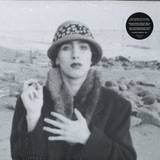
- A1: As Can Be
- A2: My Smile Is A Rifle
- A3: Head (Beach Arab)
- A4: Big Takeover
- A5: Curtains
- A6: Running Away Into You
- B1: Mascara
- B2: Been Insane
- B3: Skin Blues
- B4: Your Pussy's Glued To A Building On Fire
- B5: Blood On My Neck From Success
- B6: Ten To Butter Blood Voodoo
- C1: Untitled #1
- C2: Untitled #2
- C3: Untitled #3
- C4: Untitled #4
- C5: Untitled #5
- C6: Untitled #6
- C7: Untitled #7
- C8: Untitled #8
- D1: Untitled #9
- D2: Untitled #10
- D3: Untitled #11
- D4: Untitled #12
- D5: Untitled #13
25
2024 Repress
Niandra LaDes And Usually Just A T-Shirt is the first solo record by John Frusciante. Between 1990 and 1992 the guitarist made a series of 4-track recordings, which at the time were not intended for commercial release. After leaving the band Red Hot Chili Peppers in 1992, Frusciante was encouraged by friends to release the material that he wrote in his spare time during the Blood Sugar Sex Magik sessions.
Originally released on Rick Rubin's American Recordings label in 1994, Niandra LaDes is a mystifying work of tortured beauty. Frusciante plays various acoustic and electric guitars, experimenting with layers of vocals, piano and reverse tape effects. Channeling the ghosts of Syd Barrett and Skip Spence, his lyrics are at once utterly personal and willfully opaque.
Frusciante's rapidfire, angular playing shows how key he was in the Chili Peppers' evolution away from their funk-rock roots. His cover of "Big Takeover" perfectly deconstructs the Bad Brains original with laid-back tempo, twelve-string guitar and a fierce handle on melody.
The album's second part - thirteen untitled tracks that Frusciante defines as one complete piece, Usually Just A T-Shirt - contains several instrumentals featuring his signature guitar style. Sparse phrasing, delicate counterpoint and ethereal textures recall Neu/Harmonia's Michael Rother or The Durutti Column's Vini Reilly.
On the front cover, Frusciante appears in 1920s drag - a nod to Marcel Duchamp's alter-ego Rrose Sélavy - which comes from Toni Oswald's film Desert in the Shape.
This first-time vinyl release has been carefully remastered and approved by the artist. The double LP set is packaged with gatefold jacket and printed inner sleeves.

Collaborations don’t get much more biblical than this. Solo star, Oasis legend and force-of-nature Liam Gallagher has teamed up with John Squire, one of the most influential guitarists and songwriters of his generation via his time with The Stone Roses. The duo will set a high watermark for 2024 when they release their first single together, ‘Just Another Rainbow’, on January 5th, on limited 7” vinyl.
There will be much more new music to come - and there could well be shows, too - but for now ‘Just Another Rainbow’ lives up to the highfalutin expectations that come with such a collaboration.

Entertainment icon Olivia Newton-John’s legendary career immortalised in 32 star-studded duets with her dear friends. Sonic gems spanning five decades of classic hits including “I Honestly Love You” with Jim Brickman and “Put Your Head On My Shoulder” with Paul Anka, as well as brand new fan favourites like “Window in the Wall” featuring Olivia’s daughter Chloe Lattanzi. Olivia’s duet partners include Mariah Carey, Jon Secada, Barry Gibb, John Travolta, Marie Osmond, Dolly Parton and many more.

- A1: You Didn't Know Any Better
- A2: When I Was Old
- A3: Where's The Show?
- A4: Throw Him In Jail
- A5: Fashion Fantasy
- A6: If I'm Makin
- A7: She's My Woman
- A8: Evil You (Part 1)
- B1: Don't Be A Dummy
- B2: Don't Talk
- B3: Your Application Failed
- BB4: Only One Night
- B5: Street Strutter
- B6: Evil You (Part 2)
- B7: Hesitation
- B8: Who Cares? *Bonus Track
16
This album was recorded in 1977 and produced by Status Quo’s FRANCIS ROSSI. Shockingly, this album has never been released on vinyl until now. It originally came out on CD in 1992 and is now long out of print and even that goes for good coin.
Du Cann’s stellar career included freakbeat heroes THE ATTACK (“Magic In The Air”), psych/prog legends ANDROMEDA, and the group he’s best known for, ATOMIC ROOSTER. Du Cann wrote their their #4 hit single “Devil’s Answer”. A couple of years later he was in DAEMON, later renamed BULLET, then HARD STUFF. In 1974 he was even a temporary guitarist for a THIN LIZZY German tour.
In 1977, he was signed to the same management company as STATUS QUO, who paired him with Quo leader, Francis Rossi. The resulting album, “The World’s Not Big Enough” included Rossi on guitar, Andy Bown (The Herd, Judas Jump, Status Quo) on keyboards, Pete Kircher (Honeybus, Status Quo, Liverpool Express) on drums, and John McCoy (Ian Gillian, Tyla Gang, U.K. Subs) on bass. Basically, this is Du Cann backed by Status Quo at their Belt Buckle Boogie peak.
A few songs from this album appeared on killer late 70s Punxploitation singles “Throw Him Jail”, “Don’t Be A Dummy” (a UK Top 40 hit!), and “Where’s The Show”. This album has been described as “Quo mixed with the Sex Pistols”, and we can’t disagree with that assessment.

- 1: River Jordan
- 2: Mary Long Tongue
- 3: 21 Girls Salute
- 4: Fulllment
- 5: In Dis Time
- 6: Lets Do Right
- 7: The Day Had Just Begun
- 8: Lets Clean It Up
- 9: John Tom
- 10: Mercy
Barrington Levy's 3rd LP for Jah Life, another killer selection from the fruitful works of the Wright/Lawes/Levy axis. From the golden era of the Radics at Channel 1, mixed by Scientist at Tubby's, 10 tracks, great all the way thru. Finally available again, this was only repressed once before in the late 1990's, other than its original release in the early '80s. Featuring iconic cover art by the late NYC legend Jamaal Pete and pressed from the original mothers, identical to the original press.

14
Born Don McCarlos,he processes one of reggae's most distinctive voices.
His vocal mannerisms being instantly recognisable over a tune ,yet he remains one of Jamaica's best kept secrets.
We look back to some of his finest moments that set the tone for his popularity that was to follow in the Dancehall period of Reggae.
He began his musical career in 1973,when alongside Garth Dennis and Derrick Ducky Simpson he formed one of Reggaes foremost groups Black Uhuru.
He then joined Wailing Souls before going solo under his shorter name Don Carlos
We find this set hard to beat as most of his classis are represented here and hope you find some magic as we have unearthing and compiling these lost treasures...Respect

- A1: The Explosions - Hip Drop
- A2: Aaron Neville - Hercules
- A3: Bo Dollis & The Wild Magnolia Mardi Gras Indian Band - Handa Wanda
- A4: The Meters - Handclapping Song
- B1: Eddie Bo - Check Your Bucket
- B2: Professor Longhair - Big Chief
- B3: Cyril Nevilille - Tell Me What's On Your Mind
- B4: Lee Dorsey And Betty Harris - Love Lots Of Lovin
- C1: Mary Jane Hooper - I've Got Reasons
- C2: Lee Dorsey - Who's Gonna Help Brother Get Further
- C3: Huey Piano Smith & His Clowns - Free Single And Disengaged
- C4: Eddie Bo - Hook'n'sling (Pt Ii)
- D1: The Gaturs - Gator Bait
- D2: Danny White - Natural Soul Brother
- D3: Ernie K Doe - Here Come The Girls
- D4: Dr John - Mama Roux
- E1: Allen Toussaint - Get Out Of My Life Woman
- E2: The Explosions - Garden Of Four Trees
- E3: Robert Parker - Hip-Huggin
- E4: Chuck Carbo - Can I Be Your Squeeze
- F1: Gentleman June Gardner - It's Gonna Rain
- F2: Marilyn Barbarin - Reborn
- F3: The Meters - Just Kissed My Baby
- F4: Sonny Jones - Sissy Walk (Pt Ii)
24
Album features Ernie K Doe’s ‘Here Come The Girls’, The Meters, Eddie Bo, Professor Longhair, Lee Dorsey, Wild Magnolias and more.
This is the definitive collection of New Orleans Funk featuring acknowledged masters next to some of the earlier artists who shaped the meaning of funk. The album is also filled with many rare, sought after and undiscovered funk tracks. It covers the period from the emergence of New Orleans Funk in the early 1960's through to the mid-seventies.
The record is an essential part of anyone in any way interested in Funk's record collection. It has some vital ingredients in it that you can't find elsewhere. With the sound of the New Orleans Funeral March Bands, Mardi Gras Indian Tribes and Saturday Night Fish Fries all as inspiration New Orleans Funk developed into a unique sound.
New Orleans is a port town. Originally owned by the French, this was where many slaves were brought from the West Indies. Many of these slaves came from Haiti and brought with them the religion of Voodoo and its drums and music. It became one of the first parts of America to develop a strong African-American culture leading to the invention of Jazz in the early 1900's.
A main feature of Jazz in New Orleans were the Jazz Funeral Marching bands. Solemn Brass bands accompanying a coffin would, on burial, be joined by a second line of drummers and dancers which would turn the event into a celebration of the spirit cutting free from earth. This African tradition is strong in New Orleans and still goes on to this day. The backline drums play a syncopated style that is neither on the beat nor the off-beat. It is these rhythms that are the basis of New Orleans Funk.
The album comes with a booklet presenting a historical explanation to how and why this music came about, and with lots of information about the people involved.
Reviews: "A Perfect Primer For Funk Fans" Q (Top 5 albums of the year). "Probably the finest compilation that Soul Jazz has released. Essential" Time Out.

- A1: Listen To The Music' - Ft The Doobie Brothers & Ellis Hall
- A2: Everlasting Arms' - Ft Dr. John, Luke Winslow-King, Vasti Jackson & Roots Gospel Voices Of Mississippi
- A3: All Along The Watchtower' - Ft John Cruz, Cyril Neville, Ivan Neville, Louis Mhlanga & Warren Haynes
- A4: Natural Mystic - Just A Little Bit' - Ft Jack Johnson, Paula Fuga, Afro Fiesta, Donald Kinsey & Lee Oskar
- A5: Skin Deep' - Ft Buddy Guy, Tom Morello & The Chicago Children's Choir
- B1: Chan Chan' - Ft Teté García Catulra & Pancho Amat 'Africa Mokili Mobimba' - Ft The Preservation Hall Jazz Band & The Tpok Jazz Band (From Congo To Congo Square Usa)
- B2: Ahoulaguine Akaline' - Ft Bombino & Lee Oskar
- B3: Rasta Children' - Ft Paulo Da Luz & Blue King Brown
- B4: Congo To The Mississippi' - Ft Afro Fiesta, Grandpa Elliott, Vasti Jackson & Leon Mobley
- B5: Bring It On Home To Me' - Ft The Late Roger Ridley (Singer From Pfc's 103M Views: Stand By Me), Alice Tan Ridley (Roger's Sister), Grandpa Elliott (Pfc Star) & Karl Denson
10
'Listen To The Music' is the fourth star-studded 'Songs Around The World' album and video series from the world-renowned Playing For Change organization. It features audio recordings of hit rock and world-beat songs, along with a compelling series of performance videos in which Playing For Change's unique recording process is documented to great effect. each song is multi-track recorded and videotaped in multiple picturesque locations around the world by visionary producer and hilanthropist Mark Johnson. The full 12 song project features more than 200 Artists and was recorded in 25 different countries. Featured stars include The Doobie Brothers, Ellis Hall, Jack Johnson, Dr. John, Warren Haynes, Cyril and Ivan Neville, John Cruz, Preservation Hall Jazz Band (New Orleans), TP OK Jazz Band from Congo
(Kinshasa), John Densmore, Bombino, Buddy Guy, Waddy Wachtel, Roots Gospel Voices of Mississippi, James Gadson, Reggie McBride, Karl Denson,Roberto Carcasses, Mamadou Diabate, Lee Oskar,Anders Osborne and Pancho Amat.
Now available on vinyl.

- A1: John Lee Hooker - Boom Boom
- A2: Muddy Waters - Mannish Boy
- A3: Big Mama Thornton - Hound Dog
- A4: Lightnin' Hopkins - Mojo Hand
- A5: Fats Domino - Blue Monday
- A6: Elmore James - Dust My Broom
- A7: Howlin' Wolf - Smokestack Lightnin
- B1: Bo Diddley - I'm A Man
- B2: Screamin' Jay Hawkins - I Put A Spell On You
- B3: Etta James - I Just Want To Make Love To You
- B4: B.b. King - Bad Luck
- B5: Buddy Guy - First Time I Met The Blues
- B6: Robert Johnson - Sweet Home Chicago
- B7: Bessie Smith - Nobody Knows You When You're Down And Out
14

- A1: Laser Beam Don Carlos
- A2: Love Trap Cornell Campbell
- A3: Wicked Them A Say Linval Thompson
- A4: Tribal War Ronnie Davis
- A5: Mr Landlord Triston Palmer
- A6: Bad Boy Possee Robert French
- A7: King Of The Arena Johnny Clarke
- B1: Got To Tell The People
- B2: Mr Babylon Robert Frazer
- B3: Satisfaction Johnny Clarke
- B4: Prophecy Neville Brown
- B5: A Ba Ba John I Don Carlos
- B6: Time And Place Dennis Brown
- B7: Take Heed Ronnie Davis
- B8: A Class Dj Early B*
- 16: Just Care For I Don Carlos*
16
* TO CELEBRATE JAMAICA'S 50 YEARS OF INDEPENDANCE 1962-2012 We have put together a set of releases that cover the musical styles that reggae mutated into through it's history, SKA, ROCKSTEADY, ROOTS REGGAE, DUB, DJ STYLE &DANCEHALL.... So Listen Up! and enjoy!Welcome to the Dancehall Sound from Jamaica. The sound that grew out of the dances in Jamaica around the beginning ofthe 1980's.The musical style again slowed
the reggae beat down to give an uncluttered, sparce backdrop, allowing the singers and DJ's more space to express
themselves. Dancehall has never stopped but turned to a digital beat around the mid - 1980's. So Listen Up ! to some early Dancehall classics that set the style for the years that followed....

- 01: The Ark
- 02: The Masai
- 03: Dream Dance
- 04: Belize
- 05: As You Are
- 06: Danakil Warrior
Our latest Holy Grail reissue is this private press spiritual jazz gem out of California from Rickey Kelly and his vibes & marimba. Features Diane Reeves (vocals) & Adele Sebastian (flute)!
Heavyweight 180g LP with tip-on sleeve, individually numbered 1-1000, card enclosed for liner notes & audio download
"Rickey, I know these are your friends, the guys you went to school with, but if you wanna record an album, you record with musicians who have been playing their whole life; whatever you write, they'll put their whole life into it. You play with your friends; they may not even play in tune."
These are the words of Slave guitarist Kevin Johnson, and they were to change the course of young Rickey Kelly's life.
It was 1978, and music student Kelly had approached Johnson with a tape of rough demos of some songs he'd written. A San Francisco native, Kelly had recently moved the short distance south to study music at LA City College in East Hollywood. He was a member of E.W. Wainwright Jr.'s African Roots of Jazz, and was spending up to 10 hours a day in practice on both vibes and marimba. He also played with Horace Tapscott, and had his own band made up of fellow students, but it was his ambition to make an album that led to the conversation with Johnson. It was a turning point in his education, and a decision was looming.
The next thing Johnson said was "You call the best jazz musicians. How'd you like to play with Billy Higgins?", a line that would seal it for anyone; for a youngster like Rickey just starting out in the business, you just don't turn down the opportunity to play with the likes of highly accomplished musicians, especially those of the calibre of legendary jazz drummer Billy Higgins.
Some calls were made and the date was set to record at Studio Masters on Beverly Blvd, a studio set up just a few years previous in 1973, owned and operated by Dot Records founder Randy Wood with his son John. Some of the other music professionals set to record with Kelley that day were flautist Adele Sebastian, bass player Tony Dumas, saxophonist Charles Owens and vocalist Diane Reeves, none of whom had previously played with Kelly before.
Kelly was impressed with the studio, with the gold records displayed on the walls and the famous musicians hanging out. 'It took a lot of humility for me to record with them, I mean I was nobody, nothing, and for not a lot of money either' remembers Rickey in a later interview with Calvin Lincoln, 'It taught me a lot, to practice hard, and study for the rest of your life, to give your all, and there's a lot of all to give'.
As the recording session took place, John Wood was listening in. He was impressed. Kelly didn't have the funds to manufacture and release the album himself, so Wood suggested it was pressed up on his in-house studio label, Los Angeles Phonograph Records, and thus the LP 'My Kind of Music' was released early in 1979. The album also saw a subsequent pressing soon afterwards on Dennis Sullivan's New Note label.
Kelly remains humble and proud of his debut album to this day. 'I was still a beginner' he says, 'These masters walked in, smiling, and gave me something worth gold'.

- A1: Johnny And Dee Dee
- B1: Julie Is A Junkie
To commemorate the 40th Anniversary of the passing of James Darroch, singer/songwriter/guitarist for Sydney's incredible The Eastern Dark, Grown Up Wrong! is thrilled to announce a long-awaited reissue of the band's classic single "Julie Is A Junkie/Johnny and Dee Dee".
Heavily influenced by the Ramones - the band opened their first live show with 'Blitzkrieg Bop' and from then on opened with a new Ramones song every time they played, working through the band's complete catalogue in chronological order - as all manner of hyper-melodic and high energy rock. The Eastern Dark were a classic trio powered by former Celibate Rifles bassplayer James Darroch's blazing guitar and anchored by former Lime Spiders backing vocalist Bill Gibson's hard driving and melodic bass playing (and supreme backing vocals) and Geoff Milne's untouchable beat keeping. They set Sydney's Radio Birdman influenced scene alight in 1984 and quickly built an international following on the back of their classic single. Sadly, just hours after completing what would become their next release - the mini-LP "Long Live the New Flesh" - the band's life, and that of 26-year old James Darroch, was brutally ended in a road accident whilst the band was on its way to Melbourne.
On the back of the tragedy, the band's music lived on and it's global impact was reflected in the influence it bore on numerous bands, from Boston's the Lemoneads to Tokyo's Teengenenete, and obviously a succession of Australian bands from the Hard-Ons through to God and the Meanies and beyond.
After years of searching, surviving members Bill Gibson and Geoff Milne recently found the single's original multi-track tapes, and for the new release, the original recordings have been both remixed and remastered for maximum impact under their supervision.

- Identified Patient – The Female Medical College Of Pennsylvania (Marcel Dettmann Pitched High Version)
- Tocotronic – Bis Uns Das Licht Vertreibt (Marcel Dettman Version 2 Remix)
- Cristian Vogel – Untitled (Marcel Dettmann Cut)
- John Bender – Victims Of Victimless Crimes (Marcel Dettmann Cut)
- Clark – Dirty Pixie (Marcel Dettmann Edit)
- Junior Boys – Work (Marcel Dettmann Remix)
- Mutant Beat Dance - The Human Factor Ft. Naughty Wood (Marcel Dettmann Edit)
- Experimental Products – Who Is Kip Jones (Marcel Dettmann Cut)
- Marcel Dettmann – Water Feat. Ryan Elliott (My Own Shadow Remix)
- Severed Heads – We Come To Bless The House (Marcel Dettmann Edit)
- Albert Kuningas - Astraaliprojektio (Marcel Dettmann Edit)
- K.alexi Shelby – Season Of The Real (Marcel Dettmann Edit)
- Ian North – Sex Lust You (Marcel Dettmann Edit)
- Ford Proco – Expansión Naranja (Feat. Coil) (Marcel Dettmann Edit)
- Nitzer Ebb – Shame (Marcel Dettmann Edit)
- Frank Duval – Ogon (Marcel Dettmann Edit)
- Yello – Limbo (Marcel Dettman Version 2 Remix)
- Conrad Schnitzler – Das Tier (Marcel Dettmann Edit)
18
also available
LP 3x12"[28,99 €]
A DJ, producer and significant figure in contemporary electronic music, Marcel Dettmann steps forward to contribute to Running Back’s ongoing Mastermix series. Whereas previous editions of Mastermix have taken an ear to the sound of lapsed, legendary clubs such as Wild Pitch and Front, Dettmann’s curation deftly captures the man himself in ongoing perpetual motion, raiding the vault for his own precision-tooled edits, long-employed on dancefloors to devastating effect. Alongside a continuous mix, this release arrives as a 3LP gatefold, and as a limited edition cassette.
Closely associated with Berlin’s techno landscape, Dettmann was born and raised in the former GDR, then later immersed in the bleary-eyed counter cultural landscape of post-unification Berlin. Initially oriented by post-punk, industrial and new-wave music, Dettmann has been DJing since 1993, always expanding and perfecting his repertoire. He later began working behind the counter at the city’s tastemaking rave boutique Hard Wax, and a decade after he first dropped a needle, became (and remains) resident at notable local nightspot Berghain/Panorama Bar, where his instincts have helped sculpt the signature sound of both main dancefloors.
Of course, you’re probably not asking, “Who is Marcel Dettmann?” More importantly, you might want to know; just what treats has he gifted us here? The trip begins with a simple pitch-shift skywards, transforming Identified Patient’s creeping ‘The Female Medical College of Pennsylvania’ into a peak-time freakout, before an alternate take on Toctronic’s ‘Bis uns das Licht vertreibt’ emerges from the vaults for the first time. Dating from 1995, and one of Dettmann’s all-time favourites, Cristian Vogel’s ‘Untitled’ clambers back into the box with respectable cuts, while John Bender’s ‘Victims of A Victimless Crime’ kicks off the flip sporting a new arrangement, transporting us back to the foundations of a confident, stripped-back sound.
A few subtle edits to Clark’s perilously funky ‘Dirty Pixie’ takes us to Dettmann’s remix of Junior Boys. Produced in 2010, it transposes the Canadian duo’s sophisticated pop with our curator in his minimal prime, and has since become an irresistible prize for high-minded diggers. The same can be said for Experimental Products’ explosive proto-electro anthem ‘Who Is Kip Jones?’, empowered from pricey Discogs purgatory with just the slightest of tweaks. It’s deservedly sandwiched between the guiding influences of Chicago and Detroit in the form of Mutant Beat Dance’s raw ‘The Human Factor’ and a shimmering new version of previous solo production ‘Water’, featuring close friend and Ostgut Ton ally, Ryan Elliot.
The second half of the Mastermix seamlessly connects the mechanical past and digital present of EBM and industrial in the dance, with Dettmann’s instincts as a guiding hand. Severed Heads’ iconic ‘We Have Come To Bless This House’ emerges with mere nips and tucks, while Nitzer Ebb’s ‘Shame’ is significantly reimagined as a highwire act of rhythm and tension, setting up a sensual second take on a 2017 remix of ‘Limbo’ from Swiss synth heroes, Yello.
Core musical memories are shaken and stirred with a context-shifting take on Frank Duval’s emotional classic ‘Ogon’, while Ian North’s ‘Sex Lust You’ and Ford Proco’s notable Coil collaboration ‘Expansion Naranja’ effectively throb with only minor adjustments, respectfully imagined as “shadow versions”. Meanwhile, a simple breakbeat lifts Albert Kuningas’s ‘Astraalprojektio’ in the direction of wide-eyed dancefloors, while a fresh take on K-Alexi Shelby’s ‘Season of The Real’ inexplicably emerges somehow even funkier than before.
The conclusion of the compilation leads back to Das Tier from the prolific experimentalist Conrad Schnitzler, whose swirling synths and hypnotic vocals are duly tightened by Dettmann, but only as he puts it, “in conversation with the original.” Concluding three discs and thirty years of commitment to the dancefloor, this Mastermix not only offers us the opportunity to eavesdrop on this endless exchange, but to gain some sought-after material for our own record collections.
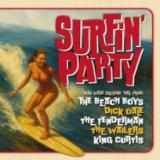
- The Beach Boys - Surfin' Safari
- Duane Eddy His Twangy Guitar And The Rebels - Ramrod
- Johnny & The Hurricanes - Crossfire
- The Fireballs - Bulldog
- The Marketts - Surfer's Stomp
- The Fenderman - Torture
- Joe Jones - California Sun
- The Gamblers - Moon Dawg!
- The Ventures - Lullaby Of The Leaves
- Dick Dale - Surf Beat
- The Tornadoes - Bustin' Surfboards
- Belairs - Mr. Moto
- Johnny Bond - Hot Rod Lincoln
- Dick Dale - Peppermint Man
- Ritche Valens - La Bamba
- Surfmen - El Toro
- The Champs - Tequila
- The Wailers - Tall Cool One
- King Curtis And The Noble Knights - Beach Party
- The Beach Boys - Surfin

- A1: Dean Martin - You're Nobody Till Somebody Loves You
- A2: Tony Bennett - Rags To Riches
- A3: The Ink Spots - Whispering Grass (Don't Tell The Trees)
- A4: The Shirelles - I Met Him On A Sunday (Aka "Da Doo Ron Ron")
- A5: Robert & Johnny - You're Mine
- A6: Howlin' Wolf - Smokestack Lightning
- A7: The Cramps - The Creature From The Black Leather Lagoon
- B1: Jimmy Smith - Walk On The Wild Side
- B2: Jimpson & Group - The Murderer's Home
- B3: Santo & Johnny - Sleep Walk
- B4: Lonnie Johnson - Tomorrow Night
- B5: Glenn Miller & His Orchestra - Moonlight Serenade
- B6: Muddy Waters - Hoochie Coochie Man
- B7: The Berlin Radio Symphony Orchestra - Radetzky March
- C1: The Harptones - Life Is But A Dream
- C2: Bing Crosby With Victor Young's Orchestra - Just One More Chance
- C3: Charlie Parker - I'll Remember April
- C4: Johnnie Ray - Cry
- C5: Benny Goodman - Moonglow
- C6: Lavern Baker - Tweedlee Dee
- C7: Frankie Carle - I Want A Girl (Just Like The Girl)
- D1: Ray Charles - Come Rain Or Come Shine
- D2: Bo Diddley - Road Runner
- D3: Brenda Lee - I'm Sorry
- D4: The Marvelettes - Please Mr. Postman
- D5: Jackie Gleason - Melancholy Serenade
- D6: The Hot Club Of France With Django Reinhardt & Stéphane Grappelli - What Is This Thing Called Love
- D7: The Danleers - One Summer Night

7
A few words for the album
Moment’s Aeternity:
a 12/8 composition celebrating the raw power of the “moment”, marked by whirling improvised moments between drums, bass clarinet and Harris P’s Armenian duduk.
Pajko, fire in the forest on the mountain:
in Sokratis own words: “I have a really vivid memory as a child. I was staring at the Djena mountain from my window in Archangellos which sits on the Pajko mountain. A little beam of light shone far in the horizon; it was a fire that in my little eyes looked as if the giants of Almopia were trying to communicate with each other using phryktoria (a way of contacting through fire in Ancient Greece).”
Footprints of some Giant Steps:
While the classic compositions of two true Jazz Giants- Wayne Shorter and John Coltrane- are certainly different, they do both connect in a mystical way. Rearranged in 5/8 combining half of each melody and half of each one’s chord progression, keeping the form of the piece for improvisation, still in 5.
Oson Zeis Fainou (Seikilo’s Epitaph):
found in a tomb stone in the Northeast of Greece, this is the only melody saved from the ancient times. It is accompanied by lyrics contemplating the meaning of life:
Ὅσον ζῇς φαίνου
μηδὲν ὅλως σὺ λυποῦ πρὸς ὀλίγον ἐστὶ τὸ ζῆν τὸ τέλος ὁ xρόνος ἀπαιτεῖ.
‘’While you live, shine
don’t feel blue for anything because our life is short and time demands an end.’’
Here is to Oghene K:
’’Hey man, where is the groove?’’, he would say, just to trigger another wave of inspiration for Sokratis. Oghene was a true force of nature, a well of kindness, a masterful artist that left this world too early. This one is for him.
Balkan Riff (for Milcho Leviev):
Milcho Leviev (1936-2019), was a long-time friend and collaborator and a true inspiration for expression, creativity and colorfulness. Expressing the deep sentiments evoked by the Balkan sound and history, this is a sorrowful dialogue between bass clarinet and contrabass.
Spirits of Djena:
one of the most esoteric and personal moments of the album. Composed and recorded during the challenging times of the COVID-era, you can hear the baritone and tenor saxophone firmly grounded on a crispy, hypnotizing contrabass groove.
Sokratis Votskos Quartet
Kostas Anastasiadis / Giorgos Klountzos - Chrysidis: Drums
Leandros Pasias: Piano
Vaggelis Vrachnos: Contrabass
Sokratis Votskos: Soprano Saxophone, Bass Clarinet and Compositions
Sokratis Votskos is a jazz saxophonist, clarinetist, composer, educator, and bandleader from Greece. Deeply invested in unearthing the folk sounds and heritage music of Greece and Eastern Europe, he weaves these into modern jazz compositions though the use of melodies, polyrhythms, and his reedy, timeless tone. He leads the Sokratis Votskos Quartet, he is one half of Kolida Babo and member of the Reggetiko Project. A highly regarded sideman and ensemble player, he has worked extensively with renowned jazz musicians with several highly acclaimed releases (MiC, Jazzman, Walt Disney and now Fair Weather Friends Records).
He has performed his music in numerous venues and festivals worldwide from Vinterjazz in Copenhagen, to the EFG London Jazz Festival where he performed at the legendary Ronnie Scott’s alongside Greg Foat.
He is also an archaeoacoustics researcher and enthusiast, having completed his Master studies on the field of ancient ritualistic caves of Greece research.
Leandros Pasias was born in Thessaloniki, Greece. At age 10 was introduced to piano, continuing his studies at the Modern Conservatory of Thessaloniki and later at the Conservatorium van Amsterdam in the department of jazz piano.Ηe holds a classical harmony diploma and a BA at the Department of Music Studies at the Aristotle University of Thessaloniki. In 2020 he received jazz improvisation lessons from Aaron Parks.
With a series of appearances in multiple international jazz festivals, Leandros has collaborated with a wide range of musicians from Nicolas Masson and James Wylie to Marina Osk, Ivo Papasov and Haris Lambrakis, among others.
A member of the Yako Trio, he released “OdesSea” on Fair Weather Friends Records (2021).
Vangelis Vrachnos was born in Thessaloniki, Greece, in 1989. While he started playing the bass at the age of 12, alongside his brother, his studies would commence a few years later. Introduced to double bass at the age of 23, he undertook jazz double bass studies at the Codarts Αcademy of Rotterdam. He has participated in several festivals such as the Technopolis and Odessa international jazz festivals. Since returning to his hometown, in 2015, he has been a founding member of Mordana and Yako Trio and has collaborated with a series of musicians like James Wyllie, Sokrates Votskos and Dimitis Agelakis, among others.
Kostas Anastasiadis is a tireless researcher, that has been diligently studying Tradition and its evolution, creating a fresh amalgam of sound moods. His mature improvisational virtuosity highlights a uniquely individual artistic expression and was recognized with the ̈Unique Individual Stylist" award by the PIT (Percussion Institute of Technology) in Los Angeles, California. He has been associated with various ensembles that have garnered significant interest in the global music scene. As an educator, he is the founder of "The Harmony of Rhythm" musical method, which aims to explore and establish the elements that constitute the concept of rhythm.
Giorgos Klountzos-Chrysidis was born in Thessaloniki in 1991. Following studies at the Modern Conservatory of Thessaloniki, he moved to France and the Conservatoire de Nice. With performances at well-known festivals like Nice Jazz Festival, Nuits du Sud and Jazz à Vienne, he had the opportunity to meet the American drummer Leon Parker, who encouraged him to move to Paris, where he spent the next two years under his tutoring and guidance.
In 2016, came a defining moment in his career as he traveled to New York for the first time. He participated in the quartet of saxophonist Diego Rivera for a series of performances and attended lessons by Rodney Whitaker and Randy "Uncle G" Gelispie at Michigan's State University.
Collaborations include Xavier Davis, Ricky Ford, Nicolas Masson, Diego Rivera, Craig Bailey, Baptiste Herbin, Marc Abrams, Pantelis Stoikos, Antonis Anissegos, David Lynch, Ziad Rajab and Ivo Papasov, among others.

- A1: Les Masques - Il Faut Tenir (1969)
- A2: Isabelle Aubret - Casa Forte (1971)
- A3: Christianne Legrand - Hlm Et Ciné Roman (1972)
- A4: Jean Constantin - Pas Tant D'chichi Ponpon (1972)
- A5: Billy Nencioli & Baden Powell - Si Rien Ne Va (1969)
- B1-: Marpessa Dawn - Le Petit Cuica (1963)
- B2: Jean-Pierre Sabar - Vai Vai (1974)
- B3: Sophia Loren - De Jour En Jour (1963)
- B4: Isabelle - Jusqu’à La Tombée Du Jour (1969)
- B5: Sylvia Fels - Corto Maltesse (1974)
- C1: Frank Gérard - Comme Une Samba (1972)
- C2: Ann Sorel - La Poupée Des Favellas (1971)
- C3: Charles Level - Un Enfant Café Au Lait (1971)
- C4: Andrea Parisy - Les Mains Qui Font Du Bien (1970)
- C5: Audrey Arno - Quand Jean-Paul Rentrera (1969)
- C6: Aldo Frank - T’as Vu Ce Printemps (1970)
- D1: Christianne Legrand - Cent Mille Poissons Dans Ton Filet (1972)
- D2: Clarinha - Lemenja (1970)
- D3: Hit Parade Des Enfants - Aquarela (1976)
- D4: Jean-Pierre Lang - Tendresse (1965)
- D5: Magalie Noël - Une Énorme Samba (1970)
- D6: Françoise Legrand - La Lune
Ever since the late 1950s bossa-nova revolution, Brazil’s influence on French music has been undeniable. Pierre Barouh, Georges Moustaki and a vast array of lesser known artists, all made the Musica Popular Brasileira (MPB) an axis of promotion at the service of a cool and metaphysical, modern and mixed Brazilian lifestyle. Some were seduced by the poetic languors of the bossa, some were looking for fun, and others just loved the American hybridization of jazz-bossa, jazz-samba.
What is bossa nova? One of its creators, Joao Gilberto said: "Its style, cadence, everything is samba. At the very start, we didn't call it bossa nova, we sang a little samba made up of a single note - Samba de uma nota so .... The discussion around the origins of bossa nova is therefore useless”. It is nevertheless useful to remember that these magnificent Brazilian songs, which the guitarist describes as samba, were shifted and balanced around improbable chords. "I like things that lean, the in-betweens that limp with grace," said Pierre Barrouh, quoting Jean Cocteau.
With emotion, arrangements for violin and supple guitar licks, bossa nova rapidly changed. A transformation that can be heard in the Tchic, tchic, French Bossa Nova 1963-1974 compilation, the result of a cultural reappropriation, which traveled through the United States and supplemented itself in France.
A musical revolution that has remained significant, bossa nova was born in Rio. From 1956 to 1961, Brazil lived through its golden years. In five years, the country had invented its modernist style. Elected president in 1956, Juscelino Kubitschek de Oliveira, an elegant man with a broad forehead, brandished a promising slogan: "Fifty years of progress in five years". He quickly got to work. Not worried about increasing debt, he launched the project for a new federal capital, Brasilia, designed by the communist architect Oscar Niemeyer. Volkswagen opened state-of-the-art factories and created the “fusquinha”, the Beetle. In Rio, the Vespa made its first appearance. The Arpoador Surf Club crew run into the “girl” from Ipanema, Helô Pinheiro - the tanned garota ("chick"), between a flower and mermaid, who at 17 walked by the Veloso bar, where the fiery author and composer, Tom Jobim and Vinicius de Moraes, were getting drunk on whiskey. From then on, bossa symbolized cool.
In 1958, Joao Gilberto recorded Chega de Saudade, which the directors of Philips denied, calling it "music for fagots". The marketing director, who believed in it, secretly pressed 3000 78-inch vinyls and distributed them at schools around Rio, creating a tidal wave.
American jazzmen then took over. In particular, trumpeter Dizzy Gillespie and guitarist Charlie Byrd. In November 1962, the Brazilian Ministry of Foreign Affairs funded a "Bossa-Nova" concert at Carnegie Hall in New York, inviting the genre’s pioneers. Unprepared, the show soon turned to disaster. But the troupe was invited to the White House by Jackie Kennedy. The first lady loved "the new beat" and in particular Maria Ninguem, a song by Carlos Lyra, later covered by Brigitte Bardot.
In Brazil, the 1964 military coup quickly ended this euphoria. The destructive atmosphere that ensued pushed many Brazilian musicians to leave, if not to exile. Thus, Tom Jobim, Sergio Mendes and Joao Gilberto arrived to the United States. In New York, Joao Gilberto met saxophonist Stan Getz. At the time, he was married to the Bahianese Astrud Weinert Gilberto, who had a German father. She had never sung before, but she knew how to speak English. Getz therefore asked her to replace her husband on The Girl From Ipanema. The Getz/Gilberto record with Tom Jobim on piano, was released in March 1964. Phil Ramone, the "pope of pop" was in charge of sound.
Bossa nova arrived in Paris through the classic “guitar-voice” channel (Pierre Barouh, Baden Powell, Moustaki…) But France loved jazz and Paris had already welcomed its American contributors. All these good people were to pass through Saint-Germain-des-Prés. The cabaret l'Escale became the Mecca of Latin American sound where one could find Pierre Barrouh and his friends, such as the Camara Trio, samba-jazz aces, whose only record was published by the Saravah label. With a band strangely called Les Masques (a band that included Nicole Croisille and Pierre Vassiliu, among others), the Camara Trio recorded an interesting Brazilian Sound, including the track Il faut tenir which is present on this tasty compilation of rarities.
Other enlightened musicians can also be found on the compilation, such as Jean-Pierre Sabar (songwriter for Hardy, Auffray, Leforestier ...) and the French pop rock organist Balthazar. In 1975, Sabar recorded Aurinkoinen Musiikkimatka on a Finnish label, which featured the crazy Vai, Vai, included on this record. We are now following the footsteps of Brazilian electronic musicians such as Sergio Mendes, Eumir Deodato or Marcos Valle who created funk and disco sounds on their keyboards and synthesizers. A style that influenced Véronique Sanson when she wrote Jusqu’à la Tombée de la nuit in 1969 for Isabelle de Funès, the niece of Louis and a great friend of Michel Berger - Sanson did end up singing this track on her 1992 Sans Regret record.
The pinnacle of exoticism and travel, Sylvia Fels’ Corto Maltese includes bongos, sea mist and ocean sounds. The title was taken from Jacky Chalard’s concept album written in 1974, Je suis vivant, mais j’ai peur (I am alive, but I am scared), based on Gilbert Deflez’s science fiction novel.
However, bossa nova extended the scope of popularity. "In the 1970s, I was a fan of Sergio Mendes, Getz / Gilberto. I fell in love with this music that I knew because I had been an orchestral singer, " explained Isabelle Aubret, who in 1971 delivered a composite record of covers by the very funky Jorge Ben, Orfeu Negro, Tom Jobim, Vinicius de Morais and Jean Ferrat. "I recorded this album for Meys Records in Paris, far from Brazil, with wonderful musicians, François Raubert, Roland Vincent, Alain Goraguer...". The latter wrote the arrangements for Casa Forte, a very percussive title borrowed from Edu Lobo, one of the initiators of the bossa who spent time in California. "Jazz and bossa came together and produced very rhythmic music. I love singing, it allows me to dream, to have fun, to feel a high on stage, and these songs brought me joy, made me swing, my singing felt like a dance.”
The world tours of French singers and their desire for the tropics, often brought them to Rio with its hills, forests, caipirinhas and tanned bodies. There are surprises though, like this Iemenja (Iemenja is the goddess of the sea in the Afro-Brazilian candomblé religion). Not unlike the composer and musician Jean-Pierre Lang, based in Sao Paulo, Claire Chevalier taught Brazil to Brazil. In 1970, the singer and painter published a 45-inch vinyl, Mon mari et mes amants (My husband and my lovers), under the improbable pseudonym of Clarinha (little Claire). She was then living in Rio, with her husband, Joël Leibovitz, who founded a band called Azimuth, and who owned a record label specialized in "sambas enredos" songs for samba school parades.
For its B side, she asked Pierre Perret to come up with lyrics for a song composed by Carlos Imperial: "Oh goddess of the sea, o goddess Iemenja, I bring a white rose to adorn your long hair ..." . "Perret came to see us, and we had fun, remembers Joël Leibovitz. We wrote Lemenja for fun, we recorded it at the Havaí studio, behind the Central do Brasil the central station. Erlon Chaves, the arranger who worked with Elis Regina, joined us" adding his share of Afro-Brazilian percussions and funky brass to the mix.
There is a common misunderstanding in Franco-Brazilian history: that bossa, admittedly hedonistic, is perceived as funny, even though the poets who wrote the texts are often philosophizing on the human condition. Its French interpreters pull it towards a carnival inspired universe, far removed from its fundamental essence. Thus, Jean Constantin covered the famous Samba da minha terra, an ode to the art of samba written by the classic Bahian composer Dorival Caymmi, renaming it with the enticing title of Pas tant de tchi tchi pompon: "On your pier there is no tchi tchi / when you arch your back, you know everything is alright ”(lyrics by Gérard Calvi). This expedited bossa aims for the absurd, but retains a certain elegance.
Indeed, Jean Constantin was not an idiot, the rather large man had a huge mustache and liked fantasy, (Les pantoufles à papa, Le pacha, inspired by cha-cha-cha-cha, salsa and jazz) but he was also the lyricist of Mon manège à moi interpreted by Edith Piaf, the composer of Mon Truc en plume by Zizi Jeanmaire and the soundtrack of François Truffaut’s 400 Blows. Le Poulpe, published in 1970, from which this bossa is extract, was arranged by Jean-Claude Vannier, an accomplice of Serge Gainsbourg’s Melody Nelson. In short: "There is enough of samba / By looking at the parasol / Because my poor cabeza / Is going to die in the sun".
Even the American actress Marpessa Down, who was at the heart of the bossa nova revolution with her role as Euridyce in Marcel Camus’ film Orfeu Negro, winner of the 1959 Cannes Palme d'or, fed the clichée with Je voudrais parler au petit cuica - "Tell me how you manage to always make people want to dance / It's true, I must admit that I cannot resist your magic" - in consequence, once can hear the cuica, a little drum inherited from the Bantu.
But bossa nova had many angles. Societal, of course, pushing actresses who were symbols of women's liberation like Brigitte Bardot, Jeanne Moreau, or Sophia Loren to engage in the exercise of accelerated bossa. In February of 1963, Sophia Loren made a record in French in Rome, Je ne t'aime plus, featuring the song De jour en jour, a bossa written by two Italians, Armando Trovajoli and Tino Fornai, which was released a little later by Barclay. Bossa accompanied the 1960s, a decade of moral liberation. Ann Sorel, who interpreted La Poupée des favellas, caused a sensation with L’amour à plusieurs, a provocative song written by Frédéric Bottom and Jean-Claude Vannier. As for the actress Andrea Parisy, she displayed her bourgeois cheekiness in Marcel Carné's Les Tricheurs before interpreting Les mains qui font du bien. And Magalie Noël, the friend of Boris Vian, who sung Johnny fais-moi mal, was hired to sing Une énorme Samba, composed by Alain Goraguer (arranger to Gainsbourg, Bobby Lapointe and Jean Ferrat) with lyrics by Frédéric Botton.
But in the end, of what wood is bossa nova made of? The answer is given by Christianne Legrand, daughter of Raymond the conductor, and sister to Michel the composer: "With me, with jà" - jà means "immediately" in Portuguese. In 1972, the singer, an expert in vocal jazz and a member of the Double Six, published Le Brésil de Christianne Legrand. Two songs included on the Tchic Tchic compilation that demonstrate how bossa, jazz, funk, rock, etc. work like a swiss army knife: the music is used to denounce broken systems, or miracles, HLM et ciné roman, Cent mille poissons dans ton filet, two songs from the O Cafona soundtrack, a successful telenovela broadcast, at the time in black and white, on TV Globo. The first was adapted in French by the fighter and friend of the Legrand tribe, Agnès Varda. The second is content with a play on words, jostling them into a summer fun.
Véronique Mortaigne

It’s True What They Say is the debut EP from Edinburgh-based, husband-and-wife duo Sarah/Shaun (pronounced simply Sarah Shaun), aka Sarah and Shaun McLachlan (pronounced “McLochlin”).
“Sarah and I both have a love for nostalgia,” explains Shaun. “We watched that amazing old 80’s Sci-Fi, (John) Carpenter movie, Starman, a few months back. Myself and my brother David used to watch it all the time. We must have been, roughly, 5-7 at the time. I remember loving the movie but the end, you know, with the beautiful, atmospheric, synth ending, I love that particular moment the most - best part of the movie, you know, when he goes home… It’s heartbreaking but stunning, all the same. It’s the music that moves you most… It did when I was 5 and it still does to this day. It must have had some form of a (much deeper) impact on me.”
The duo narrates stories across themes of love, hope, family, friends, dreams and sadness - the good that comes with the bad in everyday life, not just on a personal scale but within a community as well.
“Starbed is the first song I have ever written and just came out of the blue really, with Shaun playing a melody and me singing along,” says Sarah. “It’s simple and just about two people in love. Love songs are always the best songs, after all… Music has been a big part of my life from a young age. I was unwillingly dragged to piano and violin lessons, which I’m thankful for now! I’d say the first band I really became obsessed with growing up were the Beatles, and on the back of that a lot of 60s music and fashion. From then on, I had a love for music.”
“Shaun definitely opened my ears to a lot of sounds and got me thinking about soundtracks and all the noises that can be made,” she goes on. “We love just spending time experimenting in the house with instruments, pedals etc and Ali is a real magician to work with, too…”
The recordings took place over the summers of 2022 and 2023, with fellow Delta Mainline member Ali Chisholm (aka Jaguar Eyes) plus long-term friend and collaborator Gavin King. Further collaboration then came via the ‘net from the (international) likes of Chris Dixie Darley (Father John Misty), Darren Coghill (Neon Waltz) and Daniel Land (The Modern Painters), among others (see a full list of credits below).
Both Sarah and Shaun have a love for uber-soundtrack producers such as Hanz Zimmer, Max Richter, Cliff Martinez plus live acts such as Beach House, Spiritualized, M83, Suicide, Moby and OMD (to name a few). Shaun also credits the work of Kyle Dixon & Michael Stein (from Survive) on the Stranger Things score… “Even a moment in a movie, whether it be just 30 seconds during a particular scene, it grips you,” he says. But there’s something much deeper at play as well. “Music is a healer,” he goes on, “and I write from my own perspective but more so for others. Once I've done my bit, it doesn't belong to me any longer. It belongs to whoever wants it or needs it.”
The result is a cinematic, synth-wavey, dream poppy and downright beguilingly beautiful body of work. And they’re just getting started…
REVIEWS/RADIO/FEEDBACK:
“Starbed is folky, flavoured by pedal steel, cello, and brass. Dust Tears, in stark contrast, is a mini synth-pop rave epic. Part Bicep. Part Human League. Keep Your Eyes Closed summons a mood that’s romantic, but also dark and potentially doomed – like David Lynch’s Twin Peaks meets Cliff Martinez’s Drive score. My pick though is It’s True What They Say, whose interwoven jangle and picking recalls New Order’s more introspective moments (Love Vigilantes, Love Less… ). Drums crashing, cathartic. Guitar raising dramatic arcs. Its chorus a rush, like a reprise of Pains Of Being Pure Of Heart’s ‘Higher Than The Stars’.” BAN BAN TON TON
"Dust Tears sees them sharing vocal duties over a synth foundation reminiscent of Moby’s Go - Artist Of The Week” THE SCOTSMAN
"Woozy pop" NEMONE (Mary Anne Hobbs Morning Show, BBC 6Music)
"Nice one, very David Lynch meets Euro dream pop" YOUTH (Killing Joke, Paul McCartney, U2, The Orb, Spiritualized etc)
"Music sounds killer! Real emotion” DAVID HOLMES
"I’m enjoying it” TIM BRINKHURST aka LONDON (IKLAN, Young Fathers, Callum Easter)
“Oh, this is lovely!” SEAN JOHNSTON (A Love From Outer Space)
"It’s totally my cup of tea with milk and biscuit" BRENT RADEMAKER (Beachwood Sparks/GospelBeach)
"Beautiful, ecstatic electronica! Short and to the point" KEVIN BALES (Spiritualized, Julian Cope, Soulsavers, BE)
"Makes me wanna sit in the sun and sip an Arnold Palmer" CHRIS DIXIE DARLEY (Father John Misty)
“Really beautiful - Cocteau Twins / Spiritualized vibes but has its own thing going on, too - worth checking out!” JULIAN CORRIE (Franz Ferdinand, Miaoux Miaoux)
‘Sounded nice on a sunny day, makes me think of Twin Peaks, nice moods’ EAMON HAMILTON (Sea Power)
"Dealing in nostalgia, no bad thing at all, great to play that (Dust Tears) for you” RODDY HART (BBC Radio Scotland)
“I'll give the vocal tracks a spin before the release." VIC GALLOWAY (BBC Radio Scotland)
"Rather good!" IAIN ANDERSON (BBC Radio Scotland)
CREDITS:
Lyrics, Guitars, Keys, Synths, Drums, Drum Programming, Percussion, Mandolin, Glockenspiel: Shaun McLachlan
Lyrics, Vocals, Keys by Sarah McLachlan
Guitars, Synths, String Arrangements, Drum Programming, Engineering: Jaguar Eyes Percussion/Drums/Effects, Fire Extinguisher: Darren Coghill (Neon Waltz)
Guitars by Daniel Land
Slide Guitar by Chris Dixie Darley (Father John Misty)
Brass by Bruce Michie
Keys, pre-production & engineering on “It’s true what they say”: Gavin King
All produced by Jaguar Eyes and Shaun McLachlan and then mixed at Glasgow’s Chem19 Studios by David McCaulay (From Scotland With Love, Rick Redbeard, BBC TV’s Attenborough and The Mammoth Graveyard score).
Artwork: Jamie Walman (Fourteen Admirals)
MORE INFO:
Although Shaun released a pair of solo singles (When We Dance and Give Your Love To Me) during Lockdown, he will be better known to many via his work as the multi-instrumentalist in Edinburgh band Delta Mainline. With two albums released to date, Oh! Enlightened and Bel Avenir, both rapturously received by fans and critics alike, Delta Mainline have developed an international, cult following. Oh Enlightened (2013) achieved widespread critical acclaim on release, earning the band comparisons to Arcade Fire and Echo & The Bunnymen, while 2019’s Bel Avenir pulled in references to The Flaming Lips, Pink Floyd, David Bowie and krautrock. A third DM album is currently being mixed and due for release later this year…

- A1: Sweet Potato Gravy Maurice Simon & Pie Men
- A2: Mmm Mmm Mmm Dave Lewis
- A3: Sorry ‘Bout That Harold Johnson Sextet
- A4: Sophisticated Funk John Roberts
- A5: Chittlin' Salad The Soul Runners
- A6: Hijack Jackie Hairston
- A7: Whip You Little Charles Whitworth
- A8: The Shing-A-Ling Thing The Naked Truth
- B1: I Can't Afford To Lose Him Sound Stage House Band
- B2: Sunny Jerome Richardson
- B3: Bucket O Grease Les Mccann
- B4: Cornbread And Buttermilk Leon Haywood
- B5: Dead The Mark Ii
- B6: The Skrooch Little Eddie
- B7: Flunky Flunky The Soul Set
- B8: Mother Blues Gene Ludwig

8
Following Parnell March’s Back Bar Grooves EP in February and November’s release of the Dust Tears (lead song from Sarah/Shaun’s debut) remixes, Edinburgh’s Hobbes Music label returns with a second EP of dream pop from husband-and-wife duo Sarah/Shaun (pronounced simply Sarah Shaun), alias Sarah and Shaun McLachlan (pronounced McLochlun), who wooed hearts and wowed critics with debut EP ‘It’s True What They Say?’ last year.
‘It’s True What They Say?’ attracted fans across the board: Artist Of The Week in The Scotsman, rapturous reviews from The Skinny and Tokyo's Ban Ban Ton Ton blog, BBC 6Music airplay courtesy of Nemone (Mary Anne Hobbs' Morning Show), more radio play from Radio Scotland's Roddy Hart & Vic Galloway, plus Simone Butler (Primal Scream) and Jim Sclavunos (Bad Seeds) via their respective Soho Radio shows, not forgetting ringing endorsements from the likes of David Holmes, Youth, Kevin Bales (Spiritualized), Brent Rademaker (Beachwood Sparks) and Julian Corrie (Franz Ferdinand).
They played gigs supporting Glasgow's huge Glasvegas, at festivals (Kendall Calling, Dunbar Music, Hidden Door), plus a slew of venues across the Scottish capital, ending the year with a trio of shows supporting Glaswegian 80s pop legends The Bluebells at Aberdeen’s Tunnels, Dunfermline’s PJ Molloys and Edinburgh’s Liquid Rooms, while The List magazine tipped them among their Ones To Watch For 2025, with journalist Fiona Shepherd suggesting they were “blending the starry-eyed pop of Sonny & Cher with the electronic experimentation of Chris & Cosey.”
Very much the companion piece to the debut EP but arriving a full twelve months later, Someone’s Ghost is emblematic of the duo’s desire not to rush things or release anything half-baked.
“I’ve always wanted to create the perfect pop record and I do really feel that we’ve achieved that with this one,” says Shaun. And he’s clearly not the only person who thinks so.
REVIEWS, FEEDBACK ETC:
"I LOVE that! Dreamy dreamy pop." ROY MOLLOY (Marvellous Crane/Alex Cameron) on BLAST RADIO, Sydney
“the Scottish music scene’s cream of the cool... buzzy drum beats, high, distant chimes, and heavenly electronics…. very ethereal.” THE SKINNY
"Listening to Sarah/Shaun is like eavesdropping on a noir dreampop, long-distance phone call between them both, across two separate sonic locations. On this stunning 4-song EP, Sarah’s voice, effortlessly mesmerising, draws you into these big beautiful and haunting passages of perfect dream-pop. All beautifully produced in a multi-layered-scape of low-fi analogue textures, epic cinematic crescendos, intense electro-pulse grooves and warped psycho-pop guitar riffs. Within the songs lurk a sense of unresolved emotions, longing and pathos. There are shades of classic Lee Hazelwood & Nancy Sinatra but also Post-Punk Electronica and Beach House. But what a unique sound they’ve created of their own. I love it" DAVID MCCLUSKEY (The Bluebells)
"Absolutely beautiful" SEAN JOHNSTON (A Love From Outer Space)
"Lovely stuff here! Total quality." MARTYN 'MASH' HENDERSON
"Ooooh. Everything the last record promised is here. Well done" GEORGE T aka George Demure (Accident Machine)
"Vince clark Era Depeche Mode in places" KEVIN BALES (Spiritualized)
"Sounds cool. Well done" PETE KEMBER (Sonic Boom, Spacemen 3)
"Glorious, it (Debbie Harry) grabs hold of you and doesn't let go." IAIN DAWSON aka RAVECHILD (Everyone Wants To Play The Hits Podcast)
SOMEONE’S GHOST
Born out of an incredibly anxious, stressful time, the songwriting process for these recordings has been something of a personal tonic for Shaun…
“There was a period when I was having nightmares,” he reveals. “Apparently I was saying there was someone in the room, I was talking to that person and Sarah was seeing all this while I was still asleep.
So, I was thinking that this was my ghost. I started writing songs because I was going through something and I was dealing with something and writing songs was a comfort. My ghost was a comfort, whether it was real or not. The idea of it was a comfort.”
“I firmly believe that everyone has someone who watches over them but all of the songs are essentially about being there for someone,” he says. “Everybody needs someone but also everyone needs to stay real and keep what you have, keep it close, never let it go. If you don’t have it, continue to tell people you’re there for them. It’s about loving and hoping people will be good to you in return.”
While Shaun took the songwriting lead on Filter Of Love and EP closer The Sound Which Stresses The Sound Of My Ears, Debbie Harry was originally instrumentally conceived by producer Jaguar Eyes, alias Ali Chisholm, later lyrically completed by Shaun, and the EP’s lead track, Anhedonia, and one of its stand-outs (much like Starbed on the debut) was conceived by Sarah, as a result of experiencing a bit of a spiritual epiphany of her own.
“When I first heard the word Anhedonia, I didn't know what it meant but when I found out I thought about it quite a bit. How sad it would be to have no enjoyment in anything,” she explains. “This song is really about my own personal beliefs. When I have been down, that's one of the things that helps me the most. It talks about trying to make amends but realising, for some things, you can't. But I think with any kind of faith comes hope… which is always a good thing.”
A record about hope, truth, honesty, a belief in something bigger than oneself… and all set to a soundtrack that wouldn’t feel out of place in a David Lynch or Eighties feature film. What more could anyone ask for, really?
There’s equally a desire to offer something universal and positive to anyone who tunes in. The labels for the 12” edition reveal the dual mantras “Who just wants to survive?” and “It’s about time to live a little”, with both messages also engraved in each record’s run-out grooves. T-shirts accompanying debut EP It’s True What They Say? bore the slogan “Kill Them With Kindness” - leading caps intentional. Shaun carries the acronym KTWK everywhere he plays, as a reminder: it’s stitched into his guitar strap. And this particular wee pebble has already caused a few ripples: people have been approaching him at gigs to acknowledge their appreciation and respect for it.
"We feel we have made an honest, open, colourful, body of work,” say the duo. “We hope to go out and play the songs with the guys (our band) and then potentially make more records. We are taking things as they come. Everything has been organic so far, after all. We are looking forward to whatever this brings."

- 1: Three Tree's (Part )
- 2: Shadow Mirror
- 3: Neptune
- 4: Three Tree's (Part 2)
- 5: All Tunnel No Light
- 6: Ekstasis
Gnod's now twenty year journey through spiritual and audial exploration has been driven by relentless curiosity, magpie irreverence and a fierce countercultural imperative, their project has always refused to acknowledge all or any rules and boundaries, internal or external. The latest adventure of this band may never have been intended to celebrate their two-decade anniversary, but in true Gnod fashion by, what began as a trip into a residential studio setup in Hellfire Studios with producer John `Spud' Murphy (Lankum, Black MIDI, Caroline) for six days, resulted in more potent material than anyone bargained for. The end result has been three studio albums to be released over the next year. "This trilogy revealed itself to us in the studio" says Paddy. "We were hoping to get a good album out of the session and lo and behold we got three of the fuckers. It's interesting that we did pretty much capture the full spectrum of the Gnod sound across all three". In fact, this intrepid first instalment of the `Chronicles Of Gnowt' trilogy covers an alarming amount of sonic territory all on its own. Driven as always by the power of repetition as well as Gnod's alchemical marriage of the maximal and the minimal, this album is imbued with a vivid focus that's testimony to the chemistry of the sessions, coupled with a detailed and spacious production from Murphy that brings out the psychedelic sound worlds of the band in vivid colour. This is a travelogue which delves into pastoral tranquillity (as on `Three Trees Parts 1&2') just as adeptly as expansive Earth-tinged riff monoliths (`All Tunnel No Light') and just as formidably as the closing epic `Ekstasis' - a hallucinatory vista where kraut-tinged experimentalism meets Swans-style intensity. Yet all the while, truly sounding like no one but Gnod.

- A1: Coming To Town
- A2: Empty Bank
- A3: Harry's Philosophy
- A4: Dolly's Arrival
- B1: Harry And Dolly
- B2: Sawmill
- B3: Bank Robbery
- C1: Moanin
- C2: Gloria's Story
- C3: Harry Sets Up Sutton
- D1: Murder
- D2: Blackmail
- D3: End Credits
Unlock the allure of The Hot Spot through its unforgettable soundtrack, a captivating collection that brings the film's sultry ambiance to life.
Set against the backdrop of a small Texas town, The Hot Spot follows Harry Madox, a charming drifter with a dark past. As he arrives in town, he becomes embroiled in a web of seduction and deceit, navigating his way through a love triangle involving the sultry waitress, Gloria, and the alluring femme fatale, Dolly. Tensions rise and passions ignite, leading to a thrilling climax where desire and danger intertwine. Directed by the visionary Dennis Hopper, the film is a masterclass in mood and atmosphere, capturing the essence of 1990s neo-noir.
The Hot Spot has garnered acclaim for its stylish cinematography and gripping narrative, but it's the music that truly sets it apart. It's an amalgamation of swampy blues, jazz and rock — all mixed and recorded in a sparse, bloomy and eerie sort of way.
Critics hailed the soundtrack as "an electrifying fusion of jazz and blues that perfectly complements the film's seductive undertones." The blend of sultry melodies and haunting instrumentals creates an immersive experience that resonates long after the credits roll.
This recording is just so damn fine, so airy and warm. And the musicians aboard on this Dennis Hopper film are a who's who, including Miles Davis, John Lee Hooker, Taj Mahal, Roy Rodgers, Earl Palmer and Tim Drummond. This has long been a highly sought-after and collectible record among audiophiles. This soundtrack is essential for any music lover or film buff, capturing the very essence of the film's seductive spirit.

- Thursday's Bells
- 2: X1
- Fog (You Just Don't Know)
- X Says
- 1898:
- Sparrows Hill
- Sister
- Halb Leib I
- Brain Pan Farmer
- Purple Born
- Atahualpa
- Pugilist
also available
Red Vinyl[18,45 €]
In this post Sounds world, the boundaries of Post Punk have not only broadened but splintered. And over the course of (now) four releases, Index For Working Musik have seen to using the sprawling boundaries to great effect, flexing a polyglot of styles to convey the language of the moment. On Which Direction Goes The Beam, the murky, distant ambience that was 2023's Indexé has been fleshed out, incorporating everything from the Brian Aldiss laced, ground lightning shudder of Dome, to the chamber-like arrangements of This Kind Of Punishment. There's even a candle flickering in the window for Think Fellers Union Local 282 that warmed these ears. And if you're a fan of the great Dutch band, Trespassers W (who isn't?), the collective consciousness IFWM enunciates on here is a similar testament of a band growing more sure footed in the pursuit of not only knowing all the ways in, but carving a few of their own on the way out. And it's discerning releases like Which Direction Goes The Beam that keep us in the hunt. Long may they forge. - Tom Lax. RIYL: Brian Jonestown Massacre, Velvet Underground, TOY, John Cale, Wire, Dome

- 1: New Day
- 2: That Memory
- 3: Faith, Hope And Love
- 4: When I Was Young
- 5: One More Shot
- 6: 199
- 7: Laurel
- 8: Good To Be Back Here Again
- 9: Love That’ll Never Be
- 10: Cosi´ Bella
- 11: Your Own Worst Enemy
- 12: Everyday People
Rock legend John Corabi—renowned for his work with Mötley Crüe, The Scream, Union, ESP, and The Dead Daisies—steps into the spotlight with “New Day” his first full-length solo album of original material. Recorded in Nashville during the summer of 2025 and produced by multi-platinum songwriter and producer Marti Frederiksen (Aerosmith, Ozzy Osbourne, Buckcherry), the album fuses classic ’70s rock, soul, and blues influences into a sound that is both timeless and deeply personal. The record features the previously released singles “Così Bella (So Beautiful)” (2021) and “Your Own Worst Enemy” (2022), now fully integrated into a rich collection of tracks that showcase Corabi’s commanding vocals, heartfelt lyrics, and masterful songwriting.
Throughout the album, Corabi is joined by Marti Frederiksen, who adds backing vocals, guitars, piano, and percussion; Evan Frederiksen, providing drums, bass, B3 organ, electric guitar, mandolin, and programming; Richard Fortus (Guns N’ Roses) on lead guitar; and Paul Taylor (Winger, Steve Perry) contributing piano, organ, and clavinet. Together, they create an organic, instrument-driven sound built on real performances, melodic interplay, and soulful energy. A trip down to memory lane mostly with a nostalgic mood offering intimate everything that is in between acoustic moments to richly layered arrangements rockers: “New Day” is a journey through the heart of rock, infused with soul and blues sensibilities, and inspired by the melodic grandeur of early Boston and Queen. With a European tour planned for February/March 2026 and additional shows through late spring and summer, Corabi is poised to bring this music directly to fans, delivering both powerful live energy and emotional resonance. More than just a solo debut, “New Day” is John Corabi’s personal testament to rock’s enduring spirit—an exploration of melody, soul, and authenticity, played with passion and conviction at every turn.

11
In discotheques and dark rooms across Europe, Boys’ Shorts have earned the trust of the queer and wider clubbing communities as generous stewards of a timeless sound that, like themselves, never stops moving forward. The duo of Vangelis and Tareq initially met at an underground club in their native Greece. Sensing a rare sonic connection, the pair became friends, forming Boys’ Shorts to meet again and again, travelling from their adopted cities of Thessaloniki and London to appear as far afield as Berlin’s Panorama Bar and New York’s Le Bain, as well as supporting Goldfrapp and Hot Chip on tour. Their motivation? In their own words, “we make people dance!”
Following years of gradual, thoughtful studio sessions, and EP releases on tastemaking electronic labels including Phantasy Sound and Live At Robert Johnson, Boys’ Shorts establish their own imprint, ALL SORTS, in order to deliver a fantastically ambitious debut album, ‘What Does It Take To Make These Men Happy?’
The LP opens with the grandiose, cosmic vista of ‘The Space Between Us’, a classic passage of strings and synthesis, before the shared Boys’ Shorts vision falls back to earthier territory with deep groove of ‘Let’s Fall In Love’, mixing universal sentiment with a patient vision of human potential and the voice of Greek electronic pioneer, K.BHTA. ‘Come’ aligns with NYC’s Michael Cignarale, offering an excitable invitation to the mind and body sculpted by the way of a throbbing, warehouse-sized statement of nineties house sensuality. Channeling heroes Lowe and Tennant at their most introspective, ‘Short Life’ maintains the dance, yet dares to ask, “what if the parties aren’t enough anymore… Can you ask for something more?”
Out of the pet shop and straight into the strobe lights, ‘Disco Romantica’ makes true on the promise of its title, a lovelorn monologue giving way and slipping into rave stabs and whirring synthesis that looks forward to a memorable, emotionally-charged night ahead. Underpinning this feeling of anticipation, ‘Going Out Hoping To See You’ introduces the voice of Justin Strauss to Boys’ Shorts' musical world. A certified icon of club culture, spinning from The Mudd Club to modern day DJ booths, Strauss’s generation spanning experience of nightlife leans into the fundamentals of human connection and the pleasure of musical discovery, wrapped in irresistible chug.
Another transformative figure in club music, Fischerspooner’s own Casey Spooner dips into French for the Motorik cyber sleaze of ‘MECANIMAUX’, their own vocals pitching up and down with playful EBM abandon. ‘Montage’ offers a different kind of composition, conjuring an ecstatic club banger that finds inspiration in nineties indie rock motifs alongside the rave scene, while ‘Run’ promises to blow out sound systems before its weighty electro bassline succumbs to waves of glistening synths.
Such bombast into beauty perfectly sets up the record’s blissful conclusion; ‘The Stars Are Out For You’ is electro-pop so delicate as to heal aching feet (and mend broken hearts), while offering the final tender moments of the album as a form of tribute on ‘Untitled (For Mitsi)’. It’s a thoughtful ending to a thrilling trip through a shared passion for electronic and pop music in all its glorious potential. What does it take to make these men happy? It’s a pleasure to find out.

- 1: Machinery
- 2: Optica
- 3: Jam Session 1
- 4: Screaming Streaks Of Light
- 5: Satan's Death
Just when you thought you had heard it all.... Evil Grave were an exceptionally unique underground rock band from Malta that shook the islands with uncompromising attitude and dark imagery. In the early 1970s they ruled the Maltese scene and were voted best band in national polls. Heavily influenced by Black Sabbath and early progressive rock with a traditional Maltese flavour, Evil Grave never released any material during their existence. Several low budget demos were recorded at the time but, over the following years, the name Evil Grave simply vanished into obscurity. Until now! During a recent vacation to the islands, label owner Lee Dorrian became aware of the band and has spent the past three years tracking down as much information about them as he possibly could. With the blessing of original guitarist/songwriter John E Zammit Pace, we are excited to release this ungodly artefact upon the work for the very first time. Death From Malta, gathers together all known existing material from the band, the sound quality of which is decidedly lo-fi but, if anything, this only adds to the mysterious vibe of this simply enigmatic band.
- 1: Bella Più Bella
- 2: Ghiaccio
- 3: Sempre Migliore
- 4: Un Giorno Da Regalare
- 5: Uovo
- 6: Primitiva
- 7: Primo
- 8: Una Notte Che Arriva
- 9: Che Giornata
also available
YELLOW VINYL[29,20 €]
"Nitrito" is the new album by renowned Italian singer-songwriter Nada. The Italian word Nitrito refers both to the chemical compound and to the sound horses make to communicate, the album was released last June just in Italy and is now set to be released in other European countries such as Germany, Austria, Switzerland, France and in the UK. The album was recorded in Bristol in 2024, with Nada once again entrusting its production to John Parish (PJ Harvey, Eels, Aldous Harding, Tracy Chapman, Giant Sand, Sparklehorse), who also plays most of the instruments on the record. This continues the collaboration that began with "Tutto l"amore che mi manca" (All the Love I Miss) (2004), recently remastered and released for the first time on vinyl and in a new CD edition, and continued with "E un momento difficile tesoro" (It"s a Difficult Time, Darling) (2019) and "La paura va via da sé se i pensieri brillano" (Fear Goes Away on Its Own If Thoughts Shine) (2022). "Nitrito" received an excellent four star review from the influential British magazine Mojo.
"Nitrito" is the new album by renowned Italian singer-songwriter Nada. The Italian word Nitrito refers both to the chemical compound and to the sound horses make to communicate, the album was released last June just in Italy and is now set to be released in other European countries such as Germany, Austria, Switzerland, France and in the UK. The album was recorded in Bristol in 2024, with Nada once again entrusting its production to John Parish (PJ Harvey, Eels, Aldous Harding, Tracy Chapman, Giant Sand, Sparklehorse), who also plays most of the instruments on the record. This continues the collaboration that began with "Tutto l"amore che mi manca" (All the Love I Miss) (2004), recently remastered and released for the first time on vinyl and in a new CD edition, and continued with "E un momento difficile tesoro" (It"s a Difficult Time, Darling) (2019) and "La paura va via da sé se i pensieri brillano" (Fear Goes Away on Its Own If Thoughts Shine) (2022). "Nitrito" received an excellent four star review from the influential British magazine Mojo.
Continuing his inspired path into fractalised micro-dub-techno, John Howes lands his Paperclip Minimiser project amongst kindred spirits on Blank Mind. Crooked rhythms and tender machine hums hang in crisply defined virtual space — a gallery of science and soul that follows a natural lineage from the breakthrough years of the clicks n' cuts era by way of UK bass permutations.
Operating out of the UK's North West, Howes has been incubating a singular sound through his ongoing development of intuitive production and performance tools under the Cong Burn banner. The sometime record label and software stamp has a long-standing friendship with Blank Mind—the affinity is easy to hear in their shared exploration of modernist broken techno. Having just released a second album under his Paperclip Minimiser alias for similarly spirited West Coast US lodestar Peak Oil, Topology Transform extends the project's sound world with three tracks carved from the same period of studio orienteering. Free of the constraints of the LP format, these three tracks open up broader possibilities from Howes' customised systems, navigating the outer edges of the Paperclip paradox.
The A side opens on a 150BPM cascade of crunchy percussion and pin-prick ripples, driven by twitchy kinesis while maintaining a light-footed dexterity. If the first track finds its locomotion through double-time intensity, the second track celebrates the space that opens up around half-time pacing — two sides of the same tempo that radiate distinct energies. Conversely, the B side stretches out into an extended ambient repose. The consistency between this beatless excursion and the more propulsive A side speaks to the clarity of Howes' craft—a shimmering, blue-hued pool of advanced sonic treatment from a producer in command of a truly personal studio practice.

- A1: Chris Liebing - Unfold
- A2: Chris Liebing, Charlotte De Witte - Symphonie Des Seins
- A3: Chris Liebing, The Advent - Subjective Immortality
- B1: Chris Liebing - Roy Batty
- B2: Chris Liebing - Evolver
- B3: Chris Liebing - John Connor
- B4: Chris Liebing, Luke Slater - Double Split
- C1: Chris Liebing, The Alte Stuben Modular Ensemble - Entangled Circuits
- C2: Chris Liebing - Higher Things
- C3: Chris Liebing, Speedy J - Shaping Frequencies
- D1: Chris Liebing - Brooks Ave
- D2: Chris Liebing - Eye C
- D3: Chris Liebing - Endtrack
13
Chris Liebing's first full solo techno LP, 'Evolver' is released on 27th March 2026, via his own CLR imprint. The German techno don's LP features a host of collaborators across music, images, and artwork. Luke Slater, Charlotte De Witte, Speedy J, The Advent, Terence Fixmer, Pascal Gabriel, Daniel Miller contribute to the music, while long-time collaborators Studio Bergfors deliver design, and legendary photographer Anton Corbijn shot Liebing for the project.
The Evolver LP is the sum total of Chris Liebing's three decades at the beating heart of techno. It's the record only someone whose first break as a techno DJ was playing five hours at Sven Väth's infamous Omen in Frankfurt - and who has ridden out every twist and turn of life and subcultures since, while remaining rooted in the true school, dark, sweaty techno sweat pits of the world - could have made. It's the result of deep introspection, but it's about utter immediacy. It's the sound of someone previously driven along by compulsion and happenstance at last finding the confidence to be utterly intentional about their practice, allowing them to take the most classic, familiar, proven elements from the past and render them completely new.
Evolver is also Liebing's first completely solo album. There are collaborations, yes: with old friends from the OG techno generation, Luke Slater, Speedy J, and The Advent, all on uncompromising form, and with new generation figurehead Charlotte De Witte, who provides a thrilling narration of total surrender to the moment on acid clarion call "Symphonie des Seins". But unlike all Liebing's albums to date, there's no co-pilot. Every structure, every mixdown, every choice serves his singular vision of how his untold immersion in the surging currents of the world's greatest clubs should sound. The elements are all those forged in the white heat of Omen and Tresor in the mid 90s - brutal repetition, titanium kick drums, industrial atmospherics, but also dark rave euphoria, ever present surging acid lines just on the cusp of trance, and just enough human voices to remind you of bodies on the dance floor - but rendered with all the extraordinary accumulated skill and technological developments since then.
It's Chris's vision entirely, his musings on sound, technology, and life birthing tracks like "Roy Batty." Inspired by thoughts of AI becoming sentient and hungering for more life like Rutger Hauer's titular Blade Runner character, it was one of the first tracks to emerge and a foundation stone for the album. And in pursuit of that vision, it's built like a "proper album". The anticipation and menace of intro "Unfold" tip over into the glowing hot high drama psychedelia of "Symphonie…" then the breathless headlong rush of The Advent collab and on through an unfolding narrative that goes deep, goes dark, opens out into grand vistas, takes strange turns before finally landing on the alien landscape of… well… "Endtrack".
Not everything is pummelling on Evolver - the dazzling title track feels like you've been welcomed into the courtly dance of a higher dimension civilisation, and the audacious Speedy J collab "Shaping Frequencies" is a beatless flow that tests the boundaries between signal and noise. But for all its complexity, conceptualism, and stylistic branching out, every last part unmistakably powered by that dark techno-cavern energy above all else. All of it positively radiates the qualities of Liebing's greatest work and sets to date - but somehow even more so than before. Whether you're listening for aesthetic inspiration, cerebral stimulation or just that raw physical power, this album will sweep you up into its momentum and won't let go of you until it's done.
- 1: Urn Burial
- 2: The Redness In The West
- 3: The Third Migration
- 4: They Came Like Swallows
- 5: The Living Theater
- 6: The Oceans Are Crying
- 7: Insight
also available
Black Vinyl[30,67 €]
They Came Like Swallows is the first album-length collaboration between Thurston Moore and Kramer (now officially Bonner Kramer), two giants of alternative/ experimental music. The accomplishments and influence of these two artists in the world of independent music cannot be overstated and the result of their artistic union is a startlingly cohesive statement that burns through landscapes of primitive outsider rock, avant-garde composition, progressive ambient and further locales boldly and beautifully unnamable. “Kramer and I reconnected in Miami, Florida, a few years back, many many years after each of us had departed NYC on separate life adventures. It was only a matter of time before Kramer and I started making plans to record together and with his irrepressible due diligence he quickly set up a mobile recording contraption in the pad I was decamped in, the Florida sunshine flowing through the palm leaves, lithe lizards skittering across the windowsills, and we just went for it.
Kramer had the idea to cover a Joy Division tune, a left turn from the improvisations we had been tracking, though wholly in keeping with both our sensibilities of light and dark unifying in transcendent songwriting, both of us devotees of 'the song' as well as 'the freedom.’ What transpired is They Came Like Swallows, a session we immediately felt should exist as a prayer to the war-torn souls of the families of Palestine continually decimated by the brutality of genocide. We agreed beyond words to offer our music as a sonic activism and as a beneficent energy. This album is our duo exchange for human dignity, it is our soul music for any semblance of a peaceful planet.” ~ Thurston Moore “For the first time in our nearly 45 years of friendship, we had identical time windows open to make a record together,” recounts Kramer. After all this time not a moment is wasted as the duo immediately taps into the heightened core of improvisational tension across these seven offerings. Volcanic opener “Urn Burial” notches a similar historic union (John Cale and Terry Riley) to meet the circumstances of the moment, with swirling mists of organ and pounding toms over guitar that thickens the atmosphere with jagged, grimy dissonance.
Solemn strings open the second track, “The Redness In The West,” with Kramer’s cello and viola in dueling bow beneath the high tension drive and sustain of Thurston’s electric guitar, tapping out a Morse code of tension that mounts endlessly into a fog of inevitable war by the end. Moore and Kramer’s sense of experimentalism is in free and full grandeur throughout They Came Like Swallows, though the duo keep a strong and constant sideways eye on melody, composition and architecture, to the ends that any strict lines between song and improvisation are blurred beyond qualification.
As if to punctuate this point, Swallows closes with a nightwork cover of Joy Division’s “Insight,” a doleful coda that breathes out with a solemn inner grace under Thurston’s instantly stylistically recognizable guitar melodies as they weave into he and Kramer’s unison voices. As the lone vocal piece and only traditional ‘song’ form on the album, “Insight” is unique to this set and as a closing statement draws connective lines back to the kind of dynamic, electrified melodicism that wove deep, melancholy patterns into the untamed fire of Sonic Youth’s Sister and Daydream Nation. In the album’s final moments, the two voices repeat the lyric “I’m not afraid anymore” as mantra, underscoring the heavy, unsettled themes and methods that preceded it. Kramer describes the creative process of They Came Like Swallows: “I had composed and recorded a few pieces at my home studio over the course of a couple weeks. Thurston was spending the winter in South Florida, so I flew down and spent a few days recording his guitar parts in his home there. Watching him spontaneously compose his parts was pretty astonishing, to say the least. Once we'd finished working on those pieces, we began improvising and following wherever the music pointed us, and another few pieces were born. We got straight to it, without anything driving us other than the joy of finally working together.
My personal goal was to remain present and catch as many surprises as I could from Thurston's guitar work, and there were plenty during those few days. We had a fucking blast.” Thurston’s contributions here will be readily familiar to any acolytes of his other works, the through-line between his inspired playing, cradled in Kramer’s meticulous, solid arrangements. “If I had to make this record again, I'd do it all exactly the same way,” Kramer says. “It’s like jazz, you don't think about it. You just do it. It was miraculous, and you don't fuck with a miracle.”
They Came Like Swallows is the first album-length collaboration between Thurston Moore and Kramer (now officially Bonner Kramer), two giants of alternative/ experimental music. The accomplishments and influence of these two artists in the world of independent music cannot be overstated and the result of their artistic union is a startlingly cohesive statement that burns through landscapes of primitive outsider rock, avant-garde composition, progressive ambient and further locales boldly and beautifully unnamable. “Kramer and I reconnected in Miami, Florida, a few years back, many many years after each of us had departed NYC on separate life adventures. It was only a matter of time before Kramer and I started making plans to record together and with his irrepressible due diligence he quickly set up a mobile recording contraption in the pad I was decamped in, the Florida sunshine flowing through the palm leaves, lithe lizards skittering across the windowsills, and we just went for it.
Kramer had the idea to cover a Joy Division tune, a left turn from the improvisations we had been tracking, though wholly in keeping with both our sensibilities of light and dark unifying in transcendent songwriting, both of us devotees of 'the song' as well as 'the freedom.’ What transpired is They Came Like Swallows, a session we immediately felt should exist as a prayer to the war-torn souls of the families of Palestine continually decimated by the brutality of genocide. We agreed beyond words to offer our music as a sonic activism and as a beneficent energy. This album is our duo exchange for human dignity, it is our soul music for any semblance of a peaceful planet.” ~ Thurston Moore “For the first time in our nearly 45 years of friendship, we had identical time windows open to make a record together,” recounts Kramer. After all this time not a moment is wasted as the duo immediately taps into the heightened core of improvisational tension across these seven offerings. Volcanic opener “Urn Burial” notches a similar historic union (John Cale and Terry Riley) to meet the circumstances of the moment, with swirling mists of organ and pounding toms over guitar that thickens the atmosphere with jagged, grimy dissonance.
Solemn strings open the second track, “The Redness In The West,” with Kramer’s cello and viola in dueling bow beneath the high tension drive and sustain of Thurston’s electric guitar, tapping out a Morse code of tension that mounts endlessly into a fog of inevitable war by the end. Moore and Kramer’s sense of experimentalism is in free and full grandeur throughout They Came Like Swallows, though the duo keep a strong and constant sideways eye on melody, composition and architecture, to the ends that any strict lines between song and improvisation are blurred beyond qualification.
As if to punctuate this point, Swallows closes with a nightwork cover of Joy Division’s “Insight,” a doleful coda that breathes out with a solemn inner grace under Thurston’s instantly stylistically recognizable guitar melodies as they weave into he and Kramer’s unison voices. As the lone vocal piece and only traditional ‘song’ form on the album, “Insight” is unique to this set and as a closing statement draws connective lines back to the kind of dynamic, electrified melodicism that wove deep, melancholy patterns into the untamed fire of Sonic Youth’s Sister and Daydream Nation. In the album’s final moments, the two voices repeat the lyric “I’m not afraid anymore” as mantra, underscoring the heavy, unsettled themes and methods that preceded it. Kramer describes the creative process of They Came Like Swallows: “I had composed and recorded a few pieces at my home studio over the course of a couple weeks. Thurston was spending the winter in South Florida, so I flew down and spent a few days recording his guitar parts in his home there. Watching him spontaneously compose his parts was pretty astonishing, to say the least. Once we'd finished working on those pieces, we began improvising and following wherever the music pointed us, and another few pieces were born. We got straight to it, without anything driving us other than the joy of finally working together.
My personal goal was to remain present and catch as many surprises as I could from Thurston's guitar work, and there were plenty during those few days. We had a fucking blast.” Thurston’s contributions here will be readily familiar to any acolytes of his other works, the through-line between his inspired playing, cradled in Kramer’s meticulous, solid arrangements. “If I had to make this record again, I'd do it all exactly the same way,” Kramer says. “It’s like jazz, you don't think about it. You just do it. It was miraculous, and you don't fuck with a miracle.”

10
also available
Wasteland is a record that is unafraid to plunge into the darkness of the modern world and embrace the weirder, edgier and more unnerving moments that come from doing so. It is an album that captures all the enormity of life from the micro to the macro, zooming in on the personal as well reflecting on broader societal issues.
“Wasteland is about the idea of a place once known or familiar that is now broken down and unrecognisable,” says Ghedi. “It’s about exploring the process of watching someone’s surroundings and environment collapse.” And within that you have a lot going on. “It also explores death, personal loss, grief, mental health and how the natural world provides solace and meaning for that loss and how these worlds blur into one another.”
Ghedi has always been an artist that in many ways perfectly encompasses folk music in its purest form but he is also someone that frequently pushes the boundaries of that label and no more so is that apparent than on this record. As like previous albums, such as 2018’s A Hymn for Ancient Land and 2021’s In the Furrows of Common Place, Ghedi uses traditional folk songs as a means to explore contemporary issues via modern and experimentally-leaning music. “With the traditional material on this album I wanted to find songs with content that resonated with me,” says Ghedi. “But also that were based roughly around the north of England.” This is a central underlying theme to the album for Ghedi. The feelings of loss, erosion, and degradation are often most pronounced in working class communities and this was something he wanted to weave in. “It was important to voice and choose material that represented or expressed issues that correlated with things going on around me.”
However, as remarkable as some of the traditional material is, some of the most arresting work on the album is Ghedi’s entirely original compositions. Lead single ‘Wasteland’ is a stunning piece of work that while rooted in an environment being corrupted and broken – “there’s violence on these hills” Ghedi sorrowfully sings, before claiming this is no longer somewhere that can be called home – it is also a stirringly beautiful composition that soars and glides as it opens up, as sweeping strings swoop and in and out of Ghedi’s twangy electric guitar.
The decision to incorporate more fuller sounds, such as electric guitar and huge drums, results in a notable shift and evolution in tone for Ghedi. “The lyrical content needed something more band-driven and loud to deliver them,” he explains. “Incorporating the electric guitar in my songwriting was also a big part of opening the sound up, using drop tunings pushed me to use my voice in a wider range, which forced me to use falsetto a lot which I haven’t previously done before. That then opened the sound up and gave me creative ideas for bigger arrangements and to sonically really push things.”
What Ghedi has done in creating his masterpiece is construct a remarkable space where deeply intimate and personal feelings coexist with reflections on environment, place and society, while also interweaving historical context via traditional songs. Wasteland is as much of a world to explore and exist in as much as it is an album, with Ghedi carving out his distinctly unique sonic language and voice to explore that singular environment.

Wasteland is a record that is unafraid to plunge into the darkness of the modern world and embrace the weirder, edgier and more unnerving moments that come from doing so. It is an album that captures all the enormity of life from the micro to the macro, zooming in on the personal as well reflecting on broader societal issues.
“Wasteland is about the idea of a place once known or familiar that is now broken down and unrecognisable,” says Ghedi. “It’s about exploring the process of watching someone’s surroundings and environment collapse.” And within that you have a lot going on. “It also explores death, personal loss, grief, mental health and how the natural world provides solace and meaning for that loss and how these worlds blur into one another.”
Ghedi has always been an artist that in many ways perfectly encompasses folk music in its purest form but he is also someone that frequently pushes the boundaries of that label and no more so is that apparent than on this record. As like previous albums, such as 2018’s A Hymn for Ancient Land and 2021’s In the Furrows of Common Place, Ghedi uses traditional folk songs as a means to explore contemporary issues via modern and experimentally-leaning music. “With the traditional material on this album I wanted to find songs with content that resonated with me,” says Ghedi. “But also that were based roughly around the north of England.” This is a central underlying theme to the album for Ghedi. The feelings of loss, erosion, and degradation are often most pronounced in working class communities and this was something he wanted to weave in. “It was important to voice and choose material that represented or expressed issues that correlated with things going on around me.”
However, as remarkable as some of the traditional material is, some of the most arresting work on the album is Ghedi’s entirely original compositions. Lead single ‘Wasteland’ is a stunning piece of work that while rooted in an environment being corrupted and broken – “there’s violence on these hills” Ghedi sorrowfully sings, before claiming this is no longer somewhere that can be called home – it is also a stirringly beautiful composition that soars and glides as it opens up, as sweeping strings swoop and in and out of Ghedi’s twangy electric guitar.
The decision to incorporate more fuller sounds, such as electric guitar and huge drums, results in a notable shift and evolution in tone for Ghedi. “The lyrical content needed something more band-driven and loud to deliver them,” he explains. “Incorporating the electric guitar in my songwriting was also a big part of opening the sound up, using drop tunings pushed me to use my voice in a wider range, which forced me to use falsetto a lot which I haven’t previously done before. That then opened the sound up and gave me creative ideas for bigger arrangements and to sonically really push things.”
What Ghedi has done in creating his masterpiece is construct a remarkable space where deeply intimate and personal feelings coexist with reflections on environment, place and society, while also interweaving historical context via traditional songs. Wasteland is as much of a world to explore and exist in as much as it is an album, with Ghedi carving out his distinctly unique sonic language and voice to explore that singular environment.
- A1: Native Love (Step By Step)
- A2: Jungle Love
- A3: I'm So Beautiful
- A4: Love Reaction
- A5: Alphabet Rap
- A6: T-Shirts And Blue Jeans
- B1: Shoot Your Shot
- B2: Psychedelic Shack
- B3: Kick Your Butt
- B4: Shake It Up
- B5: You Think You're A Man
- B6: Shout It Out
- B7: Walk Like A Man
Divine wasn’t just a singer, Divine was a phenomenon. Born Harris Glenn Milstead, Divine transformed drag, performance, and queer visibility long before it was mainstream. From the underground stages of Baltimore to international fame, Divine became a muse for filmmaker John Waters, starring in classic cult films like Pink Flamingos, Female Trouble and Hairspray, that redefined shock, satire, and queer cinema.
Native and Queer (The Complete Experience) brings together the full force of Divine's musical legacy in one explosive HI-NRG compilation. anthems,. Featuring the iconic anthems that shook dancefloors worldwide, “Native Love (Step By Step)”, the track that launched Divine into international stardom, “Shoot Your Shot”, “Walk Like A Man”, “You Think You’re Man” and more bold tracks. American producer Bobby Orlando aka Bobby “O” was the architect behind Divine’s most tracks and is regarded as an innovator in the HI-NRG genre, while Pete Waterman & Barry Evangeli produced “You Think You’re A Man” and “Walk Like A Man“ was a solo effort by Barry Evangeli.
All tracks are sequenced, edited and mastered by Ben Liebrand.
Native And Queer (The Complete Experience) is available as a limited edition of 1000 individually numbered copies on blue splatter vinyl.

- A1: Hard Time Killing Floor
- A2: Crawlin' Kingsnake
- A3: Lucy Mae Blues
- B1: Can't See Baby
- B2: I Love The Life I Live
- B3: Louise Mcghee
- C1: Moanin' And Groanin
- C2: Black Cat Blues
- C3: Bad Life Blues
- D1: Sally Mae
- D2: Anna Lee
- D3: Lonesome Home Blues
The album is all acoustic and dedicated to John Lee Hooker with the line, "In Memory of John Lee Hooker. You are missed."
Not known for his acoustic work, Buddy Guy unplugs on Blues Singer for a rare album-length excursion into folk blues. The guitarist gets down and dirty with 12 tracks that sound like they were recorded after hours in his living room or on his back porch.
Guy’s stinging leads are still evident as is his emotive voice, but both are less flamboyant in the unplugged setting. Accompanied by spare stand-up bass and brushed drums, Guy sounds nearly supernatural on covers from Skip James ("Hard Time Killing Floor"), Johnny Shines ("Moanin’ and Groanin’"), Son House ("Louise McGhee"), and John Lee Hooker ("Sally Mae") among others. It’s a low-key, low-down affair made for late nights, rainy days, and the saddest of moods.
Buddy Guy is just as convincing here, arguably more so, as on his barnstorming electric albums, making Blues Singer one of the bravest and most poignant albums in his catalogue.
Blues Singer is available as a limited edition of 1500 individually numbered copies on red vinyl and includes a 4-page booklet.
6
Extinction Burst! is the new invocation in album-form by Guttersnipe, Leeds’ premier and pre-eminent XFCER (XFCER: Xenofeminist crisis-energy rock)* duo. Slamming at full speed to multi-dimensional oblivion, Extinction Burst! is the most full, hidefinition lurid dream-mare yet spewed out by Uroceras Gigas & Tipula Confusa. Engineered and mixed by Ross Halden at Hohm Studio in Bradford and mastered by Rashad Becker, Extinction Burst! follows 2018’s My Mother The Vent, which garnered universal critical adoration. Nevertheless, this long-awaited follow up is more extreme: it is wildness beyond reason, splitting new tears in the reality gauze, ultimate hallucination through sound ecstasy. 2026’s Guttersnipe are evolved, mutated by 8 years of touring together and with the labyrinthine network of groups both Guttersnipe members are involved with - Tristwch Y Fenywod, Nape Neck, Petronn Sphene, Yexxen to name a few. On Extinction Burst!, as with previous material, the duo are heavily augmented with technology. Tipula Confusa's drum kit triggers chasm-causing synth pulses with thumping low end attack.. Strafing from all over the stereo field the constant shatter of the cymbals and toms feel like Sunny Murray or Rashied Ali in full flight during a John Coltrane session in 1967. Uroceras Gigas’s guitar + synth storm is by-now similarly an instantly recognised tool kit in underground music. Switching from screeching guitar atonality to intricate riffs from the black metal/Voivod hinterland to ultra-distorted synth meltdown, it’s an utterly overwhelming, essential and vital pouring-out of the full emotional spectrum. Both artists vocalise, ecstatic and primal, drawn out or yelped in pain or pleasure or panic. Alive On Tuesday begins with some of the only space on Extinction Burst! Digital crackles and tight-delays blow out into a fullthrottled death-dive into sweet opaqueness, offset by the duo’s vocals. There’s a popular believe that Guttersnipe is chaos, but over 9 mins here the group are clinical in their control of the simulated entropy. Mincing while the Maelstrom Churns’s guitar is modulated into jagged atonal atonement, duetting with the virtuoso drum patterns before it thuds into gear at quadruple the speed. Threads Of Radical Unaliveness veers close to the extreme Metal influences with blast beats and guttural vocalisations until the track exhausts itself into unaliveness. Keep Honking summons a demonic digital panic, with the duo reincarnating in real time as haunted versions of themselves, almost translating the lurid, ultra vivid, simultaneous hell+heaven of being alive in this dimension. Primordial Invagination harnesses No Wave’s dissension of normality before the structured collapse of Skra¨ckblandad Fo¨rtjusning, in which Tipula Confusa’s accelerating drums simulate a bouncing barrel of brimstone descending into a primordial gunky ooze, a respite in the middle before the record splutters to a stuttering finale, both members’ vocals out there in the neon realness, alive with crisis energy. There is nothing on this cursed earth like Guttersnipe. For over 10 years they have whirled in a wiggliness both woebegone and wonderstruck on a mission of radical mutant exaltation using rock music weaponry loaded with a queer hysterical ammunition to rupture the fabric of the known Rock universe and unleash a tendril-soft hallucinatory violence; thrumming with the bracing vividness of insect bodies, crazed with alien synaesthetic emotions, harnessing jagged excoriating illogic as a face meltingly snazzy affront to redundant macho mediocrity with the hope to break minds, squeeze hearts, explode pelvises and maybe even reset the parameters of reality. Addendum: xenofeminist : proposing and creating a world defined not only by sexual/gender equality, queer empowerment and the toppling of the racist heteropatriarchal hegemony and it’s tyranny of phallogocentric signifiers, but a philosophy of radical queerness that explodes the basic notion of embodied existence itself beyond even the human, where we see bacteria, invertebrates, reptiles, marine life, animalia in general, inanimate objects, quantum phenomena and as yet inarticulated bodies and minds as social and political equals that may inspire and inform our concepts of self, feeling and meaning as we labour to build a collective reality that doesn’t completely suck!! crisis energy : a term borrowed from the weird fiction author china mieville to describe a type of extreme concentration of power which emerges when a system or organism is pushed to it’s absolute limit; the point of rupture, chaos, entropic overload, just before it all breaks apart. rock : Rock ’n’ Roll, rock music, the devil’s music, sex, guitar, drums, voice, rhythm, riffs!
- A1: Mungo Sound Machine - Spiral Run
- A2: Dj Split - Make Me Make
- B1: Eira Haul - Radio Talk
- B2: Dombee - Now Then Soundboi
- C1: Big Red Button & Bawab - Call This # Now
- C2: The Apricots - The Cat Of Tomorrow
- D1: Joolmad & Screech – Pdm
- D2: Darren Roach - We Are Talking About Humanism
- E1: Sweely – Nunchuk
- E2: Brett Johnson - Fantasy Machine
- F1: James Andrew - Proper Bopper
- F2: Tarde Loco - Garfunk
12
A joke that doesn’t make you laugh is just a sentence. Music that doesn’t make you dance and feel is just noise aimed in your direction. To make a circuit where energy flows freely, you must have feedback. Without feedback, connection is absent. As Limousine Dream enters the Age of Aquarius, we open up. Instead of trying to grow, we let it grow. Instead of building a pyramid, we see a constellation where we are all stars, and every star can equally stand out and fit in. We invite you to join us, just like we want to join you. This is where we begin our Life Spiral.
