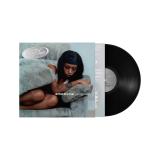
Nia Archives returns with Emotional Junglist, an album about love – but not just the shimmering romantic parts. Written throughout 2025 – a year that saw Nia fall in, and horrifically back out of, love – each track will encompass something of the experience.
Marking her biggest sonic leap to date, her alt-jungle sound honed alongside James Ford (Arctic Monkey’s, Blur), Ethan P. Flynn (FKA Twigs, David Byrne) and Julia Michaels (Lady Gaga, Sabrina Carpenter), will see her flirt with everything from dewy-eyed indie pop and nineties electronica, underscored by the syncopated beats and thudding basslines of her jungle roots with a tracklist that features Jorja Smith and Sampha.
The motif for the album is a shell – tough on the outside, but through pressure, maturation and resilience, something precious is built within. Nodding to the female form, the spiral chamber also symbolizes growth and self-development.
out of Stock
Last delivered 68 days ago available to reorder, subject to availability
Ketiov joins Radio Slave’s Rekids with the ‘I’m Okay’ EP The artist, also known as one half of the Catz ‘n Dogz duo, released on the REK’D sublabel last year.
Ketiov, AKA Voitek Taranczuk, drops the ‘I’m Okay’ EP on Rekids 17th July 2026, following his ‘10 Hours Extravaganza’ EP with Edvvin on sublabel REK’D last year. Opening track ‘La Dopamina’ sees Taranczuk, also known as one half of renowned touring duo Catz 'n Dogz, team up with Equatoguinean Spanish DJ, vocalist, producer, and visual artist Megane Mercury. Their mesmerising voice, paired with ‘La Dopamina’s raw, infectious groove, drives this club tool forward, while ‘Shut Up’ follows with playful, crunchy, glitchy dancefloor energy. On the fl ip, the mind-melting ‘My Version Of A Kickdrum’ builds pressure to distorted intensities before dropping into a hypnotic spoken-word ritual, while ‘Guiri 2026’ closes in a whirlwind of Ketiov’s own chopped-up vocals and muscular, jackin’ drums.
“This EP is all about experimentation and just jamming out. I wanted to keep the arrangements super raw and get back to the roots of music—capturing a specific feeling in the moment so people can experience it on the dancefloor later. Overall, I wanted to make an old-school club EP with different tracks for different parts of the night.” – Ketiov
As part of Catz ‘n Dogz, the Madrid-based Ketiov has shaped global dance fl oors and contributed to his own co-founded Pets Recordings and its off shoot, Step Recordings, alongside labels like Radio Slave’s flAgship Rekids imprint, Defected, and plenty more. He also runs the local queer party CARBS alongside his husband and is a resident at Madrid’s Cafe Berlin and fetish party MyPleasure.
out of Stock
Last delivered 43 days ago available to reorder, subject to availability
Not only were Derek Cannon and Hardy Thrower a music /songwriting duo from San Diego in California, they were also cousins. Its not often our paths come across such a duo that didnt sing on their own compositions.
Derek Cannon a prolific Trumpet player and Hardy a lyricist put these tracks together circa 1981 with a view to getting them a record deal. They paid for the sessions themselves and went into Golden track studio's located in Santee East San Deigo with a host of singers and musicians.
What came out was just two stunning mid temp hanuting ballad songs with exquisite playing and vocals. From the opening west coast waves crashing on the into of "Think It Over" you are already closing your eye's and painting a picture of the unfolding love story. James Higgins was hired for the vocals on this track and delivers such subtle tone's that are complimited by keyboards by Bill Santos.
Then wait until the flute solo by Ken Abady. Boy i fucking love this song. Its what soul music should be about. Love it stuff like this got recorded in 1982 when their heads could have easily been turned by what was happening in the music world.
"Im In Love With You" is slightly more uptmepo but not by a whole heal. Cannon And Thrower were far too soulful to just throw a 4/4 drum beat on the hope of a top ten winner. They cut way more deeper and soulful than that. Roosevelt Carter was hired for this vocal performance and not letting the duo down performs a beautiful take of the duo's love song. I think special shout out must go the female backing singers of Julie Reyes, Cynthia Hammond and Jamice Garcia.
The two songs were sent to none other than Lou Rawls in hope he may sign them to his record company. This never happened and the tape was later sold on an estate sale of Lou's. The buyer was Christian Peintner who was so kind to lend us the tapes and make this 45 happen. So thanks to him for allowing us to preserve the Cannon And Thrower legacy.
The Unsung Adventures of Punch Brothers is a highly strategic, physical-format priority scheduled for release on July 24, 2026, via Nonesuch Records. This document has been professionally designed to serve as an in-store info sheet to justify why this title demands a prominent listing and prime shelf space in your store. Core Commercial Arguments For Your Inventory:High Physical Media Affinity: Punch Brothers possess an exceptionally loyal, audiophile-leaning fanbase that heavily prioritizes purchasing physical LPs and CDs rather than relying solely on streaming platforms. Grammy-Winning Prestige & New Lineup Buzz: As previous winners of the Grammy for Best Folk Album (for All Ashore), this release marks a monumental shift—their first-ever all-instrumental record and the studio debut of acclaimed fiddle virtuoso Brittany Haas. It serves as a natural conversation starter for acoustic, classical, and bluegrass buyers. Massive 28-City Tour Traffic: The band's largest tour since 2019 spans from summer into late autumn 2026, targeting iconic institutions like Carnegie Hall (NYC), major folk festivals, and regional hubs. Local tour stops are critical touchpoints to align with your regional endcaps and point-of-sale displays. Premium Production Appeal: Engineered by recent Grammy-winner Joseph Lorge (Guilford Sound Studio), the pristine sonics will make this a staple for high-fidelity test spins and vinyl showcase walls.
Following the success of his project DFRA Experience Jazz Band – Jazz In, Argentinian deep house maestro DFRA returns to Groovin Recordings for his highly anticipated second 12" vinyl release, "All About You EP".
While his first Groovin record heavily merged live modal jazz and bebop structures with electronic music, All About You sees DFRA shifting focus directly back to the late-night dancefloor. Dropping just in time for the July summer heat, this four-track EP delivers a masterclass in clean, sophisticated deep house.
Across both sides, the Buenos Aires producer effortlessly pairs crisp percussion with warm, hypnotic basslines and soulful chord progressions. From the smooth, vocal-tinted groove of the title track to the late-night atmosphere of the B-side cuts, this record perfectly balances a timeless, classic edge with modern production weight.
The perennial Broadway musical My Fair Lady was based on George Bernard Shaw's Pygmalion, with book and lyrics by Alan Jay Lerner and music by Frederick Loewe. This release presents the complete recording by the original Broadway cast, taped in 1956. The recording showcases Rex Harrison and Julie Andrews in the lead roles - Harrison would also star in the 1964 film, in which Audrey Hepburn replaced Julie Andrews. This Original Cast Recording went on to become the bestselling album in the United States in 1957 where it spent 15 weeks in the Billboard chart.
Mit ihrem dritten Album „You’re Gonna Need A Little Music“, das am 17. Juli 2026 erscheint, melden
sich Yard Act zurück. Die britische Indie-Rock-Band aus Leeds schlägt damit ein neues Kapitel auf: Zum
ersten Mal entsteht ein Album komplett als Band. „You’re Gonna Need A Little Music“ ist das bislang
dynamischste, kollaborativste und energiegeladenste Werk von Yard Act. Entstanden zwischen Leeds und
Los Angeles und produziert von Justin Meldal-Johnsen (Nine Inch Nails, Beck, St. Vincent), vereint das
Album britische Edge mit internationalem Sounddesign.
Ihren Durchbruch feierten Yard Act mit der Debütsingle „The Overload“ (2020) und etablierten sich seitdem
als scharfsinnige, oft bissige Beobachter der zeitgenössischen britischen Gesellschaft. Spätestens mit „100%
Endurance“ (2022), einer Zusammenarbeit mit Elton John, unterstreichen sie ihre künstlerische Bandbreite.
Bereits 2021 wurde die Band zudem mit dem renommierten ANCHOR Award beim Reeperbahn Festival in
Hamburg ausgezeichnet.
Newly signed to EMI Records, seven-piece boyband December 10 are ushering in a new era in pop music. Formed on camera during Netflix’s Simon Cowell: The Next Act (released globally on 10 December 2025), the hugely fun, utterly joyful, incredibly charismatic, often rambunctious and completely endearing group consist of Cruz (20), Danny (17), Hendrik (19), John (17), Josh (17), Nicolas (17) and Seán (19).
Within weeks of the series airing, the pace was relentless. December 10 sold out their Introducing! run of live dates across the UK and Ireland, adding extra shows twice in response to demand before all 13 dates sold out within minutes; built a huge online following, with millions of followers across social media; and released their debut single “Run My Way” on 30 January 2026.
Since then, the band have released the singles “Infinity (123)” and “Angel”, landed in the Official UK Top 10 best-selling vinyl singles of 2026 so far, and made their festival debut at Ultra Teens Fest Japan, performing to a crowd of more than 12,000 fans.
Summer 2026 will see December 10 embark on their headline UK and European tour, December 10: The Next Step, (which kicks off in Amsterdam on 26 June and wraps up in Dublin on 21 July,) release their debut EP, On Your Side, on 10 July, and make appearances at Summer Sonic Festival in Japan and Reading & Leeds Festival in the UK.
They’re not just brilliant singers, but accomplished musicians too, playing 14 instruments between them: Nicolas plays guitar and harmonica; Danny plays guitar; Josh plays guitar, cajón and drums; Hendrik plays guitar, bass and piano; Seán plays guitar, piano and harmonica; while John was due to take Grade 8 clarinet and piano this year - until life got a bit busy.
December 10 are very much a boyband for our times: a truly inclusive group representing Chorley, Rochester, Dublin, London, Lisbon and Walsall, with Irish, Brazilian, Indian, Nigerian and Jamaican heritage between them, and musical influences that are just as expansive.Pre-order our debut EP ‘On Your Side’ now!
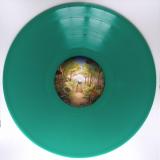
The album comes at a time when connection is needed more than ever. A generative connector and community leader Allison Russell, alongside production team Dim Star, cast a creative circle of collaborators to bring the songs to life, emerging from honest, raw dialogues between friends, lovers, chosen family, humans. The new record features Norah Jones, Joy Oladokun, Kara Jackson, Denitia, Ruby Amanfu, Devon Gilfillian, Kashus Culpepper, Brittney Spencer, Sara Watkins, Kyshona, Julie Williams, Chibueze Ihuoma and Ahya Simone. Available on "sea foam" coloured vinyl and digipak CD editions
‘Cécile McLorin Salvant ... sings standards, show tunes and old novelties in a taut, flinty, elusively beautiful voice, erring toward material with difficult lyrics and tough places in history. Salvant wins over her audiences by tweaking them slightly: daring them to go there with her—not just into the archive, but toward the darkness of the past.’ – New York Times
‘Although Salvant is known as a jazz musician, her approach to music is defined by her instinct for experimentation ... Her music is beloved for ... embracing theatre and subverting classics with playful renditions.’ – Guardian
Salvant, who has performed with orchestras regularly over the last decade-and-a-half and intended to make an album with one sooner in her career, but logistics and her abundant creative ideas led to other new projects intervening. Having finally found time to make this album, With Every Breath I Take is a different sort of record than it might have been even ten years ago.
“It is a rare opportunity to be able to make an album at this scale, which has been a dream of mine for many years,” Salvant says. “Darcy James Argue wrote stunning arrangements and the Metropole Orkest, conducted by the extraordinary Jules Buckley, gave these stories a cinematic dimension. We overcame quite a few obstacles to even get into the recording studio for this project; it took almost four years for us to do so, and I am so incredibly proud to share it.
“I did not choose these songs because they are beautiful, but because they are crucial to me,” she adds.
Cécile McLorin Salvant, a 2020 MacArthur Fellow and three-time Grammy Award winner, is a singer and composer bringing historical perspective, a renewed sense of drama, and an enlightened musical understanding to both jazz standards and her own original compositions. Classically trained, steeped in jazz, blues, and folk, and drawing from musical theater and vaudeville, Salvant embraces a wide-ranging repertoire that broadens the possibilities for live performance.
Salvant’s performances range from spare duets for voice and piano to instrumental trios to orchestral ensembles. Her unreleased work Ogresse is an ambitious long-form musical fairy tale that is being made into a feature length animated film. She has performed at national and international venues and festivals such as the Newport Jazz Festival, the Monterey Jazz Festival, the Village Vanguard, and the North Sea Jazz Festival. Her previous Nonesuch albums, Ghost Song (2022) Mélusine (2023), and Oh Snap (2025) received critical accolades; the former two were both nominated for Grammy Awards. Salvant is also a visual artist, and Oh Snap was named a best album of 2025 by the Guardian, Jazzwise, JazzTimes, and the Francis Davis Jazz Critics Poll.
Originally conceived as a massive multi-band, multi-volume covers project, this album saw Streetlight tackle eleven songs that influenced Kalnoky’s musical development. The tracklist is a genuinely eclectic mix, ranging from Radiohead and Bad Religion to Paul Simon and a 1950s Louis Jordan number. Rather than simple recreations, the band fully transforms each song through their own lens, making the covers feel like natural extensions of their catalog. Only one volume was ever released, leaving the larger 99-song concept permanently unfinished.
FIMIANI is an Italian music digger, passionate DJ and producer with an unmistakable House, Soul and American influences from black music, funk, soul and disco.
FIMIANI is one of the best DJs in the TOY TONICS camp.
His track “Disco Music” is a hit. Played by DJs like Palms Trax, Folamour, Louie Vega of Masters at Work, Horse Meat Disco, Seth Troxler, Mousse T. and many others.
Combining the original NYC house sound from the 1990ies with the best of Italian Disco history. Turning it all into a very contemporary flow of afro-american and Italian music based on funk, soul, melodies and rhythm. Just listen to his 2 EPs he did on Toy Tonics and you understand. All played live with musicans (no samples) this sounds like the best organic house tracks you can get at the moment.
Fimiani lands a major milestone with his remix of John Julius Knight’s Find a Friend (Sulfuric Trax), hitting number 1 on the Overall & House chart via Traxsource.
Check also FIMIANI’s edits of extremely rare Italian disco on his own imprint Caffè Corretto edits. Under the name BPLAN.
out of Stock
Last delivered 64 days ago available to reorder, subject to availability
**LIMITED 500 UK COPIES ON BLACK VINYL** VINYL ONLY RELEASE for RSD: Rival Consoles, UK producer Ryan Lee West, shares his original score for MindsEye, the highly anticipated narrative-driven game from Build A Rocket Boy, the studio led by visionary game director Leslie Benzies. The industrial techno score doesn’t just accompany the game, it’s embedded in the code of the world they have created together. The full score sees its debut on vinyl for the first time as a limited-edition Record Store Day 2026 release.
Set in Redrock, a sprawling desert metropolis ruled by surveillance and automation, MindsEye follows Jacob Diaz, an ex-soldier haunted by fractured memories. As his personal mission escalates, he’s forced to navigate a world shaped by rogue AI, militarized tech, and a fragile grip on control, all while confronting the truth about his past. "In MindsEye, sound is a critical storytelling layer, from ambient detail to emotional drive, every element is designed to shape how players feel inside the world," said Craig Conner, audio director at Build A Rocket Boy. "Rival Consoles’ tracks brought something truly special to that vision. Ryan’s music adds a distinct emotional charge and texture that elevates key moments. It doesn’t just accompany the game, it sharpens its edge, deepens its atmosphere, and perfectly complements the world we’ve built." The score was produced over the span of three years in his London studio, and contains some of West’s most ambitious and heaviest compositions to date.
To coincide with today’s release of the game, the 10-track score is now available to stream in its entirety. MindsEye follows West’s previous scoring work, including bespoke music for 2019’s Black Mirror episode Striking Vipers, featuring ‘I Love This, I Love You’, 2022’s Netflix feature doc El Caso Figo about the legendary football player Luís Figo, and Alexander Whitley’s contemporary dance production Overflow, which was released as a studio album with the same name in 2021. The most recent Rival Consoles album, Landscape from Memory, was released in July 2025 to critical and fan acclaim. A world tour continues into mid-2026.
out of Stock
Last delivered 4 months ago available to reorder, subject to availability
Acclaimed London collective Kokoroko have announced a brand new remix EP titled Brownswood Remix Editions 009 - Kokoroko remixes, set for release on 12th June 2026. The project reimagines standout tracks from their 2025 album Tuff Times Never Last, offering fresh perspectives on three fan favourites through a carefully curated selection of producers.
The EP brings together a dynamic trio of remixers: IG Culture, IZCO, and Musclecars, each delivering a distinct sonic interpretation rooted in club culture, soul, and rhythm-forward experimentation.
Brownswood Remix Editions 009 - Kokoroko remixes will be released on vinyl as part of the Brownswood Remix Editions series, landing as Edition 009. Known for spotlighting forward-thinking reinterpretations from across the global jazz and electronic spectrum, the Brownswood imprint brings a tangible, collector-friendly dimension to the project. This limited vinyl run offers fans and DJs alike the chance to experience these reworks in their fullest analog form, further cementing the EP’s place within the label’s celebrated remix catalogue.
Each remix expands the sonic world of Tuff Times Never Last, an album that resonated widely upon its release in July 2025, praised for its uplifting themes and rich blend of jazz, afrobeat, and soul influences.
With this release, Kokoroko continue to highlight the evolving dialogue between live instrumentation and electronic reinterpretation, reinforcing their place at the forefront of contemporary UK music.
out of Stock
Last delivered 89 days ago available to reorder, subject to availability
Long overlooked and pressed in modest quantities, the album quietly built a reputation among collectors as one of those rare low- budget releases where the artistry far outweighed the resources behind it. Fronted by the charismatic Herbie Hunte, whose warm and expressive vocals drive the record throughout, the Royalists blend blue-eyed soul, post-beat pop, light psychedelia and baroque flourishes into a sound both sincere and distinctive. From the infectious opener "Baby I Love You" to the ambitious "Royal Suite" and the atmospheric instrumental standout "Lost Voyage," the album showcases a band making inspired music with heart, energy and imagination. Despite its humble origins, The Soul of The Matter stands today as a rediscovered gem--passed between collectors and crate-diggers for decades. Now lovingly reissued by Morgan Blue Town, this edition finally gives the album the attention and presentation it deserves.
Chart topping British singer-songwriter Maisie Peters returns with much anticipated third studio album ‘Florescence’, co-produced with 2x Grammy Winner Ian Fitchuck with collaborators including Marcus Mumford and Julia Michaels. Florescence reflects on how the right love can help heal the wrong ones. It’s an album about perspective, self-realisation, healing, and ultimately, learning how to flourish. This lands as Maisie’s first new LP since she became the youngest solo British female artist in almost a decade to land a UK No.1 album with ‘The Good Witch’ back in 2023. Since then, she’s had the A-list co-signs via Phoebe Bridgers, Sam Smith and Olivia Rodrigo. She’s had a fiercely devoted fandom flock to headline tours around the world. And she’s played shows from Wembley Arena, to Glastonbury, to stadium slots with Taylor Swift and Coldplay.
“Florescence means ‘the process of flowering, of developing richly and fully’ and to me, this album describes exactly that. These 15 tracks depict a blossoming of myself from ages 23 to 25 and a blossoming of a true real love that anchors both me and this record. It tells the story of the last few long winters, with all of their villains and thorns, heartbreaks and rains, and it leads you, by the end, into a perfect English spring, into the hope and catharsis that comes when the first wildflower blooms. It’s a true representation of healing, of finding hope and peace and strength not just in somebody else, but in yourself. It is clear skies, cherry pits on the grass, windows flung open - it is Sussex country roads and London corner shop wine that leaves a stain when you kiss. It is the feeling of flying, then falling, then flying again. It is knowing that there was a point to all the sadness of before, and the point is the woman you see in this mirror now, and the person you see by her side. Love is weaved into every strand of every song on this album and for good reason - love is timeless, love is pure, love is organic and simple and effortless and real. I hope you find this album to be that as well.”
The Collaboration - Having toured together over the years, Lattimore and Barwick now join forces to co-write and record this full-length album. Their creative synergy brings together harp, voice, and analog synths in a deeply emotional, immersive sound journey. The album was recorded at the Philharmonie de Paris with co-producer Trevor Spencer (Fleet Foxes, Beach House). This album continues a unique series of collaborations between the label and the Musée de la Musique, featuring historical instruments in contemporary composition. Since 2017, InFiné and the Philharmonie de Paris have co-developed a series of albums designed to highlight the extraordinary instrument collection of the Musée de la Musique. Following the albums InBach by Arandel (2020) and Saturn 63 by Seb Martel (2022), this third release is a meeting of two iconic contemporary ambient voices: Mary Lattimore and Julianna Barwick. The project offers the artists full access to the museum’s playable instruments for recording, sound conservation, and creative reinterpretation.
--
Tragic Magic brings together Julianna Barwick and Mary Lattimore, two of contemporary ambient, experimental and electronic music’s most celebrated composers, for a unique collaboration at the Philharmonie de Paris, with extraordinary access to the Musée de la Musique’s instrument collection, in partnership with the French label InFiné. The album features seven immersive, evocative compositions guided by the human spirit – intimate, grounded in friendship, both earthly and cosmic – and part of a greater continuum, reflecting the solace and transformative power of artistry across generations.
Co-produced by Trevor Spencer (Fleet Foxes, Beach House), Tragic Magic was created in just nine days, a testament to the “musical telepathy” that has developed between Barwick and Lattimore over years of touring and friendship. Arriving in Paris from Los Angeles shortly after the 2025 wildfires, their sessions combined improvisation with the emotions and experiences they carried, in a setting both inspiring and deeply supportive. Lattimore selected harps tracing the instrument’s evolution from 1728 to 1873, while Barwick chose several iconic analog synthesizers, including the Roland JUPITER and Sequential Circuits PROPHET-5. In freeform dialogue between voice and instrument, they create a meditation on tragedy, wonder, and the restorative power of shared experience.
The duo, often joined by Spencer, also explored the city, sharing meals and visiting museums and landmarks, each encounter leaving an impression on their next session. The experience allowed them to work intimately with rare instruments, blending their personal sensibilities with centuries of history, resulting in music that honors the past while remaining a deeply authentic expression of the present.
Throughout Tragic Magic, Barwick and Lattimore find something beyond themselves: a sense that while everything may not be okay, beauty persists. Their approach – transforming life into music, observing, feeling, and creating – continues a lineage of creative expression and visionary invention, embodied in the very instruments they employed for this project.
out of Stock
Last delivered 8 months ago available to reorder, subject to availability
First Word Records is extremely proud to welcome back Kaidi Tatham, with a brand new 12-track album entitled 'Don't Rush The Process'.
This is Kaidi's 4th solo album under his own name, following on from 'An Insight To All Minds' (2021), 'It's A World Before You' (2018), and 'In Search Of Hope' (re-pressed in 2020), all released on First Word, along with several EPs from 2017 onwards.
To bring you up to speed, Kaidi Tatham is a legendary multi-instrumentalist born in the Midlands and based in Belfast. Once dubbed "the UK's Herbie Hancock" by Benji B, he's a virtuoso on the keys and a true innovator in sound production as one of the original creators of the Broken Beat sound. Over the years his musical prowess has blessed numerous projects, recently with the likes of DJ Jazzy Jeff, Andrew Ashong and with longtime accomplice, Dego. This in addition to session and remix work for artists such as Mulatu Astatke, Slum Village, Marcos Valle, Amy Winehouse, Soul II Soul, Nubya Garcia, Rosie Frater-Taylor and Leroy Burgess, along with First Word label mates Eric Lau, Children of Zeus, Allysha Joy and Darkhouse Family. Kaidi is also a revered DJ known for rocking parties globally, whilst his solo catalogue spans tons of EPs and releases for labels such as Dego's 2000 Black, Alex Nut's Eglo Records and Theo Parrish's Sound Signature.
This new album 'Don't Rush The Process' opens with an intro of sweet strings on 'Mystery Solved', ahead of lead title track, which is on a mid-tempo boom bap vibe, before switching to a more uptempo boogie vein, with the assistance of The Easy Access Orchestra, who also appear on 'We Chillin' Out', which is on a similar boogie tip. 'All I Need' is some gospel flavoured hip hop, whilst 'Knocknee Donkey' steps things up in a jazz-funk fashion. The second half of the album takes on a very Brazilian flavoured stance, with a set of delicious latin flavoured grooves on 'Any Flavour', 'Runnin' Tru', 'What A Dream' and 'Sooretama', the latter featuring the additional prowess of pianist Robert Mitchell. There's a touch more of the hip hop beats thrown in via 'Funky Fool' and the album closes out in inimitable Kaidi style with a short message: 'Mind Yourself'.
A hugely prolific artist, here he adds to an already impressive catalogue, a body of work that falls within the cracks of jazz and dance music, exemplifying modern British black brilliance; uncompromising, innovative, groundbreaking, intricately sophisticated and deeply funky. His fanbase expands on every release and it's no surprise that that fanbase includes a diverse set of peers such as Madlib ("ahead of his time"), Gilles Peterson ("a key part of an entire movement"), K15 ("a limitless source of inspiration") and Kyle Hall.
'Don't Rush The Process' is released on vinyl & digital worldwide, July 2022 via First Word Records.
out of Stock
Last delivered 2 years ago available to reorder, subject to availability
To commemorate the 40th Anniversary of the passing of James Darroch, singer/songwriter/guitarist for Sydney's incredible The Eastern Dark, Grown Up Wrong! is thrilled to announce a long-awaited reissue of the band's classic single "Julie Is A Junkie/Johnny and Dee Dee".
Heavily influenced by the Ramones - the band opened their first live show with 'Blitzkrieg Bop' and from then on opened with a new Ramones song every time they played, working through the band's complete catalogue in chronological order - as all manner of hyper-melodic and high energy rock. The Eastern Dark were a classic trio powered by former Celibate Rifles bassplayer James Darroch's blazing guitar and anchored by former Lime Spiders backing vocalist Bill Gibson's hard driving and melodic bass playing (and supreme backing vocals) and Geoff Milne's untouchable beat keeping. They set Sydney's Radio Birdman influenced scene alight in 1984 and quickly built an international following on the back of their classic single. Sadly, just hours after completing what would become their next release - the mini-LP "Long Live the New Flesh" - the band's life, and that of 26-year old James Darroch, was brutally ended in a road accident whilst the band was on its way to Melbourne.
On the back of the tragedy, the band's music lived on and it's global impact was reflected in the influence it bore on numerous bands, from Boston's the Lemoneads to Tokyo's Teengenenete, and obviously a succession of Australian bands from the Hard-Ons through to God and the Meanies and beyond.
After years of searching, surviving members Bill Gibson and Geoff Milne recently found the single's original multi-track tapes, and for the new release, the original recordings have been both remixed and remastered for maximum impact under their supervision.
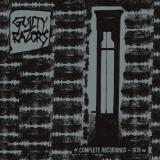
Writings on the topic that go off in all directions, mind-numbing lectures given by academics, and testimonies, most of them heavily doctored, from those who “lived through that era”: so many people today fantasize about the early days of punk in our country… This blessed moment when no one had yet thought of flaunting a ridiculous green mohawk, taking Sid Vicious as a hero, or – even worse – making the so-called alternative scene both festive and boorish. There was no such thing in 1976 or 1977, when it wasn’t easy to get hold of the first 45s by the Pistols or the Clash. Few people were aware of what was happening on the fringes of the fringes at the time. Malcolm McLaren was virtually unknown, and having short hair made you seem strange. Who knew then that rock music, which had taken a very bad turn since the early 1970s, would once again become an essential element of liberation? That, thanks to short and fast songs, it would once again rediscover that primitive, social side that was so hated by older generations? Who knew that, besides a few loners who read the music press (it was even better if they read it in English) and frequented the right record stores? Many of these formed bands, because it was impossible to do otherwise. We quickly went from listening to the Velvet Underground to trying to play the Stooges’ intros. It’s a somewhat collective story, even though there weren’t many people to start it.
The Guilty Razors were among those who took part in this initial upheaval in Paris. They were far from being the worst. They had something special and even released a single that was well above the national average. They also had enough songs to fill an album, the one you’re holding. In everyone’s opinion, they were definitely not among the punk impostors that followed in their wake. They were, at least, genuine and credible.
Guilty Razors, Parisian punk band (1975-1978). To understand something about their somewhat linear but very energetic sound, we might need to talk about the context in which it was born and, more broadly, recall the boredom (a theme that would become capital in punk songs) coupled with the desire to blow everything off, which were the basis for the formation of bands playing a rejuvenated rock music ; about the passion for a few records by the Kinks or the early Who, by the Stooges, by the Velvet mostly, which set you apart from the crowd.
And of course, we should remember this new wave, which was promoted by a few articles in the specialized press and some cutting-edge record stores, coming from New York or London, whose small but powerful influence could be felt in Paris and in a handful of isolated places in the provinces, lulled to sleep by so many appalling things, from Tangerine Dream to President Giscard d’Estaing...
In 1975-76, French music was, as almost always, in a sorry state ; it was still dominated by Johnny Hallyday and Sylvie Vartan. Local rock music was also rather bleak, apart from Bijou and Little Bob who tried to revive this small scene with poorly sound-engineered gigs played to almost no one.
In the working class suburbs at the time, it was mainly hard rock music played to 11 that helped people forget about their gruelling shifts at the factory. Here and there, on the outskirts of major cities, you still could find a few rockers with sideburns wearing black armbands since the death of Gene Vincent, but it wasn’t a proper mass movement, just a source of real danger to anyone they came across who wasn't like them. In August 1976, a festival unlike any other took place in Mont-de-Marsan – the First European Punk Festival as the poster said – with almost as many people on stage as in the audience. Yet, on that day, a quasi historical event happened, when, under the blazing afternoon sun, a band of unknowns called The Damned made an unprecedented noise in the arena, reminiscent of the chaotic Stooges in their early adolescence. They were the first genuine punk band to perform in our country: from then on, anything was possible, almost anything seemed permissible.
It makes sense that the four+1 members of Guilty Razors, who initially amplified acoustic guitars with crappy tape recorder microphones, would adopt punk music (pronounced paink in French) naturally and instinctively, since it combines liberating noise with speed of execution and – crucially – a very healthy sense of rebellion (the protesters of May 1968 proclaimed, and it was even a slogan, that they weren’t against old people, but against what had made them grow old. In the mid-1970s, it seemed normal and obvious that old people should now ALSO be targeted!!!).
At the time, the desire to fight back, and break down authority and apathy, was either red or black, often taking the form of leafleting, tumultuous general assemblies in the schoolyard, and massive or shabby demonstrations, most of the time overflowing with an exciting vitality that sometimes turned into fights with the riot police. Indeed, soon after the end of the Vietnam War and following Pinochet’s coup in Chile, all over France, Trotskyist and anarcho-libertarian fervour was firmly entrenched among parts of the educated youth population, who were equally rebellious and troublemakers whenever they had the chance. It should also be noted that when the single "Anarchy in the UK" was first heard, even though not many of us had access to it, both the title and its explosive sound immediately resonated with some of those troublemakers crying out for ANARCHY!!! Meanwhile, the left-wing majority still equated punks with reckless young neo-Nazis. Of course, the widely circulated photos in the mainstream press of Siouxsie Sioux with her swastikas didn’t necessarily help to win over the theorists of the Great Revolution. It took Joe Strummer to introduce The Clash as an anti-racist, anti-fascist and anti-ignorance band for the rejection of old-school revolutionaries to fade a little.
The Lycée Jean-Baptiste Say at Porte d’Auteuil, despite being located in the very posh and very exclusive 16th arrondissement of Paris, didn’t escape these "committed" upheavals, which doubled as the perfect outlet for the less timid members of this generation.
“Back then, politics were fun,” says Tristam Nada, who studied there and went on to become Guilty Razors’ frontman. “Jean-Baptiste was the leftist high-school in the neighbourhood. When the far right guys from the GUD came down there, the Communist League guys from elsewhere helped us fight them off.”
Anything that could challenge authority was fair game and of course, strikes for just about any reason would lead to increasingly frequent truancy (with a definitive farewell to education that would soon follow). Tristam Nada spent his 10th and 11th unfinished grades with José Perez, who had come from Spain, where his father, a janitor, had been sentenced to death by Franco. “José steered my tastes towards solid acts such as The Who. Like most teenagers, I had previously absorbed just about everything that came my way, from Yes to Led Zeppelin to Genesis. I was exploring… And then one day, he told me that he and his brother Carlos wanted to start a rock band.” The Perez brothers already played guitar. “Of course, they were Spanish!”, jokes their singer. “Then, somewhat reluctantly, José took up the bass and we were soon joined by Jano – who called himself Jano Homicid – who took up the rhythm guitar.” Several drummers would later join this core of not easily intimidated young guys who didn’t let adversity get the better of them.
The first rehearsals of the newly named Guilty Razors took place in the bedroom of a Perez aunt. There, the three rookies tried to cover a few standards, songs that often were an integral part of their lives. During a first, short gig, in front of a bewildered audience of tough old-school rockers, they launched into a clunky version of the Velvet Underground's “Heroin”. Challenge or recklessness? A bit of both, probably… And then, step by step, their limited repertoire expanded as they decided to write their own songs, sung in a not always very accurate or academic English, but who cared about proper grammar or the right vocabulary, since what truly mattered was to make the words sound as good as possible while playing very, very fast music? And spitting out those words in a language that left no doubt as to what it conveyed mattered as well.
Trying their hand a the kind of rock music disliked by most of the neighbourhood, making noise, being fiercely provocative: they still belonged to a tiny clique who, at this very moment, had chosen to impose this difference. And there were very few places in France or elsewhere, where one could witness the first stirrings of something that wasn’t a trend yet, let alone a movement.
In the provinces, in late 1976 or early 1977, there couldn’t be more than thirty record stores that were a bit more discerning than average, where you could hear this new kind of short-haired rock music called “punk”. The old clientele, who previously had no problem coming in to buy the latest McCartney or Aerosmith LP, now felt a little less comfortable there…
In Paris, these enlightened places were quite rare and often located nex to what would become the Forum des Halles, a big shopping mall. Between three aging sex workers, a couple of second-hand clothes shops, sellers of hippie paraphernalia and small fashion designers, the good word was loudly spread in two pioneering places – propagators of what was still only a new underground movement. Historically, the first one was the Open Market, a kind of poorly, but tastefully stocked cave. Speakers blasted out the sound of sixties garage bands from the Nuggets compilation (a crucial reference for José Perez) or the badly dressed English kids of Eddie and the Hot Rods. This black-painted den was opened a few years earlier by Marc Zermati, a character who wasn’t always in a sunny disposition, but always quite radical in his (good) choices and his opinions. He founded the independent label Skydog and was one of the promoters of the Mont-de-Marsan punk festivals. Not far from there was Harry Cover, another store more in tune with the new New York scene, which was amply covered in the house fanzine, Rock News (even though it was in it that the photos of the Sex Pistols were first published in France).
It was a favorite hang-out of the Perez brothers and Tristam Nada, as the latter explained. “It’s at Harry Cover’s that we first heard the Pistols and Clash’s 45s, and after that, we decided to start writing our first songs. If they could do it, so could we!”
The sonic shocks that were “Anarchy in the UK”, “White Riot” or the Buzzcocks’s EP, “Spiral Scratch” – which Guilty Razors' sound is reminiscent of – were soon to be amplified by an unparalleled visual shock. In April 1977, right after the release of their first LP, The Clash performed at the Palais des Glaces in Paris, during a punk night organised by Marc Zermati. For many who were there, it was the gig of a lifetime…
Of course, Guilty Razors and Tristam were in the audience: “That concert was fabulous… We Parisian punks were almost all dressed in black and white, with white shirts, skinny leather ties, bikers jackets or light jackets, etc. The Clash, on the other hand, wore colourful clothes. Well, the next day, at the Gibus, you’d spot everyone who had been at this concert, but they weren’t wearing anything black, they were all wearing colours.”
It makes sense to mention the Gibus club, as Guilty Razors often played there (sometimes in front of a hostile audience). It was also the only place in Paris that regularly scheduled new Parisian or Anglo-Saxon acts, such as Generation X, Siouxsie and the Banshees, the Slits, and Johnny Thunders who would become a kind of messed-up mascot for the venue. A little later, in 1978, the Rose Bonbon – formerly the Nashville – also attracted nightly owls in search of electric thrills… In 1977, the iconic but not necessarily excellent Asphalt Jungle often played at the Gibus, sometimes sharing the bill with Metal Urbain, the only band whose aura would later transcend the French borders (“I saw them as the French Sex Pistols,” said Geoff Travis, head of their British label Rough Trade). Already established in this small scene, Metal Urbain helped the young and restless Guilty Razors who had just arrived. Guitarist for Metal Urbain Hermann Schwartz remembers it: “They were younger than us, we were a bit like their mentors even if it’s too strong a word… At least they were credible. We thought they were good, and they had good songs which reminded of the Buzzcocks that I liked a lot. But at some point, they started hanging out with the Hells Angels. That’s when we stopped following them.”
The break-up was mutual, since, Guilty Razors, for their part, were shocked when they saw a fringe element of the audience at Metal Urbain concerts who repeatedly shouted “Sieg Heil” and gave Nazi salutes. These provocations, even still minor (the bulk of the skinhead crowd would later make their presence felt during concerts), weren’t really to the liking of the Perez brothers, whose anti-fascist convictions were firmly rooted. Some things are non-negotiable.
A few months earlier (in July 1978), Guilty Razors had nevertheless opened very successfully for Metal Urbain at the Bus Palladium, a more traditonally old-school rock night-club. But, as was sometimes the case back then, the night turned into a mass brawl when suburban rockers came to “beat up punks”.
Back then, Parisian nights weren’t always sweet and serene.
So, after opening as best as they could for The Jam (their sound having been ruined by the PA system), our local heroes were – once again – met outside by a horde of greasers out to get them. “Thankfully,” says Tristam, “we were with our roadies, motorless bikers who acted as a protective barrier. We were chased in the neighbouring streets and the whole thing ended in front of a bar, with the owner coming out with a rifle…”
Although Tristam and the Perez brothers narrowly escaped various, potentially bloody, incidents, they weren’t completely innocent of wrongdoing either. They still find amusing their mugging of two strangers in the street for example (“We were broke and we simply wanted to buy tickets for the Heartbreakers concert that night,” says Tristam). It so happened that their victims were two key figures in the rock business at the time: radio presenter Alain Manneval and music publisher Philippe Constantin. They filed a complaint and sought monetary compensation, but somehow the band’s manager, the skilful but very controversial Alexis, managed to get the complaint withdrawn and Guilty Razors ended up signing with Constantin with a substantial advance.
They also signed with Polydor and the label released in 1978 their only three-track 45, featuring “I Don't Wanna be A Rich”, “Hurts and Noises” and “Provocate” (songs that exuded perpetual rebellion and an unquenchable desire for “class” confrontation). It was a very good record, but due to a lack of promotion (radio stations didn’t play French artists singing in English), it didn’t sell very well. Only 800 copies were allegedly sold and the rest of the stock was pulped… Initially, the three tracks were to be included on a LP that never came to be, since they were dropped by Polydor (“Let’s say we sometimes caused a ruckus in their offices!” laughs Tristam.) In order to perfect the long-awaited LP, the band recorded demos of other tracks. There was a cover of Pink Floyd's “Lucifer Sam” from the Syd Barrett era – proof of an enduring love for the sixties’ greats –, “Wake Up” a hangover tale and “Bad Heart” about the Baader-Meinhof gang, whose actions had a profound impact on the era and on a generation seeking extreme dissent... On the album you’re now discovering, you can also hear five previously unreleased tracks recorded a bit later during an extended and freezing stay in Madrid, in a makeshift studio with the invaluable help of a drummer also acting as sound engineer. He was both an enthusiastic old hippie and a proper whizz at sound engineering. Here too, certain influences from the fifties and sixties (Link Wray, the Troggs) are more than obvious in the band’s music.
Shortly after a final stormy and rather barbaric (on the audience’s side) “Punk night” at the Olympia in June 1978, Tristam left the band ; his bandmates continued without him for a short while.
But like most pioneering punk bands of the era, Guilty Razors eventually split up for good after three years (besides once in Spain, they’d only played in Paris). The reason for ceasing business activities were more or less the same for everyone: there were no venues outside one’s small circuit to play this kind of rock music, which was still frightening, unknown, or of little interest to most people. The chances of recording an LP were virtually null, since major labels were only signing unoriginal but reassuring sub-Téléphone clones, and the smaller ones were only interested in progressive rock or French chanson for youth clubs. And what about self-production? No one in our small safety-pinned world had thought about it yet. There wasn’t enough money to embark on that sort of venture anyway.
So yes, the early days of punk in France were truly No Future!
out of Stock
Last delivered 6 months ago available to reorder, subject to availability
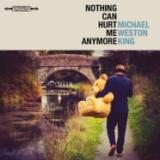
But, in the summer of 2024, a personal tragedy changed everything. Michael and Lou lost their six-year-old granddaughter, Bebe, in the Southport attacks in July that year, and, as much as they tried to carry on and make a My Darling Clementine album, with the weight of so much sadness and grief bearing down on them, it just didn't feel the right thing to do. The tragic events of summer 2024 not only changed the music they were making and the songs they were writing, it also altered their outlook on life. Recognising that everyone's grief is individual even that of a husband and wife Michael and Lou needed to channel their suffering via their own individual creativity and in their own way, rather than in collaboration, so they worked on two solo albums. Michael's "Nothing Can Hurt Me Anymore" is the first of the two to be released.
An album the defies genre, it is simply his instinctive musical reaction to the events of summer 2024. Michael writes "To be honest, it was impossible to write about anything else. It overwhelmed everything. I hope I am now creatively exhausted on the subject, but I think it will affect my writing forever, just as indeed, the loss of Bebe will". It features eleven brand new MWK songs Partly recorded in rural Wales and partly in not so rural Sheffield, "Nothing Can Hurt Me Anymore"was produced by Michael, along with wunderkind Clovis Phillips, and the brilliant Colin Elliot, who also mixed the album.
VOLUMES: ONE startet eine neue Archivreihe mit Live-Shows, Demos, unveröffentlichten Aufnahmen und anderem bisher unbekannten Material, das die vielen Epochen und Facetten von Bon Iver zeigt. VOLUMES: ONE "SELECTIONS FROM MUSIC CONCERTS 2019-2023 BON IVER 6 PIECE BAND" ist die erste Folge und vereint 10 Auftritte, die Bon Iver von ihrer wildesten, wärmsten und kraftvollsten Seite zeigen. "Diese 10 Songs sind so etwas wie ,Hier, wenn du Bon Iver noch nie gehört hast oder wenn du es gehört hast und es dir nicht gefallen hat, könnte das hier was für dich sein.' Das ist das, was wir geworden sind. Das ist wirklich unser Bestes. Das ist es", sagt Justin Vernon, der 2020 mit der Arbeit an VOLUMES: ONE begann und Dutzende von Stunden Live-Aufnahmen durchforstete, um die ultimative Trackliste zusammenzustellen. VOLUMES: ONE "SELECTIONS FROM MUSIC CONCERTS 2019-2023 BON IVER 6 PIECE BAND" ist das erste Nicht-Studioalbum von Bon Iver, aber es ist mehr als nur eine Compilation oder ein Live-Album. Die Bandmitglieder Andrew Fitzpatrick, Jenn Wasner, Justin Vernon, Matthew McCaughan, Michael Lewis und Sean Carey sind eine eigene Einheit. Gemeinsam liefern sie sowohl für Neulinge als auch für eingefleischte Fans die definitiven Versionen dieser Songs und lassen die Tracks durch die essentielle Live-Technik von Xandy Whitesel in ihrer reichhaltigsten Form explodieren. Aufgenommen zwischen 2019 und 2023, als Bon Iver ihr bisher letztes Live-Konzert gaben, hebt VOLUMES: ONE die Musik von "22, A Million" aus dem Jahr 2016 und "i,i" aus dem Jahr 2019 hervor, ergänzt durch drei wichtige Stücke. Der COVID-Hymnus "P.D.L.I.F." steht für eine neue Phase von Bon Iver; ein Cover von Mahalia Jacksons "A SATISFIED MIND" erinnert an die frühen Tage von DeYarmond Edison, als Vernon während privater Bandproben sein Falsett entdeckte; und nun endlich kehrt mit "HEAVENLY FATHER" ein beliebter Fan-Favorit zurück. Die berauschende, introvertierte und innovative Seite von Bon Iver, die die Studioalben ausmacht, kann ohne die Live-Band nicht existieren, und VOLUMES: ONE ist wie eine Zeitkapsel - ein prismatischer Blick auf einen alten Freund, der zeigt, wer sie waren und wer sie sind, all das Gute, zu dem sie fähig sind, aber manchmal vielleicht zu schüchtern sind, um es zu zeigen.
out of Stock
Last delivered 6 months ago available to reorder, subject to availability
Creaked out of an eck with two heads and no brain - just fracking around. Juli Zimmer and Sayizan Stange are Blowjobs Are Real Jobs, crawling right under your skin. Armed with guitar, MS-20 and a trashy drum machine, they bark about dogs, ostriches, stolen bodies, heads buried in sand, plastic spoons in freezer pops, and the big question of where the hell this whole loving-living thing is going anyway. The songs build up expectations like a delicious drink, which then, oops, gets taken away and never delivered. That’s how it is sometimes, you little puffball!
End of 2025, Blowjobs Are RealJobs dropped their first DIY tape, Bloody Situation Menstruation Masturbation. Their notorious sets, somewhere between performance art and riot gig, pop up almost monthly: gallery openings, summer garden chaos, or grimy St. Pauli basement bars. Now the duo’s first 7-inch vinyl brings 5 songs at 45 rpm with a fold-out cover, limited to 200 copies.
out of Stock
Last delivered 7 months ago available to reorder, subject to availability
There's one thing that everyone readily agrees on: Live concerts are the icing on the cake for musicians and fans alike. Every show is a very special experience and sometimes even creates an almost magical performance. Such moments are beyond explanation, you just have to be there to believe it or, in a best-case scenario, have them recorded for posterity – as American metal act Prong have done with their latest live album. Which is exactly what guitarist/vocalist Tommy Victor and bandmates Christopher Dean (bass) and Tyler Joseph (drums) have achieved on ‘Live And Uncleansed’: Recorded over seven nights in July and August 2025, they are now ready to present eleven powerful live songs (plus three live bonus tracks), all pure and unadulterated, authentic and honest, which is the reason why the result is so incredibly captivating.
Another Thought was the first collection of Arthur Russell’s music to be released after his death in 1992. Released in 1993 on Point Music it marked the beginning of nearly 30 years of work to let the world hear the enormous archive of unreleased recordings Arthur left behind. Be With revisits this first compilation for a new gatefold double vinyl version and a triple-fold digipak CD reissue.
Both versions of Be With’s 2021 reissue of Another Thought have been mastered by Simon Francis and the vinyl cut by Pete Norman. The original artwork has been restored and tweaked at Be With HQ for the gatefold sleeve and the triple-fold digipak, with the essential help of Janette Beckman. Each version comes with an insert reproducing the liner notes and lyrics from the original CD release.
Together with Calling Out Of Context, Soul Jazz’s World of Arthur Russell, and much of the ongoing work of Audika, Another Thought is absolutely essential for even the most casual Arthur Russell collection. In fact we’d argue it’s essential for any fan of non-obvious pop music. This is the only place where you can hear some of Arthur’s most recognisable tunes and it’s an album that absolutely deserves to be kept in press.
We’ll assume that by now you’re all at least a little familiar with the story of Arthur Russell, the farm boy from Iowa who moved to 1970s New York. Arthur Russell the genuine musical genius who died just 40 years old, leaving behind a wealth of music that dwarfed the few 12"s and LPs that were released during his short life.
Although Arthur had been working on an album for Rough Trade during his last years, with the label no-longer operating it was Point Music (Philip Glass and Michael Riesman’s label set up together with Philips) who stepped in to help Arthur’s partner Tom Lee start working out exactly what Arthur had left behind.
Tom suggested that Arthur’s friend Mikel Rouse was the right person to make the first catalogue. Working in Tom and Arthur’s apartment he had only two weeks to go through what turned out to be around 800 tapes.
As Tom explained “at the end of each day he would generally wait for me to come home and I would, to the best of my knowledge, name and identify pieces in question from that day’s work. As he worked Mikel compiled about a dozen cassettes that he thought would present the most finished sounding songs for Don/Point to use. As Don listened he would then suggest and ask me and thus we collaborated on the choices.”
Don is Don Christensen, Another Thought’s producer. With a final selection of songs from recordings made between 1982 and 1990, including sessions with some of Arthur’s regular collaborators Peter Zummo, Steven Hall, Mustafa Ahmed, Elodie Lauten, Julius Eastman, Jennifer Warnes and Joyce Bowden, it was then Don’s job to turn these into a finished album.
Another Thought is a little different from the compilations of Arthur’s music that came out since. In our conversations with Steve Knutson (who founded Audika Records and who manages Arthur’s estate together with Tom), he explained that “more than any project released by Arthur during his lifetime or posthumously by Audika, ‘Another Thought’ is the most worked over. The material was significantly edited and rearranged from the original source tapes”.
If the aim was to release a comprehensive exploration of every facet of Arthur’s music, from the most avant-garde of his avant-garde compositions through to the most disco-not-disco of his disco-not-disco tunes then the project was a spectacular failure. But as a coherent album of non-obvious pop music Another Thought is wonderful.
Starting with the sparse voice-and-cello of the title track, A Little Lost adds some guitar along with the sneaking suspicion that we’re listening to something nowhere near as simple as it first sounds. By the time we get to This Is How We Walk On The Moon - it could be the moment you notice the congas, or the percussion that’s been building behind them, or maybe it’s that blast of trumpet and trombone - we realise we’ve gone from splashing around to being completely submerged in the musical world of Arthur Russell.
From here the album heads off on its journey around the sounds of the left-field contemporary classical music of the time, re-directed towards pop ears, with minor detours through the swirling woozy disco of the half-remembered night before on In The Light Of The Miracle and My Tiger, My Timing. Whether it’s just Arthur, his cello and some bleeps on Just A Blip, or whether he has some vocal help as he does on the bounding Keeping Up, this is difficult music made so, so easy. And through it all is Arthur’s voice and cello. Sometimes drowned in distortion and sometimes clear as a bell, but always there somewhere.
A Sudden Chill finally returns us to the calmer waters we started in and this last track closes the album with a melancholy that’s not surprising given how soon after Arthur’s death the album was put together.
Whilst Another Thought holds together with the consistency of a proper album, there’s still no getting away from the fact that this was put together from audio recorded in different ways, in different places, with different people at different times. Those with keen ears will hear traces of tape hiss, the occasional blown-out note and some digital fuzz, all fingerprints of those original recordings as well as of the 1990s digital equipment that was used to piece Another Thought together.
Add to this Arthur’s obvious pleasure in making music from the sort of sounds that can make microphones, speakers and ears uncomfortable, it’s no surprise that Another Thought isn’t glossy and pristine. Don Christensen’s productions have been careful to not scrub up those original recordings so much that they lose their original vibe, understandable given that Arthur wasn’t around as a guide. We’ve applied a similarly light touch with the mastering for these Be With versions, just working to make sure they sound like they should on both the vinyl and the CD.
Despite the Discogs rumours, Another Thought was never originally released as an LP. So when it came to the sleeve for this Be With vinyl version we took the original CD artwork as a starting point to come up with something that looks like it could have been in the record racks back in 1993.
We have to thank Janette Beckman for helping us reproduce her iconic photograph of Arthur in his newspaper boat hat. One of many photographs she took of Arthur, Janette shot this in her New York studio back in 1986 for a short article in the January ’87 issue of The Face Magazine. Those with eagle-eyes will notice we’ve used an ever-so-slightly different shot from the one that appeared in The Face and then again on the original cover of Another Thought. The original has long since been lost so we’ve worked with what is left in Janette’s archives. And we also have to thank Tom Lee for giving us permission to reproduce his liner notes from the original CD booklet, together with Arthur’s lyrics.
out of Stock
Last delivered 4 years ago available to reorder, subject to availability
Despite its title, Ratboys’ new album Singin’ to an Empty Chair is not defined by what’s missing. Rather, it’s the beginning of an important dialogue with a close loved one, vocalist Julia Steiner finds herself estranged from. The music on the band’s sixth studio album – its first for New West Records – fills the space that person left behind with 11 songs showcasing Ratboys at the peak of their powers — twangy, effervescent, as confident as they’ve ever been, and perhaps more emotionally interrogative than ever before. The four-piece Chicago band followed up 2023’s highly acclaimed The Window by reconvening with co-producer Chris Walla to begin tracking at a rural Wisconsin cabin before taking the songs to Steve Albini’s famed Electrical Audio studios in Chicago and later to Rosebud Studio in Evanston, Illinois. The results veer from bubbly power-pop on “Anywhere” to irresistible post-country on “Penny in the Lake,” along with heart-piercing ballads like “Just Want You to Know the Truth” and an exhilarating detour into the extraterrestrial on “Light Night Mountains All That,” which Steiner dubs the band’s mammoth “wormhole jam.” Singin’ to an Empty Chair also marks the first Ratboys album written since Steiner began therapy, which the singer/lyricist credits for the clarity found across the album’s unflinching examinations of relationship and self. Fittingly, as the album begins by extending a hand into the void, it concludes with a scene of serenity – all while weaving candid honesty, humor, chaos, and whimsy along the way. “It's not all doom and gloom,” Steiner says. “The experience of making this record definitely gives me hope for whatever happens next.”
out of Stock
Last delivered 7 months ago available to reorder, subject to availability
With `The devil's door' And Also The Trees, one true original Post-Punk/New Wave band, presents a quiet storm of an album. At times filmic, poetic and intense with an undercurrent of dark psychedelia. It completes a trilogy of works `The Bone Carver', `Mother-of-pearl Moon' and now `The devil's door' created by the current line-up. Here there are signature `And also the trees' poetic lyrics, orchestral guitar and soundtrack influenced songs inspired by newsreel, oil paintings and folklore. But with this work we have the addition of some surprising instruments that skew the album towards a world where John Barry meets Bela Bartok. And also the trees (AATT) formed during the original post-punk era in rural Worcestershire, an environment that has provided a constant inspiration to a group whose music has often explored the dark underbelly as well as the beauty of the British countryside. They are renowned for their captivating live performances, a unique style of mandolin-like electric guitar, evocative lyrics and dark jazz rhythms - not to mention a creative independence fiercely preserved for over four decades. Back then AATT immediately caught the attention of Robert Smith of The Cure, who invited them to tour with his group on several occasions. Smith was also involved with their early recordings alongside his bandmate Lol Tolhurst, who produced their first records. This longterm friendship and mutual respect was further solidified when AATT were invited to perform at the Robert Smith curated 2018 Meltdown festival in London. This July AATT appear as The Cure's special guests at the Nimes festival. Founded by singer Simon Jones and his guitarist brother Justin, AATT have maintained a continuous presence on the post-punk, and alternative rock scenes worldwide, with a solid fanbase e.g. in Germany.
With their upcoming sixth studio album, “What A Time To Be Alive” , The Lone Bellow embarks on a bold new chapter while honoring the deep bonds that have defined their journey. Written collaboratively for the first time with their full touring band—founding members Zach Williams, Brian Elmquist, and Kanene Pipkin joined by drummer Julian Dorio and multi-instrumentalist Tyler Geertsma—the album channels the raw, ecstatic energy of the band’s live show into a dynamic collection of songs that pulse with warmth, honesty, and human connection. Recorded live in Muscle Shoals, AL, after a writing retreat in a converted Kentucky firehouse, the album is both a celebration and a reckoning: of friendship, loss, love, and resilience. From the gritty, Stones-tinged opener “After The Rain” to the soul-stirring closer “What A Time To Be Alive,” the record captures the joy and vulnerability that have long defined The Lone Bellow’s sound—lush harmonies, heartfelt lyrics, and genre-blurring arrangements steeped in folk, rock, and gospel. The album’s creation was marked by setbacks, including the theft of early recordings, but the outpouring of support from their fanbase reaffirmed what the band has always known: their music is a shared experience. That spirit echoes throughout the album, whether in anthems like “Common Folk” and “I’m Here For You,” or in intimate reflections like “You Were Leaving” and “Night Goes Black.” Since their acclaimed 2013 debut, The Lone Bellow has appeared on The Tonight Show, Austin City Limits, and The Late Show, topped Americana charts, and headlined storied venues from Carnegie Hall to the Ryman Auditorium. But with their next album, they reaffirm their commitment not just to making music, but to building community—on stage, in song, and around the table.
(make of that what you will). FIG DISH were four high school friends: guitarists/ vocalists Rick Ness and Blake Smith, bassist/ vocalist Mike Willison, and drummer Andy Hamilton. In their day (a day that began in the late Winter of 1991 and ended in the early summer of 1998), they were known for catchy songs, memorable (often booze-fueled) live shows, and self-sabotage. In July 1995, FIG DISH's debut That's What Love Songs Often Do was released. And just like that, the band was catapulted from regional obscurity into national obscurity. MTV played the video for the band's first single, "Seeds" and FIG DISH toured the U.S. and Canada relentlessly with bands like Veruca Salt, The Muffs, Letters to Cleo, Juliana Hatfield, Local H, and The Rentals. In 1997, their sophomore album When Shove Goes Back To Push , was sunk by a risque music video for the single "When Shirts Get Tight" Featuring adult film stars that MTV refused to play and the band was dropped by an indifferent Polygram Records in the summer of 1998. FIG DISH returned from hibernation in 2024 with two sold out shows in Chicago and the release of Feels Like The Very First Two Times, the band's first "new" release in 27 years, collecting unreleased tracks recorded in the late 90s. On August 1, 2025, Forge Again Records reissued That's What Love Songs Often Do on vinyl for the first time, 30 years after the original CD release. The officially licensed 2xLP features white vinyl, reworked gatefold jacket art by Wall of Youth and vinyl mastering by Carl Saff. FIG DISH celebrated the 2025 re-release with live shows in Chicago and Milwaukee with old tour-mates Letters to Cleo and capped off the year with shows in Kenosha and Chicago with Local H and Fountains of Wayne.
Despite its title, Ratboys’ new album Singin’ to an Empty Chair is not defined by what’s missing. Rather, it’s the beginning of an important dialogue with a close loved one, vocalist Julia Steiner finds herself estranged from. The music on the band’s sixth studio album – its first for New West Records – fills the space that person left behind with 11 songs showcasing Ratboys at the peak of their powers — twangy, effervescent, as confident as they’ve ever been, and perhaps more emotionally interrogative than ever before. The four-piece Chicago band followed up 2023’s highly acclaimed The Window by reconvening with co-producer Chris Walla to begin tracking at a rural Wisconsin cabin before taking the songs to Steve Albini’s famed Electrical Audio studios in Chicago and later to Rosebud Studio in Evanston, Illinois. The results veer from bubbly power-pop on “Anywhere” to irresistible post-country on “Penny in the Lake,” along with heart-piercing ballads like “Just Want You to Know the Truth” and an exhilarating detour into the extraterrestrial on “Light Night Mountains All That,” which Steiner dubs the band’s mammoth “wormhole jam.” Singin’ to an Empty Chair also marks the first Ratboys album written since Steiner began therapy, which the singer/lyricist credits for the clarity found across the album’s unflinching examinations of relationship and self. Fittingly, as the album begins by extending a hand into the void, it concludes with a scene of serenity – all while weaving candid honesty, humor, chaos, and whimsy along the way. “It's not all doom and gloom,” Steiner says. “The experience of making this record definitely gives me hope for whatever happens next.”
Despite its title, Ratboys’ new album Singin’ to an Empty Chair is not defined by what’s missing. Rather, it’s the beginning of an important dialogue with a close loved one, vocalist Julia Steiner finds herself estranged from. The music on the band’s sixth studio album – its first for New West Records – fills the space that person left behind with 11 songs showcasing Ratboys at the peak of their powers — twangy, effervescent, as confident as they’ve ever been, and perhaps more emotionally interrogative than ever before. The four-piece Chicago band followed up 2023’s highly acclaimed The Window by reconvening with co-producer Chris Walla to begin tracking at a rural Wisconsin cabin before taking the songs to Steve Albini’s famed Electrical Audio studios in Chicago and later to Rosebud Studio in Evanston, Illinois. The results veer from bubbly power-pop on “Anywhere” to irresistible post-country on “Penny in the Lake,” along with heart-piercing ballads like “Just Want You to Know the Truth” and an exhilarating detour into the extraterrestrial on “Light Night Mountains All That,” which Steiner dubs the band’s mammoth “wormhole jam.” Singin’ to an Empty Chair also marks the first Ratboys album written since Steiner began therapy, which the singer/lyricist credits for the clarity found across the album’s unflinching examinations of relationship and self. Fittingly, as the album begins by extending a hand into the void, it concludes with a scene of serenity – all while weaving candid honesty, humor, chaos, and whimsy along the way. “It's not all doom and gloom,” Steiner says. “The experience of making this record definitely gives me hope for whatever happens next.”
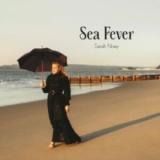
Formerly one third of the much-loved trio Black Box Recorder, alongside The Auteurs’ Luke Haines and Jesus and Mary Chain guitarist John Moore, the British singer-songwriter Sarah Nixey has steadily gained acclaim as a solo artist who makes savvy, sophisticated and poised pop.
Delivering vocals with a detached elegance over opulent tracks, any perceived nonchalance in Nixey’s luxe, cut glass voice belies her empathy, where social commentary serves as protest, both explicit and implied. Like Billy Bragg deepfaked as prime Julie Andrews, this strange but effective juxtaposition radiates soft power. ‘Lies of the Land’ depicts a corrupt post-Brexit and Covid-19 world where inequality and division flourish. ‘England's On Fire’ delves into the nuanced concepts of patriotism and nationalism, and ‘Pleasure Bay’ narrates the story of a love affair with a deprived yet beautiful English seaside town, written after Nixey left London, drawn back to the Dorset coast.
More than just a political record though, Nixey was drawn to the poetic elements of living too, telling stories of life and death, love and loss, conflicts and symmetry, in an intimate and close-up way, as if whispering secrets to her listeners.
“Sea Fever explores the bittersweet beauty of human life amid a volatile world of changing seasons and brutal elements,” says Nixey. “These are songs of deep sorrow, remembrance, birth, and change, set against a backdrop of the sensuous natural world.”
‘Rolling Waves’ explores profound grief following her beloved grandmother's death, while ‘Spring Equinox’ celebrates the joy and awe of life after welcoming her first grandchild. ‘At the Edge of the Forest’ is a poignant story of someone losing their memory, and ‘On This Wide Night’ recounts the early hours return home of a teenage runaway.
Grupo um celebrate 50 years with release of lost dictatorship-era album nineteen seventy seven!
First time release - vinyl comes with printed innersleeves
Brazilian avant-jazz vanguardists Grupo Um celebrate their 50th anniversary, sharing a second previously lost 1970s album from the vaults. Nineteen Seventy Seven (titled after the year it was recorded) is another rip-roaring instrumental fusion treasure from the band which spawned from within Hermeto Pascoal’s famed mid-1970s São Paulo collective.
Like their debut album Starting Point, Grupo Um’s Nineteen Seventy Seven was recorded when Brazil's military dictatorship was at its most repressive. “There were no open doors to those who dreamt to be protagonists in creative instrumental music”, remembers drummer Zé Eduardo Nazario, “even popular composers and singers had to submit their songs to censors and many records were banned and confiscated from the stores.”
Just like Hermeto Pascoal's Viajando Com O Som (1977) and Grupo Um's previous album Starting Point (1975), both of which remained unreleased until the 21st century, Zé Eduardo asserts that the 1977 album was flatly 'without any chance to be released at that time."
Recorded at Rogério Duprat’s Vice-Versa Studios in São Paulo, the group were under both time and space restraints, “we chose the small Studio B,” Lelo Nazario recalls, “which had a Tascam (TE AC) 12x8 console and a 4-channel AMPEX AG 440 machine. Therefore, we had to record without overdubs, everything straight to tape.”
Expanding from a trio to a quintet, original Grupo Um members Lelo Nazario (keys), Zé Eduardo Nazario (drums), and Zeca Assumpção (bass) were joined by saxophonist Roberto Sion and percussionist Carlinhos Gonçalves. Carlinhos, Zé and Zeca had already played together in the group Mandala, while brothers Lelo and Zé had just finished a stint backing Hermeto Pascoal during his years in São Paulo.
Lelo was deeply immersed in modular synthesizer experimentation during this period, working extensively with the ARP2600 and EMS Synthi AKS. These electroacoustic explorations formed the sonic foundation for "Mobile/Stabile," one of his first compositions to merge modular synthesis with Brazilian music, a fusion that would ripple throughout the Brazilian jazz scene. The piece premiered at the first São Paulo International Jazz Festival in 1978, performed by Grupo Um with guest trumpeter Márcio Montarroyos. In a shocking moment, festival organizers interrupted the show mid-performance, sparking fierce backlash from both audience members and journalists who denounced the incident as artistic censorship during Brazil's era of political and cultural repression. The version on Nineteen Seventy Seven is the first recording of the composition.
Nineteen Seventy Seven combines Afro-Brazilian rhythm, modular synthesis and a plethora of whistles, percussion and effects pedals. Album opener “Absurdo Mudo” - so titled for the absurd difficulty it poses to the musicians performing it - starts out in a cloud of mysterious dissonance, before the haze breaks for a glorious keyboard and saxophone interplay atop an uptempo samba groove. “Cortejo dos Reis Negros (Version 2)” (Procession of the Black Kings), based on the maracatu rhythm, inverts the traditional jazz song structure by beginning with improvisations, which are followed by the theme and a final coda. “The studio also had two Parasound electronic reverb units,” Lelo notes, “and the timbre is very audible on the soprano sax and percussion.”
Grupo Um’s daring music represents a manifesto of resistance during the dictatorship years, but it’s one which remains just as relevant today. As Lelo puts it: “For me, the aesthetic issue has always been about combining contemporary avant-garde languages with Brazilian music, independent of categories and commercial interests. The result of this fusion takes music to a new level.”
Recording credits (1977)
Recorded at Vice-Versa B Studio, São Paulo, November 9, 1977
Produced by Lelo Nazario and Zé Eduardo Nazario
Engineered by Ricardo “Franja” Carvalheira
Lelo Nazario – Wurlitzer electric piano, acoustic piano, signal generator, percussion
Zé Eduardo Nazario – drums, percussion
Zeca Assumpção – electric bass
Carlinhos Gonçalves – percussion
Roberto Sion – soprano sax, clarinet
Release credits (2025)
Produced by UTOPIA Studio, São Paulo
Project Coordination in Brazil by Irati Antonio (Utopia Studio)
Tape Restoration and Digital Mastering by Lelo Nazario at Utopia Studio, July 2025
Liner Notes by Lelo Nazario and Zé Eduardo Nazario
Photography by Jorge Las Heras, Lelo Nazario, and artists' personal archives
Photo Restoration by Lelo Nazario
Artwork and Design by Alessandro Renaldin
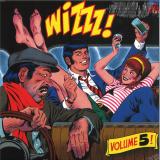
The journey through French-speaking pop archives continues with this fifth volume, packed with fuzz, gimmicks, and dissent. Far from the charts, the selected tracks display a great creative freedom, often backed by corrosive humor. Welcome to the surprising, kaleidoscopic, and colorful world of the late sixties and early seventies, Wizzz!
Born in Montauban, Robert Pico stumbled into music by chance when he met René Vaneste, then artistic director at Pathé-Marconi. René brought him to Paris to record his first 45 RPM EP in 1964. A year later, Pierre Perret introduced him to Vogue, where he recorded his second album with Claude Nougaro’s orchestra. Sylvie Vartan then introduced him to RCA, where he recorded four singles, including the astonishing "Chien Fidèle," a track backed by a hair-rising fuzz guitar. Alongside his solo career, he also composed for other artists like Alain Delon (the song was recorded but remains unreleased), Magali Noël, Bourvil, and Georges Guétary. In the Paris of the sixties, he mingled with Mireille Darc, Elsa Martinelli, Marie Laforêt, France Gall, Françoise Hardy, Petula Clark, Régine, Dani, Serge Gainsbourg, Joe Dassin, Franck Fernandel, Charles Level, and Roland Vincent. Despite his efforts and winning a Grand Prix Sacem for his final record, Robert Pico didn’t achieve the expected success in show business and decided to leave Paris and return to the Southwest, where he devoted himself to writing. He is the author of 23 books (including Delon et Compagnie, Jean-Marc Savary Editions 2025, a memoir about his youth and his many encounters). Today, he is relieved to never have become a celebrity and devotes himself to his work with passion.
In 1969, the Franco-Italian movie Erotissimo was released, directed by Gérard Pirès (who later directed Taxi in 1998, written and produced by Luc Besson). This pop comedy features Annie Girardot, Jean Yanne, Francis Blanche, Serge Gainsbourg, Nicole Croisille, Jacques Martin, and Patrick Topaloff. The soundtrack was written by Michel Polnareff and William Sheller, with lyrics by Jean-Lou Dabadie. "La Femme Faux-cils," performed by Annie Girardot. It recounts the feelings of a rich CEO's wife who seeks to develop her sex appeal under the influence of advertisement and magazines. Groovy, sparkling and light, this track, with ITS lush arrangements humorously critiques consumer society and feminine beauty standards.
“Je suis l’Etat” (1967) is the flagship track of the first EP by singer-songwriter Spauv Georges, aka Georges Larriaga, better known as Jim Larriaga (1941-2022). Born into a family of bakers, the young man was initially planning to become a hairdresser when he discovered English-speaking music through Elvis Presley and the Beatles. After this revelation, he decided he would become a songwriter and gave himself five years to succeed. He recorded his first two EP’s independently for RCA under the pseudonym Spauv Georges; meaning “that poor George”, a nickname given to him by the mother of her friend Jean-Pierre Prévotat (future drummer of the Players, Triangle, or Johnny Hallyday). Portraying a depressed and eccentric young man, Spauv Georges created corrosive and amusing songs that didn’t reach a wide audience, despite a TV appearance with Jean-Christophe Averty.
Supported by his loyal friend and fellow songwriter Jean-Max Rivière, Georges Larriaga met the future singer Carlos in the early '70s, then Sylvie Vartan’s assistant. He wrote songs for Carlos, including the popular "La vie est belle," "Y’a des indiens partout," and "La cantine", which went onto become a huge hit in 1972. He also composed for Claude François (“Anne-Marie”, 1971), Charlotte Julian (“Fleur de province”, 1972), helped launch child singer Roméo (who sold 4 million records), and later wrote the hit "Pas besoin d’éducation sexuelle" (1975) for the young Julie Bataille. In 1971, Jim recorded an album for Disc'Az: “L’univers étrange et fou de Jim Larriaga”, which featured pop gems like “La maison de mon père”.
The story of the song "Zoé" began when Pierre Dorsay, artistic director at Vogue Records, asked Swiss singer and musician Pierre Alain to write a song for a new female singer. The inspiration came when he realized that Zoé (the artist's name) was also the name of France's first atomic battery, created in 1948, which consisted of uranium oxide immersed in heavy water! The lyrics reflect a bubbling energy that must be handled with caution, while the instrumentation echoes this atomic theme, notably with the use of a theremin.
Zoé’s career lasted only as long as a single 45 RPM, but it seems Christine Fontane was the vocalist behind this pseudonym, who is known for several EPs, a good "popcorn" album in 1964, and a handful of children’s singles in the '70s. Regardless, the photograph on the cover is of a different girl entirely.
Later, Pierre Alain continued his career, writing songs for himself, Marie Laforêt, Danièle Licari, Alice Dona, Arlette Zola (3rd place in Eurovision 1982), and achieving multiple gold and platinum records in Canada. Also an inventor with several patents, president of the Romande Academy, and head of the French Alliance in Geneva, he now composes atonal music, books, and poetry. Moreover, he is also the host of "Les Mardis de Pierre Alain" at "Le P'tit Music'Hohl" in Geneva.
Filled with oriental choruses and fuzz guitar, "Fou" is from Jacques Da Sylva's only EP released by Vogue in 1967. Despite the quality of this recording, all traces of this singer disappear after this first effort.
Valentin is a baroque pop singer born in Belgium. He is the songwriter and composer of most of the tracks on his three singles released in the late 60s in Canada. A legend says that he reincarnated himself as Jacky Valentin during the 1970s for a rock'n'roll revival career in Belgium, but his older brother sadly debunked this story. Valentin's first two singles were arranged by Claude Rogen, a Parisian session pianist who had come to Canada to promote the song “Mister A Gogo”, a cover of David Bowie’s “Laughing Gnome”, adapted by singer Delphine, his wife at the time. Far from his usual network, Claude Rogen arranged music for Polydor, including the arrangements for “Je suis un vagabond” in 1969, a jerk tune with string arrangements and a furious optimism.
Jacques Malia wrote, composed, and recorded his only 45 EP for Festival in 1966. “Histoire de gitan” is an incredible beat track with bohemian scat that tells the story of a gypsy musician who came to Paris to make it in the Music-Hall, to no avail. The hero of the song and its author probably shared a similar fate, as Jacques Malia faded into anonymity after this remarkable attempt.
Bernard Jamet recorded two EPs for Barclay in the late sixties and co-wrote several songs with Christine Pilzer, Pascal Danel, and prolific songwriters Michel Delancray and Mya Simile. The track “Raison Légale” (1968), his masterpiece, immerses the listener in a courtroom right when a murderer is being judged, with jerk rhythm and free arrangements. A unique, paranoid, judicial, and psychedelic oddity.
Jean-Pierre Lebrot-Millers started his career in show business in 1967 as a singer and songwriter for the Philips label. After three singles, he wrote several songs of a new kind with his friend Pierre Halioche, in the midst of the sexual liberation movement and the democratization of drugs. With provocative lyrics, “Les filles du hasard” and “Barbara au Chapeau Rose” were released on a Philips singles in 1968. The character of Barbara was inspired by a queen of Parisian nightlife during the psychedelic years: model Charlotte Martin, who dated Eric Clapton from 1965 to 1968, then Jimmy Page from 1970 to 1983. Jean-Claude Petit’s arrangements, with a table-filled intro, soul brass, and Hendrixian guitar, emphasize the flamboyance of a hedonistic and sexy character, whose dog is named Junkie because “Junkie est un nom exquis”! The track was recorded live in three takes with a full orchestra.
Upon its release, the record was censored by Europe 1 and RTL due to its references to drug use. Jean-Pierre Lebrot was then banned from the airwaves and later dismissed by his record label. He changed his artist name to Jean-Pierre Millers, while his companion Pierre Halioche became D. Dolby for a new dreamy composition, “Chilla”, which Jean-Pierre produced himself with arrangements by Jean Musy. Once again, the song was immediately censored everywhere. After this setback, he decided to stop singing and started taking on odd jobs to support his Swedish wife and their son until the day he met Jean-Pierre Martin, then production manager at Decca, who had worked with Manu Dibango. Martin offered Jean-Pierre Lebrot-Millers, then employed at Rank Xerox, the position of artistic director at Decca. He accepted and became, a year later, promotion director (radio, press, TV). He worked on Julio Iglesias’s first album for Decca, which became a massive hit and allowed him to meet Claude Carrère. The latter asked him to write new songs and find their performers, much like a “talent scout.” It’s through him that Jean-Pierre discovered Julie Pietri and Corinne Hermès. He composed “Ma Pompadour” for Ringo, Sheila’s husband, and took the microphone again for the syncope hit “Rendez-Vous” in 1982.
That same year, Jean-Pierre Lebrot-Millers tried to release a track for which he had heavily gone into debt: “Si la vie est un cadeau”. Having recorded it in London, he presented it to numerous professionals, all of whom refused to get involved. The same thing happened with Antenne 2 and the Sacem when he proposed the song as France’s entry for Eurovision. He then met Haïm Saban, who was producing cartoon soundtracks and had just launched the Goldorak theme song. Saban, having listened to the song, declared it had the potential to become a hit. He sent Jean-Pierre and Corinne Hermès to meet the CEO of the Luxembourg radio and television network. The latter received them, asked to hear a verse and chorus a cappella in his office, and immediately hired them to represent Luxembourg at Eurovision 1983. They reworked the arrangements and recorded a new version with Haïm Saban as co-producer. The song ended up winning Eurovision 1983, a great comeback for our hero. He continued producing and hung out with the band Nacash in Belgium when a couple came to introduce their daughter for an impromptu audition in a hotel room. The girl sang “Les démons de minuit” while dancing to a radio cassette. Impressed, he had her take singing lessons for a year and composed a song for her (for which he had the melody and title, but no lyrics). This required him to go on the hunt for a lyricist, who ended up being Guy Carlier. They recorded the song, which was initially a ballad, at Bernard Estardy’s CBE studio, and gave the singer a new name: Melody. They showed the song around their industry network without success. Later, Estardy called Jean-Pierre to suggest changing the rhythm and making it pop-rock. Orlando, Dalida’s brother, liked the result and decided to co-produce the track. “Y’a pas que les grands qui rêvent » became a classic hit. The song has since been covered by Juliette Armanet (as a ballad, like the original) and Valentina.
Born into an aristocratic Breton family, Hervé Mettais-Cartier worked as a DJ at Queen Kiss, a nightclub in Poitiers, where he formed the band Les Concentrés with Michel (an actor) and Christian (a radio technician). Together, they created a repertoire of whimsical songs (“Ma bique est morte”, “J’suis un salaud”, “Fils de dégénéré”...) that they performed on stage dressed in white (in homage to “concentrated milk”). They performed at Bliboquet and Olympia in 1968 for the 10th edition of the “Relais de la chanson Française” organized by L’Humanité-Dimanche and Nous les Garçons et les Filles, sponsored by Pepsi Cola. Winners in the author-composer category, alongside Danish singer Dorte, their visibility allowed them to record a 45, and appear on television in Jean-Christophe Averty’s show. The A-side of the disc features Bruno le ravageur, a casatchok dedicated to Bruno Caquatrix, the director of Olympia, nicknamed in the song “Coq Atroce” or “croque-actrices”. The B-side is dedicated to “Fils de dégénéré”, a quirky tribute to Hervé's aristocratic roots, mixing absurdity with sophisticated vocal harmonies.
After Les Concentrés, Hervé Mettais-Cartier formed the duo La Paire et sa Bêtise with his friend Olivier Robert. They performed in Parisian cabarets and toured with Pierre Vassiliu. In the late 1970s, Hervé began a solo career. He recorded two albums for the Motors label in 1978 and 1979, which did not achieve their anticipated success due to lack of promotion. In 1980, he met Bernadette, with whom he started a family and created a “Chansons à voir” (songs to see) show that he performed until his death at the end of 2024.
Publicité comes from the final EP by the Missiles (Ducretet Thomson, 1966), a disc that also includes “La (nouvelle) guerre de cent ans”, featured on Volume 4 of our Wizzz! series. Please refer to the booklet for the story of the band.
“He’s 1.82 meters tall, 28 years old, weighs 135 kg, is black and Belgian”: this is the description of singer Hegesippe on the back of his sole single (Decca, 1967). He appears on the album cover wearing a Greek toga, like a hippie gag – we are at the end of the year 1967. In “Le crédo d’Hegesippe”, this former bodyguard of Antoine and the Charlots plays the delightful card of the thick brute converted to Flower-Power and non-violence, with arrangements by Jean-Daniel Mercier, aka Paul Mille.
“Ethéro-disco” was released on a promotional record for clients of the Maréchal company (Liège, Belgium) for the New Year 1979. Over a funky rhythm, celebrity impersonations (Brigitte Bardot, Jacques Dutronc, Fernandel…) deliver an enigmatic text about pharmaceutical products like ether, bismuth, and aspartate. The track was composed by Dan Sarravah (responsible for Joanna's “Hold-up inusité” featured on Wizzz! Volume 3) and Tony Talado, who was also a singer (one 45 in 1967), songwriter (with over a dozen credits between 1964 and 1985 in various styles from surf music to disco), author (Devenez Végétarien, Dricot Editions, 1985), ad designer, and psychologist.
Décollez-les is on the A-side of Mamlouk's only single, a pseudonym for Marsel Hurten, who is known for his work on several EPs in the late sixties, as well as composing music for Hervé Vilard’s “Capri, c’est fini”, Claude Channes' “La Haine”, Annie Philippe’s “On m’a toujours dit”, and Nancy Holloway’s “Panne de Cœur”.
This strange song, with Afrobeat horns and absurd dialogues between a chef and his kitchen staff, is the result of a collaboration between Marsel Hurten and one of his neighbors, a photographer from Pavillon-sous-Bois (93), where the musician settled after returning from the Algerian War. A music video was shot to promote the record.
Marsel Hurten was born in Tourcoing (59) into a musical family. At a young age, he joined the brass band founded by his grandfather, playing the piston before studying trumpet at the conservatory, as well as teaching himself how to play the guitar. As an orchestra musician, he toured in France, Belgium, Germany, and England. He released a series of solo 45’s between 1965 and 1968 for the DMF and Az labels before stopping recording to focus on working for other artists (Gilles Olivier, Noëlle Cordier…).
“L’amour nu” (Vogue, 1971) is the work of the short-lived Belgian band Mozaïque. The track, written by singer Jacques Albin, closely resembles another of his compositions, “Carré Blanc”, which he recorded in 1969 for Disc’AZ.
Represented by the Lumi Son micro-label based in Marignane (Côte d'Azur), Jean-Marc Garrigues released two 45 RPMs in the late sixties, defending the French jerk sound. The song “Je dis Non” is a short, joyful ode to youth, pop music, and rebellion.
Songwriter and performer Jacques Penuel released three singles. The first one, “Astronef 328” (Fontana, 1969), features a dizzying series of chords punctuated by sound effects, a sci-fi story, and arrangements by Jean-Claude Vannier.
We would like to sincerely thank Pierre Alain, Moon Blaha, Marsel Hurten, Bastien Larriaga, Jean-Pierre Lebrot-Millers, Bernadette Mettais-Cartier, Robert Pico, Olivier Robert, Claude Rogen, Micky Segura.
out of Stock
Last delivered 8 months ago available to reorder, subject to availability
On the 25th August, Burna Boy will release his brand-new album ‘I Told Them…’. It will be available to stream everywhere as well as on CD & Vinyl. The Pre-order will go live alongside the album announce on the 28th July. ‘I Told Them…’ features Burna’s newest hit singles ‘Sittin’ On Top Of The World (feat. 21 Savage)’, ‘Talibans II’ & ‘Big 7’ as well as a whole host of album features.
Burna Boy was born Damini Ogulu in Port Harcourt, Rivers State, Nigeria, in 1991 and began making music at just ten years old. As a teenager he honed his craft on Nigeria’s southern coast, delving into dancehall, reggae and Afrobeat’s. In the early 2010s Burna Boy emerged as one of Nigeria’s fastest-rising stars, combining influences from his Nigerian heritage with hook-filled pop stylings to create unforgettable tracks. His 2012 single ‘Like to Party’ broke into the global mainstream and paved the way for his full-length debut L.I.F.E, a year later.
Over the next five years, Burna Boy released two more albums and collaborated with a long list of high-profile artists including J Hus, Skales, Fall Out Boy and Lily Allen. African Giant was released in 2019 followed by his fifth album Twice as Tall in 2020 (which featured collabs with Chris Martin and Youssou N'Dour), both charted in several countries across the globe andgarnered worldwide acclamation, with the latter winning a Grammy Award for ‘Best Global Music Album’. Breaking cultural boundaries, he became the first Nigerian to headline a show at New York’s Madison Square Garden, he released his sixth album, Love, Damini, last year (featuring collabs with the likes of Ed Sheeran and Khalid). It deservedly became the highest-charting Nigerian album in history and currently holds the record for the only African artist to earn a no. 1 on iTunes in 16 countries worldwide.
out of Stock
Last delivered 8 months ago available to reorder, subject to availability
Die Musik von Bobby Krlic (aka The Haxan Cloak) und Daniel Pemberton für den Film Eddington auf rot-blauem Split-Vinyl. Mit Original-Artwork von Matt McCormick. Kommt mit einem ,Keep Honking"-Autoaufkleber. Eddington ist eine schwarze Komödie und ein moderner Horror-Western von Ari Aster. Der Film mit Pedro Pascal, Emma Stone, Austin Butler und Joaquin Phoenix in den Hauptrollen spielt in einer Kleinstadt in New Mexico während der Corona-Pandemie. Der Film feierte im Mai 2025 bei den Internationalen Filmfestspielen in Cannes seine Premiere und wurde dort für die Goldene Palme nominiert und kam im Juli 2025 in die US-amerikanischen und im November 2025 in die deutschen Kinos.
"I want nothing more than to be a loner," Emily Kempf sings early on Flower of Devotion, the new album by Chicago trio Dehd. It's a startling admission coming from a songwriter who, just a year ago on Dehd's critically acclaimed Water, wrote eloquently about the joys and pains _ more than anything, the necessity _ of love, compassion, and companionship. But then, "admission" isn't really the right word here, given the stridency of Kempf's tone. "Loner" is a declaration. The record ups the ante on Dehd's sound & filters in just enough polish to bring out the shining and melancholy undertones in Jason Balla and Emily Kempf's songwriting, even as it captures them at their most strident. Balla's guitar lines at times flirt with ticklish cosmic country, while at others they reflect the dark marble sounds of Broadcast. Kempf, meanwhile, establishes herself as a singer of incredible expressive range, pinching into a high lonesome wail, letting loose a chirping "ooh!," pushing her voice below its breaking point and letting it swing down there. When she and Balla bounce descending counter-melodies off one another over McGrady's one-two thumps, or skitter off over a programmed drum pad, they sound like The B-52s shaking off heartache. What makes Flower of Devotion so impressive is how its creation seems to have strengthened its creators, both as individuals and as a unit, even as they've stared down their own limitations. It's also striking just how much fun they seem to be having in the process. "It's okay to be lighthearted in the face of despair," Kempf says. It's a theme that runs through the album, from the opening back-and-forth build of "Desire" to the click-clacking chorus of "Haha," which finds them deflating their own history. Flower of Devotion was recorded in April and August of 2019 in Chicago. It will be released on Fire Talk Records on July 17th 2020.
James Brown wants to know one thing before he and his band begin Sex Machine. “Can I get into the thing, really?,” he asks. His cohorts enthusiastically respond in the affirmative. And for the next hour and change, Mr. Dynamite gets into it and more, turning in a sweat-soaked, feet-moving, hip-swiveling, emotion-purging, in-the-red, drop-everything-you’re-doing-and-dance performance for the ages. Ranked by Rolling Stone among the 500 Greatest Albums of All Time, the sweeping 1970 effort towers as a testament to Brown’s inimitable legacy as well as the peak powers of his voice, vibrancy, and bands.
Sourced from the original master tapes, pressed at Fidelity Record Pressing, and housed in a Stoughton gatefold jacket, Mobile Fidelity’s numbered-edition 180g 33RPM 2LP set presents Sex Machine in audiophile sound for the first time. It explodes with the energy the lightning-strike music demands. Dynamic, immediate, present, airy: Everything from the brassiness and fluidity of the horns to the snap and decay of the snare to the swell and carry of the organ comes across in full-range perspective.
Then there’s Brown’s superhuman singing, which here emerges with a purity, naturalism, and transparency that ensure you feel everything. Screeching, shouting, pleading, moaning, preaching, stinging, commanding, testifying, crooning, humming: The Godfather of Soul contributes one of the finest vocal performances known to man. This definitive 55th anniversary reissue of Brown’s monster funk statement further exhibits a combination of clarity, solidity, separation, and imaging that helps bring to light what he and his crack ensembles committed to tape. Both in the studio and on the stage.
Just how lifelike does this reissue sound? Senior Mobile Fidelity Sound Lab engineer Krieg Wunderlich, who handled the remaster, notes: “There were some artifacts that sounded a bit like mistracking. But they turned out to be breath blasts on the vocal microphone. That is part of history. JB was workin' hard, and breathin' hard. And there was an edit the timing of that was truly strange. Again, a part of history.”
Originally marketed as a live album, Sex Machine contains six songs recorded in the studio and later overdubbed with canned crowd noise and reverberation. Save for “Low Down Popcorn,” the tracks on the latter half stem from a phenomenal performance captured in October 1969 at Bell Auditorium in Brown’s adopted hometown of Augusta, GA. The special relationship between the singer, the audience, and the location is palpable.
As the 1960s gave way to a new decade, Brown experienced immense success and dealt with unexpected change. Soul Brother Number One soon expanded his idea for an official live album captured in Augusta when the ensemble that backed him on that date morphed into the original version of the world-famous J.B.’s just months after the show. The virtuosic abilities, sticky chemistry, and rhythm-forward nature of the J.B.’s prompted him to book a one-off session in Cincinnati, OH, on a late July night.
Anchored by brothers William “Bootsy” Collins and Phelps “Catfish” Collins, the group — as well as two different drummers — laid down a nearly 11-minute rendition of “Get Up I Feel Like Being Like a Sex Machine” and a thrilling medley of “Bewildered,” “I Got the Feeling,” and “Give It Up or Turnit a Loose.” A pair of then-recent studio singles cut in separate locations in 1969, “Brother Rapp” and “Low Down Popcorn,” each featuring his prior group, took care of the second LP worth of material that complements the originally planned live set.
Complicated? Somewhat. Unusual? Definitely. But just as he elevated the expectations for all present and future R&B artists, Brown not only makes it all work. He makes it positively electrifying.
“Get Up I Feel Like Being Like a Sex Machine” is alone deserving of a dissertation on the art of funk music, seeing it moves up and down akin to an oil derrick, witnesses Brown unleashing a trademark series of grunts, squeaks, and “good god” asides, and glides to a hypnotic groove that won’t quit. Or look to the syncopated rhythms of “Brother Rapp (Part I and Part II),” one of multiple pieces here that signify the point where Brown began viewing every instrument as a percussive tool. Brown closes the three-song medley with his new band with a skedaddling “Give It Up or Turnit a Loose,” which provides jolts on the order of sticking your finger into a socket.
Not that the actual live material falls short in any way. Setting an insistent tempo for the vitality that follows, “I Don’t Want Nobody to Give Me Nothing” positions Brown as a role model, leader, and self-sufficient entrepreneur. All simmer and boil, the short and sweet “Licking Stick” dares you to keep pace. The floating, almost comforting “Spinning Wheel” spotlights the instrumental prowess of Maceo Parker and company, and functions as a seamless segue into the tender, horn-saluted “If I Ruled the World.”
And Brown and his mates still aren’t done. Just try to resist the one-two closing punch of “I Can’t Stand Myself (When You Touch Me)” and “Mother Popcorn.” Mercy.
Ain’t it funky? Sure ‘nuff.
out of Stock
Last delivered 9 months ago available to reorder, subject to availability