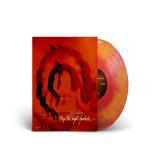
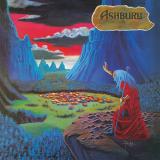
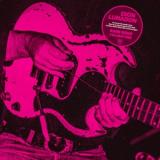
“Music for me, is rarely complete,” says GODFLESH mastermind Justin Broadrick, “but it has to reach a point where enough is enough. Creatively, there has to be self-discipline. One has to end it.” Broadrick is primarily referring to the nebulous process of writing and arranging songs into their various potential shapes, but he could just as easily be describing GODFLESH’s imminent conclusion. Just three years after the hypnotic crunch of Purge, 25 years after an uncertain hiatus that nearly scuttled the band, and 38 years since GODFLESH’s inception, Broadrick and bassist-at-arms Ben Green set out to mercilessly crush this cold world with their tenth and penultimate album, this year’s Decay. “Decay was born from the same sessions as Purge,” Broadrick declares of the new record’s six tracks. “It was one huge pool of songs. I picked what I felt was appropriate for what I wanted to achieve with Purge, with the intention of releasing the songs that didn't fit as a new album within a year of Purge being released. Unfortunately, two years passed whilst considering external labels, so that I didn't have to self-release GODFLESH anymore, but it took an awful lot of time to establish a comfortable home for me. The recordings were done, but as usual for me, I did change a lot of stuff once I came back to it.” Now, GODFLESH is ready to unleash an even bolder, bleaker series of sounds in Decay. These songs arrive shortly after Broadrick released a public statement about major abdominal surgery he underwent earlier this year.
Originally released in 1978. A Classic Reggae album re-released on 180 gram vinyl and produced by Linval Thompson with extensive sleeve notes.
Recorded at Channel One Recording Studio & Harry J's Recording Studio.
Cornell Campbell is one of an elite group of Jamaican reggae singers who has weathered the changes throughout the music's development - in his case, from the ska era to right up to date - whilst retaining their relevance. Witness his recent alliance with UK Afrobeat/reggae band The Soothsayers or Jazmine Sullivan's R & B hit Need U Bad, which sampled his classic 'Queen Of The Minstrel' -a song that still sounds fresh more than thirty years later.
Sweet Baby was pressed on bright red vinyl, which only added to the excitement when you saw the selector position it carefully on the deck.
On the LP cover was a painting of Cornell wearing an emerald green shirt and framed by a lurid sky, which might have left some people wondering if it was a soul album. It wasn't, although there is certainly soul in the grooves, and especially on R&B covers like Gonna Take A Miracle - first recorded by the Royalettes -and Darling You Send Me, which Sam Cooke had introduced to the US Billboard charts some twenty years earlier.
Both are among the highlights but then the whole album is good in truth, and a heartfelt I Need Somebody and My Sweet Baby, plus the two-step favourite Just Enough were regularly played on sound system. Blinded By Love, I Didn't Know and Can't Hide My Love are tinged with melancholy and like the seductive Whenever You Need Me, display all the hallmarks of a classic Cornell Campbell side -swooping vocals, a driving rhythm and seductive lyrics included.
Nearly forty years later, it is gratifying to know there is still no mistaking him when his records are played in a dance. That relaxed vocal style draws you in but it's his falsetto, quivering with understated emotion that hooks you and turns you into a lifelong fan.
*Re-release of Holy Fuck’s 5th album originally released in 2020, now on clear vinyl limited to 500 copies*
Holy Fuck have today announced details of new album 'Deleter', which will be released on January 17th and is further previewed with the video for acclaimed latest single 'Luxe' (ft. Alexis Taylor). Having just concluded a US tour alongside Hot Chip, the seminal Canadian band will play a selection of European headline dates later this month (with a London show at Moth Club on October 23rd selling out immediately).
Arriving at a moment where attention spans are shot and anxieties are going into overdrive, 'Deleter', Holy Fuck’s fifth studio LP, is a defiantly full-bodied affair. Polyrhythmic and pleasure- focused, 'Deleter' sees Brian Borcherdt, Graham Walsh, Matt Schulz, and Matt “Punchy” McQuaid utilises their signature sound - seamlessly fusing the gauzy drive of krautrock and deep house’s dreamy ineffability, expertly blending purring motorik percussion with the sort of fuggy synthetic fizz and tang they are renowned for.
From the thrusting minimalism of opener ‘Luxe’ through to the triumphant chug of closing track ‘Ruby’, via club-ready rollocker ‘Free Gloss’ and the cosmic clatter of ‘San Sebastian’, Deleter is a record that joins the Holy Fuck dots within their widescreen, technicolour, crescendo- heavy sound.
Pressure is the medium of wind players. Wind instruments all sound thanks to pressure differentials, whether that’s the rush of wind over a lip plate or a steady, buzzing exhalation through pursed lips. Ka Baird and Chris Ryan Williams (HxH) are wind players well- schooled in the power of using pressure and movement to amplify the mystery of an invisible force animating a metal tube. They augment their instruments, flute and trumpet respectively, with electronics, sometimes obscuring the acoustic sound source, sometimes making it hyperreal. Flutters of lip and tongue slither over the listener’s ear, and sustained tones become a dense fog, pushing on other kinds of visceral, emotional pressure points.
On Enthalpy, Baird and Williams’ first album as a duo, the energy they conjure feels barely contained, the pressure built up to a breaking point before spilling out in multiple directions at various speeds. They borrow the title from thermodynamics, referring to the total energy of a system based on its pressure and volume. The music flies out in bursts; it seeps and oozes, flows with intention. It is an incredibly rhythmic work without any hint of meter, full of sounds that punctuate with the thud of a dart hitting a bullseye. Williams’ capability to conjure swirling atmospherics, as well as his remarkable ability to pull fragments of melody from the haze, fit puzzle-like into Baird’s exclamations and the eruption of electronics that often dovetail them. The duo draws on tones from nearly the entire range of human hearing, from nimble but bulbous throbs of sub-bass to pinprick flickers of ultra-high end.
The sessions that produced Enthalpy were completely improvised, showcasing a degree of mind-meld that belies each participant’s thrill at approaching the unknown. This isn’t a casual conversation, but an omnidirectional tangle that ties and reties itself into new knots as the album progresses. Williams and Baird have both become ubiquitous presences throughout the New York City experimental music communities, collaborating with innumerable others and learning how their unique approaches work in tandem with similarly expansive thinkers and players. Even in the album’s most spacious moments, there’s a tension between the feeling of being unmoored and yet completely locked in, like the abyss is just one more river to cross. They ford it together before moving on to the next idea in lock step.
For the listener, Enthalpy is often felt in the body as much as it reverberates within the ears. We’re tossed from side to side, made to shoulder the impact of detonating electronics, absorbing these sounds with the feet, gut, and crown. Baird reaches into the back of their throat for guttural growls, and we can almost feel the scratch. As we tread the border of the synthesthetic, it's a reminder of the physical nature of sound, that the space between our ears and the speakers is its own enthalpic system of energy conduction. Move with it, let it move you, and see how it feels.
The Version of Me You Get is a record about perspective, how life changes you, and who you are on the other side of it. Written and recorded in 2020 alongside longtime collaborator Sean McConnell, the album was born out of a rare stillness - a week spent holed up in the studio, building songs piece by piece with no outside noise and no deadline. Bowen had never had that kind of time with a record before. The result was something unhurried, deeply considered and wholly their own. Then life picked back up, and the album sat. Five years later, Bowen returned to the recordings and found something he didn't expect: the songs had grown. What was captured in 2020 as honest and uncertain had become something richer — shaped by everything that followed, personally and professionally. The distance didn't diminish the record. It deepened it. Spanning love, struggle, redemption, and vulnerability, The Version of Me You Get didn't just capture a moment in time, it gained meaning because of what came after. These songs finally found their moment. And it turns out, the wait made them better.
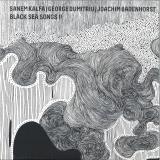
On this new album, the trio of Sanem Kalfa, George Dumitriu, and Joachim Badenhorst invites you on a poetic and sonic voyage. While their debut Black Sea Songs (2021) drew from traditional folk melodies, this work is a collection of original compositions and one improvisation, inspired by the rich cultures and emotions surrounding the Black Sea.
The music of this trio is elegant yet adventurous, blending jazz, improvisation, world traditions, and contemporary classical influences. Kalfa's distinctive voice and cello, Dumitriu's versatile viola and guitar, and Badenhorst's expressive clarinet and occasional vocals create a unique, dreamlike atmosphere. From the melancholic dance of "Denizi Özleyenler ?çin" (inspired by Orhan Veli Kan?k) to the hypnotic rhythms of "Intermezzo" and the narrative depth of "Fisherman" and "Black", each track breathes the freedom, longing, and interconnectedness that the Black Sea symbolizes.
This album is not just a collection of songs but a living story of travel, encounter, and belonging-whether evoking the ports of Istanbul, the shores of Bulgaria, or the emotional landscapes that connect us all. Black Sea Songs is a celebration of spontaneity, familiarity, and the universal language of music.
out of Stock
Last delivered 19 days ago available to reorder, subject to availability
Some recordings herald the future in ways that are impossible to see in real time. Teodros Makonnen With His Organ (ቴዎድሮስ መኮንን ከኦርጋኑ ጋር), by the artist Teodros Makonnen, also known as Teddy Mak, is one of those. Today, electronic sounds, synthesizers, and digital production are taken for granted in Ethiopian music, but in the early 1980s, they were novelties that polarized opinion. Even to this day, the story of Teodros Makonnen’s legacy has never been properly told. He played a decisive role in defining the sound of the digital era of Ethiopian music that emerged in the 1980s and beyond, both as a keyboard player and as a producer, songwriter, performer, and sound designer.
Ethiopian music was at a crossroads in the early 1980s. Much like music in the rest of the world, technology and automation heralded either a quantum leap in musical development or the annihilation of musicianship, depending on who you’d ask. The changes were incremental nonetheless, but with the benefit of hindsight one can clearly see that the changes meant different things in different contexts. Drum machines and electric organs came to replace many hotel bands because, all of a sudden, one musician could control drums, melody, and accompaniment. Teodros was one of the first musicians in Ethiopia to explore the possibilities this opened up.
Teodros’ father, Captain Makonnen Beri, was a chief pilot at Ethiopian Airlines and a music enthusiast at that. This would prove important to his development, as Makonnen brought back a piano from Germany, which would lead to the first steps in Teodros’ long musical career. Captain Makonnen’s work as Head of Flight Operations and as a pilot exposed him to the wider world that was far from commonplace for most Ethiopians. In a house where music captivated the whole family, the piano gave Teodros’ talent an outlet. Not only was a piano at home rare in Ethiopian households, his father also brought an Indian teacher to their home to teach Teodros and his brother, Captain Samuel Makonnen, music theory (solfeggio or ear training) and piano. Teodros and his youngest brother, the late great Dereje, a member of both the legendary Ibex Band and the Ethiopian reggae group Dallol, took up music from that point onward, with Teodros beginning to develop his proficiency at the age of eight. His father encouraged him to practice tirelessly at home, and Teodros later received musical schooling at the German School in Addis Ababa. His obvious talent led to studies and formal education at the Yared School of Music, followed by continued studies in American jazz at Northern Virginia Community College in Virginia. Teodros cut his teeth professionally in his mid-teens, not only as a keyboardist, but also as an arranger for the Wabi Shebelle and Dahlak bands in the 1970s. He mastered electronic sequencing early, rising to prominence through the midnight recording sessions held during the military curfew. The pressures imposed by the curfew required precise and disciplined recordings, and Teodros delivered just that. This, in turn, led to collaborations with iconic artists such as Mulatu Astatke, Aster Aweke, Menelik Wossenachew, Tilahun Gessesse, Mahmoud Ahmed, and Alemayehu Eshete. In those days, he sat in as a keyboardist with the Dahlak Band when Dawit Yifru took a hiatus to study in Russia, and also with the Ethiostar Band. He secured a residency at the Wabi Shebelle Hotel with the Shebele Band, together with Zelalem Tadese (drums), later succeeded by Elias Bekele, Mulugeta Hailu (bass), Teferi ‘Bibisha’ Mengesha (guitar), Kumelachew G/Selassie (trumpet), and Teshome Deneke (saxophone). A friendly competition developed between the bands associated with the Ras Hotel (the Ibex Band), Ghion Hotel (the Dahlak Band), and Wabi Shebelle Hotel (the Shebele Band). The music scene at Wabi Shebelle saw teenagers commanding the spotlight in an industry otherwise dominated by musicians of an older generation. At the Wabi Shebelle Hotel, Teodros met a diplomat from Saudi Arabia and later visited him at his home in Addis Ababa, a meeting that had unexpected musical consequences. The man owned a Yamaha double-deck keyboard. That evening, they recorded Teodros Makonnen With His Organ (ቴዎድሮስ መኮንን ከኦርጋኑ ጋር) in one take. This recording, a cornerstone in the early digital sound of Ethiopian music, came about almost by chance, simply because Teodros got the opportunity. Traditional Ethiopian songs were cast in a wholly electronic style. Once freed from backing duties, Teodros’ keyboards could explore dreamlike soundscapes that took Ethiopian music in new directions. Even though the cassette contained well-known Ethiopian songs, they were given highly original arrangements, performed on an electric organ with drum machine backing and rhythm patterns that left the listener with suggestive, lingering sounds. “Libesh Kabashen” (also known as “Anchi Bale Game”) and “Odu Gol Golesa” wrap you in the very stuff that dreams are made of. Originally released on cassette only, this recording exudes a mystique that surpasses even some of the most obscure Ethiopian recordings of the day. It remained more or less unknown outside of Ethiopia until now. Some of the tracks, like “Addis Fikir,” are permeated with an almost naive buoyancy, free-floating sounds that lost contact with the ground the moment they were conceived. Others, like “Meche New Hageren Yemayew” and “Lelitu Alnega Alegn,” carry a moodier, quirkier timbre, with pulsating rhythms in the background. Yet even the darker pieces contain an unmistakable wave, something essentially Ethiopian. If most recordings of Teodros’s contemporaries at the time were teeming with atmosphere, his songs seem instead at home in the stratosphere, almost ethereal. Some of the music here could be filed under “lullabies,” were it not for the recurring, almost brooding feeling that engulfs the listener on the aforementioned tracks. You could easily be forgiven for drifting into a blissful haze as the music washes over you.
Up to the advent of electronic music production, Ethiopia was totally dominated by big bands on the one hand, and small groups on the other. The former were tied to large institutions such as the military, the latter emerged from the entertainment industry, in hotel bars and nightclubs. These groups were commercially driven, and bands ultimately had to foster a mercenary approach to employment, albeit not to the passion for music. In the light of this, Teodros’ musical legacy can be seen in two ways. On the one hand, he is a key player in Ethiopian music from the 1970s onwards, leaving an indelible mark through hundreds of compositions and arrangements, including soundtracks for numerous documentary films and advertisements for different companies. On the other hand, the way he and others employed electronics brought Ethiopian music onto a fork in the road.
The replacement of traditional instruments with electronic equipment was seen as impending doom by some. Others, like Teodros, saw new avenues for performance, production, and creativity. Just as later producers like Abegasu Shiota of Admas, Teodros was a trailblazer who opened paths that it took Ethiopian music as a whole more than a decade to rush into. The hotel scene had already been pushed toward electronic music by financial necessity and cost-cutting. Today’s revived global interest in Ethiopian music from the seventies and eighties, alongside a broader resurgence, has changed the reasons for using digital means of music production. They have become tools for musical dreaming. This is where the dreaming began.
out of Stock
Last delivered 7 days ago available to reorder, subject to availability
For her new and most radical album »Electroacoustic Works for Halldorophone«, Martina Bertoni used the electronic instrument at EMS Stockholm to create four pieces that are massive in scale and incredibly intimate, sonically restrained and emotionally overwhelming—almost ambient and always demanding your full attention.
Martina Bertoni returns to Karlrecords with »Electroacoustic Works for Halldorophone,« her most radical album yet. The foundation for the four electroacoustic pieces was laid during a residency at Stockholm’s legendary Elektronmusikstudion (EMS) that the Berlin-based cellist and composer used to explore the curious instrument, originally designed by Halldór Úlfarsson in 2008, as an algorithmic system in order to examine tunings and the mathematical relationships between Aiming to analyse and understand their interaction beyond the composer’s control, Bertoni sought to engage more deeply with the concepts of time, tuning, and, most importantly, control. Accordingly, her four »Electroacoustic Works for Halldorophone« seem both massive in scale and incredibly intimate, sonically restrained and emotionally overwhelming— almost ambient and always demanding your full attention.
While the halldorophone—famously used by Hildur Guðnadóttir for her »Joker« score—roughly resembles a cello and can be played like one, it is an electronic instrument. The vibration of its strings is being picked up, amplified, and then routed through a speaker. This creates a feedback loop that becomes increasingly complex depending on how much gain is added to individual strings. Úlfarsson gave Bertoni a carte blanche for how to handle the instrument, but she stresses that she relied on »minimal interventions—some string strumming and plucking« that set the interactions of different sounds and frequencies into motion. »I decided to not approach it like a cellist would,« she explains. »Instead I used it as a kind of generative organ by turning it into a feedback machine, with tuned feedback triggering more feedback depending on the tuning, which was based on tetraphonic scales that I could apply on the four main strings as well as the sympathetic group of strings.«
Bertoni recorded the material in the EMS studio, later composing and arranging the four complex pieces in her home in Berlin, after which they were mixed and mastered by Ciaran O’Shea. While this can be considered a compositional abstraction process, traces of her concrete work as a performer are firmly ingrained in the music. »The halldorophone doesn’t have a line output, just a double set of speakers, which is why I recorded all sounds with two microphones in the EMS studio,« she explains. »That’s why there’s plenty of breathing sounds here and there—label owner Thomas Herbst and I jokingly refer to the album as my ›chamber music record‹.« And indeed, there is a striking sense of intimacy to these four pieces throughout which individual sounds, harmonic frequencies, and even subtle rhythmic figures seem to move both on their own accord but also according to a underlying vision that steers their interplay.
Indeed, »Electroacoustic Works for Halldorophone« is an album built on and marked by contrasts. The soothing polylogue of single sounds in the higher register on opener »Omen in G« is counterpointed by massive bass drones, while the second piece, »Nominal in D,« plays a cunning game of repetition and difference by combining thick textures with all kinds of rhythmic elements. »Fades in C«—the longest of the four pieces, clocking in at 17 minutes—unlocks the emotional potentials of the sonic qualities of the halldorophone, sounding at once serene and anthemic, and »Organon in D« closes the album by underscoring how Bertoni’s unconventional approach allows her to seamlessly transform simple, quiet tones into complex, towering walls of sound.
je prie pour que la goutte ne tombe pas
(I pray that the drop does not fall) is the first international release by Japanese trio Chi To Shizuku. While they have released five albums and a 7” in Japan, their spectral, haunted rock songs haven’t yet reached a much wider audience overseas. With this album, then, a live recording taken at Koenji HIGH, Suginami, Tokyo on 23rd November 2021, the unique, quartz-like character of Chi To Shizuku’s music is writ large, the bleak bliss of their songs carved onto twelve-inch vinyl.
Perhaps the best-known member of Chi To Shizuku, at least for audiences with an ear turned to Japanese psychedelia, is drummer Takahashi Ikuro, known for his membership of almost every group worth a damn from that scene – Fushitsusha, Nagisa Ni Te, Ché-SHIZU, Kousokuya, High Rise, Maher Shalal Hash Baz, LSD March, the list goes on. But the core of Chi To Shizuku’s music is the collaboration between vocalist, bassist and lyricist Morikawa Seiichirou, and guitarist and arranger Yamagiwa Hideki. Morikawa is a member of long-running punk/goth group Z.O.A., and has also played with YBO , Zzzoo, and as collaborator with Takeshi and Atsuo of Boris in A/N; he’s also recently been performing with Mitsuru Tabata. Yamagiwa’s history takes in stints with Katsurei and Cock C’ Nell, and he also recently guested with la scene 裸身.
All this contextual information does relatively little, though, to prepare you for the unique vibration of Chi To Shizuku’s lustrous songs. They shimmer in the same half-light, perhaps, as Shizuka and the quieter moments of LSD March, sharing a similar poise and classicism, and there’s a tenderness and wracked poetry to Morikawa’s voice that reminds of the emotional intensities both of traditional Japanese folk, and of British folk music: on “Musuu No Nemuri No Naka De Kumo Wo Tukamu”, the combination of his singing, backed with gorgeously plangent guitar, reminds of no-one so much as it does The Pentangle or Spriguns Of Tolgus. Chi To Shizuku’s love for the ballad as form gifts their music an archaic, sometimes arcane resonance, and from what you can hear on this album, it’s clear they’re in love with graceful melancholy.
But this is not a folk album, by any means; it just shivers with the same eternal spirit. There are also hints of prog rock, and you can catch some passages of scratchy, distended free rock, on the extended spirit invocation of “Nanhito Hanhito”. je prie pour que la goutte ne tombe pas is an extraordinary album, a melancholy surprise, that reminds dedicated listeners of the seemingly bottomless well of great music to be found via the Japanese underground in its many forms. Perhaps Michel Henritzi says it best, though, in his liner notes, when he writes, “Chi To Shizuku’s music reminds us that our life is a dream that lasts only a season, and that oblivion will follow.”
Recorded at Koenji High Suginami, Tokyo, 23 November 2021
Mix & Mastering: Taku Unami, photography : Noriko Akiyama
Liner notes by Jon Dale Printed by Alan Sherry
Two of the most prolific remixers in the world of Disco,Dave 'Love' Lee and John Moraleshave teamed up for one of their biggest projects to date - 'Mixed To The Maxxx'. After gaining access from the legendary original artists, the pair take the multi-track tapes of many classic Disco, Funk & Soul tracks and re-work them...to the Maxxx!
Where Remixed With Love stands as Dave Lee's own gold-standard body of work, Mixed To The Maxxx sets that legacy alongside Morales' own decades-deep M+M body of work: Lee brings his musically dense, groove-first touch to the likes of Harold Melvin, Syreeta, Lenny Williams and The Brand New Heavies, while Morales applies his extended, dancefloor-built M+M treatment and crushes the likes of Barry White, The Temptations and Loleatta Holloway, plus Dennis Coffey's breakbeat classic "Scorpio" for the DJs and collectors alike. Both work from original tapes, surfacing parts barely audible or entirely unheard in the source mixes, and both know when to let a classic breathe rather than bury it under modern production. It's a pairing a long time in the making. Lee and Morales first talked about working together around a decade ago, and getting Mixed To The Maxxx off the ground took five years of patient work: tracking down usable stems, securing approvals, and navigating a licensing landscape where much of the best material is now tied up with major labels increasingly cautious about clearing remixes. What's landed here is the product of that graft as much as the pair's shared ear for a great record, the sound of two people who know exactly what they're looking for and are willing to put in the time to find it.
A double 12" sampler in summer 2025 previewed the record's range. A bass-driven overhaul ofThe Brothers Johnson's "The Real Thing" and an extended mix of Philly legends Bell & James' "Livin' It Up (Friday Night)" showcased Lee's side, while an anthemic take on Inner Life's "Ain't No Mountain High Enough" and a tempo-lifted Light Of The World"London Town" flew the flag for Morales. Both drew strong early support ahead of the full LP.
I’dgained some notoriety as a music producer and DJ but I hit a horrible case of writers block around 2018.
The problem I was finding was that I was trying to shoe horn every smart arsed clever dick musical reference I had into the music I was making, but the function of dance music is to make people dance, not to show people who broad your musical references are, so I was making pretty shitty music that landed in the middle and didn’t achieve either aim.
To tackle this I ended up committing to just trying to make the most expressive and wanky experimental stuff I could. I was immersed in club culture at the time so the whole enterprise started as a joke, hence the name “Bed Wetter”. However when I fully submitted to just naked exploration the really unexpected thing that happened was that I found myself unavoidably having to deal with a lot of my own bullshit. That bullshit turned into the “Billy Mill is Dead” album, which was essentially the sound of me excavating my own life and looking at how I felt about where I was from, where I was headed, my family, my history, my region and all of the things i have conflicting feelings about.
It was partially catharsis and also a bit of deprogramming around being able to call myself an artist after being raised to believe that wasn’t an option for me.
I self released Billy Mill is Dead in the months before the pandemic and it found it’s fair share of love in the places I hoped would connect with it, and just the right amount of being ignored by people who I’m pleased didn’t feel it. This all lead to me being emboldened enough to apply for an artist in residence position at a big regional opera house months later in the middle of lockdown.
My feeling was that if my DJ career was potentially over for the remainder of my lifetime then there was no harm in exploring this alternative method of expression to see where it could take me.
I submitted a ridiculously ambitious plan for what I would like to do as a project, and to my absolute shock I was selected for the position.
I was 40 years old and from a scarcity background so I had a potentially unique response to that kind of validation for the first time and what followed next was a process of me just coming back with bigger and more ridiculous ideas just to find out at whatstage they’d tell me to stop.
The thing is, nobody did. I got as far as suggesting writing a full symphony to be performed by an orchestra before my own nerve gave out and I decided that was probably as far as I should push things.
The problem with people giving you permission to do things is that you then need to go out and figure out how to do those things.
The biggest issue for me, beyond raising the money to pay for everything, was how does a person actually write a symphony?
I was introduced to Fiona Brice, a multi instrumentalist and orchestral arranger. She’s also a recording artist who releases on Bella Union. On top of that she’s a violinist who used to be part of the band Placebo and who used to appear regularly playing for other bands on things like Top of the Pops.
Not only was Fiona uniquely placed to not look down on the strange provenance of someone from an Acid House background wanting to write a symphony, but more to the point we really hit it off from day one.
Fiona coached me in the essentials of writing for an Orchestra, and then I went off and wrote the 8 movements.
I’d love to say I laboured for years over this bit, but it took about 2 weeks in total. I’d also love to say what I wrote was a complete symphony, but the version of this which is solely me feels like looking at something without your glasses on. The shape,feel and borders were all there, but the definition was absent. Fiona taught me the broad language of a symphony, but without her it would have lacked all intonation, nuance and detail. Where I had shaped ideas with a hammer, she brought out my meaning with precision using a scalpel.
I think the prodigiously quick turnaround for the music is as much proof of how conceptually and musically aligned Fiona and I are. I know we’re both incredibly proud of what we’ve created.
It took nearly 2 more years to stage the debut performance in what was potentially the most traumatic period of my life which saw me embroiled in an international crisis with my own family and the death of my father, all with the backdrop of COVID.
The work itself is inspired by the working class experience, but it’s also a comment on how we get to decide what we are and how we’re defined, and we get to choose what we do to prove these things.
The original recording was contractually impossible to ever share again, so we re-recorded it in a working men’s club with jobbing (albeit world class) players. In many ways it’s a record that feels like it shouldn’t exist, which is why we’re all so happy that it does.
The follow up to her UK number 1 album This Is How Tomorrow Moves, the stark and striking fourth album by beabadoobee is named for the electricity towers that dot every major artery in the world—the strong, spindly structures that reminded Beatrice Laus of her connection to friends and family at home while she was staring down extreme disconnection and isolation on tour over the past few years.
The title can also be read as an allusion to Laus’ spiky, forceful new sound—the waves of distortion that crash and shatter across this record’s 14 songs mirroring the intense crackle you hear when walking under power lines. The pylon is also a fitting symbol for an album that reckons with the repetitive anxieties of your mid-twenties: What if I’m always going to be this way? What if life is just pylon after pylon on the road?
The album’s first single is available to stream and buy from today: “Sun Has Set” introduces Pylon as, in essence, a set of songs that began as diary entries, words that Laus thought she’d never be able to say out loud. “A lot of the songs on this record are things I wish I could have said to someone,” she says. “This song has this petty tunnel vision—it’s like, I hate you. You’re gonna stay here and listen to how much I hate you. Because I never got to say that.” The single comes accompanied by a striking first person video directed by Bea’s partner and longtime visual collaborator Jake Erland.
Ever a devotee of pure rock music—both as something to be cherished and something to be played with—Laus casts these feelings in songs that touch on classic grunge, midwest emo and ‘90s radio rock, zeroing in on a sound that is both harsher and more direct than any of her previous records. She says the music she’s loved has “always been an influence” on her music, and so for B4 she went straight to the source. A fair few of Beabadoobee’s composite influences contributed to Pylon, a fact that speaks to the goodwill and respect Laus has amassed over the course of her relatively brief career.
Hayley Williams sings on “Nothing to Prove,” a deeply anthemic indie-rock song about getting your power back from fairweather friends who just want a bit of your success. The moody “Powerlines” features a verse from Turnstile singer Brendan Yates, a master of matching vocal force with emotional nuance. Elsewhere, you’ll find contributions from Pinegrove’s Evan Stephens Hall, Deftones’ Chino Moreno, and Title Fight’s Shane Moran, as well as, on “Write Me A Letter”, production work from Laus’ longtime friends and collaborators Matty Healy and George Daniel of The 1975.
Beabadoobee will debut songs from the record on the Powerlines Tour, her first ever arena shows and biggest tour to date, taking in shows across North America, the UK and Europe this autumn-winter. The Powerlines Tour kicks off 1 October and includes stops at Madison Square Garden, The Kia Forum, The O2 and more (full routing below). Support comes from Wisp in the US, Canada and UK and Violet Grohl in France, The Netherlands, Belgium and Germany.
Born in the Philippines and raised in London, Beatrice Laus emerged as a British alternative music icon across three acclaimed albums and five EPs. She has garnered multiple BRIT Award and BBC Sound Of nominations, and won NME’s Radar award, whilst amassing over 10 billion streams worldwide and more than 12 million followers across her social channels.
This Is How Tomorrow Moves became her first record to reach number 1 on the UK Official Album Chart in 2024, following her Top 10 albums Fake It Flowers (which reached number 8) in 2020 and 2022’s Beatopia (#4). Earlier this year, beabadoobee released the one-off single ‘‘All I Did Was Dream Of You,” teaming up with Grammy-nominated best New Artist The Marías, the result of a longtime mutual creative admiration between María Zardoya and Bea.
out of Stock
Last delivered 28 days ago available to reorder, subject to availability
Pioneering Ghanaian musician King Ayisobareturns September 4, 2026 with his forthcoming seventh album Pure Confusion, recorded and produced by On-U-Sound’s Adrian Sherwood.
Ayisoba is one of Ghana’s most distinctive musical voices. The world’s foremost player of the kologo - a homemade two-string lute fashioned from a calabash and covered in goatskin - he delivers fiercely political and socially observant songs using three different voices, including the voice of his grandfather that possessed him as a child. Sherwood meanwhile is the pioneering British producer and founder of On-U Sound whose hugely influential career has connected dub, post-punk, industrial, hip hop and experimental music through collaborations with artists including Lee “Scratch” Perry, Mark Stewart, Horace Andy, Sinéad O’Connor, Nine Inch Nails and Depeche Mode.
Ayisoba and Sherwood first collaborated during a BBC Radio 3 Late Junction session at Maida Vale in 2017, organised by Ayisoba’s long-time collaborator Arnold de Boer/Zea of The Ex. The pair immediately connected, and during the pandemic, when Adrian’s long-time African Head Charge collaborator Bonjo Iyabinghi Noah was in Ghana looking for musicians to collaborate with Sherwood suggested Ayisoba, who eventually featured on two tracks on African Head Charge’s 2023 album A Trip To Bolgatanga (Bolgantanga is the region Ayisoba is from). Ayisoba then returned to the UK in late 2024 and travelled to Sherwood’s Ramsgate studio where the pair laid down the songs that would become Pure Confusion: “All the songs were already in my head,” says Ayisoba. “This album is all recorded live, over one afternoon. Adrian only plays live, and I like that. And he works hard - he doesn’t sleep. I woke up in the night and he was still working.”
“In my role producing it, I just let it roll to make a good vibe,” says Sherwood. “We recorded it completely live, did some programming and processing on some tracks, using dub techniques live on the mixing desk and adding some slick touches. We wanted the colours on the album to swing off what Ayisoba was doing, so we invited some friends to participate. Doug Wimbish (Sugar Hill Gang) arrived from America and lent his services playing bass on a couple of tracks; the wonderful Ivan Hussey (Celloman) played bass, keyboards and cello - cello is not really featured on African recordings so we thought it would be really cool to try it. I'd been working with Alex White (Fat White Family/Primal Scream) on my album (The Collapse of Everything) and so he added sax to a few tracks and I brought Alan Glenn down especially - Alan was in Little Axe but also Nine Below Zero and played in the Yardbirds – to add some mouth organ; Mark Bandola added a bit of flavour with his Juno, Ayisoba’s long-time Ghanian collaborator Ayuune Sule added some percussion and vocals and Matt Smith did some programming.”
“King Ayisoba is quite amazing, so unique,” Sherwood continues. “He’s got his own handmade instrument and three different voices - when you’re listening you think it’s three different people. He’s a breath of fresh air, full of love for the music which he wants to share with everybody. Some tracks we kept very straight and others we experimented with - adding dubby psychedelic little touches to trip you out a bit. The added production we did at On-U has given it a shine while still keeping it vibrant, live and spontaneous. I’m really proud of this record”.
On Pure Confusion, Ayisoba documents the anxieties, contradictions and changing social realities of contemporary Ghana. “Land is a problem for everyone,” says Ayisoba of the opening track “Property”. “If you don’t build on your land they will take it away. Plenty corruption in Ghana, plenty confusion. They sell the land to two, three, four people and then everybody fights.”
Elsewhere Ayisoba explores illness, spirituality and social stigma on “Bemba”, warning against hiding sickness out of shame or fear of “bad juju”: “People hide their sickness and the sickness kills them.” “Tewigiloge” reflects on cultural difference and open-mindedness encountered through world travel: “We will tour the whole world and we will see many things we may not like or understand… your eyes will see, but don’t talk - you have to be open-minded.”
Spirituality runs deeply throughout the album. Ayisoba’s grandfather was a respected spiritual healer whose presence the musician says still guides him today. “The grandparents’ spirits are the ones you can contact,” he explains of the spiritual chant “Nkaase”. “This song talks about the forefathers.” The closing track “Leeda-Mampanga (It’s Not My Strength)” acts as a statement of humility and gratitude: “You have to be humble, even if you have talent. God gives you the power.”
For more than two decades, King Ayisoba has been one of Africa’s most distinctive musical innovators, transforming northern Ghanaian kologo traditions into a bold contemporary sound rooted in hypnotic rhythms, social commentary and spiritual intensity. Since the breakthrough success of 2006’s Modern Ghanaians, Ayisoba has built an international following through acclaimed albums, relentless touring and collaborations with artists including Lee “Scratch” Perry, Orlando Julius and African Head Charge. Performances at Roskilde, WOMAD, Le Guess Who? and the Barbican have further cemented his reputation as a singular live performer and cultural force.
NEIL ARDLEY – KALEIDOSCOPE OF RAINBOWS The Definitive 2LP Reissue of a Landmark in British Jazz Fusion
Analogue October Records proudly presents the long-awaited reissue of Kaleidoscope of Rainbows, Neil Ardley’s 1976 masterpiece, originally released on Gull Records. Produced by Neil Ardley and recorded at London’s famed Morgan Studios, the sessions were engineered and mixed by Martin Levan, capturing one of the most ambitious and beloved works in British jazz. Following the acclaimed reissues of Courtney Pine’s Journey to the Urge Within (AOR-001-ST) and Neil Ardley’s Harmony of the Spheres (AOR-002-ST)—both praised by the audiophile press including The Tracking Angle—this third release confirms Analogue October as one of today’s most meticulous and exciting reissue labels.
A Suite of Sound and Colour
Commissioned for the 1975 Camden Jazz Festival, Kaleidoscope of Rainbows is structured as a seven-part suite, each movement reflecting a colour of the spectrum. Ardley’s composition weaves together jazz improvisation, progressive rock energy, and orchestral elegance in one of the most imaginative British jazz recordings of the era. Featuring Ian Carr, Barbara Thompson, Tony Coe, Trevor Tomkins, and Geoff Castle, the album is a who’s who of the UK’s vibrant 1970s jazz scene.
Cut at Abbey Road, Pressed at Record Industry
For this definitive edition, Analogue October worked directly from the original Gull master tapes. Mastering was entrusted to Miles Showell at Abbey Road Studios, using his renowned half-speed process to extract every detail and dynamic from Ardley’s score. To give the music the headroom it deserves, the reissue has been expanded to a deluxe 2LP set, pressed on the highest-quality vinyl at Record Industry in Haarlem, Netherlands. The result is a presentation that finally does justice to the scope and brilliance of Ardley’s vision.
Deluxe Package – Restored from the Source
The artwork has been meticulously restored from the original film elements, ensuring a sleeve of unmatched vibrancy and fidelity. Inside, a 12-page booklet printed on heavyweight card features an in-depth essay on Neil Ardley and the making of Kaleidoscope of Rainbows, written by Jazzwise magazine editor Mike Flynn, alongside rare photographs from the period.
Curated and Produced by Craig Crane
As with every Analogue October release, Kaleidoscope of Rainbows has been curated and produced by label founder Craig Crane with a collector’s eye for detail and a deep respect for the music’s legacy. This reissue is not only the definitive vinyl edition of one of the great British jazz fusion albums—it also continues the label’s mission to restore and celebrate the most vital recordings of the era.
Neil Ardley’s Kaleidoscope of Rainbows—vivid, expansive, and timeless—returns as the essential edition for audiophiles and jazz lovers alike.
Retail-ready product description (short form):
Produced by Neil Ardley and recorded in 1976 at London’s Morgan Studios, engineered and mixed by Martin Levan, Kaleidoscope of Rainbows is a cornerstone of British jazz fusion. This definitive 2LP reissue, mastered at Abbey Road by Miles Showell from the original Gull master tapes and pressed at Record Industry (NL), finally gives the music the dynamic headroom it deserves. The deluxe edition includes restored artwork and a 12-page booklet featuring an in-depth essay by Jazzwise editor Mike Flynn.
Her sound remains vast and yearning, with gut-punch drums pushing through explosions of colored powder; her voice is a chrome-plated sigh, and her agile melodies soar effortlessly. - Pitchfork *BEST NEW MUSIC*
she achieves some serious cinematic grandeur. - Stereogum
Simply too sublimely crafted to ignore. - Consequence of Sound
A catchy ethereal piece of pop - Brooklyn Vegan
Rose's layered, reverb-laden vocals hit like waves of sunlight, warming her lines almost to the point of wordlessness. - Paste Magazine
"Hila. A record about loss. What persists beyond the range of ordinary perception? The place mourning keeps returning to - not quite transcendence, not quite doubt. The edge of what we can see."
Frankie Rose has spent fifteen years building one of the most quietly distinctive bodies of work in American independent music. Bursting out of the shackles of her legacy on 2024's Love As Projection, 2026's Hila builds on the muscular, dance-ready songwriting and transcendent melodies to result on Rose's most exploratory and affecting record of her career. Imbued with yearning melodies and brooding post-punk dynamics, Hila is Frankie Rose at her most impressionistic and expansive.
Self-produced at her home studio featuring collaborations with drummer Justin Welch (Elastica/Lush), Hila was recorded following extensive touring with The Jesus & Mary Chain and Swervedriver. The result is the most confident, searching music Rose has produced; muscular in its production yet emotionally vulnerable in its diffracted neon glow. A record informed by loss and the way grief mutates our senses, it's fitting that Rose channels the nuanced darkness of later Coil, at times the pounding EBM-production of Skinny Puppy and the near-spiritual alien-ness of Cocteau Twins. On Hila, the doors of perception are constantly melting, revealing the porous nature of the seen and unseen. The result is a synesthesia that flips the senses.
If Love As Projection was an outward-looking record looking to embrace the world, Hila brings the dark cosmos into inner space. Rose's love for 80s production and soaring melodies remain, they're cornerstones to her craft after all, but there's something more assured and gothic underneath the massive waves of sound. Opener Olo shimmers into a pulsating, cinematic brooder, Rose's vocal transcending and swan diving between registers in the chorus breakdowns. First single Cant Be Wrong serves as a transition from the optimistic pop of Rose's previous album, introducing a thumping 80s funk rhythm track under the soaring vocal performance. The ebullient Shadow Twin is that song's sibling, recalling major label-era Strawberry Switchblade melancholy mixed with Robin Guthrie's twinkling guitar work.
Hila blossoms darkly from here on in, blowing out into a glacial wide-screen sonic dynamic. On Rainman and the title track the listener is transported to a rain-soaked, nocturnal cityscape ridden with desire, moonlight cutting through blinds, intoxicating chasms without bounds. Rose's use of saxophone and digital synthesis recalls the nightmusic of Hats-era Blue Nile or the more ambient end of Emeralds' catalog. Indeed, in the towering synthetic cello sounds that climb into the mind on Hila, there's a distinct flavour of the instrumentals on Bowie's Low. This is musick to play in the dark, to light the way a little, just enough to trick the senses.
Leading into the strobe-filled haze, single Manifest pounds forward with a massive Industrial 4/4 beat and post-punk/goth musicality, an exercise in unlit ecstasy. For Best Of Times, the liberal saxophone passages feel like a suppressed, 80s Michael Mann soundtrack with Frankie Rose's effortless, melodic vocal performance probing, searching for connection. Navigating through the dry, iced landscape into a rising sun, closer Velvet Refrain flips the melancholy of the preceding passages. With a massive sound dripping with harmony, the clanging guitar and vocal duet feels they're sound-tracking an unexpected happy ending after bouts of darkness."
Coloured Vinyl. Harsh Reality - the fourth studio album by Seattle's The Drowns - is an unapologetically political punk record, coming this September from Pirates Press Records. Recorded at The Blasting Room in Fort Collins, CO by punk rock legend Bill Stevenson (Descendents, Black Flag) and mixed by Jason Livermore (Teenage Bottlerocket), this collection of 13 new songs fuses everything fans have loved about the band's previous sonic experimentation and focuses it into laser-tight melodic songwriting firmly rooted in punk rock, but with the potential to reach listeners from all walks of life. Singer-guitarist Rev Peters, singer-bassist Andy Wylie, and drummer Jake Margolis largely bashed out the tracks themselves, with the exception of additional guitar work on "Vengeance" by Zach Blair (Rise Against, Only Crime, GWAR), and a touch of accordion on "3rd & Pike" courtesy of Matt Hensley (A-100s, Flogging Molly). While the title of lead single "Relentless" could easily refer to The Drowns' infamously non-stop touring regimen, it refers instead to something far more humanitarian: the crushing weight of capitalism on the working poor. The song acknowledges the toll it takes on one's mental health, struggling day in & day out with no breaks only to be left farther & farther behind. "I wish life would just give it a rest", laments Rev. The album contains its fair share of venom, however, like all great political punk in the tradition of The Clash or Stiff Little Fingers, the lyrics prioritize people over polemic, reaching out with compassion in an age where it is in distressingly short supply. "I'm sure that we could change it all if we only had a heart", implores Andy on "Have a Heart". This is life-affirming music for hard times, made for everyone that could sorely use it right now, and a record poised to give the band's hard-earned position as a fan-favorite in the global punk scene an even greater trajectory. For a band that has won over fans around the globe, record by record and show by show, it is a big statement, but simply put: Harsh Reality is The Drowns at the top of their game.
IMPRESS!VE Collective & BBE Music present: Terry Callier – Live Peace. There was no one quite like Terry Callier, and Live Peace captures the rare magic of his live performances in their most intimate and spiritual form. Recorded live in Leeds in the late 1990s and early 2000s at shows run by Lubi Jovanovich & Gip Dammone of The DIG! Family, this release documents an artist whose music transcended genre, era, and expectation, offering truth, compassion, and deep emotional connection rather than spectacle. Recorded live by renowned sound engineer Martin Dixon at The Yardbird Suite / The Underground in Leeds in 1998 and 2001), these performances feature Terry alongside his hand-picked ‘Family Band’; which included legendary guitarist Jim Mullen, Chris Kibble on keys and famed percussionist Bosco D’Oliveira. Painstakingly restored from the only surviving source using modern AI-assisted audio tools, the aim was never to polish away the grain, but to let Terry’s voice, message, and band shine once more. Sparse, soulful, and profoundly human, the recordings preserve the immediacy of nights where packed rooms fell into pin-drop silence, hanging on every word and note. From the aching beauty of “What Colour Is Love” to the cinematic power of “Lazarus Man,” this album reminds us what a master storyteller and spiritual presence Terry Callier was. Live Peace stands as a powerful reminder of why Terry Callier remains one of music’s most revered and influential voices, whose songs of love, justice, and humanity resonate as strongly now as ever. This project is fully endorsed by Terry's daughter Sunny Callier - and the cover photo and sleeve images are all suitably also previously unseen visual treasures.
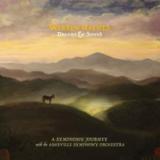
For more than three decades, this Grammy-winning US bandleader and roots master has outrun genre, classification and comfort zone, journeying between the acclaimed solo work with his own name on the marquee, his storied jam-band Gov't Mule, and America's fabled rock 'n' roll institutions from the Allman Brothers Band to the Grateful Dead. To represent this lifetime of roots and branches in a single project, while tearing down and reimagining his songbook with bold orchestral arrangements, acknowledges Haynes, was a daunting prospect that nonetheless exerted an irresistible pull. Now, the resulting live album - Dreams & Songs, released September 18, 2026 - is a living document of 2019's one- of- a- kind concert at the Thomas Wolfe Auditorium, with a visceral mix by the legendary Bob Clearmountain capturing the thrilling collision between Haynes' lineup of seasoned rock 'n' roll improvisers and the 64- piece Asheville Symphony Orchestra.
When Pouya dropped The South Got Something To Say in the summer of 2019, it wasn’t just a title—it was a definitive statement of growth. Nodding to André 3000’s iconic 1995 Source Awards declaration, the Miami pioneer used his third studio album to prove that his raw, independent formula had mutated into something deeper, more mature, and entirely unmatched in the underground rap landscape. Now, for the first time since its digital release, this pivotal moment in Florida hip-hop history is finally available on wax, offering listeners something tangible they have been anticipating for years.
The South Got Something To Say captures Pouya at a lyrical and sonic turning point. While maintaining the blistering flows, heavy bass, and visceral Florida energy that initially put him on the map, the album opens the door to intense themes of mortality, legacy, and the heavy toll of independent success. It bridges the gap between the frantic energy of the SoundCloud era and a mastery of songwriting, offering fans a remarkably transparent look into the mind of an artist surviving the very chaos that birthed him. Standouts like "Cruisin' in the MIA" and "Florida Thang" showcase his signature rapid-fire delivery, perfectly balancing the record's darker, more introspective moments.
The sonic diversity of the project is anchored by a stellar lineup of collaborators who push Pouya into new creative territory. He enlists Three 6 Mafia royalty Juicy J alongside heavy-hitting underground peers like Ghostemane and City Morgue, while seamlessly pivoting into the melodic, hazy soundscapes of indie-pop artist Cuco and longtime producer Rocci on tracks like "Talk to Me Before I Die" and "Mood Swing Misery." This striking balance of aggressive phonk and melodic vulnerability solidifies the album as a cohesive, genre-bending journey rather than a mere collection of singles.
For years, vinyl collectors and die-hard fans have begged for this underground masterpiece to be immortalized on wax. This first-ever vinyl pressing delivers the booming low-ends and intricate, therapeutic bars exactly how they were meant to be experienced. From the opening nostalgic chords to the final fading beats, this release stands as an essential artifact of the modern underground rap movement, finally giving a landmark Southern album the premium physical presentation it deserves.
From Berlin to Lagos: Jembaa Groove expand their sound on "Be A Lover"
Berlin-based outfit Jembaa Groove return with "Be A Lover", a four-track EP set for full release on 18 September via global soul imprint Agogo Records. Following two critically acclaimed albums and an intensive period of touring across Europe and the US — including a SXSW showcase and a widely acclaimed KEXP session — this latest release marks a new chapter in the band’s trajectory. Built around highlife rhythms and shaped by Afro-jazz and the more organic edges of Afrobeats, "Be A Lover" unfolds with a warm, languid and deeply soulful feel, capturing different strands of today’s multifaceted Afrofusion scene.
Here, the band strips back from a seven-piece ensemble to its two founding members, while at the same time opening outward into a deeply collaborative space. At its centre is a close creative partnership with celebrated Nigerian highlife revivalists The Cavemen., alongside contributions from London-based, Nigerian born soul artist Azekel, Lagos vocalist Tim Lyre, and Malian icon Fatoumata Diawara.
“This record has a different flavour,” says Owusu. “It’s really about collaboration — different feelings, different thoughts, different energies coming together.” While centred around the Lagos contemporary scene, the record is shaped by a wider diasporic network stretching across London, Lagos, Berlin and Amsterdam, cities producer and bass player Yannick Nolting describes as “the pillars where everything that is happening in today’s highlife and Afro-fusion scene.”
Formed in Berlin in 2020, Jembaa Groove began after a chance meeting between bassist, producer and composer Yannick Nolting and percussionist, vocalist and songwriter Eric Owusu. Drawing on their respective musical journeys — Nolting’s years working with Lusophone artists in Lisbon and Owusu’s deep roots in Ghana’s highlife tradition, including work with Pat Thomas and late highlife legend Ebo Taylor — the project quickly took shape: their debut album Susuma established a powerful, poly-rhythmic sound grounded in highlife, jazz and soul, while 2024’s "Ye Ankasa | We Ourselves" expanded that vision through collaborations with artists across Ghana and its diaspora, including UK based Ghanaian singer, rapper, percussionist, and arranger K.O.G and legendary Ghanaian highlife musician Gyedu-Blay Ambolley.
The collaborative spirit continues on "Be A Lover", most of which grew out of a meeting with sibling duo The Cavemen. at Supersonic Jazz Festival in Amsterdam in 2023, leading to a sustained exchange of ideas between Berlin and Lagos. With two acclaimed albums behind them, The Cavemen. have emerged as central figures in both Lagos’ alternative music scene and the wider contemporary highlife revival, bringing the genre to a new generation through a stripped-back, melody-driven sound. “There was some kind of magnetism towards Lagos,” says Nolting; for Owusu, who is Ghanaian but spent much of his life in Nigeria, the connection runs even deeper. “I feel lucky to be able to bring different cultures together and make something really beautiful,” he says. A key part of that process was a close working exchange between Nolting and The Cavemen.’s Kingsley Okorie, who effectively stepped into a co-producing role on three out of four of the tracks.
The one exception is opener No Pain No Gain, which features Nigerian-born, East London-based Azekel, whose smooth, R&B-leaning vocal moves through a slow-burning arrangement of bright keys, gently rising horns and atmospheric synths, anchored by Owusu’s organic percussion.
The title track Be A Lover, featuring Afro-fusion Lagos artist Tim Lyre, distills the EP’s central message into its most immediate form. Backed by syncopated percussion and a gently smouldering arrangement, Lyre’s voice moves with a laid-back, melodic ease, delivering a simple refrain: “be a lover, not a fighter.” “It’s a very simple message,” says Nolting, “It’s about showing more love, on a personal level but also more broadly… just show love.” That same sense of warmth runs throughout the record, reflecting its core idea.
On Obi, The Cavemen. take centre stage, with Kingsley Okorie leading through melancholic, plaintive vocals rooted in classic highlife. In contrast, his brother Benjamin James punctuates the track with high-pitched vocal interjections, heightening the emotional tension against a backdrop of slow, restrained instrumentation.
Waka follows with a more melodic, hook-led refrain from Eric Owusu, whose loose, almost conversational delivery creates a striking contrast with Fatoumata Diawara’s unmistakably powerful, raspy vocal. The collaboration grew out of a chance meeting while Owusu was on tour, with ideas exchanged quickly and Diawara returning a finished vocal within days. “We are so proud to have her. It’s a privilege” says Owusu. "Be A Lover" is a record shaped by connections like these — between people, scenes, and cities. “It was partly intention, partly destiny,” says Nolting. “We met these people along the way, and somehow Lagos was meant to come into our path.”
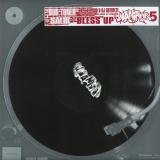
New on the "WANIA mk" series is a double A-side supersonic 12", with two tracks previously circulating as dubplate only. "Bless Up" by Salik (who co-runs Going Good, and of WANIA fame) is simply a deep and controlled Dubstep-goes-Breakbeat knockout. With a prominently loud cut, it carries classic sonics of atmospheric Jungle/D'n'B while running rhythmicallyreduced towards the mid-side Jungle-styled Breakbeat drop. L.A. 2000 & DJ Sotofett continue their collaboration from WANIA mk1 and mk2 with a Dub Techno Stepper. Here, clinically adjusted delays and short reverb support the ultra-reduced rhythm and harmonically gritty stabs, all with just enough drive to introduce the long-awaited sub-bass as a well-timed surprise. THIS 12" IS CUT WITH LOUD VOLUME FOR EXCELLENT CLUB USE!
out of Stock
Last delivered 14 days ago available to reorder, subject to availability
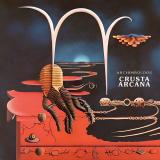
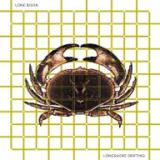
Archimboldos have clawed their way out of the starcaves of their primordial past and into the tranquil light of a coral garden on their third full length album, Crusta Arcana, a gumbo stewpot of transcendent electronica suffused with tribal rhythms and liquid ambience. Across a stereo field smeared with tolling bells, post-industrial folk percussion, and tinkling keys, Archimboldos soundtrack a science fictional journey, not into the depths of space, but deep beneath the waves.
In the past the Chilean duo of Nicolás Carcavilla and Felipe Crocco have described their music as “liminal shrimp folk.” Here they continue this strange exploration when they visit the court of the prawns, producing stately electronic chamber orchestrations. Perhaps these are the frequencies used for ritual dream initiation into the mystery schools of drowned Atlantis. Weaving an ancient sacred science, Archimboldos take listeners on a mystic vovage into their singular crustacean mythology, the crusta of their hidden arcana.
Archimbolodos are masters of conjoining cyclonic and centrifugal lines of electricity into spellbinding incantations. These deep-sea transmissions envelope the listener into aquamarine forcefields that are as hallucinatory as they are hypnotic. Navigating these strange fantasias could lead one to getting lost at sea, but the work is buoyed by the somnolent melodies of lonely harpsichords and swelling synth pads whose sustained tones reach towards distant shores. Sailing across a vast expanse of oceanic harmonies and percolating percussion, these pieces are as precise as the hand of a sailor on the rudder, moving with the tide.
Casting their net wide across eight pieces, Archimboldos have made a big catch. From the emotive electronic counterpoint found on “Bursting Armor” to the blocks of seaweed tangled sonic sculpture trawled up from the ocean floor on “Aphelion IX.” Other songs are like samples of biological ambience collected from luminous tide pools: resplendent tones placed into a Petri dish of sound, swirled, cultured and fermented until it undulates with the rhythmic movement of microscopic lifeforms. Alternating between rippling minimalist sonority and pounding, progressive, synth-heavy entrancement, Crusta Arcana charts its own idiosyncratic itinerary of instrumental invention.
All the while light is down streaming from the heavens to pierce the waters, here calm, there choppy. The intrepid musical captains commanding Archimboldos have laid a course for new archipelagos of the imagination, guided by heavenly constellations.
-Justin Patrick Moore, author of The Radio Phonics Laboratory, Telecommunications, Speech Synthesis and the Birth of Electronic Music
Kaiso Power is a collection of rare jazz, calypso and percussive gems from Trinidad and Tobago from the revolutionary generation of the 1970s, bringing radical new political vision and reclaiming ancient spiritual consciousness through music. At the dawn of the 70s a shift was taking place all around the world. The streets of Port of Spain thronged with Black Power marches, trade union demonstrations and Carnival protest bands - one epicentre in a growing global exchange of ideologies and strategies among Pan Africanist circles in Jamaica, Guyana, London, New York, Montreal, Lagos, Accra and beyond. And when the meetings were over, the revolution moved to the cramped secret dance halls, the Carnival fetes, the steelband yards. The music always had a sharp edge. Searing commentary has always been part of the various types of music in Trinidad, and in the absence of lyrics, the defiant use of the drum maintains the resistance, as well as the re-framing of the playing of European instruments to the needs of the message. Lancelot Layne, Delano Abdul Malik De Coteau, Andre Tanker, Clive Zanda, Mansa Musa were more than artists, they were teachers, community workers and advocates for justice. These recordings are as raw as an all-night Carnival jam, the horns loud, the percussion ringing out, the bass dripping with joy and rebellion. Under the modern influences is a solid rhythm, an unbroken connection to Africa, the songs and keys and cadences brought across the middle passage. These songs are a peep into the untapped treasures of a revolutionary generation, looking at the world with fresh eyes and believing that music was a central part of the mission to build consciousness and regain confidence.
out of Stock
Last delivered 25 days ago available to reorder, subject to availability
Come Over Reshapes works because it never tries to smooth JdB's debut into something safe. It features seven artists from LA and the Midwest all taking his source material somewhere different as brooding, minimal jungle rubs up against dubbed-out weight and drifting psychedelic ambient. Despite the variety, the whole thing plays like a continuous narrative rather than a scattered remix comp. Some cuts are clearly built for the floor, others for the comedown room, and the sequencing respects both. Steffan Betke's mastering keeps everything sounding cohesive and like a thoughtful tribute record that expands on the original rather than just repackaging it.
“I like to work with a variety of instruments and set ups,” says Mark Van Hoen, sometimes known as Locust or Autocreation but here working under his own name on the excellent Plan For A Miracle, his first physical release of solo music since 2018’s Invisible Threads. ”Sometimes it’s literally in my studio, with all the hardware electronics available. Sometimes the laptop, using software instruments. Some of the tracks on this record were recorded in the desert (Joshua Tree) using a 4-track tape machine and small modular synthesiser set up. Each track was recorded in different location using different instruments, which accounts for the distinction between each piece. It’s also about my own reaction to my environment, and what’s going on in my life at the time.”
The Croydon-born Van Hoen started musical life in the early 1990s, signing for R&S records in 1993 but developing his own, myriad and distinctive style across a range of releases on Touch, Editions Mego and other labels, using a battery of instruments, including analogue synthesizers and taking a number of different approaches to recording, rather than ploughing a single sonic furrow. He has worked on a number of collaborations, including with Nick Holton and Neil Halstead of Slowdive, under the moniker of Black Hearted Brother - their Stars Are Our Home was released in 2013. “I have known Neil Halstead since 1992,” says Van Hoen. “He shared a house with me for a couple of years, and the music I was making and listening to along with clubs I was attending had an influence particularly on Pygmalion, the final Slowdive album on Creation.”
Each track on Plan For A Miracle does indeed sound like a world unto itself, a mini-environment, a weather condition, an ecosystem created for the moment. It’s a collection of tracks recorded over the past few years, released on Bandcamp - despite his apparent absence, Van Hoen works constantly. Opener “Climates”, in its exquisite limpidity, feels like a homage to Brian Eno, one of his most formative influences in his teen years, commencing with Music For Films, which he bought in 1979. “This Is For Them”, feels like a ghostlike throwback to early drum & bass or electronica, reminiscent of his own, earliest outings. “There have been a number of requests from labels to make some more music like my very early releases on R&S,” says Van Hoen. “This is part of ‘letting go’ and realising that there’s nothing less creative about going back to those styles again.”
“Pencil Of Spheres” is something else again, a magnificent, imaginary glass structure, shimmering, refracting, without visible means of suspension, a thing of impossible beauty. “Electric Lights” evokes an abandoned fairground, its lights still pulsating, its music lingering. “The Underpass”, meanwhile, insofar as it reminds of anything at all, is faintly reminiscent of Cluster or Neu’s! West German ambience, the urban mundane rendered magical, the sodium lights, the whitewashed walls. The reverberant, faintly oriental chimes of “Insight” transport us yet again, burgeoning and intensifying.
The landscapes, the skyscapes rendered on Plan For A Miracle feel unpopulated as a rule - but when he does introduce vocal elements, Van Hoen has a history of doing so to spectacular effect - think of “Real Love” from 1998’s Playing With Time, the seductive intonation of its title recurring throughout like a series of massive holograms, echoing, stuttering, breaking up, surging. Here, there are just the faintest of vocals, barely distinct, disquieting. “There’s been a bit of a game changer in recent times,” explains Van Hoen. “AI software that enables you to extract vocals and instrument parts from virtually any recording. That means sampling individual parts from existing sources is no longer limited to the original mix exposing certain parts soloed. The vocal parts I use are from multiple sources and often pitch shifted altered rhythmically and melodically.“ There’s further vocal chatter on “I Really Do”, proceeding at a faster pace as if giving chase, or being pursued - distant, enigmatic. “The Music”, meanwhile, its beat tolling, lost in its own fog of static, features a curious intonation, like the ghost of a lost Walker Brother.
Sadly, the album’s title is in reference to a personal tragedy on Van Hoen’s part - the loss of his wife. Titles such as “I Won’t Give Up”, which faintly reminds of another Eno masterpiece, Another Green World, in its nautical hurly-bury, or the pastoral strains of “Mrs Who”, heavily clouded with sadness, seem to allude to this. “In fact the record was recorded entirely before she passed away,” says Van Hoen, “most of it before she even became very ill. The title was given to the album when it started to look like she wasn’t going to make it beyond a few months. It was something Osho said - “plan for a miracle” - so it was a statement of hope. Unfortunately it was not to be.” Although the album is non-thematic, non-specific in its atmospheres, sound paintings, elegant structures it most certainly stands as a magnificent monument to Osho’s memory.
-David Stubbs.
out of Stock
Last delivered 28 days ago available to reorder, subject to availability
Geoff Farina’s Southern Records tenure was not just about Karate. His late-90s guitar-and-vocal solo output included
the bedroom-recorded Usonian Dream Sequence that echoed The Secret Stars’ intimate lo-fi sentiments, Reverse Eclipse that rode the more delicate fringes of Unsolved-era Karate, and the single Steely Dan, a paean to a contemporaneous guilty pleasure. FFF collects all three long-out- of-print releases here on vinyl for the first time, fastidiously packaged and punctu- ated with Farina’s written reflections on their making.
Geoff Farina’s Southern Records tenure was not just about Karate. His late-90s guitar-and-vocal solo output included
the bedroom-recorded Usonian Dream Sequence that echoed The Secret Stars’ intimate lo-fi sentiments, Reverse Eclipse that rode the more delicate fringes of Unsolved-era Karate, and the single Steely Dan, a paean to a contemporaneous guilty pleasure. FFF collects all three long-out- of-print releases here on vinyl for the first time, fastidiously packaged and punctu- ated with Farina’s written reflections on their making.
There is a pivotal scene in “August in the Water” (dir. Sōgo Ishii, 1995) where the surface of a pool turns into a stone wall. The water that gave the protagonist's life its meaning becomes a threat. As you fall through this stone wall, you appear in a set of underwater coral-reef corridors, and one of the most beautiful musical themes begins to play: Aquatic Ambience, composed by David Wise for Donkey Kong Country (1994). It's a theme that represents the weightless vibe of your new deep-sea life, where you go about your mundane errands, collecting bananas while driving on a swordfish, or, as HerzMayhem put it: "Poor monkey... always swimming, never going anywhere..."
Synthetic Water Music is the second of three compilations, following Synthetic Bird Music and timed to mappa's 10th anniversary. As with the birds, it gathers friends of the label, artists who have released with mappa or played our shows. Most of the music is new, made to measure for this compilation, much of it from Central and Eastern European hands. Birds and water mix well, so please feel invited to play them together, creating your own environments.
Where the birds were in one flock, water is dispersed across four chapters. You live your life as a droppity drop: vapour in the heavens, condensing in clouds, falling into a swamp, trickling into the deepest sea.
Tlālōcān (Cassette 1, Side A)
A place of eternal spring, of aquatic energy that nourishes everything and allows all things to bloom. Bubbly and splishy-sploshy, it is full of dripping sounds and moist caverns (“Emerald Pool” by Pauline Anna Strom), a landscape filled with living fountains (“Oh, to be a Fountain” by Eva Sajanová) and winding streams that flow through the area, forming part of its organic architecture. It is also a paradise reserved for those whose deaths were water-related, where the aquatic and terrestrial beings live in symbiosis and perspectives shift rapidly, from observing a single droplet (Shakali, Lau Nau) to dew (Feronia Wennborg & Lucy Duncombe) and on to flowing currents (Visible Cloaks) that gradually transform into river music (Ursula K. Le Guin & Todd Barton).
Nephelora (Cassette 1, Side B)
A celestial anti-gravity sound world made of evaporation, steam and the formation of clouds, as if looking at “The Sky At The Bottom of the Well” (by Natalia Beylis) or at “The Cloud That Never Rains” (by Henrique Vaz).
If a cloud never rains,
it is not a cloud at all, but a veil that parches the earth with its gaze.
It generates only its own shadow —
a looming mass of suspended longing,
a sky that hoards but never yields,
a reservoir that swallows every river and returns nothing but echoes.
The water in this world is often invisible but sometimes all the more present, as Bint Mbareh describes it: “Recently been obsessed with invisible waters because I come from a place where you have to imagine the water is there even though you cannot see a river, a sea, usually no rain, so water is in the air, the voice and the imaginal realm, drought is imagined to be negotiable.”
Žaboglach Zha-bo-glahch (Cassette 2, Side A)
A fusion of Scottish lochs and Slovak ponds: a misty, foul-smelling, swampy realm, the kind of place that swallowed Artax from The NeverEnding Story. Stagnant waters full of decay become a blooming habitat for sirens (“thereby losing the weightless delight of being swept along with it” by Adam Badí Donoval) and beings straddling the line between fauna and flora, inventing their own communication systems (“Water-lily phase” by Action Pyramid).
R'lyeh (Cassette 2, Side B)
A brooding sunken city at the bottom of the ocean. It’s a journey to get there. Let this chapter guide you, from the shore down to the depths, to the gates of an unexplored world that is inherently dark, unfathomable, and beyond the limits of human perception: starting with seasickness ("Seasick" by Nikolaienko), passing through a classic Poe-esque maelstrom ("Flurry at the Whirl-pull" by Atte Elias Kantonen), a gateway into the darkness and emptiness of the ocean floor, and finally traversing the city itself (“last waves of 2025” by Jules Reidy).
But what is pulling you to a place like this that only a few explore and even fewer leave? Maybe “the darkness that water can contain, the expanse of things we don't know and that can trigger fear instincts even as we try to rationalise them and think we are in control of the rest of nature” (“supercritical fluids” by Diane Barbé).
Dive in and surface wherever you like. Always swimming, never going anywhere. Just don’t forget to take water breaks.
P.S. Birds, then water, can you guess what comes next? Synthetic Soil Music, an elegy for insects and worms? Synthetic Glaciers, or maybe Pollinators? Which sounds would you miss the most if they disappeared? Or what if the third one never comes at all, and somebody, or something, makes Synthetic mappa Music instead. Don't you worry, with the right training data, it can all be replicated, better than the real thing.
Just featured on BBC6 Music in the CRAIG CHARLES FUNK & SOUL as part of the ODDBALL CREATIVES “Trunk of Funk Mix “ on Saturday 1st August - and already gaining great DJ feedback from the likes of Greg Caz, Laurent Garnier, Chris Bangs, Rocky, Chico Malo, Starla Recordings and many more ….
Another new collaboration on the Echo Labs label - the subsidiary of Echo Chamber Recordings set up to release tracks and remixes from other artists.
This one is a very special hook-up with Daniel Walls & Joseph Malik in Edinburgh with their new project under their “Oddball Creatives” production monicker. It was truly an honour that they reached out to Echo Chamber Recordings to bring this out on a vinyl 45 , fitting in perfectly with the foundation sounds of the label - combining classic timeless funk, jazz , Latin and soul with 21st Century production techniques
They have recruited the vocal talents of Philadelphia’s Kameela Waheed and the instrumental skills of Scottish jazz legend Colin Steele , to bring us the sound of the summer with a huge soul-jazz-funk cut. It combines elements of a classic early 70s groove with a subtle, up-to-date style, built around Joseph’s vocals and Kameela’s spoken rap.
On the flip you get the purely instrumental take - meaning you could extend the hypnotic groove even longer with two copies !
As ever, on Echo Labs there will be just 300 vinyl copies pressed for worldwide distribution
out of Stock
Last delivered 35 days ago available to reorder, subject to availability
On her debut album Switchbacks, Nashville-based artist Hannah Cole finds inspiration in the image of the switchbacks – sinuous twists in the road that obscure what's ahead. For a young artist making her way in the music industry, it's a powerful image: we can't really know what's ahead for us but – as Cole has learned – you should honk your horn to tell the world you're coming, and otherwise just enjoy the ride. Melding shoegaze and alternative rock with infectious pop melodies and strains of 90s nostalgia, Switchbacks is a commentary on the pursuit of success and how to protect the pure joy and love that lives at our core.
Across the ten tracks of Switchbacks, Cole swings her gaze at many unsettling aspects of the scramble toward success. Lead single "MMA" explores the ugly side of the music industry through the image of Las Vegas. On the brightly off-kilter "Give," she sings, "I feel like I've become an actor, / A TV pastor / climbing up a topless ladder," explaining that "the pursuit of success can feel like buying lottery tickets all the time for money that you'll never see." "Mechanical Bull" seethes with rage as Cole grapples with being seen as just the "girlfriend" in music settings and not being perceived as an equal to her partner, while on "Pitcher," she's paralysed in the face of wanting to achieve perfection. Later, she shrugs off the need to impress on "100 Bucks," reminding herself that she's enough for the people she loves.
Switchbacks is not only a finely-crafted debut album but also a deeply human artifact, tracing an arc that blazes like a comet to the height of ambition and then leaves you in the shimmer of self-acceptance and contentment. "Success is a moment that comes and goes," Cole concludes, "but I think the joy and experience that comes with making music is something I can take with me forever."
DESCRIPTION
Lone Bison / Nick Bonell lives by the sea in Ramsgate. Mainly a guitar player and pedal freak, Nick bought a used Korg MS20 and fell in love with synths. As one half of Stuntmen, Nick released the sample-heavy single 'You're the Beat Find' on the groovy Tummy Touch label, which led to him scoring three Ford adverts in the U.S and a few pieces of well-used production music - which paid for more synths and pedals!
An album, 'Transistor Memory' and single 'Drugs' came out via Dom Martin's brilliant Polytechnic Youth records in 2021. "Wave Construction" was released by Castles in Space in Autumn 2023. An album for the CiS Subscription Library entitled "Mechanical and Electrical" was released in late 2024.
Nick Explains: "After recording "Transistor Memory", "Wave Construction" and "Mechanical and Electrical" pretty much back-to-back, I wanted to change my sound palette a little. I started programming my Hydrasynth Explorer in obsessive detail and was also drawn to using my voice, in a sampling kind of way at first. Sampling my voice then shifted into recording more straightforward vocals and writing proper songs again. "Rise Up" started as a field recording in my local park and then some wonky piano loops with a cheap mic – somehow a song arrived. I’ve always really liked really concise records, so I got interested in packing lots of synth textures into a three-minute pop song. As the record progressed, I did less leaning on vocoders and harmonisers and developed the courage to just do more up-front vocal mixes. Things like Maths and Minimal / Maximal are more groove-based and came from recording 20 minute drum tracks then jamming bass guitar over it then editing it all down and adding loads of synths. Oh, and there’s a bit of James Williamson era Stooges at the end of Minimal / Maximal – I was a bit nervous about playing garage rock guitar on a Castles in Space record but Colin told me I would be ‘fucking mental’ if I didn’t end the record with it."
Lone Bison's music is influenced by Krautrock, electronica, post-punk, soundtracks, a splosh of modern classical/minimalism and post-rock. He's a hot genius.
The album is preceded with "The Power" which will be available on streaming platforms as well as on our Bandcamp for those who want to listen or pre-order the album. There's a fantastic remix from MAPS included as well.
Kitsune No Yomeiri, which translates to the fox’s wedding, is an endearing expression used to describe sunshowers. Dawson returned home from a recent tour of Japan with a collection of field recordings documenting the spring rain he encountered throughout his travels. These curious sounds, stretching from peaceful shrines to clattering city streets, underpin the material.
Dawson also credits the wonderful folks he met on that tour with profoundly shaping the direction of the album. After each show he found himself immersed in inspiring conversations about the guitar. Through navigating the language barrier, he discovered he was communicating with an immense sincerity that he would ordinarily avoid at all costs. “I’ve always just made records at home in a vortex, but this time it felt like those conversations were there with me in the studio.”
Musically the album has a slight western slant. It’s not country, but it does see Dawson lean softly into his prairie past. Constellations of stray notes and rusted tones form nostalgic melodies, like chance encounters between old friends. Dawson allows phrases and gestures to repeat across the record, resulting in a collection that’s more akin to turning the pages of a novel than a series of vignettes vying for attention.
Appleton announce the release of a brand new EP, 'Side By Side', which will be released Friday September 4th, marking the first new Appleton body of work in over two decades.
Nicole says: "The reaction to 'Falling Into You' and our first Appleton show in over twenty years has been incredible We feel so grateful that people still connect with these songs and are excited about what we're doing now. This EP feels like the natural next chapter." After reissuing their cult- classic 2003 album 'Everything's Eventual' on vinyl, this January Appleton returned with 'Falling Into You' their first new music as a duo in 23 years.
While nostalgia may have sparked the reunion, 'Side By Side' is firmly focused on the present. Across four original tracks, the EP blends the melodic pop songwriting and distinctive harmonies that made Appleton favourites first time around with a fresh, contemporary sound that reflects where Natalie and Nicole are today. For both sisters, the project has been a reminder of the unique creative bond they've always shared. "We've always had a special connection when we sing together" says Nicole. "Making these songs reminded us of that. It never feels forced it just feels natural." More than twenty years after they first burst into the charts, Appleton aren't looking backwards. They're simply enjoying making music together again side by side.
Ondrǣdan is the second aesthetic proposal by Sediments’ owners Pajaro Dune. This work is the result of a deep artistic experimentation and a thorough compositional refinement. Some of these materials have been distlilling in the studio for almost a decade of sound engineering and constant debate to make the experience much more profound.
From old English language, ondrǣdan it is a direct reference to our most primordial fears. Both an emotional yearning and a postapocalyptic kubriesque tale, the five works of this record capture five shades of rhythm and mood, where ambient, dub and downtempo meet in immersive narrative experiences. All them crowned with the luxurious sculptural artwork by Blanco Anyò who forces us look beyond the visceral to intuit the transcendent.
Pajaro Dune is the product that combines the creative minds of Jaime Romero aka Estrato Aurora and David Ortolà aka Syoqh aka d_o_ppelgaenger. More than half a life producing together from València, their multifaceted approach crystallizes in renowned works for Alpenglühen, Grabaciones Perpendiculares, The Monkey Bar, Eleve Music and now their own label.
|| We
become more from what is left,
deliver else than just the now,
build sound stories for the then. ||
out of Stock
Last delivered 38 days ago available to reorder, subject to availability
When Leon Michels and El Michels Affair released their rst record, Sounding Out The City, in 2005, it was hard to guess what was next for Michels and his then-introduced, now-patented "cinematic soul" sound. Now, four EMA studio albums and scores of tribute and remix projects later - all while producing for some of the biggest names in the industry - Michels has trademarked his sound, with each project taking audiences somewhere new and pushing the boundaries of what he is known for. The man is a river, not a lake and this time he takes his golden touch into the realm of hip-hop laying down a musical bed for one of the greatest to ever rhyme into a microphone: Black Thought of The Roots crew. Releasing on Big Crown Records, the LP is called Glorious Game and it is a remarkable debut partnership in more ways than one. Michels provides his bottom-heavy, soul-tinged production for Black Thought who gives us some of the more personal and transparent verses we've ever heard from him. Michels and Black Thought have been in each other's orbit for a while now. The two first met in the 2000s when Thought was first getting familiar with the contemporary soul scene. "Out of that whole world, Menahan Street Band was probably my favorite," recalling the funk and soul group Michels was a founding member of back in 2007. Fast forward a few years and musicians from that collective - Dave Guy on trumpet and Ian Hendrickson-Smith on sax - are now full time players with The Roots. This connection eventually led Leon and Thought to doing a few fundraising events around NYC and Philly together. "Before long, Black Thought was coming around the studio and would jam with us from time to time," Michels explains. "Then, fast forward to 2020 and COVID lockdowns, he just hit me up out of the blue, wanting me to send him stuff to write to. We both were looking to stay busy" Being that Black Thought is the co-founder and emcee for, hands down, the best live-band group in hip-hop. Michels took a decidedly different approach to this project and instead of sending recorded tracks of live compositions, he pulled out the sampler and sampled himself and some records from his collection. "I'm a big fan of soul music," as if Michels has to remind us. "And part of hip-hop's appeal to me has always been the sample-based production" For Glorious Game, Michels would make wholly composed and recorded soul songs in his studio, sample himself, then chop and/or loop up his sounds and create instrumentals for Black Thought. On some tracks he took a more traditional hip-hop approach, starting from samples of other people's music but then adding live instrumentation on top. But for the most part, it's him reinterpreting his own compositions into something new. The result is an organic feel of loop-based tracks that breathe and uctuate enough for Black Thought to ex on. "What I write about is determined by the equation of the producer's energy and my energy," Black Thought says. "It's about where we meet." So armed with Michels sampled and re-sampled soul cinematics, Black Thought rhymes through personal memories.
out of Stock
Last delivered 40 days ago available to reorder, subject to availability
“Ruins are the style of our future cities, future cities are themselves ruins.” - Izosaki Arata
A note from Lawrence English: Nostalgia is not an ideology, though in this moment, we could be mistaken for thinking it might be just that. Over the past years, the idea of nostalgia has been filtered through various political and technological lenses and has become a tool used for forgetting, rather than remembering. Instead of embracing histories’ complexities and inconsistencies, this version of nostalgia seeks only singular recollection. This contemporary phenomenon of nostalgia has become a methodology at best, and a weapon at worst, used to erode the past and project forward a collapsed and unimaginably sanitised version of things, places, and ways of being from former times. It’s this projection that sees it playing a mounting role in a social pathology associated with reducing the imagined possibilities of future.
The Rest Is My Ghost is a record that interrogates the manifestations of this reductive futuring and celebrates those that have tried (and failed), and those who continue to push back against decayed and revisionist positions. It’s a record that considers the weaponisation of nostalgia for the purposes of cloaking possible futures.
In recent times, I’ve proposed a term for this weaponised use of nostalgia, something I have called Acid Nostalgia. I offer it as a shorthand to describe the de-contouring of the future through a corrosive fixation on a flatten rendering of the preceding times. It is, in part, a certain type of lazy cultural scripting where tropes of the past are presented in the absolute, as empty pictorials; photocopies without any original from which to draw actual meaning, or useful detail.
Acid Nostalgia describes an increasingly common political projection of nostalgia that exists without any subjective connection to the memory surrounding and contained within it. Like acid poured onto a surface, this use of nostalgia seeks to erodes and smooth out the complexity and texture of lived connection and longing, which has until recently guided contemplations of nostalgia. Acid Nostalgia instead erases the texture of histories and de-contours the past, and in doing so dematerialises the horizon of possibility, which by its very nature marks the beginning point for any (and all) imaginable futures. Acid Nostalgia is a dreamless screen, where uncertainty, restlessness and aspiration are subjected to corrosion, breaking down and neutralising the wellspring of futures which are birthed from within the ambiguously charged, complex and at times chaotic atmospheres of the present.
The Rest Is My Ghost is not however some universal reading of these things and happenings. Rather it draws its breath from a very personal pathway carved through my own fraught experiences of nostalgia and framed through a disparate collage of chance encounters, situations, places and provocations. It takes oblique notes from civic and architectural references such as Japan’s Metabolist movement, Hong Kong’s ‘one line sky’ and Los Angeles’s vanished Sodium Vapour lights. It interpolates texts – factual and fictional – by authors such as Franco Berardi, Kate Crawford, JG Ballard, Katsuhiro Otomo, Mark Fisher and Alexei Yurchak who have each so wonderfully sought to rupture the familiarity of now, and push us towards other ways of imaging ourselves, our surroundings and our very ways of being in this world.
I also owe a debt of thanks to Adam Curtis in helping launch what has become this edition. It was his provocation, in a conversation we shared about an overwhelming and profound sense of uncertainty around being able to predict the immediate future and how to respond to that, which sparked the earliest inklings of this edition.
The Rest Is My Ghost is ultimately a record about the promise of constructions and connections to come, material, social and political. It's a record that accepts the fragility of failure as a source of ultimate potential, and a position from which the deepest freedom of imagination might be sought and summoned forth to conjure even the most unimaginable, (but) possible futures.
out of Stock
Last delivered 40 days ago available to reorder, subject to availability
»Ampersand Curve« initiates a brilliant new phase of work by North Manchester’s most elusive artist, best known as Michael J. Blood. His string of ruffkut club bangers, as well as jams with Rat Heart & Samizdat over the past seven years, have made his records a true cult property, and now find him signed to one of the UK’s most foundational techno imprints – more of which later this year.
But under the Sees aegis, he swims in very different waters, following his instincts to use the studio-as-instrument to produce his most impressive, deep-minded work, made from – and for – the heart. Where MJB was all about off-the-cuff club jams cooked for immediacy, his new stylistic switch reveals myriad worlds of influence swirling under the hood, where interrelated spheres of spiritual jazz, dub, ambient, and concrète more clearly light up his rich inner world.
As the story goes, MJB was burgled a few years back and lost most of his studio just as the project was hitting its stride. It prompted a personal review of his practice, re-learning new kit, allowing him to bend the rules. Adopting a sort of first-thought, best-thought approach to composition, the new methodology fuelled a renewed imagination in flux, or what he identifies as Sees: a personalised way of conveying complex emotions. That undoing of musical and mental conditioning opens the walls of his music to vast new horizons. Opener »Ithaca« fathoms sonorous midnight jazz with 10 mins of a plangent, searching sax solo in HD widescreen, like some alternate version to the Blade Runner Love Theme, while a resonant vocoder soliloquy, »Unseem«, reaches into space harmonised between Alvin Lucier and Ron Trent, and »Sheer« chases the devil out of labyrinthine dub dimensions.
The floating dream architecture of »Caprices« caps the LP’s underlying narrative and painterly qualities with a romantic conclusion of blushing pads and shivered, metallic echoes of the subtropical that suggest a coming-to-terms with worries, refreshed and good to go again.
out of Stock
Last delivered 40 days ago available to reorder, subject to availability
Manonmars’ 3rd album sees him at his most amorphous and psychedelic, at points sharper and laser focused, and at others more blurred and impressionistic than his previous records. Many of the core players remain the same, all of the production is once again handled by O$VMV$M (the duo of Neek and Amos Childs of Jabu) while Paulina Korobkiewicz (also of Young Echo) makes a return handling both the album’s cover artwork and contributing a series of diaristic field recordings and voice notes.
‘The project references movies, cartoons, fictional characters and video games, among other things. The album title is open to interpretation but all of these elements are forms of visual entertainment which have their own unique ability to transcend things like language barriers and cultural divides. The visual element is key because those details bridge the gap on a communicative level.’ - Manonmars
The album blends abstract, blurred braggadocio with more immediate personal details such as on ‘Volcanic Shield’ a posse cut of sorts featuring Bristol improv luminary Dali de Saint Paul and Franco Franco (½ of cyborg rap duo Kinlaw & Franco Franco) - where Mars recalls;
‘Memories of brighter days, happy meal hit the spot
Mum was spinning vinyl playing Super Ape or Pressure Drop
I would spend the weekend with the Turkish mandem on the block
single parent household, mum was studying or on the job
money came and went always was an on and off
made it back from school time to see what’s on the box’
The beat fades away to leave one of Korobkiewicz’s recordings of Mars’ mum talking about her life in London in the 80s, spending her money on reggae records as an ambient chord fades in like an echo of a jungle intro – stretching out as a link between generations of UK music.
The production by and large is brighter and more kinetic than earlier Manonmars records – with O$VMV$M drawing on everything from modern underground rap and drill through to jazz and acid ambient passages.
London is also a central character here, bustling and constantly shifting, either when bleeding in through field recordings, or as an ever-present backdrop in the lyrics;
‘I’m a fusion of Tippa Irie and Topper Harley
Hit the target like the black Atari
I dropped a tab now shit’s A Scanner Darkly
Got the munchies, Imma yam a sarnie
Pour the Wray and Ting like man at Carni
Exit Peckham Rye and turn left, walk past Hannah Barry
Get your (w)raps up like its January’
‘I've always considered London my home, despite spending some time in the South West of England too. My mum had been living in London for 25 years (...) That was a pretty big deal in some ways because it removed us from multicultural society during the period which overlapped with my teenage years. (...) I never got used to how quiet it was in the countryside (...) Bristol was the closest city to where we lived and it was through travelling there and making connections that I became involved in making music and playing gigs.’ - Manonmars
Mars’ practice as a painter (under his given name Jack Martyn Richardson) and photographer also loom heavy over the album, he cites Paul Verhoeven, Abdul Mati Klariwein and H.R Giger as influences – as well as Miles Davis, Drakeo the Ruler and DJ Rashad.
As with much of Richardson’s work the raps at times feel blurred to a point of almost inscrutability, creating a distance between the audience and himself. A process that ties into his visual work and the way he experiences the world as mainly abstract colour without his glasses. He explores this further in an ongoing visual collaboration with Korobkiewicz, ‘Fun and Games’ which serves as a visual archive of one of London's largest and oldest travelling fairgrounds.
‘I was diagnosed with very severe short-sightedness at the age of seven. I remember my early formative years as visually blurred. Some of my photography reflects this experience of partial vision and uncertainty, referencing memory and perception rather than fixed representation.’
Manonmars’ first public outing as a rapper was at a Young Echo radio event, broadcast shambolically from a practice room just off Jamaica street, Bristol in 2011, as much as things have moved on both stylistically and in terms of focus - strong links back to the city remain a key foundation throughout the collaborations and guest appearances.
‘I have no problem with being an outsider looking in. One of the things I enjoy about London is the anonymity (...) it's easy to be a stranger here when so much is happening. I feel like thats more valuable than people may realise.’
LIMITED THIRD PRESS. 300 ONLY CLEAR VINYL WITH RED BLOOD SPLATTER, HOUSED IN A RED AND METALLIC SILVER SLEEVE.
The Swedish underground legends return with a brand new album. Let this reddit user take over …
“Listening to Brainbombs has been one of my weirdest experiences with music. Brainbombs are most definitely a band. I guess at the core they’re a hardcore punk/noise rock hybrid I guess? But… It's so unlike anything I’ve ever heard and I still don’t know if it's good or bad. I saw the edgelord Ed Gein album cover, and it intrigued me, so I listened to their biggest song and it was easily THE WORST thing I had EVER FUCKING HEARD. I shut it off as soon as it got to the vocals. I was shocked by the fact that it had almost a half million streams. But, a few hours later, I clicked on it again and didn’t know why.
Over the past few days, I’ve listened to all of their discography and looped a lot of it. And I don’t even think I like them. The music is abysmal, it's the same single riff and verse repeating for 5 minutes. To make it worse, the vocals are just a guy with a swedish accent awkwardly talking about murder and rape. That sounds awful right? It is awful. But at the same time I want to keep listening? It’s so childishly edgy and obnoxiously repetitive but so.. intriguing? Catchy? I’m not even sure. It's one of if not the weirdest experience I’ve ever had with music and I don’t know how to feel about it.”
Some people change your life in every way that a life can be changed. David Lynch is one of those people. When Alicia Witt first worked with him at age 7 in his classic Dune (1984) she had no idea what he meant to anyone as a filmmaker, nor that she would work with him 3 more times over the course of his life and that he would become one of her greatest influences. She only knew that she had found a kindred spirit and that she loved him. Between Heaven & Earth is a tribute to his energy, his legacy, and most of all, his love. When Alicia attended his memorial gathering shortly after his passing in 2025, she was struck by the depth of the relationships in that space. The knowing that if you were loved by David, you stayed loved. As those in the room spoke of their shared experience that David was still among them - directing from beyond - Alicia became ever more aware that she was being encouraged to create an album from this space of eternal unconditional love. ‘Use my name,’ David whispered. And so it was. Produced by renowned producer and singer-songwriter Joe Henry (Emmylou Harris; Milk Carton Kids; Bonnie Raitt; Rodney Crowell), this album was recorded live in studio in 5 days in New York City in January 2026. Alicia Witt on piano and vocals, accompanied by a band of 5 musicians, take you on a sonic journey that could never be recreated, channeling the energy that was brought together in this moment to honor the immeasurable effect that David Lynch had and still has on the world. He was palpably present in every moment of the making of this album. The 13 songs that were chosen reflect everything Alicia feels she learned about love from David - the acceptance, the insistent optimism, the curiosity, and the permanence. The final song, The Director, recounts messages he has sent to her from beyond over the year since he passed away.
This Summer has never looked so bleak. Along with news of the album, Kulk have also released their new video single 'An Endless Kife': "An Endless Knife is about growing up. When we're younger, sometimes it feels like we're invincible. Like everyone we know and love are constant parts of the universe. When that reality is shattered, it changes how we see the world. You come to realise we are all just a couple of bad days from the worst. At the same time, it feels devastating. It reminds us to look after each other" - Kulk The band have toured across the UK extensively the past few years, playing amongst bands such as Part Chimp, Hey Colossus, Crowbar, Melt Banana, Iress, Big Brave, Gnoomes, Conan and Portrayal of Guilt... to name a few! They have toured twice with PigsX7, including shows at Electric Ballroom (London) and Rock City (Nottingham) and have appeared at the renowned UK festivals Arctangent and Desertfest
Anderson .Paak returns with K-POPS! (Music from and Inspired by K-POPS! Motion Picture), a bold cross-cultural soundtrack accompanying his Netflix directorial debut. Featuring an all-star lineup including G-DRAGON, aespa, JID, DEAN, NMIXX, and members of SEVENTEEN, ATEEZ, and i-dle, the 17-track project blends K-pop, R&B, hip-hop, and soul into a vibrant celebration of music and storytelling. More than a soundtrack, K-POPS! captures the spirit of collaboration, connection, and global creativity at the heart of the film.
out of Stock
Last delivered 46 days ago available to reorder, subject to availability
This album remains a fan favorite for its intimate atmosphere, featuring Susan's trademark soulful and breathy vocals set against tasteful, uncluttered arrangements. The tracklist is a masterclass in light jazz and soft pop, featuring definitive covers of eleven classics such as "Close to You," "Stay Awhile," "Killing Me Softly With His Song," and "Love Will Keep Us Alive." Every performance is delivered with a natural, immersive presence that showcases her impeccable phrasing and emotional depth. An important release in Susan Wong's career, Close to You has been remastered and will be released on 180g One- step Pressing vinyl LP, MQA-CD and Stereo Hybrid SACD, with new liner notes.
With governments finally admitting that UFOs do in fact exist, and humanity attempting to heal from a state of recent crisis, the timing couldn’t be more appropriate for the newest addition to the HYPOCRISY catalog: WORSHIP, due to be released Fall 2021 via Nuclear Blast Records. Aptly titled, the album cover shows a mass of humans reaching up mindlessly to the sky as glowing spaceships shaped like the HYPOCRISY crosses sigil beam down to descend upon earthen civilizations and Mayan temples. Designed by artist Blake Armstrong (Kataklysm, In Flames, Carnifex, etc.), WORSHIP’s artwork speaks to the history of the relationship between humanity and extraterrestrials. “They’re coming back to collect,” explains founder and HYPOCRISY mastermind Peter Tägtgren.
A track entitled CHEMICAL WHORE breaches the subject of pharmaceutical addiction, and those who engineer it. “We are all chemical whores. We regularly consume prescriptions and drugs because we think we need it; we use one pill to heal the damage done by another medicine... it’s a vicious cycle.” Musically, it’s the only song that was written by all 3 core members of the band and translates into a recognizable, mid-tempo HYPOCRISY sound much like ERASER or FRACTURED MILLENIUM. Traveling from Sweden to Russia, the band also shot an official music video for CHEMICAL WHORE.
The DEAD WORLD music was written by Peter Tägtgren’s son, Sebastian. “We actually started to write an album together, something like 11 or 12 songs, but we never put any vocals in there and we just sort of set it aside. Then when I started writing HYPOCRISY I realized I really liked the song… it feels fresh. I think my kid got some new blood in there.” While the song comes equipped with a modern feel, the writing is still old fashioned at its core. Going into detail about the illuminati and black ops government, the lyrics examine how miserable these figureheads and theories can make us. “Call it fantasy, call it sci-fi, there are plenty of conspiracies in the world but I find these ones interesting,” explains Tägtgren.
GREEDY BASTARDS is another track outlined by simplicity and catchiness. Chugging riffs encapsulate a sound that almost verges on the realms of thrash while still keeping its feet firmly planted in the world of death metal. The lyrics touch on the greed and methods of control that we see various governments around the world today; how they manipulate people against one another and abuse the masses.
For Tägtgren, the inspiration to write new HYPOCRISY comes in waves. “I believe we were out on tour for another project and I began to get hungry again. I started spitting out some new riffs and when I had 7-8 songs done, I invited the rest of the guys to join me and contribute, and from there we started putting everything together. We had a break for a few months, continued recording, went back on tour… it never stops. There was a lot of jumping back and forth, and then COVID came and things got really weird.”
Tägtgren was one of the many musically inclined who was forced into sudden isolation upon the onset of COVID 19, only for Tägtgren, this is common practice when creating new songs. “A lot of things in the world stopped, and it was time to finish everything I hadn’t finished.” As usual, all recording and mixing took place at Tägtgren’s home studio in Sweden.
It has been 8 long years since the last record, and HYPOCRISY fans can feel the itch. WORSHIP is 11 tracks of precise, ferocious musicianship. Commonly inspired by the fusion of the modern and the ancient, HYPOCRISY has once more found a way to combine innovative ideas with classic sound in order to deliver something metalheads can enjoyably consume with awe and brutal vigor. HYPOCRISY is Peter Tägtgren (Lead Guitar & Vocals), Mikael Hedlund (Bass Guitar), and Reidar “Horgh” Horghagen (Drums).
Matrix Music Arhiv (MMA) are proud to announce a re-issue of the highly sought-after album 'Resistance' by the seminal Yugoslavian electronic rock band Borghesia, originally released in 1989 on Play It Again Sam/PIAS (Europe), Wax Trax (USA) and Jugoton (former Yugoslavia). Available on 2Lp, 2CD & 1MC (MC original album only). The re-issue features a carefully remastered edition along with the exclusive bonus live album "Dal Vivo A El Paso", recorded in December 1988 during their performance in Torino, Italy, on one of their European tours. This recording features very different, raw and at times 'dubbed up' versions of their early tracks such as 'Naked, Uniformed, Dead', Am I? and Him (On). The historical perfectly captures the atmosphere and energy of their live appearances at the time. Borghesia (Italian for 'bourgeoisie'), who were formed in Ljubljana (Slovenia) in 1982, had always considered its art to be far broader than just sonic. Borghesia's transgressive, transdisciplinary alloy of film expression, distinctively physical performative practices, usage of new technology and conveniently abrasive EBM (electronic body music) musical production hasn't only been ground-breaking in terms of the holistic, visual/sonic presence of an art collective, but had a rather decisive influence on the general aesthetics of the immensely important Yugoslav subcultural landscape of the 1980s. Borghesia was one of the first bands from the East of the Iron Curtain who used the VHS video medium to distribute their art and was also one of few projects from socialist Yugoslavia to successfully penetrate the curtain itself, reaching international audiences. A series of their releases in the fruitful period between the years 1987 and 1991, including the Resistance album itself, was released by the legendary Belgian label Play It Again Sam (PIAS). The band dissolved in the mid-1990s and then continued their work in 2014. In line with Borghesia's unique social engagement, progressiveness and political criticism, Resistance is one of their most powerful statements. It's the ultimate fight the power manifesto, which makes punk and hip-hop albums of the time sound like children's songs. This is not music for nodding your head to; it's tactical broadcast for the nocturnal resistance to this very day. Borghesia didn't address control only - they sampled the political top, the secret police and explicitly connected authority with dominance. The production of the album isn't clean or polished. On the contrary - Resistance sounds like it was created in a bunker, using stolen military equipment and synthesisers. Borghesia's genius lies in their understanding that the relentless, mechanical EBM beat was the sound of the State - and by hijacking it, turning the system's own rhythm against itself they created the most powerful form of sonic insurgency. And since history repeats itself while the little man learns slowly, the re-release of 'Resistance' comes at the right time. The dark clouds of violence are already looming over Europe, they've never really left the Middle East, and the levers of power and capital ever so louder, not even covertly at all incite: war, war, war! In these times the only appropriate answer is: revolt, rebel, Resistance!
Matrix Music Arhiv (MMA) are proud to announce a re-issue of the highly sought-after album 'Resistance' by the seminal Yugoslavian electronic rock band Borghesia, originally released in 1989 on Play It Again Sam/PIAS (Europe), Wax Trax (USA) and Jugoton (former Yugoslavia). Available on 2Lp, 2CD & 1MC (MC original album only). The re-issue features a carefully remastered edition along with the exclusive bonus live album "Dal Vivo A El Paso", recorded in December 1988 during their performance in Torino, Italy, on one of their European tours. This recording features very different, raw and at times 'dubbed up' versions of their early tracks such as 'Naked, Uniformed, Dead', Am I? and Him (On). The historical perfectly captures the atmosphere and energy of their live appearances at the time. Borghesia (Italian for 'bourgeoisie'), who were formed in Ljubljana (Slovenia) in 1982, had always considered its art to be far broader than just sonic. Borghesia's transgressive, transdisciplinary alloy of film expression, distinctively physical performative practices, usage of new technology and conveniently abrasive EBM (electronic body music) musical production hasn't only been ground-breaking in terms of the holistic, visual/sonic presence of an art collective, but had a rather decisive influence on the general aesthetics of the immensely important Yugoslav subcultural landscape of the 1980s. Borghesia was one of the first bands from the East of the Iron Curtain who used the VHS video medium to distribute their art and was also one of few projects from socialist Yugoslavia to successfully penetrate the curtain itself, reaching international audiences. A series of their releases in the fruitful period between the years 1987 and 1991, including the Resistance album itself, was released by the legendary Belgian label Play It Again Sam (PIAS). The band dissolved in the mid-1990s and then continued their work in 2014. In line with Borghesia's unique social engagement, progressiveness and political criticism, Resistance is one of their most powerful statements. It's the ultimate fight the power manifesto, which makes punk and hip-hop albums of the time sound like children's songs. This is not music for nodding your head to; it's tactical broadcast for the nocturnal resistance to this very day. Borghesia didn't address control only - they sampled the political top, the secret police and explicitly connected authority with dominance. The production of the album isn't clean or polished. On the contrary - Resistance sounds like it was created in a bunker, using stolen military equipment and synthesisers. Borghesia's genius lies in their understanding that the relentless, mechanical EBM beat was the sound of the State - and by hijacking it, turning the system's own rhythm against itself they created the most powerful form of sonic insurgency. And since history repeats itself while the little man learns slowly, the re-release of 'Resistance' comes at the right time. The dark clouds of violence are already looming over Europe, they've never really left the Middle East, and the levers of power and capital ever so louder, not even covertly at all incite: war, war, war! In these times the only appropriate answer is: revolt, rebel, Resistance!
Matrix Music Arhiv (MMA) are proud to announce a re-issue of the highly sought-after album 'Resistance' by the seminal Yugoslavian electronic rock band Borghesia, originally released in 1989 on Play It Again Sam/PIAS (Europe), Wax Trax (USA) and Jugoton (former Yugoslavia). Available on 2Lp, 2CD & 1MC (MC original album only). The re-issue features a carefully remastered edition along with the exclusive bonus live album "Dal Vivo A El Paso", recorded in December 1988 during their performance in Torino, Italy, on one of their European tours. This recording features very different, raw and at times 'dubbed up' versions of their early tracks such as 'Naked, Uniformed, Dead', Am I? and Him (On). The historical perfectly captures the atmosphere and energy of their live appearances at the time. Borghesia (Italian for 'bourgeoisie'), who were formed in Ljubljana (Slovenia) in 1982, had always considered its art to be far broader than just sonic. Borghesia's transgressive, transdisciplinary alloy of film expression, distinctively physical performative practices, usage of new technology and conveniently abrasive EBM (electronic body music) musical production hasn't only been ground-breaking in terms of the holistic, visual/sonic presence of an art collective, but had a rather decisive influence on the general aesthetics of the immensely important Yugoslav subcultural landscape of the 1980s. Borghesia was one of the first bands from the East of the Iron Curtain who used the VHS video medium to distribute their art and was also one of few projects from socialist Yugoslavia to successfully penetrate the curtain itself, reaching international audiences. A series of their releases in the fruitful period between the years 1987 and 1991, including the Resistance album itself, was released by the legendary Belgian label Play It Again Sam (PIAS). The band dissolved in the mid-1990s and then continued their work in 2014. In line with Borghesia's unique social engagement, progressiveness and political criticism, Resistance is one of their most powerful statements. It's the ultimate fight the power manifesto, which makes punk and hip-hop albums of the time sound like children's songs. This is not music for nodding your head to; it's tactical broadcast for the nocturnal resistance to this very day. Borghesia didn't address control only - they sampled the political top, the secret police and explicitly connected authority with dominance. The production of the album isn't clean or polished. On the contrary - Resistance sounds like it was created in a bunker, using stolen military equipment and synthesisers. Borghesia's genius lies in their understanding that the relentless, mechanical EBM beat was the sound of the State - and by hijacking it, turning the system's own rhythm against itself they created the most powerful form of sonic insurgency. And since history repeats itself while the little man learns slowly, the re-release of 'Resistance' comes at the right time. The dark clouds of violence are already looming over Europe, they've never really left the Middle East, and the levers of power and capital ever so louder, not even covertly at all incite: war, war, war! In these times the only appropriate answer is: revolt, rebel, Resistance!
Having recorded with UFO, Babe Ruth, Cozy Powell's Hammer, Paice Ashton Lord and on countless chart hits for RAK Records as Mickey Most's studio session guitarist, Bernie was a founding member of Whitesnake. in just four years, Whitesnake became firmly established as one of the very biggest British rock bands, racking up multiple chart singles and albums.After leaving Whitesnake in 1982, Bernie Marsden was almost constantly writing, recording or touring. Although a revered guitarist of exquisite touch, which mercifully is preserved for us to enjoy on hundreds of studio recordings, it was on stage where his charisma and wit was best enjoyed.
Mexican producer/musician MONSIEUR VAN PRATT returns to our TSTD shores with his second two track Edit trip into the world of Mexican obscure, super rare Coverversions.
His first 7 Inch (with an amazing Edit of a Cover of Bobby Caldwell's "What You Won't Do For Love") has been the most repressed and highest selling Issue in our long ongoing TSTD EDIT Vinyl series.
For the upcoming 7 inch he delivers two brandnew fun reworks:
Side A is a slow disco edit of a super rare Mexican late 70s cover version of Bill Withers' classic love song "Just The Two Of Us".
Side B is a midtempo Rework of a Mexican cover of "Upside Down" by Diana Ross w/ Nile Rogers
out of Stock
Last delivered 55 days ago available to reorder, subject to availability
After Diogo’s hit record, we are following it up with another set of swinging dance floor detonators! Arriving directly from Brasil, Sérgio presents itself as another moniker from one of the greatest creative minds in all South America, Gabriel Guerra. With dozens of releases scattered over Future Times, Superconscious Records, LAMA, Got Tun, Balaclava Records, or his own 40% Foda/Maneiríssimo, he lands on our lap with a couple of highly effective, UK infused, and slightly nostalgic dance tracks. We’ve allways neutered a profound sense admiration for everything that Guerrinha was releasing under his 40% Foda/Maneiríssimo label, and had the feeling that his vibe was definitely one that we could relate to. Happy, a little wacky, and truly unpretentious dance floor madness! From acknowledging that, to reaching out was just a step. He was super available to work with us, and after the first talks he promptly provided us with a google drive folder with more of 100 unreleased tracks… Yes! You heard it! More than 100 gems of pure creativity ranging from all kinds of genres and across a fucking multiverse of alias and alter egos! So yes, that’s the kind of creative genius we are talking about… Moving from this “garagy” universe, Guerrinha presents us with a set of super fun tracks, which both leans over this infamous side of dance music, as well as it keeps an eye open for the most blatant forms of pop culture. Pure and simple dance floor tracks, to be enjoyed with a smile on your face.
"Is this the sound Sérgio?" or "Is this Sergio's sound?". The question of the questions seems silly, but it was postulated in 2019 to answer Guerrinha a new sound idea: A super appealing garage sound, so that any kind of doubt about the fact that Guerrinha's sets being fun, and that he himself would be able to mix swinging rhythms, would be eliminated. Sérgio is Guerrinha’s pseudonym for this, and since its first release in 2019 with the album “Utensílios” it has strangely become his most played alias, with a few small hits in the small Brazilian scene. After the pandemic drama, he returned in 2022 with the album "Mais Utensílios" and the single "Fantabobi / Riquititas", two releases that again grew the good problem of other djs constantly asking Guerrinha for these tracks. Now he releases the 12'' "Pelo da Churreia" via Discos Extendes, made in 2020 and containing small garage hits from that time. All this information raises the initial questions, since Sérgio is not just a pseudonym, but the curse that grew inside Guerrinha himself, sometimes it's in the appeal that “the bug catches on”.
out of Stock
Last delivered 3 years ago available to reorder, subject to availability
After the wild Afro-jazz fusion of Trancedance (reissued as BT118) and the meditative solo Christer Bothén Donso n’goni (BT133), legendary Swedish multi-instrumentalist Christer Bothén returns to Black Truffle as part of a dream quartet completed by the three members of Ghosted: Oren Ambarchi (guitar), Johan Berthling (bass) and Andreas Werliin (drums). Recorded at a rustic studio built by Werliin and Hans Fredriksson in the sylvan surrounds of Hamburgsund, Sweden across a few days in September 2023, Serpentine offers up four generous slices of hypnotic repetition and shimmering resonance, cut through with wild bursts of Bothén’s bass clarinet.
The depth and ease of the quartet’s rapport is evident from the first moments of the opening title-track. Berthling’s resonant upright bass locks into a head-nodding ostinato that makes sensitive use of a prominent end-of-phrase rest, opening spaces through which Werliin’s continually shifting statements of the pulse shine through. Having worked together in various groups for many years, Berthling and Werliin are masters at playing subtle games of difference and repetition, creating a driving rhythmic flow animated by perpetually changing details: here, you can never step in the same groove twice. Weaving through it all is Ambarchi’s now-signature Leslie-cabinet guitar tone, sounding out long chords at times strikingly close to a Hammond, while also creating intricate cross-rhythms through the play of his tremolo modulations against the bass and drums. When Bothén enters five minutes in, the growl of his bass clarinet at first works deep in the collective brew, carving off brief staccato phrases and twisting them into fragmented melodies. As he moves into the instrument’s higher registers, Bothén’s playing becomes wilder, twinning with Ambarchi’s guitar in shimmering arcs like a 21st century update of the Garbarek-Rypdal pairing immortalised on Sart.
Each of the four pieces explore different possibilities of a shared language. On ‘Antigorite’, another hypnotic bass riff emerges gradually from an atmospheric haze, eventually developing into a frenetic rhythmic workout propelled by Werliin’s cowbell. Berthling sits out for ‘Lizardite’, while Bothén moves from bass clarinet to the Donso n’goni, the sacred Wassoulou hunter’s harp he has studied for half a century; the resulting performance streamlines the approach heard on other tracks into pure modal propulsion, sparkling with harp-like arpeggios from Ambarchi’s guitar. On the closing ‘Chrysotile’, the bottom drops out, leaving a swampy, churning mass of wavering organ-like chords, roaming bass runs, and distant toms, over which Bothén floats bass clarinet figures by turns bluesy and abstract, the whole thing landing somewhere between classic ECM and the most blasted freeform moments of early Amon Düül II. Bearing a delicate calligraphic abstraction by Bothén on its cover and beautiful documentation of the recording sessions on its inner sleeve, Serpentine is a powerful reminder of the magic that can happen when inventive musicians just get together and play.
Roy Montgomery, a key figure in the experimental underground rock scene, lives in Christchurch, New Zealand, just a short drive from the sea. Avant-garde vocalist and songwriter Martha Skye Murphy is based in London. Though geographically worlds apart, the pair inhabit an intimate and almost tactile shared sonic world. Their collaboration feels transformative, like the gradual shifting spell from night to day.
What draws them together is the emotional force of each other’s music. Montgomery’s cyclical, decaying compositions are shaped through intricate guitar and piano work, blending post-rock, folk, and drone. Murphy, meanwhile, possesses a rare gift for transformation, from the intimate cracked whispers of 'At Dawn' to the hypnotic drift of 'The Play of Dark and Light'. On the latter, she evokes old maritime folk tales of fishermen lured into the darkness by the sea’s siren call. The song both seduces and warns, finding something magical and frightening in the temptation of drowning. Though her vocals often resemble fragments of words, consonants, or vowels, they frequently function as pure sound, drawing on glossolalia and prioritising feeling over any ‘learnt’ language.
Emotion and intuition are the driving forces behind Nebular, an album that oscillates between the intimate with the unknown. This spirit is reflected in its artwork. Murphy shared a painting by Irish artist Simon English depicting a solitary house bathed in dusky blue light, and the pair quickly settled on it as the cover image. Both were captivated by its atmosphere. Montgomery related it to the isolated, seemingly uninhabited houses he encounters while travelling through rural New Zealand—places that inspire a desire to knock on the door and discover what lies beyond. “Terra incognita springs to mind. A search into the unknown,” Murphy agrees.
The nocturnal and remote nature of the artwork mirrors the process of making Nebular. With Montgomery in New Zealand and Murphy in London, the album was created entirely through remote correspondence, with stems exchanged via email. Their messages were often written and read at different times of day, and, because of the time difference and the demands of daily life, replies usually were sent late at night and the music too often composed at nocturnal hours. Their exchanges took on the quality of pen pals sending letters across great distances. This suspended sense of time is echoed in Nebular’s sound, with its feeling of temporal drift and timelessness.
On Nebular, Montgomery and Murphy have harnessed raw emotion and launched it into a time capsule bound for the stars. It allows you to drift, to be present, and to feel; creating something timeless.
Me First and the Gimme Gimmes show that they have truly matured as song-thieves on this album! Running at 45 RPM, the 25th anniversary pressing comes with silver foil and silver 25th anniversary labels. But if you like you can buy the original CD still too. Punk pranksters, Me First and the Gimme Gimmes, came forth with their third full length album, Blow In The Wind. That time around the band pays tribute to the tunes of the late 50s and 60s. Once again Me First and the Gimme Gimmes have woven their punk rock magic into the threads of the classics from the likes of The Beach Boys, The Beatles, Del Shannon, and Cat Stevens, just to name a few. On Blow In The Wind, Me First and the Gimme Gimmes don't simply cover 13 songs whose future was dependent upon the AM dial, they breathe the breath of new life into songs that were on the verge of being forgotten! Me First and the Gimme Gimmes is comprised of the following punk rockers: Spike Slawson (Swingin' Utters), Joey Cape (Lagwagon), Fat Mike (NOFX), Chris Shiflett (ex No Use For A Name, present Foo Fighters), and Dave Raun (Lagwagon)
Originally released in 1989 as an early milestone for the label, this landmark session teams the legendary alto saxophonist - then at the absolute peak of his powers at age 57 - with the incomparable Tommy Flanagan Trio . A titan of the genre for over 60 years, Woods masterfully combined a lush, beautiful tone with a complete command of the bebop vocabulary. Backed by veteran pianist Tommy Flanagan, former Oscar Peterson Trio bassist George Mraz, and a young, up-and-coming Kenny Washington on drums, the quartet delivers a timeless set of acoustic jazz that sounds as vital and vibrant today as it did nearly four decades ago.
Phosphor returns with its fifth release and a new chapter for the label’s founders, Blue Vision. As their second EP on the imprint, Machines Will Transform Us (PHP005) confirms the project’s direction: a precise balance between club-driven tech house and more immersive, hypnotic electro textures.
Across the EP, Blue Vision asks a simple question: after spending our days connected to algorithms and modern machines, can repetitive rhythms and mechanical grooves on the dancefloor turn us into machines once again, or instead help us reconnect with ourselves?
Machines Will Transform Us (A1) opens the EP with a driving Italo bassline and tight, tech-driven drums. Melodic 80s synths contrast with sharper electro elements, gradually building tension before a final drop designed for peak-time impact. The track sets the tone for the release: machines transform us as much as we transform them.
Then comes Just a Game (A2), blending spacious 90s progressive and synthwave influences over a rock-solid club bassline and crisp drums. Playing with atmosphere and emotion, the track explores the feeling that we are never too far from a simulation, that maybe everything is just a game. Perfectly suited for introspective yet intense moments, it acts as an ideal bridge between harder tracks in a set.
On the flip side, I Love Acid (B1) is direct, hypnotic, and designed to lock the dancefloor into a steady flow. Stripped back to punchy drums and a raw acid line, it takes a minimal approach that works equally well in early hours or late-night sets. Behind the title lies the idea of acid as both machine energy and mental escape, where repetitive sequences blur the boundary between human emotion and mechanical movement.
As a final touch, Scan Your Brain (B2) shifts into deeper, more immersive territory. Analog pad textures create a drifting atmosphere over a hypnotic bassline and electro drums. With this closing track, Blue Vision answers their initial question by imagining the dancefloor as a space to disconnect from rigid thinking. The vocal serves as a reminder that the brain is constantly overloaded, and that dancing becomes a way to let go, reset, and reconnect.
out of Stock
Last delivered 3 days ago available to reorder, subject to availability
No Use For A Name were one of the first bands on Fat Wreck Chords and remain a cornerstone of the label roster. Their unique take on California punk/skate punk emphasized equally innovative and catchy melody, paired with top-flight musicianship. Of course, a lot of what made this possible was the vocal range and imaginative song writing of Tony Sly. Despite his tragic passing in 2012, Tony's presence can still be felt today, as his influence is evident in the work of many other artists. Leche Con Carne is a blistering punk rock record, the band's third studio album, and a blend of Bad Religion-esque riffage and edgy vocals that hit between singing and yelling. The record features some of the bands' biggest hits, the love song "Soulmate", the story-telling cautionary tale "Justified Black Eye", and the popular Bob Marley cover of "Redemption Song." 30 years since its first release, Leche Con Carne feels as omnipotent as ever. An essential Fat Wreck Chords release, and a classic album in the No Use For A Name discography. Produced by Ryan Greene (NOFX) and Fat Mike, Features hit singles "Soulmate," "Justified Black Eye," and "Redemption Song", for fans of Bad Religion, The Offspring, Green Day, Grape coloured 2026 vinyl.
Peter Brown's P&P label is possibly the most collectible of all the Disco-era independent labels. The distribution was always patchy, the records would often appear out of nowhere and then disappear equally fast. Many of the artists were one-off productions or working under hastily conceived pseudonyms.
In short, P&P has all the ingredients of the perfect label for diggers everywhere with records still being discovered some 40 years later. Little is known about Marta Acuna but plenty is known about the production team of Patrick Adams and Lonnie Johnson who were just way ahead of everyone else on this spacey Disco jam from 1977. It's been consistently popular on the cooler dance-floors for the last 20 years but suddenly the 7" has sprung into demand. A mint copy isn't far off £100 these days, so it seemed a good time to finally make the 7" available again.
As per usual, this will be on the original 7" P&P label and mint (which is near impossible to find these days). Always handy to have a guaranteed banger on a crisp 7" pressing and that P&P label looks so good. Black Vinyl in P&P Disco Sleeve.
out of Stock
Last delivered 2 years ago available to reorder, subject to availability
Recorded April 17 and 18, 1993, at the Union Grove Baptist Church, Ozark, Alabama.
The Wiregrass Singers' Dewey Williams began learning the shape-note tradition in his childhood. He studied under Judge Jackson, who authored the landmark 1934 hymnbook The Colored Sacred Harp. In 1971, Williams formally organized The Wiregrass Sacred Harp Singers to preserve the music full-time. This unified troupe began touring nationally and leading workshops, which ultimately launched them onto stages at the Smithsonian and Newport folk festivals up until Williams' passing in 1995 when the group disbanded. The African-American Sacred Harp tradition in the Wiregrass region has steeply declined since the start of the 21st century, due to an aging generation of singers, and today it is largely sustained through archival preservation and occasional multi-book singing meetups.
This raw recording, made at the Union Grove Baptist Church, Ozark in mid-April 1993 finds the group singing from B. F. White’s The Sacred Harp (1844), which together with his brother-in-law William Walker’s Southern Harmony (1835) formed the musical backbone of generations of Southern music and Southern musical styles.
"On almost any Sunday between the months of March and October, the season most conducive to travel and outdoor dinner-on-the- grounds, Sacred Harp devotés join with fellow songsters at the County Line Church in Slocomb, or the Mount Sinai Church in Henry County, or the Union Grove Baptist Church in Dale County, or at any one of a dozen or so churches in the southeast Alabama counties of Barbour, Coffee, Dale, Geneva, Houston and Pike, to form the square and sing fa-sol-la. Approximately fifteen African-American Sacred Harp singings occur annually in the Wiregrass region of southeast Alabama. A singing tradition characteristically associated with white culture in the Deep South, southeast Alabama has enjoyed a vibrant African-American Sacred Harp tradition for well over a century.
On a day of a typical African-American Sacred Harp Singing, the participants arrive casually in the late morning, seat themselves in the square according to voice part, and begin to sing. A dinner break occurs in the early afternoon, and the singers enjoy a covered-dish "dinner-on-the-grounds" (or in the church basement) prepared by the women. The most intense and emotional singing typically occurs after the dinner break. Each singer takes a turn leading the song of his choice. He walks to the middle of the square, calls out the song's page number and waits for the designated tuner to key the song. Singers are discouraged by the other singers from repeating a song that has already been sung, or "used." This proscription is often dispensed with, however, if the singer is particularly young, particularly old, or if the song has special significance to the individual song leader (perhaps the favorite song of a recently deceased relative).
Every singer is given an opportunity to lead a song. Often, older or more infirm singers will request younger singers to lead their songs for them. The motions of the song leaders are highly stylistic and often emotional. Young children are taught in singing school to mark time with their right arm while holding the book in their left. Typically, a singer will stand in place at the center of the square while leading the singing of the notes. When he begins to lead the lyrics portion of the song, he will often begin to "walk time," rhythmically pacing from one side of the square to the other, being careful never to turn his back on the tenor section. This "walking time" is unique to the African-American tradition. As a singer grows more confident he develops his own distinctive leading style. During fuguing songs in particular, he may gesture to each section of the square as its part joins in. Skilled song leaders often elicit applause or other emotional responses from the group. Occasionally a singer may fall into a state of spiritual ecstasy and "get happy." The episode might include a personal testimonial followed by a repeat of the last verse or refrain from the previous song. The singings break up around 5 P.M."
—Henry Willett, 1997 credits
In a year which marks the 40th anniversary since the initial formation - under the moniker of Black Death - of what would subsequently grow into influential genre legends, 2026 marks the return of the imperishable Norwegian duo of Fenriz & Nocturno Culto for their new opus of high calibre old metal, under the banner of 'PreHistoric Metal'. As Fenriz himself proclaims of the title's symbolic origin, "Prehistoric is a loose term.
I just figure it's our VIBE, our take on things & it's more a statement that we use old style to create something new". 'Pre- Historic Metal' contains eight tracks of primal epics & gargantuan riffs with organic sound & the ever- present permeating spirit of the 70s & 80s, for a new continuation of the mastery witnessed on 2024's 'It Beckons Us All'. This next chapter in Darkthrone's extensive & ongoing catalogue presents a vast odyssey through the sonic landscapes of Thrash, Black, Heavy & Doom Metal &, adorned with a punishing & "in your face" guitar presence, Darkthrone stirs the cauldron of savage creativity with a nod to the writing methods which were indicative of their earlier works of the late 80s, but with a more refined craft.
Writing and recording the majority of Nocturnes at their home studio in Los Angeles, Leisha and Camila drew inspiration from '70s vinyl — and each other’s company. After finishing the demos, their friend Wendy Melvoin (of Prince and the Revolution) invited Uh Huh Her to continue the production at her treehouse studio in Henson Recording Studios (now Chaplin Studios). "We would just drink wine and record for hours and hours," Camila says of this time. "It was amazing. It was total freedom."
When it came time to mix Nocturnes, Melvoin suggested her friend and super producer Tchad Blake (The Bangles, Arctic Monkeys, Sheryl Crow, Cibo Matto), who put the finishing touches on the record from his studio in the English countryside. “It meant the world that our fans directly supported the mixing of the album through online eBay auctions of memorabilia, vinyl, art, and even a couple private dinners, because that enabled us to enlist the powers of the incredible Tchad Blake,” Cam says. The entirety of those original mixes have never seen the light of day until now, on this 2026.
As they contemplated rereleasing Nocturnes with Kill Rock Stars, Cam started digging around to find the album’s original mixes. “I chose Tchad’s first and second mix attempts because I wanted to preserve his first instincts before we gave him a million notes,” she says. This is truly how he heard it on one or two tries. The songs are longer, they're more rocked out, they're a little more raucous.”
Cam also surfaced a hypnotic song she’d written in 2020 called “Shook” to include on the rerelease, and they also put their own, electrified spin on Sonic Youth’s timeless and gritty “Kool Thing.”
The talented Mr. K continues to build up the most comprehensive collection of DJ essentials to hit the 7-inch format with this latest offering of two beloved classics from the golden era of neo soul. First up is Jill Scott’s self-empowerment anthem ‘Golden’, here the original version stitched together with an unreleased 2005 breakdown remix by London crew Blackbeard. Using sweeping strings from the Blackbeard version, dramatically building to a tambourine acapella & original track makes for a masterful edit, one even more impressive when it’s done as seamlessly as this. The flip side ups the tempo with Mos Def’s ‘Umi Says’, a unique hybrid of broken drums, swirling keyboards (courtesy Weldon Irvine Jr. and Will.I.Am!), a propulsive bassline, and those instantly addictive vocals. Mr. K adds a solid minute of intro, giving the song the room it deserves to breathe, and just lets things simmer without distraction. Another masterclass at the edit board, and another gem to add to our growing treasure trove of work from Mr. Krivit in maximum sonic fidelity both for their first appearance in a 7-inch format.
out of Stock
Last delivered 66 days ago available to reorder, subject to availability
In a world currently defined by unrest, uncertainty, and cultural fracture, acclaimed saxophonist, composer, and bandleader Isaiah Collier returns with Joy, a 5-track EP that reframes one of humanity’s most nuanced emotions both as a devotional grounding and political act.
Collier’s deeply personal compositions present joy as an act that isn’t rooted in escapism or abstraction, but rather, as something hard-won rooted in lived experience, shaped by transformation, and sustained through connection. Throughout the album’s five compositions, Collier positions joy as a guiding light during challenging times, an expression of challenging yourself to utilize your gifts, an affirmation of love and discovery, and as an affirmative source of reassurance.
“We are in a paradoxical time, where so much is being revealed to us,” Collier shares. “Everything feels political from every scope… our collective hearts feel the heaviness in the air. Yet I say to you all—don’t despair. For right now, the most political thing we can do is share joy.”
That ethos is made clear in the opening title track and lead single “Joy.” A pulsing rhythmic motif anchors the melody with a sense of both searching and certainty. Collier conceived the piece around 3 years ago reflecting on a time where many people in his life were experiencing loss of family and friends and experiencing profound life transitions. “Everything just felt like it was falling apart with no aim in sight,” he reflects. “Yet, there is a light at the end of it all.”
As he played the chords with a sense of urgency, he could feel the vibration of yellow in the piece. That initial triplet motif serves as the guiding light on the piano and the only word Collier could hear was Joy. In addition to Collier at the helm singing and playing piano and tenor sax on the track, it features an expansive 11-piece ensemble with a full horn and string section allowing Collier’s propensity for composition and arrangement to shine with an eclectic sonic palette.
“Landscape of Dreams” finds Collier serendipitously leaning into utilizing his gifts as a multi-instrumentalist. While he had a sketch of the piece going into the studio, a traffic delay caused musicians to be late arriving at the studio. Never one to waste time in the studio environment, Collier stepped into new creative territory and took up the challenge of executing playing all instruments himself as an act of trust and experimentation. “I’ve never done this before, and so it was a leap of faith for me,” he asserts. “I always dream of doing stuff like this, and being part of the small percentage of people who can do it like Prince, Steve Lacy, Frank Zappa, and Stevie Wonder. The end result finds Collier immersed in a hypnotic soundscape playing layered flutes, drums, Metatron, Wurlitzer, and auxiliary percussion.
Another layer of joy is revealed in “Where I’m Loved” that serves as a love letter and leaning into the process of stepping into the willingness to explore life and love with a partner. On the intimate meditation of vulnerability and connection, Collier's vocal prowess is on full display, exerting effortless falsetto reminiscent of D’Angelo over soulful Wurlitzer and guitar as he crosses over into more R&B-inspired realms. “I believe everyone deserves this feeling or to honor the memories of it. Furthermore, I believe you should also go where you’re celebrated and not tolerated.”
“When the Dust Settles” captures the electricity of live collaboration and Collier further steps out of being confined to any specific genre. He had just gotten a microKORG keyboard from co-producer Sonny Daze and was exploring the vast array of sounds on the instrument. Collier plays synth bass on the microKORG joined by the electrifying improvisation of Cole Runge on guitar and the combustible rhythm of his brother Jeremiah Collier on drums with additional post-production work from Sonny Daze.
The album’s final track “God’s By Your Side” reflects on perseverance and artistic legacy, directly inspired from the passing of D’Angelo, whose life’s work was a huge part of Collier’s childhood growing up in the late 90s and early 00s. With gospel flavor and direct influence both from D’Angelo’s vocal and instrumental arrangements, the track speaks to resilience and persistence in the face of obstacles—an affirmation of source and reassurance. “And what’s better than having God by your side, right?” asserts Collier.
Joy is a through-and-through expression of the arc of joy in its truest form. Joy transcends fleeting happiness and is conscious gratitude shaped by taking chances, leaning into your gifts, fostering community, and lived experiences.
“Joy is partially happiness,” Collier explains. “But to me it means happily being grateful for family, friends, lovers, teachers, and good times. These are the things that anchor us.”
The release of Joy comes off the heels of significant momentum for Collier, whose work continues to garner accolades and resonate across cultural spheres. He was featured on the cover of DownBeat’s April 2025 issue, where he was named “The Next Sax Giant,” and profiled on NPR’s Jazz Night in America for his ambitious 13-movement interdisciplinary suite The Story of 400 Years, that traces 400 years of Black American History. He released two full-length albums in 2024 with The World Is on Fire highlighted in The New York Times’ Fall Arts Preview and The Almighty named among the publication’s Best Jazz Albums of the year.
Beyond performance and recoding, Collier’s influence is recognized in broader cultural and intellectual spaces as he was the recipient of the Jazz Journalists Association’s 2025 Up and Coming Artist of the Year Award, the 2024 Chicagoan of the Year in Jazz, and was named a Steve Jobs Archive Fellow joining an elite cohort of the next generation of artistic visionaries through a yearlong program.
In addition to the release of Joy, Collier is touring his “Collier Plays Coltrane” program throughout 2026 in honor of John Coltrane’s centennial. Rather than presenting Coltrane’s expansive catalog as repertory, Collier approaches this music as something living, reshaping it in real-time with a sense of space and improvisational dialog reflecting both reverence to the past and present times.
out of Stock
Last delivered 63 days ago available to reorder, subject to availability
Soul Music legend Candi Staton returns to her down-home Alabama roots on her 32nd album, Back to My Roots. The twelve-track Americana set features an array of Staton-penned originals and some well-chosen covers.
"These songs represent my roots," Staton adds as she reflects on her many trials and triumphs. "Even the new songs on some level represent something I've experienced and that's what real soul music is about." Back to My Roots was produced by Staton with her second eldest son, Marcus Williams, a professional drummer who has toured with the likes of Peabo Bryson, Isaac Hayes, and Tyler Perry. They brought in Mark Nevers of Lambchop fame, who produced three of Staton’s prior Americana albums for Honest Jon’s and Thirty Tigers, to sweeten certain tracks. “Some of the first songs I ever heard were songs like `Peace in the Valley’ and `It’s Gonna Rain,’” says Staton. “The new songs or cover songs are tracks that remind me of that era when I was growing up as a child and evolving as a young woman. That’s why I named the album Back to My Roots because I’m going back to the roots that made me who I am.”
Staton received the Americana Music Association UK’s highest honour, the International Lifetime Achievement Award, at the UK Americana Music Awards ceremony at Hackney Church in London last year for her southern soul work that stretches from her 1969 Muscle Shoals hits to her more recent collaborations with the likes of Americana kings Jason Isbell and John Paul White.
The album opens with a mid-tempo Bonnie Raitt-styled contemporary blues “I Missed the Target Again” that finds Harry Connick Jr.’s longtime guitarist Jonathan DuBose Jr. (aka the Prophesying Guitarist) showing off his skills that set the tone for the song and the album.
Staton’s older sister, Maggie Staton Peebles (who alongside Staton was a member of the Jewel Gospel Trio in the 1950s), joins her for two duets. The first, “It’s Gonna Rain,” features just a drum, steel guitar and vocals. “My mother used to sing that song to us all the time when I was a child,” Staton recalls. “It’s a really soulful kind of song I wanted to revisit.” They then take turns leading Thomas Dorsey 1939 gem “There Will Be Peace in the Valley” that Elvis Presley popularized in the 1950s.
“Hang on in There” is a new, mid-tempo song that has an old school gospel flavour and features vocals from veteran bluesman, Larry McCray.
While in Europe in 2023 for her farewell concert tour that took her to the Glastonbury Festival and Love Supreme, Staton and her British band, PUSH, went into a London studio to record a new version of The Rolling Stones’ 1972 gem, “Shine A Light.” “I love the way that came out,” Staton says. “We put a big choir on it and put our own twist on it.”
From there, Staton revives another Thomas Dorsey classic, “The Lord Will Make a Way Somehow,” with a bluesy vibe. When Al Green started recording gospel in the early 1980s, he re-introduced this song into the culture.
“God’s Gonna Use Me Anyway” is a new mid-tempo blues with subtle Caribbean influences.
The mood takes a turn on “1963.” It’s a poignant, spoken-word reflection on September 15, 1963, when four black girls were killed in the Birmingham Church bombing. “I was in the city that day and I remember the chaos and horror after the bombing,” Staton recalls. “Just thinking of how racism and hatred caused those men to kill those girls was so emotional for me that I could only do it in one take.”
It's a perfect segue into "Reach Down and Touch Heaven," a haunting, plea for divine intervention into the affairs of mankind. "That's straight Baptist," she says. "I used to be a church pianist back in the 1960s. I've never played piano on one of my records before so that's a unique song for me because I’m finally playing on one of my records. The message of that song is about the homeless. It came to me when a homeless person on the street asked me for $5. When God touches your heart to help somebody else that’s heaven to God’s hears. So, when we reach into our purse or wallet to help someone, we’re touching heaven."
Staton offers love as an antidote to hate on the bouncy, Motown-styled, “Love Breakthrough.”
Her publicist brought Aaron Frazer & the Flying Stars of Brooklyn NY’s 2017 cut “My God Has a Telephone” to Staton’s attention. She shifts the track from a retro 1960s groove to more of a 1980s Malaco Records arrangement, a subtle but distinct variation. Staton brought in her longtime friend and STAX Records legend, William Bell (“I Forgot to Be Your Lover” and “Trying to Love Two”), to add raspy seasoning to the track.
The album closes with the wistful, “In God’s Hands We Rest Untroubled,” that was originally written and recorded by the late country star, Lari White, who died in 2017 at the age of 52. “Lari sent me that song to consider at least ten years ago and I always loved it,” Staton says. “The record label didn’t want it on the album or something, so I just held it.”
Staton says, “I grew up hearing a lot of these old songs when they were new songs. I toured with the Jewel Gospel Trio in the 1950s and we got to know people like Mahalia Jackson, Sam Cooke and others who sang these types of songs. So, I’m sort of paying tribute to them and the influence they had on me by refreshing these songs and making new songs in the old style.”’
Brighton's MOODY GOODS are the lates addition to Boss Tuneage family, but all members of course are not new to us, having all been members previously of ROUGH GUTTS who we put out the "Parts I & II" 12"EP back in 2022! Now streamlined to a 4 piece, MOODY GOODS is an evolution and with their debut "SOUTHERN LIGHTS" have delivered an amazing debut album! Full of power, energy but also light and shade, this is not just a collection of 10 brilliant songs, its a proper crafted ALBUM in the true sense of the word! Recorded under the watchful eye of Dave Draper at The Old Cider Press studio, the production on this album is epic and makes the songs come alive! This is taking the raw energy of ROUGH GUTTS and just taking things up a few notches more, you don't want to miss this!
Mr Bongo presents a reissue of the 1619 Bad Ass Band’s self-titled album, originally released in 1976 on the ultra-rare tax-scam imprint TSG Records. Formed by Khalid Abdul Shalid, the record was the only album released by the group, and has since become a mythical, highly sought-after prize for collectors and DJs, ranking among the most coveted albums on the 1970s rare soul scene.
This New Jersey soul-funk gem captures the raw energy of mid-‘70s underground funk and soul. Its journey began in relative obscurity having been released on TSG, one of several US “tax-scam” labels operating at the time. These labels exploited loopholes in the tax system by inflating production costs to create write-offs against their tax bills, meaning commercial success was never the objective. Records were often pressed in extremely limited quantities, with little to no promotion or distribution and in many cases, artists were unaware their music had even been released. While this led to the 1619 Bad Ass Band’s album slipping into obscurity upon release, it later cemented its status as a holy grail for diggers and DJs. Unfortunately, like many releases of its kind, it also meant the band never received the recognition they deserved at the time.
Musically, the album is a unique listen with a varied palette that will appeal to fans of a broad range of tastes. From the luscious, dreamy ballad ‘Rain’, which will melt even the stoniest of hearts, to the raw, drum-heavy funk of ‘Love To Love’, it showcases the group’s depth and versatility. Highlights include the string-laden, floaty stepper ‘Just From You’, and ‘Nothing Can Stop My Loving You’, with its spacey synth lines, which will be a joy for modern soul fans. Elsewhere, ‘Step Out’ opens with a heavy drum break (later sampled on Latyrx’s ‘Interlude’ from their 1997 debut) before unfolding into a brilliant male-female vocal exchange.
Every track on here is a winner and it’s criminal that the band never received the publicity or credit they deserved when it was first released. Alongside the TSG Records release in 1976, the album was later released again in 1978 with alternate cover art on another tax-scam label, Graham International. Both versions have since become highly collectable and over time, the album has steadily gained the recognition it always deserved. This reissue by Mr Bongo offers a wider audience the chance to experience a truly special record, one that stands as a testament to the overlooked brilliance of the era’s underground soul and funk scene.
When ELEH's debut "Floating Frequencies/Intuitive Synthesis I" was originally released it was praised as a powerful piece of new electronic minimalism. Twenty years later the artist's legacy has grown while ELEH continues to hypnotize new listeners with time stopping music. Critics, fans and neurologists have praised the music of ELEH as aiding attention and focus while seeming to slow time. Eleh's slow change drones are a state of flow hypnotizing listeners into meditative focus.
From the original packaging, "Pure Sound. Pure Volume. Pure Analog. Dedicated To La Monte Young"
ELEH began in 1999 as an exploration of analog synthesis, emphasizing low frequency difference tones and other resonant acoustic phenomena. ELEH highlights the physical presence of sound as it has been inspired by the physical world. There is also something ‘cathedral-like’ and cosmos-inducing in the sound constructed by ELEH.
This audiophile quality presentation of ELEH's debut album was mastered by Tom Eaton at Sounds And Substance and manufactured at Optimal in Germany for the lowest possible noise floor and the highest analog resolution. Packaged using a 5th color metallic shimmer ink on solid black board stock.
"Nuances of sound turn symphonic." New York Times
“ELEH’s sounds move by stealth and are sculpted from the world rather than from ego. Eleh is not a personality; Eleh is an idea about sound. ELEH forces you to contemplate the cosmos and your place in it. “ Gramophone
"ELEH demonstrates how a single amplified gesture delivered just so can reveal the inner workings of an entire cosmos." Tony Herrington/Wire
“Floating Frequencies/Intuitive Synthesis more than lives up to the mythic status that ELEH has ascended to. “ Brainwashed
"ELEH's music electrifies whatever space it engages. With the flip of a switch, it exposes the ways in which all space is, potentially, electric." ~ Frieze
Time stands stunningly still on The Final Painting, the dreamy, elegiac final album from legendary underground singer-songwriter/poet/painter Ed Askew. The Final Painting not only defies the curse of sequels and the ten-year gap between the two DeCicca/Askew productions, it"s also a wonderous variation on the intimacy of the self-portrait, an expression from the twilight of one of the most unique artists to emerge in last half of the 20th century. The Final Painting reinvites For the World contributors Sharon Van Etten, Eve Searls, and Canaan Faulkner and new guests Bill Callahan, William Tyler, Ryan Jewell, Dustin Laurenzi, and Fulvio Sigurta. In their last conversation, just days before Ed passed in January 2025, he and Jerry agreed to: a) use the painting left on the easel of Ed"s now-empty apartment and b) call the album The Final Painting.
Somewhere in the Wind is the third record that Loren Connors and I have made together. Of the three, it’s the first that consists exclusively of electric guitar duos and it’s the first that was recorded live. To me it feels very much like a live record; this music happened in crowded rooms in Brooklyn on two dates in 2025 and there’s an urgency to connect with others and a pleasure in doing so that can be heard on both of these tracks. On the first of our duo records (Arborvitae, 2003) I primarily play piano, and on the second (Evening Air, 2024) we switch off on piano and guitar. Both of those albums bespeak the privacy of the recording studio, where time is suspended and one can explore the quietest of sounds. By contrast, Somewhere in the Wind is the noisiest, most raucous and most free of our duo records. It’s the sound of us taking it to the stage.
I became a fan of Loren’s playing from the moment that I first heard it, after happening upon a beat-up copy of In Pittsburgh circa 1992 in a used bin in the Dr. Wax record store in Chicago where my then-bandmate Bundy K. Brown worked. Everyone has taken a chance on a record because it looked interesting and wouldn’t set you back too much. In that regard In Pittsburgh was the find of a lifetime. I had just switched from playing in a postpunk power trio (Bastro) to making mostly drummerless respect-your-neighbors music (Gastr del Sol), and Loren’s pacing and touch and his lovely, unaffected compositions had me from the first listen. Not long after that, Jim O’Rourke and I reissued In Pittsburgh on our Dexter’s Cigar label, and I fondly remember first meeting Loren in New York’s Grand Central Station—so glamorous for this country mouse—and taking the train upstate with him where he shared a bill with Gastr del Sol. During soundcheck, Jim, Loren, and I played together for a bit and Loren’s approach to the instrument was something that one could instantly sink into, the kind of situation where there are no mistakes. I still feel that when we play together.
Terri Lyne Carrington + Social Science ― Matthew Stevens, Aaron Parks, and Morgan Guerin ― delivers their sophomore project, Trip the Night Fantastic, on Candid Records. GRAMMY® nominated for Best Jazz Instrumental Album for their 2019 release, Waiting Game, this acclaimed collective returns ― boasting an illustrious roll call of emcees, spoken word artists, and instrumentalists ― this time exploring systemic and contemporary themes that demand our attention, call us to action, and add stunning breadth to the time-honored tradition of amalgamating art and activism. Women’s empowerment, climate change, immigration, gender justice, body autonomy, community building, and animal rights are all elucidated with a freshness, depth, and creative brilliance that can only be birthed from someone whose creative core is rooted in empathy and humanity.
Featured throughout this new recording are vocalists Ledisi, Arooj Aftab, Michael Mayo, Miki Howard, Fatoumata Diawara, Debo Ray, Christie Dashiell, Lizz Wright, Vuyo Sotashe, Safa, Imani Rousselle, and Ian Michael; instrumentalists Brandee Younger, Marc Ribot, Larry Goldings, Rashaan Carter, Simon Moullier, Riley G, and Brenda Navarrete; emcees Nappy Nina, Kokayi, Kassa Overall, and Khemist; and spoken word artists J. Ivy, Aja Monet, Tarriona ‘Tank’ Ball, and Moor Mother.
Yup, he’s finally done it. Afters years of releasing some of your favorite DJ’s dance floor ammo, Sweater has started his own label. The inaugural release on Sauna Records is produced by the new label boss himself and features 4 tracks he’s held close to the chest for a bit of time now while testing dance floors, tweaking arrangements, and getting these baselines just right to ensure a hot & steamy dance floor experience.
The A1 “Chemical Reactions” races out of the starting line with a swampy bassline peak time heater full of classic rave sounds contrasted by Sweater’s signature lush pad and lead work creating a mad chemist’s auditory dream. A2’s “Yaoguai” bubbles with a thoughtful and playful bounce over an ear-worm bassline. B1’s “On & On & On” is the proggy tech piece of kit you didn’t know you needed to ensure “that” moment in a set. B2’s “One Chord” lands the EP in a calmer manner, acting as a production experiment to see if Sweater could keep you interested with one chord playing in the background the entire track. The result is an introspective, eyes closed, thoughtful bop.
We hope you enjoy Sauna Records first offering and use this record for the physical and mental detoxification through sweat therapy on a dance floor near you.
out of Stock
Last delivered 17 days ago available to reorder, subject to availability
The recordings on Volume II were captured in Copenhagen, Denmark on January 18, 2020. Guided as much by human instinct as by musical intention, the ensemble moved through the evening with a shared sensitivity…listening, responding, and trusting the moment as it unfolded. Though Morten McCoy admits to having felt quite ill that evening, nothing in the music suggests restraint. Instead, what remains is a vivid, playful exchange, where McCoy and Johannes Wamberg carry both Part I and Part II as a flowing conversation, speaking through sound rather than words.
Part I begins abruptly, almost throwing the listener back in time to the exact moment the improvisation was born. Jonathan Bremer steps to the forefront, providing a solid, melodic bassline as Kristoffer and Eliel, perfectly in sync, lay down a steady foundation for whichever voice chooses to rise above the rhythm.
This is also one of the few I Am An Instrument recordings to feature two guitarists. Johannes Wamberg leads the way, shaping the harmonic direction, while Steven Jess Borth II adds subtle rhythmic textures through muted palm work, deepening the groove without ever stepping into the foreground.
Part II unfolds with Morten McCoy on his Moog One, delivering a beautiful, expansive solo. Using a carefully chosen patch, the sound pulses through the rhythm, moving with the groove rather than above it, riding the beat like a wave through the ocean.
Shaped by trust, presence, and collective improvisation, Volume II captures a group deeply attuned to one another, allowing intuition and momentum to guide the unfolding form.
——
Volume III was recorded in Copenhagen on March 5, 2020. Little did anyone know that only days later, the world would be placed on pause for years. Captured just before that moment of global stillness, this session carries a heightened sense of presence, a final gathering before silence reshaped everything. Recorded in a space more commonly associated with a club atmosphere, the music draws on a different kind of energy and immediacy. With Eliel Lazo unable to attend, the group invited Victor Dybbroe of Girls In Airports to join on percussion, subtly reshaping the ensemble while preserving its core spirit. Part I opens with Steven Jess Borth II calling out on tenor saxophone, answered by Morten McCoy on Wurlitzer electric piano. The piece gradually unfolds into a meditative groove, patient and expansive, carrying the listener through an eight-minute journey of layered rhythm and restraint.
Part II begins with Jonathan Bremer on stand up bass, slowly joined by the rest of the ensemble as each voice enters with intention. Midway through, an unexpected vocal melody from Borth emerges, drenched in reverb and delay, later reappearing as a melodic line on the tenor saxophone.
Part III is led by Morten McCoy on Wurlitzer electric piano. His signature melodic language sets the direction, guiding the ensemble while leaving ample space for the music to breathe and evolve through collective improvisation. Reprise returns to the closing moments of Part II, its title reflecting its origin. The familiar groove reappears, transformed into a distinctly Jamaican-influenced rhythm, over which Borth delivers a final tenor saxophone solo, bringing the conversation to rest.
Any questions about any of these products feel free to get in touch and we'll help you out!
a a1. Part I [Vol.2]
[b] a2. Part II [Vol.2]
[c] a3. Part I [Vol.3]
[d] b1. Part II [Vol.3]
[e] b2. Part III [Vol.3]
[f] b3. Reprise [Vol.3]
out of Stock
Last delivered 73 days ago available to reorder, subject to availability
There are enough fools and malignant actors trying to conquer the world right now as ever. Do we as humans always need to conquer, subjugate, destroy in a never
ending cycle? Kill animals, nature, each other? Or can we finally conquer our own limitations in perceiving our place on this planet?
Maybe we can borrow from an organism that is aspiring to be the true ruler of Gaia and who might just decide to take back it’s reign from us. Can we conquer ourselves and our limits with a wider vision, decompose the barriers, build rhizomes and enhance consciousness? Or will we be the conquered?
Another gem from the east after VC 029 and the track on MSTR 13. This one further explores a psytrancey current in Mental Tribe with a pumping bass and crystal clear, minimal sound design. Unashamed innocent melodies frolicking thru the forest, oblivious to the judgement of the elders. The uptempo pace between 165 and 170 beats makes for a smooth lift off.
out of Stock
Last delivered 17 days ago available to reorder, subject to availability
Not only were Derek Cannon and Hardy Thrower a music /songwriting duo from San Diego in California, they were also cousins. Its not often our paths come across such a duo that didnt sing on their own compositions.
Derek Cannon a prolific Trumpet player and Hardy a lyricist put these tracks together circa 1981 with a view to getting them a record deal. They paid for the sessions themselves and went into Golden track studio's located in Santee East San Deigo with a host of singers and musicians.
What came out was just two stunning mid temp hanuting ballad songs with exquisite playing and vocals. From the opening west coast waves crashing on the into of "Think It Over" you are already closing your eye's and painting a picture of the unfolding love story. James Higgins was hired for the vocals on this track and delivers such subtle tone's that are complimited by keyboards by Bill Santos.
Then wait until the flute solo by Ken Abady. Boy i fucking love this song. Its what soul music should be about. Love it stuff like this got recorded in 1982 when their heads could have easily been turned by what was happening in the music world.
"Im In Love With You" is slightly more uptmepo but not by a whole heal. Cannon And Thrower were far too soulful to just throw a 4/4 drum beat on the hope of a top ten winner. They cut way more deeper and soulful than that. Roosevelt Carter was hired for this vocal performance and not letting the duo down performs a beautiful take of the duo's love song. I think special shout out must go the female backing singers of Julie Reyes, Cynthia Hammond and Jamice Garcia.
The two songs were sent to none other than Lou Rawls in hope he may sign them to his record company. This never happened and the tape was later sold on an estate sale of Lou's. The buyer was Christian Peintner who was so kind to lend us the tapes and make this 45 happen. So thanks to him for allowing us to preserve the Cannon And Thrower legacy.
One of the biggest “re-discoveries” of obscure eighties US Metal/Hard Rock are Ashbury from Tuscon in Arizona. The band, led by brothers Randy and Rob Davis, did originally record two very hard to find albums: »Endless Skies« in 1983 and the (belated) follow-up »Something Funny Going On« (issued in 2010). However, the roots of the band go way back to the late 1970s, when multi-instrumentalist Randy Davis formed his very first band (called Ashbury South) in Southern Oklahoma in late 1977. The original vinyl edition of »Endless Skies« came out in 1983 (with a circulation of 1,000 copies). ”It was a complete indie project all the way,” states Rob Davis. “We worked mostly on a budget of $ 5,000 for the entire project. Our distribution was through Tower Records in the western United States.” Ashbury's sound has sometimes been compared to Jethro Tull and the Davis brothers are indeed not too unhappy about this comparison: ”We both have a big smile on our face with that question,” they explain. “Yes, we are proud to be compared with Jethro Tull.” Ashbury's first album does feature an iconic artwork. Who was responsible for it and what does the cover signify? ”The cover signifies Creation, and the choices we all make,” elaborate Rob and Randy. “The cover obviously coincides with the opening song 'The Warning', about the Prophet who warns against bad choices, evil and greed. The final touch was a 'fantasy' setting, a look just off from any real world appearance.” Randy and Rob Davis are playing as brothers in Ashbury, they have always been the core of the band: ”We would not continue performing as Ashbury without both being involved. We write independently, and also together, therefore the very creation of the music would be different if one of us left the band. We also both sing lead vocals, so the sound of the band would be altered. I might refer to a recent tour concerning Styx - touring without Dennis DeYoung - therefore it's NOT Styx.”
“WAR.POEM” was recorded at THE ROCK NOIR studio in 2025/2026 as a reaction to a piece I read on the Israeli military use of FLECHETTE SHELLS in Gaza, this led to a much deeper study of the 20th/21st century history of war. The album was composed entirely using a TAPE O MATIC 710 reel to reel from 1958, a 1960’s mayfaair JVC reel to reel, aa 1965 G.E. solid state portable reel to reel from 1965, a portable 1970’s Panasonic cassette player, a ring modulator as well as various other effects and synths.
The loop that is the basis for WAR POEM ZERO which takes up the whole of side one, happened by accident when I put a reel on the wrong way up, it produced aa sound of such great melancholy and beauty, I just let it play…
This album owes a debt to “SWANSONG” by NURSE WITH WOUND from the album “A MISSING SENSE” where experimental sound is used as an anti war protest.
Chris Connelly 2026
You are unlikely to hear a record of such brutal intensity, or indeed authenticity as this. To call it “old school industrial” would be to do it a disservice, but also not THAT wide of the mark. It is packaged sympathetically to Chris’ previous release for the label, the long sold out LP “White Phosphorous”.
It is limited to 300 copies pressed in military grey vinyl.
SHDW's label Mutual Rytm rounds out another year with 'Symbiosis' - an excellent split EP from Greek artists ANNE & Sera J, featuring six fresh cuts and four digital bonuses.
The release title comes from the Greek word 'Symbiosis', which means living closely together for a significant period and can be used to speak of a mutually beneficial interaction between individuals. And that is precisely what can be said of ANNE and Sera J, who have grown through life as partners and, more recently, as musical peers. This split EP is their first release alongside one another, and one that presents the story of their innermost feelings, with their full label debut following fine contributions to the label's 'Federation Of Rytm II' compilation back in March.
ANNE has had a busy few years making her mark with potent techno on labels such as Soma, Hardgroove, and Life In Patterns, while Sera J is just as revered for his tunes on the likes of Out Of Place, DifferentSound and more.
ANNE takes the A-side, firstly with the fiery diva vocals and thumping techno drums of 'Heal My Soul' and then the more physical and banging drum programming of 'Turn Back Time'. It's a big, metallic cut with rumbling bass and sleek synths peeling off the groove, while her final track 'Zephyrus' has plenty of infectious bounce and eerie pads to keep dancers on their toes.
On the flip, Sera J kicks off with the electrifying synth stabs and cantering techno power of 'Blue Dancers' and then offers up 'Common People' as twisted leads and slamming drums all run through with alien sound effects and bright stabs. To close, 'Delusion' is a psychedelic cut with roaming leads that bring plenty of cosmic energy to the unrelenting kicks.
In addition, each artist serves up a pair of digital bonuses: ANNE with the hurried funk of 'Serene' and loopy intensity of 'Victor', and Sera J with the liquid, dubby dynamics of the hard-hitting 'Intensity' and monstrous energy of 'Bodies Don't Lie.'
out of Stock
Last delivered 19 days ago available to reorder, subject to availability
Odisea is the new album, actually the real debut from Los Retros, out in April on Stones Throw. It draws inspiration from 1980s Japanese City Pop, and marks a new creative chapter from Mauri Tapia shaped by growth, reflection, and renewed purpose. It's been a journey since Tapia first captured hearts with the lo-fi magic of "Someone To Spend Time With", recorded at the age of 17 on a humble four-track in his parents' living room. Now 25, the Oxnard native has stepped into an entirely new season of life - he married his high school sweetheart, became a father to two daughters, and embraced spiritual faith. Earlier this year, he revisited his start with Early Days (2016-2019), a compilation of unreleased music from Mauri's teen years. "Jazz fusion has become my favorite genre and greatest inspiration of all time," Mauri says. "I made this album for the version of me that first fell in love with music. It's my full-circle moment - a sonic hat tip to my beginnings - as well as a nod to the forefathers of jazz fusion and city pop for leaving us with great music." Through it all, he's kept the same DIY spirit, writing and recording every note himself, only now in a home studio of his own. On Odisea, Tapia blends neon-lit City Pop with the melodic sensibility of Latin American soft rock. Mauri's deep love for 70s and 80s jazz fusion records anchors the album, yet Tapia filters those influences through a modern lens. Odisea features two Japanese vocalists, - Hikari and HITOMITOI. Also check out Los Retros new compilation "Early Days" released simultaneously. RIYL soul, bedroom pop, indie, modern jazz, downtempo, soft rock, Mac DeMarco, Thee Sacred Souls, Skinshape, Men I Trust
out of Stock
Last delivered 84 days ago available to reorder, subject to availability
For the first release of Les Enfants Black Series, we have the pleasure of welcoming Villaça, a Brazilian native now based in Barcelona.
For this release, he brings us a selection of deep cuts created for his live act between 2023 and 2024, featured in the tracks “A1. You Don’t Know”, “B1. Energy!” and “B2. A Moment of Reflection”, alongside the more uplifting “A2. Ready” that was made specifically the day after his first time in the club, with final touches and musical direction tips from Francesco Carvetta.
Expect an emotional and powerful journey from an artist who is constantly evolving, and keep an eye on the upcoming material on the Les Enfants Black Series, this is just the beginning.
out of Stock
Last delivered 5 days ago available to reorder, subject to availability
Following the first two singles by Freiwillige Selbstkontrolle (later F.S.K) from 1980 and 1981, as well as their debut LP “Stürmer” and the 1982 EP “Magic Moments”, A-Musik is now releasing “Ça c’est le Blues,” another of their early works, all of which were released on Alfred Hilsberg’s legendary ZickZack label and have long since become rarities. “Ça c’est le Blues” was originally released in 1984 and marks nothing less than a milestone in F.S.K.’s already impressive discography. While numerous bands from the West German underground of the early 1980s, following the “Summer of Pop” of 1982 and the associated breakthrough of the “Neue Deutsche Welle,” either moved toward the mainstream or began singing in English, Justin Hoffmann, Thomas Meinecke, Michaela Melián, and Wilfried Petzi took a different path.
The songs became more elaborate, the production – influenced by bands like Gang of Four and Dexys Midnight Runners – more opulent, and the instrumentation now included wind instruments for the first time, which have since become an integral part of F.S.K.’s sound. At the same time, the Munich-based band’s music-historically motivated focus was directed more toward the US than was typical of the bands in the West German scene of that era. To their signature blend of post-punk and experimental music, as already evident on “Stürmer,” they now incorporated funk (on the opener “Faire Le Chicken”) and jazz (on the heartbreaking cover version of “My Funny Valentine”). From then on, this “transatlantic feedback” was an essential component of F.S.K.’s musical practice. The discursive twists and turns, the incorporation of references, and the insistence on German lyrics would influence bands in the coming decades, not just those of the “Hamburg School.” At the same time, the album features legendary hits by Freiwillige Selbstkontrolle – such as “Move Ahead” and “Fragen der Philosophie (Völkerball)”– which are still played at every concert to this day.
With the reissue of “Ça c’est le Blues,” one of the most impressive releases in 20th-century German avant-pop history is finally available again. The reissue includes a comprehensive booklet featuring an in-depth interview about the album with all band members, as well as numerous previously unpublished photos.
For over a decade, fans around the world have screamed their lyrics back at AS IT IS across the UK, USA, Europe, Japan, and Australia. They’ve lit up festival stages and toured alongside scene legends like Neck Deep, Sum 41, Against The Current, Silverstein, Mayday Parade, Set It Off, and so many more - building a community that has only gotten louder, prouder, and more connected with time. Fans have seen AS IT IS honoured with multiple Rock Sound Magazine awards, including the 2025 Icon Award and 2019’s Power of Music Award, and celebrated on the covers of Rock Sound, Upset, Kerrang, and Alternative Press. Their voice has even echoed into The New York Times and GQ, where their honesty and emotional transparency helped shape a bigger conversation about what music can mean to people. With their self-titled fifth studio album at the forefront, AS IT IS aren’t just reflecting on their journey - they’re welcoming fans into a new chapter. One defined by growth, resilience, and the unbreakable connection between the band and the people who have stood with them every step of the way.
It’s hard to believe that it’s been over 40 years ago that we started out as a cover band in the night clubs of California before writing and recording our own songs and selling millions of albums. Just like our musical heroes The Beatles, Rolling Stones, or even Jimi Hendrix, all artists who honed their craft by learning cover songs from the legends before them, we did the same as youngsters and still enjoy paying tributes and recording cover songs today. HOMAGE is our new album that not only pays tribute to legends but gives us a chance to showcase our lead singer’s diversity as well as the musical dynamics we learned as a band many years ago. And now, our new album HOMAGE is a thank-you note written in sound. An offering to the great singers and songs that shaped the music we grew up listening to and the songs we would eventually write.
Each track showcases Jeff Keith’s incredible vocal ability Something that may have been overlooked throughout our long career. But not by our fans.........!!! HOMAGE isn’t about imitation. It’s about acknowledgment. About tracing the line from influence to identity, from listening to becoming. You ask why ? .....why not! It felt like a good thing to do, it’s been 20 years since we did Real to Reel.....It sparked writing a new original Tesla song called “Never Alone” And it’s what bands are supposed to do ..make music. These songs were picked for various reasons… Mostly because they’re some of the greatest singers of all time: Elvis Presley Freddie Mercury Sam Cooke David Ruffin Etta James James Brown And some of the others because we liked the songs and grew up hearing them on the radio or on our turntables. Anyway, we hope you all enjoy this as much as we did making it....Thank you for all the years ..Keep it Real and keep Rockin!!!!!
I Owe You (Nothing) was written October and November 2016. Before, during and after election time in the US. Tension, fear, anger, dread and any other negative adjective you choose to use were in full swing and it felt almost impossible for this not to infiltrate into my music or even write about anything else. Henry Rollins: "I don't think there's a single track that Mr. Lunadon has done that is not worth checking outand live? Forget it! So cool."Rare Gems Volume One is comprised of 10 sick as fuck rare and unreleased studio tracks recorded between 2016 and 2026. Rare Gems Volume One is an essential Dion Lunadon release and also features fan favorites, 1976 and When Will I Hold You Again. Do not be fooled!! This is NOT just a bunch of b-sides or 2nd rate throw aways!! Dion has written and recorded 100's of songs during this period and for one reason or another these gems did not make it onto official albums. But gems they are! This is why we give you Rare Gems Volume One.
Sacred Leather is a traditional heavy metal band from the heart of Indianapolis, consisting of Dee Wrathchild (vocals), Lynn St. Michaels (lead guitar), Cvon Owens (rhythm guitar), Magnus Legrand (bass) and Don Diamond (drums). Following a privately manufactured live cassette, 2018’s debut album »Ultimate Force« and numerous (digital) singles, the new »Keep The Fire Burning« is the band’s most definite statement yet. Produced by the legendary Arthur Rizk (Eternal Champion, Power Trip), every track on the record is a call to arms. High-octane compositions such as “Spitfire At Night”, “Phantom Highways” or “Malevolent Eyes” show that Sacred Leather are true defenders of the faith. All songs breathe the raw power of classic 80s metal. Bassist Magnus Legrand comments: “Judas Priest has been a massive influence on us - not just aesthetically or stylistically, but in their ability to cover a wide range of sounds while always remaining unmistakably themselves. That balance is something we actively strive for: to explore every facet of heavy metal without ever losing our identity. The same can be said for KISS, Scorpions, and Queensrÿche - bands that can rock, rip, soar, go epic, or strip it down to something tender, all while keeping their signature intact. That versatility, anchored by a strong sense of self, is the standard we hold ourselves to.” According to Magnus Legrand, »Keep The Fire Burning« is a clear progression from the debut album »Ultimate Force«: “It’s sharper in its songwriting, stronger in its musicianship, and more focused in its execution. Where »Ultimate Force« laid the foundation, this record pushes further into those same territories with greater intent and refinement. It builds on what we established before, expanding the scope while tightening the strike. As a whole, »Keep The Fire Burning« is a relentless ride through the heart of traditional heavy metal - familiar in spirit, but undeniably Sacred Leather in execution.“
LP1 New album
LP2 Available on vinyl for the first time
LP3/4 Debut album on green vinyl
LP5 Second album on red vinyl
When I recorded the first 2 Trickfinger records, I had recently discovered that you could make electronic music in a room with a bunch of synced machines going at the same time, record it on a
CD burner and have a finished track. I've heard this process described as “overdubbing into the air”. It was as exciting to me as my first 4 track was when I was 14. I wasn't trying to be good, or
original. I was just excited that music could be made that way; it felt like I was a whole group of musicians playing together… or like I was jamming with ghosts of myself. This has actually been a
very common way of making electronic music since the 80s, particularly in the main pioneering genres like Chicago Acid and Detroit Techno, but anyways I didn't figure it out until 2006. In 2007,
I started doing it myself, which resulted in what was eventually released as Trickfinger, and Trickfinger II. I was just home from tour and was still in the middle of recording The Empyrean.
A couple of years later I started making music by overdubbing onto a computer, but using the same machines. I tried to make music that didn't sound like anything else. I saw a way of combining
Progressive Rock and Synth Pop which nobody had done. And I was combining my songwriting and guitar playing with these old machines in a way which I was sure was unique. I had reached a point
where it was more important to do something original than to do something good, whatever “good” means.
Some of this music did not get a proper release, and is compiled here as the vinyl record High Low. I don't think I have ever tried so hard at making music as I did during that period. This in contrast to
those two Trickfinger records, where I wasn't trying at all. There’s something to be said for both mental states. When you're in one, the other seems impossible. I was really pushing myself on High
Low. Looking back, it was as if I had an audience inside myself, driving me to go beyond my abilities, while at the same time I had a total disregard for any concept of an actual audience. It
was one of those periods in life where things come together in a certain way that feels natural at the time, but seems foreign in retrospect. It felt like I was going to die if I didn't do something musically
different.
The fourth record in this box is me breaking in a new mixing console, making live-to-stereo music. The record is called Rotation, and it is all new music. These tracks are more in the “not trying”
category, since we're on that subject. I had just come home from tour, and was just really glad to be in the studio with my machines. Acid Test thought it would be nice to do a box set commemorating the 10th anniversary of the release of Trickfinger, and so we put together this box set, with homemade cover art.
John Frusciante 2026
out of Stock
Last delivered 80 days ago available to reorder, subject to availability
Newly signed to EMI Records, seven-piece boyband December 10 are ushering in a new era in pop music. Formed on camera during Netflix’s Simon Cowell: The Next Act (released globally on 10 December 2025), the hugely fun, utterly joyful, incredibly charismatic, often rambunctious and completely endearing group consist of Cruz (20), Danny (17), Hendrik (19), John (17), Josh (17), Nicolas (17) and Seán (19).
Within weeks of the series airing, the pace was relentless. December 10 sold out their Introducing! run of live dates across the UK and Ireland, adding extra shows twice in response to demand before all 13 dates sold out within minutes; built a huge online following, with millions of followers across social media; and released their debut single “Run My Way” on 30 January 2026.
Since then, the band have released the singles “Infinity (123)” and “Angel”, landed in the Official UK Top 10 best-selling vinyl singles of 2026 so far, and made their festival debut at Ultra Teens Fest Japan, performing to a crowd of more than 12,000 fans.
Summer 2026 will see December 10 embark on their headline UK and European tour, December 10: The Next Step, (which kicks off in Amsterdam on 26 June and wraps up in Dublin on 21 July,) release their debut EP, On Your Side, on 10 July, and make appearances at Summer Sonic Festival in Japan and Reading & Leeds Festival in the UK.
They’re not just brilliant singers, but accomplished musicians too, playing 14 instruments between them: Nicolas plays guitar and harmonica; Danny plays guitar; Josh plays guitar, cajón and drums; Hendrik plays guitar, bass and piano; Seán plays guitar, piano and harmonica; while John was due to take Grade 8 clarinet and piano this year - until life got a bit busy.
December 10 are very much a boyband for our times: a truly inclusive group representing Chorley, Rochester, Dublin, London, Lisbon and Walsall, with Irish, Brazilian, Indian, Nigerian and Jamaican heritage between them, and musical influences that are just as expansive.Pre-order our debut EP ‘On Your Side’ now!
1969 salsa gem originally released on Mary Lou Records, one of the labels in the right place at the right time, just before Fania smashed almost all the competition. The album is mostly comprised of guaguancós, boleros, and improvised-space-filling descargas (jam sessions). We are now happy to reissue this rare and in-demand album after decades unavailable! It includes an insert with liner notes. "Soogie" (1969) was Willie Rodríguez's first album for Mary Lou Records. Mary Lou Records, at that time, was also one of the labels in the right place at the right time, just before Fania smashed almost all the competition. The album is mostly comprised of guaguancós, boleros, and improvised-space-filling descargas (jam sessions). This is remarkable, as it hardly includes boogaloo, which was still prevalent during those years, yet already on the way out. According to Bobby Marín, its musical director "we didn't call it salsa at the time; it had no name. It was mambo or música movida, they used to call it on the radio." The first tune, 'My Dog Soogie,' which provides the title for the recording, is a playful guaracha about a dog The following track is the wildly popular 'La Puerta del Dolor.' 'El Chivo' (the goat) is a spicy guaracha, which changes into a son montuno-guajira. 'Grande' is a guaguancó, followed by 'Los Callos de Dolores,' also a delightful guaguancó. Then comes the ballad 'Porque yo te Amo,' a monster hit of the sixties by popular Argentine singer Sandro. Next we have 'Al Compás del Güiro,' a guaguancó, with the delicious chorus that goes "cómo va, cómo va, cómo va, mi güiro cómo va." 'Paul's Thing' is an instrumental guaguancó, with engrossing sax solos. Finally, we have the smashing, extended descarga 'Salsa con Willie Rodríguez.' We are now happy to reissue this rare and in-demand 1969 salsa gem after decades unavailable!
Something Very Bad is Going to Happen is a brand new 2026 Netflix horror series produced by the Duffer Brothers, the creative minds behind the global hit Stranger Things. From the Executive Producers of Stranger Things, and the Director of Baby Reindeer, Something Very Bad is Going to Happen is on Netflix from March 26th. Created by Haley Z. Boston.
The music for the series is composed by Grammy Award-winning musician and composer Colin Stetson, renowned for his idiosyncratic use of saxophone in his projects. He has collaborated with acclaimed artists such as Bon Iver, Arcade Fire and The National, amongst others. Scoring Something Very Bad is Going to Happen builds on Stetson's extensive experience in film and game music. He has composed soundtracks for films like the psychological horror Hereditary (2018) and the dark thriller The Menu (2022), as well as the epic Rockstar game Red Dead Redemption 2 (2018). For this series, Stetson delivers a suspenseful soundtrack, perfectly complementing the Duffer Brothers' signature storytelling. A must-have release for fans!
The soundtrack of Something Very Bad is Going to Happen is available as a limited edition on red vinyl and includes an insert.
40 years after its creation, MOß GARTEN – Sekvensstyrd 1981–1986 arrives as a compelling double vinyl LP, diving deep into the early Swedish DIY electronic scene. Inspired by pioneers such as Kraftwerk, Cabaret Voltaire, John Foxx, and The Human League, Mikael Isaksson developed a distinct sound situated between minimal electronics, industrial, synth wave, and experimental sound art. At its core was the sequencer: pulsing, programmed structures forming the backbone of dense, often hypnotic compositions.
Working initially with his cousin Jan or friend Thomas and later evolving into a largely one-man project, recordings were made on cassette tapes and in improvised studios—often under time pressure, frequently recorded and mixed within just a few hours. These very limitations gave the tracks their raw and immediate character. Pieces like “Moderna Kvinnor,” “Soon Soon,” “Ensam,” and “Music From The Border” exemplify the uncompromising, sequence-driven (“sekvensstyrd”) approach that defined this era.
Using an arsenal of analog synthesizers, early sequencers, and drum machines, the project created music that feels at once cold, mechanical, and deeply emotional. Sekvenssytrd 1981–1986 is more than a collection of archival recordings—it is a vivid document of a time when electronic music was conceived as a radical and deeply personal form of expression.
Mastered by Martin Bowes. Graphic design by Steve Lippert.
2LP features: limited to approx. 200 copies, solid moss green vinyl, gatefold outer sleeve gloss lamination, polylined inner sleeves, hand-numbered silver foil paper insert with lyrics, download coupon)
o Standard Edition black heavyweight vinyl
o 44 tracks from the 2025 sci-fi RPG
o Each disc covers one of the game's major factions
o Art Nouveau-inspired artwork
o Widespined outer sleeve
o Printed inner sleeves
Obsidian Entertainment, Xbox, and Laced Records present the official vinyl release of The Outer Worlds 2 Original Soundtrack, a sanctioned audio record of Arcadia's most influential systems, ideologies, and approved listening experiences.
The specially mastered tracks span three LPs presented in deluxe Art Nouveau-inspired packaging. The collection captures daily life in the colony-where progress is monitored accordingly, optimism is responsibly distributed, and deviation is resolved through established channels.
Volume 001: Truth, Justice, & Dispute Resolution introduces the sound of arrival of the Earth Directorate. Sweeping orchestral themes and restrained electronic textures underscore exploration, investigation, and the reassuring sense that Arcadia's instability is both anticipated and accounted for.
Volume 002: Wireless Free Arcadia represents Auntie's Choice at peak efficiency. Bright melodies, big band swing, and relentlessly cheerful compositions promote comfort, productivity, and sustained consumer confidence. Freedom is included. Continued satisfaction indicates proper use.
Volume 003: Mental Enlightenment & Refreshment pairs the Protectorate and the Order of the Ascendant. The Protectorate asserts control through ceremonial authority, rigid rhythms, and formal arrangements devoted to discipline, doctrine, and public order. The Order of the Ascendant follows with colder, more abstract compositions focused on empirical certainty, controlled experimentation, and outcomes unburdened by sentiment.
Composed by Oleksa Lozowchuk, Antonio Gradanti, and Jim Bonney, the soundtrack of The Outer Worlds 2 blends cinematic scoring, period-inspired styles, and sanctioned cultural messaging to reflect a colony guided by ambition-and the systems entrusted to manage it.
"It began somewhere between sleep and memory.
After first meeting in dreams, in Brussels and Berlin, on landscapes that felt strangely close to Vilnius, Marija Rasa aka emer and Ugnė Uma leisurely rewrote those visions into songs.
What followed became a collection of moments suspended in idle summers, familiar faces, gentle motions, skin touched by golden sun. These songs wander through closeness and distance, tracing the delicate emotional shifts between us, who almost understand each other completely.
‘you and me’ lives in the space where magical realism meets everyday intimacy: honey-colored evenings, recurring thoughts, and the slow surrender to things unfolding on their own."
Ever since the late 1950s bossa-nova revolution, Brazil’s influence on French music has been undeniable. Pierre Barouh, Georges Moustaki and a vast array of lesser known artists, all made the Musica Popular Brasileira (MPB) an axis of promotion at the service of a cool and metaphysical, modern and mixed Brazilian lifestyle. Some were seduced by the poetic languors of the bossa, some were looking for fun, and others just loved the American hybridization of jazz-bossa, jazz-samba.
What is bossa nova? One of its creators, Joao Gilberto said: "Its style, cadence, everything is samba. At the very start, we didn't call it bossa nova, we sang a little samba made up of a single note - Samba de uma nota so .... The discussion around the origins of bossa nova is therefore useless”. It is nevertheless useful to remember that these magnificent Brazilian songs, which the guitarist describes as samba, were shifted and balanced around improbable chords. "I like things that lean, the in-betweens that limp with grace," said Pierre Barrouh, quoting Jean Cocteau.
With emotion, arrangements for violin and supple guitar licks, bossa nova rapidly changed. A transformation that can be heard in the Tchic, tchic, French Bossa Nova 1963-1974 compilation, the result of a cultural reappropriation, which traveled through the United States and supplemented itself in France.
A musical revolution that has remained significant, bossa nova was born in Rio. From 1956 to 1961, Brazil lived through its golden years. In five years, the country had invented its modernist style. Elected president in 1956, Juscelino Kubitschek de Oliveira, an elegant man with a broad forehead, brandished a promising slogan: "Fifty years of progress in five years". He quickly got to work. Not worried about increasing debt, he launched the project for a new federal capital, Brasilia, designed by the communist architect Oscar Niemeyer. Volkswagen opened state-of-the-art factories and created the “fusquinha”, the Beetle. In Rio, the Vespa made its first appearance. The Arpoador Surf Club crew run into the “girl” from Ipanema, Helô Pinheiro - the tanned garota ("chick"), between a flower and mermaid, who at 17 walked by the Veloso bar, where the fiery author and composer, Tom Jobim and Vinicius de Moraes, were getting drunk on whiskey. From then on, bossa symbolized cool.
In 1958, Joao Gilberto recorded Chega de Saudade, which the directors of Philips denied, calling it "music for fagots". The marketing director, who believed in it, secretly pressed 3000 78-inch vinyls and distributed them at schools around Rio, creating a tidal wave.
American jazzmen then took over. In particular, trumpeter Dizzy Gillespie and guitarist Charlie Byrd. In November 1962, the Brazilian Ministry of Foreign Affairs funded a "Bossa-Nova" concert at Carnegie Hall in New York, inviting the genre’s pioneers. Unprepared, the show soon turned to disaster. But the troupe was invited to the White House by Jackie Kennedy. The first lady loved "the new beat" and in particular Maria Ninguem, a song by Carlos Lyra, later covered by Brigitte Bardot.
In Brazil, the 1964 military coup quickly ended this euphoria. The destructive atmosphere that ensued pushed many Brazilian musicians to leave, if not to exile. Thus, Tom Jobim, Sergio Mendes and Joao Gilberto arrived to the United States. In New York, Joao Gilberto met saxophonist Stan Getz. At the time, he was married to the Bahianese Astrud Weinert Gilberto, who had a German father. She had never sung before, but she knew how to speak English. Getz therefore asked her to replace her husband on The Girl From Ipanema. The Getz/Gilberto record with Tom Jobim on piano, was released in March 1964. Phil Ramone, the "pope of pop" was in charge of sound.
Bossa nova arrived in Paris through the classic “guitar-voice” channel (Pierre Barouh, Baden Powell, Moustaki…) But France loved jazz and Paris had already welcomed its American contributors. All these good people were to pass through Saint-Germain-des-Prés. The cabaret l'Escale became the Mecca of Latin American sound where one could find Pierre Barrouh and his friends, such as the Camara Trio, samba-jazz aces, whose only record was published by the Saravah label. With a band strangely called Les Masques (a band that included Nicole Croisille and Pierre Vassiliu, among others), the Camara Trio recorded an interesting Brazilian Sound, including the track Il faut tenir which is present on this tasty compilation of rarities.
Other enlightened musicians can also be found on the compilation, such as Jean-Pierre Sabar (songwriter for Hardy, Auffray, Leforestier ...) and the French pop rock organist Balthazar. In 1975, Sabar recorded Aurinkoinen Musiikkimatka on a Finnish label, which featured the crazy Vai, Vai, included on this record. We are now following the footsteps of Brazilian electronic musicians such as Sergio Mendes, Eumir Deodato or Marcos Valle who created funk and disco sounds on their keyboards and synthesizers. A style that influenced Véronique Sanson when she wrote Jusqu’à la Tombée de la nuit in 1969 for Isabelle de Funès, the niece of Louis and a great friend of Michel Berger - Sanson did end up singing this track on her 1992 Sans Regret record.
The pinnacle of exoticism and travel, Sylvia Fels’ Corto Maltese includes bongos, sea mist and ocean sounds. The title was taken from Jacky Chalard’s concept album written in 1974, Je suis vivant, mais j’ai peur (I am alive, but I am scared), based on Gilbert Deflez’s science fiction novel.
However, bossa nova extended the scope of popularity. "In the 1970s, I was a fan of Sergio Mendes, Getz / Gilberto. I fell in love with this music that I knew because I had been an orchestral singer, " explained Isabelle Aubret, who in 1971 delivered a composite record of covers by the very funky Jorge Ben, Orfeu Negro, Tom Jobim, Vinicius de Morais and Jean Ferrat. "I recorded this album for Meys Records in Paris, far from Brazil, with wonderful musicians, François Raubert, Roland Vincent, Alain Goraguer...". The latter wrote the arrangements for Casa Forte, a very percussive title borrowed from Edu Lobo, one of the initiators of the bossa who spent time in California. "Jazz and bossa came together and produced very rhythmic music. I love singing, it allows me to dream, to have fun, to feel a high on stage, and these songs brought me joy, made me swing, my singing felt like a dance.”
The world tours of French singers and their desire for the tropics, often brought them to Rio with its hills, forests, caipirinhas and tanned bodies. There are surprises though, like this Iemenja (Iemenja is the goddess of the sea in the Afro-Brazilian candomblé religion). Not unlike the composer and musician Jean-Pierre Lang, based in Sao Paulo, Claire Chevalier taught Brazil to Brazil. In 1970, the singer and painter published a 45-inch vinyl, Mon mari et mes amants (My husband and my lovers), under the improbable pseudonym of Clarinha (little Claire). She was then living in Rio, with her husband, Joël Leibovitz, who founded a band called Azimuth, and who owned a record label specialized in "sambas enredos" songs for samba school parades.
For its B side, she asked Pierre Perret to come up with lyrics for a song composed by Carlos Imperial: "Oh goddess of the sea, o goddess Iemenja, I bring a white rose to adorn your long hair ..." . "Perret came to see us, and we had fun, remembers Joël Leibovitz. We wrote Lemenja for fun, we recorded it at the Havaí studio, behind the Central do Brasil the central station. Erlon Chaves, the arranger who worked with Elis Regina, joined us" adding his share of Afro-Brazilian percussions and funky brass to the mix.
There is a common misunderstanding in Franco-Brazilian history: that bossa, admittedly hedonistic, is perceived as funny, even though the poets who wrote the texts are often philosophizing on the human condition. Its French interpreters pull it towards a carnival inspired universe, far removed from its fundamental essence. Thus, Jean Constantin covered the famous Samba da minha terra, an ode to the art of samba written by the classic Bahian composer Dorival Caymmi, renaming it with the enticing title of Pas tant de tchi tchi pompon: "On your pier there is no tchi tchi / when you arch your back, you know everything is alright ”(lyrics by Gérard Calvi). This expedited bossa aims for the absurd, but retains a certain elegance.
Indeed, Jean Constantin was not an idiot, the rather large man had a huge mustache and liked fantasy, (Les pantoufles à papa, Le pacha, inspired by cha-cha-cha-cha, salsa and jazz) but he was also the lyricist of Mon manège à moi interpreted by Edith Piaf, the composer of Mon Truc en plume by Zizi Jeanmaire and the soundtrack of François Truffaut’s 400 Blows. Le Poulpe, published in 1970, from which this bossa is extract, was arranged by Jean-Claude Vannier, an accomplice of Serge Gainsbourg’s Melody Nelson. In short: "There is enough of samba / By looking at the parasol / Because my poor cabeza / Is going to die in the sun".
Even the American actress Marpessa Down, who was at the heart of the bossa nova revolution with her role as Euridyce in Marcel Camus’ film Orfeu Negro, winner of the 1959 Cannes Palme d'or, fed the clichée with Je voudrais parler au petit cuica - "Tell me how you manage to always make people want to dance / It's true, I must admit that I cannot resist your magic" - in consequence, once can hear the cuica, a little drum inherited from the Bantu.
But bossa nova had many angles. Societal, of course, pushing actresses who were symbols of women's liberation like Brigitte Bardot, Jeanne Moreau, or Sophia Loren to engage in the exercise of accelerated bossa. In February of 1963, Sophia Loren made a record in French in Rome, Je ne t'aime plus, featuring the song De jour en jour, a bossa written by two Italians, Armando Trovajoli and Tino Fornai, which was released a little later by Barclay. Bossa accompanied the 1960s, a decade of moral liberation. Ann Sorel, who interpreted La Poupée des favellas, caused a sensation with L’amour à plusieurs, a provocative song written by Frédéric Bottom and Jean-Claude Vannier. As for the actress Andrea Parisy, she displayed her bourgeois cheekiness in Marcel Carné's Les Tricheurs before interpreting Les mains qui font du bien. And Magalie Noël, the friend of Boris Vian, who sung Johnny fais-moi mal, was hired to sing Une énorme Samba, composed by Alain Goraguer (arranger to Gainsbourg, Bobby Lapointe and Jean Ferrat) with lyrics by Frédéric Botton.
But in the end, of what wood is bossa nova made of? The answer is given by Christianne Legrand, daughter of Raymond the conductor, and sister to Michel the composer: "With me, with jà" - jà means "immediately" in Portuguese. In 1972, the singer, an expert in vocal jazz and a member of the Double Six, published Le Brésil de Christianne Legrand. Two songs included on the Tchic Tchic compilation that demonstrate how bossa, jazz, funk, rock, etc. work like a swiss army knife: the music is used to denounce broken systems, or miracles, HLM et ciné roman, Cent mille poissons dans ton filet, two songs from the O Cafona soundtrack, a successful telenovela broadcast, at the time in black and white, on TV Globo. The first was adapted in French by the fighter and friend of the Legrand tribe, Agnès Varda. The second is content with a play on words, jostling them into a summer fun.
Véronique Mortaigne
out of Stock
Last delivered 3 months ago available to reorder, subject to availability
InnerFaces is the project Kartell was working on for summer 2025, just before he left us.
A return to his electronic and club roots, shaped by the more recent direction of Daybreak and Everything Is Here.
After completing the most defining work of his career with his first album, he felt the need to return to a more intuitive kind of music: guided by momentum, groove, and immediate emotion. This new chapter deeply excited him. He still had so much to explore, so much to share.
InnerFaces is also an introspective project. A look back toward childhood, spontaneity, and lightness. This sense of nostalgia has always run through his music, like an invitation to reconnect with who we truly are, deep down.
We chose to preserve the original demos to ensure that Kartell’s artistic vision remained untouched. With the exception of Katu’s contribution to their collaborative track Augustine’s Rave, it was important to keep the raw energy that shaped these compositions.
With his family’s blessing, we decided to make this project public so that Kartell’s music can continue to live on. InnerFaces remains true to his vision: free, vibrant, driven by groove and luminous melodies.
InnerFaces is a celebration of life, of Kartell, of you who supported him throughout his career.
Under the moniker Trace Mountains, Dave Benton writes music that asks large questions in quietly profound ways. On the project’s earliest release, the 2014 compilation Buttery Sprouts & Other Songs, these thoughts appeared as lo-fi scraps of wit andtenderness. But by the time A Partner to Lean On, Trace Mountains’ debut full-length, arrived in 2018, Benton’s perceptive indie rock had matured into more existential meditations about identity, existence, and finding sense in an increasingly chaotic world.
In the two years since A Partner to Lean On, Benton’s life has undergone several large changes, namely the dissolution of LVL UP, the indie rock quartet he co-founded in college, and a move to Kingston, a small city in New York’s Hudson Valley. Composed during—but not directly inspired by—this transition, Trace Mountains’ second record, Lost in the Country, reflects Benton’s need toreconnect with his inner world.
Prompted by an urge to access a more authentic voice, Lost in the Country finds Benton digging deeper into candid songwriting. “I wanted to open myself up and write lyrics that are a little bit more direct,” he explains. “I write a lot of songs that are about myself and a lot of songs that aren’t, but on this record, the focus is turned inward either way.” The result is Trace Mountains’ strongest and most assured record yet, 10 songs driven by a desire for introspection and self-discovery. The backdrop for this insularity is an expanse of wide blue skies, seas of trees, and winding roads, ideal locales for thoughts to blossom into greater reflections of the outer world. The slow-burning “Absurdity,” which Benton modestly says is about “hiking and standing in the country,” uses the sublimity of the wilderness to comment on technology’s inescapable presence. Similarly, the driving opener “Rock & Roll” transforms the premise of a “simple song about being a rocker” into a stream-of-consciousness, apocalyptic poem about delusions, regrets, and getting lost in your own limited perspective. This self-examination culminates with the record’s ambitious and anthemic title track. Channeling the cosmic sprawl of the War on Drugs or Kurt Vile, Benton recalls a moment of deep loneliness and depression outside a concert venue in the Netherlands, and how an unexpected moment of compassion led to a moment of awakening.
Despite its frequently bucolic setting, Lost in the Country’s underlying current is an urgent commitment to Trace Mountains and “finding a creative process that requires me to be honest with myself.” “I know I sing to forget, I sing to hold my breath, to feel the thumping in my chest,” Benton sings on “Cooper’s Dream.”This line is “rooted in the importance of music in my life, it’s definitely a reflection on that and how I can keep it in my life, because if I’m not careful and I don’t nurture it, I could lose it.” The self-imposed pressure has been empowering for Benton. “I really like having full control in making a record, deciding what songs are going to be on it, as well as shaping the vibe or narrative of the whole thing,” he says. “It brings a peace of mind knowing that I am responsible for just my voice.”
Fresh Meat Records is proud to present the vinyl re-release of From Chicago With Love, a record originally produced and released by Mazi Namvar (aka Audio Soul Project) in 2004. Though it may have flown under the radar upon its initial release, the record has recently gained a cult following, with prices on the secondhand market steadily climbing. A single copy now fetches as much as $170, with a recent test pressing selling for $100. Recognizing the demand, Fresh Meat Records has gone to work offering a beautiful repress of the record—one that truly does justice to the original while adding something special for long-time fans and newcomers alike.
From Chicago With Love Reprise is a celebration of a classic with a new dimension. The record includes a fresh fourth track, “Murmurs Low,” which features the saxophonist Jimmy Tripp and a spoken word performance by Mazi. Together, they add a soulful and atmospheric touch to the original, expanding the sonic palette while retaining the deep, intimate energy of the original release.
The tracklist remains faithful to the original with the standout “Tattoo Of You” leading the way on the A1 side, sounding better than ever thanks to an impeccable re-cut by Lawrie Dunster at Curve Pusher. The deep grooves of “Tattoo Of You” still deliver their deep and mesmerizing house vibes, setting the tone for the rest of the release. In the A2 position, “Murmurs Low” provides a captivating, subdued moment, with the saxophone adding a melodic layer to the evolving rhythm that makes this track truly memorable.
On the B-side, “Down” takes its rightful place as the first track, maintaining a dubby soulful drive and emotional call to action. Closing out the record is “Let Me Know,” a track that brings the journey full circle, providing the perfect outro for the reissue and reminding us why this record is still beloved.
In creating From Chicago With Love Reprise, Mazi Namvar has ensured that every detail is accounted for, from the masterful cutting by Lawrie Dunster to the selection of 8 different color sleeves, offering something for both collectors and music lovers alike. The reissue ensures that this classic can now be enjoyed at a reasonable price, far more accessible than the inflated prices on Discogs. This new pressing is a labor of love, showcasing not only the timelessness of the original tracks but also the care that has gone into its revival.
Whether you’ve been following Mazi Namvar’s work for years or are just discovering this release for the first time, From Chicago With Love Reprise is a powerful reminder of the depth and beauty of house music’s rich history, as well as the enduring passion that drives artists to continue creating for the dancefloor. Get ready to experience this iconic record in a whole new way—one that honors the past while looking forward.
Written, produced, performed, mixed, and arranged by Maziar Namvar.
Additional keys on A1 by Joshua Collins.
Saxophone on A2 by Jimmy Tripp.
Vocals on B1 by Lori Reigler.
Copyright Control
2025 Fresh Meat Records
out of Stock
Last delivered 38 days ago available to reorder, subject to availability
Felipe Gordon is back on Shall Not Fade with his new album Tezeta and f*ck is it special.
Felipe Gordon is SNF label mainstay... (we released his triple repressed debut album "A Landscape Onomatopeya" in 2022 as well as 7 x 12" EPs on SNF over the years plus an extra 12" on Lost Palms)... so given his consistent and exceptional output on our record label you'd probably forgive some complacency with this write up, you might even afford us license to assume we're preaching to the choir and allow us to rest easy knowing that at this stage Felipe Gordon's records sell themselves.... Well none of those things are happening here because when an artist makes a record this complete, this good, you have to try to find the words. You use words like "timeless", "complete and "special". Words that can carry the weight. Because when you've listened to an album dozens of times, and not once, in any part, on any listen in any way has it fatigued you, you need to say. When a record felt so wonderfully familiar from the first listen and just kept on giving you the same feels ever since, you need to say. When a record makes you think about you how you feel about certain Air & St Germain albums (even when you know what it means to put that in a press release), you need to say. So here we are, saying these things.. Tezeta is a special record, one that exists in the rarefied air. A proper album. A record that every time you press play you will immediately remember why you own it and why you love it. A record that your subconscious will know so well that if shuffle is on you will know in an instant. An album that when it's in your collection and the first track starts you get a twinge of annoyance because you didn't listen again sooner and when the final track stops you stop too.
Given paint and a canvas we can most of us paint a picture, but only those that are gifted can paint something that makes us feel. Tezeta makes you feel. Feel familiarity when it's playing, yearning when its not, and absence when it ends. This alone would be enough to make the argument as to why this album is special and justify the gushing opening paragraph of this press release. But we're not done yet.
We don't really have a word in english for what Felipe Gordon has created with this album and how it makes you feel. "Tezeta" that word.
Tezeta is a one of four musical modes within the traditional Ethiopian modal music system known as Qiñit. Mulatu Astatke, the father of Ethio-jazz, frequently uses this mode, often translating it as "nostalgia" or "longing". Gordon says Mulatu's own tezeta recordings convey to him "feelings of melancholy and longing from a point of affection". This is exactly the feeling Gordon has captured. It is what he has woven through every recording on this album. Tezeta is the prime ingredient. It's the base note in recipe, it's sprinkled over the signature jazz-sampled house tracks. It powers the vast array of synthesizers Gordon deploys. It underpins the explorations into trip-hop. It's present in Gordon's varied vocal deliveries and it tunes his guitar. It's in the running order. It's the flow. Tezeta is tezeta in electronic music form, with 4/4, breakbeats, samples and synths.
Gordon says a big part of what differentiates this album from from his previous albums is that is was recorded in a period where he allowed himself to create music without the constraints of time or self-pressure which coincided with a moment of heavy personal growth which allowed him to reflect deeply on his work.
There is a word in Portuguese "Saudade" that Gordon says has a similar meaning to Tezeta - Saudade is defined as a deep, sometimes bittersweet, longing or nostalgia for someone or something that is absent or lost. But here at SNF we think that in Tezeta nothing has been lost. Quite the opposite. Through Felipe Gordon's artistic explorations we have all gained something very special indeed.
out of Stock
Last delivered 14 days ago available to reorder, subject to availability
The 18th Parallel strikes hard once again with its new riddim series called ‘BONANZA CHARGE’. Carefully produced in its Geneva studio, the collective of musicians presents two vocal cuts and one horns instrumental released as three 7” singles with dubs mixed by Roberto Sánchez. This is heavyweight roots reggae tailor-made for the heaviest sound systems!
First song recorded on the riddim, ‘Don’t Tell Me To Smile’ is NIGHTSHADE’s debut single on Fruits Records and it really is music with a powerful message. Turning an everyday frustration into a universal cry, Nightshade sings out loud what she always wanted to answer to the countless strangers who told her – like so many other women – to smile… because “a woman who smiles looks so much prettier”.
She says: “If it’s really such an innocent thing to say as some claim, why do men never say it to other men? Why do some feel entitled to tell complete (women) strangers how they should look, feel or behave? These so-called ‘small comments’, repeated over and over, are just one piece of the constant scrutiny and everyday violence many women face – and we can’t take no more of it.”
Carried by three united voices, ‘Don’t Tell Me To Smile’ reminds us that a woman is not a decorative object meant to please the male gaze. It’s a call to see through the trap: under the guise of compliments, what is at work is control over women’s bodies and minds. A smile should come from the heart, never from an obligation.
out of Stock
Last delivered 3 months ago available to reorder, subject to availability
In our era of post-truth & questioned realities, tin foil hatted folk project their insecurities onto the puppet masters, those holding the strings to us all, the endless psy-op at play. For those opting for psychedelic enlightenment over psychological terror, we find solace in the dance, especially when the music is from heads such as Jeku.
‘Peyote Trance’ follows the Helsinki based artists journey into the “trip”, where mother nature instead pulls the strings. A sound of trance often not followed, continuing the work of forebearers such as eXquisite CORpsE; where the zap of the synapses in the brain connect with the bubble & squeak of electronics. Creating a sound advanced by nature, yet resonating within the concrete walls us ravers know and love. All 4 tracks harness a kinetic energy that nudges you to ascendance, not desperately reaching for it like the heavy handed aesthetics of the genre can. Instead, the heads down motion of the music can take you there, and well, a little bit of Peyote might just help, as mother nature intended.
out of Stock
Last delivered 89 days ago available to reorder, subject to availability
Bill Withers was a modest, gentle, and yet towering musical figure responsible for some of the most important, universally known soul hits ever written. It’s no wonder that “Just the Two of Us” and “Ain’t No Sunshine” won him two Grammy awards and undoubtedly played a huge role in getting him inducted into both the Songwriters and Rock and Roll Hall of Fame.
Live at Carnegie Hall is Withers' only live album, recorded on October 6, 1973 but not released until April 21, 1973. The fact that Bill got to play his heartfelt and honest soul at one of the most prestigious venues for both classical and pop music speaks volumes: his first two records Just As I Am and Still Bill were really that influential.
Bill Withers' Live At Carnegie Hall was recorded more than 50 years ago on a rainy Friday evening, but it is still regarded as one of the best live performances in the history of Soul music. Withers appears on stage with an ensemble of only the best session musicians the 1970s had to offer: Melvin Dunlap, Ray Jackson, James Gadson, Benorce Blackmon, and Bobbye Hall, at the time one of the few female session percussionists. They all had worked together on Still Bill and had the knack for expanding Bill's intimate songs to fit a hall of that size and stature. And as far as the recording goes, no corners were cut; it really feels like you're up there with them.
The set features evergreens such as "Ain't No Sunshine", "Lean On Me", "Grandma's Hands", but also tunes that are only available as part of this live set, such as "World Keeps Going Around" and "I Can't Write Left-Handed".
Bill Withers Live at Carnegie Hall is available as a limited edition of 5000 individually numbered copies on magenta vinyl, and includes printed inner sleeves and a 4-page booklet featuring liner notes on Bill Withers written by Ahmir “Questlove” Thompson and reflections by Aloe Blacc.
With recent releases for some of the scene’s leading labels, Fideles (aka Daniele Aprile and Mario Roberti) are an Italian duo on the rise. Their spellbinding ‘Impressum’ EP is both a fine example of the Fideles sound and exactly in keeping with the direction Tale Of Us are steering their Afterlife label. Inspired by the Ionian sea in Southern Italy, low-pitched basslines and soaring synths give the tracks just the right amount of drama, whilst the rich sound-design allows them to make the most of a big system; something Tale Of Us have put to great use in their sets this year. Take the emotionally-charged title track, the rolling, mechanical drums of ‘Kalotypse’ or the more restrained ‘Hadar’. Across all five tracks Fideles’ character shines through the adventurous melodies and distinctive touch, creating an inspiring next episode of the Afterlife catalogue.
out of Stock
Last delivered 28 days ago available to reorder, subject to availability
Random ReVINYL Edition. Black Mountain, the front-line soldiers for the Black Mountain Army, an arts collective from Vancouver, British Columbia, write, perform and record music that speaks (and sings) to this realization: that solutions are rarely simple, that the world is as complex as it is ambiguous, and that music sprinkled with an inoculating dose of madness may well be the Pied Piper that takes us all back into the primordial mountain, where our hearts can be made steady and our minds can be set free. Their debut self-titled record, like a space probe built of erector set parts and transmitting secret and arcane messages to earth by string, charts territories unknown yet remains grounded by the roots of classic rock and roll. It is easy to discern these roots: Black Sabbath, Animals-era Pink Floyd, Blue Cheer, Led Zeppelin and Can. Principal songwriter Stephen McBean's vocals are a smoother, bluesier amalgam of the voices of Neil Young, Mick Jagger and perhaps a James Brown loaded on cough syrup. And when Amber Webber's voice joins Stephen's, the combination brings to mind the potency and chemistry of Richard and Linda Thompson singing together on Shoot Out The Lights, or of Meat Loaf and Ellen Foley howling together on Bat Out Of Hell. Musical comparisons aside, the Black Mountain full-length is one part protest song, one part pop-cultural commentary, and one part sick-groove-rock casserole peppered with mesmerizing ballads and intoxicating ditties. "Modern Music" is the lead-off hitter and counts its way to the imposing and riff-rife "Don't Run Our Hearts Around". Immediately thereafter, the sludge-rock masterpiece "Druganaut" establishes the fecund heart and tone of the record. Black Mountain have also just recently released a 12-inch single (on Jagjaguwar), including an extended mix of "Druganaut" on the A-side. And the band's currently sexploitative counterpart The Pink Mountaintops, a band that also pipes into the prolific well-spring of Stephen McBean's mind, released their self-titled debut record (on Jagjaguwar as well) this past summer. A video by Heather Trawick of the song "Druganaut" is included on the CD version of the Black Mountain self-titled record.
Somewhere between krautrock, noise rock, decaying psychedelia, and pagan proto-punk, Dééfait makes music like one performs a ritual: in trance, on repeat, and without a safety net. From the chaotic arteries of Mexico City to the basement venues of the Paris suburbs, Dééfait sculpts noise rock in apnea. Their self-titled debut EP is a noise rite: a wall of guitars, incantatory percussion, and possessed voices. With Dééfait, sound twists, repeats, stretches, until exhaustion and ecstasy. Formed in 2023, Dééfait brings together the Valero brothers (Lucas on guitar / Pablo, ex-Pays P, on drums), Enir Da (bass - Temir Alcy, Dali Muru & the Polyphonic Swarm), Grégoire Couvert (guitar), and Riki Lara, a Mexican-born vocalist and performer whose lyrics _ chanted, whispered, shouted _ alternate in three languages: English, Spanish, and French. Active on the Paris underground scene since 2024 (La Mécanique Ondulatoire, Le Cirque Électrique, Nouveaux Sauvages_), Dééfait imposes a ritual tension, physical, almost hallucinatory. No choruses to hum along to, no comforting melodies _ just a dense sonic flow that seeps and vibrates. This debut EP, set for release in December 2025 on Ici, d'ailleurs (Zëro, Matt Elliott, Bruit Noir_), lines up six long tracks resembling pagan litanies. Six extended pieces forming a possessed monologue, as if a camera had been slipped inside a burning body. Everything pants. Everything overflows. From We Love Each Other So Much That We Won't Belong To Any Species Anymore, love exceeds expected forms and becomes an organic pact, a ritual of species departure: "Cut me like you want, in bloom your fire," "We scratch consanguinity / We don't belong to any species anymore." It quickly suggests a call to ecstasy, to trance. The EP as a whole navigates unstable zones where desire, sacrifice, and alienation entwine like serpents on acid. Molokh 8 chants an offering to a carnivorous deity, between severed tongue and chemical body. In Bondbondbond, voices entangle, seek each other in a delirious, sensual chiaroscuro where pleasure derails into compulsion. It's a dogma-free ceremony, a game of inverted masks. Alether _ a live-explosive track and perhaps the most powerful of this first project _ shatters frameworks: convulsive dancing, possessed rhythms drowned by waves of guitar. Finally, Ferreri, cook for us closes the EP as a dark farce: a deviant homage to Italian filmmaker Marco Ferreri, the track chews and regurgitates words as if digesting an overfed world. Recorded in the chaos of DIY and mixed as a raw work, the record captures Dééfait's electric discharge in its purest state. The sound is dirty, visceral, possessed. Think Terminal Cheesecake, Boredoms, Nick Cave-era Birthday Party on acid, but also CAN impaled on an autopsy table, or a Giallo under a strobe light_ Yet it emerges as a singular work.
‘Cécile McLorin Salvant ... sings standards, show tunes and old novelties in a taut, flinty, elusively beautiful voice, erring toward material with difficult lyrics and tough places in history. Salvant wins over her audiences by tweaking them slightly: daring them to go there with her—not just into the archive, but toward the darkness of the past.’ – New York Times
‘Although Salvant is known as a jazz musician, her approach to music is defined by her instinct for experimentation ... Her music is beloved for ... embracing theatre and subverting classics with playful renditions.’ – Guardian
Salvant, who has performed with orchestras regularly over the last decade-and-a-half and intended to make an album with one sooner in her career, but logistics and her abundant creative ideas led to other new projects intervening. Having finally found time to make this album, With Every Breath I Take is a different sort of record than it might have been even ten years ago.
“It is a rare opportunity to be able to make an album at this scale, which has been a dream of mine for many years,” Salvant says. “Darcy James Argue wrote stunning arrangements and the Metropole Orkest, conducted by the extraordinary Jules Buckley, gave these stories a cinematic dimension. We overcame quite a few obstacles to even get into the recording studio for this project; it took almost four years for us to do so, and I am so incredibly proud to share it.
“I did not choose these songs because they are beautiful, but because they are crucial to me,” she adds.
Cécile McLorin Salvant, a 2020 MacArthur Fellow and three-time Grammy Award winner, is a singer and composer bringing historical perspective, a renewed sense of drama, and an enlightened musical understanding to both jazz standards and her own original compositions. Classically trained, steeped in jazz, blues, and folk, and drawing from musical theater and vaudeville, Salvant embraces a wide-ranging repertoire that broadens the possibilities for live performance.
Salvant’s performances range from spare duets for voice and piano to instrumental trios to orchestral ensembles. Her unreleased work Ogresse is an ambitious long-form musical fairy tale that is being made into a feature length animated film. She has performed at national and international venues and festivals such as the Newport Jazz Festival, the Monterey Jazz Festival, the Village Vanguard, and the North Sea Jazz Festival. Her previous Nonesuch albums, Ghost Song (2022) Mélusine (2023), and Oh Snap (2025) received critical accolades; the former two were both nominated for Grammy Awards. Salvant is also a visual artist, and Oh Snap was named a best album of 2025 by the Guardian, Jazzwise, JazzTimes, and the Francis Davis Jazz Critics Poll.
METLASR is an album for microtonal idiophones and modular synthesizer by composer/producer Tyler Friedman for Radicant_Editions.
Drawing on the legacies of downtown minimalism, METLASR connects avant-garde composition, aspects of global traditional musics and advanced synthesizer technique into an ambitious and singular hybrid. Animated by generative modular sequencing and grounded by undulating bass, the album focuses on an endless cascade of pirouetting geometric melodics, which are spread across a spectrally fused ensemble of crystalline FM and sampled pitched percussion – specifically gamelan orchestra, marimba, mbira, vibraphone and tingklik. The assemblage of voices interlace in fractal mirrors, aggregating into pointillist harmonizations heightened by multiple layers of dub processing. The use of alternative tunings — primarily 24-note per octave just intonation — infuses the poly-modal progressions with lush radiance, staging tension between the strange and the beautiful through neon inflections of subtle dissonance.
Entirely improvised, a fact belied by the contrapuntal complexity of it all, METLASR’s seven tracks were each recorded in a single pass and subject to minimal edits. Although the sound palette and...
Die mit einem Diamant-Zertifikat a usgezeichnete u nd f ür d en G RAMMY® Award n ominierte Pop-RockBand OneRepublic kündigt die Veröffentlichung i hres m it 2 -fach-Platin a usgezeichneten z weiten Albums
„Waking Up“ erstmals auf Vinyl an, zusammen mit einer neu remasterten digitalen Version, die am 26.
Juni 2026 erscheint. Eine Standard-2LP auf schwarzem Vinyl wird überall im stationären Handel und bei
Online-Händlern erhältlich sein, Alle Versionen präsentieren sich nun in neu remastertem Sound von
Justin Perkins von Mystery Room Mastering.
Vacation. A backpack trip through Australia, a campfire in the Schrebergarten. Cruising in the car with friends through the Lüneburger Heide or just a short holiday in the mind, during a rainy lunch break or with a glass of Sprizz on the balcony. And this all includes music, music, music! Grooves which roll like an intercity train into the horizon, Rhodes chords as soft as sand on the beach and synthesizers that sparkle like the reflections on the ocean. Music as colourful as a Hawaiian shirt and as warm as the morning sun.
Welcome to Erobique’s second album “Erobique No. 2”. Here even the song titles are in a holiday mood: “Ahoj!” greets the young “Springinsfeld”. The “Mantas” glide elegantly around the “Acquamarina”. “Salut Les Copines!” we shout to the yacht next to us. “Come on the ‘Ravedave!’” they echo cheerfully. “Riding Low” is the motto while the “Arpeggiator” beautifully condenses the “Synaesthesia” of our dazed senses. The “Italotape” in the cassette deck plays the “Hitsong Von uns Beiden”. It’s all so beautiful “Verkackt”, it sounds like “Zukunftsmusik”!
Carsten Meyer released his debut album “Erosound” in 1998 under the name “Erobique”. Exactly 25 years later, the now 50-year-old releases his second Erobique album on his own label A-sexy. Thirteen diverse tracks ranging from holiday disco to rhythm box rave, recorded and produced with many of his friends and companions. Twenty-five years, that's pretty much the time it took disco to evolve from the legendary loft parties of pioneer David Mancuso to the impressive mass spectacles of Daft Punk's performances, or from Meyer's birth to his first full-length record. So why only now a second album as “Erobique”?
While both draw their influences from jazz, contemporary classical music, and extended improvisations, they use preparations and extended techniques to bring a sonic vocabulary to their respective instruments that sounds otherworldly. As vocalists, they blend these elements with singer- songwriter and pop influences to create long, flowing sonic arcs encompassing abstract soundscapes, simple songs, angular rhythmic bursts, and more. The result is touching, captivating, and never predictable for the listener. Voices and sounds merge into a unique musical world that is greater than the sum of its parts
Mary Mundy born in 1944 is an underground soul and disco singer best known for her rare 1980 album Mother Nature.
Often referred to as "Dr. Mary Mundy," she is a cult figure among record collectors and DJs due to the scarcity and high quality of her work which blends heavy disco-soul grooves with powerful, soulful vocals.
Llewellyn "Lew" Hanson (1925–1984)
was a Jamaican-born writer, producer, and performer primarily active in Hartford, Connecticut. After serving in the Royal Air Force during the 1940s, he moved to the USA and established himself as a versatile figure in the Caribbean and soul music scenes.
Musical Career and Production
Hanson transitioned from performing traditional calypso with local bands to writing and producing more mainstream sounds in the 1960s.
The Islanders: In 1974, he released the LP Just For You... From Home And Abroad with his group, Lew Hanson and The Islanders. The album featured a mix of styles, including the flute-funk track "Soul Safari".
Record Labels: He founded Insurance City Records and Big Street Records to release his productions.
Key Collaborations:
Mary Mundy: Hanson worked closely with Mundy throughout the 1970s and 80s, producing her singles and her LP Mother Nature.
out of Stock
Last delivered 56 days ago available to reorder, subject to availability
'Like the sharpshooting carnival contestant who knows that the winning practice isn’t to aim for the red star itself, but rather to shoot out a perimeter around the star and thus remove it, Old Saw have historically dealt with forms by tracing their boundaries rather than going for the target outright. If the first three records hinted at but never touched song-shaped forms, The Wringing Cloth makes at least glancing contact while retaining the layered haze and drawl that threads their sound together.
'Contrary to the often-used ambient tag, Old Saw shows up here in a markedly active and sculpted form — manipulating, unwinding, and pivoting with a strange and warped precision. What has always been uncanny about this music is that it arrives in a state at once familiar and obscured, like a memory weighed down with sensory information but no identifying details to place it.
'The Wringing Cloth walks off further into that geographical dream without time or language until it’s just a speck of light.'
out of Stock
Last delivered 3 months ago available to reorder, subject to availability
In-demand AfroColombia Remix Vol. 1 finally repressed!
A collection of Afro-Colombian classics (Champeta, Son de Sexteto, Currulao) revisited by talented producers from the global club scene.
Ten years ago, a sound was born that bridged roots and reinvention. Today, Galletas Calientes Records is proud to announce the official reissue of AfroColombia Remix Vol. 1 on vinyl, in collaboration with legendary Colombian label Palenque Records.
Originally released a decade ago, this project brought together visionary producers and timeless Afro-Colombian rhythms, creating a dialogue between tradition and the global electronic underground. Now, remastered and pressed on wax again, the record returns with renewed depth—warmer, richer, and ready to be experienced the way it was always meant to be heard.
This limited vinyl edition celebrates the legacy of the original release while honouring the artists, communities, and sounds that inspired it. Whether you’ve been with us since day one or are discovering it for the first time, this reissue is an invitation to reconnect with a pivotal moment in Afro-Colombian musical fusion.
out of Stock
Last delivered 35 days ago available to reorder, subject to availability
Mauro Pawlowski's 'Unspectacular Times' is the sound of an artist completely at ease with himself, and with the world, in all its ordinary, unglamorous beauty. Ten songs rooted in everyday observation and emotion, produced by Scorpio Twins (Stephane Misseghers and Bruno Coussée) with a full 24-carat 80s gloss: lush synths and basslines.
Where everything around us seems to demand maximum volume and instant outrage, Pawlowski turns that logic quietly inside out. These are songs about love that sneaks up on you, desire that builds in an art gallery, and a Nobel Prize winner falling off his bike and giving a thumbs up. Small moments, but in Pawlowski's hands, that's where everything worth paying attention to actually lives.
Guest appearances from Brianne Dunne (Daryl Hall & John Oates) and Pol Coussée, a Belgian saxophonist who found his way from London to Toronto and has played alongside Barry White and Isaac Hayes.
Following the 70s-tinged 'Eternal Sunday Drive', his second album on Unday Records 'Unspectacular Times' is Pawlowski's most pop focused to date. His most recent chapter in a career that has taken him from Evil Superstars to dEUS, through theater, dance, film and more alter egos than most artists have albums.
Nobody knew. Not the crowd packed into Circolo Kessel that Sunday evening, not even the six musicians on stage. When Giardini di Mirò played on March 19, 2023, it was supposed to be just another homecoming show in Cavriago, the kind of night where you play for the people who’ve known you longest. Some were missing from the audience, though: “Our closest friends stayed home to watch the football match tonight,” Jukka quipped from the stage. “But that’s fine, we’ll deal with them tomorrow.” In hindsight, even Juventus fans who celebrated their 1–0 victory over Inter made the wrong choice.
Seventy minutes in, all the instruments converged into a one-chord riff, driven by the drums and punctuated by screaming guitars. A repetitive rhythm that paired brutal volume with hypnotic precision. Even those at the back of the room felt it: that trance-like state where sound becomes physical. Then the wall of sound collapsed. Guitar feedback lingered in the air for a few seconds before fading into nothing.
This was the last sound Giardini di Mirò made. They haven’t played since, and there are no plans to do so again. But in that moment, nobody knew.
The closing song that night was also the opener of their debut full-length, recorded more than two decades earlier. Its title, A New Start, carries an unintended irony the band would likely appreciate. It is also oddly fitting that their final show took place in the same building where they began. Circolo Kessel, previously known as Calamita, served as the band’s rehearsal space for many years. Yet since their rise to becoming one of Europe’s defining post-rock acts, they had never performed a concert there.
In a fortunate coincidence, Markus Mathis – a longtime fan who had recorded several of their shows before – also captured this final concert using two room microphones and a feed from the mixing desk.
Quasi Casa is the complete, unfiltered document of that night: an “official bootleg” spanning over 70 minutes of purely instrumental music, drawing on material from across their entire career, from the earliest releases to Del Tutto Illusorio. It captures, with striking clarity, the intensity that defined the band’s live performances.
Rather than simply uploading the recording and calling it a day, the band chose to assemble a physical release as a parting gift to their fans. The double LP includes a 16-page booklet with extensive liner notes and visual material.
“All I can do is make my art from an honest place with an honest intention.” Earth-o-Naut.
Earth-o-Naut is a songwriter, drummer, musician and producer. He was born in Liverpool and raised in one of its satellite towns, Skelmersdale. He was raised by his mum and uncles on music from every genre, falling in love, amazement and awe with the groove and the craft of songwriting. Nothing has changed to this day. Songwriting has also always been a constant. That quest to create something original and use the songwriting process as some form of catharsis. Learning guitar and piano was the next logical step, to help with the creation of new ideas into new songs. A lot of time was spent playing drumming gigs and then taking his own songs on the road, solo with just an acoustic guitar, learning the ropes and serving his apprenticeship. Great songwriters The Beatles, Curtis Mayfield, Bill Withers, Neil Finn and many others inspire Earth-o-Naut to this day.
Earth-o-naut has worked hard for many years on his studio chops and is the writer, arranger, recording engineer, mix engineer and producer on all of his own material, and he also works with other artists as a producer. Earth-o-Naut's debut album, 'This Is Nowhere. This Is Everywhere.' will be released on Agogo Records in June 2026. The debut album features UK drumming legend, Steve White and also the vocals of Amalia Estradas and Suzanne Maddock. 2026 will also see Earth-o-Naut take his songs on the road and play some live shows.st singular, emotive, and genre-defying releases of its era.
Ten years ago, Anderson .Paak didn't just release an album; he staged a full-scale takeover of the soul and hip-hop landscape. Released on January 15, 2016, Malibu served as the definitive arrival of an artist who had spent years grinding in the underground before a star-making turn on Dr. Dre’s Compton. While his previous work hinted at his potential, Malibu was the moment the world met the "Cheeky Andy" persona in full—a virtuosic drummer, a raspy-voiced crooner, and a sharp-witted rapper all rolled into one. The album is a sprawling, sun-drenched journey through the Southern California coast, blending 1970s funk, church-reared gospel, and gritty boom-bap into something that feels both nostalgic and entirely futuristic. With a heavyweight production lineup including 9th Wonder, Madlib, Kaytranada, and Hi-Tek, the record maintains a warm, analog texture that was a breath of fresh air in an increasingly digital era. It’s an album that breathes, full of intentional imperfections and the kind of "in-the-pocket" groove that can only come from a seasoned live performer. Beyond the infectious, dance-floor-ready energy of tracks like "Am I Wrong" and "Come Down," the album is a deeply autobiographical masterwork. .Paak uses the 65-minute runtime to unpack his life story with startling clarity, touching on his mother’s gambling addiction, his father’s incarceration, and his own brushes with homelessness with a sense of resilience that never feels heavy-handed. He weaves these heavy themes through a lens of triumph, grounded by vintage surfing documentary samples that give the project its cinematic, coastal atmosphere. It’s a celebratory record born out of struggle, anchored by his impeccable technicality on the drums and a guest list—featuring ScHoolboy Q, Rapsody, and The Game—that feels hand-picked to complement his specific brand of West Coast swagger. A decade later, Malibu stands as a modern classic and the blueprint for the soulful revivalism that would eventually lead .Paak to global superstardom and Grammy-winning heights. It remains a testament to the idea that the most profound music often comes from the most personal places, proving ten years on that the best way to move forward is to stay rooted in the groove.
out of Stock
Last delivered 28 days ago available to reorder, subject to availability
The Debut LP released by Cardinal Fuzz (UK) & Feeding Tube Records (USA). Presented in a hand stamped metallic copper ink (front and back) print on a black card sleeve with insert. Recorded during downtime but sounding anything but casual, Celestial Power emerged when Dead Sea Apes’ Brett Savage and Chris Hardman linked synaptic overload with Cardinal Fuzz’s own Dave Cambridge to form a three-headed amplifier cult. Heavy, raw, and deeply resonant, this is music that embraces volume, repetition, and the beauty of imperfection. What they’ve summoned is a sprawling liturgy of overdriven guitar mantras: brutal, blown-out, and gloriously repetitive. Imagine the Velvet Underground locked in a warehouse mainlining the kosmische pulse of some forgotten Krautrock commune while Bardo Pond’s ash-coated spirit hovers overhead, scattering embers into a storm of PSF-style amplifier abuse. Not so much songs as tectonic events. Not riffs, but rituals. This thing doesn’t purr it howls. You hear the room breathing. You hear amplifiers gasping as they’re pushed past mercy, past design, into some ecstatic mechanical breakdown. Every repetition drills deeper, pushing beyond the horizon line until time itself starts peeling back in sheets. And that’s the point. This is repetition as revelation. Volume as transcendence. Human hands wrestling raw electricity into shape, then losing control of it entirely. On “Mandate Of Heaven,” the circle widens with the arrival of Nik Rayne (The Myrrors), adding another dimension to the ritual, a desert prophet stepping into the feedback storm, pushing the album’s gravitational pull even further into the void. No compromise. No softening. No edges filed off. Just pure voltage, scorched earth repetition, and the kind of heavy psychedelic communion that feels less like listening and more like surviving. Step inside. Bring ear protection. Or don’t. 4 Tracks - 42 Minutes.
At the beginning of the 1960s, at the Berklee College of Music, Byard Lancaster met some feisty friends: Sonny Sharrock, Dave Burrell and Ted Daniel. It is easy to see why he rapidly became involved in free jazz. Once he was settled in New York, he appeared on Sunny Murray Quintet, recorded under the leadership of the drum crazy colleague of Albert Ayler.
In 1968, the saxophonist and flutist recorded his first album under his own name: It’s Not Up To Us. The following year he came to Paris in the wake of... Sunny Murray. He would come back to France in 1971 (again with Murray) and in 1973 (without Murray for a change). This is when he met Jef Gilson, the pianist and producer who encouraged him to record under his own name again.
On Palm Records (Gilson’s label), he would release four albums: Us, Mother Africa, Exactement and Funny Funky Rib Crib.
“Funny Funky Rib Crib” is an unforgettable recording (made up of several sessions dating from the middle of 1974) of creative jazz overwhelmed by funk and soul.
If Lancaster had already made successful albums in the same genre – notably New Horizons, under the name Sounds Of Liberation which he co-led with Khan Jamal –, this one is an homage to James Brown and Sammy Davis enjoying the company of a host of guests including François Tusques (electric piano), Clint Jackson III (trumpet), François Nyombo (guitar), Joseph Traindl (trombone)...
Funny Funky Rib Crib’s cover is a three-quarter profile portrait of the saxophonist (who can also be heard on flute, piano and even vocals), however, on the record, it is the whole group, inspired and frenetic, that tests the melodies of “Just Test”, “Dogtown” or “Rib Crib” – the two versions of which display leader Lancaster’s art of nuance. On both sides of the album, the group also moves into a calmer groove, infused by blues and soul, “Work And Pray” and “Loving Kindness” are meditative tracks where listeners can lay back and relax before asking for more: Funny Funky Rib Crib
out of Stock
Last delivered 3 months ago available to reorder, subject to availability
Justin K Broadrick (GODFLESH) and Mick Harris (Napalm Death) drop militant, hard techno on split LP.
New album doubles the track count (and runtime) of the duo's last collab.
Stalwart Birmingham, UK innovators Justin K Broadrick and Mick Harris have connected again as JK FLESH and MONRELLA to deliver the warehouse-destroying hard techno LP SHOUTING THE ODDS, five years after their last EP, SEE RED.
Featuring four tracks from each artist, SHOUTING THE ODDS invokes both the feeling of listening to late night pirate radio and sweating in a darkened warehouse as the rafters shake, complete with the perfect amount of analog wow and flutter. Brimming with gnarled, unrelenting kicks hovering between 130–140bpm, the split format deftly showcases both artist's individual strengths, while displaying undeniable commonality.
Broadrick's side leans traditional hard techno, filled with mesmerizing, minimal synth arpeggios and contrasting toplines, all aligned and maligned by shrewd transitions. Harris' section presents more experimental and house influences, using bright, distorted synth hits and a touch of forlorn melody. The tracks take on a life of their own through expert use of filters and just the right amount of delay, stutter, and glitch.
Never before has an album filled with such shining, shimmering synths been so black and threatening. JK FLESH and MONRELLA have hard techno down to a science.
“No-nonsense old school flavoured techno bangers. We're flying the flag for outsider techno." - Justin K Broadrick
out of Stock
Last delivered 3 months ago available to reorder, subject to availability
The fourth instalment in the Hutson Sevens 7‑inch series finds Home of the Good Groove Records taking a slight detour away from the vaults of unreleased material this time, but back to a pivotal moment in LeRoy Hutson’s creative journey.
Fear not: more unheard gems are on the horizon. But for this chapter, the label rewinds to 1994, a year that marked a meaningful renaissance for the soul legend.
After years of legal battles and persistence, Hutson finally reclaimed partial ownership of his catalogue in 1989 — a hard‑won victory that opened the door to a new era. Though celebrated as a musician, composer, lyricist and performer, the world of publishing was uncharted territory for the musical legend. By 1994, Hutson stepped confidently into that new chapter, signing his first licensing agreement with a Japanese label and publisher.
From that landmark agreement come two recordings now making their debut on 7‑inch vinyl, presented with the care and reverence they deserve.
The A‑side brings us “Lucky Fellow (’94 Mix)”, a track with a storied lineage. First recorded by Maurice Jackson in 1971, it became one of Hutson’s signature moments when he released it on his 1975 album Hutson — a version that remains a fan favourite to this day.
Nearly two decades later, Hutson returned to the studio to revisit the song once more, applying his unmistakable production finesse to craft a fresh, radiant mix. Initially released in Japan on Lucky Fellow: The Best Vol. 2 and then later resurfacing on a Deepbeats Hutson compilation album in 1997.
Now, for the first time, this ’94 version arrives on 7‑inch vinyl — a lovingly curated snapshot of Hutson’s evolution, and a reminder of just how timeless his artistry remains.
Hutson’s “Lucky Fellow” gets a striking reimagining here, trading the warmth of the original for a brighter, crisp production, lifting the melody into sharper focus. While the added vocal riffs don’t just embellish the track — they give it a fresh, expressive identity.
Think of “Lucky Fellow (94 Mix)” as the cool cousin who shows up uninvited and immediately steals the spotlight. It tightens the groove, brightens the melody, and sprinkles in a handful of sly vocal riffs that flip the familiar tune into something delightful and freshly polished.
The flip side of this release digs a little deeper into Hutson’s 1994 chapter, bringing the track “Reality” to the 7‑inch format for the very first time — a moment many collectors and soul devotees have been waiting on.
Originally recorded in 1982, the track spent twelve quiet years on the shelf before finally surfacing on a 1994 P‑Vine CD Hutson compilation. It reappeared twice again on CD throughout the following years and made its first vinyl appearance on a Deepbeats Hutson compilation in 1998.
Nearly two decades later, in 2017, French record label Saph Records reintroduced the track to a new wave of listeners as part of its Unreleased Boogie Tracks 12‑inch series, cementing somewhat of a cult status among Hutson boogie fans.
Cut during the sessions for Hutson’s Paradise era, “Reality” carries the unmistakable sheen of early‑’80s soul — a buoyant, melodic groove wrapped in Huston’s recognisable warmth.
Now freshly remastered in 2026 by UK’s Phil Ward, the track gains an added depth and clarity that enhances its rhythmic glide without losing its vintage charm.
It’s a notable moment in Hutson’s catalogue and a killer selection to finally receive the 7‑inch treatment — a long‑overdue spotlight for a track that has spent far too long in the 7-inch shadows.
out of Stock
Last delivered 3 months ago available to reorder, subject to availability
W.R.F. was formed in 2015 by Nina and late studio partner Andrew Weatherall to help wrangle the vast output recorded together beyond his solo releases.
Spotlighting nine tracks from the Apparently Solo series of EPs recorded between 2016- 2019 and released on Bandcamp in 2023, this lustrous time capsule marks the culmination of Walsh and Weatherall’s creative relationship born after they clicked at London’s earliest acid house clubs, becoming partners then managers of their Sabres Of Paradise/Sabrettes labels before taking different paths by the late '90s.
An accomplished musician, Nina had learned the art of studio technology by the time they reunited and started working together in 2012. Created at her Facility 4 Studio situated in the dangerous, gang-ridden no man’s land between Streatham and Mitcham, Anamchara captures the super-prolific creative stretch starting in 2015 that produced Weatherall’s Convenanza and Qualia solo sets, W.R.F.’s The Phoenix Suburb (And Other Stories) plus a whole lot more. According to Nina, Andrew envisioned the spectacular ‘Borderland’ as natural successor to ‘Smokebelch’, his most revered track. When it came to his remix, Nina enlisted renowned viola virtuoso Sarah Sarhandi and composed new harmonies with Pachelbel’s Canon in D Minor in mind.
The set also catches the breakthrough period when, through Nina’s careful coaxing, Andrew started using the computer system she’d set up to better express his musical visions by arranging the elements, grooves and melodies she sent him. Still considered the UK’s greatest DJ-producer, Andrew’s arrangements were inspired by his club-igniting sets. “This allowed me to mix the colours for his palette whilst he was painting the picture,” says Nina. Anamchara straddles the gamut of musical styles explored by W.R.F. at this time, from slower paced psychedelic “drug chug” outings ‘We Two’. ‘Heat To Meat Ratio’, ‘Hidden Watchers Part 1’ to banging acid house and techno sometimes inspired by the violence outside the studio door, including ‘SCHLAP’, ‘Crack-Ed’ and churning acid juggernaut ‘Yacidik’ (“After much dangling of the acid carrot, Andrew took a bite and, after one familiar raised eyebrow, never looked back,” says Nina).
Many tracks fly elements from the enormous sonic library Nina inherited from late partner Erick Legrand that she called The Akashic Library of Sound. Marking Andrew’s 2016 admission into the vault, ‘Rattly Old Puffin’ boasts Erick’s psychedelic guitar and tumbling drum loop Weatherall would run with, including on ‘Borderland’. “Erick was like our third member,” says Nina.
Bringing down the curtain, ‘Alma’’s exquisitely poignant melody that unfolds over thirteen time-stopping minutes was composed by Nina while navigating Erick’s birth and departure date anniversaries to accompany Andrew’s reading from Gordon Burn’s 1991 same-named novel at 2018’s Durham Literary Festival. Burn’s novel imagines early 60s popstrel Alma Cogan, who succumbed to cancer in 1966 surviving to reflect on fame. “Now it just makes me think of Erick. And every time I hear those well-placed cymbal crashes I can only think of the Captain himself.”
A beautiful grand finale for this astonishing selection of pure gold from the vaults.
Kris Needs / 2026
out of Stock
Last delivered 3 months ago available to reorder, subject to availability
New from Ulla’s 28912 label comes a gorgeous bouquet of lowercase wonders from Justin Cantrell aka J and the Woolen Stars, part of Picnic, and the brains behind the excellent Daisart and se Dessaisir Publishing labels.
»Puff« is a glistening pool of lush refractions and music-box lullabies, featuring an array of acoustic instruments and fragile foley sounds that are gently peeled away until all we’re left with are the faded outlines of half-remembered songs.
A sound that roots itself in the prophetic machinations of artists like Fennesz and the languid Japanese minimalism of Fourcolour or Moskitoo, »Puff« strikes a delicate balance, sounding as bewitchingly informal as a Tenniscoats set, but also consistently muddling the perception of high and low-brow sound. Cantrell’s skill lies in a sort of sonic conjuration, bamboozling the brains of those of us who grew up listening to stepped-on audio via ramshackle RealMedia streams by alchemising the content, turning found sound into gold. Just tell us you don’t get chills from hearing the bitrate-impaired acoustic guitar on »Dirty like an angel«, set against a backdrop of windy, harmonic detritus. It’s both meticulously contrived and gloriously off-the-cuff, like one of Vincent Gallo’s classic »When«-era demos reduced down to 96kbps.
Similarly, »She knows just what to say« provokes faint memories of folk music, with impromptu fiddle parts gently steamrolled to create a sound that’s nothing short of exquisite, like pressed flowers rediscovered in an old, discarded book. Even the more palpably electronic elements are hand sculpted in a way that belies the era we’re living in - it’s music for a digital age that sounds oddly unplugged, flawed and human. An unmistakably lovely antidote to the opiating nostalgia of our time.
Newly signed to Heist or Hit (Westside Cowboy, Her’s, Nature TV), Georgian's forthcoming debut EP 'Crackled Grounds' reads like an anthology in the vein of The Ballad of Buster Scruggs. These aren’t just songs, but scenes, self-contained worlds that glimmer with strange detail before dissolving into mirage. “We recorded on a farm just north of Amsterdam” states James. “It gave us space and focus and helped us channel the Western feel we wanted to impress upon the tracks. Arno gave us lots of pedal board options and guitar choices. Those things in particular helped us fine-tune the sound we were chasing.” The resulting collection chronicles the ups and downs of existence and blooms with natural imagery. ‘Strike a Wound’ seethes with revenge. The slow attack on the guitars has the onomatopoeic effect of enacting each blow. ‘Crackled Grounds’ conjures an apocalyptic wilderness that wouldn’t be out of place on the ‘Kill Bill’ soundtrack. ‘Medusa’ is a parable of strong women overcoming obstacles and jolts with the energy of those early Johnny Cash Sun recordings. ‘Gardens’ lingers on the awkward tenderness of running into a long-lost lover; while ‘Californian Jeans’ pays homage to denim as talisman, armour, and second skin.