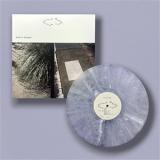
Sleepytime Trio was a post-hardcore band that formed in 1995 in Harrisonburg, Virginia. Originally a side project of the band Maximillian Colby, they quickly took off as they played shows around the mid-Atlantic region; building a reputation for their volatile, emotional sound and unpredictable live energy. Their shows were notorious for exploding into controlled chaos. They were a cacophony of tangled limbs, busted gear, and a visceral sense that everything might combust in a split second. In 2024, Solid Brass Records partnered with Sleepytime Trio and their longtime label, Lovitt Records, to begin work on a discography to memorialize this important band. 'Memory Minus Plus Minus' is a 14 track collection. Numerous songs have been remixed by J. Robbins at Magpie Cage Studio for improved quality and everything has been remastered by TJ Lipple. Limited edition opaque bublegum colored vinyl comes in a gatefold jacket and includes a booklet with extensive liner notes and full “gigography” documenting their shows from 1995-2018.
Search:k line
Enjoy The Ride Records, in partnership with Paramount Music, proudly presents Beverly Hills Cop III Original Motion Picture Score, Music by Nile Rodgers.
Eddie Murphy and Judge Reinhold return for the third installment of the series, and the franchise was graced with some new faces behind the scenes: Director John Landis (Animal House, Thriller, Coming To America), and Musician, Producer, and Songwriter Nile Rodgers (Chic, David Bowie, Coming To America).
Homage is paid to Faltermeyer's beloved Axel F, with a funky and fun rendition performed by Rogers and Richard Hilton, but with the addition of an orchestra to the band and synths, the action-packed score takes a fun, dynamic direction that suits the film perfectly.
Beverly Hills Cop III Original Motion Picture Score is available for the first time on 2xLP vinyl. It contains the full score, plus alternate score tracks, unused demos, and bonus tracks. Housed in a gatefold jacket (which features a WonderWorld theme park map, recreated by Dan Goldwasser) and red poly-lined inner sleeves, the pressing is limited to 1,000 copies across four colorful themed variants.
- 1: Jaws: Main Theme
- 2: The First Victim
- 3: Remains On The Beach
- 4: The Empty Raft
- 5: The Pier Incident
- 6: Father And Son
- 7: The Alimentary Canal
- 8: Ben Gardner's Boat
- 9: Tourist Montage
- 10: Into The Estuary
- 11: Heading Out To Sea
- 12: Tug On The Line
- 13: Man Against Beast
- 1: Quint's Tale
- 2: Brody Panics
- 3: Barrel Off Starboard
- 4: Great Chase
- 5: Shark Tows Orca
- 6: Three Barrels Under
- 7: From Bad To Worse
- 8: Quint Thinks It Over
- 9: Work Montage (The Shark Cage Fugue)
- 10: The Shark Approaches
- 11: The Shark Hits The Cage
- 12: Quint Meets His End
- 13: Blown To Bits
- 14: Jaws: End Titles
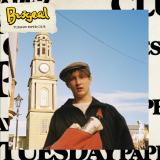
Die schottische Folk-Punk-Indie-Band Brògeal veröffentlicht am 17. Oktober das Debütalbum „Tuesday Paper Club“ über Play It Again Sam. „Tuesday Paper Club“ vermischt Romantik, Verlust, Nostalgie und Unfug und kreiert einen Genre-Mix der kurz vor dem Siedepunkt steht. Das Album ist vollgepackt mit Instrumenten wie Akkordeon, Banjo, Bouzouki, Mandoline und einer flotten Penny Whistle. Es verbindet alte Folk-Traditionen mit dem Indie-Gefühl der Gen Z und kreiert einen Sound, der angesichts der Dunkelheit des 21. Jahrhunderts lacht, singt und tanzt.
Das Album wurde im Black Bay Studio, in einer ehemaligen Fischverarbeitungsfabrik auf der Isle of Lewis aufgenommen, mit einem atemberaubenden Blick auf die Bucht. Aufgenommen haben die fünf Bandmitglieder das Album zusammen mit dem irischen Produzenten Richie Kennedy, der schon mit Künstler*innen wie The Libertines, The Last Dinner Party, Interpol, Dua Lipa und U2 gearbeitet hat.
- A1: Heavy Is The Crown - Original Score - Mike Shinoda, Emily Armstrong
- A2: I Can't Hear It Now - Freya Ridings
- A3: Sucker - Marcus King
- A4: Renegade (We Never Run) - Raja Kumari, Stefflon Don, Jarina De Marco
- A5: Hellfire - Fever 333
- A6: To Ashes And Blood - Woodkid
- B1: Paint The Town Blue - Ashnikko
- B2: Remember Me - Intro - D4Vd
- B3: Remember Me - D4Vd
- B4: Track 10
- B5: Cocktail Molotov - Zand
- C1: What Have They Done To Us - Mako, Grey
- C2: Rebel Heart - Djerv
- C3: The Beast - Misha Mansoor
- C4: Spin The Wheel
- C5: Ma Meilleure Ennemie - Stromae, Pomme
- C6: Fantastic - King Princess
- D1: The Line - Twenty One Pilots
- D2: Blood Sweat & Tears - Sheryl Lee Ralph
- D3: Come Play - Stray Kids, Young Miko, Tom Morello
- D4: Wasteland - Royal & The Serpent
- D5: Enemy - Opening Title Version - Imagine Dragons, Jid
Der offizielle Soundtrack zur zweiten Staffel der Sensations-Animationsserie Arcane.
Standard schwarze LP mit dem Megahit „Ma Meilleure Ennemie“ und allen Lieblingssongs aus dem rekordverdächtigen Soundtrack der zweiten Staffel.
2x 180g Vinyl in Widespine Jacket, mit bedruckten Innenhüllen, Einlage und neuem Cover
- Trust Me
- Tourniquet
- Out Of Reach
- Recluse In The Making
- Hurricane Of Misery
- Gone For So Long
- Come Out For A Spell
- Dry Socket
- Coming In Last
- Dragged Across The Finish Line
- Bless My Psyche
Sincere Engineer is an American punk rock band based in Chicago, Illinois. As of 2025 three full-length albums have been released, this is the second (2021) and first for Hopeless Records. Inspired by Chicago punks like Alkaline Trio and The Lawrence Arms, Sincere Engineer, centered around Deanna Belos,cut its teeth in the windy city's folk-punk scen, eissuing her debut album Rhombithianin 2017 and gaining a cult following over the course of multiple tours across the United States. For her sophomore album and Hopeless debut Bless My Psyche, Deanna is still pulling from the inspiration her adolescent icons brought her but is also expanding her sound by taking cues from artists who she has looked to as of late like Hop Along, Soccer Mommy, and PhoebeBridgers. For Fans Of: Mom Jeans, Hop Along, Remo Drive
- B7: 14 Your Love (Feat. Jonah Hitchens)
- A1: Keeping Me Strong
- A2: Need You Back
- A3: Where's Your Soul At?
- A4: Walls Start Rockin
- A5: Make It Shine (Feat. Greg Blackman)
- A6: Love Saves The Day
- A7: You Sexy Thing (Skit)
- B1: Can I Dance With You?
- B2: Heart & Soul
- B3: Plain To See
- B4: Idolising People Like Madlib
- B5: It's Not Happening (Skit)
- B6: Everybody
pink vinyl[28,53 €]
Here to dazzle you by the power of the disco ball, Lack of Afro is your friendly neighbourhood ‘Love Dealer’. Two years on from the funk & soul rebirth of ‘Square One’, powered by the ubiquitous ‘Loving Arms’ featuring Greg Blackman, Lack of Afro aka Adam Gibbons is now close to two decades deep in the game with soundtrack credits galore and online streams doing calculator-busting numbers. With extensive touring taking ‘Love Dealer’ up and down the country this Autumn, Gibbons’ ninth studio album is all for "the thrill of seeing people on a dancefloor, all collectively locked into a track that you've produced - there’s nothing like it!”.
‘Love Dealer’ is the authentic modern disco experience, packing a stacked sole’s worth of club beats full of stardusted sing-alongs, style-outs and French touch-style cool. Despite being “written during one of the longest winters in living memory”, ‘Love Dealer’, featuring some co-production from fellow South Coast dancefloor scholar Flevans (and influenced by producer du jour Barry Can’t Swim), exudes warmth and will make you sweat when its highs take effect.
Entering the scene with the radiance of ‘Make It Shine’ featuring Greg Blackman, washing over the airwaves of BBC 6 Music and Radio 2 and taking up a 10-week residency on the Jazz FM playlist, Gibbons and his crack line-up of discotheque players are your go-to team when you can’t wait for the weekend to begin, as subtle as they are straight down to business. ‘Love Dealer’ offers you nothing but the best in sparkling string symphonies, the hippest guitar licks, samples of those invited beyond the velvet rope and struts soaked in night fever.
Double A-side ‘Walls Start Rockin’ and ‘Heart & Soul’ guide the album’s glamour-and-groove, while ‘Love Saves The Day’ and ‘Plain to See’ dramatically take to the podium in a shimmer of pure peak 70s theatre. ‘Keeping Me Strong’ is the synergy of disco chic and the sound of a global advertising tie-in with Dyson, ahead of Gibbons taking a slightly Moroder/Cerrone-ish detour on ‘Idolising People Like Madlib’. “'Love Dealer' is aimed unequivocally at the dancefloor" says Adam. "As an artist, I wanted to push myself in a slightly new direction - more into the land of disco and a four to the floor sound. 'Love Dealer' is quintessentially an upbeat record, full of joy, optimism and hope for the future”. Seek your inner ‘Love Dealer’, kink your ‘fro and let your funk flag fly.
n B7. 14 Your Love (feat. Jonah Hitchens) BONUS TRACK
[n] B7. 14 Your Love (feat. Jonah Hitchens) [BONUS TRACK]
[BONUS TRACK]
2025 Repress
After numerous releases in diverse labels last year, the deutsch couple 'not even noticed' display his more raver face with a clear influence from the 90s scene.
A work focused on the club full of nostalgia through acid lines, leading to hypnotic yet heavy scenarios where they show two differentiate sides but with a common flow of sinuosity and elation.
- Tokyo 1
- Osaka
- Nagoya
- Matsumoto (Beginning)
- Matsumoto (Ending)
- Hokkaido
- Tokyo 2
- Each Story
Black Vinyl[22,27 €]
Emily A. Sprague's Cloud Time traces an audio-spiritual journey through time and place, recorded across a long-awaited debut tour of Japan in the fall of 2024. Compiled from environmental improvisations captured in and for the moment, material at once welcoming, responsive, and inimitable, the album distills a voyage guided by psychic wayfaring, unbound presence, and activating performance for a reciprocal exchange with space, listener, and each fully engaged instant. The Japanese tour documented on Cloud Time held an almost mythic significance for Sprague, taking on properties of her own sonic white whale. After many near-departures and dropped plans to play in the country, "the empty spaces of cancelled trips and forgotten music turned into strange little misty spirits that I felt followed by," she says. "When I began preparing for the tour, I couldn't shake a sense that the invitation to Japan was more about opening myself up to this new place instead of bringing something into it tightly under my control. Improvisation has always been such a pillar in my music practice, and I really wanted to meet the country, spaces and people through that process." To amplify these intuitive whispers on-stage, Sprague reimagined her time-tested live rig, designed to be as free from error as possible, as a looser, more flexible set up that would allow her to interface with what was essentially a blank sonic canvas every night. Each performance became a collaboration between environment and instinct, Sprague processing the events, energies, and emotions informing the evening through her new sound ecosystem, and projecting an entirely present and unique version of herself to each open-eared and hearted crowd. "It was very much more than just an act of playing for me, but a total experience of time and place," she says. The seven long-form pieces that plot the course of Cloud Time, excerpted from over eight hours of recordings archived on the artist's on-stage recorder and generously shared on the album with no additional mixing and only minimal editing, invite listeners to become still in these deep-rooted moments of presence as the album moves from city to city, venue to venue. Cloud Time chronicles material recorded at each tour stop, Sprague selecting and sequencing the album around mood-based storytelling more so than linear chronology. "I tried to make the whole album flow in the way that any one of the complete live performances did," she explains, "while also keeping the spirit of the whole thing as a journey." The result is equal parts travelog, love letter, and impressionistic collage channeled from the potent ferment of a now encased in the glowing amber of memory. Intrinsically inspired by kankyo ongaku, an environmental music philosophy, known both in and widely outside of Japan that tunes into the similarly expansive ethos as Pauline Oliveros' deep listening practice and posits the listener as composer, Cloud Time is ambient music that seems to be listening right back, grounded in heartfelt synthesized frequencies that abundantly hold and heal. Pieces like "Nagoya," "Tokyo 1," and the ten minute "Matsumoto" in particular hum with the atomic resonance of gently tended landscapes, offering space for tuning way in and dropping far out from perspectives that stifle and bind. Cloud Time is an invitation to embrace each moment as both fleeting and eternal, floating by with nothing to grasp onto and absolutely everything to gain. The exercise in acceptance and letting go that Sprague practiced throughout the tour deeply impacted her understanding of self as both a guest and venerable performer. "The process of loving wherever I am, being present and focusing on a clear channel of communication for mind and emotion, rooted so deeply in respect for the space, those within it, and myself, ended up being profoundly healing," she says. "My vision and hope is that this album can be released as a gift back to anyone who either was or wasn't there. A cloud time of life passing by."
- A1: Fantasy Night Flight
- A2: If You Cry
- A3: Frosty Scenery
- A4: A Long Journey
- B1: Saying Goodbye To You And Me
- B2: Decorating The Window Of My Heart With Red Flowers
- B3: Mood Romantica
- B4: Lover And Rain Clouds
Two of Lamp's masterpieces will be released on vinyl at the same time! Two of Lamp's masterpieces from the 2010s, "Tokyo Utopia Tsuushin" and "Yume",
will be reissued on vinyl! After becoming a viral hit on TikTok in the 2020s, Lamp now has over 2.1 million monthly listeners on Spotify.
In addition to his deep-rooted popularity in Asia (China, Taiwan, Hong Kong, Korea, Indonesia, etc.), he was selected as a support act for Mitski last year
and accompanied them on their North American tour. At the same time, his solo tour "FUTURE BEHIND ME" North America 2024, which visited 17 locations
in North America, was all sold out. This summer's solo show at LINE CUBE SHIBUYA was also sold out immediately, and Lamp's two masterpieces,
which are currently gaining worldwide acclaim, will be released on vinyl at the same time!
This is the sixth album by Lamp, a mixed-gender trio that has inherited the Japanese pop music of each era and sublimated it into new pop music by sprinkling
elements of 70's pop and Brazilian music throughout.
This album depicts the mental landscape of a man and woman passing each other in a certain place in a city.
It suddenly reminds us of the cold and warmth of winter, a nostalgic feeling that everyone has experienced at least once.
The jacket features many illustrations by Suzuki Oji, who was active in the manga magazine "Garo," which had a great influence on young artists in the 70s and
produced many geniuses in the manga world, and is known for his representative work "Motorcycle Girl."
The unique, fantastical illustrations resonate with Lamp's music to create a fantastical world.
- Disc 1 "Single Man" 2025 Remaster
- A1: Gift From A Fan
- A2: Big Haruko
- A3: Kindness
- A4: I'm For Myself
- A5: Recording Man (Relaxing Or Rushing To A Decision)
- A6: Wanna Take A Night Walk?
- A7: Dedicated To The Hippies
- A8: Absentminded
- A9: Why I Was Cold
- A10: It's Already Autumn On The Koshu Kaido
- A11: Slow Ballad
- Disc 2: Single & Rare Tracks
- B1: Slow Ballad (Single Version) 1976/1/21 Single
- B2: Kindness (Single Version) 1976/1/21 Single
- B3: You'll Understand Me 1976/10/11 Single
- B4: Hello With A Dirty Face 1976/10/11 Single
- B5: The Terrible Generation Difference (Oh, Ya!) *First Recording Version
- B6: It's Already Autumn On Koshu Kaido ~Another Mix~ *First Recorded Version
- B7: The Terrible Generational Difference (Oh, Ya!) (Tvk "Young Impulse" Studio Live 1976/4/25)
- B8: Slow Ballad (Tvk "Young Impulse" Studio Live 1976/4/25)
- B9: Wanna Take A Night Walk? (Tvk "Young Impulse" Studio Live 1976/4/25)
- B10: Good Morning Darling (Tvk "Young Impulse" Studio Live 1976/4/25)
- B11: Where I Sleep (Tvk "Young Impulse" Studio Live 1976/4/25) *Unreleased Song
- B12: I'm For Myself (Tvk "Young Impulse" Studio Live 1976/4/25)
Congratulations! 55th anniversary of debut
The third album "Single Man", released on April 21, 1976, was an album with many controversies from the production stage.
It was discontinued less than a year after its release, and then a movement to re-release "Single Man" arose, and it finally re-released in 1980, so it has
a twisted story.
The album features a variety of performances due to the transition period from the folk period to the electric arrangement period, and above all, many
masterpieces that can be said to be representative of the entire RC period, such as "Slow Ballad". The driving force just before the rapid climb to
"KING OF ROCK" after 1980 is already boiling in this album.
In addition to the latest remastered sound source from the original master tape of the album, this deluxe edition includes single songs from that time,
versions not included on the album, and a studio live sound source from tvk's "Young Impulse" at the time of the album's release.
It is a deluxe edition packed with the overflowing talent of RC Succession at that time.
The booklet includes for the first time all 17 images from the original jacket illustration, "Pictures for the Test of Painting Apperception of Infants and Children."
・Remastered by zAk
・Disc 1: Half-speed cutting / Disc 2: Normal cutting by Miles Showell at ABBEY ROAD
・180g heavyweight clear vinyl
・Booklet (17 images of "Pictures for the Test of Painting Apperception of Infants and Children" (illustrations by Minamioji Hajime), commentary, lyrics)
・Liner notes: Imai Tomoko, Sakai Hiroki
STANDFIRST Titanic, the project spearheaded by Mabe Fratti and Hector Tosta (aka I. la Católica), return with a sumptuous and life-affirming new album.
In her sensational 1929 biography Tiger Woman, dancer and socialite Betty May claimed her ‘coster’s eye’ meant she liked to wear as many colours as possible. “Colours to me are like children to a loving mother. Each is my favourite, yet I can never bring myself to deny the others by preferring one.” May’s bold and inclusive strategy is one that manages to transfer itself, almost a century later, to Hagen, the new record by Titanic.
Many will know Titanic as the Mexico City-based brainchild of cellist and singer Mabe Fratti and multiinstrumentalist Hector Tosta who is now operating under the pseudonym, I. la Católica, (taken, rather unusually, from the name of the street the pair live on). With Hagen, and their previous release, Vidrio, (2023), the pair are creating a distinctive signature sound in modern alternative pop music. Nobody else sounds quite like them. Both records have an open hearted nature and simple, winning melodies that play off against a taste for drama, spectacular orchestration and a feeling of otherworldly mystery. Hagen is the more ambitious, sometimes more mystical effort. From the opening handclaps of ‘Lágrima del Sol’, (a wonderfully uptempo playground chant translating as a tear from the sun but, surely, not referencing the brand of pineapple wine?), the record dances its way through various mid-to-late-eighties inspirations, lush and widescreen passages of melancholy and vertiginous contrasts.
Mystery is often found in the simple but slightly odd song titles. English translations of various track titles give, ‘you swallowed the gum’, ‘leak’, ‘a tear from the sun’, ‘raising the trophy’ ‘digging dimensions’, ‘the owner’, ‘the decapitated hen’ and ‘the trap is exposed’. All denote striking images, metaphysical hints and emotional cues or simple, even childlike actions. Though Fratti and Tosta don’t reveal its provenance, the album’s title could even be a crafty play on words: the listener would be forgiven in thinking the moments of brash contrast and eyebrow raising theatricalism in the music constitute a musical nod to German punk chanteuse, Nina Hagen.
On Hagen, singer and cellist Mabe Fratti once again displays her brilliant knack of speaking to us directly. There is never the suspicion of her playing to the gallery, and the directness of many of the lyrics don’t allow it. Parallel to this, Fratti has an almost magical ability to give Hector Tosta’s melodies, and her and Tosta’s lyrics ones imbued with an insight and meaning that feels otherworldly. Tosta admitted it was “pretty wild to hear Mabe take the interpretations to a different place” and the listener can pick up on the delight Fratti takes in (literally) adding a voice to the many narratives.
Two examples can be shown here: ‘Gotera’ (Leak) uses harsh slashes of cello and tough, gunfire-like guitars and drums and multiple vocal lines that could be acting as a Greek chorus. They play off brilliantly against Fratti’s soft, slightly baleful vocal take that delivers lyrics such as: ‘nobody knows where the leak is / but I know where it is / they fight in front of the door and / nobody can go in’. With ‘La Gallina Degollada’ the somewhat blithe melody melody line, sung with what could be sarcastic brio by Fratti, plays against an itchting rhythm and rasping guitar part. The punch comes when you see that the song is about a chicken that has been decapitated and read lyrics such as: ‘I already saw it, it moved, the decapitated chicken’ / ‘could it be that I'm broken’ and ‘Two people hurt each other by thinking that they no longer agree’/ ‘Hours pass and the chicken represents what scares me’.
There may be death and fights to deal with, but there is also a quality of chirpy self-reliance about Hagen that is a key part of its nature. Like Betty May and her colourful outfits, Hagen’s sound often revels in its own sense of richness. Throughout, the record delivers vaulting string sections or glutinous guitar squeals that could, like the powerful, driving ‘Escarbo Dimensiones’ (Digging Dimensions) have come directly from a glossy 1980s TV series. Fratti sees this “glam sound” developed by Tosta on the aforementioned track and ‘Te Tragaste el Chicle’ (You Swallowed The Gum), as moments that were truly “revealing” for the album as a whole during its making.
What else? The thud and thump of ‘La Trampa Sale’ (The Trap is Exposed), and its sudden change of tempo and mood betrays a monstrously ambitious piece of music, the players almost greedily creating the sounds. Other moments are heart wrenching: ‘Libra’ ends on a poppy chord switch that cleverly ramps up the emotion inherent in the music’s notation. You could almost imagine a teenager in a bedroom forty years ago, rewinding the track over and over on a small, cheap cassette player, unable to get enough of that sugarsweet switch. Elsewhere, Oneohtrix Point Never adds stardust and an unearthly sense of space on the changeable, slightly moody meditation, ‘Pájaro de Fuego’ (Firebird). The record ends with ‘Alzando el Trofeo’ (Lifting the Trophy), a track that could soundtrack a state wedding, what with its beautiful cascading piano parts, a sugary vocal and short triumphal guitar riffs that add a rich patina to the overall sound. Fratti: “When I doubled those vocals on ‘Alzando el Trofeo’ I felt there was an epiphany happening, right at that moment.”
Making a good record is a team game. Tosta and Fratti recall seeing Randall from Circular Ruin Studios in NYC “tweak the drums in ‘Libra’ to make that amazing effect of the gated reverb”, or the shaping of ‘Gotera’, “when (recording engineer) Nate Salon added some synths to the track.” Drummer Eli Keszler, “an amazing and versatile player” had the songs down pat in a couple of days” and, according to Tosta, Oneohtrix Point Never “just came to one of the sessions and we hung out, and after all the recordings he and Nate were together in some studio and out of nowhere they sent us some beautiful tracks for ‘Pájaro de Fuego’! Fratti concurs. “He decided that he wanted to record because he was listening to the record (Nate works closely with him) and he really liked it! It was a total honour, indeed!”
Bedazzled by the playing, the skyscraping ambition in the arrangements and the giddy moments of contrast thrown up by Hagen, we could allow ourselves a brief moment of flippancy and state that Titanic’s new record is Yacht Rock meets Aeschylus, full-on. It’s also worth speculating that, in this hyper-sensitive, intemperate age, Titanic’s music has the power, however fleetingly, to heal hurts. Hagen is a brilliant showcase for a fresh and enriching form of pop music: displaying a magpie eye for what glints and plundering what has gone before.
Like Vidrio, Hagen was partially and additionally recorded at Fratti and Tosta’s house, aka Tinho Studios in Mexico City, as well as Golden Girl Studios & Circular Ruin Studios in New York City. Mixing was done by Santiago Parra in Pedro y el Lobo Studios, Mexico City and mastered by Rafael Anton Irisarri at Black Knoll Studios, New York City. The recording engineer was Nate Salon.
Hagen featured Mabe Fratti on cello, vocals & backing vocals, I. la Católica on guitar, keyboards, prepared piano, bass & backing vocals, drums by Eli Keszler and synths in ‘Pájaro de Fuego’ from Daniel Lopatin and Nate Salon.
All compositions on Hagen are written by I. la Católica, except ‘Escarbo Dimensiones’ & ‘Pájaro de Fuego’, which were composed by I. la Católica and Mabe Fratti. The record was produced by I. la Católica and co-produced by Nate Salon & Mabe Fratti. And all lyrics are by I. la Católica except ‘Escarbo Dimensiones’, ‘Gotera’, ‘Gallina degollada’ & ‘Pájaro de Fuego’, which were written by I. la Católica & Mabe Fratti.
STANDFIRST Titanic, the project spearheaded by Mabe Fratti and Hector Tosta (aka I. la Católica), return with a sumptuous and life-affirming new album.
In her sensational 1929 biography Tiger Woman, dancer and socialite Betty May claimed her ‘coster’s eye’ meant she liked to wear as many colours as possible. “Colours to me are like children to a loving mother. Each is my favourite, yet I can never bring myself to deny the others by preferring one.” May’s bold and inclusive strategy is one that manages to transfer itself, almost a century later, to Hagen, the new record by Titanic.
Many will know Titanic as the Mexico City-based brainchild of cellist and singer Mabe Fratti and multiinstrumentalist Hector Tosta who is now operating under the pseudonym, I. la Católica, (taken, rather unusually, from the name of the street the pair live on). With Hagen, and their previous release, Vidrio, (2023), the pair are creating a distinctive signature sound in modern alternative pop music. Nobody else sounds quite like them. Both records have an open hearted nature and simple, winning melodies that play off against a taste for drama, spectacular orchestration and a feeling of otherworldly mystery. Hagen is the more ambitious, sometimes more mystical effort. From the opening handclaps of ‘Lágrima del Sol’, (a wonderfully uptempo playground chant translating as a tear from the sun but, surely, not referencing the brand of pineapple wine?), the record dances its way through various mid-to-late-eighties inspirations, lush and widescreen passages of melancholy and vertiginous contrasts.
Mystery is often found in the simple but slightly odd song titles. English translations of various track titles give, ‘you swallowed the gum’, ‘leak’, ‘a tear from the sun’, ‘raising the trophy’ ‘digging dimensions’, ‘the owner’, ‘the decapitated hen’ and ‘the trap is exposed’. All denote striking images, metaphysical hints and emotional cues or simple, even childlike actions. Though Fratti and Tosta don’t reveal its provenance, the album’s title could even be a crafty play on words: the listener would be forgiven in thinking the moments of brash contrast and eyebrow raising theatricalism in the music constitute a musical nod to German punk chanteuse, Nina Hagen.
On Hagen, singer and cellist Mabe Fratti once again displays her brilliant knack of speaking to us directly. There is never the suspicion of her playing to the gallery, and the directness of many of the lyrics don’t allow it. Parallel to this, Fratti has an almost magical ability to give Hector Tosta’s melodies, and her and Tosta’s lyrics ones imbued with an insight and meaning that feels otherworldly. Tosta admitted it was “pretty wild to hear Mabe take the interpretations to a different place” and the listener can pick up on the delight Fratti takes in (literally) adding a voice to the many narratives.
Two examples can be shown here: ‘Gotera’ (Leak) uses harsh slashes of cello and tough, gunfire-like guitars and drums and multiple vocal lines that could be acting as a Greek chorus. They play off brilliantly against Fratti’s soft, slightly baleful vocal take that delivers lyrics such as: ‘nobody knows where the leak is / but I know where it is / they fight in front of the door and / nobody can go in’. With ‘La Gallina Degollada’ the somewhat blithe melody melody line, sung with what could be sarcastic brio by Fratti, plays against an itchting rhythm and rasping guitar part. The punch comes when you see that the song is about a chicken that has been decapitated and read lyrics such as: ‘I already saw it, it moved, the decapitated chicken’ / ‘could it be that I'm broken’ and ‘Two people hurt each other by thinking that they no longer agree’/ ‘Hours pass and the chicken represents what scares me’.
There may be death and fights to deal with, but there is also a quality of chirpy self-reliance about Hagen that is a key part of its nature. Like Betty May and her colourful outfits, Hagen’s sound often revels in its own sense of richness. Throughout, the record delivers vaulting string sections or glutinous guitar squeals that could, like the powerful, driving ‘Escarbo Dimensiones’ (Digging Dimensions) have come directly from a glossy 1980s TV series. Fratti sees this “glam sound” developed by Tosta on the aforementioned track and ‘Te Tragaste el Chicle’ (You Swallowed The Gum), as moments that were truly “revealing” for the album as a whole during its making.
What else? The thud and thump of ‘La Trampa Sale’ (The Trap is Exposed), and its sudden change of tempo and mood betrays a monstrously ambitious piece of music, the players almost greedily creating the sounds. Other moments are heart wrenching: ‘Libra’ ends on a poppy chord switch that cleverly ramps up the emotion inherent in the music’s notation. You could almost imagine a teenager in a bedroom forty years ago, rewinding the track over and over on a small, cheap cassette player, unable to get enough of that sugarsweet switch. Elsewhere, Oneohtrix Point Never adds stardust and an unearthly sense of space on the changeable, slightly moody meditation, ‘Pájaro de Fuego’ (Firebird). The record ends with ‘Alzando el Trofeo’ (Lifting the Trophy), a track that could soundtrack a state wedding, what with its beautiful cascading piano parts, a sugary vocal and short triumphal guitar riffs that add a rich patina to the overall sound. Fratti: “When I doubled those vocals on ‘Alzando el Trofeo’ I felt there was an epiphany happening, right at that moment.”
Making a good record is a team game. Tosta and Fratti recall seeing Randall from Circular Ruin Studios in NYC “tweak the drums in ‘Libra’ to make that amazing effect of the gated reverb”, or the shaping of ‘Gotera’, “when (recording engineer) Nate Salon added some synths to the track.” Drummer Eli Keszler, “an amazing and versatile player” had the songs down pat in a couple of days” and, according to Tosta, Oneohtrix Point Never “just came to one of the sessions and we hung out, and after all the recordings he and Nate were together in some studio and out of nowhere they sent us some beautiful tracks for ‘Pájaro de Fuego’! Fratti concurs. “He decided that he wanted to record because he was listening to the record (Nate works closely with him) and he really liked it! It was a total honour, indeed!”
Bedazzled by the playing, the skyscraping ambition in the arrangements and the giddy moments of contrast thrown up by Hagen, we could allow ourselves a brief moment of flippancy and state that Titanic’s new record is Yacht Rock meets Aeschylus, full-on. It’s also worth speculating that, in this hyper-sensitive, intemperate age, Titanic’s music has the power, however fleetingly, to heal hurts. Hagen is a brilliant showcase for a fresh and enriching form of pop music: displaying a magpie eye for what glints and plundering what has gone before.
Like Vidrio, Hagen was partially and additionally recorded at Fratti and Tosta’s house, aka Tinho Studios in Mexico City, as well as Golden Girl Studios & Circular Ruin Studios in New York City. Mixing was done by Santiago Parra in Pedro y el Lobo Studios, Mexico City and mastered by Rafael Anton Irisarri at Black Knoll Studios, New York City. The recording engineer was Nate Salon.
Hagen featured Mabe Fratti on cello, vocals & backing vocals, I. la Católica on guitar, keyboards, prepared piano, bass & backing vocals, drums by Eli Keszler and synths in ‘Pájaro de Fuego’ from Daniel Lopatin and Nate Salon.
All compositions on Hagen are written by I. la Católica, except ‘Escarbo Dimensiones’ & ‘Pájaro de Fuego’, which were composed by I. la Católica and Mabe Fratti. The record was produced by I. la Católica and co-produced by Nate Salon & Mabe Fratti. And all lyrics are by I. la Católica except ‘Escarbo Dimensiones’, ‘Gotera’, ‘Gallina degollada’ & ‘Pájaro de Fuego’, which were written by I. la Católica & Mabe Fratti.
Scintillating, alchemical kosmische; visionary, deep, and luminous; and beautifully sleeved, with gold foiling and silver ink.
Works In Metal fans out a set of acid treatments and finely sharpened blades — cutting, shaping, suspending form. Sounds are melted down and forged as if liquid metal.
The works are paired. Arc’s Blue Flame previews the smoking volatility at the album’s core. Echoes and resonance soften the dissonant, bright textures; all overlaid with Fofana’s signature, percussive kick drums. Welding drills into the discordant thrills and spills of metamorphosis. Sparks fly and the bittersweet arc of change unfolds.
Fofana discreetly folds in text, poetry, and field recordings, spooring their decomposition and recomposition with a prismatic point of view. The coupling Obscure Light (Decomposition) and Obscure Light (Recomposition) marks something new in his music. The pulse is brightly honed, cascading beyond the dancefloor, exultingly eluding musical genre.
Works in Metal is perhaps Fofana’s most narrative album. At its heart is the killer, extended Lure of the Fragment / So Another Sound Suggests Itself. Melodies circle in call-and-response patterns, balancing proximity and distance, signalling the inward gravity required to work with metal. A nested story-line, with birds flying in; an album within an album. Dredging up memories and associations, Fofana filters in selections from his sound-archives. Layered with synths, field recordings become instruments in their own right. The last three minutes proffer precious clarity — a memory, in miniature, flashed onto molten metal.
In 1943 Suzanne Césaire declared that ‘our surrealism will then supply them the leaven from their very depths. It will be time finally to transcend the sordid contemporary antinomies: Whites-Blacks, Europeans-Africans, civilized-savage: the powerful magic of the mahoulis will be recovered, drawn from the very wellsprings of life. Colonial idiocies will be purified by the welding arc’s blue flame. The mettle of our metal, our cutting edge of steel, our unique communions — all will be recovered’. Works in Metal is a tribute to her prophecy; its enactment, sculpted in sound.
Manchester based trio, Sonnenspot have unashamedly taken their favourite records from the Kosmische Musik landscape and fused these to inform their own spontaneous sonic constructions. Motorik drums, pulsating flutes, wah guitar and almost excessive use of space echo make this a dense and dreamy listen, with a hint of the rainy pensiveness of their home town.
Notable inspiration from Neu!, Manuel Gottsching, Sonic Youth and Yo La Tengo is all clearly audible in the various recordings on this album and minimal effort was made to shy away from this. The longest track 'Motorway' is an epic homage to the space rock art form and 'Madrugada' takes both John Martyn's 'Small Hours' and Gottsching's 'Inventions' as a starting point. Others include the tobacco lovers art-rock-ear-worm ('Liquorice Paper'), a dub laden celestial synth jam ('Slow Blinker') and the album opens with the first thing the band ever recorded, as a meaningless improvisation to tune their synths up to ('Figurescene'). Turned out it had a killer bass line and drum part.
Initial sessions were mostly just an excuse for the three long standing friends to get together musically for the first time, and after knowing each other for many full moons, it was long overdue.
They all bring some peripheral musical heritage to the table. Ian Smith was the guitarist in Alfie and the The Beep Seals and played on Badly Drawn Boy's 'The Hour of Bewilderbeast'. Pete Philipson played in Jane Weaver's band for ten years and has made his own ambient guitar albums. Dan Hope plays in the jazz folk band Mother Sky and promotes events around the city under the Rainy Heart banner.
They were joined by another long term musical friend Sam Kynaston who added heavenly flute to much of the album.
From the crypts of Parisian funk obscurity comes the long-lost Halloween holy grail, Disco Frankenstein from Ice AKA Lafayette Afro Rock Band. A teasing album of horror-disco oddities originally released as a compilation—a misnomer cloaked in mystery, as the tracks themselves hail from the group’s playful experiments in the mid-to-late ’70s.
This album unearths a twisted treasure trove of grooves, originally scattered across obscure side-projects and international pressings, brought back to life by Strut on blood-soaked vinyl exclusively for Halloween 2025.
Originally released as a 1976 Japan-only compilation featuring the Lafayette Afro Rock Band under a plethora of pseudonyms—Sweet Exorcist, Captain Dax, Hot Blood, Krispie and Co., and more, the release was masterminded by producer Pierre Jaubert and led by bandleader Frank Abel with the funk-virtuosity of the Lafayette Afro-Rock Band group, the minds behind the much sampled ‘Soul Makossa’ and ‘Malik’ albums.
Disco Frankenstein represents the band at their most creative—layering wah-wah guitars, thunderous Afrobeat rhythms, and creepy-crawly synths into a funky stew of horror-disco gold. Tracks like “Dr. Beezar (Soul Frankenstein),” “Disco Vampire,” “Zeke the Zombie,” and “Igor’s Reggae” blur the line between Halloween novelty and dancefloor fire, conjured with full seriousness by studio wizards who knew how to raise the funk.
Resurrected by Strut Records and remastered by The Carvery, this compilation finally gets the deluxe treatment it deserves: pressed on limited blood-stained vinyl just in time for Halloween 2025.
Celebrated DJ, producer, and sonic explorer Auntie Flo (aka Brian d’Souza) — described by The Guardian as “one of global club culture’s most vital voices” — returns this autumn with ‘Birds of Paradise’: a rhythmically rich, emotionally resonant, and ecologically grounded new album, out 23 October via his A State of Flo imprint. The album will be launched with a special live show at London’s Jazz Caféon the same day.
‘Birds of Paradise’ draws on d’Souza’s global club experience while deepening his connection with the natural world. Built around classic Roland drum machines and iconic vintage synths, the record is a joyful, body-driven celebration of rhythm and movement, but one grounded in ecology and place. The album’s spiritual centre lies in Saligao, Goa, near d’Souza’s maternal homeland where his Auntie Florie (where the name is derived from) is buried. Where he found his ‘paradise’ nearby, staying in a converted fisherman’s hut and recorded dawn choruses from a riverside studio overlooking mangrove-lined waters. Environmental textures from Japan also make their way into the music, creating a sonic map rooted in lived experience.
“Birds of Paradise is about finding beauty and rhythm in a chaotic world. It’s about listening, to nature, to our bodies, to what’s real. It’s a reminder that dance music can be both joyful and grounded.” The album blends Afro-Latin polyrhythms with Western 4/4 patterns, fusing instinctive, dancefloor energy with field recordings that anchor the music in the earth. Described by d’Souza as “tropical with a few deeper edges, a balance of light and dark.”
The new record follows the acclaimed ‘In My Dreams, I’m A Bird and I’m Free’, which earned 4 stars and Global Album of the Month from The Guardian, featured in Disco Pogo’s Albums of the Year, and received support from Luke Una, Resident Advisor, Juno, Bandcamp, Mixmag, DJ Mag, Electronic Sound, The Skinny, Beatport, Ban Ban Ton Ton, and more. The album’s launch show at Omeara London sold out. Other recent projects include the ‘Outernational Dance’ EP on cult label Multi Culti, event series ‘Plants Can Dance (and Mushroom’s Sing)’ which explore plant and fungi bioelectricity as a means of live composition, and ‘Black Beacon’, a haunting cassette release and soundwalk series recorded on the abandoned military island of Orford Ness. There, d’Souza explored the eerie intersection of nature, decay, and deep time, gaining special access to restricted buildings to capture long-form soundscape compositions.
Alongside his production work, d’Souza has emerged as a leading voice at the intersection of sound and science. He curated music for Imperial College’s groundbreaking psychedelic therapy trials, developing six-phase playlists to guide participants through psilocybin-assisted sessions treating conditions such as fibromyalgia and gambling addiction. His five-hour ambient set at Watching Trees Festival, selected as Resident Advisor’s Mix of the Day, continued this exploration into the therapeutic potential of sound in altered states. He also spent six months collaborating with BBC producer Tom Raine on a documentary for BBC World Service, centred on a two-week journey through Kenya and Goa. There, he performed live, led plant music workshops, and joined a deep listening retreat rooted in field recording. “I realised my studio isn’t just four soundproofed walls filled with instruments — it’s the journey itself. It’s the people I meet, the natural world I listen to, and the connections I feel.”
This same commitment to deep listening fuels his live concept Plants Can Dance, a project that combines the biosonification of plants and fungi with modular synthesis. The next event, on 14 September at Hideout Hackney Wick, will feature performances by Stella Z and Lapalace, with d’Souza and resident Lamine playing live alongside responsive plants in collaboration with Repot Hackney Wick and the label Music To Watch Seeds Grow By. “I’ve spent years exploring how electronic music can connect us, not just to each other, but to the natural world. Whether it’s translating mushroom data into melody or capturing birdsong at dawn, it’s about finding resonance across bodies, ecosystems, and machines.”
Rooted in his Goan and Kenyan heritage and shaped by years of travel and collaboration, d’Souza’s creative mission is simple: to reconnect the electronic world with the natural one. Through A State of Flo, he continues to blur the boundaries between club culture, sound art, and ecological awareness.
- A1: Fantastic Voyage (Timber Mix) (5 34)
- A2: County Line (2 58)
- A3: Mama, I'm In Love Wit A Gangsta (4 09)
- A4: Hand On My Nutsac (3 31)
- B1: Ghetto Cartoon (3 18)
- B2: Smokin' Stix (3 22)
- B3: Can-O-Corn (3 38)
- B4: U Know Hoo! (3 49)
- C1: It Takes A Thief (5 06)
- C2: Bring Back Somethin Fo Da Hood (3 11)
- C3: N Da Closet (3 52)
- C4: On My Way To Harlem (3 16)
- D1: Sticky Fingers (2 59)
- D2: Thought You Knew (3 18)
- D3: Ugly Bitches (4 07)
- D4: I Remember (4 49)