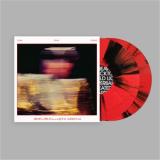
NOAHFINNCE’s ‘STUFF FROM MY BRAIN / MY BRAIN AFTER THERAPY’ is a collection of songs written before and after therapy.
The debut double EP collection features guest vocals from Chris Freeman of Hot Mulligan and builds the world of NOAHFINNCE’s unique, hyperactive brain.
The project tackles issues like depression, anxiety, ADHD, past trauma and the path toward prioritizing mental health.
Deeply personal, but always expressed with a cheeky, quirky, not-so-serious sense of humour, NOAHFINNCE showcases the big personality that has amassed a huge YouTube following and led
him toward being a leading voice in Trans/LGBTQ+ youth issues.
With songs like ‘AFTER THERAPY’ and ‘LIFE'S A
BIT’, NOAHFINNCE is poised to break out as this
year’s new star of the new wave of pop punk.
High Focus Records are proud to present the latest collaboration from Verb T & Illinformed. ‘Stranded in Foggy Times’ both continues and completes the trilogy that began back in 2015, with ‘The Man with the Foggy Eyes’, before broadening the horizons with last year’s release ‘The Land of the Foggy Skies’. This final chapter returns to the same conceptual landscape as its predecessors, but also sees Verb T & Illinformed returning to a more classic approach to album making. In spite of its concept, the Foggy Trilogy is something of a personal outpouring for Verb T, with the original aim being to vicariously discuss the trials and tribulations that play a part in his life, including his struggles with chronic illness and the feeling of alienation from leaving his hometown, while also reflecting on the state of the world as a whole. Their approach to making the album meant taking it back to the most natural form, where the idea for the track would be outlined, Illinformed would make the beat, Verb T would write to it and then they would tweak and adjust accordingly. The result is 19 of the most finely crafted tracks to emerge from the UK shores this year. As with the previous albums, ‘Stranded in Foggy Times’ finds Illinformed moving away from the more rugged sound that has shrouded the British scene over the last few months, thanks to his collaborations with the likes of Datkid and Wish Master, instead providing Verb T with an arguably more mellow backdrop. From the string and piano driven introduction on ‘Legacy’, to the blissful head-nod vibes of the closing track, ‘Blind Faith’, the union between beats and rhymes sits at the perfect level. The album also boasts one of the most impressive guestlists of the year, one that is very much a product of both players’ worlds. Thanks to Illinformed’s Bristol connection, there are features from the likes of Res One, Datkid, Leaf Dog, Smellington Piff and Chillman, as well as some locally sourced cuts from DJ Rogue. While on Verb T’s side of the fence, we have features from Rye Shabby and Moreone, along with a collaboration that reignites the same creative spark he found in his early days, as King Kashmere steps into the booth on Feeling Strange. All in all, ‘Stranded in Foggy Times’ does exactly what it sets out to do, by drawing the trilogy to a close while also providing insights into Verb T’s personal world and the world at large. The fact that it also happens to be one of the strongest rap albums of the year is the icing on the cake
Vinyl Packaging: Gatefold LP + download card. Indie Exclusive Transparent Orange vinyl in gatefold jacket Limited to 1000. CD 6 panel Digipak. Gnosis is the highly anticipated 8th full length from Russian Circles. Across the span of their previous seven studio albums, Chicago-based instrumental trio Russian Circles traversed a diverse topography of sounds, moods, and approaches with their limited armory of drums, bass, and guitar. It’s difficult to chart an evolution in their sound when their records have always felt like well-curated playlists. It wasn’t uncommon to hear drone-heavy meditations, dazzling prog exercises, knuckle-dragging riff-fests, haunting folk ballads, and tension-baiting noise rock all within the span of one album. Still, it’s difficult to ignore the progression from the pensive and intricate melodies of Enter (2006) to the layered distorted dirges of Blood Year (2019). It’s been a gradual sonic shift owing to the band’s rigorous tour schedule and a predilection towards playing their more authoritative material on stage. But with their latest album, Gnosis, Russian Circles eschew the varied terrain of their past work and bulldoze a path through the most tumultuous and harrowing territory of their sound. As was the case for so many artists in the age of COVID, the obstacles of geography and isolation forced Russian Circles to reevaluate their writing process. Rather than crafting songs out of fragmented ideas in the practice room, full songs were written and recorded independently before being shared with other members, so that their initial vision was retained. While these demos spanned the full breadth of the band’s varied styles, the more cinematic compositions were ultimately excised in favor of the physically cathartic pieces. Gnosis was engineered and mixed by Kurt Ballou. Drums and bass were tracked at Electrical Audio in Chicago to maximize the natural room sounds of the rhythm section. Guitar and synth overdubs were conducted at God City in Salem, MA to take advantage of Ballou’s vast inventory of amps and effects pedals. Despite the entirety of the album being written remotely, the songs were recorded with the full band playing together to retain the live feel of the material. Owing to the climate of the times and a new writing method, Russian Circles created their most fuming and focused work to date—an album that favors the exorcism of two years’ worth of tension over the melancholy and restraint that often colored their past endeavors. European Co-Headline tour with Cult of Luna slated for Marc 2023 (Dates TBA). Russian Circles have received coverage from most notable press including Pitchfork, Rolling Stone, Stereogum, FADER, AV Club, Consequence, Decibel, Revolver and much more.
New pressing on black vinyl (500 units). Following the recently released and highly praised Trees 50th Anniversary box set on Earth Recordings, Trees reissue their debut album ‘The Garden of Jane Delawney’as a standalone release. It’s now over fifty years since Trees’ formation, a band who helped define ‘Acid Folk’, creating a sub-category in the lexicon of record dealers and music critics alike. “When we are talking about psych folk or acid folk, we are really talking about music like this by Trees” Stuart Maconie, BBC6 Music. Trees first album, ‘The Garden of Jane Delawney’ (1970) snuggles nicely into contemporary nu-folkies’ idea of the genre, and shares some of the pastoral-whimsy that characterised The Incredible String Band or Donovan, offset by some stunning interpretations of traditional material and Bias’ own songs. The record includes readings of ‘Lady Margaret’, ‘Glasgerion’, the old standard ‘She Moved Thro’ The Fair’, and the extended fade of the group’s own ‘Road’, presage the explosive instrumental duelling that would come to characterise the follow up album, ‘On The Shore’. // “The music’s arcane power remains intact” Mojo. // “A fantastic band” Record Collector. // “Spectacular” Uncut. // “Sublime” Shindig. // Timeless” Prog. // “It’s these two original albums that stand as pinnacles of form” The Wire. // Track listing: A1. Nothing Special A2. The Great Silkie A3. The Garden of Jane Delawney A4. Lady Margaret B1. Glasgerion B2. She Moved Thro' The Fair B3. Road B4. Epitaph B5. Snail's Lament
PURE GARAGE RETURNS WITH A CAREFULLY CURATED SELECTION OF COLLECTIBLE CLASSICS.
Pure Garage, the best-selling UKG compilation of all time, returns with a fresh stack of high value collectible classics on DJ friendly vinyl.
With a host of gold & platinum selling compilation albums under it’s belt, plus countless sold out events across the UK, Pure Garage is known and trusted by both hard-nosed purists & the casual listener.
This latest foray coincides with an incredible resurgence in interest for the UK Garage sound, bringing together 8 high collectible infectiously funky cuts, spread across a DJ Friendly 2 slices of vinyl.
Pure Garage Collectible Classics Volume 1 opens with Buggin Me by garage pioneer Zed Bias alongside Al Brown, a groovy bassline, funky beats and a great vocal hook combine perfectly to showcase the mighty Zed Bias at his funky best.
Set It Off, by Chris Mack / Flavour, is a truly collectible record. Originally only available on vinyl as a limited white label press, copies of Set It Off have been trading hands on sites such as Discogs for as much as £130… It’s worth buying this compilation purely to get hold of this track on vinyl!
Another track that is going for big money on reseller sites is Romantic 2001 by DJ Deller. With this minimal 2 step riddim having sold for up to £120. This is definitely one for the collectors.
Funkaholics aka Jeremy Sylvester rounds off the first piece of vinyl on this album with the bass heavy Down 2 Da Ground.
Vinyl 2 kicks off with the sing-a-long classic from 1998, Anthill Mobs’s track Don’t Leave Me, followed hotly by the speed garage sounds of Body Grooving by M.F. Project.
Finally, Deep Impact drops My Fantasy followed up with a regular name of the Pure Garage live event line ups, Scott Garcia drops his soulful club classic Music Takes You, rounding out an impressive batch of tracks representing everything exciting about the UK Garage genre.
PURE GARAGE COLLECTIBLE CLASSICS VOL 1 will be released on double vinyl 16th December 2022!
Spiritual, intimate and revolutionary, yet firmly rooted in Brazil's folklore. Africadeus was the breakthrough album of the mighty Naná Vasconcelos, in which he discovered the berimbau to the world and took the instrument to a universal level, abstracting it from its original context of capoeira. Having played in the shadows for other artists such as Milton Nascimento, Gato Barbieri or Som Imaginario, Naná is here finally in the spotlight.
Recorded in 1973 in France for Pierre Barouh's Saravah label, this is the album that definitely imprinted Naná's name in the international scene, on his track to becoming one of the best percussionists of all times.
Immensely proud to offer a quality reissue of both his early 70s albums for the French label Saravah.
Africadeus comes in its original gatefold cover, and is available in standard black vinyl and a limited edition of 200 copies on red transparent vinyl.
Dire Straits' arresting self-titled debut arrived in the midst of punk's reign but couldn't have been further removed from the era's slash-and-burn style. Recorded in West London in February 1978, the band's tasteful, jazz-inflected set embraces folk, blues, and pub rock while also tracing a direct line back to the beat-oriented sound of early rock n' roll. Country and roots accents further distinguish the British quartet's stripped-down music from any 1970s peers, as does the transparent production, which has remained revered among audiophiles the world over – and which has never been better than on this meticulous pressing.
Mastered from the original master tapes and pressed at RTI, Mobile Fidelity's 180g 45RPM 2LP version of Dire Straits features natural tonalities, superb balances, you-are-there imaging, deep-black backgrounds, and pristine clarity. Even if you've heard this album hundreds of times before, you've never experienced it with such lifelike sonics and premium richness. This numbered-edition collector's set immerses you within the smoky, laidback atmospherics of every song. This is how all vinyl should sound.
Crucial to every arrangement, Mark Knopfler's winding guitar lines emerge with supreme transparency and multi-hued textural detail. His intricate playing comes across as if it's being transmitted via his 60s-era Fender Vibrolux amplifier placed right before you. The cleanliness, dimensions, and live feel are that good. His bandmates, too, benefit from the extra groove space afforded by this 45RPM edition. Rhythms skate and swirl; percussive effects resonate with crispness and attack; the leading edges of notes naturally decay.
Dire Straits' strong, well-edited batch of original material further enhances the overall enjoyment and makes the record one whose pleasures go far beyond the organic sonics. Just as Knopfler's narratives pour forth with poetic and surrealist texts, the musical settings – an intoxicating combination of easygoing shuffles, back-hall boogies, and pop-honed ballads – mirror the old-fashioned soulfulness inherent in the classic recordings of the late 50s and early 60s. The lyrics are equally captivating.
Drawing from his time as a youth in Newcastle, Leeds, and London, Knopfler invests tunes with an autobiographical slant and emotional connectivity that become obvious the moment he opens his mouth to sing. "Down to the Waterline," "Wild West End," and "Lions" all feature colloquial touches that add to their reach. By extension, "In the Gallery" functions as a tribute to Leeds sculptor Harry Phillips (father of future Knoplfer collaborator, Steve Phillips) while the record's breakout smash, "Sultans of Swing," pays homage to struggling bar bands.
Through it all, Dire Straits performs with a subtle cool and clever poise that no band ever matched. Just how good is the chemistry? Bob Dylan heard the quartet and invited Knopfler and drummer Pick Withers to play on Slow Train Coming. But even Dylan himself didn't hear Dire Straits sound this magnetic back in its original heyday. Now, everyone can.
Project Pat, the older brother of Three 6 Mafia’s Juicy J, is a legend in the Memphis rap scene. He began rapping in the 90s with Killa Klan Kaze and released several independent mixtapes. In 1999 he released his debut album Ghetty Green via Hypnotize Minds/Loud Records. In December of 2000, he released a new single and video “Chickenhead” which blew up on the charts and led to the release of his second album Mista Don’t Play: Everythangs Working. Mista Don’t Play produced by Three 6 Mafia’s DJ Paul and Juicy J was certified Gold a mere two months after its release.
Foil Jacket - Pink, White and Blue Merge with Splatter. Der sechste Teil von Relapses umfassender Wiederveröffentlichungskampagne des immens einflussreichen DEATH-Katalogs ist Leprosy, das gigantische zweite Album der Band. Ursprünglich 1988 veröffentlicht, war Leprosy ein bahnbrechendes Album, das auf dem Thrash-Sound von Metallica und Slayer aufbaute, aber eine bis dahin ungehörte Extremität hinzufügte. Das gesamte Album sowie das Bonusmaterial wurden von Alan Douches (Mastodon, Nile, etc.) akribisch remastert.
STAR TREK: STRANGE NEW WORLDS is based on the years Captain Christopher Pike manned the helm of the U.S.S. Enterprise. The series will feature fan favorites from season two of STAR TREK: DISCOVERY: Anson Mount as Captain Christopher Pike, Rebecca Romijn as Number One and Ethan Peck as Science Officer Spock, and follows Captain Pike, Science Officer Spock and Number One in the years before Captain Kirk boarded the U.S.S. Enterprise, as they explore new worlds around the galaxy. Drivers: * Focus track scored written, produced and conducted by Emmy Award winner, and 3 time nominee, Jeff Russo (The Man Who Fell To Earth, Legion, Fargo, Oslo, The Night Of, Umbrella Academy, Altered Carbon, Star Trek: Discovery, Short Treks, Strange & New Worlds, Picard series, Love & Death) * Jeff is a founder, lead guitarist and songwriter of 2x Grammy Award nominated, multi platinum rock band, Tonic. * Russo's main theme is a modern adaptation of Alexander Courage's original Star Trek theme, and includes a theremin as a way to foreshadow Courage's vocal arrangement of the theme. * Tracks taken for Season 2, episode 9, titled, Subspace Rhapsody
An assorted mixtape-style collection of recordings from Constantin Brăiloiu's World Collection of Folk Music archive, originally broadcast on NTS Radio in July 2017, issued as part of DINTE's 10th anniversary series.
Comprising field recordings made by the pioneering Romanian ethnomusicologist of English, Irish, Gaelic, Norwegian, Breton, Japanese, Italian, Swiss, Basque, Fulah, Sardinian, Estonian, Georgian, Greek, Turkish, Judaeo-Spanish, Portuguese, French, Chinese, Russian, Hausa, Tuareg, Indian, Corsican, Ethiopian, Romanian, Walloon, Flemish, German, Kabyle, Bulgarian, Macedonian, Bosnian and Caribou Eskimo folk songs & dances.
Originally released in 1981, La folie is the 6th studio album by English new wave band the Stranglers. Available for National Album Day on 1LP translucent pink vinyl for a limited run.
One of the most popular and notorious of all British hardcore acts, the Exploited were formed on a dire Edinburgh council estate in 1978 by singer Terry Buchan and guitarist Stevie Ross, although Buchan’s brother Wattie would soon become leader and the lineup seldom stayed stable. Influenced by the Pistols, they built their large working class and skinhead following through an aggressive, fast-paced, and uncensored hardcore style. Gathering singles from their street punk days and the best tracks from their first three albums, Totally Exploited was the band’s first compilation and it remains the best by far. Essential Exploited!
Kassie Krut is comprised of Kasra Kurt and Eve Alpert — former members of Philadelphia math rock institution Palm — alongside Matt Anderegg (Mothers, Body Meat). On their self-titled debut EP, the newly minted Brooklyn three-piece have retained the fangled snarl of their prior work, outlining sugary melodies with visceral flourishes. Front to back, 'Kassie Krut' smudges starkness & filth, settling into a commanding partnership fit for muddy raves, basement punk spaces, and festival stages alike.
After years of twisting rock instrumentation into unknown shapes, the first release by Kassie Krut represents a transformative refocusing of energies. These tracks evince the kind of wisdom that only comes from experience—and the kind of experience that can only be scored by new sounds, still glittering with the metal filings of their making
Since 1992, Robin Storey (founding member of the pioneering post-industrial band Zoviet*France) has been creating innovative and thought-provoking music under the Rapoon moniker. Drawing inspiration from his early days with Z*F, he continues to push the boundaries of ambient, industrial, and world music genres, earning him a dedicated following across the globe.
Originally available in 1994 as a limited-edition DAT tape through Staalplaat Records, Cidar was later included as a bonus CD in the reissue of another Rapoon classic, Fallen Gods. Now, after years of anticipation, fans can experience this mesmerizing work as a stand-alone release – remastered and expanded with three previously unreleased tracks from the original 1994 recording sessions.
Cidar showcases Robin’s signature sound – a seamless blend of Z*F-inspired drones and loops intertwined with vibrant African percussion and hauntingly beautiful Asian string instruments. This combination creates an immersive, trance-like atmosphere that transports listeners into a world of meditative sonic exploration.
With its enchanting rhythms and deeply textured layers, Cidar stands as a testament to Robin’s unparalleled ability to craft music that defies genre boundaries while remaining instantly recognizable. Fans of both Zoviet*France and Rapoon will find themselves drawn into the hypnotic sounds of this timeless masterpiece.
The standalone release of Cidar marks an important milestone in the history of experimental music, offering audiences worldwide the opportunity to rediscover or experience for the first time one of Robin Storey’s most influential works.
Released in 1982, Upstairs at Eric's is the groundbreaking debut album by Yazoo. It features the international hits ‘Don’t Go’ and ‘Only You’, alongside fan favorites ‘Goodbye 70s’ and ‘Midnight’ plus the haunting ballad “Winter Kills.” Produced by Eric Radcliffe and Yazoo, the album is a masterclass in electronic pop, blending Vince Clarke’s innovative synth work with Alison Moyet’s idiosyncratic vocals. Pressed on limited edition Crystal Clear Vinyl.
Hot on the heels of the double vinyl release comes this stylish boutique piece of merchandise using the classic Nas/Doom face design logo. Comes in multiple sizes and some very cool colours just in time for the years summer festival season!
Dez Andrés, Detroit’s underground legend and genre-blurring maestro is back with another batch of reworked old skool bangers.
Since the late '90s, Dez has built a respectable catalog that blurs the boundaries between genres. One of motor city’s most prolific artists, his music can be summed up in one word: quality. Now he returns to DFM with a two-sided heater.
Dez flips Odyssey’s classic Native New Yorker into a gritty dembow style club weapon. With iconic vocal lines and signature piano riff, Dez injects his signature bounce and percussive punch, turning this disco anthem into a raw dancefloor destroyer.
Diving deeper, Dez revives Dr. Buzzard's Original Savannah Band’s classic Sun Showers, transforming it into a rhythmic, power groove tailor-made for sweaty basements, rooftop sets and smoke filled dance floors on red-lit nights that refuse to end.
Rob Smith, RSD is not only a successful dubstep producer and pioneer of the Bristol sound, but also a very popular deejay travelling the world sharing his music. Coming from a reggae background and well-versed in sound system culture, Rob kept some of his best productions for his exclusive use when deejaying, the only way you would hear these gems was being played in one of Rob's sets. Fortunately, we've managed to persuade Rob to let Reggae Archive Records share these dubplate specials with a wider audience on a limited-edition vinyl LP. Compiled and sequenced in conjunction with Rob, the LP features nine tracks newly edited and mastered by Rob to enhance the bass playback on vinyl - it's cut heavy!
The tracks were recorded between 2006 and 2011, a time when one strand of dubstep heavilyembraced reggae and dub. Rob calls these tracks reggae infused dubstep and that's what they are, but Reggae Archive Records is a reggae label and this selection of dubstep tracks will most certainly appeal just as much to reggae and dub fans. Fusing dubstep beats, reggae samples, and seriously heavy basslines, this is a joyous celebration of musical cross fertilisation that has been tried and tested in clubs worldwide. In keeping with the dubplate origins of the tracks, we have designed the labels to replicate an old school acetate, while the sleeve pays tribute to seventies pre-releases albums with a replica stamp giving just the artist and title on a plain white sleeve with aged effect.
The new album ‘Notte Davvero’ will be a surprise for Castelli's fans and lovers of the Italic synth-pop scene. The solo project of Milanese Stefano Castelli, former frontman of the post-punk band Clone Culture, combines 80s-inspired synth-pop and new wave
Devotional music most often gets distilled into earthy chants and ancient folklore, it doesn't always ascend to the sky like Julinko’s ‘Naebula’ an album that from the first organ note clearly trades in terrestrial dreams for ethereal visions. A feverish quality permeates the whole record, as if a ritualistic performance was being captured from start to finish, a collection of hallucinatory doom, synthetic neo-folk hymns and ghostly art-rock.
Julinko, stage name for Giulia Parin Zecchin, has long been one of the best kept secrets of the experimental community in North-East Italy, with three records that helped define her unique blend of heavy psychedelia, slowcore and dark ambient. On ‘Naebula’ what really stands out is how powerful and soaring her voice is, a weapon of undeniable force that can transform into a vessel of raw fervour or glide effortlessly as a delicate lament. Her unconventional approach shines through on tracks like ‘Jeanne De Rien’, where a marching pulse acts as a pillar for an extended mantra, almost verging into powwow territory. ‘Peace Of The Unsaid’ uses its arrhythmical structure to create space, a crepuscular night ode that reaches the heights of Sinead O’Connor’s most intimate force-fulness while retaining a sweet composure. Whether it’s glacial murderous shrieks or gospel-esque vitality, songs like ‘Cloudmachine’ or ‘Kiss The Lion’s Tongue’ seem to draw as much from a tradition of European minimalism, the use of drones and repetition, to the tradition of folksongs as hymns, where modal harmonies make way for an apparent stasis. Another key element in Julinko’s songwriting is the seamless blend of her minimalistic approach with these dense textures borrowed from a distant outsider metal heritage, Lynchean noir on steroids or wordless exorcisms with deep undercurrents.
REVIEWS
"Utterly gorgeous. This magnificent album is the gift that keeps on giving. Downright essential"
Electronic Sound (No. 6 Album Of The Year 2022)
"A cosmic swoon that plays with closeness and distance in the realm of revelation"
Pitchfork - 7.6
"Gloriously introspective"
Sunday Times
2022 Album Of The Year
The Thin Air
Crying Outcast returns with its third release, landing close to home with legendary dub innovator The Rootsman. Bradford’s own and a true pioneering force in experimental dub since the 90s, The Rootsman’s influence runs quietly but deeply through the underground. Roots Return gathers three essential works from his catalogue, including collaborations with Celtarabia and Russ (The Disciples) as Pachakuti, alongside a light-headed reinterpretation from label head Miles J Paralysis. Spiritual and subtly psychedelic, yet deeply rooted in dub tradition throughout, drawing on influences from Pakistani devotional hymns and Celtic folk traditions. An essential modern day EP, displaying a meeting point between the heritage and the future sound of dub music.
Joe Fujinoki centered the compositions of his latest album Glass Torso round the idea of the fragility of the human body. Fujinoki described the narrative thread of the album as that of “holding the shape of a human body as if it might shatter like glass”. The precariousness of the body, the essence of the body as defined by Fujinoki as the torso, and the object relations between the boundaries of dialectical exercises pack themselves into his creative process.
Fujinoki recorded Glass Torso exclusively with analog synthesizers, stumbling in and out of structural loops to find space for accidental discoveries. The ten pieces of recorded material feel somewhere on the edge of typified form, feeling like a vascular system pumping in and out its undulating liquidities. Maybe this is the hollowed space held together by Fujinoki’s notion of the torso where you hear a microscopic world, dubby and generative. Fujinoki is adept at organizing this realm of subtle sound sources, giving proper considerations of shared tonal space. Seemingly, this handling of the precarity of sonic material elucidates Fujinoki’s mature attention to detail.
Ambient music genre tropes often affirm the listeners vessel for escape and dissociation. It provides an intoxicating allure by respite from an overwhelming exterior reality far outside the listeners controls. Here this space becomes apolitical, or its protest vocabulary softer and subtle. Fujinoki does not aim to tackle hyperobject topics on how to course correct the world, but he does something increasingly rarer to come across. On Glass Torso an alternative space is created not as shelter, but as a meditation on negotiation and compromise. This twenty eight minutes of audio lays down a foundation for imagination, for imagining how to negotiate the fragility of the self. Zoomed out, the implications of his negotiative sonics can be a playground for broader reflections on distributive care and attention.
Fujinoki says he feels “alert” to his physicality and placement in the world amidst vast digital cultures creating impositions on him and his surroundings. On Glass Torso he creates a concretized space on a vinyl record, where the virtual and the tangible antagonize one another that create the spectacle of the listening experience. This spectacle is a soft one, a considered one, and an utmost enjoyable one. Fujinoki juggles opposing forces brilliantly, and formulates an exquisite palette of soft passing music so he can also help the listener with the exquisite burden of their own Glass Torso.”
In Gianfranco Rosi’s portrait of Naples, Sotto le Nuvole, the ground shakes periodically. Between Mount Vesuvius and the Tyrrhenian Sea, the fumaroles of the Phlegraean Fields hiss volcanic gas and steam. Below the sleeping volcano, modern day Naples emerges in black and white and fills with voices, with lives. From the traces of history and the concerns of the present, Rosi documents a city immersed in its continuous past, with Daniel Blumberg’s minimal soundscape hovering in a sonic space between liquid and air.
Tasked with creating a soundscape that would suspend space within Rosi’s film, Blumberg called upon the extended technique of saxophonists Seymour Wright and John Butcher to create a gossamer fabric of traces and sounds abstracted from their instruments. Having transitioned from theoretical physics to the saxophone, John Butcher has always deeply considered space in the context of his playing. His concerns are with flow, density and how the saxophone is situated in the living world. Zeroing in on the core sonic properties of the mechanical and acoustic components of the saxophone, Seymour Wright has integrated its every breath, reed vibration, keypad clatter and hissed microtone of his alto into his own, unique improvisational language. In his work with these two seminal players, Blumberg makes his most concentrated soundtrack to date - reinforcing the film's sense of overlapping time and space, and pushing at the limits of experimentation.
Initially recorded in Daniel’s flat in London, Butcher and Wright centre themselves around long, consistent tones, so soft that it seems breath is being gently pulled from the saxophone's bell by an invisible hand. Blumberg himself adds haunting bass harmonica, and recordings of Wright’s launeddas - a traditional and ancient triple pipe polyphonic reed instrument from Sardinia, Italy. Blumberg then travelled to the volcanic region of Baia, next to Pompeii. Once a flourishing classical Roman city loved by Nero, Baia slowly sank under hydrothermal pressure, leaving the city in a kind of geological purgatory. Using specialised geophones and hydrophones, Blumberg took those initial recordings and amplified them underwater, sending them calling out across the ruins of Baia’s mosaics, Nymphaeum statues and villas.
“It was important to me that the music was whispered in the same landscape that Gianfranco has worked for the past three years, so that you can hear the volcanic air gulping, the lapping of the waves, the steam and bubbles popping against John and Seymour’s saxophone breaths – an echo from a suspended time.”
What emerges is deeply melancholic, tender, subtle and right at the edges of audio technology. Submerged in an aquarian mausoleum, the mysterious vibrations of the saxophone and its bell become an echo of an echo, wading from the future into the past. ‘Sotto le Nuvole’ is less a soundtrack than a process of aeration - a sonic puncture in the material of the film which allows its central message to breathe, and a remarkable experiment at the limits of the saxophone’s possibility.
The Suicide Handbook is Ryan Adams’ most elusive and mythic recordings. The album is a raw and intimate collection of songs that captures the songwriter at his most unguarded. Recorded at the beginning of his solo career and long circulating only through bootlegs, the album has earned a legendary status among die-hard fans and fans of the americana genre alike for its stark stripped-back beauty.
Acoustic arrangements and hushed, late-night vocals, these songs feel like private confessions set to tape. Adams leans into themes of heartbreak, isolation, and emotional vulnerability, delivering recordings that are as fragile as they are compelling. There’s an immediacy here that sets The Suicide Handbook apart from his studio releases. These are the original recordings in their rawest and un-touched form.
Released officially for the first time, experience the record as a cohesive piece, bringing warmth and depth to its lo-fi origins. The analogue format enhances every subtle nuance, from the quiet creak of strings to the tremble in Adams’ voice.
For longtime fans and collectors alike, The Suicide Handbook stands as a haunting, deeply personal snapshot of an artist laying everything bare—an essential addition to the Ryan Adams collection.
A highlight from Sleaford Mods' acclaimed The Demise Of Planet X album, Elitest G.O.A.T. had already brought together the duo's minimalist electronics and Aldous Harding's light-as-a-cloud guest vocals, but why not throw another visionary artist into the mix? Bolstered with vicious beats and squelchy synths, The Prodigy have upped the elite levels with their Acid Thunder Mix, seamlessly fusing their pioneering spirit with Sleaford Mods' innovative energy. The G.O.A.T. just got greater..
Trumpet player Freddie Hubbard's fusion jazz on Red Clay is something that the younger generations within jazz and hip hop admire and aspire to. The title track "Red Clay" was sampled by both A Tribe Called Quest on "Jazz (We've Got)" and Freestyle Fellowship in "Parkbench People", only to be covered by today's new vocal jazz singer José James.
It would take half a day to explain the intricacies of a song like "The Intrepid Fox". Red Clay seamlessly blends bop with soul jazz and fusion in a way that will remain unsurpassed for a long time. Red Clay was Hubbard's first album on CTI Records, after his long stint with Blue Note Records. Accompanying Freddie on this album are Joe Henderson (sax), Herbie Hancock (piano), Ron Carter (bass) and Lenny White (drums). The album was produced by Creed Taylor and recorded and engineered by Rudy Van Gelder in his legendary studio in Englewood Cliffs, New Jersey.
Original Press Release: ‘Headsoup’ is a new compilation that deepens the legend of mysterious Swedish psych collective Goat even further. Collecting rarities from across band’s celebrated career, including standalone singles, B-sides and digital edits and two enormous brand new tracks. It’s a globetrotting acid trip of a record that’s even bigger in its scope than their acclaimed studio LPs.
From the incendiary heavy psych of their earliest work, like debut B-side ‘The Sun And Moon’, to the serene Requiem’-era alternate take ‘Union Of Mind And Soul’, to the simmering menace of their latest material, it’s a record as multifaceted as Goat themselves, packed with detours in every conceivable direction. Taking in jazz-flute solos, pounding Afrobeat rhythms, ferocious desert blues, drifting Ethio-jazz, this is, as the name of Goat’s first album made clear, ‘World Music’ in its most complete form, a sound unrestrained by genre boundaries. Yet the band are anything but lazy appropriators. They approach their forebears with upmost reverence, articulating a celebratory cultural cross-pollination.And what about these two new tracks? ‘Fill My Mouth’ is a scuzzy psychedelic funk knockout, the sleaziest thing the band have ever recorded. ‘Queen Of The Underground’, meanwhile, is truly herculean, a swaggering psychedelic powerhouse of the very highest order. Sometimes dark and heavy, at others joyous and beautiful, like Goat themselves ‘Headsoup’ is mysterious, and constantly shapeshifting, difficult to properly pin down but constantly enthralling. Almost a decade since Goat first emerged from the depths of Korpilombo, there is still no other band on earth that sounds quite like them.
Often credited as the father of multi-media theatre, Alwin Nikolais (1910-1993) took complete creative control over his productions - including cutting-edge approaches to lighting and costume that transformed human bodies into shifting sculptural shapes, while also composing wildly innovative electro-acoustic and synth-based audio as accompaniment.
After initially experimenting with musique concrète and tape manipulation (as demonstrated on the 1959 LP Choreosonic Music of the New Dance Theatre of Alwin Nikolais) Nikolais became the first owner of Robert Moog's synthesizer at the Audio Engineering Society convention in New York in late 1964. Relying heavily on the Moog and later the Synclavier synth/sampler, these 21 tracks document Nikolais' highly-prescient compositions across the mid 1960s through to the late 1980s - existing not only as extensions of his other-worldly choreographic productions, but standalone pieces of foundational mid-century American electronic and experimental music.
"Born in Southington, Connecticut in 1910, Nikolais’s early years and early career were in acting, music and puppetry. It was not until the late 1930s that he began his work as dancer/choreographer in Hartford, Connecticut, where he was commissioned by the Avery Memorial Theatre, a part of the Wadsworth Atheneum, to create an evening-length work to the music of Ernst Krenek. Previously his work and study as a pianist-organist found him accompanying silent films. This sort of accompaniment required from the musician not only a playing skill but also a versatility in improvisation, matching movement to sound, and evoking mood to situation.
Nik was drawn initially to dance by his involvement with the percussion scores used by the illustrious early twentieth century German dancer Mary Wigman. In trying to learn more about percussion, he was lured into dance class and thus his career began. His development of music and dance occurred simultaneously. His introduction to the twelve-tone technique opened his mind to the expanding areas of atonal music, and his dealing with music as sound per se. In 1948, after being appointed director of the Henry Street Playhouse in New York, Nikolais formed the Playhouse Dance Company, later known as the Nikolais Dance Theater, and began his aesthetic orientation toward dance as a study of motion. By the 1950s, he had ceased creating literal dances and began his explorations and eventual milieu as an abstractionist.
Sound became an important part of his abstract theatre. For his first dances, which involved his new thinking of dance as both a visual and kinetic art, he used live percussion scores in which he directed his dancers to play instruments of all nature. There was a combination of children’s toy instruments as well as harsh and resonant automobile brake drums, and other pitched auto parts which he also used to accompany classes. Once he installed his own tape recording machines, he quickly used the limited range these instruments provided in a new way, slowing and increasing speed and reversing sound. He also made the sounds adhere to the choreographic structure (not the other way around), thereby giving the dance its independence from the musical phrasing. But the real need remained: the search for new sound. Nik made a sound library, recording noises and percussion and vocal sounds, which the French aptly called musique concrète. Needless to say, he became a master at splicing bits and pieces.
From 1956 to 1962 Nikolais composed eleven major scores for his theatre pieces using such techniques. In 1963, James Seawright, who at the time was assisting Nik in his productions and also working at the Columbia-Princeton Center for Electronic Music, recorded a sound bank for the production Imago (1963). With this material, Nikolais created his first synthesizer score. Imago won the Paris Grand Prix in 1968 and launched the Nikolais Dance Theatre towards its national and primarily international acclaim.
During the same period, Seawright came to Nik and told him of a young man who had invented and constructed a simplified synthesizer and insisted that Nik visit the electronic fair currently being held in New York. Nik did so and met Robert Moog. He was completely taken by the new machine and after making some suggestions to Moog, (which Moog made), Nik bought the inventor’s first machine with the aid of a Guggenheim Fellowship. Moog himself was astonished by what his machine could produce for Nik. This machine was later acquired by the Museum of Musical Instruments at the University of Michigan at Ann Arbor as the first Moog synthesizer. The Synclavier was Nik’s next source of sound and since the mid-1970s remained the major instrument in the Nikolais soundroom.
Alwin Nikolais has been honored and awarded throughout the world. He has received the French Legion of Honor, the Kennedy Center Honors, National Medal of the Arts, two Guggenheim Fellowships, as well as Mellon, Ford, and Rockefeller grants. He has been a recipient of NEA grants since 1966, been awarded five honorary doctorates, all for his remarkable achievements in Dance Theater. His genius has influenced several generations of artists."
—Murray Louis
very excited to present you the newxt release by Move D who don't need any introduction anymore. the legendary pioneed of electronic music
delievered here 4 timeless tracks. This release is highly recommended!
A much needed repress of French ambient composer and lifeguard Roméo Poirier's cult debut record, Plage Arrière. Released with updated artwork, by London imprint Kit Records.
Plage Arrière is a deep sea meditation on a constellation of Greek beaches across three islands. Trumpets, echo-clicks and Harold Budd-esque shimmer piano whirl together on these sand-caked missives, tumbled and re-engineered by their surroundings like seaglass. Poirier evokes the sub-aqeaous ambitions of Jürgen Müller, or Jan Jelinek inspecting a coral reef.
Paraiso has been doing vital work in Portugal - documenting the underground dance scene's history and pioneers in various mediums while also showcasing equally brilliant artists from newer generations. And they've been doing it for a decade now: we all know that a label dedicated to its local scene through and through is something rare and should be celebrated. This compilation 'X - 10 Years of Underground House Music from a Paradise Called Portugal' is a manifestation of that cross-generational spirit, with ten never-before-heard pieces of music by initiators and legends like The Advent alongside more recent veterans like Roundhouse Kick and Vil or younger talent like Phoebe or Van Der. Things start off with Salbany's 'Trax 10', oozing a techno elegance and irrefutable groove that wonderfully portrays the spirit of the Lisbon sound: raw yet ethereal, disarming in its simplicity while containing rave, romance and rhythmic complexities. Label founders Maria Amor & Shcuro firmly carry on the torch with 'Intracellular', gelled by dubby washes, syncopated drums, infectious rhythmic sense and layered with a melodic vocal motif. Vil's 'Cave' brings in stone-cold tight percussion offset by rich, evocative pads and technoid know-how for days. The Advent steps in with an ode to acid-minimalism, raw and slow-burning, with curious and twisted moments peppered with the skill of an expert. Van Der storms in with a piece of hybrid qualities, impeccably blending a swing onto industrial territories for a hypnotic-yet-banging hands in the air dancefloor moment. Scam Dust (the duo of Tiago and Shcuro, from adjacent generations) picks up on the industrial flavours, adds furious jacking rhythmics and live sonic experimentation that takes us to peak-quality effect and noise manipulation. 'Subvert' follows and goes deeper, as if into the depths of the ocean, with aquatic arpeggios and sparse drums that morph into an 303-driven state of mysterious oceanfloor mania - Roundhouse Kick sending us messages from the South. Violet and her 'Dream Machine' emerge with its mutant noisy motif, delay-drenched percussion and steady beat interrupted by keys, drum variations - and a u-turn to its paranoid loopy beginnings. Phoebe enters the chat and brings sonic sun rays in 'Galaxia 2000', a wide-eyed moment lead by colourful, open synthesisers with gates and filters taking us on a beautiful ride on tense, swingy drum patterns. The tenth track comes from Lisbon's rkeat and is full of closing act ear-candy with its beautifully chiseled, groovy as hell percussion, organic sonics and metallic instruments that seem to announce that the next decade is about to be just as good, if not better than this lovely 2016-2026 stint of boundary and scene-pushing.
Following on from his electric appearance on Diamonds in the Night, Tallac returns with a four‑tracker of low‑orbit elation. Tessitura blends floor‑facing energy with sleek space synths, elegant undercurrents washed in bold bars to produce a one‑of‑a‑kind sound. Drums hit hard on “Carbon Copy,” driving percussion providing the launchpad for synthlines to swoop and soar. Tempos are taken down a notch for the analogue embrace of “Kiss Me Quick.” Notes bend and flow in this smoky dreamscape, samples pulling the listener ever deeper. The rumbling kicks and hissing hi‑hats of “Pythia” are punctured by a throbbing beat; gliding above the rolling snares and luxurious breaks is a melody that thrums with palpable intensity and unbridled joy, a track made to ignite audiences. Never adhering to genre tags or style pigeonholes, Tessitura closes with “Cybersyn.” Touches of cosmic melt into late‑night glow‑stick energy, dawn’s light piercing the warehouse windows while the speakers continue to bounce blissfully.
"I’m very excited to work with deep medi again. I was buzzing to be releasing topper top with them on their 10th anniversary and it’s even better to be back for their 20th". Sir Spyro
Kicking off our 20th anniversary year, and arriving 10 years after his iconic release ‘Topper Top’, grime, dubstep and UK bass pioneer Sir Spyro returns to DEEP MEDi with his new dancefloor rattling EP, 2ND SQ.
The EP opens with the unrelenting ‘2ND SQ’, the track’s stuttering hi-hats and all consuming bass cut through by an icy, industrial-sized snare. The desolate ‘Be Afraid’ creates a sense of vastness via its minimal production, resulting in an eerie and energised track designed for dark warehouse raves.‘Diagonal’ continues in the same dark vein, the track’s brooding,looping production sure to send listeners into a mystified trance. Closing the EP is ‘Patch Bae’, a glitchy joyride that calls to mind the16-bit era of gaming, leading listeners on an exhilarating, kaleidoscopic journey.
Presenting this limited edition 300 picture disc vinyl on Warehouse Manifesto from label boss GAMADON with the original track TERMINATION and five amazing remixes. Each remix is a collaboration between two different artists. The original tracks is a mind-bending, hard-edged electro stomper, shaped with harsh, distorted industrial beats, warped synths and hypnotic bleeps that will make you bounce! Power & X-Tuder's menacing remix growls throughout and drenches you in dystopian dread. Nasty Boxes & Robodrum's cyber-punk banger is filled with cinematic soundscapes and 80's synth-lines, that invite you on an epic electro journey. Code Rising & Geon bring some Miami Bass to the table and provide us with a brutal, percussion heavy, monster. ADJ & Errorbeauty's remix is a metallic, blisteringly harsh journey across a desolate electro wasteland. EXM & Kim Cosmik end the proceedings with an experimental, IDM, glitchy, anthem.
Als Post Animal ihr neues Album IRON aufnahmen, waren zum ersten Mal seit fast einem Jahrzehnt alle sechs Originalmitglieder wieder zusammen im Studio. Das Ergebnis ist die Verkörperung von 30 Tagen voller Kameradschaft und grenzenloser musikalischer Entdeckungsreise – ihre erneuerte Verbundenheit ist unerschütterlich. Das Album nutzt die neue Schärfe, um Genregrenzen zu überwinden und erweitern, von Synthpop über Folk und Vintage-Radiorock bis zu spannungsgeladener Psychedelia. IRON versetzt den Hörer direkt in den Raum der Band – freizügig und experimentell, aber dennoch präzise gespielt. "Das Zusammentreffen all dieser kreativen Kräfte war wie geschärftes Eisen," sagt Sänger/Bassist Dalton Allison. "Wenn wir nah beieinander sind, machen wir uns gegenseitig besser."
Nacho Marco goes deep on Colors in Dub Vol 2, heavy late-night house pressure straight outta Valencia, with Steve Bug flipping “Pitch Black” into a cold-blooded weapon for real heads only.
Der dämonisch großartige Soundtrack zum erfolgreichen Action-Roguelite-X-Base-Management-Game CULT OF THE LAMB von River Boy (Narayana Johnson). 42 speziell für Vinyl gemasterte Tracks erscheinen auf 180g rot-schwarzem Splatter-Doppelvinyl im Deluxe-Gatefold, verziert mit Kunstwerken des Illustrators Carles Dalmau.
Two decades after its original release, Herbert Boese’s “Charger“ / „Hypnotoad” returns to vinyl.
Originally released as the second record on Jaktronik, the label Herbert Boese ran together with Marc Romboy, the two-tracker captures a very particular moment in German electronic music: stripped back, physical and functional, yet deeply rooted in the sound of Detroit.
At the time Boese was a resident DJ at Düsseldorf’s legendary Harpune club and one of the people shaping the city’s underground electronic music scene. His Jaktronik productions became an extension of that world, music made by a DJ, for the dancefloor.
“Charger” was an immediate standout. Marc Romboy selected the record for his chart at the time, describing its combination of heavy bass and Detroit-influenced strings as a track that made dancefloors scream.
On the flip, “Hypnotoad” goes deeper and more hypnotic: reduced, trippy and relentlessly effective, built around repetition, tension and groove.
Twenty years later, neither track sounds like a museum piece. Quite the opposite. In a time when a new generation is rediscovering the raw, minimal and machine-driven sound of the mid-2000s, “Charger“ / „Hypnotoad” feels remarkably current again.
The original tracks, remastered and finally back on vinyl.
Golden Seconds has arrived — a brand-new Disco label brought to you by Johannes Albert. In the 1990s, Disco House records became dancefloor anthems, drawing on the nostalgia of disco's golden era while incorporating modern production techniques like sampling. Pioneered by influential producers like JohNick or DJ Sneak, Disco House revitalized the uplifting spirit of Disco while infusing it with the infectious rhythms of House Music. A young Johannes became addicted to this happy music in a heartbeat. Fast forward two decades, and he’s crafted his own updated take on the genre, guided by one simple philosophy:
"Sometimes all it takes to make a room go bang is a beat and a sample."
Golden Seconds Vol. II opens the vaults again and delivers a selection of tracks straight from the stash — timeless grooves, dancefloor heat, and that unmistakable disco glow.
Sexy cover included.
For its second release, the Parisian vinyl-only imprint Mustard & Pickles takes a bold step into the V/A format, a challenging one where balancing diverse styles is key—here, the gamble paid off. The EP kicks off with a stellar deep house cut from Berlin based Hustache, using a hypnotic vocal to lure us straight into 'That Beautiful Place'. Over on the A2, things get bouncy yet mysterious, featuring an addictive vocal loop that keeps you hooked. Flip the record, and M&P label head Tom Cler serves up a tailor-made break-to-4/4 weapon, packed with deep leads and the VA's signature : insane vocal lines. Closing out the wax, Numero 6 drops a gorgeous deep house gem. With its lush pads, quirky textures, and enchanting vocals, it feels like he’s casting a spell on the dancefloor—and we’re totally here for it.
Though Scratch may have at times seemed crazy, it is worth noting that creative
genius appears so because geniuses see things others do not see and inhabit
realities unseen. As the music on this album reveals, Lee Perry's Black Ark creations
re-arrange the familiar into something new and magical.
Lee spent his early days working with legendary producers Coxsone Dodd, Duke Reid,
Joe Gibbs, Clancy Eccles and Prince Buster, and by 1968 he was an independent
producer, naming his studio musicians The Upsetters and scoring instrumental hits
with innovative rhythms that helped forge the new reggae style. In 1970-1971 he
produced what many consider the greatest works by the Wailers; in 1968 one of his
Upsetters productions hit #5 on the UK pop chart and more hits followed. That gave
him the funds to build his own studio and in 1973 the legendary Black Ark was born.
Among the many landmark classics cut at Black Ark are such incisive political
commentaries as Max Romeo's "War Ina Babylon," and Junior Murvin's "Police and
Thieves" (covered by the Clash). The Congos' "Heart of the Congos" album is a roots
classic and there are many wonderful obscure singles such as Carlton and the Shoes'
"Better Days." Many dub creations made innovative use of Scratch's sonic wizardry via
echo, phasing, reverb, fanging, wah-wah and various sound effects.
It all came to an end in 1978 as Lee, besieged by extortionists, freeloaders, religious
fanatics and assorted pilgrims, let the studio lapse. And then he set it on fre, some
say due to frustration, others say from mental collapse. He left Jamaica, collaborated
with musicians around the world, toured as a sort of mystic trickster/ shaman and
prospered. But his work at Black Ark will always stand as his ultimate creative
achievement.
The third release on Uprising pairs a sax-driven rockabilly thumper with one of the coolest dance craze records of the mid-60s. ‘Red Hot Car’ was Bobby Verne’s only recording and came out on the tiny Californian Doc Holiday label in 1962. Judging by the current price and collector demand for an original copy only a small quantity were pressed. This is a powerhouse of a tune that has been filling dancefloors across the globe for some time now.
As for the flip, in 1965, Buddy Wayne added self-penned lyrics to Gary Paxton’s rendition of the James Bond theme. Released on the Big Ben label – that only put out four records − it sat unwanted for decades. Then the rockabilly scene picked up on it in a big way when they discovered that it was the perfect stroller. This was closely followed by the northern soul and mod scenes. Today, it is at last crossing over to a more mainstream audience.
Fans and headz worldwide have been clamoring for a follow- up, but all Emapea wanted to do was just 'zone out.' And that's what happened, with the release of Emapea's twenty song album Zoning Out, Volume 1. Emapea's cuts are meant for the listener to get lost in - but they're not only for chilling, or when deep in thought, but also for getting in that crucial head-nod zone, like when the DJ drops the dopest beat. Expertly crafted and sequenced, the album presents a boom-bap journey that's dreamy and spacey while remaining tough and jazzy. "Check It Out" exemplifies the mood with its smooth drums, chiming keys, subtle sax riffs, and hip hop shout-outs. The vibe expands on "Motion", adding an exotic, worldly flavor to the seductively loping rhythm. And "Classy" features a smokey saloon piano melody that cruises smugly out of jeep-beat speakers.
Dirty Sound Magnet's album to ease the soul. An album that showcases the depth of DSM's music. Between modern folk and ambitious art rock reminiscent of Sgt Pepper by the Beatles and early Pink Floyd and David Bowie.
Dark Entries is Filling Your Silence with the help of J.D. Slater. Legendary actor, director, and composer J.D. Slater is sometimes known as “the Lou Reed of gay porn.” Slater cut his teeth in the New York punk scene, even opening for the Talking Heads and Blondie at CBGB with his project Frenzy. A true polymath of the erotic, he co-founded Raging Stallion Studios with Chris Ward in 1999, which has remained a prolific outlet in the world of gay pornography. Having spent years in front of and behind the camera, 1999’s Filling Your Silence was his debut as maestro. This album collects the soundtracks from the first two Raging Stallion films - Sexpack One and Sexpack Two - to bring us nine tracks of sleazy beats and trance-like moments of pure ecstasy. Album opener “Seduction” begins with the iconic synthetic pan flute, one of the defining sounds of the 1990s, before pulling us along with its wild grooves.
Halfway through its nine-and-a-half- minute course, it breaks down to bust out a jazzy electric piano vamp. “Running with Scissors” ups the tempo with some crunchy breakbeats to undergird its portamento-laced lead synth. Elsewhere, like on “Mercy” and “Mercy (2nd Movement),” we see Slater embracing a bleep-adjacent sound close to early Nightmares on Wax or 808 State. Filling Your Silence’s endless grooves pursue that oceanic feeling. This record comes with a one-sided insert that includes archival Raging Stallion press materials. In the words of the Bay Area Reporter, Filling Your Silence is “quite possibly the best music for sex ever written.” A bold claim, but we can’t help but agree.
Hackney Electronica come to Dark Entries with the Feedback Memory EP, featuring 5 cuts of acidic rave-inflected wave. Quinn Whalley (Paranoid London), Unai Trotti (Cartulis Music), and Margo Broom (Hermitage Working Studios) formed Hackney Electronica during COVID era. Trotti and Whalley were spending countless hours digging through records and making music during lockdown. As their sound took shape – heavy and hypnotic – they invited Broom to join, cementing the motley trio. Following their debut EP, Synaptic Shadows, the five pieces on Feedback Memory muse on the loss of self in the digital era and the fine line between pleasure and paranoia. Each track pulses like a memory from the backstreets of Hackney, where the night transforms the city into an electrified maze of fleeting highs and inevitable crashes. Their hard-hitting dancefloor indulgences shine on “Trapped in the Circuit” and “Six Foot Seven,” which features Mutado Pintado on vocals, while tweaked-out wave sounds blossom on “Feedback Memory” and “Lost Trip - Destino.” Things close out with “Compressed Air,” a lush, breakbeat-laced affair that veers into trip-hop territory. Housed in a sleeve designed by Germán Bardo, Feedback Memory continues Hackney Electronica’s tumultuous journey through the flickering alleys of the mind, where tension and transcendence intertwine.
XKatedral ist stolz darauf, ein neues Album in voller Länge von Label-Mitbegründerin Maria W. Horn zu präsentieren. ,Melting Pillars of Snow" ist eine Sammlung neuer Kompositionen der renommierten schwedischen Komponistin, geschrieben für Kontrabassblockflöte, Sho, Percussion, E-Gitarre, Gesang und Elektronik, gespielt von Horn zusammen mit einem Kammerensemble bestehend aus Anna Petrini, Mattias Hallsten, Magdalena Meitzner und Mats Erlandsson. Das Album enthält außerdem eine Erzählung von Horn sowie einen Gastauftritt von Michael Gira auf der ersten Single ,Scythe of Saturn". Für ,Melting Pillars of Snow" ließ sich Maria von W. G. Sebalds Roman ,Die Ringe des Saturn" inspirieren, einer poetischen Reflexion, die einem namenlosen Erzähler folgt, der an der Küste von Suffolk in England umherwandert. Während sich die Landschaft allmählich verändert, thematisiert der Text auf vielfältige Weise den Lauf der Zeit und die Distanz zwischen Vergangenheit, Gegenwart und Zukunft und spiegelt dabei sowohl weitreichende zeitliche Maßstäbe wie die Zyklen der Jahreszeiten und die tiefe historische Zeit als auch mikroskopisch kleine Momente und Fragmente wider. Mit den Kompositionen auf dieser Veröffentlichung beschwört Maria ein ähnliches Gefühl der Stille herauf - eine Umgebung, in der die Bewegung der Zeit selbst beleuchtet und beobachtet werden kann. Das Instrumentarium auf diesem Album ist Horns bislang ambitioniertestes: Sie ergänzt ihre gewohnte Palette aus maßgeschneiderter algorithmischer Synthese und elektronischer Bearbeitung um eine komplexe Auswahl an Perkussionsinstrumenten, Blasinstrumente, die an beiden Enden des musikalischen Spektrums spielen, sowie E-Gitarre, um so einen spiralförmigen, spektralen Klangteppich durch den gesamten Frequenzbereich zu weben. Die Perkussionistin Magdalena Meizner spielt spezielle Techniken auf dem Obertondreieck, dem Dubachi, den Pauken und dem Tam-Tam sowie auf gestimmten Weingläsern und gestrichenen Crotales. Die von Anna Petrini gespielte tieftönige Kontrabassblockflöte und das von Mattias Hallsten gespielte hochfrequente Sho fügen kontrastierende Akkordarrangements hinzu, die in strengen metrischen Strukturen eingebettet sind. Das Ensemble wird durch Mats Erlandsson vervollständigt, der auf E- und Akustikgitarren spielt und dabei von sanften Arpeggio-Figuren zu düsteren Drones und Feedback-Heulern wechselt.
“Neither from here nor from there” is often used to describe migrant identities in territorial terms. In the case of Siete Catorce, it works better temporally: his music has always been so far ahead of its moment that it ultimately carved out a space of its own within both Latin American and global electronic music.
Born in Mexicali and shaped between the Bay Area and northern Mexico, his musical identity emerged through hip hop, dubstep, and the independent borderland scenes. After several years in Mexico City — without a clear place inside the local circuit — he created his own space through his music, developing a distinctive DJ/live set and a singular vision of contemporary Mexican electronic music, becoming a key figure within the city’s most forward-thinking underground.
In 2026, he releases El Valle, his first album in nearly three years. The record moves through different currents of electronic music — ambient, techno, cumbia, and tribal — filtered through a unique rhythmic language marked by syncopation, unpredictable breaks, and a constant tension between restraint and energy.
The album opens with “Mexicali,” alongside Andre Pereda, a tribal track stripped down to its percussive essence, evoking the genre through an ambient and synthetic approach. From there, “Aragón” and “El Rancho” progressively increase the tempo and intensity, combining cadenced phrases with minimalist tribal beats and unexpected turns.
In the second half of the album, now moving through territories of 140 BPM and beyond, tracks like “Montecarlo 1” and “Tierra Roja” drift between futuristic bass music and large-scale techno structures. This is followed by the 8-minute epic “East LA,” where Siete Catorce expands the energy of syncopated techno before releasing it into a pre-Hispanic tribal journey with flute and all the drums required for the occasion.
The closing section arrives with “Tlatelolco,” accelerating into an epic cumbia infused with trance references, and “Los Pinos,” a direct and forceful finale sustained by some of the album’s most precise sound design.
More than genres, Siete Catorce’s work is defined by meticulous sound design and an exceptional rhythmic sensibility — qualities that have established him as one of the most respected drum programmers of his generation.
Following the success of Denshi Ongaku No Bigaku Vol. 1 and Vol. 2 in 2023, Cosmocities returns in 2026 with two new chapters in its acclaimed compilation series dedicated to the rich heritage and continuing evolution of Japanese electronic music.
Compiled by label owner Matt Soulie, Denshi Ongaku No Bigaku Vol. 4 further explores the depth, sophistication and diversity that have long made Japan's electronic underground one of the world's most inspiring musical landscapes.
Since its inception, the Denshi Ongaku No Bigaku project has celebrated the artists and sounds that have profoundly influenced the Cosmocities vision. Across four volumes, the series has journeyed through ambient soundscapes, deep house, boogie, jazz-infused electronics and forward-thinking club music. Volume 4 shifts the focus firmly towards the deeper end of the dancefloor, bringing together timeless classics, rare gems and sought-after reinterpretations from some of Japan's most respected producers.
Opening proceedings is Kaoru Inoue's remix of Soft's "Art Farmer", a rolling percussive Afro-house excursion rich in hypnotic groove and organic rhythm. XTAL's "Heavenly Overtone" follows with a beautifully cosmic house journey, combining shimmering keys and celestial atmospheres that perfectly capture the compilation's expansive spirit.
On the B-side, Slow Didi's "Follow Me (Hidaway Mix Instrumental)" delivers a deep and hypnotic groove before Tokyo Black Star's "Fantastique Voyage" channels the soulful, sophisticated energy of classic 1990s deep house. The journey continues with Manabu Nagayama and Soichi Terada's "Low Tension", presented here in a sublime instrumental remix by Satoshi Fumi and Yoshi Horino, where warm piano melodies and elegant synth work create a timeless late-night mood.
The final stretch moves into more driving territory. Hiroshi Watanabe's "The Orionids (2025 Revised)" subtly raises the tempo, blending deep house sensibilities with sleek tech-inflected textures. Kaoru Inoue's "Ground Rhythm", reworked by The Backwoods, plunges deeper into hypnotic territory with a heads-down groove designed for intimate basement spaces and low-lit dancefloors.
Closing the compilation is Bitowa and YAMADAtheGIANT's "Forest (Mixtacy Exclusive Version)", a trippy, immersive finale that leaves listeners suspended in a dreamlike state between nature, rhythm and imagination.
A carefully curated collection of deep, cosmic and forward-thinking sounds, Denshi Ongaku No Bigaku Vol. 4 once again showcases the enduring creativity, innovation and global influence of Japanese electronic music.
The Original Mix was first released in 1996 on a single sided 12", the 4th release on the B.I.T. Productions label and became a club anthem in the North of England. In 1997, a single sided white label was released that had a Pumped Up remix by Maximum Project and in 1999, a remix by Da Fool, which incorporated the bell sound from "Meet Him At The Blue Oyster Bar" with a new melody was also released. Since then, it has become an 'Old Skool' piano anthem across the UK. In 2021, a 25th Anniversary double pack was released with 8 mixes including 5 New Remixes by Sarasota, The Crowdpleasers, Miguel Sanchez/Carlos Garcia and Pianohead. This 30th Anniversary Edition includes the Original 1996 Mix and Maximum Project 1997 Remix plus the Da Fool 1999 Remix and the Pianohead 2021 Remix on Gold Vinyl.
Mining the rich seam between transcendental escapism and crushing physical pressure, Sciama delivers his first album for Samurai Music. Exploring an energetic pitch between half-time and full-tilt 170, the London-based producer sculpts brooding soundscapes of sheer peaks and deep pits, driven by unrelenting but light-footed forward motion and an imposing strain of sound design. As Sciama, Michael Watters has been marking out his exacting sound since 2019 with an assured run of albums on ASC's Auxiliary label. His second EP for Samurai — the Wave Interaction 12" released earlier this year — pointed to his current area of focus inspired by the teachings of electronic music pioneer Daphne Oram. Contemplating the relationship between precise electronic frequencies and human perception, Celetal Form now delivers the full findings of his exploration. Oram coined the term 'celetal' in her 1972 book An Individual Note of Music, Sound and Electronics, trying to sum up a connection between the celestial and electrical. It's this spiritual dimension contained within sound waves Watters is concerned with, and the shape of the music on Celetal Form follows suit. In an opening statement of abyssal ambience, 'Overload Into Silence' establishes an atmosphere that endures throughout the album. Caught between steely textures, vaporous reverb tails and subtle harmonic interactions, the glacial shift of the many layers under Watters' control reveals an intense amount of detail at play even before drums and bass come into play. From there on in, the intensity ramps up from one heavyweight stepper to the next. There is agile, brittle top-end percussion at work on the likes of 'Induced Resonance' and 'Consuming Pulse', perhaps the most closely connected to D&B, while 'Rational Echoes' and 'Scanning Waveband' deal in urgency and techno-coded tension. A half-time roll guides the huge kick drum undulations of 'No Panacea', and 'Celetal Emergence' opens up into more spacious surroundings to let the subtle microtonal inflections of the synth tones set a curious mood. The two 'Intermodulation' tracks bring Watters' exacting approach into sharp focus, pushing the drums back and foregrounding alien frequencies that coalesce into unfamiliar yet strangely uplifting forms. Throughout Celetal Form this uncanny sensation charges the music with a power that reaches beyond its immediate, surface level impact. This intentional reflection on Oram's visionary thinking charges the current sound of Sciama with energetic intrigue that stands apart and invites a mindful, maybe even spiritual, engagement.
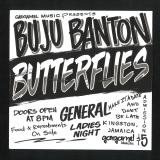
GRAMMY® Award-winning reggae icon Buju Banton returns to familiar ground with renewed purpose, setting the tone for a bold new era. Officially reunited with longtime partner VP Records, this full-circle moment reconnects one of Jamaica’s most influential voices with the label that helped define a pivotal chapter of his career. “Butterflies” serves as the first offering from his upcoming al bum, arriving Summer 2026. Produced by internationally acclaimed hitmaker Supa Dups (Rihanna, Drake, Bruno Mars), the track delivers a vibrant, feel-good sound anchored on a re-lick of the ‘Answer rhythm.’ Buju’s unmistakable cadence glides effortlessly across the track, blending classic dancehall energy with a modern sonic edge. The single exemplifies a confident return, one that bridges legacy with evolution while reintroducing the essence of dancehall to a new generation!
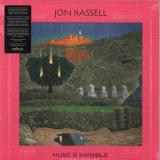
Der dritte Teil der Pentimento-Trilogie. Aufgenommen am 23. Mai 2015 in der Londoner St John at Hackney-Kirche während Jon Hassells letztem Live-Konzert, gemeinsam mit Rick Cox und John von Seggern. Themen, Motive und Riffs aus Hassells letzten beiden Alben – "Listening To Pictures" und "Seeing Through Sound" – durchziehen diese einzigartigen, halb-improvisierten Variationen. Sorgfältig abgemischt und bearbeitet von Jon Hassell und seinem langjährigen Weggefährten Jeff Rona, bildet dieses Werk einen würdigen Abschluss für die Renaissance der Pentimento-Reihe in seiner späten Schaffensphase.
Fall Collection pulls from the vaults. Four tracks, some long out of print, one never
before pressed, all of them worth the dig.
The A-side opens with Ty Tek’s Dirty Fusion, originally released on Gourmet Recordings
in 2005 alongside the Audio Soul Project remix two years later. Both have been
fetching serious money on the secondary market for a reason. This is tech house from
when that phrase still meant something, the walloping cadence, the sci-fi pads, the
seismic synths rolling underneath. You hear it once and it stays with you.
Departed by Wasted Chicago Youth follows. Justin Aulis Long and Mazi Namvar
started from a remix brief and promptly ignored it, building something new from scratch
in a single session. Organs, wailing lead, disco break, 808 subs, a plastic bass line
threading through all of it. Somewhere between an angry Metro Area and a more
psychedelic Jitwam, but really it’s just WCY doing what they do.
Love Thy Enemy by Wasted Chicago Youth appeared on the Chase The Devil EP back
in 2009. The bubbles, shuffles, and wobbling chords hold up, and the vocal samples hit
differently now than they did then.
ASP’s Cloud Dub closes the record. It appeared on Dubs Vol. 2 as a digital release in
2022 and has never been on vinyl, and that’s where the subsonic acid bass line and
the layered string, piano, pad, and organ groove finally get room to breathe. Deep
house the way Chicago made it in the early nineties. Bare, musical, and raw.
Track A1 written by Ty Tek. Remixed by Audio Soul Project
Track A2 written by Justin Aulis Long and Maziar Namvar
Track B1 written by Justin Aulis Long and Mazi Namvar
Track B2 written by Audio Soul Project.
Copyright Control
Fresh Meat Records 2026
Die Legenden der elektronischen Musik, Soft Cell, bestehend aus Sänger & Frontmann Marc Almond und Multiinstrumentalist & Produzent Dave Ball, veröffentlichen mit "Danceteria" ihr sechstes und letztes Studioalbum - zugleich ein Liebesbrief an das New York der frühen 80er Jahre, wo Soft Cell ihre ersten drei Alben aufnahmen. "Danceteria" ist ein großartiger, stilvoller und verspielter Abschied von 47 Jahren gemeinsamer Musikgeschichte von Marc & Dave als Soft Cell und präsentiert Darbietungen, die für die Karriere dieser Electro-Pop-Legenden prägend sind. Mit Anklängen an Sparks und die Pet Shop Boys sowie Texten, für die Lady Gaga töten würde, nimmt das Album den Hörer mit auf eine lebendige Reise durch einen Tag im New York der frühen 80er Jahre – eine Reise, die rund um die Uhr von der Nacht über den verschwommenen Tagesanbruch bis zum direkten Wiedereintritt in den Club führt.
"Danceteria" ist gleichermaßen eine Hommage an den verstorbenen, großartigen Dave Ball. Dieses letzte Album gehört zu den letzten Werken, an denen Ball als Co-Autor und Produzent mitwirkte, bevor er am 22. Oktober 2025 auf tragische Weise viel zu früh verstarb. Marc Almond führte die Reihe der Nachrufe an und bezeichnete Dave als "geniales musikalisches Genie". Die weltweiten Medien und Musikstars wie Neil Tennant & Chris Lowe (Pet Shop Boys), Daniel Miller (Mute Records), Cabaret Voltaire sowie Richard Norris aus Daves Techno-Duo The Grid würdigten ihn voller Anerkennung und Wehmut als Pionier der elektronischen Musik. Dave stellte "Danceteria" zwei Tage vor seinem Tod fertig, und ganz in seinem Sinne wurde die Veröffentlichung des Albums wie geplant durchgeführt. Auch aufgrund von Daves Tod muss "Danceteria" zwangsläufig das letzte Soft Cell-Album sein, wie Marc erklärt: "Ohne Dave kann es keine weiteren Aufnahmen von Soft Cell geben; das wäre schlichtweg unmöglich. Die traurige Realität ist, dass Dave Ball die eine Hälfte von Soft Cell war, und abgesehen von Live-Auftritten kann ich ohne ihn keine Soft-Cell-Songs schreiben."
The Stockholm-based duo continues their flirtation with Chicago disco house, clearly indebted to DJ Sneak's bump-and-swerve school yet filtered through Scandinavian cool. It's affectionate without being slavish, and just irreverent enough to avoid museum-piece territory.
This EP is another testament to the soundscape Ari Bald & CJ Scott strive to showcase as a duo. Built on a deep love for digging through jazz, funk, soul, disco, and cinema, their sound captures a nostalgic vibe from the late '90s and early '00s. "Dart 2 Da Heart EP" highlights their playful approach to samples and raw, straightforward production. Produced and mixed in Sätra Studios in the southern suburbs of Stockholm, this record is made exclusively for the mobile-free dancefloor.
For ONO006 we welcome born ‘n’ based Palermo producer, DJ, record shop owner and label head Riccardo Schirò to the ever evolving ONO roster. The Sicilian madman plates a killer exxxtended single, Raga Della Sera, complete with a royal remix treatment from downright hero DJ Sotofett.
Riccardo’s Raga Della Sera is a ritualistic summoning of the 303s and 808s of the past, calling on the sounds of old to conjure up a thrilling 11-minute freakout. Signor Schirò combines an acid-inflected proto-trance and a certain Gregorian Giallo flavour to bring forth one truly unique piece of music. Bellissimo!
On the flip, DJ Sotofett reshapes Raga Della Sera with a signature 909 dub, tried and tested at his preferred romping grounds, Globus. The maestro contorts, unravels and reassembles the mystical original into a club demon – ferociously dance-direct and itching to possess heads around the world.
Riccardo has been producing and releasing music on his excellent Gravity Graffiti imprint since 2019, with more than 20 records under his belt he is a hard working and brilliant musician and label curator in our humble opinion. We are proud to be welcoming him to the family and have this brilliant record as a part of the ONO arsenal.
We are beyond excited to unleash this disc upon the world, with both versions coming to a dancefloor near you very, very soon! Let it rip and turn it up!
DJ Support: Mochakk, Joseph Capriati, Jamie Jones, Purple Disco Machine, Groove Armada, Marco Carola ,keinemusik, Adrian Roman, Bill Brewster, Rino, Ruben Mandolini, Terry Farley, Nicolas Masseyeff, Echonomist, Robosonic, Nuno Dos Santos, diskJokke, Dan Marciano Jody Wisternoff / Way Out West, Eelke Kleijn, Henry Saiz, Digitalism, Sister Bliss / Faithless, Innellea, Adriatique, Judge Jules, Sam Divine, TSHA, Simone Vitullo, Joris Voorn, Tommie Sunshine, Fahlberg, Stijn D'hont / DJ Neon
D Stone is a rising force in Amsterdam’s electronic music scene, blending live instruments with electronic production to create his unique take on house music. His sound bridges true house to proto-disco and deeper percussive elements, as showcased in his release Total Unison. A passionate DJ and producer, D Stone crafts infectious tracks by combining samples with live instruments, driving dance floors with his grooves. Born into a musical family, D Stone was immersed in sound from an early age. His father’s influence exposed him to diverse musical styles, sparking his lifelong curiosity. He began playing piano at eight, learned guitar at twelve, and by fifteen discovered electronic music, exploring house as a DJ. A year later, he ventured into production, gaining recognition and landing his first gigs. Inspired by 70s and 80s disco, funk, garage, and 90s tech house, his music blends energy, groove, and soul. With his foundation in live instruments and his forward-thinking approach to electronic music, D Stone strives to create more than tracks—he’s shaping moments that linger in the minds of his listeners.
Envision remixed by DJ & producer Julya Karma Emerging from Brooklyn’s underground and now rooted in Berlin, her practice isn’t about fitting into a lane, it’s about finding what is alive and letting it shape the moment.
Across diverse stages and platforms from Coachella and Lost Village to Berghain, Cercle, Space, The Brooklyn Mirage, DGTL, Time Warp, Audio Obscura, Tomorrowland, and within the orbit of Innervisions, Julya’s performances reflect a commitment to exploration over formula, earning recognition from artists like Laurent Garnier, Dixon, Âme, Adriatique, Rüfüs Du Sol, and Sven Väth.
Even if Ancient Greek isn’t part of general knowledge anymore, the word mega is. Hence, you might admire our modesty to say that Roman Flügel’s first outing on Running Back in 2022 is perfectly headed. Greta, large, mighty and somewhat the love- or brainchild of his earlier Garden Party and the previous D.I.S.C.O., Mega pulls out all the stops: hi-nrg melodies, circus bells, cowboy funk and honey hooks at 140 beats per minute. While it is nearly impossible not to take this bait or decorate it with the Bobby-O medal of honor, Roman proves one more that you can be catchy and classy at the same time.
Rules on the other hand, puts some of these stylistic devices in reverse or down-tempo mode and feels like brushing your teeth after an extended feast or the perfect hors d’oeuvre.
Completing the picture with Film 1, Film 2 and Film 3, Flügel flexes his freethinking muscles and lands in-between art school new wave bands and soundscape science. Music that is masterly made, magical in its impact and perfectly described with a misquoted line from Get The Balance Right: it’s never predictable.
TECH043 brings A.B.E.L. and Eluna Vex together through a shared sense of rhythm and purpose.
Both authors have already developed a clear and confident approach, even if wider recognition has yet to catch up. Their music is ready to reach beyond the circles that already know their work.
Across both sides of the record, firm drums, driving percussion and deep atmosphere keep the motion steady. Each track has its own shape and detail, while the shared weight and mood allow the four tracks to be heard as one complete work. DJs get four reliable cuts that can build tension, hold the groove or move a set forward without a break in tone.
The difference between the artists is clear, but never disruptive. Eluna Vex and A.B.E.L. bring separate ideas to the record, yet their tracks feel closely related in character, depth and attitude. This balance gives TECH043 range without losing focus: two artists and one consistent physical drive.
A1. “Unsafe Road” opens the record by setting its rules: full pressure, forward drive and several lines developing at once. It tests the listener’s attention, offering a choice between following the whole structure or focusing on one thread within it.
A2. “Getting Away” works like a spell that pulls the dancefloor together. It follows one clear narrative and a direct sequence of events, building towards a climax where every element lands as one shared impulse.
B1. “Test And Run” opens a more exploratory side of the record. It moves through changing forms and gradually reveals its language, without showing the full picture at once. Structurally complete on its own, the track invites the listener into less predictable territory.
B2. “Subconscious” is built on balance, giving equal weight to every part of the sound without allowing one element to take control. It makes no loud statement, but closes the record with a complete and carefully held form.
Doppel-LP auf limitiertem ,Bullseye Splatter"-Vinyl. Seit 25 Jahren haben die Yeah Yeah Yeahs eines der beliebtesten Repertoires des modernen Rock aufgebaut. ,Hidden In Pieces Live at the Royal Albert Hall" versammelt Songs aus ihrer gesamten Laufbahn und interpretiert sie neu durch intime Arrangements mit Streichern, Klavier und Kontrabass. Aufgenommen an zwei Abenden in der Londoner Royal Albert Hall und angereichert mit Songs von Auftritten aus San Diego, Chicago, New York und Mexiko-Stadt präsentiert das Album Karen O, Nick Zinner und Brian Chase, die Songs aus jeder Ära der Bandkarriere in einem neuen Licht präsentieren. Entstanden im Rahmen der ,Hidden In Pieces"-Tour der Band und mit Arrangements des Musikdirektors, Arrangeurs und Dirigenten Jherek Bischoff, reicht die Sammlung von Klassikern wie ,Maps", ,Gold Lion" und ,Zero" bis hin zu neueren Highlights wie ,Blacktop" und ,Spitting Off the Edge of the World".
Melissa Weikart and her piano have proceeded through life in step, from her early classical
training to the experimental practice that defines her work today, a blending of sounds and forms that has never been so clear—and so fully realized—as on her new album, Contact. Across twelve shifting and evocative tracks that examine the connective tissue binding us to ourselves and others, the Franco-American musician’s voice and piano navigate personal and emotional terrain with clarity and nuance, forging a rich dialogue between artist and instrument, artist and self, and artist and listener.
Winner of the 2022 Nancy Jazz Pulsations emerging artist award and the instrumentalist prize at the 2023 La Défense National Jazz Competition, Weikart has released two EPs and an album as a solo artist, and one EP and an album—Surprise and Secret—with her electronic duo Beatrice Melissa. A student of jazz and ’70s folk-pop, and a keen lover of improvisation since her time at the New England Conservatory in Boston, Weikart has always conjured the confessional candor of the singer- songwriter in her music, even as she dispenses her lyrics across rich, shifting, dreamlike tableaux.
On Contact, written and arranged entirely by Weikart (aside from “New angles”), she pushes her sound further than ever before. The album is animated by a pressing need for connection, observing what brings us together and what drives us apart, and the life-saving revelations that emerge along the way. The album’s opener, “Crash,” is a dreamy telephone-hour ode, a message in a bottle, to connections new and old. On the wistful “Mesurer le vent,” Weikart conjures Debussy or Ravel, layering contrasting sounds like an Impressionist painting. The title track begins as a showcase of Weikart’s frank lyricism, a splice-reel of missed connections and wasted time, then glides into a hazy, euphoric galaxy of pleas, circling around her thesis—“I wanted to make contact”—that ushers us into “The Intersection,” a song that recalls her the beginning of her career, when it was just Weikart and her keys. “Appétit.e” is built around a sample of her down-the-hall neighbor’s drumming—another subtle, affecting gesture toward proximity and connection—while pulsating synths reminiscent of Air lend the track an unsteady atmosphere. On the Carpenters-inspired “Expectations,” Weikart muses on the relationship patterns, universal and specific, that have always been a hallmark of her songwriting.
The psychedelic “L’amour de construit” is a slow-motion fall down the rabbit hole, as Weikart
considers the way her own emotions are captured and commodified by the confining ways we think about love. The interlude—“L’amour pt. 2”—finds her near the end of that trip, shouting into the void as a last-ditch effort to rescue herself from the fall. The drums near the end of the interlude warn us that there may be no cushion for, until she is saved, again, by the power of revelation, on the confident, resilient “Not Right”—on which a show-stopping, frenetic conversation between singer and piano is gracefully interrupted by a rush of transcendent strings, lifting her back up.
On solid ground anew, “New angles,” featuring Manu Delta, creates a percussion-less groove that relies on experimental synth sounds. The 11-o’clock stunner “Catching up”—composed in a church—meets the singer in a state of ecstatic confession, bringing her to the formative memory that propels “Bicycle,” the album’s closer. Younger, more wide-eyed, she reflects on her move from Boston to Strasbourg, those early days, when Weikart had no other companion than that loyal hunk of scrap metal that took her to the shores of her own soul. She seems to suggest, on “Bicycle,” that a backward-glance is not always troublesome, not always anxiety-producing, but can be grounding: a reminder of where we come from, so that we can keep moving forward.
Pablo Volt and J.G.G. make dub-folktronica the unpolished way: guitar, horns, drums and synths, recorded loose, drenched in echoes and tape saturation. They met in Barcelona over a shared love of experimental beers and even more experimental sessions, determined to see how far their musical chemistry could take them. "Mordida", their 2023 tape, spent months on repeat at the Pingipung office. Now comes the debut LP: Aqui me quedo. It's a record built on the gap between two childhoods. Pablo Volt (aka Pope, as producer) grew up in Mendoza, Argentina; Jordi Gege aka J.G.G. in a suburb of Barcelona. What they share is a language and a curiosity about each other's memories and musical roots - the studio is where they embrace their different origins in improvisations. A ditch from Pablo's childhood becomes "Zanjon". A mountain Jordi used to roam becomes "Emisora". An ice cream shop, a Sunday market, a football club: small doors into a past the other never lived, but somehow recognises. Aqui me quedo, "I'm staying here", is also the name of the Barcelona bar where they toast after a good session. Two friends, tracing their way back through the past, decide the present is where they'd rather be. Handmade, melodic, unashamed of a smile as they greet from the LP sleeve: this is the spirit in which Pingipung was founded 24 years ago and these two guys, muy simpatico, are living proof of it.
Der legendäre Dance-Klassiker „Bla Bla Bla“ von Gigi D‘Agostino erscheint jetzt als hochwertige 12“ Picture Vinyl – ein echtes Highlight für Sammler und Fans elektronischer Musik.
Diese exklusive Edition vereint insgesamt fünf verschiedene Versionen des weltbekannten Club-Hits, der mit seinem unverwechselbaren Sound und Kultstatus bis heute die Tanzflächen begeistert. Das aufwendig gestaltete
Picture Vinyl macht diese Veröffentlichung nicht nur zu einem musikalischen, sondern auch zu einem optischen Sammlerstück.
Ob als Erinnerung an die goldene Zeit der Dance-Musik oder als besondere Ergänzung jeder Vinyl-Sammlung – „Bla Bla Bla“ auf 12“ Picture Vinyl ist ein Muss für alle Fans von Gigi D‘Agostino und zeitlosen Club-Klassikern
Among the most influential hip-hop artists to emerge in the rapid creative expansion of the early 1990s, Queens duo Organized Konfusion helped reshape rap's aesthetic horizons with the 1991 release of a groundbreaking self-titled album. A dizzying display of lyrical dexterity and forward-thinking production, Organized Konfusion helped lay the foundation for what would become underground hip-hop, with intricate wordplay and cerebral rhyme structures. Both Pharoahe Monch and Prince Po shine throughout the album, revealing
the immense talent that would later establish Monch as one of hip-hop's most revered voices and spark Po's collaborations with producers like Danger Mouse, Madlib, Large Professor, Oh No, and more. From playful nostalgia to sharp social commentary to surreal linguistic explorations, the duo navigates chaotic drum breaks with dense rhyme patterns, vivid imagery, and ever-shifting narratives. After decades of limited availability and unofficial bootlegs, this is the first official vinyl reissue of Organized Konfusion since its1991 release. Featuring three rare bonus tracks, this 35th anniversary edition is available on 2LP and CD, giving a long overdue spotlight to one of hip-hop's most important albums.
In the realm of past-life regression hypnotherapy, there is a concept known as “Life Between Lives,” wherein a sacred exchange of energy occurs between two souls in the spirt world, helping a spirit fully understand and forgive a being who hurt them in a past life. This exchange – called “passing the cup of sorrows” – became the unexpected inspiration for William Basinski’s first new album in six years.
While sinking deeper into the daily abyss of our collective negativity bias, William Basinski stumbled upon a video describing the spiritual hypnotherapy exercise known as “passing the cup of sorrows.” Fixed on the glow of a screen that projected mounting anxiety and cynicism at a seemingly interminable pace, Basinski found the testimonials of this fascinating therapeutic practice to be profoundly moving. He sat at his piano, translating the transformation of those traumatic memories of past lives into cathartic tears of the present day.
Channeling the quiet curiosity and asymmetrical patterns of pioneering 20th Century composer, Morton Feldman, Passing the Cup of Sorrows is a single 40-minute piece that employs a solitary piano and subtle electronics to truly haunting effect. It recalls fragments of traumatic memories and projects them as fractals in a slow-moving soft focus that’s as eerie as it is enlightened.
In the realm of past-life regression hypnotherapy, there is a concept known as “Life Between Lives,” wherein a sacred exchange of energy occurs between two souls in the spirt world, helping a spirit fully understand and forgive a being who hurt them in a past life. This exchange – called “passing the cup of sorrows” – became the unexpected inspiration for William Basinski’s first new album in six years.
While sinking deeper into the daily abyss of our collective negativity bias, William Basinski stumbled upon a video describing the spiritual hypnotherapy exercise known as “passing the cup of sorrows.” Fixed on the glow of a screen that projected mounting anxiety and cynicism at a seemingly interminable pace, Basinski found the testimonials of this fascinating therapeutic practice to be profoundly moving. He sat at his piano, translating the transformation of those traumatic memories of past lives into cathartic tears of the present day.
Channeling the quiet curiosity and asymmetrical patterns of pioneering 20th Century composer, Morton Feldman, Passing the Cup of Sorrows is a single 40-minute piece that employs a solitary piano and subtle electronics to truly haunting effect. It recalls fragments of traumatic memories and projects them as fractals in a slow-moving soft focus that’s as eerie as it is enlightened.