JUNO & Jamek Ortega link up for ‘Deep Breath’ on Crosstown Rebels.
Following an impressive label debut earlier this year alongside Alex Wann on ‘Allo’, crowned Pete Tong’s Essential New Tune, Germany’s JUNO returns to Crosstown Rebels with ‘Deep Breath’ in collaboration with longtime production partner Jamek Ortega. Immediately drawing listeners into a hypnotic, percussive world, snaking rhythms and rattling cowbells build steadily beneath an atmospheric backdrop, before a commanding vocal emerges to anchor the groove. The release continues a relationship that has seen the pair produce across labels including Arodes’ Unreleased Records, Wired World, and more, as well as regular back-to-back performances. On the flip, ‘Sloppy Disk’ sees JUNO step up solo, locking into a driving four-to-the-floor groove where a rolling bassline provides the foundation for pensive chords to drift alongside subtle melodic flourishes, steadily expanding the track’s atmosphere before tumbling into a sweeping, cinematic finale.
JUNO has accelerated onto the scene with hits like ‘Last Dance’ on Magnifik Music and a Hot Mix for Pete Tong on BBC Radio 1, firmly earmarking him as one to watch. Meanwhile, DJ/producer Jamek Ortega continues to connect with audiences worldwide with outings on Three Six Zero, MoBlack, Abracadabra, Madorasindahouse, and more, picking up heavy rotation from the likes of Keinemusik, Solomun, Tiësto, and Black Coffee. Here, the pair show no signs of slowing down as they join forces once again, stepping onto Damian Lazarus’s imprint and marking a major milestone in their respective trajectories.
Jazz, Soul, Highlife and spoken reflection co-exist without apology on 13 new songs co-produced with Benjamin James and featuring his group The Cavemen as well as saxophonist Lakecia Benjamin. For the Grammy-nominated vocalist/songwriter Somi, each new album is an act of place-making. The catalogue of the Rwandan/Ugandan-American artist reads like a map of migration and memory, with records rooted in Lagos, in Harlem, and in the spirit and political inheritance of Miriam Makeba. 'What Does It Take To Bloom? Is her ninth album overall and her first collection of original songs in six years. Musically, it also represents a new chapter in collaboration. During sessions in Lagos, Somi connected with Benjamin James, whose partnership would become pivotal. As one-half of the Nigerian duo The Cavemen., James brings a contemporary approach to heritage-centred sound. The collaboration proved so seamless that Somi invited him to co-produce the full album, with moods and rhythms ranging from upbeat Highlife-Soul-Fusion ('Aiwah'), via jazzy statements ('Throw Something'), to soulful reflection ('What Does It Take To Bloom?').
Kokoroko today announce Tempos Difíceis Sempre Passam, a new remix EP reimagining tracks from their acclaimed album Tuff Times Never Last through the lens of some of Brazil's most exciting contemporary artists.
Translating the album's title into Portuguese, Tempos Difíceis Sempre Passam reflects both the enduring message at the heart of the original record and the creative dialogue between Kokoroko's expansive musical world and Brazil's rich, genre-defying music scene. The four-track collection brings together a handpicked group of artists whose individual approaches blur the boundaries between a variety of genres and contemporary Brazilian sounds.
To be released digitally and on limited vinyl, the EP also sees the return of acclaimed artist Luci Pina, whose artwork for Tuff Times Never Last is reimagined for this new chapter, creating a visual thread between the original album and its Brazilian counterpart.
Leading the announcement is Never Lost (Luedji Luna Remix), available now on all digital platforms. The celebrated Brazilian singer-songwriter brings her unmistakable warmth and emotive vocal sensibility to the track, offering a beautifully understated reinterpretation that deepens the song's themes of hope, resilience and togetherness.
Completing the EP are three further remixes from across Brazil's vibrant musical landscape. Onome of Kokoroko joins forces with acclaimed guitarist Nyron Higor for a richly textured rework of Da Du Dah, while producer Aleh Ferreira delivers a rhythm-driven reinterpretation of the same track. Closing the collection, Bruno Berle transforms Closer To Me with his signature blend of intimate songwriting, Brazilian groove and experimental pop sensibilities.
Together, the remixes offer fresh perspectives on Tuff Times Never Last, extending the album's spirit of optimism while celebrating the creative connections between London and Brazil.
Kokoroko today announce Tempos Difíceis Sempre Passam, a new remix EP reimagining tracks from their acclaimed album Tuff Times Never Last through the lens of some of Brazil's most exciting contemporary artists.
Translating the album's title into Portuguese, Tempos Difíceis Sempre Passam reflects both the enduring message at the heart of the original record and the creative dialogue between Kokoroko's expansive musical world and Brazil's rich, genre-defying music scene. The four-track collection brings together a handpicked group of artists whose individual approaches blur the boundaries between a variety of genres and contemporary Brazilian sounds.
To be released digitally and on limited vinyl, the EP also sees the return of acclaimed artist Luci Pina, whose artwork for Tuff Times Never Last is reimagined for this new chapter, creating a visual thread between the original album and its Brazilian counterpart.
Leading the announcement is Never Lost (Luedji Luna Remix), available now on all digital platforms. The celebrated Brazilian singer-songwriter brings her unmistakable warmth and emotive vocal sensibility to the track, offering a beautifully understated reinterpretation that deepens the song's themes of hope, resilience and togetherness.
Completing the EP are three further remixes from across Brazil's vibrant musical landscape. Onome of Kokoroko joins forces with acclaimed guitarist Nyron Higor for a richly textured rework of Da Du Dah, while producer Aleh Ferreira delivers a rhythm-driven reinterpretation of the same track. Closing the collection, Bruno Berle transforms Closer To Me with his signature blend of intimate songwriting, Brazilian groove and experimental pop sensibilities.
Together, the remixes offer fresh perspectives on Tuff Times Never Last, extending the album's spirit of optimism while celebrating the creative connections between London and Brazil.
Children of Zeus return with their third studio album ‘As The World Burns…’
Five years on from their highly-acclaimed sophomore album ‘Balance’, Manchester’s kings of hip hop soul, Tyler Daley and Konny Kon, bring us a brand new 16-track opus.
Sonically the duo continue their story where they left off; crafting an amalgamation of street soul, alternative r&b and boom bap hip hop, with a sprinkle of flavours taken from their original multi-genre pirate radio influences, and a dash of forward-thinking new sounds, ensuring all tracks are destined to become future classics.
The features are sparing but powerful, enlisting the talents of revered UK rapper Knucks (‘Before We Drown’), Colorado-native Young Old Soul (‘Dopamine’), MCR family K S R (‘Do You Want To Get High’, & Australian/Mauritian up & comer Anieszka (‘Water & Vibes’).
As with previous projects, this album is largely produced by the duo themselves, though there are guest productions from previous collaborators too, including Grammy Award-winner Beat Butcha, Grammy-nominated Teo, and broken beat pioneer K15, along with an assortment of new players making moves in the underground neo-soul & beats circuit.
Conceptually, this project continues on with the story to date. An eternal search for sunsets and soulfood, as a respite to the anxieties of the modern world; personally, professionally and globally. Assertive swagger is matched with brutal but sincere candidity. As ever, it encapsulates the rough with the smooth, with reflections on where they’ve been, where they’re at and where they’re headed. There’s no preaching to be found here; just an acceptance of things as they are, an embrace of the environment and people they were nurtured by, and a celebration of some of the finer things in life; slow jams, weed & rum, water & vibes. Raps for listeners, blunt heads, fly ladies and prisoners. All packaged together as another perfect sonic love letter to sound system culture. 50 minutes of big people music.
Since the release of their anthemic debut single ‘Still Standing’ a decade ago, to the subsequent EP ‘The Story So Far’, and their critically-lauded debut album ‘Travel Light’, the duo have received numerous accolades, including nominations for AIM Awards & Worldwide Awards both, along with tons of ‘Album of the Year’ nods care of Clash Magazine, Bandcamp, Complex, Wordplay and many more. This along with huge swathes of support from DJs, radio stations, press outlets, tastemakers, luminaries & fellow artists across the globe.
Children of Zeus have performed sessions for COLORS, Soulection (Apple Music), DJ AG, Boiler Room, BBC 6 Music and at the infamous Maida Vale studios for BBC 1Xtra as well as touring across Europe, Australia and South Africa. This is in addition to collaborating & touring with Mercury Award Winner’s Ezra Collective, including a Wembley Arena show. Other collaborations over the years have included Shy FX, Juls, Goldie, Black Milk, Kofi Stone and the late great Lenzman.
From the Broke ’n’ English / Hoodman-era, to the present day, Children of Zeus have been omnipresent in the fabric of British black music. Proud ambassadors of Manchester music, and of UK soul, it really is “Zeus to the world”.
Children of Zeus have been adorned with plenty of flowers over their career. The unbridled quality and poignance of the music and the message on display throughout this project will see the algorithmic needle move some more. It’s undoubtedly set to be a Zeus Summer. As the world burns…
Available on all digital platforms and physical formats, Friday September 4th 2026.
t 07: Do You Want To Get High? (feat. K S R ) - Children of Zeus03:26
t 07: Do You Want To Get High? (feat. [ K S R ]) - Children of Zeus03:26
[t] 07: Do You Want To Get High? (feat. [ K S R ]) - Children of Zeus03:26
[g] B3 | Do You Want To Get High? (feat [ K S R ]) - Children of Zeus03:26
Psychedelic rock, pop punk, and trippy hop tracks against animal exploitation.
Canine Cracks is the new artistic project of Benedetta and Romain Play (aka Camion Bazar). Known as DJs, event organizers, producers, and vinyl collectors, they're now returning to their roots and their first love: rock, post-punk, and massive mosh pits, instruments plus drum machines, and intense live performances. Everything is created in their own studio, located in the French countryside, where they retreat to escape the mad world. These two friends are animal rights activists fighting for animal liberation and are using this album and project to say ""fuck"" to animal exploitation and human supremacy over minorities."
Riva Starr teams up with Australian duo Close Counters for a sun-soaked debut on Heist.
What do you get when you put an Italian house legend in the studio with 2 of the most talented artists from Melbourne? Have a listen to the newest release on Heist and you’ll find out. On their ‘Push your luck’ EP, Riva Starr, Close Counters and UK soul singer Andre Espeut bring a heavy dose of jazz & soul and most of all, upbeat dancefloor energy. Whether it’s the deep soulful vibe of the title track or the house meets jazz-funk energy of ‘Gearbox’, this EP brings together everything we love about house music.
‘Push your luck’ comes right in the middle of Close Counters’ world tour, just after Riva Starr’s album ‘Keep me on the dancefloor’ and is the follow up to their recent collab ‘Jinga’ on Riva Starr’s own Snatch Records. We all know Riva Starr from his 2013 Fatboy Slim collab ‘Eat sleep rave repeat’, his work with Groove Armada, and more recently his collab with Prunk on his PIV records debut album. Close Counters have already worked with Heist mainstays Fouk and had their breakthrough moment with their 2023 album ‘Soulacousta II’, which got wide support ranging from Gilles Peterson to Jyoto and Folamour.
Their ‘Push your luck’ EP kicks off with the title track featuring the silky vocals of Andre Espeut. When we first heard this song, we immediately got transported to the soulful sound of the mid 2000s led by Recloose’s unique track ‘Dust’ with Fat Freddy’s Drop singer Joe Dukie. It’s moody, stripped back, and bouncy at the same time. The lush chords, disco bassline, and vocal harmonies all make for a track that goes beyond genres and trends. This is a future classic.
‘Gearbox’ is a disco-tinged piano jam full of live elements, rolling congas and disco bleeps, where the musicality of the Close Counters boys comes in at full speed. This song takes its inspiration from the Brazilian jazz-funk of legends Marcos Valle and Azymuth, with a clear sense of modern-day dancefloors and a love for electronic noise. Also; 10/10 for creatively naming the track after the glitchy electronic sound that freaks & funks throughout the track.
On the flip, ‘Dizzy’ sees the trio go more into disco-house territory, again teaming up with Andre Espeut for a track that blends catchy vocal loops with a tight groove and lush chords. The EP finishes with a club dub of ‘Push your luck’ for those in favor of more groove and less vocals.
We’ve had Riva Starr and the Close Counters boys on our radar for a while, and they landed on Heist with the perfect combination of musicality and dancefloor power. We hope you like this release as much as we do!
Bristol's Pessimist returns to UVB-76 Music with four tracks, zero filler and no wasted space. He is one of drum & bass's most distinctive voices and shows why once more here. 'Pess One' opens with clinical precision - pin-sharp drums where every element earns its place 'Pony Boy Club' drives harder, laser bleeps piercing cavernous reverb and kicks that never quit. 'NRG-97' reaches back into a nostalgic palette with dread-filled bass and dark percussion. Closing track 'Under Surveillance' is the moodiest of the lot - a claustrophobic, paranoid and unsettling world of Terminator terror.
UFOs are nothing if not predictable and so it proves as this particular one is back in our orbit after more than two years away. The cult label signs up Mexico's DJ Natas to pilot a new mission to the edges of our solar system and hard-hitting cosmic industrial space tech is his vehicle of choice. 'The Titan Of Terror' is a busy sound laced up with wiry synths and acid prickles and it hits hard. 'F The Pain' rides stomping metallic drums and has eerie pads shimmering in the background while 'Stay Deep' is more sparse and dark with textured acid and spoken word musings, making it a more mental trip then 'Abracadabra' closes with a hint of psychedelic magic.
On Finding Home he's joined by three musicians with a similarly eclectically unfettered approach to music making, that embraces high-level complexity while maintaining a direct connection to the listener. Kaidi Akinnibi on tenor sax brings his distinctive, light-as-air tone and compatible range of experience across musical genres, while the rhythm team of Joe McLaren on bass and drummer Blake Cascoe provide a revelation in shifting texture and intensity, always driving the music to greater heights. Trumpeter Christos Stylianides brings his uniquely individual voice as a guest to enrich the ensemble. Finding Home is a powerfully characterful statement from a standout artist who's crafted his own voice, surrounded by a like-minded family of players. Each of the eight tunes has its own distinct personality, yet they all hang together as a continuous piece, establishing their own musical identity through Finn's tumbling, lyrical piano, Kaidi's nimble, breathy saxophone, and the endlessly flexible interactive grooves from bass and drums.
Easily one of the strangest, most quietly influential archives to surface in years. Padesip is bedroom-built electronics that still sounds like the future we were promised but quietly cancelled, rewiring decades of DIY history and daring you to keep up.
Limpe Fuchs performs a live improvised score to an almost-lost silent western action film in a darkened Brussels theatre, continuing the tradition of the silent film pianist. Intimate and poetic: moonlight, projected images reflecting on the audience's faces, and a family connection (her grandfather once played violin for silent films) make this a uniquely personal recording.
A collection by Peruvian visual artist Jonathan Castro between 2024-26 at home studios while living in Amsterdam, then Rotterdam, NL. The compositions were made using various synthesizers, samplers, electronic percussion, congas, and an array of effects pedals. Knackered out salsas, looped up and chucked down into a custom dub chamber.
Rich Oddie of Orphx and Alex Pi of Pi Electronics introduce Anaxia, a new project arriving on Veyl with the 7-track LP “Maska”.
Built from raw electronics, stripped-down drum machines and a stark post-punk pulse, the record sits somewhere between industrial pressure and the ghostly minimalism of Suicide. It is direct but shadowed, physical but restrained, with vocals from Oddie and Pi cutting through the machinery rather than sitting on
top of it. Oddie’s background in Canada’s industrial underground and Pi’s long-running connection to the Greek electronic scene meet in a sound that feels tense, reduced and fully intentional. KAOSMOS and Florian Engerling add additional vocals, while remixes from In Trance 95 and Veyl regulars Years of Denial extend
the material into darker, more hypnotic territory. With “Maska”, Anaxia deliver a debut that feels fully formed: nocturnal, focused and stripped to its essentials. A natural fit for Veyl, the record draws a line between post-punk, industrial electronics and body music without overexplaining itself.
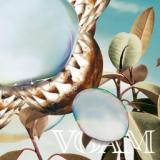
After a three year break, Blawan and Pariah’s Voam is back with “Piranha Pop”, a new EP from Rhyw. From the teeth rattling madness of “Suppli Crush” to the slinky oddness of the title track, these four tracks explore and push up against the outer fringes of techno music and mark a worthy follow up to his previous release on the label, 2022’s acclaimed “Honey Badger”.
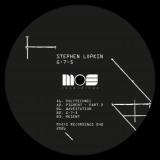
MCRV019 – VA – Phase Drift. Passage is a graceful and emotionally nuanced four-track journey through modern deep tech house. Blending reimagined echoes of early 2000s deep sounds with forward-thinking production, the release moves between moods and textures with surgical control and quiet sophistication. It’s an EP that balances warmth and restraint, melancholy and motion — built for selectors who appreciate finely tuned emotional arcs.
A1. Stephano Franca – Arriving opens with a fluid, introspective piece. Gentle and melancholic, it glides with cinematic poise, drawing listeners into a state of suspended reflection.
A2. Dot – Distance Call introduces a percussive, tribal undercurrent — earthy and grounded, yet full of bounce. It energizes the space while maintaining depth and groove.
Flipping over, B1. Reenday – Last Call (Nicolas Barnes Remix) brings a refined sense of cold elegance. Dubby and atmospheric, it’s a minimalist piece that evokes distance and stillness — a cool breath in the night.
Closing the release, B2. Jeronimo Watson – On The Prowl is a deep tech gem — emotive, seductive, and sharply detailed. With a slow-burning energy, it brings the record to a confident and composed close.
From Brazilian talent Stephano Franca to Dot and Nicolas Barnes, two of the label’s most precise and consistent producers, and rising standout Reenday, a finalist of the ANTS: NEXT GEN Artist Program 2025, this release represents the current essence of MixCult. It is sealed by the distinct touch of Jeronimo Watson, whose Los Angeles–rooted sound closes the circle with style.
Phase Drift. Passage is not just a collection of tracks — it’s a refined toolkit for navigating emotional shifts and dancefloor narratives, framed by elegance and intention.
I've always admired DJ Rush for one simple reason: he brings the Funk to Techno like no one else. His tracks are instantly recognizable. The Major’s off-grid grooves are wild, unique and downright irresistible. You just have to move when they hit. That's why I'm beyond proud and excited to present my own take on DJ Rush’s classic "Get On Up”. It’s a track that captures everything I love about his sound. Even more special: For the first time in 20 years we're also releasing the original (remastered) version by means of a strictly limited 12” picture disc. Thomas Schumacher.
Available in the following Territories: Wordwide minus Japan & Korea
NOTON is pleased to announce12 Conversations, a collaborative album by Ryuichi Sakamoto and Alva Noto to be released on 18 September 2026.
The partnership between the legendary musician and composer Ryuichi Sakamoto and the German artist Carsten Nicolai (aka Alva Noto) has produced some of the most distinctive and enduring works in contemporary electroacoustic music. Beginning with Vrioon in 2002, the artists spent more than two decades fusing and expanding their disciplines, with Sakamoto's evocative, sustain-drenched piano compositions finding their counterpart in Nicolai's skilful and sensitive electronic detailing.
Each successive project further deepened their artistic dialogue: from the five studio albums of the V.I.R.U.S. series (Vrioon, Insen, Revep, Utp_ with Ensemble Modern, and Summvs), to their score for Alejandro G. Iñárritu's The Revenant; Glass (2017), a wholly improvised performance inside Philip Johnson's iconic Connecticut landmark, in which the pair fixed contact microphones to the glass walls, playing the architecture itself as an instrument; and Two (2019), a document of their live performance at the Sydney Opera House.
Across these works, their distinct approaches achieved a rare synthesis, a brilliantly sustained dialogue between piano and electronics, Sakamoto's warmth and melodic finesse meeting Nicolai's abstract electronic formalism to invoke a mesmeric quietude as deeply satisfying in its melodic resolutions as in the merger of its filmic romanticism and meditative subtlety.
12 Conversations brings together musical exchanges recorded in November and December 2022. Rooted in the same creative period that gave rise to Sakamoto's final solo album 12, these recordings were not originally intended as a standalone release. It was only after the completion of 12 that Sakamoto and Nicolai decided to present these exchanges as a work in their own right.
The album reflects the vitality and curiosity that defined more than two decades of shared inspiration: fluid, exploratory, and forward-looking. Created with openness and trust, it captures a creative process in constant transformation - sounds expanding, altering, and evolving through attentive listening.
Conceived as the continuation of an artistic dialogue extending beyond the physical, 12 Conversations honours Sakamoto's wish that these encounters should exist beyond the archive, offering an enduring testament to one of contemporary music's most revered collaborations.
Carsten Nicolai writes:
"A heavy breath can be heard in the recordings. Yet this work is not about remembrance but continuation, vitality, curiosity, and the spirit of experimentation that shaped an artistic relationship over decades.
The twelve pieces we exchanged in November and December 2022 possess extraordinary density: sounds expanded, altered, recontextualized. Initially, every intervention felt almost inappropriate. Yet this was part of our openness and trust: adding, shifting and radically yet softly transforming.
Even in these final exchanges, plans for future projects continued to take shape, mindful of finite yet firmly believing in the power of new ideas. We chose the name Conversations, which has become a space of memory and vision, where past, present and future intertwine.
For a long time, releasing this music seemed impossible. The loss felt too sudden, and the emotional connection too profound. As time passed, it became clear that these twelve musical encounters should have life outside the archive. To honor Ryuichi's wish, these pieces are now being released as the continuation of a dialogue that extends beyond the physical."
The first single, Conversation 3, will be released on Tuesday, July 14, 2026. The second single, Conversation 6, will be be released on Wednesday, August 26, 2026.
12 Conversations will be available worldwide on vinyl, CD and digitally. A Japanese edition will be available on Ryuichi Sakamoto's commons.
A DJ, producer and significant figure in contemporary electronic music, Marcel Dettmann steps forward to contribute to Running Back’s ongoing Mastermix series. Whereas previous editions of Mastermix have taken an ear to the sound of lapsed, legendary clubs such as Wild Pitch and Front, Dettmann’s curation deftly captures the man himself in ongoing perpetual motion, raiding the vault for his own precision-tooled edits, long-employed on dancefloors to devastating effect. Alongside a continuous mix, this release arrives as a 3LP gatefold, and as a limited edition cassette.
Closely associated with Berlin’s techno landscape, Dettmann was born and raised in the former GDR, then later immersed in the bleary-eyed counter cultural landscape of post-unification Berlin. Initially oriented by post-punk, industrial and new-wave music, Dettmann has been DJing since 1993, always expanding and perfecting his repertoire. He later began working behind the counter at the city’s tastemaking rave boutique Hard Wax, and a decade after he first dropped a needle, became (and remains) resident at notable local nightspot Berghain/Panorama Bar, where his instincts have helped sculpt the signature sound of both main dancefloors.
Of course, you’re probably not asking, “Who is Marcel Dettmann?” More importantly, you might want to know; just what treats has he gifted us here? The trip begins with a simple pitch-shift skywards, transforming Identified Patient’s creeping ‘The Female Medical College of Pennsylvania’ into a peak-time freakout, before an alternate take on Toctronic’s ‘Bis uns das Licht vertreibt’ emerges from the vaults for the first time. Dating from 1995, and one of Dettmann’s all-time favourites, Cristian Vogel’s ‘Untitled’ clambers back into the box with respectable cuts, while John Bender’s ‘Victims of A Victimless Crime’ kicks off the flip sporting a new arrangement, transporting us back to the foundations of a confident, stripped-back sound.
A few subtle edits to Clark’s perilously funky ‘Dirty Pixie’ takes us to Dettmann’s remix of Junior Boys. Produced in 2010, it transposes the Canadian duo’s sophisticated pop with our curator in his minimal prime, and has since become an irresistible prize for high-minded diggers. The same can be said for Experimental Products’ explosive proto-electro anthem ‘Who Is Kip Jones?’, empowered from pricey Discogs purgatory with just the slightest of tweaks. It’s deservedly sandwiched between the guiding influences of Chicago and Detroit in the form of Mutant Beat Dance’s raw ‘The Human Factor’ and a shimmering new version of previous solo production ‘Water’, featuring close friend and Ostgut Ton ally, Ryan Elliot.
The second half of the Mastermix seamlessly connects the mechanical past and digital present of EBM and industrial in the dance, with Dettmann’s instincts as a guiding hand. Severed Heads’ iconic ‘We Have Come To Bless This House’ emerges with mere nips and tucks, while Nitzer Ebb’s ‘Shame’ is significantly reimagined as a highwire act of rhythm and tension, setting up a sensual second take on a 2017 remix of ‘Limbo’ from Swiss synth heroes, Yello.
Core musical memories are shaken and stirred with a context-shifting take on Frank Duval’s emotional classic ‘Ogon’, while Ian North’s ‘Sex Lust You’ and Ford Proco’s notable Coil collaboration ‘Expansion Naranja’ effectively throb with only minor adjustments, respectfully imagined as “shadow versions”. Meanwhile, a simple breakbeat lifts Albert Kuningas’s ‘Astraalprojektio’ in the direction of wide-eyed dancefloors, while a fresh take on K-Alexi Shelby’s ‘Season of The Real’ inexplicably emerges somehow even funkier than before.
The conclusion of the compilation leads back to Das Tier from the prolific experimentalist Conrad Schnitzler, whose swirling synths and hypnotic vocals are duly tightened by Dettmann, but only as he puts it, “in conversation with the original.” Concluding three discs and thirty years of commitment to the dancefloor, this Mastermix not only offers us the opportunity to eavesdrop on this endless exchange, but to gain some sought-after material for our own record collections.
»Memorial« grew out of Nate Wooley’s work alongside Annea Lockwood recording the Columbia River, and in particular from a visit to Kettle Falls in northern Washington, once one of the river’s great salmon fishing and meeting grounds and a place of enormous importance to the Sinixt and other Indigenous peoples of the Upper Columbia. The falls disappeared from view following the construction of the Grand Coulee Dam in 1940, submerged beneath what is now Lake Roosevelt, yet beneath the still surface of the reservoir, a fast current continues to move across the buried cliffs. That tension between what remains and what can only be recovered through memory runs throughout »Memorial«.
In the essay accompanying the record, Wooley returns repeatedly to the idea of translation: the attempt to carry an experience from one form into another, from river to recording, memory to sound, landscape to music. He moves between Lockwood’s sound maps, John Ashbery’s rain falling on canal machinery, Ravel’s attempts to make water move through a piano, Christian Wolff’s »Stones«, and the Sinixt First Salmon Ceremony, where rocks struck together recall the sound of salmon once moving through the river in their thousands. These translations cannot restore what has been lost; however, they allow us to revisit what remains beneath in another form.
»Memorial« exists as an uncertainty, concerned with the distance between a place and its recording, between an event and what survives of it, and with the way listening itself becomes entangled with memory. Kettle Falls remains submerged, the river constrained and radically altered, but the water continues to move over the old rock beneath the reservoir. »Memorial« tries to listen for that persisting memory.
Amazzonia is the new album by Alex Puddu and the second volume following the erotic series
I Desideri Di Sadie (Piaceri Tropicali), where the inspiration took us to an imaginary journey in Southeast Asia. With this new album “Amazonia,” Alex Puddu takes us on a trip to Central America, the Caribbean islands, and South America, exploring a new groove of Latin-funk, reggae, and seductive sleazy disco . Here, Sadie’s adventures unfold, from the jungle to the cities and onto the enchanting tropical beaches. Another journey through temptations, on the islands, discovering the beauty of Alex Puddu’s “Erotic World.”
"Amazzonia" was written, arranged, produced, and recorded by Alex Puddu, who plays all the instruments on the album himself. He was assisted by two of the best bassists on the Italian nu-disco and Balearic scene: Domenico Andria—who has played with Pellegrino/Zodyaco and worked closely with Alex Puddu on several releases—and Daniele Labbate, who has performed as a session bassist for artists including Nu Genea and Mystic Jungle.
Other featuring musicians on the album are:
Imelda : Lead and backing vocals
Adrian Wilding: Vocal on Gimme Dub
Hendrik Jørgensen: Trumpet
Jesper Løvdal: Saxophone
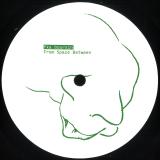
fka boursin returns to Scissor & Thread with From Space Between, following his 2025 debut for the label, Listless Intertext. The Bristol producer continues to explore the more spacious edges of house music, drawing together dub, ambient detail and a loose rhythmic sensibility that has become increasingly characteristic of his work. From Space Between unfolds patiently with sounds appearing at the edges and gradually moving into focus. On the B-side Frank & Tony return with another Housebeat Dub, picking up the thread of their Listless Intertext rework. Francis Harris and Anthony Collins draw the original further into their own language of deep house, giving the rhythm more room and letting the dub elements stretch across the arrangement.
"A half-successful attempt at working with fewer elements in pursuit of a more minimalist approach," says Henry Murray aka fka boursin, "trying to find restraint and sit with gaps in the stereo image where previously I would have reflexively filled them with melodic content. Recorded whilst living alone in another country for a month, the track was borne out of meditations on living in and between unfamiliar places, seasons, languages, currencies, relationships, medications, economics, intentions, sanities, and spaces."
Marion Poncet delivers his heartbeats in full length format as 2x12“ on Smallville's Fuck Reality.
While Traumer might be the most prominent moniker of Romain Poncet- and the one he is currently touring the world as- there is countless other musical projects that the artist is operating as. And its the lesser-known side-projects, that complete the picture of a truly versatile musical mind. So next to Traumer, you'll meet Brako, Amine Laje, Jinger, Redspecs- Marion Poncet - and even more side-projects within the world of Romain. He has always seen his monikers as a form of expression and to showcase his musical broadness. Of course there is House music in all different shades & moods- but Romain also released techno, downbeat & trippy things for the heads as well as broken beat material.
„The Raging Swells Crushing The Cliff Of My Love” was written during a period of longing for his love – so here is a deeply personal album as a musical dedication. Expect thoughtful-but-crunchy house music with a chunk, that sounds as if it was made for Smallville's Fuck Reality imprint.
Fuck Reality LP 02 comes as a 2x12”, as always with a full cover artwork by Stefan Marx.
Love from Smallville - stay positive – Fuck Reality!
Wow! Chapter 16 of this successful and influential series. This time compiled by Michael Rütten (Soulpatrol) and Michael Reinboth. After 30 years of sharing the love for music and a friendship it‘s about time for these two to get together for a musical trip around the world. Voted one of the best electronic music compilations by music magazines such as Groove, Mixmag, FAZE and DJ mag. With the launch of the series in 1995, it’s fair to say that Michael Reinboth or Compost essentially pioneered and established the future jazz genre. Further info about the artists upon request.
Bondage-Music proudly welcomes back Mihai Popoviciu with his latest EP, “Pick Up The Phone.” A familiar name on the label, Popoviciu returns with another refined selection of deep, groove-driven house music, combining his trademark rolling rhythms, warm basslines and subtle atmospheric elements.
With a sound that effortlessly balances depth, hypnotic grooves and dancefloor energy, Mihai Popoviciu has established himself as one of the distinctive voices of contemporary house music. “Pick Up The Phone” continues this signature approach across four tracks, delivering a focused and timeless club release.
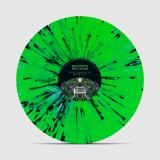
For this edition, Bondage-Music presents the EP as a Limited Splatter Edition on 180G vinyl. Adding to its collectability, two tracks are available exclusively on vinyl, making BOND12086 a special release for DJs and vinyl enthusiasts alike.
Intersecting sharpness and passion. An innovative work born from the collision of two rare and extraordinary talents.
On one side was Hiroshi Suzuki, a trombonist in such demand that people said, “If you want to record a good work, secure his schedule.” On the other hand was Masahiko Togashi, a drummer who rose to prominence at a young age and dominated the jazz world, from modern jazz to free jazz. The collision of these two personalities and talents created a new current in the Japanese jazz scene. From "Castle Cats," which moves between jazz rock and free jazz, to "Suzu No Uta," where Yuji Ohno’s piano spins a beautiful melody amid the sound of bells falling like rain, and "Passion," where each musician cuts in with sharp intensity, the entire work is filled with creativity and passion. Recorded in 1969, this is said to be the first work in Japan in which new jazz and free jazz were recorded and released as an album. From this turning point, Japanese jazz began to move in a major way.
Official reissue of the massive Sourmash – Pilgrimage to Paradise, originally released on Prolekult in 1993.
This essential reissue brings together both original versions, alongside heavyweight remixes from Hardfloor and Timo Maas.
Both original versions command serious money on Discogs, here’s your chance to grab the whole package for a fraction of the price — and beat the sharks!
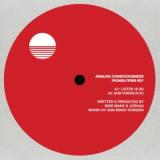
Originally released 1996 on the short-lived Picnolypsis Records (DE) - Down D.C. and Analog Consciousness take a side each for a raw, stripped-back excursions into underground acid house. Driven by hypnotic drum programming, rolling low end and corrosive 303-style lines, the record captures the rough-edged spirit of mid-90s European club music. Long buried in obscurity, the record's reputation has quietly grown amongst DJs. The spotlight now shining on it further after Down D.C.'s Acid-House Part 2 was played on Shanti Celeste’s BBC Radio 1 residency.
This first time re-issue features a remix from Pacific Coliseum - alter ego of Canadian artist Teen Daze.
In August 2022, Australia-based, French born fourth-world music legend Ariel Kalma was invited to participate in BBC Radio 3"s Late Junction series of special collaborations. The program pairs artists that have not previously collaborated to create new music together. Kalma was quick to suggest working together with two musicians whom he has never met - the International Anthem recording artists Jeremiah Chiu & Marta Sofia Honer, whose critically-acclaimed duo debut Recordings from the Âland Islands had been released just a few months earlier. Kalma sent an invitation to Chiu and Honer, which was received with great enthusiasm. Chiu had been a fan of Kalma"s work for a long time, even citing him as a major influence on his approach to electronic music composition. After meeting their goal of 20 minutes worth of music for the program (which was four pieces total), the three musicians were satisfied in what they would present, and sent along their work to the producers of Late Junction; but simultaneously they felt like there was much more to be said, more work to be done. There were several pieces that they had nearly completed that weren"t sent for inclusion in the radio program, and there were many ideas for refining those that had. The three musicians collectively agreed that they would continue work together and try to push the music further. The Closest Thing to Silence is the result of their efforts to take the collaboration further.
The chart-topping, multi-Platinum and Ivor Novello-winning Passenger returns with a new album ‘Wild Love’. Passenger - real name Mike Rosenberg - was inspired by recently (and unexpectedly) becoming a husband and father. ‘Wild Love’ captures the whirlwind of emotions as their relationship developed - the excitement, the upheaval, the trepidation and the joy. Passenger says, “Going from a working relationship to a romantic one is scary. The older you get, the more of the spikier sides of love you’ve seen. Things go sour for all sorts of reasons and with someone so close, the stakes are so much higher. ‘Wild Love’ is the title track because it sums up the theme of the album. Do you give in to your doubts and do nothing, or do you face your fears and go for it? I wrote the song as I was realising that the choice was obvious.” While the ‘Wild Love’ album charts the couple’s personal experiences - taking the plunge, cherished early memories together, the realisation that this new love could be one that lasts - the single ‘It Was Gonna Be You’ is an outlier from a previous chapter in his life, a story of discovering that relationships can rapidly unravel. It is set to a classic Passenger sound of bright, buoyant melody coloured with flourishes of piano and Americana-tinged guitar twangs. The uplifting, energised atmosphere of the ‘Wild Love’ album opens with its most direct moment, the infectious ode-to-change of the live favourite ‘Boomerang’. The title track and centrepiece ‘Wild Love’ will also be familiar from shows, a delicate piano-based country song which taps into the elation and fear that came as the couple’s relationship took shape. There are sonic surprises too, such as the way in which the frisky ‘Caution To The Wind’ draws on both ‘70s Elton John and the insistent keys of Bruce Hornsby and the Range’s ‘The Way It Is’, or the ‘80s synth embellishments on ‘Lightning Strikes’. A rare cover is also included with his take on Taylor Swift’s ‘Willow’, the song that soundtracked the couple’s blossoming love.
The chart-topping, multi-Platinum and Ivor Novello-winning Passenger returns with a new album ‘Wild Love’. Passenger - real name Mike Rosenberg - was inspired by recently (and unexpectedly) becoming a husband and father. ‘Wild Love’ captures the whirlwind of emotions as their relationship developed - the excitement, the upheaval, the trepidation and the joy. Passenger says, “Going from a working relationship to a romantic one is scary. The older you get, the more of the spikier sides of love you’ve seen. Things go sour for all sorts of reasons and with someone so close, the stakes are so much higher. ‘Wild Love’ is the title track because it sums up the theme of the album. Do you give in to your doubts and do nothing, or do you face your fears and go for it? I wrote the song as I was realising that the choice was obvious.” While the ‘Wild Love’ album charts the couple’s personal experiences - taking the plunge, cherished early memories together, the realisation that this new love could be one that lasts - the single ‘It Was Gonna Be You’ is an outlier from a previous chapter in his life, a story of discovering that relationships can rapidly unravel. It is set to a classic Passenger sound of bright, buoyant melody coloured with flourishes of piano and Americana-tinged guitar twangs. The uplifting, energised atmosphere of the ‘Wild Love’ album opens with its most direct moment, the infectious ode-to-change of the live favourite ‘Boomerang’. The title track and centrepiece ‘Wild Love’ will also be familiar from shows, a delicate piano-based country song which taps into the elation and fear that came as the couple’s relationship took shape. There are sonic surprises too, such as the way in which the frisky ‘Caution To The Wind’ draws on both ‘70s Elton John and the insistent keys of Bruce Hornsby and the Range’s ‘The Way It Is’, or the ‘80s synth embellishments on ‘Lightning Strikes’. A rare cover is also included with his take on Taylor Swift’s ‘Willow’, the song that soundtracked the couple’s blossoming love.
Forty years of cassette releases, pressed for the first time on vinyl
First of two instalments exploring the previously unreleased sonic archives of one of Poland’s most enigmatic
living artists - with its first volume focused on his deep listening practice and spiritual reverie (recorded 1990–2013)
The last time Andrzej Dudek-Dürer took a banknote bearing the face of the Polish anarchist Jarosław Dąbrowski from his pocket to trade it for a pair of shoes was in 1969. He bought them for 120zł - the equivalent of 100€ today - and never replaced them since then. Only rebuilt them, year after year, drawing a needle and thread through the leather each time it split, closing one wound before the next one opened. It became a ritual of precision, stitching a record of another year into their soles.
That same year, in Wrocław, he arrived at a conclusion that would recalibrate everything that followed. Convinced he was the reincarnation of Albrecht Dürer, he adopted the surname Dudek-Dürer, stopped cutting his hair and began wearing the same garments every day. It was the first ritual of many, though he wouldn't have called it that yet. Look closely enough, over the decades, and it is always the same gesture, returning in different material: hair growing in a single unbroken strand, a needle drawing thread through leather, sitar strings pulled taut across a neck he built with his own hands and magnetic tape spooling forward inside the cassette boxes stacked against his walls.
None of this began in a vacuum. Dudek-Dürer emerged from the Wrocław neo-avant-garde, in a Polish art world where an exhibition could be cancelled overnight by the stroke of a censor's pen. In 1973, his exhibition Auto-crucifixion was shut down by the state, and for a time he found himself blocked from exhibiting his own art at all - the one force in his life that ever came close to cutting the thread.
He seemed to experience it differently. In 1974, after long, patient research into sitar craftsmanship, he built his first prototype with his brother, a knowledgeable luthier. In 1978, in a smoked-out jazz club, he took his first steps into sound recording with the unreleased album Jazz From Underground with his first band. By 1979, recognition started to travel further than he could.
Turning toward Far-Eastern philosophy, meditation and the idea of reincarnation was another language of freedom for him. It was a way of claiming an inner territory the state could not reach, a border it could not close. Mail Art served a parallel function, reaching further out: in a country that restricted travel and expression, sending and receiving art through the postal system became an act of quiet rebellion.
The body, in his understanding, is only an envelope readied for constant transformation. From this came Metaphysical Telepathy: during the years he could not leave Poland, he treated that confinement as a rehearsal room, sending his mind out ahead on the same thread his body would later follow. Living Sculpture grew from the same root with performances of stillness beside static art objects, until the boundary between the object and the man beside it simply dissolved. Camera Meditation extended the same instinct into photography: a shutter click flattening three dimensions into two so that a single instant could be held forever. Inspired by the pioneers of self-portrait photography like Robert Cornelius, he used it to document time itself, and kept explaining to me: "You know. This is not about vanity. This is about observing time passing.”
The isolation did not end suddenly. It ended the way his own philosophy had already predicted it would, from the inside first. Mail Art quietly solved the problem politics couldn't. Correspondence built during years of confinement slowly worked its way through doors the state itself had kept locked. Contacts made through folded paper and stamps became invitations. Ultimately, invitations became passports.
In 1983 he made his first trip outside Poland, to Germany, in search of the audio technology he couldn’t get his hands on before. In 1985, he was invited by the Indian embassy in Poland to give a sitar concert on an instrument he had spent a decade patiently stringing together - half sitar, half tanpura, built from patience and determination. After the collapse of the People's Republic of Poland, the travels kept unspooling: South Korea, then Mexico, then Australia, Canada, New Zealand, Singapore, Japan and the United States - each stop leaving behind its own small knot of tape, tied off and carried home.
In the decades since, recognition arrived at the same unhurried pace: he conducted workshops at UC Berkeley, served as vice-president for artistic affairs of the Union of Polish Art Photographers and the Union of Polish Visual Artists between 2010 and 2014 and received the Bronze Medal for Merit to Culture - Gloria Artis. His visual work gradually entered collections including the National Museums of Warsaw, the Stedelijk Museum, Tate Modern, MoMA and the Venice Biennale. His musical practice, by contrast, never found that kind of room - left to circulate quietly, sharing his cassette tapes directly, waiting for someone willing to follow it further.
It took months before I could find a way to reach Andrzej Dudek-Dürer - his presence online is very close to nonexistent. Surprisingly, LinkedIn turned out to be the only door still open, a faintly absurd irony given everything else about him. I packed the strict minimum for a three-day trip and an empty notebook and made my way to Wrocław. His headquarters sits in the neighbourhood of Grabyszyn: a two-storey pre-war house that has belonged to his family for generations. The man who opened the door was long-haired, long-bearded, in his trademark leather shoes and patched jeans. We sat in his living room, in front of a computer where decades of recordings sat organised in cryptically named files, surrounded by books and objects that had arrived one layer at a time, leaving room for only two chairs in the middle. His shoes sat by the door, rebuilt so many times they had become their own quiet sculpture. Cassette tapes filled boxes against the walls, almost unlabelled, each one a spool of thread holding decades of sound that had never once been asked for, until now.
I listened for hours: meditating in front of strangers on the porch of a Seoul temple until the tourists stopped taking photos and simply waited with him; a stand-off with border guards at the US–Mexico crossing over an instrument they couldn't identify and didn't trust; a session with the Stockhausen family that he still, decades later, describes like it happened last week. All of it interrupted, occasionally, by the smell of soup boiling and fresh bread warming on the ceramic stove. After two days, it felt like being handed the end of a very long thread and asked, gently, to keep following it. I left with a USB drive holding his full discography, signed with his unmistakable signature.
Astral Meditations From A Living Statue is a length of that thread, drawn out from the boxes stacked against his walls - recordings gathered from different rooms, different countries, different decades. This first record breathes slowly: incense-thick, meditative, built for stillness. A cutting-edge séance in outer space where machines learn how to dream.
It begins with the neo-classical improvisations of Andrzej, space-delayed, recorded at Klub Muzyki i Literatury in Wrocław in 2002. 'When..So' opens the curtains with a deep-rooted meditation accompanied by slow-decaying piano figures illuminated by a candle-lit spirit gathering.
Los Angeles, 1990: a dormant villa, a grand piano, the voice of Bonnie Barnett. 'Exception' is captured in a single room, in a single afternoon - voice and keys circling each other, neither one leading, until the silence between the notes starts to feel like the instrument.
'The Meta...' and 'Tired Of...', recorded at Studio Morandi in Ponte Nossa, Italy, in 1992, settle into a sitar drone built entirely from patience - overtones stacking and beating against each other, strung by a man who never once set foot in India. 'Mastery Of...' follows, recorded the same year at Studio Suski in Łomianki, pushing that same hum further still, until pitch dissolves into a spectral reverie. 'Transcendental Sound', from 2000, closes the first record in a slow bath of celestial frequency - better heard beside the shores of the Odra river.
More than fifty years after deciding that a life could become an artwork, Andrzej Dudek-Dürer continues to inhabit that decision. His shoes keep wearing thin against the earth's crust. His hair keeps growing, one strand at a time. His cassette tapes keep spooling in the dark of their boxes.
Now the thread finds its last shape: a single unbroken groove, spiralling inward from the outer edge to the label at the centre. Never cut - the way nothing else in his life ever was. Drop the needle and it will find that groove and follow it, the same way a needle once followed leather, once followed a border it couldn't cross, once followed string into an instrument that didn't exist until he built it. This record is the other end of a thread that has been travelling for fifty years. For the length of both sides, it rests here, in your hands. This is a timeless proof that the Lord of the New Age was never lost."
Four track deep and dub leaning house record from Tom Ellis, built for groove over drama. Tom Ellis, four cuts, house built from the low end up. Daily Red Cocktail, loose kick, chords buried in reverb. Tram 28 next, steadier, more direct, a track for the middle of a set rather than the top. Pink Street Morning goes dubwise, echoes stretched out over a thin bassline. She Broke My Bongo shuts it down with live sounding percussion, no filler. Straightforward deep house record, nothing flashy, does its job on a proper system. Solid.
*Originally pressed in 2021 - this is a brand new master and cut.**
In partnership with Analogue Foundation, Oshu Records is proud to present the exclusive vinyl repress of "Laroyê" in a thick cardboard tip-on gatefold jacket on 2x 180g vinyl.
Acclaimed Hungarian, Berlin-based producer, composer and pianist Àbáse (AKA Szabolcs Bognár) returns, sharing a special, 5 anniversary remaster of his breakthrough project 'Laroyê'. Releasing on Friday 1 May via Bridge The Gap & Oshu Records, this sensitive exploration of Afro-Brazilian culture originally began as an audio diary, documenting Szabolcs’ travels and collaborations in Brazil through a collection of voice memos, fragmented beats, sketches and field recordings. As his journey progressed, and his collaborations and research deepened, the music project started to take on its own life:
"Laroyê evolved through weeks and months of research and collaborations into the album that it is now. That means that all the sessions were done in different apartments, small studios, often with borrowed equipment, which all adds to the character, but makes the creation of a coherent sound a challenge. Benjamin Tierney, Erik Breuer and Analogue Foundation did an incredible job with the mixes and with this new remaster. I truly believe that we are able to hear the tracks in a new light, with even more depth and clarity."
Coming from the West African Yoruban language, Àbáse stands for "collaboration" – a key element of the music perfectly encapsulated on 'Laroyê'. Recorded in Rio de Janeiro and Salvador, Àbáse spent five months working with diverse artists, from young talents to veterans of the Brazilian scene including Letieres Leite, Luciane Dom, Dofono d'Omolu, Afrojazz and more. The album explores the rich heritage of afro-brasilian culture through samba, MPB and Candomblé, mixing these with broken beat, hip hop and afrobeat, creating a contemporary homage to the classic Brazilian sound. Szabolcs shares:
"Despite already leading and managing musical projects that are close to my hearth, I always felt that one day I would like to start a solo project, where I could take full responsibility for the artistic direction and the music would reflect a truly personal vision. In 2017, I decided to take five months to fulfil a childhood dream and travel to Brazil to expand my creative horizon and expose myself to new influences."
An album standout is the bass-heavy, afro-brazilian ‘Agangatolú, which Àbáse describes as "best exemplifying the story and concept of Laroye as a collaborative effort - a research project exploring the rich heritage of Afro Brazilian culture through my own lens." The track features singers and percussion players Jadson Xabla and Gabriel Santana - two artists based out of one of the oldest terreiros (houses of worship) in Bahia, whilst drummer Jorge Dubman is an integral part of one of the most famous afrobeat bands from Salvador IFA. The contributions of one of Szabolcsoldest collaborators - Hungarian flautist Fanni Zahar - also made the track a full-circle moment.
On a quest for cosmic grooves of unity, Àbáses music pulls from an eclectic blend of global reference points, including modal jazz, Hungarian folk, West African, Brazilian, hiphop and underground electronic music. His work has drawn widespread critical acclaim from the likes of MOJO, Songlines, Soulection and The Guardian, and been supported by key tastemakers including Gilles Peterson, Jamz Supernova and BAMBII. As a keyboard player, Szabolcs has also collaborated with the likes of Wayne Snow, Dele Sosimi, Patti Smith, Emmanuel Wilkins, Gulty Simpson and Zeitgeist Freedom Energy Exchange.
'Laroyê' (2026 Remaster) will release on Friday 1st May via Bridge The Gap & Oshu Records.
A torrent of brilliance released from the fingertips. The art of the piano trio by a giant of arrangement.
In 1968, Norio Maeda, the genius arranger once described as being able to “write different scores with his right and left hands at the same time,” welcomed his close musical allies Takeshi Inomata and Tatsuro Takimoto and took on the piano head-on in his first piano trio work as a pianist. This album brings together the refined melodies of the new mainstream style that led the jazz scene at the time, experimental elements using prepared piano, and even a strikingly inventive recording approach in which as many as seven microphones were placed inside the piano. With the outstanding structural power of a composer and arranger and the sharp instincts of a performer woven together at a high level, this is an important work that deserves to be engraved in the history of Japanese jazz.
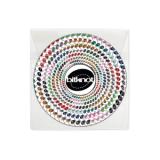
First release on brand new imprint 'Picture Dis'. The label will reissue classic tracks only on Limited Edition picture disc. First release is none other than "Pump It Up" by Danzel, one of the defining dance records of the 2000s and a global club favourite that continues to ignite dancefloors around the world. Including Marnik Remix, A Cappella version and another hit by Danzel: "Put Your Hands Up In The Air!".
The eye of the storm: welcome to Tornado Wallace's debut album! The accumulation of about four years of work, with tracks written in Berlin and Melbourne, 'Lonely Planet' is nothing like you may have expected from the Australian expat. No stranger to fans and followers of ESP Institute, Beats in Space and Music From Memory's sister Label Second Circle, Tornado Wallace's strain of releases so far merged functionality with a musical playfulness that led him to find himself as one of the producer's behind José Padilla's International Feel album. Here, he leaves the needs of the dance floor behind in order to create a magical mystery tour de trance into his and our inner jungle. How about some references New Age sounds meet new wave melodies, Grace Jones runs into the Dire Straits at Compass Point, while a Korg Mini Pops and a Roland CR78 make amends for Sly & Robbie's absence, Michael Mann pictures Joseph Conrad's 'Heart of Darkness', Robert Rauschenberg tries his luck at naturalism and an imagined Wally Badarou echoes through all of it. Sandwiched between the title track and the yearning beauty of the album's final point 'Healing Feeling', you get all of that as well as collaborations with and contributions of NO ZU, David Hischfelder and the voice of Sui Zhen on 'Today', who would easily make Anna Domino take her proverbial hat off. Tornado Wallace created an album that supersedes the requirements and expectations of a debut. Like a lost Island Records or a never released Made to Measure album, 'Lonely Planet' soundtracks notions and ideas that recall the nostalgic future in the past as much as it looks ahead.
Limen brings together two artists whose musical paths converge around a shared sensitivity to listening, resonance, and the evocative power of sound.
Recorded at Ritmo e Blu Studio during a five-day residency between spring and summer 2025, the album emerged from a series of spontaneous encounters free from predetermined structures. The pieces preserve their original form, retaining the immediacy and temporal flow of the dialogues as they first unfolded.
Subsequent interventions were conceived not as revisions, but as an exploration of the open spaces already present within the recordings—deepening what remained unspoken and extending resonances without altering the music's natural evolution.
The title, derived from the Latin word for “threshold,” reflects the nature of the project itself: a place of passage between improvisation and composition, silence and vibration, memory and imagination. Limen inhabits a suspended territory where listening becomes an experience of openness, presence, and transformation.
---
Lino Capra Vaccina
Lino Capra Vaccina is one of the most distinctive voices in Italian experimental music. A percussionist, composer, and pioneer of minimalist and meditative sound practices, he first emerged in the early 1970s as a founding member of the influential group Aktuala, whose visionary fusion of ancient traditions, improvisation, and contemporary research anticipated what would later become known as world music.
Over a career spanning more than five decades, Vaccina has cultivated a unique artistic language centred on vibration, resonance, and the transformative power of sound. His landmark 1978 album Antico Adagio remains a touchstone of European minimalism, while his collaborations have included figures such as Franco Battiato, Juri Camisasca, Markus Stockhausen, Keith Tippett, Paolo Tofani, and many others.
Whether working with percussion, piano, electronics, or voice, Vaccina's music seeks a state of suspension and contemplation. His compositions unfold as immersive sonic environments whereancient echoes and contemporary sensibilities meet, inviting listeners into an experience that is at once intimate, spiritual, and timeless.
---
Luca Formentini
Luca Formentini is an Italian composer, sound artist, and improviser whose work unfolds at the intersection of experimentation, atmosphere, and deep listening. Active since the late 1990s, he has developed a highly personal language in which guitar, voice, field recordings, and electroacoustic processes become tools for exploring memory, perception, and the expressive potential of sound itself.
His music resists easy categorization, moving freely between ambient, contemporary composition, improvisation, and sound art. Throughout his career he has released numerous solo works and collaborated with a wide range of internationally acclaimed musicians, including Holger Czukay, Robert Rich, Markus Stockhausen, Steve Jansen, Theo Travis and Steve Lawson.His recordings have appeared on labels across Europe, Asia, Australia, and the United States.
Rooted in a practice of attentive listening and sonic exploration, Formentini creates evocative musical landscapes that invite reflection rather than certainty, opening spaces where silence, texture, and resonance become as meaningful as melody itself.
Armada Music and PDD proudly continue the brand-new A State Of Trance Classic Series, celebrating some of the most legendary and influential records in trance history. Following the success of Volume 1, Volume 2 once again dives into the archives to bring three essential trance classics back to life on fresh vinyl.
Kicking things off on Volume 2 is “Chicane feat. Moya Brennan - Saltwater”, a true trance classic that showcases the sound and energy that helped define the genre during its golden era. Originally released in 1999 on Xtravaganza Recordings, the track quickly became a favourite among DJs and trance fans, and now returns to wax as part of this essential new series.
On the flip is “Veracocha - Carte Blanche (Extended Mix)”, another highly regarded classic from the A State Of Trance catalogue. Originally released in 1999, the track has stood the test of time and remains a firm favourite with trance DJs and collectors, making its return to vinyl a welcome addition to the series.
Last but not least is “Insigma - Open Our Eyes (Original Mix)”, completing another carefully selected trio of timeless trance records. Originally released in 2000 on A Trance Communication Release, this classic perfectly captures the euphoric, driving sound that made the era so influential and continues to resonate with trance fans today.
Volume 2 continues the series in style, bringing together three essential trance classics on one piece of wax and making this a must-have for both long-time A State Of Trance fans and a new generation discovering these timeless anthems.
Twenty-five years after its original release, Markus Guentner's debut album In Moll returns in a special anniversary reissue on Black Knoll Editions, reaffirming its place as one of the defining ambient recordings of the early 21st century.
Released in 2001 during the formative years of Kompakt's influential Pop Ambient series, In Moll emerged from a period of rapid transformation in electronic music. New technologies, expanding digital networks, and shifting creative possibilities allowed artists to imagine entirely new sonic worlds. Amid this fertile landscape, Guentner's music stood apart. Combining delicate melodic fragments, slow-moving harmonies, and a remarkable sense of spatial depth, In Moll introduced a distinct artistic voice whose impact can still be felt a quarter-century later.
The album arrived shortly after Guentner's contributions to the inaugural Pop Ambient compilation, including the now-beloved "Regensburg 1," named after his Bavarian hometown. Those early recordings immediately captured the attention of Kompakt founders Michael Mayer and Wolfgang Voigt. Recalling his first encounter with the music, Mayer describes listening to a demo CDR with Voigt while wandering through Cologne late into the night, replaying the tracks for hours. "We knew that we had found something outrageously beautiful and we wanted the whole world to listen."
Across its running time, In Moll unfolds like a series of dreamlike landscapes, inviting the listener into a world that feels both familiar and strangely other. Bells, hisses, distant textures, and slow-moving bass tones drift through vast expanses of atmosphere while luminous synthesizer washes seem to blur the horizon in a fine digital mist. The album's transportive qualities are matched by a remarkable sense of compositional discipline. Every gesture feels deliberate, every texture carefully placed. Balancing warmth and melancholy with restraint, Guentner created a body of work that rewards both close listening and complete surrender.
Reflecting on the album twenty-five years later, Wolfgang Voigt describes Guentner as "one of the first, but also one of the most important ambient artists" associated with Kompakt, calling his music "an integral, timeless part of the long history of pop ambient." Music critic and former Pitchfork Editor-in-Chief Mark Richardson, who reviewed In Moll upon its original release, similarly noted that the album "marked the arrival of an important new voice," and today regards it as "one of the finest ambient releases of the decade."
The album's influence continues to extend far beyond its original audience. For many listeners, In Moll served as an entry point into a new understanding of what ambient music could be. Black Knoll boss Rafael Anton Irisarri first encountered the album shortly after its release in 2001. "It immediately opened a door to a world of music I didn't know existed," he recalls. "At a time when I was still discovering my own creative voice, Markus showed me entirely new possibilities for what electronic music could communicate." Simply put, "The Sight Below would not have existed without In Moll paving the way."
Far from a historical curiosity, In Moll continues to feel strikingly contemporary. What once sounded futuristic now feels timeless, its patient pacing, attention to detail, and sense of wonder remaining entirely intact. The album's enduring power lies not only in its influence, but in the curiosity it continues to inspire, inviting listeners to step inside its world and lose themselves within it.
To mark its twenty-fifth anniversary, Black Knoll Editions presents the most complete edition of In Moll to date. Newly remastered in full analog by Rafael Anton Irisarri, this expanded release pairs the original album with a newly reworked interpretation by Markus Guentner himself, revisiting the material through the lens of twenty-five years of artistic development. The anniversary edition also features a new visual presentation designed by Guentner, offering a visual counterpart to the album's continued evolution. Together, these recordings and visuals celebrate both the enduring legacy of In Moll and its ability to reveal new dimensions twenty-five years later.
This 25th Anniversary Edition on Black Knoll Editions celebrates a recording whose quiet impact has only grown with time, preserving a work that remains as evocative, singular, and essential today as it was in 2001.
Twenty-five years after its original release, Markus Guentner's debut album In Moll returns in a special anniversary reissue on Black Knoll Editions, reaffirming its place as one of the defining ambient recordings of the early 21st century.
Released in 2001 during the formative years of Kompakt's influential Pop Ambient series, In Moll emerged from a period of rapid transformation in electronic music. New technologies, expanding digital networks, and shifting creative possibilities allowed artists to imagine entirely new sonic worlds. Amid this fertile landscape, Guentner's music stood apart. Combining delicate melodic fragments, slow-moving harmonies, and a remarkable sense of spatial depth, In Moll introduced a distinct artistic voice whose impact can still be felt a quarter-century later.
The album arrived shortly after Guentner's contributions to the inaugural Pop Ambient compilation, including the now-beloved "Regensburg 1," named after his Bavarian hometown. Those early recordings immediately captured the attention of Kompakt founders Michael Mayer and Wolfgang Voigt. Recalling his first encounter with the music, Mayer describes listening to a demo CDR with Voigt while wandering through Cologne late into the night, replaying the tracks for hours. "We knew that we had found something outrageously beautiful and we wanted the whole world to listen."
Across its running time, In Moll unfolds like a series of dreamlike landscapes, inviting the listener into a world that feels both familiar and strangely other. Bells, hisses, distant textures, and slow-moving bass tones drift through vast expanses of atmosphere while luminous synthesizer washes seem to blur the horizon in a fine digital mist. The album's transportive qualities are matched by a remarkable sense of compositional discipline. Every gesture feels deliberate, every texture carefully placed. Balancing warmth and melancholy with restraint, Guentner created a body of work that rewards both close listening and complete surrender.
Reflecting on the album twenty-five years later, Wolfgang Voigt describes Guentner as "one of the first, but also one of the most important ambient artists" associated with Kompakt, calling his music "an integral, timeless part of the long history of pop ambient." Music critic and former Pitchfork Editor-in-Chief Mark Richardson, who reviewed In Moll upon its original release, similarly noted that the album "marked the arrival of an important new voice," and today regards it as "one of the finest ambient releases of the decade."
The album's influence continues to extend far beyond its original audience. For many listeners, In Moll served as an entry point into a new understanding of what ambient music could be. Black Knoll boss Rafael Anton Irisarri first encountered the album shortly after its release in 2001. "It immediately opened a door to a world of music I didn't know existed," he recalls. "At a time when I was still discovering my own creative voice, Markus showed me entirely new possibilities for what electronic music could communicate." Simply put, "The Sight Below would not have existed without In Moll paving the way."
Far from a historical curiosity, In Moll continues to feel strikingly contemporary. What once sounded futuristic now feels timeless, its patient pacing, attention to detail, and sense of wonder remaining entirely intact. The album's enduring power lies not only in its influence, but in the curiosity it continues to inspire, inviting listeners to step inside its world and lose themselves within it.
To mark its twenty-fifth anniversary, Black Knoll Editions presents the most complete edition of In Moll to date. Newly remastered in full analog by Rafael Anton Irisarri, this expanded release pairs the original album with a newly reworked interpretation by Markus Guentner himself, revisiting the material through the lens of twenty-five years of artistic development. The anniversary edition also features a new visual presentation designed by Guentner, offering a visual counterpart to the album's continued evolution. Together, these recordings and visuals celebrate both the enduring legacy of In Moll and its ability to reveal new dimensions twenty-five years later.
This 25th Anniversary Edition on Black Knoll Editions celebrates a recording whose quiet impact has only grown with time, preserving a work that remains as evocative, singular, and essential today as it was in 2001.
Faitiche presents the debut solo album by cellist, sound artist, and composer Topu Lyo: “quiet scenes from tokyo” brings together sixteen miniatures for solo cello and tape echo that oscillate between abstracts drones and rhythmic pizzicato sketches – all recorded at Topu’s Tokyo apartment. The constant traffic noise from a nearby highway has become an accompanying soundtrack for his compositions and can be heard on the recordings. Topu’s playing is marked by a distinctive idiom oriented more towards abstract electronic studio effects than classical technique.
The artist spoke to Jan Jelinek about his work:
JJ: A solo cello album may seem like an odd fit for a label that has to date released only music that is electronic in the broadest sense. But I think “quiet scenes from tokyo” complements the Faitiche repertoire exceptionally well. Its sixteen miniatures showcase the cello in all its complexity: the bowed passages sometimes recall a tape feedback drone; the pizzicato playing conjures up the percussion recordings of Moondog; and the abstract textures might be mistaken for the product of a granular sampler rather than rapid finger work on the cello. I’m constantly surprised by just how rich and varied this album is – without ever losing the charm of its sketch-like quality. Could you say a few words about the making of your album – first of all, from a rather technical perspective: what production tools did you use, and why?
TL: My production tools were very sparse. Just a solo cello and my Roland 301 Space Echo, which I only used at the end, running everything through it during mixing, tape only. After years of working with electronics, pedals, and synthesizers, moving to Tokyo pushed me toward minimizing my setup. But my aesthetics shifted too, toward simplicity. I wanted to strip everything back to just the acoustic cello and see how far I could push it — replicating some of my favorite electronic effects through extended technique: slow portamento, LFOs, filters, detune, noise. I’d also been listening to a cassette of ocean sounds for years. When I moved to Tokyo I was horrified to find myself living directly across from a freeway. Eventually the freeway started sounding almost identical to the ocean — and that ended up playing a prominent part in the recording.
JJ: That’s super interesting: mimicking electronic production as a compositional idea for the cello! You say the sound of the freeway is crucial to the album: I, too, tend to interpret steady traffic noise as a positive soundscape – do we hear the freeway on the album? I can also hear other field recordings, for example on “a street car with announcements”. Can you say a bit about how these field recordings influence your playing?
TL: Yes, you can hear the freeway on the album! The freeway is most prominent in “old trees in lonely spring”, “yuyake koyake”, and “the moon” (you can clearly hear individual cars). When I first began recording I had my balcony door shut tightly, but after a while I began leaning into the highway sound and slowly opening the door little by little to control the amount of noise. “streetcar with announcements” was a moment I was recording and a car passed by making announcements in the background. I loved how it sounded! Same thing with “yuyake koyake”, and later I realized that every day at 5pm the same song plays to mark sunset, telling children it’s time to go home. Having this bedrock of sound puts less pressure on me to put music on top or to play more notes.
JJ: It’s astonishing how much this differs from what I’d imagined: I’d been picturing peaceful landscape recordings, but had never thought of a freeway. Which goes to show how open to interpretation traffic noises are. So the room by the freeway had a major influence on the album – how are you going to perform it live?
TL: The contrast between the freeway and the beautiful landscape in my head couldn’t have been starker. I too was imagining a beautiful landscape in which to create the album, but somehow it still worked out. I've been going back and forth a lot on live shows and I think the most honest way is to have it the most stripped down. I was thinking of using traffic samples etc., but I think the duet really comes from the background sounds from every unique venue/environment. So as it stands, I’ll just be doing acoustic solo cello.
,Manifold of Partially Actualized Realities" ist das neue Album bei Kou Records von Randall Dunn - Produzent, Komponist und einer der markantesten Gestalter von Low-End- und räumlichen Klängen in der zeitgenössischen Musik, bekannt für seine Arbeit mit Sunn O))), Oneohtrix Point Never, David Torn und unzähligen anderen aus den Bereichen Heavy-, Experimental- und Avantgarde-Musik. Das Album ist eine Meditation über zerbrochene Realitäten, Zeit und Sterblichkeit - ein Spiegel, der sich auf sich selbst zurückfaltet und darüber, wie zukünftige Ereignisse die Vergangenheit beeinflussen. Sein tragender Geist ist Philip K. Dicks ,Pink Light Experience" von 1974, in der der Autor berichtete, eine Übertragung von einer gewaltigen, außerirdischen Intelligenz empfangen zu haben: informationsreich, uralt und überwältigend. Dunn nähert sich dem sowohl als Konzept als auch als kompositorische Logik - Musik, die in Schichten auftaucht, zusammenbricht, sich neu formiert und sich einer Auflösung verweigert.? In vier Stücken setzt Dunn ein ganzes Arsenal an Vintage-Synthesizern ein - Korg MonoPoly, Korg MS-20, PPG Wave, CS-80, Juno-60, Waldorf Strings, Fizmo - neben einer außergewöhnlichen Ensemblebesetzung. Spoken-Word-Beiträge von Jim Jarmusch (basierend auf PKDs Prosa) und Laima Leyton (basierend auf Robert Graves' ,Time") verankern zwei der vier Stücke in Sprache, ohne sie zu erklären. Das Album bewegt sich von orchestraler Kammermusik über elektroakustische Abstraktion hin zu einem abschließenden Stück - ,Ayn" -, das sich zu ekstatischem Jazz entfaltet, mit Cyro Baptista, Briggan Krauss, Henry Fraser, Charmaine Lee und Robert Aiki Aubrey Lowe. Wahre elektroakustische Komposition im vollsten Sinne: spektral, körperlich und weit offen. Produziert und gemischt von Randall Dunn bei Circular Ruin, April 2026. Aufgenommen und gemastert von Ben Greenberg. Dolby-Atmos-Mischungen von Ben Greenberg. Lackschnitt von Paul Gold bei Salt Mastering. Cover- und Rückseitengestaltung von Steve Rude.
,The Long Ear" ist das Debütalbum von Noh Age _ Charmaine Lee (Parabolmikrofon, Feedback, Gesang), John McCowen (Kontrabassklarinette, Bb- Klarinette, Blockflöte) und Li-Chin Li (Sheng) bei Kou Records - live aufgenommen über drei Tage bei Brooklyn Recording im März 2026 live aufgenommen und von Randall Dunn (Sunn O))), Oneohtrix Point Never) produziert. Das Parabolmikrofon hat seine eigene Geschichte: ein Überwachungsinstrument aus dem Kalten Krieg , das dafür konzipiert war, aus der Ferne zu lauschen, um das zu orten und zu verstärken, was sonst unhörbar bleiben würde. Hier ist es nach innen gerichtet - nicht auf einen Feind, sondern auf den Klang selbst, der durch vier Vintage-Röhrenverstärker geleitet wird. Die Parabolantenne spürt Resonanzen auf, die durch den Raum übertragen werden, und stellt sich auf Frequenzen ein, die von Kontrabassklarinette, Sheng und Gesang erzeugt werden, bis sich eine Rückkopplung entlädt - ein vierter Interpreter mit eigener, unvorhersehbarer Wirkmacht. Das Ergebnis ist spektrale Musik in ihrer viszeralsten Form - verwurzelt in der Tradition von Gérard Grisey, Kaija Saariaho und Iancu Dumitrescu, doch herkommend von der Überwachungsstelle, dem Abhörposten, der Abhörleitung. In sechs Stücken, die auf kompositorischen Rahmenwerken aus zellulären Automaten und grafischen Partituren basieren, bewegt sich das Trio zwischen extremen Registerbereichen - CBC-Grundtöne gegen dichte Sheng-Cluster-Klänge , die kristallklaren Obertöne von Blockflöte und Mini-Sheng - während das Feedback durch all das wandert, sich verdichtet, auslöscht, wiederkehrt. Cover- und Rückseitengestaltung von Shintaro Kago - einem in Tokio ansässigen Manga-Künstler und Pionier der ,Ero-Guro"-Tradition, der international für seine Arbeit an Flying Lotus' ,You're Dead!" (Warp, 2014) bekannt ist. Aufgenommen, gemischt und produziert von Randall Dunn. Zusätzliche Synthesizer und Sounddesign von Randall Dunn. Gemastert von Ben Greenberg. Dolby-Atmos-Mischungen von Ben Greenberg. Schablonenschnitt von Paul Gold bei Salt Mastering.
Power Ballads and The Wash is the sophomore album from London-based multi instrumentalist James Howard, due for release on 6th November 2026 via boutique
label Faith & Industry. James is known as founder of critically acclaimed 2010’s band Blue House and collaborator with luminaries such as Rozi Plain, Dana Gavanski, Kate Bollinger and Alabaster Deplume.
For Power Ballads and The Wash James has worked with producer Mike Lindsay, co-founder of folktronica group Tunng. Power Ballads and The Wash follows James's debut solo album Peek-A-Boo, released to great acclaim in April 2023.
All eight songs of Power Ballads and The Wash began life as intimate live takes of
guitar or piano and voice, recorded at Howard’s studio in Deptford, south London.
Steeped in the energy of the local environment, each session was preceded by a visit to the Thames to ask for its muddy blessing, with the DLR rumbling by. The sessions at Lindsay’s Margate studio built a widescreen world around Howard’s original performances, from the restless Eventide vocal treatments on Seven Seconds to the Hollywood string samples of The Moon In The Movies and the Moog bass that quietly anchors the record throughout. Howard also praises violinist Magdalena MacClean's (Caroline) contributions.
Beneath this gentle absurdity, though, lies something quietly powerful. Howard’s
song-writing explores the notion that, despite our ever-shortening attention spans,
there is still the possibility of quiet reflection and the discovery therein of revelations hidden in plain sight. The world of these lucid dream-esque reveries is unmistakably London. The record began with a wing-and-a-prayer visit to the Thames, and ends there too: the wash from the Thames Clipper / nearly breaks through your shoe / like some feelings sometimes do.
"Thank Goodness brings together an overdubbed ‘chamber band’ of bass guitar, viola, piano, harpsichord, voice and drums. Made on my own in London and Ireland between 2023-26 as a slow channelling inward of a lot of social energy.”
Seán Being is a committed figure at the sharp edges of Irish music, including being the key instigator of the band Princ€ss, touring bass player with Maria Somerville, and a long-time affiliate of Dublin label wherethetimegoes. Their various collaborations include contributions to live and recorded projects with the likes of Spellcaster, Nashpaints, Florian TM Zeizig, Jennifer Moore, Olan Monk, Dylan Kerr, Asa Nisi Masa, Life is Beautiful, Polido, Adriana João and Usof.
Not always in the business of ‘popular music’, Seán also has Gregorian Chant and car horn performances in their repertoire.
Aspects of all of this activity have made their way, directly or otherwise, into this first full-length album.
21 Bum Salute is the fifth album from Sydney experimental psych-noise-pop duo Party Dozen. The work of Kirsty Tickle (saxophone, vocals) and Jonathan Boulet (drums, loops, production), 21 Bum Salute finds the critically-acclaimed, semi-improvised duo feeling liberated - from their peers, their worries, and what the nell they're supposed to sound like now.
Emerging in 2017 from the warehouses of the Sydney experimental noise-rock scene, Party Dozen arrive at the release of their fifth album, 21 Bum Salute, in peak form. Over the course of four, increasingly perverse albums of psych-tinged rock peppered with pop noise and bursts of doom in equal measure, they've transformed from gleeful noise-makers producing DIY albums from a tiny room in Marrickville, NSW, to globe-hopping, critically-adored favourites - producing DIY albums from a tiny room in Marrickville.
As well as tours with Amyl and the Sniffers, King Gizzard and the Lizard Wizard, Tropical F*ckstorm, Algiers and more, Party Dozen had Nick Cave appear on 2022 single Macca The Mutt', collabed with New York rapper billy woods, performed an incendiary live set on KEXP, signed international deals, firstly with Temporary Residence LTD (Mogwai, Explosions in the Sky,
Along the way Party Dozen self-released their first two albums, The Living Man (2017) and Pray For Party Dozen (2020), struck a chord internationally with album The Real Work (2022), which sent them on tours of Europe, North America, Japan, China and New Zealand, while fourth LP, Crime in Australia (2024), an ode to Aussie noir that leaned beyond rock into moodier moments, repeated it.
Party Dozen recorded, mixed and mastered 21 Bum Salute completely themselves, over a three month span. Inspired by spooky "old recordings" as well as the primal impulses of acts like ESG and Bikini Kill, 21 Bum Salute - named after a peculiar, larrikin ritual in Australia's arid Northern Territory - condenses consecutive years of jam sessions, loops and improvisations into just over half an hour's worth of fizzing, strutting, striking sonics from the fringes.
21 Bum Salute is the fifth album from Sydney experimental psych-noise-pop duo Party Dozen. The work of Kirsty Tickle (saxophone, vocals) and Jonathan Boulet (drums, loops, production), 21 Bum Salute finds the critically-acclaimed, semi-improvised duo feeling liberated - from their peers, their worries, and what the nell they're supposed to sound like now.
Emerging in 2017 from the warehouses of the Sydney experimental noise-rock scene, Party Dozen arrive at the release of their fifth album, 21 Bum Salute, in peak form. Over the course of four, increasingly perverse albums of psych-tinged rock peppered with pop noise and bursts of doom in equal measure, they've transformed from gleeful noise-makers producing DIY albums from a tiny room in Marrickville, NSW, to globe-hopping, critically-adored favourites - producing DIY albums from a tiny room in Marrickville.
As well as tours with Amyl and the Sniffers, King Gizzard and the Lizard Wizard, Tropical F*ckstorm, Algiers and more, Party Dozen had Nick Cave appear on 2022 single Macca The Mutt', collabed with New York rapper billy woods, performed an incendiary live set on KEXP, signed international deals, firstly with Temporary Residence LTD (Mogwai, Explosions in the Sky,
Along the way Party Dozen self-released their first two albums, The Living Man (2017) and Pray For Party Dozen (2020), struck a chord internationally with album The Real Work (2022), which sent them on tours of Europe, North America, Japan, China and New Zealand, while fourth LP, Crime in Australia (2024), an ode to Aussie noir that leaned beyond rock into moodier moments, repeated it.
Party Dozen recorded, mixed and mastered 21 Bum Salute completely themselves, over a three month span. Inspired by spooky "old recordings" as well as the primal impulses of acts like ESG and Bikini Kill, 21 Bum Salute - named after a peculiar, larrikin ritual in Australia's arid Northern Territory - condenses consecutive years of jam sessions, loops and improvisations into just over half an hour's worth of fizzing, strutting, striking sonics from the fringes.
Nashville’s Jess Kerber focuses on the profound resonances of simple moments, pairing delicate acoustic guitar lines with her rich and captivating tenor. The World Is Dark, but I Want It to Be Funny, her second LP for Felte, is a deeply affecting collection of homespun poetry and natural artistry that finds the artists reflecting on personal history, the emotional intricacies of relationships, and the value of cosmic perspective. She explains,“These songs come from a space of feeling a little left behind, so a lot of the album is about realizing and accepting impermanence, and learning how to be good to yourself and to others.”
Opening with “Familiar Strangers”, Kerber gets to the heart of her greatest talents: fluid fingerpicking, emotive vocal cadences, feather-light touches of piano, and subtle harmonies. “Louisiana Song” positions a lyrical chain of childhood recollections up against the literal rising waters that will one day submerge a cherished place: “I think about being southern / and the sand on the gulf coast / When I think about returning / I am wading in a graveyard”.
Throughout The World Is Dark, Kerber navigates an emotional tightrope, fully aware of the ills of the world while trying to find connections and peaceful corners. Even with all their nuances and challenges, she suggests, our relationships are essential to staying grounded, even when we lose them. “Much of my writing is about facing the struggles head-on, balancing what you need to do to survive while remaining true to yourself,” she says. There are echoes of influences like Joni Mitchell, Gillian Welch, and Lomelda, though Kerber injects her own unique wit, wonder, and humility into every passage, allowing the listener into her head for a spell while quietly taking up residence in theirs.
The music on ‘Remanens’ is the result of a commission by Art Cinema OFF off and B.A.A.D.M to score the short silent film ‘Positano’ made by french actor and filmmaker Pierre Clémenti in 1969. The film itself is an ever-shifting series of glimpses, without much context, of a family vacation to the island Positano. The short cuts are similar to a dream or obscured, residual memories where chronology has fallen apart.
The score was reworked into album format on ‘Remanens’, the title being the Swedish word for remanence. The word has several meanings, most commonly residual magnetism left behind in a material. It is consequently used when referring to residue on magnetic tape, as well as data remanence, which is the residual digital data that remains even after attempts have been made to erase a hard drive. The music was reworked with remnant traces of memory in mind, of the film, but also of how glimpses of memories from another life, when the future was undecided, can make a person feel – and how it can unveil one’s own traces of what the future felt like.
Linus Hillborg (b. 1989) is a Swedish composer, musician and multidisciplinary artist based in Stockholm. His diverse creative practice spans experimental music across both electronic and acoustic realms, as well as compositions for film, theatre, and interactive installations. In 2021 he released his acclaimed solo-debut 'Magelungsverket' through Moloton, derived from the installation 'Orphan Works' which he built with an obsolete computer game engine. In 2023 he released 'Four Works' through Kali Malone and Maria W Horn’s label XKatedral, which featured a series of instrumental works by himself and Theodor Kentros.
Wewantsounds is proud to present the first official release of a legendary 1977 concert capturing Don Cherry, Collin Walcott, and Leon Thomas in their only documented performance together. Recorded live on March 5, 1977, at Pease Auditorium in Ypsilanti, Michigan, the performance featured the three musicians playing an immersive hypnotic set, joined for part of the evening by the rest of Oregon. Long circulating among a few Don Cherry fans, the full concert is now available as a deluxe, remastered 2-LP gatefold set featuring Moki Cherry artwork and new liner notes by Jason Weiss—licensed by the Don Cherry Estate and producer James Quinlan.
Don Cherry’s huge influence has steadily grown over the years, as fans and new generations of listeners continue to uncover the vast breadth of his global musical vision. Sunrise captures Cherry during a particularly fertile late-1970s period, when the American jazz trumpeter blended global and Eastern spiritual concepts into his "Organic Music" philosophy, drawing deeply from Eastern and African traditions. Moving fluidly between trumpet, the West African doussn'gouni (a traditional hunter's harp from Mali), bamboo flutes, percussion, and vocals, Cherry creates a deeply resonant world music soundscape.
Recorded live on March 5, 1977, at Pease Auditorium in Ypsilanti, Michigan, the show took place just a month after Don Cherry participated in the recording of Collin Walcott's ECM album Grazing Dreams. With Walcott playing alongside Cherry and vocalist Leon Thomas, bringing his unmistakable yodel-style vocal approach—and joined for part of the night by the rest of Oregon (Ralph Towner, Paul McCandless and Glen Moore)—the performance stands as a stunning, hypnotic forerunner to the formation of CODONA. The newly remastered audio is so vivid and intimate that it feels as though you are sitting directly in the room with the musicians.
The release also serves as a vibrant homage to Don and Moki Cherry’s creative partnership, featuring a reproduction of Moki’s striking 1975 Mandala tapestry on the front cover.
The concert was produced by James Quinlan, a central pillar of the U.S. Jazz and World Music scene who worked as a sound engineer for Carla Bley, booked Fela Kuti’s major U.S. tour in the 1980s, and went on to direct the Creative Music Studio and found Miami’s Rhythm Foundation. In the album's liner notes, Quinlan reflects in conversation with writer Jason Weiss on the surprise magic of that night:
"Don brought Leon Thomas with him... as a guest, unannounced. It was not part of the advertisement or contract... I don't know of any other time that they recorded or performed together. So, that was completely unique... The audience had no idea what was coming... It was a sound that was just mesmerizing, almost like a mantra."
Licensed by the Don Cherry Estate and James Quinlan, Sunrise is available as a deluxe 2-LP gatefold set featuring new liner notes by Jason Weiss—an essential document in the rich, ever-evolving Don Cherry musical journey.
Twisted Teens - alias Caspian Halliwell und RJ Santos - gab es vor ihrem Debüt-LP aus dem Jahr 2024, das heute als The Orange Album bekannt ist, eigentlich gar nicht. Das Duo hatte unter dem Radar und abseits der Öffentlichkeit Musik von Cajun/Country bis hin zu Anarcho-Folk gemacht und dabei ein Leben als Nomaden geführt. Twisted Teens entstanden aus einem pandemiebedingten Inspirationsschub, der sie zusammenbrachte, um in passender Lo-Fi-Manier in Caspians Haus in New Orleans aufzunehmen. Ihr erstes Album wurde schnell zu einem modernen Klassiker des eingängigen, warmen Rocks, der Blues, Folk und Punk zu einer rohen und unwiderstehlichen Mischung vereint. Das Duo meldete sich 2026 stark zurück mit Blame the Clown - das sofort von Pitchfork und Paste begeistert gelobt wurde - und anschließend mit dem ebenso gefeierten Florida Water Blues, einer absurden Betrachtung ihrer Streifzüge rund um die Welt. Ihr drittes fesselndes und perfekt schräges Album aus dem Jahr 2026 ist eine Saga über Herzschmerz und verborgene Triumphe namens The Holy Cross Tigers. Die Songs sind Hymnen der Sehnsucht und unzähliger Enttäuschungen, angeheizt von allem Möglichen - von einer brutalen Trennung bis hin zu verräterischen Ex-Freunden. Trotz all dieser Leiden strahlt The Holy Cross Tigers eine gewisse Leuchtkraft aus, ein Gefühl von reflektiertem Licht, das sich gegen die Traurigkeit stemmt. Man kann sich sofort damit identifizieren - es fühlt sich an, als würden ein paar Freunde die Lasten des Lebens miteinander teilen, mit seltsamen und ekstatischen Ergebnissen, weil sie nach ihren eigenen Regeln handeln. Es ist eine übersteuerte Übertragung vom Rand des Herzschmerzes, einem Ort, an dem selbst die Glücklichen schon waren und von dem sie hoffentlich zurückgekehrt sind.
Twisted Teens - alias Caspian Halliwell und RJ Santos - gab es vor ihrem Debüt-LP aus dem Jahr 2024, das heute als The Orange Album bekannt ist, eigentlich gar nicht. Das Duo hatte unter dem Radar und abseits der Öffentlichkeit Musik von Cajun/Country bis hin zu Anarcho-Folk gemacht und dabei ein Leben als Nomaden geführt. Twisted Teens entstanden aus einem pandemiebedingten Inspirationsschub, der sie zusammenbrachte, um in passender Lo-Fi-Manier in Caspians Haus in New Orleans aufzunehmen. Ihr erstes Album wurde schnell zu einem modernen Klassiker des eingängigen, warmen Rocks, der Blues, Folk und Punk zu einer rohen und unwiderstehlichen Mischung vereint. Das Duo meldete sich 2026 stark zurück mit Blame the Clown - das sofort von Pitchfork und Paste begeistert gelobt wurde - und anschließend mit dem ebenso gefeierten Florida Water Blues, einer absurden Betrachtung ihrer Streifzüge rund um die Welt. Ihr drittes fesselndes und perfekt schräges Album aus dem Jahr 2026 ist eine Saga über Herzschmerz und verborgene Triumphe namens The Holy Cross Tigers. Die Songs sind Hymnen der Sehnsucht und unzähliger Enttäuschungen, angeheizt von allem Möglichen - von einer brutalen Trennung bis hin zu verräterischen Ex-Freunden. Trotz all dieser Leiden strahlt The Holy Cross Tigers eine gewisse Leuchtkraft aus, ein Gefühl von reflektiertem Licht, das sich gegen die Traurigkeit stemmt. Man kann sich sofort damit identifizieren - es fühlt sich an, als würden ein paar Freunde die Lasten des Lebens miteinander teilen, mit seltsamen und ekstatischen Ergebnissen, weil sie nach ihren eigenen Regeln handeln. Es ist eine übersteuerte Übertragung vom Rand des Herzschmerzes, einem Ort, an dem selbst die Glücklichen schon waren und von dem sie hoffentlich zurückgekehrt sind.
Devotional and visceral, patient and euphoric, a poem, a hymnal. Shygirl calls Swallow! a reintroduction. Her 2022 debut Nymph announced an artist fluent in sonic languages: slippery club structures, toothy pop hooks, juicy production—music that invites you to come closer, pay attention, keep up. That magnetism took her from the electronic underground to the foreground of contemporary pop. She’s collaborated with producers Sega Bodega and Mura Masa, Charli xcx, Arca, SOPHIE, fka twigs, and Björk, and performed on stages across the globe. Swallow! is a new kind of rapturous indie songwriting, woven through the electronica she came from, recorded with Karma Kid and Casey MQ. It is the scripture of the cult of falling in love—radiant, clear-eyed, all-encompassing, divine transformation. “I want people to remember how big the world is even when you feel so small and singular,” she says. “Swallow! is the soundtrack to that experience. “This record is my message in a bottle. Let’s see who picks it up.”
TAR049 Krist - Tar 49 - TH Tar Hallow You've been exploring. You found the works of a conceptual, self-referential recording. A piece that fits directly into time; micro grooves who loop within a zero-time window. Time passes, but no real-world time has elapsed yet. All is made out of flashing, green or white lights. A1 - Krist - Abstract Life A2 - Krist - The White Light B1 - Krist - Outro B2 - Krist - Polaris B3 - Krist - The Green Light
Although nearly two decades after its release the legendary album Eksel by D'Arcangelo has achieved cult status, it is worth remembering that it all started in the early 90s in Rome. The twin brothers Fabrizio and Marco D'Arcangelo sculpted this electronic IDM treasure with a minimalist arsenal of hardware and analog synthesizers, achieving a raw though sophisticated sound that immediately caught the attention of Aphex Twin & Grant Wilson Claridge, Rephlex record label heads themselves.
While in 1993 and 1994 a large part of the European scene was carried away by the faster, more commercial rhythms of hardcore or eurodance, the D'Arcangelo brothers preferred to look toward the mental landscapes and abstract textures coming out of Detroit and Warp Records. By fusing the machine-like coldness of electro with melancholic melodies and complex rhythm structures, the Italian duo became one of the undisputed pioneers of braindance music in Mediterranean Europe.
Looking back, Eksel—released on Rephlex in 2007—stood as a challenge to the listening habits of its time. Positioned between mental experimentation and dancefloor functionality, the album moves effortlessly between hypnotic club contexts and intimate, detail-rich home listening. Now twenty years later, its legacy continues to resonate among collectors and lovers of analog sound. Eksel stands as proof that electronic innovation extended far beyond the major hubs of London or Berlin, strengthening the dialogue between British IDM and the Italian school, and establishing D'Arcangelo as architects of a distinctive sound.
Marco D'Arcangelo looks back on the album's origins with characteristic wit: "Eksel was conceived to celebrate our 40th Birthday. At Rephlex, they thought we should include a Roman attribute, just to remind people of our so-called 'ancestry'—which isn't really anything, but being born in Rome did sound cool. The XL in Roman numerals is 40, spelled 'Eksel'. And funnily enough, this year we are turning 60 (oh my god!), and 60 in Roman numerals is LX, spelled 'Leks'."
For this release, the partnership brings together a range of elements into a cohesive and refined sonic language. D'Arcangelo seamlessly blend leftfield electronica, avant-garde techno, and glitch, shaping a forward-thinking sound. Vintage synthesizers intertwine with crisp programmed percussion, while melodic structures interact with classic 808 rhythms. This deluxe reissue also exclusively includes RFLX1902 and Electronic Lounge, two tracks from the same era never before pressed on vinyl. The result is a warm and reflective body of work, deeply rooted in electro's legacy, yet unmistakably oriented toward the future.
A quiet intensity permeates Chantal Michelle’s music, like a veiled flame. Even at its most spare and delicate, an undulating tension unsettles the ear through wavering microtonal interference and uncanny spatial juxtaposition. She takes seriously the mandate of the composer to foster new relationships between various types of sounds, bringing together disparate field recordings, instrumental stems, and the sounds of circuitry in unheard configurations. Resolution is elusive, in its place a sense of oblong cyclicality and prickly uncertainty. When the veil is pulled back, we find more depth, more complexity, and more mystery.
Unit of Heart, Michelle’s second album of 2026, presents two interrelated pieces that highlight diverging compositional modes. Here she brings in two key collaborators: Patrick Shiroishi, who contributes flutes and saxophones throughout, and poet Funto Omojola, whose words and voice bookend the title composition. Both compositions unfold gradually, but where the album’s a-side “Sudden Oceans” presents a minimal tonal palette focused entirely on the subtle grain of wind instruments, “Unit of Heart” proceeds linearly, moving through passages of synthesizer, environmental recordings, and full-cheeked wails of saxophone. Both encourage a state of focused listening as the scope of the music deepens and widens.
“Sudden Oceans” allows the listener to hover in rippling currents of air, breath overlapping breath in a shimmering patchwork. All flutes and saxophones on the piece are played by Shiroishi, which are molded by Michelle into a pattern that resembles the flow of tidal waters, surging and receding moment to moment as the tonal density increases. Expansive and recursive, it reflects both the restorative awe and eerie disquiet of encountering the sublime. The first and last sounds we hear are the gentle rush of unmediated breath as Shiroishi connects and disconnects from his flute.
Michelle’s skill at presenting the familiar as preternatural comes to the fore on “Unit of Heart, ” one of her most ambitious works. Omojola’s voice begins with a melody that could be a lullaby, but as it’s bounced around the stereo field it takes on a haunted quality. Their poem, reprinted on the LP’s inner sleeve, hints at a similar type of transformation: “I mean this is where our mouth turns saliva into spears only a throat can recognize. ” Pads of downy synthesizer billow and are subsumed by a discordant ringing. The climactic section features atonal electronics and field recordings, first of water and then the evening call of insects, processed in such a way to transform them into pulsating bursts of noise. What we think we know about the world, what is elemental, can change with even the slightest adjustment of the lens.
“I am not sure which of us it is that's writing this page” - Jorge Luis Borges. There are places where a river runs through the story even when you cannot see it. Austin Cash grew up in the Arkansas Delta, and Nathan Smerage in the Chicago suburbs, their paths crossing years later in Fayetteville, Arkansas, where both became members of the Ozark Free Music Society, a loose congregation of musicians who made free and experimental music in non-traditional venues across the city. ‘River Season’ began as an impulsive text sent to Smerage in the summer of 2024, Cash suggesting they should make an album of guitar duets. Calling his bluff, Smerage returned a folder of recordings within a week. Cash had a handful of pieces of his own, originally written for an unreleased film about an Ozarks ceramicist. The songs began traveling back and forth between them by email, however, after opening for the Magic Tuber String Band and playing the compositions live for the first time together, realised the decision to record them live was the only true option. For four days, in the basement apartment where Cash lived, they recorded River Season live. The result is a meticulously composed collection of steel-string guitar music: part folk record, part road map.
Fahey and Ackerman are somewhere in the distance, alongside Bert Jansch, Nick Drake, Marisa Anderson, Nathan Salsburg, Loren Connors, and others. But River Season belongs to neither Arkansas nor Chicago entirely. Cash grew up in Arkansas before moving to Chicago, whereas Smerage grew up in Illinois before moving to Arkansas. River Season catches the two musicians at an intersection in their paths; it belongs to the stretches of road and rivers between them, real and imagined. "This new collaboration between Austin and Nathan is intimate and tonally diverse. Many of the tracks see Austin playing acoustic and Nathan on electric. The statements are succinct (all but two clock in under four minutes) and idiosyncratic. "Bell Harp" and "Painting Friend" are two stand out examples for me in which the textures of the electric/acoustic pairing play off each other in a way that I can't say I have encountered before." -Evan Morgan (Magic Tuber Stringband)
Lower the drawbridge, raise the gates. Texas-based composer Graham Reynolds (A Scanner Darkly, Before Midnight, Hit Man) returns to the world of The Portcullis with a brand-new LP of music. This deluxe edition brings together the original album and The Portcullis Expansion Pack across two LPs, housed in a die-cut slipcase.
Following the original album’s release in May 2026, the Expansion Pack ventures deeper into a medieval world of knights and merchants, almoners and thieves. Percussive medieval textures, fretted guitars, brass fanfares, atmospheric strings and piano reshape dungeon synth into something vividly Reynolds’ own: an imagined soundtrack steeped in folklore, fantasy and adventure.
What began as an investigation into Reynolds’ family lineage, tracing his name back to Launceston Castle, has grown into a world extending beyond the record.
Released via Fire Records as part of the Weird Walk Record Cult, the deluxe edition arrives alongside an expanded dice game and a special Portcullis porter created with Skipton Brewing Company.
“One of the most unique and addictive albums of 2026 so far” - Loud and Quiet
“Of all the RPG-infused dungeon synth, medieval ambient records released this year, Graham Reynolds’ will be the finest.” - Loud And Quiet
“Ominous, stark environment that rumbles with sounds evocative of the natural world, in both its beauty and despair” - The New York Times
“A work of great scope, subtlety, and powerful suggestion. (…) Prepare yourself for an immersive experience, full of color and personality.” - Time Out
DJ Support: Louie Vega, Terry Hunter, Kenny Dope, Jazzy Jeff, Natasha Diggs, Wayne Williams & More
Broken at the Chosen Few Picnic in Chicago by Terry Hunter, where 40,000 people were singing along to it, after which the label received dozens of requests from a who’s who of DJ’s asking for a copy.
It’s since become one of the biggest tracks around played from Chicago to Ibiza.
Initially recorded in 1996 and officially released February 1997, 2nd Family's Killaz from the Blackside tape is one of the most distinctive examples of unpolished, stripped-back & paranoid mid-90s Memphis rap. Recorded by King JC together with 2nd Family MCs Pistol Grip & Killa Chrome in a home-studio set up at the group's base in Southern Hills Apartments in Whitehaven, South Memphis (known locally as Blackhaven or the Blackside, a short trip from Graceland) the sparse, brooding and somewhat introspective production sets the record apart from the more raucous, overdriven precedent of the period. Pressed on vinyl for the first time via Death Is Not The End in an edition of 300 copies.
When Swingrowers released their debut in Sept 2012, electro swing was a bubbling cultural zeitgeist. This Italian band were among the earliest pioneers who helped shape the sound of the vintage-influenced genre. Their debut 12 track collection paved the way for the brilliant albums that followed and indeed for the ongoing popularity of the genre. A little rougher around the edges but with all the early promise on show, this album completes a 4 piece set for fans and collectors.
Swingrowers went on to release a further 3 studio albums, toured internationally, playing major festivals includingMontreux Jazz Festival, Glastonbury, Boomtown and Tokyo’s Blue Note Festival. Their music has to date amassedmore than 100 million streams worldwide on Spotify alonewith videos clocking up many millions more.
Pronounceditself is a revelation. It stood the test of time as one of the earliest complete and fully-realised Electro Swing albums that seamlessly blend 20’s and 30’s influences - violin, gypsy jazz guitar, saxophones and swing music - with polished contemporary production. Here, superb musicianship meets great songwriting meets a unique modern sound from Swing Hop to Drum n Bass with jazz-inflected vocals in English and Italian.
As we approach the 15 year anniversary, Pronounced is being released on wax for the first time.
This releasecompletes Swingrowers’ entire album discography on vinyl, joining existing editions of Remote, Outsidein and Hybrid.
For long-time fans, collectors and anyone who discovered electro swing through artists such as Caravan Palace and Parov Stelar, Pronounced is a chance to finally own the sound of a young band (and indeed an up-start young genre) at the very start of their career.
Following their self-proclaimed LP trilogy (2020-2024), Straw Man Army returns with a new songwriting experiment in the form of True North; a collection of 11 songs written for acoustic instruments over three 72 hour sessions at a cabin, isolated in the woods north of NYC. The result is a concept album in practice as opposed to subject alone. Attuned to both the spiritual and political dimensions of seeking refuge in our times, it asks what exactly we mean by “peace” in this era of increasing violence, incarceration, and skepticism towards a future worth living. Does it feel like relaxation, does it tend towards silence? Is it the cooling of our collective rage? Not here. On True North, peace is a spiritual contradiction; a chimera incorporating our innermost desires and the brutality of the world that surrounds us. The album’s central character is a “sleepwalker” trudging through the waking nightmares that have defined daily life since the release of 2024’s Earthworks. Because True North is music that dreams. Sonically, the band toys with the aesthetics of psychedelia, folk, and kosmiche music for contrast, creating a still pool into which their deepest anxieties ripple and flow and flower into ever darker shapes. And while the musical palette plays on tropes of peace—lush piano instrumentals, fingerpicking guitars, gong, vocal harmony—the subject remains steeped in environmental collapse, death, mental breakdown, and the rejection of our most closely held myths. The clash of these forces is the engine that turns the musical wheel. True North is the sound of music mourning a future that never took place and a bout of anticipatory grief for something that’s only just begun…
Berlin’s Ayū returns to the label with a collection of trance-inflected fluorescent club tracks, where blissed intent meets direct club functionality.
With previous releases on Harmony Records and Kalahari Oyster Cult, Aju has steadily carved out a place within Europe’s contemporary trance underground, with remix support from the likes of Spray, D. Tiffany, Maara and Jeku.
A concise display of Aju’s range, the EP moves from rolling, chord-rich club workouts to vocal-led peak-time moments, unified by fluid grooves and an instinct for melodic tension.
Equal parts function and feeling, Aju’s latest refines an already distinctive club language.
Jozef Van Wissem and Jim Jarmusch’s Bocca di Lupo and Mouth of the Wolf were recorded in July 2025 in Bologna, Italy. The recording sessions took place just after several live dates in New York and Chicago, and a week before they began a short European tour which included Paris, London, Ghent, Porto, and a first date in Bologna.
Below are notes from Jozef and Jim directly.
“With thanks to Gian Luca Farinelli and Rosanna Mordini from the extraordinary Cineteca di Bologna, we were able to secure recording days in the very cool Fonoprint Studios — located on Via Bocca di Lupo in Bologna, hence the titles of these two LPs. (“In bocca al lupo” — in the mouth of the wolf — is the Italian idiom for wishing one good luck; equivalent to “break a leg” in English.)
Bocca di Lupo starts with a new version of our own “Only Lovers Left Alive,” and “Apology” is a new version of a pre-existing piece by Jozef. All other tracks are new originals. We were honored to have guest duet vocals from the iconic Courtney Barnett on “Never Like You Said.” The lyrics of the song arrived spontaneously in a single take in the studio. It’s not directed at a specific person, but more an emotional response to several disingenuous, deceitful people — a closing of the door on their toxic behavior. And a casually recorded conversation (concerning the haunted auras of particular pieces of vintage women’s clothing) between Adriana Coppi and Veronica Mayrr (from Deux Femmes) is woven as a background into the track titled “Pour Deux Femmes.” “Black Roses” is an original poem written in Bologna, and recited from within its own musical setting. All other tracks are instrumentals.
Mouth of the Wolf, the second LP, consists of two longer, darkly ecstatic instrumental studio tracks — “In A” and “Massa Damnata.” Both were created with two electric guitars, and derived from our live performances. We consider it to be a musically separate album, and is therefore presented in its own sleeve and with its own artwork.
Our music has many inspirations — everything from our friends in Sunn O))) and Swans to Terry Riley and Morton Feldman; from Hildegard Von Bingen and WIlliam Lawes to Psychic Ills and Spacemen 3; from Les Rallizes Dénudés and NEU! to Nadja and Glenn Branca; from Ian Svenonius and Dead Skeletons to Son House and Gwenifer Raymond…from sunset to sunrise…full moon to new moon…”
a 01. Only Lovers Left Alive 4:36
b 02. Never Like You Said 5:23
[c] 03. Apology [5:11]
[d] 04. Black Roses [2:44]
[e] 05. On Twofold Nature [9:37]
[f] 06. Pour Deux Femmes [8:09]
[g] 07. In Bocca Al Lupo [5:58]
[h] 01. In A [12:56]
[i] 02. Massa Damnata [17:51]
[a] 01. Only Lovers Left Alive [4:36]
[b] 02. Never Like You Said [5:23]
[c] 03. Apology [5:11]
[d] 04. Black Roses [2:44]
[e] 05. On Twofold Nature [9:37]
[f] 06. Pour Deux Femmes [8:09]
[g] 07. In Bocca Al Lupo [5:58]
[h] 01. In A [12:56]
[i] 02. Massa Damnata [17:51]
[a] 01. Only Lovers Left Alive [4:36]
[b] 02. Never Like You Said [5:23]
[c] 03. Apology [5:11]
[d] 04. Black Roses [2:44]
[e] 05. On Twofold Nature [9:37]
[f] 06. Pour Deux Femmes [8:09]
[g] 07. In Bocca Al Lupo [5:58]
[h] 01. In A [12:56]
[i] 02. Massa Damnata [17:51]
[a] 01. Only Lovers Left Alive [4:36]
[b] 02. Never Like You Said [5:23]
[c] 03. Apology [5:11]
[d] 04. Black Roses [2:44]
[e] 05. On Twofold Nature [9:37]
[f] 06. Pour Deux Femmes [8:09]
[g] 07. In Bocca Al Lupo [5:58]
[h] 01. In A [12:56]
[i] 02. Massa Damnata [17:51]
[a] 01. Only Lovers Left Alive [4:36]
[b] 02. Never Like You Said [5:23]
[c] 03. Apology [5:11]
[d] 04. Black Roses [2:44]
[e] 05. On Twofold Nature [9:37]
[f] 06. Pour Deux Femmes [8:09]
[g] 07. In Bocca Al Lupo [5:58]
[h] 01. In A [12:56]
[i] 02. Massa Damnata [17:51]
Released in 2018 this extremely limited four track 7" EP is the only physical release by the Indonesian producer and local harsh experimental music pioneer Tembok Kamar Dinding Sekolah who unfortunately passed away only a few weeks prior to his actual vinyl debut on the underground imprint that is Flop Beat Disk.
Therefore this posthumous and highly limited to 120 copies pressing remains the only glimpse into his sonic world, seemingly formed and developed in a place rather isolated from the rest of the electronic music scene, a four track release spanning an arc from haunted Unformatted Techno to Rhythm Industrial x TechnoJazz amalgamations as well as bass heavy Broken Techno fusion and ethereal, hyperdecaying IDM x Glitch realms. This is for the most adventurous and headstrong amongst the DJs only.
Never officially distributed before this is the first time ever this unrecognized gem is available to a wider audience, albeit in highly limited quantities.
Rubbermaidxxx is a recent music performance project by the Irish artist Anna McCarthy, rather than simply the title of one autonomous artwork. Rubbermaidxxx is a character or unstable identity, an emancipatory underdog with a heart for daredevilry. The project sits naturally within McCarthy’s larger practice, which moves between drawing, assemblage, happenings and collective actions.
Clad in a black balaclava and fetish climbing wear, she abseils from buildings before entering the stage. For the first performance in New York City, she was invited by Kyp Malone of TV on the Radio to perform at his club Francis Kite Club in Alphabet City, NYC and since has continued to make a name for herself hanging off façades, singing, dancing and mopping the floor together with her performance collaborators Miss Philip a.k.a. Philip Errico and Michael Tapper at Pianos NYC, Kottbusser Tor and Genezarethkirche Berlin or the Villa Stuck Museum in Munich.
The album was produced in Munich and New York in 2025 in collaboration with her brother Nick McCarthy (Franz Ferdinand) and Anton Kaun (Rumpeln). What started as a quick improv turned into a high-energy 4-hour session of the siblings playing manic ball with beats, bass, guitars and vocals resulting in what laid the basis to this album. In the weeks following, Anna McCarthy, who is known for her cut-up production style, reminiscent of albums such as White Noise or Flying Lotus, continued to develop the vocals, performance and music by mixing in an amalgam of field recordings with her narrative spoken word, including sounds of protests, dollar stores or ice-cream trucks, as well as collaborating with the noise artist Rumpeln for the last two tracks of the album.
McCarthy is also known as the lyricist and singer of What Are People For? (debut 2022 on Alien Transistor) with its dystopic dance music candy-cane shows and equally humorously critical tongue-in-cheek bangers such as Bring back the Dirt, Drones or Partytime. Anna McCarthy's spoken word, social urgency and enthusiasm to experiment across mediums is comparable to other contemporaries such as Moor Mother, Miho Hatori, Gonjasufi, Tricky, or Cibo Matto.
The name itself is telling. Rubbermaidxxx evokes elasticity, artificiality, domestic labour and the commercial world of cleaning and garbage. It suggests a body capable of stretching, absorbing filth and cleaning up after society – only to revolt against the role it has been assigned.
Rubbermaidxxx is a master of deception, juggling fact and fiction as a reflection of our times – a diamond thief, a protester, or even responsible for the Louvre heist? This album invites the listener and viewer in, playfully dismantling hierarchies and power structures as she goes through a hopeful amalgam of dance, protest & love songs.
Warnings have a way of attracting the right people. Those who could read between the lines always found their way. On Parental Advisory, Horsemen deliver Deep Steppe's first full solo record, further strengthening the pipeline between Berlin and California with four carefully crafted cuts drawing from various shades of house music.
Celestial Echo Records presents Nathaniel Best – Set Your House In Order, an incredible gospel soul LP from 1986, finally back in circulation.
Originally released on Spirit Records of Nevada, the album is very much of its time in the best way — gospel music with drum machines, warm synths and basslines that push it right into modern soul and boogie territory. Nathaniel Best’s voice carries the whole record with real conviction, joined by group vocals and arrangements that give the album that rich, uplifting 80s gospel soul sound.
For us, the standouts are clear. “Call Him” is the boogie dancer — bright, driving and full of movement, the kind of gospel cut that sits perfectly in a modern soul or boogie set. The title track, “Set Your House In Order”, is something else entirely: a beautiful downtempo soul glider, deep and heartfelt, with that slow-burning quality that makes the whole LP feel so special.
Those two tracks tell the story, but the magic runs through the whole record. Scattered across the album are these amazing slower gospel soul moments, balanced with enough groove and lift to keep it moving. It’s not just a one-tracker, it’s a proper LP with feeling, range and a sound that collectors have been chasing for years.
Best’s musical story runs deep. He grew up around gospel, recorded from a young age, played piano in church, sang with the Love Center Choir under Bishop Walter Hawkins, and later worked with names including The O’Jays and The Fairfield Four.
Original copies have always been hard to come by, and the album has built a serious reputation with gospel, soul and boogie collectors over the years.
Celestial Echo Records presents Nathaniel Best – Set Your House In Order, an incredible gospel soul LP from 1986, finally back in circulation.
Originally released on Spirit Records of Nevada, the album is very much of its time in the best way — gospel music with drum machines, warm synths and basslines that push it right into modern soul and boogie territory. Nathaniel Best’s voice carries the whole record with real conviction, joined by group vocals and arrangements that give the album that rich, uplifting 80s gospel soul sound.
For us, the standouts are clear. “Call Him” is the boogie dancer — bright, driving and full of movement, the kind of gospel cut that sits perfectly in a modern soul or boogie set. The title track, “Set Your House In Order”, is something else entirely: a beautiful downtempo soul glider, deep and heartfelt, with that slow-burning quality that makes the whole LP feel so special.
Those two tracks tell the story, but the magic runs through the whole record. Scattered across the album are these amazing slower gospel soul moments, balanced with enough groove and lift to keep it moving. It’s not just a one-tracker, it’s a proper LP with feeling, range and a sound that collectors have been chasing for years.
Best’s musical story runs deep. He grew up around gospel, recorded from a young age, played piano in church, sang with the Love Center Choir under Bishop Walter Hawkins, and later worked with names including The O’Jays and The Fairfield Four.
Original copies have always been hard to come by, and the album has built a serious reputation with gospel, soul and boogie collectors over the years.
With the stunning Planes In Reverse, Sascha Funke, the Berlin-born producer and DJ, and long-time member of the Kompakt family, releases his first album in almost a decade, since 2017’s Lotos Land. It’s a welcome return for one of the most eloquent and elegant producers in electronic and dance music, someone who’s always been able to say more with less, and the ten tracks here, moving effortlessly between techno, house, minimalism, disco house, and home listening tunes, are all gorgeously sculpted miniatures. With guest appearances from partner Julienne Dessagne (Fantastic Twins), with whom Funke has also worked in Saschienne, there’s something homely and family about it, too; a family of sounds, a home of tone. There’s also something consummate about Planes In Reverse, as though Sascha Funke has perfected the album format. There’s no flab here, no excess – it plays out like a perfectly designed experience, ten tracks, coming in under fifty minutes, an album where every moment matters.
It’s full of variety, but everything has the unmistakable Funke thumbprint, one that was developed during the late ‘90s / early ‘00s minimal techno and microhouse moment, but which was always open to other ideas and other sounds, too. Planes In Reverse came together quickly for Funke: “Last winter, I had two or three new tracks, which gave me a core feeling: ‘Ah, this could be the direction of something like an album.’ Sometimes it can be very easy that you wrap it up and then it becomes something coherent and solid. This happened within two or three months; it was very fast and direct.” Everything fell into place – the ten tracks revealed themselves, the album sat together as a whole, and the final piece of the puzzle was returning home again to Kompakt, who have supported Sascha Funke from the very start, releasing his first single, “Campus”, back in 1999.
Planes In Reverse opens stealthily with “What You See”, where rhythms percolate and bass prowls while gaseous textures fill the sonic spectrum. It’s also the first appearance of Fantastic Twins on the album; here, she speaks a hypnotic mantra, a prelude to the title track, where Dessagne has a pure pop moment, her voice ecstatic and vibrant. Indeed, Planes In Reverse plays out like thesis and antithesis ending in synthesis, the tracks nestling next to each other even as they shuttle between sounds, genres, perspectives. There are some beautiful moments dropped throughout Planes In Reverse – the heavenly textures that make the title track feel so cloud-bound; the glassy and orbital tones that drop from the skies through the disco house inspired “Karat”; the clamour and clatter of hyper-edited voices shuffling through “Splitter”; or the field recordings of Sascha’s son football training session that drop “Zockers” into a different place and space, slowly giving way to a beautifully paced electro-pop mantra. “In Germany,when the kids play a computer game, or when they play football, we describe it as zocken. They’re the players, they’re the Zockers.“ Funke explains.
Planes In Reverse winds down with the beautiful “Kruso”, where ticklish, loving arpeggios careen around the room, and drift-work chords shimmer and shuttle between your ears. It’s a perfect comedown to an album that feels breathes in and out at an organic pace, nothing above 130 BPM, everything sitting together just so. Indeed, that’s the feeling you take away from Planes In Reverse; it sums up the spirit of Sascha Funke productions perfectly, while also existing beautifully as its own world dreamt unto itself. It’s Sascha Funke down to the very essence. Nothing unnecessary, nothing extraneous: Pure Funke.
Hope & Sorrow turns 20: Wax Tailor announces a limited collector's edition in Orange & Black Marbled double vinyls.
Twenty years ago, Wax Tailor released Hope & Sorrow, his second album. Following the success of Tales of the Forgotten Melodies, this new record confirmed and amplified a trajectory already well underway. Gold record certification, a world tour, an Indie Music Award in the United States, and a nomination at the Victoires de la Musique in the "Best Electronic Artist" category: Hope & Sorrow would firmly establish his singular world, blending trip-hop, finely cut samples, and cinematic arrangements, far beyond French borders.
Two decades later, Hope & Sorrow has lost none of its power. To celebrate this anniversary, Wax Tailor unveils a limited collector's edition on double gatefold vinyl, crafted both for those who have followed the album since its release and for those discovering it today.
An opportunity to revisit a pivotal record in his discography, one that played a major role in establishing Wax Tailor on the international stage.
MARGOT is a violinist, composer and producer defined by a deeply emotional orchestral language shaped by classical training and a highly personal approach to string writing. She has collaborated with artists including Beyoncé, Lady Gaga and St. Vincent. Trained from the age of four in North Florida, she moved to New York at nineteen, where her musical world expanded through collaborations and exposure to new scenes, alongside the discovery of artists such as Radiohead, Sigur Rós and Björk via their string arrangements. In 2020, she met pianist and composer Juan Villacrez in Colombia, leading to the creation of the instrumental album The Apartment on Third Street (over 13 million streams) and a long-term creative collaboration.
Her new album The Villain presents a major new artistic statement: a cinematic, immersive instrumental work unfolding across ten movements, shaped by profound personal loss and recorded live in Colombia with a minimum of takes and no overproduction. The physical edition of the record is designed by NYC-based artist Bráulio Amado (known for his work with André 3000, Harry Styles, Frank Ocean and Róisín Murphy), reinforcing the album’s position as a complete visual and sonic object. MARGOT’s writing, violin playing and emotional depth resonate throughout, particularly through arrangements in which she layers her own performances, creating a sound world that is at once intimate, restless and constantly evolving.
Glasgow's Stephen Lopkin returns to MOS for his fourth release on the Amsterdam based label. Expect an excellent batch of his praised jacking deep house with some deep trips on the b-side.
The 2018 album Igor Stravinsky’s The Soldier’s Tale is the adaptation by Roger Waters (co-founder of Pink Floyd) on the 1918 same-titled theatrical work. Waters recorded this version with members of the Bridgehampton Chamber Music Festival at Bridgehampton Presbyterian Church.
The original theatre work is one “to be read, played, and danced” by three actors (the soldier, the devil, and a narrator) and dancers, accompanied by a septet of instruments. The libretto relates the parable of a soldier who trades his fiddle to the devil in return for unlimited economic gain. The music is scored for a septet of violin, double bass, clarinet, bassoon, cornet or trumpet), trombone, and percussion. The libretto is adapted by Roger Waters from the translation by Michael Flanders and Kitty Black, based on the original text by Charles-Ferdinand Ramus.
The Soldier's Tale is available as a limited edition of 1000 individually numbered copies on green vinyl and comes in a gatefold sleeve with linen laminate finish. The vinyl package includes a 4-page booklet with lyrics and pictures.
Herbie Hancock is one of the most prolific jazz pianists of the 20th century. A child prodigy, he played with the greats such as Donald Byrd and Miles Davis. He was one of the first to embrace and master the electric piano, but he always stayed true to the acoustic sound. In fact, he always bounced back and forth between his electronic and acoustic sound, touching upon almost every development in R&B, funk and jazz while retaining an original and distinctive voice.
Sextant from 1973 was recorded just before Headhunters, and can be seen in the same vein, but it’s more than just an introduction to a masterpiece. It features a kind of post-modal, free impressionism while gracing the edges of funk. Three long instrumental tracks explore how far minimalism in jazz can go.
Sextant is available as a limited edition of 2000 individually numbered copies on blue marble vinyl.
A soaring new chapter unfolds from the forthcoming Elements Of Life album with the release of “Soar,” an uplifting and deeply moving collaboration featuring the incomparable Lisa Fischer. Written by Josh Milan and Louie Vega and produced by 2SoulFusion—Louie Vega and Josh Milan—the song is a powerful testament to resilience, transformation, and the limitless possibilities that emerge when spirit, soul, and music unite.
Built upon a rich tapestry of live musicianship, “Soar” embodies the signature sound that has made Elements Of Life a beloved musical movement around the world. At its core is Lisa Fischer’s breathtaking vocal performance, delivering a message of hope, elevation, and self-discovery with the emotional depth and conviction that have made her one of the most revered voices of her generation.
At the heart of “Soar” is a message of encouragement, resilience, and unconditional support. Through its uplifting lyrics and soaring melody, the song speaks to anyone navigating life's uncertainties while striving to become their fullest self. Lines such as “Clouds hang low, but the sky's still wide” acknowledge the challenges we all face, while the recurring refrain, “I just want you to soar,” serves as a powerful affirmation of faith in another person's journey. Equally moving is the song's central sentiment, “The more you do for you, the better I feel,” expressing a selfless form of love that celebrates growth, healing, and personal fulfillment. Universal in its message yet deeply personal in its spirit, “Soar” reminds us that one of the greatest gifts we can offer is the encouragement to rise, evolve, and embrace our own potential.
The production blends organic instrumentation with sophisticated arrangements, creating a timeless soundscape that feels both expansive and intimate. Multi Grammy Award-winning bassist Christian McBride anchors the composition with his masterful upright bass work, while Josh Milan's lush keyboards, piano, organ, clavinet, and atmospheric textures provide the song's harmonic foundation. Live drums from Tony Cintron and vibrant percussion from Luisito Quintero infuse the track with an irresistible pulse, while Ivan Renta's expressive soprano saxophone solo adds another layer of emotional richness, and a tasteful guitar groove by Sherrod Barnes.
The song's message is elevated further through a powerful vocal ensemble featuring background vocals from Lisa Fischer, Dawn Tallman, Ramona Dunlap, and Lea Lorien, creating moments of communion and uplift that echo the song's central theme of hope, growth, and believing in the possibilities that lie ahead. For Louie Vega and Josh Milan, “Soar” represents another defining moment in their longstanding creative partnership. Through Elements Of Life, they have continually blurred the boundaries between house music, soul, jazz, Latin rhythms, gospel, and global influences, creating music that resonates as deeply on the dance floor as it does in the heart. “Soar” continues that tradition, offering listeners a song that inspires movement, reflection, and renewal.
Recorded at Honeycomb Studios in Pennsylvania and Manhattan Center Studios in New York City, and mixed at Daddy's Workshop in New Jersey, the production benefits from the expertise of recording engineers Yas Inoue & Josh Milan, with final mastering by the Maestro of mastering Herb “Pump” Powers for PM Mastering.
As anticipation builds for the forthcoming Elements Of Life album slated for February 2027, “Soar” offers a powerful glimpse into the project's next evolution— a celebration of musical excellence, spiritual connection, and the enduring power of song to lift us higher.
DJ Support: Vladimir Ivkovic, Calm, LefTo, Dawn Again, Dream Chimney, Alexis Le-Tan, Afterlife, Sofa Elsewhere, Kreggo, Froid Dub, Johan Blende, Sean Johnston, Fabio De Luca, Dr. Rob, Leo Mas, Mark Broadbent, Patch, Stefano Tucci, DJ Nova
Three years after dropping Rapido Super studio on Hell Yeah, Caramel 3000 has slowed things down even further for his new eight-track LP, Super Tempra. This playful work gets stranger but even more inviting than ever with his signature OB-6 synth and the Eurorack modular, oodles of springy reverb, delayed balafon and scattered spoken-words. Caramel 3000 splits his time between the muddy waters of the Barene, south of the Venice Lagoon, and the dim light of a studio in Anderlecht. When not cruising in his sun-bleached wooden boat, he cherishes in the little light that reaches him at his shelter in Anderlecht. Renata and Piero, the couple on the artwork, once passed through that studio. This irregular sonic fusion of this EP came out of that visit. It's a fantastical collage that dissolves the boundaries between devotion and daydream with syrupy choir voices and fragments of Nancy Fraser lectures drifting in and out like the plot of a half- remembered hallucination. Quotes from legendary Italian singer Ornella Vanoni, children’s percussion and mystic melodies are looped and modulated into slow-burning psych - outs.
After the ancient sci-fi dub of the opener, 'Corsa Nudi' pairs the occult with the primitive, 'Arena Deriva' melts to watery droplets and glacial waves, and 'Acqua Tofana' is polyrhythmic tribalism from another dimension. 'Lente Virtus' marries melodic innocence to trippy humid density and 'Soft-shell Crab' is a woozy kaleidoscope with the happy accidents left in. 'Cacciatore di Frodo' is a haunting apparition from the deep and 'Vittoria Foresta' suspends you between the earthly and the otherworldly. Super Tempra is half the speed but twice the depth and full of wonder.
Following his appearance on Artist Series 2, Beppu returns to Alt Dub with Forms, a new release exploring the deeper, more experimental side of his dub aesthetic.
Recorded and shaped through analogue equipment, tape, mixing desk and effects, Forms is an exercise in space, texture and repetition. Deep bass weight, drifting echoes and finely layered electronic tones move through each piece, creating a sonic world that feels both stripped back and richly detailed.
Forms sits comfortably on the exploratory edge of the Alt Dub catalogue, drawing on the fundamental principles of dub while pushing them into more atmospheric and experimental territory. It is music built for deep listening—minimal in its ingredients, expansive in its effect.
The release is completed by two remixes of Traces from Stephen Hitchell, appearing under his CV313 and Intrusion monikers.
His respective Morning Dub and Evening Dub interpretations take the track in contrasting directions, extending its hypnotic qualities through deeper, more spacious treatments.
With its combination of analogue warmth, deep-space atmospherics and restrained dub experimentation, Forms is a carefully crafted addition to the Alt Dub catalogue.
Bosco Sacro is an Italian quartet formed in 2020 by Paolo Monti (The Star Pillow, DAIMON), Giulia Parin Zecchin (Julinko), Luca Scotti, and Francesco Vara (both formerly of Tristan da Cunha, with Vara also active in Altaj).
Inspired by the sublime and restorative power of nature and its landscapes, and driven by a shared belief in music as a healing and liberating force, Bosco Sacro create immersive soundscapes where dreamlike atmospheres, slow-moving rhythms, and spiritual depth converge. Their music draws from ambient, doom, and trip-hop, transforming these influences into a deeply personal and evocative sonic language.
Ihabit, their second studio album is a captivating exercise in sonic existentialism and a bold departure from their previous release, Gem. Composed entirely live in their rehearsal room and recorded over seven days with producer Lorenzo Stecconi, the album captures a raw, collective energy. Across eight interconnected tracks, the band crafts a modern ritual of ego dissolution and rebirth, weaving a diverse sonic tapestry where the crushing weight of doom and slowcore meets the weightless beauty of dreamgaze, ambient, and trip-hop.
BOSCO SACRO are:
Paolo Monti – guitar
Giulia Parin Zecchin – vocals, lyrics
Francesco Vara – guitar
Luca Scotti– Drums
This collection compiles all of Crow's studio albums with their original '69-'71 lineup. Crow Music, Crow By Crow and Mosaic are each individually packaged with a liner note insert - all contained in a pizza box style package!
Crow Music gives listeners organ-laden funk wonderment! Combining gritty blues with nasty, hard-charging garage rock, this album includes their Billboard Hot 100 hit "Evil Woman (Don't Play Your Games With Me)."
Crow By Crow sees the band really turning up the heat! Their sophomore release spawned two minor hits, the Larry Williams cover “Slow Down” and an original, “Cottage Cheese.”
Mosaic carried early ‘70s rock to new heights, blending a new mixture of country and blues. With heavy steel pedal on “Watching Can Waste Up The Time,” Mosaic was Crow’s last effort to make it big before vocalist David Wagner departed the group.
Long before streaming services, podcasts, or even the compact disc, there was Tellus—a radically ambitious publication that imagined recorded sound as an exhibition space. Founded in 1983 in downtown New York, Tellus transformed the humble audio cassette into a magazine, commissioning and publishing new works by musicians, composers, visual artists, poets, writers, choreographers, and performers who were reshaping the boundaries of contemporary art. Each issue invited listeners into a world where no wave, industrial music, spoken word, Fluxus performance, electroacoustic composition, downtown pop, conceptual art, and avant-garde experimentation could coexist on equal footing. More than forty years later, Earth Libraries proudly presents TELLUS: The Audio Cassette Magazine Anthology Vol. 1, the first comprehensive anthology devoted to the groundbreaking publication. The story of Tellus begins, fittingly, at the Rum Runner Bar on Canal Street. There, in 1983, visual artist Joseph Nechvatal, curator Claudia Gould, and composer Carol Parkinson conceived an entirely new kind of publication. Portable cassette players were transforming how people experienced music, and the trio saw an opportunity to use the cassette itself as a curatorial medium—one capable of circulating work that traditional record labels, galleries, and magazines simply couldn't accommodate. Early recordings by Sonic Youth and Liquid Liquid sit alongside works by James Tenney, George Brecht, Takehisa Kosugi, Carol Parkinson, Y Pants, Live Skull, Shelley Hirsch, Lenny Pickett, Paul Dresher, Gregory Whitehead, and dozens of other artists whose work helped define one of the most fertile creative communities of the era. For Earth Libraries, restoring Tellus represents a continuation of the label's commitment to preserving overlooked musical histories. Working from the original cassette masters, every recording on TELLUS: The Audio Cassette Magazine Anthology Vol. 1 has been carefully restored and newly mast
Almost four decades in the making, Dave Seaman’s very first artist album ‘Mirrorball Sleaze’ has finally been completed and will arrive on Selador on November 6th. Featuring a heady mix of both new and old recordings, all created, revised and / or re-purposed especially for this project, this assemblage represents the best of Dave’s sprawling oeuvre, joining the dots between the some of his most celebrated past glories right up to the present day, where he remains on the frontline of electronic club music. A culmination of a life lived and breathed in the trenches of acid house.
This limited vinyl edition will feature all 11 tracks especially segued together, split into two flowing listening pieces across sides A and B. After a long and storied vocation in music, his own artist album was the one itch Dave has long wanted to scratch. And now, at long last, it has arrived - a sultry, shimmering beauty, by turns deep and euphoric. A career milestone.
Almost four decades in the making, Dave Seaman’s very first artist album ‘Mirrorball Sleaze’ has finally been completed and will arrive on Selador on November 6th. Featuring a heady mix of both new and old recordings, all created, revised and / or re-purposed especially for this project, this assemblage represents the best of Dave’s sprawling oeuvre, joining the dots between the some of his most celebrated past glories right up to the present day, where he remains on the frontline of electronic club music. A culmination of a life lived and breathed in the trenches of acid house.
This limited vinyl edition will feature all 11 tracks especially segued together, split into two flowing listening pieces across sides A and B. After a long and storied vocation in music, his own artist album was the one itch Dave has long wanted to scratch. And now, at long last, it has arrived - a sultry, shimmering beauty, by turns deep and euphoric. A career milestone.
Rekombinant is the solo project of Rome based composer and sound artist Alfonso Montagnese. Blending electroacoustic composition, analogue electronics, magnetic tape and sound design, his work explores the physical qualities of sound, embracing imperfection, transformation and degradation as expressive compositional tools.
Borrowing its title from the physical principle of parity symmetry, the album is less interested in scientific theory than in the possibility that an identity may endure even after profound change. Sound is treated as matter, it is stretched, reflected, saturated, compressed and displaced, yet never entirely separated from its origin.
Magnetic tape is the medium through which this question unfolds. Magnetic tape does not preserve sound faithfully, it reshapes the sound. It compresses, saturates, colours and gradually erodes it, producing not a copy but another state of the same material. Every recording becomes both document and transformation.
Most of the instruments used throughout the album were selected from more recent generations of electronic equipment compared to previous works. Their character is not defined by nostalgia, but by their functional and sonic qualities: instruments chosen for how they behave under pressure.
The album consists of fourteen compositions, each one approaching sound as a material in continuous state of alteration and was conceived within what feels like a new Middle Ages, one that is still unfolding. An era marked by increasing fragmentation, uncertainty and the erosion of shared cultural references. The music does not illustrate this condition; it absorbs and inhabits it.
Throughout these fourteen pieces, sound continuously changes its appearance without abandoning its identity. What remains after every inversion, every saturation and every layer of magnetic degradation is not certainty, but persistence.
Parity Symmetry is Conserved is ultimately an exploration of that persistence: the fragile possibility that memory, identity and human experience may continue to exist, even after passing through irreversible transformation.
Thirty tracks to celebrate three decades in the game, the LP is home to music from artists that have helped shaped the sound of the label over the years. Featuring a mixture of both original tracks and iconic catalogue remixes, expect to hear top-shelf cuts from the likes of Netsky, Grafix, S.P.Y, Etherwood, Nu:Logic, Lens, Hoax, Gabriella Bongo and more.
Pressed across five 12" white vinyl records and housed in a premium two-piece lift-off box, this special 30th anniversary edition is the ultimate collectors item.
Three years after the release of their debut album, Do Nothing return with their much anticipated sophomore, 'Friend World'. The Nottingham four piece consisting of Chris Bailey, Kasper Sandstrøm, Charlie Howarth, Andrew Harrison, emerge bolder, self-assured and more energetic than ever.
Lead single 'Stars' gives an insight into the upcoming LP, synth-laden with hypnotic riffs, meandering vocals and bouncing basslines. The single, already a fan favourite, paves the way for listeners to enter the 'Friend World' that Do Nothing have created. At first glance, the album is overflowing with hard hitting guitars, infectious rhythms and frontman Bailey's signature razor-sharp witted lyricism, but dive deeper into tracks such as These People Want Blood and standout track Loner, to find an alternative take on the album, representing a softer and more pensive side of the band's writing.
feeble little horse is naturally delighted to present their third full-length LP, bitknot. The album was written, arranged, produced, and recorded by Sebastian Kinsler, Lydia Slocum, and Jake Kelley across their respective homes in Pittsburgh, Pennsylvania. A spirited investigation into the unnatural space created between human nature and a culture of convenience, a synthesis of dirt and digital, bitknot by feeble little horse creates a language wherein one can re-imbue a sanctity of interdependence away from consumptive “self-suciency” and materialism. Slocum’s meandering introspection playfully harmonizes against Kinsler’s hooks, walls of noise, a supercharged car battery’s worth of synths and samples dropped in the ocean of their guitar-driven songwriting framework.
NOW Music proudly presents the next release in the ‘ERA’ series with NOW That's What I Call An Era - Ballroom Blitz: 1967-1976 celebrating the colourful world of glam rock, pop and unforgettable chart hits that defined the early-to-mid 1970s, with a selection of pop gems from the late 1960s. Pressed across three stunning coloured vinyl LPs – red, white and gold – showcasing the era’s biggest stars, instantly recognisable anthems, novelty favourites and enduring singalongs from one of the most distinctive periods in UK pop history.
Minutiae is the first full-length release form Stockholm’s Ināra Quartet, made up of brothers Kasper (guitar, banjo, mandolin) and Mauritz Agnas (bass, cello), Johan Graden (piano, harmonium, synths) and Mischa Grind (percussion). Drawing on wide performance and composition experience in free improvisation, jazz, and composed new music, the quartet have carved out a unique niche where radical approaches to rhythmic organisation and group interaction are wedded to immediately accessible, folkish melodic and harmonic material. Unfolding briskly across eight pop-song length tracks, Minutiae places these folk fragments under a microscope, expanding them into intricate patterns of group interplay by turns austere and lushly psychedelic.
The quartet’s layering of independent rhythms, pulses, and tempi suggests a range of precedents, from Ligeti’s ticking clock textures to the pulse music of John McGuire, the repeating asynchronous cycles of The Necks, and the intricate irregular crosshatching of Banda music. Rhythm, harmony and melody shade into one another within each of the instrumental layers that overlap to form the music’s rippling surface. At points guitar, bass, percussion, and keyboards can seem each to occupy their own world, each player moving independently according to their own internal tactus, but attention to the details of group interplay reveals carefully planned collective movement. On ‘Klapparen’, strummed acoustic guitar chords and clinking percussion accelerate and decelerate in unison, washed over by floating synth lines. At other points, the quartet as a whole suddenly shift direction like a This Heat tape edit. Check the opener ‘Box Pieces’, where a brief percussion tag cues an unexpected cut from frenetic layering of percussive attacks undergirded by slow moving synth and bass foundations to a rumbling, locked-in dirge.
The eight pieces span a range of tones, from plaintive abstraction to surging minimalism. Touches of whimsy relieve any threat of over-seriousness: witness the wacky electric guitar glissandi that open ‘Tilting’ or the lovely, almost Pascal Comelade-esque fairground wobbles that begin the wayward journey of ‘Cadence: not even,’ before it stumbles into a totally different zone of spacious Paul Bley balladry sprinkled with banjo plucks. Recorded across two days at Stockholm’s Atlantis studios, Minutiae’s minutiae truly sparkle thanks to the careful mixing work of Ghosted drummer extraordinaire Andreas Werliin. A wonderfully approachable document of the richness of the next generation of contemporary creative musicians from Sweden, Ināra Quartet’s debut also looks back to 70s touchstones like Archimedes Badkar in its joyful embrace of musical collectivity.
With the “Extrasensory” EP, Slices Of Life welcomes one of the most versatile producers in the UK minimal house scene. Since 2003, Tom Ellis has been creating funk- and jazz-inspired house and techno, distinguished by his keen sense of organic rhythm. His extensive discography spans labels such as Logistic/Telegraph, Minibar, Wisdomteeth, KANN, Banoffee Pies, Onysia, among many others. Beyond his solo work, he is also the mastermind behind the electronic jazz ensemble Soulstatejazz.
The four tracks on “Extrasensory" distill this wealth of musical experience into diversely textured minimal house productions. Precisely placed drums and percussion, and rolling grooves form the foundation - clearly shaped by Ellis’s background as a drummer, percussionist, and bass player.
All the tracks share a warm, organic atmosphere, oscillating between lightness and relentless drive. The title track, "Extrasensory", blends almost pop-like melodies with shimmering vocals. "Bring Forth" takes us into deeper, dubby, and driving territories, while "Be The Moment" reveals a playful and melancholic side. Finally, "Vividly" immerses us in a dense, dreamy, yet pulsating sonic world.
Bristol trio Jabu return with their first release for two years. Following on from their widely acclaimed third LP ‘A Soft and Gatherable Star’, this stand-alone double A-side Disco Mix 12” features four exclusive new tracks, while signposting fresh material currently being written, recorded and mixed for their forthcoming LP, due 2027.
If 2023 LP ‘Boiling Wells’ documented Jabu learning to be a live band, leaning into writing collectively in-the-moment, ‘A Soft and Gatherable Star’ took that record’s ad-hoc/mixtape blueprint, and fleshed out their transformation from an outfit rooted in hiphop and dubstep, to a guitar-based band with a unique take on dream-pop. It saw them described by The Face as “an experiential trio blending the raw edge of industrial dub with dreamy layers of ambient pop and shoegaze", and by The Wire as “like Mazzy Star remixed by The Mad Professor“.
Jabu have continued to grow in the space between releases, touring regularly for the first time, playing festivals such as Rewire and Le Guess Who?, and supporting the likes of Maria Somerville and AR Kane. Their extended live line-up now regularly incorporates those that contributed to ‘A Soft and Gatherable Star’, with new material often further developed as it gets passed back and forth between collaborators. Cellist Josh Horsley (Powders / Nightingale Floor) and multi-instrumentalist Will Yates (aka Memotone) both feature here, under the guiding hand of Birthmark’s mixing.
Titled after the rural, estuarine landscape bordering their Bristol hometown, ‘Severn Flood Plain’ sees the band pivot towards a more jagged and up-tempo, post-punk sound. It runs on a nagging drum machine pulse that feels closer to Joy Division than Sly Stone; while the echo-laced vocals and tremolo guitar phrasing hark back to the ‘50s slapback sound of Lee Hazlewood or Duane Eddy. Written and sung by Jasmine Butt, the lyrics describe a visit to a friend near the mouth of the Severn, and hint towards a darkness that can also be felt across that tidal landscape.
Dropping the pace to a languorous, sensual sprawl, ‘Where You Run To’ is plaintive and yearning, an opiated, ethereal flipside to ‘Severn Flood Plain’s more urgent, anxiety-laced opener. Alex Rendall’s vocals glide over a stripped, metronomic backdrop, eventually entwining with Memotone’s ghostly, processed clarinet.
If the band’s musical reference points appear to have shifted, their process remains indebted to dub and still very much rooted in the multicultural cross-pollination peculiar to their home city of Bristol. Both tracks are extended, with dub versions courtesy of Birthmark. The band sat in on those sessions, completing the circle that began with J’s on-stage mixing of their live sets. The strands provided by Will and Josh provide introspective counterpoint to the sound system leanings.
Jabu’s influences are threaded together as naturally here as on their long-running NTS radio show, ‘Music For Lovers’, which now occasionally guests on the Early Bird show slot. They are due to play World of Echo’s ‘Expected Music 2.0’ at London’s Walthamstow Trades Hall on 21st November with Loopsel, Insides, Giulio Erasmus, Thomas Bush, and Raime amongst others.
We love a concept. So for our 15 year anniversary, we added another layer.
one(15) celebrates 15 years of the label with one simple rule: every track had to clock in at one(15)BPM and under.
The result is 13 tracks ranging from 71 to 115BPM, a collection of slo-mo 303, horizontal acid and assorted low-tempo excursions.
15 Years | 3 LPs | 13 tracks | 71 to one(15)BPM | Still 303
»Breathing Soil« is the third full-length album by Swiss musician and performance artist Elischa Heller. As a member of groups such as Film 2, Beurre, or 222Rn as well as in his live practice as a solo artist and his performances, notions of physical and temporal presence have always informed his multi-genre approach. These two side-long compositions centre around drone music and are both intended as an invitation to listen deeply as they are a product of deep listening itself. Drawing on Heller’s live practice, which aims to create shared social experiences, this music mediates between matter and metaphysics.
»If we recognise that we and the world around us are nothing but vibrations and oscillations, drone music can get in touch with a profound aspect of our ways of being,« says Heller. »It enables us to get in tune with our surroundings and each other.« Hence, resonance serves as the guiding principle of his work. As Heller explains, the title »Breathing Soil« can be read in two ways: As a description of how one breathes in the soil and gets in touch with the Earth through the sound, or that it is the soil itself that resonance, with sound serving as the connective tissue between different forms of being.
»Breathing Soil« relies on radical forms of reduction that treat sound as raw form—as vibrations and oscillations whose subtle acceleration and deceleration can have wide-reaching consequences. Meant to be played on speakers, the subtle shifts in dynamics, timbre, and volume of these two pieces are supposed to resonate with the rooms in which they are played. This music aims to make the things sing.
And the Glass Handed Kites is the fourth album by Danish quartet Mew and marked a highlight in their career. It has won several music prizes in Denmark, including four Danish Music Awards. Gaffa named And the Glass Handed Kites the best Danish album of 2005. Mew also won the 2005 MTV Europe Music Award for Best Danish Act. Pitchfork Media ranked the single "The Zookeeper's Boy" #92 on its list of top 100 tracks of 2006.
This reissue is the expanded edition on vinyl containing 10 bonus tracks, including the Mogwai remix of “Why Are You Looking Grave”, “Dark Design (red version)”, “Animals Of Many Kinds”, the unreleased song “Wherefore Are You Not There”, and many more.
And the Glass Handed Kites is available as a limited edition of 1500 individually numbered copies on white vinyl and includes a 12-page booklet.
Menace II Society is a 1993 American hood film and the directorial debut of the Hughes brothers. The movie was a huge box office success and featured an impressive cast, including Tyrin Turner, Jada Pinkett Smith, Larenz Tate and Samuel L. Jackson. Upon its release it received critical acclaim for its gritty portrayal of urban violence and its powerful underlying messages.
The soundtrack was equally impressive and perfectly captured the state of hip-hop in 1993 with essential artists like Pete Rock & C.L. Smooth, Boogie Down Productions, MC EIht and DJ Quik. It was an instant hip hop classic and peaked at number 1 on the Billboard Top R&B/Hip-Hop Albums and at number 11 on the Billboard 200.
The soundtrack of Menace II Society is available on black vinyl and includes an insert.
Immersive, roots-infused dub-reggae power from Jamaica meets heavyweight instrumentation from Denmark on a landmark collaborative album out now via Recall Reality.
Rooted in the rich traditions of classic Jamaican sound yet pulsing with a hypnotic, contemporary organic weight, Signs of the Time brings together the evocative vocal artistry of rising roots talent Azizzi Romeo and the master craftsmanship of Denmark's formidable instrumental 11 piece band Guiding Star Orchestra. Built for sound systems and vinyl purists alike, featuring lush tape saturation, spring reverbs, and spacious dub mixes.
Released on Recall Reality, the album is a masterclass in modern roots reggae and deep dub dynamics. Rather than relying on rigid digital presets, Signs of the Time champions warm analogue textures, sprawling horn arrangements, and rolling basslines that echo the golden age of Studio One, Joe Gibbs, Bunny Lee and Channel One while carving out an entirely fresh, meditative space for the listener.
Azizzi Romeo carries forward a legendary musical lineage as the son of the late roots icon Max Romeo, bringing a captivating blend of spiritual urgency, conscious lyricism, and soulful conviction to the microphone. His delivery cuts straight through the mix, offering profound reflections on modern society, unity, and resilience in a changing world.
Backing him are the Guiding Star Orchestra, renowned for their authentic analog production ethos, deep-crate sensibilities, and musicianship that treats the mixing board as an instrument in its own right. The result is a seamless symbiotic project where every bubbling organ skank, hypnotic drum drop, and reverberating tape delay serves the song's core message.
To bring the record home, producer CHLLNGR spent a week in the spring working alongside UK dub maestro in his London studio - Prince Fatty, who mixed the entire album. Fatty invited legendary drummer Winston "Horseman” Williams into the sessions, and Horseman percussion added the final glue to the record.
Track highlights:
"Signs of the Time": Azizzi is joined by his late father, the legendary Max Romeo, on a prophetic warning of what awaits the world if we don't soon unite in peace and love.
"Thanks and Praises": An anthem of gratitude for everything life brings, and of rising up even when others want to see us fail.
"Jah Jah Disciples": A meditation on following Jah, and the strength that faith gives in the midst of adversity.
Signs of the Time is available now on Vinyl LP and Digital streaming platforms via Recall Reality.
At 23, daine has spent the last few years drifting between scenes faster than the internet could fully name them: digicore, emo revivalism, hyperpop, bloghouse nostalgia. But "In Endless Awe & Agony", her debut album arriving this November, feels less like another pivot than a consolidation - the point where all those fragments collapse into something strangely singular.
James Blunt schaltet ab – und schlägt mit seinem achten Studioalbum Airplane Mode ein neues Kapitel auf. Nach weltweiten Megahits wie „You’re Beautiful“ und „Goodbye My Lover“ liefert der britische Singer-Songwriter 12 brandneue Songs, die gewohnt meisterhaft emotionale Tiefe mit seinem unverkennbaren Augenzwinkern verbinden. Aufgenommen mit seiner eingespielten Live-Band in den Pig Music Studios in Banbury, zeigt Airplane Mode einen gewohnt ehrlichen, aber auch spürbar befreiten Künstler. Von mitreißenden Sommer-Singles wie „Tastes Like Summer“ bis hin zu berührenden Hymnen wie „Weight Of It All“ zeigt Blunt die gesamte Bandbreite seines Könnens.
Following the success of Under Tangled Silence last year which peaked at number one in the Dance Albums charts and peaked at 9 on the Albums Chart staying in for 21 weeks, DjRUM returns to Houndstooth with a 15 minute continuous EP pressed to side A and a custom etched picture disk on Side B.
Felix (DjRUM) was a child prodigy as an instrumentalist and his advanced musicality has always been prominent in his music, but here he has put himself front and centre as a composer. And this sense of exposure as a performer interweaves with an unflinching emotional openness too. Where sometimes electronic production as advanced as this can use intellect and techniques as shields from soul-baring, this is the sound of someone who can boldly say “I feel things, I cry all the time, and I'm not afraid to say it or show it in the music.” But this doesn’t mean there’s a move away from the soundsystems and dancefloors where Felix made his name as a uniquely innovative vinyl DJ, this EP encapsulates his musical upbringing weaving in percussive elements across the stereo field to create a truly mesmerising listening experience.
As Tommy Guerrero puts it, "Road to Knowhere is inspired by its and pieces of EthioJazz, Afrobeat, Highlife, Spiritual Jazz and dusty funk 45's. The album took off after its release, and listeners gravitated to the first two tracks. With millions of streams and continued praise, "El Camino Negro" and "White Sands" remain fan favourite tracks from Guerrero
Children of Zeus return with their third studio album ‘As The World Burns…’
Five years on from their highly-acclaimed sophomore album ‘Balance’, Manchester’s kings of hip hop soul, Tyler Daley and Konny Kon, bring us a brand new 16-track opus.
Sonically the duo continue their story where they left off; crafting an amalgamation of street soul, alternative r&b and boom bap hip hop, with a sprinkle of flavours taken from their original multi-genre pirate radio influences, and a dash of forward-thinking new sounds, ensuring all tracks are destined to become future classics.
The features are sparing but powerful, enlisting the talents of revered UK rapper Knucks (‘Before We Drown’), Colorado-native Young Old Soul (‘Dopamine’), MCR family K S R (‘Do You Want To Get High’, & Australian/Mauritian up & comer Anieszka (‘Water & Vibes’).
As with previous projects, this album is largely produced by the duo themselves, though there are guest productions from previous collaborators too, including Grammy Award-winner Beat Butcha, Grammy-nominated Teo, and broken beat pioneer K15, along with an assortment of new players making moves in the underground neo-soul & beats circuit.
Conceptually, this project continues on with the story to date. An eternal search for sunsets and soulfood, as a respite to the anxieties of the modern world; personally, professionally and globally. Assertive swagger is matched with brutal but sincere candidity. As ever, it encapsulates the rough with the smooth, with reflections on where they’ve been, where they’re at and where they’re headed. There’s no preaching to be found here; just an acceptance of things as they are, an embrace of the environment and people they were nurtured by, and a celebration of some of the finer things in life; slow jams, weed & rum, water & vibes. Raps for listeners, blunt heads, fly ladies and prisoners. All packaged together as another perfect sonic love letter to sound system culture. 50 minutes of big people music.
Since the release of their anthemic debut single ‘Still Standing’ a decade ago, to the subsequent EP ‘The Story So Far’, and their critically-lauded debut album ‘Travel Light’, the duo have received numerous accolades, including nominations for AIM Awards & Worldwide Awards both, along with tons of ‘Album of the Year’ nods care of Clash Magazine, Bandcamp, Complex, Wordplay and many more. This along with huge swathes of support from DJs, radio stations, press outlets, tastemakers, luminaries & fellow artists across the globe.
Children of Zeus have performed sessions for COLORS, Soulection (Apple Music), DJ AG, Boiler Room, BBC 6 Music and at the infamous Maida Vale studios for BBC 1Xtra as well as touring across Europe, Australia and South Africa. This is in addition to collaborating & touring with Mercury Award Winner’s Ezra Collective, including a Wembley Arena show. Other collaborations over the years have included Shy FX, Juls, Goldie, Black Milk, Kofi Stone and the late great Lenzman.
From the Broke ’n’ English / Hoodman-era, to the present day, Children of Zeus have been omnipresent in the fabric of British black music. Proud ambassadors of Manchester music, and of UK soul, it really is “Zeus to the world”.
Children of Zeus have been adorned with plenty of flowers over their career. The unbridled quality and poignance of the music and the message on display throughout this project will see the algorithmic needle move some more. It’s undoubtedly set to be a Zeus Summer. As the world burns…
Available on all digital platforms and physical formats, Friday September 4th 2026.
t 07: Do You Want To Get High? (feat. K S R ) - Children of Zeus03:26
t 07: Do You Want To Get High? (feat. K S R ) - Children of Zeus03:26
[t] 07: Do You Want To Get High? (feat. [ K S R ]) - Children of Zeus03:26
[t] 07: Do You Want To Get High? (feat. [ K S R ]) - Children of Zeus03:26
[g] B3 | Do You Want To Get High? (feat [ K S R ]) - Children of Zeus03:26
Mack Loenz delivers his debut album From The Heart on Maceo Plex’s Lone Romantic imprint, expanding his razor-sharp, cinematic sound through analog synthesis and retro-futurist design.
Across its ten tracks, the album moves through a palette that is both nostalgic and forward-facing, with glistening arps, soaring pads and growling basslines shifting between physical club function and emotional extremes of melancholic yearning, romantic tenderness and futuristic intensity. ‘Follow Me’ opens with shimmering arpeggios and driving bass building to a euphoric crescendo, while ‘Switching My Flow’ pushes into heavier territory with gritty hoover synths, skittering vocals and chest-rattling subs. Elsewhere, ‘It’s Complicated’ brings a more tender, melancholic edge with rolling drums and expansive, symphonic synth work, and ‘Trust Issues’ leans into a nocturnal, romantic yet dystopian mood carried by sweeping leads and pitched vocal splicing. ‘Waiting Game’ moves into darker, industrial-leaning tension, before ‘Back To The Stars’ closes on a reflective, emotional resolve.
Shaped by a vision to push electro into a more expressive space, From The Heart carries a clear emotional core throughout. As Mack Loenz puts it, “In a time where there is a lot of darkness, this album is about bringing light, spreading positive energy, and creating moments that people can feel both on the dancefloor and within themselves.” That sentiment runs through the record, shaping a cohesive statement that balances club functionality with atmosphere, emotion and forward-facing electronic production.
2026 REPRESS
Twelve tracks of morphinous, skeletal drift-sound wonders from the combined voices, guitars and percussion of ALAN SPARHAWK, MIMI PARKER and ZAK SALLY.
Diverse and painless songs that cut simply but effectively through heart-strings and nervous systems, leaving an absorbed and beautiful corpse in their wake. Features added instrumentation of strings, piano and timpani.
RAWAX proudly presents Swayzak - Ping Pong/ Skoobarl from 2000!
We are very happy to re-issue this beauty and celebrate the 26th anniversary with a new mastering.
Don't feed the Discogs Sharks!
This compilation album is the result of a unique collaboration between PLAZA and Kunstmuseum Den Haag, inviting listeners on a sonic journey through the museum's hidden collection of instruments, previously unseen by the public . On this special record you can hear a diverse range of musicians from the Hague engaging with this music archive through inspiration, sampling or even playing the fragile instruments themselves.
'Space Between' is the debut album of The Hague based Belgian vocalist/ composer Sam Nera. This experimental indie pop album is characterized by Sam's soft repetitive vocal phrases, shifting layers, and melodic, hypnotic soundscapes that clearly echo her background in jazz.
The intriguingly named Pigeon Steve joins Especial for an EP of trippy, psychedelic electronic dance music that goes far beyond its origin – a thirst for all forms of movement – a struggle filled with all possibility.
Since its inception, the label has sought to take inspiration from a wide range of music genres – new wave and new beat to disco-not-disco, post punk and proto-house – never looking for a trend. This belief system expressed is human; intimate and authentic, dissolving and uniting around shared truths and universal values.
Music as ecstasy, the flux of rhythm and sound, to find and be yourself; no guilt, no competition, no games. It is phenomenon – magick – that short circuits through human (emotional) response.
Relocated to South-East London, Glaswegian DJ and producer, Pigeon Steve aka Adam Low, showcases his talent. A dubby, trippy approach to DJing mirrored in his productions; the recent, well-received EPs on the esteemed Offen Music and Weirdos Inc lead here – an EP of sample heavy cuts, wrapped in echo-laden grooves, the beats dripping in psychedelic, new beat and steppers electronica.
Dialect locates us, through its cadences, inflections and intonations we journey through life. Language allows us to escape the lion in a cage. The moment we forget ourselves, we can reach joy and clarity. To live is to exist, the struggle against controls, fighting for an individual destiny.
Parbleu returns with the new single ”Elegua”, backed by ”Peut-être Fous”, offering a first glimpse into the music that the Naples-based five-piece collective, with Andres Balbucea and Andrea De Fazio at the creative helm, has been crafting over the past several years. Together, the two tracks distill the band’s distinctive blend of Mediterranean futurism and equatorial groove into irresistible dancefloor excursions.
”Elegua” is a percussive, trance-driven piece built on layered Afro-Caribbean rhythms, circular harmonic motion and warm foundation of analogue synthesizers. Conceived as a ritual opening, it creates a gateway into a playful and spiritual sonic world shaped by polyrhythms and Yoruba call-and-response vocals inspired.
Ralf Hildenbeutel is an award-winning producer and film composer. His style is shaped by his eclectic background as of his classical education in piano and composition and his obsession for electronic music since the late '80s.
In the 1990s he collaborated with Sven Väth on Väth's major albums, released a countless number of club classics and founded his electronic live-project Earth Nation. He has been touring across Europe and playing at the Montreux Jazz Festival, London's Brixton Academy, Tribal Gathering Universe and others.
In that time he also produced various remixes for artists such as Anne Clark, Robert Palmer, Enigma and Yello and was awarded with the "Viva Comet" as Best Producer from Germany's music TV channel VIVA. His film music for the movie "Hommage á Noir" received the golden medal at the New York Festivals in 1996.
At the end of the '90s and first years of the 2000s it was the time for new directions and Hildenbeutel started focusing on artist-related productions and songwriting. He founded the production company Schallbau with Stevie B-Zet and A.C. Boutsen. They produced and co-wrote for artists such as Laith Al-Deen, Andreas Bourani, Yvonne Catterfeld, and Simon Collins (son of Phil Collins). That time they archived several top-ten entries and gold or platinum records.
In 2010 Hildenbeutel moved away from pop productions and focused on film music. He worked on feature movies such as "Vincent will meer" ("Deutscher Filmpreis", 2012 – German Film Academy Award) and international productions such as the Italian mini-series "Maltese".
His film music for the short movie "Momentum" (by Boris Seewald) received various awards such as "Cinedans" and a nomination for best music at the Newport International Filmfestival in the UK in 2014. In 2017 he won the "Goldene Reiter" at the esteemed Filmfest Dresden for his score for the movie "Eine Villa mit Pinien".
Hildenbeutel currently works on several international and German productions. He also collaborated with Chris Liebing on Liebing's latest solo album "Burn Slow", which has been released worldwide on Mute Records.
Continuing the Hyperspace instrumental ambient series tradition are two ensembles: Mindstreams, and the duet Squash and Biscuit. This LP features a full side for each artist and is pressed in lavender vinyl. Mindstreams is a vocalized ambient bed of sound by JP Berreondo and Stefanie Naifeh. From opera to avant-garde, neo-cabaret to singing world music in 15 languages, Naifeh journeys through a colorful mosaic of music. She began her classical training at the age of 8, performed with the San Francisco Opera in the children's choir in Carmen, and majored in opera at UCLA. She later formed the avant-garde, neo-cabaret band, The Underthings in 1987. Squash and Biscuit is a Los Angeles based husband/wife team featuring composers Shuwen Zhao and Brian Griffith. Recorded live from 2020-2021, each piece serves as a short investigation into the world between sound and music using found sounds, musical samples, instrument recordings, and voice manipulation. Limited to 300 copies
In 2001, Shin’ichi Ogawa of Sugar Plant was working for the SAL Disc record label and came up with the idea of doing an E2-E4 tribute album with his friends. This album would come off the back of a Neil Young tribute album which might have seemed odd but these two artists, Neil Young and Ashra (Manuel Göttsching), would be played regularly as equals at after-parties that Shini’ichi would throw at his house. Longtime friend and collaborator, Taro Yoda, noted that the eclecticism of these after-parties were influenced by the variety of parties they were attending at the time, from the legendary Japanese open-air rave party Life Force to Cream at Amnesia in Ibiza. Taro was obsessed with European trance and left-field downtempo while the two members of Sugar Plant were into ’70s soul—especially Marvin Gaye and William DeVaughn and at the same time, they were listening to Phish and the Grateful Dead too. All three of them were of course inspired by the DJ’ing and selections of Larry Levan.
A- Side – Sugar Plant – “Just Be There” – Production began in my home studio. Since I was frequently attending a house party called “Life Force” (with DJ Nick the Record as the resident DJ) at the time, I thought deep house would be the perfect style for a Sugar Plant cover.
I looped a two-chord electric piano track and applied filters using plugins and outboard gear to create a “sound I could listen to forever.” I recorded the bass on guitar and converted it to an analog synth (Doepfer MS-404).
From there, I layered synths improvisationally, listening to the track over and over again to make fine adjustments. I think I worked on it for days, mostly late at night.
I recorded the guitar at the very end of the track. After playing it a few times ad lib without any set plan, I suddenly had the idea to add vocals during the bridge, so I set up a mic in my hallway and recorded them.
I think this track is packed with the emotions I felt when listening to “E2-E4” back then, as well as the vibe I experienced at that party. – Shin’ichi Ogawa
The Comfort enters the double digits of its catalogue with the label’s most ambitious release to date by Saudi Arabian artist Noboot, titled “Call and Pulsate”.
Fluid in genre yet wholeheartedly electro in spirit, Noboot’s creative output shapeshifts across the record: from four-to-the-floor acid-tinged propulsion to time-freezing illuminations, with neon-coloured synths, body-twisting low ends and piercing drum hits mutating throughout the album, and often within the tracks themselves.
Noboot’s capacity for sonic manipulation is on full display here with the pieces moving with a captivating direction and command. Sometimes gentle, sometimes dramatic, but always carried with a particular elegance and poise. To listen to the record from start to finish is to step into Noboot’s own conceptual world, one in which the artist has the confidence to take floor-oriented dance music and elevate it both in spirit and form.
There is composure and ambition in this approach. Tracks move the listener from one emotional state to another in the span of six minutes: not merely teasing transformation, but by fully taking the listener there. To deliver on that ambition requires control and idiosyncratic intuition. If “Desolated Delay” and “Timer Set” are striking examples of Noboot’s capacity for propulsion, “Meter Tired” shows the other side of their talent: the ability to make time feel briefly suspended in a weightless flux of cybernetic psychedelia.
To achieve this once or twice would already be impressive. To sustain it across an album of this scale is rare in electronic dance music, and makes The Comfort’s tenth release a defining moment in the label’s catalogue.
Mexico’s premiere heavy techno don, Regal86, steps up for the first solo 12” EP on Floorspeed 007. Characteristically blending the rhythmic art of sexy with beatdown, the Monterrey techno genius himself delivers a pitch perfect 4-track for the edge of summer.
Precious Bloom producer Dea returns on the Rush Hour Store Jams imprint with a fresh four tracker... tip!
The idea for Fairlight began shortly after Aradea Barandana purchased a Yamaha DX1 synthesizer. While exploring its presets, one sound in particular—called Fairlight sparked the initial concept for the EP. From there came the desire to create an Italo wave inspired track that would feel fresh to contemporary ears while still referencing the character of early electronic music.
Rather than following the traditional structure of dance music where drum machines and synthesizers lock into repetitive synchronized patterns the EP approaches composition more like a narrative. The music gradually unfolds, allowing melodies and harmonies to evolve so the listener is encouraged to stay with the piece from beginning to end.
Some of the harmonic ideas draw inspiration from Baroque music, particularly chromatic ascending progressions and voice-leading techniques. In contrast, other moments introduce playful bubblegum-inspired synth lines, adding lightness and color to the overall sound.
The result is a small collection of tracks that sit between nostalgia and experimentation where vintage synthesizers meet a compositional approach that values movement, surprise, and a sense of musical journey.